



The right lob haircuts for long thin hair do one stubborn, useful thing: they make the ends look like they belong to the head of hair, not like they were borrowed from it. When long strands get pushed past the shoulders, the last few inches often turn whisper-thin, especially if the hair is fine and the density is modest to begin with. A lob cuts that dead weight away and gives the eye a stronger line to follow.
What matters is not only length. It’s the outline. A blunt edge, a soft angle, or a tiny bit of hidden layering changes how much hair you see at the bottom, where the eye goes first. That’s why the same shoulder-grazing cut can look lush on one person and limp on another. The difference is almost always in the shape.
I like lob haircuts for long thin hair because they leave enough movement to style without asking the hair to carry extra weight. You can wear them straight, tucked, waved, or blown out with a round brush — and the cut still holds its shape. The trick is choosing the right lob, because the wrong one can take a thin head of hair and make it look even leaner. The right one does the opposite. It edits.
Why These Lob Haircuts Earn Their Keep

- Blunt hems: keep the bottom line dense, so the eye reads more hair at the ends instead of a see-through fringe.
- Collarbone length: removes the extra drag that makes long thin hair cling to the neck and split into wisps.
- Part flexibility: center, side, and off-center parts change the amount of root lift without changing the whole cut.
- Face-framing options: a few carefully placed front pieces can make the front half look fuller without shredding the perimeter.
- Low-drama grow-out: these cuts still look intentional after a few weeks, which matters when your ends start looking tired fast.
- Styling range: a good lob can go sleek, bendy, tucked, or blown out without needing a full restyle every morning.
1. The One-Length Collarbone Lob
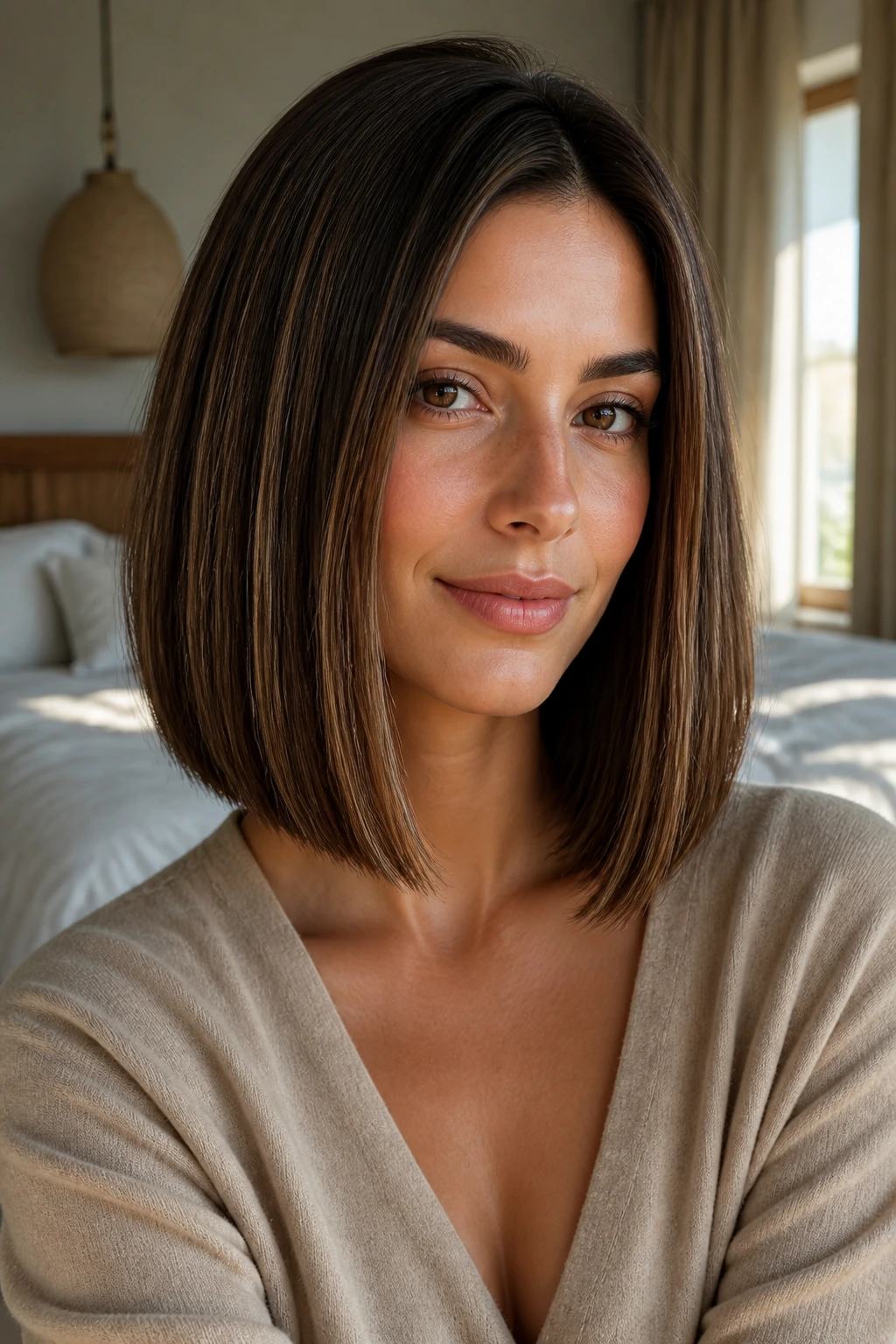
If your hair has been hiding behind its own length, start here. A one-length lob that lands right at the collarbone gives thin hair a firm edge, and that edge is doing a lot of work. Instead of letting the last few inches fray into see-through tails, the haircut keeps the full width concentrated in one clean line.
Ask for the perimeter to stay blunt, with no sneaky layers sneaking up from the bottom. That matters more than people think. A blunt lob on long thin hair often looks thicker from across the room because the ends sit together instead of separating into scraps.
Wear it straight, or add a slight bend with a flat iron just through the mid-lengths. Leave the ends calm. That’s the whole trick. A wild curl at the bottom can make the hem look thinner than it is.
2. The Slight A-Line Lob
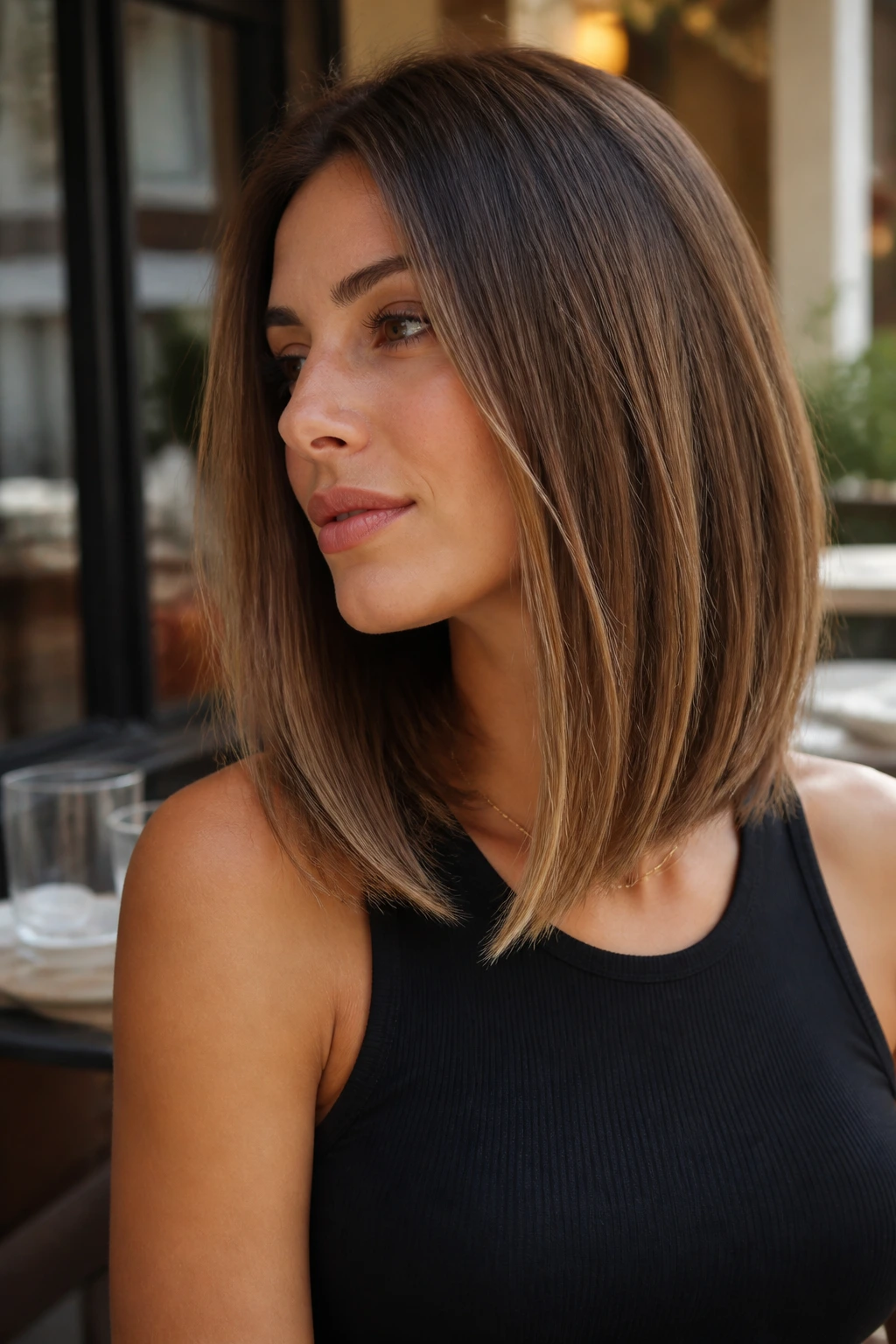
Want a little movement without turning the hemline wispy? A slight A-line lob is the answer. The back sits just a touch shorter, while the front drifts forward by an inch or so, which gives the cut a cleaner fall and a sharper line around the jaw.
Why It Helps Long Thin Hair
That small angle keeps the weight where you want it — in the visual front of the haircut — instead of letting everything hang in one flat curtain. It also helps if your hair flips at the shoulders, because the longer front corners have a place to go instead of bouncing out in random directions.
This cut is especially good if your face feels soft or round and you want a little more structure. Keep the angle subtle. If the front is too long, the line starts to look tired again.
3. The Subtle Inverted Lob
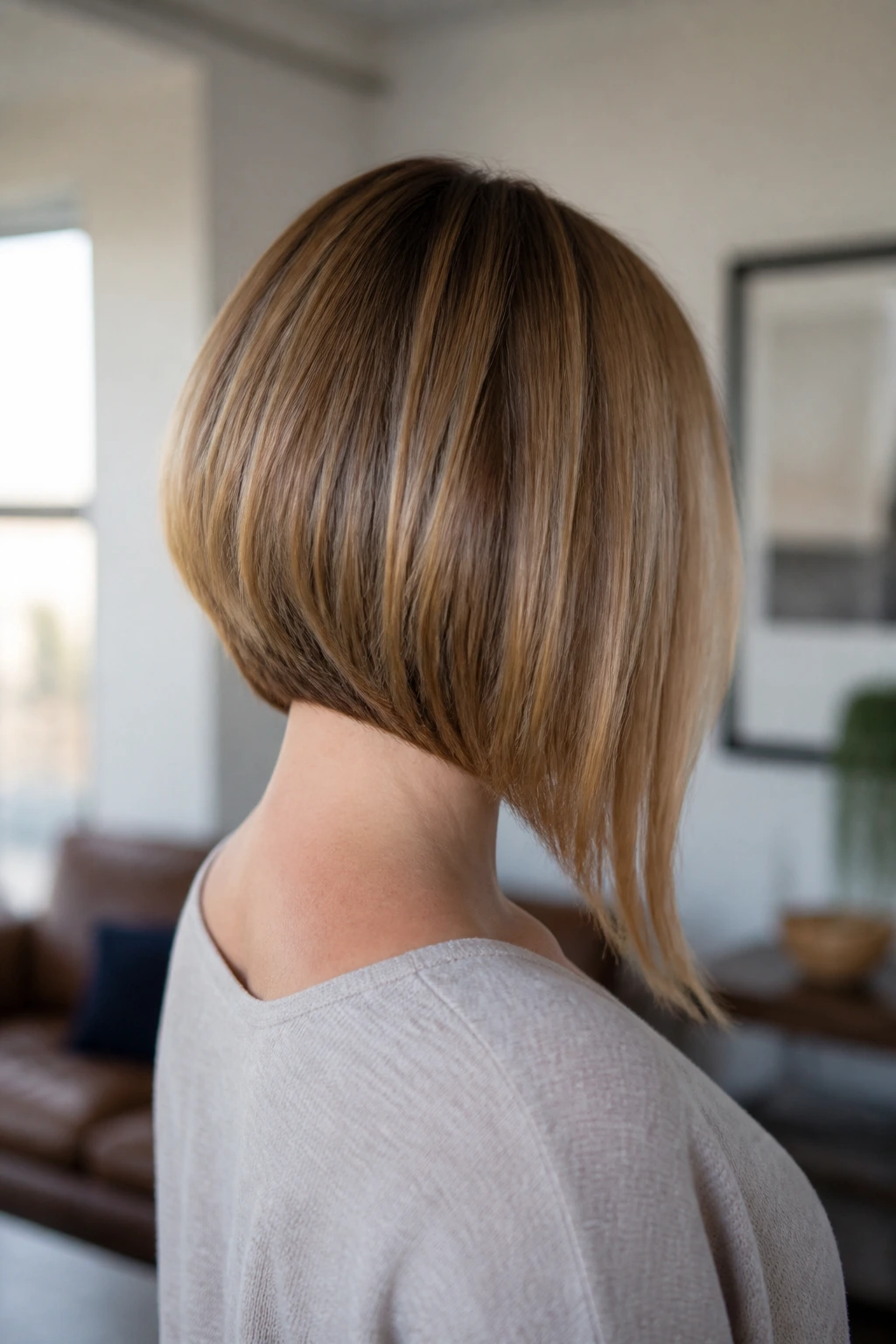
A soft inverted lob is for the person whose nape always looks a little empty. The back is gently graduated, not stacked, so the cut lifts away from the neck without turning into a little helmet. The front stays longer, which keeps the whole shape from feeling too severe.
I like this one on straight or slightly wavy hair that needs help holding a shape after a blow-dry. The shorter back gives the illusion of more body near the crown, and the longer front keeps the silhouette from collapsing into a square block.
It does need regular trims. Not because it’s fussy, but because the balance is part of the appeal. Once the back grows out too far, the shape loses its clean line.
4. The Blunt Center-Part Lob
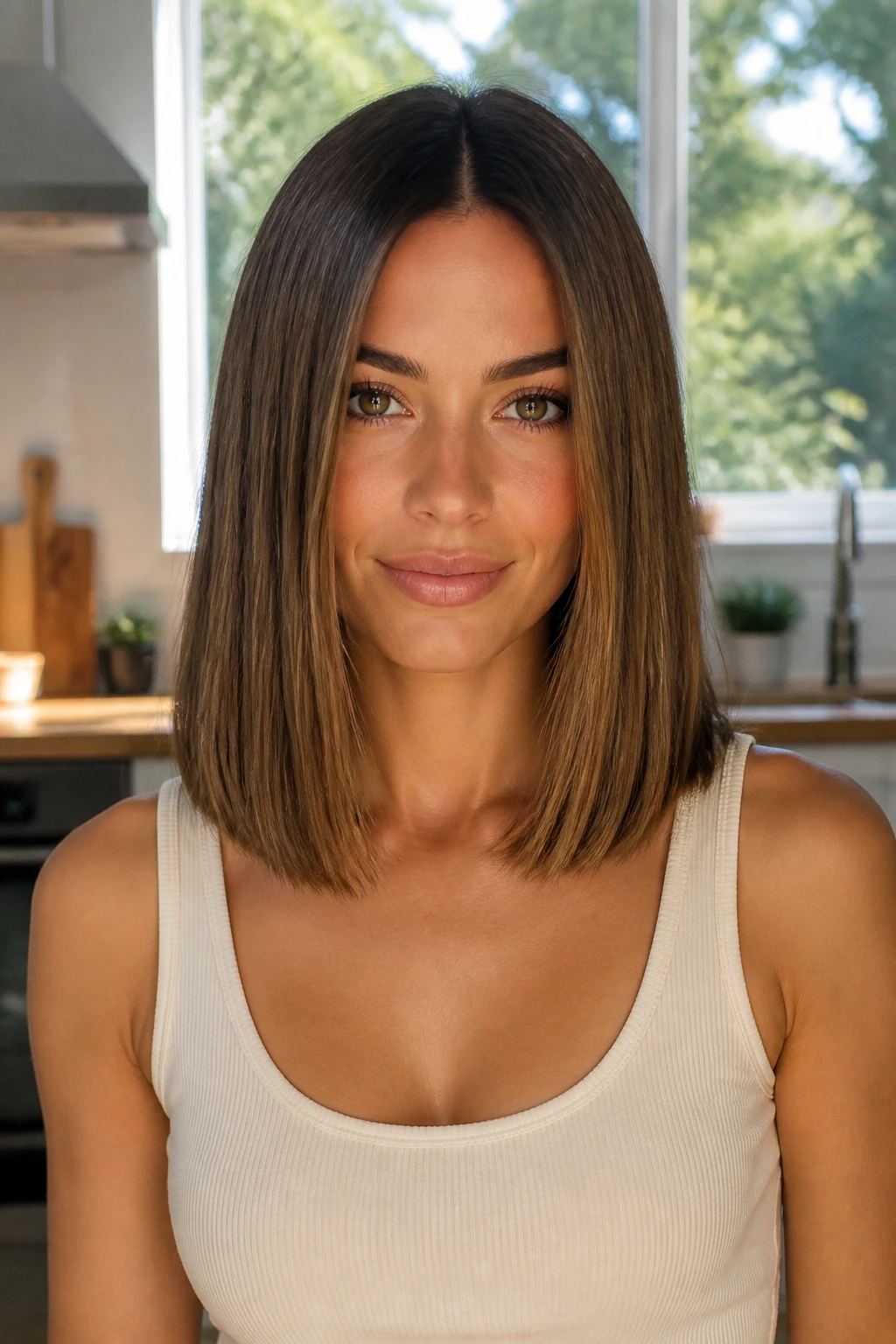
A center part plus a blunt hemline can do more for fine hair than a stack of layers ever will. The part gives the cut symmetry, and the blunt edge makes the bottom look fuller because nothing is being chewed up at the ends.
What Makes It Work
The center part exposes both sides evenly, which means the eye sees the full width of the haircut instead of one side doing all the heavy lifting. That matters when density is modest. You want the line to look intentional, not accidental.
This version loves straight hair, but it can also work on a soft bend if the ends are kept clean. If your cowlick fights a center part, don’t force it. A slightly off-center version can keep the same dense effect without the daily battle.
5. The Invisible-Layer Lob

Invisible layers are the quietest fix in the haircut world, and that’s why I trust them. The length still reads blunt from the outside, but the interior is relieved of a bit of weight so the hair can move instead of hanging like a sheet.
This is a smart choice if your hair is long and thin but also a little flat through the mid-lengths. Too many obvious layers expose the weak spots. Invisible layering preserves the outline while softening the inside of the cut.
Ask for the last inch or so to stay solid. That clean edge keeps the ends from getting spiky. If your hair tangles easily, this shape usually feels easier to live with than a choppier lob.
6. The Curtain-Bang Lob
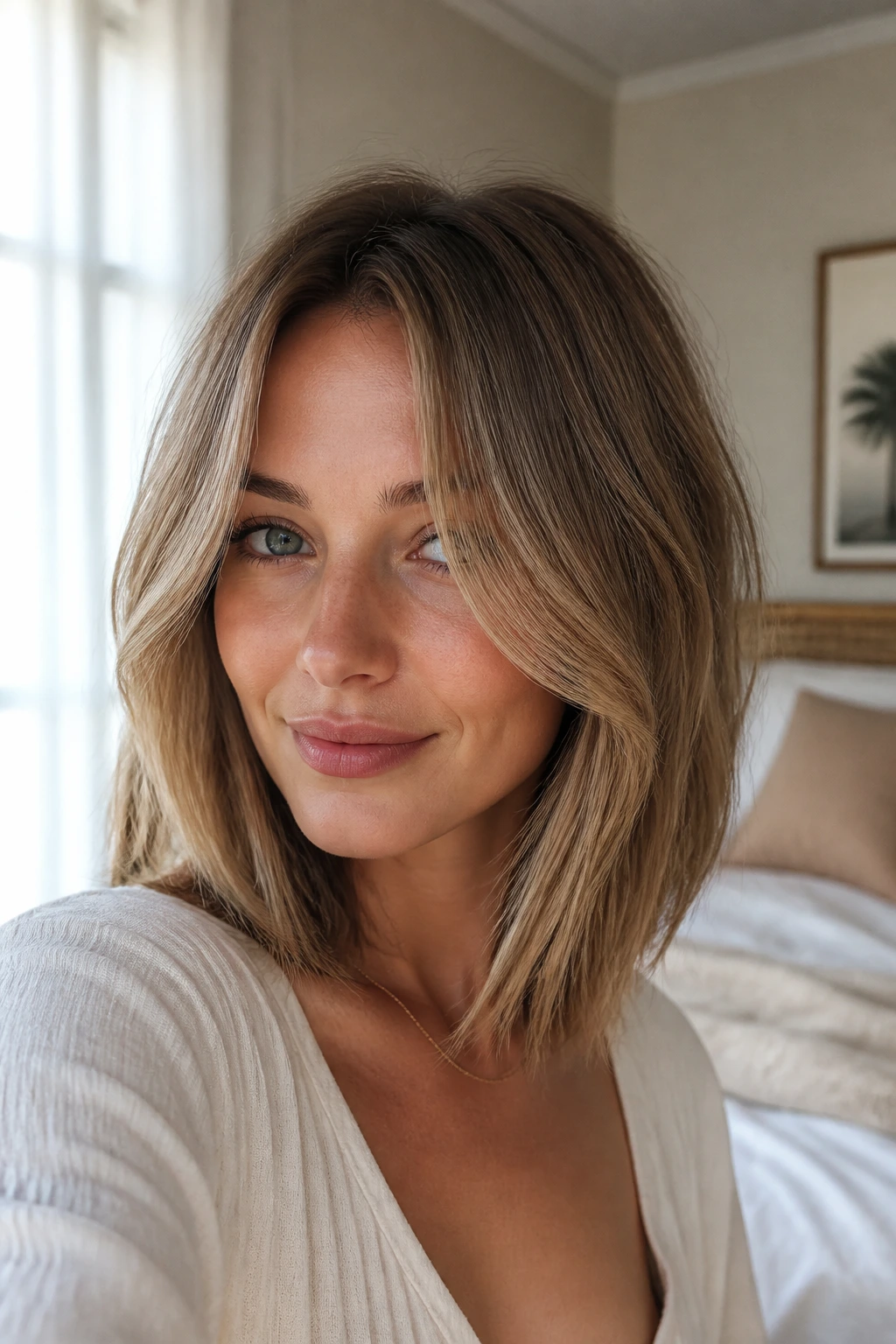
Curtain bangs are the easiest way to make the front of a lob look fuller without sacrificing the rest of the cut. They split in the middle, sweep out toward the cheekbones, and create a soft frame around the face that doesn’t demand a lot of hair to make an impact.
How to Wear It
The magic is in the length. Keep the shortest part of the fringe around brow level, then let the pieces open out toward the cheekbones. That keeps the shape airy instead of heavy. On thin hair, a bulky fringe can swallow the face; curtain bangs usually don’t do that.
This lob works best when the rest of the cut stays simple. A blunt or lightly layered shoulder-grazing shape gives the fringe room to do its job. Add a round-brush bend away from the face, and it all falls into place fast.
7. The Bottleneck-Bang Lob
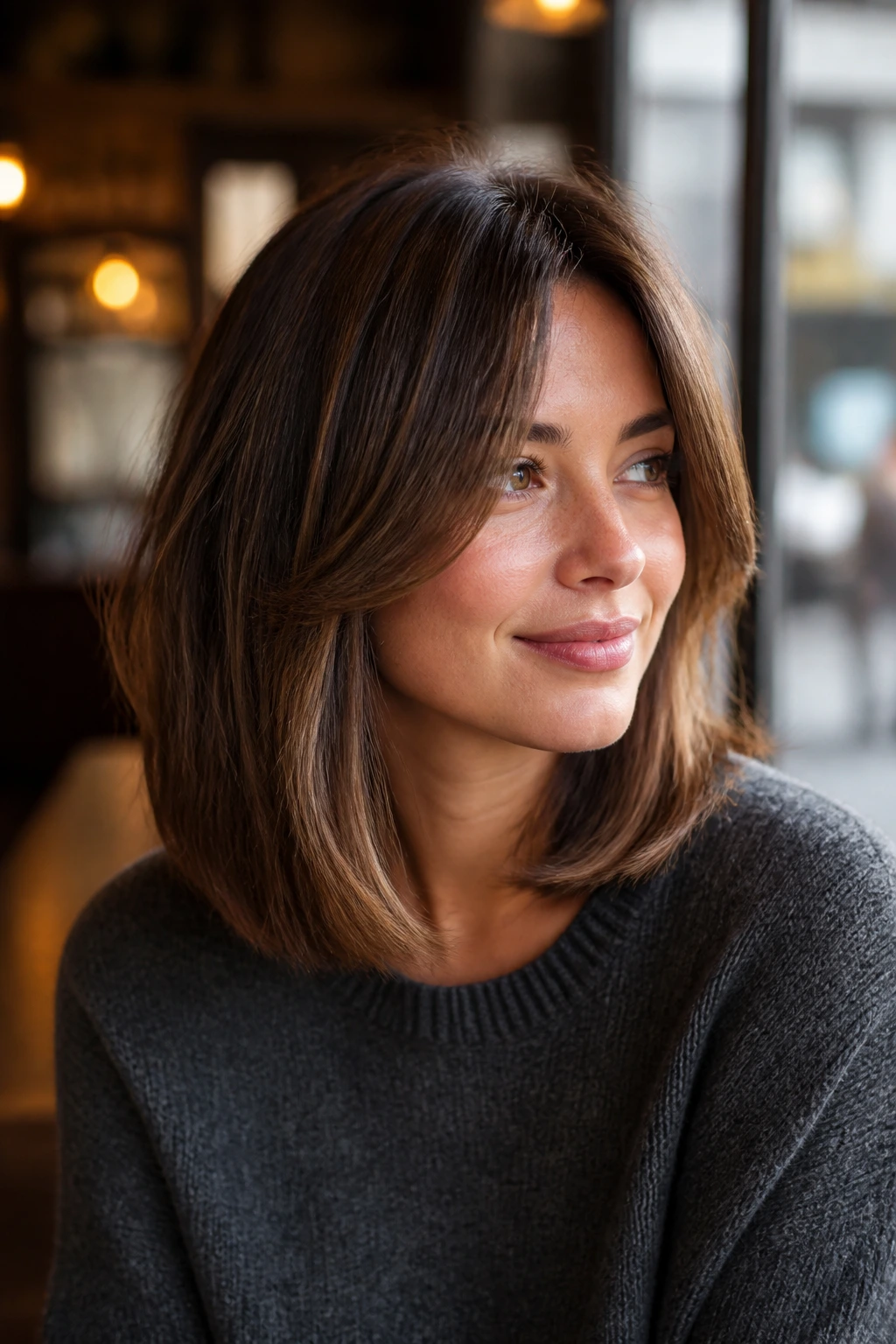
A bottleneck fringe is the better version of a full bang for long thin hair. It starts narrower in the center, then opens out as it reaches the cheekbones, which means it brings shape to the face without eating too much of the front density.
The payoff is subtle but real. The bangs make the top half look more polished, and the longer side pieces keep the haircut from feeling boxed in. If your forehead feels broad or your front hairline is a little sparse, this fringe softens both without shouting about it.
Keep the rest of the lob clean. A busy perimeter plus a busy fringe can look fussy fast. This one likes a neat foundation.
8. The Side-Swept Bang Lob

If your hair naturally leans one way, stop fighting it and let a side-swept bang work with the grain. A soft side fringe adds lift at the front and gives the haircut a little asymmetry, which can be kind to thin hair because it breaks up the visual flatness.
This is a nice pick for people who want some face framing but don’t want full bangs on their forehead every morning. The bang should blend into the lob, not sit on top of it like a separate piece. That blend matters. Without it, the front can look chopped off.
Style the fringe first, then the rest of the cut. The order changes the shape more than most people expect.
9. The Deep Side-Part Lob
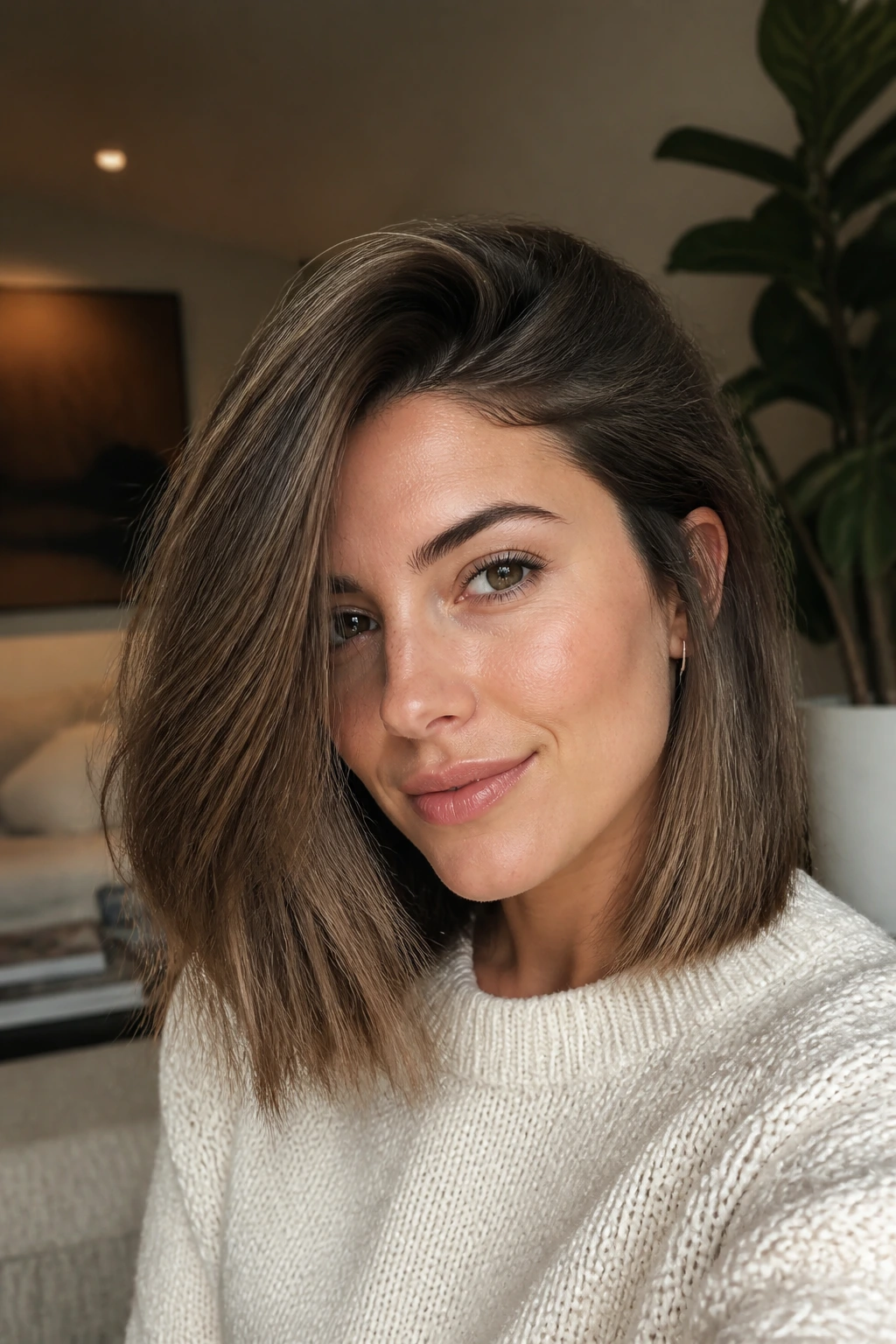
A deep side part can do what a whole extra layer can’t: it moves the root lift to one side and gives the haircut instant shape. On long thin hair, that shift creates the sense of body at the crown without making the ends see-through.
I prefer this on a blunt or softly beveled lob, not a shredded one. The part is already bringing the drama. The cut underneath can stay restrained. If one side of your hair always looks flatter, this is a practical way to borrow volume from the other side.
Flip the part occasionally if you want more lift at the roots. Hair gets used to where it sits.
10. The Rounded Beveled Lob
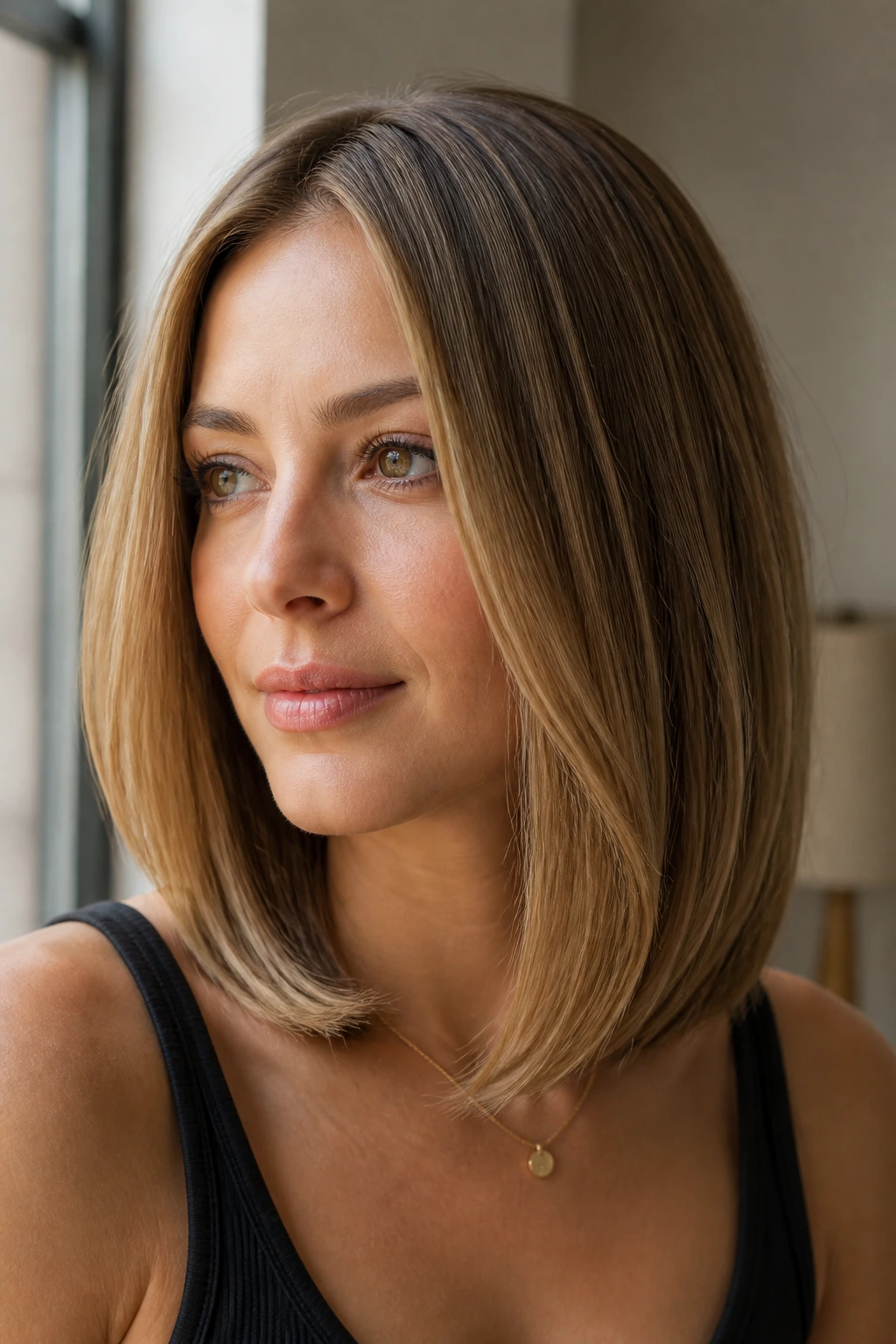
Why do some lobs look fuller even when the hair isn’t? Because the ends are beveled into a smooth curve instead of ending in a hard shelf or a stringy point. That rounded edge gives thin hair a softer, denser finish.
This cut works beautifully on straight hair that wants a little polish. The shape is subtle, but it makes a difference when the hair is tucked behind the ears or worn loose. The bevel should be light, not overdone. Too much curve and the haircut starts to puff in the wrong places.
A round brush and a low heat setting are enough. No need to bully it.
11. The U-Shaped Lob
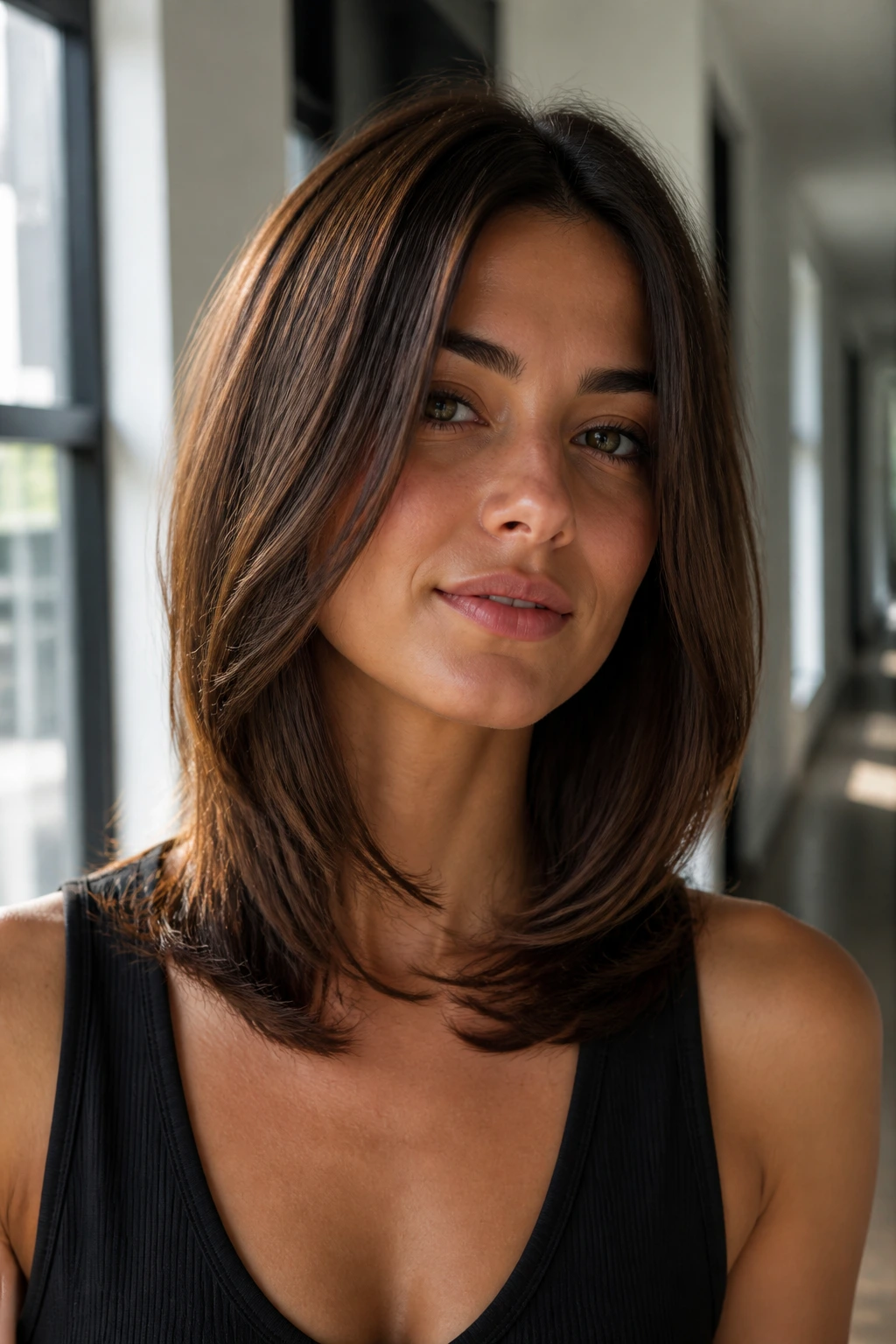
A U-shaped lob keeps the center a touch longer than the sides, which creates a gentle curve instead of a flat bar across the shoulders. On long thin hair, that curve concentrates the weight where the eye lands first.
Why It Flatters
The shape is especially kind to long faces and narrow jawlines. It softens the outline without relying on obvious layers. The front pieces can still tuck behind the ears, but the center section gives the haircut a little backbone.
It’s also a neat option if you like wearing hair with a slight middle part but want the ends to feel fuller than a strict straight-across cut. The U-shape gives you that middle fullness without adding bulk where you don’t want it.
12. The Face-Framing Lob

A face-framing lob gives the front pieces a job to do. Instead of dragging the whole head of hair down in one line, it lets the pieces around the cheekbones and jaw skim the face and pull attention upward.
That’s useful on thin hair because you can create shape where people actually notice it first. The back can stay blunt and simple. The front does the talking. Keep the shortest pieces long enough to tuck behind the ears; if they get too short, they start looking flimsy, which is the last thing thin hair needs.
This is one of those cuts that looks more expensive when it’s grown out a little. The corners soften instead of going dead.
13. The Soft Layered Lob

A soft layered lob is for hair that needs breathing room but not a full breakup. The layers sit low, usually in the lower third of the cut, so the top stays fuller and the bottom still has enough movement to avoid looking boxed in.
I like this version on hair that tangles, because the layers help the pieces fall around each other instead of all fighting for the same space. The shape still needs a visible perimeter. If the layers go too high, the ends start to look patchy.
Think of this as a controlled version of movement. Not floppy. Not choppy. Controlled.
14. The Choppy Textured Lob
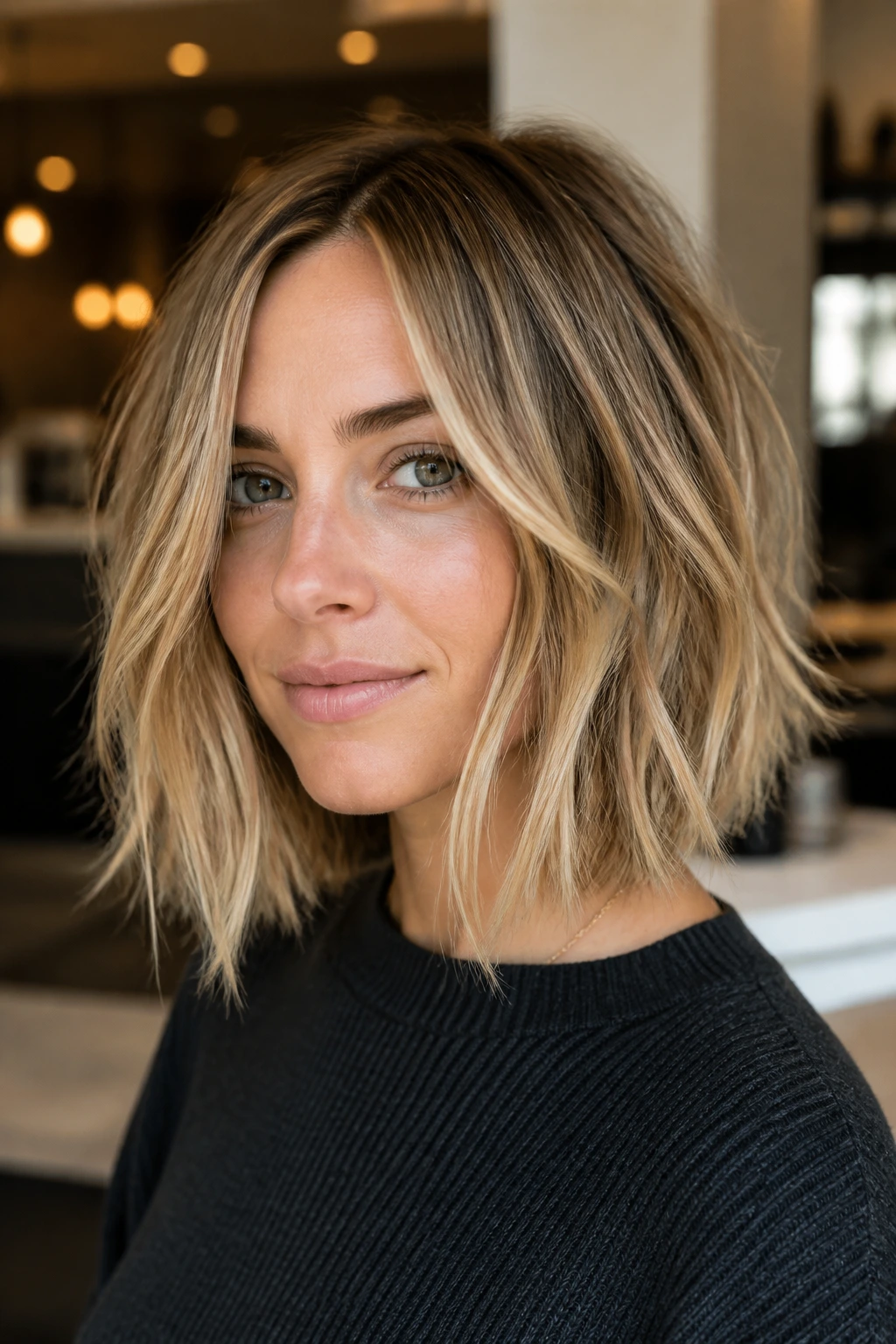
Choppy does not have to mean thin. In the right hands, a textured lob can make fine hair look busier and fuller because the light hits more surfaces and the shape stops reading as one flat sheet.
The catch is restraint. The perimeter should stay solid. If the ends are sliced to bits, you lose the very thing that makes a lob useful on thin hair. Ask for piecey texture through the surface, not through the bottom line.
This version is nicest when you already like a bit of lived-in styling. If you’re the person who scrunches and walks out the door, this one has your name on it.
15. The Shaggy Lob

Want your lob to look lived-in on day one? Go shaggy, but keep the layers soft. The shaggy lob borrows from the shag without going all the way to a rough, hollow shape. On long thin hair, that difference matters.
The fringe can be airy, the sides can have a bit of swing, and the ends can break up just enough to feel relaxed. What you don’t want is a severe reduction in weight. Thin hair needs enough density left in the outline to keep the haircut from falling apart.
Wavy and slightly rough-dried hair loves this cut. Straight hair can wear it too, but the styling takes a bit more effort.
16. The French Lob

A French lob has that loose, unfussy shape that looks like it wasn’t overworked, even when it was. The line usually sits somewhere between the chin and collarbone, with a soft fringe or face frame and a bit of bend around the cheekbones.
The appeal for thin hair is simple: the cut keeps enough width at the bottom while letting the top move. It doesn’t ask for a lot of extra layering, which is good, because too much layering on fine strands gets you a head of hair that feels like it’s trying to evaporate.
This one looks best when you leave a few ends a little imperfect. Not messy. Just not stiff.
17. The Italian Lob
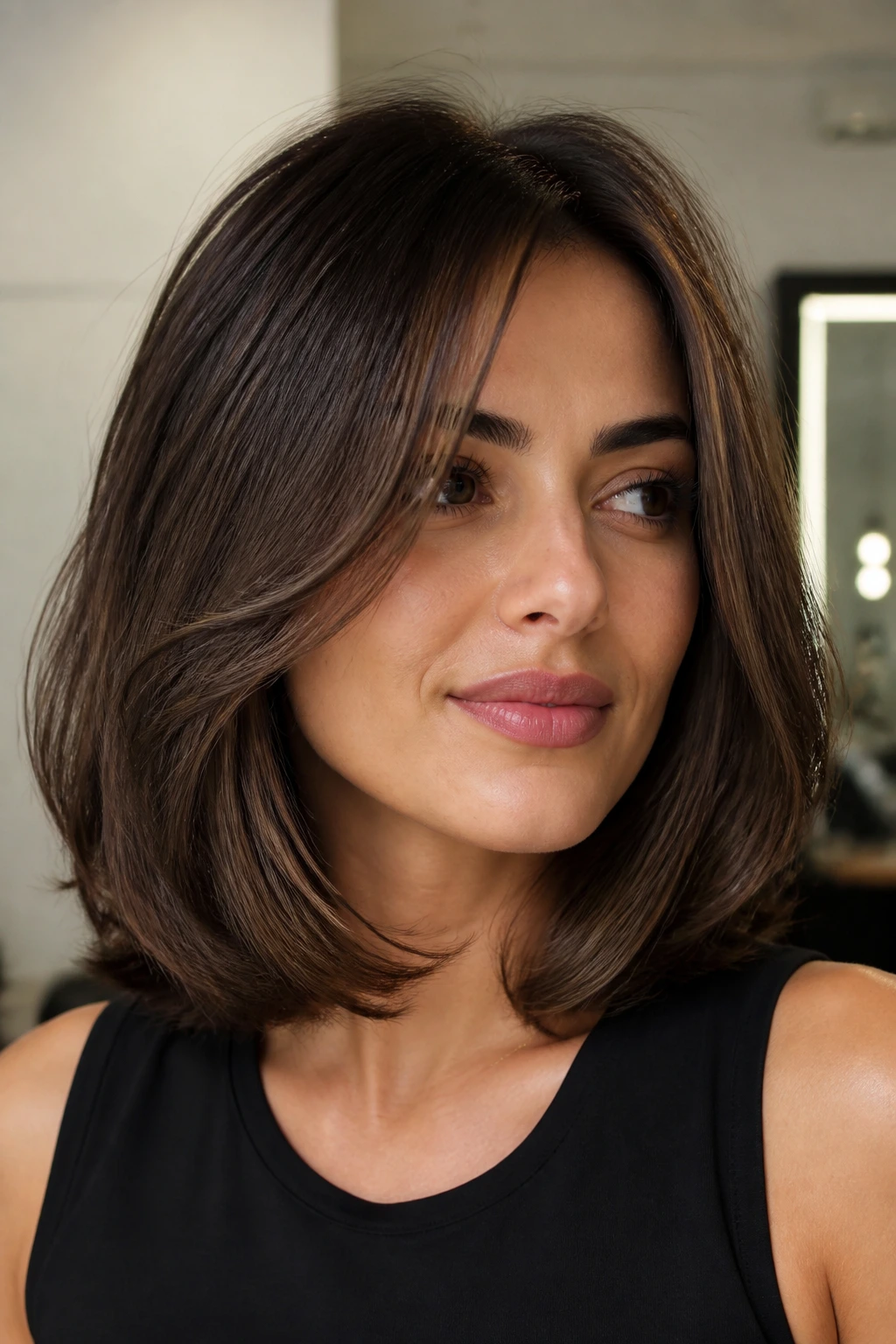
An Italian lob is rounder, fuller, and more polished than a French one. It’s the haircut I’d pick if someone wants bounce around the cheeks and a bit of swing under the jaw without sacrificing the clean feel of a lob.
The styling usually leans blowout-heavy. A round brush, a little lift at the roots, and a bend through the front corners give it that plush shape. On long thin hair, that roundness is the point. The cut is designed to look substantial, not airy.
If you like hair that moves when you turn your head, this is a strong choice. It feels dressed up without looking severe.
18. The Glassy Straight Lob
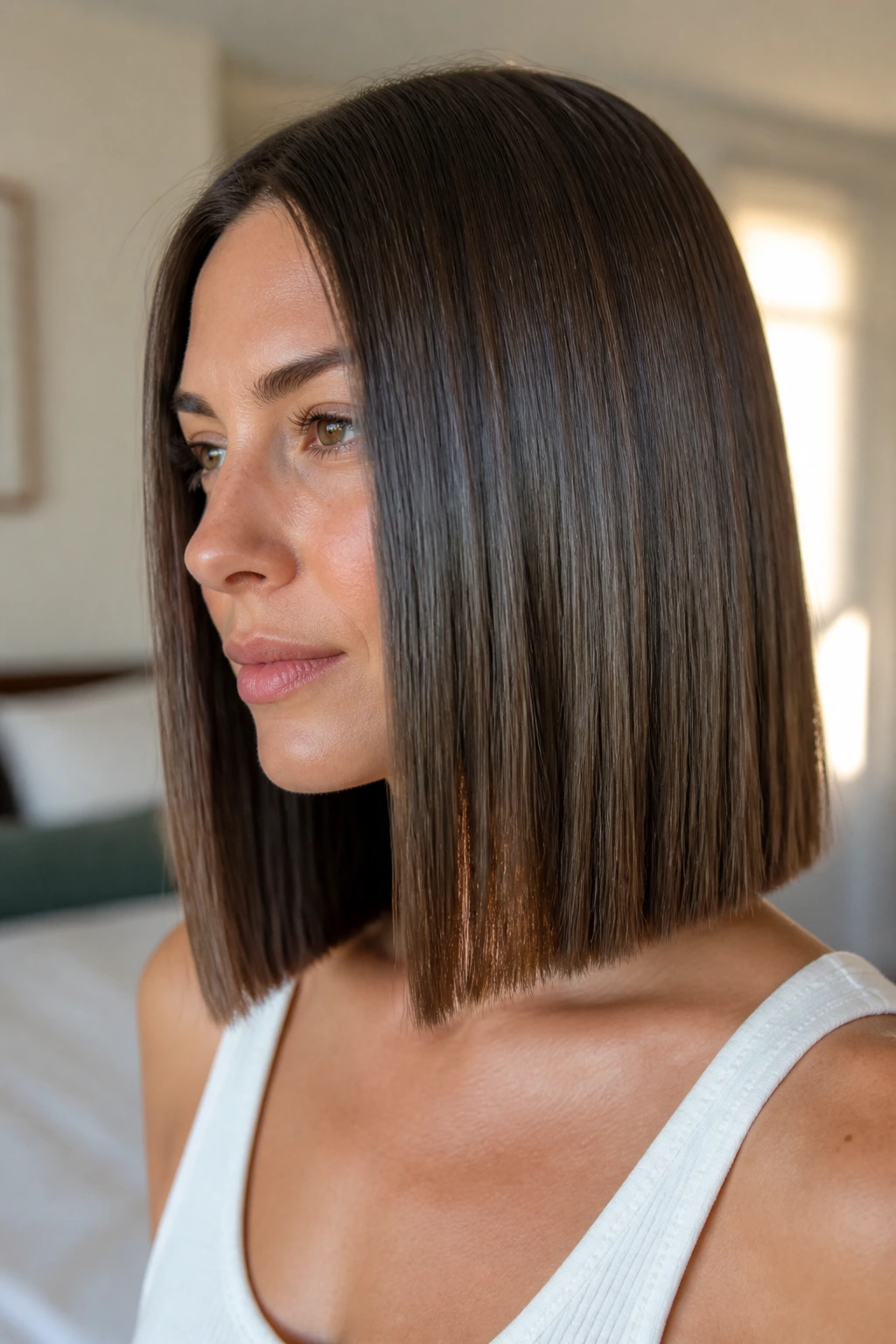
If your hair is pin-straight, a glassy lob can look thicker than a layered one. The blunt line gives the eye a single clean edge to follow, and the shine makes the haircut look deliberate instead of fragile.
What to Watch For
This style lives or dies on precision. If the line is crooked or the ends are frayed, the whole thing reads cheap. Ask for a clean perimeter and keep product light — a little smoothing cream at the mid-lengths is enough.
A flat iron can polish the ends, but don’t overwork them. The point is to make the cut look crisp, not fried. Thin hair and overheated hair are bad neighbors.
19. The Wavy Lob with a Blunt Base

This is one of my favorite answers for people who want movement but refuse to give up the look of thick ends. The base stays blunt, and the waves sit on top of it, which means the haircut still has a dense bottom line when the style loosens.
Use a 1-inch iron or a wave-friendly flat iron technique, but leave the last half-inch or so of the ends out. That keeps the hemline from turning curly and sparse. Mid-shaft bend is plenty.
The cut works especially well if your hair is naturally a little wavy and you want to encourage it instead of fighting it every morning.
20. The Flipped-Under Lob
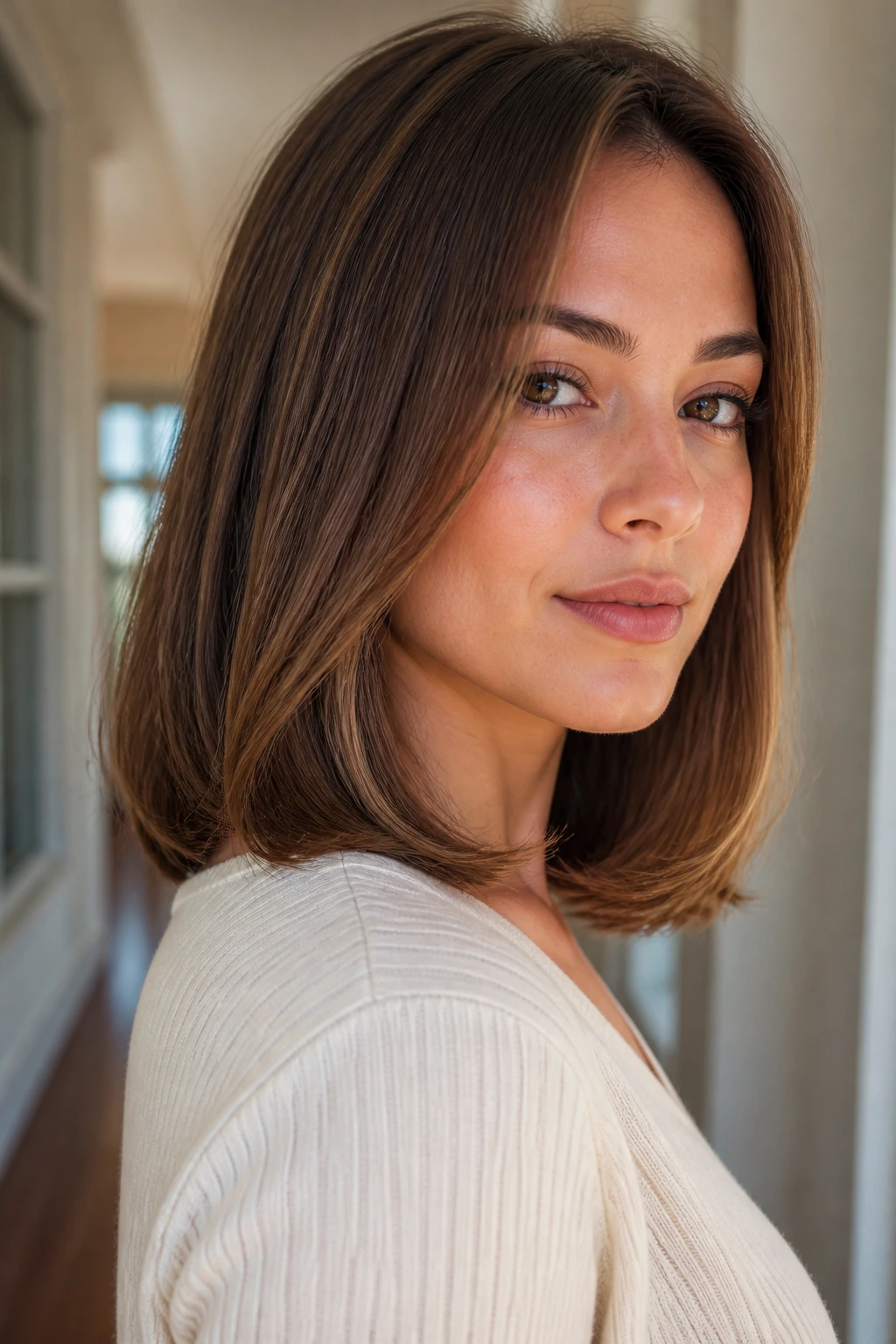
Some days hair just needs to obey the ends. A flipped-under lob is built to turn inward at the bottom, which makes the outline look neat and full instead of ragged or out-turned at the shoulders.
This shape is kinder to thin hair than people expect. The undercurve creates the feeling of weight, and weight is what long thin hair is often missing. If your ends flare out when you air-dry, this cut gives them a direction.
A large round brush or a couple of big velcro rollers can do the job. You don’t need a heavy-handed blowout. The curve should look soft, not stiff.
21. The Feathered-End Lob
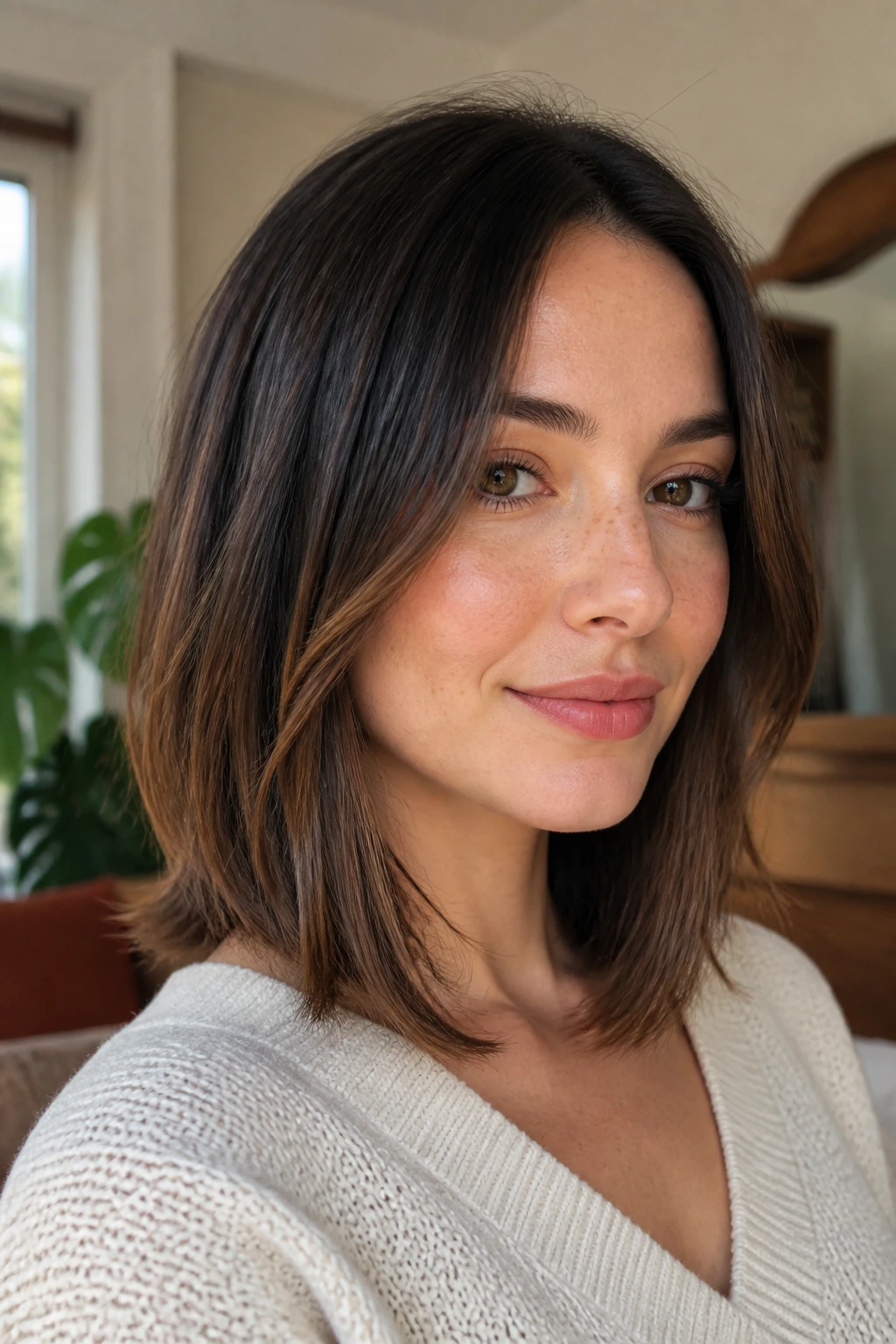
Can feathering help thin hair? Yes, but only when it’s done at the very ends and not used as a way to strip the shape apart. A feathered-end lob keeps the perimeter mostly intact while softening the edge just enough to avoid a hard shelf.
This is a good choice if you hate blunt lines on yourself but still want the haircut to feel substantial. The feathering should be subtle. If the tips look shredded, the cut has gone too far.
It pairs well with a smooth blow-dry or a loose bend. Think soft finish, not airy collapse.
22. The Shattered Lob
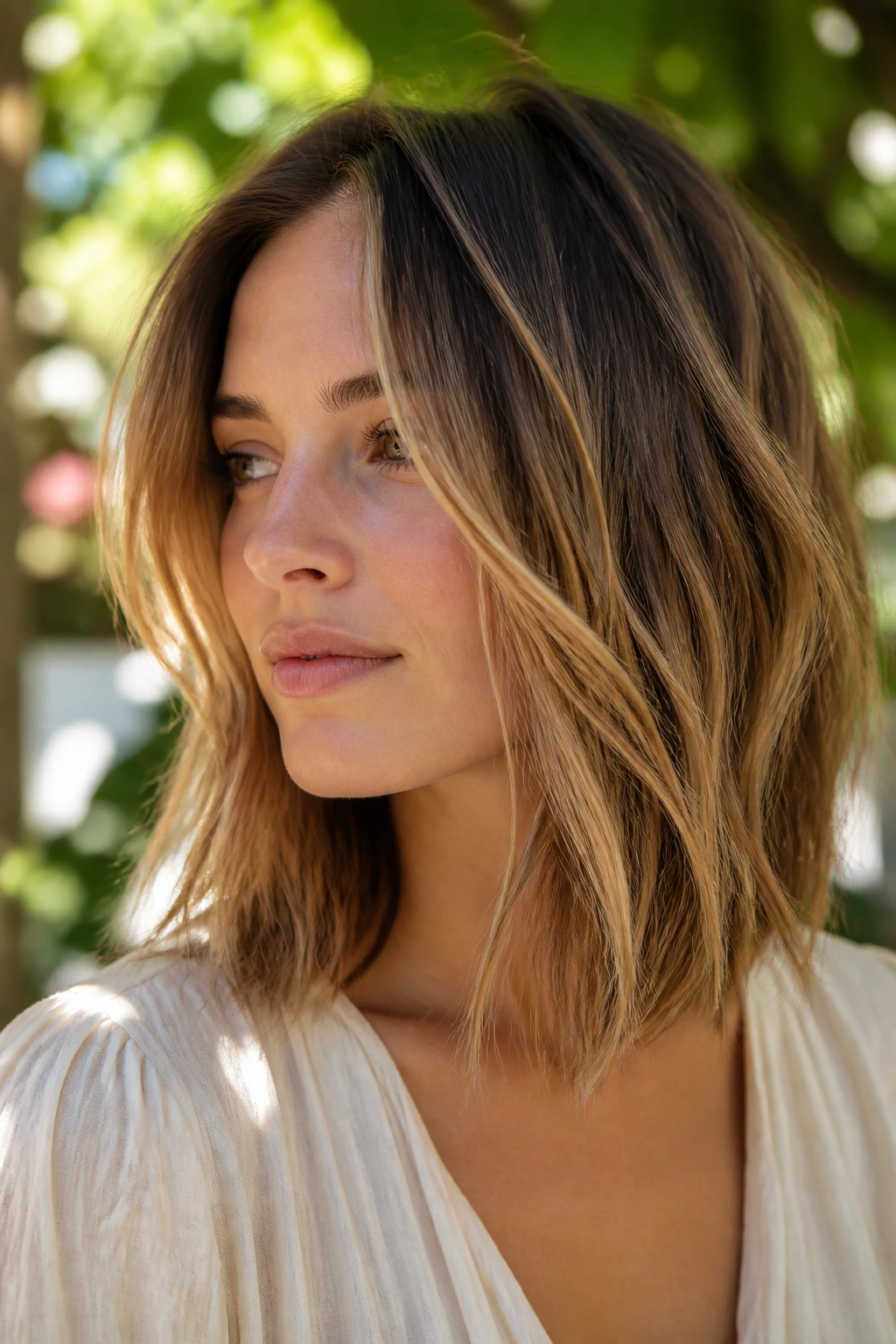
A shattered lob has a broken-up perimeter and a little pieceiness through the surface, which can work on long thin hair if the density is there to support it. The goal is movement, not holes.
This is the cut for someone who likes texture but doesn’t want a shag. The shape should still read as a lob first. Point cutting at the ends and a few well-placed interior snips are enough. Aggressive razor work is where things go wrong fast.
Wear it with a soft wave or a brushed-out bend. On pin-straight hair, it can look a touch too airy.
23. The Asymmetrical Lob
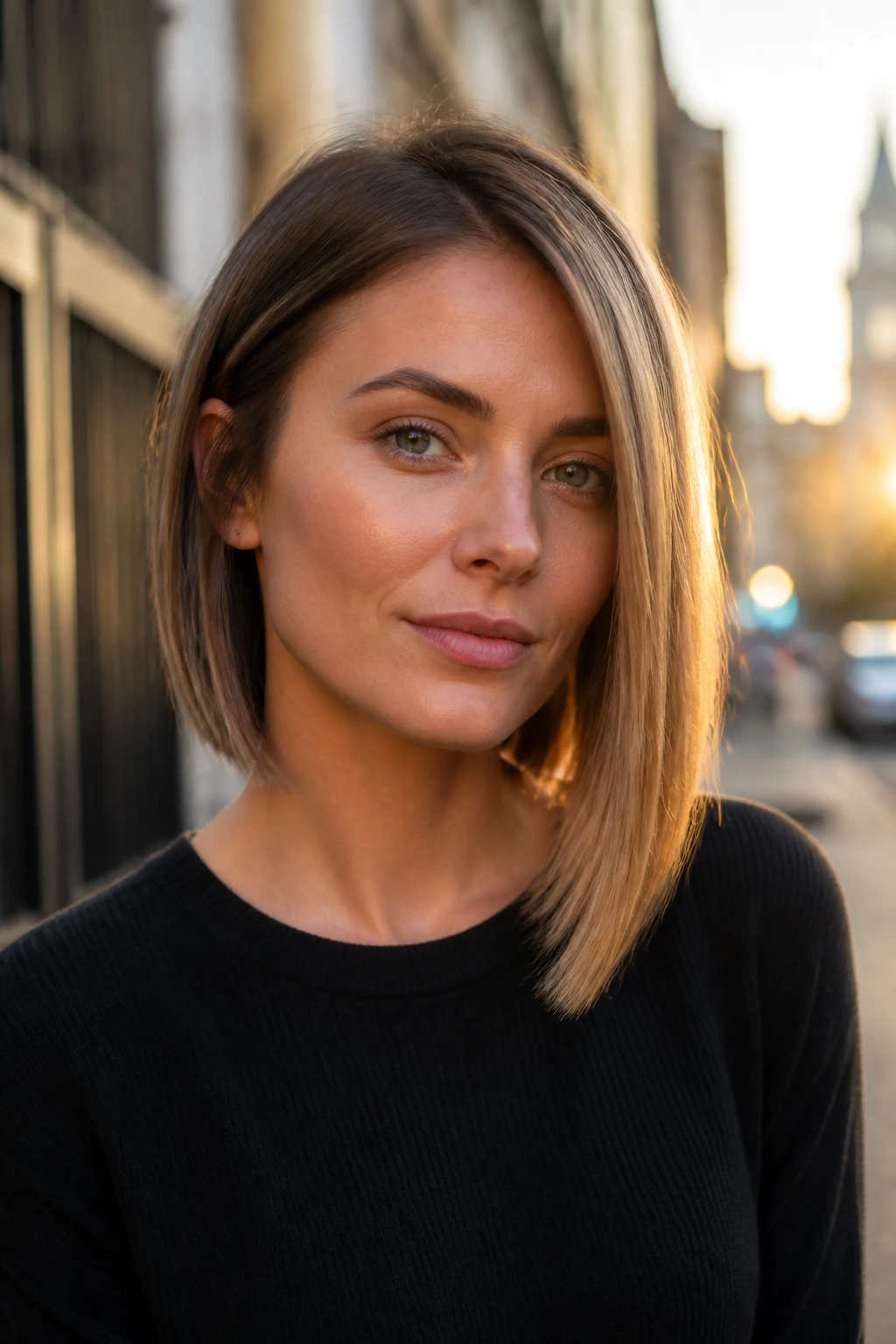
If you’re bored with symmetry, an asymmetrical lob breaks the pattern in a useful way. One side sits slightly longer than the other — usually by an inch or so — and that small difference keeps the haircut from looking static.
Why It Works on Thin Hair
Thin hair can look flat when every line is even. Asymmetry gives the eye something to chase, which makes the whole shape feel more styled. It’s subtle enough to wear to work, but interesting enough that you notice it every time you catch your reflection.
Keep the angle mild. Severe asymmetry can feel trendy for a minute and tiring afterward. A soft version ages better.
24. The Tuck-Friendly Lob

A tuck-friendly lob is for people who wear glasses, like showing earrings, or just want the option to tuck hair behind the ears without losing all framing. The front corners stay long enough to graze the jaw, which keeps the shape from disappearing when you tuck one side back.
This matters more on long thin hair than it sounds like it should. If the front is too short, the tuck exposes too much scalp and the cut loses balance. If it’s long enough, the tuck looks deliberate and the face still gets structure.
I’d pair this with a slight center or off-center part. It gives the haircut flexibility without making it fussy.
25. The Grow-Out Lob
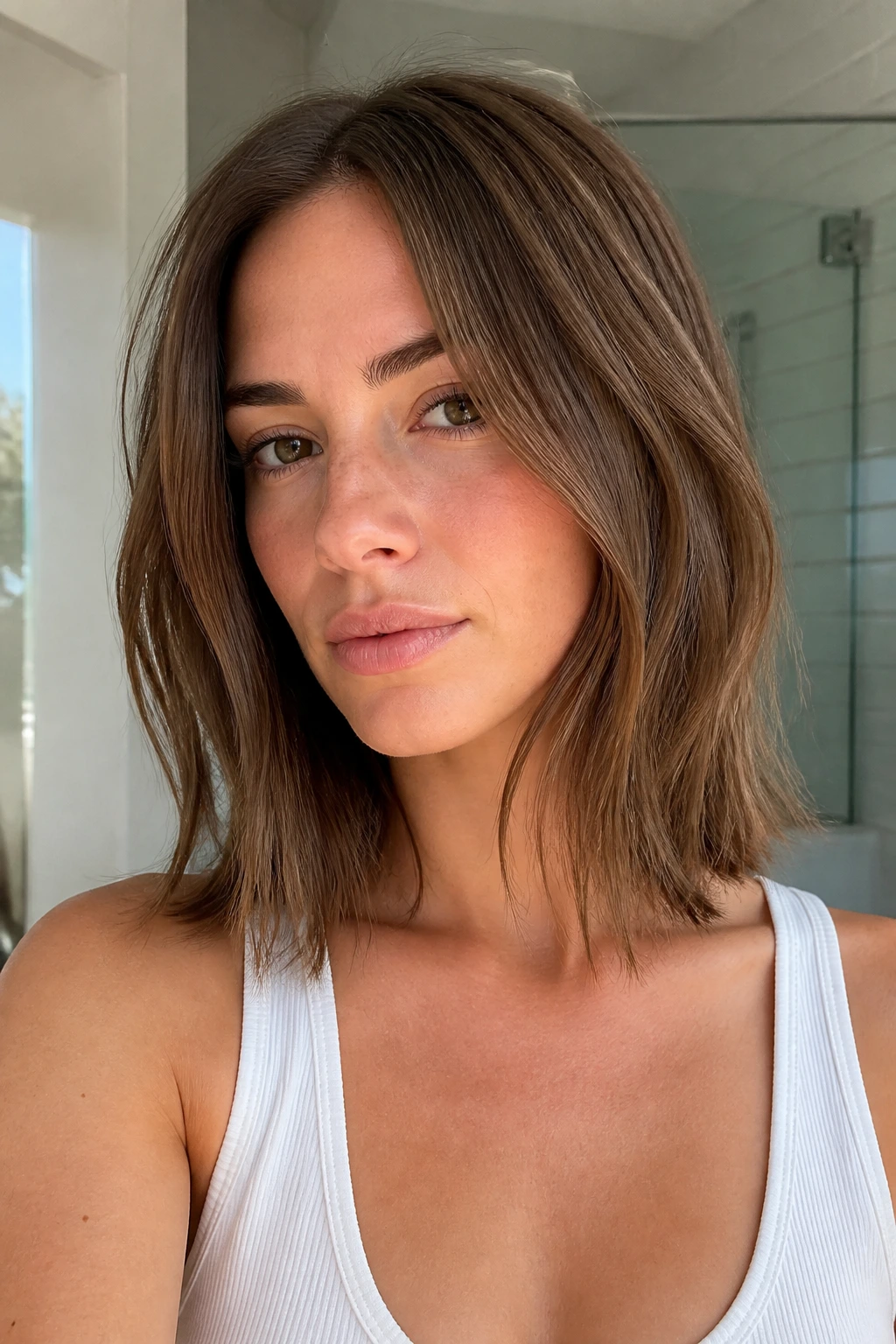
If you’re moving out of a bob or trying to grow your hair without letting it look scruffy, the grow-out lob is a smart middle path. The perimeter stays soft and controlled, with just enough length to rest on the collarbone and just enough shape to keep the ends from looking abandoned.
This is not a high-maintenance cut, which is part of the appeal. It tolerates a little time between trims. It also hides the awkward stage where shorter pieces start kicking out while the rest of the hair hangs flat.
Keep the outline clean and resist the urge to add too many layers. The grow-out needs structure more than excitement.
26. The Razor-Soft Lob
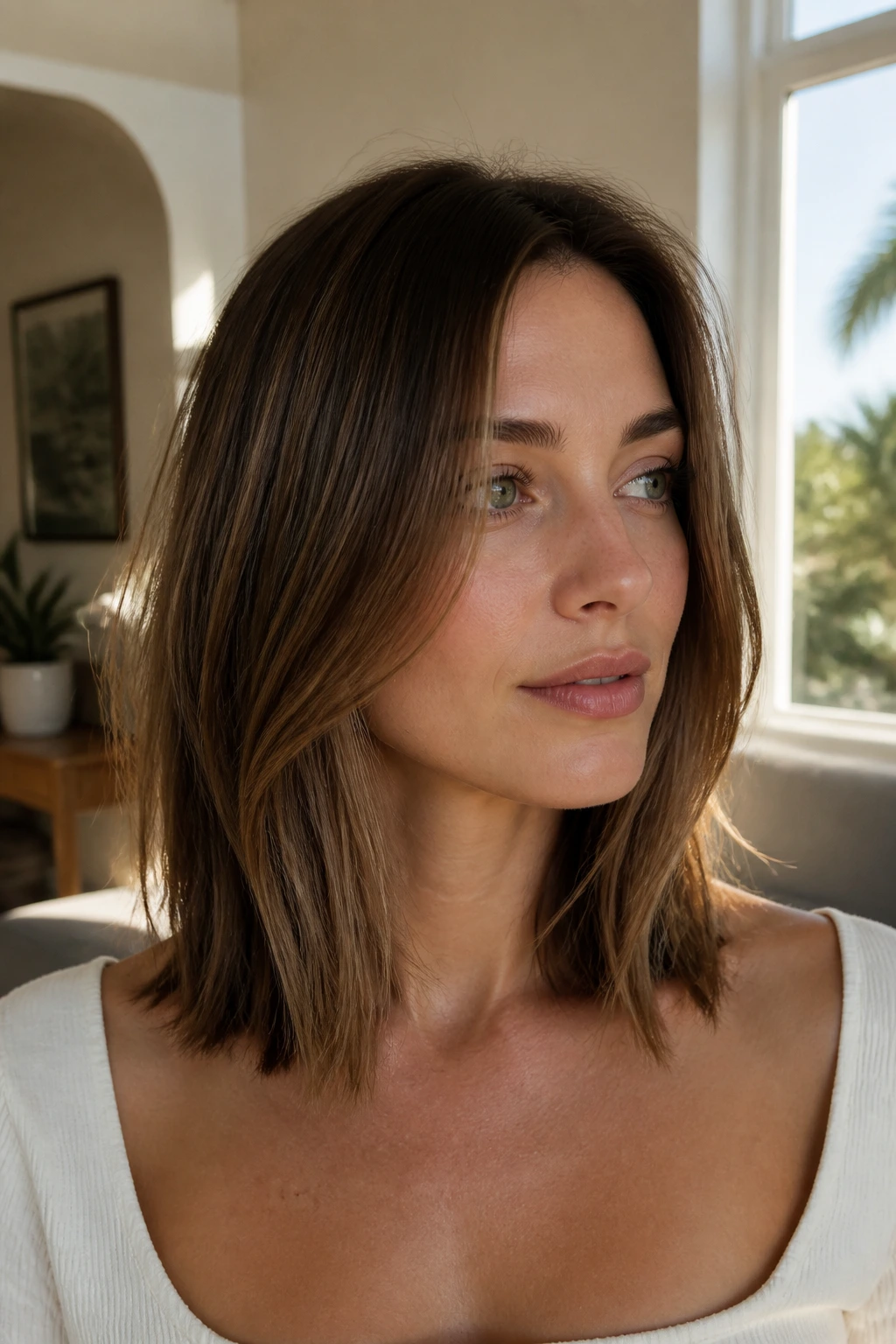
A razor-soft lob can work on long thin hair, but only if the hair actually has enough density to survive it. Used lightly, the razor softens the ends and adds a bit of movement around the face. Used too heavily, it turns the perimeter wispy and tired.
What to Ask For
Ask for softness at the very edge, not through the whole section. That keeps the shape intact while taking the hard edge off. If your hair is already sparse, skip this and go blunt instead.
On the right hair, a razor-soft finish can make the cut feel lighter without making it disappear. That balance is the whole game.
27. The Blowout Lob
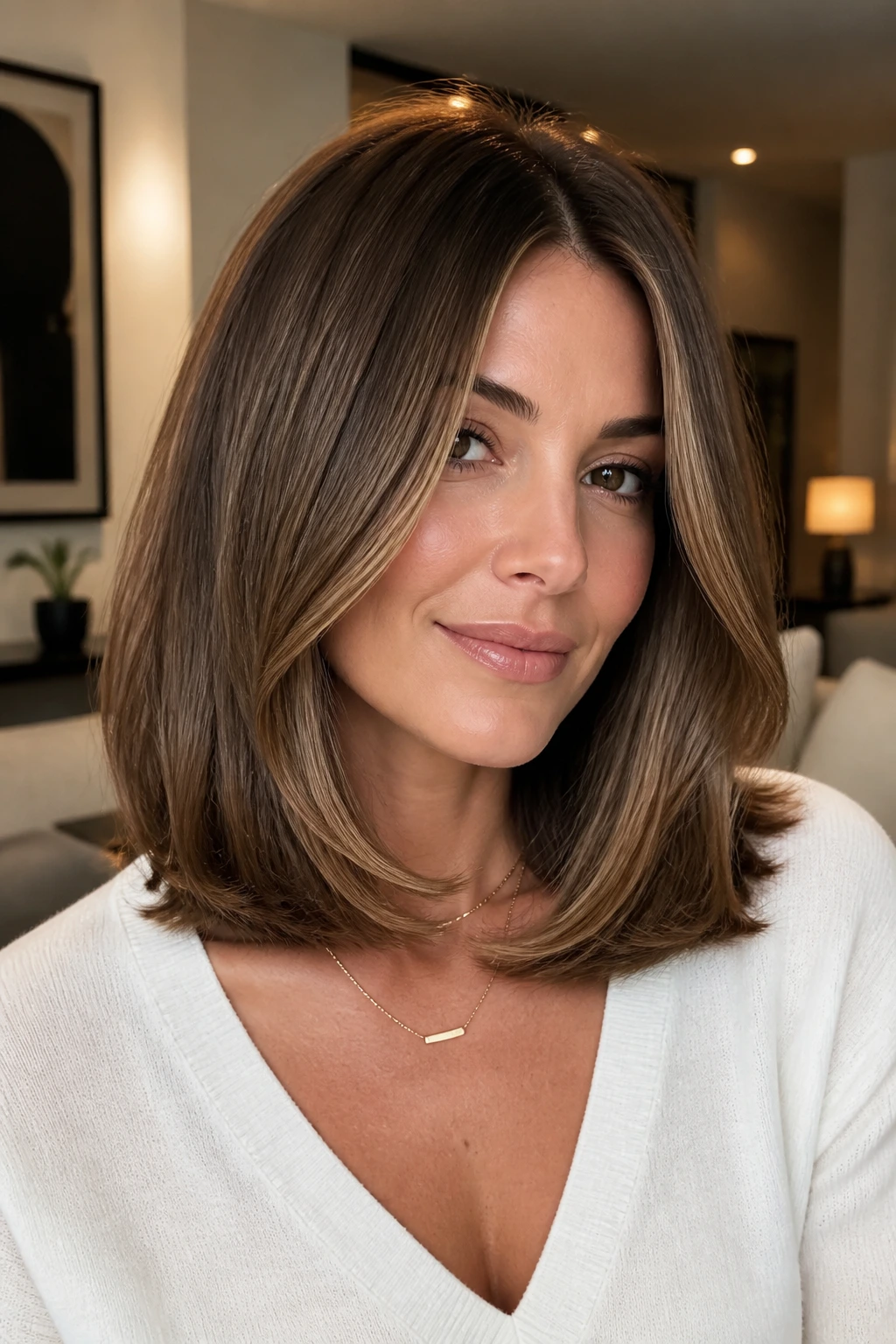
A blowout lob is the polished cousin in this group. The cut is shaped to support round-brush styling, with enough bend in the front corners and enough length through the body to swing instead of hang.
This is the one for people who like volume that looks intentional. Not teased. Not crunchy. Just smooth, lifted, and full enough to hold a line under salon lights. On thin hair, the cut matters, but the finish matters too. This version gives you both.
If you’re willing to spend ten extra minutes with a dryer and a brush, the payoff is a lob that reads fuller from the roots down.
Why Lob Haircuts for Long Thin Hair Work So Well

Long thin hair often looks better with less length, not more. That sounds backward until you stand in front of a mirror and watch the ends. Past a certain point, the hair starts to spend all its visual energy on the last few inches, and those inches usually look the weakest. A lob moves the shape up to a place where the hair still has enough density to read as full.
The collarbone is the sweet spot for a reason. It gives the haircut a place to rest without hanging into the air like a curtain. Hair at that length can still swing, tuck, wave, or bend, but it doesn’t have to drag all its weight around all day. That alone can change how thick the hair feels.
A good lob also gives the stylist better control over the outline. Straight across, slightly angled, softly beveled, or lightly layered — each choice changes where the eye goes first. For thin hair, that matters more than chasing some ideal of “volume” with a can of spray and a prayer. Shape first. Product second.
Fine Hair vs. Thin Hair: Why That Difference Changes the Cut
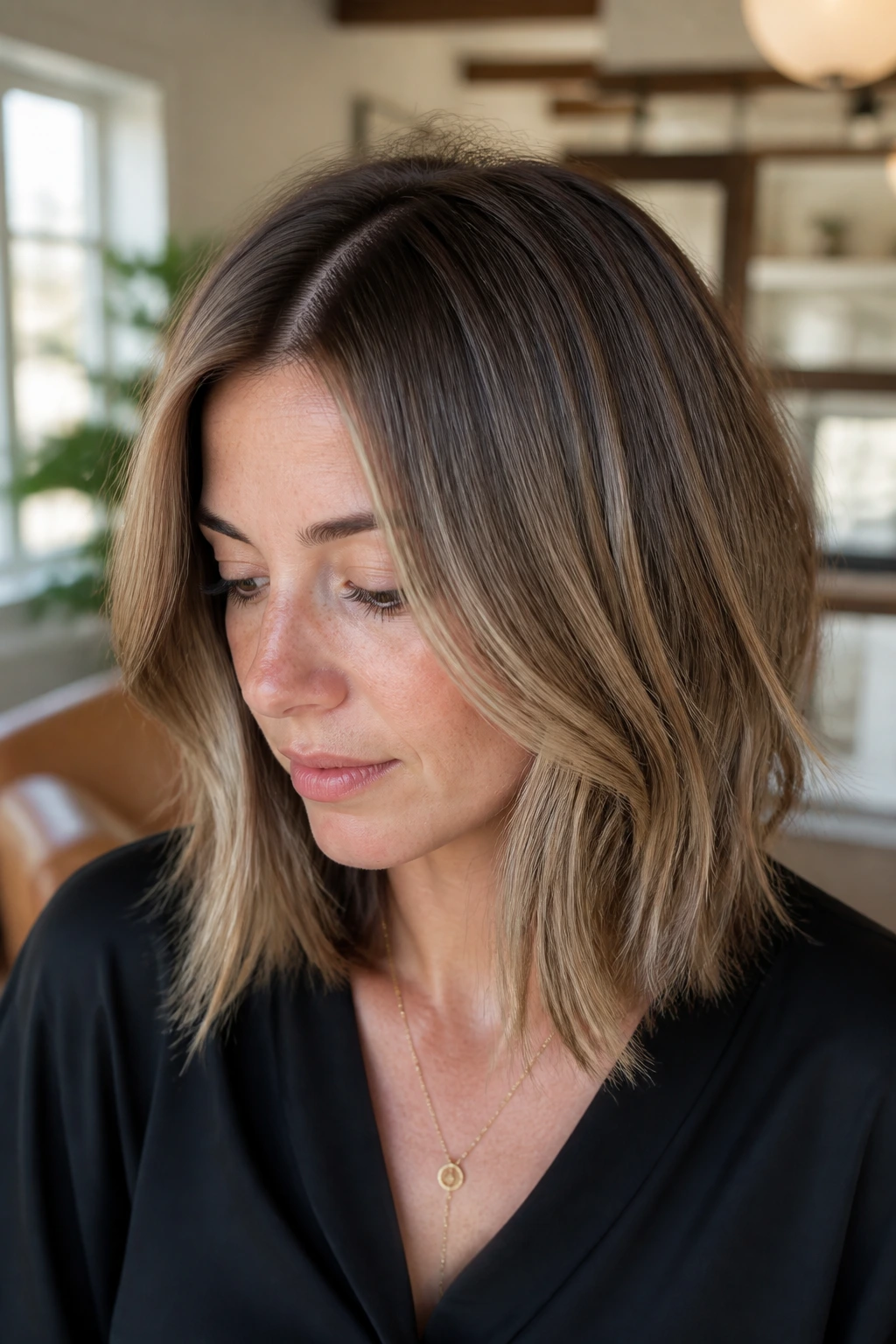
Fine hair and thin hair get mixed up all the time, and the haircut changes depending on which one you’re dealing with. Fine hair means the strand itself is narrow. Thin hair means there are fewer strands on the head. You can have one without the other, and the lob you ask for should reflect that.
Fine hair usually likes blunt edges, soft beveling, and light internal movement. It can often tolerate a little layering if the density is decent. Thin hair with sparse density needs more caution. Too much debulking, too much razor work, or too many short layers can make the scalp show through and the bottom edge go airy fast.
That’s why I’m such a fan of asking a stylist to look at the hair on the head, not just the hair in theory. Two people can both say “my hair is thin,” and one of them needs a sharper blunt cut while the other needs a little hidden movement. Same label. Different fix.
What to Tell Your Stylist Before the First Snip
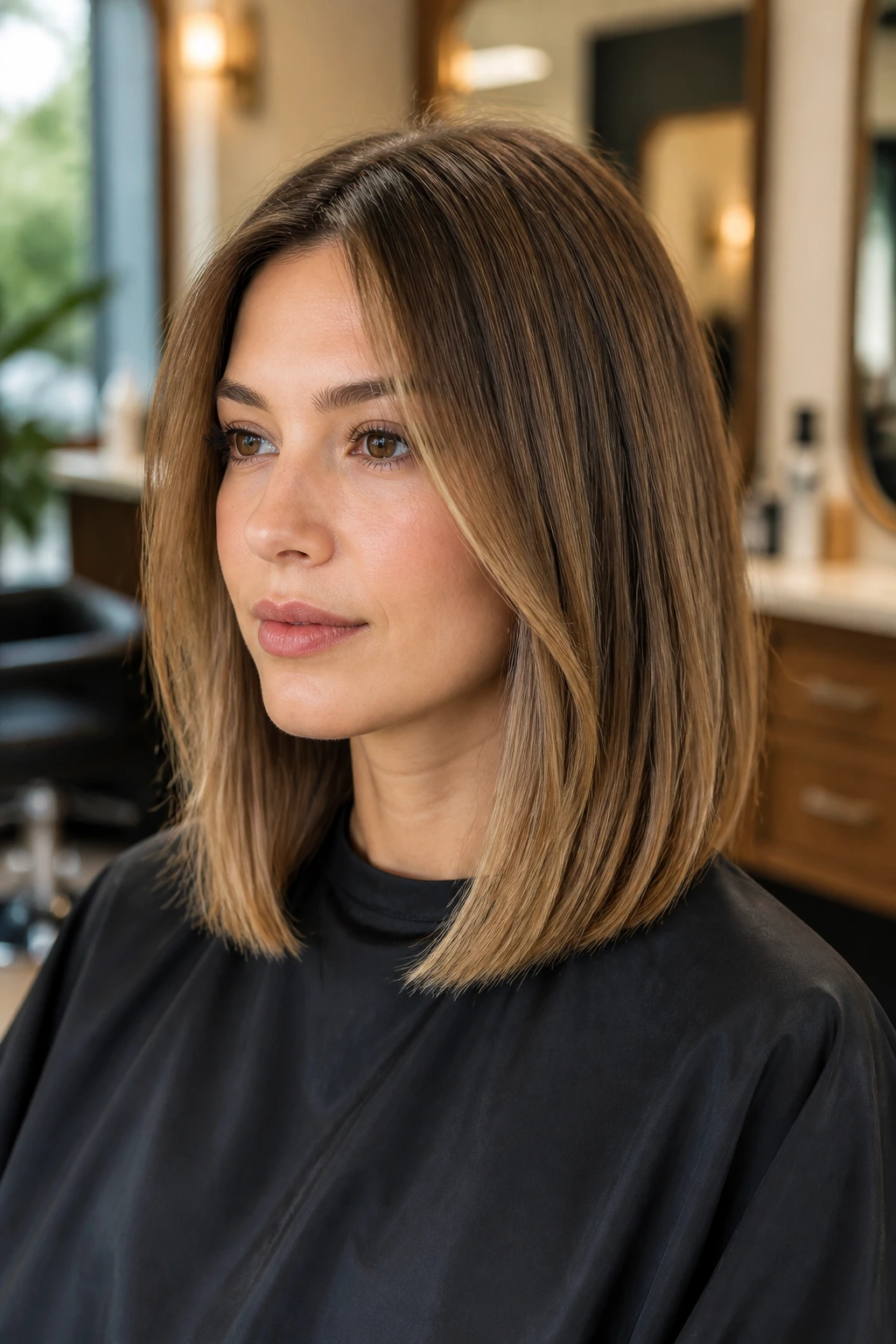
Bring photos, but bring the right photos. One photo of the front, one of the side, and one of the back if you can find it. What you’re trying to show is not a celebrity face — it’s the perimeter, the length, and the amount of layering. That saves everyone time.
Say the length out loud in plain terms: collarbone, just above the shoulders, or one inch below the collarbone. If you want the cut to look full, ask for the perimeter to stay blunt and for any layers to stay low and soft. If you want movement, ask for internal layering rather than surface choppiness. Those words matter.
If your hair has a cowlick, mention it. If one side of the front falls flatter than the other, mention that too. Hairline direction changes where the part should live, and a good stylist will respect that instead of trying to force symmetry the hair doesn’t want.
Which Lob Flatters Which Face Shape and Hairline
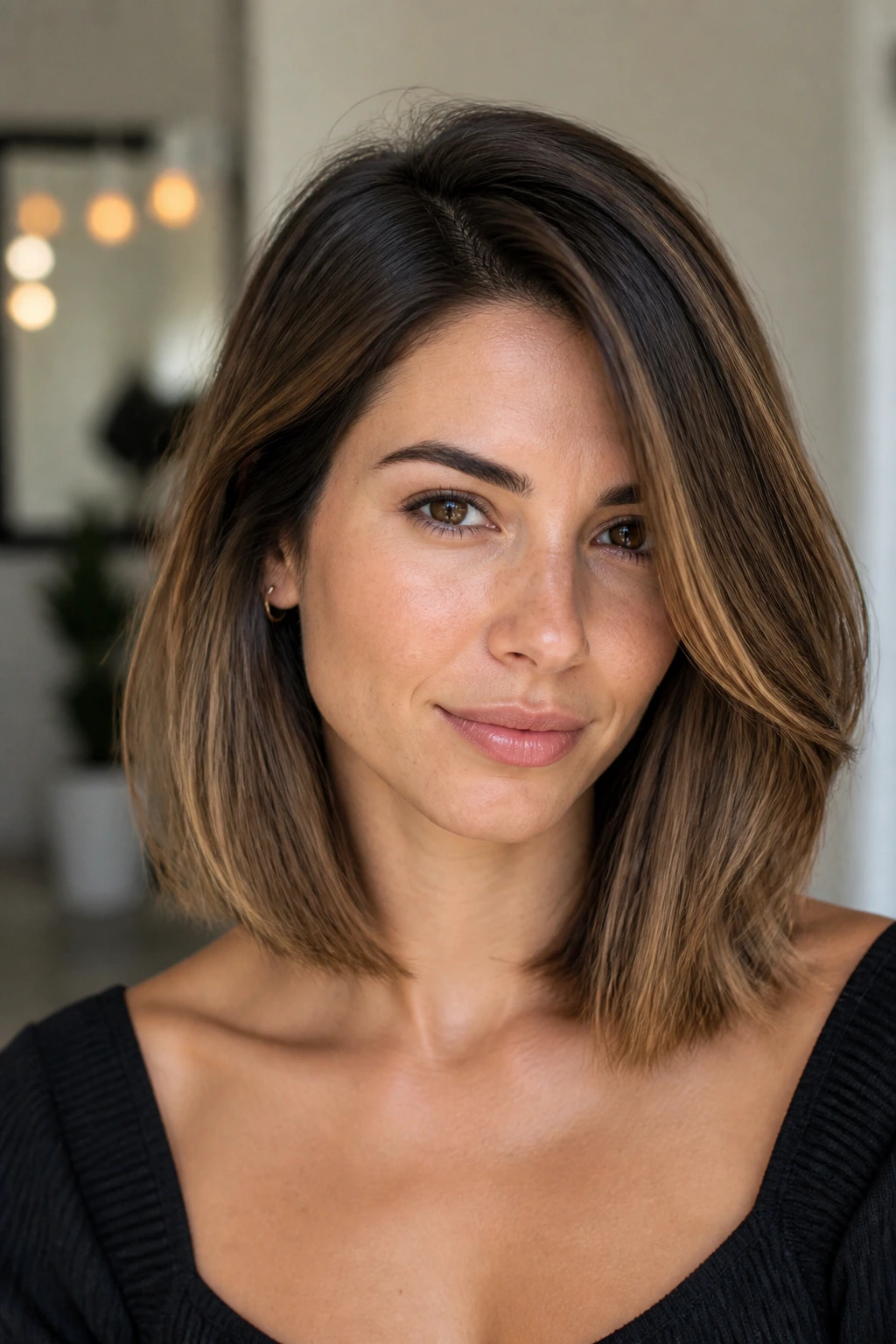
Round Faces
A slight A-line, a deep side part, or a lob with curtain bangs usually adds the right amount of vertical line. The trick is to avoid a blunt line that stops exactly at the widest point of the face. A little angle keeps the haircut from feeling boxy.
Square Faces
Rounded bevels, face-framing pieces, and soft fringe work well here because they take the edge off the jaw without making the cut limp. A harsh straight line can feel severe on a square face, especially if the hair is thin and the cut has no bend. Softness wins.
Long Faces
Bottleneck bangs, U-shapes, and polished blowouts help bring width back into the face. A center part can still work, but it usually needs some fullness at the cheeks. Keep the vertical line from getting too long.
Cowlicks and Hairline Quirks
Hair that splits in one direction every morning should not be bullied into a perfect center part just because a photo said so. Work with the easier side. That alone can make a lob look fuller, because hair that lies naturally tends to sit better at the root and doesn’t fight the rest of the shape.
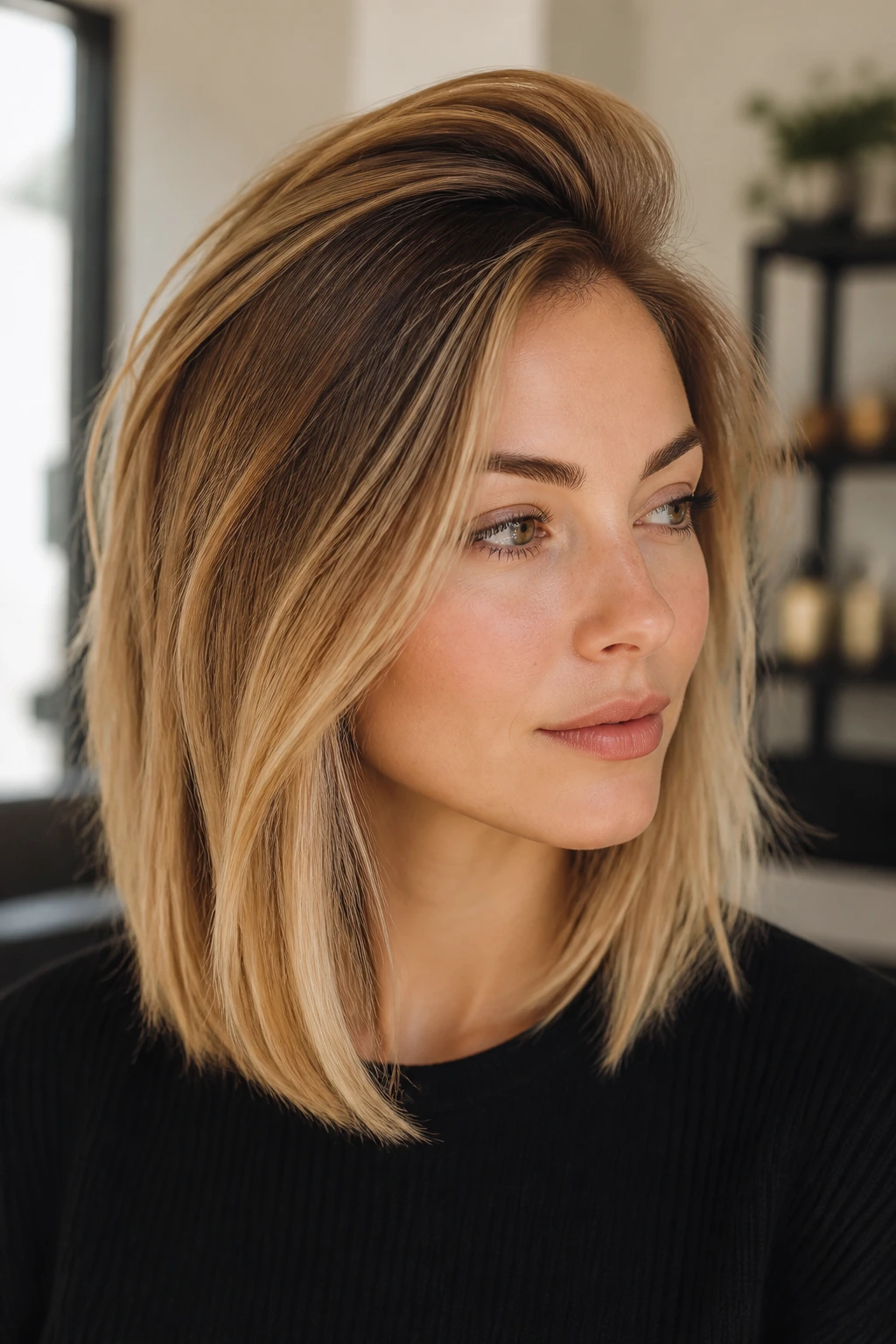
Styling Moves That Add Lift Without Teasing the Crown
Start With the Roots
Use a lightweight mousse or root-lift spray on damp hair, but keep it at the scalp and first inch of length. Don’t drag a heavy cream through the roots. That’s the fastest way to flatten the top before the day begins. Rough-dry until the hair is about 80 percent dry, then go in with a brush.
Shape the Mid-Lengths, Not the Ends
For a lob, the bend should live in the middle, not at the very tips. That means a round brush, a flat iron, or a 1-inch curling iron used from cheekbone level down. Leave the ends calmer than you think. Thin hair looks fuller when the bottom line stays readable.
Cool It Before You Touch It
Heat sets the shape, but cooling locks it in. Pin the crown up for a minute or two while the hair cools, or let the sections rest in loose clips. Then shake it out and add a little dry shampoo at the root, not on wet hair. That last part matters more than people admit.
The Tools and Products That Actually Help
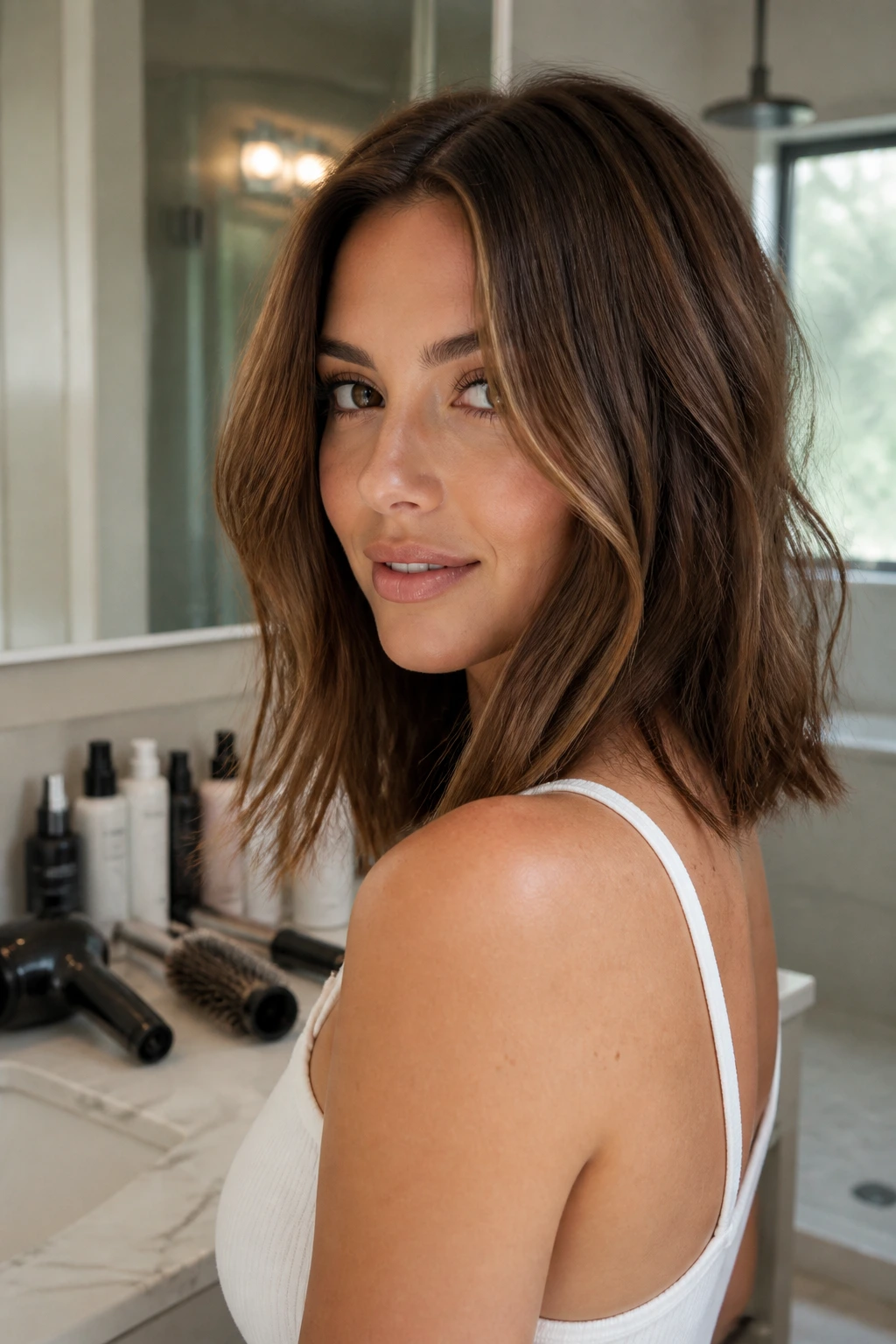
- A dryer with a nozzle attachment: directs airflow where you want it instead of blasting the whole head flat.
- A 1.5- to 2-inch round brush: gives a soft bend without making thin hair look over-curled.
- A 1-inch curling iron or wand: useful for loose waves and mid-shaft body.
- A flat iron with smooth plates: best for a glassy lob or a quick undercurve at the ends.
- Volumizing mousse: adds body at the roots without the tacky feel of old-school thickening creams.
- Root-lift spray: helps the crown keep a little space between strands after blow-drying.
- Heat protectant: non-negotiable if you’re styling with heat more than once a week.
- Dry shampoo: useful for day-two lift and oil control at the crown.
- Duckbill clips or velcro rollers: let the top cool in a lifted position.
- Lightweight finishing serum: tame frizz at the very ends, not near the roots.
- Clarifying shampoo: clears off dry shampoo and styling residue before the cut starts to sink.
Common Mistakes That Make a Lob Look Flat
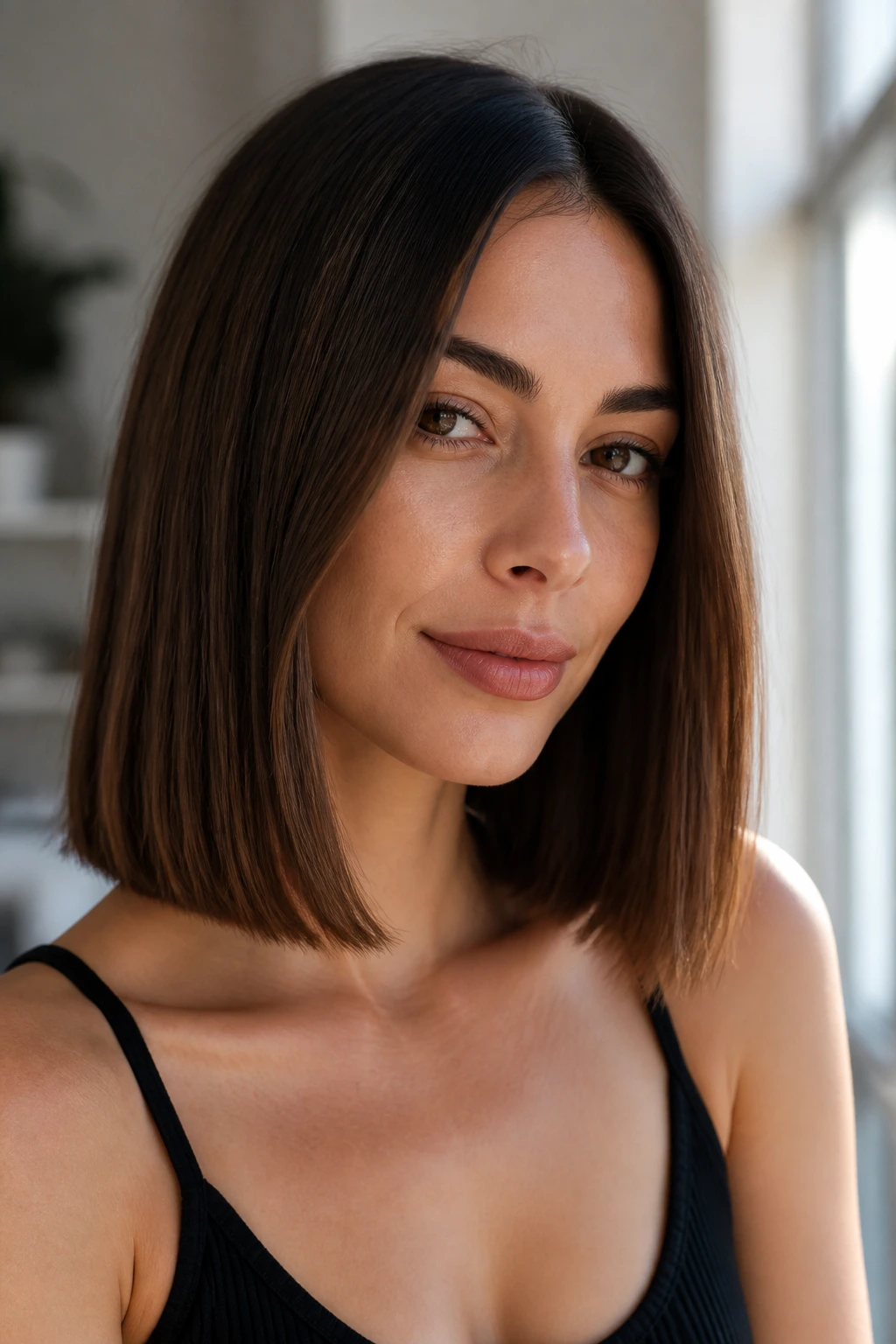
- Cutting it too long: Once the longest pieces drift far below the collarbone, thin hair starts to look like it’s hanging by a thread. The fix is a shorter perimeter, not more product.
- Over-layering the whole head: Too many short layers steal the outline and expose the weak spots. Keep the layers low or hidden.
- Using thinning shears on already sparse ends: The symptom is a wispy, broken edge that won’t hold shape. Ask for blunt cutting or very controlled point cutting instead.
- Loading conditioner at the roots: Hair goes limp, the crown collapses, and the style dies by noon. Condition from mid-lengths down and use less than you think.
- Curling every inch of hair: A fully curled lob can look fluffy in the wrong way on long thin hair. Leave the ends calmer and keep the bend in the middle.
- Skipping trims for too long: The haircut stops looking like a lob and starts looking like old hair. Dust the ends regularly so the line stays clean.
Variations and Adaptations to Try
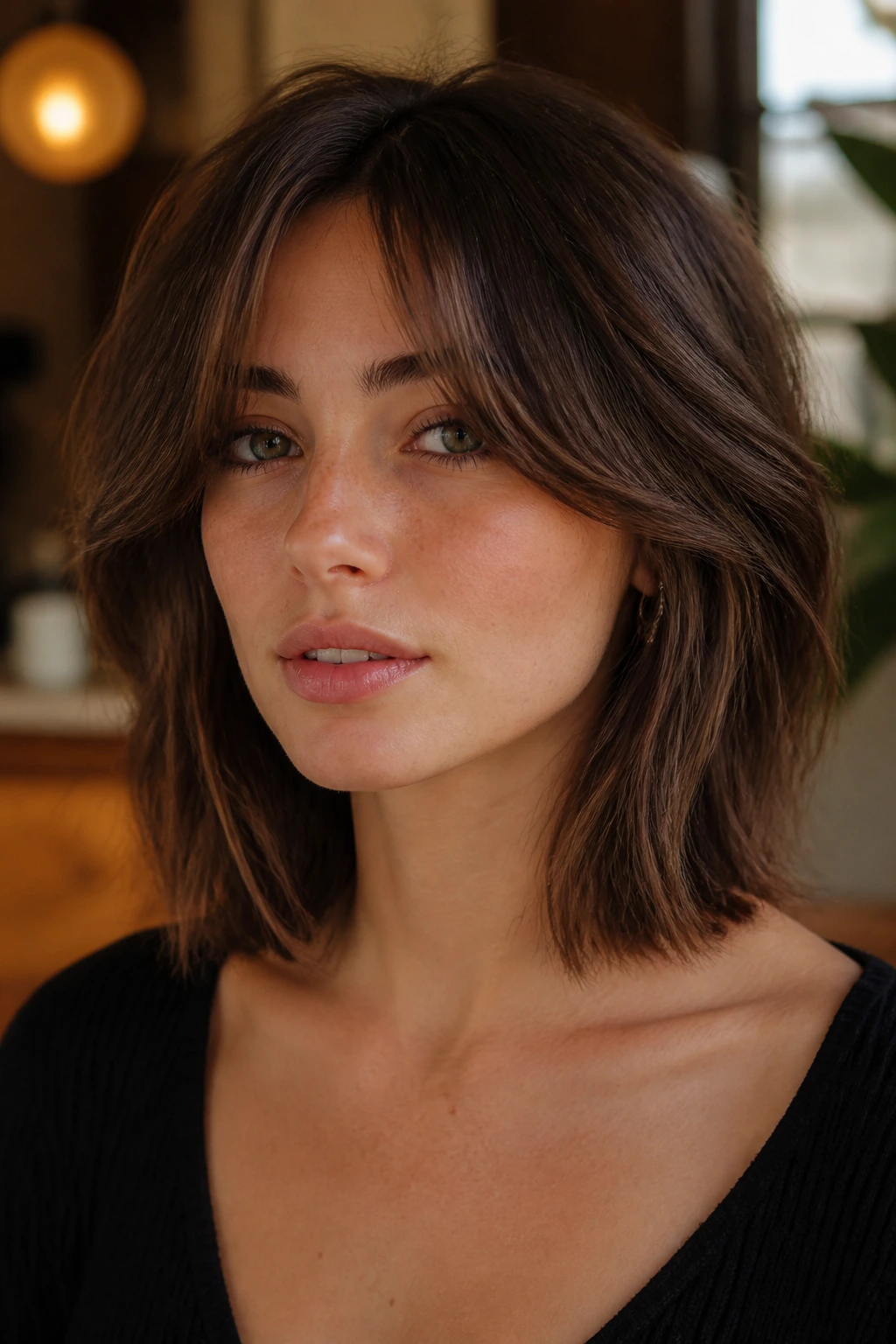
- The Bare-Bones Blunt Lob: Keep everything one length, just at or above the collarbone. This is the safest bet for very fine or sparse hair, because the edge stays strong and the shape stays readable.
- The Soft Curtain Lob: Add curtain bangs and a mild face frame if you want movement around the eyes and cheekbones. The rest of the haircut can stay simple, which keeps the density where it counts.
- The Side-Flip Lob: Build the cut around an off-center or deep side part. This is the one to ask for if one side of your hair always lies flatter than the other.
- The Shag-Lite Lob: Choose soft, low layers and a little surface texture if your hair has natural wave. It gives movement without turning the ends into confetti.
- The Glossy Blowout Lob: Shape the haircut for round-brush styling, with beveled ends and a little lift through the front corners. If you like polished volume, this one earns its place.
Keeping Your Lob in Shape Between Trims
Trims and Shape
Plan on a trim every 6 to 8 weeks if you want the bottom line to stay full. If you’re growing it out, you can stretch a little longer, but once the ends start looking stringy or kicky, the shape is asking for a dusting. Not a whole new haircut. Just a clean-up.
Wash Days and Product Buildup
Long thin hair gets weighed down fast, so a gentle wash rhythm matters. A lot of people do better washing every 2 to 4 days, depending on oil and styling product. Use clarifying shampoo about every 2 to 4 weeks if dry shampoo starts building up at the roots or the hair feels coated.
Night and Morning Care
Sleep on a silk pillowcase if tangles or frizz bother you. It’s not magic, but it cuts down on roughness. In the morning, revive the roots with a little dry shampoo and clip the crown up for a few minutes while you get dressed. That tiny pause can save the whole shape.
Frequently Asked Questions About Lob Haircuts for Long Thin Hair
Is a lob better than long hair for thin hair?
Usually, yes. A lob removes the weakest-looking ends and moves the visual weight up to a length where the hair still has enough density to read as full. If your hair gets stringy below the shoulders, a lob is often the cleanest fix.
Should long thin hair have layers?
Sometimes, but not many. Hidden or low layers can help movement, yet too much layering steals the outline and makes the ends look sparse. If density is already low, keep the perimeter stronger than the interior.
What is the best lob length for thin hair?
Collarbone length is the sweet spot for a lot of people. It gives enough length to tuck and wave while keeping the ends from hanging too far from the scalp. If your hair is very fine, a touch shorter can look even denser.
Can I get a lob if my hair is wavy?
Yes, and wavy hair often looks excellent in a lob because the movement happens naturally. Ask your stylist to account for shrinkage and keep the bottom line solid. Too many short layers can make wavy hair expand in odd places.
Do bangs make a thin-hair lob look fuller?
They can, if the fringe is light enough to suit the density. Curtain bangs, bottleneck bangs, and soft side-swept bangs usually work better than a heavy straight bang. The goal is to add shape, not to steal volume from the sides.
How often should I trim a lob on long thin hair?
Every 6 to 8 weeks is a good rhythm if you want the line to stay sharp. If you’re growing it out, you can stretch a bit longer, but don’t let the ends fray so much that the haircut loses its outline. That’s when it starts looking tired.
What if my hair flips out at the shoulders?
Then the length or the bevel probably needs adjusting. A slightly shorter lob, a more rounded edge, or a deliberate undercurve usually fixes the problem. Sometimes the smallest change — half an inch, maybe less — is the one that stops the flip.
Should I avoid thinning shears?
If your hair is sparse, yes, most of the time. Thinning shears can leave the ends see-through and patchy, which is the opposite of what long thin hair needs. If texture is needed, ask for controlled point cutting instead.
A Shape That Keeps Its Lines
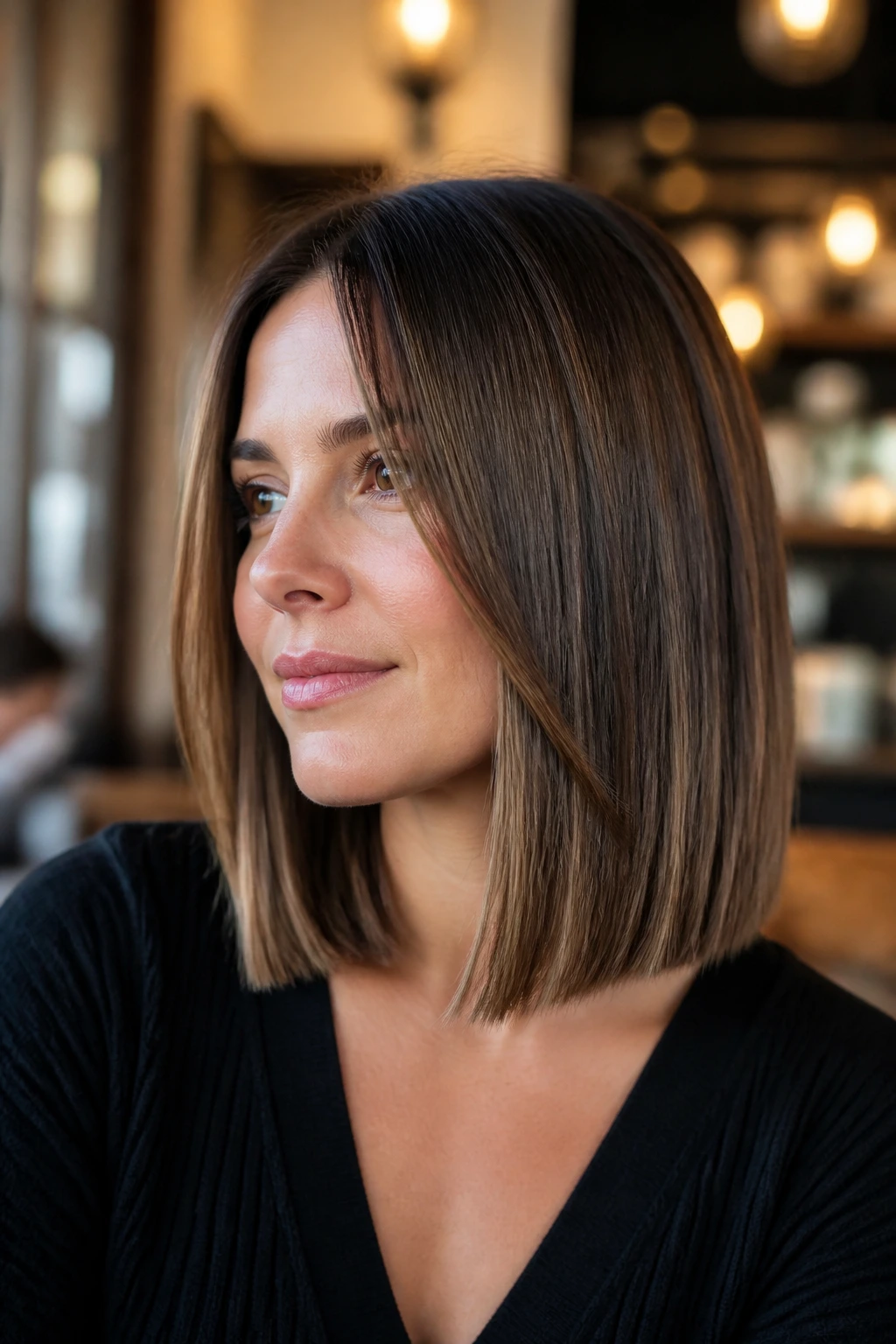
A good lob doesn’t fight thin hair. It edits it. That’s why these cuts work: they keep the outline where the eye wants to land, then make small choices about angle, fringe, or layering instead of trying to solve everything with one dramatic chop.
If your hair has been looking a little too long, a little too wispy, or a little too dependent on styling tricks, the answer probably isn’t more length. It’s a better line. The next time your ends start to feel tired, you’ll know exactly which lob to ask for — and why it belongs there.
