



A blonde bob can turn flat in a hurry if the color is one-note and the cut has no internal movement. The same length that looks sharp in the chair can look heavy at home by lunch, especially when the ends are blunt and the blonde is all one shade. That’s why blonde bob cuts with highlights work so well when they’re done with some thought: the highlights break up the shape, the shape keeps the color from reading stripey, and the whole thing feels lived-in instead of stiff.
I’ve always liked bobs that show a little engineering. Not the fussy kind. The useful kind. A good bob has to sit clean at the jaw, the cheek, or the collarbone, and the highlight placement has to support that line instead of fighting it. Put bright pieces in the wrong spot and the cut can look wide, puffy, or oddly boxy. Put them in the right spot and even a simple one-length bob suddenly has bend, lift, and a bit of attitude.
The trick is that “blonde” is not one note. It can lean icy, beige, honey, pearl, champagne, buttercream, or rooty and soft. Highlights can be fine babylights, thicker ribbons, a heavy money piece, or scattered foils hidden under the top layer. Those choices change the mood completely. And on a bob, the difference is visible fast.
Why These Blonde Bob Cuts Feel So Fresh
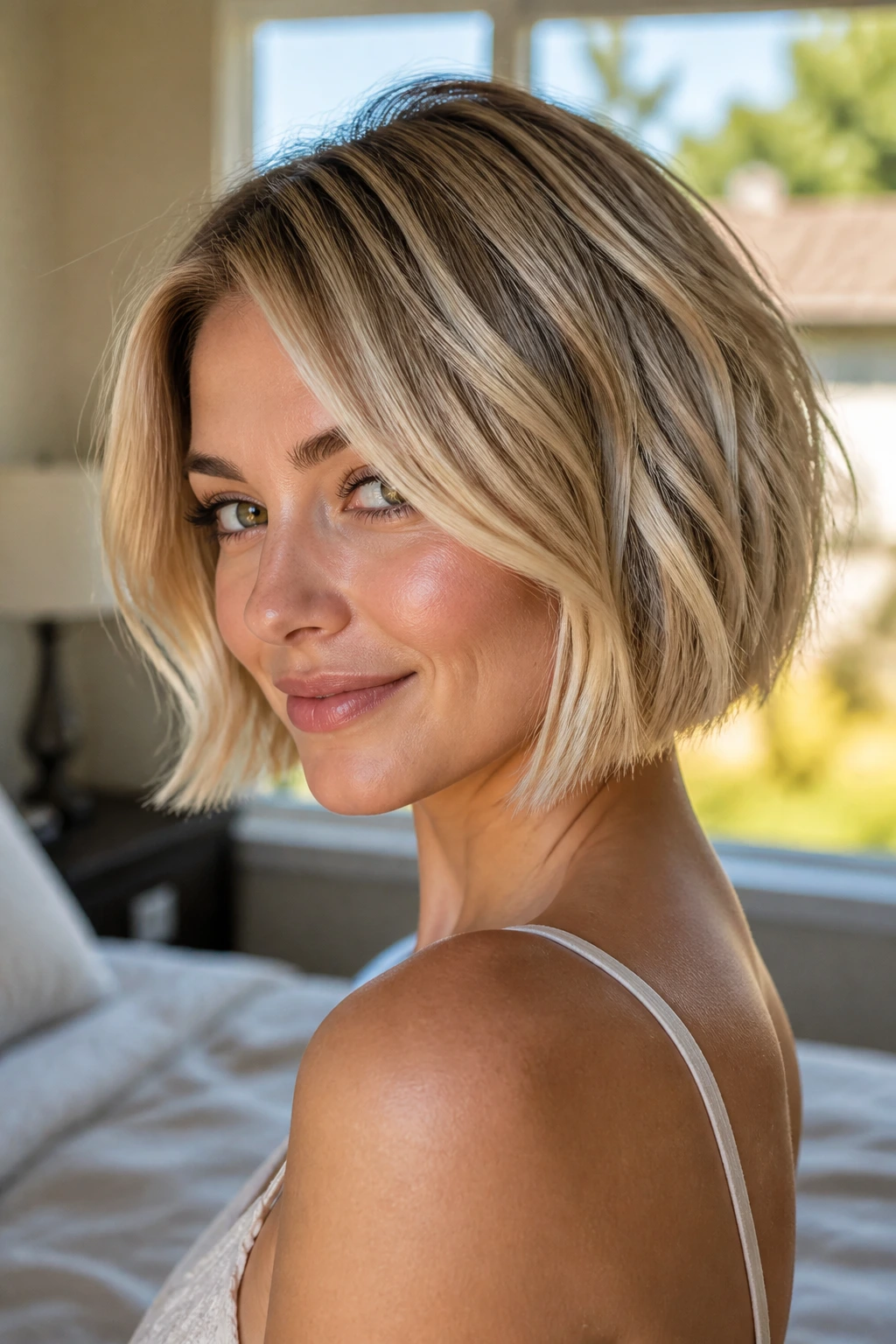
-
Shape does half the work: A bob gives the highlights a clean edge to play against, so the color reads more intentional than it does on longer hair where everything melts together.
-
Highlight placement matters more than going lighter: A few well-placed ribbons at the temples or crown can make the whole cut move; dumping blonde everywhere usually just makes the ends look dry.
-
There’s a version for almost every texture: Fine hair, dense hair, straight hair, waves, and curls all get a useful option here, because the cut length and highlight density can be adjusted.
-
Grow-out can be gentle: Root shadow, babylights, and face-framing foils let the blonde soften over time instead of screaming for attention after a few weeks.
-
Styling stays flexible: These cuts can be polished with a round brush, bent with a flat iron, or left a little rough around the ends without losing their shape.
-
The right tone changes the whole mood: Butter, beige, pearl, and icy blonde all change how the bob sits on the face, which is why tone choice matters just as much as the cut line.
1. Champagne Ribbon Chin Bob
A chin-length bob with champagne ribbons has a way of making the jawline look cleaner without trying too hard. The cut is short enough to feel crisp, but the highlights keep it from reading like a helmet. I like this one best when the color is placed in thin ribbons around the cheekbones and top layers, not shoved into the very ends.
Why It Works on Short Hair
The chin length gives the highlights a place to land. When a bob stops right at the jaw, even small changes in tone become visible, which is exactly why narrow champagne foils work better here than chunky streaks. The color catches on the curve of the cut and makes the shape look softer without making it vague.
This cut is especially good on fine to medium hair that needs a little lift at the sides. Keep the nape slightly tucked and the perimeter neat. Too much layering will fight the clean line, and too much blonde down below will dry out the ends faster than you’d like.
- Best placement: Thin foils at the temples and crown.
- Best finish: A round-brush bend with the ends curved under.
- Best tone: Champagne or beige blonde with a soft root shadow.
- Best hair type: Straight or slightly wavy hair that sits close to the head.
Tip: Ask for the lightest pieces to stay above the cheekbone. If the ends are packed with blonde, the cut loses that tidy chin-skimming shape.
2. Buttercream French Bob
A French bob gets especially good when the blonde turns soft and buttery instead of stark. The fringe sits lightly on the forehead, the ends hit higher on the neck, and the highlights do a little work around the face without stealing the whole show. It looks casual, but not lazy. There’s a difference.
The buttery tone matters because this cut is already compact. If the blonde goes too icy, the bob can start to look harsh at the fringe and too sharp at the edge. Buttercream ribbons keep the line friendly. They also make a short bob feel less severe when you wear it with a bare face, a striped shirt, or a messy knit.
I’d ask for the highlights to stay fine through the bangs and a touch brighter at the temples. That keeps the fringe from looking blocky. A soft blowout with a small round brush finishes it properly; the fringe should move, not sit there like a curtain rod.
One more thing: this is a cut that rewards a little bend at the ends. Perfectly straight makes it fussier than it needs to be.
3. Sandy Angled Bob
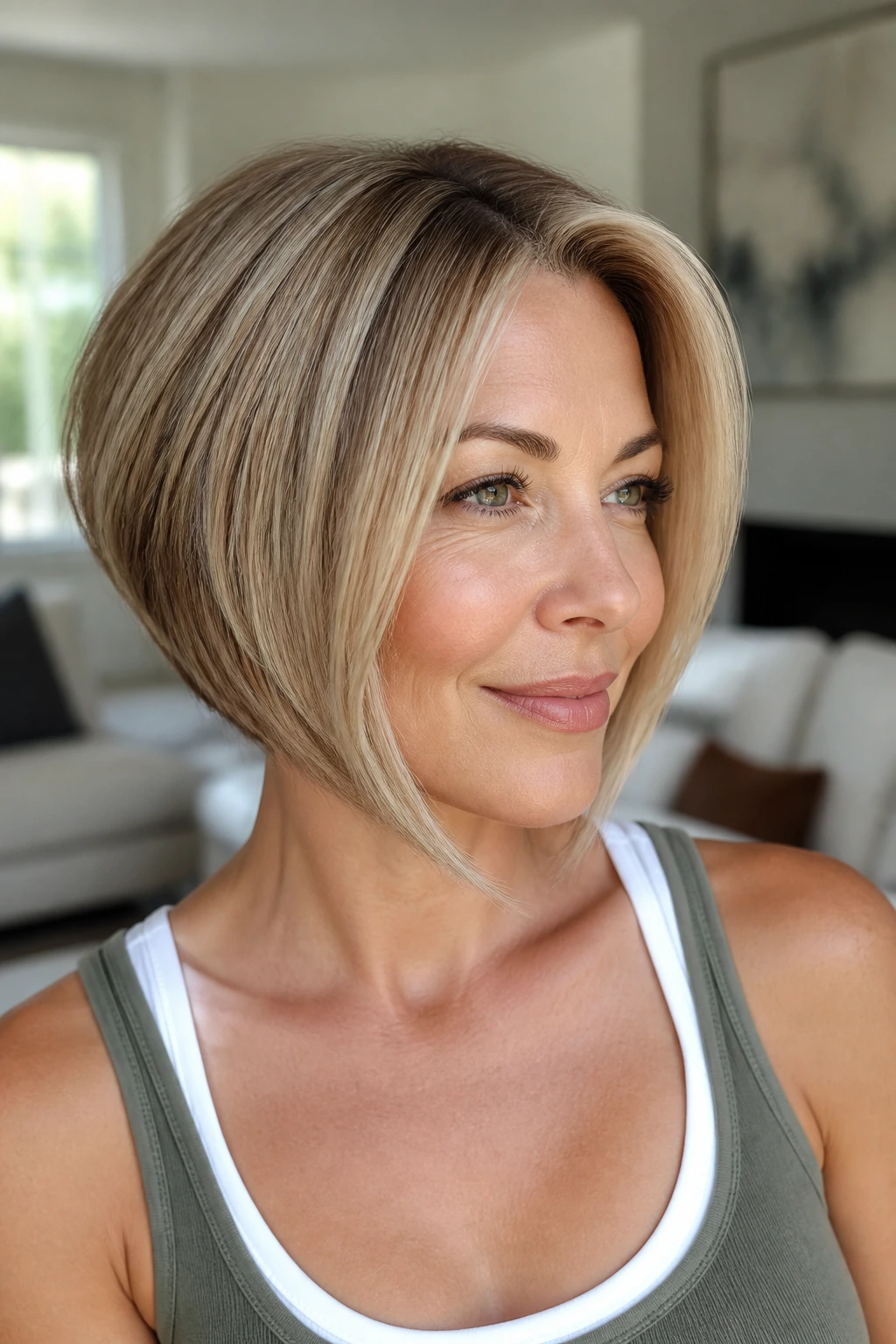
Why does an angled bob make highlights look cleaner than the same blonde on a straight line? Because the longer front pieces act like a frame, and the shorter back gives the color a built-in slope. That slope changes how the light hits the cut. It’s a small thing, but it’s the whole thing here.
On thick hair, this shape takes weight out of the back without making the front feel wispy. Sandy and beige highlights work best because they echo the soft angle instead of fighting it. A blunt platinum streak on an angled bob can look a little loud. Sandy ribbons feel more believable.
How to Wear It
Ask your stylist to keep the front roughly at the jaw or just below it, with the back staying shorter and slightly stacked. That way the highlights don’t just sit on top; they follow the cut’s slope. I like this with a side part, because the front edge gets a little sweep and the color looks more dimensional.
If you wear your bob tucked behind the ears, keep a few brighter pieces at the front corners. They stop the tuck from swallowing the shape.
4. Icy Blunt Bob
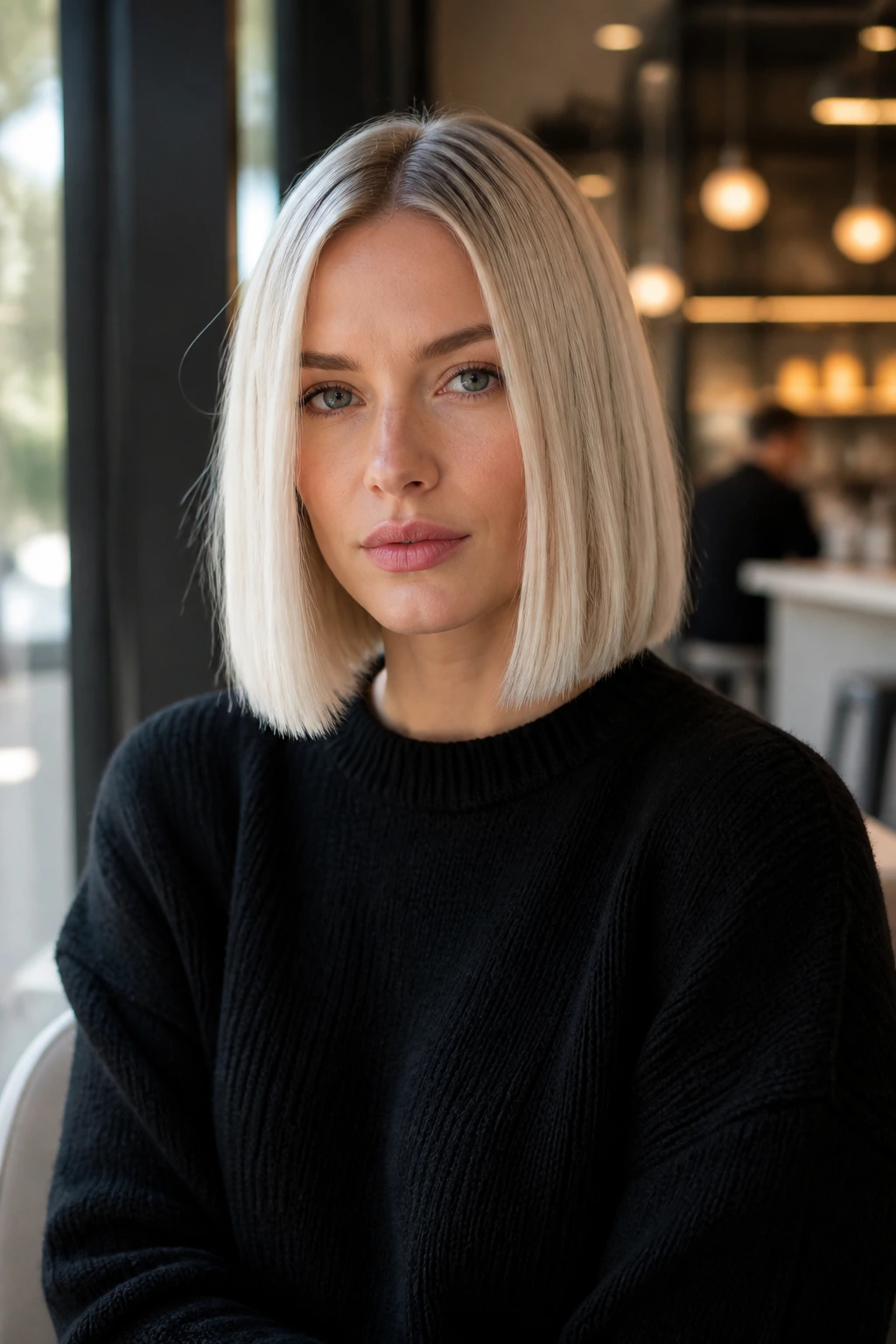
If your hair falls straight and you want the color to show without a lot of styling, the icy blunt bob is the one that earns its keep. The line is clean, the ends are even, and the cool blonde slices through the shape instead of melting into it. It’s sharp. That’s the point.
The catch is that this cut has to be precise. A blunt bob with sloppy highlights looks wide and unfinished. A blunt bob with icy ribbons, though, has a polished edge that looks deliberate even when the styling is minimal. Keep the foils fine and evenly spaced through the top layer, then let the underlayer stay a touch deeper so the cut doesn’t disappear into a sheet of pale hair.
- Best for: Straight or lightly waved hair.
- Best part: Center or slightly off-center, never too deep.
- Best tone: Cool pearl, silver-beige, or pale ash blonde.
- Best styling move: A flat iron bend only at the last inch.
The strongest version of this cut stays sleek at the crown and slightly curved under at the ends. If you over-layer it, the whole thing loses its clean hit of light. Keep it simple.
5. Honey Layered Lob
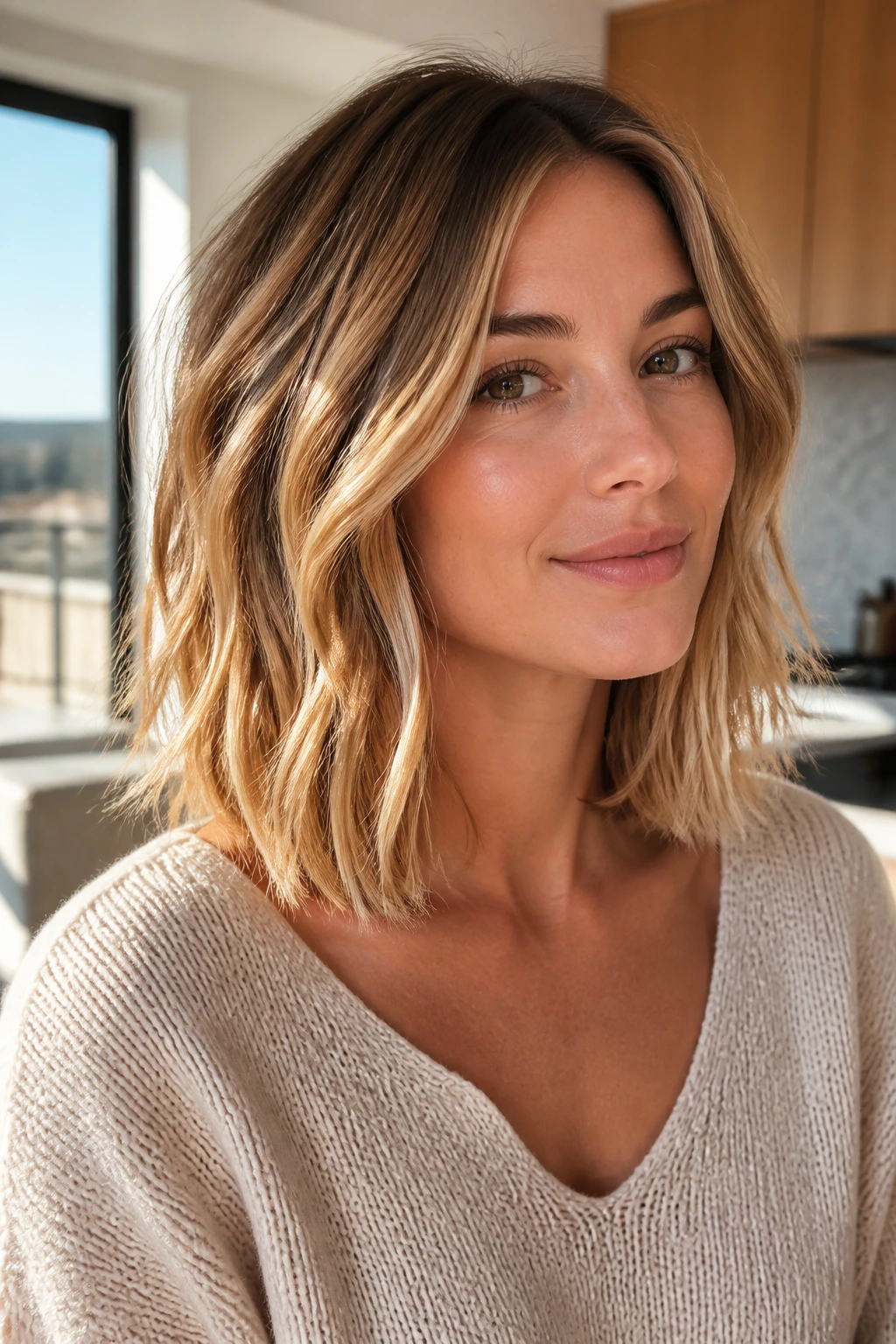
A collarbone-length lob with honey highlights is the easiest style on this list to live with, and I mean that in the nicest way. The length gives you enough hair to tuck, wave, or pin back, while the layers keep the ends from hanging like a wet towel. Honey ribbons make the movement visible even when the hair is air-dried.
This is the version I’d choose for someone who likes softness more than structure. The cut can be slightly feathered through the mid-lengths, but not shredded. You want enough shape to stop the hair from collapsing, not so much that the outline starts looking broken. Honey blonde works because it brings warmth into the bend of the hair, especially around the face and shoulders.
The best thing about this lob is how it behaves with second-day texture. A little wave spray, a quick scrunch, and the highlights start to separate naturally. You don’t have to force much. That’s a relief on busy mornings, though I know “busy mornings” gets overused. Here, it’s practical because the cut genuinely stays usable when it’s not freshly styled.
6. Rooty Money-Piece Bob
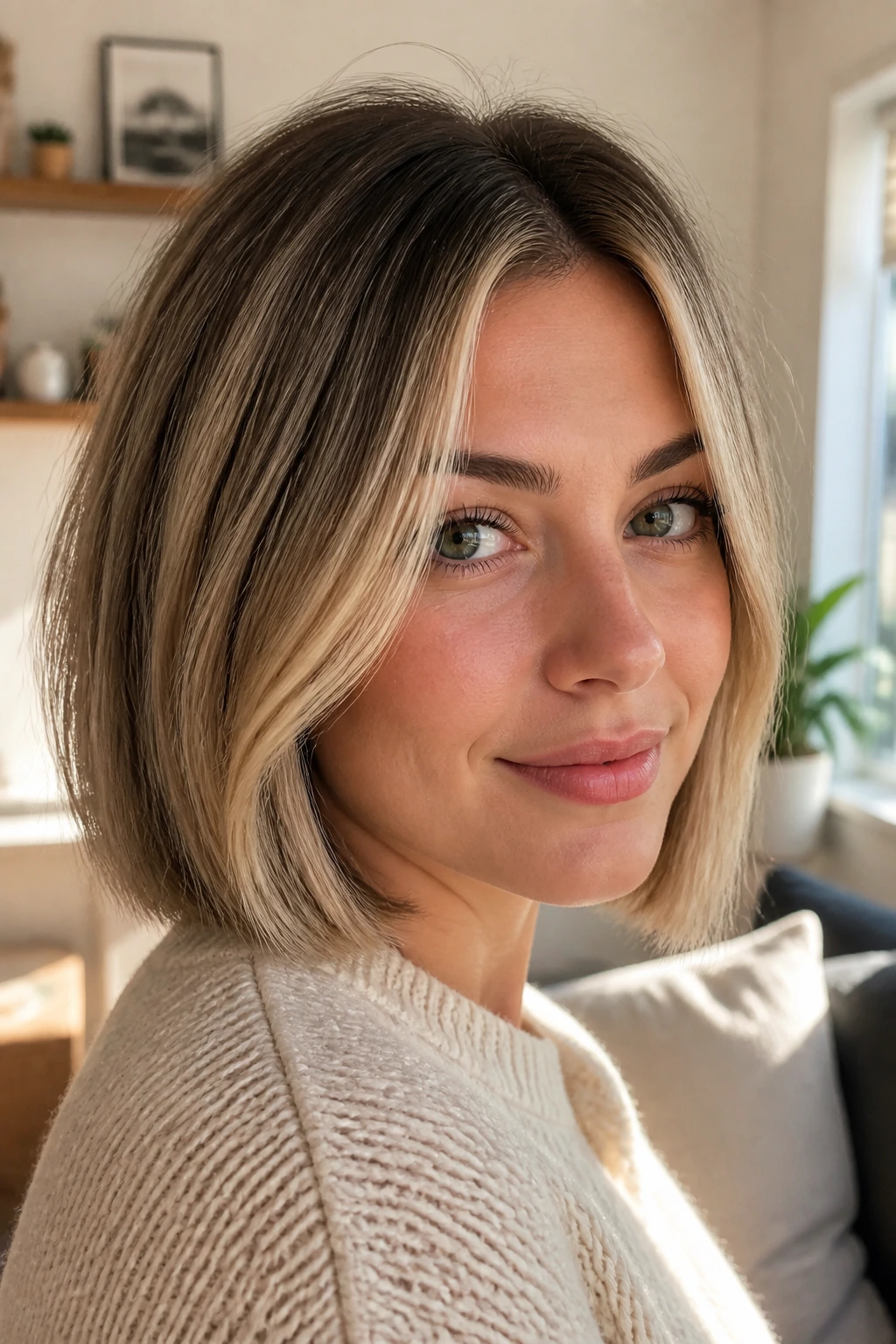
This one is for people who like brightness at the front but do not want to live in the salon chair. The root stays a shade or two deeper, and the money piece near the face takes the lightest blonde. That contrast is what keeps the bob from going flat between visits.
Unlike all-over blonde, a rooty money-piece bob gives you a little shadow where it helps most. The crown reads fuller, the face looks brighter, and the grow-out line has somewhere to land. It’s one of my favorite choices for glasses wearers, too, because the light at the temples frames the face instead of disappearing behind the frames.
Choose this if you want a bob that stays readable after a few weeks. A straight blowout shows the front streaks cleanly, but even a loose wave works because the deeper root creates separation. Keep the brightest pieces near the face and leave the back quieter. That’s what makes it look expensive without making it loud.
7. Pearl-Gloss Curved Bob
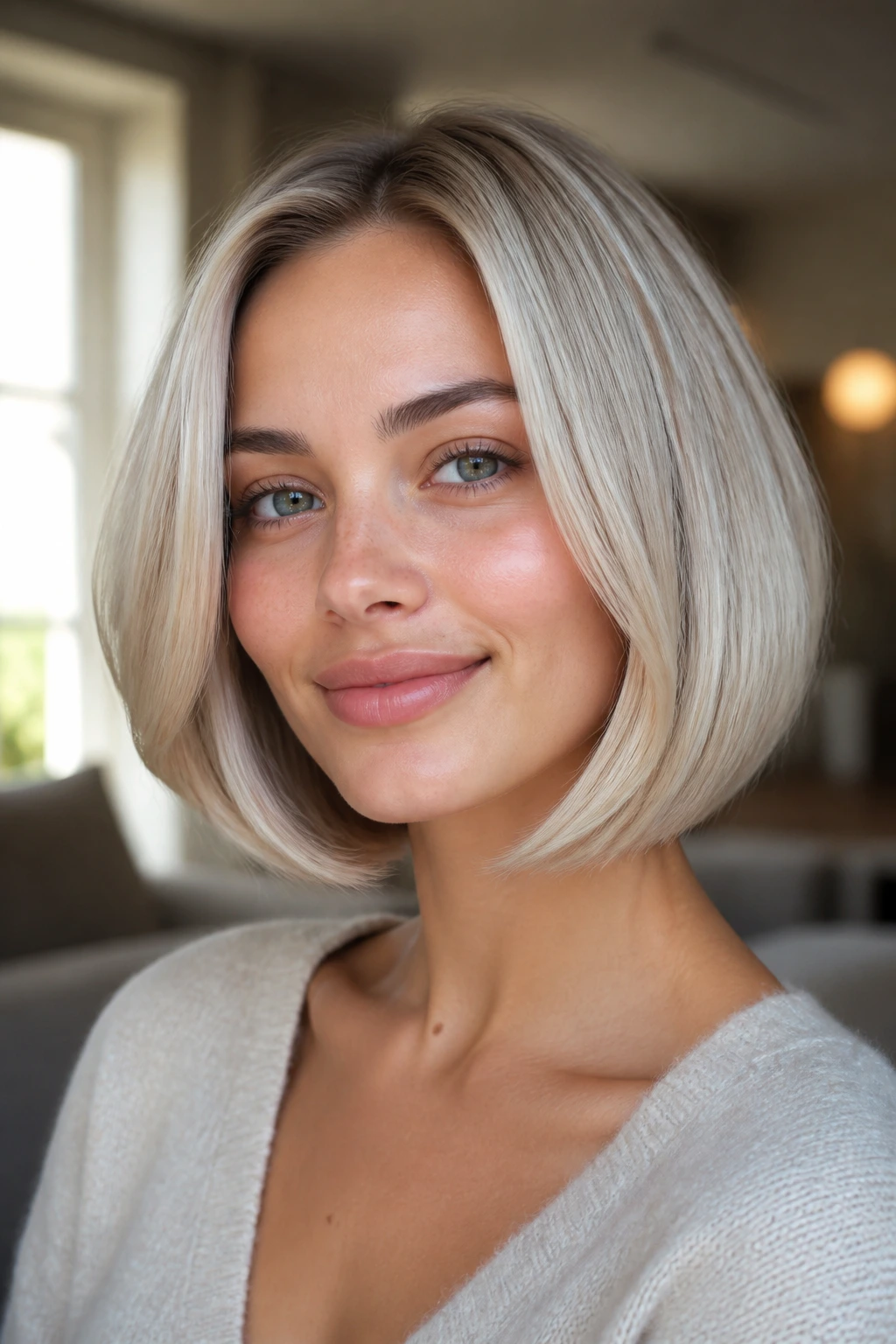
A curved bob with pearl-gloss highlights feels polished in a way that straight, flat blonde hair rarely does. The ends tuck inward just enough to follow the shape of the head, and the pearl tone keeps the light soft instead of chalky. It’s a neat cut, but it doesn’t look stiff when the highlight placement is right.
Why It Works on Rounded Shapes
The curve matters more than most people think. When the bob hugs the cheeks and nips in toward the jaw, the pearl highlights land on the rounded surface and pick up shine from the blow-dry. That makes the cut look fuller without making it puff out.
Thin highlights around the crown help lift the top half of the style, while slightly thicker pieces near the front stop the shape from looking plain. If you want a bob that still looks good after it gets a little air-dried, this one has enough structure to survive the day.
- Tone: Pearl, ivory, or soft beige blonde.
- Part: Center part for symmetry or a very soft side part.
- Styling tool: Medium round brush for that inward curve.
- Color note: Keep the brightest pieces around the outer face frame.
Small but important: Do not overdo hairspray here. A pearl-toned blonde looks best when it still moves a little.
8. Mushroom Blonde Stacked Bob
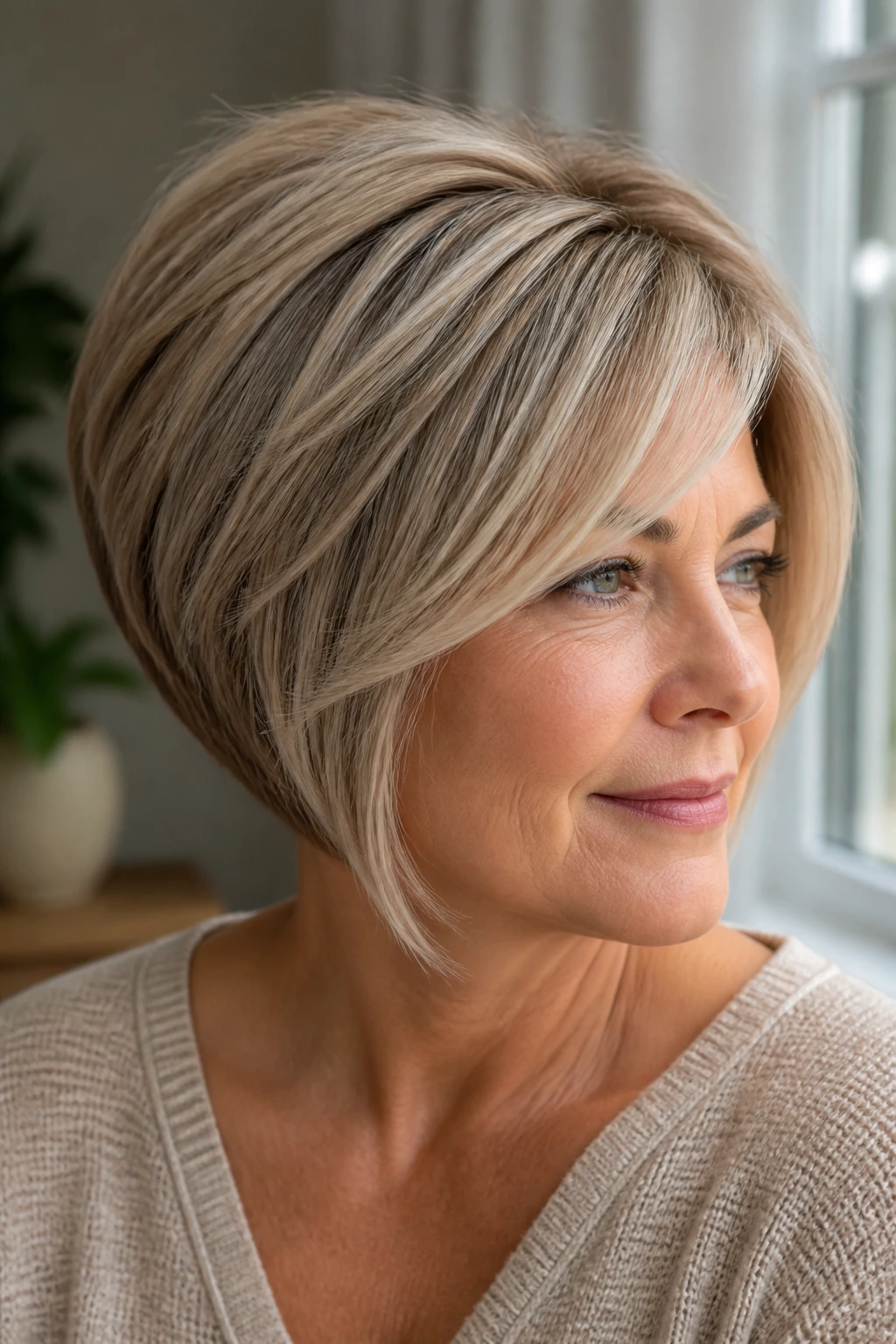
Not every blonde needs warmth to feel soft. A mushroom blonde stacked bob proves that point fast. The color sits in that cool beige zone, and the back is stacked just enough to give the crown lift without turning the shape into a wedge. It’s tidy, but not severe.
The stacked cut removes weight where thick hair tends to puff out. That alone changes how the highlights read. On a flat one-length bob, cool beige pieces can look quiet. On a stacked bob, they start to catch the bend in the hair and show off the shape line by line.
This works best when the top layer stays a little brighter than the underlayer. You get the illusion of density at the top and air underneath. If the back gets too light, the stack can look carved in a way that feels dated. Keep the beige tone steady and the shape will do the rest.
I’d choose this for someone who likes order in a haircut. It’s one of the more structured options here, and that’s the charm.
9. Caramel Swirl A-Line Bob
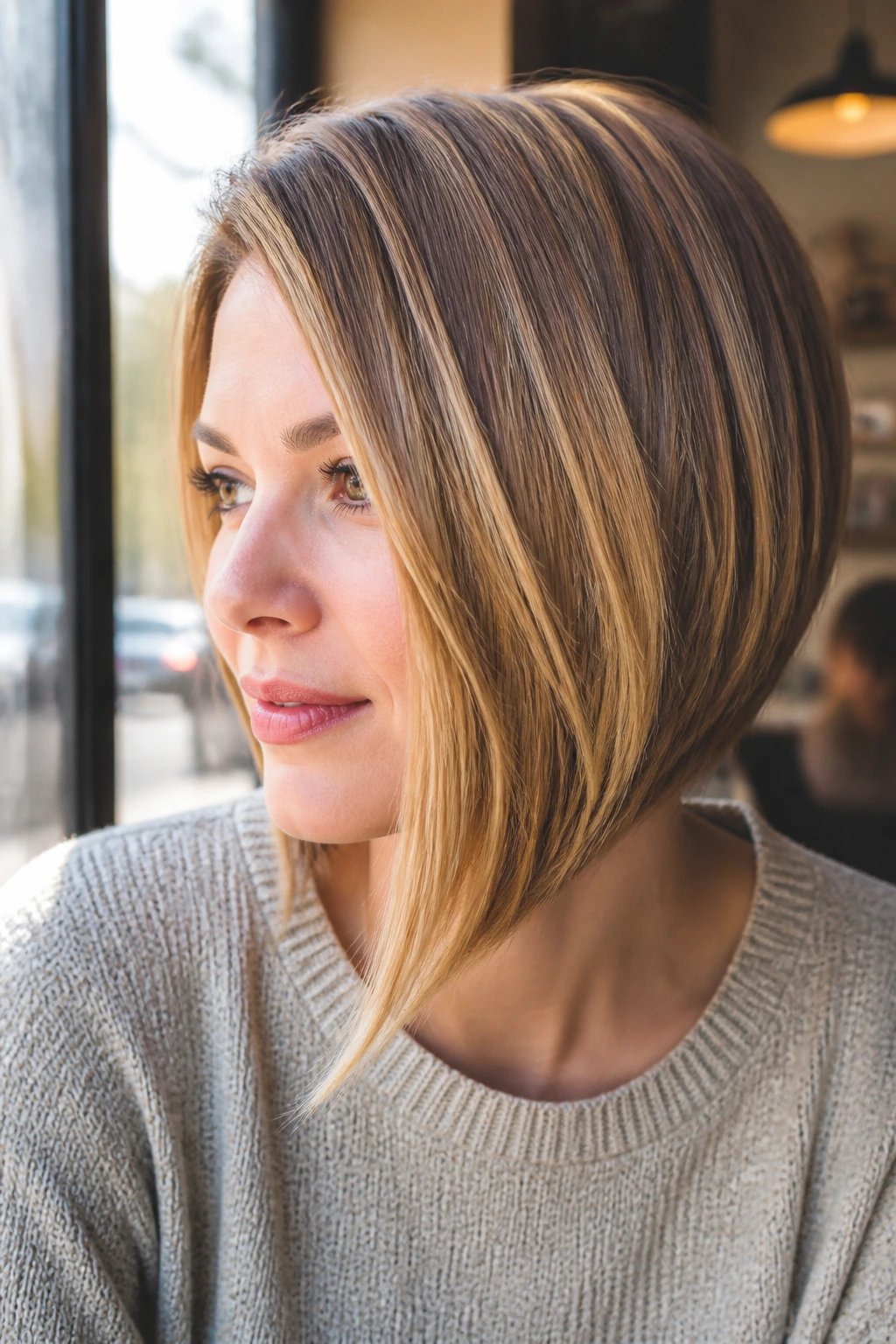
What happens when an A-line bob gets caramel ribbons tucked through the interior? The front starts to look longer, the back stays neat, and the color follows the line instead of sitting on top of it. That’s the appeal. The bob moves from dark-to-light in a way that feels natural, not overdrawn.
The A-line shape gives the highlights a built-in sweep, so the front pieces look like they’re catching daylight every time you turn your head. Caramel is a smart choice if you don’t want the blonde to feel icy or flat. It softens the edge of the cut and makes the ends look richer.
How to Wear It
Keep the front length around the collarbone if you want more swing, or shorten it to just below the chin for a sharper finish. The highlight ribbons should be visible from the side, not just from the front. That matters. An A-line bob only looks good when the angle can be read from more than one view.
This is a strong pick for thick hair because the front length gives the weight somewhere to go.
10. Curtain-Bang Blonde Bob
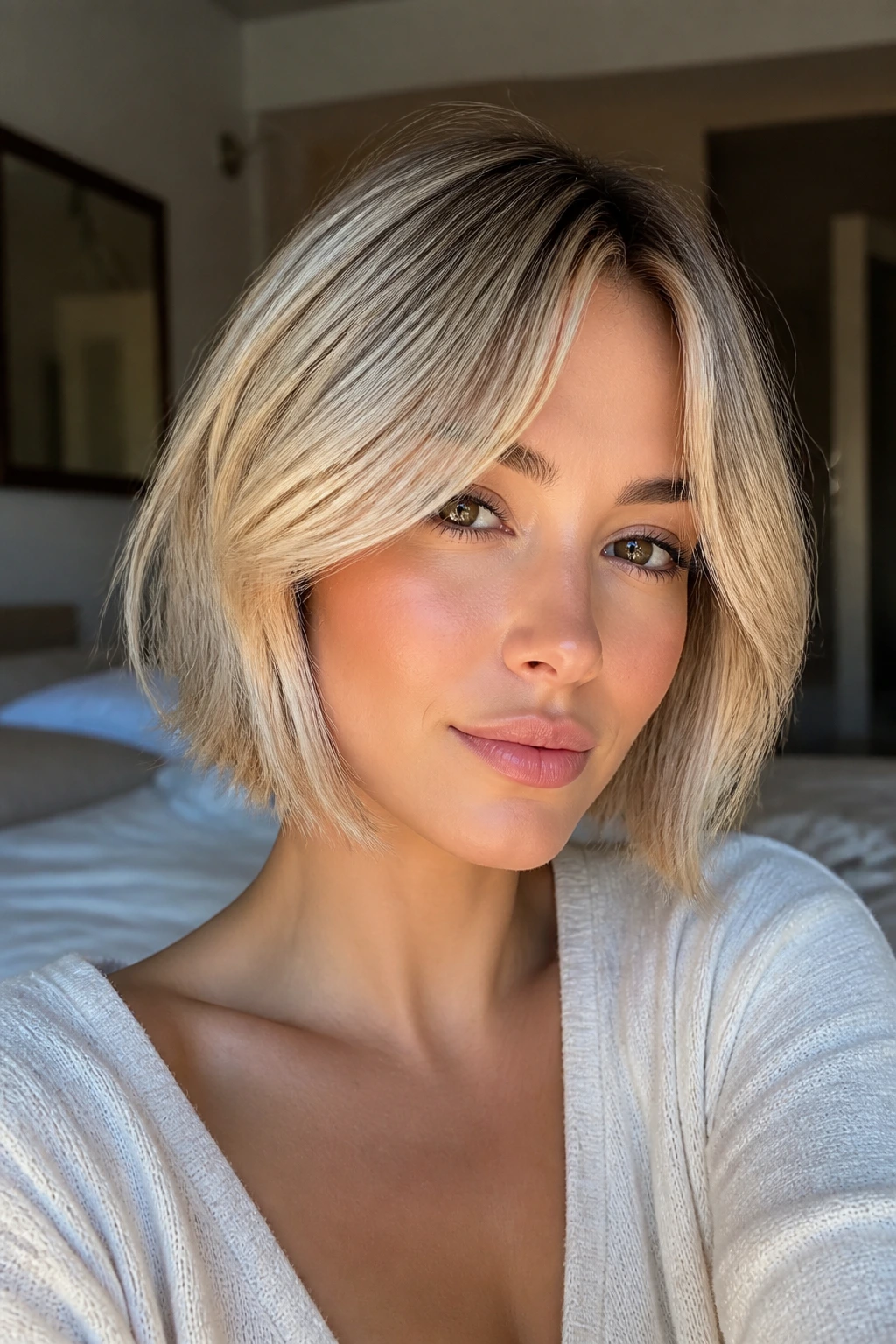
A bob with curtain bangs can be a little too cute if the color is too soft, and a little too severe if the blonde is too bright. The sweet spot sits somewhere in the middle. Thin babylights through the fringe and brighter pieces at the cheekbones keep the face open while the bob holds its shape.
If you’ve ever watched curtain bangs split and hang in a clumpy way, you already know why highlight placement matters. The lighter pieces help separate the fringe so it falls in a cleaner arc. The bob underneath can stay slightly blunt or a touch layered, depending on how much movement you want.
- Best fringe length: Brow to cheekbone, depending on face shape.
- Best highlight technique: Babylights plus a few face-framing foils.
- Best styling method: Blow-dry the bangs first with a small round brush.
- Best finish: A soft bend through the mids, not a curl.
The whole cut looks best when the bangs move away from the center and the ends of the bob stay neat. If either part gets too heavy, the shape starts to close in on itself.
11. Beach-Wave Textured Bob
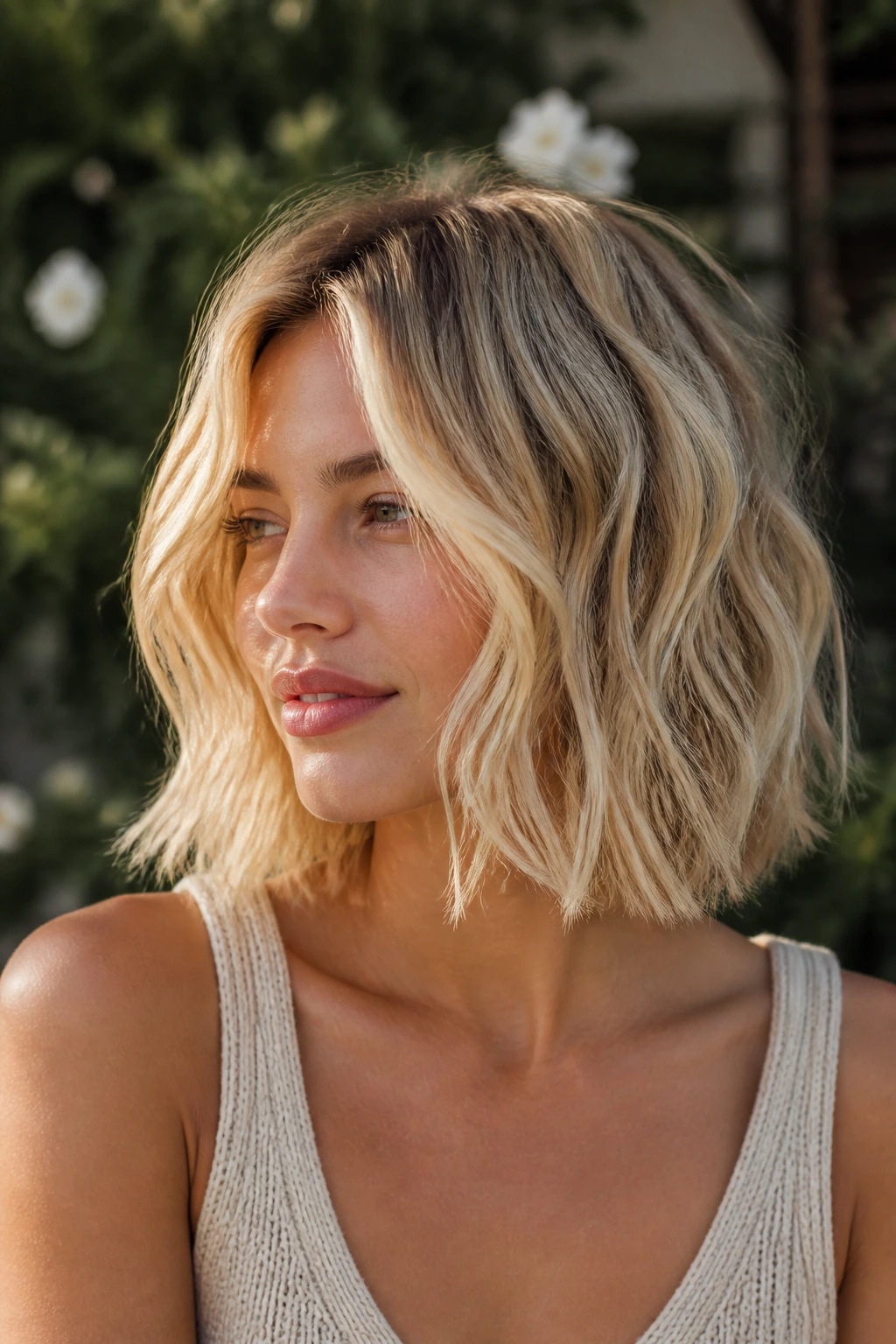
A textured bob with beach waves has one job: make the blonde look sunlit without looking fried. The cut sits somewhere between airy and chipped, with ends that were clearly thinned for movement but not shredded into nothing. The highlights do the rest by catching on the wave pattern.
I like this version when the blonde is a touch rooty and the lighter pieces are scattered through the mid-lengths rather than packed at the ends. That keeps the texture from reading dry. A few brighter ribbons around the face help the wave pattern show up in photos and in mirror-light, which is useful because a lot of textured bobs can disappear if the color is too quiet.
This is the least fussy of the bunch if your hair likes to bend on its own. Sea spray, a diffuser, or a quick finger-tousle is usually enough. Do not over-slick it with serum. That kills the roughness that makes the cut feel easy.
12. Asymmetrical Bright Bob
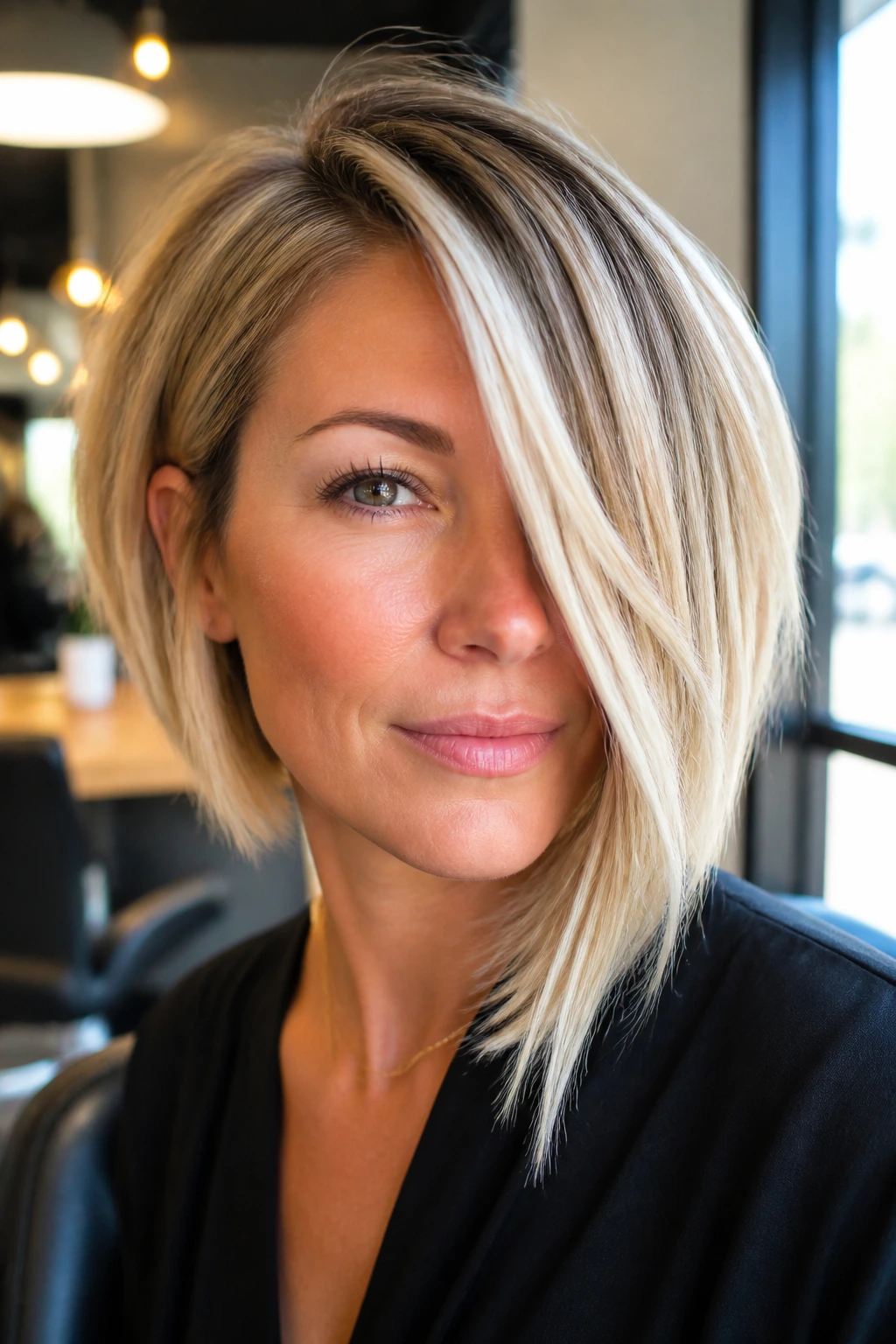
An asymmetrical bob is already making a statement, so the highlights need to know their place. One side sits a little longer, the other side is tighter, and the bright blonde is there to sharpen the difference. That’s what makes the cut interesting instead of merely uneven.
Compared with a symmetrical bob, this one has a built-in sense of motion. A bright money piece on the longer side can pull the eye downward, while a quieter tone on the shorter side keeps the shape from looking lopsided. The result is a bob that looks styled even when it’s only air-dried.
If you like strong cheekbones, sharp eyeliner, or a side part that never quite sits in the same place twice, this cut has attitude in the right way. It also works well if you want to disguise one side of the face a bit more than the other. The highlights can be tilted to support that.
Pick this one when you want a cut that breaks symmetry on purpose. Half measures don’t help here.
13. Curly Sunlit Bob
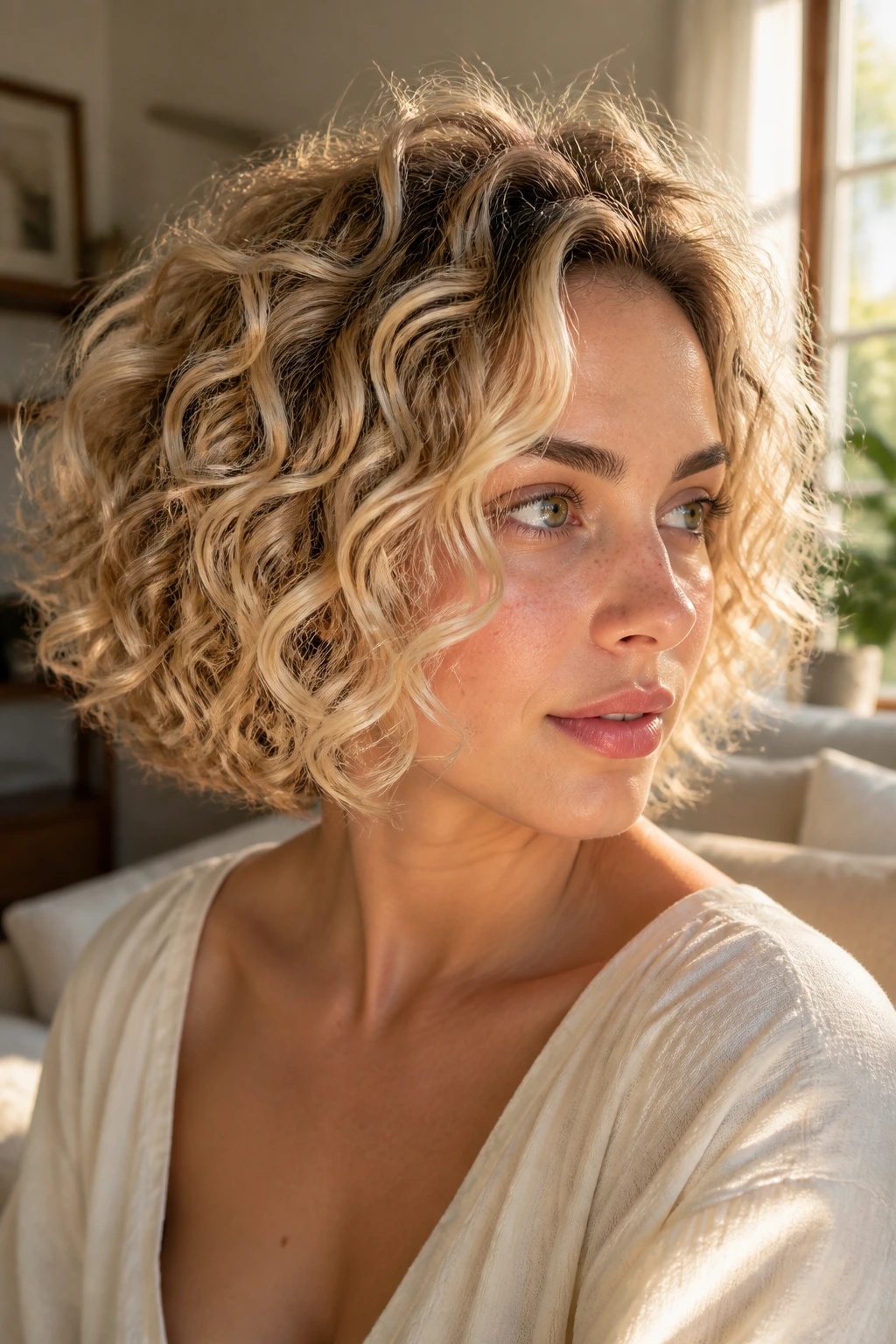
Curly hair loves highlights when the color follows the bend of the curl instead of sitting in straight stripes. A curly bob with sunlit pieces feels alive because each curl catches a different slice of blonde. The shape stays rounded, the color shifts every time the curls move, and the whole thing looks lighter without getting flatter.
Why It Works for Curls
The curl pattern already creates depth, so the highlights only need to echo that pattern. Fine foils or painted ribbons through the outer layer make the cut look brighter on top while the inside stays a touch deeper. That keeps the shape from puffing out into a halo of one shade.
Ask for the perimeter to stay a little longer than you think. Curls shrink, and a bob that looks neat wet can bounce up several inches dry. A good stylist will cut it with the curl pattern in mind, not straight across like it’s poker-straight hair.
- Best color placement: Outer curls, crown, and a few face-framing pieces.
- Best tone: Sunlit beige, honey, or soft gold.
- Best dry method: Diffuse or air-dry with a curl cream.
- Best shape: Rounded, not boxy.
Useful rule: Let the curl form decide the line. The highlights should follow it, not interrupt it.
14. Inverted Foil-Highlight Bob
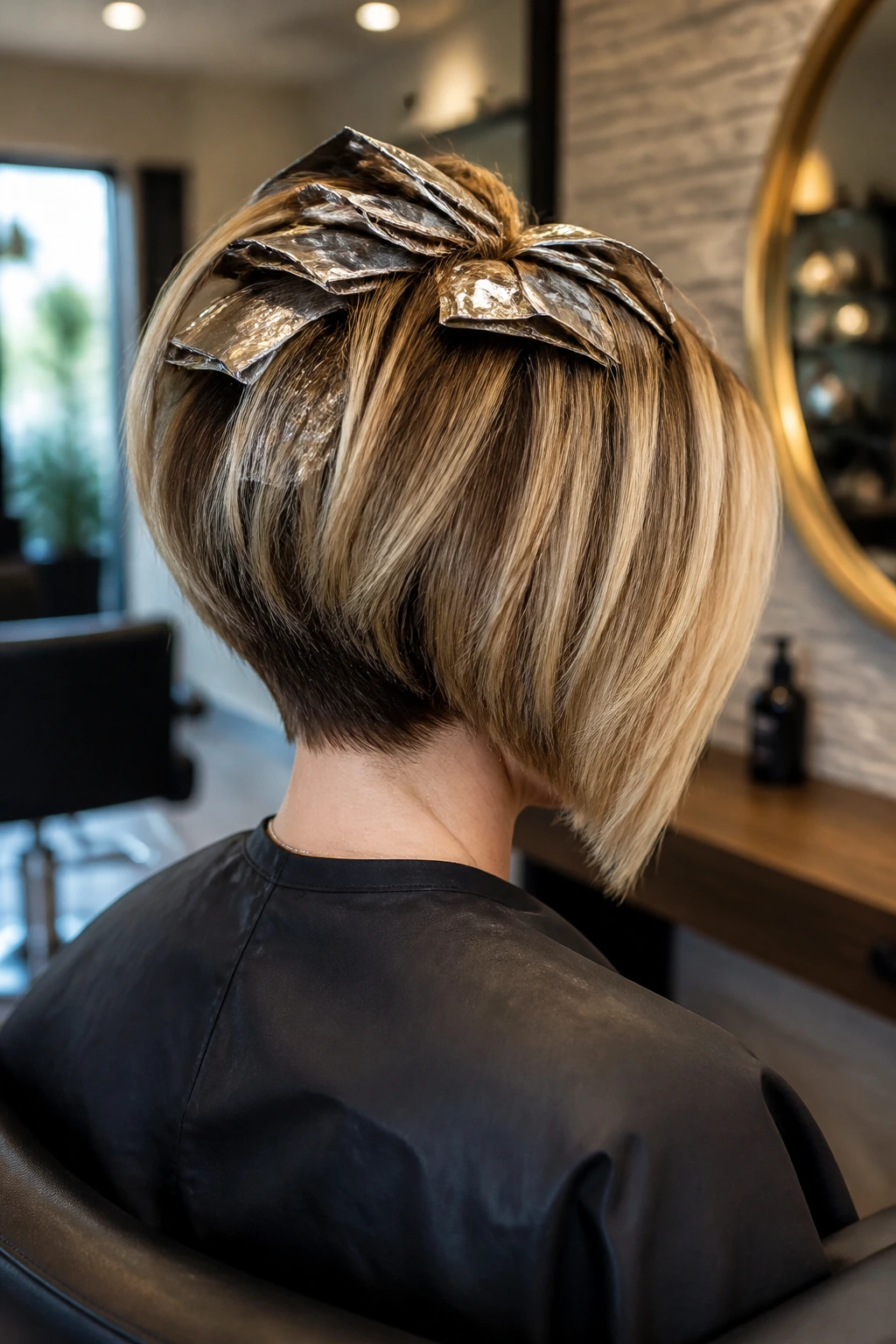
If you want the back of the head to look lifted, the inverted bob is a smart cut. Add foils through the upper layers and the angle becomes much easier to read. The shorter back gets a stronger outline, and the longer front carries the blonde forward where the eye lands first.
This cut is one of the better choices for thick hair because the inversion removes bulk while the highlights stop the shape from looking too dense. The lighter pieces can sit near the crown and through the top front layers, while the lower back stays quieter. That contrast makes the silhouette obvious.
A lot of inverted bobs go wrong when the color is too evenly placed. Then the cut loses the visual push from back to front. Keep the blonde concentrated where the head curves and the angle will show up even when the hair isn’t freshly blown out.
15. Shattered Piecey Bob
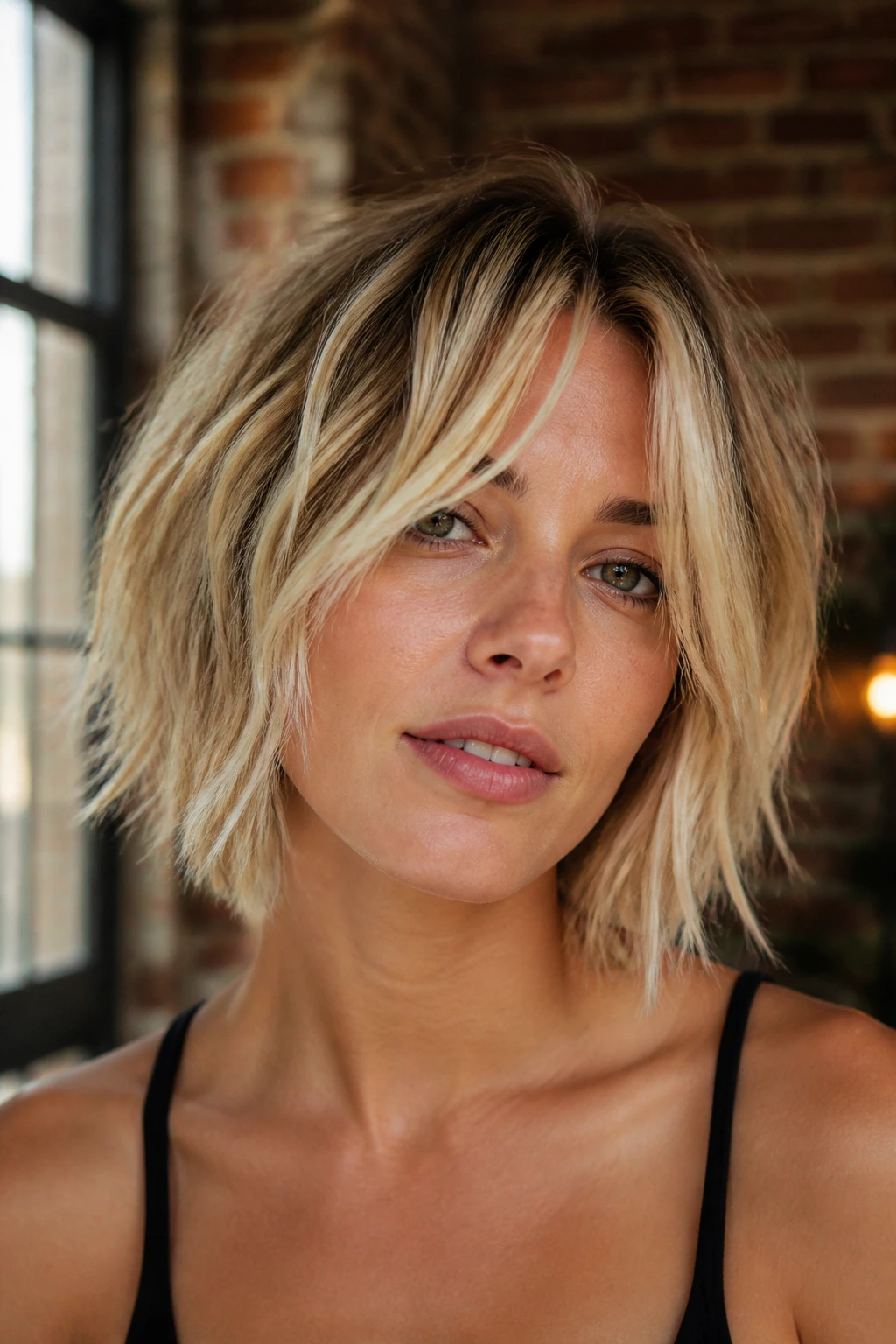
Why does a shattered bob look so different from a blunt one? Because the ends are cut to separate. The highlight placement has to honor that separation. Babylights and thin ribbons work better than heavy streaks, since the point is to make the pieces stand apart, not merge into one block.
This bob likes a little grit. A lightweight texturizing spray, a flat iron bend, and a few fingers through the roots are usually enough. If you want a style that feels casual but still deliberate, this is a good lane. The blonde should look chipped into the cut, not painted on top like frosting.
How to Use It
Keep the layers internal and the outline soft. Bright pieces near the front give the cut lift, and a slightly deeper blonde under the top layer keeps the shards visible. If the whole head is equally light, the piecey effect disappears.
This is a cut that thrives on movement. Still hair is not the goal.
16. Glassy Side-Part Bob
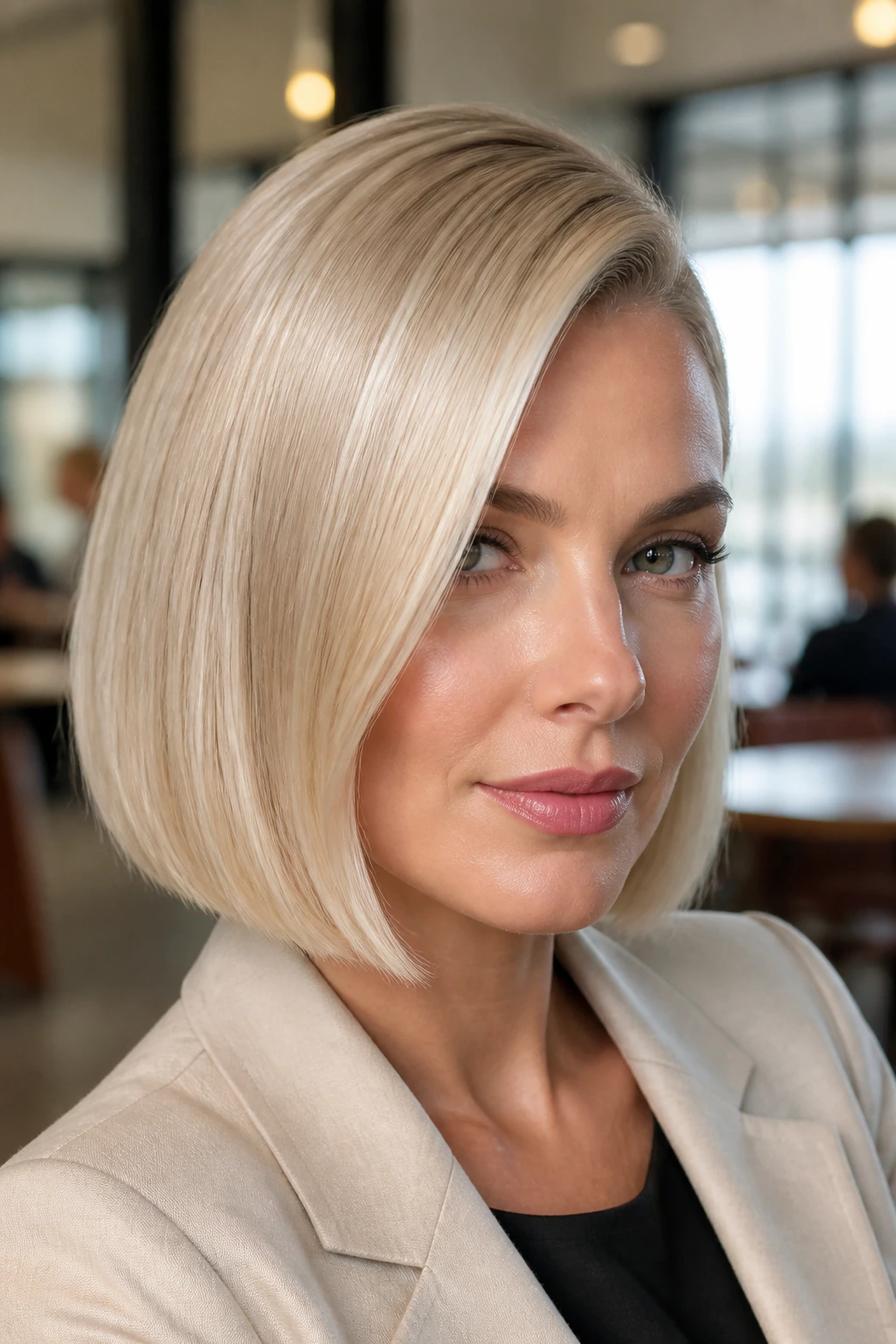
A glassy side-part bob can look almost architectural when the blonde highlights are placed with restraint. The side part gives the front a deliberate sweep, and the polished finish makes every streak of light show up. I like this one when the hair is straight and the cut line is clean enough to reflect shine.
Picture a sharp blazer, a small hoop earring, maybe a clean collar. That’s the mood. The bob doesn’t need big movement. It needs surface gloss and a few well-placed lighter pieces that run from the temple into the top layer. That’s what keeps the style from feeling severe.
- Best highlight style: Fine foils or delicate balayage ribbons.
- Best part: A deep or medium side part.
- Best finish: Smooth blowout with a light serum.
- Best tone: Beige-pearl or neutral blonde.
The side part also helps one side tuck easily behind the ear, which lets the bright front edge show off the jawline. Keep the opposite side a touch fuller. That balance is the whole trick.
17. Micro Bob with High-Contrast Foils
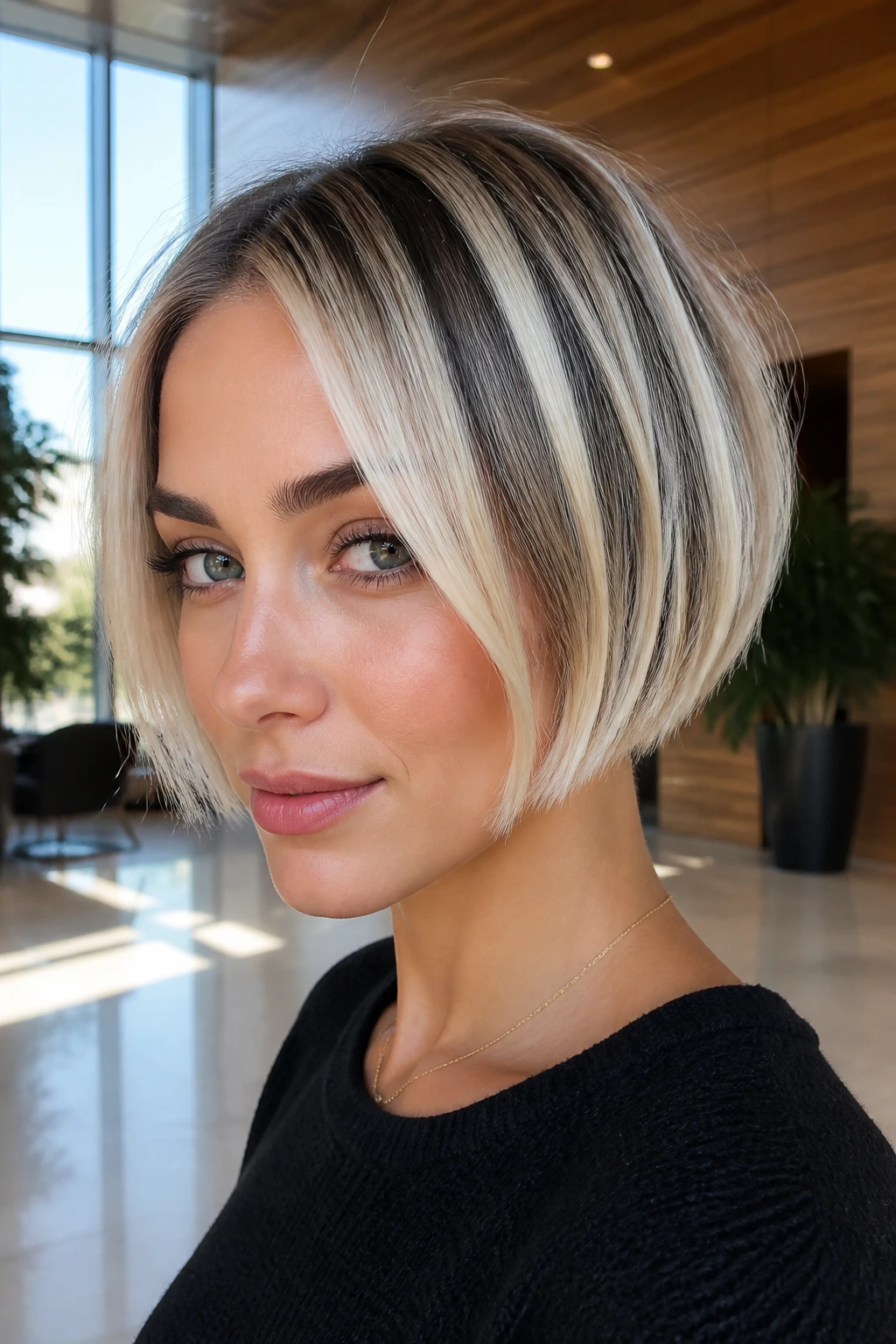
A micro bob is tiny enough that every color decision gets louder. That’s why high-contrast foils can work here in a way they would not on longer hair. The short line makes the blonde look graphic, and the darker root gives the cut a little depth so it doesn’t float away from the face.
This version is not shy. The ends sit high on the neck or right at the jaw, and the foils are placed in sharper ribbons so the blonde reads from across the room. You need confidence to wear it, or at least the willingness to act like you have some.
The best way to keep it from looking harsh is to soften the toner. Pure white blonde can make a micro bob feel brittle. A creamy pearl or pale beige keeps the edge but takes away the chalk.
It’s also a good choice if you hate hair touching your neck. That sounds small. It is not.
18. Feathered Beige Bob
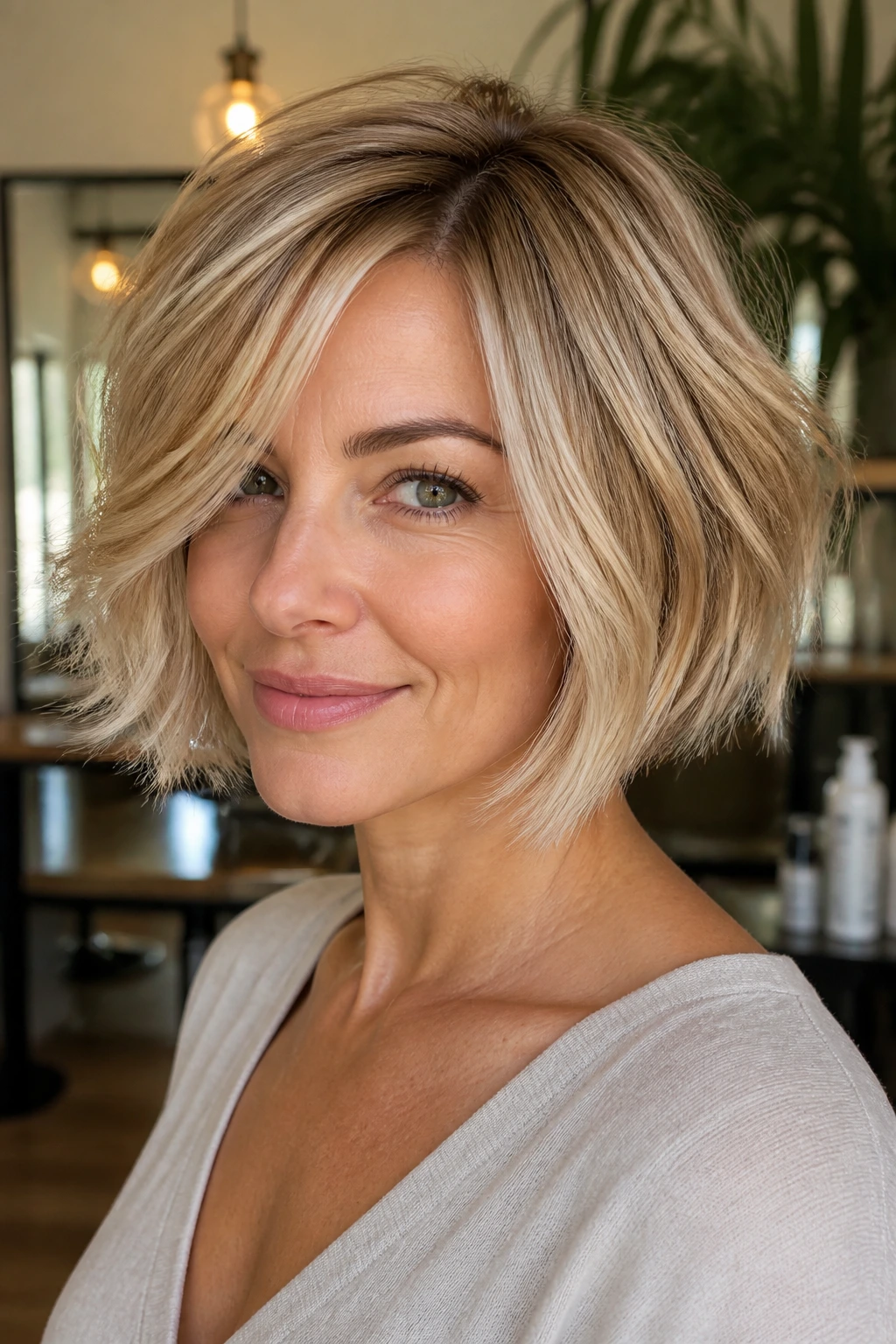
A feathered beige bob sits in that nice middle ground between structured and soft. The layering is light enough to let the hair move, but not so heavy that the perimeter loses shape. Beige highlights keep the whole thing calm, which matters when the cut already has a lot of texture.
Compared with a blunt bob, this one looks airier around the crown. Compared with a shag, it stays cleaner at the outline. That’s the reason it works so well for people who want movement without a mess. You can sweep it back, tuck it, or bend the ends slightly and the shape still holds.
This is a thoughtful cut for medium-density hair. Fine hair can wear it too, but ask for less feathering so the ends don’t go see-through. The highlights should stay soft and stitched through the top layers, with a few brighter pieces near the face to keep the beige from getting sleepy.
19. Undercut Blonde Bob
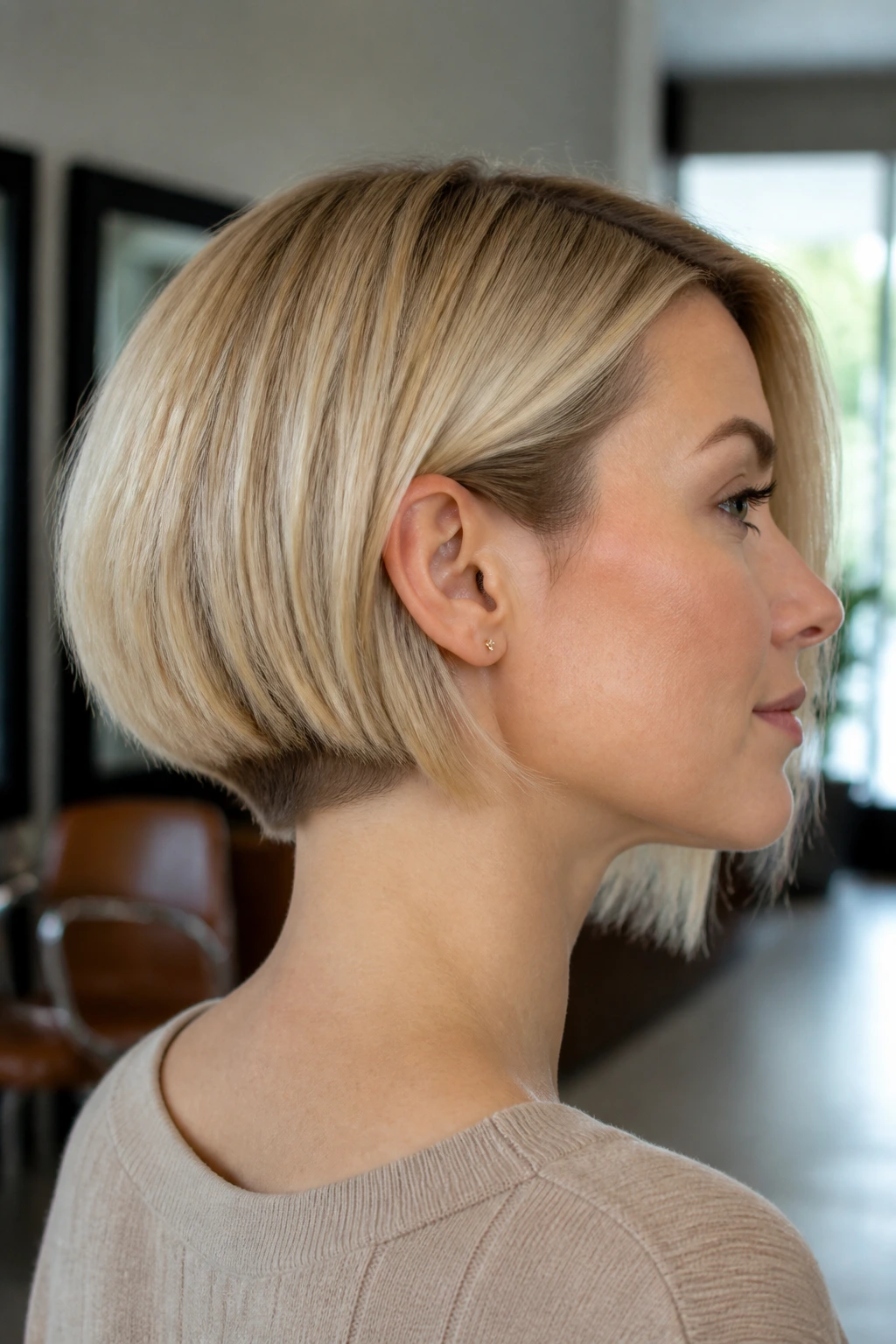
An undercut bob is the answer to heavy hair that refuses to sit down. Remove some bulk underneath, keep the blonde brighter on top, and the whole style stops swelling at the sides. The highlights matter here because they show the difference between the hidden underlayer and the visible crown.
Why It Works on Thick Hair
The undercut reduces the volume that collects at the nape and behind the ears. That gives the bob a cleaner drape and lets the blonde sit on a lighter foundation. If the top is bright and the underneath is a touch deeper, the hair looks fuller on top without feeling bulky.
The best version keeps the undercut narrow enough to hide when the hair is down. You don’t need a dramatic shave unless that’s your thing. A small removal zone often does more for shape than people expect.
- Best for: Very dense or puffy hair.
- Best color trick: Bright top layer with softer underlayer depth.
- Best maintenance: Regular nape cleanup and trim appointments.
- Best styling move: Smooth the crown, then let the ends bend naturally.
The result is cleaner than a lot of people expect. Less hair underneath can mean more shape on top.
20. Boxy Chin Bob with Peekaboo Ribbons
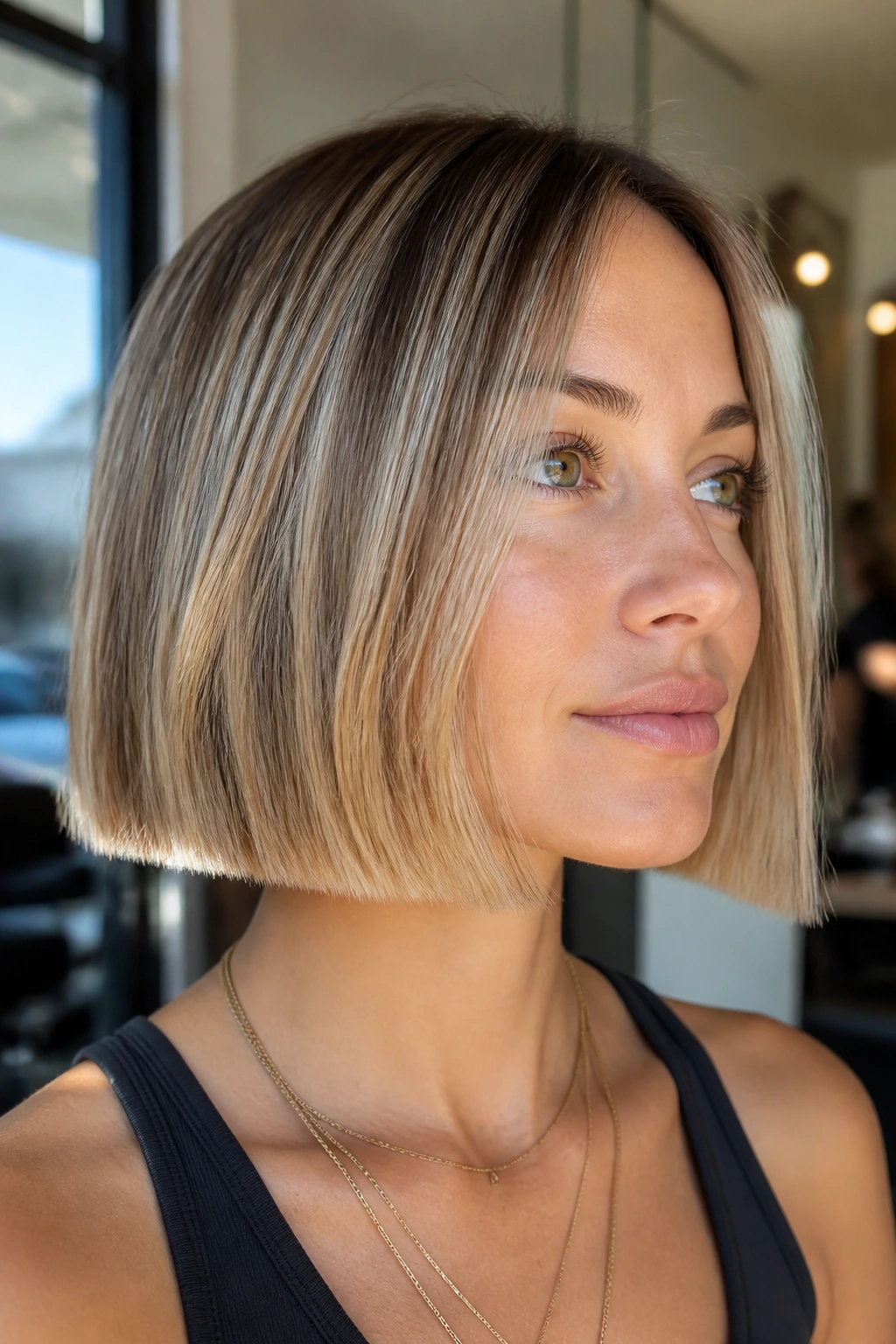
A boxy chin bob sounds severe until the highlights move into the hidden layers. That’s where the peekaboo ribbons come in. They flash through when the hair moves, then disappear again, which keeps the cut from looking too plain without breaking the strong shape.
This is the kind of bob that suits straight hair and strong features. The outline sits blunt and neat at the chin, while the color brings little interruptions of light under the surface. It’s a smart trick if you want brightness but don’t want the top layer to look streaky.
The peekaboo pieces should not be too wide. Narrow ribbons under the top layer are enough. If they’re thick, the boxy outline starts to lose that crisp edge. Keep the surface smooth and the hidden blonde will feel much more interesting than surface streaks ever would.
21. Babylight Collarbone Bob
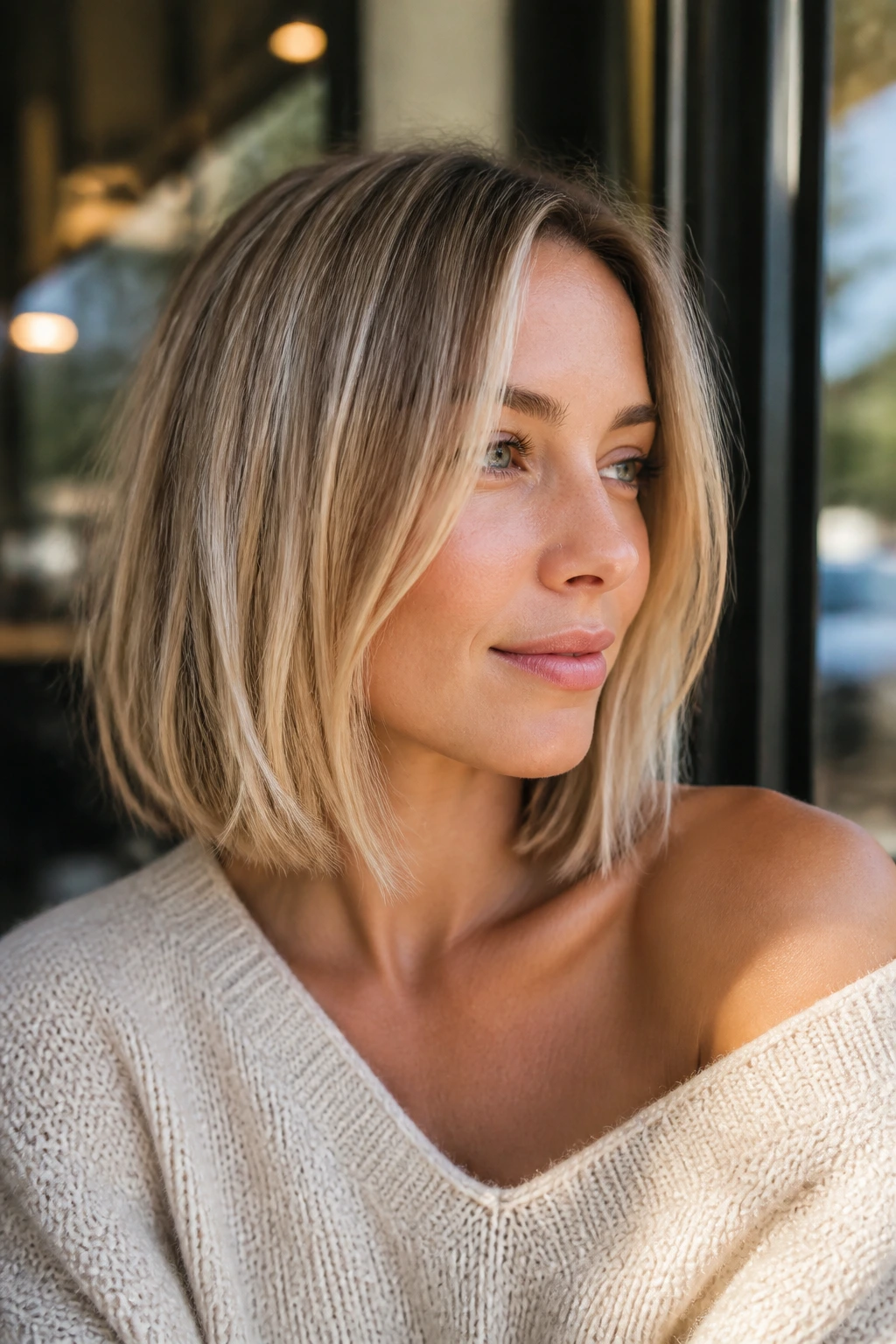
What makes babylights different here is how quiet they are. On a collarbone bob, those tiny foils create a soft shimmer instead of obvious streaks, and that softness works well with a length that already has room to move. It’s the opposite of loud color.
I like this cut for people who want blonde without a dramatic salon story every eight weeks. The grow-out is gentle, and the shape stays readable even when the light pieces blur together a little. The collarbone length gives the style enough swing to feel modern, but the babylights keep it calm.
How to Wear It
Ask for the brightest pieces near the hairline and a scattering through the top quarter of the head. That way the face gets brightness and the ends don’t get overprocessed. A loose wave with a middle part makes the tiny highlights more visible; a sleek blowout makes them feel softer.
This is one of the easiest styles in the group to wear with a blazer, a sweatshirt, or a summer dress. It doesn’t fight the rest of your clothes.
22. Creamy Beige Bob with Side Sweep
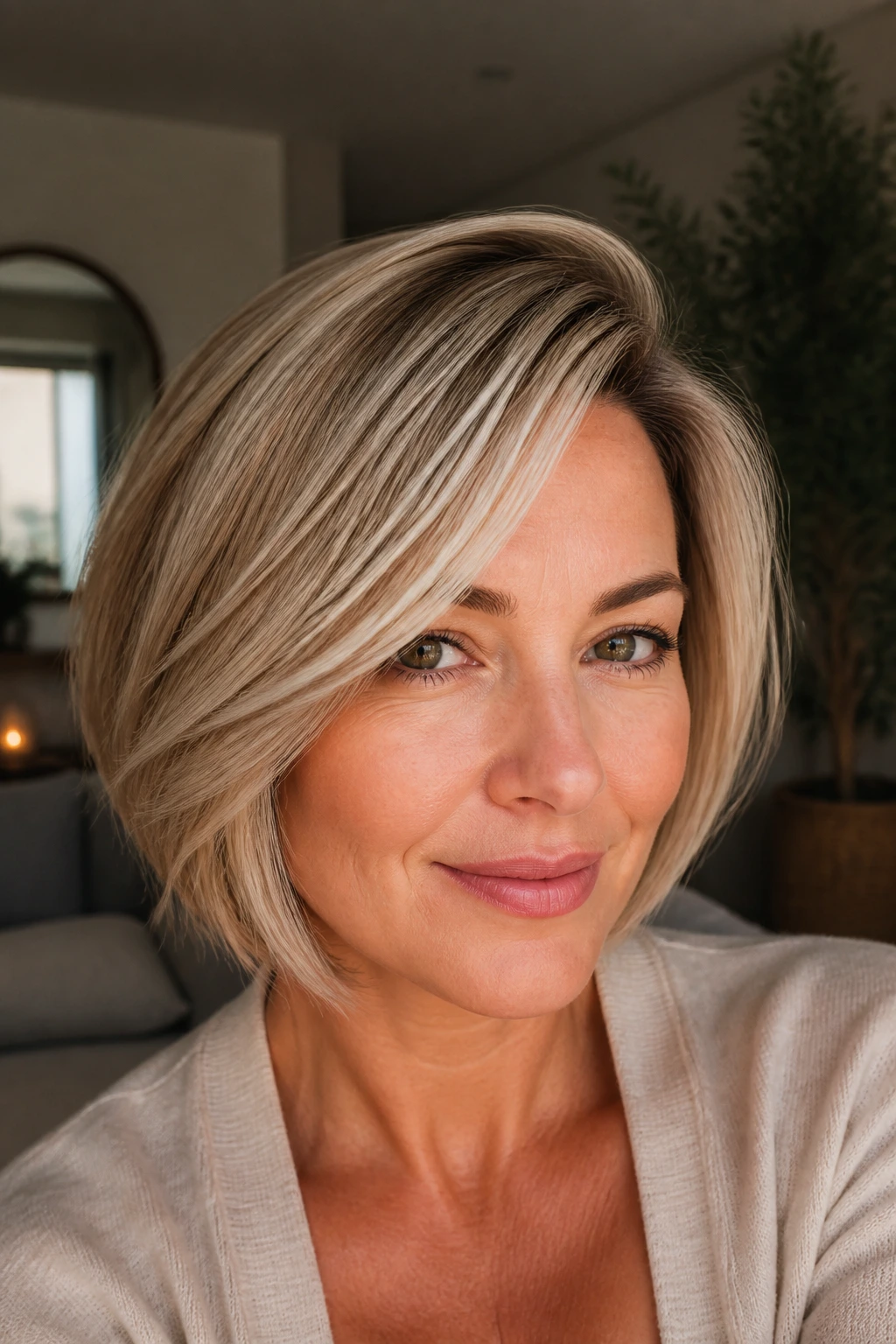
A side-swept bob with creamy beige highlights has a softness that flatters almost anyone who doesn’t want a hard center line. The sweep opens the face, and the creamy tone keeps the blonde from going chalky when it hits the light. It feels a little glamorous, but in a quiet way.
The side sweep also gives the highlights a direction. Instead of sitting evenly across the head, the light pieces follow the movement of the part. That makes the style look fuller at the top and smoother at the ends. It’s a good fix for hair that lies flat on one side and refuses to cooperate on the other.
A soft setting brush or round brush at the roots helps the sweep stay in place. You don’t need a huge flip. You need a line that bends enough to show the color and then stays put. Keep the beige warm enough to look creamy, not yellow.
23. Vanilla Cream Bob with Face-Framing Layers
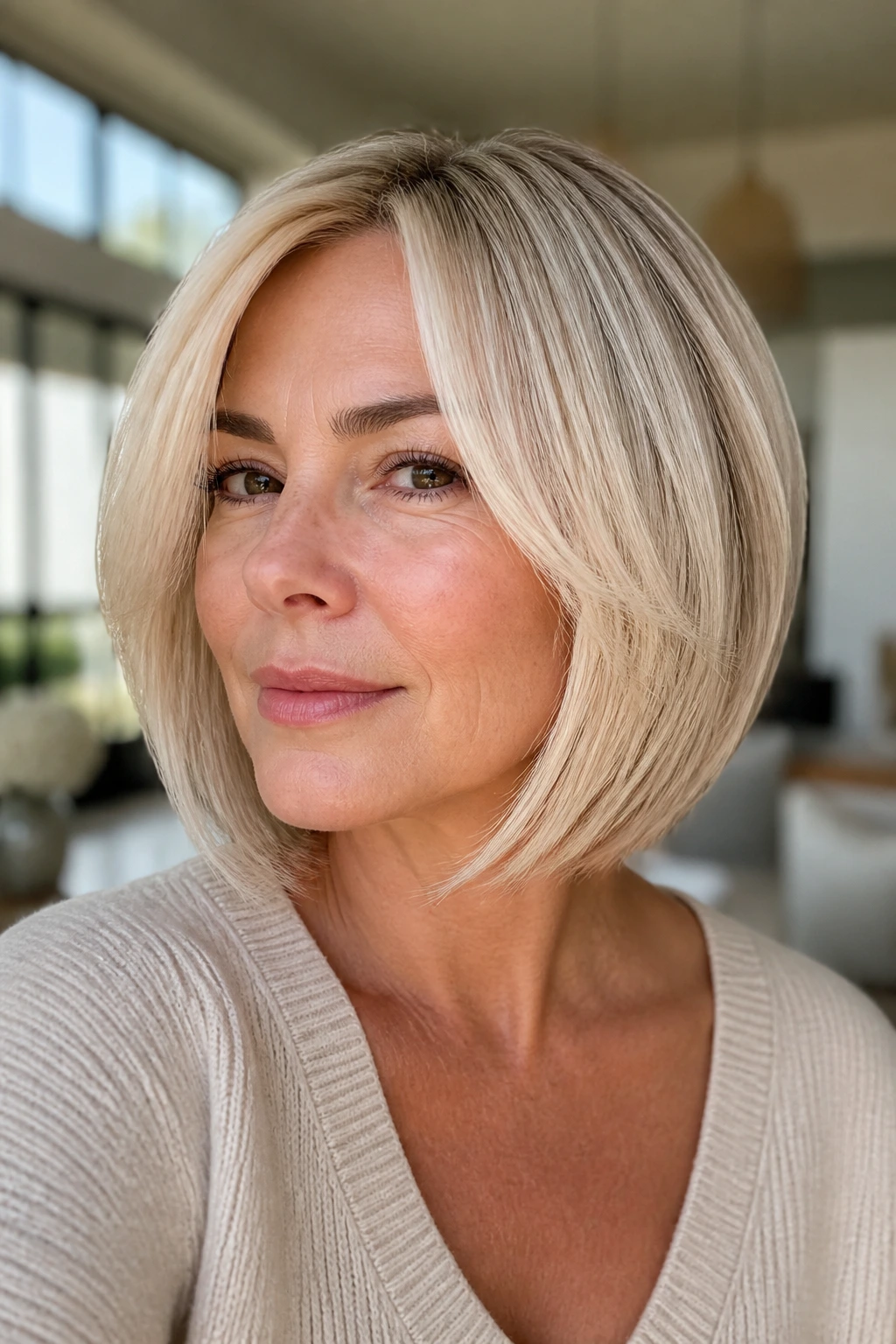
Vanilla cream blonde has a specific kind of softness: it’s light, but not icy; sweet, but not sugary. On a bob with face-framing layers, that tone lightens the perimeter of the face and gives the cut a bit of contour without making it choppy. The layers should be there, but barely there.
This cut is a good choice if you want a blonde bob that feels flattering from the front and still looks neat from the side. The face frame can start around the cheekbone and taper toward the jaw, which keeps the cut from getting boxy. The vanilla tone gives the whole thing a bright, clean finish.
I’d avoid over-layering the back. The shape works because the front has the lightest movement. Too much breakup everywhere and the bob stops looking intentional. This one needs one clear story, not five competing ones.
24. Graduated Pearl Bob
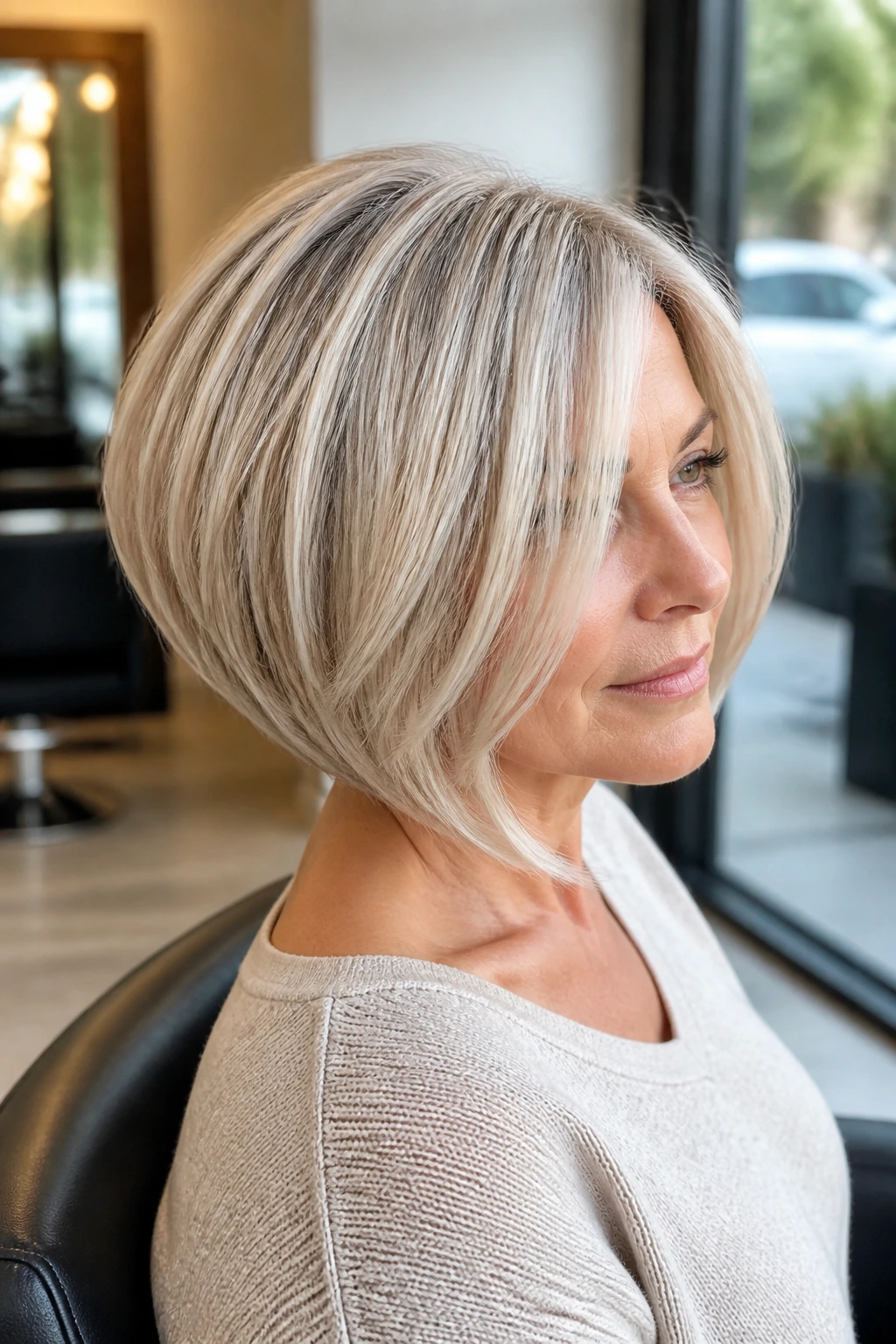
A graduated bob already has structure, so pearl highlights should support that structure rather than blur it. The back is stacked just enough to create lift, the front length stays slightly longer, and the pearl tone keeps the cut from looking too heavy at the crown. It’s neat. Very neat.
Compared with a fully stacked bob, the graduation here is softer, which makes it more wearable if you don’t like a dramatic angle. Pearl highlights help by brightening the upper layers and leaving the lower layers a touch more grounded. The result is a bob that looks sculpted without looking carved.
This is a strong choice for anyone with fine-to-medium hair who wants shape without a lot of daily styling. A quick blow-dry and a round brush at the roots are usually enough. The pearl tone should stay clean, so plan on glosses if you want the color to keep that smooth finish.
25. Wavy Root-Melt Bob
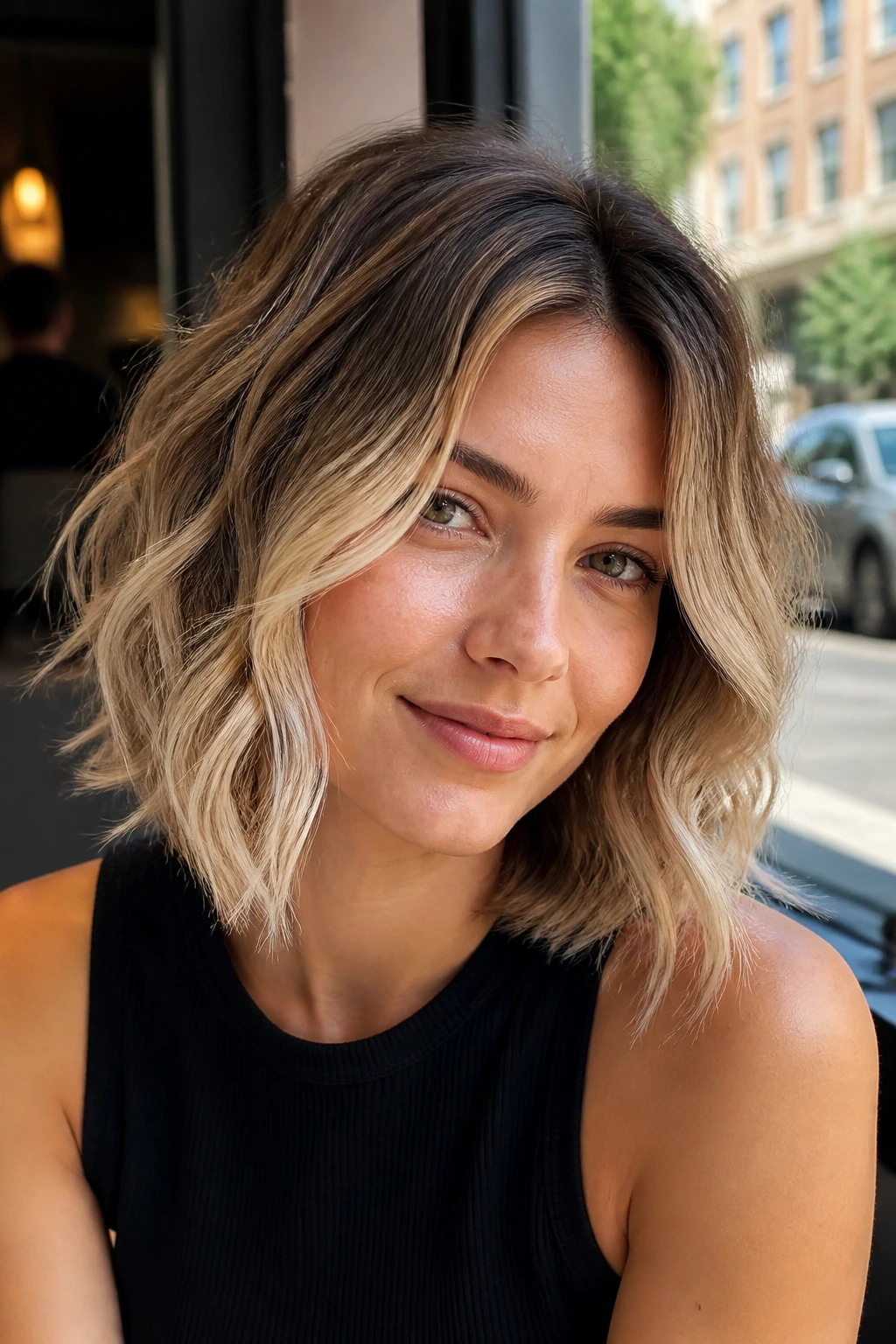
A wavy root-melt bob is one of the nicest low-maintenance versions on the list because it doesn’t try to hide the grow-out. The root stays deeper, the blonde melts lighter through the mids, and the wave pattern makes the transition look purposeful. It’s not lazy. It’s smart.
Why It Works
The root shadow gives the bob depth at the scalp, which is where flat color usually shows first. The waves break up the shift from dark to light, so the eye reads the movement instead of the line. That matters if you want a bob that still looks finished after a few days without styling.
A root melt works especially well on shoulder-grazing or chin-grazing bobs that you like to wear loose. It lets the blonde keep its brightness around the face while the crown stays soft. If you love texture spray and air-dried waves, this is an easy lane to live in.
- Color blend: Deeper root, beige mid-tone, lighter ends.
- Styling cue: Loose bends through the middle sections.
- Maintenance: Gloss the mids and ends before the blonde gets dull.
- Best for: People who want a softer grow-out.
My advice: Keep the root shade close to your natural base. That’s what makes the melt believable.
26. Wheat Blonde Bob with Lived-In Foils
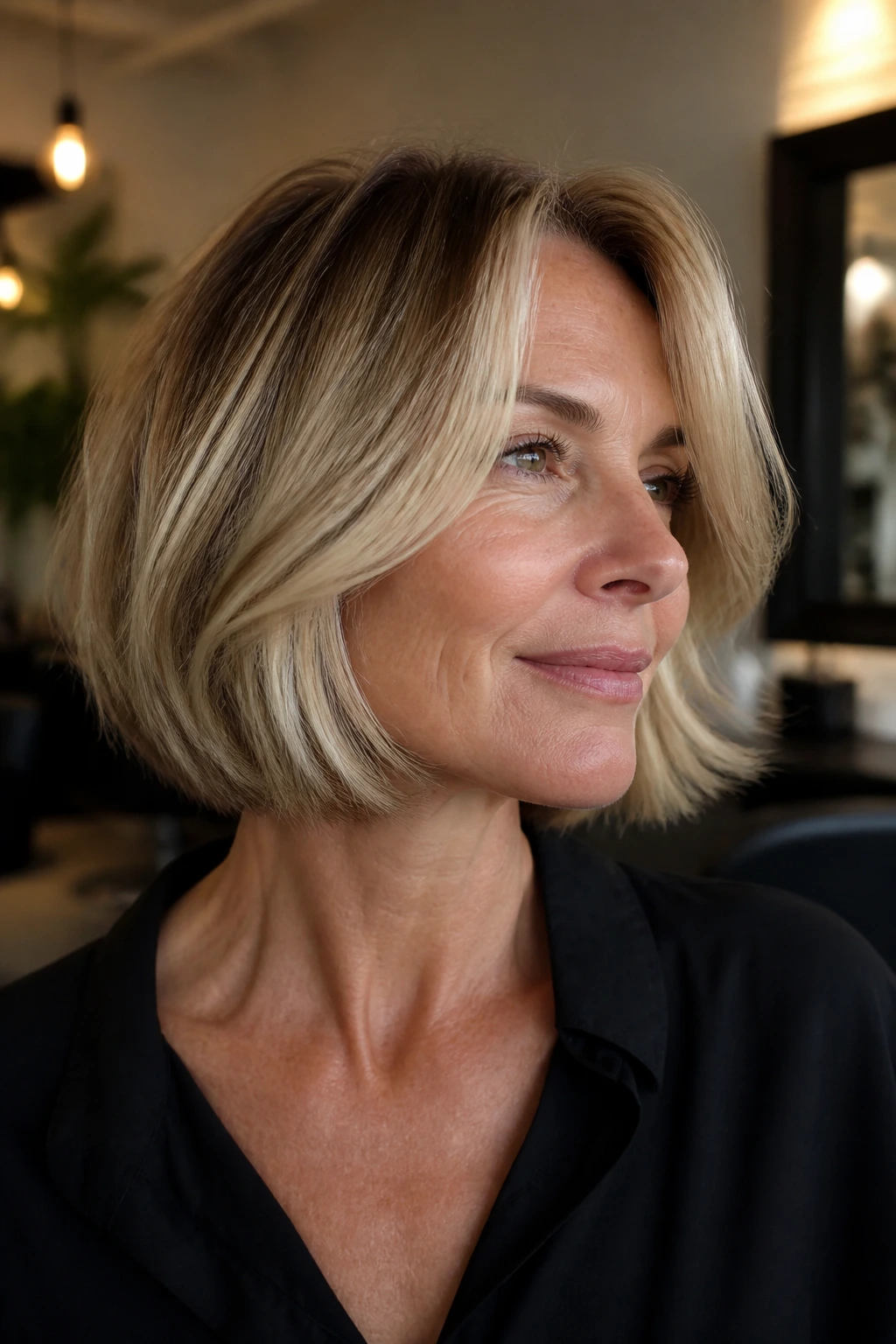
A wheat blonde bob looks quiet in the best way. The tone sits between beige and gold, and the lived-in foils keep it from feeling overworked. This is the blonde for people who want dimension without bright, obvious stripes.
The cut itself can be blunt, softly layered, or slightly angled. What matters is that the highlights are painted or foiled in a way that lets the hair move through different shades, not one flat plane. Wheat blonde works especially well when the ends are left a little darker and the front has a subtle lift. That creates depth without screaming for attention.
This is also one of the more forgiving colors if you don’t want a strict salon schedule. The grow-out stays softer because the foils are not packed too close together. If your hair tends to go warm, the wheat tone is a useful compromise between ash and gold.
27. Air-Dry Lob with Sunveil Highlights
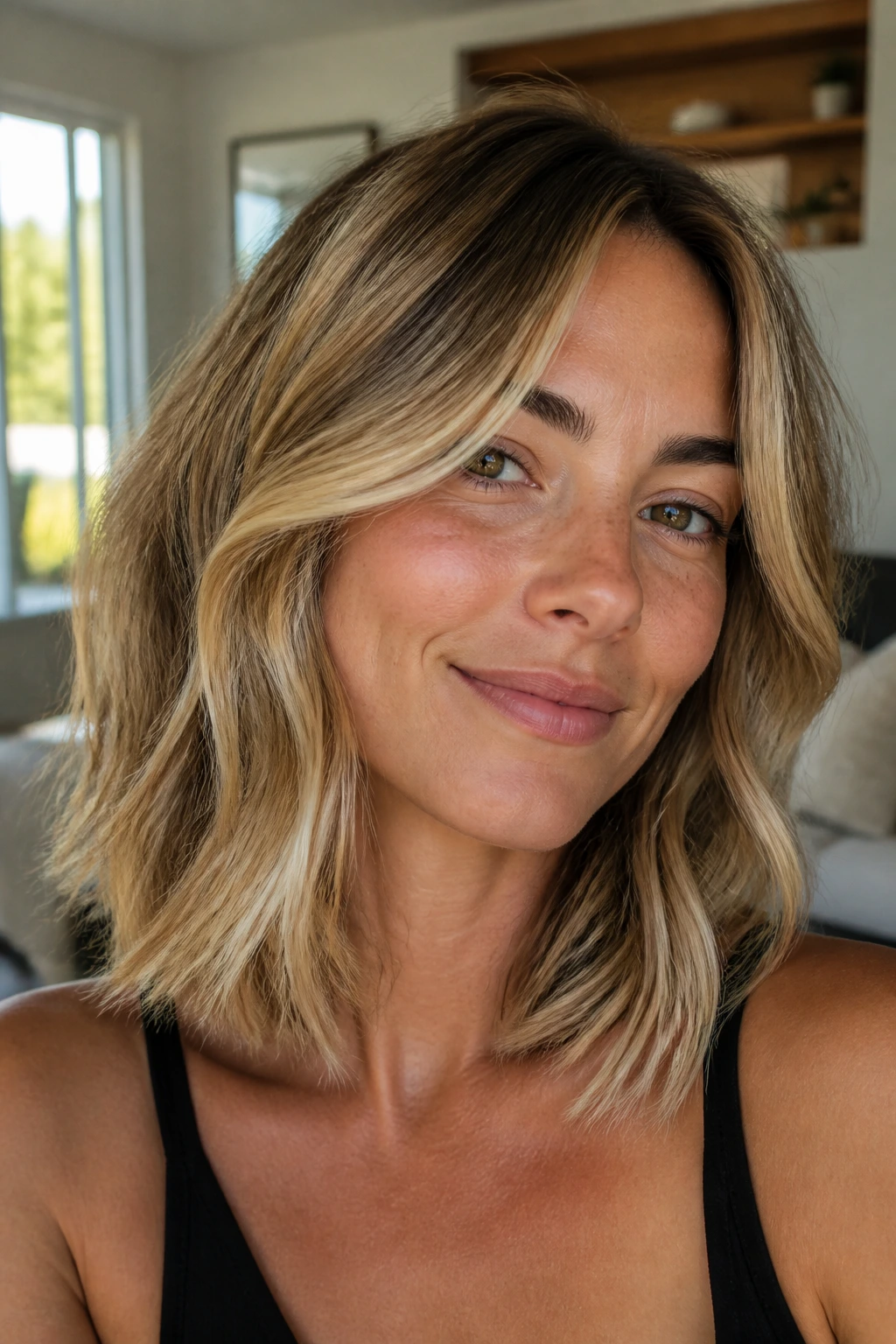
Can a bob still look finished when you barely touch a blow-dryer? Yes, if the cut is built for it. The air-dry lob with sunveil highlights is cut to fall with its natural bend, and the highlights are scattered to show that bend rather than override it. That’s why it works.
I like this on hair that forms a soft wave by itself. The length lands at or just below the collarbone, so the ends don’t kick out too sharply. The sunveil highlights sit in the upper layers and around the face, where they catch light even when the hair is a little imperfect. Imperfect is part of the charm here.
How to Wear It
Scrunch in a light cream or leave-in, then let the hair dry with a center or off-center part. If you want a cleaner line, tuck one side behind the ear while it’s still damp. That small move shapes the bob without forcing it.
This cut is for people who want to look done without looking overdone. It’s the easiest answer for that.
28. Sleek Tuck-Behind Bob with Bright Ends
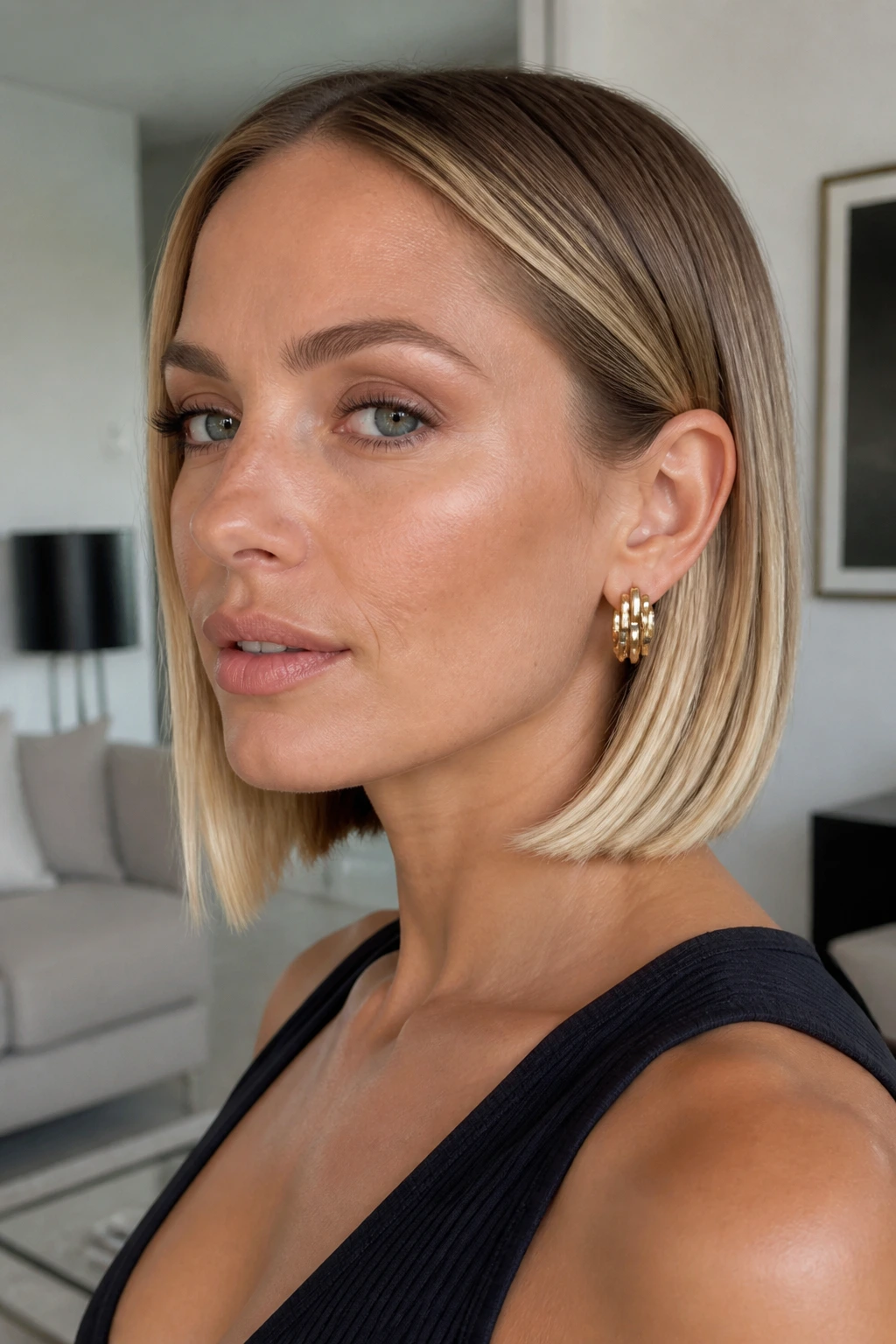
A sleek tuck-behind bob has a specific kind of polish. The hair slides behind the ears, the neckline opens up, and the bright ends peek out at the collarbone or jaw depending on the length. It’s simple, but the simplicity is doing work.
If the roots stay a shade deeper and the ends are the brightest part, the tuck becomes more than a styling trick. It turns into a frame. The bright ends show where the cut stops, which is useful when you want the bob to look sharp from the front and tidy from the side. This style is especially nice with small earrings and neat makeup.
The key is to keep the front pieces smooth enough to tuck but not so slick that they look wet. A little shine serum at the mids, a clean part, and a flat brush are enough. You want the ears visible and the color line crisp. Anything more starts to fight the shape.
Why Blonde Dimension Matters More Than Going Even Lighter
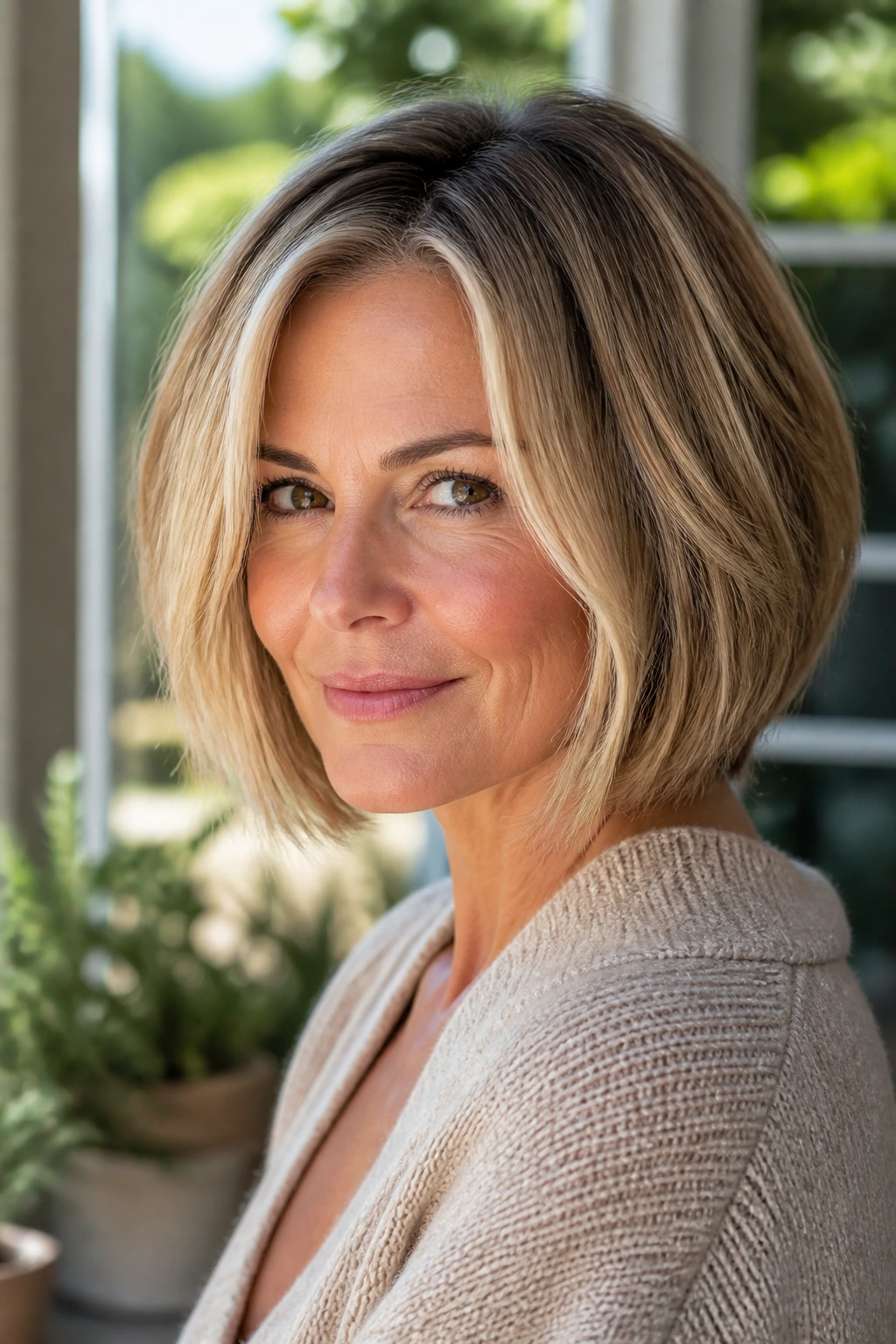
A bob gives you a hard boundary, and hard boundaries show mistakes fast. That’s the real reason highlights matter here. A one-tone blonde can look heavy on a bob because there’s nowhere for the eye to rest. Add a few lighter ribbons and the cut suddenly gets texture, lift, and depth without needing more layers.
The best highlighted bobs use contrast with some restraint. Bright pieces near the face make the skin look fresher. A deeper root gives the crown a little lift. Fine babylights keep the blonde from turning into a stripe map. And when the cut is blunt, the color has to be quiet enough to support the line rather than scramble it.
That balance is what keeps these styles wearable. A sharp chin bob, a soft collarbone lob, and an angular stacked cut all need different color placement. Same family. Different architecture. Once you see that, the whole category makes more sense.
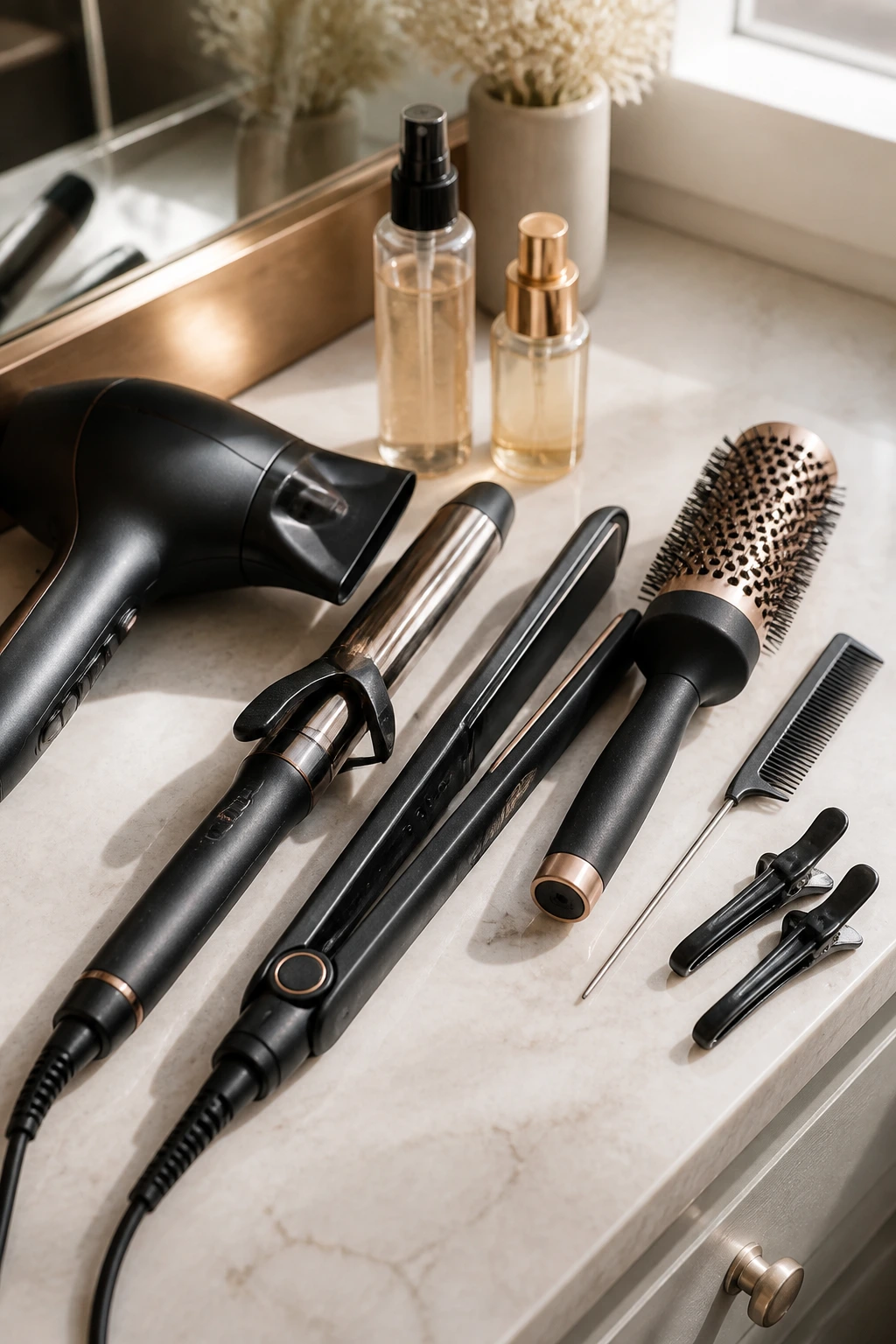
Essential Tools for These Looks
-
A 1-inch curling iron or wand: Useful for adding a bend through the ends of a bob without turning it into a full curl.
-
A flat iron with smooth beveled plates: Better for sleek bobs, tucked styles, and soft flips at the perimeter.
-
A blow-dryer with a nozzle attachment: Helps direct the hair and keep the cut line cleaner during a round-brush blowout.
-
A round brush in two sizes: A medium brush for collarbone lengths and a smaller one for chin-length bobs and bangs.
-
Tail comb and sectioning clips: Handy for clean parts, highlighting placement, or just getting the top section out of the way while styling.
-
Heat protectant spray: Non-negotiable if you use hot tools. Blonde ends show heat damage faster than darker hair does.
-
Lightweight leave-in conditioner: Good for keeping highlighted ends from feeling rough or airy in the bad way.
-
Purple or violet shampoo: Helpful for icy and pearl blondes, though it should be used sparingly so the hair doesn’t turn dull.
-
Glossing serum or shine spray: A small amount gives bob hair that smooth finish without weighing down the crown.
What to Tell Your Stylist Before the Cape Comes Off
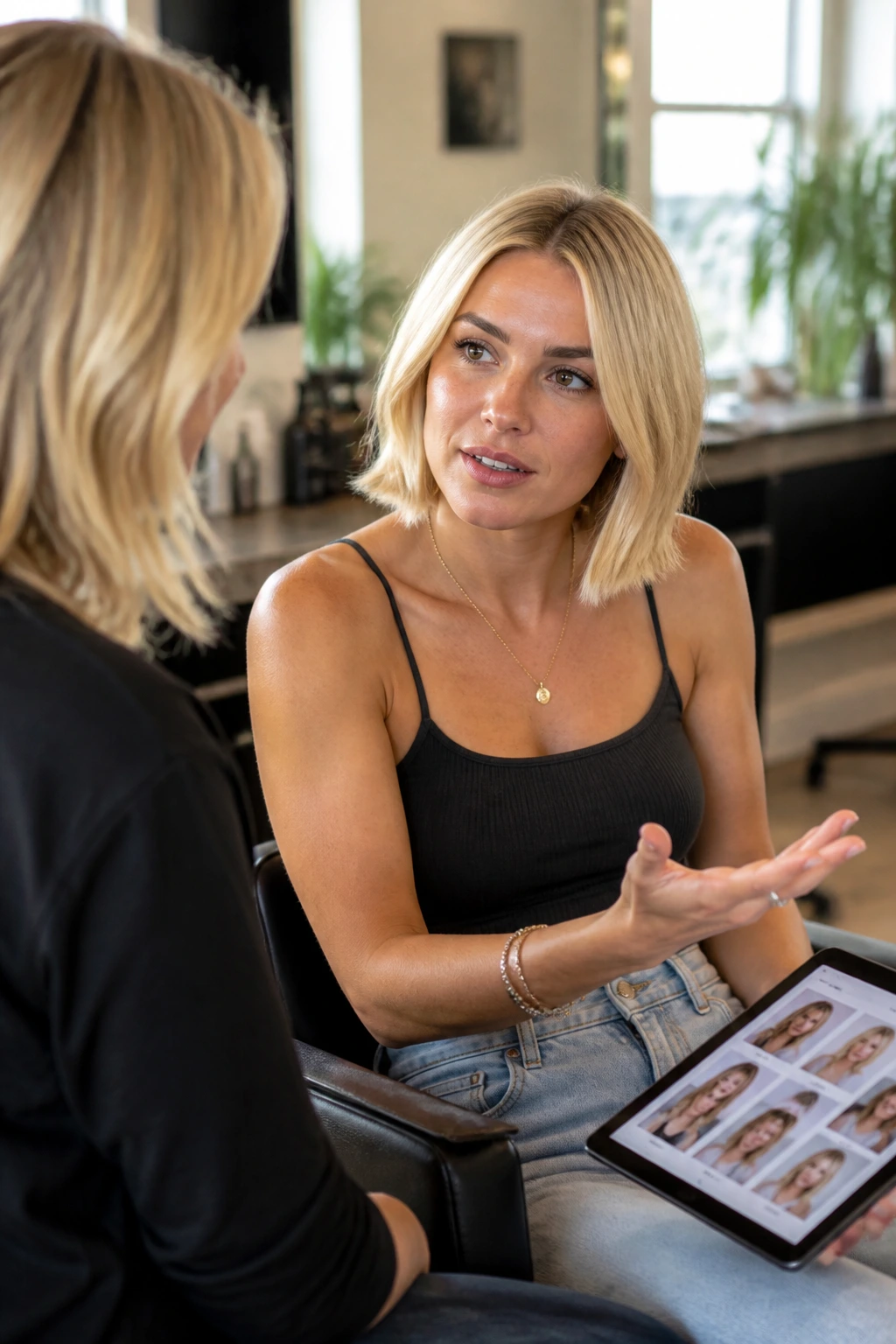
A good blonde bob starts with a conversation, not with the scissors. Bring at least two photos: one for the cut and one for the tone. A single reference image usually fails because the client wants the shape from one photo and the color from another. That mismatch causes most of the disappointment.
Be plain about maintenance. Say whether you want a rooty grow-out, a bright front, a cool beige finish, or a high-contrast blonde that needs regular toner. Those words matter more than “make me blonde.” A stylist can work with a maintenance plan. They cannot read your mind.
Highlight thickness is another point people skip. Thin babylights soften a blunt bob. Thicker ribbons create more visible contrast on an A-line or asymmetrical cut. If your hair is fine, too much light can make it look sparse. If it’s thick, too few highlights can make the color disappear into the mass.
Tell them how you wear your hair most days. Center part, side part, tucked behind the ears, air-dried, blown smooth, curled under at the ends — all of that changes where the highlights should go. A bob only looks expensive when the color placement respects the way the cut actually lives on your head.
How to Wear These Bobs in Real Life
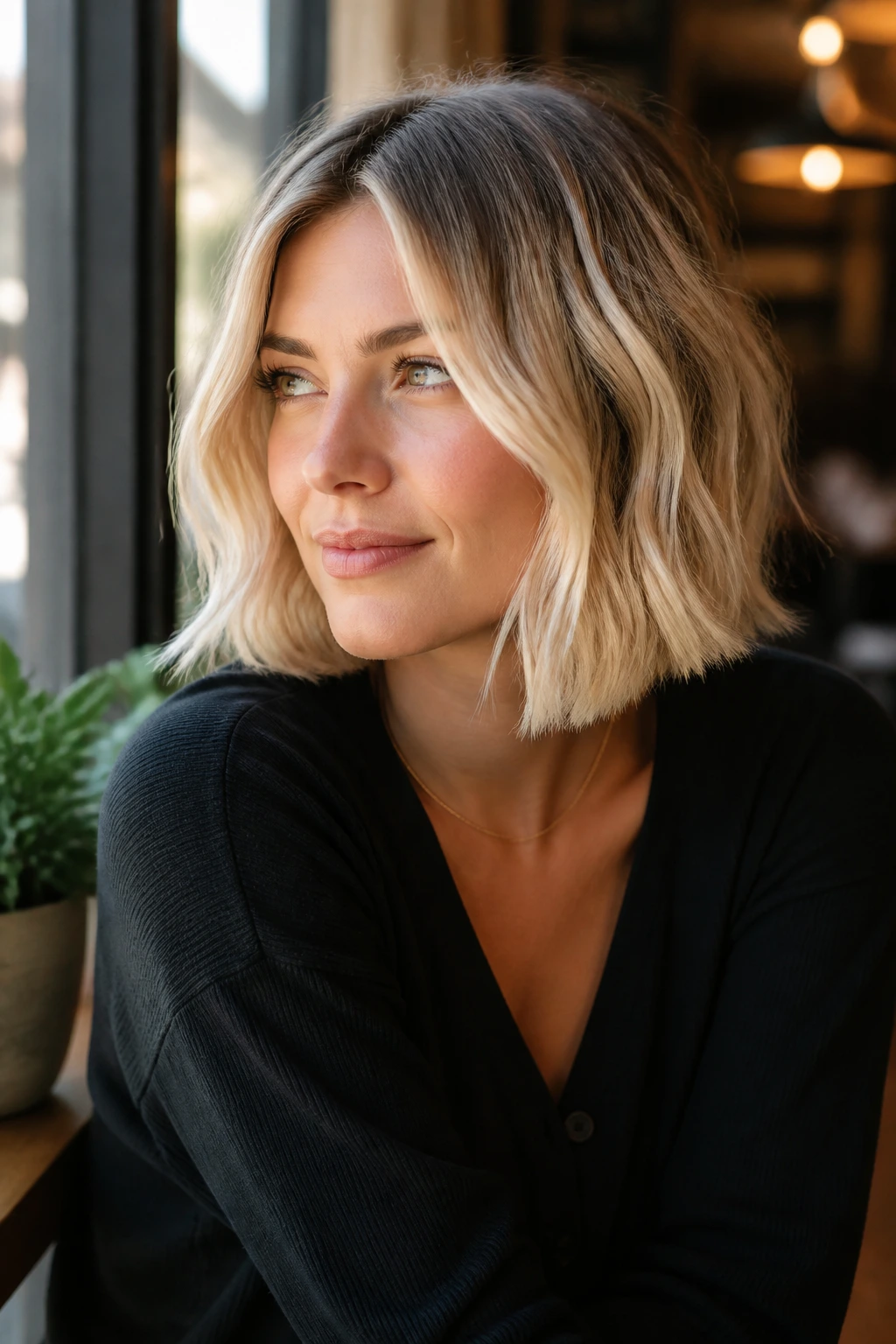
Presentation: Keep the finish tied to the cut. Sleek bobs want a smooth perimeter and a clean part; textured bobs want a little separation at the ends and a touch of roughness at the roots. If the style is short, let the line show. If it’s collarbone length, let the ends move.
Accompaniments: These cuts look especially good with small hoops, collar-skimming tops, crewneck sweaters, and clean necklines that don’t compete with the bob. A deep side part pairs well with stronger makeup; a center part works nicely with softer, more natural makeup. Glasses also matter here — they can either frame the highlights or hide them.
Length Balance: Chin-length bobs sharpen the jaw, while collarbone lengths soften the whole face. If your hair is dense, keep more weight at the perimeter and remove it underneath. If your hair is fine, keep the baseline blunt and leave the layers light so the ends don’t go wispy.
Maintenance Rhythm: Shorter bobs usually need a trim every 6 to 8 weeks to keep the line clean. Lob lengths can stretch closer to 8 to 10 weeks, especially if you like a softer grow-out. Highlights last longer when the tone is beige or rooty; icy blonde asks for more glossing and toner refreshes.
Additional Tips and Shine Boosters
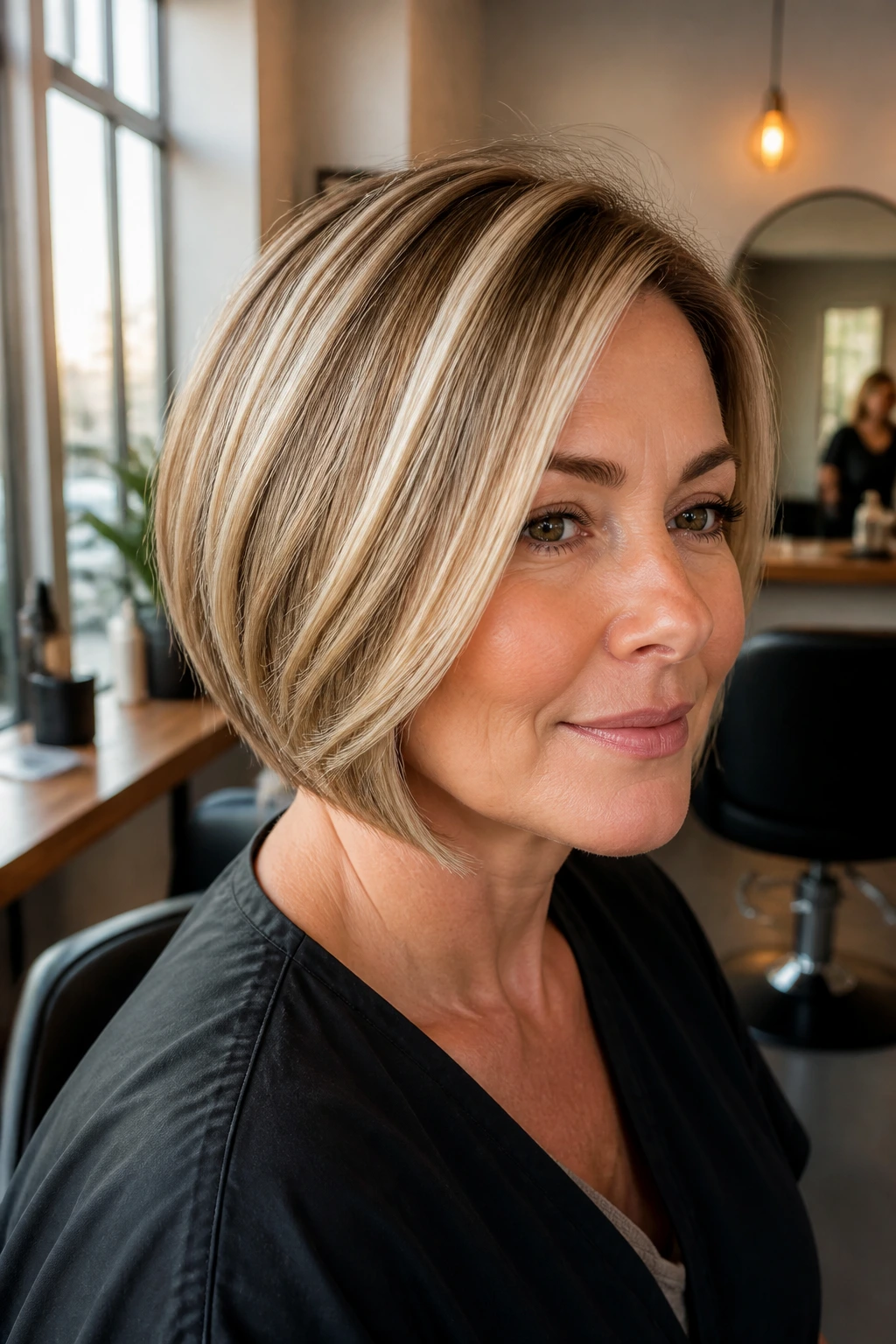
Color Boost: Ask for a clear or slightly tinted gloss between highlight appointments if the blonde starts to look dusty. A gloss keeps the strands reflective and stops the cut from going matte in a bad way.
Texture Fix: Bend only the last inch or two with a flat iron when you want the bob to look styled but not overdone. That tiny bend is enough to keep the ends from sticking straight out like little shelves.
Customization: Fine hair does better with a blunt edge and soft babylights. Thick hair usually needs internal weight removal and a stronger highlight pattern near the crown and face. Curly hair wants a longer perimeter so the shape doesn’t jump up too high when it dries.
Make-It-Yours: If you like warm blonde, lean into honey, butter, or wheat. If you prefer cool tones, ask for pearl, beige, or icy ribbons. If you want a softer grow-out, ask for a root shadow one to two levels deeper than the mids.
Mistakes That Flatten a Blonde Bob

The first mistake is over-lightening the whole head. A bob with pale blonde from root to end can look dry and oddly wide, especially when the cut is blunt. The fix is to keep some root depth and let the brightest pieces live around the face and top layers.
The second mistake is ignoring density. Thick hair cut into a bob without weight removal can puff out at the sides. Fine hair cut with too many layers can look see-through at the ends. The answer is not to copy the photo blindly; it’s to match the structure to the hair you actually have.
Another common miss is toner drift. Cool blondes can go yellow, beige blondes can go muddy, and honey blondes can turn brassy if nobody refreshes them. Glosses and the right shampoo keep the tone honest. Purple shampoo helps some blondes, but using it every wash can leave the hair dull and weirdly dry.
Heavy oil is another problem. A big pump of serum on highlighted bob hair often makes the roots flat and the ends stringy. Use a small amount on the mid-lengths only. A bob needs movement more than it needs slip.
Variations and Adaptations to Try
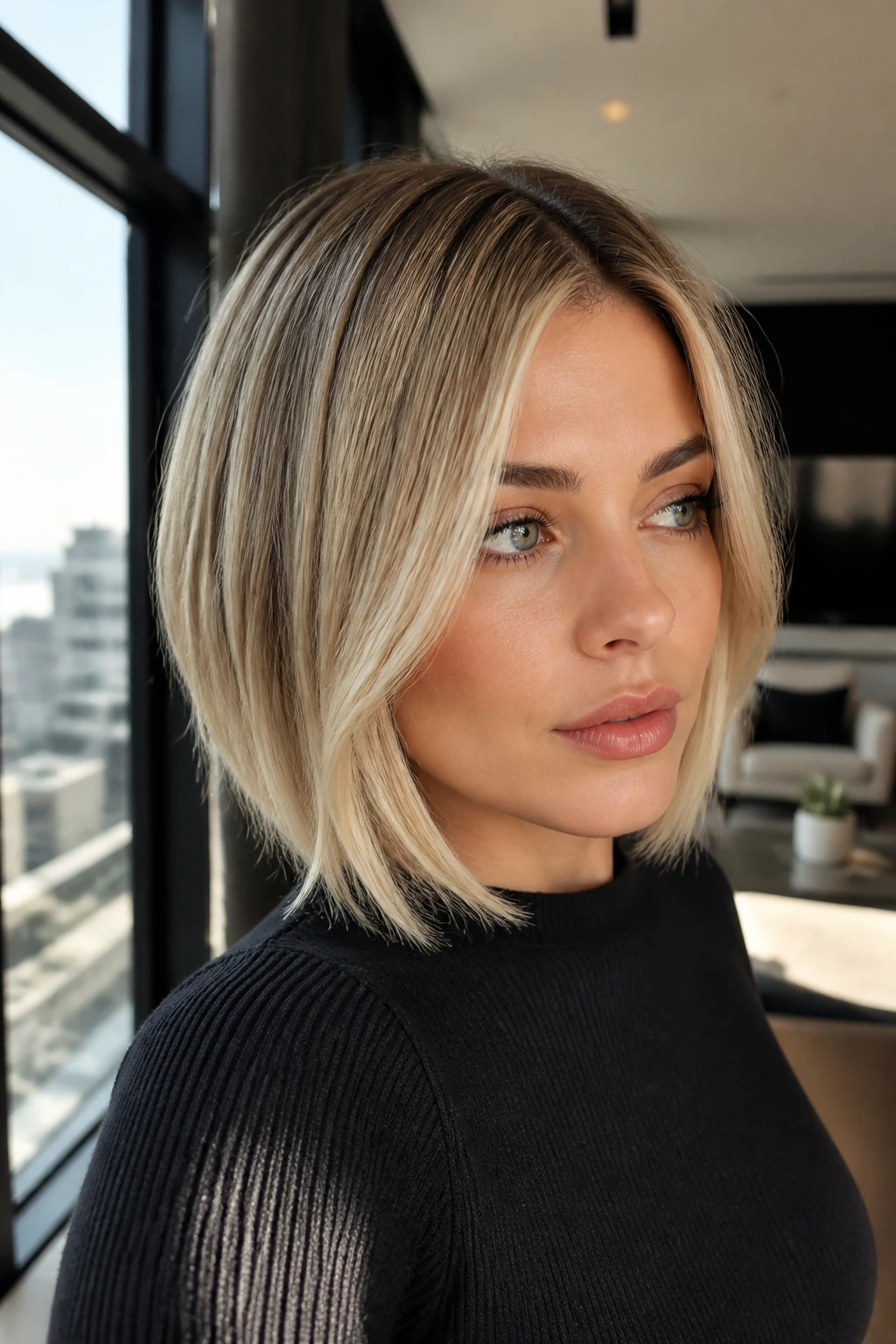
The Shadow-Root Stretch: Keep the root a little deeper and the highlights softer through the mids. This stretches your salon visits and keeps the bob from looking freshly done in a way that disappears too fast.
The Bright-Front Pop: Put the lightest pieces at the temples and along the cheekbones, then let the back stay calmer. This is the best move if you wear your hair tucked or if you want the face to look brighter right away.
The Soft Beige Blend: Use babylights with a beige toner and avoid chunky ribbons. The result is quieter and easier to grow out, which suits people who do not want high-maintenance blonde.
The Curl-Friendly Shape: Leave the perimeter slightly longer and keep the layering gentle so curls spring up into a round shape instead of a triangle. Highlights should follow the curl pattern, not cut across it.
The Fine-Hair Lift: Stick with a blunt line, limit layers, and place brightness mostly on the top quarter of the head. That keeps fine hair looking fuller rather than airy in the wrong places.
Care, Glossing, and Grow-Out Timing
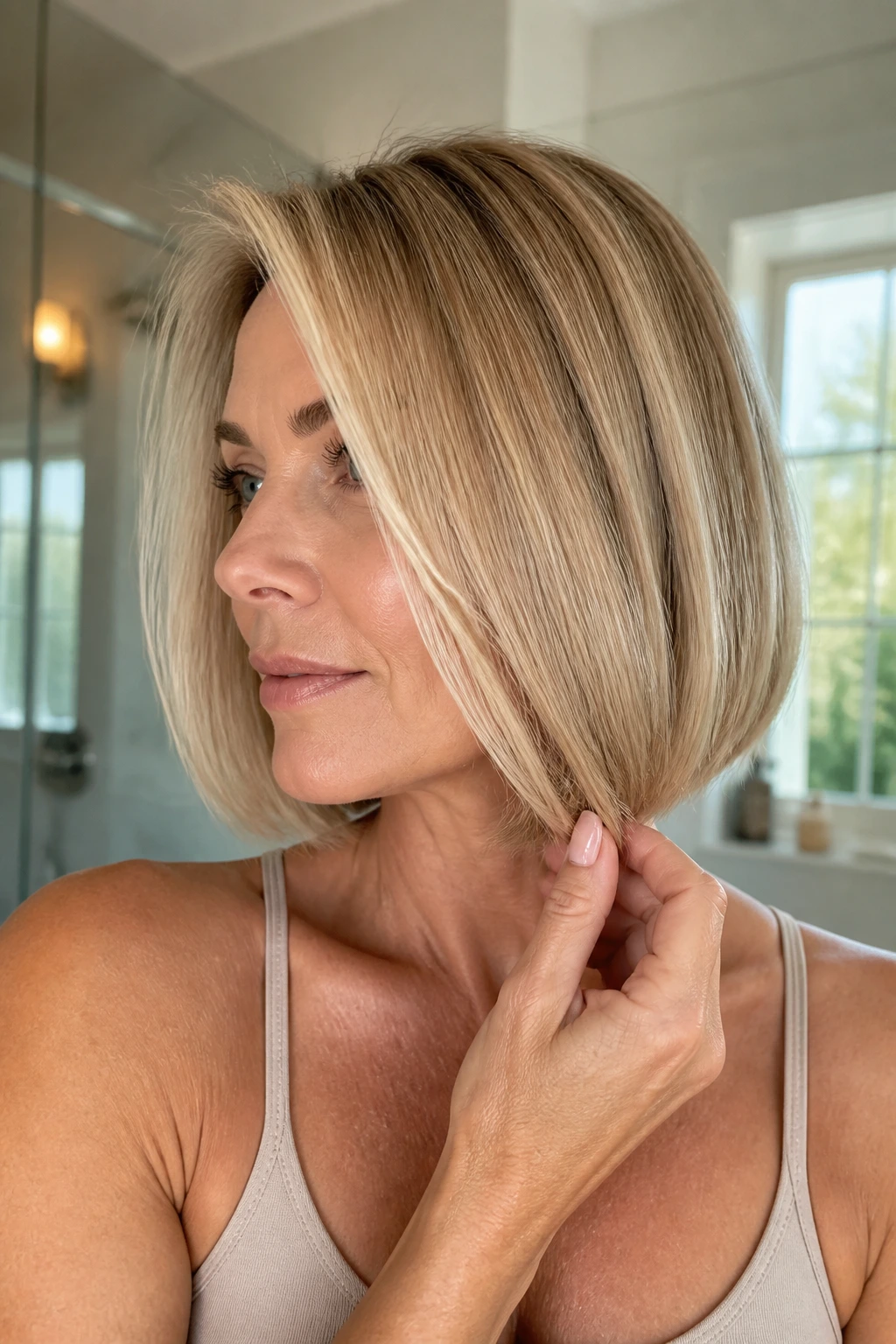
Highlighted bob hair usually looks best when you treat it like a shape, not just a color. The trim schedule matters because the line of a bob shows split ends fast. Short bobs usually want a trim every 6 to 8 weeks. Lobs can go a little longer, but once the ends start flipping or the outline loses its edge, it’s time.
For color care, a gloss every 4 to 8 weeks is useful depending on how pale the blonde is. Icy, pearl, and champagne blondes need more frequent toning. Honey, beige, and wheat blondes can stretch farther. Purple shampoo belongs in the routine, but not as a daily crutch; once a week is enough for many blondes, and some warm blondes don’t need it at all.
Heat styling is fine if you keep the temperature controlled. Around 300°F to 350°F is plenty for most bob textures. Anything hotter tends to rough up the highlighted ends faster than people expect. If you air-dry, a leave-in cream or light wave product helps the cut keep some polish instead of puffing up at the crown.
Sleeping on a silk pillowcase or tying the hair loosely before bed can help the bob stay smoother. It’s a small detail. Small details matter on short hair.
Questions People Ask Before Getting a Blonde Bob
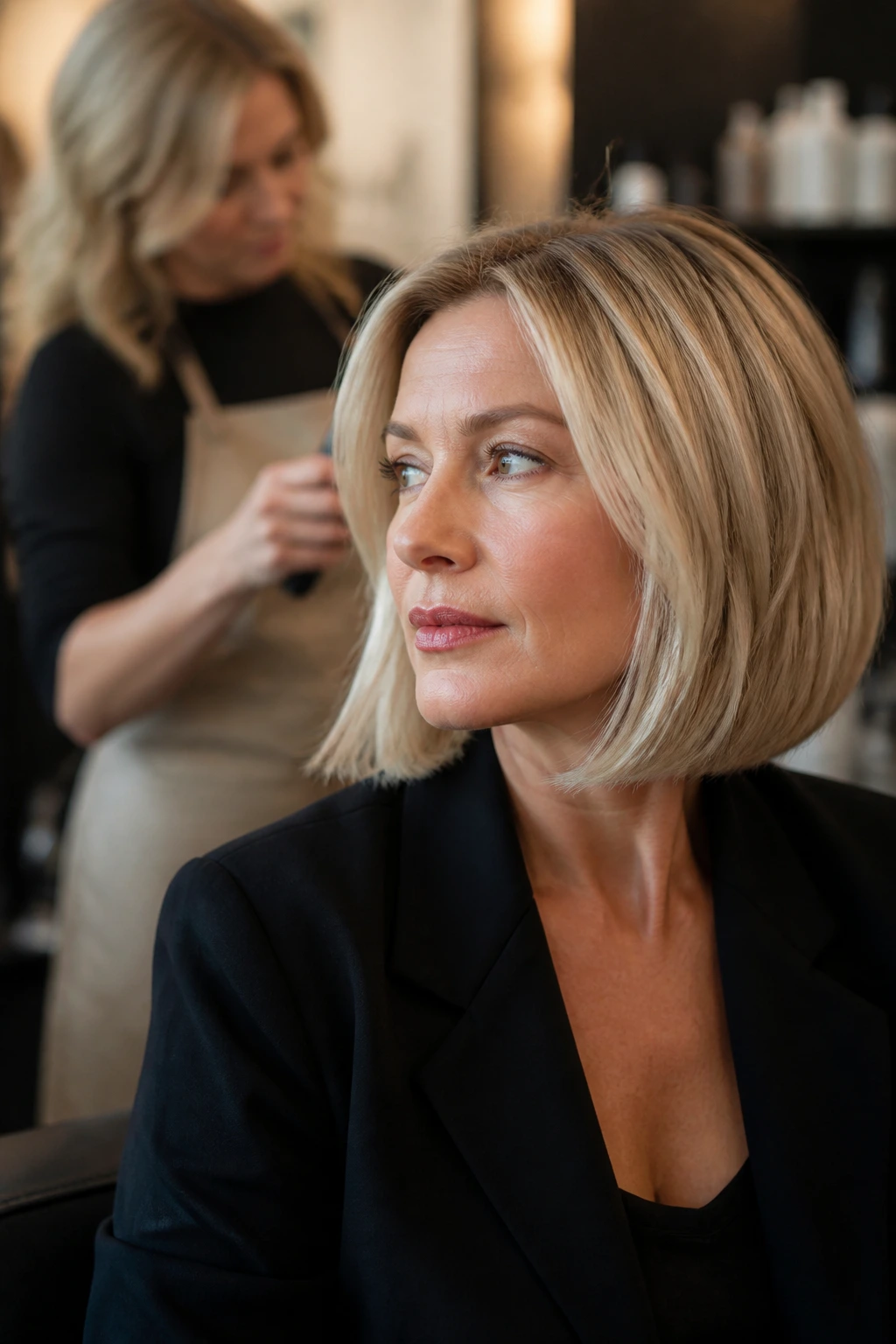
Which face shapes suit blonde bob cuts with highlights best?
Most face shapes can wear some version of a highlighted bob, but the length changes the effect. Chin-length bobs sharpen round faces, side-part bobs soften square ones, and collarbone lobs give longer faces a little more balance.
Are balayage or foils better for a bob?
Foils give sharper brightness and work well on blunt or polished bobs. Balayage looks softer and suits textured, wavy, or rooty styles. A lot of the best bob color uses both: foils at the front and lighter painted pieces through the mids.
How often should I refresh blonde highlights on a bob?
Shorter, brighter blondes usually need a gloss or toner refresh every 4 to 8 weeks, while the cut itself may want trims every 6 to 10 weeks. If the bob is rooty or lived-in, you can stretch the color longer.
Can fine hair pull off a highlighted bob?
Yes, and usually better than people expect. Fine hair often looks fuller in a blunt or softly curved bob, especially with babylights or narrow ribbons instead of chunky streaks. Too many layers are the real enemy.
What if my hair is thick and keeps puffing out?
Ask for internal weight removal, not just surface layers. An undercut, stacked back, or slightly inverted shape can help the bob sit closer to the head without losing its line.
How do I keep blonde highlights from turning brassy?
Use color-safe shampoo, wash with lukewarm water, and add a purple shampoo only when the tone starts to warm up. A gloss from the salon also helps keep pearl and beige blondes from drifting yellow.
Can curly hair wear a blonde bob without looking triangle-shaped?
Yes, but the perimeter usually needs to stay longer and the dry cut has to respect the curl pattern. Cutting curls too short at the sides tends to create the triangle; keeping the shape rounded avoids that.
What should I do if the highlights look too stripey?
The fix is usually softer blending, not more blonde. Ask for a root shadow, finer pieces around the face, and a gloss that softens the contrast. Stripey color on a bob usually means the placement was too heavy for the cut.
The Cut That Holds Its Own
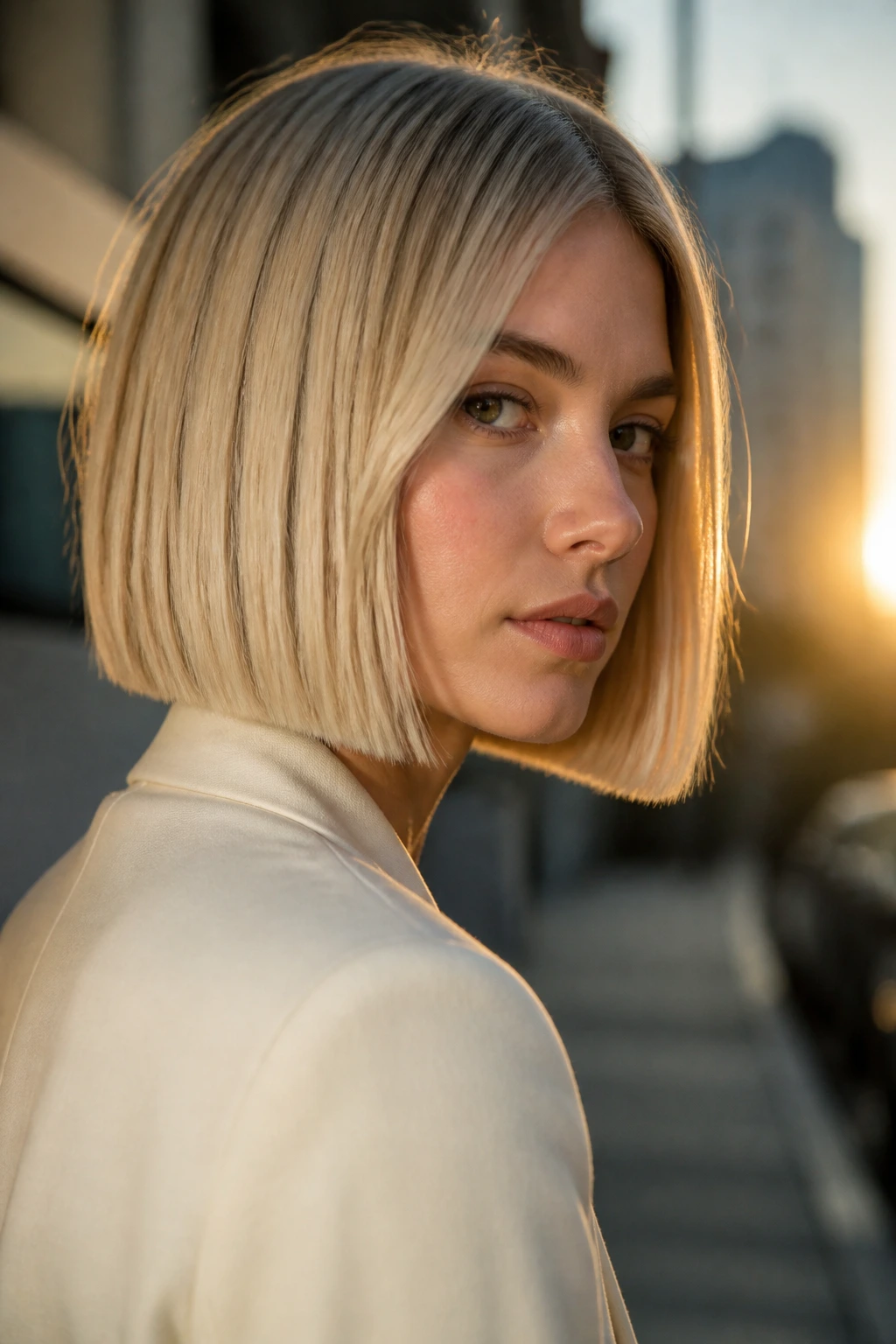
Blonde bobs work best when the shape and the color are pulling in the same direction. That’s the real lesson behind every cut here. A blunt edge wants soft ribbons, an angled bob wants a color sweep, a curly bob wants highlights that follow the curl, and a rooty lob wants enough depth to keep the whole thing believable.
The nicest part is that there’s no single right version. You can go icy and sharp, buttery and soft, pearl and polished, or rooty and relaxed. The bob gives the color a frame, and the highlights give the bob movement. When those two things line up, the cut stops feeling like a haircut and starts feeling like a decision.
