



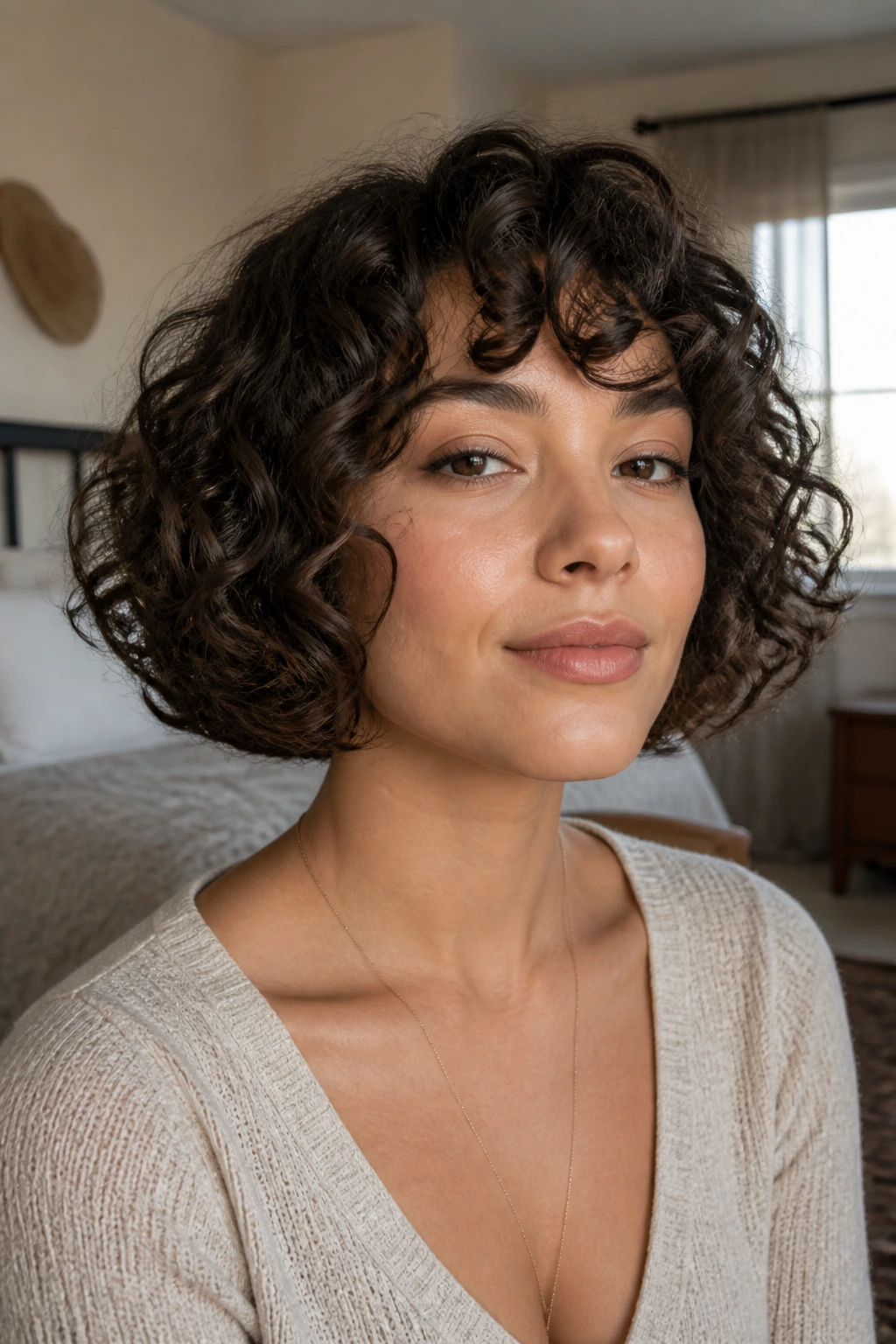
Bob haircuts for medium length curly hair are one of those cuts that can look crisp on day one and still hold up when the curl pattern loosens, bunches, or frizzes by the afternoon. The reason is simple: the length sits in a useful middle zone, long enough to show movement, short enough to keep shape.
That middle zone is where a lot of people get tripped up. Cut it too blunt, and some curls puff out at the sides like they’re trying to escape. Add too many layers, and the whole shape can collapse into a halo with no line left in the perimeter. The sweet spot lives somewhere between those two mistakes, and it changes depending on curl type, density, and how much shrinkage you get when the hair dries.
A good curly bob is not one haircut. It’s a set of decisions. Where the shortest pieces land. How much weight stays at the edge. Whether the front opens the face or closes it off. If you’ve ever looked at a bob on straight hair and thought, that will never do that on my curls, you were probably right. The cuts below are built around what curls actually do when they dry, not what they look like under a salon light at the sink.
Why These Curly Bob Shapes Earn Their Keep
-
Shrinkage is planned for, not ignored: A bob that lands at the chin when wet can sit an inch or two higher once the curls dry, so these shapes are chosen with bounce in mind.
-
The outline matters more than people think: A clean perimeter keeps a curly bob from turning into a triangle, while softer edges stop finer curls from looking thin at the ends.
-
Medium length gives you range: At this length, you can wear the bob rounded, angled, stacked, blunt, or fringed without the whole cut falling apart under its own weight.
-
Styling stays manageable: Most of these shapes work with a diffuser, a leave-in, and a bit of gel or mousse. You do not need a shelf full of products to make them behave.
-
Grow-out is less annoying: A smart curly bob can slide past the jaw and still read as a shape, which matters if you do not want a rescue trim every few weeks.
1. Soft Curly Bob With Face-Framing Layers
This is the bob I’d hand to someone who wants movement without too much drama. The front pieces skim the cheekbone or jaw, while the back stays a touch fuller so the cut doesn’t lose its outline when the curls shrink. It works especially well on loose to medium curls, because the shape gets a little lift without looking overbuilt.
Ask for the face-framing layers to start higher than the perimeter but not so high that the sides puff outward. That small detail makes a huge difference. If your curls spring up hard, leave the front a little longer than you think you need. The shape softens naturally once the hair dries.
2. Rounded Curly Bob That Hugs the Jaw
Rounded bobs are sneaky. They look simple, then you notice the whole face reads cleaner because the silhouette sits close to the head instead of flaring out at the cheeks. That makes this cut a strong choice for dense curls, coarse texture, or hair that tends to widen at the sides.
- Keep the shortest point near the jaw, not above it.
- Remove bulk from the interior, not from the perimeter.
- Diffuse on low heat so the curve stays soft rather than puffy.
This shape is less about layers and more about control. If your curls have a mind of their own, a rounded bob gives them a boundary.
3. Stacked Curly Bob With a Lifted Nape
Can a stacked bob work on curls without looking like a wedge? Yes, if the stacking is soft and the nape isn’t carved too aggressively. The lift in the back gives fine or medium-density curls a little air, while the front keeps enough length to avoid that old-school helmet feeling.
The trick is restraint. A curly stack should feel like a gentle slope, not a staircase. Ask for the back to rise gradually, with the shortest layer at the nape only about an inch or so shorter than the lower front pieces. Too much stacking makes the sides look narrow and the crown look crowded.
4. A-Line Curly Bob With Long Front Pieces
The A-line version is the one that quietly does face-shaping work. Shorter in the back, longer in the front, it pulls the eye down and forward, which can be flattering if you want a little length around the jaw or neck. On curls, the longer front pieces also give you a bit of room for spring.
I like this cut on round and square faces because it adds vertical movement without feeling severe. Keep the difference between back and front noticeable, but not dramatic. The best A-line curly bob looks like it was drawn with a soft pencil, not a ruler. If the angle is too steep, the front can drag the whole shape down.
5. French Curly Bob With a Soft Fringe
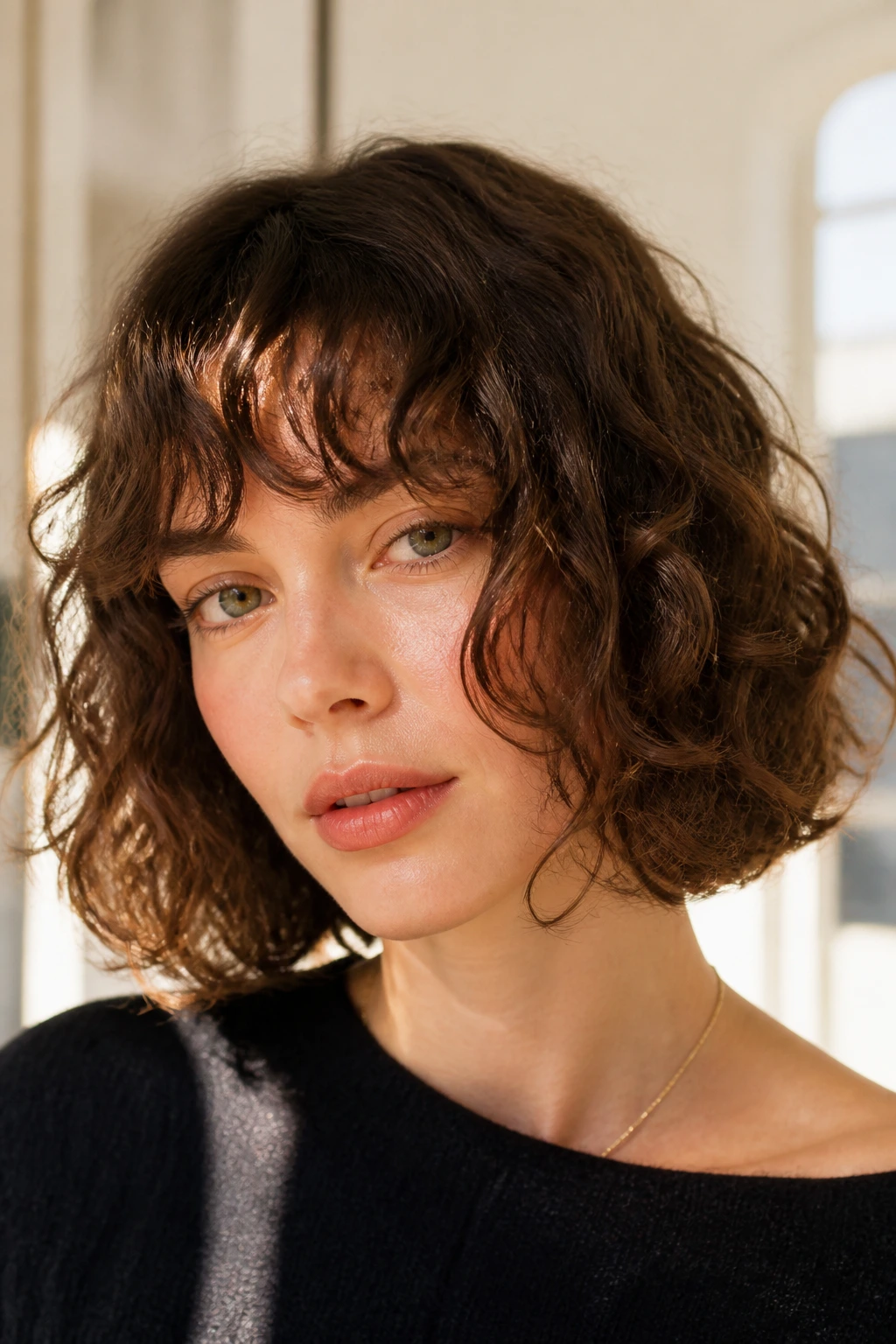
A French curly bob has a little attitude, and I mean that in the best way. The fringe sits softly across the forehead, usually longer than it looks on paper because curls shrink, and the rest of the cut stays chin to jaw length. The result feels airy, not heavy.
This cut works best when the bangs are left long enough to split on their own if needed. Short curly bangs can get fussy fast. A softer fringe can be pushed aside, worn in a center part, or let loose when the mood changes. Ask for the fringe to be checked dry before the final snip. That one step saves a lot of forehead regret.
6. Blunt Curly Bob for Dense Curls
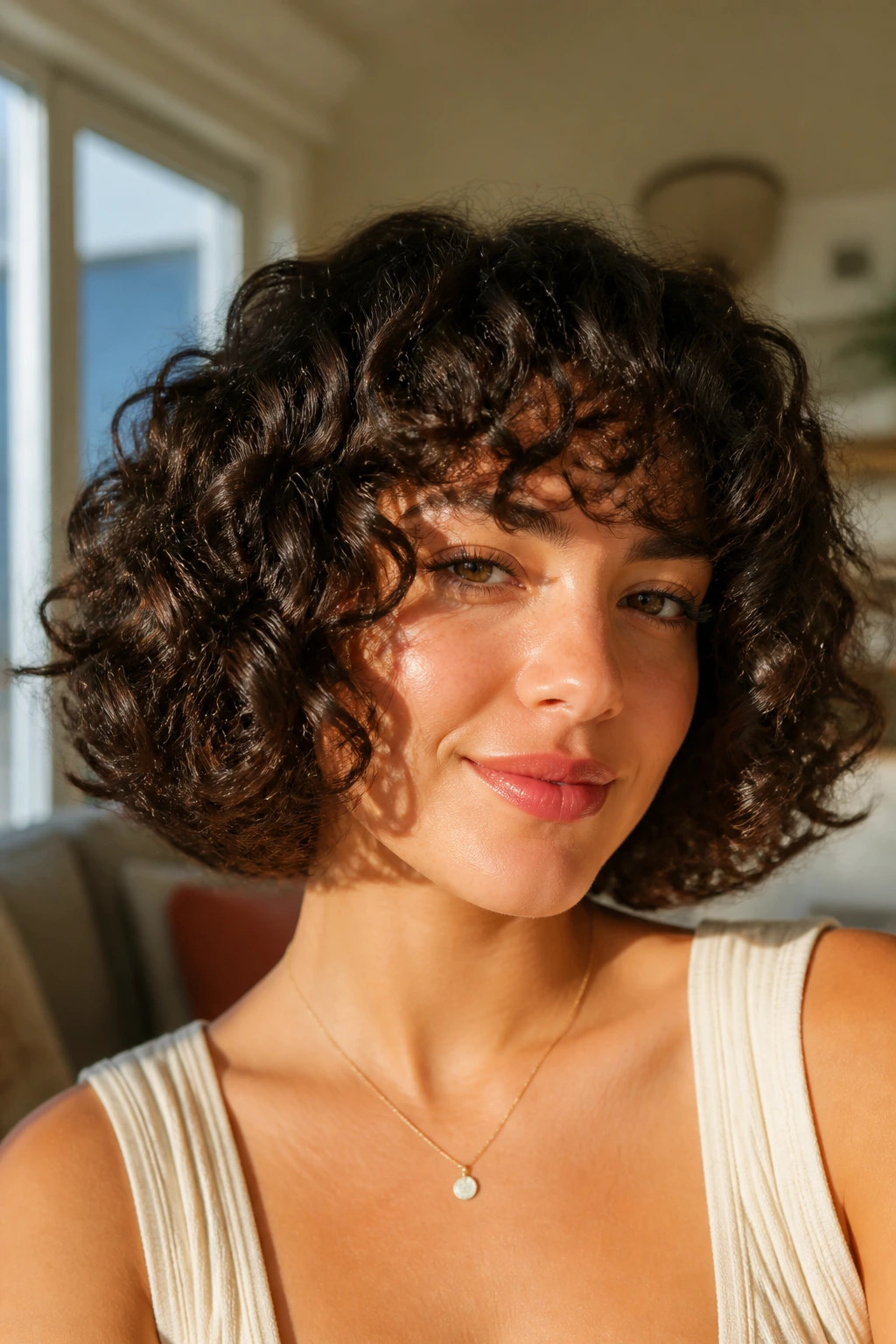
Dense curls love a blunt edge more than people expect. When the perimeter is clean, the cut looks strong instead of puffy, and the weight at the bottom helps keep the outline from floating away. This is especially good for coarse curls that want to expand as soon as humidity enters the room.
- Keep layers minimal near the ends.
- Let the width live in the curl pattern, not in the cut.
- Use a light hand with cream so the shape doesn’t collapse.
A blunt curly bob can look polished without losing texture. If anything, the curls make the line more interesting. The catch is that the edges have to be tidy, because split ends show faster on a blunt shape.
7. Shaggy Curly Bob With Internal Layers
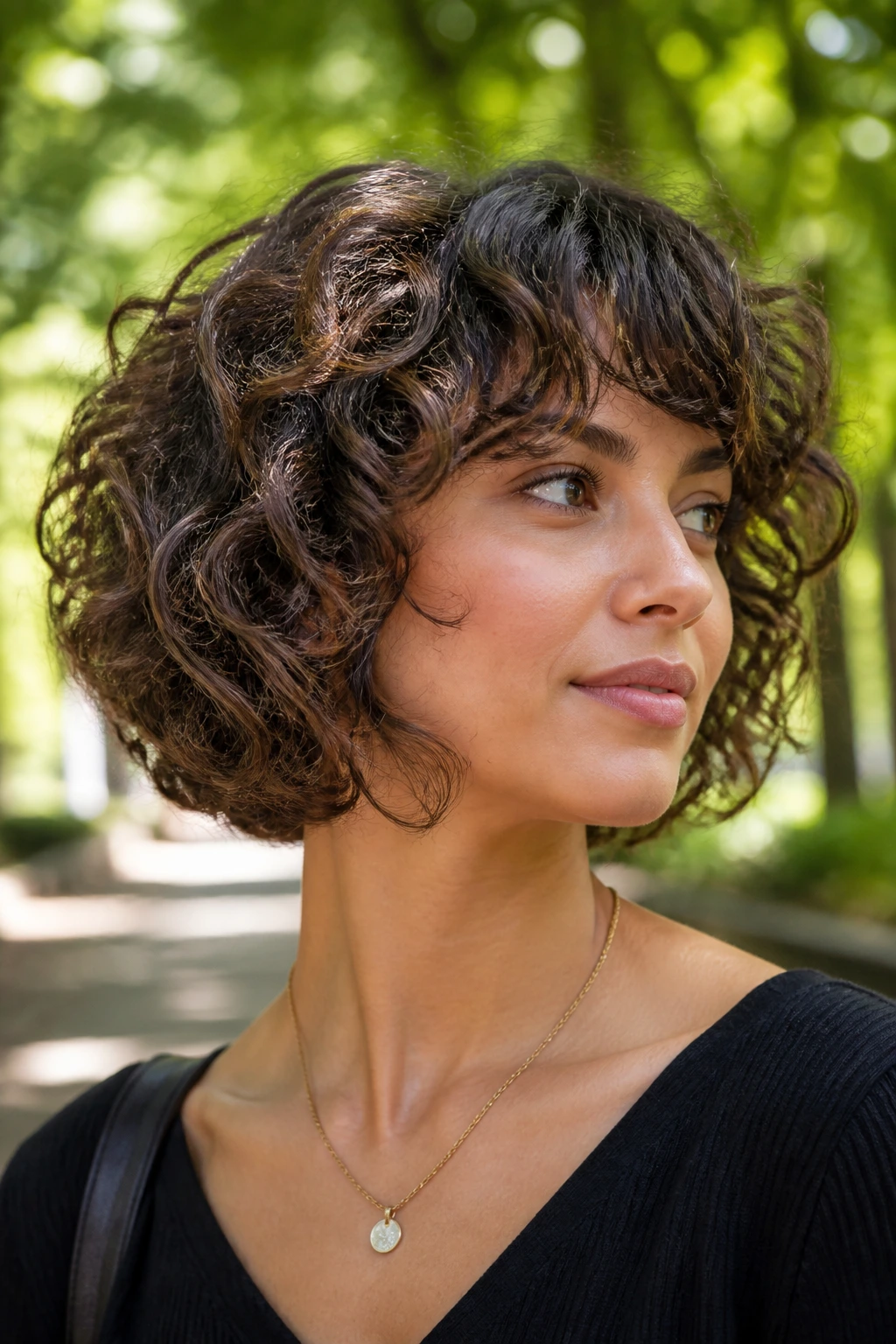
This is the cut for someone who likes their curls a little wild but not sloppy. The perimeter stays visible, while the interior layers remove bulk and let curls pile up without turning the sides into a wall. It’s a good option for 2B through 3C hair that gets heavy around the ears.
The difference between a good shaggy bob and a bad one is where the layers sit. You want them tucked inside the shape, not chopped all the way up to the top. If the layers start too high, you’ll lose the bob and end up with a mini shag that has no edge left. When done well, this cut has movement in the middle and a clear line at the bottom.
8. Asymmetrical Curly Bob for a Sharper Profile
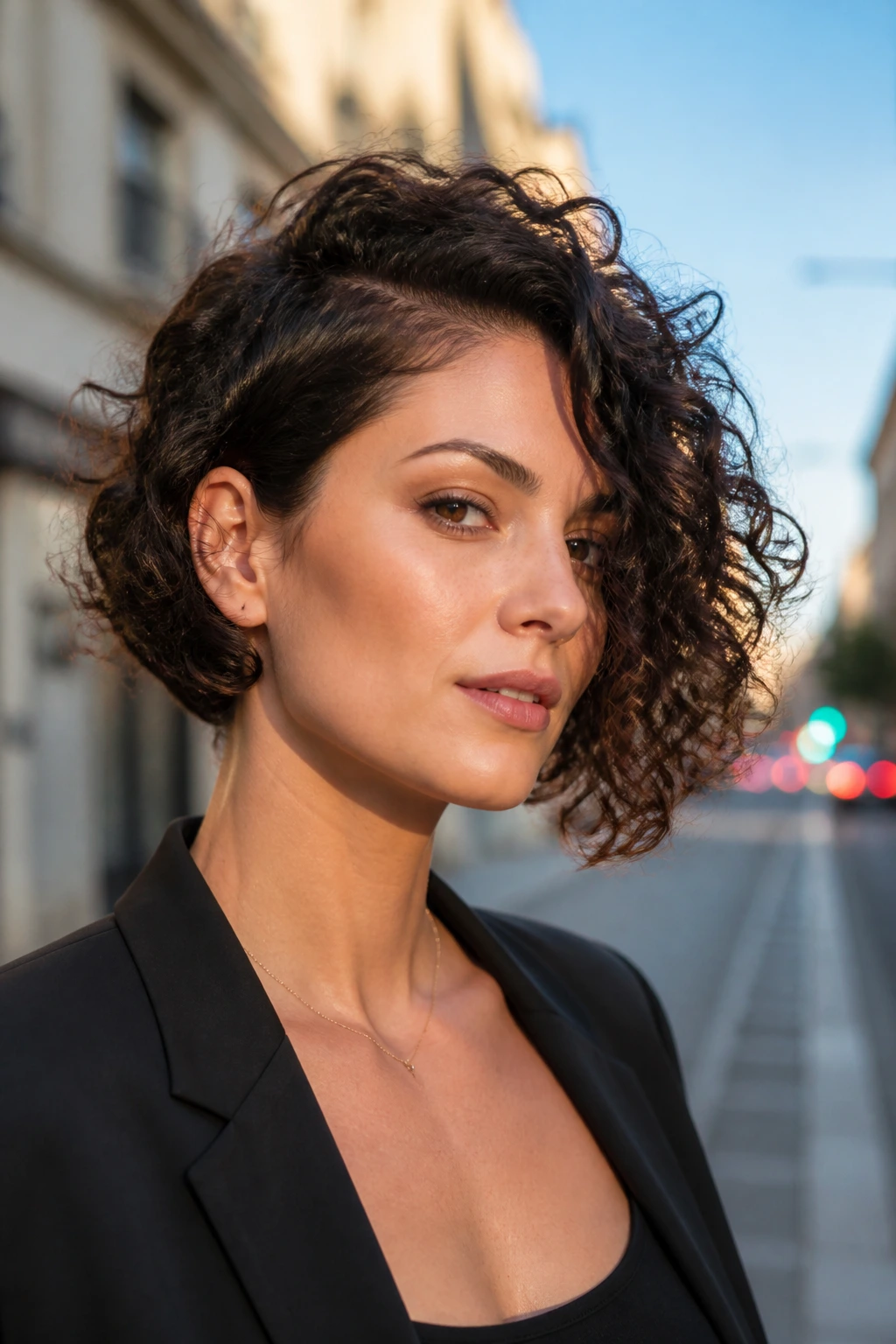
An asymmetrical curly bob changes the mood fast. One side sits a little longer than the other, and that slight imbalance can sharpen a round face or soften a strong jaw, depending on where the longer side falls. The difference does not need to be dramatic; half an inch can be enough once curls dry.
This is a good choice if you like a bob that feels a little less polite. Keep the longer side in front of the ear rather than dragging it down toward the collarbone, or the shape can get fussy. The strongest versions are subtle and look intentional from every angle, not just head-on.
9. Collarbone Curly Bob That Skims the Shoulders

Strictly speaking, this is the longest bob on the list, but it earns its spot because medium-length curls live well here. The ends skim the collarbone instead of getting caught on the shoulders every time you move, which keeps the line cleaner and reduces that weird flip-out effect.
I like this one for people who are nervous about losing length. You still get enough body to show shape, but the cut doesn’t feel like a sudden chop. If your curls tend to snag on sweaters or coat collars, this length is a lot easier to live with. It’s also forgiving when you grow it out.
10. Side-Part Curly Bob With a Sweeping Front
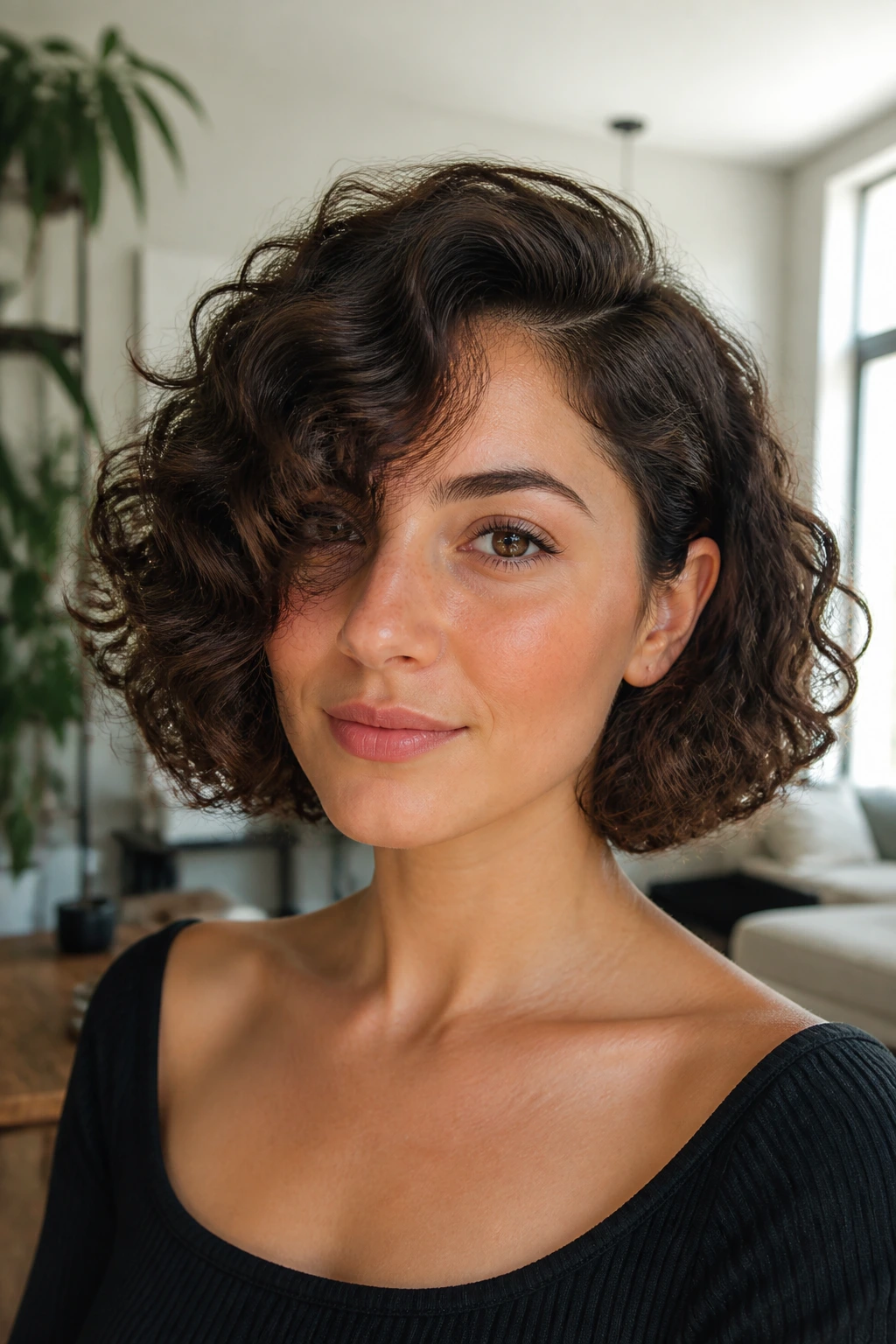
Side parts matter more than people admit. A deep side part gives a curly bob a lift at the crown and a sweep across the forehead that can make the whole haircut feel fuller. It’s a smart move for flatter roots, a narrow face, or curls that look too symmetrical in a center part.
The front section does the heavy lifting here. It should fall over one brow or cheekbone, then blend into shorter layers that guide the eye down the face. If you diffuse with a clip at the roots near the part, you get extra height without teasing. That’s a lot kinder to curls than trying to force volume later.
11. Center-Part Curly Bob With Clean Symmetry
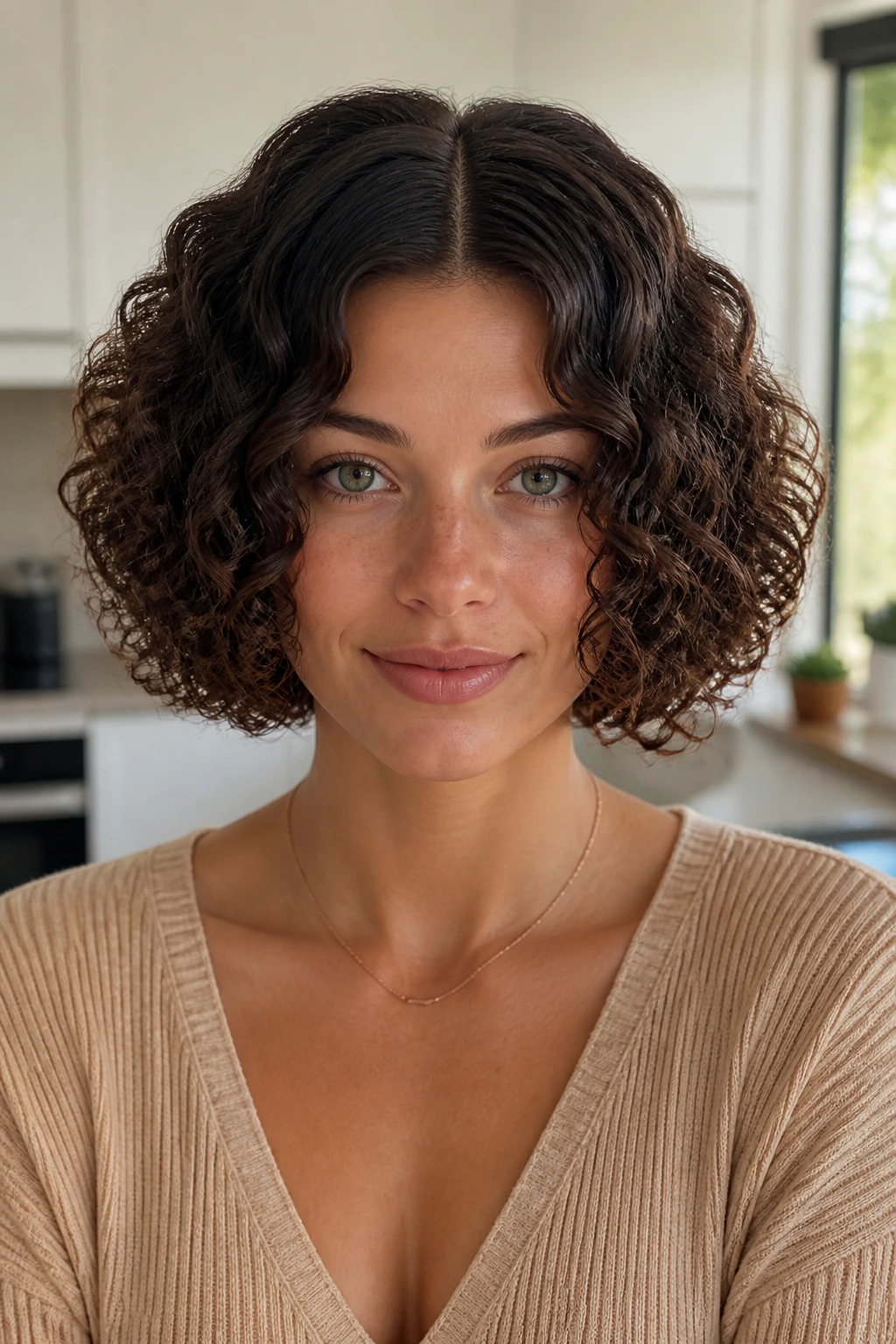
A center-part bob is the crispest version of the curly bob family. It puts the weight evenly on both sides and shows off curl pattern in a way that feels direct, almost graphic. This works best when the curls are defined and the density is even from ear to ear.
The challenge is that a center part exposes everything. Cowlicks, uneven growth, and hairline quirks all show up faster. If that sounds intimidating, keep the face-framing layers light and the perimeter neat. A clean middle part on curly hair can look modern, but only if the cut is balanced enough to hold it.
12. Chin-Grazing Curly Bob With Micro Layers
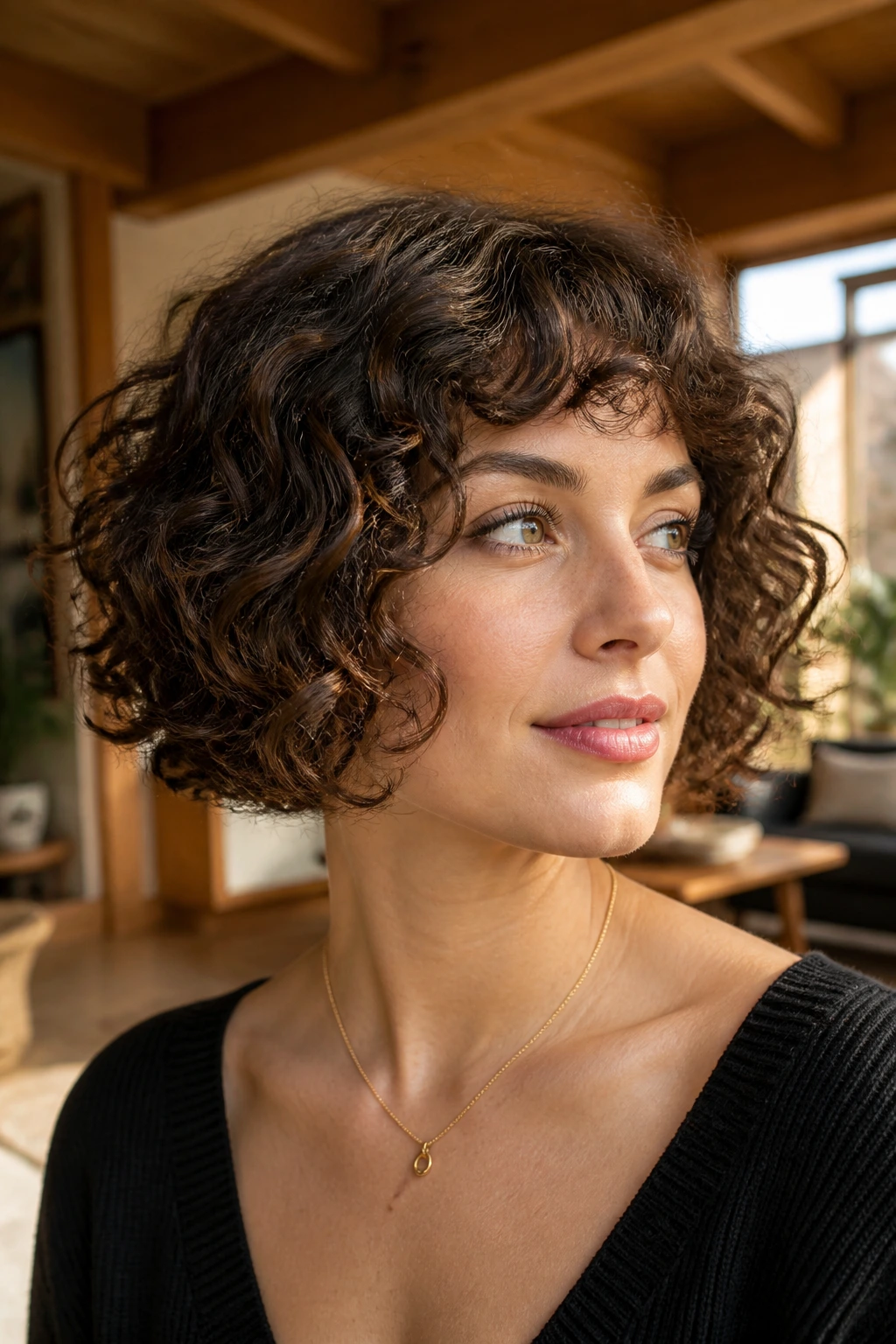
Chin-length is risky in the best way. It puts the curl right around the face, which can look sharp and lively, but it also means shrinkage becomes the whole story. The micro layers keep the shape from turning into a single round puff, while the overall length still sits in bob territory.
This cut is great for smaller faces or for curls that need a little shape without a lot of extra bulk. I would not go wild with layers here. Tiny adjustments around the crown and cheek area are enough. Too much cutting, and the bob starts to separate into pieces instead of reading as one shape.
13. Tapered Curly Bob for Coily Texture
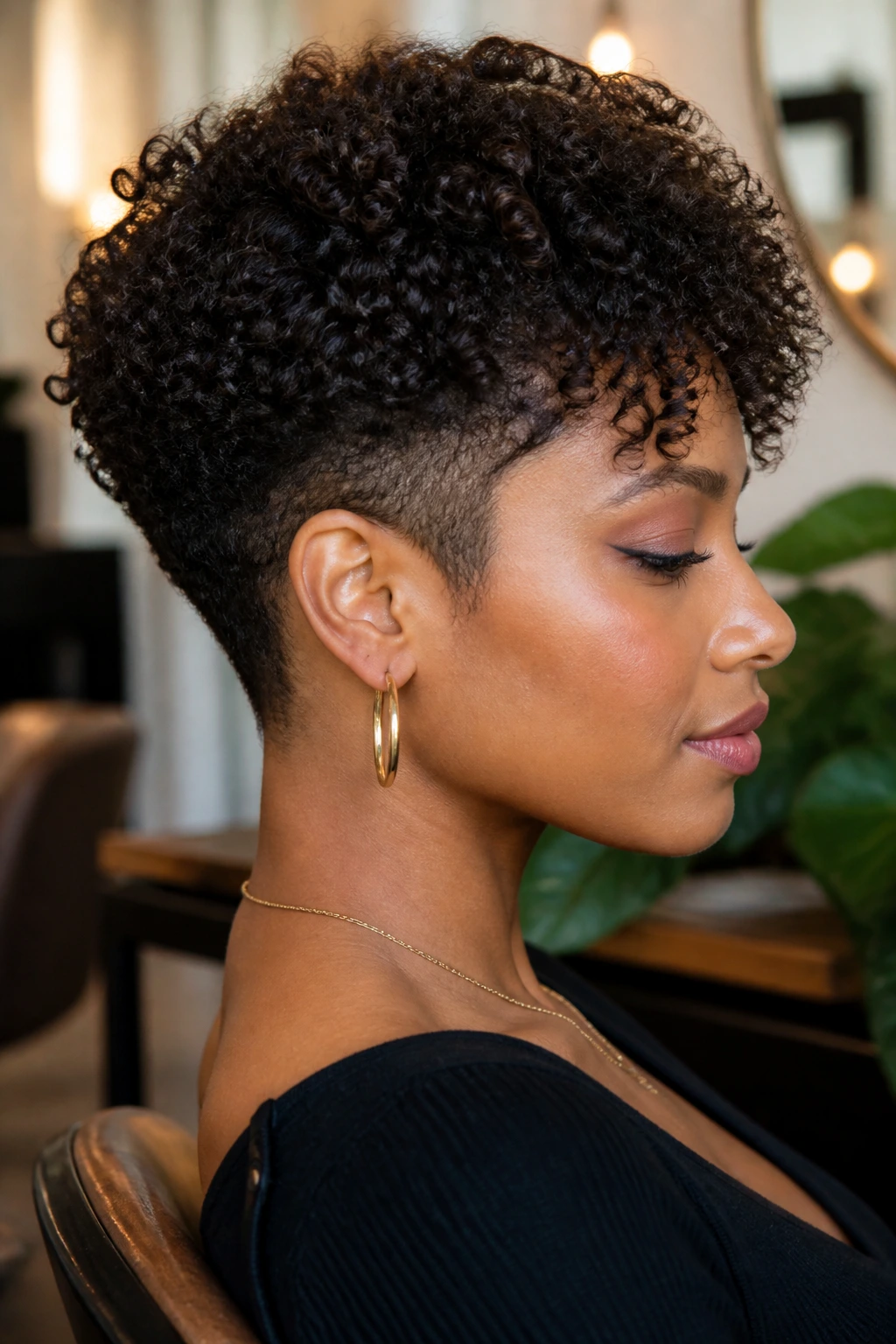
For coily hair, tapering is a shape tool, not a trick. The sides and nape are refined a bit tighter, while the crown keeps enough length to show the natural spring of the coils. That gives the bob a rounded silhouette without making it look boxy or bottom-heavy.
This cut works well when the stylist respects the head shape instead of chasing a straight line across it. Ask for the taper to stay soft, especially near the temples. A good tapered curly bob has presence. It does not need to shout.
14. Curly Bob With Curtain Bangs

Curtain bangs and curly bobs get along better than most people expect. The split fringe opens at the center and falls into the sides, which keeps the front from feeling crowded. It’s a friendly option if you want bangs without the bluntness of a full fringe.
The bangs need to be cut longer than your first instinct says. Curly bangs shrink, and if they land too high above the brow, they can spend the next month looking like a surprise. Keep the shortest pieces soft and let the side lengths taper into the bob. That blend is what keeps the cut from feeling chopped into two separate parts.
15. Inverted Curly Bob With a Strong Back Line
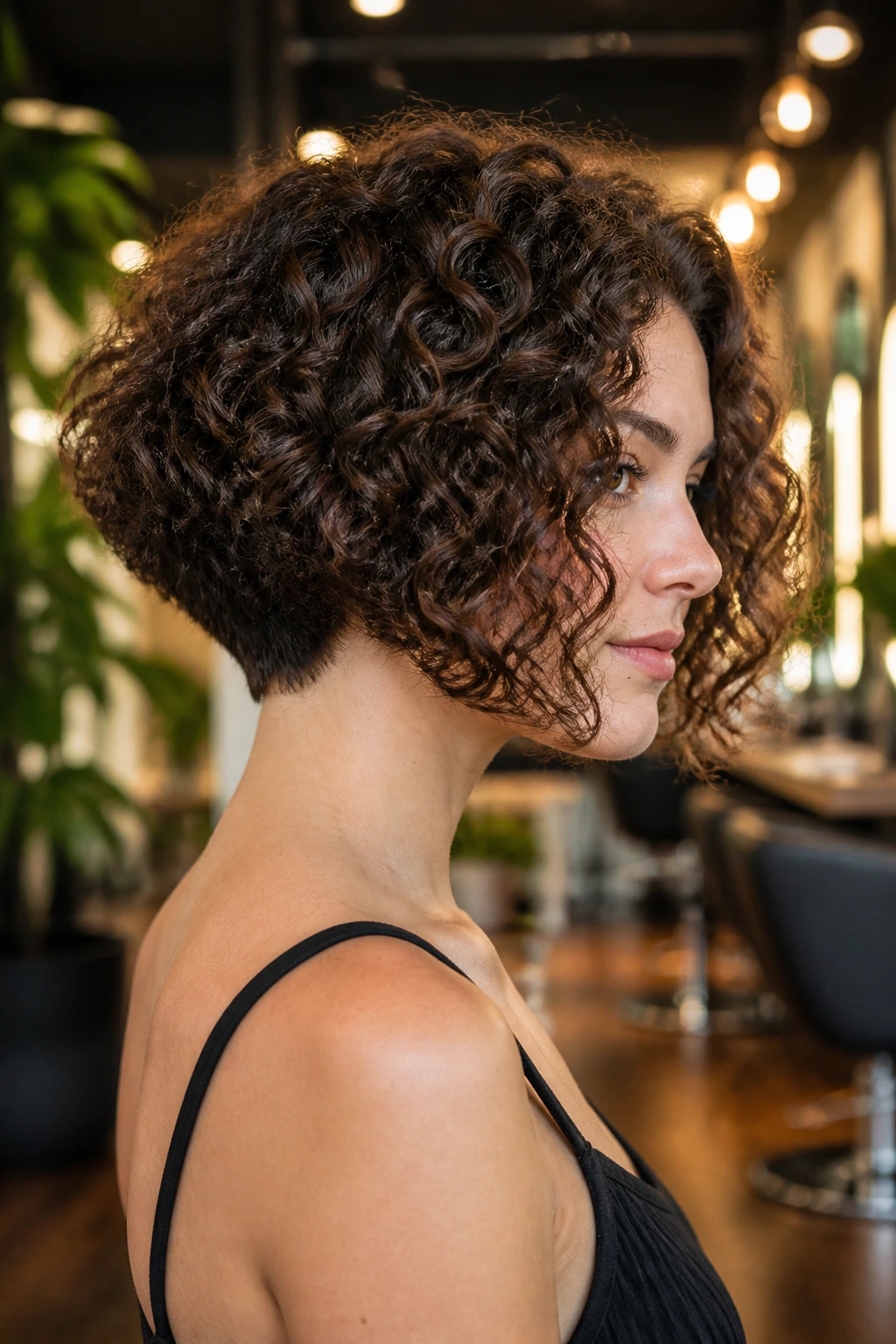
An inverted bob has a cleaner, more obvious angle than an A-line. The back sits shorter and higher, the front stays longer, and the curve between them creates a strong line through the neck and jaw. On curls, that can look rich and architectural if the angle is controlled.
I like this shape when the hair has enough density to hold the back without collapsing. The line should be precise, but not so severe that it starts resembling a wedge. If your stylist is good with curls, they’ll use the interior shape to keep the back lifted without stripping away all the softness.
16. Boxy Curly Bob With a Heavy Perimeter
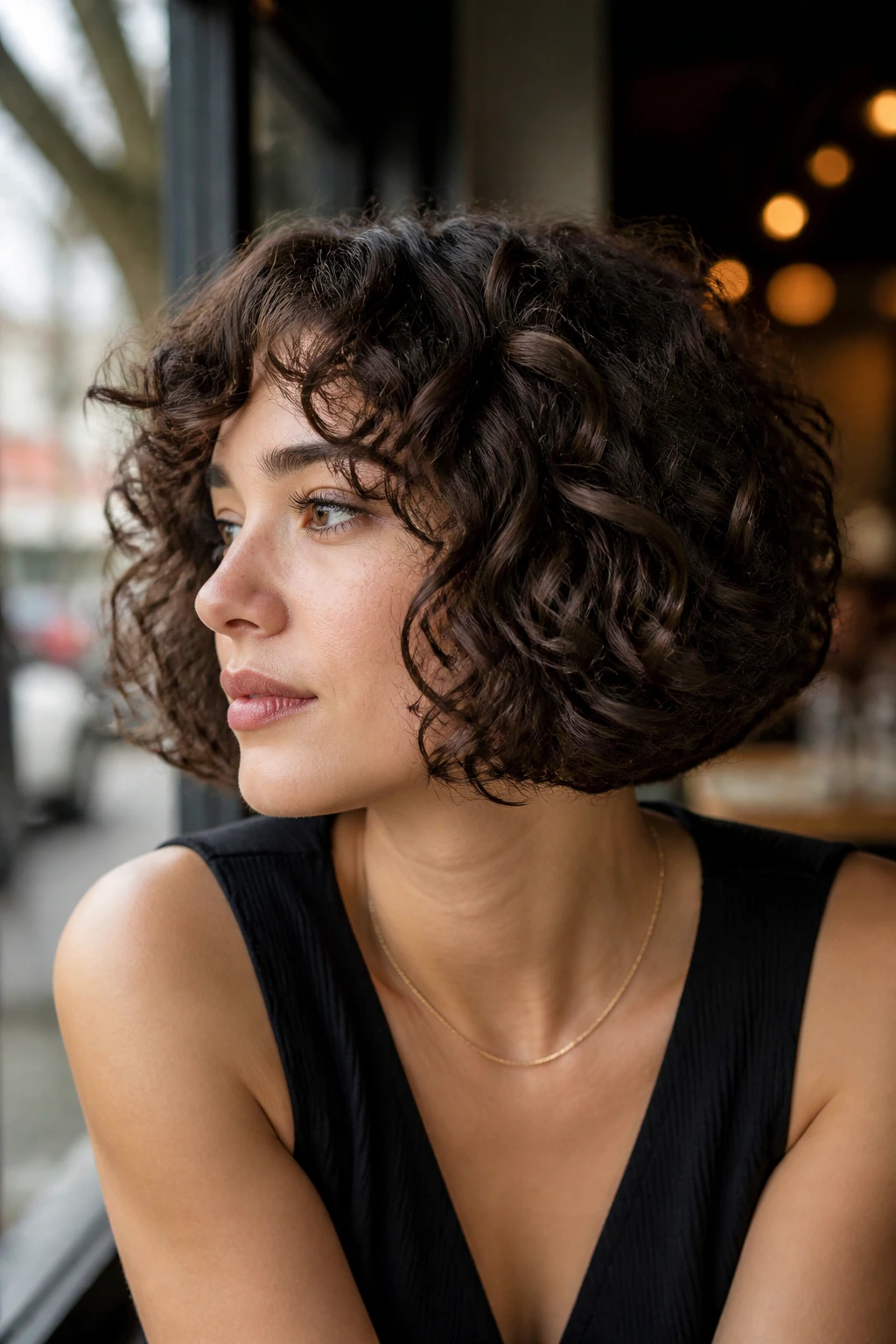
A boxy bob sounds harsh, but on thick curls it can look clean and surprisingly cool. The perimeter stays heavy, which gives the cut weight and keeps the curls from expanding out into a cloud. The silhouette is more squared-off than rounded, which reads well on hair with serious density.
This cut is not for everyone. Fine curls can look too flat at the ends if the line is too heavy, and overly coarse curls can turn bulky if the interior isn’t handled carefully. But on the right head of hair, a boxy bob gives structure in a way that feels solid rather than stiff.
17. Razor-Cut Curly Bob for Piecey Definition
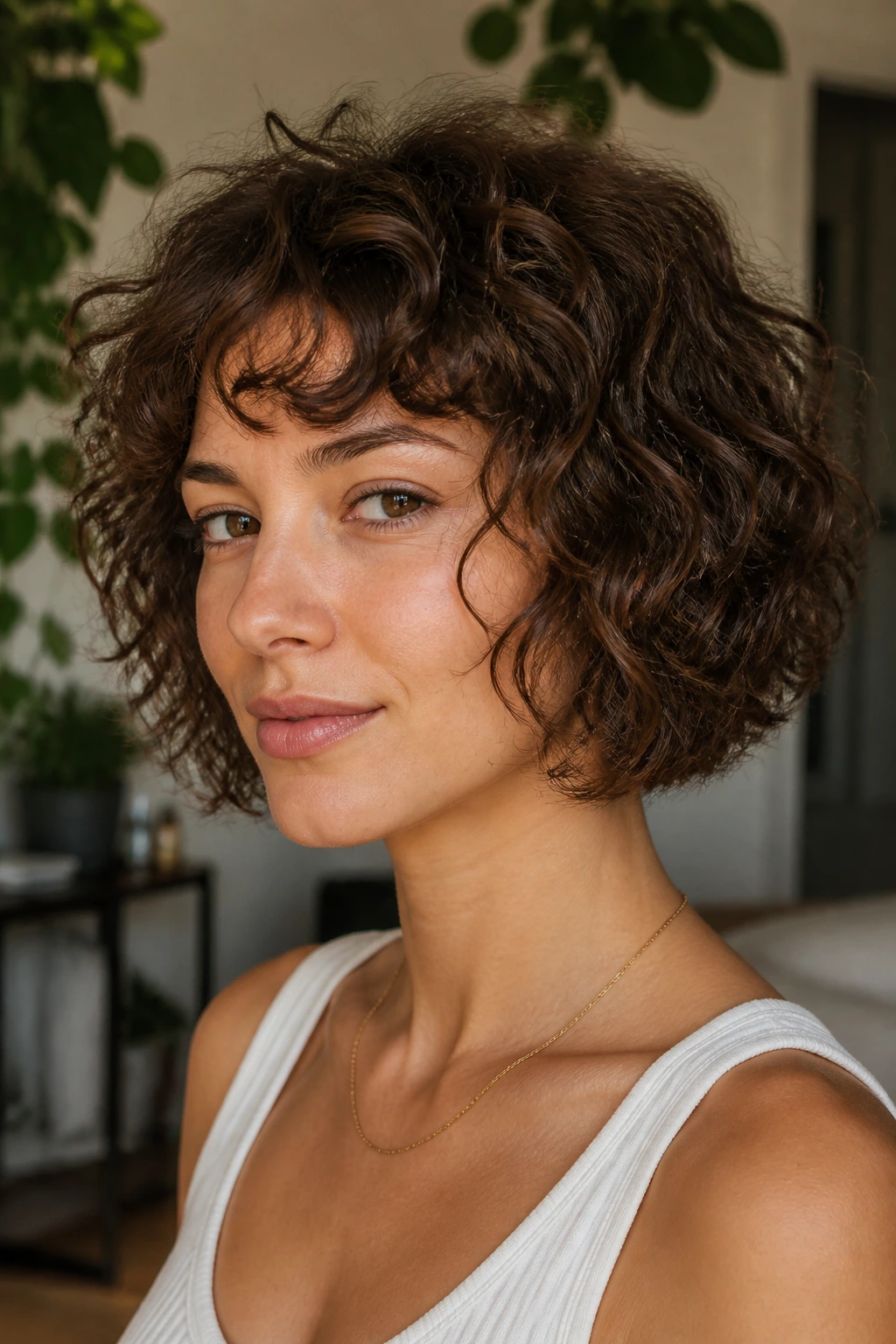
Razor cutting gets misused a lot on curly hair. Done well, it softens the ends and creates small pieces that move separately instead of clumping into one thick mass. Done badly, it frays the cut and leaves the ends looking thirsty.
So, yes, this bob can work. The trick is to ask for a gentle razor or slide-cut approach, and only if your curls are healthy enough to handle it. If your ends already look dry, skip this version and keep the scissors. Piecey definition is nice; split-looking ends are not.
18. Long Curly Bob With Hidden Layers
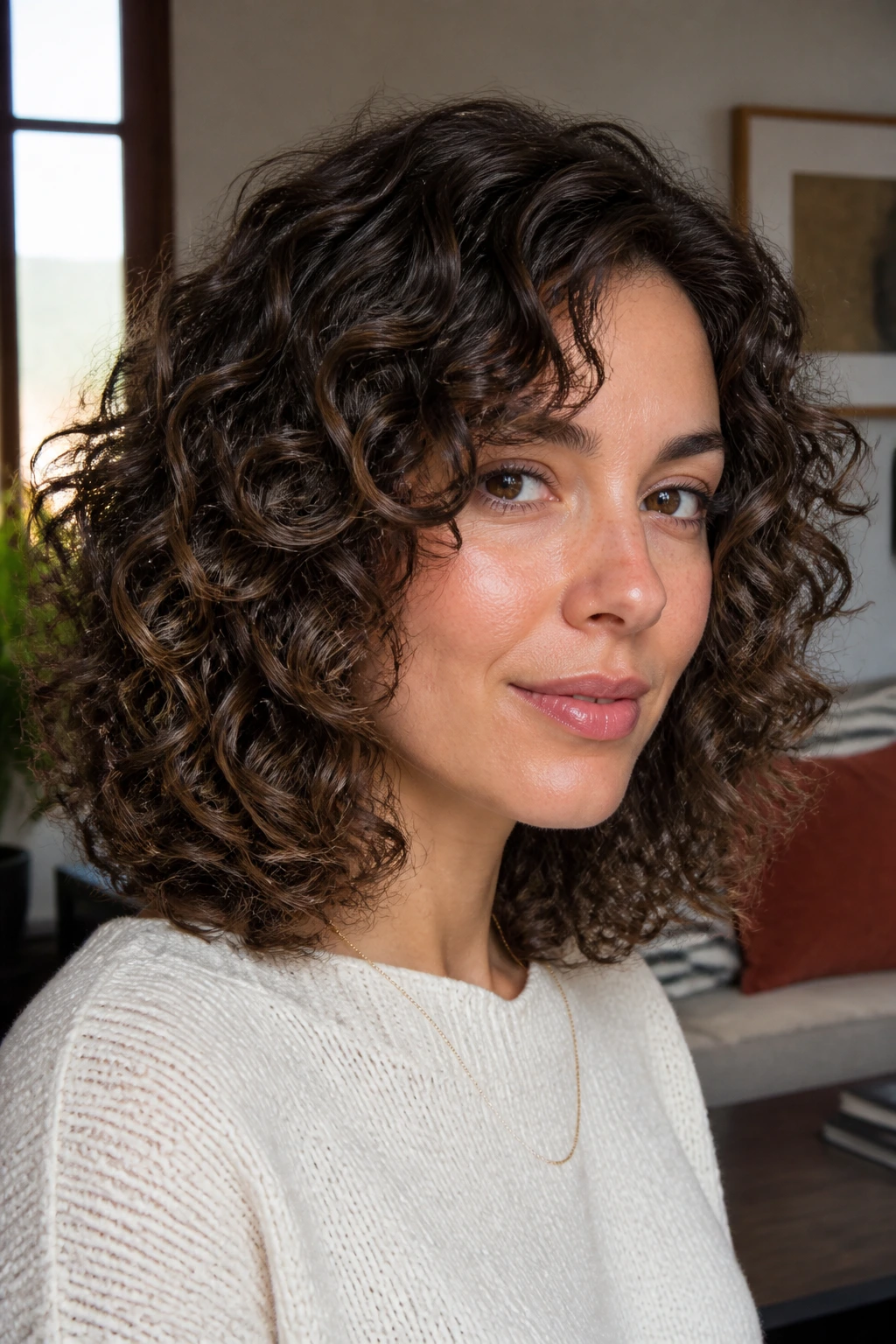
This is the safest-looking cut in the group, which is exactly why a lot of people end up loving it. The length sits at or just past the shoulders, but the interior layers keep the curl from getting too heavy. From the outside, it still reads as a bob. Underneath, it has room to breathe.
A long curly bob is the one I’d pick for someone who wants shape without a big visual reset. It grows out gracefully, and it works with loose waves as easily as tighter curl patterns. If your hair puffs at the sides, the hidden layers help the shape settle inward instead of outward.
19. Vintage Rounded Curly Bob With an Old-Hollywood Bend
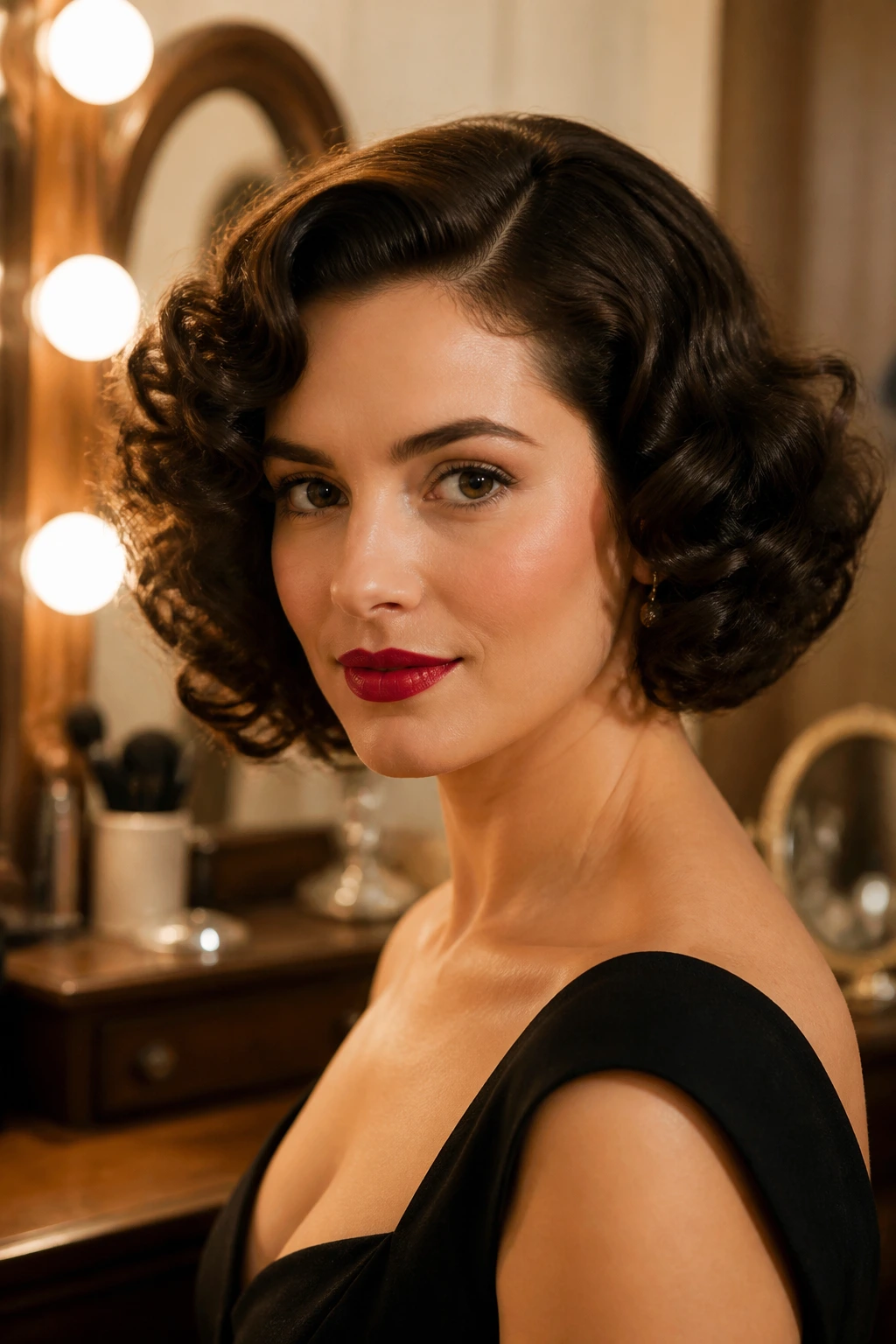
This one has polish. The shape is rounded and smooth, with a side part and a controlled bend through the ends that gives the haircut a little retro weight. It suits curls that can be defined without being forced into a stiff pattern.
Think of this bob as the more dressed-up cousin of the rounded cut. It looks especially good with medium density and strong shine, because the curve catches the eye before the texture does. A little gel at the root and a careful diffuse can make the whole thing feel finished without turning it hard.
20. Jaw-Length Curly Bob With Flip-Out Ends

A jaw-length bob with a soft flip at the ends feels playful without going full retro. The cut sits close enough to the face to show off the curl pattern, but the extra movement at the bottom keeps it from looking boxed in. It’s a nice choice if you like hair that moves when you turn your head.
This shape works best when the ends are not over-thinned. Curls need some weight if you want that little outward kick. If the perimeter gets too wispy, the flip disappears and the cut starts to fray. A subtle bend is enough. You do not need a cartoon curl.
21. Wet-Set Inspired Curly Bob
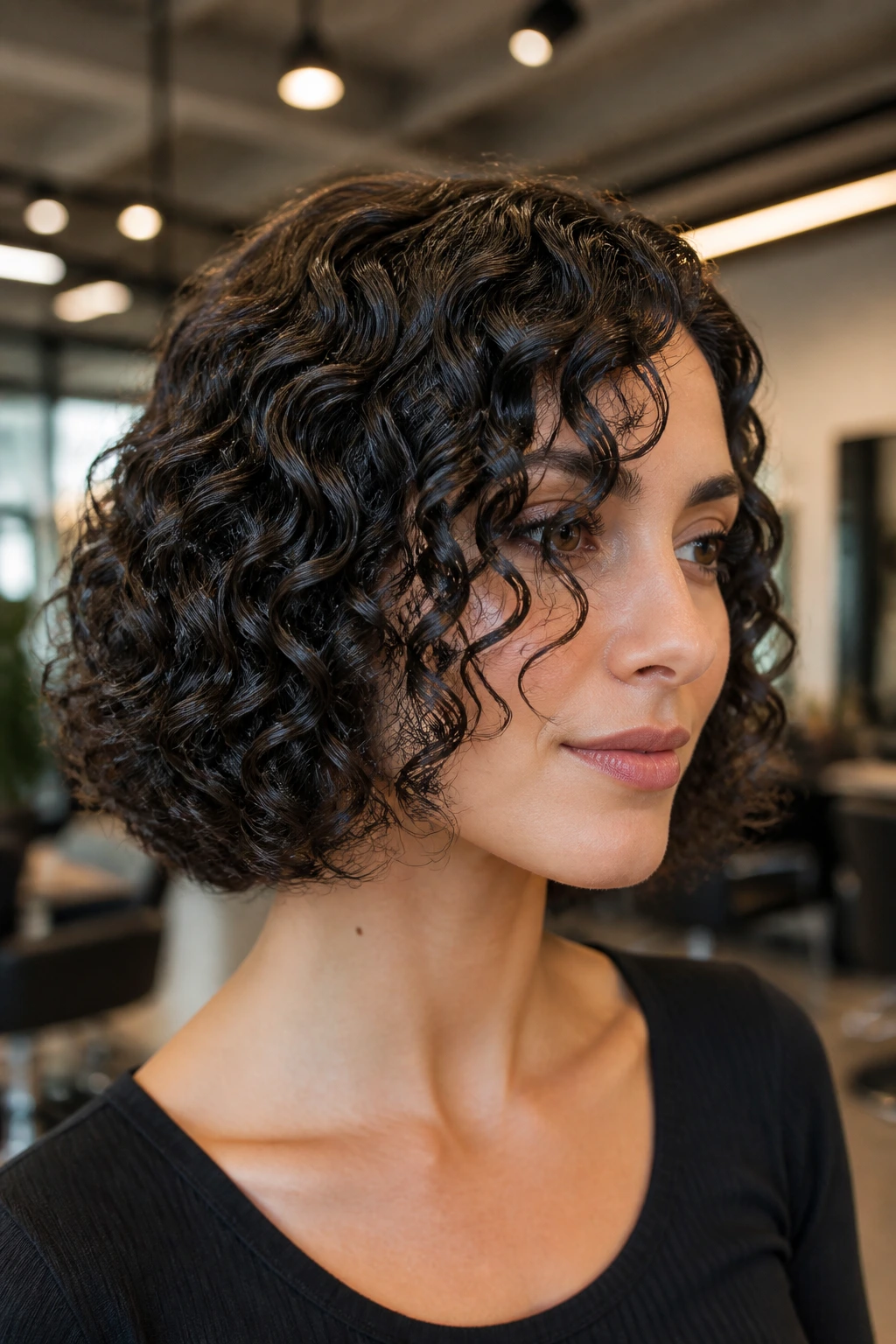
This is the most polished version of the bunch. The cut itself is usually simple, but it’s meant to support a more uniform set of curls, whether you do finger-coiling, setting clips, or a mousse-and-diffuse routine. The result is neat, glossy, and a touch more sculpted than a loose wash-and-go bob.
It’s a strong choice if you like your curls to read clearly instead of blending into a soft cloud. Keep the length mid-jaw to collarbone, because too short and the shape can get springy in a way that’s hard to control. The haircut should give the curls a place to land; the set does the rest.
22. Rounded Afro Bob With a Soft Halo
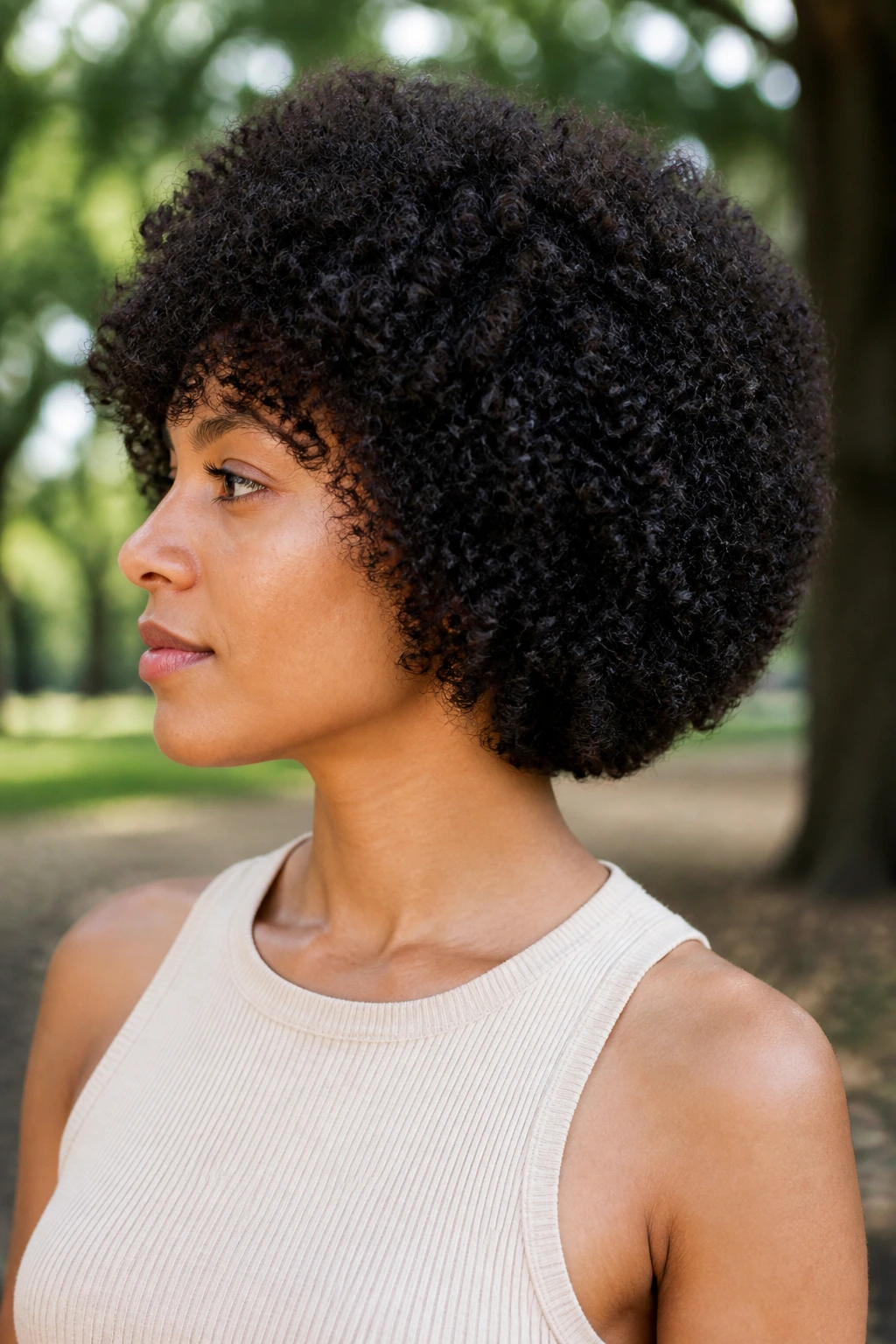
For afro-textured hair, a rounded bob can look beautifully clean when it follows the actual shape of the head. The outline stays soft, the halo stays full, and the sides are trimmed in a way that keeps the width balanced from cheek to nape. This is not about shrinking the hair. It’s about directing the shape.
The best version has some lift at the crown and enough length around the edges to keep the bob line visible. Ask for the shape to be checked from the side, not just the front. That’s where a lot of curly bobs go wrong. A good rounded afro bob looks balanced in profile, which is where the haircut really lives.
23. Beachy Curly Bob With Airy Ends

Loose waves and softer curls can wear a beachy bob without needing a lot of structure. The cut stays light through the ends, the layers are minimal, and the shape depends more on movement than on a hard outline. That makes it a strong option if your curls already have a natural bend.
The danger here is over-layering. Beachy does not mean shredded. Keep the ends soft, not scrappy, and let the length stay just below the jaw or around the collarbone. This gives you a bob that feels relaxed but still knows where it ends.
24. Layered Bob With a Deep Side Sweep
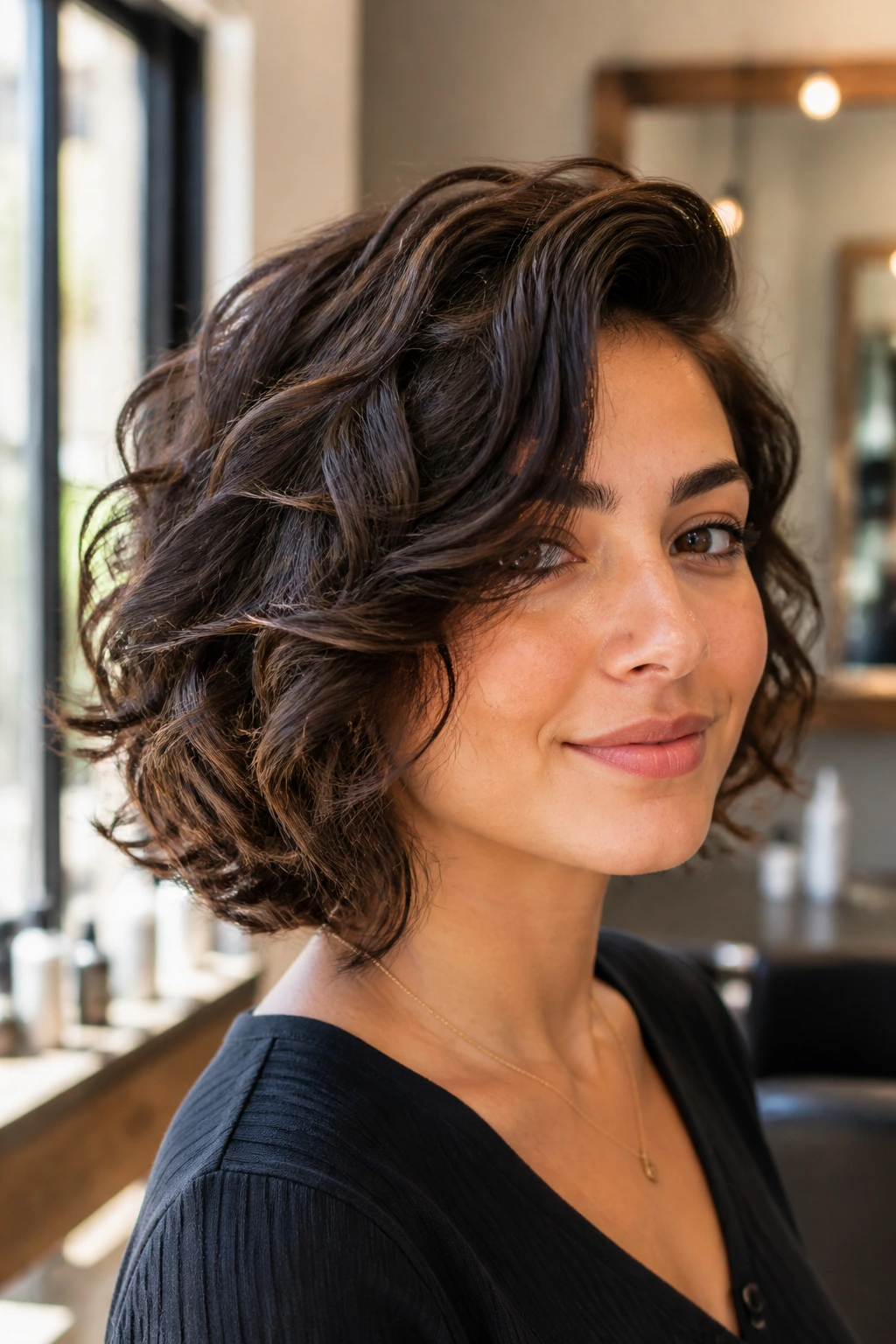
A deep side sweep does a lot of flattering work on curly hair. It gives you volume on one side, a soft opening through the forehead, and enough asymmetry to keep the haircut from feeling too sweet. Add medium layers, and the whole thing gets lift without losing the bob shape.
This version works especially well if your roots are flat or your face is wider at the cheek area. The sweep pushes height where you want it and movement where you need it. If the top tends to collapse, a deep part can change the whole haircut without changing the length at all.
25. Grow-Out-Friendly Curly Bob for Easy Maintenance
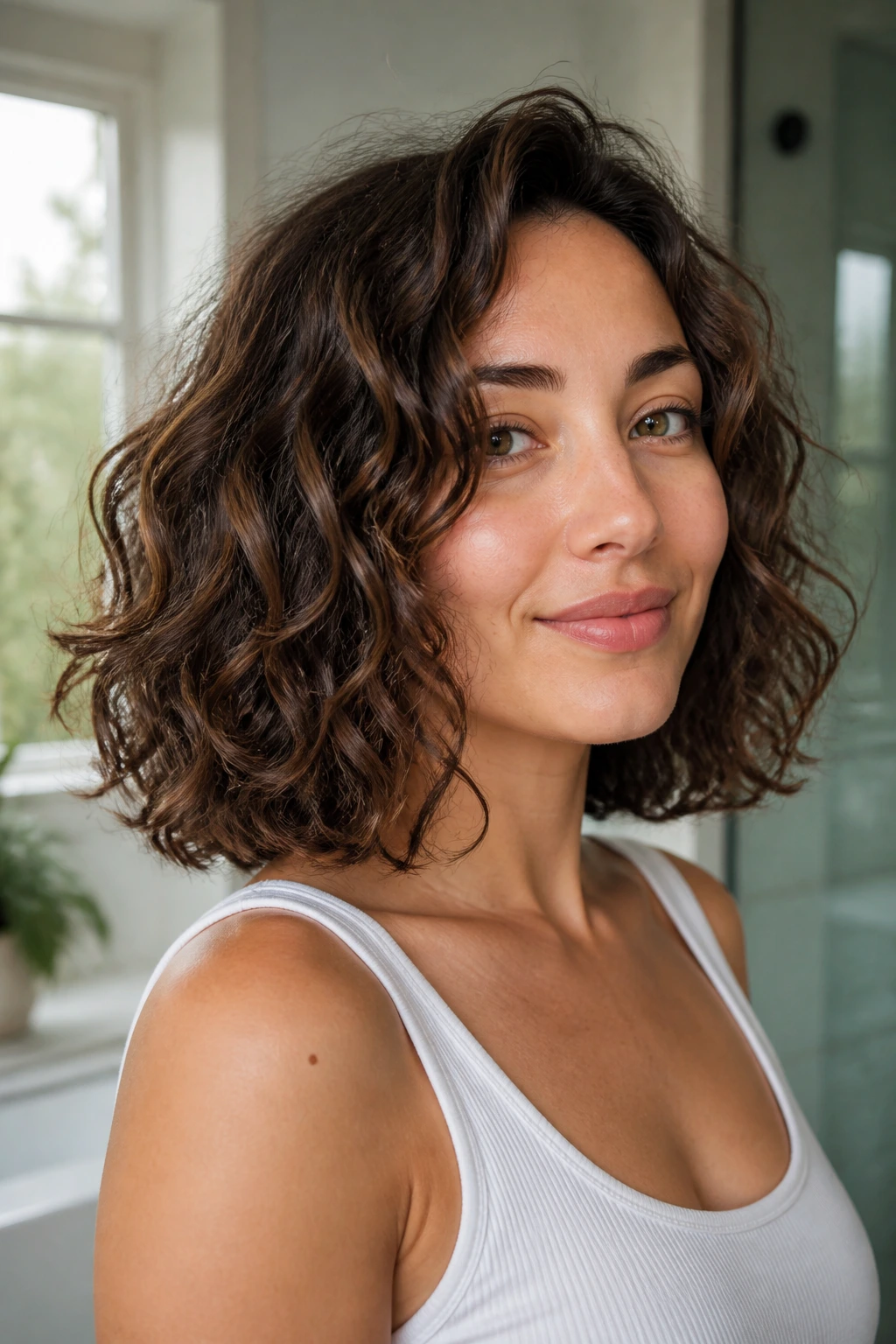
This is the cut for people who want a bob that stays useful after the salon visit fades a bit. The length sits around the top of the shoulder, the layers are soft enough to grow out quietly, and the perimeter stays tidy even when the curls loosen. It’s not flashy. It just keeps working.
I’d recommend this version if you do not want to think about trims every few weeks. It’s the most forgiving bob on the list and one of the easiest to refresh at home. A good grow-out bob still looks like a haircut when it starts to lengthen. That’s the real trick.
How Bob Haircuts for Medium Length Curly Hair Behave Once They Dry
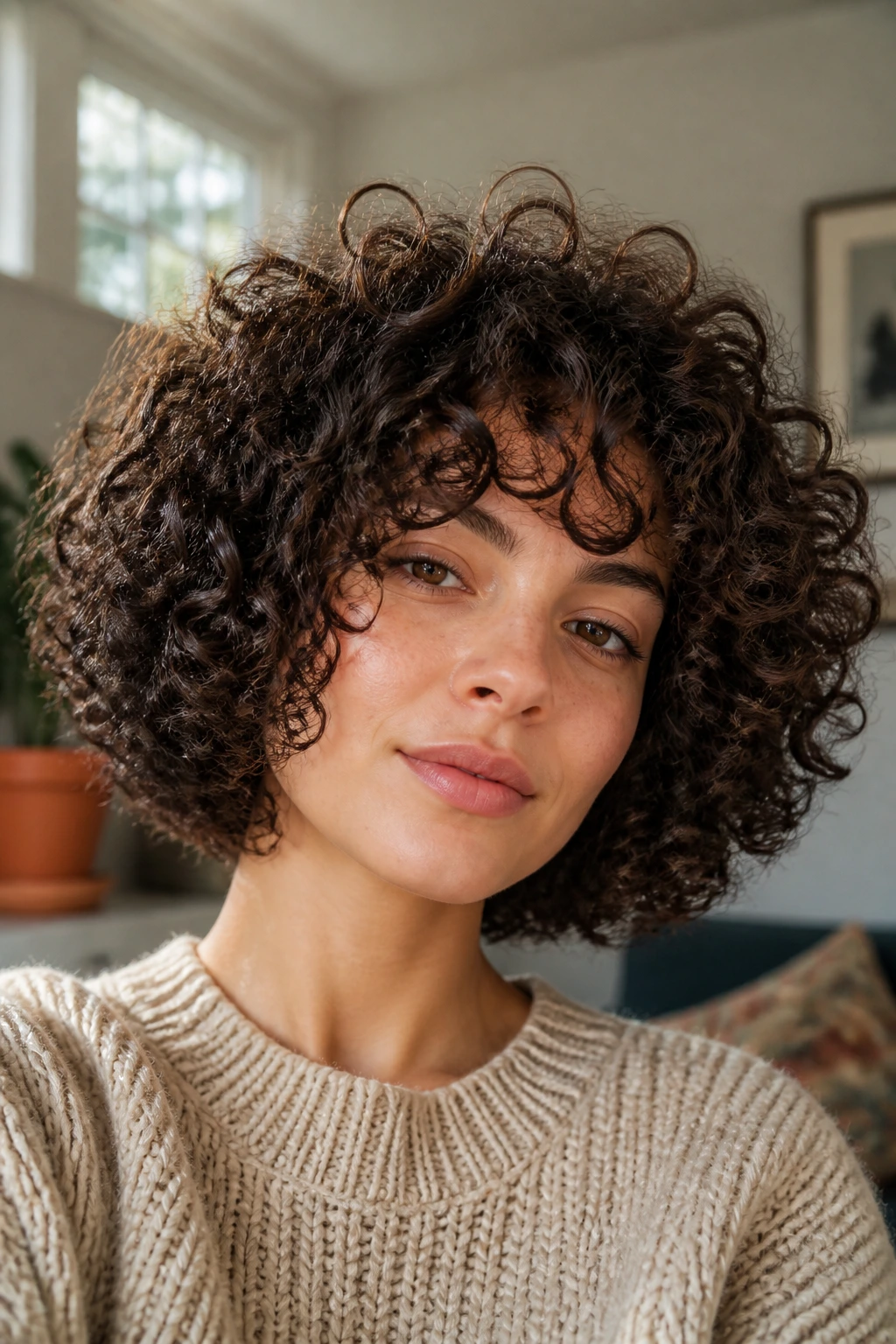
Curly bobs change shape the second they dry, and that is the whole game. A section that looks perfectly balanced at the sink can sit much higher on the face once the curl springs up, especially if your pattern is loose at the root and tighter through the ends. That is why stylists who know curls often cut with shrinkage in mind, not against it.
The other thing that happens is curl clumping. Some pieces gather together and look fuller, while others split apart and suddenly look longer or thinner than the rest. If the cut is too layered, the clumps can make the shape read uneven. If the cut is too blunt, the clumps can create a triangle.
Medium length gives you some room to correct that. A bob that lands between the jaw and collarbone has enough weight to hold a line, but enough movement to show off texture. The best versions are cut with a dry shape check, then refined after the curls reveal what they actually want to do.
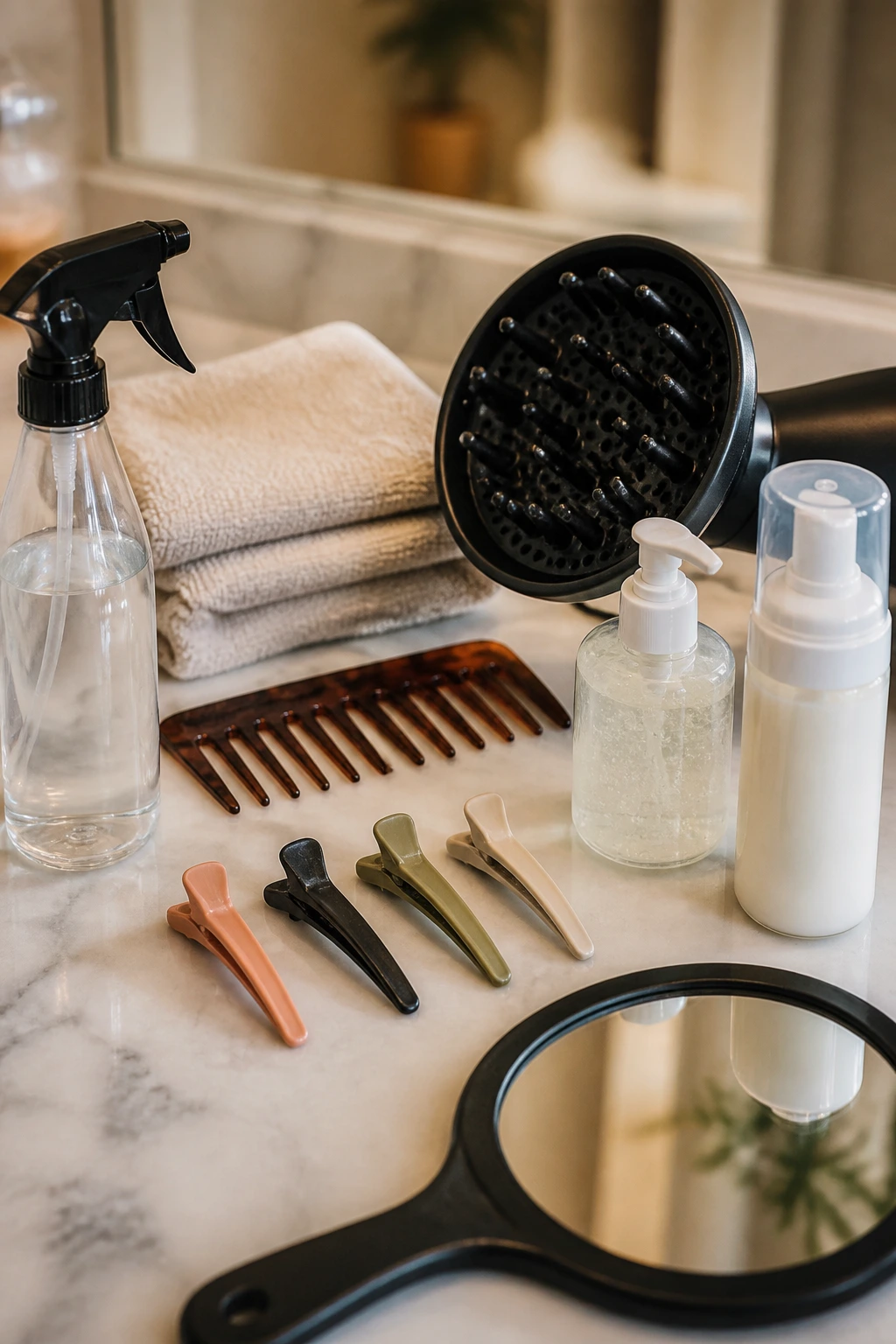
Tools That Make a Curly Bob Easier to Style
-
Spray bottle with a fine mist: Lets you reactivate curls without soaking the whole head when you need a quick morning refresh.
-
Microfiber towel or soft cotton T-shirt: Cuts down on rough frizz and helps the curl clump stay intact after washing.
-
Wide-tooth comb or flexible detangling brush: Good for distributing conditioner in the shower without tearing apart the curl pattern.
-
Diffuser attachment: Essential if you want root lift and a cleaner perimeter without blasting the curl into fuzz.
-
Duckbill clips or root clips: Useful for lifting the crown while the hair dries so the bob doesn’t flatten at the top.
-
Lightweight gel or mousse: A small amount goes a long way on medium-length curls; heavy creams can collapse the shape.
-
Hand mirror: Helps you check the nape and side profile, where a bob can quietly drift off shape.
What to Bring to the Salon and What to Ask For
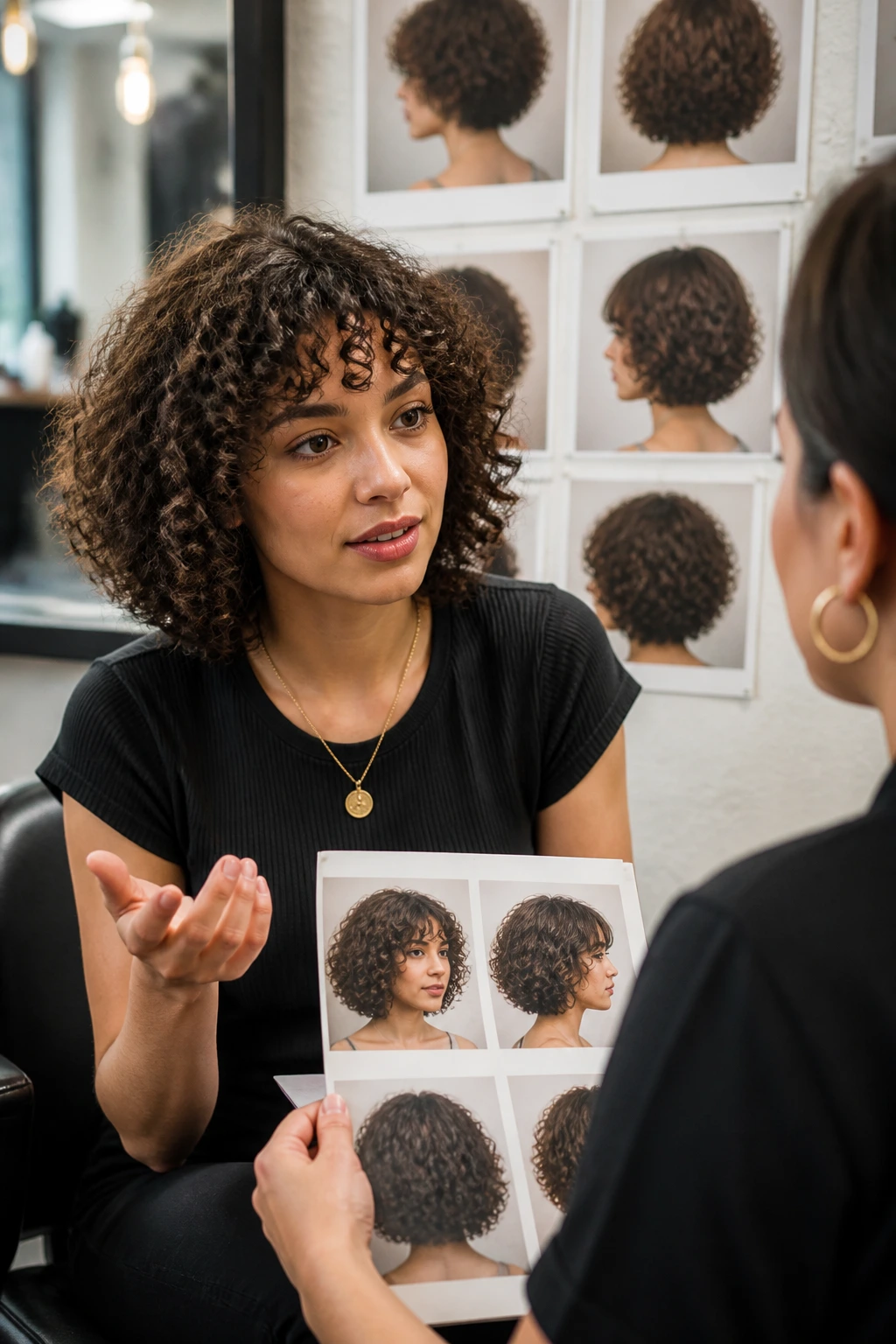
Bring more than one photo. One front view tells almost nothing. A side view shows the angle, and a back view tells you whether the bob is rounded, stacked, or blunt. Bring examples of curls that match your own density and stretch, not just a picture you like because the hair is shiny.
Name the Shape, Not Just the Length
Say where you want the bob to live: jaw, chin, or collarbone. Then say what you want the perimeter to do — rounded, blunt, angled, stacked, or soft. Those words matter more than “shorter” or “bouncy,” which can mean almost anything in a salon chair.
Talk About Shrinkage Up Front
If your hair springs up two inches after drying, say it. If your bangs jump even more, say that too. A good stylist will want to know whether your curls behave more like corkscrews, waves, or coils, because the same cut lands differently on each one.
Be Clear About What You Don’t Want
Tell them if you hate triangle shape, if you don’t want the crown thinned out, or if you never wear a deep side part. That prevents the classic curly-hair mistake: a cut that looks pretty in the chair and annoying at home. The more honest you are about styling time, the better the haircut will fit your real life.
How to Wear and Style These Cuts on Ordinary Days
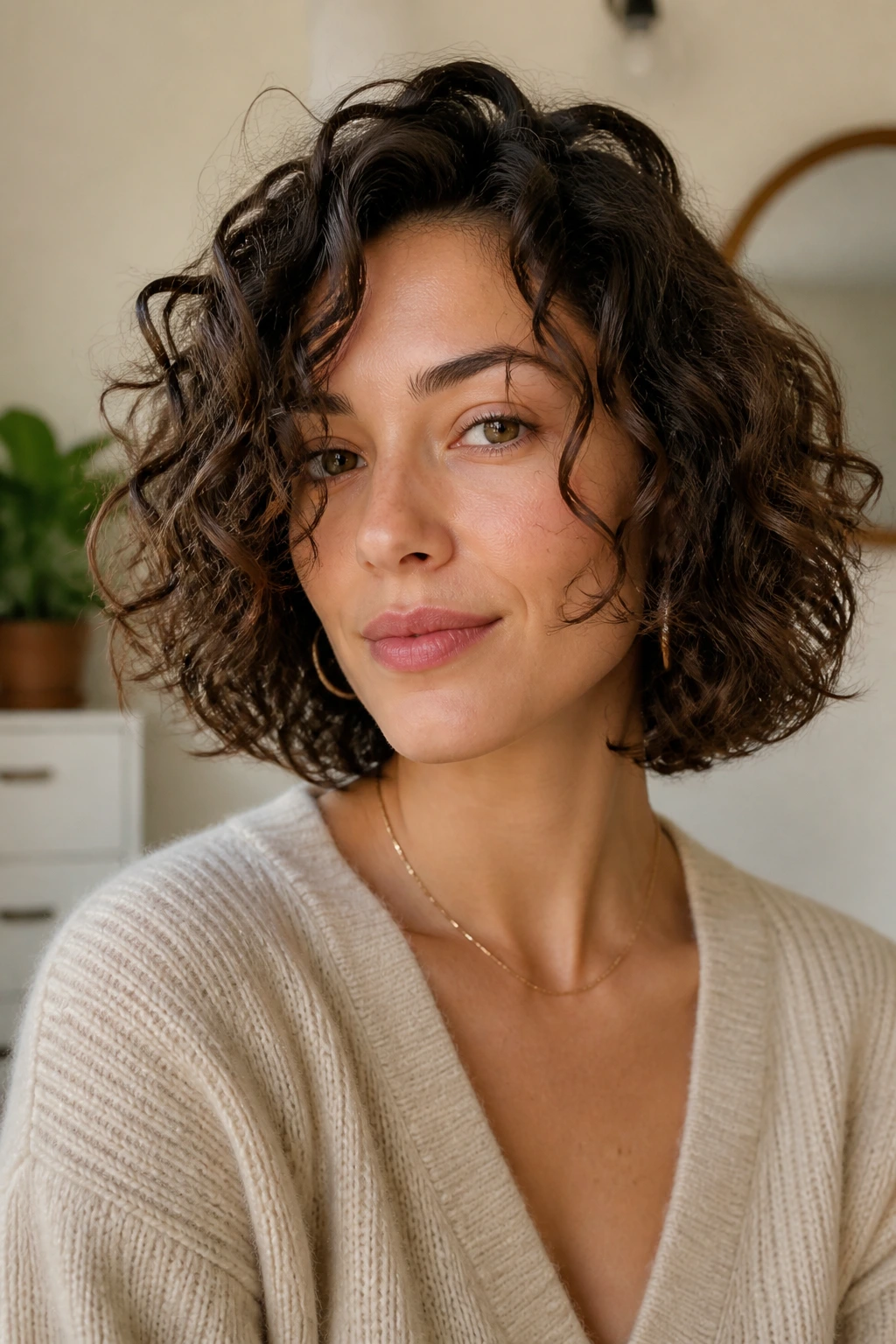
Presentation: Let the bob show its shape from the front and side. A clean part, a visible nape, or a face-framing piece that lands at the cheekbone can do more than a dozen styling tricks, so choose one feature to emphasize and leave the rest quieter.
Accompaniments: Pair the cut with a diffuser, a leave-in conditioner, and either gel or mousse depending on how much hold you want. A simple clip at the root or a satin scrunchie at night keeps the silhouette from flattening out, which matters more than fancy finishing products.
Portions: Medium-length curly bobs tend to look best when the perimeter sits close enough to the face to keep shape, but not so close that the curls spring into a tight puff. If your hair is thick, keep the edge heavier. If it’s fine, leave a little more softness in the layers.
Beverage Pairing: Think of this as the style pairing, not a literal drink match — a clean neckline, small hoops, and one sharp makeup detail help the haircut read finished. If the outfit is busy, keep the bob simpler; if the cut is more dramatic, let the clothes stay quiet.
Small Styling Moves That Make the Shape Look Finished
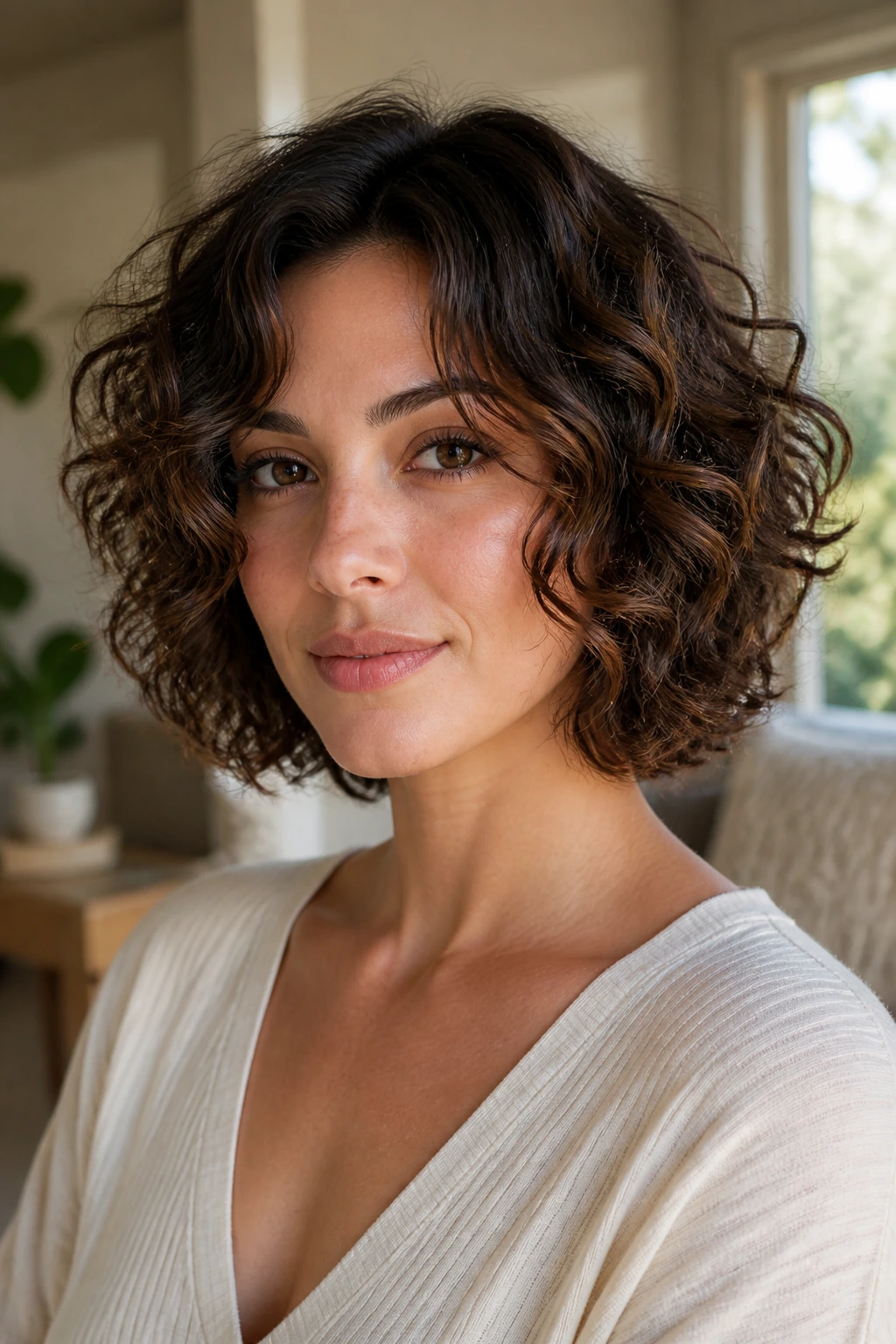
Root Lift: Clip the crown for 10 to 15 minutes after diffusing, or dry the roots first with the diffuser pointed upward. That tiny bit of lift keeps a curly bob from settling flat at the top and wide at the bottom.
Curl Clumping: Use a leave-in sparingly, then follow with gel or mousse while the hair is soaking wet. The wetter application helps curls gather into cleaner pieces, which matters a lot on bob lengths because there’s less length to hide messy separation.
Weight Control: If your bob gets puffy on the sides, use less cream near the ear line and more hold near the ends. The side pieces often collapse first when overloaded, and that is usually where the shape starts to wobble.
Refresh Without Restarting: Mist the hair lightly the next morning, scrunch the ends, and re-diffuse just until the curls wake up. Don’t soak the whole head again unless you want to start over. That approach wastes time and usually creates more frizz than it solves.
Common Cutting and Styling Mistakes That Flatten a Curly Bob

-
Cutting for wet length only: Wet curls lie, and they lie in a very polite way. If the cut is finished without checking the dry shape, the bob can jump above the jaw and look shorter than planned. Ask for a dry check before the final trim.
-
Taking too much weight from the sides: This is how a bob turns into a triangle or a mushroom. The symptom is obvious: the middle swells while the ends look thin. The fix is to preserve the perimeter and remove bulk from the interior instead.
-
Overusing heavy creams: A thick curl cream can flatten the root and make medium-length hair hang in strings. If the cut keeps losing its outline, switch to lighter hold and add gel in smaller amounts.
-
Bangs cut too short for the shrinkage: Curly fringe above the brow often ends up floating in the middle of the forehead. Keep bang length longer than you think, especially if the curl pattern is tight or springy.
-
Diffusing on high heat for too long: That roughs up the cuticle and makes the ends frizzy before the shape has even set. Low heat and patience beat blasting the hair into a halo.
Variations and Adjustments Worth Trying
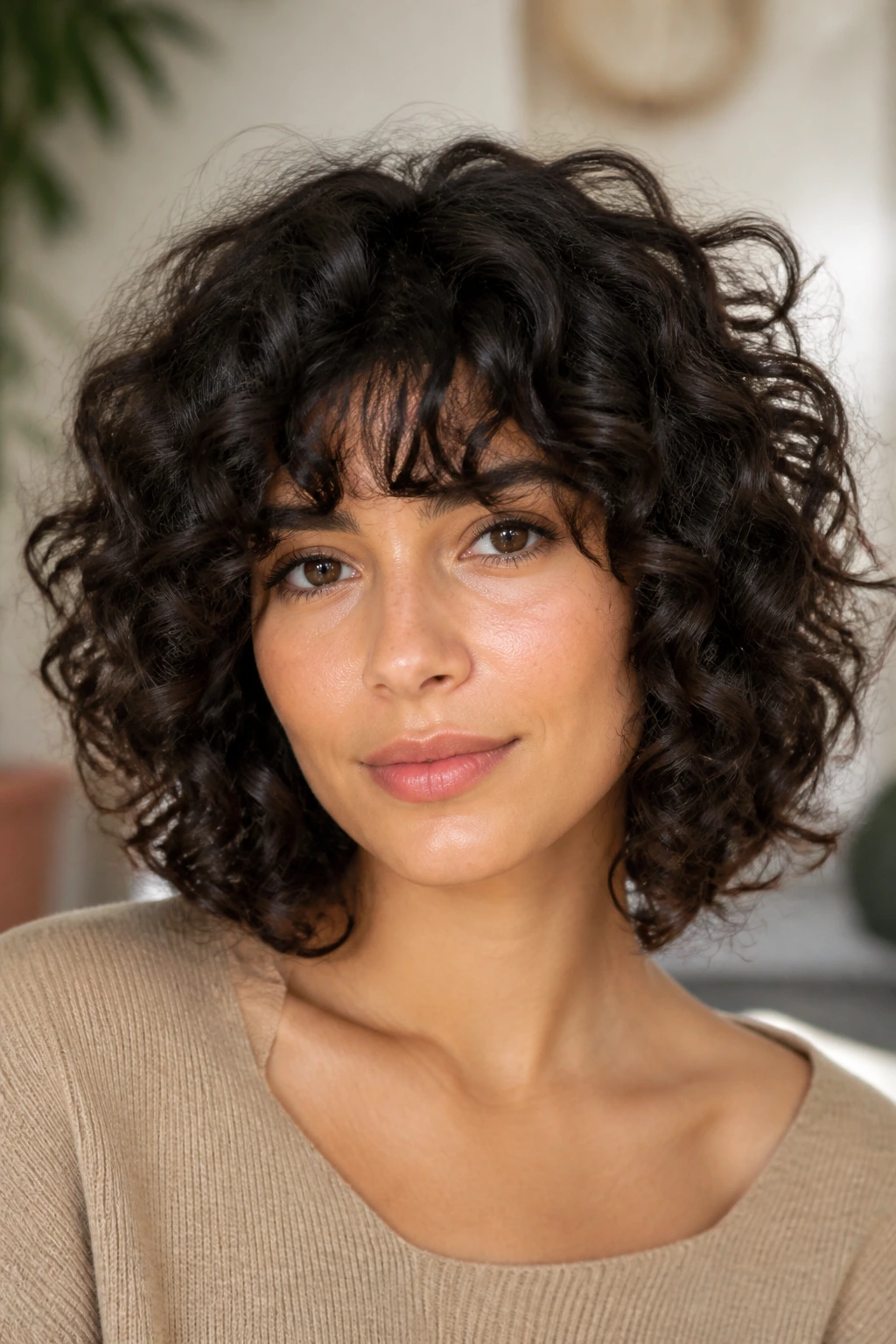
The Low-Commitment Grow-Out Version: Keep the length at the collarbone and soften the layers so the cut can move from bob to lob without a hard line. It’s a good choice if you like the idea of a bob but hate frequent salon visits.
The Fringe-Forward Version: Add curtain bangs or a soft curly fringe and keep the rest of the bob simple. This shifts the attention upward, which is useful if you want a change without losing much length.
The Dense-Hair Control Version: Preserve a heavier perimeter and remove bulk only from the inside. That keeps the silhouette from puffing at the sides, which is the main battle for thick curls.
The Loose-Wave Version: For 2A to 2C textures, keep the layers light and the angle subtle. Too much structure can make waves fall apart, while a softer bob keeps the movement easy and relaxed.
The Coily Halo Version: On tighter textures, round the shape around the head and taper the edges slightly so the silhouette stays clean. This version has enough height to feel full without becoming wide.
Keeping Bob Haircuts for Medium Length Curly Hair in Shape Between Trims
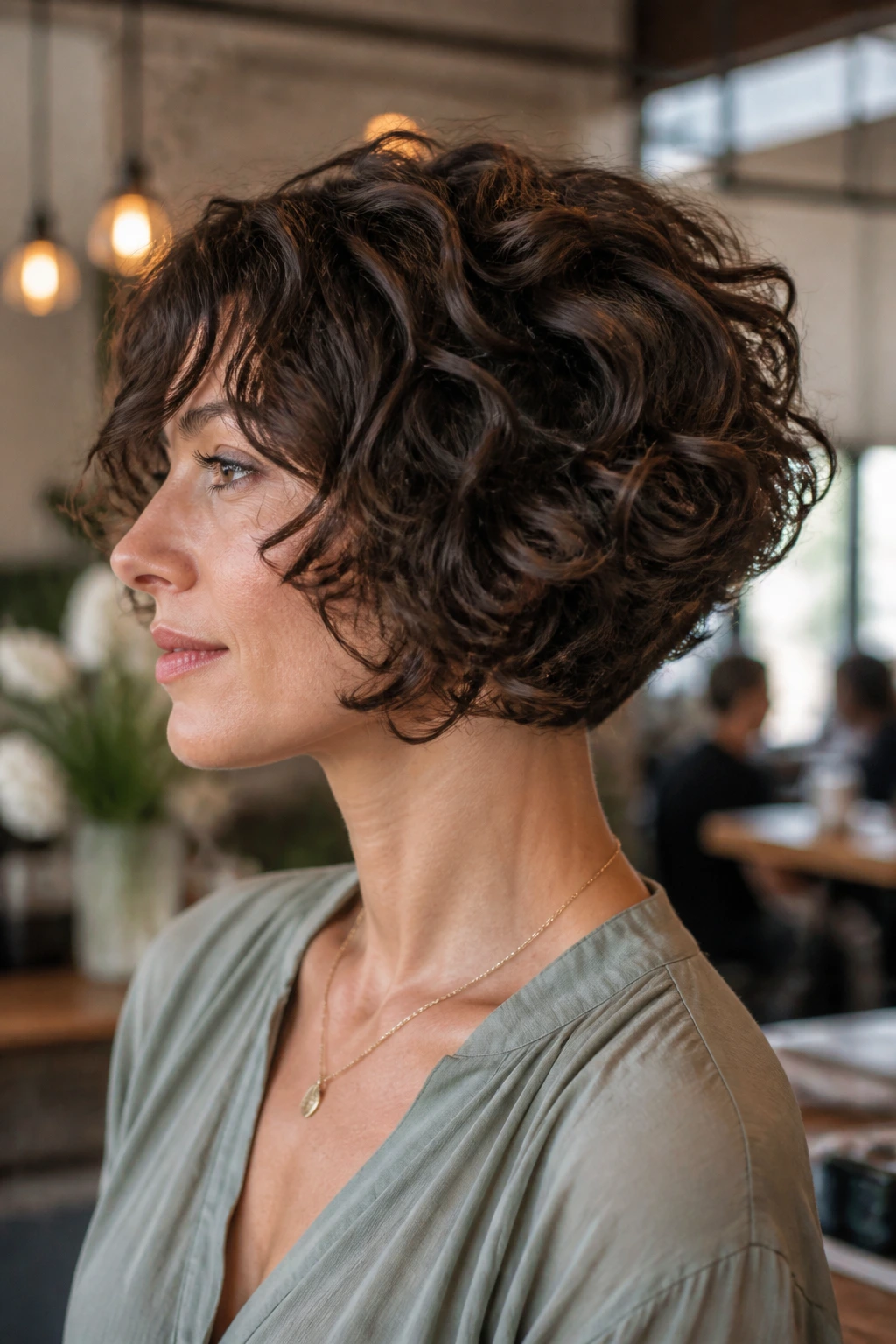
A curly bob does not need constant fixing, but it does need a little maintenance. Most people do well with a trim every 8 to 12 weeks, depending on how fast the hair grows and how precise the shape is. If you have bangs, those usually need attention sooner — often around 4 to 6 weeks — because they show length changes faster than the rest of the cut.
Night care matters more than people want to admit. A satin pillowcase or bonnet keeps the curls from getting crushed while you sleep, and a loose pineapple can help preserve the crown. If the bob is shorter around the face, clip the front sections lightly so they do not spring in odd directions by morning.
Wash-day refreshes are about moisture and shape, not starting over every time. Mist the hair, smooth a little leave-in over the outer layer, and scrunch the ends back into place. If the nape gets frizzy first, that’s normal; it usually takes the most friction from collars, scarves, and headrests.
Frequently Asked Questions About Curly Medium-Length Bobs
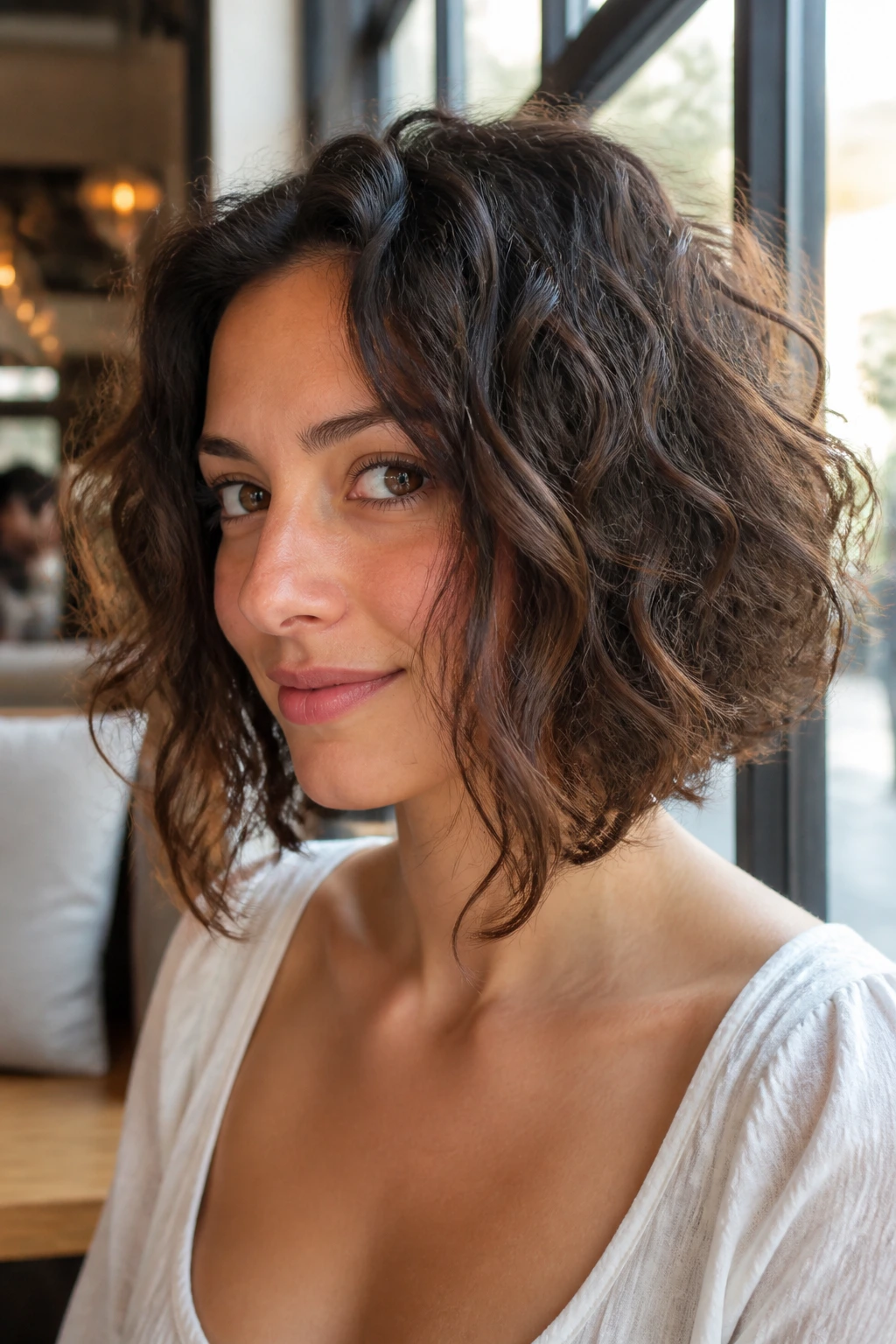
Will a bob make my curly hair look shorter than I expect?
Usually, yes — at least on wash day, and sometimes more after the first full dry. That is why a curly bob is often cut a little longer than the target length, especially in front and at the crown where shrinkage shows most.
Should curly hair be cut wet or dry?
Dry cutting gives the clearest read on shape, shrinkage, and density, which is why many curl-friendly stylists prefer it. Wet cutting can still work, but only if the stylist checks the dry shape before finishing. Without that check, the final result can jump unpredictably.
Can fine curly hair wear a bob without looking flat?
Yes, but the cut has to protect the perimeter and avoid too many short layers. A rounded or softly angled bob with a little crown lift usually works better than a heavily stacked shape on fine curls.
What if my curly bob turns triangular?
That usually means too much bulk was removed from the top or sides while the ends were left heavy. The fix is a shape refresh that keeps the outline cleaner and redistributes weight from the interior, not another round of aggressive thinning.
Do bangs work with medium-length curly bobs?
They do, but they need more length than straight-hair bangs. Curtain bangs and soft fringes are the easiest starting point because they can split, bend, and grow out with less drama than a blunt curly fringe.
How often should I trim a curly bob?
Every 8 to 12 weeks is a solid range for most shapes. If the bob has a fringe or a very sharp perimeter, trim sooner; if it’s a longer, grow-out-friendly shape, you can usually stretch it a little further.
Can I style a curly bob without a diffuser?
You can, but the shape usually takes longer to set and may lose some root lift. Air-drying works fine if you’ve got the time, though clipping the crown while it dries helps prevent the top from collapsing.
What if my curls get puffier on day two?
That usually means the cut needs a lighter refresh routine and less friction overnight. Mist the curls lightly, avoid over-handling them, and keep the ends from getting saturated again unless you’re washing the whole head.
The Curly Bob Sweet Spot
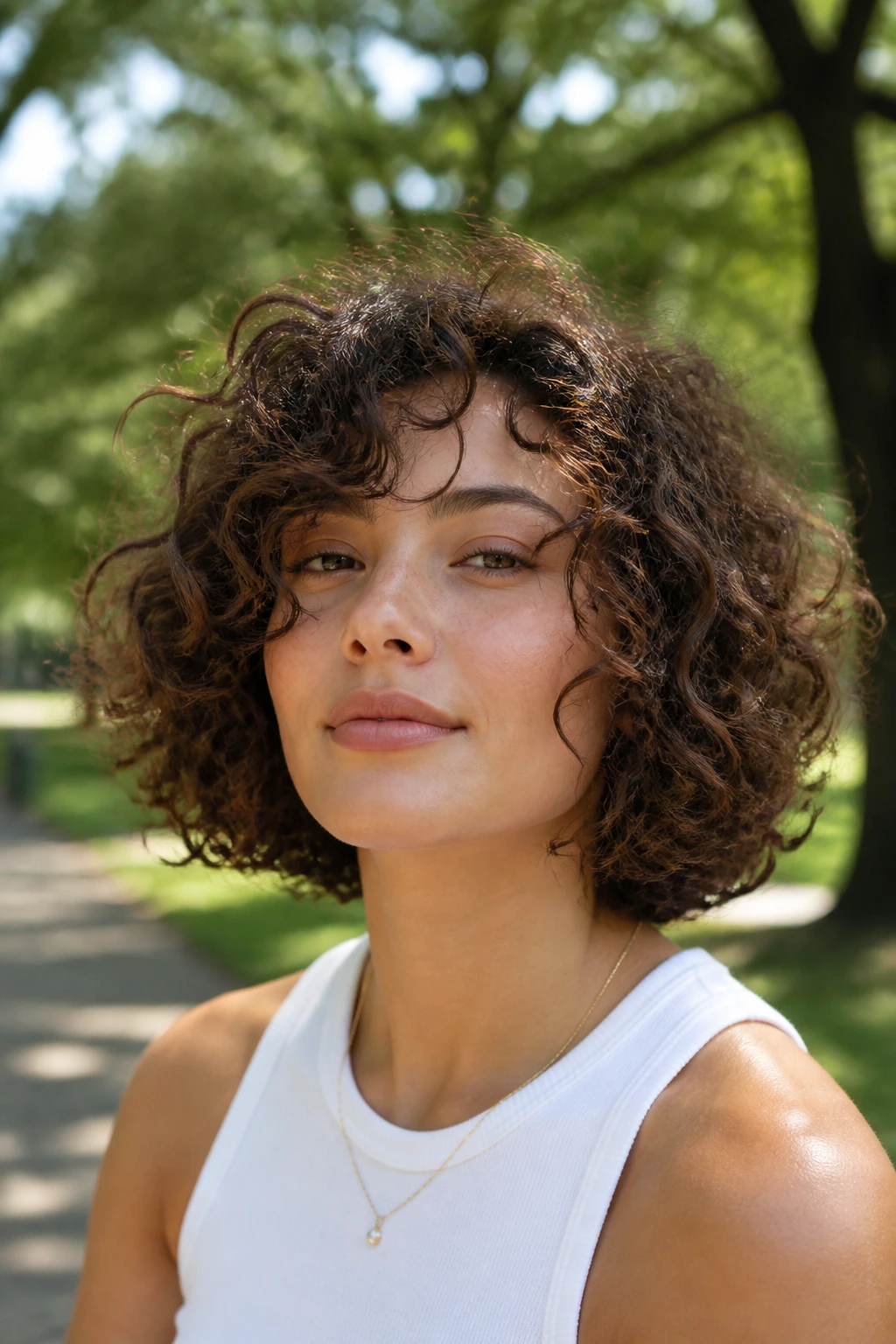
The best curly bob is the one that respects the way your hair moves when nobody is trying to control it. That can mean a blunt edge, a soft fringe, a stacked nape, or a long front piece that grazes the collarbone. The shape matters, but the curl pattern matters more.
What makes these cuts worth considering is how well they survive ordinary life. They can be diffused, air-dried, clipped up at night, and worn for a few days without falling apart. That’s the real measure of a medium-length curly bob: not how it looks in the salon mirror, but whether it still looks like a haircut when you’ve already had breakfast, answered email, and stepped out into actual weather.
