



Oval faces are generous. Wavy hair can be less so.
The best wavy haircuts for oval faces for older women do one useful thing: they keep the balance that an oval face already has, then add movement where hair tends to lose it. That usually means a little lift near the cheekbones, a shape that doesn’t drag past the jaw, and ends that move instead of hanging in one heavy sheet. When hair gets finer at the crown or drier through the mids, the wrong cut starts looking tired fast. The right one still looks like hair with a pulse.
I keep coming back to this rule: waves need room, not more weight. A cut that is too blunt can make natural bend collapse into a flat triangle. A cut that is too shredded can make the ends look wispy and old before their time. The sweet spot is somewhere in the middle — soft edges, clean structure, and enough length to let the wave show itself without spreading out sideways like a bell.
There’s also a practical side to this. Older hair often changes texture a bit — the crown may flatten, the ends may fuzz out, gray strands may feel wirier, and your old haircut may stop behaving the way it used to. None of that means you need to go shorter or hide everything under layers. It usually means you need a better shape.
Why These Cuts Work on Oval Faces That Have Changed Texture
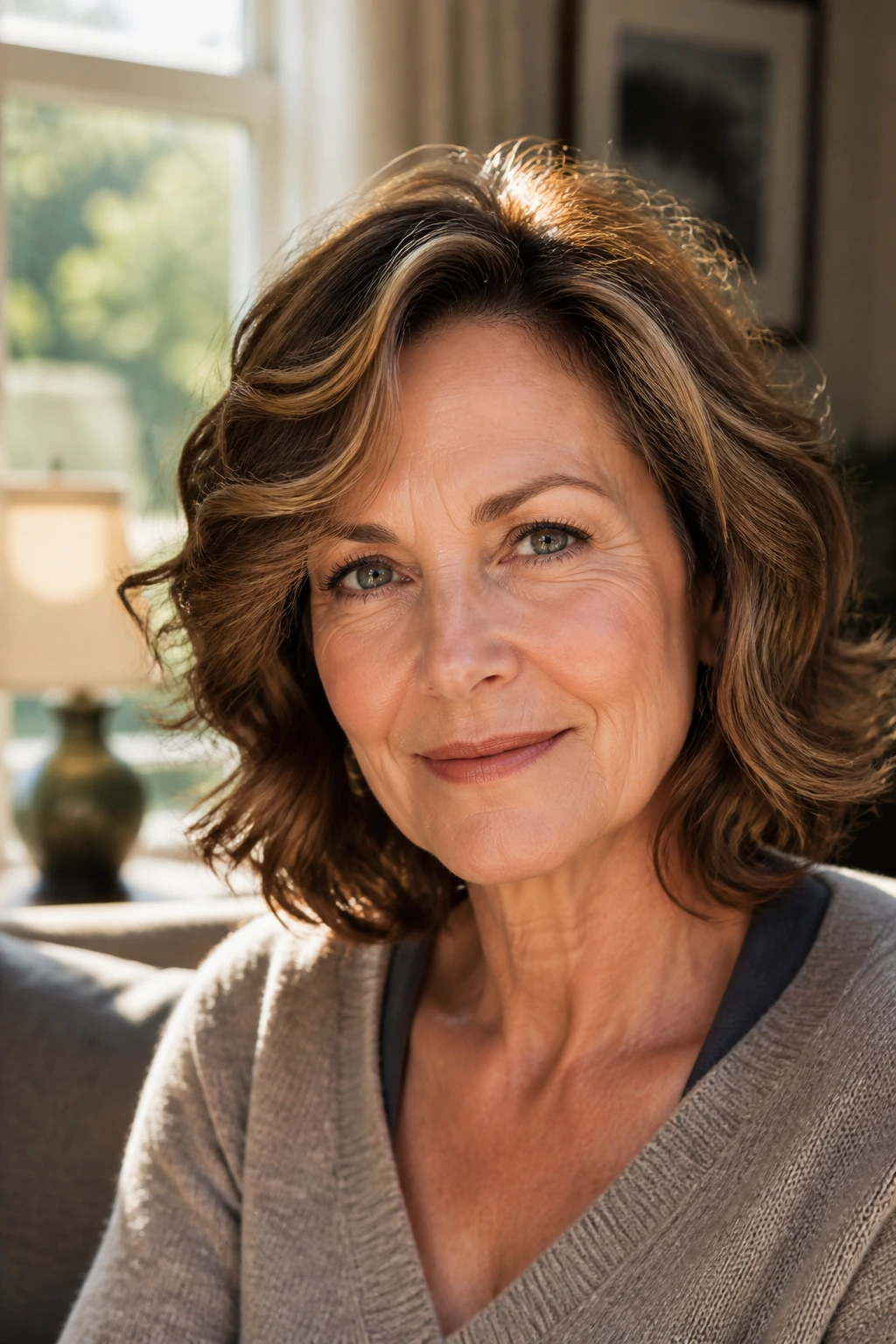
An oval face gives you options, but not unlimited forgiveness. The shape already has balanced proportions, so you do not need a haircut that tries to “fix” the face by stretching it longer or chopping it shorter. What you want is a cut that works with the cheekbones, keeps the jawline clean, and lets the wave bounce without puffing out at the sides.
Movement is doing most of the work here. On wavy hair, a few well-placed layers can keep the ends from sitting like a shelf. That matters even more when hair density changes, because a solid block of length can suddenly look heavy, while a softer line can make the same head of hair look lighter and more awake.
Older hair often needs less bulk, not less style. I’m talking about the real stuff: a crown that lies flatter than it used to, a nape that flips out, or gray pieces that stand up with a little extra attitude. These cuts are built to handle that. They give the wave something to do, instead of asking it to behave like straight hair.
The best shapes are the ones you can see from across the room. A good haircut reads in silhouette first. You should notice the bend at the ends, the lift around the cheekbones, and the way the outline sits against the neck or collarbone. If the shape disappears when you step back, the cut probably has too much bulk in the wrong place.
How to Read Your Wave Pattern Before You Pick a Cut
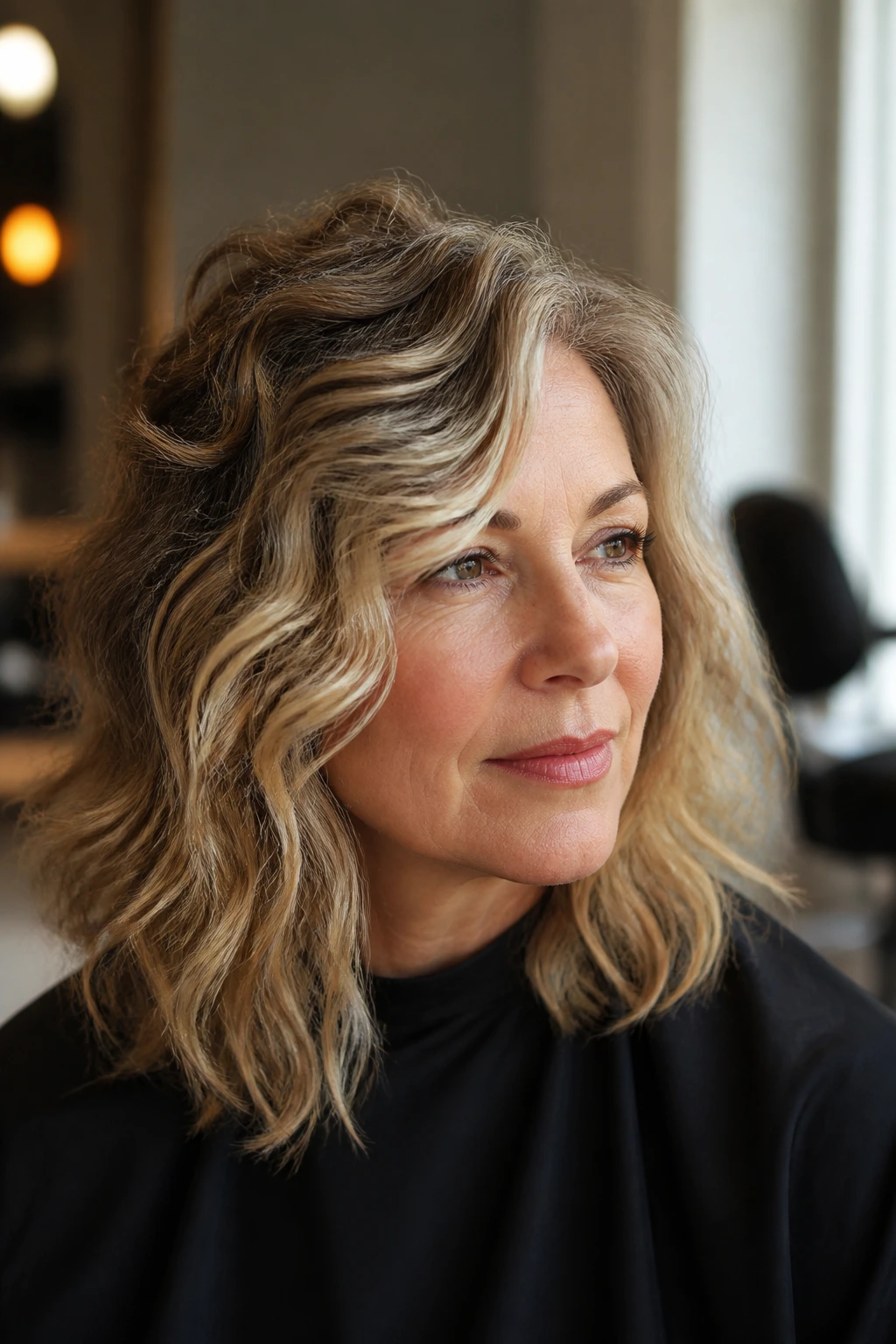
Waves are sneaky. They look one way when wet, another way when dry, and a third way after you sleep on them.
That is why two women can both say “I have wavy hair” and need completely different cuts. One may have soft S-waves that flatten at the roots. Another may have a loose bend on top and a stronger curl underneath. A good stylist will look at where the wave starts, where it breaks apart, and where it needs help. That’s the whole game.
Loose Waves Need Structure at the Ends
If your wave is soft and stretches out after a few hours, a blunt perimeter with very light internal layering can keep it from disappearing. Too many short layers will steal the shape. Too much thinning will make the ends look tired.
Denser Waves Need Weight Taken Out Carefully
Thicker hair can balloon at the sides, especially around the jaw. Internal layers, slide cutting, or point cutting can remove the puff without leaving see-through ends. Razor thinning is a gamble; sometimes it helps, sometimes it frays the shape. I’m not a fan unless the stylist really knows your texture.
Fine Waves Need a Clean Outline
Fine wavy hair often looks best when the outside line is a little more solid. Think shoulder length, collarbone length, or a short bob with movement tucked inside the cut. The hair looks fuller because the eye sees a stronger edge, not because the stylist has shredded half of it off.
1. The Collarbone Lob With Soft Internal Layers
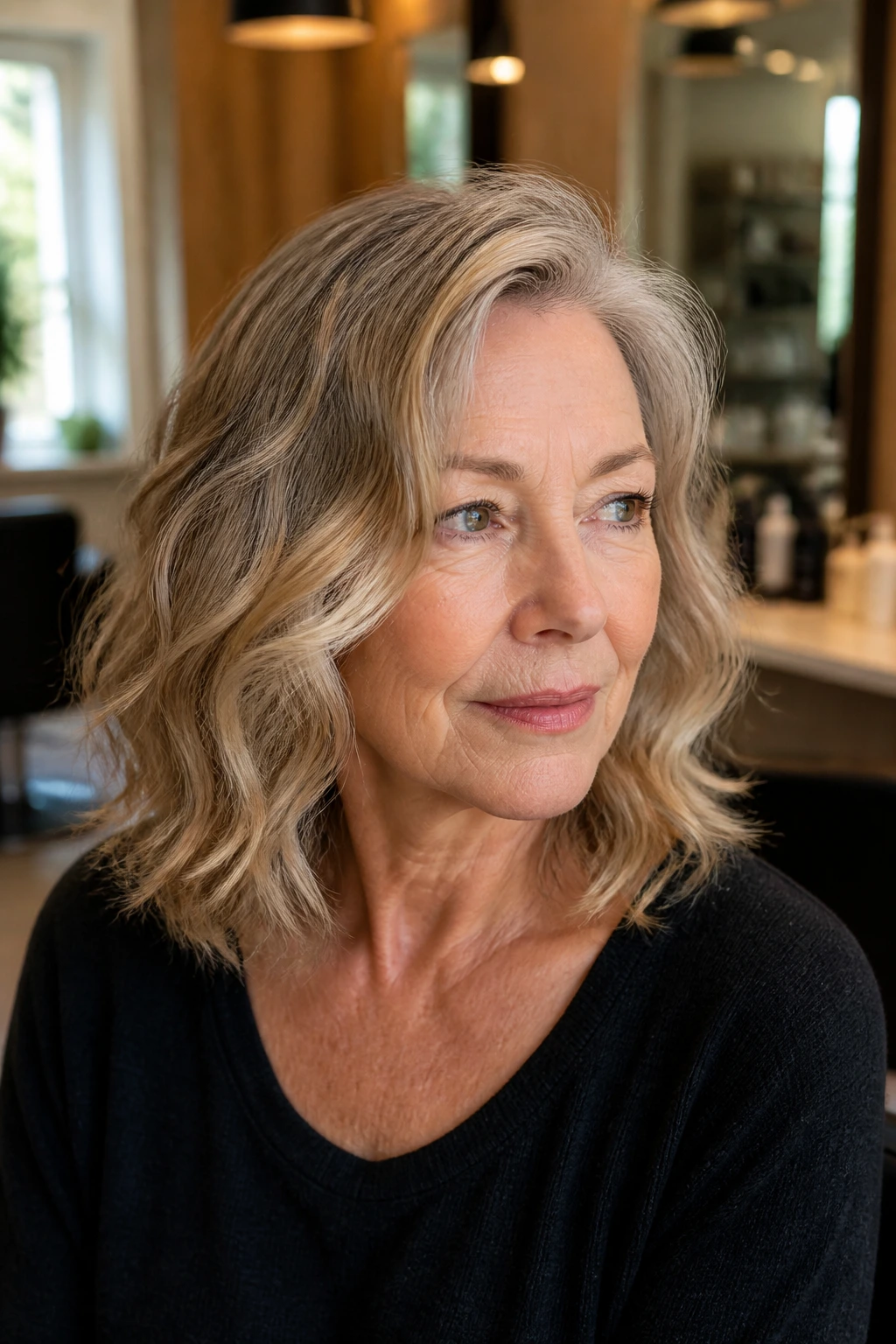
The collarbone lob is the haircut I recommend most often when someone wants movement without a lot of drama. It lands right where the neck starts to narrow, which keeps an oval face open and clean. Then the internal layers — not choppy, not aggressive — let the wave bend instead of hanging like a damp towel.
Why It Flatters an Oval Face
The collarbone length keeps the face from looking stretched. That matters more than people think. If the front pieces fall too far below the chest, an oval face can start to look longer than it is. The collarbone gives you a stopping point that feels natural and still leaves enough length for hair to swing.
This cut also behaves well when you tuck one side behind the ear. The front still has shape, but the face gets a little frame rather than a hard curtain.
How I’d Style It
A light mousse at the roots, a touch of leave-in through the mids, and a quick diffuse on low heat is usually enough. Once it’s dry, I like to twist a few pieces around my fingers rather than curl the whole head. You want a bend, not a spiral factory.
If your hair goes flat fast, ask for the shortest face-framing pieces to hit just below the cheekbone. That little detail keeps the front lively.
2. The Soft French Bob With a Side Sweep
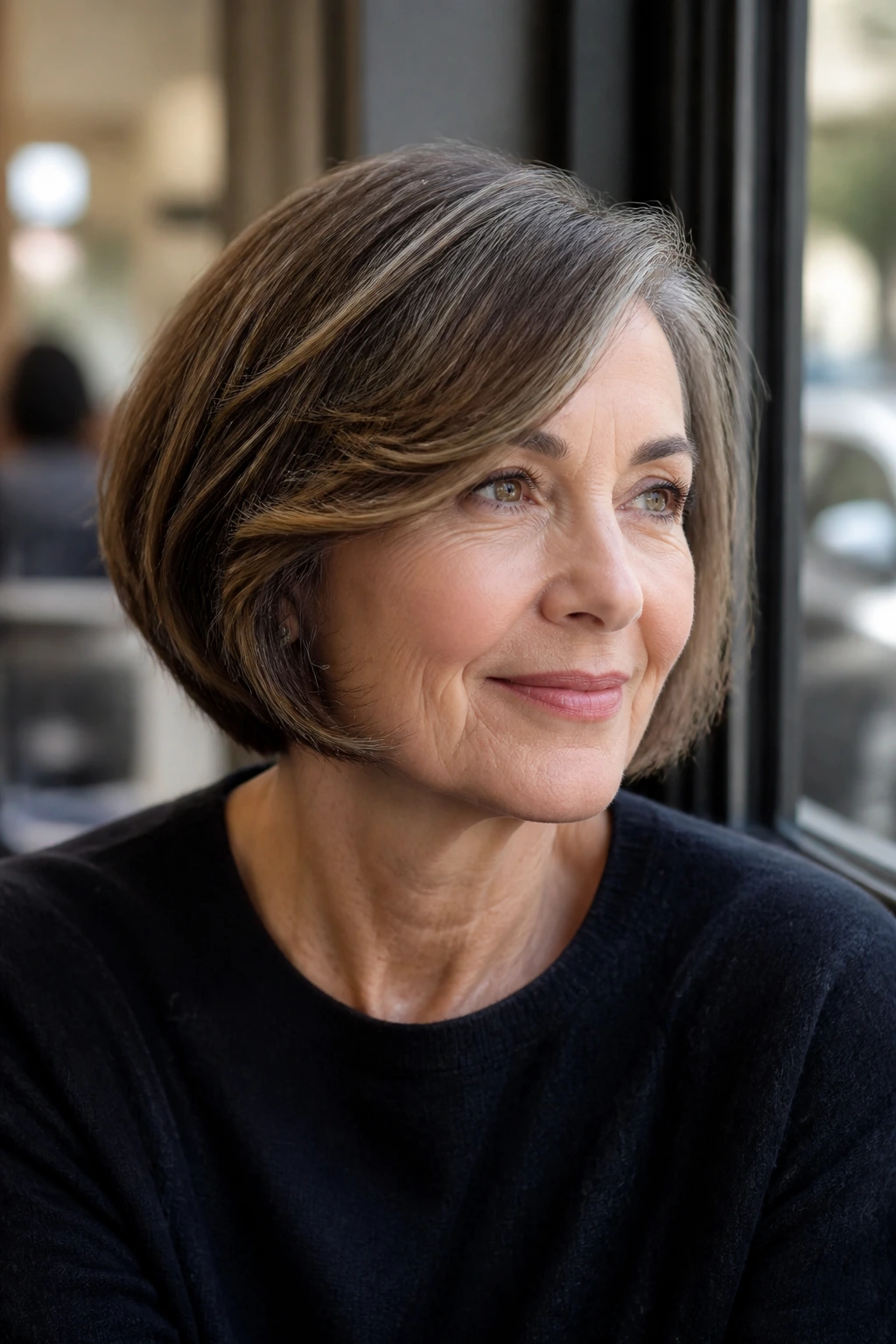
A French bob with a soft side sweep has enough polish to look intentional, but not so much structure that it feels stiff. It usually sits between the jaw and the top of the neck, with a gentle curve under the chin. On wavy hair, that curve matters. It stops the sides from flaring.
The side sweep is the part I like best. A deep side part gives the forehead a little asymmetry, which keeps an oval face from feeling too even. Too much symmetry can be boring. Sometimes it can also make the face look longer than necessary.
This cut is good when you want hair off the neck without going full crop. It also works nicely with glasses because the side sweep can skim the frame instead of fighting it.
3. Shoulder-Length Layers With Curtain Bangs
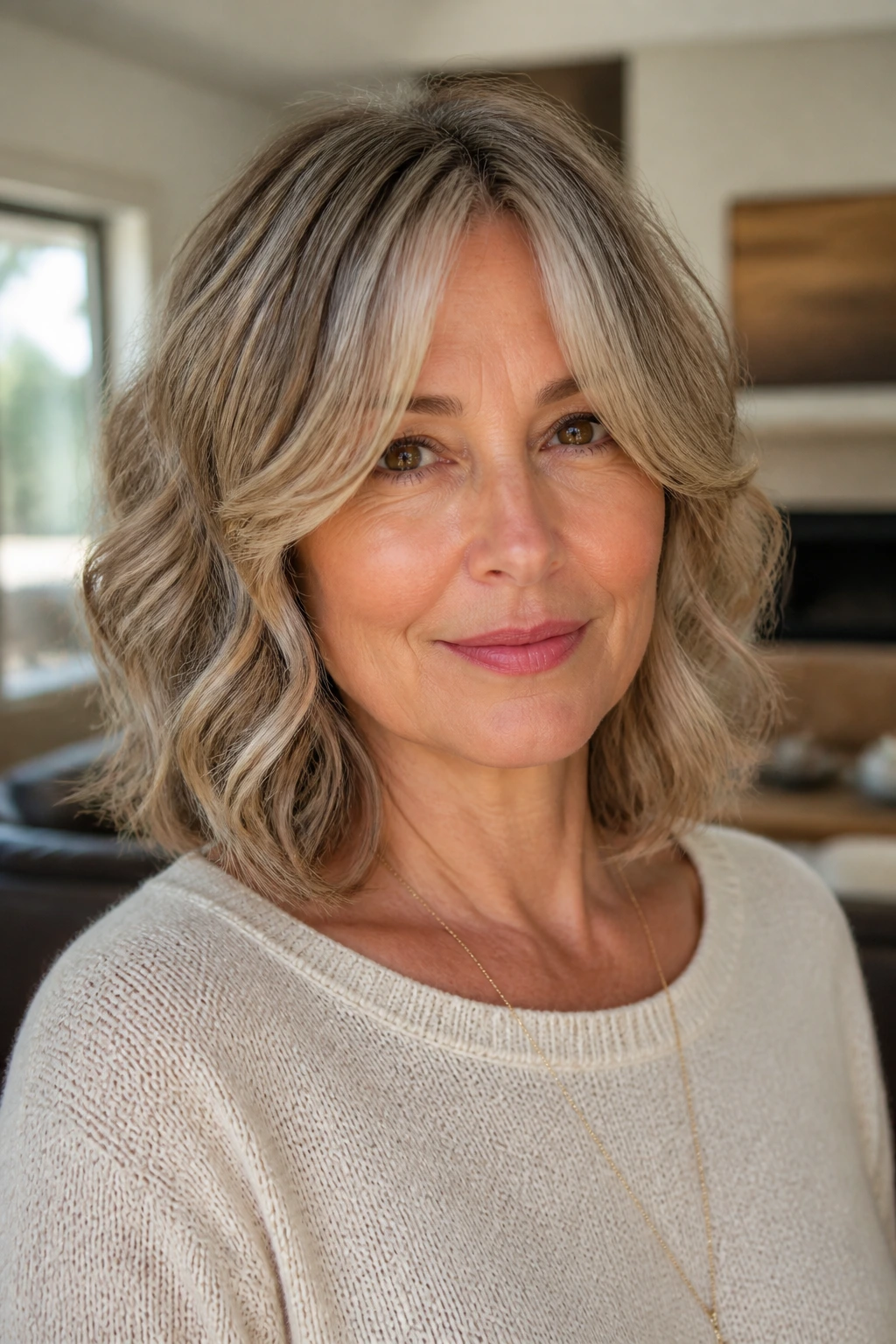
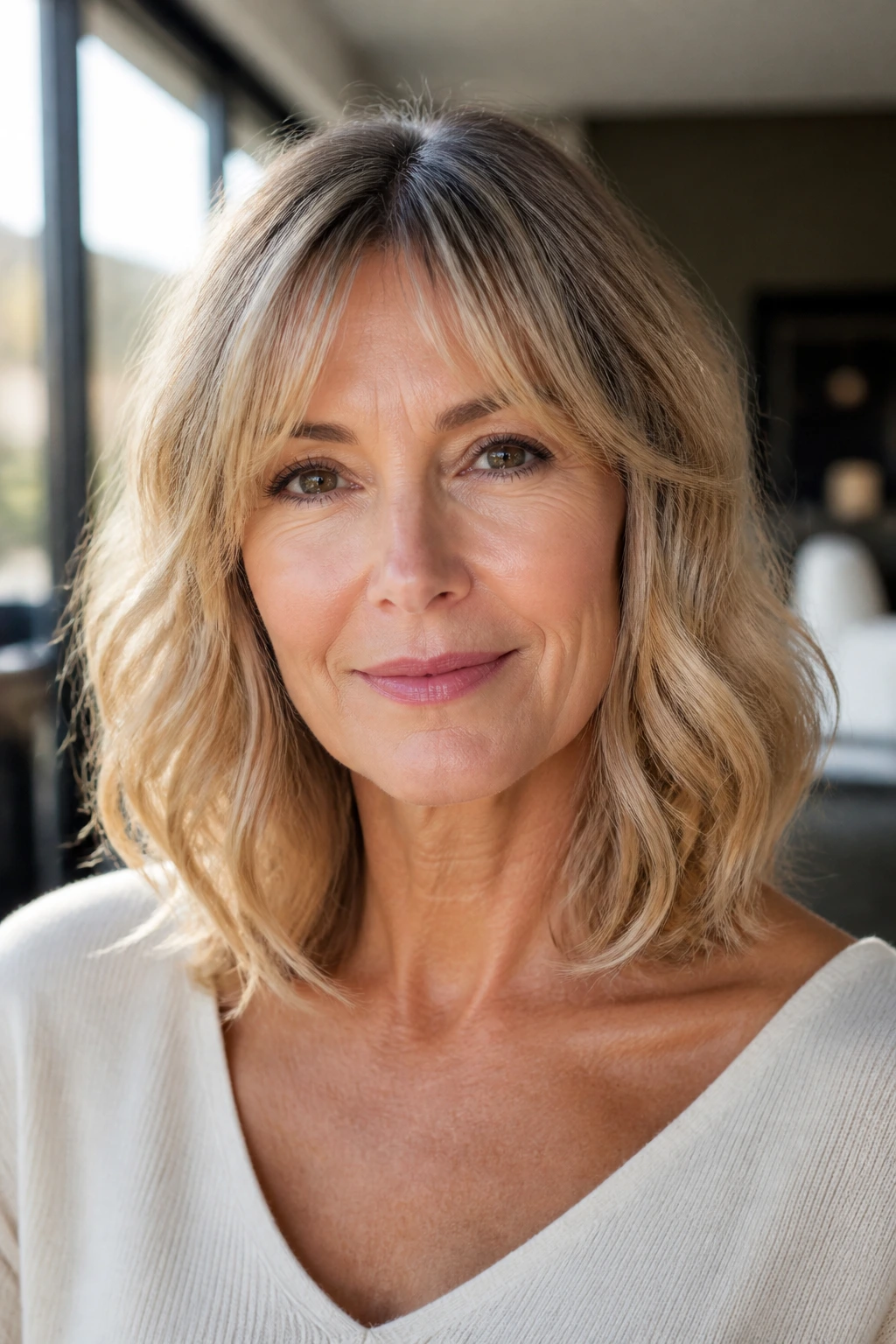
Curtain bangs can be a gift on wavy hair, but only when they’re cut with enough softness. Heavy bangs sit like a curtain rod. Soft curtain bangs open at the center, bend at the cheekbones, and blend into shoulder-length layers without making the forehead feel boxed in.
What Makes It Work
The shoulder length gives the wave a place to settle. The layers keep the sides from swelling out. And the bangs bring the eye upward without stealing the whole cut. On an oval face, that trio can be enough to make the hair look fresh even if you only blow-dry the front.
This is a smart choice if you want softness around the eyes. Gray streaks near the temples look good with it, too, because the fringe breaks up the line in a gentle way.
A Small Warning
Curtain bangs are not low-effort if they’re cut too short. They need a little blow-dry direction — usually a round brush or just your fingers and a vent brush — so they don’t split in a weird place. If you do not want to touch your bangs every morning, tell your stylist to keep them longer. That’s the difference between pretty and annoying.
4. The Textured Pixie Bob With a Longer Crown
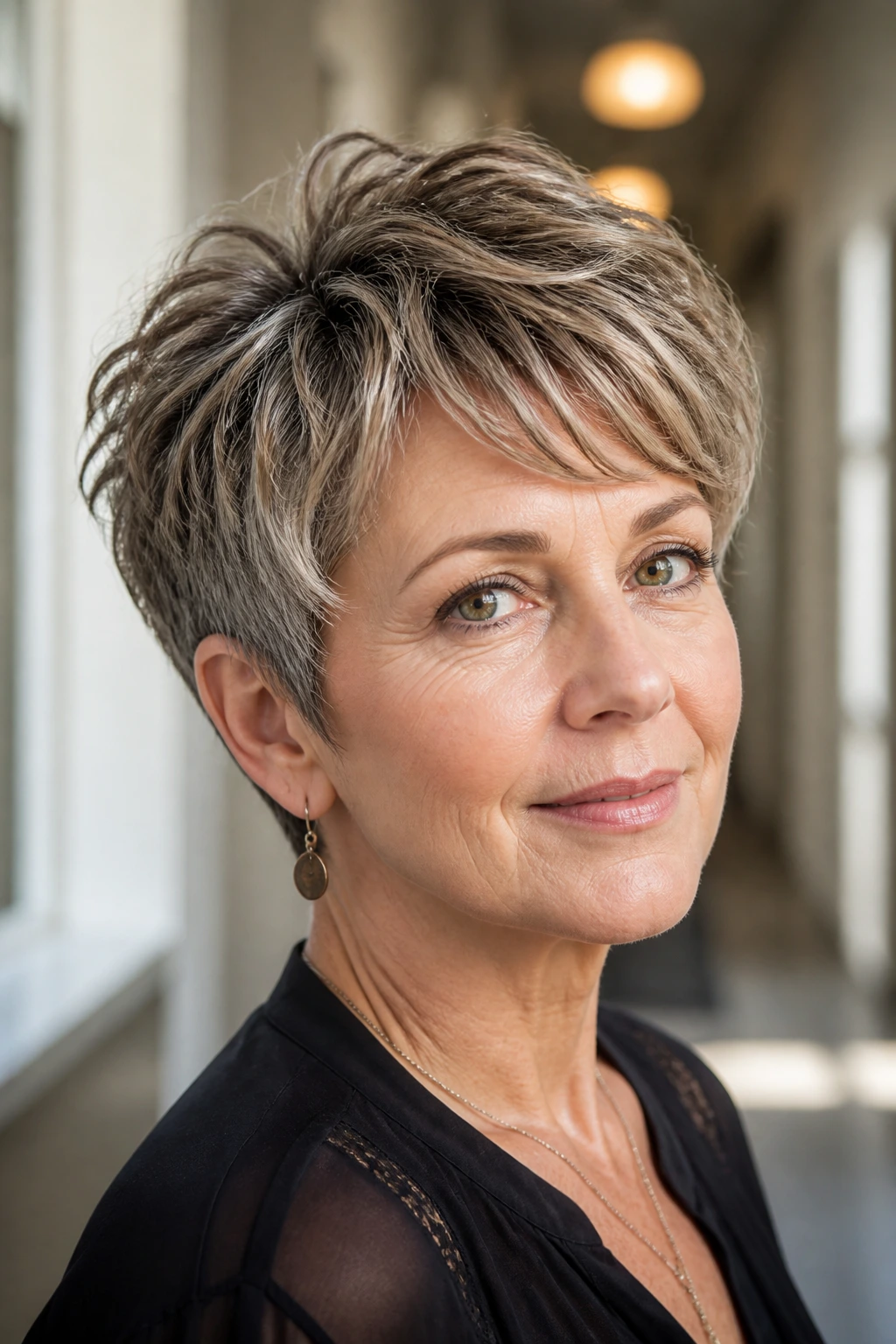
If you want something short enough to feel light but long enough to keep some wave, the pixie bob is worth a serious look. The nape is shorter, the crown keeps more length, and the sides taper gently so the shape hugs the head without going helmet-stiff.
This cut shines on oval faces because it shows the face instead of hiding it. The length at the crown gives the wave a place to lift, and the shorter nape keeps the neck open. I like it especially for women whose hair has thinned at the temples but still has a good bend on top.
The trick is not to take the crown too short. If you do, you lose the movement that makes this cut interesting, and the face can start looking longer. A little texture goes a long way here. More is not better.
5. The Mid-Length Shag With Soft Crown Layers
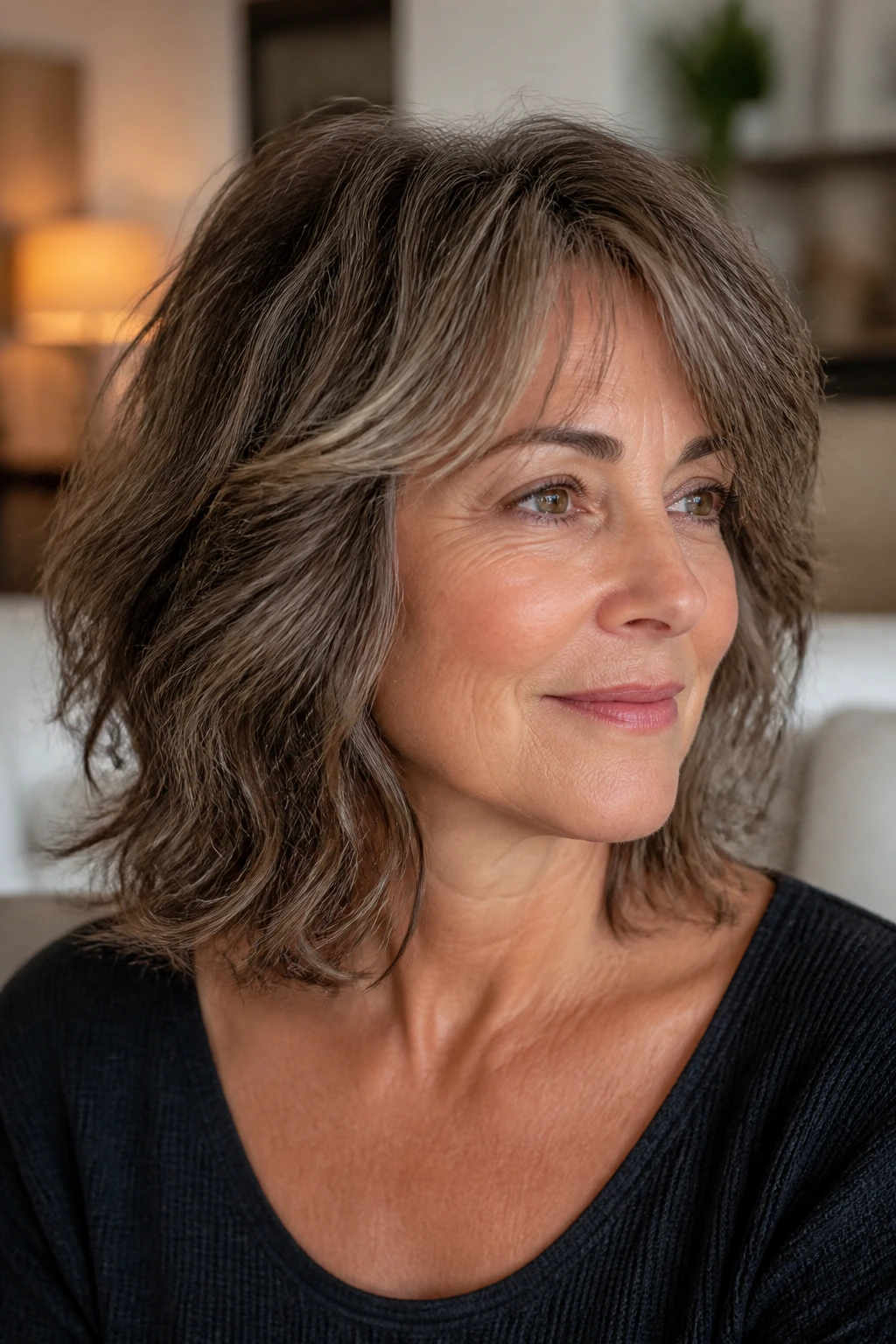
A shag can go wrong fast. When it’s too chopped up, it feels like someone took scissors to the hair and left. When it’s done well, the wave falls into easy pieces that move when you walk.
This version keeps the layers soft around the crown and cheekbones, then leaves enough length at the bottom to stop the whole thing from puffing out. It’s especially good if your hair has a bit of natural bend but loses it when the weight builds up at the ends.
I like this cut for women who want texture without a lot of blow-drying. Let it air-dry with a little mousse, scrunch once or twice, and walk away. The texture should look lived-in, not styled to death.
6. The Blunt Lob With a Loose Bend
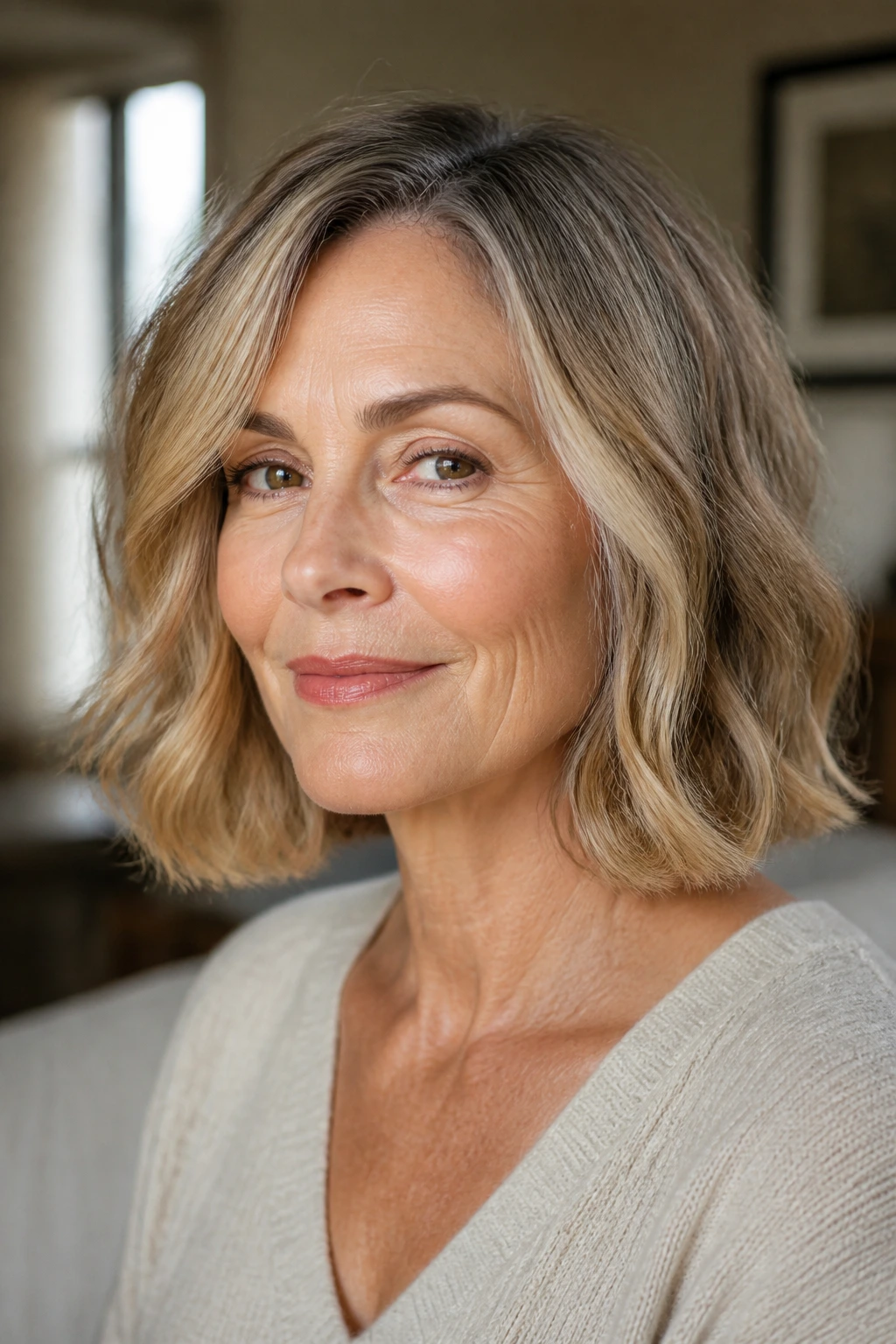
A blunt lob sounds strict, but on wavy hair it can be one of the most flattering cuts around. The outside line stays clean, which gives finer hair a thicker look. Then the wave softens the severity, so the cut never feels sharp or hard.
The reason I like this on oval faces is simple: it holds the outline of the face without crowding it. The blunt edge lands near the collarbone or just above it, which keeps the neck line neat. If your hair has a weak wave pattern, this is a good compromise between shape and fullness.
You do need to be careful with the styling. A blunt lob can turn into a flip-out triangle if the ends are over-dried or if the layers underneath are too short. Keep the bend subtle. A 1.25-inch iron or a round brush used only on the lower third of the hair is enough.
7. Long Layers With Cheekbone-Framing Pieces
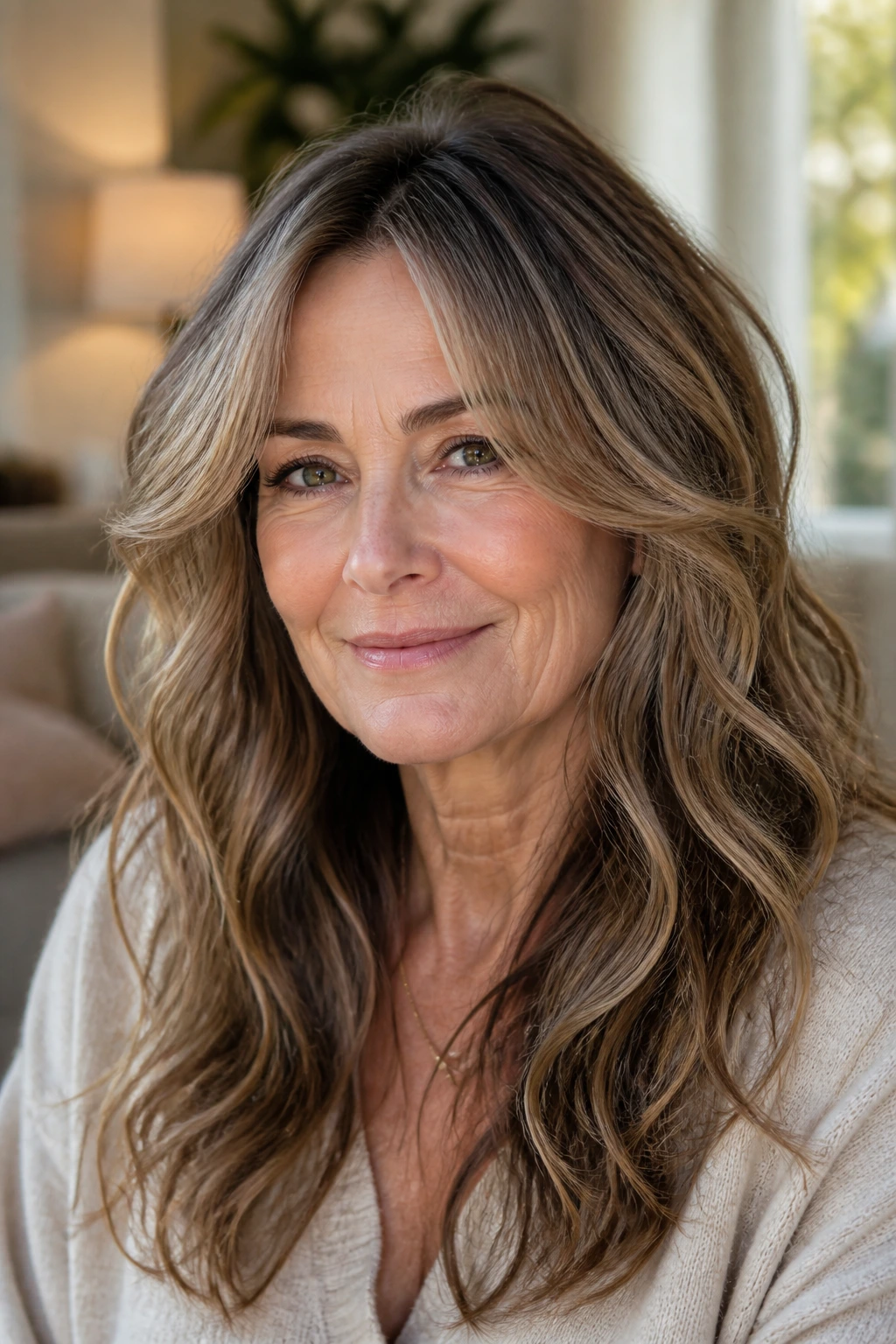
Long hair on older women gets unfairly dismissed. The problem is usually not length itself. It’s the shape.
Long layers can work beautifully on oval faces when the shortest face-framing pieces start near the cheekbone and move down in a soft diagonal. That little angle brings focus to the center of the face and keeps the ends from dragging everything down. If your hair is wavy, the layers should be long enough that the wave still clumps together. Too many short layers and the ends go fuzzy.
This is a good choice if you like wearing your hair up some days and down on others. The pieces around the face still do something even in a loose bun or clip. Not every haircut can say that.
8. The Chin-Length Wavy Bob With Airy Ends
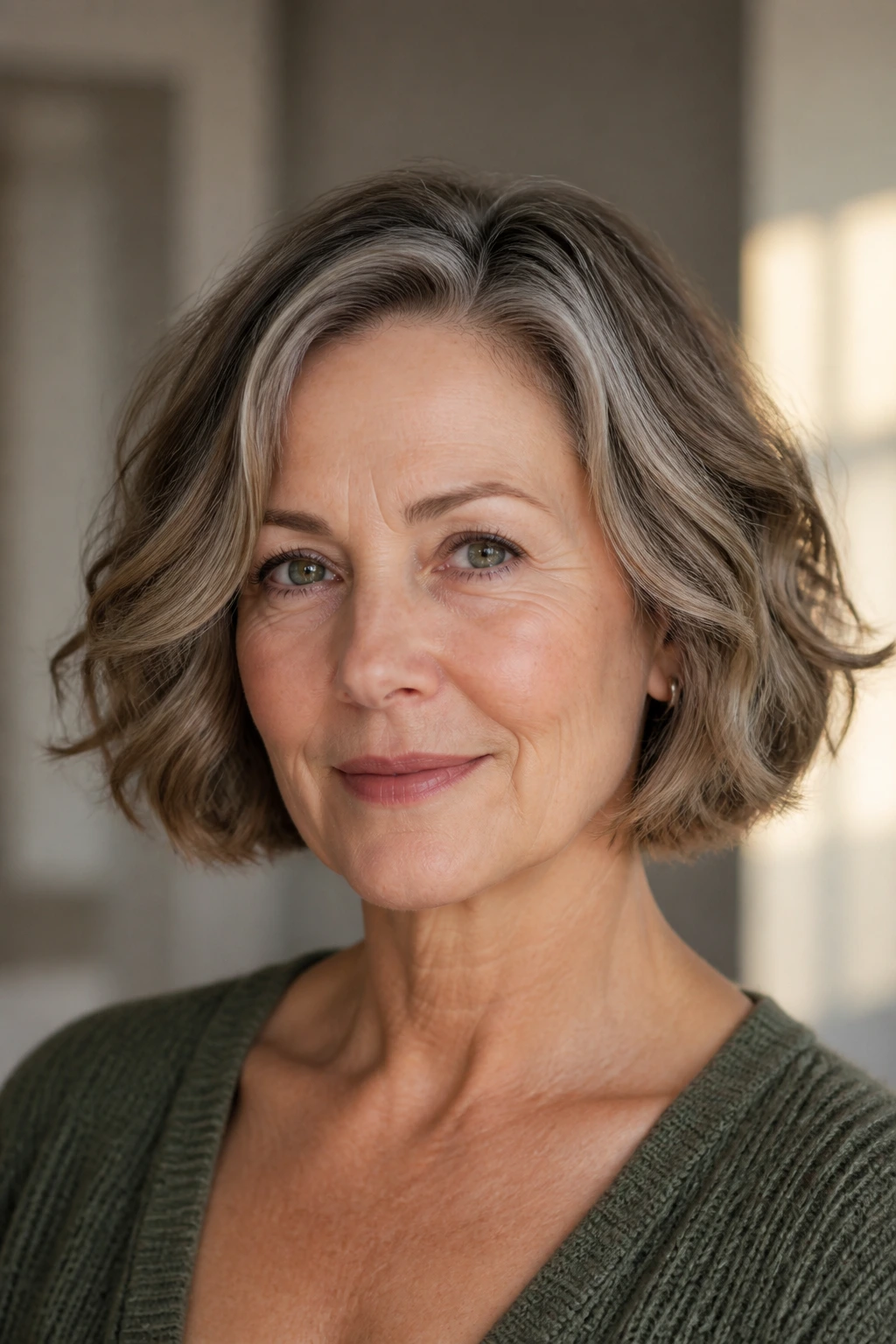
Chin-length bobs are not for everyone, but they are excellent when the wave has enough spring to keep the shape from ballooning. On an oval face, the length lands right on one of the strongest points of the profile — the jawline — which can sharpen the whole look in a good way.
The airy ends are what save this style from looking heavy. A little internal texture keeps the bottom from turning into a block, and the wave gives the cut a soft edge. If you have a longer neck, this cut is especially clean. If your neck is shorter, ask for a slight graduation so the hair doesn’t sit too wide at the sides.
This one likes a side part. Deep side part, if your crown allows it. Center parts can work, but they need a little root lift so the bob does not sit flat and square.
9. The Side-Parted Midi Cut With Hidden Weight Removal
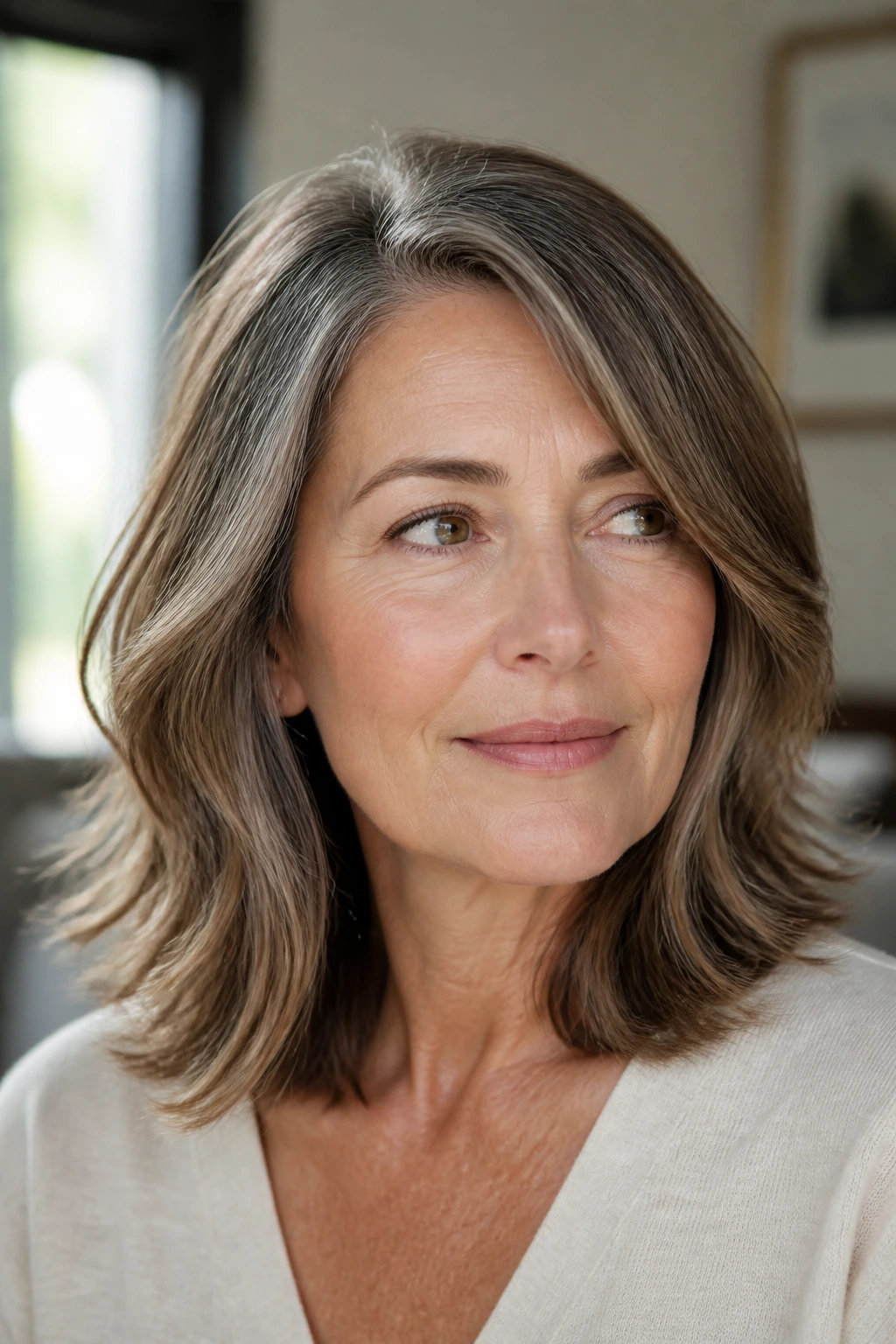
Some cuts look ordinary until you move. This is one of them.
A side-parted midi cut keeps a medium length, usually somewhere between the shoulders and the chest, but the inside of the haircut is where the real work happens. Hidden weight removal — light internal layering, careful point cutting, maybe a little debulking in the densest spots — lets the wave bend without turning triangular. From the outside, the haircut looks calm. In motion, it has swing.
This is a good pick if you like a more classic shape and do not want the haircut to announce itself. The side part gives an oval face a little asymmetry, and the length keeps the style elegant without feeling severe. It’s one of those cuts that looks even better on day two.
10. The Soft Wolf Cut With a Tamed Nape
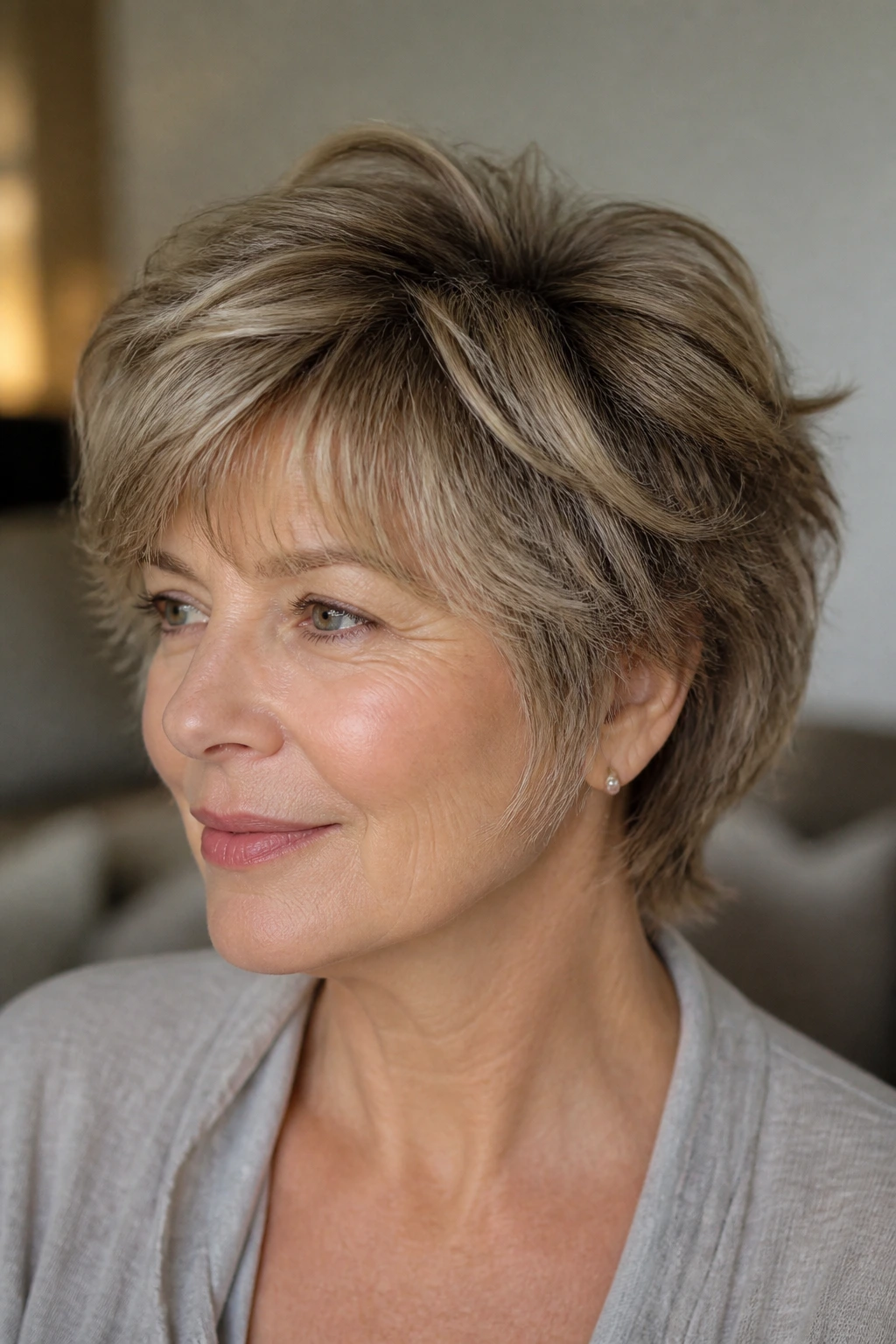
Yes, a wolf cut can work for older women. No, it does not need to look wild or punk.
The soft version keeps the crown lighter, the sides longer, and the nape tidy. That matters. On wavy hair, the wolf shape can add lift where the hair has gone flat, but if the layers are too harsh, the ends get stringy. The softened version keeps some edge while staying wearable.
I like this cut when the hair has lost volume up top and needs a little shape without a blowout every morning. It also suits oval faces because the more open sides keep the face visible. The hair moves around the face instead of forming a heavy box. That’s the difference between a trendy cut and a useful one.
11. The Feathered Shoulder Cut
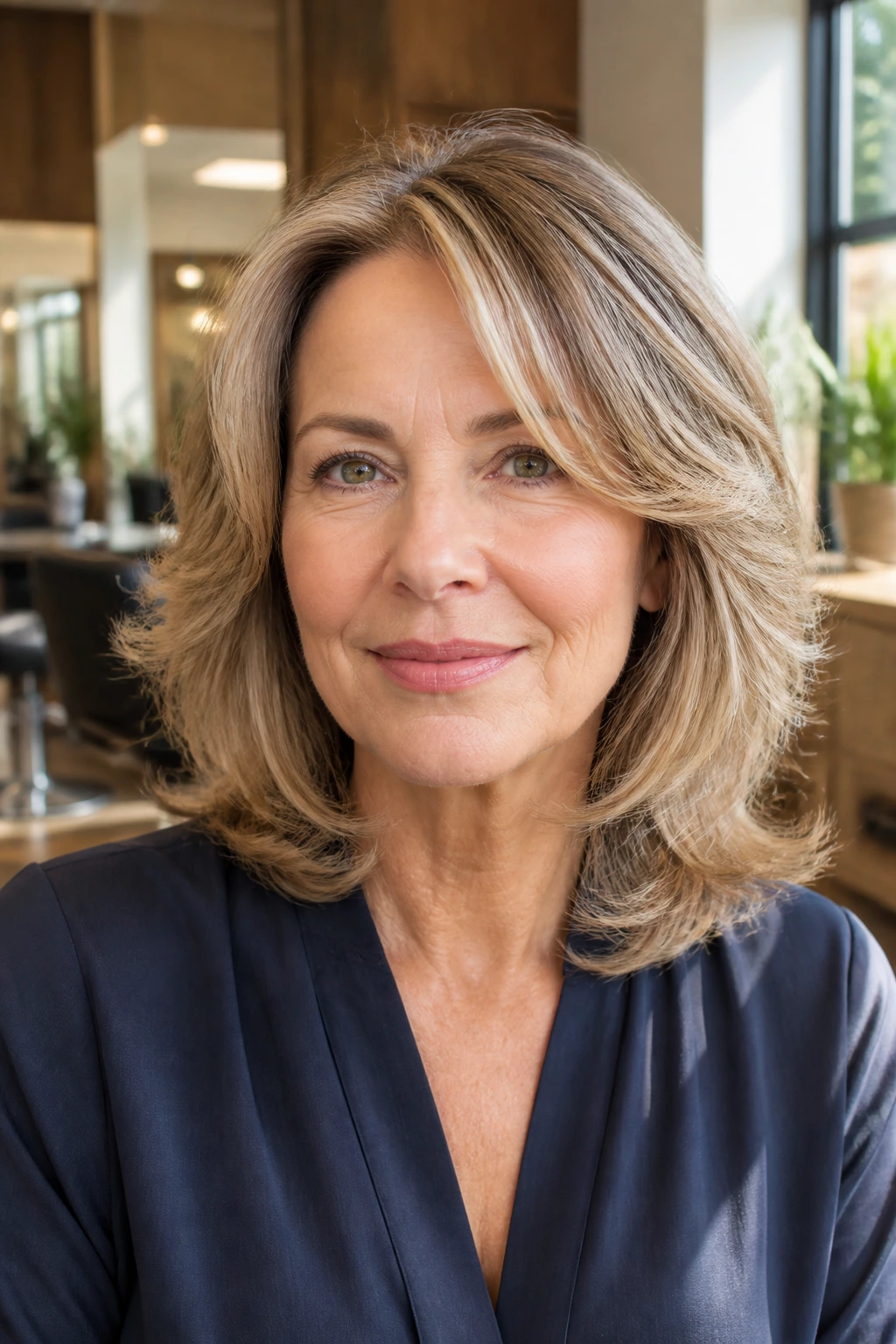
Feathering gets a bad rap because people remember the overly styled versions from decades ago. Done well, it’s much better than that.
A feathered shoulder cut uses light, tapered layers that fan out just enough to catch the wave. The ends feel soft, not chopped. The shape works best when the layers begin below the cheekbone, so the face stays open and the wave has somewhere to land. On oval faces, that kind of softness can make the whole haircut feel brighter.
This is one of the best options if you want a cut that looks polished with almost no effort. A quick blow-dry with a medium round brush is enough to turn the ends under or away from the face. If you prefer air-drying, scrunch a little cream through the mids and let the feathering do its thing.
12. The Rounded Bob With a Lifted Back
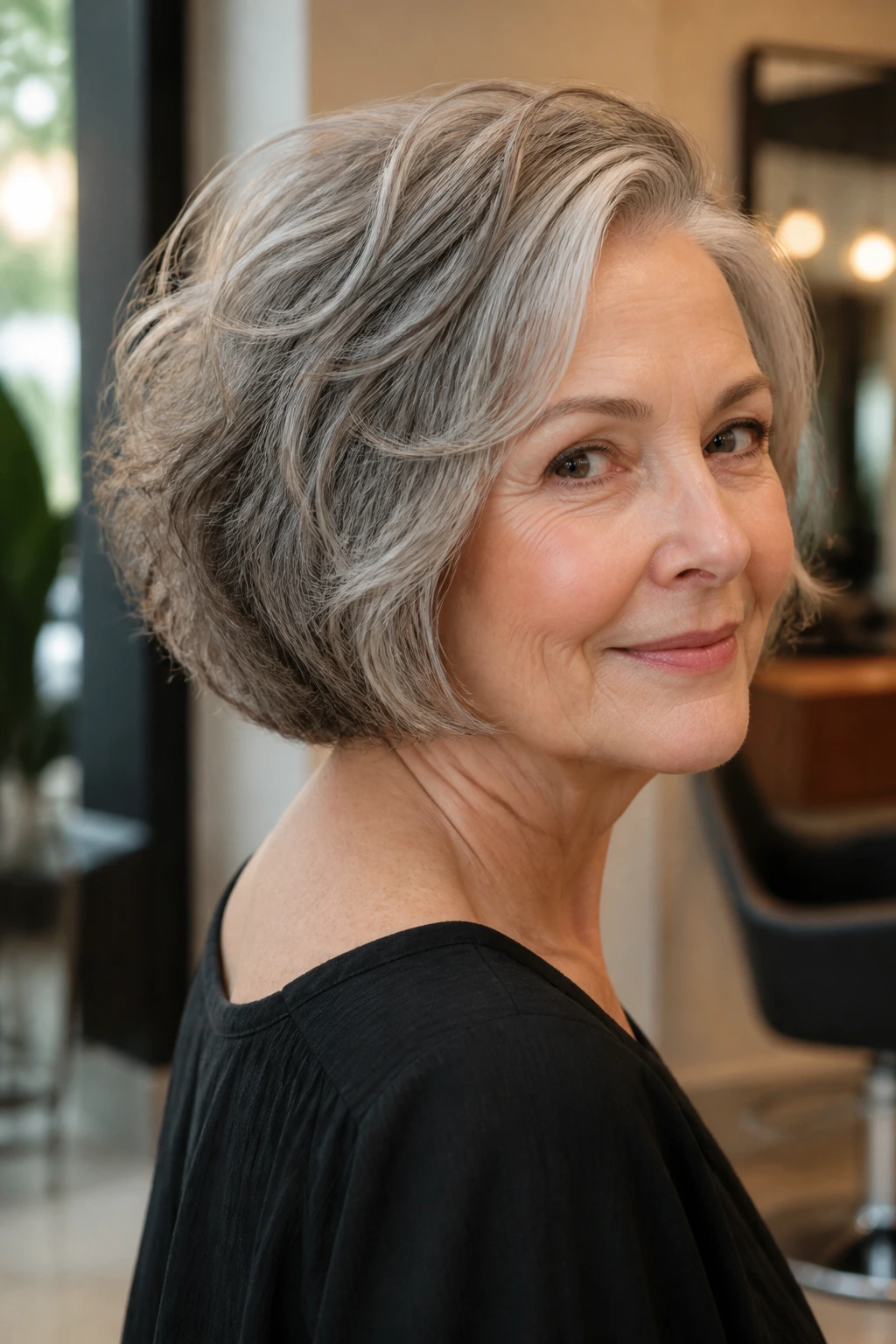
A rounded bob is one of my favorite shapes for hair that has started to lose volume at the crown. It builds a gentle curve through the back and sides without making the head look bigger than it is. The lifted back gives support; the roundness keeps the wave from flipping out in a messy way.
For an oval face, this cut is quietly flattering because it sits close enough to show the jawline but still frames the cheeks. If your hair is gray or silver, this shape can look especially crisp. The light catches the curve and makes the outline easy to read.
Ask for the nape to be a touch shorter than the front, not dramatically stacked. Too much stacking can make the back puff. The goal here is shape, not volume for its own sake.
13. The Layered Crop With a Swept Fringe
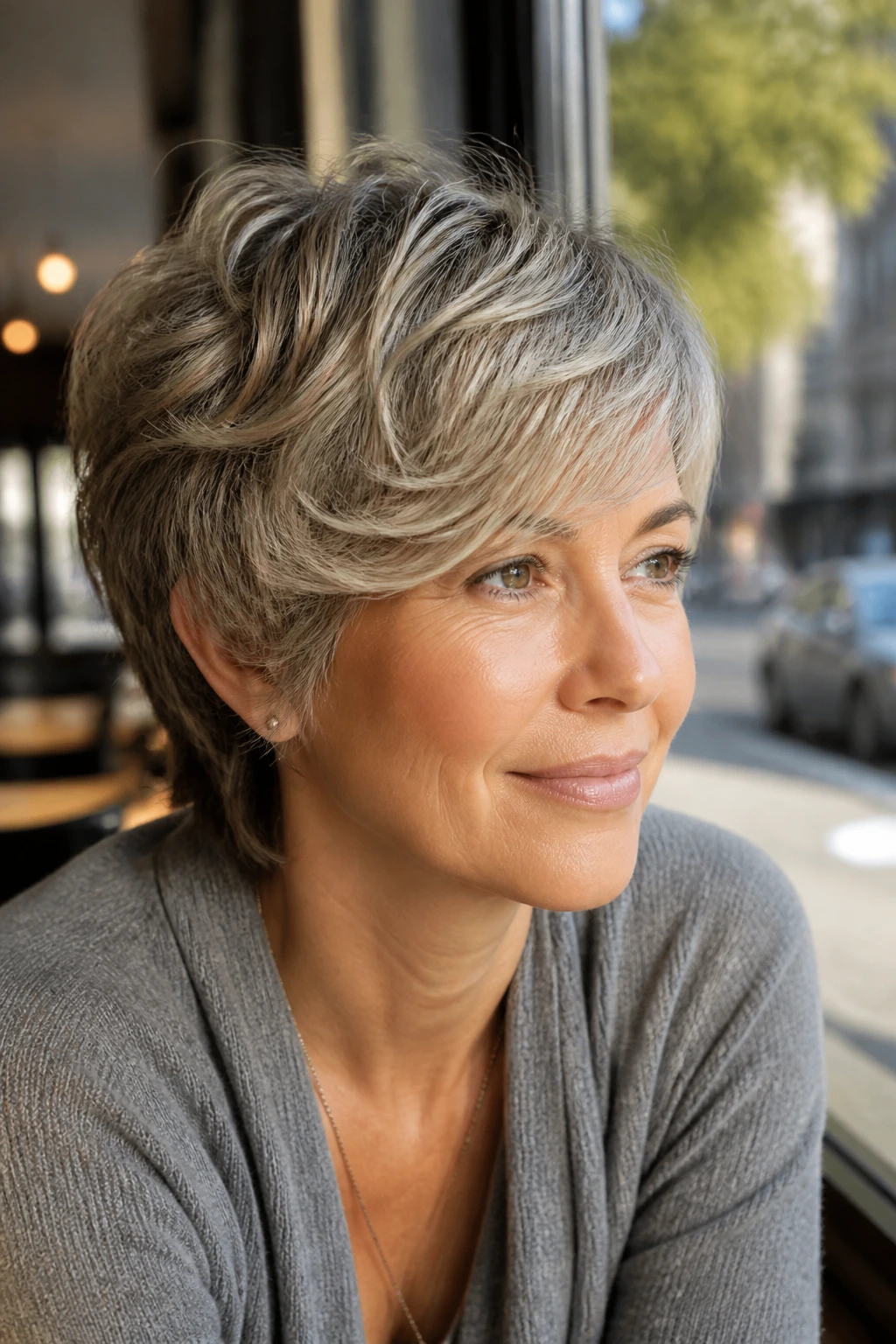
Short hair does not have to mean severe hair. A layered crop with a swept fringe can be soft, light, and a little playful without looking fussy.
The fringe matters most. Swept across the forehead instead of cut straight, it breaks up the face in a flattering way and keeps the oval shape from feeling too long. The layers on top should be short enough to let the wave rise, but not so short that the cut sticks out in weird directions. There’s a fine line there. Cross it, and you get poof.
This cut is especially good if you like to style with your fingers rather than a brush. A pea-sized amount of styling cream, a quick twist of the top sections, and you’re done. It’s the kind of haircut that rewards a little mess.
14. The U-Shaped Long Cut With Movement

A long U-shape is underrated. It gives the hair a gentle curve instead of a hard bottom line, and that curve helps waves fall in a more graceful way. On an oval face, the U-shape keeps length but stops the ends from sitting in one straight, heavy block.
This cut works best when the layers are long and subtle. The center back sits a bit longer than the sides, which creates a soft frame when the hair is worn down. If you like ponytails, this shape is nice because the front still has movement around the face even when the hair is pulled back.
The downside is maintenance. Long hair shows damage faster. If your ends fray, a U-shape can start looking stringy instead of soft. Trim it before the split ends take over. That part is boring, but it matters.
15. The Tousled Midi Cut With Bottleneck Bangs
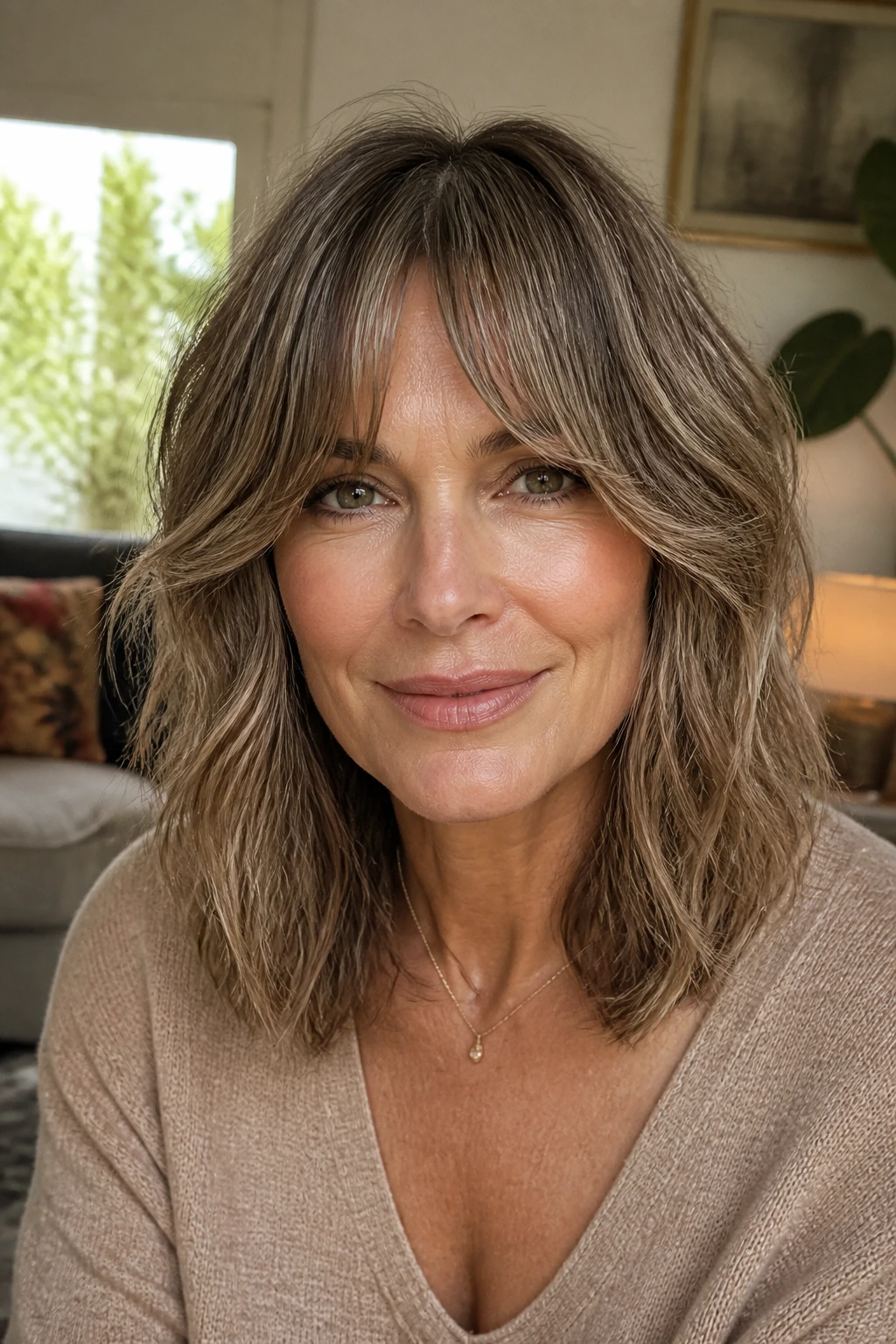
Bottleneck bangs can sound fancier than they are. They’re basically a softer, narrower fringe that opens at the center and widens toward the cheekbones. On wavy hair, that shape can look gentle instead of blunt, which is why I like it for older women with oval faces.
The midi length keeps the haircut grounded. It’s long enough to feel adult and easy, short enough to avoid dragging the features down. The fringe does the visual work at the top, and the rest of the hair stays loose and textured. When this cut is good, it has a kind of offhand elegance — not forced, not sugary, just clean.
If your forehead is short, keep the bangs a little longer. If your face is already long, don’t let the fringe start too far down the head. The point is balance, not coverage.
16. The Graduated Bob With Cheekbone Lift
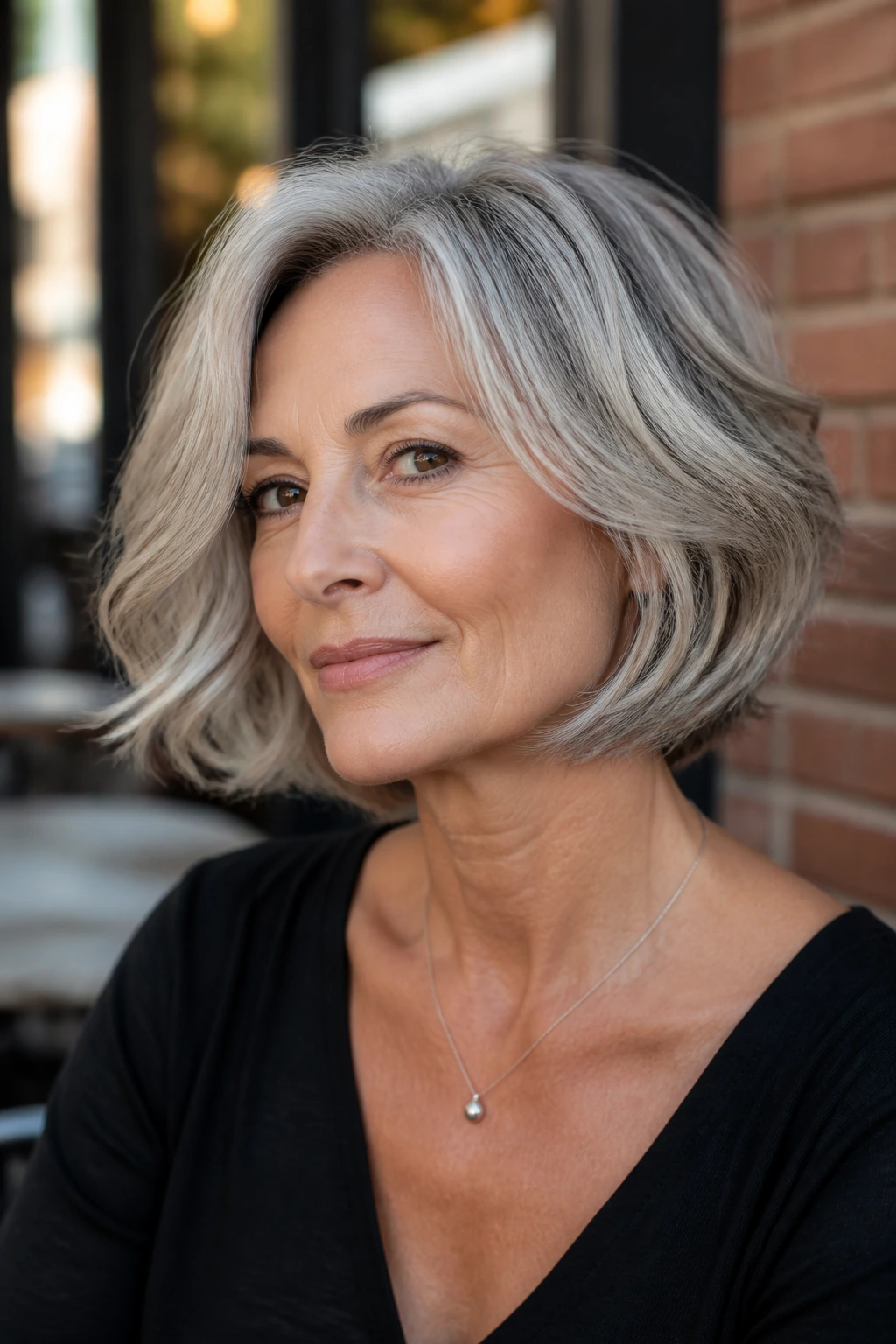
A graduated bob has a built-in shape that works well for hair that needs a little support at the back. The hair is slightly shorter in the nape and longer toward the front, so the whole cut lifts toward the cheekbones. That makes it a strong choice for oval faces, which already have enough length and don’t need the hair hanging straight down to the chin.
This cut is especially useful if your wave tends to collapse around the ears. The graduation gives the sides some structure, and the front can be kept soft enough to move. It’s a tidy shape, yes, but not a boring one.
I’d choose this for women who want a haircut that looks deliberate on busy mornings. It still needs styling, but not much. A root lift spray and a quick bend through the front pieces usually do the job.
17. The Short Tapered Wave Crop
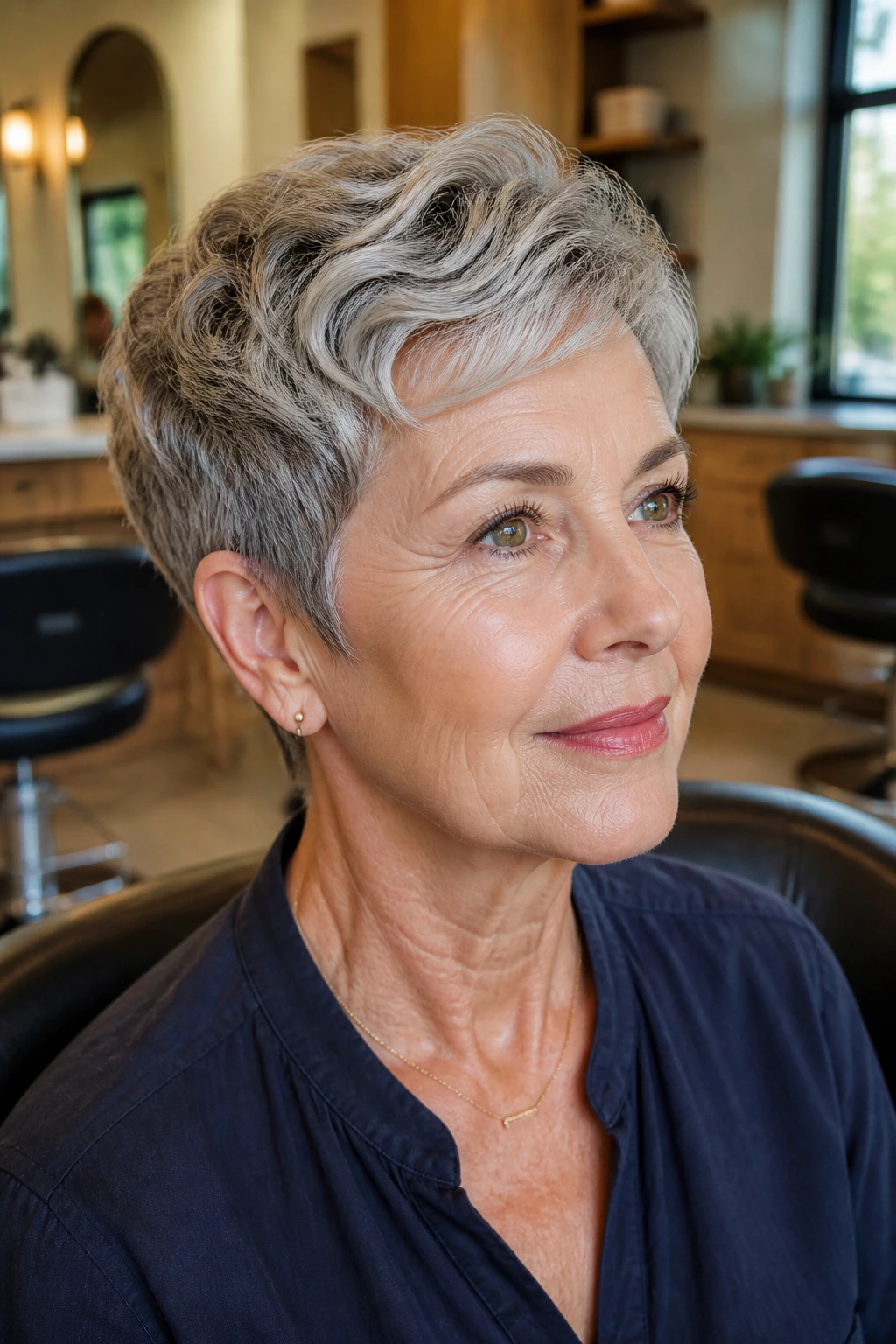
Short crops can look fantastic on wavy hair when the taper is handled with care. This is not the kind of cut that should look clipped or close to the scalp. The taper should be soft, with enough length on top for the wave to form and enough shape at the sides to keep the face open.
For an oval face, the short tapered crop draws attention straight to the eyes and cheekbones. That can be lovely. It also reduces the amount of hair you have to fight with, which is a real gift if your texture has turned a bit wiry or your routine has gotten simpler over time.
I like this best with a small amount of matte paste or light cream. Too much shine product and the wave collapses. Too little and the top looks dry. The middle is where the good stuff lives.
How to Ask Your Stylist for the Right Shape
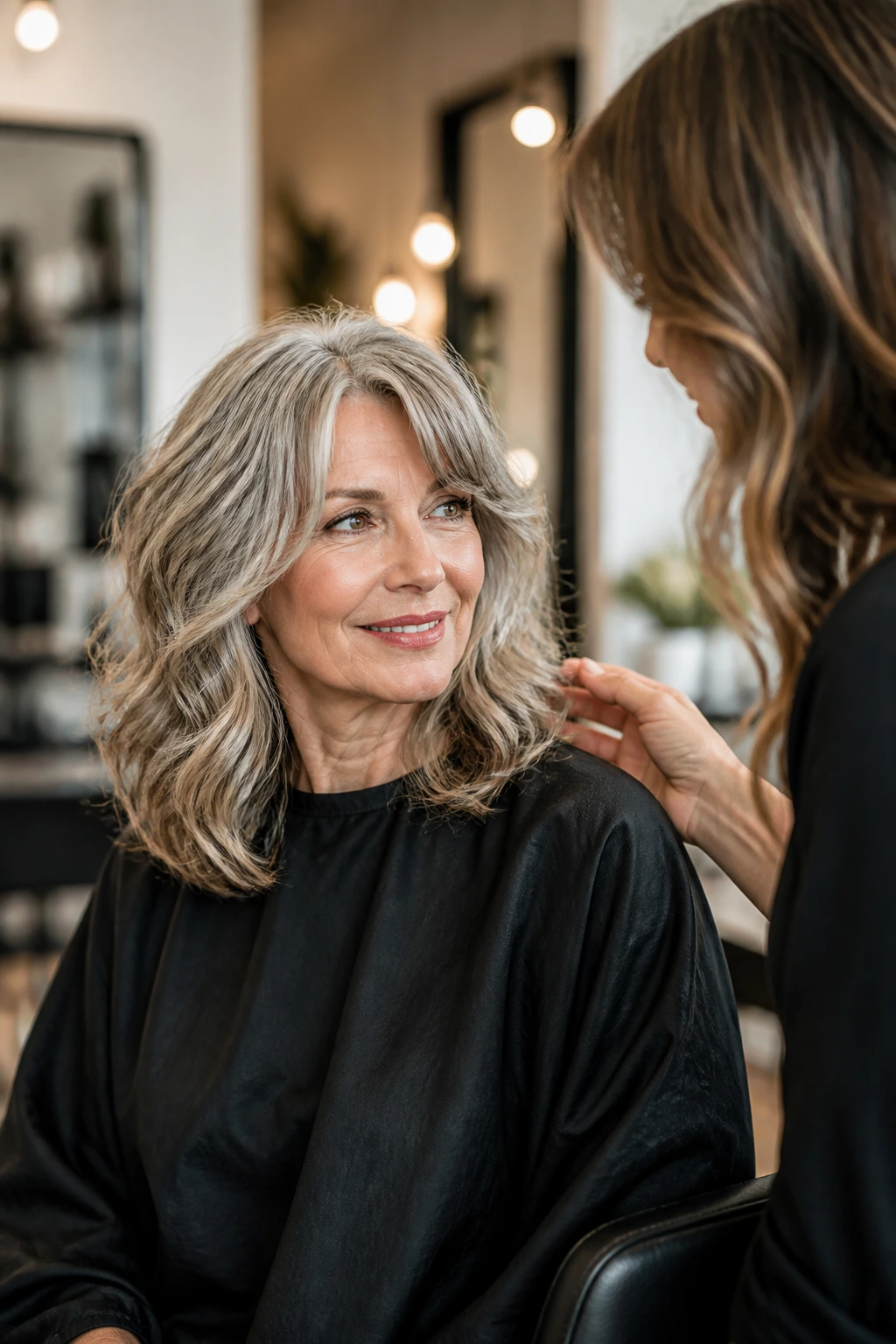
Bring photos, yes, but bring the right photos. A picture of someone with straighter hair and a similar cut can be useful for shape, but it cannot tell your stylist how your wave behaves. Show one image for the silhouette and another for the texture. That saves everyone a headache.
Tell the stylist where your hair flattens, where it puffs, and where it frizzes first. Be plain about it. “The crown goes flat by noon” is useful. “I want more volume” is not. Also mention whether you wear your part in the same place every day. A cut can be built around that, and your hair will behave better for it.
A few phrases are worth keeping in your pocket:
- Keep the shortest face-framing pieces at cheekbone level if you want lift without a too-short fringe.
- Leave the perimeter strong enough to hold density if your hair is fine.
- Remove bulk inside the cut, not from the ends if your waves go puffy.
- Keep the fringe light and movable if you wear glasses or hate bangs in your eyes.
- Do not over-thin the crown if your hair already falls flat there.
That last one matters more than people think. A stylist can remove weight and still leave structure. Those are not the same thing.
Best Tools and Products for Wavy Hair
The right tools do not make a bad cut good, but they can make a good cut easier to live with.
- A diffuser attachment: This helps set the wave without blasting it straight; low heat and low speed are the whole point.
- A 1- to 1.5-inch round brush: Best for bending face-framing pieces and turning the ends under on bob and lob lengths.
- A wide-tooth comb: Use this in the shower or on damp hair to keep the wave from getting stretched and fuzzy.
- Light mousse or foam: Gives the roots a little support without making the hair sticky or crunchy.
- Heat protectant spray: Non-negotiable if you use a blow-dryer, brush dryer, or iron at all.
- Texturizing spray: Handy for second-day hair, especially on layered cuts that need a quick refresh.
- Leave-in conditioner: Good for dry mids and ends, especially if gray strands feel rougher than the rest.
- Microfiber towel or cotton T-shirt: Better than a terry towel, which roughs up the cuticle and makes waves frizz faster.
- Duckbill clips: Useful for air-drying the crown with a little lift or setting bangs in the right direction.
- Light finishing cream or serum: Use only a small amount; too much and the cut falls flat.
If your hair is fine, lean on mousse and root lift. If it’s thick or coarse, lean on smoothing cream at the ends and a touch of texture spray after drying. Different hair, different job.
How to Style the Cut Without Smothering the Wave
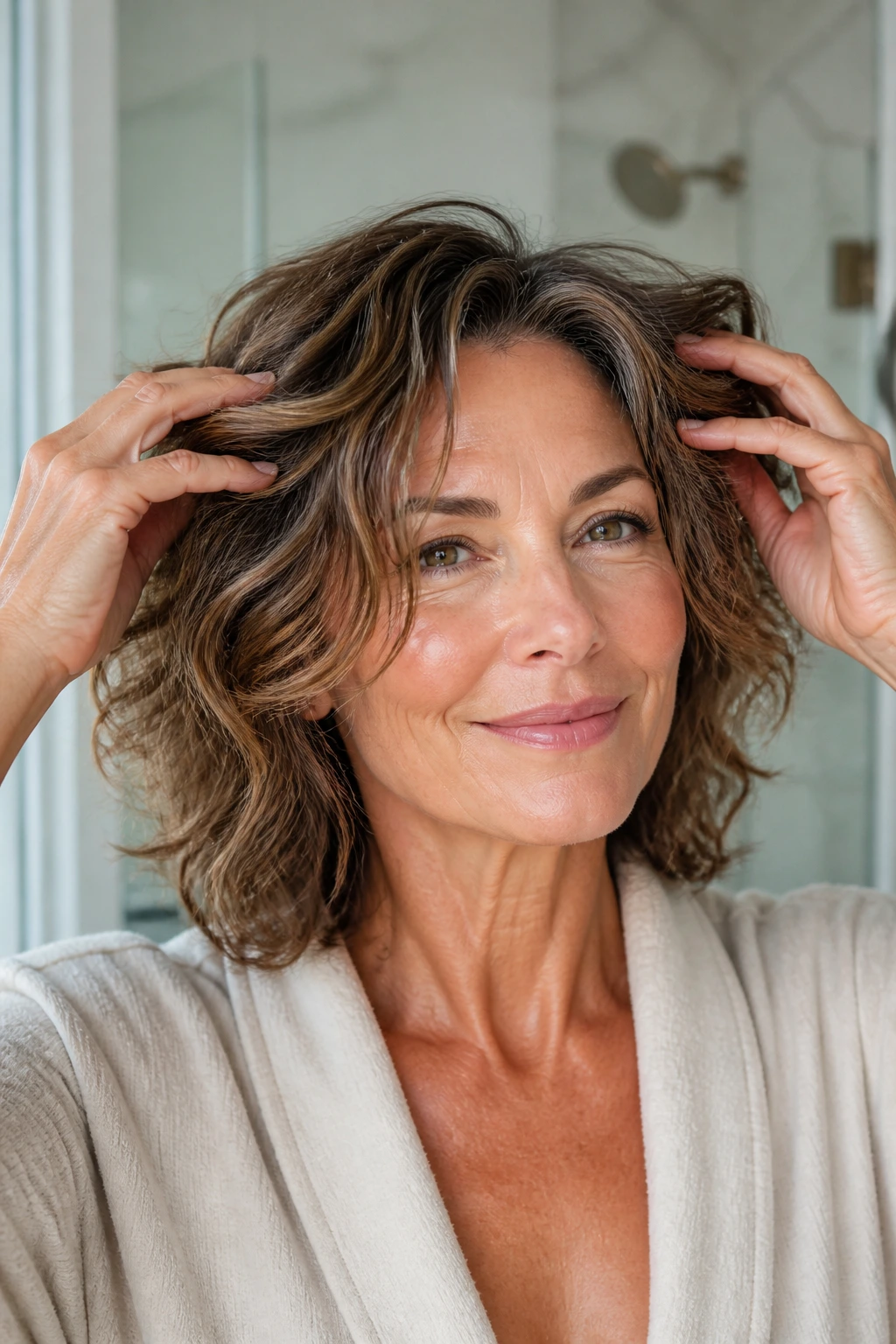
The first mistake people make is treating wavy hair like straight hair that needs to be forced into place. It doesn’t. It needs help, then it needs to be left alone.
Start on damp hair. Not wet. Damp. If you hear water sloshing when you move, you’ve gone too far. Work in a lightweight mousse or foam at the roots and mids, then use your fingers or a wide-tooth comb to guide the part where you want it. That part line matters. It tells the haircut where to fall.
From there, let the wave form. Scrunch a little if your hair likes that. Twist the front pieces if they refuse to cooperate. Diffuse on low heat only until the hair is about 80 percent dry, then stop. The last stretch of drying is where overhandling happens, and overhandling is where the shape goes fuzzy.
If you use a hot tool, keep it selective. A few bends around the face and at the ends are enough for most of these cuts. I do not love wrapping the whole head around a curling iron unless the wave has gone limp. It can make a good haircut look too dressed up, which is usually not the goal here.
How to Keep the Shape Between Salon Visits

Wavy cuts lose their shape in predictable places. The front gets heavy, the crown goes flat, the ends start flipping out, and the whole thing loses the clean line that made it flattering in the first place.
Shorter bobs and crops usually need trimming every 6 to 8 weeks. Lobs and shoulder-length cuts can often go 8 to 12 weeks. Long layers can stretch a little longer, but only if the ends stay healthy. When the hair starts looking ragged at the bottom, the cut stops reading as shape and starts reading as length.
A silk or satin pillowcase helps more than people expect. It cuts down on friction, which means fewer smashed waves at the front and less frizz at the ends. If your hair is dry, a tiny bit of leave-in on the mids before bed can keep the bend from going brittle. Tiny amount. Too much and you wake up greasy.
I also like a quick morning refresh spray made from water and a little leave-in conditioner in a mist bottle. Two or three pumps on the front pieces is usually enough. You do not need to soak the whole head again.
Common Mistakes That Flatten Waves or Drag an Oval Face Down
The most common mistake is taking too much weight out of the wrong place. If the stylist thins the crown or shreds the ends too hard, the wave loses its body and the haircut starts looking separated. The fix is a softer internal shape with enough perimeter left to support the hair.
Another one: letting the front grow too long and heavy. On an oval face, long front pieces that hang past the collarbone can pull the eye downward. If you want longer hair, keep the face frame purposeful. If you want shorter, make the cut commit to the jaw or collarbone instead of hovering in between.
A third mistake is cutting bangs too blunt for your texture. Heavy fringe on wavy hair can split, puff, or sit strangely at the temples. Ask for a softer shape unless you truly style bangs every day.
And then there’s overloading the hair with smoothing cream. On fine or gray waves, too much product makes the cut collapse. The hair looks oily at the roots and stringy at the ends. Start with less than you think you need. You can always add another half-pump.
Last, people often ignore the part line and the crown. If your hair insists on parting a certain way, fighting it every morning is a waste of time. Pick a cut that respects the cowlicks and the flat spots. Hair behaves better when you stop arguing with it.
Variations and Adaptations for Different Hair Types
Fine-Hair Lift Version: Keep the outer line blunt and the layers soft and invisible. Collarbone lobs, blunt bobs, and rounded bobs work especially well here because they create the look of thickness without taking the ends apart. Use mousse at the roots and skip heavy oils except on the driest tips.
Thick-Hair Weight-Release Version: Ask for long internal layers, not a lot of short choppy pieces. Thick wavy hair needs space to move, but it also needs a perimeter that keeps it from exploding sideways. This is where point cutting and careful debulking make a real difference.
Silver-Glow Version: Gray and silver hair often has more shine and a bit more texture. Softer bobs, feathered shoulder cuts, and side-swept bangs can show that shine without making the cut hard-edged. A glossing cream or leave-in with a little slip can keep the ends from feeling rough.
Glasses-Friendly Fringe Version: If you wear glasses every day, choose curtain bangs, bottleneck bangs, or a side sweep that clears the frames. The fringe should sit near the brow or cheekbone, not crash into the top of the glasses. That small adjustment keeps the whole face from feeling crowded.
Air-Dry Only Version: Shoulder-length shags, midi cuts, and collarbone lobs are the easiest to live with if you want to skip hot tools. Ask for layers that fall naturally when damp and avoid too much razoring. A little mousse and a scrunch is enough on most days.
Low-Maintenance Short Version: A pixie bob, layered crop, or short tapered wave crop works when you want less hair to handle but still want movement. The top needs enough length to show the wave, and the sides should stay soft so the cut doesn’t feel severe. This version is easier to refresh, but it does want trims more often.
Frequently Asked Questions
What length is most flattering for oval faces with waves?
Collarbone length is a sweet spot for a lot of people because it gives the wave room to move without dragging the face down. That said, chin-length bobs and short crops can look excellent if the shape is clean and the texture is handled well.
Do bangs work on wavy hair after 50?
Yes, but they need to be cut with your wave pattern in mind. Soft curtain bangs, bottleneck bangs, and side-swept fringes are easier to live with than a thick straight fringe, which tends to split and puff.
Is a center part or side part better for an oval face?
Both can work. A center part gives balance, while a side part adds lift and soft asymmetry; if your crown is flat, a side part usually gives you more help. If your face already has strong symmetry, the side part can keep the haircut from feeling too rigid.
Which cut makes fine wavy hair look thicker?
A blunt lob, rounded bob, or softly structured collarbone cut usually does the trick. You want a strong outer line with just enough internal movement to keep the wave from collapsing into a flat sheet.
How often should I trim wavy haircuts for oval faces for older women?
Shorter shapes usually need a trim every 6 to 8 weeks. Medium cuts can go a bit longer, around 8 to 12 weeks, as long as the ends stay clean and the shape still frames the face properly.
Can gray hair hold these cuts well?
Absolutely. Gray hair often has more shine and a little more resistance, which means a smart cut shows the texture nicely. The main thing is keeping the ends from looking dry, so a light leave-in or cream helps.
What if my waves are loose on top and tighter underneath?
That’s common, and it changes where the layers should sit. A stylist should check how the hair falls when dry, not only when wet, because uneven wave patterns can make a cut swing out or collapse in unexpected places.
What if my hair frizzes in humidity?
Choose a cut with enough structure to hold its shape even when the surface gets a little fuzzy. That usually means less aggressive thinning, softer layers, and a product routine that seals the mids and ends without smothering the hair.
The Shape That Moves With You
The best haircut for this topic is not the one that tries to make waves behave like something else. It’s the one that lets the wave keep its own rhythm while giving the face a clean, flattering outline. Oval faces already offer room to work with; the haircut’s job is to make that room visible.
My honest favorite choices in this bunch are the collarbone lob, the soft French bob, and the shoulder-length cut with curtain bangs. They have enough shape to feel deliberate, enough movement to stay alive on day two, and enough flexibility that they do not demand a full styling routine every morning.
Pick the cut that matches your real life, not the one that looks best in a vacuum. If you want, I can also turn this into a version for fine hair, thick hair, gray hair, or low-maintenance styling only.
