



A good haircut on a little girl has to do more than look sweet in the mirror for thirty seconds. It has to survive a car seat nap, a hoodie pulled over the head, a swing set, a glue-stick session, and that tiny hand that keeps pushing the fringe back because it won’t stay put. That’s why haircut ideas for little girls deserve a little more thought than a saved photo and a hopeful shrug.
The cuts that work best are the ones that respect the child’s hair texture, her patience level, and how much brushing she’ll actually tolerate before school. A neat bob on one kid looks crisp and easy; on another, it turns into a triangle by lunchtime. A pixie can feel liberating for a child who hates hair on her neck. For another, it’s a weekly trim commitment that nobody in the house has the energy to keep up with.
There’s also the matter of traction. Tight styles that pull at the hairline can become a problem when they’re worn over and over, and that’s one reason I like a haircut that reduces the need for constant ponytail tugging. A cut should make daily life calmer, not create one more thing to wrestle with before breakfast. That’s the standard I used here, and it changes the whole list.
Why These Haircut Ideas for Little Girls Hold Up in Real Life

-
Less morning wrestling: A cut that falls into place with finger-combing saves the “hold still for one more brush” battle before the school run.
-
Better grow-out: The shapes here still look intentional after a few weeks of growth, which matters because salon visits do not always happen on schedule.
-
Built around texture: Straight hair, waves, curls, and coils all behave differently; the right cut works with the pattern instead of flattening it.
-
Kinder on the neck and forehead: Some kids hate hair brushing the collar or poking the eyes, and a smart cut fixes that without layers of clips and elastics.
-
Less daily damage: When a child is not living in tight ponytails, rubber bands, and aggressive brushing, the hairline tends to stay calmer.
-
Easier to own: A child usually wears the cut more happily when it feels like her hair, not a style adults keep fixing all day.
1. Chin-Skimming Classic Bob
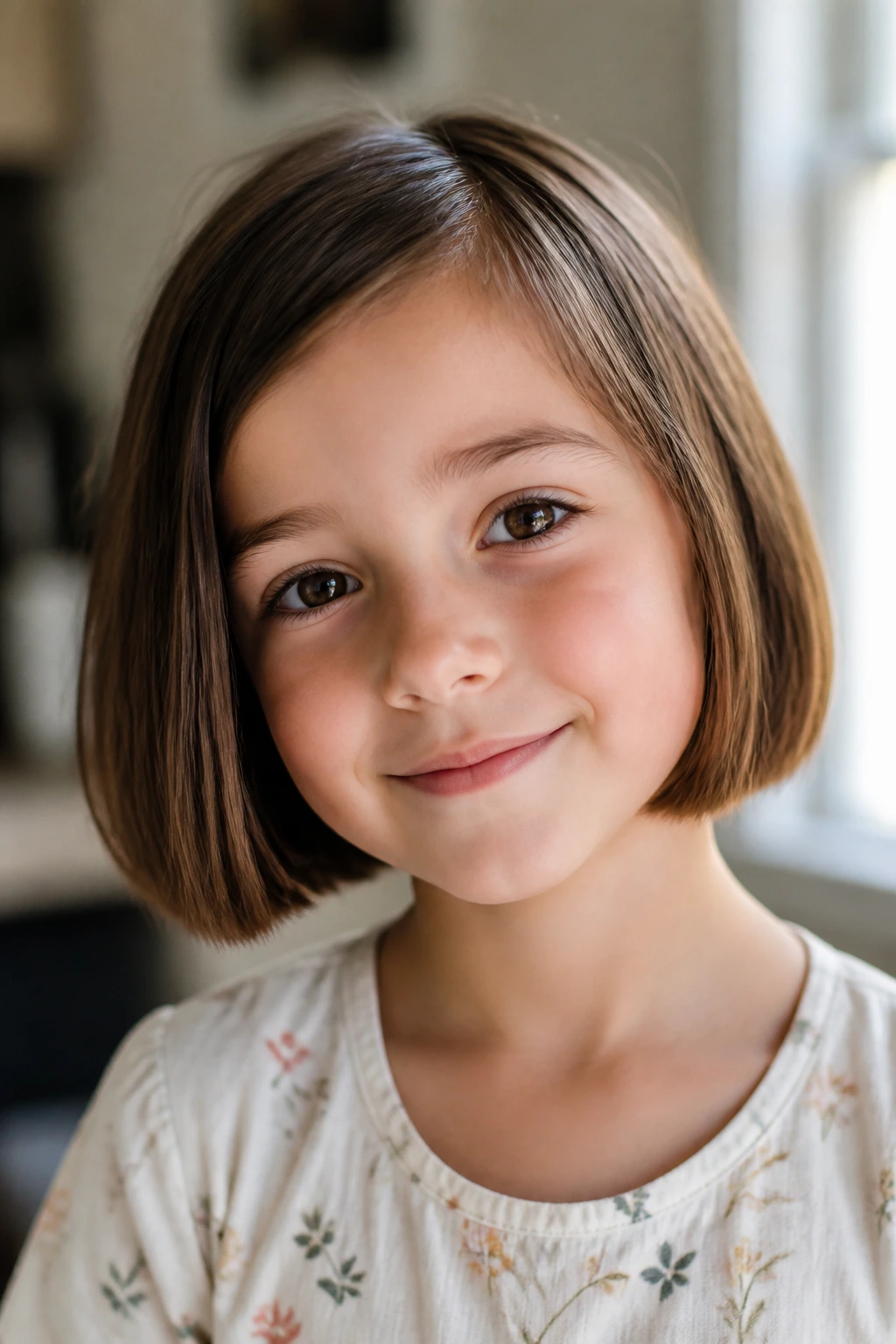
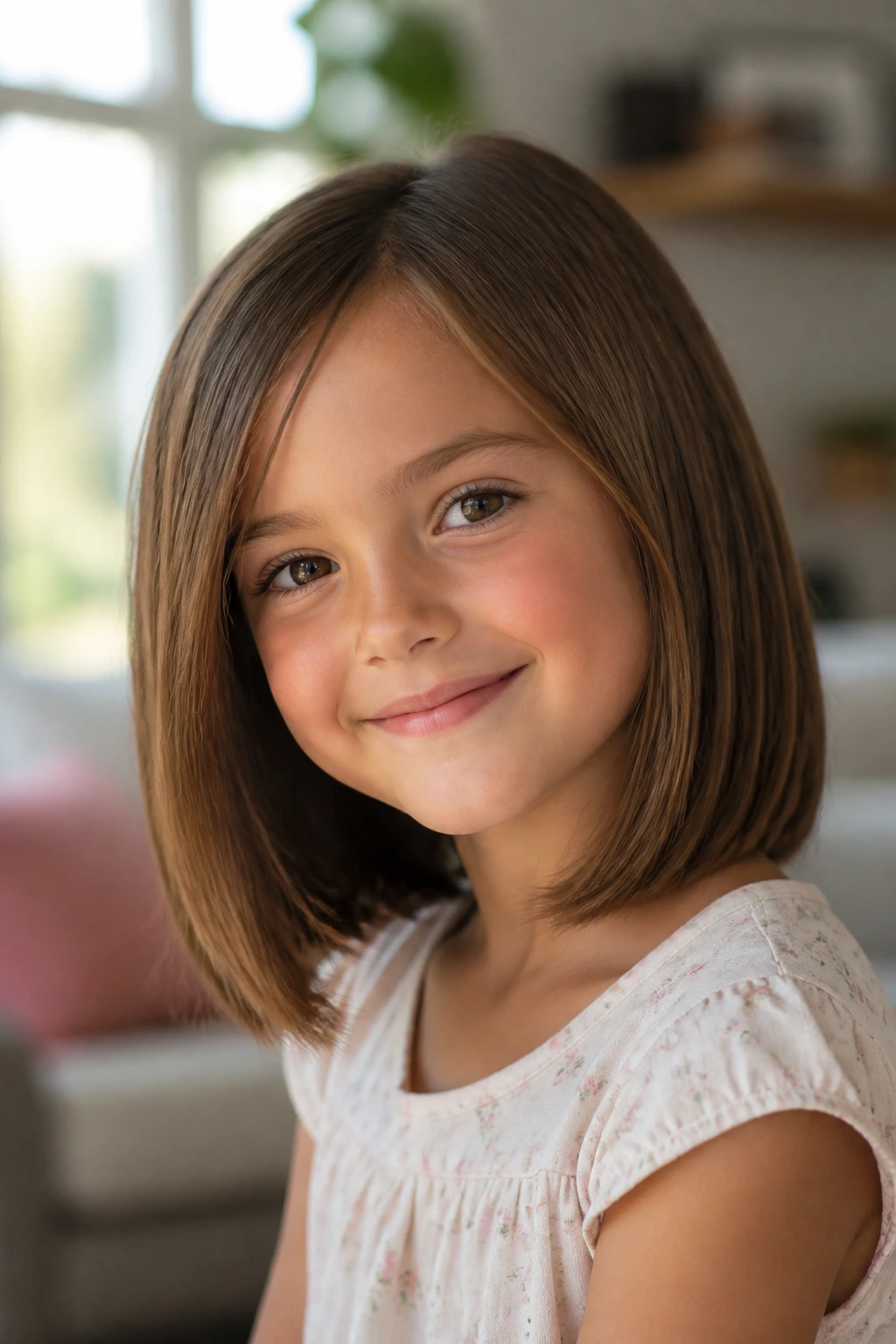
A chin-skimming bob has a clean line that looks neat without feeling stiff. The ends sit right around the jaw, so the hair still swings when she turns her head, but it does not drag across lunch trays or catch under jacket collars.
Best on straight or softly wavy hair
The magic is in the blunt edge. Straight hair reads polished fast, and soft waves give the bob a little movement instead of a helmet shape. If the nape likes to flip out, ask for the back to sit a touch longer than the front so the line settles better after washing.
- Why parents like it: it brushes fast and usually air-dries in a shape that still looks deliberate.
- What to ask for: a blunt perimeter with very light texturizing, if any.
- Watch for: a chin-length bob can emphasize a strong cowlick at the crown, so show the stylist where the hair splits.
A bob like this is the haircut equivalent of a clean white T-shirt. Nothing flashy. It just works.
2. Ear-Tuck Bob
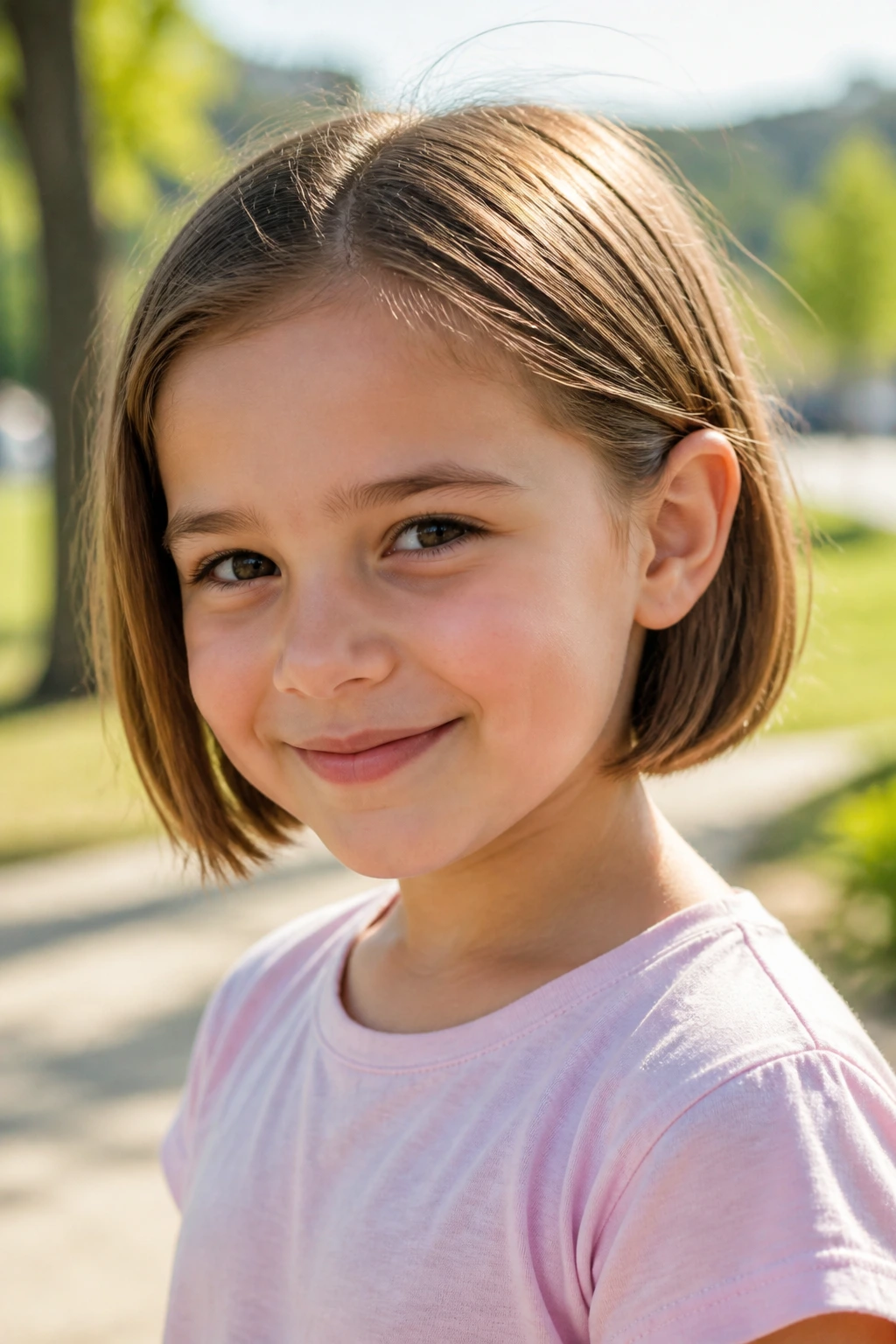
If the hair touching the neck is the thing your child complains about first, the ear-tuck bob is a smart answer. It sits slightly shorter than the chin bob and gives enough room at the sides to tuck the hair behind the ears without fighting the shape.
The trick is to keep the temples soft. Too much bulk there makes the sides puff, which is the exact opposite of what you want on a busy morning. A slight bevel at the ends helps the cut move when she runs, but still stay tidy when she sits still.
This is a strong choice for sporty kids, kids who wear backpacks with stiff straps, and kids who hate when hair sticks to the back of the neck after playing outside. It’s short, but not severe. That balance matters.
3. A-Line Bob
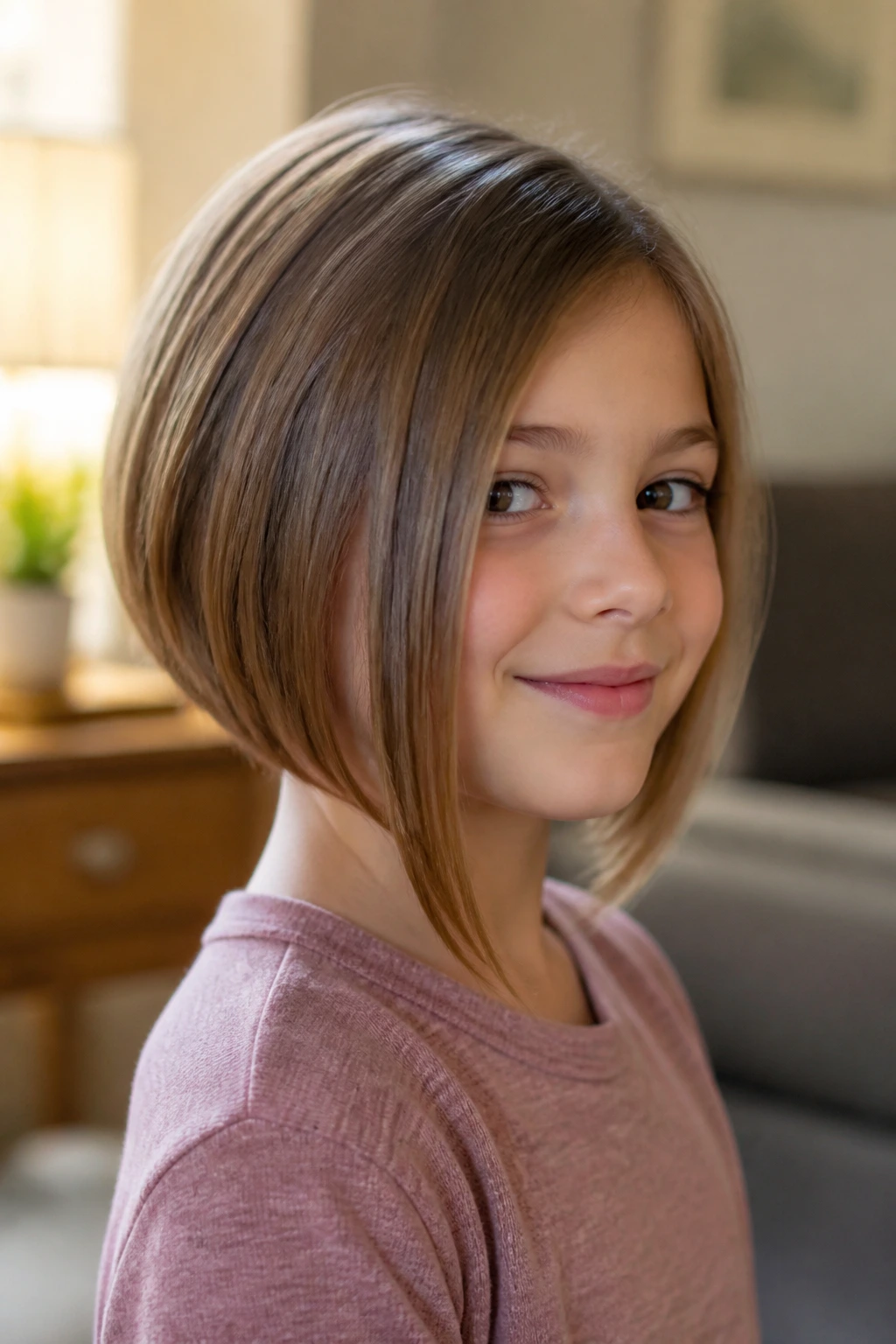
What makes an A-line bob different is the angle: shorter at the back, longer toward the front. That tiny slope gives the cut a little swing and keeps thick hair from building up like a shelf at the nape.
I like this shape when a child wants “short hair” but still wants enough length in front to tuck behind one ear or pin back with a clip. It frames the face without feeling hard. And because the front is longer, the cut grows out more gracefully than a blunt line that stops dead at the jaw.
Keep the angle subtle. A steep A-line can look too grown-up and fussy for a little girl, especially if she’s going to spend the day climbing, drawing, and lying upside down on the couch.
4. French Bob
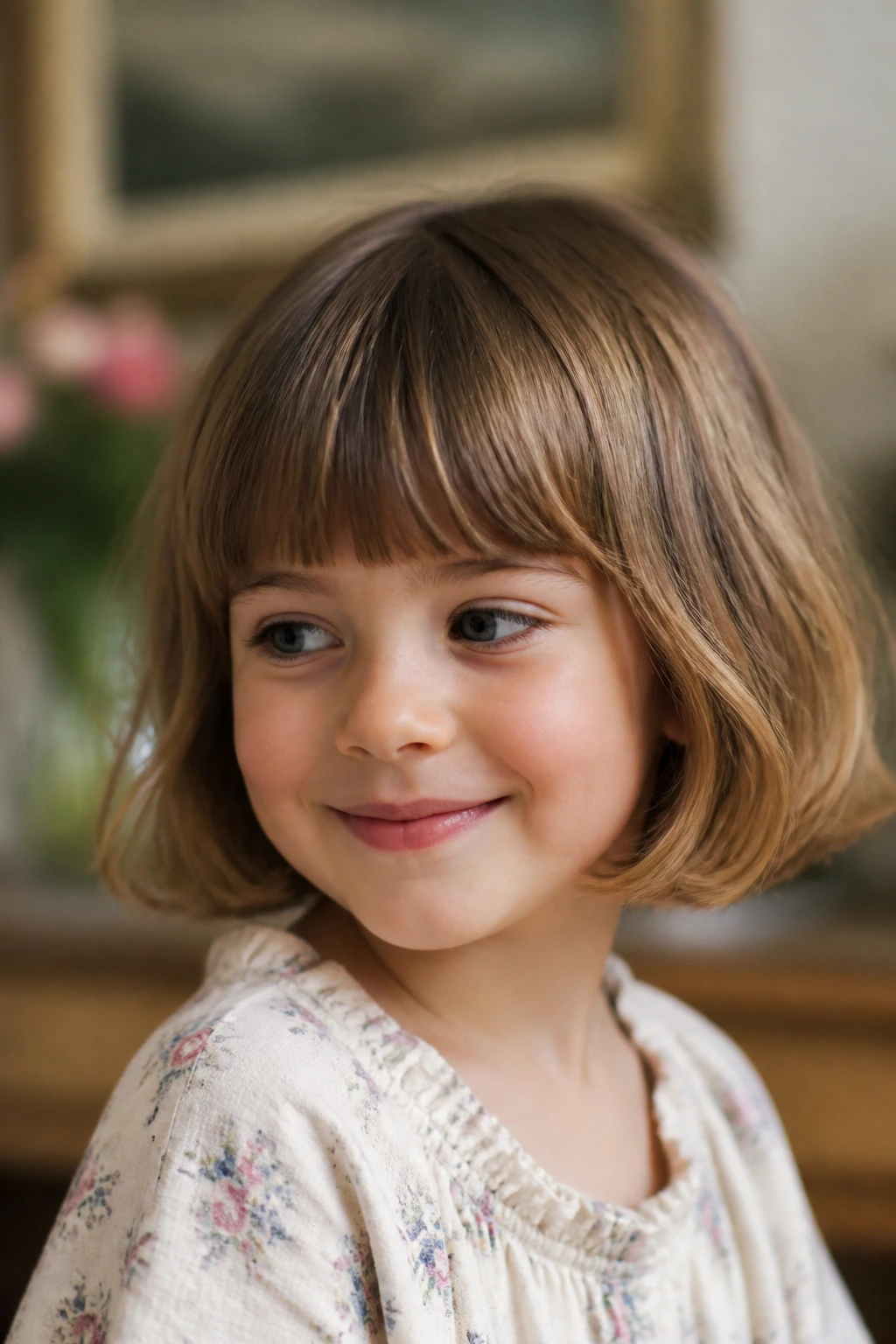
A French bob has a little attitude, but in a soft way. It usually lands around the chin and pairs with a fringe that grazes the brows instead of sitting square across the forehead. The shape feels airy, not blocky.
Why it suits wavy hair so well
Waves keep the cut from looking too precise. The ends move, the fringe breaks up a little, and the whole thing feels relaxed without becoming messy. I like this cut most when the bangs are left a touch longer than people expect; a brow-skimming fringe is easier to live with than one that keeps landing in the eyes.
- Good for: kids who don’t mind a little fringe maintenance.
- Better on: soft waves and straight hair with a bit of bend.
- Not ideal if: the child hates anything on the forehead.
A French bob has a quiet charm to it. It never tries too hard.
5. Pageboy
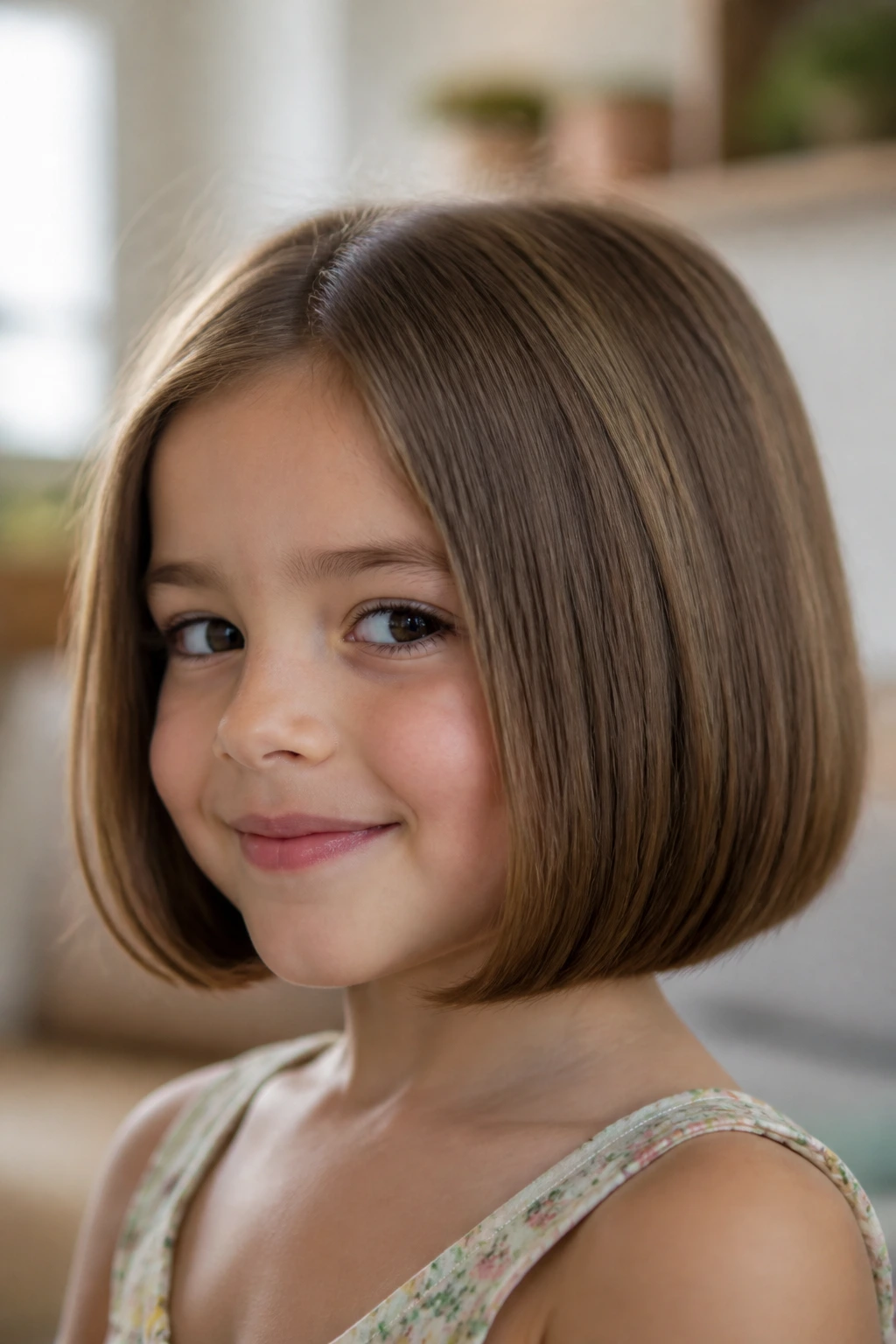
The pageboy is the tidy child in the haircut family. It curves under at the ends, usually around the jaw or just below it, and the whole shape reads smooth and controlled.
This one is especially good for straight, thick hair. The line looks deliberate, and the bend under the edge keeps the style from flaring out at the bottom. I’d still ask for a little internal softening, though. If the cut is too blunt and too heavy, it can feel like one solid cap. Not cute. Not useful.
The pageboy is for the kid who likes her hair neat and hates chaos around the face. If she’s always trying to smooth down flyaways or tuck hair behind both ears at once, this cut probably fits her better than something layered.
6. Pixie Cut
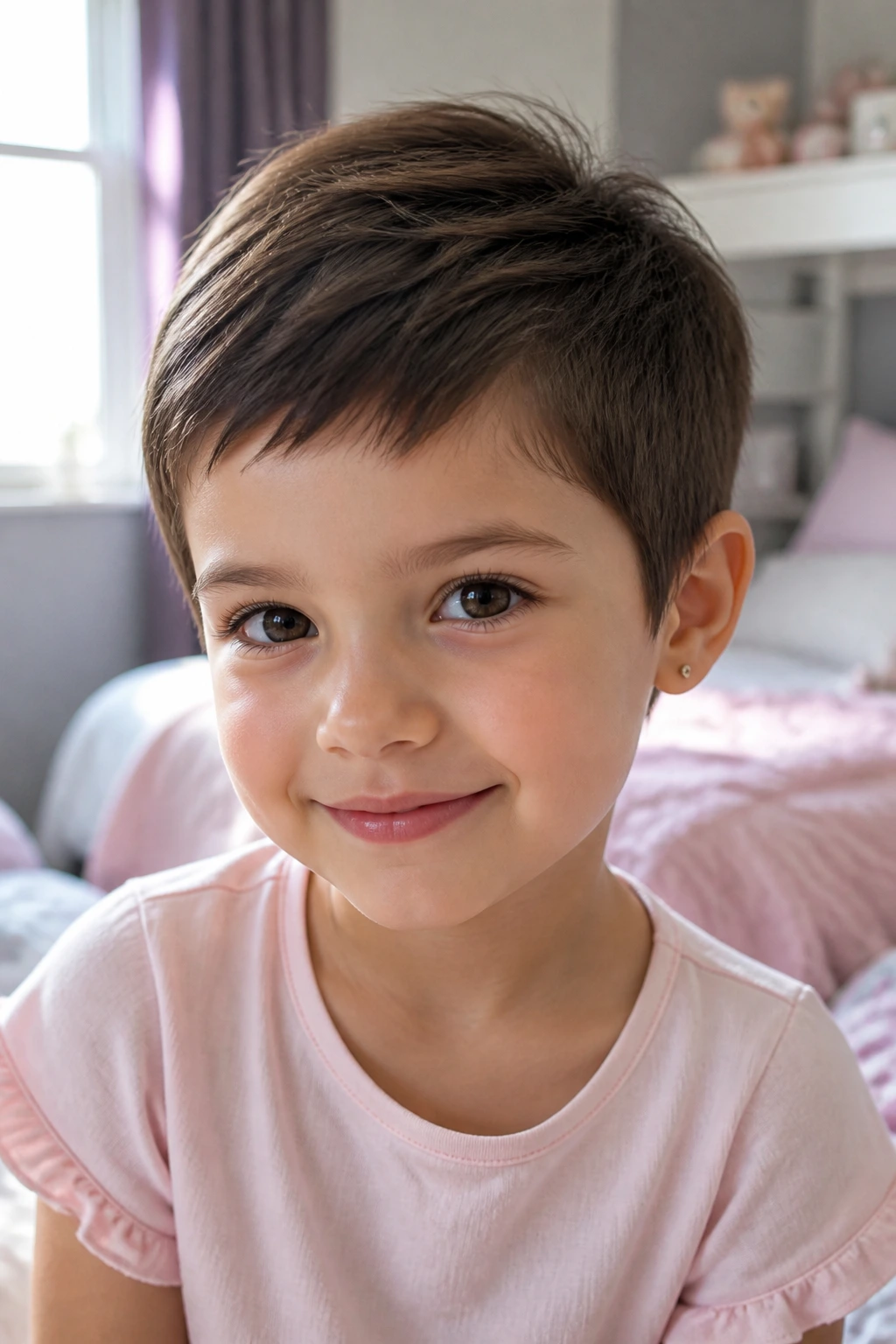
A pixie cut clears the neck, lifts the weight off the ears, and gets out of the way fast. That’s the whole appeal. The sides and back stay short, while the top keeps enough length to sweep forward, part to the side, or puff up a little with fingers and water.
It’s also a cut that asks for honesty. If a child hates haircuts, hates scalp exposure, or wants to tie her hair back every afternoon, a pixie might frustrate her. If she loves the feel of short hair and wants the shortest possible routine, it can be a relief.
Short cuts also show cowlicks fast. They show growth fast, too. That means regular trims matter more here than in any bob or lob. And yes, the scalp gets more sun, so a hat or a bit of sunscreen on exposed skin is not optional on bright days.
7. Textured Crop
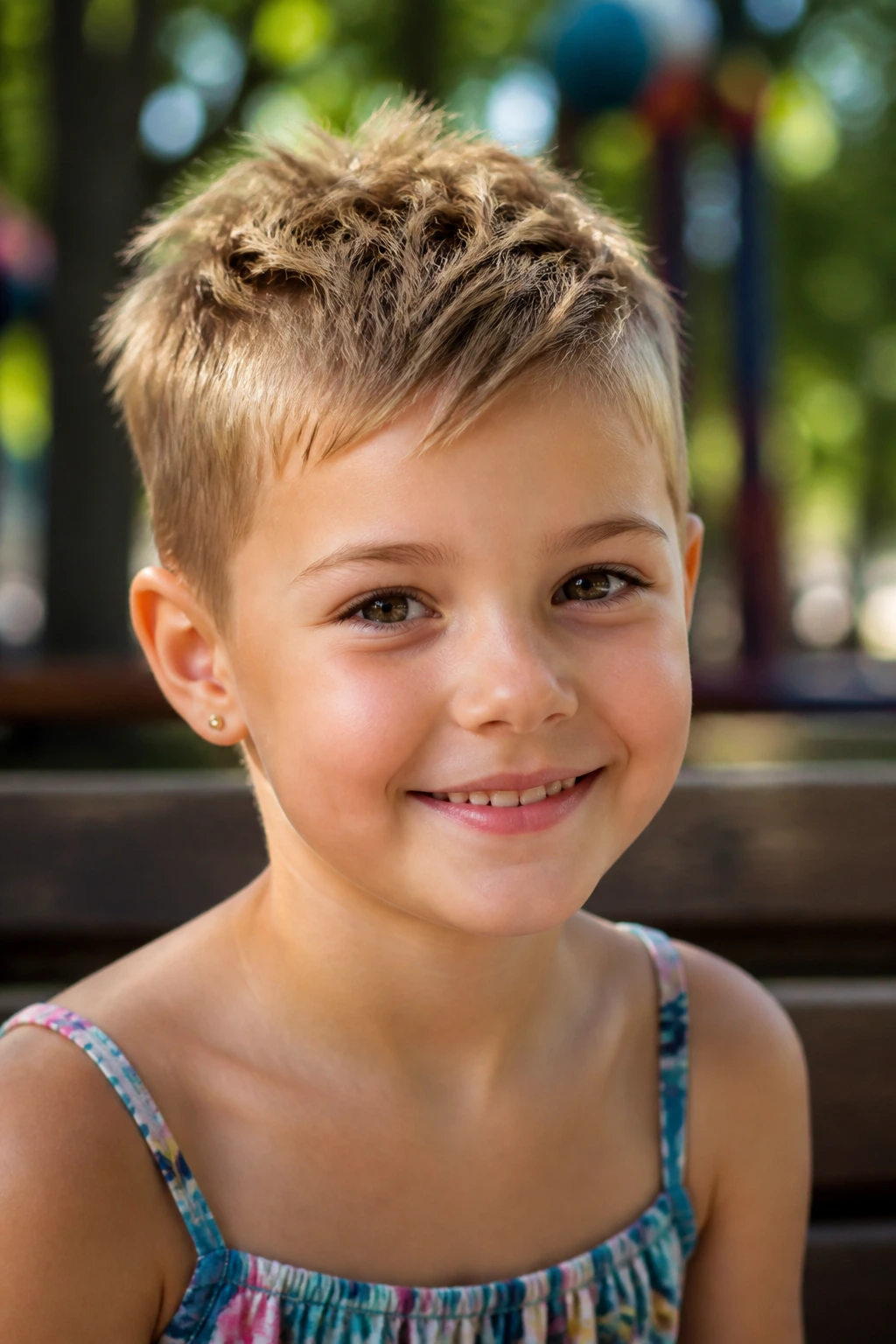
Think of the textured crop as a pixie with a softer edge. It keeps the sides and nape short, but the top has choppy, lightweight pieces that give fine hair a little lift and keep the shape from lying flat.
This is one of those cuts that looks better with a quick scrunch than with a perfect brush-out. A mist of water, a dab of leave-in, maybe a fingertip part. That’s enough. Straight hair gets movement; wavy hair gets shape without looking too polished.
It’s a nice choice for kids who want short hair but not a strict little bowl shape. The texture keeps it playful. The shorter sides keep it practical. Clean and quick. That’s the sweet spot.
8. Curly Bob
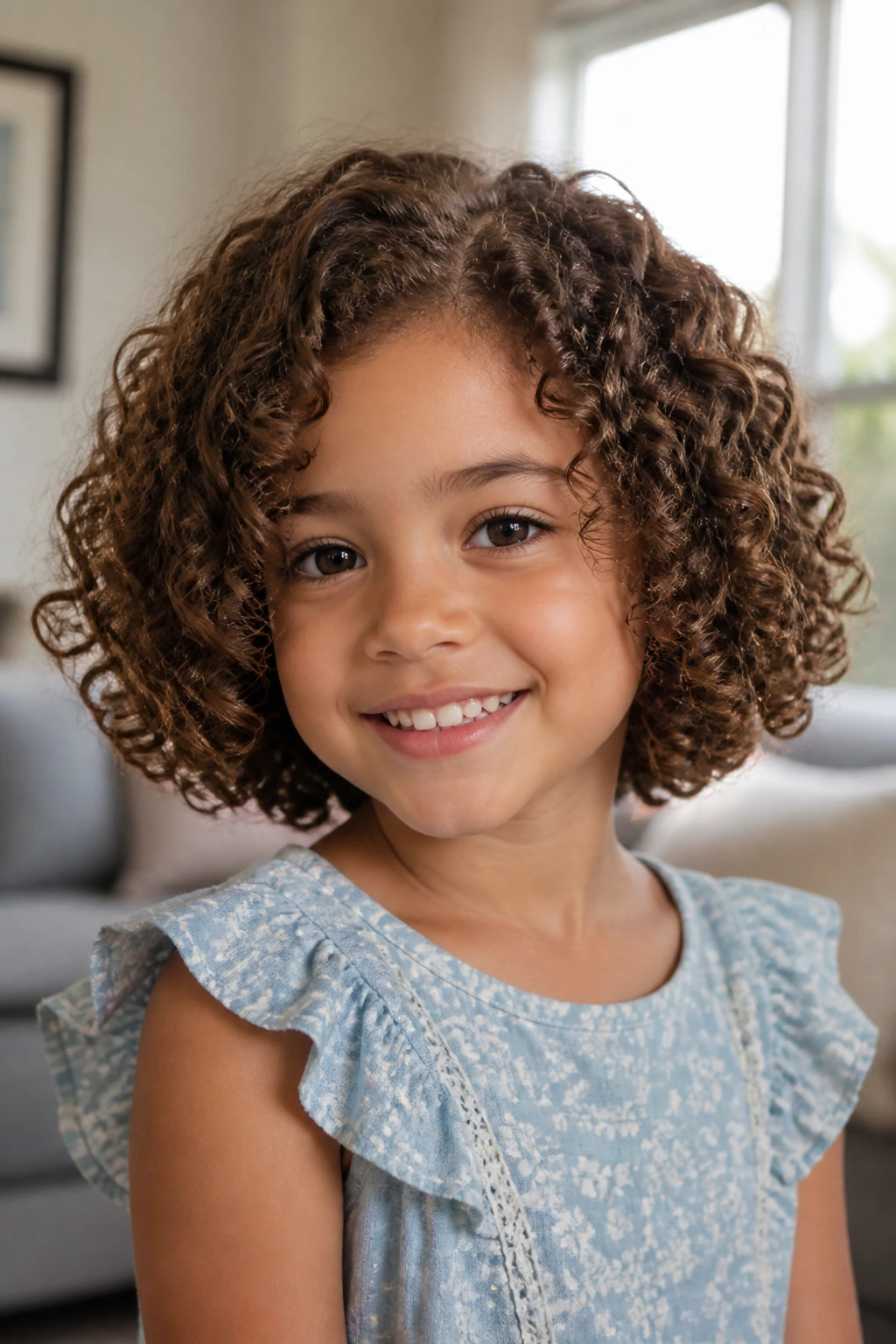
Curly hair needs a bob that respects the curl pattern, not just the wet outline. A chin-length curly bob can be lively and balanced when the cut follows the spring of the curls and leaves room for bounce instead of cramming everything into one line.
What to ask for at the salon
- Cut with the curls in their natural pattern, not stretched straight.
- Keep the perimeter soft so the shape doesn’t box in.
- Remove weight only where the hair is too bulky.
If the hair is cut too short while wet, it can spring higher once dry. That’s why curly bobs often need a stylist who checks the shape after the curls settle. A good curly bob doesn’t fight shrinkage. It plans for it.
9. Rounded Curly Afro
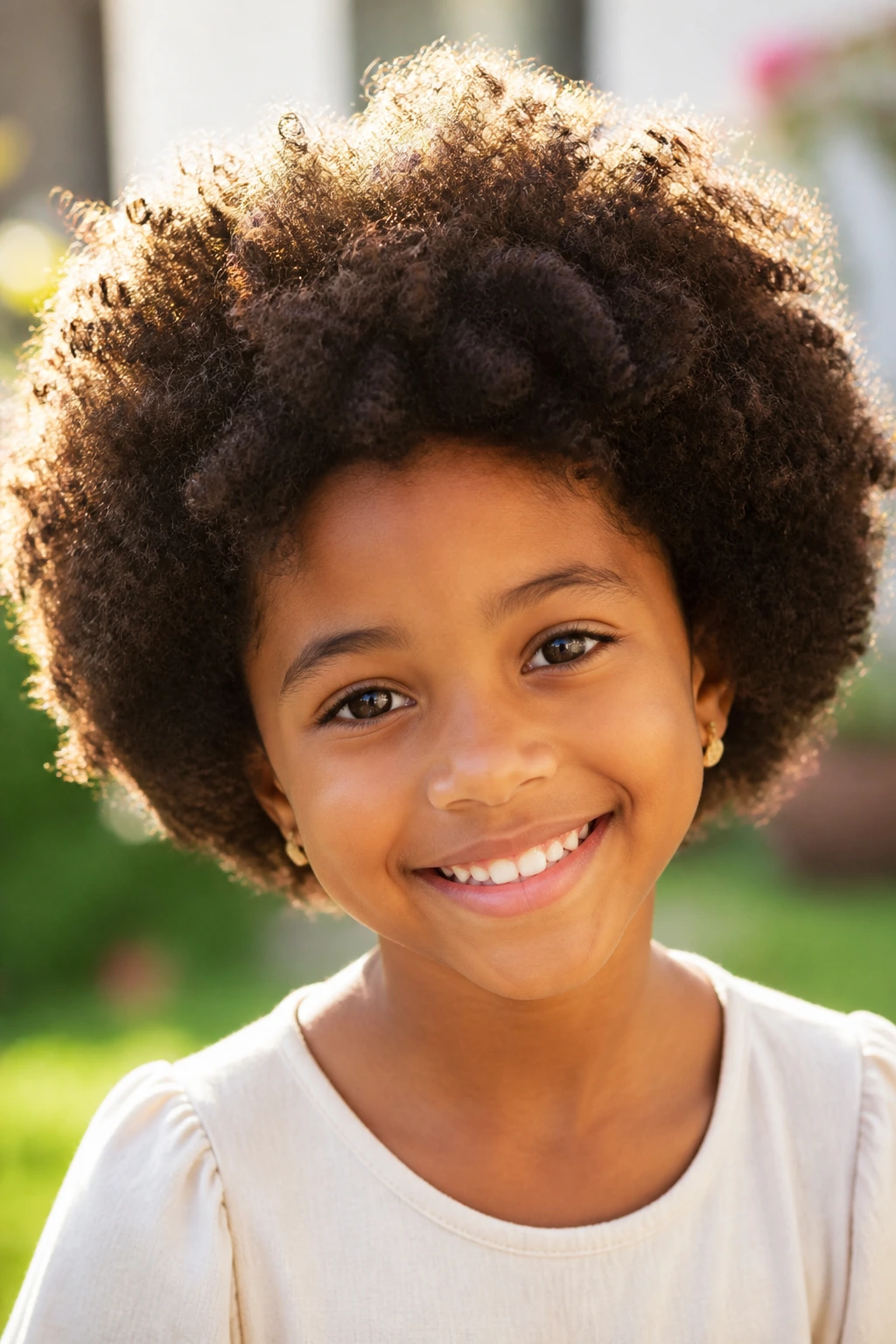
A rounded curly afro shape gives coily texture room to breathe. The goal is a soft, balanced silhouette that reads even from every angle instead of a square block or a triangle that sticks out at the sides.
This cut is kind to shrinkage, which matters more than parents sometimes expect. A shape that looks small when wet may bloom into a much fuller outline once dry. The stylist should shape the hair where it lives, not where it looks after being stretched.
Moisture makes this cut behave. Leave-in conditioner, a little cream, and a satin pillowcase do more work than a drawer full of random products. If the child likes clips or beads, this rounded shape gives you enough surface to play with them without flattening the crown.
10. Tapered Coily Cut
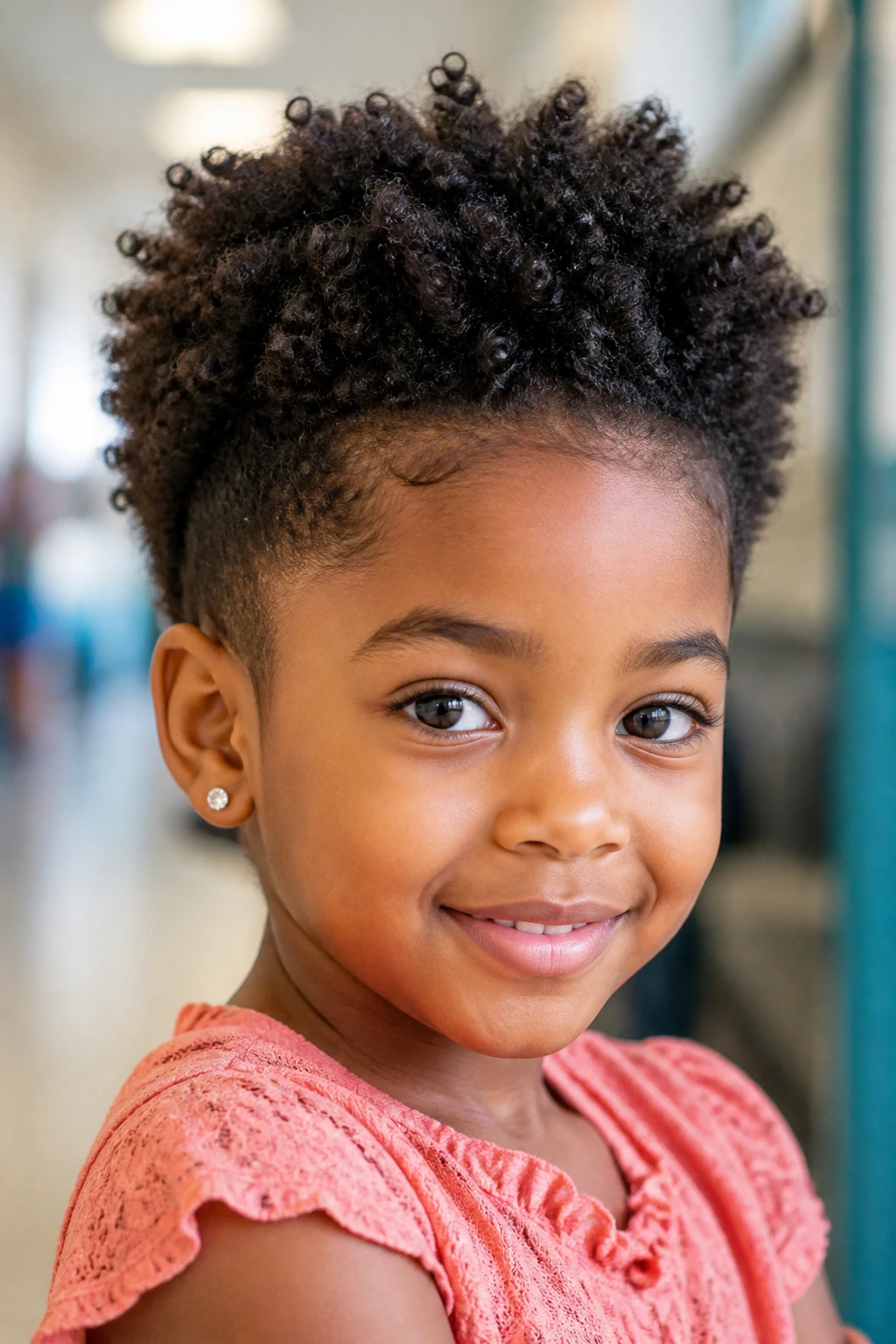
The tapered coily cut keeps the sides and nape shorter while leaving more length on top, so the hair can have shape without swallowing the collar. It feels neat, light, and very easy to wash.
That taper matters because it stops bulk from collecting around the ears and back of the neck. For a child who gets itchy when hair brushes her skin, that can be the difference between loving a cut and trying to grow it out immediately. The top can still be styled in a puff, a side part, or a soft twist, but the base stays clean.
This cut likes moisture and regular shape-ups. Not weekly maintenance, just enough to keep the outline from fuzzing out. When it’s done well, it looks deliberate even on a lazy day.
11. Shoulder-Length Lob
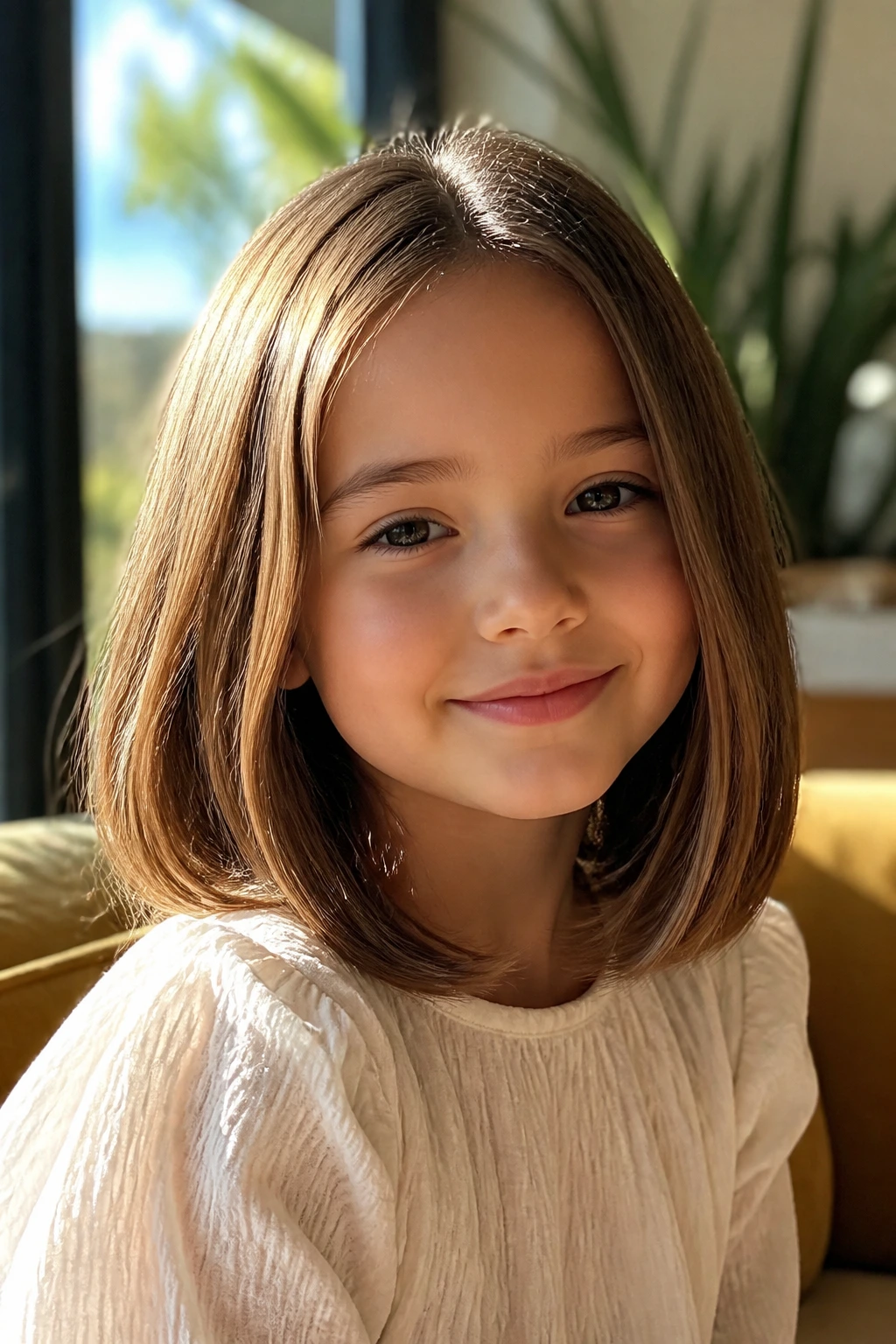
If you want one safe compromise between short and long, the shoulder-length lob is usually it. The length sits at or just below the shoulders, so it still ties back, but it does not tangle as fast as a much longer cut.
It also behaves well on kids who are growing out of a bob. The change feels gentle, not abrupt. A lob can be worn with a center part, a side part, tucked behind the ears, or clipped half-up without the whole shape collapsing.
This is the cut I’d choose when a child wants hair she can still flip around, but you want fewer tangles in the car seat and less drama on wash day. It’s not flashy. It’s useful.
12. Collarbone Cut
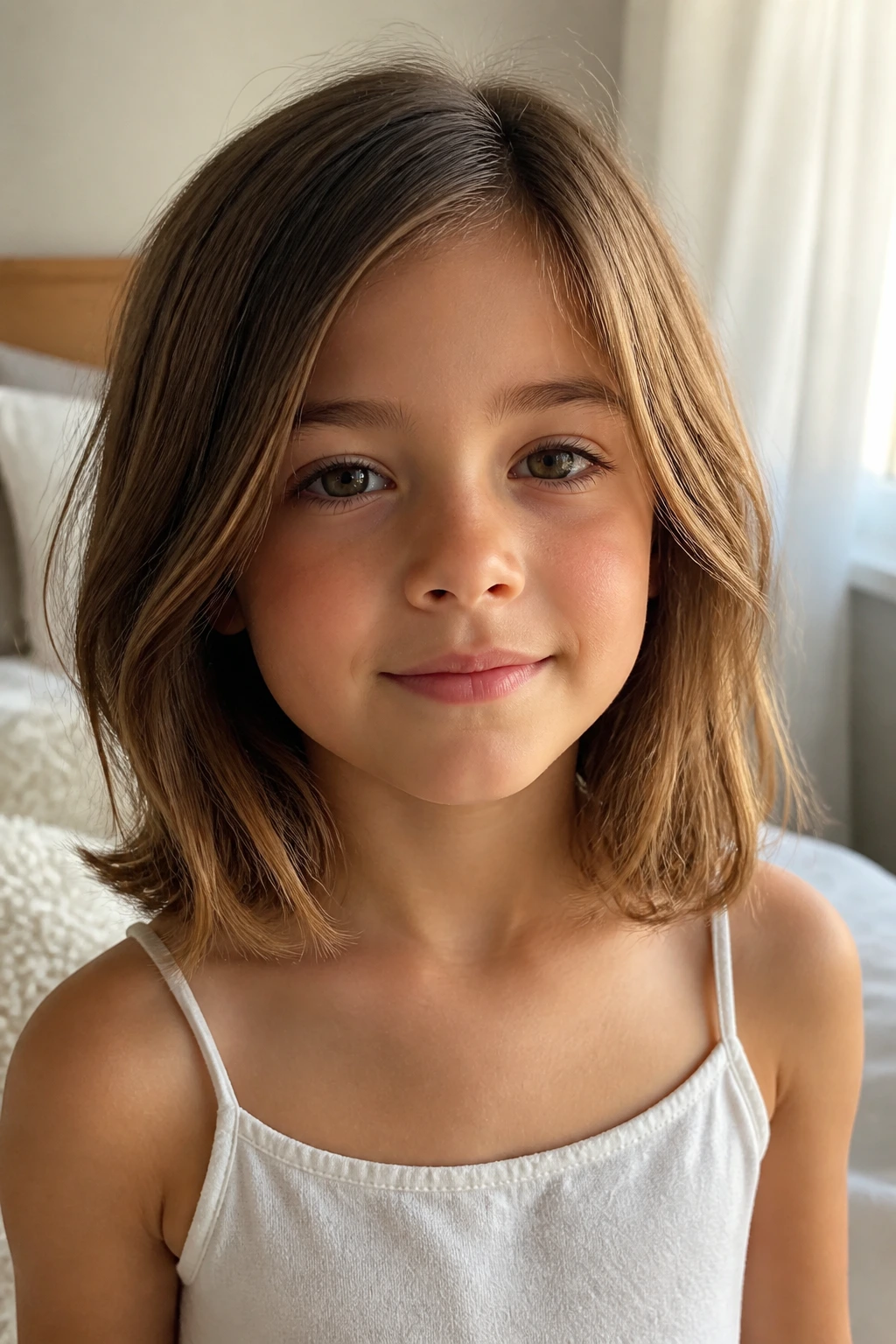
A collarbone cut drops slightly lower than a lob and gives the hair that easy swing everyone notices when a child turns her head. It keeps enough length for braids and ponytails, but the ends don’t sweep the middle of the back where tangles get nasty.
Why this length is so forgiving
The collarbone line makes a lot of hair types look intentional. Fine hair gets a fuller edge. Thick hair still has enough weight to fall. Wavy hair gets room to bend without exploding into a triangle.
- Best for: kids who want length but hate constant detangling.
- Ask for: soft ends with a clean, level perimeter.
- Skip heavy layers if: the hair is already thin or fine.
I like this cut because it does half the work of long hair without taking away the fun of having hair to play with.
13. Shaggy Shoulder Cut
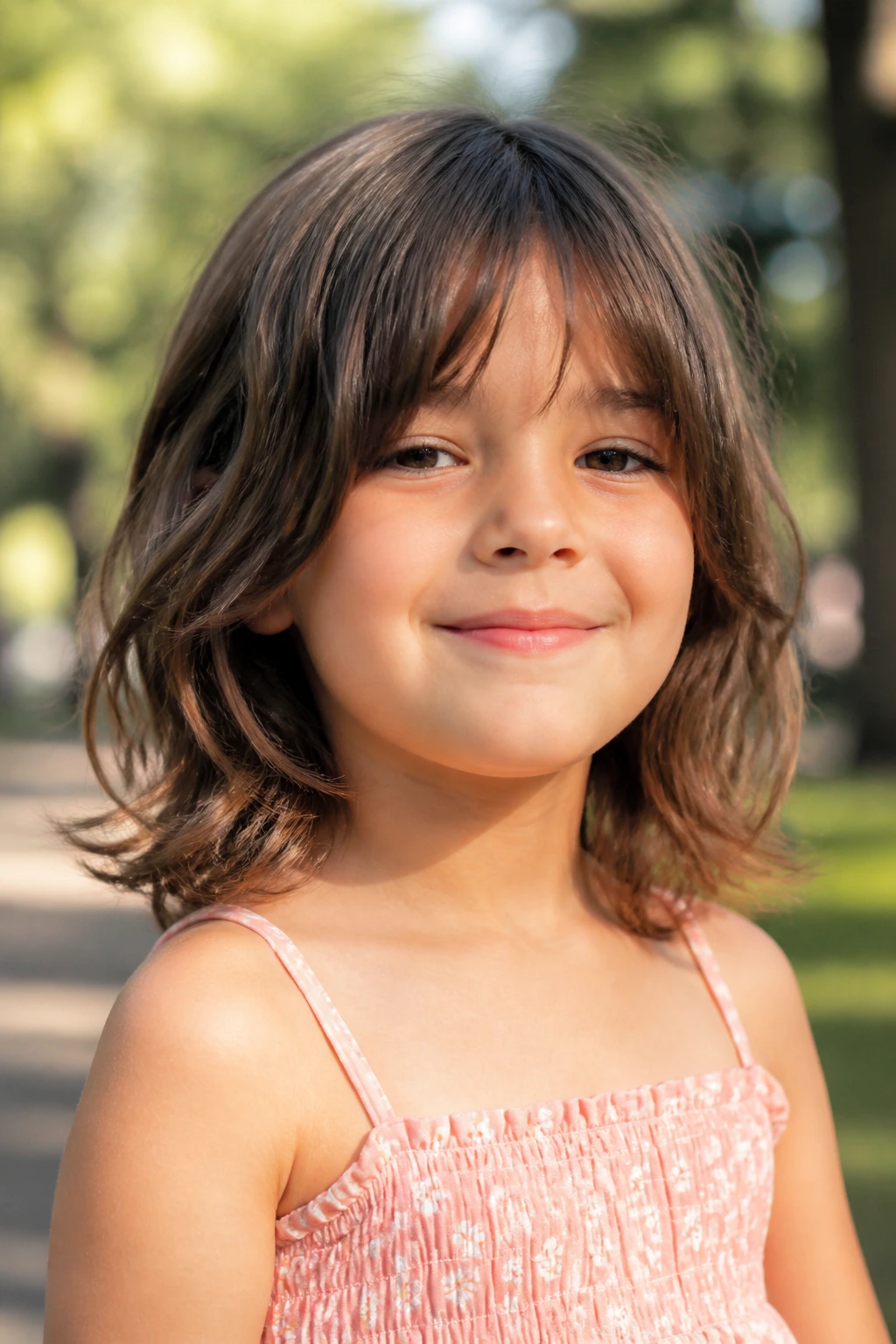
A shaggy shoulder cut has movement built in. The layers sit through the middle of the hair rather than only at the bottom, so the style breaks up bulk and gives the ends more life.
It’s a strong choice for wavy or thick hair that tends to puff out at the sides. The shag shape keeps the hair from hanging like one heavy curtain, which can happen with a blunt length once the hair gets dense. There’s a little bounce to it, a little messiness, and that’s the point.
I’d ask for the layers to stay soft and not choppy. Too much chopping can make the cut look disconnected. The best shag on a little girl looks easy, not edgy for the sake of it.
14. Long Layers
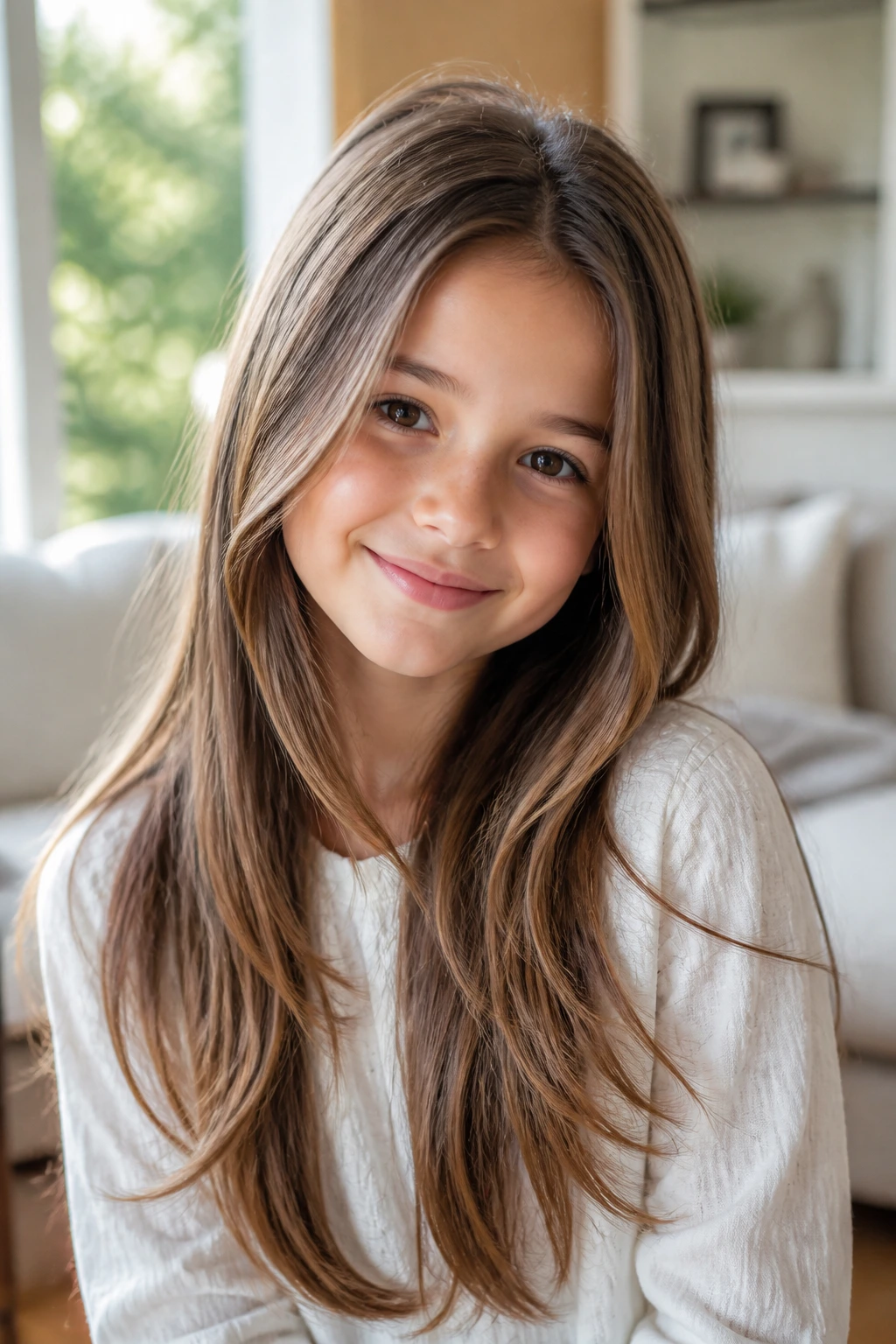
Long layers are the answer when the child loves her length but the ends keep tangling into rough little ropes. The layers lighten the load without taking away the overall length, which keeps braids, ponytails, and simple down styles available.
A quick reality check
Long hair is not low-maintenance just because it’s long. If the ends are thin, dry, or split, the hair starts to look tired fast. Long layers help because they remove some bulk from the middle and let the hair move instead of dragging.
- Use this cut when: you want length with better movement.
- Avoid over-layering: too many short pieces can make the hair feel see-through.
- Works best if: the child actually likes wearing her hair down sometimes.
This is the cut for the kid who says, “I want it long,” and means it.
15. Face-Framing Layers
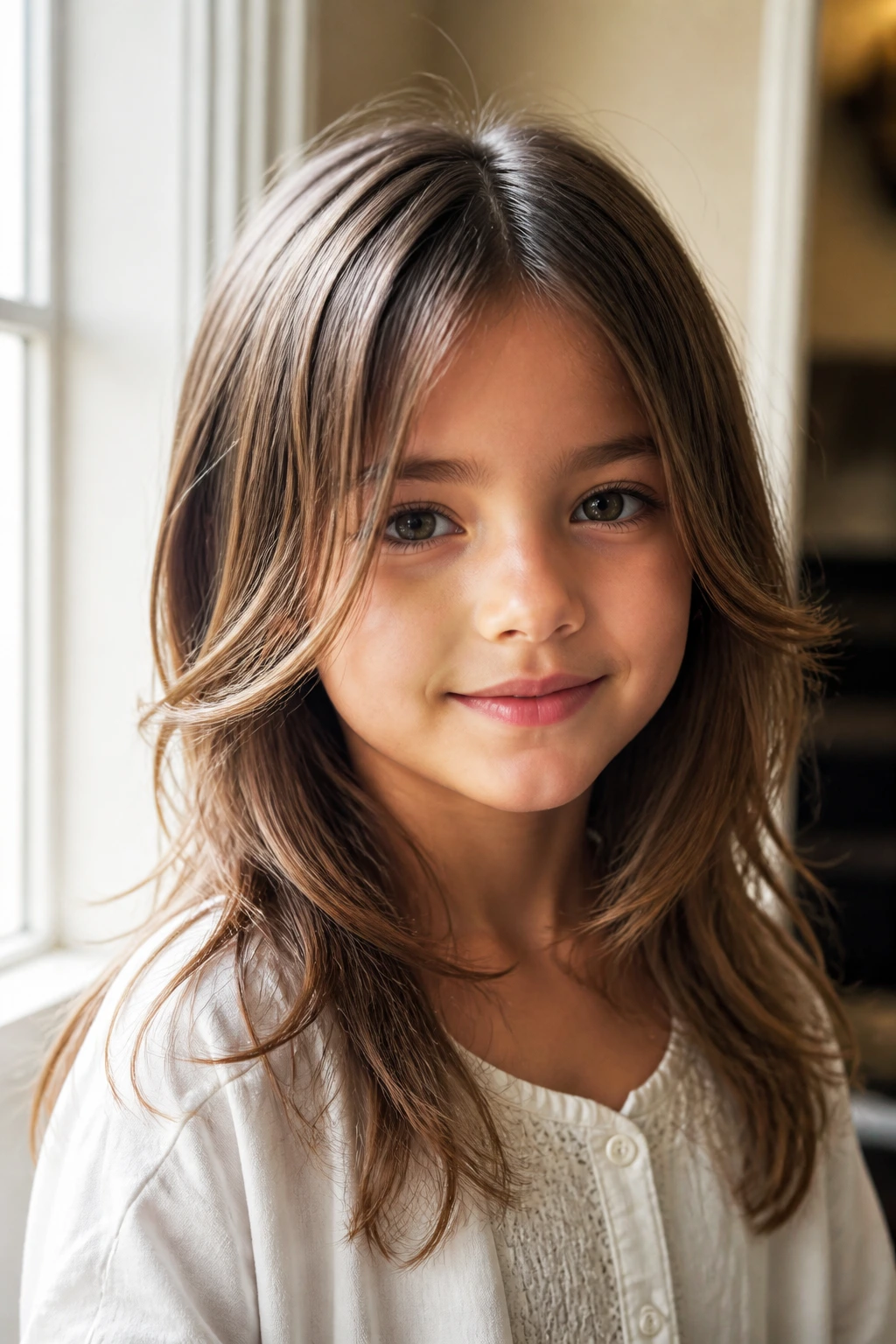
Face-framing layers are a small change with a big visual effect. The shortest pieces sit around the cheeks or jaw, which softens the face and keeps the rest of the length intact.
This is a good option when a child wants “the same hair, but nicer.” That’s how a lot of younger kids describe it, and honestly, they’re not wrong. The layers make ponytails look less heavy, and they give loose hair a bit of shape around the face without requiring bangs.
It’s also one of the easiest ways to freshen up long hair without making a dramatic cut. If you’re nervous about a big change, this is a calm place to start.
16. Curtain Bangs With Long Length
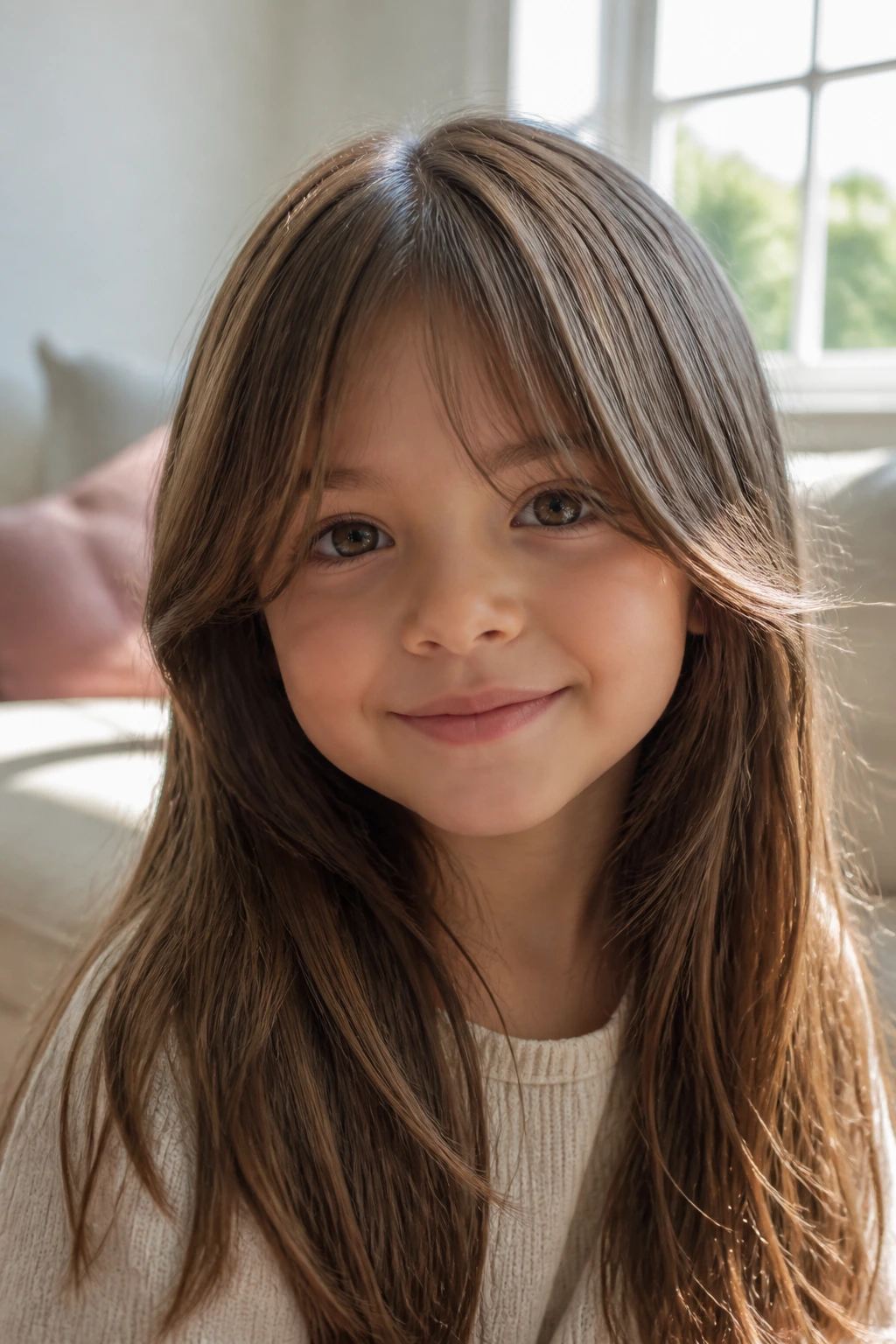
Curtain bangs split in the middle and fall to either side of the forehead, so they feel softer than blunt bangs and grow out more politely. When paired with longer hair, they create a frame that feels gentle instead of fixed.
The best part is how forgiving they are. A little water, a finger comb, maybe a quick sweep with the palm, and they usually fall back into place. If the child has a cowlick or a forehead swirl, curtain bangs often behave better than a straight-across fringe.
When this fringe makes sense
- The child wants hair out of the eyes but not a hard bang line.
- You want a style that won’t look awful two weeks later.
- She likes a little movement near the face.
Curtain bangs can be a smart compromise. Not zero maintenance. Much lower maintenance than blunt bangs.
17. Side-Swept Fringe and Lob
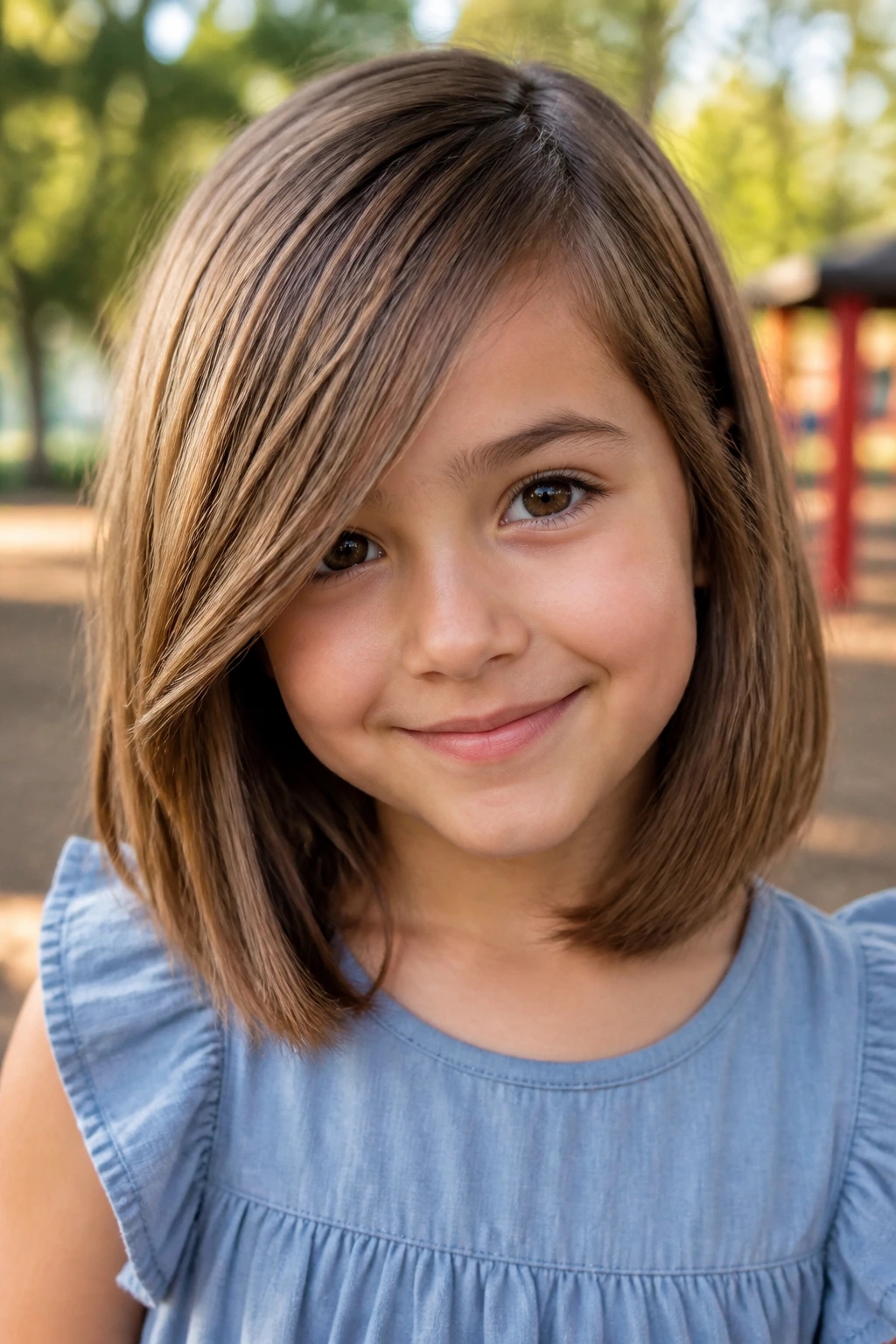
A side-swept fringe gives you the softness of bangs without the daily battle of a full forehead line. The hair falls diagonally, which keeps one eye open and leaves room for clips or small braids on the opposite side.
This is one of the easier fringe options for kids with a cowlick, because the diagonal line gives the hair somewhere to go. It also works well with a lob, since the length on the rest of the hair helps balance the front.
If a child wants bangs but is quick to complain when hair brushes her eyebrows, I’d start here. It’s less stubborn than blunt bangs and more flexible than a full fringe.
18. U-Shaped Long Cut
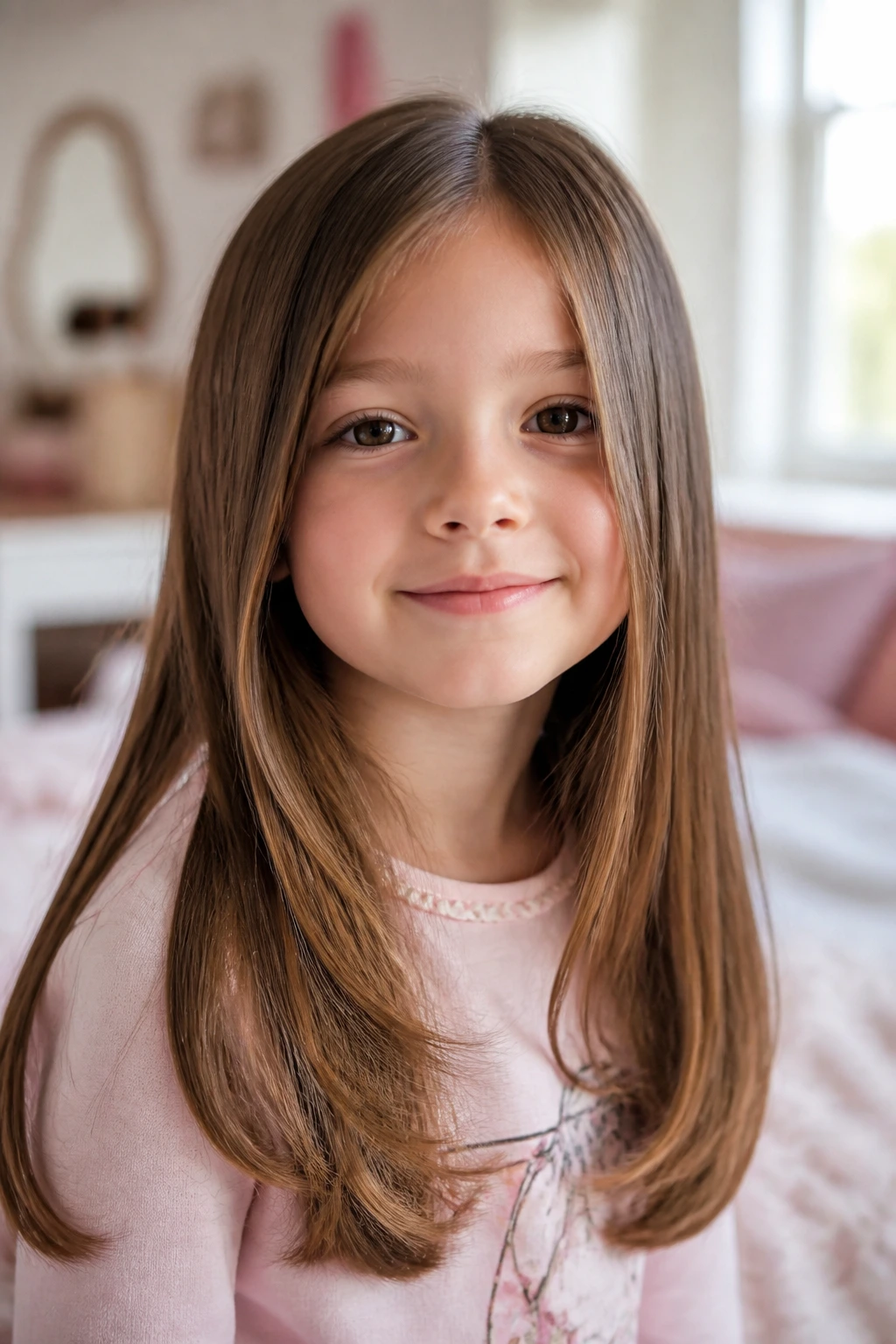
A U-shaped long cut keeps the hem rounded instead of straight across, so the back falls a little longer in the middle and shorter at the sides. The effect is subtle, but it stops long hair from looking flat and heavy.
This shape is useful when you want long hair to look cared for rather than grown out by accident. It also plays nicely with braids and ponytails because the hair still gathers smoothly, but the outline has a little curve when worn down.
I like this for children who love their length and do not want obvious layers. It gives the hair shape without shouting about it.
19. V-Cut Long Layers
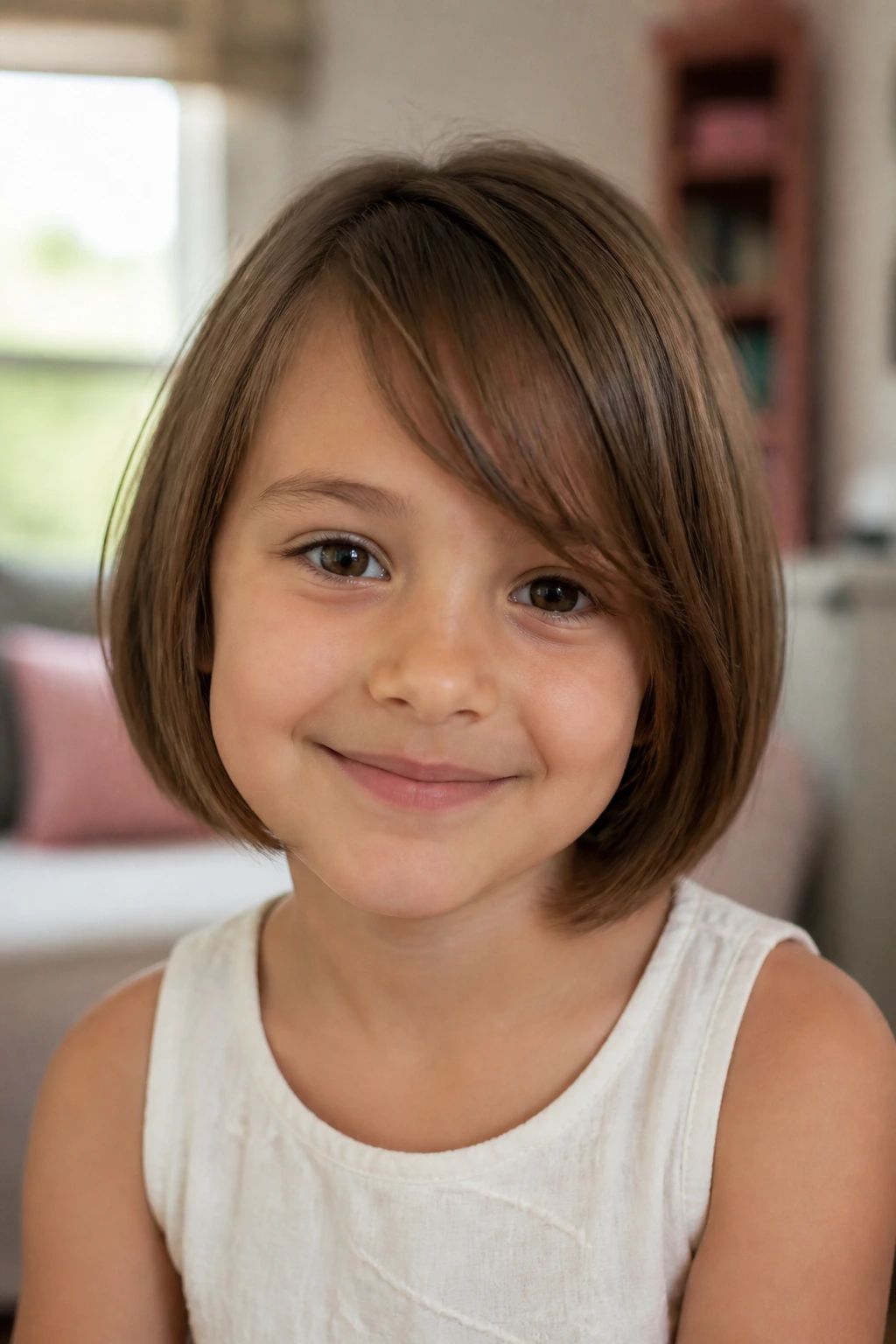
A V-cut creates a pointed hem in back, with the longest hair in the center and shorter sides that taper inward. It can make thick hair feel lighter, and it gives the cut a little motion when the child walks or spins.
Best for heavier hair
Thick hair often looks bulky at the ends when it’s all cut to one line. The V-shape breaks that weight up. It’s a particularly nice option if the child wears a lot of ponytails, because the back still looks neat when it’s down.
- Works well on: dense, long hair.
- Less ideal on: very fine hair, where the point can look thin.
- Ask for: soft blending so the point does not look harsh.
This cut has a little drama, but not in a costume way. More like a swish when she turns.
20. Wavy Lob With Internal Layers
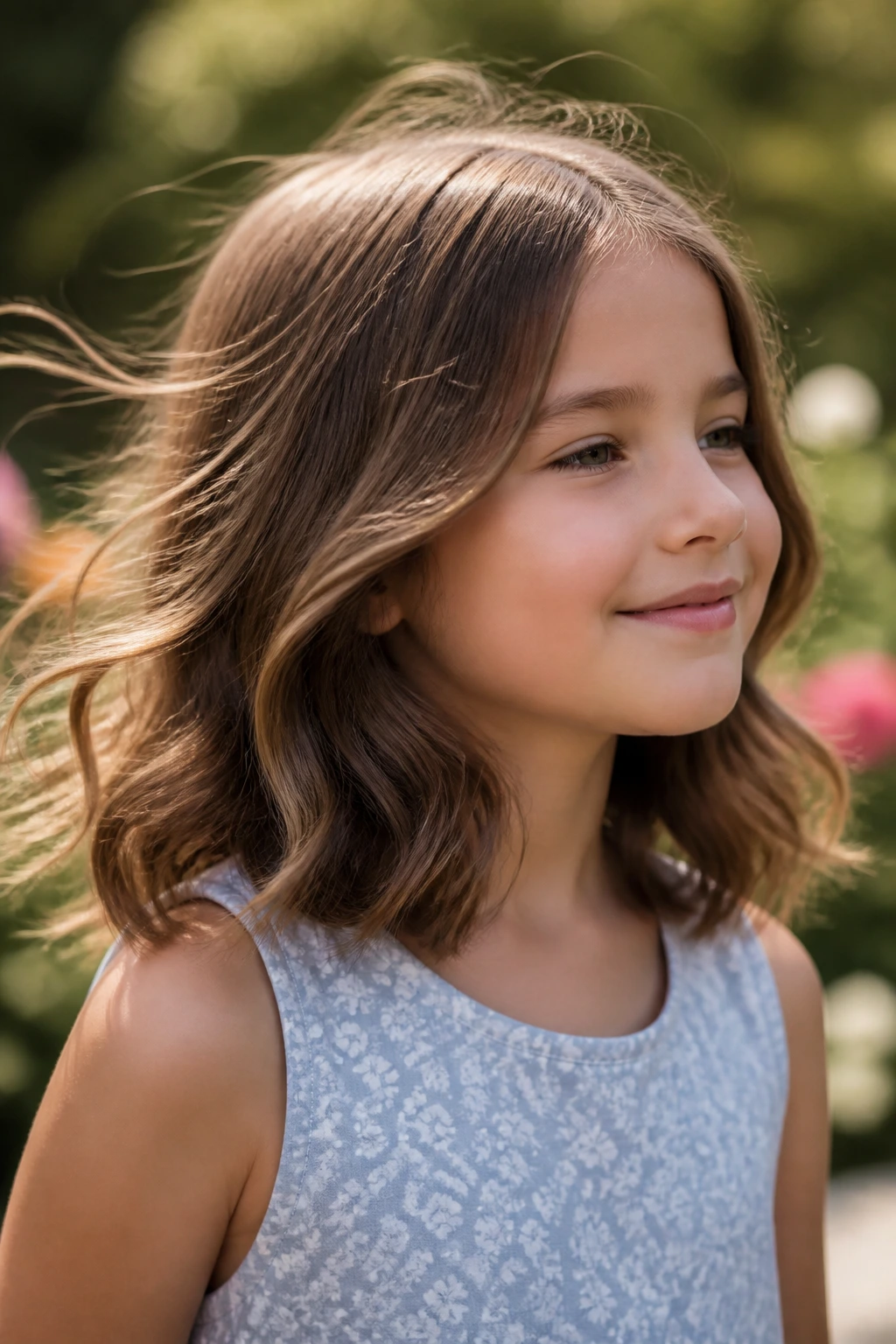
A wavy lob with internal layers keeps the outside line calm while lightening the inside. That matters because some wavy hair puffs when it’s over-layered on the surface, but behaves much better when the bulk is removed from underneath.
The perimeter should still read mostly one length. The movement comes from inside the haircut, not from obvious steps. That lets the hair fall smoothly when air-dried and keeps it from exploding into too much volume on humid days.
This is one of my favorite cuts for kids whose hair has a loose bend and a little frizz at the ends. It keeps the shape soft, not fluffy.
21. Flippy Shoulder Cut
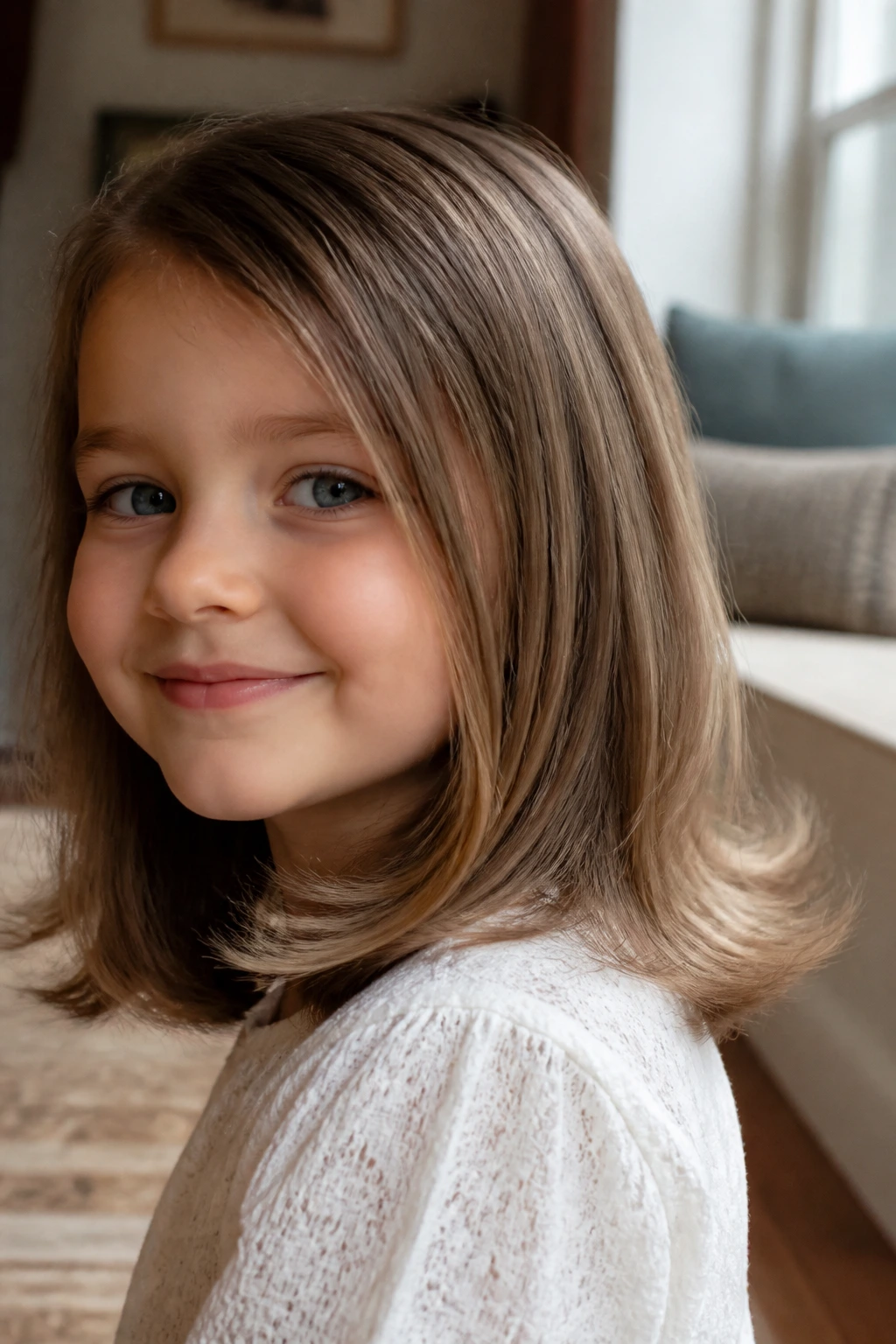
A flippy shoulder cut leaves the ends with a soft bevel so they turn outward a little instead of hanging straight down. It’s playful in the nicest way, and it suits kids whose hair wants to move on its own.
This cut works especially well when the child likes a little bounce but doesn’t want layers that are too obvious. It can be worn with a side part, clipped back, or left loose, and the shape still reads finished. That little flip at the ends does a lot of work.
It’s also a good option if the child likes to twirl her hair. The bevel keeps the ends from getting too blunt or too flat.
22. Asymmetrical Bob
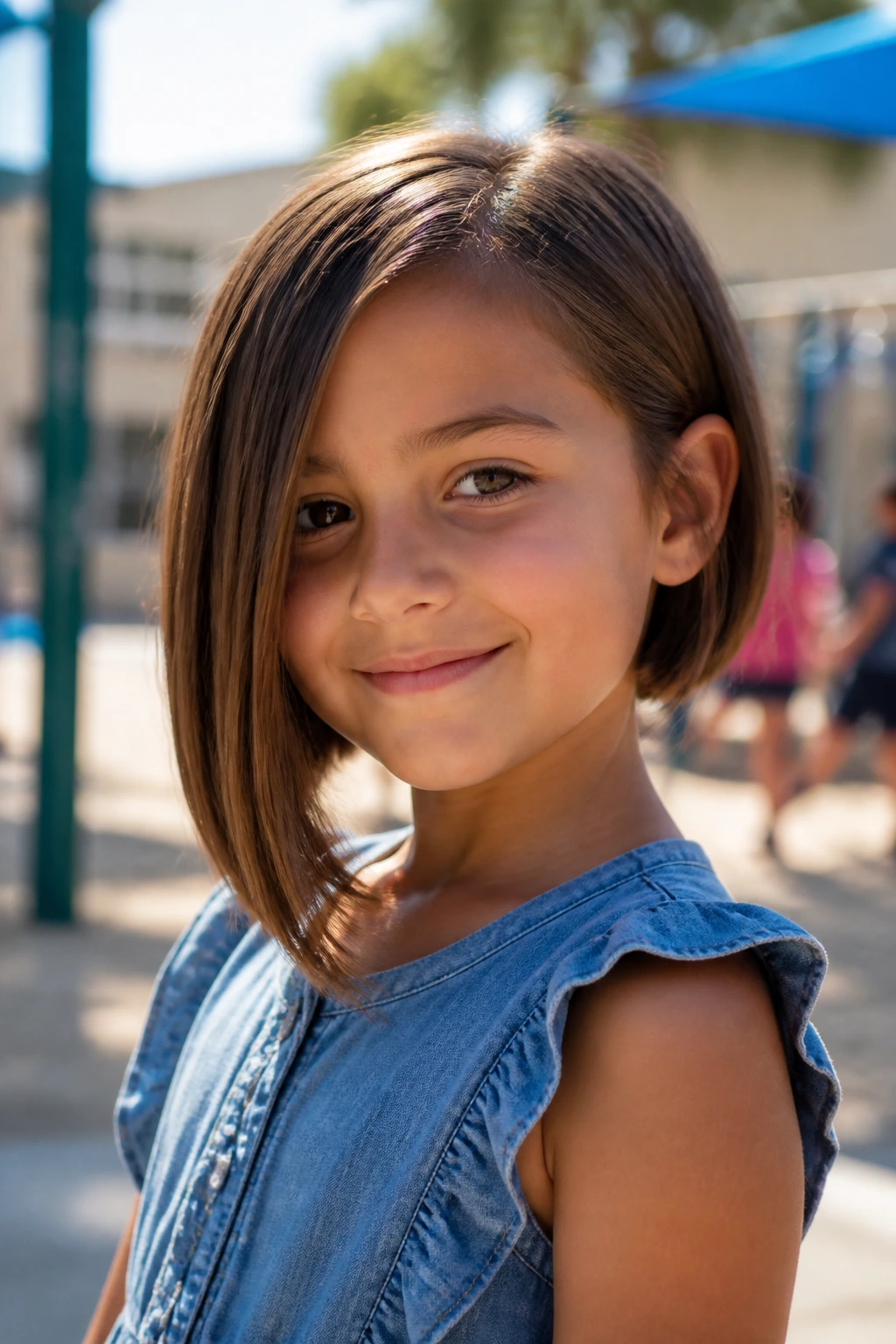
An asymmetrical bob keeps one side a little longer than the other, which gives the haircut a clear shape without needing heavy styling. It’s slightly bolder than a standard bob, but not so dramatic that it stops being school-friendly.
The line works best when the difference is subtle. A half-inch to an inch is enough for most little girls. Too much contrast starts to feel like an adult fashion cut, and that can wear off quickly when the child is back on the playground.
This is a nice option for a child who likes her hair to feel a little different but not difficult. One side tucks, the other side swings. Simple. Effective.
23. Blunt Fine-Hair Shoulder Cut
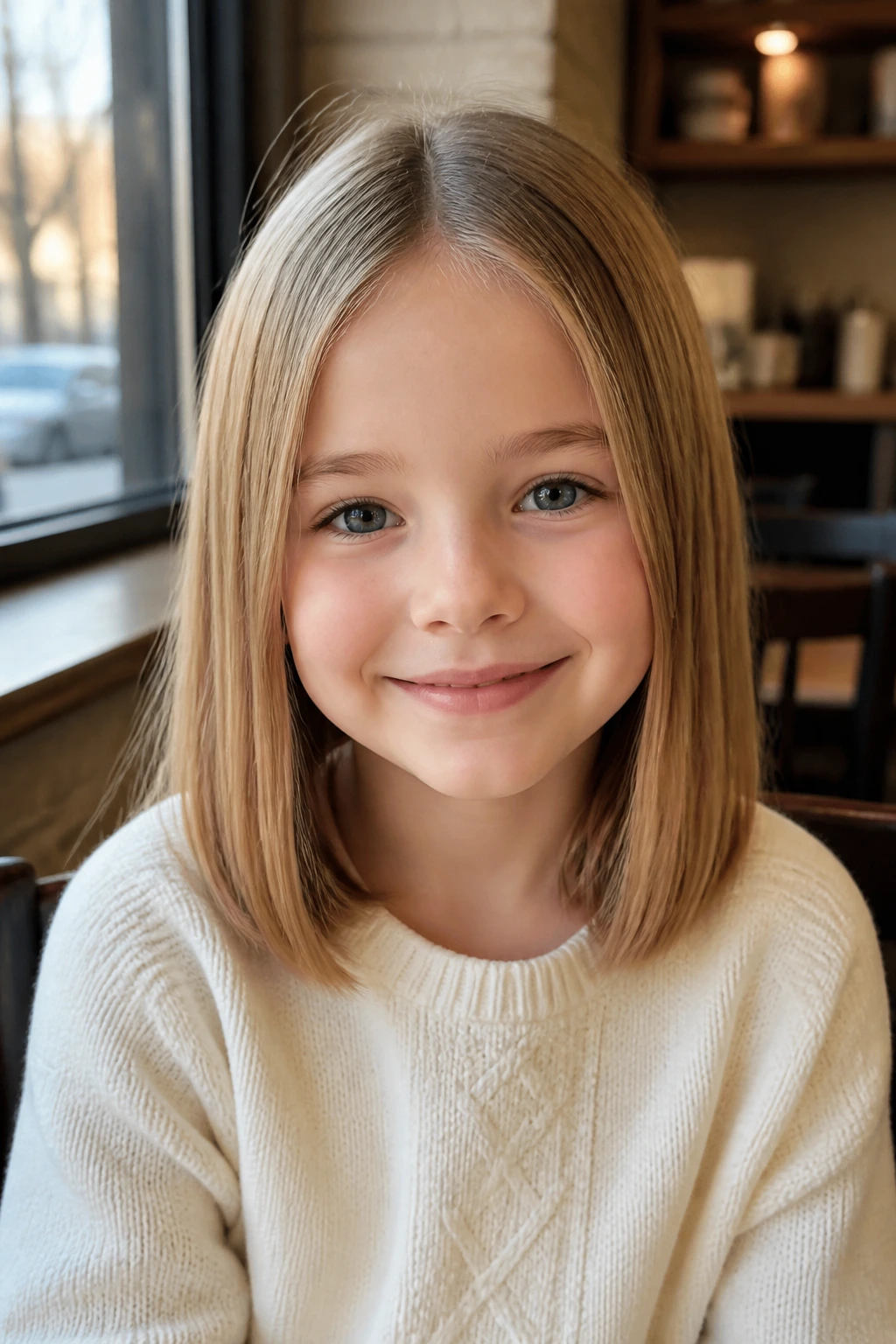
Fine hair usually looks best when the ends are kept blunt and healthy. A shoulder-length one-length cut makes the hair appear denser because every strand lands on the same line instead of tapering into wisps.
That’s the mistake a lot of people make with fine hair: too many layers, too much thinning, too much “movement” that only ends up looking sparse. If the child’s hair is thin, the goal is fullness at the bottom, not feathering everywhere.
What to avoid
- Heavy razor work that can make fine ends look ragged.
- Layers that start too high and leave the tail thin.
- Over-texturizing that makes the cut float instead of sit.
This cut is plain in the best sense. It gives fine hair a little more visual weight and stays easy to brush.
24. De-Bulked Thick-Hair Layers
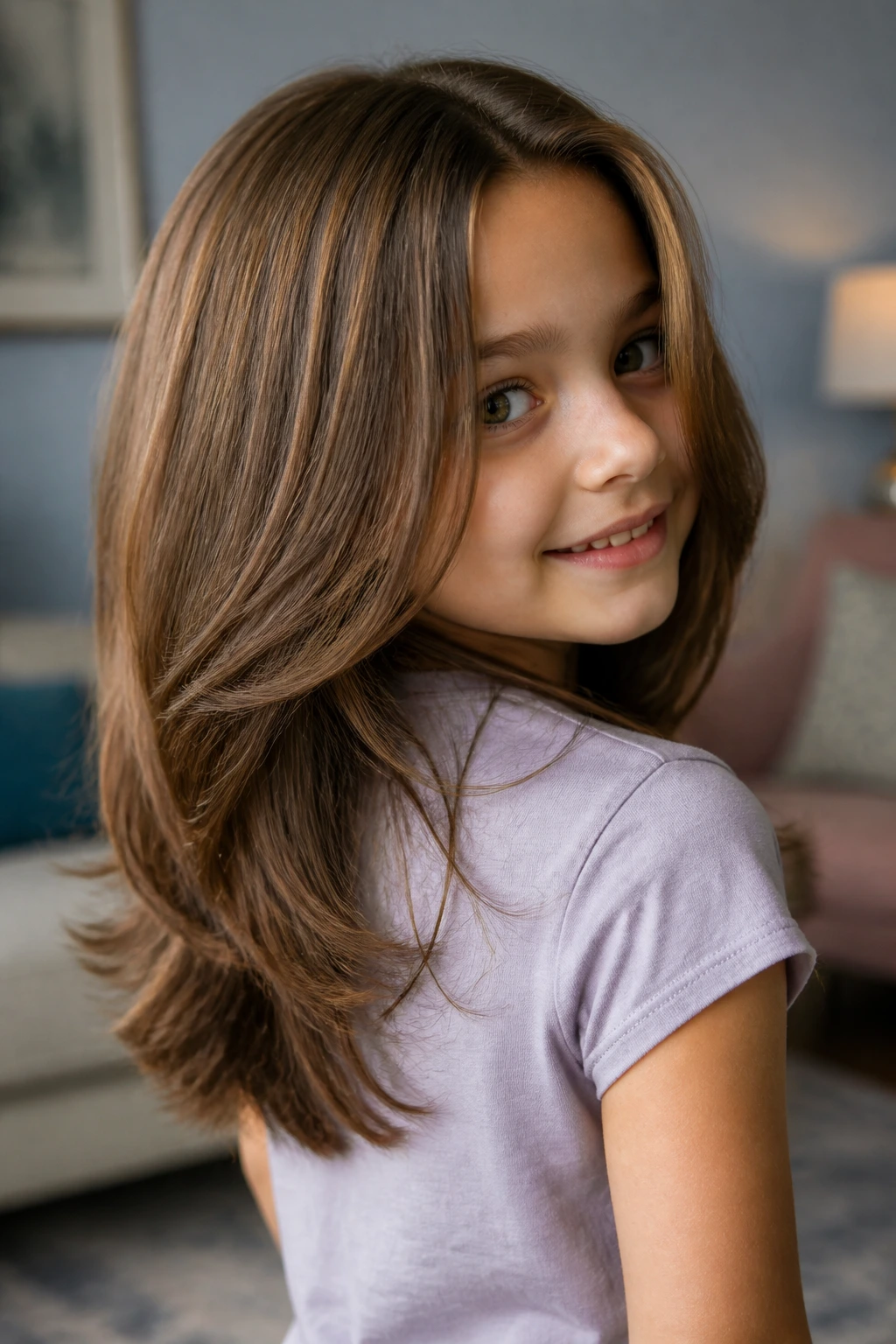
Thick hair needs room to breathe, or it turns into a triangle with opinions. De-bulked layers solve that by removing weight from the inside while keeping enough length on the surface to avoid a chopped-up look.
The point is not to thin the hair to death. That’s a bad move on thick textures, because over-thinning can leave the surface frizzy and the ends too airy. Better to keep long layers and let the stylist reduce bulk underneath where the hair naturally stacks.
This is the cut that makes thick hair feel lighter on the neck, especially in warm weather. It also keeps braids from becoming too thick to hold with small elastics.
25. Braid-Friendly Long Trim
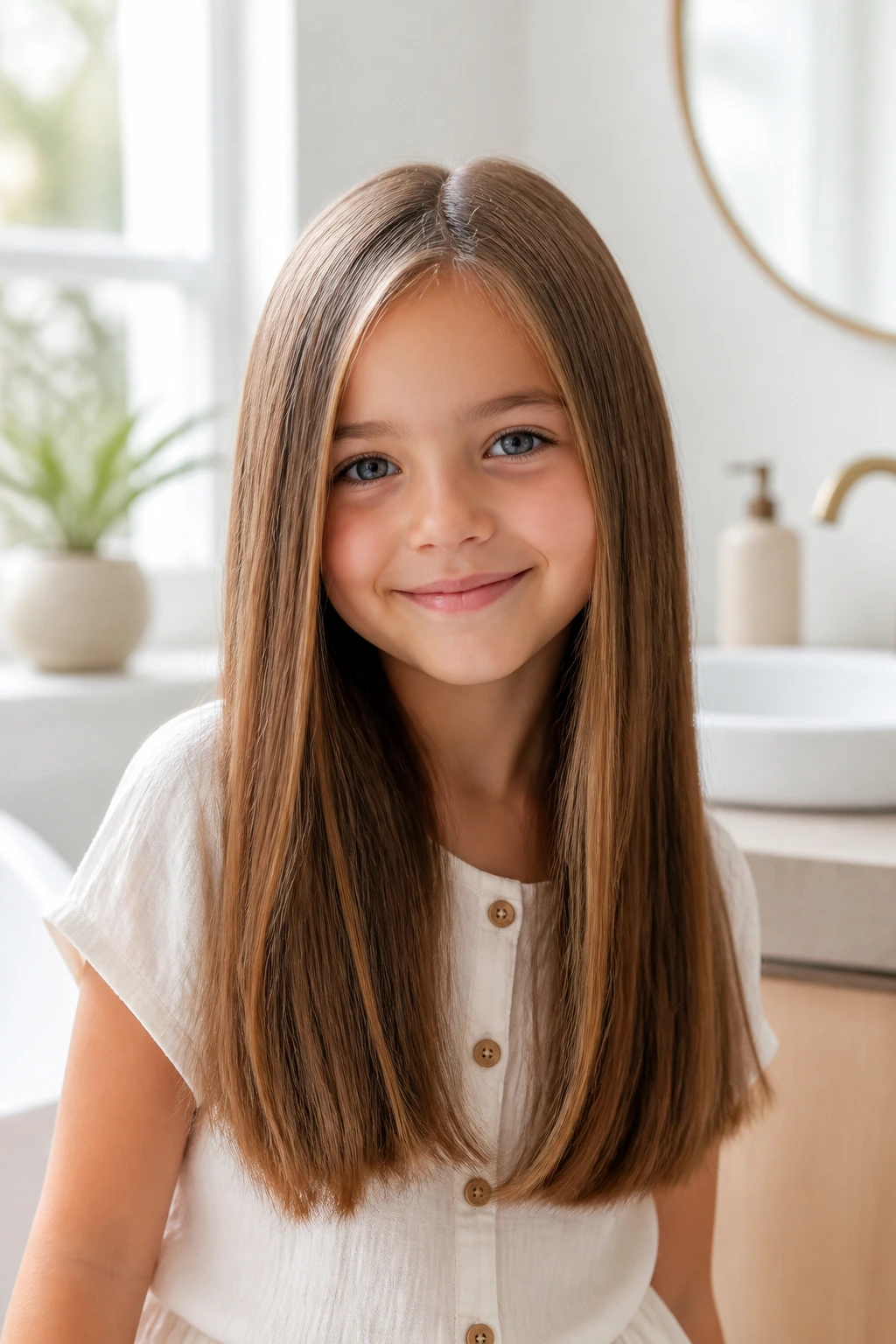
A braid-friendly long trim keeps the length long enough for braids, twists, and ponytails, while cleaning up the ends so the hair doesn’t split or tangle at the bottom. It’s not a dramatic makeover. It’s maintenance with purpose.
This is a good choice for children who love their hair long and use it that way. If the length is mostly for braids, there’s no need to carve in a bunch of short layers that escape every tie. A soft dusting at the ends and a little shape around the face is often enough.
I like this cut when parents want to preserve styling options. It keeps the length useful instead of just long.
26. Half-Up Friendly Layered Cut
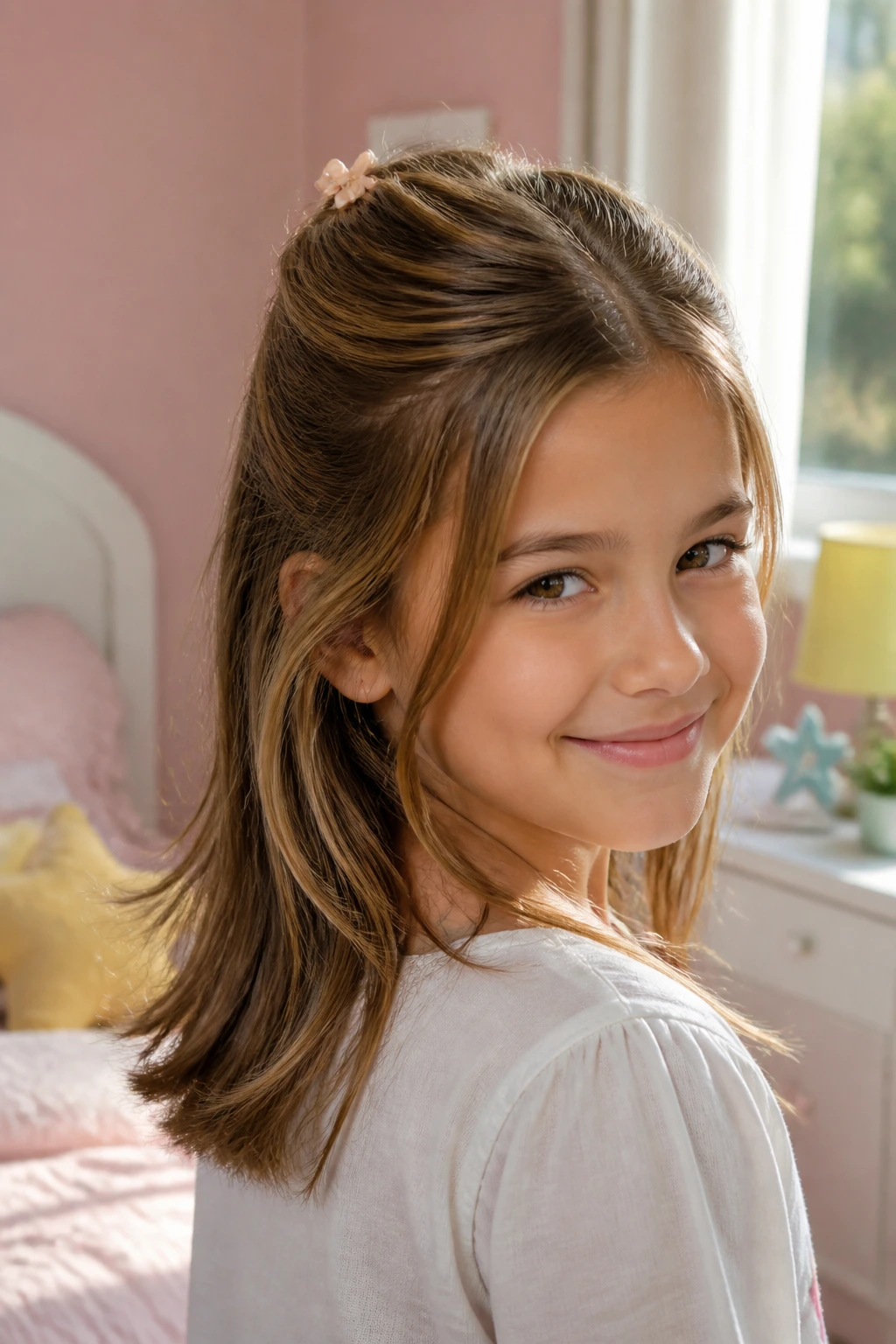
A half-up friendly cut leaves enough length through the crown and sides for clips and small elastics to grip properly. That matters more than people think. If the front pieces are too short or too slippery, the half-up style falls apart before lunch.
The layers should start low enough that they don’t jump out of the elastic at every turn. A soft face frame is fine, but the hair around the temples needs enough length to stay in place. This cut works especially well for school days because it gives you a quick way to clear the face without a full ponytail.
If the child likes ribbons, bows, or little claw clips, this is a practical shape to work with.
27. Soft Mixie
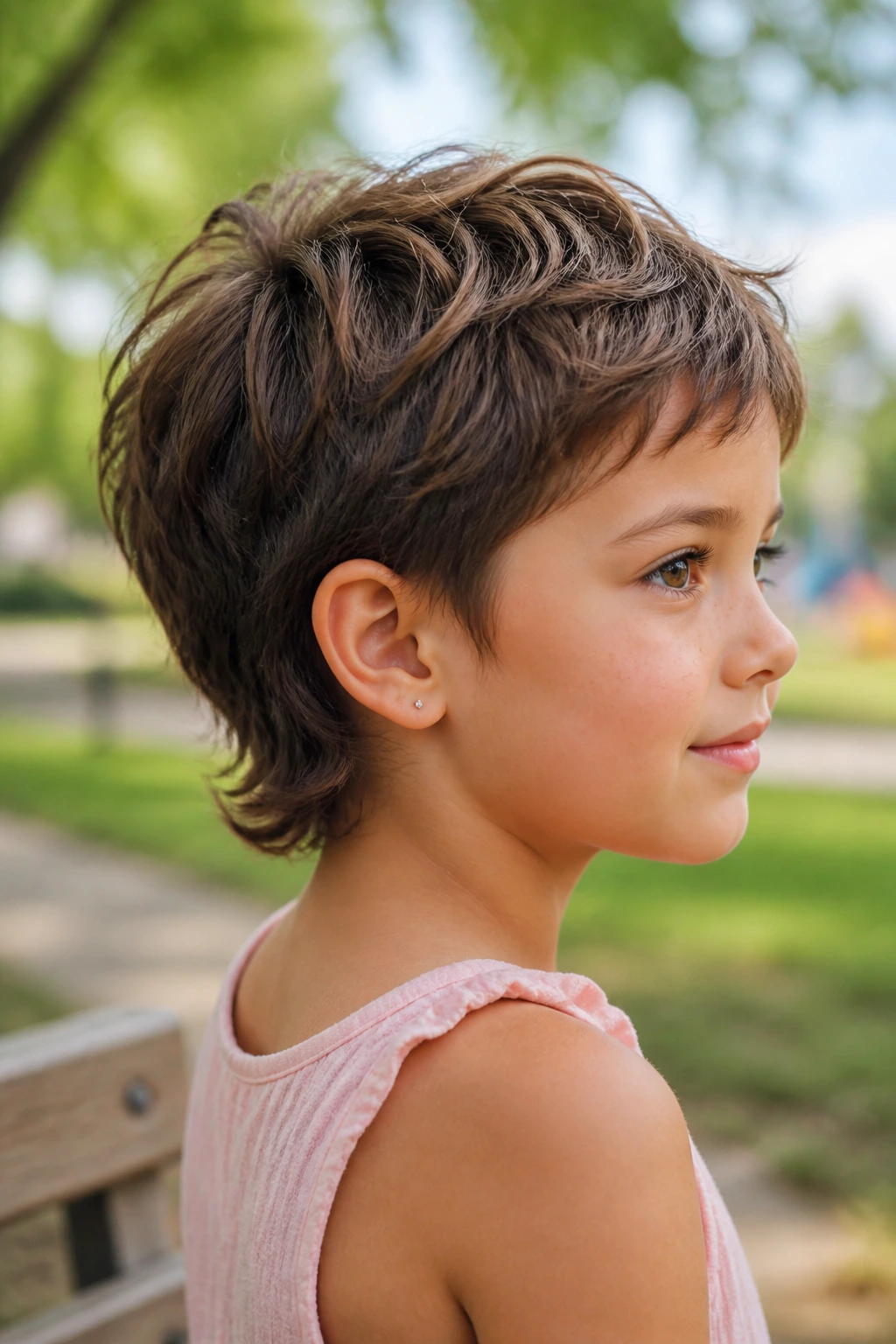
The soft mixie sits between a pixie and a mullet, but the word “soft” matters a lot here. The nape keeps a little length, the crown has texture, and the sides are shaped gently so the cut feels playful rather than sharp.
Who this cut suits
- Kids with waves or curls who want a shape with movement.
- Children who like short hair but want a little length in back.
- Families who don’t mind a cut with some personality.
The soft mixie needs restraint. If the layers get too choppy, it starts to look costume-like. Kept gentle, though, it has a fun shape that works well on active kids and air-dries fast. It’s a little bolder than the usual bob, and that’s why some children love it.
28. Bowl Cut With Rounded Corners

A modern bowl cut is not the stiff, mushroom-like shape people picture from old school photos. Done well, the corners are softened, the fringe is less severe, and the whole cut has a rounded edge that sits close to the head in a neat way.
It works best on straight hair or smooth waves that don’t puff wildly at the temples. The key is to keep the line soft around the brows and sides so the cut feels intentional instead of rigid. If the child wants something very low-maintenance, this can be a clever choice.
I’d avoid making it too heavy across the forehead. A little texture there keeps the cut from feeling like a helmet.
29. Ear-Length Crop With Longer Top
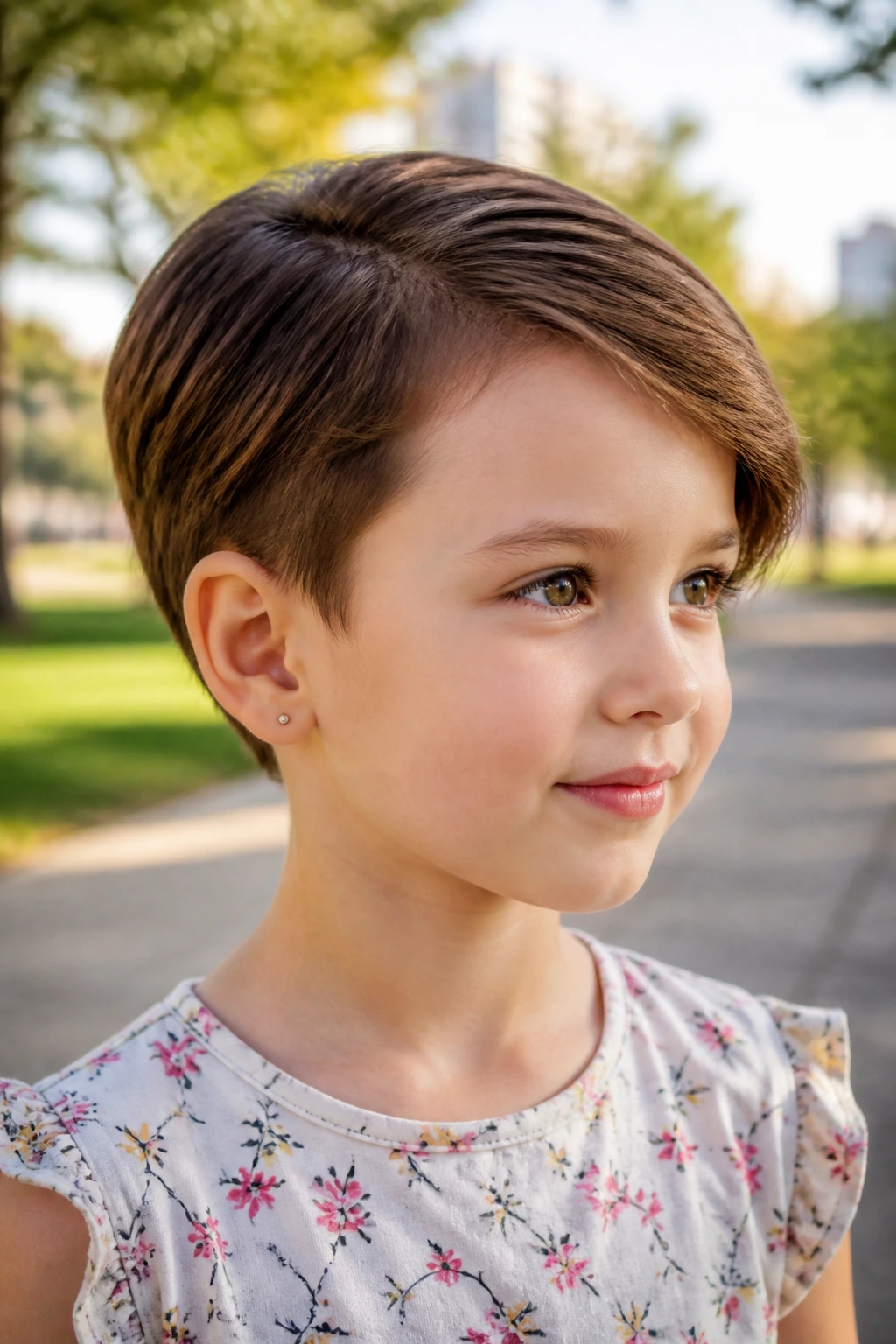
This crop keeps the hair short around the ears and nape while leaving more length on top for a sweep, side part, or soft brush-up. It gives you the freedom of a short haircut without making the top feel flat and bare.
That longer top helps the cut feel playful. One day it can be brushed forward, the next day parted to the side, and if the child is in the mood, it can even be slicked down with a little water. The short sides keep the neck clear, which is useful when the child runs hot or hates hair touching the skin.
It’s a good in-between cut. Short, but not tiny.
30. Princess-Length Cut With Soft Ends
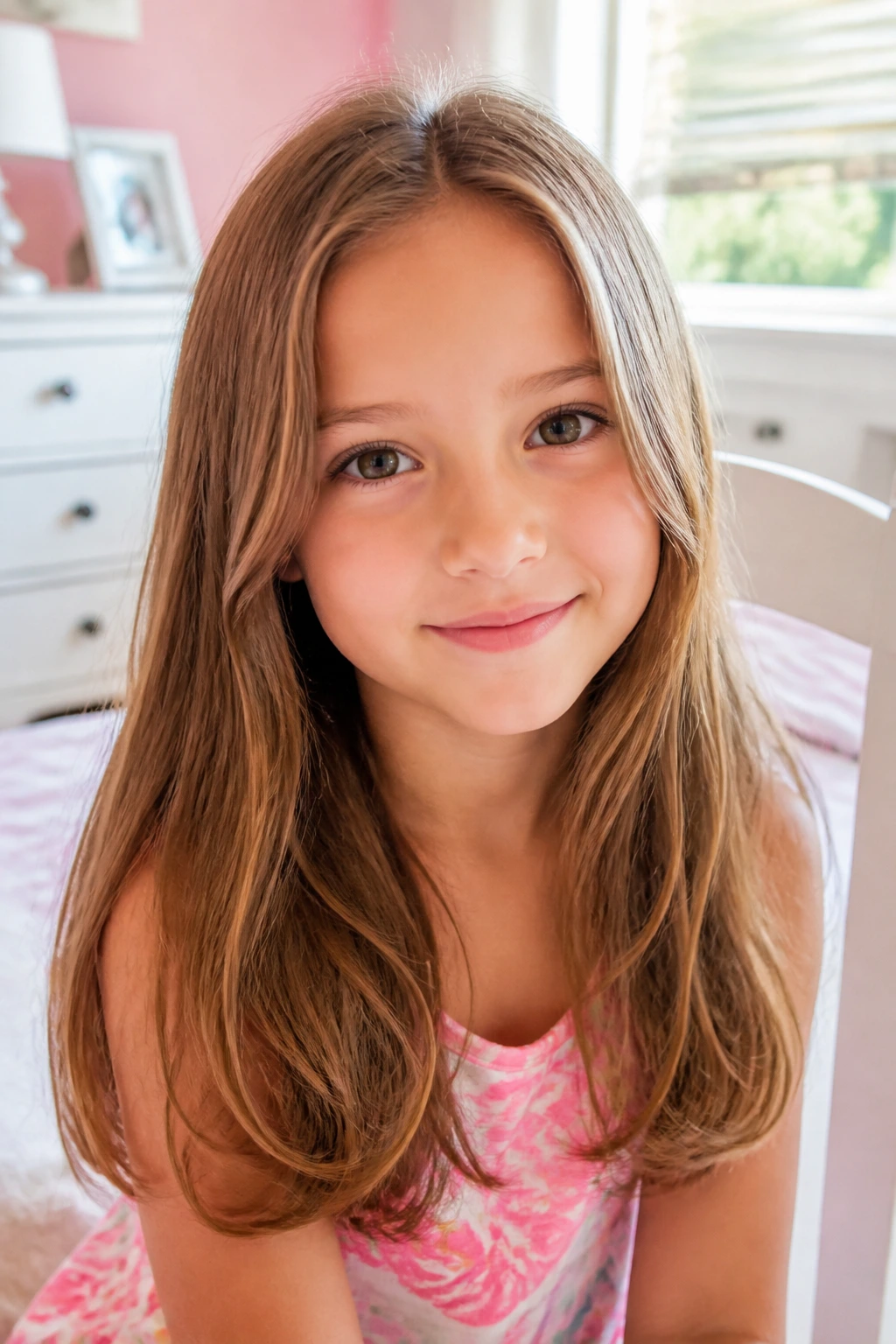
Long hair can still look cared for without being heavily layered or chopped into pieces. A princess-length cut keeps the length past the shoulders, then softens the ends so they don’t look stringy or split into rough wisps.
This is the cut for a child who wants the feeling of long hair, full stop. The trick is making sure the hem stays healthy and the ends are rounded enough to move. A little face-framing can help, but the main job is keeping the length smooth and brushable.
If you’re protecting a child’s attachment to her long hair, this is the respectful version. It keeps the length, but it doesn’t let the ends go shabby.
How to Match Haircut Ideas for Little Girls to Texture and Routine
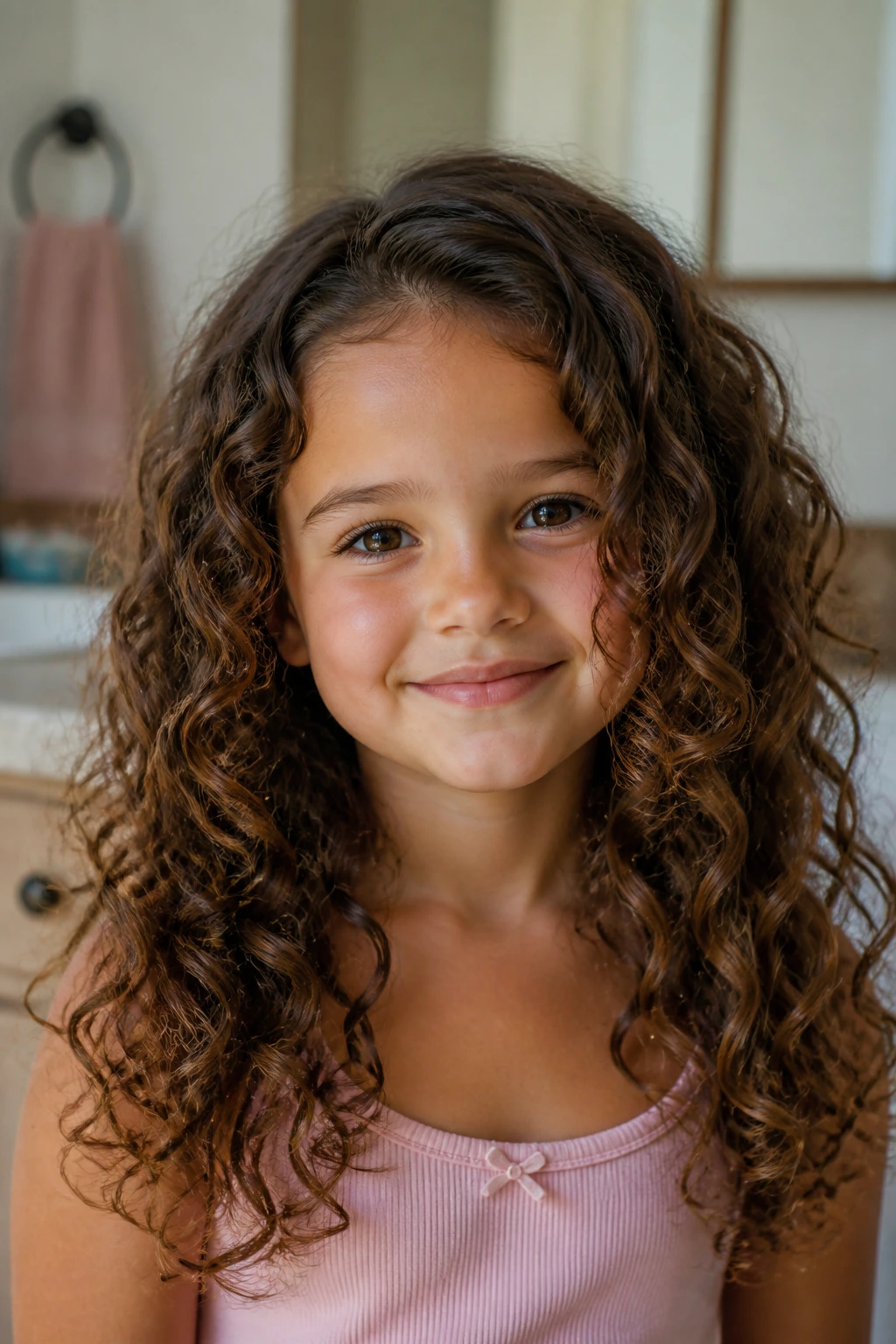
A haircut only behaves if it suits the hair it lives on. Fine hair wants clean lines and less layering. Thick hair usually needs weight removed from inside the shape, not hacked off the bottom until it sticks out like a shelf. Curly and coily hair should be shaped where the curls actually live, not where they look after being pulled straight and flattened in a chair.
Cowlicks deserve attention too. If the crown splits hard, or one temple flips in every direction, the cut should be adjusted around that pattern instead of pretending it is not there. I’d rather slightly shift a fringe or move a part than spend six weeks fighting the same awkward flip every morning.
The other filter is simple: how much fuss will this child tolerate? If she hates styling, pick a cut that looks finished after a towel squeeze. If she loves clips, braids, and ribbons, leave enough length in the right places to make those things hold. The perfect cut is the one she’ll let you maintain.
Fine Hair
Blunt bobs, blunt lobs, and shoulder cuts with clean edges usually make fine hair look fuller. Heavy layers can make the ends look thin fast.
Thick Hair
Ask for internal weight removal, not surface chaos. The shape should sit down around the head instead of ballooning out at the sides.
Curly and Coily Hair
Cut around the curl pattern, and show the stylist how the hair wears on a normal day. Dry or damp shaping often gives the most honest result.
Kids Who Hate Styling
Choose a cut that behaves after air-drying. If the answer requires a round brush before school, it’s probably the wrong cut for this season of life.
Common Mistakes That Make Haircut Ideas for Little Girls Hard to Live With
The first mistake is cutting bangs too short because they look neat in the chair. Bangs shrink, spring, and separate once they dry. If the fringe lands at the brows or slightly below, you have room. If it starts above the brows, you are usually buying daily clip duty.
The second mistake is over-thinning curly hair. The ends can go frizzy and see-through, and the curl pattern loses shape. A curl-specific cut should keep weight where the curl needs it and remove it only where the bulk is real.
The third mistake is ignoring cowlicks. A stubborn crown swirl can kick bangs sideways, lift a pixie at the top, or split a center part no matter how carefully you comb it. Show the stylist exactly where the hair pushes back while it’s dry.
Another common problem is choosing a cut that needs heat tools every morning. A child’s haircut should not depend on a blowout to look acceptable. If the style collapses without a flat iron or round brush, it’s the wrong shape for a busy household.
And then there’s the grow-out issue. Bobs become triangles. Pixies turn fluffy. Long layers start looking uneven if they’re ignored too long. The shape needs regular trimming before it starts looking tired.
Ways to Tweak the Same Haircut Without Starting Over
Soft Fringe Swap: If blunt bangs feel too high-maintenance, turn them into curtain bangs or a side-swept fringe. The haircut keeps the same body, but the forehead gets more freedom.
Lower Nape, Longer Front: A standard bob can become easier to wear if the nape is trimmed slightly shorter and the front stays a touch longer. That tiny change makes a big difference on active kids.
Curl-Safe Shape: Keep the perimeter round and leave the top a little longer when the hair is curly or coily. The cut keeps its softness even when shrinkage does its thing.
Grow-Out Friendly Finish: Ask for point-cut ends and soft blending instead of a hard, blunt edge if you know you’ll stretch the trim cycle. The cut will age better between visits.
Ribbon-Ready Version: If clips and bows are part of the daily routine, leave a little extra length around the temples and crown so accessories can actually grip.
Tools That Make Little-Girl Haircuts Easier to Maintain
-
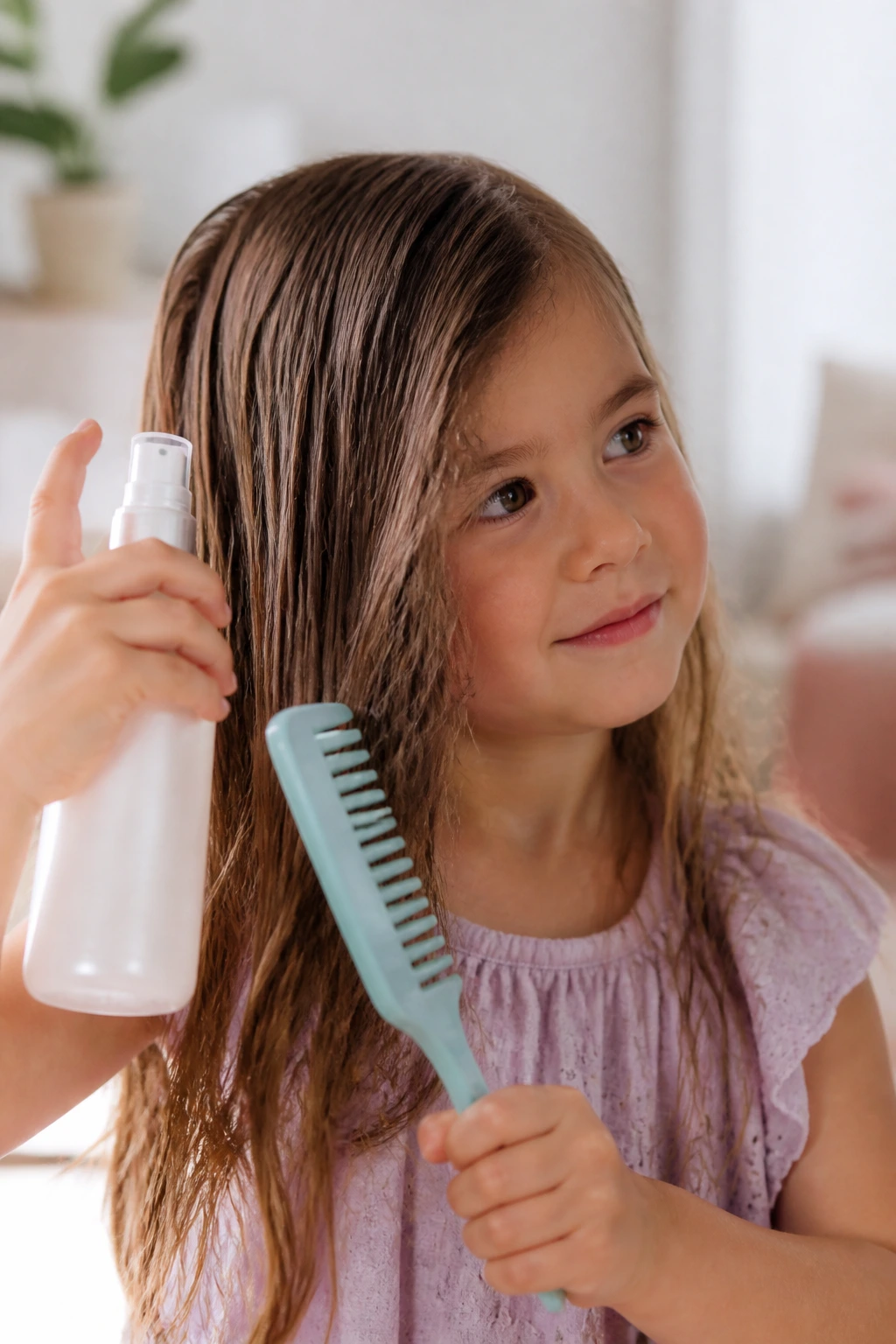
Spray bottle: A light mist makes parts cleaner and helps detangle without soaking the hair.
-
Detangling comb: Better than a brush for wet knots and curly textures; it gives you more control.
-
Sectioning clips: Useful for at-home trims, bang checks, or just keeping hair out of the way while you part it.
-
Sharp haircutting shears: Kitchen scissors crush the ends. Proper shears give a cleaner line.
-
Wide-tooth comb: Good for curls, coils, and any hair that snarls at the first sign of pulling.
-
Leave-in conditioner: A small amount helps the cut sit better on dry or wavy hair.
-
Satin pillowcase or bonnet: Cuts down on friction overnight, which helps long hair and curls wake up less tangled.
-
Old towel or salon cape: Keeps the chair, floor, and shoulders from getting soaked during a trim or detangling session.
Keeping the Shape Between Salon Visits
A haircut loses its shape long before it becomes “too long.” Bobs and pageboys usually need a trim every 6 to 8 weeks if you want the line to stay crisp. Pixies and short crops need attention sooner, often around 4 to 6 weeks, because the outline changes faster when the hair is short.
Longer cuts can stretch farther, but they still need maintenance. Collarbone cuts, lobs, and long layers usually benefit from a clean-up every 8 to 12 weeks, especially if the ends start splitting or the front pieces fall into the eyes. Curly and coily hair may need the shape refreshed based on how the curls sit, not just how much length has been lost.
Between trims, a little routine helps. Detangle with slip — conditioner or leave-in on damp hair — and use a wide-tooth comb or fingers first. A satin pillowcase can reduce fuzz overnight. If the child has a very short cut, keep an eye on sun exposure, because exposed scalp can burn faster than people expect.
Questions Parents Ask About Little-Girl Haircuts
What haircut is easiest for a little girl who hates brushing?
A blunt bob, a lob, or a textured crop is usually the easiest place to start. These shapes can air-dry without much styling and don’t depend on a perfect blow-dry to look tidy.
Are bangs a bad idea for active kids?
Not bad, but they are a commitment. Fringe needs trim-ups and often a little finger-styling, so a side-swept or curtain version is usually safer than a blunt line if your child is always moving.
What works best for thick hair?
Cuts with internal weight removal — like a shaggy shoulder cut, a long layered cut, or a de-bulked lob — keep thick hair from becoming bulky at the bottom. The goal is lighter movement, not a frizzy surface.
Can curly hair be cut wet?
Some stylists do it well, but many curly heads are easier to cut when the curl pattern is visible. Dry or damp shaping lets the stylist see shrinkage and avoid a cut that springs up too high once it dries.
How often should short cuts be trimmed?
Pixies and crops usually need trims every 4 to 6 weeks. Bobs can often go 6 to 8 weeks before the outline starts drifting.
How do I grow out a bob without that awkward wedge at the back?
Ask for soft blending and keep the front pieces moving forward as the back grows. Small trims matter more than big chops here; they stop the shape from turning into a blunt shelf.
What should I tell the stylist if my child has a stubborn cowlick?
Show it while the hair is dry or only lightly damp, and point out which direction it pushes. That helps the stylist place the part and fringe in a way that works with the swirl instead of fighting it.
What’s the most low-maintenance option overall?
A collarbone cut or a clean blunt lob usually gives the best balance of easy care and flexibility. Short enough to manage, long enough to tie back. That’s a useful middle ground.
The Cuts That Keep Doing Their Job
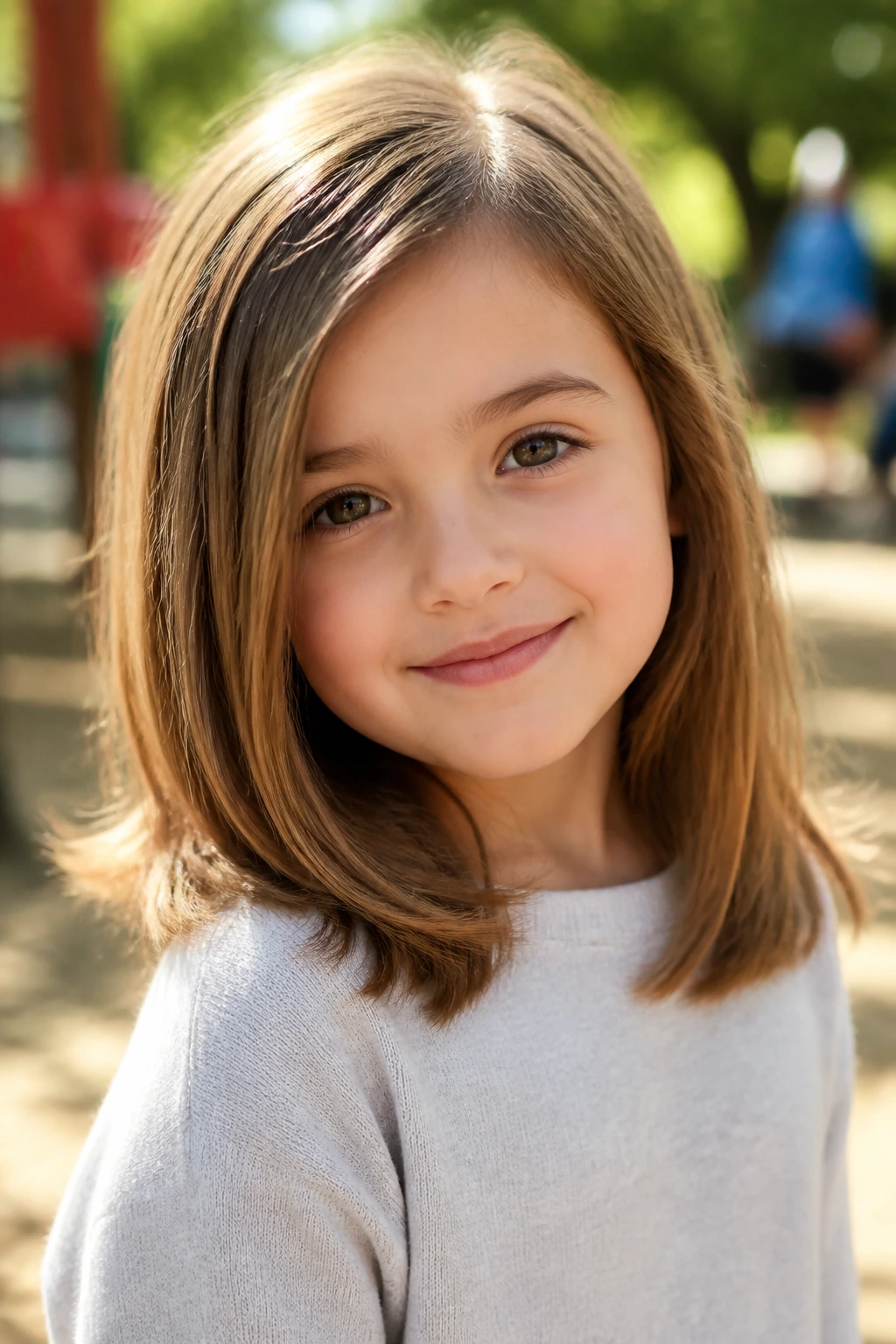
The smartest haircut for a little girl is not the one that looks the fanciest in the salon mirror. It’s the one that still behaves after a nap, after a ride in the car, after a game of tag, and after one more rough brush from a parent who is already late. That’s the test that matters.
Some children need hair off the neck. Some need length for braids. Some need a fringe because hair in the eyes drives everyone in the house a little mad. Pick the cut that answers the real problem, not the prettiest photo on a screen, and the whole thing gets easier.
A haircut that fits the child is a quiet kind of win. It saves time, it saves tears, and it usually looks better on the third week than the first. That’s the one worth booking again.
