



A short shag haircut can look expensive in the best sense of the word, but not because it’s polished to death. The appeal is the opposite: a little bend at the ends, some fringe falling into the eyes, and layers that move when you turn your head. Done right, the cut carries that vintage vibe without feeling like you raided a costume rack.
The part people miss is that short shags are not random layers. They live or die on weight removal, fringe length, and where the perimeter sits against the jaw or neck. Push the layers too high and the whole thing puffs up in the wrong places. Leave too much bulk and you get a heavy bob with attitude problems.
These 22 shag haircuts for short hair lean into different corners of the same idea. Some borrow from 70s feathering, some from mod bangs, some from punky little mullets, and some from the kind of blowout that makes a round brush feel almost ceremonial. The common thread is movement with memory — a cut that feels like it has history, even when it’s fresh out of the chair.
Why These Short Shags Wear So Well

-
They keep the silhouette alive: Short hair can go stiff fast, and layered shags stop the outline from turning into one flat block around the head.
-
The fringe does half the styling: Curtain bangs, micro bangs, and bottleneck bangs change the whole mood of the cut without adding much length.
-
They grow out with manners: A shag can stretch a little past its salon date and still look intentional because the shape is already softly broken up.
-
They work with bend, not against it: Natural waves, a quick blow-dry, or even a messy air-dry usually help the cut, while poker-straight perfection can flatten the vibe.
-
The vintage note stays subtle: Feathering, flipped ends, and soft side parts nod to older eras without turning the haircut into a literal time machine.
-
You can tune the edge up or down: The same shag idea can read sweet, rocker, mod, or slightly rebellious depending on how heavy the fringe is and how short the nape gets.
1. Feathered French Shag
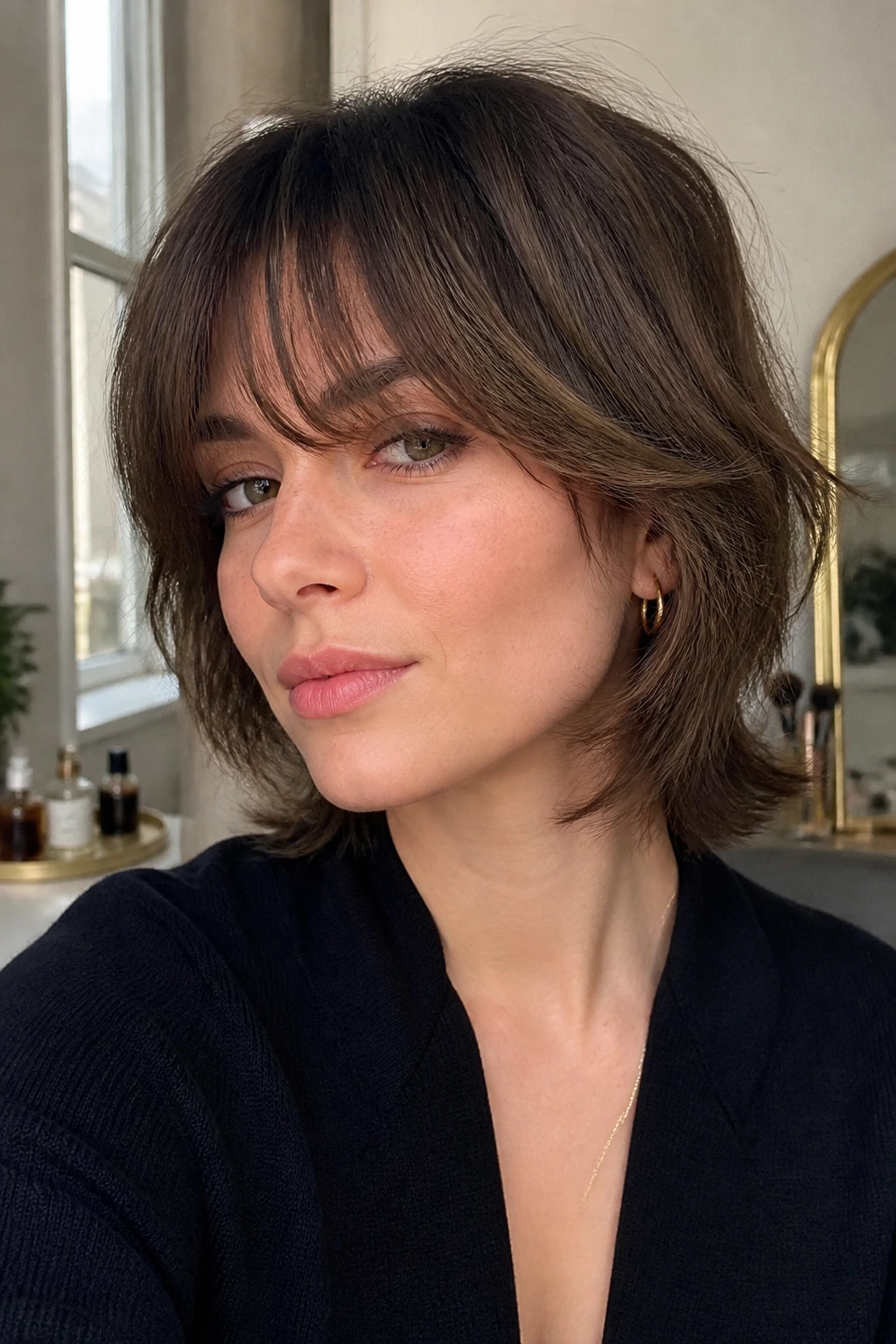
This is the cut that makes straight hair look like it has a small breeze built into it. The layers start around the cheekbones, then melt outward instead of stacking up into obvious steps, which is what gives it that French, slightly undone feel.
What I like here is the restraint. You don’t need huge volume at the crown; you need movement around the face and a perimeter that still has a clear line. If the stylist over-texturizes the ends, the softness disappears and the shape starts looking wispy in a bad way.
Ask for the right feathering
Tell your stylist you want soft, directional layers rather than aggressive choppiness. A good version sits at jaw length or just below, with the fringe opening away from the face and the side pieces grazing the cheekbone. On fine hair, that placement gives lift without exposing too much scalp.
A light mousse and a 1-inch round brush are enough for styling. Blow the front pieces away from the face, then let the ends cool in that bend. That cooling step matters more than people think.
2. Curtain-Bang Bob Shag

A bob that behaves itself is fine. A bob with curtain bangs and a bit of shag movement is better, because it keeps the clean outline but loses the stiff little helmet effect that some chin-length cuts can pick up.
The curtain fringe does the heavy lifting here. It breaks the face open, softens a square jaw, and keeps the top from looking too tidy. If the bangs are cut too short, the cut loses its laid-back charm and starts reading more as a chopped bob than a shag.
What makes it vintage
The vintage vibe comes from the way the ends flip slightly under or outward, depending on your brush. It feels like a 70s blowout that was allowed to loosen up by lunchtime. That little imperfection is the whole point.
Best on medium-density hair, though fine hair can absolutely wear it if the layers stay conservative. Ask for enough length around the chin to tuck behind the ears on days you want a cleaner shape. That small trick makes it versatile without changing the cut.
3. Micro-Bang Mod Shag
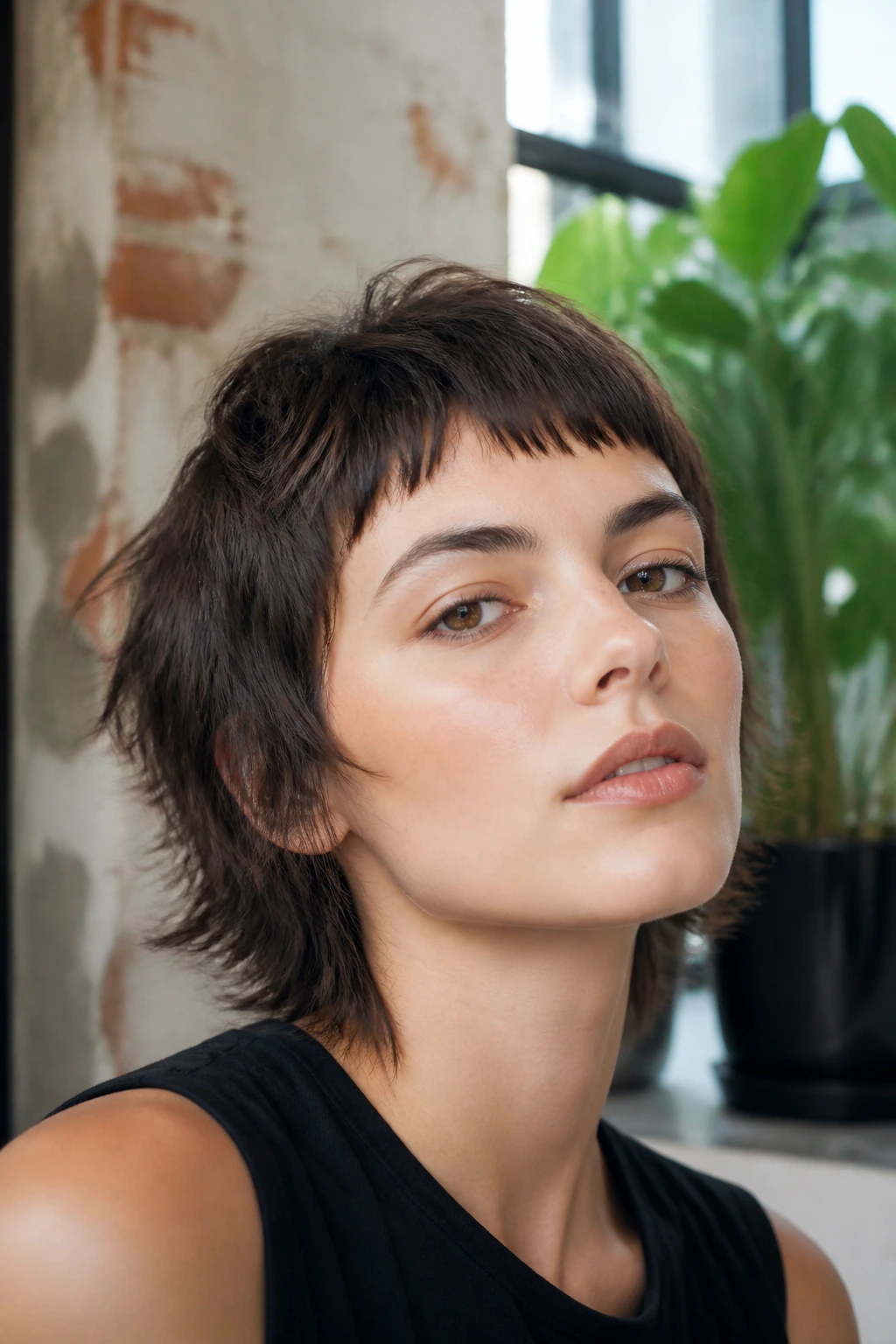
Want the 1960s in a sharper package? This is it. Micro bangs change the whole face line, and when they’re paired with short, broken-up layers, the cut becomes part mod, part art-school, part practical rebellion.
The danger zone is obvious: a blunt micro fringe with no softness can look severe fast. The fix is to keep the fringe tidy but not sealed shut, and to let the side layers break away from the cheekbones in a lighter way.
Best suited to hair that holds shape
This cut loves straight or slightly wavy hair because the fringe needs to stay visible. If your hair swells with humidity, ask for a touch more length in the fringe so it can survive the day without turning into a fuzzy line.
A pea-sized bit of styling cream is usually enough. Too much product makes the micro-bang area clump, and then the whole top half of the haircut loses its crisp little attitude.
4. Jaw-Length Razor Shag
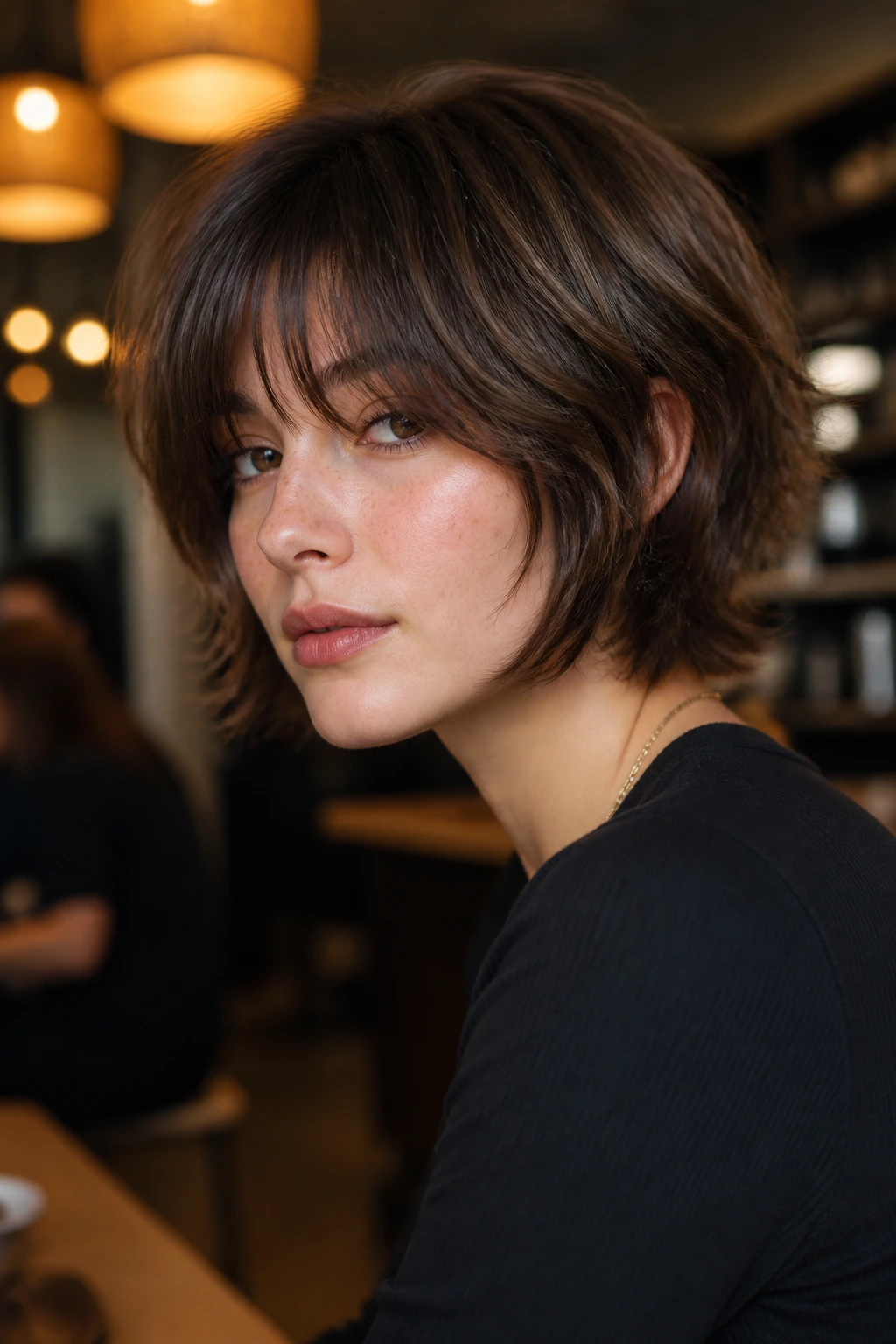
A jaw-length shag can make thick hair stop fighting you. The razor work softens the perimeter, the layers lighten the sides, and the whole cut lands somewhere between a cropped shag and a cheekbone-skimming bob.
I especially like this shape on people who want movement but still want to see where the haircut ends. There’s a real difference between “airy” and “missing.” A good razor shag stays on the airy side because the perimeter still has enough density to hold a line.
The cut that benefits from a sharp neckline
Keep the nape clean. If the back drags too low, the shape loses its snap and turns heavy. A little taper at the neck keeps the haircut looking fresh even on day three, which is useful because short hair has a habit of showing every styling choice.
This one works with a flat iron flick or a round brush bend. I prefer the brush. The slight curve at the ends keeps the vintage note alive without making it look overstyled.
5. Soft Wolf Cut for Short Hair
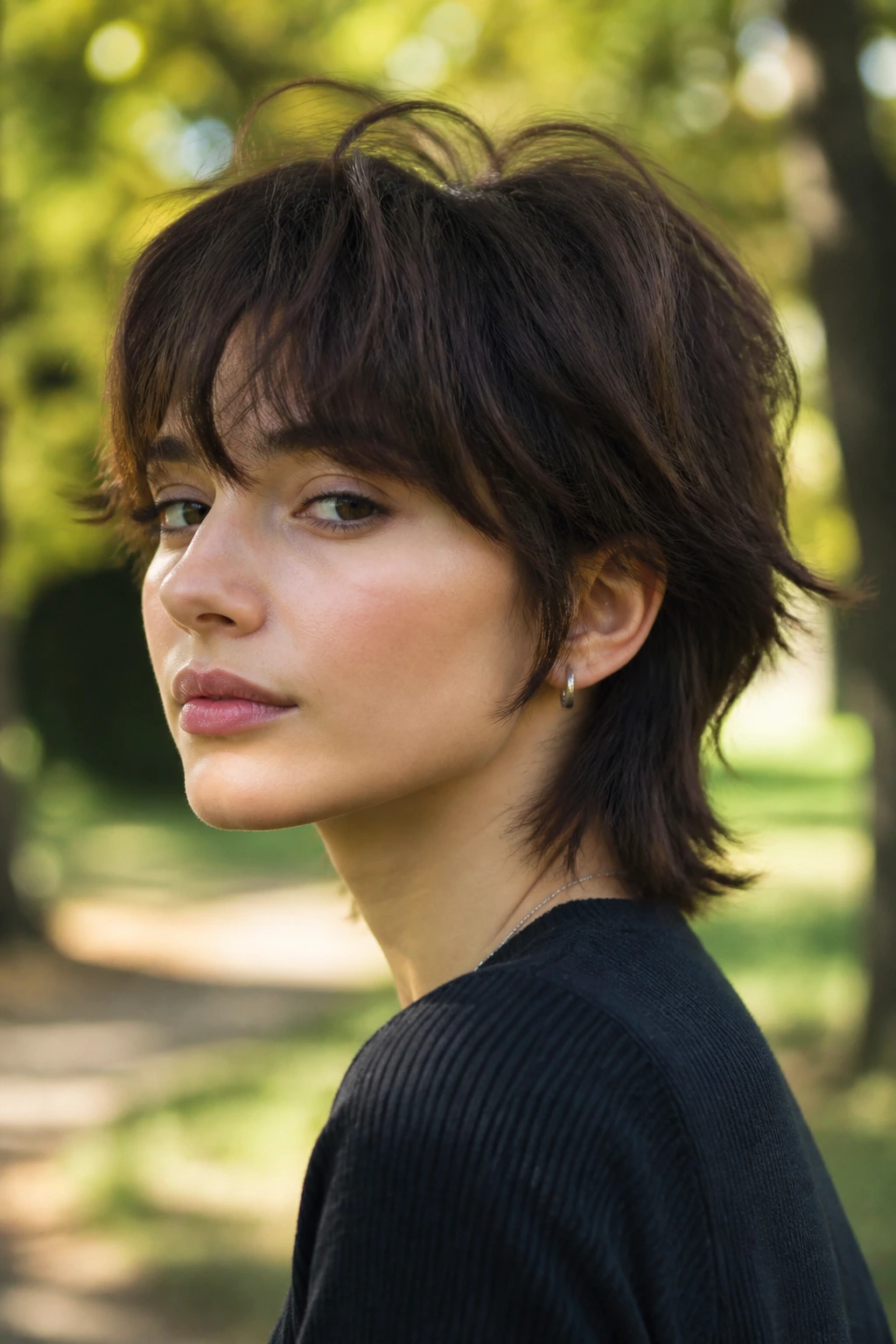
A wolf cut does not have to be loud. On short hair, the best version softens the mullet edge, keeps the crown controlled, and lets the nape sit just a bit longer so the layers can stack without building too much width.
That softness matters. The moment the top gets too high and the back gets too disconnected, you’re no longer in shag territory; you’re in costume-rocker territory. Some people want that. Most don’t.
Where this version shines
This cut is especially good for thicker hair, because the shorter top layers remove bulk where it matters most. If your hair is dense around the crown or puffs at the sides, the soft wolf shape can tame that without making the ends look thin.
Ask for a connected transition between the top and back. That word — connected — is doing work here. It means the haircut should feel like one shape, not three separate ones living on the same head.
6. Flipped-End Disco Shag

If you want the most obvious vintage nod in the set, start here. The flipped-end shag is all about that 70s bounce: round-brush movement at the ends, a little lift near the crown, and pieces that kick outward instead of lying straight down.
It’s a style that looks better when it’s not too perfect. The flip should feel deliberate but not frozen. If every strand is shellacked into place, the cut loses the easy movement that makes it fun.
The styling cue that matters
Work a volumizing mousse into damp roots, then rough-dry until the hair is about 80 percent dry. After that, use a medium round brush and turn the ends outward for that little flick. Finish with a light mist of flexible hairspray — not a stiff helmet.
This version loves medium-density hair, especially hair that holds a bend. If your strands are very fine, keep the layers long enough to avoid see-through ends. If they’re thick, ask for more interior removal so the flip doesn’t turn into a triangle.
7. Piecey Pageboy Shag
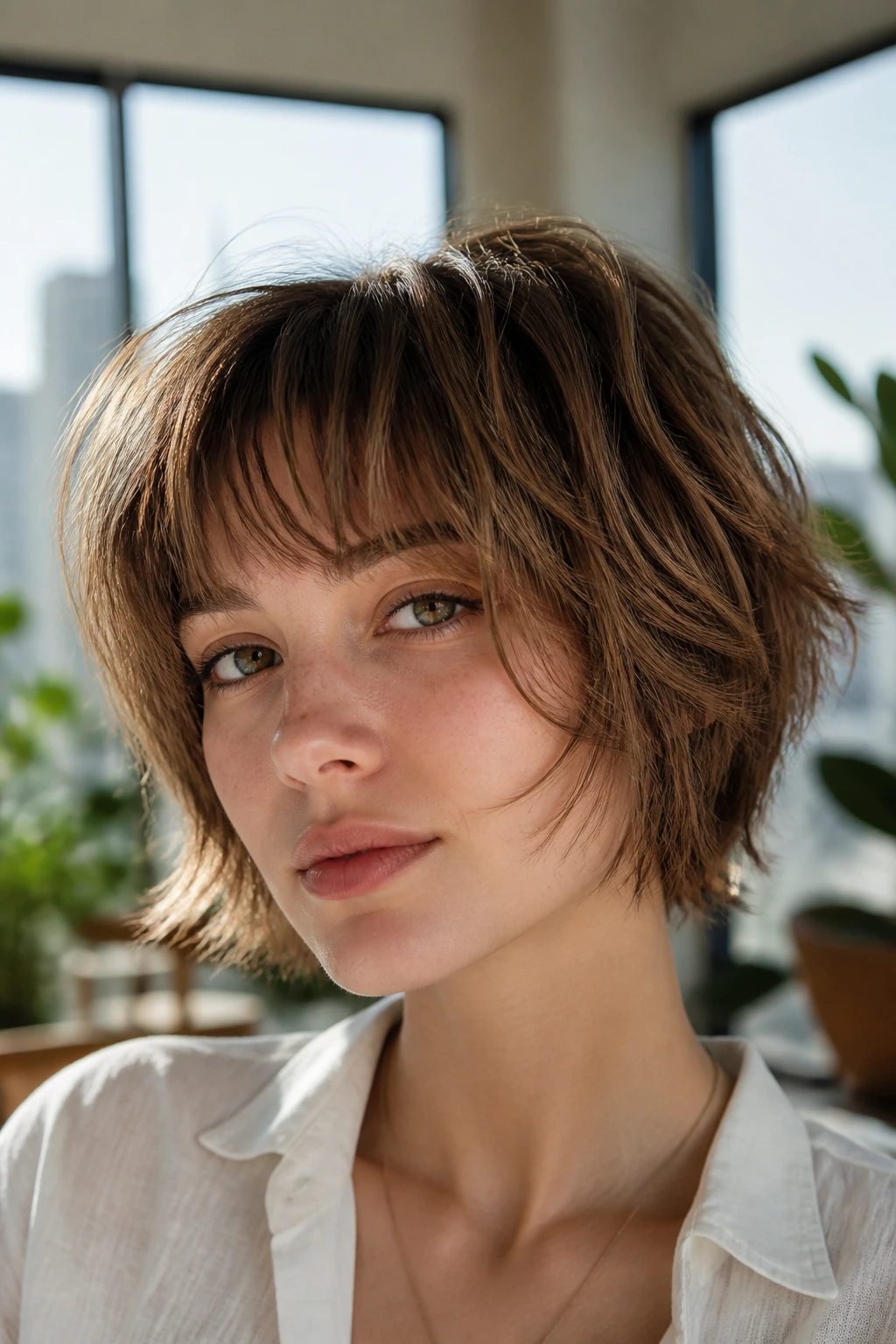
Picture a pageboy that has had enough rules for one lifetime. You still get the recognizable rounded outline, but the ends are broken up, the fringe is softer, and the overall look feels less suburban and more studio-apartment cool.
The vintage influence here is subtle and smart. Pageboy shapes already carry a retro memory, and the shagging of the edges keeps them from looking too pristine. That balance is why this cut is stronger than people expect.
A clean outline with roughened edges
If you like a haircut that still looks polished on day one, this is a good lane. Keep the perimeter tidy and let the interior layers do the work. The shape should curve around the jaw, not explode away from it.
This one is especially nice for straight hair that tends to collapse when cut too layered. The pageboy base gives it structure, and the shag texture keeps it from feeling stiff. Small detail, big difference.
8. Curly Retro Shag
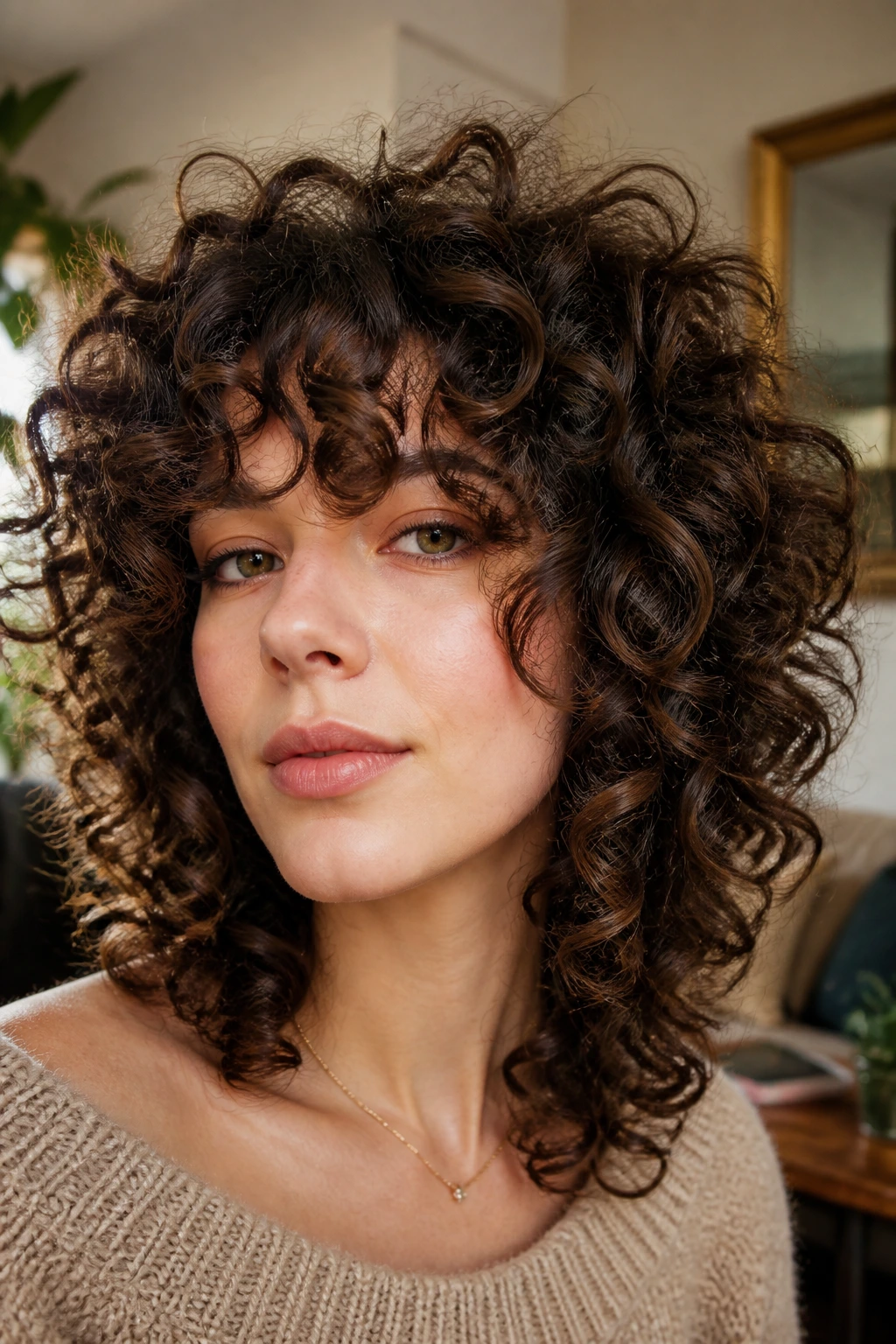
Curly hair and shags are natural allies, but only if the cut respects the curl pattern. A dry cut or at least a curl-aware shape gives the layers room to live without chopping the curl into tiny, awkward pieces.
The vintage vibe comes from the lift and halo effect. Think 70s movement, not crunchy ringlets. The right shag on curls should look buoyant, with pieces that fall around the face instead of sticking out like separated branches.
Ask for curl clumps, not random layers
Your stylist should cut to the way your curls group together when dry or nearly dry. If they grab the scissors and start slicing at every curl from the same angle, the result can get frizzy and uneven. Dry cutting avoids a lot of that drama.
A diffuser helps, but don’t overwork it. Cup the curls, dry on low heat, and stop before they’re fully stiff. A little softness keeps the retro feel believable.
9. Tapered Nape Shag
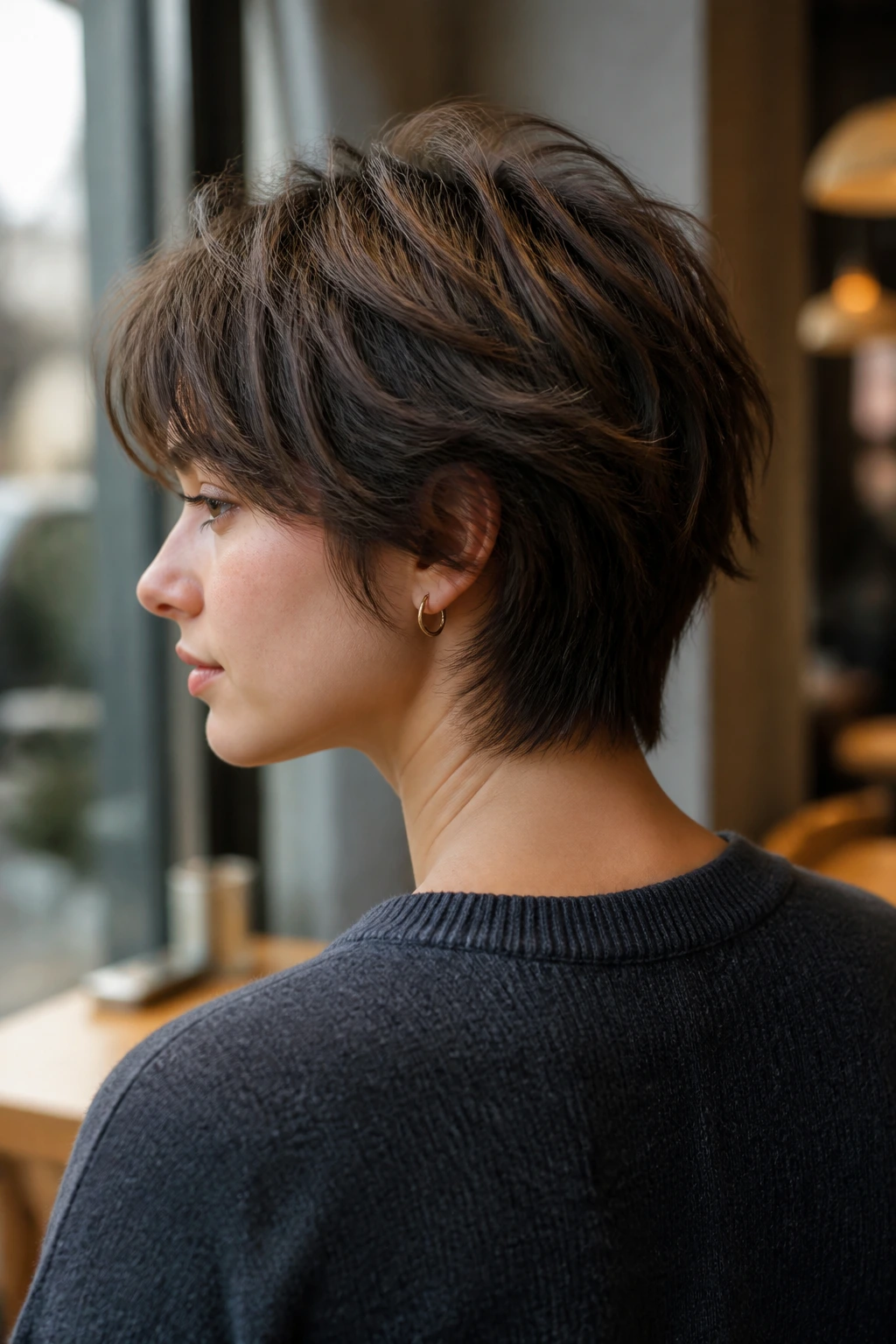
Short in the back, softer up top. That’s the whole point, and it’s a smart one if your hair tends to stack too much volume at the neck or flip out awkwardly around the collar.
The tapered nape gives the cut a clean exit. Without it, short shags can get puffy at the neckline and lose their shape by midweek. With it, the haircut keeps a neat little tail end that makes the layers above look even more deliberate.
Especially good for thick hair
If your hair is dense, this shape can save you from the triangle problem. The crown gets movement, the sides stay soft, and the back doesn’t build into a bulky shelf. It’s subtle, but that’s what makes it wear well.
I’d keep the fringe or face-framing pieces light here. Too much front weight can fight the clean nape and make the whole cut feel bottom-heavy. A little contrast is enough.
10. Heavy Fringe Rocker Shag
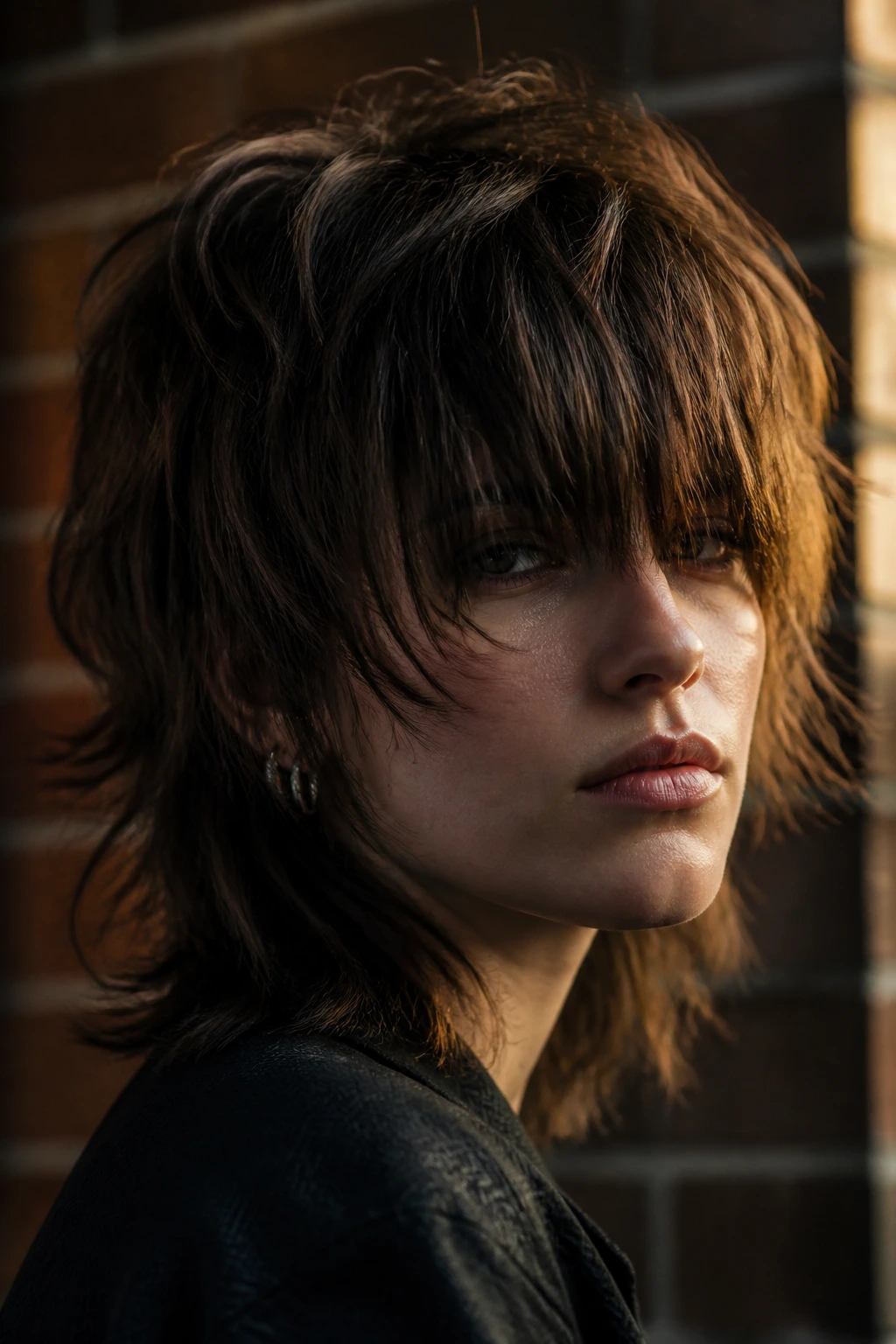
Can a shag look moody without looking sloppy? Yes, if the fringe does the heavy lifting. A thick, eye-skimming bang paired with choppy layers creates that old rock-club energy without needing long hair or dramatic color.
The trick is balance. Heavy fringe can overwhelm a short face if it’s too wide or too blunt, so the sides need enough softness to keep the haircut from closing in. That side balance is what separates a stylish rocker cut from a shag that just needs a comb.
Keep the bang line flexible
Ask for density, but not a brick wall. The fringe should sit near the lashes and move a little when you blink. If you have a cowlick at the front, tell your stylist before they cut. That one detail can save you a month of awkward parting.
This cut likes a touch of texture paste at the roots and a bit of separation through the fringe ends. Don’t over-smooth it. The charm lives in the slightly rough finish.
11. Air-Dried Beach Shag

Some days you want the haircut to do the work while you make coffee and answer messages in your bathroom mirror. This is that cut. The air-dried beach shag relies on natural bend, soft layering, and a perimeter that still looks like a haircut even when you’ve done almost nothing to it.
It’s not the most polished style in the group, and that’s fine. The appeal is the casual movement — a little scrunch, a little product, and the ends settle into that relaxed vintage-but-not-fussy shape.
Best for hair with natural wave
If your hair already bends, you’re halfway there. Work in a lightweight cream or sea-salt mist on damp hair, scrunch once, and leave it alone for a few minutes before touching it again. Constant fussing breaks up the pattern.
Airdrying works best when the layers are placed with intention. If the cut has been over-thinned, the pieces can separate into awkward strings. That’s the line to watch.
12. Choppy Pixie Shag
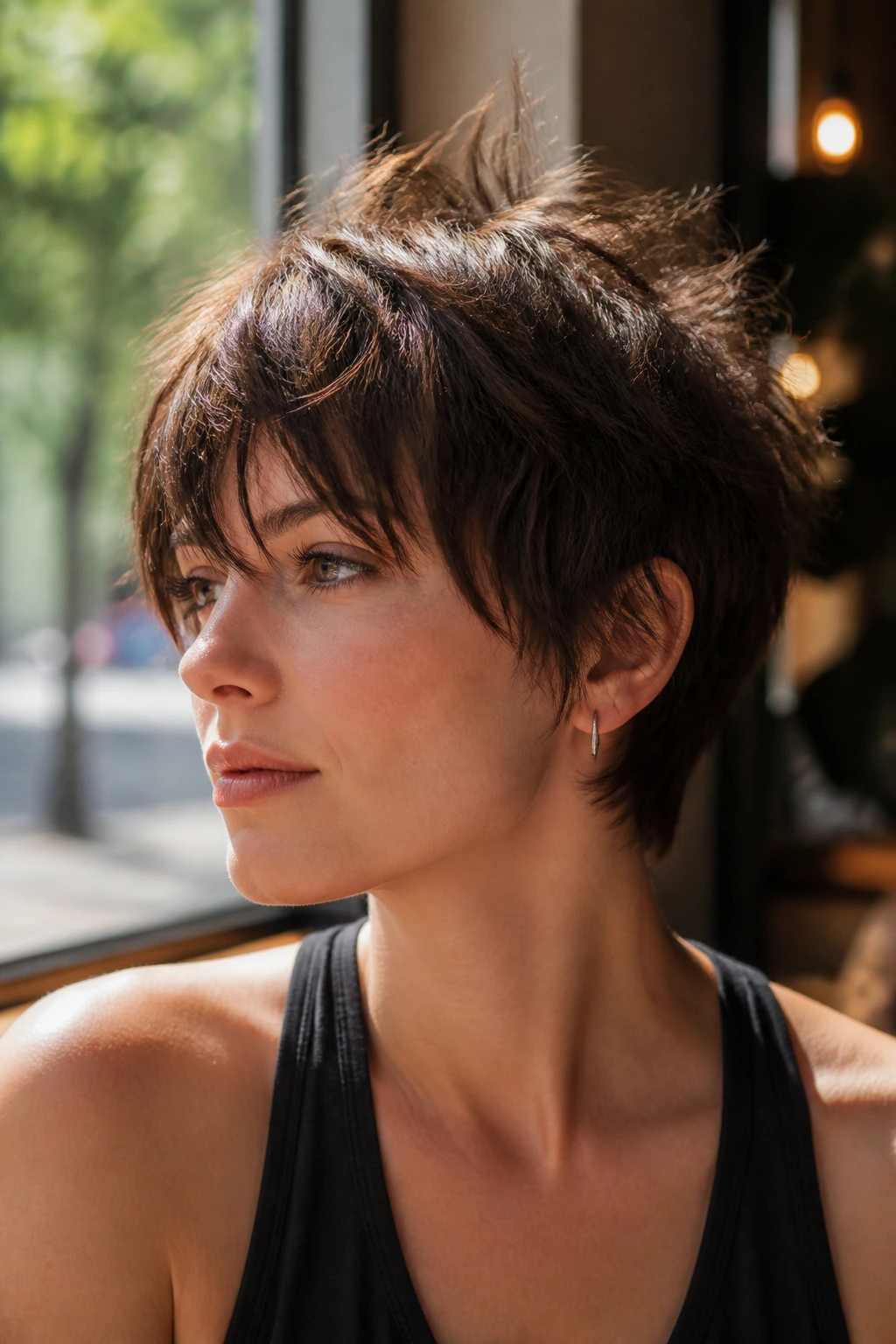
This is the shortest option that still reads shag, not regular pixie. The top is broken up, the sides are softened, and the fringe or front pieces are left long enough to give the haircut some swing.
I like this for people who want a sharper silhouette but still want the shag’s movement. A pure pixie can feel neat to the point of being plain. Add short layers and a bit of texture around the crown, and the whole thing gets a little more alive.
The important part is the top
Keep the top pieces uneven but not random. You want lift at the crown and movement at the temples, not spiky confetti. A small amount of matte paste works better than glossy cream here, because shine can make the layers look separated in a harsh way.
This cut is excellent on strong features and good on people who wear earrings, glasses, or bold lipstick. It has presence. No need to overdecorate it.
13. Shoulder-Graze Side-Sweep Shag
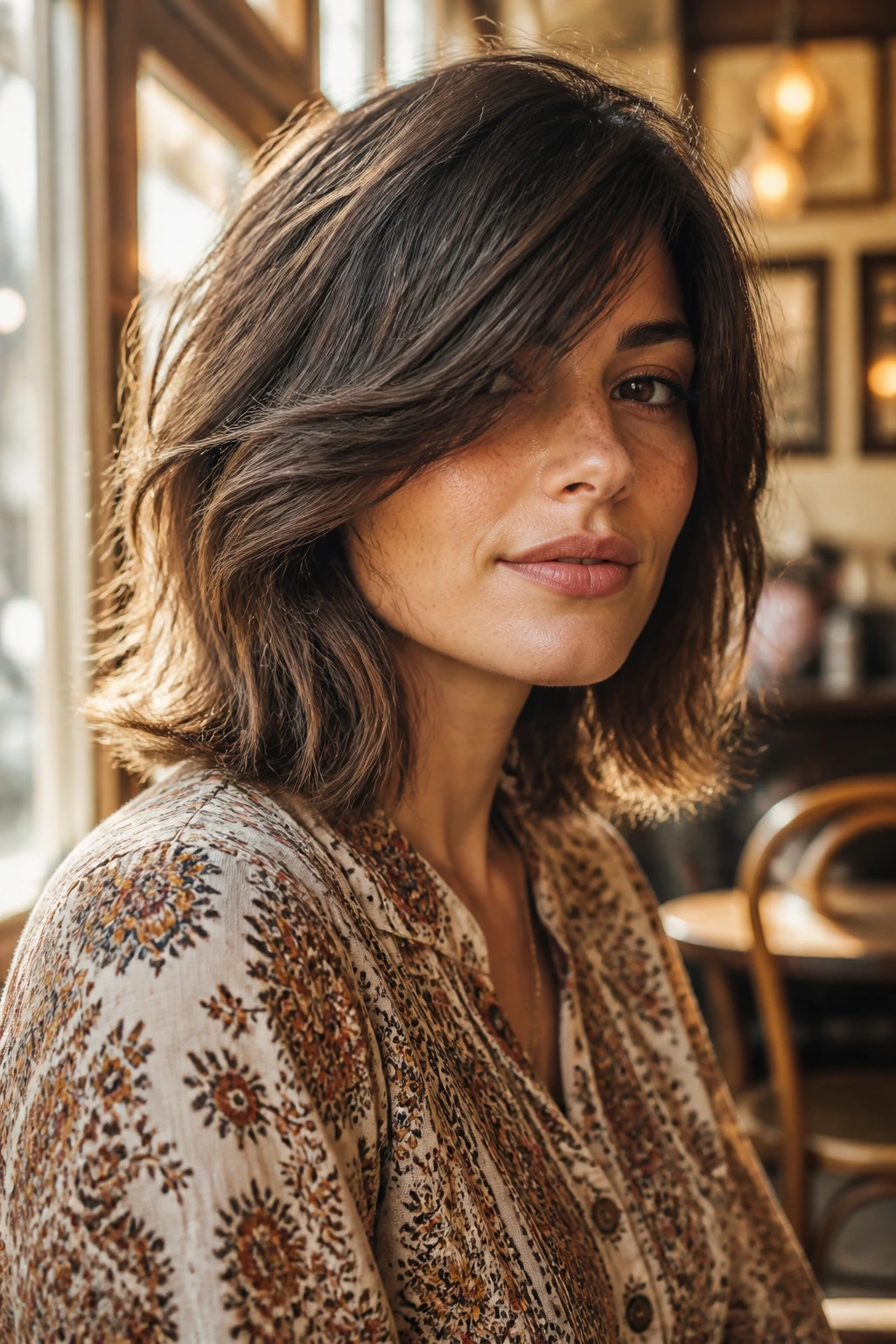
A little more length buys you softness, and that’s the game here. A shoulder-graze shag with a side sweep feels less like a chop and more like a deliberate shape that happens to be easygoing.
The side part matters. It gives the haircut a bit of lean, which is useful if your hair naturally falls flat in the center. The layers should skim around the cheek and jaw, then drift into the shoulder line without becoming one long blunt shelf.
Great for people who are hair-shy
If you’re nervous about going too short, this is a safe place to land. The cut still gives you movement, but there’s enough length to pull back, tuck behind an ear, or flip out with a brush if you want more drama.
It also plays nicely with vintage clothes. A collarbone-grazing shag with a side sweep looks good with a high neck, a blazer, or a simple tee — and that’s partly because the outline is clean enough to handle the extra style around it.
14. Grown-Out Mullet Shag
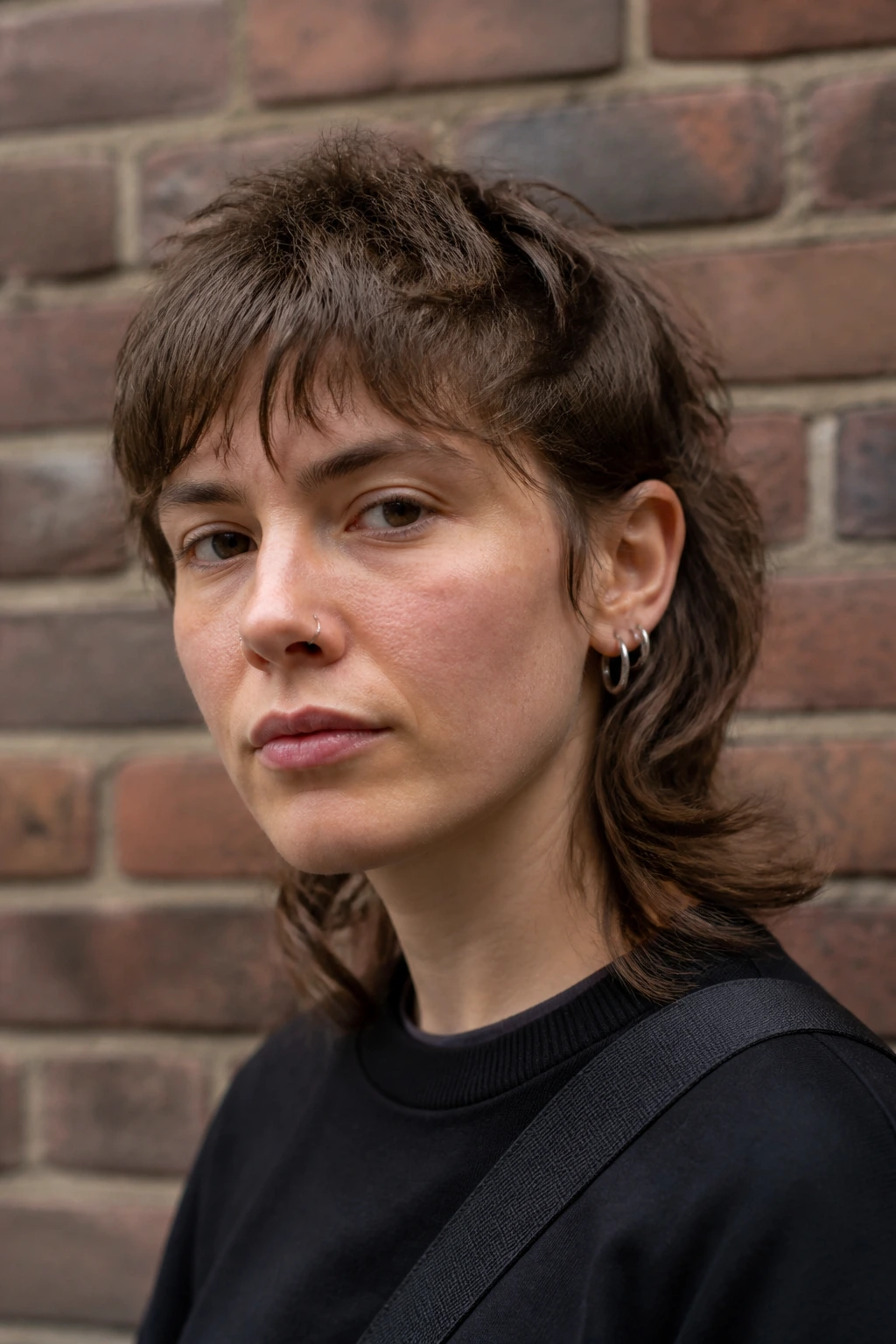
A mullet-shaped silhouette can be chic when the edges are soft and the crown is controlled. That’s the version worth wearing. The front and top stay short enough to lift, while the back keeps a bit more length so the haircut has motion from every angle.
This cut is not for someone who wants symmetry. It is for someone who likes a little push-pull in the shape. The vintage vibe lands somewhere between late-70s rebel and early-90s cool kid, which is a useful place to be.
Keep the connection visible
The best version doesn’t look like two separate haircuts taped together. Ask for a smooth transition through the sides so the back length feels intentional. If the separation is too harsh, the result can tip into costume territory fast.
It’s also one of the easiest shags to grow out because the shape already tolerates length variation. A rare kindness from a haircut.
15. Perm-Friendly Vintage Shag
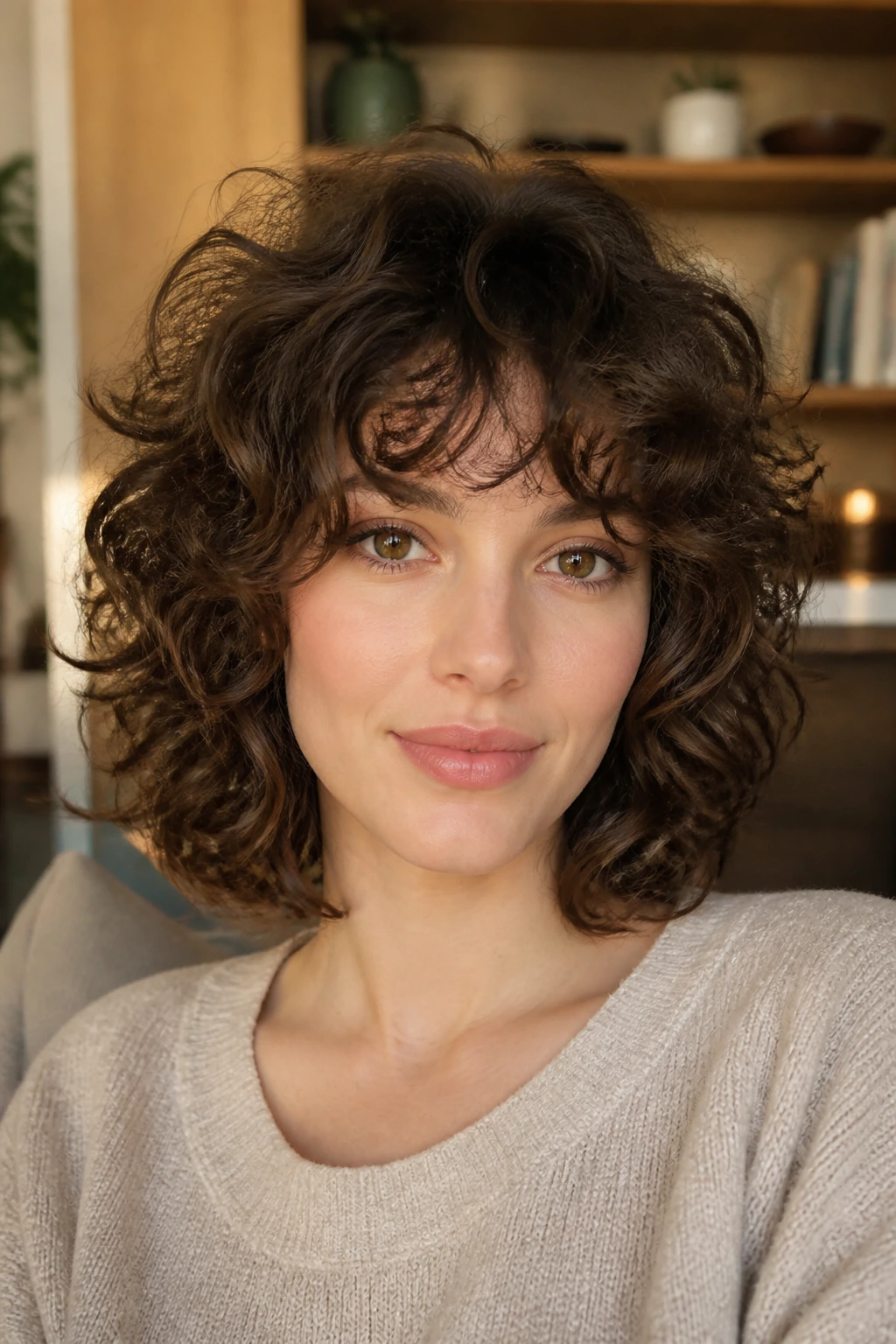
Got curls or a perm and want a retro cut that actually respects them? Start here. The perm-friendly shag is built to keep volume where curls want it and remove bulk where they need room, which is a much better deal than forcing them into a blunt shape.
The old-school look comes from the halo, the lift, and the soft layers around the face. When curls are cut correctly, the vintage vibe feels natural instead of sprayed into place.
Dry shape first, scissors second
If a stylist cuts a perm like straight hair, you’ll pay for it later in frizz and weird corners. The curl pattern should guide the layer placement. Length may need to be left a little longer than you expect, because curls spring up when they dry.
Use a light cream or gel, not a heavy butter. Too much weight collapses the top and makes the whole silhouette lose its bounce. Curls want room.
16. Copper 70s Layered Shag
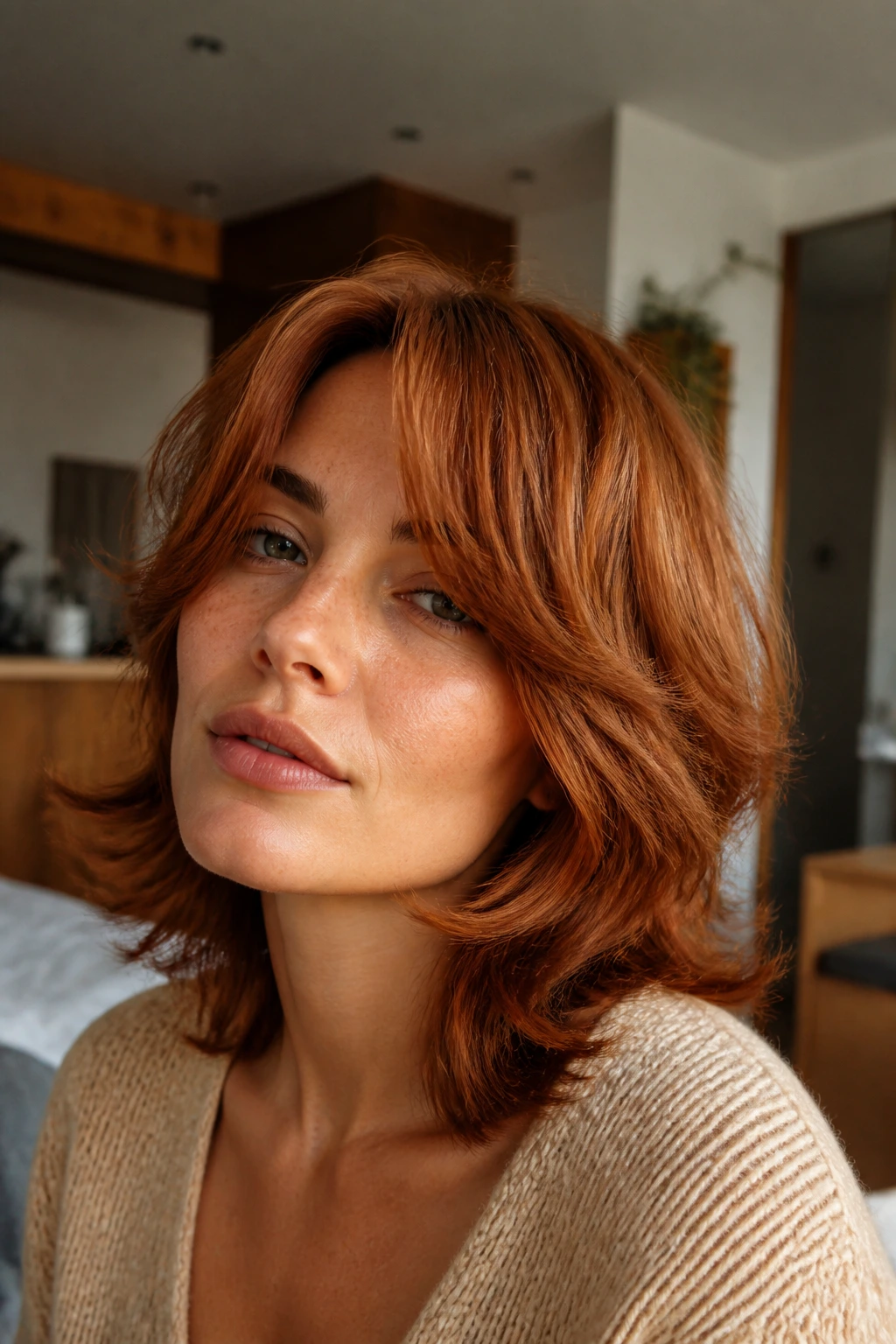
Warm color makes the layers read faster, and copper is the easiest shortcut to that 70s glow. Even without a dramatic blowout, the combination of feathering and warm tone gives the haircut a lived-in, magazine-cover feel.
Still, color is the supporting actor here. The cut does the real work. If the layers are soft around the cheekbones and the ends have a little bend, the vibe holds whether the hair is copper, brunette, or blonde.
Best when the layers are visible
Ask for face-framing that starts near the cheek, not at the chin. On short hair, that placement keeps the color and the cut from blurring together. You want to see the movement.
This is a nice choice if you like your hair to look richer in natural light. Copper reflects it well, and the feathered layers catch the eye without any extra styling tricks.
17. Rounded Mushroom Shag

A mushroom shape becomes less school-photo and more fashion once you break the rim with layers. That’s the appeal here. You keep the rounded outline, but the shagging makes the edges move and keeps the haircut from feeling too sealed up.
It’s a clever cut for straight, thick hair, especially when the ends want to puff wide. The round shape tames that width, while the layers stop the silhouette from turning into a solid cap.
A retro shape with a modern escape hatch
The fringe can be soft and full, or it can be side-swept. Either way, the important thing is the break in the perimeter. Without that, the mushroom reads as literal. With it, you get a witty little nod instead.
This one looks best when the top is smooth and the ends are slightly tousled. You don’t want a perfect dome. You want a shape that looks designed but not fussy.
18. Italian Bob Shag
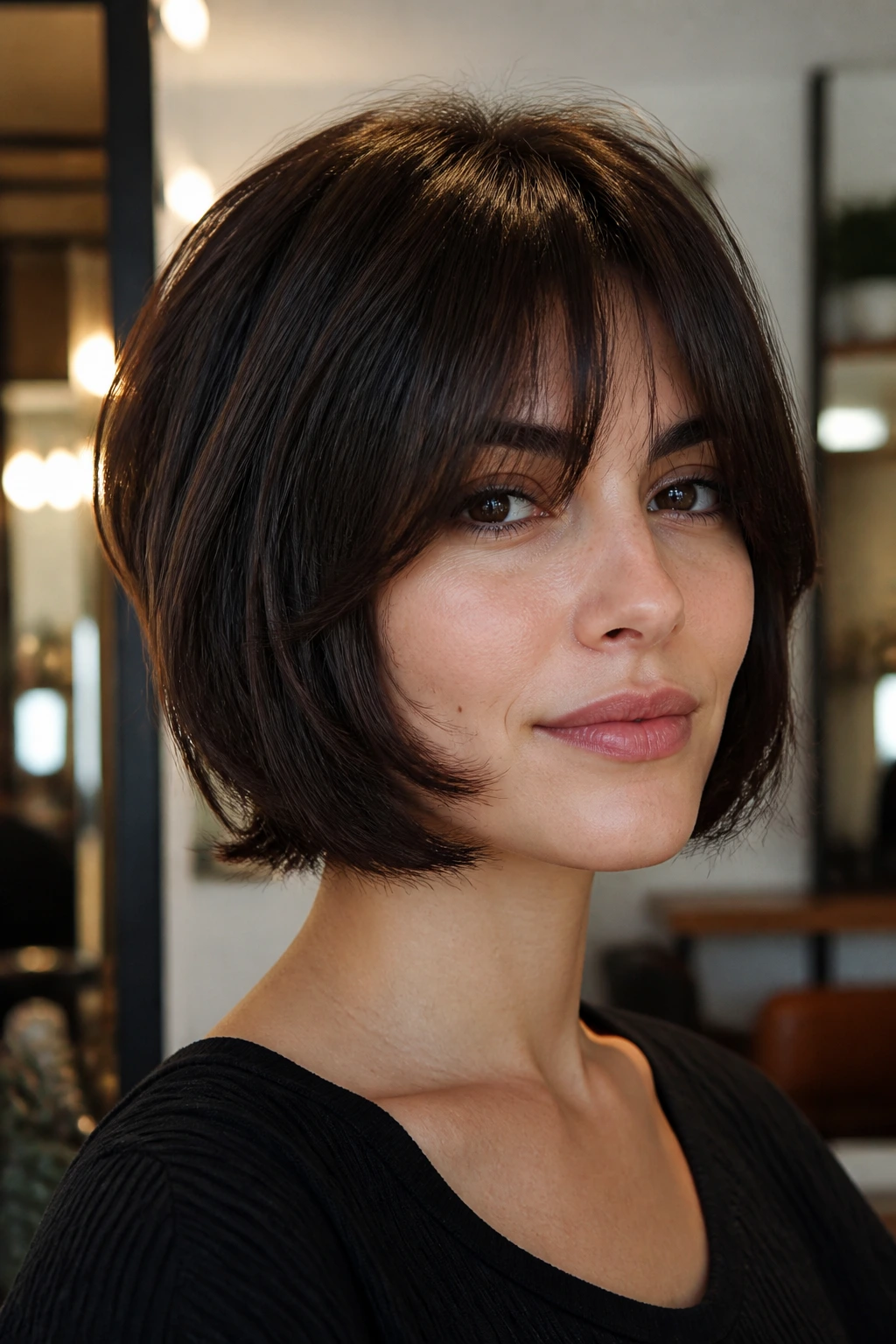
An Italian bob is sleeker than a shag, but when you rough up the ends and add a little fringe movement, it slides right into the same family. The result is polished at the roots and looser through the bottom half, which is a nice place to live.
What gives it the vintage note is the bounce. The ends should curve, not hang dead straight. A soft bend around the jaw keeps the haircut from looking flat or severe.
Good when you like a cleaner silhouette
If the messier shag styles feel too casual, this is a strong compromise. You still get layers and movement, but the outline stays more elegant. It’s the one I’d pick for someone who wears tailored clothes and still wants a little retro edge.
A medium round brush and a small amount of smoothing cream are enough. Keep the product away from the roots so the top doesn’t lose its lift. Easy mistake. Easy fix.
19. Bottleneck-Bang Shag
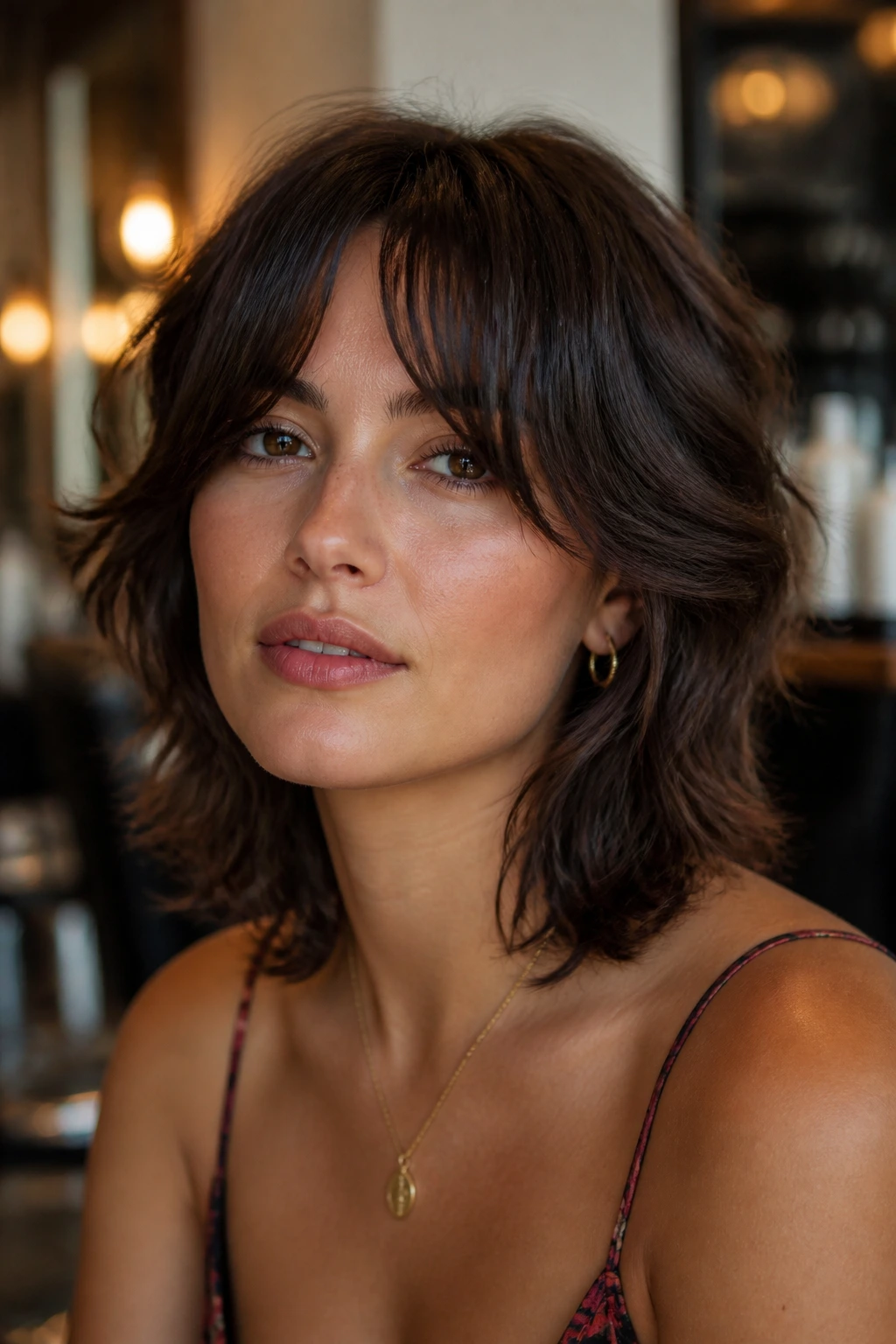
Want fringe without committing to a heavy wall of bangs? Bottleneck bangs are the answer. They start narrow at the center, open a little at the temples, and blend into the shag layers in a way that feels soft instead of boxed in.
This is one of the most forgiving fringe shapes because it gives the face room. The middle piece brings the interest, then the sides disappear into the haircut before the line gets too blunt. That makes it easier to wear if you’re nervous about bangs.
Why it works on short hair
Short shags can look crowded at the front if the fringe is too dense. Bottleneck bangs solve that by keeping the middle focus but letting air move around the sides. The result is cleaner and less helmet-like.
It pairs well with straight, wavy, and slightly curly textures. You just adjust the length. That’s the whole deal.
20. Razor-Cut S-Curve Shag

Some shags need to move in more than one direction. The razor-cut S-curve version is built for that, with front pieces that bend softly around the face before sliding back out again. It gives the haircut a drawn, almost lyrical line.
The razor work matters because it softens the ends enough to create that curve without heavy layering. Too blunt and the bend disappears; too choppy and the line gets broken. The sweet spot sits between the two.
Best for hair with a natural wave
If your hair already makes a loose wave, this cut will cooperate. If it’s straight, you can still get the look with a round brush or a flat iron flick at the ends. The shape is forgiving, which is one reason stylists reach for it when they want the hair to look expensive without being overworked.
I like this on short hair that needs a little visual motion around the face. It keeps the eyes on the cheekbones and jaw, which is where a good shag often earns its keep.
21. Retro Blowout Shag
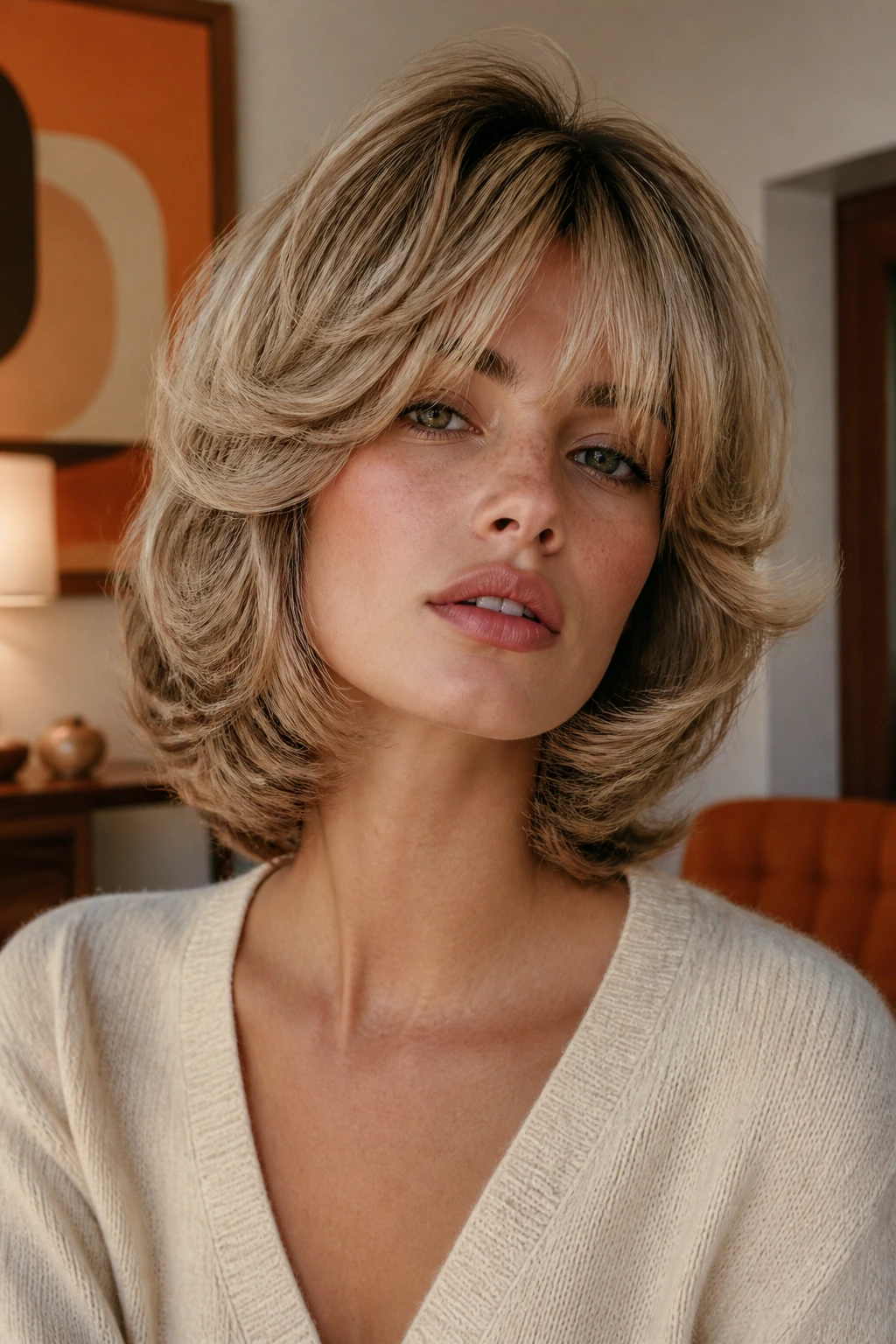
This is the one that looks like you own a round brush and know exactly what to do with it. The retro blowout shag leans hard into volume, with lifted roots, polished bends, and ends that kick just enough to keep the style from going stiff.
The vintage mood is obvious, but not in a cheesy way. The shape has swagger. It feels like the sort of haircut that can handle a blazer, a satin top, or a simple white tee and still look considered.
The styling recipe is part of the cut
Use root-lift spray on damp hair, then blow-dry in sections with a medium round brush. Roll the front pieces away from the face and let them cool before touching them. That cooling step is what helps the bend hold instead of collapsing the second you step outside.
This cut is happiest on medium to thick hair, though fine hair can wear it if the layers stay light enough. If you have a lot of cowlick action, tell your stylist where it lives before they cut the fringe.
22. Low-Maintenance Outgrown Shag
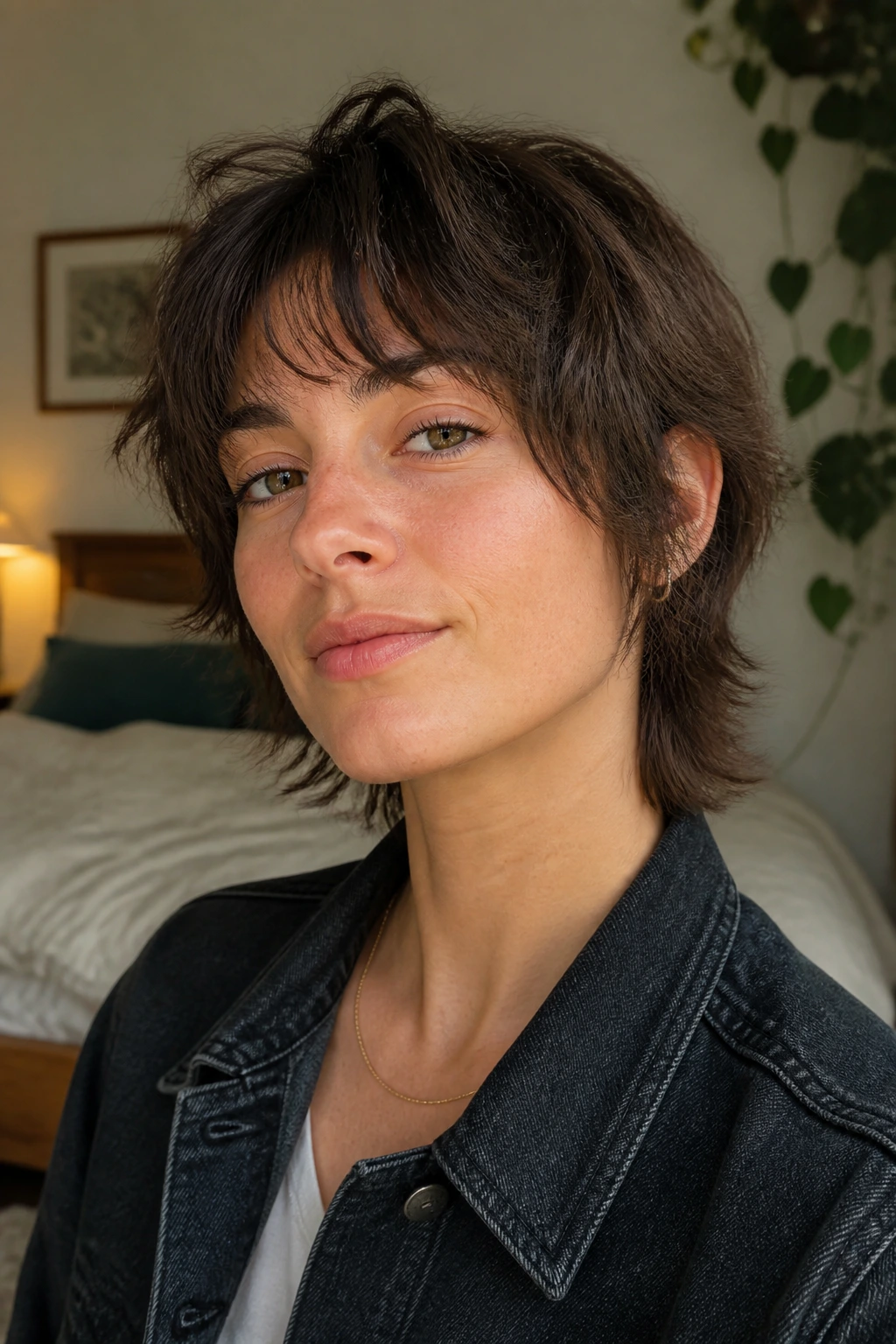
The best grow-out plan is one that looks intentional from day one. That’s the idea behind this shag: soft layers, a perimeter that still has shape, and enough length through the top that a few weeks of growth don’t ruin the line.
This is the cut for people who dislike over-serviced hair. It doesn’t need a round brush every morning, and it doesn’t fall apart if you miss a wash or two. The vintage vibe comes from the relaxed outline, not from perfect styling.
Built for real life
Ask for a strong base with gentle internal layers. That gives the haircut structure even when the ends start wandering a little. If you have a habit of putting your hair up, this version is especially friendly because the layers don’t spring into awkward tufts the second you take it down.
It’s not lazy hair. It’s practical hair with taste. There’s a difference.
Why Short Shag Haircuts Hold Their Shape So Well
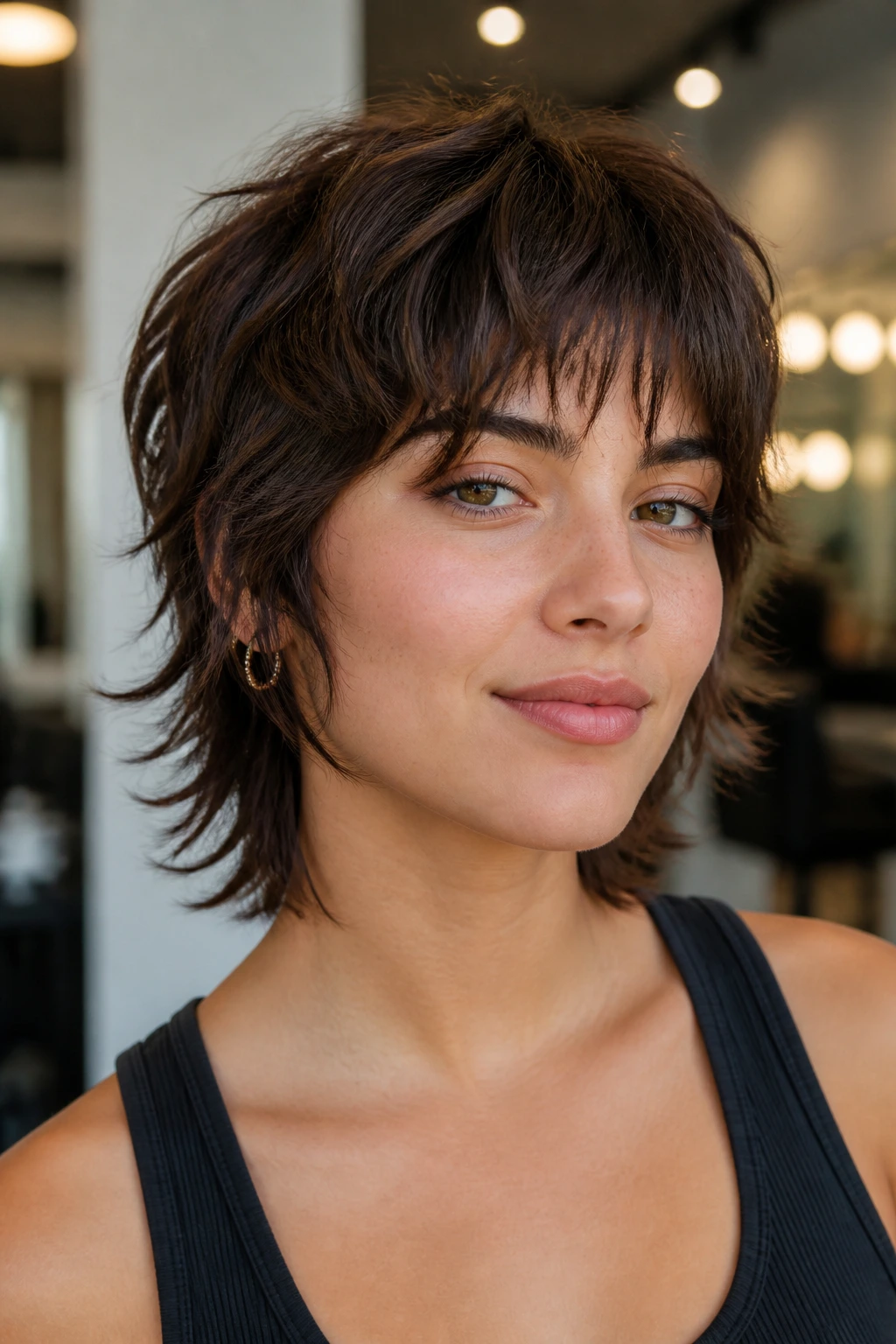
Short shag haircuts work because the shape is doing more than one job at once. The perimeter gives the eye something to read, while the interior layers keep the style from turning into a flat line. That balance is why a good short shag can look better on day two than it does in the salon mirror.
The vintage vibe is usually not about one big signature detail. It’s the sum of small ones: a flipped end, a soft fringe, a little bend at the cheekbone, a nape that sits clean instead of bulky. Those details are what make the cut feel borrowed from another era without looking copied from a scrapbook.
The other reason these cuts last is that they tolerate movement. Hair doesn’t need to sit perfectly still for a shag to make sense. That’s a mercy, honestly. If your routine includes dry shampoo, finger-combing, and a quick blast from a diffuser or round brush, this family of cuts gives you room to breathe.
The Tools That Keep the Texture Honest
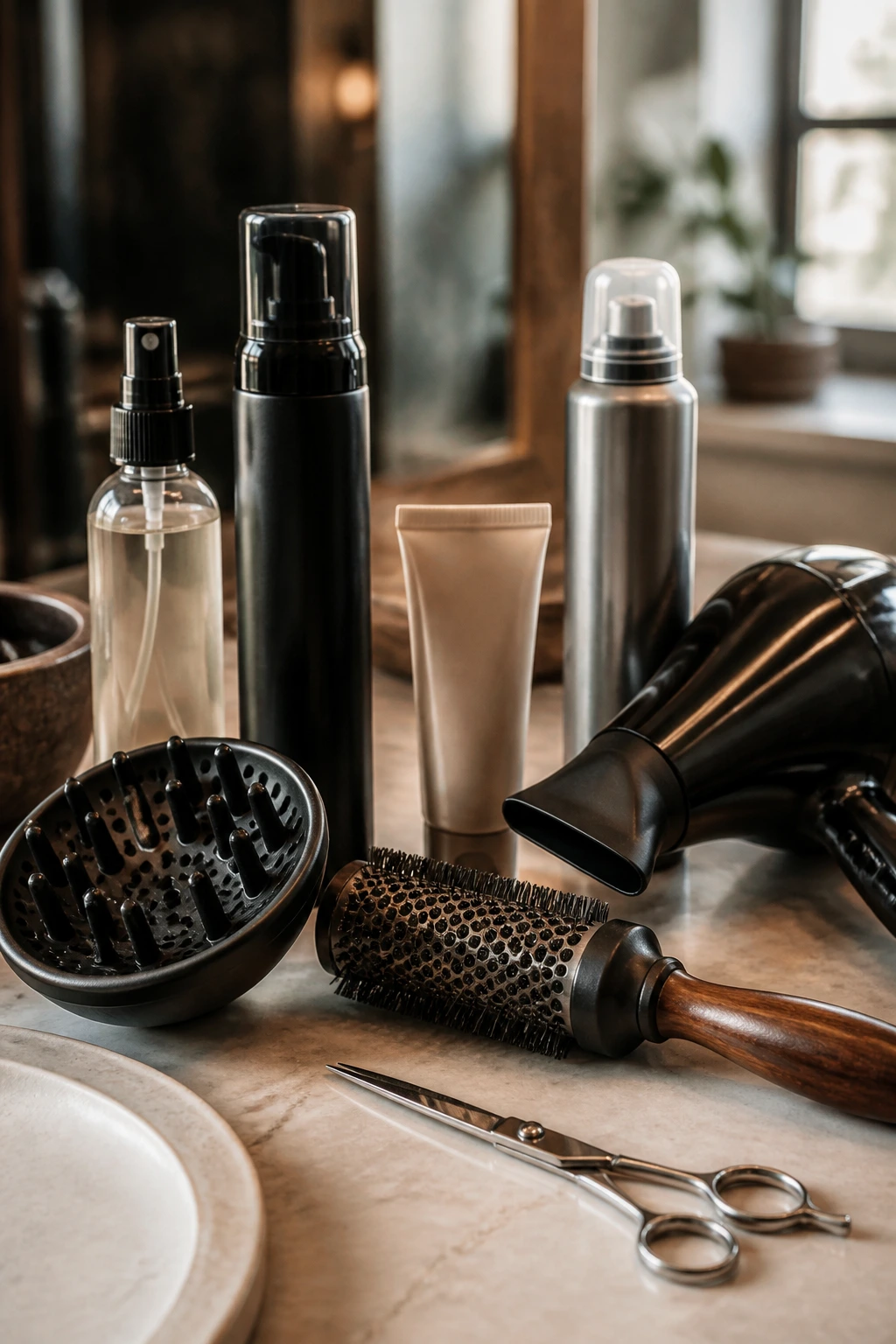
A short shag is one of those haircuts that can be ruined by the wrong tool and rescued by the right one. You do not need a suitcase full of styling gear. You need a small, smart kit that helps the cut keep its shape without turning crunchy or over-smoothed.
-
Sharp haircutting shears: Dull scissors shred the ends and make a shag look frayed instead of soft.
-
Texturizing spray: This gives the layers a bit of grip, especially on clean hair that slips around.
-
Volumizing mousse: Use it at the roots on damp hair if you want the crown to keep some lift.
-
1-inch or 1.25-inch round brush: Small enough to shape short layers, big enough to give the ends a bend.
-
Blow dryer with a nozzle attachment: The nozzle keeps the airflow pointed where you want it; without it, the hair gets blown all over the place.
-
Diffuser: Useful for waves and curls, because it protects the pattern and keeps the shape from puffing out too much.
-
Light styling cream or paste: Best on the ends and fringe, where a tiny bit of control goes a long way.
-
Dry shampoo: Not just for oil. It gives short layers some grit, which helps the haircut hold on sleepy, flat days.
What to Tell Your Stylist Before the First Snip

A good shag begins before the scissors move. Show a photo, sure, but say what you want the haircut to do. Do you want feathering around the face, a clean nape, more crown lift, or a fringe that can split in the middle? Those are not tiny details. They decide whether the cut feels airy, rocker, polished, or a little wild.
Bring up your texture honestly. Straight hair, loose wave, strong curl, thick density, fine but slippery strands — each one changes how short layers sit. If you ignore that, you can end up with a haircut that looks great only in the salon and behaves badly at home.
One more thing. Mention your daily styling patience level. If you’re a five-minute person, say so. A stylist can keep the layers longer and the fringe less demanding. If you enjoy blowing it out, they can build more shape into the top and front. That conversation saves headaches later.
How to Style a Short Shag Without Flattening It
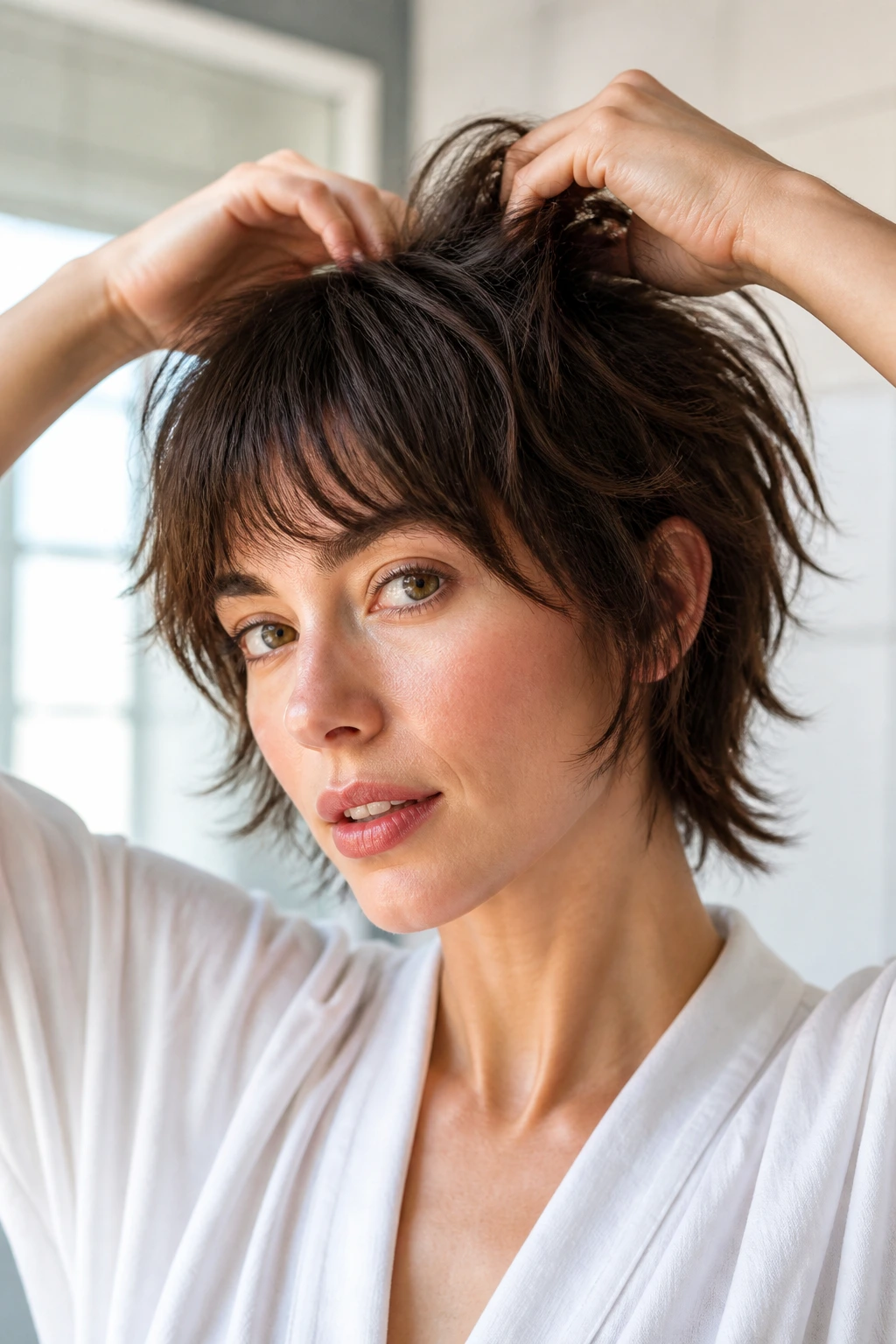
Start with less product than you think. Short hair gets weighed down fast, and a shag loses its movement the second it’s buried under too much cream or oil. A pea-size to walnut-size amount is usually enough, depending on density and length.
If you’re blow-drying, rough-dry the roots first. That means you move the dryer around until the hair is mostly dry and the roots have some lift, then come back with the brush or diffuser for the pieces that need shape. Doing the whole head under the brush from the start is slow, and it often makes the hair lie too flat.
Air-dried shags need hands-off discipline. Scrunch, twist, or tuck the pieces where you want them, then leave them alone for a while. Touching wet hair over and over breaks the pattern. Annoying. True.
How to Wear These Cuts Day to Day
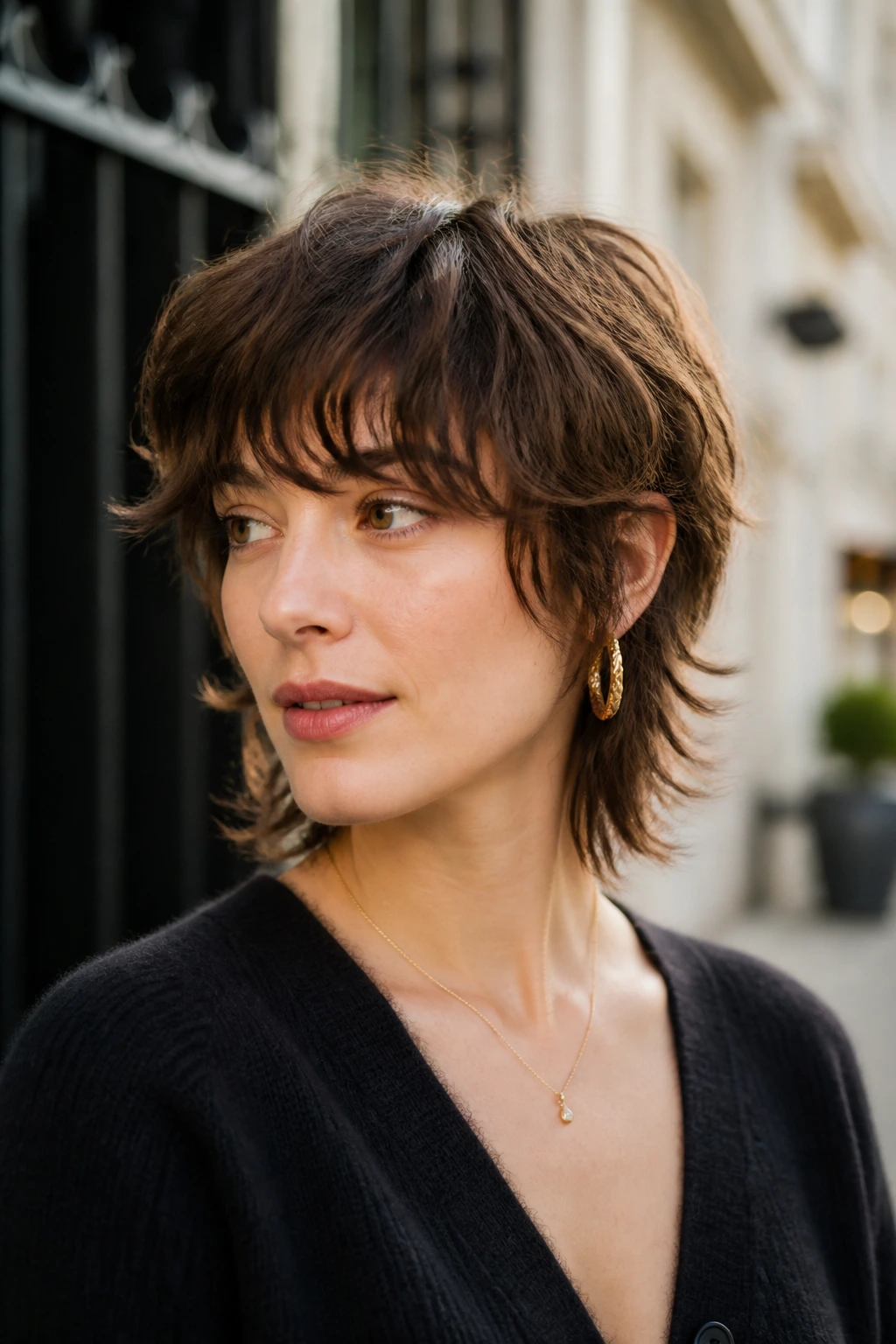
Presentation: A short shag looks best when the outline is visible. Keep the fringe from swallowing your eyebrows, and let the side pieces sit where they can show off the layered shape instead of hiding under a hat brim or behind a heavy headband.
Accompaniments: Earrings matter more than people admit. Hoops, studs, and small drops all frame the face well, especially with short fringe. Collars do, too — a clean neckline, a crew neck, or a soft V-neck tends to let the haircut breathe instead of crowding it.
Portions: In haircut terms, this means the balance of length and texture. If your face is narrow, leave a little more width around the cheekbones. If your jaw is strong, keep the front pieces a touch longer so the cut doesn’t feel boxy.
Finishing Touch: Flexible spray is the sweet spot. Use enough to keep the shape, not enough to freeze the ends. The haircut should still move when you turn your head.
Texture Boosters and Small Tweaks That Change the Whole Mood
Shape Booster: Clip the crown up while the hair cools. That old-school move adds lift without adding stiffness, and it helps the top stay airy instead of collapsing toward lunchtime.
Customization: Swap the part. A center part makes curtain bangs and feathered layers feel softer, while a deep side part sharpens the attitude and makes the vintage side-sweep read louder.
Serving Suggestions: If hair is the canvas, the finish is the frame. Try a tucked-behind-one-ear moment, a narrow barrette, or a thin scarf tied low at the nape. Small accessories show off the cut without burying it.
Make-It-Yours: Fine hair usually needs longer internal layers and lighter products. Thick hair can take more debulking at the back. Curly hair often looks best when the fringe is left longer than you think. Straight hair usually benefits from a little more bend at the ends. No mystery there — just respect the texture sitting on your head.
Mistakes That Make a Shag Look Choppy in the Wrong Way
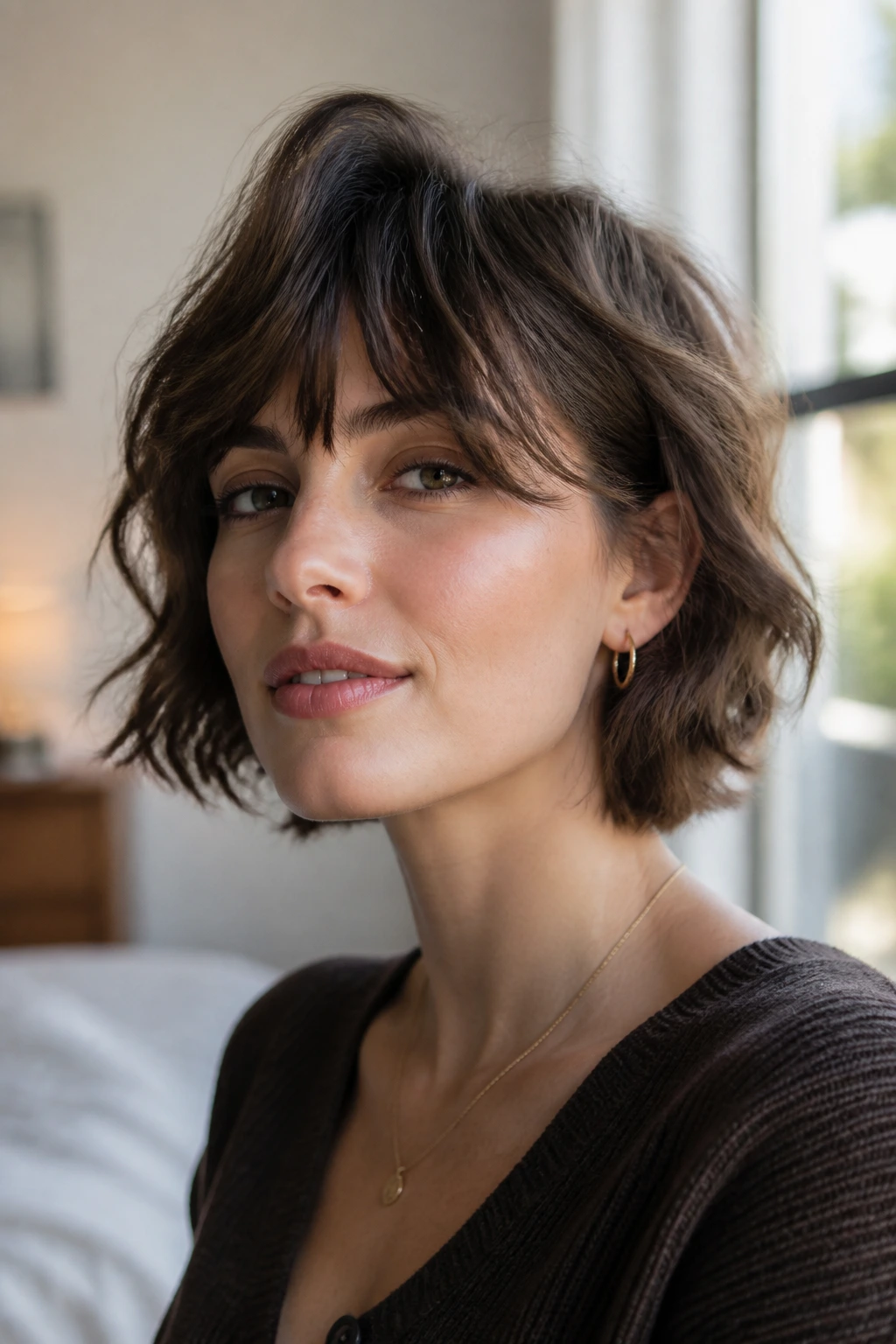
The first mistake is over-thinning the ends. A shag is supposed to move, not fray. If the ends look see-through or stringy, the haircut was taken too far with texture shears or a razor. The fix is simple: keep more density in the perimeter and let the interior layers do the work.
Another common problem is bangs that are too heavy. A thick fringe can swallow the face, especially on short hair, and it can make the whole cut feel boxed in. If the face starts disappearing under the bangs, ask for a lighter center, more separation, or a bottleneck shape.
People also fight their own hair pattern. A cowlick at the front, a flat crown, or a strong wave at the temples will all change where the shag wants to sit. If the cut ignores that, styling becomes a daily argument. The answer is to cut for the way the hair falls, not the way you wish it fell.
Variations and Adaptations to Try
Fine-Hair Airy Shag: Keep the layers longer and the fringe lighter. This version avoids the hollowed-out look that fine hair can get when too much weight is removed around the crown.
Thick-Hair Debulked Shag: Ask for internal weight removal and a tidy nape. Thick hair needs room, but it still needs a perimeter that reads clean instead of fuzzy.
Curly Dry-Cut Shag: Let the stylist shape the cut on dry curls or near-dry curls. That way the layers respect the spring in the hair instead of guessing at it.
Polished Blowout Shag: Keep the same layered structure but style it with a round brush and a smoother finish. This is the easiest route if you like the haircut but want it to feel a little more dressed up.
Punk-leaning Shag: Add a heavier fringe, a shorter crown, or a more obvious nape taper. The vibe shifts fast with just a few inches in the right place.
Grow-Out Friendly Shag: Leave the outline stronger and the layers softer. This is the version I’d choose if you’re not eager to see the salon every month.
Keeping the Cut Sharp Between Salon Visits
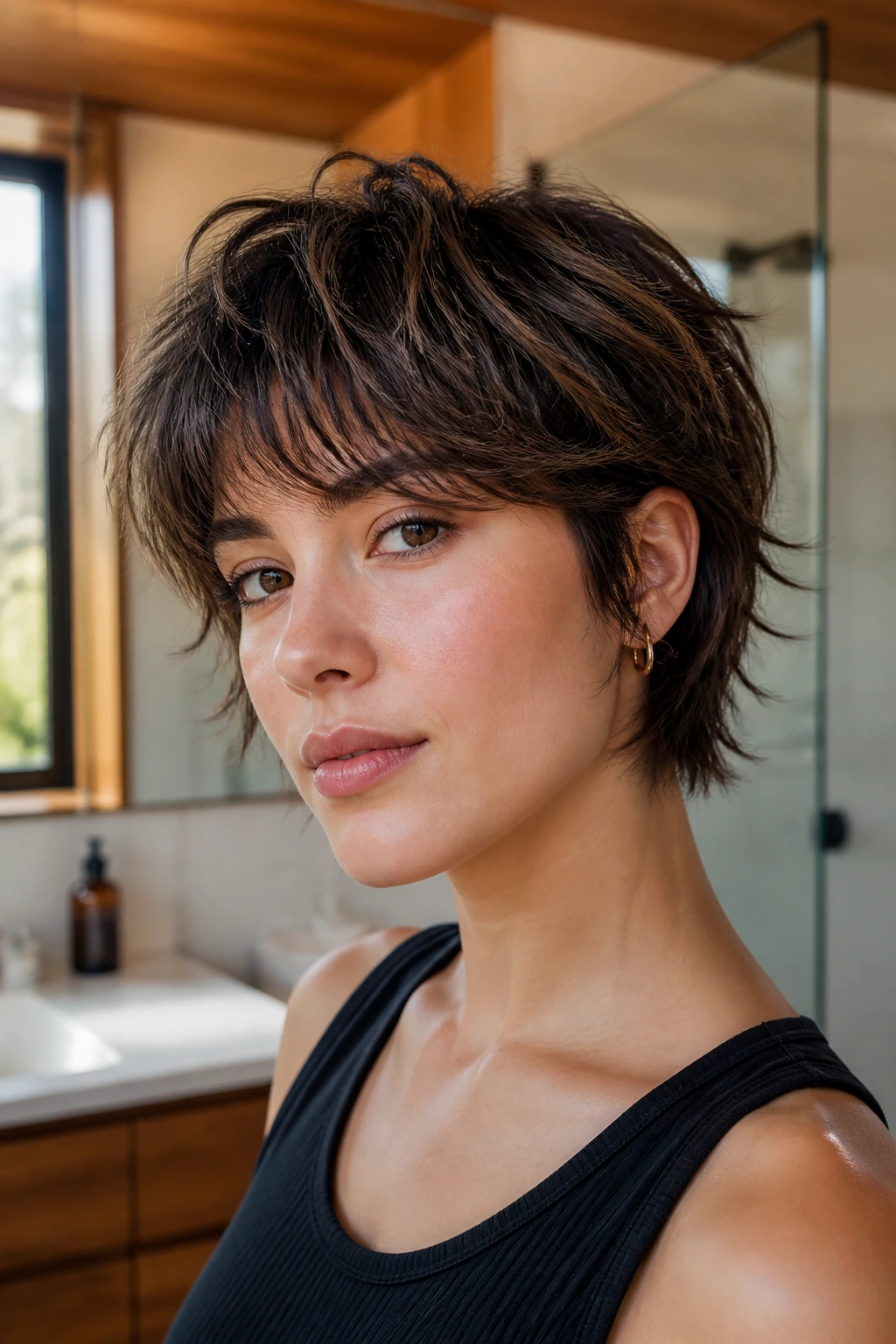
Short shags usually behave best with trims every 6 to 8 weeks. Stretch much longer than that and the fringe starts to hide the eyes, the nape loses its shape, and the whole cut gets heavier than it should. That’s not a failure. It’s just hair growing.
Between appointments, use dry shampoo at the roots to keep the crown from collapsing, and refresh the ends with a tiny bit of texture spray. If the front pieces start flipping into your face in a way you hate, re-wet the fringe and restyle just that section instead of redoing the whole head.
Sleep matters too. A silk pillowcase reduces that bent, fuzzy morning look that short layers can get from cotton. If your hair is especially prone to flattening, pin the fringe or front pieces loosely to the side before bed. Low effort. Big payoff.
Frequently Asked Questions

Which face shapes suit a short shag best?
Almost any face shape can wear one, but the fringe and face-framing matter more than the label on the haircut. Oval and heart-shaped faces can usually wear the shortest fringe options, while round or square faces often look better with longer curtain pieces or a side sweep.
Can fine hair pull off a shag without looking thin?
Yes, if the layers stay controlled. The best version for fine hair keeps a stronger perimeter and uses texture mostly near the face and crown, not all through the ends. Heavy razoring is usually what causes the see-through problem.
Do curly shags need a special cut?
They do. Dry cutting or curl-aware shaping keeps the layers from fighting the spring in the hair. If curls are cut like straight hair, the result can look uneven once they dry.
How often do short shags need trims?
Most need a tidy-up every 6 to 8 weeks. Fringe-heavy versions sometimes need a bang trim sooner because the front changes the feel of the cut faster than the rest.
What if I want the shag vibe but hate bangs?
Ask for face-framing instead of a full fringe. A side sweep or longer front pieces can give you the same movement without putting hair across the forehead.
Can I style a short shag with a flat iron?
You can, but keep the bends soft. A little flick at the ends and a slight turn away from the face usually works better than straightening the hair completely flat.
What if the cut looks too fluffy after styling?
That usually means too much product, too much heat, or layers cut too high for your hair density. Try using less mousse, reducing the round-brush tension, and asking for a softer perimeter next time.
Is a short shag hard to grow out?
Not if it was cut with a clean outline. A good shag grows into a relaxed bob or layered lob more easily than a highly structured pixie, which is one reason this shape has staying power.
The Shape That Keeps the Vintage Mood Alive
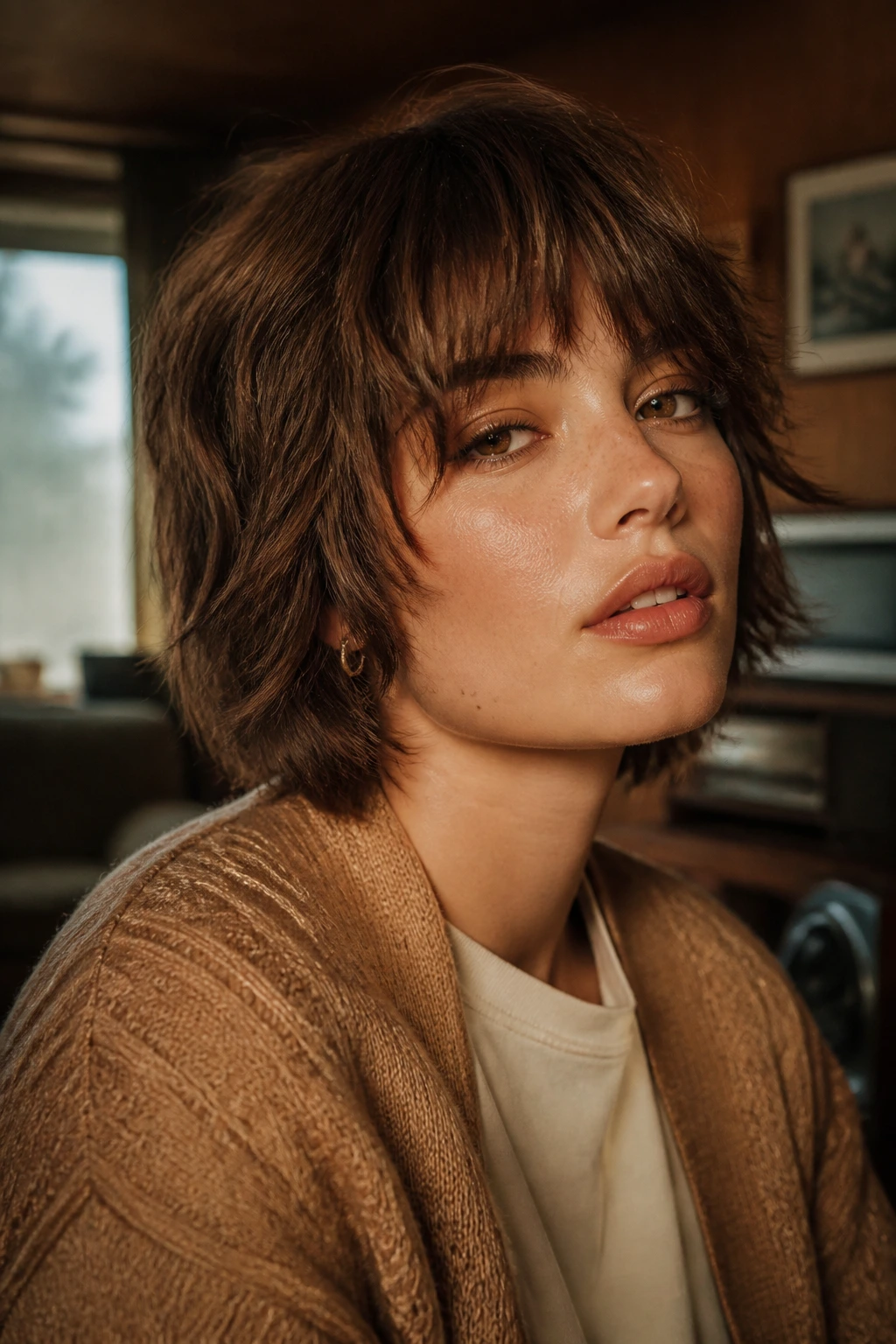
A good short shag doesn’t try to copy one decade exactly. It borrows the parts worth keeping — feathered movement, a fringe with personality, ends that kick or bend just enough — and leaves the rest behind. That’s why these cuts still feel current without needing to chase whatever haircut people are arguing about this week.
The best version for you will depend on texture, density, and how much styling you actually want to do in the morning. That part matters more than trend language ever will. Pick the shape that behaves well on your head, and the vintage vibe shows up on its own.
