



A choppy bob haircut looks best when it doesn’t behave itself. The ends should kick out a little, the outline should move when you turn your head, and the whole shape should look better after a bus ride, a humid afternoon, or a night of sleeping on one side.
That is the appeal of choppy bob haircuts: they keep the clean geometry of a bob, but the hard edge gets broken up by point-cut ends, razored bits, and internal texture that lets hair fall in pieces instead of one heavy block. Done well, the cut feels relaxed, not sloppy. Done badly, it looks like someone took scissors to the ends and quit halfway through.
The details matter. A chin-length bob can sharpen a round face. A collarbone version can make thick hair feel lighter without losing body. A blunt perimeter with subtle texture can look expensive in the best sense of that word — polished, but still touchable. And once you understand where the texture should live, you stop fighting your hair and start working with it.
Why These Choppy Bob Haircuts Feel So Easy to Wear

-
Built-In Movement: The broken ends keep the bob from sitting like a helmet, which matters most on straight hair that tends to go flat by noon.
-
Better Grow-Out: A little choppiness at the perimeter softens the line as it grows, so you don’t hit that awkward “triangle puff” stage as quickly.
-
Less Daily Fuss: These cuts already have shape in them, so a quick bend with a flat iron or a rough dry with mousse is often enough.
-
Fine Hair Gets Lift: Micro-layers and point-cut ends can create the look of fullness without the chopped-up, see-through effect that too many layers can cause.
-
Thick Hair Gets Relief: Weight removal in the right spots stops the bob from ballooning out at the sides or collapsing into a heavy shelf.
-
Air-Dry Friendly: A lived-in texture bob is one of the few shorter cuts that can look intentional when you skip a full blowout.
1. Chin-Grazing Choppy Bob With Feathered Ends
This is the cut I reach for when someone wants a bob that frames the face instead of hiding it. The length lands right at the chin, which gives the jawline a clean edge, and the feathered ends keep that edge from feeling hard or boxy.
Why It Reads Soft
A chin-length bob shows every line in the haircut, so the finish has to be deliberate. Ask for point-cutting through the last half inch of the perimeter and a little soft removal around the cheekbones. That keeps the line moving without turning the ends wispy.
- Works well on straight to loose-wavy hair
- Makes round and oval faces look a little more sculpted
- Needs only a quick bend at the ends for shape
- Looks best when the front is a touch longer than the back
Best move: tuck one side behind the ear and leave the other loose. It makes the cut look intentional instead of symmetrical in a boring way.
2. Collarbone Shag Bob With Broken Layers
A collarbone bob is the sweet spot if you want length enough to tie back, but short enough to feel fresh. Add broken layers through the mid-lengths, and suddenly the cut stops hanging in one sheet and starts swinging.
The shag influence shows up in the softness around the crown and the cheekbones. I like this version on hair that wants body anyway — wavy, thick, or slightly coarse strands tend to hold the shape with very little help. A light mousse at the roots and a bend through the ends is usually enough.
What Makes It Different
This isn’t a classic shag that leans shaggy all over. The bob length keeps it contained, which means you get movement without the fringe-heavy, over-layered look that can overwhelm smaller faces.
A center part makes it feel modern. A deep side part gives it a little drama. Either way, the broken layers need to fall away from the face, not sit on top of it like clipped-on texture.
3. French Bob With Piecey Fringe
Shorter, cheekier, and a little bit smug in the best way. The French bob lives near the cheekbone or jawline, and the piecey fringe keeps the whole cut from looking severe.
This one thrives on a bit of bend. Straight hair can wear it, but the finish should be soft at the ends, almost as if the hair has been pushed into place by hand instead of coerced into submission with a round brush. I prefer a fringe that separates in small pieces rather than a dense, heavy curtain across the forehead.
How to Wear It
Air-dry the fringe 80 percent of the way, then twist the last inch around your fingers while it’s still damp. That tiny step keeps the bangs from drying into one flat panel.
The haircut flatters narrow faces and sharp cheekbones in particular. It’s also a nice choice if you want something that looks fashion-forward without needing a lot of product or a long styling session.
4. Soft A-Line Bob With Textured Front
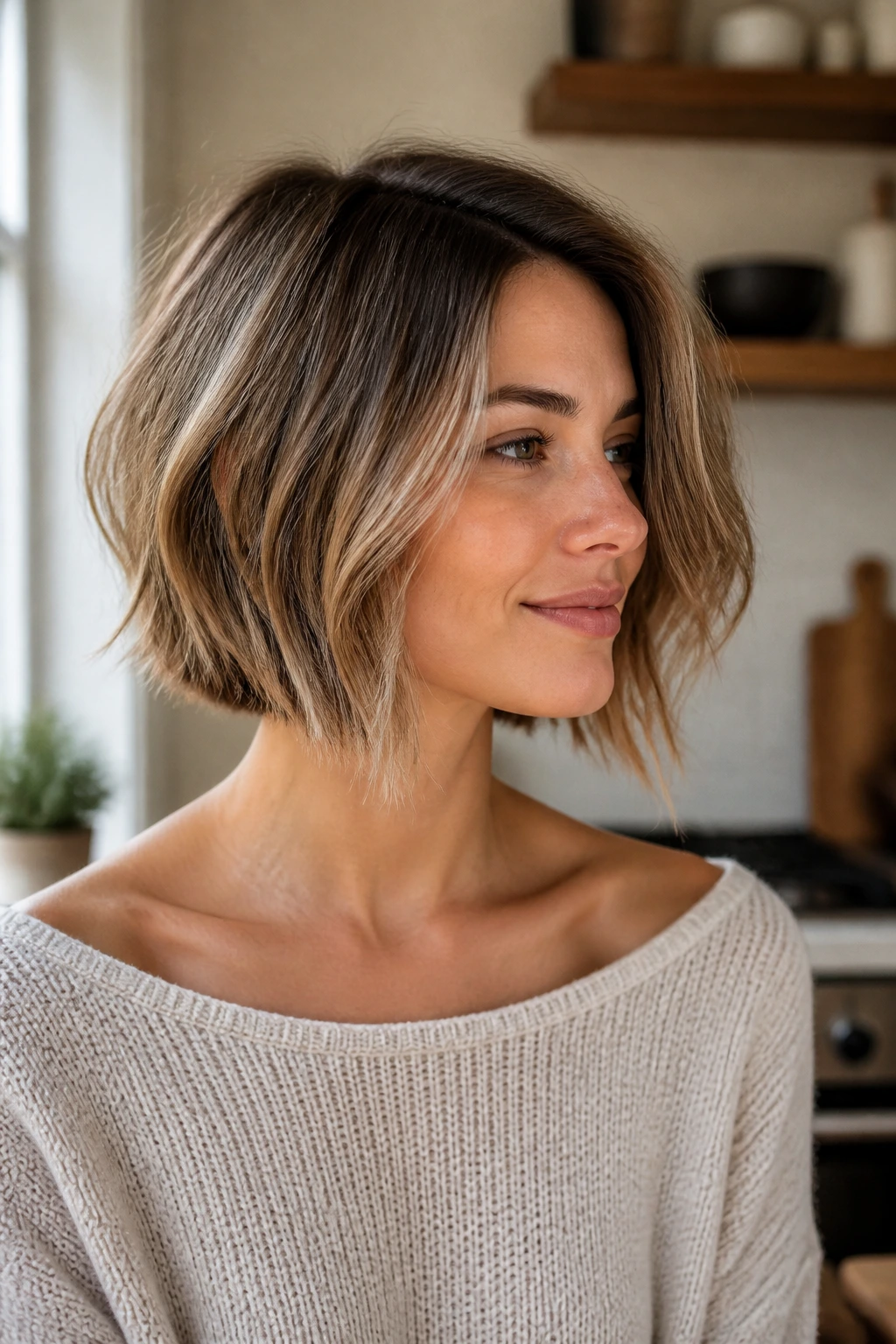
An A-line bob gives you that subtle angle from back to front, and the texture keeps the line from feeling too proper. The back sits a little shorter, the front drifts lower, and the whole shape feels longer and slimmer around the jaw.
This is one of the smarter choppy bob haircuts for someone who wants movement but still likes a clean silhouette. The front pieces can be lightly shattered at the ends, while the back stays compact. That balance matters. Too much texturing everywhere and the angle disappears.
The cut works especially well if your hair falls flat at the nape. A small amount of internal weight removal there can make the back lift instead of clinging to the neck.
5. Razored Bob With Curtain Bangs

The razor gives this bob its loose, airier edge. You can see it most clearly in the ends, where the hair splits into soft pieces instead of a solid line, and the curtain bangs echo that same openness around the eyes.
Why It Works
Razoring is useful when the hair is medium to thick and tends to feel heavy at the bottom. It removes bulk while keeping motion in the strand, which is different from just thinning everything out and hoping for the best. Hope is not a haircutting technique.
Curtain bangs suit this cut because they bridge the forehead and cheekbones nicely. They also make the bob feel more grown-in and less rigid. If your hair is naturally straight, ask for the bangs to be a touch longer through the center so they split more easily.
Pro tip: a quick pass with a flat iron at the very ends — just a half-turn, not a curl — keeps the razor texture visible without making the bob frizzy.
6. Inverted Bob With Choppy Nape
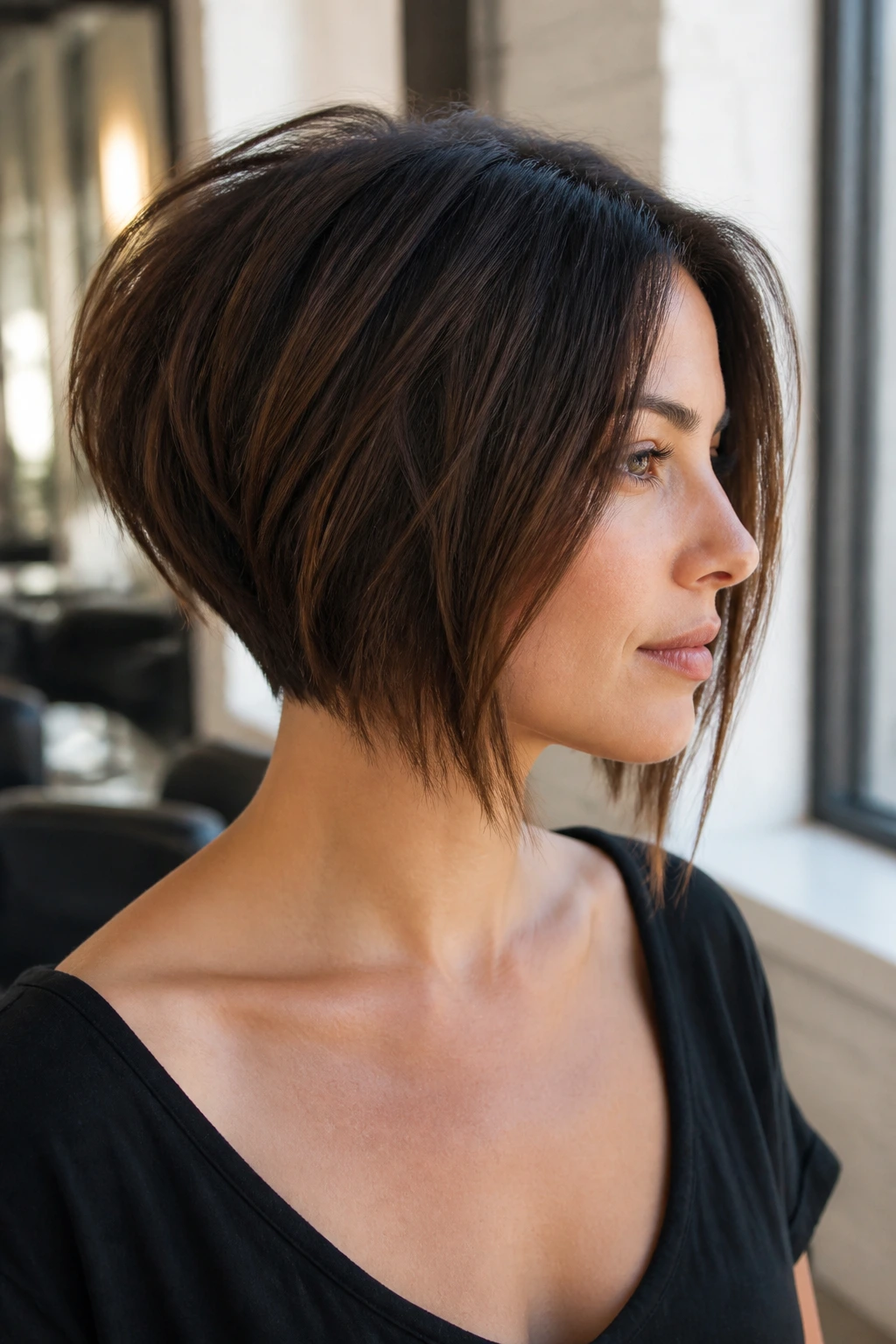
This is the bob with a little backbone. The back is shorter and stacked, the front is longer, and the choppy nape keeps the cut from feeling too stiff or dated.
I like this shape on hair that needs lift at the crown. The stacked angle gives you that built-in push upward, and the choppy back layers stop the silhouette from becoming too formal. It’s a sharper cut, but it doesn’t have to look sharp-edged.
Picture it on a neck-length that clears the collar. Nice, right? The shape opens up the profile and makes earrings, turtlenecks, and high collars play nicely with the haircut instead of fighting it.
7. Beach-Wave Bob With Hidden Layers
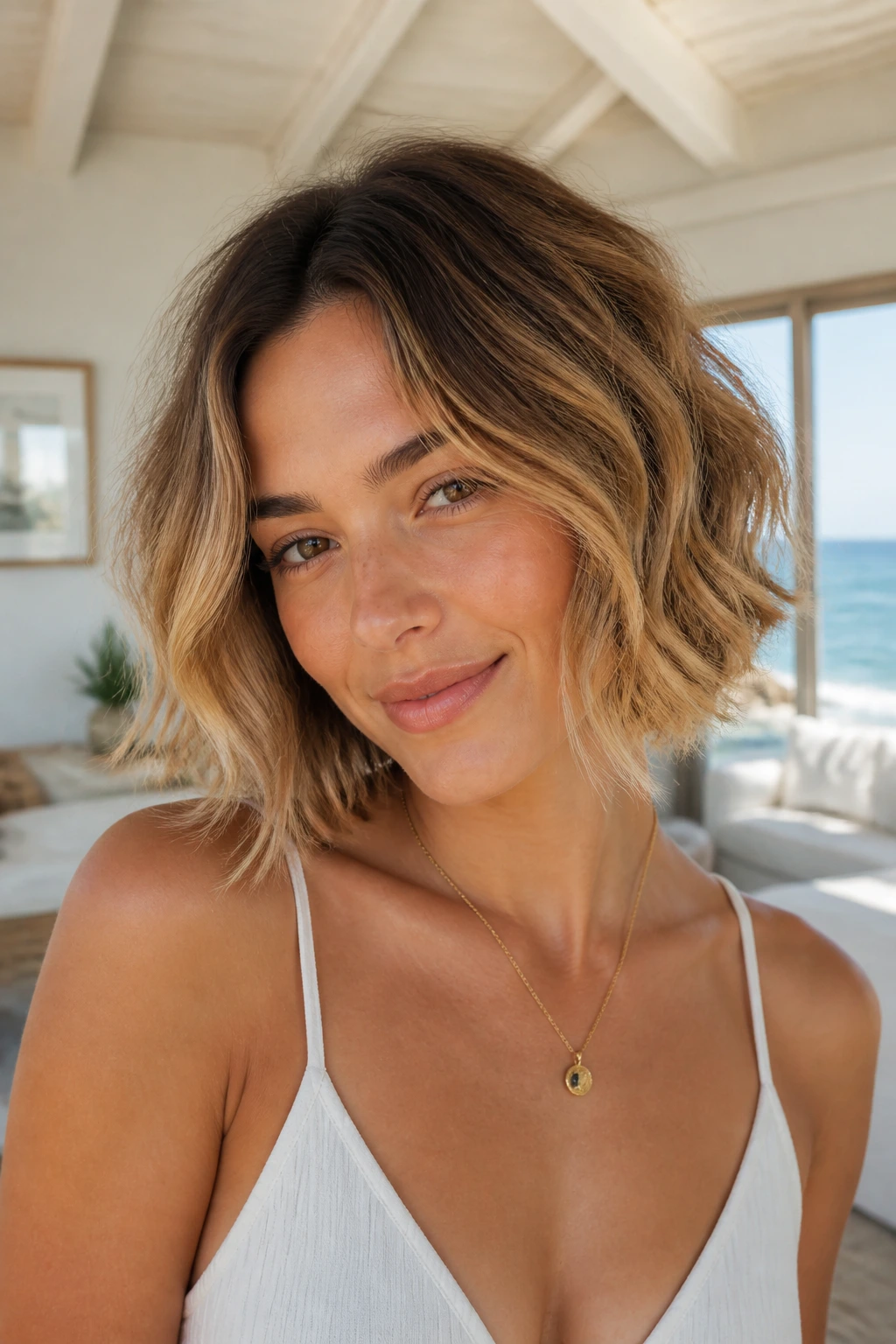
A beach-wave bob can go wrong fast if the layers are too visible. The better version hides most of the structural work inside the cut, so the surface still reads soft and casual.
This is one of those choppy bob haircuts that looks easy because the haircut did the work first. When the ends are lightly point-cut and the layers sit underneath, the hair bends into loose waves instead of flopping into one curve. A salt spray or a light foam on damp hair helps, but the haircut is doing more than the product ever will.
What to Ask For
Tell your stylist you want movement without obvious steps. That phrase matters. You want the bob to ripple, not to show every layer like a staircase.
Works best on hair that already bends a little on its own. On very straight hair, you’ll need some heat to coax the wave into place. On very curly hair, the layers should be placed with the shrinkage in mind.
8. Blunt Bob With Point-Cut Ends
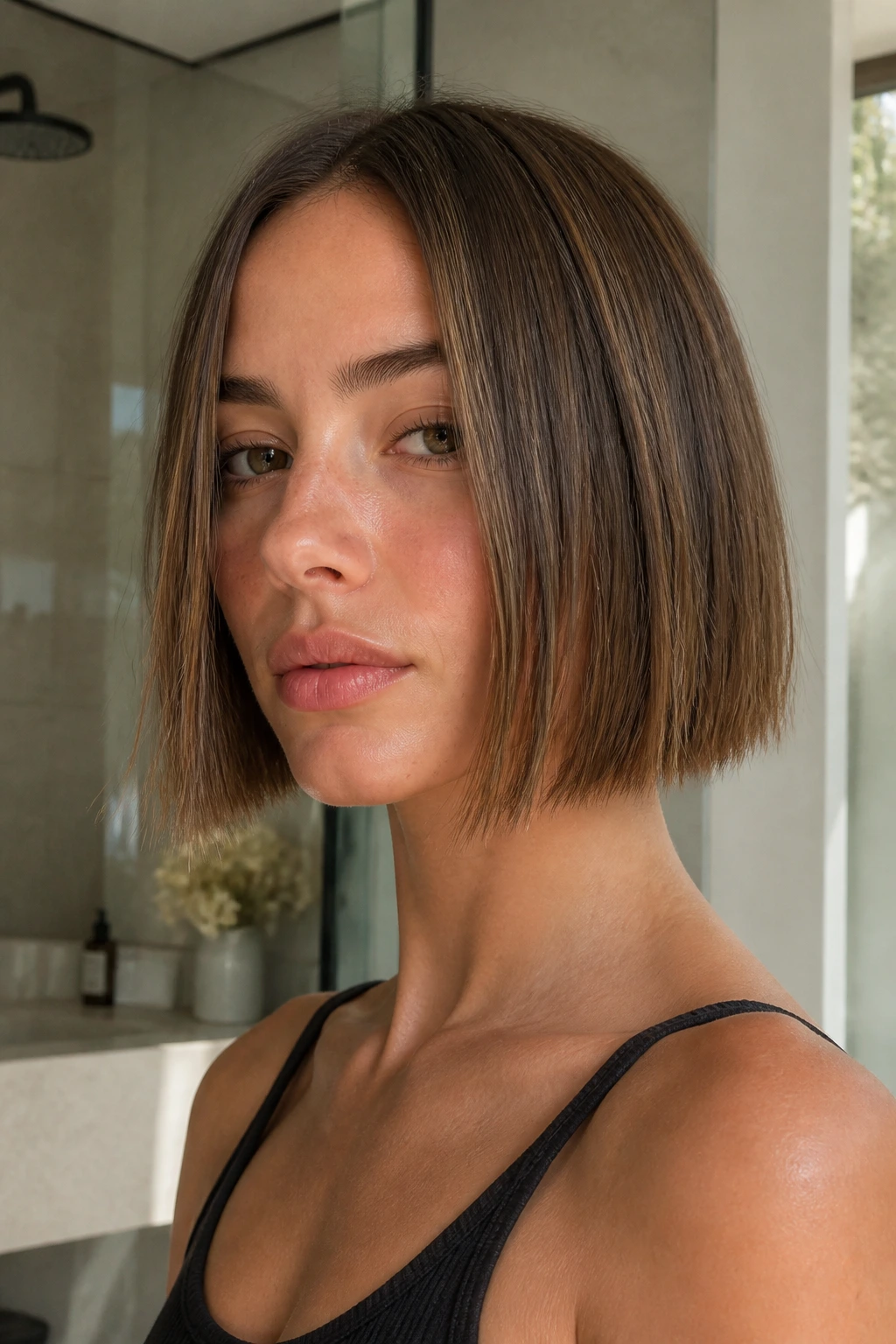
A blunt bob doesn’t have to be stiff. Give the last quarter inch of the perimeter a point-cut finish, and the whole thing changes. The line stays strong, but the ends don’t sit there like a shelf.
That little adjustment is why I like this version for people who want polish with a softer edge. The haircut still reads structured, especially if it lands between the jaw and the neck, but it won’t feel as heavy as a fully blunt shape. It’s a subtle distinction, and it makes a real difference in the mirror.
If your hair is fine, keep the texturizing minimal. Too much removal and the ends start looking thin instead of broken up. On denser hair, the point-cutting can go a little deeper without losing the line.
9. Curly Choppy Bob With Rounded Shape
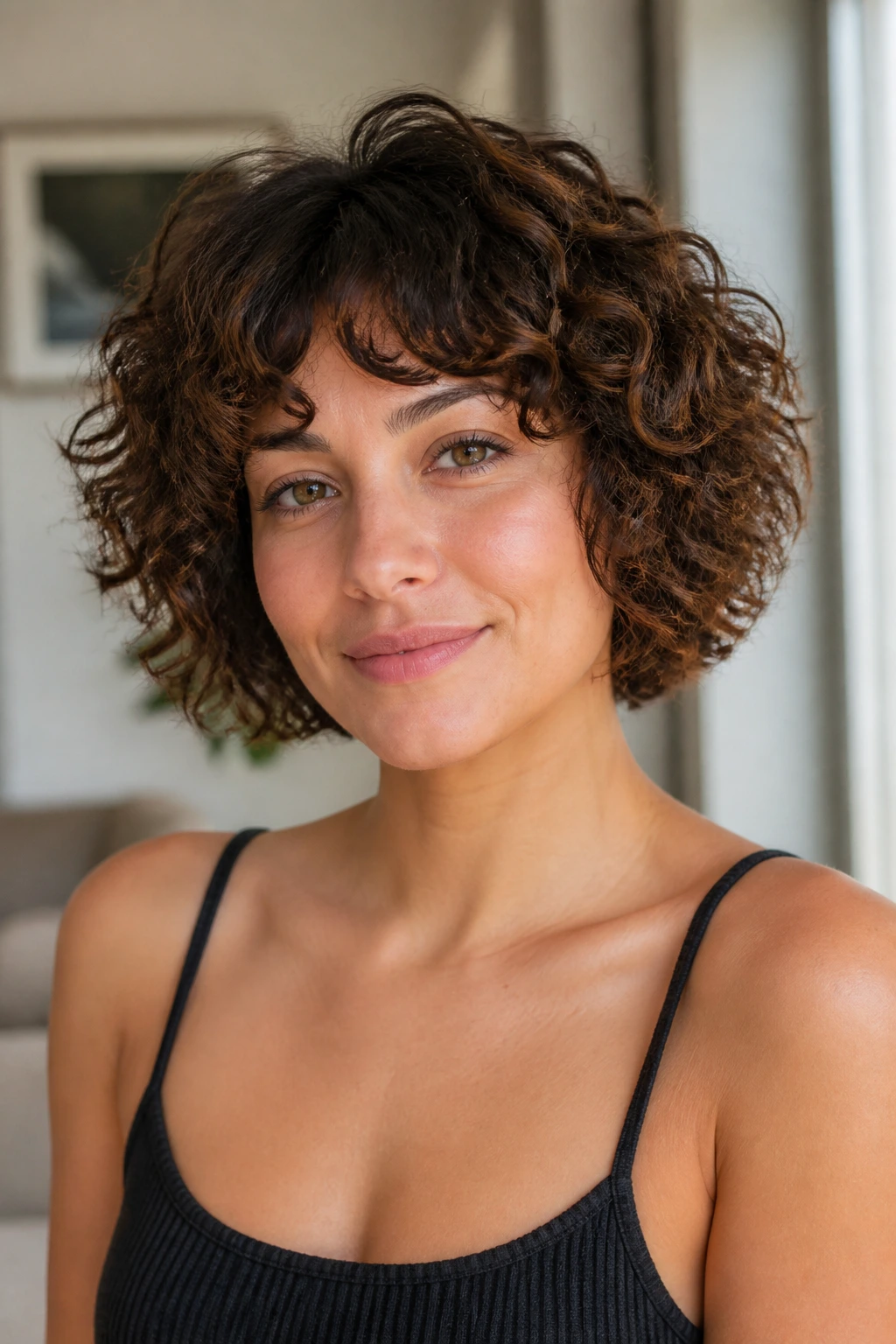
Curly hair and choppy bobs get along beautifully when the cut respects the curl pattern. The goal is not to flatten the curls into a bob outline. The goal is to shape the curls into a soft round cloud that still feels like a bob.
A dry cut often makes the most sense here because curl shrinkage can be sneaky. A chin-length bob on wet hair may land several inches shorter once it dries. That’s not a surprise you want on a Tuesday morning. Choppy layers should be placed where the curls need release, usually around the sides and lower back, so the shape stays round instead of triangular.
Best for
- Wavy-curly hair that expands at the sides
- Dense curl patterns that need weight removed low in the shape
- People who are fine with a less exact silhouette
A curl cream plus a small amount of gel gives the ends definition without turning them crunchy.
10. Shaggy Bob With Bottleneck Bangs
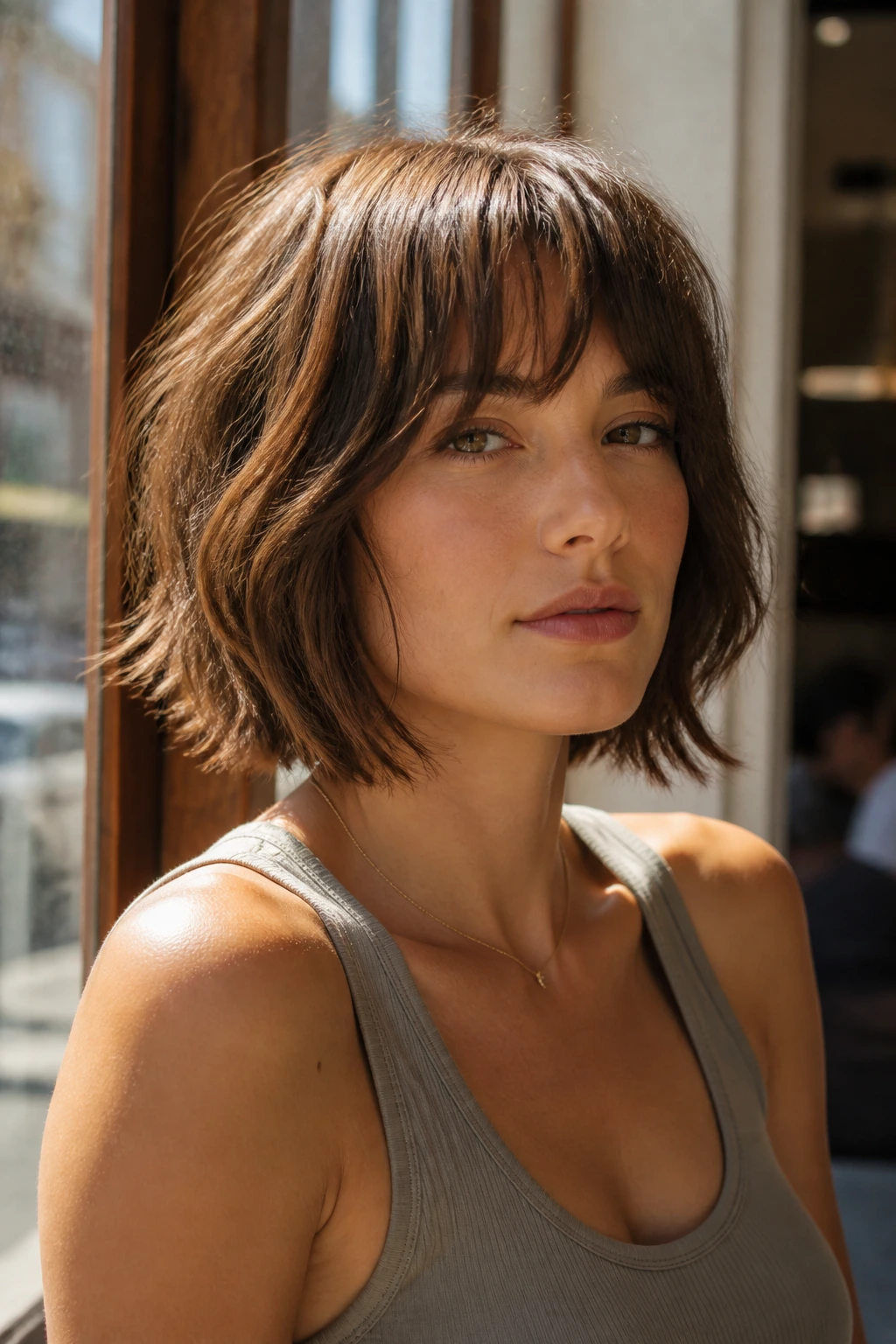
This is the bob for someone who likes a little mess in the good sense. The shag influence brings a relaxed crown, and bottleneck bangs soften the forehead without covering it with one heavy block.
The beauty here is the contrast. The bangs taper down at the sides, which frames the eyes, while the bob underneath stays piecey and broken. It feels lived-in on day one, not only after you’ve slept on it twice.
I’d choose this cut for hair that gets poofy when it’s cut too blunt. The layers steal some of that bulk and let the ends move. A light hand with finishing cream is enough; too much product and the fringe turns flat.
11. Stacked Bob With Soft Internal Lift
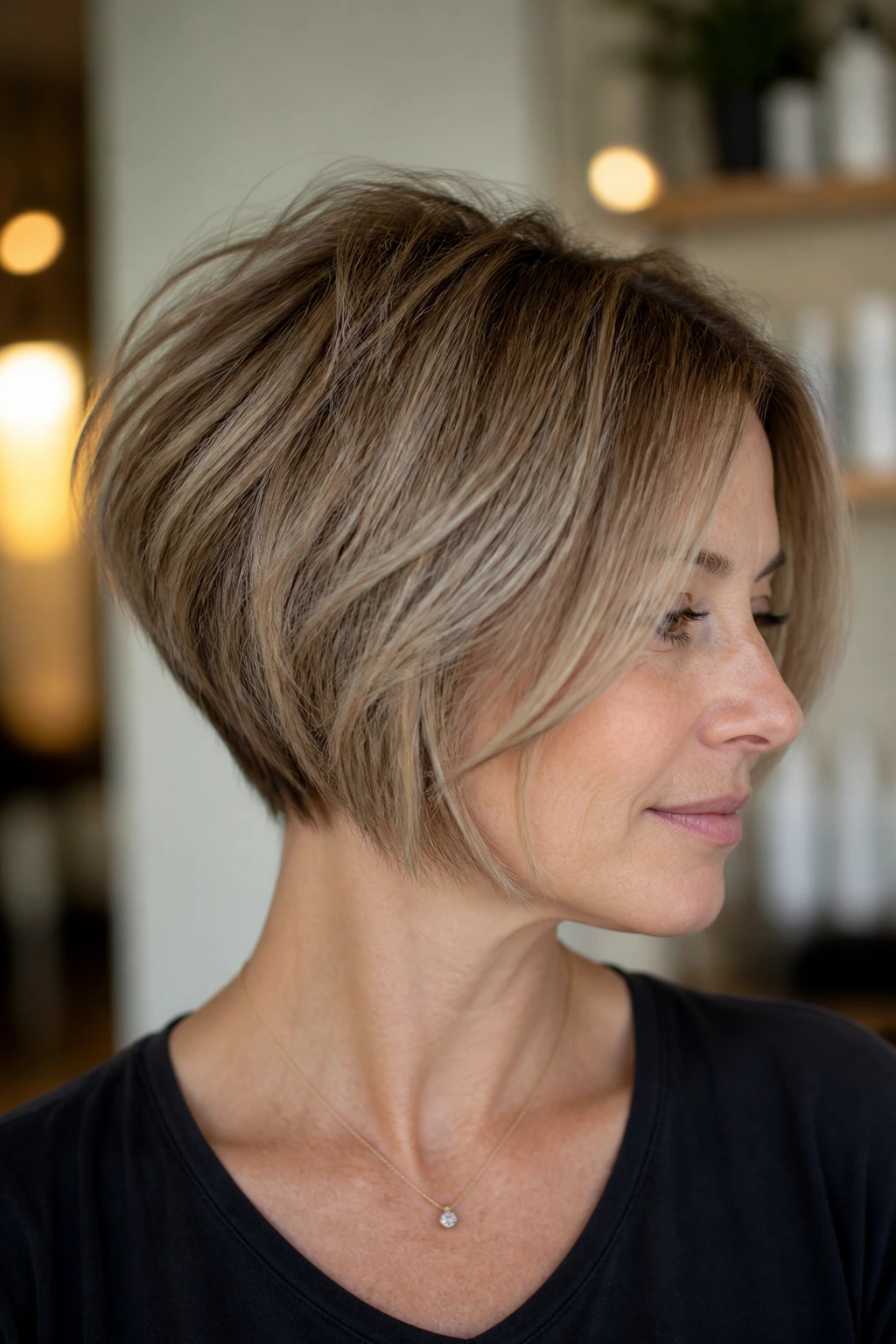
Stacked bobs can go hard and architectural if the back is cut too aggressively. So I prefer the softer version, where the stacking is there for lift but not so obvious that it steals the show.
This cut is a gift to fine or limp hair. The internal lift at the back helps the bob keep its shape, and the choppy texture through the crown makes the whole thing feel lighter. You get height where you want it and softness where you don’t.
Tiny detail that matters
Ask for the shortest layers to stay hidden under the top layer. Visible steps can make the haircut look old-school. Hidden steps make the bob feel fuller.
12. Side-Part Bob With Asymmetrical Movement
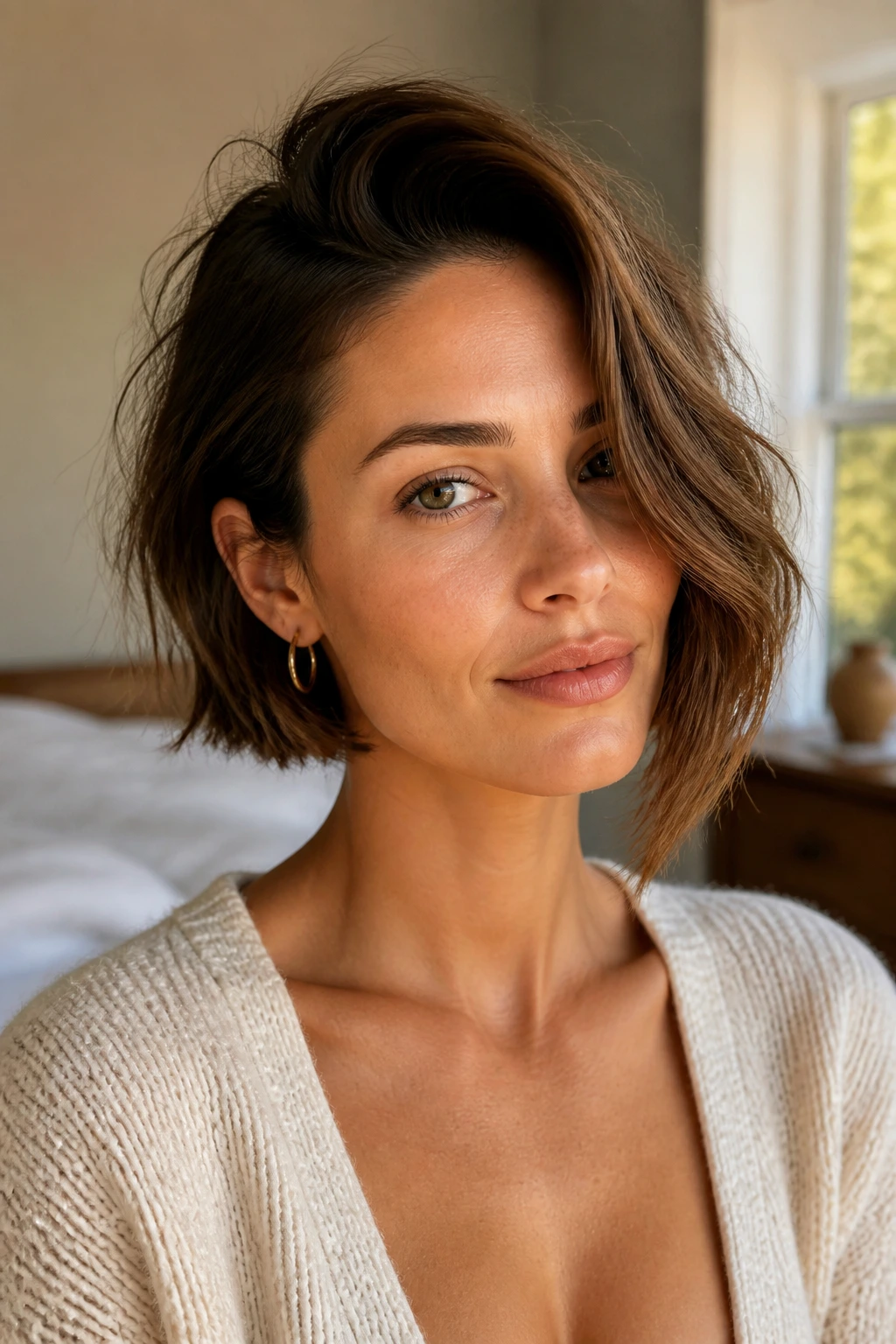
A side part does more than move the hair over. It changes the weight of the whole haircut. One side falls closer to the face, the other opens up, and that unevenness is exactly what gives this bob its lived-in feel.
This version looks especially good when the longer side brushes the collarbone and the shorter side sits just above the jaw. The mismatch is subtle, not theatrical. You want a bob that feels slightly off-center, not a haircut that is trying too hard to be edgy.
And yes, it can be very flattering on strong cheekbones. The sweeping front section creates a diagonal line, which tends to slim the face a bit and add motion around the eyes.
13. Jaw-Length Bob With Face-Framing Pieces
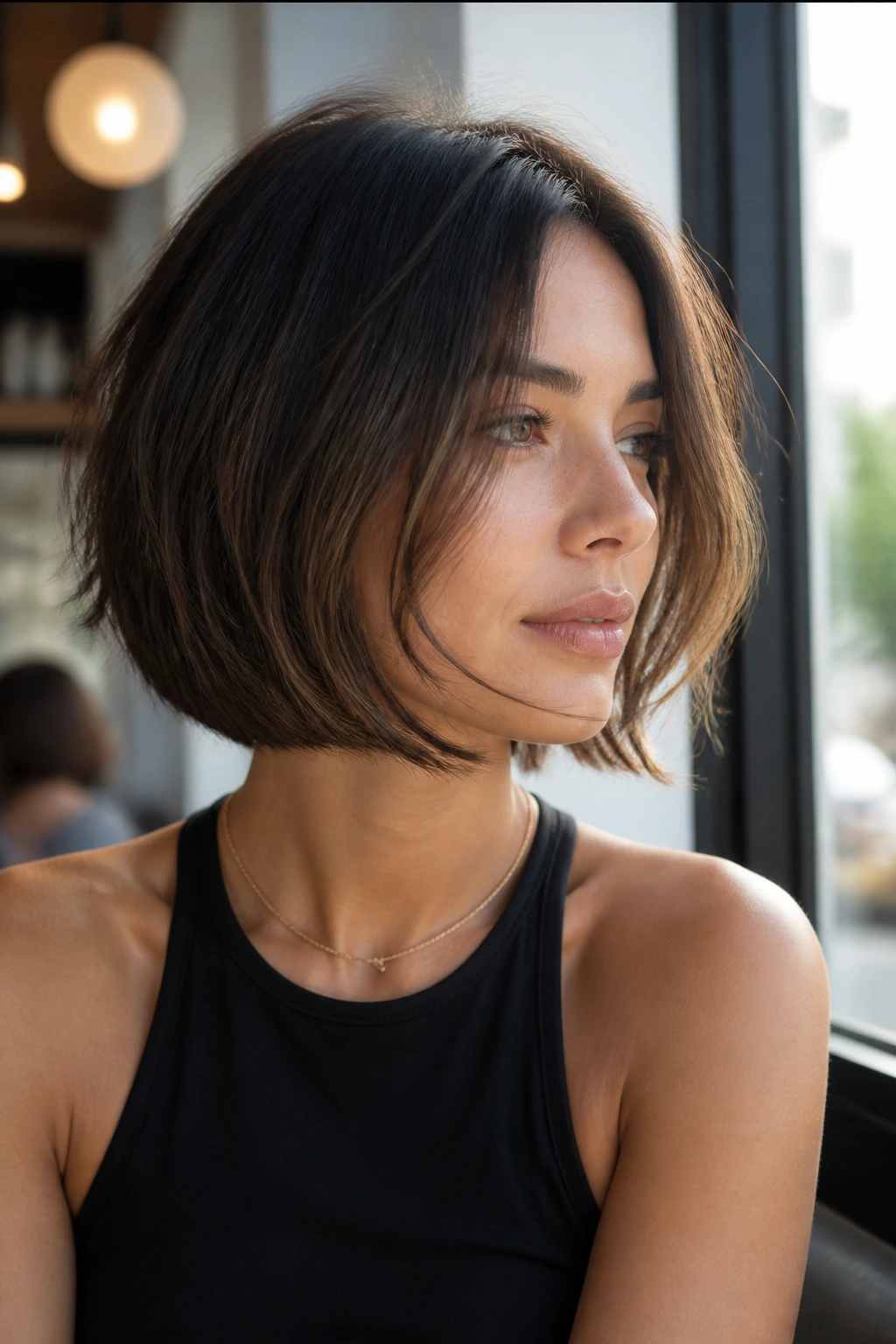
Jaw length is where a bob starts talking back. It’s short enough to feel fresh, long enough to tuck behind the ear, and close enough to the face that the front pieces really matter.
The choppy part lives in those face-framing strands. Keep them slightly longer than the rest of the perimeter, then break them up with point cutting so they curve around the cheeks instead of sitting like blunt strips. This version has a neat trick: it can look sharp in profile and soft from the front.
I like it on people who want their jawline emphasized. That includes square faces, heart shapes, and anyone whose cheekbones deserve a little help from the haircut.
14. Undercut Bob With Airy Crown
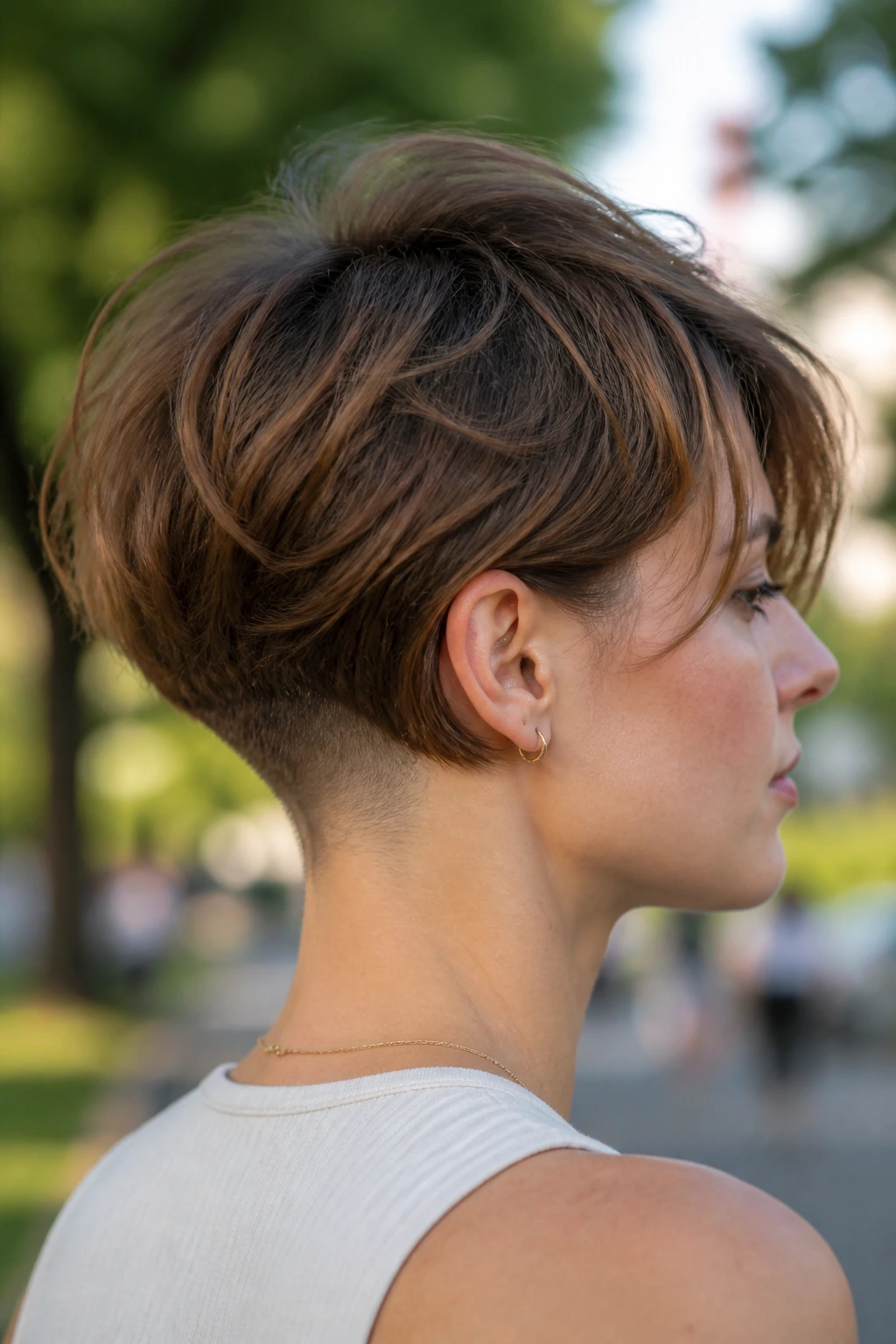
If your hair is thick, this one can save you a lot of frustration. An undercut in the nape or lower back removes hidden bulk, which lets the top layer sit lighter and swing better.
The crown stays airy because the weight underneath isn’t dragging it down. That means the bob feels less like a helmet and more like a shape with space in it. I would not use this on very fine hair unless the density is surprisingly strong; you don’t want to remove support that the hair already struggles to provide.
Useful note
The undercut doesn’t have to be dramatic. Even a small internal reduction can change how the bob falls and how long it stays off the neck.
15. Feathered Bob With Wispy Ends
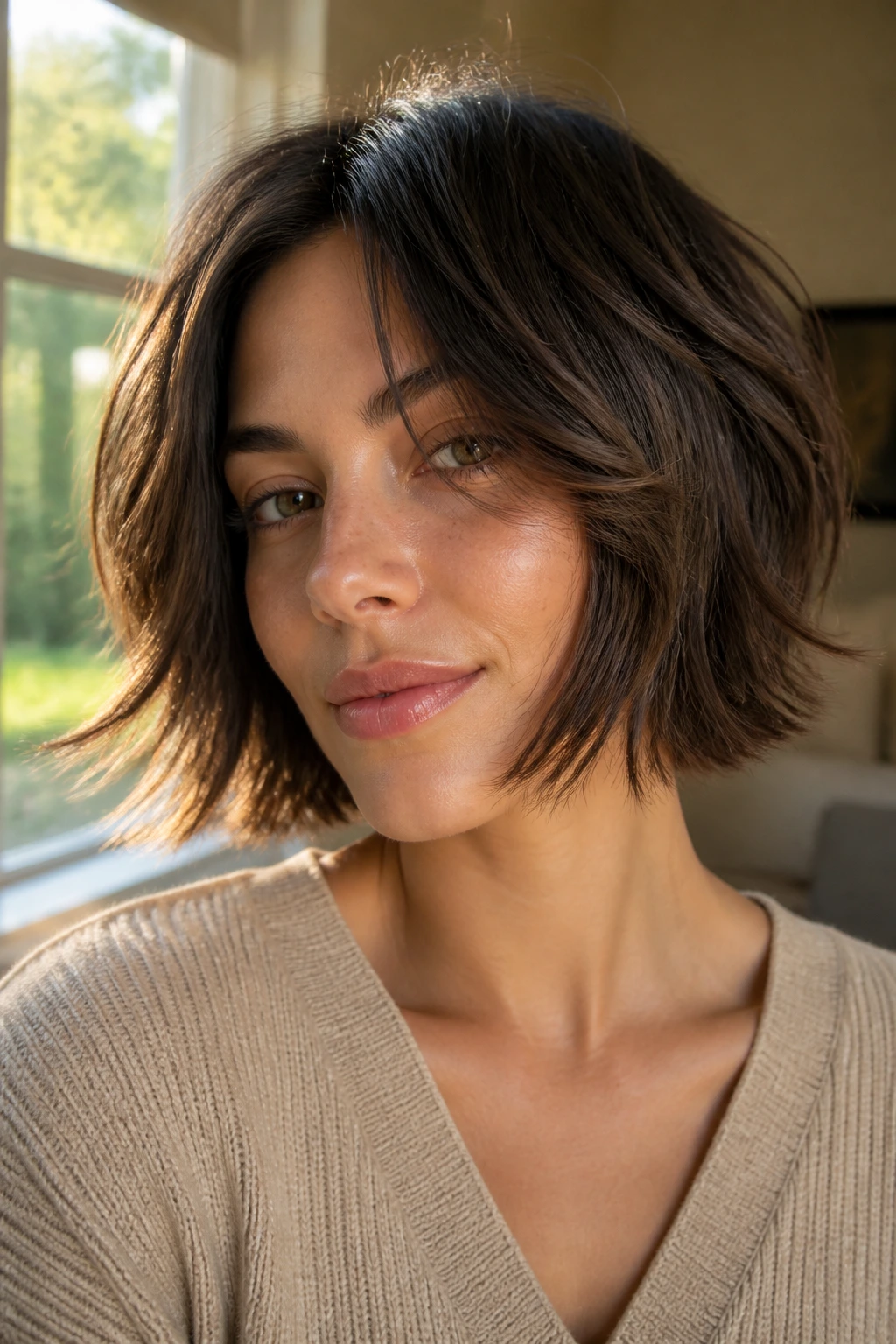
Feathered ends give a bob a softer finish than blunt chopping does. The strands taper and separate, so the haircut looks brushed through even when you’ve done very little to it.
This is a good pick if you like hair that moves when you move. It’s also a smart option for medium-density hair that wants shape but not too much structure. Too many feathers, though, and the ends start looking like they’ve been overworked. I like the texture to show up mainly around the perimeter and the front.
A little shine spray on the outer layer can make this cut look more expensive than it has any right to. The texture catches the eye, but the sheen keeps it from looking dry.
16. Italian Bob With Subtle Texture
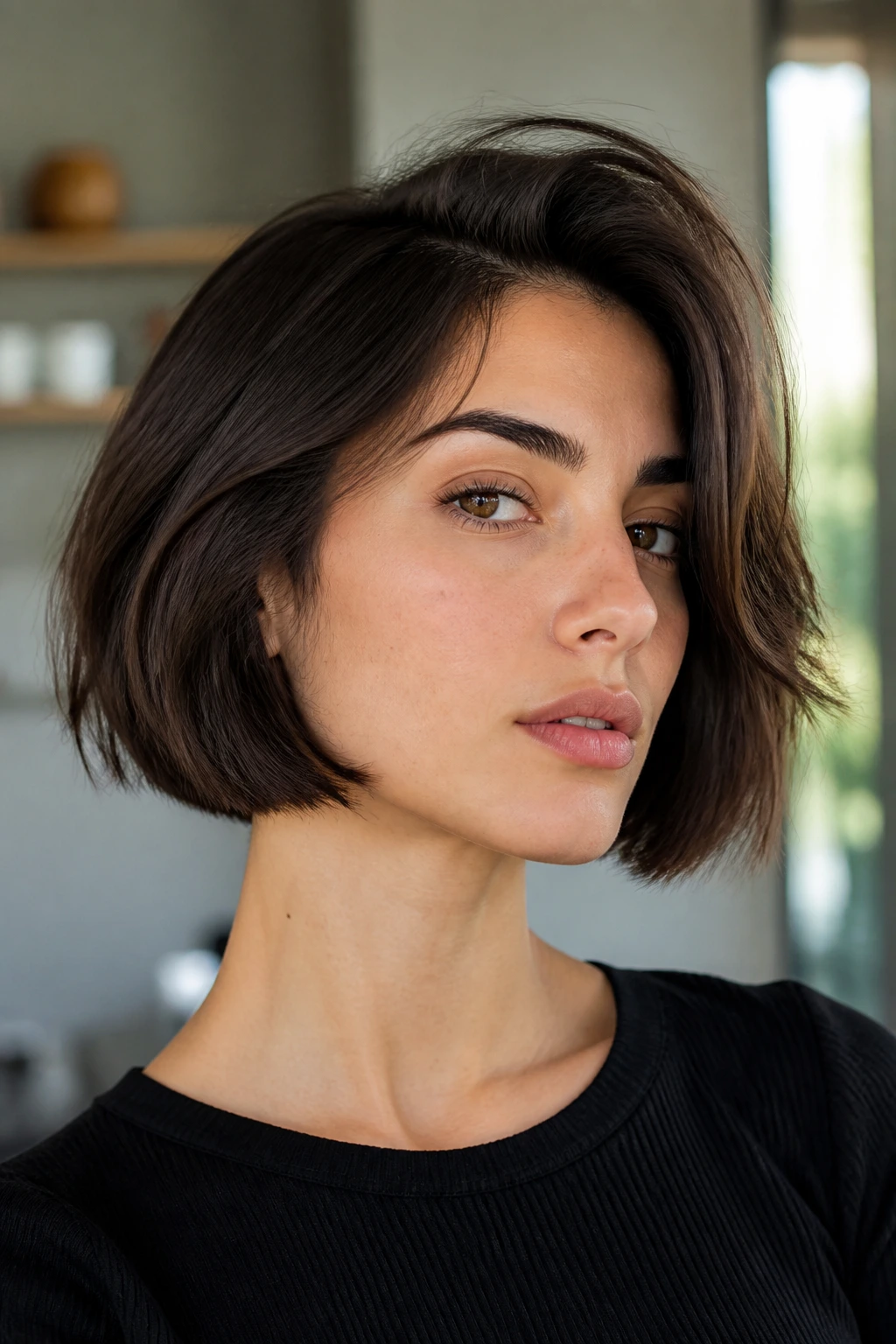
The Italian bob is all about fullness and clean lines, so the choppy version has to be handled with a light hand. You want enough texture to keep the shape from sitting flat, but not so much that the bob loses its elegant weight.
This cut usually lands around the jaw or just below it, and the ends are soft enough to move, not so broken that they disappear. It’s a nice choice if you want a bob that feels a little glossy and a little undone at the same time.
Straight hair wears this well because the outline stays visible. Wavy hair can do it too, but the texture should be kept subtle so the bob doesn’t become too round or too busy around the cheeks.
17. Tousled Bob With Deep Side Sweep

A deep side sweep changes the whole mood of a bob. It pushes volume to one side, creates a little lift at the roots, and makes the texture feel deliberate instead of accidental.
This is one of my favorite choppy bob haircuts for evening wear because it has movement without needing big curls. A soft bend through the mid-lengths and a little separation at the ends is enough. You get that swept, slightly dramatic shape that still looks relaxed.
How it behaves
The front tends to fall beautifully around the brow and temple, while the opposite side can be tucked behind the ear to show the neck. That contrast keeps the cut from going too symmetrical, which is where a lot of bobs start looking plain.
18. Ear-Length Bob With Grown-Out Fringe

Short bobs can feel brave or fussy, depending on the cut. The ear-length version lands in brave territory when the fringe is grown out just enough to split and fall naturally.
The trick is to keep the outline broken, not severe. A small amount of texture around the sides prevents the haircut from reading like a polished helmet. I like this on people with delicate features or strong brows, because the short length draws attention upward and keeps the face open.
It does ask for maintenance. There’s no pretending otherwise. But if you like a haircut that looks sharp in a black sweater and a good pair of earrings, this one has real personality.
19. Thick-Hair Choppy Bob With Weight Removed

Thick hair needs room to move. Without internal weight removal, a bob can puff outward at the sides and feel like a brick at the bottom. This version solves that by taking bulk out from underneath while leaving the outer shape intact.
The choppiness should live in the interior first, not only on the surface. That way, the top layer falls cleanly over a lighter core. The silhouette stays bob-like instead of expanding into a triangle.
A stylist who knows thick hair will cut this with patience. That part matters. Rushing through bulk removal is how you end up with holes and uneven patches that show the second you twist your head.
20. Fine-Hair Choppy Bob With Micro-Layers
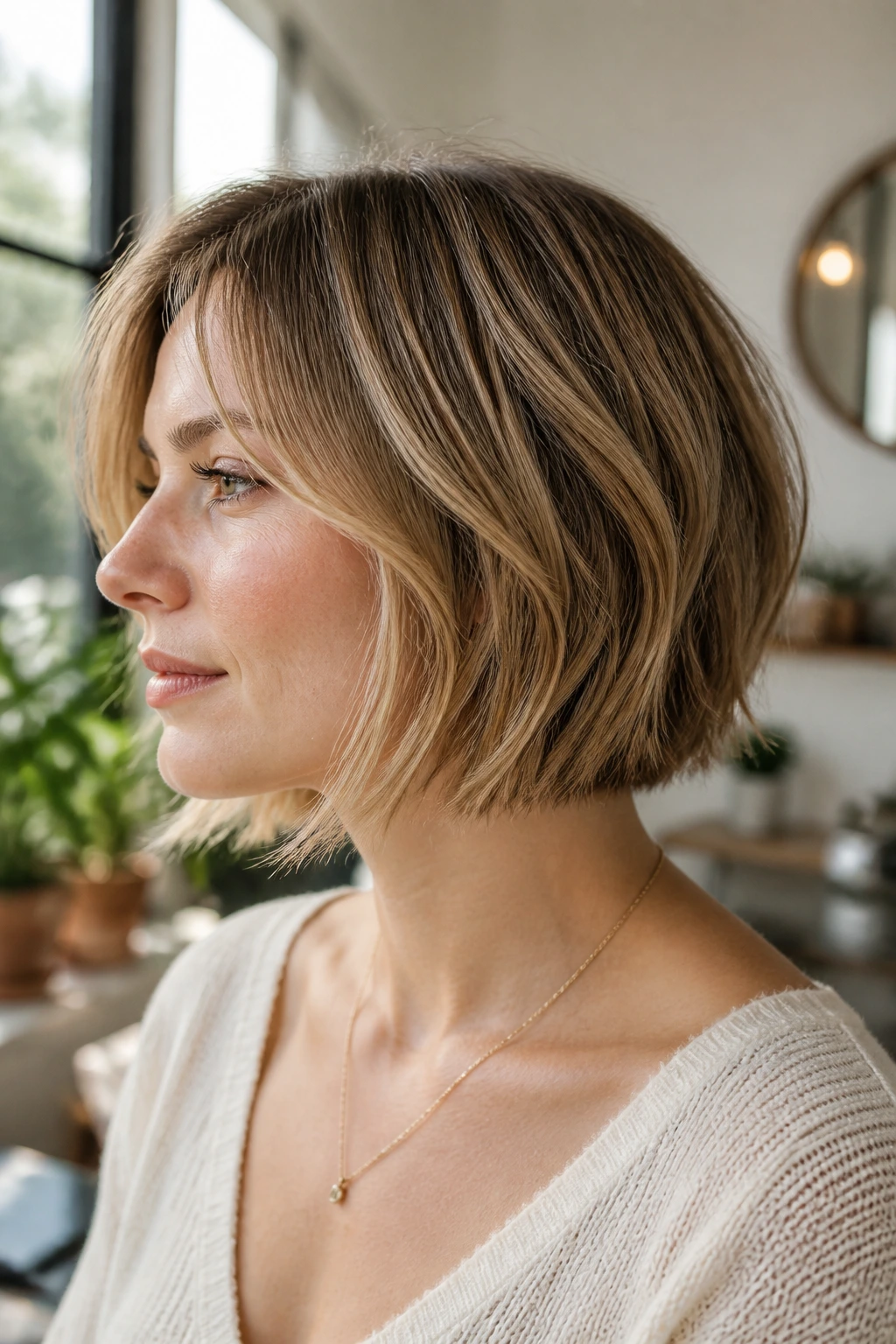
Fine hair needs texture, but it needs the right kind. Too many short layers can make the ends disappear, which is the last thing you want in a bob that’s supposed to feel full.
Micro-layers are the safer move. They’re small, subtle, and mostly hidden inside the cut, which gives the hair lift without stripping away the perimeter. The bob still looks solid, but the roots get a little space to breathe.
Best styling pair
A lightweight mousse at the roots and a dry texture spray at the ends. Skip heavy creams. They flatten fine hair fast, and then you’re stuck trying to rescue the shape with heat.
21. Bixie-Bob Hybrid With Jagged Ends
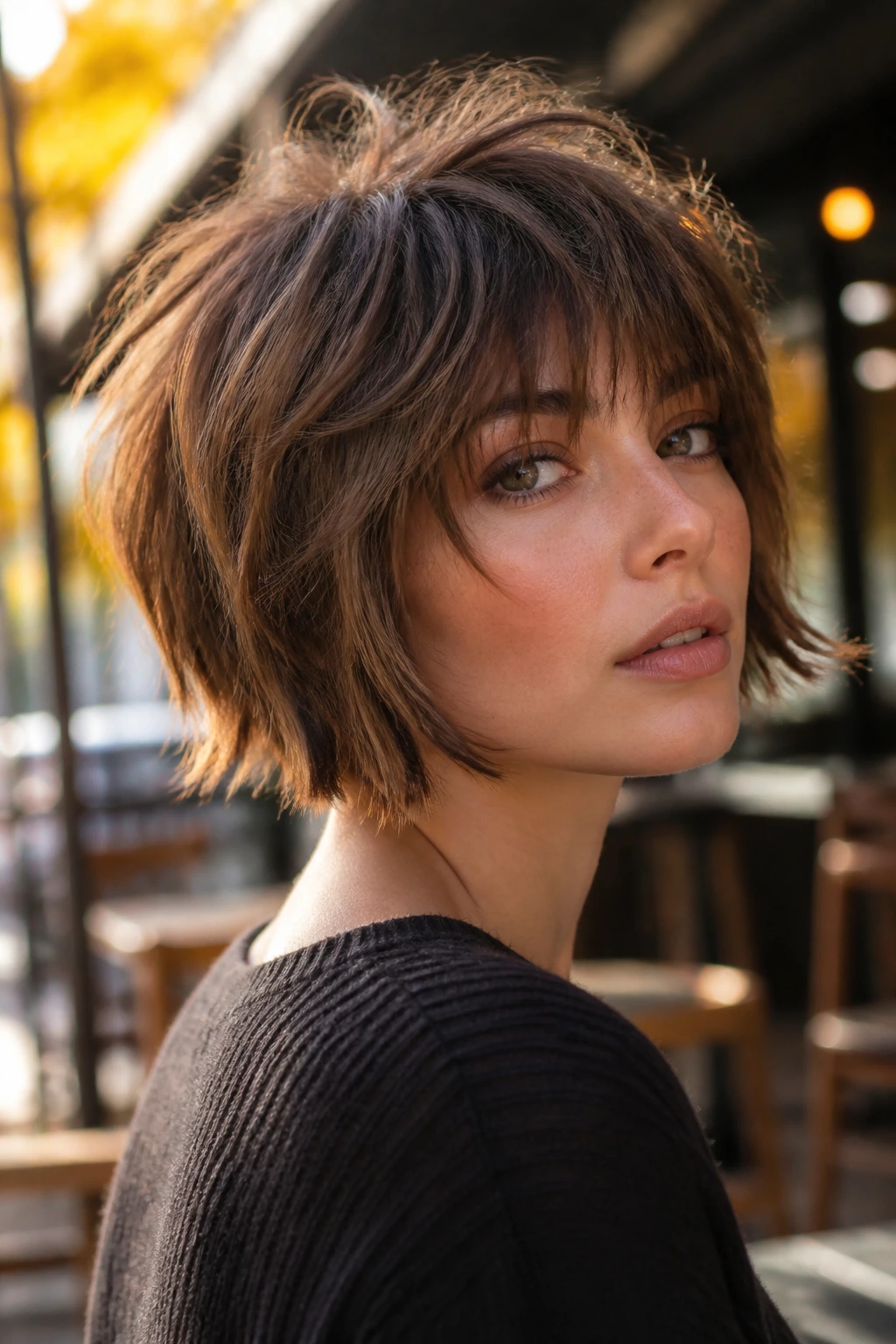
This is where the bob borrows a little edge from the pixie and a little body from the bob. The result is short, jagged, and full of movement, with enough length to feel feminine if you want it to.
The jagged ends are the point. They keep the haircut from reading as one solid block and give the whole shape a bit of lift around the face and crown. If you like shorter hair but don’t want a super precise outline, this cut has a nice bit of tension in it.
It’s especially good for people who want to see texture from every angle. Hair that naturally bends or flips makes this cut come alive.
22. Modern Pageboy Bob With Broken Outline
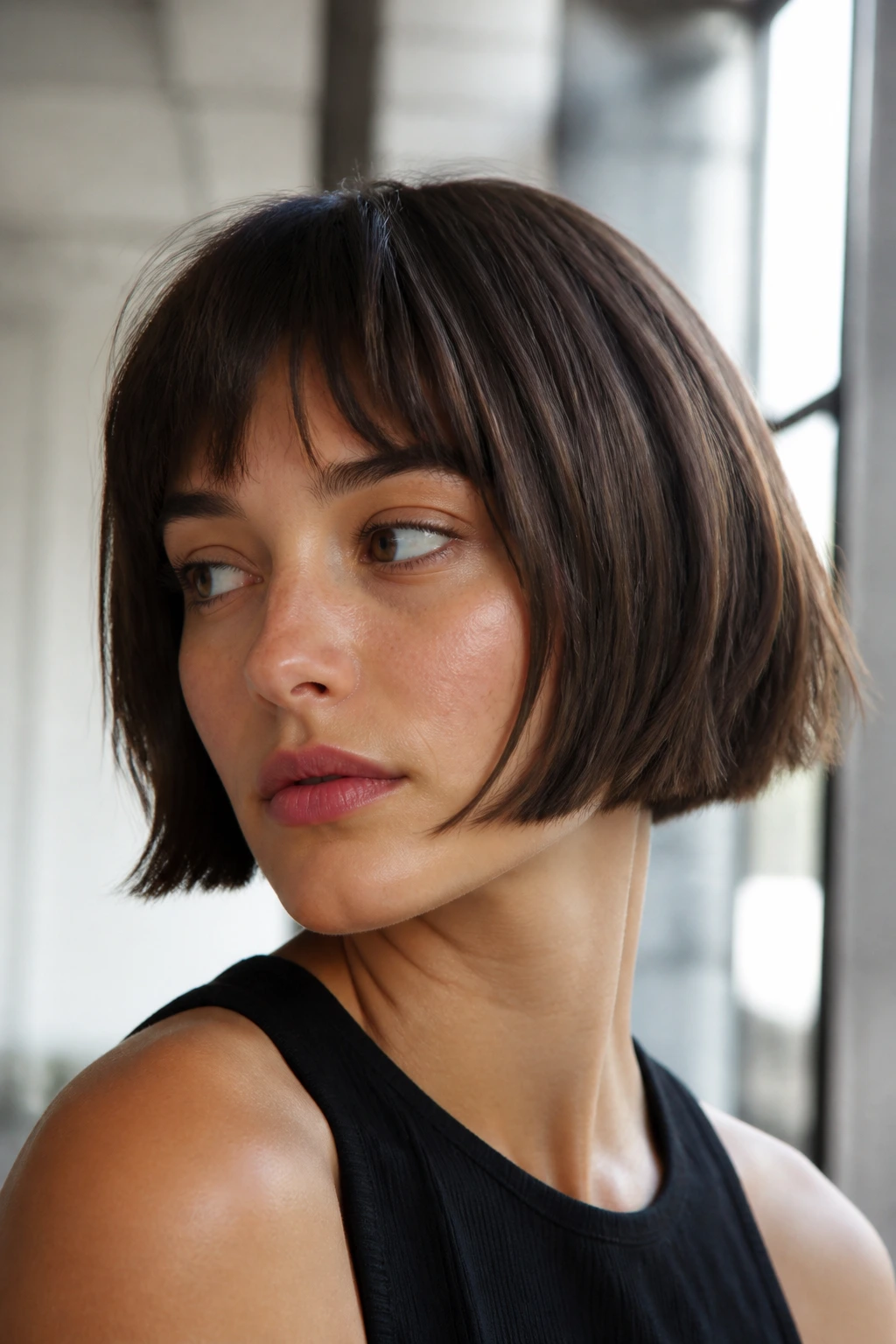
A pageboy can sound old-fashioned until you break the outline up a little. Then it becomes sleek, cheeky, and far less stiff than the classic version.
The shape usually curves under, but the ends are lightly shattered so the curve doesn’t look painted on. I like this on straight hair because the line stays visible, yet the broken finish keeps it from feeling too severe. There’s a clean, almost graphic quality to it.
It’s also one of the better choices if you like hair that sits close to the head. Not flat. Close. That distinction matters. The best pageboy-inspired bob has shape, movement, and a line that bends instead of snapping.
What Makes a Choppy Bob Look Lived-In Instead of Scruffy
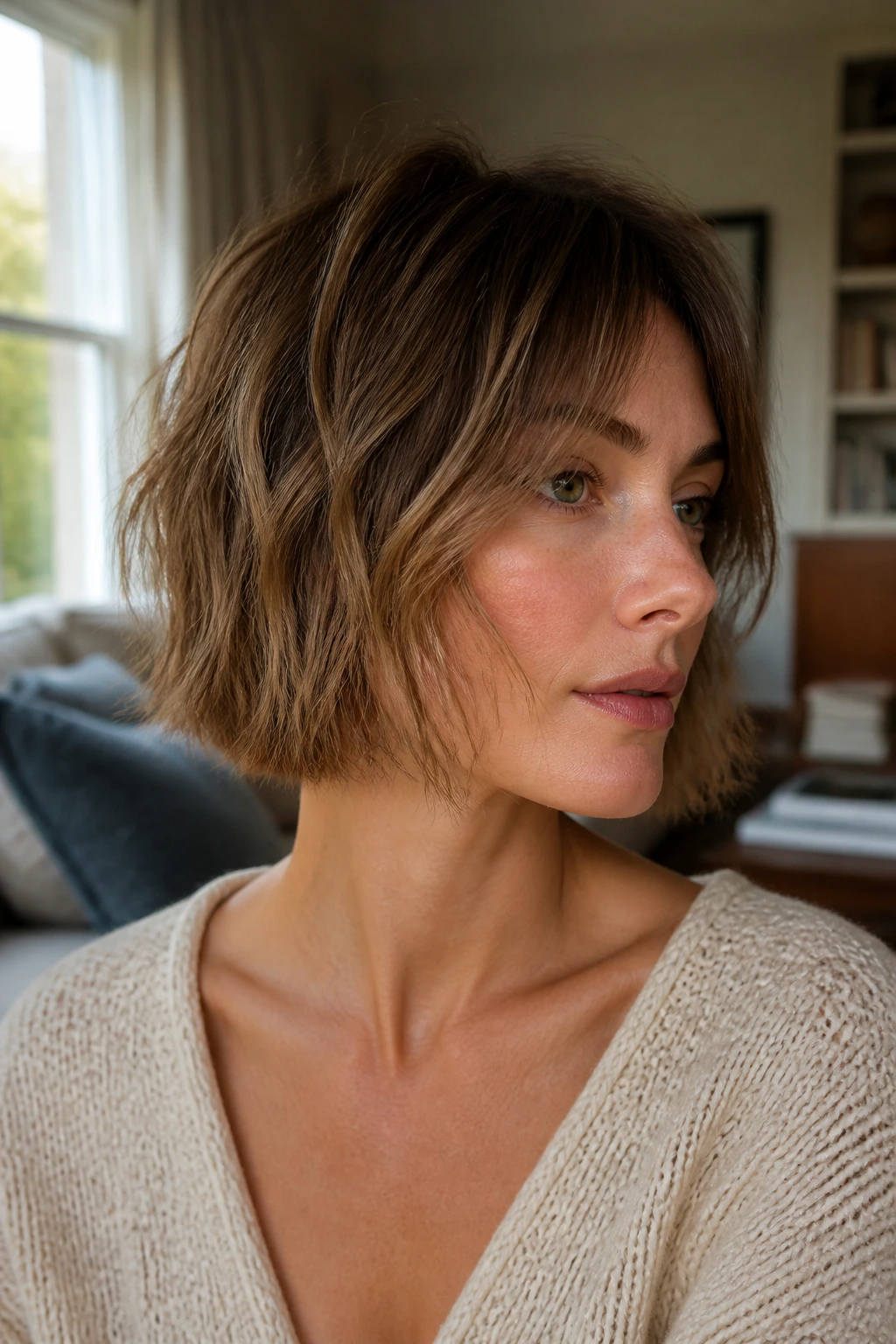
The difference lives in the perimeter. A lived-in bob still has a shape you can trace with your eye, even when the ends are soft. Scruffy hair just looks as if the haircut gave up halfway through.
The other place to look is the interior. A good choppy bob has lightness built inside the shape, not sprayed all over like confetti. When the weight is removed in the right sections — through the nape, around the crown, or along the cheek line — the bob moves. When texture is placed randomly, it frays.
Finish matters too. A little bend, a little separation, and a bit of shine keep the cut from drifting into frizz. I like the texture to look touched, not fried.
How to Choose the Right Version for Your Hair Type and Face Shape
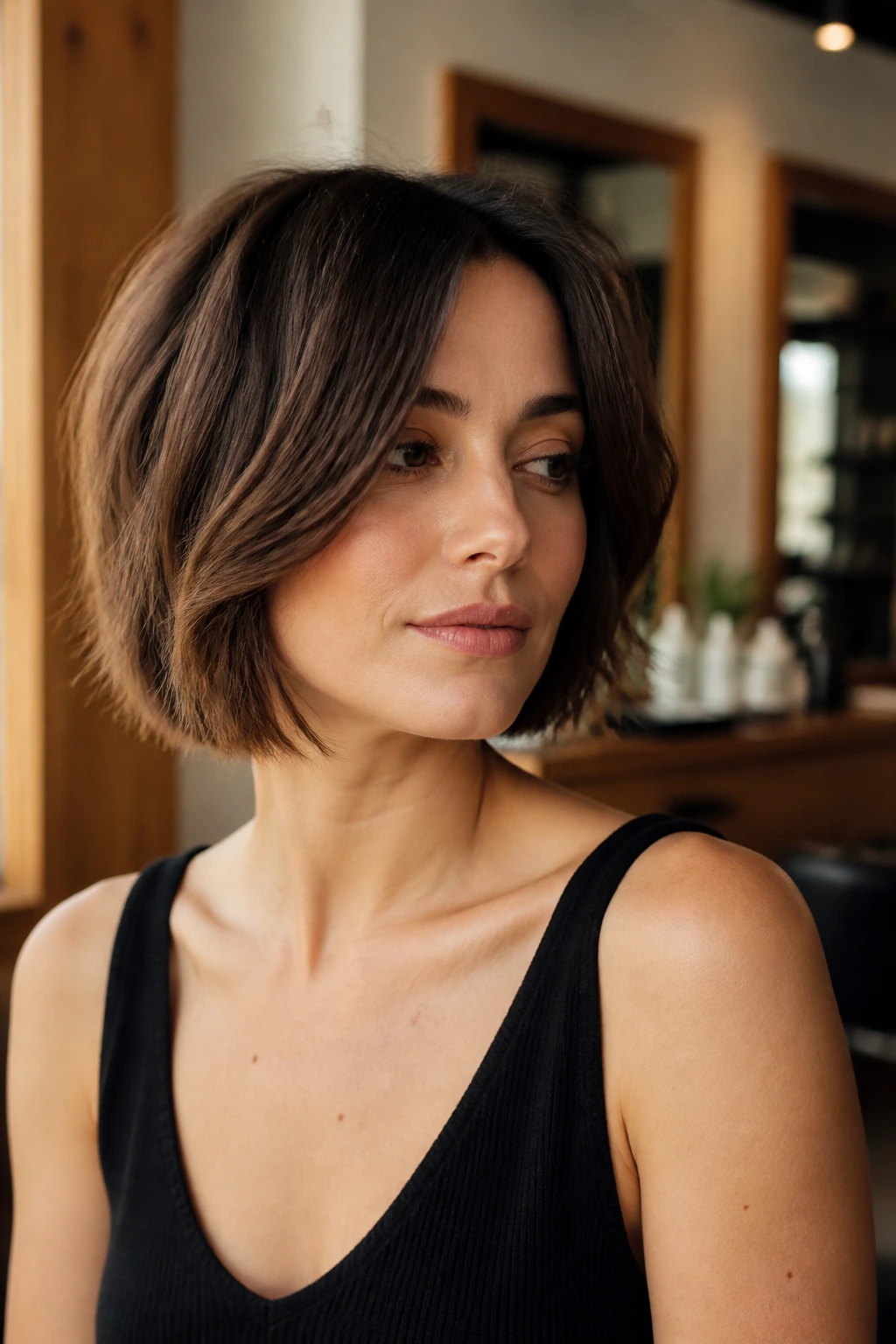
Fine hair does best with cuts that keep the perimeter intact: the blunt bob with point-cut ends, the fine-hair micro-layer bob, and the Italian bob with subtle texture. These keep the hair from looking thin at the bottom, which is the fastest way to ruin the whole effect.
Thick hair usually wants hidden bulk removal, a shaped nape, or an undercut. The collarbone shag bob, the thick-hair choppy bob, and the inverted bob can all handle that density without turning into a puffball.
Round faces tend to like length that hits the chin or below, plus a little asymmetry or front length. Long faces often look better with a French bob, jaw-length bob, or a fringe that breaks up the vertical line. Square faces can soften up nicely with a feathered bob, curtain bangs, or rounded curls around the jaw.
And if you are stuck between two lengths, choose the one that gives you more styling options. Hair that can be tucked, bent, clipped, or swept aside tends to stay interesting longer. Boring hair is usually just hair with too few moves.
What to Ask Your Stylist in the Chair

Bring two ideas, not twenty. Say what length you want, then describe the kind of texture you mean. “Choppy” can mean a lot of things, and if you don’t clarify, one stylist may give you soft broken ends while another reaches for heavy texturizing.
Ask for point-cutting or slide-cutting if you want the ends to look broken up. Ask where the weight should stay, too. A bob with texture on top but no structure below can go fluffy fast. A bob with a firm perimeter and lighter interior usually behaves better.
If your hair is wavy or curly, talk about shrinkage before the scissors come out. If your hair is fine, tell the stylist you do not want the ends thinned into transparency. If your hair is dense, ask where bulk can come out without leaving holes. Simple language helps. A lot.
Tools and Products That Actually Help

- Sharp haircutting scissors: For at-home trimming of only the tiniest fringe nudges; anything bigger belongs with a stylist.
- Wide-tooth comb: Good for distributing conditioner and detangling without puffing up the texture.
- Blow-dryer with concentrator nozzle: Gives you cleaner direction at the roots and less frizz at the ends.
- 1-inch curling iron or flat iron: Handy for bending just the front pieces or breaking up a too-straight finish.
- Lightweight mousse: Adds root lift and keeps the bob from collapsing after an hour.
- Texture spray: Useful when you want separation and grit without a sticky finish.
- Dry shampoo: Helps day-two hair keep its shape and keeps the crown from looking oily.
- Small round brush: Good for beveling the ends under or out, depending on the cut.
- Sectioning clips: Make styling faster, especially if you have thick or curly hair.
- Shine spray or light serum: Best on the outer layer only; too much will kill the lived-in look.
How to Wear the Texture Day to Day

Finish: The easiest version is usually the one with a soft root lift and a slight bend at the ends. Rough-dry the hair until it’s about 80 percent dry, then shape only the front and perimeter with a brush or iron. If you keep reworking every section, the hair starts looking overmanaged.
Parting: A middle part makes the texture feel clean and modern. A side part gives the bob more volume and a little attitude. If your cowlick is stubborn, work with it. Fighting a cowlick for a bob haircut is a losing hobby.
Outfit mood: Collarbones, necklaces, hoop earrings, and open necklines tend to show off a bob well because they leave the cut room to move. High collars can work too, but then the texture needs more lift around the jaw so the hair doesn’t disappear into the fabric.
Day-to-night shift: Pin one side back with a small clip, add a little extra bend to the front pieces, and mist the ends with texture spray. That’s enough to take a daytime bob into evening without starting over.
How to Keep the Shape Between Trims
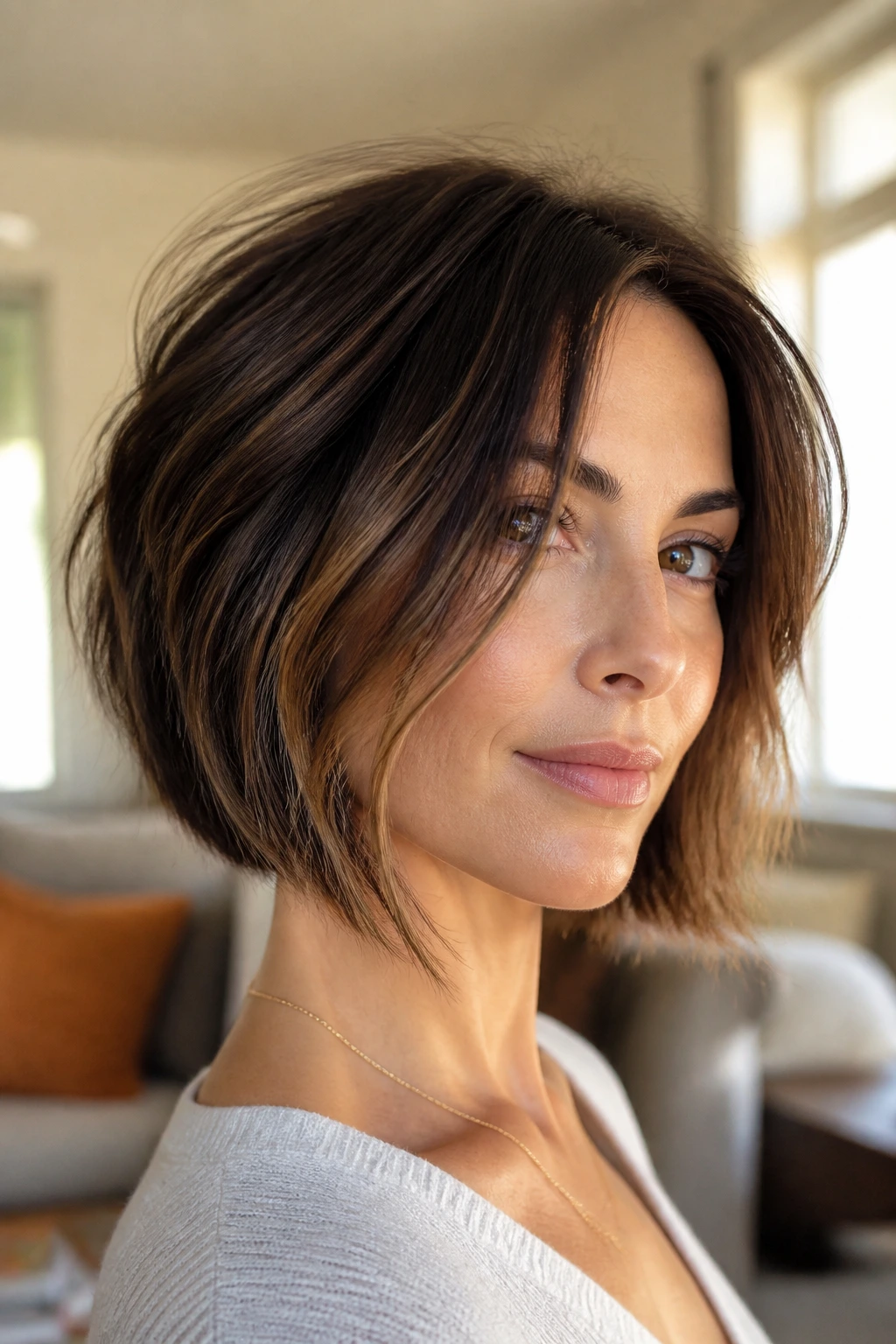
Most choppy bob haircuts stay crisp for about 6 to 8 weeks before the outline starts to blur. If you like a very clean line, book trims closer together. If you’re growing it out, you can stretch the visits a little, but the shape will soften and drop.
Wash frequency depends on the hair, but day-two and day-three texture usually helps a bob more than fresh-clean slipperiness does. A little dry shampoo at the roots and a quick bend at the front often revive the cut faster than a full restyle. If the ends start flipping in odd directions, dampen them lightly and rewarm with a brush or flat iron instead of chasing every strand.
Sleeping on a satin pillowcase helps the texture stay smoother. Not miraculous. Helpful. And if the bob is curly or wavy, a loose pineapple or a soft clip at the crown can keep the shape from getting mashed flat overnight.
Additional Tips and Texture Boosters
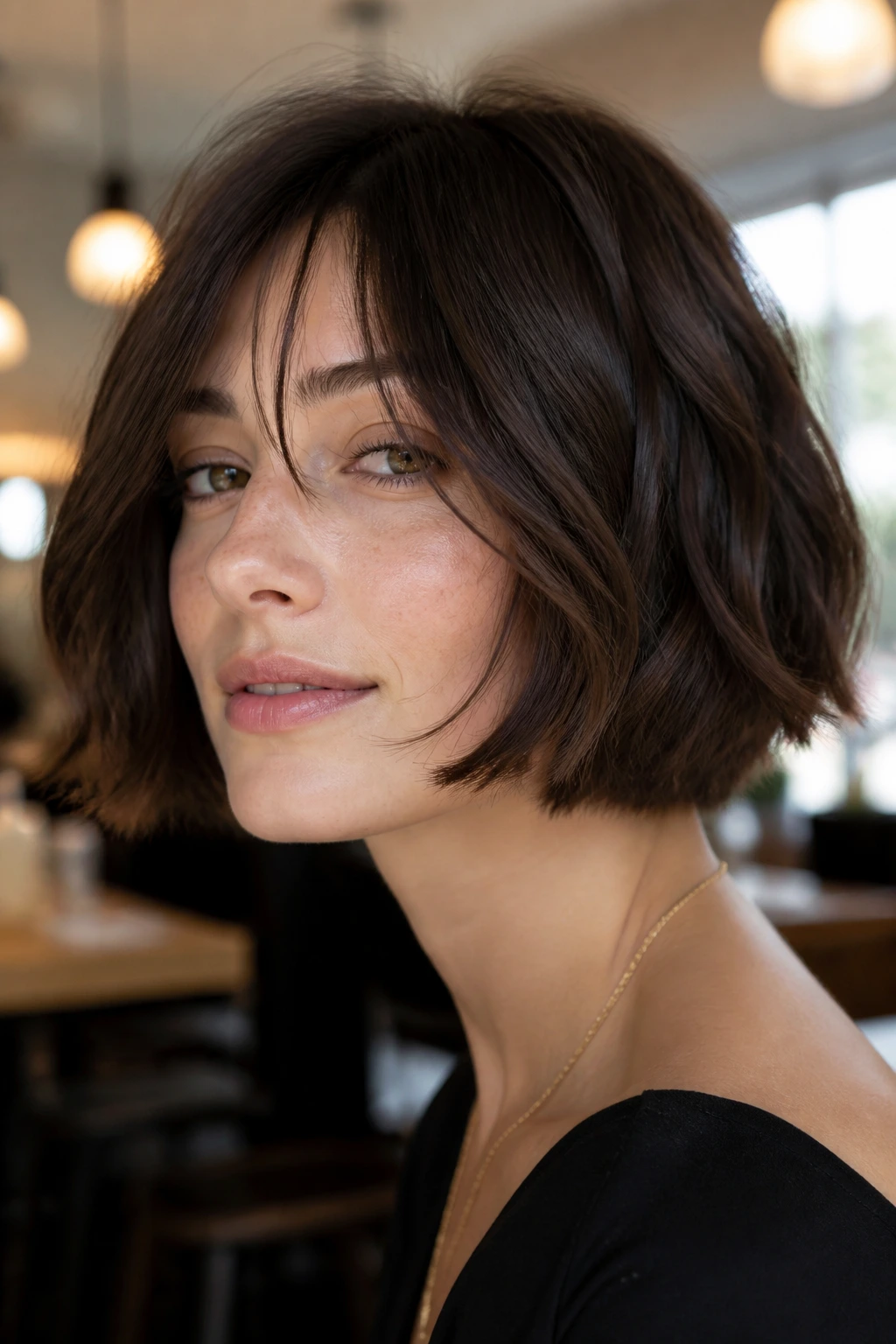
Texture Enhancement: If the bob feels too neat, mist the mid-lengths with texture spray and pinch the ends while the product is still tacky. That creates separation without making the hair crunchy.
Customization: A tiny fringe, a deeper side part, or a longer front corner can change the mood of the haircut without changing the whole length. Small edits matter more on a bob than people think.
Polish Move: Run a drop of serum over the outer layer only. The shine should live on the surface, not soak through the whole head. That way the bob still reads soft and touchable.
Make-It-Yours: Fine hair usually needs less layer and more lift. Thick hair needs weight removal where it won’t show. Curly hair wants the shape cut around its shrinkage, not against it. Straight hair can handle more line-breaking at the ends.
Common Mistakes to Avoid
-
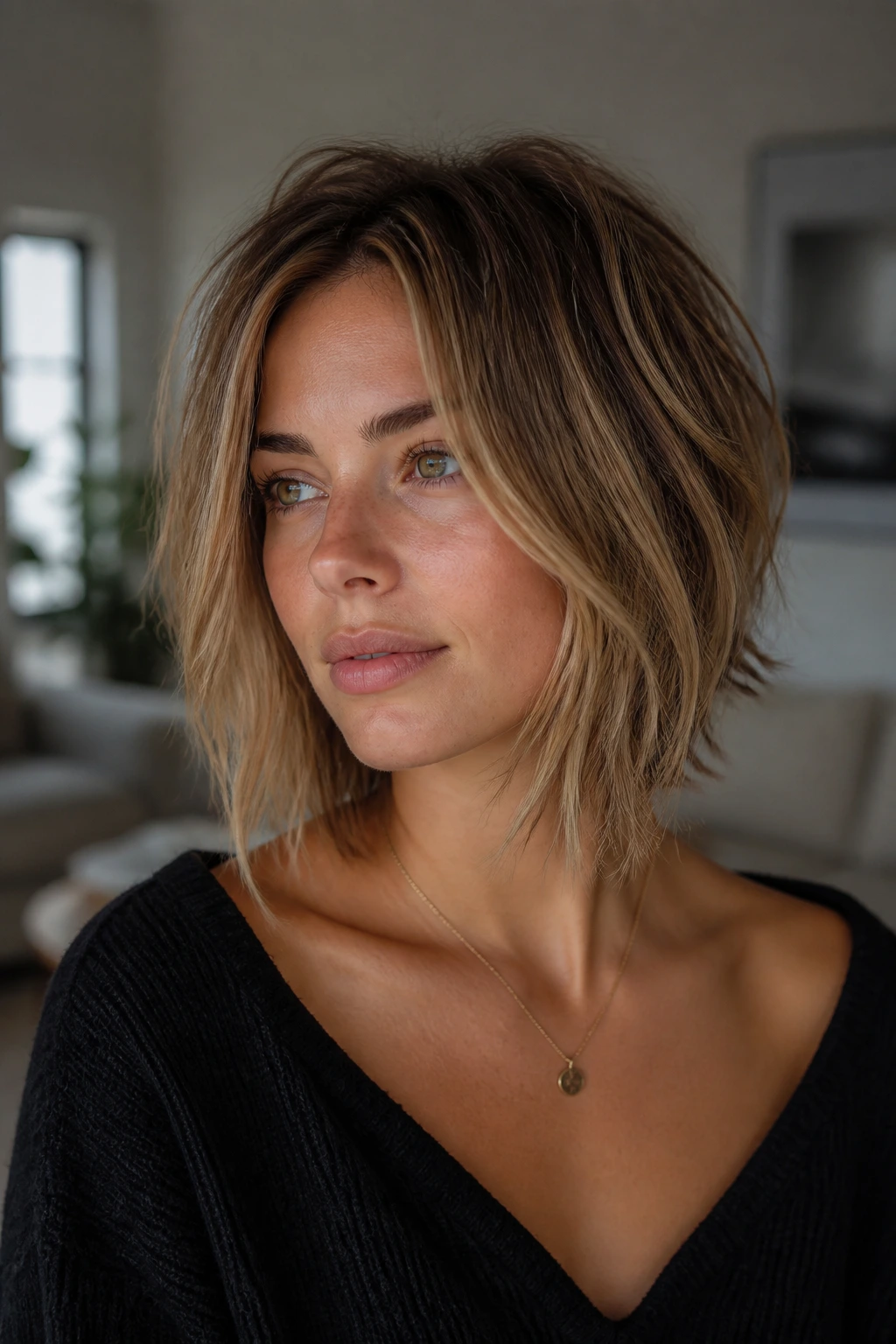
Too much thinning at the bottom: The ends go stringy, and the bob loses its shape. Fix it by asking for point-cutting or interior weight removal instead of aggressive thinning shears.
-
Making every section equally choppy: The haircut starts to look busy and frayed. The better move is to keep the perimeter controlled and put texture where the hair needs motion.
-
Cutting curly hair like straight hair: The result can be a triangle, or worse, a bob that shrinks above the jaw and sits oddly on the sides. Cut for the natural bend and shrinkage, not for the wet shape alone.
-
Using heavy cream everywhere: The texture disappears, the roots sink, and the bob looks tired by lunchtime. Use lightweight product first, then add a tiny bit more only if the hair really needs it.
-
Ignoring the nape: A bulky nape makes even a pretty bob feel clumsy from the side. Clean up that area so the haircut sits close and moves away from the neck.
Variations and Adaptations to Try

The Air-Dry Bob: Keep the layers subtle and let the hair dry with mousse and a little scrunching. This works when you want the haircut to do most of the work and your styling time to stay under ten minutes.
The Blowout Brush Bob: Add a rounded finish with a small brush and tuck the ends under slightly. This version looks a touch more polished and suits office days or dressier settings.
The Curl-Friendly Bob: Ask for the length to be cut dry or at the natural curl pattern, with the layers placed where the curls need release. It’s the best route when curl shrinkage has ruined too many bobs in the past.
The Thick-Hair Relief Bob: Build in hidden internal removal and a cleaner nape line. This keeps the shape from puffing out at the sides and gives the hair a more controlled swing.
The Fine-Hair Lift Bob: Keep the perimeter solid, use micro-layers, and keep the product light. This version aims for body without taking away too much density from the ends.
The Grown-Out Bob: Leave the front a little longer and soften the corner pieces so the cut can live through several months of growth without looking ragged.
Frequently Asked Questions

What actually makes a bob look choppy?
The ends are broken up with point cutting, razoring, or soft internal layers so the haircut moves in pieces instead of one solid line. A true choppy bob still has shape; it just doesn’t have a hard, unbroken edge.
Is a choppy bob good for fine hair?
Yes, if the layers are kept subtle and the perimeter stays fairly full. Too many short layers will make fine hair look sparse at the bottom, which is the exact opposite of what you want.
Does this haircut work on curly hair?
It can look excellent on curls, but the cut has to follow the curl pattern and shrinkage. A dry cut or a curl-by-curl approach usually gives a cleaner result than cutting curls as if they were straight.
How often should I trim it?
A trim every 6 to 8 weeks keeps the texture intentional and the shape from drooping. If you’re growing it out, you can stretch that a little longer, but the outline will soften.
Can I air-dry a choppy bob and still have it look styled?
Yes. Mousse, a bit of scrunching, and a few finger-twists around the front often do enough. The haircut has to be built for it, though; a heavy blunt bob won’t air-dry into the same easy texture.
What should I tell my stylist if I want this look?
Say you want a bob with lived-in texture, not a heavily layered shag or a hard blunt line. Then point to where you want the length to sit, where the weight should stay, and whether you want bangs or face-framing pieces.
What if my bob turns puffy on the sides?
That usually means too much bulk is sitting in the wrong place. Ask for weight removal underneath or a slightly different angle through the perimeter so the hair falls in instead of out.
Will a choppy bob be hard to grow out?
Not if the texture is placed with growth in mind. Collarbone lengths, soft A-lines, and broken ends tend to grow out better than severe stacked cuts or ultra-short fringe-heavy shapes.
The Shape That Keeps Moving

A good choppy bob doesn’t fight the hair you actually have. It works with bend, cowlicks, density, and the slightly uneven way hair lives in the real world, which is why the cut still looks good after a long day instead of only in the salon mirror.
That is what makes these lived-in texture bob haircuts worth saving. They give you shape without stiffness, polish without fuss, and just enough edge to keep the cut interesting as it grows. Pick the version that matches your texture, then let it move a little.
