



A clean fade haircut can rescue a rough head of hair faster than almost anything else. One crisp blend at the temples, a neat neckline, and the whole cut suddenly looks intentional—even if the top is only two inches long and the beard is overdue for a trim.
That’s why clean fade haircuts for men keep coming back into the chair. They’re not flashy for the sake of being flashy. They’re sharp because the geometry is clean: the bulk gets controlled, the edges get tightened, and the transition between short and shorter is handled with enough care that it doesn’t read as blunt or boxy.
The catch is that a fade can go wrong in tiny ways. Start it too high and the head looks shaved into a helmet. Leave the weight line too heavy and the sides puff out by the end of the week. Ignore the hair’s natural growth pattern—cowlicks, widows’ peaks, a weird swirl behind one ear—and even a good cut starts to look a little tired. The good ones are the cuts that stay neat from day one to day ten, and that starts with choosing the right shape.
Why This Collection Stands Out
-
Barber-chair clarity: Each cut comes with a specific shape and feel, so you can ask for something exact instead of waving your hands and hoping for the best.
-
Hair-texture range: Straight, wavy, curly, and coily hair all show up here, because a fade behaves differently on every texture.
-
Office to off-duty: Some of these read polished with a side part and matte product; others look better when the top is a little messy and the fade does the heavy lifting.
-
Low-maintenance options: Buzz cuts, crew cuts, and short crops hold their shape longer than high-volume styles, which matters if you don’t want a barber every week.
-
Beard-friendly picks: Several of these cuts are built to connect smoothly into facial hair instead of stopping awkwardly at the jaw.
-
Line-up flexibility: If you like sharp temples and a squared front, you’ll find cuts that lean hard into that. If you don’t, there are softer versions that still look clean.
What Makes a Clean Fade Look Sharp Instead of Choppy
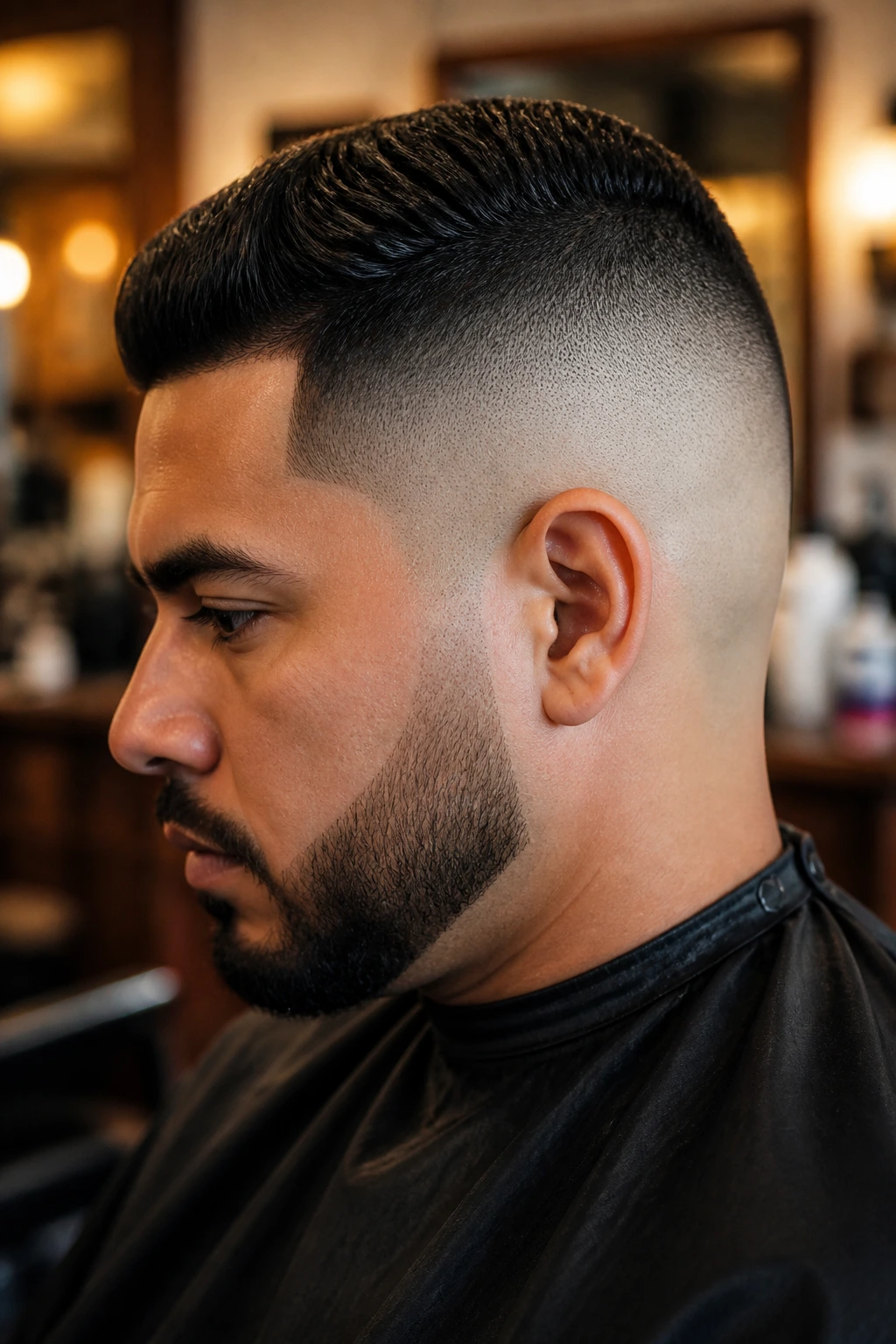
A clean fade lives and dies by the blend. If the transition from skin or short guard length into the top is too sudden, the eye catches the step. If the fade is broken into smooth increments—think #0, #0.5, #1, then into scissor length—the whole cut reads smoother, even from a few feet away.
Barbers talk about the blend zone for a reason. That middle strip around the temple, sideburn, and occipital area is where sloppy cuts show first. The ear area needs the same care. So does the neckline. A fade can be technically correct and still look off if the nape is left fuzzy or the sideburns are hanging out like an afterthought.
The other piece is shape. A low fade, mid fade, high fade, skin fade, or taper fade changes where your head visually begins and ends. On a round face, a higher fade can add some length. On a long face, a lower fade with a little width through the sides may keep things balanced. On thick hair, a fade removes bulk. On fine hair, it creates the illusion of density on top by narrowing the sides.
And then there’s growth. Short hair grows in fast, which is rude but true. A skin fade that looks razor crisp on day one may already look softer on day six, especially around the temples. That isn’t a failure; it’s the nature of short sides. The best clean fades are designed with that in mind.
1. Low Skin Fade with Textured Crop
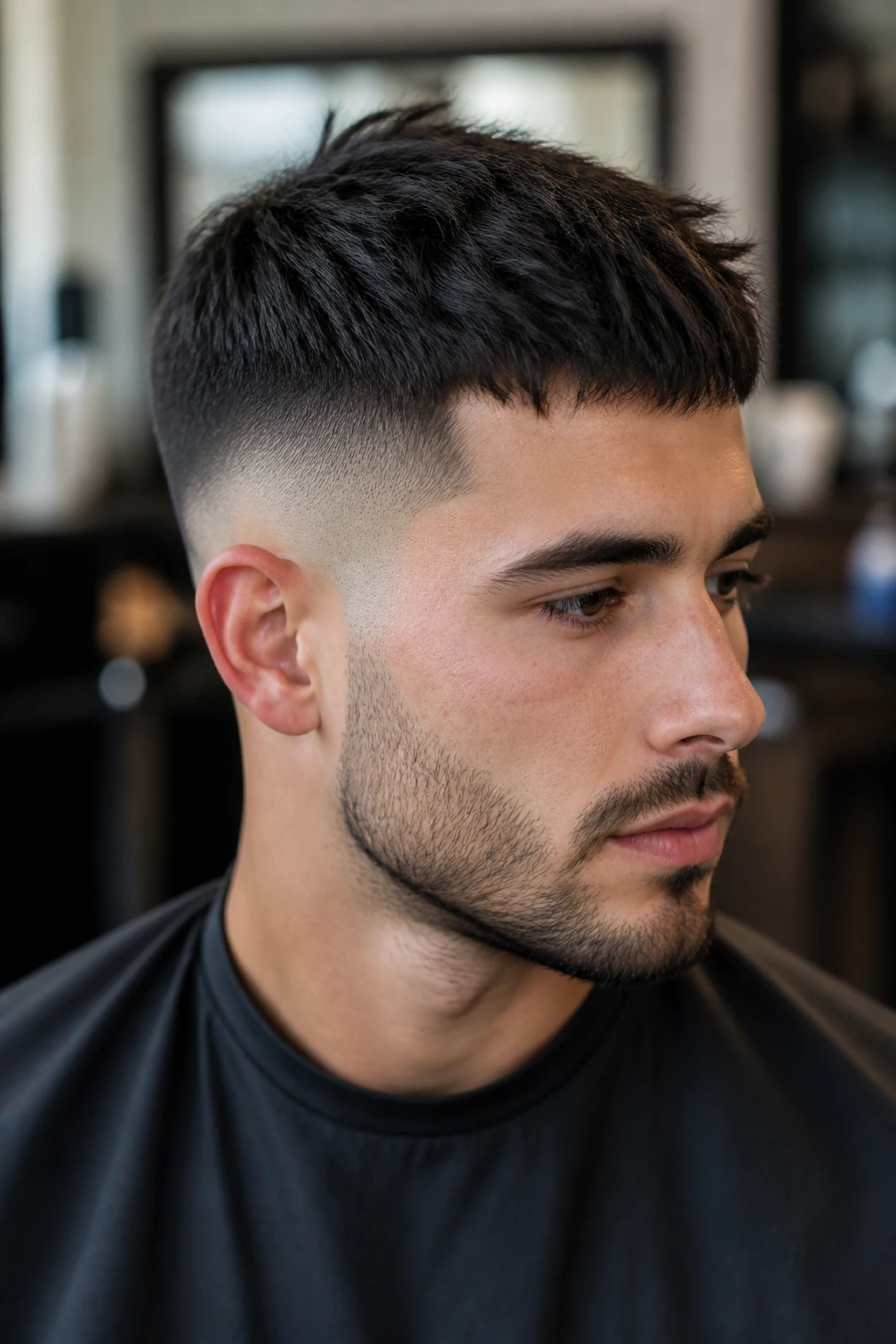
A low skin fade with a textured crop is the haircut equivalent of a well-built white T-shirt: simple, sharp, and hard to mess up when it’s done right. The skin line sits low, the top stays short, and the choppy fringe keeps the cut from looking flat. It works especially well on straight or slightly wavy hair that likes to lie down.
Ask for the fade to start just above the ear, then keep the top around 1.5 to 2.5 inches with plenty of point-cut texture. A matte paste or clay is enough; the point is movement, not shine. If your hair grows fast at the temples, this one still looks decent even as it softens.
2. Mid Fade with Side Part
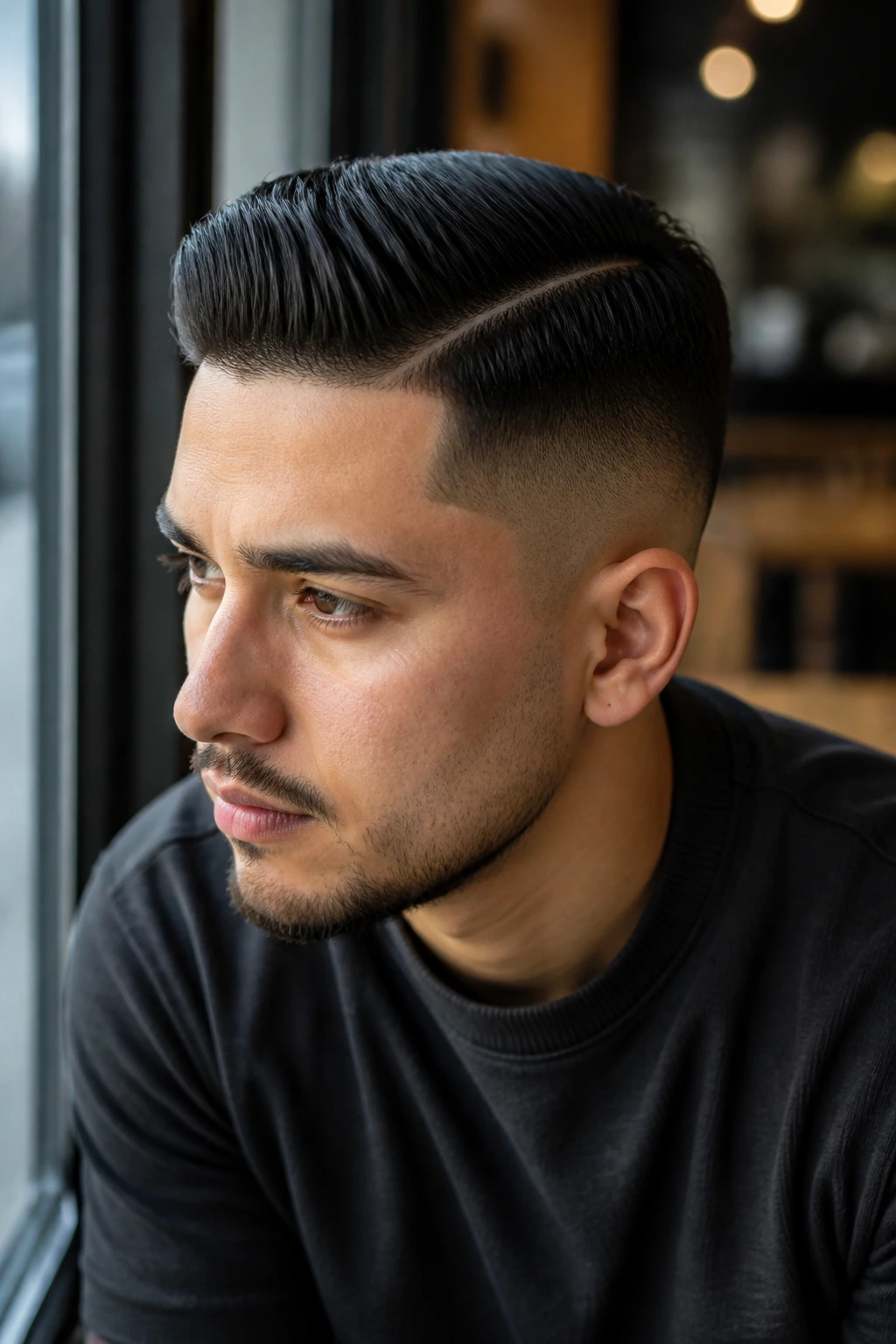
A mid fade with a side part gives you structure without the stiffness of an old-school business cut. The fade starts around the middle of the head, which leaves enough weight on the sides to keep the style grounded while still cleaning up the bulk. The side part gives the top a direction, and that matters on mornings when your hair wants to do its own thing.
This is a strong choice if you want a haircut that can swing between office neatness and weekend ease. Blow-dry the top in the direction of the part, then use a small amount of pomade or cream to keep the line defined. Too much product ruins the lightness; a little goes a long way.
3. High Fade with Buzz Cut
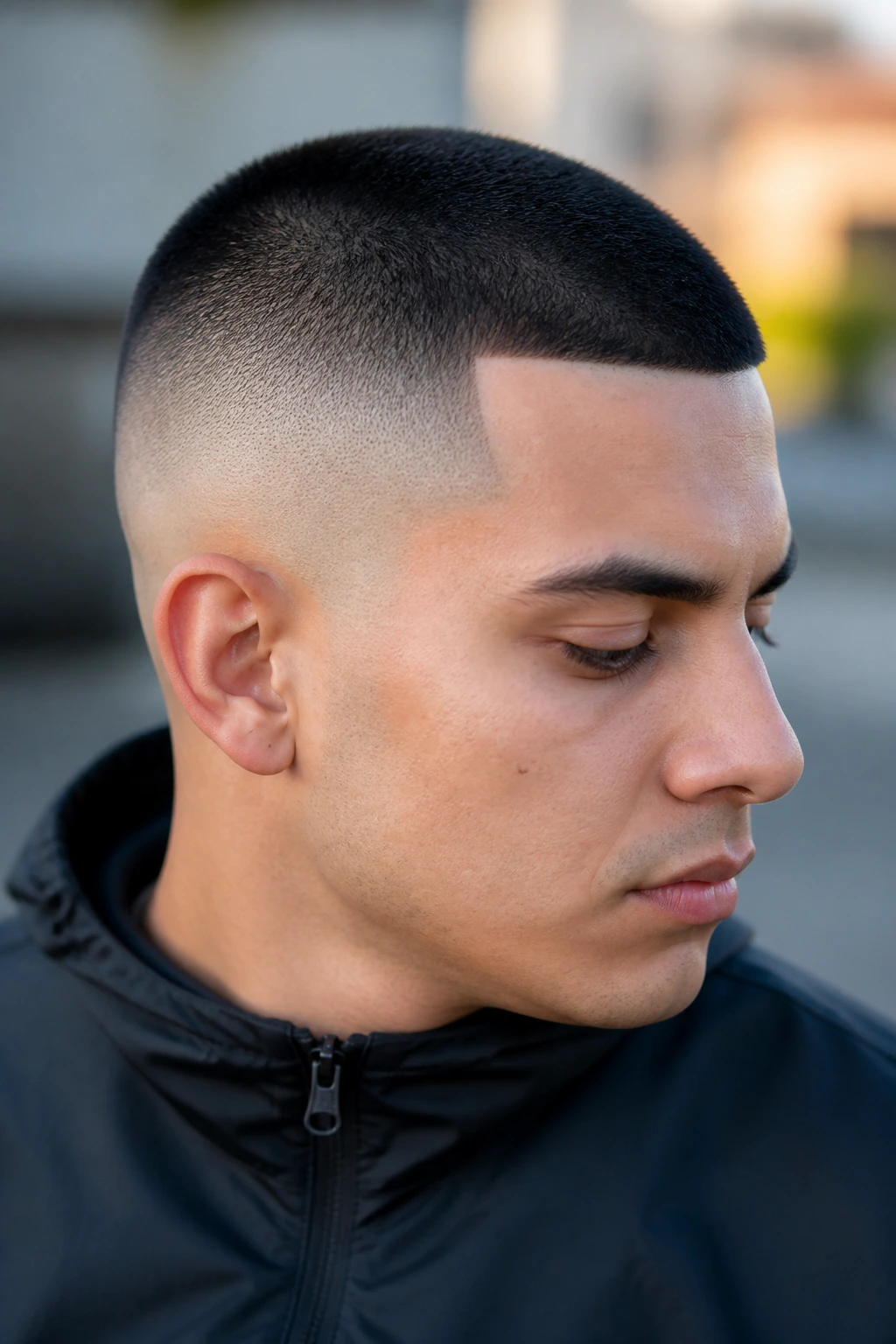
A high fade with a buzz cut is blunt in the best way. The sides get taken high and tight, sometimes down to skin, while the top stays clipped to a uniform length. There’s no styling drama here. No comb. No brush. No morning ritual that eats ten minutes.
The reason this cut works is contrast. The shorter sides make the head look cleaner and the top look denser than it really is. It’s especially good if your hair is thick, if your hairline is uneven, or if you want something that can survive sweat, hats, and bad weather without falling apart. Ask your barber to keep the fade smooth near the crown; a jump that’s too abrupt makes the whole thing look rushed.
4. Drop Fade with Curly Top
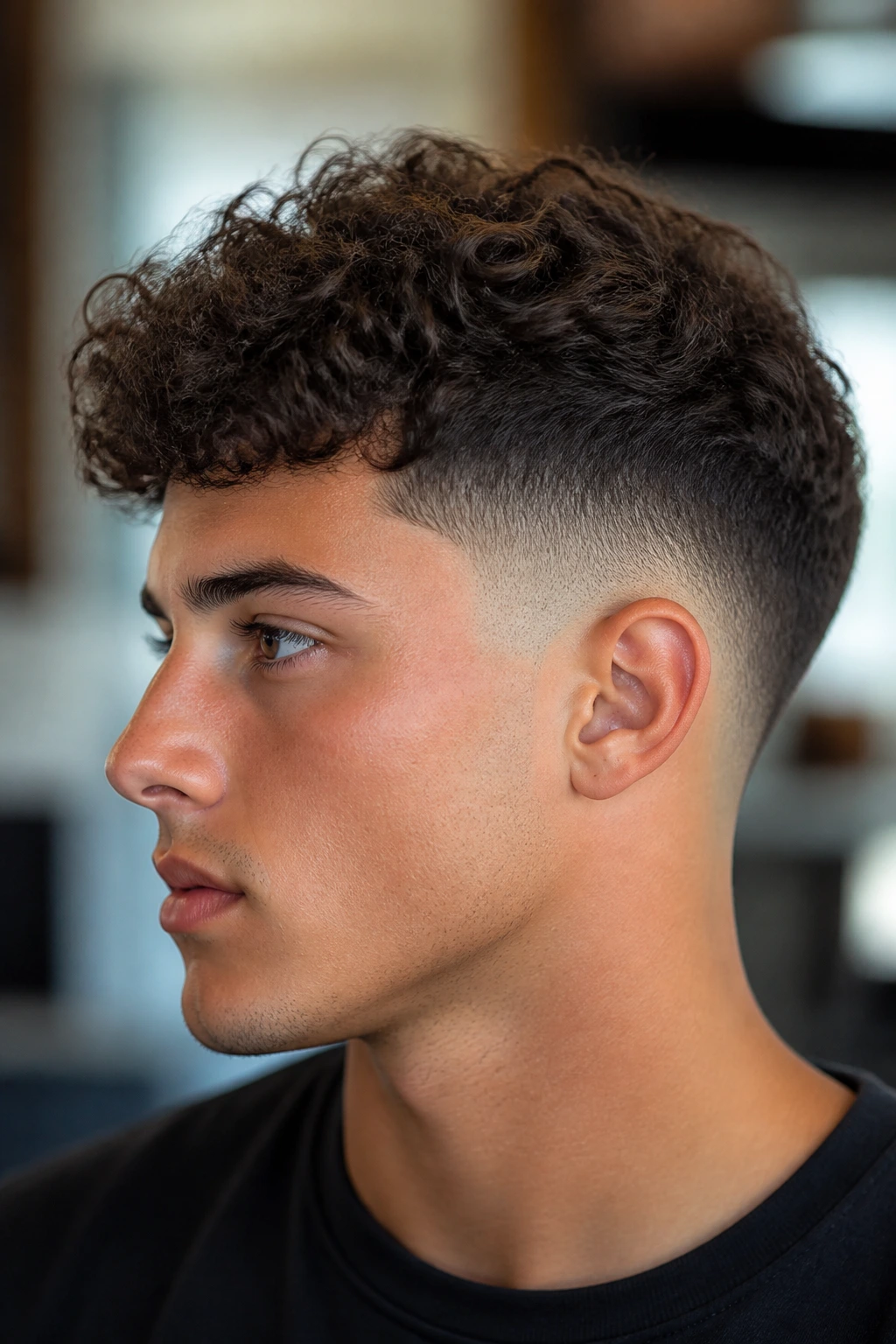
A drop fade with a curly top follows the shape of the head instead of cutting across it in a straight line, and that’s the whole charm. The fade dips lower behind the ear, which gives the style a rounded profile. On top, the curls stay alive and visible instead of being crushed into a flat cap of product.
This cut plays nicely with natural curl because it controls the sides without sanding down the texture that gives the top its personality. A curl cream or light mousse helps, but don’t drown it. Let the curls sit where they want to sit. The fade should frame them, not fight them.
5. Taper Fade with Comb Over
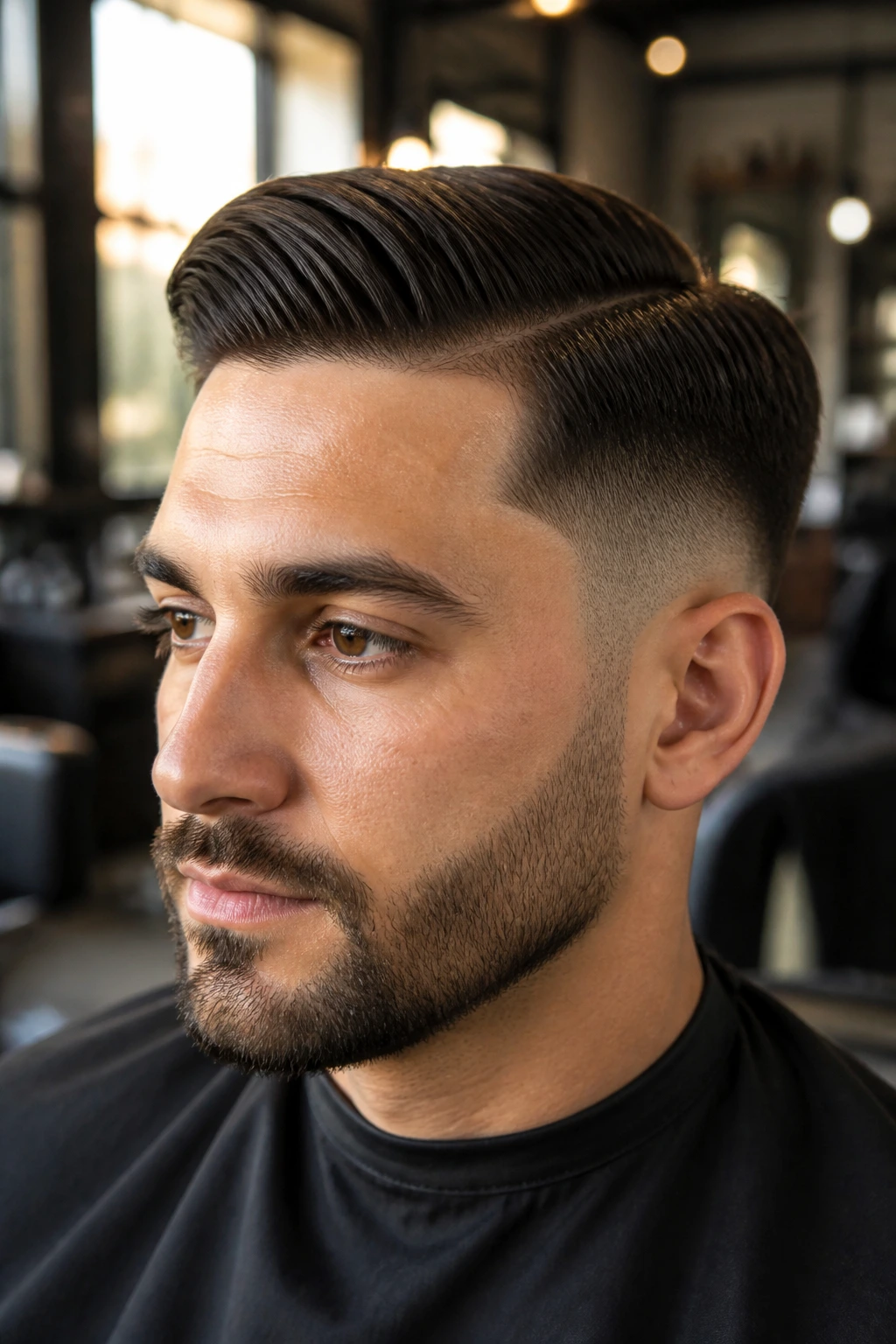
If you want a clean cut that still looks conservative in the best sense, a taper fade with a comb over does the job. The taper keeps the sides and neckline neat without taking everything down to skin, and the comb over gives the top a tidy sweep that looks deliberate rather than overworked.
This style is good for men who want shape without shouting. It’s also one of the easier fades to grow out because the transition is softer. Use a side part, a comb, and a light cream or soft pomade. The top should move. If it sits like lacquered paint, you’ve gone too far.
6. Burst Fade with Short Mohawk
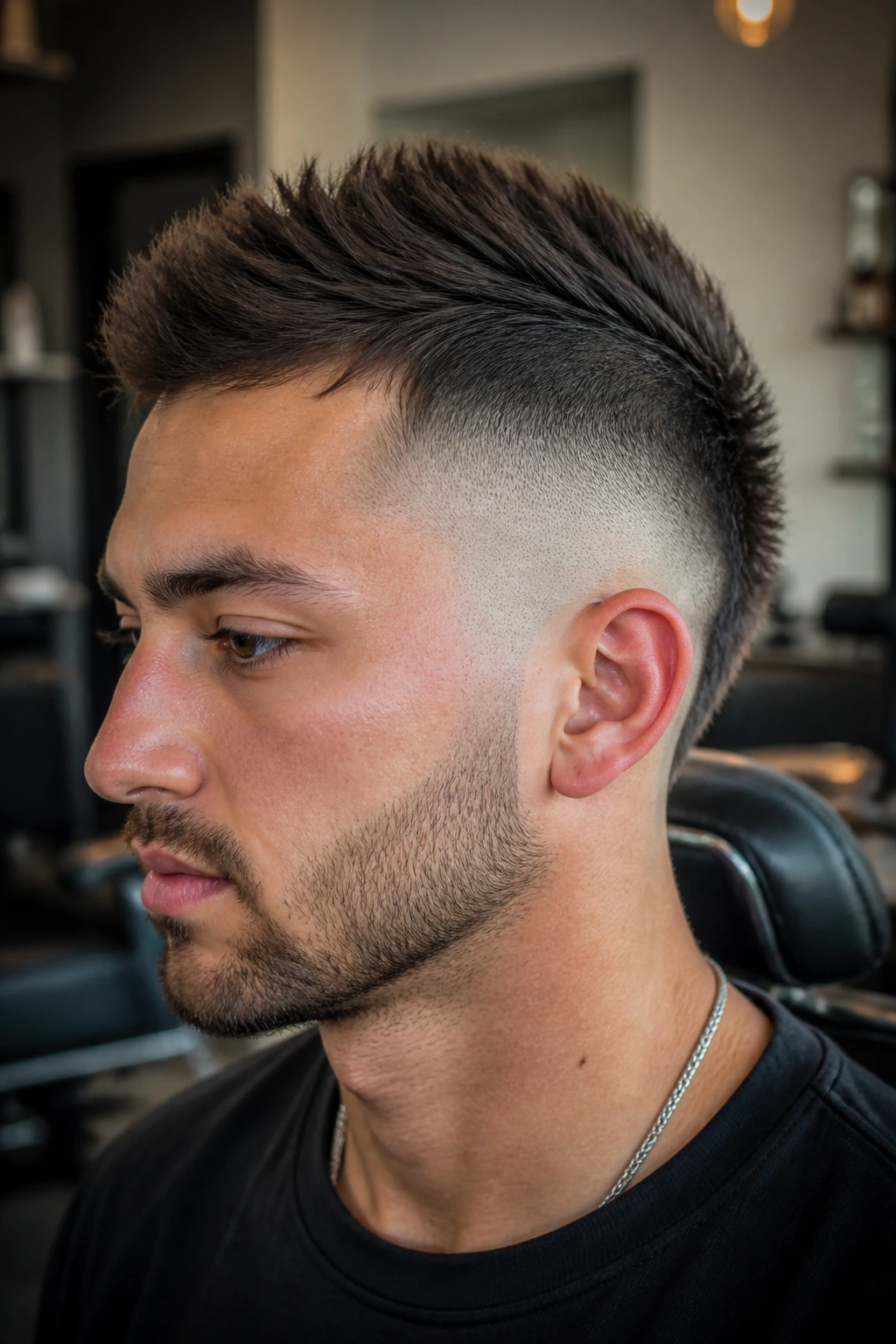
A burst fade with a short mohawk is for guys who like a little edge but still want the sides clean enough to look finished. The fade curves around the ear, creating that “burst” shape, while the strip through the center keeps some height and attitude. Keep the mohawk section short if you want it neat rather than punk-heavy.
This cut works best when the center strip is textured and the sides are carved close. It’s a better look when the top doesn’t sprawl. A small amount of matte paste, pushed upward with your fingers, is enough. If the mohawk gets too wide, the clean fade loses its sharp outline.
7. Temple Fade with 360 Waves
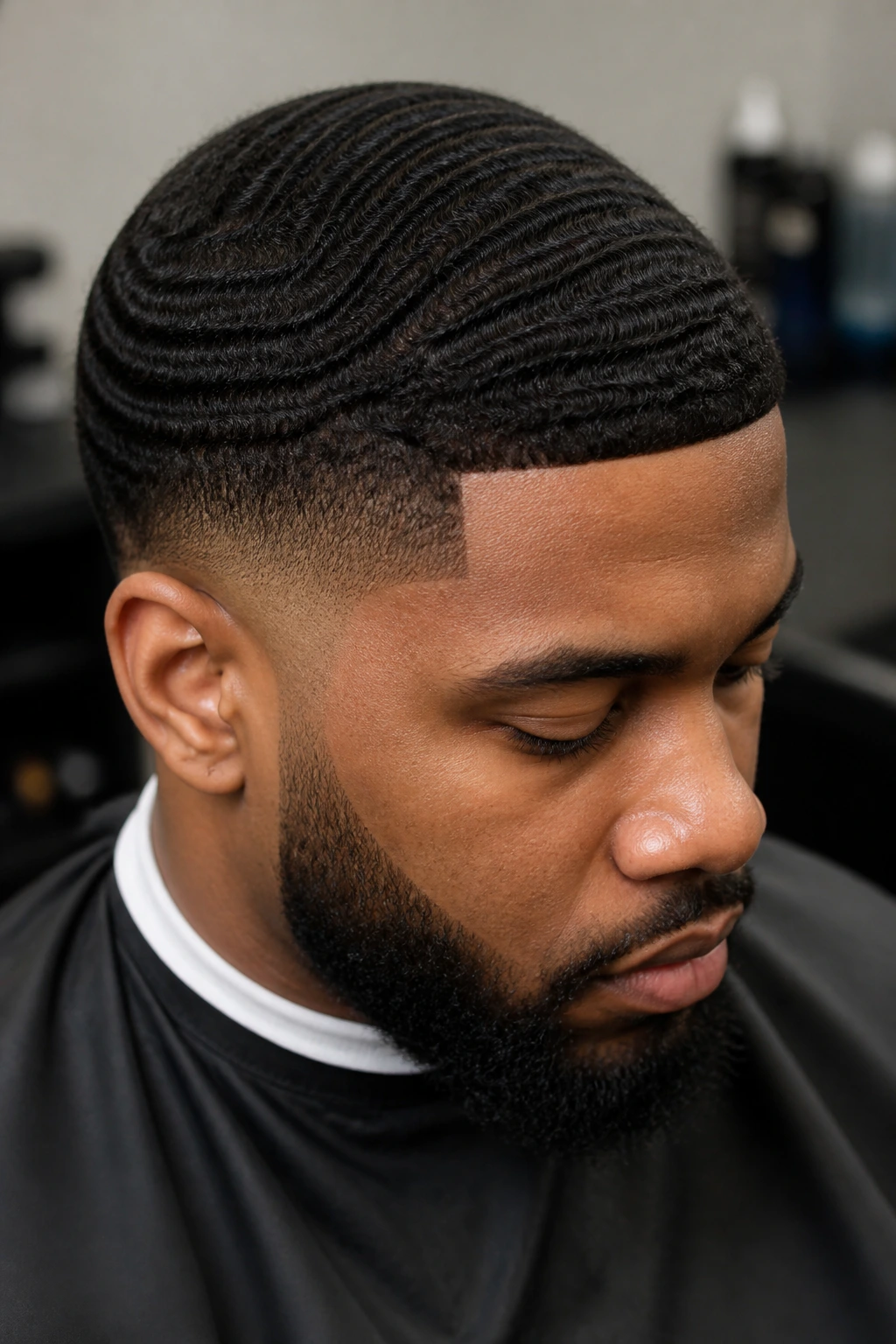
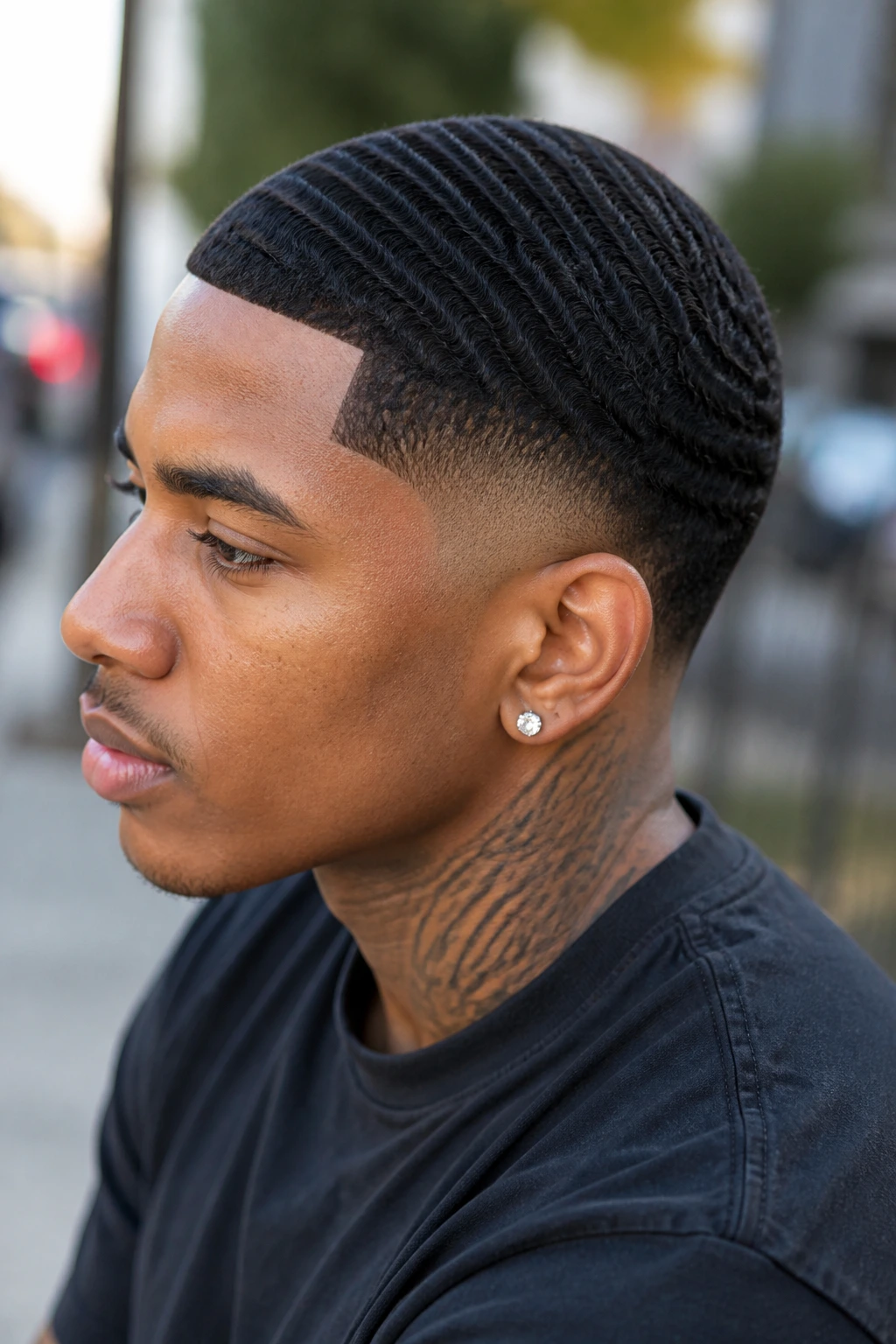
A temple fade with 360 waves is one of those cuts that looks calm on the surface and is doing a lot underneath. The fade cleans up the temples and sideburns, while the waves on top give the cut depth and movement. It’s a precise style. Tiny mistakes show.
The barber needs to keep the line-up neat without chopping into the wave pattern. You’ll want a soft brush routine, a wave pomade or moisturizer if that’s your thing, and a durag or wave cap at night. The fade itself stays subtle, which is the point. The waves carry the style; the fade keeps the edges honest.
8. Bald Fade with Slick Back
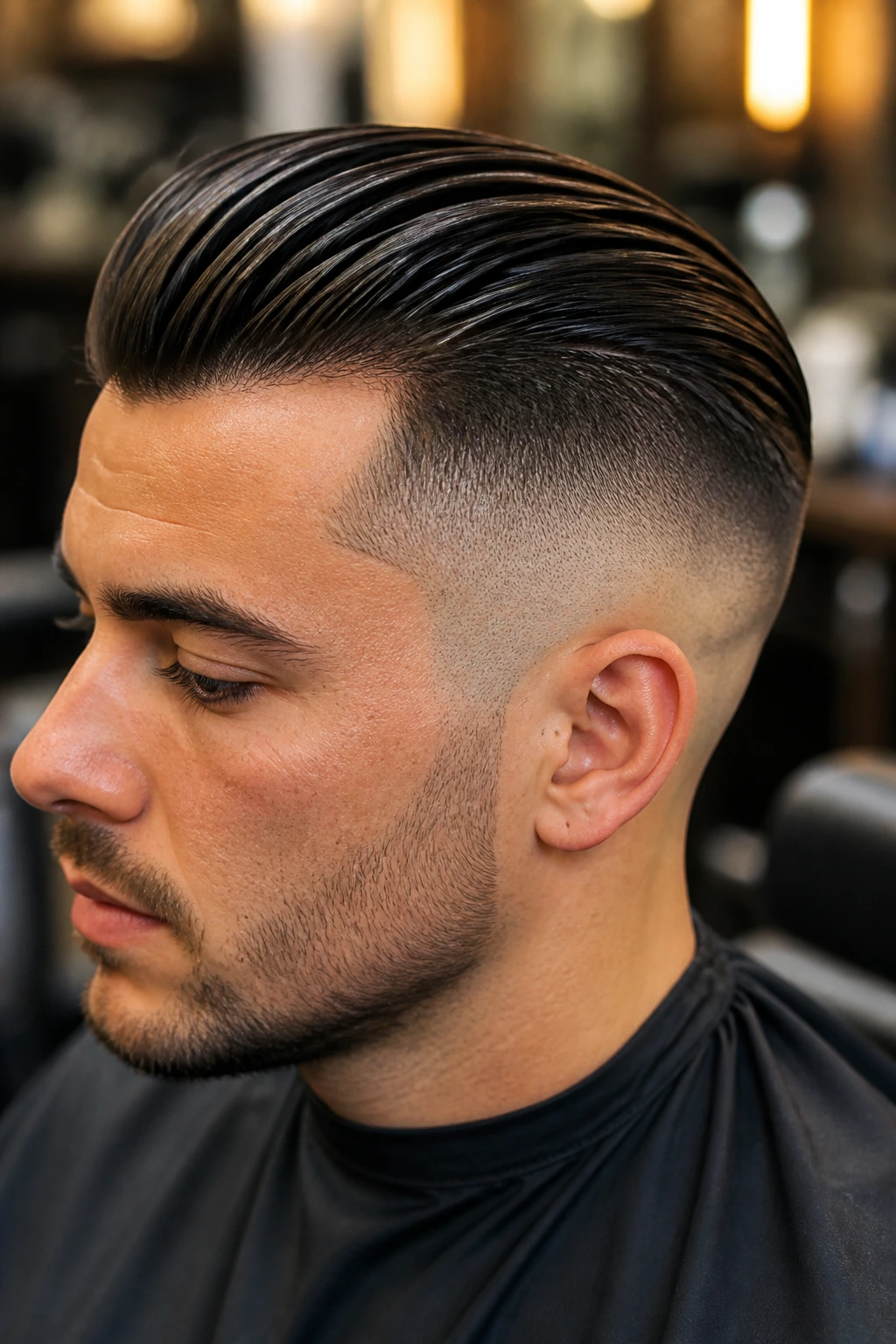
A bald fade with a slick back brings more polish than most short cuts can manage. The sides go all the way down to skin, which makes the longer top look fuller and more intentional. Slicked back, the hair creates a clean shape that works especially well if your hair is straight, thick, or naturally cooperative.
This one needs a good blow-dry if the top has any stubborn lift or cowlicks. A medium-hold pomade gives the slick-back shape without turning it into a shell. Keep the fade tight around the ears and neck, because the contrast is what makes the style feel crisp rather than dated.
9. Skin Fade with Pompadour
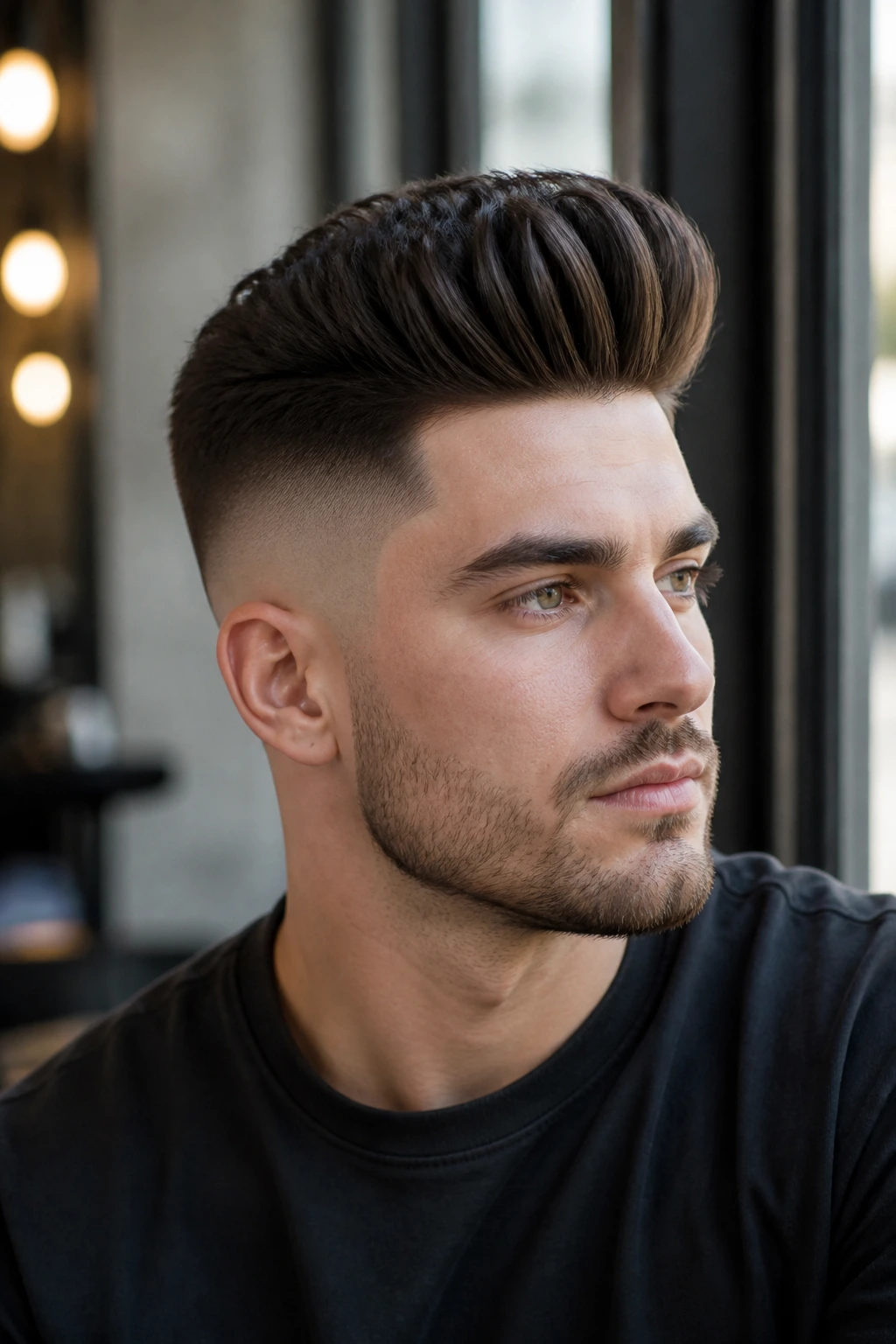
A skin fade with a pompadour is a study in contrast: bare sides, tall top, and a line of volume that starts near the forehead and rolls back. It’s a sharper, cleaner version of the classic pompadour, and it looks best when the top has enough density to hold shape after a blow-dry.
The pompadour needs lift at the roots and control at the ends. Use a heat protectant, blow-dry upward and back with a round brush, then lock it in with a matte or low-shine product. If the fade is too soft, the cut loses its punch. If the top is too stiff, it turns into a helmet. The sweet spot sits between those two.
10. Low Taper Fade with Crew Cut
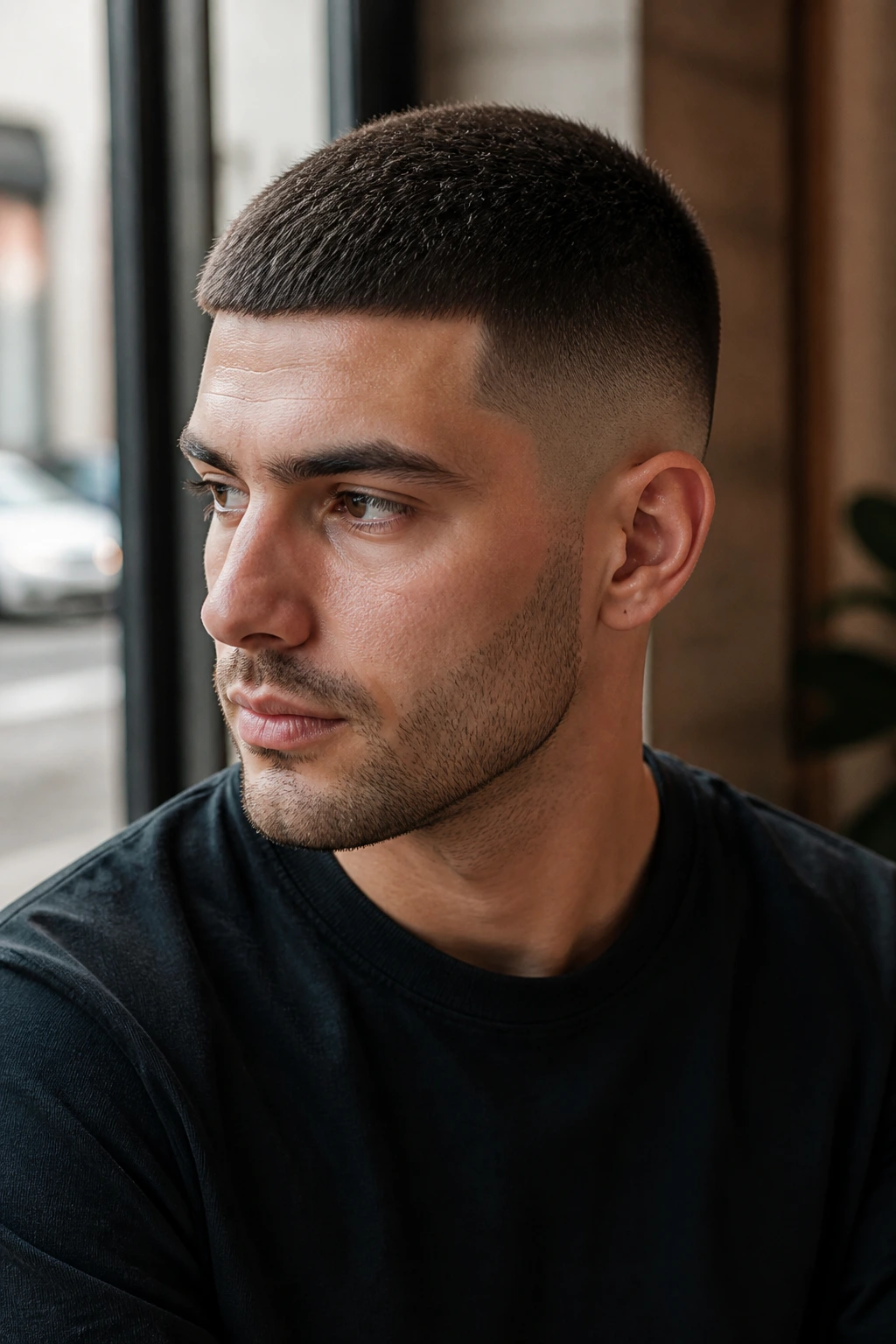
The low taper fade with a crew cut is one of the least fussy cuts on this list, and I mean that as a compliment. The sides stay neat around the ears and neckline, but the taper doesn’t erase all the structure. The crew cut on top is short enough to stay clean and long enough to show a little shape.
This is a smart cut for men who want tidy lines without a barbering science project. It suits straight hair, fine hair, and thick hair alike because it doesn’t rely on elaborate styling. A little matte cream is enough to keep the front from sticking up like a bristle brush.
11. French Crop with Mid Fade
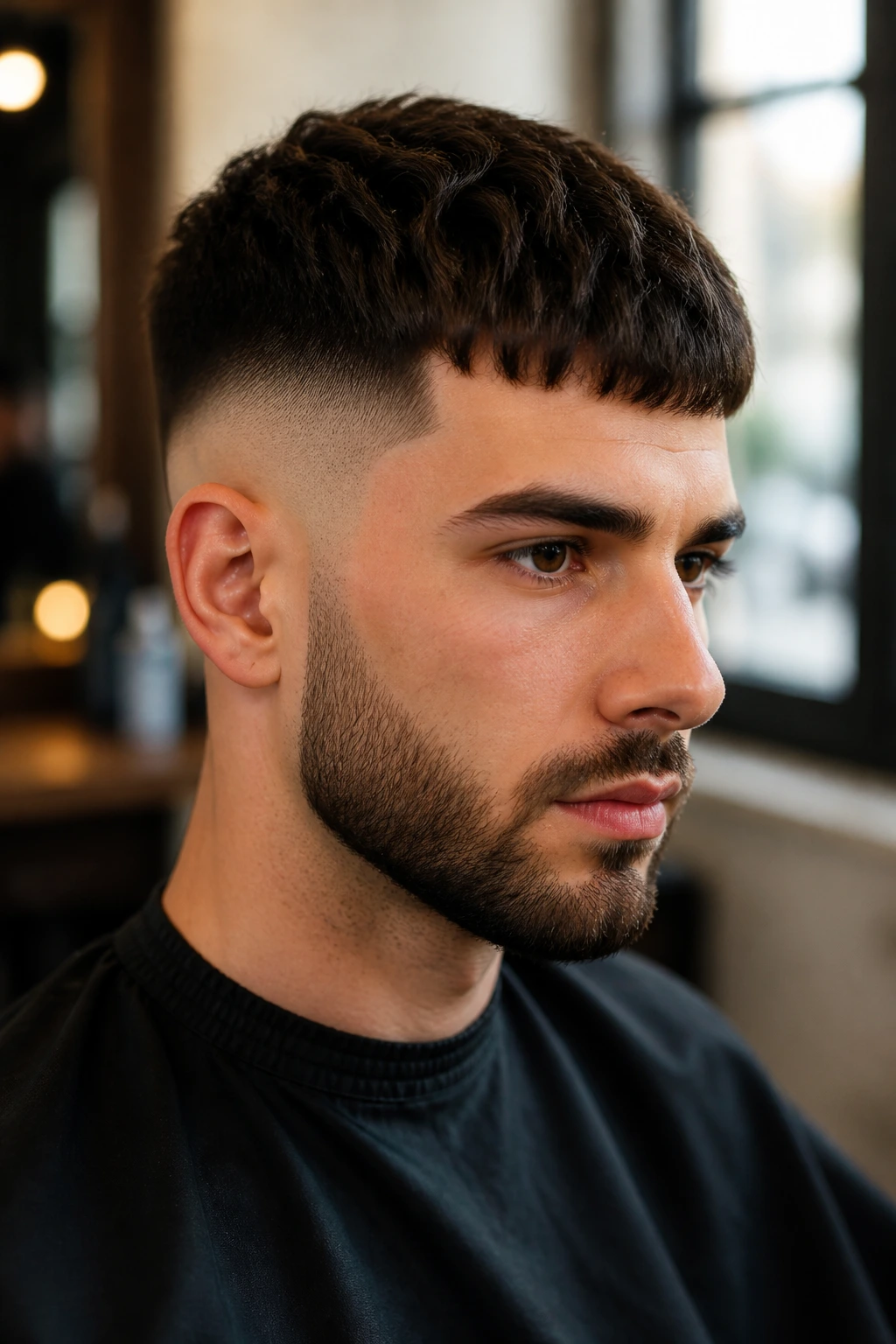
A French crop with a mid fade keeps the fringe forward and the sides clean, which is a useful combination if your hairline is a little uneven or you prefer a shorter top with some attitude. The crop gives a blunt front edge, while the fade removes the heaviness around the temples.
This cut looks good when the fringe is cut with texture instead of a hard slab. Ask for the top to be short enough to sit naturally, then use your fingers—not a comb—to style it. A tiny bit of clay adds separation. If you want a haircut that reads modern without trying too hard, this one earns its keep.
12. Ivy League with Soft Fade
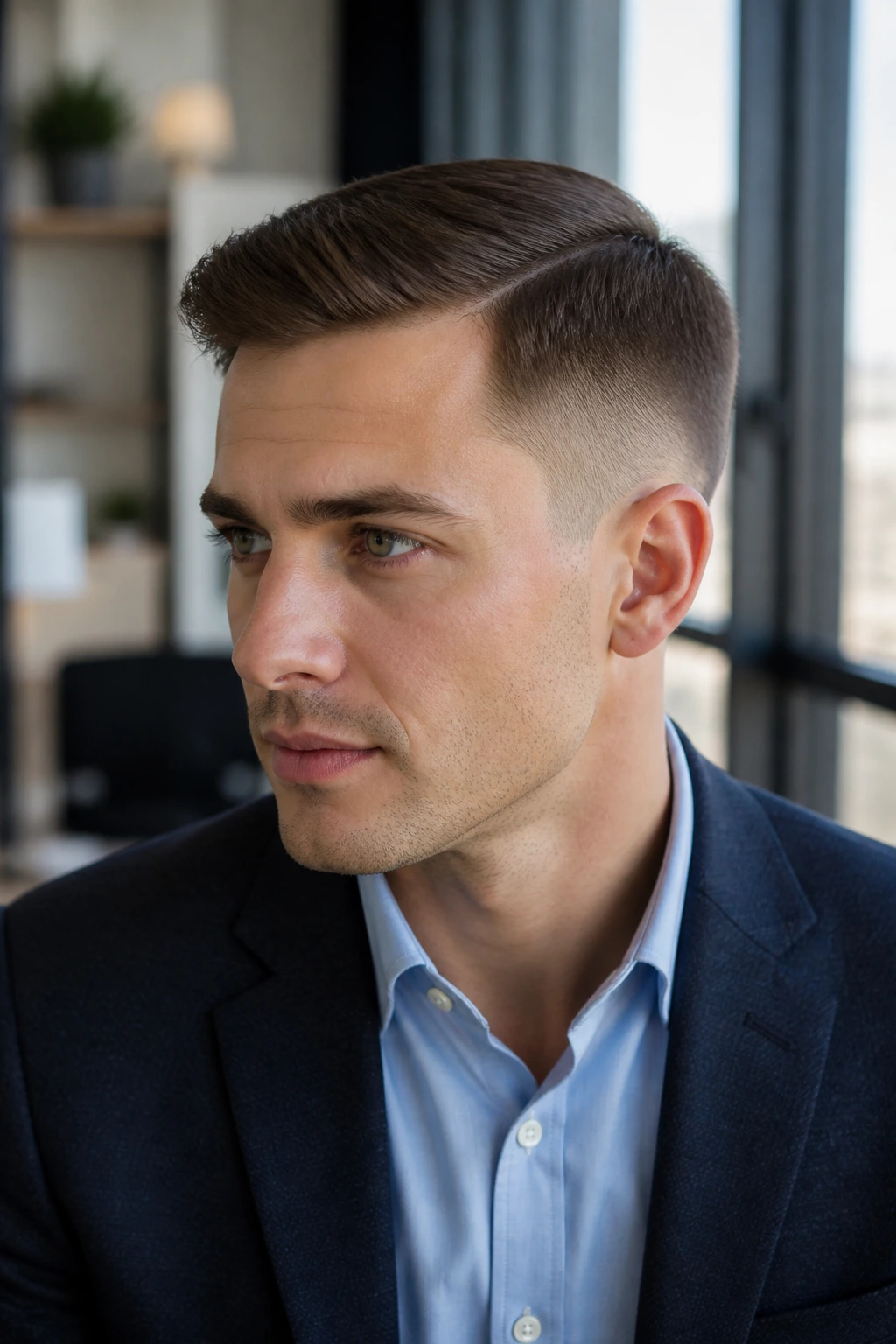
An Ivy League with a soft fade is the kind of haircut that quietly does its job. The top is long enough to part or sweep, but short enough to stay composed. The fade is gentle, not aggressive, so the whole style feels smooth rather than severe.
This is a strong pick if you need something clean that still belongs in a room with a collared shirt. It’s also forgiving as it grows out. Ask for the top to keep a bit more length at the front, then use a light cream or low-shine pomade. If you like clean lines but don’t want your haircut to announce itself from across the room, this is one of the safest bets.
13. Afro Fade with Shape-Up
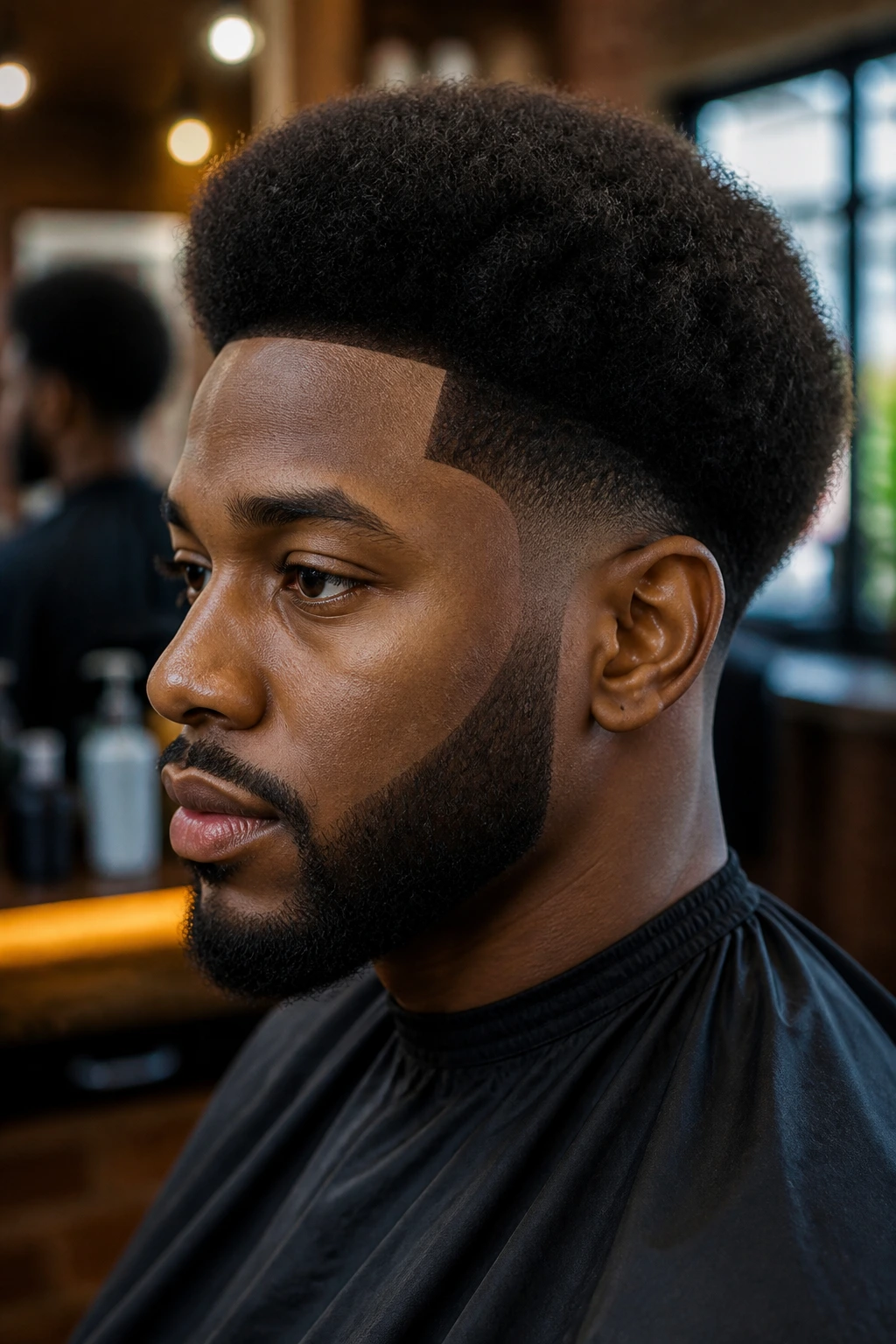
An afro fade with a shape-up is all about keeping natural volume while sharpening the outline. The fade trims the sides and back so the afro reads rounded and intentional, not puffy. The shape-up at the hairline gives the front edge enough definition to look fresh.
This cut depends on balance. Don’t flatten the top just to make the fade look “cleaner.” That usually ruins the shape. Keep the curl pattern intact, moisturize regularly, and have the barber respect the natural silhouette. The best versions look full, tidy, and slightly sculpted without losing the texture that makes the style work.
14. Curly Fringe with Low Fade
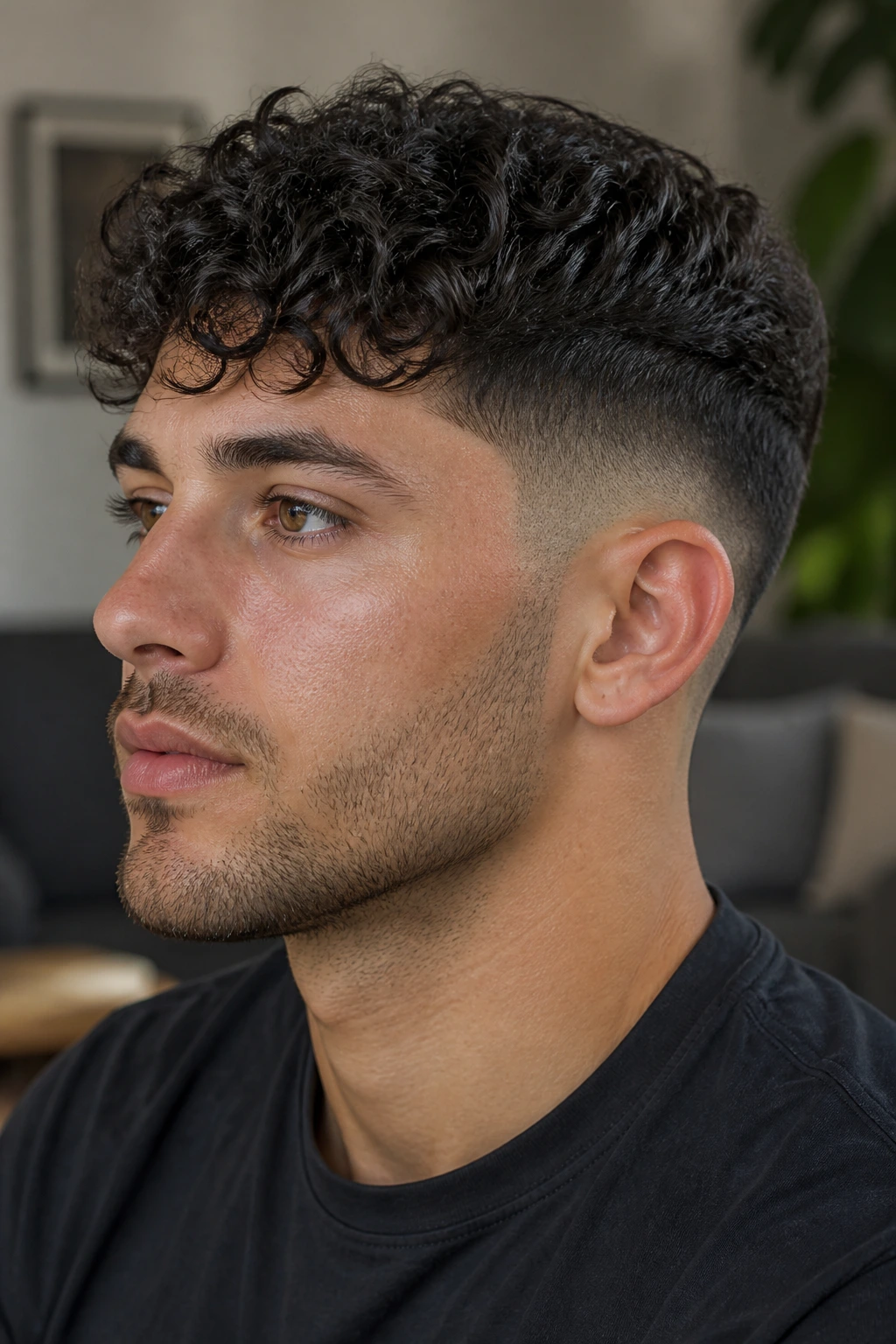
A curly fringe with a low fade keeps the curls forward where they can actually be seen, which is a smart move if you want the texture to do the talking. The low fade keeps the sides neat but doesn’t take them so high that the shape feels top-heavy. It’s a good middle ground for medium curls.
This cut benefits from moisture. A curl cream or lightweight leave-in helps the fringe sit without frizzing out. Dry it forward with your fingers, not a brush, or you’ll stretch the curls into something less interesting. The whole point is to let the fringe fall naturally while the fade keeps the perimeter clean.
15. Brush-Up with Mid Fade
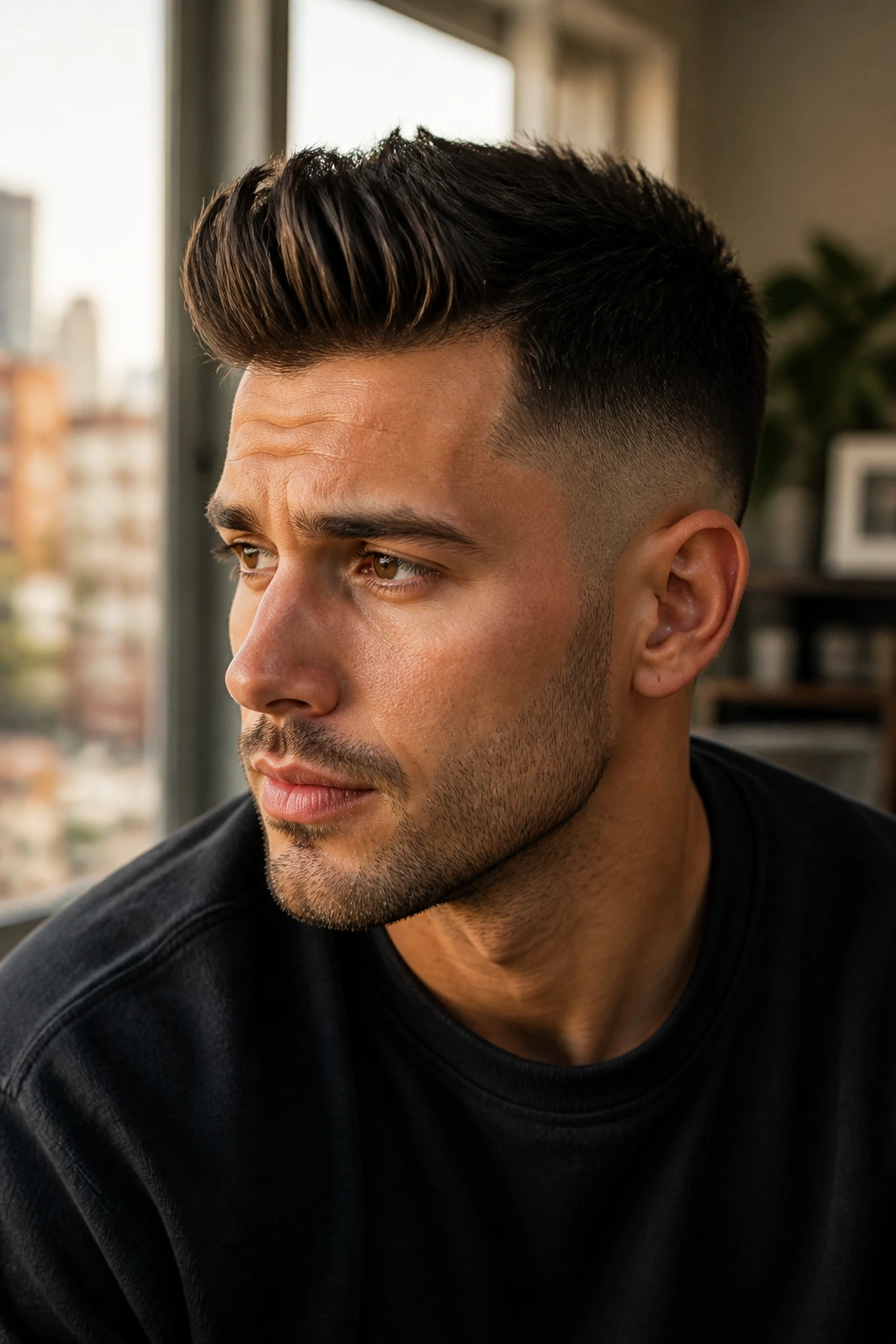
A brush-up with a mid fade gives you height without the full-on pompadour energy. The front gets lifted and brushed slightly backward or upward, while the mid fade clears out the sides so the top has room to breathe. It’s a good choice if your hair is thick and wants to stand up anyway.
The style works best when the top is textured. Too smooth, and it can look like you’re trying to copy a classic rock poster. Use a blow-dryer first, then a matte product to hold the lift. The fade does the visual cleanup; the brush-up adds the shape.
16. Quiff with High Fade
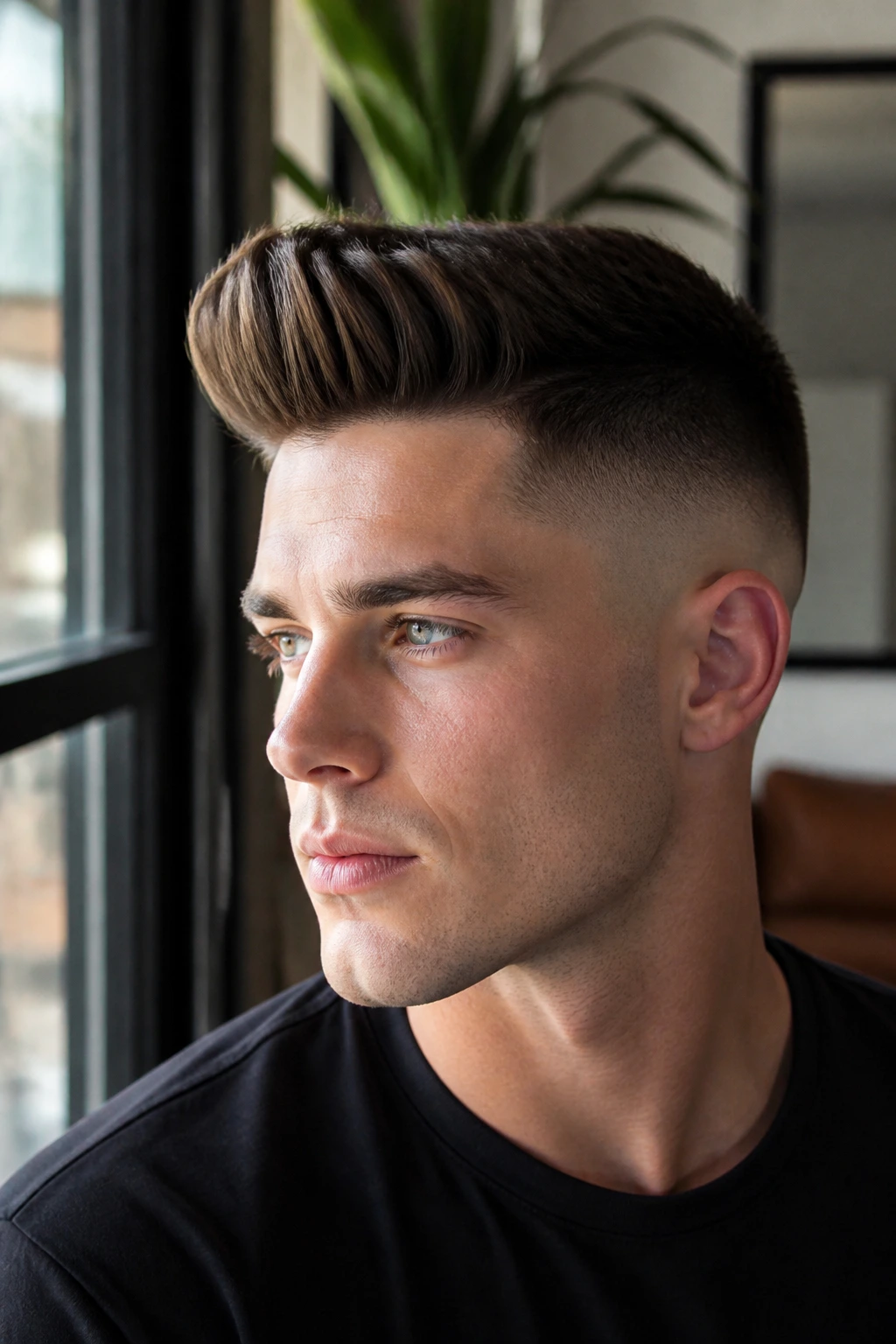
A quiff with a high fade is louder than a low fade version, and that’s why it works. The sides disappear quickly, which pushes the eye up to the front section of hair. The quiff itself should have lift, not just length—there’s a difference, and it shows the second you step out in daylight.
This style suits straight to slightly wavy hair that can hold volume without collapsing. Blow-dry the front up and back, then use a medium-hold product with a matte finish if you want the texture to stay visible. If your hair is fine, keep the quiff shorter. If it’s thick, the top can take more height.
17. Side-Swept Textured Top with Taper
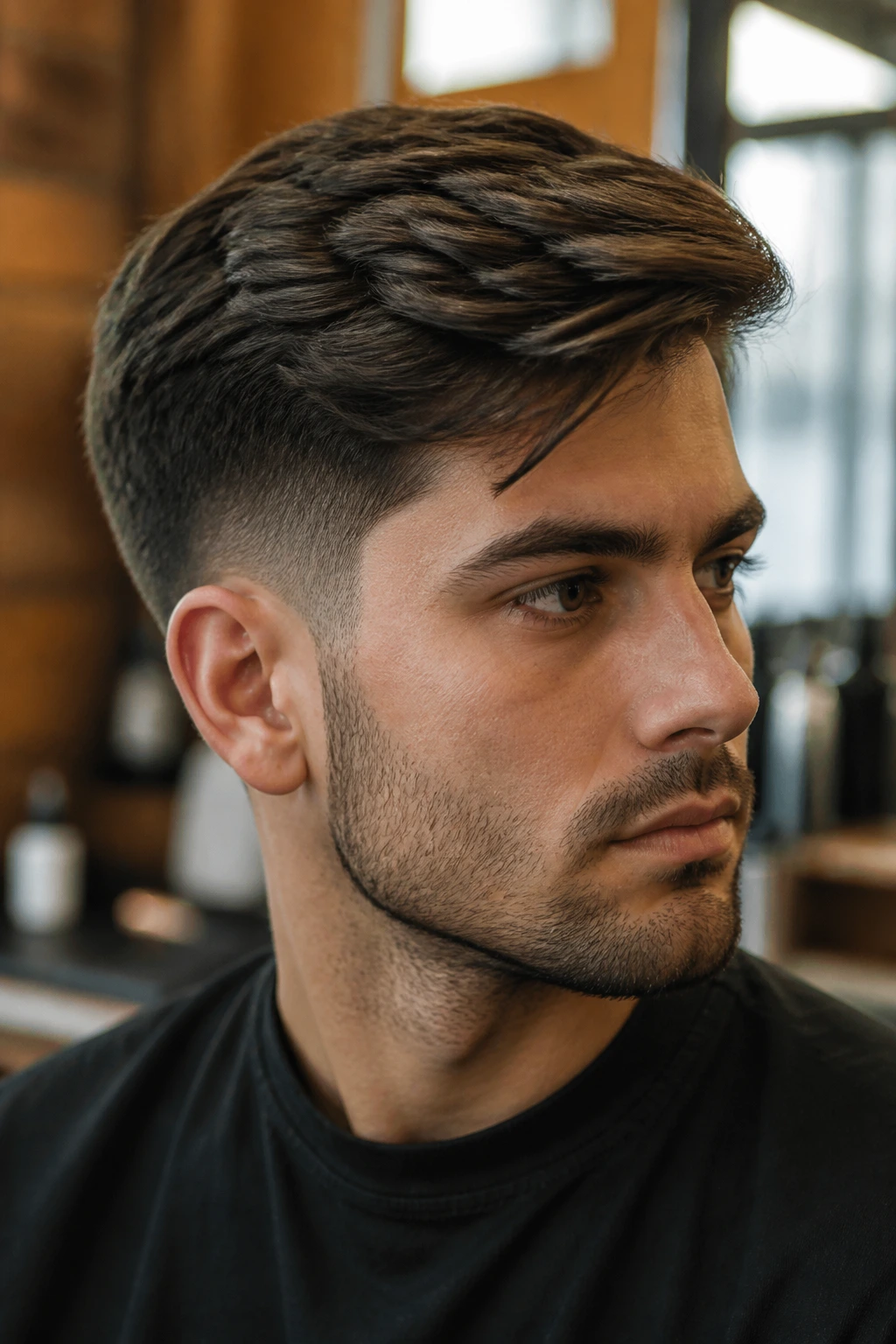
A side-swept textured top with a taper is the sort of cut that looks easy because it’s been cut well. The taper keeps the edges neat, while the longer top moves across the head in a relaxed sweep. It’s less rigid than a side part and less casual than a messy crop.
This one is especially good if you want your hair to cooperate without looking frozen in place. The texture matters. Ask for point cutting on top so the sweep doesn’t become a heavy shelf. A small amount of cream or light clay is enough, and if you have a natural wave, even better. Let it help you.
18. High and Tight Fade
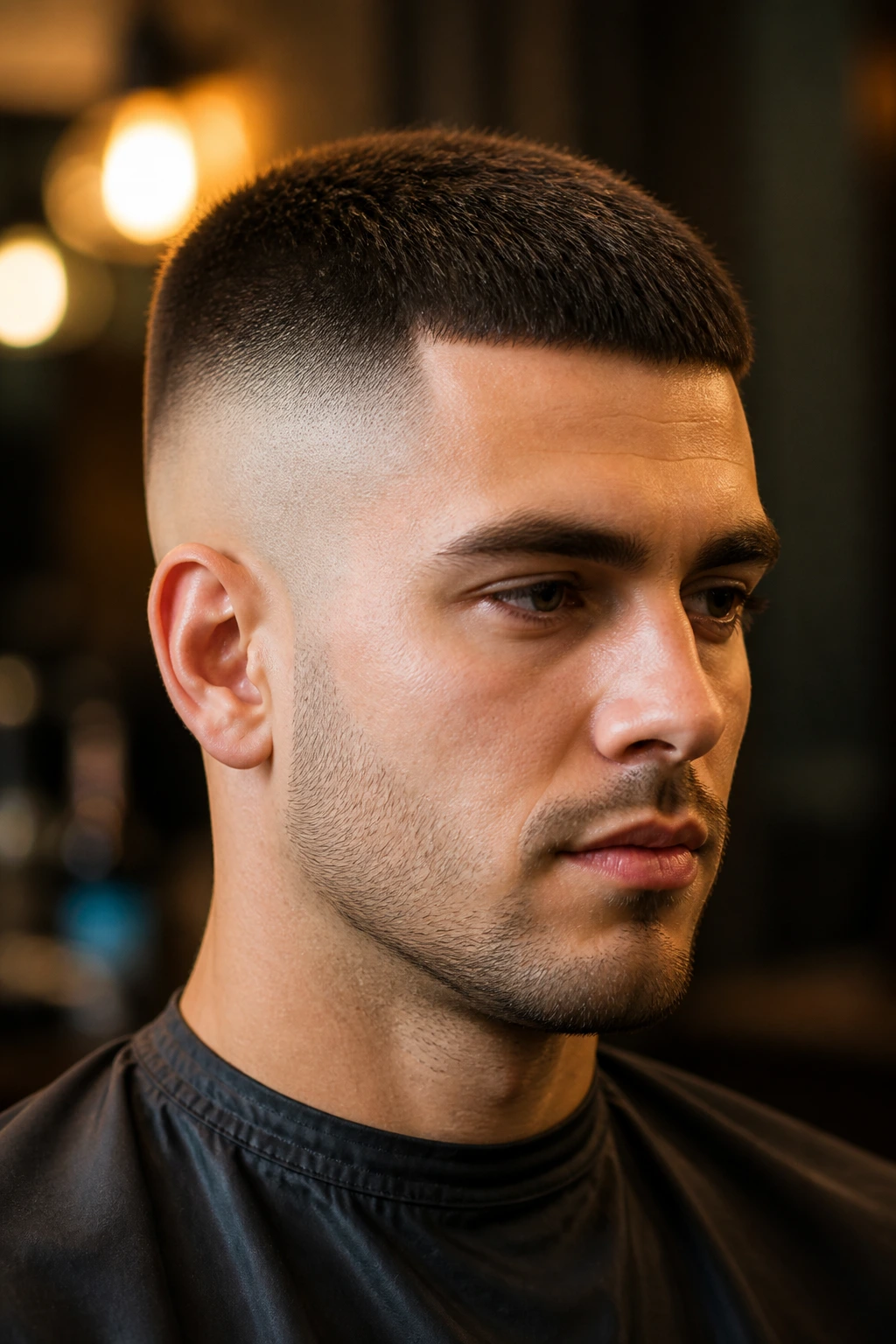
A high and tight fade is about discipline. The sides are taken close and high, the top stays short, and the result is neat in a way that borders on severe if the barber goes too far. When it’s balanced, though, it looks brutally clean.
This cut suits strong facial features and thicker hair especially well. It also keeps maintenance simple; even when it grows out, it tends to hold a defined shape. If you want a no-nonsense cut that doesn’t need products or a morning mirror check, this is one of the clearest answers.
19. Shadow Fade with Short Crop
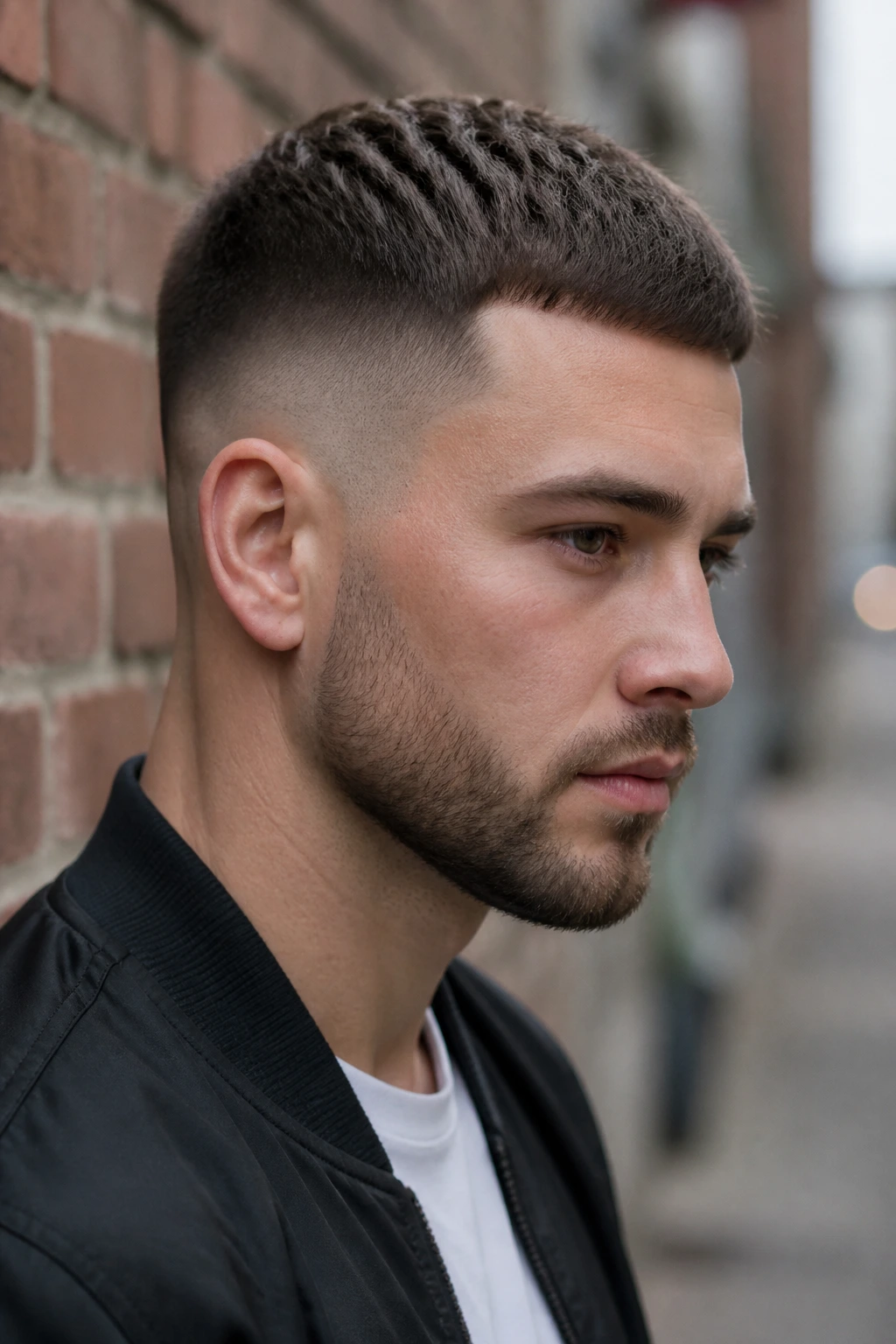
A shadow fade is softer than a skin fade, and that softness changes the mood of the haircut. The fade doesn’t drop to bare skin; it keeps a bit of shadow at the bottom, which makes the transition gentler. Paired with a short crop, the whole style feels controlled without looking harsh.
I like this cut for men who want clean edges but don’t want the scalp to show at the sides. It’s especially useful if your hairline has little quirks you’d rather not emphasize. The crop on top can be styled forward or slightly to the side. You get structure, but not too much.
20. Burst Fade Mullet
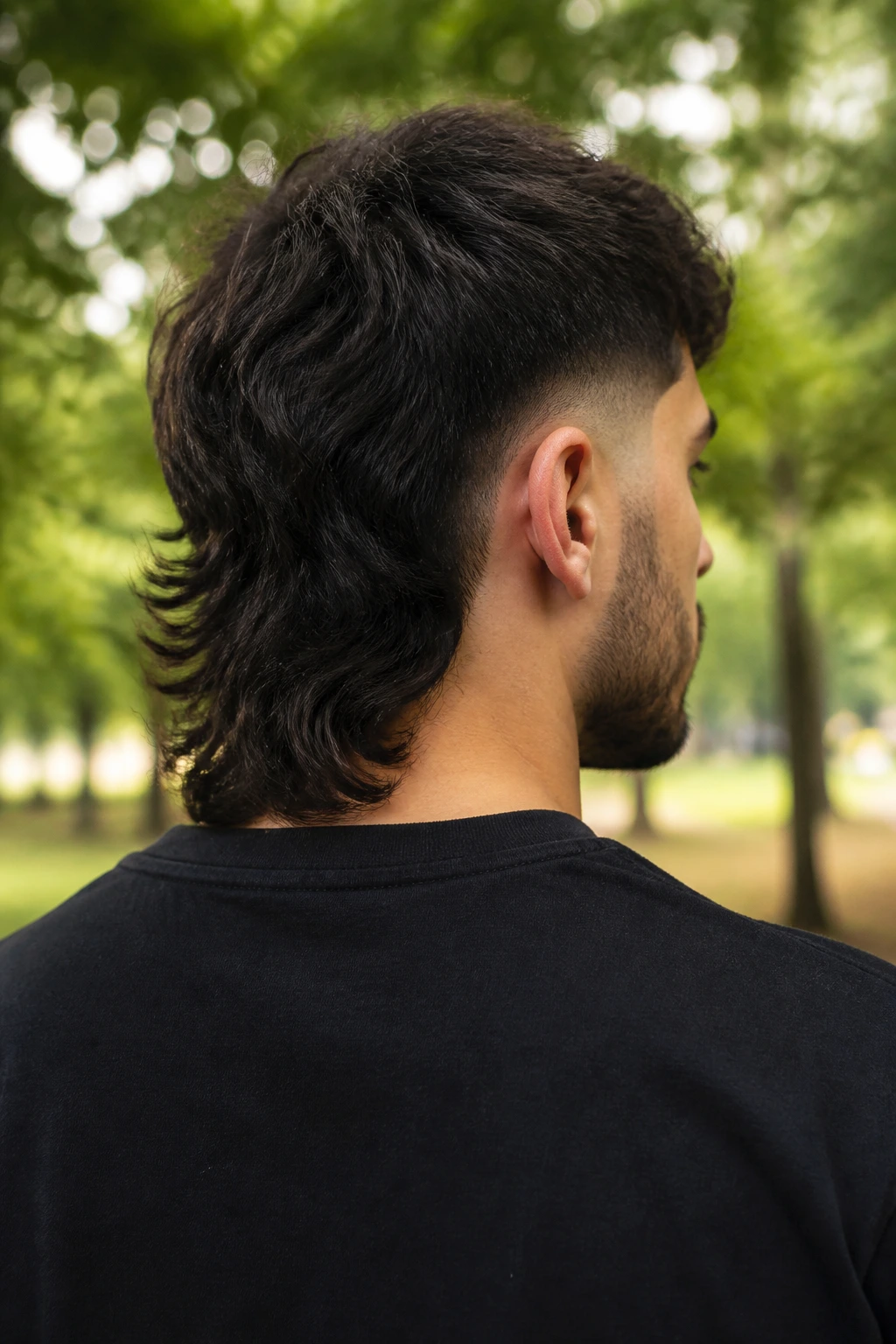
A burst fade mullet is not shy. The fade wraps around the ears, the back keeps its length, and the shape says you wanted contrast on purpose. If that sounds too bold, it probably is. If it sounds fun, the cut delivers.
The trick is keeping the mullet part controlled. Let the back grow enough to show shape, but not so much that it turns stringy. The burst fade does the cleanup near the ears and temples, which keeps the style from looking like a half-finished experiment. This cut works best when the hair has some natural movement.
21. Skin Fade with Hard Part
A skin fade with a hard part is all about the line. The razor-defined part creates a clear division on top, and the skin fade strips away the bulk underneath it. That sharp edge can make a simple comb-over look much more deliberate.
This cut is not subtle, so the part has to be clean every time. If the line grows fuzzy, the whole style loses its edge fast. Use a comb and a light pomade or gel to keep the part visible, but stop before the product makes the hair look wet all day. Clean, not greasy. That’s the line.
22. Undercut Fade with Longer Top
An undercut fade with a longer top gives you room to play without making the sides feel bulky. The top can be worn loose, brushed back, or swept to one side, while the fade underneath keeps the silhouette tight. It’s a strong option if your hair has enough length to move but you still want a crisp frame.
This cut is best when the top is left with deliberate separation from the sides. If the blend is too soft, it stops looking like an undercut and starts looking unfinished. Use a blow-dryer if you want volume, or a cream if you want a more relaxed shape. Either way, the fade is doing the clean-up work.
23. Twists with Low Fade
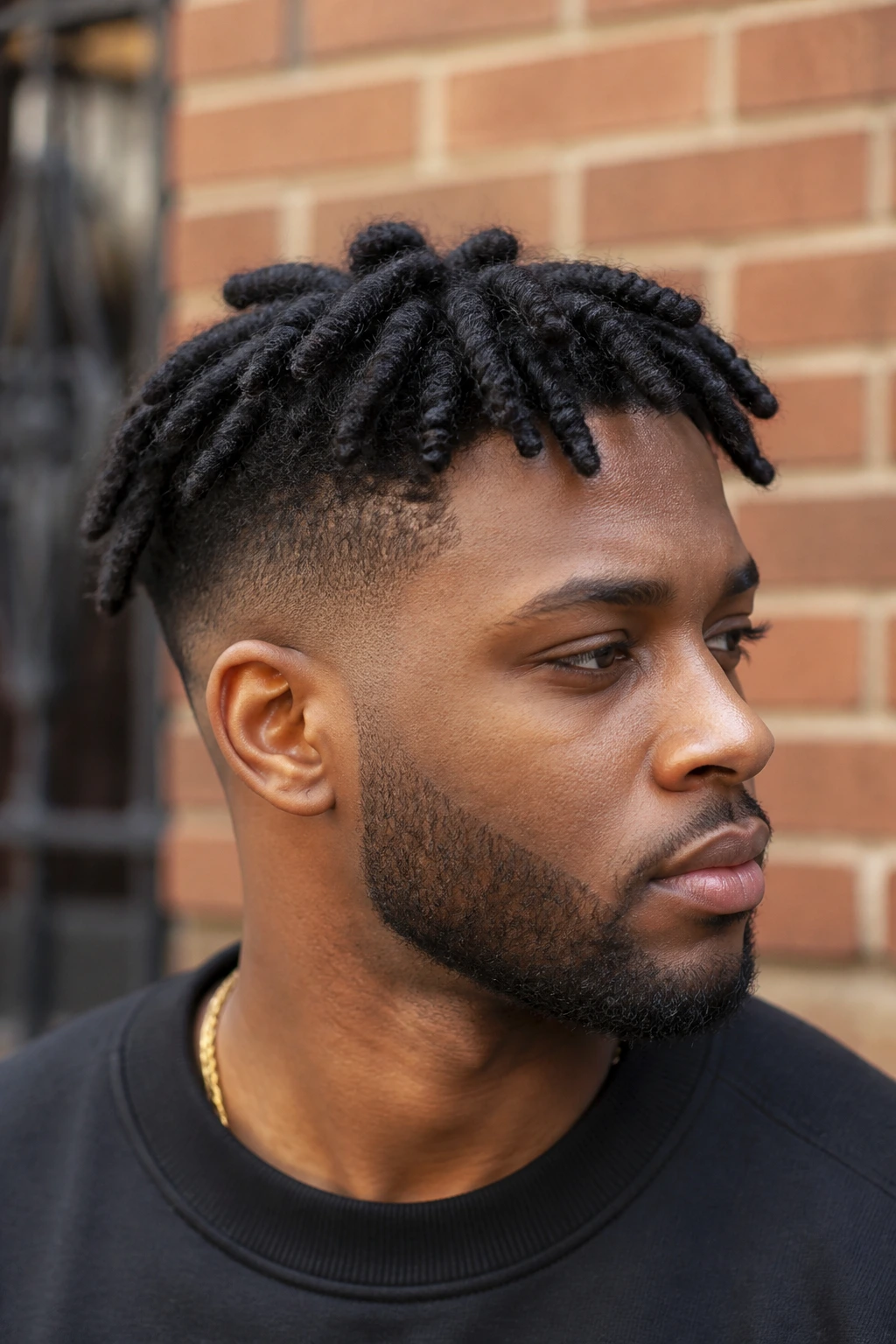
Twists with a low fade keep the texture front and center. The low fade clears the edges around the ears and neckline, while the twists on top stay defined and neat. That contrast matters. It gives the style structure without erasing the natural look of the hair.
This cut benefits from regular moisture and careful separation when styling. Don’t pack the twists too tightly unless that’s the look you want; neat spacing usually reads cleaner. The low fade also makes this a good option if you want a style that stays presentable while the top is in a protective pattern.
24. Waves with Line-Up and Taper Fade
Waves with a line-up and taper fade are all about precision. The taper keeps the sides from getting heavy, the line-up sharpens the front, and the wave pattern gives the top motion that looks almost polished when brushed consistently. It’s a disciplined style, and that’s why it rewards routine.
Brush work matters here. So does sleeping with a durag or wave cap if you’re maintaining the pattern. The fade itself should be smooth enough that it doesn’t interrupt the wave line. If the edges are squared too hard or the taper is too high, the whole thing starts to feel off-balance.
25. Slick Side Part Fade with Beard Blend
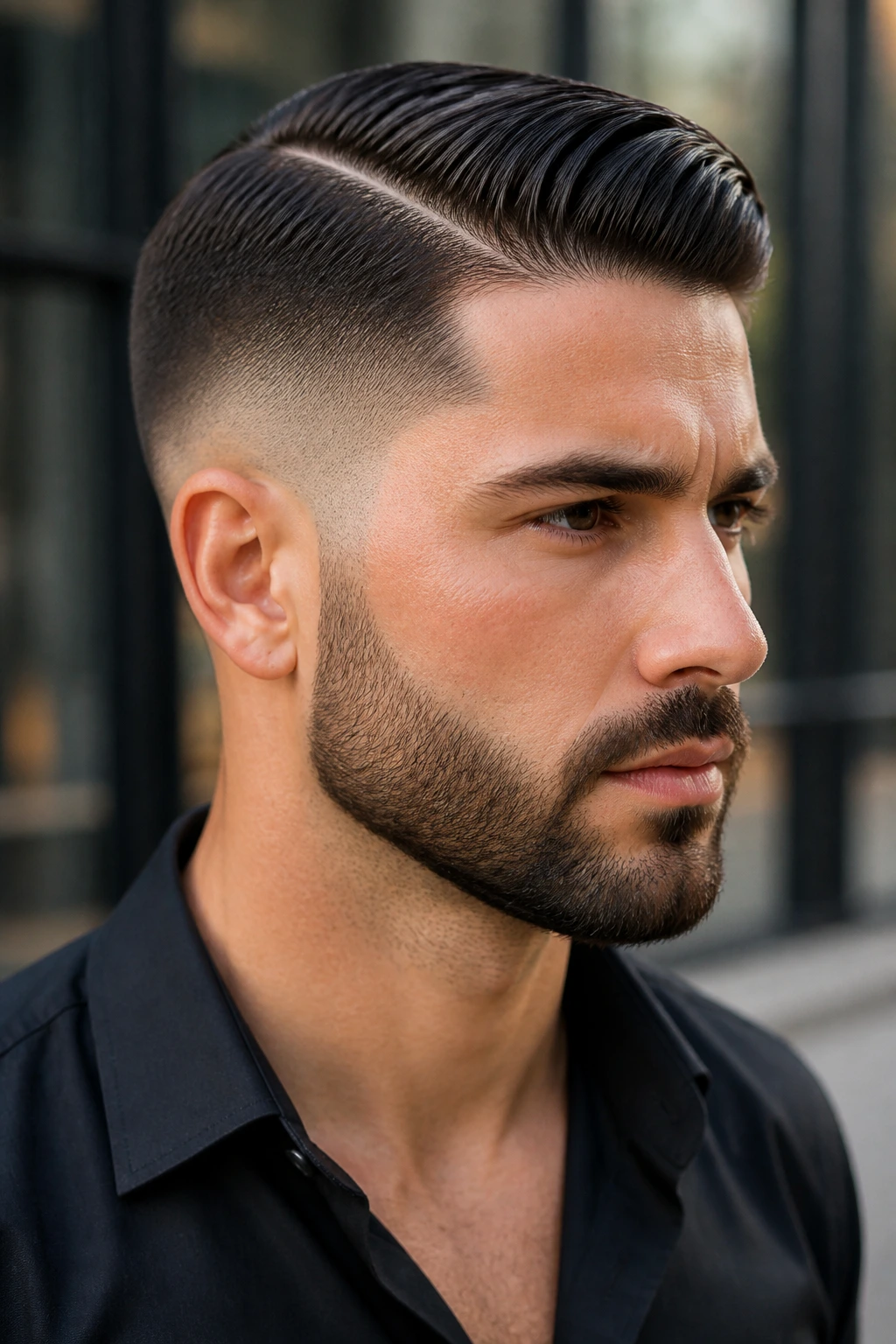
A slick side part fade with a beard blend gives you one of the cleanest transitions on the list—hair to scalp, hair to beard, all handled in one flow. The side part keeps the top structured, while the beard blend prevents the jawline from looking detached from the haircut.
This is a cut for men who want polish. It does best with straight or wavy hair and a beard that’s maintained at a similar level of care. Use a comb, a small amount of pomade, and a trimmer to keep the beard fade from getting boxy. When the top and beard talk to each other, the whole style feels finished.
26. Buzz Cut with Line-Up and Fade
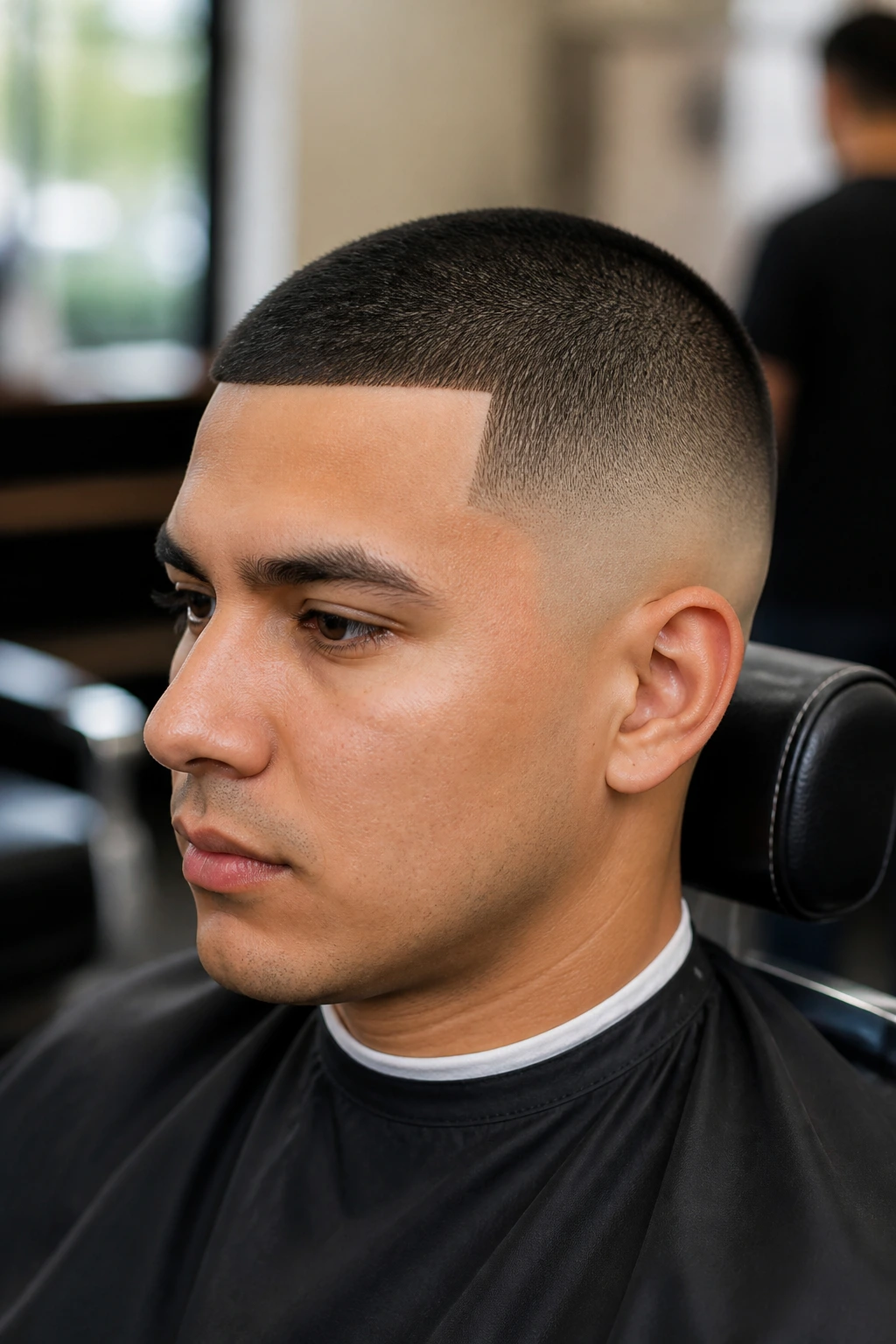
A buzz cut with a line-up and fade turns a very short cut into something deliberate. The buzz itself keeps the top minimal, but the line-up at the forehead and the fade at the sides add shape and definition. Without those details, a buzz cut can look unfinished. With them, it looks precise.
This is a strong choice if you want no styling time at all. It works on thick hair, thinning hair, and almost any hairline, as long as the line-up is handled carefully. The fade should be smooth, not choppy, because with this much skin showing, the details are obvious.
27. Caesar Cut with Fade
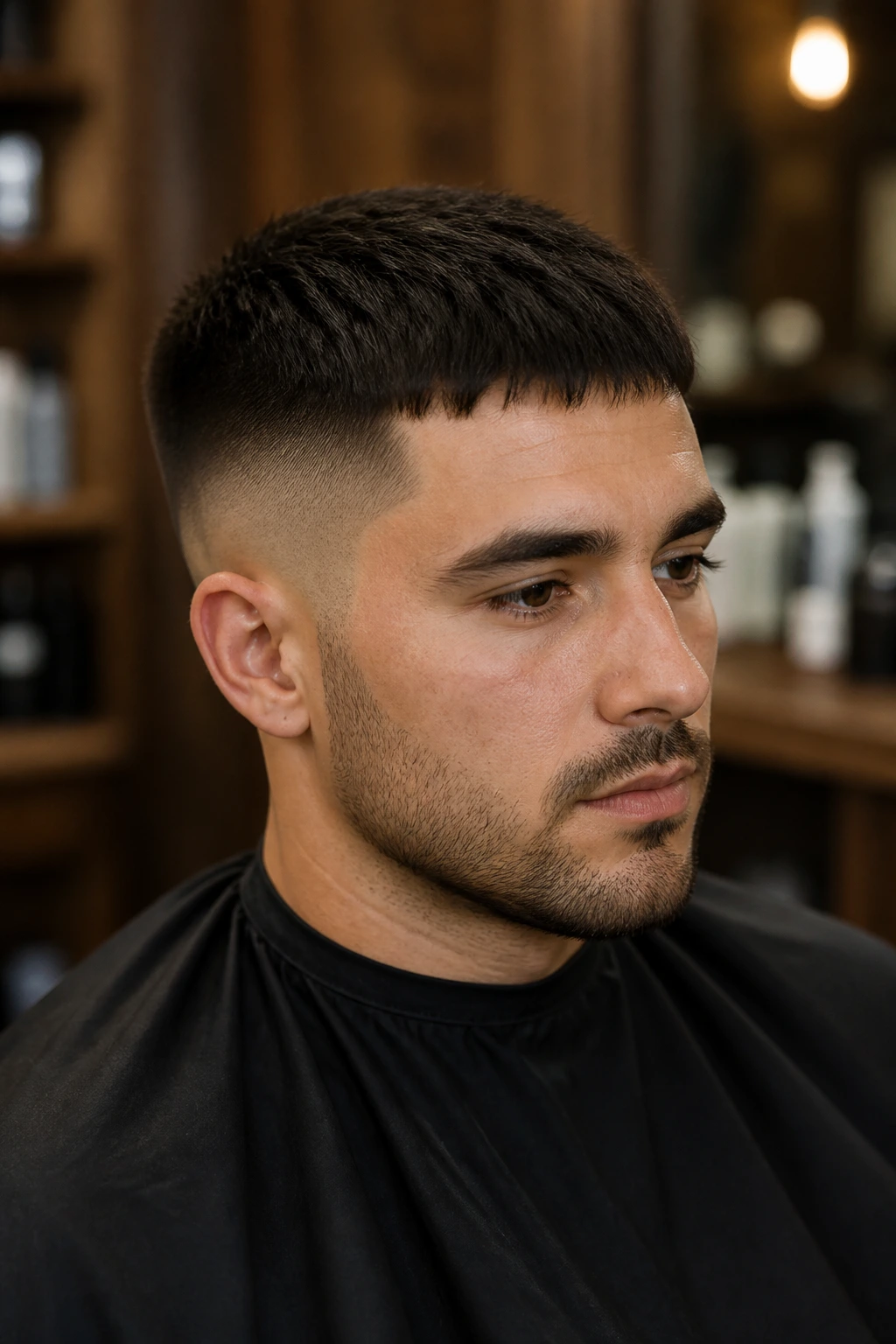
A Caesar cut with a fade is short, neat, and practical without feeling dull. The fringe is cut blunt and sits forward, which helps if your hairline is receding or if you just prefer hair that doesn’t demand daily coaxing. The fade on the sides keeps the cut from looking blocky.
This style looks best when the front edge is tidy but not razor rigid. A little texture at the fringe keeps it from reading like a helmet. Use a very small amount of matte product if needed, but honestly, the cut should do most of the work itself. That’s part of the appeal.
28. Curtain Fringe with Taper Fade
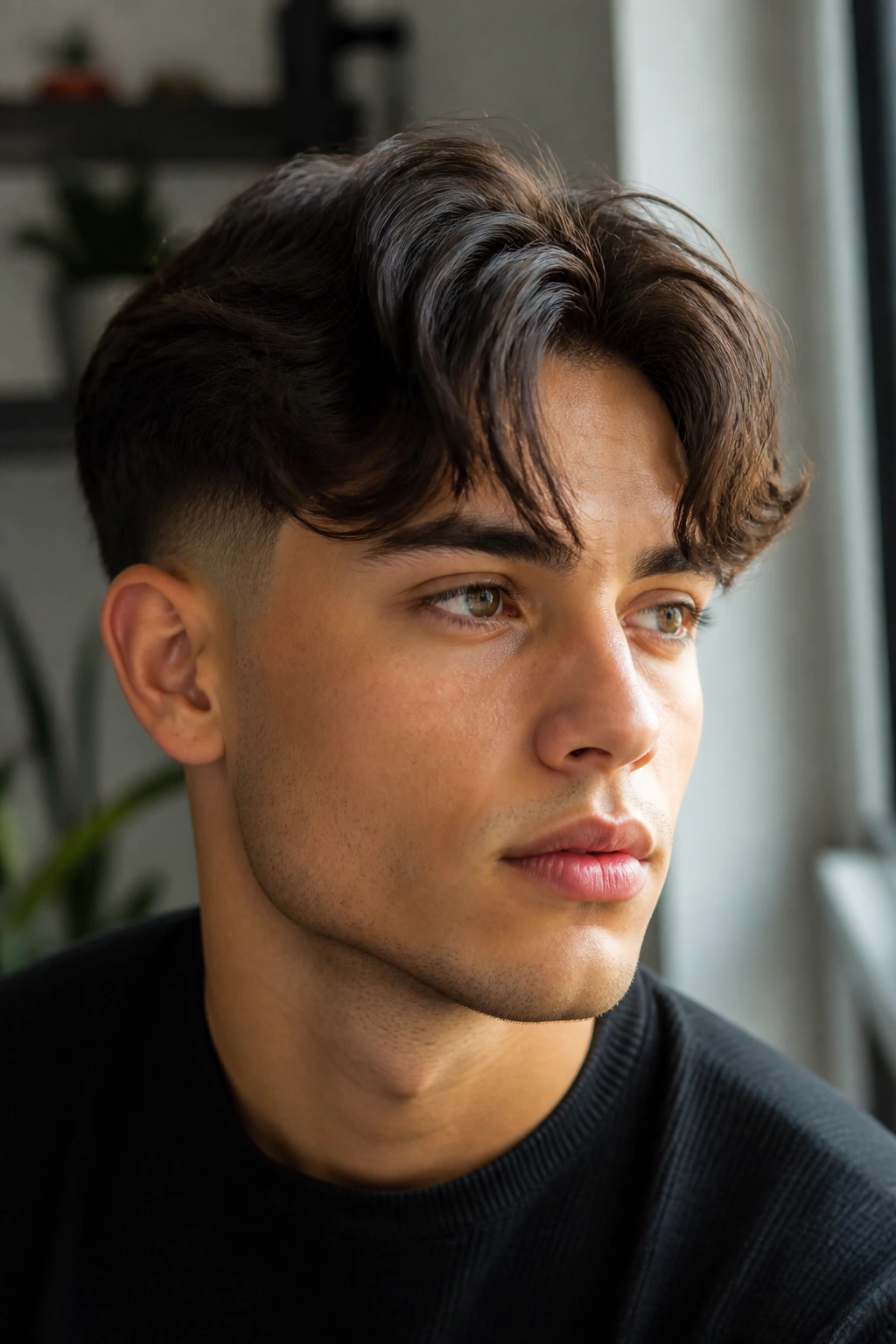
A curtain fringe with a taper fade brings a softer, slightly more relaxed mood to the clean-fade idea. The fringe falls down and apart near the center, while the taper keeps the sides crisp without taking them all the way down. It’s a useful cut if you like longer hair but don’t want the sides to swell out.
This one depends on your hair having enough length to separate naturally. Straight and wavy hair handle it best. A light cream or leave-in product can help the curtain sit without frizz. The taper keeps the edges neat enough for the haircut to still read as polished, even with movement in the front.
29. Spiky Crop with Low Fade
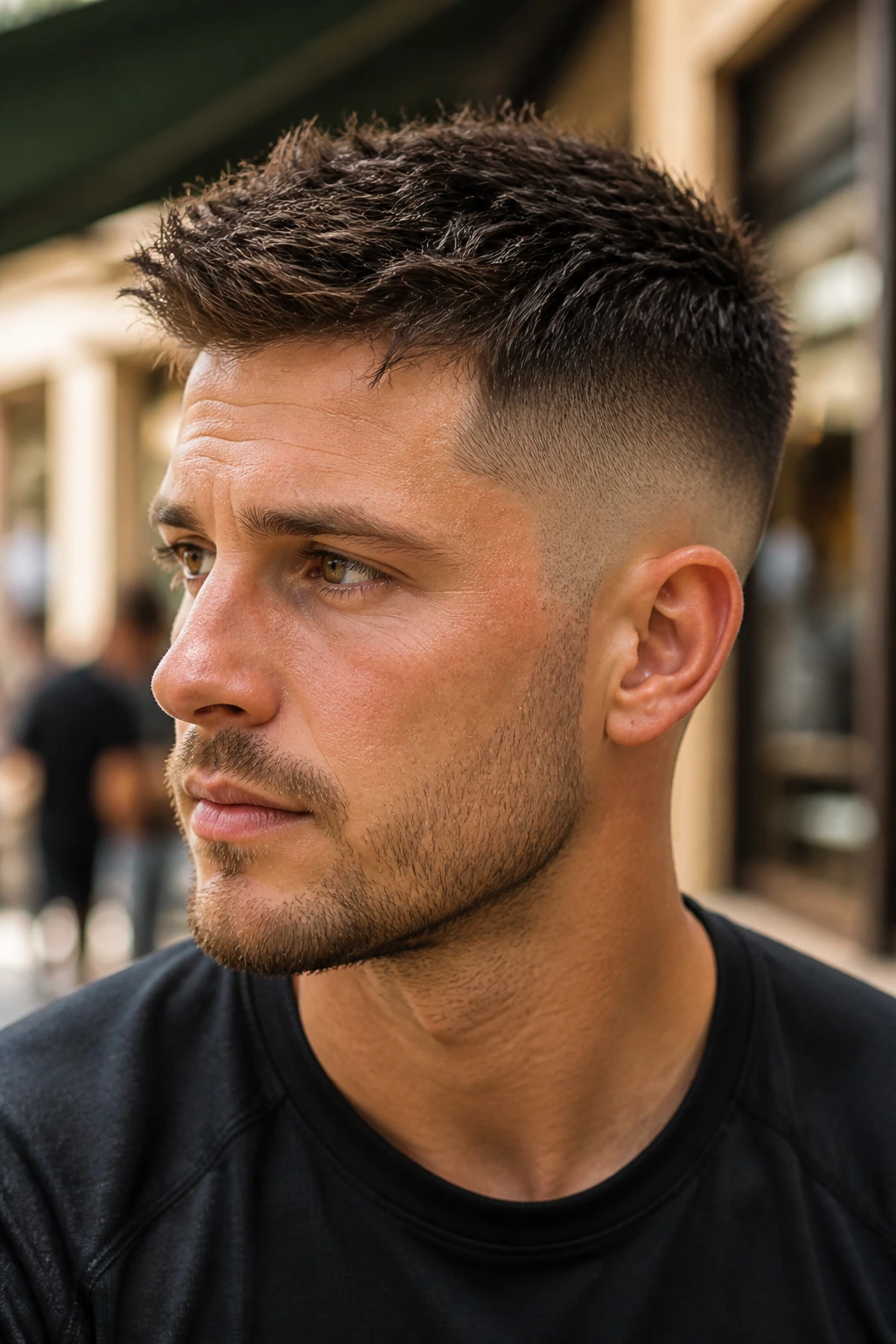
A spiky crop with a low fade gives short hair some bite. The sides stay tidy and close around the ears, while the top is cut to a length that can stand up in small, sharp pieces. It’s not a 2000s gel shell. It’s texture with intent.
This works best when the spikes are short and broken up, not tall and stiff. Use a matte paste and pinch the top into shape with your fingers. If the fade is too high, the style can feel harsh; low keeps it wearable. Clean edges, rough texture. That’s the whole trick.
30. Flat Top with Skin Fade
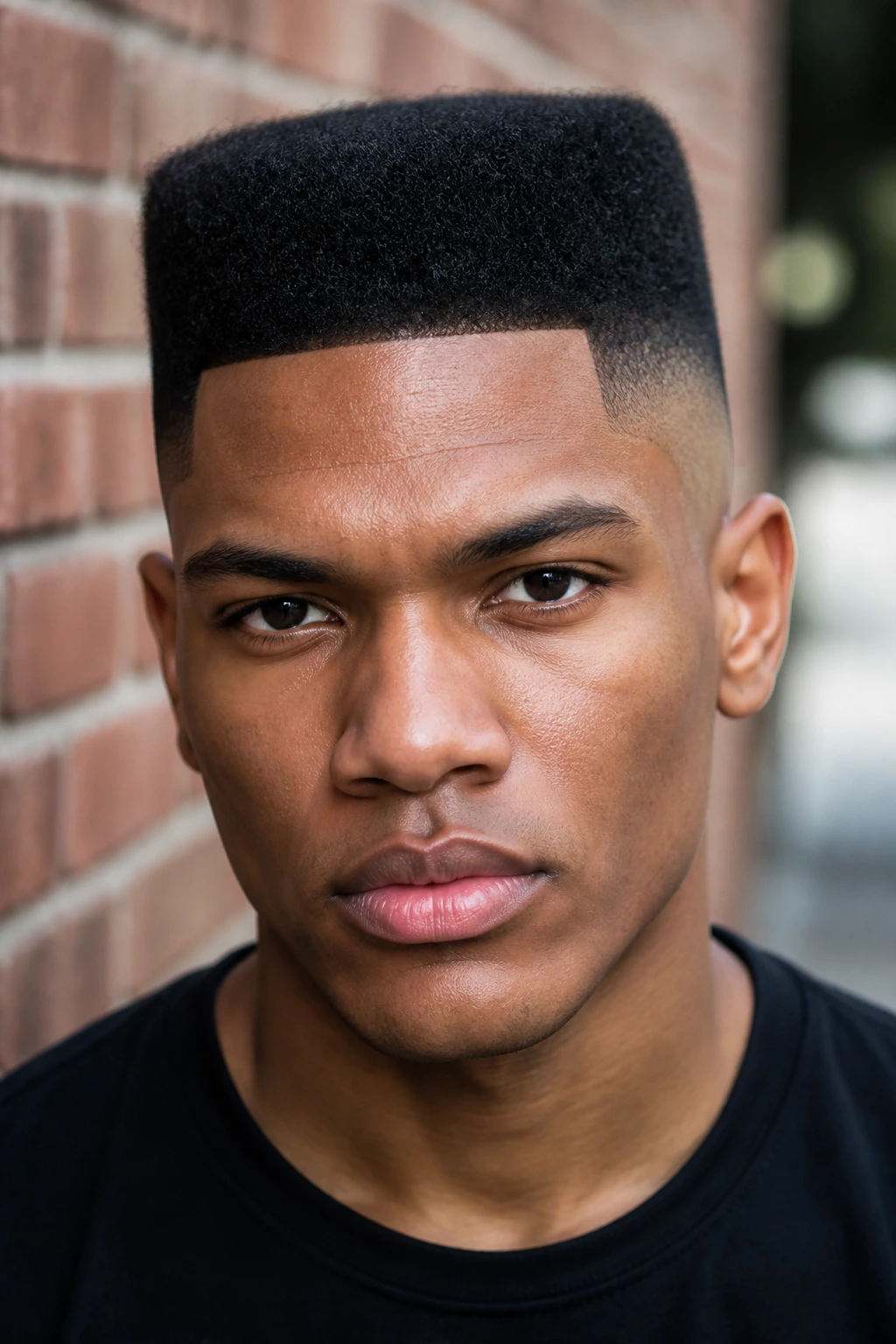
A flat top with a skin fade has a strong silhouette that either works for you or doesn’t, and there’s no pretending otherwise. The fade strips the sides down hard, while the top is squared and leveled to create that unmistakable flat profile. It’s geometric. Very geometric.
The cut needs regular shaping, because even a little growth changes the outline. Thick hair helps a lot here, since the top needs enough body to hold its shape. Ask the barber to keep the corners crisp without over-rounding them. The more exact the top looks, the cleaner the fade feels.
31. Wavy Brush Back with Low Fade
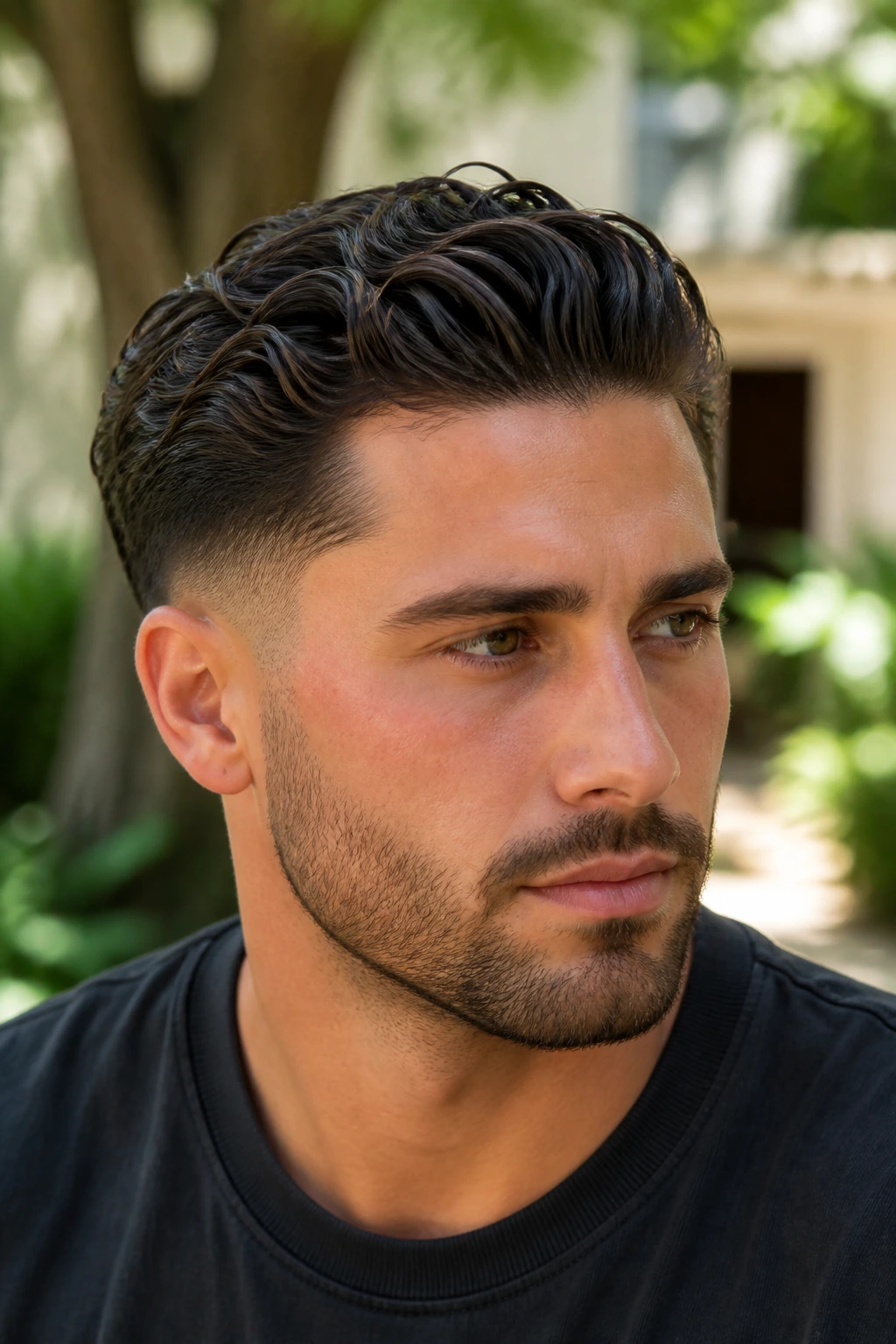
A wavy brush back with a low fade keeps movement in the hair while cleaning up the edges. The waves on top are brushed back just enough to show flow, and the low fade keeps the cut grounded. It’s a softer version of a slick-back, which makes it easier to wear casually.
This style works especially well when the wave pattern is natural rather than forced. A light cream or low-shine product can help the hair sit back without losing texture. If your hair has a cowlick at the crown, leave a touch more length there. Fighting the grain only makes the cut harder to manage.
32. Temple Fade with Coils
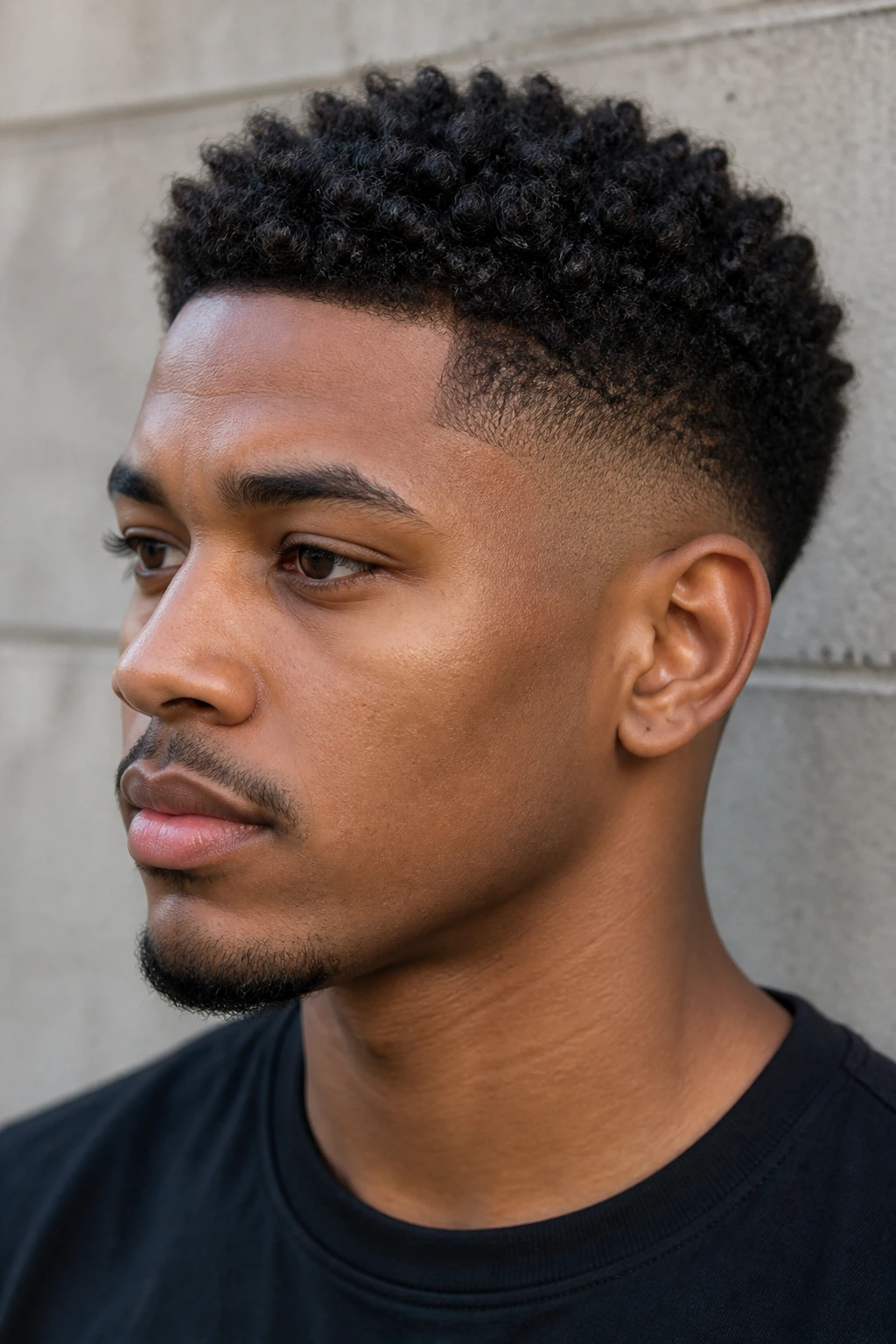
A temple fade with coils is one of the neatest ways to frame short coily hair. The fade cleans up the temples and sideburns, and the coils on top stay defined and compact. That balance matters because coily hair can lose shape fast if the sides get bulky.
This cut should respect the curl pattern instead of flattening it. Keep the top shaped in a way that follows the head, and have the barber sharpen the front line without pushing it into an unnatural box. Moisture, regular shaping, and a soft brush routine will keep it looking intentional.
33. Mini Afro with Burst Fade
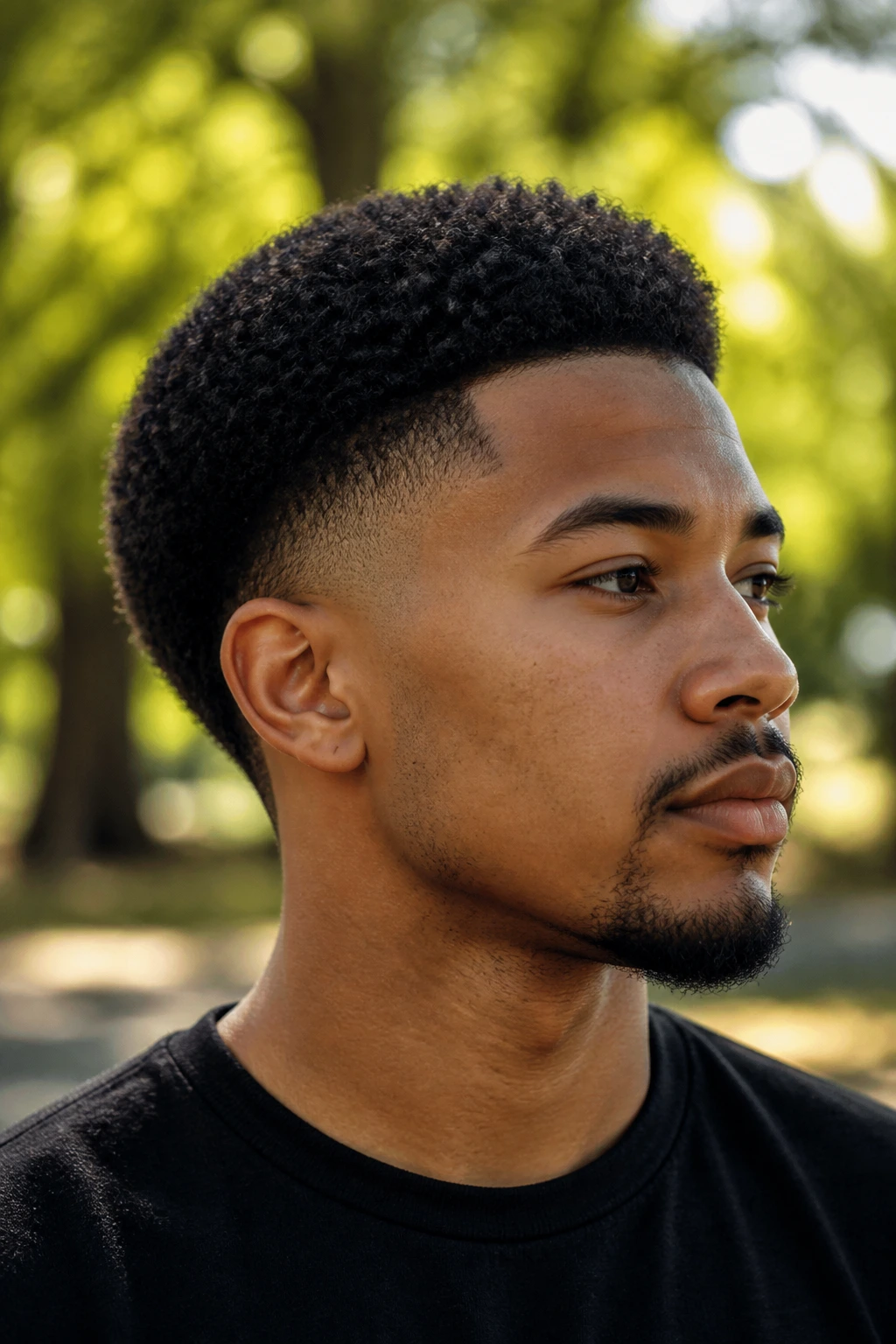
A mini afro with a burst fade keeps the round shape of the afro while cleaning up the edges around the ears. The burst fade adds a little curve and movement, which helps the haircut sit neatly from the side. The top stays full enough to show texture, but the silhouette is controlled.
This is a nice option if you want natural hair to stay natural and still look crisp. The shape is the whole game. If the top gets too tall or the fade climbs too high in the wrong spot, the roundness gets lost. Keep the outline tidy, moisturize regularly, and let the texture do its work.
34. Classic Side Part with Low Fade
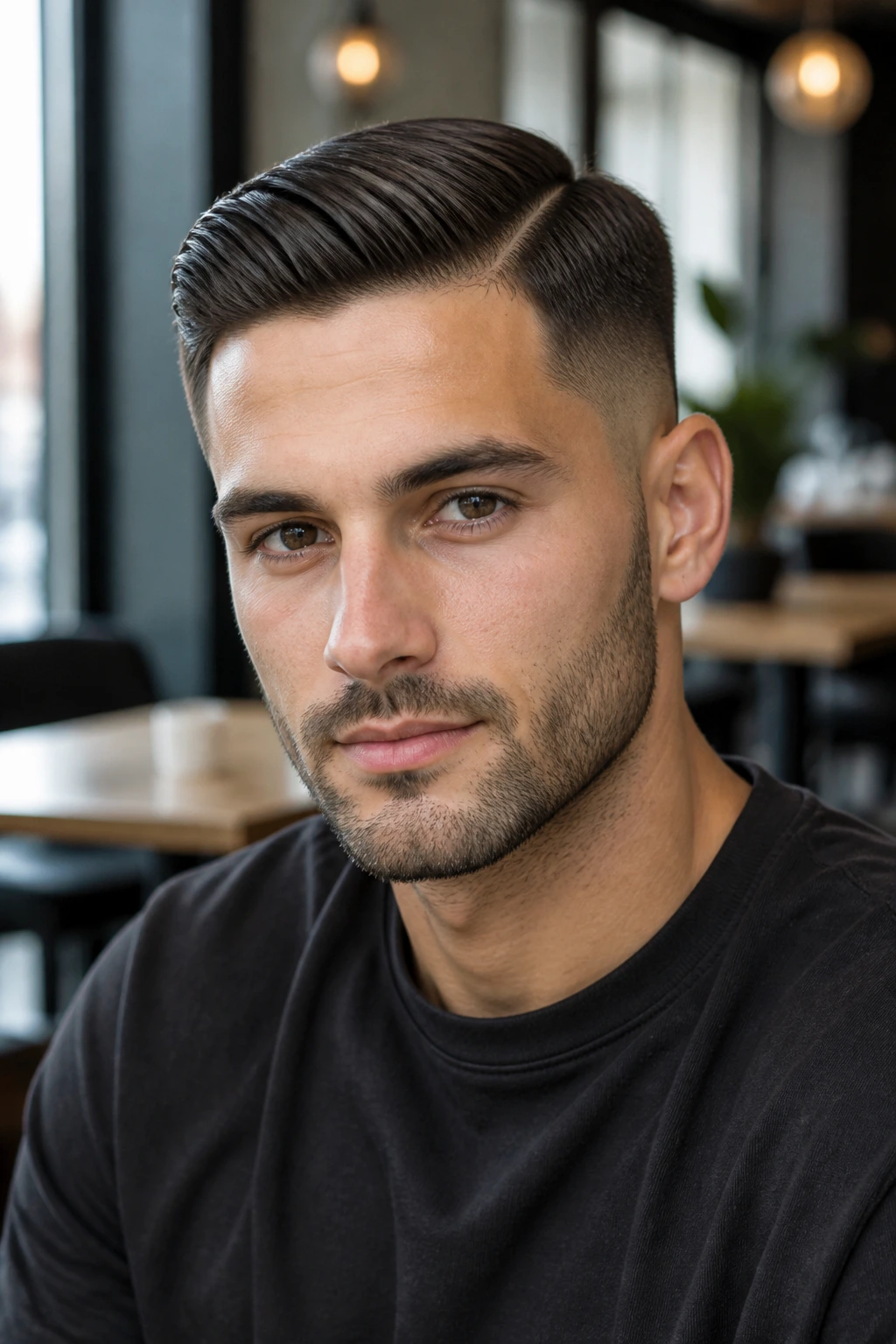
A classic side part with a low fade is the kind of cut that never needs to be loud. The part gives the hair direction, and the low fade removes the extra weight without turning the sides into a severe contrast. It feels tidy, familiar, and easy to wear with a button-down or a T-shirt.
This one is especially good if you want a haircut that looks cleaner the more it’s combed, not the more it’s styled. The top should keep enough length to move without collapsing. A light pomade or cream is enough. Don’t drown the part in product; the shape should stay readable, not shiny.
35. Hard Side Part with Mid Fade
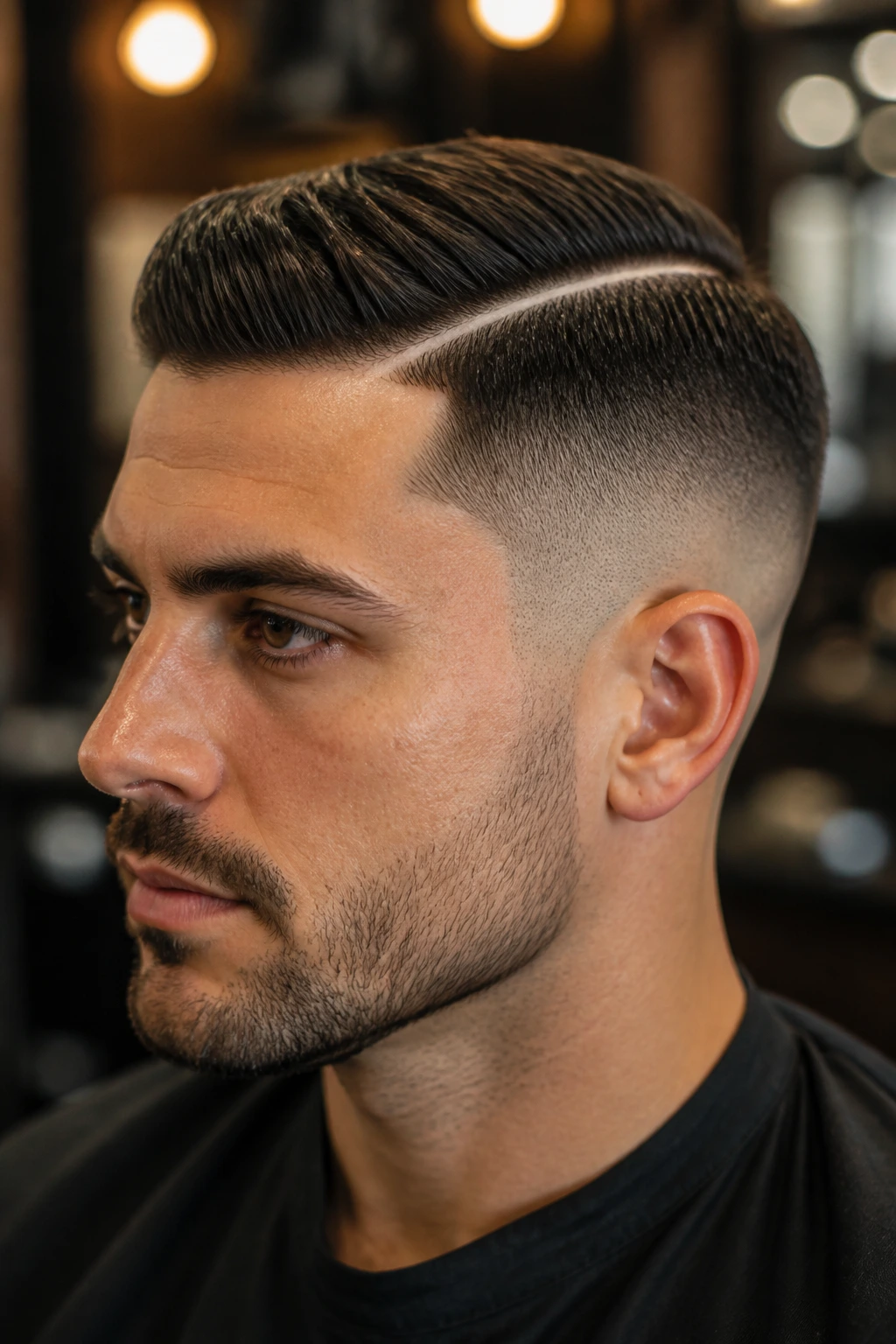
A hard side part with a mid fade takes the classic part and makes it sharper. The razor line gives the top a clear split, while the mid fade keeps the sides neat without leaving too much bulk near the ears. It’s a little more assertive than the soft side part, which is the whole point.
This cut works best when the part line is placed to suit your natural growth pattern. If the barber forces it against the grain, the top will fight back. Use a comb and a medium-hold product, and don’t overstyle the top. The hard part is already making a statement.
36. Textured Fringe with Temple Fade
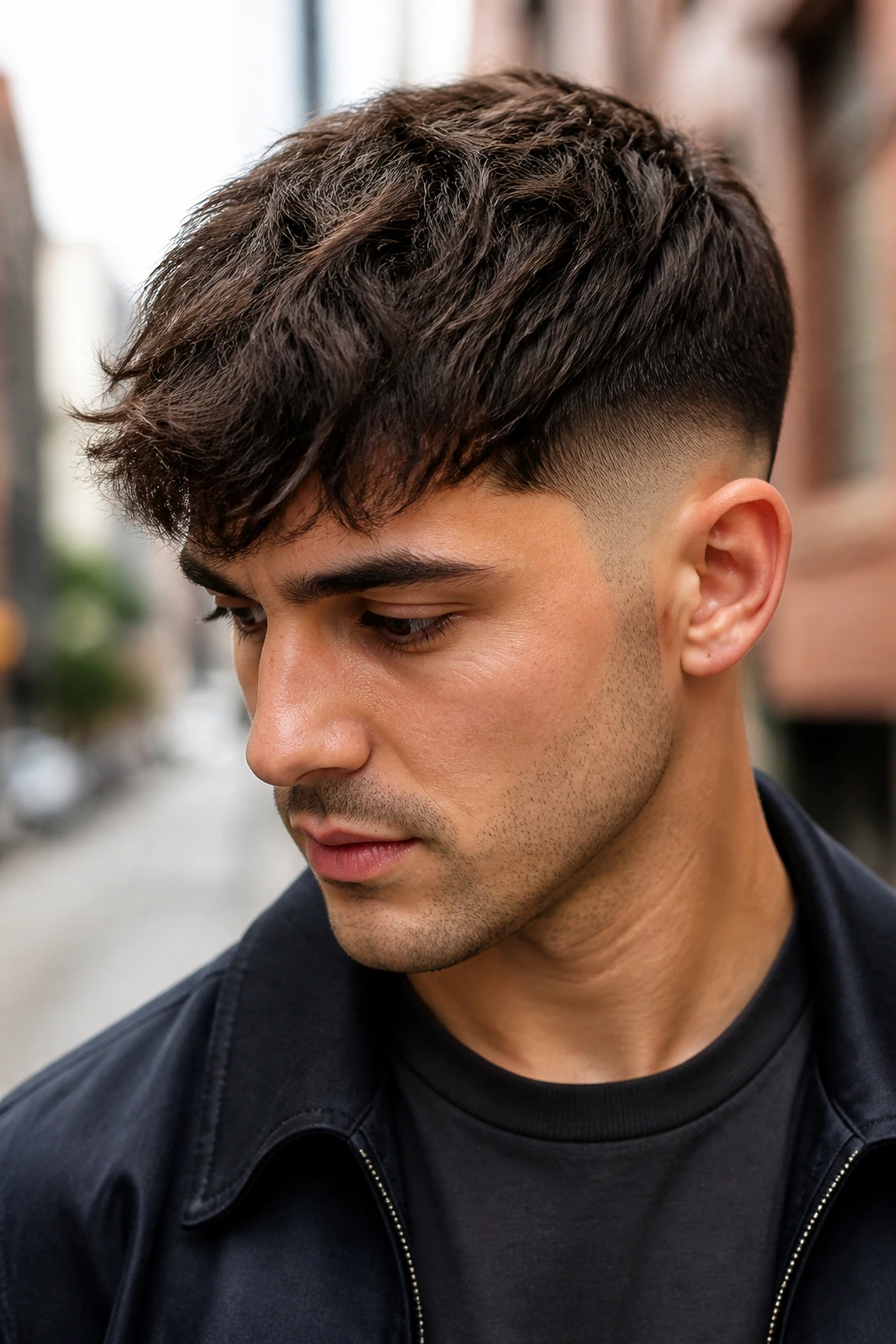
A textured fringe with a temple fade keeps the front loose and the sides clean. The fringe falls forward in pieces, which makes the haircut feel younger and less formal, while the temple fade carves out the ears and sideburns so the whole shape stays neat.
This is a good cut if you want movement up front without committing to a heavy crop. Ask for the fringe to be point cut, not chopped blunt. That keeps the texture light. A matte product or sea-salt spray can help the pieces separate, but too much will make the fringe clump. Keep it loose.
37. Long Top Fade with Beard
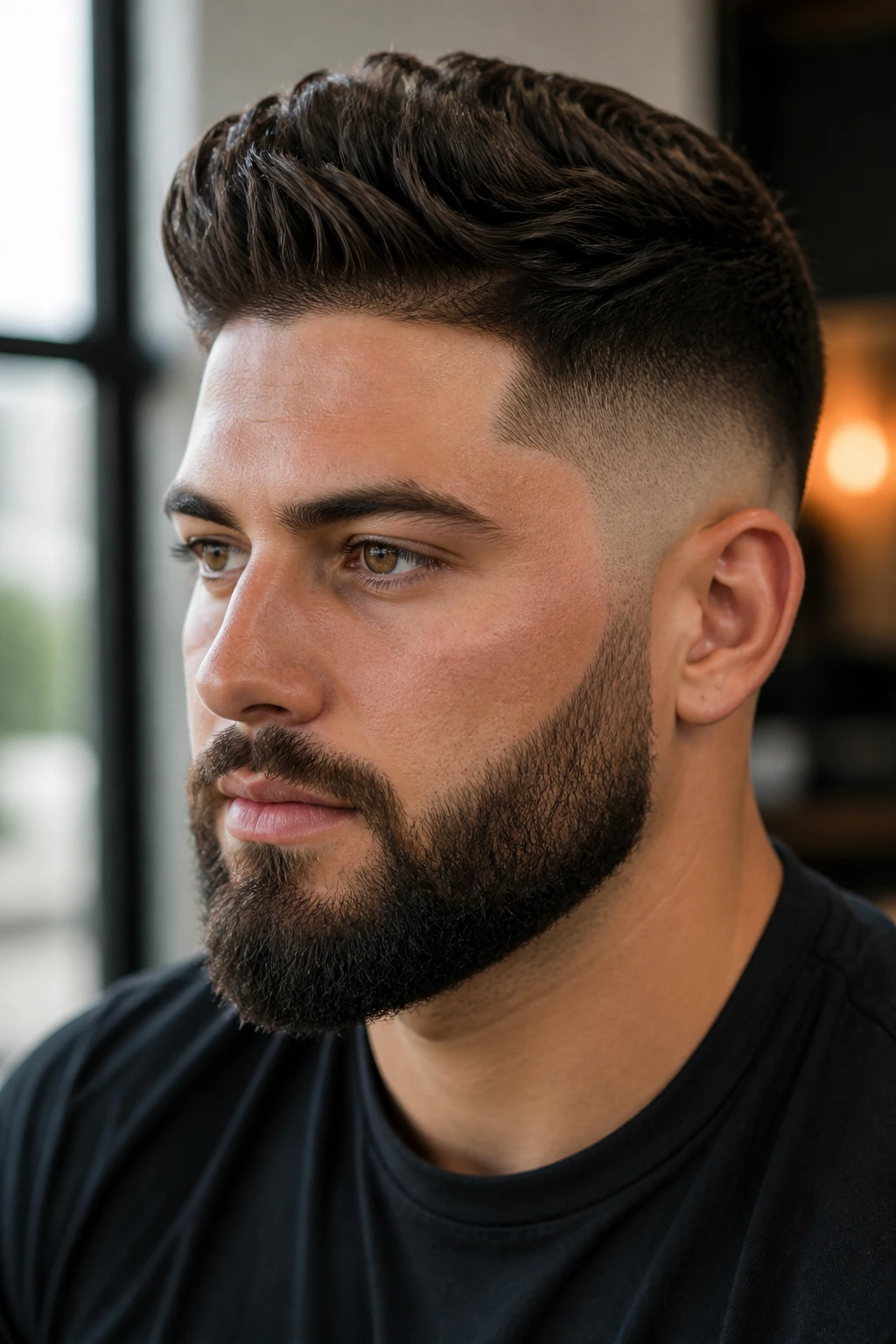
A long top fade with a beard is built on contrast from top to bottom. The top carries the length, the fade clears the sides, and the beard anchors the jaw so the haircut doesn’t float. It can look rugged, polished, or somewhere between the two, depending on how neat you keep the beard.
This style needs discipline because long tops show mistakes. A little frizz, a crooked part, a beard that isn’t blended—it all stands out. Use a blow-dryer if the top wants volume, and make sure the beard fade meets the haircut smoothly around the sideburn area. That junction is where the style either comes together or doesn’t.
38. Business Taper Fade
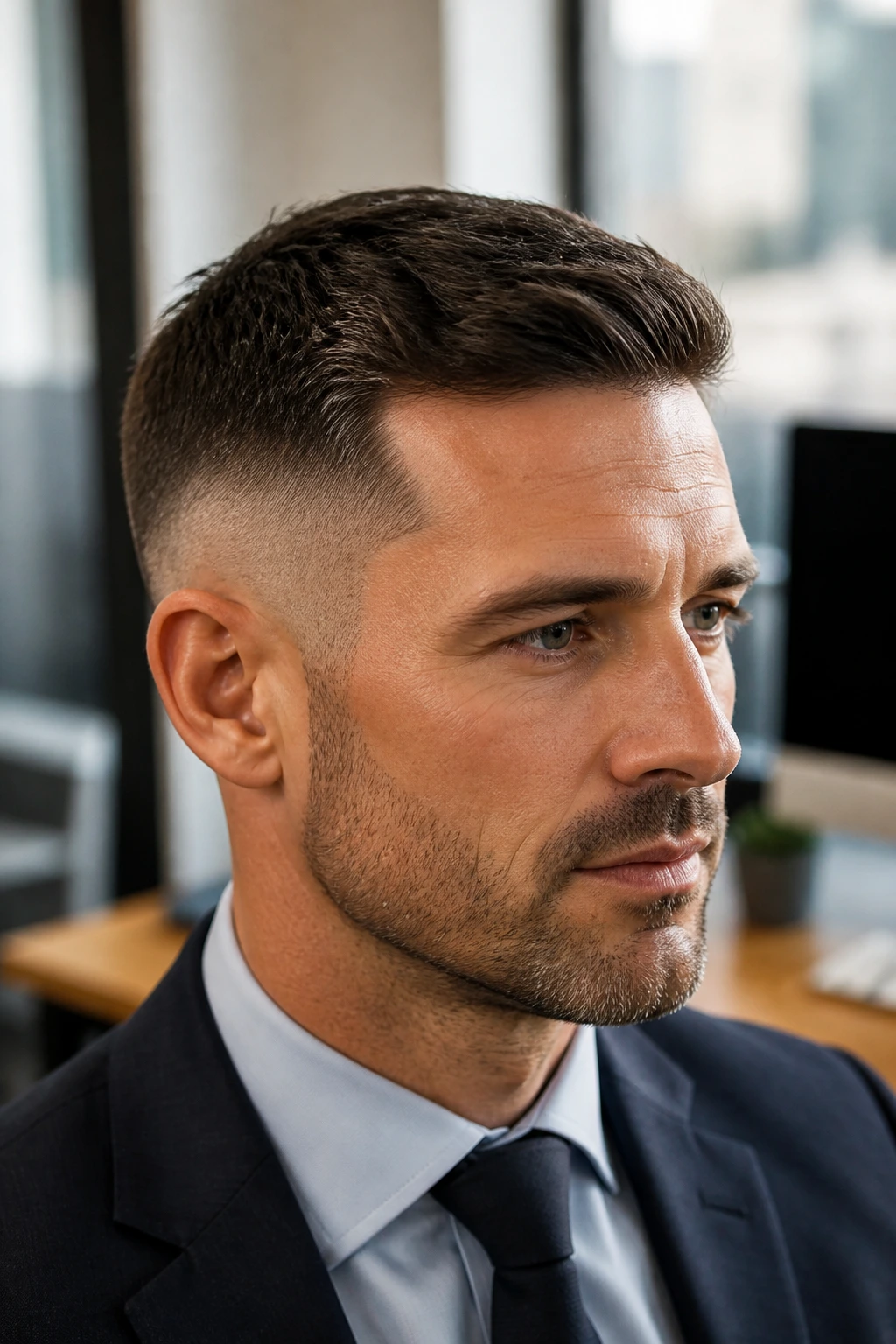
A business taper fade is the quietest cut in the bunch, and that’s exactly why it works. The taper keeps the neckline and ears cleaned up, but it doesn’t shave the sides down so far that the haircut starts shouting. The top stays tidy, usually with just enough length to comb or brush into place.
This is the cut for men who want neatness without drama. It grows out gracefully, needs little product, and can handle a suit or a sweatshirt. If you want one fade that sits in the background and still makes you look put together, this is the one I’d point to first.
How to Pick the Right Fade Height for Your Hairline and Growth Pattern
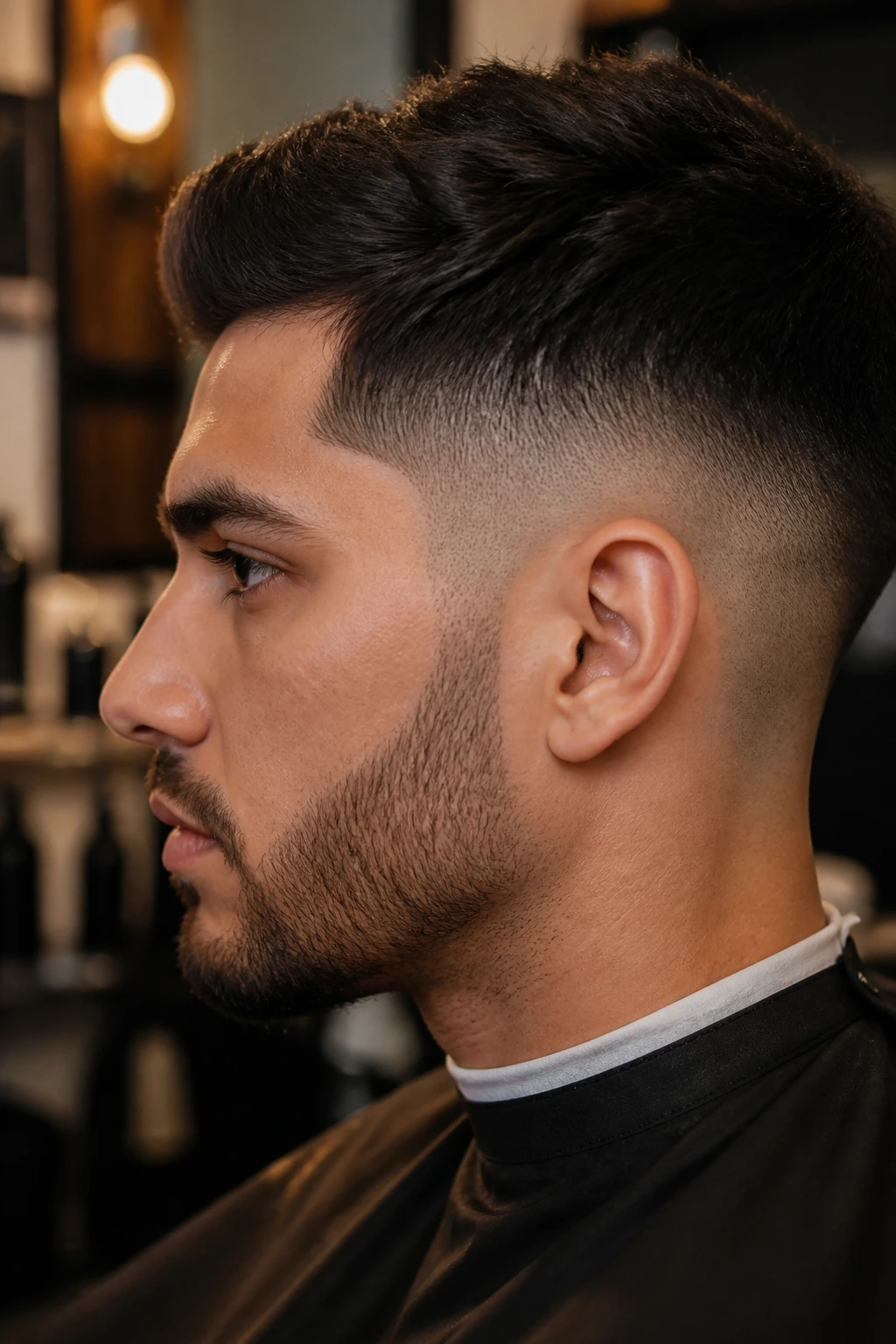
The fade height does more work than most people realize. A low fade keeps more weight on the sides and looks softer when it grows out. A mid fade splits the difference. A high fade removes more bulk and creates a stronger contrast, which can be useful if your top is short or your hair is thick enough to support it.
Hairline shape matters too. If your temples are receding, a low taper or soft fade usually looks better than a hard, high skin fade that exposes every edge. If your hair grows forward in a strong widow’s peak, a fringe, crop, or side-swept top can make the fade look intentional instead of forced. Cowlicks at the crown? Leave a little more length there. Fighting them only creates a ridge you’ll spend the next three weeks flattening.
A good barber will talk in guard numbers, not just style names. Ask where the fade starts, whether the lowest point is skin, shadow, or #1, and how much length stays on top. That conversation matters more than the label on a Pinterest photo. Photos are useful. Specifics are better.
Common Fade Mistakes That Make a Fresh Cut Look Rushed
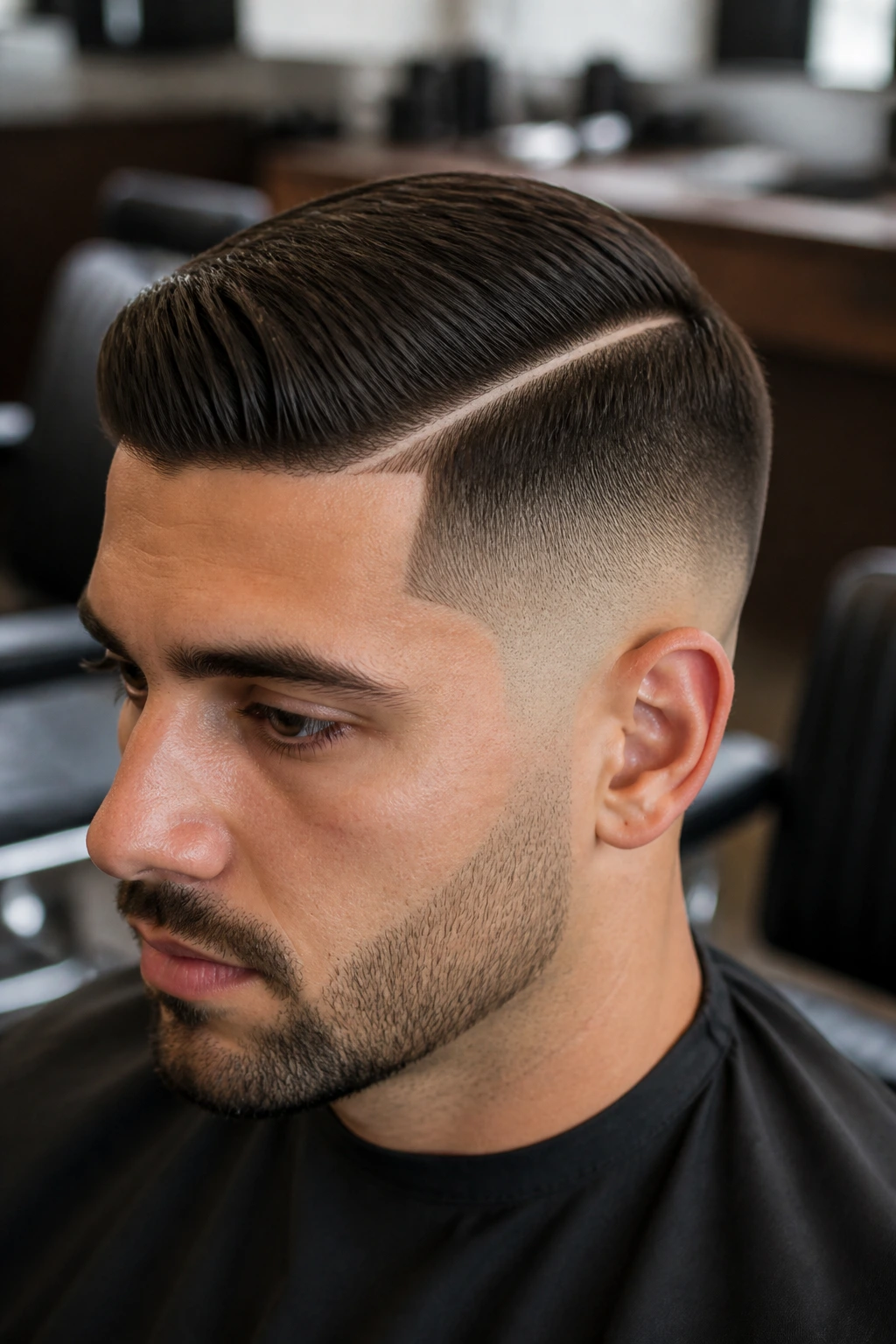
The first mistake is asking for a fade that’s too high for your head shape. You end up with too much scalp showing near the temples, and the haircut starts to feel top-heavy. The fix is simple: lower the start point or soften the fade into a taper if you want more coverage.
Another common miss is leaving the top disconnected by accident. That heavy shelf between the long top and the short sides looks harsh unless it’s meant to be there. If you want a blended result, ask for texture through the transition or a smoother clipper-over-comb finish.
Product can ruin a clean fade fast. Too much pomade or gel makes the sides look greasy and the top stiff. Use the smallest amount that holds the shape, and keep shine low unless the style specifically calls for it.
Necklines and sideburns get ignored all the time. Then the fade looks good from the front and messy from the back. Clean those areas every week if you can. Even a sharp haircut looks lazy when the nape grows into a fuzzy collar.
Clean Fade Variations by Hair Texture and Face Shape
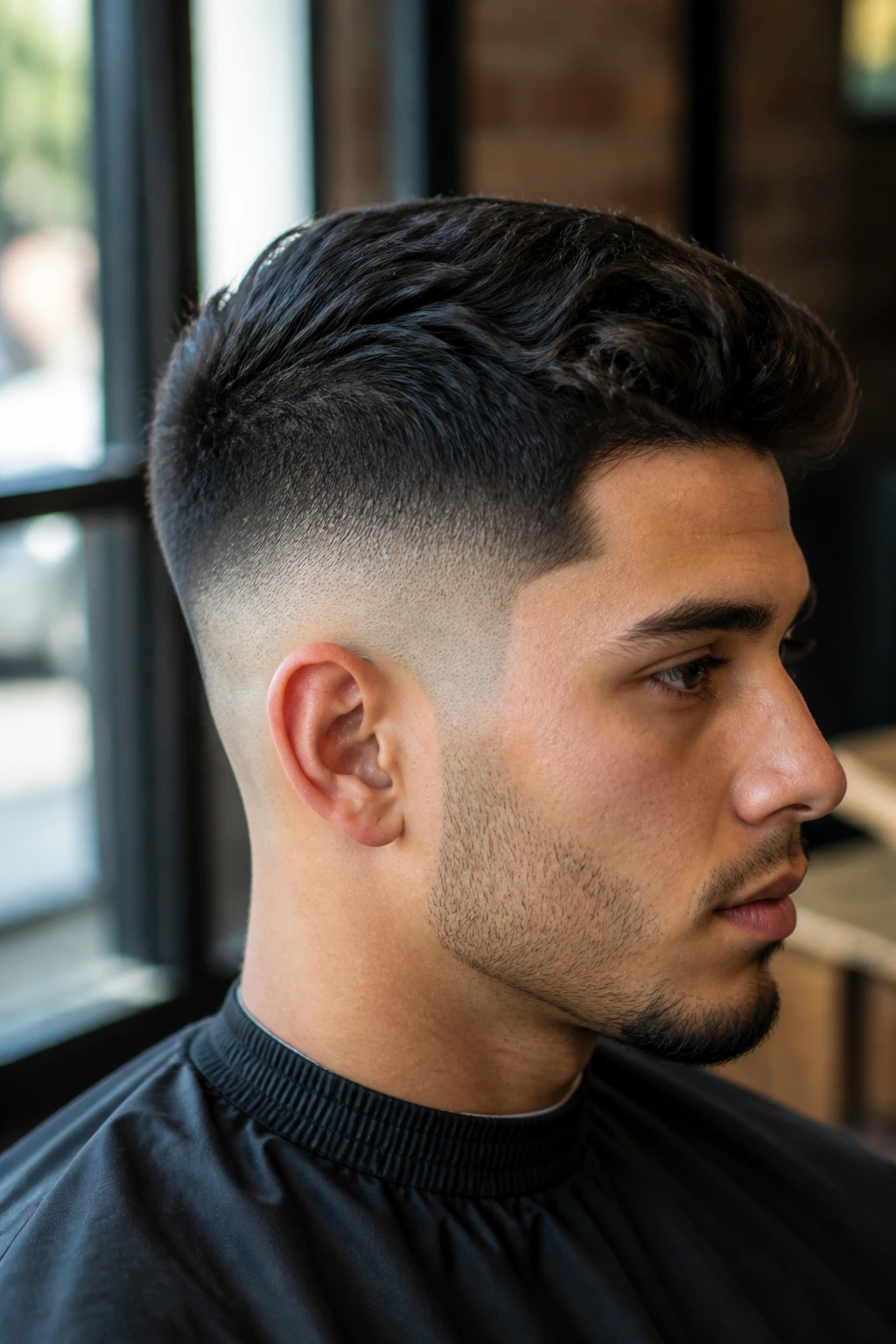
Straight hair usually shows every line, which means the fade needs to be blended carefully and the top needs texture so it doesn’t sit like a lid. Wavy hair is easier to shape but can puff if the sides are left too heavy. Curly and coily hair can handle stronger fade contrast because the texture on top naturally holds volume.
Face shape changes the game more than most guys want to admit. Round faces often benefit from a little height on top and tighter sides. Longer faces usually look better with a lower fade and some width through the top or fringe. Square faces can wear almost anything, but a beard blend helps soften the jaw if that’s the goal.
There’s no magic cut that works the same way on every head. A clean fade is a framework, not a costume. The best version is the one that respects your hair’s behavior instead of pretending it’s someone else’s.
Tools That Matter if You Keep a Fade Clean at Home
-
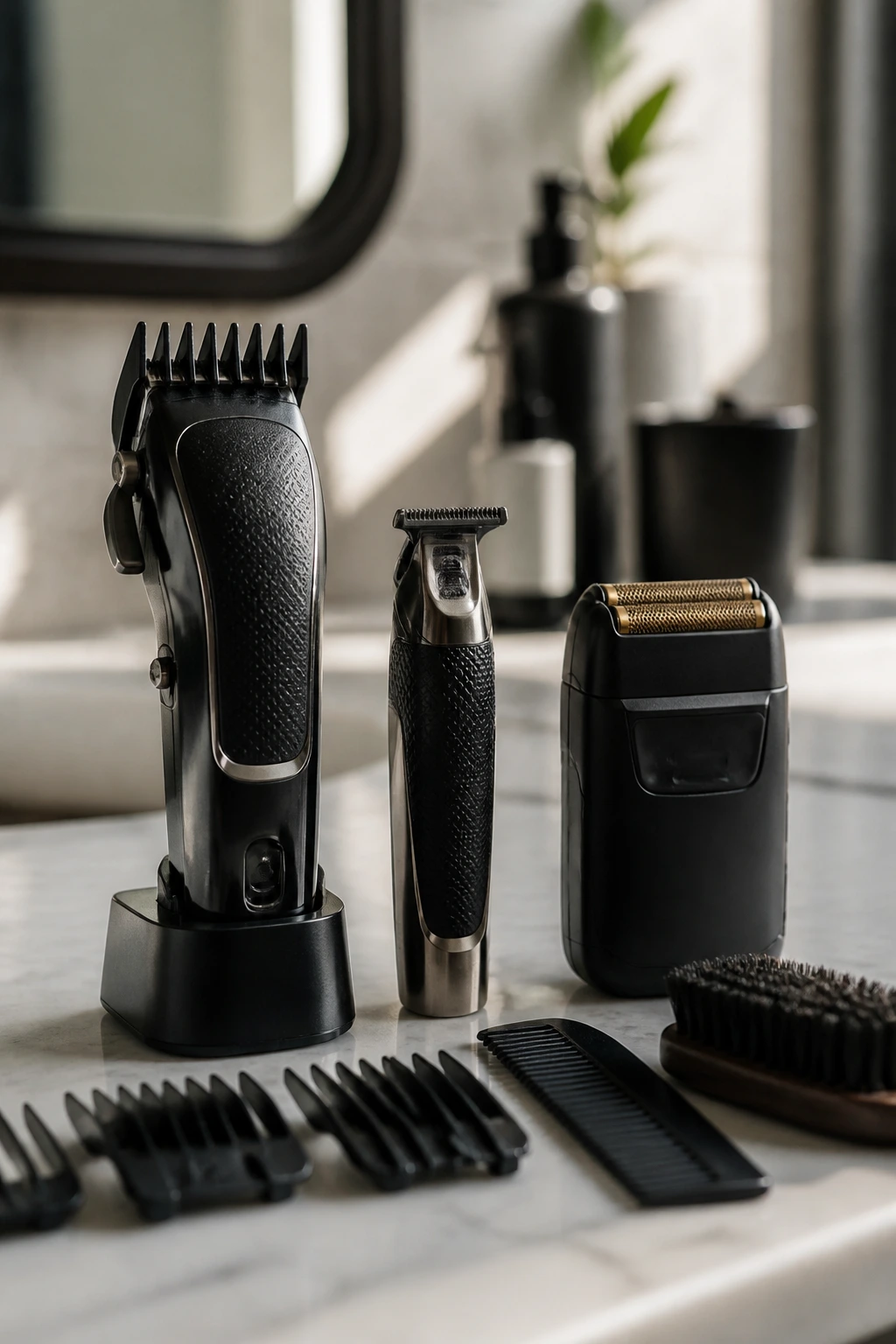
Adjustable clippers with guard combs: Useful for trimming the neckline or cleaning up the lowest fade zone if you know what you’re doing.
-
Detail trimmer: Best for sideburn edges, the hairline, and around the ears where a full clipper can feel clumsy.
-
Foil shaver: Optional, but helpful for true skin fades if you maintain them yourself.
-
Matte clay or paste: Gives short crops, quiffs, and brush-ups enough hold without heavy shine.
-
Light pomade or cream: Better for side parts, slick-backs, and comb overs when you want control without a crunchy finish.
-
Blow-dryer: Useful for volume on pompadours, quiffs, and brush-backs. A little heat changes the shape fast.
-
Comb and vent brush: Both matter. The comb builds parts and control; the brush helps lift shorter hair and smooth longer sections.
-
Hand mirror: You need one if you’re checking the back of your neck. Guessing is how people end up with one crooked sideburn.
-
Neck duster: A small tool, but it makes a haircut feel finished after a trim.
How to Keep a Fade Fresh Between Barber Visits
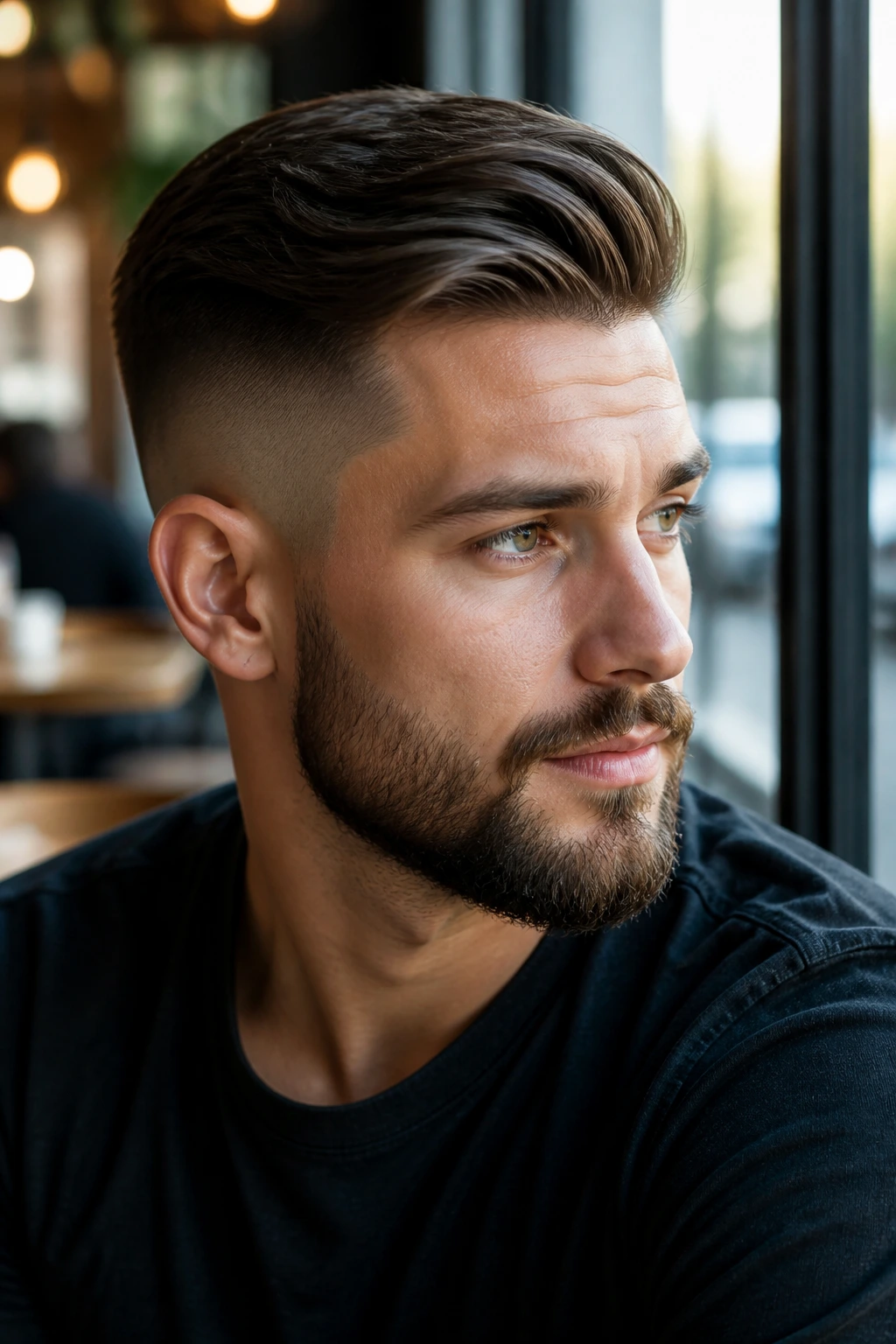
A skin fade usually looks its crispest for about a week, sometimes a little longer if the growth is slow. Low taper fades can stretch to two or even three weeks before they start looking soft. The higher and tighter the fade, the sooner it asks for attention. That’s the trade.
Wash frequency depends on product and hair type. If you use matte clay or paste every day, a regular shampoo schedule keeps buildup from making the sides look dull. Curly and coily hair often needs conditioner more often than straight hair because dry curls lose shape faster. Don’t overwash a short cut just because it feels easy; stripping the scalp too hard can leave hair brittle and flat.
If you’re maintaining the edges yourself, keep the cleanup small. Trim stray neck hairs, clear the area around the ears, and leave the actual fade alone unless you know the guard lengths. Chasing the blend upward at home is how people carve a hole into a decent haircut.
Sleep matters too. A fade doesn’t literally store well in a drawer, but friction can flatten the top and rough up the outline. If your hair tends to lay flat or twist at night, a satin pillowcase or a light wrap helps preserve the shape. Cheap fix. Good payoff.
Frequently Asked Questions About Clean Fade Haircuts
How often should I get a fade touched up?
A skin fade usually needs a refresh every 1 to 2 weeks if you want it looking crisp. Low taper fades can go longer, often 2 to 3 weeks, because the grow-out is softer and less obvious.
What’s the difference between a taper fade and a skin fade?
A taper fade keeps some length near the bottom and usually stays softer around the neckline and sideburns. A skin fade goes all the way down to bare skin in the lowest area, which creates stronger contrast.
Can I get a clean fade if my hair is curly or coily?
Yes, and the fade often looks excellent on textured hair because the top already has natural shape. The main thing is to preserve enough length on top so the fade frames the texture instead of shrinking it into the scalp.
Do fades work with a beard?
They do, but the blend has to be handled carefully. A good beard fade should connect the sideburn into the haircut without a hard step, especially if the beard is fuller than the hair on top.
What should I tell the barber if I want something conservative?
Ask for a low taper or low fade, keep the top short and tidy, and say whether you want a side part, crew cut, or comb-over shape. That gives the barber enough detail to stay clean without making the cut too bold.
Can I style a fade without using much product?
Absolutely. Buzz cuts, crew cuts, Caesar cuts, and many crops need very little. If the top has texture and the cut is balanced well, a quick finger-style or a light cream is often enough.
What if my hairline is uneven?
A fade can actually help, but the front edge should be shaped with care. A fringe, crop, or soft side part usually looks better than a very exposed hard line if you’re trying not to emphasize the uneven spots.
Is a high fade harder to grow out?
Yes. Higher fades show regrowth faster and can look fuzzy around the sides in a matter of days. If you hate frequent touch-ups, a low or mid fade will usually make you happier.
Why a Good Fade Still Looks Good Two Weeks Later
A clean fade works because it respects shape, not just shortness. The haircut doesn’t need to be severe to look sharp. It needs a clean transition, a top length that suits your hair, and edges that make sense when the hair starts to grow back.
That’s the part people miss. The best fade isn’t the one that looks dramatic for one day and then collapses. It’s the one that still holds its outline after a few washes, a bad night’s sleep, and a morning where you didn’t feel like doing much at all. That’s the haircut worth keeping.
