



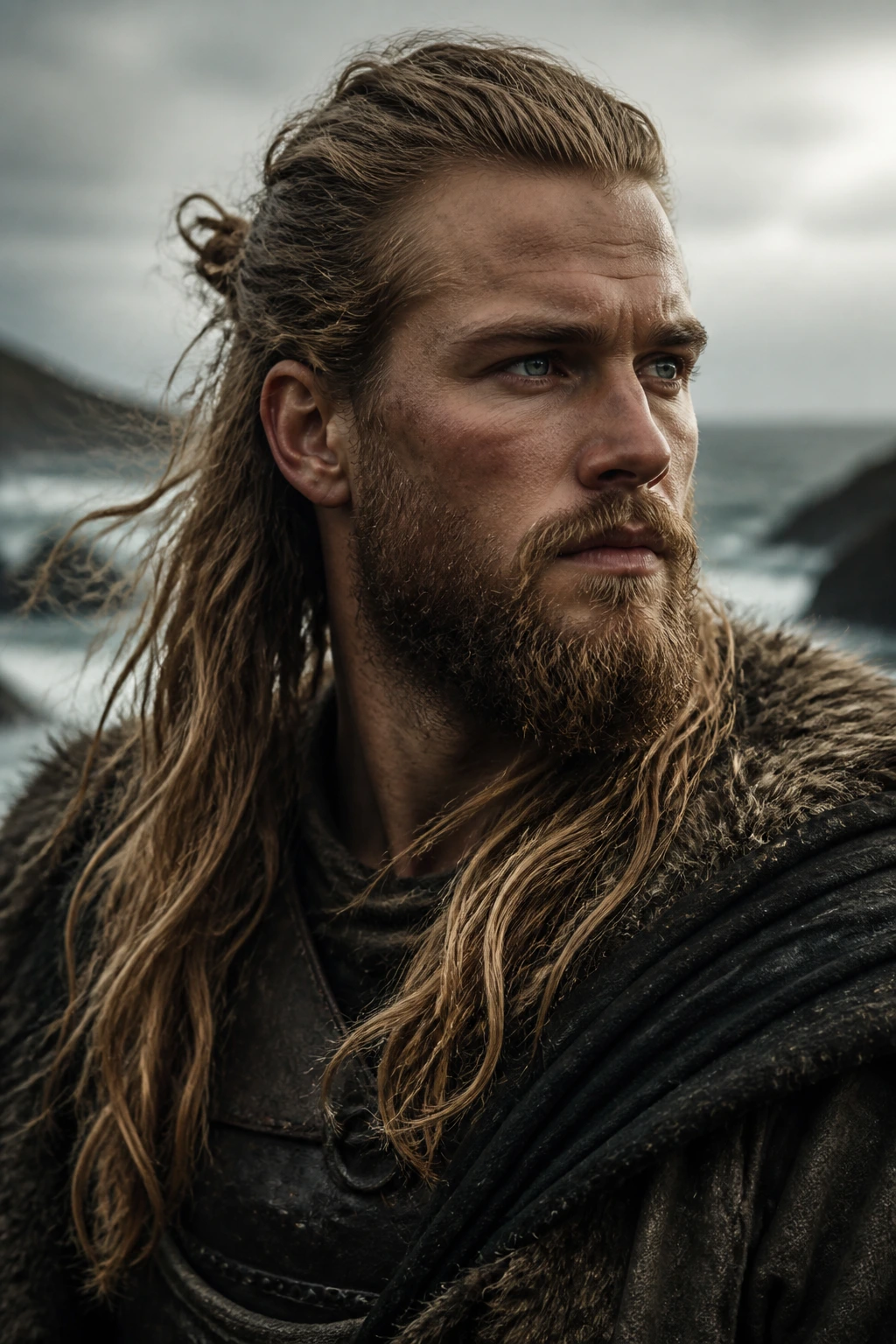
Long hair changes the whole equation. It can look wild in a good way, or it can collapse into a greasy curtain that gets caught in collars, lips, and beard oil. Viking hairstyles for men with long hair work because they solve that problem without sanding off the character. They make the hair do something useful.
The best versions are not museum pieces. They borrow the practical bits: hair off the eyes, weight controlled at the nape, texture that looks wind-worn rather than shellacked. That is why a loose braid, a half-up knot, or a rough center part with a few thin braids can feel tougher than a perfectly sculpted style.
And yes, length matters. Shoulder-length hair can handle half-up ties and temple braids; hair that reaches the shoulder blades can take fuller braids and knots; longer still gives you the kind of movement that makes these looks breathe instead of sit stiff. None of them need a perfect finish. A little looseness is part of the charm.
Why These Viking Hairstyles Work So Well on Long Hair
-
Length does the work: Once hair clears the collarbone, braids and knots start holding their shape instead of slipping apart by noon.
-
Texture looks better than shine: A little sea-salt spray, dry shampoo, or second-day grit gives the hair the weathered feel these styles need.
-
The face gets back some shape: Pulling hair away from the temples shows your jawline, and that matters even more if you wear a beard.
-
Most of the styles are flexible: The same cut can become a loose tail on a workday and a bead-finished braid for a night out.
-
They travel well: Low ties, crown braids, and nape buns survive collars, jackets, and windy weather far better than open hair does.
1. Storm-Tossed Shoulder-Length Waves
This is the style I’d hand to a man who wants the Viking look without touching a braid. Let the hair fall where it wants, add a whisper of sea-salt spray at the roots and mid-lengths, and scrunch while it’s still damp. The result should look like you rode home in bad weather and decided the wind helped.
Why it works: Loose waves give long hair motion, and motion is half the point here. Straight, glossy hair can look too neat for this aesthetic; roughened texture breaks the shine and gives the cut a lived-in edge. If your hair reaches the collarbone or just past it, this is one of the easiest styles to wear without the sides puffing out like a helmet.
Quick Styling Notes
- Mist damp hair with sea-salt spray.
- Scrunch the mids more than the roots if your hair is fine.
- Let it air-dry, or use a diffuser on low heat.
- Separate the front pieces with your fingers instead of a brush.
Best for: wavy or slightly curly hair, and for anyone who wants a low-effort base style that still reads as intentional.
2. Twin Temple Braids With Loose Back Length
Two skinny braids at the temples do a lot more than most men expect. They keep the front of the hair from falling into your eyes, but the back still moves like a curtain. On long hair, that contrast is the whole trick.
Where the braids sit matters
Part the hair from each temple back toward the ears, then braid each strip tightly enough to hold shape but not so tight that the braid pulls the scalp. The braids can disappear behind the ears, meet at the back, or stop a few inches short and blend into the loose length. I like the version that leaves the rest of the hair untouched; it feels less staged.
If your hair is thick, keep the braids pencil-thin. If it’s fine, make them a touch wider so they don’t vanish.
- Keep the section clean and even.
- Use small clear elastics or leather ties.
- Let the back remain loose and textured.
- Pull one or two face-framing strands free if the face looks too closed in.
Best for: men who want something practical enough for daily wear but still interesting when you catch it in profile.
3. Crown Braid With Free Ends
One braid can do the work of three if you place it right. Run a braid along the front hairline or across the crown, then let the rest of the length hang loose behind it. That front line gives the style structure, and the loose ends stop it from feeling too formal.
The crown braid is especially good when hair is dense or a little unruly at the temples. It keeps the top of the head controlled, which is where long hair often starts to look messy first. Leave the braid slightly imperfect. Too smooth, and it starts to look bridal. That’s not the lane.
What makes it read as masculine
The shape has to stay low and practical. Keep the braid close to the scalp, not puffed up like a headband, and let the free length keep some roughness. A tiny amount of matte paste on the ends helps if the hair frays at the bottom.
Best for: shoulder-blade length hair, wide foreheads, and anyone who wants a strong front shape without pulling all the hair back.
4. High Half-Ponytail With a Wrapped Base
A half-ponytail is the bluntest, most useful move in the whole pile. Pull the top section back high enough to clear the face, then leave the lower half hanging. Wrap the base with a leather cord or a strip of hair, and the style stops looking like a gym tie.
The placement is the whole game. Too high and it becomes a fountain. Too low and it loses the lift that makes the silhouette feel old-world and rough. I usually like it about two finger-widths above the occipital bone, where the skull starts to curve down.
A small detail that changes everything
Hide the elastic under the wrap. That tiny bit of camouflage is what turns a plain tie into something with shape. If your hair is heavy, secure it with a second invisible elastic first, then wrap over it. Otherwise, the top section sags by lunch.
Best for: long, thick hair, and days when you need control but still want length showing.
5. Rope-Twist Tail Down the Center
This is faster than a braid and less fussy than it looks. Split the ponytail into two sections, twist each one tightly in the same direction, then wrap them around each other in the opposite direction. That counter-twist locks the shape in place.
The rope twist works especially well on thick hair because it eats less width than a three-strand braid. It also leaves a slightly uneven surface, which catches light in a good way without looking polished. The tail should move when you walk. If it sits stiff, the twist is too tight.
How to keep it neat
Start on hair that has a little grip. Freshly washed hair can slip apart, especially if it’s straight. A little texture spray before you tie it off makes the rope hold better, and a small elastic at the end keeps the twist from unraveling halfway down the back.
Best for: long hair that feels too bulky in a regular braid, and for people who want the look without a long styling session.
6. Side Braids Feeding Into a Low Knot
If your hair bunches at the nape, this one solves the problem cleanly. Braid the hair on each side back toward the neck, then gather those sections into a low knot or bun. The sides stay controlled, and the knot keeps the length from swinging around like loose rope.
This style is practical in a way that matters. It stays out of the way under jackets, and it’s one of the better options if you wear a hat or ride a motorcycle. The back should sit flat, not puff up. If it looks too round, the braids need to be pulled tighter at the start, not at the knot.
You can make this one rough or tidy. I prefer rough. A few loose pieces around the temples keep it from looking overworked.
Best for: thick hair, windy weather, and men who want the cleanest silhouette on the list.
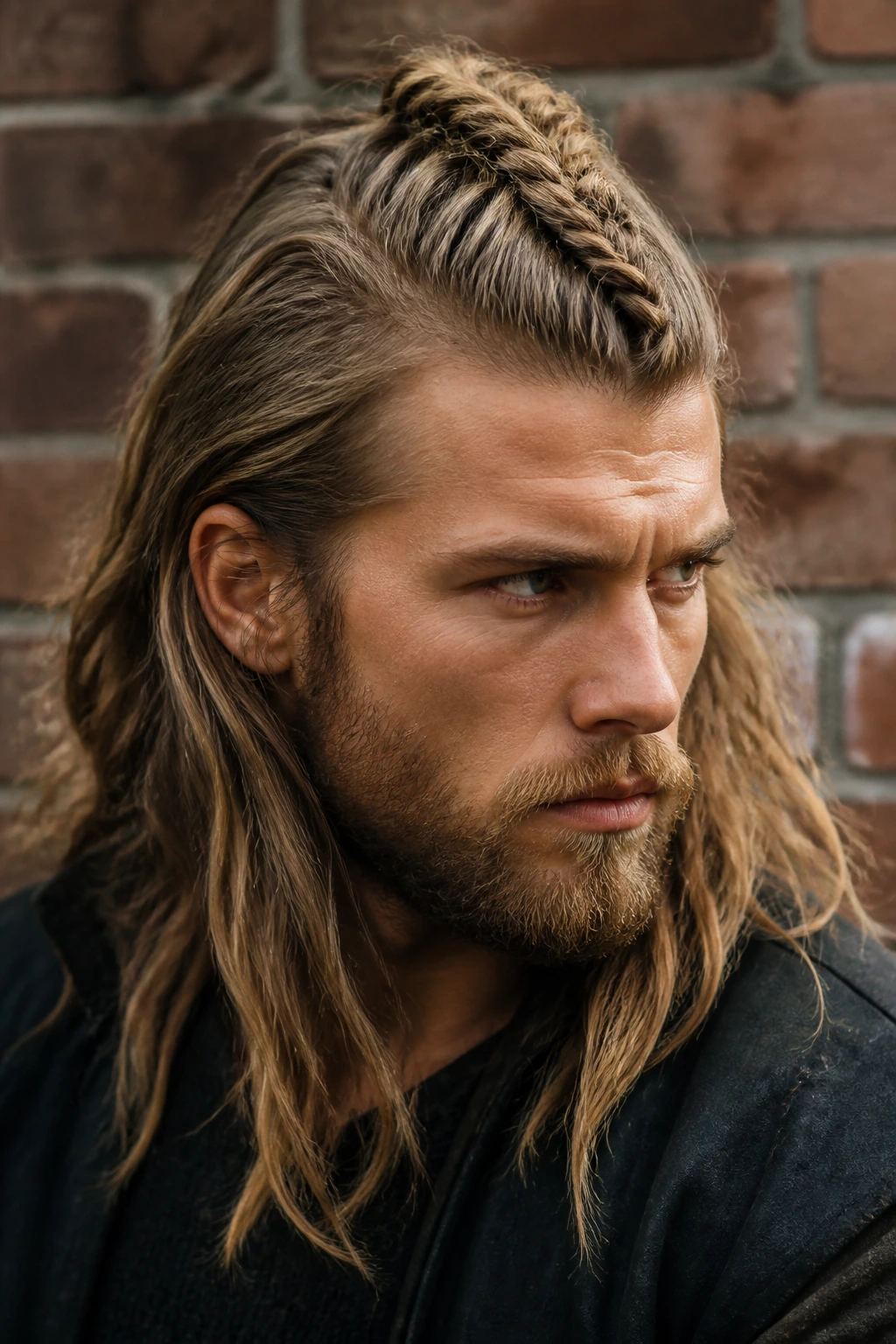
7. Braided Mohawk With Untouched Sides
This one has attitude, and it knows it. Keep the sides loose or brushed back, then braid the center strip from the front hairline to the back. The shape naturally reads louder than a normal tail because the braid sits like a ridge down the head.
Who this suits
If your hair is very long on top and a little shorter on the sides, the mohawk braid can use that difference instead of fighting it. It also works if you have a strong jaw or a fuller beard, because the vertical line on top balances the lower half of the face. Too much shine ruins the look, though. Keep the finish matte and slightly rough.
Use one central braid for a cleaner result or three narrow braids if you want more texture. The key is not to overpack the style with accessories. A single leather tie is enough.
Best for: stage wear, nights out, and anyone who wants the most dramatic silhouette here.
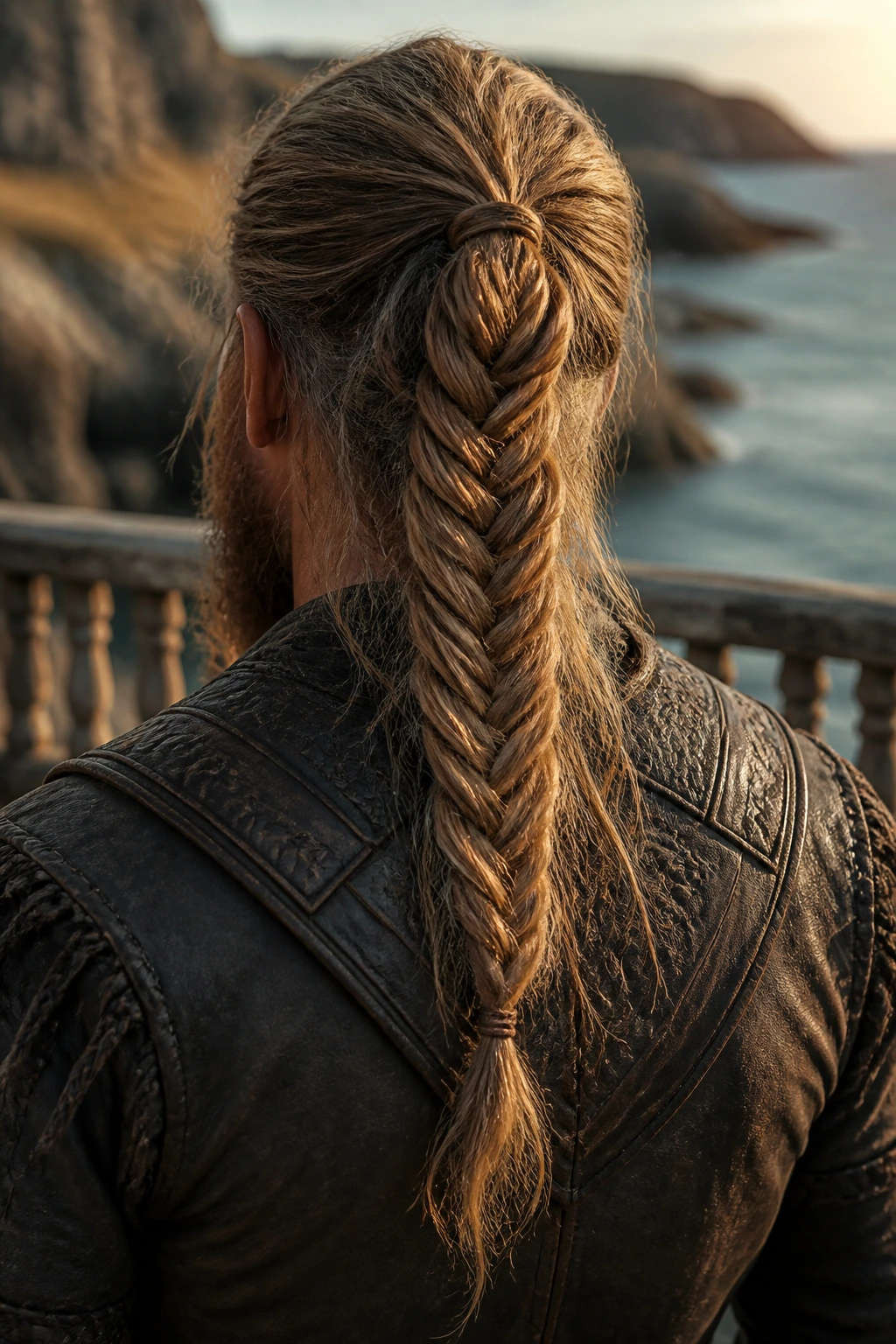
8. Fishtail Tail With Rough Texture
A fishtail braid looks more intricate than a standard braid, and that’s part of its appeal. The pattern is thinner, denser, and a little more serrated at the edges, which gives long hair a carved look as it hangs down the back. It works best when the hair has enough length to show the pattern clearly.
The trick is to keep it rough. Don’t comb the hair into glass. A fishtail with a little separation in the strands feels closer to the Viking-inspired idea than a perfect, glossy version ever will.
What makes it easier than it seems
Once the first few crossings are set, the braid becomes repetitive. If your hair is slippery, mist it lightly with water and a bit of texturizing spray before you start. That gives the tiny outer pieces something to grab.
Best for: hair past the shoulders, especially if the strands are straight or only mildly wavy.
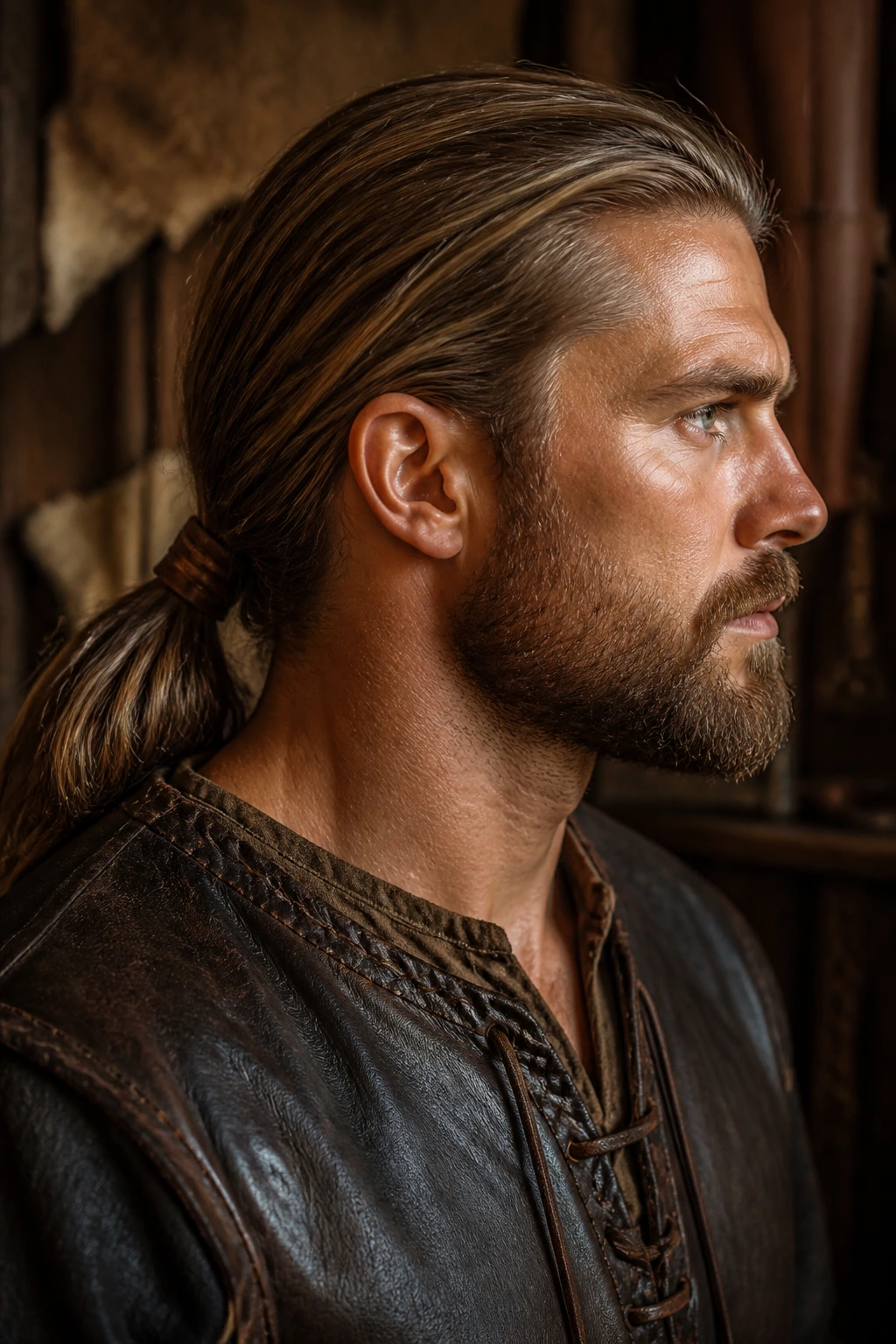
9. Leather-Tied Low Ponytail and Beard Shape
This is the daily driver. Brush the hair back, gather it low at the nape, and tie it with a leather cord or matte band. Nothing flashy. Nothing overworked. It just looks like you meant it.
The beard matters here, maybe more than anywhere else on the list. A low ponytail and a big beard can look heavy if the neckline is fuzzy. Clean up the cheek lines and the lower neck so the hair and beard feel like parts of the same shape, not two separate plans.
If your beard is shorter, keep the ponytail slightly fuller. If the beard is long and square, a tighter tail balances the face better.
Best for: men who want one dependable style that works on workdays, travel days, and the days when hair has gone mildly feral.
10. Double Back Braids for Heavy Hair
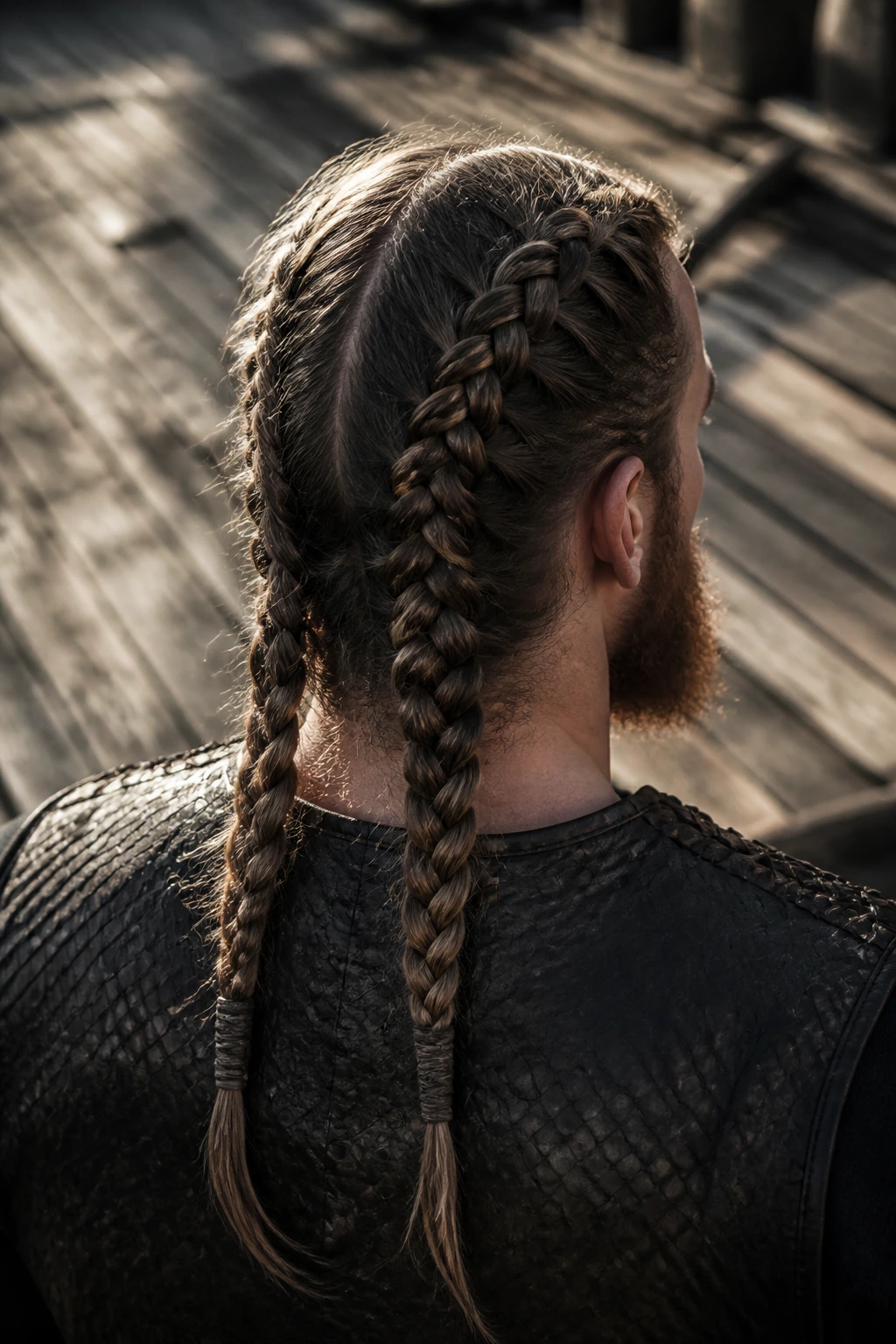
If your hair feels like a backpack by afternoon, split it into two braids down the back. That one move changes the weight immediately. Two braids distribute the mass better than one thick tail, and they tangle less when you lean against a chair or car seat.
The look is not as flashy as a single big braid, which is why it works. It feels practical, almost spare. On very thick hair, this is a gift. The neck will notice the difference.
Small practical detail
Start each braid a little behind the temples rather than from the very front hairline. That keeps the shape from pulling too hard at the edge and helps the braids sit flatter. A tiny bit of leave-in conditioner on the ends keeps them from fraying like rope.
Best for: dense, coarse, or extra-long hair that needs real control.
11. Knotted Half-Up Warrior Tie
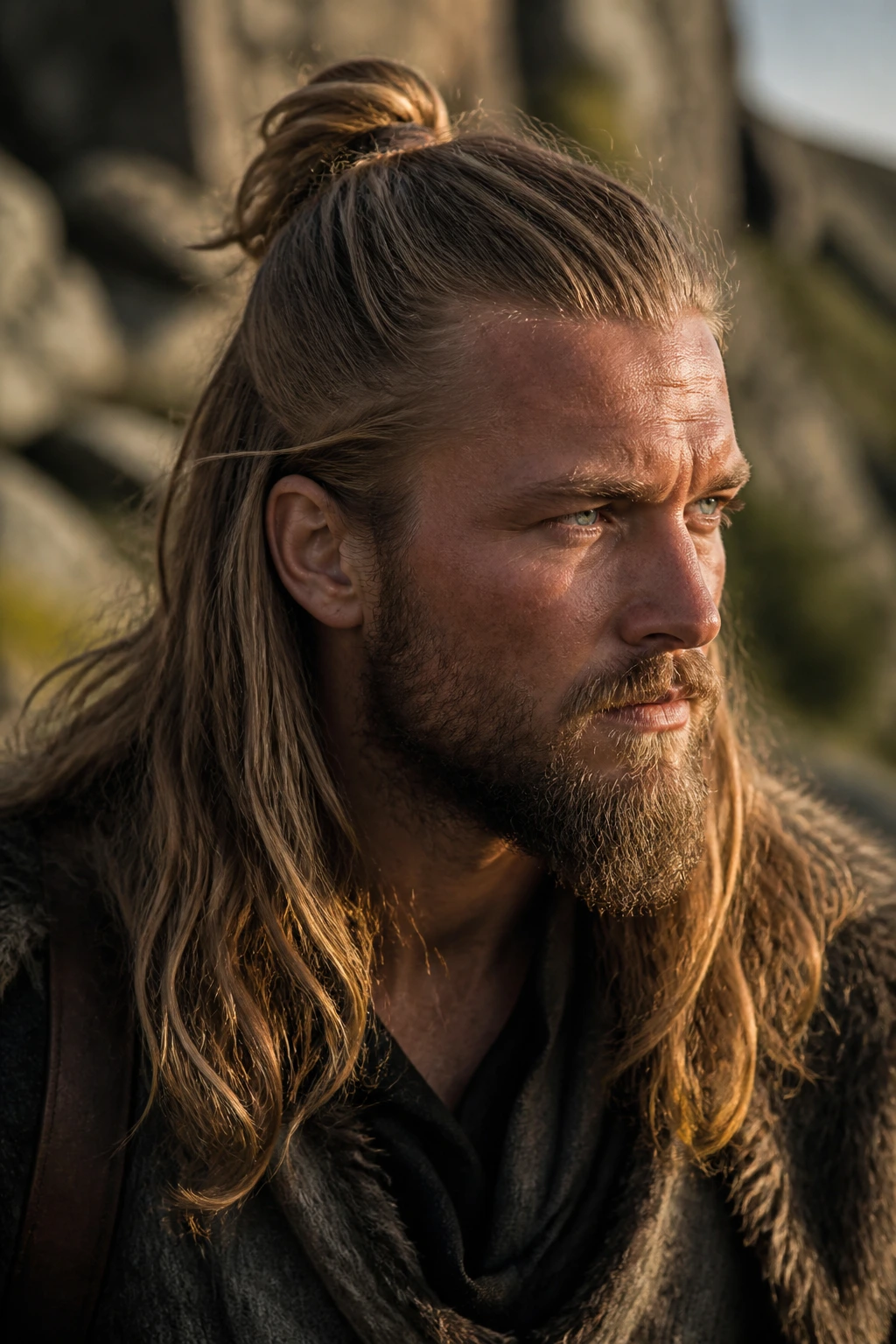
This is the relaxed cousin of the top knot. Pull the top half of the hair back, loop it through itself once, and let the ends sit a little loose instead of cinching the knot into a perfect ball. The result looks quick, but not careless.
The beauty of this style is the balance. You keep the front clear, show off the length underneath, and avoid the stiff shape that some high ties create. If your hair is layered, a few shorter pieces will slip out. Let them. That bit of softness keeps the knot from looking pasted on.
I like this one most on second-day hair, when the strands have enough grip to stay put. Freshly washed hair is too slippery for the knot to hold its shape for long.
Best for: shoulder-length to mid-back hair, especially if you want something fast that still has personality.
12. Undercut With Long Flowing Crown
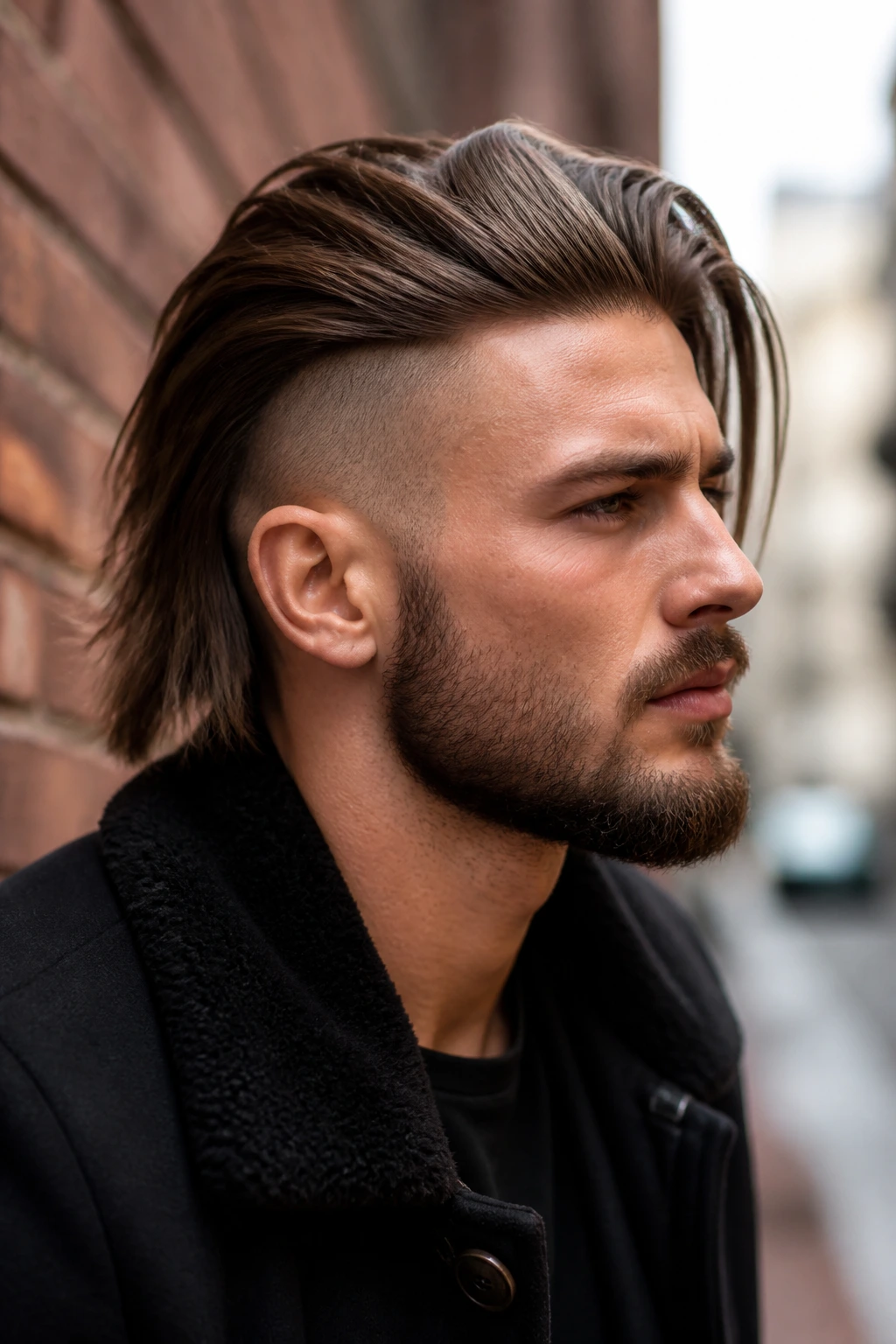
This is the modern hybrid. The sides and back are clipped short, but the crown stays long enough to braid, tie, or wear loose. It is not a strict historical look, and that’s fine. It solves a real problem: too much bulk on the sides.
A good undercut changes the whole long-hair experience. Jackets slide on easier. Hair dries faster. Braids sit with more contrast because the top length has room to move. The downside is upkeep. If the sides grow too long, the shape collapses fast and the style loses the hard edge that makes it work.
Best way to wear it
Wear the crown loose for a more dramatic shape or pull it into a tight tail when you want cleaner lines. If you want a braid, keep it centered; side braids can make the undercut look lopsided unless they’re done on purpose.
Best for: men who want long hair with less bulk and don’t mind regular touch-ups around the sides.
13. Shoulder-Length Wolf Cut With Nordic Texture
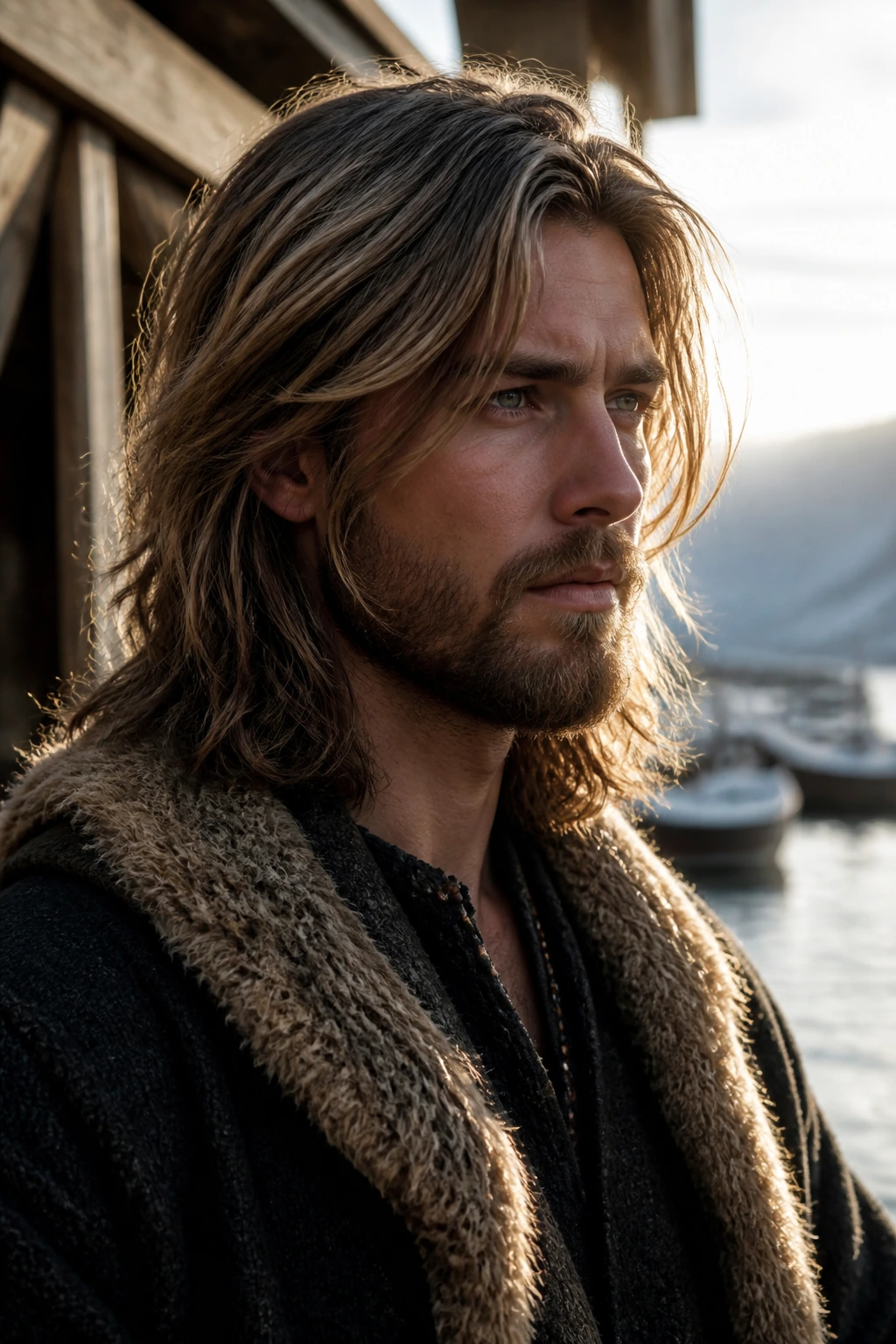
A long wolf cut gives you uneven lengths that move differently, which is why it fits this whole mood so well. The top sits a little shorter, the back keeps more length, and the cut falls into that shaggy middle ground between tidy and wild. It is a strong option if you don’t want every strand to land in the same place.
This style likes texture. It hates flatness. A wolf cut on straight hair can still work, but you need some grit at the roots so the crown does not sit close and lifeless. Wavy or curly hair gets the best version because the layers show themselves without extra effort.
It’s also one of the best cuts for men who keep coming back to the same problem: long hair that grows into a triangle. The layers break that shape before it gets ugly.
Best for: men who want movement first and braiding second.
14. Center-Part Curtains With Micro Braids
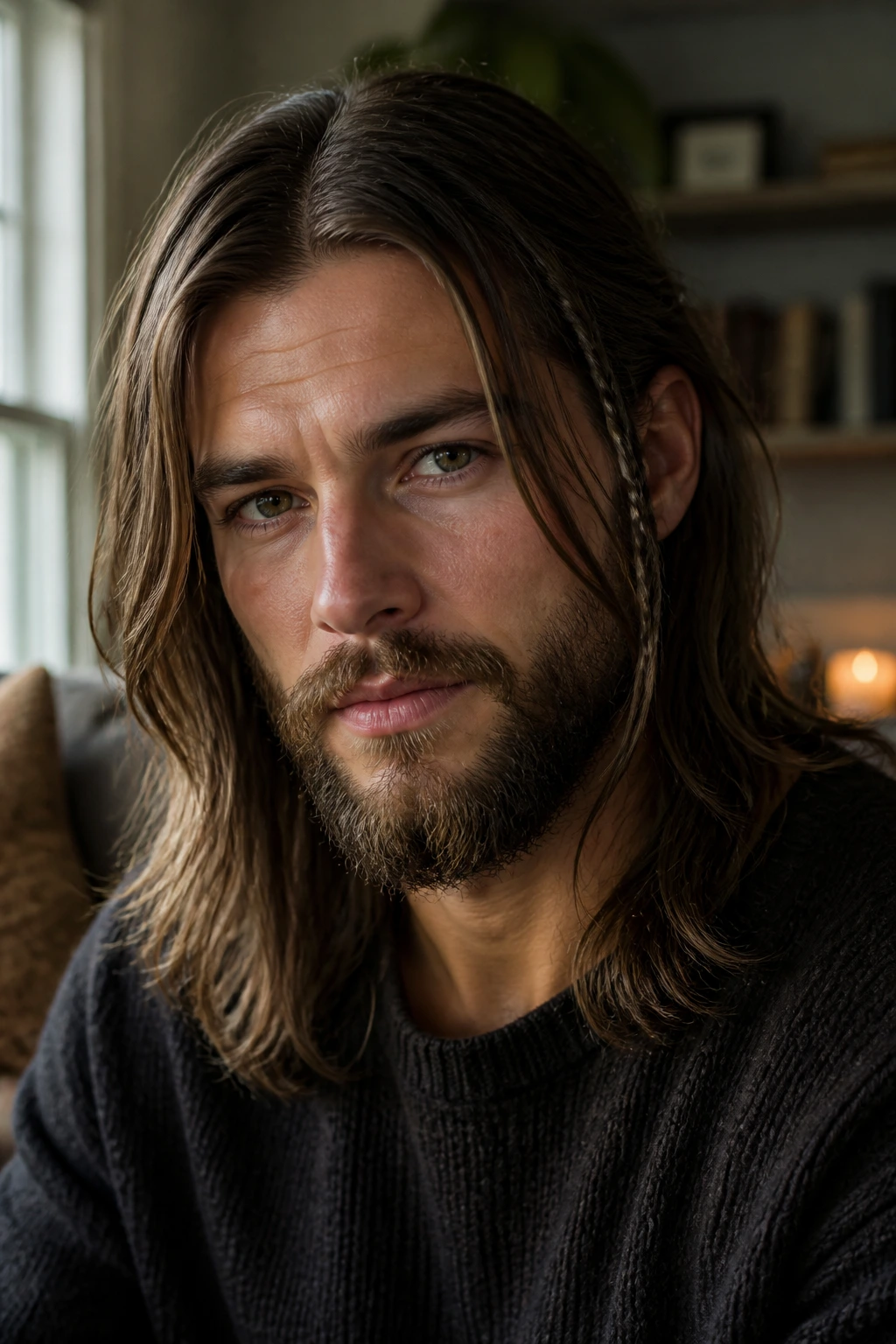
The curtain part is quieter than most Viking-inspired looks, but tiny braids at the temples give it enough edge. Split the hair down the middle, let the front pieces fall on each side, and tuck in two or four micro braids near the part line. That little detail changes the whole read.
This is a good style when you want long hair to frame the face instead of swallowing it. The micro braids should be narrow and discreet. If they get too thick, the look tips from subtle to costume almost immediately.
Why the center strip matters
A center part creates symmetry, and symmetry calms long hair down. The braids then act like punctuation rather than the main event. That balance makes the style easier to wear with a clean shirt, a leather jacket, or a plain black tee.
Best for: fine to medium hair, and men who want a softer version of the long Viking look.
15. Beaded Braids for Stage and Festival Wear
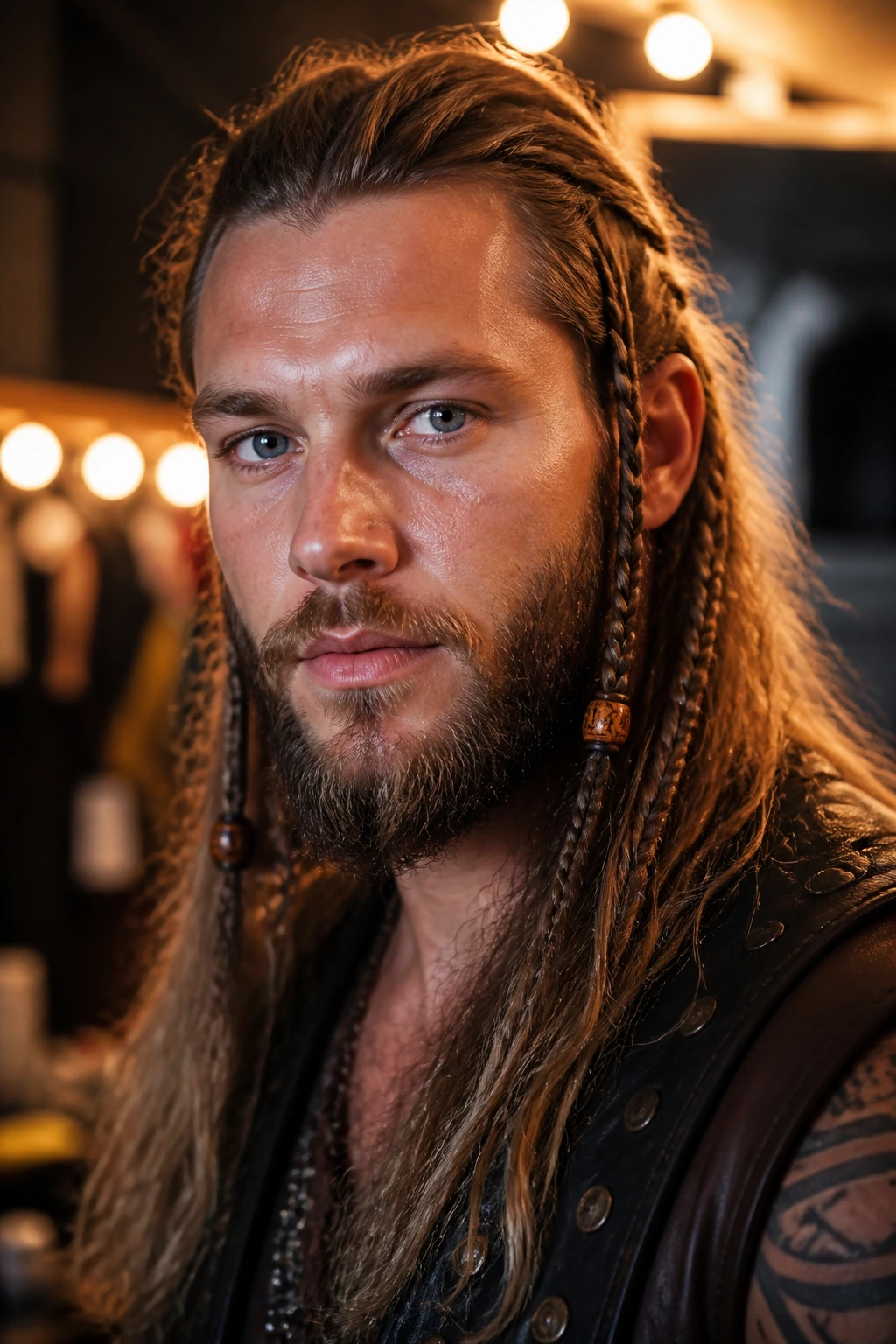
Beads can go wrong fast. Use too many, and the whole head starts clinking around like a souvenir rack. Use one or two per braid, though, and the effect is sharp.
The braid itself can be simple: temple braids, a back braid, or a side braid. What changes the mood is the hardware. Wooden beads, matte metal, or carved pieces work better than anything shiny or oversized. On fine hair, keep the beads light. Heavy beads slide and pull the braid open.
Bead choice matters more than bead count
A single bead near the end of a braid often looks better than three beads stacked together. That one detail catches the eye without taking over the whole style. If your hair is dark, lighter beads show better. If it’s light, go the other way and choose darker or oxidized pieces.
Best for: concerts, themed events, photos, or any day when you want the hair to carry a little more personality.
16. Braided Bun at the Nape
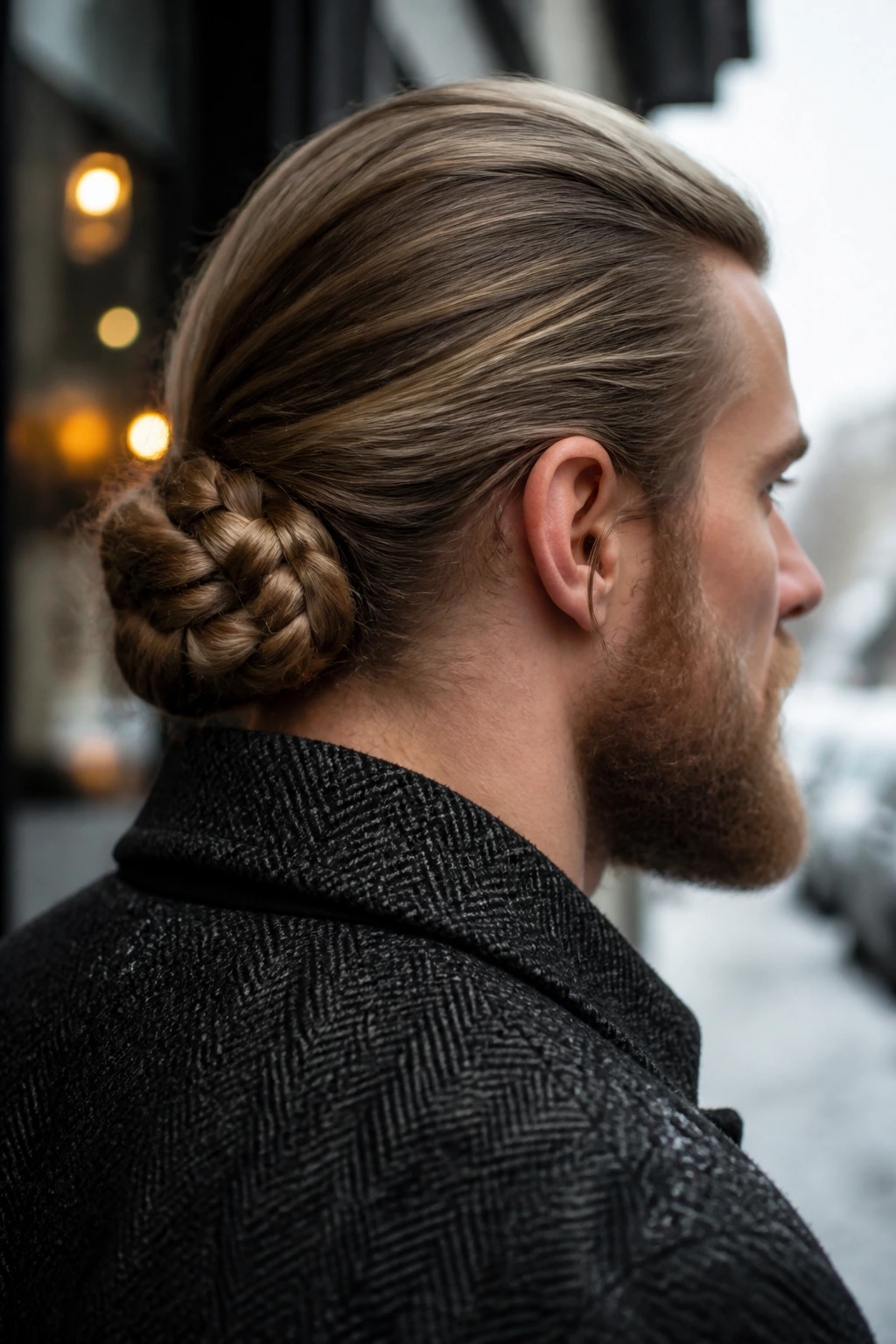
A braided bun is the shape you wear when you want everything under control. Braid the hair first, then coil it low at the nape and pin or tie it into place. The braid gives the bun structure, so it doesn’t puff apart after an hour.
This style is especially good in cold weather or under outerwear, because the low shape stays out of the way. It also feels cleaner than a loose bun. The ends are tucked, the nape is tidy, and the whole thing sits where a collar won’t shred it.
A loose bun can look accidental. A braided bun looks planned. That’s the difference.
Best for: travel, long workdays, and anyone who wants the most stable shape on the list.
17. Side-Swept Viking Tail With One Heavy Braid
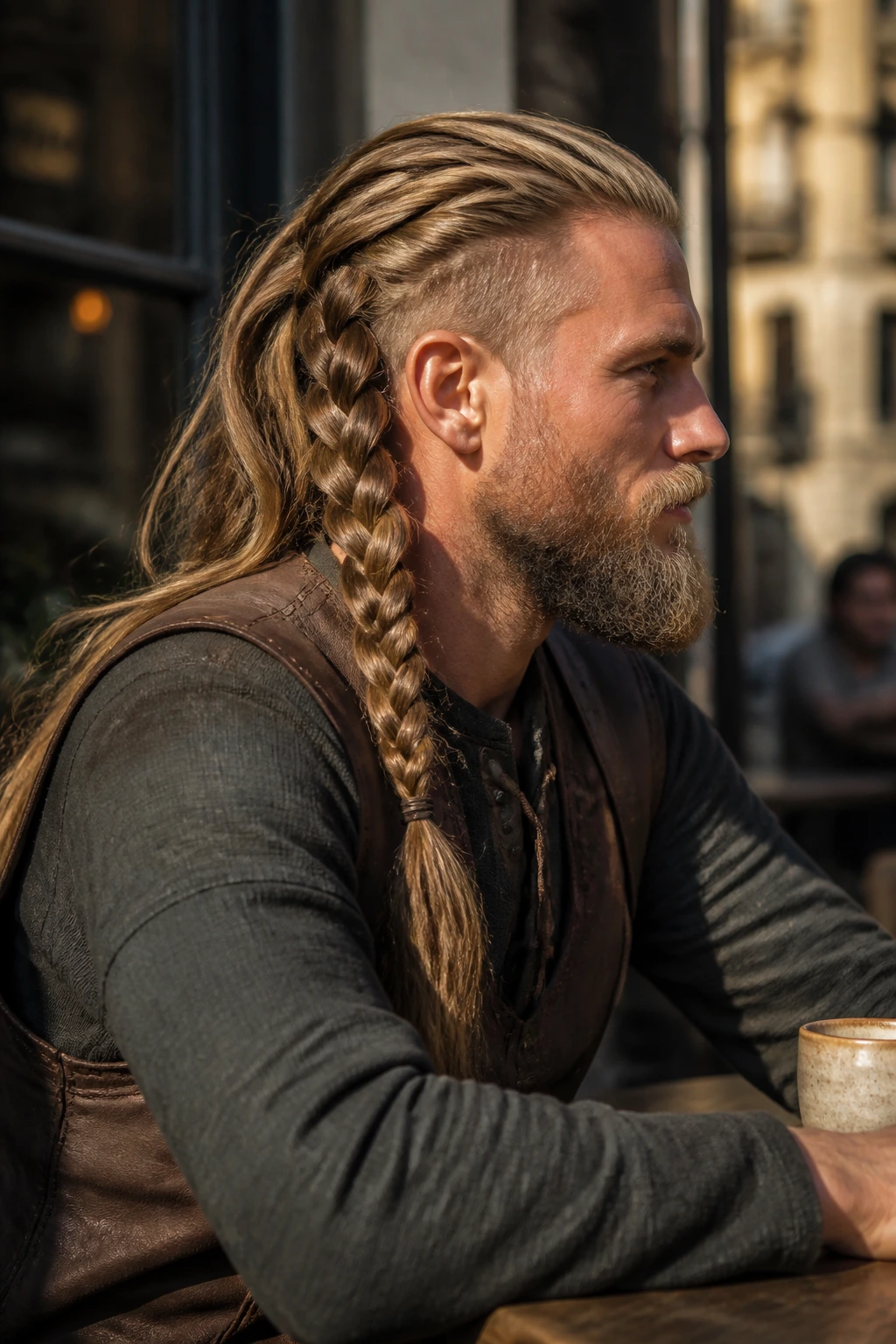
Asymmetry gives long hair a little danger. Sweep most of the hair to one side, braid the heavier side, and let the rest fall into a low tail. The result is less strict than a centered braid and more interesting than a plain ponytail.
This style works best when your hair naturally parts to one side anyway. Fighting your growth pattern is a waste of time. Follow it, and the style sits easier. The braid should be the visual anchor. The tail just supports it.
If you wear glasses, this one is especially nice, because it keeps the hair away from the temples without hiding your face. That small practical benefit matters more than people admit.
Best for: men who like a little imbalance in their style and do not want a symmetrical finish.
18. Long Hair Pulled Back, Front Left Loose
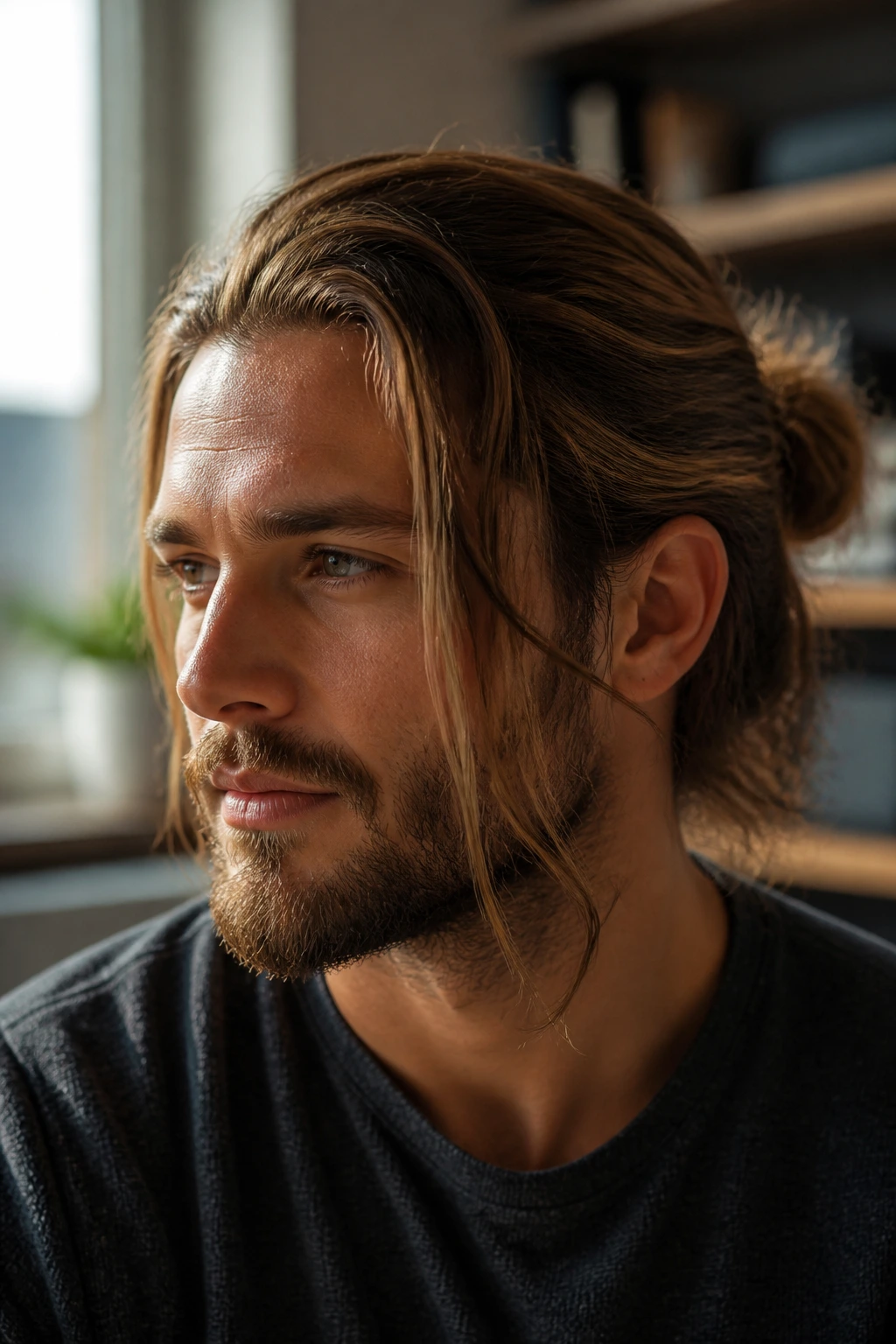
Sometimes the smartest move is not tying everything back. Pull the hair from the temples and crown into a small tie at the back, then leave the front lengths loose around the face. That tiny split gives shape without making the style feel locked down.
This is the most forgiving option when you are between wash days or when your hair is behaving badly. The front pieces soften the forehead, the back stays controlled, and the length still shows. It is also one of the better styles for men who dislike the feeling of every strand being pinned or braided.
No need to overthink it. If the face-framing pieces look too fussy, tuck one side behind the ear and leave the other loose. Small adjustments make a big difference.
Best for: casual wear, office days, and men who want a Viking note without a full styling session.
19. Four-Strand Braid Down the Back
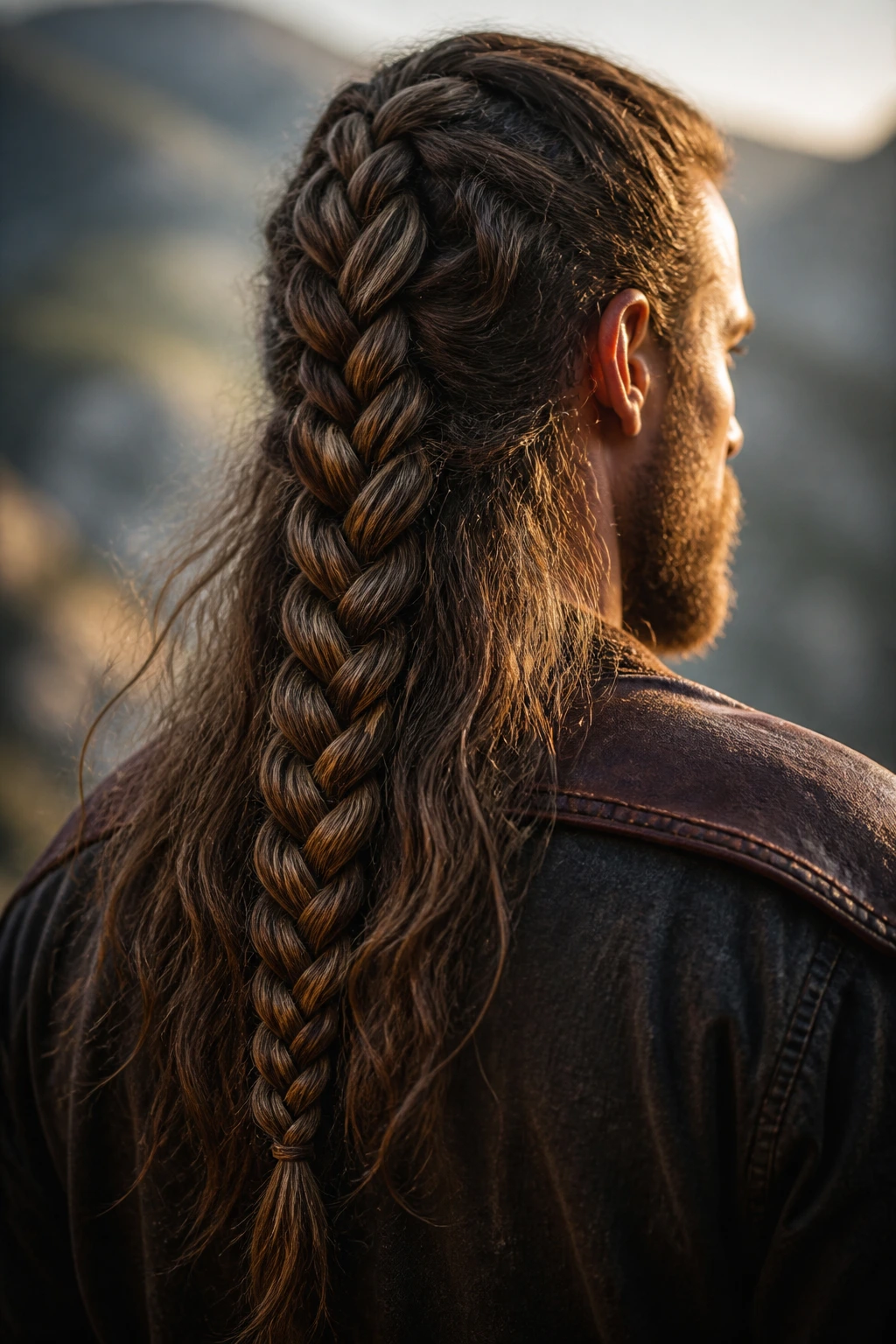
A four-strand braid looks complex because the pattern is denser and the weave sits flatter. In practice, it is mostly rhythm. If you know how to cross strands without rushing, the braid creates a thick, rope-like finish that looks richer than a standard three-strand version.
This one rewards length. The extra strand pattern shows better when there is enough hair for the braid to hang with weight. It also helps if the hair has some texture, because perfectly slippery strands can make the crossing harder to hold.
Good signs it’s working
The braid should feel snug but not tight. If the weave starts bulging at random spots, the sections are uneven. Take the time to resection before it gets halfway down the back. That’s less annoying than discovering the mistake after ten minutes of braiding.
Best for: long hair that is at least shoulder-blade length, and for anyone who likes a braid that looks more engineered than casual.
20. Hair-and-Beard Pairing With Braided Beard Accent
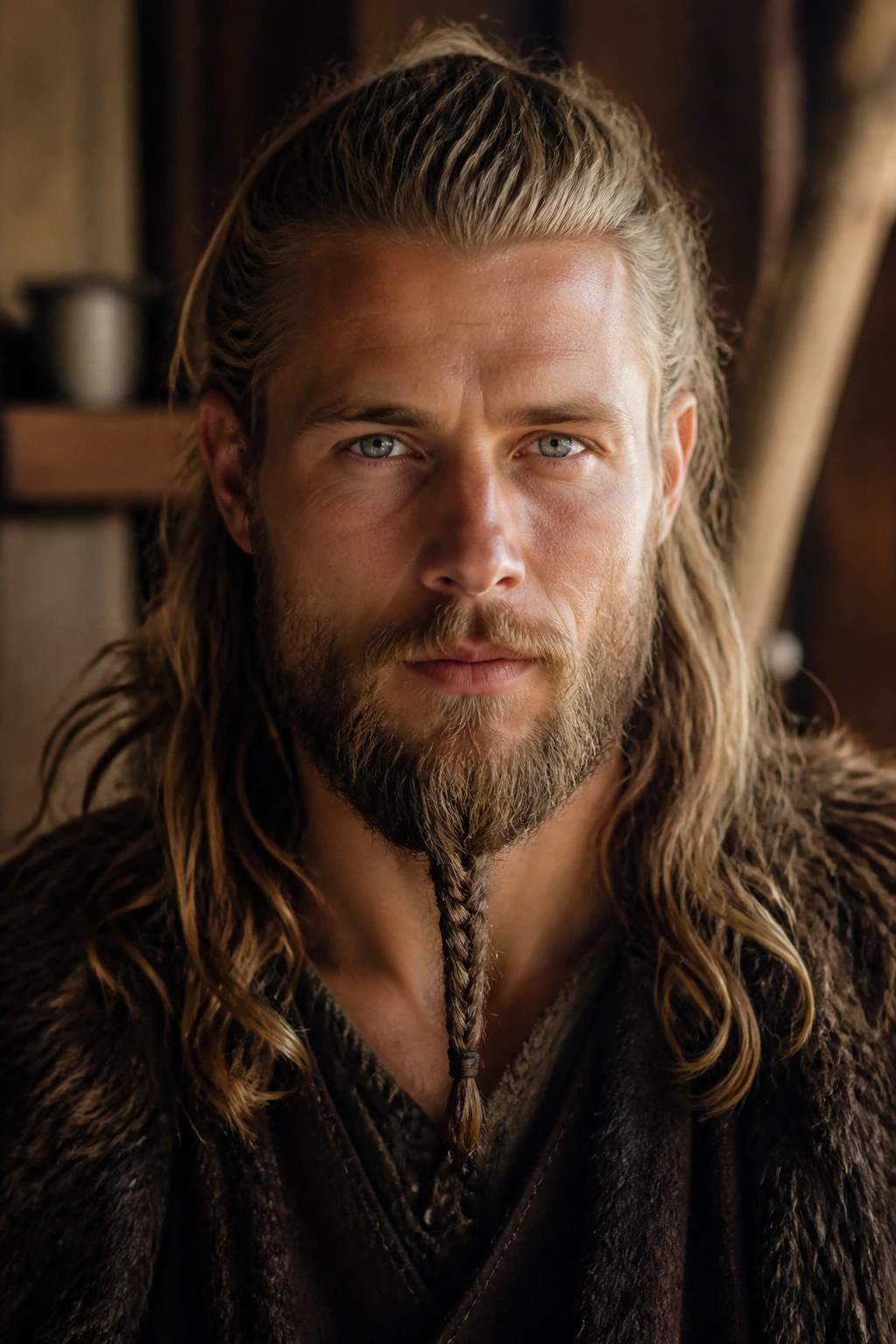
The beard is not decoration here. It’s part of the silhouette. If your head hair is long and your beard is long, the shape can become too heavy unless one side is controlled. A small beard braid or twist can help the whole face feel shaped instead of overgrown.
Keep the haircut and the beard talking to each other. A loose back braid with a neat beard reads differently from a half-up knot with a wild beard. Clean cheek lines make the hair look intentional. No one wants to look like they lost a fight with a hedge trimmer.
A braided beard accent should stay simple. One braid. Maybe a bead. That’s enough. Too many details and the whole thing turns theatrical.
Best for: men with full beards who want the hair and facial hair to feel like one design.
21. Full-Volume Free Flow With Minimal Ties
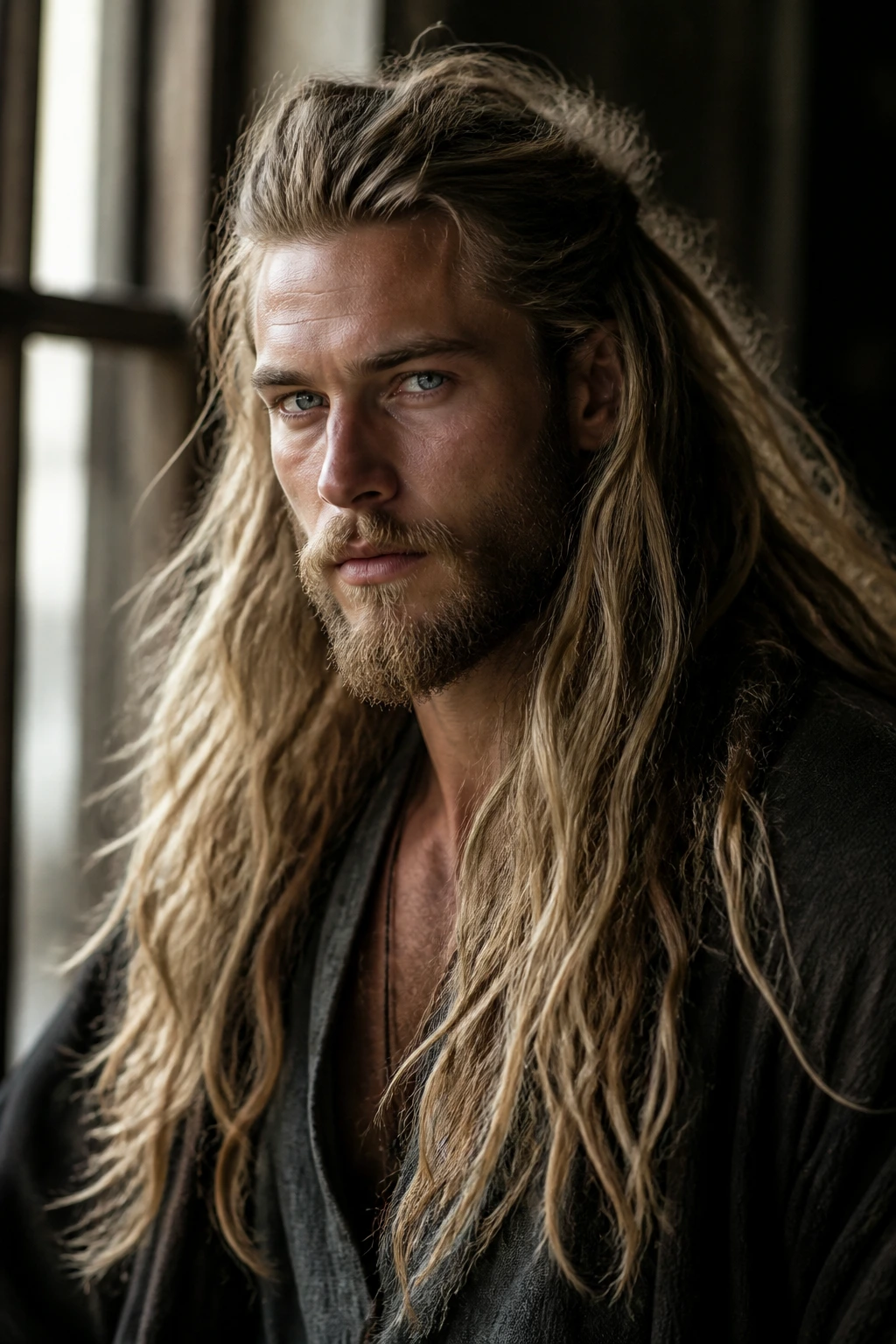
Some hair wants to stay loose. You can fight it, or you can shape it lightly and let the volume do the talking. This version keeps the hair free, with maybe one small tie or a hidden wrap if the front starts falling into your face.
The key is health and shape. Long hair that hangs loose needs clean ends, a reasonable amount of moisture, and enough texture that it does not swing around like wet rope. If the ends are dry and split, this style looks messy in the wrong way. If they’re healthy, it looks strong and easy.
I like this as the final option because it reminds you that Viking-inspired hair does not require constant braiding. Sometimes the best version is the one that lets the length move.
Best for: men who want the least restrained version of the look, especially if their hair already has natural wave or body.
Why These Styles Work on Real Long Hair
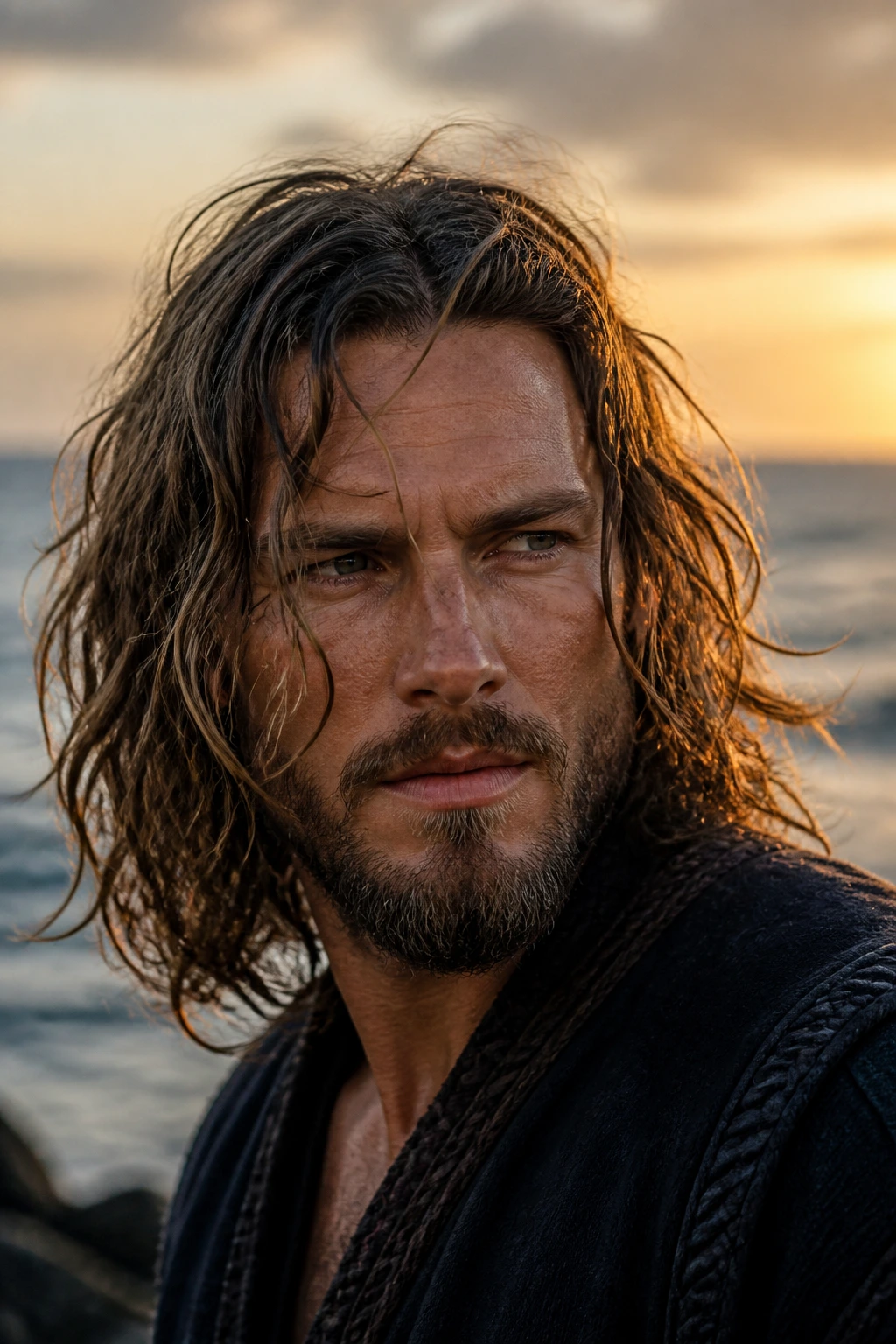
The modern Viking look lives or dies on shape. Hair that hangs loose with no plan can look heavy and flat; hair that is tied too tight starts to look like a costume. The styles above sit in the middle. They control the hair where it matters most — the eyes, the nape, the temples — and leave enough movement that the length still feels alive.
That balance matters even more if your hair is dense. Thick long hair can eat the back of a jacket, trap heat at the neck, and balloon out on humid days. Braids and low ties stop that from becoming the main event. They distribute weight, keep the face open, and let the cut show its shape instead of its bulk.
There’s also a beard factor people skip over. A full beard can make long hair look stronger, but only if the neck and cheek lines stay clean enough to separate the two shapes. If everything grows in every direction, the whole look gets muddy. One controlled element is enough. Two can be great. Four is usually too much.
And no, the styles do not need to look freshly done. They’re better with a little wear on them. A braid that loosens slightly through the day often looks better than one that still has the stiffness of a salon mirror.
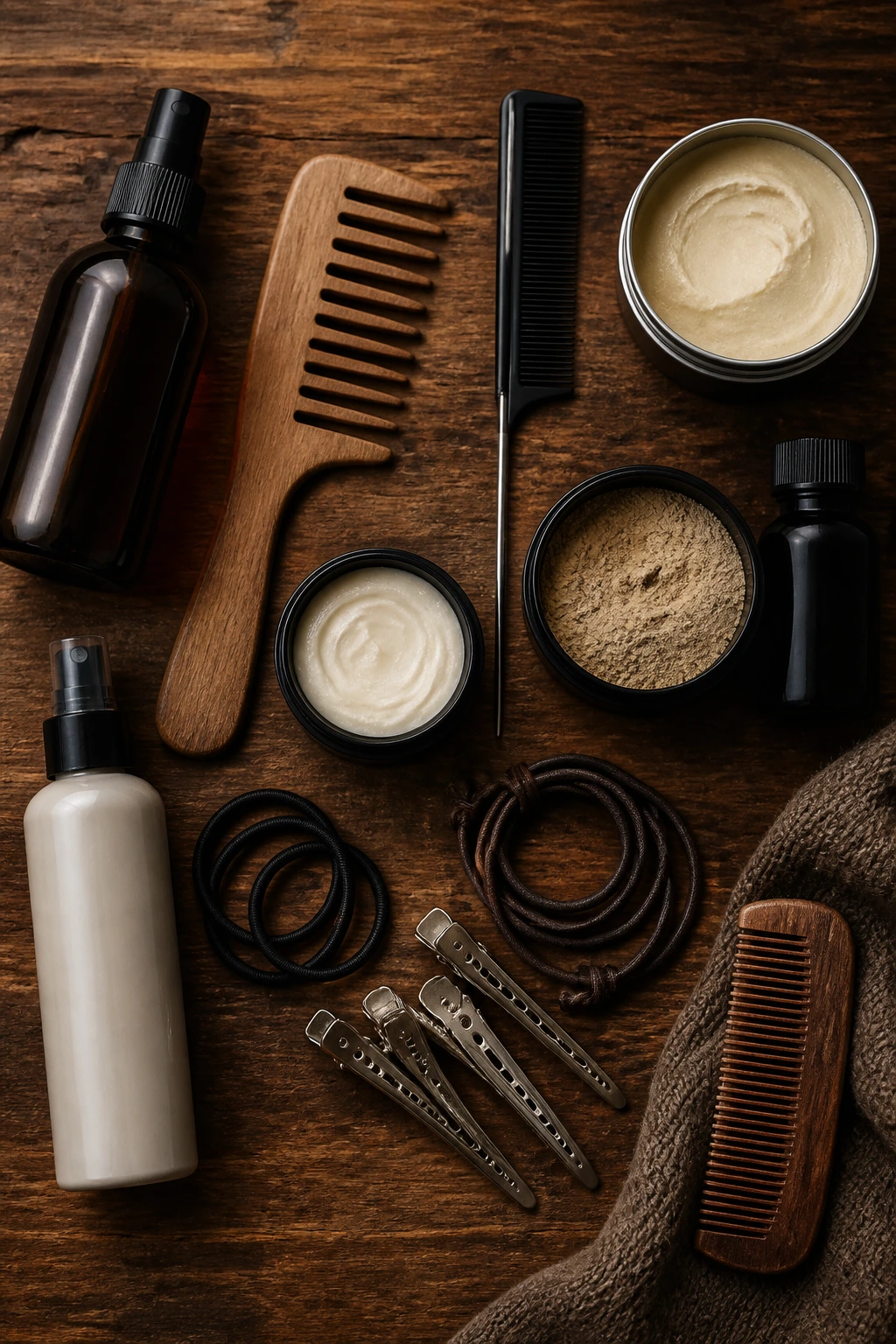
Essential Tools for These Hairstyles
-
Wide-tooth comb: Best for detangling long hair without ripping through waves or curls.
-
Rat-tail comb: Handy for clean parts, temple sections, and neat braids that start where you actually want them to.
-
Snag-free elastics: Use small, soft bands that won’t chew up the ends after repeated tying.
-
Matte clay or paste: Gives hold without shine, which suits this look better than glossy gel ever will.
-
Sea-salt spray: Adds grip and roughness, especially on hair that’s too soft to stay braided.
-
Texturizing powder or dry shampoo: Great for second-day hair and for fine strands that need more body at the roots.
-
Leave-in conditioner: Keeps long ends soft enough to braid without turning the roots slick.
-
Sectioning clips: Useful when you’re building temple braids, crown braids, or any style with multiple parts.
-
Leather cords or wrap ties: Give ponytails and knots a more rugged finish than plain elastic bands.
-
Beard comb: If you wear facial hair, keeping it aligned matters more than people think.
Picking the Right Products and Accessories
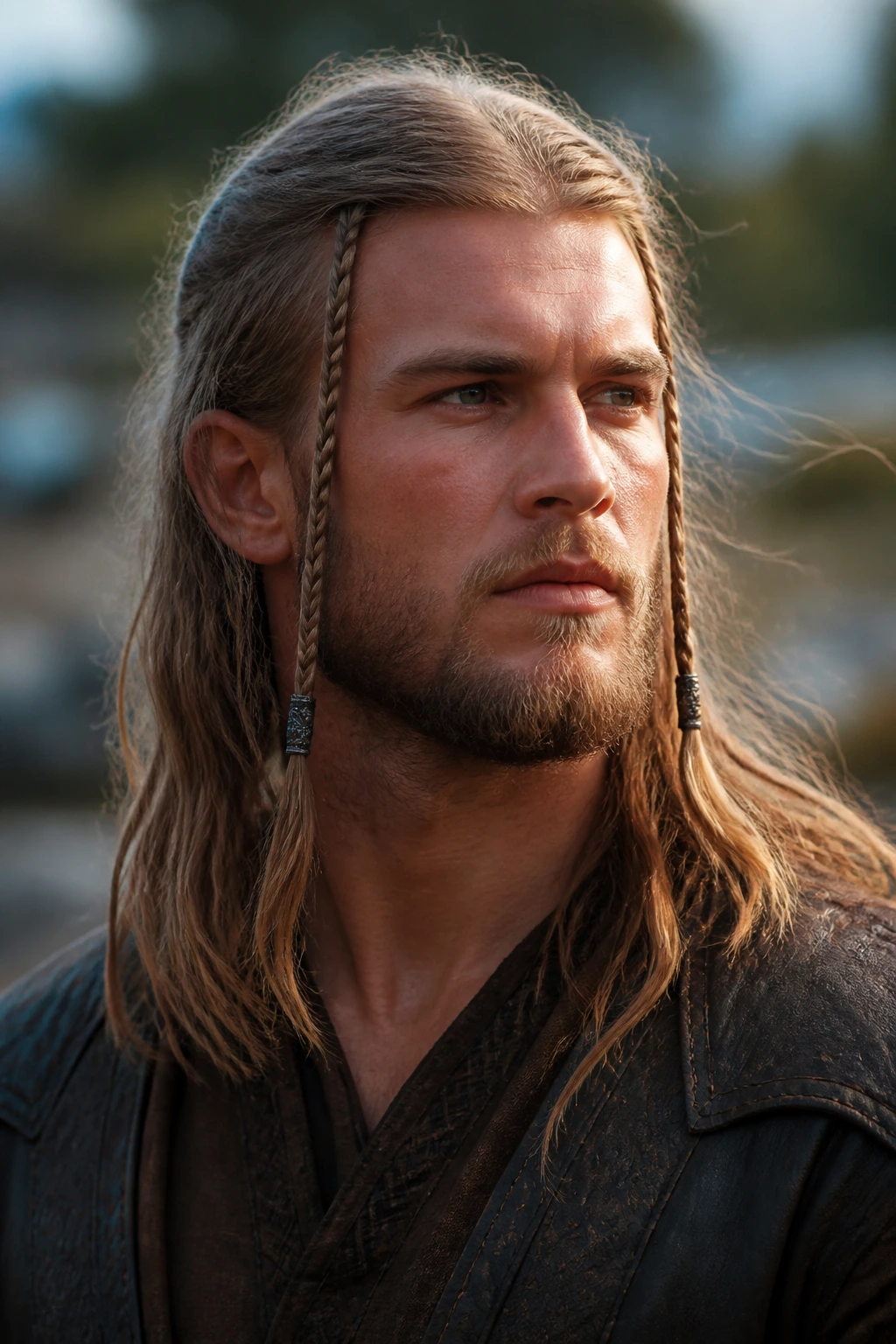
Start with product that gives grip, not shine. Long hair for men often needs a little roughness at the surface so braids and knots hold their shape. A matte paste, light clay, or sea-salt spray usually gets you farther than anything wet-looking. If the hair feels like silk, the style will slide.
For grip: choose a product that says flexible or medium hold, then use less than you think you need. A pea-sized amount can be enough on shoulder-length hair; a heavy hand makes the strands cling together and flatten the braid pattern.
For accessories: look for soft elastics, not the tiny hard ones that snap and tug. Leather cords are fine if they’re soft and not stiff like wire. Metal rings and beads should stay lightweight, especially on fine hair.
For moisture: use leave-in conditioner on the ends, never the roots. Long hair needs softness at the bottom so braids don’t fray, but too much product near the scalp makes everything slip. That’s the sort of mistake that only shows up three hours later when the braid has turned loose and the crown is flat.
If your hair is very clean, use dry shampoo or texture powder before styling. If it’s already on day two, go lighter. The goal is grip, not grit for its own sake.
How to Wear Them Without Looking Like a Costume
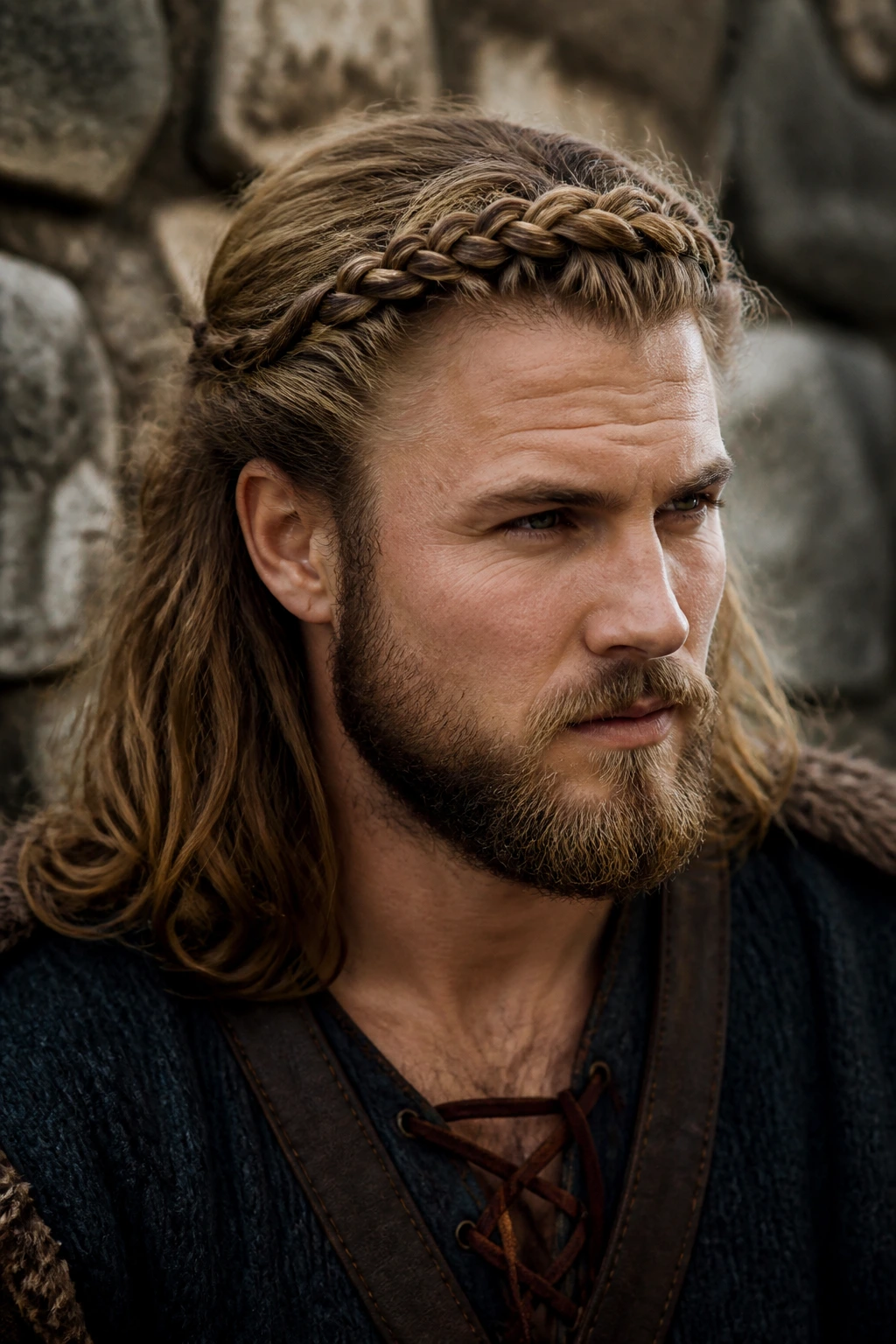
The easiest way to make a Viking-inspired style look real is to keep one thing controlled and one thing loose. A tight braid with a soft beard works. A loose half-up style with clean temples works. Everything at maximum intensity does not.
Everyday wear: low ponytails, half-up knots, and loose waves are the safest choices. They fit with normal clothes and do not demand matching boots or a leather vest.
Work or formal settings: the braided bun, crown braid, or low leather-tied tail reads cleanest. These shapes keep the hair disciplined without making it look stiff.
Out at night: temple braids, beaded details, and the braided mohawk can carry more edge. That is the right moment for a little drama.
With a beard: keep either the hair or the beard slightly softer, not both huge at once. If the beard is full and square, a looser hair shape balances it. If the hair is loud, let the beard edges stay neat.
With hats or helmets: low styles win. High knots and tall braids sit badly under anything that presses down. A nape braid or low tail is much less annoying.
Additional Tips for Better Shape and Hold
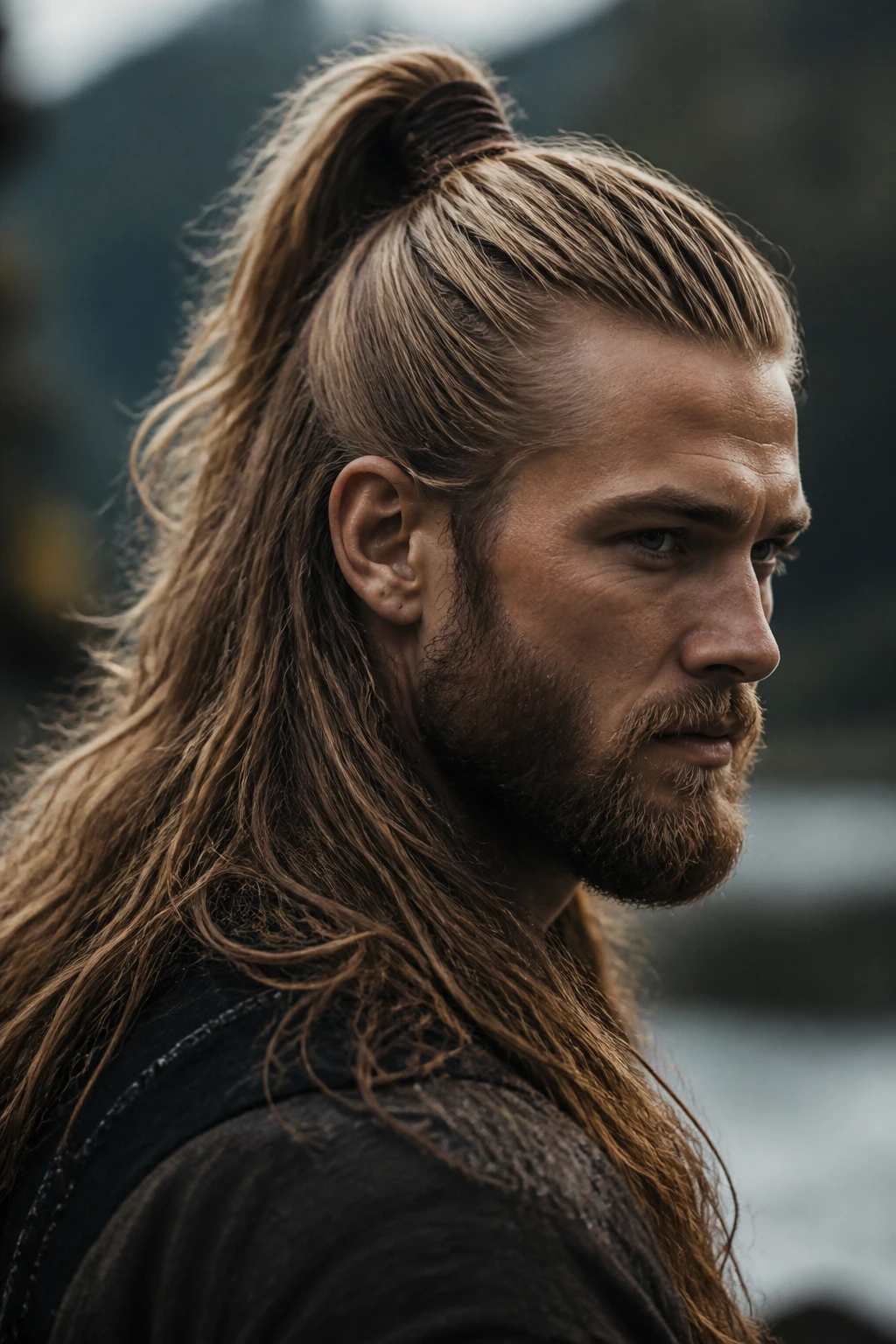
Texture Boost: Style the hair on the second day after washing if you can. Fresh hair often slips, especially if it’s straight, and a little natural oil gives braids something to bite into. If the roots feel too soft, a dusting of texturizing powder fixes the problem faster than more gel.
Face Framing: Pull a couple of thin pieces loose near the temples if the face looks too bare. That works especially well on longer faces. If your face is round, keep the front cleaner so the shape doesn’t spread sideways.
Accessory Swap: Leather cords make a ponytail feel rougher and more old-world. Matte elastics disappear into the hair and let the shape do the talking. Beads should stay light and minimal unless the point is to make the style showy.
Fast Refresh: If a braid has gone fuzzy by late afternoon, dampen just the outer layer with a spray bottle and smooth it with your hands. Don’t soak the whole head. A little reset is enough.
Beard Pairing: When the beard is long, keep the haircut around the ears and neckline tidy. That tiny grooming step keeps the whole look from drifting into messy territory.
Common Mistakes That Ruin the Look
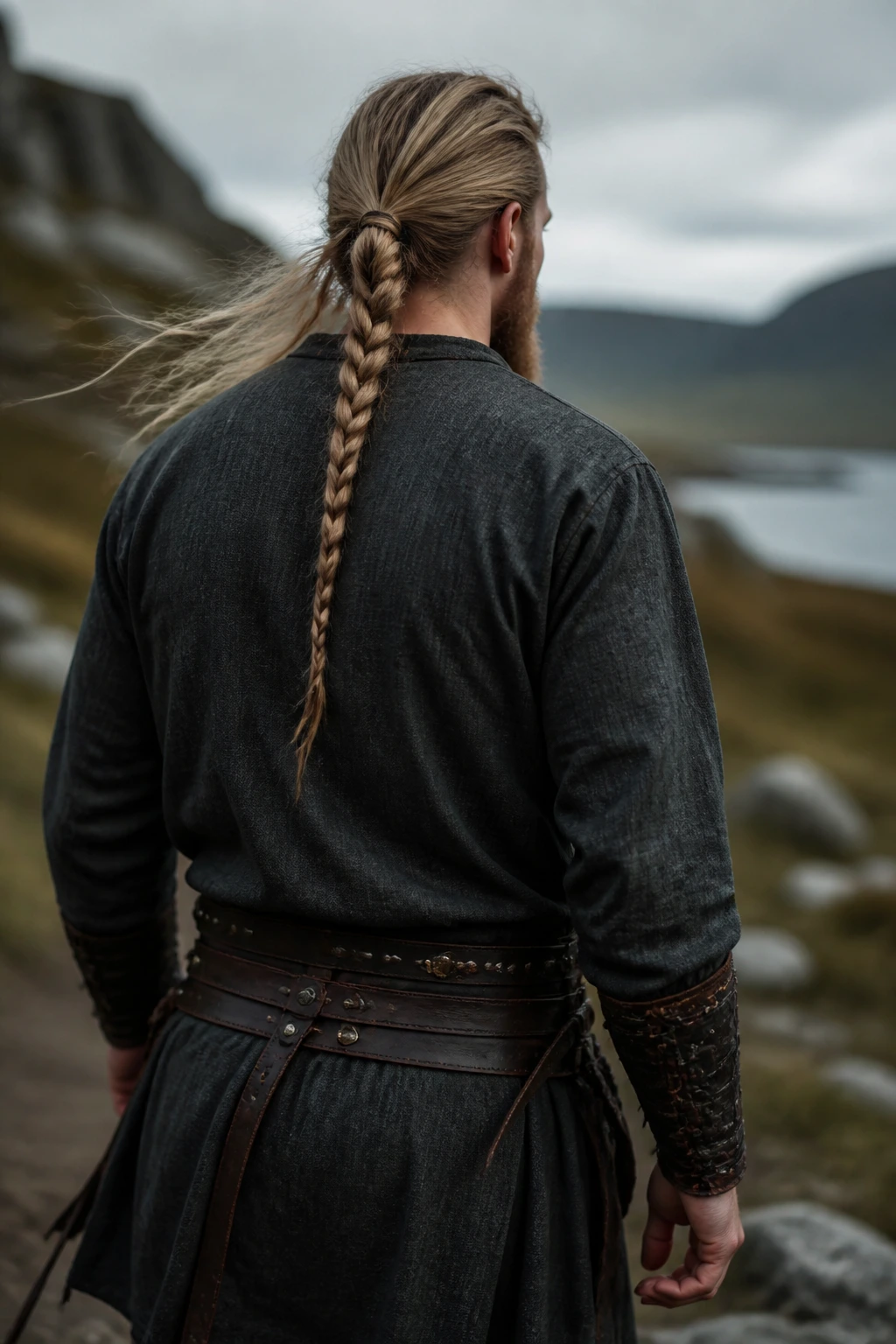
-
Braiding soaking-wet hair: Wet hair stretches, then puffs as it dries, which makes the braid loosen and look lumpy. Let the hair dry to damp or fully dry before you start.
-
Using too much oil or serum: A shiny, slippery head of hair looks pretty for about ten minutes, then the braid slides apart. Keep heavy product on the ends only.
-
Pulling the front too tight: If the temples are yanked back hard, you’ll see it in the hairline and probably feel it in your scalp. Start the braid or tie a little farther back and keep the tension firm, not sharp.
-
Ignoring the cut underneath: Long hair needs shape. If the ends are blunt and the sides are too bulky, many of these styles turn into a triangle. Long layers or some weight removal usually help.
-
Overloading on accessories: A braid, three beads, a leather wrap, and a metal ring all at once start to fight each other. Pick one focal point and let it do the work.
-
Sleeping on loose braids without protection: You’ll wake up to frizz and a knot at the back of the head. Use a satin pillowcase or tie the hair loosely before bed.
Variations and Adaptations to Try
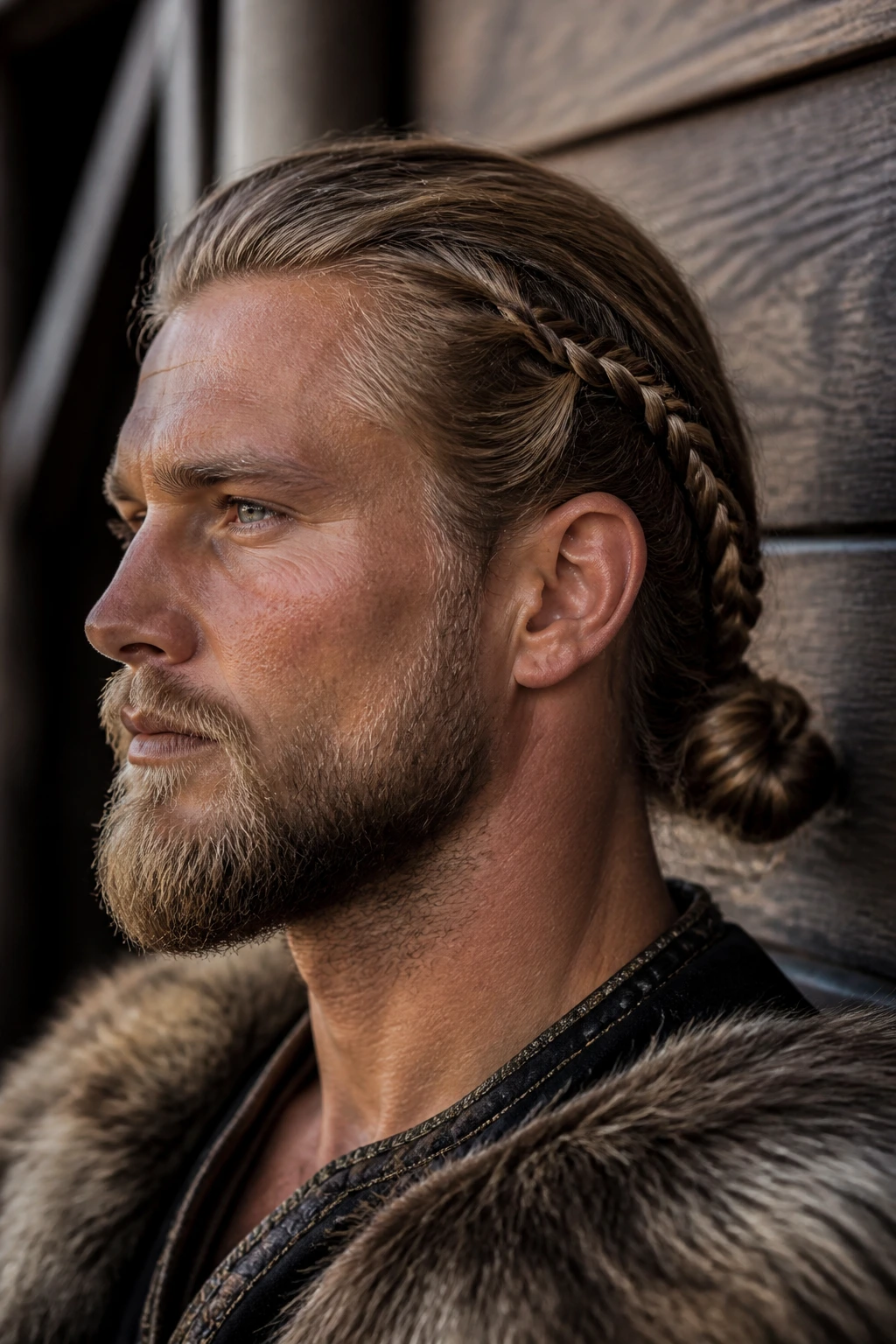
Curly Rune Version: Keep the braids loose and the part soft. Curly hair fights tight symmetry, so let the curl pattern shape the style instead of flattening it.
Fine-Hair Shield Wall: Use smaller sections, lighter products, and fewer accessories. A single braid or a half-up tie usually looks better than a bundle of tiny ones that expose the scalp.
Thick-Mane Berserker: Split the hair into more sections before braiding or tying. That reduces bulk and keeps the finished style from feeling like a rope over your neck.
No-Beard Nordic Clean-Up: If you don’t wear facial hair, sharpen the hairline and keep the sides slightly more controlled. The long hair becomes the full focus, which is cleaner than trying to force a beard-based silhouette.
Shorter Grow-Out Bridge: For hair that only reaches the collarbone, stick to half-up knots, temple braids, and low tails. Those styles give you the look without demanding the extra inches needed for a full back braid.
Wash-Days, Sleep, and Grow-Out Maintenance
Long hair needs a rhythm. If you wear braids or tied styles often, washing every two to four days usually keeps the scalp comfortable without stripping the ends. Very oily hair may need more frequent washing; very dry hair often needs less. The trick is to clean the scalp and still leave the length with some softness.
Braids and low knots can last one to three days if the scalp is happy and the style isn’t too tight. Beyond that, the part line starts to fray, and the neck can feel sore from constant tension. If you wake up with a headache or a pulled feeling at the temples, loosen the style sooner rather than later.
Sleep matters more than people think. A loose braid, low bun, or satin pillowcase keeps the ends from knotting into themselves overnight. I’d skip sleeping with a tight high ponytail; that shape creates a dent and can stress the same spot on the scalp all night.
Long hair also benefits from trims. Every eight to twelve weeks, take off the split ends so the braid stays smooth and the tail doesn’t look frayed at the bottom. If you keep going for months without a trim, the last four inches start to look tired no matter how good the styling is.
And if you wear beard oil, keep it off the hairline. It sounds obvious. It isn’t, once you’re in a hurry.
Frequently Asked Questions
How long does hair need to be for Viking hairstyles?
For half-up styles and small temple braids, hair that reaches the collarbone is enough. Full braids, nape buns, and longer rope twists usually look best once the hair reaches the shoulder blades or beyond.
Can thin hair pull off these styles?
Yes, but the style choice matters. Thin hair usually looks better in one clean braid, a low ponytail, or loose waves with texture spray than in multiple thick braids that expose the scalp.
Do these styles work with curly hair?
They do, and curly hair often gives the best texture. Keep the braids looser and avoid forcing the curls flat, because that just creates puff and frizz around the braid line.
How do I keep braids from coming undone?
Start with hair that has a little grip, use small elastics, and keep the sections even. If the braid loosens fast, the hair is probably too soft or too freshly washed; a little texture powder helps more than more tension.
Should I cut the sides short for a Viking look?
Not if you want the longest, most classic long-hair version. An undercut can make the crown stand out, but it also changes the shape and needs regular upkeep.
Are braids bad for long hair?
Only when they’re too tight or worn constantly without a break. If the scalp feels sore or the hairline starts to ache, loosen the style, change the part, or wear the hair down for a day.
How do I ask a barber for this kind of cut?
Bring photos and ask for long layers, a cleaned neckline, or an undercut if you want the sides shorter. Say whether you plan to wear the hair loose, braided, or tied back, because that changes how much weight the cut should keep.
What’s the easiest style to do yourself?
The low ponytail, half-up knot, and loose waves are the fastest. If you can manage a mirror and a comb, you can get those three done without a fight.
The Long-Hair Style That Fits You
The best Viking-inspired look is the one that works with your hair instead of bullying it into a shape it does not want. Some men need the control of a braid. Some need the easy movement of loose waves. Some need the beard and the hair to sit in a cleaner balance so the whole thing feels sharp instead of heavy.
That’s the real advantage of long hair here: it gives you options that still feel connected. A leather-tied ponytail Monday can turn into a temple braid Friday, and the same hair can handle both if you keep the ends healthy and the product light.
Start with the style that matches your hair’s natural bend, and the rest gets easier the first time the wind picks up.
