



Straight hair is a truth machine. Every band of color, every toner choice, every slightly off undertone shows up in one clean sheet of light, and that is exactly why brown hair color ideas for straight hair are so interesting when they’re done well.
A brown that looks flat in curls can look expensive on a blunt bob or glassy long layers. A brown that looks rich in the bowl can turn muddy on a sleek finish if the wrong pigment is doing the talking. Straight hair doesn’t hide much. It rewards clean placement, good shine, and shades that know when to stay quiet and when to catch the light.
That’s the sweet spot here: espresso depth, chestnut warmth, mushroom smoke, caramel ribbons, root shadows, and those small face-framing details that make a straight style look deliberate instead of just long. The shades below lean into that sharp, reflective surface instead of fighting it.
Why These Brown Shades Work So Well on Straight Hair
- Mirror Finish: Straight strands reflect color in long lines, so even a subtle mocha glaze reads polished instead of fuzzy or dull.
- Soft Grow-Out: Browns with a one- to two-level shift from root to ends hide regrowth better than a hard blonde stripe or a blunt red panel.
- Cut-Friendly: A blunt bob, lob, or long layer changes how brown reads; the same formula can look severe on one cut and soft on another.
- Undertone Control: Cool, neutral, and warm browns behave very differently under bright light, and straight hair makes those differences obvious.
- Dimension Without Chaos: Fine ribbons, lowlights, and root smudges add movement without making the hair look busy or striped.
- Easy to Style Around: These shades hold their shape with a flat iron, a round-brush blowout, or a center part tucked behind one ear.
1. Espresso Brown with Mirror Shine
Espresso brown is the shade I reach for when straight hair needs depth more than drama. It sits in that dark, glossy range where the hair looks nearly black indoors, then turns soft brown in daylight if the light hits it right.
Why It Works on Straight Strands
Straight hair loves this shade because there’s nowhere for the color to hide. A level 3 or 4 espresso base with a cool-neutral gloss gives the cut a clean line, especially on a blunt bob or long, one-length style. The shine matters here. Without it, the color can look flat and dense.
Quick Facts
- Best base level: Level 4 to 5 natural brown or darker.
- Undertone: Neutral to cool, with only a trace of warmth.
- Ask for: A single-process espresso base plus a clear gloss or soft neutral glaze.
- Maintenance: Refresh every 6 to 8 weeks if you want the finish to stay deep and reflective.
- Best cut match: Blunt ends, center parts, and polished lobs.
Pro tip: Skip heavy matte creams on the mids and ends. They swallow the shine that makes espresso brown work in the first place.
2. Mushroom Brown with Smoky Lowlights
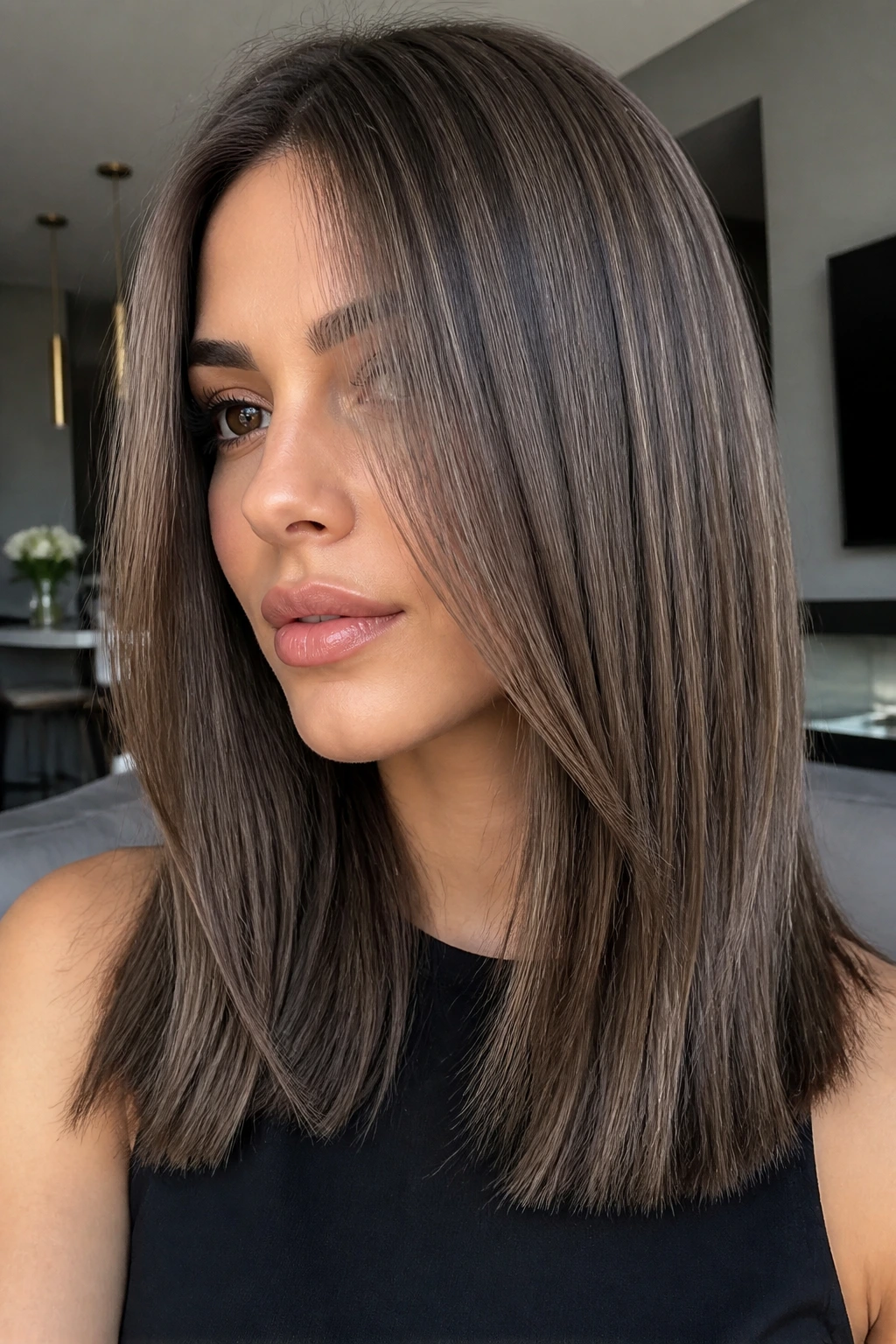
Mushroom brown is the easiest way to stop straight hair from looking one-note. It has that cool taupe-gray-brown mix that feels softer than ash blonde and less severe than dark brunette.
The thing I like about it on straight hair is the way it shifts when the light moves. You get a little smoke, a little beige, and a shadowy depth that doesn’t shout. On a sleek finish, that muted tone can look far more expensive than a brighter brown.
It works especially well if your natural hair sits in the medium brown range and you want dimension without going warm. Ask for fine lowlights a shade or two deeper than your base, then soften the whole thing with a beige-ash toner. Too much gray can go flat. Too much gold kills the point.
Mushroom brown also grows out with less fuss than brighter highlights. The root shadow isn’t a problem. It’s part of the look.
3. Chestnut Balayage on Long Straight Layers
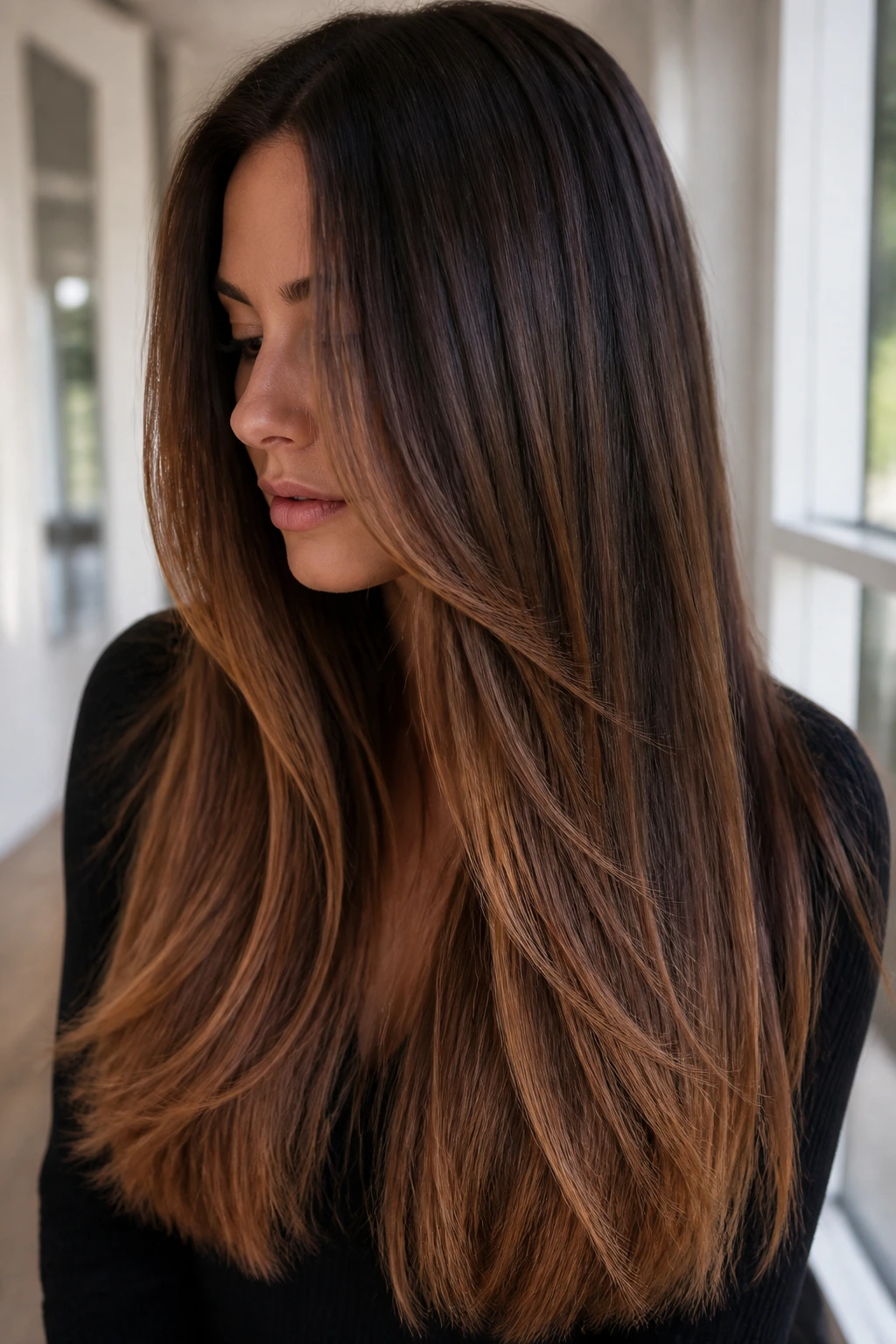
Why does chestnut balayage look richer on straight hair than it does on curls? Because straight layers show the transition. The brown shifts from darker roots to warm, chestnut ribbons in a way that reads clean, not streaky.
How to Ask for It
Ask for soft balayage pieces that start around the mid-lengths, not right at the scalp. On long straight hair, a highlight that begins too high can turn into a harsh stripe. Chestnut works best when the warm pieces stay feathered and the ends are kept soft, almost hazy.
Use this if you want warmth without the copper-orange snap that some caramel shades pick up. A golden-chestnut glaze over a medium brown base gives the hair movement, but it still looks grounded. It’s a good fit for long layers because the cut breaks up the color and keeps the ribbons from looking like wide bands.
A small thing, but worth saying: chestnut balayage looks better after a smooth blowout than after rough air-drying. The shine is part of the color story.
4. Chocolate Brown with Caramel Money Pieces
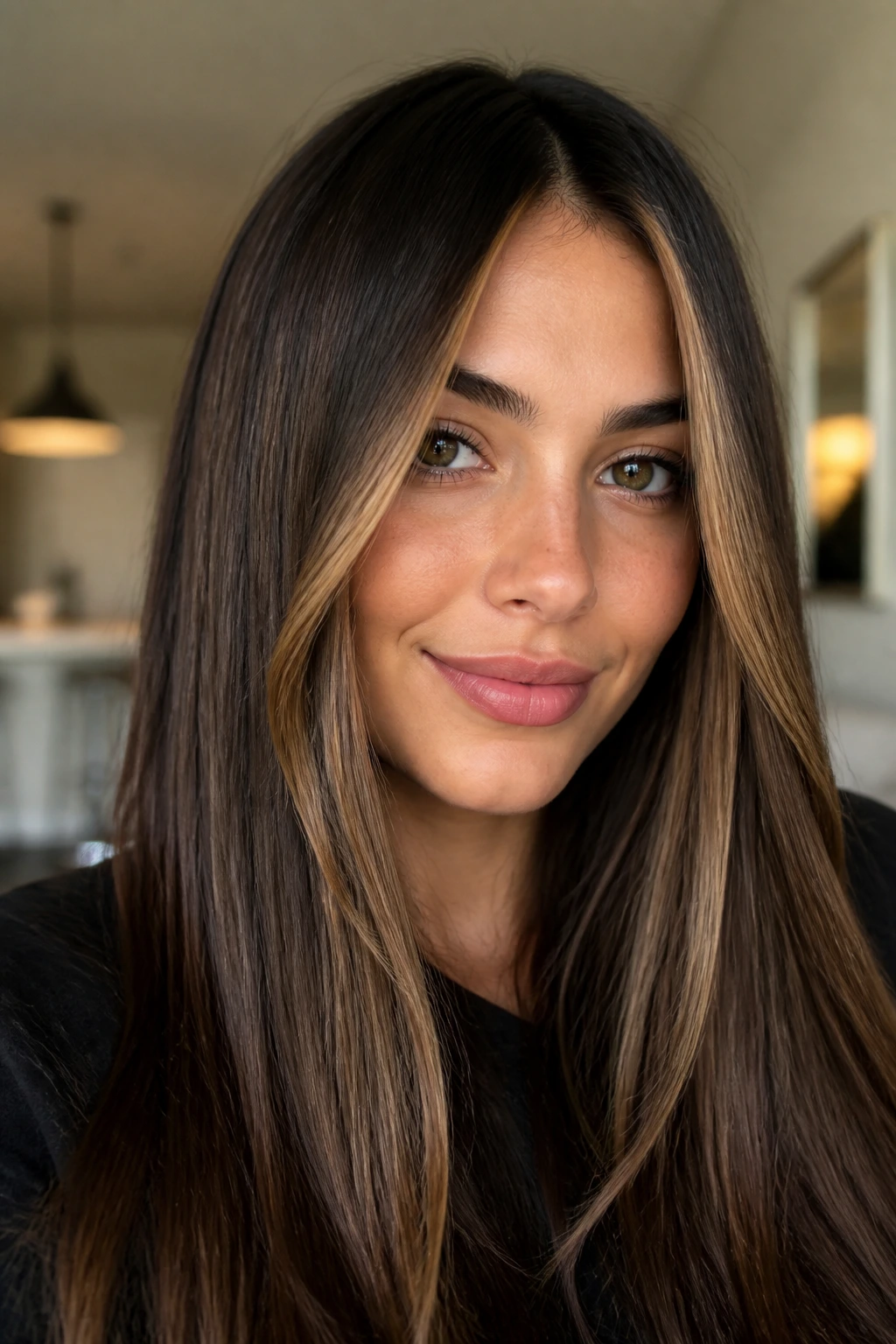
Pull straight hair into a center part and those caramel money pieces do all the work. That front frame sits right beside the face, so even a narrow ribbon of brightness changes the whole read of the color.
The Details That Matter
- Base shade: Rich chocolate brown, usually level 4 or 5.
- Face frame: Caramel or warm beige pieces, about 1 to 1.5 inches wide.
- Placement: Keep the brightest sections around the temples and cheekbones.
- Tone control: Choose caramel, not orange. Orange is a different mood entirely.
- Maintenance: Touch up the front pieces every 6 to 8 weeks if you wear a middle part.
This shade is a nice middle ground if you want contrast but don’t want to live inside full balayage upkeep. The chocolate base keeps the hair looking full and dense, while the caramel face frame adds movement right where straight hair can sometimes look too severe.
It also photographs well in real life, not just in salon pictures. When the front pieces are thin enough, they move with the hair instead of sitting on top of it.
5. Cinnamon Brown with Warm Ribbon Highlights
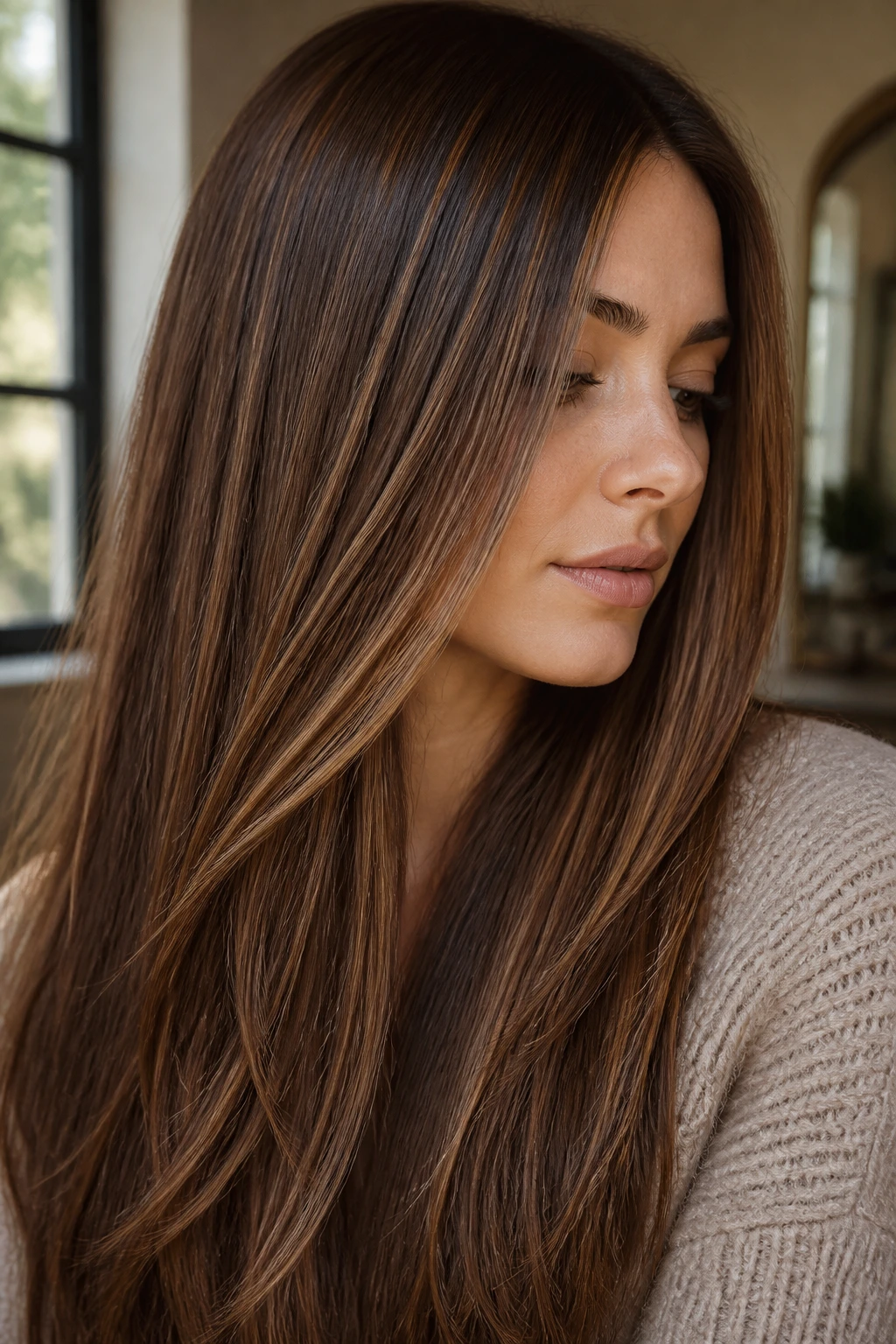
Cinnamon brown has a pulse to it. Not red hair. Not plain brown. Something in between, with a warm spice tone that shows up most clearly on straight hair because the light travels down the strands so cleanly.
I like it on medium to long lengths where the hair can hold a smooth bend at the ends. That little bend lets the cinnamon tones catch the eye without tipping into full copper. If the base is a level 5 brown, a cinnamon glaze can bring out warmth that looks soft in shade and brighter in sunlight.
This is not the shade to choose if you fight brass every other week. It asks for a little care. A color-safe shampoo, a gentle gloss refresh every 5 to 7 weeks, and a light hand with heat are enough to keep it from drifting too orange. Keep the ribbon highlights fine, not chunky, or the red tones will start to look louder than you want.
It’s a good choice when you want brown hair that feels alive, not sleepy.
6. Mocha Melt from Roots to Ends
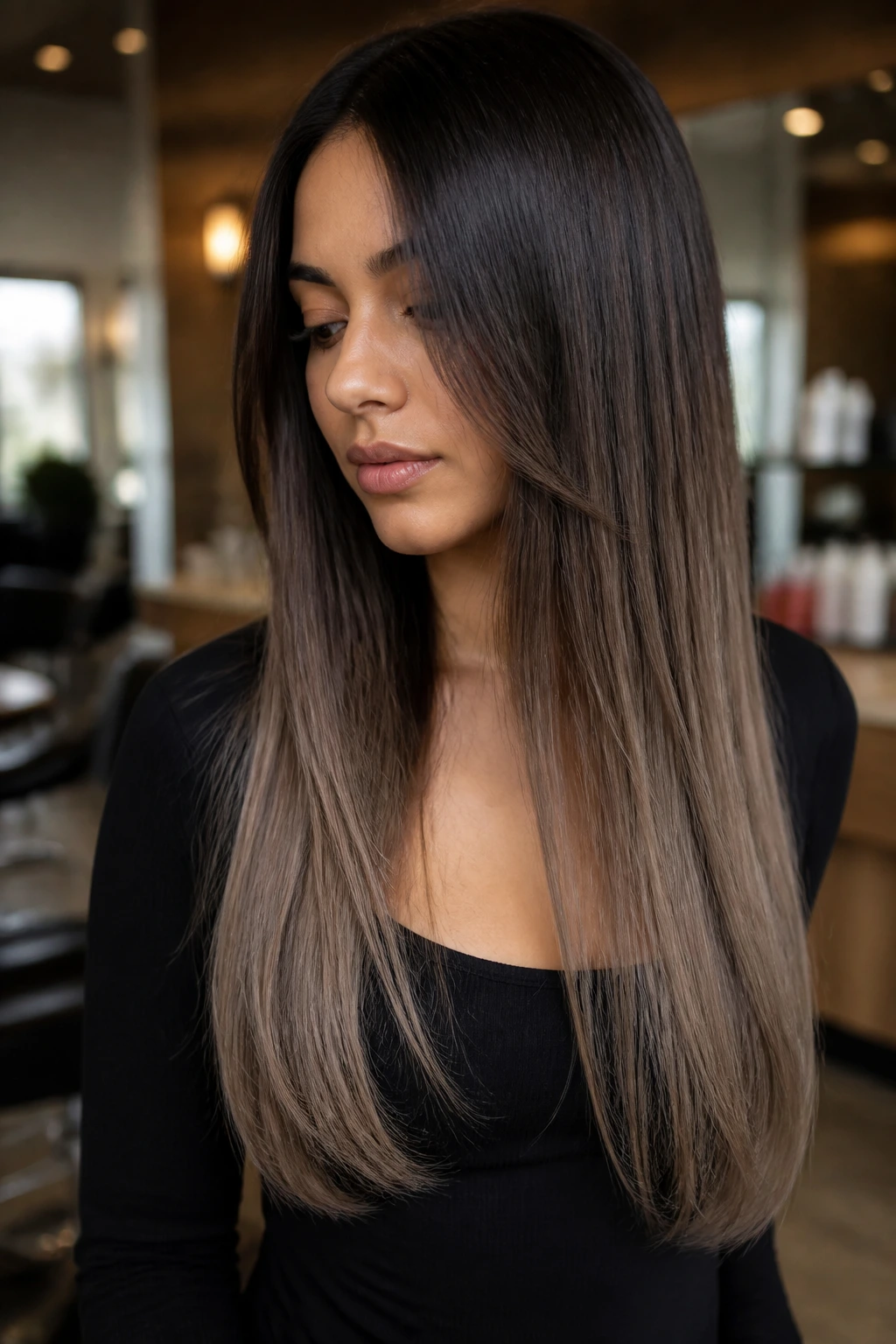
Mocha melt is the shade I point people toward when they want brown hair color ideas for straight hair that feel finished, not decorated. Unlike a solid brown, a mocha melt shifts from a deeper root into slightly lighter mid-lengths and ends, and that slow change does a lot of heavy lifting.
The contrast stays low, which is the whole point. On straight hair, big jumps in color can look stripy fast. A mocha melt avoids that by keeping the transition soft and staying within about one to two levels of your natural base. You can read it as dimensional even when the hair is perfectly smooth.
This is especially good on long hair that needs movement without brighter highlights. It gives the ends a little life, which matters when the length is very straight and the shape depends on shine more than curl. If you want the color to feel modern but not trendy in a way that ages quickly, mocha is one of the safer bets.
Ask for a root shadow, a muted cocoa midtone, and a soft beige-brown finish at the bottom. That’s the version that wears well.
7. Cool Ash Brown for a Sleek Bob
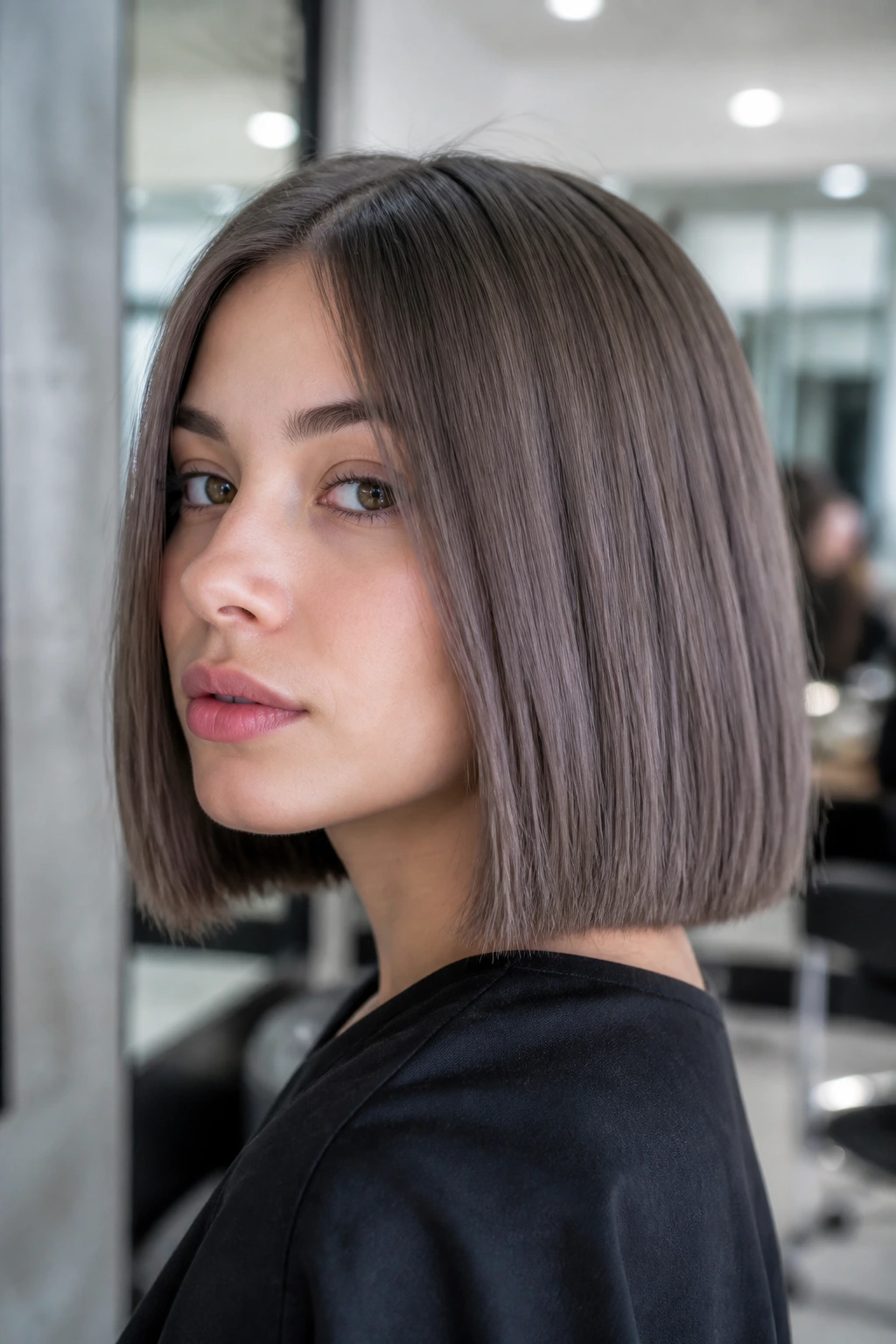
Cool ash brown and a sharp bob are a natural pair. The cut is crisp, the tone is crisp, and straight hair can handle both without getting fussy.
What to Ask for at the Chair
- Base: Medium brown lifted or toned to a cool ash level 5 or 6.
- Toner: Blue-violet or ash-beige, depending on how warm your hair pulls.
- Ends: Keep them blunt and tidy so the color line looks intentional.
- Maintenance: Trim every 6 to 8 weeks; ash tones show uneven ends fast.
- Warning sign: If the hair looks green or hollow, the toner went too far cool.
This shade is not for anyone who wants warmth. That’s fine. The coolness gives the bob a sharp outline, especially if the hair is thick and tends to puff out at the ends. On straight hair, ash brown can look almost metallic in good light, and I mean that in the useful sense, not the costume-y one.
If your skin leans warm, don’t panic. You can still wear the color. Just soften the makeup a bit and keep the ash from running all the way into your brows and lip color.
8. Toffee Brown with Soft Mid-Length Ribbons
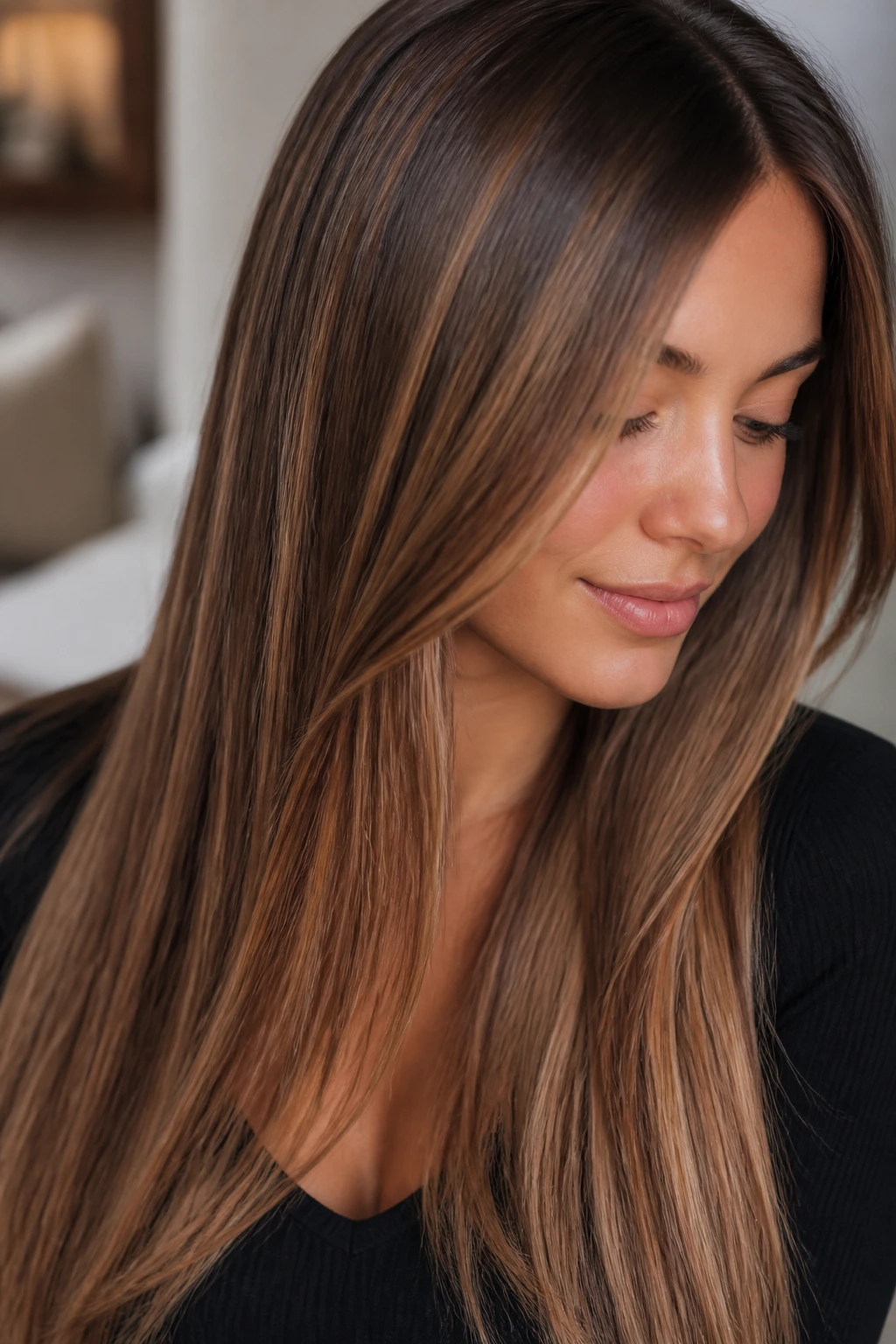
Toffee brown sits in that sweet spot between chocolate and caramel, which is why it behaves so well on straight hair that falls past the shoulders. The color has warmth, but it doesn’t scream for attention.
A little anecdote from salon reality: the shades that look best on straight hair are often the ones that stay quiet until the light hits them. Toffee does that. The ribbons don’t need to start at the root. In fact, they look better when they don’t. Mid-length placement keeps the hair from turning stripy, especially if the cut is long and very smooth.
Key Details
- Keep the brightest toffee pieces around the outer layer, not buried deep underneath.
- Use ribbons thinner than a pencil on fine hair.
- Choose a beige-gold tone if your skin is neutral; lean a touch warmer if your skin is golden.
- Let the base stay rich so the highlights have somewhere to live.
This color gives straight hair movement without forcing a dramatic contrast. It’s one of those shades that looks simple from far away and more interesting when you’re close to it.
9. Walnut Brown with Dimensional Lowlights
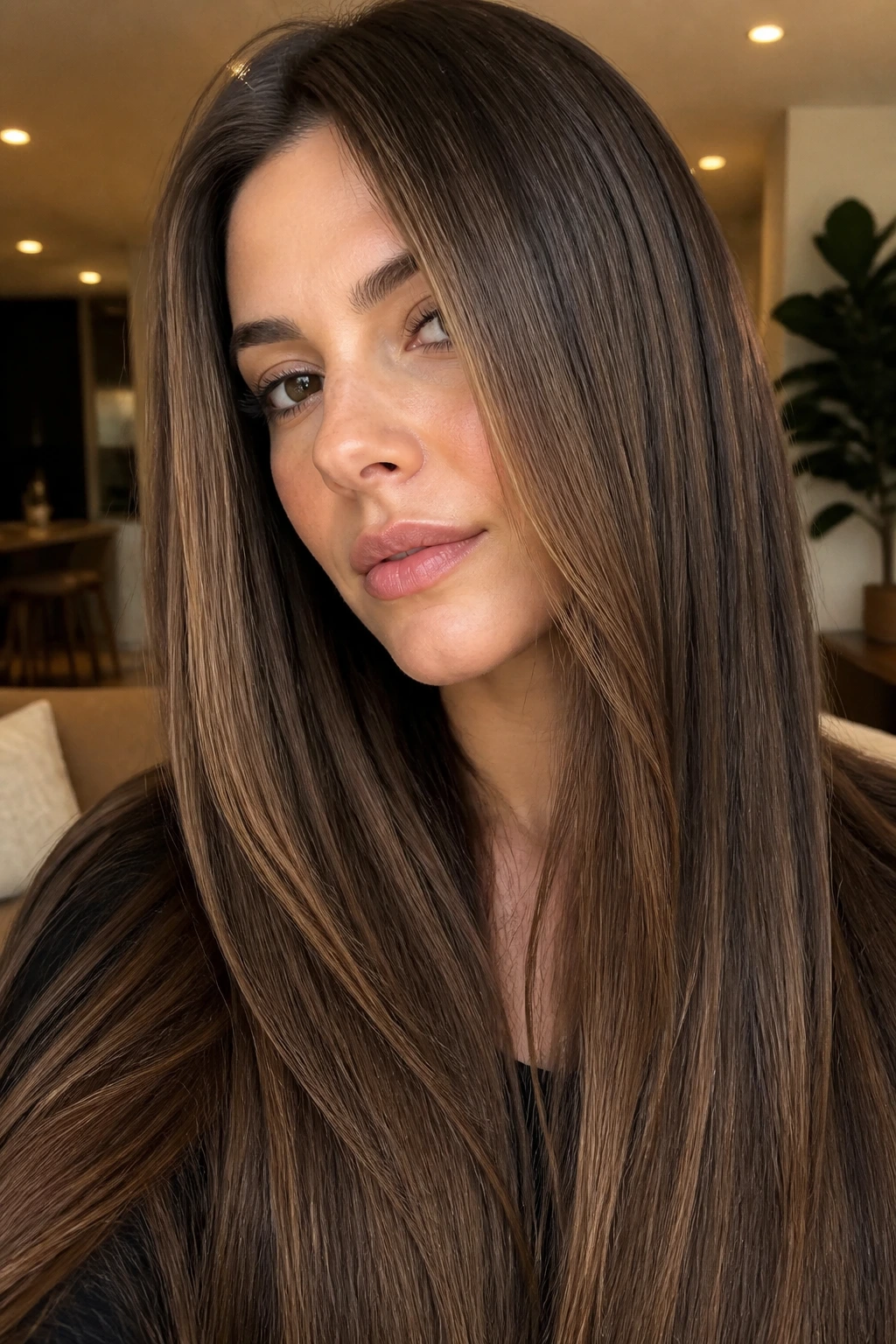
Can darker lowlights make straight brown hair look brighter? Absolutely. The trick is contrast. Walnut brown uses deeper ribbons to make the lighter pieces around them seem clearer and more textured.
Why the Depth Belongs Underneath
Straight hair reveals every color line, so the lowlights need to be fine and carefully woven. If they’re chunky, the result looks striped. If they’re too close to the surface, the hair can go muddy. Keep the deeper walnut pieces under the top layer and through the inner sections, where they add shadow without stealing the show.
- Best use: Medium brown hair that feels too flat.
- Placement: Underlayers, crown, and the back half of the head.
- Tone: Neutral walnut, not black-brown.
- Finish: A soft gloss keeps the contrast from getting chalky.
This is a good choice when the goal is richness, not brightness. It’s the brunette answer to dimension. And on straight hair, dimension often matters more than obvious highlights anyway.
10. Bronze Brown on a Straight Lob
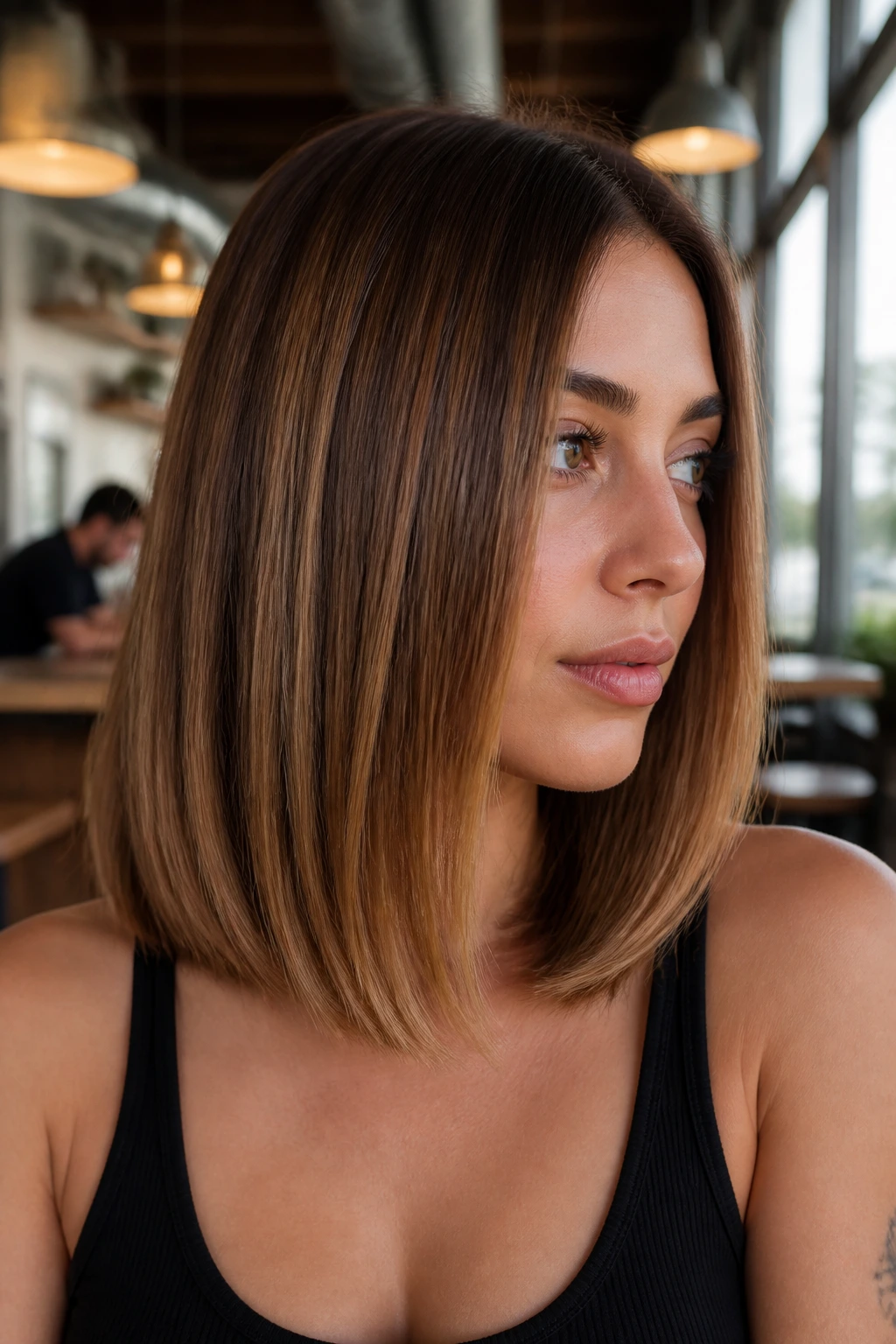
Bronze brown lands between warm brunette and reflective gold, and that’s why it looks so good on a straight lob. The lob gives the color a blunt, modern edge, while the bronze tones keep it from feeling severe.
I’d separate this shade from chestnut. Chestnut is softer and more woodsy. Bronze has a little more light bouncing around in it. It suits medium brown bases that want warmth but don’t want to go full caramel.
The best version starts with a medium brunette base and adds a beige-gold gloss or very fine ribbons through the top layer. On straight hair, that reflective finish rides along the length of the cut, which makes the lob look thicker and cleaner. If the ends are too light, it can turn brassy fast, so I prefer bronze kept controlled and close to the base.
If you wear a middle part and tuck one side behind the ear, this shade gets even better. The metal-like shine shows up in little flashes, not one big streak.
11. Maple Brown with Gentle Face-Framing Brightness
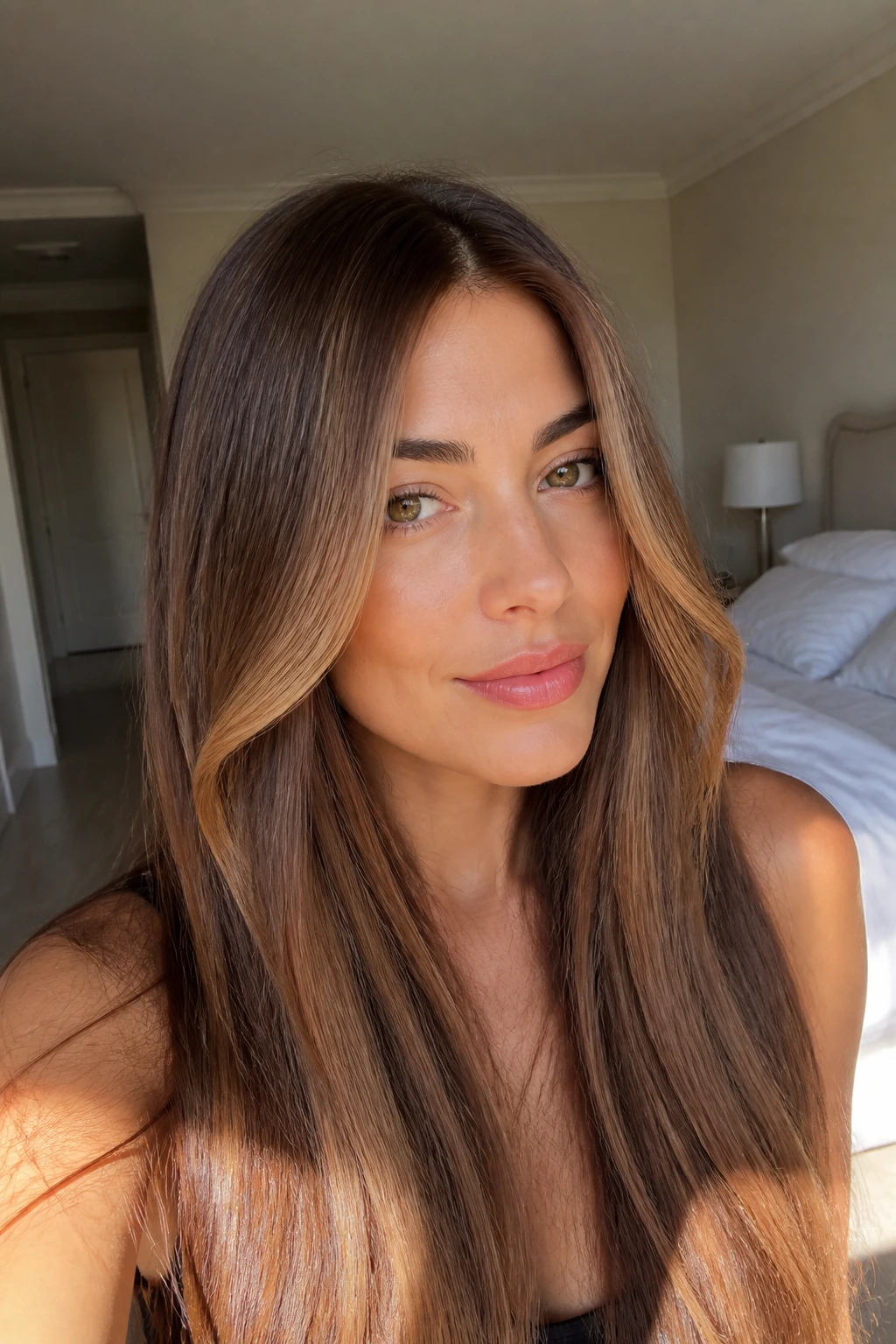
Maple brown has a syrupy warmth that feels softer than copper and less sweet than caramel. On straight hair, that means the shade stays readable without getting loud.
What I like most here is the face-framing brightness. Keep the front pieces just a shade lighter than the rest, maybe with a few delicate babylights around the cheekbone area. That tiny brightening makes a straight style look finished. It also keeps longer hair from disappearing into one flat brown sheet, which happens fast when the tone is too uniform.
Maple brown works especially well if your natural base is medium brown and you want warmth that feels believable. The color leans golden without turning orange. If your hair tends to pull red, a beige glaze helps keep the maple note soft instead of fiery.
This is one of the easier browns to live with. The grow-out is gentle, the shine is good, and the shade still looks like hair, not a dye job wearing a disguise.
12. Sable Brown with Midnight Depth
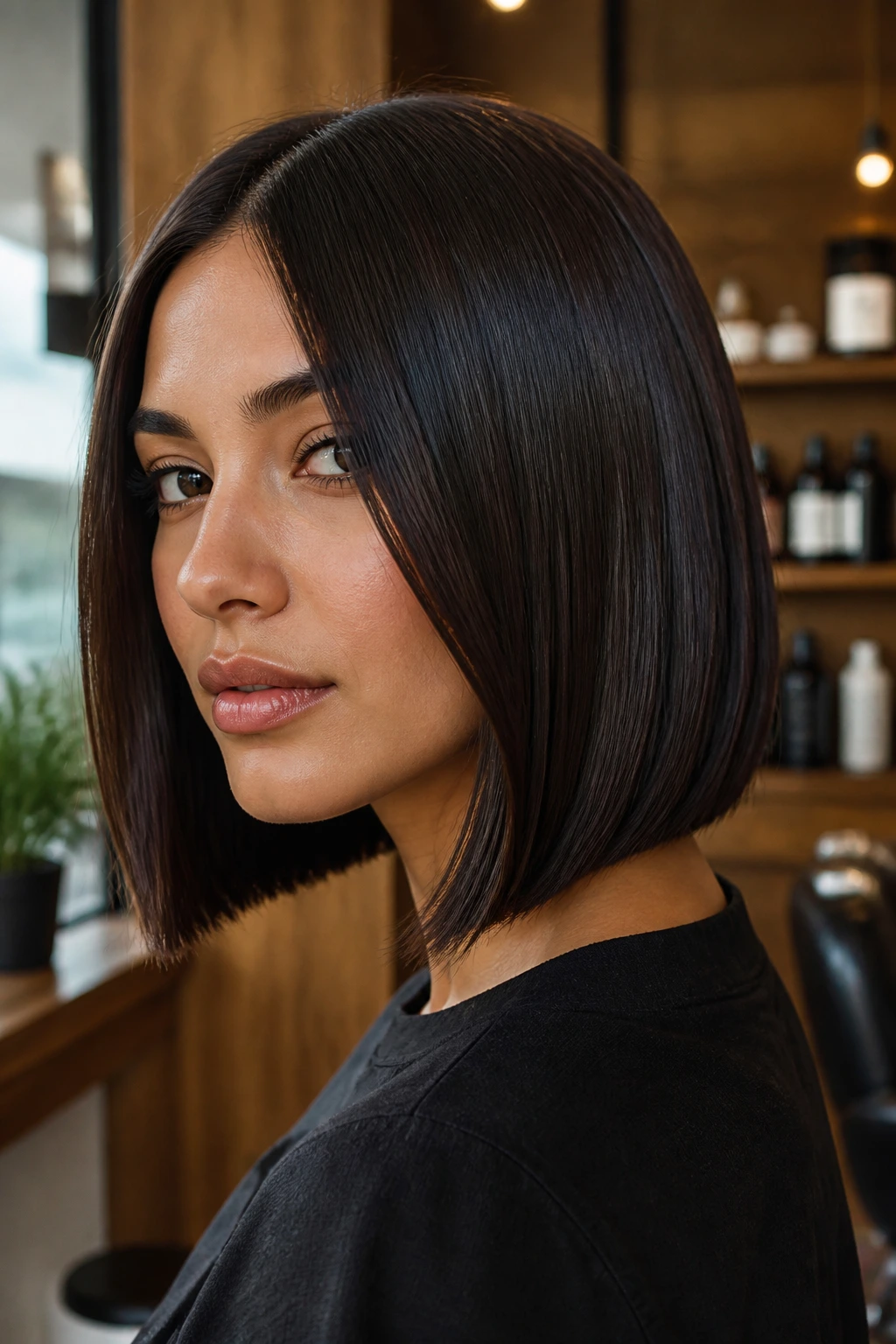
Fine straight hair can handle dark brown. It just needs the right dark brown. Sable is the answer I keep coming back to because it stays rich without swallowing texture.
A lot of people go too dark too fast. Then the hair looks heavy, the cut disappears, and every little dry end shows up like chalk. Sable brown solves that by keeping a little softness in the undertone. It isn’t black. It isn’t flat coffee. It sits in that inky brunette zone that still shows movement when the light hits the strands.
This shade is especially good if your hair is naturally dark or if you want a more polished, high-contrast look on a straight bob or long one-length cut. The darker tone makes the outline of the haircut sharper. That can be gorgeous when the ends are clean and the styling is smooth.
A small warning: if your complexion is very pale and your brows are light, too much sable can look severe. Keep a little softness around the face, and it becomes much easier to wear.
13. Teddy Bear Brown for Soft, Neutral Brunettes
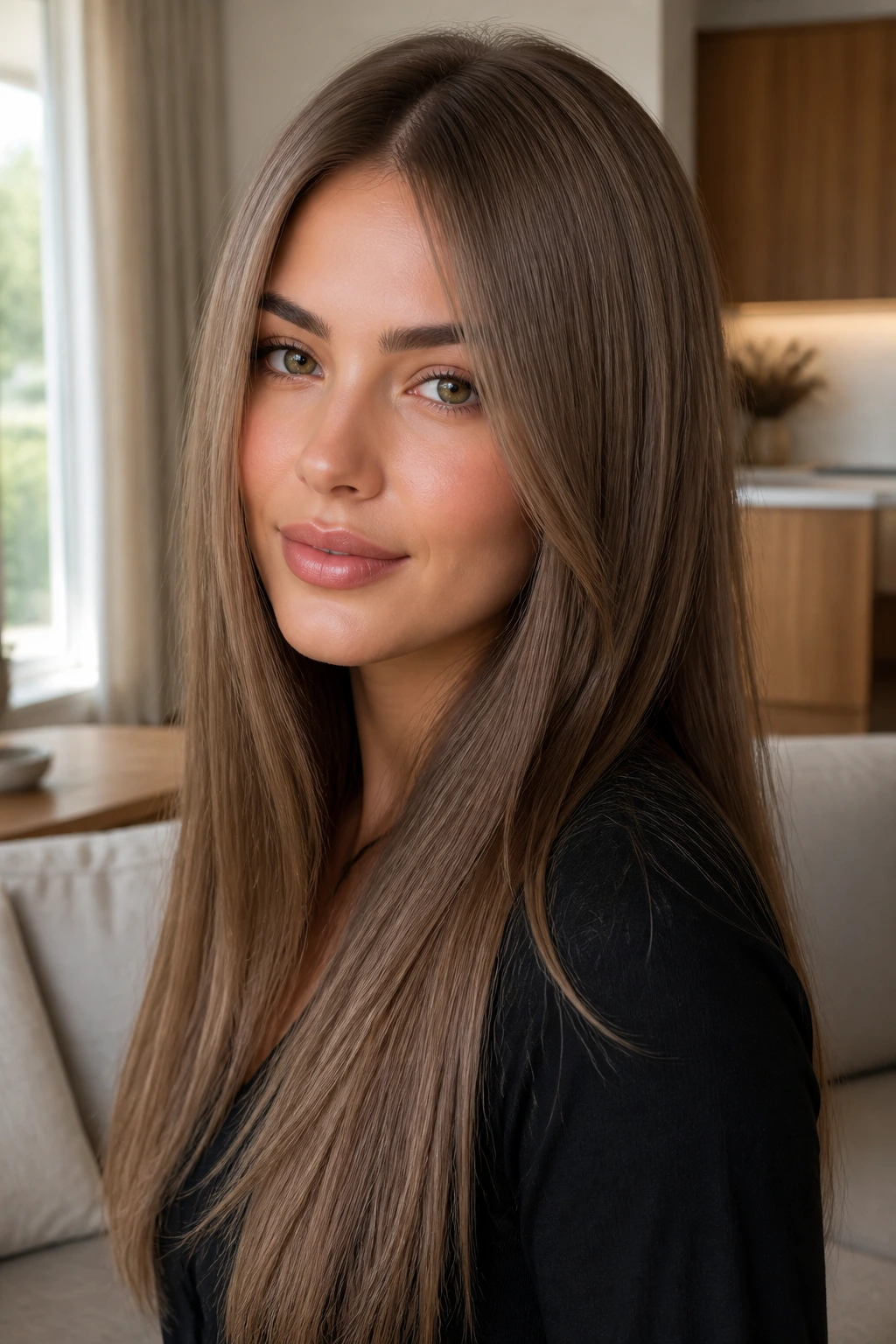
Teddy bear brown is the shade that looks chosen without looking fussy. It’s neutral, plush, and just warm enough to keep straight hair from going flat under daylight.
What Makes It Different
The color sits between beige and milk chocolate, which gives it a soft finish on sleek strands. It doesn’t lean red. It doesn’t drift icy. That middle ground is the reason it works so well on straight hair, because the shine can stay the star while the tone quietly does its job.
Quick Notes
- Best for: People who want a natural brunette look with no loud warmth.
- Undertone: Neutral beige-brown.
- Placement: Works as an all-over gloss or as soft babylights over a medium base.
- Maintenance: Use a color-safe conditioner and avoid over-toning it cool.
Teddy bear brown is one of those shades that looks understated in the chair and then catches you later in the mirror because it makes the whole haircut look cleaner. If your straight hair has a blunt edge or a long center part, this color gives it a gentle softness that’s hard to fake.
14. Auburn-Kissed Brown for a Little Heat
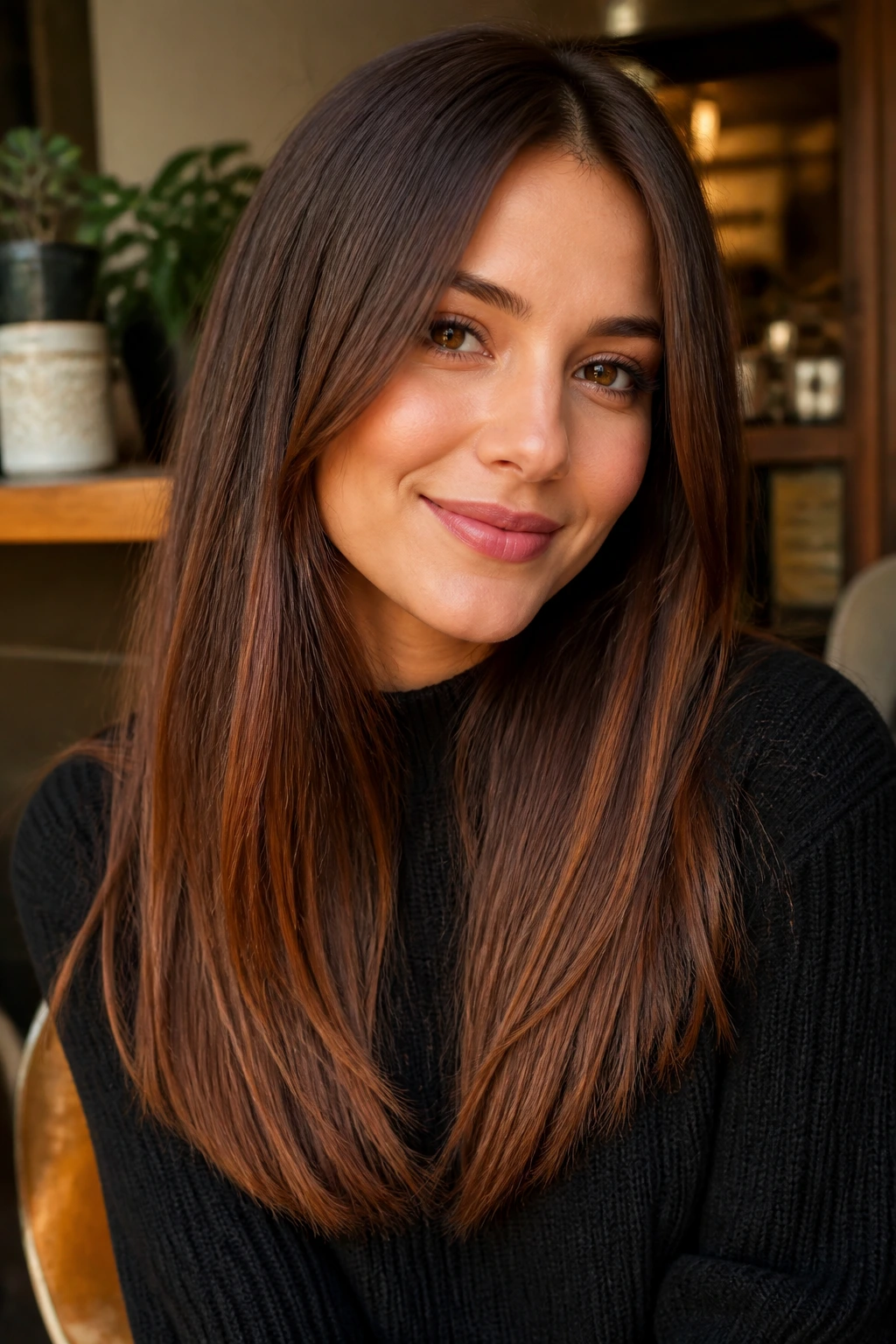
Can straight brown hair carry red without looking fake? Yes, if the auburn is a whisper and not a shout.
The trick is where the warmth sits. Keep the base brown and let the auburn live in the mid-lengths and ends, or weave it through very fine ribbons near the face. Straight hair shows the red notes more quickly than curls do, so a heavy auburn block can take over the whole head. A lighter touch keeps the shade wearable.
Where the Warmth Should Sit
Auburn-kissed brown works best when the red stays under the brown, not on top of it. Think chestnut with a spark. Think brown hair that looks richer in late-afternoon light and a little deeper at night. On a smooth blowout, the tone can look especially good because each strand reflects the copper-brown mix separately.
If you love warm makeup, gold jewelry, and rich fabrics, this is the kind of brunette that fits without trying too hard. If you hate brass, skip it. There’s no need to fight a color you do not enjoy.
15. Vanilla Latte Brown with Light Ends
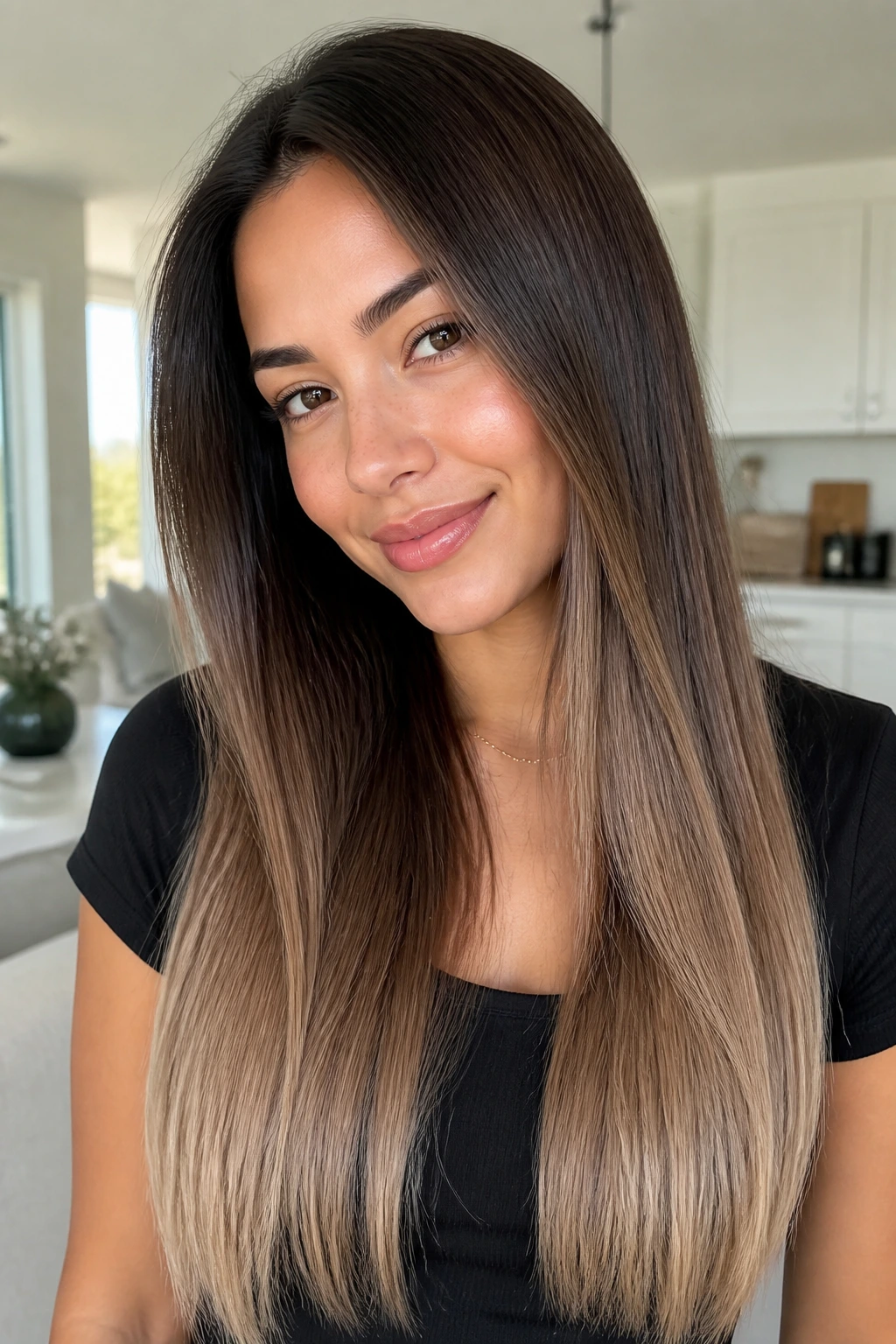
Vanilla latte brown gives you brightness without jumping all the way into blonde. It’s a soft, creamy brunette with lighter ends and a deeper root, and that contrast plays well on straight hair because the color shows from root to tip in one clean line.
Unlike a dramatic ombré, vanilla latte brown keeps the shift gentle. The ends lighten, but not so much that they look bleached or dry. The result feels airy. On long straight hair, that lighter bottom half can stop the length from looking heavy, which matters more than most people think.
This is a smart choice if you want your hair to look lighter but still brunette from a distance. It also pairs well with long layers, because the layers break up the lighter ends and keep the whole look from turning blocky. If your hair is porous, use a bond-building treatment before lightening the lower half. Straight hair shows damage faster than curls do.
The version I like most keeps the roots a medium mocha and the ends one or two levels lighter, not five.
16. Smoky Brunette with Root Shadow
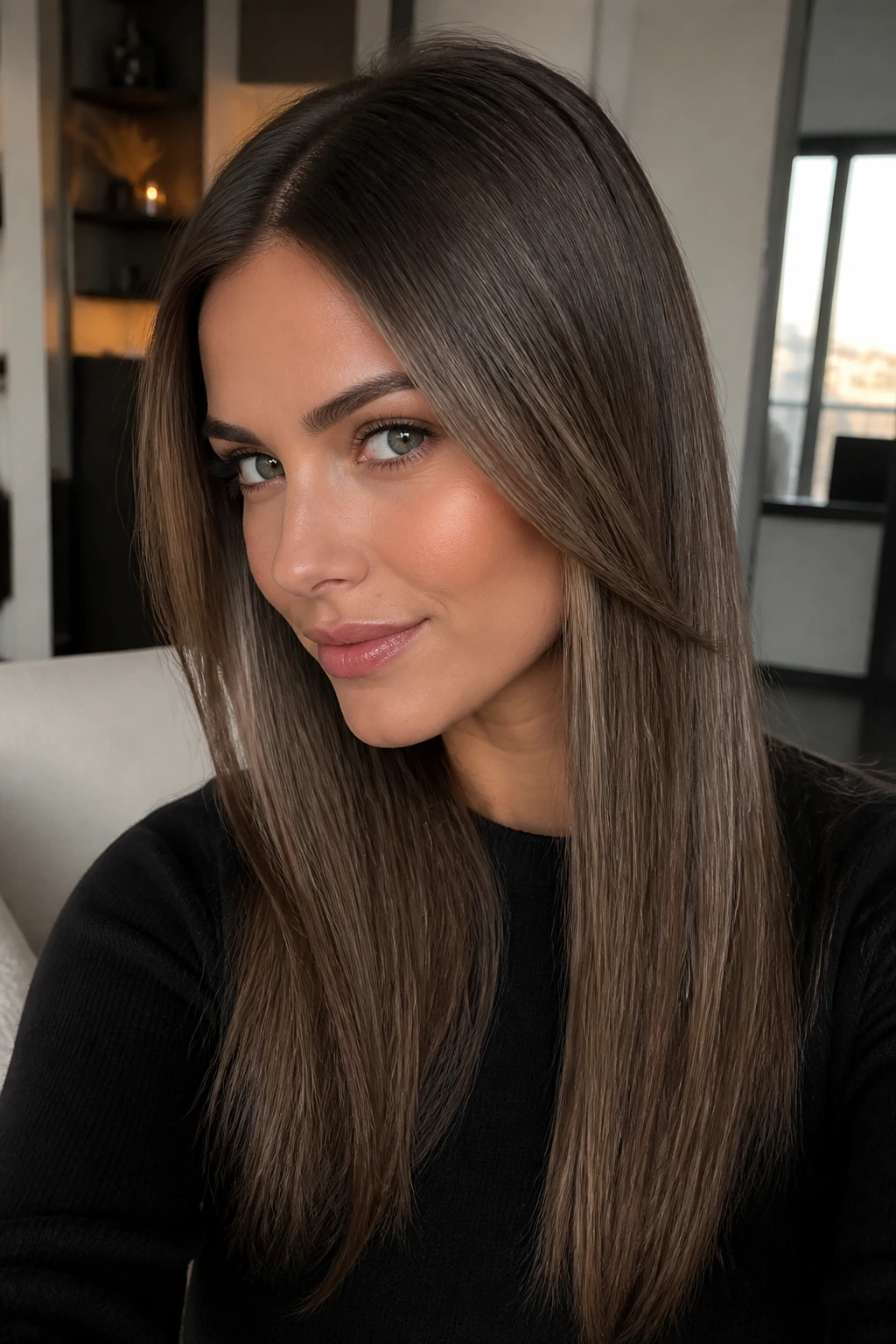
Smoky brunette is the quiet, practical choice that still looks intentional. It starts with a root shadow and settles into a cool, muted brown through the rest of the hair.
That root shadow matters on straight hair because regrowth can show up like a hard line if the top section is too light. A soft shadow, about 1.5 to 2 inches down from the scalp, breaks that line before it starts. The finish looks lived-in, not grown-out.
This shade also helps if your hair has been lightened before and you want to steer it back toward brunette without going flat. The smoky tone covers old warmth well, especially if the colorist fills the hair first and then tones it down. That step is boring. It also saves you from muddy ends.
If you wear straight hair in a low bun, half-up twist, or tucked-behind-the-ear style, smoky brunette looks especially good because the shadow root gives the style some contour. It’s less flashy than caramel, and I like that. Not every brunette needs to announce itself.
17. Cocoa Brown with Peekaboo Panels
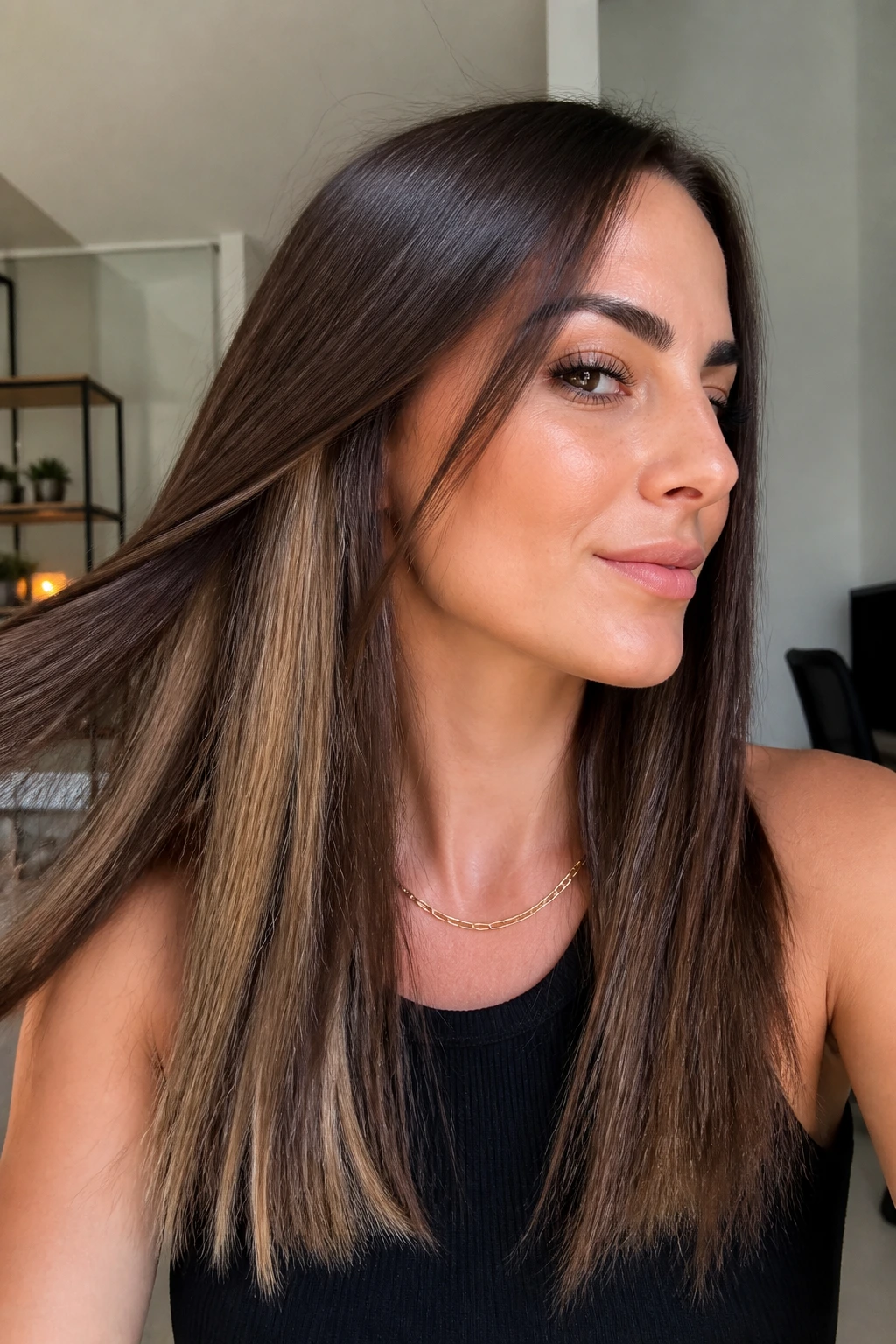
Cocoa brown with peekaboo panels is for the person who wants a little mischief hidden under a polished surface. From the top, the hair reads as a rich cocoa brunette. Move it, tuck it, or let it swing, and lighter panels underneath flash through.
That hidden contrast is perfect on straight hair because straight lengths expose the underneath layers in a clean, deliberate way. You don’t need curls to show the variation. A simple tuck behind the ear can reveal the whole idea.
Quick Key Details
- Top layer: Deep cocoa brown, kept smooth and even.
- Panels underneath: Chestnut, caramel, or bronze, depending on how warm you want it.
- Placement: Under the crown and along the inner sides, where the hair moves naturally.
- Best cut: Long layers or a lob with enough length to conceal the panels when you want them hidden.
This is a nice option if you need your hair to look calm at work but don’t want it to feel boring off the clock. It’s also a smart way to use color without committing to a fully bright head of highlights.
18. Beige Brown Balayage for Ultra-Straight Hair
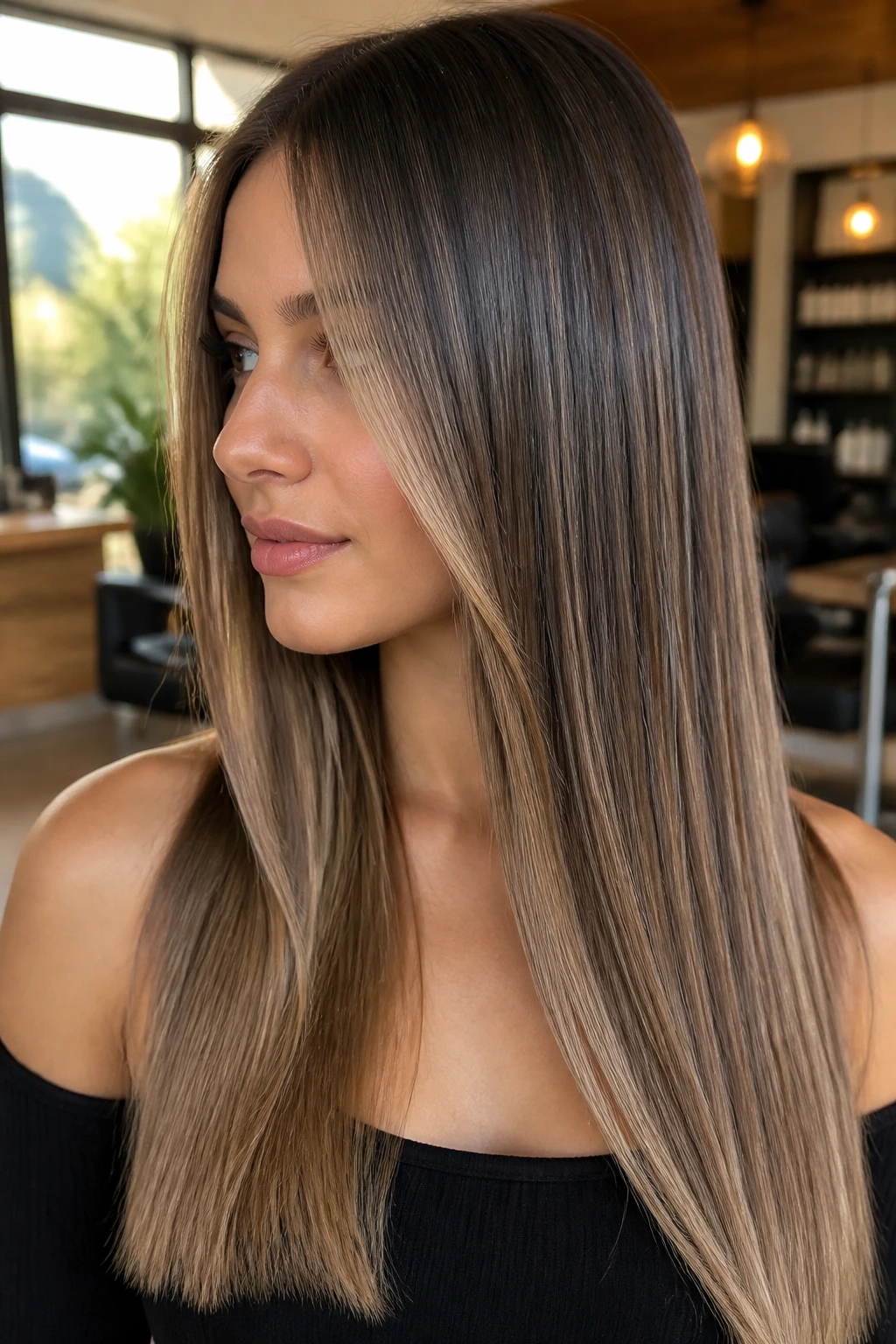
Beige brown balayage is the answer for people who want brightness with a cool, soft finish. It sits lighter than espresso, calmer than caramel, and more neutral than gold.
What Keeps It from Going Yellow
- Keep the lighter pieces very fine, almost like babylights.
- Ask for beige, not yellow-gold, in the toner.
- Leave enough brown at the root and underneath so the color has contrast.
- Refresh the glaze every 4 to 6 weeks if your hair pulls warm fast.
Beige brown looks especially good on ultra-straight hair because the color ribbons stay visible along the length of the strand. There’s no curl pattern to break them up, so the balayage needs to be soft and deliberate. Too much brightness turns striped. Too little gives you a flat brown cap.
I like this shade on hair that’s sleek, clean, and a little glossy. It makes the finish look expensive without pushing into blonde territory. And if you want the color to stay modern rather than soft-focus, keep the contrast low and the toner cool-neutral.
Why Brown Hair Color Ideas for Straight Hair Look So Clean
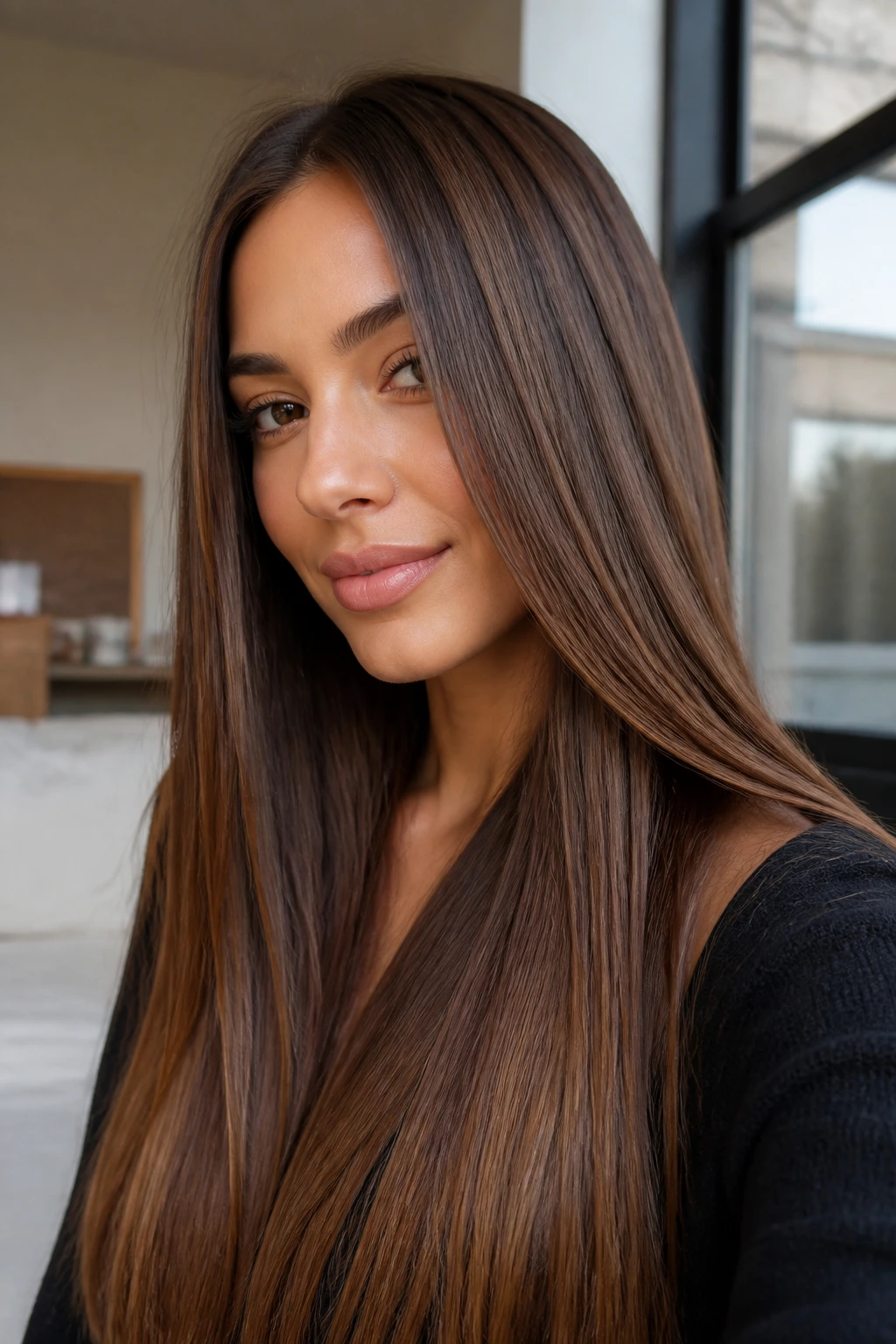
Straight hair is brutal about edges. That’s the good part.
When the hair lies flat, you see every placement choice: where the highlight starts, how wide the ribbon runs, whether the root shadow melts or stops dead, whether the toner is beige enough to keep the warmth in check. Curly hair can hide a bad blend for a while. Straight hair won’t.
That’s why brunette shades with good dimension matter so much here. A clean espresso gloss can sharpen a blunt bob. A mushroom lowlight can keep long hair from reading one-dimensional. Even a tiny money piece can change the way a center part sits against the face. The finish is the whole story.
What Straight Hair Reveals
A shiny surface shows undertone faster than texture does. If a brown runs too red, too green, too ashy, or too golden, you’ll see it immediately in straight strands. That makes tone control more important than dramatic contrast.
Why Low-Maintenance Browns Win
A soft root shadow, subtle balayage, or fine babylights usually grows out better on straight hair than a chunky color block. The grow-out line has nowhere to hide. Keep the transition gentle and the color stays wearable longer.
My Favorite Rule
If the cut is blunt, keep the color soft. If the cut has movement, you can play with more contrast. Simple. It saves a lot of bad color decisions.
Picking the Right Brown Hair Color for Straight Hair
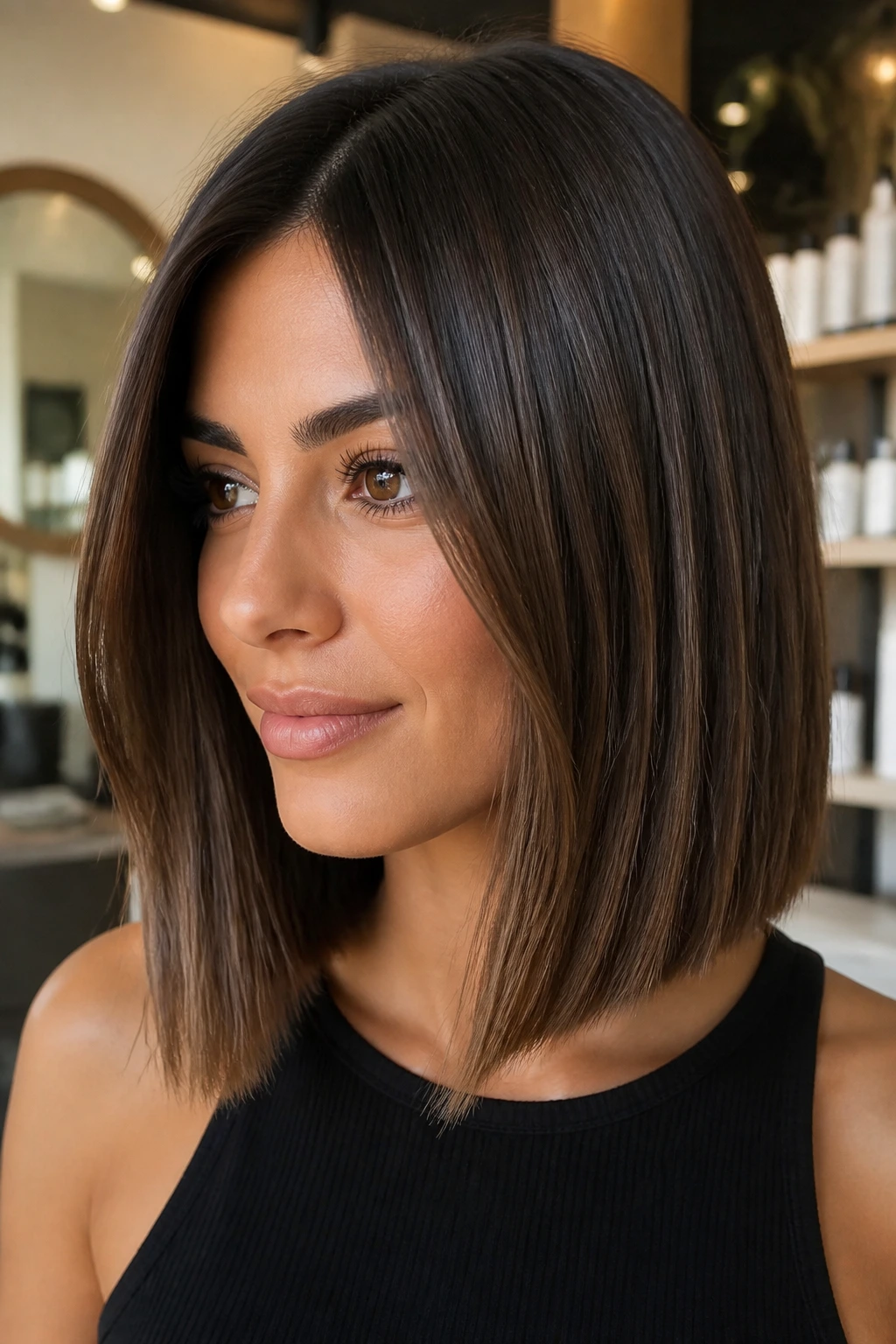
A brown that flatters one straight haircut can look wrong on another. That’s not a flaw in the color. It’s the haircut and the undertone talking to each other.
Start with your base level. Level 3 and 4 hair can take espresso, sable, or mocha depth without looking harsh. Level 5 and 6 hair usually handles chestnut, toffee, mushroom, or bronze more easily. If you go several levels lighter than your base, straight hair will make every line visible, which means the blend has to be clean enough to survive close inspection.
Then think about warmth. Warm browns—maple, cinnamon, bronze, auburn-kissed—come alive in daylight, but they can turn orange if your hair is porous or your toner is too soft. Cool browns—ash, mushroom, smoky brunette—look sleek and controlled, but they can go hollow if pushed too far. Neutral shades like teddy bear brown and mocha are often the safest middle path.
Your cut matters too. A blunt bob loves crisp tones. Long layers give balayage somewhere to land. A lob can take a bit of contrast around the face without looking fussy. Straight hair is unforgiving, sure. It’s also predictable once you know what to look for.
How to Wear These Browns on Straight Hair
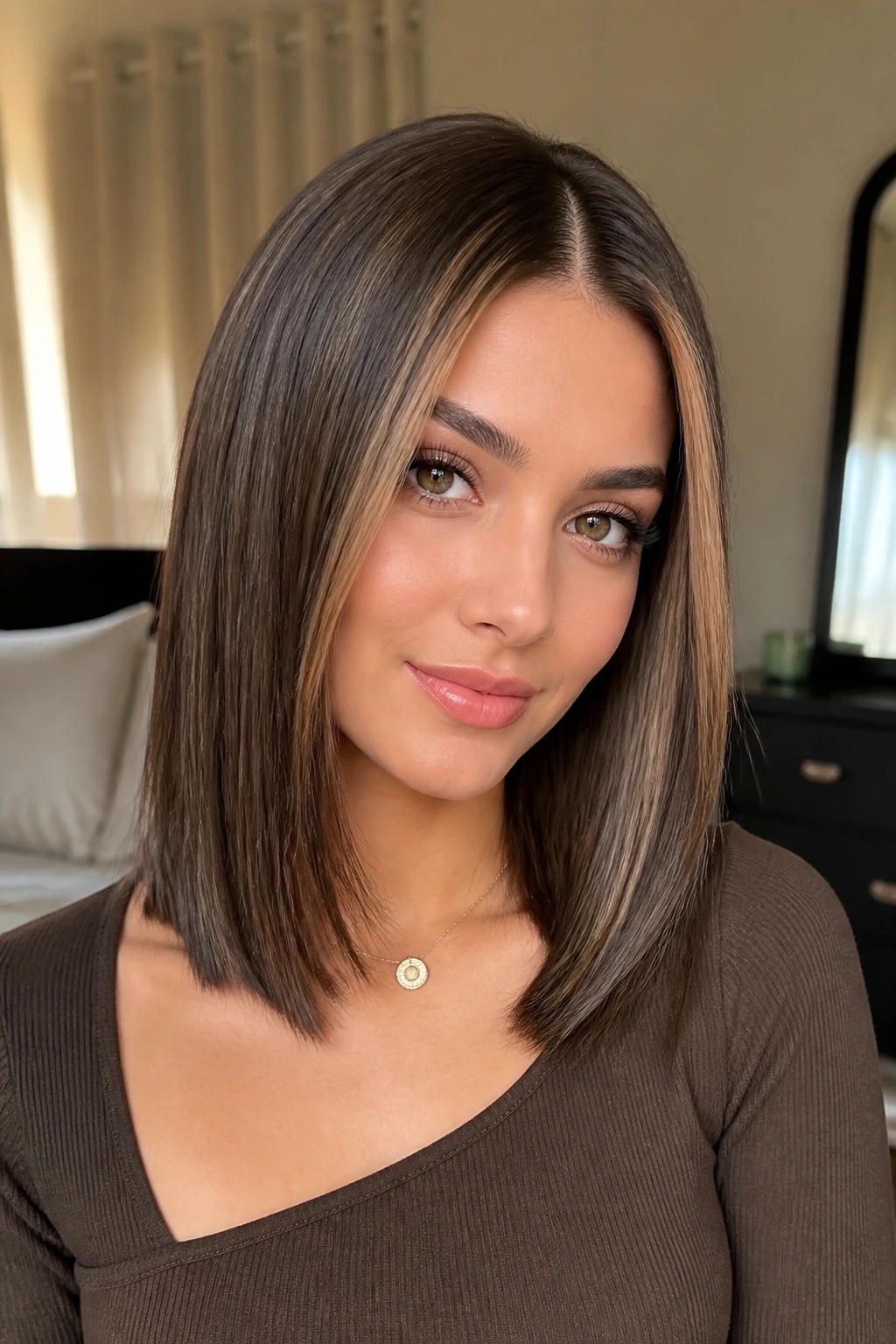
Presentation: A center part shows off symmetry and makes ribbon highlights read clearly; a soft side part makes warm browns look less severe. Straight hair tucked behind one ear gives you that quick flash of contrast around the face.
Best Pairings: Blunt bobs suit espresso, ash brown, and sable. Long layers love chestnut, mocha melt, and beige balayage. Curtain bangs work well with maple, toffee, and cinnamon because the face frame keeps the color from disappearing into the length.
Styling: If you flat iron, keep the passes clean and few. One slow pass at a moderate heat is kinder than three quick ones at a high setting. A round-brush blowout brings out chestnut, bronze, and toffee in a softer way.
Wearability: The more contrast you add, the more often you’ll need toner or gloss. If you want less upkeep, stay within one or two levels of your natural brown and let shine do the rest.
Essential Equipment for Keeping Brown Hair Fresh
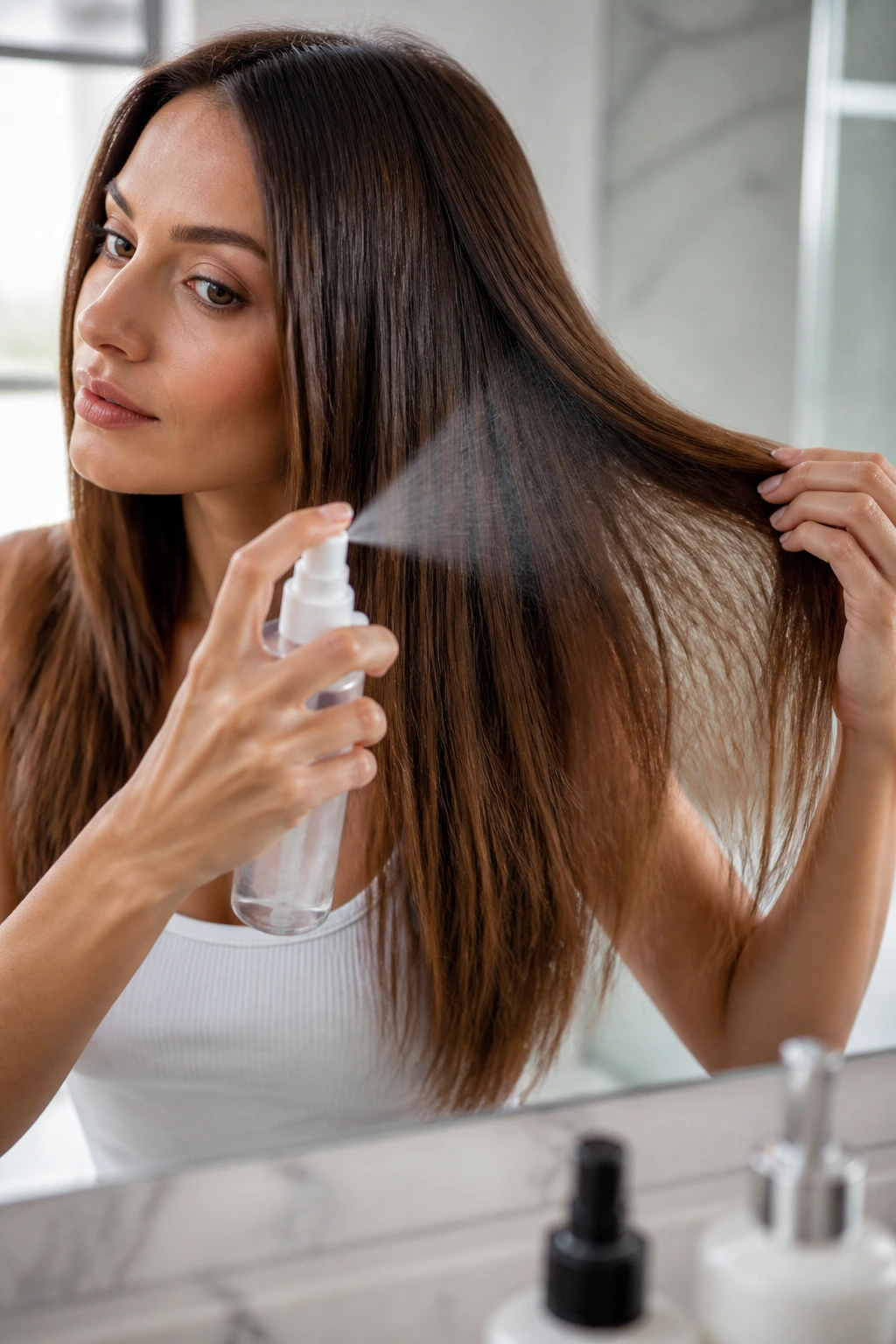
- Color-safe shampoo: A sulfate-free formula helps keep brunette tones from fading fast and stripping shine.
- Color-safe conditioner: Use one with a smooth, creamy texture so the lengths stay slick without getting heavy.
- Heat protectant spray: Straight hair gets styled with heat a lot, and color fades faster when the cuticle is constantly opened.
- Flat iron with adjustable temperature: Keep the heat lower than you think you need; straight hair color looks better when the finish stays glossy.
- Shine serum or lightweight oil: One or two drops on the ends keep espresso, mocha, and sable from looking dusty.
- Color-depositing gloss or conditioner: Handy for refreshing chestnut, caramel, or ash tones between salon visits.
- Tint brush and bowl: Only if you touch up roots at home; a brush gives cleaner placement than fingers.
- Section clips: Especially useful for balayage upkeep and for keeping panels or face-framing pieces separated.
- Shower filter, optional: Worth it if your water runs hard or mineral-heavy, since brunettes can turn dull faster.
Smart Shade Selection and Salon Notes
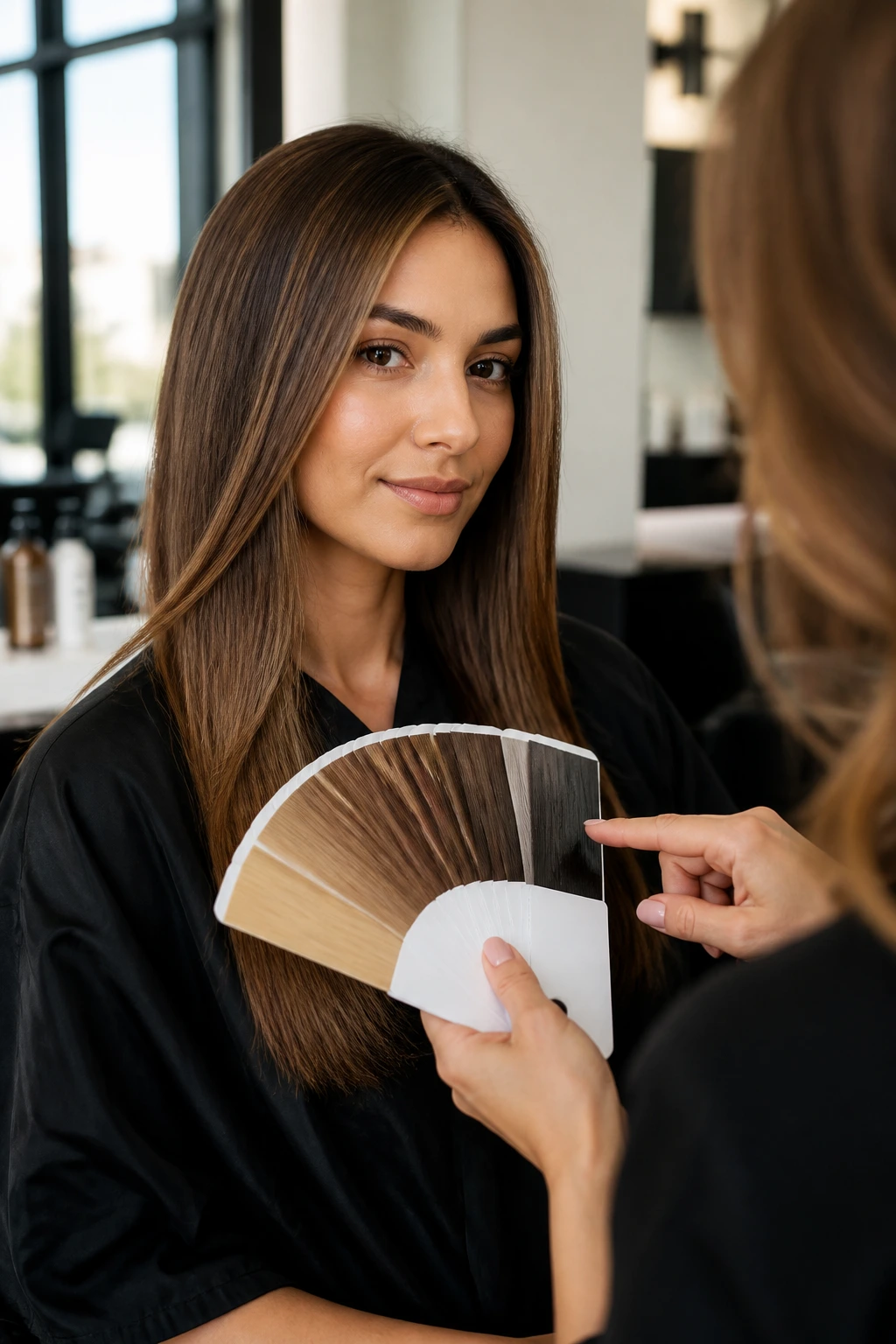
The quickest way to get a brown that suits straight hair is to show your colorist a photo of your hair in daylight, not just a filtered salon image. Straight strands reflect truth. A screenshot under warm indoor lights can be misleading by a mile.
Read the level chart before you sit down. Level 4 is deep brunette. Level 5 is medium brown. Level 6 starts moving into lighter chestnut and bronze territory. If you want subtle dimension, ask for shades that stay within one or two levels of your natural base. If you want visible contrast, keep the brightest pieces fine. Big highlights on straight hair can look chunky fast.
Undertone is the other half of the purchase. Ash, beige, gold, copper, and neutral brown all tell different stories. If your natural hair pulls orange, ask how the formula will be filled and toned so the final color doesn’t go rusty after two washes. If you’re buying at-home color, be cautious with boxes that use broad names like “medium brown” or “dark brown” without explaining the tone underneath. The name matters less than the undertone chart on the side.
One more thing: if your hair has been blonded before, the brown you want may need a filler first. That step keeps the color from going hollow or muddy. It’s not glamorous. It matters.
Additional Tips and Shine Boosters
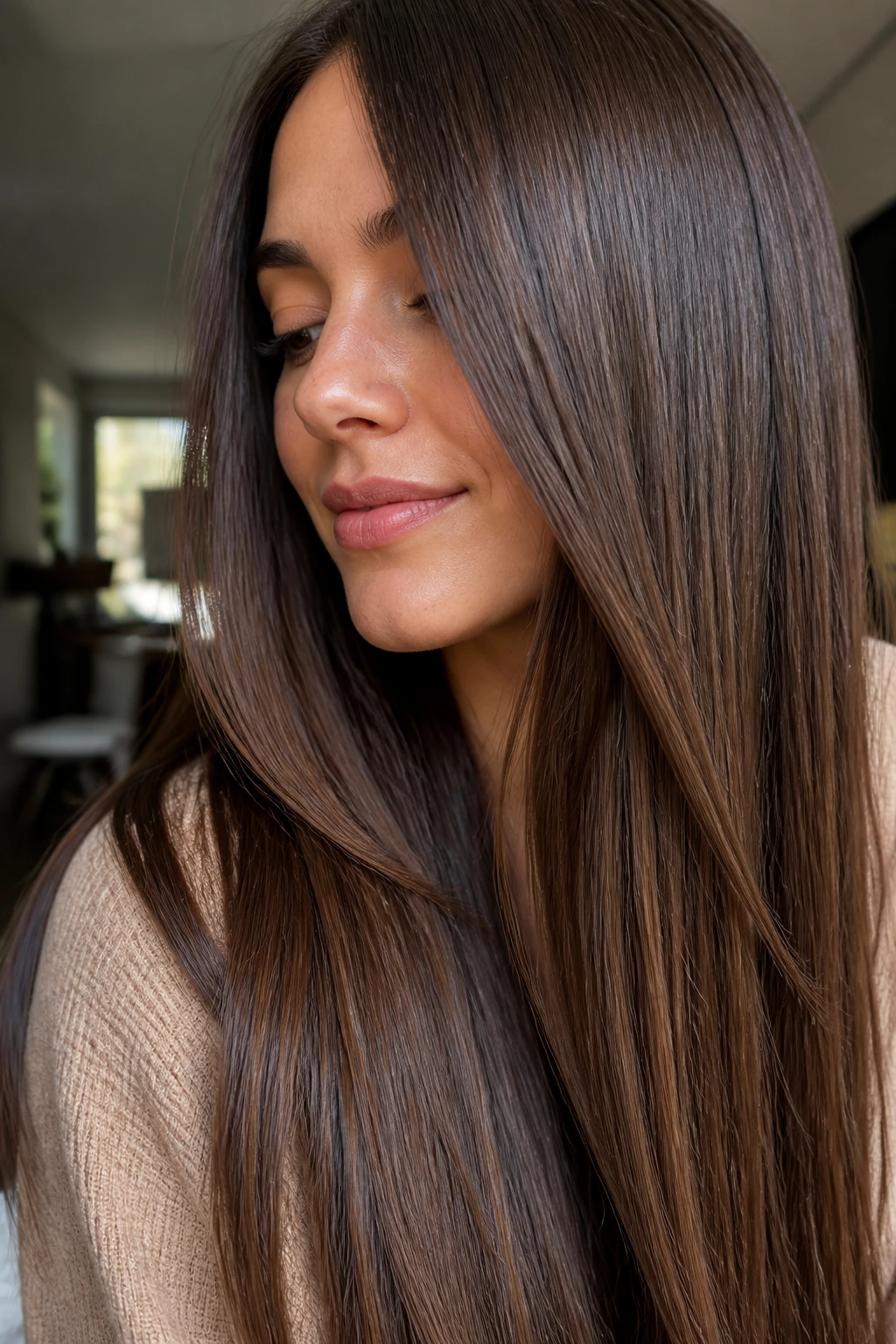
Shine Boost: Finish with a pea-sized serum on the mids and ends, then comb it through with your fingers. Straight hair doesn’t need much. Too much oil sits on top and makes brown look greasy instead of glossy.
Customization: Add a few babylights around the face if you want movement without a full balayage. Add a root shadow if the grow-out line bothers you. Keep the panel width narrow on fine hair and wider on dense hair.
Serving Suggestions: Wear these shades with a clean middle part for a sharper look, or tuck one side back for a softer frame. A blunt cut makes ash and espresso feel editorial. Long layers make caramel, toffee, and chestnut look less static.
Make-It-Yours: If your skin leans warm, maple, bronze, and cinnamon usually feel natural. If your skin leans cool, mushroom, ash, and smoky brunette tend to sit better. Neutral skin can wear teddy bear brown, mocha, or beige balayage without much drama.
Common Mistakes That Flatten Straight Brunettes
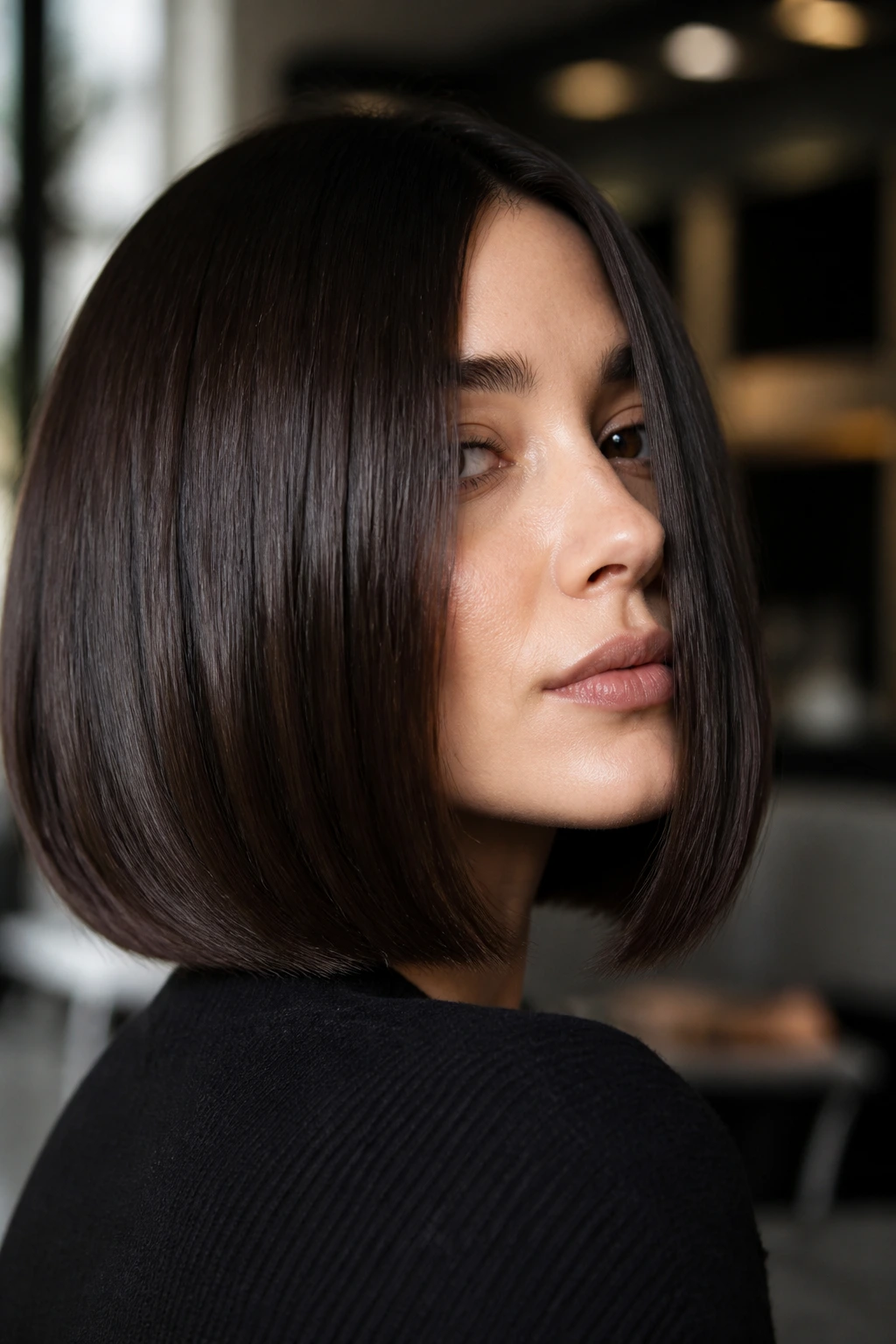
The biggest mistake is going too single-tone. A one-note brown can look like a helmet on straight hair, especially if the cut is blunt and the ends are heavy. The fix is small dimension: a gloss, a root shadow, a few micro-lights, or a slightly deeper lowlight under the surface.
Another common slip is picking the wrong warmth. If you want a smoky brown but end up with a warm brunette formula, the hair can go orange under indoor lighting. That’s not a small problem. Ask for the undertone you want, not just the shade name.
Chunky highlights are another trap. Straight hair shows stripes faster than curls do, so wide caramel bands can look dated or harsh. Fine ribbons, babylights, or softly placed balayage usually age better and feel cleaner.
Heat is the sneaky one. People flat iron color-treated brown hair until it loses its shine, then blame the dye. Keep the iron around the low-to-mid 300s Fahrenheit if your hair is fine or porous, and always use a protectant. The color will hold up better, and the ends won’t fray as fast.
Don’t ignore toning, either. Brown hair can shift red, gold, or muddy depending on wash routine and water quality. A gloss every few weeks is usually cheaper than correcting a shade that drifted too far.
Variations and Adaptations to Try
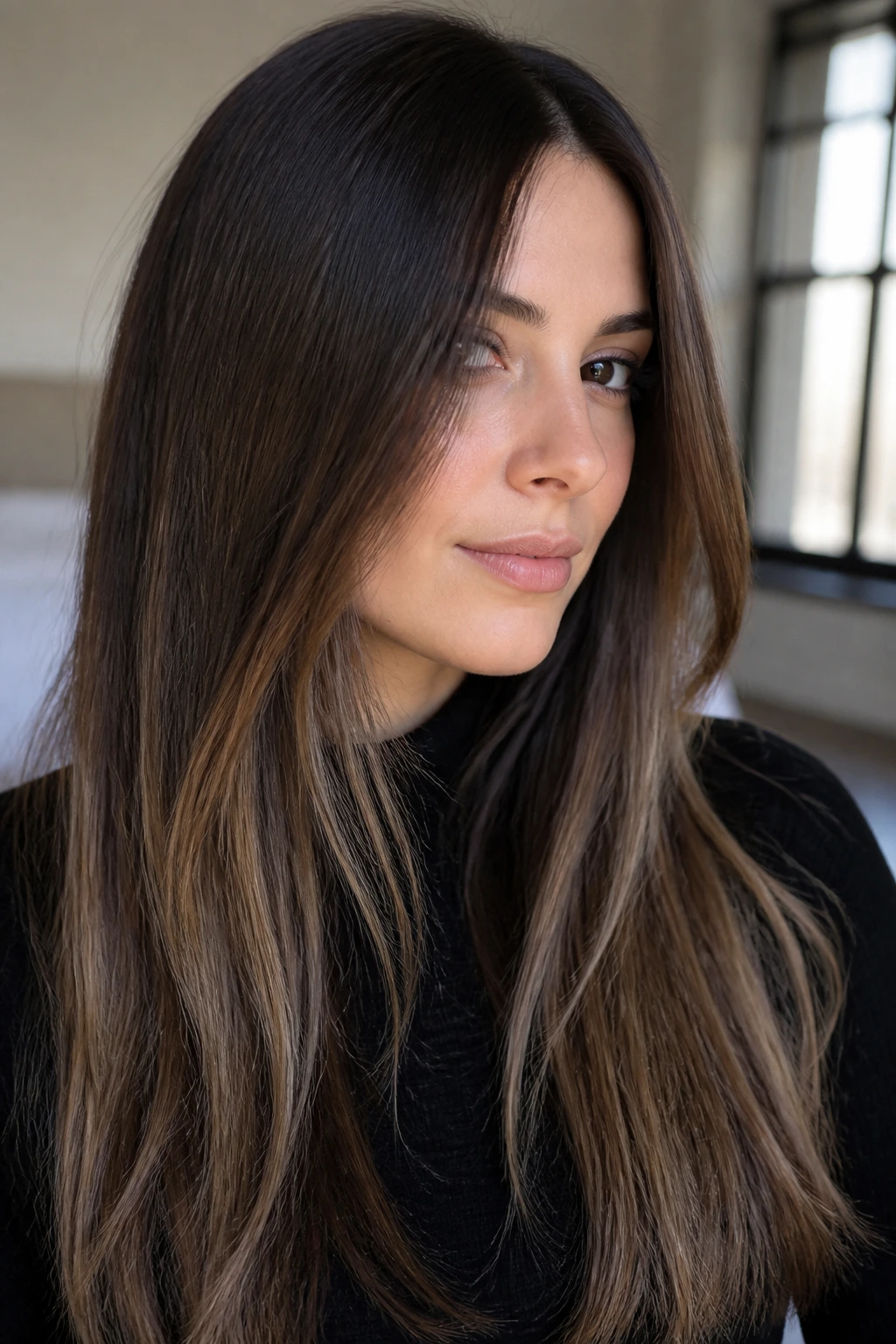
Cool Brunette Reset: Take any of the warmer shades and move them toward mushroom, ash, or smoky beige. This works when your skin likes cooler tones or when you want the hair to look crisp against black, white, or silver clothing.
Soft Bronde Drift: If you want lighter pieces without going blonde, keep the base brunette and lift the ends just enough to land in beige or toffee territory. On straight hair, that gentle shift can make long lengths feel lighter without losing the brunette identity.
Copper-Brown Whisper: Add a narrow auburn glaze or cinnamon ribbon to chestnut or mocha. This is the right move when you want warmth that lives in the light, not in every strand.
High-Contrast Front Frame: Keep the body of the hair deep espresso or cocoa, then brighten the money piece around the face. It gives straight hair a sharp, modern edge without making the whole head busy.
Grey-Blending Brunette: If you’re covering scattered greys, choose a neutral brown with fine lowlights instead of a harsh opaque dye. The grow-out is softer, and straight hair won’t broadcast the line of demarcation every time you part it.
How to Keep Brown Hair Color Ideas for Straight Hair Glossy Between Visits
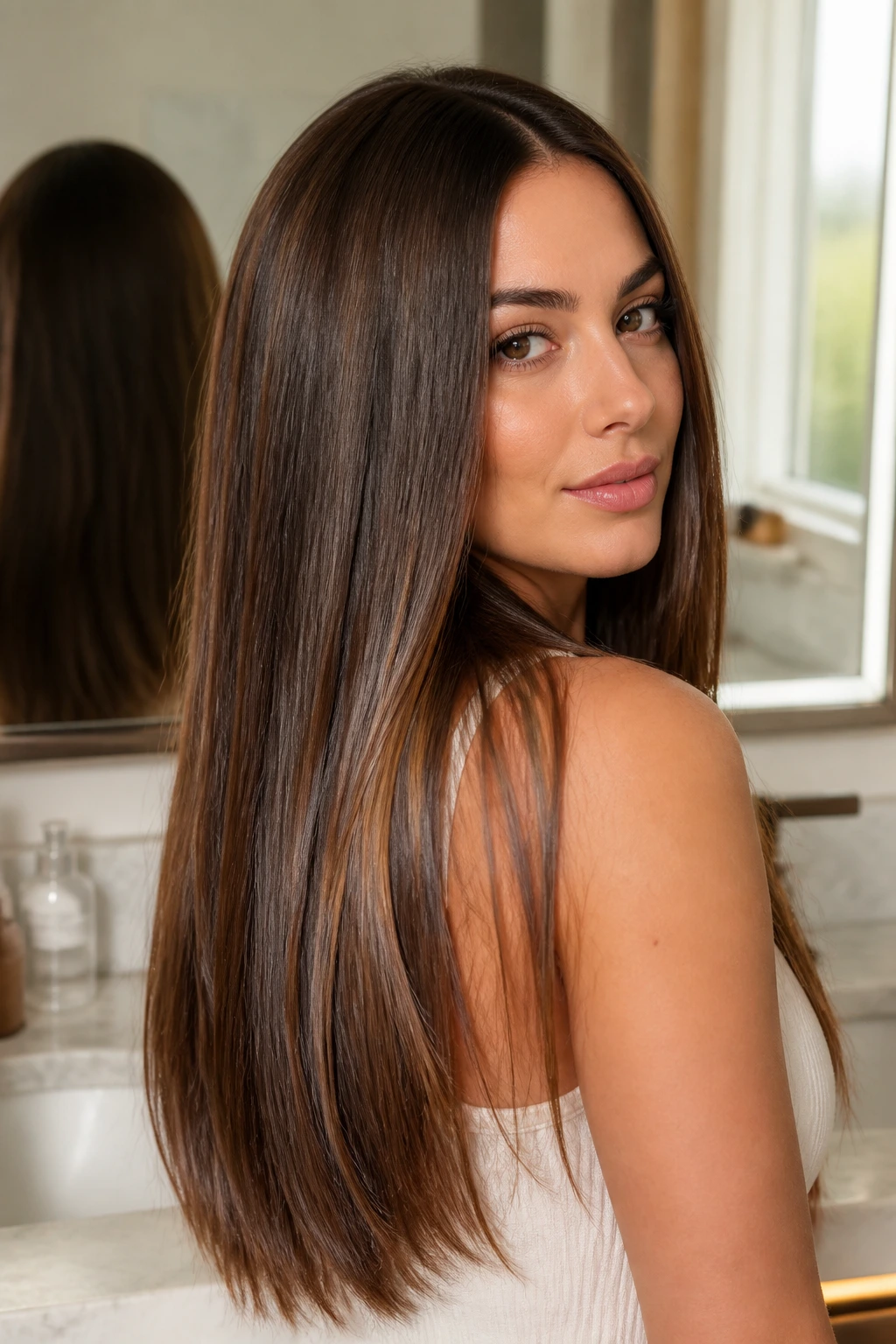
Brown fades in a sneaky way. It usually doesn’t go from rich to gone overnight. It slides from glossy to dull, then from dull to a little too warm, and only then does it look old.
The simplest maintenance plan is a color-safe wash routine, a gloss refresh every 4 to 6 weeks, and a root touch-up or tone check every 6 to 8 weeks if you wear a defined shadow root or face frame. If you’re wearing ash or mushroom brown, a blue or blue-violet shampoo once every week or two can help control brass. Use it too often and the hair can go flat, so don’t make it your daily wash.
For heat styling, keep your tools on the lower end that still works. Straight hair does not need to be scorched into submission. Let the hair cool before you brush through it, and finish with a light serum only on the lower third of the length.
If the hair was lightened before the brown was added, give it a deep conditioning mask every one to two weeks. Porous ends drink color faster and spit it out faster too. A bond-building treatment can help when the hair feels stretchy, rough, or tired from repeated heat.
Hard water changes brunette tones more than people expect. If your hair starts looking dull or weirdly brassy after a few washes, the water may be the problem, not the color.
Questions People Ask Before Going Brown
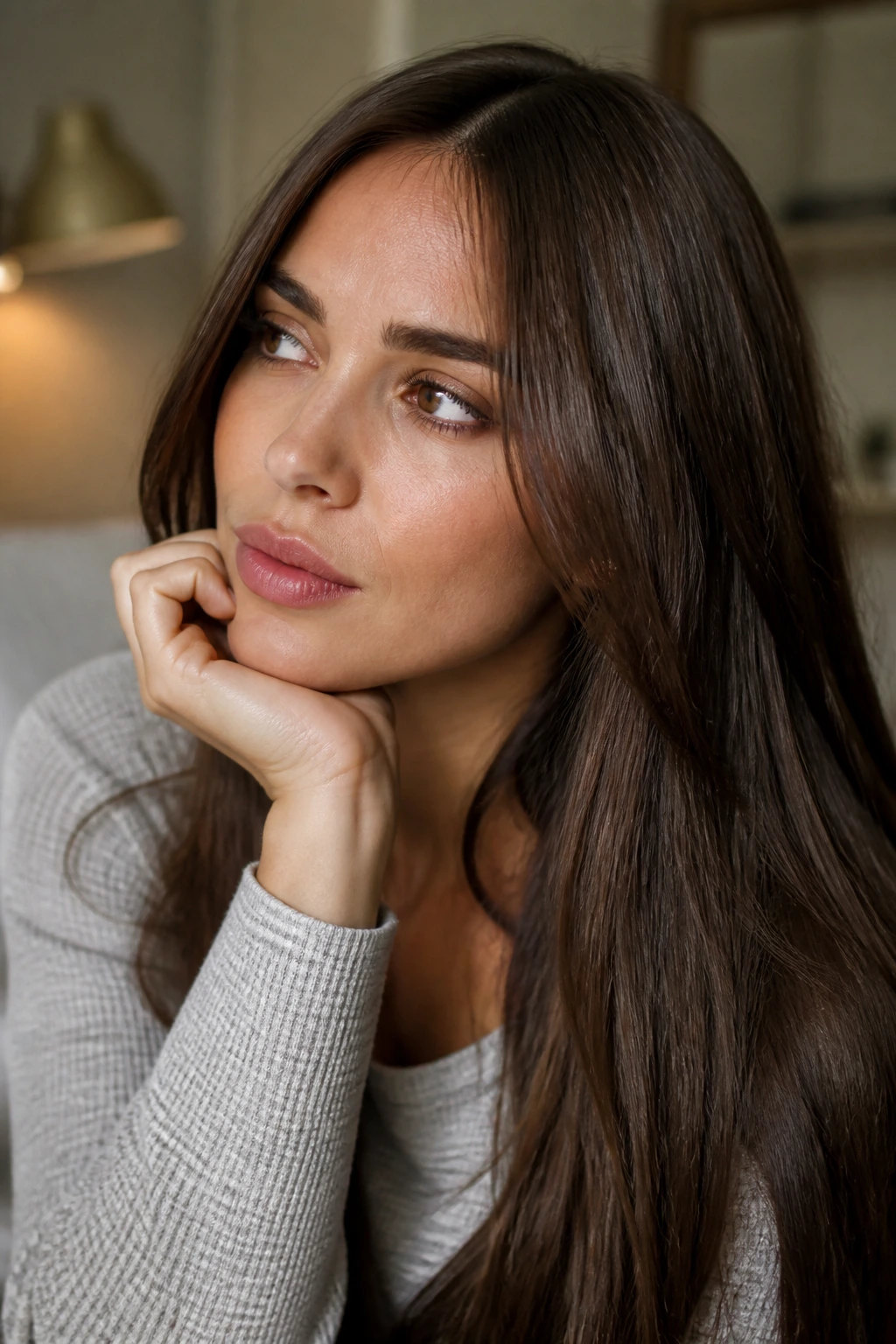
Which brown shade looks best on straight hair?
The safest answer is the shade that matches your haircut and undertone. Espresso, mocha, chestnut, and teddy bear brown are reliable because they stay readable on sleek strands without needing a lot of styling. If you want more contrast, caramel or beige ribbons work well as long as they’re fine enough to avoid stripes.
Is balayage or all-over color better for straight hair?
Balayage gives more movement, while all-over color gives more uniform shine. If your cut is blunt and you want a clean finish, a solid brunette with a gloss can look sharper. If your hair feels flat, soft balayage or micro-lights usually adds more life.
Will ash brown make my hair look dull?
It can if the tone is pushed too cool or if the hair is already dry. Ash brown looks crisp on straight hair when the ends are healthy and the finish is glossy. If the hair looks hollow, ask for ash-beige instead of a hard gray tone.
How often should I refresh brown hair color?
Glosses usually hold for about 4 to 6 weeks. Root shadow and demi-permanent brunette shades often need a touch-up around 6 to 8 weeks, depending on how fast your hair grows and how much heat you use.
Can I go brown over blonde without it turning muddy?
Yes, but the hair may need a filler first if it was very light or porous. That step replaces the warmth blonde hair loses, which keeps the brown from going hollow, green, or dull. It’s one of those boring salon steps that saves the whole result.
What brown shade works best for fine straight hair?
Sable, espresso, and smoky brunette can work well if the finish is glossy and the cut has shape. Fine hair often benefits from dimension underneath, not chunky highlights on top. A few lowlights can make the hair look thicker without weighing it down.
Can I do brown color at home?
Some neutral glosses and root touch-ups can be handled at home if your hair is already close to the target shade. Major changes—especially ash corrections, balayage, or brunette over blonde—are safer in a salon chair. Straight hair shows mistakes fast, which makes precision worth the money.
Why does my brown keep turning red?
Underlying warmth in the hair, hard water, and repeated heat styling can all push brown toward red or copper. Ask for a cooler or neutral formula, use a color-safe wash, and avoid overheating the lengths. If the hair is porous, a better toner schedule may matter more than the base dye.
The Browns That Hold Their Shape
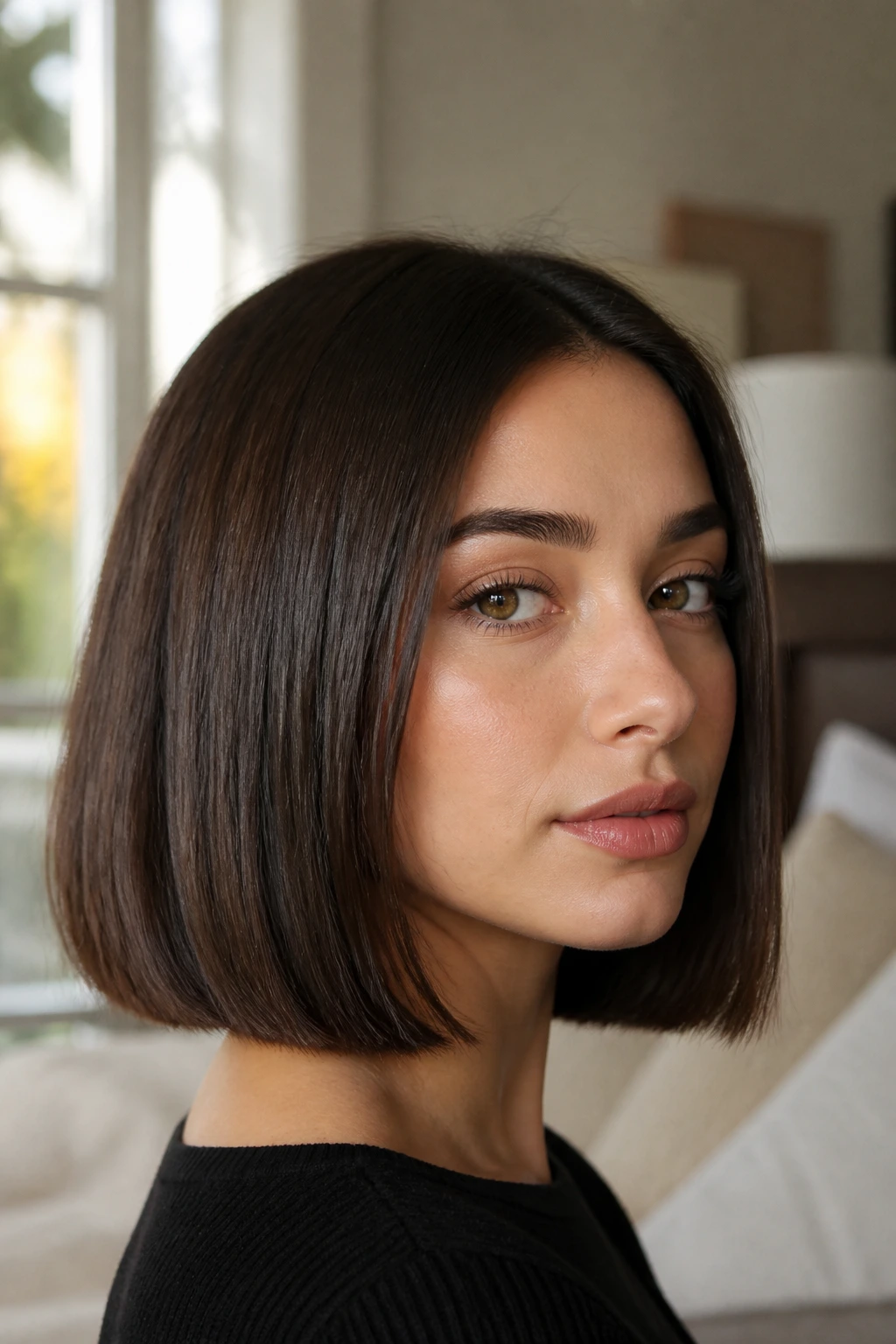
The best brown hair on straight hair doesn’t just sit there. It has line, shine, and enough depth to keep the whole cut from looking flat. Espresso gives you polish. Mushroom gives you smoke. Chestnut, toffee, mocha, and bronze each bring a different kind of movement, but they all work because they respect the shape of straight strands instead of fighting it.
That’s the part I’d keep in mind when choosing. The color should support the cut, not compete with it. A blunt bob wants crispness. Long layers can carry more ribbon and contrast. A sleek lob can handle a sharper face frame than a very fine, long length ever could.
Pick the shade that matches the way you actually wear your hair, not the way it looks in a filtered photo. That choice tends to last longer, and it looks better on day three, which is where real hair color proves itself.
