



Shag haircuts for heart shaped faces can look almost unfairly good when the layers land in the right places. The shape does not need more height at the crown. It needs a little softness near the cheekbones, some movement around the jaw, and bangs that do not fight the forehead for attention.
That is the trick people miss. A heart-shaped face usually reads broader through the upper third, then narrows fast toward the chin. A shag can either balance that beautifully or make the top half feel even busier than it already is. The difference is layer placement. Not just texture. Not just fringe. Placement.
I keep coming back to one simple rule: the best shag cuts for this face shape build interest where the face tapers and stay a little calmer where the face is widest. That sounds small, but in a mirror it changes everything. The right version makes the eyes look brighter, the cheekbones look intentional, and the chin feel like part of the shape instead of an afterthought.
Why These Shag Haircuts Stand Out
- They soften the forehead first: The best versions use curtain pieces, side fringe, or airy bangs to break up width without hiding your face.
- They add movement lower down: Layers that hit the cheekbone, mouth, or jaw create balance where a heart-shaped face needs it most.
- They work with different textures: Straight, wavy, curly, thick, and fine hair all need different shag logic, and these cuts respect that.
- They grow out cleanly: A good shag does not collapse into a strange triangle after six weeks; it keeps its shape as it gets longer.
- They let you choose your level of edge: You can go soft and feathered, lived-in and messy, or razor-sharp and rockerish without losing the flattering structure.
- They are easier to style than they look: Most of these cuts need one or two smart styling moves, not a full salon blowout every morning.
Why Shag Layers Sit So Well on a Heart-Shaped Face
A heart-shaped face usually has a wider forehead, prominent cheekbones, and a narrower chin. That combination is lovely, but it can make some haircuts feel top-heavy. One blunt line at brow level, or a lot of volume at the crown, can exaggerate the upper half fast.
A shag works because it breaks up those hard lines. The layers create movement around the sides of the face, and that movement helps the narrow jaw feel more anchored. If the shortest pieces land around the cheekbone or just below it, the face reads more even. The eye goes from forehead to cheek to jaw in a smoother sweep.
The Layer Sweet Spot
For this face shape, the sweet spot is usually not the temple. It is closer to the cheekbone, the mouth corner, or the top of the jaw, depending on hair length. That is where a shag starts to do real work instead of just adding fluff.
Fringe Matters More Than People Think
Curtain bangs, bottleneck bangs, side fringe, and soft see-through fringe all do a better job than a heavy straight line in most cases. A blunt brow-length bang can look dramatic, sure, but it can also make the forehead feel wider if the rest of the haircut is too bulky near the top.
1. Chin-Length Curly Shag With Curtain Bangs
This one is a little velvet jacket for curls. The cut keeps the outline short enough to open up the jaw while the curtain bangs split the forehead visually, so the face does not feel top-heavy. The curls bounce at cheek level instead of sitting like a helmet.
The chin-length line matters. It gives the lower half of the face more presence, which is exactly where a heart-shaped face benefits from help. Ask for layers that release the curl without slicing it to bits; you want rounded movement, not random holes.
Best for: natural curls that need shape without losing bounce.
Styling note: diffuse upside down only briefly. Too much root lift at the crown can make the face look longer and the forehead feel even broader.
2. Shoulder-Grazing Shag With Soft Side Fringe
Why does side fringe work so well here? Because it sends the eye off-center. A heart-shaped face can look beautifully balanced when the fringe slides across the forehead instead of sitting symmetrically on top of it.
This version stays shoulder-grazing, so the ends still have weight. That weight is useful. It stops the haircut from ballooning out above the chin, which is one of the easiest ways to make the face look narrower than it is. The side fringe should be airy, not chopped. Think brushed-forward, then softened.
If you want a shag that behaves at work and still feels a little undone on weekends, this is a strong choice. It gives shape without looking like you tried too hard to get texture.
3. Long Shag With Collarbone Layers
A long shag can be the most flattering choice if you do not want to lose length. The collarbone is a useful anchor because it creates a visual line just below the widest part of the face, which helps the chin feel less tiny in comparison.
Keep the face-framing pieces long enough to skim the mouth or collarbone. Shorter layers can be pretty, but too much shortness around the cheeks can make the forehead and cheekbones dominate the whole cut. This version is all about restraint.
Use this when: you like your hair long, but blunt lengths feel heavy.
What to ask for: soft internal layers, not aggressive chopping. You want swing, not a feather duster effect.
4. Razored Wolf Shag With Cheekbone Lift
This cut has attitude. It also needs a careful hand. A wolf shag can be fantastic on a heart-shaped face because the longer front pieces soften the lower half while the texture keeps the whole shape from feeling neat or flat.
The key is to keep the crown from going too short. If the top layers are cut too high, the face can start to look top-heavy, and the wolf cut turns from cool to costume. The best version lifts at the cheekbone and neck, not up near the temple.
Why It Works
The razored ends make the hair move around the face instead of sitting in one heavy block. That movement matters more than people think. On a heart-shaped face, a little chaos below the cheekbone is useful. Above it, not so much.
5. French-Girl Shag With Airy Bottleneck Bangs

This cut has a soft, artsy feel without becoming precious. Bottleneck bangs are narrower at the top and a touch fuller through the middle, which gives the forehead a break without creating a hard wall across it.
The rest of the shag should stay light and bendy. You want the kind of layers that tuck in and out around the jaw, not a lot of chunky shelving. If your hair is fine, this cut can fake fullness in a smart way. If your hair is thick, it can keep the whole shape from feeling square.
A small side note: this is one of those cuts that looks better when it is a little imperfect. If the fringe falls a little unevenly after air-drying, fine. That is part of the charm.
6. Shaggy Lob With Invisible Internal Layers
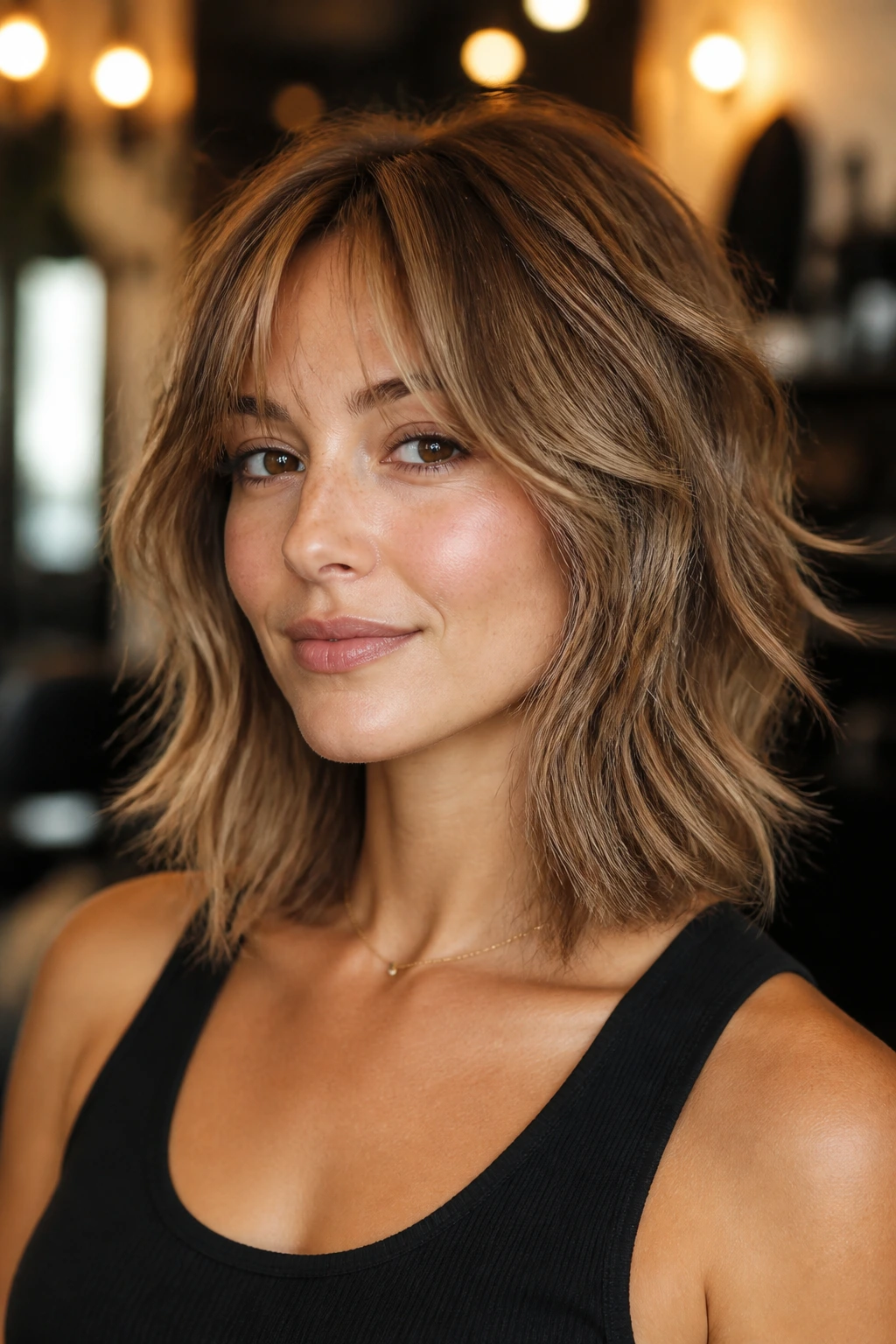
The shaggy lob is for people who want movement but not drama. From the outside, it still looks polished. Underneath, there is enough layering to keep the ends from hanging like a curtain.
This is excellent for heart-shaped faces because it does not widen the crown. The length sits near the collarbone or just above it, which gives the jaw more visual support. Invisible layers also mean you get shape without seeing every cut line. Clean, but not flat.
Good to know: this cut is one of the easiest to air-dry. A quick twist with your fingers and a little texture spray is often enough.
7. Short Shag Bob With Feathered Ends

A short shag bob can be excellent if your hair is straight or slightly wavy and you like a sharper outline. The feathered ends keep it from looking blocky, which is the main danger with short cuts on heart-shaped faces.
The length should usually stay around the jaw or a touch below it. That gives the lower face some visual width. If the bob ends too high on the cheek, the widest part of the face can feel even more obvious. Tiny shift. Big result.
Best for
- People who want a tidy shape with movement
- Fine hair that needs lift without a teased crown
- Anyone who hates long styling sessions
Skip if
- You want a lot of length around the shoulders
- Your cowlicks are aggressive and live right at the temples
8. Heavy Fringe Shag That Skims the Brows

A strong fringe can work on a heart-shaped face, but the edge has to be soft. Brow-skimming bangs pull attention down and help the forehead feel less wide, yet they need shag layers around the cheeks to keep the balance from tipping the other way.
I like this cut most when the fringe is dense enough to matter but broken up at the ends. Not blunt. Not wispy to the point of disappearing. It should sit with a little weight and a little air.
If you wear glasses, pay attention to the fringe length. You want it to stop just above or just at the frame, not crash into it every time you blink.
9. Tousled Midlength Shag With Face-Framing Flicks

This is the easygoing one. Midlength hair gives you enough room for movement without the weight of a long cut, and the flicks around the face make a heart-shaped face look less angular.
The face-framing pieces should start lower than you might expect. Around the mouth or jaw is often better than around the eyebrow. Why? Because the jaw needs help, and those lower layers build it.
A center part can work here if the front pieces are soft enough. A slight off-center part is even easier if you want less width through the forehead.
10. Modern Mullet Shag With a Tapered Nape

A modern mullet is not for everybody. But if you like a little edge, it can balance a heart-shaped face beautifully because the longer front and tapered back create movement where the face narrows.
The mistake is making the nape too short too fast. That can make the cut look severed instead of shaped. The better version keeps enough length in back to feel intentional, while the top and sides stay shaggy and lived-in.
This is the kind of cut that looks best when the texture is a little bit messy. Too polished and it loses the whole point. A dry texture spray, a finger rake, done.
11. Soft Wavy Shag With No Bangs

No fringe at all. That sounds risky for a heart-shaped face, but it can work if the front layers start low enough and the part is placed with care. The absence of bangs keeps the forehead open, which some people prefer.
The trick is to keep the volume from collecting only at the top. Waves should bend outward near the jaw and collarbone so the lower half of the face gets some presence. Without that, the shape can float above the chin and feel lopsided.
This is a good choice if you hate the maintenance of bangs. It is also the easiest one to grow out.
12. Curl-Enhancing Shag for Natural Texture
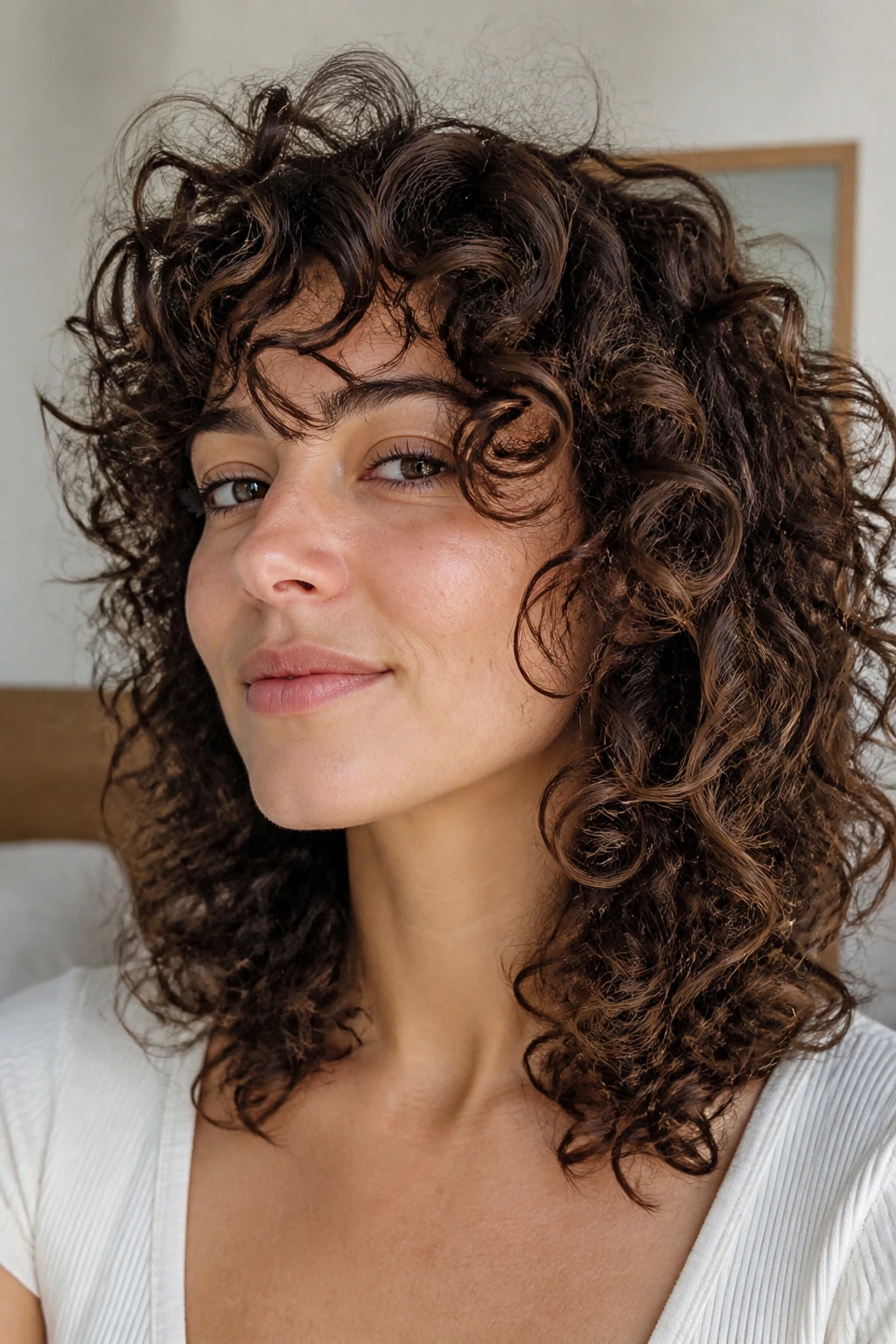
Texture Matters Most Here
Curly hair changes the whole math. A shag for curls should be cut to the curl pattern, not against it. On a heart-shaped face, that means keeping the shortest pieces where they add width around the cheekbones and not chopping too much away at the sides.
I prefer a cut that is done dry or nearly dry for curls, because that lets the stylist see where each spiral falls. The goal is shape, not surprise shrinkage. If your curls bounce up two inches after drying, the layers need to account for that.
A good curl shag can make the face look softer without losing personality. A bad one can turn into a frizzy pyramid. The difference is usually one inch and one bad layering choice.
13. Fine-Hair Shag With Light Crown Layers
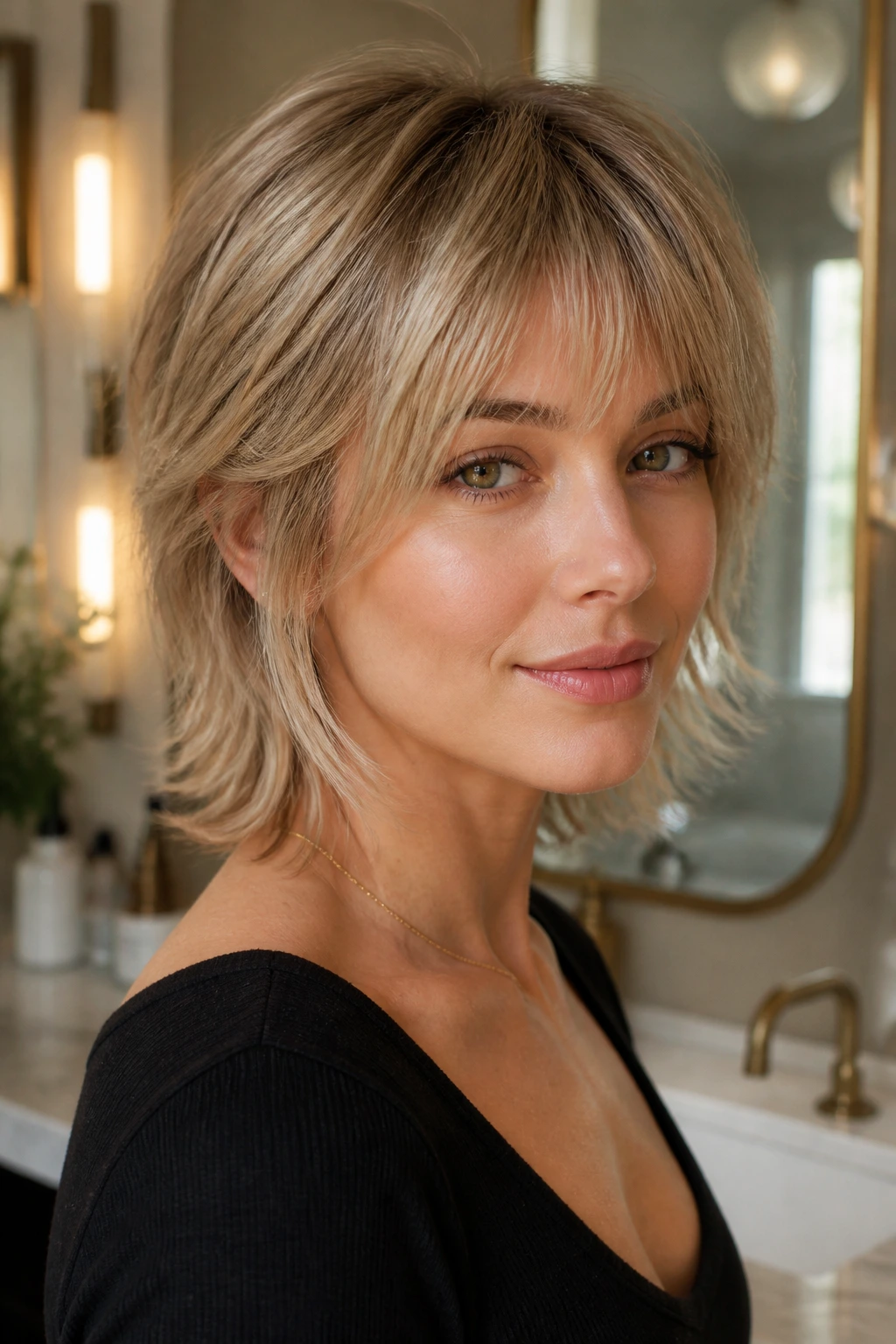
Fine hair needs movement without too much internal stripping. On a heart-shaped face, that balance matters even more because over-thinning can make the lower half disappear.
Ask for light crown layers and soft pieces that land near the cheekbone. You want body, but not a puffball. The outline should still have enough weight around the ends so the haircut does not look wispy by lunchtime.
This is one of those cuts where the blow-dryer matters. A round brush at the root, then a quick bend through the mid-lengths, gives you more shape than a heavy handful of product ever will.
14. Thick-Hair Shag With Removed Bulk
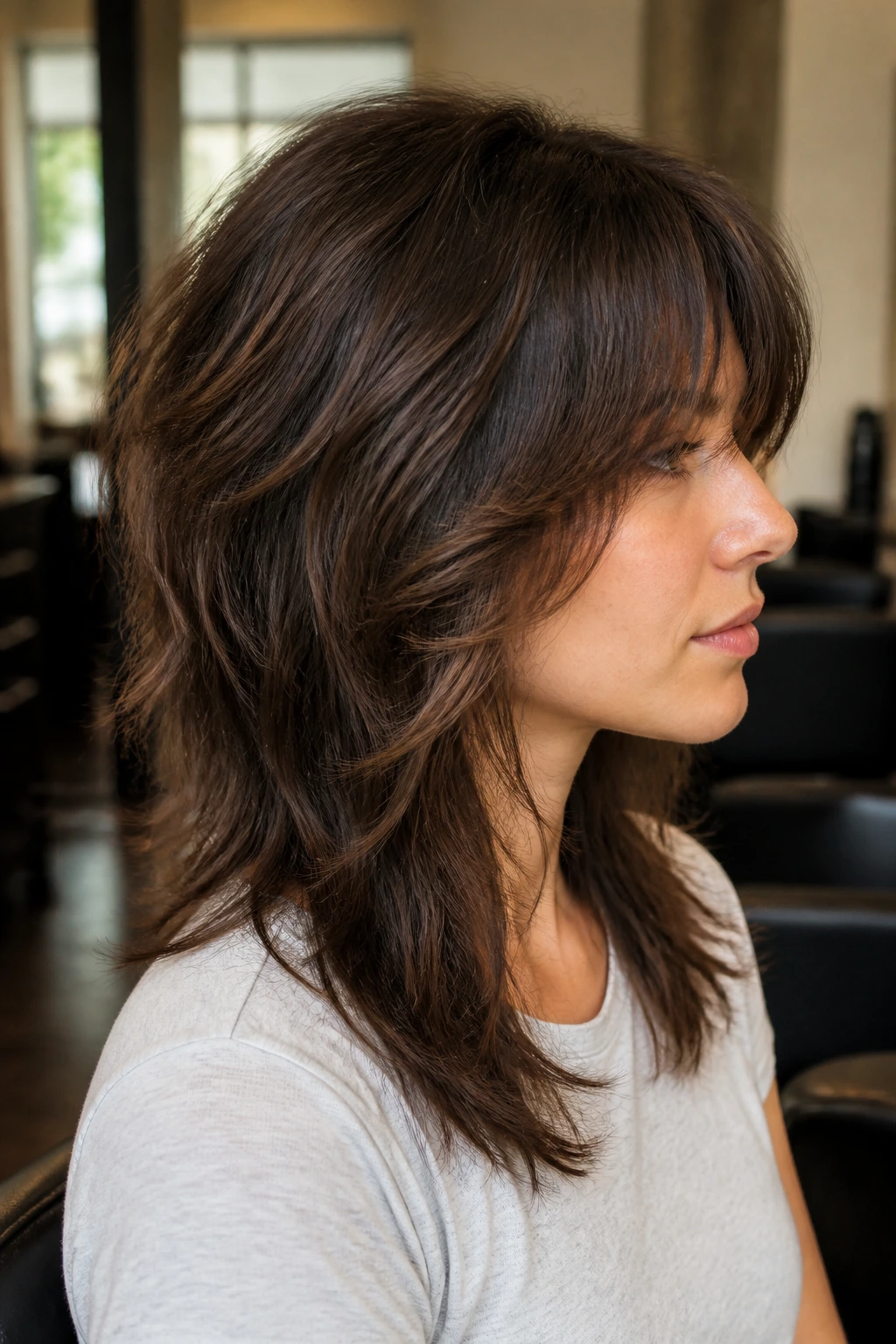
Thick hair can make a heart-shaped face look almost sculpted, which is lovely until it gets too wide at the sides. Then the whole thing feels square and dense. This shag removes bulk from the interior while leaving enough outline to keep the shape strong.
The best version has visible movement at the ends and no hard shelf across the bottom. Tell your stylist you want to keep the density where it counts and release it where the hair tends to puff out. That usually means around the mid-lengths and underlayers.
Pro detail: a little weight at the lower perimeter helps thick hair behave. If it is thinned out too much, it can frizz outward and make the face look smaller.
15. Asymmetrical Shag With a Deep Side Part

A deep side part is one of the easiest tricks for a heart-shaped face. It moves attention away from the broadest point of the forehead and creates a stronger diagonal across the face.
The asymmetry should be in the part and the layers, not in some dramatic lopsided stunt. One side can be slightly fuller. The shorter side can brush the cheek. The rest should still feel wearable. A little off-balance is chic. A lot off-balance looks accidental.
This is a strong option if you wear your hair tucked behind one ear a lot. The cut keeps shape even when one side is pinned back.
16. Retro 70s Feathered Shag
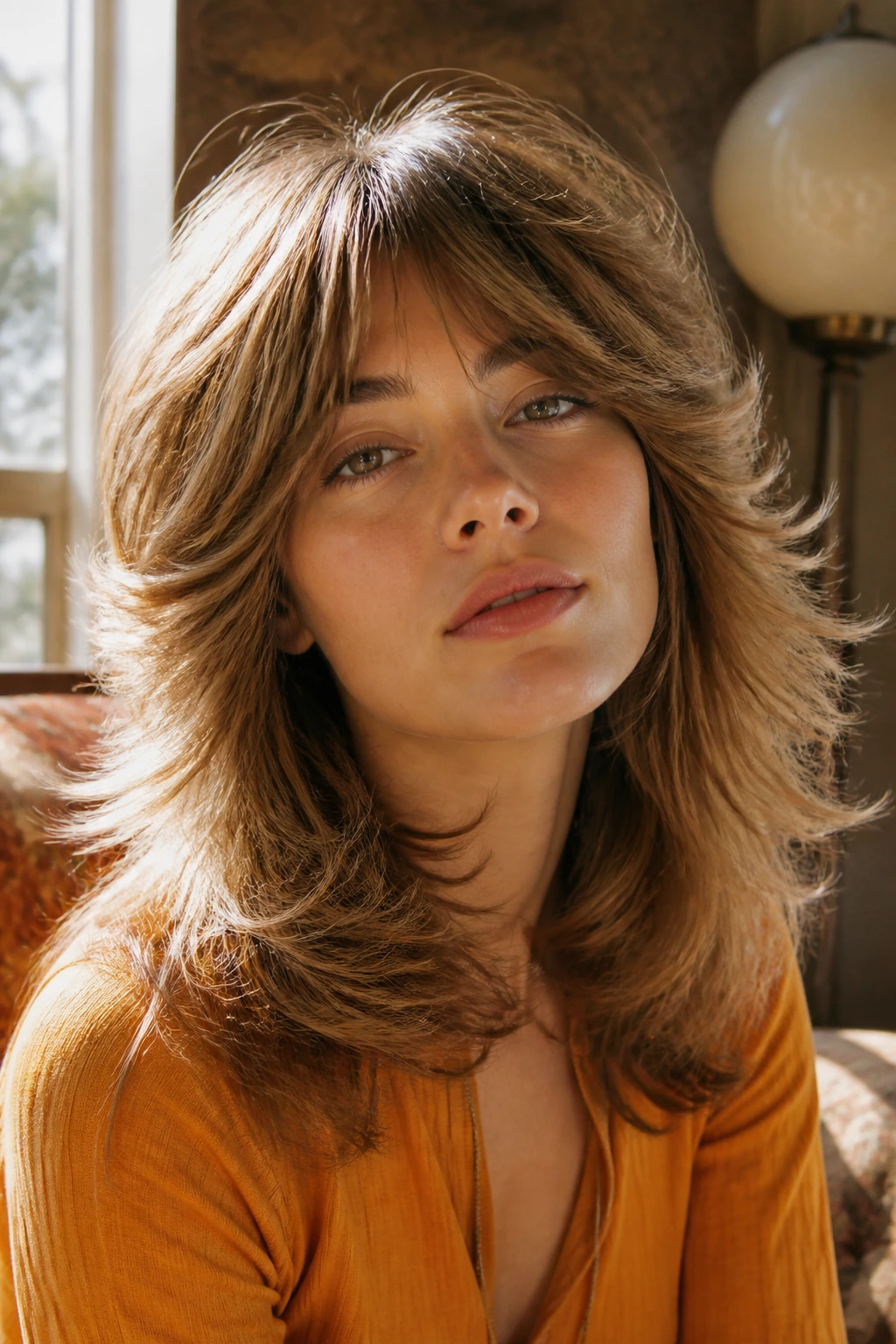
This cut lives on motion. Feathered ends kick away from the face, which is exactly why it flatters a heart-shaped face so well. The softness near the jaw helps the narrow chin feel less sharp, and the fringe can be adjusted from shaggy to almost curtain-like.
It is not a fussy haircut, but it does need a clean blowout if you want that feathered flip to show. A round brush and a bit of tension at the ends will do more than a whole can of spray.
Look for
- Layers that bend out, not inward
- Fringe that opens at the center
- Enough length to flick at the neck and shoulders
Avoid
- Too much height at the crown
- Short, blunt bangs with no softness at the edges
17. Collarbone Wolf Cut With Long Curtain Fringe

This is the sweet spot for people who want a bit of edge but not a full mullet moment. The collarbone length keeps the silhouette grounded, and the long curtain fringe softens the forehead without crowding it.
It works especially well if your hair has a wave pattern. The front pieces should fall past the cheekbone and taper toward the jaw. That gives the lower face a little more width, which is exactly the balancing move a heart-shaped face often needs.
A lot of salon photos of this cut are too choppy on top. Be careful. The best version is shaggy, yes, but still blended enough that it does not read as a series of disconnected layers.
18. Piecey Pixie Shag With Longer Top Layers
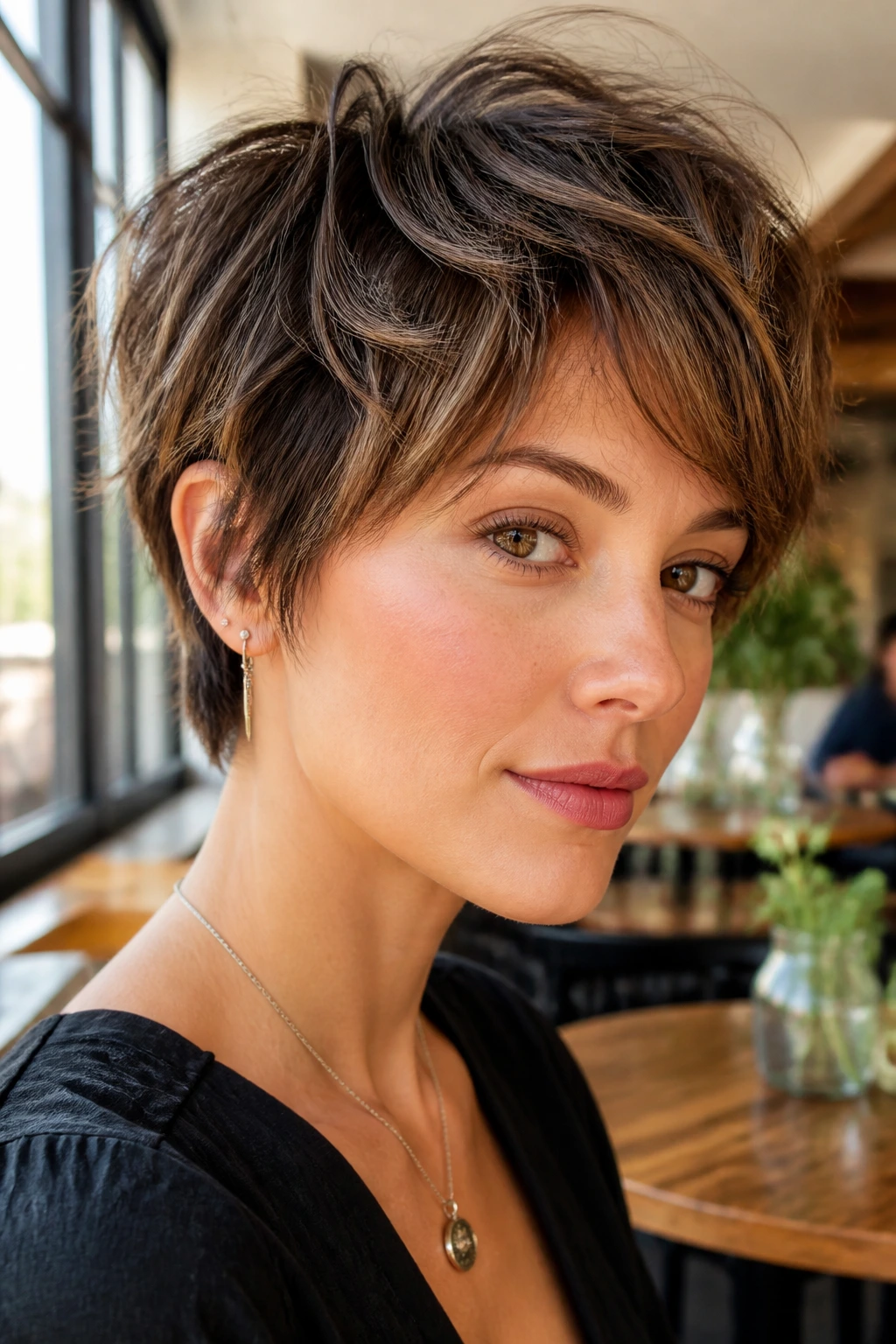
Short hair can work on a heart-shaped face if the top is not too tall. This pixie shag keeps the sides soft and the top piecey, with enough length to brush forward or sideways.
The longest pieces should not all live at the crown. A few at the temples and around the ears help bring balance to the face. Otherwise, short cuts can make the forehead feel like the main event. Nobody wants that.
This cut is bold, practical, and very good for people who like to run their hands through their hair and keep moving.
19. Long Boho Shag With Blended Ends
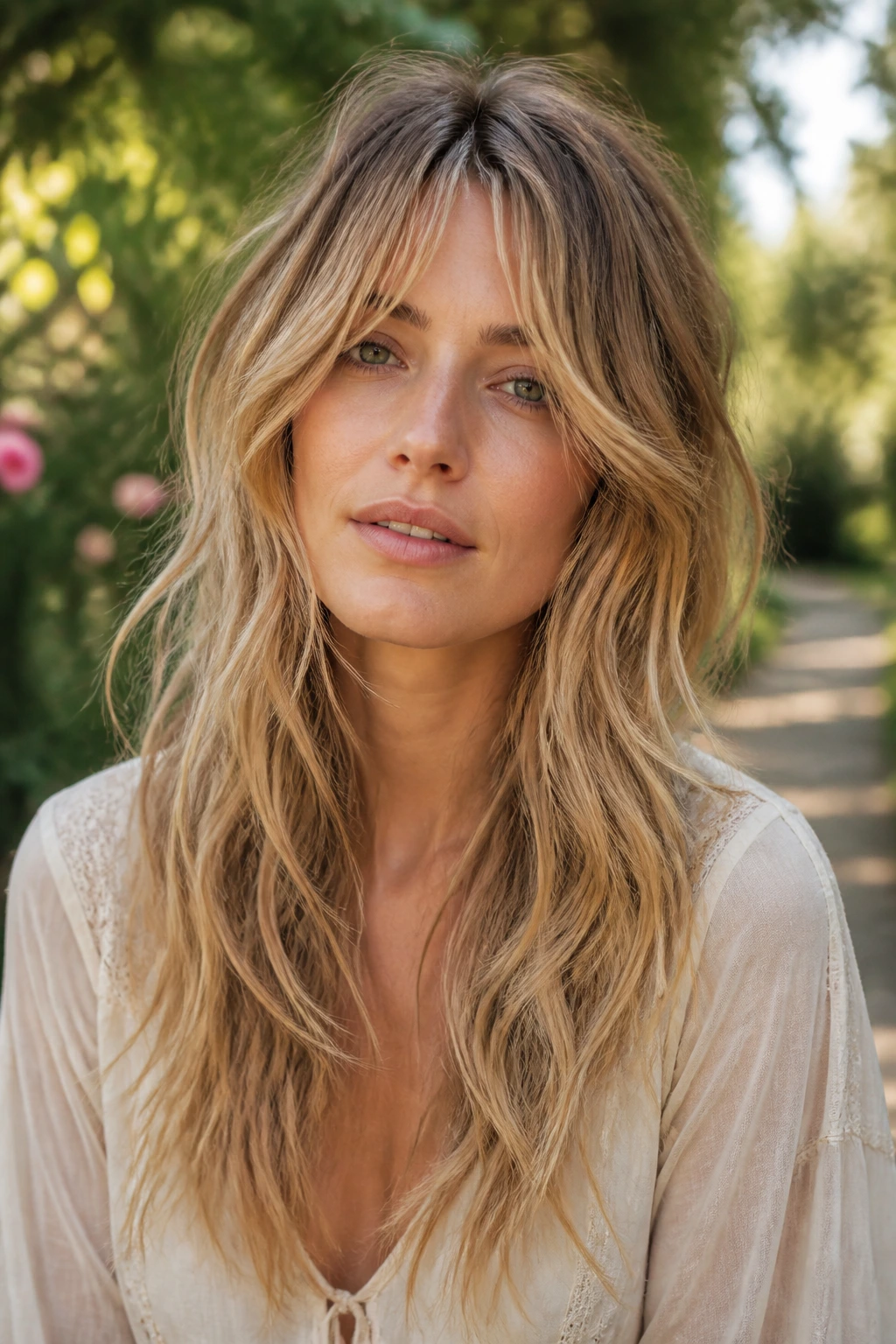
The boho shag is for people who want length and movement more than structure. The layers are blended enough to feel easy, but not so soft that they disappear. On a heart-shaped face, that matters because the lower half needs enough presence to hold the shape.
I like this version with a center or slightly off-center part and face-framing pieces that start around the mouth. The layers should travel down, not out. If they kick out too soon, the sides can get too wide.
This is one of the most forgiving shags on the list. It looks good in loose waves, braids, ponytails, and half-up knots. Handy. Very handy.
20. Sliced Razor Shag for Straight Hair
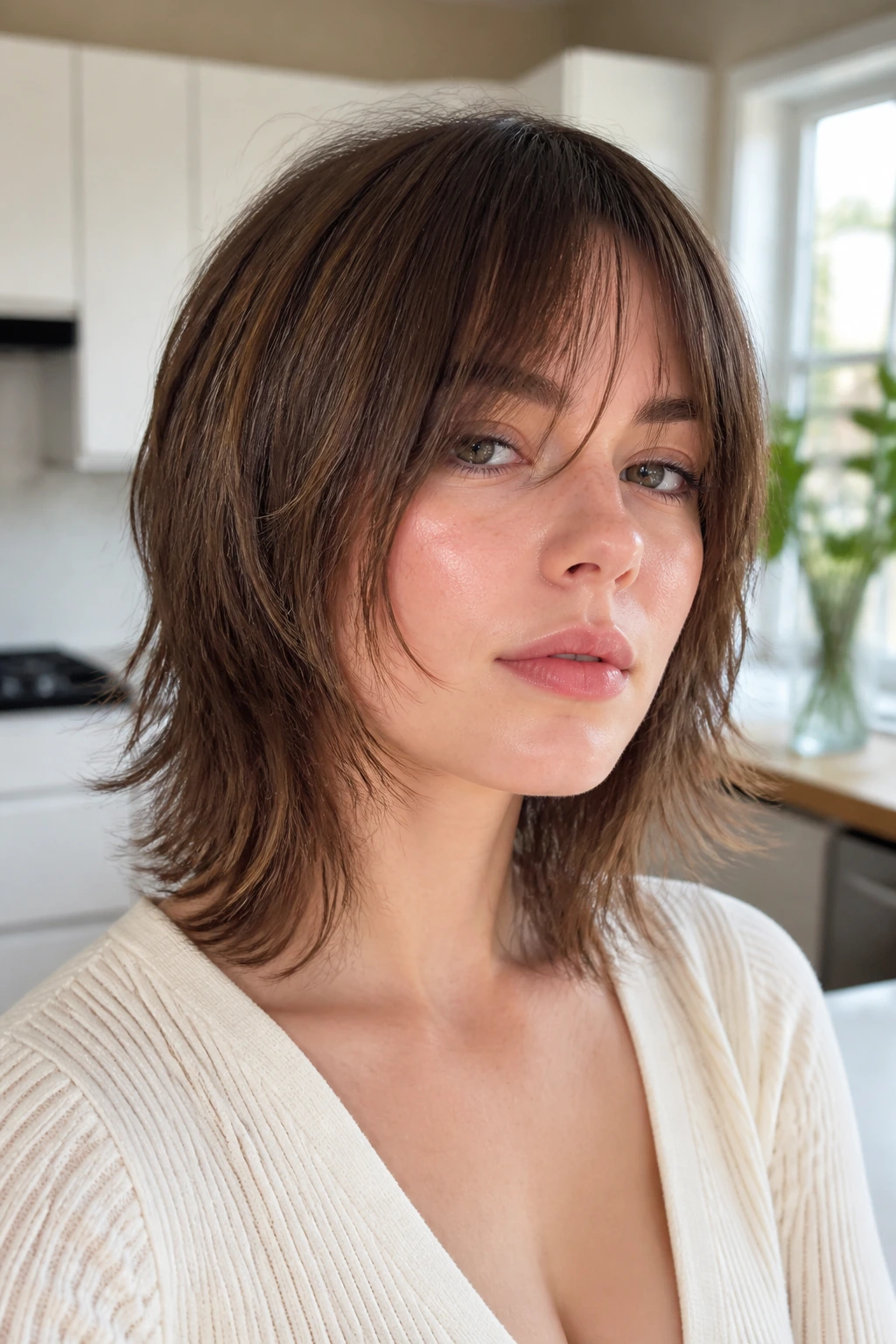
Straight hair can go flat in a hurry, and a razor-shag helps break that up. The sliced ends keep the movement visible without creating chunky steps, which is useful on a heart-shaped face because the cut needs softness, not bulk.
The layers should not all start at the same point. That staggered movement is what keeps the haircut from looking like a helmet with different edges. I would keep the front pieces long enough to brush the chin or collarbone, depending on how much balance you want.
This is a cut for people who like a little sharpness. If you prefer plush and fluffy, skip the razor and ask for softer slicing instead.
21. Minimal Shag With Barely-There Movement

Not every shag has to shout. A minimal shag uses subtle layers to keep the hair from looking flat, but it stays close to the original length and shape. For heart-shaped faces, that can be a relief.
The point here is to soften, not redesign. A few carefully placed layers around the cheekbones and ends can stop the face from feeling too top-heavy without making it look obviously layered. If you work in a conservative setting or just hate obvious haircuts, this is a smart choice.
It is also one of the easiest shags to grow out because there are no harsh lines to fight later.
22. Cropped Shag With Side-Swept Bangs
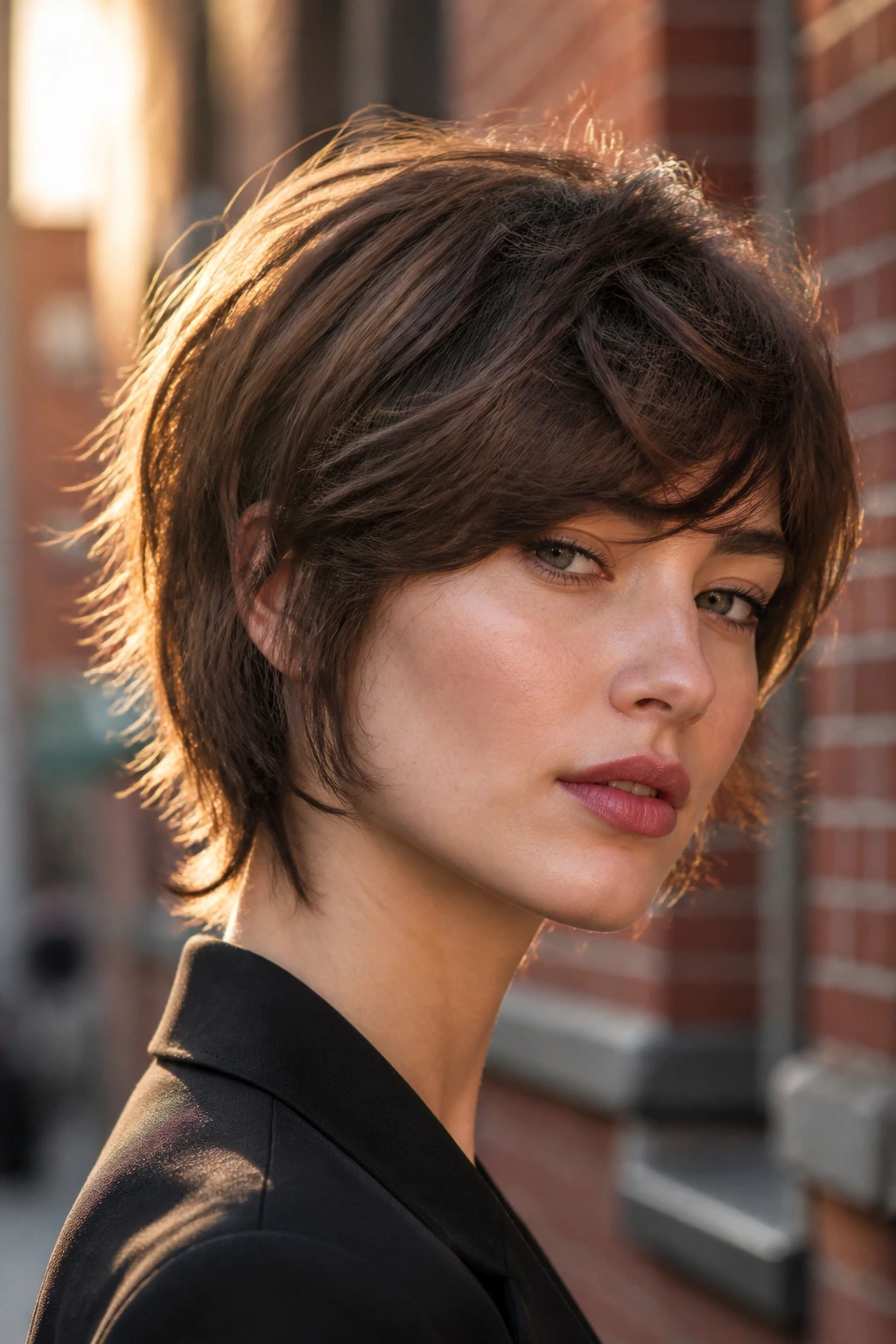
A cropped shag can look sharp and fresh when the bangs do the balancing. Side-swept fringe breaks up the upper third of the face, and the cropped shape keeps the ends light enough that the cut does not drag the whole look down.
The danger with shorter shags is puffiness at the crown. Keep the top controlled. A little lift is good. A mushroom shape is not. The side-swept fringe should be soft and long enough to brush the eyebrow or cheek.
If you like short hair but still want movement around the face, this is one of the best options on the list.
23. Layered Shag With Cheekbone-First Framing
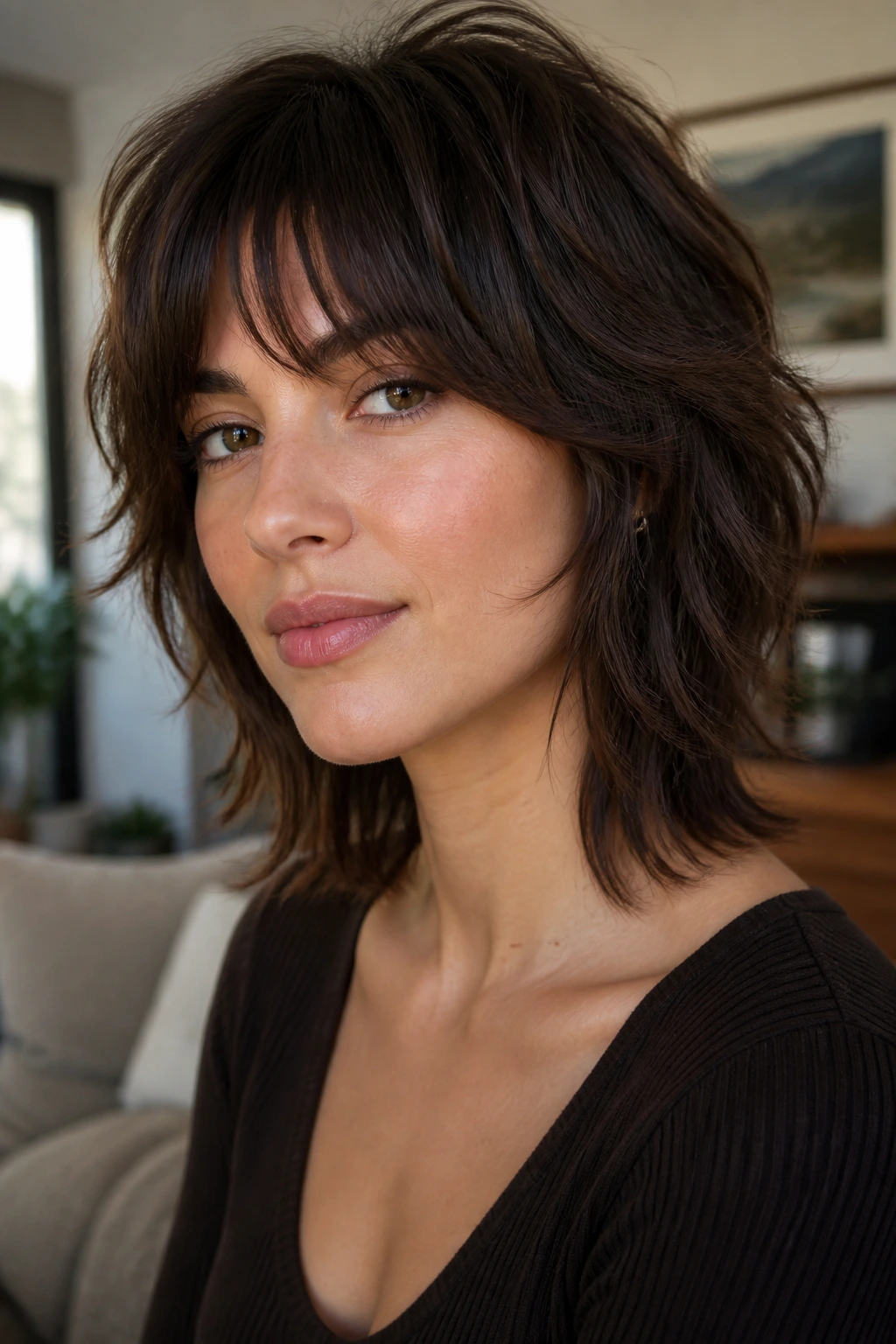
Cheekbone-first framing is the move that keeps showing up for a reason: it works. The shortest visible layers land where the face already has structure, so the haircut feels intentional instead of random.
This version is especially nice if you have strong cheekbones and a narrower chin. It highlights the middle of the face and gives the jaw a little more company. The rest of the shag can stay soft and feathered, which keeps the cut from feeling severe.
A stylist who understands face shape will usually know this one right away. Still, it helps to say the word cheekbone out loud. That single detail changes the whole conversation.
24. Air-Dried Curly Shag With Rounded Shape

This cut is a dream if you are not in the mood to heat-style hair every morning. The rounded shape helps curls stack in a way that gives width lower on the face, which is perfect for a heart-shaped profile.
The key is controlled layering. Too much top layering and the haircut lifts where it should not. Too little, and the curls bulk up at the sides. You want a halo, not a triangle.
A little curl cream, a quick scrunch, and a patient air-dry are usually enough. If your curl pattern is inconsistent, this shape can make the whole head read more even.
25. Grow-Out Friendly Shag With Soft Edges
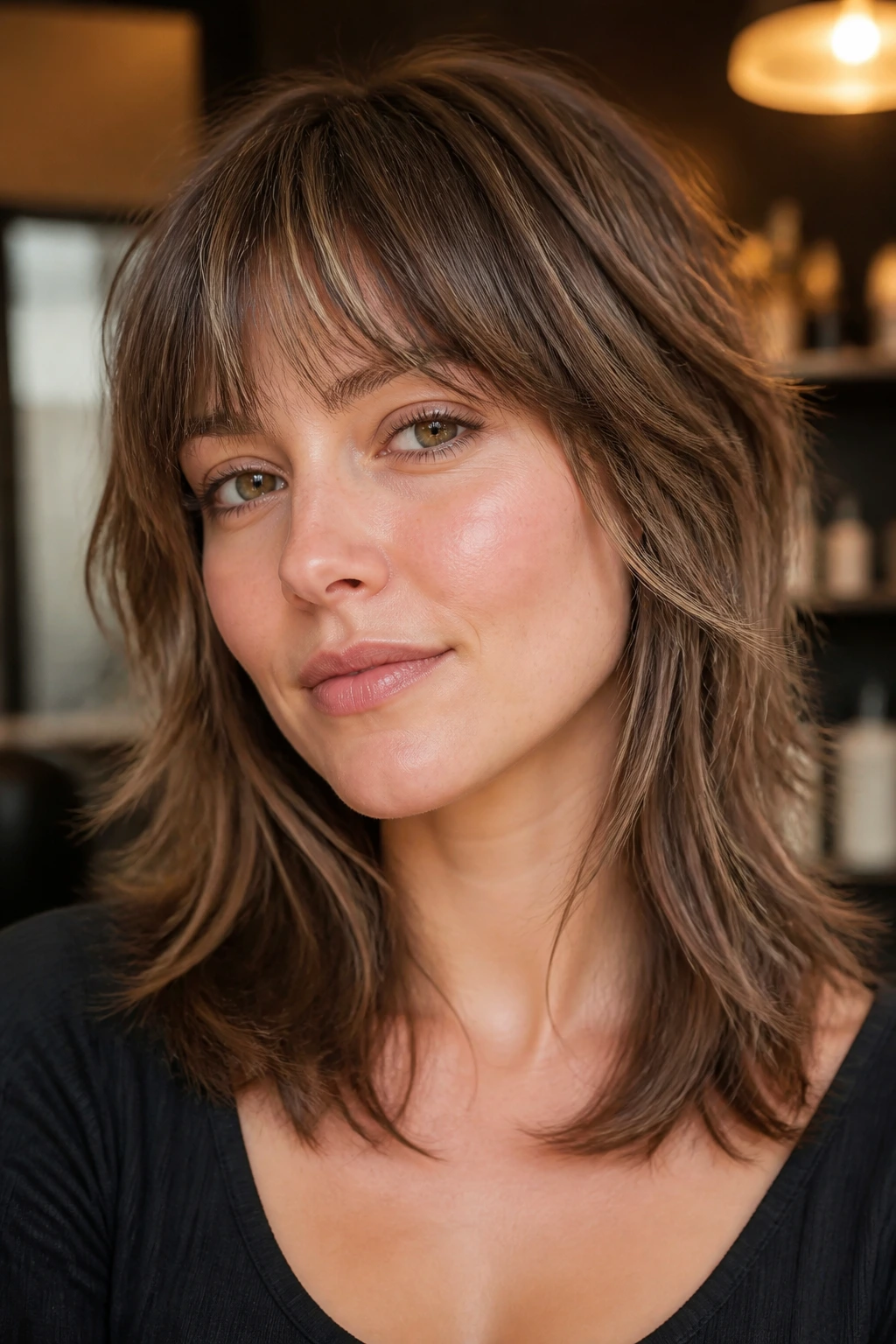
Some people want a haircut that still looks good when life happens. This is that haircut. The layers are soft enough that a little extra growth does not wreck the shape, and the edges stay gentle around the jaw and collarbone.
For a heart-shaped face, that matters because grow-out can easily shift the balance upward. A good grow-out shag keeps the lower half soft and the bangs flexible. You can tuck it, pin it, part it down the middle, or let it fall messy.
I like this version for anyone who trims late, changes parts often, or gets tired of high-maintenance bangs after the first three weeks.
How to Ask for the Right Cut at the Salon

The easiest way to get a flattering shag is to describe the shape, not just the trend. Say where you want the shortest layers to land. Say whether you want fringe, and if so, whether you want it to sit at the brow, cheekbone, or cheek. Those details matter more than the word shag itself.
Tell your stylist these four things
- Where the fringe should start: brow-skimming, curtain, side-swept, or no bangs at all.
- Where the face-framing pieces should land: cheekbone, mouth, jaw, or collarbone.
- How much crown lift you want: a little, moderate, or barely any.
- How much maintenance you can handle: regular fringe trims, or a shape that grows out quietly.
Bring photos, but bring more than one. A front view and a side view tell the story better than a single perfect salon shot taken under flattering light. And if your hair is curly or especially thick, say so before they cut. The same shag behaves very differently in those textures.
Styling Moves That Keep the Shape Soft

A heart-shaped face usually looks best when the top stays controlled and the sides carry the movement. That does not mean flat hair. It means targeted volume. Lift where you need it. Leave the crown alone if it already has enough height.
Round brush only where it helps: Flip the ends under or away from the face, but do not overdo the roots. A small lift at the crown is enough.
Use texture, not crunch: A light sea-salt spray, texture mist, or mousse gives shag layers separation. Heavy oils make the haircut collapse, especially around the cheekbones.
Change the part when needed: A deep side part can soften a strong forehead. A center part works best when the front pieces are long and loose enough to frame the jaw.
Air-dry with intention: Scrunch the ends, tuck the front pieces behind the ears for a few minutes, then release them once they are partially dry. That simple move can create a better bend than fighting the whole head with a brush.
Essential Styling Tools for These Cuts
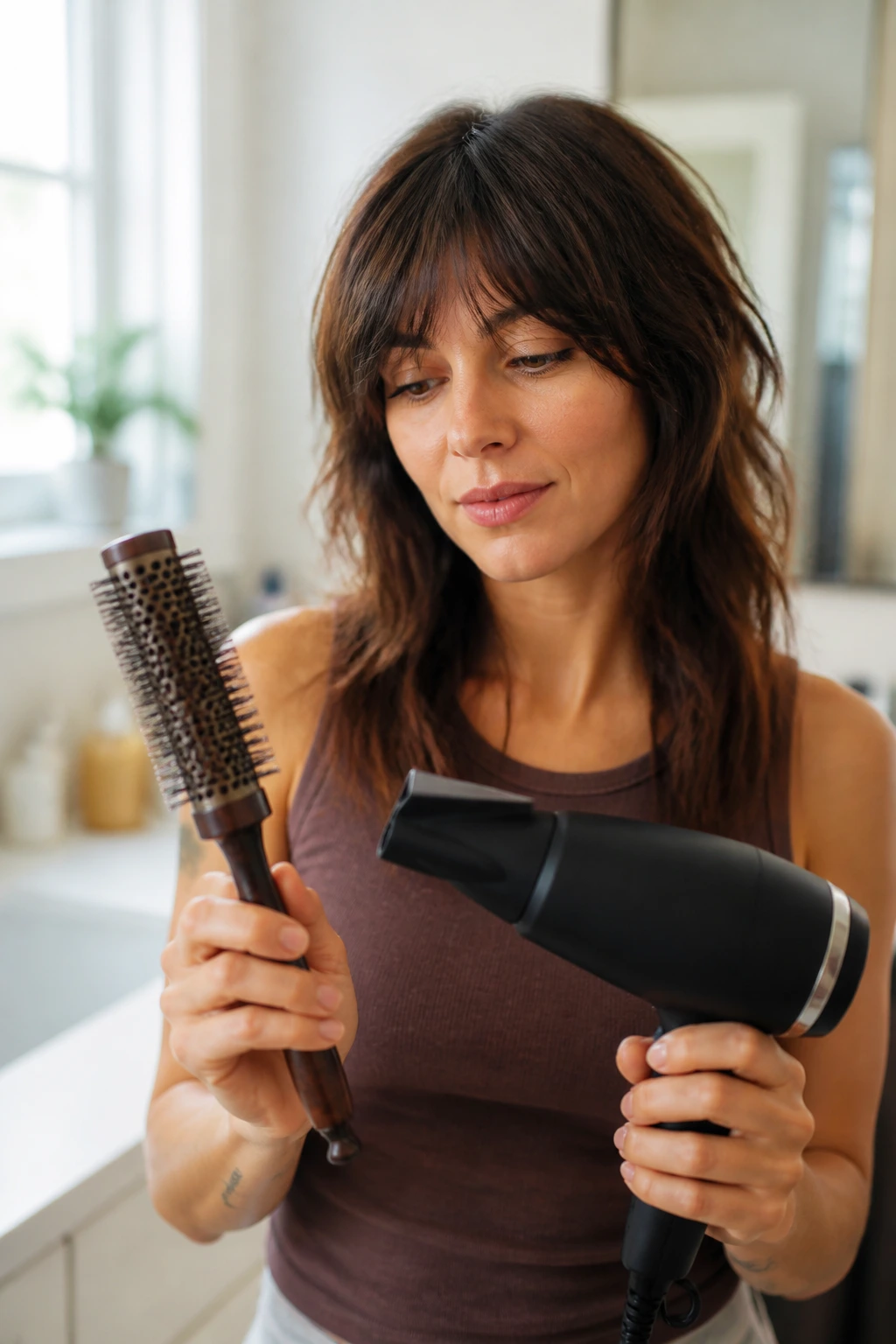
- Blow dryer with a nozzle: Keeps the airflow directed so the bangs and layers do not frizz outward.
- Small to medium round brush: Best for lifting the fringe and curving the ends without making the crown too big.
- Diffuser: Useful for curly and wavy shags; it keeps the curl pattern intact.
- Wide-tooth comb: Good for distributing product through waves and curls without breaking them up.
- Sectioning clips: Help when you want to dry the fringe separately from the rest of the cut.
- Light texture spray or mousse: Gives shag layers separation and grip without a sticky finish.
- Flat iron or small curling wand: Optional, but handy for turning straight hair into soft bends or defining the front pieces.
- A handheld mirror: Not glamorous, but it helps you check the back shape, which matters more than people admit.
Common Mistakes That Make the Face Look More Top-Heavy
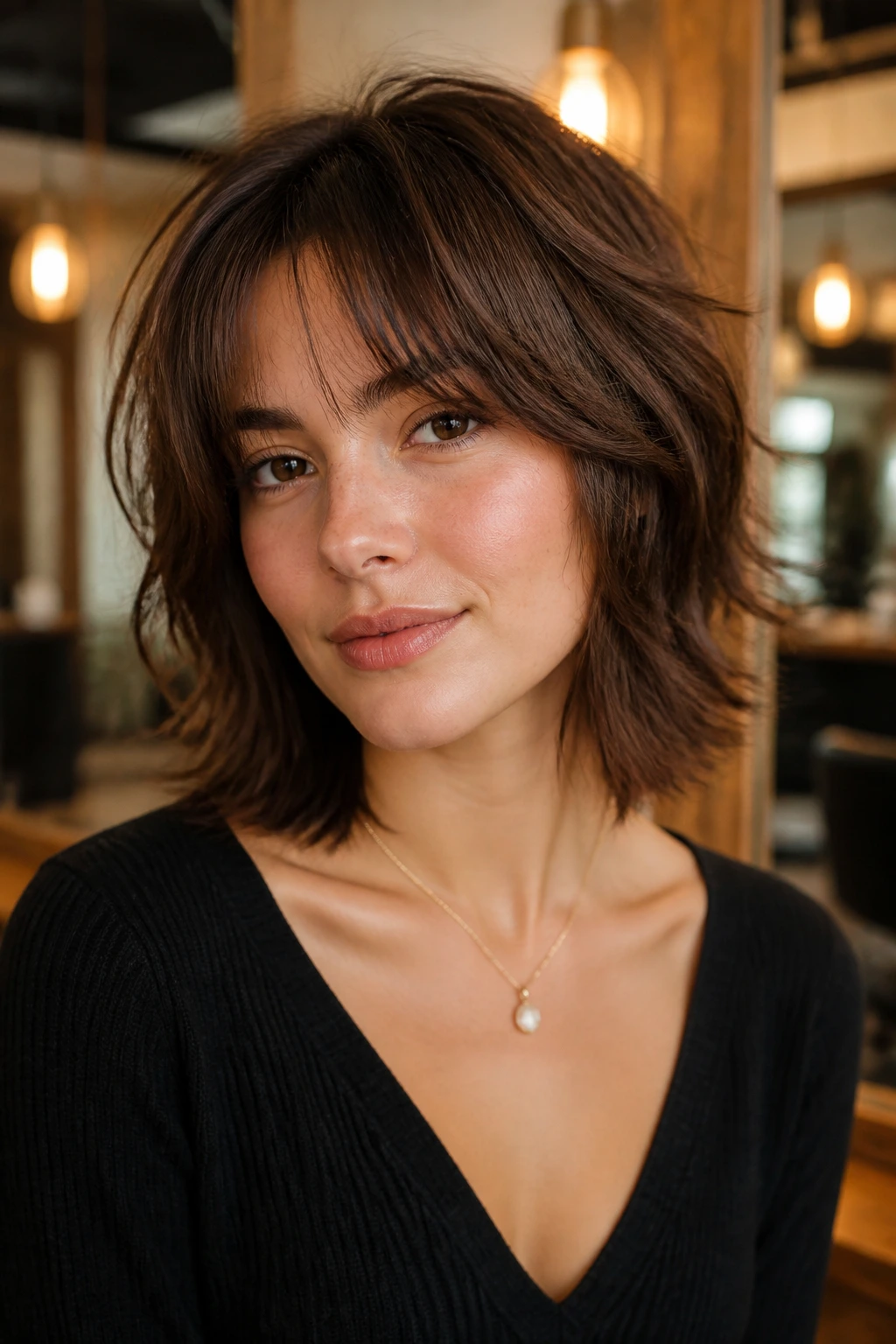
Cutting the fringe too short: A short, blunt bang can make the forehead feel wider, especially if the rest of the haircut has a lot of volume up top. The fix is a softer fringe that sits lower and opens at the center.
Piling volume at the crown: This is the classic mistake. The hair gets taller instead of broader, and the face starts to look longer and narrower. Keep lift modest at the root and let the movement happen lower down.
Starting the layers too high: If the shortest layers sit at the temples, the face can look like it is wearing a hat. Shift the framing lower, toward the cheekbone or jaw.
Over-thinning curly or thick hair: A shag is not an excuse to remove all the weight. Too much thinning can create frizz, flyaways, and a weird puff around the sides. Ask for shape, not emptiness.
Ignoring how the cut grows out: Some shags look great on day one and awkward by week six. If you hate frequent trims, choose a version with softer edges and longer fringe options.
Variations and Alternatives to Try

Soft Curtain Swap: If you like a shag but hate strong bangs, keep the front pieces long and open them in the center. This gives you forehead balance without a heavy fringe line.
Wave-Friendly Bend: For hair that refuses to stay straight or curly, ask for layers that encourage a loose bend rather than a fixed shape. It is a nice middle ground and usually easier to style.
Polished Office Version: Keep the layers blended, the fringe light, and the ends cleaner. You still get movement, but the cut reads a little calmer in a professional setting.
Rockier Wolf Version: Increase the texture, shorten the crown slightly, and let the front hang longer. This is the bolder cousin of the classic shag. Good with a strong personal style, not as good if you want subtlety.
No-Bangs Minimalist Version: Skip fringe completely and use long layers around the mouth and jaw. This is a smart choice if you hate anything touching your forehead and want the most low-drama shape possible.
How to Keep the Shape Looking Good Between Trims

A shag can stay in shape longer than a blunt cut, but it still needs upkeep. Fringe usually wants attention first. If you wear bangs, plan on a quick trim or a tiny dusting every 4 to 6 weeks. The rest of the cut can often go 8 to 10 weeks before it starts losing its outline.
Use dry shampoo at the roots if the crown starts to flatten. That matters more on heart-shaped faces because flat roots can make the lower face look disproportionately narrow. A little root lift is fine. A lot of teased volume is not.
At home, refresh the front pieces separately from the back. Mist the layers lightly with water, twist the pieces around your fingers, and let them dry in the direction you want them to fall. It takes less time than trying to restyle the entire head from scratch, and honestly, it works better.
Frequently Asked Questions

Are shag haircuts good for heart-shaped faces?
Yes, when the layers are placed well. The best ones soften the forehead, add movement around the cheekbones, and give the jaw a little more visual weight so the face feels balanced instead of top-heavy.
What bangs work best with a heart-shaped face?
Curtain bangs, bottleneck bangs, soft side fringe, and light brow-skimming fringe usually work well. A very blunt, very short bang can be trickier because it can make the forehead look wider if the rest of the cut is too full up top.
Can I wear a shag if my hair is fine?
Absolutely, but keep the layering light. Too much thinning can leave the ends wispy, which makes fine hair look sparse. A shaggy lob or a minimal shag usually gives the best balance.
What if my hair is curly?
Curly hair can look fantastic in a shag, as long as the cut respects shrinkage. Ask for the shape to be built around your curl pattern, and try to avoid short crown layers that bounce up too high after drying.
Will a shag make my forehead look bigger?
It can, if the top is too tall or the bangs sit in the wrong place. The fix is simple: keep the shortest pieces lower, use a softer fringe, and avoid stacking too much volume right at the roots.
How often do shag haircuts need trims?
Most shags hold their shape for about 8 to 10 weeks, but bangs often need attention sooner. If fringe is part of the look, a small cleanup every 4 to 6 weeks keeps the style from slipping into eye-stabbing territory.
Can I part a shag down the middle with a heart-shaped face?
Yes, if the front pieces are long enough to soften the forehead and jaw. A middle part can look elegant on this face shape, especially with curtain bangs or long face-framing layers.
What should I tell my stylist if I want something low maintenance?
Ask for a shag with longer layers, soft edges, and either no bangs or a fringe that can grow out cleanly. Tell them you want movement that still looks intentional after several weeks, not a high-drama cut that needs constant reshaping.
A Shape That Stays in Balance
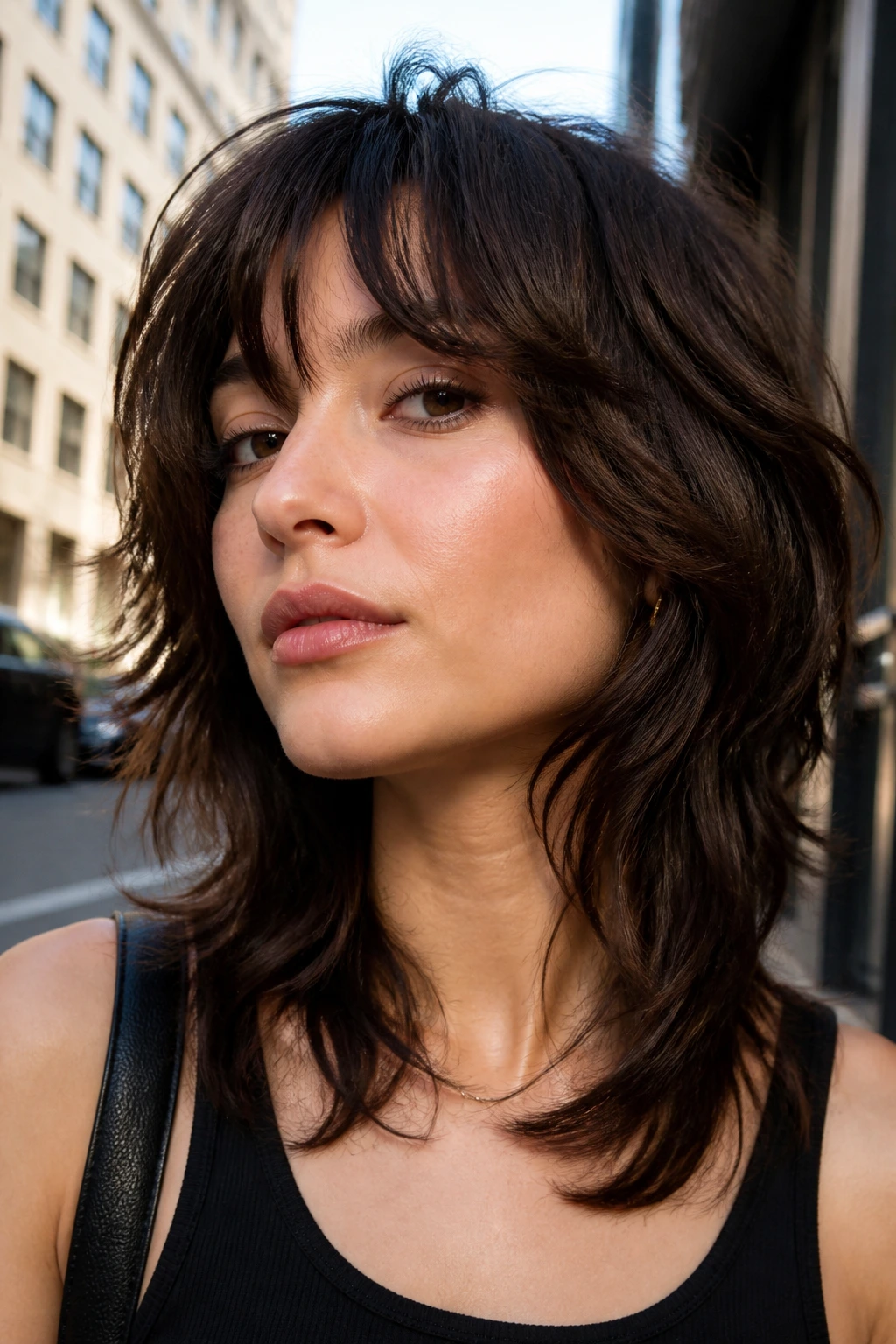
The best shag on a heart-shaped face does not try to hide the face. It edits it. A little less height at the crown, a little more movement near the cheekbones and jaw, and suddenly the whole cut feels calmer and more expensive-looking—even when it is messy.
That is why the right version matters. Not because it follows a trend, but because it works with your structure instead of arguing with it. Pick the length, fringe, and texture that suit the way your hair actually falls, and the cut will do half the work for you every morning.
