



Curly hair changes the rules. A highlight that looks soft on straight hair can turn stripey on spirals, and a color placement that seems subtle in the salon mirror can disappear once the curl pattern springs back up. The right highlights for curly hair don’t just brighten the hair; they move with it, catching light on the bends, loops, and crown pieces that actually show when the hair is dry and worn in real life.
I’ve always liked color on curls that looks a little quieter in the bowl than it does on the head. That’s the sweet spot. You want depth at the roots, a little breathing room between the lighter pieces, and enough contrast that the curl pattern still reads as rich instead of washed out. The best curly highlight ideas understand shrinkage, porosity, and the fact that a 3B coil and a 4A coil do not frame the face the same way. That part matters.
So the game is not “What pretty shade should we pick?” It’s “Where should the brightness live so the curl pattern does the work?” Once you think about placement that way, the whole list opens up.
Why These Highlight Ideas Work on Curly Hair
Dimension matters more on curls. A single flat blonde panel can look loud on straight hair and nearly invisible on tight curls. The best placements break the color into ribbons, specks, or face-framing pieces so the hair keeps depth from root to tip.
Shrinkage changes the map. Curls lift upward when they dry, sometimes by two inches or more, so highlights need to sit a little lower than you’d expect if you want them to show in the finished style. That’s why curl-friendly color often looks softer in the chair than it does a few hours later.
Porosity decides how the tone lands. Highly porous ends grab lightener and toner fast, which can make them turn pale or muddy if the plan is too aggressive. A thoughtful highlight idea works with that, not against it.
The curl pattern becomes the frame. Face-framing highlights on curls do more than brighten the front; they outline the curl cluster near the cheekbones and jaw. That’s why placement feels as important as shade.
Low-maintenance doesn’t have to mean boring. A curled head of hair can hold a very subtle highlight map and still look expensive, dimensional, and intentional. The contrast just lives in the right places.
1. Soft Caramel Ribbons on Loose Ringlets
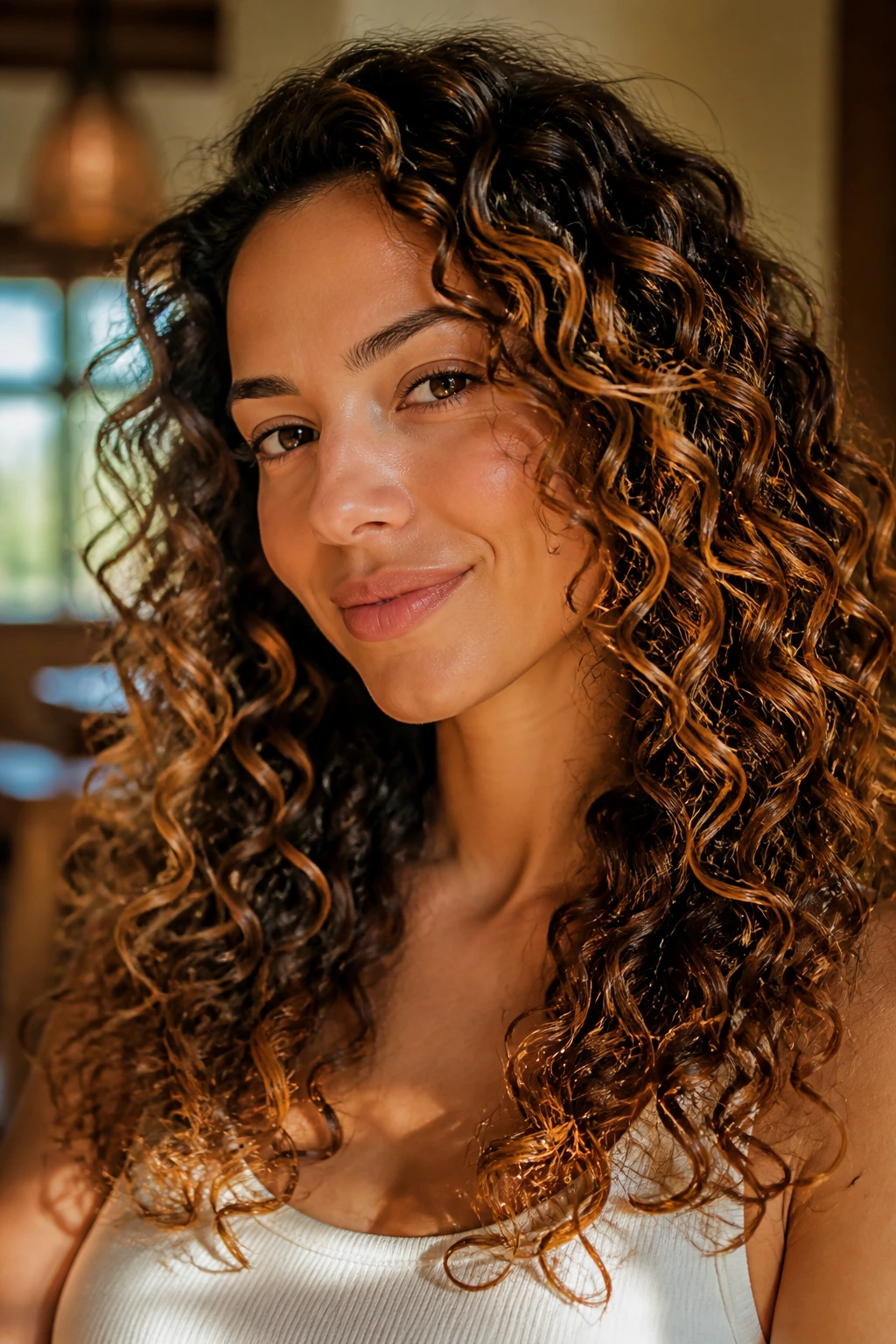
Soft caramel ribbons are the highlight idea I reach for when the goal is movement without a dramatic color jump. On loose ringlets, the caramel reads like sunlight threaded through the outer layer of the curl, not like striping. It’s warm, glossy, and forgiving, which is a nice change from cooler blondes that can turn harsh if the placement gets too aggressive.
Why It Works
Caramel sits in that middle zone where it brightens brown hair without shouting. It’s especially good on 2C to 3A curls because those patterns open and close enough to show off the ribboning when the hair moves. If you like a “my hair, but with better light” effect, this is the one.
Best Placement Cues
- Ask for mid-length to end-focused ribbons so the crown stays rich.
- Keep the front pieces a touch brighter than the back.
- Let a few curls stay untouched near the part line; that gap keeps the finish from looking painted on.
I like this shade with a soft gloss at the end rather than a strong toner. The finish should look warm, almost buttery, and the curls should still read as separate little springs instead of one big matte block.
2. Honey Face-Framing Pieces That Open the Curl Pattern
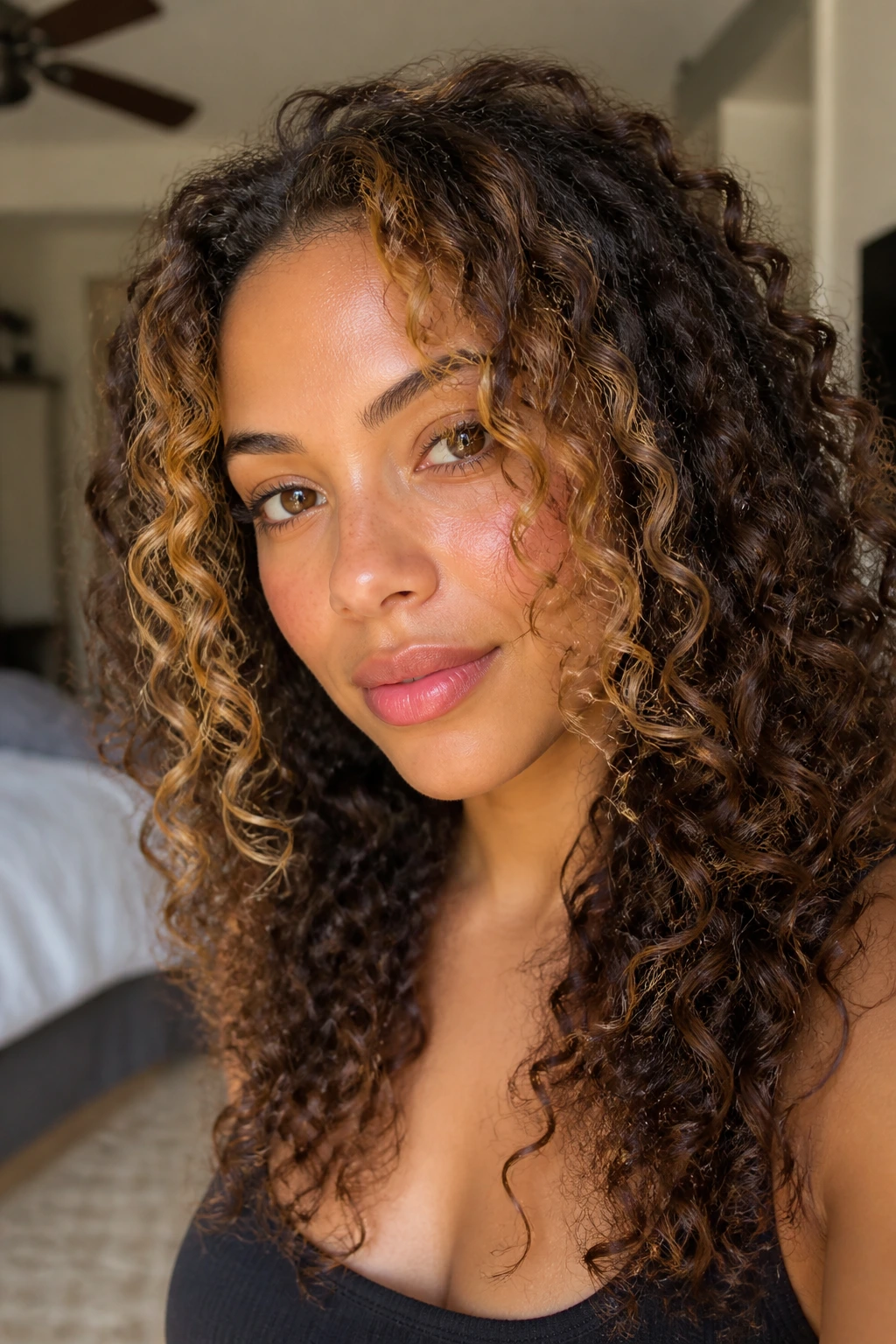
Why do face-framing highlights work so well on curls? Because the front curls are the ones people see first, and those strands usually sit in a halo around the face once the hair dries. Honey pieces near the cheekbones and temples create a lift that feels immediate, even if the rest of the head stays mostly brunette.
The trick is restraint. Too much brightness in the front and the whole style can start to feel chunky in a bad way, especially if your curls shrink tightly. Keep the honey concentrated in two or three wider ribbons on each side, then let the rest of the hair carry softer, lighter micro-pieces underneath.
This is a strong choice if you wear your hair half-up, clipped back, or diffused with volume at the roots. The honey shows up right where the curl pattern turns around the face, and that little bit of brightness changes the whole mood of the haircut.
3. Copper Balayage on Deep Brunette Curls
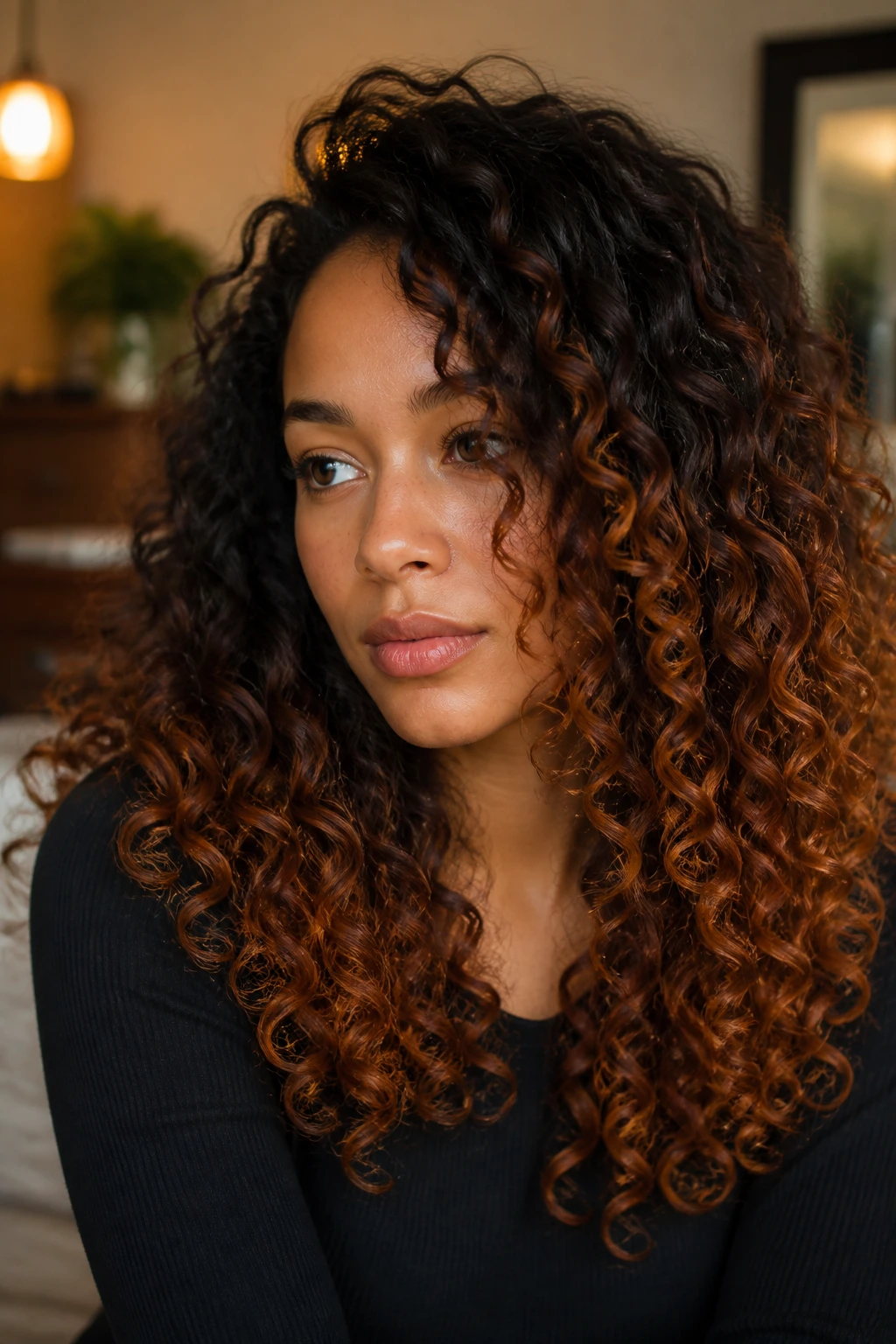
Copper on dark curls is not subtle. That is the point.
When the base is deep brunette, copper balayage gives you a warm flash that looks almost ember-like in sunlight and then melts back into the darker background indoors. It suits curls that have a little thickness and spring, because the color plays beautifully off the texture. Thin straight hair can make copper look flat. Curls give it body.
A colorist will usually paint copper toward the mid-lengths and ends, then keep the root area deeper so the curls don’t lose shape. On dark brown or black-brown hair, a rich copper glaze can be enough if you want warmth without pushing all the way into blonde territory.
If your skin tends to look a little washed out with ash tones, copper has a way of fixing that. It wakes up the whole face.
4. Auburn Lowlights and Highlights for Richer Depth
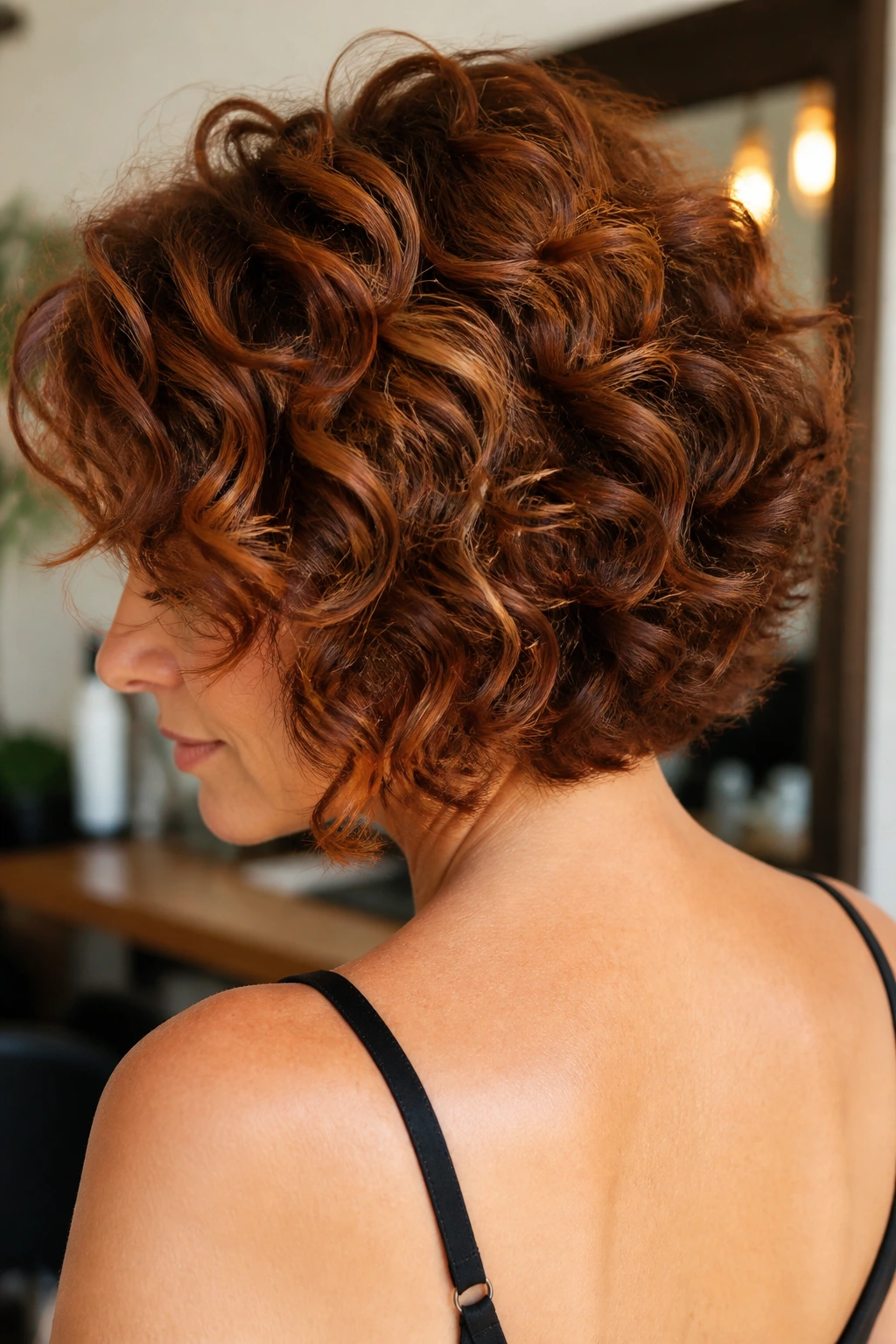
Auburn is one of my favorite answers to the “my curls look flat” complaint. Not because it’s flashy. Because it gives the hair two jobs at once: light catches the auburn ribbons, and the deeper brown lowlights keep the curl mass looking thick.
This idea works especially well when the curls are fine or the cut has a lot of layers. Fine curls can lose visual density fast if every strand is lightened. Auburn lowlights give the eye something dark to land on, which makes the lighter bits feel more deliberate.
What to Ask For
- A mix of soft auburn highlights and one shade deeper lowlights.
- Color placed through the outer layer, with some depth near the nape.
- A warm gloss at the end, not a red that leans neon.
The result should look like wine-dark brown in shade and coppery brown when the light hits it. That shift is the whole appeal.
5. Golden Babylights on Shoulder-Length Spirals
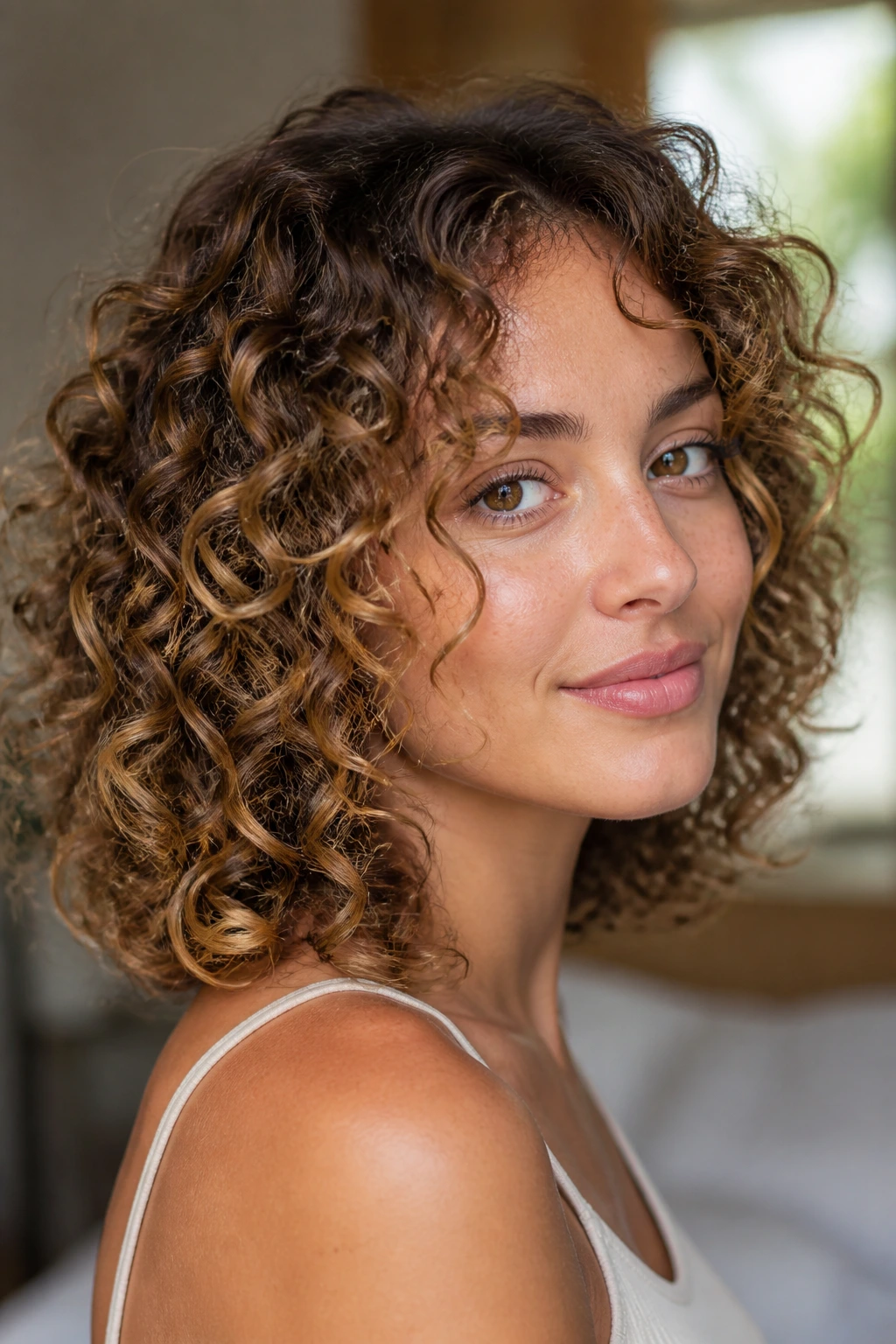
Babylights are tiny, fine highlights, and on shoulder-length spirals they can be gorgeous. The color sits almost like dusted gold across the curl surface. Nothing chunky. Nothing loud. Just a soft shimmer that moves when the curls bounce.
This is the right call if you want dimension but hate obvious streaks. Because the pieces are so thin, the highlight pattern blends into the curl texture instead of sitting on top of it. On 3A and soft 3B curls, golden babylights can make the whole cut look lighter and airier without losing the shape of the base color.
I’d choose this over broad foils when the haircut already has strong layers. Tiny placement lets the cut do the talking. And if the hair is shoulder length, you get enough movement for the gold to show from multiple angles.
6. Chunky Money Pieces for Curly Bobs
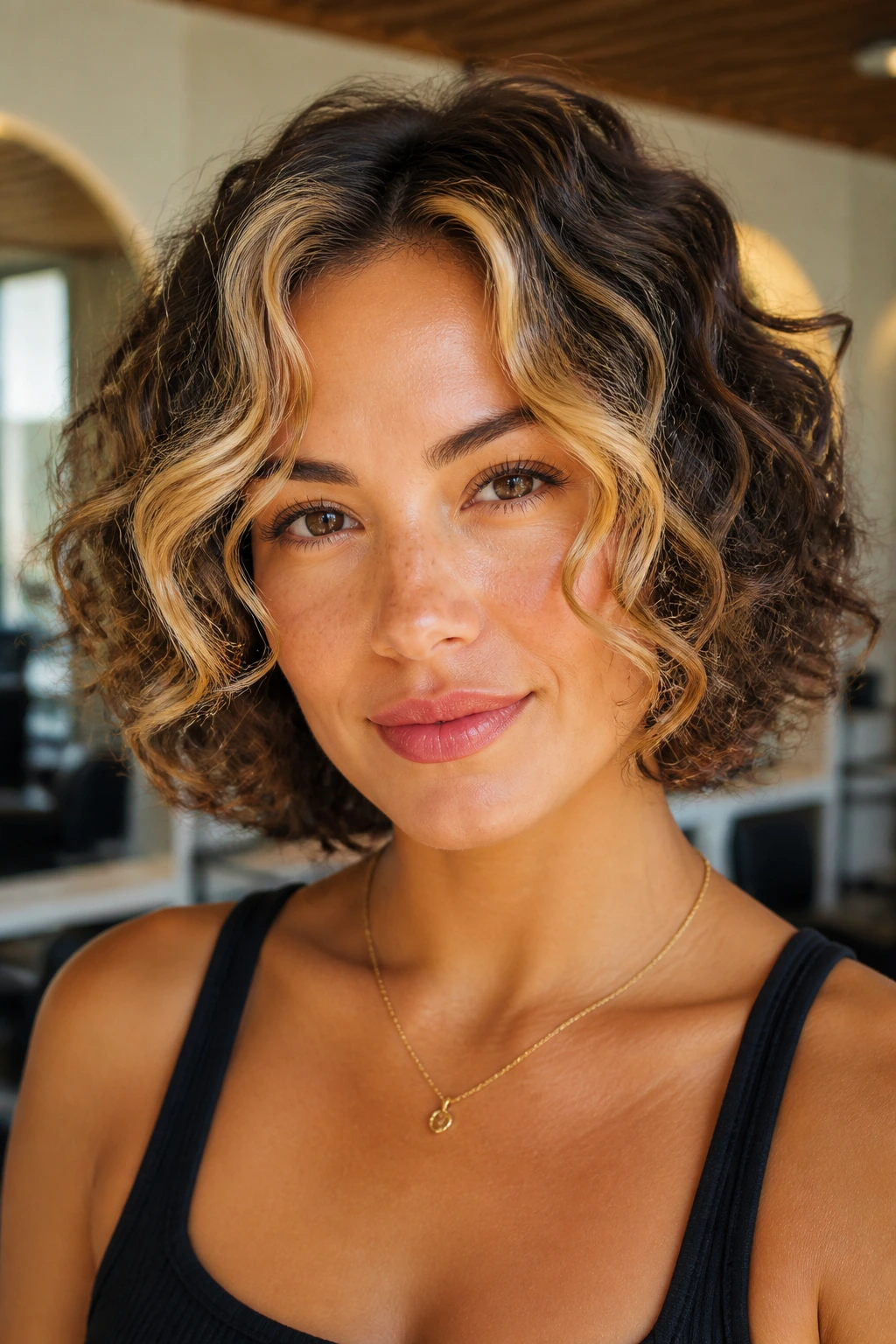
A curly bob can handle a bold front piece better than people think. In fact, a chunky money piece often looks sharper on curls because the shape breaks into separate spirals instead of one solid block of brightness.
This is the move if you want your face to read first, your haircut second, and your color third. The front panels can be a warm blonde, soft caramel, or even a beige tone depending on the base. I like keeping the rest of the bob darker so the bright pieces have a real job to do.
The key is width. On curly hair, a money piece that looks wide enough in the salon may shrink into a skinny stripe once it dries. Go a little broader than you would on straight hair. That one adjustment saves the whole look.
7. Cinnamon-to-Toffee Melt
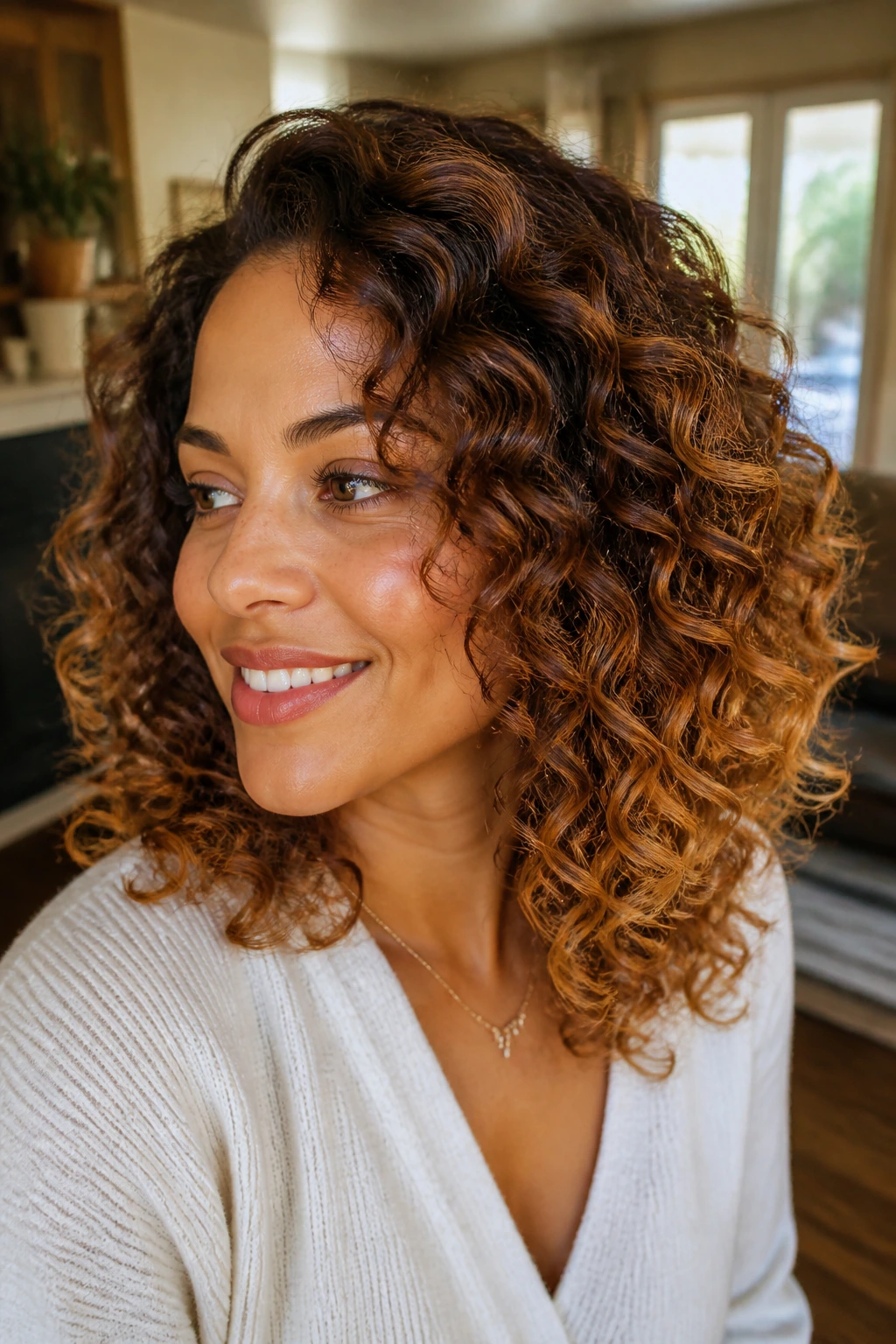
Cinnamon-to-toffee color melts are perfect for curls that need warmth but not a high-contrast change. The roots stay a deeper cinnamon brown, the mids pick up a soft spice tone, and the ends drift into toffee or light amber. It’s a gradient, not a stripe.
This idea flatters curls because the eye follows the color through the bend of the spiral. Each loop catches a slightly different shade. That makes the whole head feel active even when the haircut is simple.
I especially like this on layered hair that falls somewhere between shoulder length and long. The melt adds shape to the layers without needing a dramatic blonde. If you’ve ever wanted highlights that feel cozy rather than bright, this is a strong place to start.
8. Espresso and Mocha Ribboning
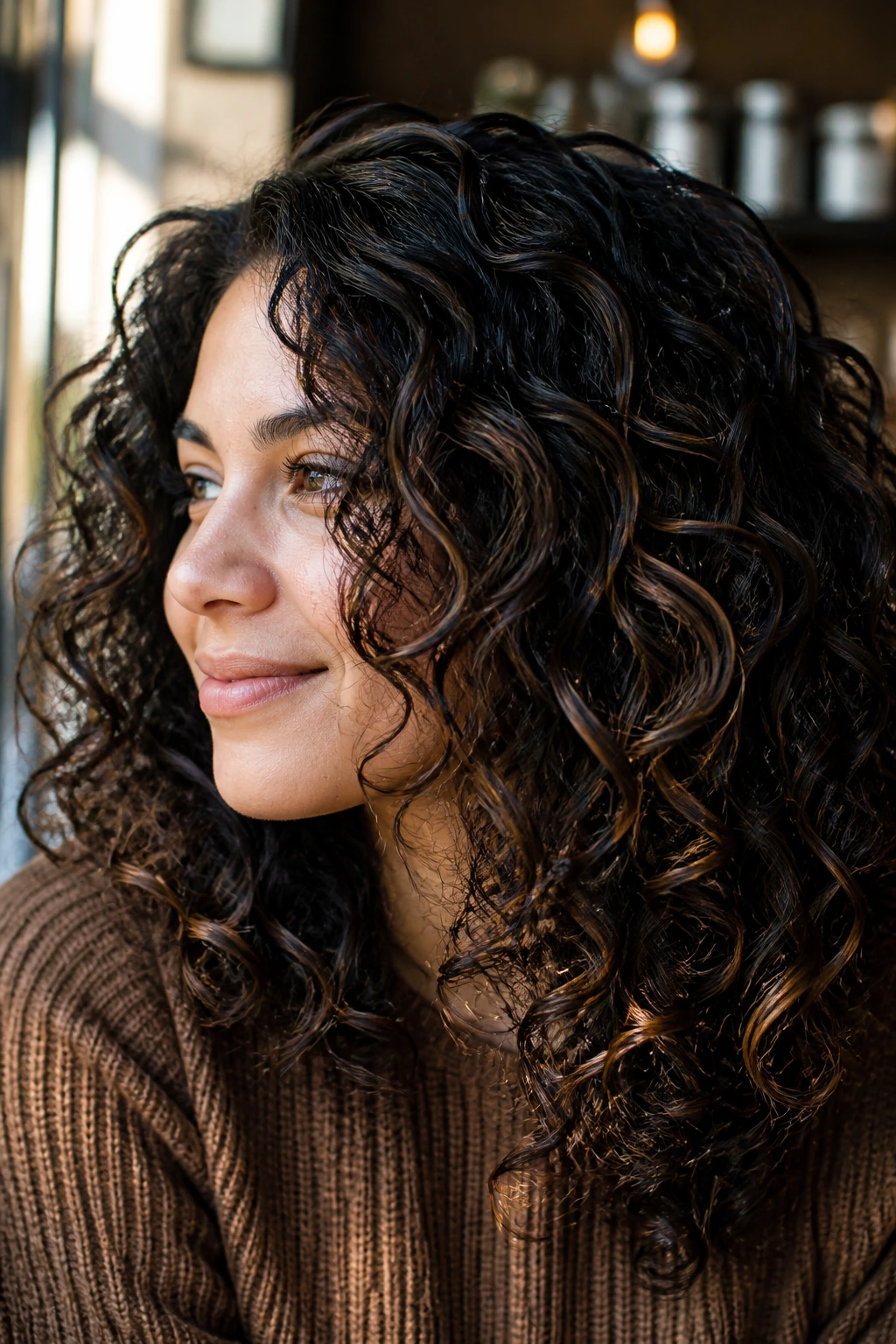
Some people want highlights, but they do not want their hair to look highlighted. Espresso and mocha ribboning is for them.
The palette stays close to the natural base, which is why it works so well on dark curly hair. A few mocha pieces soften the top layer, and the espresso depth keeps the curl pattern rich. In sunlight, the contrast wakes up. In low light, the hair just looks fuller and better conditioned.
That subtle shift is useful if your curls already have a strong silhouette. You don’t need a lot of brightness for shape. You need contrast in the right places. Mocha around the crown and a few espresso lowlights underneath can change the entire balance of the cut.
9. Rose Gold Glow on Soft Curls
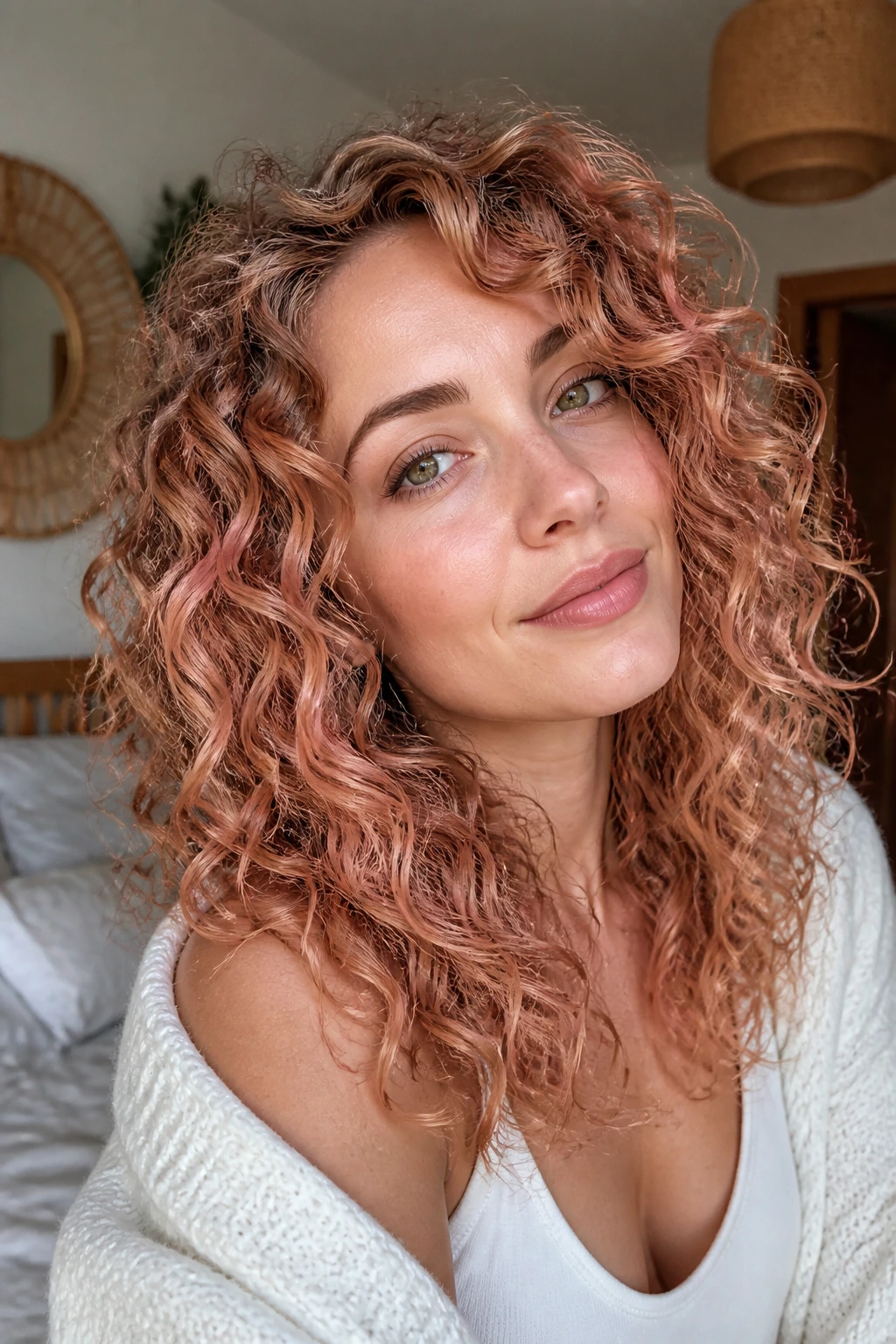
Rose gold on curls has a slightly romantic, slightly playful feel that I think looks best when the haircut is layered and airy. It works on medium brown, dark blonde, or light brunette bases that can take a warm lift without turning orange.
The color itself sits between peach, pink, and gold. On curls, that mixed tone looks better than a flat pastel because the pattern keeps breaking the color up. A loose curl catches the pink, the next bend catches the gold, and suddenly the whole head looks more alive than the formula sounded on paper.
This is not the choice for someone who wants to disappear into the background. It reads as deliberate. But it can still be wearable if the rose tone stays soft and the placement is scattered rather than concentrated in one block.
10. Strawberry Blonde Wash on Brown Curls
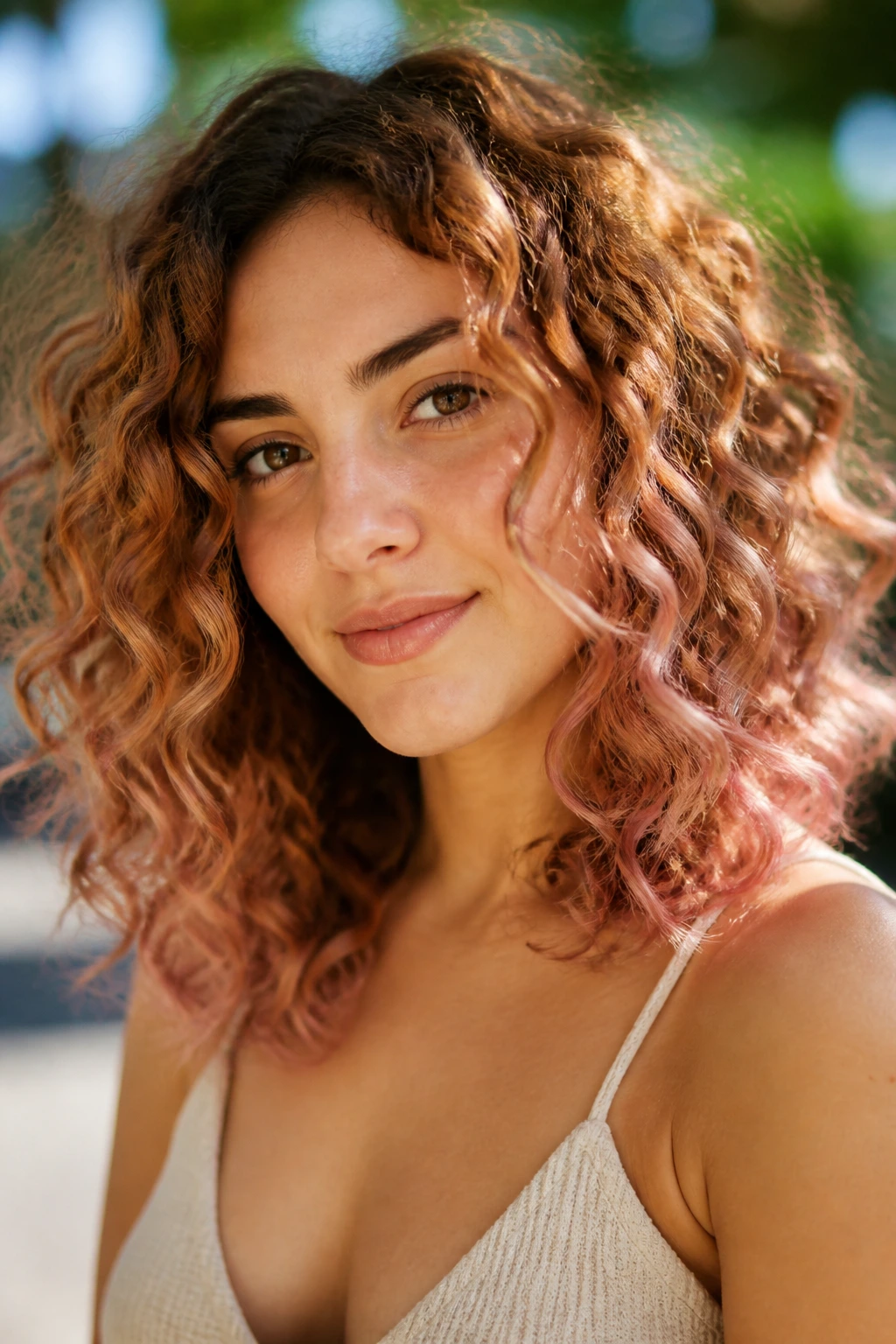
Strawberry blonde can go wrong fast if it leans too brassy or too pink. On brown curls, though, a soft strawberry wash can be lovely. Think pale copper-gold with a whisper of pink at the ends, not a candy shade.
The effect is gentler than full copper and warmer than beige blonde. On curls, that middle ground matters because the texture itself already adds enough interest. You don’t want the color fighting the pattern. You want the color to lean into it.
I’d use this on curl cuts that get a lot of air-drying and little diffusing, because the soft warmth reads most naturally when the texture is a little undone. It’s one of those colors that looks casual in a very good way.
11. Platinum Frost on Short Curly Cuts
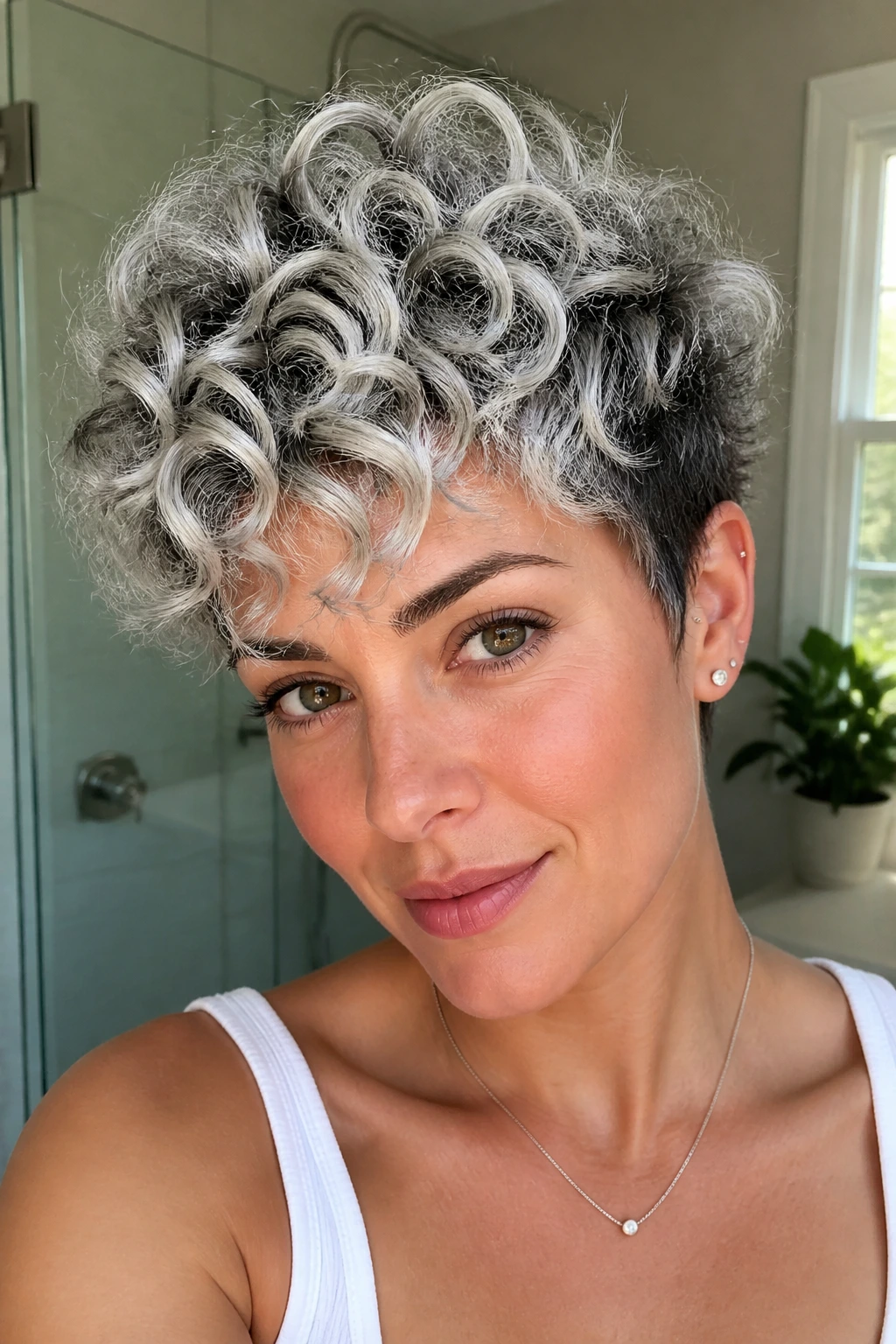
Platinum on short curls is a commitment, and I mean that in the best possible way. A cropped curly cut with platinum frost can look sharp, modern, and a little bit punk, especially when the brightness sits on the top layer and fringe.
Short hair makes the platinum feel cleaner because the shape is already defined. You are not trying to brighten four feet of curls. You are putting light where the haircut has the most structure. That’s the part that works.
This is not the low-maintenance option in the bunch. Platinum needs careful lifting, toning, and regular upkeep. But on a short curl crop, the grow-out can look chic for a while because the darker roots add depth under the frosty top pieces.
12. Mushroom Brown Ash Highlights
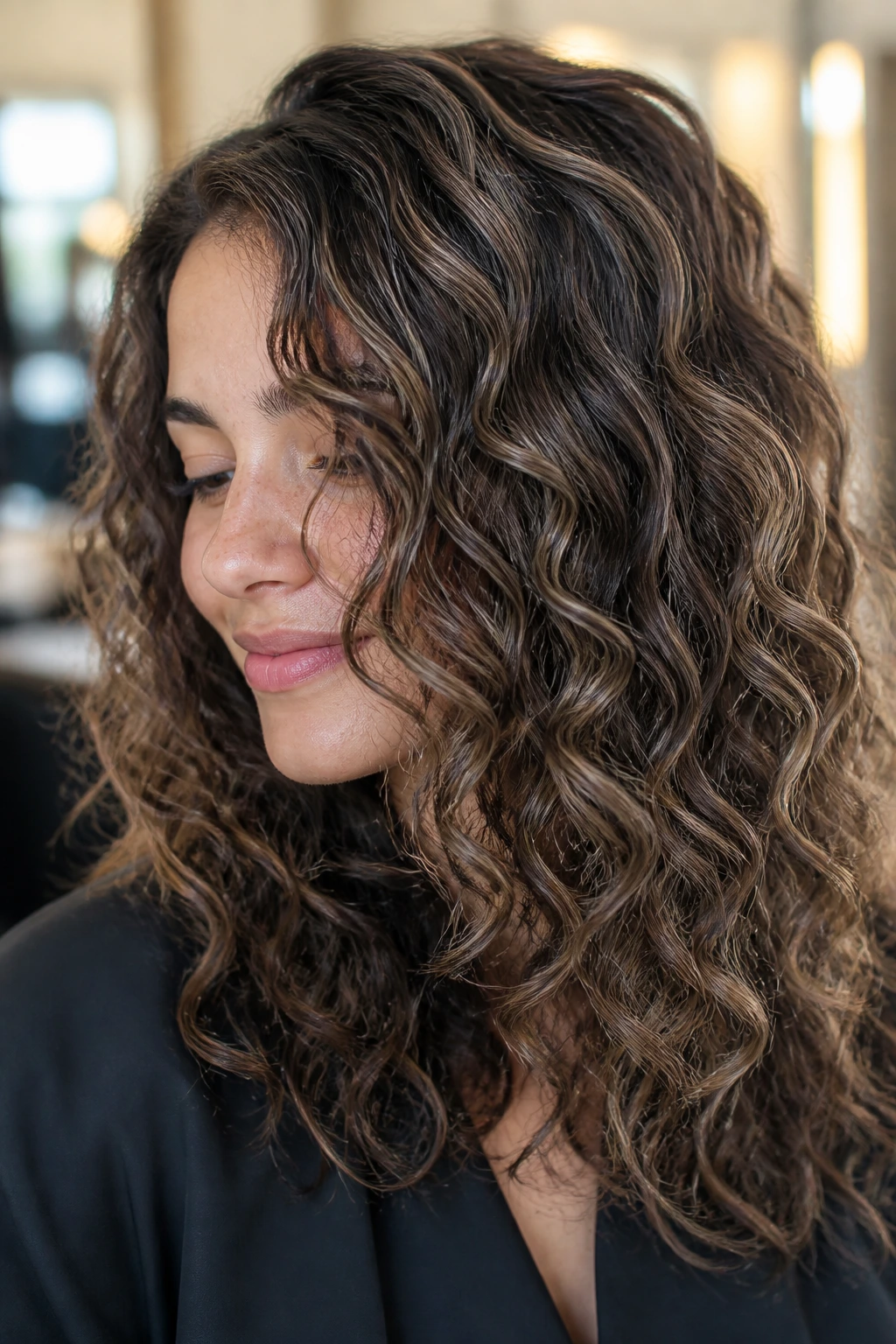
Mushroom brown is the cooler cousin in this whole family of ideas. It works when you want dimension but not warmth, and it’s especially nice on brunettes who are tired of hair that turns orange the minute it’s lightened.
The shade sits in that beige-gray-brown lane that can look expensive without trying too hard. On curls, ash tones can feel calm and clean, especially if the haircut has strong shape around the jaw. They do not scream for attention. They just make the hair look denser and more polished.
A good mushroom brown highlight job keeps the tone soft, not muddy. Too much ash can make curls look flat or even a little green on the wrong base. The right version feels neutral, not dull.
13. Burgundy Peekaboo Panels Under the Curl Layer
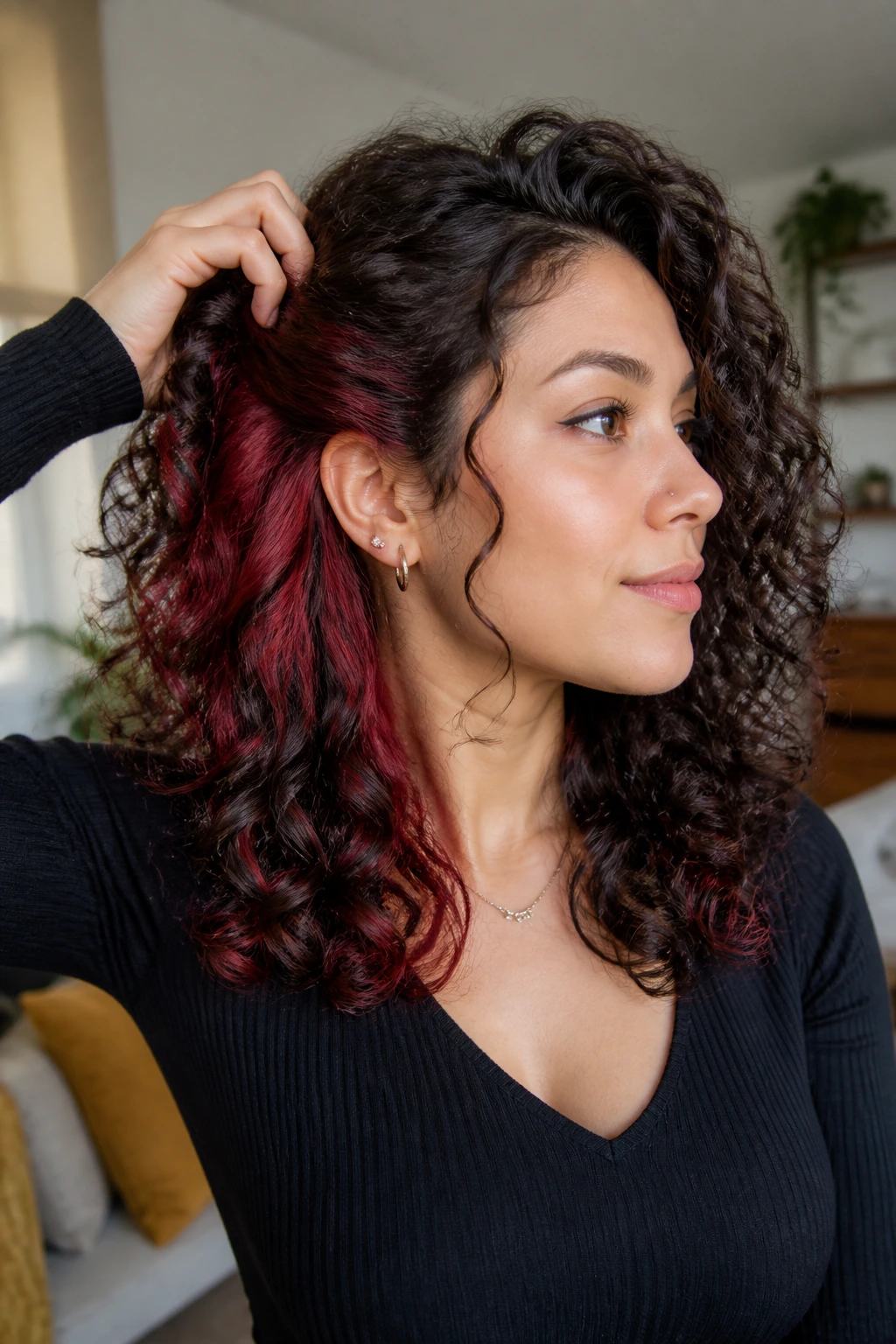
Peekaboo color is one of the smartest ways to add drama without changing the whole head. Burgundy under the top layer of curls shows up when the hair swings, lifts, or gets pinned back. Otherwise, it stays hidden.
That makes it a useful idea for anyone who wants color that feels private. You can wear it to work, tie the curls up, and suddenly there’s a deep wine flash underneath. The contrast looks especially good on darker curl patterns because burgundy has enough depth to stay rich instead of neon.
I like peekaboo placement under the crown or behind the ear. That way the color appears in motion, which is exactly where curly hair looks most interesting anyway.
14. Teal Underlights for a Playful Hidden Pop
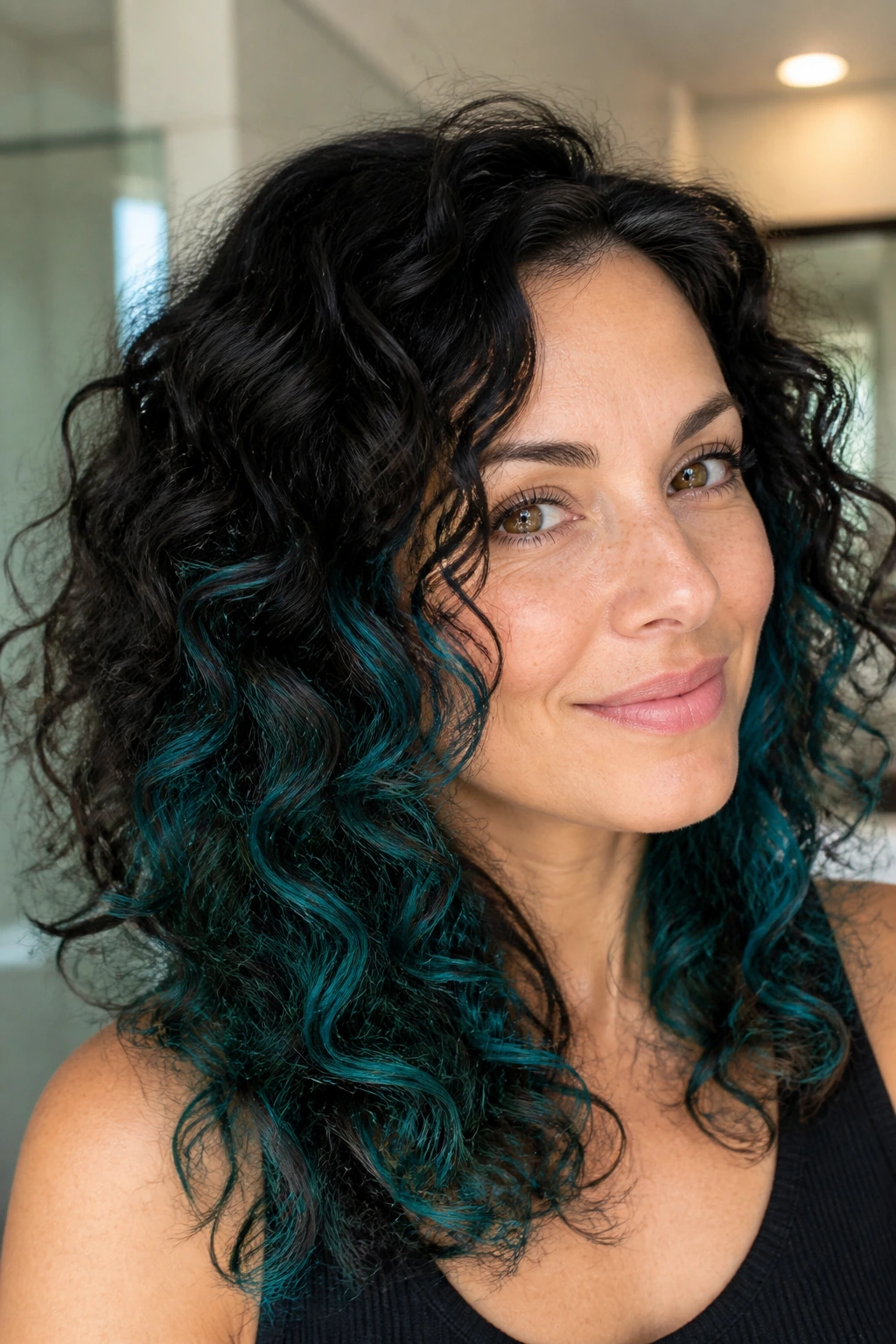
Teal underlights bring a lot of personality, but the best versions are tucked into the lower layers where the curls move first. On layered curly cuts, the color peeks through as the hair separates, which keeps it from feeling costume-y.
This works best when the rest of the hair stays dark or neutral. The teal needs a frame. Without it, the effect can get muddy. With it, the color looks crisp and intentional, especially under daylight or a bright bathroom mirror.
A lot of people think bold color has to sit on top to matter. Not true. Underlights can be even more interesting on curls because the spiral lifts the hidden color into view at unexpected angles.
15. Chestnut Ribbons on Tight Coils
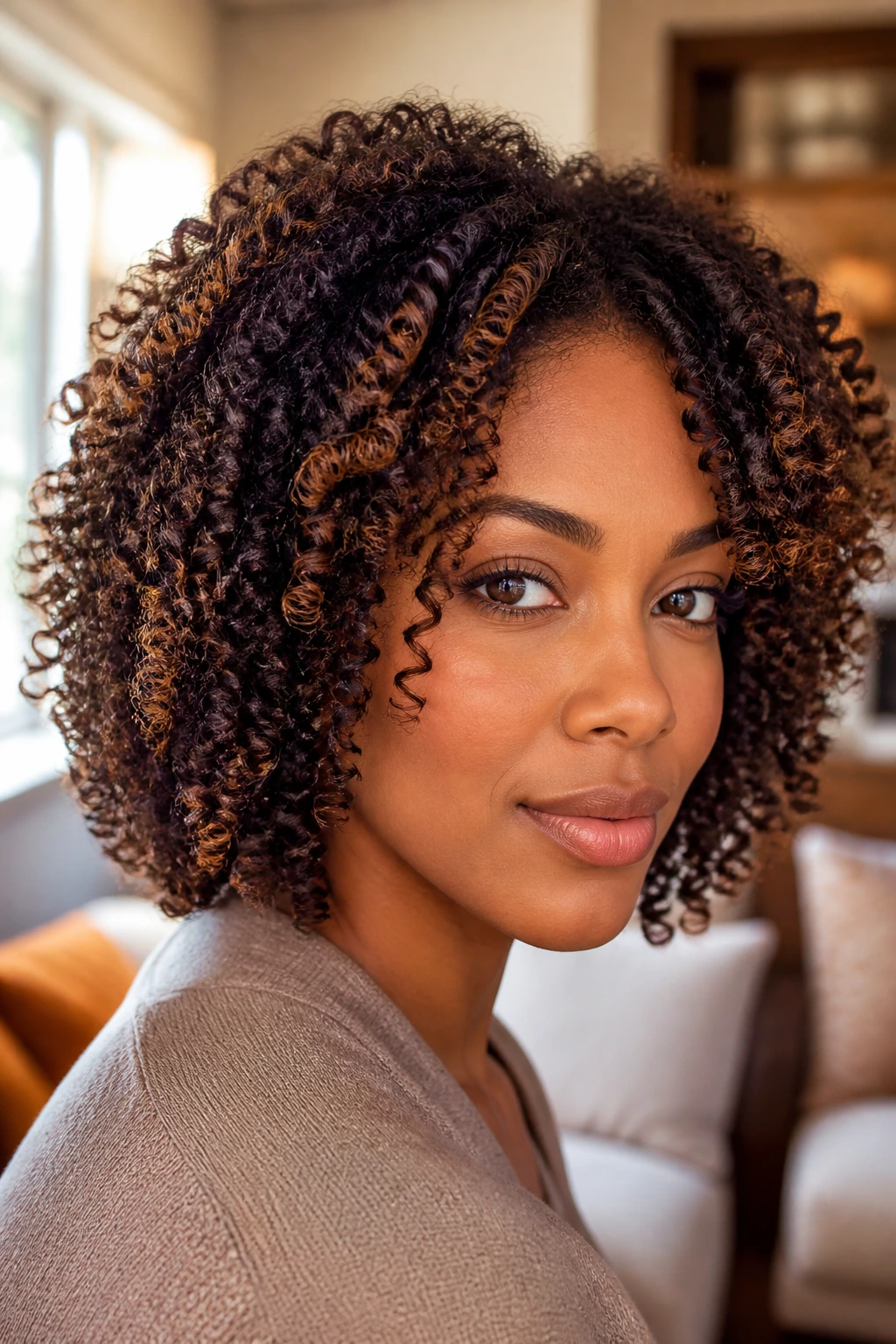
Tight coils deserve dimension too, and chestnut ribbons are one of the nicest ways to do it without destroying the depth that makes coily hair look rich. The shade stays close to the base, just a touch lighter, so the contrast is soft and believable.
On 4A and 4B textures, I prefer chestnut ribbons over very pale highlights. The coil pattern is already intricate. You do not need a loud blonde to prove it. A chestnut lift around the perimeter and a few face-framing pieces can make the whole shape feel more open.
If the hair is very dense, ask for strategic placement rather than all-over lightening. That keeps the coil definition intact and avoids the frizz halo that can happen when too much hair is processed at once.
16. Butter Blonde Balayage for 3B and 3C Curls
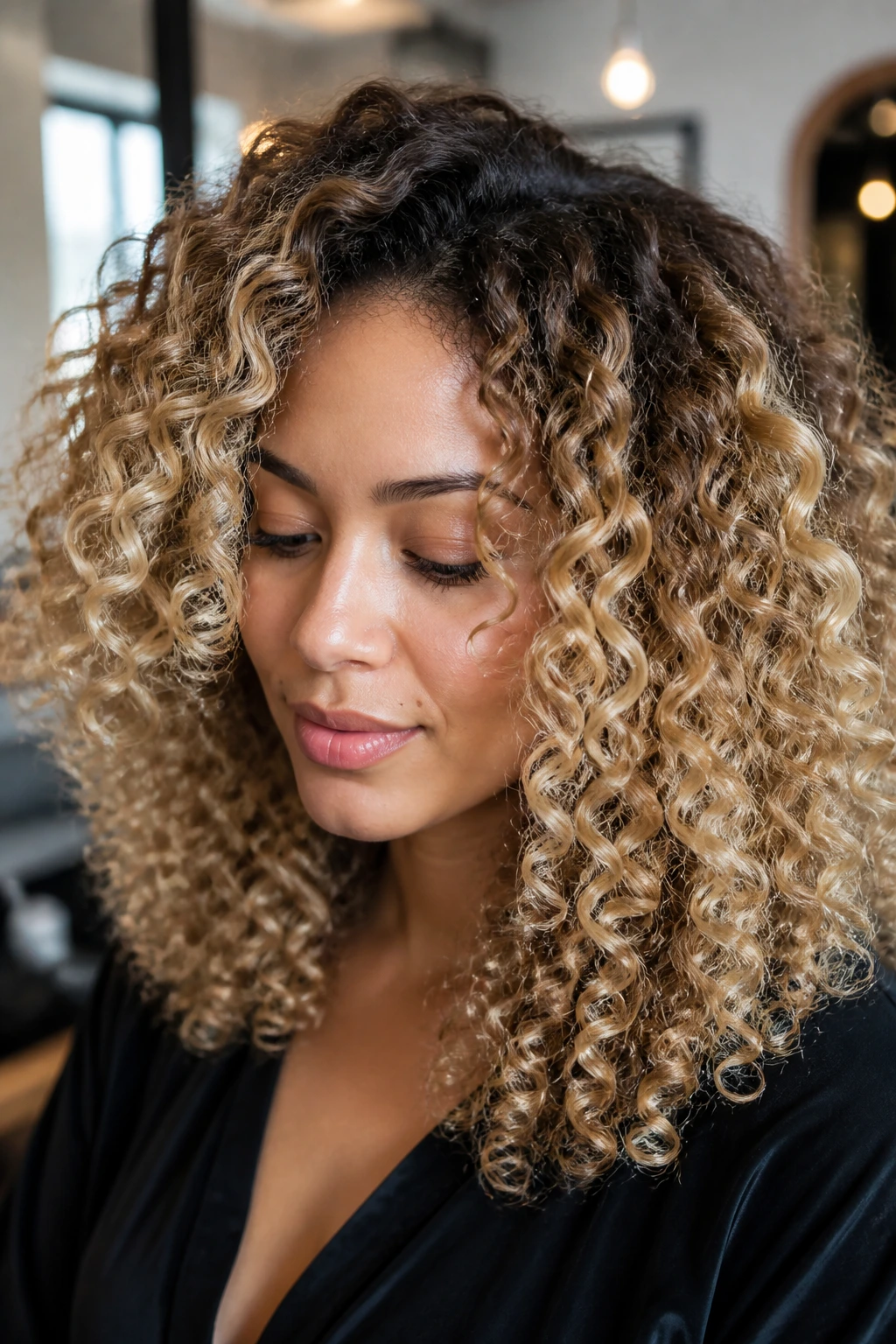
Butter blonde is one of the easier blondes to live with on curls because it stays warm and soft instead of icy. On 3B and 3C curls, that matters. These patterns can take brightness beautifully, but they still need depth underneath to keep the shape from going fuzzy.
The best butter blonde balayage starts lower than people expect and keeps the root area grounded. That darker base gives the blonde something to sit against. Otherwise, the curls can lose the contrast that makes them look defined.
This is a strong pick if you want visible blonde but not the hard line of foiled streaks. It’s airy, expensive-looking, and less severe than platinum. The hair should still read as curly first, blonde second.
17. Smoky Beige Curly Balayage
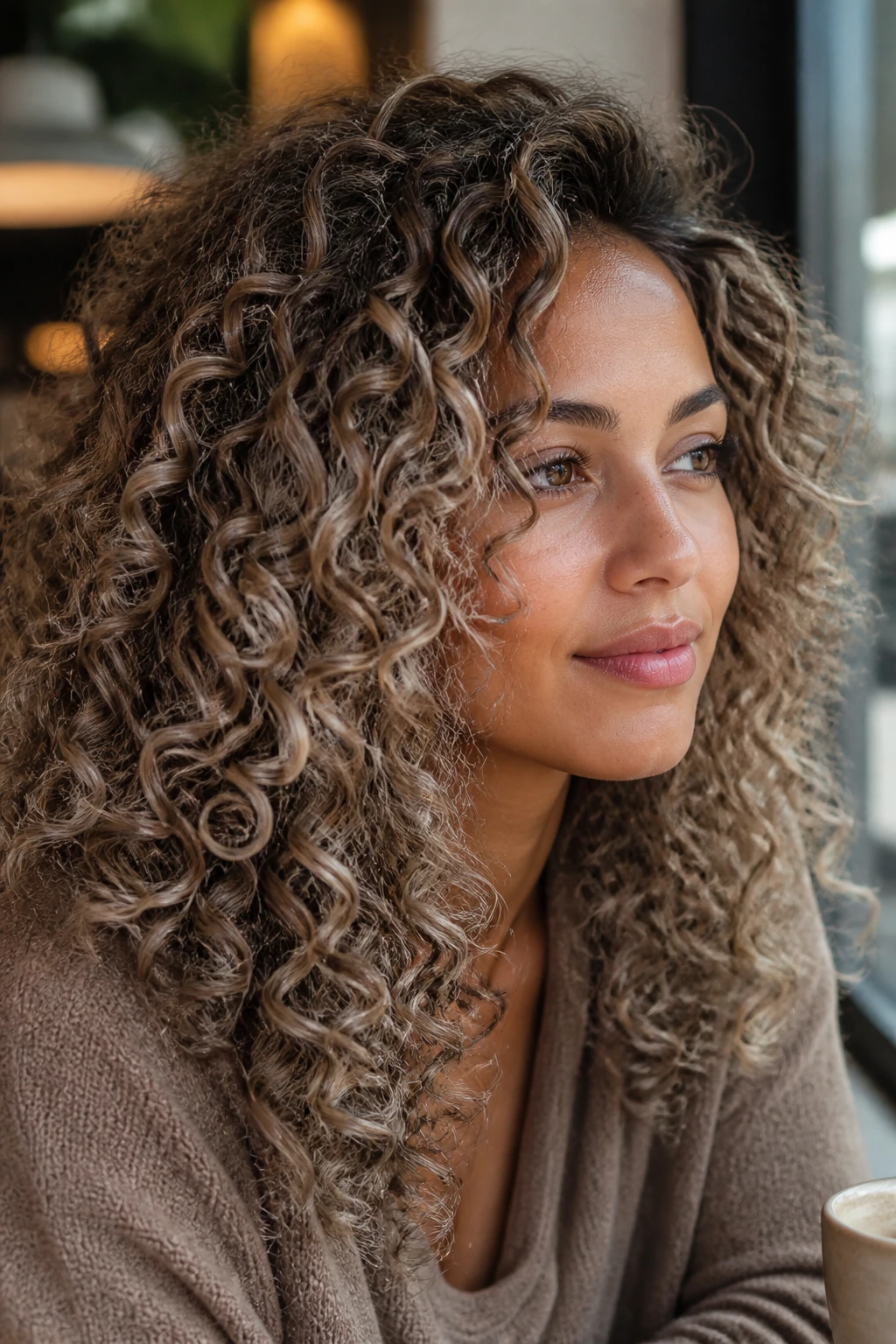
Smoky beige is the answer for someone who wants blonde-adjacent brightness without warmth. It leans soft, muted, and a little cool, which gives curly hair a modern edge when the base is medium brown or dark blonde.
The thing I like most about smoky beige is that it doesn’t fight the curl pattern. Beige tones can disappear on straight hair if the cut is plain, but on curls the movement keeps them visible. The color catches the top curves and lets the underside stay deep.
This idea is especially good for people who wear neutral clothing, silver jewelry, or cooler makeup tones. It has a quiet, polished feel. Not precious. Just clean.
18. Apricot Glow for Warm Undertones
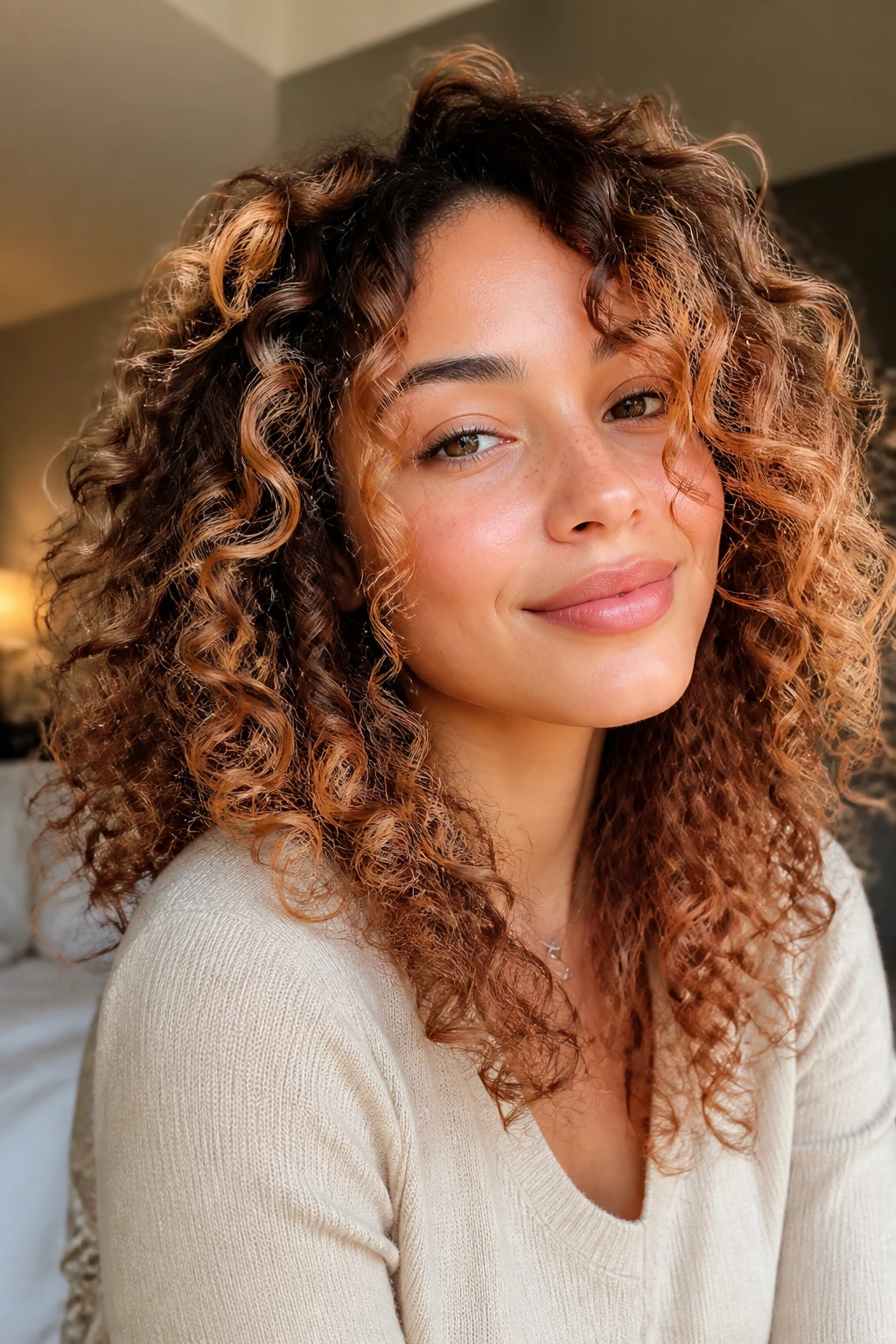
Apricot glow lives in the warm, peachy family that flatters skin with golden or olive undertones. On curls, it looks softer than a straight copper and livelier than honey blonde. A nice in-between shade, which is rare and useful.
I like apricot around the face and on the outer layer of long curls. It gives the hair a sunlit edge without making the whole head look like one tone. The trick is to keep it translucent enough that the curl shape still shows through.
If your wardrobe leans earthy — cream, rust, olive, denim — apricot can be a beautiful fit. It doesn’t have to be loud to feel fresh.
19. Icy Vanilla Tips on Defined Spirals
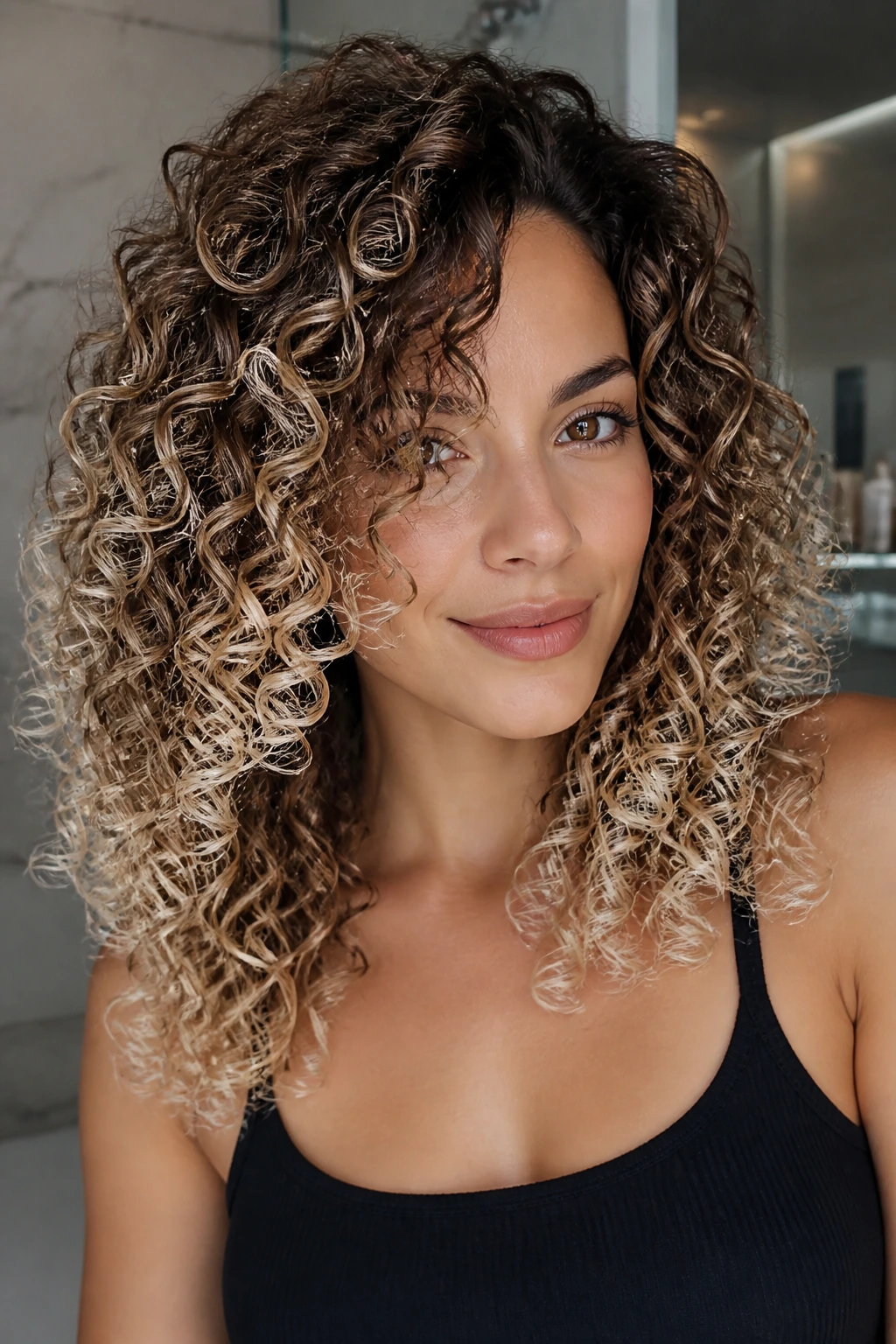
Icy vanilla tips are for the brave, and for hair that’s healthy enough to take a pale end. On defined spirals, the lighter tips make each curl read like its own little hook of light. That effect can be gorgeous when the cut has strong shape.
I’d never do this blindly. Ends need to be in good shape first, because pale blonde shows every rough edge. But when the hair can handle it, the result is crisp and modern. The color sits at the ends, where curly hair naturally shows off swing and separation.
This is a good choice if you want drama at the bottom instead of at the root. The grow-out is also easier than people expect, because the darker top keeps the style grounded while the pale tips do the talking.
20. Mahogany Shine on Dark Curly Hair
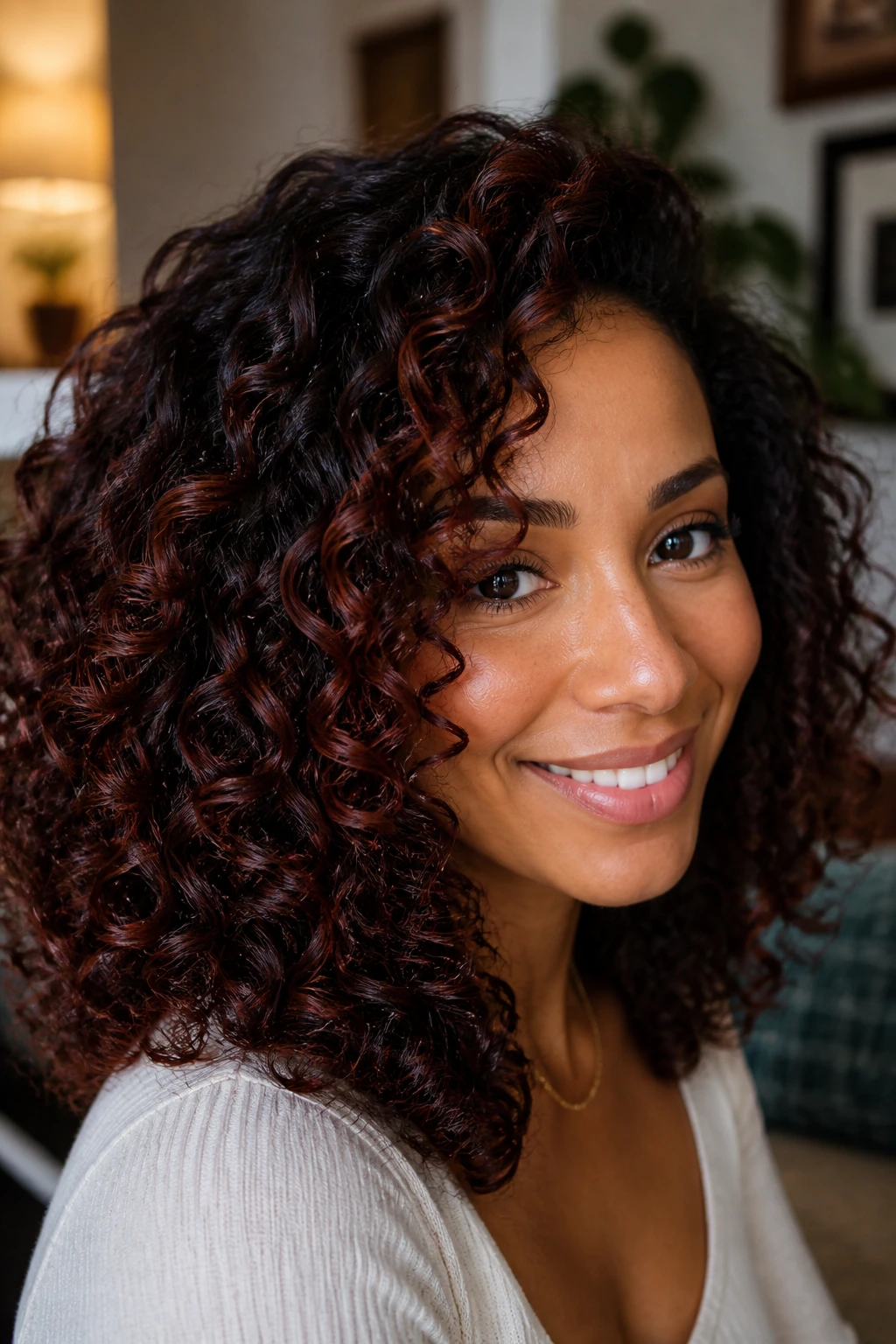
Mahogany is the sleeper hit in dark curly hair color. It does not scream for attention, but it changes the whole surface of the hair by warming the brown just enough to catch the light.
I like mahogany when the goal is shine more than brightness. The curls still look deep and rich, but they stop reading as flat black or one-note brown. In movement, the red-brown tone flashes through the bends of the curl like polished wood.
This is a safer choice than copper if you want warmth without a big jump. It also wears well between appointments, because mahogany tends to fade into a softer brown rather than a weird brassy shell.
21. Reverse Balayage for Grown-Out Blonde Curls
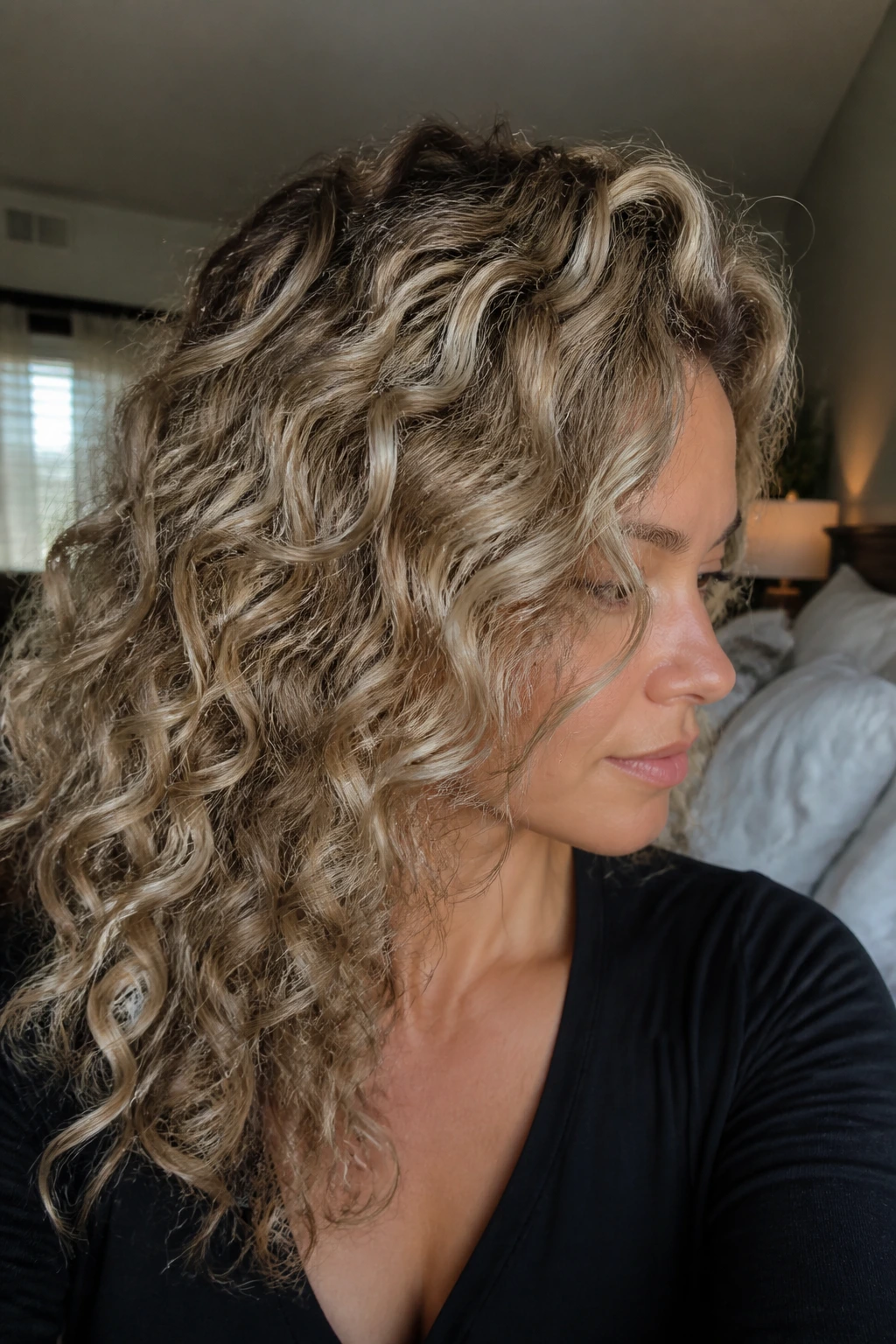
Sometimes the best highlight idea is adding darkness back in. Reverse balayage does exactly that. It drops deeper lowlights and shadow pieces into blonde curls so the whole head regains shape, depth, and a calmer grow-out.
This is especially useful if the hair has been lightened too far and the curls have started to look fuzzy or washed out. A few darker ribbons can make the lighter pieces look brighter, which sounds backward until you see it in the mirror. Contrast is sneaky that way.
I’d reach for reverse balayage when the blonde is still pretty, but a little too uniform. It gives the curls room to breathe again.
22. Blue-Black Gloss with Sapphire Peekaboo Highlights
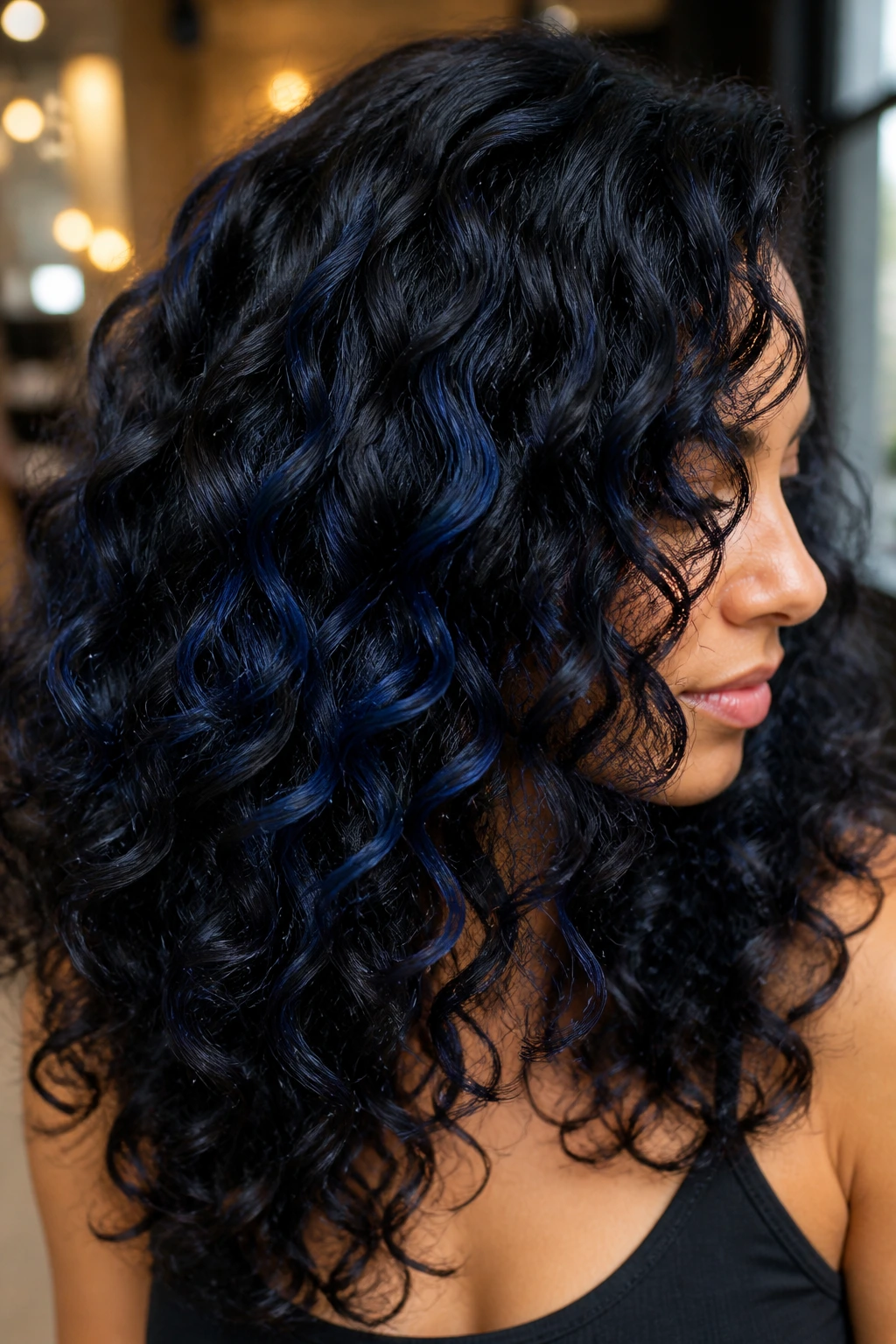
Blue-black gloss with sapphire peekaboo pieces is a favorite of mine for thick curls because it gives you depth, shine, and a little secret color that only shows when the hair shifts. The base stays in that rich blue-black lane, while the hidden sapphire ribbons flash through underneath.
The result is dramatic without being flat. Black hair can go dead-looking if the tone is too one-note, and this avoids that by giving the surface a reflective finish. The sapphire keeps it fun; the blue-black keeps it polished.
If you wear your curls in layers or a curly shag, this idea can look especially good because the movement reveals the hidden color in slices. Very effective. Very cool. Not for someone who wants to disappear into the background.
Why Curly Hair Needs a Different Highlight Map
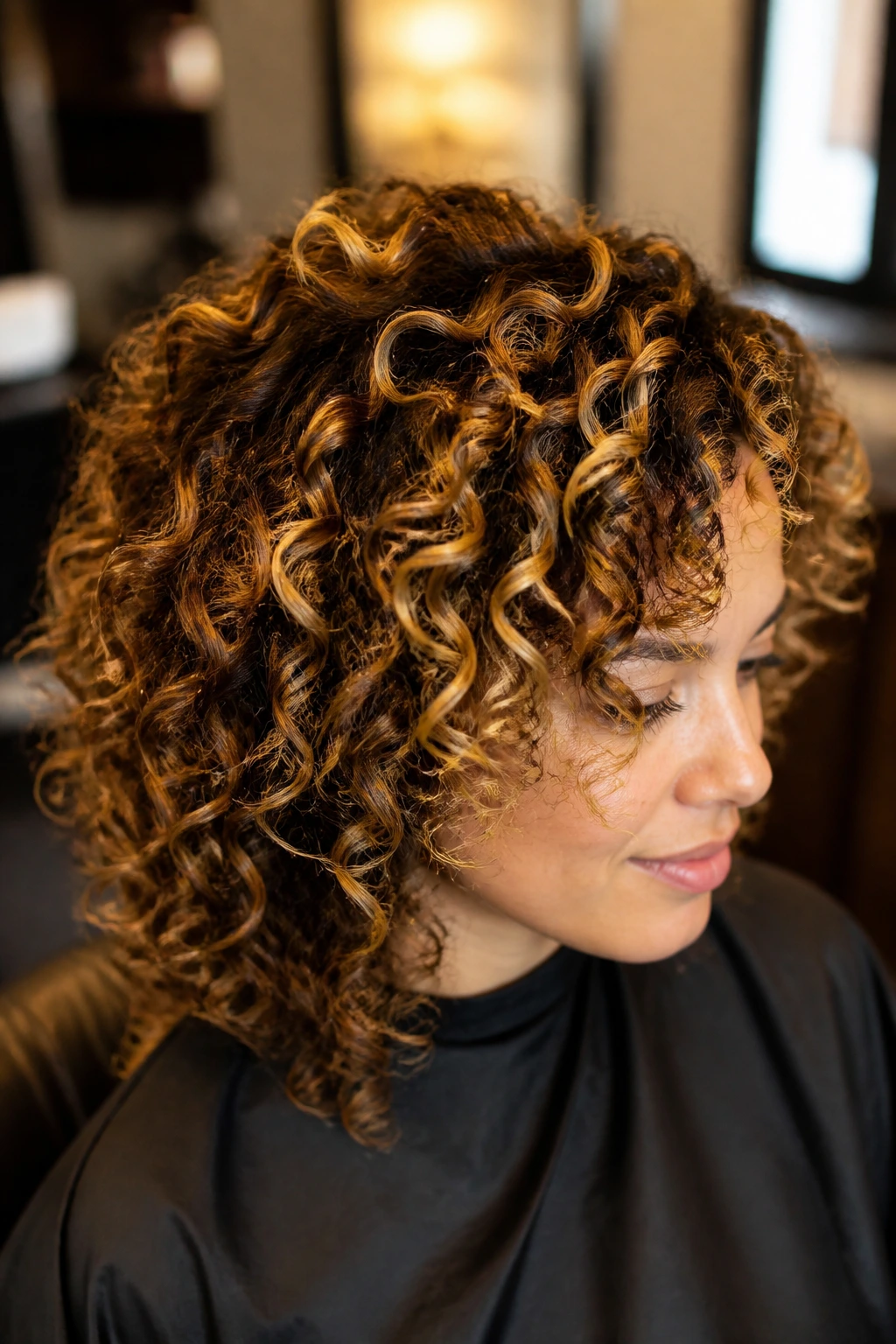
Curly hair doesn’t scatter light the way straight hair does. It bends it. That’s why the same caramel ribbon can look delicate on a blowout and much bolder once the curl clumps dry and the shape shrinks up. A good curly highlight plan starts with that fact and builds around it instead of pretending all textures behave the same.
Shrinkage Changes the Placement
A spiral that sits at the collarbone when wet may bounce up to the chin when dry. If the brightest pieces are painted too high, they can end up crowded near the root and make the head look top-heavy. Longer placement keeps the light where the eye can actually see it.
Porosity Changes the Result
Curly hair often has more porous ends, especially if it’s been colored before. Those ends can grab lightener quickly and go too pale before the mids are ready. That’s why curly color jobs need a softer hand at the bottom and more trust in tone rather than brute-force lift.
Dry Cutting and Dry Viewing Help
I prefer a color plan that gets checked on dry curls, not just wet sections stretched flat. The shape changes too much when the hair is wet. A careful colorist will usually look at the pattern both ways, because the highlight should make sense in the real shape you wear.
Tools That Make a Curl-Friendly Color Job Easier
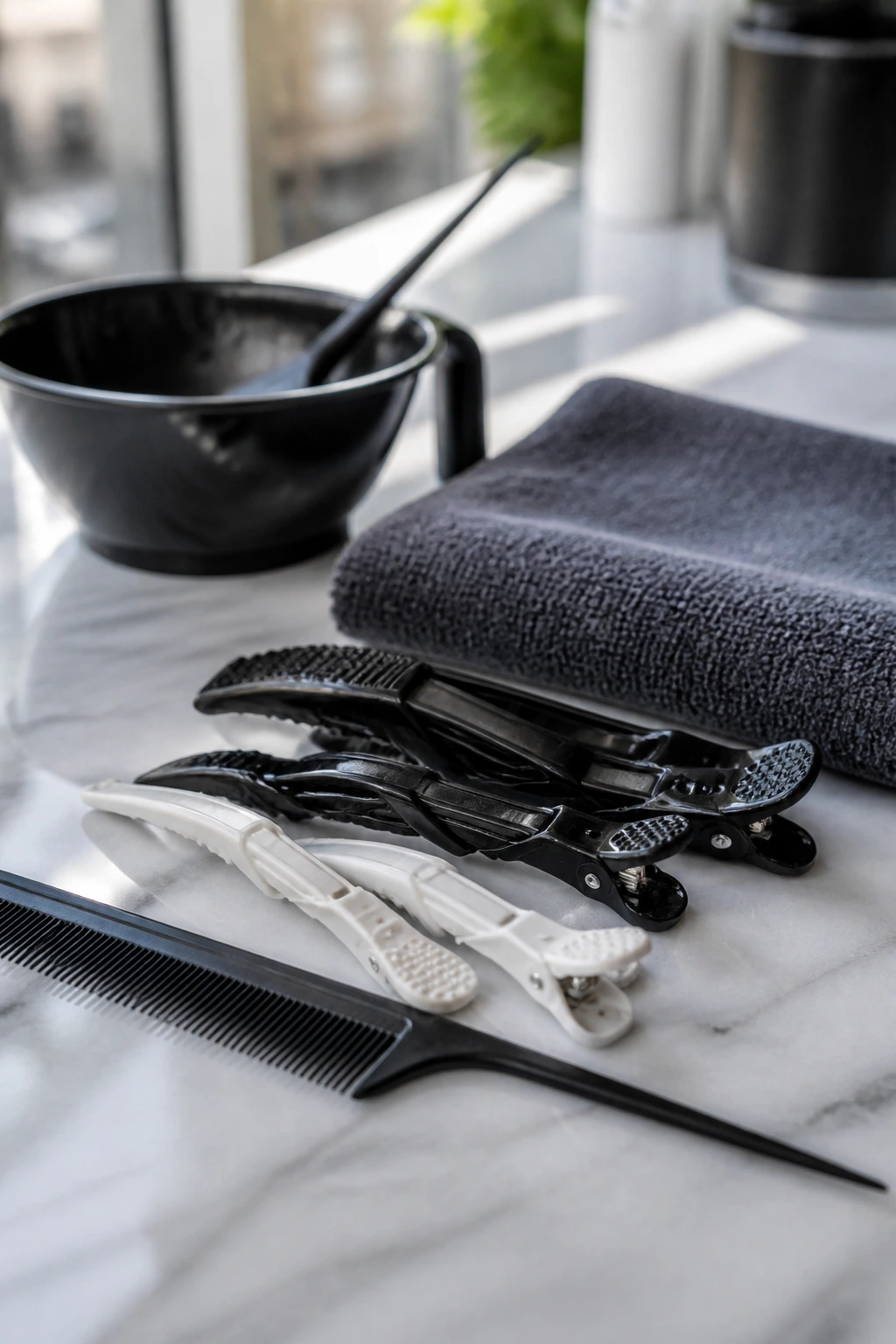
The right tools don’t make the color itself, but they do make the process calmer and the result last longer.
- Inspiration photos in natural light: Bring 3 to 5 photos that show the shade and the placement you want on curly hair, not just on straight hair.
- Sectioning clips: These keep curls separated so the colorist can place bright pieces where they’ll actually show.
- Tail comb: Handy for clean part lines and precise face-framing sections.
- Wide-tooth comb or fingers: Better for detangling curls after washing than a fine brush that stretches the pattern out.
- Color-safe, sulfate-free shampoo: Helps keep the new tone from fading fast and drying out the curl cuticle.
- Deep conditioner or mask: Curly highlighted hair likes extra moisture. A weekly mask usually helps more than another styling product.
- Bond-building treatment: Useful if the hair is being lifted more than one level, because curls can lose spring when they get overprocessed.
- Microfiber towel or cotton T-shirt: Cuts down on rough drying and frizz after washing.
- Diffuser attachment: Lets you dry curls with less blasting air, which helps the highlight placement show in the finished shape.
- Heat protectant: Non-negotiable if you diffuse often or use any hot tools.
- Satin bonnet or pillowcase: Keeps the curl pattern from rubbing rough overnight and dulling the color.
Choosing the Right Tone for Your Base Color
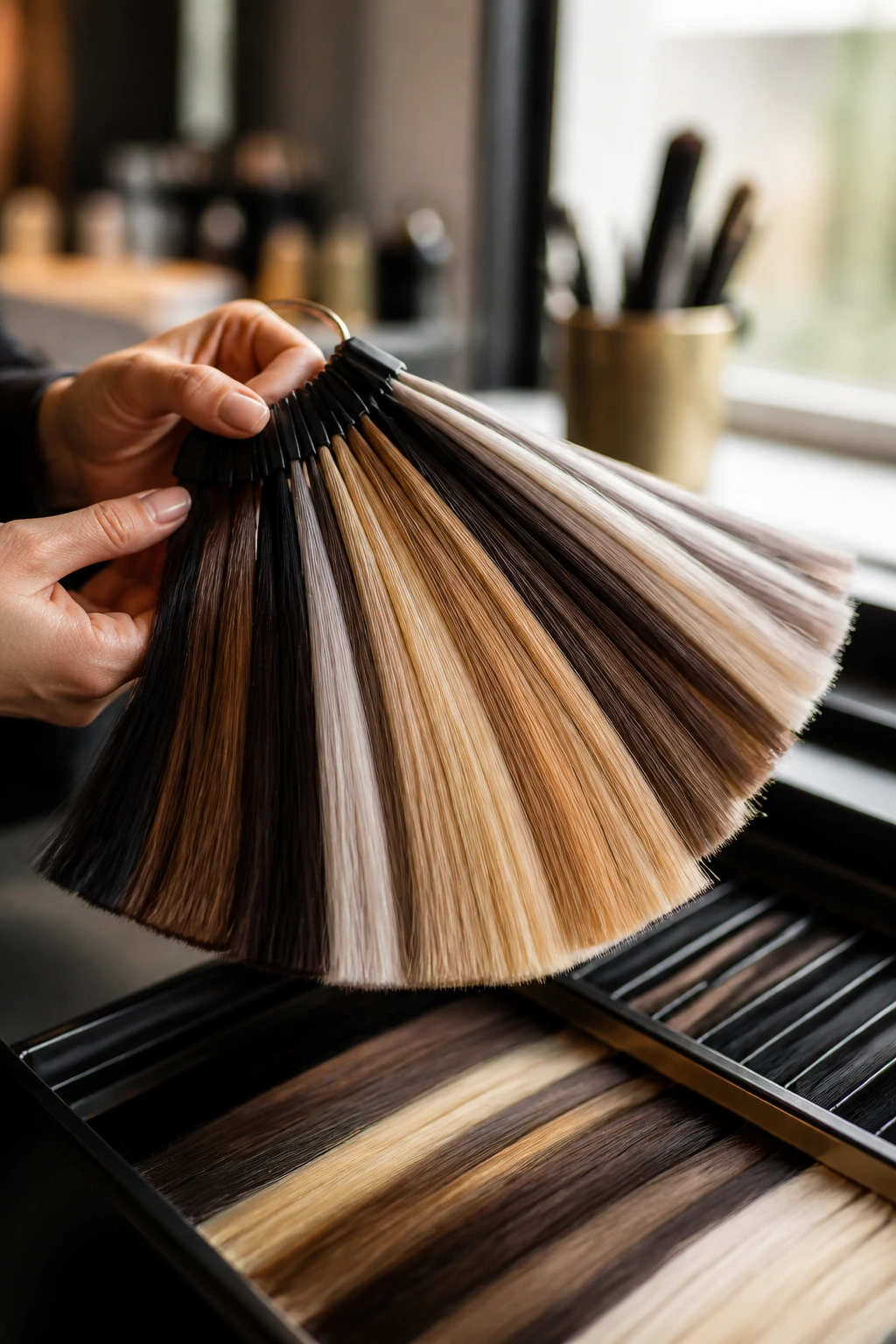
Warm, cool, or neutral — that decision should start with your base color, not with the prettiest swatch on the color ring. A level 3 brunette can wear copper, mahogany, caramel, and cinnamon with very little trouble. A lighter brown base can handle honey, butter blonde, rose gold, and smoky beige more easily because the lift doesn’t have to work as hard.
If your hair pulls orange when lightened, ashier tones like mushroom brown or smoky beige can keep the result under control. If your hair already skews cool, you may find that honey or apricot brings it back to life. I’m partial to matching the highlight family to the undertone of the skin and the clothes you actually wear. That sounds fussy, but it keeps the color from fighting your face.
Bring photos of your curls in daylight if you can. Indoor mirror lighting lies. Natural light tells the truth about how much contrast the color really has.
How to Wear Curly Highlights So the Pattern Shows Off
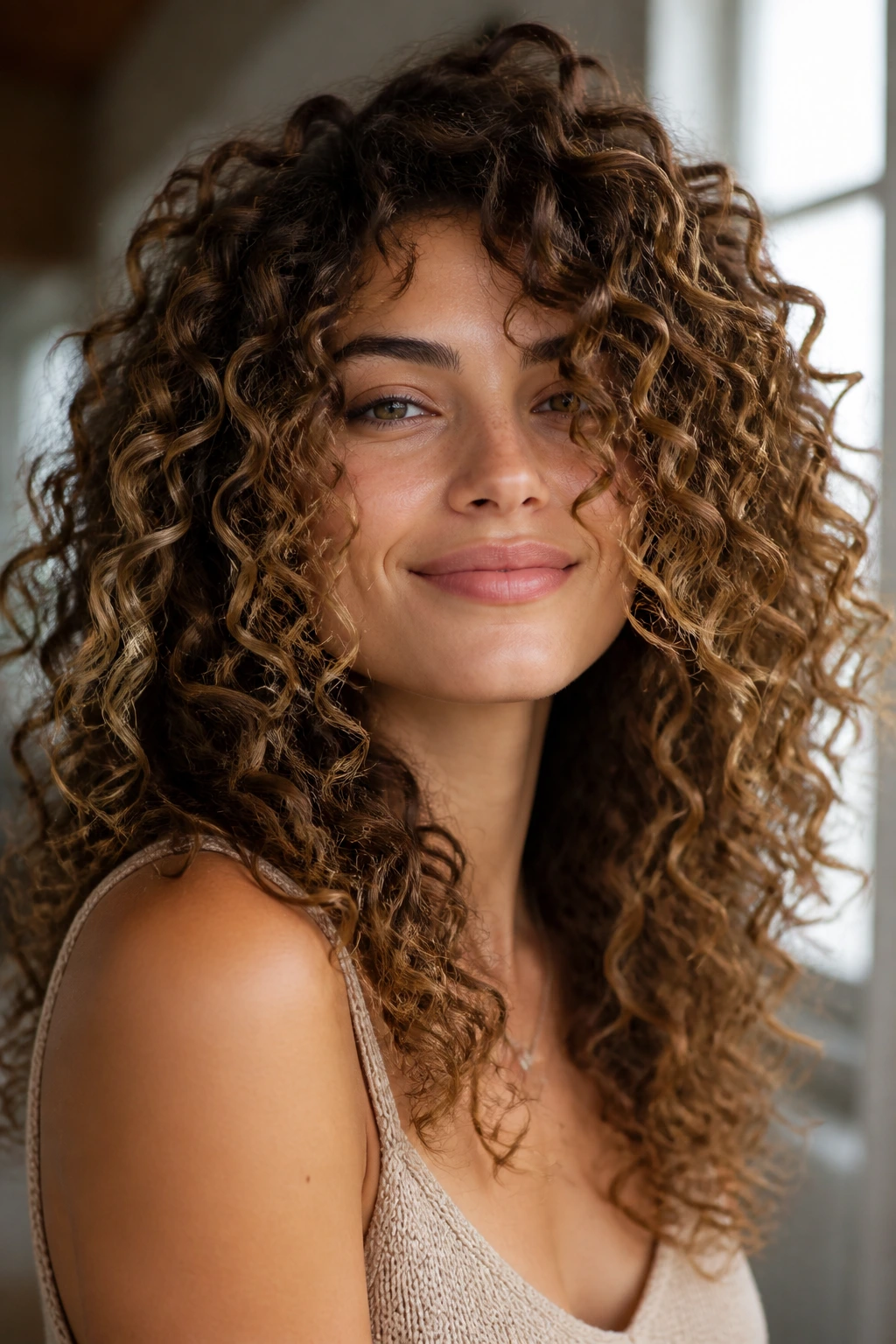
A highlight job on curls lives or dies in the styling chair after the color is done.
Presentation: Diffuse until the curls are about 80 percent dry, then let the last bit air-dry so the highlight placement lands where the pattern naturally opens. If the color sits under the curl bend, you’ll only see it when the hair moves. That’s not a flaw. That’s the whole point.
Styling Pairings: A side part pushes face-framing pieces into view; a center part highlights symmetry and can make babylights look more even. Half-up clips, pineapple styles, and twist-outs all expose different layers of the color, which is useful when the highlights live beneath the top sheet of curls.
Placement Density: If the look is bold — platinum, copper, teal, burgundy — keep the outfit and makeup fairly clean so the hair stays the focus. If the highlight is subtle, like caramel or mocha, a stronger lip or eye look can balance the overall effect. The hair should still feel like the loudest thing in the room, though.
Extra Ways to Personalize the Color
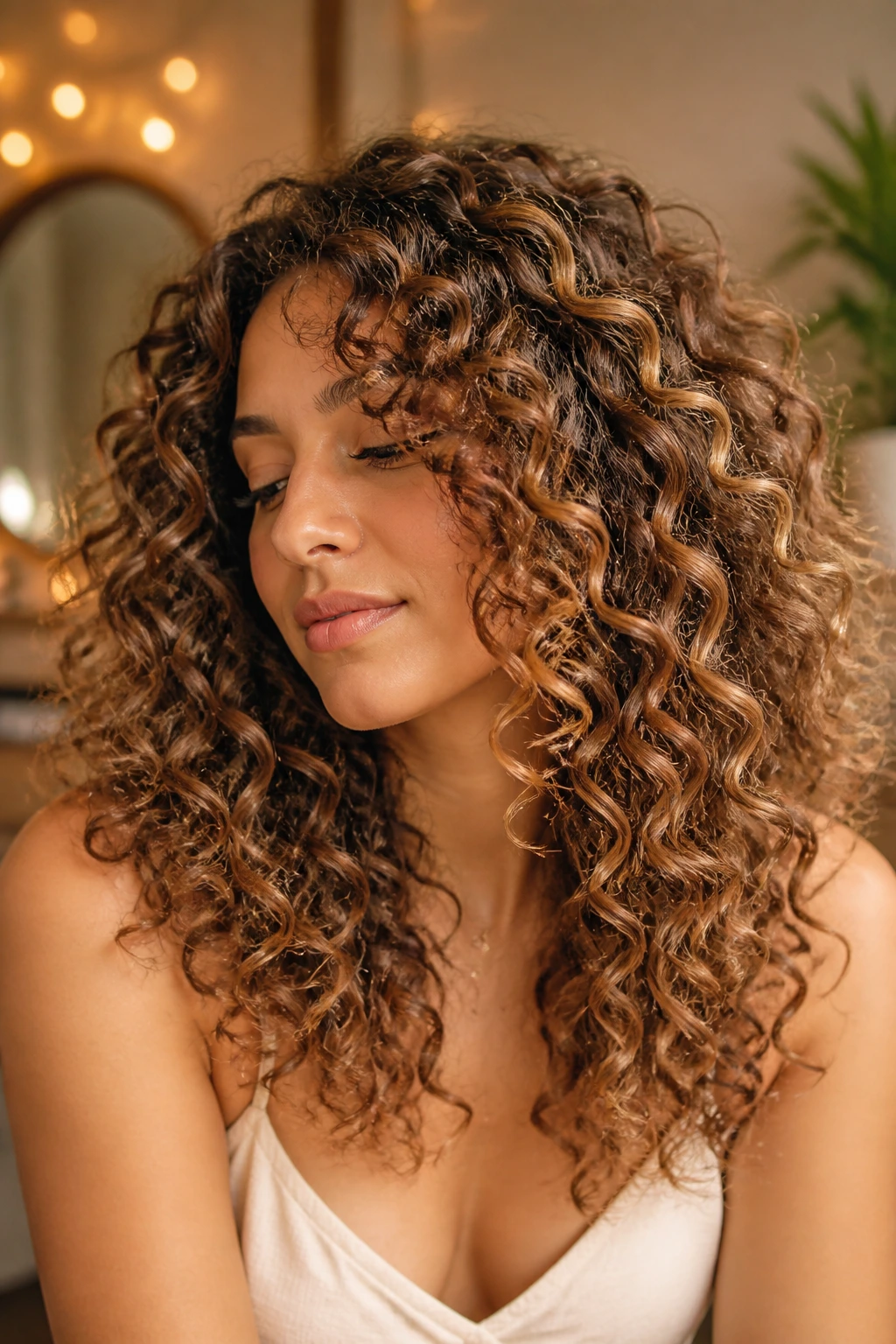
Flavor Enhancement: A clear gloss or tinted glaze after the highlight service can make curls look richer and less dry-looking. I like this step for blondes and reds because it seals the tone without burying the curl texture.
Customization: If you want a lower-drama version of any bright idea, ask for fewer foils, wider spacing, or a shadow root. If you want more punch, ask for brightness closer to the face and crown, where curls move the most.
Serving Suggestions: Hair accessories matter more than people think here. A satin scarf, gold clips, or a simple claw clip can shift the whole mood of the color by exposing different sections of the pattern.
Make-It-Yours: For a softer look, stay in the caramel, honey, chestnut, or mocha family. For a bolder look, move toward copper, burgundy, teal, platinum, or sapphire. If you want something that grows out quietly, reverse balayage and shadow-root placements are the least fussy path.
Keeping Curly Highlights Fresh Between Visits
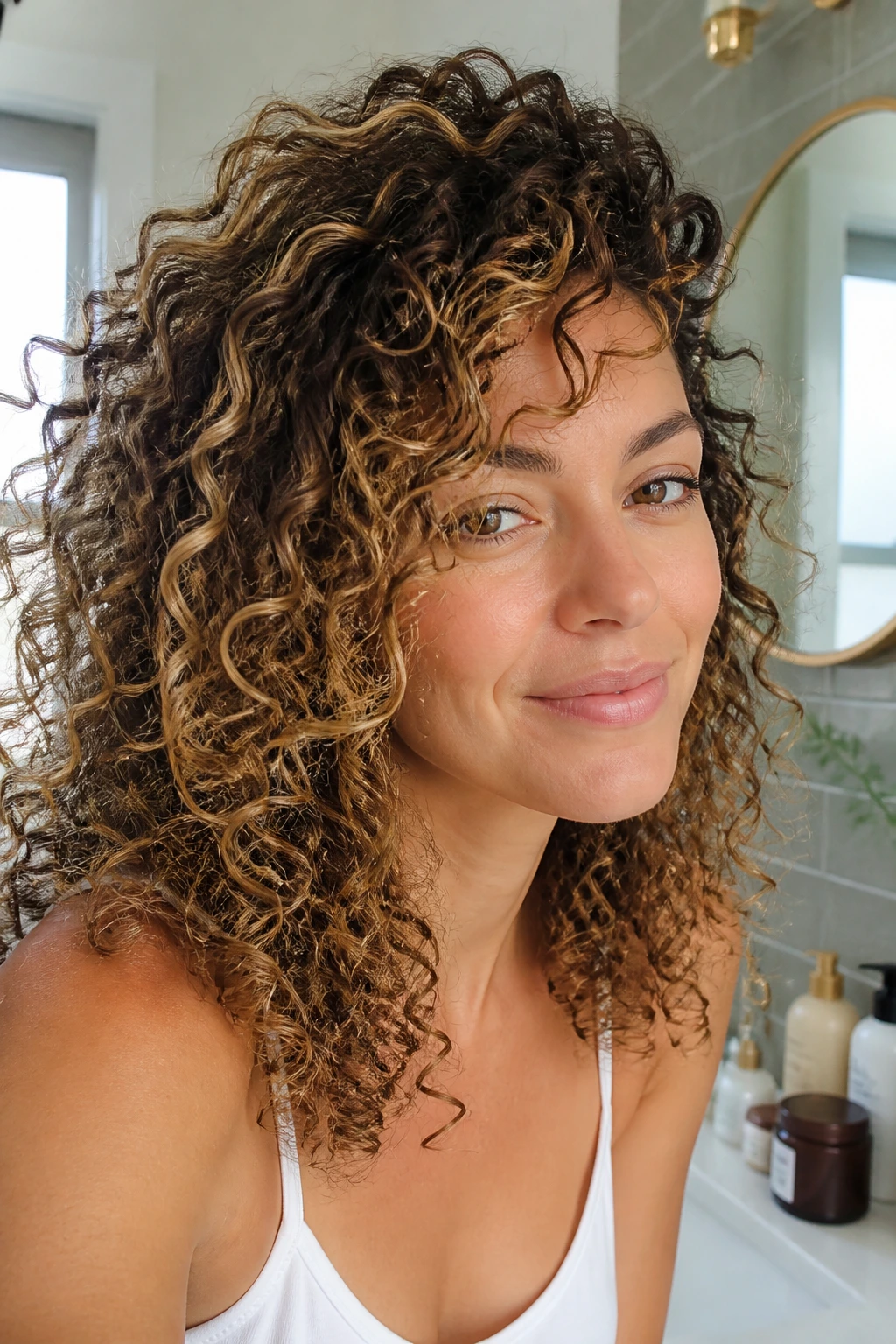
Curly highlighted hair usually stays wearable longer than straight highlighted hair because the movement hides root grow-out. Still, the color needs care if you want the tone to stay clean and the curls to keep their spring.
Most highlighted curls do best with washing every 5 to 10 days, depending on how dry the hair feels and how much product you use. If the hair is blonde, beige, or icy, a purple shampoo once every 2 to 3 weeks is usually enough. Leave it on for 1 to 3 minutes, not 10, unless you want a cool cast that can get weird fast.
A bond-building treatment once a week can help if the hair has been lightened more than a shade or two. Diffusing is fine, but use heat protectant first and keep the dryer moving. One hot blast in the same spot does more damage than most people think.
For blondes and coppers, a gloss refresh every 6 to 10 weeks keeps the tone from looking tired. For softer brunettes and reverse balayage, the grow-out can stretch longer, sometimes 10 to 14 weeks, because the contrast stays gentle.
Sleep on satin if you can. Cotton steals moisture and roughs up the cuticle, which makes highlighted curls look faded before their time.
Common Mistakes That Flatten Curly Highlights
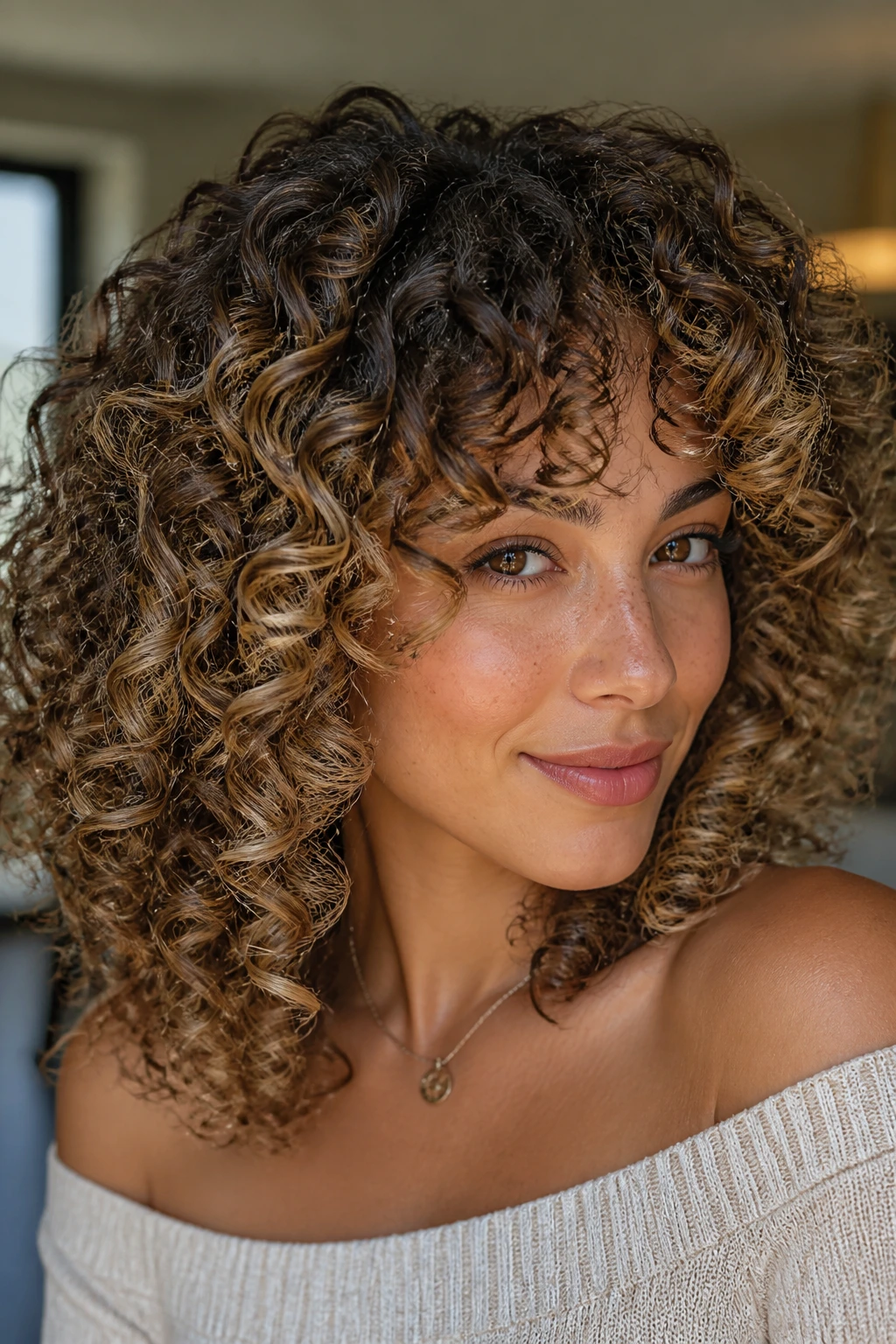
Over-lighting the top layer: If all the brightness sits on the outer sheet of curls, the head can look striped once the curls separate. The fix is to scatter some lighter pieces beneath the top layer so the color shows from more than one angle.
Ignoring shrinkage: Highlights that look perfectly placed on wet hair can disappear once the curls bounce up. Ask for placement that sits slightly lower than a straight-haired client would need.
Choosing a tone that fights the base: Ash on an already-cool brunette can look dull. Too much warmth on a naturally copper base can turn brassy. The fix is to work with the undertone already there instead of forcing a new one.
Skipping the toner conversation: Raw lightener is not the finished look. If a blonde piece sits too yellow or too orange, the curl pattern will not save it. Toner or gloss matters.
Using heavy oils to “fix” dry-looking highlights: A thick oil can make the color look greasy and muddy rather than healthy. Light leave-in products and a proper mask usually do a better job.
Coloring damaged ends too far: Ends that are already rough can fall apart if they’re pushed to platinum or icy beige. Sometimes the smarter move is a darker ribbon, not a lighter one.
Questions People Ask Before Coloring Curls
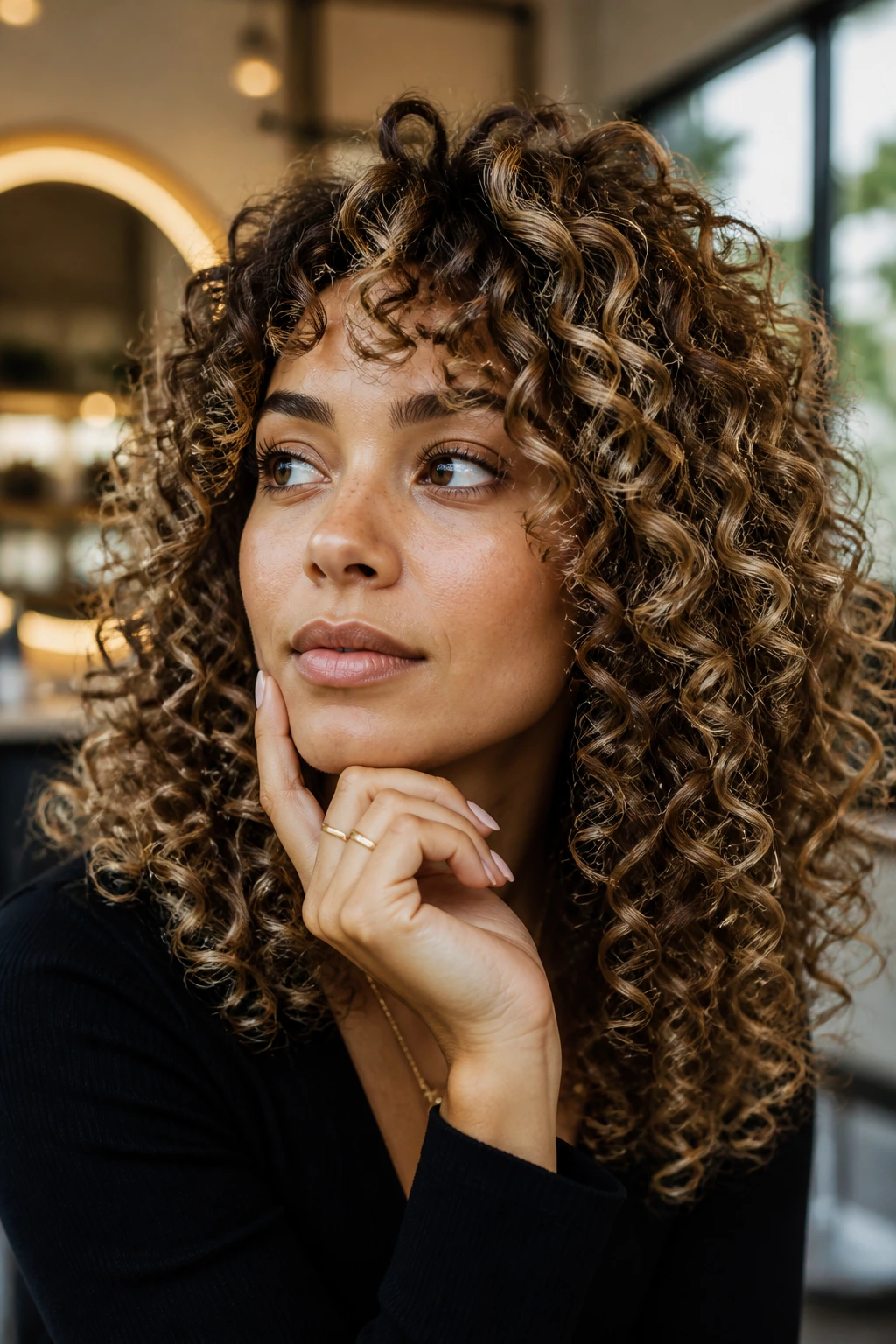
Can curly hair handle blonde highlights?
Yes, but the hair has to be in decent shape and the placement has to respect the curl pattern. Warm blondes like butter, honey, and beige are usually easier to live with than very icy shades.
Is balayage better than foils for curly hair?
Balayage often looks softer because it follows the curve of the curl and gives a more natural grow-out. Foils can still work well, especially for brighter face-framing pieces or a more precise blonde result.
Do highlights make curls frizzier?
They can if the hair gets overprocessed or if the aftercare is too rough. The color itself is not the only issue; dryness, rough drying, and too much heat usually cause the extra frizz.
What curl types suit chunky highlights?
Loose 2C through 3B curls can carry chunkier highlights more easily because the pattern opens wider. Tighter curls usually look better with ribbons, babylights, or scattered placement that keeps the shape from looking blocky.
How often should curly highlights be toned?
Blonde and beige highlights often need a gloss or toner refresh every 6 to 8 weeks. Copper and caramel tones may stretch a little longer if you use color-safe products and avoid harsh clarifying shampoo.
Will highlights work on dark curly hair without looking brassy?
Yes, if the tone choice is smart and the lift is controlled. Mocha, caramel, mahogany, copper, and smoky beige usually behave better on dark bases than pale golds pushed too fast.
Can I get highlights if I usually air-dry my curls?
Absolutely. In fact, air-dried curls show highlight placement honestly, which is useful. Just make sure the color plan looks good in your natural finish, not only in a stretched blowout.
What if my highlights look stripey after the first wash?
That usually means the placement was too uniform or the contrast is too high for the curl pattern. A gloss, a few lowlights, or a softer next session can calm it down.
Color That Moves With the Curl
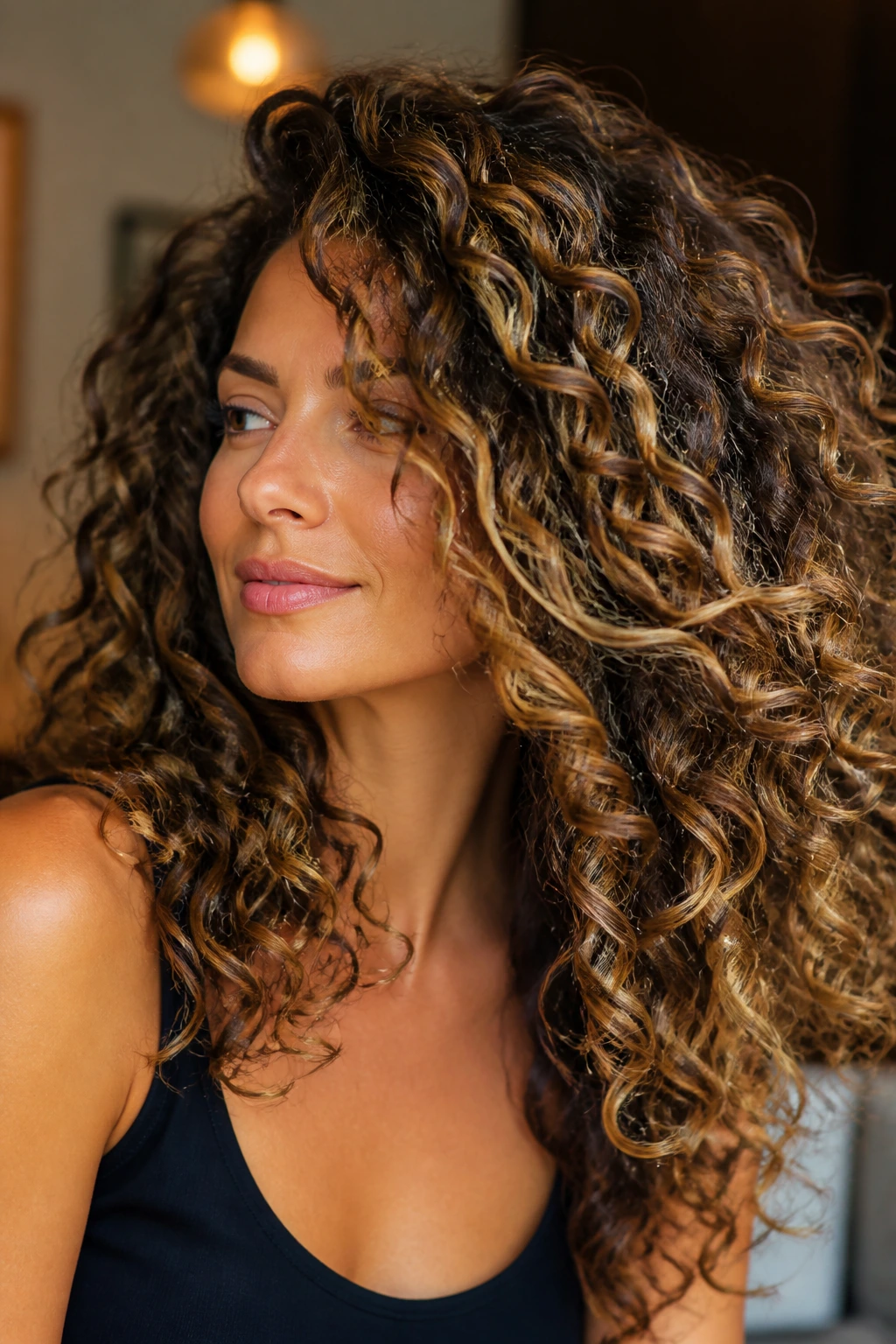
Good curly highlights do not sit still. They show up in little flashes when the hair turns, in brighter loops around the face, in darker gaps that keep the shape from going fuzzy. That movement is the whole appeal, and it’s why the most flattering ideas are the ones that respect curl behavior instead of trying to flatten it.
Pick the shade that fits your base, then think about where the light should live. Around the face? Under the crown? On the ends only? That one decision usually matters more than whether the color is caramel, copper, beige, or sapphire.
When the placement is right, curly hair doesn’t look “colored.” It looks animated. That’s the version worth chasing.
