



Bob haircuts for thick hair can look sharp, expensive, and clean — or they can puff out at the sides like they’ve got a chip on their shoulder. The difference usually isn’t the hair itself. It’s the shape, the weight line, and whether the cut was built for thick hair or merely copied from a photo of finer hair.
That’s the part people miss. Thick hair isn’t one thing. Some heads carry a ton of density with each strand still fairly fine. Others have fewer hairs per square inch but each strand feels like rope. The best bob haircut for thick hair changes depending on which kind of thickness you’re working with, where the bulk sits, and whether your hair bends, flips, or sits poker-straight after a blow-dry.
A good bob on thick hair should do two things at once: keep the outline clean and give the interior enough relief so the cut moves instead of bracing itself into a helmet. That’s where the fun lives. Short, long, stacked, curved, blunt, shaggy — the right version makes thick hair behave without killing the texture that makes it so satisfying to wear.
Why These Bobs Work So Well on Thick Hair
-
The perimeter does the heavy lifting: A strong bottom line keeps thick hair from spraying outward at the ends, especially when the cut sits near the jaw or collarbone.
-
Internal weight removal changes everything: Long layers, hidden debulking, and careful point-cutting take pressure off the inside of the shape without making the bob look thin.
-
The right length controls the triangle effect: Thick hair often expands widest around chin level; shifting the cut slightly shorter or slightly longer can stop that puffed-out silhouette.
-
Texture and density need different fixes: Dense hair usually wants more weight removed underneath, while coarse hair often needs a softer edge and a smoother finish.
-
The bob gives you a real shape to work with: Instead of hiding heavy hair, these cuts use the density to build a line, a curve, or a bend that shows off the hair’s body.
-
Styling becomes simpler when the cut is honest: A bob that matches your hair’s natural fall dries faster, flips less, and needs fewer rescue passes with the flat iron.
1. Chin-Length Blunt Bob With a Clean Edge
This is the bob that says, “I know exactly what I’m doing.” The line sits right around the chin, the edge is crisp, and the whole point is to let thick hair show off its body without turning fluffy at the ends. If your hair has a lot of density and tends to widen as it dries, this shape gives it a firm boundary.
What makes it work is restraint. A blunt line does not mean no planning; it means the planning happens in the weight balance, not in visible layers. If your hair is straight or has a soft bend, this cut can look polished with almost no fuss. Blow-dry it with a paddle brush, tuck one side behind the ear, and the silhouette does most of the talking.
If your hair is very coarse, ask for the perimeter to be softened just a touch at the ends so it doesn’t look like a ruler. You want dense, not stiff.
2. Soft Layered Bob That Removes Bulk Without Losing Shape
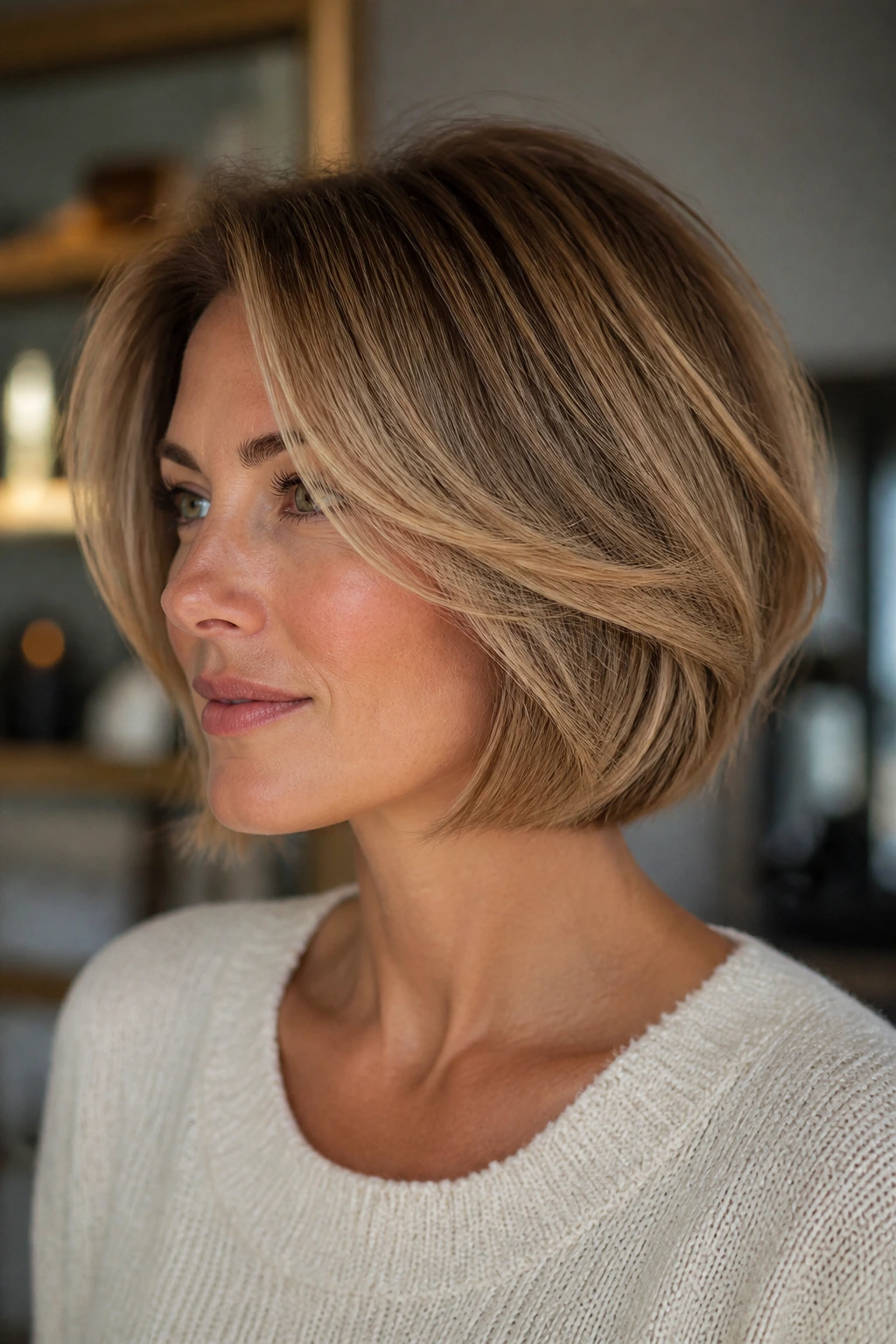
Ever had a bob that felt too wide at the sides? That’s where soft layering earns its keep. This version takes enough weight out of thick hair to let it move, but not so much that the cut starts fraying into pieces.
What to ask for at the chair
Tell your stylist you want internal layers, not choppy surface layers. That distinction matters. Internal layers sit inside the shape and help thick hair collapse a little closer to the head, while the visible outline stays calm and full.
This is a good pick if your hair is dense from temple to nape or if the ends feel heavy enough to drag the whole cut down. A little blowout with a round brush gives the top some lift, but the cut will still work on a messy air-dry day. That’s the real charm here: it looks finished, even when it isn’t.
3. A-Line Bob That Carries Weight in Front
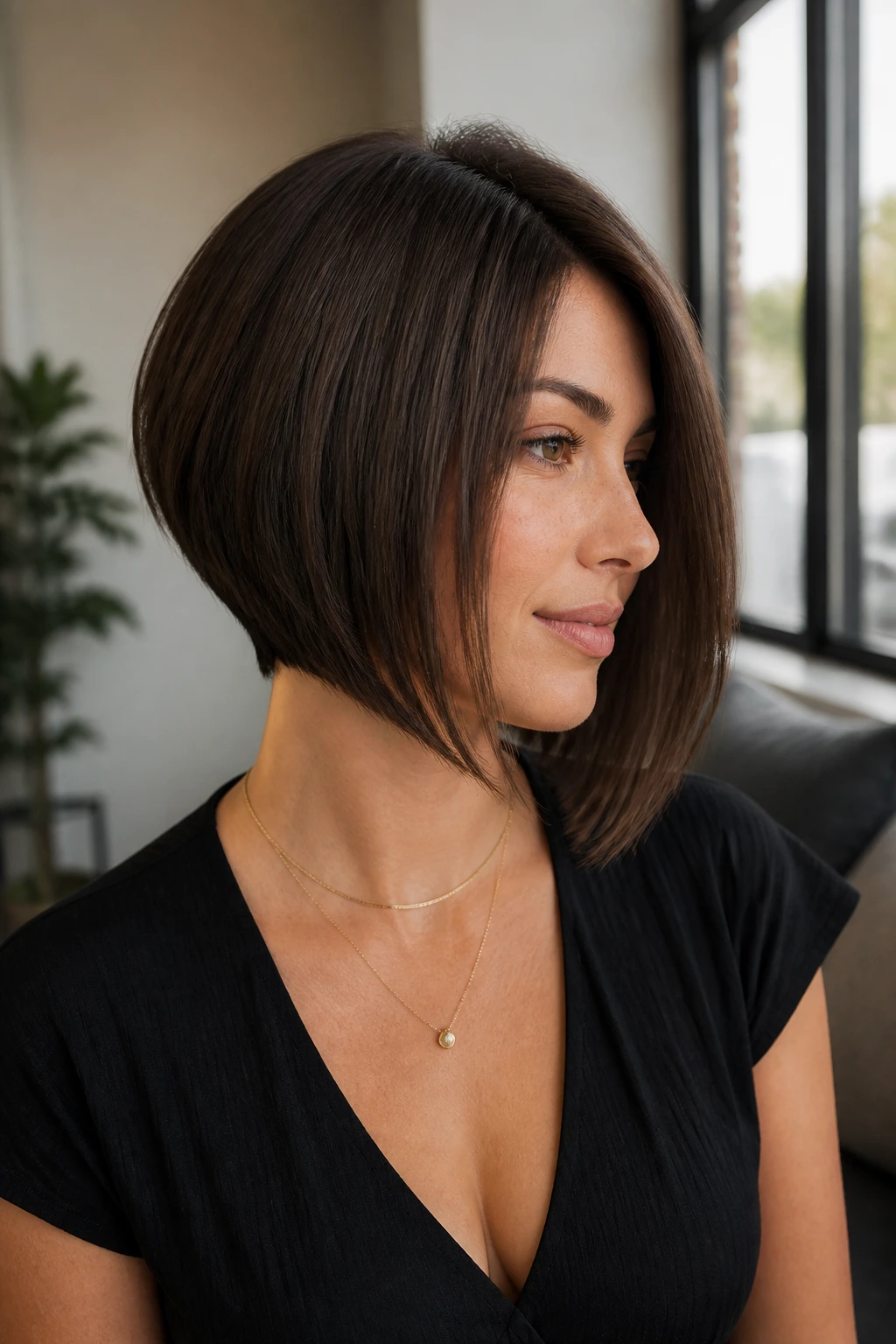
The A-line bob is a smart move when thick hair starts to balloon around the jaw. The back sits shorter, the front drifts longer, and that forward angle changes how the eye reads the bulk. Instead of a boxy block, you get a slope.
Why the angle matters
Thick hair has a habit of spreading sideways. The A-line shape pulls that spread forward, where it looks intentional. It also gives you a little more length near the face, which helps if you’re not ready to commit to a very short bob.
This cut shines on straight or slightly wavy hair. If your ends flip outward, the longer front pieces can handle that movement better than a blunt chin-length edge. Keep the angle subtle if you want a more wearable version; a dramatic A-line is striking, but it asks for a steady blow-dry and regular trims.
4. French Bob With Brow-Grazing Bangs

A French bob on thick hair has attitude in the best way. It usually sits above the chin or right around it, with a fringe that lands near the brows and a shape that feels a little loose around the edges. On thick hair, the result is less airy café fantasy and more controlled fullness — which is better, honestly.
The trick is making the fringe work with the density instead of fighting it. Thick bangs can look heavy fast, so the ends should be trimmed with care and not hacked straight across like a craft project. A tiny bend at the ends keeps the look from feeling severe.
If your hair has a natural wave, this cut gets even better on day two. The fringe softens, the sides loosen, and the whole thing starts looking lived-in instead of over-styled. It does need regular bang trims, though. No way around that.
5. Collarbone Lob With Long Layers
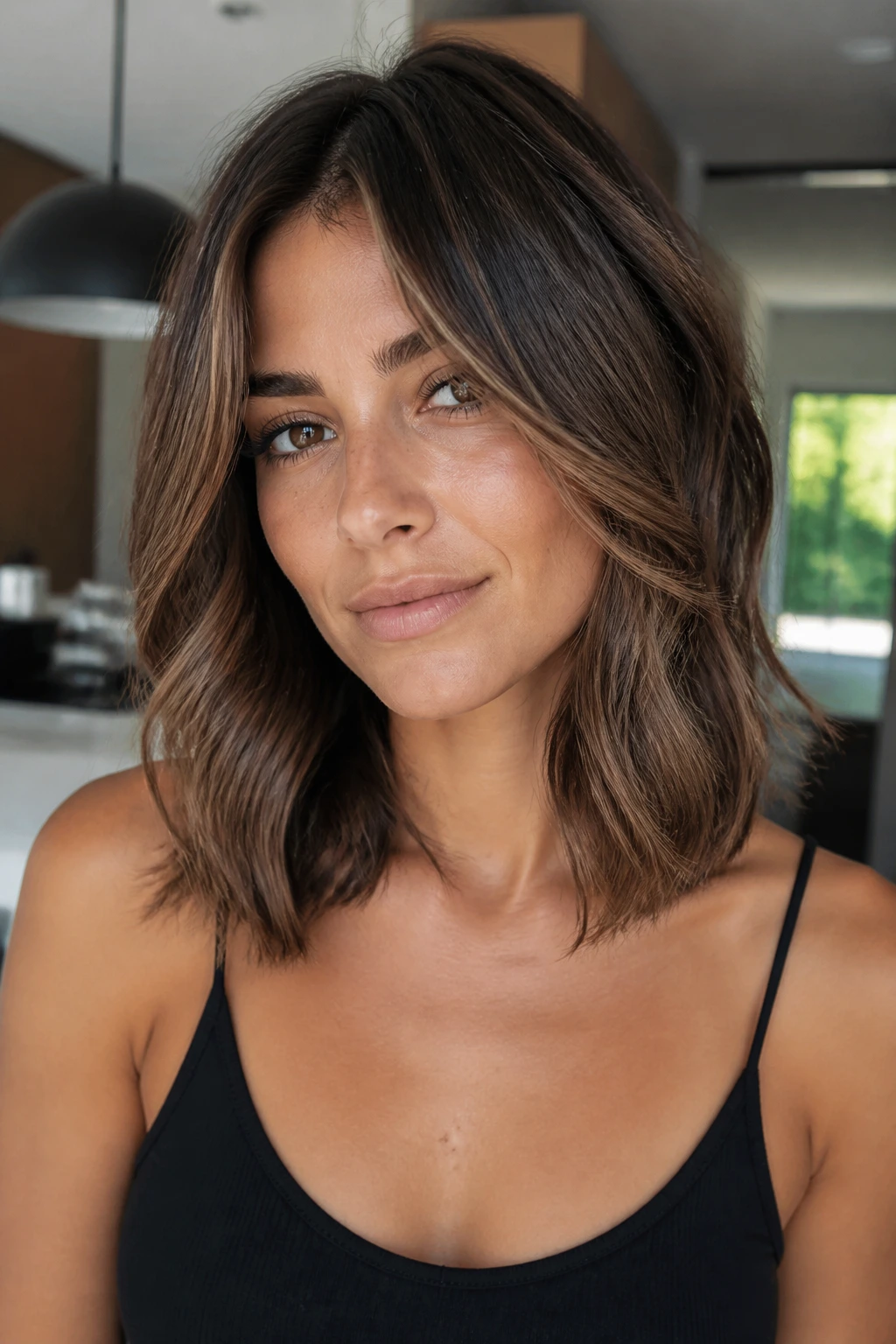
Not everyone wants to go short right away. The collarbone lob is the peaceful middle ground, and thick hair often looks excellent here because the length keeps enough weight to stay smooth. Long layers stop the ends from turning into one giant shelf, but the cut still feels substantial.
This is the bob-adjacent cut I recommend when someone says, “I want a bob, but I’m nervous.” Fair enough. The collarbone length gives you enough hair to tuck, wave, or flatten with a brush, and it grows out gracefully. That matters more than people admit.
If your hair is especially dense, ask for the layers to start below the cheekbones. Any higher and the front can get too light, too fast. You want movement, not fluff.
6. Stacked Bob That Lifts the Back of the Head
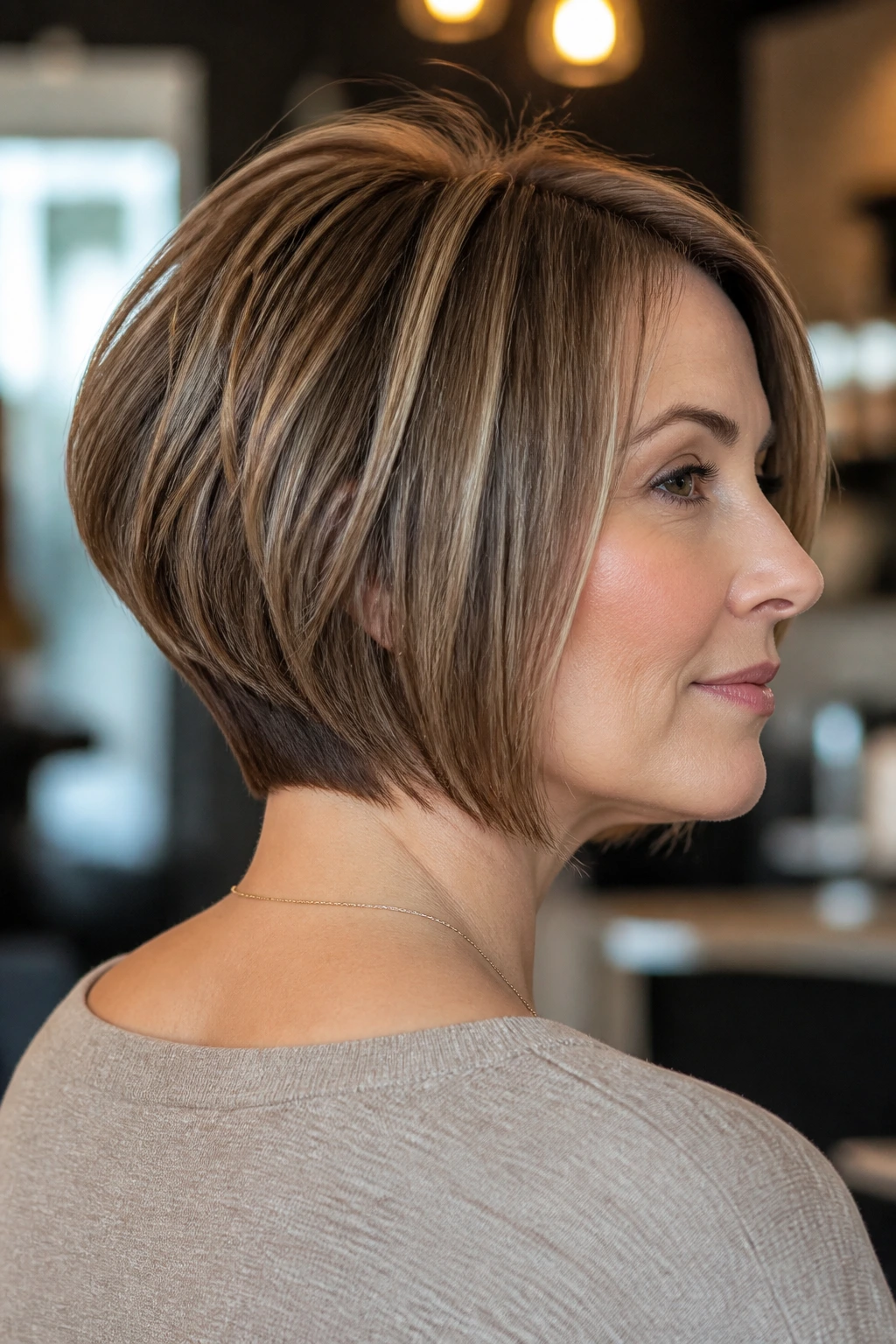
A stacked bob is built from the back forward, and thick hair loves that structure when the crown needs help. The layers sit shorter at the nape and gradually get longer upward, so the back gains shape without sitting like a heavy shelf on your neck.
This cut is especially good if your hair grows flat at the crown but bulky at the bottom. The stack gives the back a little lift, almost like the haircut is doing the posture work for you. It also makes thick hair easier to blow-dry because the shorter layers move first.
Be warned: a strong stack needs maintenance. If you let it grow too long, the shape loses its clean step and starts looking vague. A trim every 6 to 8 weeks keeps it crisp.
7. Inverted Bob With a Sharper Front Sweep
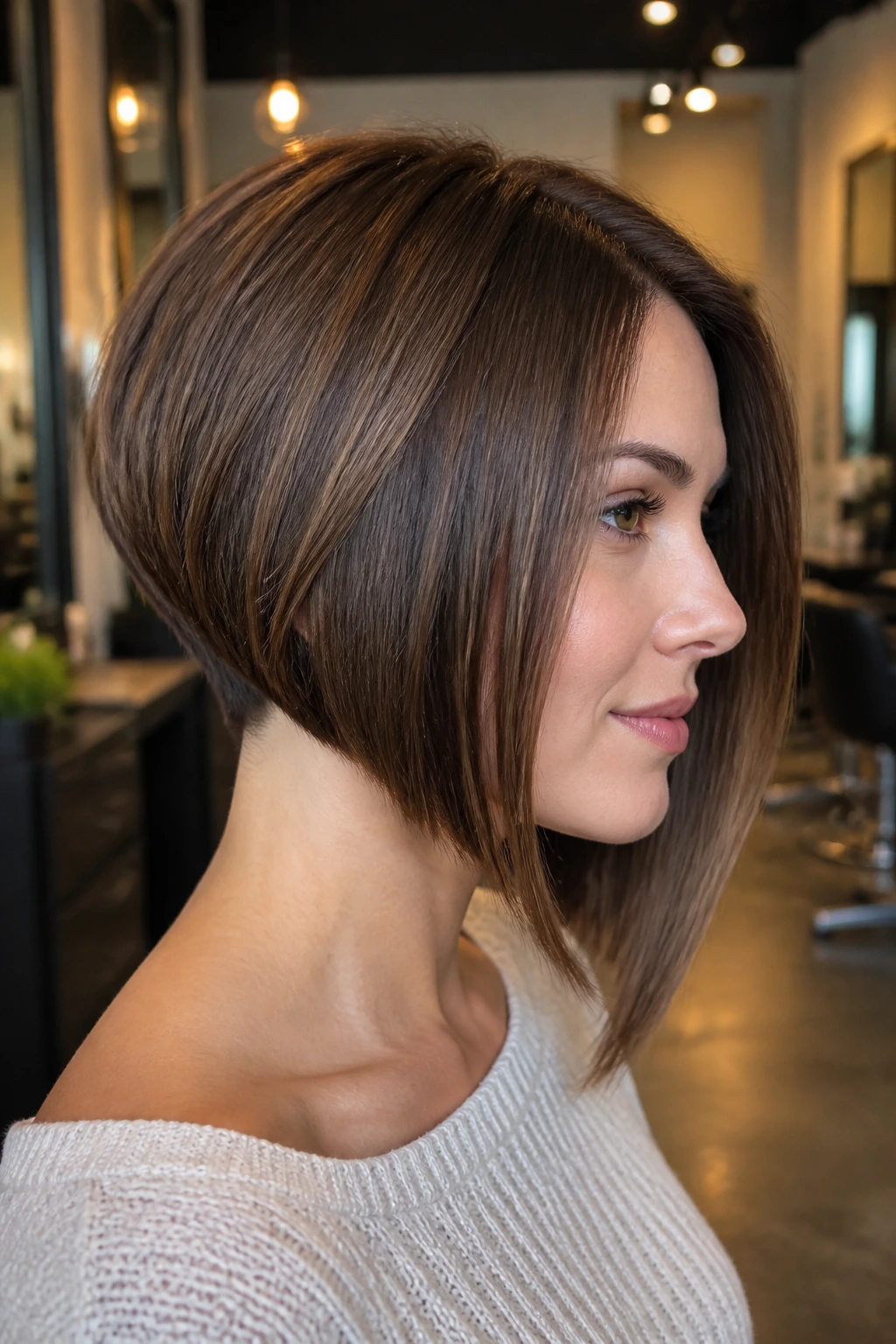
The inverted bob turns the angle up a notch. It’s shorter in the back, longer in the front, and more dramatic than an A-line. On thick hair, that contrast can be gorgeous because it puts the bulk where it looks sculpted rather than accidental.
A lot depends on how your hair sits at the nape. If the back of your head is dense, this cut can make it feel lighter fast. If your front sections are thick too, the longer angle gives them room to fall without building a wall around the jaw.
Good to know
- Works best with a clean side or center part
- Needs a round brush or flat iron for a smooth finish
- Looks strongest on hair that naturally bends under
This is not the bob for someone who wants to wash and vanish. It asks for shape. The payoff is a cut that looks deliberate from every side.
8. Curly Rounded Bob That Follows the Curl Pattern

Curly thick hair needs a different conversation entirely. You do not want to flatten it into a straight-hair bob shape and hope the curls behave. A rounded bob works with the curl pattern, not against it, and that makes all the difference.
The shape should be cut with curl shrinkage in mind, because curly bob haircuts for thick hair can jump several inches once dry. A dry cut or curl-by-curl shaping often gives the cleanest result. The goal is a rounded silhouette that sits neatly around the face without piling up into a triangle.
If your curls are tight, keep the length a little longer than you think. If they’re looser, a slightly shorter rounded bob can look lively instead of puffy. And please: skip the urge to over-layer curly thick hair. That’s how you end up with a halo of frizz and regret.
9. Shaggy Bob With Broken-Up Ends
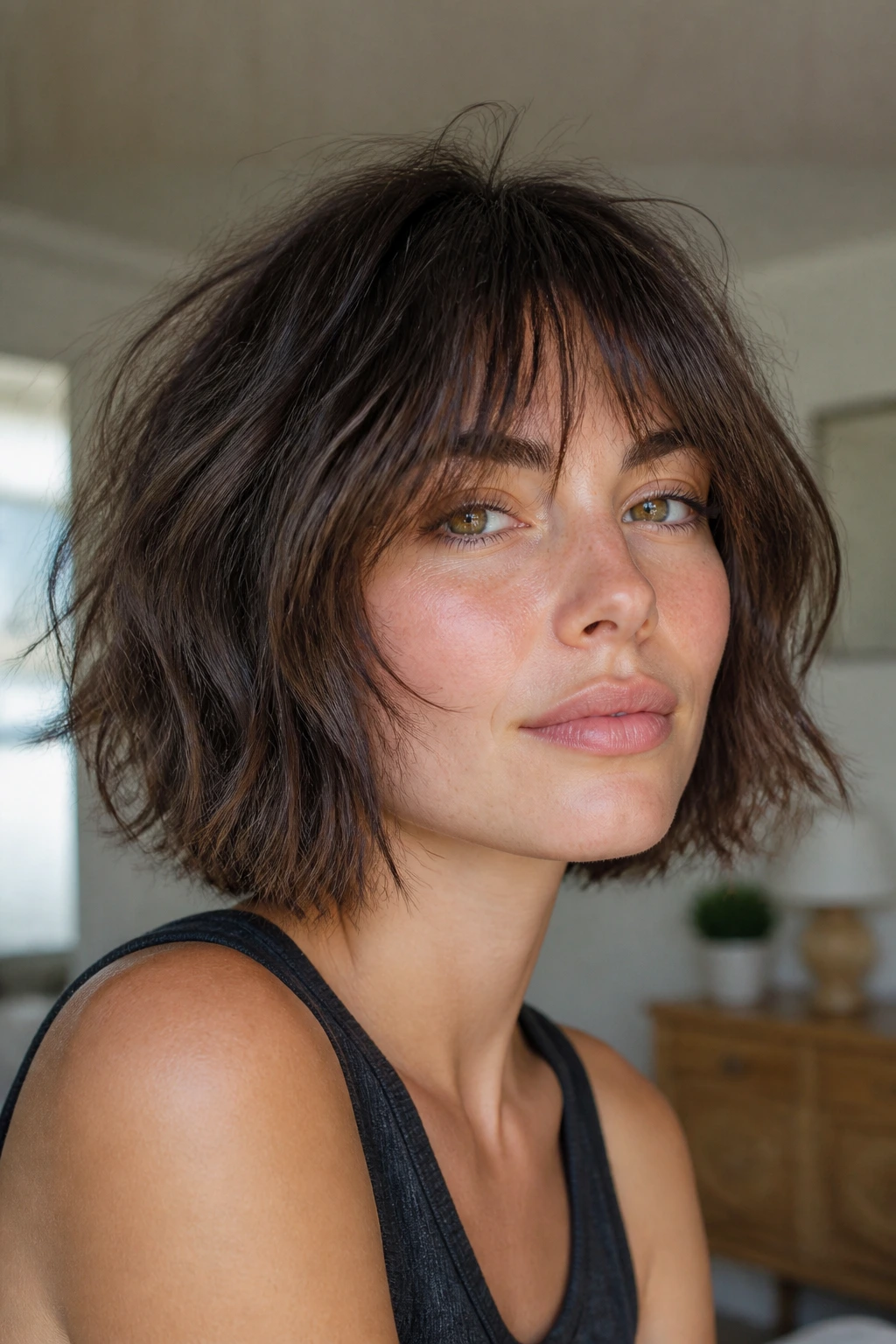
There’s a specific kind of thick hair that gets happier when the line is a little messy. A shaggy bob takes the heavy edge and breaks it into pieces, usually with soft layers, textured ends, and a shape that reads casual rather than polished.
This cut works because it distributes density. Instead of one blunt wall of hair, you get movement from root to end. It’s especially good if your hair is wavy or coarse and tends to swell when humidity shows up uninvited.
You’ll want a stylist who knows when to stop texturizing. Too much, and thick hair can look frayed. Just enough, and it looks cool in the way that suggests you had better things to do than fuss with it. Which, frankly, is the dream.
10. Side-Part Sleek Bob That Uses Asymmetry
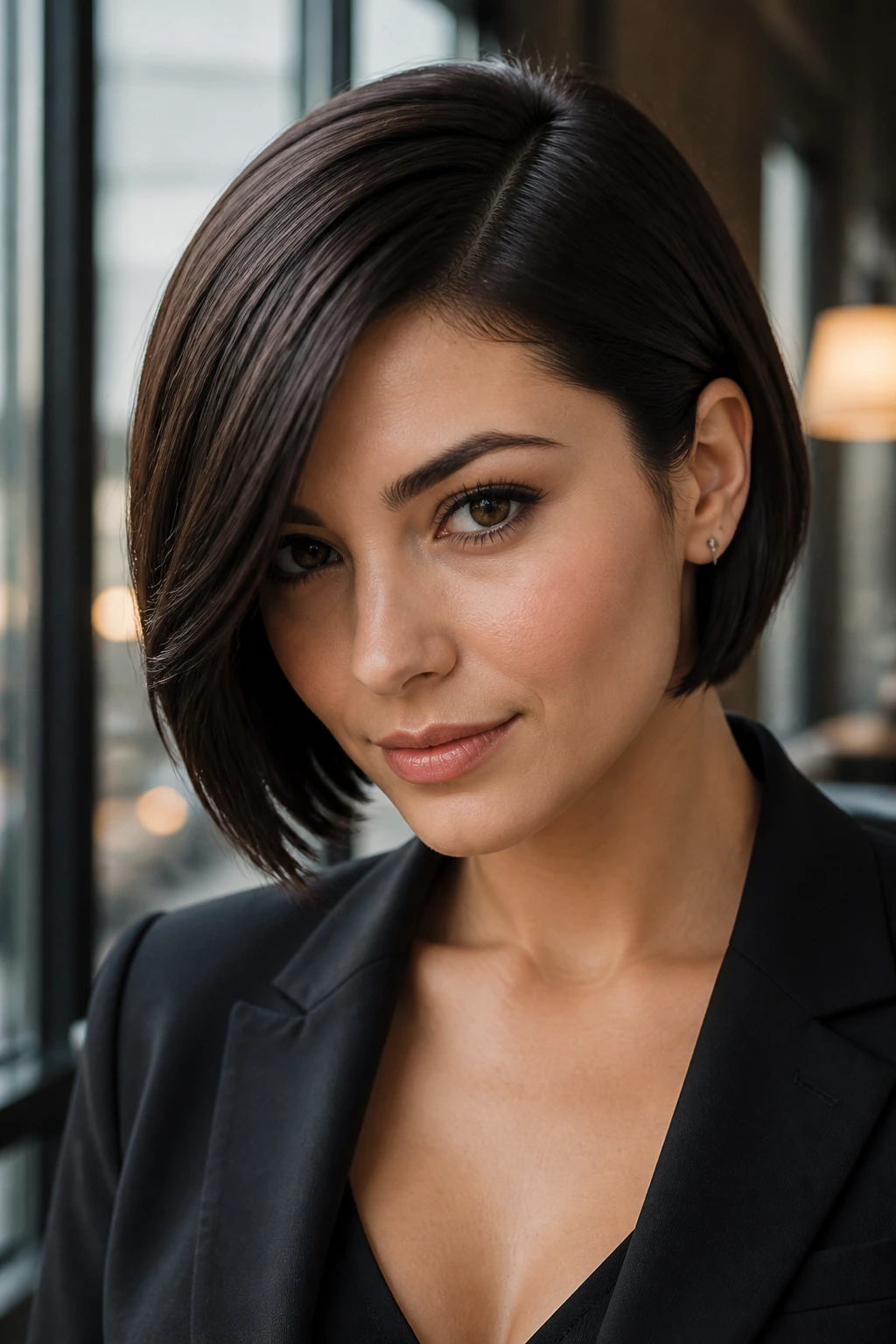
A deep side part can do more for thick hair than a full haircut change. It shifts weight, creates lift at the roots, and makes a bob feel more sculpted. On a sleek bob, that single move changes the whole face framing.
This style is especially nice if your hair is straight and naturally heavy at the sides. The side part interrupts the sameness, and the smoother finish keeps the length from feeling bulky. It can also soften a strong jaw because the sweep of hair creates a diagonal line across the face.
If your crown falls flat, work a little root lift spray into the part before blow-drying. Not a mountain of product. Just enough. The style should look controlled, not lacquered.
11. Micro Bob That Sits High and Sharp
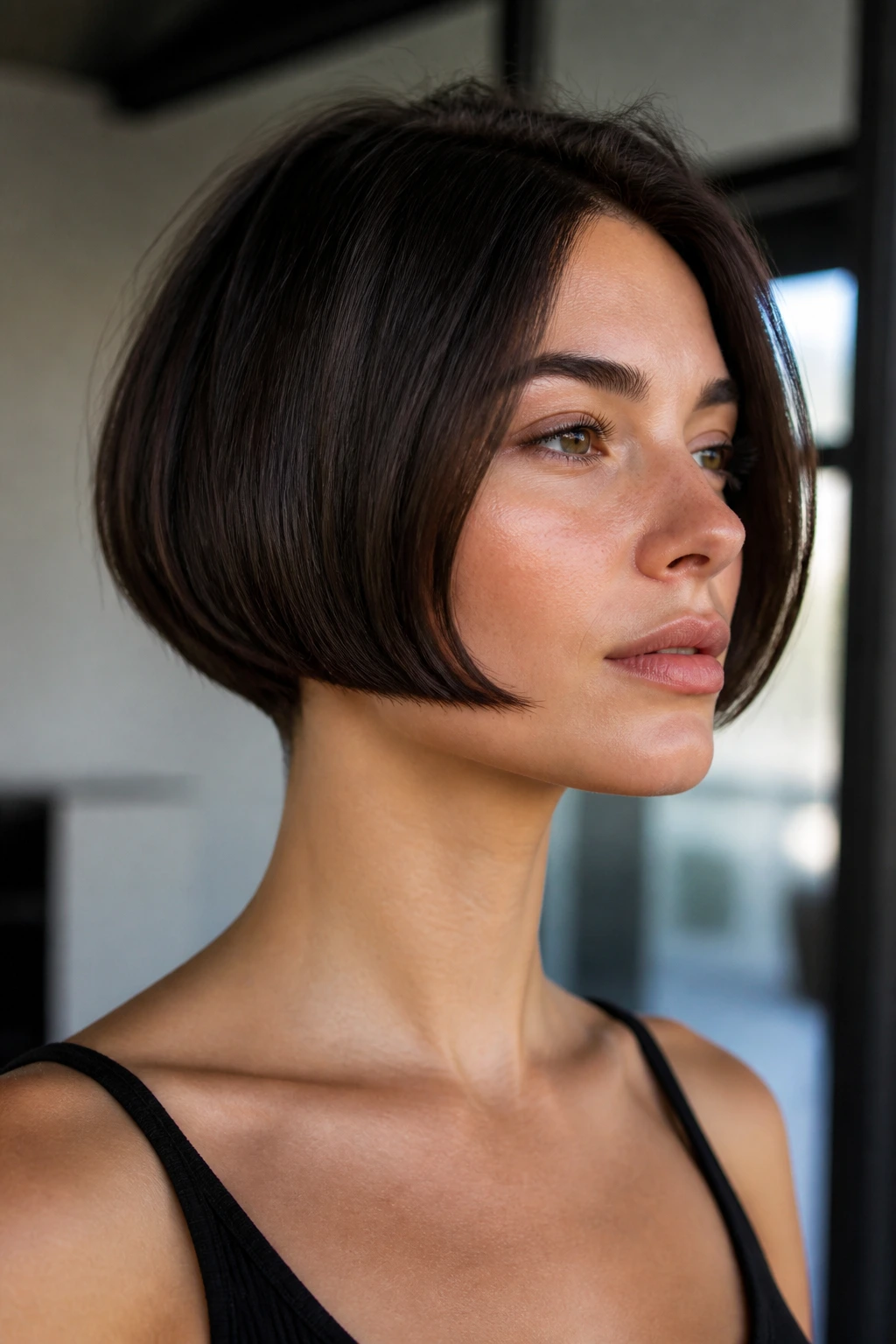
A micro bob is not subtle. It usually lands around the cheekbone or just below the ears, and on thick hair, it turns density into a feature instead of a problem. The short length strips away a lot of bulk, which makes the shape feel crisp and self-assured.
This cut works best if your hair is straight, your neck is long enough to carry the length, and you do not mind seeing your face more clearly. It’s a bold shape, and thick hair gives it presence. The line doesn’t disappear the way it can on finer hair.
The downside is simple: it grows out fast, and every millimeter changes the balance. If you want low-maintenance, skip this one. If you want a sharp little cut that makes thick hair look expensive and deliberate, it’s hard to beat.
12. Graduated Bob With a Tapered Nape
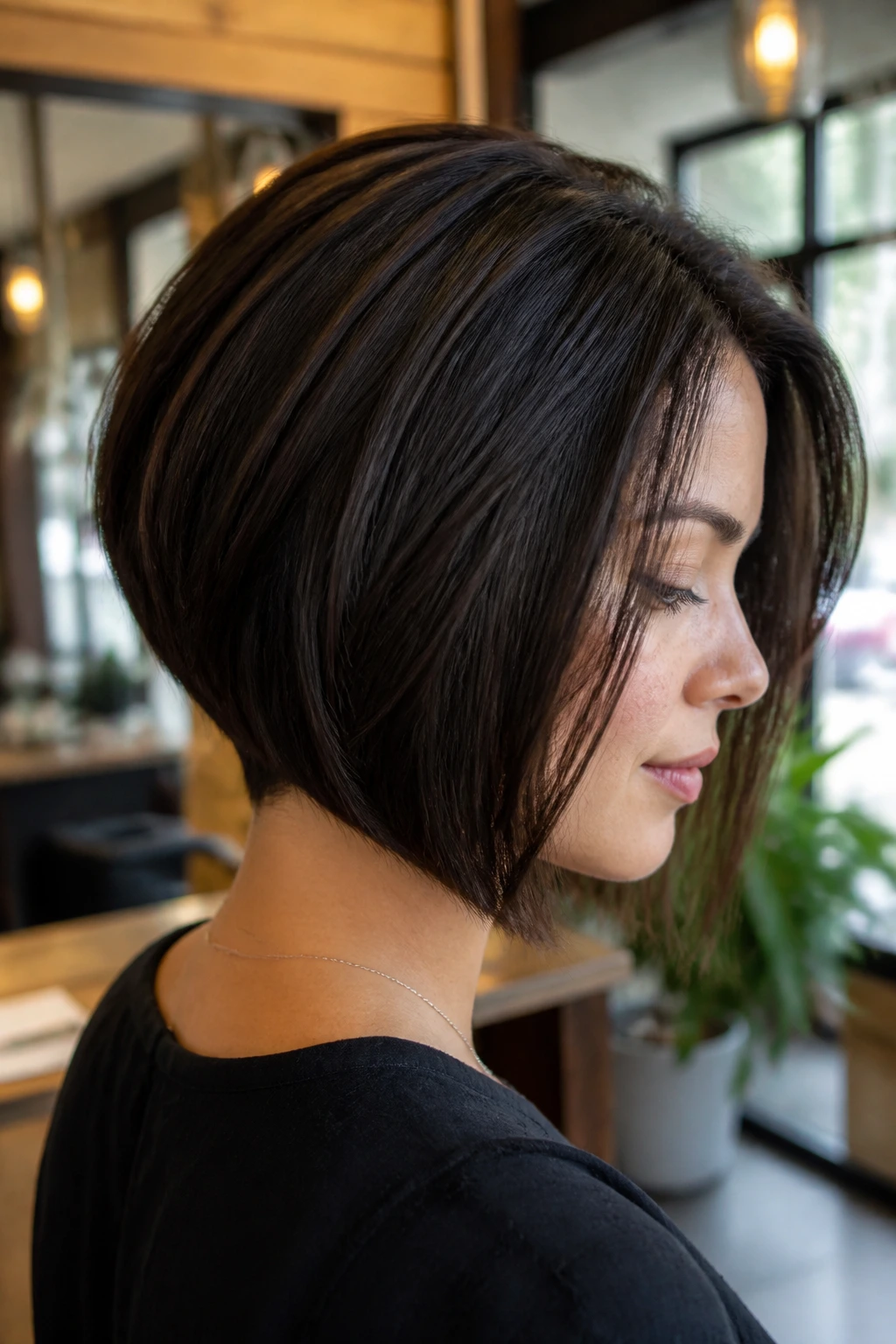
A graduated bob is the quieter cousin of the stacked bob. It still shortens the back and builds length toward the front, but the transition is softer. That makes it a strong choice for thick hair that needs shape without shouting.
The tapered nape is the whole point. Thick hair can bunch there and create a hard line at the neck, which gets itchy, bulky, and annoying fast. A gentle graduation keeps the back close to the head, so the cut sits better under scarves, collars, and coats.
This version tends to age well as it grows out. The shape doesn’t fall apart overnight. If you want a bob that looks structured but not severe, this is one of the smartest choices in the bunch.
13. Choppy Textured Bob With Piecey Ends

A choppy bob is what happens when thick hair gets permission to move around a little. Instead of one clean line, the ends are broken up with point-cutting or a light razor touch, creating a piecey finish that keeps the shape from feeling heavy.
When it makes sense
- Your hair is dense and refuses to sit flat
- You like a slightly undone finish
- You’re willing to style with a paste, cream, or texture spray
The danger with choppy haircuts is overdoing the texture. Thick hair already has volume. If the stylist goes wild with thinning shears, the shape can puff at the wrong spots and look hollow in others. A good choppy bob still has a backbone. It’s just a looser one.
14. Wavy Bob With Invisible Layers
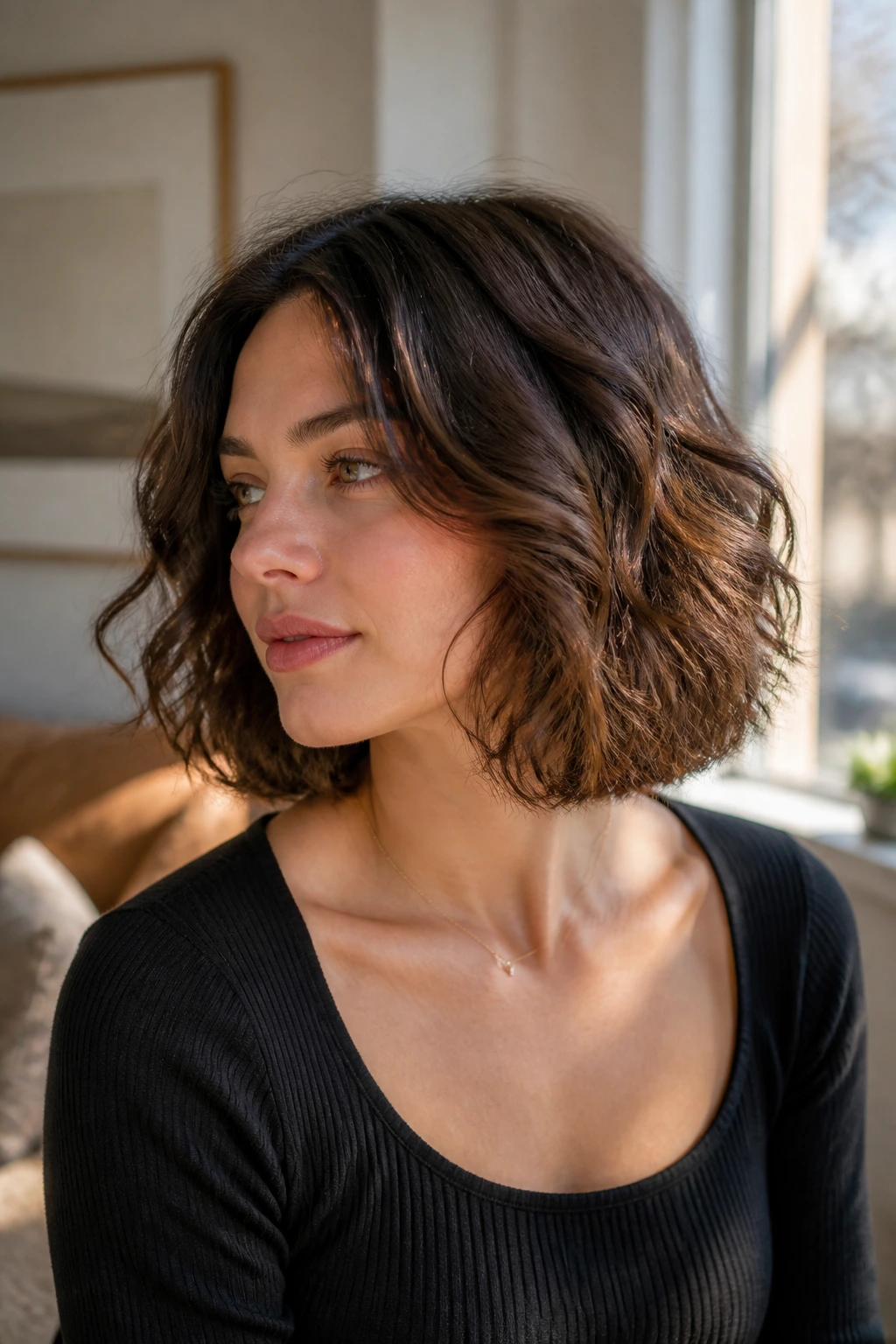
Invisible layers are one of my favorite tools for thick wavy hair because they do their work without screaming about it. The outside line still looks clean, but underneath, the cut has enough relief to let the waves fall into softer bends.
This is the bob to choose if your hair bends naturally but gets too wide when left untouched. The hidden layers stop the surface from ballooning while keeping the overall length intact. You get movement, not chaos.
It’s also one of the easiest bobs to air-dry. A little leave-in, a scrunch, maybe a diffuser for the first five minutes if you’re impatient. Done. If you hate overly styled hair, this one has a nice forgiving mood to it.
15. Rounded Bob That Hugs the Jawline
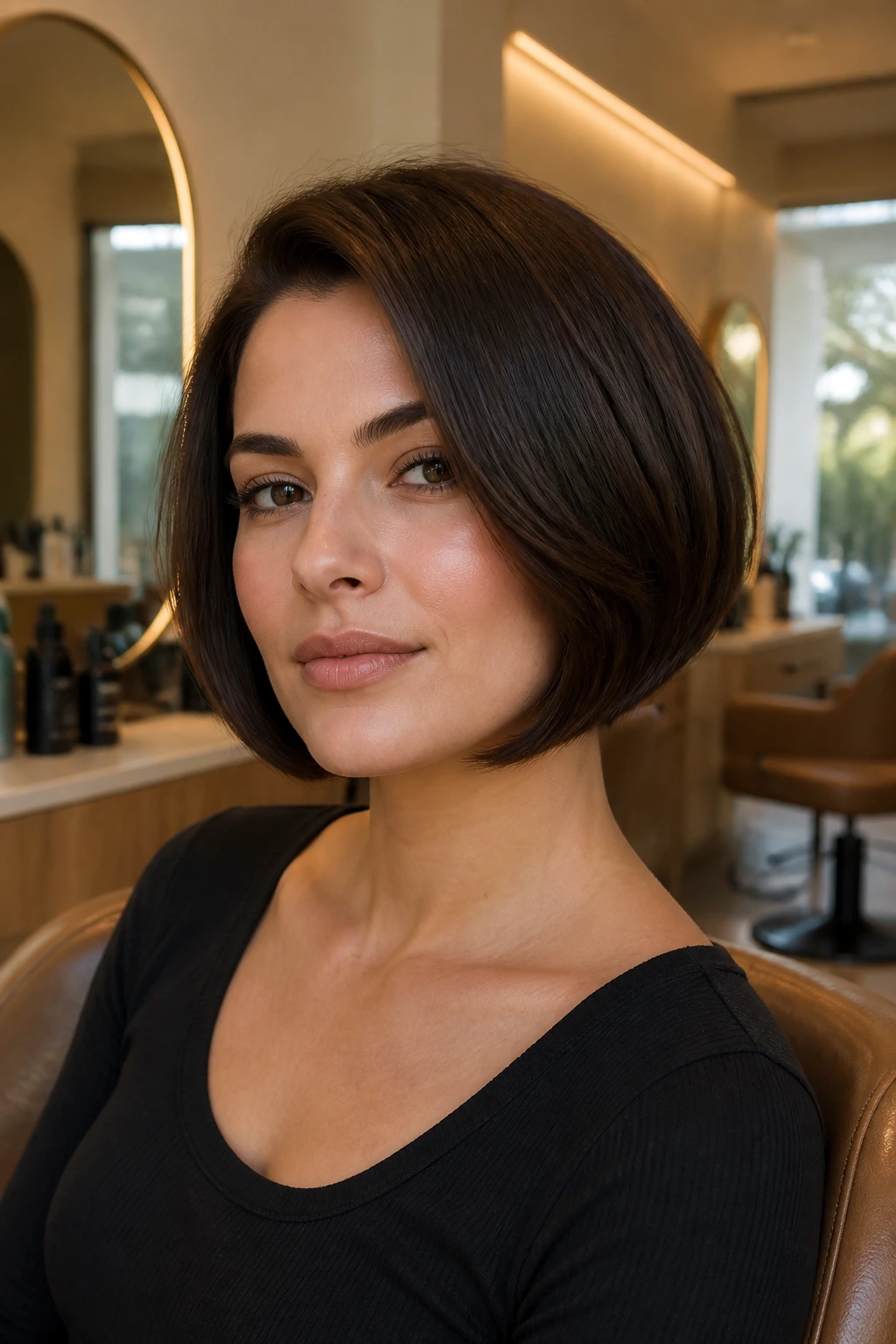
A rounded bob follows the head’s shape instead of fighting it, which is why thick hair often looks so tidy in this cut. The perimeter curves in gently around the jaw and neck, keeping the silhouette soft but controlled.
This shape is useful if your hair expands at the sides and makes rectangular cuts feel bulky. The roundness draws the outline inward. It also flatters thick hair that has a bit of wave, because the bend in the cut gives the ends a natural direction.
A rounded bob needs a smooth finish to look its best. If you let it dry wild, the curve can become uneven. But when it’s brushed under and polished, it has that clean, tailored feel that makes thick hair look managed without looking stiff.
16. Asymmetrical Bob With One Longer Side
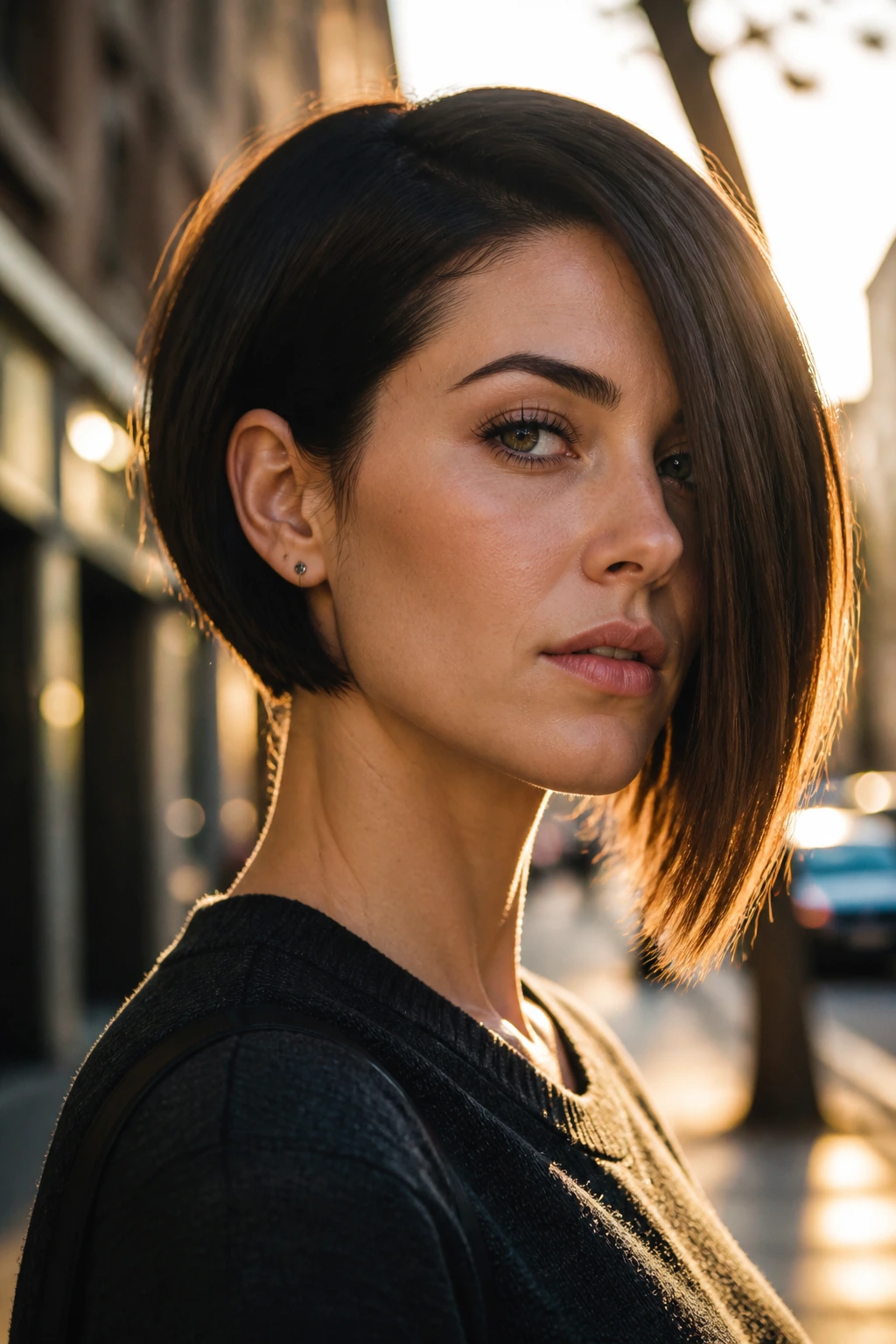
Asymmetry is a good trick when you want thick hair to feel lighter without thinning it out too much. One side sits longer, the other shorter, and the uneven line pulls the eye around the face instead of letting it get stuck on the bulk.
This cut has a built-in attitude. It’s great for someone who likes a little edge but does not want an ultra-short pixie. Thick hair gives the asymmetry weight, which makes the design read clearly instead of looking accidental.
The one thing to watch is balance. If the difference is too subtle, the cut just looks slightly off. If it’s too dramatic, you’ll need regular styling to keep both sides in the right relationship. Pick your lane and commit.
17. Bob With Curtain Bangs and Soft Face Framing
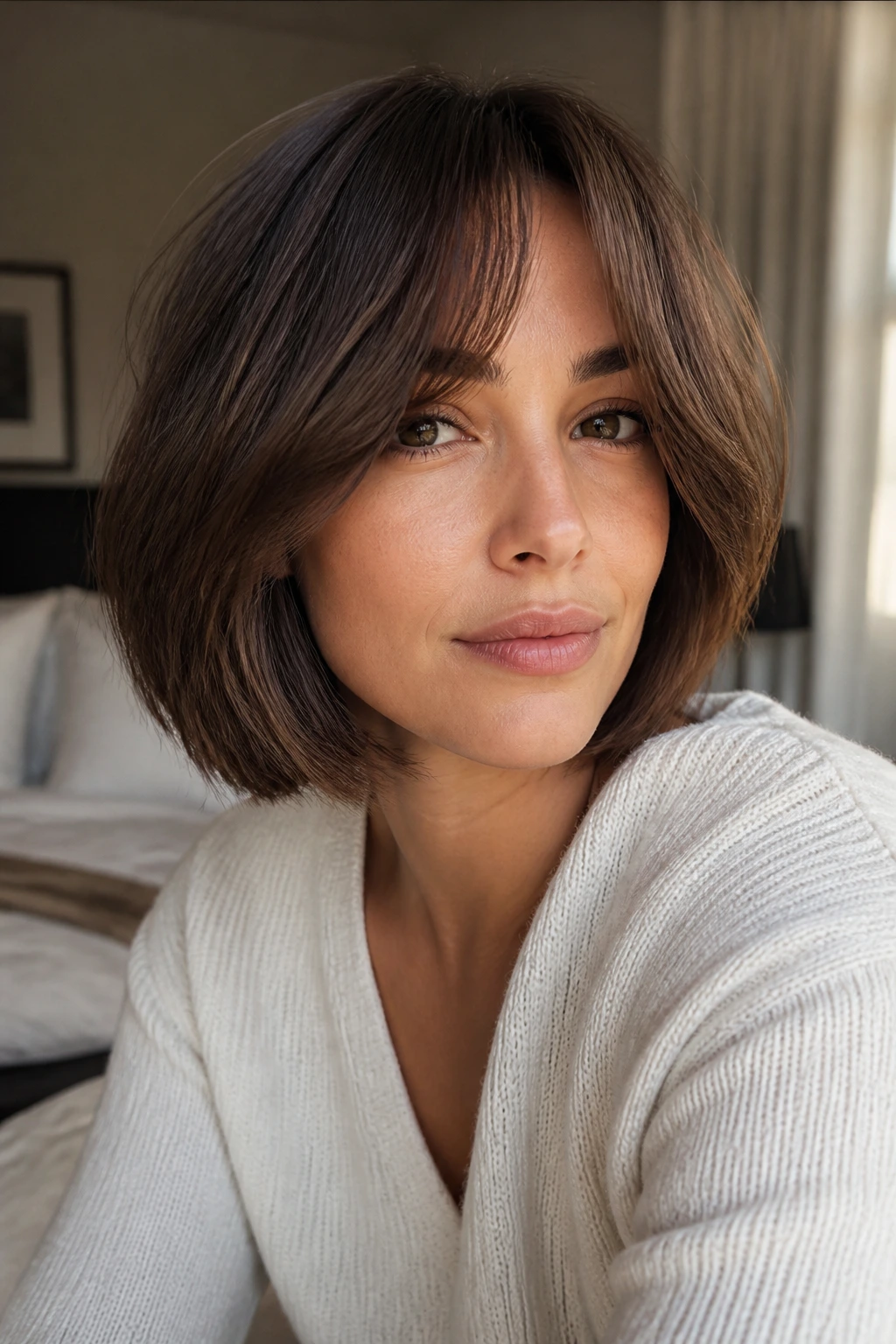
Curtain bangs are often the best bang choice for thick hair because they spread the density across the forehead instead of dropping it all into one heavy block. On a bob, they soften the front without hiding the cut’s shape.
The trick is keeping the center a little shorter and letting the sides graze the cheekbones or jaw. That gives the fringe room to split naturally. Thick hair looks especially good here if the rest of the bob is kept clean and slightly layered.
Bang notes worth keeping in mind
- Ask for the fringe to be a touch longer if your hair shrinks when dry
- Style the bangs first, not last
- Trim every 3 to 4 weeks if you want the shape to stay open
This cut is friendly, but not lazy. The bangs need some attention. The bob itself can be low-fuss.
18. Bob With Bottleneck Bangs
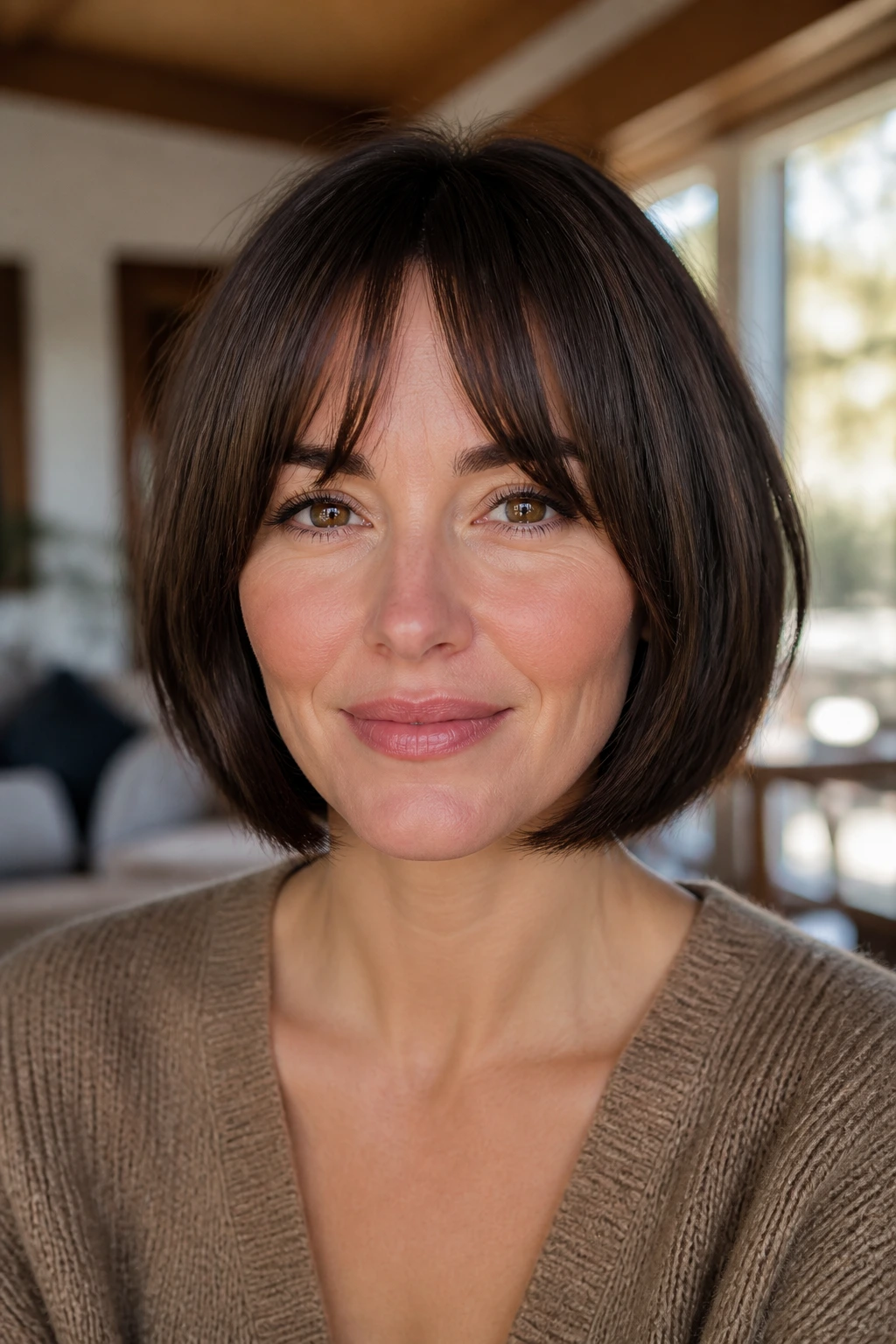
Bottleneck bangs are a smart answer to thick hair because they’re narrow at the center and widen softly toward the temples. That shape makes the fringe feel lighter on the forehead while still giving you the full-bang effect from a distance.
On a bob, the look is polished but not severe. The bangs soften the face, and the bob keeps the rest of the hair close enough to stop bulk from building around the cheeks. If your hairline is strong or your forehead is longer, this can be a very flattering pairing.
The styling part is simple enough: use a round brush or a quick wrap-dry at the fringe, then let the rest of the bob fall. If you’re tempted to flatten the bangs too much, resist. A little bend is what keeps them from looking helmet-y.
19. One-Length Glass Bob for Thick, Straight Hair
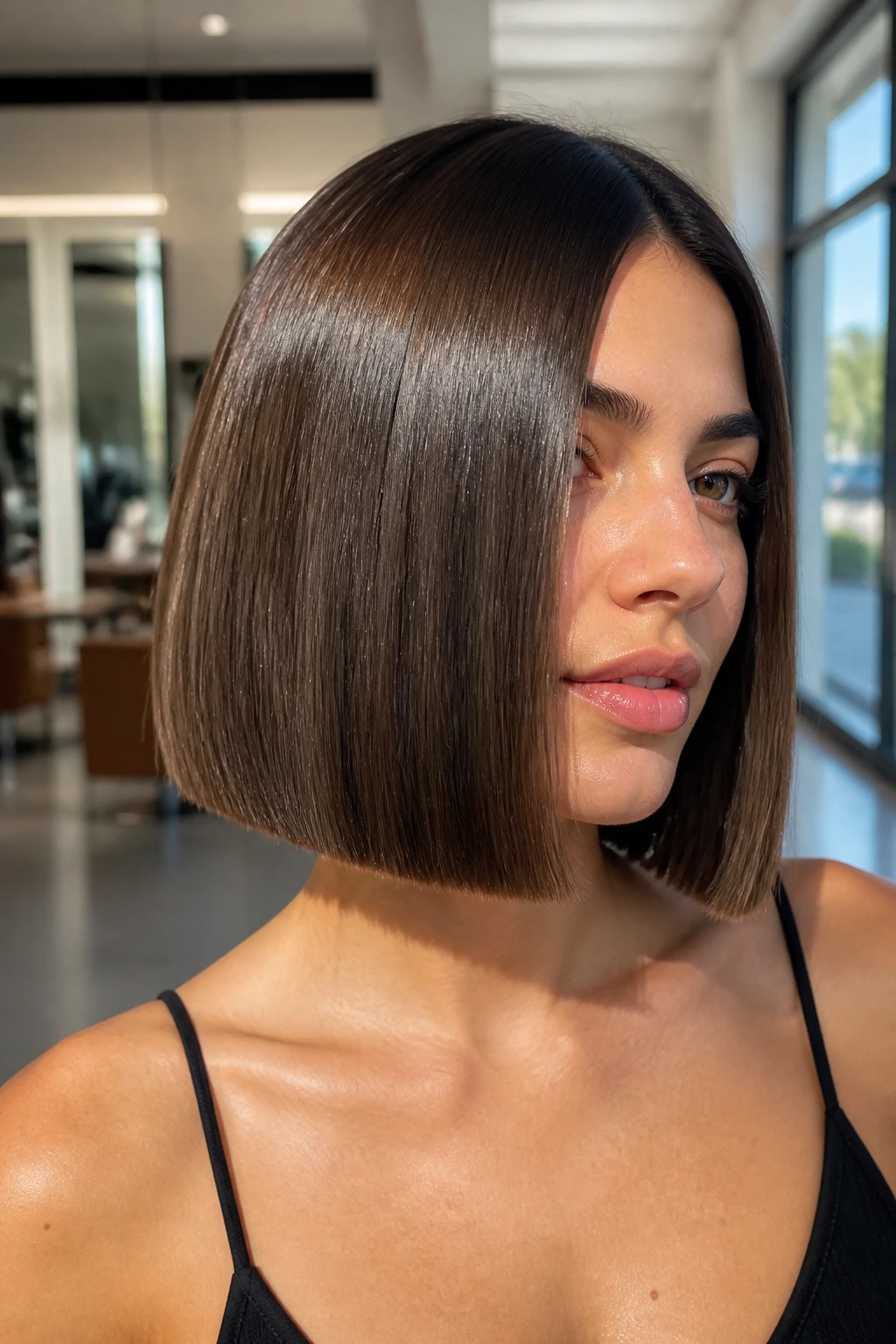
A glass bob is all about shine, precision, and a surface that looks almost reflective when the light hits it. On thick straight hair, it can be stunning because the density helps hold that sharp line.
This cut is not pretending to be soft. It’s clean, deliberate, and a little bit unforgiving if your ends are dry. That means the health of the hair matters here more than in a shaggy bob. If the strands are smooth and the ends are tidy, the shape looks sleek and expensive. If not, every rough edge shows.
Use a heat protectant, a smoothing cream, and a flat iron with a steady hand. Don’t overload the hair with oil. Thick hair can take more product than fine hair, but the glass finish only works when the surface stays light and controlled.
20. Feathered Bob With Soft, Airy Ends
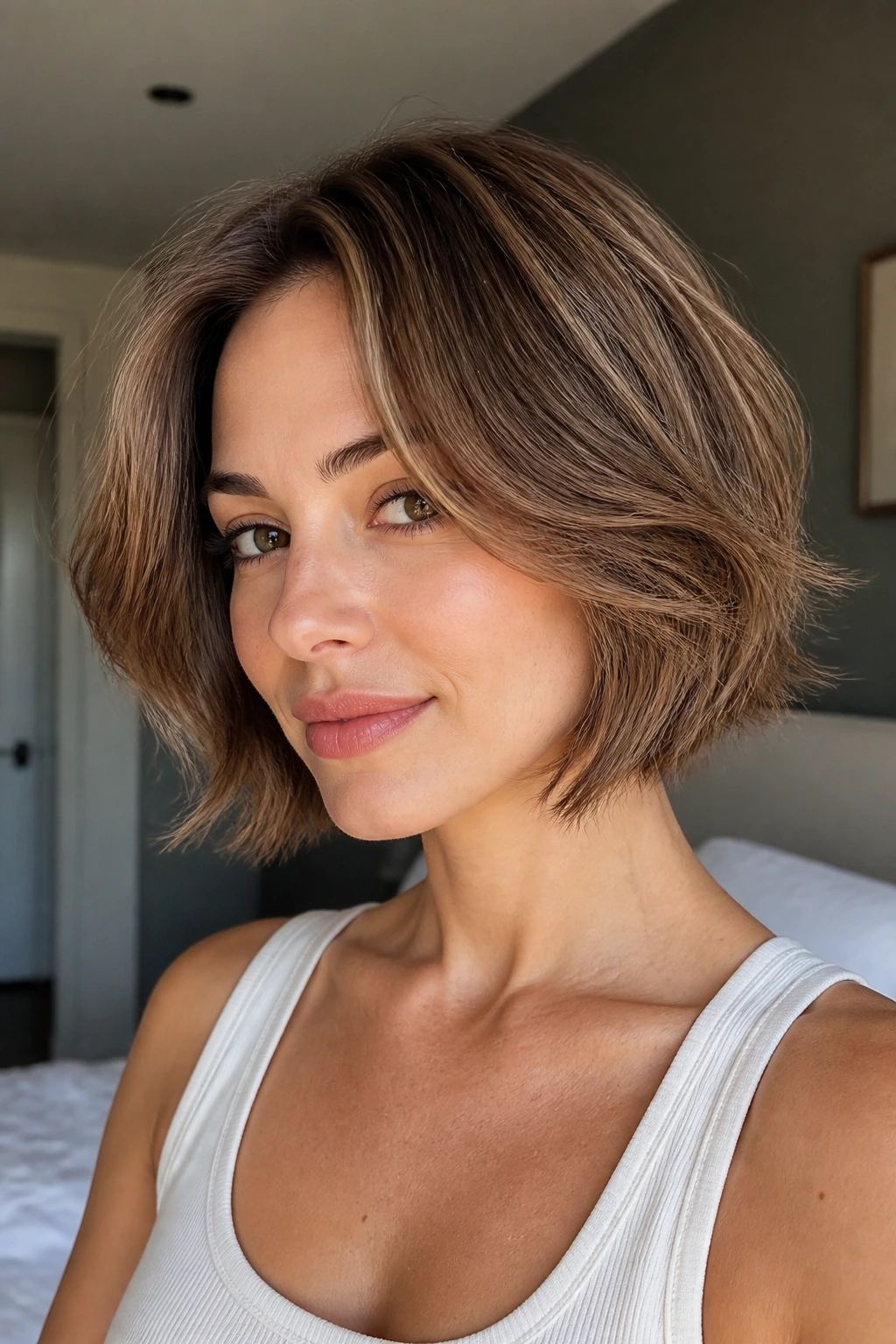
Feathering softens the ends of thick hair without turning the whole cut into a blur. The layers taper into each other, which makes the perimeter feel lighter and a little more mobile than a blunt bob.
This is a nice option if you like movement but hate choppy edges. The feathered finish keeps the shape from feeling too blocky, especially if your hair is coarse or has a stubborn outward flip at the bottom. It also works well when the cut sits around the cheek or jaw and you want the edges to relax.
The one caution: don’t feather so much that the outline disappears. Thick hair needs a frame. Feather the ends, yes. Remove the structure, no.
21. Blunt Bob With Internal Layers
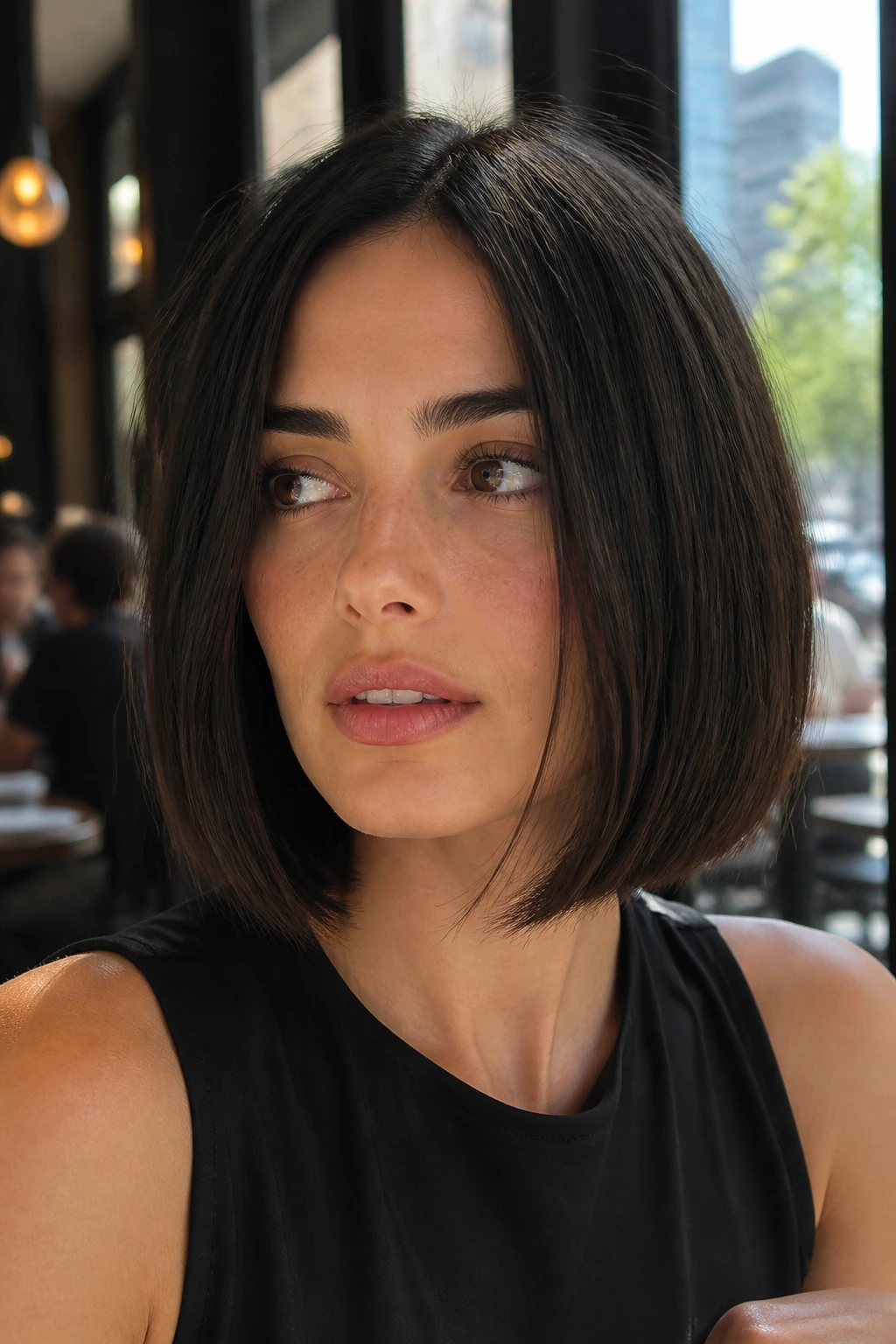
This is the compromise cut for people who love the look of a blunt bob but can’t stand the weight. The outside line stays clean and even, while the inside gets carefully reduced so the hair doesn’t sit like a block.
That internal work is what makes the shape move. The top layer can still fall smooth, but the underneath doesn’t pile up and force the bob outward. It’s a good choice if your hair is thick in the back and sides but you still want a polished perimeter.
This cut is one of the best answers for dense hair that has to behave at work and still look good with a leather jacket on the weekend. Clean outside, smart inside. That combination ages well.
22. Tousled Beachy Bob With Soft Bends

A beachy bob on thick hair needs a light hand. You want bends, not crimped texture. A wave spray or a touch of mousse, then a few loose waves through the mid-lengths, usually does the trick.
This style works best if your hair already has a bit of natural movement. The cut should keep enough weight at the ends to stop it from turning frizzy, while a few long layers help the bends sit in different directions. It’s especially useful if thick hair looks too formal when it’s blown straight.
The vibe is casual, but the haircut still needs shape. Without a good underlying line, “messy” starts to look like “unfinished.” There’s a difference, and thick hair reveals it fast.
23. Deep Side-Part Bob With Old-Hollywood Sweep

A deep side part can make thick hair look glamorous without adding more length or more layers. The heavy sweep on one side gives the bob movement, while the shorter side keeps the shape close to the face.
This version is flattering when you want volume at the crown but don’t want the sides to widen too much. It works especially well on straight or softly wavy hair, and it can make a simple bob feel dressier with almost no extra work.
The part placement matters more than people think. Shift it too little and nothing changes. Shift it too much and the style can collapse over one eye. Find the sweet spot where the lift at the root feels obvious but still wearable.
24. Bob With a Hidden Nape Undercut
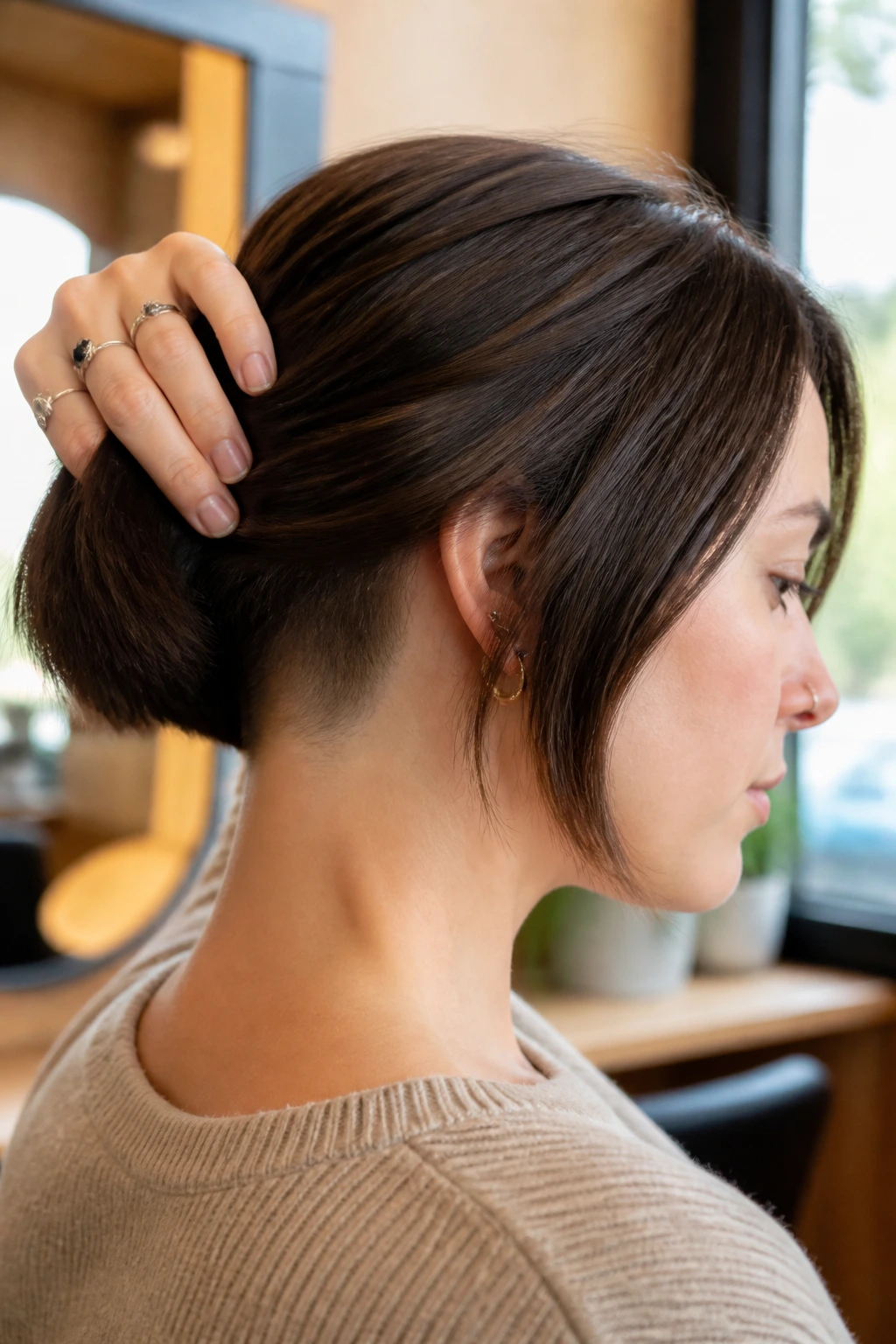
When thick hair is so dense that even a clean bob feels too heavy at the neck, a hidden nape undercut can be a lifesaver. It removes bulk where no one sees it, which leaves the surface looking full while the bottom layer stays much lighter.
This is a practical cut disguised as a style choice. It’s especially useful if your hair grows thickest underneath, heats up fast, or puffs out at the collar. The undercut can be tiny — just enough to take pressure off the nape — or more noticeable if you wear your hair up often.
Maintenance is the catch. The undercut area grows fast and needs touch-ups every few weeks if you want it tidy. Still, for some thick-haired people, that small maintenance trade is worth the relief.
25. Airy Layered Bob That Feels Lighter Overall

An airy layered bob is what happens when the cut is built to let thick hair breathe. The layers are placed so the interior loses weight gradually, which keeps the style from sitting like a lump at the bottom.
This is a good option if your hair is thick but also a little fine in strand texture. Too much bluntness can make it look heavy, while too much texturizing can leave it wispy. The airy version sits in the middle, which is where a lot of real-life hair lives.
I’d ask for this cut if you want a bob that moves on its own and doesn’t need constant coaxing. It’s not flashy. It just works.
26. Face-Framing Lob With Longer Front Pieces
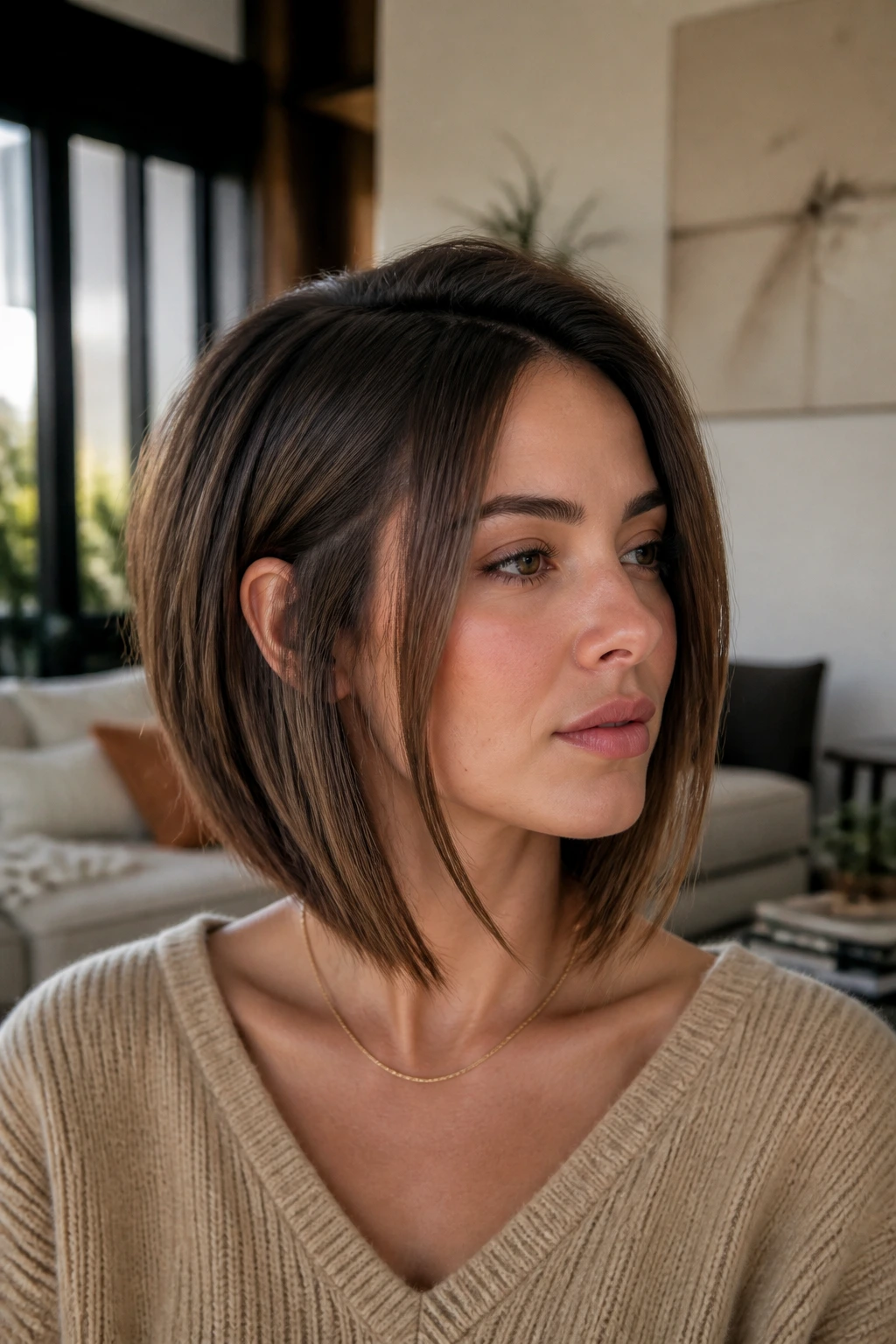
A face-framing lob is one of the safest ways to test bob territory. The length stays around the collarbone, but the front pieces are cut to flatter the face and reduce the feeling of all that thickness sitting in one straight curtain.
This is especially smart if your hair is dense and you’re worried about going too short too fast. The longer front gives you styling options — tucked, waved, straight, clipped back — while the interior can still be cleaned up enough to keep the shape from getting bulky.
It’s the bob for people who want change without drama. Which, honestly, is a very good reason to choose it.
27. Soft Curved Bob That Bends Under at the Ends
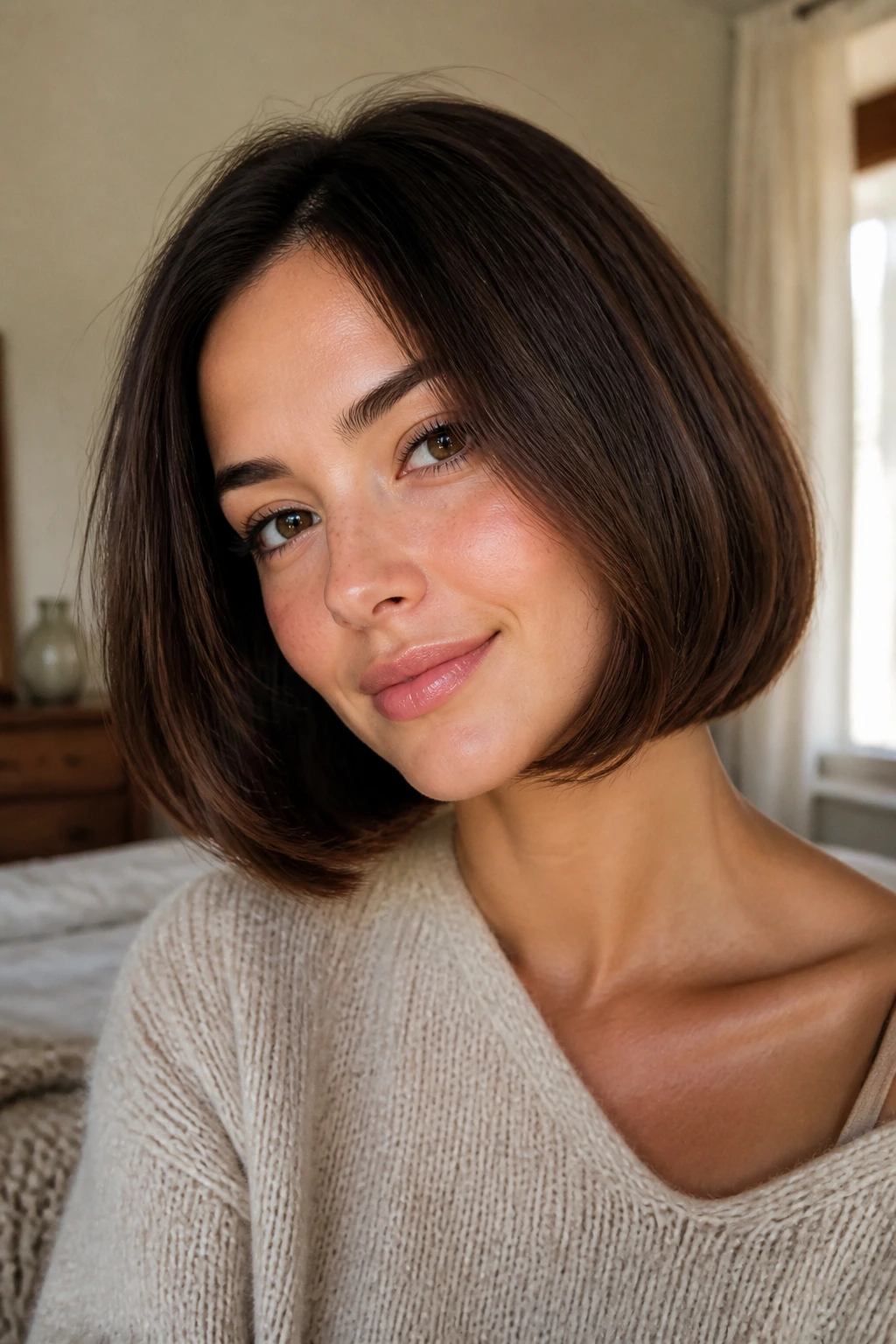
A soft curved bob has a little more polish than a shag, a little less rigidity than a blunt cut, and a very useful ability to make thick hair look intentional. The ends curve gently inward, which keeps the cut from flipping out at the shoulders or jaw.
This style is excellent if your hair naturally resists lying flat. The curve gives the ends a job to do. It also looks good on thick hair that’s been blown out with a round brush, because the shape still feels relaxed after the styling session is over.
If you want a bob that says “finished” without saying “fussy,” this is a strong candidate.
28. Modern Box Bob With a Strong Square Shape
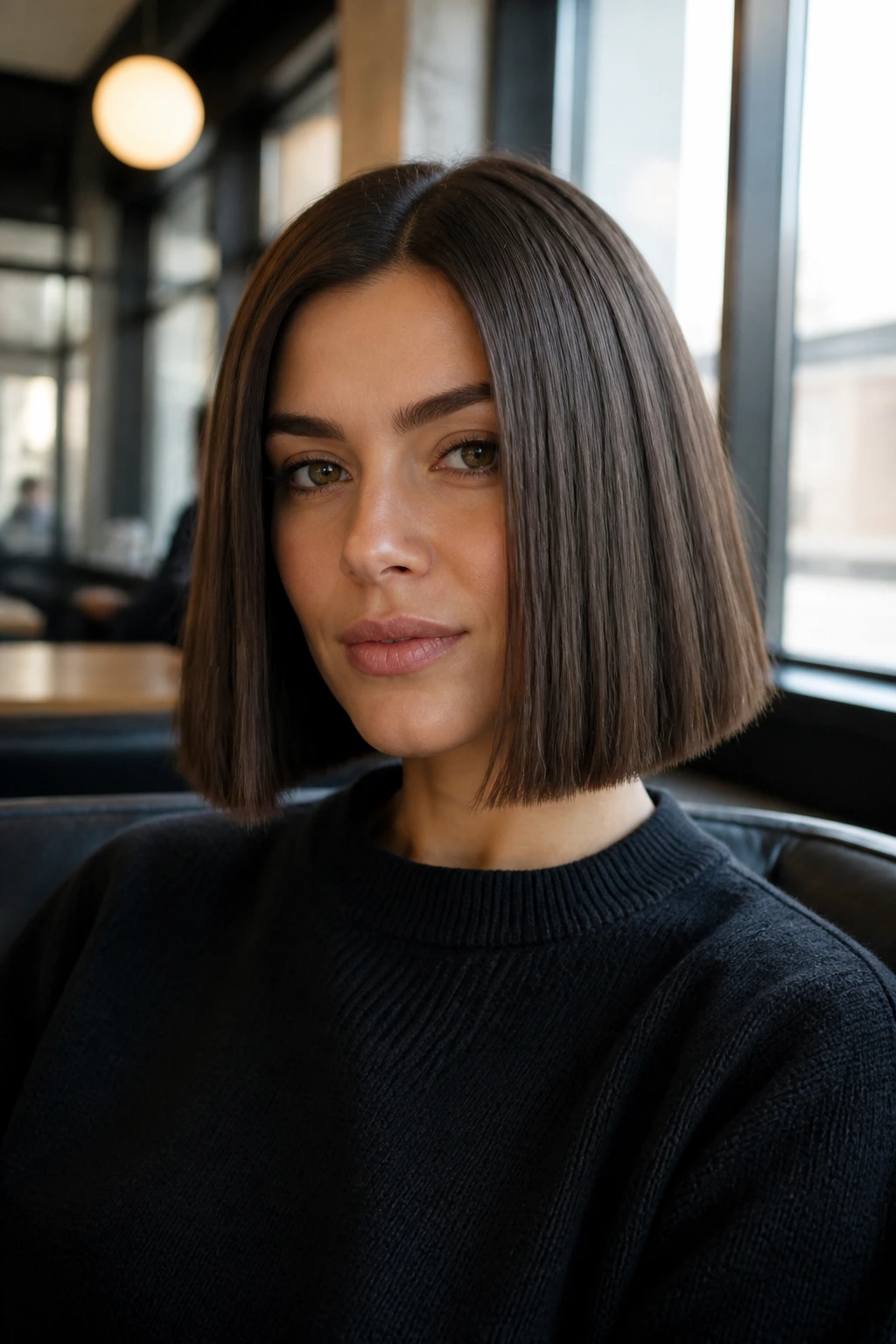
A box bob is the most graphic version in the group. The sides are fuller, the outline is square, and the whole effect depends on precision. Thick hair gives this cut real presence, which is why it looks so striking when the line is done well.
This is not the haircut to choose if you want softness. It is for people who like a clear silhouette and don’t mind seeing the edge of the shape. On straight thick hair, the result can look almost architectural. On wavy hair, it becomes softer but still keeps that square backbone.
The key is not letting the bulk creep into the corners. If the bottom edge gets too wide, the box shape loses its clarity. Keep the perimeter tidy, and the cut does the rest.
Why Thick Hair Changes the Bob Conversation

Thick hair changes the bob because the cut is doing a job that finer hair never has to do. It has to contain volume, not create it. That means the same bob length can look sleek on one head and puffy on another, even if the photos looked identical in the salon chair.
The first thing to sort out is what “thick” means in your case. Dense hair has more strands, so the fix is often weight removal in the interior and a perimeter that doesn’t spread out. Coarse hair has stronger individual strands, so the issue is often how the ends sit once they dry. Sometimes you have both, which is where the wrong bob starts to look like a triangle by lunchtime.
A good thick-hair bob respects the direction your hair already wants to go. If it flips out, the cut can be beveled or curved under. If it lies too flat at the crown, the top can be stacked or lifted with a longer layer. If it swells at the sides, the length can be nudged a little shorter or a little longer so it stops sitting at the widest point of the face.
How to Choose the Right Bob Length for Your Density and Texture
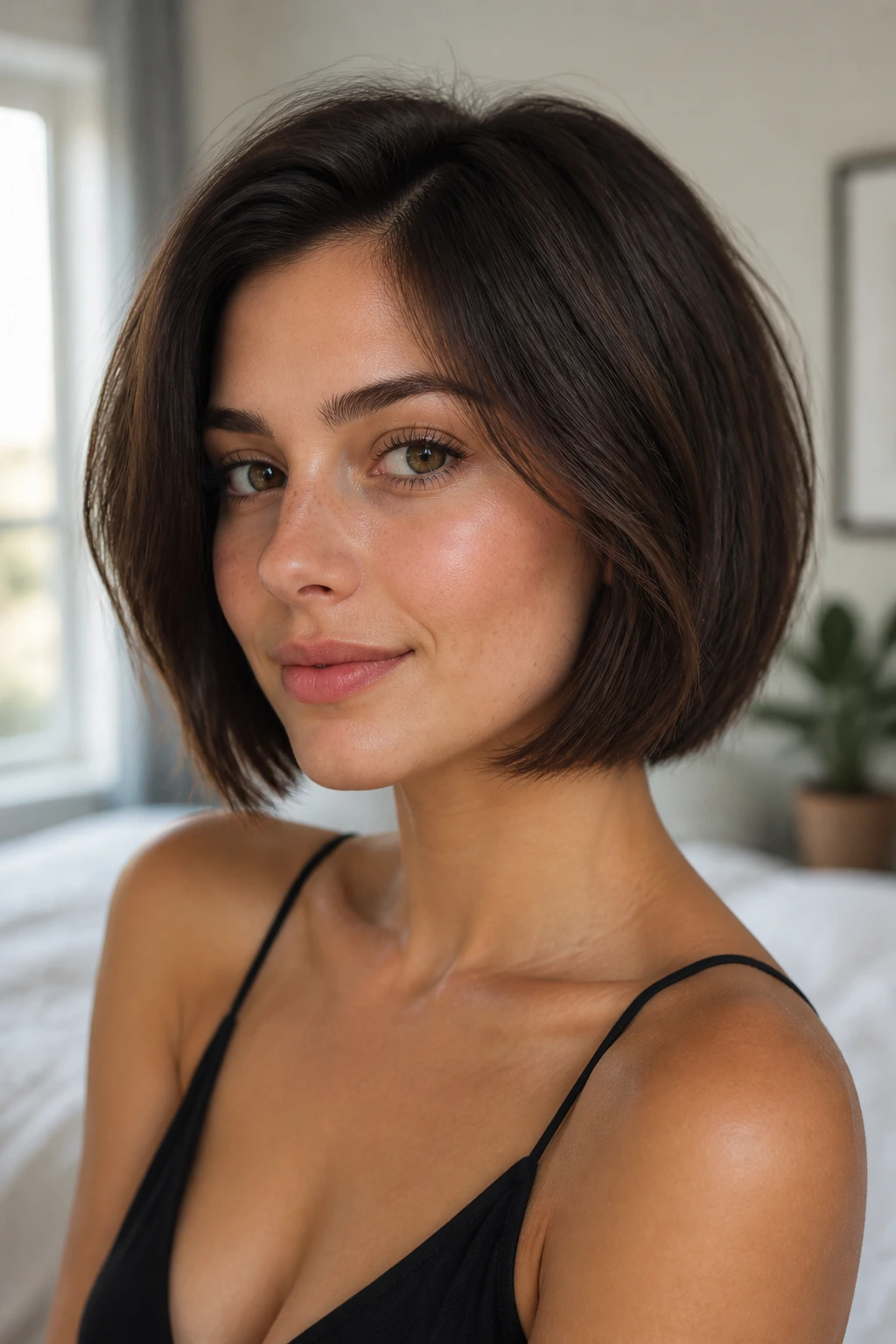
Length changes more than people think. On thick hair, an inch can be the difference between “clean line” and “why is this so wide?” The sweet spot depends on where your density lives.
If the bulk sits at the jaw
A chin-length or slightly longer bob usually works better than one that ends exactly where your face is widest. That tiny shift keeps the silhouette from pressing outward at the exact point you’re trying to control.
If the bulk sits in the nape
Go for a stacked, graduated, or nape-tapered version. Taking weight off the back prevents that heavy shelf that can make thick hair feel hot, itchy, and oddly formal.
If the hair is dense but the ends are fine
A blunt or softly curved bob tends to look better than a heavily layered one. The hair needs a solid edge more than it needs more texture.
If the hair is coarse and wavy
A collarbone lob, shaggy bob, or invisible-layer bob usually behaves best. The extra room lets the wave pattern settle without forcing every strand into the same direction.
How to Ask for the Cut at the Salon Without Getting the Wrong Version
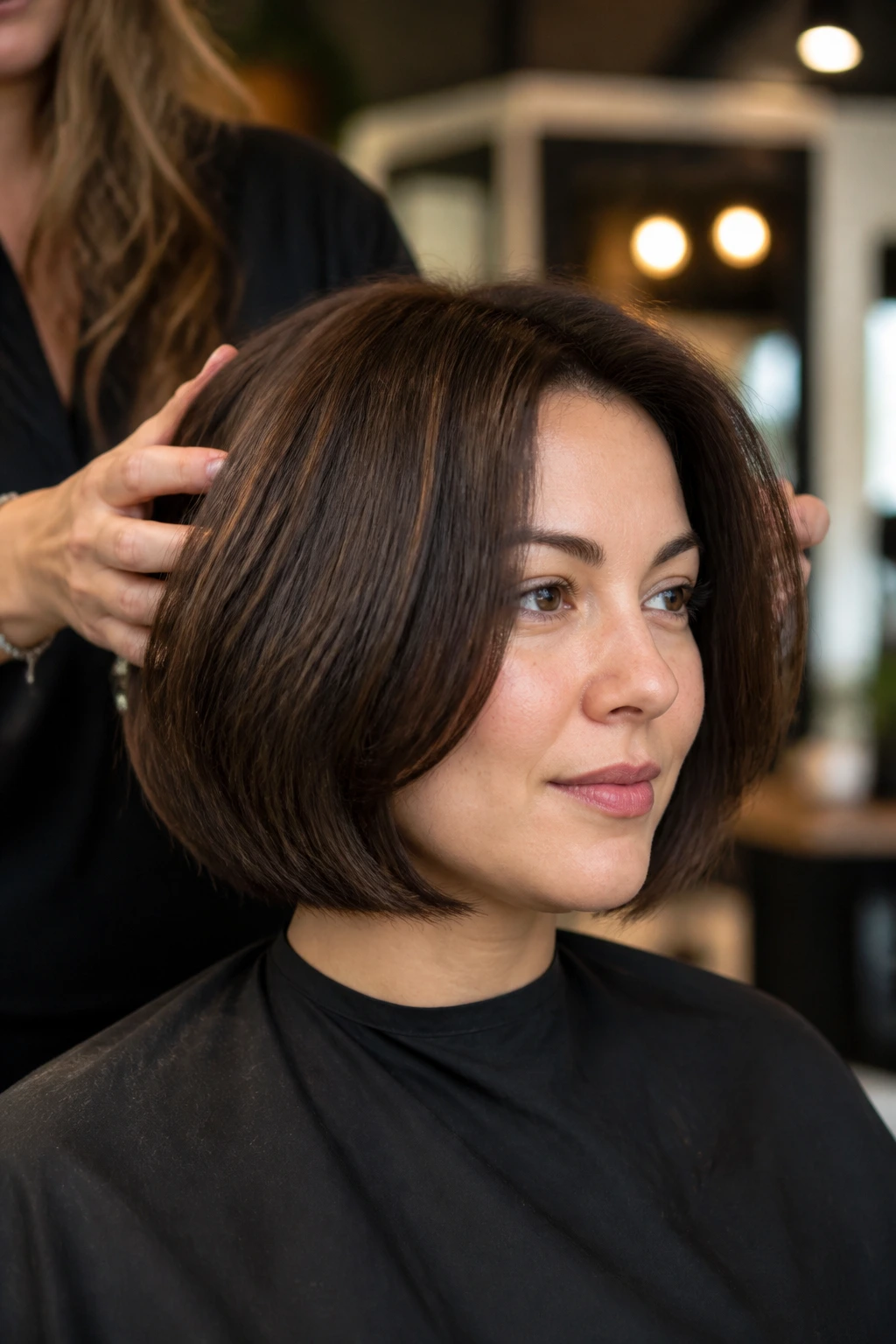
Bring a photo, yes. Bring two if you can. One should show the full shape, and the other should show the finish you want — sleek, airy, textured, curved, whatever. Thick hair bobs are all about details that a single angle can hide.
Tell the stylist where your hair feels heaviest. That sentence helps more than asking for “more layers” or “less bulk,” because those words can mean wildly different things to different people. If the bulk is in the back, say that. If the sides balloon when dry, say that. If your fringe feels like a curtain by noon, say that too.
A few useful phrases:
- “I want the perimeter to stay clean.”
- “Please remove weight from the inside, not from the outline.”
- “My hair expands at the sides when it dries.”
- “I need this to work with a quick blow-dry, not a full styling session.”
That last one matters. A haircut should match your life, not your fantasy of your life.
Styling Moves That Keep Thick-Hair Bobs in Shape
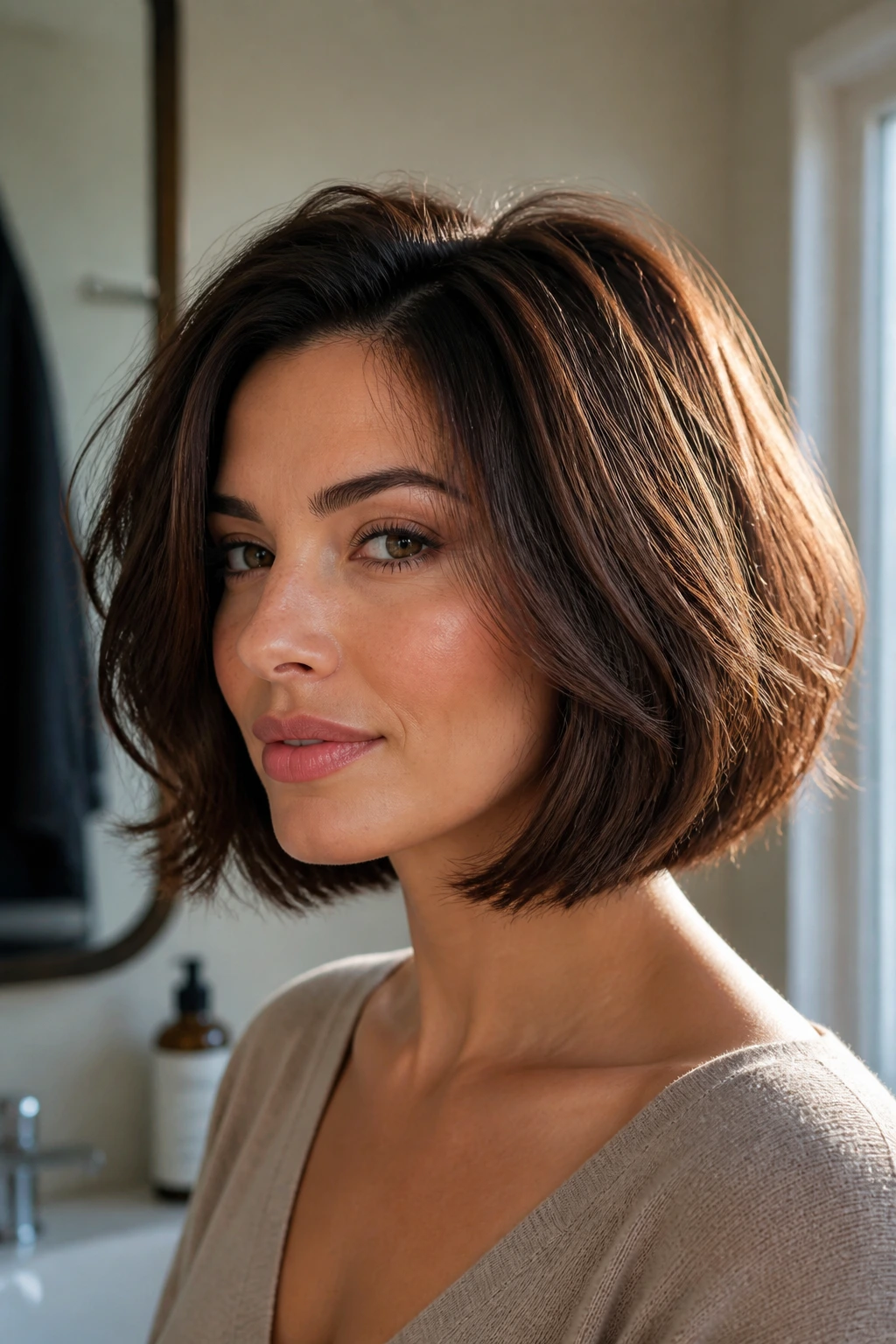
A thick-hair bob usually looks best when you style the roots and the ends with a light, controlled hand. Start with heat protectant. Always. Then decide whether the look needs lift, smoothing, or bend. Trying to do all three at once is how people end up overworking the cut.
For smooth shapes like blunt bobs, rounded bobs, and glass bobs, a paddle brush or round brush is enough. Aim the dryer down the shaft, polish the ends, and stop before the hair gets too soft and floaty. For textured shapes, use a diffuser or a rough dry at the roots, then bend only a few face-framing pieces if you want control.
Product choice matters more than product quantity. Thick hair can handle cream, mousse, or smoothing balm, but each one has a job. A cream tames frizz. A mousse lifts the root. A balm quiets the surface. Mixing all three in large amounts turns the hair heavy and sticky fast. Pick one main product, then leave the rest alone unless the cut genuinely asks for it.
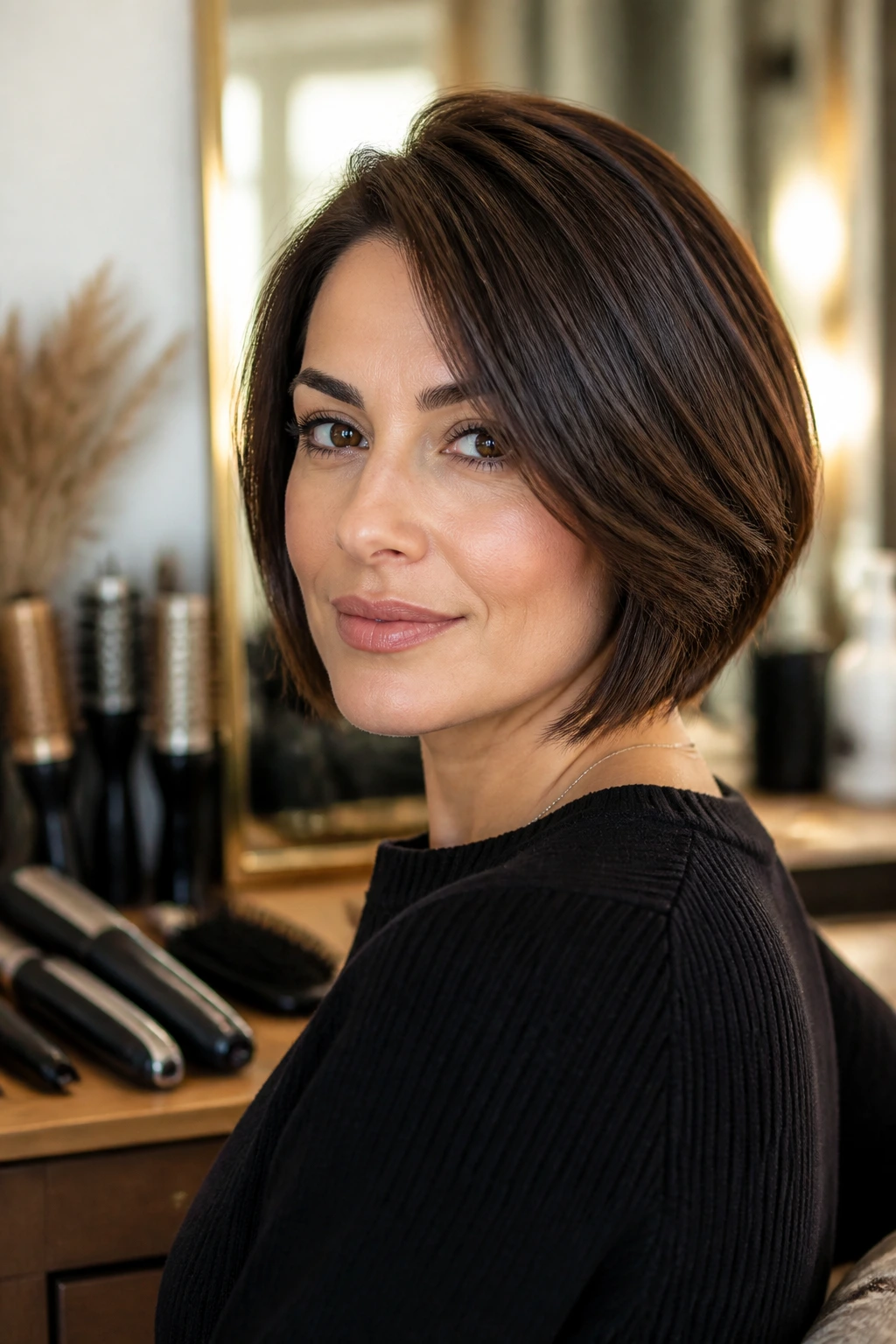
Essential Tools for These Bobs
-
A good blow dryer with a nozzle: The nozzle keeps airflow focused so thick hair doesn’t frizz while you dry.
-
Round brush, medium to large barrel: Best for beveled ends, rounded bobs, and soft bends at the face.
-
Paddle brush: A solid choice for sleek cuts and smoother blowouts on dense hair.
-
Wide-tooth comb: Useful for detangling curls and waves without ripping the shape apart.
-
Flat iron with adjustable heat: Keep the heat controlled; thick hair may need more heat than fine hair, but not maxed-out settings on every pass.
-
Heat protectant spray or cream: Non-negotiable if you use hot tools more than once a week.
-
Texturizing spray or light mousse: Helps shaggy, beachy, and choppy bobs keep some movement without collapsing.
-
Sectioning clips: Thick hair is easier to style in clean sections, and the result is usually smoother.
Common Mistakes That Make Thick-Hair Bobs Go Wrong
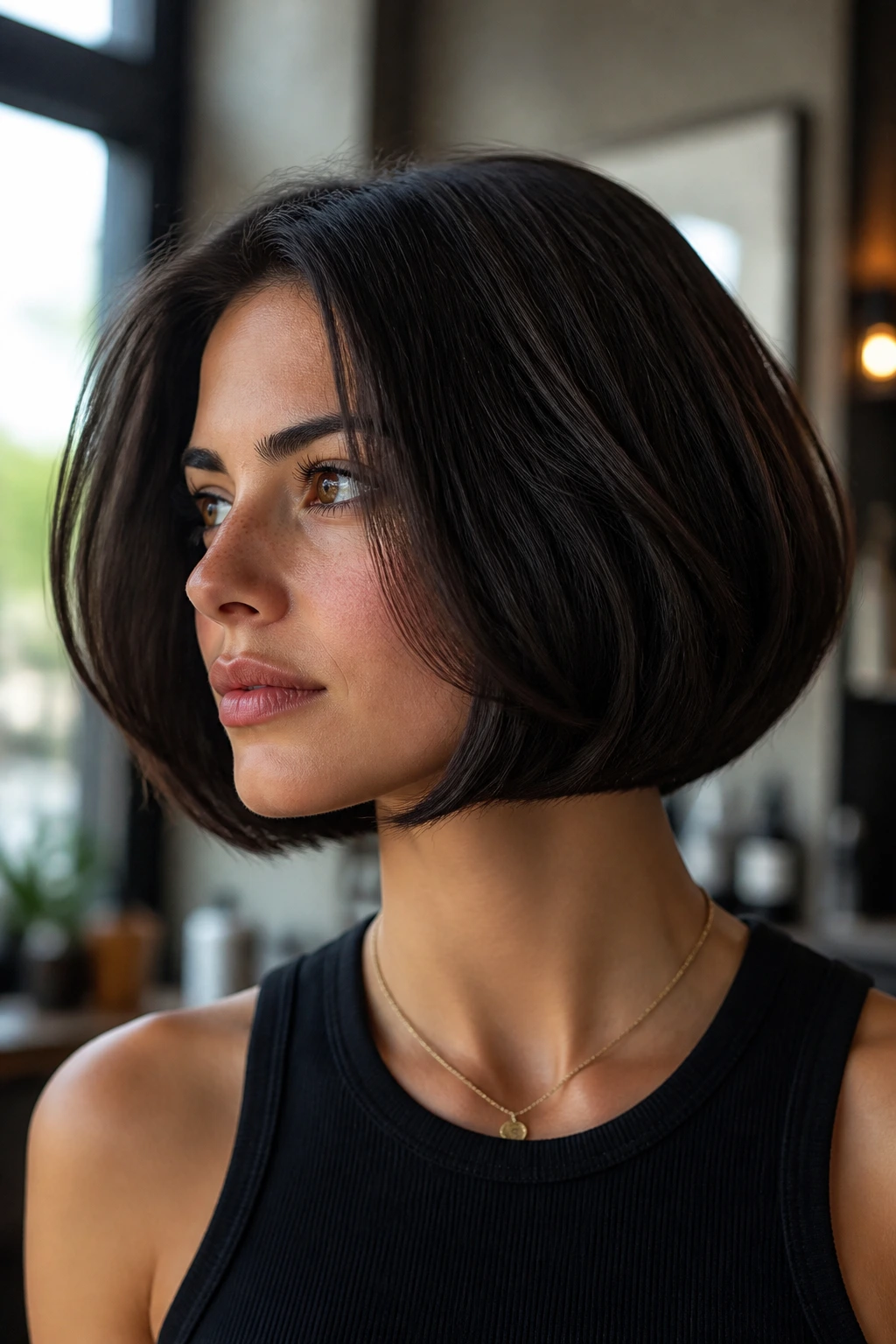
The first mistake is cutting too much bulk out of the perimeter and not enough from the inside. The result looks thin at the ends but still heavy overall, which is an awkward combination. If your bob keeps puffing at the sides, the problem is usually weight placement, not length alone.
The second mistake is choosing a photo of fine hair and expecting the same outline to land the same way. Thick hair doesn’t collapse like that. It holds shape, which is a gift until the shape is wrong. Ask whether the model’s hair is dense, coarse, or wavy before you fall in love with the look.
Third, people over-style the finish. A thick bob does not need every strand flattened, sprayed, and ironed into submission. That’s when it starts looking stiff. Leave a little movement in the ends, especially around the face.
And one more: skipping trim appointments. Thick hair grows out into volume faster than people expect. A bob that looks tidy at six weeks can start looking wide and blunt in the wrong places by ten or twelve. Shape matters more than you think.
Ways to Adapt These Cuts If You Want Less Commitment

The Long Lob Detour: If you love the idea of a bob but panic at the thought of your neck showing, keep the length at the collarbone and bring in only a few face-framing pieces. You still get the shape shift without the full chop.
The Soft Fringe Swap: If bangs feel like too much maintenance, replace them with long curtain pieces or a cheekbone sweep. You’ll still soften the front without needing trims every few weeks.
The Hidden Weight Reduction: For very thick hair, ask for internal debulking only in the places that puff up. That keeps the outline intact while making the haircut easier to live with.
The Texture Slide: If your hair is straight but you want movement, go for a blunt or curved bob and add texture only when you style it. That keeps your default look clean and lets you loosen it on demand.
The Bold Short Cut: If you’re ready for a real change, step from a lob into a micro bob or box bob. It’s a bigger move, but thick hair often carries short shapes better than people expect.
Keeping the Shape Between Trims
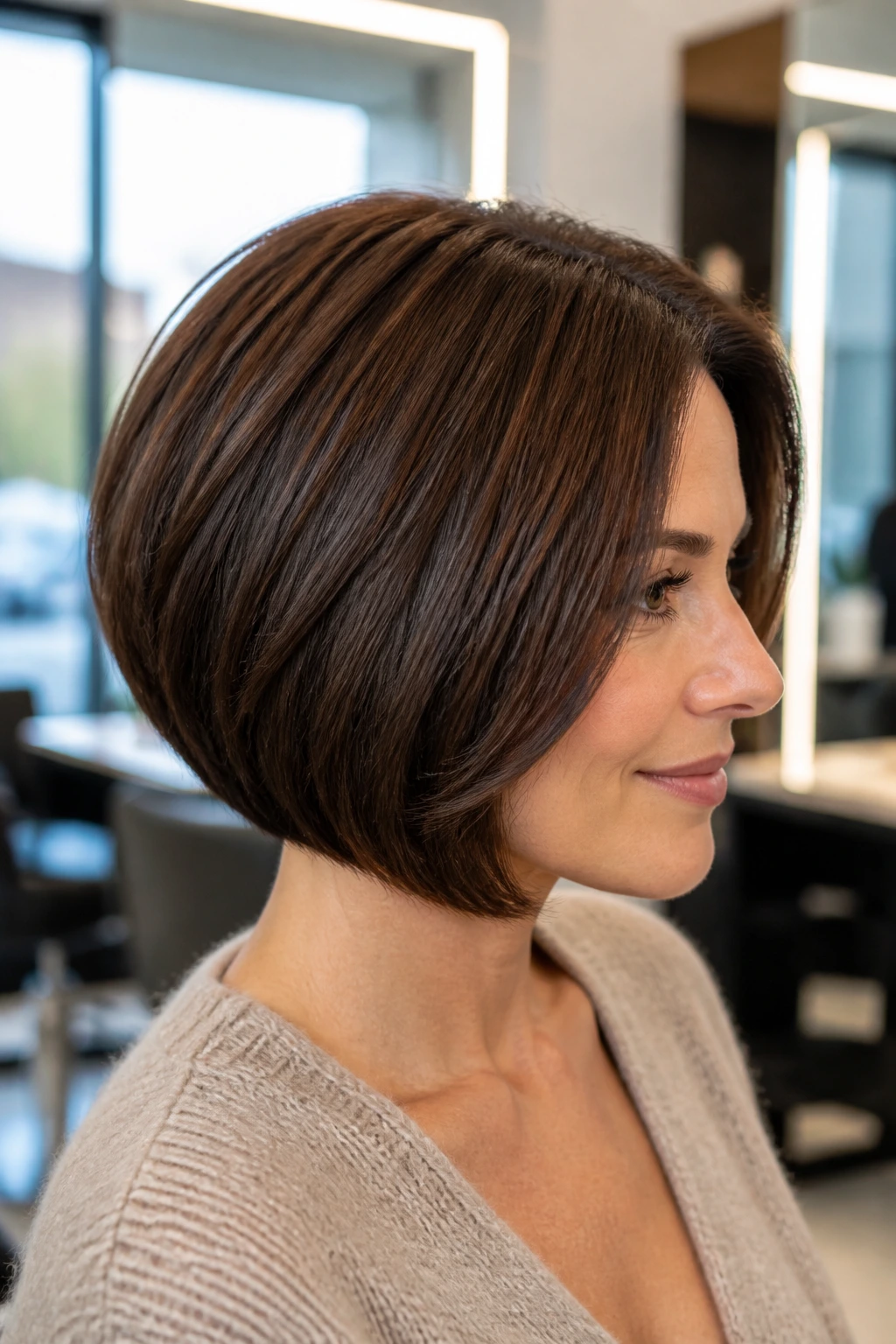
Thick hair asks for a little upkeep. Not a fussy one, just a steady one. Most bob haircuts for thick hair need trimming every 6 to 10 weeks, depending on how clean you want the line to stay and how fast your hair grows. Stronger shapes like blunt bobs and box bobs show growth sooner. Softer shapes like shaggy or layered bobs can go a bit longer.
At home, the goal is to keep the ends from splitting and the bulk from spreading. Sleep on a smooth pillowcase if you can; it helps the cut stay calmer overnight. If the hair bends oddly while you sleep, a loose clip at the crown or a soft wrap can save you from a weird half-flip the next day.
If the bob starts widening at the sides, don’t panic and grab the thinning shears yourself. That’s how the shape gets patchy. A light pass with a brush, a controlled blow-dry, or a quick root refresh often fixes what feels like a haircut problem. Sometimes it’s just a styling problem with a dramatic mood.
Frequently Asked Questions
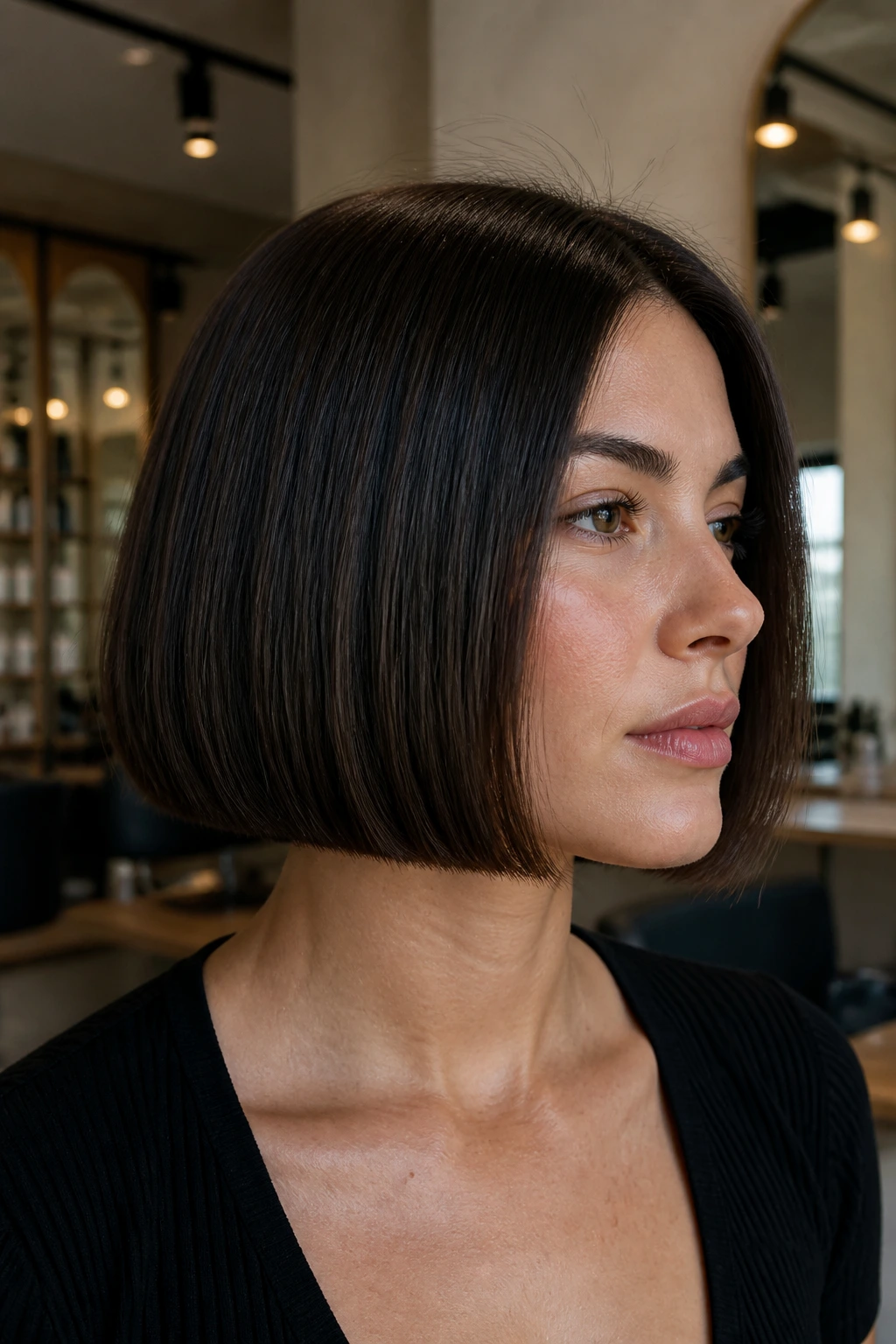
What bob length is best for thick hair?
The safest lengths are usually chin length, collarbone length, or just below the jaw, because they let the hair sit without building a wide shelf. The best choice depends on where your bulk lives. If your hair puffs at the sides, don’t cut it right at the widest part of your face.
Are layered bobs good for thick hair?
Yes, but only when the layers are placed with restraint. Internal layers and long, soft layers help thick hair move; choppy layers everywhere can make it puff. The goal is shape control, not hair thinning for its own sake.
Can thick hair pull off a blunt bob?
Absolutely. Thick hair often makes a blunt bob look better than fine hair because the line has enough body to stay visible. The key is keeping the inside from getting overloaded so the cut doesn’t widen outward.
Do curtain bangs work with thick hair?
They do, and they’re often easier than full straight-across bangs. Curtain bangs spread the density out across the forehead and soften the face without making the fringe feel like a solid block. They still need trims, though.
What if my thick hair is also curly?
Choose a bob shape that follows the curl pattern rather than trying to force a straight outline. Rounded bobs and dry-cut shapes usually work better than one-length cuts that ignore shrinkage. Cutting curls dry often gives a more honest result.
How do I stop my bob from looking triangular?
The triangle usually comes from too much weight at the bottom and not enough relief inside the cut. Ask for internal layers, a slight bevel, or a length adjustment so the widest point of the cut doesn’t sit exactly where your hair already expands. Styling with a round brush can help too.
Should I ask for thinning shears?
Only if your stylist uses them sparingly and with a clear reason. Over-thinning thick hair can leave frizzy ends and uneven patches, especially as the cut grows out. Internal texturizing or point-cutting is usually safer.
Which bob is easiest to grow out?
A collarbone lob, a soft layered bob, or a face-framing lob grows out more gracefully than a micro bob or a sharp inverted cut. If you’re nervous, start longer. That gives you room to adjust without feeling trapped.
A Bob That Works With Thick Hair, Not Against It

The best bob for thick hair is the one that respects your density instead of pretending it isn’t there. When the line is right, thick hair looks rich, structured, and full of life. When the shape is wrong, it turns into a triangle, a mushroom, or a blunt little helmet that needs constant fixing.
Bring a photo. Bring a second one. Be picky about where the bulk sits, because that detail matters more than the trendy name of the cut. If your thick hair has been fighting every bob you’ve tried, one of these shapes is probably a better match — and the right one should make your morning mirror feel a lot less argumentative.
