



Shoulder length hairstyles with curtain bangs have a useful little trick: they make hair look shaped even when the styling is plain, and they do it without stealing the movement that makes medium-length hair so useful. The length sits right where it can swing against a collarbone, brush the jaw, tuck behind an ear, or flip out at the shoulder with a little attitude. Curtain bangs pull the front open, so the whole cut feels lighter and more deliberate.
Hair at this length can turn boxy fast. The ends hit the shoulders, the front goes flat, and suddenly the haircut looks wider than it is. Curtain bangs fix part of that by breaking the front line into two soft panels, but the real win is the balance: enough weight to keep the shape from puffing out, enough softness at the front to keep the face from disappearing behind it.
The versions below are not carbon copies with different names. Some lean sleek and glossy, some look better a little shaggy, and some are built for wave, curl, or a blowout that lasts two days if you treat it kindly. The difference is in where the layers start, how long the fringe stays, and how much the ends are allowed to bend.
Why This Pairing Keeps Working
-
Face-framing without a hard line: Curtain bangs split the forehead area into two soft sections, which keeps shoulder-length hair from feeling like one big rectangle around the face.
-
Length that still behaves: A cut that lands around the collarbone can be tucked, waved, straightened, or flipped, and the bangs change the mood without forcing a full restyle.
-
Better grow-out: When the fringe gets longer, it still reads like face-framing layers instead of an awkward blunt bang line that needs an emergency trim.
-
Texture-friendly shape: Fine hair can keep a light, airy outline; thick hair can lose bulk; curly hair can keep the front open instead of heavy and triangular.
-
Less commitment, more options: You can wear this cut center-parted, slightly off-center, polished, tousled, or pulled half back without the shape falling apart.
-
Salon time that pays off: A smart version of this cut usually needs small refinements, not a total rewrite every time you visit the chair.
How to Choose the Version That Fits Your Face and Texture
Start with your hair’s actual behavior, not the photo you saved. A lot of these cuts look similar on paper, then behave very differently once they meet a cowlick, a strong wave pattern, or a dense ponytail.
Face Shape First
Round faces usually do well with longer curtain pieces that start around the cheekbone and fall toward the jaw, because that line adds a little length through the center. Square faces often look softer when the front layers are feathered instead of chopped, especially if the shortest pieces brush the cheekbones rather than sitting right at the mouth. Heart-shaped faces tend to like more weight at the lower half of the cut, so the ends do not leave the chin floating in space.
Texture Second
Fine hair usually needs invisible layers, not a lot of slicing. Too much removal near the crown can leave the whole cut looking tired by noon. Thick hair wants bulk taken out from inside the shape, not a bunch of short pieces at the surface that puff up when the weather turns humid. Curly and wavy hair need length kept a little longer than you think, because shrinkage changes where the fringe lands.
Lifestyle Matters Too
If you dry your hair in five minutes and leave, pick a version that still looks finished with a rough bend. If you enjoy a round brush and a little polish, the blowout-friendly versions will feel worth the extra time. The best haircut is the one that matches your morning routine without asking for a theatrical production.
1. Soft Wavy Lob with Feathered Curtain Bangs
A soft wavy lob is the easygoing answer to shoulder-length hair that wants movement without looking overworked. The ends skim the collarbone, the waves blur the outline, and the curtain bangs fold into the rest of the cut instead of sitting on top like an afterthought. It’s relaxed, but not lazy.
Why It Works on Straight or Wavy Hair
The length gives the hair enough weight to hang well, which matters if your wave pattern tends to puff up when it gets too short. Feathered curtain bangs soften the front without creating a dense bang shelf, and that keeps the face open.
- Ask for the longest pieces to land around the collarbone.
- Keep the front layers light enough to blend into the cheeks.
- Use a 1.25-inch curling iron only on the mid-lengths, not the roots.
- Finish with a touch of texturizing spray, not a heavy cream.
Pro tip: bend the bangs away from the face first, then shake them out with your fingers. That keeps the fringe from looking too set.
2. Blunt Shoulder-Length Bob with Center-Part Bangs
This cut looks sharper than people expect. A blunt edge at the shoulders gives the hair a clean frame, and the center-part bangs soften the top half so the whole thing does not read severe. It’s the version I’d point to if someone wants structure but hates a stiff haircut.
The blunt line is the point. It makes fine hair look fuller and gives straight textures a dense, glossy shape that doesn’t need much extra work.
Because the fringe stays airy, the cut avoids that helmet effect blunt shoulder-length hair can slip into. A tiny bit of bevel at the ends helps the hair skim the shoulders instead of kicking straight out.
3. Layered Shag with Piecey Curtain Fringe
Why does this one work so well on lived-in hair? Because it doesn’t pretend your hair is one texture all the time. The shag adds broken layers through the crown and sides, while the curtain fringe stays piecey enough to look intentional even when the rest of the cut has a little chaos in it.
How to Style It
Let the roots dry with a bit of mousse, then rough-dry until the hair is about 80 percent dry. From there, twist a few sections around your fingers or a diffuser to encourage bends, not curls. The fringe should be blown side to side for a minute or two so it opens in the middle and falls softly.
This cut is happiest on wavy or thick hair. Straight hair can wear it too, but the texture spray has to do a little more of the talking.
4. Sleek Straight Cut with Long Draped Bangs
Picture a clean line that brushes the shoulders, then a curtain fringe that melts into the cheekbones instead of shouting for attention. That’s the appeal here. The shape is polished, almost spare, and the bangs carry just enough softness to keep it from looking severe.
What Gives It Movement
The movement comes from the front, not the body of the haircut. Long draped bangs turn a straight shoulder-length cut into something softer without breaking the silhouette.
- Keep the perimeter mostly even.
- Ask for the bang corners to start around the cheekbone.
- Blow-dry with a nozzle pointed downward.
- Add a pea-sized amount of serum only to the ends.
This is the cut for someone who likes a clean middle part and does not want layers everywhere. It behaves best when the ends are tucked slightly under or left glassy and straight.
5. Bouncy Blowout Layers with Rounded Curtain Bangs
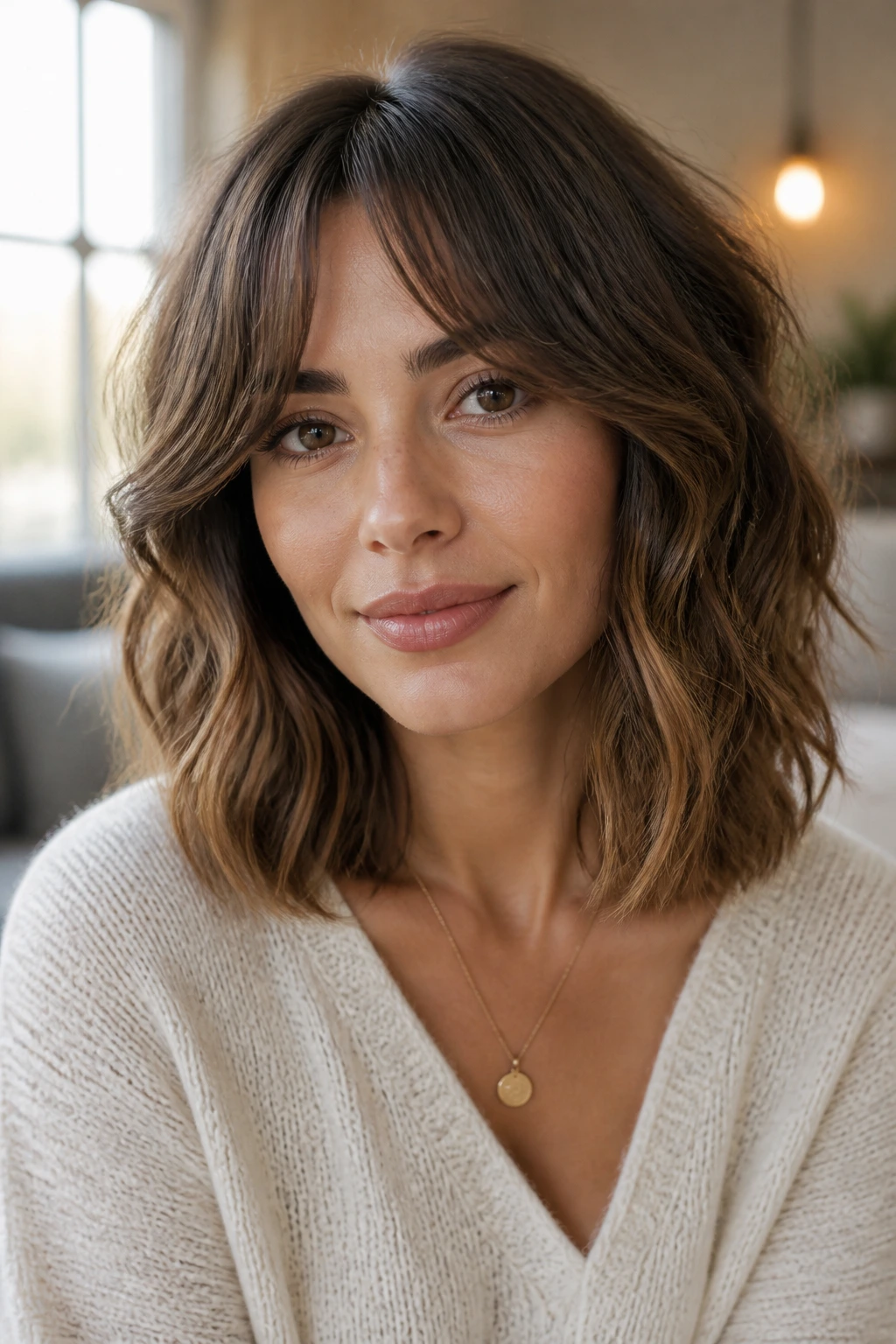
There’s a very specific kind of shoulder-length haircut that looks like it has opinions. This is it. Rounded curtain bangs curve away from the face, and the layers underneath lift the ends so the whole shape has a salon blowout feel even on an ordinary day.
The key is volume at the crown and a soft bend through the mids. Too much curl and it turns pageant-y. Too little and it collapses.
Use a round brush with tension, dry the bangs first, and roll the front sections away from the face. If you pin them to cool for two minutes, the bend holds better. That tiny pause matters more than a lot of people think.
6. Textured Collarbone Lob with Choppy Ends
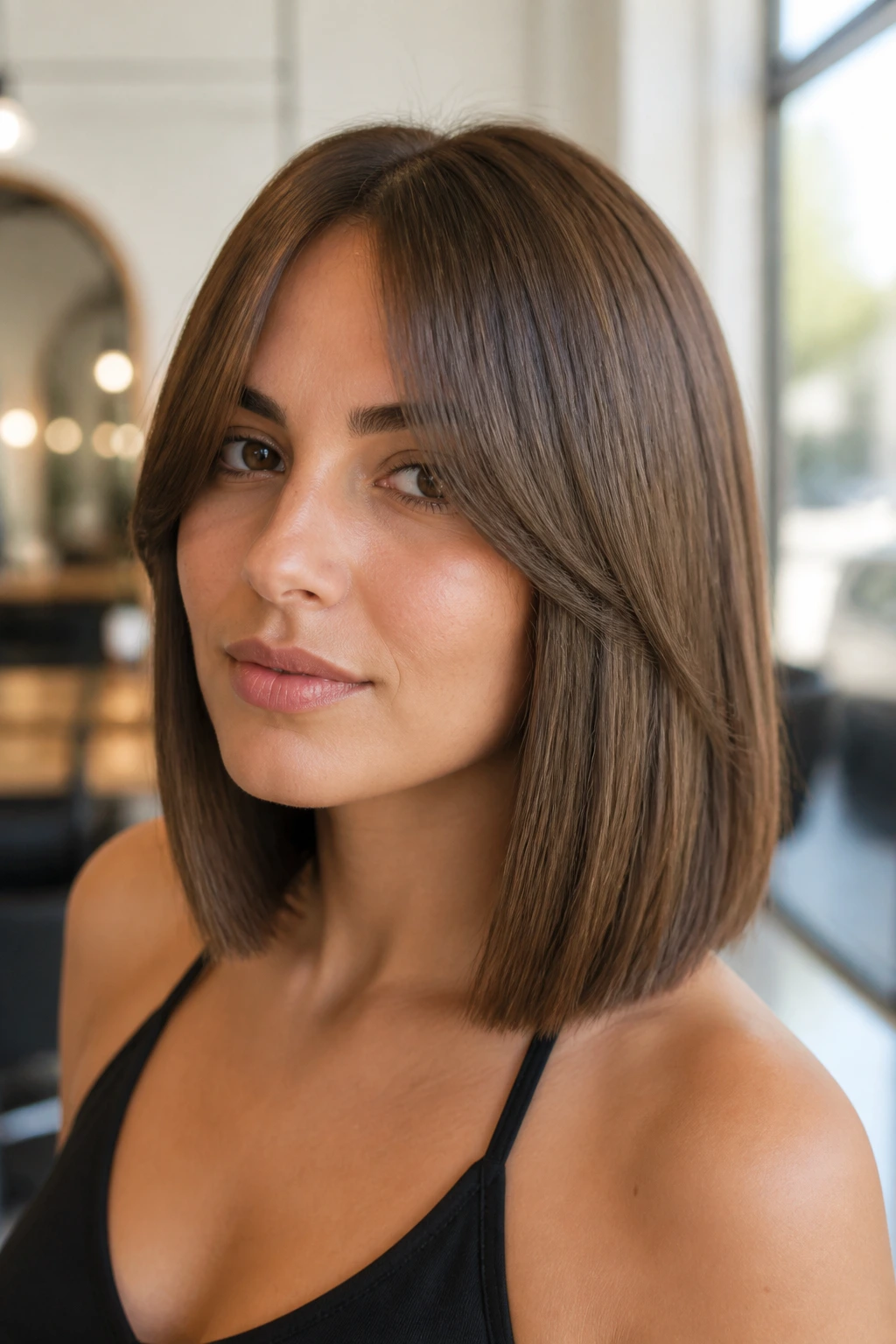
A collarbone lob with choppy ends is the cousin of the blunt cut, except it has a little grit in it. The ends are point-cut or lightly razored, so the line looks airy instead of blocky. Curtain bangs keep the front from feeling too chopped up.
This version works when you want texture but not a full shag. The hair still has a shape you can see from across the room, which is useful if your natural wave is uneven and you want the haircut to help rather than fight it.
If your hair tends to swell in humidity, keep the top layers tame and let the ends carry the movement. That keeps the shape controlled.
7. Curly Shoulder-Length Cut with Curved Curtain Bangs
Curly hair loves a longer fringe, plain and simple. A curtain bang on curls should be cut with shrinkage in mind, because what lands at the chin when wet may spring up to the cheekbone once it dries. The right cut curves with the face instead of springing into a short, blunt surprise.
How to Keep the Curl Pattern Honest
Dry cutting or cutting the fringe near-dry helps the stylist see how each curl behaves. That matters more here than precision in the abstract. The shape has to follow the hair’s actual spring.
Use a curl cream or light gel, then diffuse on low heat until the curls are set. Keep your hands out of the fringe once it starts drying, or you’ll break the pattern and flatten the opening in the middle.
8. One-Length Shoulder Sweep with Minimal Layers
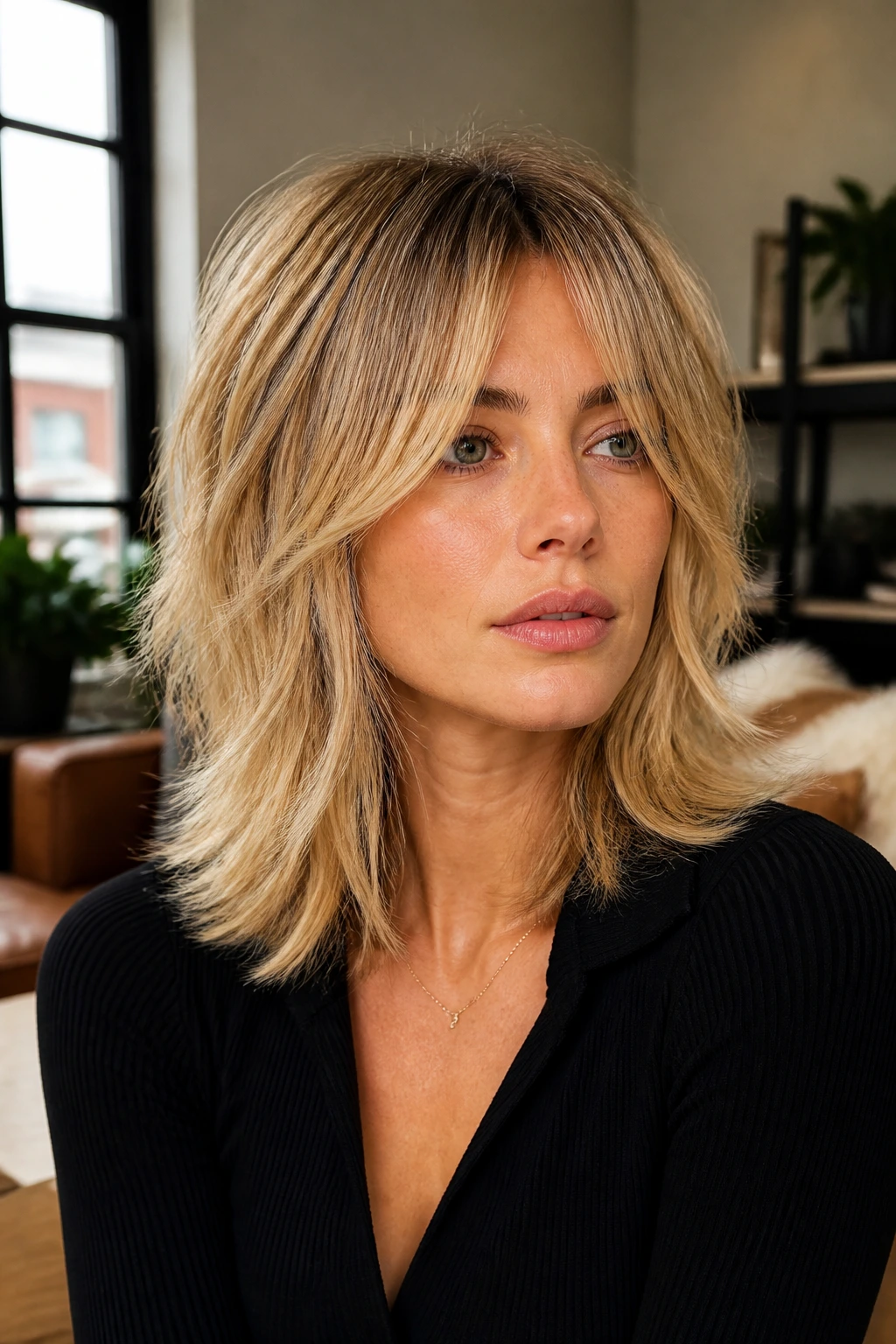
Some people want shoulder-length hair because they like having a solid sheet of hair they can sweep over one shoulder, clip back, or tuck behind both ears. This cut leans into that idea. The layers stay minimal, and the curtain bangs do the only real softening.
That clean shape can look expensive without trying too hard, especially on thick or medium-texture hair. The front pieces should stay long enough to drape, not float. If they spring too high, the whole haircut loses its calm.
I’d choose this version for someone who wants the bangs to do the talking while the rest of the cut stays quiet. The fewer layers there are, the more the line matters.
9. Butterfly-Inspired Shoulder Cut with Face-Framing Bangs
The butterfly idea works because it gives you two zones: lift around the face and length underneath. On shoulder-length hair, that means the front layers open the cheeks while the back keeps enough weight to swing. Curtain bangs blend into those face-framing pieces so the cut feels airy, not overdone.
The shorter layers should start high enough to matter, usually around the cheekbone, while the longer pieces keep falling toward the collarbone. That staggered shape gives the haircut a little lift every time you turn your head.
If you like a blowout that flips the ends outward slightly, this is a strong choice. It holds that shape without needing a lot of product.
10. French-Girl Waves with Wispy Curtain Bangs
This one is all about ease that still looks thought through. The waves are loose, almost sleepy, and the wispy curtain bangs keep the face open without creating a hard stripe across the forehead. It’s less about perfect curls and more about a bend that looks as if it happened naturally.
A little mousse at the roots, a quick dry with your fingers, and one or two twists with a curling wand are enough. That’s the appeal. The cut looks better when it isn’t fussed over.
What Makes It Different
Unlike the blowout-heavy versions, this style survives a touch of mess. The bangs don’t need to sit perfectly; they just need to part softly and land around the cheekbones. If you like hair that falls into place with a shake of your head, this one earns its keep.
11. Wolf-Cut Lite at Shoulder Length
A full wolf cut can go too far for some people. The lite version keeps the crown volume and the broken texture, but it stops before the shape gets wild. Curtain bangs help smooth the transition from short layers at the top to the longer shoulder-length perimeter.
This is a good fit if you want edge without losing the ability to wear the hair down and tidy. The layers should be soft enough that the haircut still works when you blow it out straight.
Use a little texture spray at the roots and a lightweight leave-in on the ends. Too much product will drag the airy pieces down.
12. Polished A-Line Lob with Sweeping Bangs
An A-line lob gives you a slight forward angle, so the front lands longer than the back. Add curtain bangs and the whole thing turns sleek without becoming severe. The bangs sweep into the sides, which keeps the face from getting boxed in by the angle.
This is one of the more elegant shoulder-length options because the line is visible even when the hair is tucked behind the ears. The angle does the work. The fringe just softens the entrance.
A flat iron pass on the ends can sharpen the line, but don’t crush the body of the cut. A little bend is better than a pin-straight board.
13. Thick-Hair Layers with Heavy Curtain Bangs
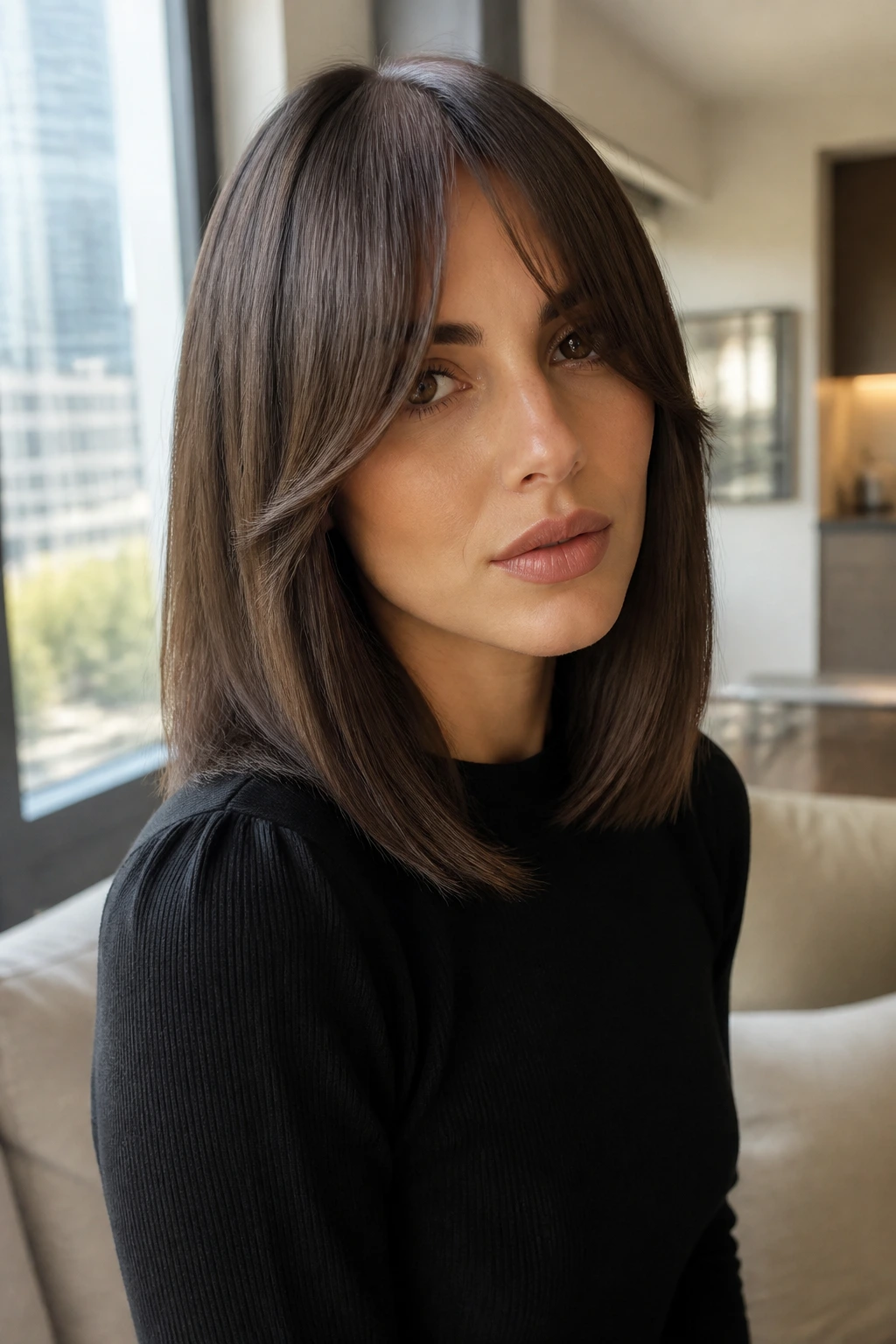
Thick hair needs a different kind of balance. If you cut the curtain bangs too wispy, they can disappear into the density of the rest of the hair. Heavier curtain bangs give the front enough presence to stand up to the bulk behind it.
Ask for internal weight removal, not just surface layers. That keeps the haircut from exploding outward around the shoulders. The bangs should be full enough to move, but not so full that they block the face.
A Small but Useful Detail
Dry the fringe first. Thick hair absorbs time where it matters least, and if the bangs sit damp while the rest of the hair gets styled, they often dry in a bend you didn’t want. That’s how a good haircut gets annoyed-looking by lunch.
14. Fine-Hair Volume Lob with Invisible Layers
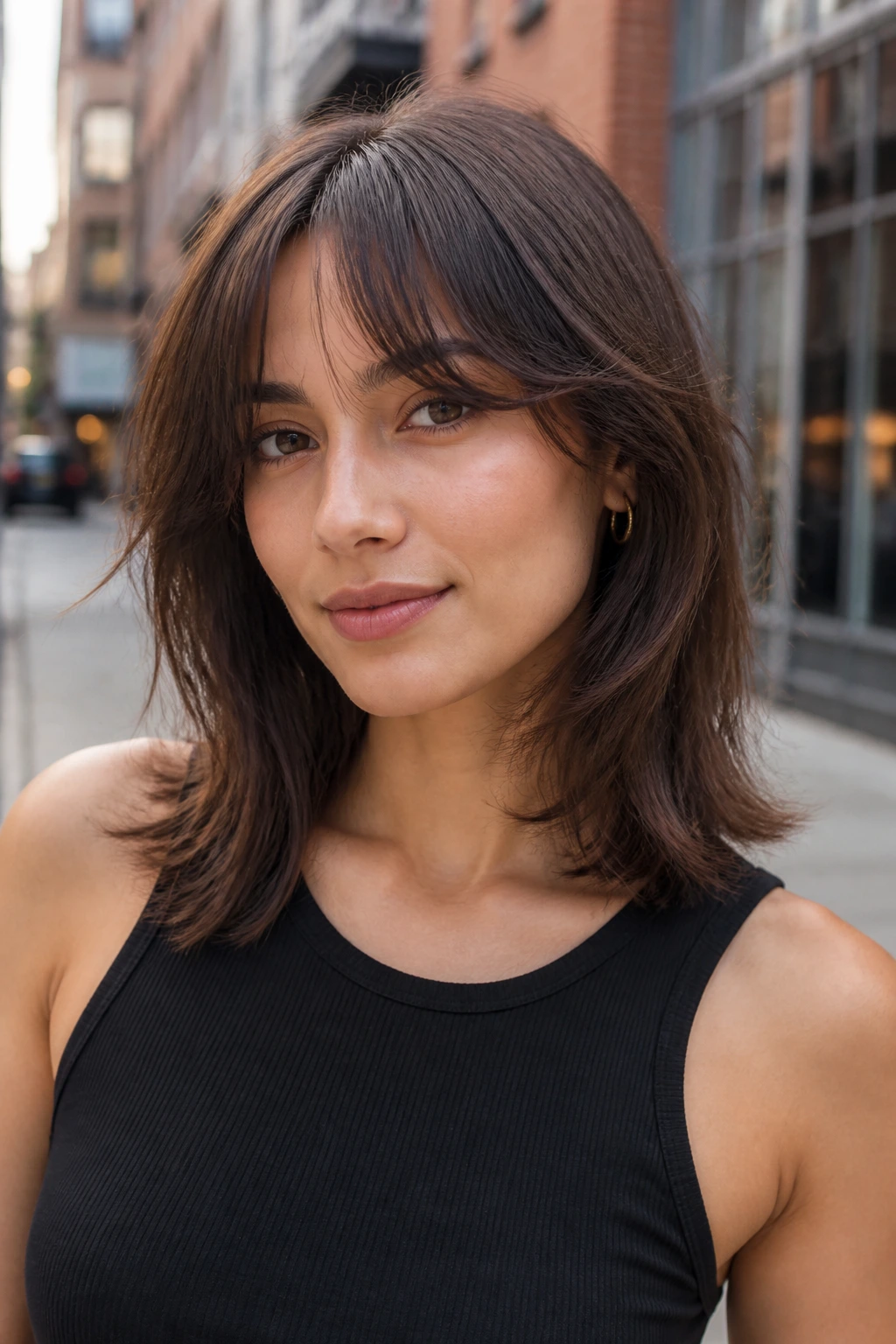
Fine hair usually looks best when the haircut does not announce its own layer structure. Invisible layers create lift without leaving little shelves through the ends, and the curtain bangs add shape without pulling too much weight from the front.
This version works because it keeps the outline soft but not thin. The ends still look like hair, not wisps. Root lift at the crown helps the bangs and the top sections stay separated enough to show movement.
A mousse at the roots and a quick round-brush dry can make this cut look much fuller than it is. Heavy oils will flatten it fast, so keep the finish light.
15. Chin-Skimming Front Layers on Shoulder-Length Hair
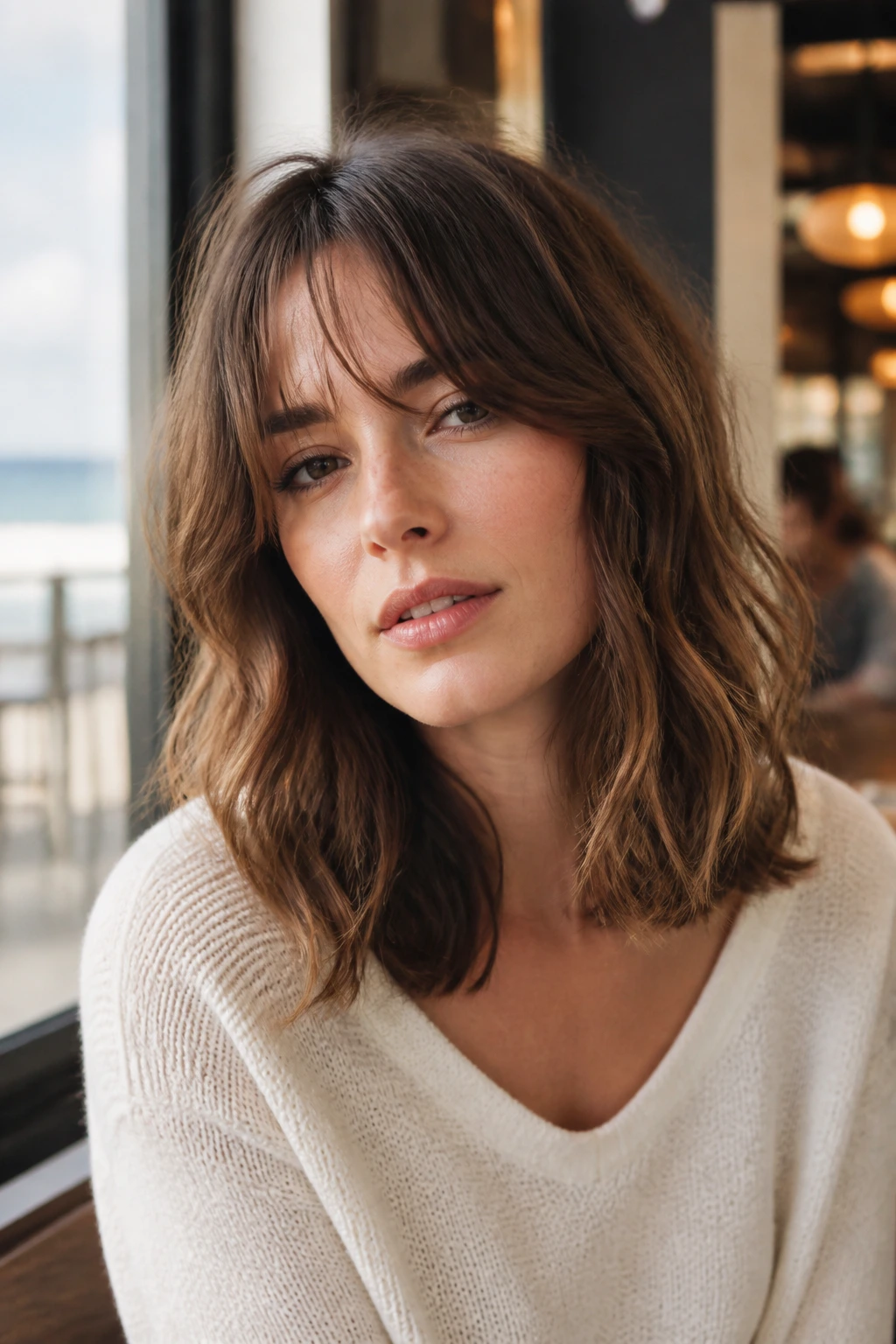
When the front pieces skim the chin, the whole haircut gains a useful vertical line. That can sharpen a rounder face, lengthen a softer jaw, or just make the front of shoulder-length hair feel more finished. Curtain bangs that blend into those chin-skimming layers look deliberate from the first glance.
This cut is less about bangs alone and more about how the whole front half of the haircut behaves. The front pieces should move away from the face, not hang straight down like borrowed curtain rods.
It’s a strong choice if you like to tuck your hair behind your ears and still want the cut to look styled. The layers stay visible even when the fringe is open.
16. Tousled Bob-Lob Hybrid with Razor Ends
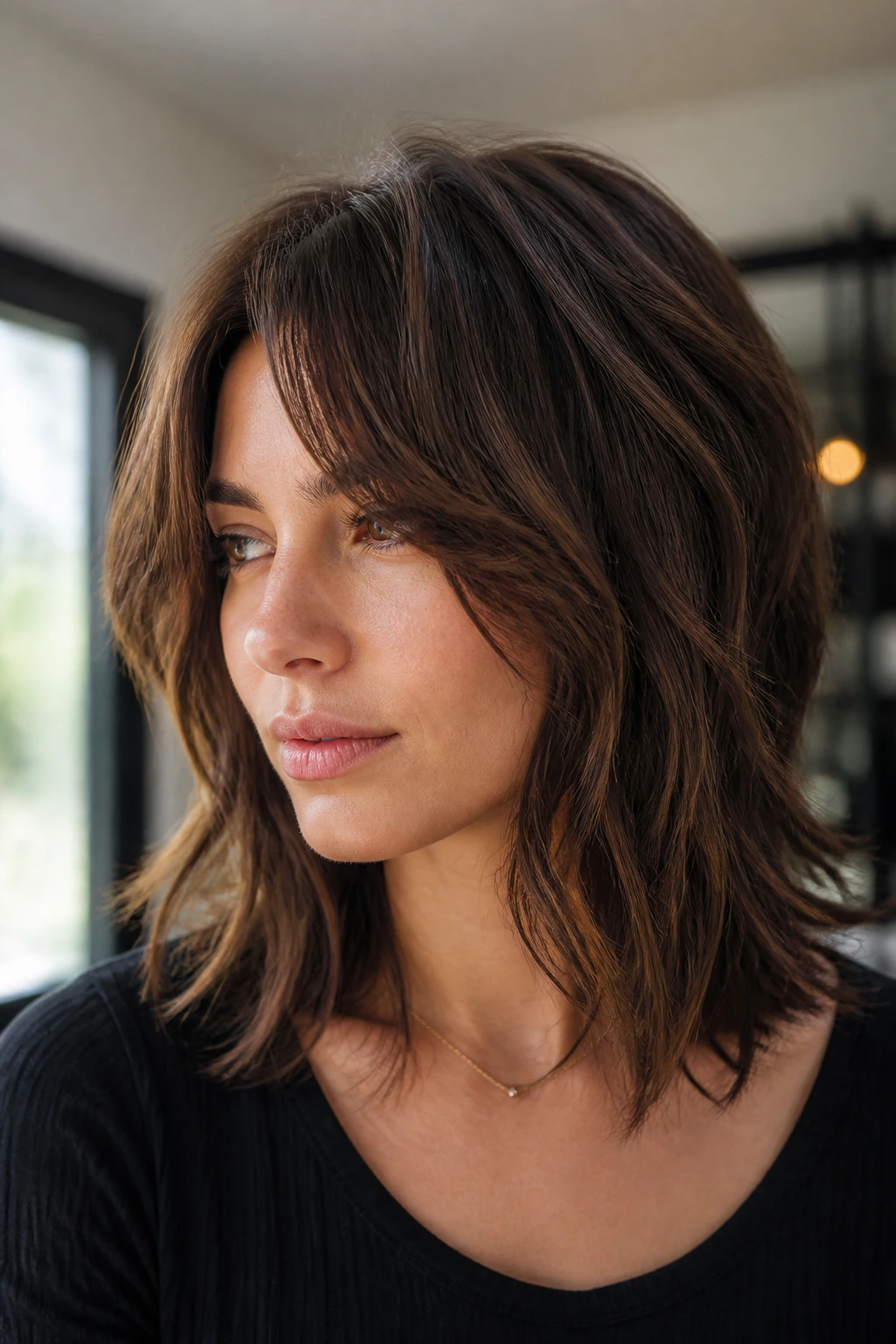
A bob-lob hybrid lives in the gray zone between neat and messy, which is exactly why it works. The razor ends create a soft edge, and the curtain bangs tie the top and front together so the cut doesn’t look like it lost an argument with the scissors.
The shape is especially good for natural wave. A little bend at the ends gives the haircut personality, but the razor finish stops it from feeling heavy. If your hair is medium density and you like a lived-in look, this one’s easy to like.
A salt spray or texture mist can help, but keep it light. Too much and the ends start to fray instead of move.
17. Retro Flip Ends with Curtain Bangs
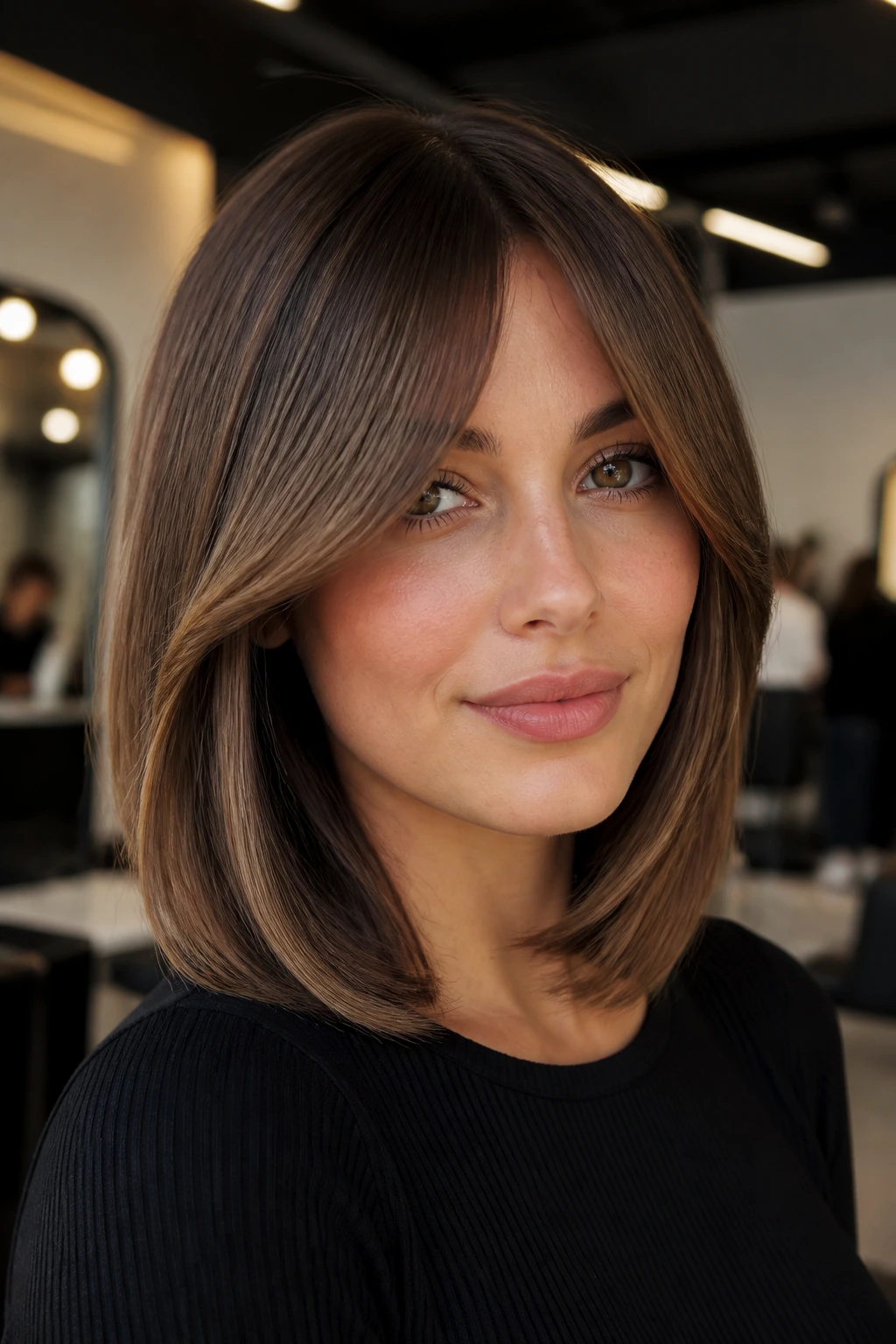
This cut has a little ’70s spirit without going full costume. The ends flip out just enough to show off the shoulder line, and the curtain bangs curve away from the face in a soft arch. It’s playful, but not cartoonish.
How It Reads in Real Life
The flip at the ends catches light and movement, which makes the haircut feel more alive than a straight blunt line. The bangs keep the front centered so the whole style doesn’t drift into outdated territory.
A round brush or medium velcro rollers can set the bend quickly. If you want the shape to last, let the hair cool before touching it. Warm hair forgets things.
18. Low-Maintenance Air-Dry Cut with Long Bangs
Can curtain bangs work for people who don’t want a long styling routine? Yes, if the cut is built for it. This version keeps the length at the shoulders, leaves the front pieces longer, and avoids so much layering that the hair needs constant correction.
The bangs should stay long enough to split naturally and fall open after a little scrunching. That makes the cut forgiving on busy mornings and decent on day two, which is where a lot of haircuts reveal their truth.
Use a leave-in conditioner, scrunch lightly, and let the hair dry on its own. If the front bends oddly, a two-minute blow-dry on just the fringe usually fixes it.
The Salon Brief That Saves the Haircut
A good photo helps, but it helps more when it shows the same hair type you have. Bring one image of the front, one of the side, and one of the back if you can. That keeps the conversation about shape instead of wishful thinking.
Say where you part your hair most days. Say whether you air-dry, diffuse, round-brush, or flat iron. Say if you want the shortest curtain pieces to hit the cheekbone or stay closer to the jaw. Those details change the haircut more than most people expect.
What to Say Out Loud
- “I want the longest pieces to land at the collarbone.”
- “I need the fringe to open at the cheekbones, not sit on my forehead.”
- “Keep the layers soft; I don’t want a shag.”
- “My hair flips out at the shoulders, so please account for that.”
- “I wear a center part most days.”
That small list saves a lot of awkward grow-out.
Styling Tools That Actually Matter
You do not need a cart full of gadgets. You need the right few things, used in the right order.
- Blow dryer with a nozzle: Directs airflow and keeps the fringe from puffing around the face.
- 1.25-inch round brush: Useful for bending curtain bangs away from the center and smoothing shoulder-length ends.
- 1-inch curling wand or iron: Best for loose bends, face-framing flips, and easy waves.
- Heat protectant spray: Helps keep the bangs from drying out, especially if you re-style them often.
- Lightweight mousse: Adds root lift without making fine hair sticky or heavy.
- Texturizing spray: Good for shaggy or wavy versions when you want separation, not crunch.
- Dry shampoo: Helps bangs survive day two and keeps the roots from going limp.
- Duckbill clips or small rollers: Handy for setting the front while the rest of the hair cools.
Common Mistakes That Flatten the Shape
-
Cutting the bangs too short: The fringe springs higher than expected, especially on wavy or curly hair. The fix is to keep the shortest piece longer at the first cut, then refine later.
-
Over-layering the shoulders: Too many short pieces around the perimeter turn the cut puffy and uneven. Ask for controlled layering, not a shredded outline.
-
Using heavy cream on the fringe: The bangs separate into greasy strands and lose that open center part. Keep richer products below the ears and use lighter styling near the front.
-
Ignoring the shoulder flip: Hair that lands exactly on the shoulder often kicks outward in a funny line. A slightly longer perimeter or a soft bevel helps the ends move instead of sticking out.
-
Flat ironing the bangs every single day: The fringe starts to look stiff and lifeless. A quick round-brush dry or a low-heat bend usually gives a softer finish.
Variations and Other Ways to Wear the Cut
Soft Side-Part Drift: Keep the curtain bangs long enough to wear slightly off-center. This works when your hairline or cowlick makes a perfect middle part annoying, and it still preserves the open front.
Shagged Texture Version: Add shorter crown layers and more pieceing through the mids. Pick this if you like a rougher finish, a little height at the top, and hair that looks better with texture spray than with a brush.
Glossy Blowout Version: Keep the layers tidy and spend the styling time on round-brush lift and a polished end bend. This is the smartest option for events or for people who like hair that holds a shape for more than an hour.
Curl-Friendly Shape: Leave the fringe longer and the layering softer so the curls have room to spring. This version keeps the front open without fighting shrinkage, which is the whole battle with curly bangs anyway.
Air-Dry Shortcut: Minimize internal layers, keep the curtain pieces long, and use mousse plus a light leave-in. It’s the least fussy version, and it looks especially good when your natural texture already has some bend.
Trim Schedule and Day-Two Maintenance
Curtain bangs usually need attention sooner than the rest of the haircut. A fringe trim every 4 to 6 weeks keeps the pieces opening at the cheekbones instead of dropping into your eyes or splitting awkwardly down the middle. The full shoulder-length shape can usually go 8 to 12 weeks between trims, depending on how fast your hair grows and how precise you want the outline to stay.
Day two is where the haircut earns or loses points. If the bangs flatten overnight, mist them lightly with water, hit the roots with a quick blow-dry for 30 to 45 seconds, and reset the bend with a round brush or roller. Dry shampoo works better if you apply it before the roots look oily; give it a minute to sit, then brush through.
Weekly, keep an eye on product buildup around the fringe and crown. If you use a lot of texture spray, mousse, or dry shampoo, a gentle clarifying wash every 2 to 4 weeks keeps the bangs from getting dull and sticky. That little reset makes the shape look fresh again.
Frequently Asked Questions
Do curtain bangs work on fine hair?
Yes, as long as the layers stay light and the fringe doesn’t get over-thinned. Fine hair usually looks better with invisible layers and a blow-dried bend than with heavy texturizing, which can make the ends look sparse.
Are curtain bangs high-maintenance?
Less than blunt bangs, more than no fringe at all. The maintenance comes from small trims and a quick front-piece restyle, not a full hair ritual every morning.
What face shape suits shoulder-length hair with curtain bangs best?
Nearly every face shape can wear them, but the length of the curtain pieces matters. Round faces often need longer front pieces; square faces usually look better with softer, feathered layers; long faces can handle a fuller center opening.
Can curly hair pull this off without looking bulky?
Absolutely, if the cut respects shrinkage. The fringe should be longer than a straight-hair version, and the layers need to follow the curl pattern instead of sitting in a blunt line.
How do I grow curtain bangs out?
Let the center pieces lengthen and ask for them to blend into cheekbone layers instead of trying to erase them in one visit. A grown-out curtain bang usually becomes a face-frame, which is a much easier place to live.
What if my hair flips out at the shoulders?
That’s a length issue, not a personal failure. Ask for either a slightly longer perimeter or a softer bevel at the ends so the hair bends instead of kicking straight out.
Should curtain bangs start at the cheekbone or chin?
Most shoulder-length cuts look best when the shortest pieces start around the cheekbone and the longest pieces fall somewhere between the jaw and chin. Starting too high can make the front feel busy; starting too low can make the bangs disappear.
Can I style them without heat?
Yes, especially if your hair already has some wave. A little mousse, finger-combing, and a natural center part can get you close; if the front refuses to cooperate, a minute or two of blow-drying just the fringe usually does the job.
The Shape That Keeps Its Softness
Shoulder length hair can lose its shape fast, and that is exactly why curtain bangs have stuck around. They break up the outline, soften the front, and give the haircut some room to move without turning it into a high-maintenance project. That little bit of drape changes the whole feel of the hair.
Pick the version that matches your texture and your routine, not the one that only looks good in a still photo. The cuts with the best staying power are the ones that still make sense when the round brush is back in the drawer and the day has already started.
