



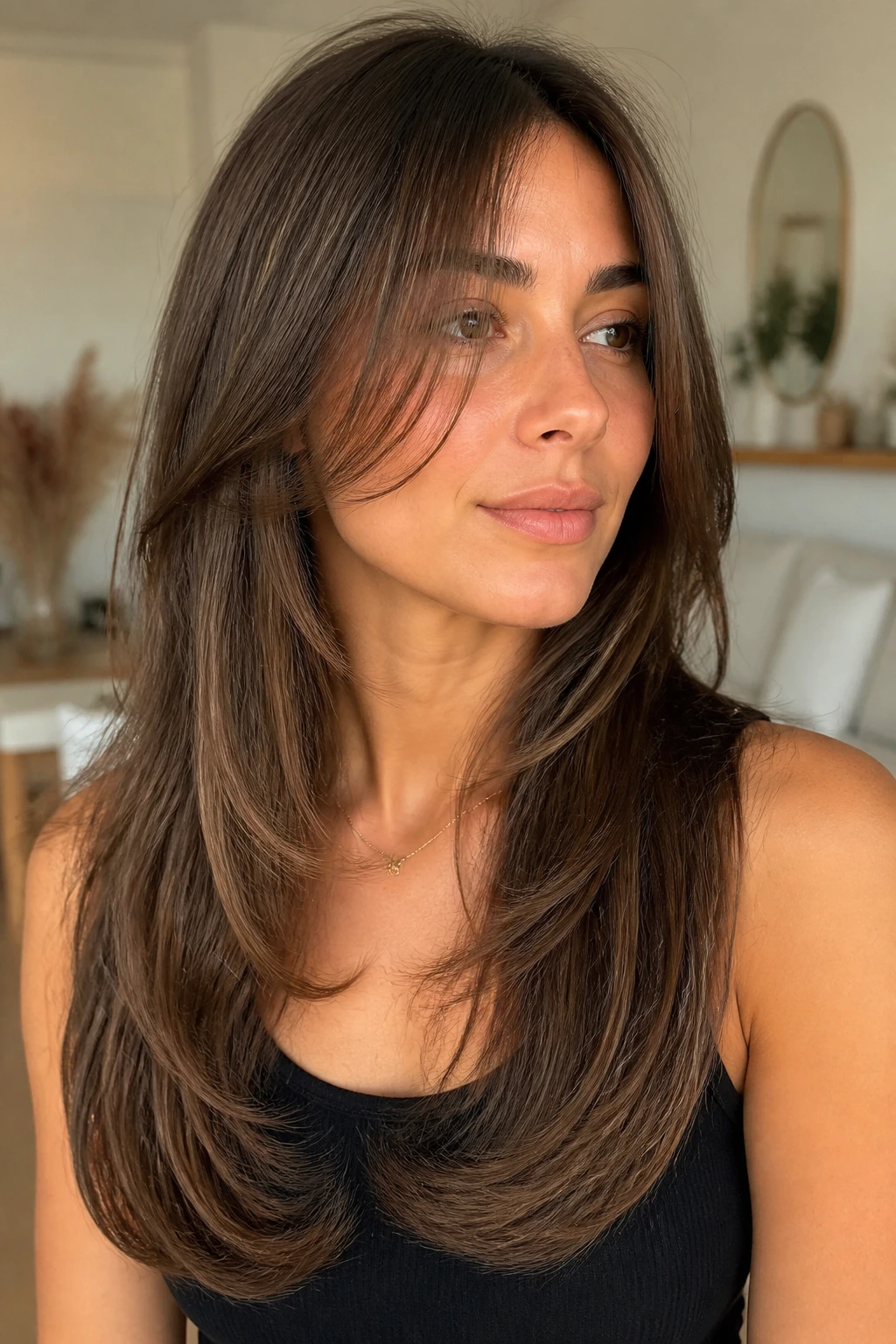
Wispy bangs are the rare fringe that lets a haircut breathe. They soften the front without turning it into a solid wall, and that matters more than people think. On the right cut, those little feathery pieces at the forehead make the layers around the cheeks and collarbone look lighter, cleaner, and a lot less fussy.
Layered haircuts with wispy bangs have a specific kind of magic when they’re done well. The front pieces don’t sit there like a shelf. They move. They bend when you turn your head, they fall away from the eyes instead of crowding them, and they let the rest of the shape keep its body. That’s the whole trick: enough softness to flatter the face, enough structure to keep the haircut from collapsing into nothing.
I’ve always liked this family of cuts because they’re honest. If the layers are too high, you can see it. If the bangs are too heavy, you can feel it every time you brush them off your forehead. The good versions live in the middle, where the outline still looks deliberate but nothing feels stiff.
Why This Collection Is Different
- Soft at the front, structured everywhere else: Wispy bangs keep the forehead area light while the layers do the heavier work through the sides and ends.
- Better growth-out than blunt fringe: When the bang line starts to grow, it can melt into curtain pieces or face-framing layers instead of turning into a hard, awkward shelf.
- Works with different densities: Thick hair gets relief from the weight removal; fine hair gets movement without needing a lot of short, choppy layers.
- Easier to wear on real mornings: A little bend in the bangs and a bit of movement in the layers is usually enough. You don’t need a full salon blowout to make the shape read.
- More flattering around the eyes: Because the fringe is broken up and airy, it draws attention to cheekbones and brows instead of sitting as one dark line across the face.
1. Long U-Shaped Layers With Soft Curtain Wisps
Long hair can go limp in a hurry if the shape is too even, and that’s where this cut earns its keep. The U-shaped outline keeps the ends feeling full, while the wispy curtain pieces split at the center and skim the cheekbones instead of cutting straight across the forehead. It’s the kind of haircut that looks best when the hair moves a little.
The front should not be chopped up aggressively. Keep the shortest pieces around the nose-to-cheekbone zone, then let the rest drift longer toward the jaw. That gives you a soft frame without wrecking the length. On dense hair, this setup removes the shelf effect that makes long styles feel heavy at the sides.
If you wear your hair down most days, this is one of the safest places to start. It grows out neatly, slips into a ponytail without weird lumps, and still gives you enough shape to make plain straight hair look intentional.
Best for: longer hair, medium to thick textures, and anyone who wants movement without losing length.
2. Choppy Shag With Airy Fringe

A shag does not have to look loud. When it’s cut with restraint, it can be the most forgiving shape in the whole group. The short layers at the crown lift the top, while the airy fringe breaks the forehead line so the haircut doesn’t feel like one big block of texture.
Why It Feels Soft Instead of Overworked
The difference is in the ends. A good shag keeps the perimeter loose, not ragged, and the wispy bangs should look like a light sweep, not a separate little helmet sitting on top of the hair. If the texture is cut too bluntly, the whole thing starts to look dry and puffy. Keep the fringe piecey and let the sides feather out around the cheekbone.
- Best texture match: wavy hair that holds bend without much effort.
- Styling move: scrunch in mousse at the roots, then rough-dry until about 80% dry.
- Watch for: too many short layers on fine hair can make the shape flare out in the wrong places.
Pro tip: ask for the fringe to be cut so it can split naturally; if it’s too short in the middle, you’ll spend every morning fighting it.
3. Butterfly Layers With Feathered Bangs

This is the haircut that gives you the feeling of a blowout even when you’re not doing much to it. The shorter face-framing pieces hover around the cheekbones, the longer layers stay below the shoulders, and the bangs skim the forehead in a soft, feathered strip that doesn’t weigh the face down.
It works because the layers are doing two different jobs at once. The front pieces create lift near the face, while the length keeps the overall shape from getting too top-heavy. On thick hair, that matters. On medium hair, it gives you swing without turning the ends wispy in a bad way.
The fringe should not stop dead above the brow. Let it land somewhere around the eyebrow or a hair lower, especially if your hair dries with a bit of bounce. A little extra length keeps the look from going babyish.
If you want the most flattering version, think movement at the cheek, not just volume at the crown.
4. Collarbone Lob With See-Through Bangs
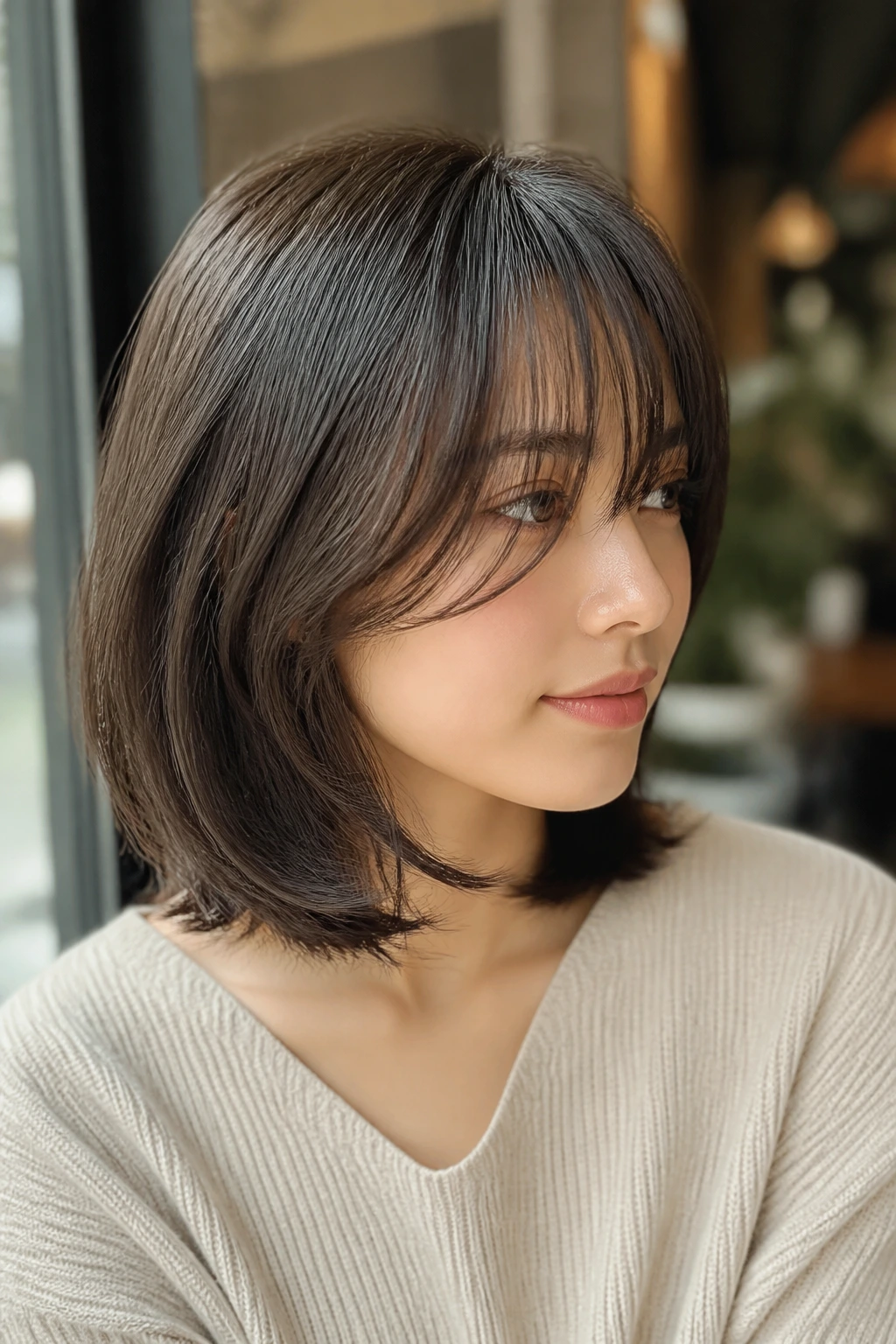
What if you want the ease of a lob but don’t want the front to feel bare? This is the answer. The collarbone length gives you enough weight to keep the ends smooth, and the see-through bangs soften the forehead without creating a heavy fringe line.
Where the Bangs Should Land
The key is keeping the bang light enough that you can see a little skin through it. Not transparent. Just airy. The shortest bits can sit near the brow, with longer sides blending into the front layers around the cheekbone. That shape feels cleaner than a blunt bang on a lob, which can make the whole cut look boxy.
- Good match: straight to slightly wavy hair.
- Best styling result: a soft bend through the ends, not a full curl.
- Salon note: ask for internal layering, not a lot of surface chopping.
This cut is practical in the nicest way. It looks polished when tucked behind one ear, and it still has enough softness to avoid that stiff, one-length feeling that some lobs get.
5. Straight Hair With Face-Framing Layers
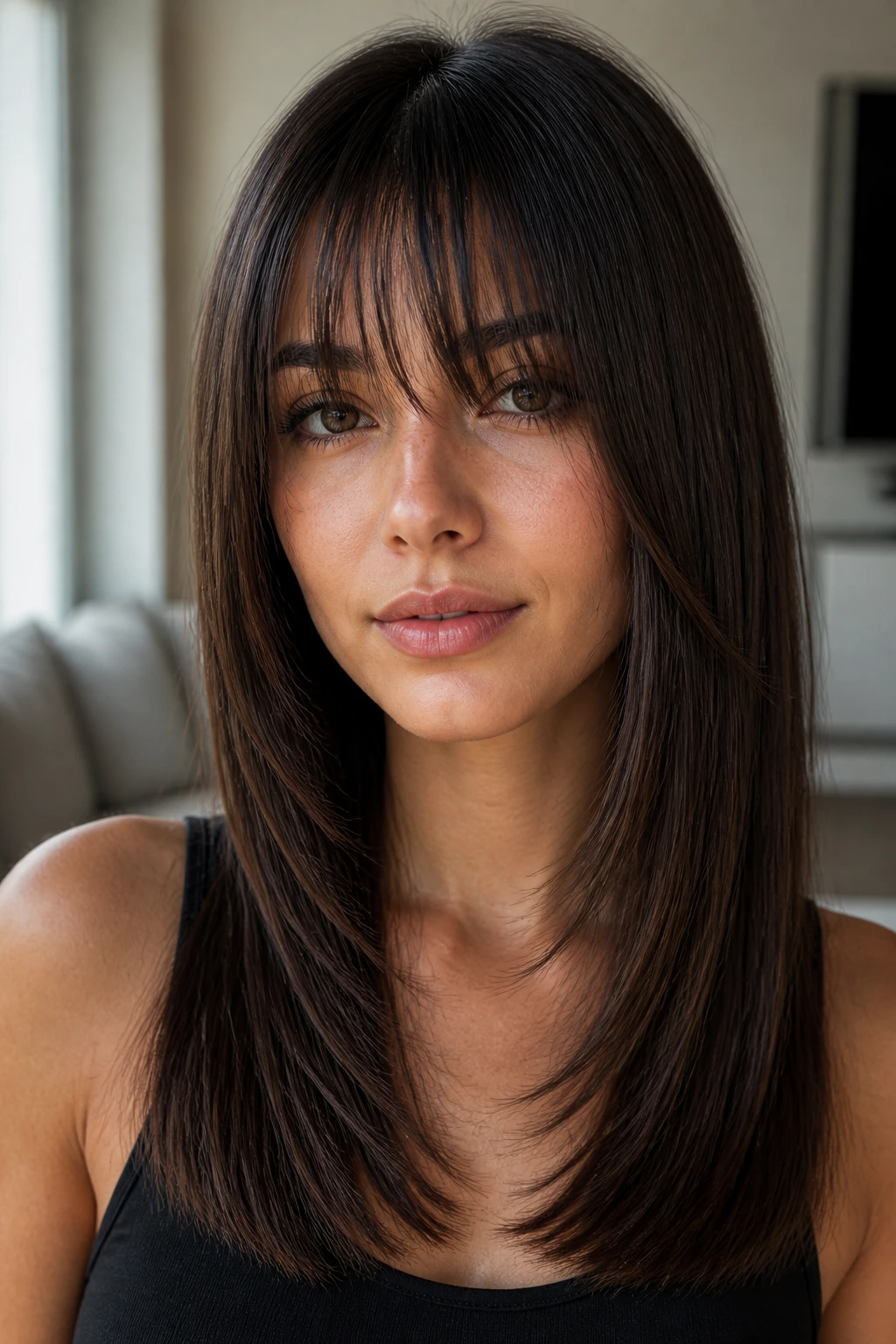
Straight hair is honest. It shows every line. That’s why face-framing layers matter so much here — there’s nowhere for a bad angle to hide. Wispy bangs keep the front from turning severe, while long layers add just enough movement to stop the hair from hanging flat against the head.
A lot of straight-haired people get talked into layers that start too high. Bad move. You end up with thin ends and a fringe that sits like a strip of paper. Better to keep the layers beginning below the chin or even near the collarbone, then let the wispy bangs bridge the gap between the eyes and the rest of the cut.
What Makes It Work
The haircut works when the front pieces are long enough to swing, but short enough to frame the face when you tuck one side behind your ear. Add a slight bevel with a flat iron or a round brush, and the whole shape wakes up.
- Best for: pin-straight to lightly bent hair.
- Ask for: longer face frames at the lip or chin, not at the cheek unless you want a stronger frame.
- Avoid: over-thinning the fringe; straight hair shows sparse spots fast.
6. Wavy Wolf Cut With Broken Bangs
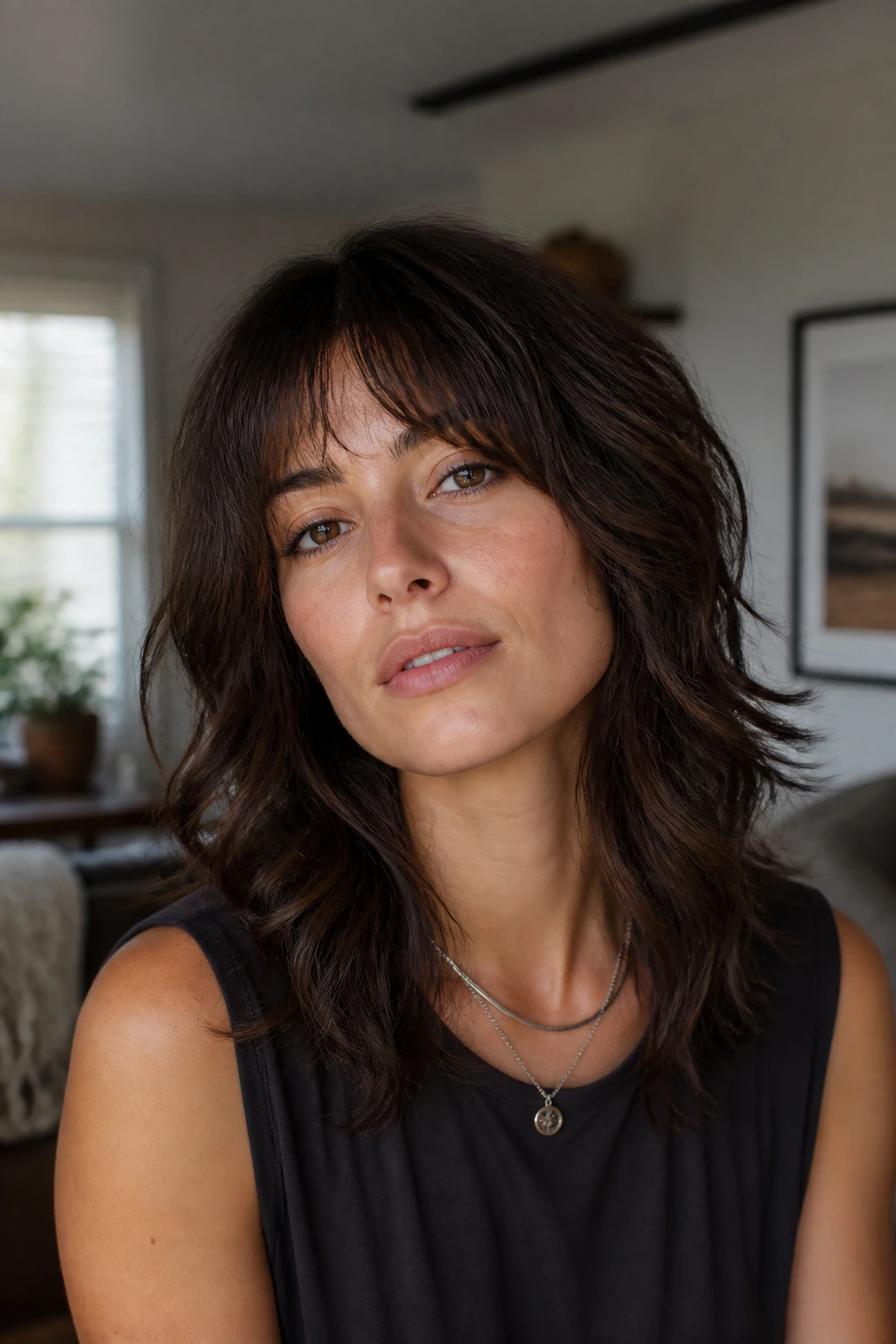
A wolf cut can go wrong in a hurry if it’s too severe. The softer version keeps the choppy energy in the layers but uses broken bangs to stop the front from looking hard. The result feels a little lived-in, a little messy, and much better when you run your fingers through it than when you keep trying to flatten it.
The reason this cut holds together is simple: the shorter crown gives the wave somewhere to lift, while the long perimeter prevents the shape from puffing up too wide. The bangs should be piecey, not dense. If your hair already bends on its own, that front fringe will fall into a natural separation that looks deliberate instead of overstyled.
This is a good cut for people who don’t want to spend twenty minutes making the hair look “done.” Air-dry, add a touch of texture spray, scrunch once, walk away. It doesn’t need much more.
7. Mid-Length Cut With Side-Swept Wispy Bangs

Side-swept fringe still has a place, and on mid-length layered hair it can look cleaner than a full curtain bang. The sweep softens one side of the forehead, while the layers underneath keep the length from feeling heavy around the shoulders.
This shape is especially helpful if your hairline fights a center part or if one side of your fringe always wants to split away. Instead of forcing a middle opening, the cut works with the way the hair falls. That’s why it tends to look relaxed even when the rest of the hair is brushed smooth.
If you like a side part, keep the shortest front pieces long enough to tuck behind the brow, not so short that they pop up in a weird ridge. The bang should feel like part of the haircut, not a separate decision.
One detail matters more than people expect: keep the layers around the jaw soft so the sweep has somewhere to disappear.
8. Pixie Bob With Feathery Fringe
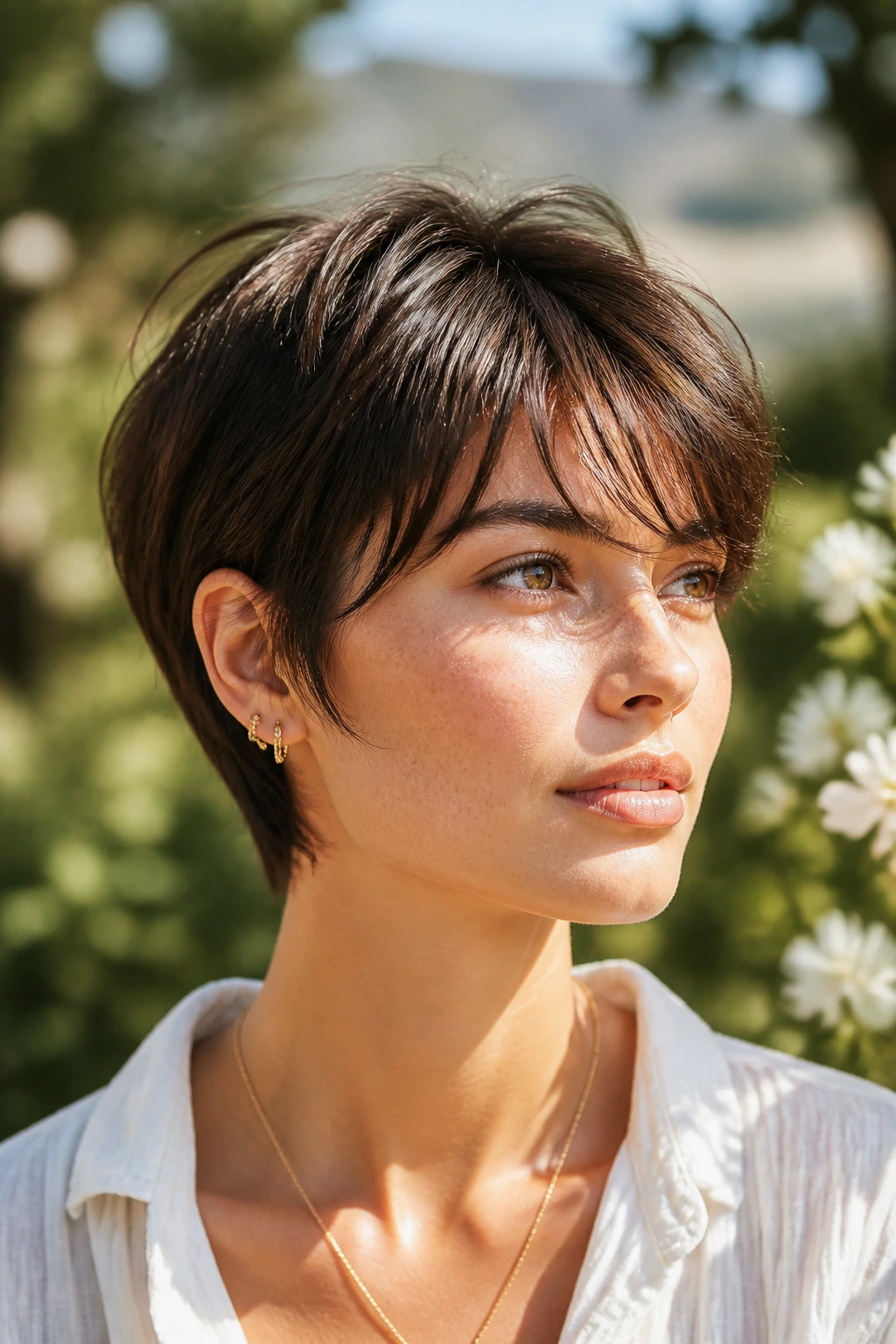
Short hair can still carry wispy bangs. In fact, it usually needs them. A pixie bob with a feathery fringe keeps the shape from going too severe around the ears and hairline, and the soft front gives the cut some movement without making it look overcut.
The Part That Makes It Work
The neckline should stay clean, but the top and fringe need a little broken texture so the haircut doesn’t read like a helmet. That’s the balance. Too blunt, and the style hardens. Too many tiny pieces, and it starts to look fuzzy. The middle ground is a light fringe that can be swept forward or slightly to the side with a fingertip.
- Best for: fine to medium hair that needs shape near the face.
- Style with: a small amount of pomade or styling cream, warmed in the hands first.
- Avoid: heavy oils near the fringe; they make short hair separate and stick.
This is one of those cuts that looks sharper on day two than day one if you get the product amount right.
9. Rounded Chin-Length Layers With Soft Brow-Grazing Bangs
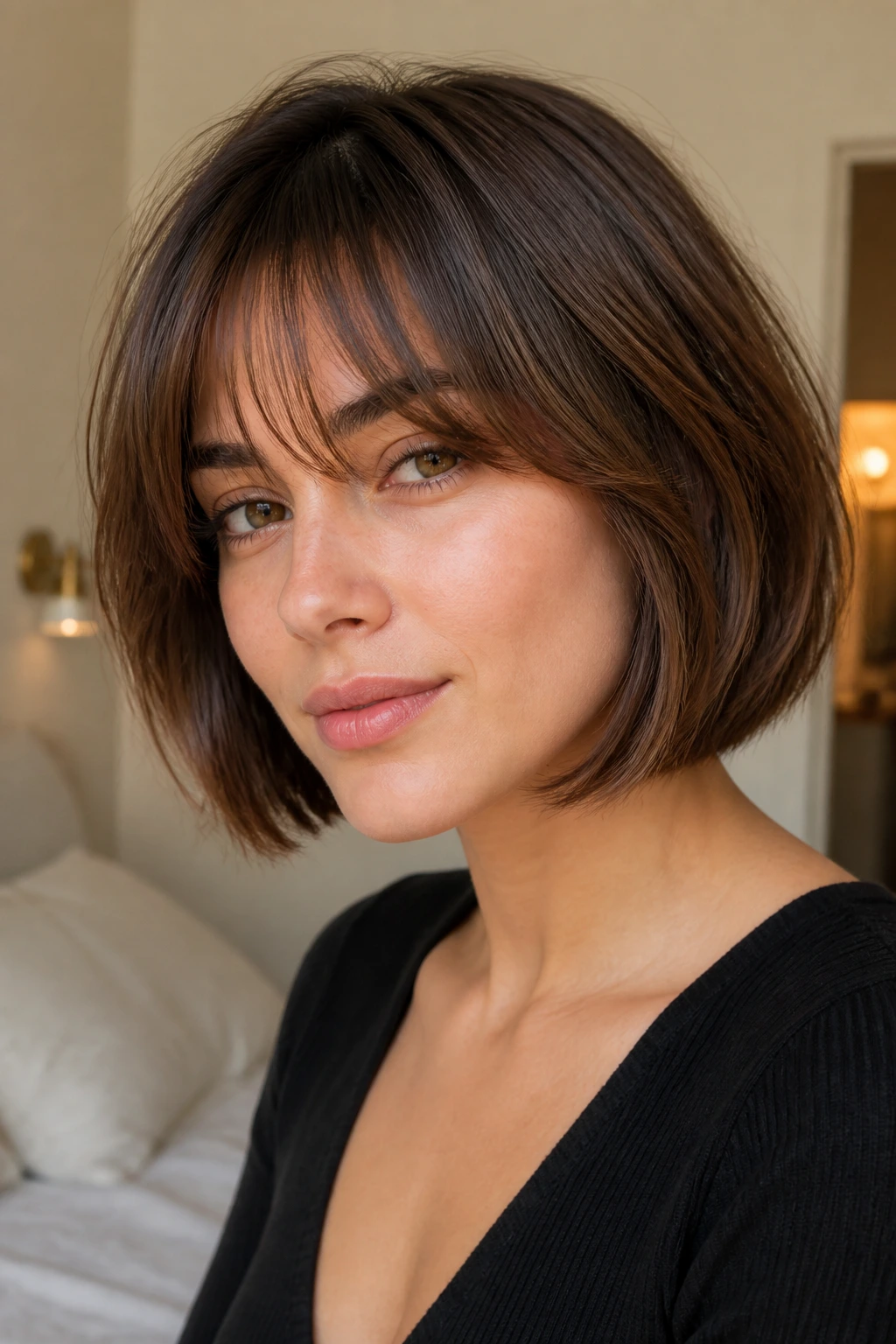
Can wispy bangs work on a shorter cut without making the face feel crowded? Absolutely, if the silhouette is rounded and the bangs stay light. The chin-length outline keeps the hair from ballooning at the sides, while the layers curve inward enough to hug the jaw instead of flaring out.
The fringe should graze the brows and soften as it moves out toward the temples. That little change in length is what keeps the front from looking too abrupt. On a shorter haircut, the line matters more than the texture. You want softness, not fuzz.
This shape is especially good if your hair tends to flip out at the ends. A rounded blow-dry settles the cut down and lets the wispy fringe sit on top of the movement instead of fighting it. It’s neat, but not stiff. That’s the whole appeal.
10. Razor-Cut Layers With Piecey Bangs

Razor cutting gives thick hair some air. It also gives the fringe a more separated look, which can be lovely if you want that piecey, almost brushed-apart effect around the eyes. On dense hair, it removes weight without chopping the line into hard shelves.
Why the Razor Matters Here
A scissor-cut fringe on thick hair can sometimes sit too solid. A razor creates softer edges, and the layers below it fall with more bend. That said, this is not the move for hair that already feels fragile or ends that split easily. Razor work can make damaged hair look frayed fast.
- Use this when: your hair is thick, resilient, and wants to puff out.
- Pair it with: a light smoothing cream, not a heavy serum.
- Styling cue: bend the ends under with a flat iron only at the last inch or two.
The result has a lived-in edge that pairs well with jeans, tees, and hair that doesn’t mind a little roughness.
11. Blunt Bob Softened by Wispy Bangs

A blunt bob can look sleek, but it can also feel severe if the front is too hard. Wispy bangs change that fast. The fringe breaks the straight line across the forehead, and a few internal layers keep the bob from sitting like a box.
The contrast is what makes this cut interesting. The body of the bob stays strong and clear, which gives you that neat silhouette, while the bangs and subtle layering stop it from looking stern. If your face shape likes width near the jawline, this cut does a good job of adding that without dragging the whole style down.
Keep the fringe light enough that it doesn’t compete with the blunt edge. You want the bang to feel like a soft veil, not another blunt line. That small restraint makes the haircut feel expensive in the old-fashioned sense — clean, not overworked.
12. Long Curly Layers With Curly Fringe
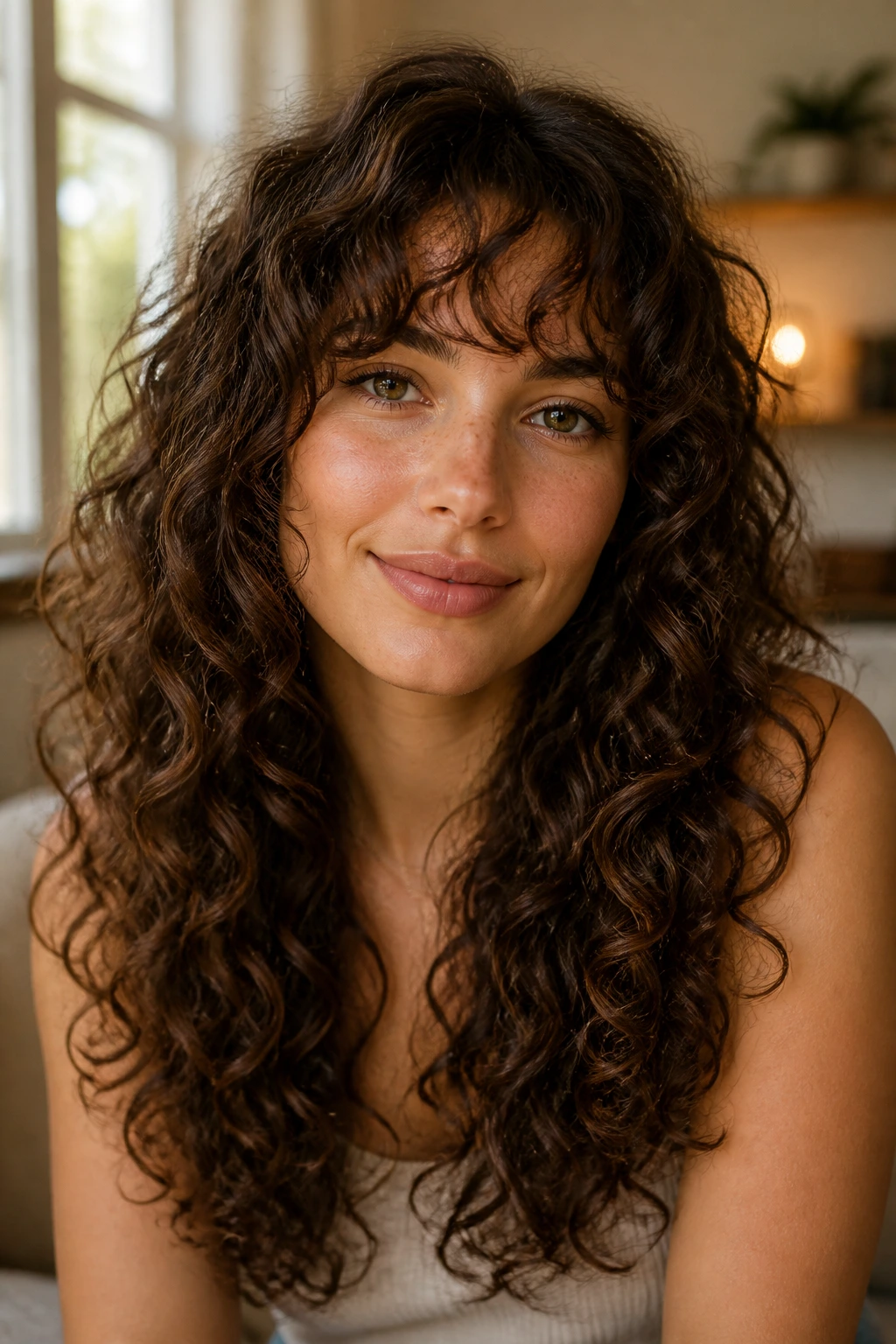
Curly bangs are a little misunderstood. People imagine a puff at the forehead and stop there. In reality, a good curly fringe can be one of the prettiest parts of a layered cut, especially when the layers are long enough to keep the curl pattern open and springy.
The big mistake is cutting curly bangs too short. They bounce up. A lot. Leave room for shrinkage, and let the fringe sit longer than you think it should when it’s wet. The face-framing layers around it should start low enough to keep the curl from bunching near the cheeks.
How to Make It Behave
Use a cream or gel that defines the curl without making it crunchy. Scrunch gently, then diffuse on low heat until the curls are set but not frizzed out. The fringe should land lightly across the brow or just under it, depending on how tight your curl pattern is.
- Best for: waves that lean curly, loose spirals, and medium curl types.
- Watch for: shrinkage at the front; it’s the thing that surprises people most.
- Salon note: ask for curls to be cut in their natural state, not stretched flat.
13. Soft Modern Mullet With Airy Fringe

This is the haircut for someone who wants shape with a little bite. Not a retro costume. A modern mullet keeps the front and top soft, leaves enough length in back to swing, and uses airy fringe so the face doesn’t get swallowed by all the texture.
The best versions aren’t choppy for the sake of being choppy. They’re controlled. The front layers should graze the cheekbone and jawline, then taper into longer lengths toward the nape. That gives the hair a little attitude without making the outline look jagged.
It’s one of the few cuts that can look better slightly imperfect. A bit of bend, a bit of mess, a little flatness at the crown — all fine. The fringe should still read as wispy, though. If it gets heavy, the whole thing starts looking costume-y fast.
14. K-Beauty-Inspired Airy Layers and See-Through Bangs
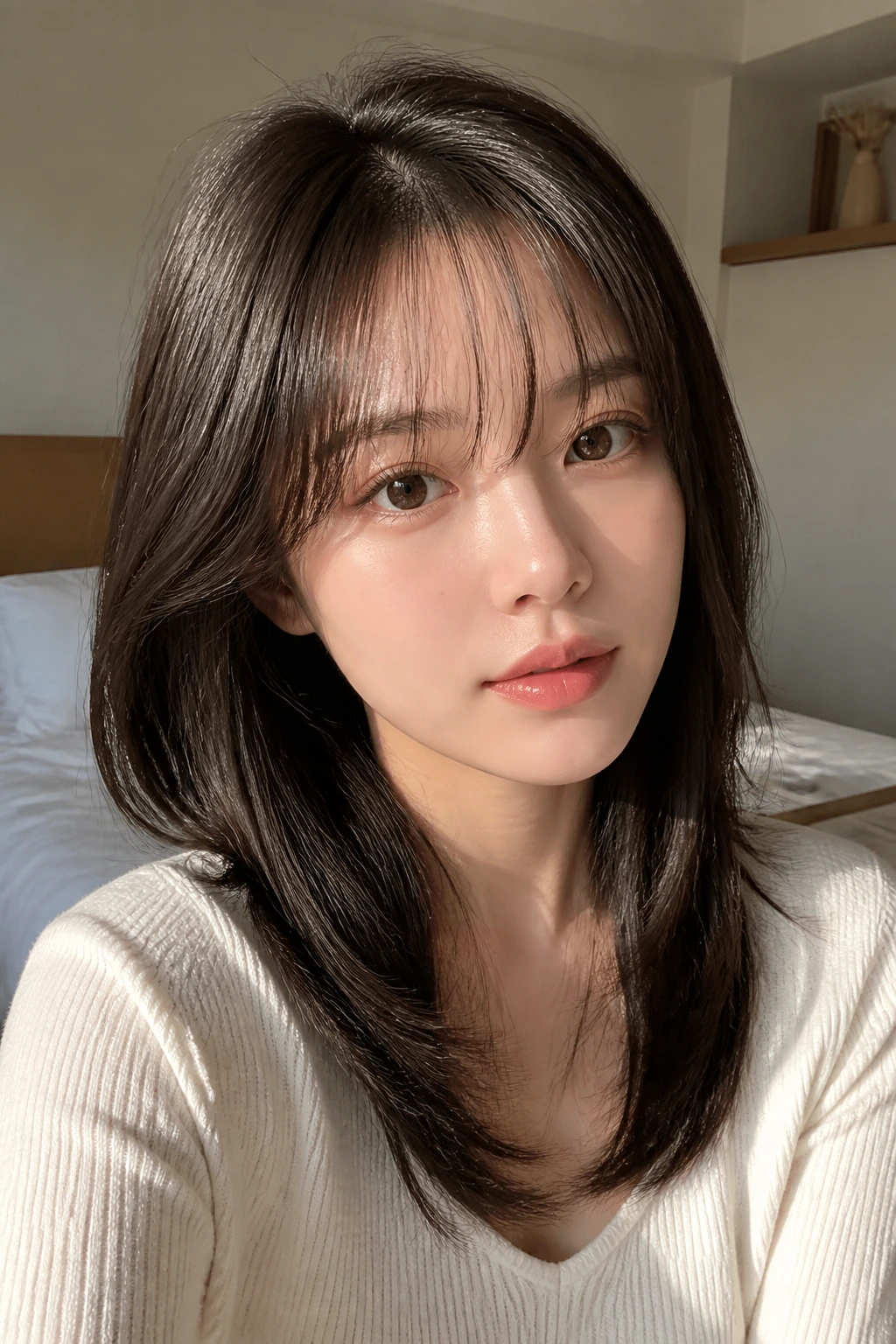
There’s a reason this look keeps showing up in salons: it makes hair feel light even when the overall length stays medium or long. The layers are soft and rounded, the fringe is thin enough to let the forehead show through, and the sides fall in a way that frames the cheekbones instead of boxing them in.
This version depends on restraint. The bangs are not dense. They sit like a soft veil, and the front layers are blended rather than hacked apart. The shape tends to look especially nice when the ends are smoothed under just a touch, so the whole cut curves inward around the face.
If you like a neat finish, this is a good choice. If you want a rough, shaggy look, skip it. The charm here is in the clean softness — not polish to the point of stiffness, but enough order that the layers feel intentional.
15. Shoulder-Length Cut With Bottleneck Bangs

Bottleneck bangs are one of the smartest ways to wear a fringe with layers. They start narrower at the center, open out as they move toward the brows, and blend into longer face-framing pieces at the sides. On shoulder-length hair, that gives you movement without losing the outline.
The cut works because the fringe and layers answer each other. The bang takes care of the center front, while the shoulder-length layers keep the rest of the shape from feeling bulky. It’s a nice option if you want something softer than a full curtain bang but more defined than a few loose face pieces.
This is also one of the easier cuts to grow out. The longer side pieces can drop into the rest of the layers, which makes the awkward stage shorter. If you’re unsure about fringe, bottleneck bangs are a smart middle ground.
16. Long Layers With a Center-Part Curtain Fringe
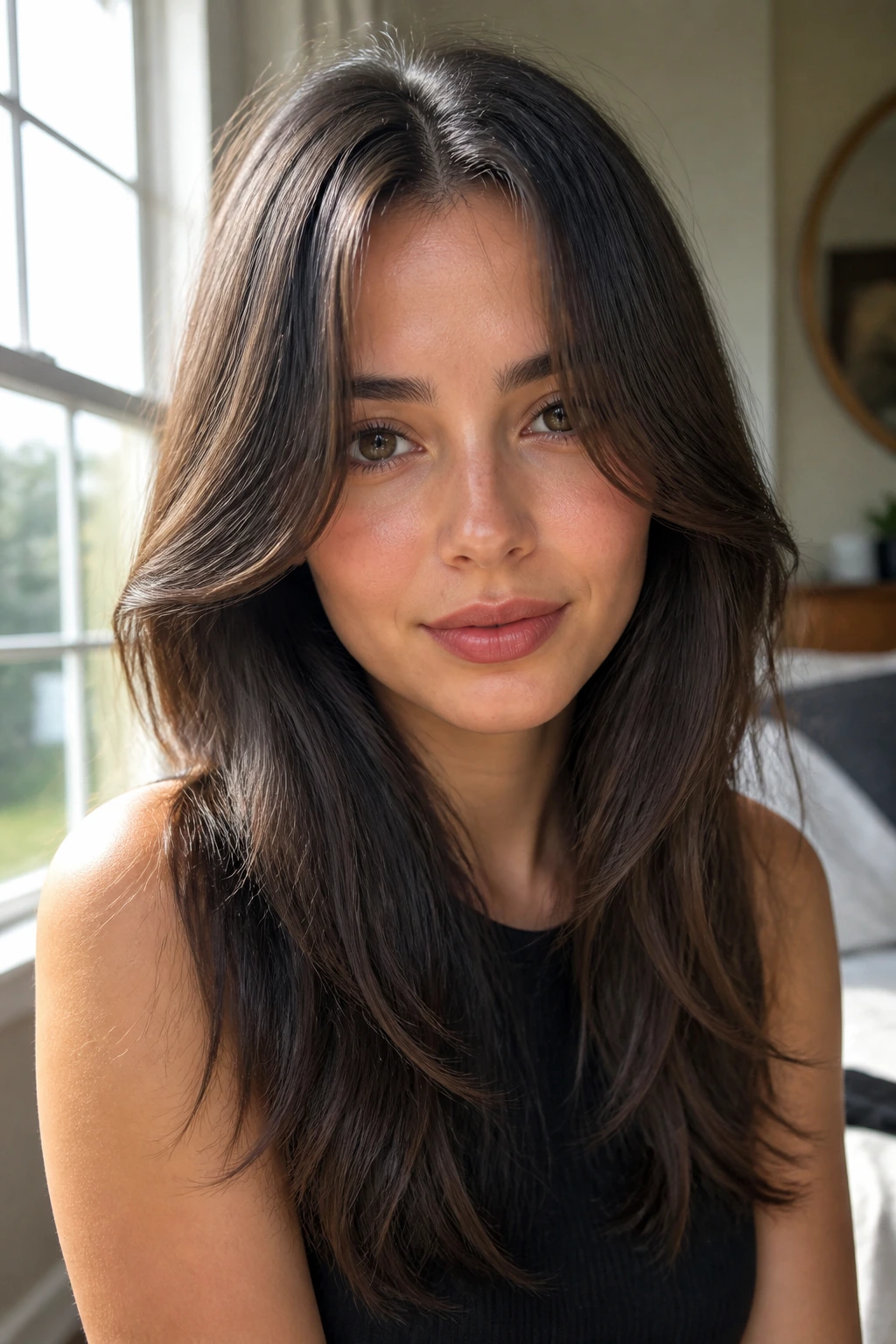
There’s a difference between a curtain fringe and a curtain fringe that actually sits well. The good one starts at the center part, opens around the eyes, and continues down into the layers without making a hard corner. On long hair, that shape gives the front a soft drape while the rest of the cut stays sleek.
This version is a touch more blended than the long U-shape in the first section. The layers can start slightly higher around the chin or lip, and the fringe should be long enough to be tucked behind the cheekbone on bad hair days. That flexibility is what makes the cut feel wearable, not precious.
If your hair naturally parts in the middle, this may be the easiest fringe to live with. If your part fights you, it still works — but the face-framing pieces need to be cut with enough length that they can swing either direction.
17. Textured Midi Cut With Invisible Layers

Invisible layers are the quiet ones. You do not see them in a chunky, obvious way. You feel them when the hair moves. That’s the point here: keep the outer line of the midi cut clean, but remove enough interior weight that the hair doesn’t hang like a sheet.
The wispy bangs are the part that tells you the haircut isn’t one-length. They soften the front and give the shape some lift near the eyes, while the hidden layers make the rest of the cut lighter around the shoulders. This is a good compromise for people who want movement but hate obvious choppiness.
If your hair is medium density, this cut can be a sweet spot. Too much visible layering and it starts to fray. Too little and the ends droop. Invisible layering keeps the silhouette easy to wear, especially with a quick round-brush bend at the front.
18. Rachel-Inspired Layers With a Lightweight Fringe
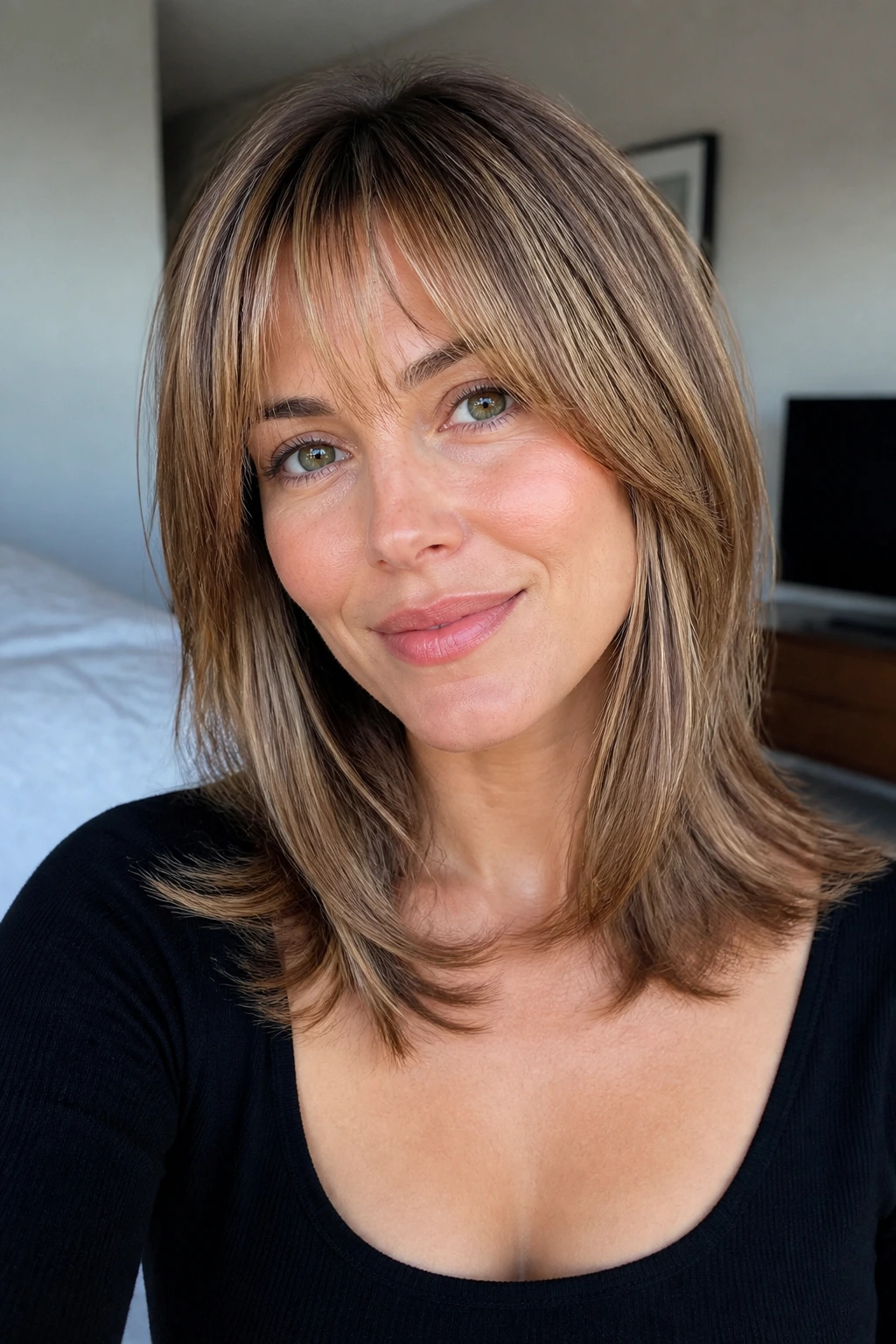
The Rachel silhouette keeps coming back because the shape works. The trick, though, is not copying it too literally. The modern version softens the front, lowers the volume at the crown, and uses a lightweight fringe so the haircut doesn’t feel frozen in one decade.
The layers are still face-framing and bouncy, but the bangs are the update. Instead of a thick sweep that takes over the forehead, the fringe is broken up and airy. That makes the whole style look less formal and easier to wear with straight hair, a blowout, or a loose wave.
This is a good choice if you like movement around the cheeks and collarbone but want to keep the front open. It has that familiar swing without the heavy, overbuilt feel people sometimes remember from the original layered blowout.
Why Layered Haircuts With Wispy Bangs Move Better Than Blunt Shapes

A blunt cut can look strong, but it often puts all the weight in one place. That’s fine if you want a sharp outline. It’s less helpful if you want the hair to move around the face without sitting there like a flat curtain. Layers change the balance. They pull weight out of the sides, break up the ends, and let the fringe work as a soft frame instead of a hard edge.
That front softness does more than flatter. It changes how the entire haircut behaves in motion. When the bangs are wispy, the eye can move past the forehead and down toward the cheekbones, jaw, and collarbone. That is why the same length can feel light in one version and heavy in another. The shape is doing the work, not the inches.
There’s also a practical side. Hair that’s all one length tends to show grease, flat roots, and awkward bends faster. A layered cut with airy fringe gives you more places for natural movement to hide a bad morning. Not magic. Just good geometry.
How to Choose the Right Layer Pattern for Your Hair Texture and Face
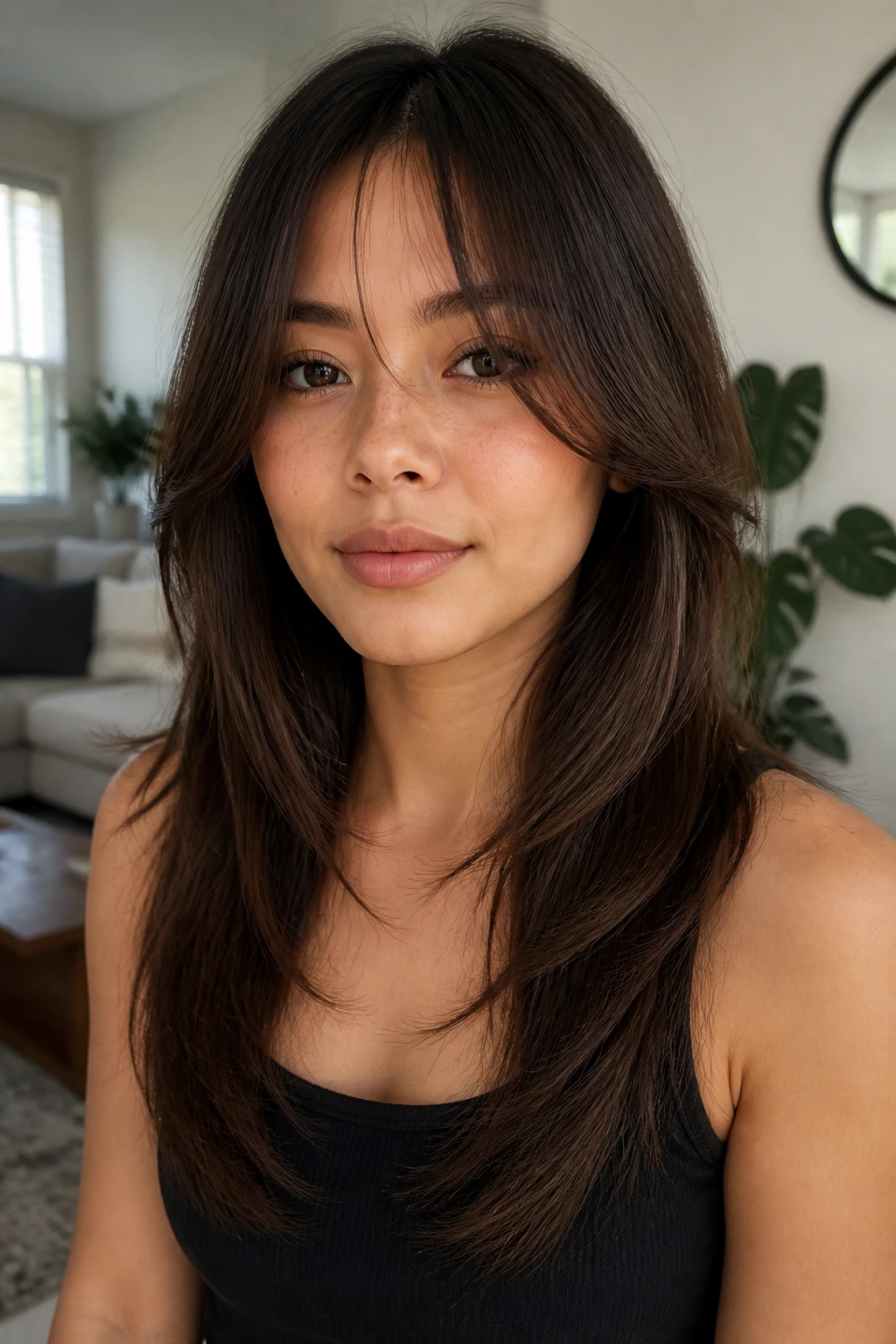
The best cut is the one that matches how your hair already behaves. Straight hair needs enough layering to avoid a blank sheet effect, but not so much that the ends go wispy and thin. Wavy hair usually likes softer, more broken layers because the wave will show them off without much help. Curly hair needs longer pieces than most people expect, because shrinkage can turn a cute fringe into a little spring at the brow.
Straight Hair
Keep the shortest face-framing pieces longer, and use a light bend instead of a full curl. Straight hair shows every line, so a tiny mistake reads louder here.
Wavy Hair
This is the easiest texture for a shag, wolf cut, or butterfly shape. The waves give the layers life, and the wispy bangs can split naturally without much work.
Curly Hair
Cut longer. Always longer than your first instinct. The fringe should dry into a soft curve, not a short puff.
Face shape matters too. Round faces usually do well with longer front pieces that narrow below the cheekbone. Square faces often look softer with a fringe that opens a bit at the temples. Long faces benefit from bangs that give more width across the forehead. Heart-shaped faces usually like volume lower on the sides, not only at the crown.
What to Ask for at the Salon So the Fringe Stays Soft
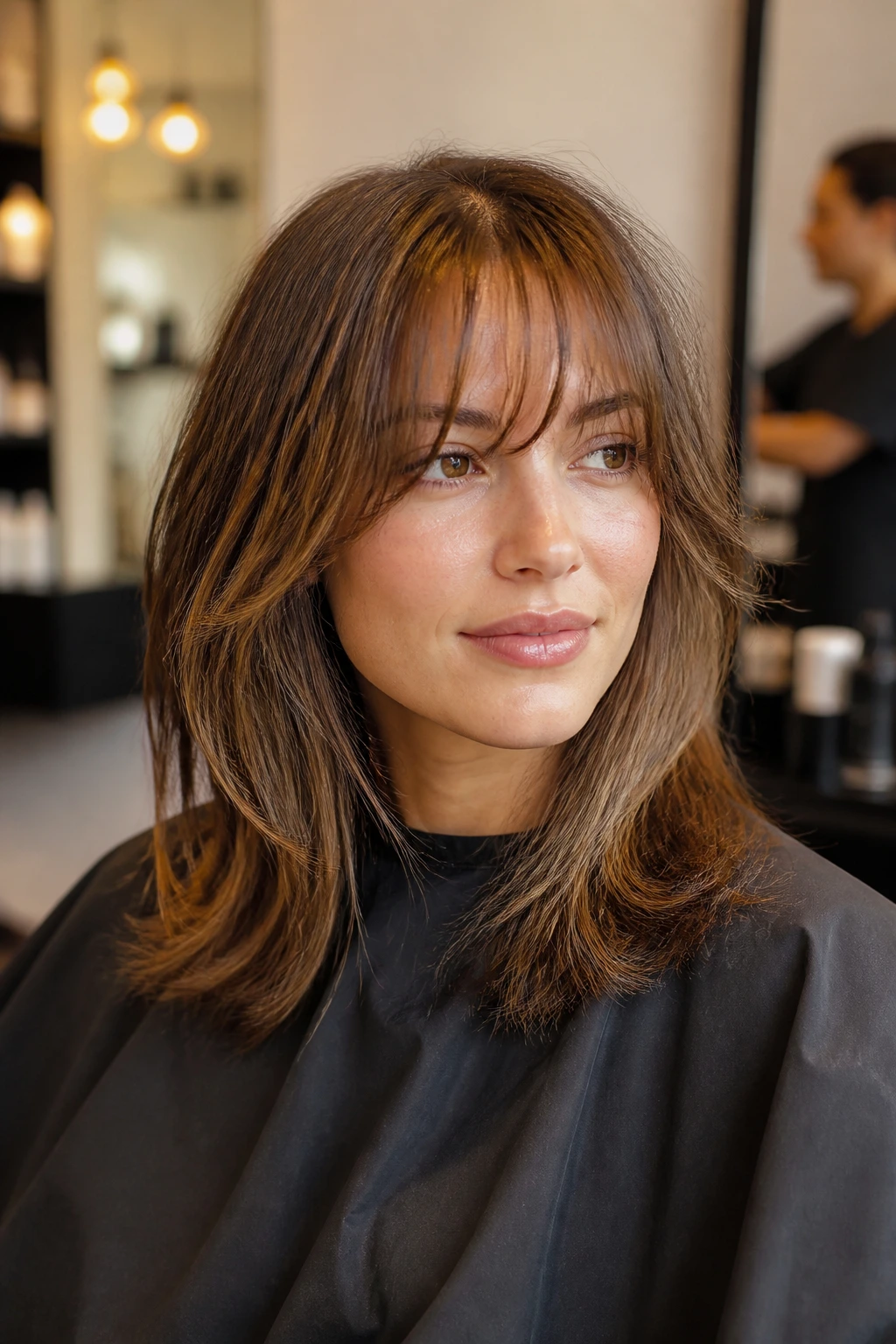
Bring photos. Two, if you can. One should show the full shape. The other should show the fringe on a head shape that looks a bit like yours. That second detail saves everyone time, because the same bang can sit totally differently on two people.
Say where you want the shortest pieces to land. Don’t say “wispy” and stop there. That word means different things to different stylists. Try something more exact: “I want the front to stay light, but I don’t want the bangs to sit above my brows.” Or, “Keep the shortest pieces around the eyebrow, then blend them into the sides.”
If your hair is curly, wavy, or has a stubborn cowlick at the front, say so before the scissors come out. Same if you almost never heat-style your hair. A fringe that looks gorgeous with a round brush can be annoying if your real routine is towel dry, shake it out, and go.
Ask for the fringe to be checked dry if your hair springs up or splits. That one request can save you from cutting it too short. It’s the difference between soft and annoying.
Essential Tools for Styling Wispy Bangs and Layers
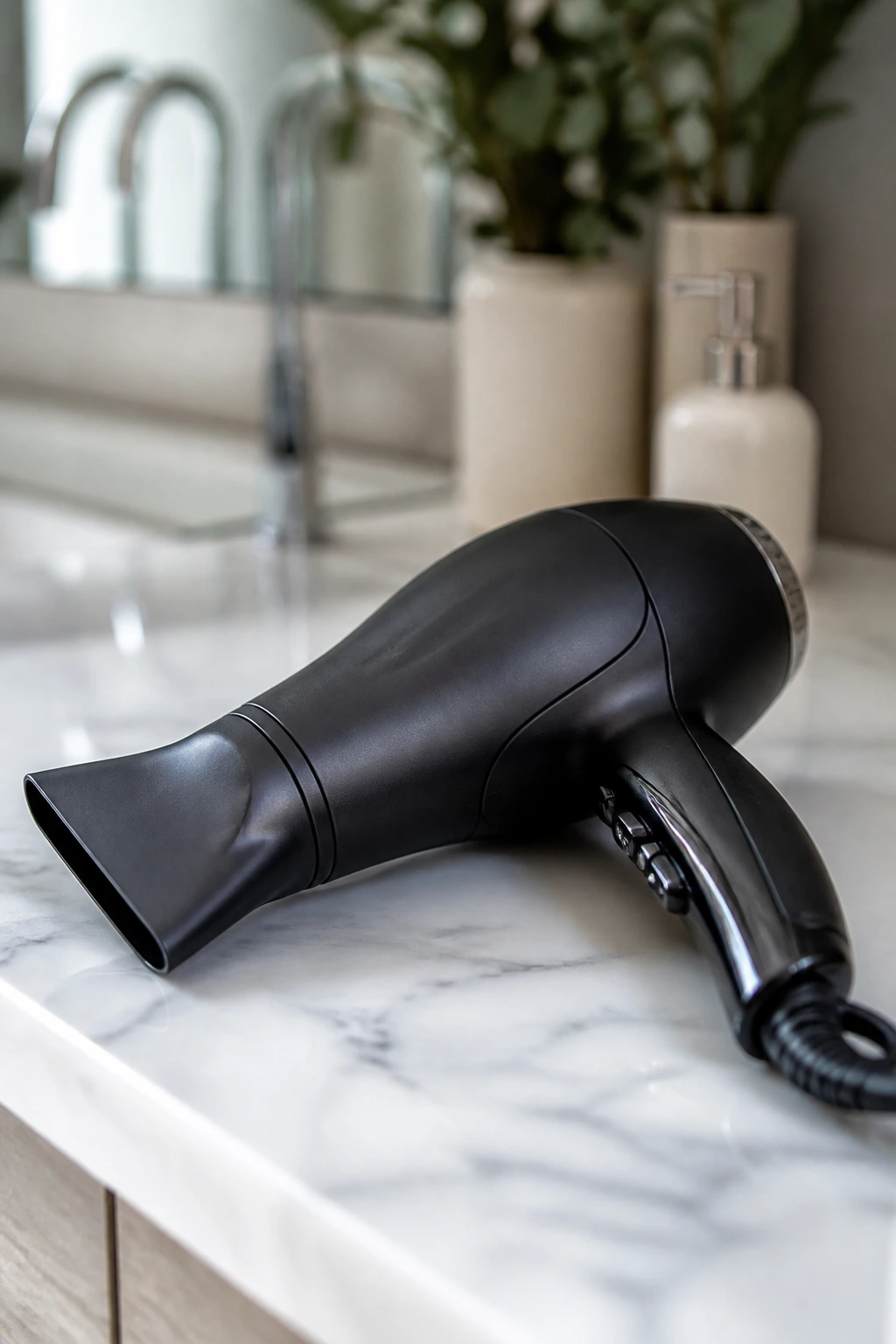
- Hair dryer with a nozzle attachment: The nozzle helps direct the fringe where you want it instead of blasting it every direction.
- Small round brush, 1 to 1.5 inches: Best for bending the bang and giving the front a soft curve.
- Wide-tooth comb: Useful for detangling layered ends without pulling the fringe apart.
- Duckbill or sectioning clips: Keep the top layers out of the way while you dry the bangs first.
- Lightweight mousse or root lift spray: Gives the crown and front some support without making the hair crunchy.
- Texturizing spray: Good for shags, wolf cuts, and any cut that needs a little separation at the ends.
- Light styling cream: A pea-sized amount can calm frizz around the fringe without flattening it.
- Small flat iron: Handy for turning just the last inch of a layer or bang under, especially on straighter hair.
Daily Styling Moves That Keep the Front Soft
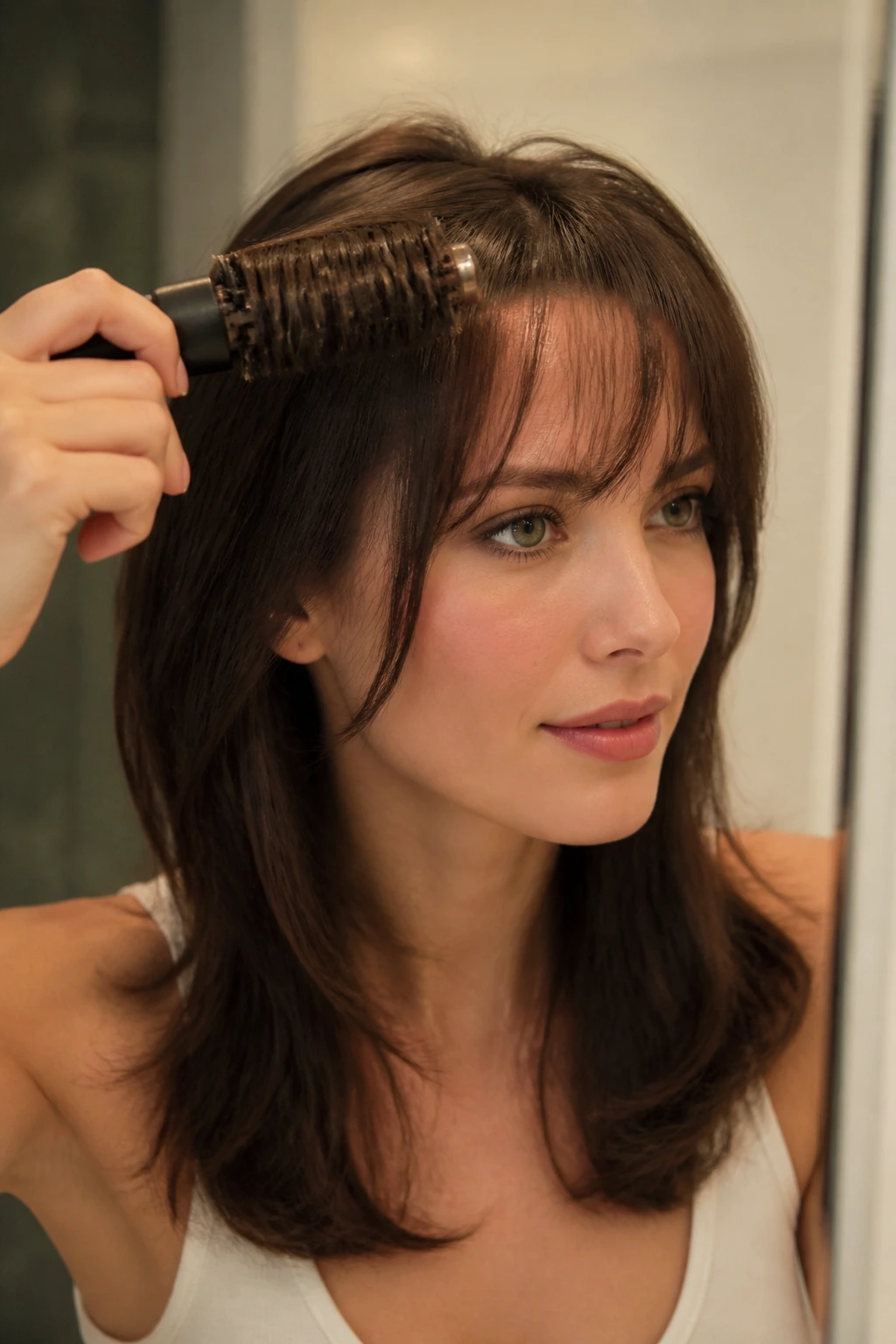
Start with the bangs. Not the lengths. If you let the fringe dry on its own while the rest of the hair soaks, it usually sets in a weird split. Mist the front lightly, direct it forward, and dry it from side to side for 20 to 30 seconds before you decide where it should fall.
Use your round brush to bend only the ends of the front pieces. Don’t curl the whole bang into a tube. That’s how you get the old-school helmet look. A gentle C-shape at the root and a soft bend at the ends is enough for most layered haircuts with wispy bangs.
For the rest of the hair, rough-dry the roots first, then smooth the mid-lengths with your hands or a brush. If the layers are shaggy or textured, stop before everything looks too neat. A little separation is part of the appeal. Finish with a touch of dry shampoo at the roots if the bangs start to cling to the forehead. That tiny bit of grit helps them stay lifted instead of collapsing by noon.
How to Keep Wispy Bangs From Looking Thin or Stringy
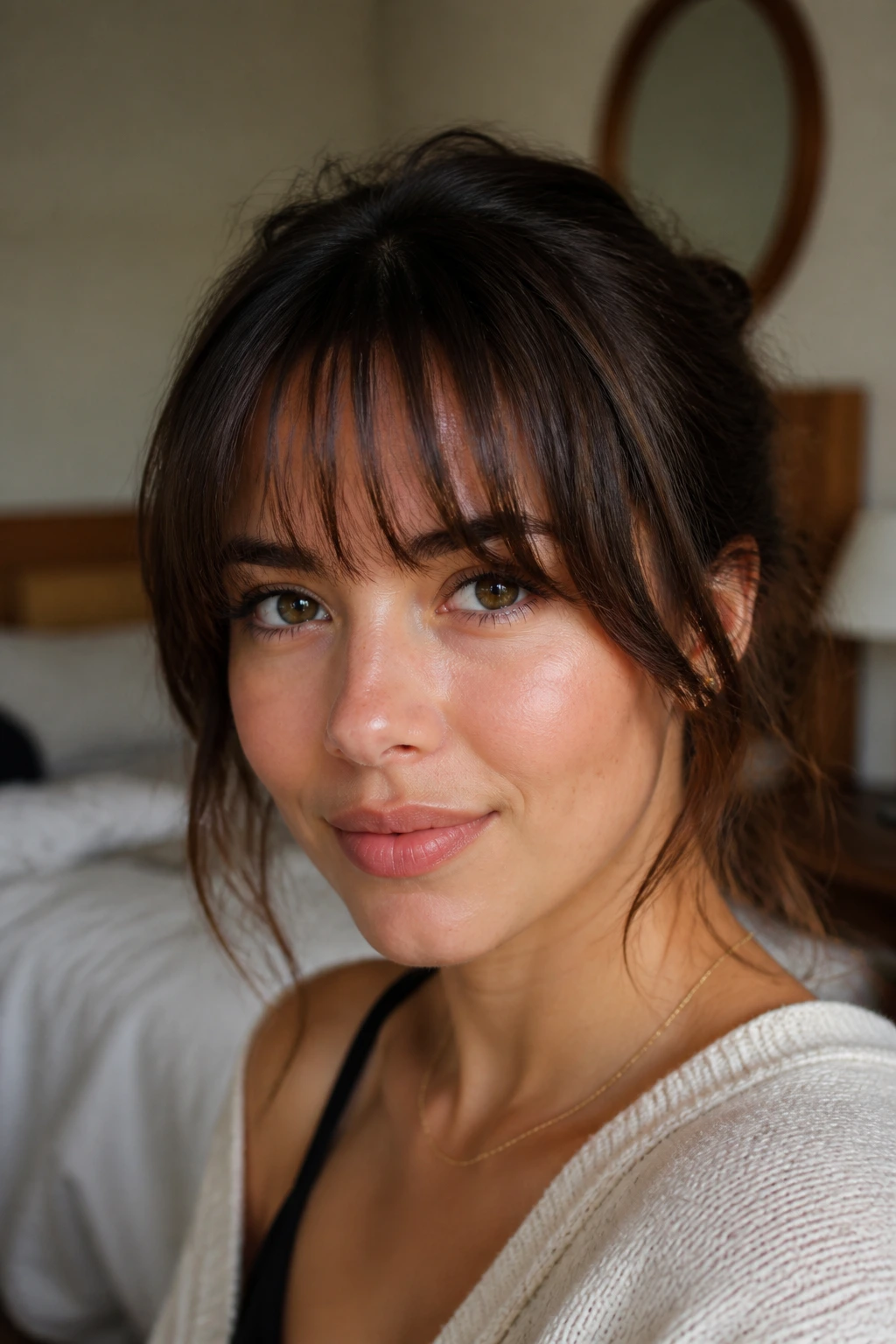
Wispy does not mean sparse. That’s the mistake. The best fringe still has enough substance to show up on the face; it’s just broken up enough that it moves. If the bangs look see-through in a patchy way, the issue is usually either over-thinning or too much product.
Trim the fringe more often than the rest of the haircut. Every 3 to 5 weeks is a sensible range for most people, especially if the bangs hit the eyes or split at the center. The layered shape itself can go longer, often 8 to 12 weeks depending on how fast your hair grows and how much structure you want to keep.
Be stingy with oils and heavy creams near the front. A tiny bit is fine. A big swipe turns airy bangs into greasy strings. If the forehead gets oily fast, dry shampoo at the roots before the hair looks dirty, not after. That keeps the fringe from sticking together.
If the bangs start separating oddly, check your drying direction before blaming the cut. Many fringe problems are styling problems in disguise.
Common Mistakes That Make the Cut Lose Its Shape
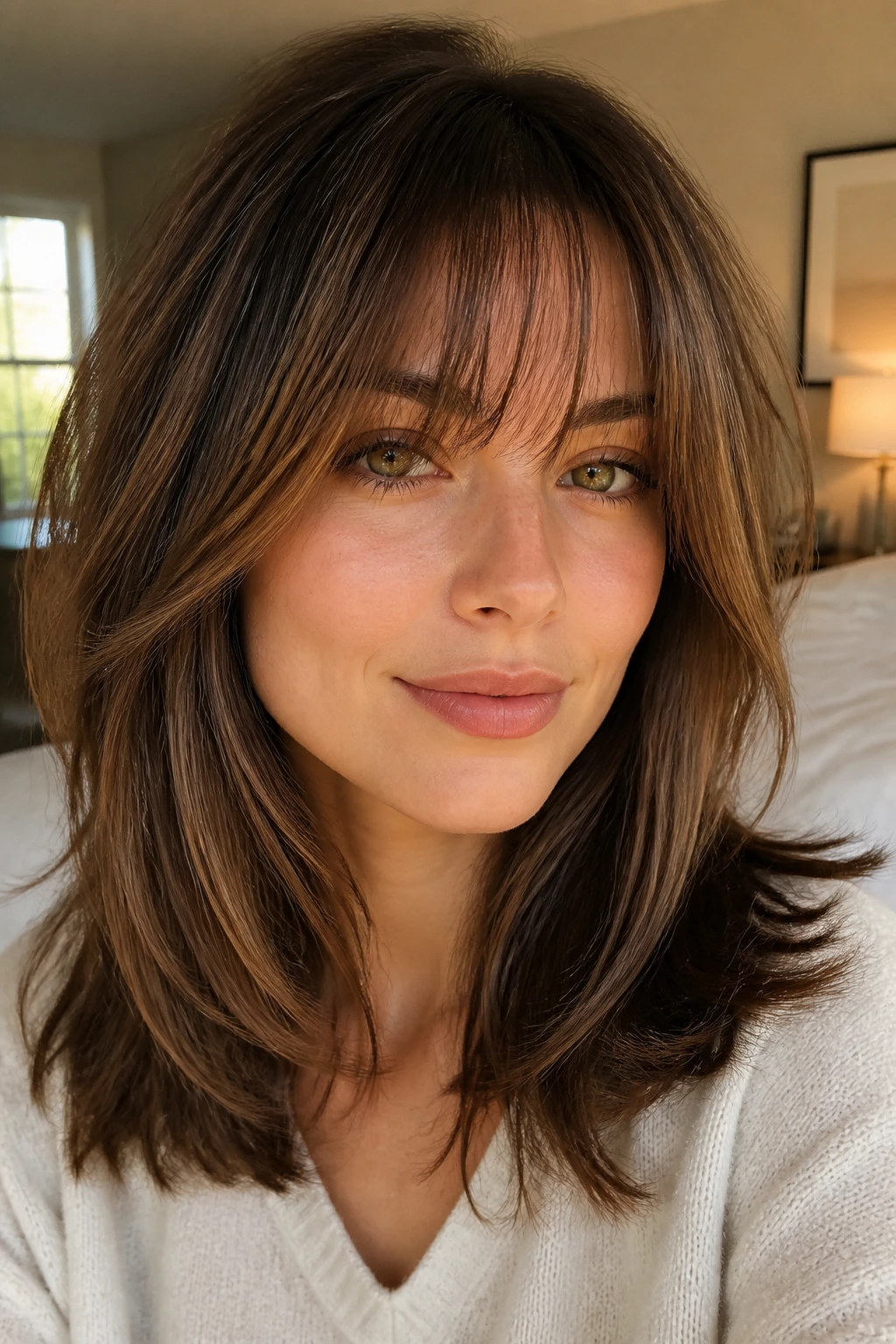
- Cutting the fringe too short at the center: The bang pops up and stays there, especially on wavy or cowlick-prone hair. Keep a little extra length so the front can settle.
- Layering too high on fine hair: The hair loses its body and the ends start to look ragged. Keep the shortest layers lower and let the face frame do the visual work.
- Using heavy serums near the bangs: The fringe clumps together and loses the airy effect. Use a lighter cream, or nothing at all if your hair is fine.
- Ignoring the way the hair parts naturally: If the part fights the fringe, the bangs split in the wrong place. Cut with the cowlick, not against it.
- Over-blowing the front flat: The bangs stick straight to the forehead and lose movement. Give them a bend, not a press.
- Letting trims go too long: Wispy bangs grow into the eyes fast. Once they get heavy, the softness disappears and the whole haircut feels sloppier.
Variations and Adaptations to Try
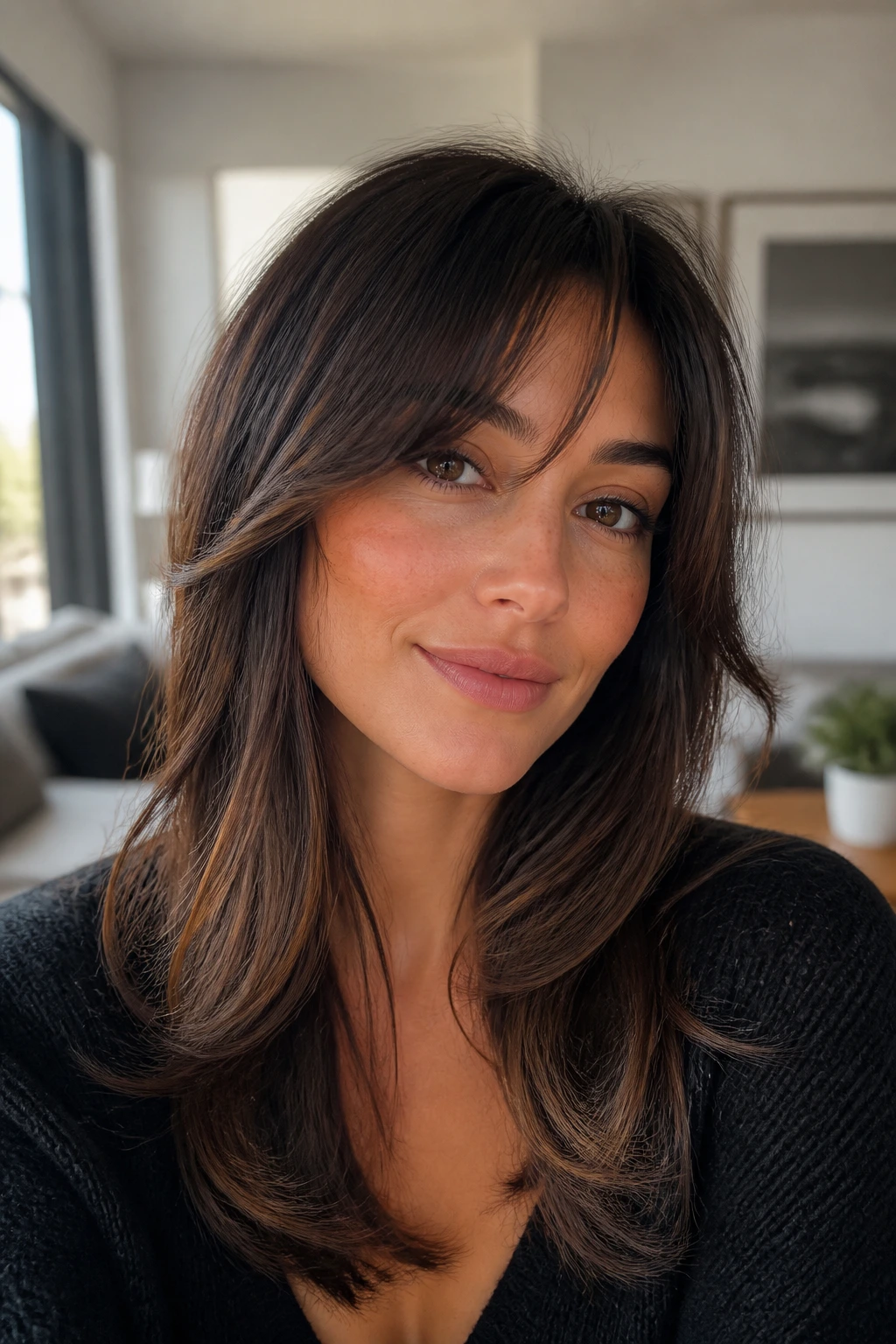
More Curtain, Less Fringe: Let the front pieces start longer and blend into the layers around the cheekbone. This works well if you want the softness of wispy bangs but need easier grow-out. It also suits people who tuck hair behind the ears often.
Air-Dry First Version: Keep the layers slightly longer and avoid high crown cutting. This makes the shape behave better when you skip heat styling, especially on wavy hair that already wants to bend on its own.
Fine-Hair Lift-Off: Ask for internal layers rather than lots of visible chopping. The haircut keeps its outline, but the inside loses enough weight to move. Pair it with a lightweight root spray, not a heavy mousse.
Curly-Friendly Adaptation: Leave the fringe longer and cut it in its natural curl pattern. The face frame should start lower than you think, because shrinkage will pull everything up. This keeps the bangs soft instead of puffy.
Low-Maintenance Grow-Out Plan: Ask for bottleneck bangs that can split into curtain pieces over time. It’s the smartest choice if you like the idea of fringe but know you won’t keep up with very frequent trims.
Frequently Asked Questions
Are wispy bangs good for thick hair?
Yes, and sometimes they’re the best way to keep thick hair from feeling heavy at the front. The trick is not to over-thin the fringe. You want a light finish, but you still need enough density so the bangs don’t disappear into the rest of the hair.
Will layered haircuts with wispy bangs work if I air-dry most days?
They can, especially if your hair has even a little wave. The better choices for air-drying are shags, butterfly cuts, wolf cuts, and softer curtain shapes. A blunt bob with a delicate fringe usually asks for more styling than an air-dried wave does.
How often should I trim wispy bangs?
Every 3 to 5 weeks is the sweet spot for most people. If the fringe hits your lashes or keeps splitting into odd pieces, it’s time. The main layers can go longer, but the front needs more attention because it changes the look fastest.
What’s the difference between curtain bangs and wispy bangs?
Curtain bangs describe the shape: a split fringe that opens from the center. Wispy bangs describe the texture and density: lighter, softer, and more broken up. A fringe can be both at once, which is often the prettiest version.
Can I get this look if my hair is fine and flat?
Yes, but the layering has to stay controlled. Too many short pieces will make the ends look thin. A lob, a textured midi cut, or long layers with a very light fringe usually works better than a heavily chopped shag on fine hair.
What if my bangs split weirdly every morning?
That usually points to a cowlick, a drying issue, or a length problem. Dry the fringe from side to side before setting it, and don’t cut it too short in the middle. A little extra length often fixes the problem faster than more product.
Do wispy bangs work with glasses?
They do, but the length matters. Keep the fringe a touch longer so it doesn’t sit right on the frame line. Curtain shapes and bottleneck bangs usually wear better with glasses than a very short, straight fringe.
How do I explain this to a stylist without getting a choppy mess?
Use plain language. Say you want softness around the forehead, longer blend through the sides, and movement without a heavy bang line. Then point to where the shortest pieces should land. If you can, say where you do not want the bangs to hit. That helps more than saying “just make it wispy.”
A Shape That Stays Soft
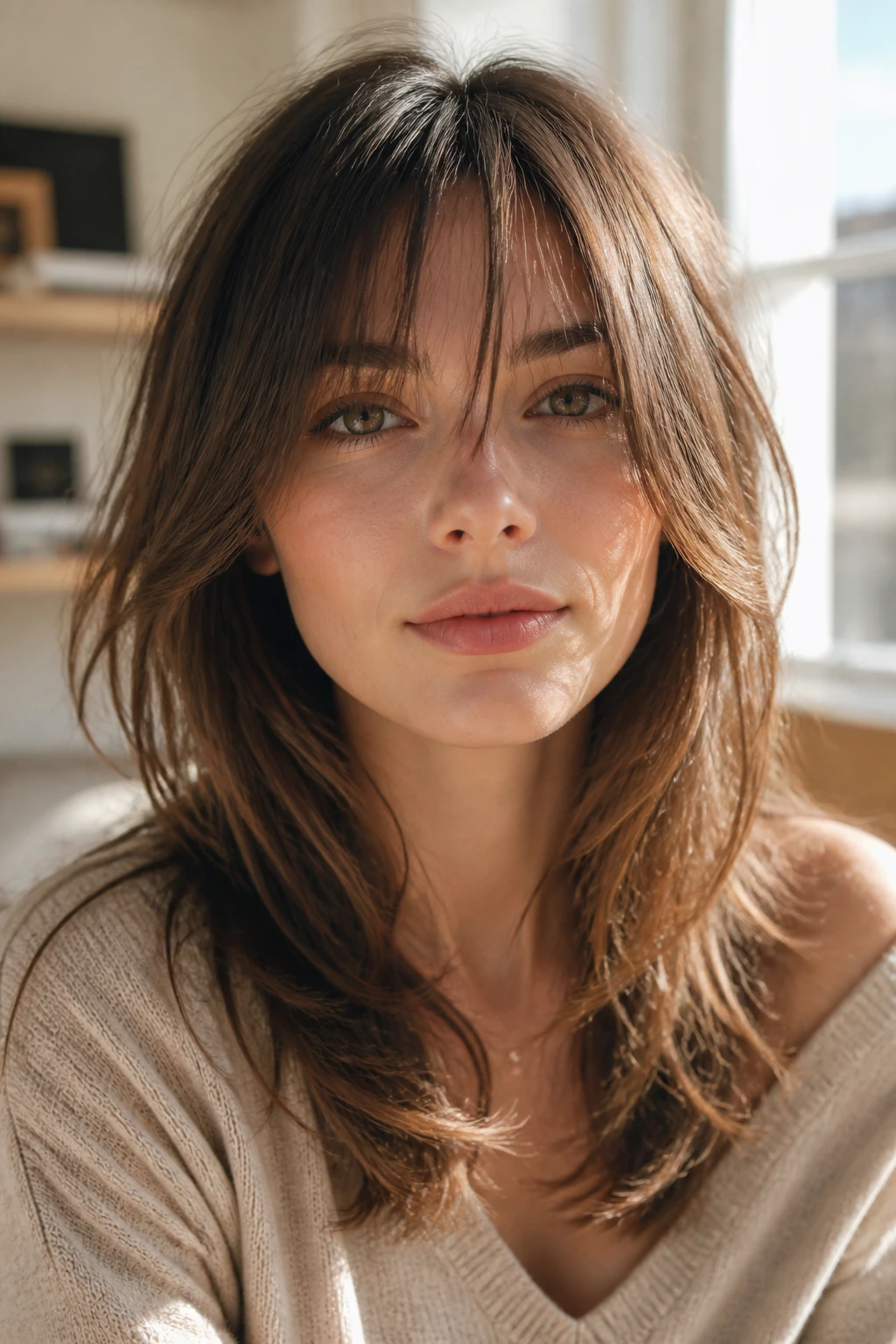
The nicest thing about layered haircuts with wispy bangs is that they don’t fight the face. They sit with it. That’s why the good versions look easy even when they’re carefully built. The front stays light, the layers do the shaping, and the haircut keeps moving long after the salon blow-dry has fallen apart.
Bring a photo, yes. But bring a little honesty too — about how often you style your hair, how your part behaves, and how much forehead you actually want to show. That’s where the real difference lives. A good cut should make your morning easier, not turn into a small daily negotiation.
