



Medium-length hair with bangs has a sneaky advantage: it can look sharper than long hair and less precious than a bob, which is exactly why it keeps showing up on people who want edge without losing movement. The cut sits in that sweet band between collarbone and shoulder, where the ends can flip, kick out, or go piecey, and the fringe changes the whole mood in one snip.
A heavy fringe on a blunt midi reads severe. A razor-shorn shag with curtain bangs reads restless. A curly cut with soft bangs reads like you know exactly what your hair does and you’re not fighting it. That’s the real appeal here. The edge doesn’t come from length alone. It comes from tension — blunt against broken, soft against sharp, smooth against jagged.
And bangs have a funny power people underestimate until they wear them for a week. A fringe can drag a haircut from “nice” into “specific,” which is a much more interesting place to live. If you’ve ever watched a fringe grow an extra quarter-inch and suddenly steal the whole haircut, you already know how much weight that front line carries. That tension between length and fringe is where the best versions live, and the 23 looks below lean into it in very different ways.
Why You’ll Love This Collection

-
Built for real hair, not fantasy hair: These cuts work on straight, wavy, curly, thick, and fine textures because the shape does the heavy lifting, not just heat styling.
-
Bang options for every tolerance level: You’ll see full fringe, bottleneck, curtain, side-swept, micro, wispy, and piecey versions, so there’s room to go bold or stay wearable.
-
Edge without a brutal grow-out: Medium length grows out with less drama than a cropped cut, which matters when you want a haircut that can survive a few weeks of life.
-
Easy to tailor at the salon: The difference between a shag, a lob, a wolf cut, and a pageboy comes down to a few precise choices — length, internal layers, bang line, and finish.
-
Looks good when it’s not perfect: A lot of these styles get better on day two, when the texture settles and the fringe stops looking too freshly blown out.
1. Choppy Collarbone Shag with Eyelash Bangs
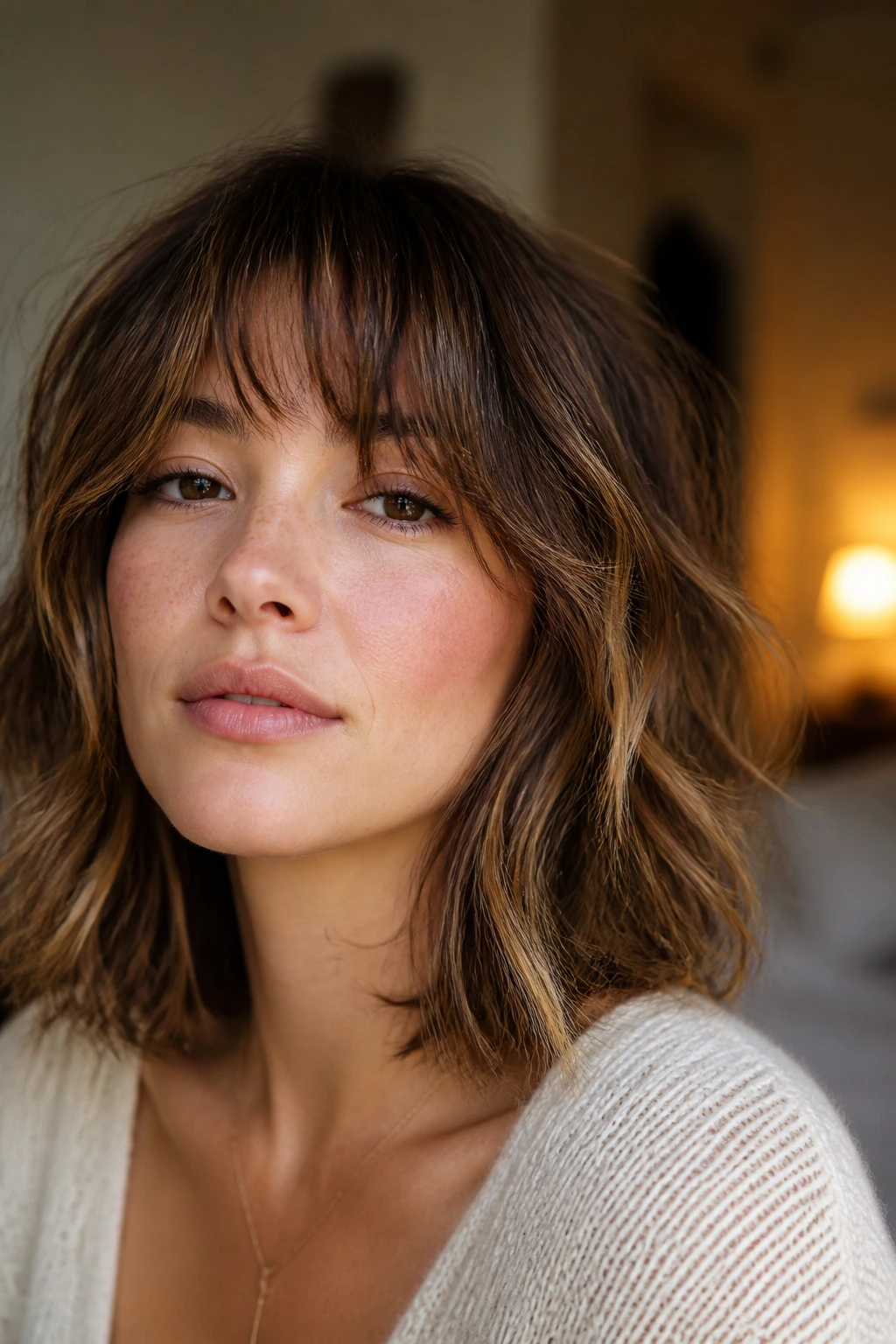
The collarbone shag is the haircut version of a worn leather jacket: soft enough to wear every day, sharp enough that it never looks apologetic. The ends skim the collarbone, the internal layers break up the bulk, and the fringe lands right on the lashes so the whole face gets a shadowy frame.
Why it hits
A shag at this length stays airy because the weight sits low enough to swing but high enough to keep shape. Eyelash bangs are the right move here; shorter fringe would fight the movement, and longer fringe would disappear into the face.
- Best for: Fine to medium hair that needs lift at the crown and movement through the ends.
- Ask for: Soft internal layers, a lightly razored perimeter, and bangs that graze the lashes when dry.
- Style with: A pea-size mousse at the roots, rough-dried bangs, and a mist of texture spray through the mid-lengths.
One detail that matters: If your ends tend to flip out too hard, keep the longest layer at the collarbone instead of the upper chest.
2. Razor Lob with Curtain Bangs
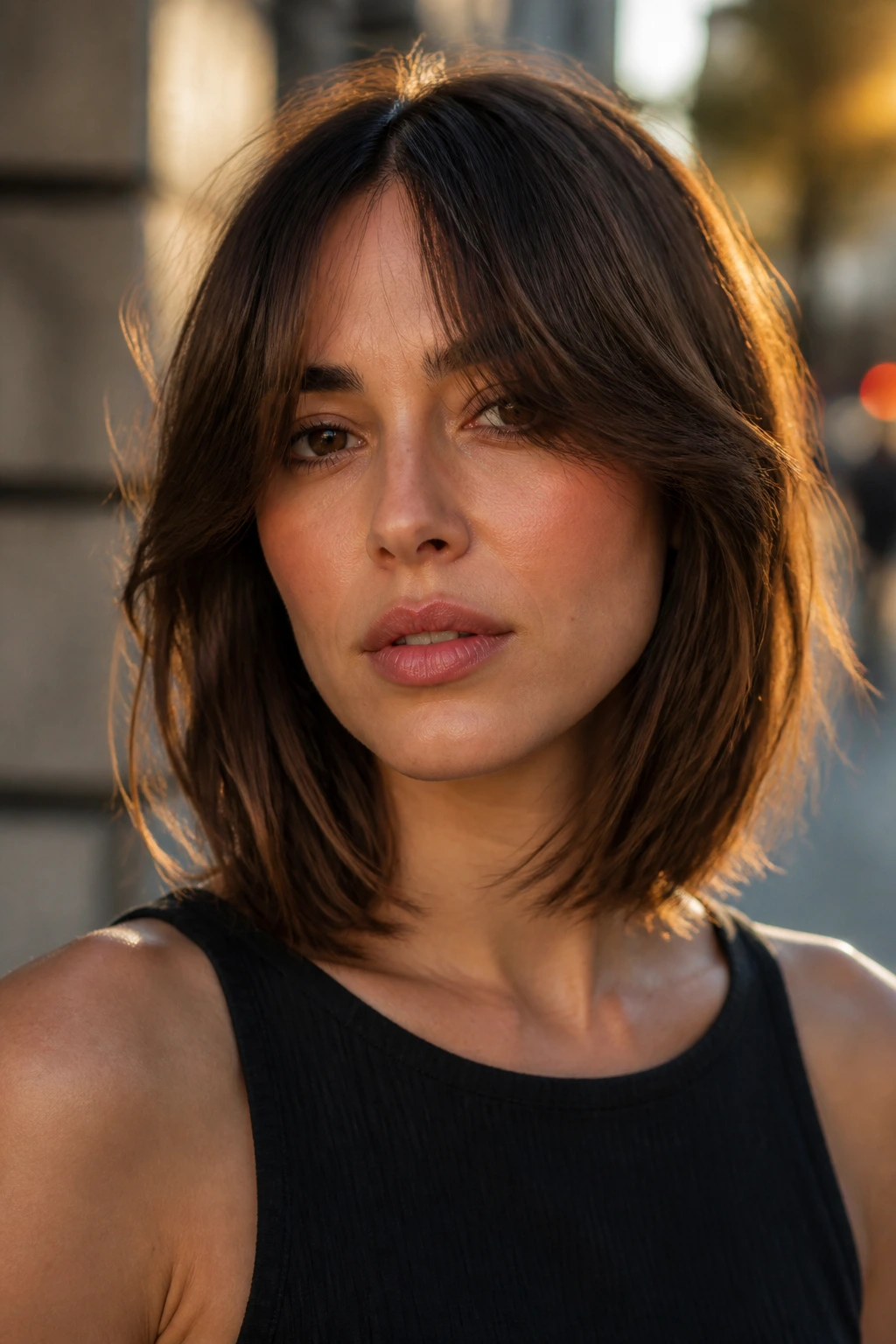
A razor-cut lob looks sharper than a scissor-cut lob because the edge comes out softer and more broken, not blunt. Curtain bangs split at the center and fall toward the cheekbones, which gives the haircut movement even when the rest of the hair is straight.
This version works best when you want the cut to feel a little dangerous without forcing it into full shag territory. The razor takes weight off the ends so the lob doesn’t sit like a block, and the fringe opens the face instead of covering it. If your hair is very frizzy or coarse, ask for a feathered razor finish rather than a heavy slice, because too much blade work can make the ends puff.
Best when: You want a medium cut that looks polished with a bend and deliberately undone when air-dried.
3. Wavy Wolf Cut with Full Fringe
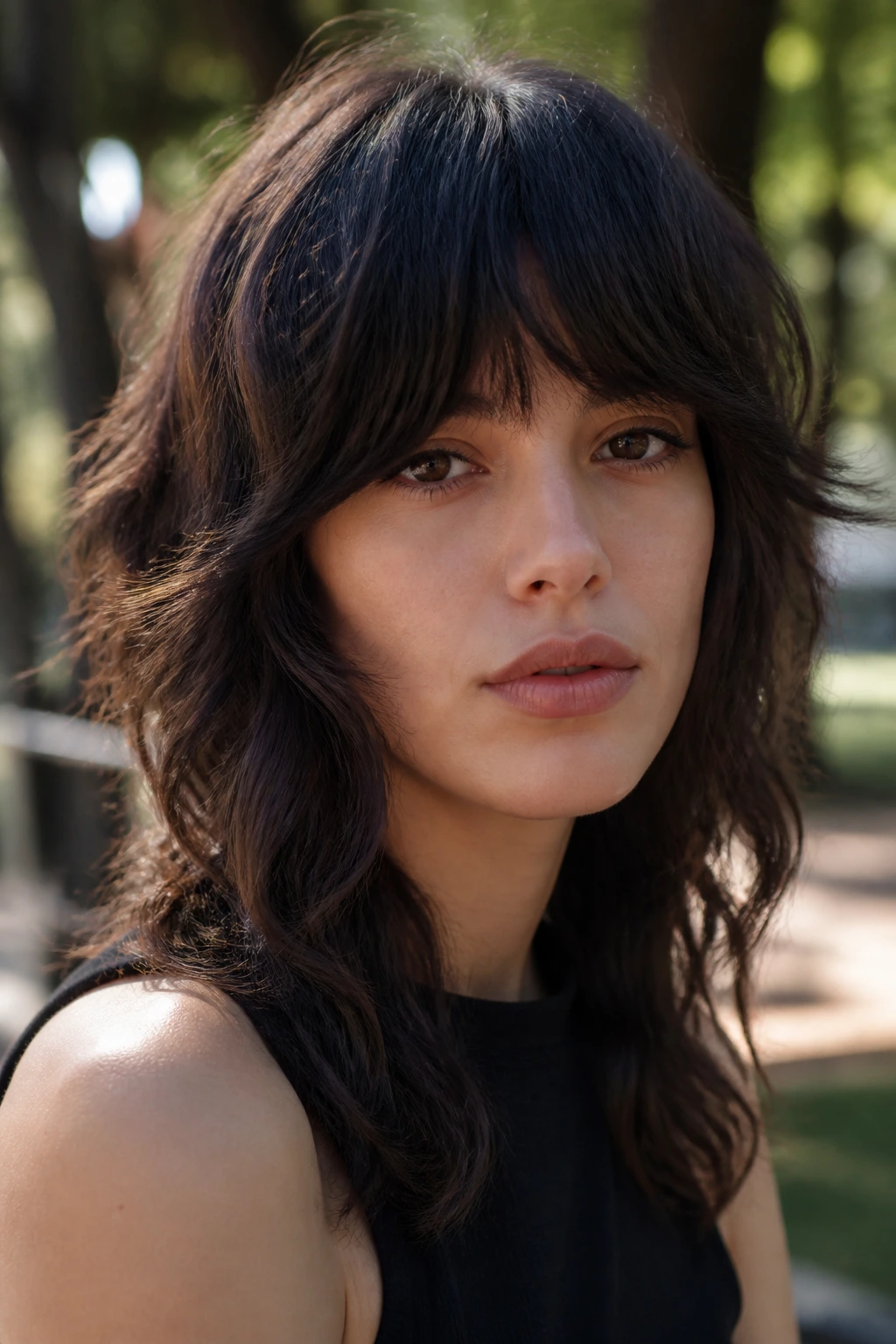
Want hair that looks like it has a temper? The wavy wolf cut is that cut. It keeps the top shorter, lets the layers fall longer in back, and puts a full fringe right across the forehead so the shape feels dense and a little wild.
The reason it works on medium length hair is simple: the wave breaks up the layers so they don’t read as choppy in a bad way. Use a diffuser or a rough blow-dry with mousse, then pinch a few pieces of fringe with a touch of wax so the front doesn’t collapse into one heavy curtain. If your hair is thick, this is one of the rare fringe cuts that actually benefits from a bit of removal inside the shape.
How to wear it
- Keep the fringe slightly longer at the temples so it doesn’t look square.
- Let the top layers sit a little shorter than the mid-lengths.
- Finish with texture spray, not shine serum.
Best for: Thick or medium-thick hair that can handle a lot of shape without going flat.
4. Asymmetrical Lob with Side-Swept Bangs
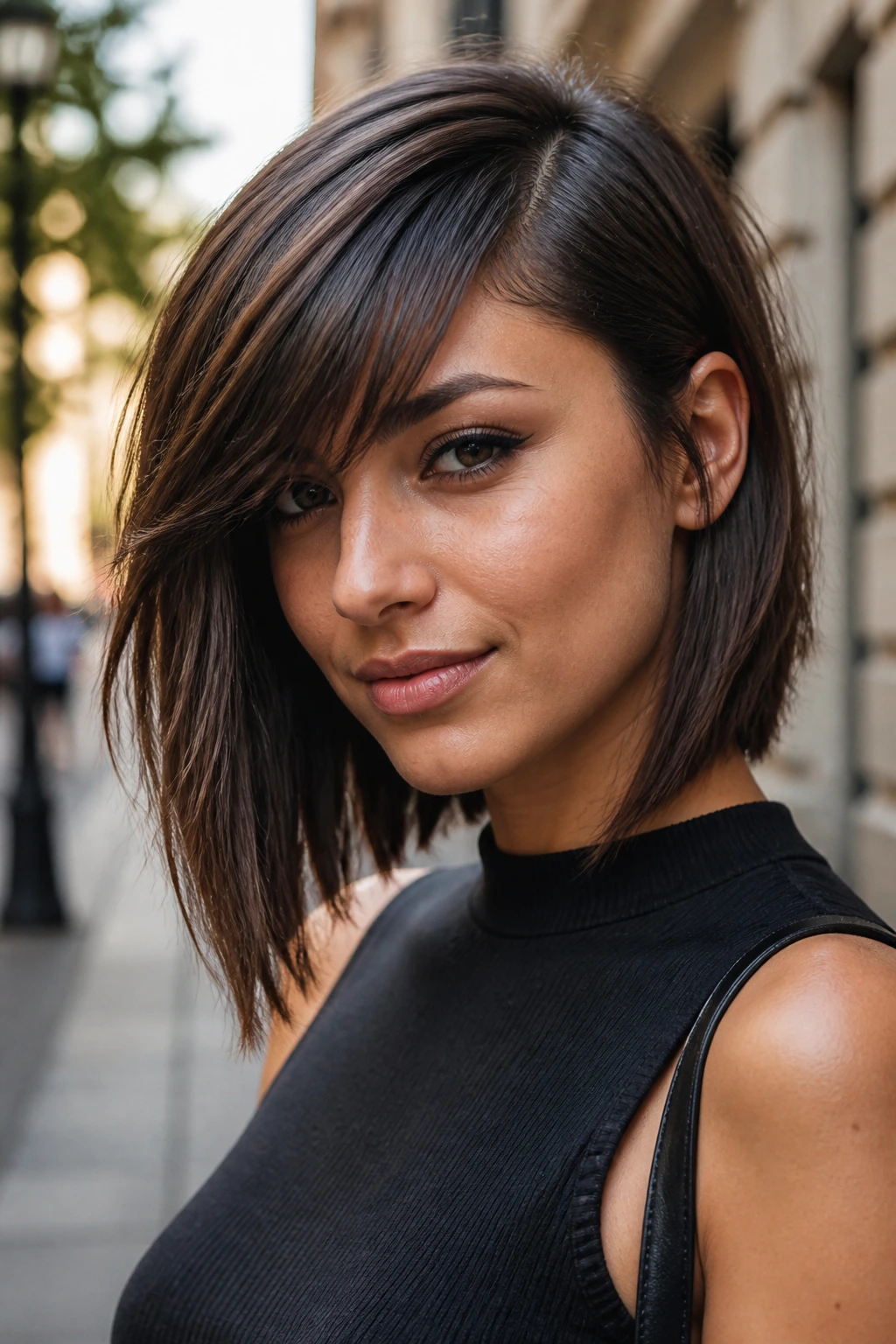
One side skims the collarbone; the other sits a touch higher, and the whole haircut feels like it’s shifting as you walk. Side-swept bangs keep the asymmetry wearable, because they add one clean diagonal line across the face.
This is the cut I reach for when someone wants edge but does not want to look like they’re trying to be punk on purpose. The imbalance does the work. It flatters square jaws, softens a broad forehead, and gives you an easy off-ramp if you’re growing out a fringe. Flip the longer side behind one ear, and the shape changes in half a second.
Tip: Keep the shortest side only one to one and a half inches shorter than the longer side; any bigger and the lob starts reading as two separate haircuts.
5. Blunt Midi Cut with Micro Bangs
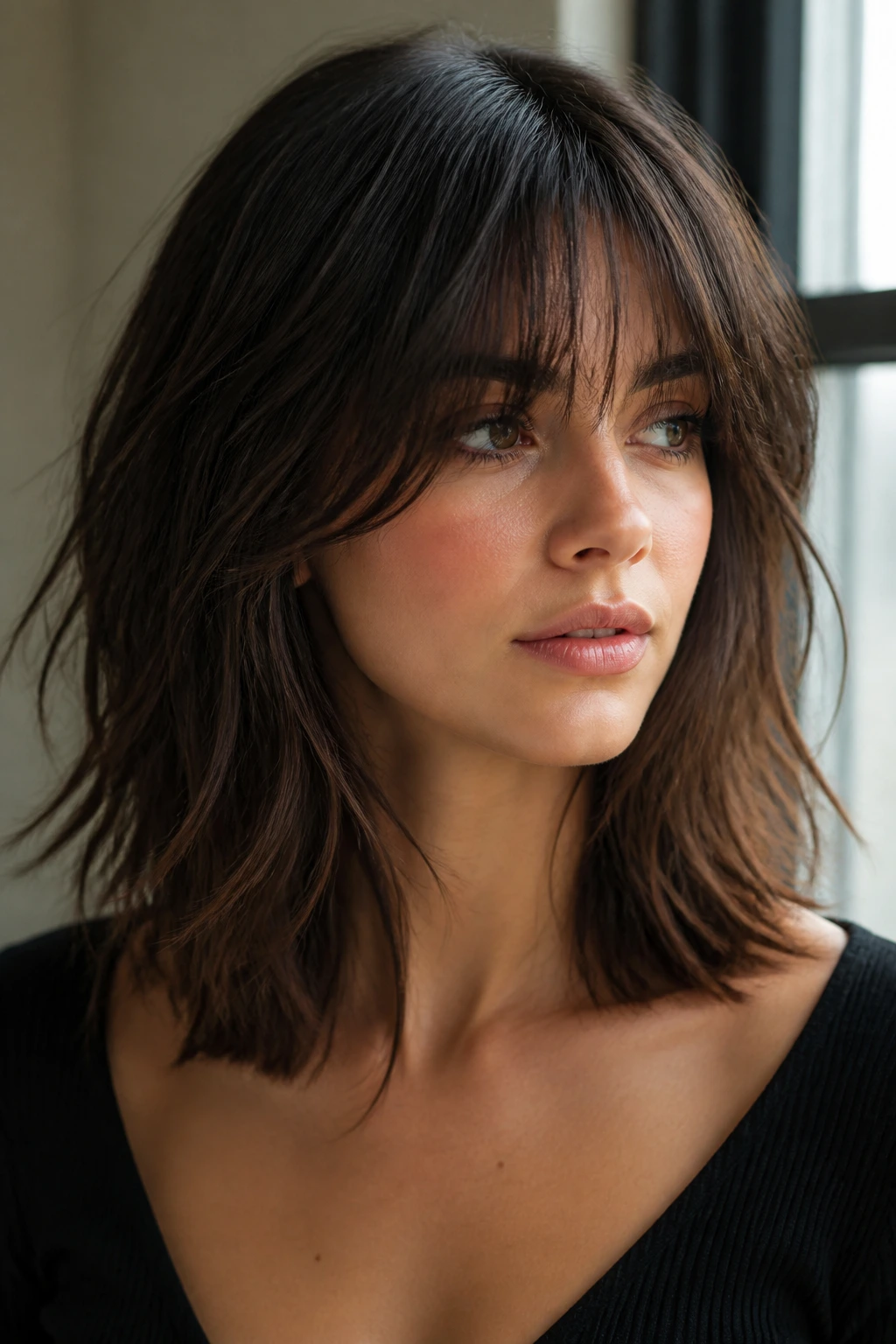
Micro bangs are not for hiding. They put the forehead on display and make the rest of the cut matter more. With a blunt midi, the line around the perimeter stays clean, the bangs sit high enough to show brow, and the whole style gets that graphic, fashion-editor edge that a softer fringe never gives.
This one looks strongest on straight or nearly straight hair, because the shape depends on line rather than fluff. If your hair bends hard at the root or your cowlick pushes fringe apart, expect to spend a few minutes with a blow dryer every morning. That’s the trade. You get a sharp, almost architectural front, but you also have to keep it under control.
One thing I like here: the ends do not need much styling. A small bend under at the base and a little polish on the mid-lengths is enough. The bang line is the whole point.
6. Tousled Midi Bob with Bottleneck Bangs
Compared with standard curtain bangs, bottleneck bangs start narrower at the bridge of the nose and flare out at the cheekbones. That tiny shift matters. It keeps the front from swallowing the face while still giving the haircut movement, which is why this style feels lighter than a full fringe but sharper than a plain lob.
The midi bob should sit somewhere between the chin and collarbone, with enough texture in the ends that it does not hang flat. A 1-inch curling iron or even a round brush gives you the little bend this cut needs. If your hair is fine, keep the layers internal and the perimeter a little blunt so the bob still looks full. If it is dense, ask for more removal around the interior so the bangs don’t have to carry all the weight.
Best for: People who want fringe without losing cheekbone definition.
7. C-Cut Layers with Wispy Bangs

A C-cut curves inward around the face, almost like the haircut is drawing a bracket around your features. Wispy bangs keep that curve from feeling too neat. They float instead of sitting like a slab, so the whole look stays soft even when the shape is clearly defined.
What to ask for
- Keep the shortest face-framing piece around the cheekbone, not the jaw, so the curve shows up.
- Ask for light texture in the bangs, not a blunt edge.
- Let the perimeter touch the collarbone or just below it if your hair needs weight.
This is the cut for someone who wants edge with a little breathing room. It still reads intentional. It just doesn’t shout. And if you tuck one side behind your ear, the C-shape becomes obvious, which is one of those small details that makes a haircut look expensive without actually being fussy.
8. Curly Shag with Soft Fringe
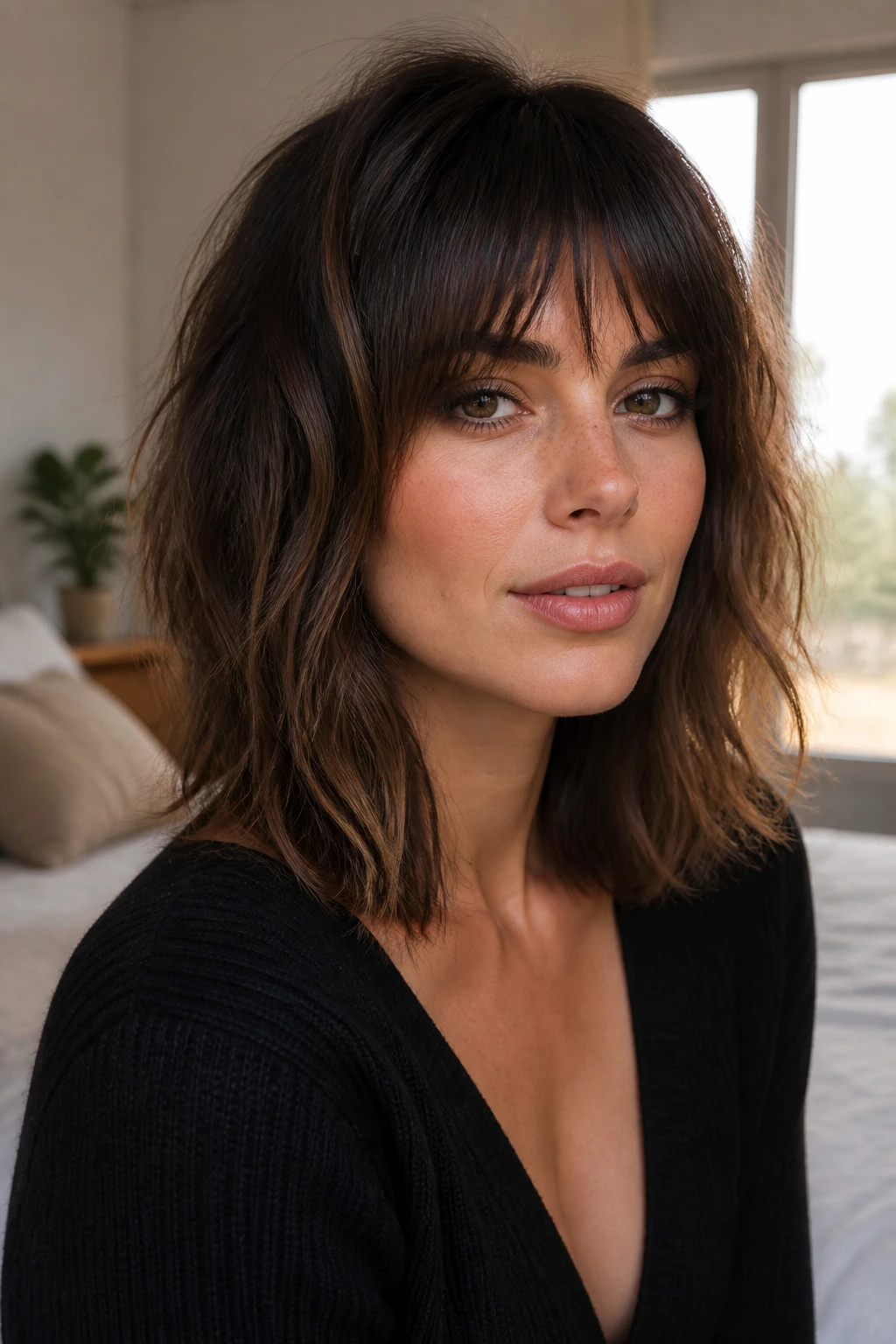
Curly hair and bangs are not enemies. They only become enemies when the fringe is cut too short or too blunt. A curly shag with a soft fringe lets the curl pattern do the shaping, so the front looks airy instead of boxy and the layers around the crown stop the whole cut from turning into a triangle.
Cut the fringe dry or almost dry, and leave it a little longer than you think you need. Curl spring is real. A half-inch on the comb can turn into an eyebrow-skimming bang once the curl dries. Diffuse gently, then scrunch a light cream through the ends only. Heavy butter near the front will weigh the curl down and make the bangs separate in odd little ropes.
Best on: Wavy curls, loose ringlets, and anyone who likes shape more than polish.
9. Sleek Midi Cut with Heavy Straight Bangs
A glossy, straight midi with a full fringe can look more severe than a messy shag, and that severity is the point. The bangs sit across the brows in one solid line, the ends stay smooth, and the silhouette gives off a deliberate, almost tailored feel.
The haircut depends on clean lines. That means heat protectant, a paddle brush or flat brush, and a flat iron with rounded edges if your hair fights you. Keep shine serum off the bangs; too much product on the front turns crisp into greasy in about five minutes. Use serum on the mid-lengths and ends, then let the fringe stay light so it moves when you blink.
This is a strong choice if your features can handle a frame. It is not shy.
10. Flipped-End Lob with Split Fringe
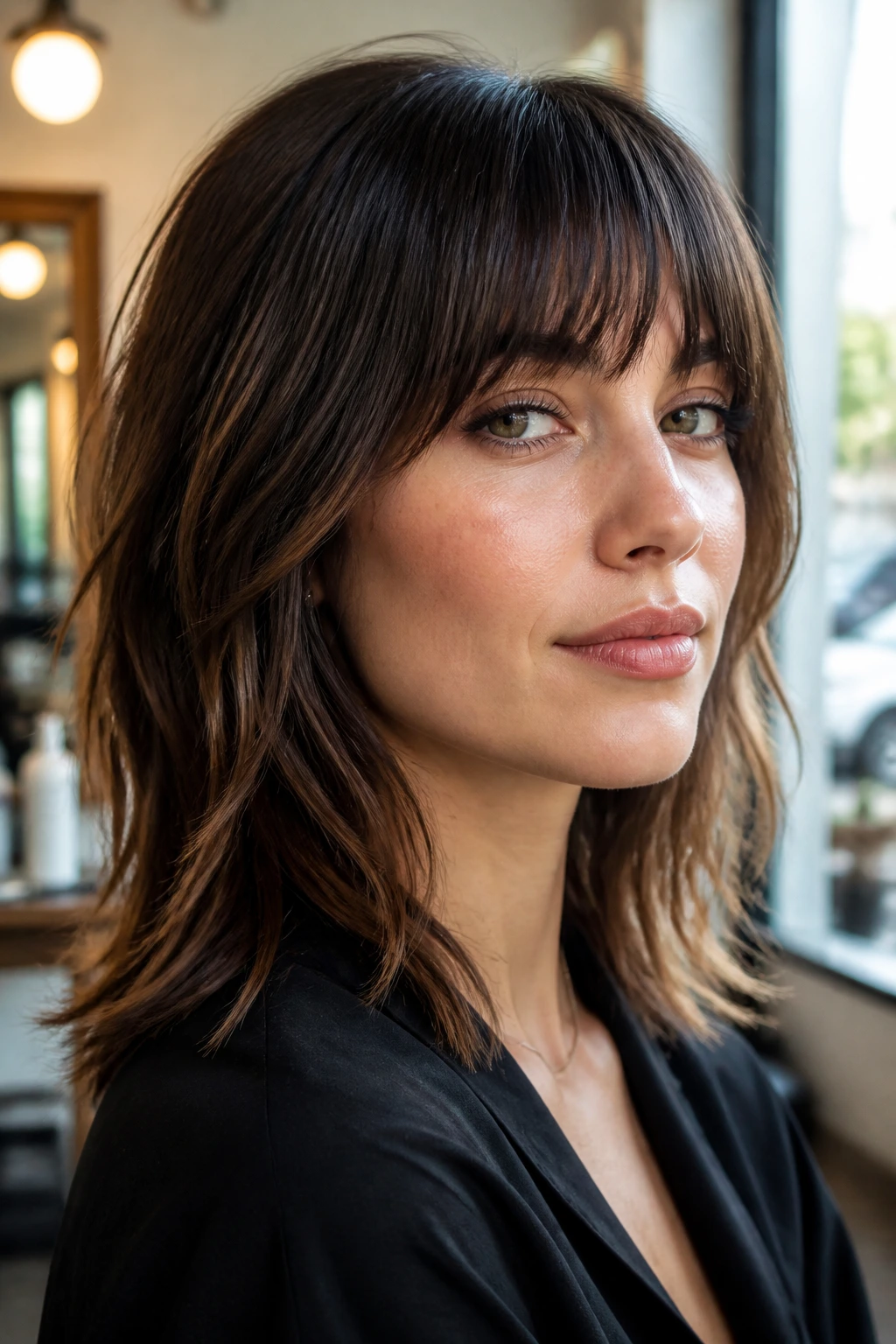
There’s a little retro bite in this one. The lob ends flick outward instead of tucking in, and the fringe splits near the center so the forehead shows through in a loose V. It feels playful, but not soft. The flip at the ends keeps the shape from falling into the usual straight-lobed routine.
This cut likes a round brush or a 1.25-inch curling iron, used only on the bottom inch or two of hair. Leave the rest a bit rough. If everything is too polished, the split fringe starts to feel costume-y. If it’s a touch imperfect, it looks lived in. That’s the whole trick with this style: the shape should look like it has moved on its own.
Good for: Hair that loses shape quickly but still holds a bend at the ends.
11. Rocker Lob with Face-Framing Curtains
This is the lob for people who want the fringe to melt into the sides rather than stop at the middle of the forehead. The curtain bangs start around the cheekbone, sweep back from the center, and leave enough face showing that the haircut feels open, not sealed up.
It is an easy cut to wear because it can be rough-dried and still look deliberate. The edge comes from the contrast between the looser front pieces and the slightly blunt perimeter around the shoulders. A little salt spray or mousse at the roots helps, but don’t flood the hair with texture product. You want separation, not straw. If your hair is wavy, this one works especially well because the curtain pieces pick up the bend and keep the sides moving.
Best for: Oval, heart, and long faces that need width around the cheekbones.
12. Shullet with Piecey Fringe
What if you want mullet energy without the full old-school commitment? The shullet is that answer. The crown and top layers stay short and shattered, the back keeps enough length to skim the shoulders, and the fringe breaks into piecey little sections instead of one heavy band.
This cut needs confidence, but not a lot of daily work. A dab of wax or paste through the front creates separation fast. The piecey fringe keeps the whole thing from turning costume-y; without it, the shape can look too literal. Thick hair benefits most here because the internal removal takes the weight off the nape and stops the shape from mushrooming. If your hair is finer, keep the layers longer and the fringe lighter so you do not lose density.
13. Feathered Mid-Length Cut with Airy Bangs
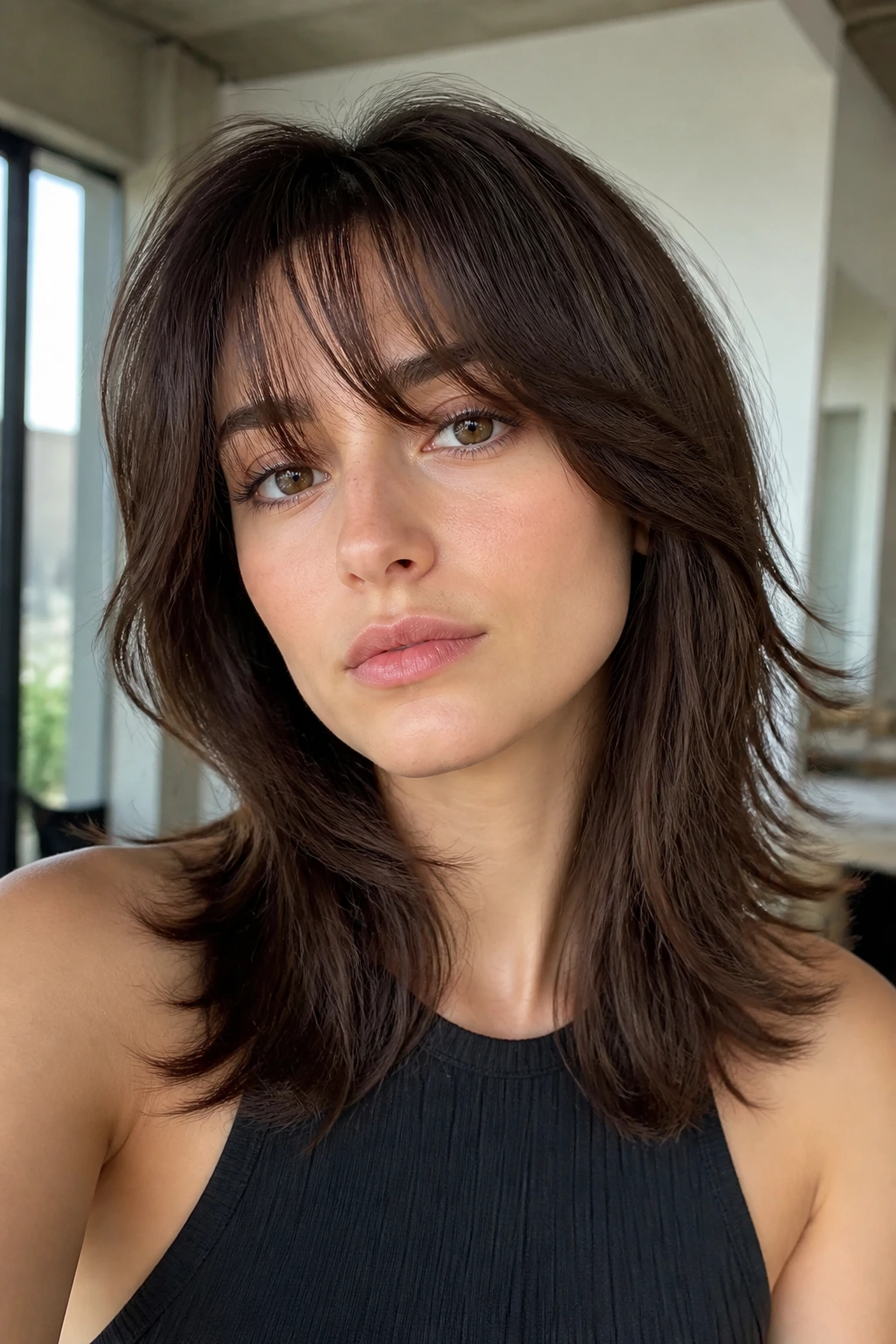
A feathered mid-length cut has a softer outline than a shag, but it still carries enough movement to feel current. The bangs are light, airy, and slightly separated, which keeps the face open while the feathering around the sides adds a bit of swing.
This is one of the easiest styles to blow-dry into shape because the feathering already does half the work. Use a medium round brush, direct the roots upward for lift, and curve the ends away from the face just enough to show the layering. If you like volume but hate heavy hair on your forehead, this is a smart middle ground. It has edge, but the edge comes from motion, not sharpness.
Tip: Keep the shortest front pieces no higher than the brow if you want the airy effect to stay wearable.
14. Wet-Texture Lob with Grown-Out Bangs
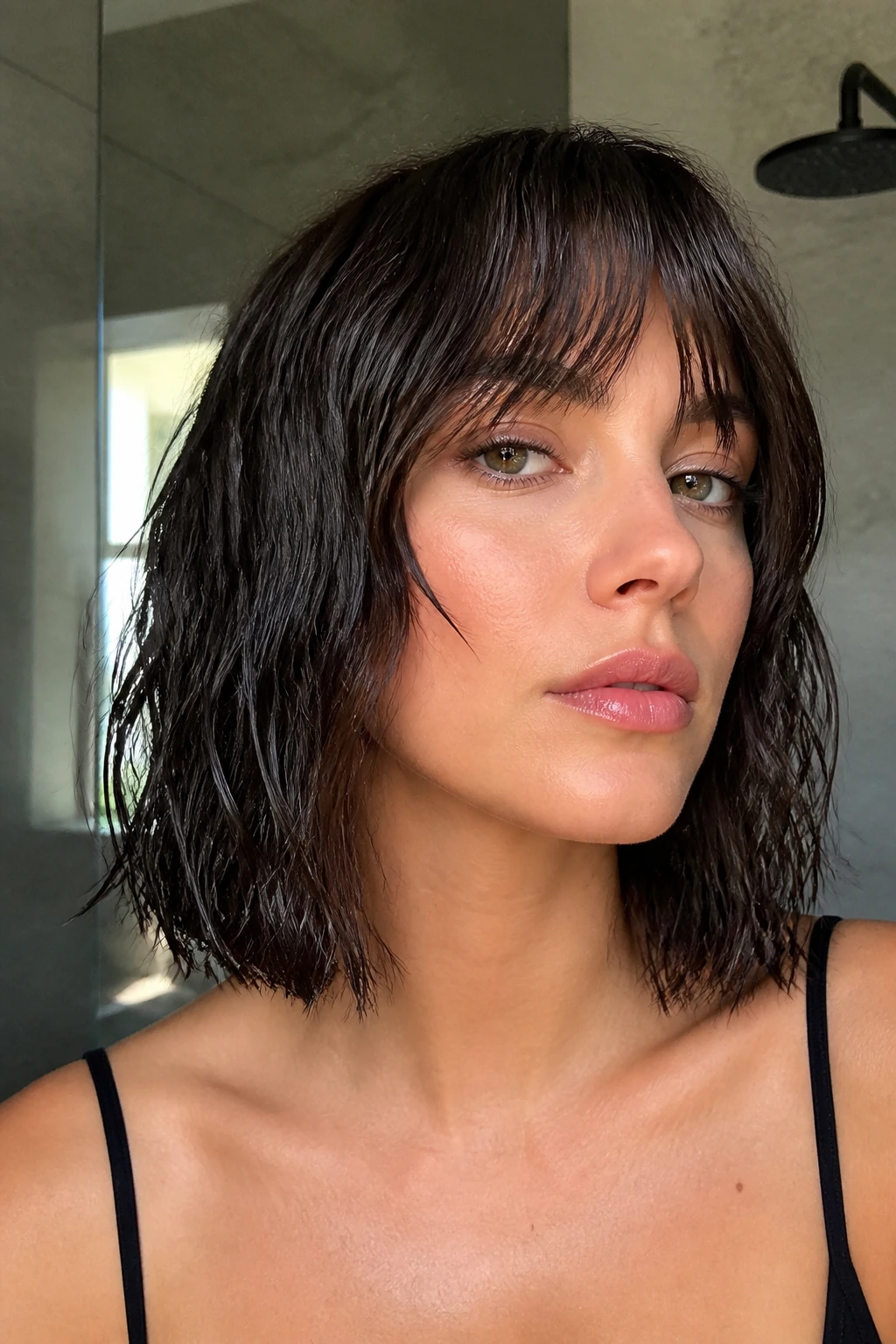
The beauty of a wet-texture look is that it does not pretend to be fluffy or perfect. The hair is worked with gel or cream, the ends clump in a deliberate way, and the bangs stay long enough to sweep or split instead of sticking flat to the forehead.
This cut is especially good if you hate fighting your fringe every single morning. The grown-out bang length gives you options: wear it down, tuck it behind the ear, or break it open with fingers and a little water. It also softens a stronger jaw or a wider forehead because the front is not hard-lined. Just keep the product light. Wet texture should look controlled, not crunchy.
I like this one on medium hair because the length holds the shape while the finish keeps it modern.
15. French-Girl Midi with Full Fringe
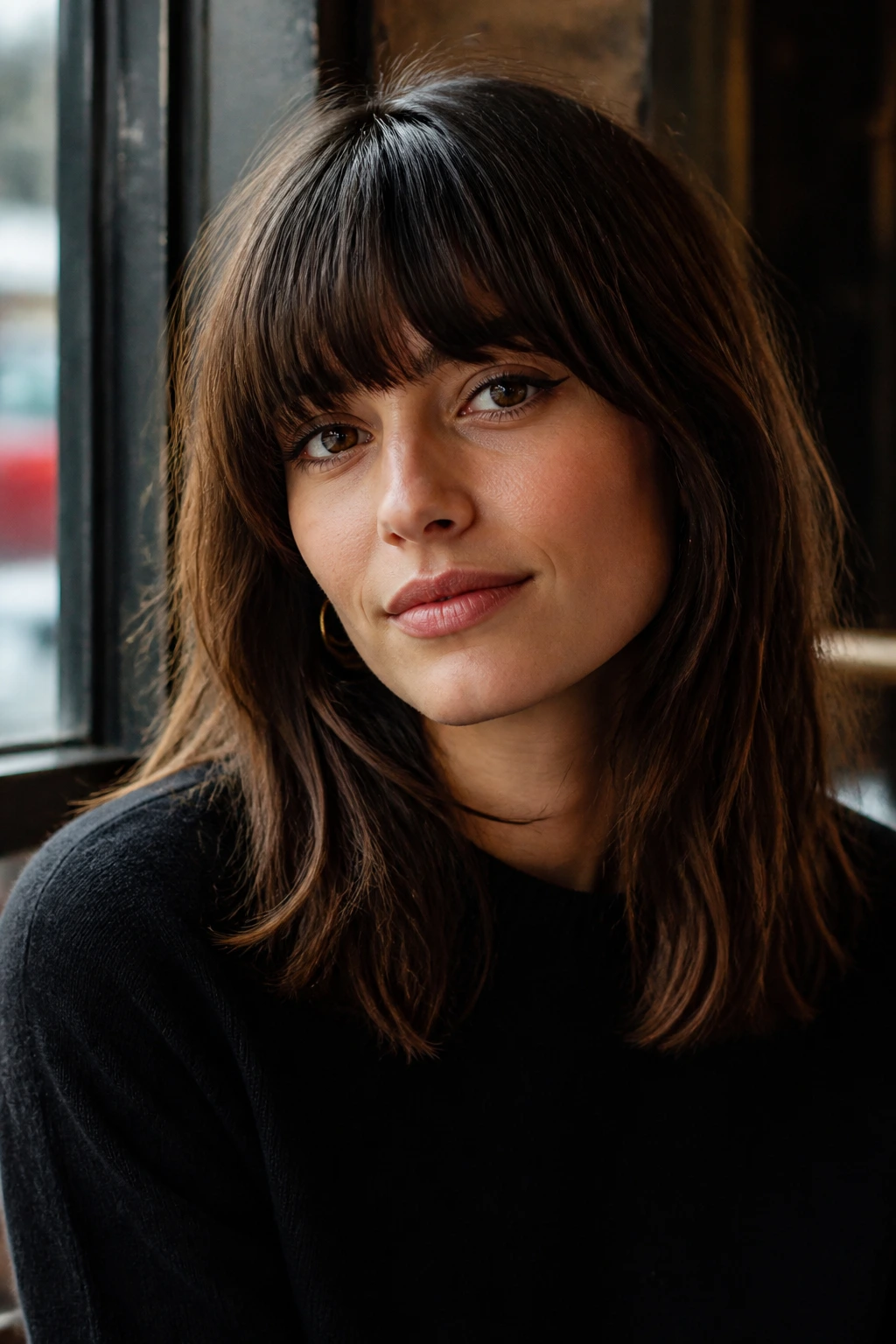
Compared with curtain bangs, a full fringe changes the whole mood in one cut. It lands across the forehead with a little more weight, the midi length sits around the collarbone or just below, and the result feels grounded rather than airy. The edge comes from that clean front line, not from visible texture.
This haircut looks best when the fringe is blown dry smooth and the rest of the hair is left with a small bend, not a full-on curl. Too much polish turns it stiff. Too little and the bangs separate in a way that looks unfinished. The sweet spot is a loose, face-framing bend with a fringe that sits evenly across the brow. If your hair is naturally straight or softly wavy, this is one of the easiest strong-fringe styles to maintain.
Best for: Someone who wants a sharper version of a classic midi without going all the way to micro bangs.
16. Boxy Textured Lob with Blunt Bangs
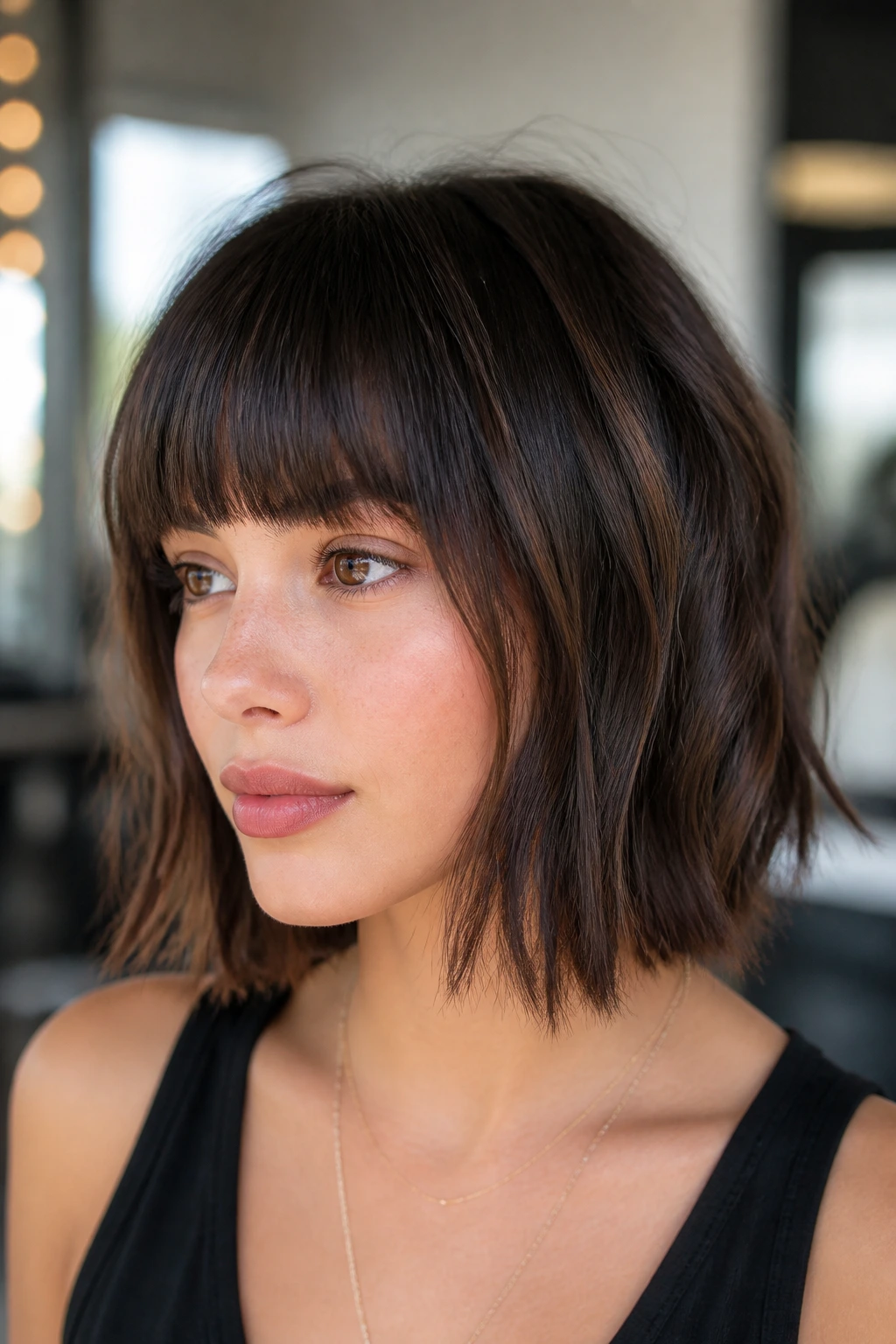
A boxy lob sounds severe, and that’s why it works. The perimeter sits with a squared-off feel, the bangs cut straight across the forehead, and the interior texture keeps the shape from becoming helmet hair. It’s a haircut with corners.
This one is made for dense hair or straight hair that likes to lie flat. The blunt line gives body, and the texture inside the cut removes enough weight to keep the shape from puffing out at the sides. Use a flat iron only if you need to smooth the front; if your hair already falls straight, a quick blow-dry and a touch of matte paste on the ends may be enough. The style reads strongest when the bangs and the perimeter feel like they belong to the same sentence. Clean. Direct. A little severe.
Tip: Ask your stylist not to thin the ends too much. Too much point-cutting will soften the boxy shape you came for.
17. Disconnected Layers with Long Peekaboo Bangs
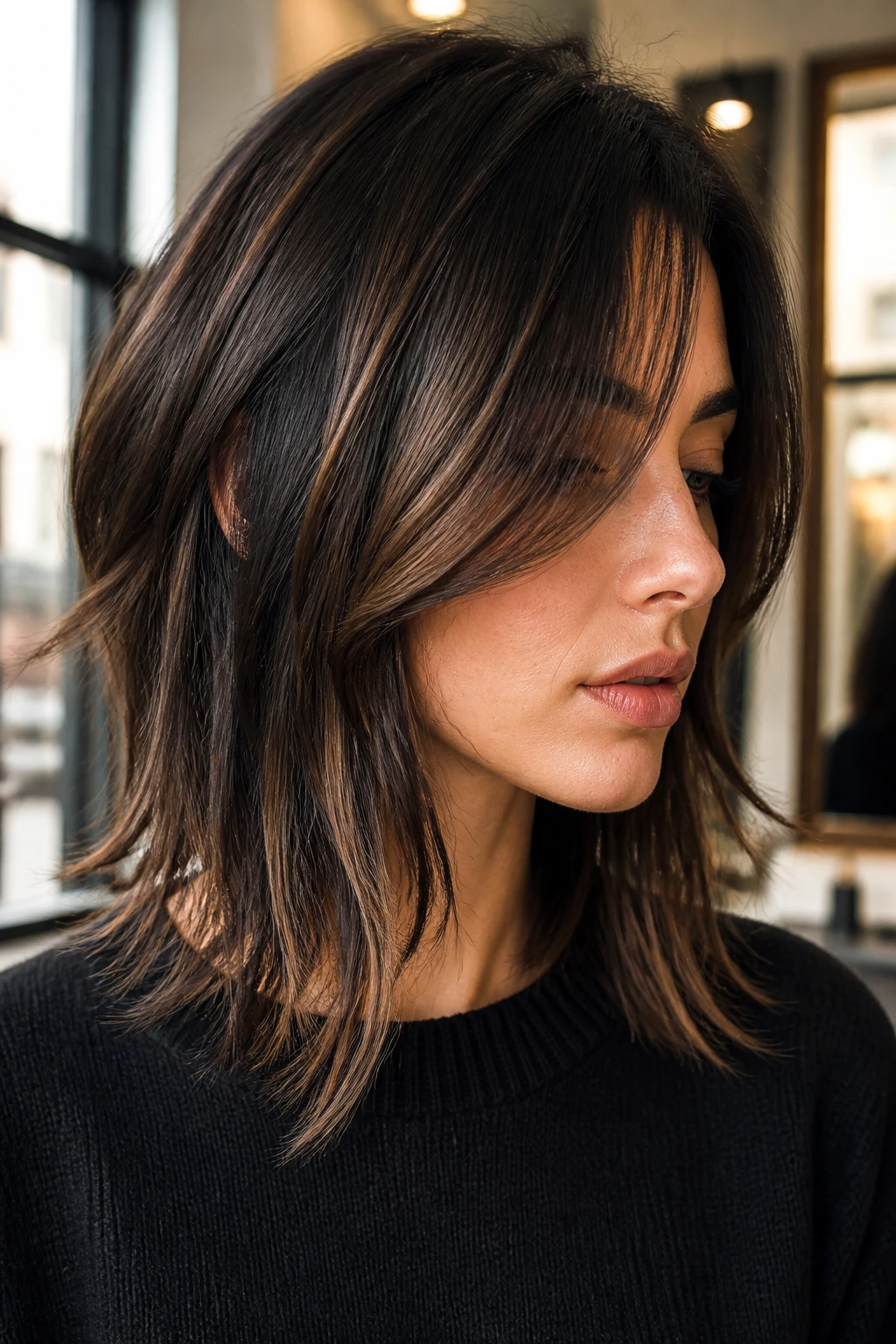
Disconnected layers are the opposite of a polite haircut. The shorter pieces sit in a way that does not blend neatly into the longer ones, and the bangs skim the face without fully closing it off. They peek, they disappear, they show up again when you turn your head.
That separation gives the cut movement even when the hair is not freshly styled. It also makes the fringe easier to grow out because the longest front pieces can blend into the layers instead of hanging as a hard line. If you like a side part, this cut is especially good: the bangs can be swept over one eye, then pushed back later without losing the shape. A little texturizing spray is enough most days. Any more and the disconnect can start to look frayed instead of intentional.
This is a strong choice for someone who wants edge without looking like they spent 40 minutes with a hot tool.
18. Undone Mullet Bob with Short Wisps

Can a bob feel rebellious? Absolutely, if the nape is tighter, the crown is broken up, and the front has little wispy bits that refuse to behave. This version keeps the overall length near the jaw or just below, but the shape feels restless because the silhouette is not even.
The short wisps make the cut feel light around the face, which matters when the back is carrying more structure. Keep the finish rough: air-dry, diffuse, or blow-dry with your fingers instead of polishing every strand. If you use too much cream or oil, the wisps collapse and the whole cut loses the punk edge that makes it work. This one shines when it looks a little wild around the edges. Not messy. Wild.
19. Deep Side-Part Cut with Heavy Fringe
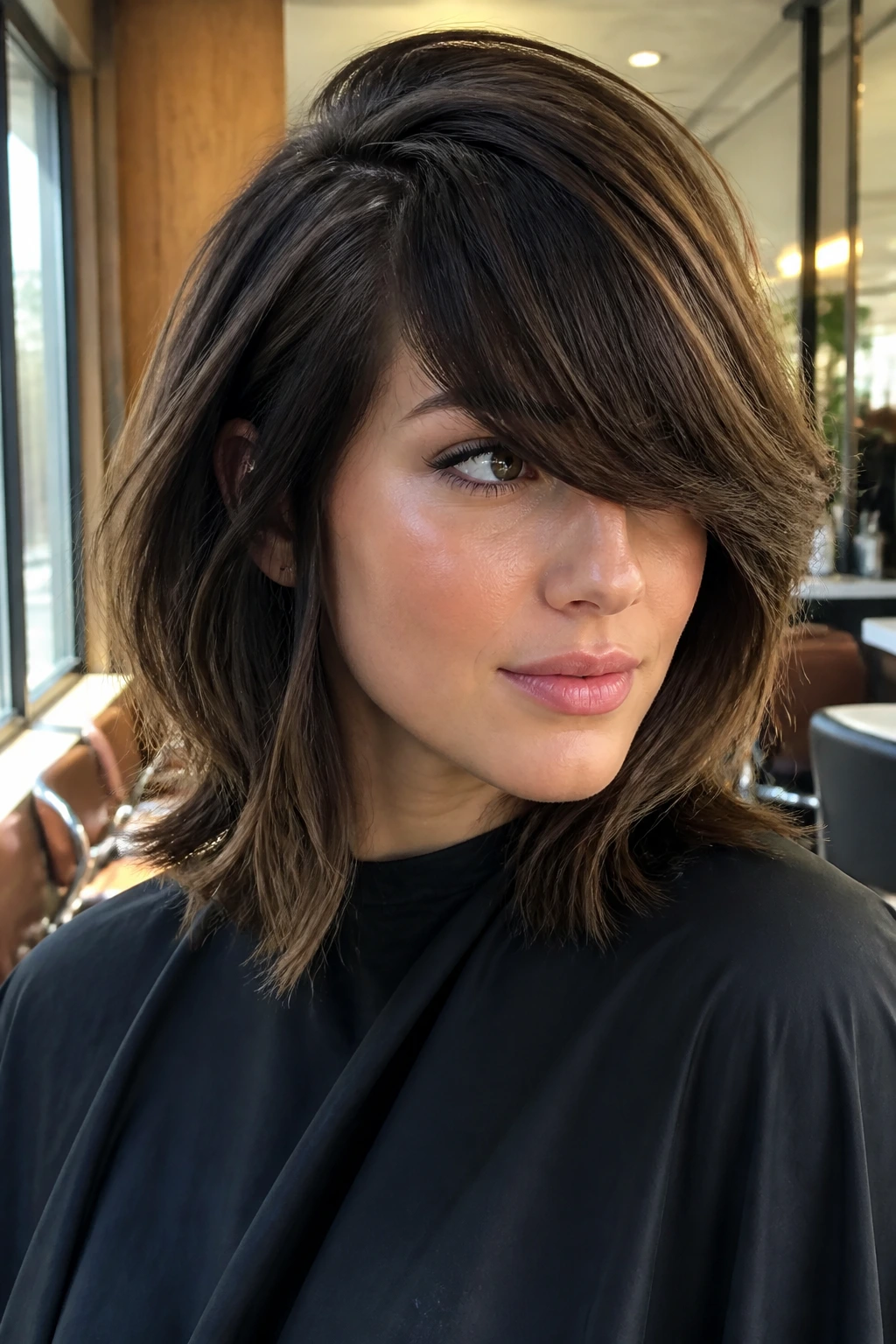
A deep side part changes the proportions before you even touch the fringe. It lifts one side, drops the other, and gives the front a sweep that feels dramatic without needing a lot of length. A heavy fringe across that side part gives you an extra shadow over the forehead, which makes the whole haircut feel sharper.
This works especially well if you want your medium length hair to have movement at the root, not just at the ends. Blow-dry the fringe from the heavier side toward the lighter side, then pin it in place for a minute if you need extra bend. That little set helps the part stay where you put it. Square and round faces often look good with this one because the diagonal line pulls the eye upward and across. It is a simple trick, but it changes the whole read of the cut.
Note: If your hair is fine, keep the fringe dense but not too short; otherwise the part will expose too much forehead and the shape loses weight.
20. Razor Shag with Bottleneck Fringe

A razor shag already has movement, but the bottleneck fringe gives it a cleaner frame at the front. The bangs stay narrow near the nose and open wider at the cheekbones, so the face looks framed without being crowded. That contrast is what keeps the cut from looking like a pile of layers.
The razor finish works best when you want the ends to look broken and a little wild. On wavy hair, it can be excellent. On very coarse hair, ask for a softer razor approach or a mix of scissor and razor so the ends do not frizz out. A small amount of texture spray on dry hair helps the layers separate; if you use it on damp hair, the cut can dry stiff. This is one of those styles that looks better with movement than with perfection, which is exactly why people keep coming back to it.
21. Modern Pageboy Lob with Sharp Bangs
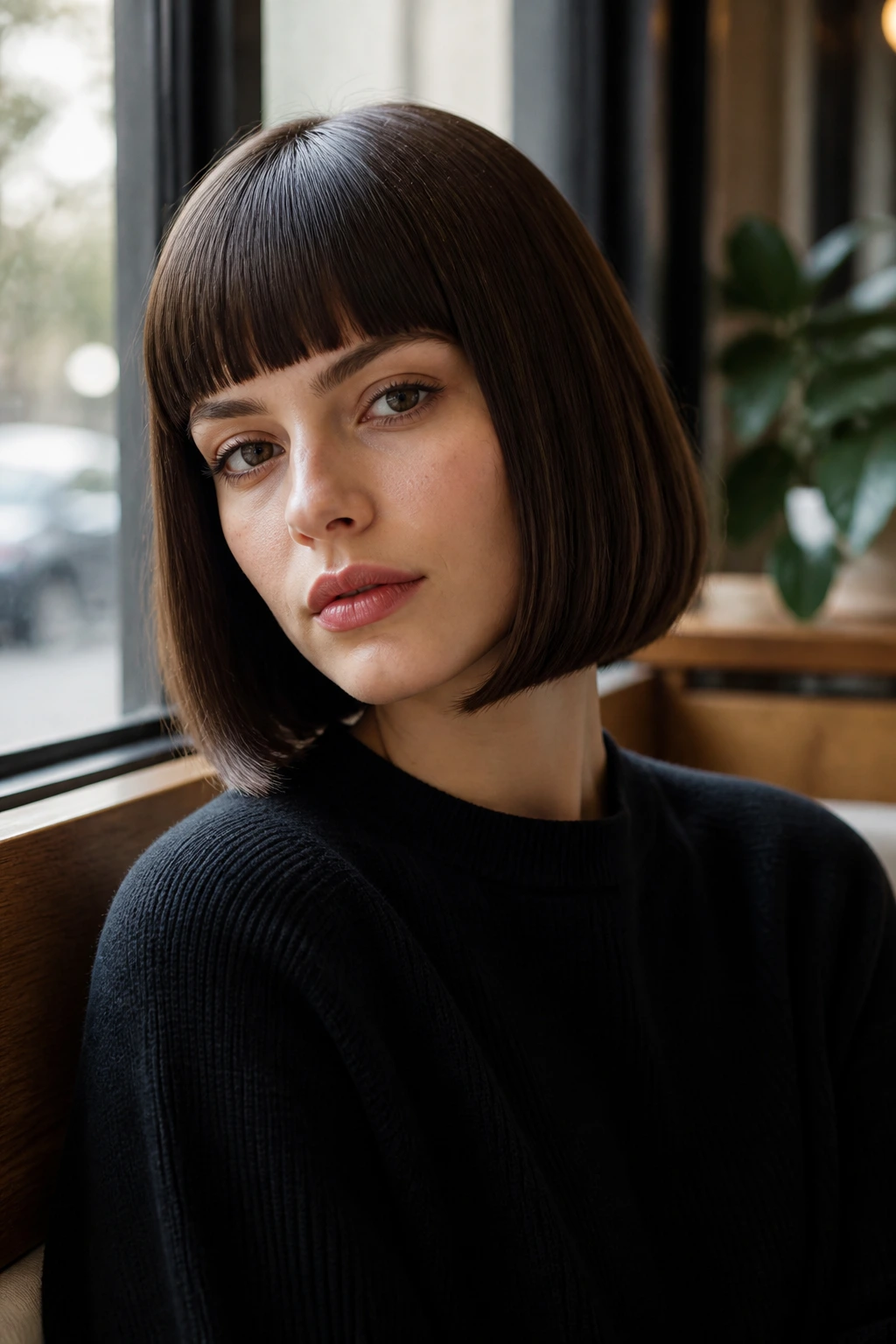
The pageboy is back in a far sharper form. At medium length, it sits around the jaw and collarbone with a rounded perimeter, and the bangs cut straight across the forehead in one crisp line. The combination feels retro in the best way: familiar shape, harder finish.
This cut is strongest on straight hair because the round silhouette shows up cleanly. If your hair has wave, you can still wear it, but the styling has to support the shape or the pageboy starts to collapse into a soft bob. A smoothing cream, a round brush, and a little bend under the ends are usually enough. I like this one when someone wants the hair to look deliberate from every angle. It is not a wash-and-go shag. It is a haircut with a point of view.
22. Sculpted Wavy Lob with Baby Curtain Fringe
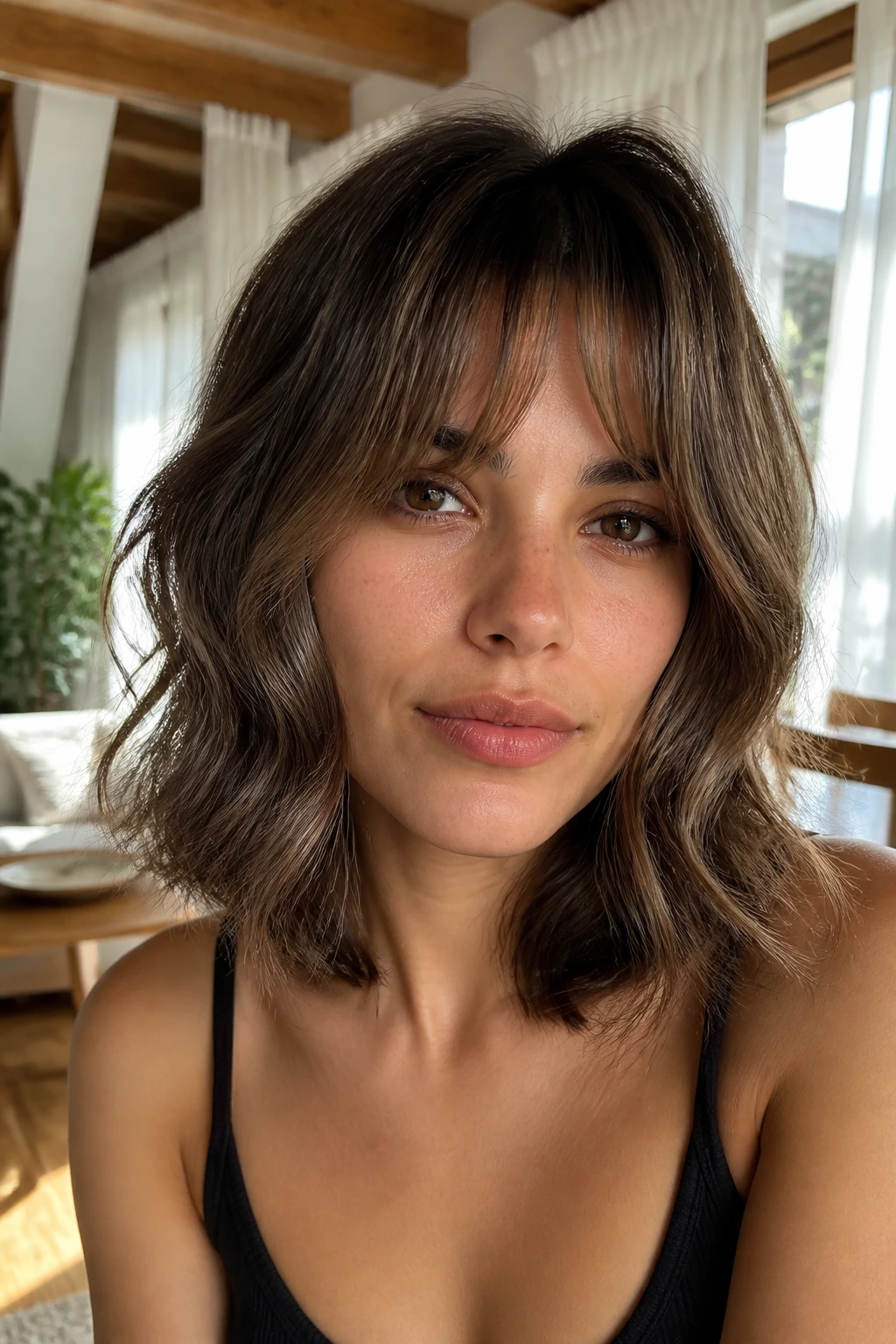
A baby curtain fringe is shorter than a classic curtain bang, but it still parts just enough to show a little brow. That tiny opening keeps the front from feeling heavy, and the sculpted wavy lob around it adds shape through the sides and ends.
This is a good cut if you already have a wave pattern and do not want to spend a long time reshaping it. Define the wave with a large-barrel iron or a diffuser, then separate the fringe with fingers so it does not sit as one flat strip. The baby length means the fringe keeps some lift, which is useful on faces that get overwhelmed by longer bangs. It also grows out with less drama than micro bangs, which is a nice bonus when you are not in the mood for maintenance every other week.
Best for: People who want a fringe that hints at structure rather than covering the whole forehead.
23. Copper Midi with Choppy Bangs and Internal Layers

Sometimes the edge comes from color as much as cut. Copper brings warmth and depth to medium-length hair, and the choppy bangs stop the color from looking too smooth or too precious. Internal layers remove weight from the middle of the shape, so the ends still swing even when the hair is thicker.
This is a smart final look because it proves a blunt idea: a medium cut can look louder when the color is vivid and the bangs are broken up. If you want the cut to feel even sharper, ask for a slightly darker root shadow. That gives the fringe depth and keeps the brightness from washing out the front line. Style with a light mousse, then use your fingers to separate the bangs after drying. The cut should read as textured, not fuzzy. Copper does the rest.
Why Medium Length Hair Gives Bangs More Room to Move
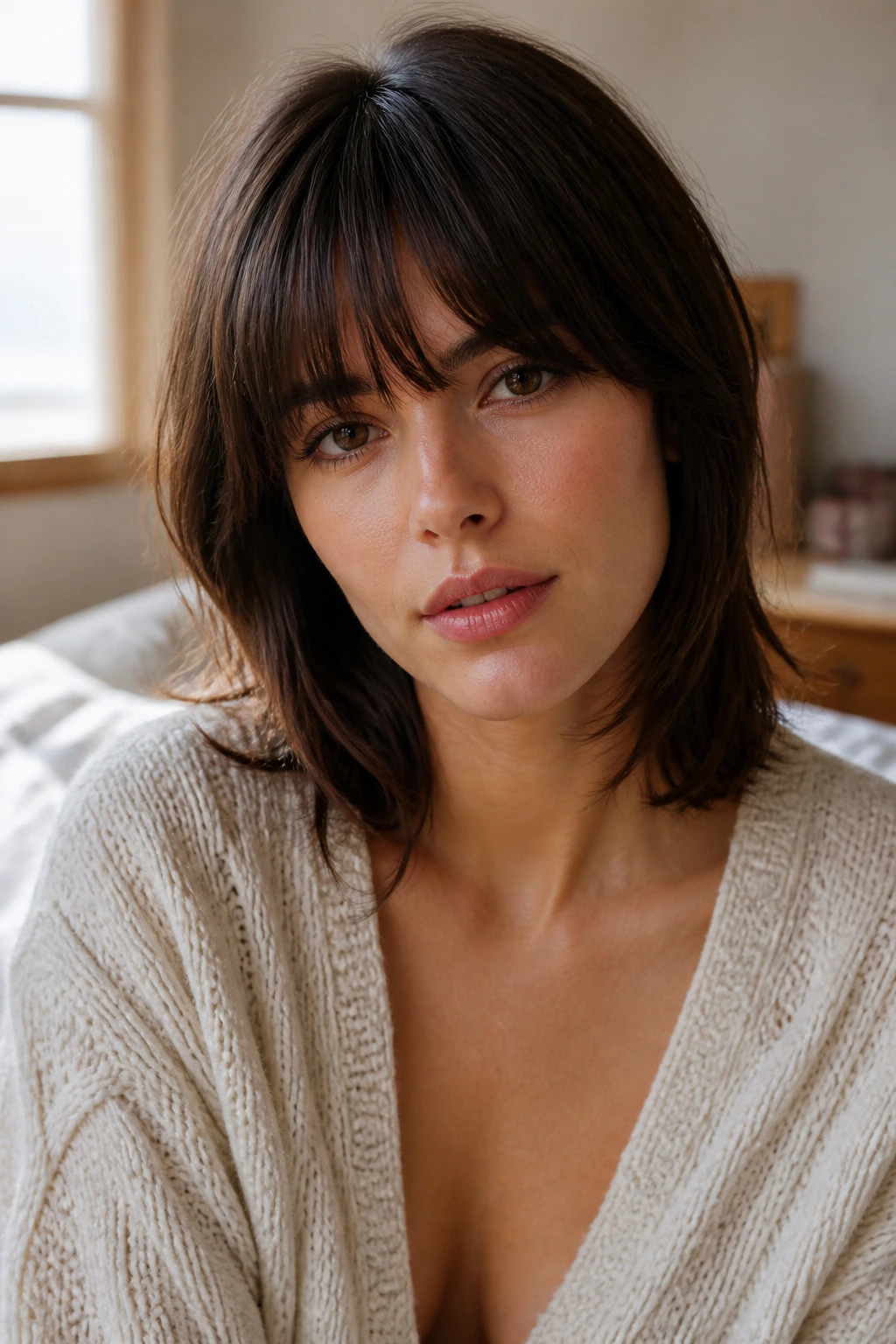
Medium length is the sweet spot where the hair can still swing, but it has enough weight to keep its shape. That matters more than people think. When hair gets too long, the fringe can start to feel like an afterthought; when it gets too short, the whole look can lose the motion that makes bangs feel modern instead of stiff.
The sweet spot at the collarbone
The collarbone is useful because it gives the perimeter a built-in stopping point. The ends hit the same visual zone where your eyes already travel, so the cut looks intentional even when it’s a little messy. That’s why collarbone shags, lobs, pageboys, and wolf cuts show up so often in this category. They hold shape without sitting dead.
Why the fringe changes everything
A fringe breaks the long vertical line of hair and puts the focus back on the face. A blunt bang sharpens features. Curtain bangs soften them. Bottleneck bangs do a bit of both. That front line can turn one basic medium cut into something with real personality, and the difference is immediate — no complicated styling required.
The contrast that keeps it interesting
The strongest looks here use tension on purpose. Blunt fringe with broken ends. Shaggy layers with a clean perimeter. A round pageboy with sharp bangs. That contrast is what gives the haircut edge. If everything is soft, the result can drift bland. If everything is hard, it can feel helmet-like. The best medium cuts find a little disagreement and let it work.
Picking the Right Fringe for Your Texture and Density
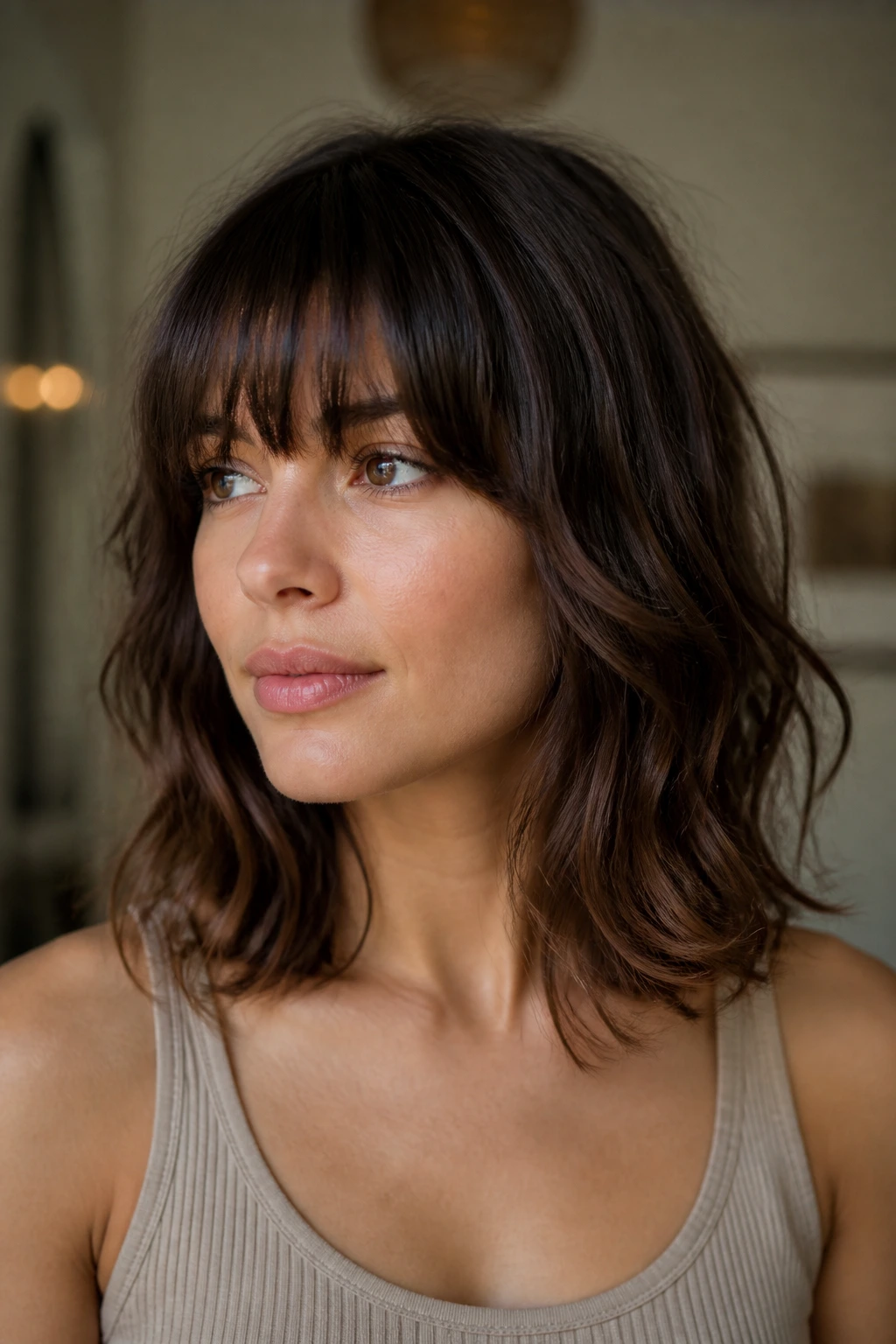
Choosing the wrong fringe for your hair type is the fastest way to make a good cut annoying. The right one, though, can save you time every single morning.
-
Fine straight hair: Go for blunt bangs, bottleneck bangs, or a soft curtain fringe with minimal layering. Too much texturizing can make the ends look thin and see-through.
-
Thick straight hair: Ask for internal weight removal, not aggressive thinning at the ends. Heavy bangs can look amazing here, but the density needs to be controlled so the front does not puff out.
-
Wavy hair: Curtain bangs, bottleneck bangs, and piecey fringe usually behave best. Keep the fringe a touch longer than your first instinct says, because wave shrinks the visual length once it dries.
-
Curly hair: Cut the fringe dry or nearly dry. Leave extra length at the start, then refine. Curly bangs always shrink more than you think, and there’s no good way to fake that after the scissors are done.
-
Cowlicks and widows peaks: A deep side part, longer fringe, or split curtain bang gives you more room to work with the natural bend. Fighting a cowlick with a full blunt bang usually ends in morning frustration.
-
Long faces: Full fringe, blunt bangs, or a heavy bottleneck fringe can shorten the visual length of the face and make the haircut feel more balanced.
-
Round or square faces: Side-swept bangs and asymmetric fringe create movement across the face instead of stopping the eye at one horizontal line.
What to Tell Your Stylist So the Cut Lands Right
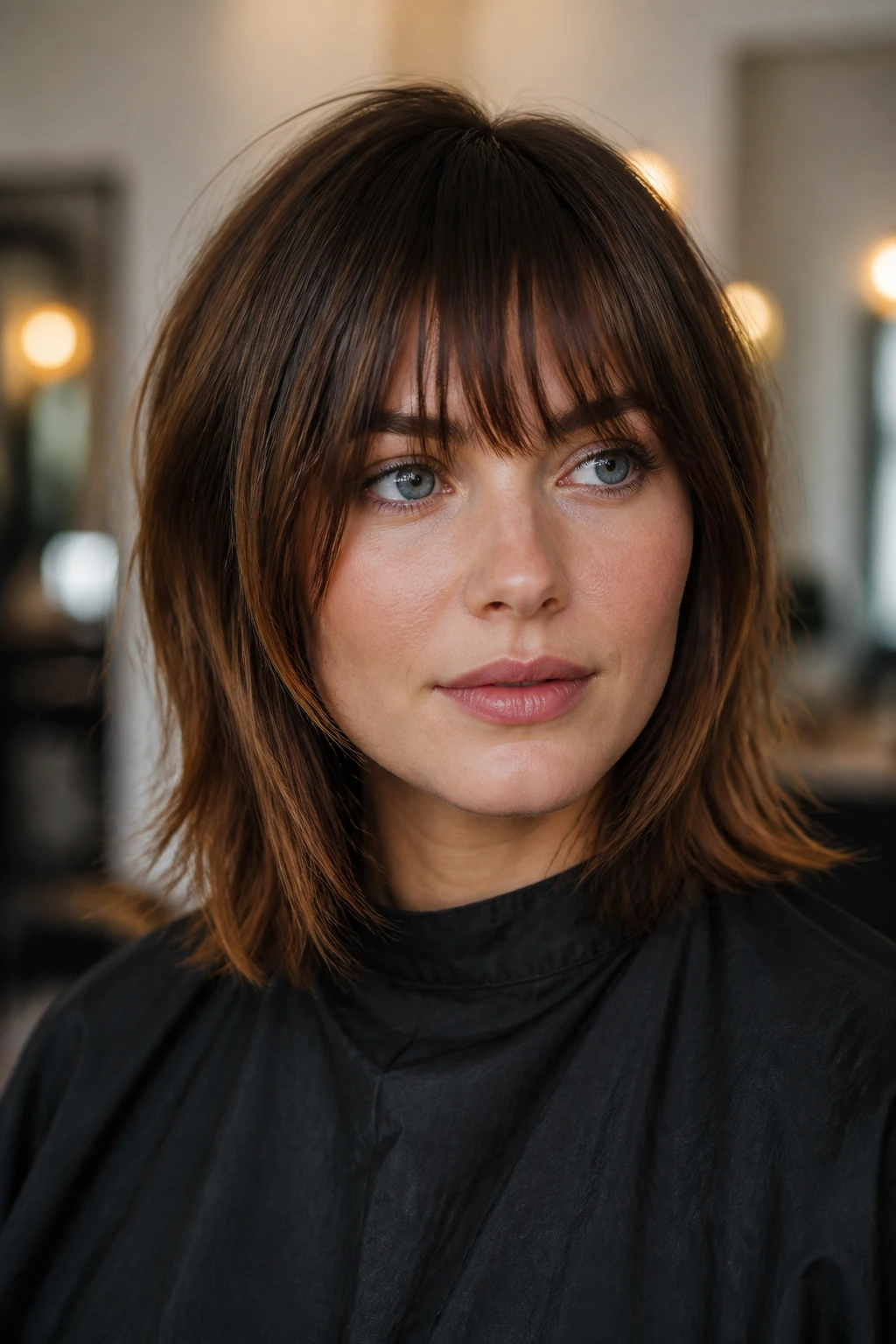
Bring photos, yes. But don’t bring only one. Bring at least two: one that shows the overall shape and one that shows the fringe. A lot of bad bang cuts happen because the stylist is trying to match a perimeter from one photo and a fringe from another without knowing which detail matters more to you.
Say where you want the length to sit. Collarbone, just below the shoulders, jaw, cheekbone — those are not small differences. They change the balance of the whole haircut. If you want a shag, say whether you want visible layers or just movement. If you want a blunt look, say whether you mean blunt through the bangs only or through the perimeter too.
A few phrases help more than people think:
- “I want the fringe to hit at the brows when dry.”
- “Keep the perimeter blunt, but remove weight inside.”
- “I wear my hair wavy, so please cut for movement, not just for blowouts.”
- “My bangs split here because of this cowlick.”
- “I want edge, but I still need it to grow out cleanly.”
That last sentence is worth saying out loud. It keeps everyone honest.
Essential Tools for These Styles
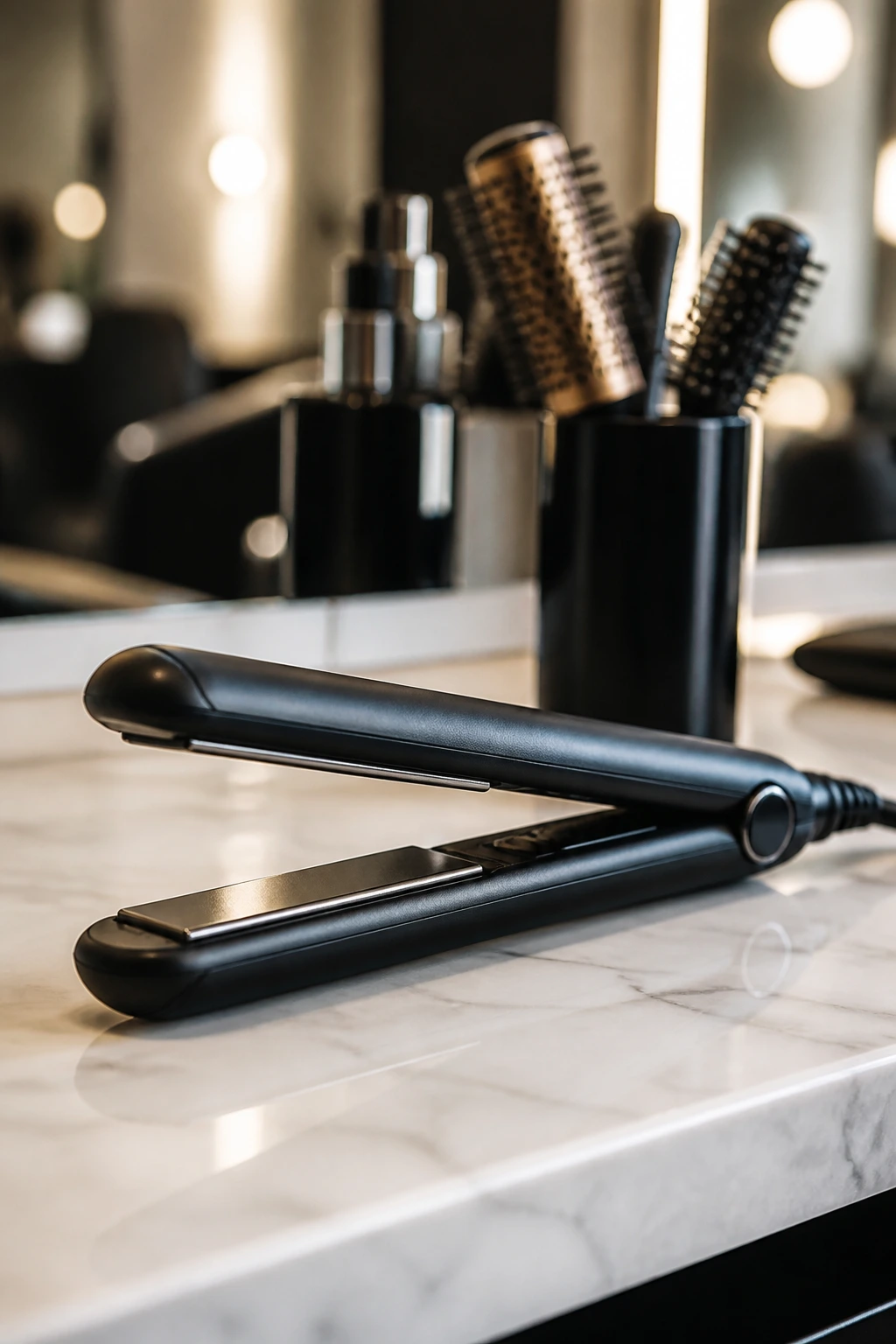
-
Blow dryer with concentrator nozzle — Directs airflow where you want it, which matters a lot for bangs and root lift.
-
1-inch round brush — Best for curling the fringe under, flipping the ends, and bending curtain bangs away from the face.
-
Medium-barrel curling iron or wand — Useful for loose bends in lobs, shags, and wavy midi cuts. A barrel around 1 to 1.25 inches usually works well.
-
Flat iron with rounded edges — Helps with blunt bangs, micro bangs, and the sharp bend that makes a pageboy or boxy lob look clean.
-
Tail comb — The tiny pointed end is useful for sectioning bangs and finding your part before you dry.
-
Hair clips — Keep the rest of the hair out of the way while you work on the fringe. Cheap clips are fine here.
-
Heat protectant spray — Non-negotiable if you use any hot tool on the front sections.
-
Texturizing spray — Adds separation to shag, wolf, and shullet styles without making the hair greasy.
-
Dry shampoo — Great for fringe, because bangs pick up oil faster than the rest of the head.
-
Light mousse or volumizing foam — Gives the root enough lift so the style doesn’t collapse by noon.
-
Diffuser — The best friend of wavy and curly versions, especially when the fringe needs shape without frizz.
How to Style Medium Length Hair With Bangs Without Making It Puffy
The easiest way to ruin one of these cuts is to overdo the styling. Too much volume in the wrong place makes bangs puff, and too much smoothing can erase the texture that gives the cut its edge.
Straight hair
Start with heat protectant, then dry the fringe first. Bangs usually sit better when they’re shaped before the rest of the hair gets hot and damp again from the blow dryer. Use a round brush if you want bend, or a flat brush if you want a crisp line. Finish with a touch of texturizing spray in the mid-lengths, not the roots.
Wavy hair
A small amount of mousse at the roots gives the hair enough grip to keep the shape. Rough-dry until it’s about 80 percent dry, then use a brush or iron only where the fringe needs help. Don’t brush waves into submission. That’s how you lose the lived-in edge that makes these cuts good in the first place.
Curly hair
Keep the front from getting overloaded with cream. Use just enough to define the curl and let the fringe sit longer than your instinct tells you. Diffuse on low speed, then separate the bangs with your fingers after they’re dry. If you want more control, clip the roots at the crown for a few minutes while drying to stop the top from flattening.
Day-two rescue
A quick mist of water on the fringe, a blow dryer on medium heat, and 30 seconds with a round brush is usually enough. If the rest of the hair still looks fine, leave it alone. The front is the part that usually needs help first.
Keeping the Shape Sharp Between Salon Visits
Hair grows about half an inch a month, which means bangs can change fast. A fringe that looks perfect in the chair can start sitting in your eyes before you’ve even forgotten the stylist’s name. That’s normal. It just means the maintenance schedule matters.
For full bangs, plan on a fringe trim every 2 to 4 weeks if you want the line to stay crisp. Micro bangs need even more attention. Curtain bangs and bottleneck fringe are easier; they can usually stretch longer because the shape grows in rather than just down. Full cuts on medium hair usually hold best with a shape refresh every 6 to 8 weeks, especially if the style depends on blunt edges or a compact silhouette.
A few things help in between:
- Wash only the fringe if it gets oily faster than the rest of the hair.
- Keep dry shampoo off the lengths and focused at the roots near the bangs.
- Sleep with the fringe clipped loosely to the side if it tends to split in the middle.
- Use a satin or silk pillowcase if the front gets frizzy overnight.
- If the style depends on a bend, reset just the front with a round brush instead of redoing the whole head.
The cleaner the front line, the more the haircut keeps its attitude.
Styling Tweaks That Make the Look Feel More Personal
Texture Boost: A dry texture spray at the mid-lengths can turn a safe lob into something sharper in about ten seconds. Use it on the underneath layers first so the hair still moves when you run your fingers through it.
Cleaner Edge: If you want the cut to read more precise, smooth only the outer perimeter and leave the interior a little rough. That contrast gives the style structure without making it stiff.
More Rebel: A hidden side shave, shorter nape, or slightly disconnected back section can push a classic medium cut into grittier territory. You do not need a full mullet to make the shape feel less polite.
Soft Focus: Longer curtain pieces, a side-swept fringe, or a slightly curved perimeter can soften strong lines if your features feel overwhelmed by blunt bangs. This is the move for people who want edge, not severity.
Color Move: Copper, auburn, dark roots, money-piece highlights, or a deeper root shadow can change how the fringe reads against the face. Color makes line more visible, which is why a simple cut can look more specific with the right tone.
Common Mistakes That Make the Edge Disappear
-
Cutting the fringe too short on the first pass: Bangs shrink visually once they’re dry and styled. If they land higher than intended, they can swing from edgy to awkward fast. The fix is simple: leave a little length at the start and refine after the hair is dry.
-
Over-thinning fine hair: Too many texture-cutting scissors or too much razor work can leave the ends wispy in a bad way. The haircut stops reading as intentional and starts looking see-through. Ask for internal movement instead of feathering away the perimeter.
-
Ignoring the cowlick: A cowlick at the front can split a fringe right down the middle no matter how good the cut is. If that’s your hair, choose a longer fringe, a side-swept shape, or a curtain bang that can move with the swirl instead of against it.
-
Using too much oil near the bangs: Bangs get oily faster than the rest of the head, so the front goes flat quickly. Keep heavy oils and serums off the fringe and use them on the lengths only.
-
Styling every texture into the same finish: A curly shag should not be forced into a flat, straight shape, and a blunt pageboy should not be roughed up until it loses the line. The cut matters more than the trend here. Honor the shape.
-
Letting the whole cut grow too long before trimming the fringe: A strong fringe can carry a medium cut, but once it loses its line, the haircut starts drifting. A tiny trim on the bangs keeps the whole style looking deliberate.
Frequently Asked Questions About Edgy Medium Length Hair With Bangs
Will bangs work if my hair has a strong cowlick?
Yes, but the shape has to work with the cowlick, not against it. A longer curtain bang, split fringe, or deep side part usually behaves better than a blunt bang that tries to sit flat across the whole forehead.
Which style is easiest to grow out?
Curtain bangs, bottleneck bangs, and long peekaboo fringe are the least dramatic to grow out because they already blend into the sides. Micro bangs are the hardest to forget once they start growing, which is why they need the most upkeep.
Can curly hair pull off edgy medium length hair with bangs?
Absolutely. The trick is to cut the fringe dry or nearly dry and leave extra length for shrinkage. Curly shags, curly lobs, and soft fringes can look sharper than straight hair when the silhouette is right.
Do I need hot tools every day to wear these cuts?
Not for every version. A shag, wolf cut, or wet-texture lob can look better with minimal styling, while blunt bangs, pageboys, and micro fringe usually need a bit more daily shaping. The more the look depends on line, the more the tools matter.
What fringe is best for fine hair?
Bottleneck bangs, blunt bangs with soft internal layers, and wispy curtain fringe usually work best. Fine hair can go flat fast, so the goal is to keep enough density at the front without over-thinning the ends.
How often should I trim my bangs?
Every 2 to 4 weeks is a good rhythm for most full fringe styles. Curtain bangs can usually go longer, while micro bangs often need more frequent touch-ups to stay sharp.
What if my bangs separate in the middle by noon?
That usually means the fringe is fighting your natural part or cowlick. Try drying the bangs in the opposite direction first, then let them fall back into place. A tiny bit of dry shampoo at the roots can help the front stay put.
Can I wear one of these cuts if I prefer low-maintenance hair?
Yes, but choose a shape that grows out nicely. A shag with curtain bangs, a textured lob with bottleneck fringe, or a grown-out bang look will ask for less daily micromanagement than micro bangs or a pageboy.
The Fringe That Keeps Its Bite
The smartest medium-length cuts don’t try to do everything at once. They pick a strong line, then let the texture misbehave a little. That is why this length keeps working: it gives the ends room to move and the fringe enough power to change the whole mood in one glance.
If you’re bringing photos to a salon chair, keep one eye on the fringe and one on the perimeter. The balance between those two is where edgy medium length hair with bangs actually lives. Get that balance right, and the haircut stays interesting long after the mirror moment is over.
