



Curly pixie cuts can look razor-sharp, airy, and a little mischievous all at once — but only when the shape is built around the curl pattern instead of fighting it. A good curly pixie doesn’t sit on the head like a helmet. It lifts at the crown, hugs where it should hug, and lets the texture do the interesting work.
The bad versions are easy to spot. The sides balloon out, the back flips into a weird shelf, and the top goes flat just when you wanted bounce. That usually happens when the cut ignores shrinkage, or when the stylist treats every curl like it behaves the same way. It doesn’t. A 2C wave, a 3A ringlet, and a tight 4B coil all ask for different lengths, different layering, and a different amount of weight removal.
What makes short curls so satisfying is the movement. A pixie gives curl clumps room to spring up, and when the crown is shaped well, even a tiny amount of product looks intentional. The trick is choosing the right version for your density, your curl family, and the amount of styling you’ll actually do on a Tuesday morning. Some of these cuts are neat and close; others have a soft halo or a little crown lift. All of them work because the shape is doing real labor.
Why These Curly Pixie Cuts Work for Natural Bounce
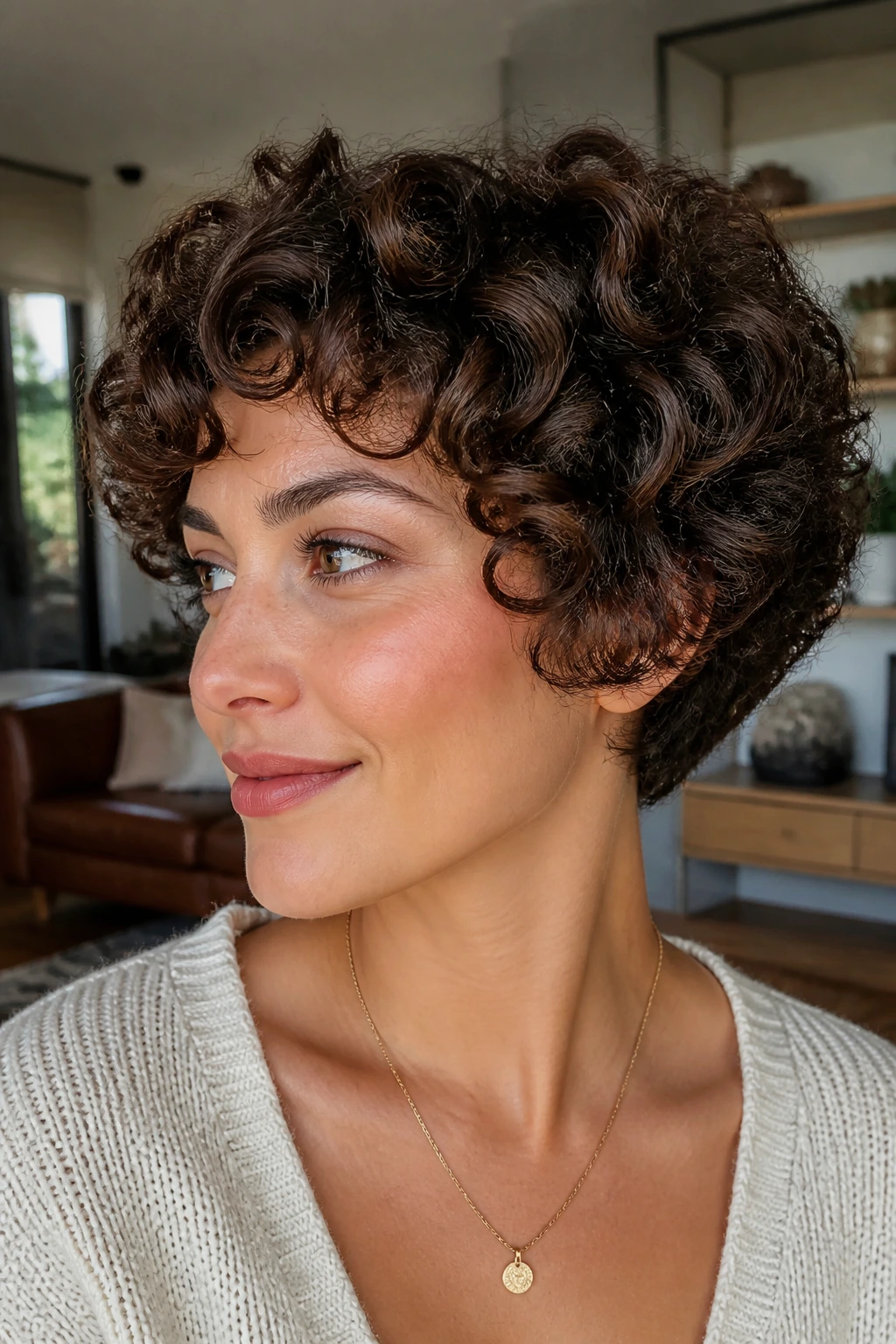
- Shrinkage-Friendly Shape: These cuts leave enough room at the crown and fringe for curls to spring up after drying, instead of collapsing into a blunt block.
- Short Hair, Less Weight: Removing length from the lower sections takes pressure off the curl pattern, which is why even thick coils can look springier in a pixie.
- Face-Frame Control: A few strategic inches around the temples or bangs can soften a jawline, narrow a wide forehead, or stop the cut from looking boxy.
- Fast Styling Payoff: Most of these looks need finger styling, a little product, and a diffuser or air-dry — not a half-hour of heat tools.
- Grow-Out Friendly: Tapers, longer crowns, and soft edges buy you time before the cut starts to lose its shape.
1. The Soft Tapered Curly Pixie
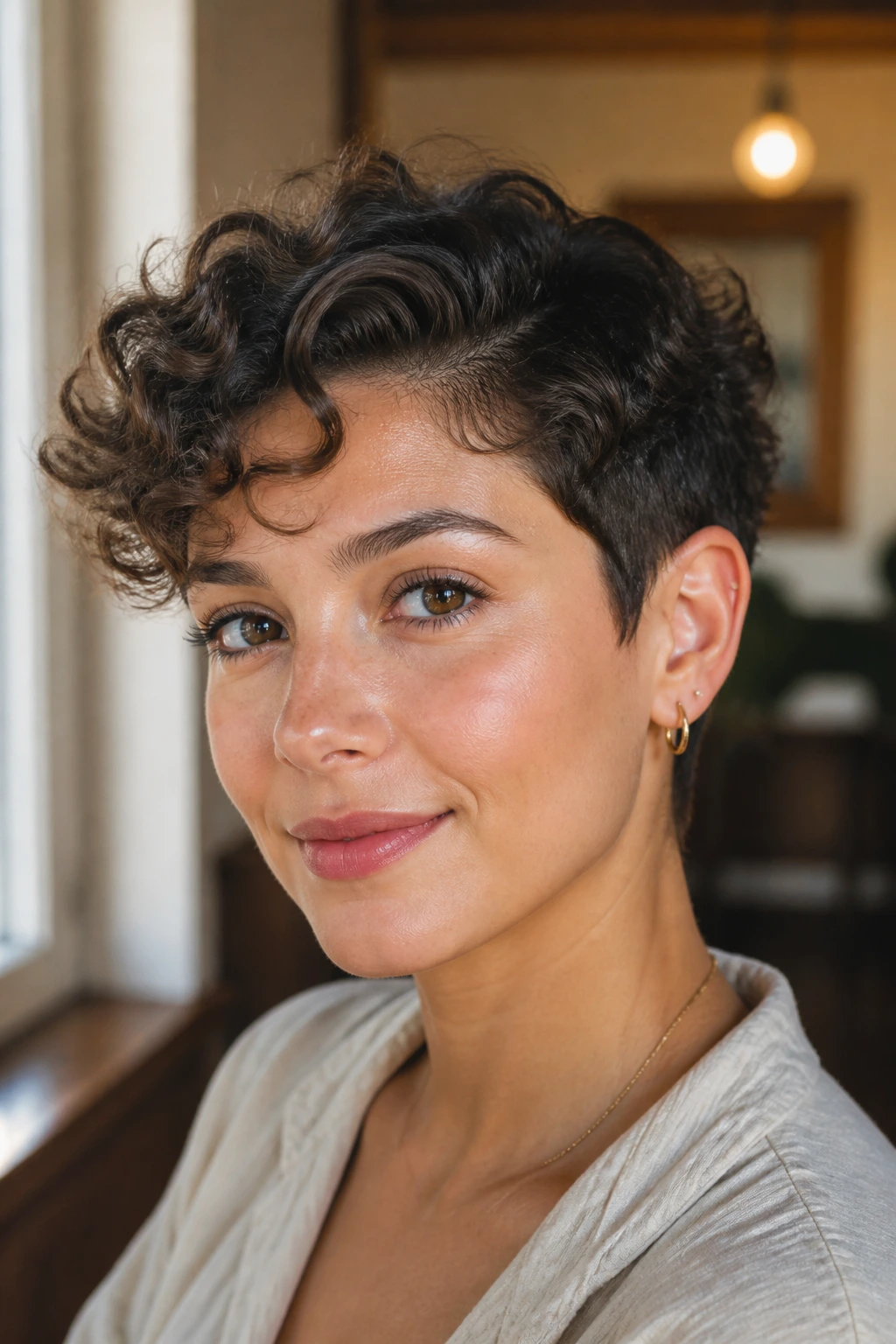
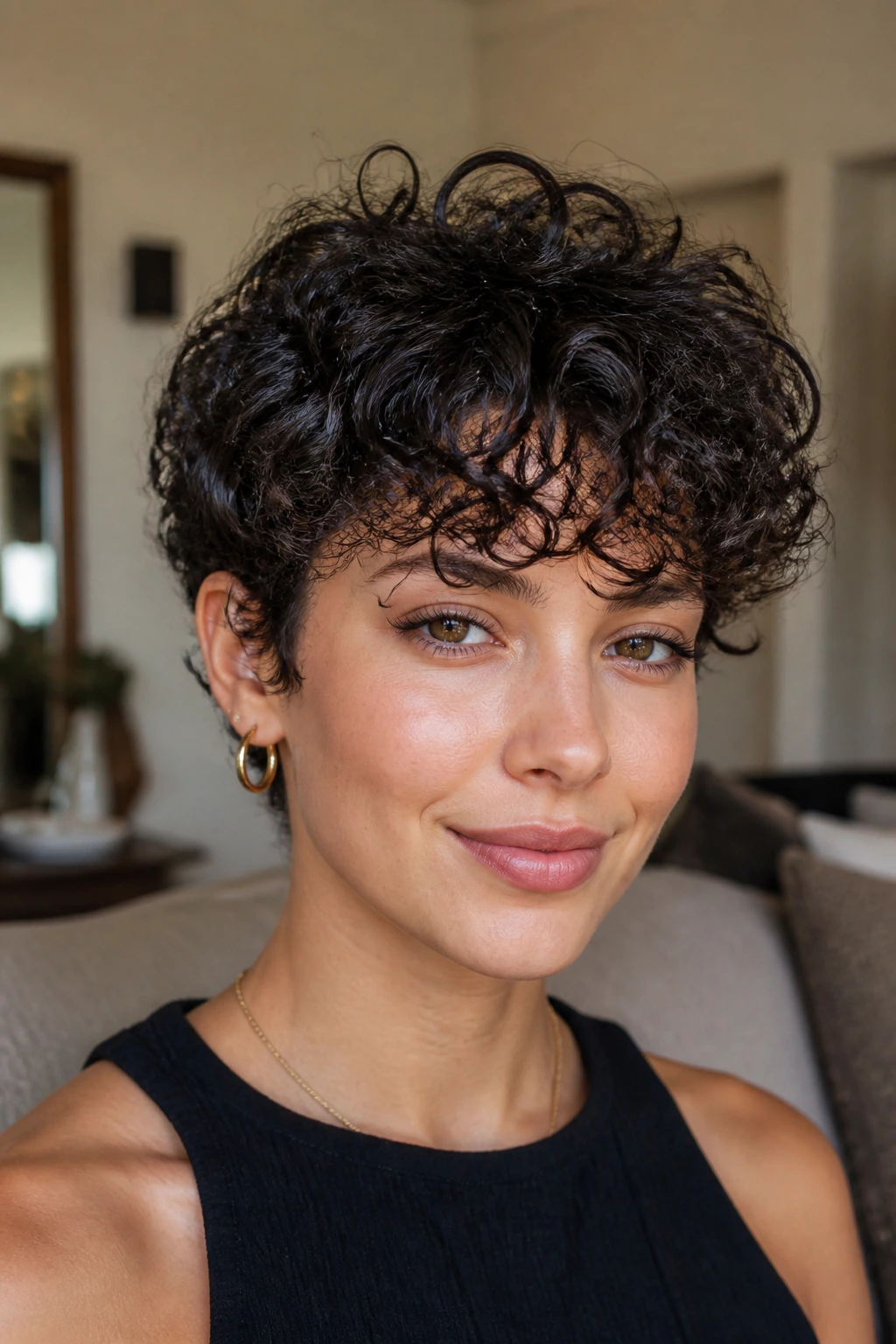
A soft tapered curly pixie is the cut I point people toward when they want bounce without harsh lines. The sides are trimmed close enough to feel neat, but not so tight that the curl pattern gets squeezed flat. The crown stays a little longer — usually around 2 to 3 inches on looser curls, a touch more on coils — so the top can lift instead of puffing sideways.
What makes this version work is the blend of control and softness. The taper keeps the silhouette clean around the ears and nape, while the top keeps enough length to show off definition. If you’ve ever seen a short cut turn into a triangle by lunchtime, this is the fix. The taper removes bulk where curls tend to gather weight.
This is the easiest curly pixie to wear if you want movement but not drama. It plays nicely with side parts, small front pieces, and a little mousse scrunched into damp hair. Ask your stylist for point-cut ends rather than a blunt chop. That tiny detail keeps the curl clumps from looking chopped off at the same level.
2. Curly Pixie with a Long Crown
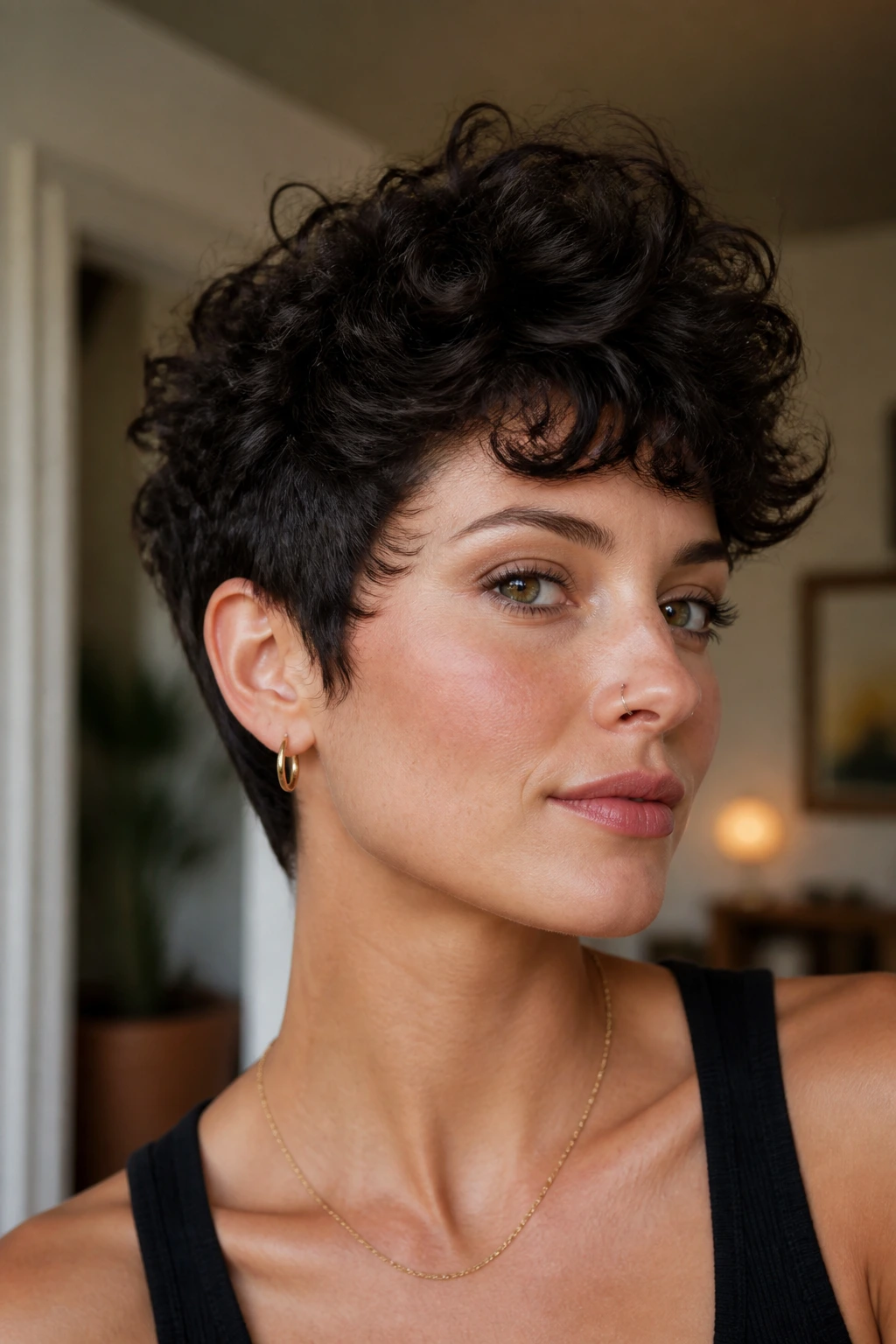
What if the top did most of the work? That’s the whole idea here. A long crown curly pixie keeps the sides and nape short, then leaves the top long enough — often 3 to 4 inches — for the curls to stack and lean with purpose.
This cut is a favorite for people with fine or medium-density curls because the extra length on top creates visual lift. On camera and in real life, it reads as fuller, not heavier, when the layers are done right. The danger is leaving the crown too blunt. Then it hangs instead of bouncing.
Best when you want height
The long crown version is a smart choice if your curls naturally collapse at the roots. The longer top gives you room to diffuse upward, clip at the roots, or scrunch in a foam that sets the curl without making it stiff. It also gives you more freedom with a side sweep or a tiny faux-hawk shape on days when you want the haircut to feel sharper.
If your stylist asks where to keep the length, tell them to protect the crown first, then taper the perimeter. That order matters. Cut the crown too short, and the whole style loses its spring.
3. Micro Curly Pixie with Baby Fringe
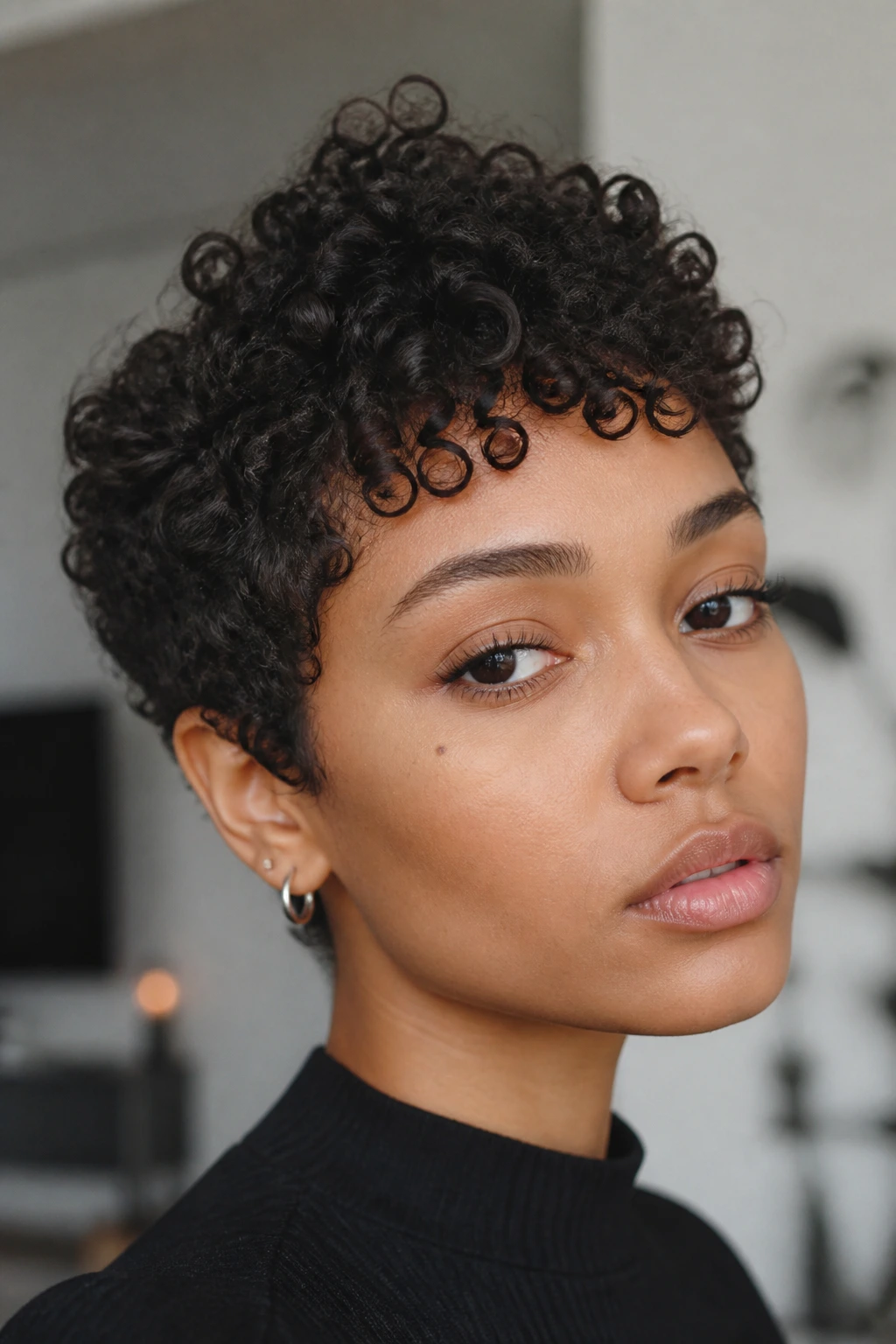
Tiny can be powerful. A micro curly pixie with baby fringe sits close to the head, but the small fringe pieces keep it from looking severe. The fringe usually lands somewhere above the brow line once it dries, though curly hair will always do a little shrinking dance of its own.
This cut works best when the curl pattern is tight, springy, or dense enough to hold a shape with very little length. It puts the focus on the eyes, cheekbones, and the natural outline of the face. There’s no hiding behind length here, which is exactly why the cut feels so crisp when it’s done well.
The baby fringe needs care. If it’s cut too short, it can split and stand up in odd directions. Ask for the fringe to be cut dry, curl by curl, so the stylist can see where it actually lands when it springs back. That one request saves a lot of regret.
4. Asymmetrical Curly Pixie
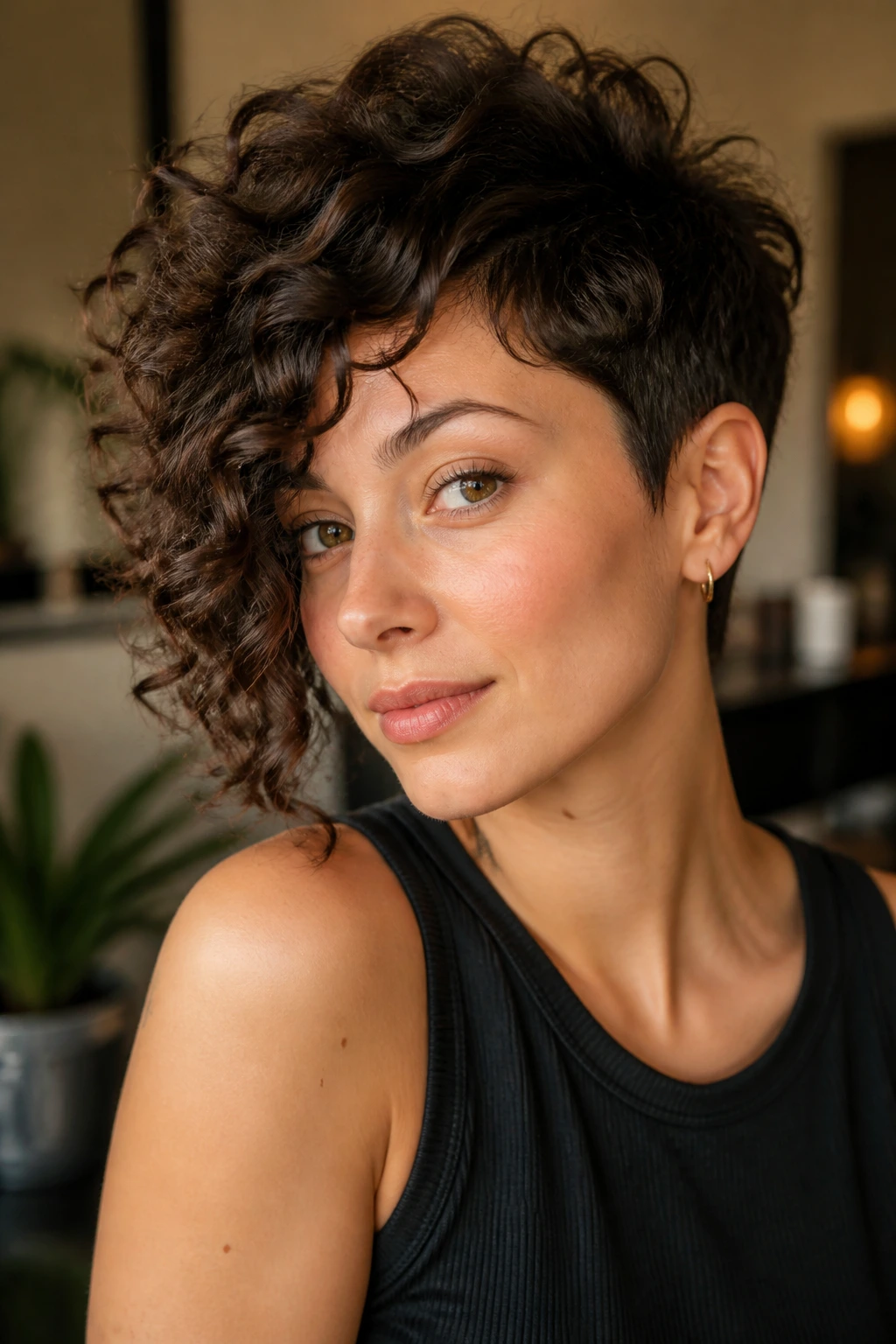
One side longer. That is the whole trick, and it works because curls like asymmetry more than people think they do. An asymmetrical curly pixie keeps one side tucked shorter while the other side carries extra length through the temple or cheekbone area.
This shape gives short curls a built-in point of interest. It’s especially useful if your face has strong symmetry and you want the haircut to feel a little less expected. The longer side can skim the jawline, soften a high forehead, or give your profile more shape when you tuck the shorter side behind the ear.
The key is not making the difference too extreme unless you want a sharper look. Usually, 1 to 1.5 inches of difference is enough to change the mood. More than that, and the cut can start to feel lopsided instead of deliberate.
Use a side part and finger-coil the longer side if you want a cleaner finish. Or wear it tousled and let the difference show as movement instead of geometry.
5. Curly Pixie with a Tapered Nape
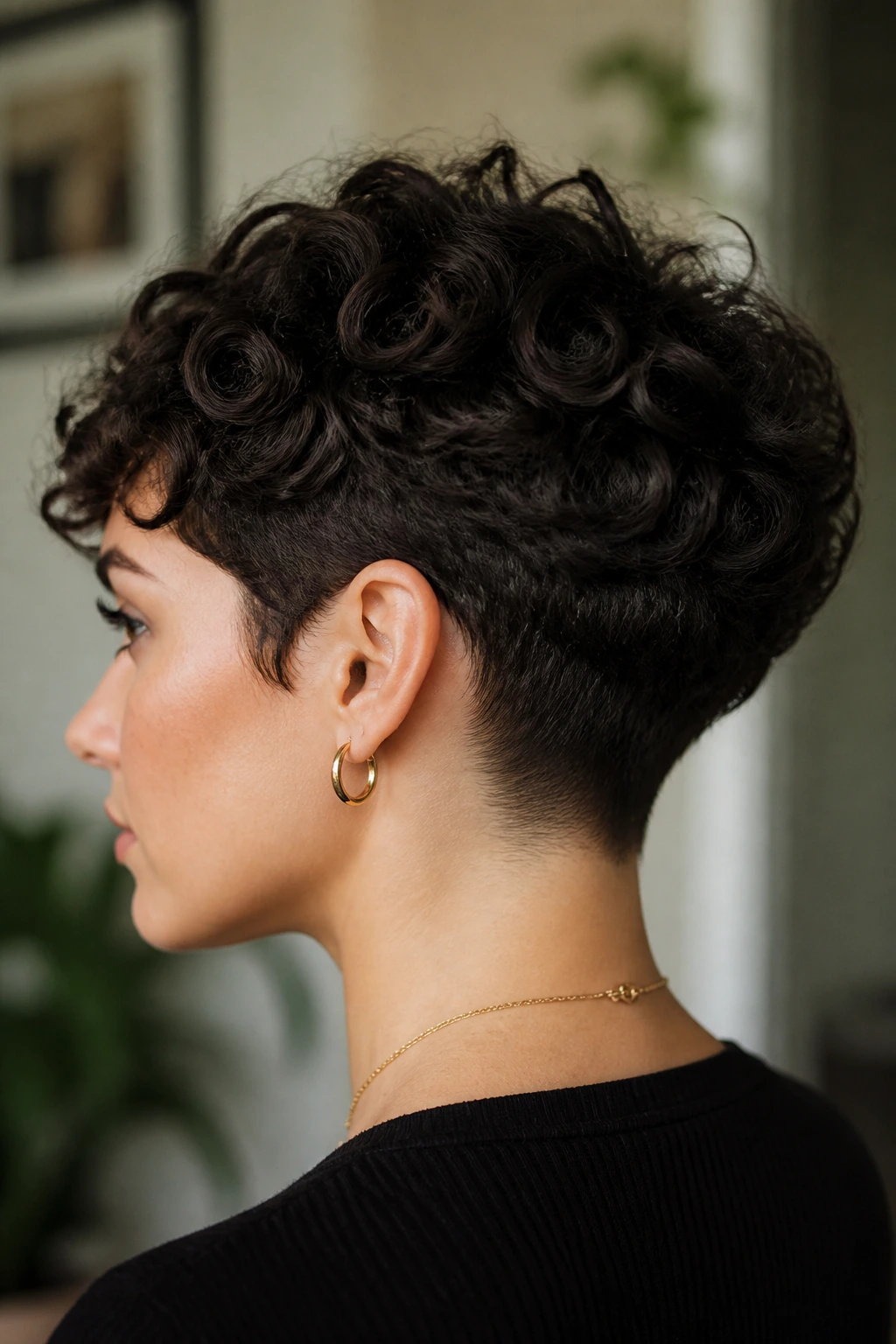
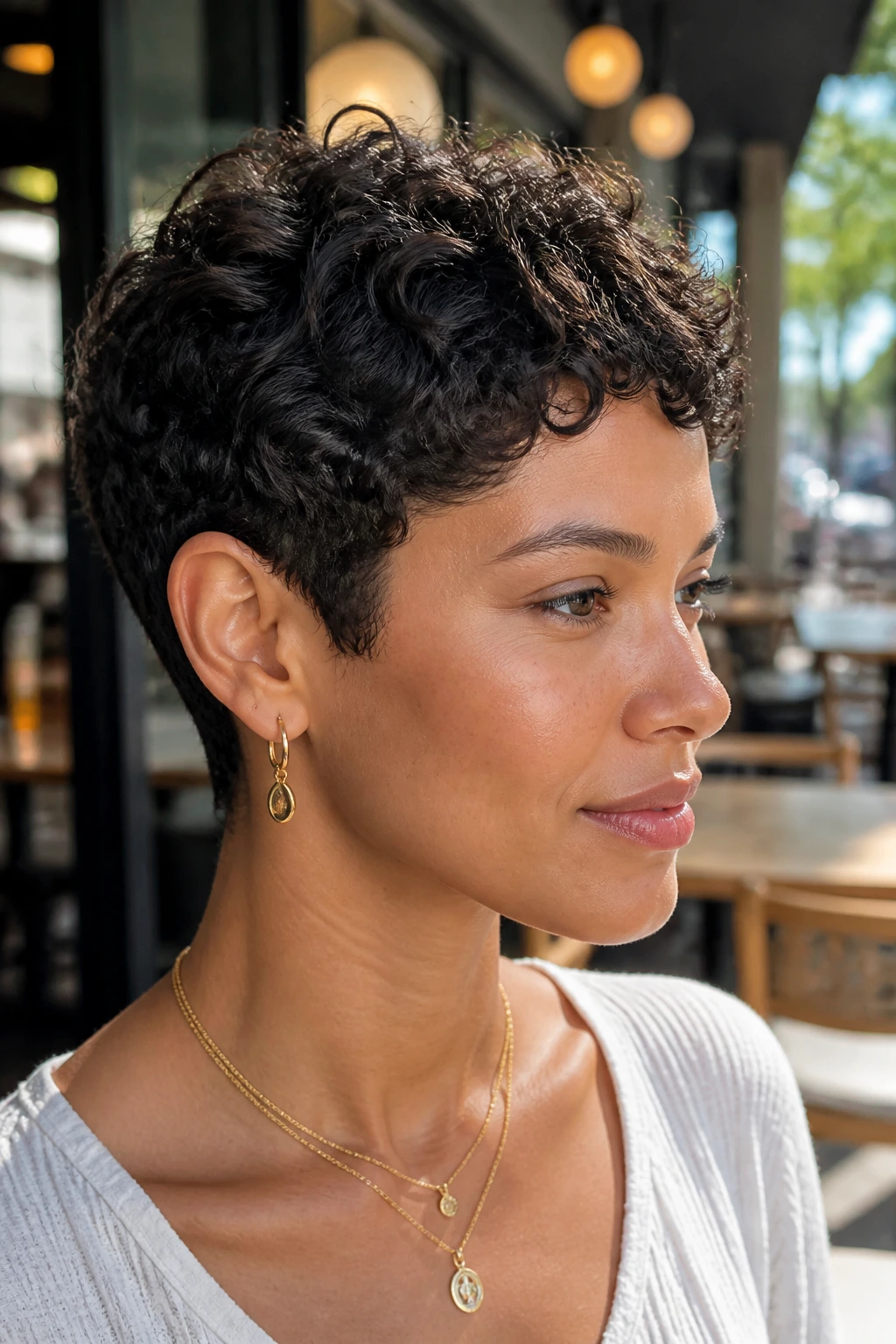
The back of the head matters more than most people admit. A tapered nape keeps the neckline neat and stops short curls from puffing out where collars rub and humidity hangs around. The front can be soft and loose, but the back stays snug.
This cut is especially useful for thick hair, because the nape is often where weight collects first. Without tapering, the back of a short curly cut can look bulky and round in the wrong way. With a good taper, the neckline looks cleaner and the crown seems to rise higher, even if nothing dramatic happened on top.
A good tapered nape is not a high shave. That’s the mistake. If the taper climbs too far up the head, the cut starts to lose balance and can look severe once the curls dry. Keep the taper low, let the upper back keep a little softness, and the whole shape looks more expensive in the plain, practical sense of the word.
6. Rounded Curly Pixie Bob
A rounded curly pixie bob gives you a little more room than a classic pixie, and sometimes that’s the right call. The outline curves gently around the head, brushing near the ears and sitting fuller at the back than a standard short crop.
I like this version for dense curls that need shape but not a close cut. The extra mass lets the curls settle into a dome-like silhouette instead of sticking out in separate directions. It’s also a kinder transition if you’re nervous about going too short all at once. You still get short-hair ease, just with more coverage.
If your curls are loose, this shape can look especially soft and plush. If your curls are tight, it keeps the profile controlled without flattening the texture. Ask for internal layers rather than a blunt perimeter. That’s what keeps the round shape from turning into a helmet.
It’s one of the best choices when you want the curl pattern to stay visible from every angle. Front, side, back — the curl does the talking.
7. Finger-Coiled Pixie
Finger-coiled pixies look sculpted in a way that flat styling never quite reaches. The cut itself is short, but the finish depends on small coils created with gel or curl cream on damp hair. Each section is wrapped around the finger, then left to dry into a defined spiral.
This is the version for people who don’t mind spending a few extra minutes on style day. The payoff is clear shape and strong curl separation, especially on hair that tends to frizz when left to air dry on its own. Coils also give a short cut more length variation, which helps the crown and fringe look more dimensional.
Why it stands out
The coil pattern creates a controlled shine that reads well on shorter hair because every curl has a job to do. You don’t need a lot of product — too much and the curls get sticky — but you do need enough hold to stop them from unraveling before they dry. A light gel layered over a leave-in is usually the sweet spot.
If you want a cut that looks deliberate even on day two, this is a strong one. The coils hold their shape better than loose scrunching, and the silhouette stays readable longer.
8. Side-Swept Curly Pixie
A side-swept curly pixie gives the forehead a soft diagonal line, which does a nice job of breaking up a square or long face. The front section stays longer, then drifts across the brow instead of sitting straight down.
This cut has a little old-Hollywood energy, but with texture instead of polish. It works because curls already carry movement; the side sweep just directs that movement instead of letting it go everywhere at once. The front pieces should be long enough to bend, not so long that they droop into the eye.
If your curls clump heavily on one side, this shape can actually help. The natural direction of the curls becomes part of the style rather than a problem to fix. Use a light cream and comb the front into place while it’s wet, then leave it alone once it starts drying. Touching it too much breaks the wave line.
It’s one of the easiest curly pixies to dress up. A side part, a pair of earrings, and a little lift at the crown do most of the work.
9. Temple-Tapered Curly Pixie
Temple tapering changes the whole attitude of a short curly cut. The hair around the temples and sideburn area is cleaned up so the face looks framed instead of boxed in. The crown stays fuller, which keeps the style from feeling too shaved or too hard.
This version is a smart fit for coarse curls that bulk at the sides. Temple hair often springs out wider than expected, especially on short cuts, and a gentle taper reins that in fast. You get a sharper outline without flattening the top.
The best temple-tapered pixies keep a little softness at the hairline. If the taper is too aggressive, the cut starts to look like it belongs on a different head. Keep the transition gradual, and the curls above it look richer because they have a cleaner base to sit on.
I also like this cut for glasses wearers. It clears the frame arms nicely, which means the whole look feels less crowded around the face.
10. Shaggy Curly Pixie
A shaggy curly pixie is for the person who wants movement more than neatness. The layers are choppy, the pieces are uneven in a good way, and the finished look has that airy, undone texture that short curls do so well when they’re not overworked.
This cut works because it respects chaos a little. Not every curl needs to sit in the same direction. In fact, on a shaggy pixie, a few pieces sticking out at different angles are part of the appeal. The trick is removing bulk inside the shape so the hair feels light instead of puffy.
Use this version if your hair has mixed curl patterns or different densities across the head. The layered structure hides small inconsistencies and makes the whole shape look more relaxed. A mousse or soft gel is usually enough. Heavy creams can flatten the airy effect and drag the layers down.
It’s a good choice for people who like texture that looks lived-in, not staged.
11. Wet-Look Curly Pixie
A wet-look curly pixie has a sleek, glossy finish that feels sharper than the fluffier versions in this list. The curls are still there, but they’re held in place with gel so the surface looks smooth and the individual coil shapes stay visible.
This one is not about softness. It’s about control. The style works especially well on short hair because there’s less length for the gel to fight against. On a pixie, that sheen can look modern and deliberate, especially if the sides are neatly tapered and the top is kept compact.
Don’t confuse wet-look with actually wet. The hair should be damp when you apply the product, then left to set without being touched. A hard-hold gel is your friend here. If the formula flakes, you used too much or layered it badly over a product that didn’t play nice underneath.
This is the cut I’d reach for on days when humidity is acting rude. It handles frizz by making the frizz part of the plan.
12. Salt-and-Pepper Curly Pixie
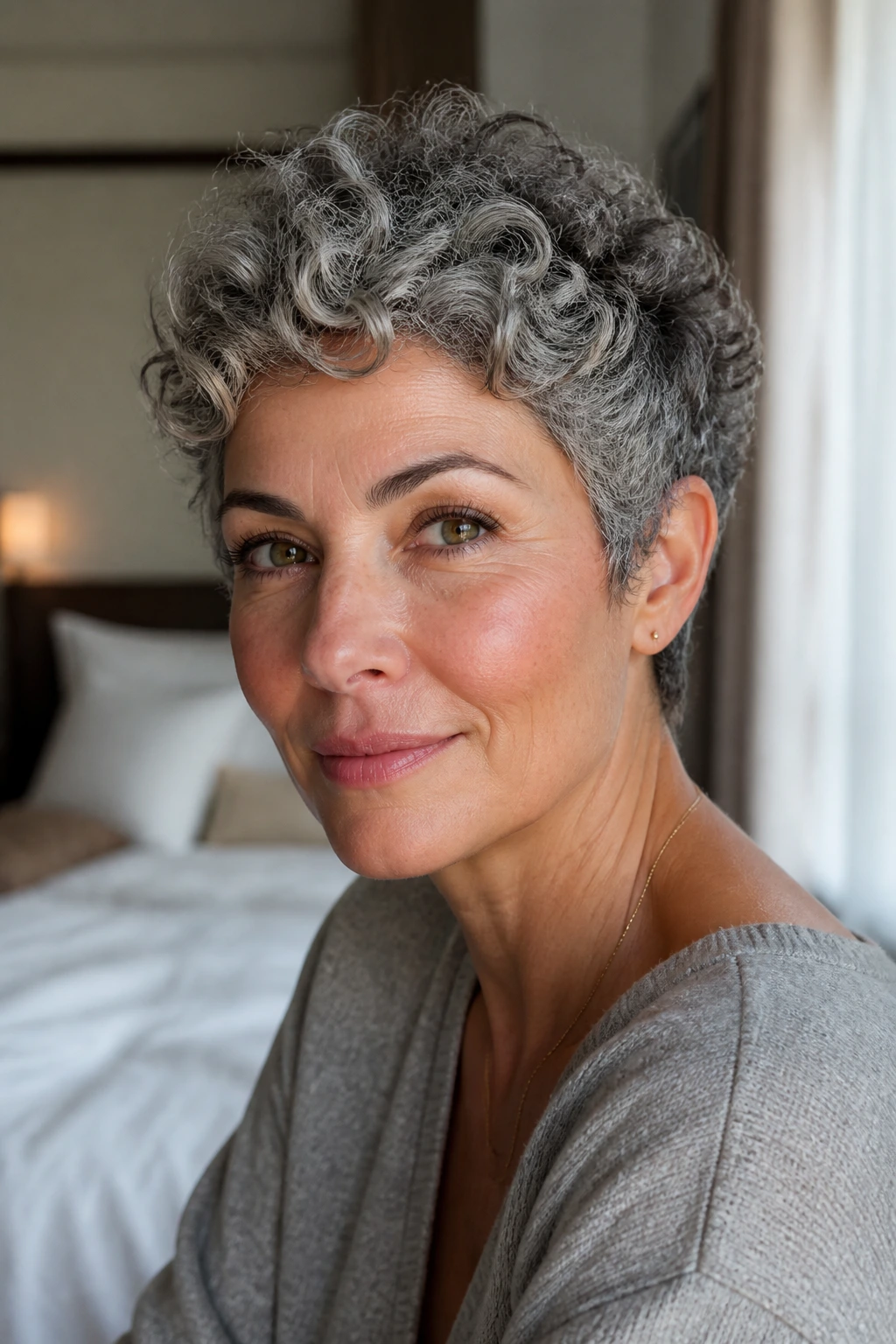
Gray curls can look wiry in long styles, but short ones let the color pattern do more interesting things. A salt-and-pepper curly pixie catches the mix of silver and darker strands in smaller sections, so the contrast reads as texture instead of just color.
That matters. Shorter curls show off the bend of each strand, and gray hair often has a coarser feel than pigmented hair, which means the cut needs shape, not just length removal. Soft layers keep the silver from turning into a helmet of shine, and a little leave-in helps the curl pattern stay flexible.
This cut is especially nice if you’re growing out gray and want to keep the line between old color and new growth from looking harsh. A pixie breaks that line up naturally. The shorter the shape, the less obvious the demarcation becomes.
I’d avoid over-texturizing here. Gray strands can already feel dry; too much thinning makes the ends look fuzzy. Keep the cut clean and the styling simple.
13. Curly Pixie with Curly Bangs
Curly bangs can change a whole face in two inches or less. On a pixie, the fringe becomes the main event — a little cloud of curl that sits above the brow or grazes it when dry.
This version works best when the bangs are cut longer than you think you need. Curly bangs shrink. Always. If your stylist cuts them too short while wet, the result can bounce up into the middle of the forehead in a way that feels accidental. Ask for a dry cut or a careful curl-by-curl trim so the fringe lands where it should.
The rest of the shape can stay simple. The curls in the crown and sides should support the bangs, not compete with them. This is one of the easiest ways to soften a long face or to keep a short cut from looking too severe around the hairline.
It’s also one of the most playful options in the whole list. There’s a little bit of movement near the eyes, and that detail does a lot.
14. Soft Mohawk Pixie
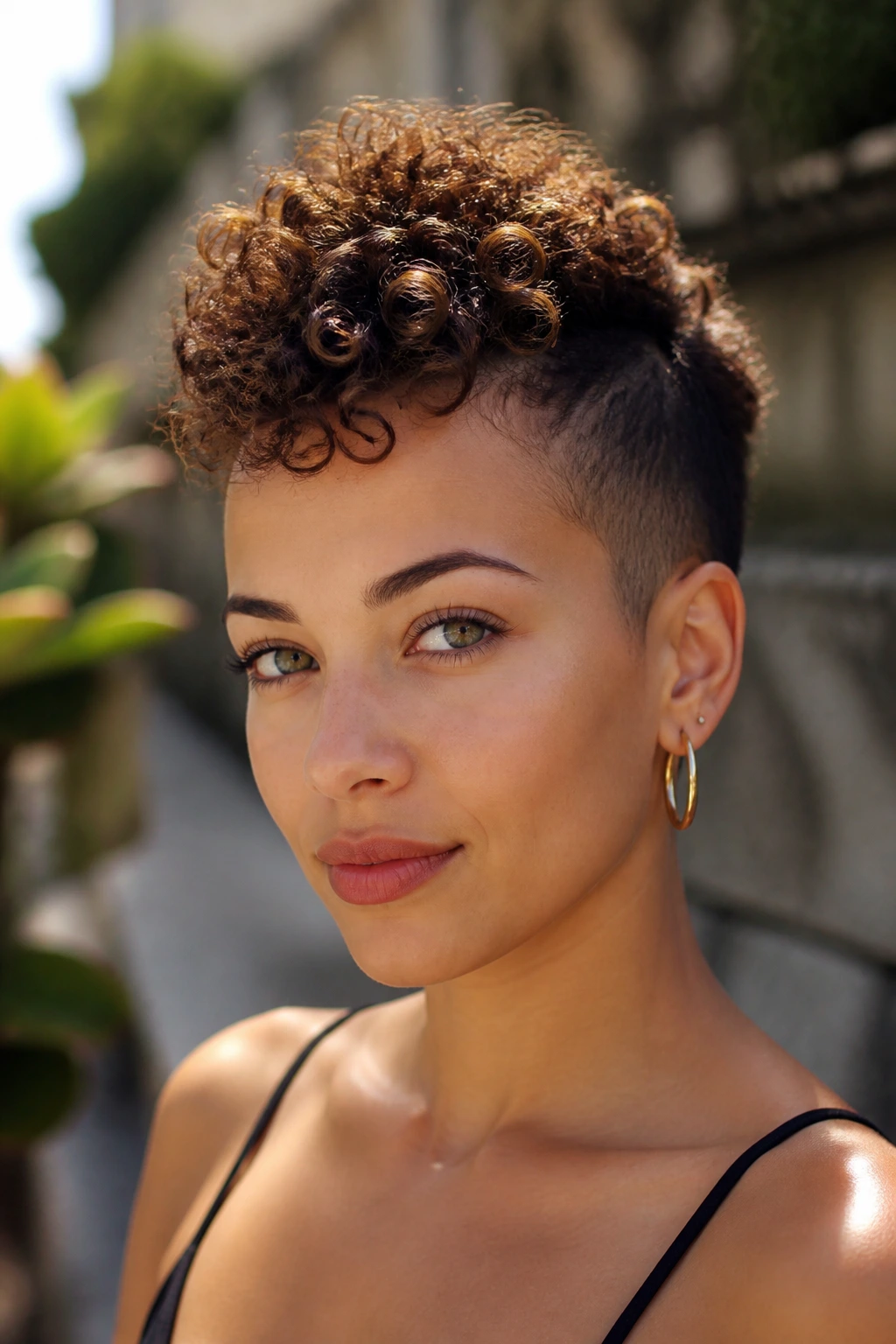
A soft mohawk pixie sounds louder than it is. The center ridge is left longer so the curls rise through the middle, while the sides and nape are tapered to keep the profile clean. On curly hair, the shape reads plush, not punk.
I like this one for people who want height without a lot of length. The center section can stand up in a loose, rounded strip that makes the face look longer and the neck look leaner. The side taper matters here more than in other cuts. If the sides are too bulky, the mohawk shape disappears.
You don’t need to spike it. In fact, don’t. A curl cream with a little mousse usually gives enough hold to keep the ridge up while still letting the texture stay soft. Diffuse from the roots, and use your fingers to lift the center as it dries.
This cut is strongest on dense curls and coils, where the center can keep its shape all day without looking sparse. It has presence. Not fuss.
15. Classic Tapered Curly Pixie
There’s a reason the classic tapered curly pixie keeps showing up in salons. It balances everything. The top has enough length to show curl pattern, the sides are kept neat, and the nape is tapered so the shape grows out in a civilized way.
This is the version to choose if you want a clean baseline. No extreme fringe. No asymmetry. No undercut to babysit. Just a well-built short cut that lets the curls sit where they naturally want to sit. It works for a wide spread of curl families because the geometry is sensible rather than flashy.
If you’re getting your first pixie with curls, start here. A classic taper makes it easier to learn how your hair behaves at this length. You’ll see where it puffs, where it lies flat, and how much product it actually likes.
The best versions use soft layering at the crown and careful cleanup around the ears. Nothing fancy. Just the kind of structure that doesn’t argue with the hair.
16. Airy Layered Curly Pixie
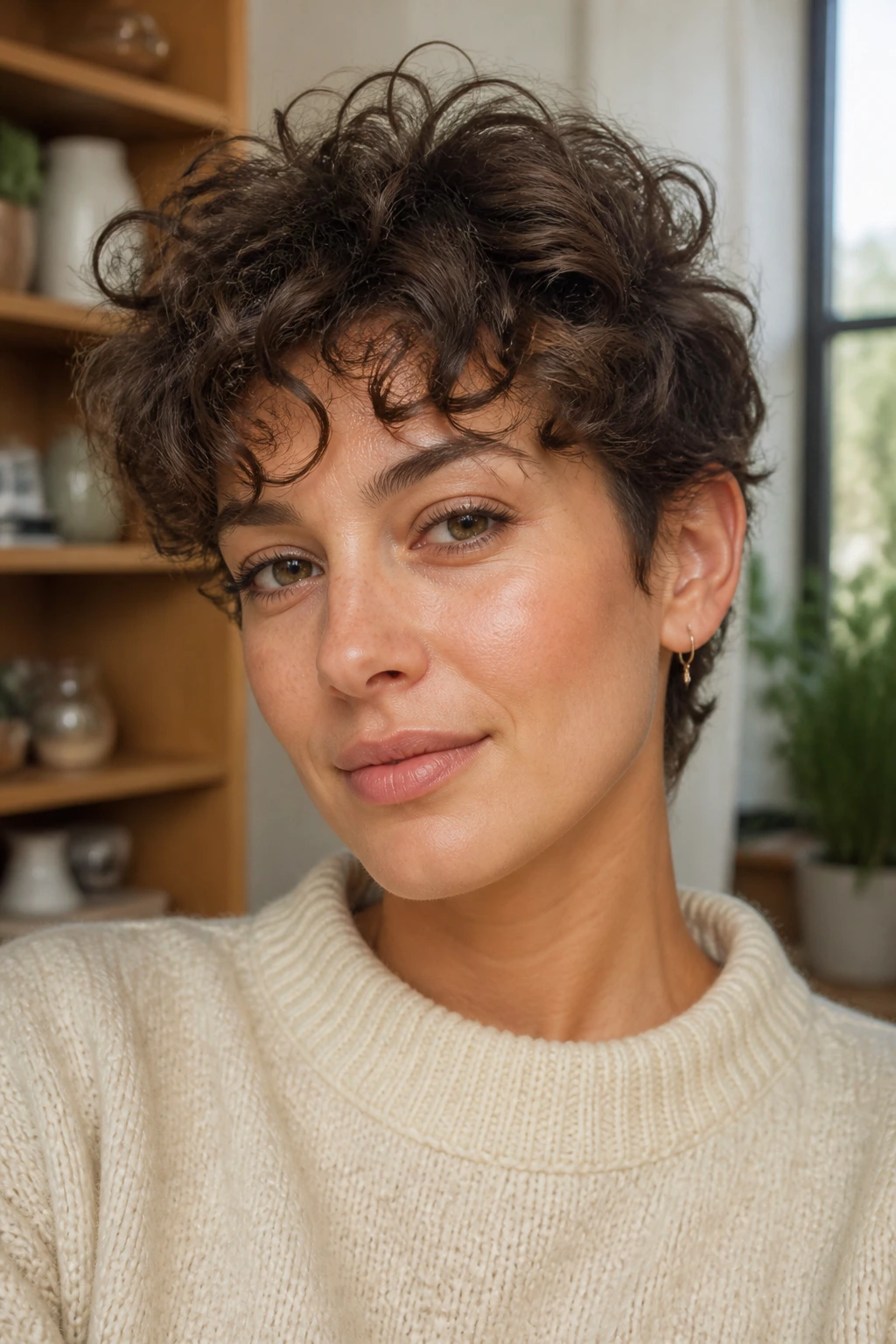
Thick curls need room, and this cut gives them exactly that. An airy layered curly pixie removes bulk from inside the shape so the result feels lifted instead of heavy. The ends move. The crown breathes. The whole cut looks like it got a little lighter.
This is where point-cutting and internal layers matter. You are not thinning the hair just to thin it. You’re creating spaces where curls can sit without stacking on top of each other like a pile of soft rope. That spacing matters on dense hair, especially around the temples and the back of the head.
If your curls tend to look triangular when short, this is the fix. A rounded exterior with internal removal keeps the silhouette from widening too much at the bottom. A bit of mousse at the roots helps the top hold that lifted shape after drying.
It’s a smart choice for anyone whose hair has more density than they know what to do with. The cut does some of the labor so styling doesn’t have to.
17. Highlighted Curly Pixie
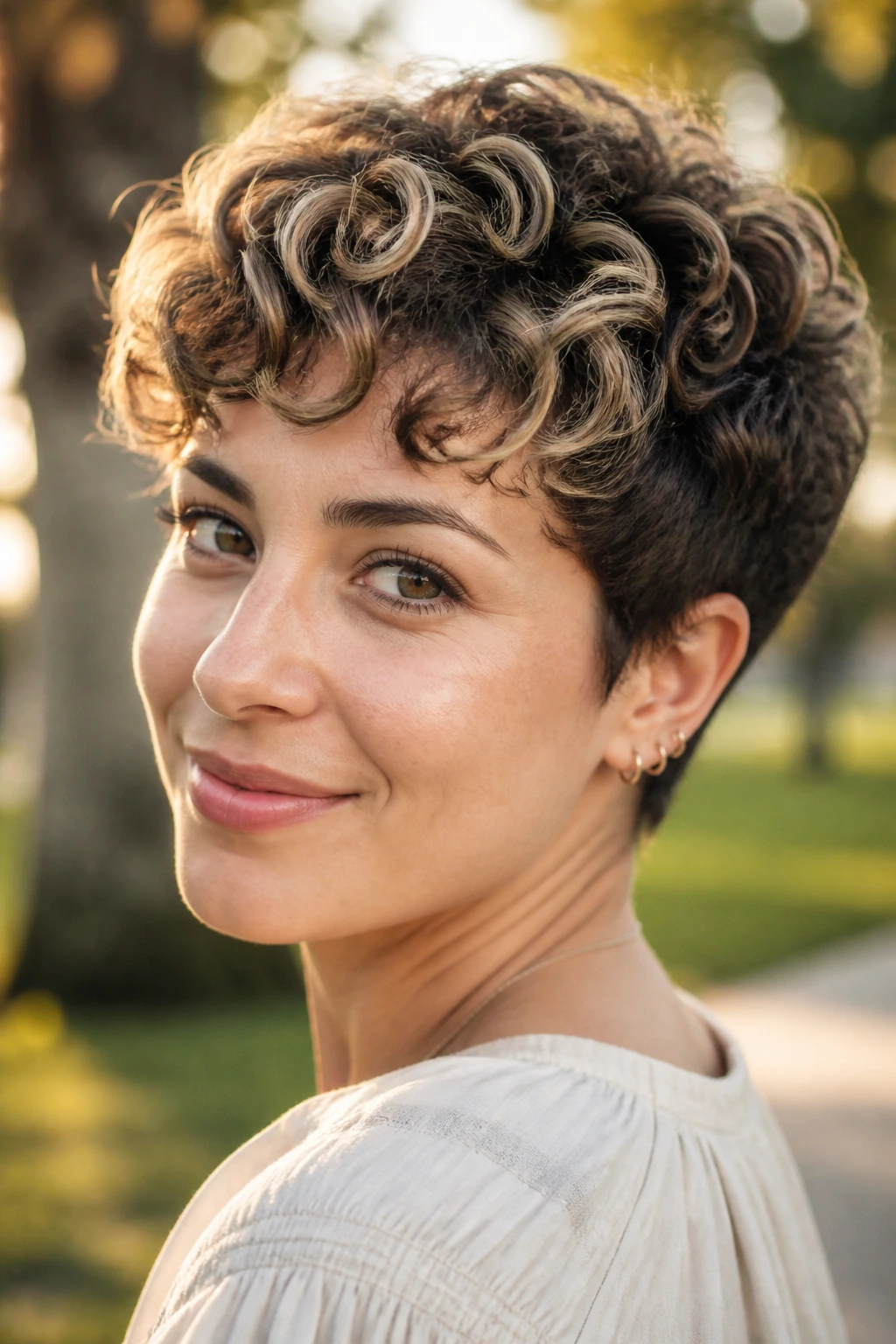
Color changes the way short curls read, and a highlighted curly pixie uses that to its advantage. A few lighter ribbons through the crown or fringe make each curl bend more visible, which is useful when the cut is short and you want the texture to stand out.
The highlight placement matters more than the shade. If the lighter pieces sit where the curls naturally arc — around the front, crown, and outer layer — the shape looks fuller and more active. Thick stripes can make short curls look streaky. Fine, well-placed highlights give the curl map some depth without shouting.
This cut works especially well with a simple shape underneath. You do not need a complicated haircut when the color is doing part of the visual work. A tapered nape and a layered crown are enough. The rest is in the light hitting the bends.
If your hair is gray, blonde, copper, or dark brown, the same principle applies. A little contrast lets the movement show up from a few feet away, not just in a mirror.
18. Protective Natural Curly Pixie
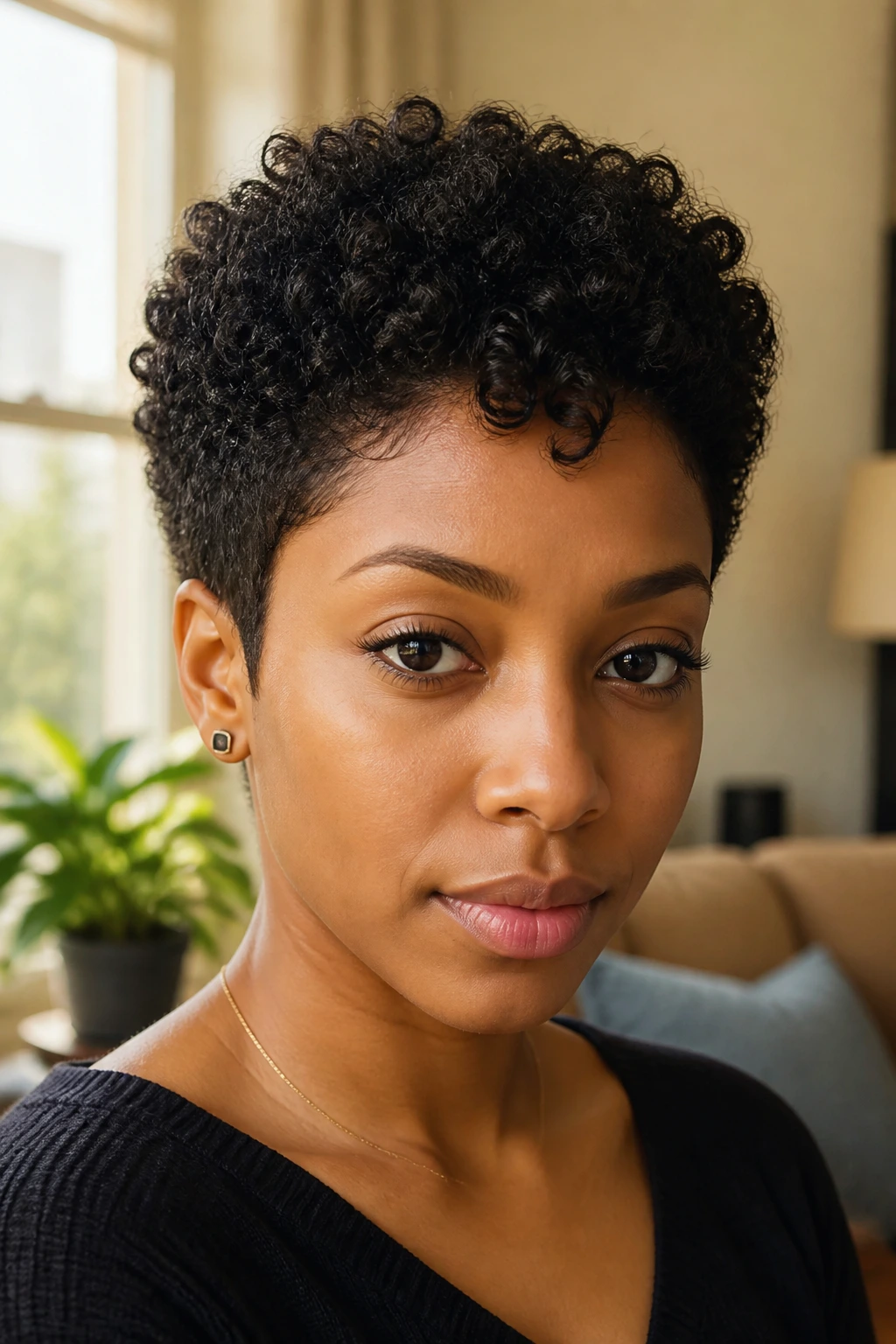
A protective natural curly pixie is the version I’d choose for coils that need less daily handling. The sides and nape are kept short and tidy, while the top stays rounded enough to protect the pattern and reduce constant brushing, combing, or detangling.
This cut is especially helpful when the scalp likes breathing room but the lengths still need moisture and definition. It reduces stress on the ends and makes wash day less of a production. For 4A to 4C hair, that matters. Short hair can still break if it’s fussed with too much, and a protective pixie keeps the routine lighter.
The shape should stay rounded, not flattened. If the top gets too close to the head, the cut can lose the soft volume that makes it feel intentional. Ask for clean edges, a gentle curve through the crown, and enough length on top to preserve curl clumps.
This is not the most dramatic style in the room. That’s part of its charm. It lets the texture stay healthy and visible without making daily styling a second job.
Why the Curly Pixie Shape Gives Curls Room to Spring
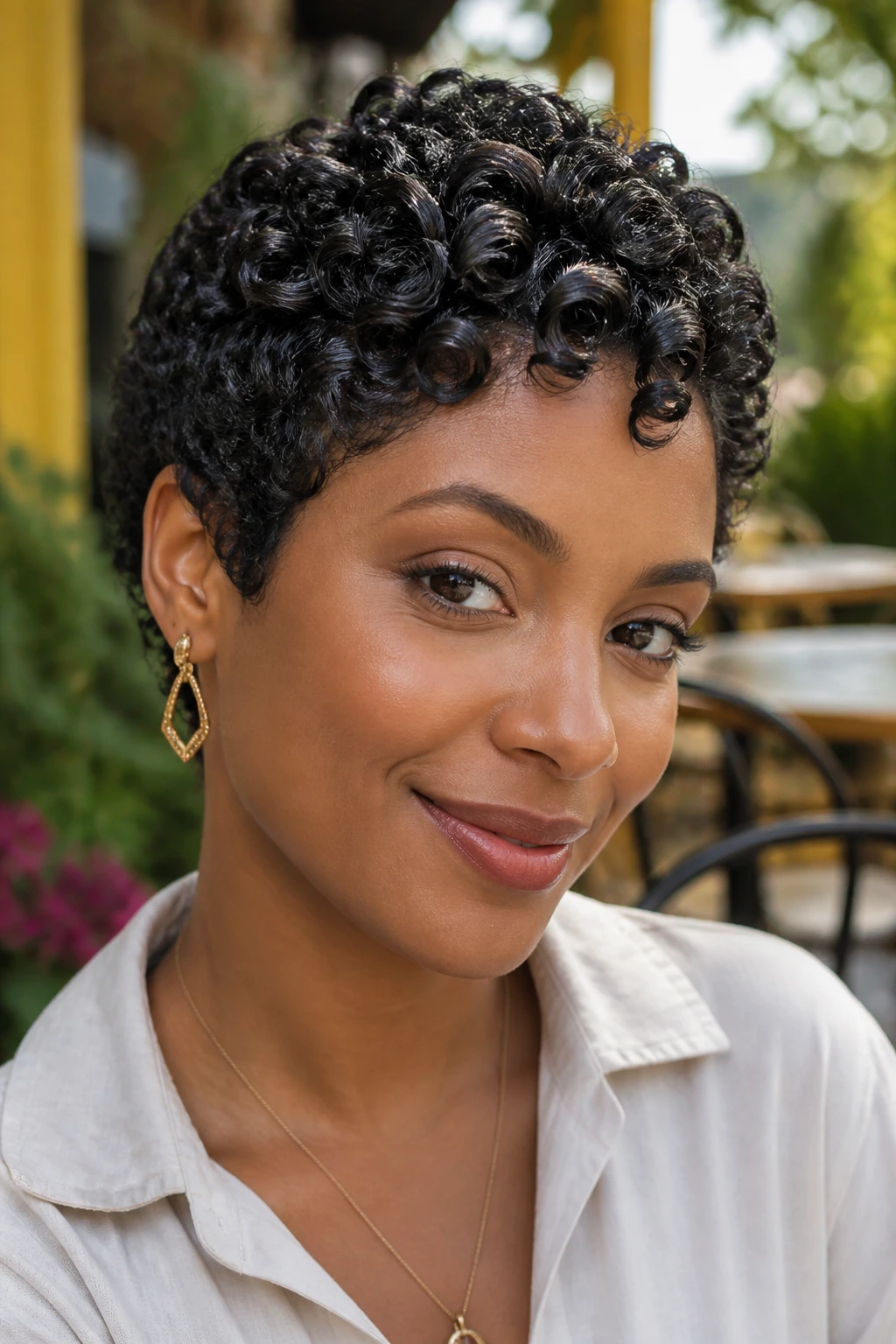
Short curls need structure more than they need length. That’s the part people miss when they treat a pixie like a simple chop. The best curly pixie cuts remove weight where the hair is trying to bend outward and preserve enough length where the curl needs to lift. That’s why a good pixie can look fuller than longer hair that’s being dragged down by its own mass.
Shrinkage is the whole story here. A curl that looks 3 inches long when wet may land at 1.5 inches once it dries. If the stylist doesn’t plan for that, the cut can come out too short in some places and too heavy in others. Dry-checking the shape, or at least trimming with shrinkage in mind, keeps the silhouette from wobbling.
Crown, sides, and nape each do a different job
The crown controls height. The sides decide whether the cut feels clean or puffy. The nape is the place where short curly hair tends to turn messy fastest, because collars, sweat, and friction all live there. When those three zones are cut with different goals, the curl pattern has room to breathe.
A dry cut is often the smartest move with curls because you can see the real fall of the hair instead of guessing. Wet curls lie. That’s not drama; that’s physics. Once they dry, the haircut tells the truth.
Essential Tools for Styling Curly Pixie Cuts
- Spray bottle with water: A fine mist helps reactivate curls on non-wash days without soaking the whole head.
- Light leave-in conditioner: Use a small amount to keep short curls soft before adding hold.
- Curl cream or mousse: Cream adds slip; mousse adds lift. Short curls usually need one or the other, sometimes both in a light hand.
- Strong-hold gel: Best for definition, fringe control, and keeping the crown from puffing out.
- Microfiber towel or cotton T-shirt: Blotting instead of rubbing keeps the curl clumps intact.
- Diffuser attachment: Low heat and low airflow help a pixie keep its shape while drying.
- Wide-tooth comb or fingers: Short curls often respond better to fingers, especially around the crown and bangs.
- Duckbill clips: Useful for lifting roots while drying if you want more height.
- Satin bonnet or pillowcase: Keeps the shape from getting crushed overnight, especially at the nape and temples.
- Small edge brush: Helpful if your pixie includes crisp hairline work or a tapered perimeter.
Smart Cut and Product Choices for Different Curl Patterns
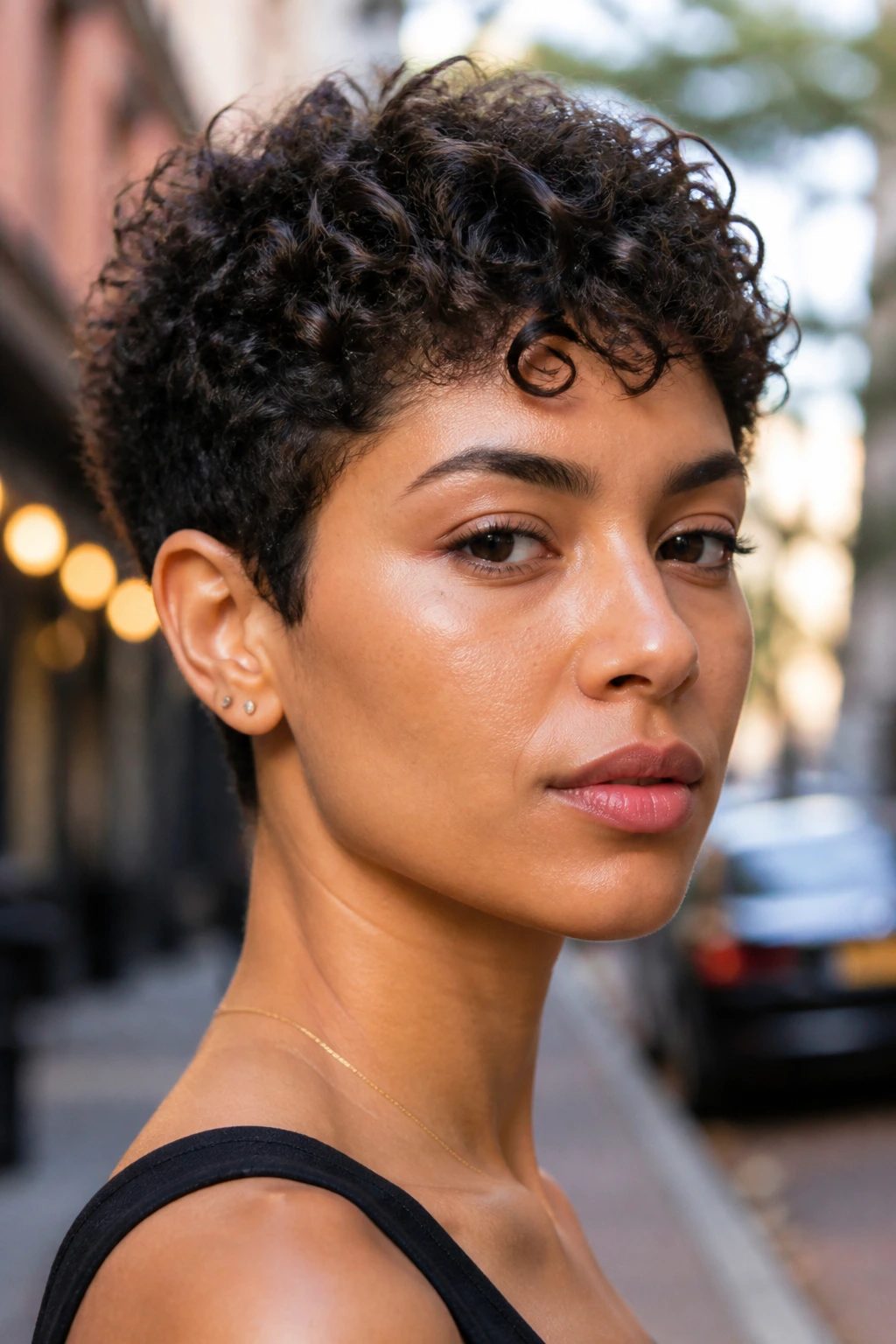
The product that works on loose waves can flatten tight coils, and the cut that flatters dense hair can overwhelm fine texture. That’s why curly pixie cuts need to be matched to the hair sitting in the chair, not to a photo held up from a completely different curl family. A 2A wave wants movement and lightness. A 4B coil wants moisture, shape, and less unnecessary disturbance.
If your hair is fine or low-density, too much cream will collapse the crown before it has a chance to lift. Mousse, light leave-in, and a small dab of gel are usually enough. Ask for short internal layers and keep the perimeter clean so the cut doesn’t fall flat at the edges. Fine curls often look better with a slightly longer top than people expect.
Dense curls need a different approach. The haircut should remove bulk inside the shape, not just shorten the outside. That’s where point-cutting and careful layering help. On coarse textures, a richer leave-in can soften the hair enough for the curl clumps to settle without getting fuzzy. If the ends feel dry within a day, the product mix is too light.
Porosity matters, too. Low-porosity curls tend to resist heavy creams, so a water-based leave-in and a foam or gel often behave better. High-porosity hair drinks up moisture fast, then loses it fast, which means the styling routine may need a sealant or a slightly richer cream. None of this has to turn into a chemistry lesson. You just want to notice whether your curls feel dry, limp, sticky, or crisp by midday, then adjust one product at a time.
How to Wear Curly Pixie Cuts in Real Life
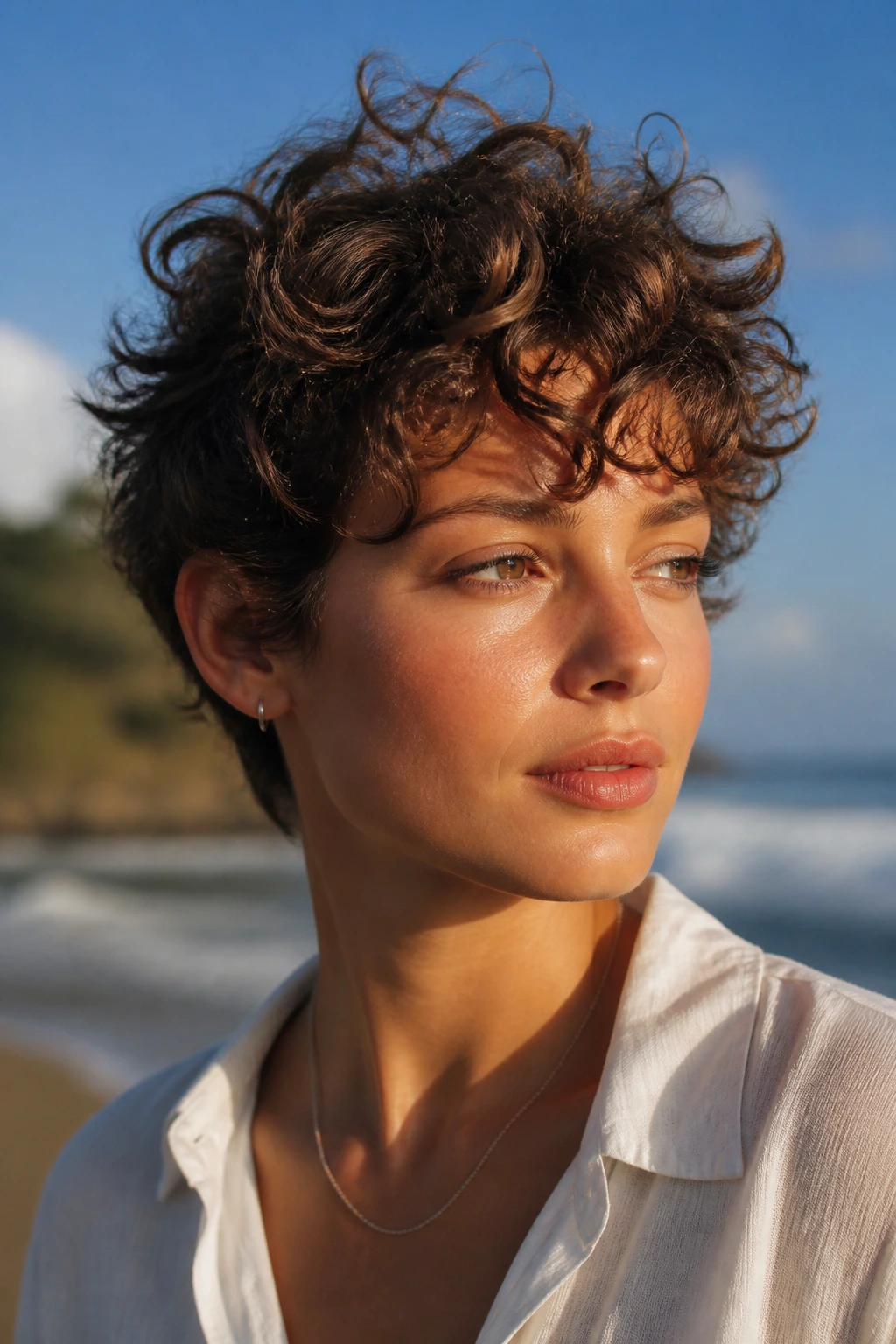
Silhouette: A curly pixie looks strongest when the outline stays clean. That usually means letting the crown carry a little height while keeping the nape and temple areas tidy enough that the shape reads from across the room.
Outfit Pairings: Crew necks, open collars, square necklines, and small hoops all work well because they give the cut some room. A heavy scarf can crowd the neckline and hide the taper, which is a shame if that taper is one of the best parts of the haircut.
Occasion Fit: The softer versions — the rounded bob, the side-swept cut, the long-crown pixie — read easygoing. The wet-look, asymmetrical, or soft mohawk versions have more edge and make sense when you want the haircut to be the main feature.
Accessories: A single barrette, a satin headband, or a pair of close-fitting earrings can change the mood fast. Glasses also matter more than people think. If you wear them, make sure the temple area is trimmed with enough space so the frames don’t fight the curls.
Styling Tricks That Bring Out Natural Bounce
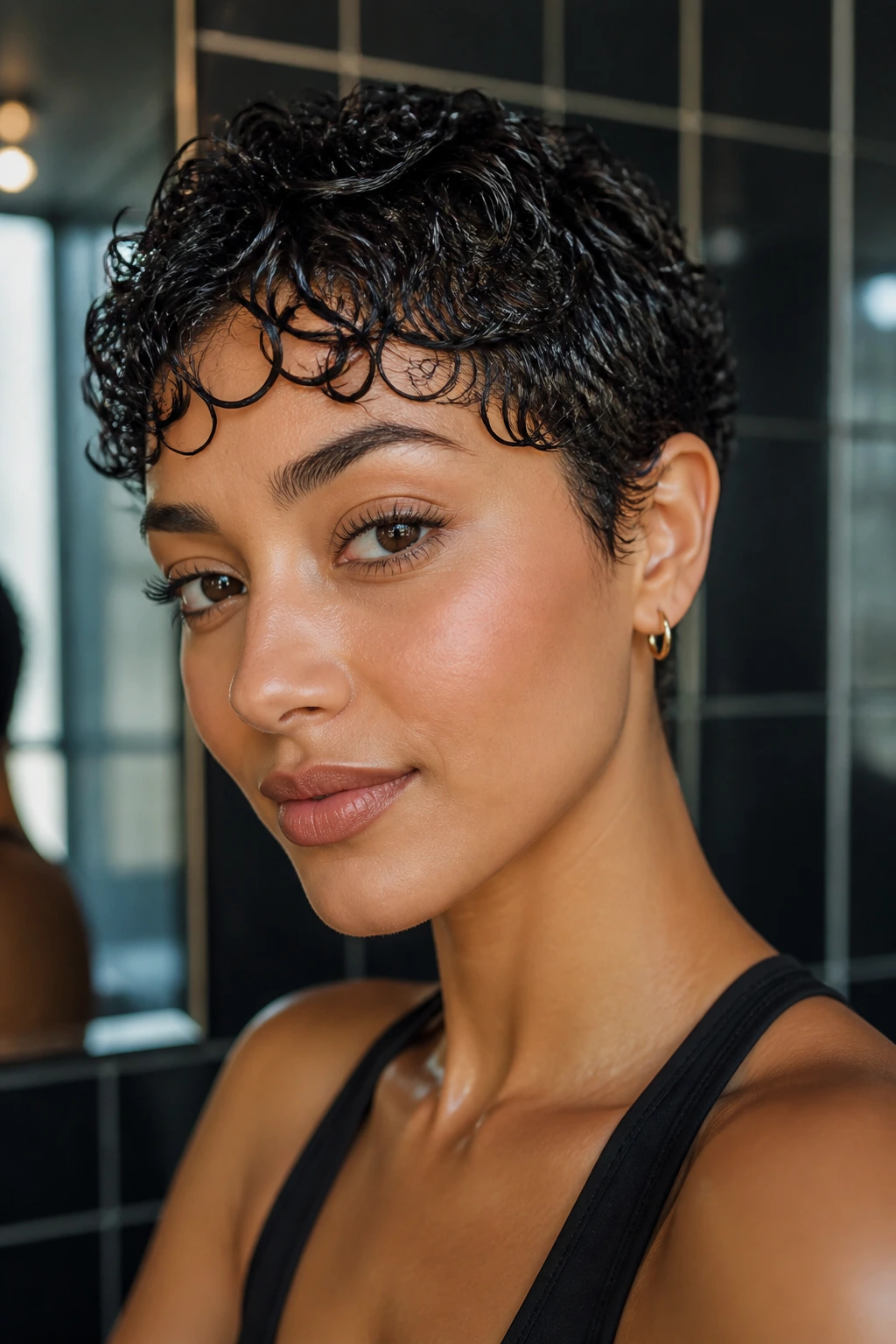
Root Lift: Clip the crown roots for 10 to 15 minutes while the hair dries, or diffuse the top in short bursts with the head tilted slightly forward. That keeps short curls from sinking into the scalp.
Moisture First, Hold Second: On soaking-wet hair, smooth in leave-in conditioner, then add mousse or gel only where you want control. Too much product at the start makes the top heavy before it has any chance to spring.
Hands-Off Drying: Once the curls are arranged, leave them alone. Touching a drying pixie breaks the curl clumps and makes the surface fuzzy. If you need to fix one flat spot, fix that spot. Don’t rebuild the whole head.
Fast Refresh: Mist the front and crown with water the next morning, then scrunch a pea-sized amount of product into the ends. That is usually enough to wake up the shape without starting over.
A tiny dab of serum on the outermost curls can help if your texture gets crunchy at the tips. Use less than you think. Short hair shows product buildup fast.
Common Mistakes That Flatten a Curly Pixie
- Cutting every curl the same length: Curls dry at different heights, so a uniform cut often turns into shelves and odd corners. The fix is shape-specific layering and a dry check before the final snip.
- Using too much cream on fine curls: The top looks soft for an hour, then collapses. Switch to mousse or a lighter leave-in and keep the product off the roots.
- Ignoring the nape and temples: Those areas puff out first, especially on short hair. A low taper or regular cleanup keeps the silhouette from turning square.
- Diffusing with hot, high airflow: That can create frizz while the hair is still trying to set. Low heat, low airflow, and patience are the better deal.
- Waiting too long between trims: Curly pixies lose their line faster than longer cuts. If the crown starts leaning weird or the nape starts fuzzing out, the cut is asking for a cleanup.
Named Variations to Steal for Your Own Cut
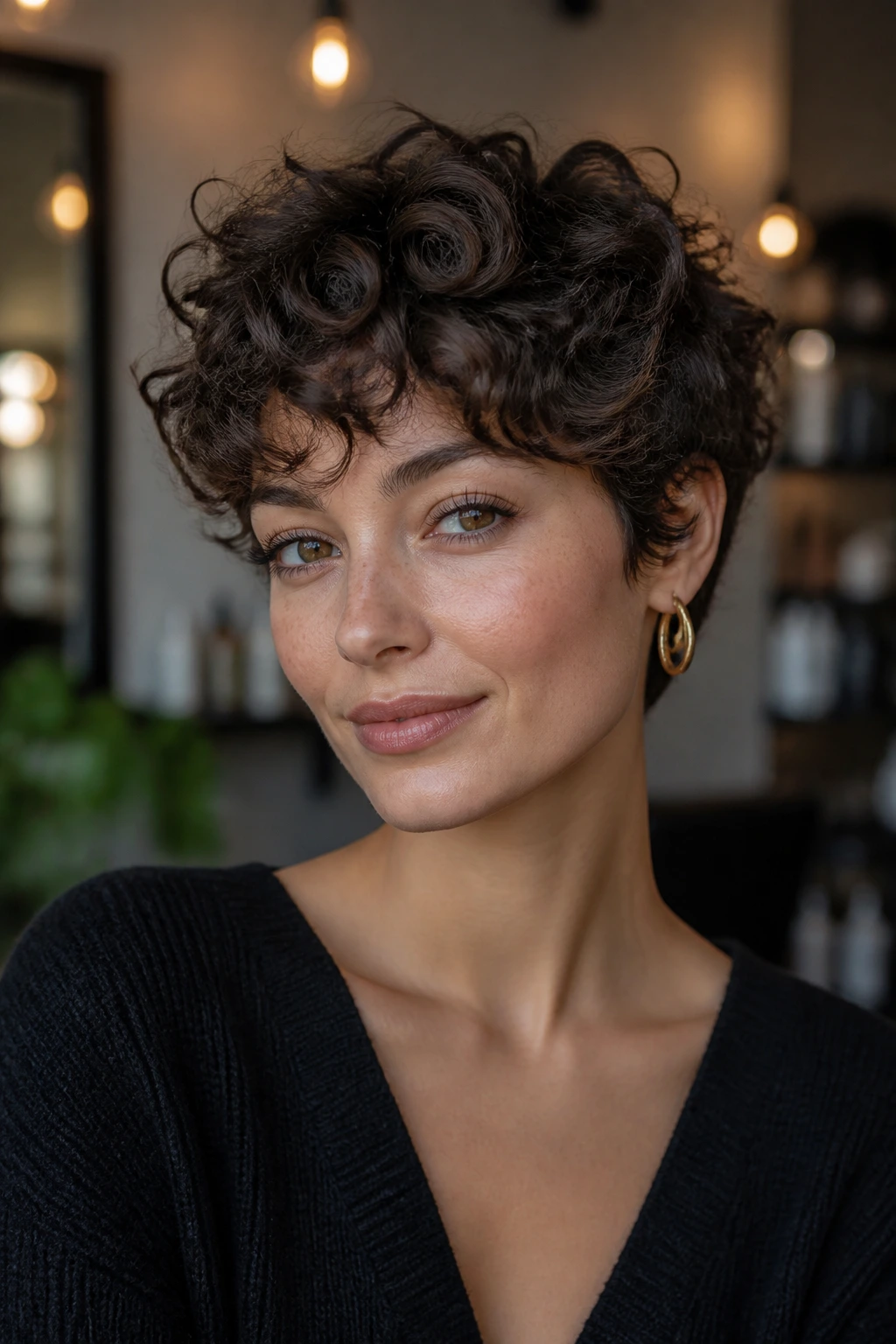
The Wash-and-Go Pixie: This version leans on a light leave-in and mousse, then air-dries with minimal handling. It fits people who want movement without a lot of touch-up work.
The Defined Coil Pixie: Small sections are finger-coiled with gel for crisp curl separation. It suits tighter textures and anyone who likes the hair to look deliberately shaped.
The Soft Polished Pixie: The sides are tidy, the crown is rounded, and the fringe stays gentle. It’s a clean option for work settings or anyone who wants short curls to read calm instead of edgy.
The Bold Taper Pixie: Here the nape and temples are more closely tapered, which makes the crown look taller by contrast. It works well on dense curls that need a strong outline.
The Silver-First Pixie: This one is built for gray, silver, or salt-and-pepper hair, with soft layers that keep the lighter strands from getting wiry at the ends. A moisturizing styling routine matters more than gloss alone.
Wash-Day, Sleep, and Between-Cut Maintenance
Curly pixie cuts stay nicest when you treat them like they need regular small check-ins, not big dramatic interventions. For most textures, washing every 3 to 7 days works well, depending on scalp oil, product buildup, and how much you sweat. If you use strong gels or a lot of cream, a gentle clarifying wash once every 3 to 4 weeks helps stop the roots from getting coated and dull.
Night care matters more on short curls than many people expect. A satin bonnet or pillowcase reduces friction at the nape and temples, which are the first places to fuzz up. If the crown tends to flatten, you can also pineapples are not always useful on a pixie, so don’t force that method; a loose bonnet or a soft wrap usually does better. One or two duckbill clips at the crown can help if you want a little height preserved overnight.
Trims come faster with this haircut. Plan on a clean-up every 4 to 6 weeks if you want the shape to stay crisp, especially for tapered napes and temple work. If you’re wearing a longer crown or a rounded pixie bob, you may stretch that a little longer, but the neckline and sideburns will still need attention sooner than the top. That’s the price of a short cut with a strong outline.
Between salon visits, refresh only the flat spots. Wet the crown lightly, re-activate the front, and smooth the edges with a tiny amount of product. Don’t start from scratch every morning unless the whole head really needs it. That kind of over-manipulation is how short curls lose their bounce.
Frequently Asked Questions About Curly Pixie Cuts
Will a curly pixie cut work if my curls are loose waves?
Yes, but the cut needs a little more length on top so the wave pattern doesn’t disappear. Loose waves usually do best with light layering, a soft taper, and a mousse or foam that adds lift without dragging the hair down.
Should a curly pixie be cut wet or dry?
Dry is usually safer for curls because it shows shrinkage and curl direction in real time. Some stylists do a mix — dry shaping first, then wet refinement — which gives the best of both worlds.
How do I stop the top from going flat?
Keep some length at the crown, use root clips while drying, and avoid heavy creams near the roots. A little mousse at the base and a diffuser on low heat usually does more than piling on product.
What if one side curls tighter than the other?
That’s common, and a good stylist should cut for the stronger side instead of pretending both sides behave the same. Styling the looser side with a bit more product, or using a finger twist on the front pieces, can help the shape feel balanced.
How often should I trim a curly pixie?
Every 4 to 6 weeks is a solid target if you want the outline to stay neat. The shorter and more tapered the cut, the faster it starts to lose its shape.
Can I wear bangs with a curly pixie?
Absolutely, but they need to be longer than straight bangs would be. Curly fringe shrinks up fast, so the safest move is a dry cut or a careful curl-by-curl trim.
What if my hair is thick and puffs out at the sides?
Ask for internal layers and a tapered temple area. Taking weight out from the inside of the shape gives you control without making the cut feel thin or over-thinned.
How do I grow out a curly pixie without the mushroom phase?
Keep the nape and sides cleaned up while the crown grows, and ask for shape maintenance instead of one big grow-out pause. That keeps the cut from widening into a box while the top catches up.
The Cut That Lets Curls Breathe
A good curly pixie cut is a shape decision, not just a length decision. That’s the part that makes these looks work when they work well: the crown gets room, the sides get discipline, and the curl pattern gets to show up instead of fighting for space.
Bring photos if you want, but bring specifics with them. Tell your stylist where your hair collapses, where it puffs, and how much daily styling you’re willing to do before coffee. The cleanest short curl cut is usually the one built around those real details, not the one that looked neat on someone with a different texture and a different head shape.
If you choose one of these curly pixie cuts with your own curl behavior in mind, the result stops looking like a compromise and starts looking like a very smart haircut.
