



Updo hairstyles for fine hair look best when they stop pretending to be thick-hair buns. Fine strands need grip, shape, and a little bit of strategic mess; pile on too much oil or too much hair in one twist, and the whole thing starts sliding south before you’ve even left the house.
That’s the part people miss. Fine hair isn’t the same thing as thin hair, and it isn’t doomed to flatness either. You can have a dense head of fine strands and still need smarter pin placement, lighter products, and a little root lift at the crown. The trick is to build the style from the base out, not to smother it in product and hope for the best.
The good news is that fine hair is often easier to shape than coarse hair once you stop fighting it. Smaller sections bend better, twists sit closer to the head, and tucked styles can look cleaner than they do on heavier hair. That means a low bun, a French twist, or a braided crown can actually look sharper and more elegant on fine hair than they do on thicker textures. The styles below lean into that fact.
Why These Updos Work on Fine Hair
-
They use smaller sections: Fine hair holds best when you work in 1-inch to 2-inch pieces instead of trying to twist the whole head at once.
-
They build grip before shape: Dry shampoo, texture spray, and a little root lift give pins something to grab, which matters more than volume ever will.
-
They keep the weight low or balanced: Heavy buns can collapse fine hair fast, so styles that sit at the nape or distribute hair evenly tend to last longer.
-
They hide the weak spots smartly: A tucked end, a braid, or a wrapped base can make sparse-looking sections disappear without looking padded or fake.
-
They leave room for movement: Fine hair often looks best when it has a little bend, a loose edge, or one soft piece near the face instead of being yanked into a tight, overworked shell.
-
They don’t demand perfection: A few visible pins, a soft part, or a little crown lift usually looks better than a shellacked updo that exposes every scalp line.
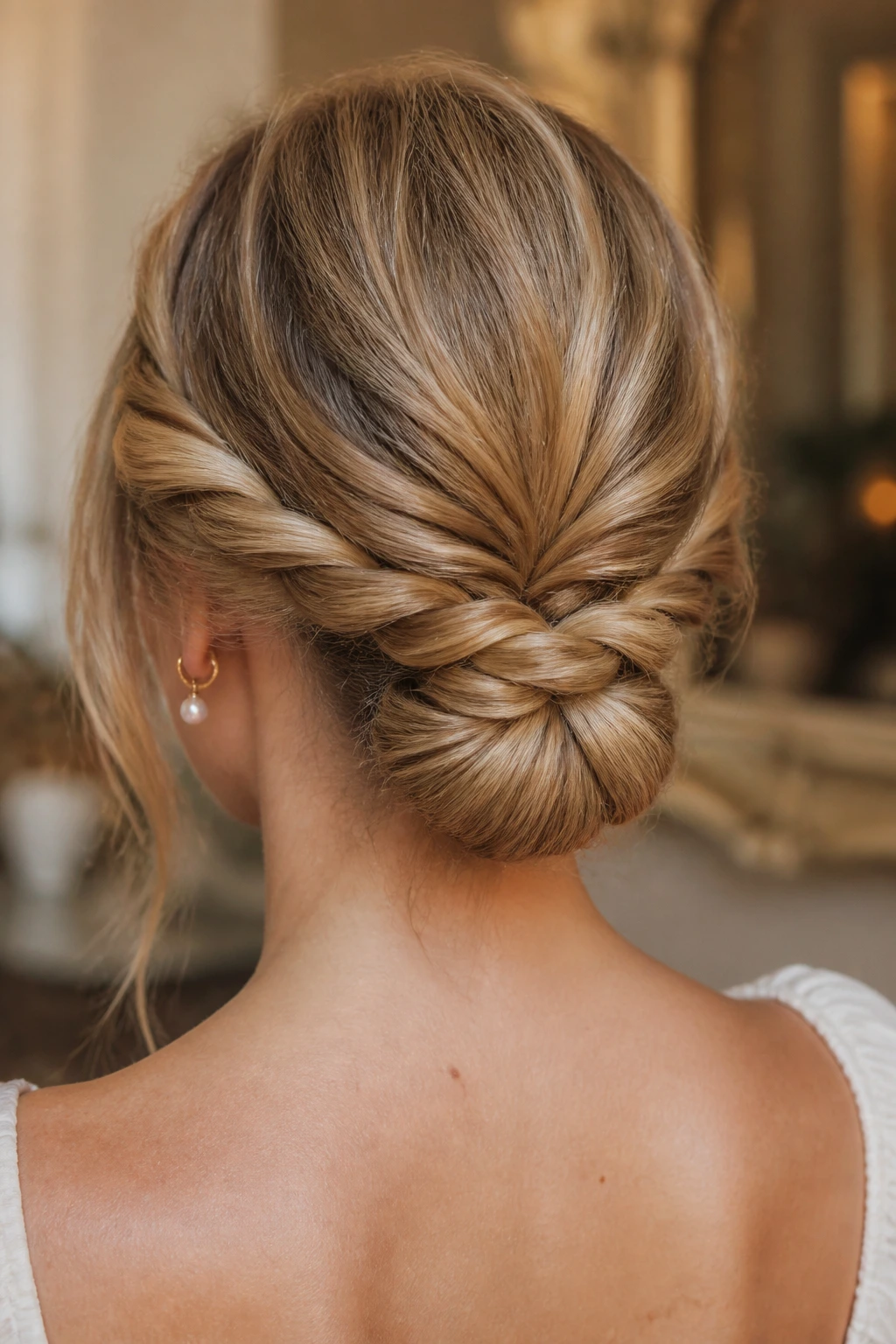
1. The Soft Twisted Low Bun
A soft twisted low bun is one of those styles that looks more deliberate on fine hair than most people expect. It keeps the shape compact, hides thin ends, and gives you that clean nape line that doesn’t collapse by midafternoon. I like this one because it doesn’t ask your hair to be more than it is.
How It Holds Together
Use dry shampoo at the roots first, even on clean hair. That tiny bit of grit matters. Then make two loose side twists from behind the ears, bring them together at the nape, and coil them into a low bun. Pin the bun with bobby pins placed in an X shape so they grip both the twist and the scalp.
A lot of people twist too tightly and end up with a small, hard lump that looks thinner, not fuller. Keep the twists loose enough that they have a little bend. That gives the bun more surface area and makes the whole thing look fuller from the back.
Quick notes:
- Best for shoulder-length and longer fine hair
- Works on day-two hair or freshly washed hair with dry shampoo
- Looks especially good with a side part or soft middle part
One rule: don’t over-polish the surface. A tiny bit of softness at the temples makes the bun look richer.
2. The Classic French Twist for Slippery Hair
A French twist can be brilliant on fine hair if you stop thinking of it as a giant roll. Fine hair needs a narrow, well-pinned twist with more anchor points and less bulk. If you try to make it too big, it turns into a loose shell that slides down the second you turn your head.
Start with texture spray through the mid-lengths and a light mist at the roots. Gather the hair low, then sweep it upward and inward, folding the lengths into a vertical roll. Pin from the inside edge first, then add pins along the seam so the twist is anchored all the way up the spine of the style.
What Makes It Work
The secret is pin direction. Push bobby pins in against the twist, not just across the outside of it. Cross two pins at the top and two near the middle if your hair is especially silky. That stops the roll from shifting.
This style looks clean, but it should never look stiff. Leave a soft edge at the top or a slight curve near the crown. That tiny looseness makes the twist look like hair, not a helmet.
3. The Braided Crown with Tucked Ends
What if your hair is too fine for a big halo braid? Make the braid smaller and let the shape do the work. A braided crown gives the illusion of width around the head, which is a gift when the strands themselves don’t have much bulk.
Braid one side from the temple back toward the ear, then repeat on the other side. Pull the outer edges of each braid very gently to widen them a bit. Not a lot. Just enough to make the plaits look fuller without turning them into frizz. Cross the braids at the back of the head and tuck the ends under with pins.
How to Use It
This style is especially kind to medium-length fine hair because it hides the ends instead of asking them to do something decorative. If your hair is layered, secure the shortest pieces first with a tiny elastic before you braid. That keeps the braid from unraveling at the nape.
A light shine spray on the crown can make the finished braid look smoother, but go easy. Heavy serum makes braids sag.
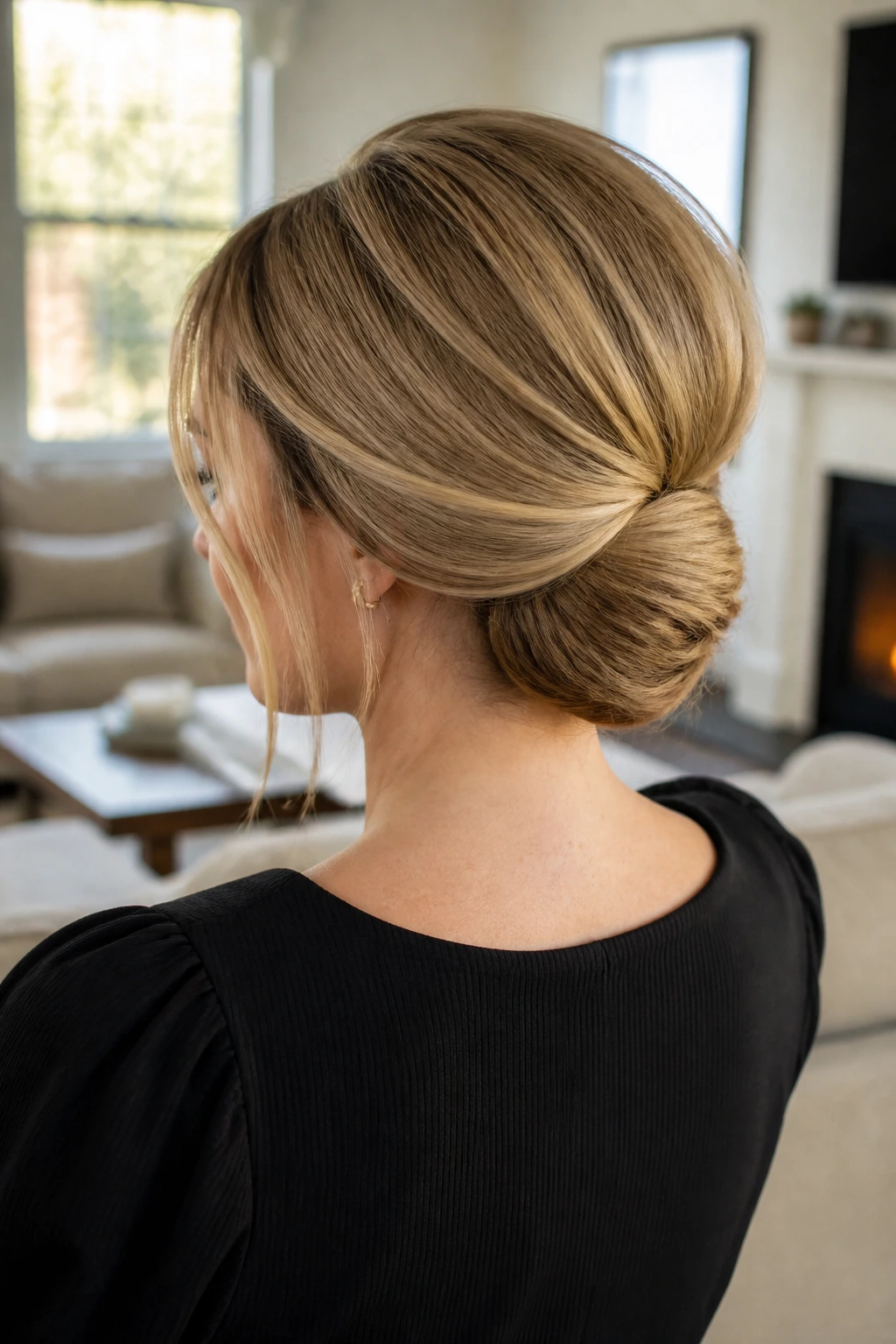
4. The Sleek Chignon with a Hidden Cushion
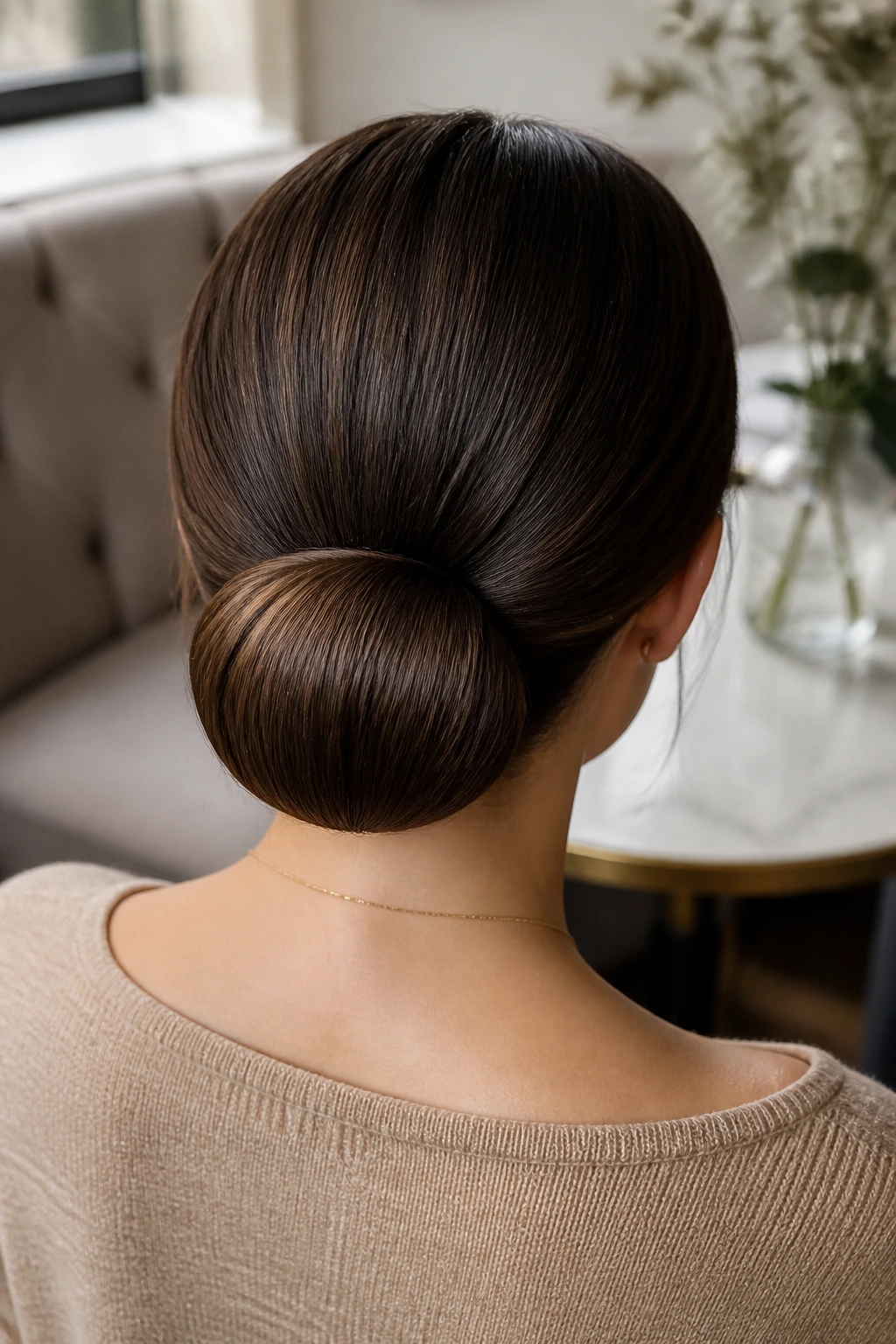
Fine hair can wear a sleek chignon beautifully, but the base has to be built with a little help. A hidden cushion — a small donut, a folded mesh insert, or even a rolled piece of netting — gives the bun enough body to sit up instead of lying flat like a coin.
Brush the hair low and smooth the top with your hands, not a bristle brush, if you want to preserve some root lift. Make a low ponytail, slip in the cushion, and wrap the hair around it in even layers. Pin around the perimeter so the bun feels secure before you touch the surface with hairspray.
The polished surface is what sells this style. Use a light mist of strong-hold spray from about 8 inches away, then smooth flyaways with the side of a tail comb. No heavy cream. That stuff kills the line and makes fine hair look stringy.
This is the style I’d pick for a dressier event, a job interview, or any day when you want clean rather than fussy.
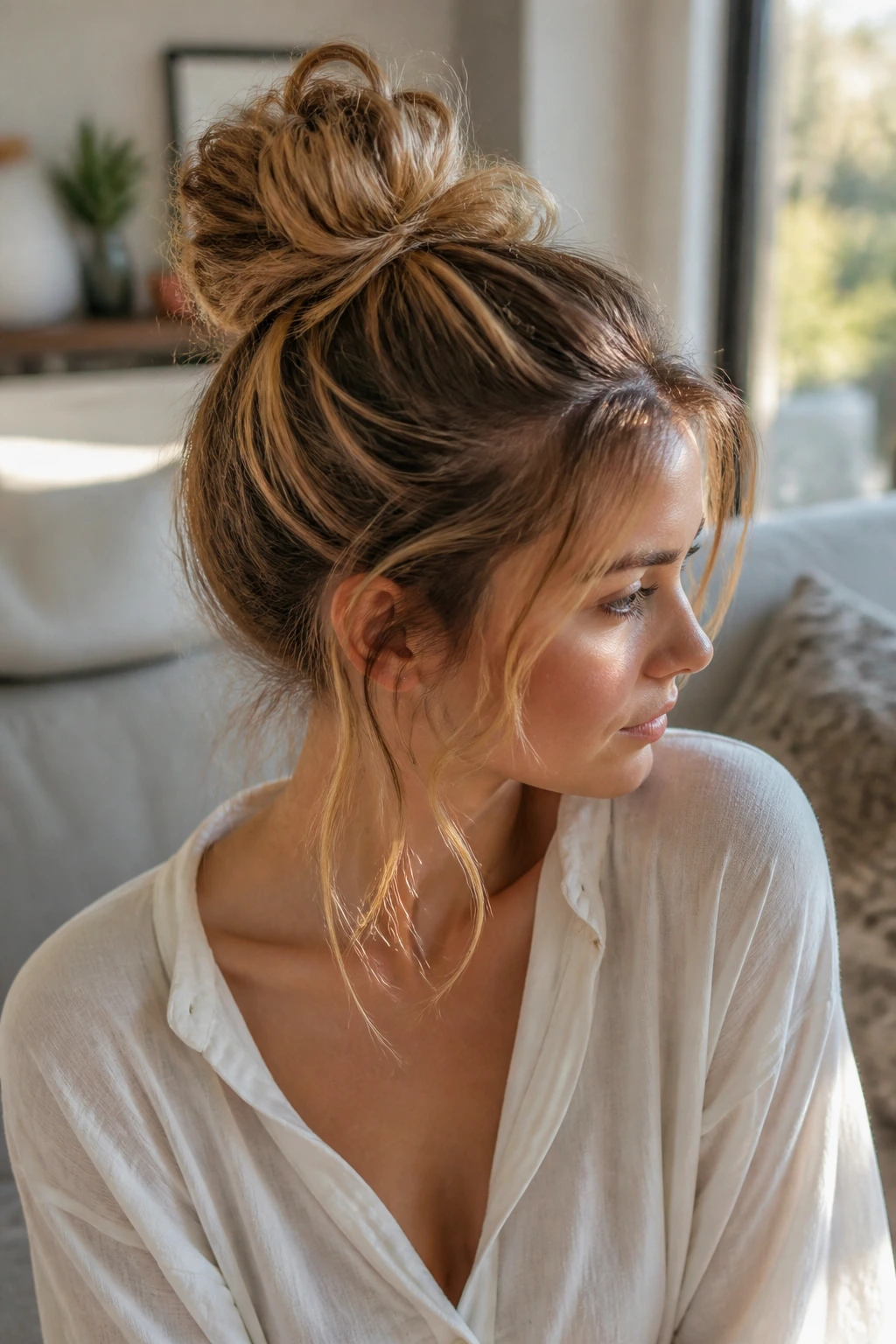
5. The Messy Knot That Looks Fuller Than It Is
“Messy” is one of the most abused words in hair styling. On fine hair, a messy knot needs structure first and softness second. Otherwise you get a small knot with two sad pieces sticking out, and that is not the same thing.
Work a little mousse or volumizing foam through damp hair, then rough-dry the roots so they lift away from the scalp. Pull the hair into a loose ponytail, twist it once or twice, and wrap it into a knot high enough to show shape. Pin the base from underneath, not just the top, so it doesn’t sag.
The best part is the face-framing pieces. Leave two thin sections around the cheekbones and bend them with a curling iron or a flat iron, not a tight curl. You want movement, not ringlets.
Fine hair does better with planned mess. Random mess just falls apart.
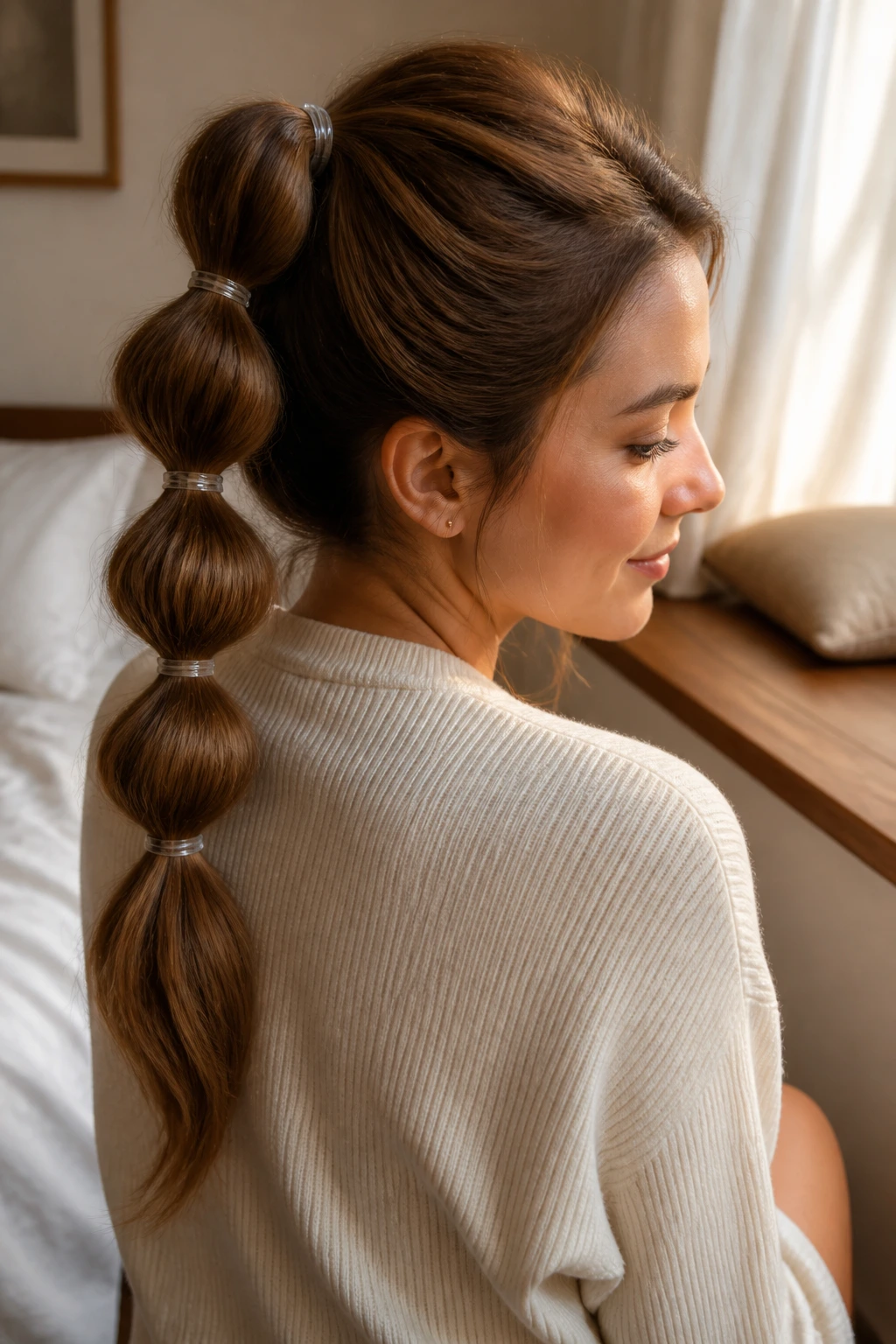
6. The Bubble Ponytail Updo
A bubble ponytail is one of the smartest tricks for fine hair because it creates fullness with elastics instead of with bulk. Each bubble breaks up the line of the ponytail, so the hair looks thicker and more dimensional than it really is.
Make a ponytail at the nape or just above it, then place clear elastics every 1.5 to 2 inches down the length. Gently tug each section between the elastics to puff it out. If your hair is very fine, spray each segment lightly before pulling it apart so the bubbles keep their shape.
This style can stay a ponytail, or you can tuck the end under and pin it into a bun for a more finished look. I like that flexibility. It means the same prep can take you from casual to polished with three extra pins.
It works especially well on long fine hair that needs structure but not heaviness.
7. The Gibson Tuck
Does your hair look flat the second you pin it up? A Gibson tuck fixes that better than most people expect. The roll itself adds shape, and the tucked ends keep the style compact, which is ideal for finer strands that get lost in big buns.
Make a low ponytail, then split the hair just above the elastic to create an opening. Flip the length up and tuck it into that pocket, rolling upward until the ends disappear. Pin the sides of the roll to the head so it doesn’t drift downward.
Where It Shines
This one is especially good for collarbone-length fine hair, because you don’t need a lot of length to make the tuck work. A narrow headband can sit in front of it, and a small barrette can sit at the roll if you want a more dressed-up feel.
If your hair is layered, a little texture spray at the ends helps them stay inside the tuck instead of sneaking out in little wisps.
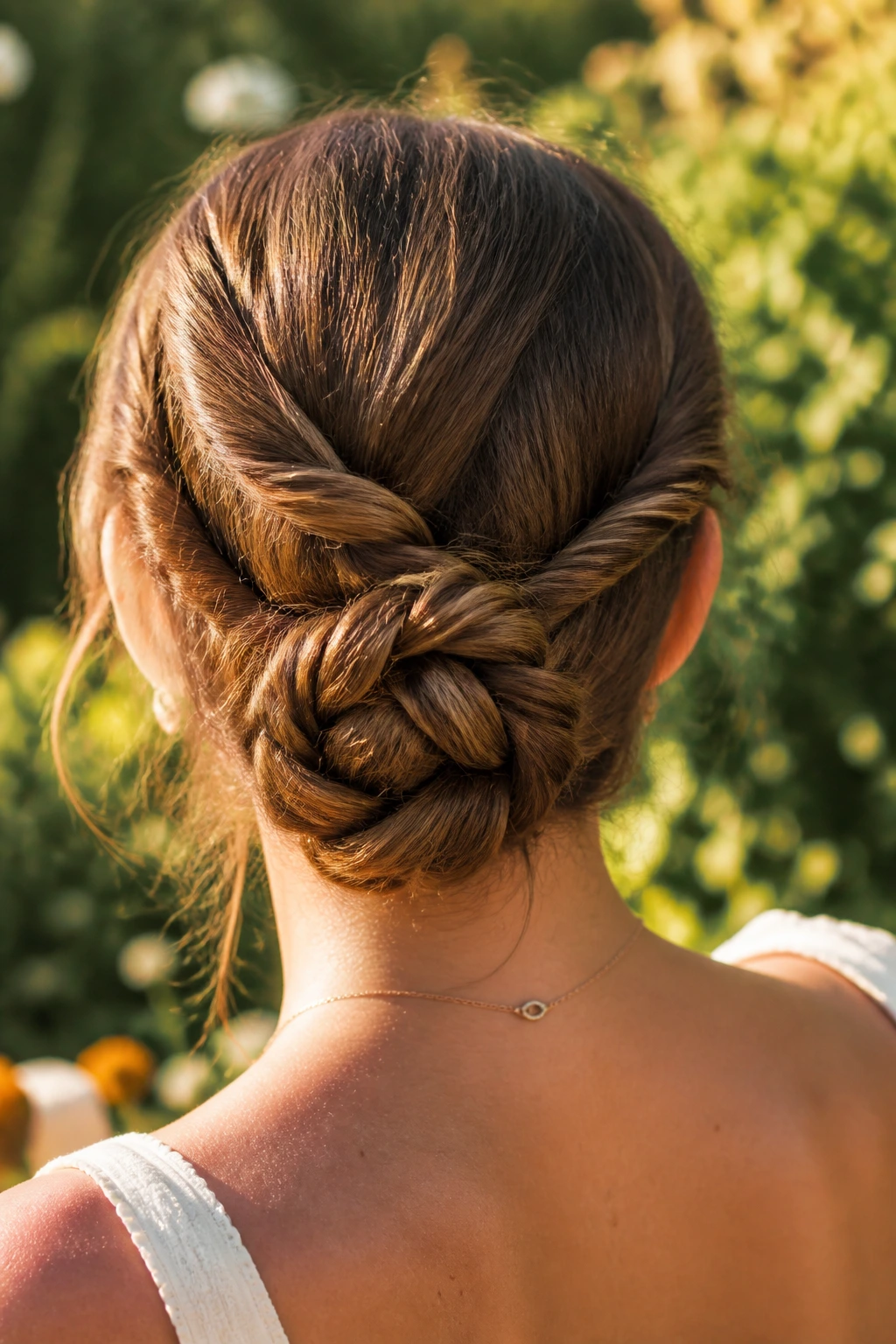
8. The Rope-Braid Bun
A rope braid bun looks tighter and fuller than a standard three-strand braid, which is exactly why it works on fine hair. Two twisted sections create a clean line with enough texture to hold pins, and the bun that follows looks more substantial than the amount of hair would suggest.
Split the ponytail into two sections, twist each one in the same direction, then wrap them around each other in the opposite direction. That opposing twist is what makes the rope braid stay put. Coil the rope into a bun and pin along the outer edge of the coil.
Here’s the part people skip: mist the lengths lightly before twisting. A dry, silky strand slips. A lightly textured strand behaves.
This style is a good answer for windy days, humid weather, or any time you want a shape that looks intentional without being stiff.
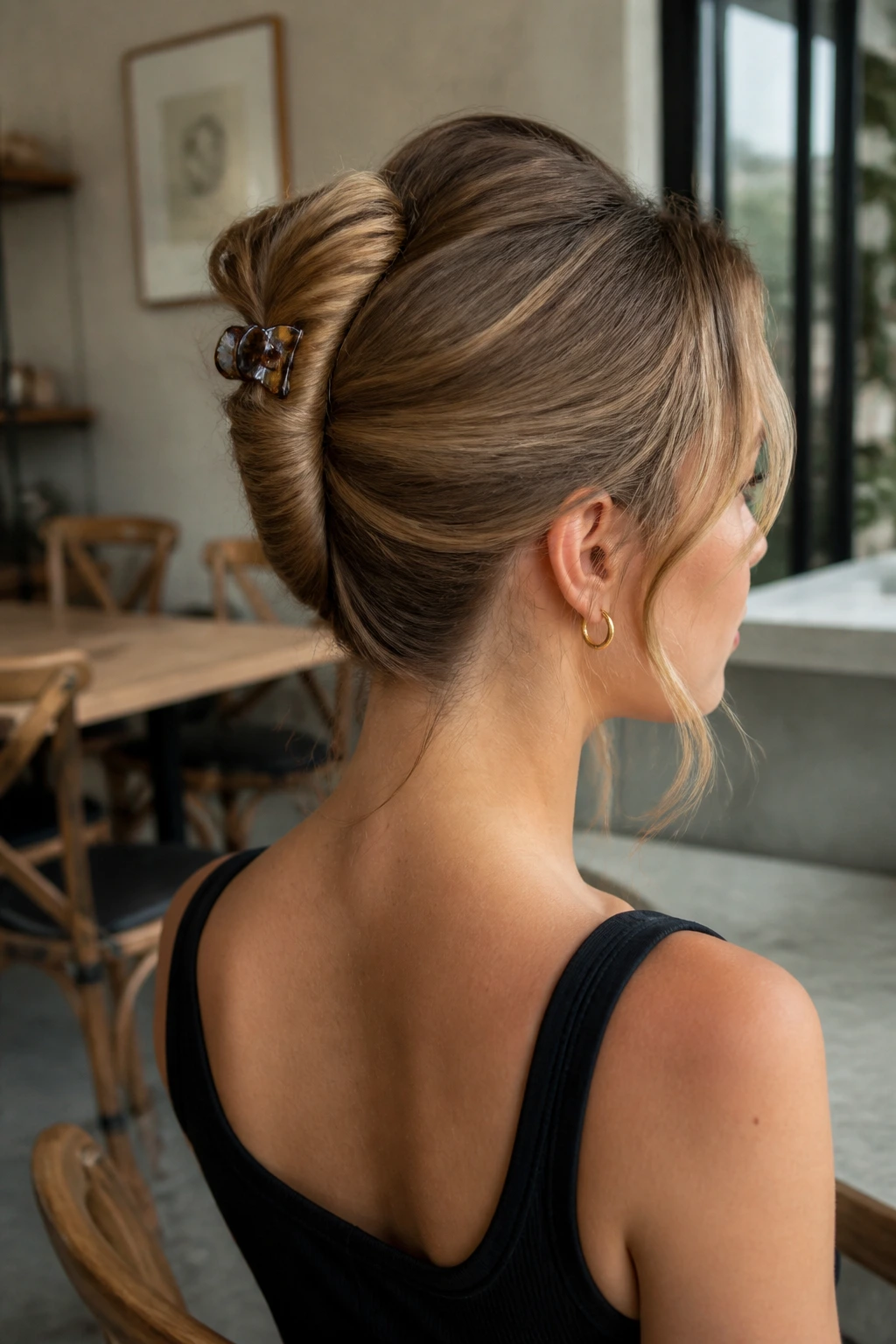
9. The Mini Claw-Clip French Roll
A little claw clip can do more than people give it credit for. On fine hair, a mini clip is often better than a giant one because it doesn’t overwhelm the style or slide around on a tiny roll. The trick is to build the roll first, then let the clip hold the top of it.
Twist the hair upward from the nape, fold the length inward, and secure the base with two bobby pins before adding the clip. The clip is there to lock the look, not carry the whole weight. If you rely on the clip alone, the roll will loosen.
This is one of the few updos that feels quick without looking lazy. It works with slightly messy roots and can handle shorter fine hair better than most formal styles. I’d use a clip about 1.5 to 2 inches wide for chin-length to shoulder-length hair.
Small detail, big payoff. That’s the whole style.
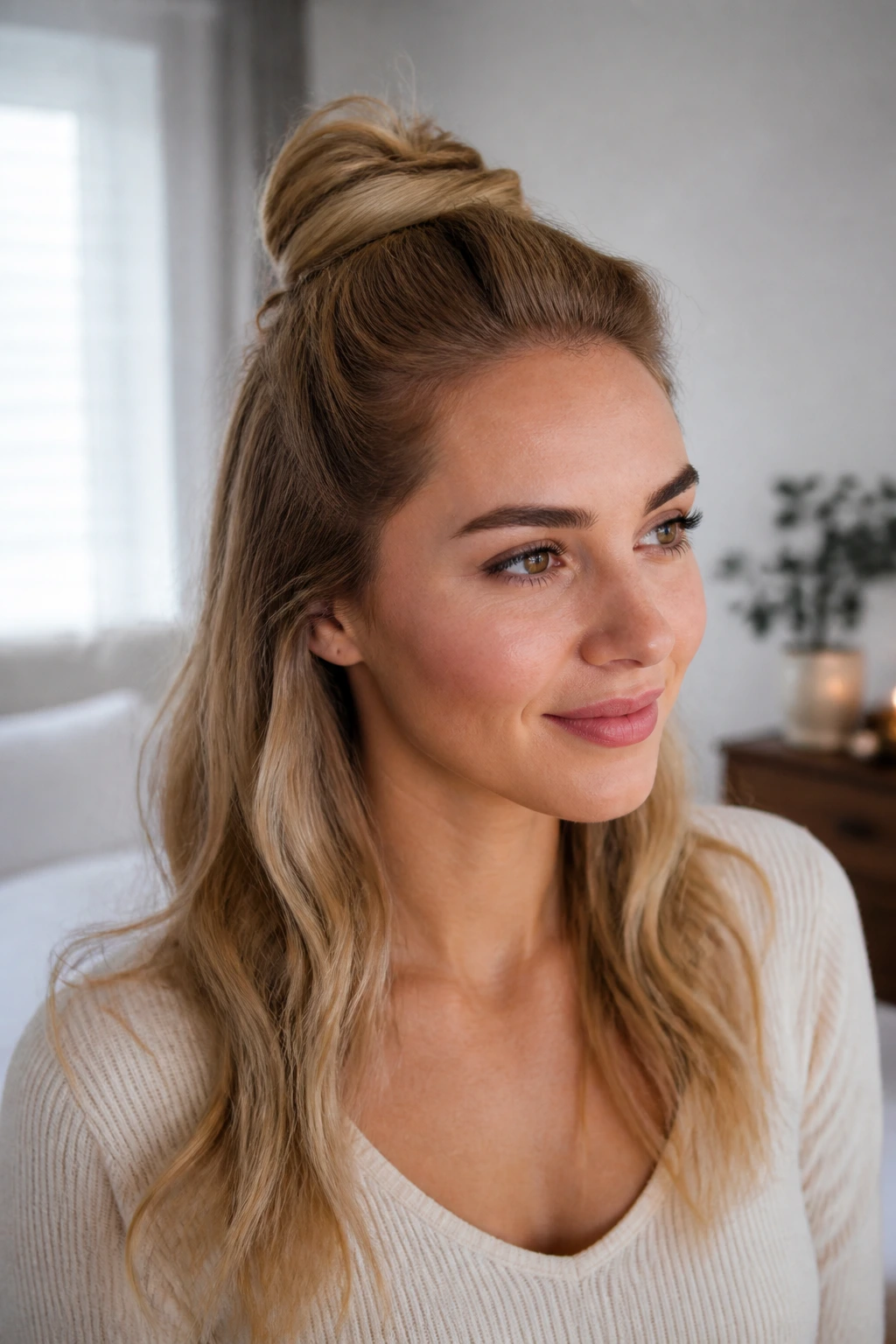
10. The Half-Up Tucked Roll
Why fight the lower half of your hair when the top alone can do the work? A half-up tucked roll keeps hair off the face, adds lift at the crown, and leaves the rest of the lengths down so the style never looks too tiny.
Take the top section from temple to temple, twist it back, and tuck the ends into themselves just above the back of the head. Pin the roll flat against the crown. The lower hair stays loose, which helps balance the proportions and keeps the whole style from looking over-pinned.
If the crown goes flat easily, backcomb a narrow strip at the roots before you start. Not the whole head. Just a little strip where the roll sits. That tiny bit of lift changes the silhouette.
This is a good choice for lobs and medium-length fine hair because it gives you some structure without demanding a full updo.
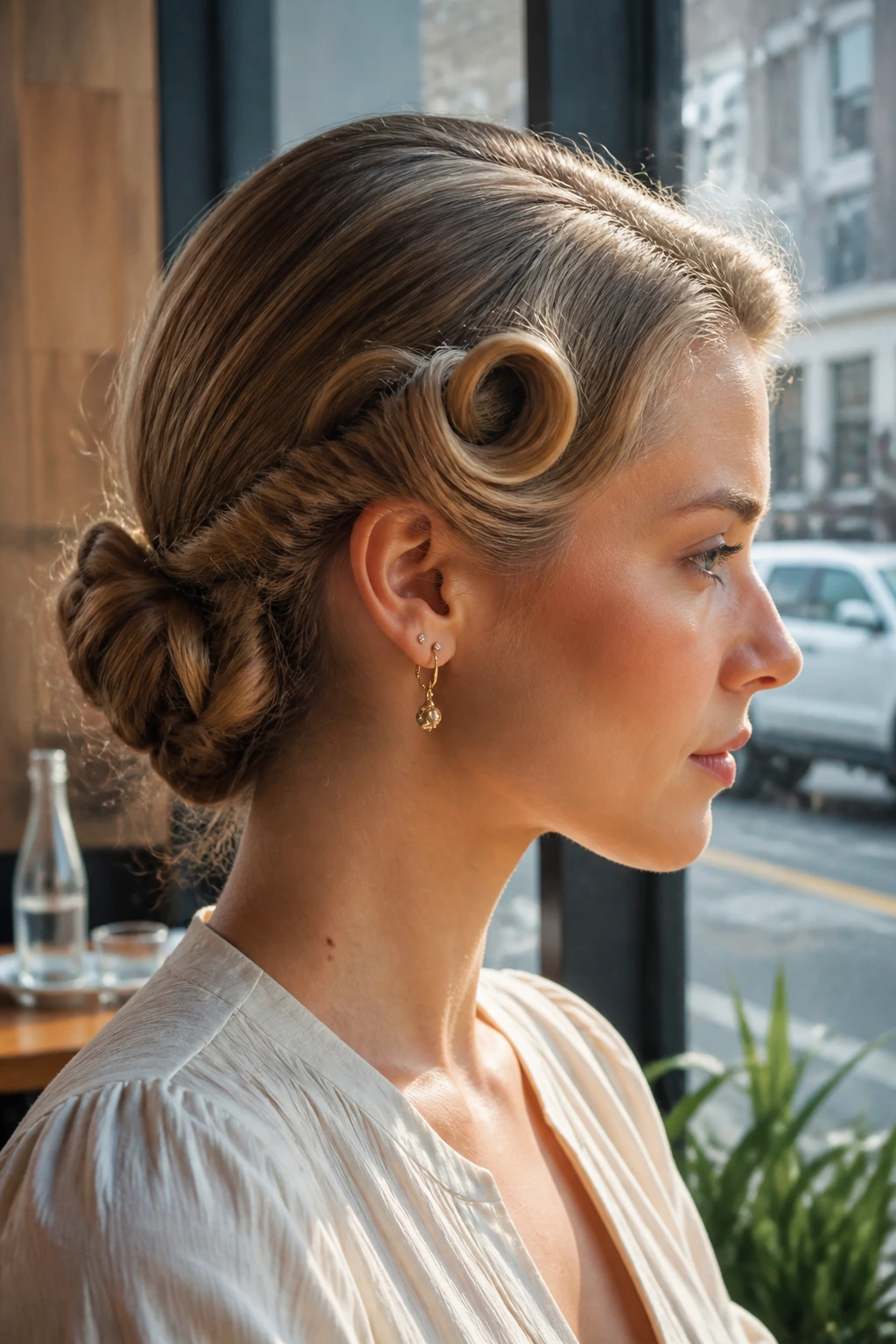
11. The Side-Swept Pin Curl Roll
A side-swept roll gives fine hair a better shape than a centered one, especially if your crown tends to collapse. It moves the eye diagonally, which creates the feeling of fullness even when the actual amount of hair is modest.
Sweep the heavier side back and roll it inward toward the nape, then pin it along the line where the hair folds. Leave the opposite side smoother and tuck it low behind the ear. If the front layers are short, curve them with a flat iron first so they sit neatly instead of popping out.
What to Watch For
Don’t make the roll too tight. A stiff side roll can expose the scalp line and make fine hair look thinner than it is. The shape should curve, not clamp.
This style looks especially good with a deep side part and small earrings. The asymmetry carries the whole look.
12. The Double-Twist Low Pony Bun
A single twist can look narrow on fine hair. Two twists solve that problem. They give the bun more surface area, more pin grip, and a shape that reads as fuller even if the ponytail underneath isn’t massive.
Make a low ponytail, split it into two equal sections, and twist each section separately. Then wrap the two ropes around each other and coil them into a bun at the nape. Pin through the joins where the twists overlap. That is where the hold lives.
This is one of those styles that looks more complicated than it is. It isn’t. The main thing is keeping the twists even so the bun doesn’t lean to one side.
If your ends are extra slippery, spritz the last 3 inches before twisting. I also like this one for hair that has a few layers, because the layered ends hide nicely inside the coil.
13. The Braided Halo with Hidden Ends
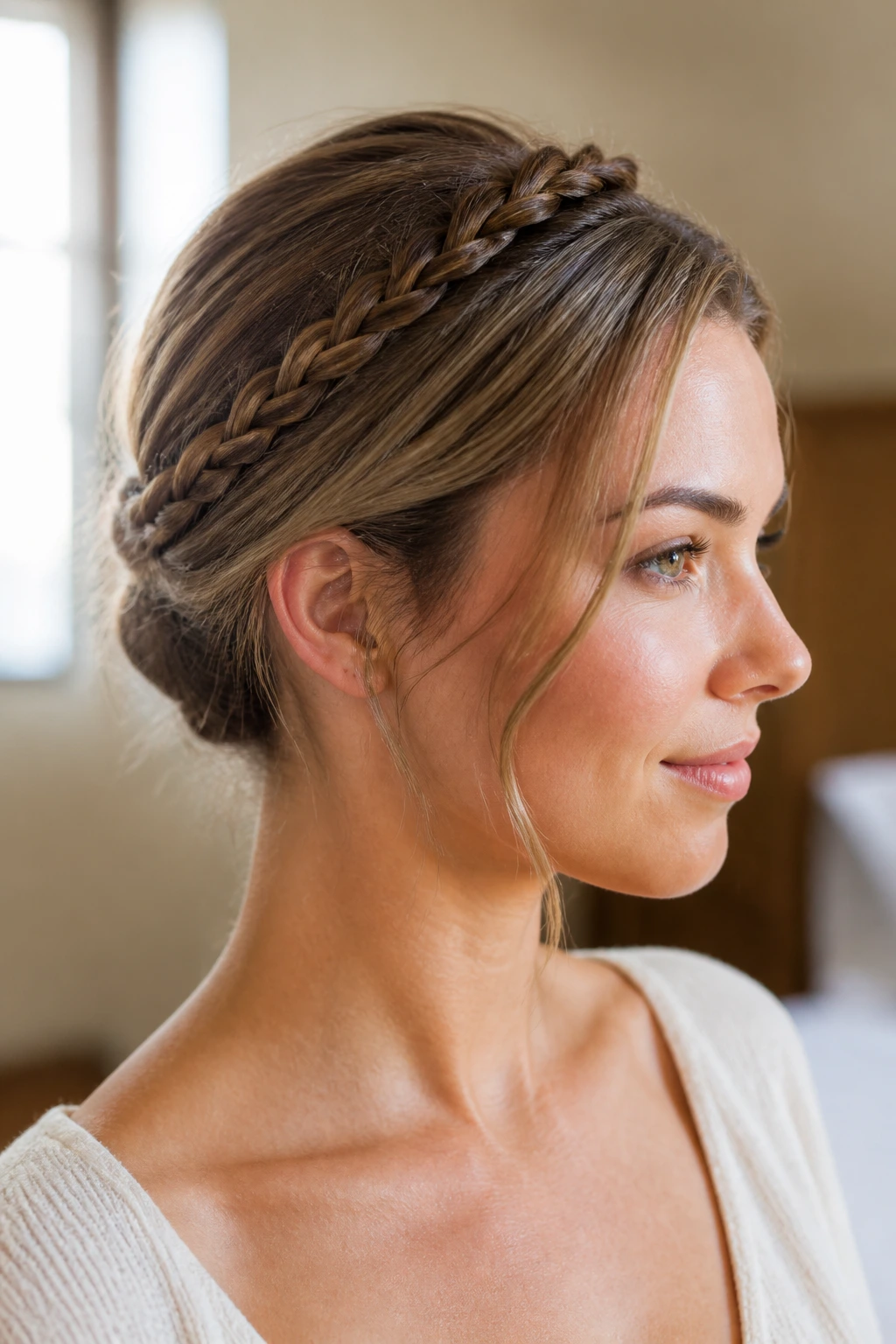
A braided halo works on fine hair when the braid stays narrow and the ends are tucked instead of dangling. That keeps the line clean around the head and avoids the stringy look that can happen when fine ends are left out to decorate the style.
Braid from one side of the head, follow the hairline, and curve around toward the other ear. Pin the braid in place as you go if the hair is slippery. Tuck the last inch or two under the braid at the nape so the finish stays neat.
How to Keep It from Looking Sparse
Gently widen the braid’s outer edges with your fingertips after you secure it. Not aggressively. Just enough to make the braid look a little softer and broader. On very fine hair, that one move helps a lot.
This style is a strong choice for events, photos, or any day when you want your hair off your face and still want the shape to feel feminine rather than severe.
14. The Padded Ballet Bun
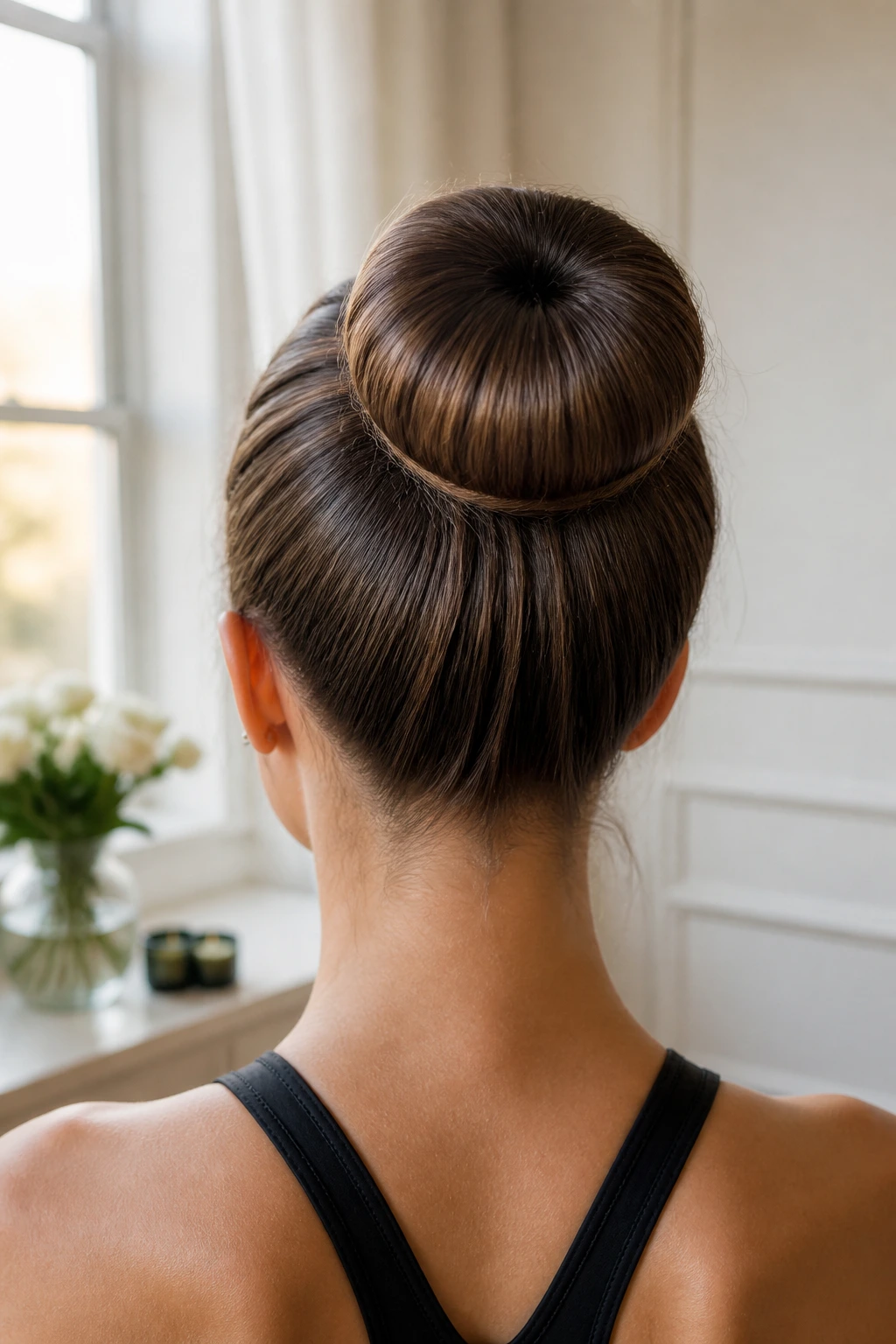
A ballet bun can look too tiny on fine hair unless you give it a little help. Padding changes everything. You’re not trying to fake thickness. You’re creating a cleaner shape with enough body to sit properly.
Use a ponytail base at the crown or low at the nape, slide in a donut or soft cushion, and wrap the hair around it in a smooth layer. Pin the bun at four points around the outside, then mist the surface lightly so the flyaways stay down. If the hair is very fine, a tiny second elastic can help hold the wrapped length before the pins go in.
This style loves neatness. Keep the surface controlled and the bun shape round. If you start yanking sections loose, the padding shows and the whole thing looks fussy.
It’s the one I’d choose for dance class, formalwear, or a clean office look that needs to stay in place.
15. The Knot-and-Pin Topknot
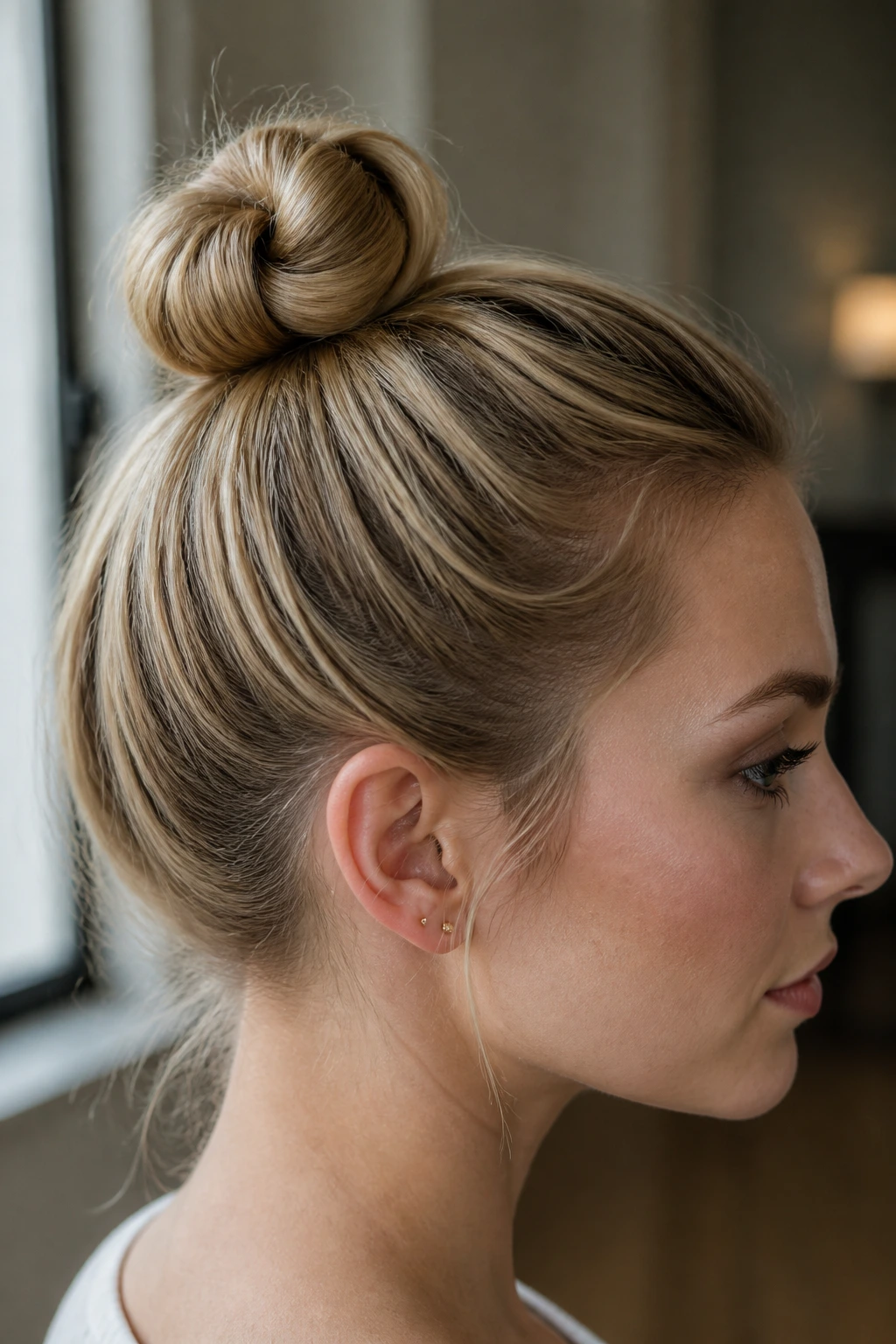
A topknot can work on fine hair, but it needs to be built like a knot, not like a heavy wrapped coil. Two loops usually hold better than one giant wrap, and they look less droopy from the side.
Pull the hair into a high ponytail, then split the length and tie it into a loose knot. Tuck the loose ends under the knot and pin them flat against the base. Use a matte elastic so the ponytail doesn’t slide before you shape it.
Why This Version Wins
Fine hair often gets swallowed by oversized topknots. This one stays closer to the head, which keeps the proportions better. It also looks cleaner when the crown is slightly textured instead of brushed glass-smooth.
A little dry shampoo at the roots before you start gives the knot enough bite. Without it, the whole thing can drift downward.
16. The Scarf-Wrapped Low Twist
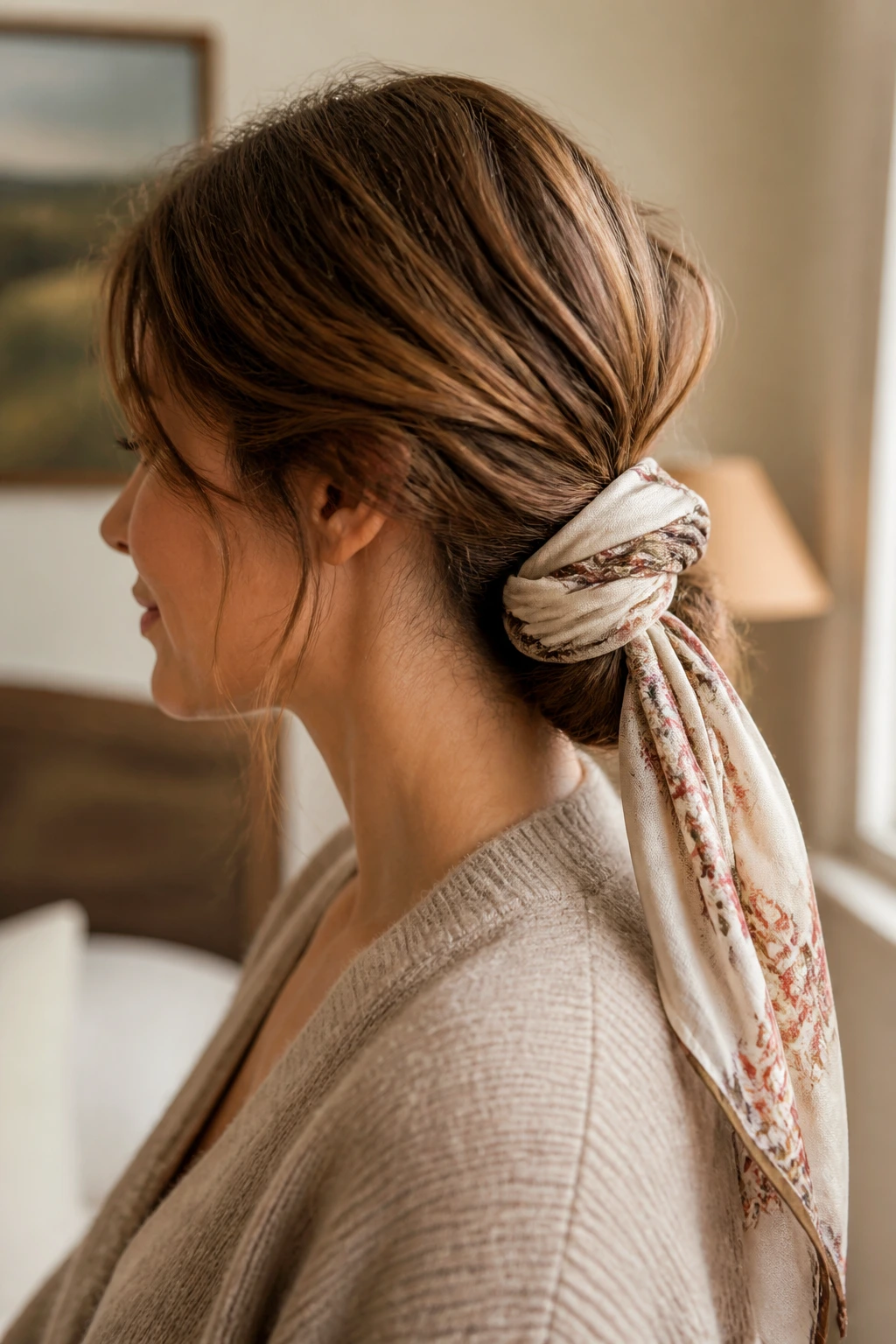
A scarf is not just decoration here. It gives fine hair visual weight and helps hide the places where the twist might look too small. I prefer a lightweight cotton or woven scarf with some grip; slick fabric tends to slide off fine hair before you’ve tied the second knot.
Make a low twist or small bun first, secure it with pins, then wrap the scarf around the base and tie it off to one side. Let the ends trail a little if you want softness, or tuck them under if you want the look to stay neat. The scarf can cover a small bun that would otherwise feel underwhelming.
This is also one of the easiest styles to use on second-day hair. The scarf hides the root texture, and the twist keeps the back from looking flat.
If you want the style to read polished, keep the scarf pattern simple. Loud prints can take over the whole look.
17. The Faux Bob Updo
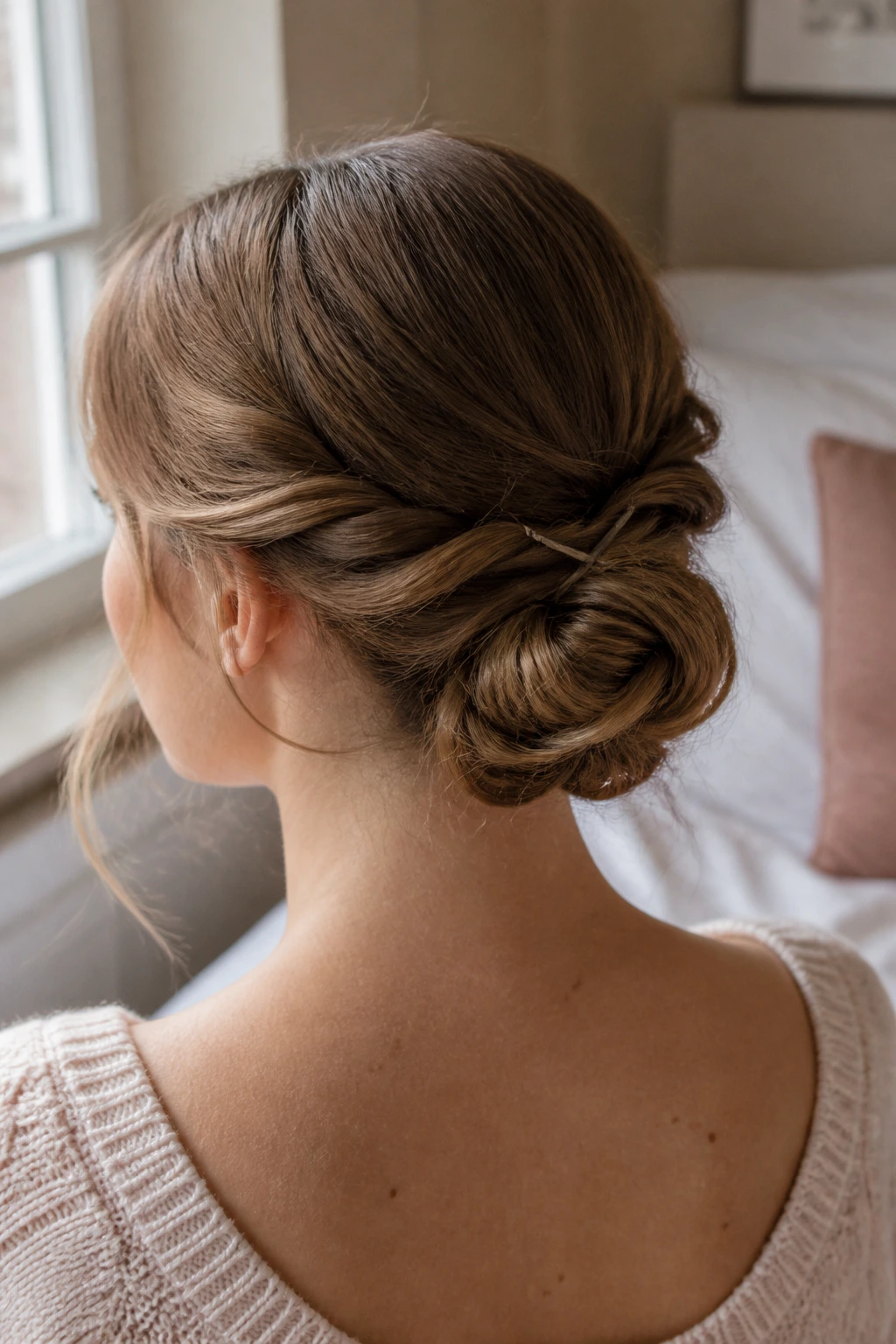
A faux bob is a clever move when fine hair needs to look styled but not overly dressed up. It gives the impression of a shorter cut without requiring actual volume. That makes it a smart choice for fine hair, which often sits flatter in shorter shapes anyway.
Create a low ponytail, fold the lengths upward underneath themselves, and pin the fold against the nape. Pull the top layer forward just enough to create a soft curve around the face. If the ends stick out, tuck them deeper into the fold with one extra pin.
This style works best when the front has a little bend, not poker-straight glass hair. A soft wave at the ends helps the illusion hold up from the side.
It’s a good option for dinners, events, or anytime you want something a little unexpected without spending half the night on it.
18. The Loop-and-Pin Crown
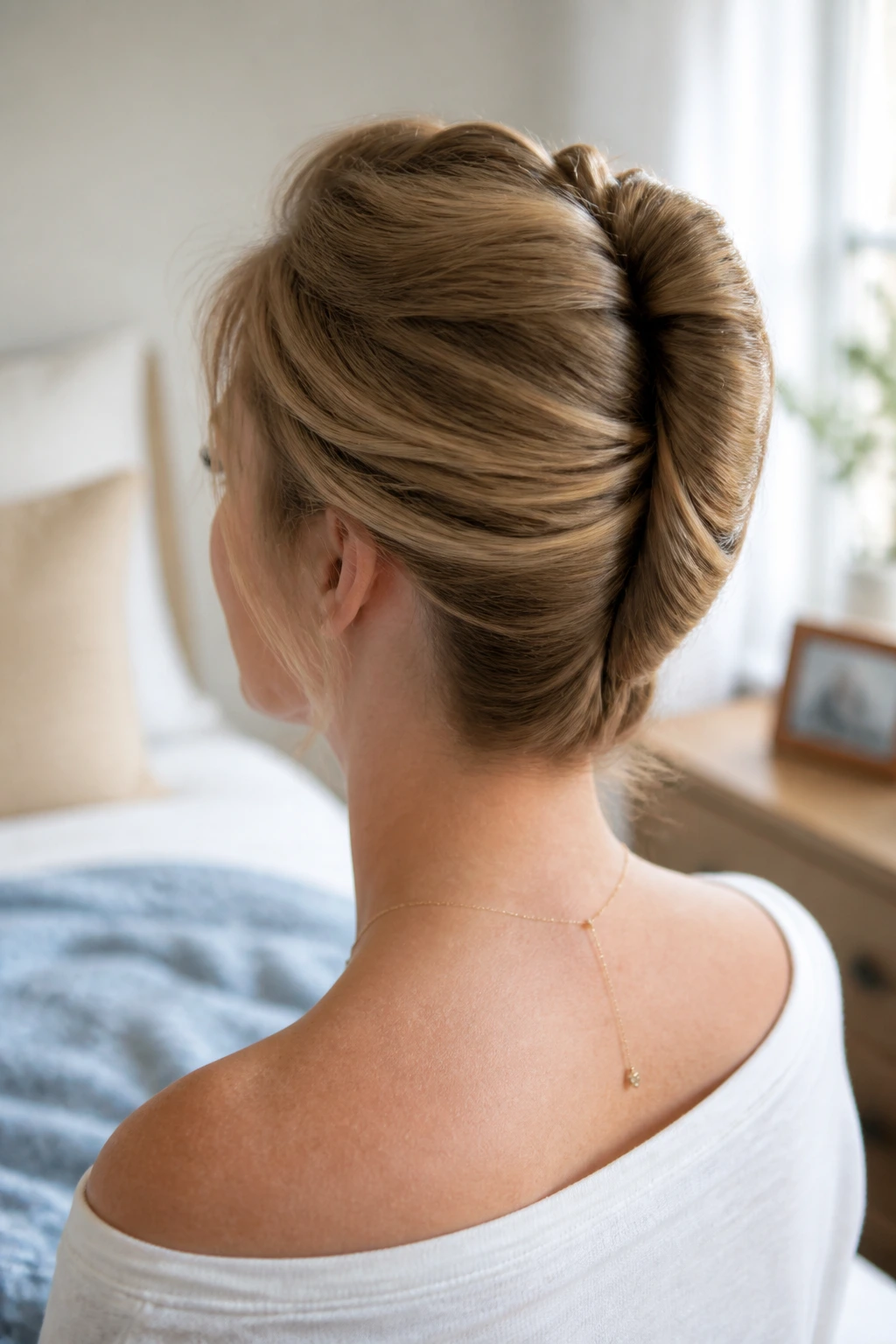
If the rest of the hair feels too flat for a giant bun, build shape with loops instead. This crown-style updo uses small folded sections pinned around the head, almost like a row of soft loops. Fine hair benefits because each loop looks fuller than the strand count underneath it.
Take 2-inch sections from the sides and fold each section back into a loop before pinning it flat. Keep working toward the back, overlapping the loops slightly so the shape feels continuous. Tuck the ends under the last loop and pin them out of sight.
This style takes a little more patience than a twist, but not much. The advantage is that it creates texture all the way around the head instead of concentrating bulk in one heavy spot.
If you want extra hold, mist each section before folding it. A little grip goes a long way here.
Why Fine Hair Updos Need a Different Base
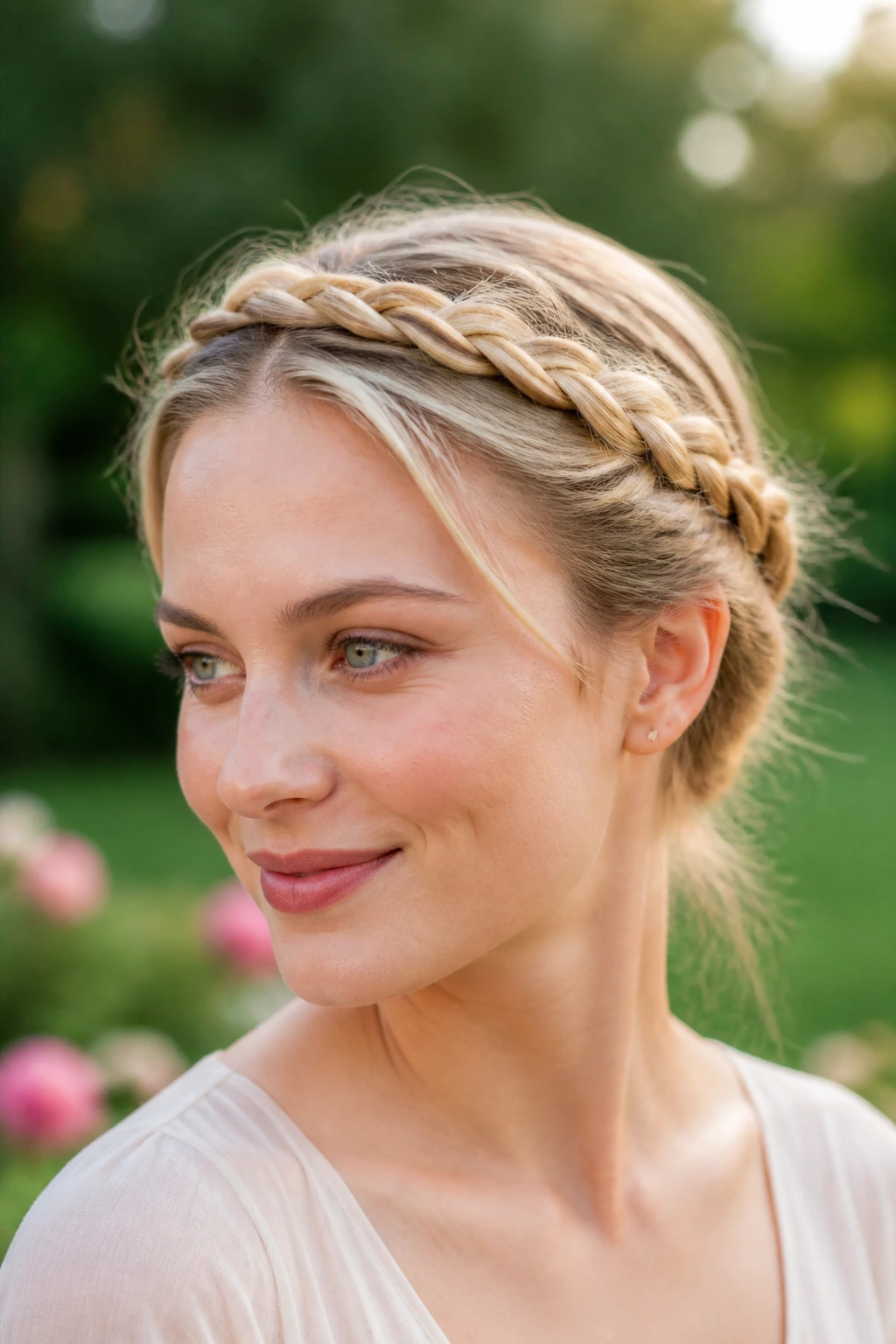
Fine hair is not failing you when it slips. It is telling you the base is wrong.
The biggest difference between a style that lasts and a style that sags is what happens before the pins go in. A little dry shampoo at the roots, a small amount of mousse through damp lengths, and a light rough-dry make a bigger difference than most people think. Heavy creams and oils do the opposite. They make the strands too slick, and slick strands don’t hold a twist well.
I also think people overbuild fine hair out of panic. They keep adding sections, padding, and product until the style gets heavy. Then the bun falls anyway. Better to work with fewer, smaller sections and pin them well. That usually creates a cleaner, stronger result.
Essential Tools for These Styles
-
Bobby pins with a textured grip: Smooth pins slide right out of fine hair; ribbed pins bite better.
-
Mini clear elastics: These are useful for small pony bases, braids, and hidden anchors.
-
Tail comb: Great for clean parts, sectioning, and lifting a crown section without tearing it.
-
Texturizing spray or dry shampoo: Gives hair enough grip to stay twisted, especially on clean roots.
-
Light mousse or volumizing foam: Best on damp hair before blow-drying; use a small amount or the hair goes limp.
-
U-pins: Helpful for buns and French twists because they hold the shape without flattening it.
-
Small claw clip: Handy for the French roll, quick twists, or a partial updo.
-
Teasing brush or fine-tooth backcombing comb: Use only at the roots, in a narrow strip, when you need a little lift.
-
Strong-hold hairspray: Choose a spray that dries fast and does not leave the hair wet and sticky.
-
Satin or cotton scarf: Useful for overnight preservation or for the scarf-wrapped style itself.
Picking Products That Don’t Flatten Fine Hair
The best product for fine hair is usually the one you can barely see once it’s on. That sounds fussy, but it matters. Heavy oils, thick creams, and glossy serums may look nice on coarse hair, yet on fine strands they flatten the root and make pins slide.
Look for a dry shampoo with a translucent finish if your hair is darker, or a light powder formula if your roots need more lift. For hold, a flexible texturizing spray gives more movement than an ultra-stiff lacquer, which can make the style crack when you move your head. If you only buy one product, buy a root-lift spray or mousse. It helps the crown stay up before the styling even starts.
Accessories matter too. Choose bobby pins close to your hair color and the right length for your strand density. Extra-long pins can poke out and feel clumsy; short pins can’t grab enough hair. And if you use a cushion insert or donut, pick one that matches your hair color or wrap it in matching netting. The whole point is to support the style, not advertise the hardware.
How to Wear These Updos in Real Life
Best for: Fine-hair updos do their best work when the shape suits the setting. A sleek chignon or French twist feels right for formal dinners, interviews, and weddings. A messy knot, bubble pony, or scarf-wrapped twist is better for errands, travel, and long days when you want your hair off your neck without looking overdone.
Outfit Pairing: Clean necklines make these styles look sharper. Think crew necks, square necks, high collars, and anything with a strong shoulder line. Soft face-framing pieces work well with sweaters and knits because they keep the look from feeling severe.
Scale: If your hair is very fine and short-to-medium in length, choose styles that sit low and narrow: Gibson tucks, mini French rolls, low buns, and half-up tucked styles. Longer fine hair can take fuller shapes like the bubble ponytail or padded ballet bun, but even then the trick is balance, not bulk.
Accessory Pairing: Pins, pearl combs, slim barrettes, and narrow ribbons usually look better than oversized clips. Heavy accessories can drag the style down. A small decorative comb at one side or a single metal pin near the bun is often enough.
Extra Texture and Hold Boosters
Texture Boost: Spray dry shampoo at the roots before styling, then a little texturizing spray through the mid-lengths. That gives fine hair enough tooth to stay pinned without feeling dirty or chalky.
Hold Booster: If a section keeps slipping, backcomb just the underside of that section before you twist it. One or two gentle strokes are enough. You are not trying to build a nest.
Shape Booster: For buns and rolls, pinch the outer edge a little after pinning. The goal is to create a soft round shape, not to expose every strand. A tiny release at the surface often makes the style look fuller.
Accessory Upgrade: Swap plain elastics for small covered ones, and trade a basic clip for a metal or pearl barrette when you want the style to feel finished. Even one visible accessory can change the whole read of the look.
Make-It-Yours: If your hair leans dry, skip heavy hold products on the lengths and use them only at the roots. If your hair gets oily fast, dry shampoo at the crown and a matte spray at the nape usually work better than shine spray.
Common Mistakes That Flatten Fine Hair
The most common mistake is overloading the hair with softening product before styling. Fine hair loves a little grip and hates a greasy coat. If the bun keeps sliding, the fix is usually less serum and more texture, not the other way around.
Another problem is building the entire style too big. A giant bun on fine hair often collapses under its own weight and exposes the base. Smaller, tighter shapes almost always last longer. If you want more volume, create it at the crown or with loops and rolls, not by stuffing the bun itself.
Pins are another weak point. Too few pins and the whole thing shifts. Too many pins, shoved in randomly, create pressure but not hold. The sweet spot is usually a few crossed pins at the base and a couple more where the hair changes direction.
The last mistake is smoothing everything until the scalp shows. Fine hair needs a little softness around the hairline. Otherwise the style looks thin, even if the actual hair is dense. Leave a few wisps, bend the front pieces, or soften the crown by hand. That tiny bit of looseness matters.
Variations and Alternatives to Try
The Office-Sleek Version: Swap the messy texture for a smoother surface and choose the French twist, chignon, or low roll. Use just enough spray to keep flyaways down, then finish with one slim barrette or pin near the base.
The Soft Wedding Version: Add a side part, a few face-framing bends, and one decorative comb. This works especially well with the braided crown, Gibson tuck, or padded ballet bun because the details feel intentional without making the style bulky.
The No-Heat Version: Start with damp hair, work in mousse, then braid or twist it overnight under a loose satin scarf. In the morning, shape the hair into a low bun or crown style. The damp-set texture gives fine hair more grip than hot tools sometimes do.
The Short-Length Rescue: If your hair is too short for a full bun, use the half-up tucked roll, mini claw-clip French roll, or faux bob. These styles use less length and put the visual weight where it counts.
The Extra-Volume Crown: If the top is the problem, not the length, add a narrow strip of backcombing at the crown before you pin anything. That trick helps the style sit higher without making the whole head feel teased and stiff.
How to Keep the Style Going Overnight
Fine-hair updos rarely need the same kind of heavy maintenance that thick, massive buns do. What they need is protection. If you sleep on the style loose, the pins shift, the crown drops, and the shape loses its line. A satin pillowcase helps, but a lightweight scarf tied around the hairline works better for styles with a twist or roll.
If the style is meant to last into the next day, keep the pins in place overnight unless they dig in. In the morning, mist the roots very lightly, smooth any dents with your hands, and add one or two fresh pins where the bun or roll starts to loosen. For a braid, re-braid the exposed edge instead of trying to rebuild the whole thing.
Most of these styles look best the day they’re made. The exception is the bubble ponytail and the scarf-wrapped twist, which can actually improve after a few hours because the strands settle and the grip increases. Sleek styles lose their crispness faster, so refresh those first.
Questions I Get About Fine-Hair Updos
Is fine hair the same thing as thin hair?
No. Fine hair refers to the diameter of each strand, while thin hair refers to how much hair you have on the head. You can have lots of fine hair and still need these tricks because the strands themselves are slippery.
Should I wash my hair before doing an updo?
Freshly washed hair can be too soft and clean for some styles, especially buns and twists. Day-two hair usually has better grip. If you need to start with clean hair, use dry shampoo or texturizing spray at the roots first.
What product helps fine hair hold an updo best?
A light mousse or root-lift spray gives the best base, followed by dry shampoo or texturizing spray before pinning. Heavy cream and oil tend to make the style collapse faster.
How do I keep bobby pins from slipping out?
Push them in against the direction of the hair’s tension and cross two pins where the twist or bun changes direction. Also, use pins with a textured grip. Smooth pins are a waste of time on fine hair.
Can I do these styles on shoulder-length hair?
Yes, and some of them work better on shoulder-length hair than on long hair. Gibson tucks, French rolls, half-up tucked styles, and small low buns are especially good for medium lengths.
Do I need to tease fine hair for volume?
Not much. A narrow strip of root teasing at the crown is often enough. Teasing the whole head usually creates more tangles than height, and it can make the updo look fuzzy.
What if my updo goes flat halfway through the day?
Add one or two pins where the shape starts to sag, then pinch the bun or roll upward slightly to re-lift it. A little dry shampoo at the roots can help revive grip fast.
Can I use a bun donut or padding insert?
Absolutely. In fact, fine hair often benefits from a small insert because it gives the bun a better silhouette. Just make sure the padding matches your hair color or is fully covered.
A Few Pins Short of Perfect
Fine hair doesn’t need to be overworked to look good in an updo. It needs a base that grips, a shape that matches the strand size, and the discipline to stop before the style gets too heavy. Once you get that balance right, even a simple twisted bun or Gibson tuck can look cleaner and more finished than a much bigger style on thicker hair.
Start with the shapes that sit low and close to the head. Then work your way toward the more structured styles once you know how your hair behaves with dry shampoo, pins, and a little texture. That’s the part nobody tells you, and it matters: the best updo for fine hair is the one that holds its line without asking your strands to become something else.
