



A blunt bang can swallow a face. Light bangs do the opposite. They leave a little air at the forehead, let the brows show through, and keep the haircut from feeling like a curtain pulled tight across the eyes.
That softness matters more than people think. A fringe that’s cut too dense can make the front of the haircut look boxy, especially on fine hair that collapses or thick hair that puffs. The lighter versions in this collection work because they use shape, not weight: a cheekbone-skimming curtain, a see-through brow graze, a side sweep with feathered ends, a piecey bend that looks like it grew there.
I keep coming back to this kind of fringe because it solves a very practical problem. You want movement near the face, not a wall. You want the haircut to soften the features, not hide them. And you want something you can live with on day three, when the roots are a little flat and the front needs a quick mist of water, a round brush, and thirty seconds of patience.
Why These 18 Light Bangs Work So Well
- They leave skin showing: A translucent fringe line keeps the forehead from feeling boxed in, which is why these cuts read softer than heavy, solid bangs.
- They grow out with less drama: Longer temples and feathered ends slide into face-framing layers instead of sticking straight out after a few weeks.
- They work with real texture: A small bend, wave, or cowlick can become part of the shape instead of something you fight every morning.
- They flatter the cheeks and brows: The right light bang lands near the brow bone, cheekbone, or temple, which pulls attention to the center of the face in a gentle way.
- They’re friendlier to fine hair: Lower density keeps the front from turning into a flat shelf, while point-cut ends stop the fringe from looking stringy.
- They give you options: You can wear them parted, swept, brushed open, tucked, or bent under with a round brush. That flexibility is the real appeal.
1. Feathered Curtain Bangs That Open at the Cheekbones
Feathered curtain bangs are the safest place to start if you want softness without giving up shape. The middle sits shorter, usually around the eyebrow line, while the sides drift down toward the cheekbones. That diagonal line does a lot of work. It opens the face, breaks up a wide forehead, and never feels locked in one position.
The trick is in the ends. They should look airy, not shredded. Ask for point-cutting through the perimeter and keep the center narrow so the fringe doesn’t turn into a heavy drape. When they’re styled well, the hair falls away from the face in a loose, lived-in split.
What to ask for
- Shortest point around the brow peak.
- Longer side pieces that kiss the cheekbone.
- Soft point-cut ends instead of a hard line.
- Enough length to tuck behind the ears on lazy days.
Best fit: Oval, heart, and square faces all wear this well.
My honest take: If someone says they want bangs but keeps worrying about regret, this is usually the cut I’d suggest first.
2. Bottleneck Bangs With a Narrow Center and Wider Temples
Bottleneck bangs are the clever cousin of curtain bangs. They start narrow in the center, then widen as they move toward the temples, almost like the silhouette of a bottle neck. That shape matters because it gives you a soft front without making the whole forehead look covered.
The middle should be short enough to brush the brows, but not so short that it reads choppy. The outer pieces need a little extra length so they can fold into the rest of the haircut. I like this one on hair that needs movement without too much volume at the face. It’s especially good when you want the bang to sit quietly and do its job in the background.
A round brush helps, but don’t overwork it. A quick bend under the center and a sweep away from the temples is enough. If you keep pulling and re-brushing, the shape gets fuzzy fast. That’s the price of lightness.
3. Brow-Skimming Wisps That Barely Touch the Brows
Want the softness of bangs without a front section that steals the whole show? Brow-skimming wisps are the answer. They live right at the edge of the brows, sometimes even hovering a hair above them, and they rely on transparency instead of density.
The cut should feel almost see-through at first glance. That means the stylist leaves enough gaps between pieces for skin and brow to show through. It sounds tiny, but it changes the whole effect. The face stays open. The fringe just murmurs instead of shouting.
How to style it
A quick blow-dry with low airflow keeps these wisps from separating too much. Use your fingers first, then a small round brush only on the tips. If they start to piece out too hard, a touch of dry shampoo at the roots resets them without killing the lightness.
This is a good choice if you’re nervous about commitment or if your hair falls flat by lunch. It gives shape without taking over.
4. Side-Swept Airy Fringe for a Gentle Diagonal Line
A side-swept fringe softens the face in a way that center-part bangs never quite do. The line moves diagonally across the forehead, which is useful when you want something light but not symmetrical. It bends the eye, and that bend is what keeps the look easy.
Picture this on a day when your hair has a side part already built into it. The fringe falls over from one side, the shortest pieces sit near the arch of the brow, and the longest pieces drift into the cheek area. It’s a smart option for anyone with a cowlick that refuses to cooperate in the middle.
- Shorter edge near the part.
- Longer sweep across the forehead.
- Soft texture at the ends.
- Works especially well with a blow-dried bend.
I like this version on straight hair that needs a little movement, but it also helps wavy textures that want direction. It’s a little old-school in the best way. Never stiff. Never fussy.
5. Rounded Blowout Bangs With a Soft Arc
Rounded bangs have a shape to them that feels polished without turning hard. The line curves gently across the forehead, then bends down at the corners so the front doesn’t end in a blunt shelf. When the blowout is done right, the fringe follows the brow line like a soft arch.
This one relies on tension. Wrap the bangs over a round brush, direct the hair forward first, then roll it under just enough to create a smooth arc. A 1-inch brush usually gives a tighter bend; a 1.5-inch brush makes the curve looser and easier to live in. I prefer the larger brush unless the hair is very short.
These bangs flatter longer faces especially well because the curve brings the eye back in. They also play nicely with a clean center part elsewhere in the haircut, which keeps the whole look from becoming too symmetrical. That balance is the point.
They do need a trim schedule. The rounded edge loses its shape fast once it grows past the brow line.
6. Choppy Light Bangs With Long Frame Pieces
Choppy bangs are where softness gets a little attitude. The cut still stays light, but the edge is broken up on purpose so the fringe doesn’t fall into one smooth sheet. Add longer frame pieces at the sides, and the whole front feels less like a bang and more like part of the haircut.
This is a strong move on thicker hair, because the broken line stops the front from looking heavy. It also works on shaggy cuts that already have movement through the crown and mid-lengths. The big mistake here is over-texturizing the ends until they look thin and ragged. You want separation, not fray.
What makes it different
- The center is airy, not blunt.
- The sides stay long enough to shape the face.
- The finish should look piecey, not chopped to bits.
- A little texture spray beats heavy cream.
If you like hair that looks relaxed on purpose, this is a good lane. It’s not precious. That’s part of the appeal.
7. French-Inspired Piecey Fringe With a Loose Bend
French-inspired fringe gets talked about a lot, and sometimes it’s over-romanticized. What it really means in practice is this: light density, a loose bend, and a fringe that looks slightly imperfect in a way that feels right. Not messy. Just not overdone.
I like this style because it doesn’t depend on perfect styling. A quick finger-dry, a bent first section, maybe a little cream rubbed between the palms — that’s usually enough. The pieces separate a bit as they dry, and that separation gives the face room.
The length usually lands just above the brows or brushes them lightly. Too short and it turns stern. Too long and the shape disappears into the rest of the hair. The sweet spot is tiny. A quarter inch changes the whole mood.
This works especially well with chin-length bobs and shoulder-length cuts, where the fringe can carry a little of the visual interest up front without crowding the face.
8. Long Arched Bangs That Trace the Brow Line
If your forehead reads wide, a straight line can feel harsh. A long arch is kinder. The curve follows the brow line, then softens at the temples so the whole front section feels shaped instead of cut off.
The arch should not be exaggerated. That’s where people go wrong. If the center is too short and the sides are too long, the fringe starts to resemble a horseshoe in the wrong way. Keep the middle just below or right at the brow, then let the outer pieces slide down gradually. The result is subtle, which is exactly why it works.
This style is especially useful when you wear your hair smooth. The arch gives definition without needing layers everywhere else. On straight hair, it looks polished. On slight waves, it softens and becomes even better.
One neat trick: blow the center forward, then angle the outer sections toward the temples. That preserves the arc instead of flattening it into a line.
9. Blended Bangs That Melt Into Face-Framing Layers
Can bangs disappear into the haircut and still do their job? Absolutely. Blended bangs are for people who want the face-framing effect without a clear “bang” line. The shortest pieces begin near the brow, then melt into layers around the cheek and jaw.
This is one of the easiest looks to wear if you’re scared of feeling stuck with a fringe. It grows out quietly. It also gives stylists room to work with your natural texture, which matters more than people admit. A blended bang that fights the rest of the cut will look forced. One that connects to the layers feels calm.
What to tell your stylist
Ask for point-cutting, a soft center, and long face-framing pieces that start around the cheekbone. If your hair is thick, ask them not to take too much weight off the perimeter. If it’s fine, ask them to keep the layers longer so the front doesn’t disappear.
This is a low-drama cut. That’s the whole point.
10. Tapered Fringe for Wavy and Curly Hair
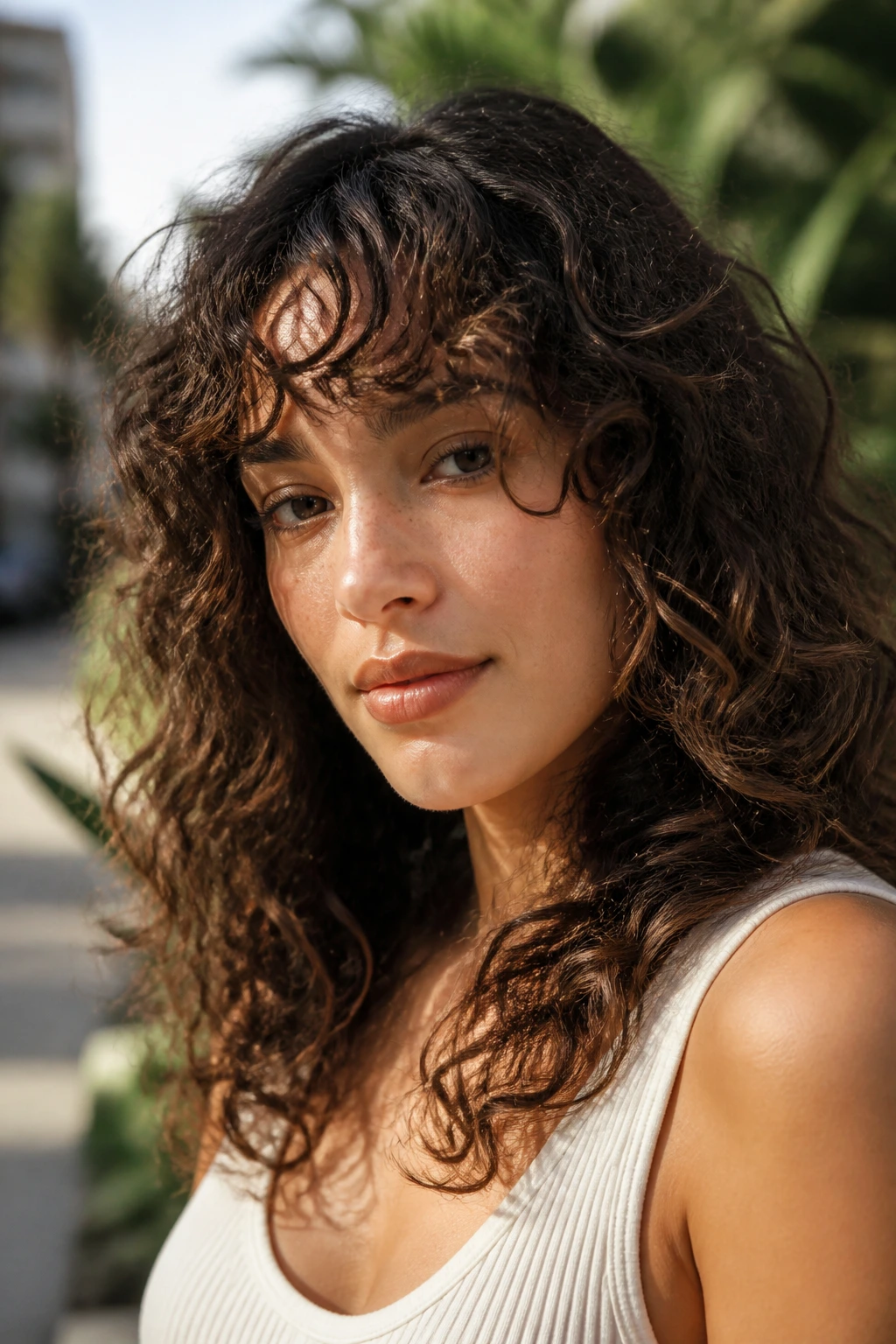
Curly and wavy hair changes the math. What looks soft when wet can spring up hard once it dries, and bangs are where that shock happens first. A tapered fringe solves that by leaving the center slightly longer and easing the sides into the face frame.
I like this version cut dry, or at least mostly dry. You need to see the pattern the hair actually makes when it’s free. If the stylist cuts waves as though they were straight, the fringe can bounce too high and feel boxy. No one wants that.
- Longer center so shrinkage has room.
- Softer corners at the temples.
- Curled or waved ends left intact.
- Best styled with curl cream or light mousse.
Air-drying works well here if the hair has a predictable bend. If not, a diffuser on low heat keeps the fringe from drying in odd clumps. This is one of those cases where less touching helps more than better technique. Hands off. Let the wave form.
11. Shag Bangs With a Soft, Lived-In Finish
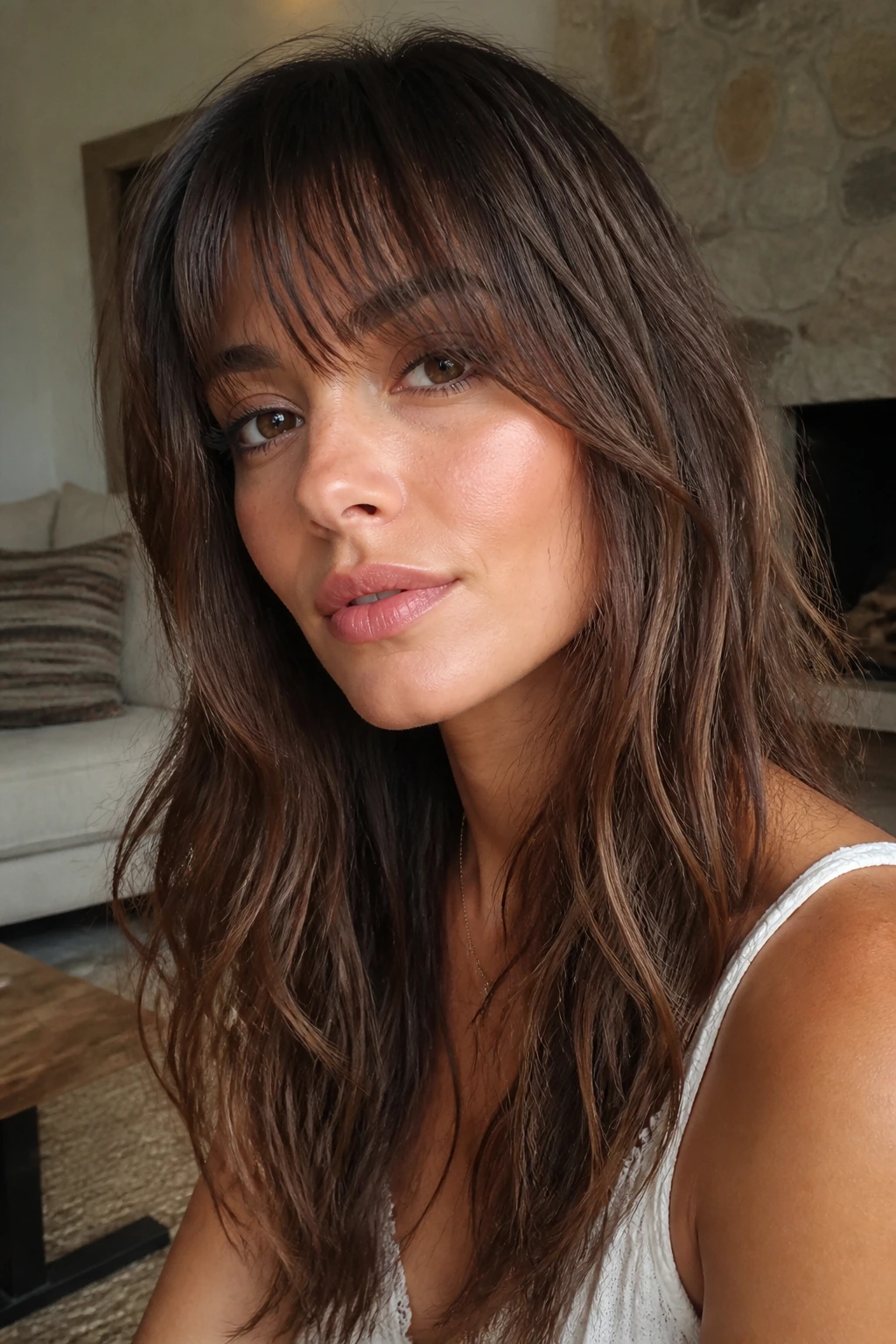
Shag bangs are what happen when fringe gets a little rock-and-roll but stops before it turns messy. The front is broken up, the ends are feathered, and the line feels relaxed enough to sit with a layered shag rather than fighting it. There’s movement from root to tip, which is why this cut never looks stiff.
What I like about shag bangs is that they hide a bad day better than a polished fringe does. If the roots puff a little or the front separates by noon, the haircut still makes sense. That’s not a small thing. Some bangs only look good in the first ten minutes after styling. These don’t need quite so much babying.
A little texture spray at the mid-lengths helps. So does a quick scrunch with a diffuser if your hair bends naturally. The key is to keep the fringe soft at the root and a touch piecey through the ends.
It’s a forgiving cut, and forgiveness is underrated.
12. Fine-Hair Wisps That Never Look Stringy

Fine hair needs a careful hand. Too much texturizing and the fringe disappears. Too little and it looks flat against the forehead like a cap. Fine-hair wisps sit in the middle, with enough body to show shape and enough space between pieces to keep the front light.
The best versions are cut with a soft perimeter and minimal thinning. I’d rather see a few clean wisps than a fringe that’s been aggressively razored into frizz. That frayed look can happen fast on fine strands, especially if the ends are dry. Point-cutting is usually kinder.
This style likes lightweight mousse at the roots and a quick blow-dry with low heat. Heavy oils near the front are a bad idea. They collapse the bangs and make them separate in greasy little ribbons. Not cute. Not useful.
If your fine hair gets static, a tiny bit of cream rubbed through the palms and tapped on the ends is enough. Keep it off the roots. The face needs air, not sludge.
13. Thick-Hair Light Bangs With Internal Texture

Thick hair can wear light bangs beautifully, but only if the bulk is handled with some restraint. The fringe should be thinned from the inside, not hacked away at the edges. That distinction matters. When thick hair is over-cut at the perimeter, the bang can puff up into a shelf. When the weight is removed beneath the surface, the front sits flatter and softer.
I’d ask for soft internal texture and long outer pieces that blend into the sides. That keeps the front from looking like a separate block of hair. It also helps the bangs move when you turn your head, which is half the point of a light fringe anyway.
A mini flat iron can tame the first inch at the root if the hair has a lot of body. Use low heat. Twice through is enough. If you keep chasing the same section with heat, the ends get blunt and the softness disappears.
This is the version I’d pick for someone with dense hair who still wants a gentle frame instead of a heavy wall.
14. Glasses-Friendly Fringe That Clears the Frames
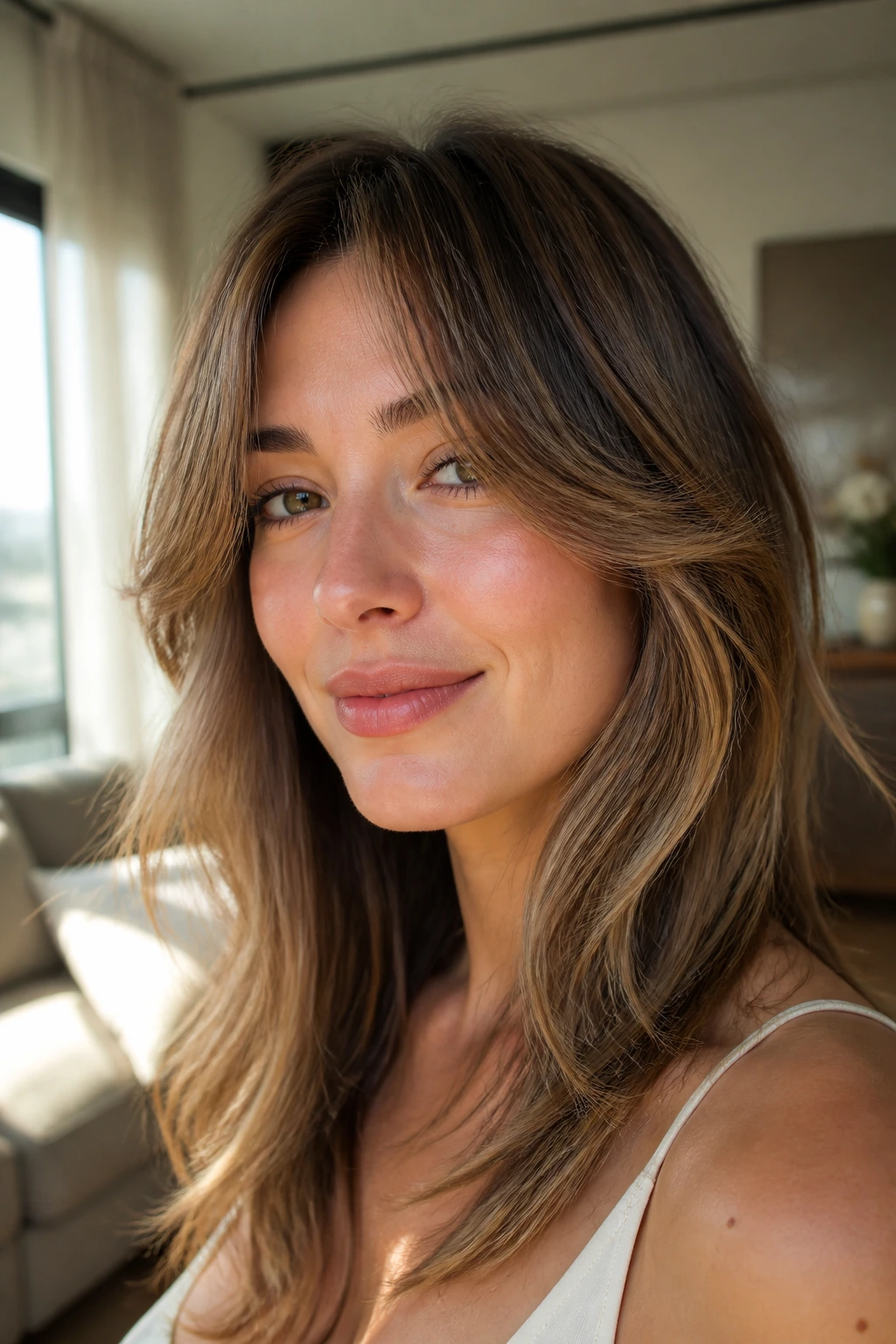
Glasses change everything. A bang that looks easy on its own can start fighting the frames the minute you put them on. A glasses-friendly fringe fixes that by leaving enough space above the lenses or by splitting gently around them so the front doesn’t land where the hardware sits.
The best version keeps the center lighter and the temples a little longer. That way the fringe can move away from the frames instead of resting on them. If you wear glasses every day, this matters more than face shape advice. A soft fringe that constantly catches on the rim will annoy you by noon.
Why it works
The line stays open above the eyes, which keeps the expression visible. The hair also gets less oily because it’s not rubbing against the frame all day. Small win. Big difference.
If you wear metal frames, a brushed-open curtain shape usually works best. If the frames are thicker, a side-swept or bottleneck line gives more room.
15. Grow-Out Fringe That Still Looks Intentional

A fringe that grows out badly is a pain. A fringe that grows out on purpose is a relief. The difference is all in the cut. A grow-out-friendly bang starts with enough length at the center to avoid a sudden shelf, then leaves the side pieces long enough to drift into the rest of the hair as weeks pass.
This is the cut I’d choose if someone is uncertain or if they hate the idea of a high-maintenance front. It gives the mood of bangs without locking you into a strict trim schedule. After a few weeks, it slides into curtain territory. After that, it behaves like layers.
How to use it
Brush the front forward on wash day, then split it while it’s still damp. A quick blow-dry with the nozzle pointed down keeps the roots from sticking up. If the pieces start to fall into your eyes, tuck one side behind the ear and let the rest keep drifting.
The whole thing should feel casual, not neglected. That’s the line to protect.
16. Air-Dried Bangs for Natural Texture
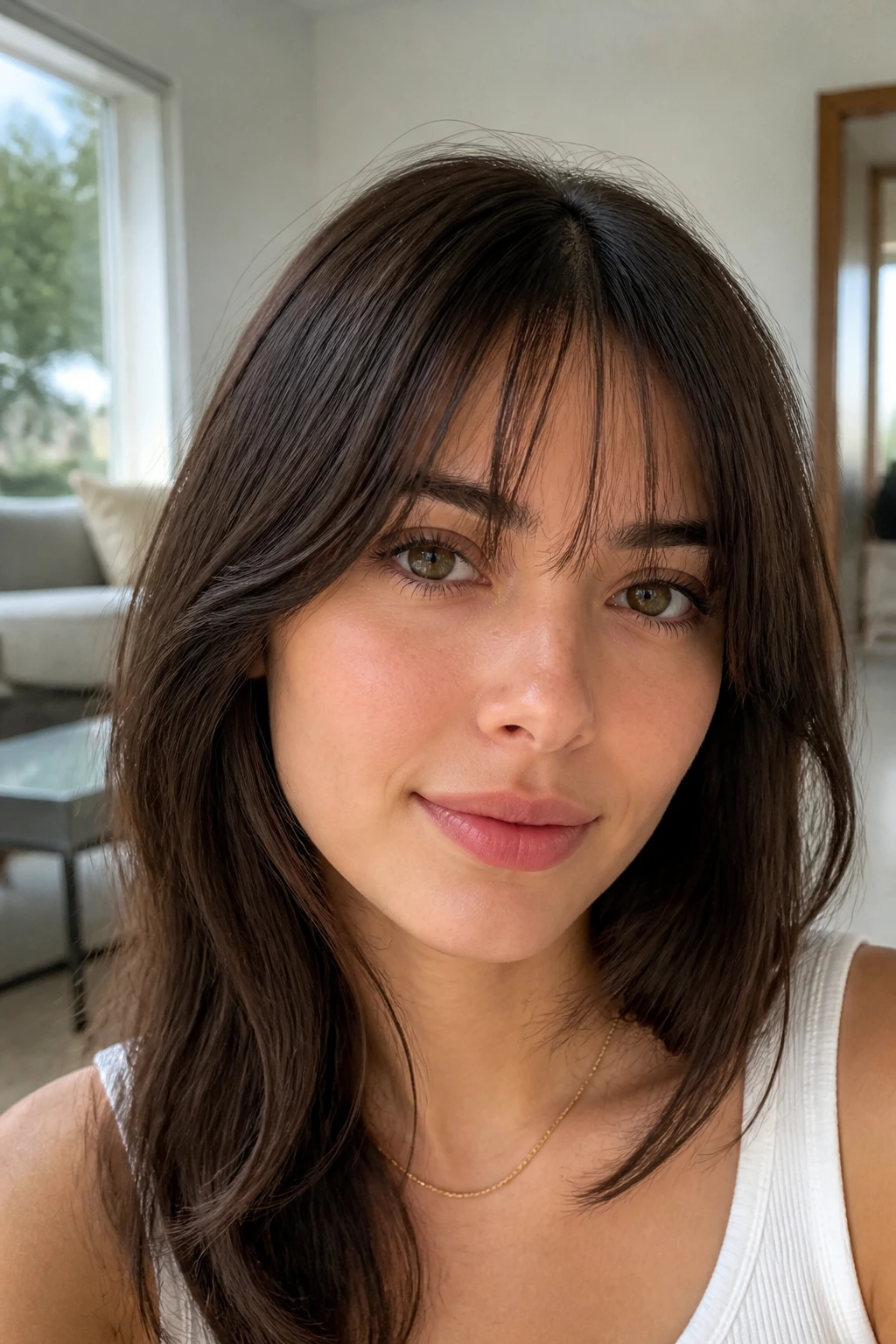
Some fringes are built for hot tools. Others are built for a towel and a bit of patience. Air-dried bangs fit the second group. They work best when the cut already respects the natural bend in the hair, so the fringe can fall into place without a full blowout.
This version is especially good for people who don’t want to style the front every morning. Use a small amount of mousse on damp hair, scrunch the fringe lightly, and separate the pieces with your fingers once it dries. If the texture is wavy, that movement becomes the look. If it’s straight, you still get enough softness to avoid a flat slab.
The danger here is over-touching. When you keep fussing with the front while it dries, the bangs can split in odd places and stay there. Hands off for the first 10 minutes. Seriously.
If you want a more polished finish later, bend just the very ends with a small flat iron after the hair is dry. Don’t chase the whole section.
17. Collarbone Curtain Bangs for Long Faces
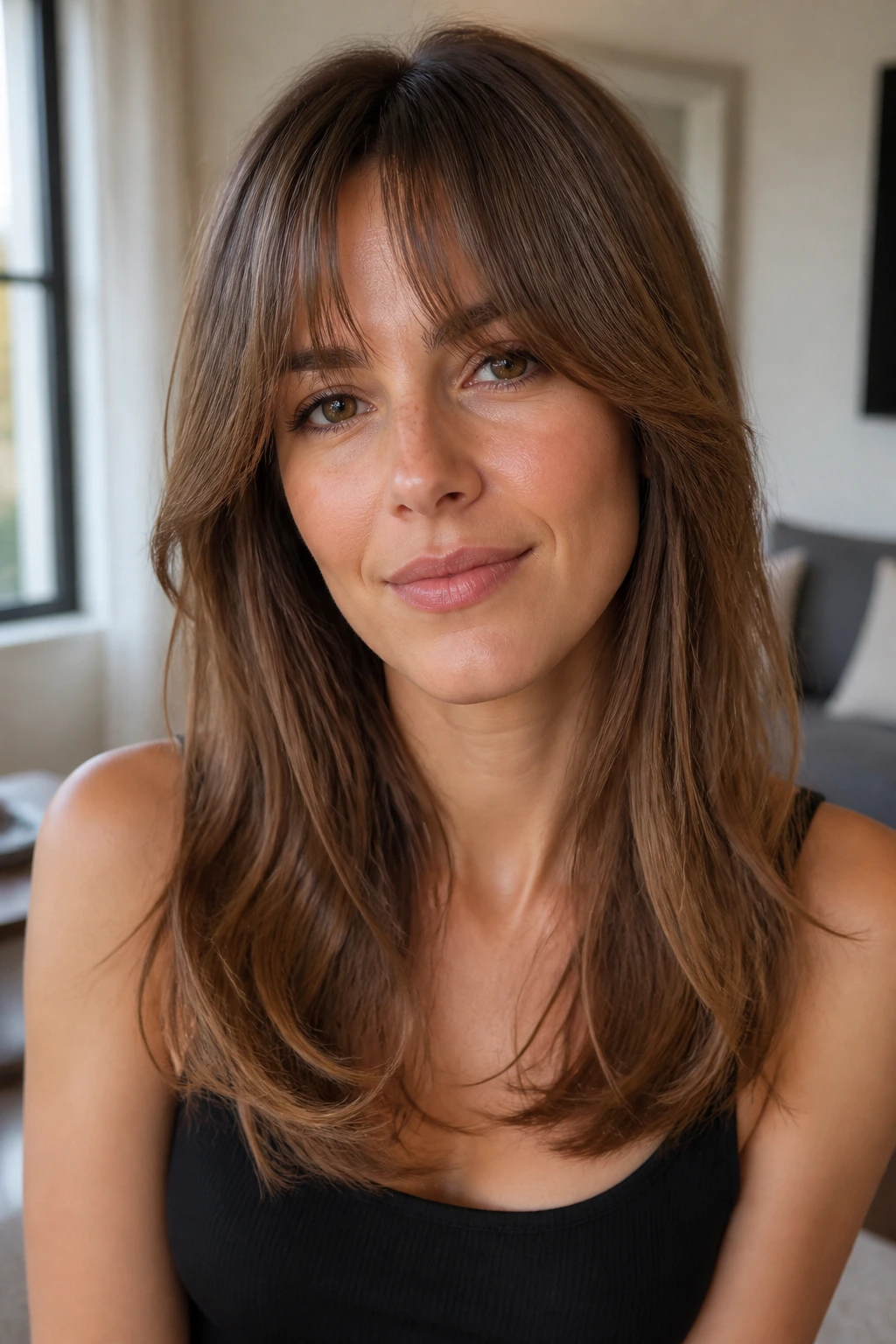
This is the long-game version of curtain bangs. The front starts as a light fringe near the brows, then stretches into longer face-framing pieces that can fall toward the collarbone. On a long face, that longer sweep helps soften the vertical line without closing off the features.
The cut is elegant in the plainest sense of the word: nothing fights for attention. The fringe opens at the center, the sides drape lower, and the face gets a frame that feels continuous from forehead to shoulders. I like it on people who wear their hair long and want the front to feel intentional even when it’s tucked back.
A styling trick here is to curve the side pieces away from the cheekbones, not toward them. That keeps the whole shape from collapsing inward. A 1.5-inch brush usually gives a looser bend that suits the length better than a tight roll.
This one lives somewhere between bangs and layers, which is why it lasts in real life.
18. Barely-There Fringe With a Soft, Open Forehead

Barely-there fringe is for the person who wants to say, “I have bangs,” without handing over the whole forehead. The pieces are so light that they read more like a soft texture change than a full bang section. There’s just enough coverage to break up the face, and just enough transparency to keep the line open.
I’d call this the least committal option in the set, but that makes it sound timid, and it isn’t. It’s deliberate. The center is cut softly, the temples stay long, and the fringe disappears into the rest of the haircut before it gets bossy. If you’ve never worn bangs before, this is an easy entry point.
The best styling move is simple: blow the roots forward, sweep the pieces apart with your fingers, and stop before they get too perfect. A little looseness keeps the effect soft. If you press them flat, the haircut loses its charm.
It’s the kind of fringe that barely announces itself and still changes the whole front of the haircut. That’s the point.
Why Light Bangs Give the Face More Room to Breathe

Light bangs earn their keep because they change the front of the haircut without trapping it. A heavy fringe can pin the eyes, compress the forehead, and make the whole style feel more like a block than a frame. The lighter versions leave movement at the brow, air at the temples, and a visible line of skin that keeps the face from looking overcut.
That matters on real hair, not just in salon photos. Hair grows at the root, sweats at the forehead, and flattens under hats, humidity, and a bad night’s sleep. A soft fringe handles those small failures better because it has somewhere to go. The pieces can separate, sweep aside, or bend back into the layers instead of betraying you in one solid sheet.
The best part is how forgiving these cuts are when they’re slightly imperfect. A lifted root or a little separation at the center doesn’t ruin the look. It often makes it better.
Essential Tools for Getting Bangs to Sit the Right Way
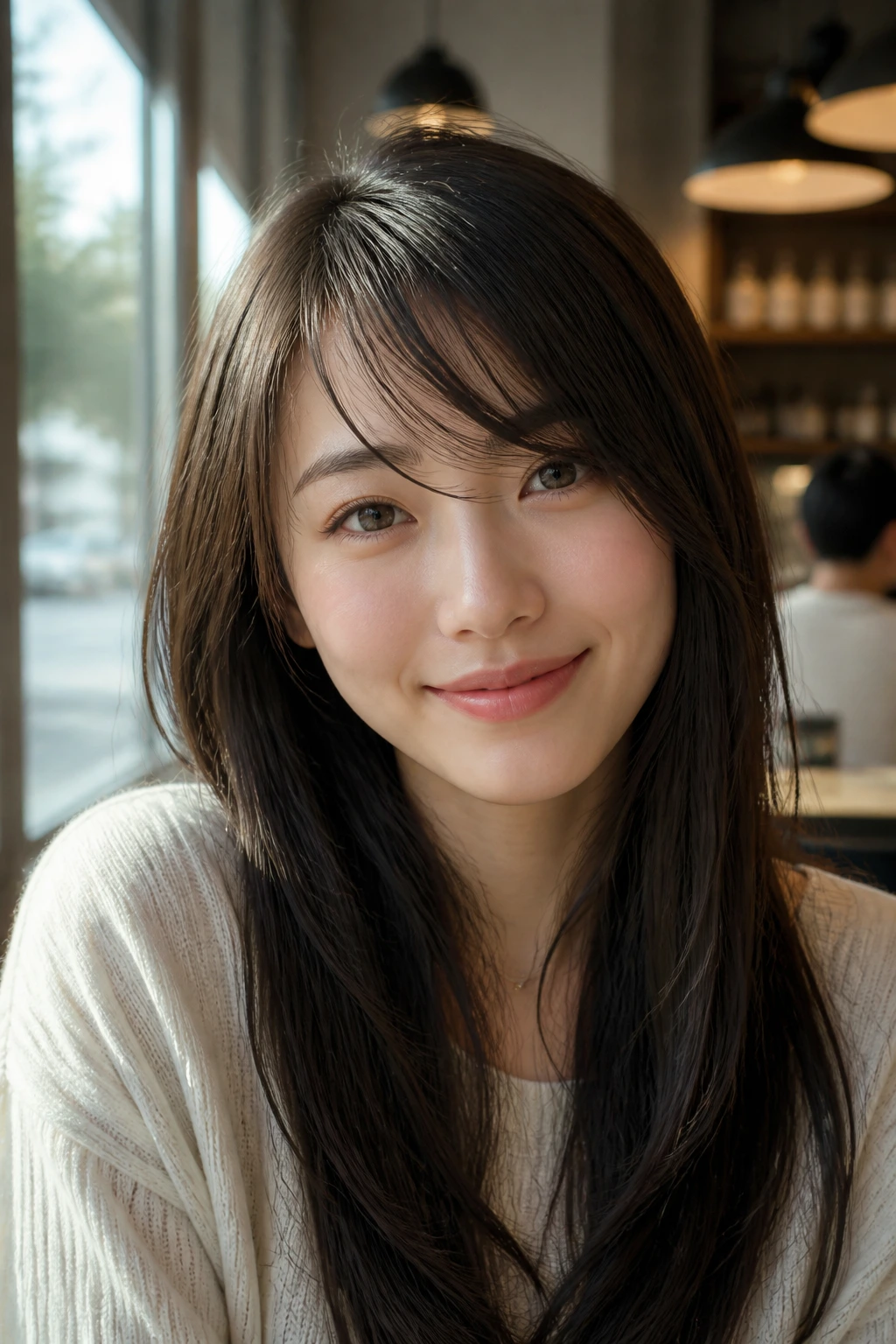
- 1-inch round brush: Best for tighter bends and polished curtain shapes.
- 1.5-inch round brush: Better for longer fringe and softer arcs that don’t look too curled.
- Blow-dryer with nozzle attachment: Directs airflow so the bangs don’t split in every direction.
- Fine-tooth comb: Useful for clean parting lines and for mapping where the shortest point should sit.
- Duckbill clips: Help hold the sides away while the fringe cools in place.
- Mini flat iron: Good for touching only the ends or taming one stubborn cowlick.
- Lightweight mousse: Gives lift without making the front crunchy.
- Dry shampoo: A small amount at the roots helps day-two bangs keep shape.
- Tail comb: Handy for sectioning if you trim or restyle at home.
How to Choose the Right Length for Your Hair and Face
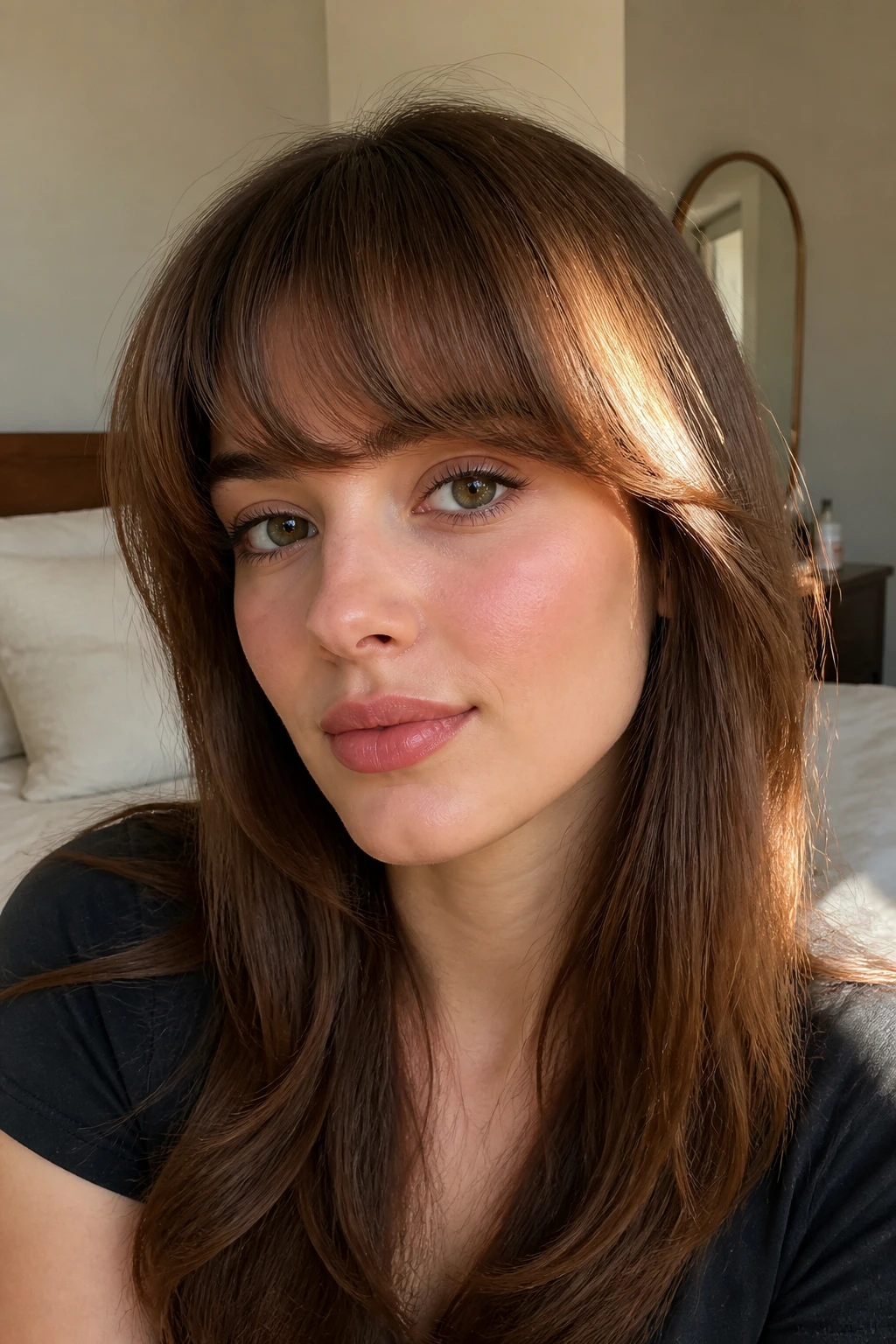
A good bang cut starts with honest math. Hair that shrinks when it dries needs more length left in the front. Hair that lies flat can usually be cut a touch shorter. And if your cowlick pushes one side up, pretending it isn’t there is a fast way to get annoyed every morning.
Fine hair, thick hair, and everything in between
Fine hair usually looks best with lighter density and a perimeter that keeps some fullness at the ends. Thick hair needs weight removed from the inside so the fringe doesn’t puff at the brow. Wavy hair benefits from a bit of extra length because the bend lifts the front when it dries.
Face shape matters, but not in a stiff way
Round faces usually like longer side pieces that stretch the line downward. Longer faces often look good with a curved or brow-skimming front that breaks up the vertical shape. Square faces tend to soften nicely with feathered corners and a split or diagonal line. None of this is law. It’s a starting point, not a prison.
The part nobody likes hearing
Bring a photo, but bring a photo of someone with hair like yours. Texture matters more than the face in the picture. A soft fringe on pin-straight hair will sit differently on coarse waves, and a dry cut on curly hair will behave differently again.
How to Style Light Bangs Without Making Them Flat or Puffy
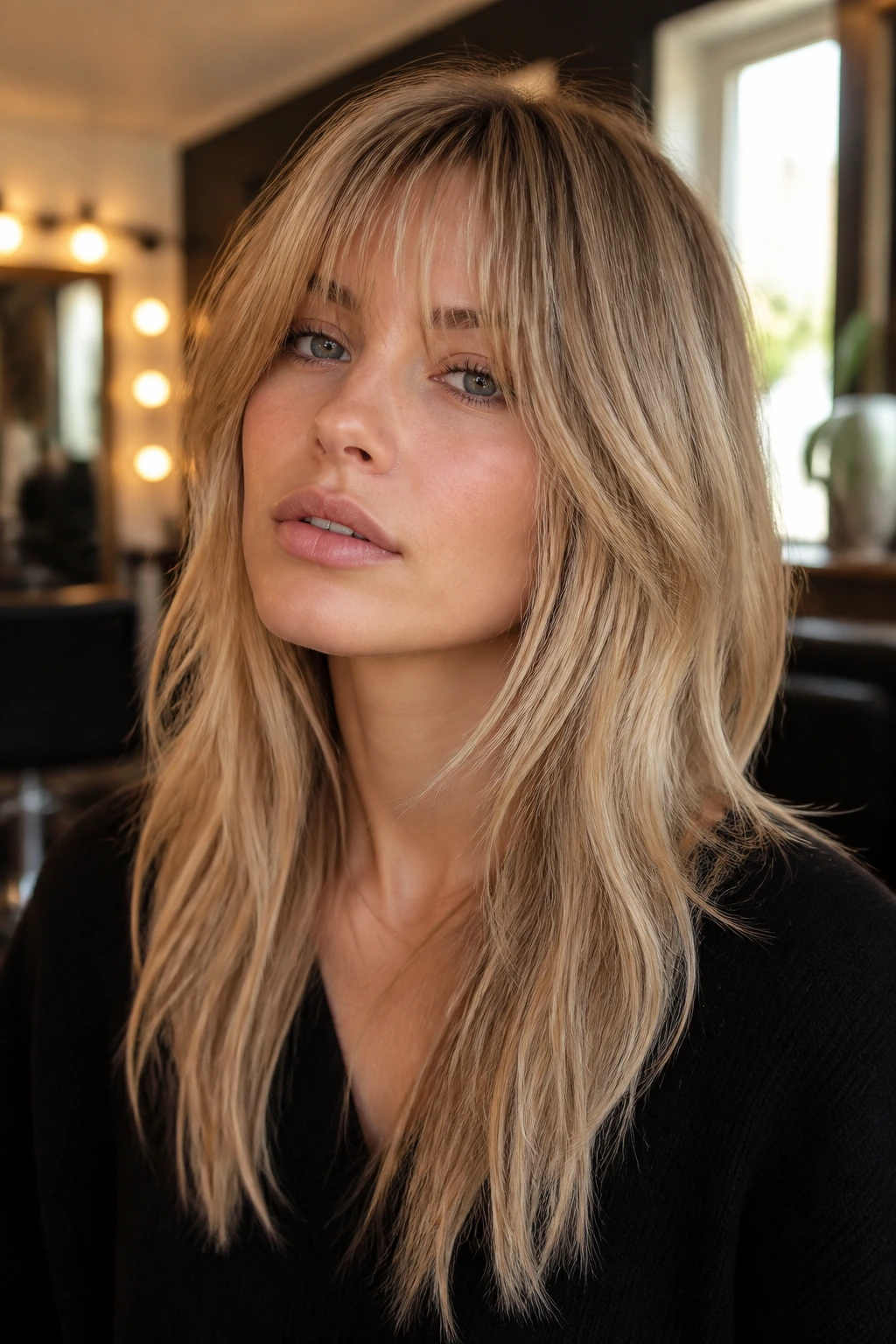
Blow-dry direction: Start by drying the fringe forward, not sideways. The root needs to know where it belongs before you split the pieces or bend them away from the face. I usually keep the dryer on medium heat and low airflow for the first minute, then switch to cool for the last five seconds so the shape sets.
Product choice: Use the smallest amount that still does the job. Mousse belongs on damp hair when you want lift. Dry shampoo belongs at the root when the front starts to look greasy. Cream belongs only on the ends if the bangs are dry or static-prone. Too much product turns a light fringe into mush.
Brush work: A round brush gives the nicest curve, but only if you stop before the hair gets over-rolled. One or two passes are enough. If you keep turning the brush over and over, the ends can kick out in a funny way. Shorter bangs need less patience, not more.
Second-day reset: Mist the bangs with a touch of water, brush them forward, and re-dry for 20 to 30 seconds. That’s often enough. If a cowlick keeps splitting one side, pin the front down for five minutes while it cools, then release it. Small trick. Big payoff.
Extra Tips for More Softness, Lift, and Shape

Lift at the root: Blow-dry the first inch of the bang area against the natural fall of the hair, then sweep it into place. That tiny bit of lift keeps the front from sticking to the forehead.
Soften the sides: Leave the temple pieces a little longer than you think you need. Those side pieces are what make the face frame feel gentle instead of abrupt.
Use the right edge finish: Point-cutting gives a feathered edge; blunt cutting gives a harder one. If softness is the goal, point-cutting usually wins.
Make-It-Yours: If your face likes more openness, part the fringe a little wider. If you want more coverage, let the center sit lower and keep the side pieces long. Curly hair can keep the center longer by half an inch; fine hair can often go a touch shorter without losing shape.
Common Mistakes That Make Light Bangs Look Heavy or Weird
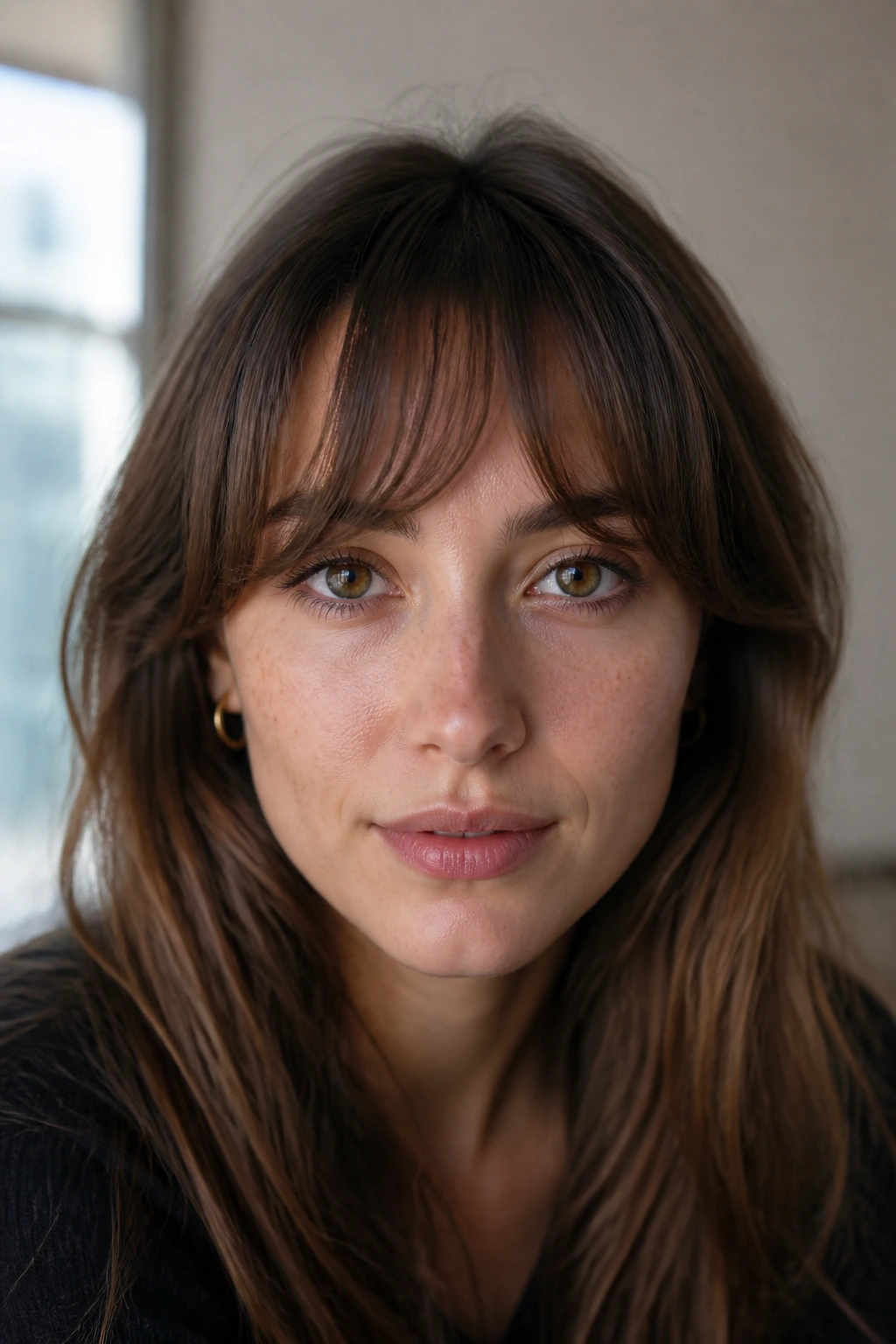
- Cutting the center too short: The fringe shoots up when it dries and leaves a gap that feels harsh. Keep the center longer on the first cut; you can always trim more.
- Removing too much density from fine hair: The bangs turn stringy and separated in a bad way. Fix it with a lighter hand and a cleaner edge.
- Ignoring the cowlick: One side flips, the other side collapses, and the whole front refuses to sit. Cut and style in the direction the hair already wants to move.
- Blow-drying straight down: The front goes flat against the forehead and loses shape. Lift the root first, then bend the ends.
- Waiting too long between trims: Even a soft fringe can look tired once it grows past the sweet spot. Most light bangs need a cleanup every 4 to 6 weeks.
- Using too much oil near the front: The hair clumps together and stops looking airy. Keep oils off the root and use them only on dry ends.
Variations and Adaptations to Try

The Office Sweep: Keep the side pieces long enough to tuck behind one ear and let the front drift across the forehead. It’s neat without being severe, and it works well if you need your hair out of your eyes during the day.
The Curly Halo: Let the bang section merge into curls instead of fighting them. The center can stay a little longer, while the sides soften into the face frame. This version lives or dies by the dry cut, not the wet one.
The Glasses Gap: Open the center and hold the fringe higher above the frames. It’s a small adjustment, but it keeps the bangs from rubbing against the lenses and getting greasy by lunch.
The Soft Shag: Pair a light fringe with choppy layers through the crown and mid-lengths. The haircut moves more, and the bangs stop feeling separate from the rest of the head shape.
The Grow-Out Plan: Start with longer bangs that just brush the brows, then leave enough side length to slide into curtain territory. This one is smart if you know you’ll want a change later.
Keeping the Shape Fresh Between Salon Visits
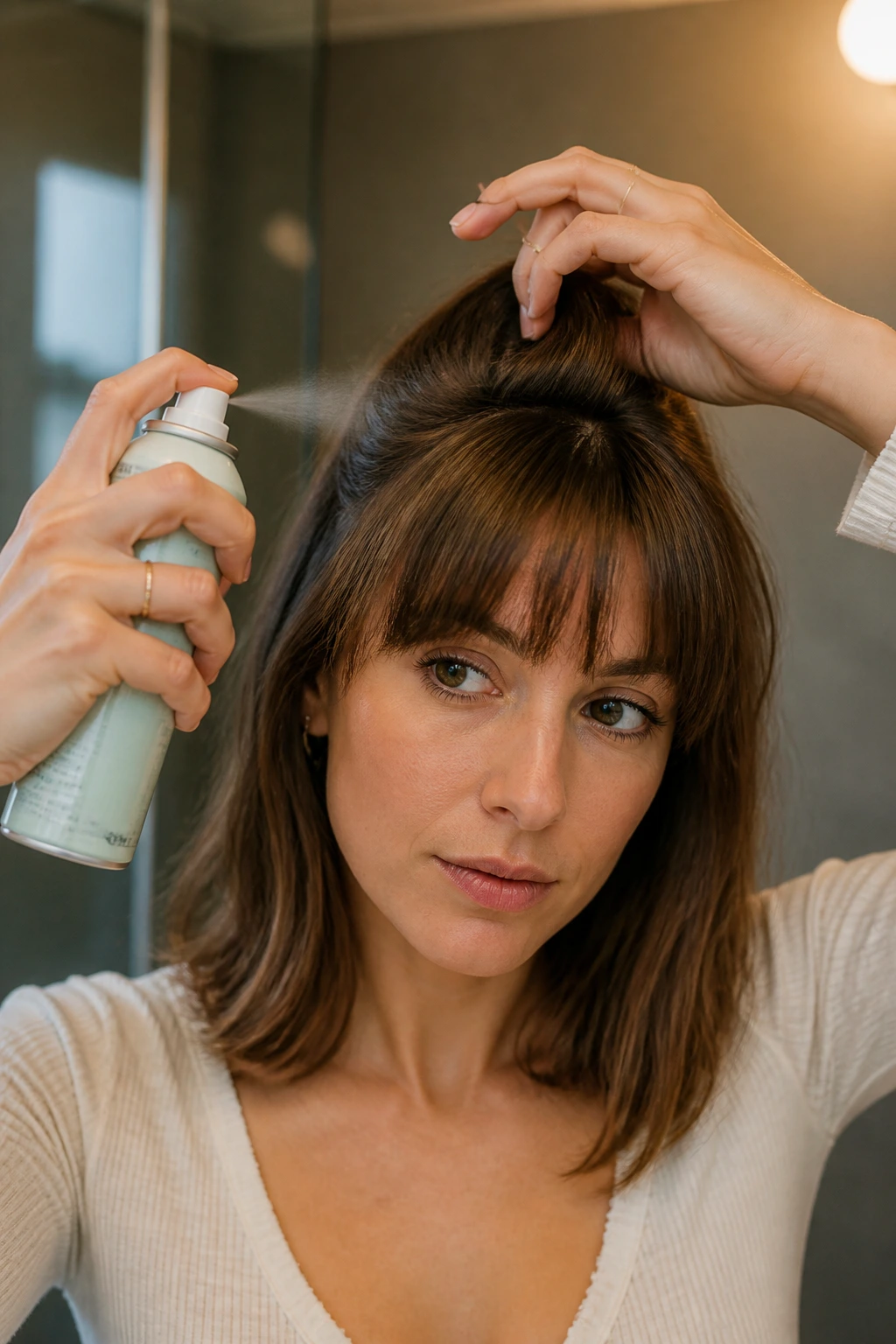
Light bangs need less drama than heavy ones, but they still ask for maintenance. Most versions in this group stay clean-looking for about 4 to 6 weeks before the shape starts slipping. Curtain and grow-out styles can stretch a little longer. Brow-skimming wisps usually need a clean-up sooner because a quarter inch of growth changes the line fast.
Wash day matters too. Bangs pick up oil at the root faster than the rest of the hair because they sit against the forehead. If the front starts to separate by mid-afternoon, a dusting of dry shampoo at the roots can bring the shape back without making it stiff. Use a small amount. Too much powder leaves a gray cast that’s impossible to miss in daylight.
At night, a loose clip or a soft roller keeps the front from kinking against the pillow. In the morning, a quick mist of water and 30 seconds with a dryer usually resets the shape. If the fringe is curly or wavy, the reset can be even easier — sometimes all it needs is a hand re-shuffle and a little scrunch.
Frequently Asked Questions
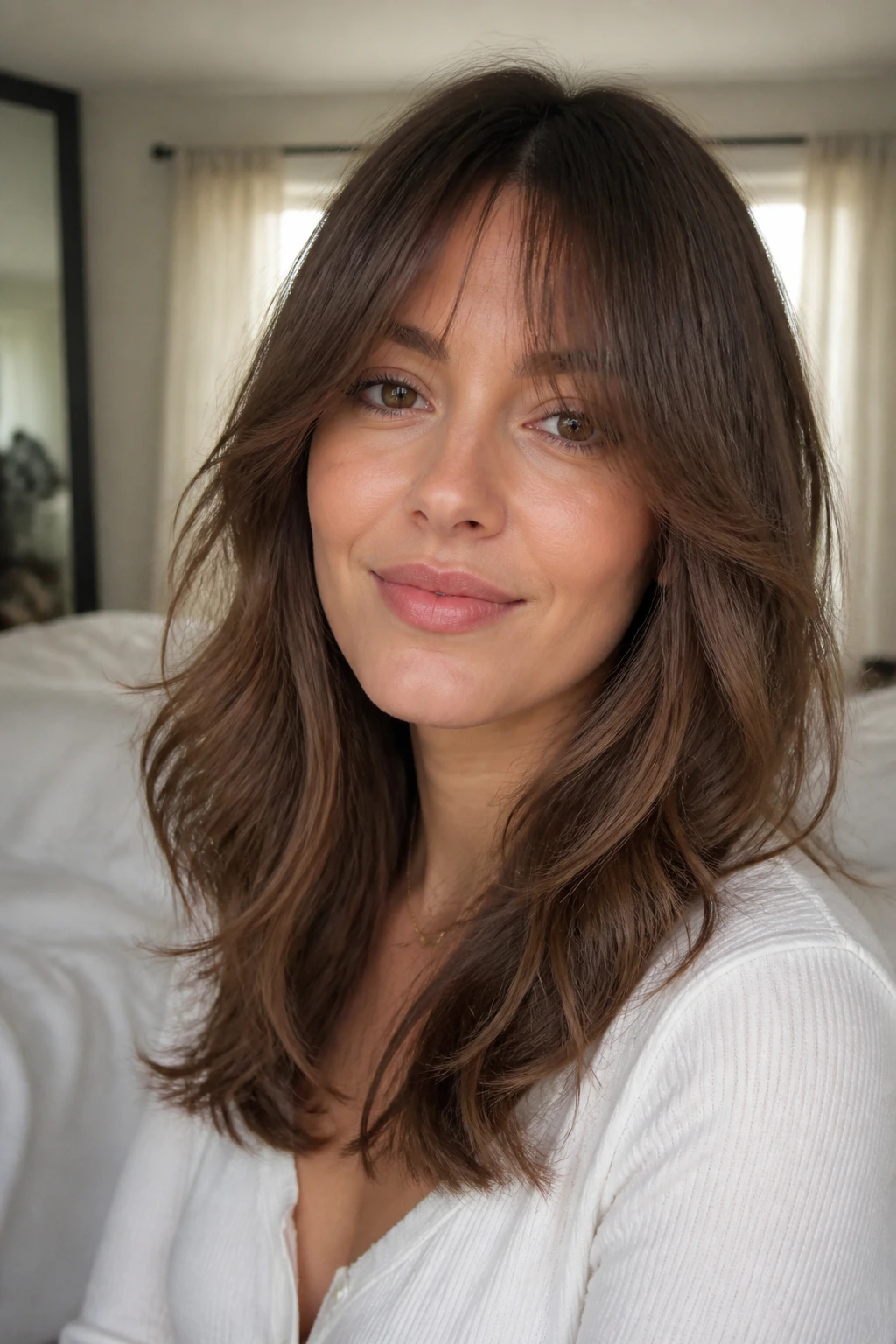
Will light bangs work if I have a cowlick?
Usually, yes, but the cut has to respect the growth pattern. A side-swept or bottleneck shape tends to be easier than a strict straight-across fringe because it gives the cowlick room to live without blowing the whole front apart.
Are light bangs better for fine hair?
They often are, as long as the density stays controlled. Fine hair can look wispy in a bad way if the fringe is over-thinned, so ask for a soft perimeter and avoid aggressive razoring.
How often do light bangs need trimming?
Most need a tidy-up every 4 to 6 weeks. Curtain styles and long blended fringes can stretch longer, while brow-skimming or rounded shapes lose their line faster.
Can curly hair wear this kind of fringe?
Yes, but the cut should usually be done dry or nearly dry. Curly hair shrinks, and the lightest-looking bangs when wet can jump half an inch once they dry.
What should I say at the salon?
Ask for soft density, point-cut ends, and the shortest point where you want the fringe to sit — brow, cheekbone, or slightly below. Bring a photo of a texture close to yours, not just a pretty haircut.
Do light bangs make the face look wider or narrower?
It depends on the shape. A soft center split or longer temple pieces can narrow a wide forehead, while a rounded arch can soften a long face by bringing attention back toward the eyes.
Can I style them without heat?
Sometimes. Air-dried bangs work best on hair that already bends easily. If the fringe has a stubborn cowlick or if it dries in odd places, a quick low-heat reset is usually worth the 30 seconds.
Which version grows out the cleanest?
Blended bangs and long curtain styles tend to grow out the easiest. They drift into layers instead of turning into a blunt obstacle across the forehead.
The Softest Way to Frame the Face

Light bangs work because they don’t try to dominate the haircut. They soften the forehead, skim the brows, and leave enough movement around the face that the whole look stays alive. That’s the sweet spot. Not hidden. Not heavy. Just enough front to change the shape, then enough air to keep it easy.
Pick the version that matches your texture, your patience, and your morning routine. If you know you’ll style with a round brush, lean polished. If you’d rather shake it out and go, choose a cut with longer sides and a lighter center. And if you’re still unsure, start with the most forgiving option: a soft curtain or a blended fringe that can grow into the rest of the haircut without a fight.
