



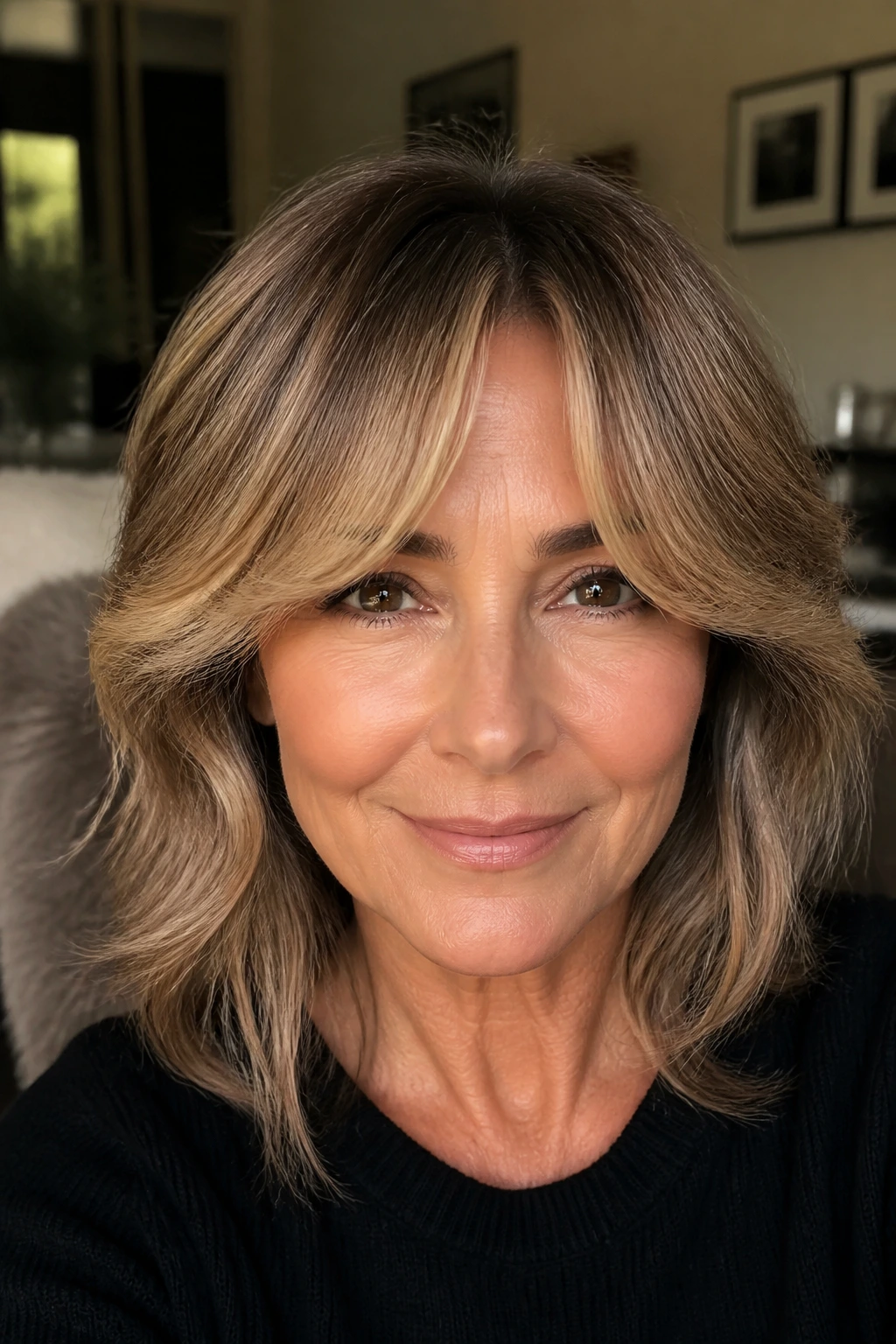
A blunt fringe can behave like a little wall across the forehead. It lands all at once, takes up space all at once, and on the wrong haircut it can make a face look boxed in instead of lifted. Feathered bangs for older women do the opposite. They break that hard line into softer, lighter pieces, and the result is less about hiding anything and more about letting the face breathe.
That matters more than people admit. As hair changes texture, density, and movement over time, a fringe that looked crisp and neat at one stage can start feeling heavy, flat, or strangely severe. Feathering solves that by putting motion at the front of the haircut instead of a shelf of hair. It’s a small change on paper. On the head, it can be the difference between “my bangs fight me every morning” and “I can dry these in five minutes and move on.”
And there’s another reason this style keeps getting pulled back into the rotation: it plays well with real life. Glasses, cowlicks, grays, thinning at the hairline, a forehead you’d rather soften than spotlight — feathering handles all of that with more grace than a blunt cut ever will. The trick is picking the right version of the fringe for your hair, your face, and how much effort you want to spend before coffee.
Why Feathered Bangs Feel Softer on Mature Hair
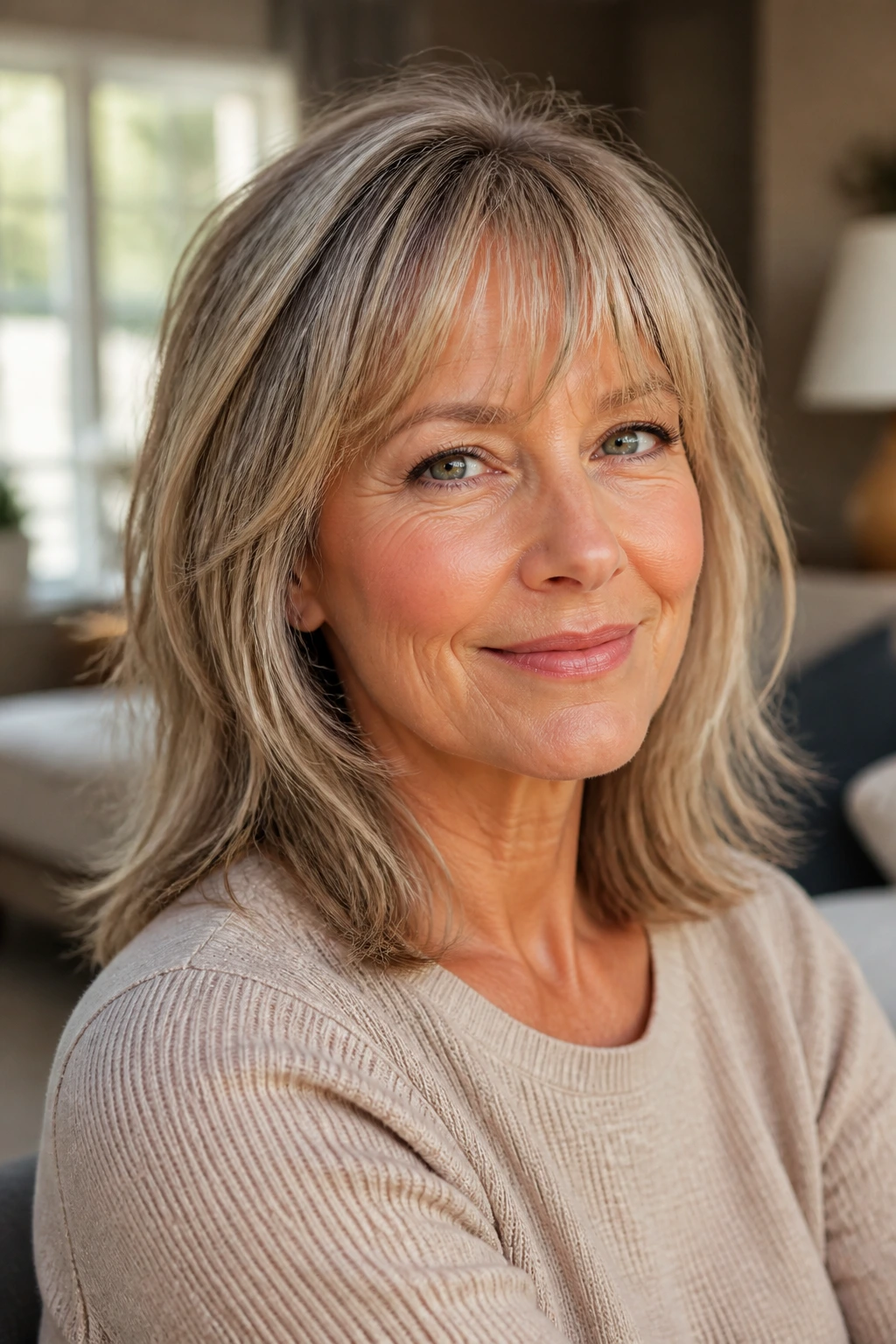
Less edge, more movement: Feathering removes that straight-across wall effect, which keeps bangs from sitting like a slab on the face. The ends taper out, so the fringe blends into the rest of the cut instead of stopping abruptly.
Kinder to changing texture: Hair often gets finer, drier, or more unruly at the front over time. A feathered finish hides those little shifts better than a blunt line, because the eye reads motion instead of density.
Works with glasses and forehead lines: A soft fringe can skim above the frames, bend around them, or split gently in the middle. It doesn’t shout for attention, which is exactly why it reads polished.
Easier grow-out: When you want a trim to last, feathered ends grow out with less drama. The shape stays believable even after a few weeks, which is more than I can say for a hard, straight fringe.
The look is not about “young” hair. It’s about good shape. That’s the part too many salons gloss over.
Why This Collection Is Worth Bookmarking
-
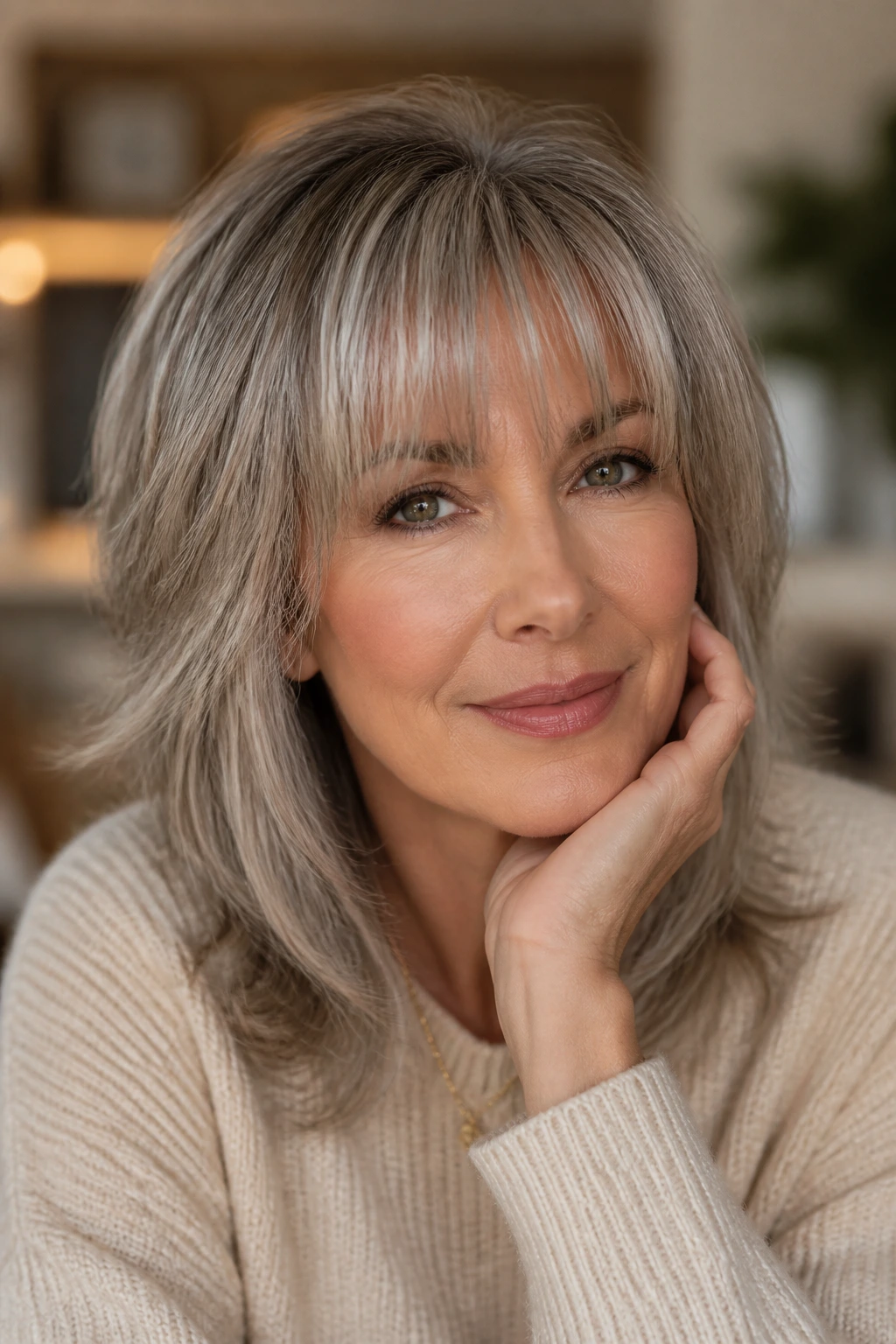
Softening the front edge: Feathering keeps bangs from cutting the face in half, which matters if you want lift without heaviness.
-
Low-friction styling: A round brush, a quick blow-dry, and a light product usually get these styles into place.
-
Friendly to changing hair density: Whether your hair is finer, thicker, grayer, or a little more stubborn than it used to be, there’s a feathered fringe that can be adapted.
-
Works with glasses: Several of these shapes leave enough room for frames, so your bangs don’t have to battle your eyewear every morning.
-
Easier to grow out: The tapered edges blend into face-framing layers, which means fewer awkward weeks between trims.
-
Plenty of personality: You can go soft and airy, shaggy and cool, polished and swept, or barely-there and delicate without losing the feathered effect.
1. Soft Side-Swept Feathered Bangs
A side-swept feathered fringe is the safest place to start if you’re nervous about committing. It opens the forehead on one side, then drifts diagonally across the face so the line never feels heavy or fixed. On mature hair, that diagonal movement is gold. It softens expression lines without trying too hard to cover them.
Why It Flatters
The long sweep gives you control over how much forehead shows, and that matters if you wear glasses or have a cowlick near the front. Ask for the shortest point around brow level and the longest point near the cheekbone. That keeps the shape airy instead of drooping into your eyes.
A quick blow-dry with a medium round brush is usually enough. I like this version because it behaves. Not perfectly. Better than that. It behaves predictably.
2. Curtain Feathered Bangs
Curtain fringe has become a favorite for a reason, and feathering makes it gentler. Split down the middle, it frames the face in two soft wings that blend into the sides of the cut instead of stopping abruptly at the temple. On older women, this is one of the most forgiving ways to wear bangs because it doesn’t demand a razor-straight part or dense hair.
What Makes It Different
Unlike a full blunt fringe, curtain feathered bangs can be tucked, swept, or air-dried with a little bend. The center can sit slightly shorter than the edges, which keeps the shape open around the eyes.
If your hair tends to flatten at the root, mist the front with a lightweight root spray before drying. Then push the center forward and the sides back with your fingers. The movement does the work for you.
3. Brow-Grazing Wispy Fringe
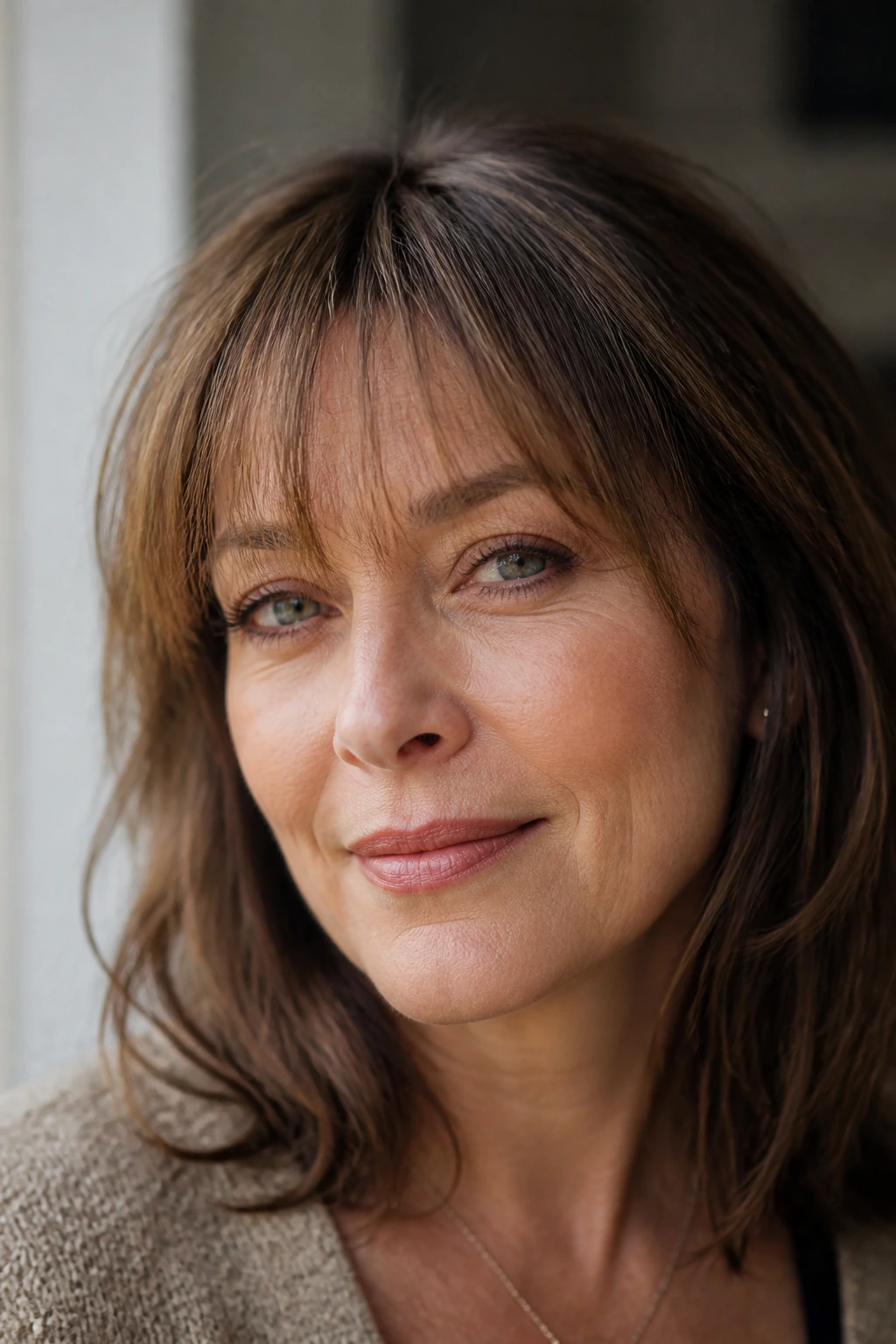
Why does this one work so well? Because it gives you the presence of a fringe without swallowing the forehead. A wispy brow-grazer lands right at eyebrow level, but the ends are broken up enough that it never feels dense or severe.
How to Wear It
This style loves a little separation. Use a touch of styling cream — not much, just enough to keep the pieces from flying apart — and rake it through with your fingertips while the bangs are still warm from the dryer. The goal is a soft veil, not a flat sheet.
It’s especially good for women who want something feminine and light. There’s no hard line here. Just a gentle frame that makes the eyes stand out a bit more.
4. Choppy Feathered Bangs on a Bob
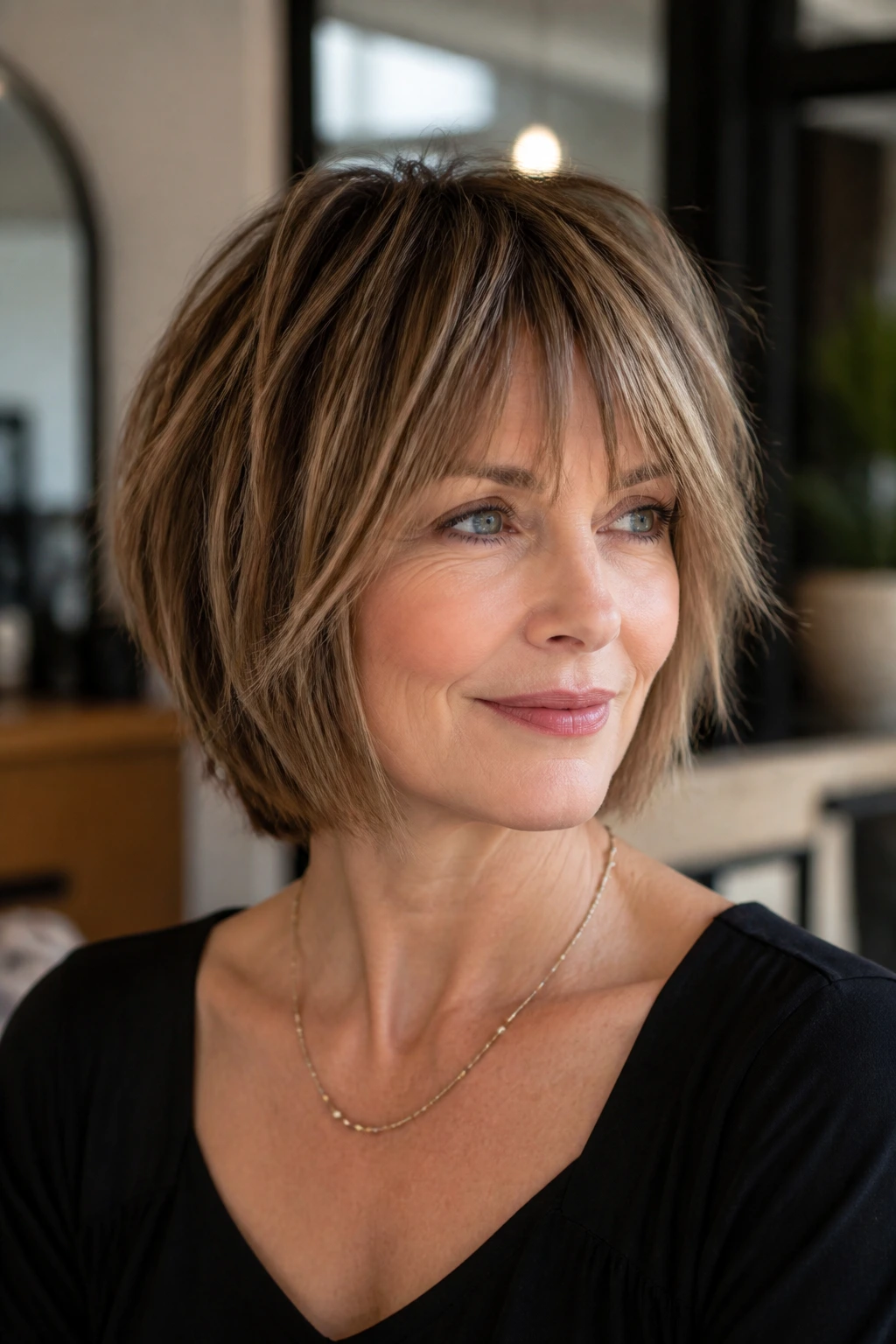
A bob can feel too clean around the face if the front is cut in one blunt line. Feathered bangs fix that fast. Add a choppy fringe, and the bob suddenly has texture at the front, which keeps the whole cut from looking helmet-like.
Why This Combo Works
The bob gives structure. The bangs break it up. That contrast is what makes the style interesting. Ask your stylist to keep the bangs a little disconnected from the bob’s blunt perimeter so the front stays lively.
This is one of those cuts that looks especially good when the hair is tucked behind one ear. The fringe falls just unevenly enough to feel intentional, not fussy.
5. Long Feathered Bangs That Blend into Face-Framing Layers
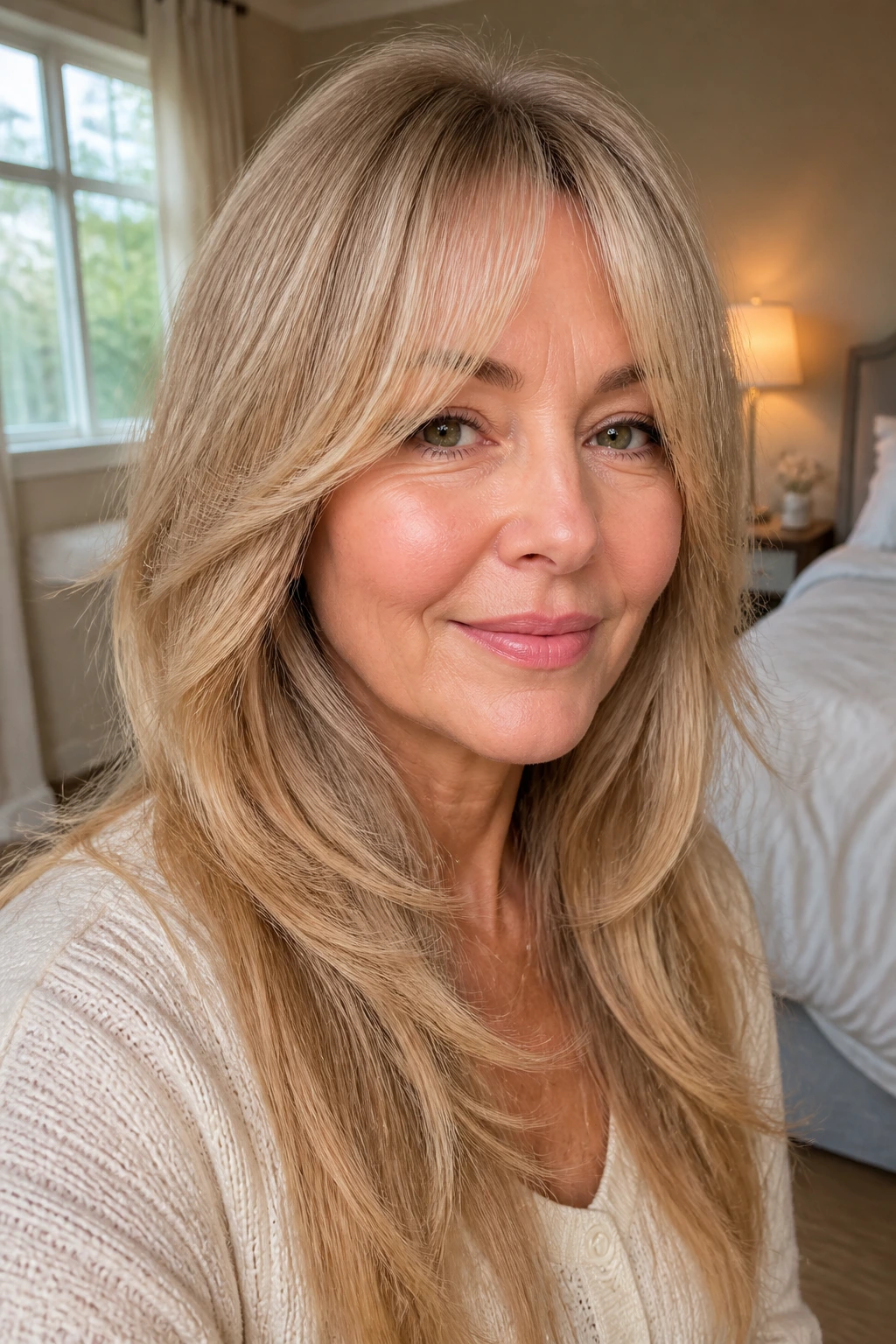
If you hate the idea of bangs that look like bangs, this is your move. Long feathered bangs melt into face-framing layers, so the front line feels more like a soft transition than a distinct fringe. The cut is subtle, but it changes the whole face.
A Quiet, Practical Choice
Longer feathering gives you room to part, sweep, and pin back the front on bad hair days. That makes it ideal for women who want the look of bangs without daily commitment. The ends should taper into the cheekbone area so the front doesn’t feel blunt when the hair moves.
I’d ask for this version if your hair is medium to thick and you want softness without losing shape. It’s one of the best “grow into it slowly” cuts on the list.
6. Piecey Feathered Bangs for Fine Hair
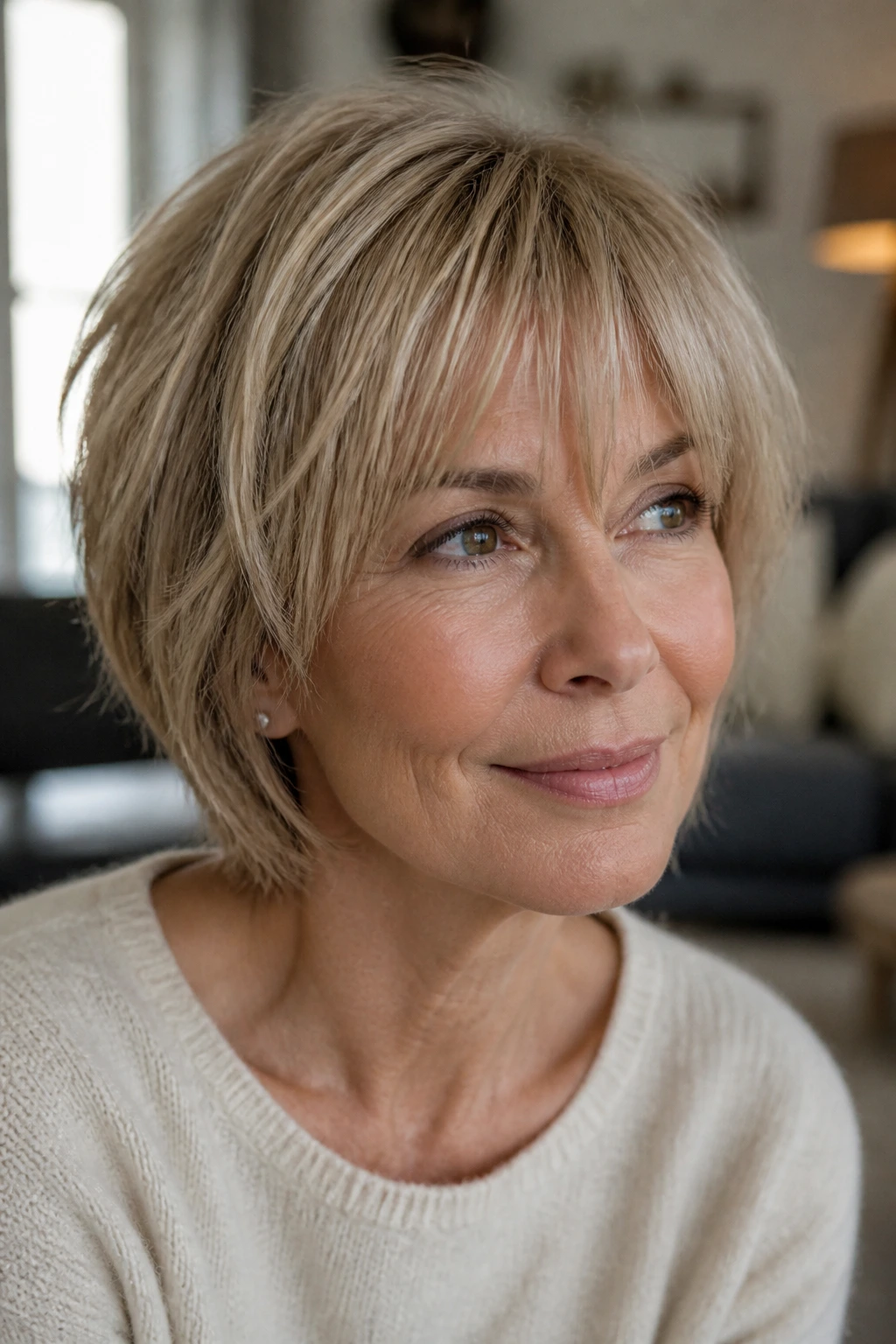
Fine hair needs a different kind of bang. Too much thinning and it disappears; too much weight and it lies flat by lunch. Piecey feathered bangs solve that balance by keeping enough density for shape while breaking the ends into little separated sections.
What to Ask For
- Keep the fringe light, not sparse.
- Use point-cutting instead of a heavy blunt line.
- Leave enough length to sweep sideways if the hair goes flat.
A pea-sized bit of mousse at the roots can help, especially if you blow-dry the bangs forward first and then side them with your fingers. The point is lift, not fluff. Big difference.
7. Rounded Feathered Fringe for a Short Pixie
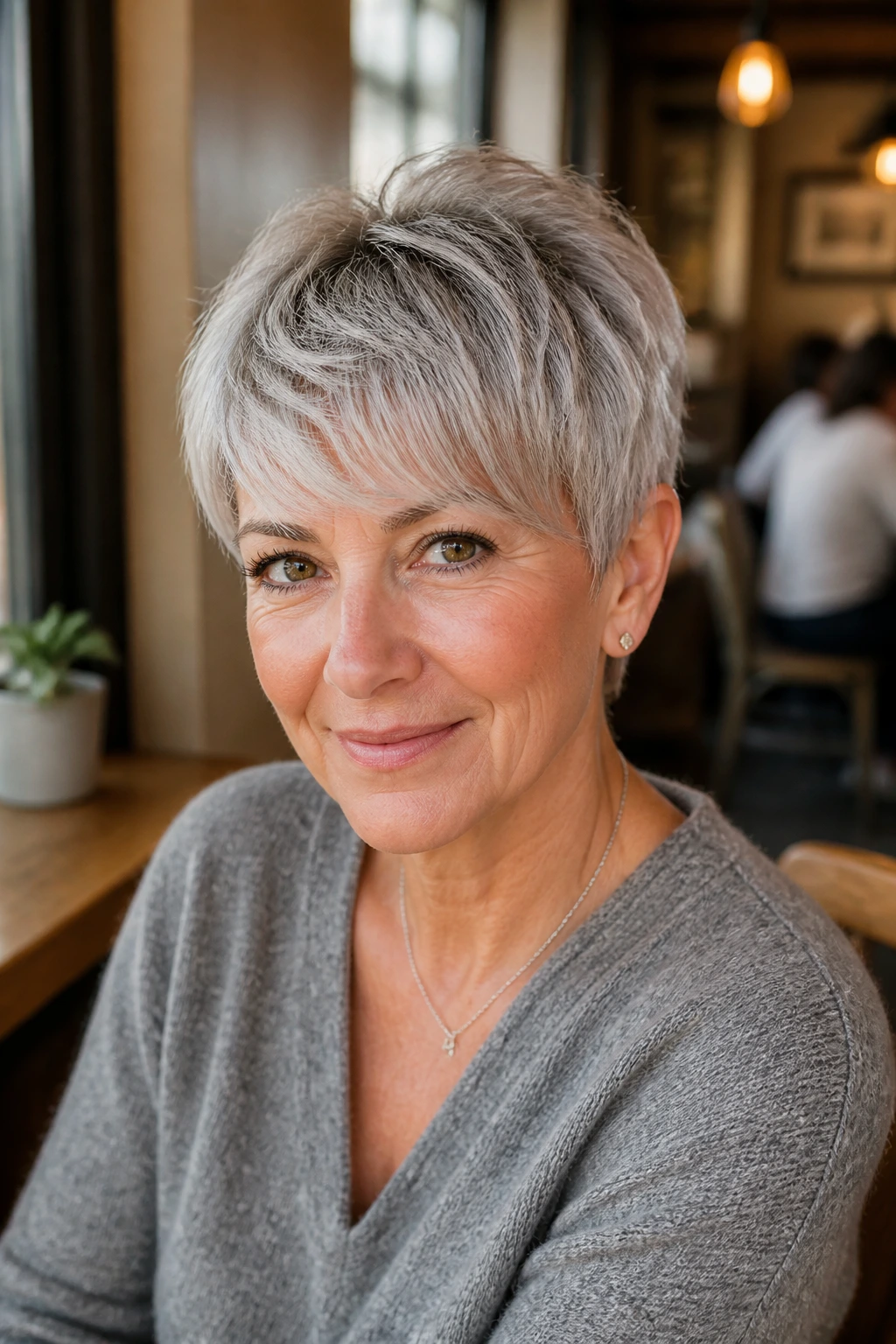
A short pixie with a rounded feathered fringe has a lovely softness around the face. Without it, a pixie can lean sharp or boyish in a way that some women love and others don’t. Feathering gives the front a gentle curve, which keeps the cut from feeling too abrupt.
Why It’s Worth Considering
The rounded shape works well if your hairline is a little uneven or if your forehead feels wider than you’d like. It also behaves well with natural gray, because the soft edge shows off the texture instead of fighting it.
This style needs regular trims. No getting around that. But when it’s cut right, it gives the whole face a lifted, neat look without looking stiff.
8. Feathered Bangs with a Shag Cut
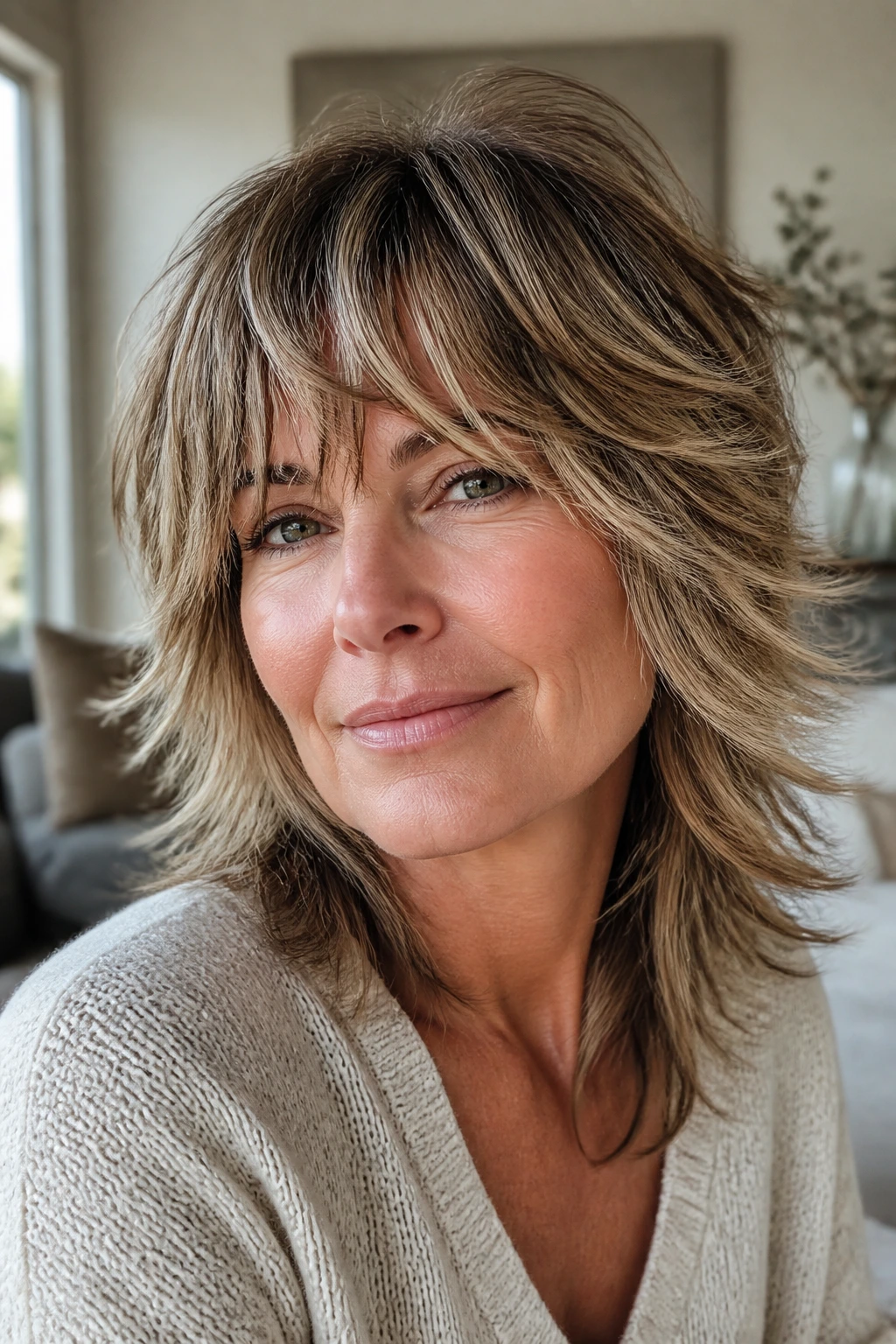
A shag loves movement, so feathered bangs fit right in. The front becomes part of the cut’s rhythm instead of sitting on top of it like an afterthought. If you like a little edge, this is where feathering can go from soft to cool without tipping into messy.
The Shape Matters
The bangs should connect into the layers around the temples and cheekbones. That connection keeps the hair from looking chopped up in separate pieces. A bit of texture spray through the mid-lengths helps the whole style hold that lived-in bend.
This cut is especially good if your hair has a natural wave. The bangs don’t need to be perfect. They just need a direction.
9. Airy Feathered Bangs for Curly Hair
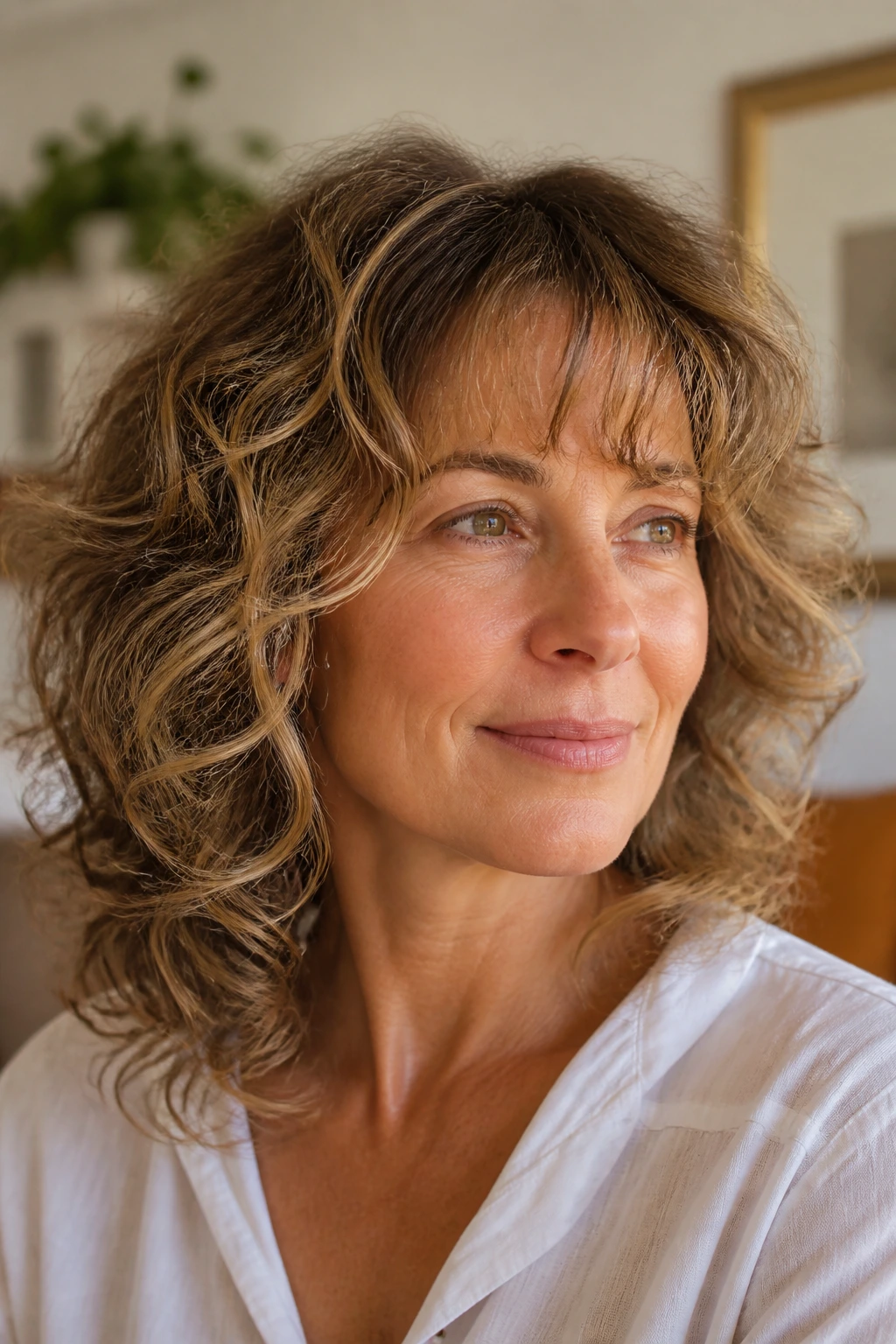
Curly hair with bangs scares people because they think the fringe will shrink into the middle of the forehead overnight. Fair worry. Feathering changes the game by letting the curl pattern stay visible while removing bulk at the edges.
Why It Works on Curls
Ask for the bangs to be cut curl by curl, dry if possible. That keeps the shape honest. The feathering should follow the curl pattern, not fight it, or you’ll end up with a bunch of uneven springs where a soft fringe should be.
A little curl cream and a diffuser on low heat is usually enough. Don’t overwork the bangs. Curls hate that.
10. Silver Feathered Bangs with Soft Layers
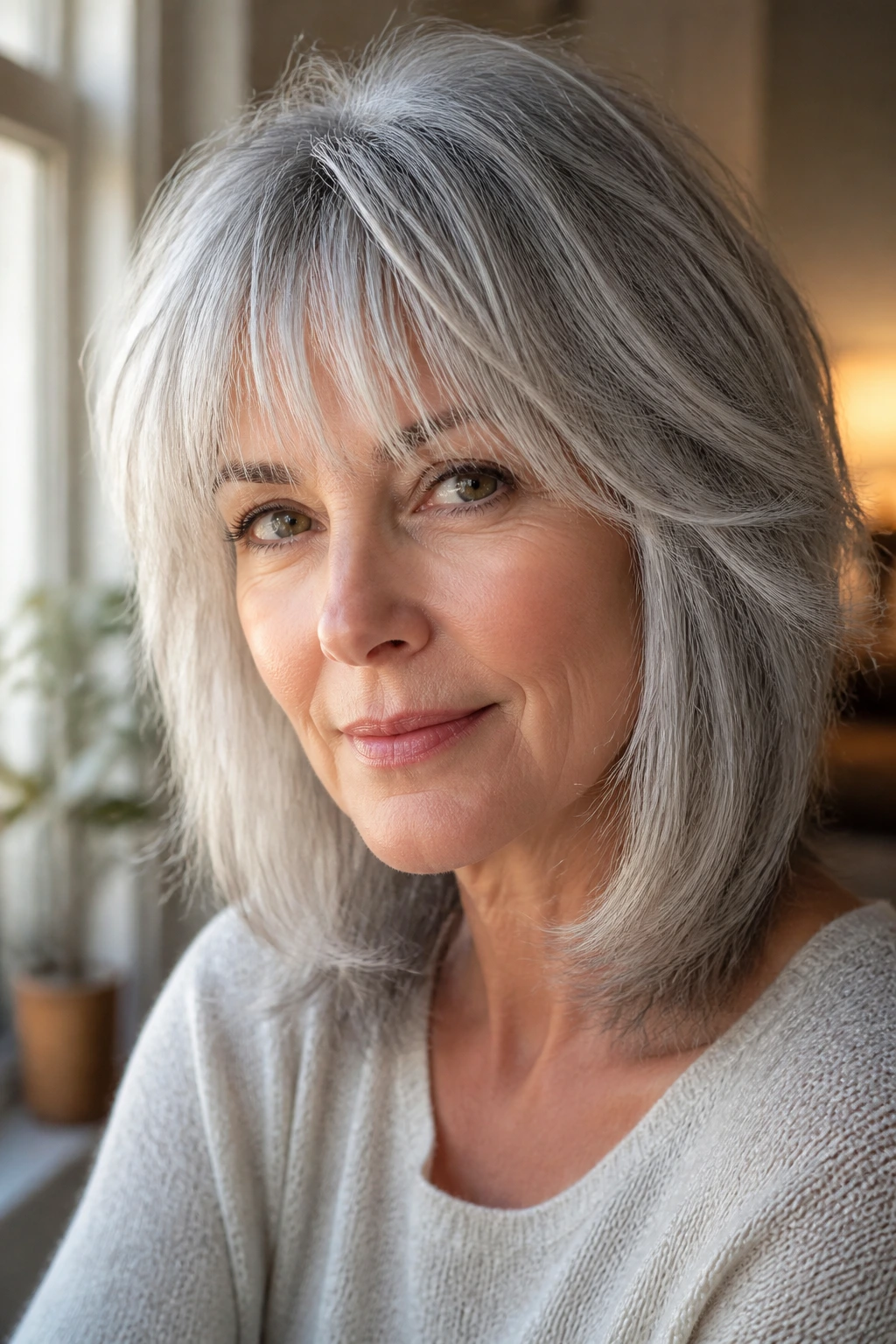
Silver hair makes feathering look almost luminous because the light catches all those tapered edges. The style is especially pretty when the bangs are paired with soft layers around the jawline or collarbone. It feels deliberate, not elderly. There’s a difference.
What to Notice
Gray and silver hair can show texture beautifully, but only if the front isn’t cut too bluntly. Feathered bangs keep the finish airy, so the shine reads as part of the style instead of drawing attention to density changes at the hairline.
If the silver has a little wiry bend to it, use a smoothing cream on the ends and a tiny bit of shine spray. A heavy serum will flatten the fringe. That’s the wrong move.
11. Feathered Bangs with a Shoulder-Length Lob
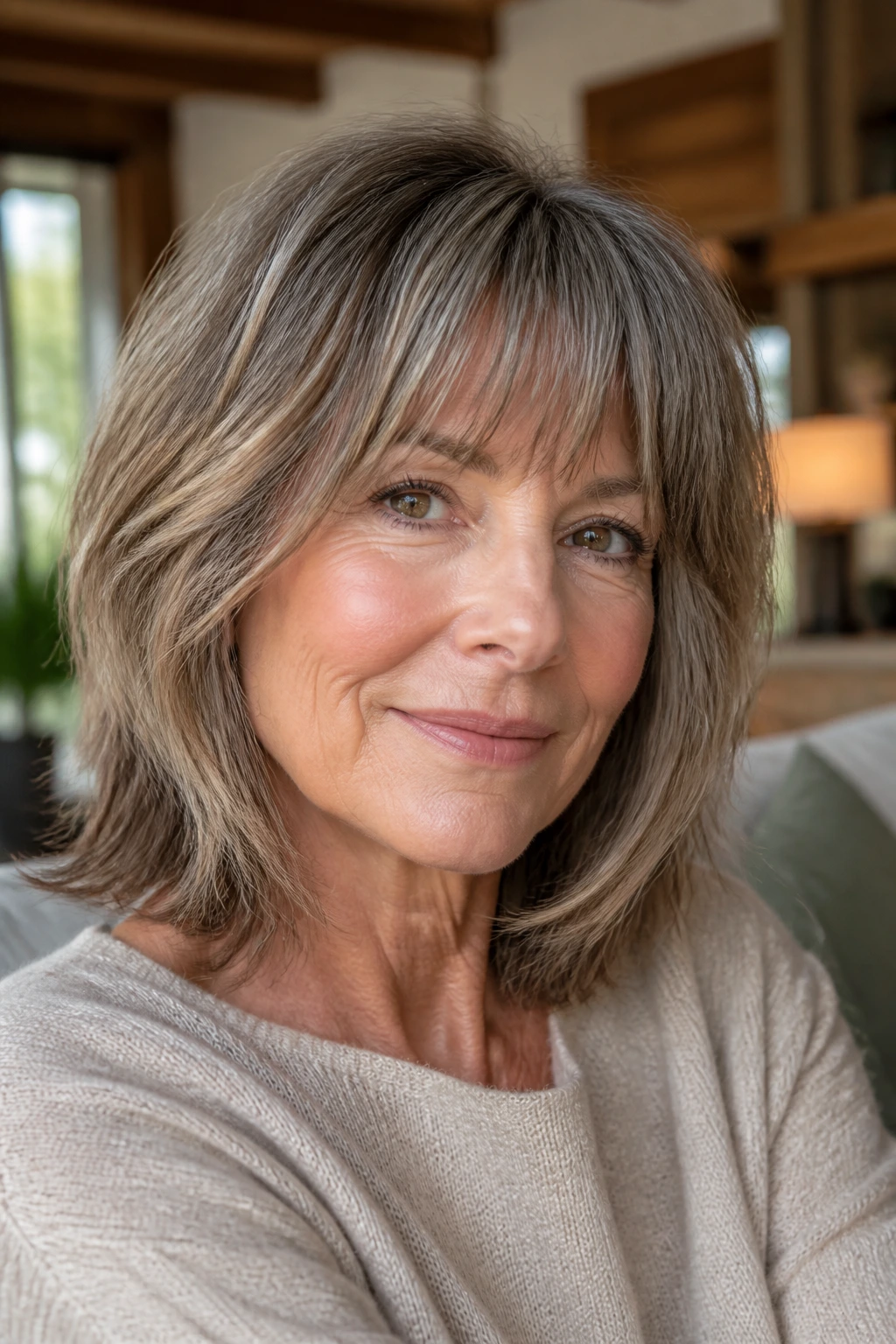
A lob is already practical. Add feathered bangs, and it stops looking plain. The shoulders-length cut gives enough weight to balance the lightness at the front, which is why this pairing works on so many hair types.
A Nice Middle Ground
The bangs can be short enough to see, long enough to sweep, and soft enough to grow out cleanly. That’s the sweet spot. It’s also one of the easiest styles to dress up or down, because the fringe doesn’t lock you into a single parting.
If your hair tends to flip at the ends, keep the bangs slightly longer than your brow and direct them with a round brush away from the face. That tiny angle keeps them from sticking straight across.
12. Deep Side-Part Feathered Fringe
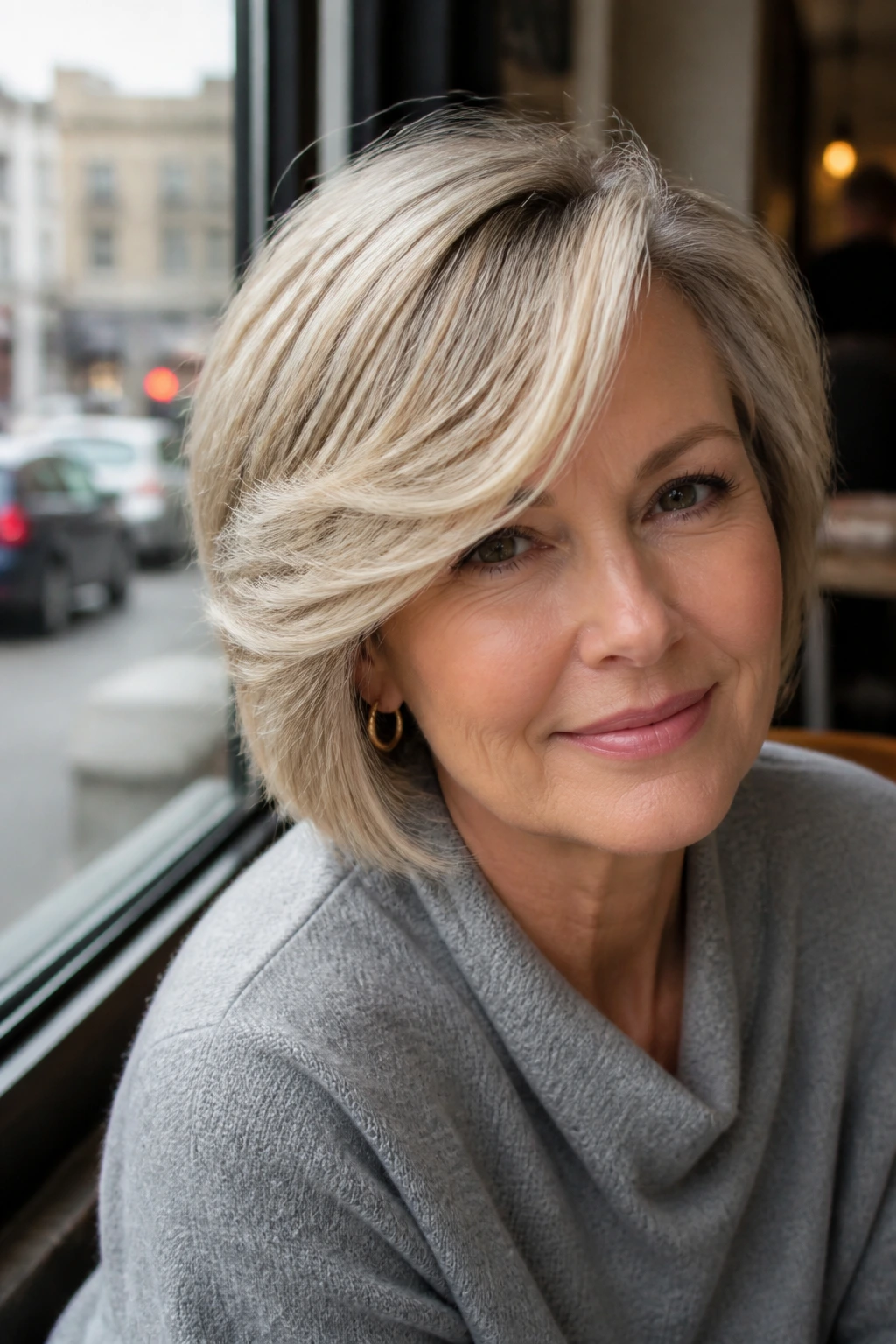
A deep side part can do a lot of work when the hair around the face has started to thin or lose lift. Feathered bangs that start deeper on one side and sweep down across the forehead feel elegant without getting stiff. They also make a very friendly landing spot for a pair of glasses.
What It Solves
Cowlicks near the front often settle better in a side-parted bang than in a center-split shape. The longer side can be tucked behind the ear, pinned, or left loose, which gives you options when the weather gets humid and your hair starts to argue.
This is one of those styles that looks intentional in a hurry. That’s not nothing.
13. Bottleneck Feathered Bangs
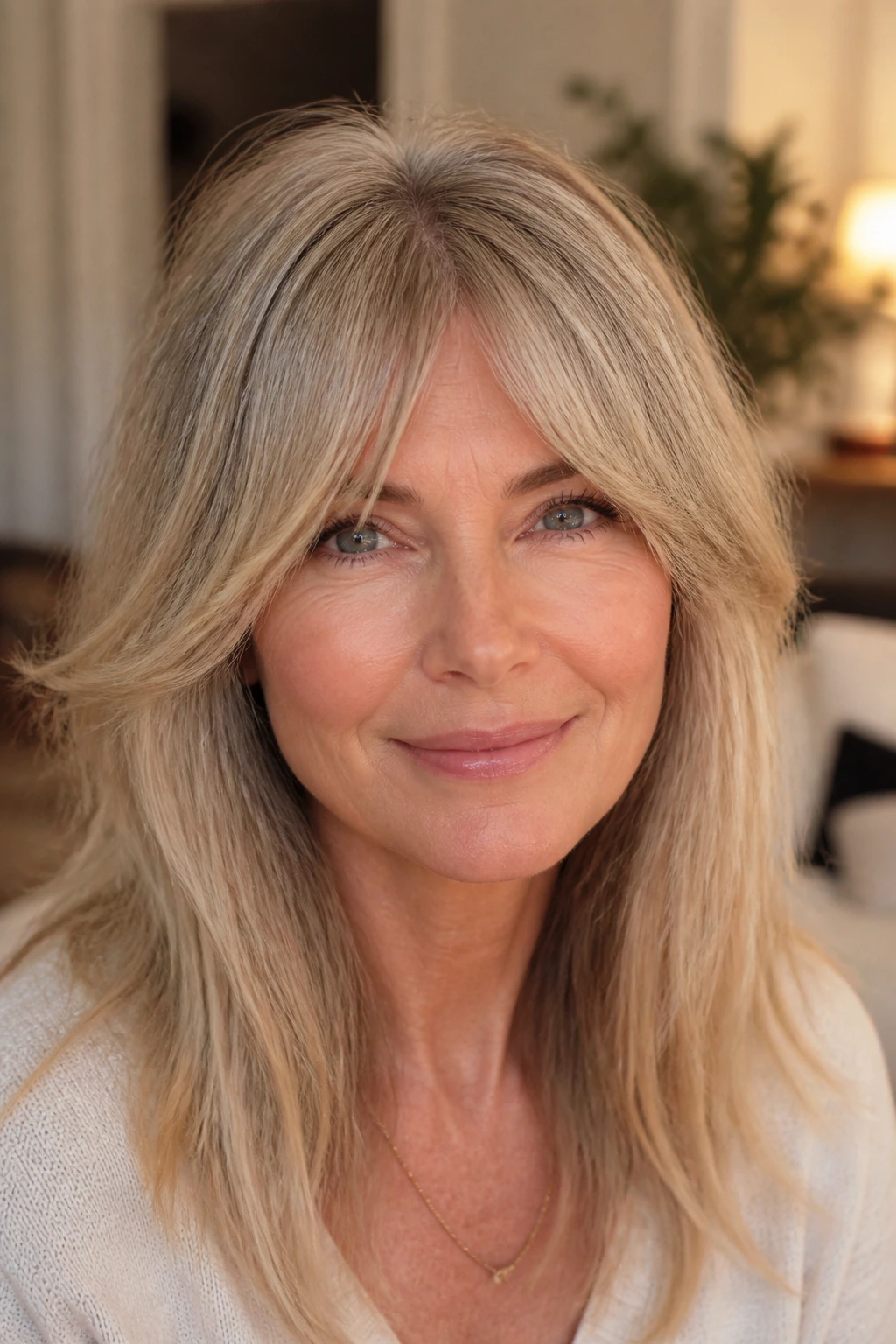
Bottleneck bangs start narrower at the center, then curve wider toward the cheekbones. Feathering takes that shape and softens the edges so it doesn’t feel too fashion-forward or severe. It’s a smart choice if you want a little drama without a hard fringe line.
Why It Flatters Mature Faces
The center opens the forehead, while the longer sides slim the face visually. That can be useful if you want the front to frame the eyes and cheekbones rather than cover the whole brow. The cut should not be too short in the middle; once it sits above the brow by too much, it starts to feel fussy.
I’d keep the styling loose here. Let the ends bend away from the face. Perfect symmetry would ruin it.
14. Tapered Feathered Bangs for Thick Hair
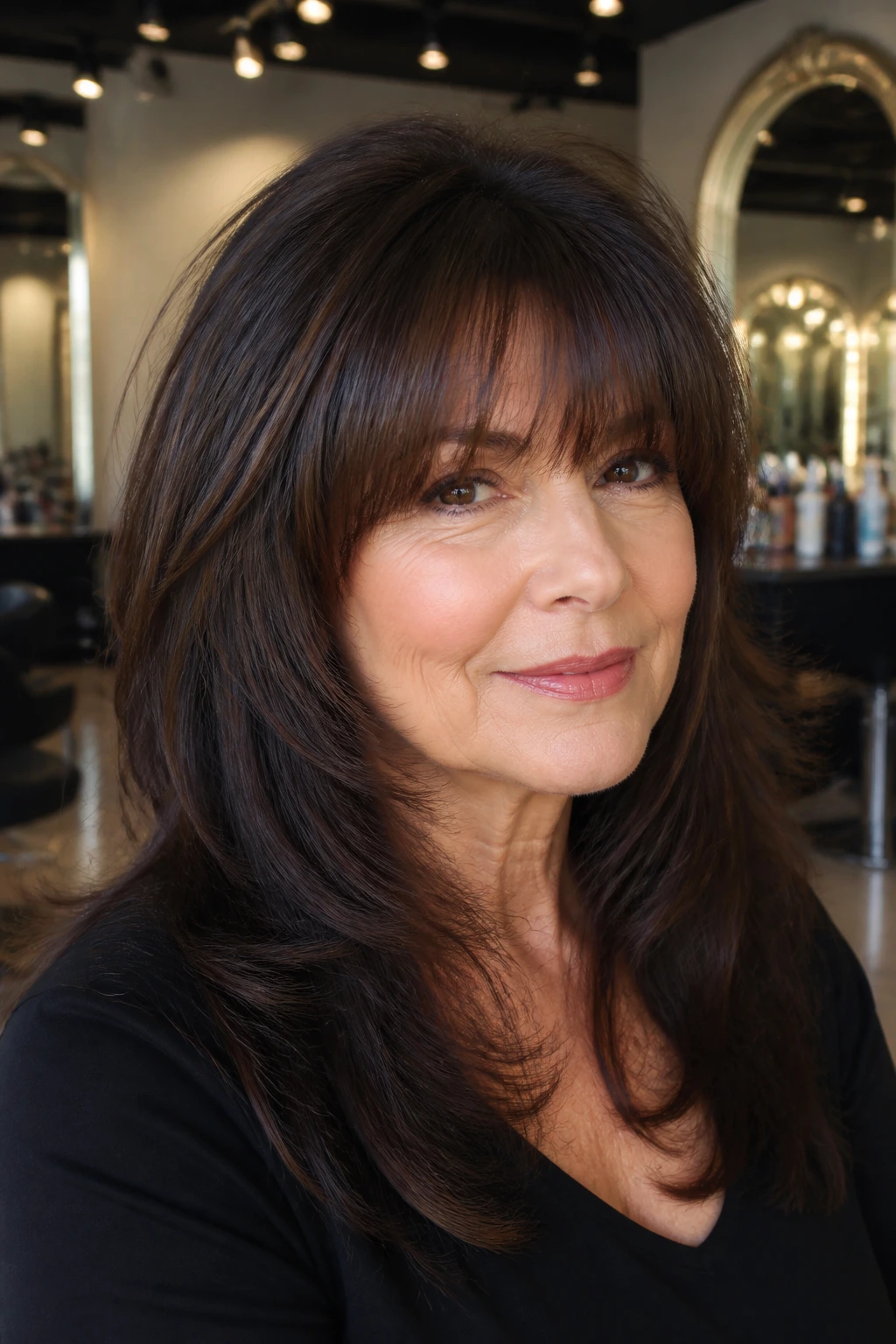
Thick hair can make bangs feel heavy fast. Feathering is what keeps the front from turning into a curtain you have to wrestle all day. Tapered bangs remove bulk at the edges, then let the center keep enough weight to hold shape.
Best Details
- Ask for internal weight removal, not aggressive thinning.
- Keep the longest pieces near the temples.
- Use a vent brush or a large round brush to direct the front forward and out.
A thick fringe done badly looks like a shelf. A tapered one moves. That’s the whole story, really.
15. Soft Micro-Feathered Fringe
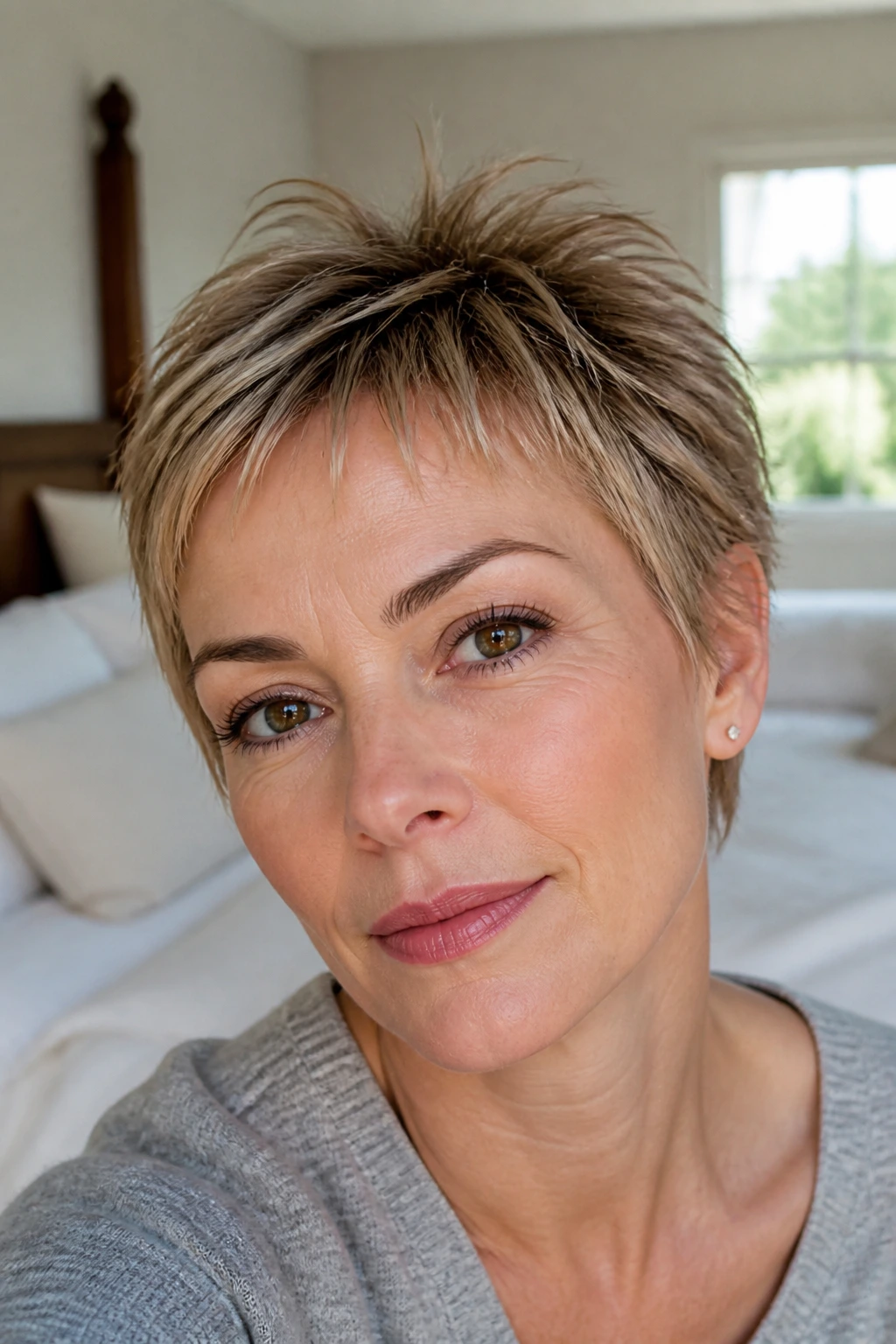
Micro bangs can get edgy in a hurry, but a feathered version takes the sharpness off. The cut sits a little shorter than a classic fringe, yet the ends are broken up enough that it reads soft instead of severe. That makes it a better fit for older women who want a modern touch without a harsh line.
When It Makes Sense
This works best on short cuts, especially pixies or cropped bobs. The bangs should barely skim the forehead and then feather upward and outward. If the front of your hair is fine, keep the length a touch longer than you think you need. Short bangs shrink in the eye more than they do on the head.
I like this shape on women with strong brows. It shows them off.
16. Feathered Bangs with Glam Waves
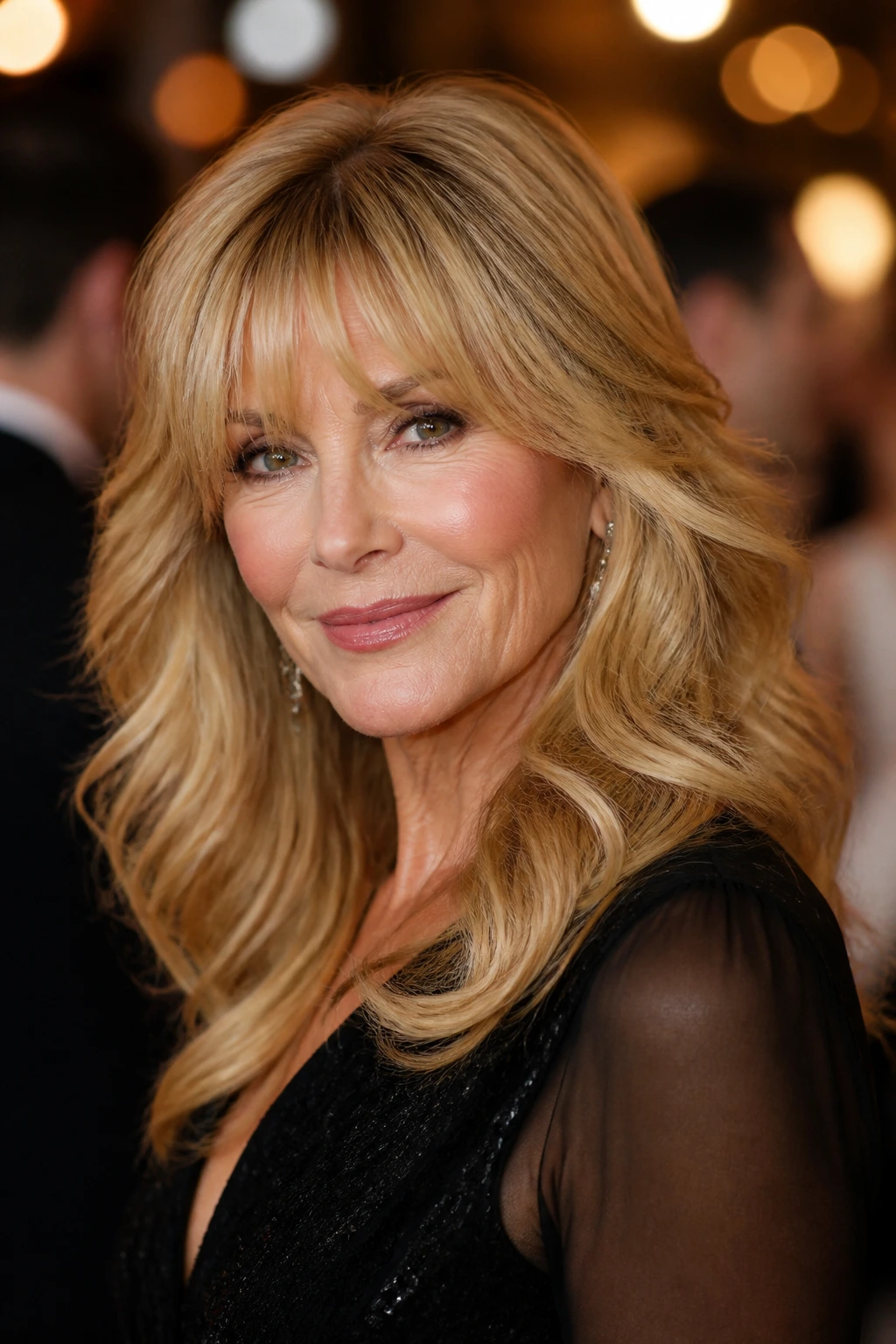
Feathered bangs don’t have to be casual. Put them with polished waves, and the front picks up a soft, old-Hollywood feel that still looks modern. The trick is to keep the fringe loose, not curled into a perfect barrel.
How to Shape It
Set the bangs with a round brush or a large roller for a few minutes, then brush them out. You want a bend, not a curl. That’s what keeps the style from becoming costume-y.
This version looks especially good with a side part and a bit of shine at the ends. If you’ve got an event, this is the one that makes a simple haircut feel dressed.
17. Glasses-Friendly Feathered Bangs
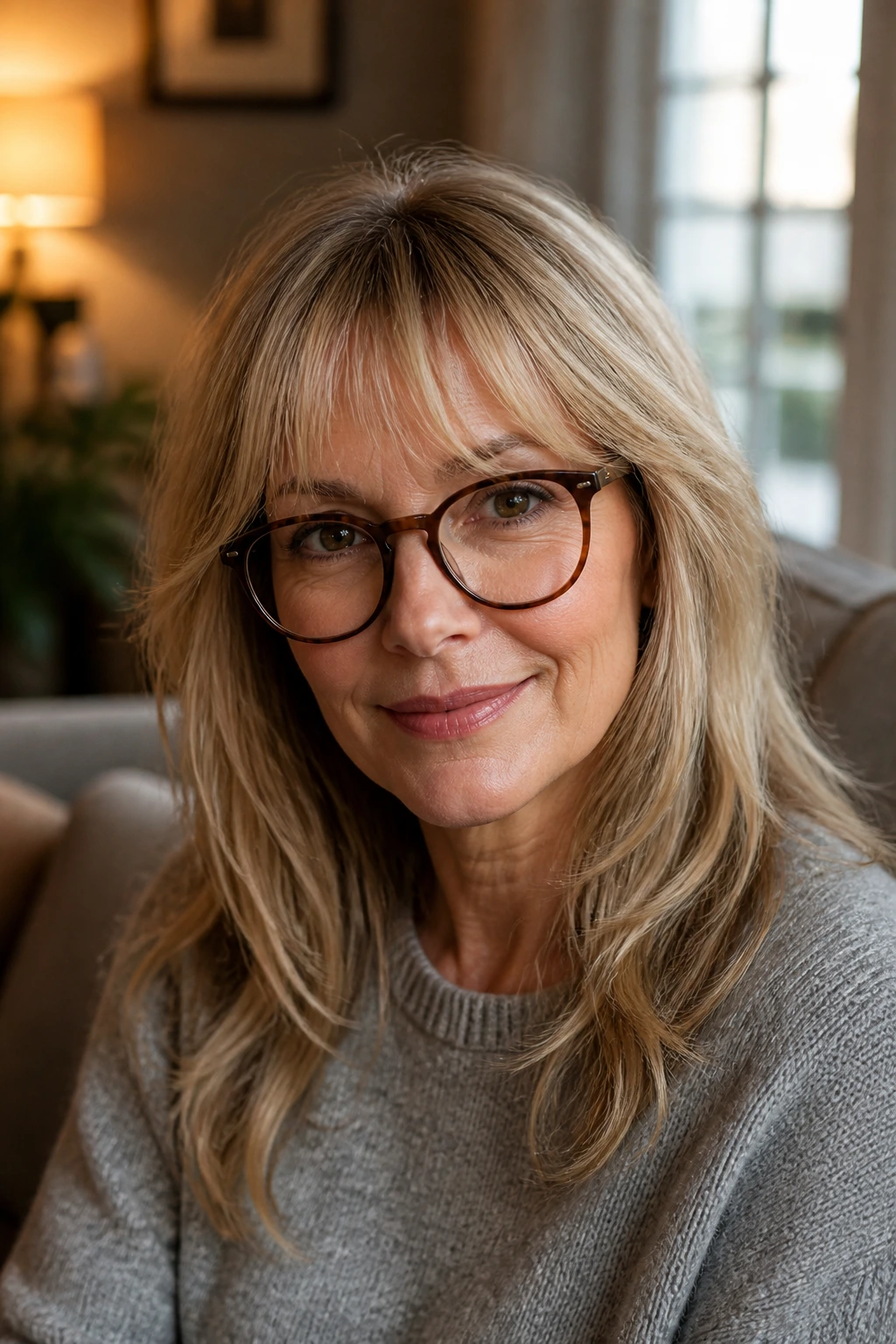
If you wear glasses every day, your fringe has to cooperate with the frames. Feathered bangs make that much easier because they can curve above the frame line, break around the temples, or split softly where the glasses sit.
What to Ask For
The shortest pieces should stop above the top of the frames, not crash into them. The sides can be a little longer, which gives the face a frame inside the frame. That sounds fussy, but it really matters.
This is the kind of bang that saves you from constant pushing and adjusting. Anyone who wears glasses knows exactly how annoying that is.
18. Feathered Bangs for a Classic Pageboy Bob
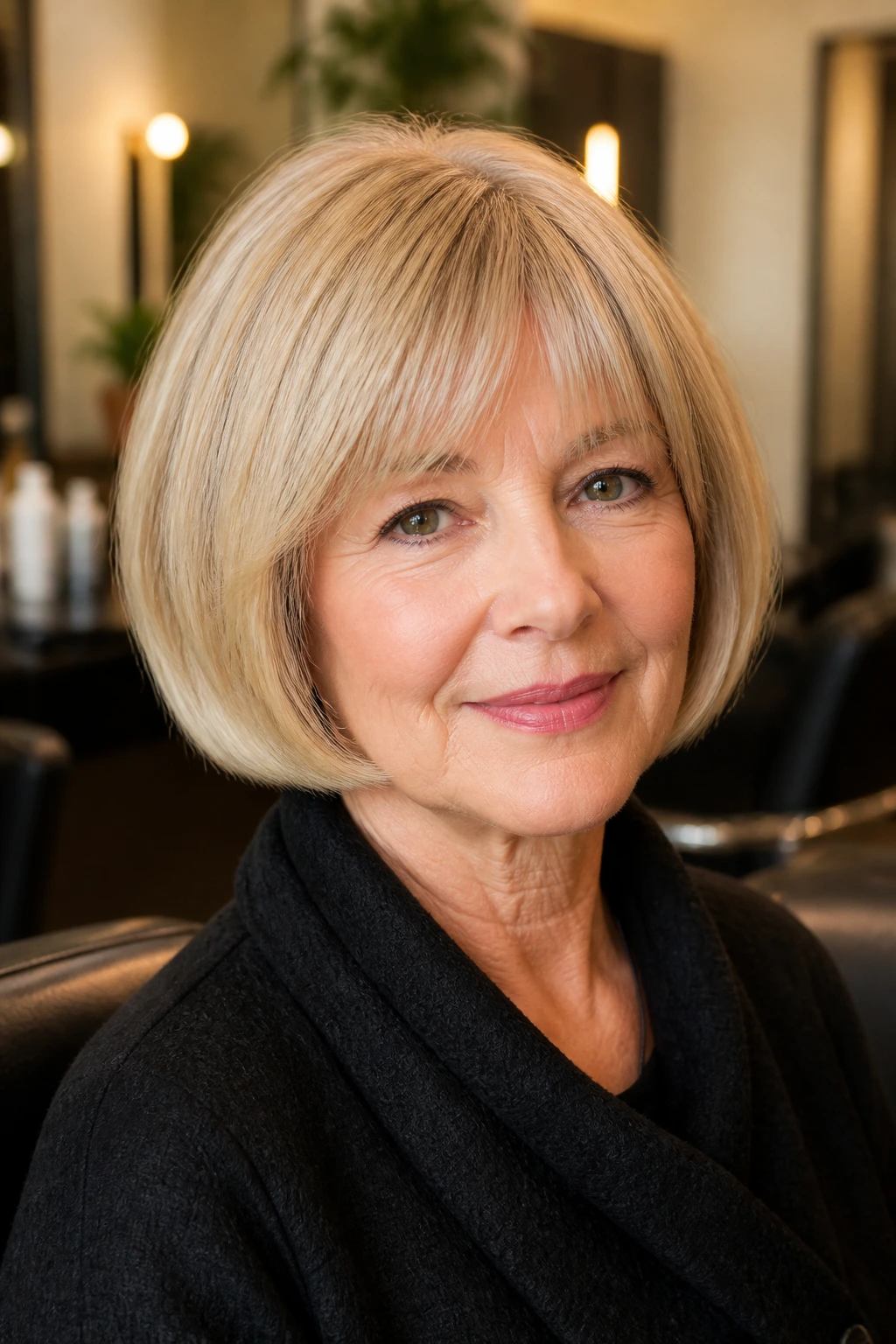
The pageboy bob can veer retro in a heavy way if the front is cut too neatly. Feathered bangs stop that from happening. They lighten the bowl-like shape and keep the front from feeling sealed off.
Why It Works
The softness at the forehead balances the curved line of the bob. Ask for the fringe to taper into the sides so the hair doesn’t stop in one sharp place. A little flip at the ends can be charming here, but don’t push it into helmet territory. That’s a real danger with this silhouette.
The best version of this cut feels neat, not stiff. Clean. Not severe.
19. Feathered Bangs with Natural Curls
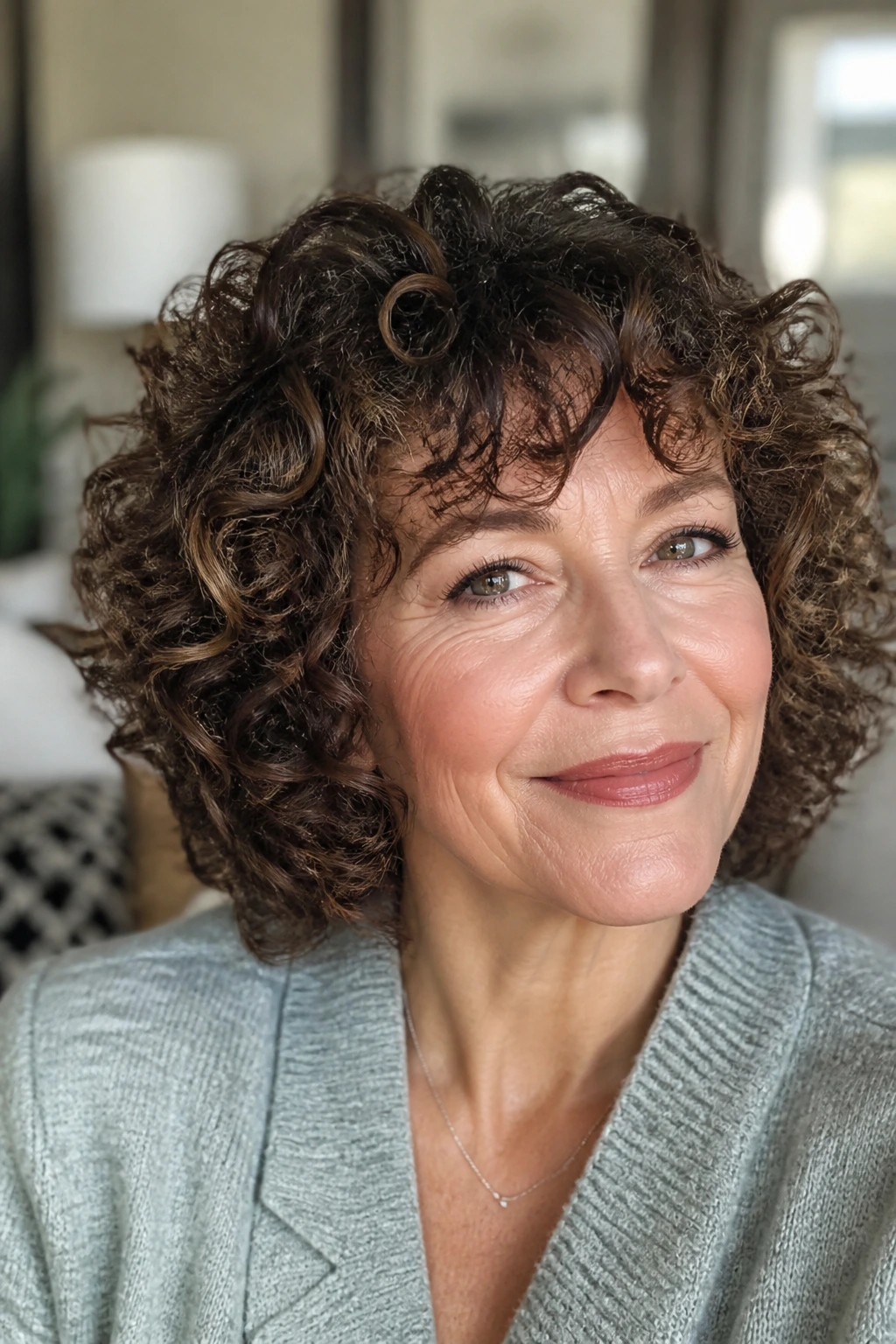
Natural curls at the front need room. Feathering gives them that room by removing weight and allowing the curl pattern to fall where it wants. The result is not a straight fringe pretending to be curly. It’s a real curly bang with shape.
A Better Way to Think About It
Don’t chase symmetry. That’s a trap. Curls never part like a ruler, and trying to force them there usually produces a puffed-up front and a bad mood. Cut the bangs dry if you can, and leave a little extra length for shrinkage.
A diffuser and a small dab of curl cream are enough most days. Heavy oils weigh the fringe down and make it separate in awkward clumps.
20. Sleek Feathered Bangs with a Straight Bob
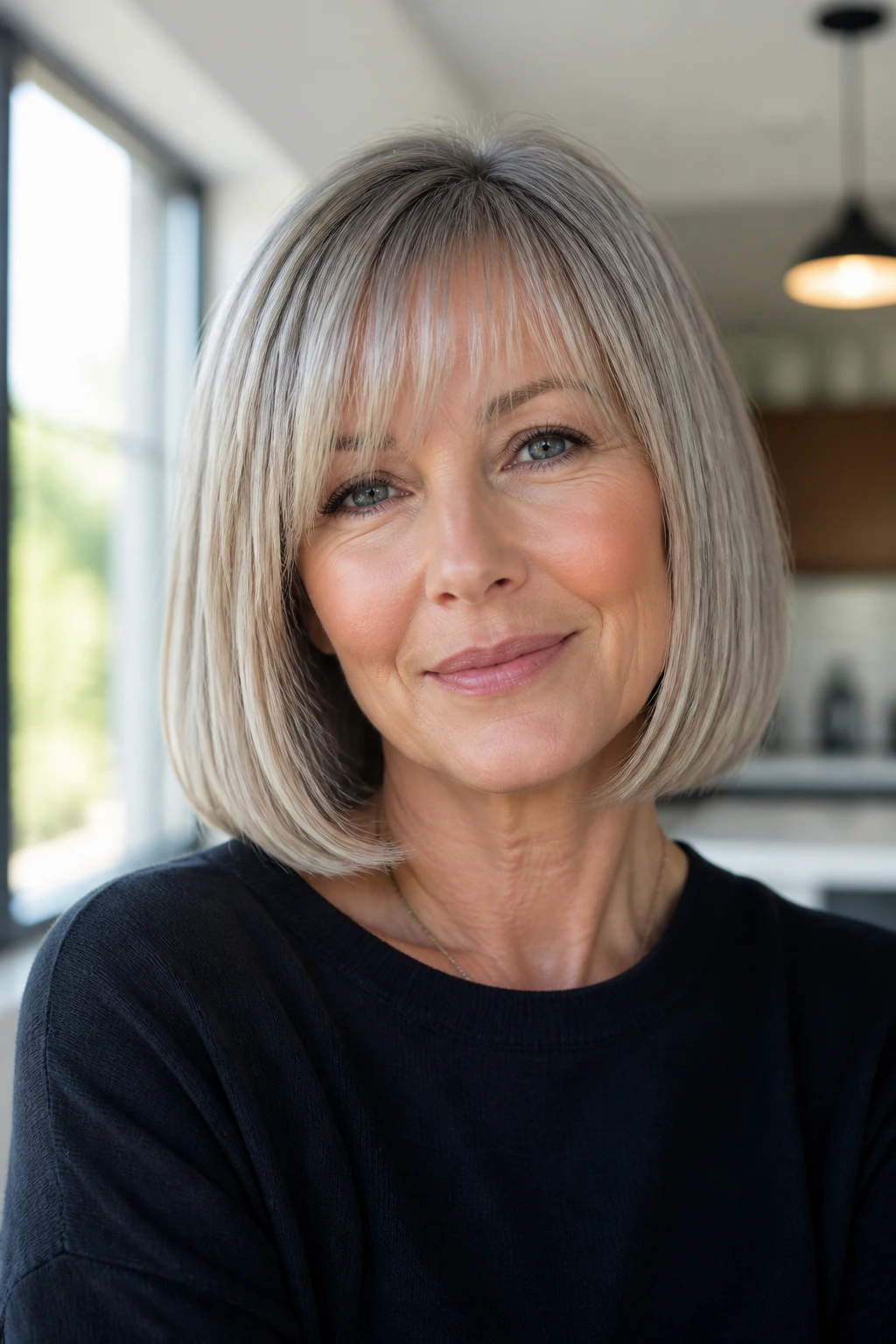
Straight hair can make a feathered fringe look ultra-clean if the cut is sharp and controlled. A sleek bob beneath feathered bangs gives you polish without the hard edge of a blunt bang. It’s one of the few styles that can look crisp and soft at the same time.
The Detail That Matters
The bangs should be cut with movement at the ends, not frayed to the point of weakness. That keeps the fringe from disappearing into the bob. If your hair is pin-straight, a tiny bend at the ends with a flat iron can make the feathering show up better than a brush alone.
This is a good pick if you like structure but don’t want severity. That’s a very normal wish, by the way.
21. Textured Pixie Feathered Fringe
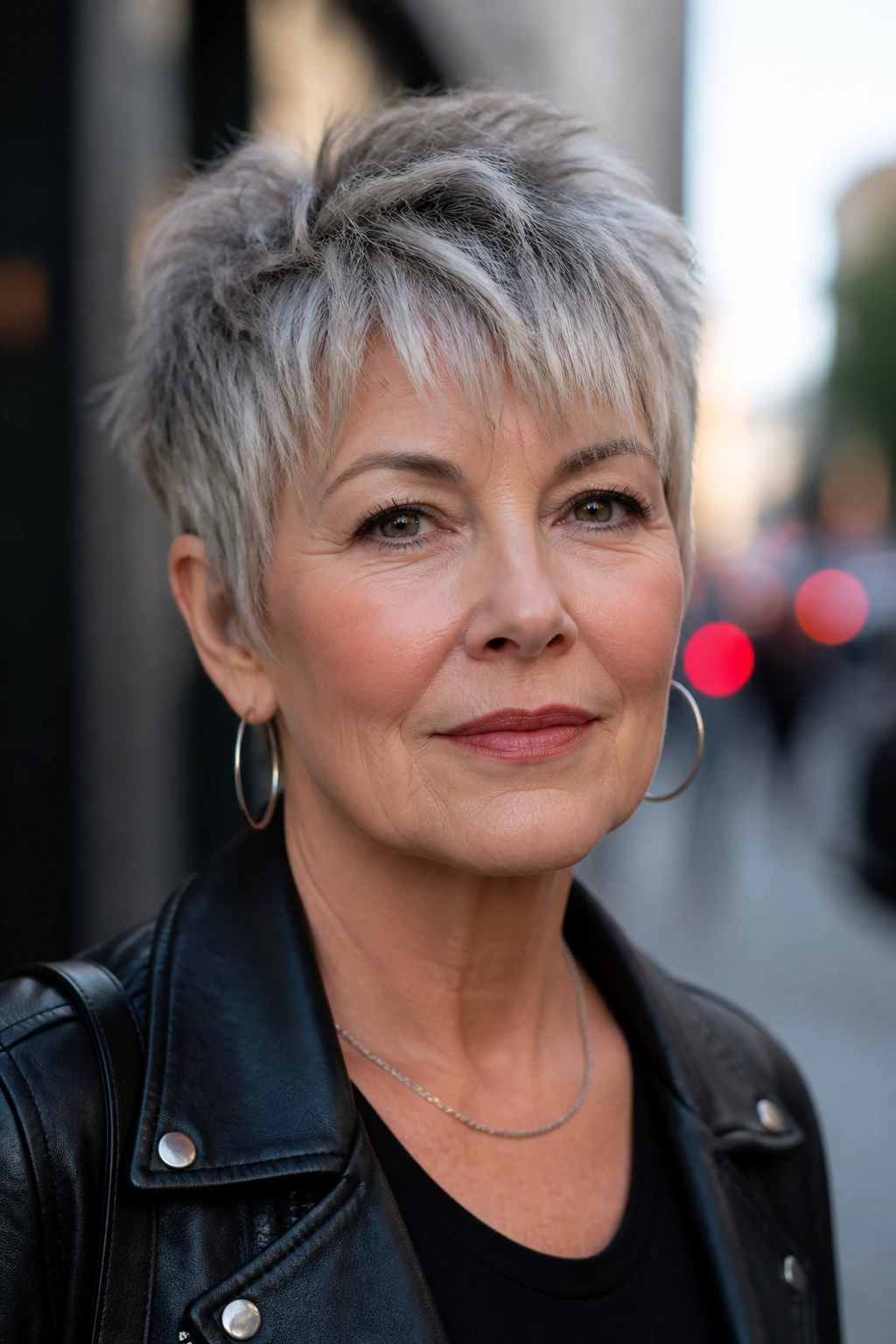
A textured pixie with feathered bangs can look modern and sharp without feeling harsh. The fringe keeps the cut from exposing too much forehead all at once, which is helpful if you like short hair but still want some softness near the eyes.
Why It’s a Strong Choice
The texture should live in the front and crown together. If the top is too flat, the bangs lose their shape. If the bangs are too heavy, the whole pixie goes dead. A little paste or dry texturizing spray gives the edges that separated, airy look.
This one suits women who like short cuts with some personality. No fuss. A little attitude.
22. Feathered Bangs with Long Layers and Highlights
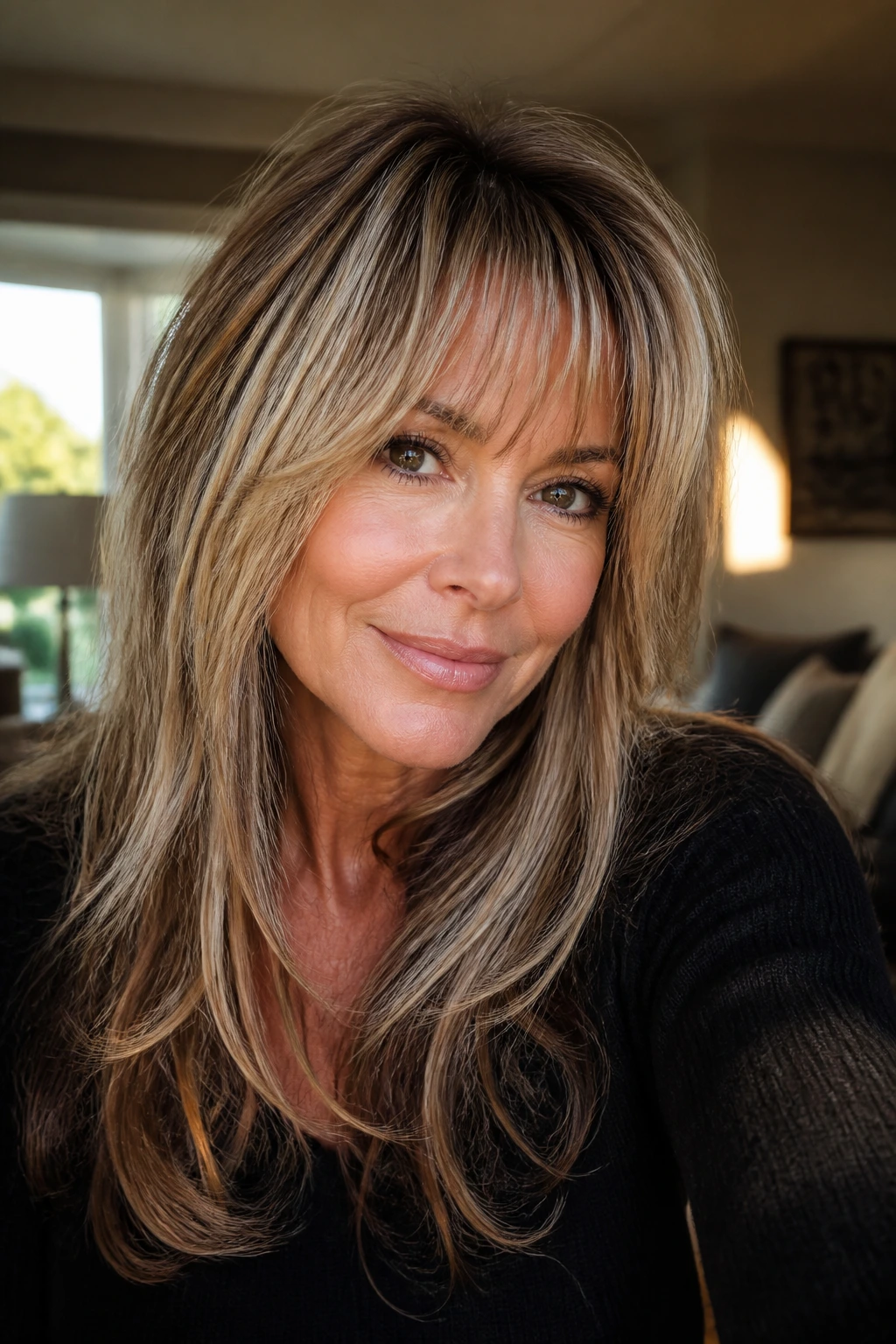
Long layers and highlights do a lot for feathered bangs because they give the eye somewhere to go. The lighter pieces around the face show off the taper in the fringe, and the layers keep the haircut from feeling one-note.
The Color Angle
Face-framing highlights can make the feathering more visible, especially on gray-blended or salt-and-pepper hair. That doesn’t mean you need dramatic streaks. A few brighter pieces around the front are enough to pick up the movement.
This is a good version for women who like dimension without a lot of styling work. The color and cut do half the job before you’ve touched a brush.
23. Wavy Feathered Bangs
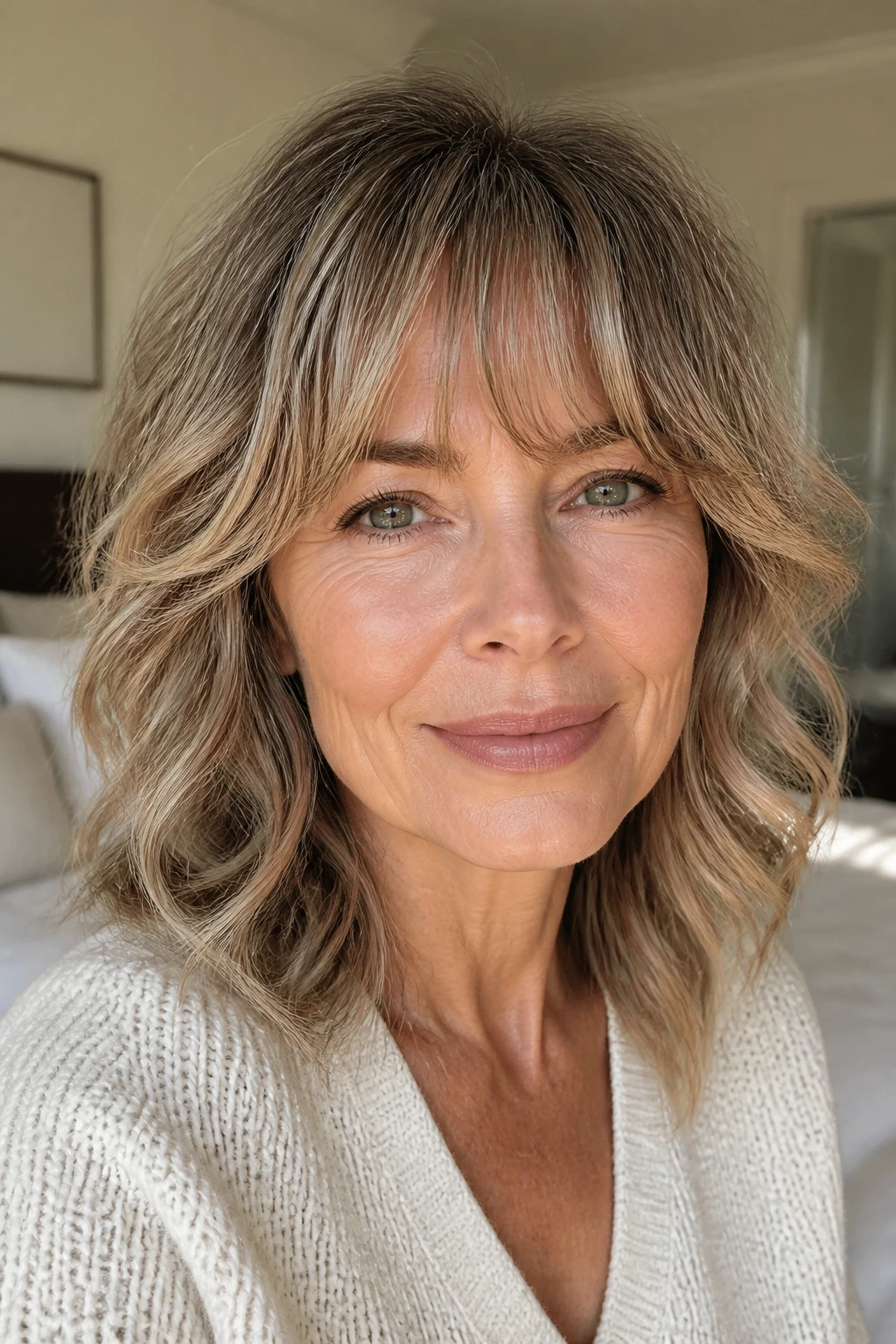
Wavy hair is one of the easiest textures to feather because the natural bend already helps the shape. The bang only needs a little direction. It doesn’t need to be forced into place.
A Simple Approach
Use a light mousse on damp bangs, then scrunch the front with your fingers while blow-drying on low heat. If the waves are uneven, that’s fine. The feathered finish actually looks better when it’s a little irregular, because the whole point is movement.
This version works if you want hair that feels relaxed but not sloppy. That line can be hard to hit. This cut gets close.
24. Soft Center-Part Feathered Bangs
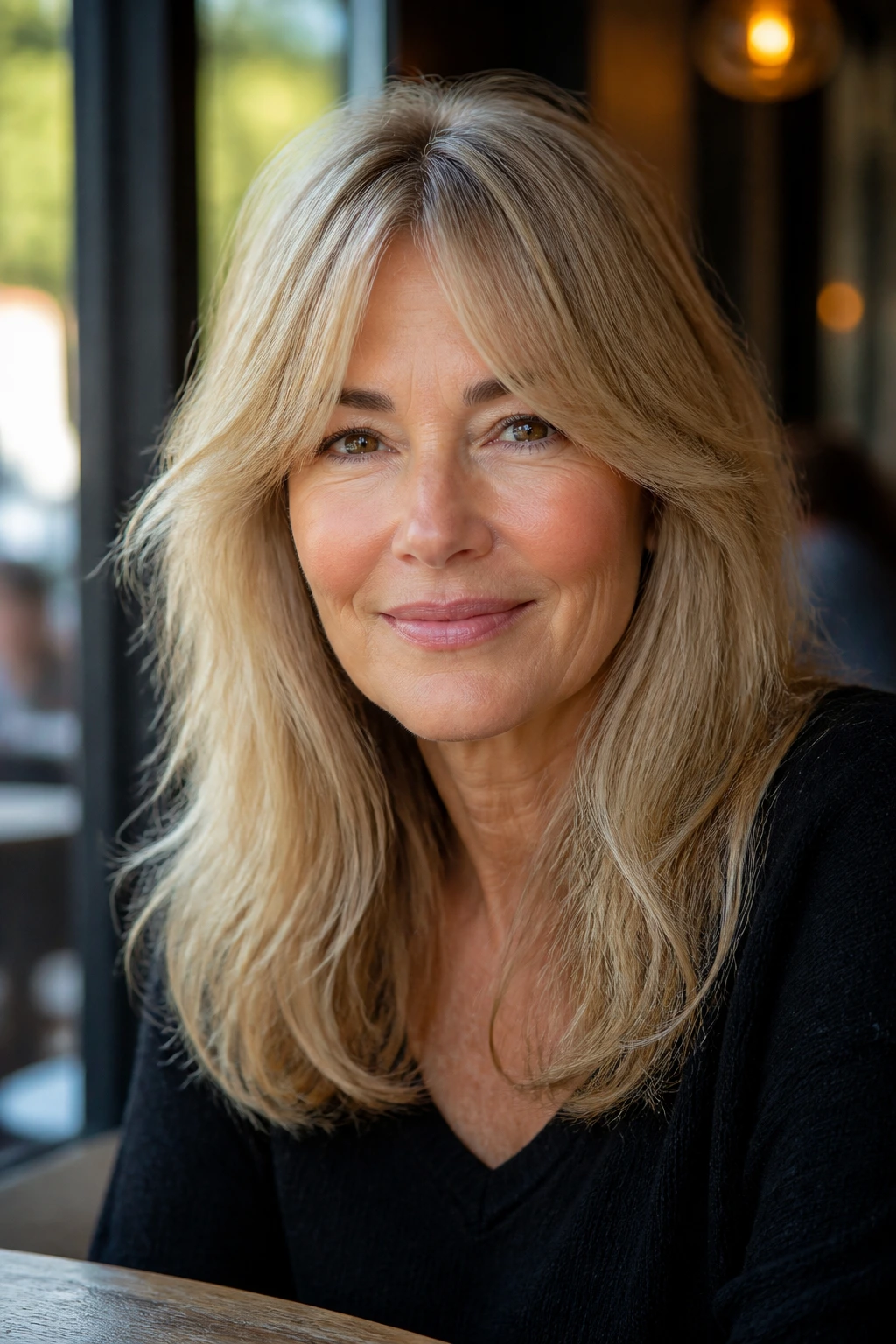
A center part with feathered bangs gives you a calm, balanced frame around the face. It’s less dramatic than a deep side part and less committed than a full curtain bang, which makes it useful for women who want subtle change.
Why It’s Pleasantly Easy
The center should open just enough to show a little forehead, with the sides feathering out toward the cheekbones. If the part sits a little off-center, don’t fight it. A tiny shift can be more flattering than perfect symmetry.
This is one of the easiest shapes to tuck into glasses, earrings, and necklines. The styling logic is simple: keep it soft, keep it loose, and stop before it gets too polished.
25. Tucked-Side Feathered Bangs
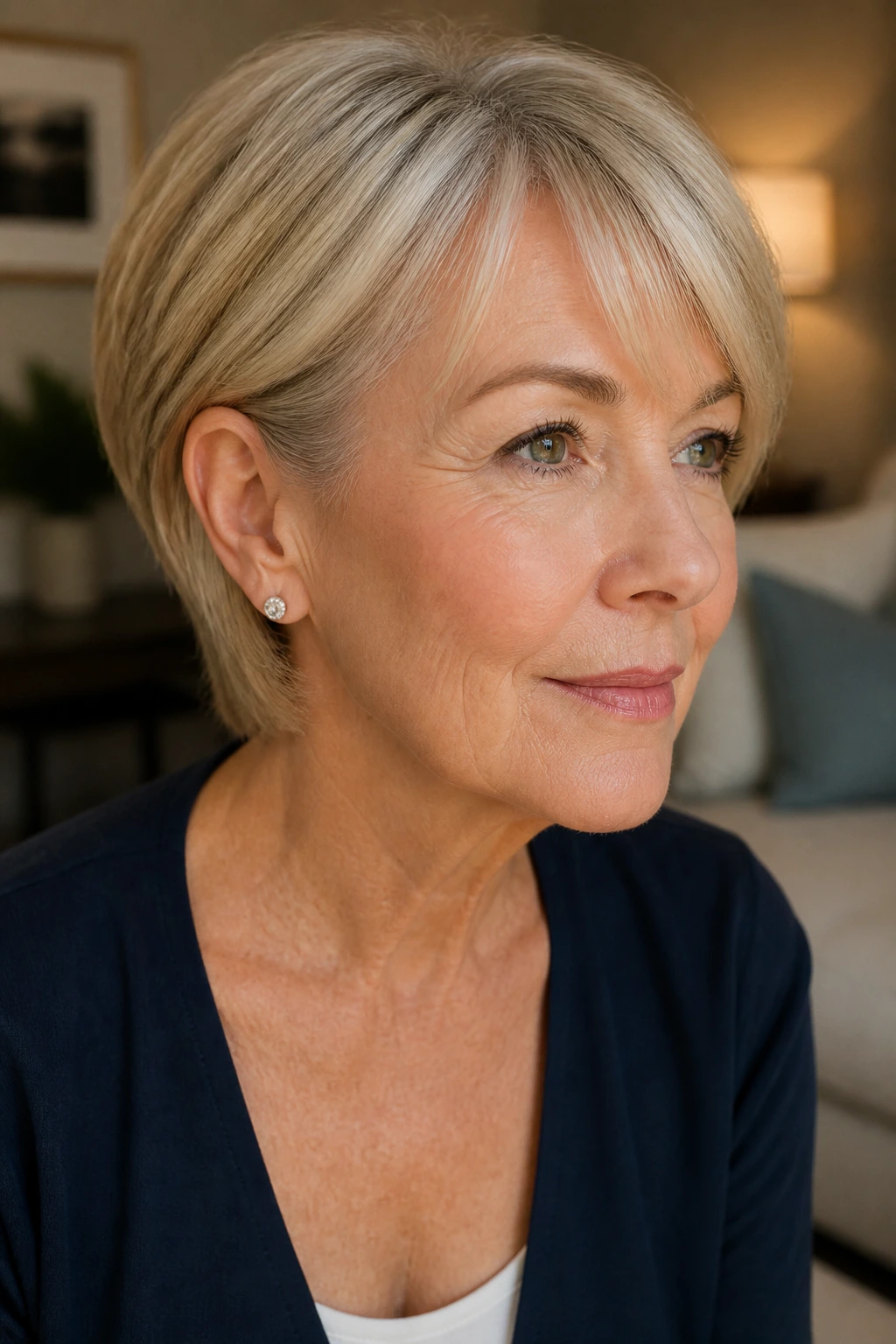
Some fringes are made to stay put. Others are made to get tucked, swept, and adjusted through the day. This one belongs in the second camp. The feathered edge is long enough on one side to slide behind the ear, which makes it practical when you want your face open on one side.
What It’s Good For
It’s a smart choice if you wear one earring, like to show off your jawline, or need your bangs out of your eyes for part of the day. The front still reads as a fringe when it’s down, but it can disappear cleanly when you want it gone.
A side tuck looks best when the fringe has a soft bend, not a sharp kink. A tiny bit of cream on the ends helps with that.
26. Shattered Feathered Bangs
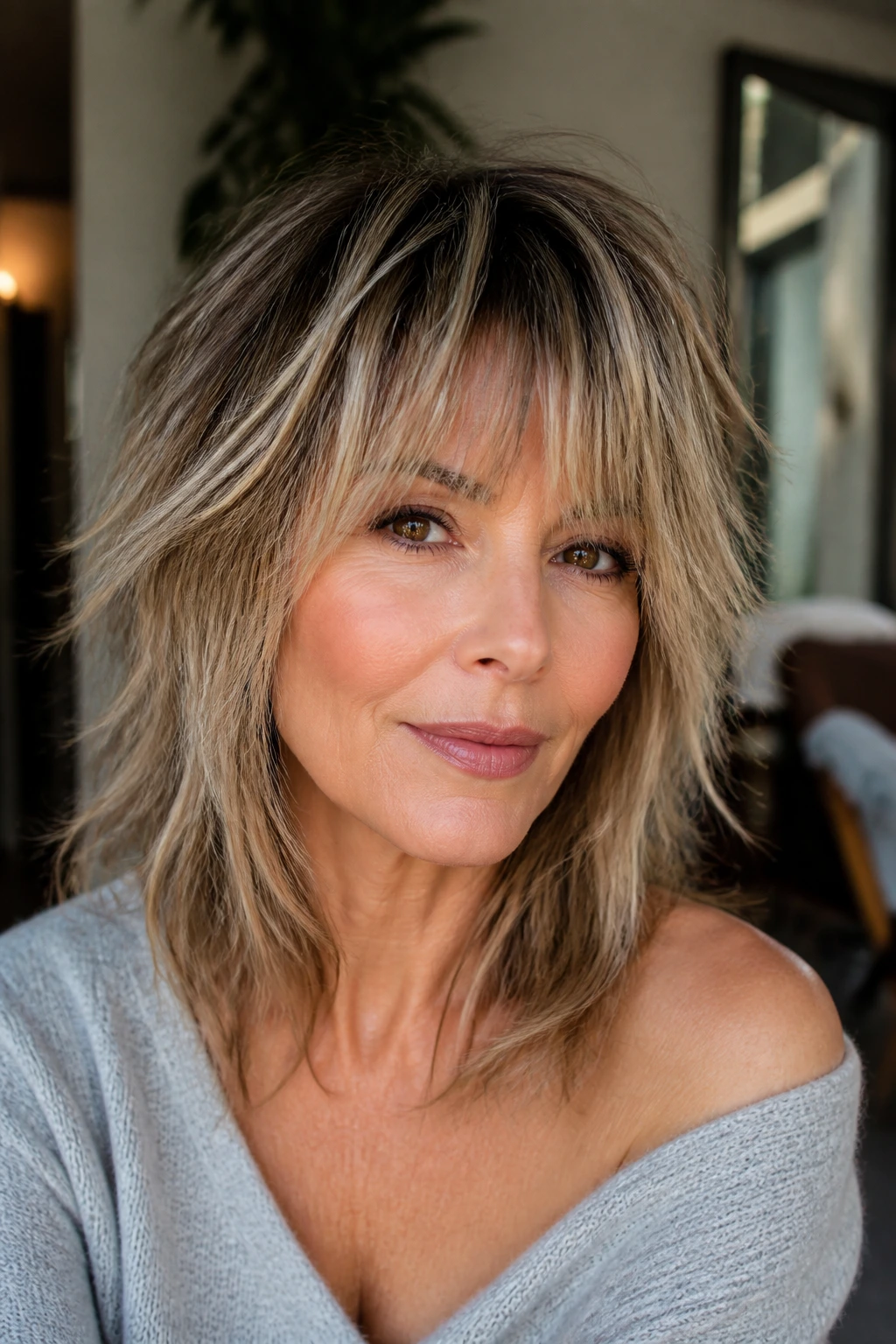
Shattered bangs are for women who want a little edge in the front without the weight of a thick fringe. The ends are heavily textured, almost broken into little pieces, but the feathering keeps them from looking ragged. It’s a stronger style, and I like it best when the rest of the haircut is clean.
The Difference
This is not the same thing as over-thinned bangs. Bad thinning leaves holes. Shattered feathering leaves movement. The distinction is obvious in the mirror, even if people pretend it isn’t.
Use this shape if your hair has enough density to handle texture at the front. On very fine hair, it can disappear fast.
27. Feathered Bangs for Thinning Hair
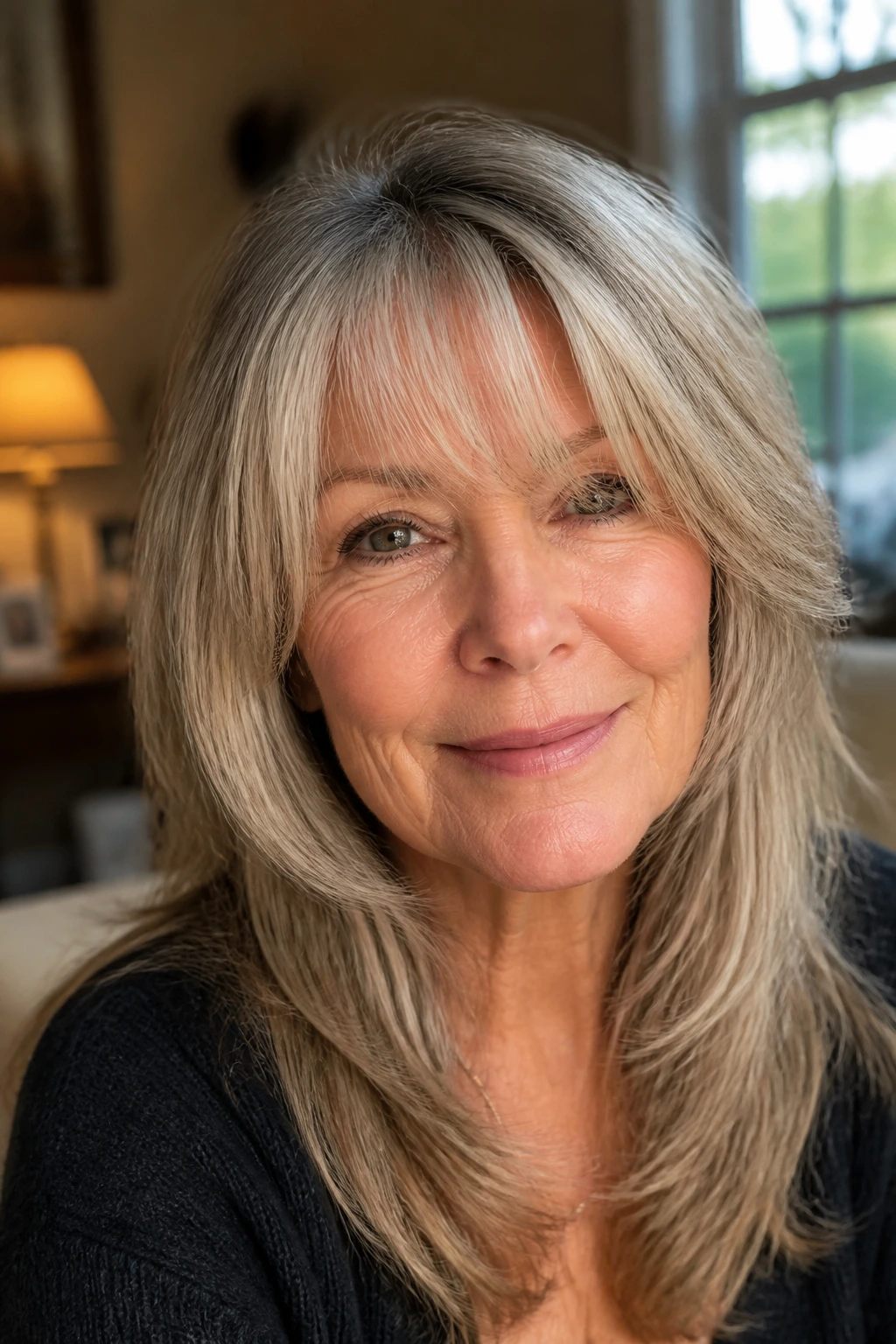
When the front starts to lose fullness, the wrong bang makes it look thinner. That’s why feathering is so useful here. It keeps the line soft while preserving enough presence to frame the face.
What to Avoid
Don’t let the stylist over-layer the fringe into wisps that are too sparse. Thinning hair needs shape, not a scatter of hair pretending to be bangs. Ask for a longer, lighter fringe that can sweep, not a chopped-up one that exposes the scalp.
A small root-lift spray and a quick blow-dry forward can make a real difference. The lift at the root matters more than the product at the ends. Always has.
28. Feathered Bangs with a Soft Flip
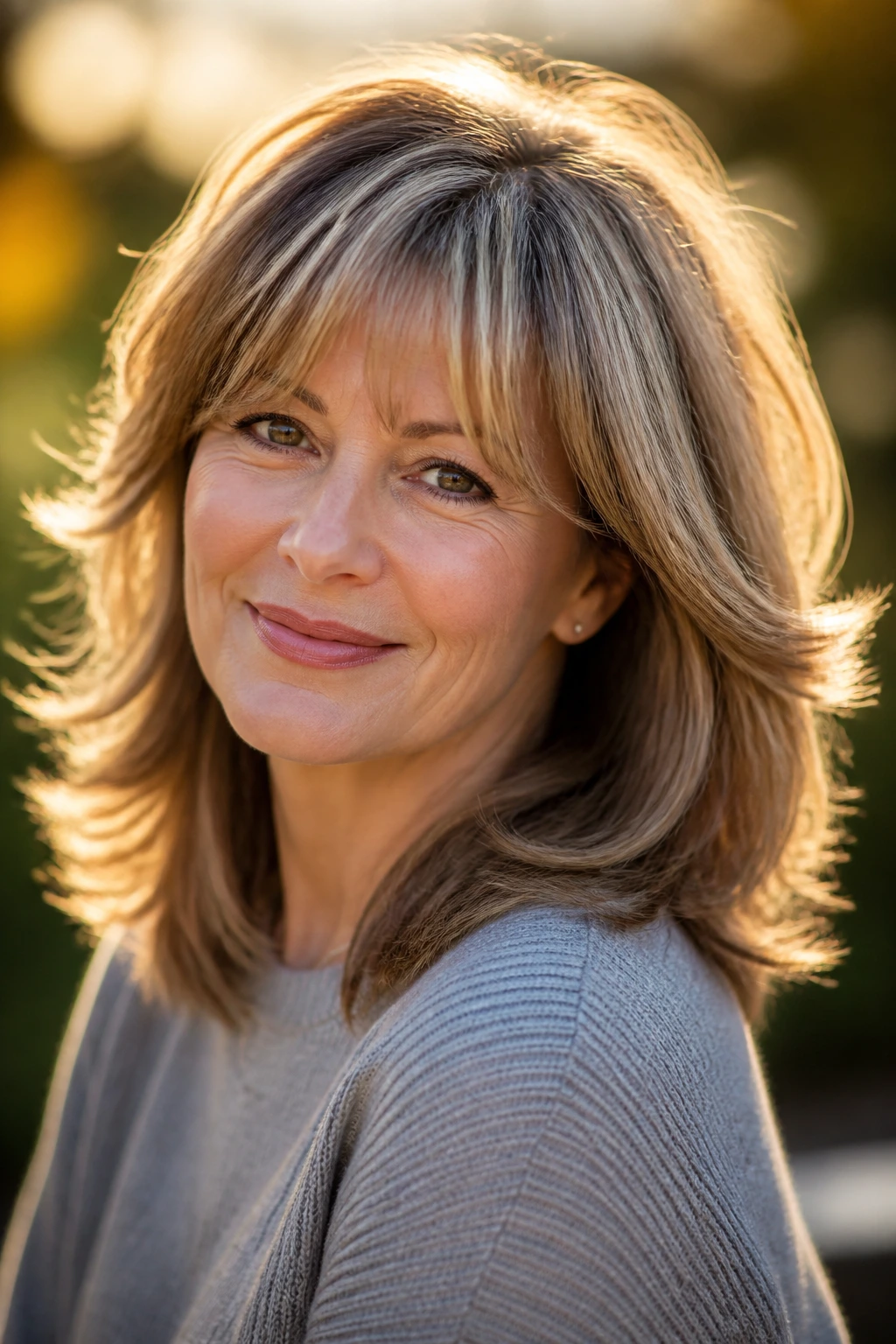
A soft flip at the ends gives feathered bangs a little retro charm without crossing into costume territory. The front bends outward just enough to soften the eyes and cheekbones, then the rest of the hair can stay simple. That contrast is what makes it work.
Why I Like It
It’s elegant in a very practical way. The flip keeps the fringe from sticking flat to the forehead, and the feathered edges stop it from feeling too structured. If your hair naturally bends under at the ends, this style can be easier than it sounds.
I’d pair it with a bob, a lob, or shoulder-length layers. It has enough personality to stand alone.
Why Feathering Changes the Whole Hairline
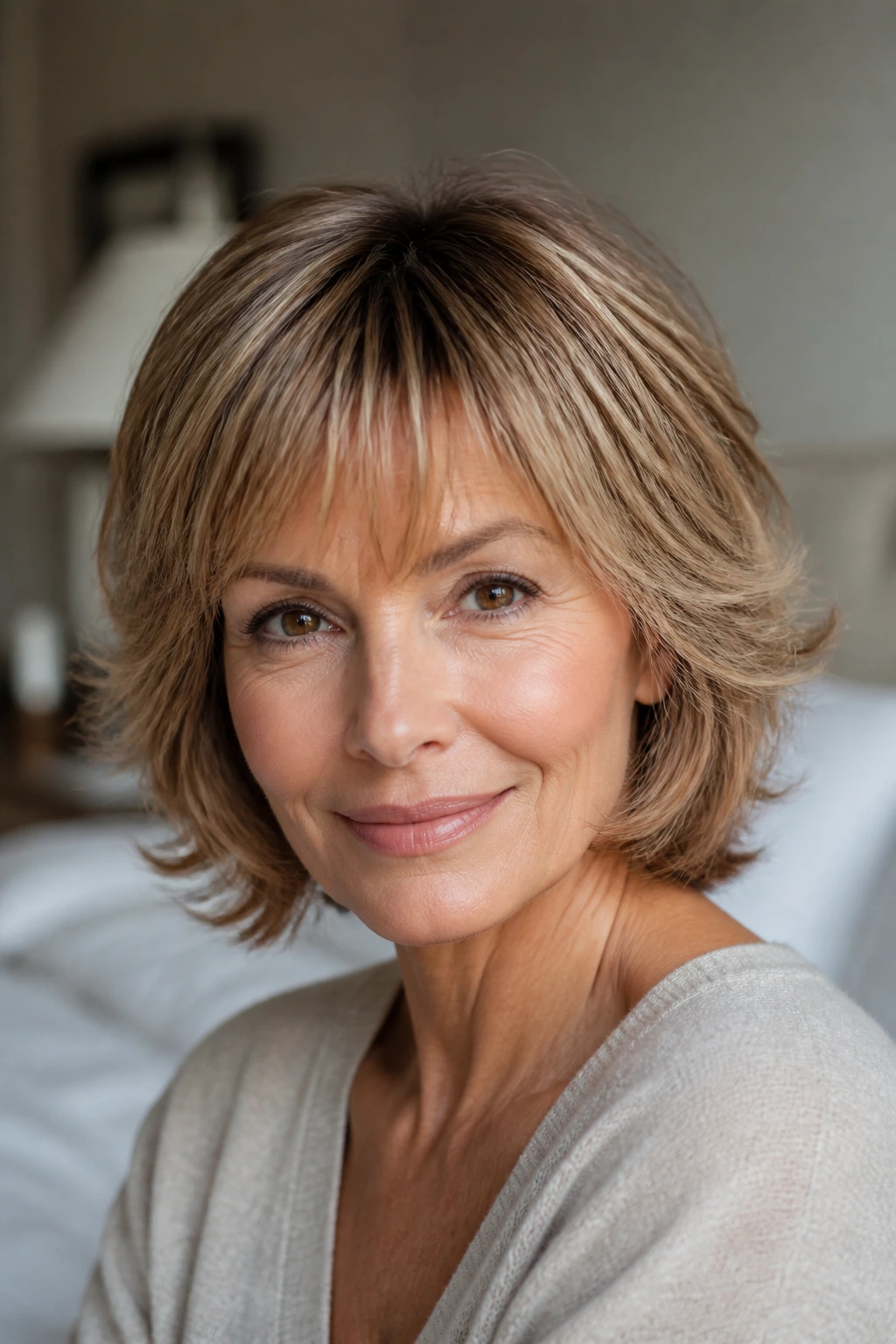
Feathering is not just a styling trick. It changes the shape of the haircut where people notice it first: the frame around the face. A blunt fringe creates one hard visual line, and that line has a way of announcing itself before the rest of the haircut does. Feathered bangs break that signal up into smaller pieces, which feels lighter to the eye and easier on the face.
There’s also a practical reason stylists keep coming back to this technique. Point-cutting, slide-cutting, and careful overdirection remove weight where older hair often doesn’t need it. That matters at the front, where hair can flatten, split, or behave like it has a mind of its own. Feathering lets the fringe bend instead of brace.
And here’s the part I like most: a feathered front does not demand a perfect hair day. It can be slightly off, slightly side-swept, slightly tucked, and still look deliberate. That’s a rare quality. Especially when the alternative is a fringe that only looks good in one position.
Essential Tools for These Looks
-
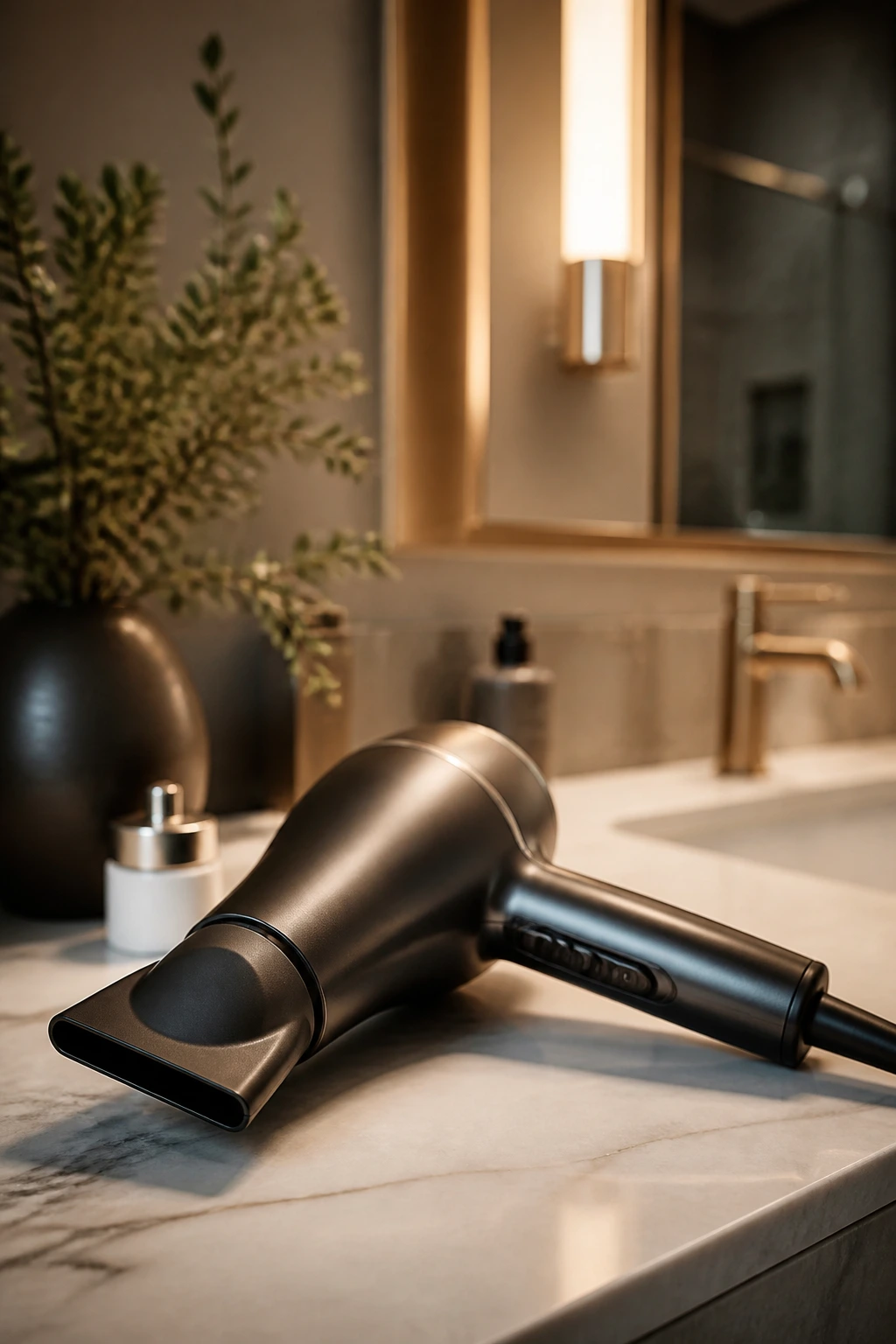
A blow dryer with a nozzle: Directs the airflow at the roots so the bangs don’t puff out sideways.
-
A small round brush, 1 to 1.5 inches: Best for creating a gentle bend in shorter fringes and a soft sweep in longer ones.
-
A vent brush: Useful for quick drying when you don’t want a polished finish and just need the bangs to behave.
-
Lightweight mousse or root-lift spray: Gives fine or thinning hair enough memory to hold the feathered shape.
-
Flexible-hold hairspray: Keeps the fringe in place without turning the front into a helmet.
-
A smoothing cream or light serum: Helps dry or gray hair stay soft at the ends; use sparingly.
-
Duckbill clips: Handy for setting the front while it cools, especially on curtain and side-swept shapes.
-
A fine-tooth comb: Good for sectioning the bangs cleanly before drying or trimming.
How to Choose the Right Feathered Fringe for Your Hair
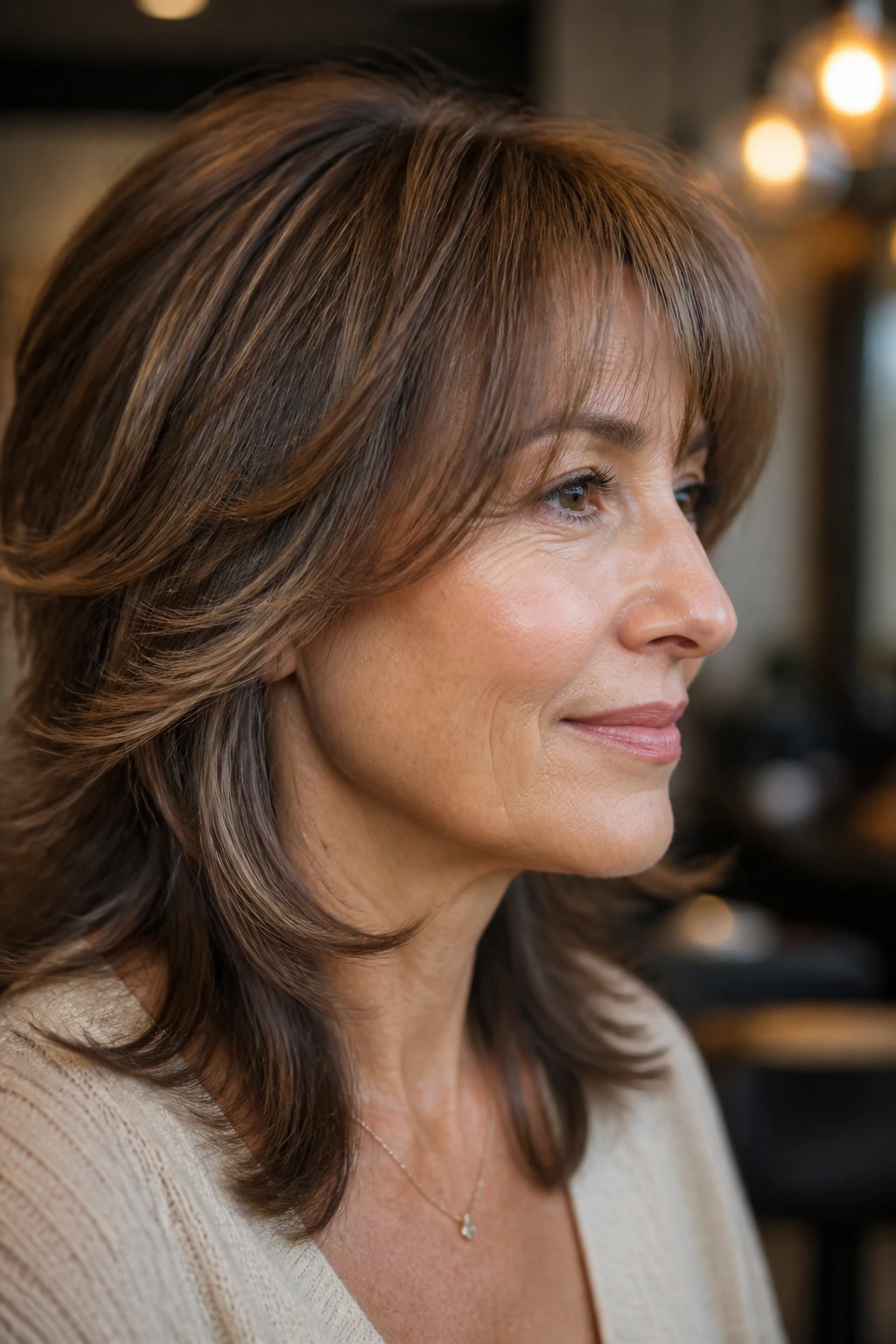
Fine hair needs support, not over-thinning. If the front has lost density, stay with longer feathered bangs or piecey side-swept shapes. Keep the length below the brow so the fringe has enough weight to sit down instead of floating away.
Thick hair needs bulk removal with restraint. Ask for internal weight removal and tapered edges, not a heavily razored bang that turns frizzy. A dense fringe should still look like hair, not shredded cotton.
Curly and wavy hair need room to move. Cut them dry when possible, and always plan for shrinkage. If the fringe is too short wet, it will spring up and sit higher than you wanted.
Glasses change everything. The right bang should clear the top of the frame or curve around it. If you wear glasses daily, bring them to the salon. That isn’t fussy. It’s practical.
How to Style and Wear Them
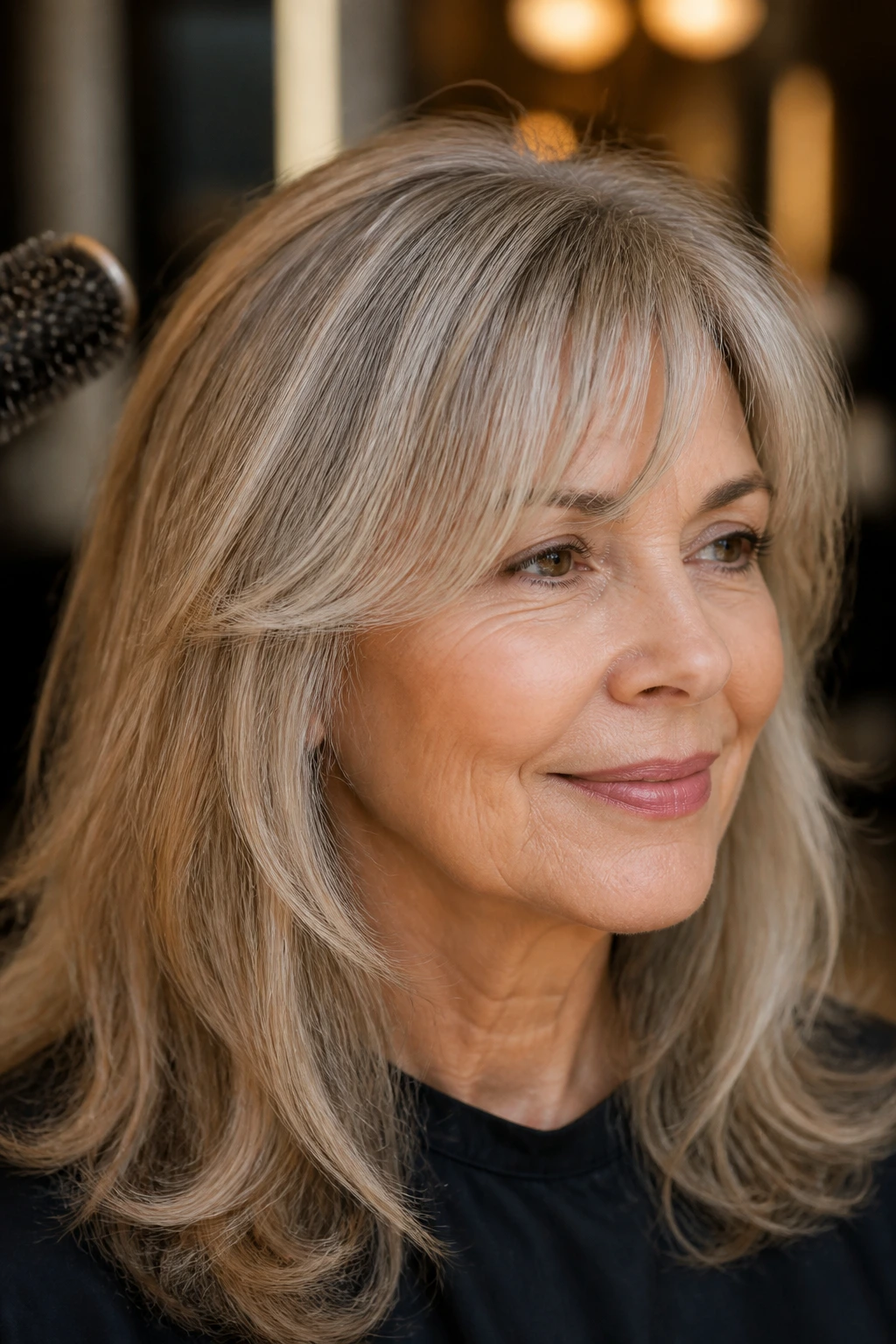
Parting: Start with the part your hair already wants, not the one a photo told you to force. A slight off-center part gives many feathered bangs more lift, while a center part works better when you want a curtain effect.
Styling: Blow-dry the bangs first. Not last. The front dries fast, and if it sits while the rest of your hair gets attention, it tends to stick in whatever shape it lands. Use a round brush for a polished bend or your fingers for a looser finish.
Accessories: Glasses, small earrings, and even a simple headband can work with feathered bangs if the fringe is cut with enough length at the temples. Tuck one side, pin back a corner, or let it fall loose. The style should bend around your life.
Best pairings: Feathered bangs look strongest with bobs, lobs, pixies, shag cuts, and layered shoulder-length hair. The haircut underneath needs enough shape to support the front. A fringe alone can feel like an afterthought. Put it on top of a real cut, and it suddenly makes sense.
Extra Ways to Personalize the Cut
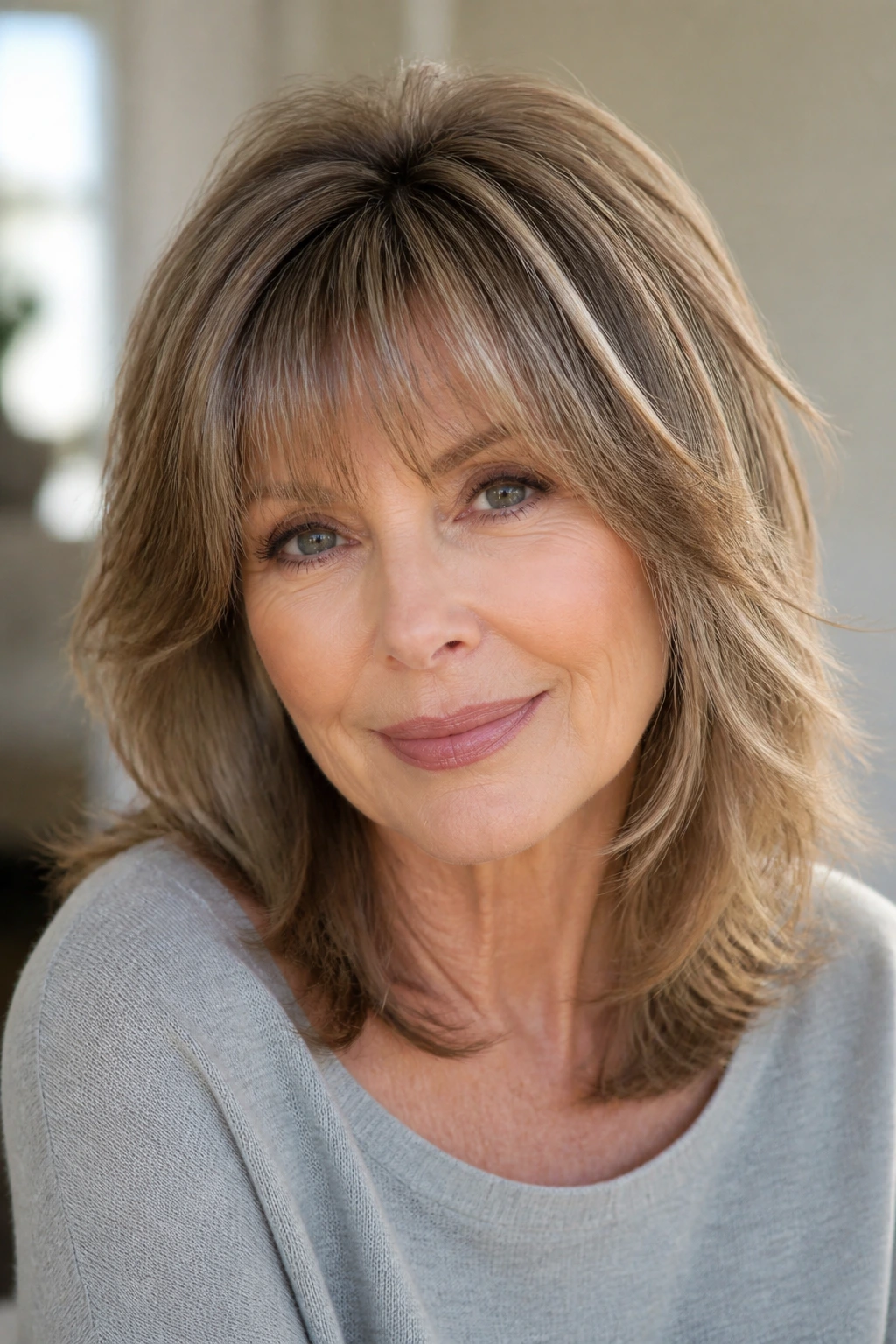
Root Lift: Ask for a little shorter length near the center and direct that section straight up while drying. It gives the bang more loft and keeps it from collapsing onto the forehead.
Texture: Fine hair usually likes mousse; thick or dry hair usually likes cream. Use the lightest product that still lets the bang hold its shape, because too much softens the feathering into mush.
Color: A few brighter face-framing pieces can make the taper show up better, especially on silver hair or dark hair with warm highlights. You don’t need a full color job. A small change near the front often does more.
Make-It-Yours: If you’re low-maintenance, choose longer bangs that can sweep away. If you like a more styled look, go with a shorter, more defined fringe and plan for regular trims. If your hair is curly, keep the shape dry and curved, not straightened into submission.
Keeping Feathered Bangs Fresh Between Washes
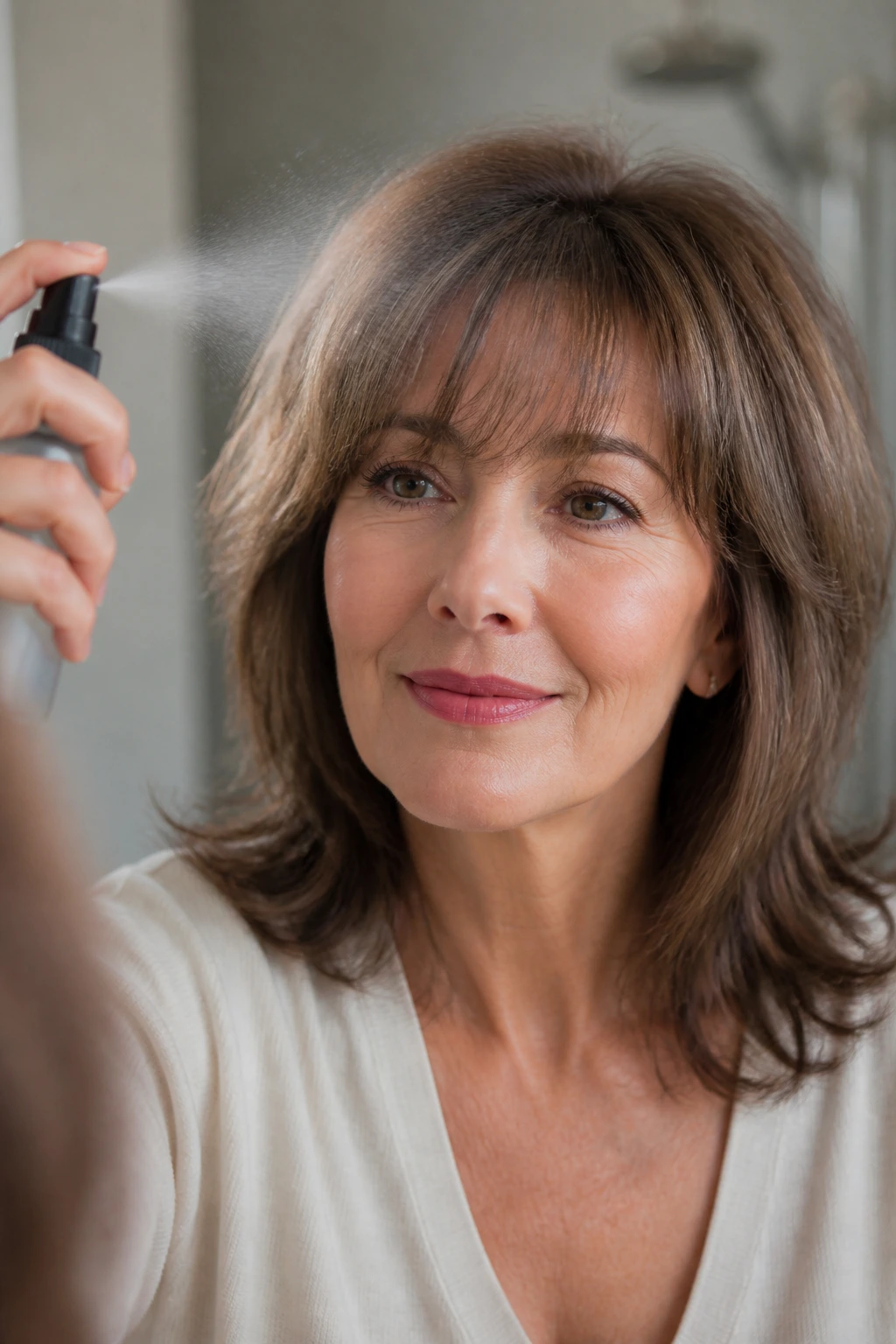
Feathered bangs usually look best on day one and day two, but they don’t need a full wash to recover. A small mist of water or a face-framing spray bottle can reset the front in under a minute. Then use a brush or your fingers to push the bangs back into their shape while they dry.
For overnight wear, clip the fringe up loosely with a duckbill clip or set it on a soft roller if the hair is straight. That keeps the root from drying in a bent position. On waking, the front often needs only a quick re-blow with low heat, about 30 to 45 seconds per side.
Between trims, expect the shape to stay decent for 4 to 6 weeks, depending on how fast your hair grows. After that, the ends start losing their tapered look. If you wear the bangs every day, plan on a trim sooner rather than later. Waiting too long makes feathering look vague instead of intentional.
Variations and Adaptations to Try
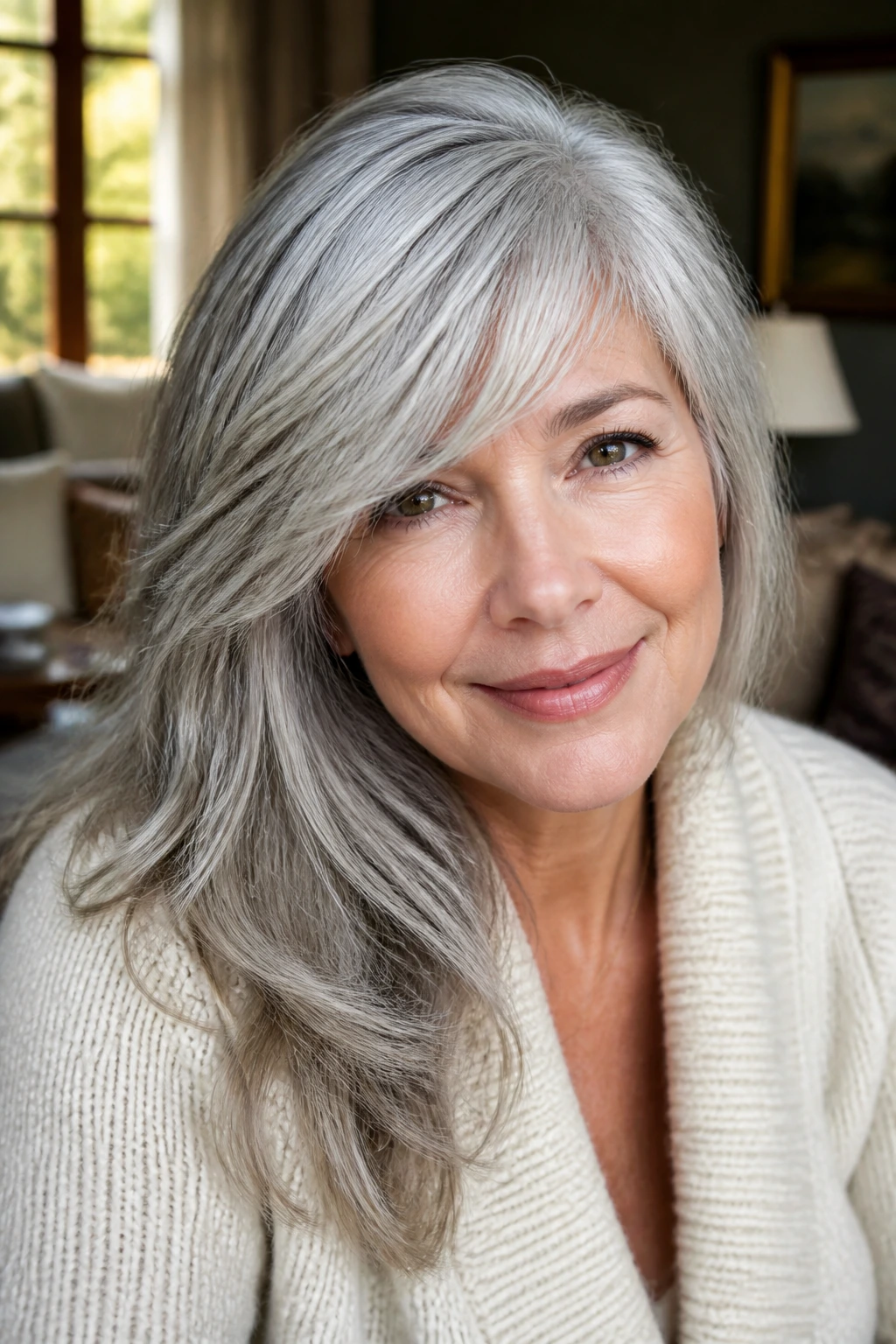
The Silver Sweep: Keep the fringe long and side-swept, then let the silver or white strands show their texture. This version works especially well if you want movement without heavy styling.
The Curly Halo: Let the bangs follow a natural curl pattern and cut them dry so the shape stays honest. Best for women who’d rather support the curl than flatten it into a straight line.
The Frame-Friendly Arc: Build the fringe around eyeglass frames with a gentle curve above the lenses. This cut keeps the bang visible without crowding the face.
The Low-Commitment Grow-Out: Ask for longer feathered bangs that blend into face-framing layers. You can pin them, tuck them, or wear them forward depending on the day.
The Short Textured Sweep: Shorter at the center, softer at the sides, with a bit of choppy texture. This one has more personality and works best on bobs, pixies, and strong hairlines.
The Soft Retro Flip: Pair feathered bangs with a subtle outward bend at the ends. It gives the cut a little lift and a touch of old-school shape without locking it into one era.
Common Mistakes That Make Feathered Bangs Harder to Wear
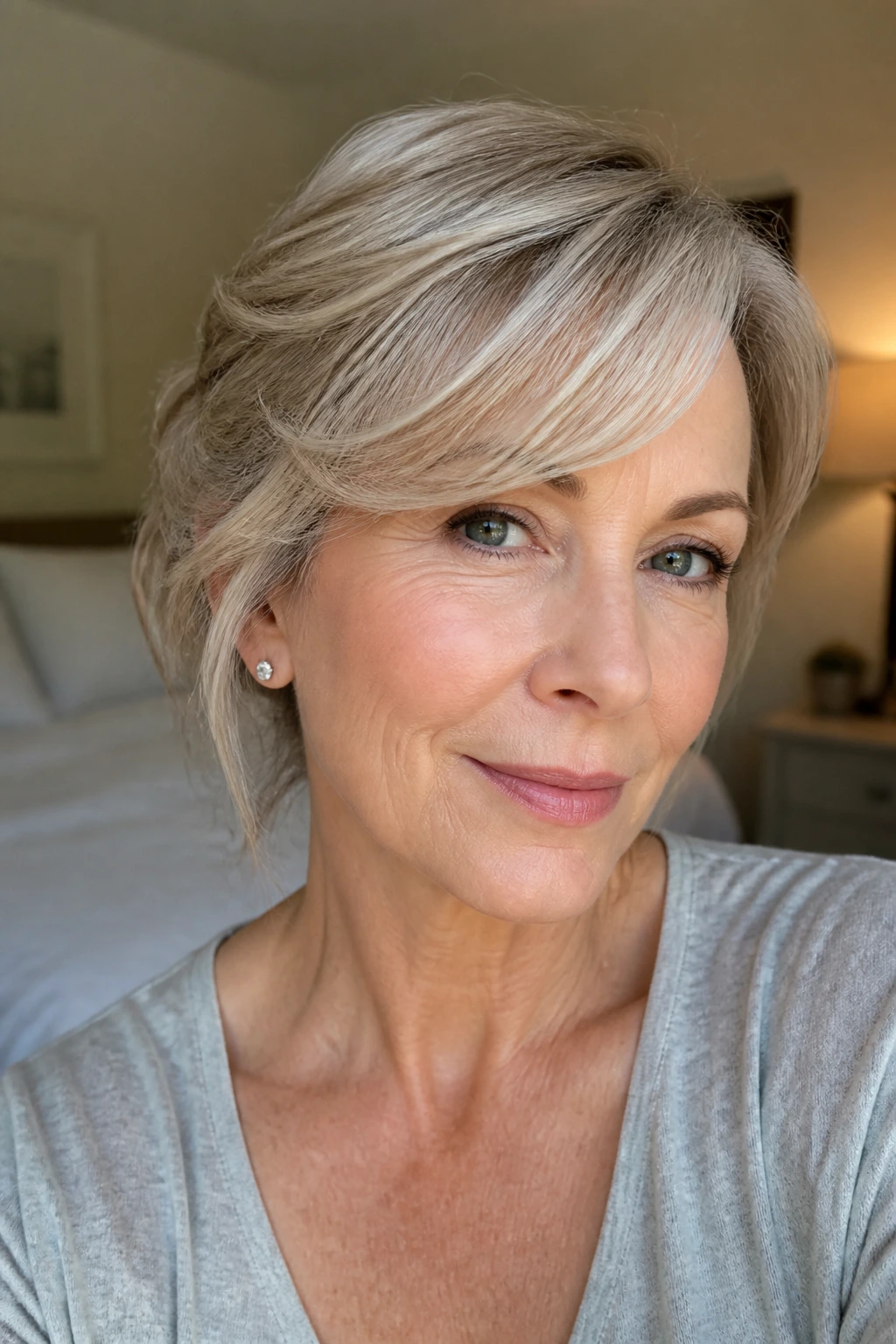
Going too short on the first cut: Short bangs can look sharp for a few days, then become annoying fast. Start a touch longer than you think you need, especially if your hair shrinks when dry.
Over-thinning fine hair: This is the quickest way to end up with see-through bangs that separate awkwardly. Feathering should lighten the edge, not erase the fringe.
Blowing them dry straight down: That creates a flat, heavy curtain right where you wanted movement. Lift the roots first, then direct the ends into the sweep or bend you want.
Using heavy products at the front: Thick oils, waxes, and rich creams weigh the bangs down and make them stringy. The front almost always needs the lightest hand in the room.
Ignoring the cowlick: If the front of your hair grows in a stubborn direction, fight it the wrong way and you’ll spend every morning losing. Work with the growth pattern, not against it. Sometimes that means a side part. Sometimes it means a longer fringe. Usually, it means both.
Frequently Asked Questions
Are feathered bangs good for older women with fine hair?
Yes, if they’re cut with enough length and not over-thinned. A longer feathered fringe gives fine hair some shape at the front without exposing too much scalp or collapsing flat by noon.
Do feathered bangs work with glasses?
They can work very well. The key is to keep the shortest pieces above the frame line or split them around the glasses so the fringe doesn’t sit on top of the lenses and annoy you all day.
How often should feathered bangs be trimmed?
Most people do best with a trim every 4 to 6 weeks. If the bangs are short or very textured, you may want to clean them up sooner so the feathered edge doesn’t lose its shape.
Can I air-dry feathered bangs?
You can, especially if your hair has a natural wave. Straight or fine hair usually behaves better with a quick blow-dry at the roots, because air-drying alone can leave the fringe bent in odd directions.
What if my bangs split in the middle?
That usually means the front is either too heavy, cut too short, or fighting a cowlick. A little root spray and a quick blow-dry in the opposite direction can help, but the real fix is a better cut shape.
Are curtain bangs and feathered bangs the same thing?
Not exactly. Curtain bangs are a type of fringe that parts in the middle and frames the face on both sides; feathering is the technique that softens the ends. You can have feathered curtain bangs, side-swept feathered bangs, or even a feathered bob fringe.
Can feathered bangs hide forehead lines?
They can soften attention around the forehead, but they should not be treated like a curtain hiding a room. The better goal is movement and framing. A soft, airy bang usually looks fresher than a dense one trying too hard to cover skin.
What’s the easiest feathered bang to maintain?
A longer side-swept version is usually the easiest. It grows out cleanly, handles humidity a little better than shorter shapes, and gives you room to tuck or pin it back when you are not in the mood to style the front.
Soft Edges, Better Shape
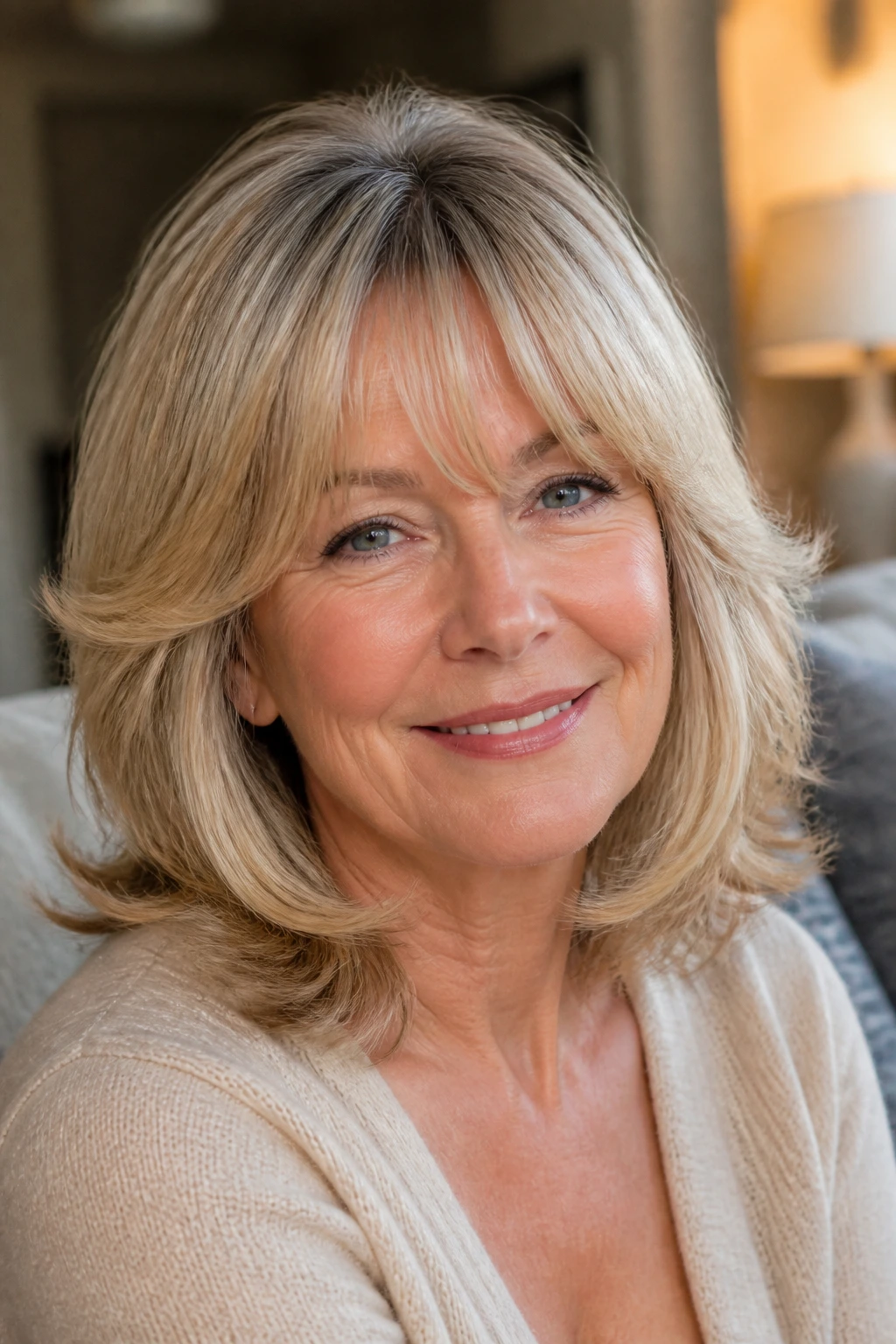
Feathered bangs work because they respect the face instead of boxing it in. They soften the front line, give the haircut some motion, and make room for the things real life throws at hair — glasses, cowlicks, thinning, gray texture, and mornings when you’d rather not wrestle a round brush.
The best version is the one that fits your hair rather than the one that looks the most dramatic on a salon photo wall. Start with the shape that feels easiest to live with, then let the feathering do its quiet work. Once you find that balance, you stop thinking about the bangs every time you look in the mirror. That’s usually the sign you got it right.
