



Thick bangs for a soft face frame can go one of two ways. They can look plush, flattering, and a little bit French-girl in the best sense of the phrase. Or they can collapse into a heavy slab that sits on the forehead like a helmet visor. The difference is not luck. It’s shape, density, and where the bangs stop — or, more often, where they start to melt into the rest of the cut.
I’ve always thought thick bangs are at their best when they do more than cover the forehead. They should blur the top line of the face, skim the brows, and leave enough softness at the temples that the whole haircut breathes. That’s the trick with a soft face frame: you want weight without blunt force. A good fringe can make cheekbones look higher, round out sharper edges, and keep a long face from feeling even longer. A bad one just sits there.
The styles below are not all the same fringe with a different caption. Some are blunt and polished. Some are broken up and lived-in. Some are long enough to tuck behind the ears on lazy days, which I love because not every bang has to demand a blowout before coffee. A few are better for straight hair, a few for wave, and a few are the kind you cut only if you’re willing to keep a small round brush nearby. That’s the honest part.
Why Thick Bangs Soften the Face Instead of Boxing It In
They lower the top edge of the face. A denser fringe visually shortens the forehead, which is useful if your features run vertical or your hairline feels high.
They add shadow around the eyes. That little bit of shade at the brow line makes the eyes read softer and keeps the forehead from stealing attention.
They need side pieces to do the real framing. The best thick bangs rarely end in a hard line at the temples; they taper into cheekbone or jaw-length pieces so the face still has movement.
They behave better than wispy bangs on strong growth patterns. If you have a cowlick or a center part that likes to split, a fuller fringe has enough weight to stay put longer.
They photograph like a choice, not an accident. Dense bangs create a clear shape, even when the rest of your hair is waved or slightly undone.
They can make heavy hair look intentional. A thick fringe takes some of the bulk from the front and puts it where the haircut needs structure most: around the eyes.
How Thick Bangs Flatter Different Face Shapes and Hair Textures
Round faces and soft jawlines usually benefit from bangs that open a little at the center or taper at the sides. That extra vertical line keeps the fringe from making the face look wider than it is. A blunt, straight-across cut can still work, but it wants some length at the temples so the whole thing doesn’t feel boxy.
Long faces usually like a fuller fringe with more width than height. The best versions sit near the brows or just at lash level and carry enough density to interrupt the long line from hairline to chin. If the bangs are too airy, they vanish. If they’re too short, they can make the face look even taller.
Curly and wavy hair need more honesty from the cut. A thick bang on a wave pattern should be longer than you think at the first snip, because shrinkage will climb once the hair dries. Straight hair is easier to shape cleanly, but it also shows every mistake in the line. Fine hair can do this look too, though it often needs a narrower bang section so the fringe doesn’t spread thin across the forehead.
1. Classic Blunt Full Fringe

A classic blunt fringe is the heavyweight of the group, but it only works as soft face framing when the edges are handled with some restraint. I like it when the line sits just above the brows or kisses the lashes, with the corners very slightly longer than the center. That tiny bit of shape keeps it from looking flat and boxy.
This is the style for someone who wants the forehead covered and wants the haircut to say so. No apology. No whispering. The weight creates a smooth front panel, while the softness comes from the way the temples are blended into the rest of the haircut, usually with a quiet bevel at the ends rather than a blunt chop all the way across.
Ask for This at the Salon
Tell your stylist to keep the center dense and the corners a touch longer. That one sentence changes the whole mood of the cut.
Ask for a dry check at the end. Bangs shift when they dry, especially if your hair has any bend.
Avoid over-thinning the middle. A classic blunt fringe needs substance or it turns stringy fast.
2. Rounded Full Bangs
Rounded full bangs are my favorite answer when blunt bangs feel too hard against the face. The curve is subtle, not theatrical. The center sits a hair shorter, the sides fall a touch longer, and the whole fringe follows the brow line with a soft arch.
The curve matters more than people think. A rounded fringe keeps the eye moving in a gentle line instead of hitting a hard wall. That makes the forehead look shorter without making the haircut feel severe. It’s a small thing. It changes everything.
- Ask for the center to land at or just above the brows.
- Let the outer edges graze the upper cheekbone area.
- Style with a medium round brush and a quick inward bend, not a tight curl.
This shape is especially kind to square and angular faces. The curve rounds off corners that would otherwise feel sharp, and it does it without pretending to be wispy or delicate. It has body. It still reads full. It just has better manners.
3. Curtain Bangs with a Dense Center
Can curtain bangs still look thick? Absolutely — if the center has enough weight to hold the shape instead of dissolving into two thin ribbons. This version keeps more density through the middle and then opens out toward the temples, so you get the soft split without the see-through effect that makes some curtain bangs feel flimsy.
The best part is the way this style frames the face in motion. When you turn your head, the bangs shift instead of sitting like a fixed curtain. That movement softens cheeks and opens the eyes, especially if the longest pieces land around the cheekbone instead of the chin.
What to Ask For
Keep the center heavy enough to touch the brows. If it starts too high, the whole look loses its grounded feel.
Ask for longer side pieces that blend by the cheekbone. That’s where the face frame starts doing real work.
Set them with a round brush or large roller. A little bend away from the center helps the split sit naturally.
4. Bottleneck Bangs

Bottleneck bangs are one of those cuts that look casual until you notice how carefully they’re built. The center is narrower and a bit shorter, then the pieces widen as they move outward, like the neck of a bottle opening into a fuller shape. It gives the face room right where you want it, while keeping enough thickness across the front to feel substantial.
I like this shape for anyone who wants soft face framing without committing to a straight, heavy curtain of hair. The open center keeps the eyes from getting buried, and the longer sides do the flattering work around the cheekbones. There’s a reason stylists reach for this shape when they want bangs that feel modern but not fussy.
- Best for round, heart, and oval faces.
- Works well with a middle part or a very loose off-center part.
- Needs a little styling at the temples so the opening doesn’t collapse.
A bottleneck fringe is also forgiving on grow-out. Even when it gets a little long, the shape still reads as deliberate instead of simply overgrown. That’s useful. Hair should earn its keep.
5. Brow-Grazing Heavy Fringe
There’s a reason brow-grazing bangs keep showing up in salons. They sit low enough to soften the forehead, but not so low that you lose the expression in your eyes. The line lands just at the brows or a shade above, with enough thickness that you can feel the fringe there, even when it’s brushed slightly aside.
This is the one I’d call the quiet workhorse of thick bangs. It doesn’t shout. It just fixes proportion. On a long face, it shortens the vertical line without making the cut look severe. On a softer face, it gives the features a little more structure. And because the length sits right at the brows, it tends to look polished even when the rest of the hair is left natural.
The only catch is upkeep. Brow-grazing bangs show their growth fast. A quarter inch matters. If your hair grows quickly, you’ll notice the shape sliding lower sooner than you expect, which can make the fringe feel sleepy instead of sharp. Keep a small round brush and a low-heat dryer nearby. You’ll use them more than you think.
6. Long Side-Swept Thick Bangs
Unlike wispy side bangs that disappear after lunch, a thick side-swept fringe carries enough mass to stay visible all day. That’s why I like it for anyone nervous about a full front bang. It gives you movement, cover, and softness, but it doesn’t lock the whole forehead away.
The sweep should start from a side part that isn’t too deep. If you push the part too far over, the fringe turns into a comb-over look no matter how beautiful the cut is. Keep the front section dense, guide it diagonally across the face, and let the longest point land around the cheekbone or upper lip, depending on how much frame you want.
This shape is especially useful if one side of your face feels stronger than the other. The diagonal line draws the eye downward and across, which softens asymmetry in a way straight bangs can’t. It’s also a smart choice for people growing out a shorter fringe. You get structure while the rest of the hair catches up.
7. Crescent Bangs
Crescent bangs have a lovely built-in curve. The center is shorter, the sides are longer, and the whole fringe arcs gently like a half-moon across the forehead. That shape softens the face because there are no hard corners to stop the eye. Everything eases outward.
Why the Curve Matters
The crescent line keeps the eye moving. A flat fringe can feel heavy in a hurry, especially on thick hair, but a crescent shape lifts at the edges and gives the front of the haircut some air.
- It suits oval and heart-shaped faces especially well.
- It works best when the center is cut dry, so the curve lands where it should.
- It blends nicely into layered cuts that already have movement through the sides.
I especially like crescent bangs on hair that has a little natural bend. They don’t fight the texture. They follow it. That makes the style easier to live with, which is half the battle when you’re dealing with any kind of fringe.
8. Shaggy Fringe
If you want thick bangs that don’t feel precious, shaggy fringe is the move. The density is there, but the ends are broken up just enough to keep the line from looking too clean. It has a lived-in feel, which is useful if your hair has wave, volume, or a bit of wildness at the roots.
A shaggy fringe softens the face by refusing to sit like a curtain. It bends. It separates a little. It falls forward, then shifts back. That movement makes the whole haircut feel lighter, even though the bangs themselves are full. The trick is not to over-thin them. Shaggy does not mean sparse. It means the ends have some air.
- Best styled with fingers and a diffuser or rough dry.
- Texturizing spray helps the pieces stay separated.
- Too much thinning at the root can make the fringe frizz instead of feather.
This is a great choice if you like that slightly undone, slept-in haircut vibe but still want the face framed. It has edge. It also has softness, which is a hard balance to fake.
9. Birkin Bangs with Extra Density
Birkin bangs have a softer reputation, but when you thicken them up a little, they become a very useful face frame. The line stays loose and touchable, usually grazing the brows or the upper lashes, with enough density to show up clearly instead of drifting into wisps. I like this version because it looks expensive without trying too hard. A dangerous phrase, I know. But here it fits.
The classic Birkin mood depends on a little irregularity. Not a bad cut. Just enough breakup in the line that the fringe doesn’t read as rigid. The center can sit straight, while the edges soften naturally into the rest of the hair. That makes it ideal for people who want bangs but don’t want a strict geometric shape on their face.
If you’ve got medium-thick hair and a bit of natural movement, this is one of the easiest thick fringe styles to keep believable. It works especially well when the rest of the haircut has long layers. The bangs can stay full while the sides stay soft. Nice balance. No fuss.
10. Choppy Thick Bangs
What if you want thickness, but you don’t want that slabby feeling? Choppy thick bangs are the answer. The line still has body, but the ends are point-cut or lightly broken up so the fringe has air between the pieces. That little bit of separation stops the bang line from looking stiff.
What to Ask For
Ask for a solid front section first, then have the stylist soften the ends with point cutting rather than thinning shears. Thinning shears can sometimes shred the shape too far, especially on finer hair.
You can style these bangs with a flat brush or a small round brush, depending on how much bend you want. If the haircut is done right, the pieces should fall into a loose, textured line without needing much coaxing. That’s the beauty of it. Less time in the mirror. More time moving on with your day.
Choppy bangs are especially good if you wear your hair in a bun, ponytail, or loose claw-clip twist. The fringe adds foreground detail, and the broken ends keep it from feeling too formal.
11. Arched Bangs
Arched bangs do a small, smart thing: they lift the center slightly and let the outer edges fall lower, which gives the forehead a softer outline. The result is subtle, but the face reads differently. More open at the eyes. Less flat at the front. A little more shape around the brow bone.
I like arched bangs on square or heart-shaped faces because the curve takes some pressure off the temples. Straight bangs can sharpen the line too much on those face shapes. The arch loosens it. It lets the face breathe while still giving you the thickness of a real fringe.
The key is keeping the arch gentle. Too much curve and the bangs start to look dated. Too little and you lose the point. The best arched fringe is almost quiet. You notice the shape because it works, not because it’s loud.
12. Cheekbone-Frame Fringe
This is the fringe for anyone who wants the bangs to do more than sit at the forehead. Cheekbone-frame fringe stays thick through the center, then angles down hard enough at the corners to graze the cheekbone. That diagonal pull is what softens the face. It doesn’t just cover. It redirects.
The style works especially well if your cheeks are the widest part of your face and you want to draw the eye slightly inward. It also flatters long layers because the bangs connect to the rest of the haircut instead of ending on their own little island. That connection matters. Without it, thick bangs can look isolated.
I’d ask for this shape if you like curtain bangs but want more presence at the front. It has the openness of a curtain and the substance of a full fringe. The sweet spot is the point where the bang line begins to bend toward the cheek, usually around the edge of the eyebrow or a little lower.
13. Feathered Thick Bangs

Feathered bangs are all about breaking up the surface without losing the density underneath. That means the fringe still feels full when you run your fingers through it, but the ends move instead of sitting like a block. Soft face framing lives in that movement.
I reach for this idea when the hair is coarse or naturally bulky. A feathered finish keeps the front from turning into a wall. The texture lightens the line just enough that the bangs don’t overpower the face, which is a common problem with thick hair. You know the look. Too much front. Not enough face.
- Use a blow-dryer with a nozzle and a medium brush.
- Aim the air downward at the roots first.
- Finish with a tiny bit of serum on the ends, not the roots.
That last point matters. Feathered bangs can go limp fast if you load them up with oil. Keep the product light. Let the movement do the work.
14. Micro Bangs with Density

Micro bangs are not for everyone, and I’m not going to pretend they are. But a dense micro fringe can soften a face in a very specific way: it opens the eyes, compresses the forehead, and gives the haircut a strong front edge without needing a long curtain of hair. The thickness is what keeps them from looking accidental.
When Micro Bangs Actually Work
They work best when the fringe has a little softness at the line and the hair at the temples is allowed to stay longer. That contrast keeps the cut from feeling severe. You want a short front, yes, but not a hard box around the face.
This is a good choice if you want your brows, eyes, and cheekbones to do more of the talking. It’s bold, sure, but it can still read soft if the rest of the haircut is layered and the bangs are not cut razor-straight across the head. A slight texture at the ends helps a lot.
I’d avoid this one if you hate regular trims. Micro fringe grows out fast, and the shape changes quickly. The payoff is strong. The upkeep is too.
15. Wavy Full Fringe

Can thick bangs work with wave? Yes, and they can look better than straight hair bangs if the cut respects the shrinkage. A wavy full fringe should usually be cut a touch longer than your instinct says, because once the wave settles, the bangs spring up and reveal more forehead than you planned for.
The softness here comes from motion. A wavy fringe never sits as a single flat line, so the face frame ends up feeling looser and less severe. It’s a good answer for someone who likes fullness but hates the polished, almost lacquered look of a straight blowout. A little chaos helps.
How to Cut for Wave
Ask for the bang section to be checked when it’s mostly dry. Wet cutting can lie to you if your wave pattern is strong. Also ask the stylist to leave enough weight at the center so the fringe doesn’t break apart into pieces the second humidity shows up.
Wavy bangs are lovely with shoulder-length cuts and long layers. They blur the top line of the face while keeping the overall shape soft, which is really what the whole game is about.
16. Soft Split Fringe

A soft split fringe is not quite curtain bangs and not quite a center part. It’s somewhere in the middle, with a shallow split that opens the forehead but keeps enough thickness on each side to frame the face. The result feels relaxed, almost accidental, but it still has structure.
I like this style when someone wants a little skin at the center of the forehead and a softer outline around the temples. It works well on people with a cowlick because the split can follow the natural growth pattern instead of fighting it. That’s one of those practical details nobody talks about enough. Fighting the cowlick is exhausting. Working with it is smarter.
The key is keeping both sides dense enough that the split doesn’t turn stringy. A good soft split fringe should drape, not dangle. There’s a difference.
17. Temple-Tapered Blunt Fringe
This is the blunt fringe for people who want polish without a hard edge. The center stays full and straight, but the temples taper out and blend into longer face-framing pieces. That taper changes the whole shape. The forehead still gets a clear line, but the haircut doesn’t stop dead at the sides.
It’s a smart option if your face feels wide at the temples or if you’ve tried a blunt bang before and found it too boxy. The temple taper gives the eye a place to exit. That matters more than people think. A thick fringe should frame the face, not trap it.
I’d recommend this style for straight or slightly wavy hair, especially if you like a clean finish in the morning. It still needs styling, but not a theatrical amount. A round brush and a quick pass at the corners usually do the job.
18. Face-Hugging Fringe with Long Sides
This is the most face-framing version of the whole bunch, and I mean that in the literal sense. The bangs are thick through the front, then the sides stretch longer and hug the cheekbones before slipping into the rest of the cut. It’s soft, but not in a shy way. More like the haircut knows exactly where your features are and wants to meet them there.
The beauty of this shape is the way it bends around the face instead of just sitting across it. The forehead gets coverage, the brows stay visible enough to keep expression, and the long sides do the flattering work around the jaw and cheek area. If you want bangs that feel like part of the haircut rather than a separate piece sitting on top, this is the one.
It also grows out well. That’s not a small thing. The longer side pieces buy you time between trims, which means the style can stay soft even when it’s a little past its freshest state.
How to Get Thick Bangs Cut Without Losing the Softness
The first thing I’d tell anyone is this: bring the bangs in dry, or at least mostly dry, if your hair has any wave or bend. Wet hair hides shrinkage. Shrinkage changes everything. A fringe that looks perfect at the chair can land half an inch too short once it dries, and that’s how people end up hiding their bangs under headbands for six weeks.
Density matters more than thickness alone. A heavy-looking bang can still feel soft if the stylist removes bulk from the right places — usually the underside and the corners near the temples — instead of shredding the middle. If the center gets too thinned, the fringe starts to separate in weird, see-through pieces. That is not softness. That’s a repair job.
Length should be decided by your longest problem area, not your shortest fantasy. Cowlicks, strong curls, and a high forehead all affect where the bang wants to sit. If one side pops up more than the other, ask the stylist to cut the fringe to the side that behaves worst. Boring answer. Correct answer.
Ask for a check from the front and from a slight angle. Bangs that look good head-on can disappear from the side, especially when the temples are too short. A soft face frame depends on those side angles. Without them, the haircut can feel abruptly stopped.
The Mistakes That Make Thick Bangs Feel Heavy
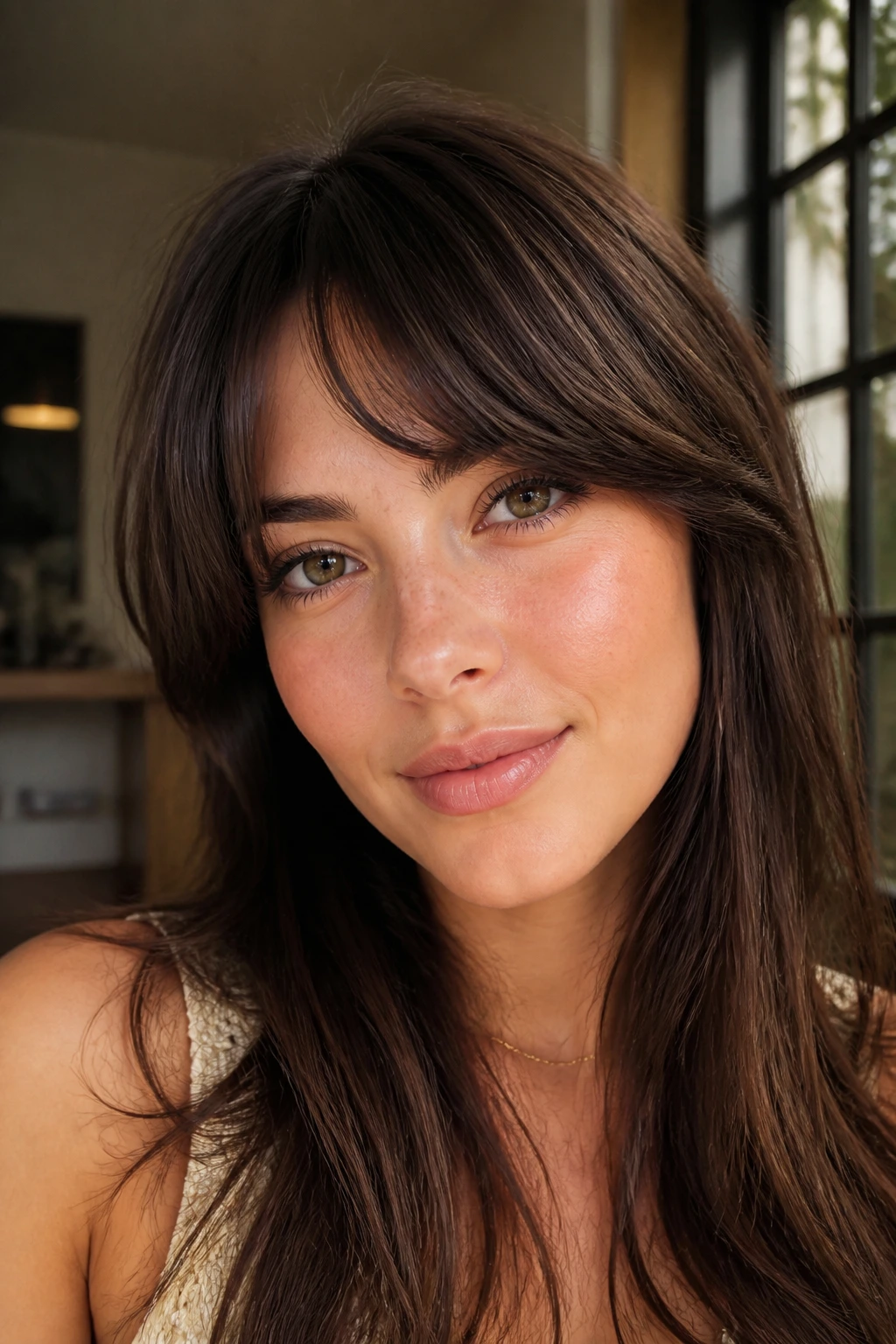
The most common error is cutting the fringe too wide and too blunt at the same time. The symptom is obvious: the bangs sit like a sheet and the temples fall away too hard. The fix is a softer corner and a narrower bang section that still leaves room for the side pieces to help.
Another problem is over-thinning the middle. People hear “soften the bangs” and assume that means making them lighter everywhere. Wrong move. If you strip too much bulk out of the center, the fringe splits, gets wispy, and loses the dense shape that made it flattering in the first place.
Then there’s the cowlick issue. A lot of people try to force the fringe flat from wet hair and wonder why it lifts or splits two hours later. Dry the roots in the direction they naturally want to go first, then push them into the final shape. That’s not a glamorous answer. It does work.
One more: cutting thick bangs too short for wavy or curly hair. The shorter the bang, the more the texture announces itself. Leave more length than you think you need. Seriously. The extra quarter-inch is usually what keeps the style wearable.
Easy Ways to Soften or Sharpen the Look
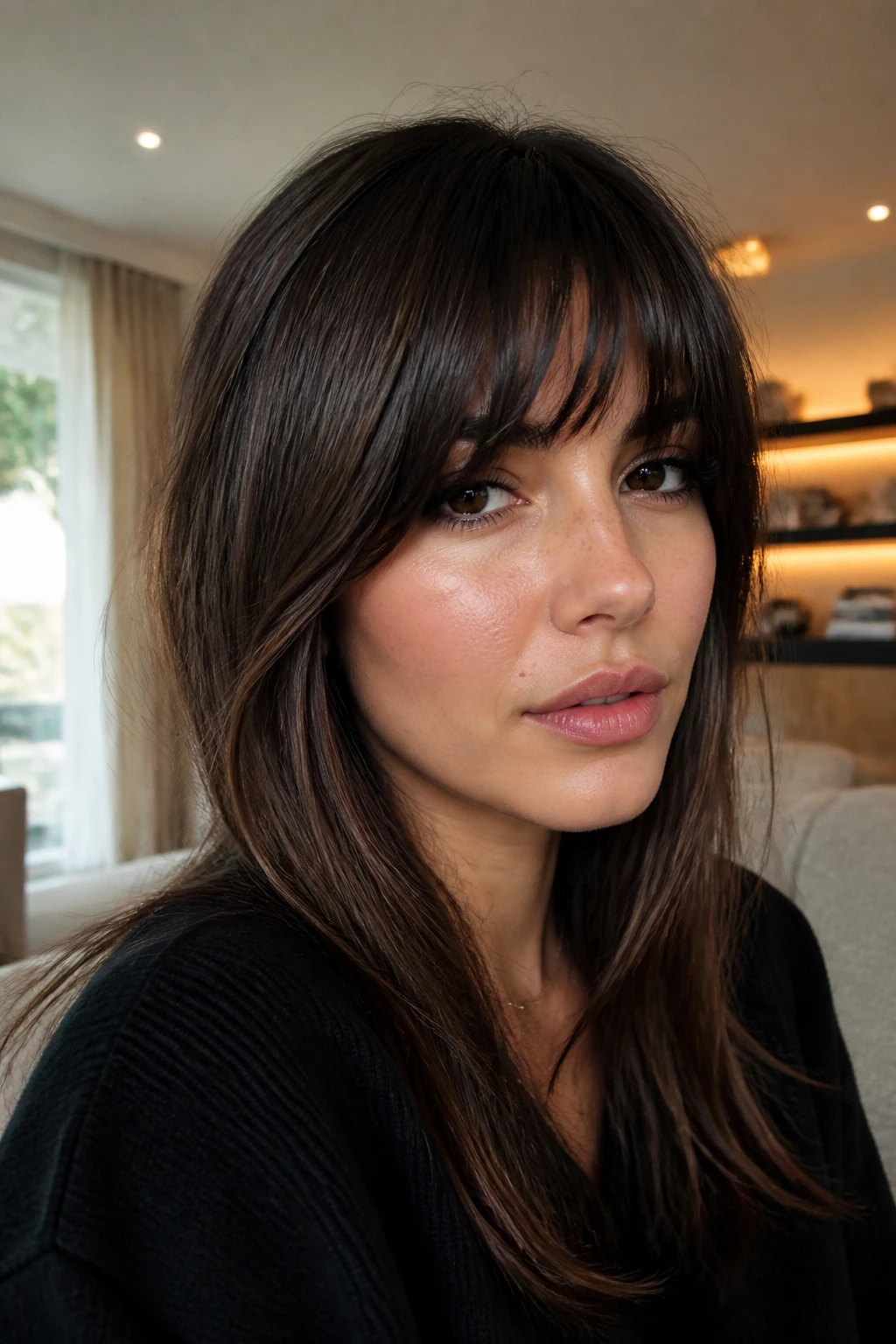
Soft and airy: Keep the center thick but ask for longer corners at the temples, then finish with a soft round brush bend. This keeps the face open while still giving the forehead coverage.
Polished and sleek: Use a flat brush and a dryer nozzle to keep the fringe smooth, then add only the tiniest bit of cream to the ends. The line reads cleaner, and the frame feels sharper.
Curly-friendly: Leave the bangs longer, let the natural wave decide some of the shape, and separate the fringe with fingers instead of a brush. The result is less exact, but it keeps the softness alive.
Grow-out friendly: Choose curtain, bottleneck, or cheekbone-framing shapes. Those styles slide into layers more gracefully, which saves you from the ugly in-between stage people hate.
Low-commitment soft frame: Keep the center weight but leave enough length to tuck the bangs to one side on off days. You get shape when you want it and escape routes when you don’t.
Tools That Keep Thick Bangs in Shape
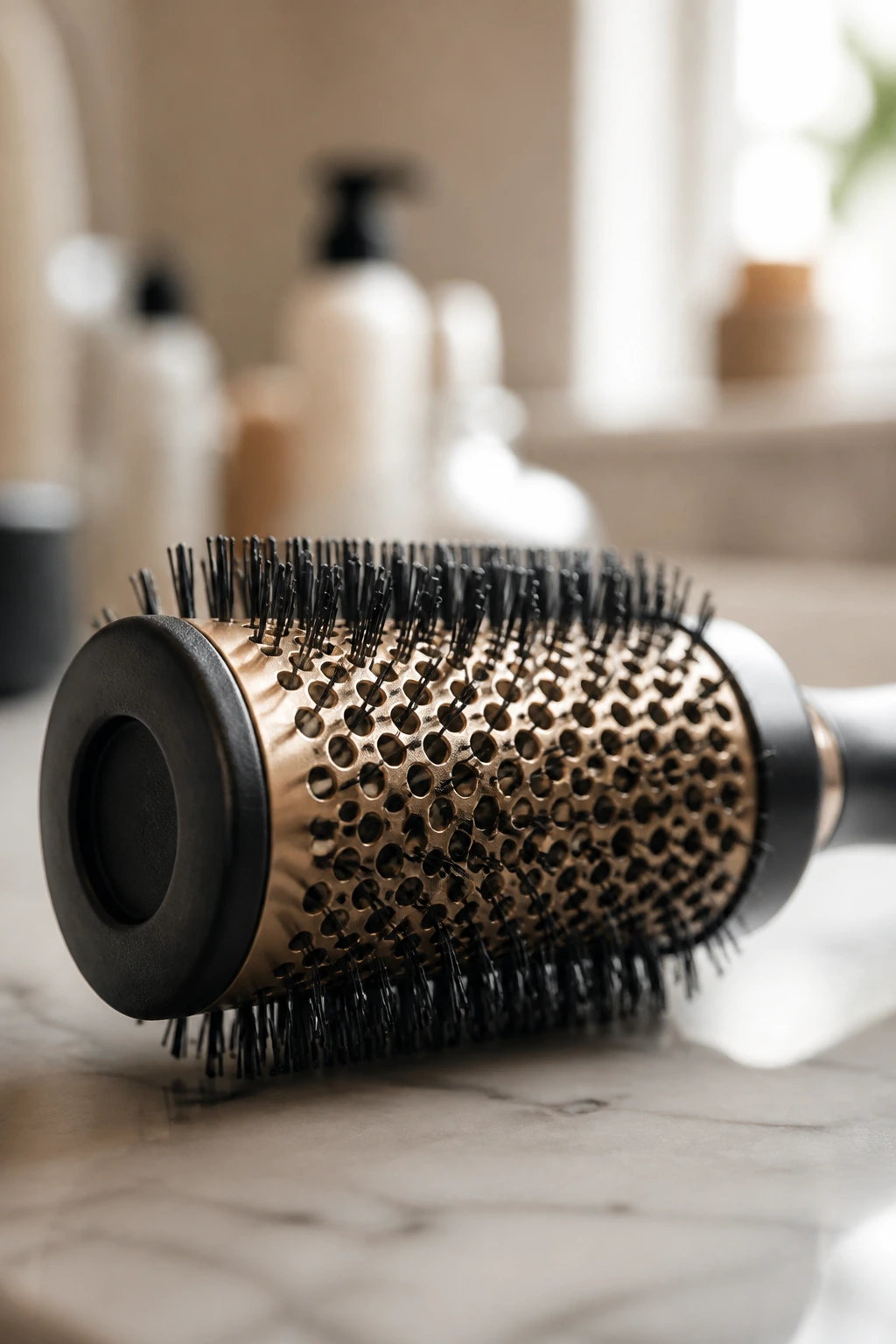
- Small round brush, 1 to 1.5 inches: Best for bending thick bangs under without making them too round.
- Paddle brush or vent brush: Useful for quick root direction and for smoothing a heavy fringe on busy mornings.
- Fine-tooth tail comb: Helps section the bang area cleanly so you don’t pull in too much hair from the temples.
- Hair dryer with a narrow nozzle: Direct airflow matters more than heat alone when you’re shaping a fringe.
- Velcro roller or setting clip: Handy when you want the bangs to cool into a curve instead of dropping flat.
- Light dry shampoo: Good for oily roots, especially if your forehead tends to make the bangs collapse by midday.
- Flat iron with narrow plates: Optional, but useful if you need to tuck a stubborn corner or smooth a wave at the ends.
- Texturizing spray: Use it sparingly on shaggy or feathered versions, never as a replacement for a good cut.
Keeping a Fringe Fresh Between Cuts
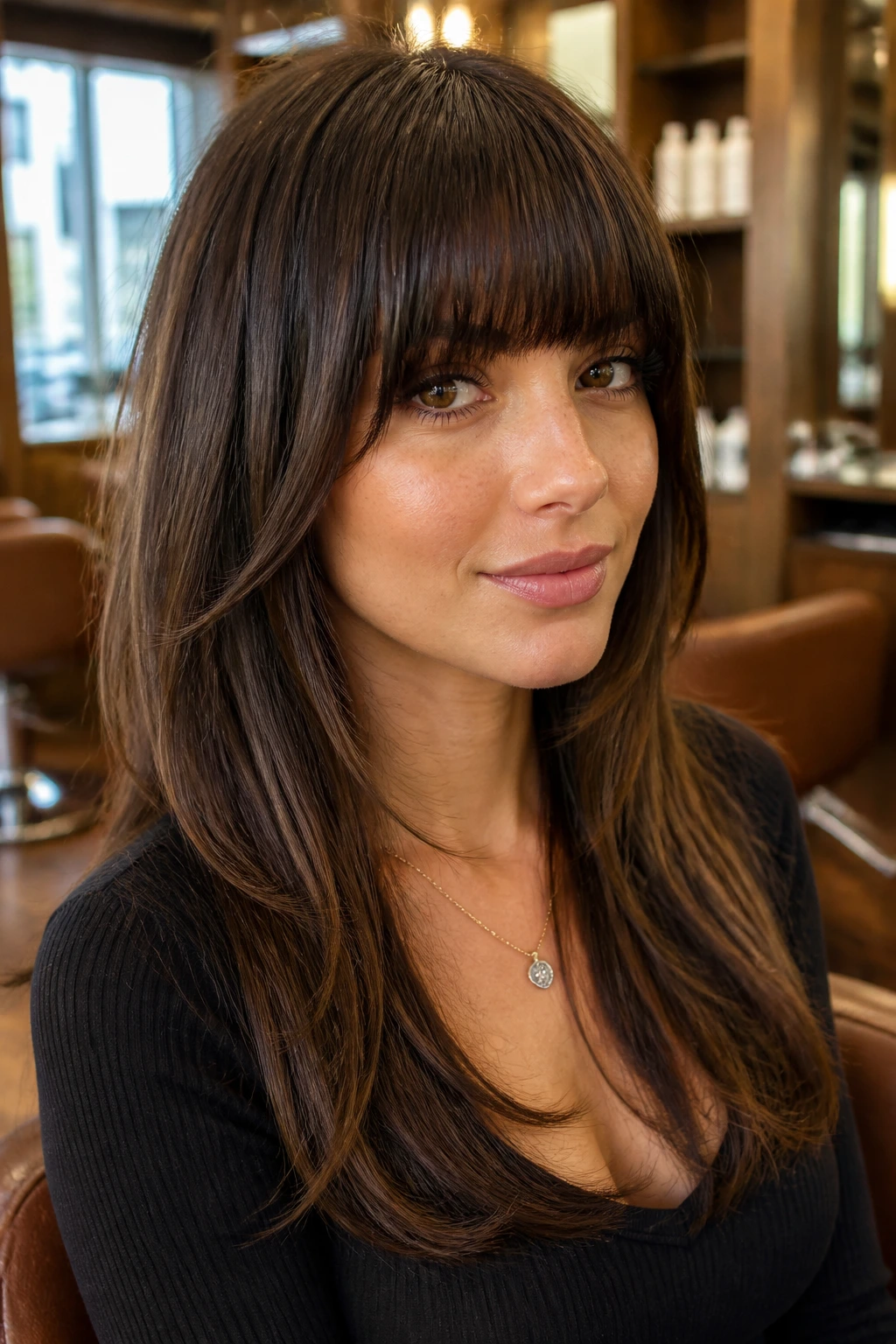
Thick bangs usually need a trim every 3 to 5 weeks if you want the line to stay crisp. If your hair grows fast or you wear a brow-grazing shape, you may notice the change sooner. That’s normal. Bangs live close to the face, which makes even small growth obvious.
Washing is its own little routine. The forehead gives bangs more oil than the rest of the hair gets, so the front can start to separate long before the lengths need a wash. A quick bang-only rinse at the sink, or even a damp washcloth followed by a blow-dry at the roots, can buy you another day.
At night, don’t smash them flat under a tight clip unless you enjoy weird bends in the morning. A loose pin or a soft bend with a small roller is kinder. For wavy bangs, I’d rather see a light mist of water and a quick re-shape in the morning than a heavy overnight product load. Heavy creams on the fringe tend to make the face look greasy faster than you expect.
Questions People Ask Before They Cut Thick Bangs

Will thick bangs make a round face look wider?
They can if they’re cut bluntly with no side taper. A dense center with longer temples or a soft split usually balances a round face much better because it breaks the horizontal line.
Can fine hair pull off thick bangs?
Yes, but the bang section has to be narrower and the cut needs smart shaping. If the section is too wide, fine hair spreads out and loses density fast.
Are thick bangs hard to style every day?
Not if the cut fits your texture. Straight hair needs the least work. Wave and curl need a little more shaping, mostly at the roots and corners.
What if I have a strong cowlick?
Work with it, not against it. A bottleneck, soft split, or side-swept fringe usually behaves better than a strict blunt line because it allows the growth pattern to show instead of fighting it.
How short should thick bangs be?
Short enough to do the job, long enough to survive your hair texture. On straight hair, brow to lash level is a safe zone. On wavy hair, leave them longer at first and refine after they dry.
Can I grow out thick bangs without hating my life?
You can, if the cut was blended properly from the start. The temple pieces matter here. They bridge the gap while the front grows past the eye line.
Should bangs be cut wet or dry?
For straight hair, either can work in skilled hands. For wavy, curly, or cowlick-prone hair, dry or mostly dry is safer because it shows the real fall and shrinkage.
Do thick bangs need a lot of heat styling?
Not always. A quick root-dry and a small brush are enough for many of these shapes. The more textured or shaggy the fringe, the less heat it usually needs.
Face-Frame Finish
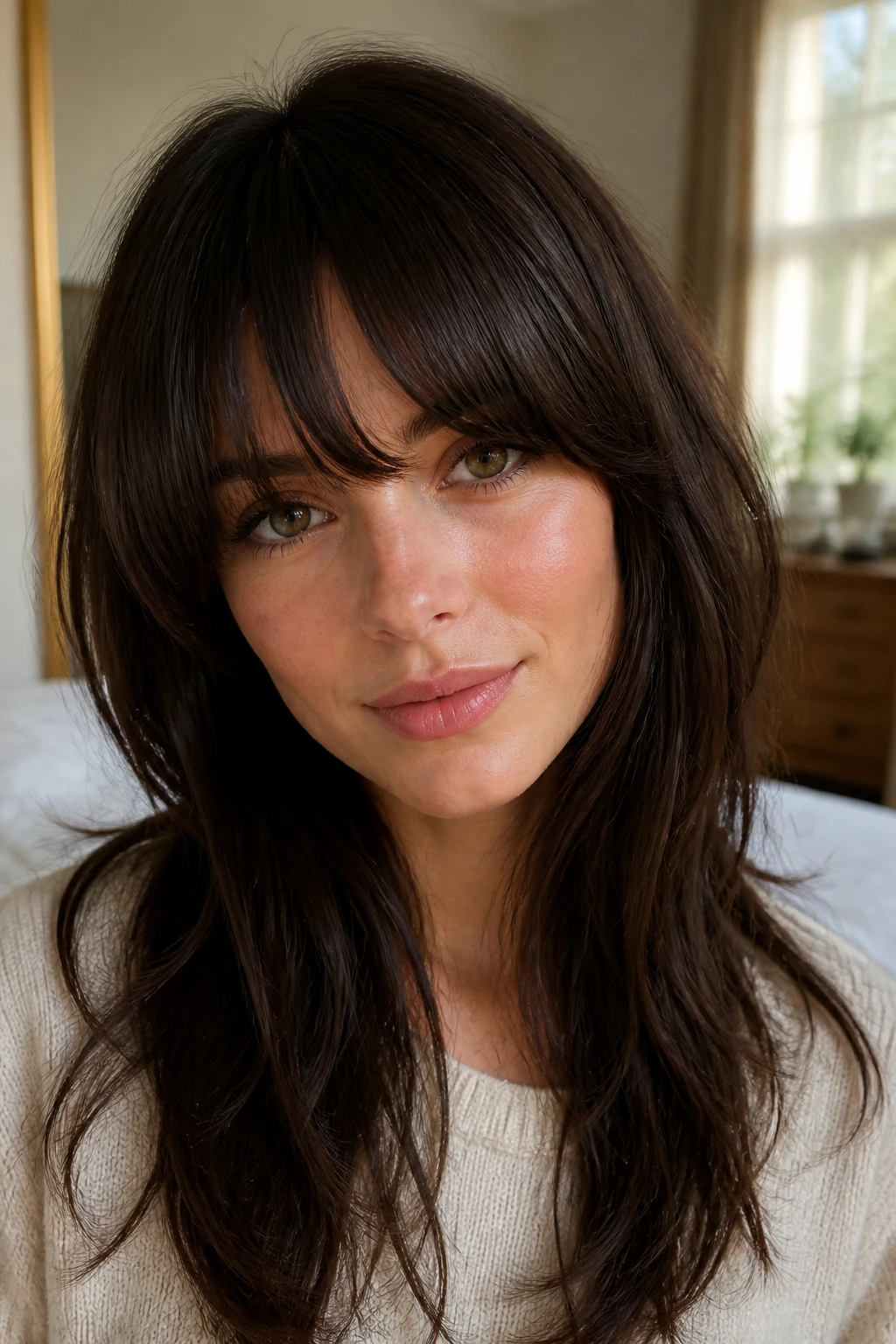
Thick bangs only look soft when the haircut understands where to stop and where to keep moving. A fringe that’s full through the front but eased into the temples gives you shape without that stiff, boxed-in effect that ruins so many bang cuts. That’s the whole job, really. Support the face. Don’t smother it.
If you’re choosing between two versions, I’d usually pick the one with better side blending over the one with the shortest center. The face remembers the edges. That’s where the softness lives. And once you start paying attention to that detail, the right fringe becomes obvious fast.
