



A brunette lob haircut has a way of making hair look expensive without making a scene. It lands in that sweet spot between polished and lived-in: long enough to tuck behind the ear, short enough to swing when you turn your head, and just substantial enough to show off warm color without swallowing it.
The magic is in the combination. A collarbone-grazing cut gives shape, while chestnut, caramel, toffee, mahogany, and honey-brown tones keep the surface from reading flat or muddy. On a good lob, the ends catch light in a soft band instead of disappearing into your shirt collar. On a bad one, the whole thing can look like a blunt rectangle that needs a trim yesterday. That difference usually comes down to a few inches, the weight line, and where the warmth sits in the color.
Warm brunette lob haircuts are also practical in the best possible way. They grow out with less drama than a sharp pixie or a heavily layered shag, and they still have enough personality to feel intentional when you air-dry them, bend them with a flat iron, or blow them out smooth. Once you see how much a small shift in length, parting, or tonal placement changes the whole read of the cut, the options open up fast.
Why These Warm Brunette Lobs Keep Working
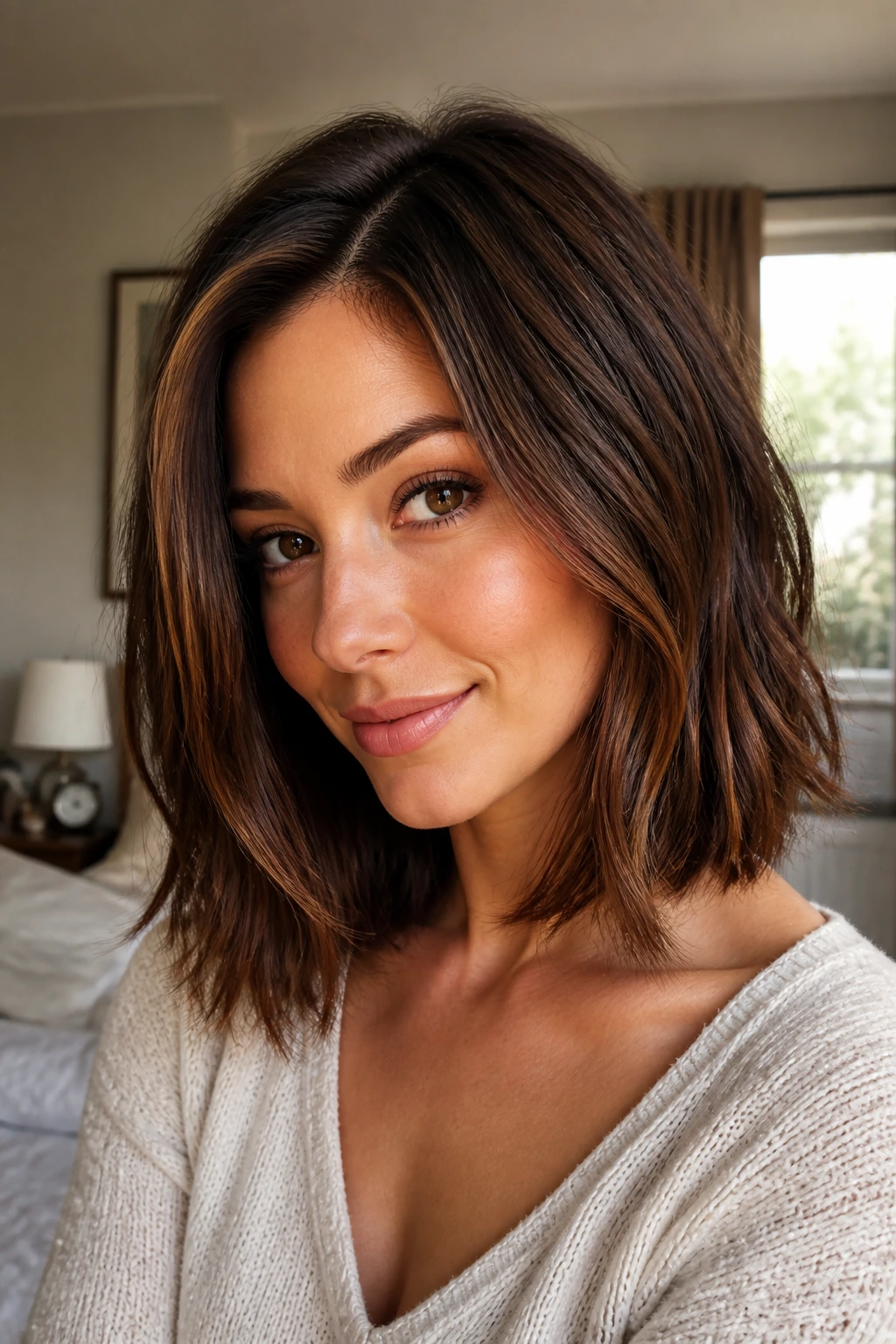
-
The collarbone does the heavy lifting. A lob that lands right there moves with your shoulders instead of fighting them, which keeps the shape soft and wearable.
-
Warm tones give the cut depth. Chestnut, caramel, amber, and mocha make the same haircut look richer because the color breaks up the line of the ends.
-
The grow-out is forgiving. A good lob can go several weeks beyond the salon without looking sloppy, especially if the front stays a touch longer than the back.
-
It works on straight, wavy, and curly hair. The shape changes a little for each texture, but the length still shows off the haircut instead of hiding it.
-
You can steer the mood with one small tweak. Change the part, add curtain bangs, feather the ends, or go blunt at the perimeter, and the whole cut shifts.
-
Warm brunette is easier to live with than ultra-light color. You get visible dimension without the constant upkeep that comes with high-contrast blonding.
1. Chestnut Blunt Lob With a Glassy Finish
A chestnut blunt lob is the haircut equivalent of a clean white shirt with good tailoring. The edge sits right at the collarbone, the line stays sharp, and the chestnut tone keeps it from feeling severe. On straight hair, it looks crisp and deliberate. On wavy hair, it gives the kind of swing that makes people reach up and tuck one side behind an ear.
Why It Works
The blunt perimeter creates the illusion of density, which is gold if your hair is fine or medium. Chestnut brown adds warmth without tipping orange, so the cut still reads polished instead of heavy. If your hair tends to puff at the ends, ask for a slightly beveled finish so it sits instead of flaring out.
- Ask for a one-length line with the front pieces only a half inch longer than the back.
- Keep the gloss in the level 5 to 6 range for a deep brunette finish.
- Use a round brush or flat iron just on the last inch for that glassy edge.
Best for: straight hair, side parts, and anyone who wants a lob that looks clean even on second-day hair.
2. Caramel Ribbon Lob With Soft Bends
Caramel ribbons change the whole personality of a brunette lob. The base stays brown, but the warmer streaks thread through the mid-lengths and ends like fine brushstrokes, so the haircut moves even when it barely moves at all. That soft bend at the bottom keeps the color from sitting in one flat block.
This version is smart if you want dimension without streaky highlights. The caramel should live mostly around the face and the top layer, not all the way underneath, or the whole thing can look busy. A loose wave with a one-inch iron is enough; you do not need a pageant curl. Let the ends stay a little straighter so the color bands show.
How to ask for it
Tell your stylist you want a collarbone lob with warm caramel ribbons, not a high-contrast highlight job. Ask for a soft bend-friendly cut so the waves don’t fight the shape. The result should look sunlit, not striped.
3. Mocha Lob With Curtain Bangs
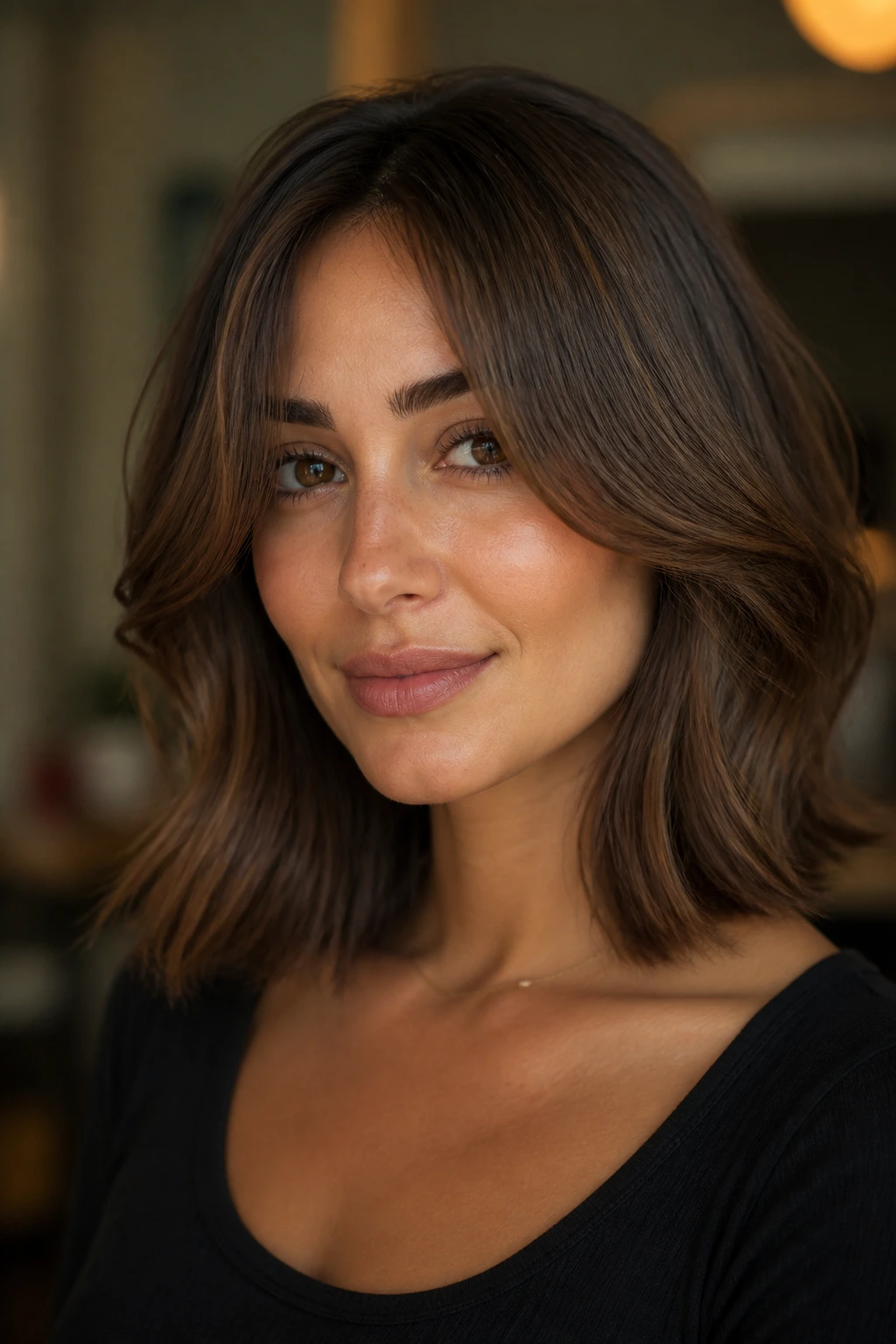
Why do curtain bangs keep showing up with lobs? Because they do a lot with very little. A mocha lob with curtain bangs frames the face, softens the forehead, and keeps the warm brunette base from reading too dark around the eyes.
The key here is balance. The bangs should open around the cheekbone, not chop off too high, and the lob itself should stay just long enough to keep the silhouette clean. On round faces, this version adds vertical lift. On longer faces, it breaks up the length without stealing volume from the rest of the cut.
Styling note
Blow-dry the fringe away from the face first, then bend the rest of the lob with a medium barrel iron. If the bangs separate at the center, that’s a feature, not a flaw. They should look soft and moveable, not helmet-like.
4. Cinnamon Shag Lob With Airy Ends
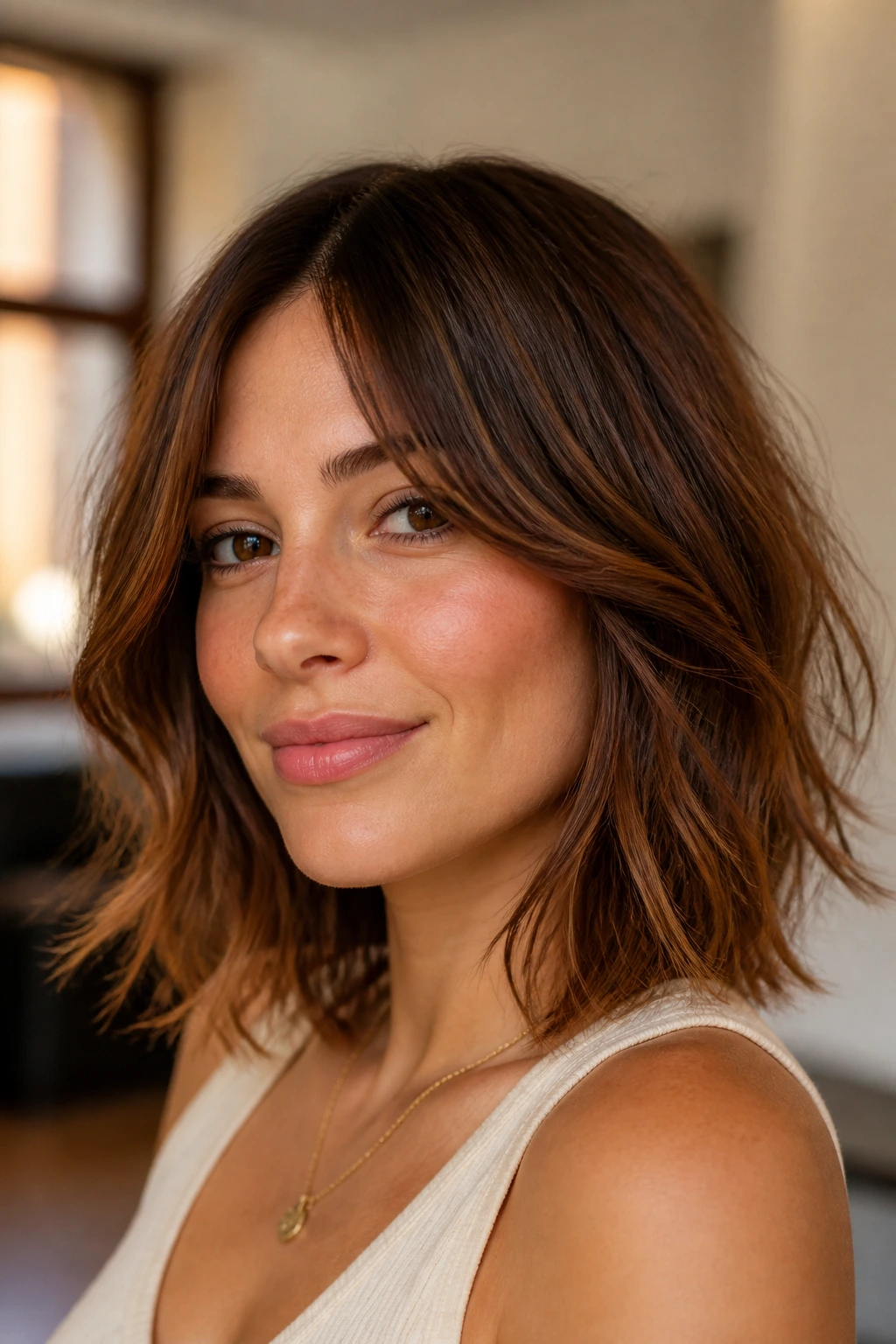
A cinnamon shag lob has more attitude than the blunt versions, and that’s the point. The ends are choppier, the layers sit lighter, and the warm cinnamon tone gives the whole cut a little flicker of red-brown energy without becoming full auburn. It looks especially good when the texture is a little undone.
This is the lob for someone who hates hair that sits still. Ask for light internal layers, not a heavy staircase of steps, or the cut can get too feathery. A texture spray at the mid-lengths and a quick scrunch from underneath are enough to bring the shape to life.
- Keep the perimeter around the collarbone.
- Let the face-framing pieces fall a bit shorter.
- Ask for point-cut ends so the finish stays soft.
One thing I like here: the cut still looks intentional after a windy day. That matters more than people admit.
5. Toffee Lob With a Deep Side Part
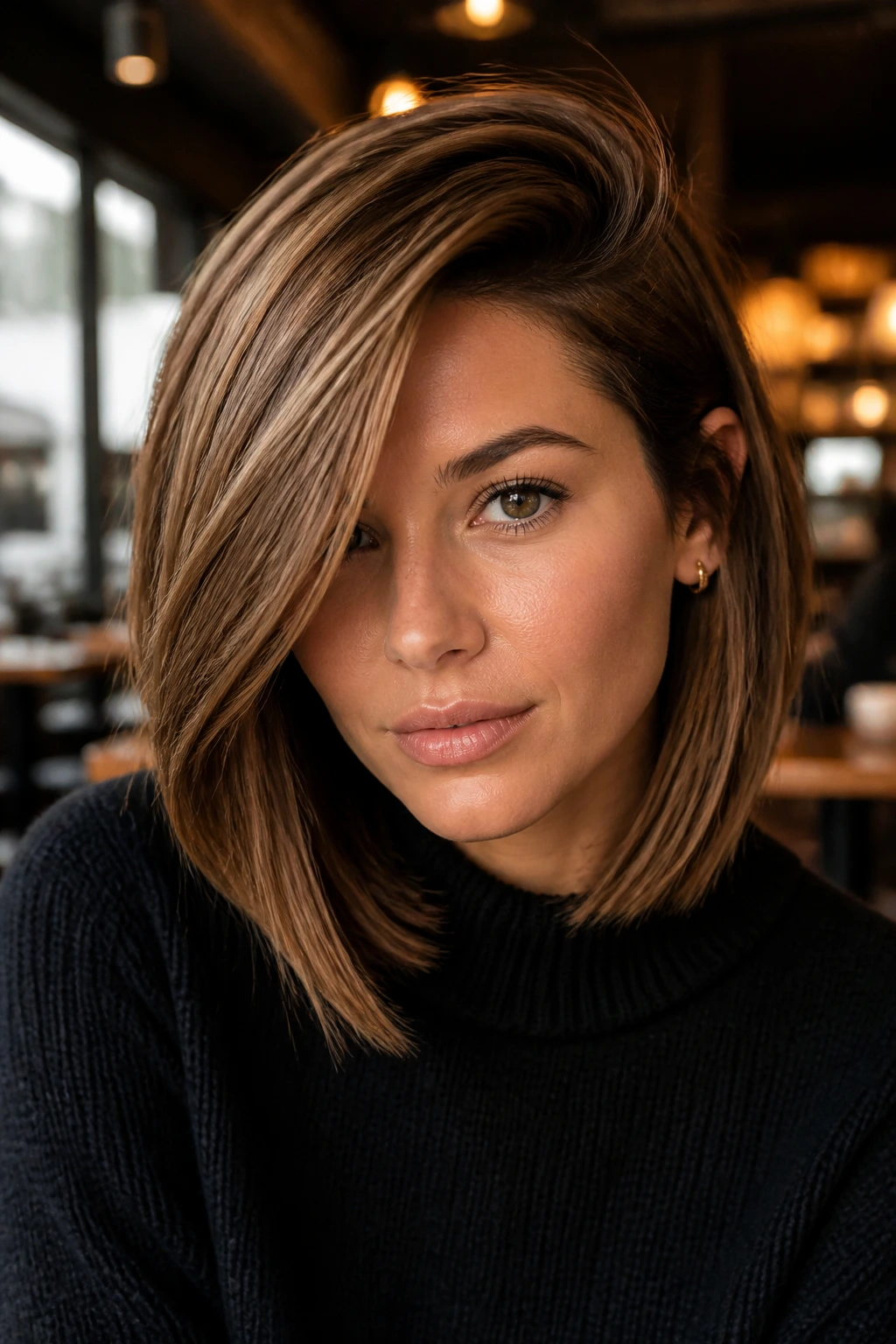
A deep side part does something useful for a toffee lob: it builds volume without asking for extra layers. One side sweeps across the forehead, the other side drops cleanly past the cheekbone, and the toffee tone shows up as a warm, glossy brown with just enough glow to keep it from going flat.
This is a strong pick for fine hair that needs lift at the root. It also softens square jawlines because the front pieces fall diagonally across the face. The part should sit about two to three inches off center; any farther and the style can start to feel costume-y. Keep the ends smooth and slightly beveled so the shape stays sleek.
Quick note
If your hair wants to collapse, set the roots with a little mousse before blow-drying. The side part gives the architecture. The product just keeps it standing.
6. Warm Bronde Lob With Feathered Ends
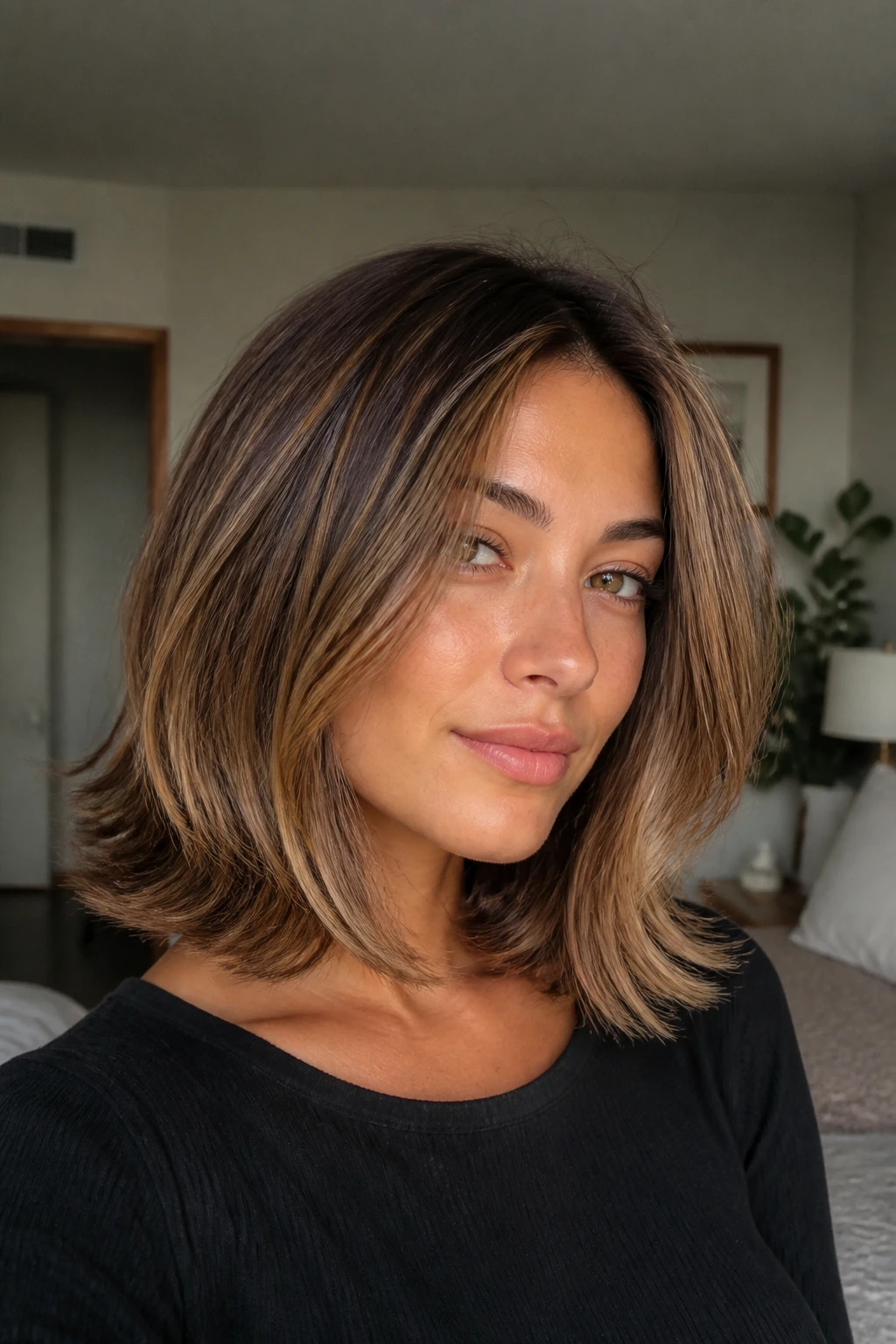
Bronde sits between brunette and blonde, and on a lob that middle ground can look very good. The feathered ends make the haircut feel light, while the warm bronde tone adds enough brightness to wake up the face without losing the brunette base.
This cut works best when the lighter pieces stay sun-kissed rather than pale. You want soft contrast, not a stripey color map. Feathered ends help the lob move around the shoulders instead of sitting in a hard line. If your hair is thick, this is a clean way to remove weight without making the whole shape shaggy.
Best styling move
Use a large round brush or a blow-dry brush and turn the ends just slightly away from the neck. That tiny bend keeps the feathering visible. Too much curl, and you lose the clean line that makes the lob feel current and easy to wear.
7. Mahogany Sleek Lob With a Middle Part
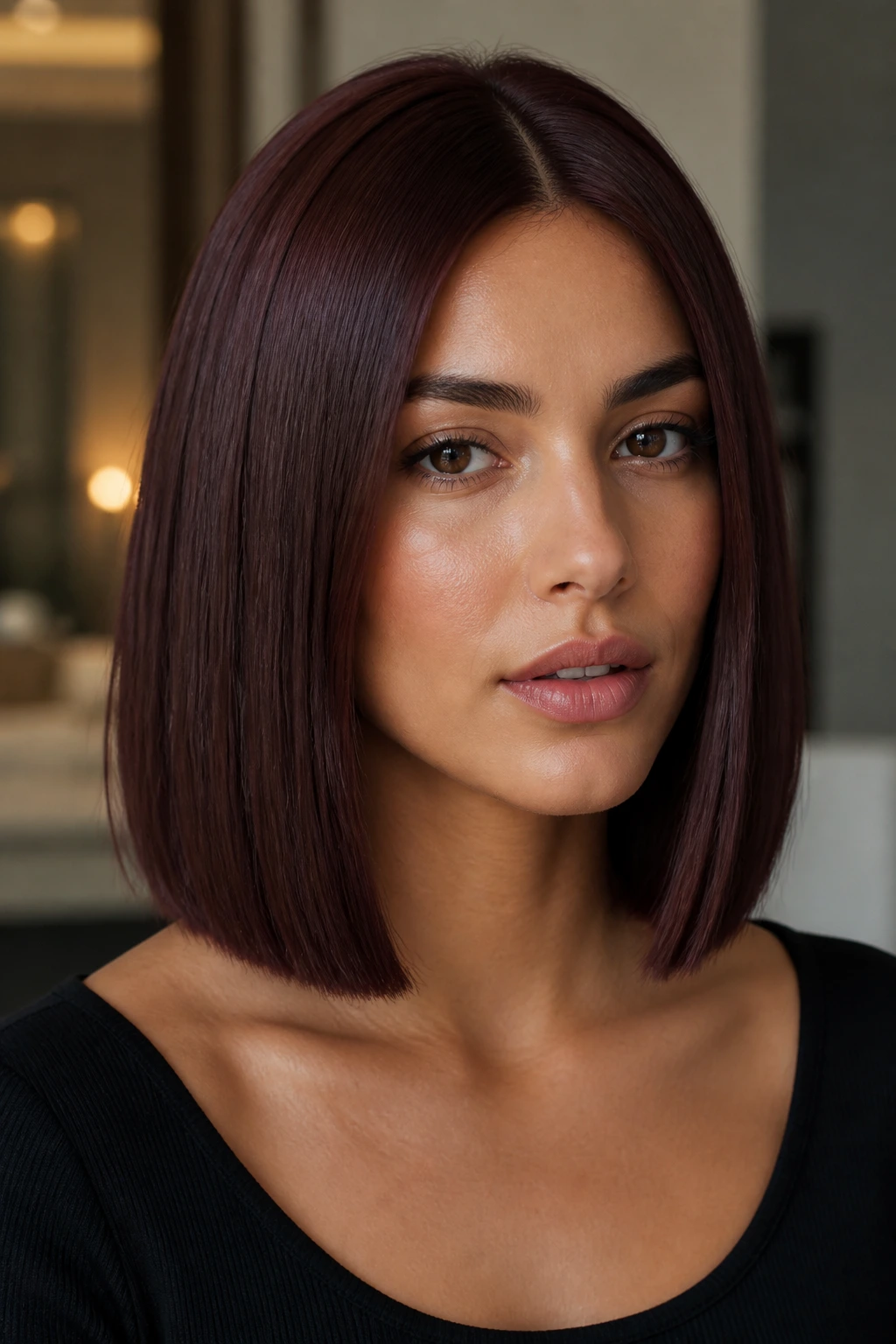
Mahogany gives a lob a deeper, moodier look without pushing it into cool black-brown territory. Add a center part and sleek styling, and the haircut becomes all line and shine. It’s a strong choice if you like clothes with sharp necklines, gold jewelry, or anything that benefits from a clear frame around the face.
The trick is keeping the finish smooth but not limp. Mahogany brown can look very dark indoors, so a little warmth through the mids keeps it alive. Ask for minimal layering and a clean, blunt edge if your hair is straight. If it’s wavy, keep the perimeter heavy enough that the shape doesn’t balloon at the ends.
Styling cue: flat iron in small sections, then curve the tool just a touch at the last inch so the ends don’t poke outward. You want sleek, not rigid.
8. Hazelnut Lob With Face-Framing Layers
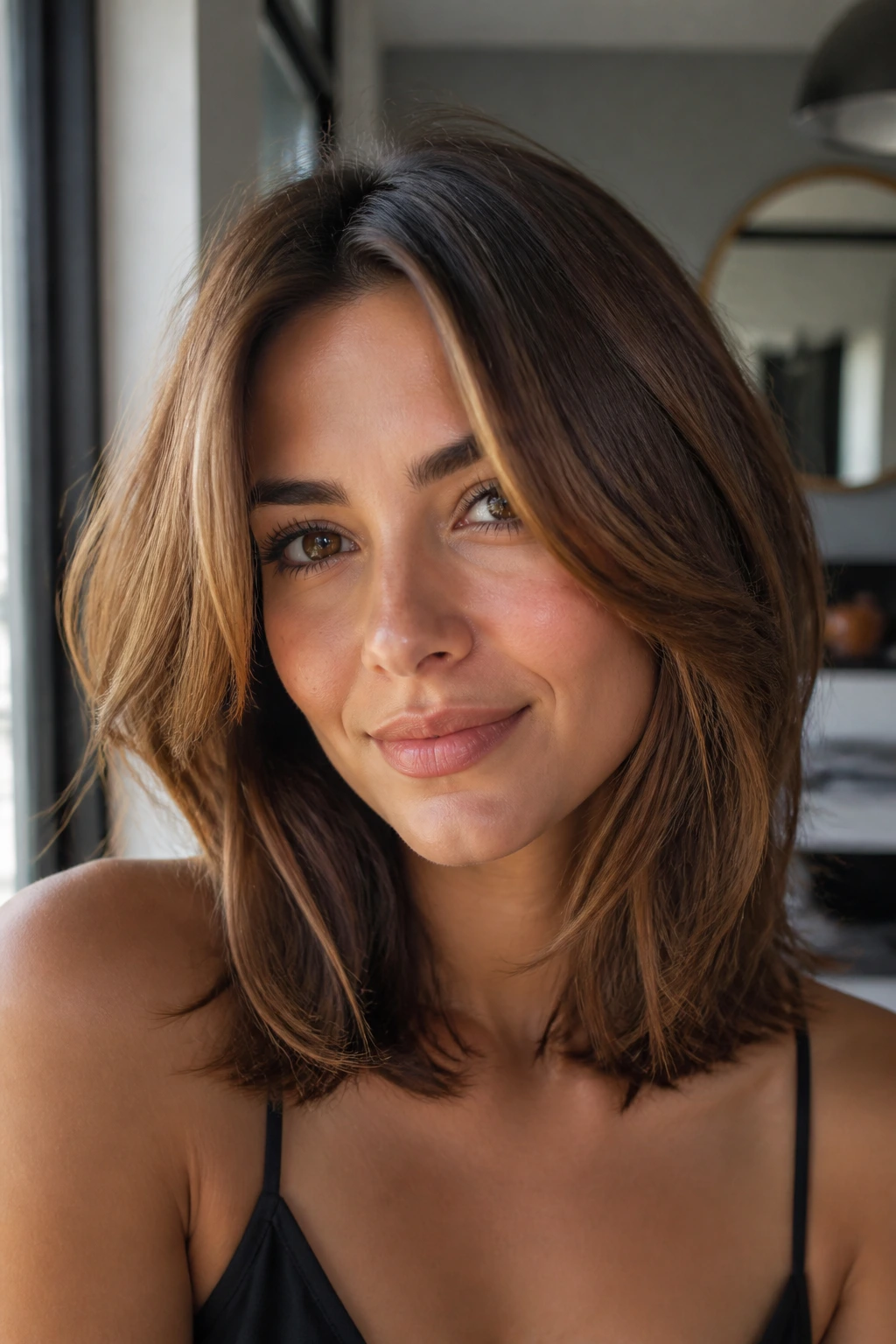
Hazelnut brown has an easy warmth to it, and face-framing layers keep that softness from disappearing under a single heavy line. This lob is especially good if you want the hair to move around your cheekbones and jaw without giving up length.
The layers should start low. Around the chin or just below it is plenty. Anything shorter can turn the front into a winged-out shape that fights the collarbone length. Hazelnut color gives the shape a soft caramel-brown glow, which looks nice in both daylight and indoor light. I like this version on medium-density hair because it keeps the cut from feeling bulky.
Good reference point
Ask for pieces that open the face, not dramatic layers that steal the shape. The lob should still read as one haircut, not three different ideas stacked on top of one another.
9. Auburn Lob With Loose Waves
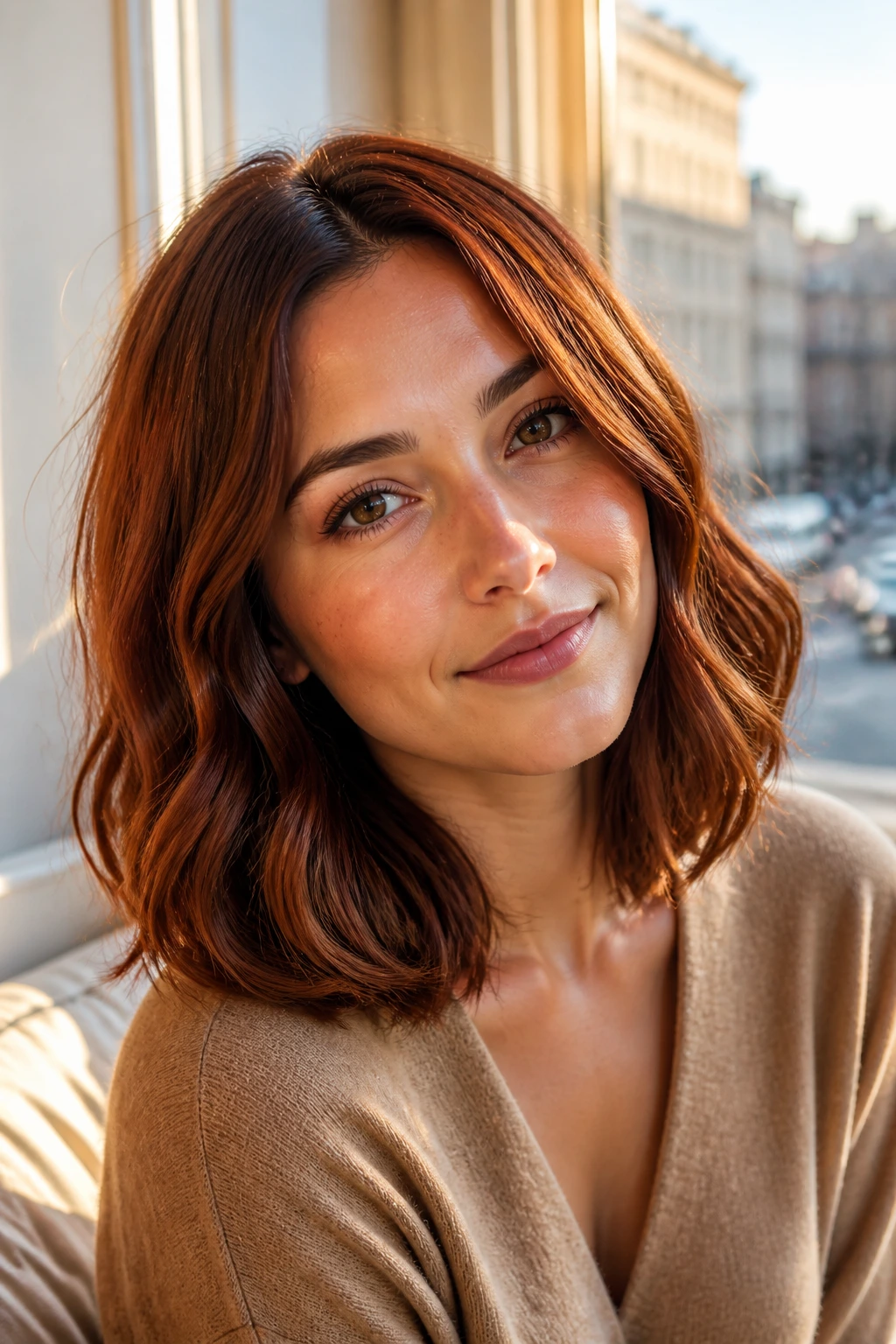
An auburn brunette lob has more warmth in it than a standard chocolate cut, and loose waves keep that warmth visible all the way through the ends. It’s a good middle road if you want red undertones but don’t want the upkeep of a full copper transformation.
The waves should be loose and brushed out, not tight. A 1.25-inch iron gives you enough bend without creating springy curls that fight the length. If your hair is naturally wavy, let it dry most of the way on its own, then bend only the front and the surface pieces. The auburn tone tends to look richest when the surface has a little movement.
Best for: neutral to warm skin tones, medium hair density, and anyone whose hair color needs a little more spark than brown alone provides.
10. Cocoa Lob With Invisible Layers
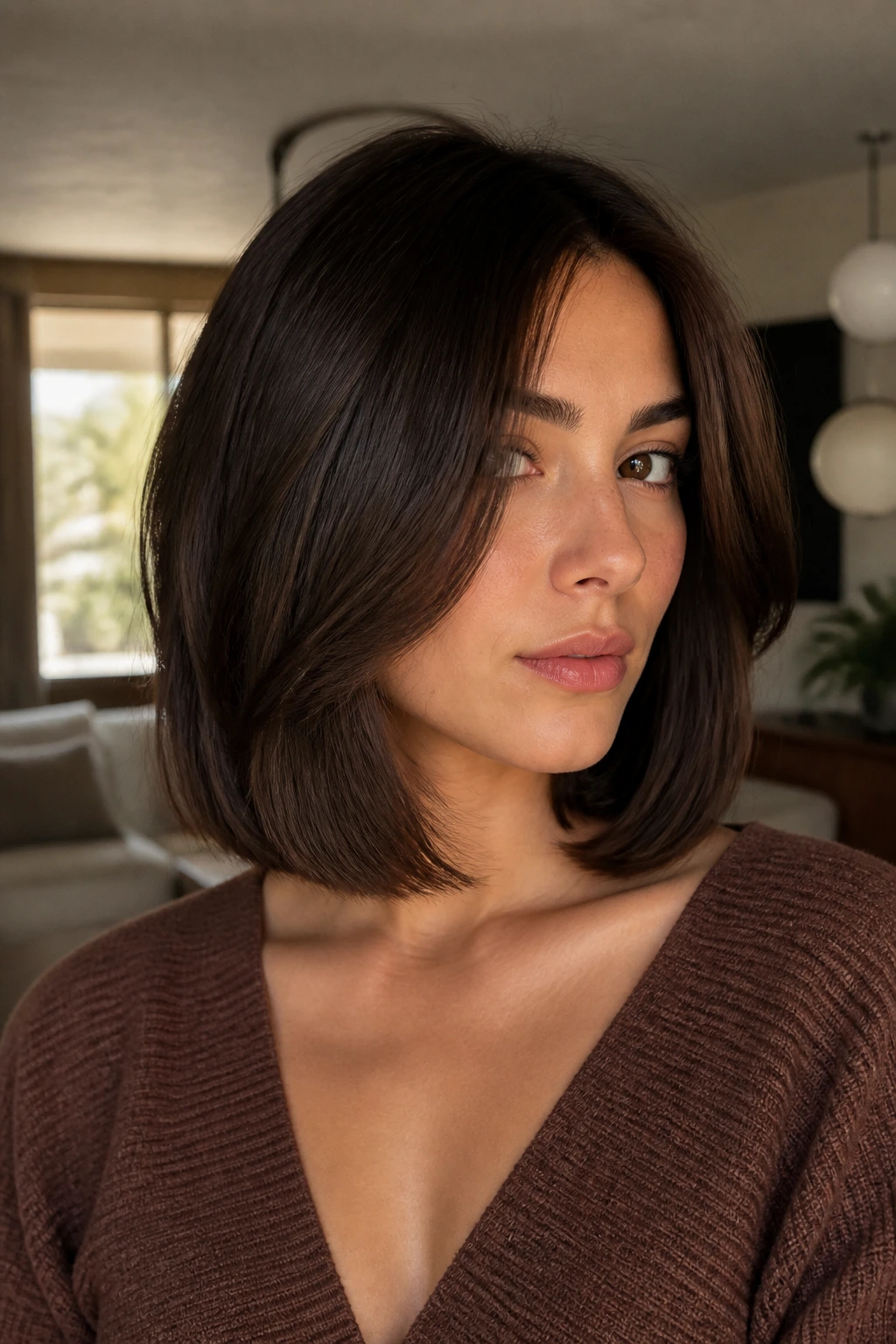
A cocoa lob is the quiet one in the group, and I mean that as a compliment. The color stays deep and warm, while the invisible layers remove weight inside the shape so the haircut moves without showing off every layer line. On thick hair, that matters a lot.
The cut should still look like a lob first and a layered haircut second. That means a clean outer line with weight taken out underneath, not choppy ends everywhere. Cocoa brown is useful here because it adds depth around the lower half of the hair, which keeps the whole thing from puffing at the sides. A soft blowout makes the most sense with this one.
What to ask for
Say you want a lob that moves but does not look shaggy. That usually translates to internal layering, a controlled perimeter, and enough weight left at the ends to keep the shape from fraying.
11. Honey Chestnut Lob With Flipped Ends
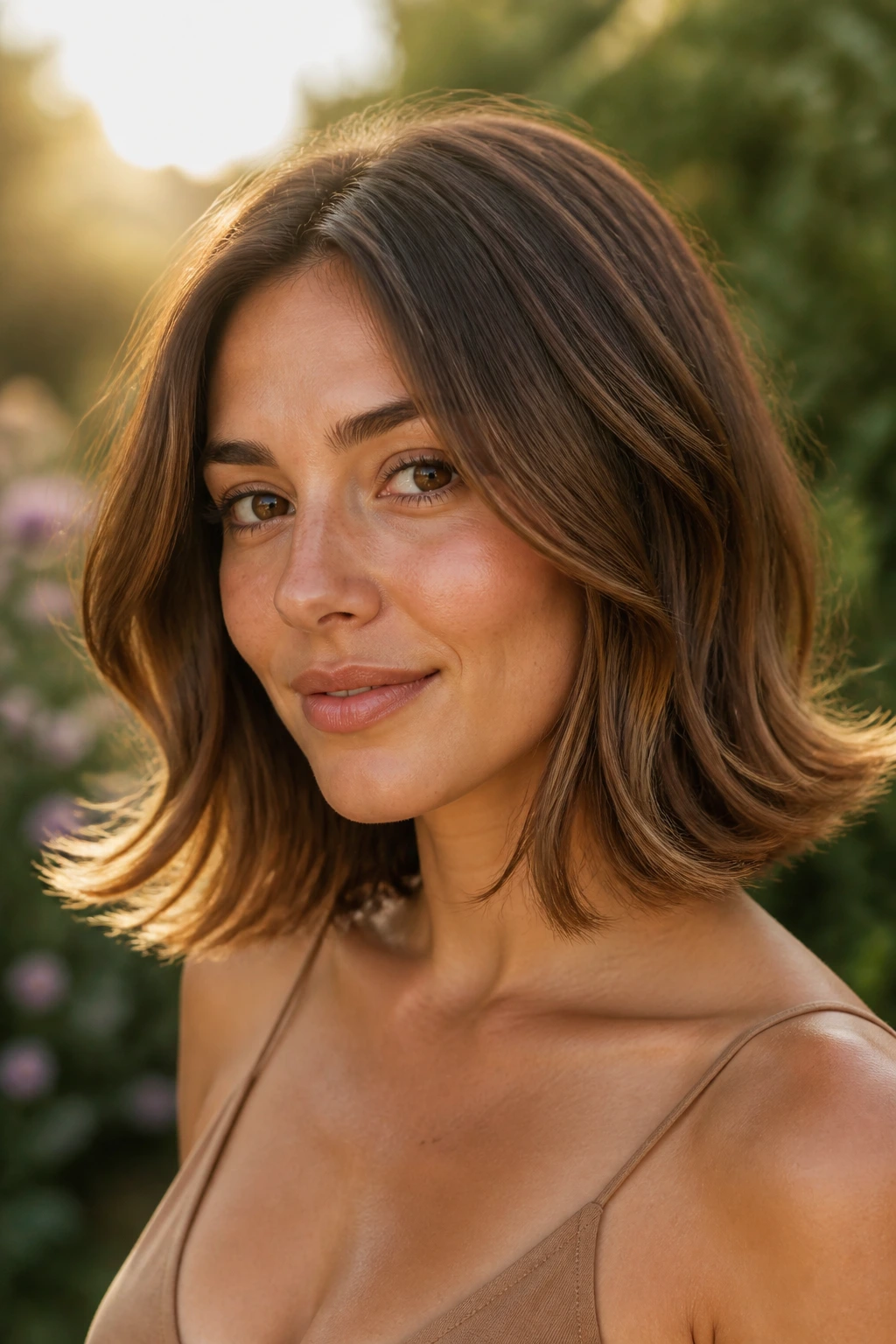
Flipped ends give a lob a bit of personality without asking for a full curl pattern. Pair that with honey chestnut color and you get a warm brunette haircut that feels light around the face and soft at the collarbone.
This shape works because the flip keeps the ends from clinging to the neck. It also lets the warm tones show at the very bottom, where they can catch light and change as you move. A slight off-center part helps, especially if your face is round or oval. Keep the flip subtle. If the ends turn too far outward, the lob starts to look dated fast.
- Blow-dry the ends under first.
- Then tap just the last inch outward with a flat iron.
- Finish with a light mist of shine spray, not heavy oil.
That last detail matters. Heavy oil can erase the little lift that makes the style interesting.
12. Espresso Lob With a Bright Money Piece
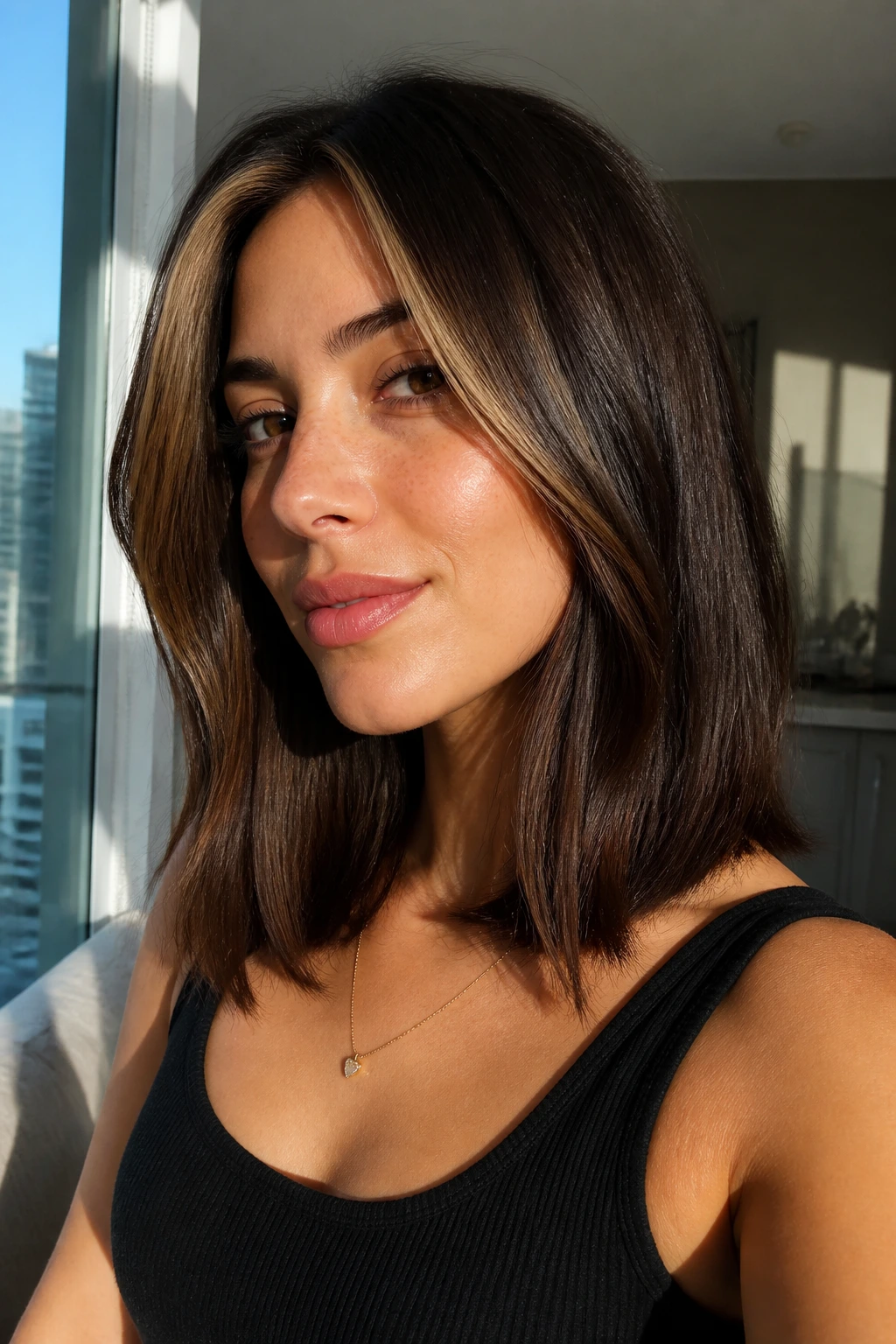
Espresso brunette gives a lob serious depth, and a brighter money piece right around the face keeps it from sinking into one dark block. The contrast is enough to show the haircut’s structure, especially if the front pieces land at the jaw or just below it.
This is a smart move if your base color is naturally dark and you want a change that does not require constant touch-ups. The lighter frame can be caramel, cinnamon, or soft amber depending on how warm you want the result. Keep the rest of the cut polished and fairly simple. Too many layers will fight the contrast and make the front pieces compete with the rest.
My take
The money piece should look like it belongs to the haircut, not like it was pasted on top of it. If the front is too bright and the rest is too flat, the eye stops at the color and misses the shape.
13. Maple Brown Lob With Textured Ends
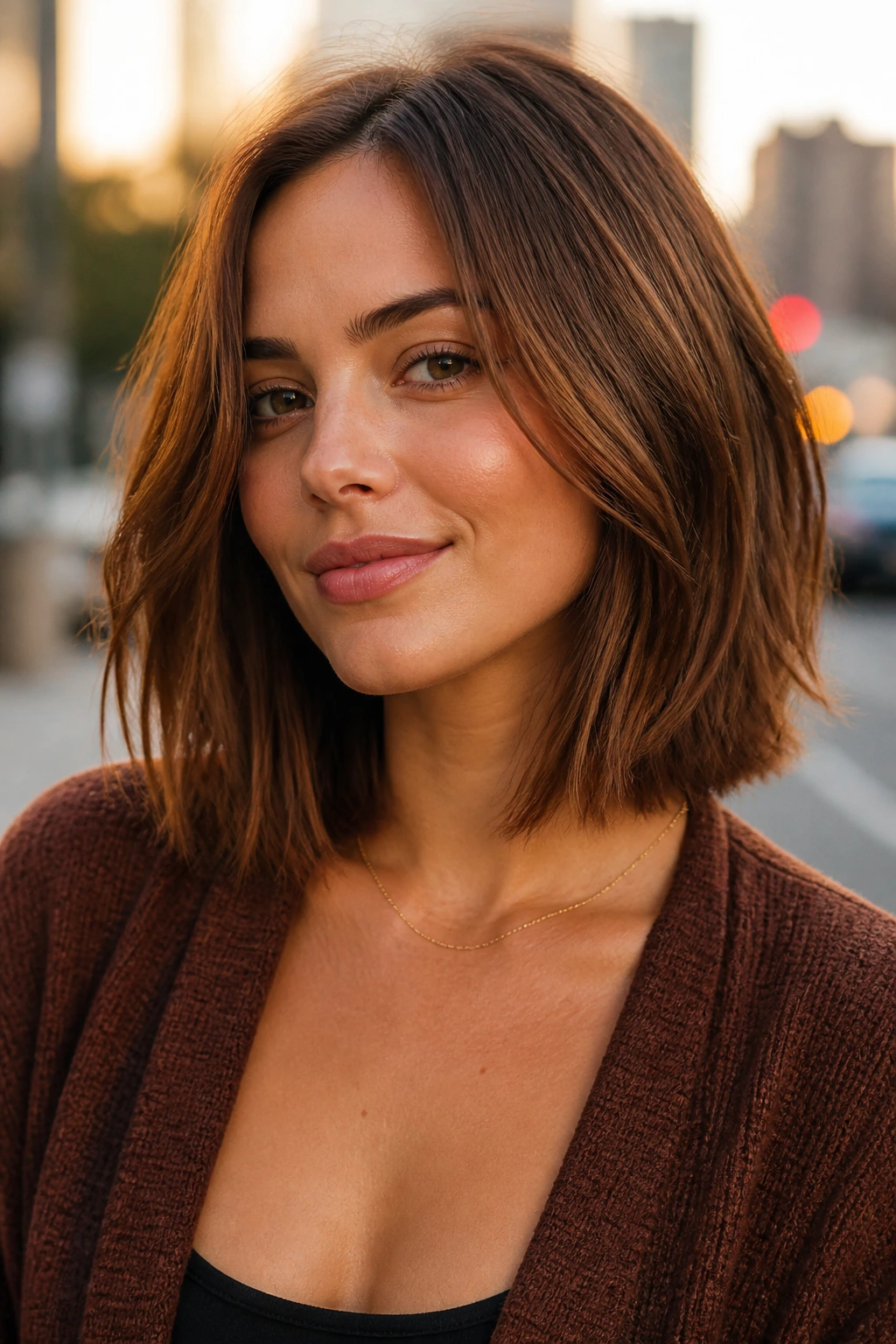
Maple brown has that warm, syrupy tone that makes a lob feel softer without turning it brassy. Textured ends keep the haircut from being too blunt, which is useful if your hair has a little natural wave or tends to puff up when it dries.
The texture should live at the edge, not through the whole head. That way the color stays rich and the shape still has a clean outline. A few bends at the bottom, made with a flat iron or wand, are enough. I’d choose this version for someone who wants a relaxed lob that doesn’t need a full blowout every day.
Good to know
If your hair is thin, keep the texture minimal. Too much roughness at the ends can make the lob look wispy. A light spray and a soft bend are enough.
14. Bronze Brunette Lob With Long Curtain Fringe
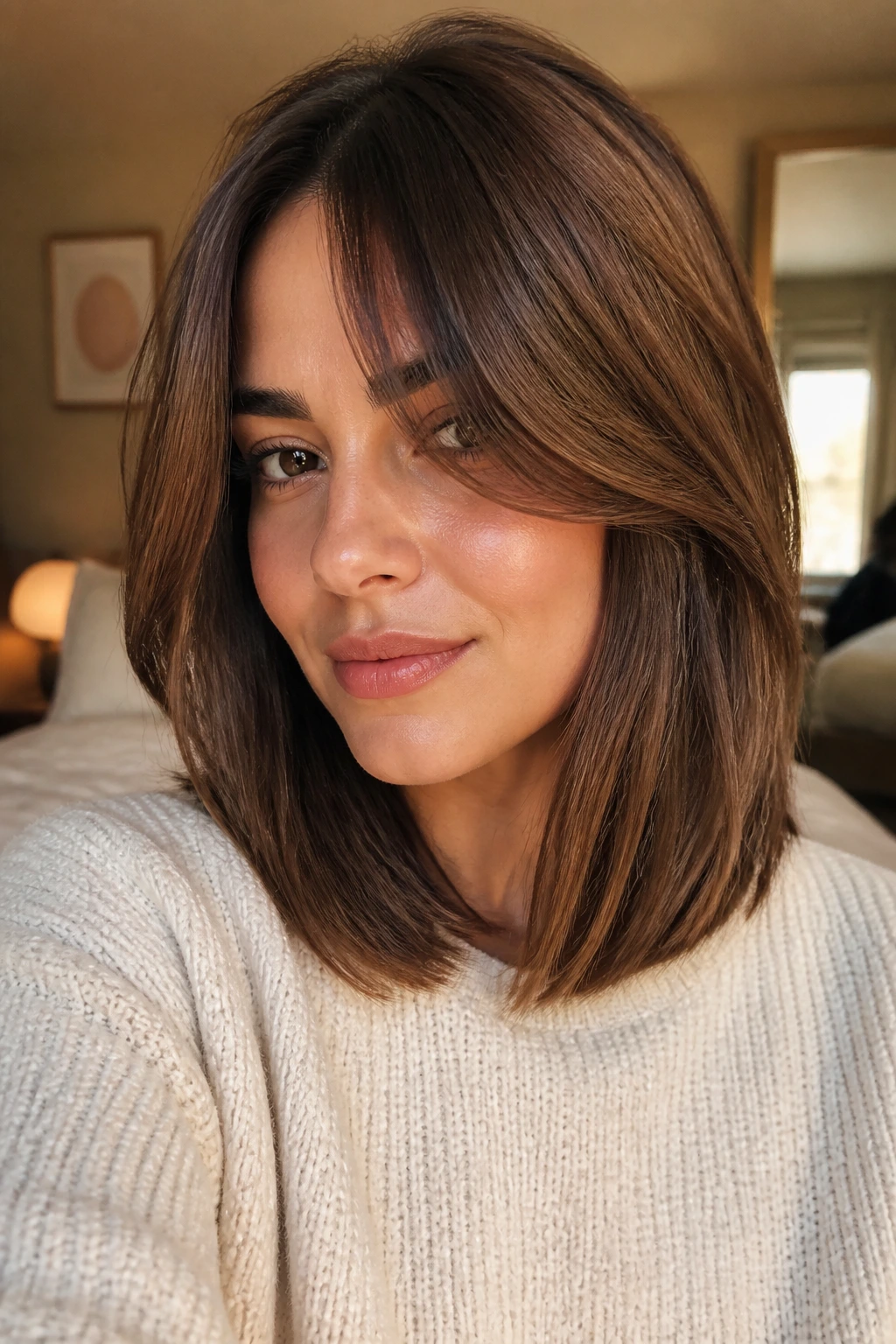
Bronze brown has a soft metallic warmth to it, and when you pair it with long curtain fringe, the whole cut gets this easy sweep around the eyes and cheekbones. It’s not loud. It just keeps moving.
The fringe should open gradually, not drop straight across the forehead. Ask for a length that brushes the cheekbone and blends into the front of the lob. That gives you the option to wear it down, split it, or tuck it back. Bronze tones tend to shine most when the hair is shaped into loose movement instead of pin-straight styling.
Styling tip
Use a round brush at the roots of the fringe, then let the rest of the hair fall in a soft bend. The goal is to frame, not crowd, the face.
15. Burnt Caramel Lob With Volume at the Crown
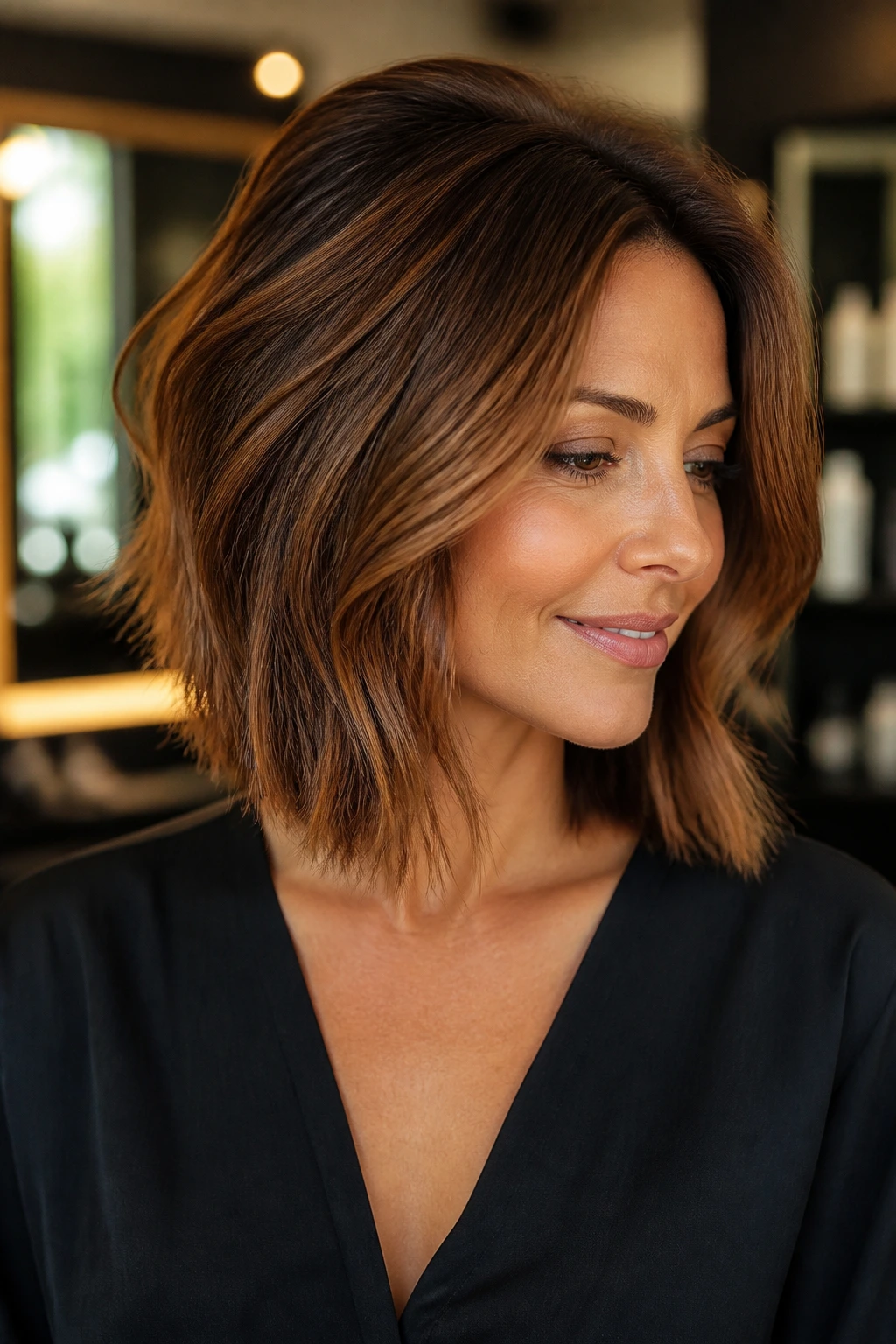
Burnt caramel is warmer and deeper than pale caramel, which makes it a good match for a lob with some crown lift. The extra volume at the top keeps the haircut from sitting too close to the head, and the warmer color adds a little glow through the mids and ends.
This version has a little drama, but it’s controlled drama. Think lifted roots, a slight bend through the body, and a defined shape around the shoulders. If your hair is fine, this can make it look fuller without turning fluffy. If it’s thick, ask for weight removal underneath so the crown can rise without the rest of the cut swelling out.
Best for: oval faces, longer faces, and anyone who likes a lob that feels styled even when the rest of the outfit is simple.
16. Walnut Lob With a Blunt Perimeter
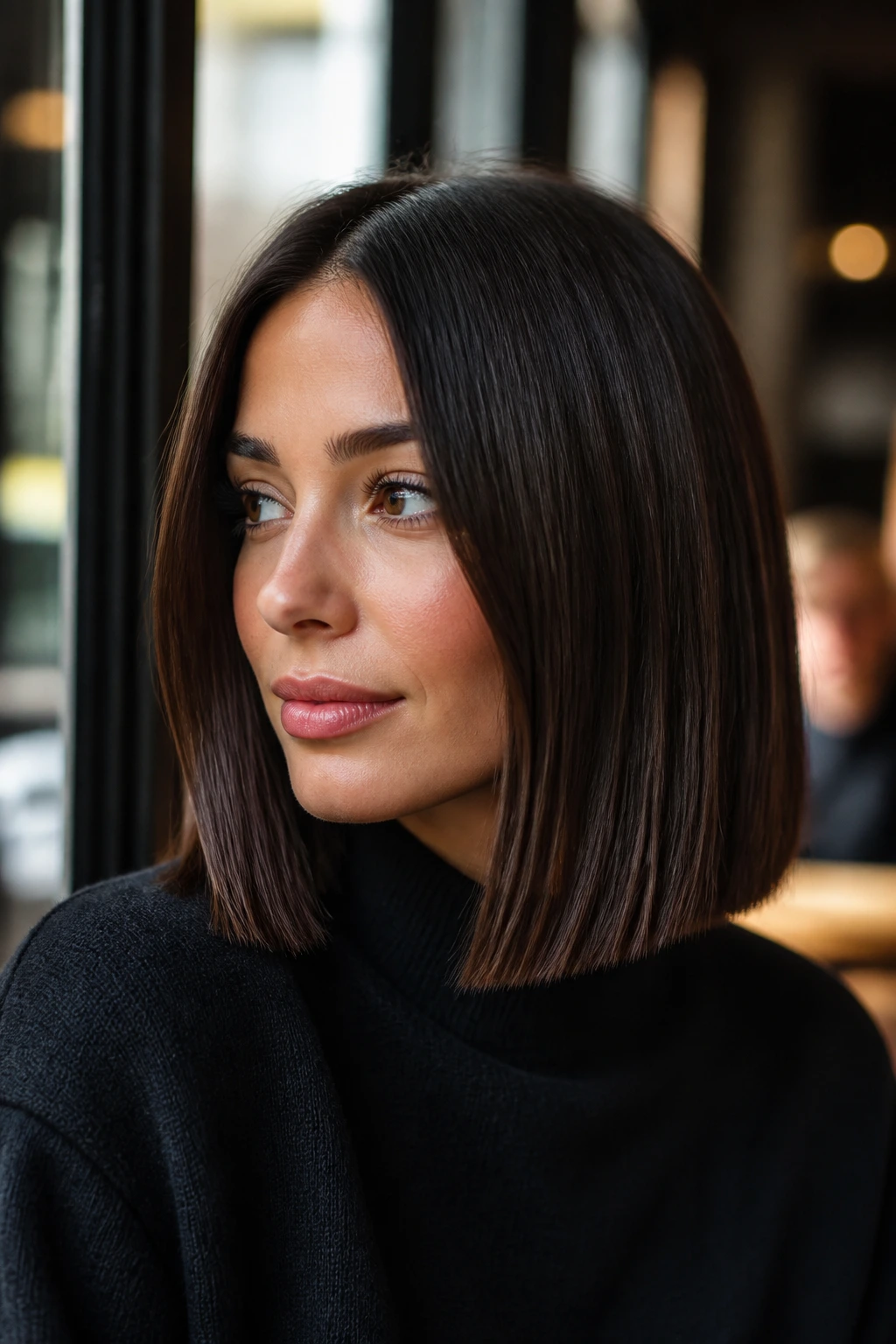
Walnut brown sits in that deep, warm zone that makes a blunt lob look rich instead of harsh. The cut line stays solid, the color adds depth, and the combination reads modern without needing a lot of extras.
This is one of my favorite versions for thick or medium-thick hair. The blunt perimeter controls the density, while the walnut tone keeps the ends from looking too hard. If you like straight styling, this is a strong pick. If you live in waves, the blunt edge still looks clean when the texture softens it a little.
A center part gives it a sharper look. A side part makes it feel a bit more relaxed. Either one works, which is why this style gets so much mileage.
17. Amber Highlight Lob With Soft Movement
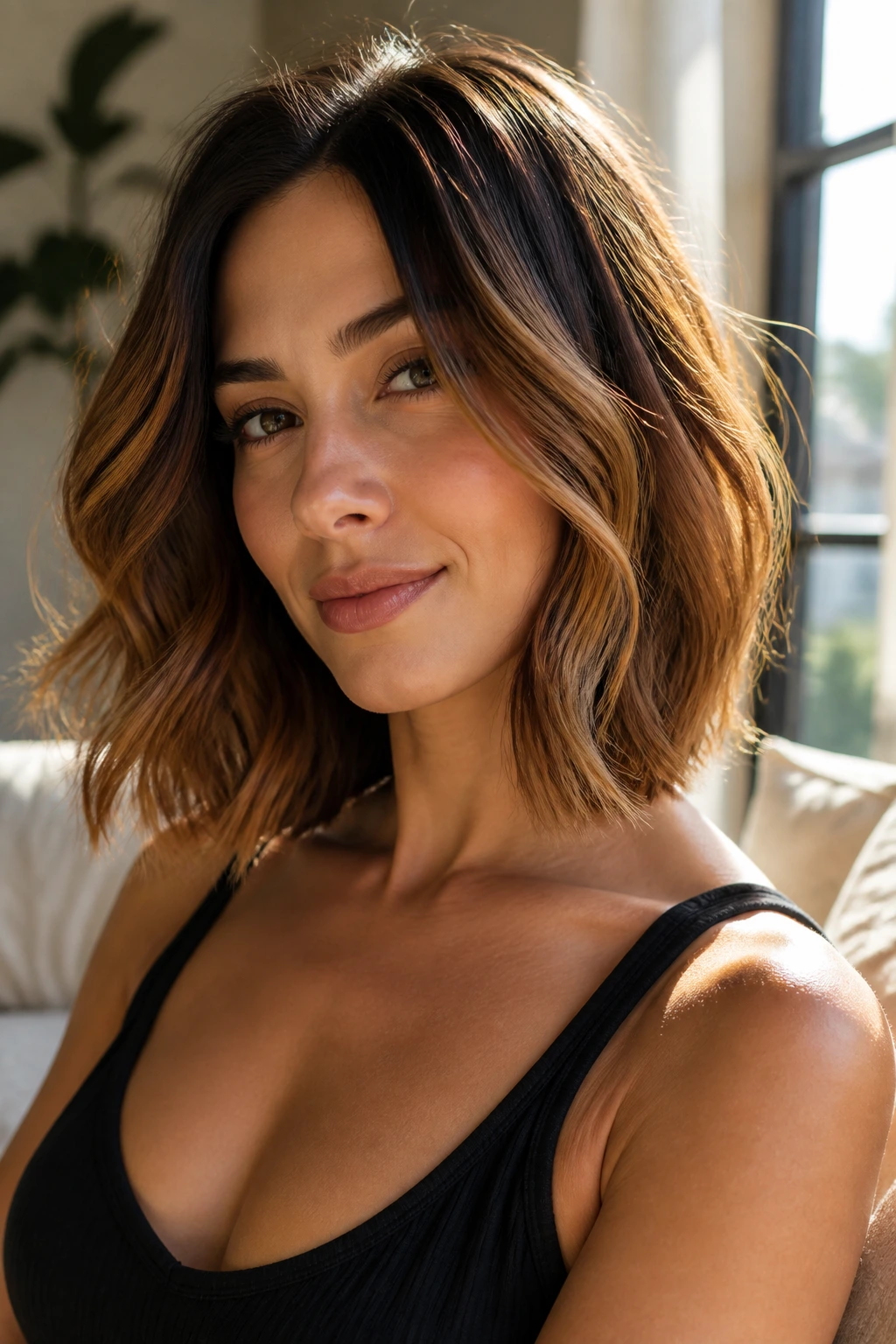
Amber highlights can wake up a brunette lob in a way that feels warm rather than stripy. The key is softness. The lighter amber pieces should sit where the hair bends naturally—around the face, through the top layer, and into the ends—so the movement looks built in.
This version works especially well on wavy hair. The waves help the amber pieces flick in and out of view, which keeps the color from sitting in one spot. If your hair is fine, keep the highlight pattern light and airy. Too much contrast can make the hair look thinner than it is.
Practical note
Ask for ribbons, not stripes. That one word usually steers the placement in the right direction. You want warmth that moves, not a highlight map you can spot from across the room.
18. Smoky Brunette Lob With Warm Balayage
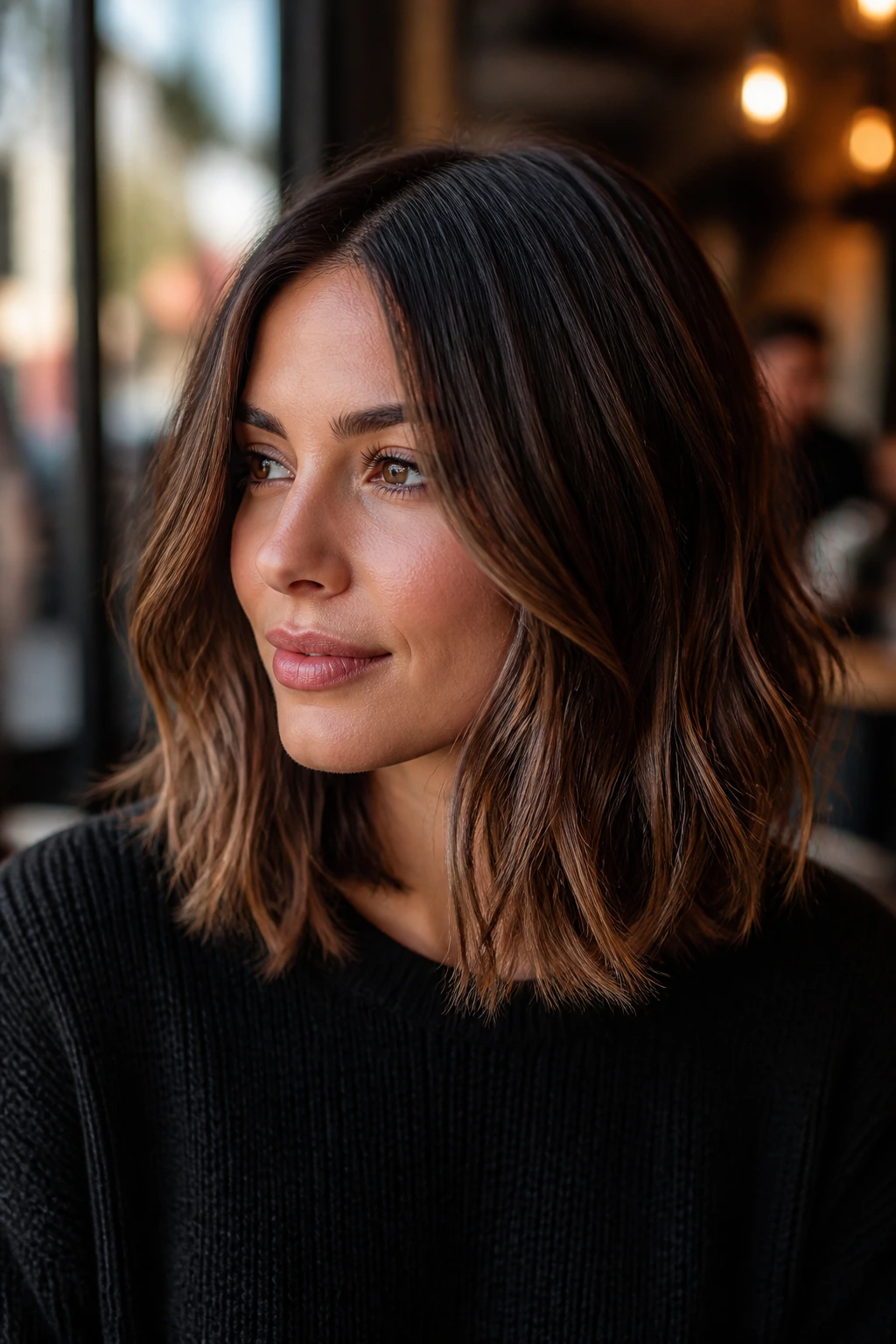
Smoky brunette sounds cooler than it is. The base stays deep, but the balayage brings in soft warmth around the surface and ends, so the haircut looks layered in color rather than in cut. It’s a strong choice if you want dimension that stays understated.
Balayage gives you a softer grow-out line, which matters on a lob because the ends are often visible against sweaters, jackets, and collars. Keep the warm pieces a shade or two lighter than the base, not five shades lighter. That preserves the smoky look. A loose wave or bend shows the color changes best.
My preference: this style looks best when it is not over-styled. A brushed wave and a little shine are enough. Too much curl and the balayage starts to shout.
19. Copper-Kissed Lob With Shag Texture
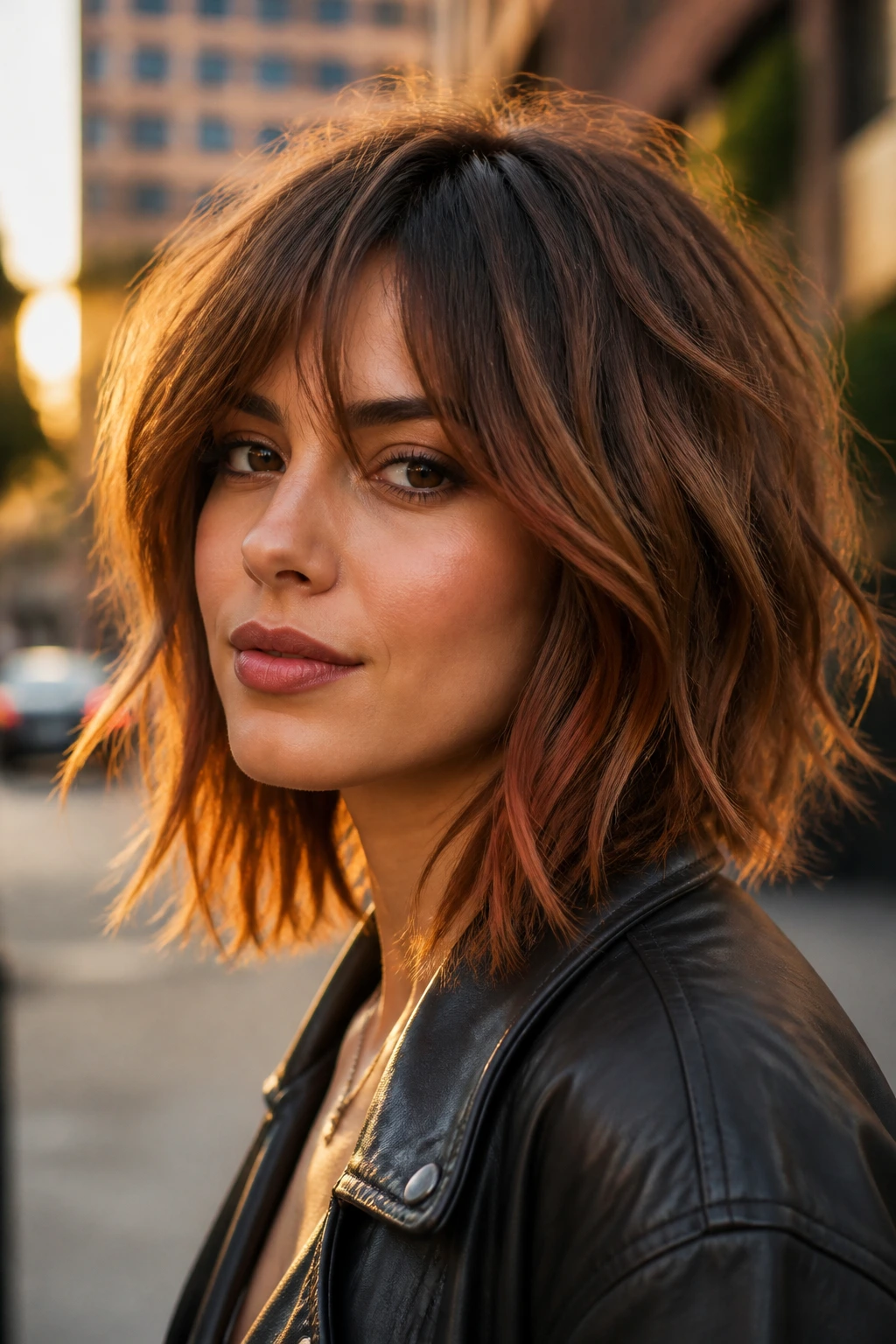
A little copper can change a brunette lob faster than almost anything else. With shag texture, those copper kisses land in the movement instead of the mass, which makes the haircut feel lively and a touch rebellious without going full red.
This cut wants texture. Not frizz. Texture. The difference matters. Ask for choppy ends, soft internal layering, and enough length around the face to keep the shape from becoming a triangle. The copper tone should sit lightly through the warm zones—mid-lengths, fringe pieces, and ends. On the wrong cut, copper can look loud. On the right lob, it looks like the hair has its own spark.
Quick styling idea
Air-dry 70 percent of the way, then twist a few front pieces around your fingers and let them fall. That gives you the loose, lived-in bend that suits this color.
20. Butter Toffee Lob With Side-Swept Bangs
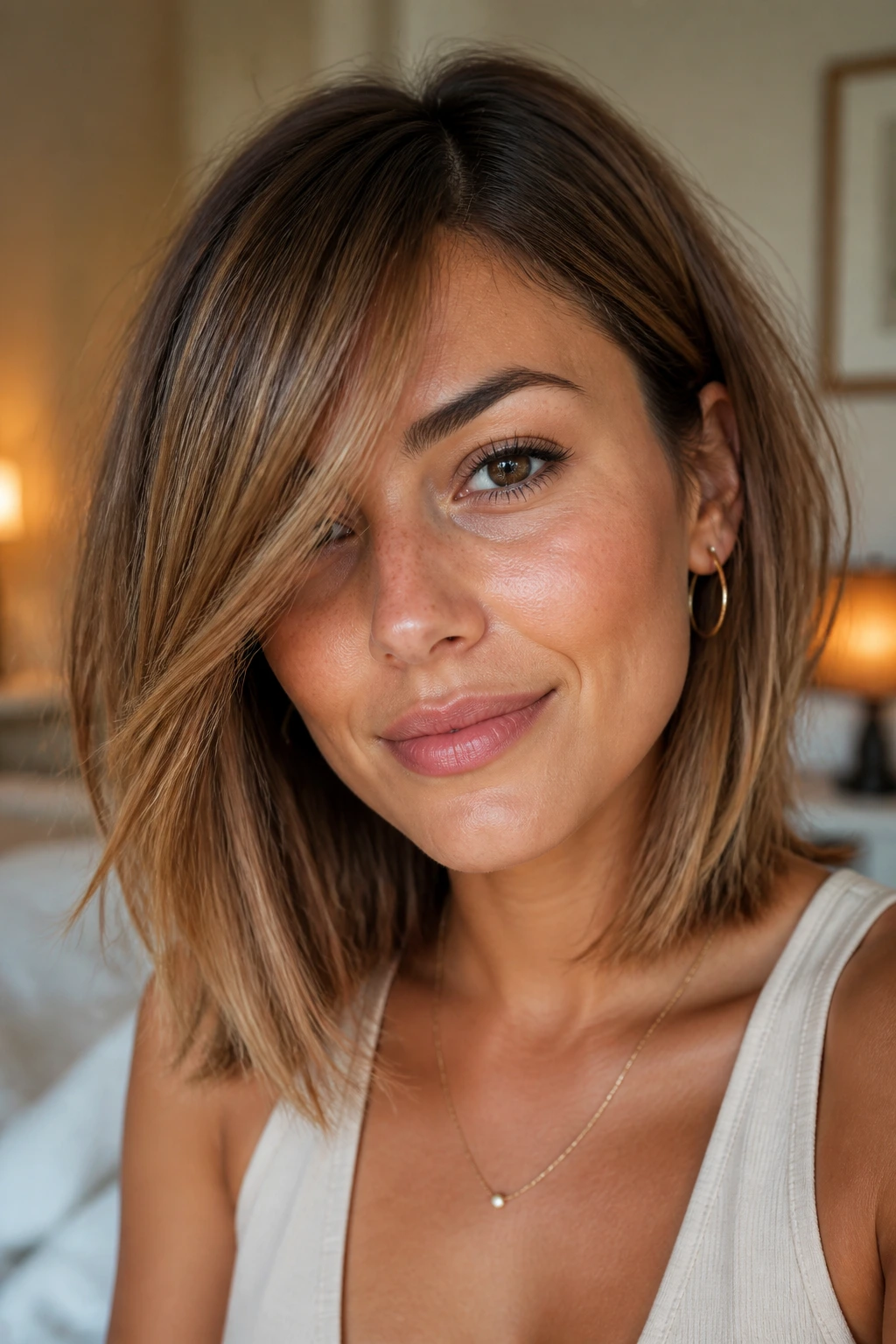
Butter toffee gives a lob a softer, creamier brown tone, and side-swept bangs make the front feel open without the commitment of a full fringe. This is a good choice if you like movement around the face but still want the haircut to stay easy.
The bangs should be long enough to brush the cheekbone and blend into the front layers. Short side bangs can look dated fast. Keep the lob itself just long enough to skim the collarbone so the side sweep has room to fall. The warm toffee tone keeps everything feeling soft, which is useful if your features are sharp or angular.
- Ask for the bang line to start long.
- Keep the ends lightly beveled.
- Style the front away from the face first, then let it settle.
That last step prevents the bangs from looking pasted on. They should feel like part of the haircut, not a separate piece.
21. Dark Chocolate Lob With Beveled Ends
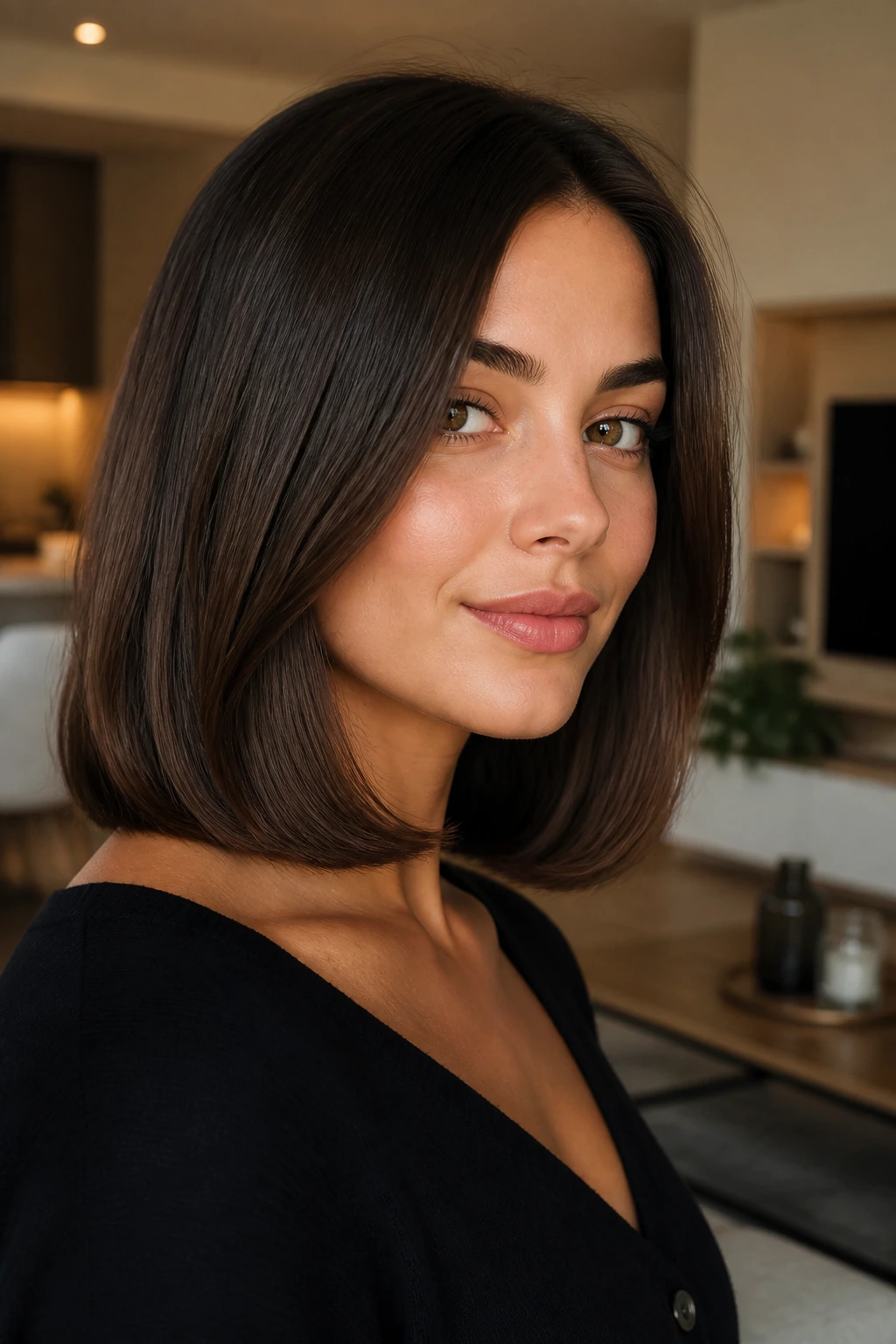
Dark chocolate brown makes a lob look dense and luxurious in the plainest, most useful sense of the word. Add beveled ends, and the shape stops looking boxy. Instead of a hard shelf, you get a line that turns just enough to sit well against the neckline.
This is one of the best options if you want the haircut to look neat on day one and still behave a week later. The bevel gives the ends a slight inward curve, which helps if your hair wants to flip out at the shoulders. It also keeps thick hair from looking blunt in a way that feels heavy rather than intentional.
Good for you if…
You like a deeper brunette shade, wear a lot of black or white clothing, and want the haircut itself to do the visual work. The color and the shape do not compete here. They support each other.
22. Chestnut Lob With a Soft Ombré
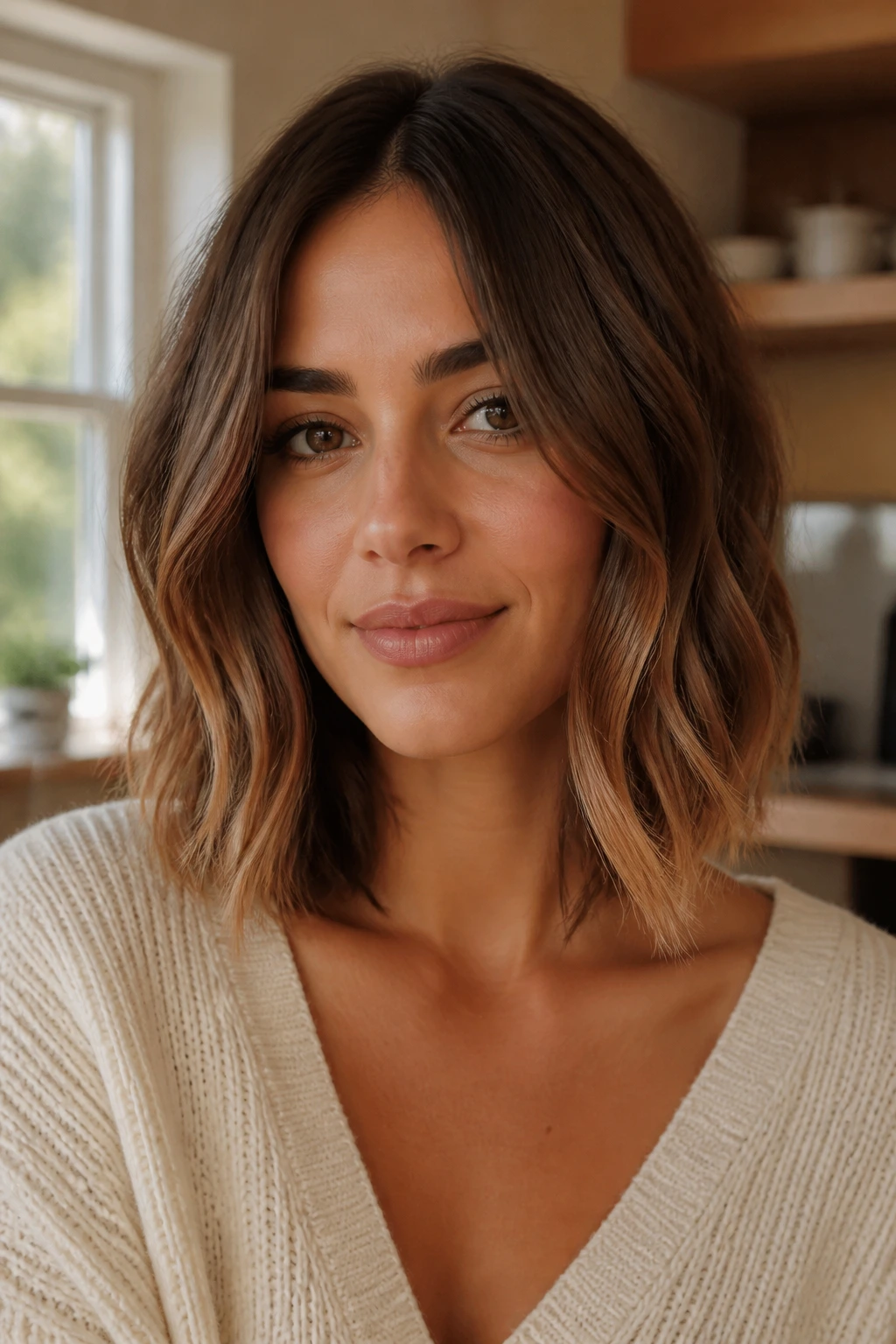
A soft ombré on chestnut brown can make a lob look longer, lighter, and less rigid at the ends. The root stays deeper, the mids warm up, and the lower lengths drift into a lighter chestnut or caramel-brown. It’s subtle enough to grow out well, which is the whole point.
I like this when the client wants dimension but not a lot of frequent toning. The shift should be gentle. If the difference between root and end is too sharp, the lob starts to look like two separate haircuts. Keep the transition blurry and let the cut itself stay simple.
Styling cue: soft waves help the ombré read. Straight styling can flatten the gradient unless the color placement is spot on.
23. Golden Brown Lob With Undone Waves
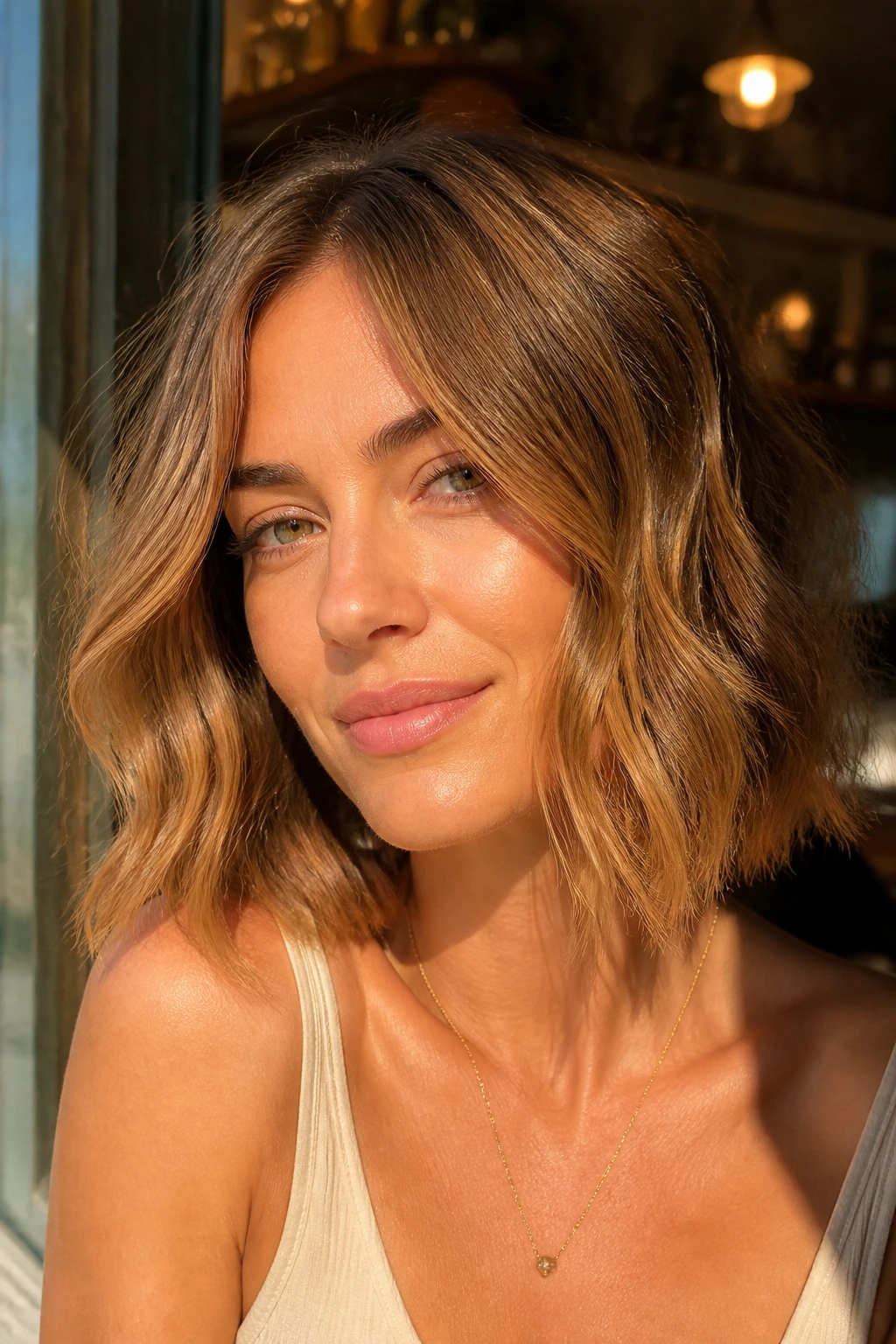
Golden brown brings a cheerful warmth to a lob without tipping into yellow or orange. Pair it with undone waves, and the haircut gets a relaxed, touchable feel that still shows shape.
The waves should be loose and irregular. Two bends here, one bend there. Not a perfect pattern. That randomness is what lets the color look natural rather than painted. This version works especially well if your hair is medium density and you like to style it with a curling wand instead of a full blowout. Keep the ends a little straighter for contrast.
One sentence is enough here: don’t overcurl it. The warmth does the work.
24. Choppy Brunette Lob With Airy Fringe
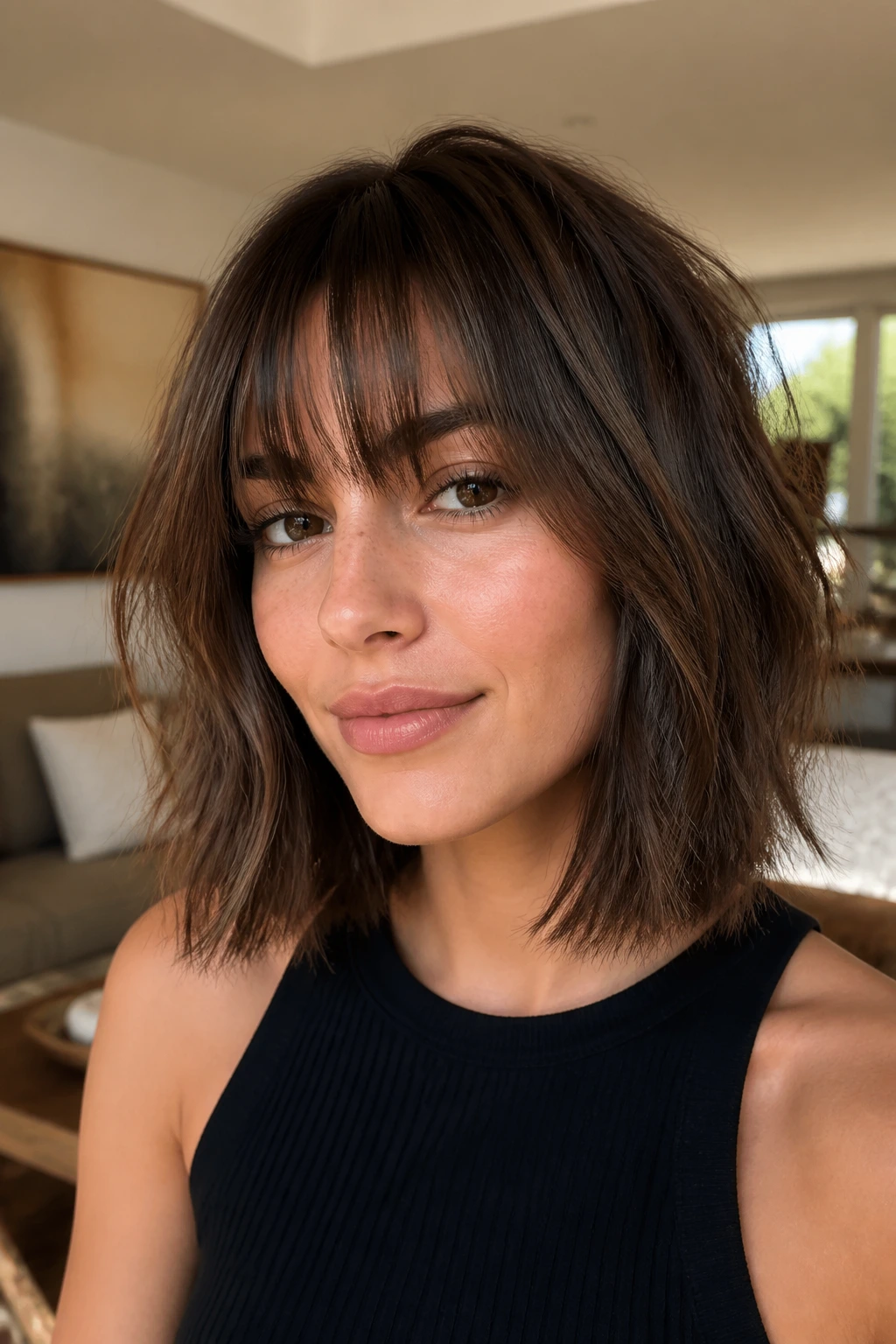
A choppy lob with airy fringe has a lot of movement, but the trick is keeping it light instead of messy. The fringe should skim the brows or open just above them, while the rest of the cut stays broken up at the ends so the brunette tone can show through the texture.
This is a better choice for wavy or thick hair than for hair that’s already very fine. The choppiness removes weight and gives the lob some edge, while the warm brunette color keeps the layers from looking harsh. If you want a haircut that can survive a little natural chaos, this one earns its keep.
Small warning
The fringe needs regular trimming. If it grows too long, the whole cut starts to lose its face-framing effect and you’re back to just being shoulder-length hair with opinions.
25. Warm Mocha Lob With a Polished Blowout
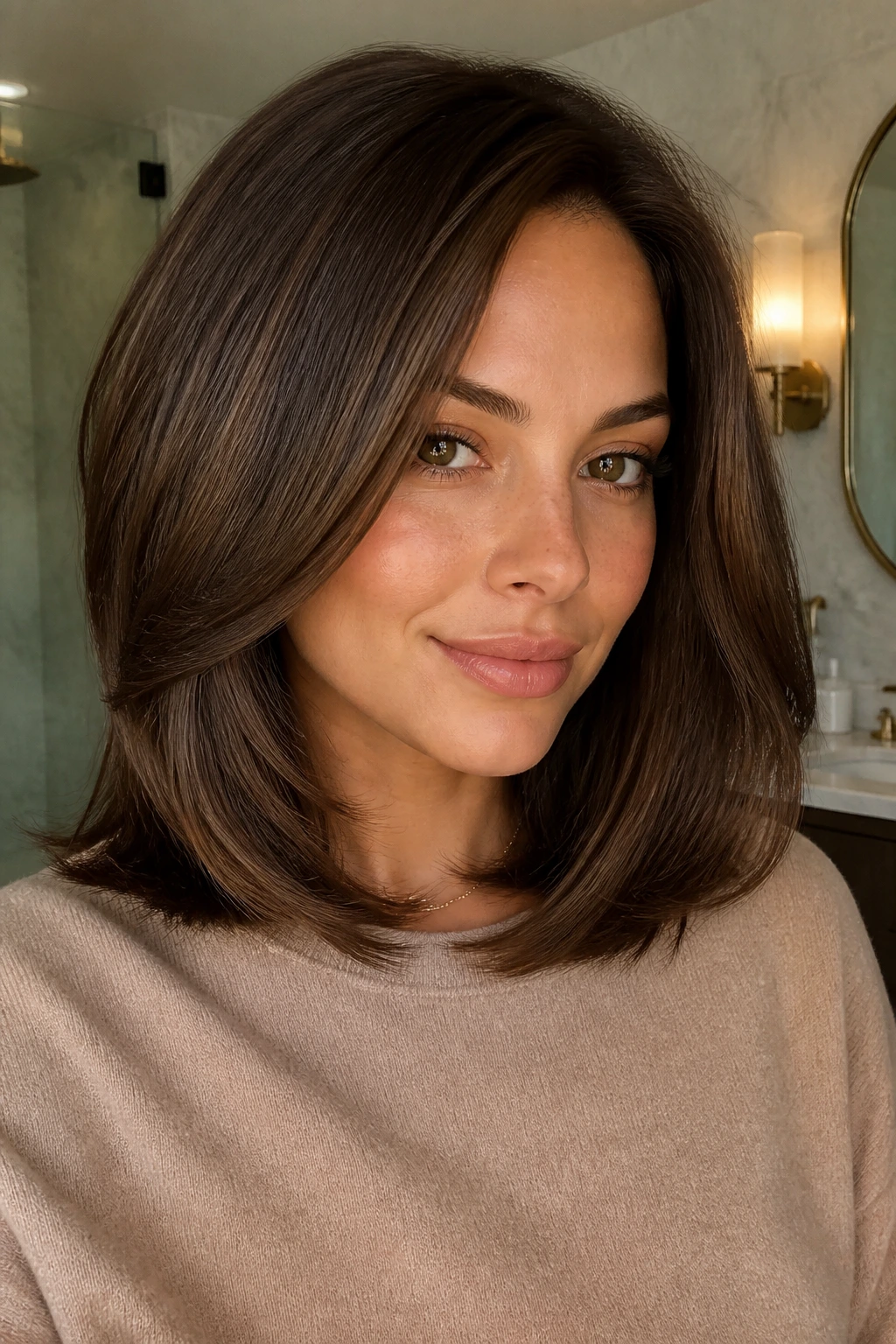
Warm mocha is the closing act I keep coming back to because it does so many things at once. The color is deep but soft, the cut is long enough to feel useful, and a polished blowout turns the whole thing into a clean, glossy shape that still looks human.
This version is especially good if you want a lob that can move from casual to dressed up without changing the cut. The blowout should have body at the roots, a slight bend through the mid-lengths, and ends that sit neatly rather than curling under hard. Warm mocha keeps the hair from looking flat under indoor light, which is where a lot of brunette shades lose their edge.
Why a Lob Makes Warm Brunette Color Look Fuller
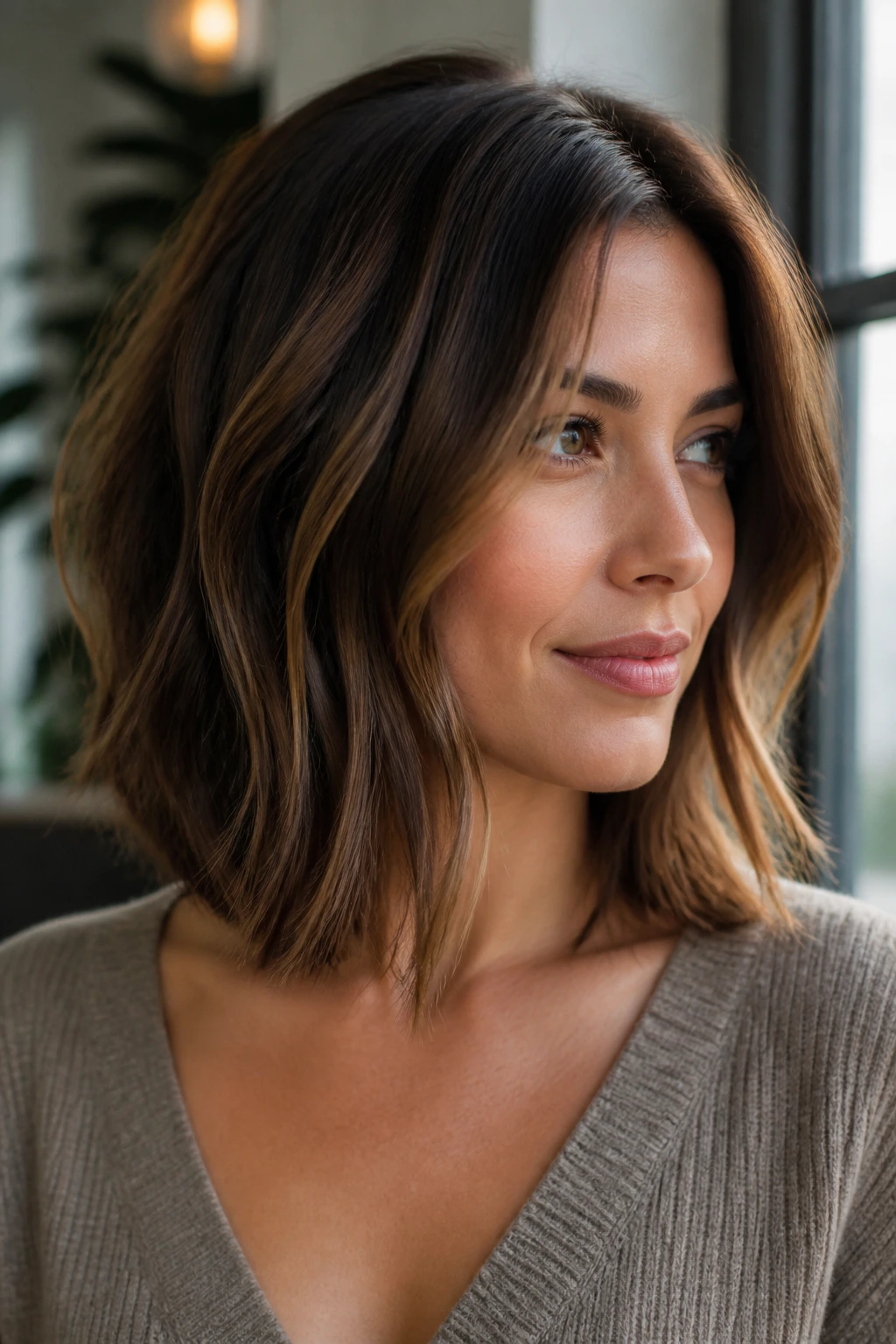
A lob gives warm brunette color room to show its layers. That sounds obvious until you compare it with very long hair, where the lower half can swallow the lighter pieces, or a shorter cut, where the color may not have enough length to shift under different light. Collarbone length sits in the middle, and middle is useful here.
The ends of a lob live in a busy place. They rest near shirts, jackets, scarves, and the top of your shoulders, so the hair is always against another surface. That makes tonal shifts easier to see. Chestnut reads deeper near a black sweater. Caramel glows against cream. Mahogany picks up shine on a cloudy day. On longer hair, those changes get stretched out. On a lob, they happen fast enough that the color feels alive.
There’s also a practical reason the cut works. Warm brunette tones tend to look best when the hair has a clear edge. A blunt line, a soft bevel, a clean face frame, or a light shag finish gives the color something to sit on. Without that shape, the warmth can drift into the background. With it, the haircut holds its own even when you’re not styling it hard.
What to Ask for at the Salon
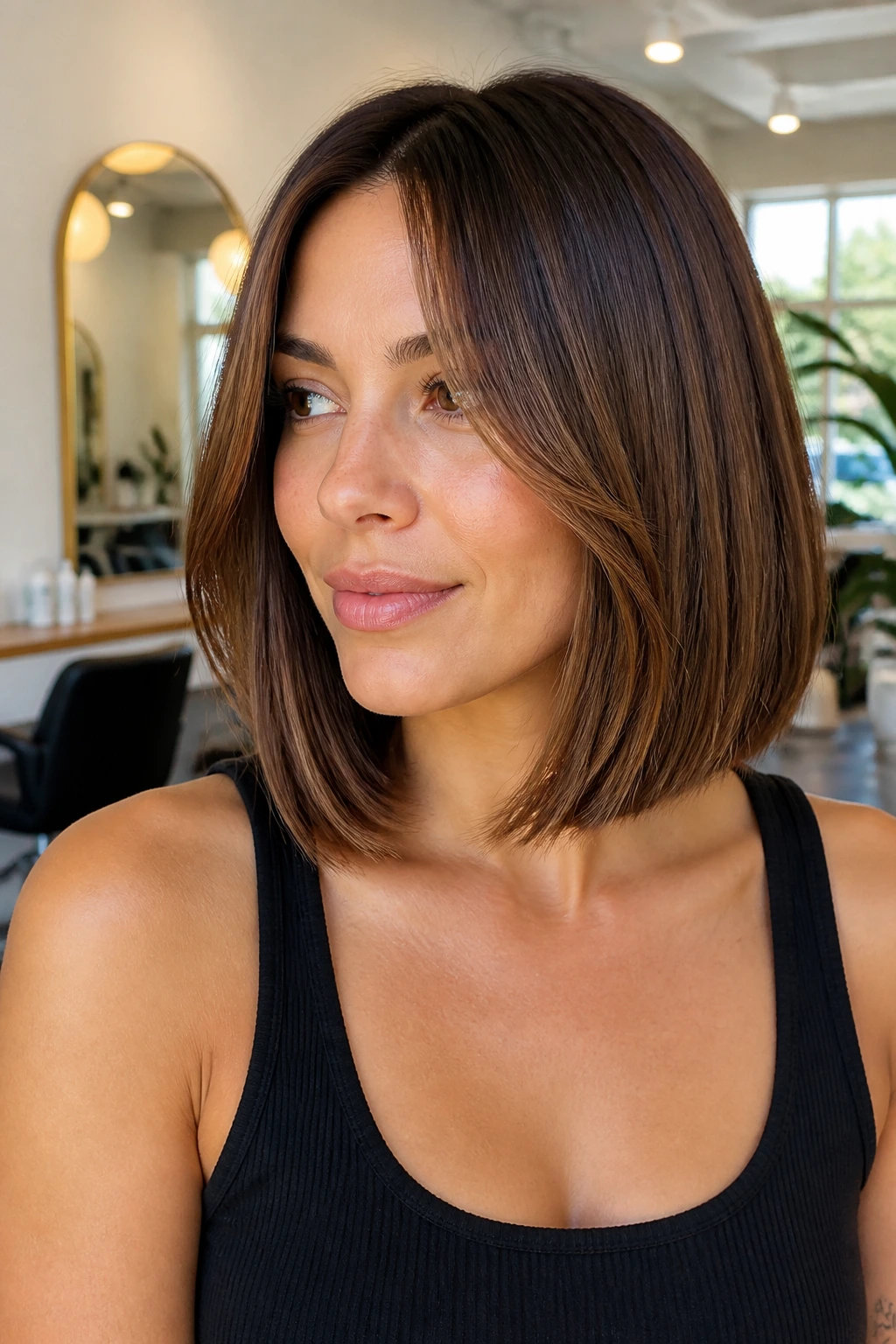
Bring reference photos, yes, but bring the right ones. Take a front view, a side view, and one photo in daylight if you can find it. Salon lighting can lie to you in a hurry, especially with brunette color. A chestnut shade that looks soft in indirect light can turn much darker under a bright mirror.
Be specific about the cut line. Say where you want the lob to land: collarbone, just below the collarbone, or a little longer in front. If you want movement, ask whether that should come from face-framing pieces, low internal layers, or a beveled edge. Those are not interchangeable. A blunt lob with a beveled finish behaves very differently from a shaggy lob with the same color.
On the color side, ask for warm brunette tones that suit your base instead of trying to force a dramatic jump. Chestnut, caramel, amber, hazelnut, mocha, and auburn each play differently. If you want low maintenance, keep the lighter pieces closer to your natural brunette level and let the warmth do the work. If you want more pop, ask for a brighter money piece or a soft ombré through the ends. Either way, request a gloss or glaze at the finish. That’s what keeps the tone rich instead of dusty.
Essential Tools for Styling a Lob at Home
-
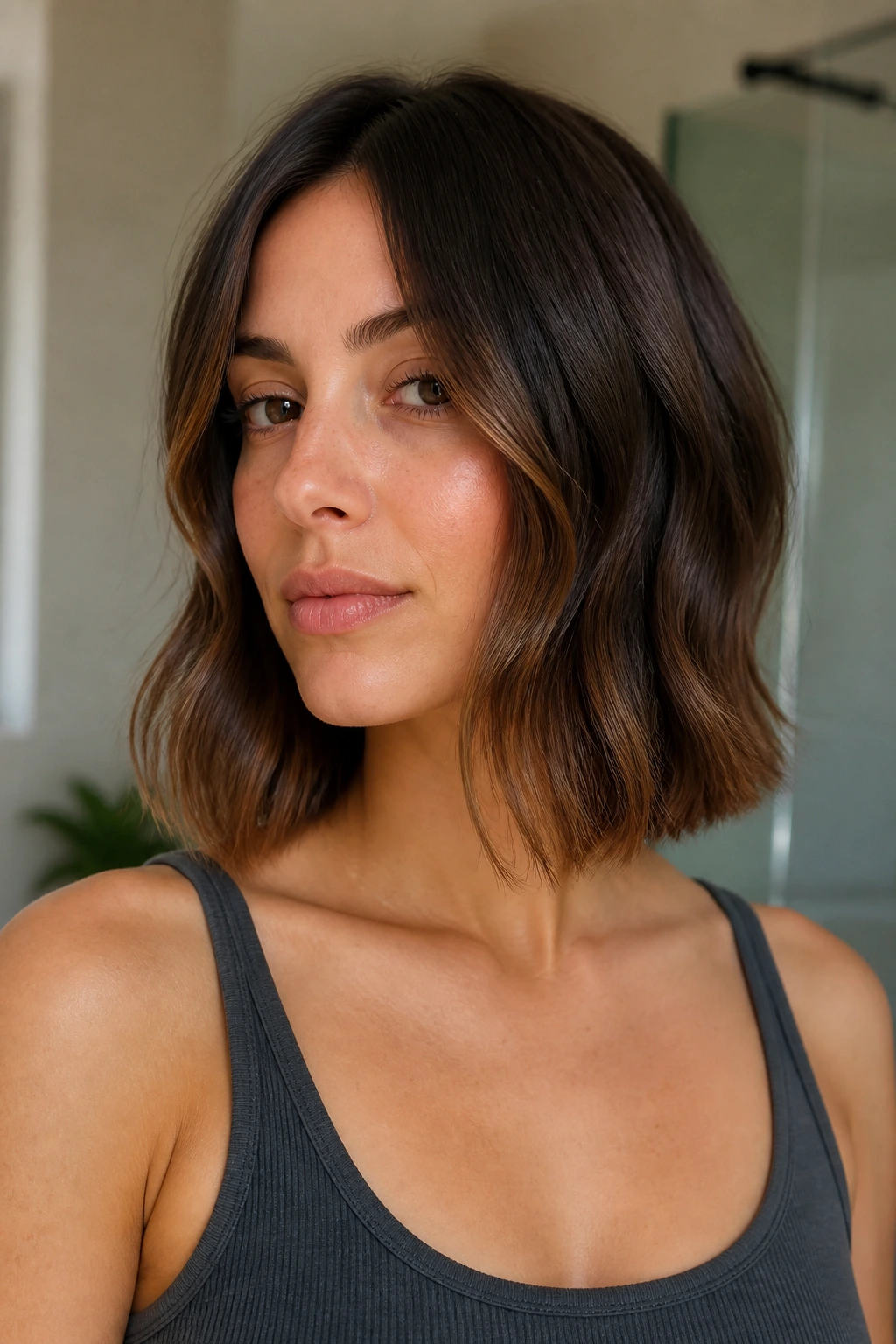
Blow dryer with a concentrator nozzle — The nozzle keeps the airflow aimed at the cuticle, which helps the ends sit smoother and tighter.
-
Medium round brush — Best for beveling the ends under or away from the face without making the lob look overworked.
-
Flat iron with narrow plates — Handy for adding a soft bend at the last inch, especially on blunt or beveled cuts.
-
1 to 1.25-inch curling wand or iron — The sweet spot for loose waves that show off warm brunette dimension.
-
Sectioning clips — They make the top layer easier to manage, and they stop you from chasing random pieces around the head.
-
Tail comb — Useful for clean parts and neat sectioning, especially if you want a sharp center line.
-
Heat protectant spray — Non-negotiable if you use hot tools more than once a week.
-
Light mousse or root lift spray — Gives the crown a little lift so the lob doesn’t sit too close to the head.
-
Texturizing spray — Good for shaggy or airy versions when you want separation rather than polish.
-
Shine serum or finishing oil — Use sparingly on the mids and ends only; too much near the roots will collapse the shape.
How to Choose the Right Warm Brunette Shade
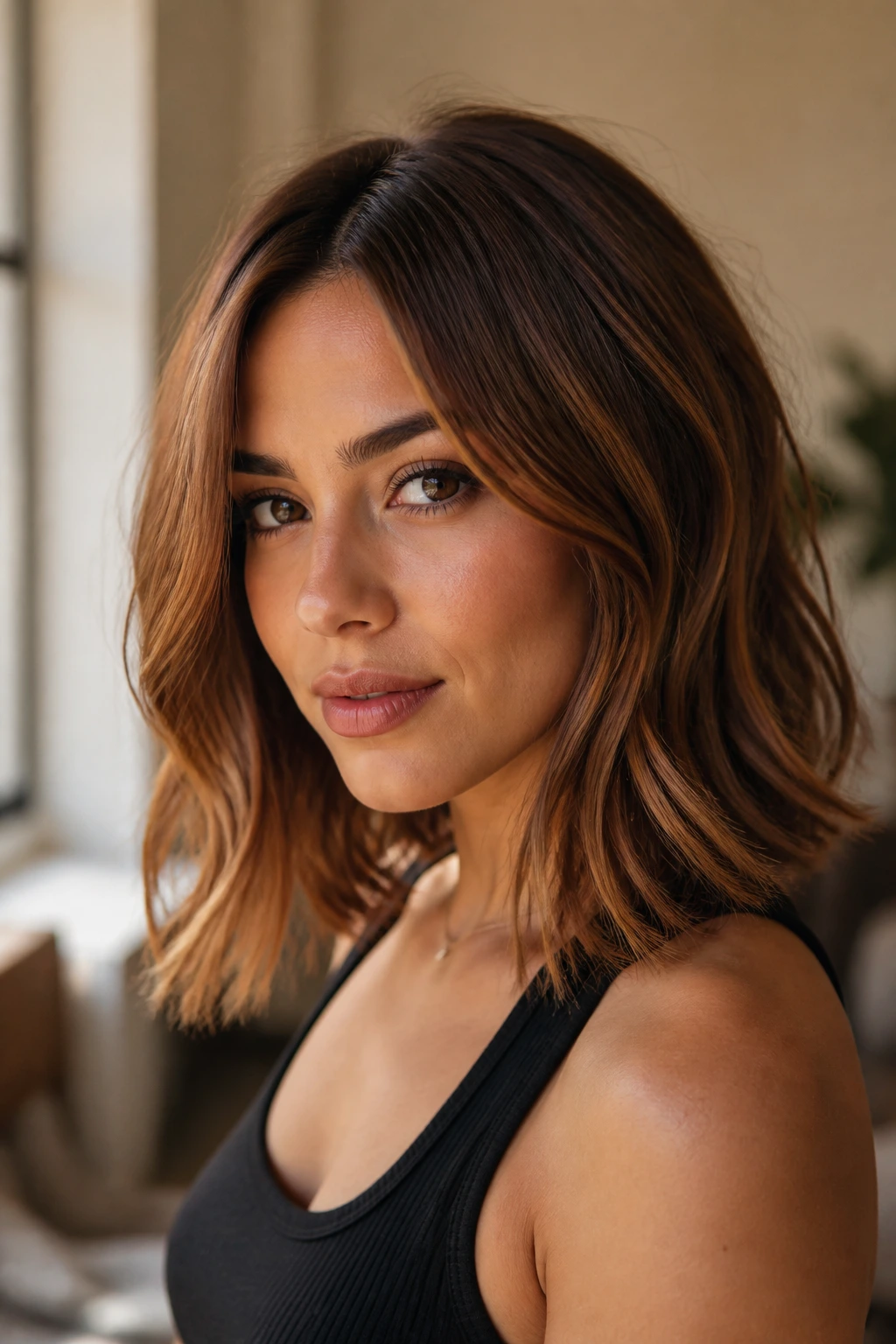
Warm brunette does not mean one brown. It covers a wide range, and the trick is matching the tone to the haircut you actually want to wear. A chestnut lob looks different from a toffee lob even if the cut line is the same, because the color changes how much edge the haircut seems to have.
If your skin has peach, golden, or olive undertones, caramel, honey chestnut, amber, and bronze usually look easy. They echo the warmth already in the skin instead of fighting it. If your skin is rosier or more neutral, mocha, hazelnut, and walnut can keep the look rich without turning the whole face red. For deeper skin tones, mahogany, espresso, dark chocolate, and bronze-brown often create a strong, glossy frame that reads clean and dimensional.
A good rule: the lighter the highlight contrast, the more the haircut itself has to carry the shape. A blunt lob can hold brighter caramel ribbons. A shaggy lob often looks better with softer warmth and less stripey contrast. If you want lower maintenance, choose a brunette gloss or balayage with roots that stay close to your natural color. If you want a bigger change, ask for more visible face framing, but keep it in the same warm family so the result doesn’t drift into brass.
How to Style These Cuts So the Color Shows
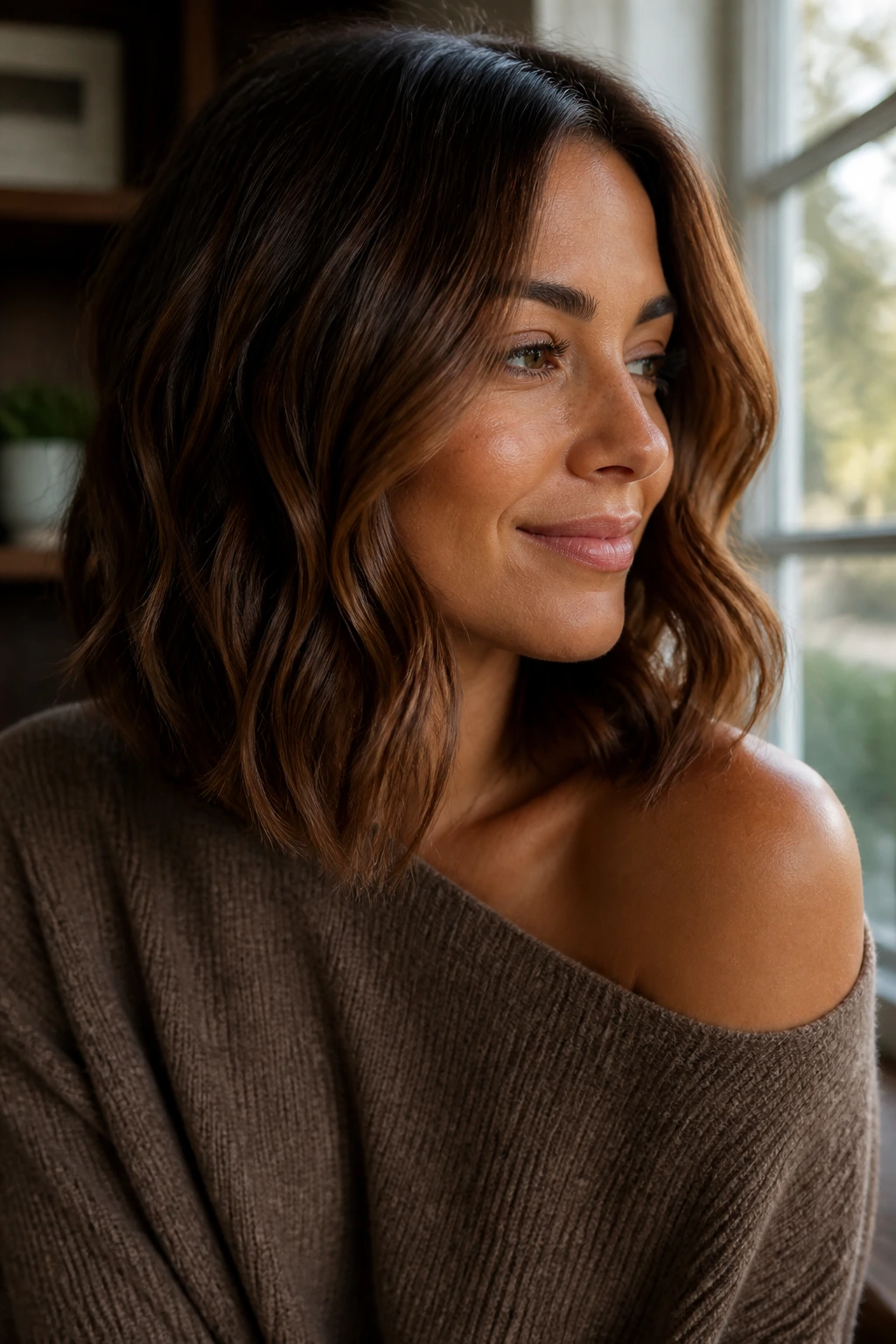
Warm brunette color comes alive when the hair has a little bend. Not a tight curl. A bend. That detail matters because it lets the light catch the different planes of the cut without making the style look overdone.
Start with damp hair and work in a light mousse or root lift at the crown. Blow-dry with a nozzle if you have one, directing the front pieces away from the face first. Once the hair is dry, use a flat iron or curling wand on medium sections and leave the last inch straighter than the rest. That gives the lob a cleaner edge and stops the ends from puffing out.
If you prefer a polished finish, turn the brush or iron inward just at the bottom. If you like a more relaxed look, alternate the bend direction from one section to the next and brush it out once it cools. Warm brunette shades show up best when the hair is not too glossy to read as plastic and not too dry to read as dull. There’s a middle ground. That’s where the good lobs live.
Small Finishers That Change the Whole Mood
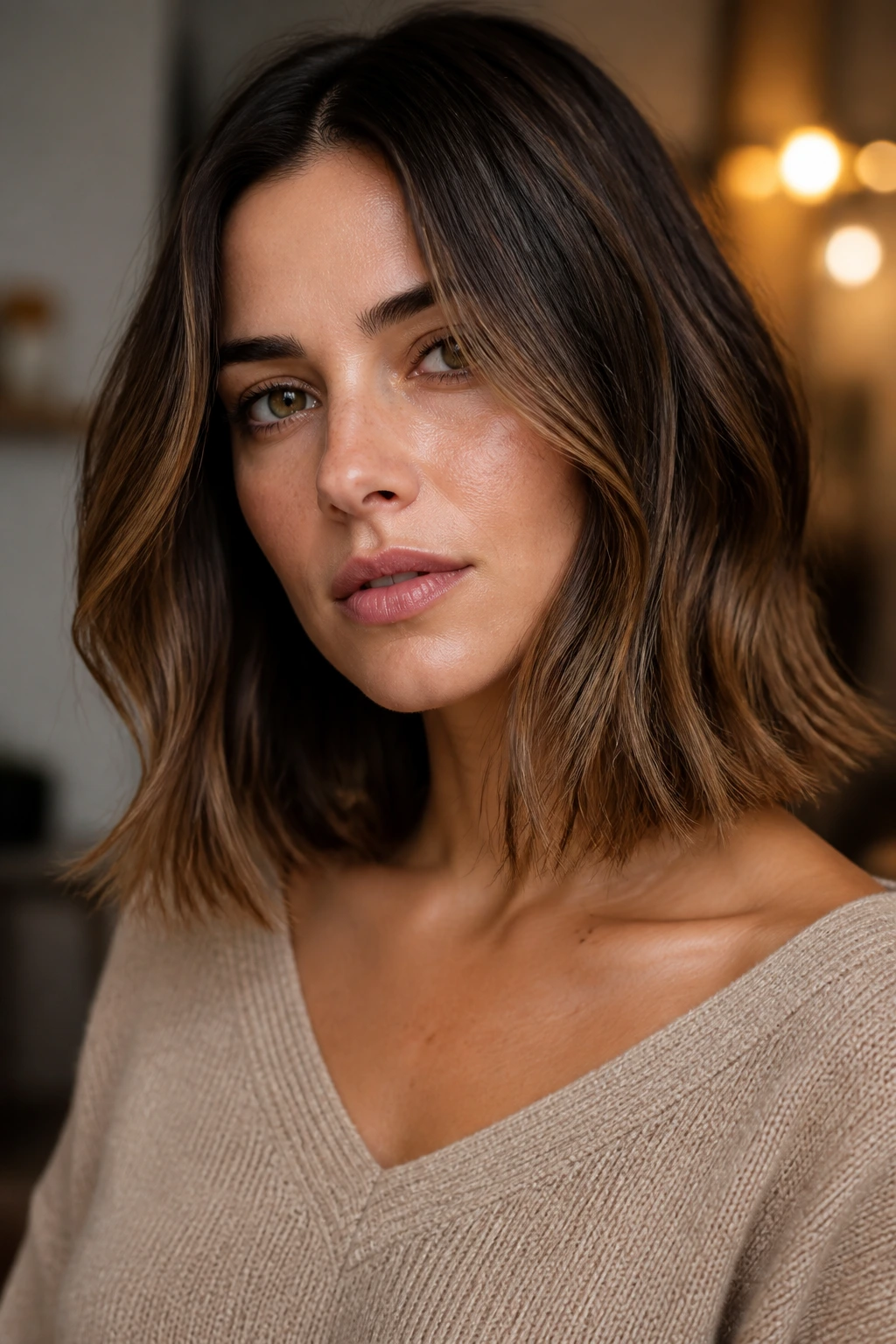
Texture Boost: A few sprays of texturizing mist at the mid-lengths can wake up a wavy lob and make caramel or amber pieces show through the layers. Spray from underneath, then squeeze the hair with your hands. That keeps the top from getting dusty.
Gloss Boost: A pea-sized drop of serum on the ends is enough for a blunt or beveled lob. Spread it through your palms first. If it lands near the roots, the haircut goes limp fast.
Face-Framing Trick: Tuck one side behind the ear and leave the other side loose. That uneven shape shows off both the cut line and the color placement around the face.
Part Change: Moving the part two inches off center can shift the volume and make a warmer brunette shade look brighter near the forehead. It’s a tiny change. It reads bigger than you’d think.
Make-It-Yours: Fine hair usually looks best with blunt edges and lighter layering. Thick hair benefits from internal weight removal. Curly hair needs longer face-framing pieces so the lob doesn’t shrink up too high. Straight hair can carry almost any of these shapes as long as the ends are finished cleanly.
Common Mistakes That Flatten a Brunette Lob
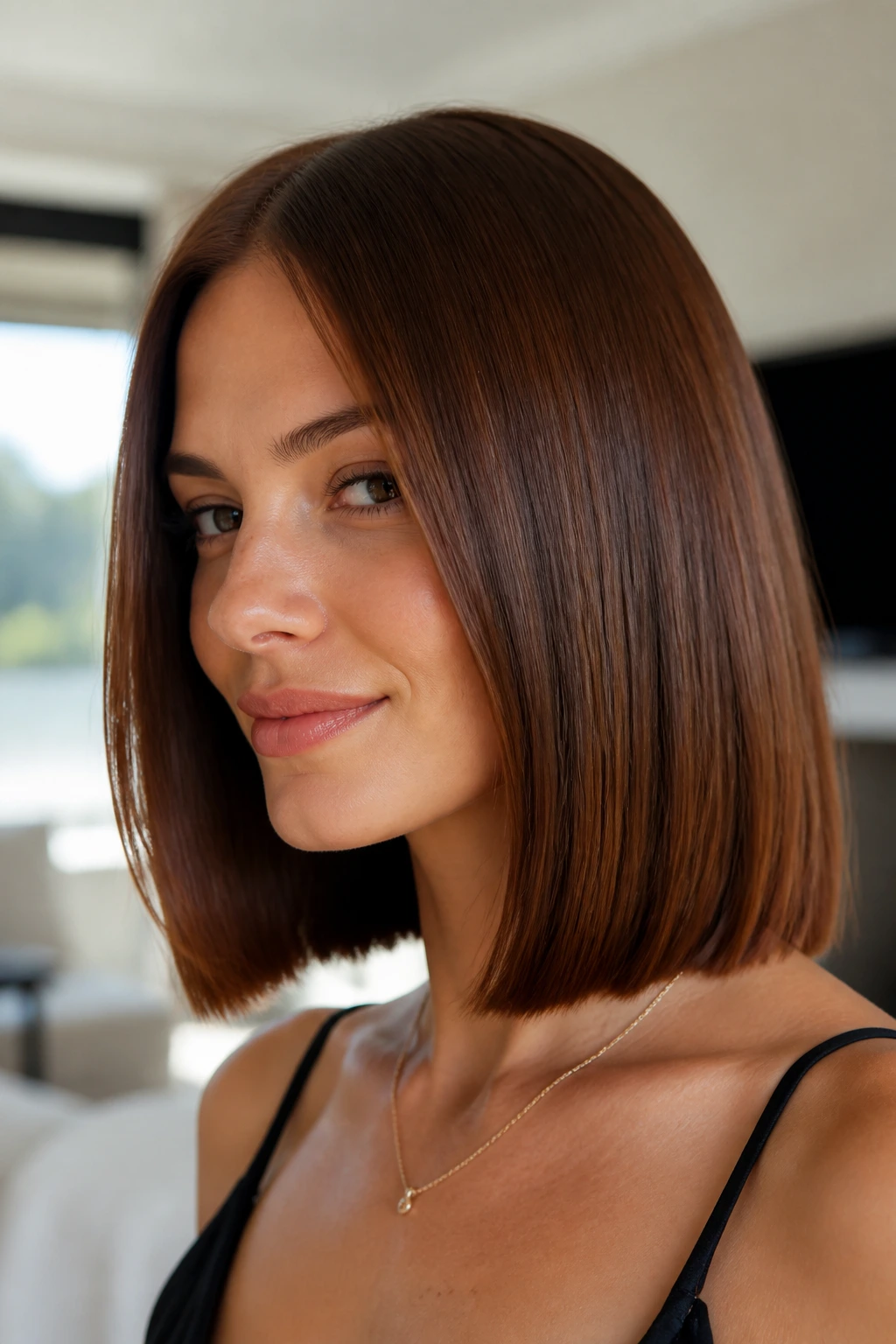
The most common mistake is cutting too much weight out of the bottom. The result is a lob that flips oddly at the shoulders and starts to look thin at the ends. The fix is simple: keep enough density in the perimeter so the shape can sit cleanly.
Another problem is choosing highlights that are too pale for the base. When the contrast is too sharp, the warm brunette color stops looking rich and starts looking striped. Ask for ribbons, gloss, or balayage that stays within a few levels of your natural brown unless you want a stronger contrast on purpose.
A third one: using too much oil near the roots. That makes a lob collapse at the crown and shows every piece of buildup at the part. Keep the oil only on the lower third of the hair, and use less than you think you need.
People also overdo curl and texture at the ends. If the lob already has layers, too much waving makes the shape look busy. A soft bend is enough. One or two turns with the iron can show color better than a whole head of curls.
Last, don’t ignore regular trims. A lob starts to lose its line faster than longer hair, especially if it flips outward as it touches the shoulders. Once the edge starts to feel fuzzy, the warm tones lose their frame.
Variations and Adaptations for Different Hair Types
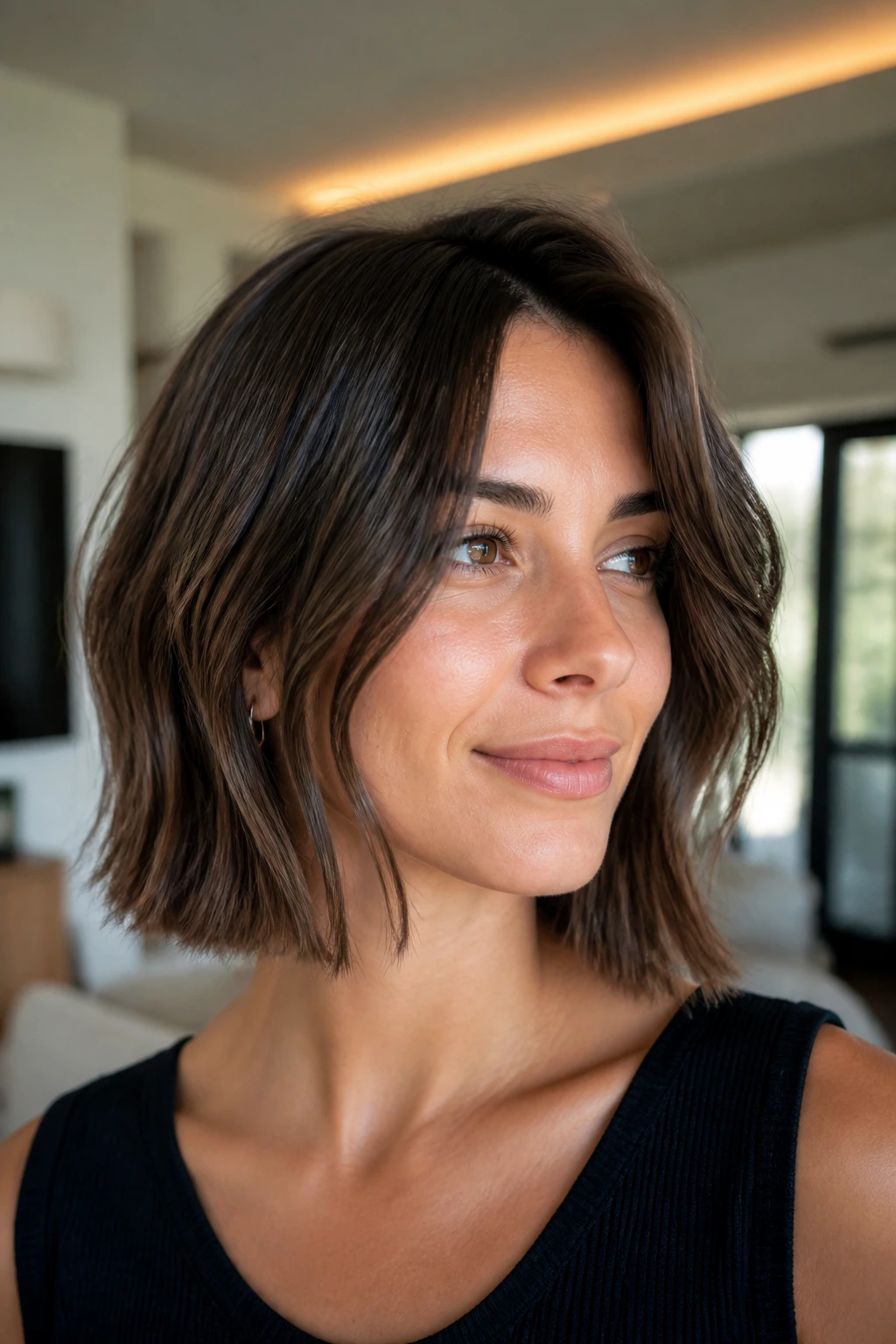
The Fine-Hair Float: Keep the perimeter blunt, keep layers minimal, and ask for a warm chestnut or mocha gloss. Fine hair needs the illusion of density more than it needs extra texture, and this version gives it that without pretending the hair is thicker than it is.
The Thick-Hair Sweep: Add internal weight removal, longer front pieces, and a slightly beveled finish. Thick hair can turn into a shelf if you cut it all one length with no plan, so this adaptation keeps the lob from feeling heavy at the neck.
The Curly Warm Lob: Let the cut be done dry or mostly dry, with the front pieces a little longer than you think. Warm brunette balayage or soft amber ribbons can make the curl pattern stand out without losing the shape.
The Low-Maintenance Grow-Out: Choose a rooty caramel or smoky brunette balayage with soft face framing. The line between salon visits stays softer, and the cut still looks deliberate after a few weeks.
The Polished Office Lob: Go for dark chocolate, walnut, or warm mocha with a smooth blowout finish. This version reads neat in meetings, at dinner, or anywhere you want the haircut to look controlled without looking stiff.
Keeping the Cut and Color Fresh Between Appointments
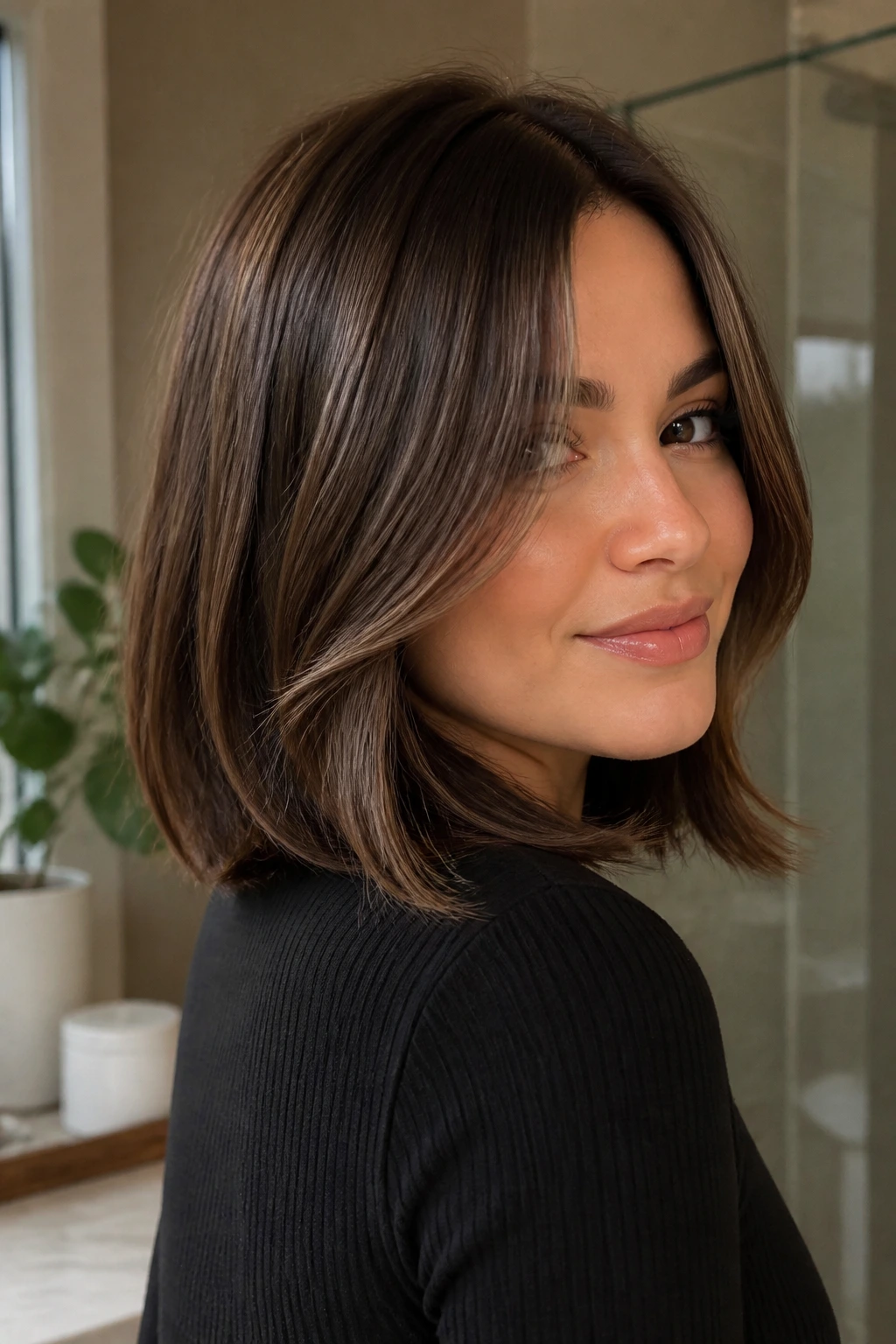
A good lob needs maintenance, but not fussy maintenance. Trims every 8 to 10 weeks are the sweet spot for keeping the shape from flipping out at the shoulders or losing its edge. If your hair grows fast or sits right on the collarbone, you may want the trim closer to 6 or 8 weeks.
Color care depends on how much warmth you’ve built into the shade. Warm brunette glosses, caramel ribbons, and amber pieces usually stay richest when you use a color-safe shampoo and wash no more than you need to. If your scalp is oily, dry shampoo can buy you a day or two without forcing a full wash. That matters because over-washing dulls the tone and roughs up the ends, which is exactly what makes a lob look tired.
A weekly mask on the mids and ends helps a lot, especially if you heat-style. Keep it off the scalp. You want the cut to stay smooth, not greasy. Sleep on a satin pillowcase if you can, or at least keep the hair in a loose bend so you do not wake up with a hard crease right at the shoulder line. If the color starts to look brassy, a salon gloss usually fixes it faster than trying to chase it with random toners at home.
Frequently Asked Questions
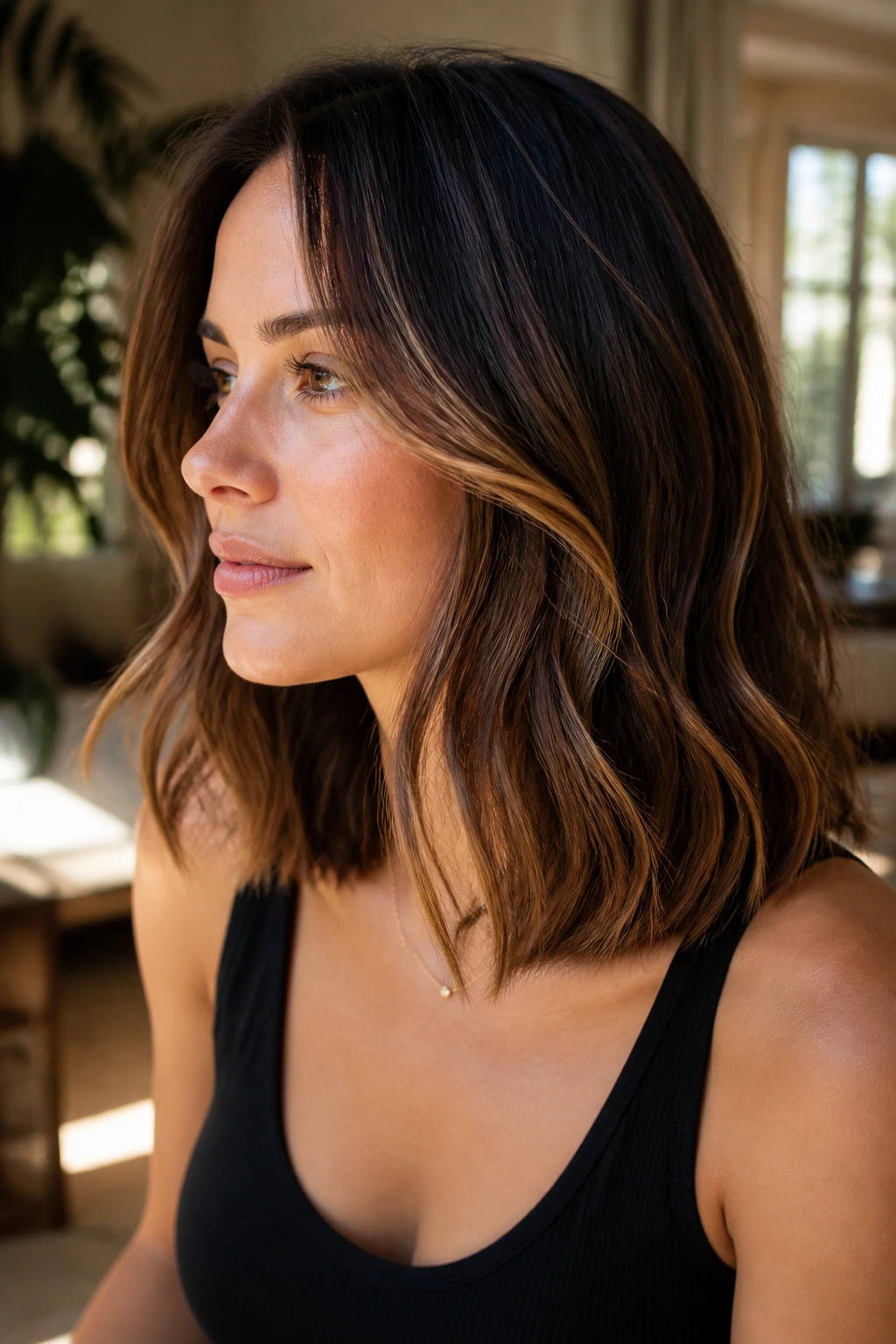
Will a lob work if my hair is very thick?
Yes, but the cut needs to remove weight in the right places. Ask for internal layering or a beveled perimeter so the lob doesn’t balloon out at the sides.
Is a blunt lob better than a layered lob for warm brunette color?
A blunt lob shows off depth and shine, while a layered lob shows movement and dimension. If your color has caramel ribbons or balayage, layers can help; if your brunette is deep and glossy, a blunt line often looks richer.
How short can a lob be and still count as a lob?
Once the hair lands between the jawline and just below the collarbone, you’re in lob territory. Shorter than that starts moving into bob range, especially if the front is tight to the face.
Can warm brunette tones work on cool skin?
They can, but the shade choice matters. Mocha, walnut, and dark chocolate usually sit more comfortably than copper-heavy browns, and a neutral gloss can keep the warmth from looking too red.
What if my lob flips out at the ends?
That usually means the cut is hitting the shoulder in the wrong spot or it’s too light at the bottom. A slight bevel, a little more length, or a quick pass with a flat iron at the ends usually fixes it.
Do I need highlights to make a brunette lob interesting?
No. A strong shape and a good gloss can carry a lob on their own. Highlights help if you want more movement, but a deep chestnut or mocha tone can look rich without them.
What’s the easiest way to style a lob in under 10 minutes?
Blow-dry the roots, bend just the front pieces away from the face, and smooth the ends with a brush or flat iron. That gives you enough shape for the haircut and enough shine for the color to show.
How often should I refresh the color?
Glosses and toners usually need attention every 4 to 6 weeks if you want the warmth to stay clean. Balayage or soft ribbons can stretch longer, but the tone at the ends will still benefit from a quick refresh now and then.
The Shape That Stays Useful
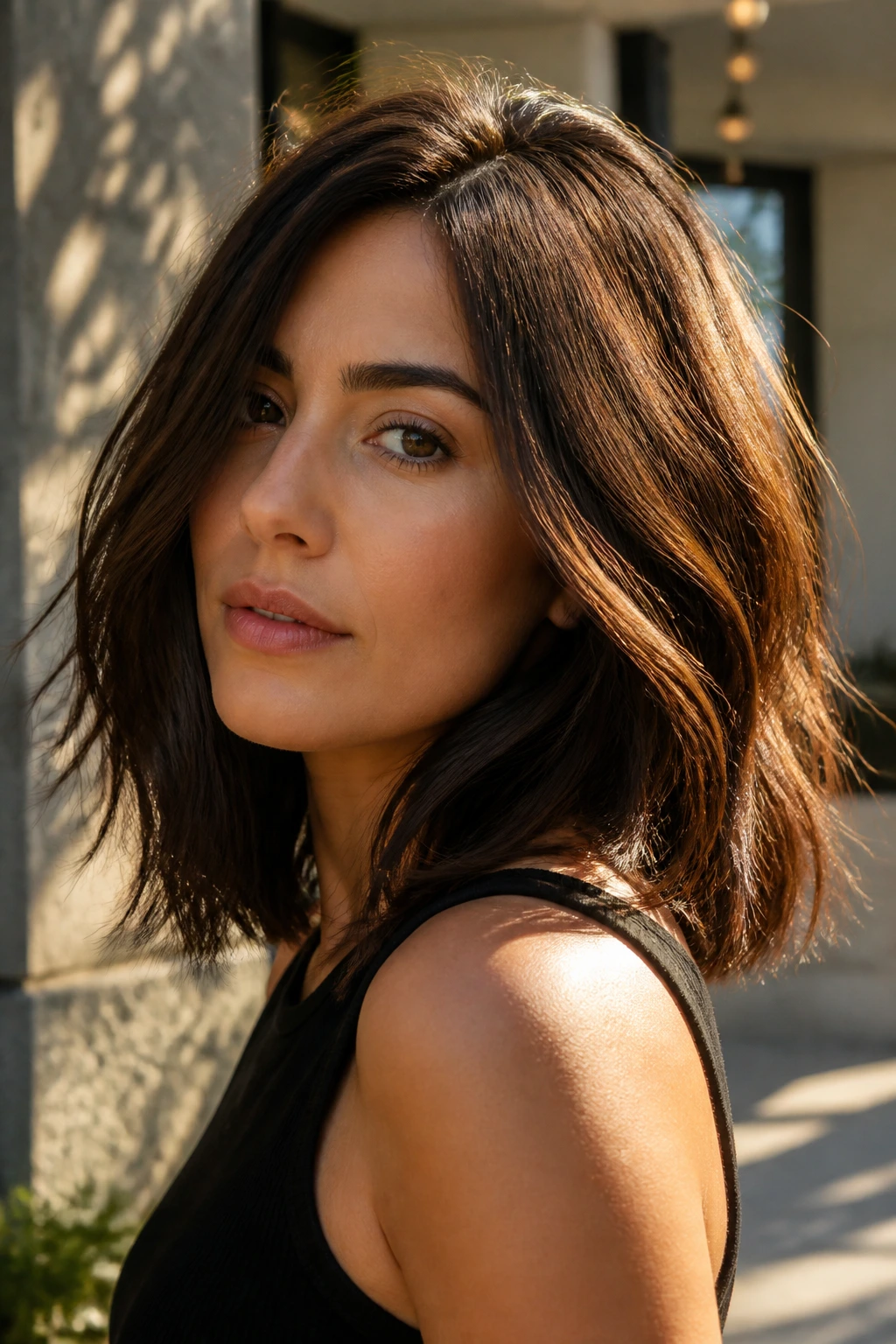
A warm brunette lob earns its place because it does not ask for a dramatic life to look good. It can be blunt, shaggy, glossy, waved, beveled, or feathered; it can lean chestnut, caramel, mocha, mahogany, or amber; and it still lands in that reliable zone where the haircut does its job without stealing your whole morning.
That’s the part I keep coming back to. A good lob gives you enough shape to feel styled and enough length to feel flexible. Add rich warm tones, and the whole thing gets depth, shine, and movement that holds up in ordinary light—the kind of light most hair actually lives in.
