



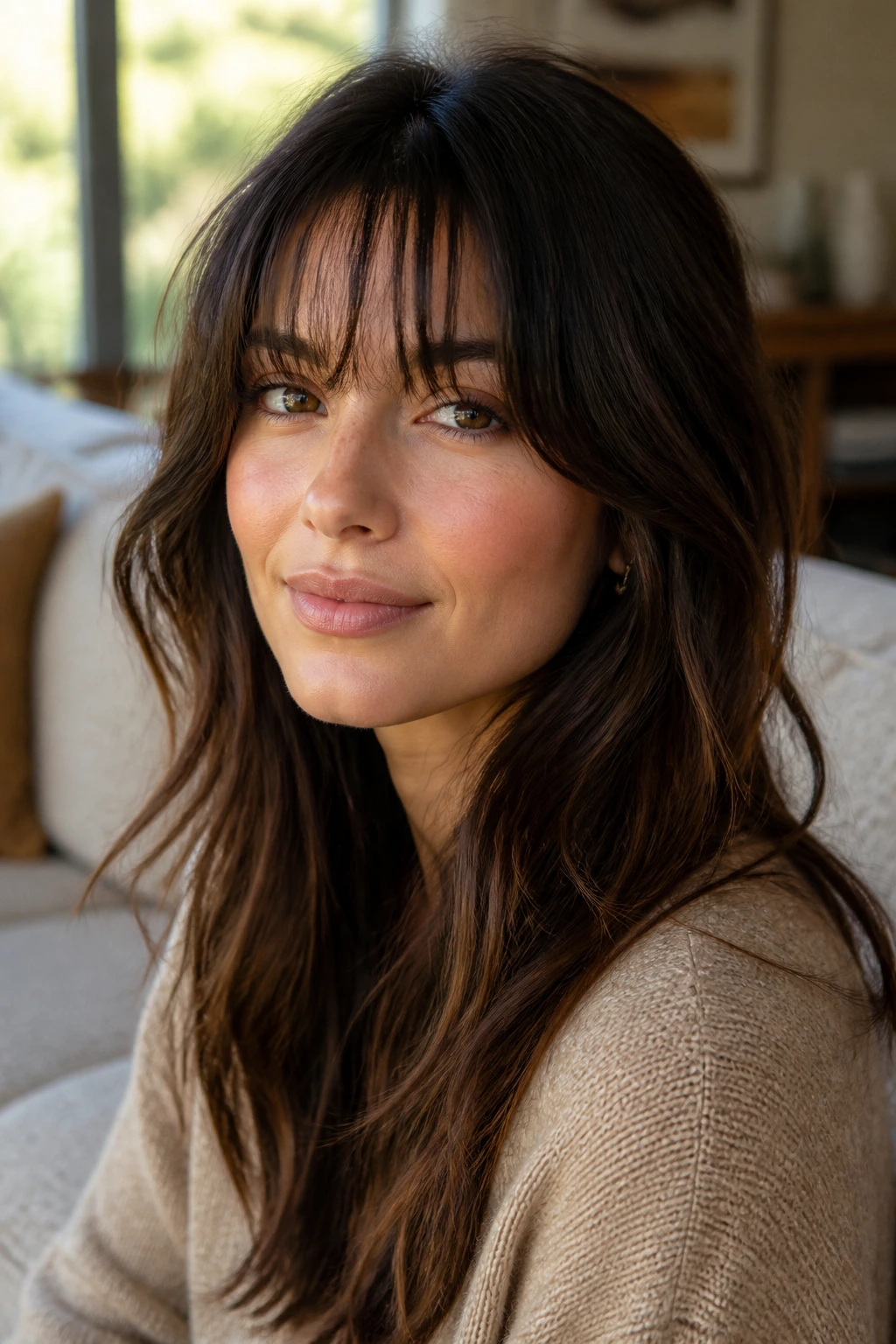
A bad fringe sits on the face like a shelf. A good one moves. It breaks up the forehead, skims the cheekbones, and makes the whole haircut feel lighter without stealing the show.
That’s the quiet magic of face framing bangs. They do not need to be short to matter, and they do not need to be thick to change the balance of a cut. A few millimeters at the center, a softer taper at the temple, a different parting pattern — those tiny choices decide whether the front of the hair opens the face or lands across it like a curtain that never got the memo.
The sweet spot is softness with shape. You want pieces that bend around the features, not a blunt strip that sits there and makes you wrestle with it every morning. Some versions are barely bangs at all. Some are full fringe with a feathered edge. All of them can give a face a gentler line, which is why the right cut matters more than the label on the style.
Why These Bangs Earn Their Keep
-
They soften the forehead without hiding it: The best front pieces break up a wide or high forehead while still letting skin show through, which keeps the cut from feeling heavy.
-
They make grow-out less painful: Longer side pieces and tapered centers can be tucked, pinned, or split apart when you miss your salon window by a week or two.
-
They play well with different textures: Straight hair, waves, and curls all behave better when the fringe is cut to move with the texture instead of fighting it.
-
They can save a flat haircut: A blunt one-length cut can look boxy; face framing bangs add movement right where the eye lands first.
-
They’re easier to live with than full bangs: Most of these styles can be pushed aside, brushed open, or blended into layers when you want your forehead back.
-
They change the mood of your haircut fast: A few front pieces can make a shoulder-length cut feel softer, a bob feel less severe, and long hair look more deliberate.
1. Classic Curtain Bangs That Open at the Cheekbones
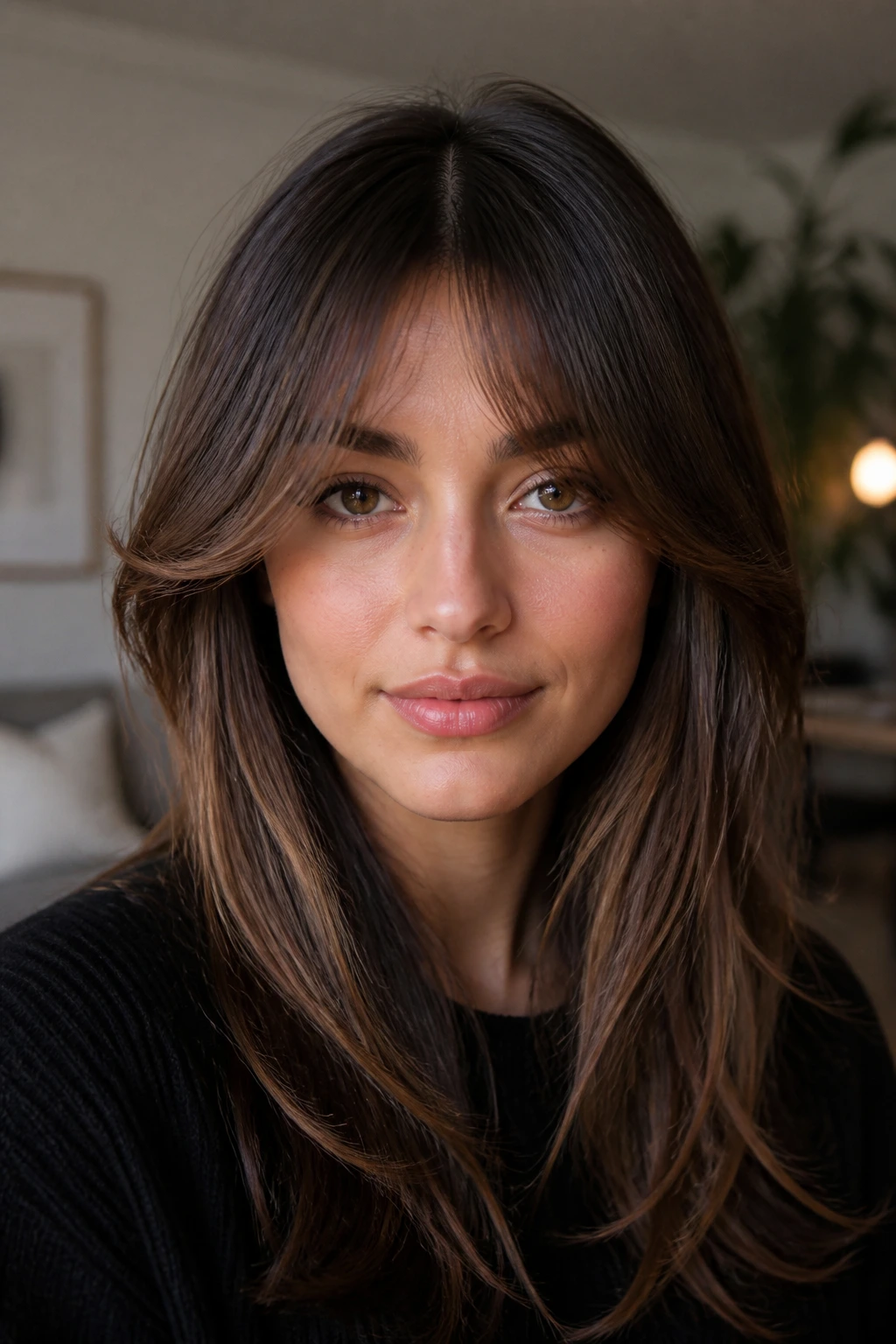
Curtain bangs earned their reputation for a reason. The shortest pieces sit near the bridge of the nose or just below the brow, then slide longer toward the cheekbones, which gives the whole face room to breathe. They look especially good when the ends are feathered instead of chopped blunt, because the softness starts right at the edge.
What to Ask For in the Chair
Ask for a center-parted fringe that starts longer than you think. The shortest point should usually land around the upper bridge of the nose, then taper to cheekbone length or just past it on the sides. If your hair is thick, ask your stylist to remove bulk from the interior so the bangs don’t puff out like a visor.
Curtain bangs work because they don’t sit in one straight line. They bend around the face. That small slope changes the whole haircut.
Best for: oval, heart, and square faces that want softness without losing structure.
Pro tip: Blow-dry them forward first, then split them once they cool. If you part them too early, they often fall open in the wrong place.
2. Bottleneck Bangs That Narrow in the Center and Open at the Temples
The best thing about bottleneck bangs is the shape does the flattering for you. They start a little narrower in the center — almost like the neck of a bottle — then widen out toward the temples and cheekbones. The result feels softer than a heavy bang but more polished than a long curtain fringe.
They’re a smart pick if you want fringe without the constant forehead commitment. The center is short enough to notice, yet the sides are long enough to tuck back when the mood changes. That makes them easier to live with during awkward grow-out, which is when many bangs start acting like a bad decision.
They also suit hair that has a little bend. On straight hair, they fall cleanly. On wavy hair, they get a loose curve that looks intentional even when you air-dry.
You do need a stylist who understands the taper. If the center is too wide, the whole shape turns into ordinary curtain bangs. If the sides start too high, the fringe loses that soft bottleneck line and becomes a blunt block.
3. Long Side-Swept Fringe That Skims Across the Forehead

Why does a side-swept fringe keep showing up in salons? Because it fixes a forehead without making a big announcement. It cuts diagonally across the face, which means the eye travels upward and outward instead of stopping at a hard line.
This style is especially handy if you have a cowlick at the front or a natural side part you already fight with every morning. The diagonal shape works with that movement instead of trying to flatten it. I like it for round faces and heart shapes, too, because the sweep adds length where the face wants it most.
How to Wear It
Blow-dry the fringe in the direction it wants to live, not against it. Use a small round brush — about 1 to 1.25 inches — and wrap the ends under for a slight bend. Then let it cool before you touch it again.
That cooling step matters. A warm fringe is a liar.
Best for: anyone who wants softness but refuses to part with a side part.
4. Wispy Eyebrow-Grazing Bangs That Let Skin Show Through
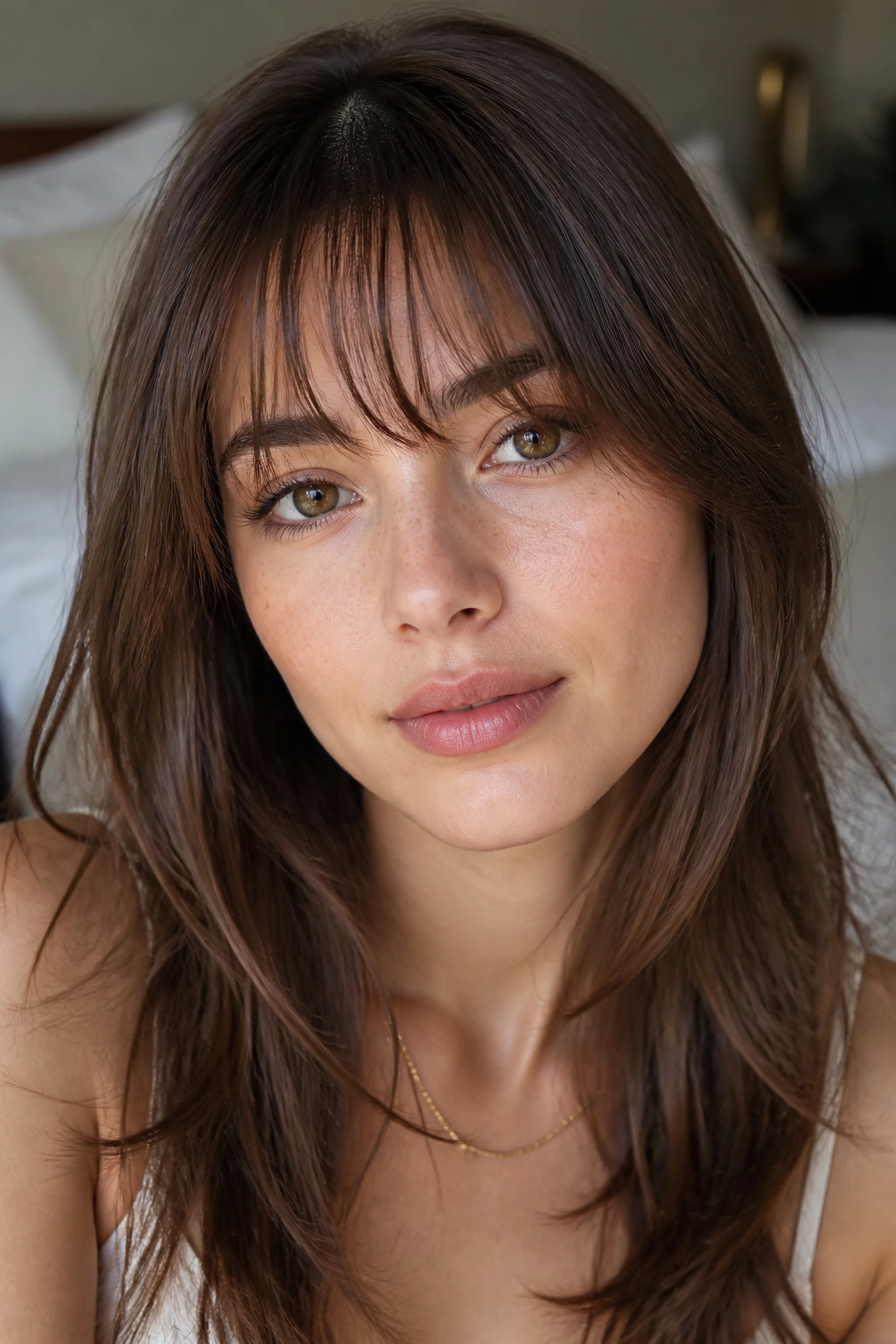
If your hair gets limp by lunch, this is the fringe that won’t punish you for it. Wispy eyebrow-grazing bangs keep the density light enough that the forehead still peeks through, and that translucence is the whole point. They should look airy, not thin because of a bad cut.
The trick is in the ends. A good wispy fringe is point-cut or lightly textured so the pieces separate naturally. On fine hair, that keeps the front from falling into one flat strip. On thicker hair, it keeps the bangs from feeling too hot or bulky around the brow line.
These are also kind to people who wear makeup. The bangs sit close enough to frame the eyes, but not so low that they fight mascara or smudge your concealer every time you blink.
I’d avoid making them too short. The sweet spot is often a hair above the brows or right at the top edge, because shorter wispy bangs can still look severe when they’re cut too blunt. Softness comes from the line, not just the length.
5. Cheekbone-Length French Fringe With a Soft Bend
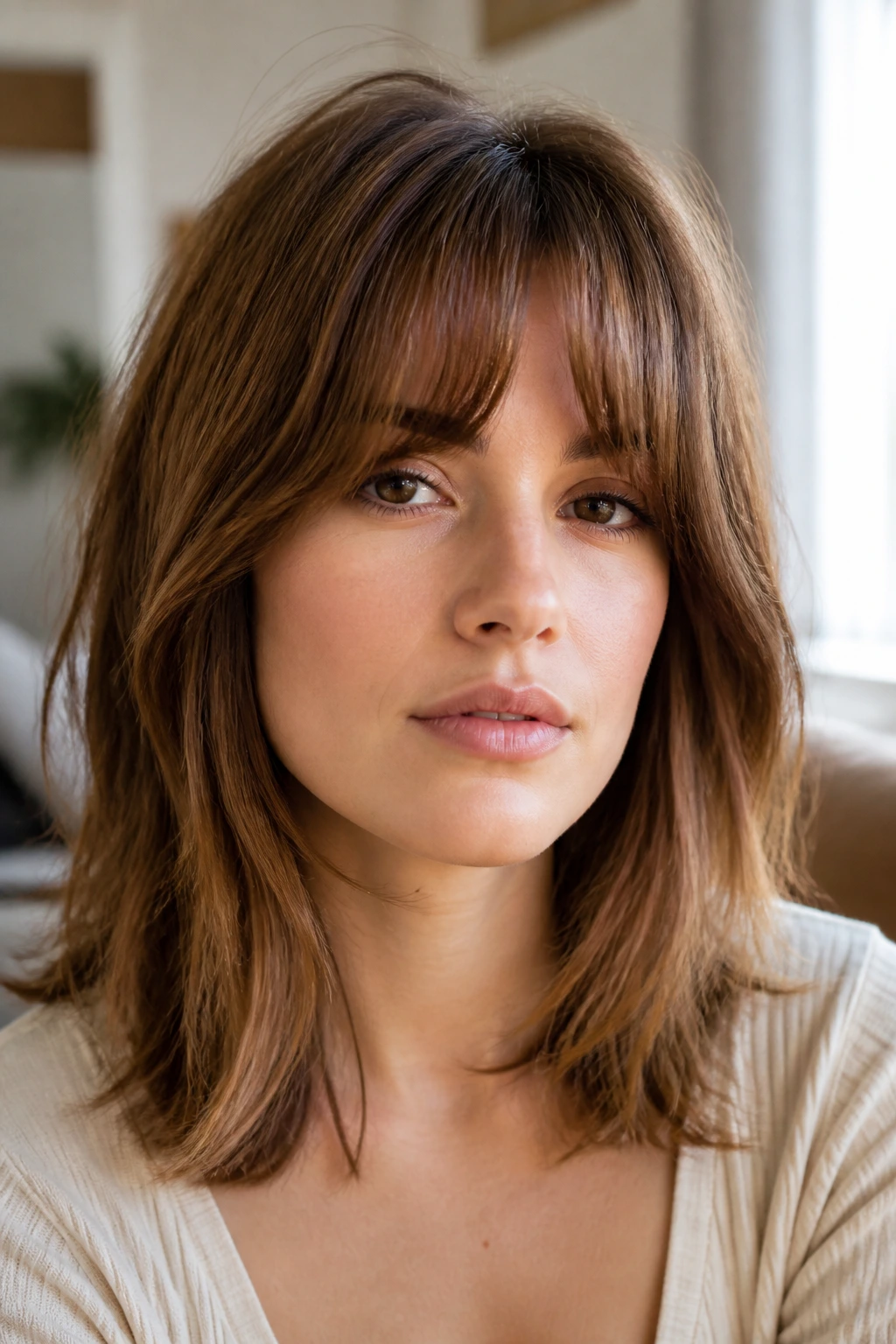
French fringe has a little attitude, but the flattering version doesn’t shout. It usually lives closer to the cheekbones than the brows, with a relaxed bend that makes the front of the haircut look lived-in instead of freshly overstyled. The shape matters more than the label. You want those front pieces to curve around the face, not hang like a curtain rod.
What I like about this cut is how it gives you face framing without needing a lot of daily fuss. It doesn’t need a perfect round-brush blowout. A rough dry, a few finger twists, and maybe a touch of cream on the ends can be enough. That’s a nice trade if you hate spending fifteen minutes battling one section of hair every morning.
This fringe flatters especially well when the rest of the haircut has movement. A shoulder-length shag, a layered bob, even long hair with a bit of interior layering — all of those give the French fringe something to connect to. Without that support, the front pieces can feel a little isolated.
If your hair is very dense, ask for light internal texturizing. Too much bulk near the face turns this chic shape into a heavy shelf. No one needs that.
6. Shag Bangs With Long Layers That Melt Into the Cut
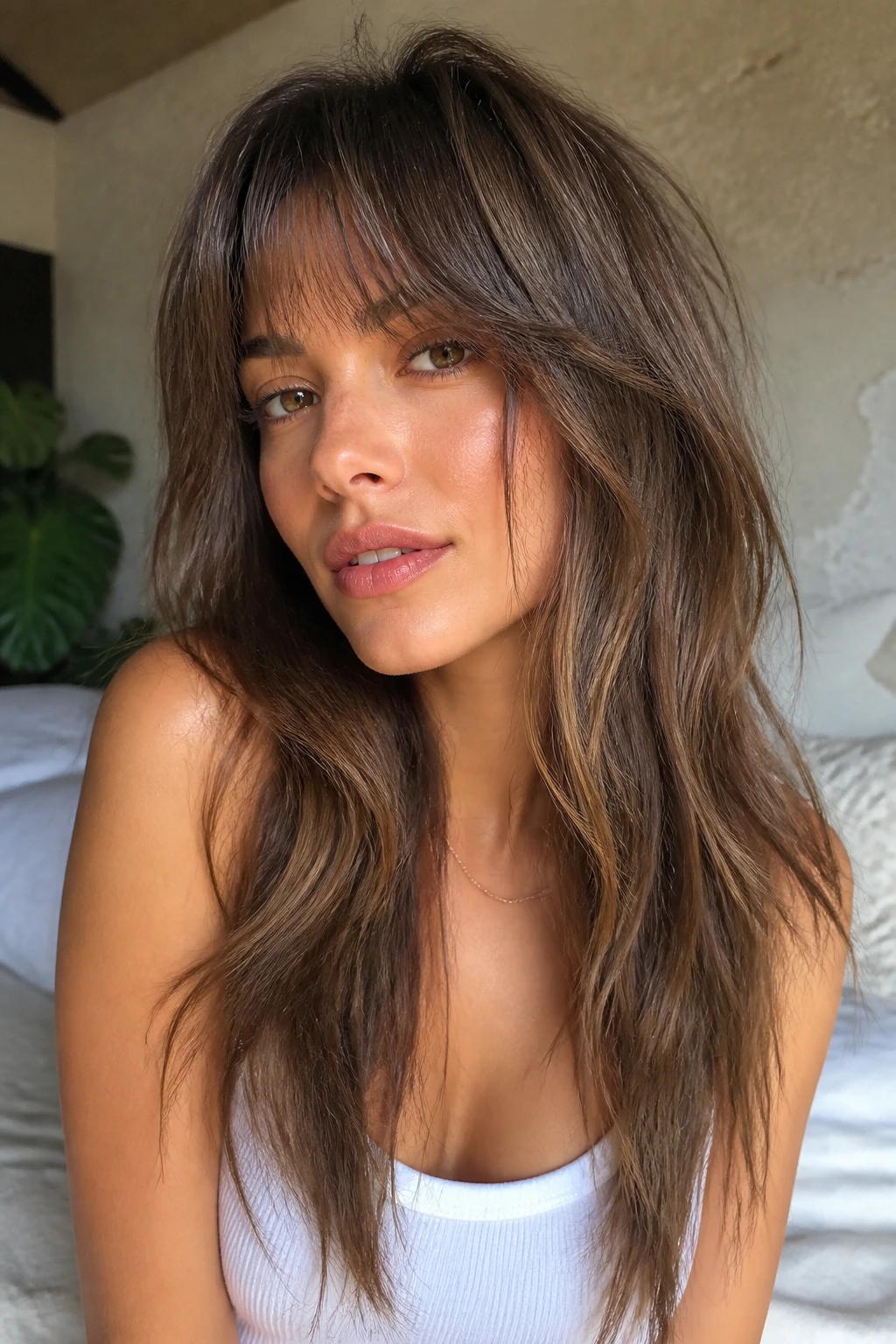
If you live in messy texture and dry shampoo, shag bangs make sense. They’re cut to blend into long layers, so the fringe doesn’t sit apart from the haircut like a separate object. That’s the whole appeal. The front opens the face, then keeps flowing into the sides.
This style works best when the hair wants some roughness. Wavy and loose-curly textures handle it beautifully because the bang line doesn’t have to be perfect to look good. In fact, a slightly uneven finish can make the cut look better, which is rare and useful.
What Makes Them Different
Unlike a blunt fringe, shag bangs don’t demand a precise shelf across the forehead. The shortest point may hover around the brows, but the side pieces should slide straight into the cheek and jaw layers. That long merge is what keeps the shape soft.
Best for: people who want fringe but not a fussy daily routine.
Watch for: if the layers around the face are too short, the haircut can start looking choppy instead of easy.
7. Rounded Bardot Bangs That Curve Away From the Eyes
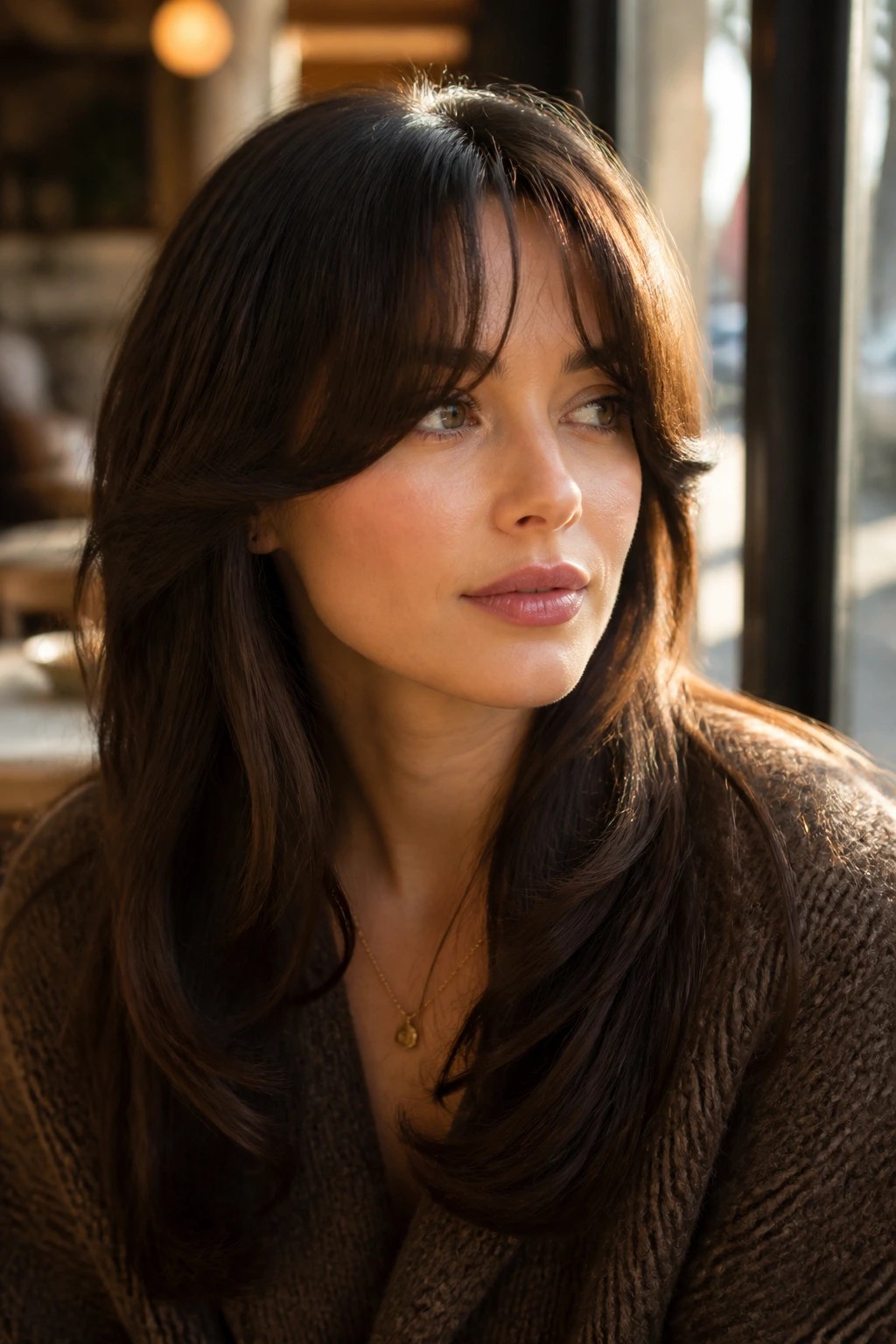
Bardot bangs feel glamorous, but the flattering version is more about shape than volume. They’re fuller in the middle, then round outward toward the temples, almost like a soft arch that sits just above or around the brows. The curve matters because it keeps the center from looking flat and the sides from disappearing into the rest of the hair.
This is one of those cuts that can make a forehead look intentionally framed rather than simply covered. There’s a difference. One feels chosen. The other feels like a workaround.
What to Ask For
Tell your stylist you want a rounded fringe with movement at the sides. The center can sit at eyebrow level or a little longer, depending on how much forehead you want to show. The ends should be softened with point cutting, not left as a blunt line.
A Bardot fringe is a fine choice for hair that takes shape easily with a round brush. It’s not the best pick if your strands lie pin-straight and refuse to bend, unless you’re willing to do a quick blow-dry each morning.
Best for: oval, long, and heart-shaped faces that need a little width through the middle.
8. Piecey Split Fringe That Breaks Into Soft Strands
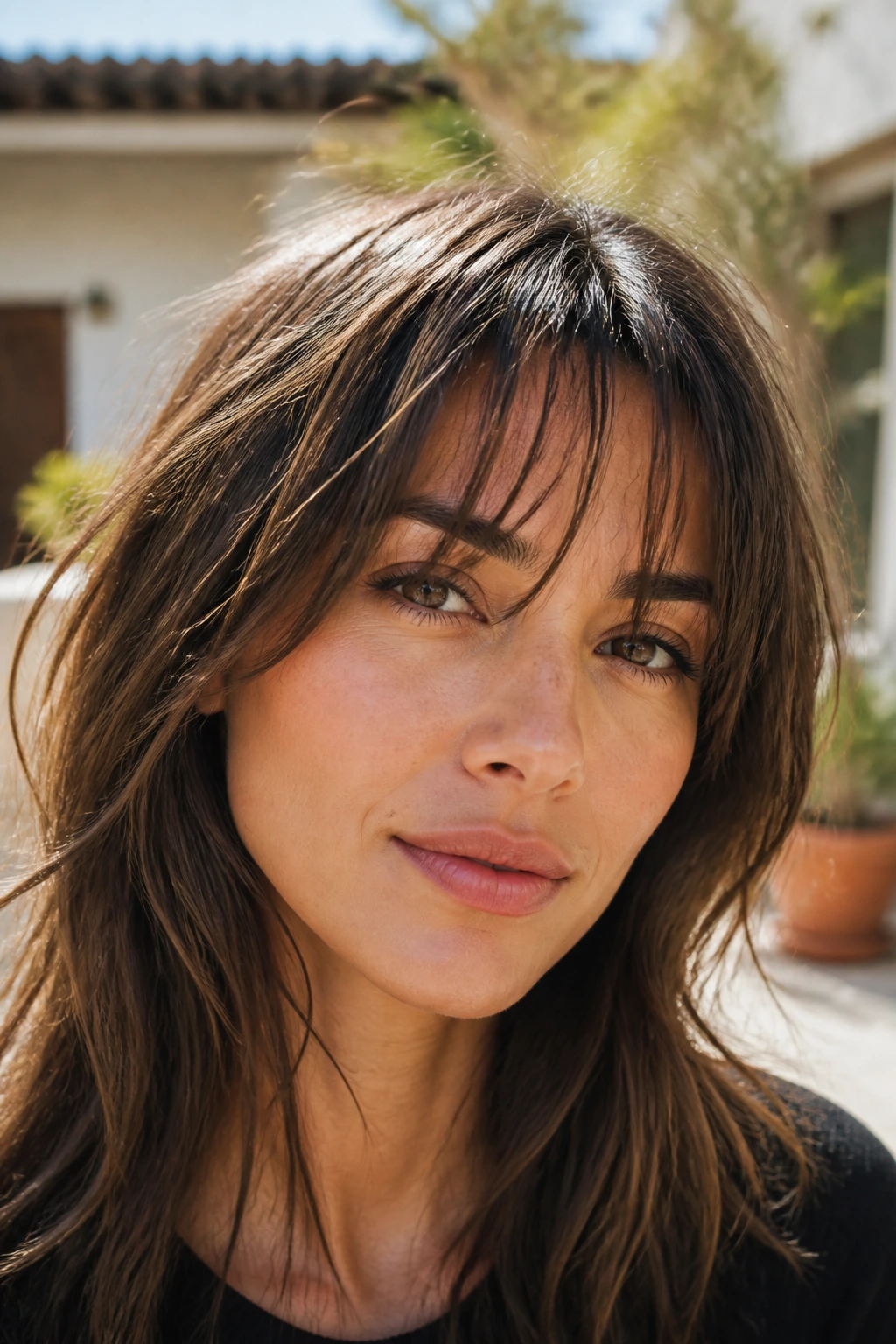
A chunky fringe can still read soft if you stop trying to make every strand behave. Piecey split bangs work because they create little gaps between sections of hair, which lets the forehead show through in small, flattering flashes. The result is less helmet, more movement.
This style usually looks best when the cut has a bit of grit in it. Fine hair can wear it with texture spray, while thicker hair needs some internal removal so the pieces don’t clump into one heavy block. The ends should feel separated, not ragged.
The split at the center is what keeps this fringe from feeling boxed in. It opens the face and gives you a natural point to brush it apart, which helps if you’re always tucking the front behind one ear by lunchtime anyway.
Keep the styling light. Too much balm or oil and the piecey effect collapses into a greasy curtain. A touch of paste on dry ends is enough.
9. Soft Blunt Bangs With Texture at the Ends
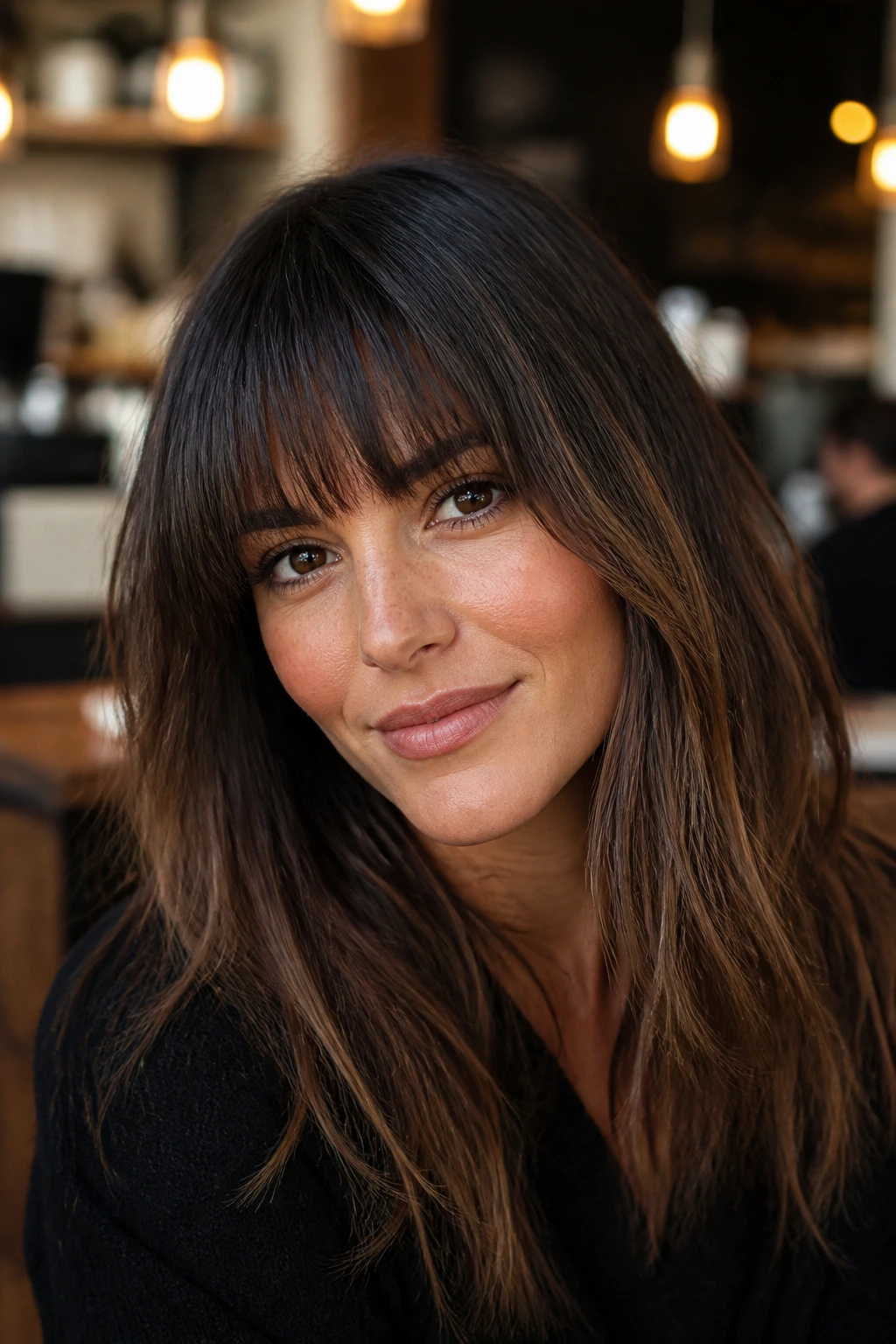
Can blunt bangs look soft? Absolutely, if the edge is broken up enough to move. This version keeps the idea of a straight-across fringe but removes the hard, heavy feel that makes some blunt cuts look stern. The line should land around the brows, then fray slightly at the ends so it doesn’t sit like a board.
The cut works best on straight or slightly wavy hair that can hold a clean line without puffing. Thick hair needs extra debulking under the top layer, or the fringe gets dense fast. Fine hair can wear it too, but only if there’s enough fullness left in the middle to avoid transparency.
How to Keep It from Feeling Heavy
Use a flat brush or paddle brush for the front, then give the ends a soft bend with a round brush if they need it. A flat iron can help, but only if you curl the iron slightly under as you pass through. Dead-straight blunt bangs are what create that severe look.
These are best for people who want obvious bangs but still want a little softness around the eyes.
10. Feathered Fringe That Lifts Off the Brow
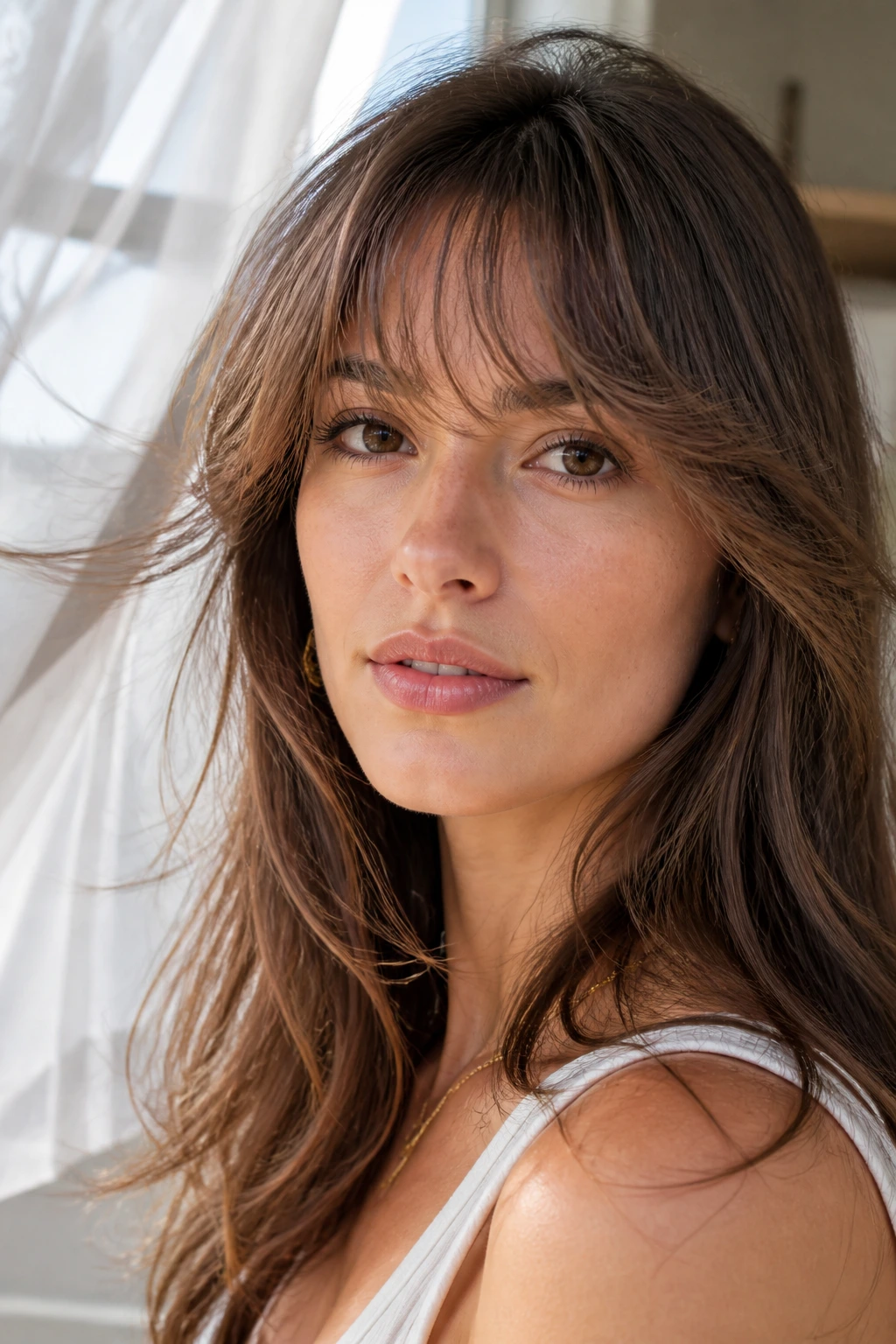
Feathered fringe has the most air in the lineup. The strands are cut so the ends taper and separate, which gives the front of the haircut a light swing instead of a solid wall. It’s one of my favorite choices for fine hair because it adds the feeling of movement without needing more hair than you already have.
The feathering can be done with point cutting or a razor, depending on the stylist’s hand and your texture. On smooth hair, the shape reads clean. On wavy hair, it gets a little flick at the ends that looks almost accidental in the best way.
- Great for fine hair: It creates the illusion of more body at the front without weighing the forehead down.
- Good for softer features: The fringe doesn’t add a harsh border around the face.
- Works with glasses: The lighter shape sits above frames instead of crowding them.
- Needs light product only: A soft mousse or texturizing spray is usually enough.
If you over-style feathered bangs, they lose the point. The charm is in the looseness.
11. Grown-Out Bangs That Blend Into the Rest of the Hair
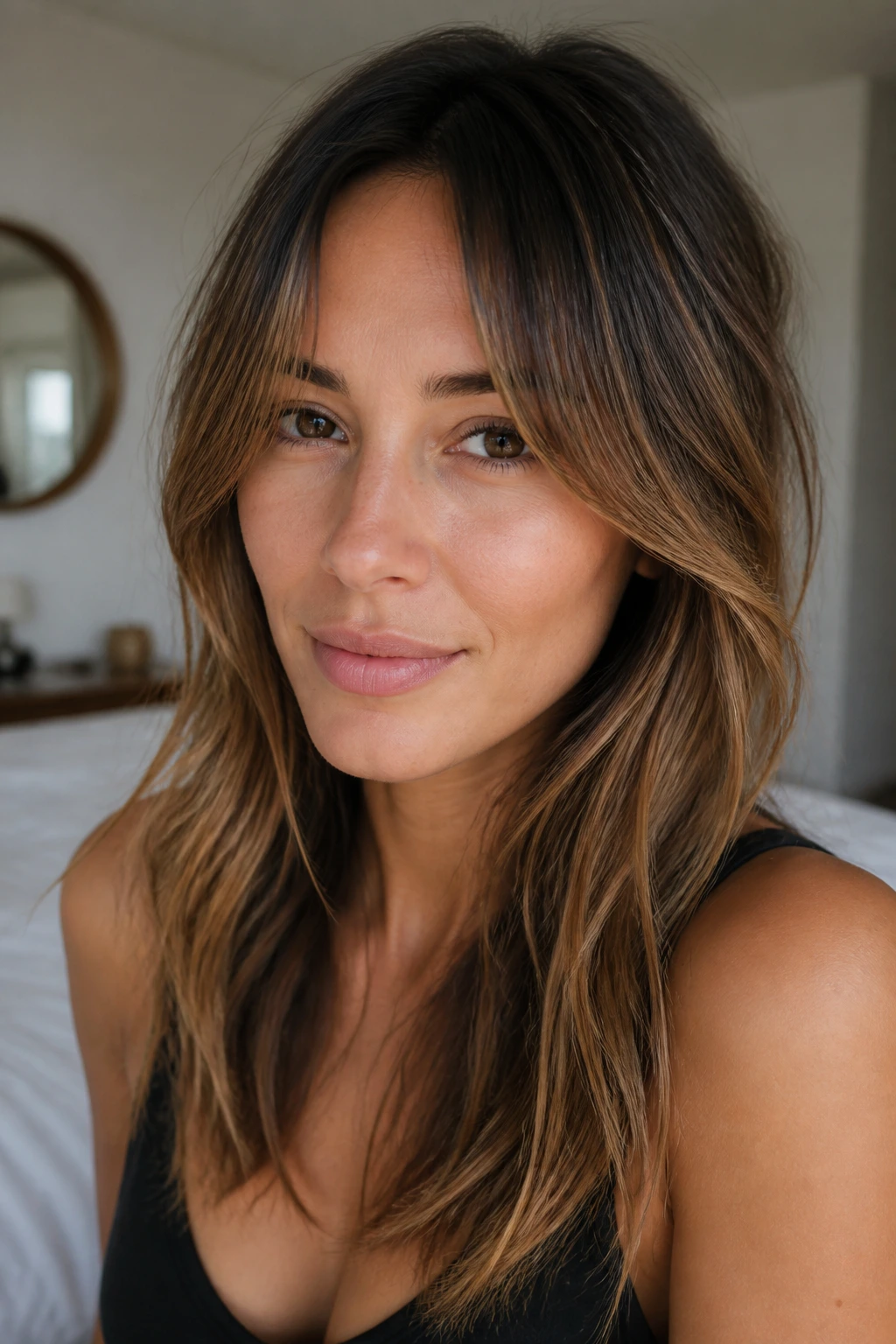
Sometimes the best fringe is the one that looks like it’s on its way somewhere. Grown-out bangs sit longer than classic fringe, usually somewhere between the brows and the cheekbones, then disappear into the rest of the haircut. They’re useful when you want the face-framing effect but don’t want to keep trimming every few weeks.
This is one of the easiest looks to wear if you hate commitment. The front pieces can be parted, pinned, tucked, or brushed open depending on the day. They also sit well with messy buns, low knots, and loose ponytails, which makes them feel less like a special occasion cut and more like part of your actual life.
The key is not letting the grow-out get careless. There’s a clean version of grown-out bangs and a neglected one. Clean grow-out still has shape at the temples and cheekbone. Neglected grow-out just hangs in your eyes.
Ask for the front to stay blended as it grows. If your stylist leaves the sides too blunt, the grow-out stage turns awkward fast.
12. Curved Center-Part Fringe That Arches Like a Smile
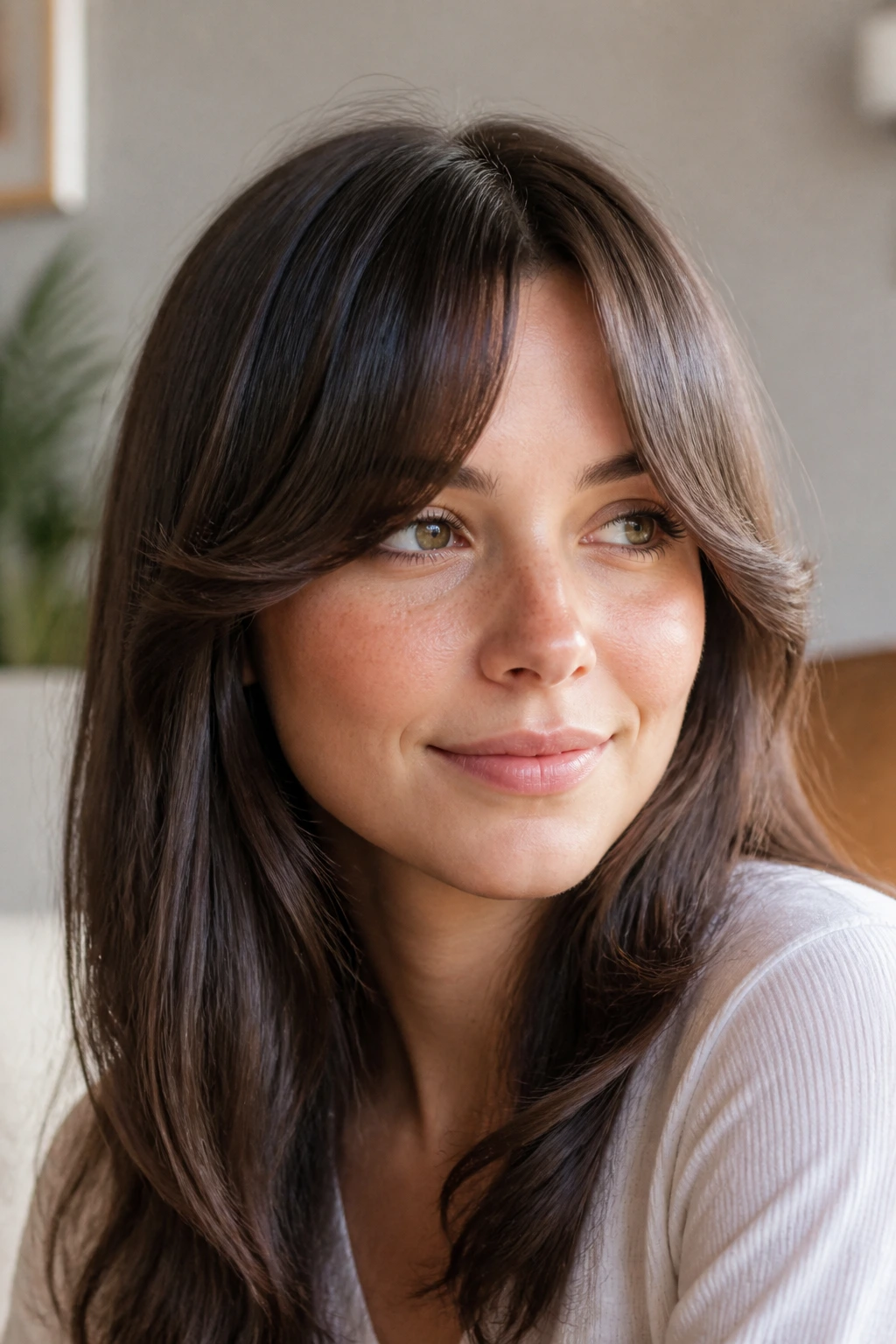
Curtain bangs and curved center-part fringe are cousins, but this version leans more deliberate. The shortest point sits in the middle, then the shape arcs outward in a soft curve, almost like a smile across the forehead. That curve opens the face while keeping the center from looking too sparse.
I like this cut on straight to slightly wavy hair because the shape stays visible even when the texture isn’t doing much. It gives structure without needing a full bang line. And unlike a super-long curtain fringe, the curve here is part of the statement. You notice the arch right away.
This shape can be especially nice for people with balanced features who still want a little front framing. It doesn’t fight the rest of the haircut. It just gives the eyes a place to land.
Ask your stylist to keep the center short enough to matter, but not so short that it creates a gap between the fringe and the rest of the hair. That gap is what makes the look feel disconnected.
13. Face-Framing Micro-Layers Right at the Temple
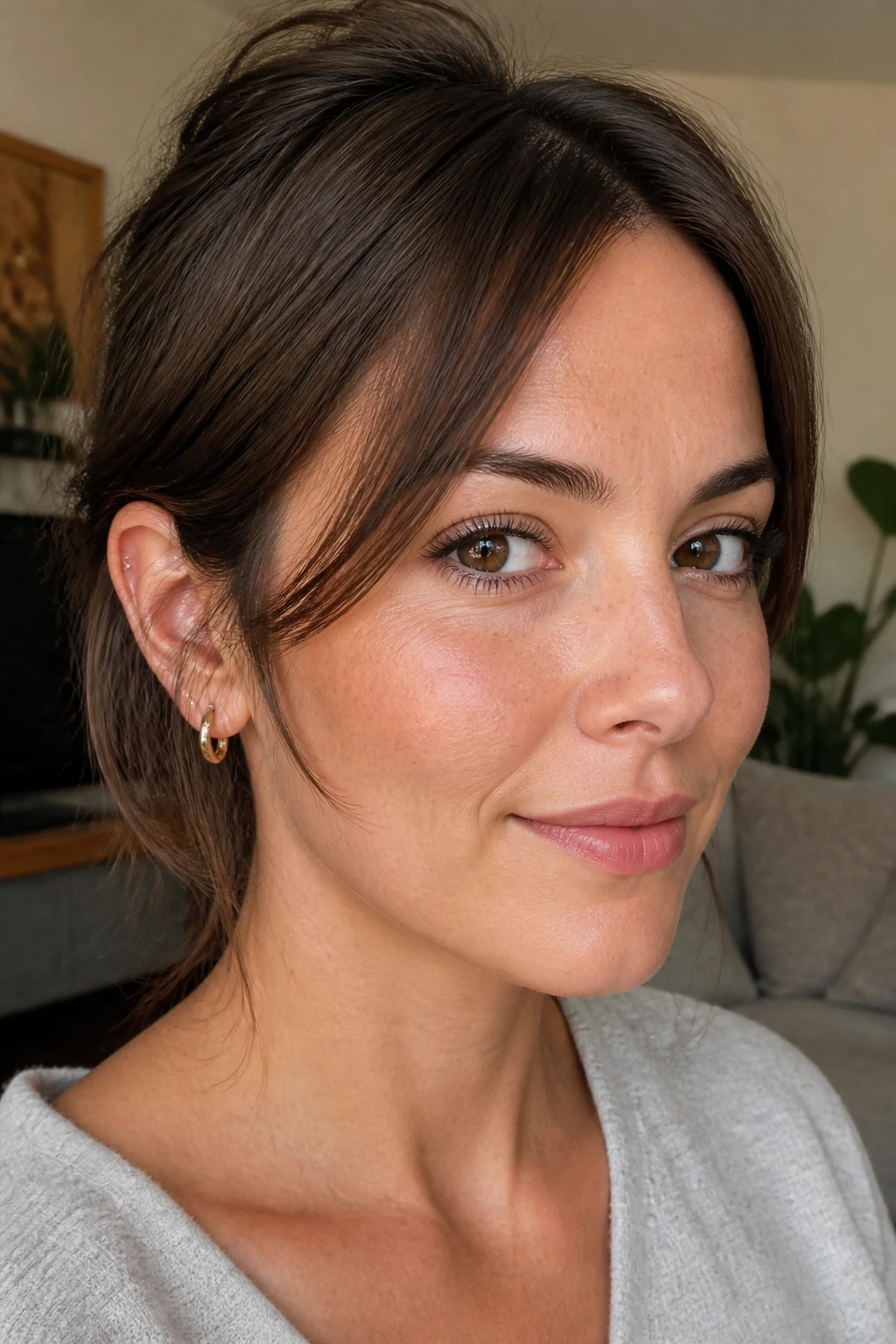
These are the bangs for someone who says they don’t want bangs. Face-framing micro-layers are tiny front pieces cut around the temple and upper cheek area, just enough to soften the outline without committing to a true fringe. They sit in that useful space between bangs and layers.
Why They Work
The shorter pieces pull focus toward the eyes and cheekbones, which changes the face shape without covering much of the forehead. That makes them a sensible choice for anyone nervous about a full front fringe. They also grow out quietly, which is rare and welcome.
- Best for bang-shy clients: You get movement near the face without a heavy forehead section.
- Easy to wear with clips: They tuck back without leaving a hard line.
- Helpful for thick hairlines: A little trimming at the temples takes weight away where the hair can feel bulky.
- Nice with updos: These pieces fall out softly instead of breaking the whole style.
If you want a subtle first step into fringe, this is the one I’d start with.
14. Razor-Cut Fringe That Lays Soft Instead of Heavy
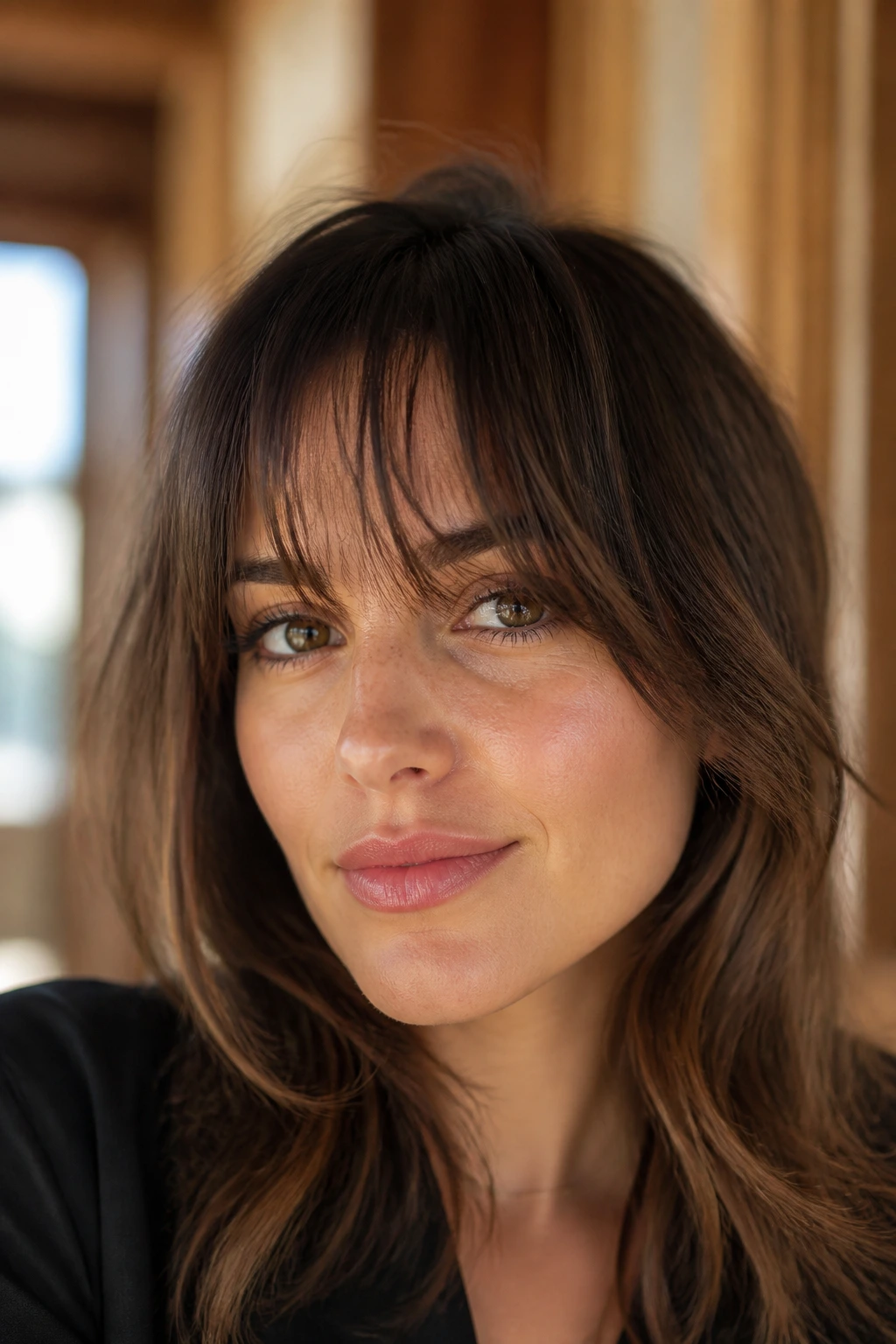
A razor is not for every head, but on the right hair it makes the front soften in a single pass. Razor-cut fringe has broken, tapered ends that move easily and never sit in one hard line. That gives the face a softer frame, especially when the hair has medium density and some natural bend.
The cut works because the blade removes weight while it shapes the edge. On hair that’s too fragile, though, it can rough up the ends too much. That’s why this one belongs in the hands of someone who knows how the hair behaves when it dries.
Use it when you want movement over precision. That’s the trade. The fringe may not look like a perfect ruler line, but it often looks better because of it.
If your hair is very curly or very fine, ask questions before you go razor-heavy. The wrong blade angle can make the front frizz or fall apart.
15. Soft C-Curve Bangs That Wrap Around the Face
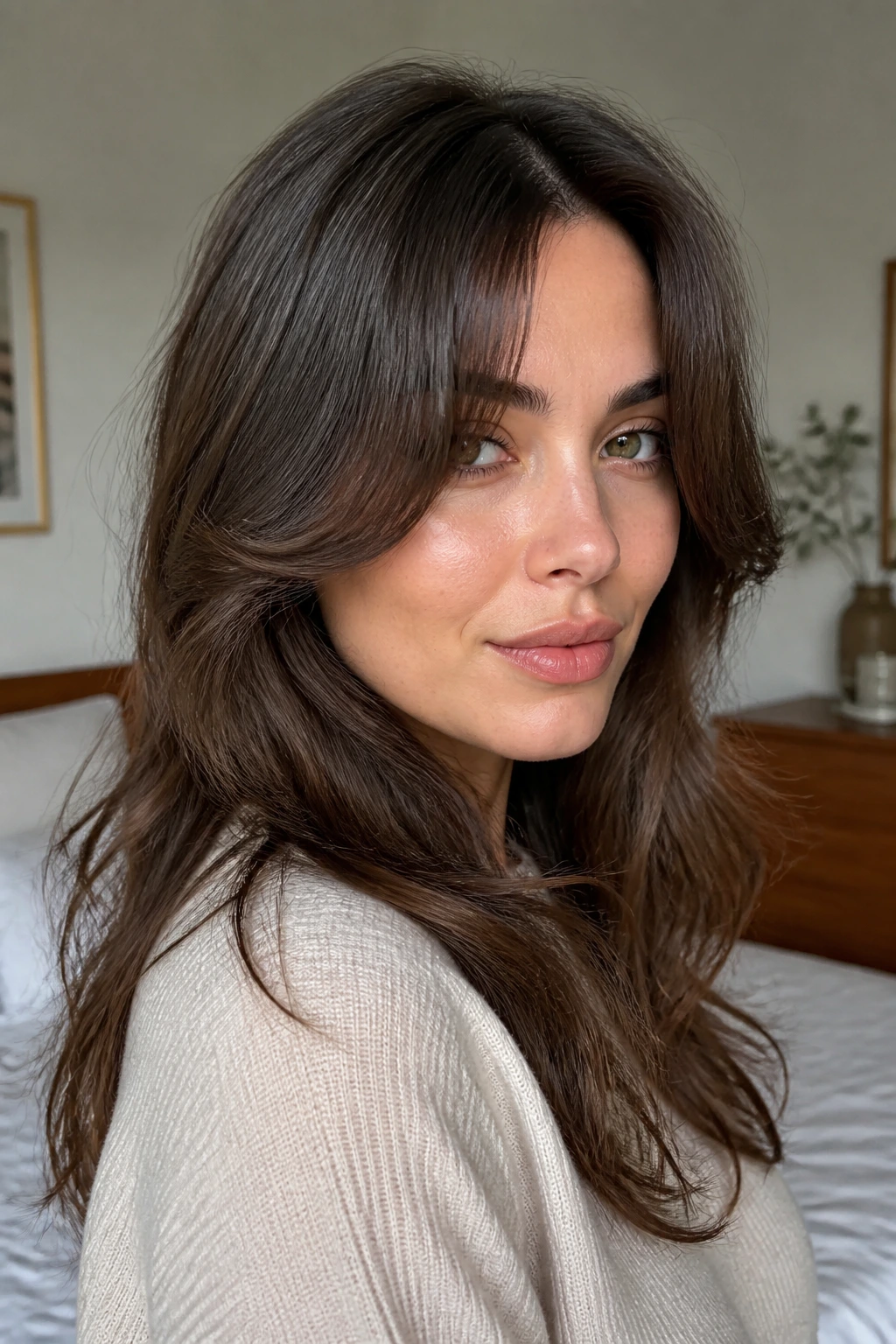
Want fringe that doesn’t shout “I have bangs” from across the room? Soft C-curve bangs are a good answer. The front pieces start near the center, then sweep outward in a gentle curve that hugs the face like the letter C. It’s subtle, clean, and flattering in a way that doesn’t need a lot of explanation.
The best version starts just below the brow and graduates to cheekbone length at the sides. That curve is what keeps the cut from feeling boxy. You can think of it as a quiet version of curtain bangs, with a little more polish at the front.
How to Style It
Blow-dry the center forward first, then use a round brush to guide each side piece away from the face. Let the ends cool over the brush for a few seconds. That little cool-down gives the curve memory, which saves you from redoing the whole thing at noon.
This shape is a good middle ground for someone who wants softness but also wants the haircut to stay neat.
16. Flippy ’70s Fringe That Flicks at the Ends
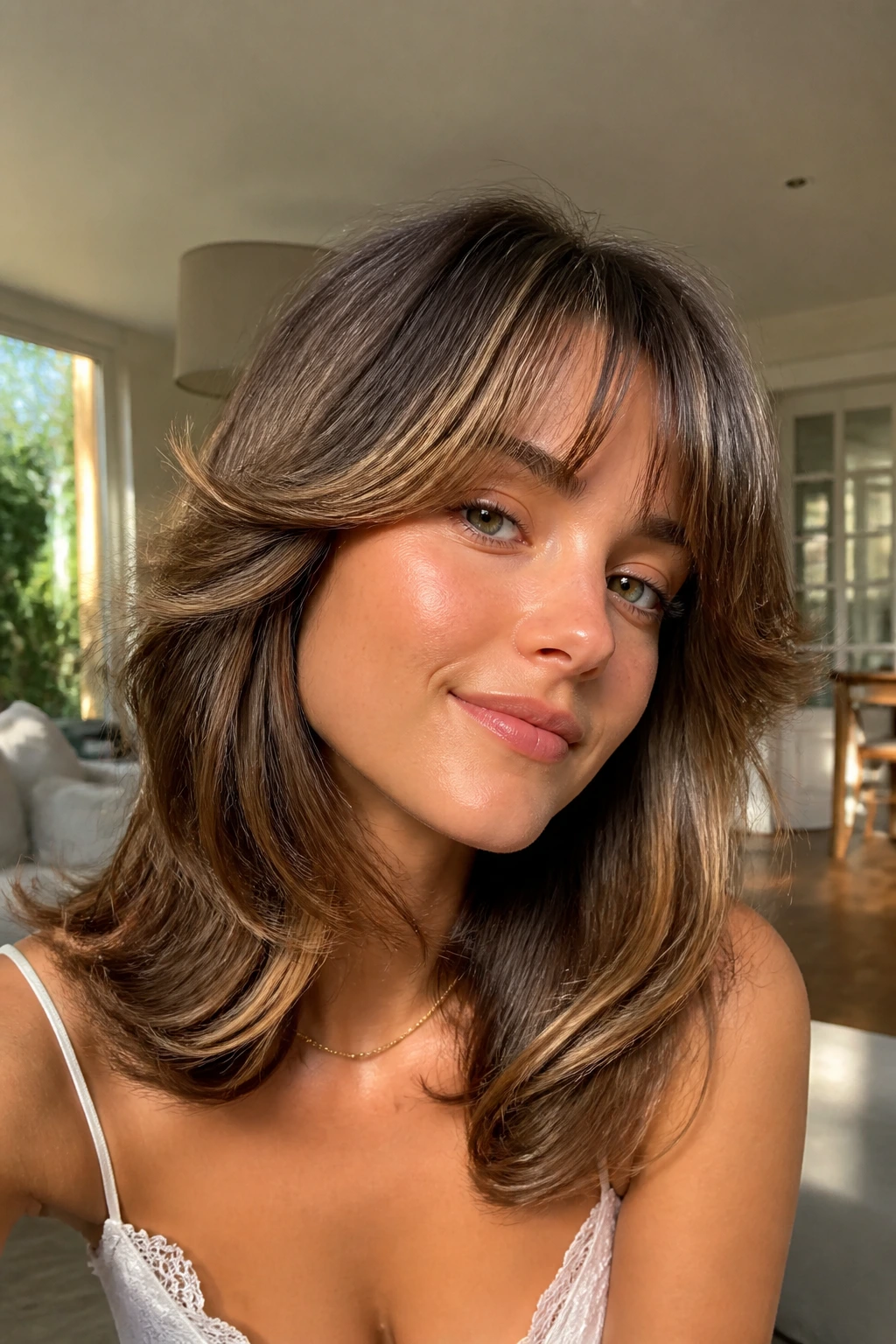
There’s a reason old haircut shapes keep coming back. The flippy fringe has a built-in lift at the ends, which keeps the front from sitting flat against the forehead. It feels a little retro, a little airy, and a lot friendlier than a heavy straight bang.
This cut works best when the stylist leaves enough length for the ends to turn outward slightly with a round brush. Too short, and the flip disappears. Too thick, and the fringe starts looking stiff instead of breezy.
- For medium hair: It gives movement without needing layers all over the head.
- For rounder faces: The outward bend adds vertical lift.
- For bouncy blowouts: It looks especially good when the rest of the haircut has a bit of swing.
- For people who style once and move on: The shape holds a soft curve even when the blowout loosens up.
I’d call this a good choice for anyone who likes a little drama at the front but not the weight of a full fringe.
17. Tapered Fringe With Temple Pieces That Thin Toward the Sides
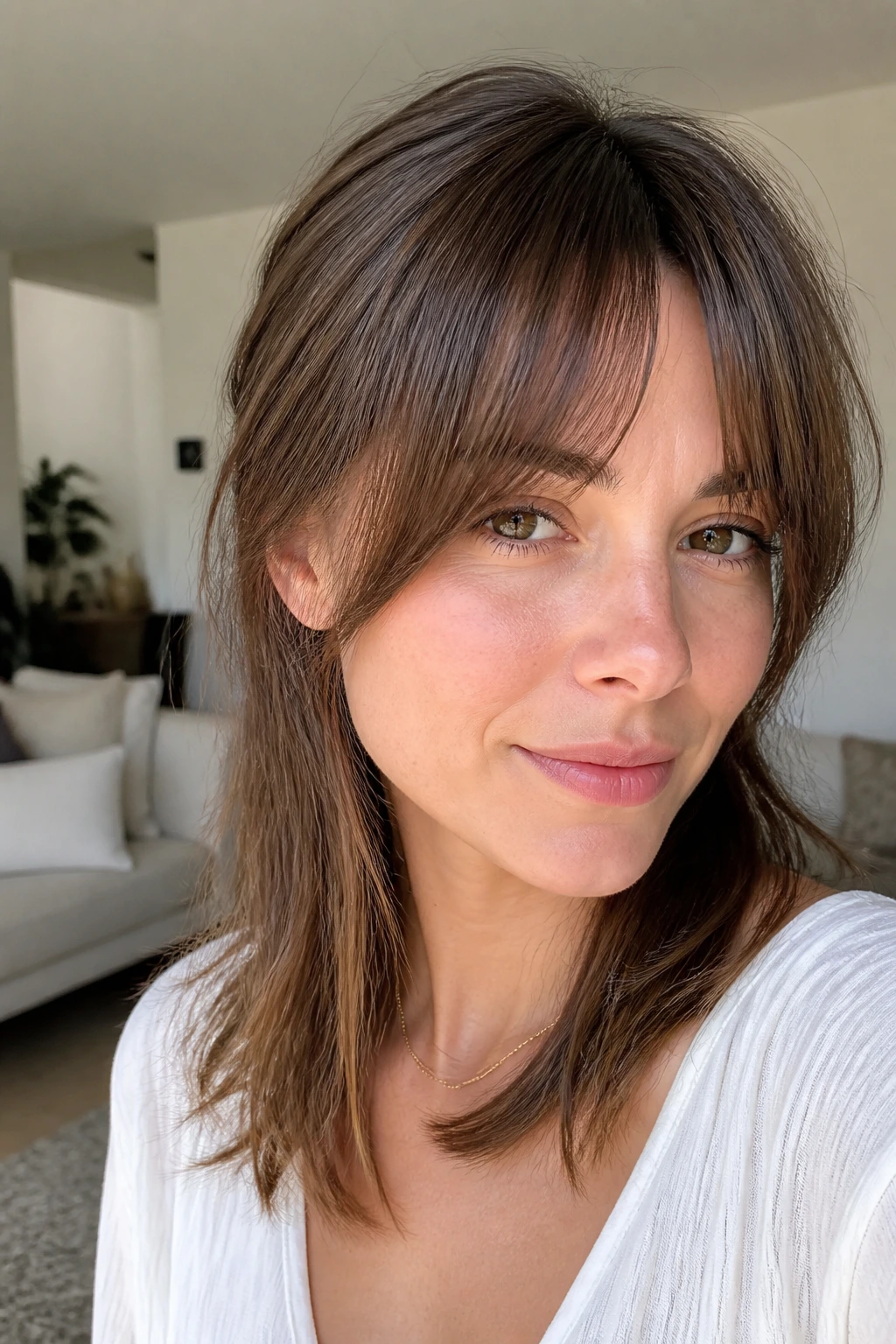
A tapered fringe is all about the transition. The center has enough presence to frame the eyes, then the hair gradually thins and lengthens toward the temples so the shape doesn’t stop abruptly. That taper is what keeps the look soft on strong jawlines or square faces.
This style can be a quiet fixer for hair that feels blunt around the face. The front pieces should not end in one hard line at the cheek. They need to disappear gradually into the haircut, which is why a careful stylist matters here. The angles are subtle, but you notice them the second the hair moves.
It’s a good option if you wear your hair down most days and want the front to feel finished without looking overly styled. The fringe can be brushed open, split in the center, or tucked back behind one ear. It stays flexible.
If the temple pieces are cut too short, the whole effect gets choppy. The point is to taper, not to stagger randomly.
18. Tucked-Away Side Bangs That Still Frame the Face
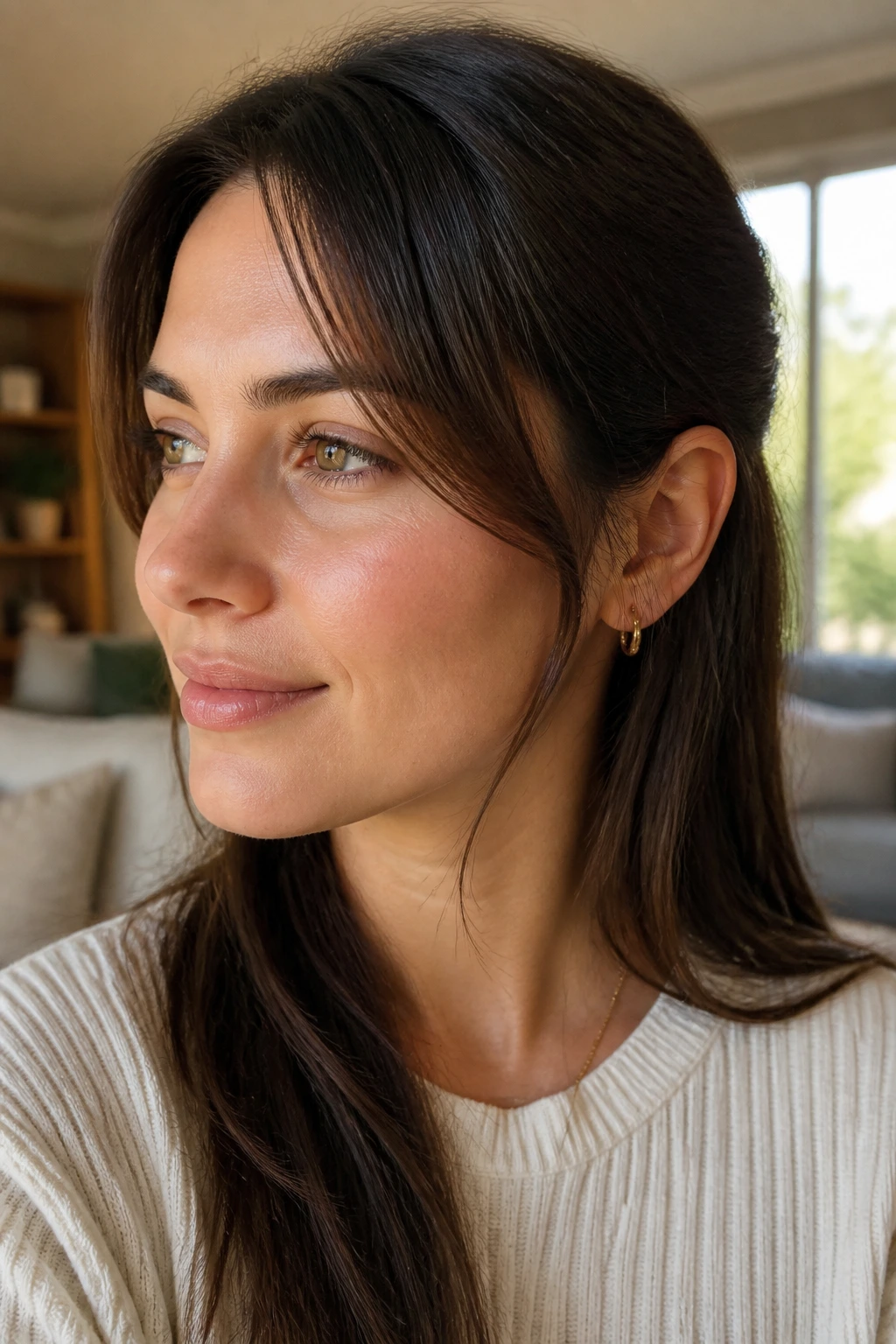
Unlike a hard side part, this version is built to tuck behind the ear after lunch and still look intentional. Tucked-away side bangs are longer at the front, softer at the edge, and cut with enough length to move in and out of the face without leaving a dent. They’re a good fit for anyone who hates the feeling of hair sitting on the forehead all day.
They also work well with glasses because the front doesn’t crowd the frame line. The bang can sweep across the brow, then slide out near the temple without getting caught on the hinge. That small detail matters more than people think.
What makes them flattering is the diagonal line. It opens one side of the face, then lets the rest stay visible. That little asymmetry keeps the haircut from looking too neat or too severe.
If you want low-maintenance fringe that doesn’t trap you in a daily styling ritual, this is one of the most forgiving choices on the list.
19. Arched Brow-Grazing Bangs That Follow the Brow Line
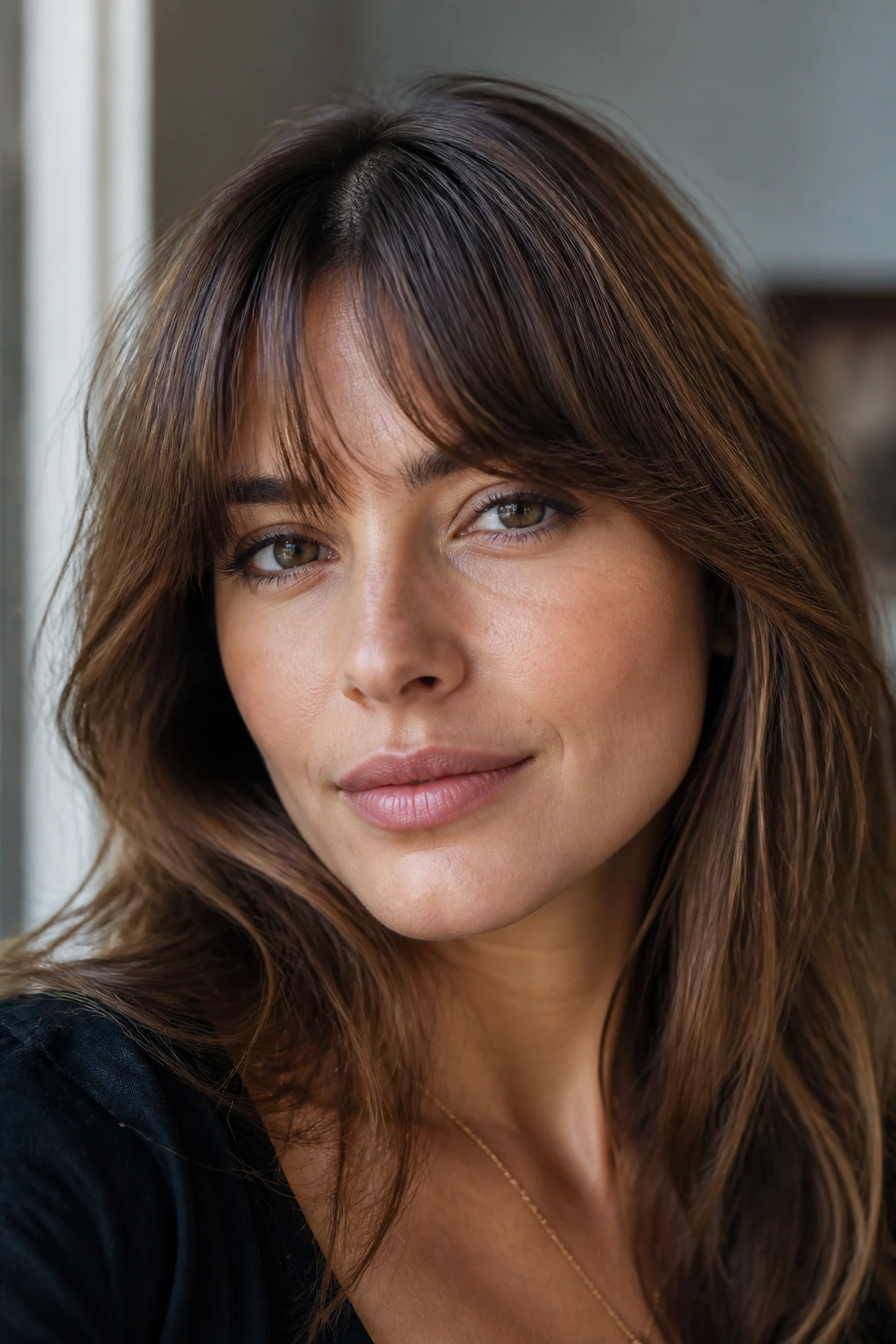
Arched bangs are neat, but they do not have to feel strict. The shape follows the brow in a soft curve — slightly shorter in the center, a touch longer at the sides — so the fringe mirrors the face instead of cutting straight across it. That arch can make the eyes look more open and the forehead feel more balanced.
Best When You Want Structure
This style shines on straight hair or hair that can be smoothed easily. Because the line is visible, any unevenness in the cut shows fast. The payoff is worth it when the shape is right: the fringe frames the eyes in a clean, soft way that feels polished without looking stiff.
- Ask for a gentle arch, not a perfect semicircle.
- Keep the center just above or at the brow.
- Let the sides taper into the cheek area.
- Use a small brush to curve the ends under on blow-dry.
The biggest mistake is cutting the arch too high. That turns a soft shape into a tiny, awkward crop.
20. Waterfall Fringe That Falls Lightly Into the Layers
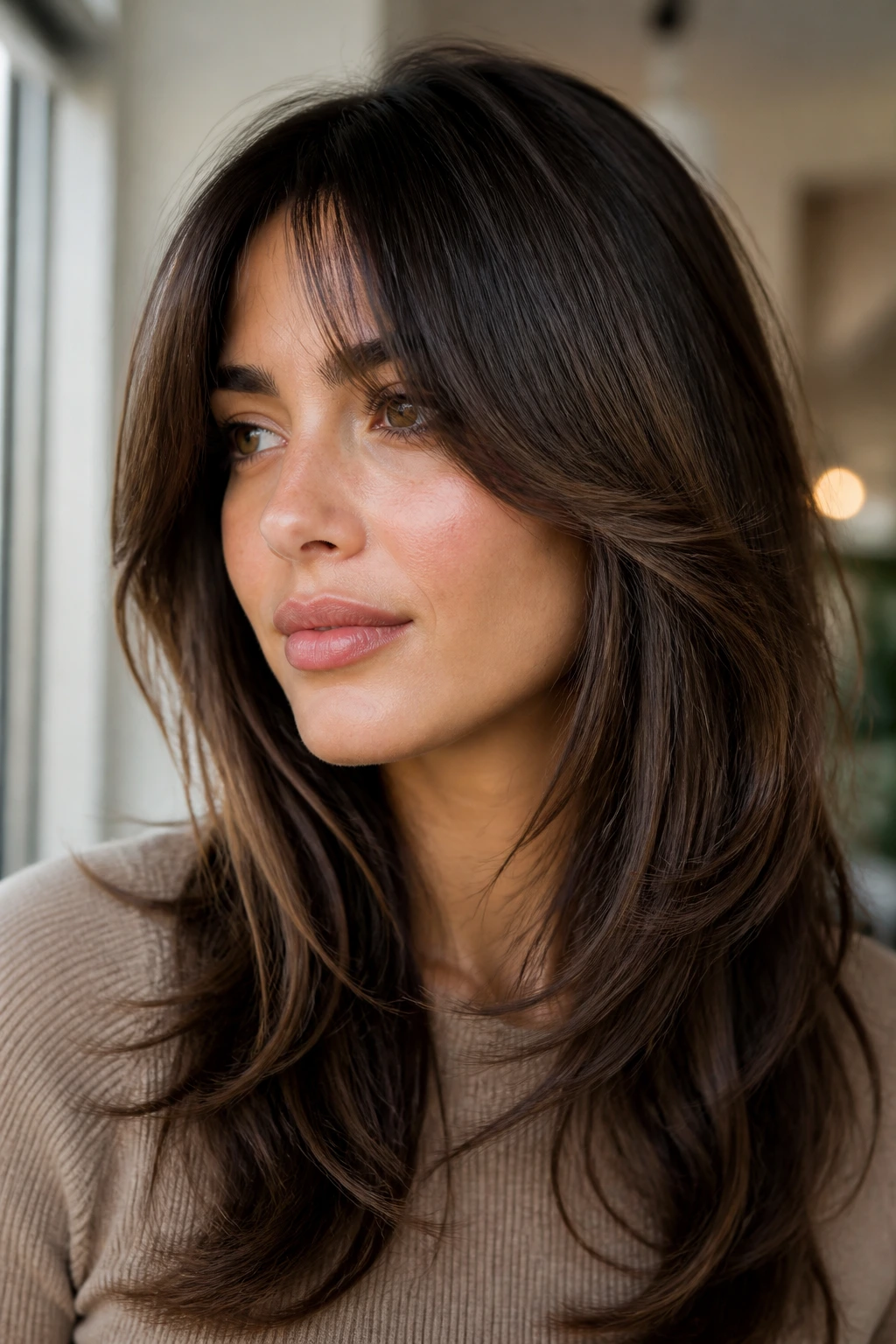
Waterfall fringe has a lovely little motion to it. The front pieces fall from the center into longer side sections like water moving over a ledge, which gives the haircut a soft front edge without a hard stop. It’s especially pretty on layered cuts because the fringe can echo the motion of the rest of the hair.
This is not a heavy statement fringe. It’s the opposite. The effect comes from layering the front so the shortest pieces don’t fight the longer ones. That makes the face look framed rather than boxed in.
I like this style for people who want the front to feel feminine and easy without looking fussy. It can be brushed out, tucked, or air-dried depending on the day. The shape stays readable even when the blowout loosens.
If the layers are too short near the center, the waterfall effect disappears and the fringe starts behaving like chopped bangs. Keep the length long enough for the pieces to blend.
21. Textured Long Fringe That Barely Touches the Cheekbones
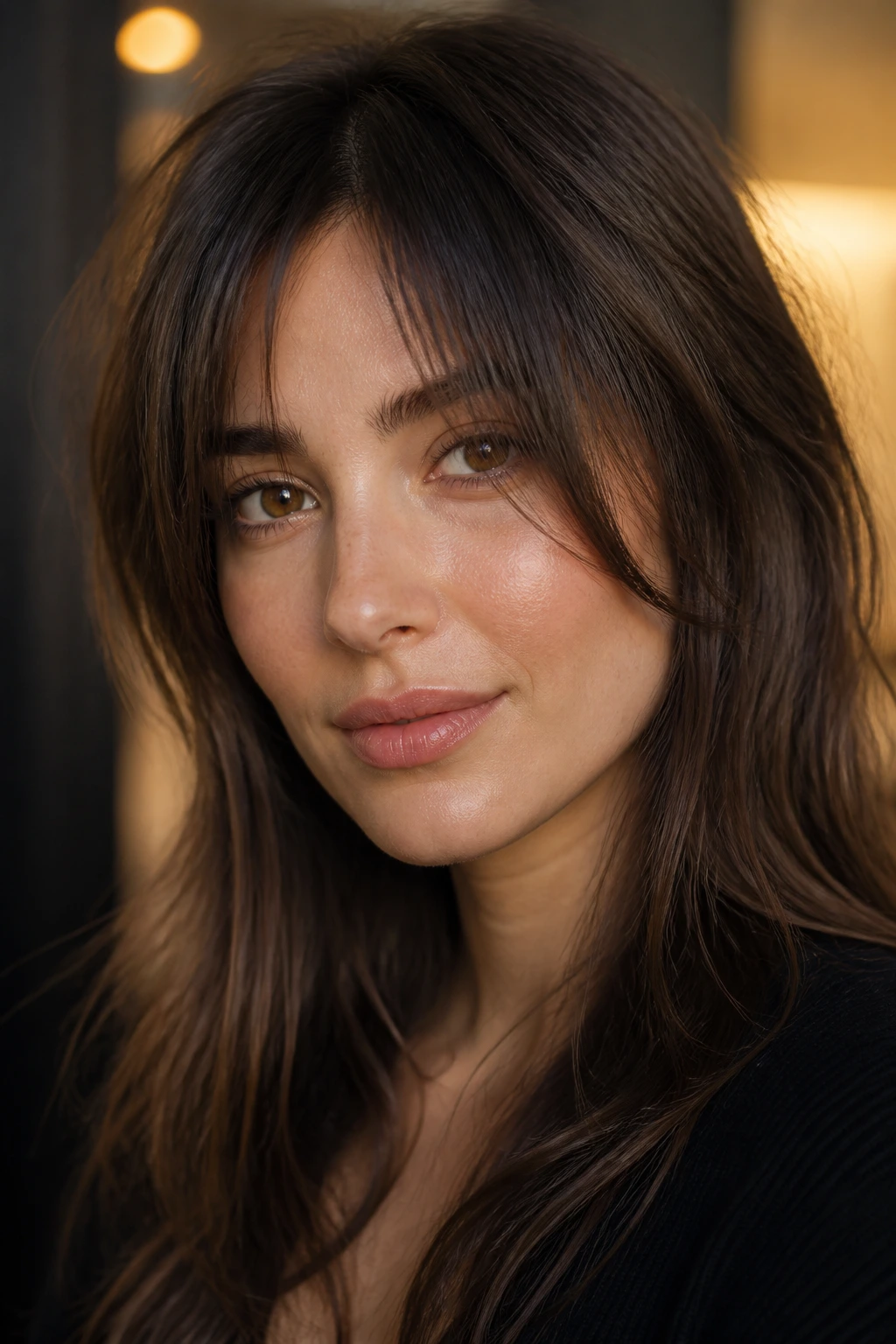
When you want the face-framing effect without giving up ponytail options, long textured fringe does the job. These front pieces usually start around the brow or upper nose area and taper long enough to graze the cheekbones, jaw, or even the top of the lips. The texture is what makes them feel soft rather than stringy.
This is a smart cut if you like to switch between wearing hair down and pulled back. The fringe still does something when it hangs loose, but it also disappears neatly into clips, buns, and loose twists. That flexibility saves time and avoids the “I have to style my bangs or I look unfinished” trap.
The styling can stay simple. A quick bend with a brush or iron is usually enough. Don’t over-smooth it. A little separation keeps the face frame from looking too slick.
This version is especially nice for people growing out shorter bangs. It gives you a destination length that still flatters while the rest of the haircut catches up.
22. Money-Piece Bang Blends That Brighten the Front
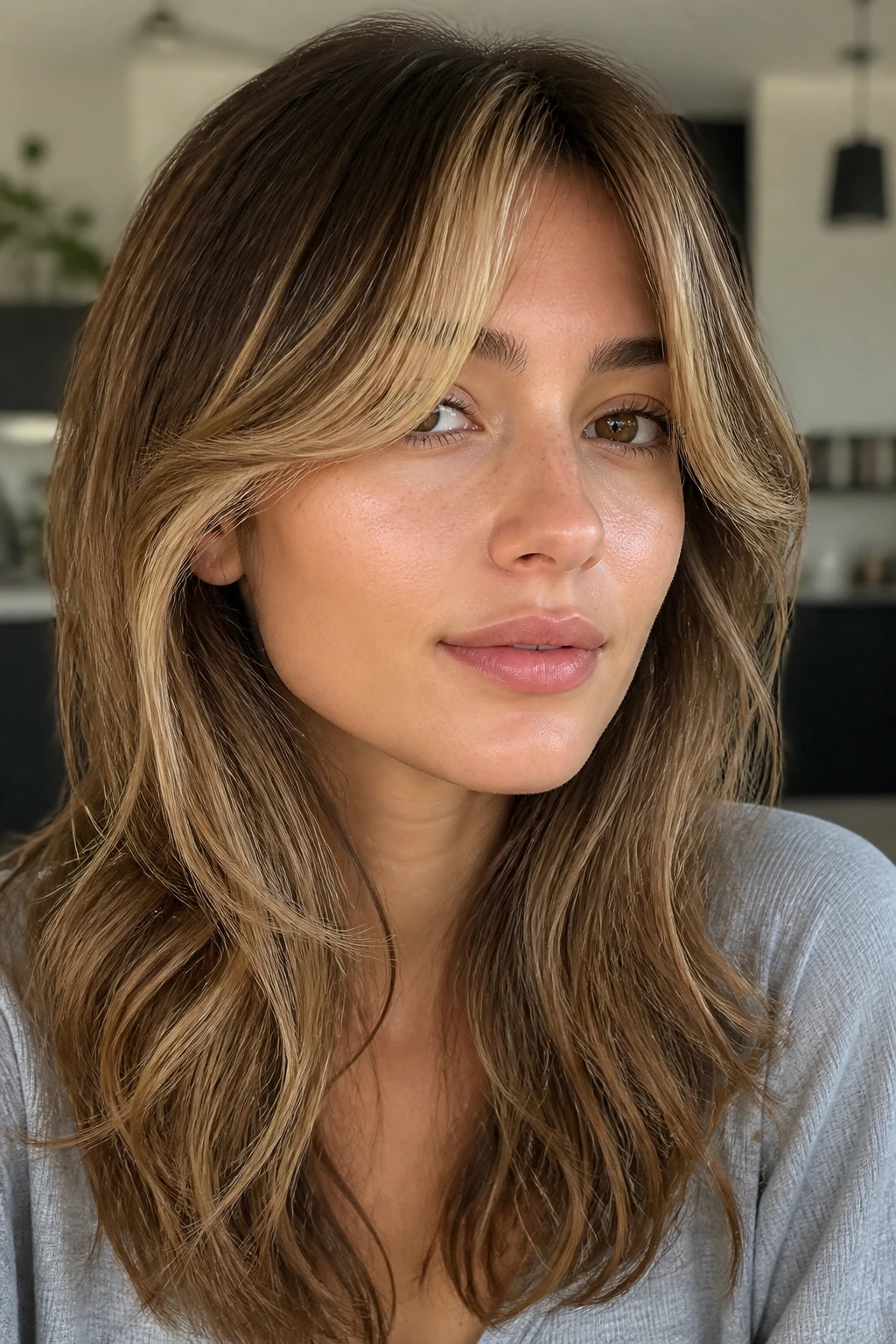
A money piece can look gimmicky if it’s slapped on after the cut. When it’s blended into fringe, though, it becomes one of the most useful ways to brighten the front of the haircut. The face-framing pieces sit around the eyes and cheekbones, and the lighter color — if you choose it — makes those sections pop without turning the whole head into a highlight experiment.
The best part is the shape can still stay soft. You can keep the fringe long, tapered, and feathered, then let the color do some of the framing work. That’s handy if you want a visible front edge but not a heavy bang line.
- Best for layered cuts: The lighter front pieces connect to the rest of the shape instead of sitting alone.
- Good for darker hair: A subtle brightness around the face can change the whole look.
- Works with side parts or center parts: The placement matters more than the exact part line.
- Keep the tone close to your base: A harsh contrast can make the style feel louder than you intended.
If you’ve wanted face framing bangs with a little extra punch, this is where shape and color can team up without turning the cut into a project.
How to Choose a Fringe That Fits Your Hairline

A flattering fringe starts before the scissors do. Hairline shape, cowlick direction, forehead height, density, and texture all change how bangs sit once they dry. That’s why the same cut can look airy on one person and fussy on another. The photo matters less than the growth pattern underneath it.
Forehead height matters more than people admit. If your forehead is short, a long center section with tapered sides usually reads softer than a fringe cut straight across the brow. If your forehead is taller, you can usually wear a shorter center point without the style feeling crowded.
Cowlicks need respect. A front cowlick will push the hair one way or split it apart, and if you fight it with a rigid line, the bangs will just argue with you all day. Ask for a cut that works with the natural bend instead of against it.
Hair density changes the whole mood. Thick hair can carry a heavier fringe if the interior gets debulked. Fine hair usually looks better when the front stays lighter and more separated, because too much weight at the face can flatten everything.
Texture decides how much daily work you want. Curly and wavy hair can wear face framing bangs beautifully, but they usually need to be cut a touch longer and often dry-cut, not stretched wet into a lie. Straight hair is easier to predict, but it also shows every blunt edge, so the finish matters.
Bring two photos to the salon: one for the shape and one for the length you want at the face. That simple move saves a lot of awkward “I thought you meant shorter” conversations.
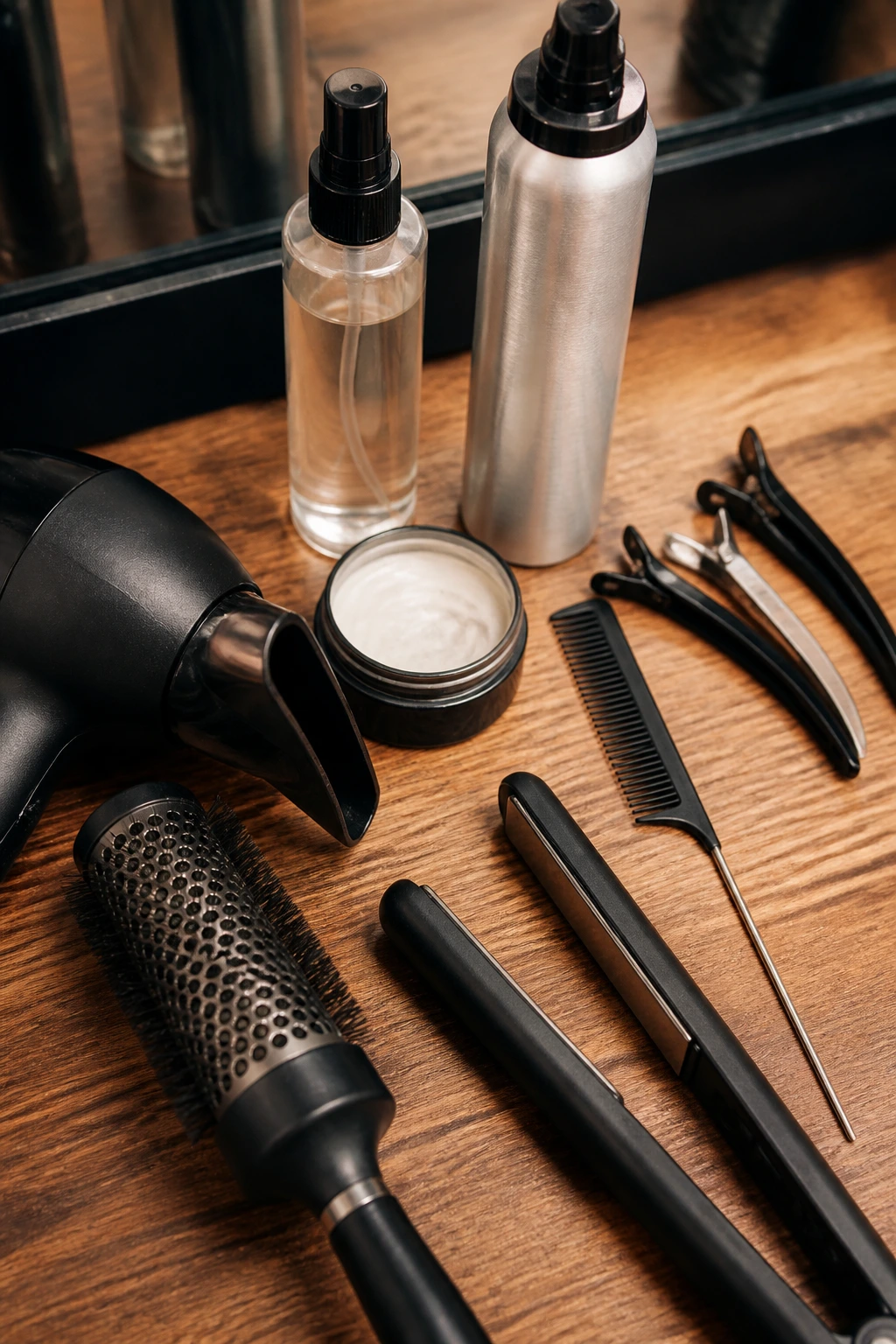
Styling Tools That Make Bangs Behave
-
Small round brush, 1 to 1.5 inches: Best for curling the front pieces under or away from the face without making them too bouncy.
-
Blow dryer with a nozzle: The nozzle directs airflow so the bangs dry where you want them instead of puffing around in all directions.
-
Duckbill or sectioning clips: These keep the rest of the hair out of the way while you dry the fringe first, which is usually the part that matters most.
-
Fine-tooth tail comb: Useful for clean parting and for directing the center point of curtain or bottleneck bangs.
-
Light heat protectant spray: A small mist keeps the front from getting crunchy when you restyle it often.
-
Dry shampoo: Helps on day two and day three when roots start to separate and the fringe needs a little lift.
-
Soft styling cream or mousse: A pea-size amount can help wavy or curly bangs hold shape without going stiff.
-
Flat iron with rounded edges: Optional, but handy when you need to smooth a cowlick or bend the ends just a touch.
How to Wear Them on Busy Mornings
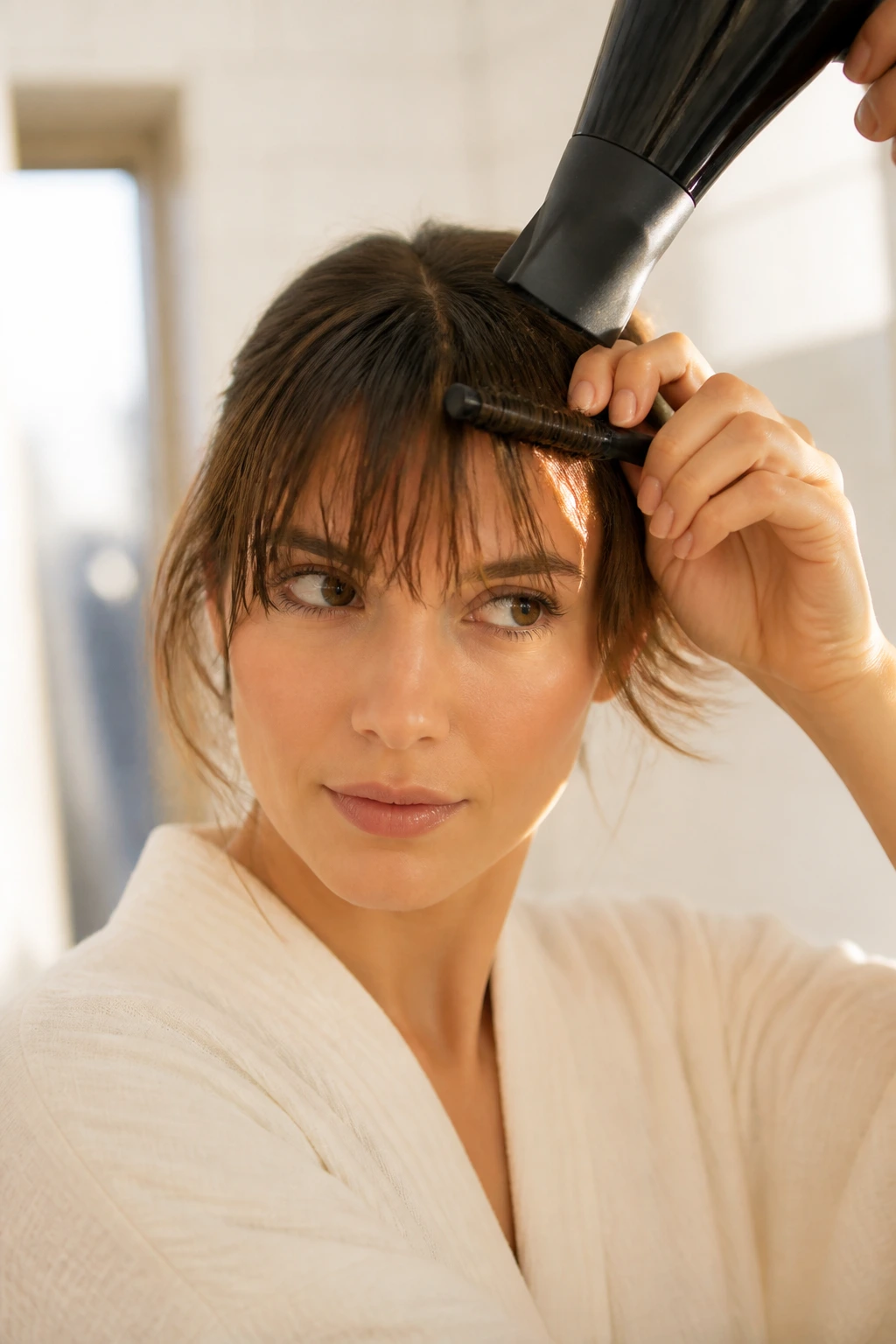
The fastest way to ruin bangs is to overthink them before coffee. Start with the front only. Dampen the fringe lightly — not soaking, just enough to reset the bend — then blow-dry it in the direction you want while the rest of the hair stays clipped back. That keeps the front from drying crooked while you’re busy doing everything else.
For curtain or bottleneck bangs, dry the center forward first, then split them once they’ve cooled. If you separate them too soon, they often swing open unevenly and stay there. A two-minute reset with a brush is usually enough.
Second-day rescue: mist the fringe with a little water, brush it through, and hit only the roots with the dryer. You do not need to redo the whole head. That’s how people end up late and annoyed.
Humidity fix: keep the product light. Heavy oils make face-framing bangs clump, especially around the temples. A small amount of mousse at the root or a touch of texturizing spray at the ends usually does more good than a shiny serum ever will.
Gym-proof trick: if you need the bangs out of the way, twist them loosely and clip them high while you sweat. Let them cool before you drop them back down. Hot hair remembers the shape it dries in.
Mistakes That Make Bangs Sit Heavy or Choppy
Cutting the center too short too fast: The front looks cute for ten minutes, then the rest of the bangs seem disconnected. The fix is to keep the shortest point a little longer on the first cut, especially if your hair shrinks when dry.
Leaving too much density at the forehead: Heavy bangs can look flat and hot. If the fringe feels like a sheet, ask for internal weight removal or point cutting so the pieces separate.
Ignoring the cowlick: The hair keeps splitting in the same spot, and the bangs never sit where you want. A stylist should cut with that growth pattern in mind, not against it.
Using too much oil or cream: The bangs collapse into shiny strands and stick to the face. Start with a tiny amount — smaller than a pea — and keep it mostly on the ends.
Letting the sides end in a blunt line: The fringe stops abruptly at the cheek and makes the cut feel boxy. The fix is a gradual taper into the layers or temple pieces.
Trying to air-dry every fringe type the same way: Some bangs need direction while they dry. If you let them dry crooked, they usually stay crooked.
Ways to Personalize the Cut Without Losing Softness
The Air-Dry Version: Keep the fringe longer and point-cut the ends so it can fall naturally with your texture. This works well for waves and loose curls that already want movement.
The Glasses-Friendly Shape: Leave a little more length at the center and open the sides sooner at the temples. That keeps the bangs from pressing into your frames every time you blink.
The Curly Coil Frame: Cut the front pieces longer than you think, then shape them dry so the curl pattern lands where it actually lives. This keeps the face frame soft instead of shrinking up to the brows.
The Sleek Office Fringe: Ask for a cleaner, brow-grazing line with subtle tapering at the edges. It reads polished, but the softened ends keep it from looking severe.
The Grow-Out Cut: Start with longer side pieces and a shorter center that still reaches the brows. That way, when the fringe grows, it falls into face-framing layers instead of turning into an awkward shelf.
Keeping Bangs Fresh Between Salon Visits
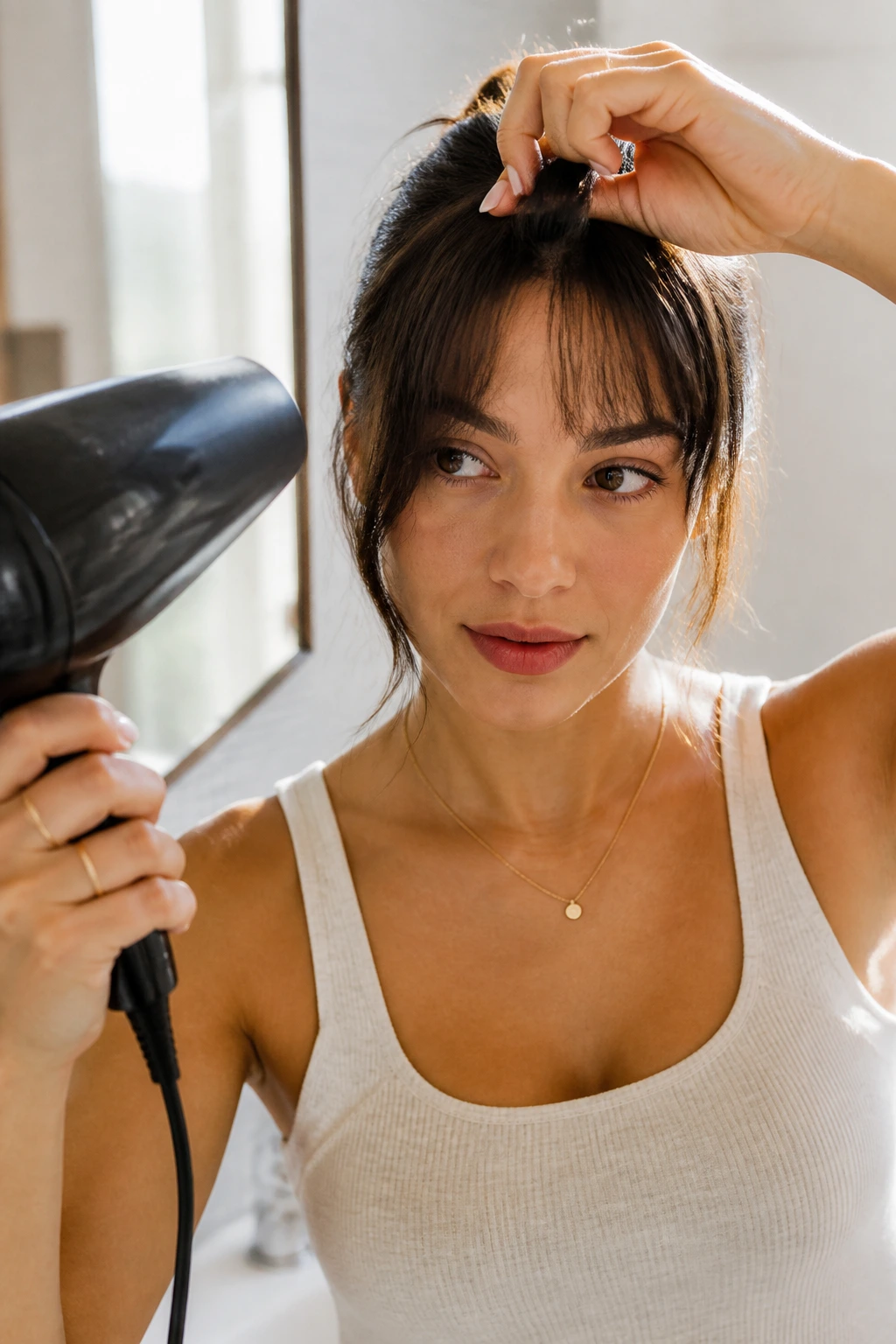
Bangs need a little more attention than the rest of the haircut, but not as much as people think. Most fringe looks best when trimmed every 3 to 6 weeks, depending on how fast your hair grows and how short the center sits. If you keep the front longer, you can stretch that window. If you wear a shorter brow-skimming fringe, you’ll notice regrowth sooner.
Wash the fringe separately if it starts to feel oily before the rest of your hair. A tiny bit of shampoo at the front, a quick rinse, and a fast blow-dry can reset the whole cut without doing a full wash. That’s especially useful if the ends are clean but the roots are starting to separate.
Dry shampoo helps, but use it with a light hand. Too much gives bangs a dusty feel and makes them rough instead of airy. Spray from a few inches away, let it sit for a minute, then massage it through with your fingertips.
Sleeping matters more than people expect. If the fringe is hard to tame in the morning, pin it loosely to one side or set it in the shape you want before bed, then let it cool in the morning with a quick brush and dryer pass. Flat, sweaty bangs are usually just bangs that got compressed overnight.
If you’re growing them out, keep the temple pieces trimmed while the center lengthens. That way the shape keeps framing the face instead of turning into one long curtain that hangs with no plan.
Questions People Ask Before Cutting the Fringe
Do face framing bangs suit round faces?
Yes, especially when the shortest point sits a little below the brows and the sides taper down toward the cheekbones. The diagonal movement helps lengthen the face instead of widening it.
Are curtain bangs high maintenance?
They can be, but not in the dramatic sense people fear. Most of the work is a two- to four-minute blow-dry at the front, and if the cut is long enough, you can often tuck or part them open when you’re in a rush.
Can curly hair wear face framing bangs?
Absolutely. The key is to cut them longer than straight hair and often while dry or mostly dry, so the curl pattern doesn’t shrink them into a surprise micro-fringe. Curly fringe looks best when the shape follows the curl instead of forcing it flat.
How do I ask my stylist for the right length?
Bring a photo, then point to the exact place you want the shortest piece to land — brow, upper bridge of the nose, or cheekbone. A visual point plus a length reference works better than saying “just soft.”
What if I have a strong cowlick?
Ask for a shape that works with the split, not against it. A longer center, a soft side sweep, or a bottleneck shape usually handles a stubborn front better than a rigid blunt bang.
Do bangs make your face look slimmer?
Sometimes, but not because of magic. A soft diagonal or tapered frame can change where the eye travels, which can make the face feel longer or narrower. The effect comes from the line of the haircut, not some universal rule.
How do I grow them out without the awkward stage?
Keep the sides trimmed and let the center move into cheekbone length. That keeps the front pieces useful while the shape shifts, which is much nicer than waiting for one blunt line to grow past your eyebrows.
Can I wear face framing bangs with glasses?
Yes, and the right shape can make glasses look better. Keep the shortest point a little above the frame line or let the center stay longer so the bangs don’t crowd the lenses.
A Fringe That Grows Into Its Shape
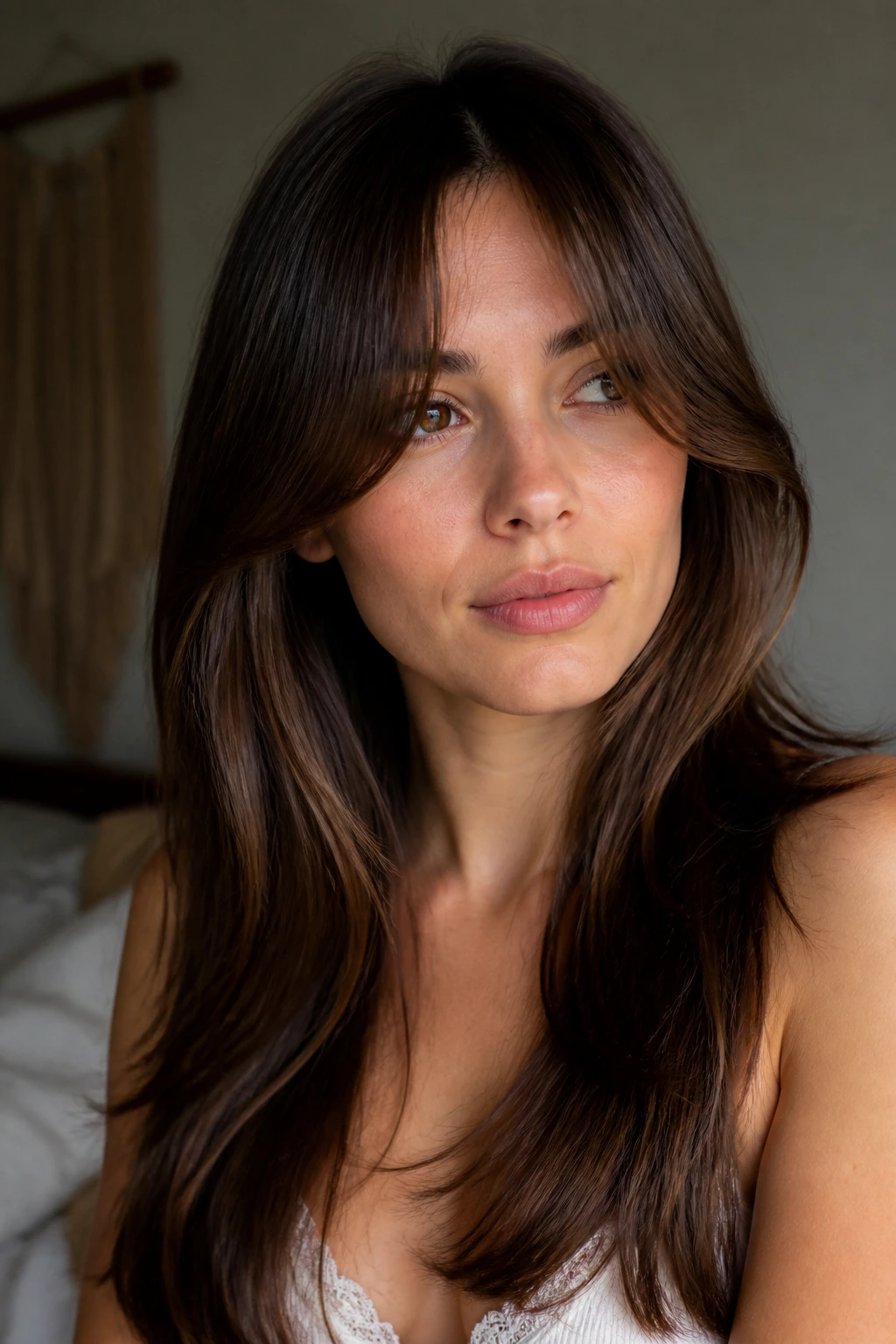
The best face framing bangs do not trap you in one look. They open the face, soften the front of the haircut, and still give you room to pin, part, or brush them aside when you need a break. That balance is why these styles keep working from one season of life to the next.
Start a little longer than your first instinct. Keep the ends soft. Let the cut move with your hair instead of forcing the front into a rigid line, and the fringe will keep earning its place long after the salon chair is behind you.
