



Long hairstyles for straight hair live or die on line, shine, and control. When the length is good, straight hair can look expensive without trying too hard; when it’s not, the whole style falls flat and starts clinging to the head like it gave up halfway through the day. That’s the strange thing about straight hair. It shows everything. The part. The ends. The flyaways near the temples. Even the way your elastic sits at the back of the head.
The upside is that long straight hair gives you a clean canvas. A center part can look sharp. A braid can stay tidy. A ponytail can look sleek instead of sloppy. And if you’ve got the length, you can move between polished, soft, playful, and a little dramatic without needing complicated texture or a lot of product. The trick is choosing styles that work with the hair’s natural slip instead of fighting it.
What follows is a mix of low-effort staples, dressier shapes, and a few styles that make long hair behave in a nicer way than it usually does. Some of them need nothing more than a brush and a fine elastic. Others look better with a flat iron bend, a strong bobby pin, or a ribbon that stops the whole thing from looking too severe. That range matters. Straight hair gets boring only when people keep styling it the same way.
Why These Styles Work So Well on Straight Hair
-
The line does the heavy lifting: Straight hair shows shape clearly, so a blunt end, a crisp part, or a wrapped ponytail reads clean instead of fussy.
-
Length gives you staying power: Braids, twists, and tied styles hold better when there’s more hair to anchor them. Long straight hair keeps the structure from puffing apart too fast.
-
Shine becomes part of the style: The smoother the cuticle sits, the more polished these looks appear. A little shine spray at the ends can do more than another ten minutes of brushing.
-
You can go from loose to pinned fast: Long straight hair doesn’t need a full restyle every time. A middle part becomes a side part. A loose tail becomes a knot. That flexibility is the whole point.
-
Volume can be placed, not guessed: With straight hair, you decide where the lift goes — crown, sides, ends, or face frame — instead of hoping the hair makes the decision for you.
1. Sleek Center Part With Waist-Length Shine
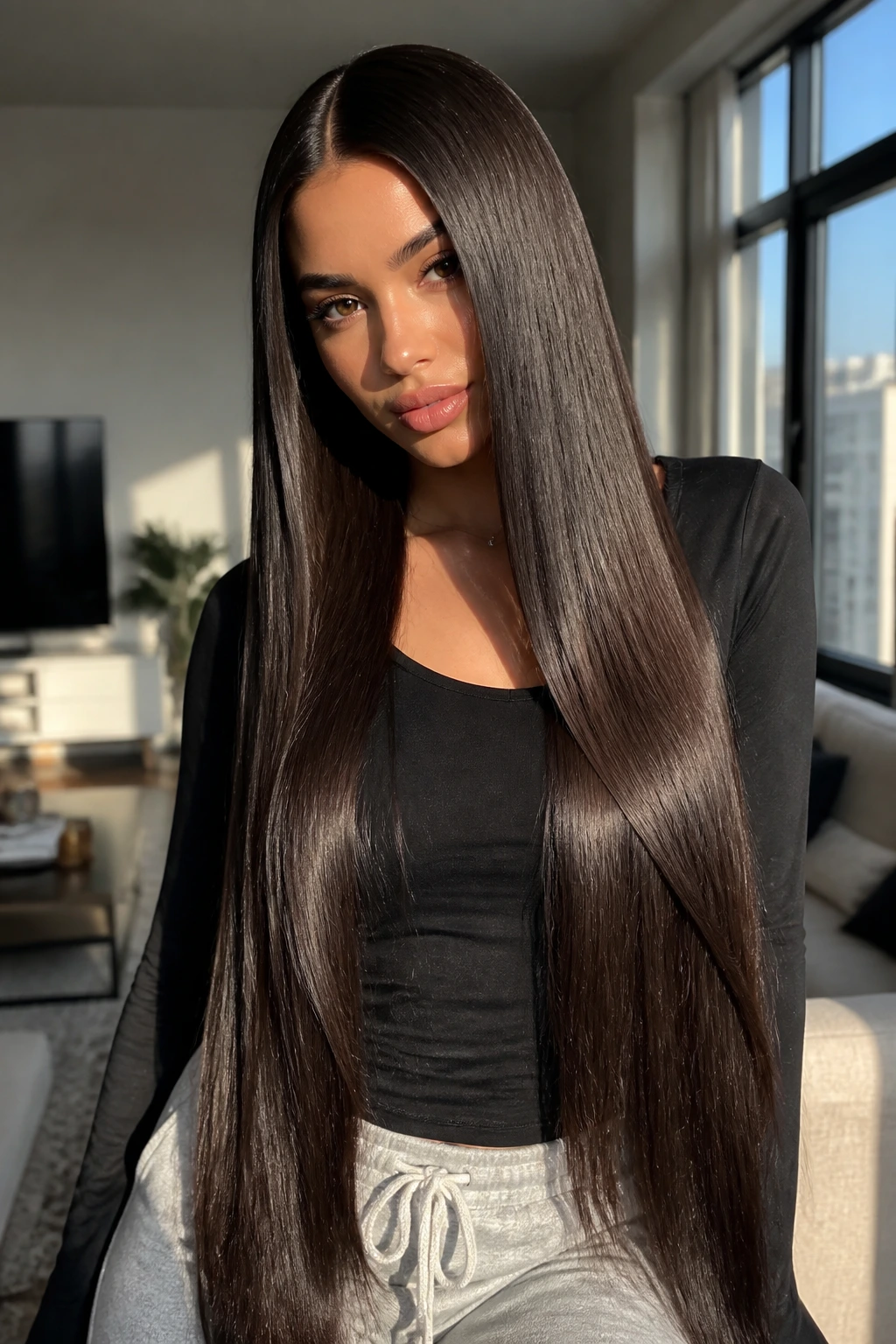
A clean center part is the style straight hair was quietly made for. It draws a single vertical line through the face, and on long lengths it creates a smooth curtain effect that looks intentional from root to hem. If your hair is naturally fine, this one can look too flat unless you keep a little lift at the crown.
Why It Works
This style works because straight hair reflects light along a continuous surface. A paddle brush, a touch of heat protectant, and a final pass with a flat iron on low heat make the part look crisp instead of scrappy. If the ends are blunt, even better. They’ll hang like a straight edge.
Quick Styling Notes
- Smooth with a boar-bristle brush.
- Use a tail comb for the part.
- Finish with a pea-sized amount of serum on the last 2 inches.
Best for: everyday wear, office looks, and outfits with clean necklines.
2. Blunt Glass Hair
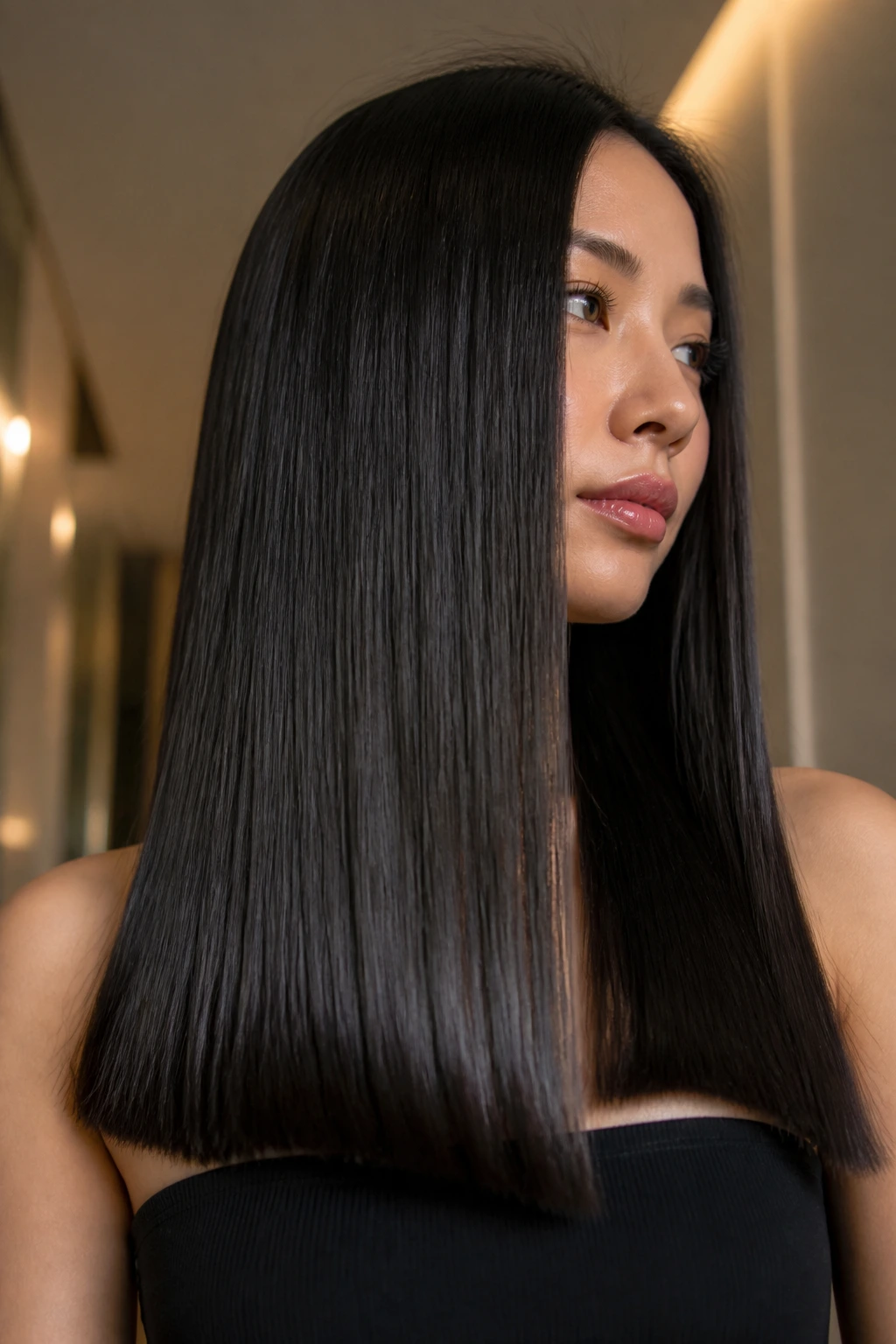
This one is for people who like straight hair that looks almost architectural. Blunt glass hair is all about a sharp hemline and a surface so smooth it almost looks lacquered. It’s not fussy. It’s precise.
A blunt cut on long straight hair gives the ends weight, which helps them swing instead of fray. The catch is maintenance. Skip trims long enough and the shape starts to fuzz out at the bottom. A flat iron pass from mid-length to ends, plus a heat protectant that doesn’t leave grit, is usually enough. No need to overwork it. The shine should look deliberate, not greasy.
3. Soft U-Cut With Polished Ends
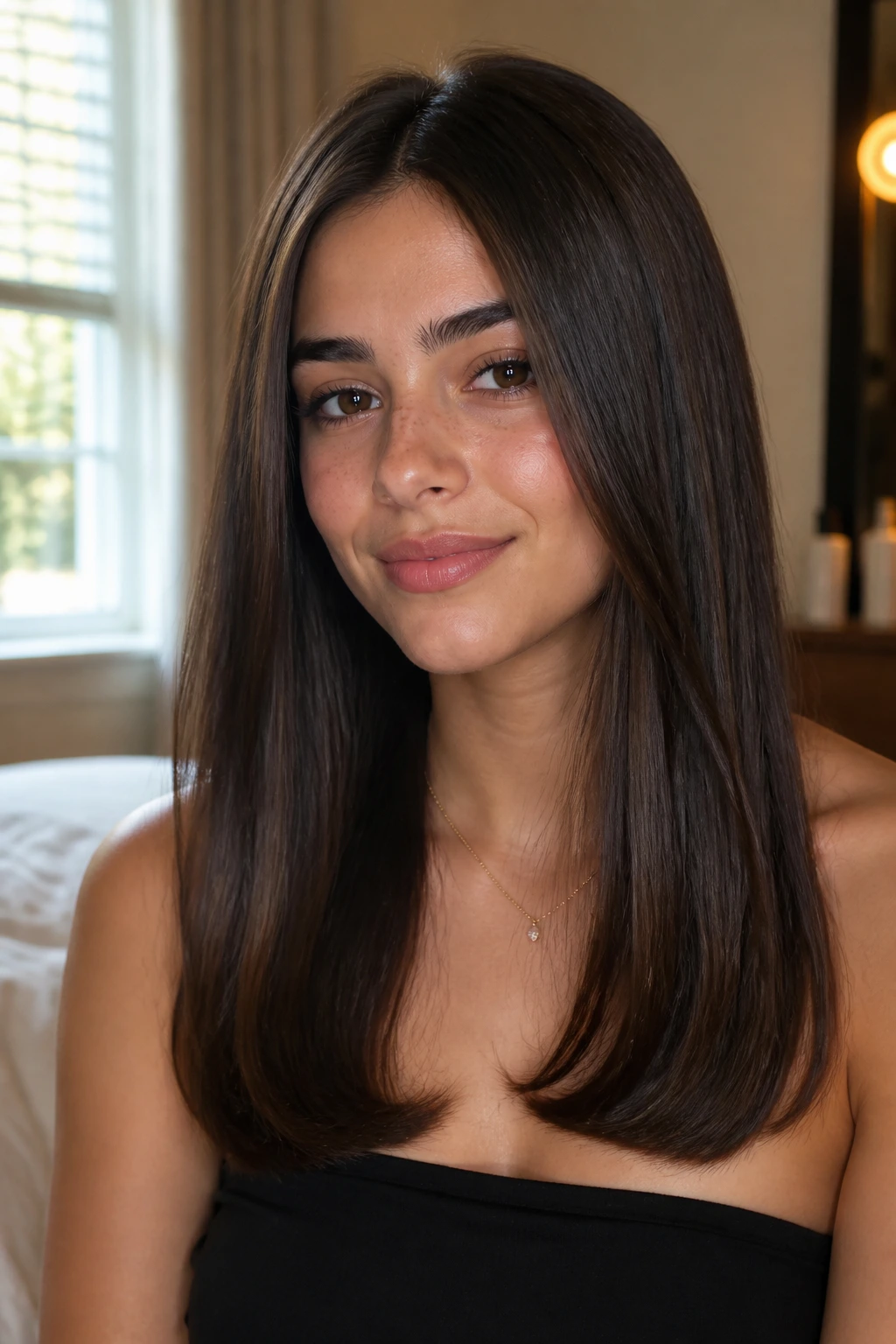
A U-cut gives long straight hair a little more movement than a blunt line without turning it shaggy. The center stays longest, and the sides taper gently, which keeps the whole shape from feeling boxy. On very long hair, that matters.
The best version of this style is smooth at the top and polished at the bottom, not curled under like a school portrait from the early aughts. I like a subtle bend in the last inch of the hair — enough to keep the ends from sticking straight into the ribs of your shirt. That tiny curve keeps the shape alive.
4. Face-Framing Layers and a Middle Part
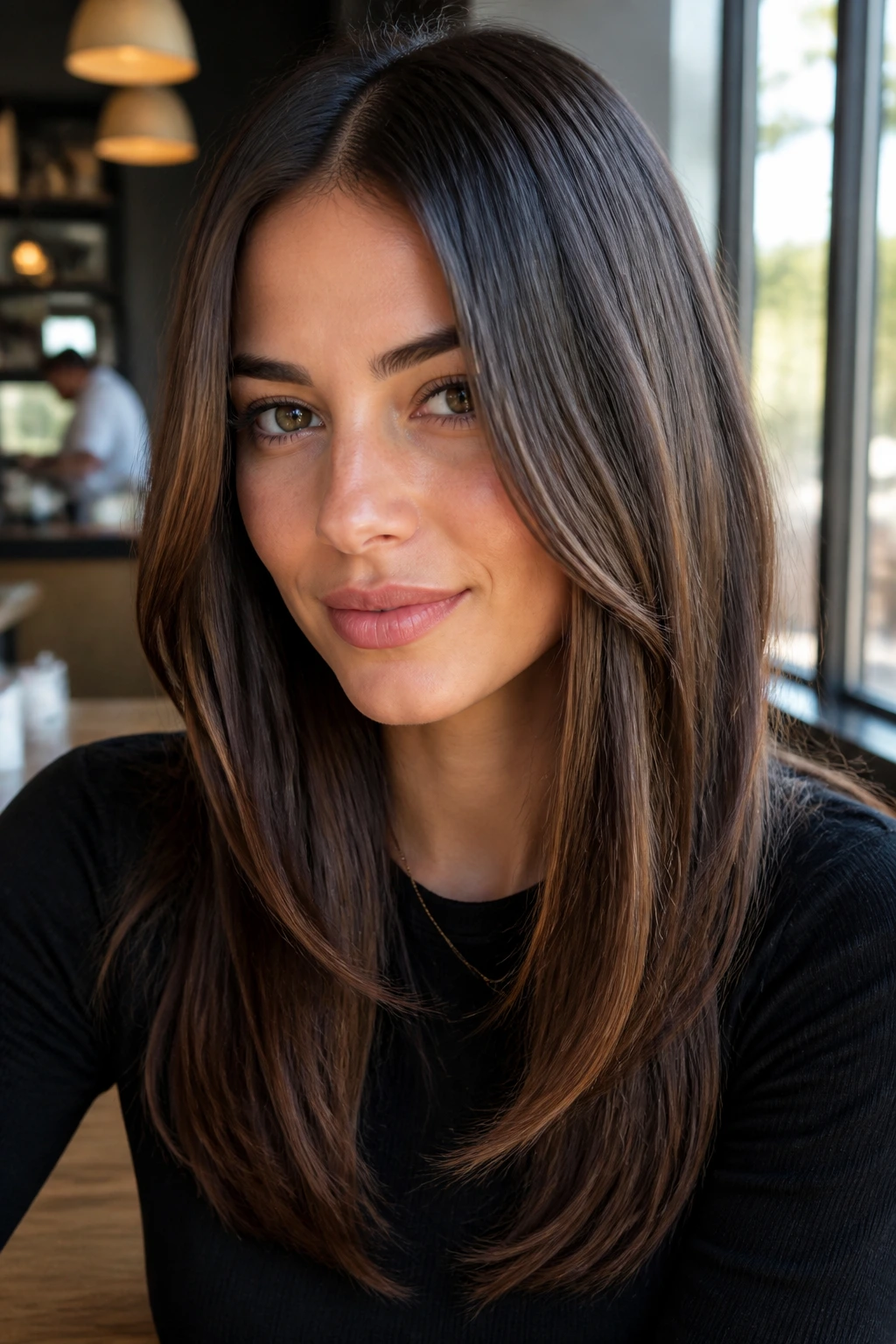
Face-framing layers are one of the few cuts that can wake up straight hair without taking away the length you’ve worked for. They pull focus to the front, which stops long hair from reading like one solid sheet.
This style is especially useful if your hair is thick and heavy. A few well-placed layers around the cheekbone and jaw keep the front pieces from hanging like curtains. If you’ve got a flat crown, ask for layers that begin below the cheekbone, not right at the face. That keeps the movement where it belongs and avoids a choppy, over-layered mess.
5. Deep Side Part With One Tucked Side
A deep side part gives straight hair a little drama without asking for a different haircut. Tuck one side neatly behind the ear, pin it with a small barrette, and leave the other side fuller. The contrast is the whole point.
This works well when your hair falls too evenly and starts looking predictable. A side part changes the weight line, and the tuck opens up the face in a clean, almost old-Hollywood way. Use a light mist of hairspray at the roots on the tucked side so the part doesn’t drift back to center by lunch.
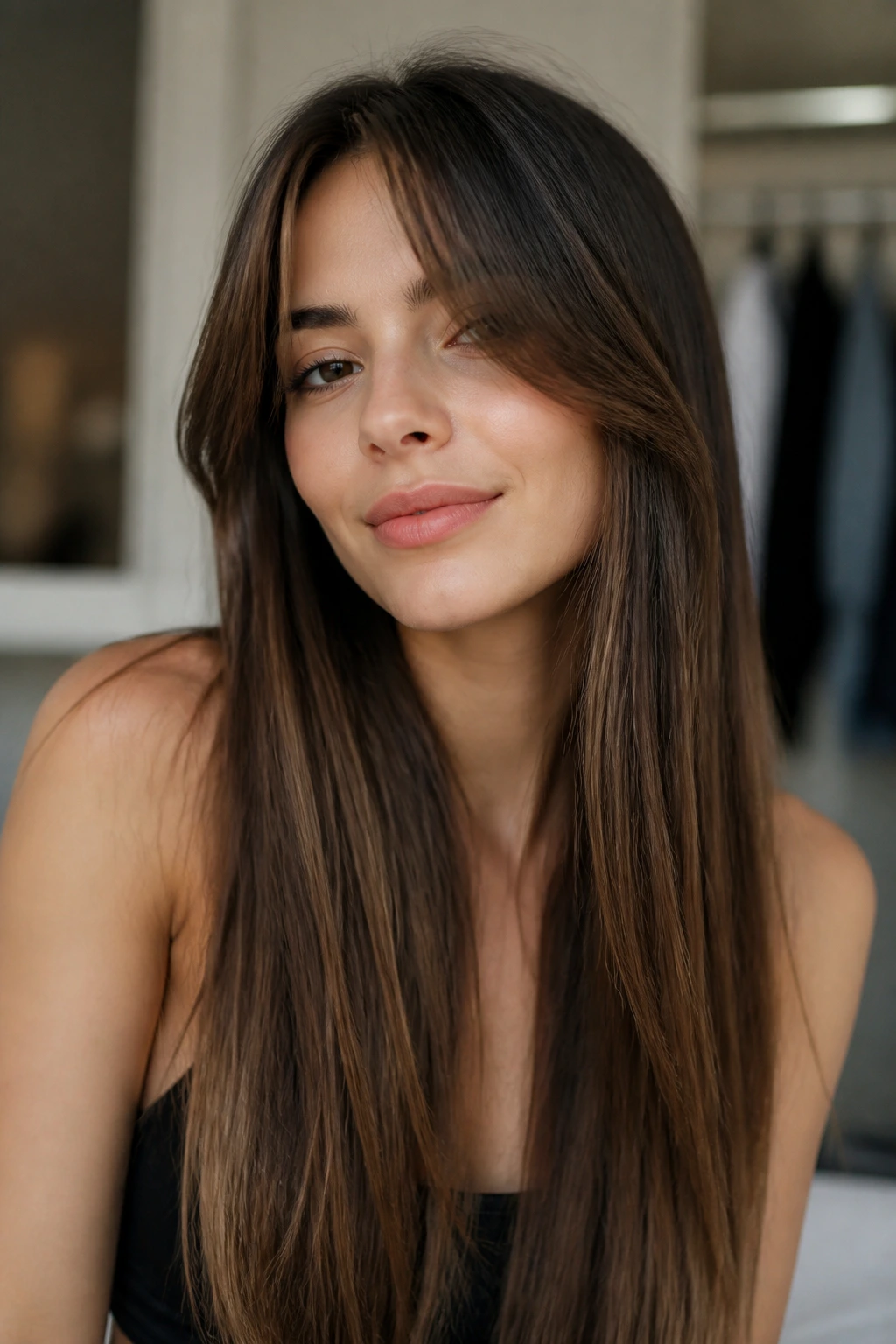
6. Curtain Bangs With Long Straight Lengths
Curtain bangs are one of those cuts that do a lot without shouting about it. On long straight hair, they soften the front, split the face in a flattering way, and keep the length from feeling too severe. They also play nicely with both center and off-center parts.
The trick is keeping the bangs airy, not stringy. Blow them forward with a round brush, then push each side away from the face while they’re still warm. If they lie too flat, they disappear into the rest of the hair. If they’re overstyled, they start acting like a helmet fringe. Somewhere in the middle is where they live best.
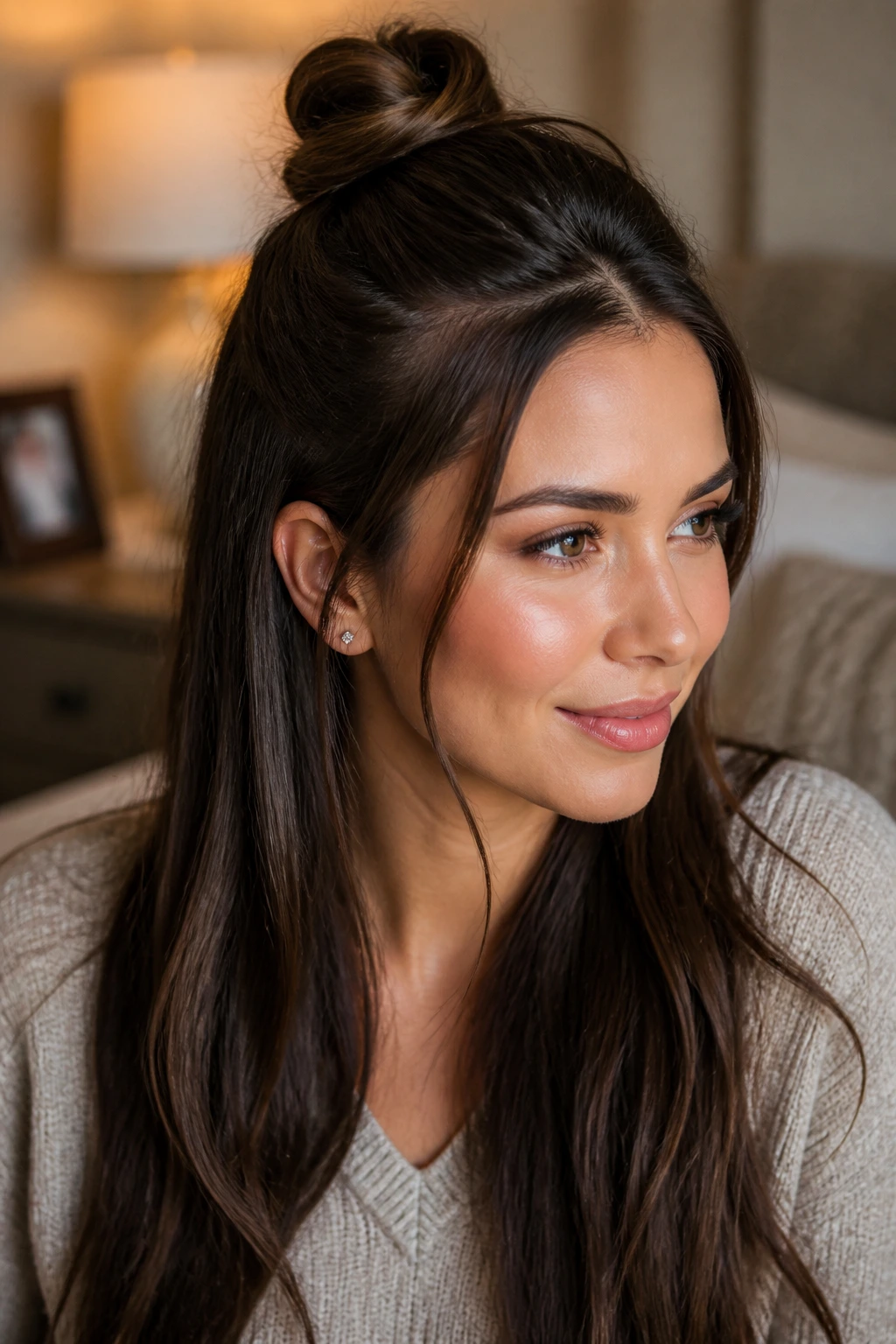
7. Half-Up Knot at the Crown
A half-up knot solves one problem straight hair has all the time: too much length with nowhere for it to go. Pull the top third of the hair into a small knot at the crown, leave the rest loose, and the whole style suddenly has shape.
It’s one of the easiest ways to create height without teasing every inch of your hair. The knot should look compact, not bulgy. Secure it with two bobby pins crossed underneath if your hair slips. I prefer this on second-day hair, when the roots have a bit of grip and the knot holds without having to be strangled into place.
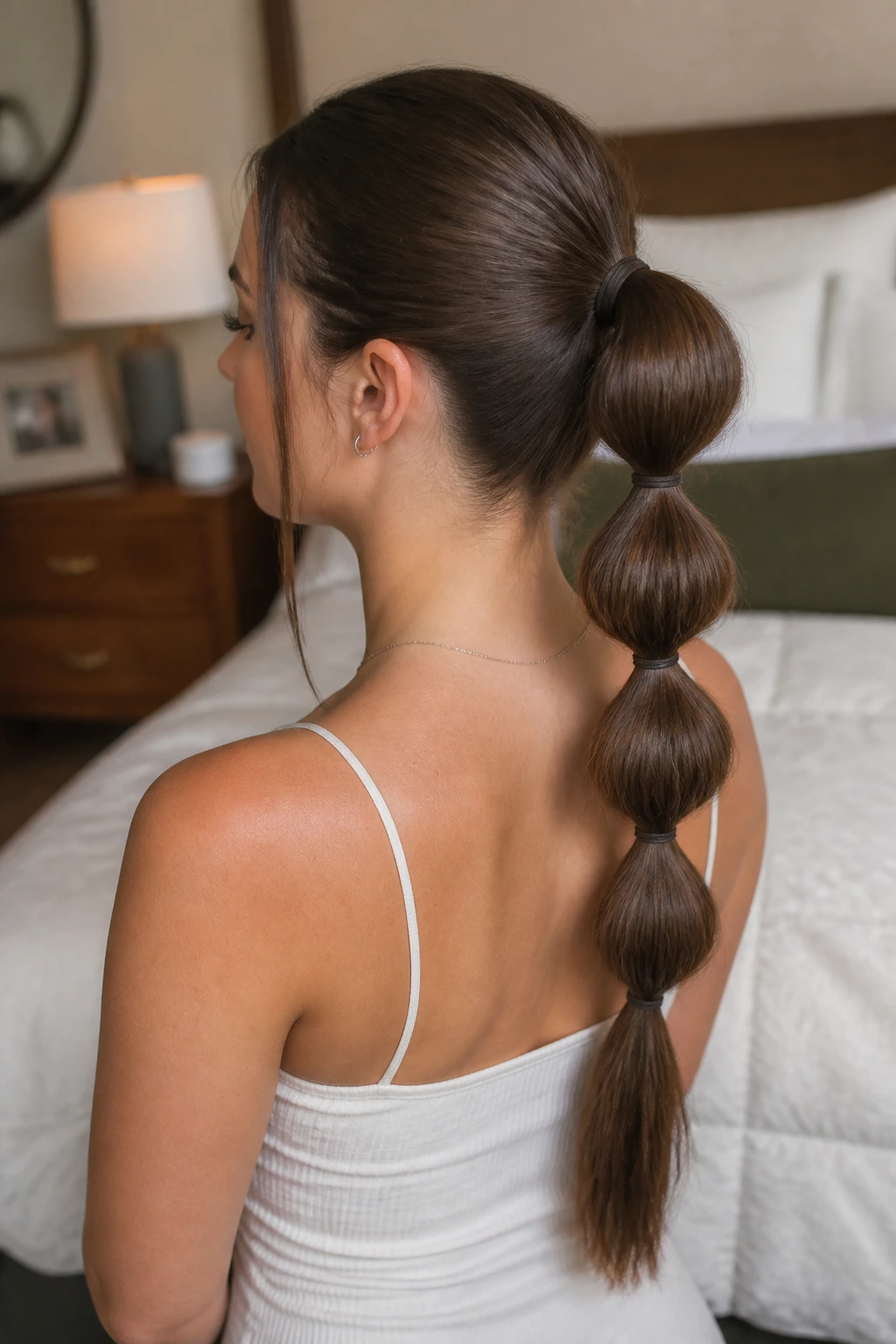
8. Bubble Ponytail Down the Back
The bubble ponytail is basically a regular ponytail with better manners. Secure the hair at the nape or mid-back, then add elastics every 2 to 3 inches and gently pull each section outward to create round, puffed segments.
Straight hair is a good match for this style because the smooth texture makes each bubble look clean instead of lumpy. It’s also one of the few ponytails that looks deliberate even if your hair is a little fine. If you want more structure, wrap a thin strand around the first elastic and pin it under the base. Little detail. Big difference.
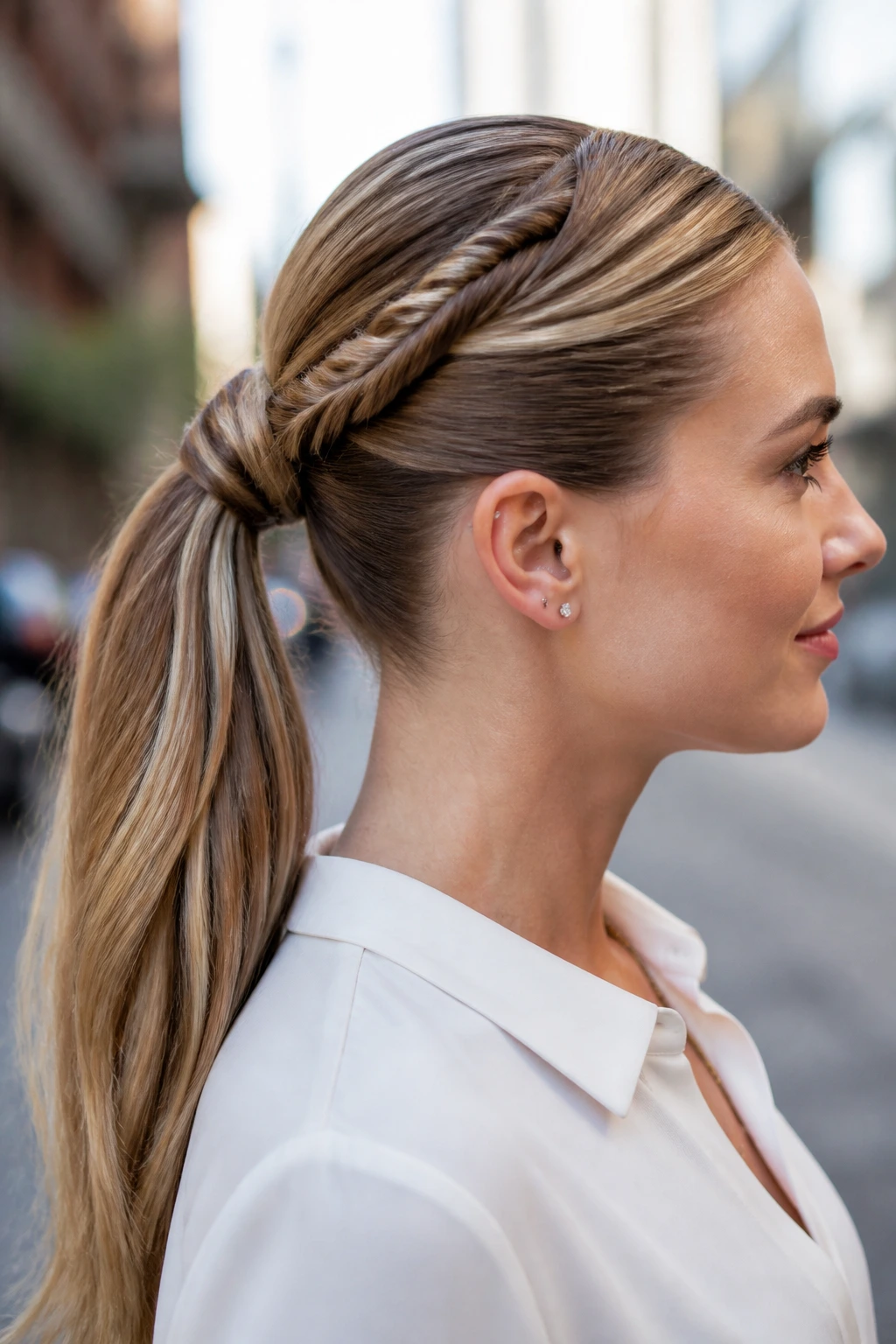
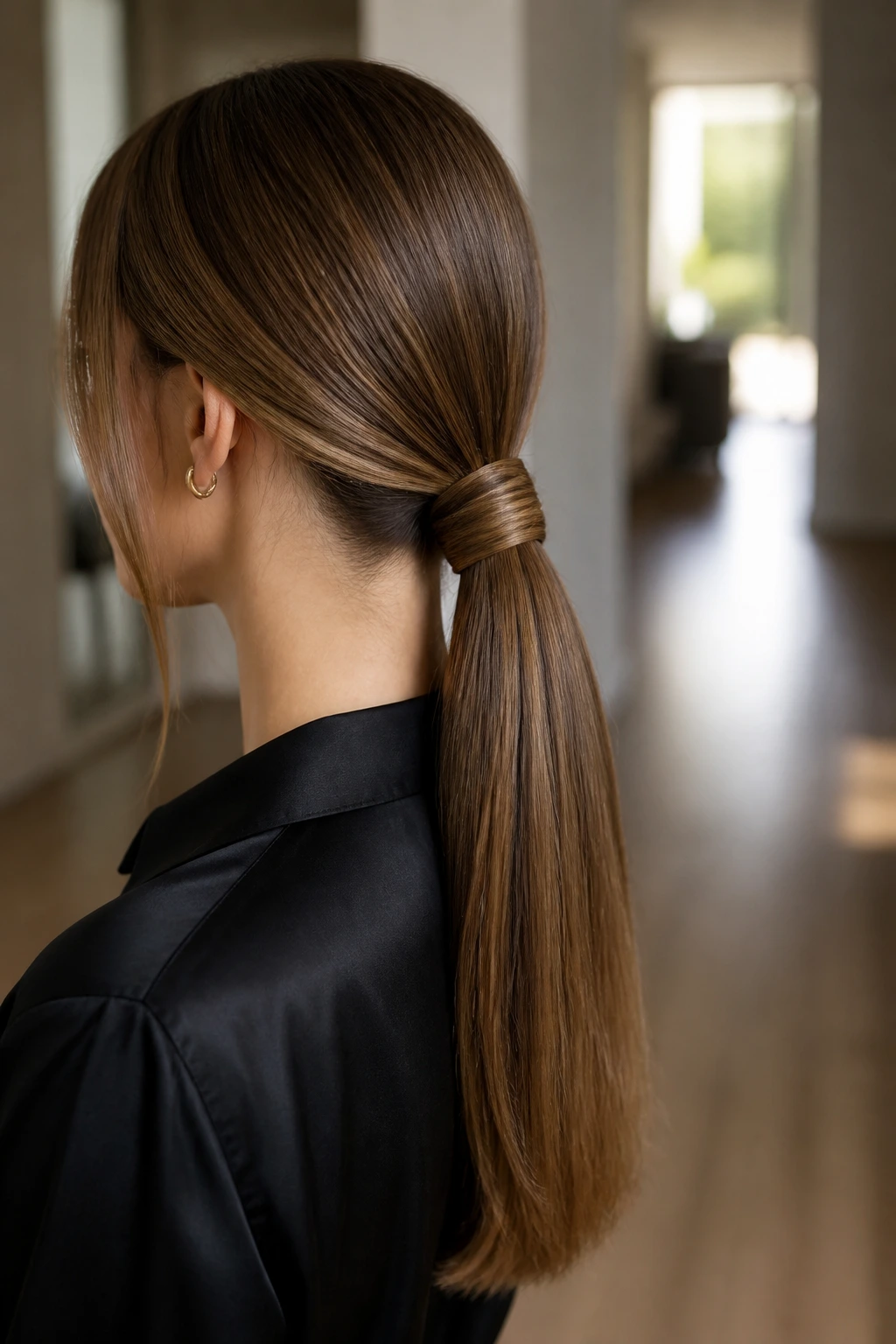
9. Low Ponytail With a Wrapped Base
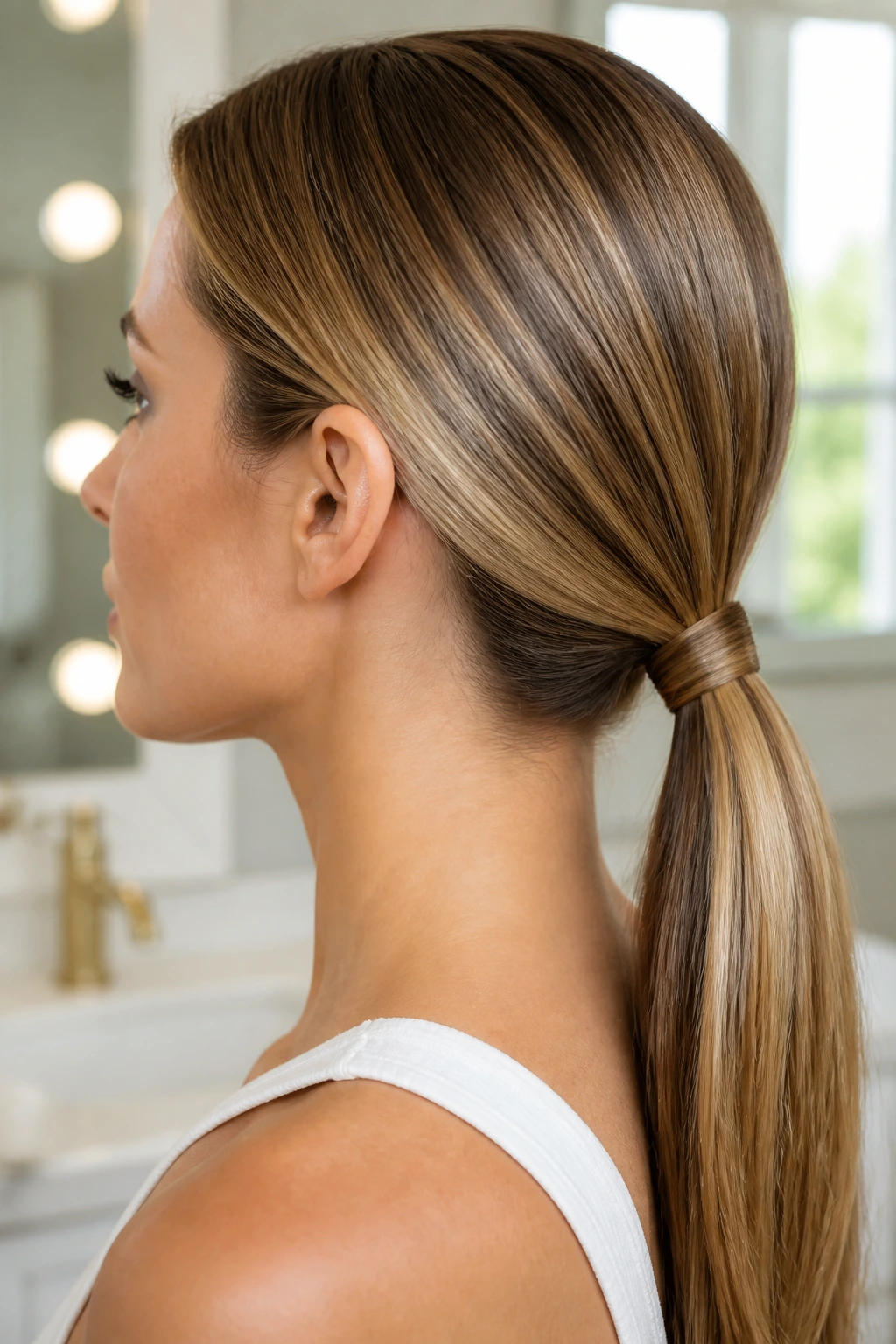
If you want straight hair to look polished in under five minutes, this is the one. Gather the hair at the nape, smooth the top with a brush, and wrap a 1-inch strand around the elastic so the tie disappears. That tiny move changes everything.
The style works because it leaves the length intact while making the base look finished. On long hair, a low ponytail can get heavy fast, so use a snag-free elastic that doesn’t pull at the scalp. If your hair is slippery, mist the mid-lengths with a touch of texturizing spray before gathering. Not a lot. Just enough grip.
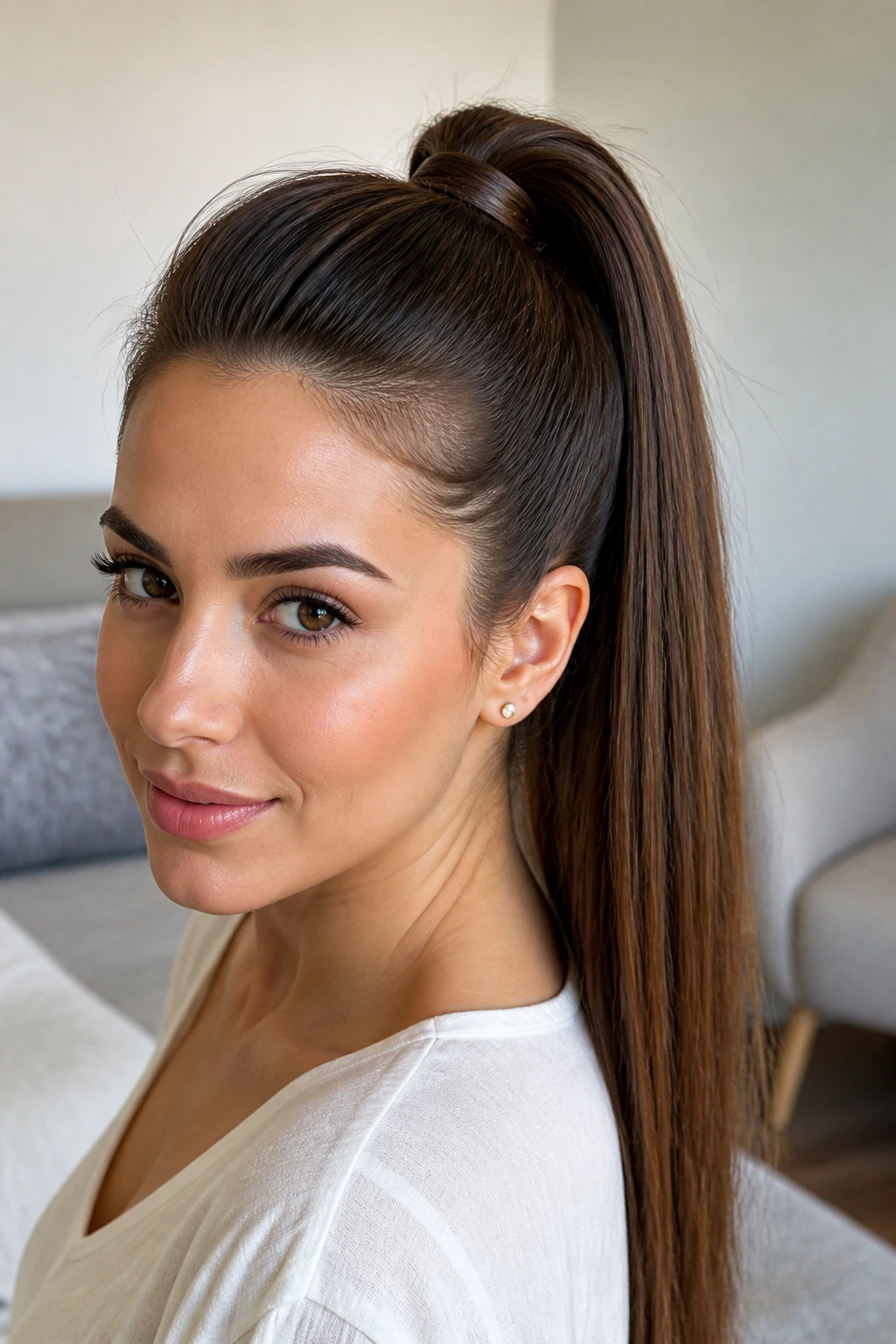
10. High Ponytail With Crown Lift
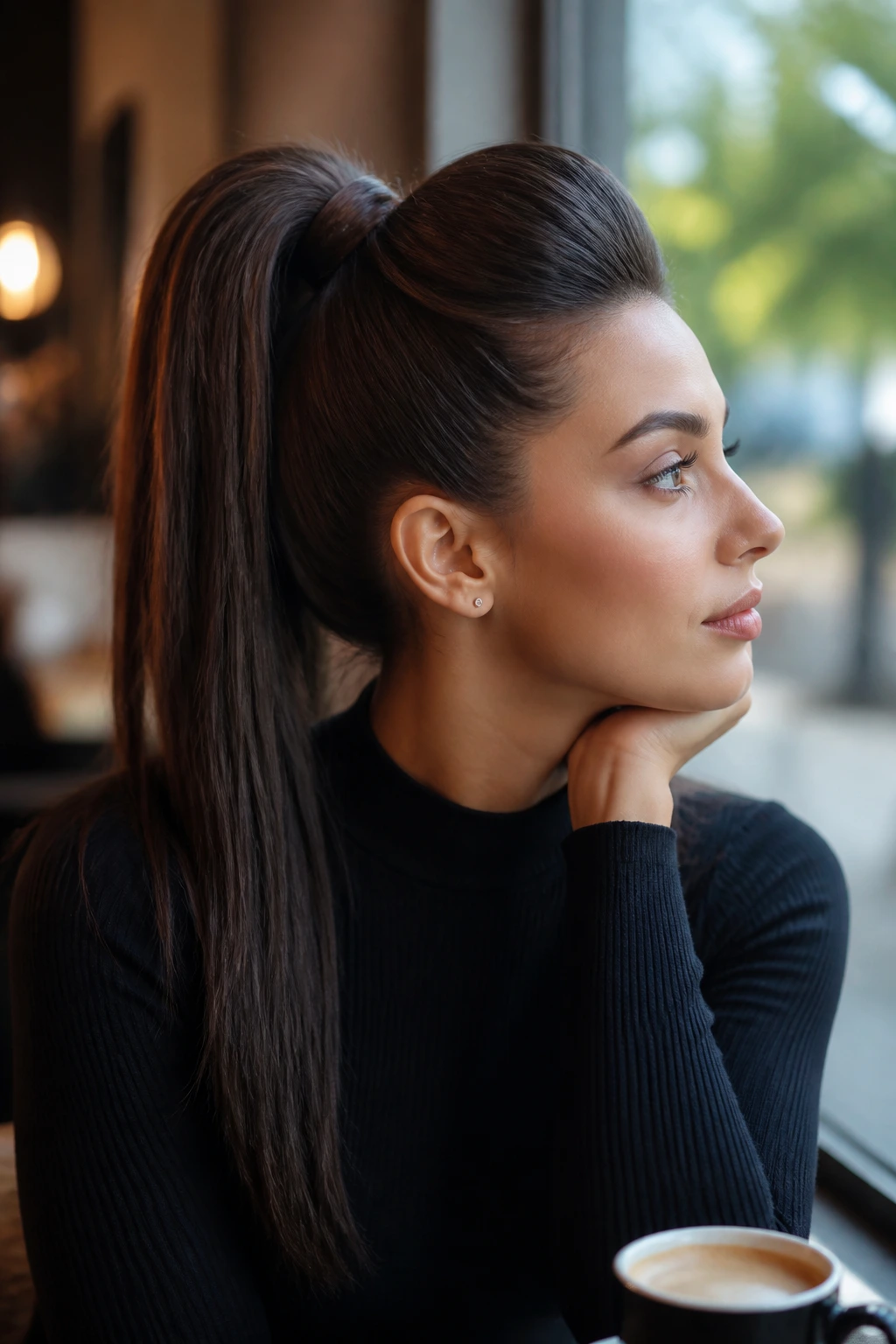
A high ponytail can look sharp on straight hair if you keep the crown from collapsing. Brush the hair upward in sections, secure it high, then lift a little at the top before tightening the elastic. That small gap at the crown gives the ponytail some attitude.
This style loves long, straight lengths because the tail falls in one clean line. If the hair is extremely silky, flip your head upside down for the initial gather and smooth the top last. That reduces bumps without flattening the crown into a sad little dome. A small strand wrapped around the elastic finishes it nicely.
11. Side Ponytail With a Smooth Sweep
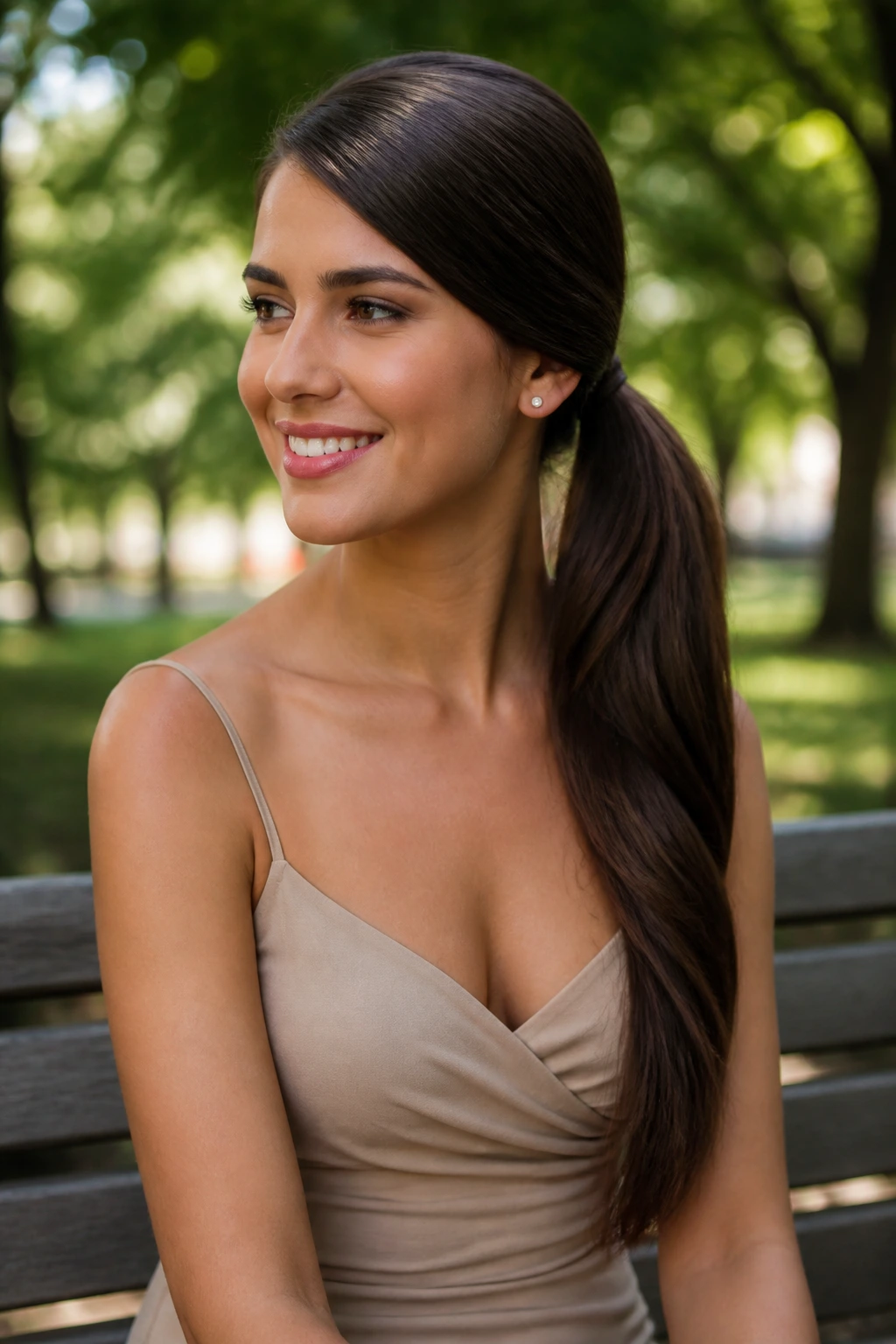
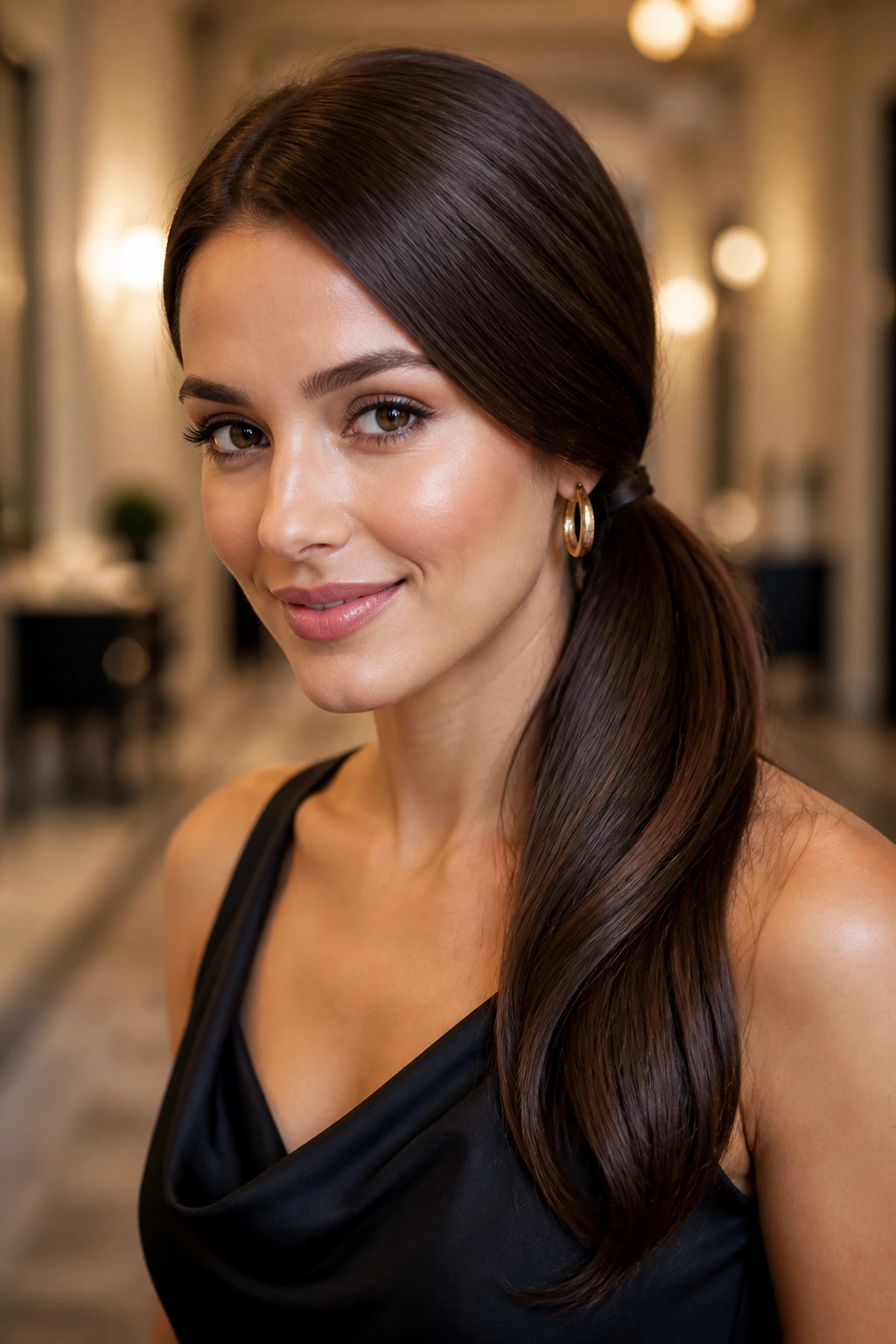
A side ponytail has a softer mood than a center-back ponytail, and long straight hair gives it a long, glossy line that feels almost tailored. Sweep the hair to one side just below the cheekbone, secure it low behind one ear, and keep the part clean.
The style works best when the sweep is smooth at the root and slightly loose through the tail. Too tight, and it starts looking juvenile. Too loose, and it loses the point. I like this for dresses with one-shoulder or asymmetric necklines because the hair mirrors the shape instead of fighting it.
12. Waterfall Braid Over Long Straight Hair
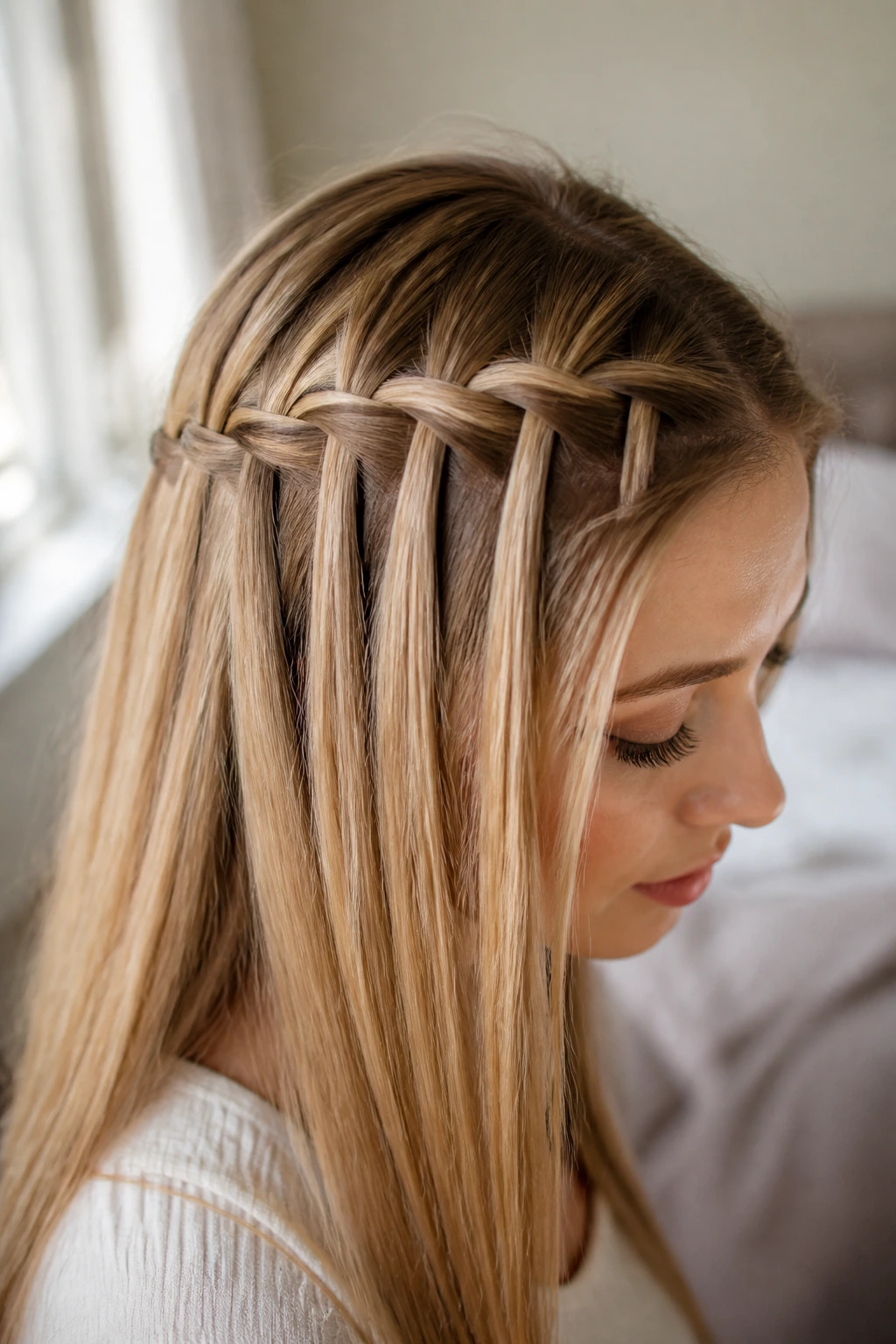
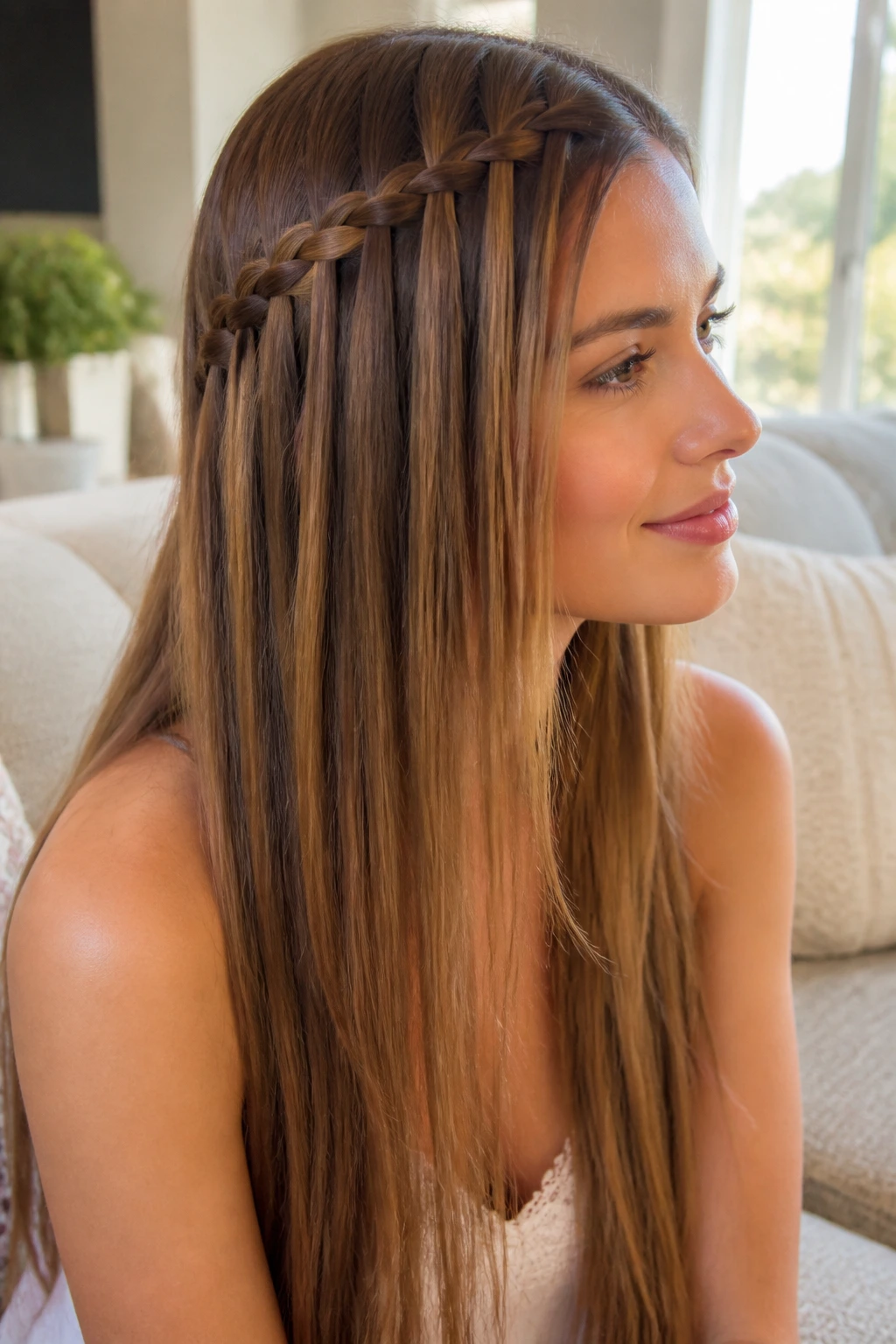
A waterfall braid gives straight hair a little movement without taking away the length. The braid sits like a ribbon across the crown, then lets strands drop through the weave so the rest of the hair stays loose.
This style is prettier on straight hair than people expect, mostly because the smooth texture keeps the braid sections neat and visible. The trick is tension. Pull too tight and the braid sits hard against the head; leave it too loose and the drops unravel before you finish the second side. Practice once in front of a mirror, then your fingers will remember the pattern.
How to Wear It
- Keep the braid 1 to 1½ inches back from the hairline.
- Pin the end behind the ear with two bobby pins.
- Leave the loose hair brushed and glossy, not over-curled.
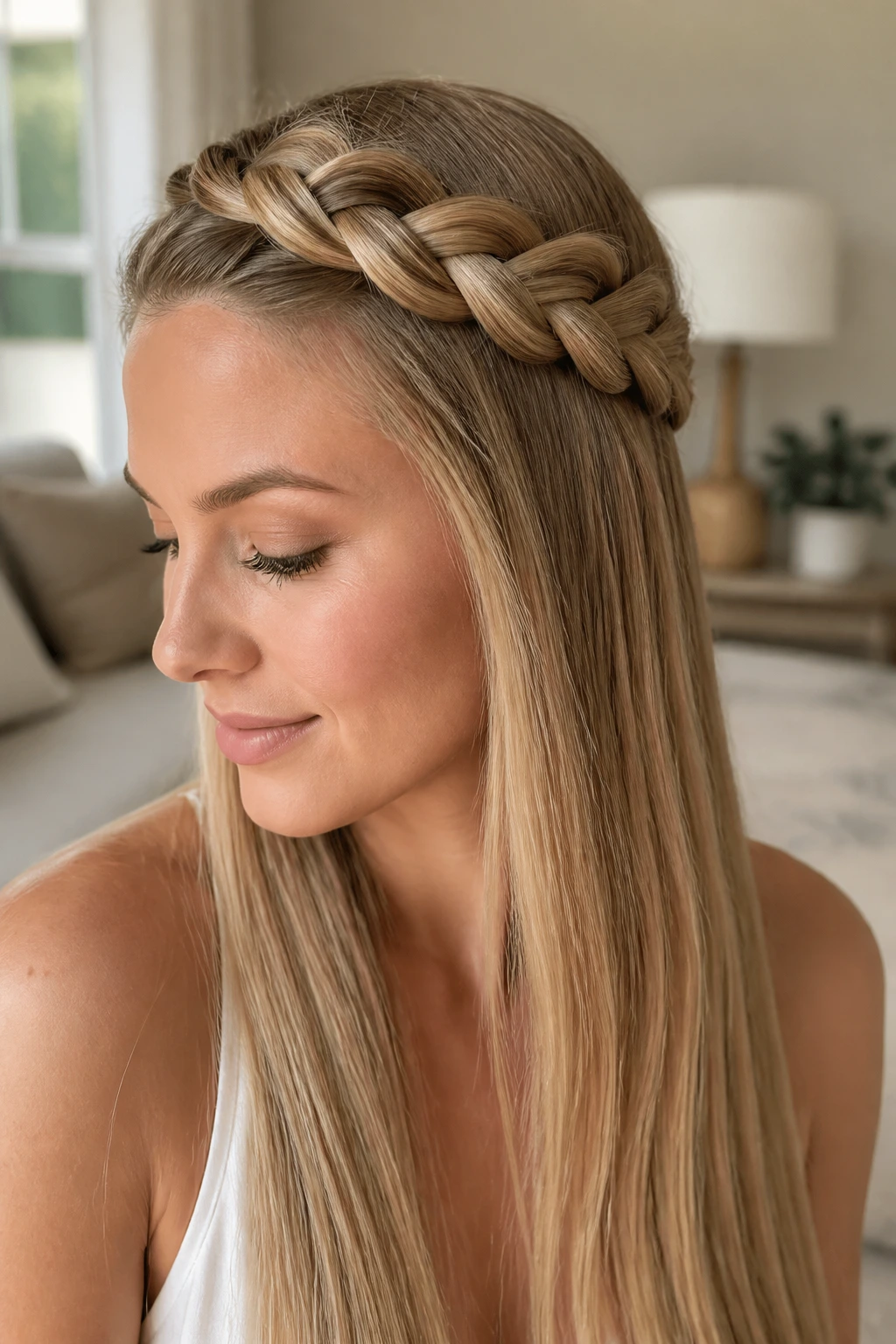
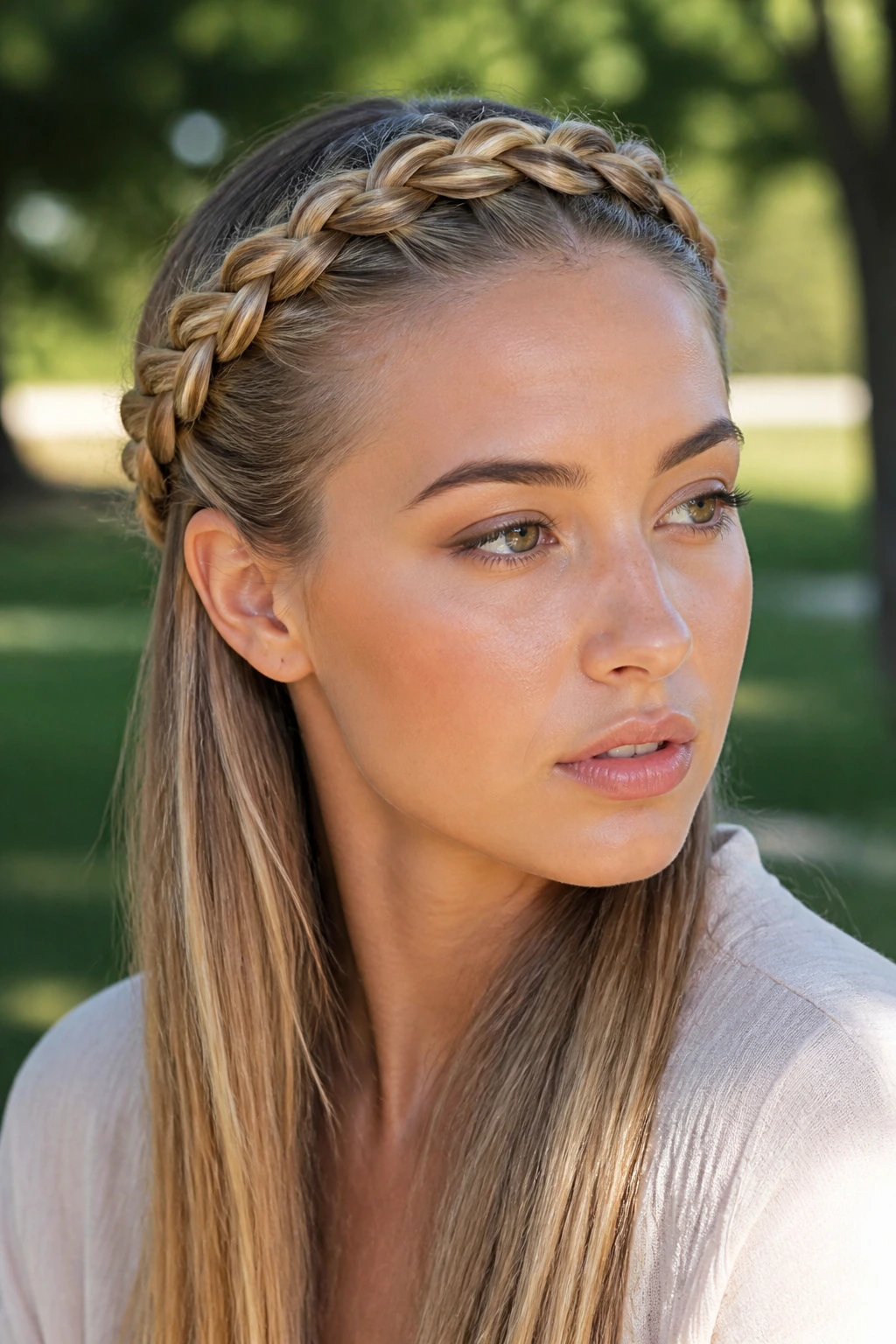
13. Crown Braid Into Loose Lengths
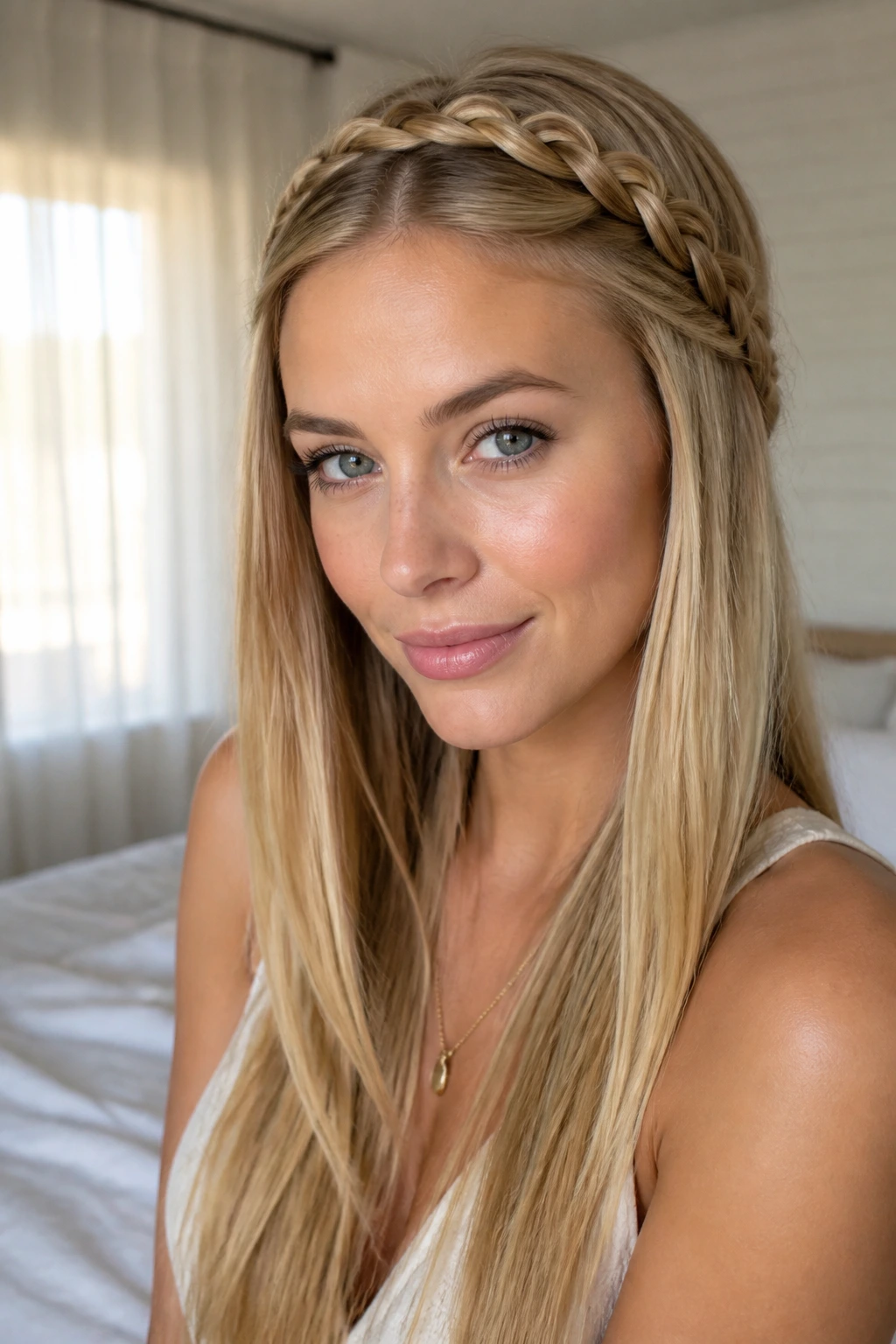
A crown braid wraps around the head and keeps the front of straight hair from falling into your eyes. On long lengths, the braid can be full enough to read from across the room, which is why it looks more substantial than it sounds on paper.
This one is especially useful when you want your hair down but not in your face. Start the braid at one temple, follow the hairline, and tuck the end near the opposite ear. The rest can stay straight and smooth. If the braid starts to puff, press it down lightly with your palms before pinning it. Fingers first. Brush second.
14. Halo Braid for a Smooth Hairline
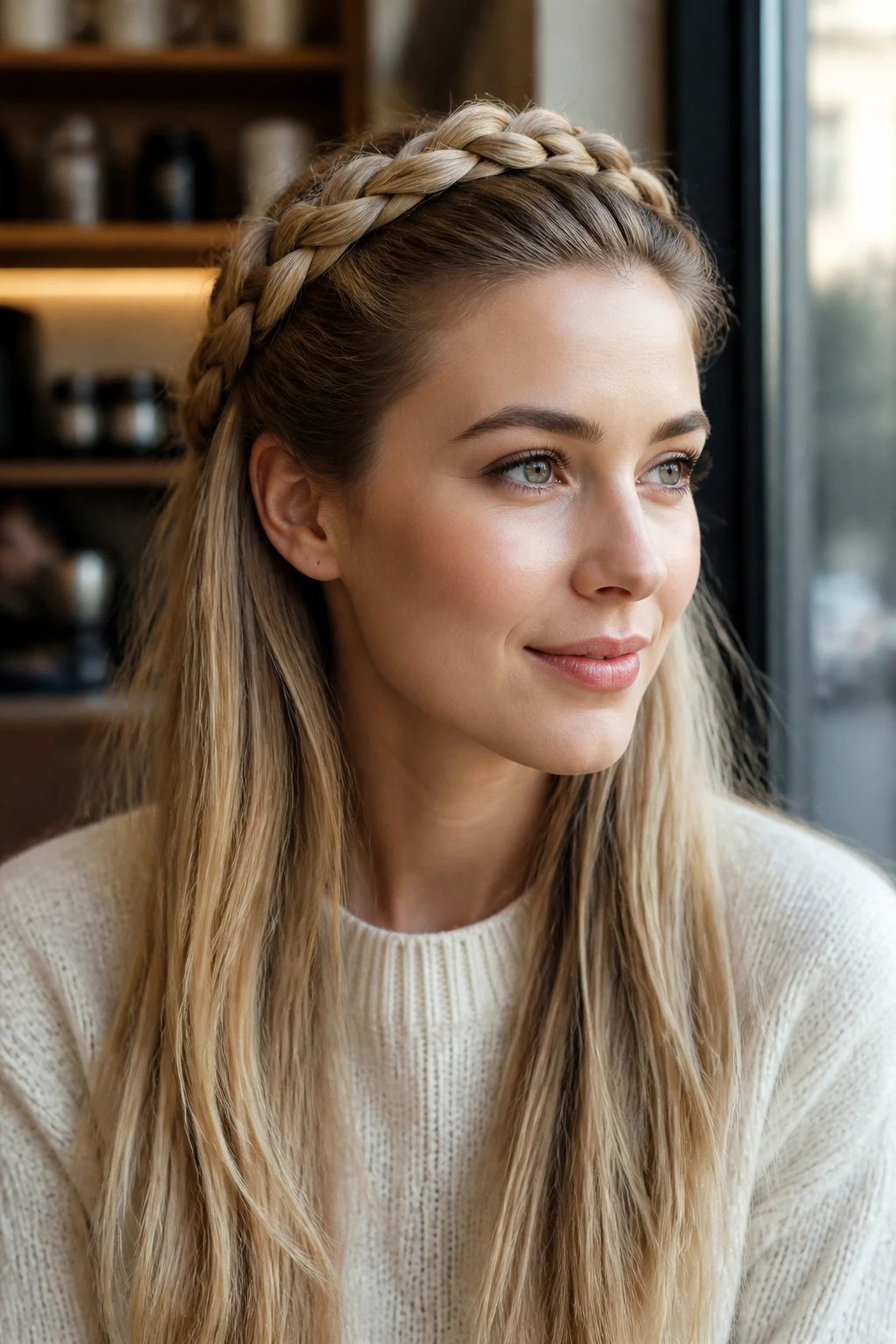
A halo braid is the sister style to the crown braid, but it sits flatter and wraps more completely around the head. Long straight hair gives it enough length to work without fake additions or extensions, which is nice.
The halo shape is clean, practical, and a little romantic without trying too hard. It’s strongest when the braid is braided with even tension and anchored behind the ears. If your hairline is softer or you have baby hairs that pop up, a dab of styling cream on the fingertips keeps the edge neat without making it wet-looking.
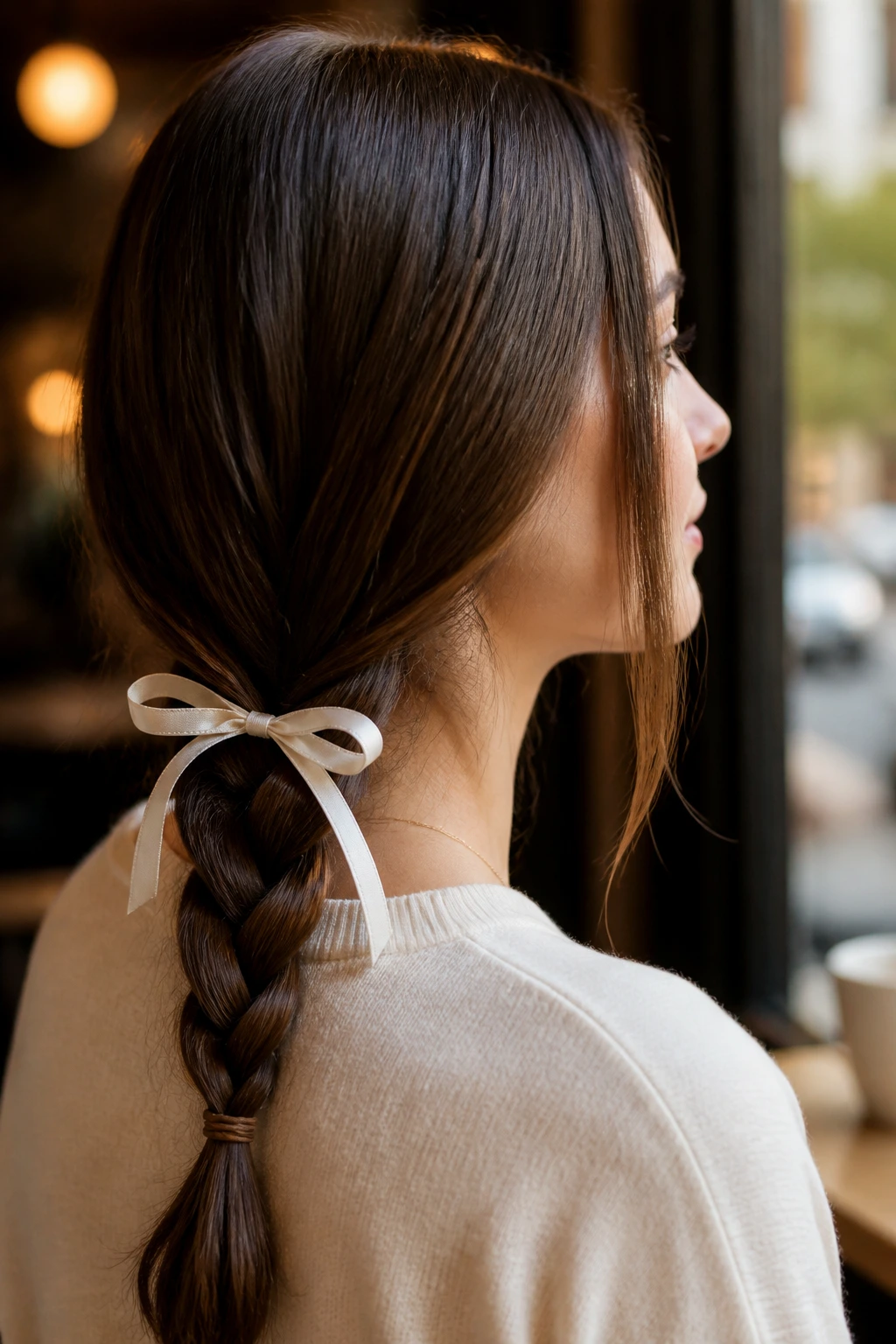
15. Ribbon-Tied Low Braid
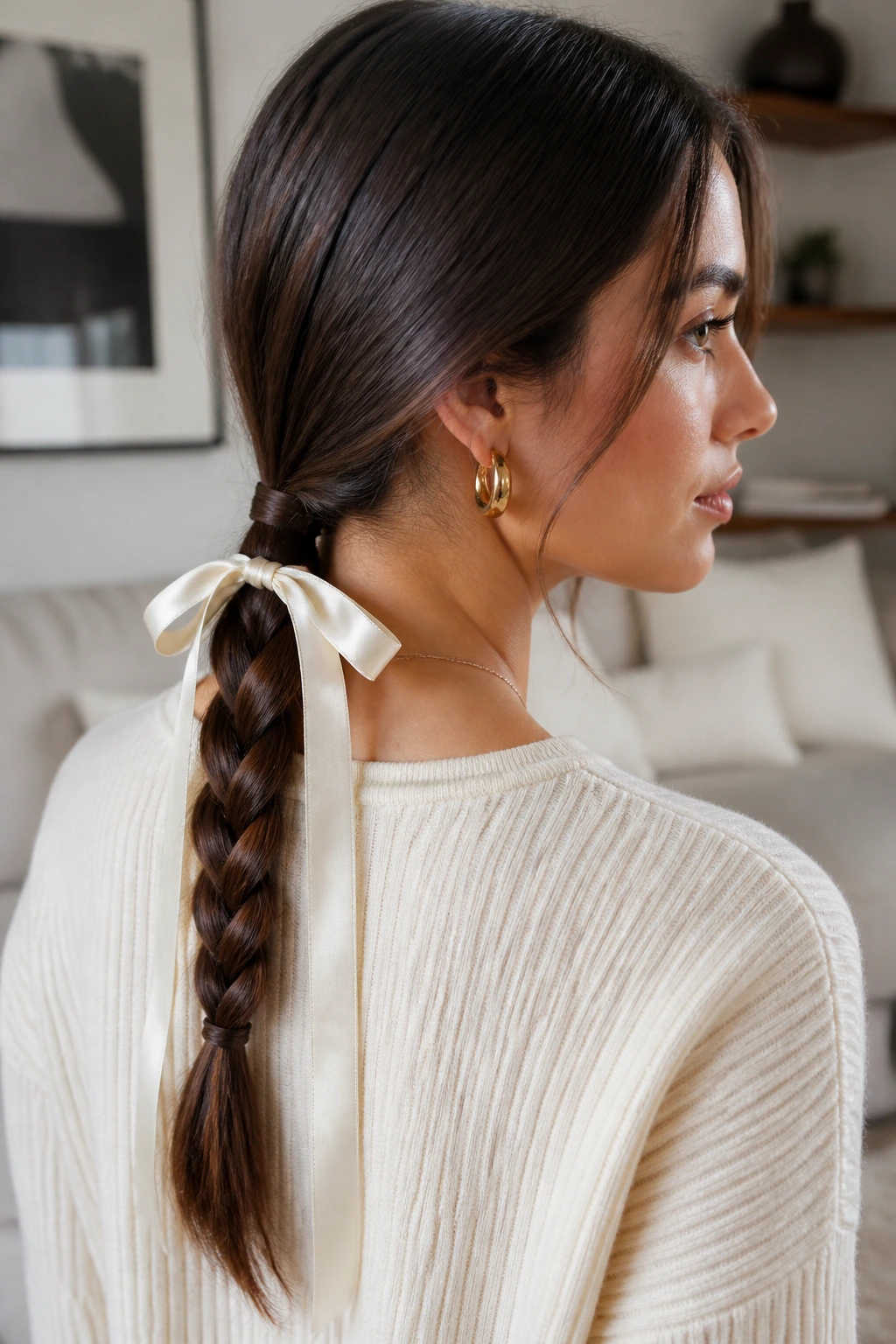
A low braid tied with ribbon turns a plain plait into something more finished. On long straight hair, the braid falls straight and narrow, which lets the ribbon do more of the talking.
This is one of my favorite styles for hair that’s freshly washed and a little too slippery for complicated updos. Braid the hair low, secure it with a clear elastic, then tie a ribbon over the top in a small bow or a long tail. Silk ribbon slides less than satin on some textures, which sounds backward until you’ve had to re-tie a bow three times before leaving the house.
16. Rope Braid Ponytail
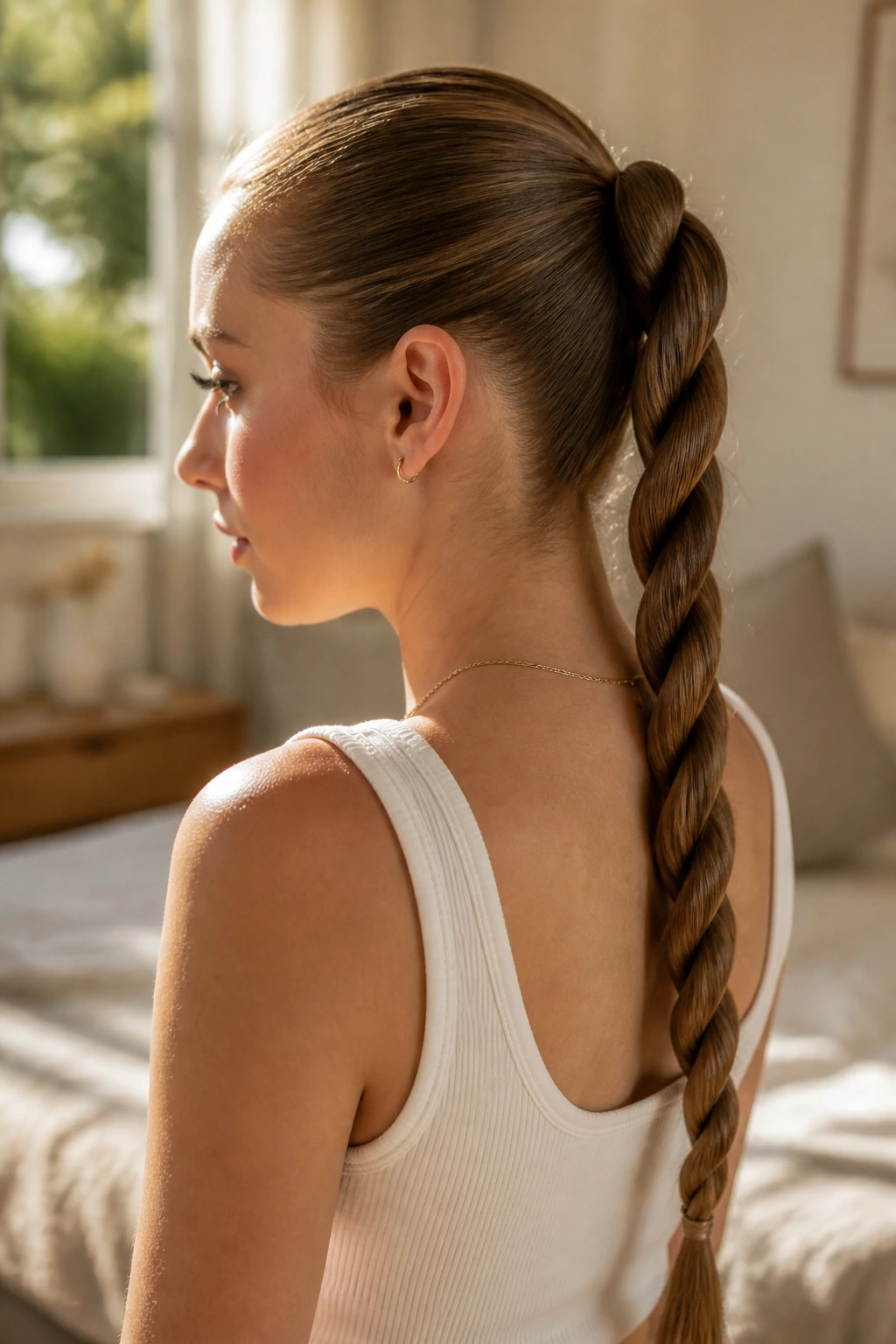
A rope braid is faster than a three-strand braid and looks especially neat on straight hair because the twist lines stay visible. Pull the hair into a ponytail first, divide it into two sections, twist each section in the same direction, then wrap them around each other in the opposite direction.
That opposite-direction detail matters. Skip it and the twist loosens. On long hair, the rope braid can hang down the back like a thick cord, which reads polished without feeling severe. It’s a smart choice when you want the shape of a braid but don’t want the full time commitment of a classic plait.
17. Double Micro Braids Into Loose Hair
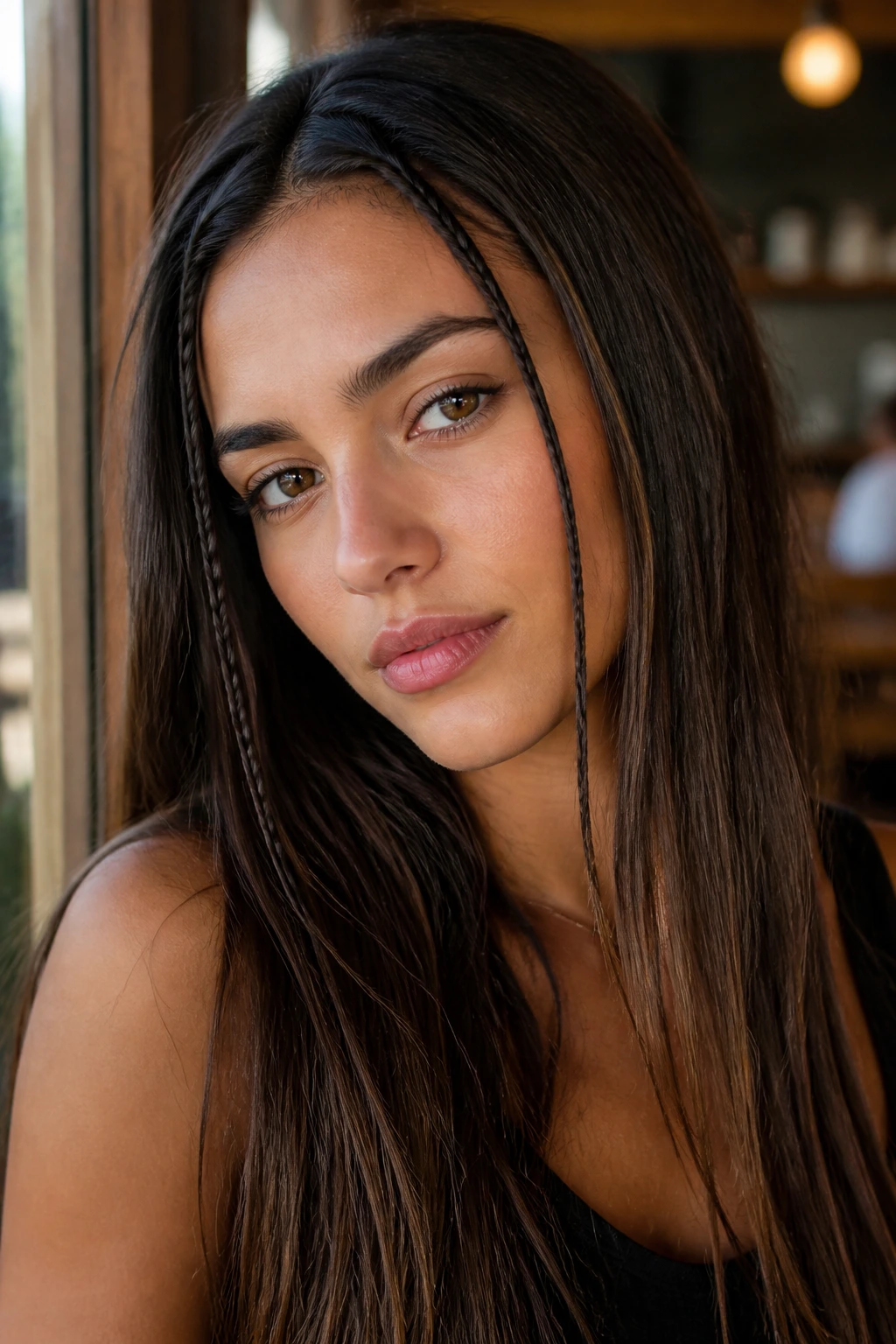
Two thin braids near the face can change straight hair more than people expect. They keep the front from looking too plain, and they give long lengths a slightly lived-in feel without touching the rest of the hair.
I like this style when the hair is down but needs a little something. Braid two narrow sections from the hairline, then secure them behind the ear or blend them back into the length. Keep the braids thin enough that they don’t steal the whole style. They should feel like punctuation, not a headline.
18. Braided Headband With Straight Lengths
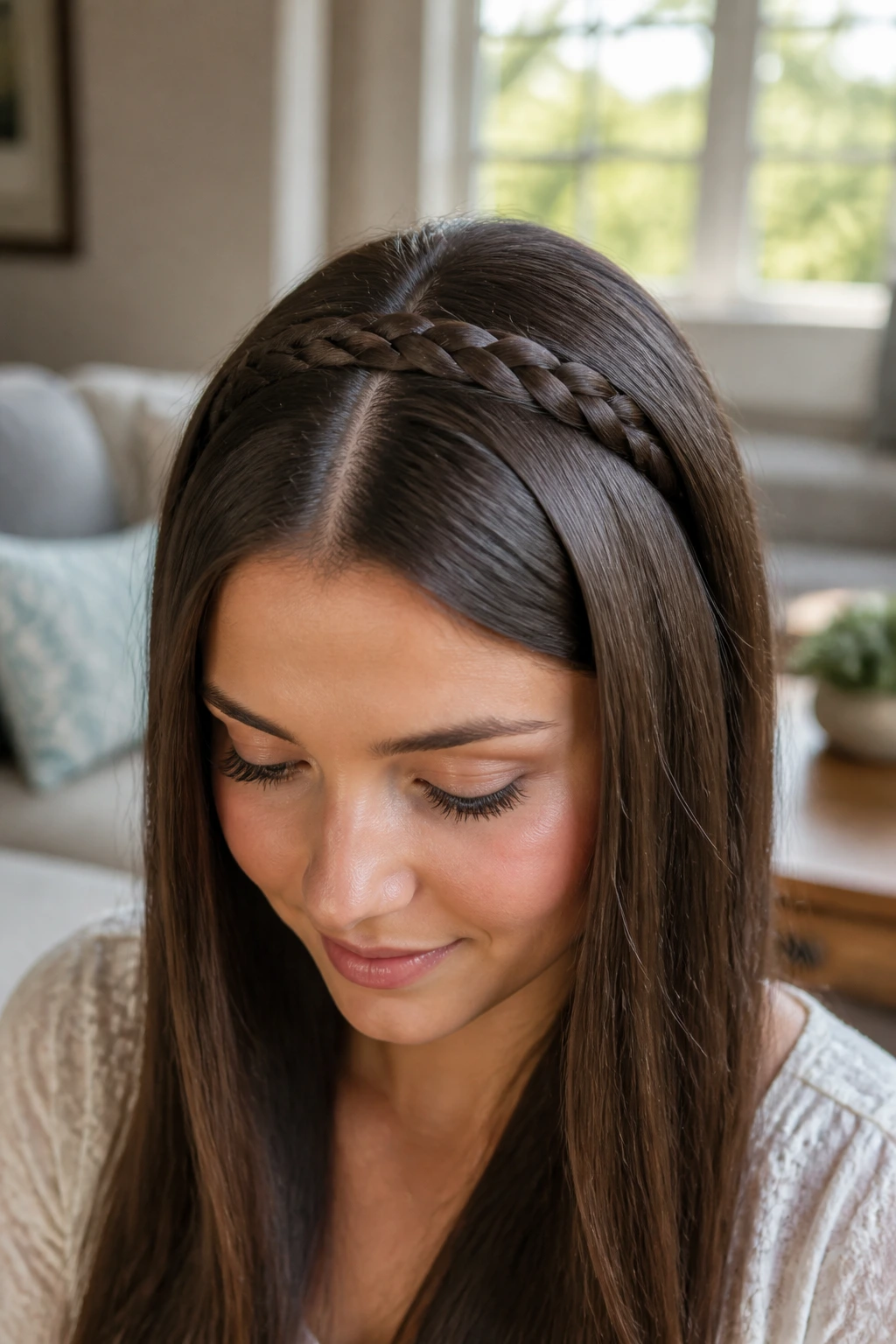
A braided headband cuts across straight hair the way a ribbon would, but with more hold. Braid a section from behind one ear to the other, then pin it across the crown so it sits like a built-in accessory.
This style works because it changes the top line of the hair without requiring any heat or a full updo. On long straight hair, the rest of the length can stay smooth and center-parted, which keeps the look balanced. If you’ve got layers, mist the braid lightly before pinning so the shorter pieces don’t slip out and fuzz the shape.
19. Low Sleek Bun With a Center Part
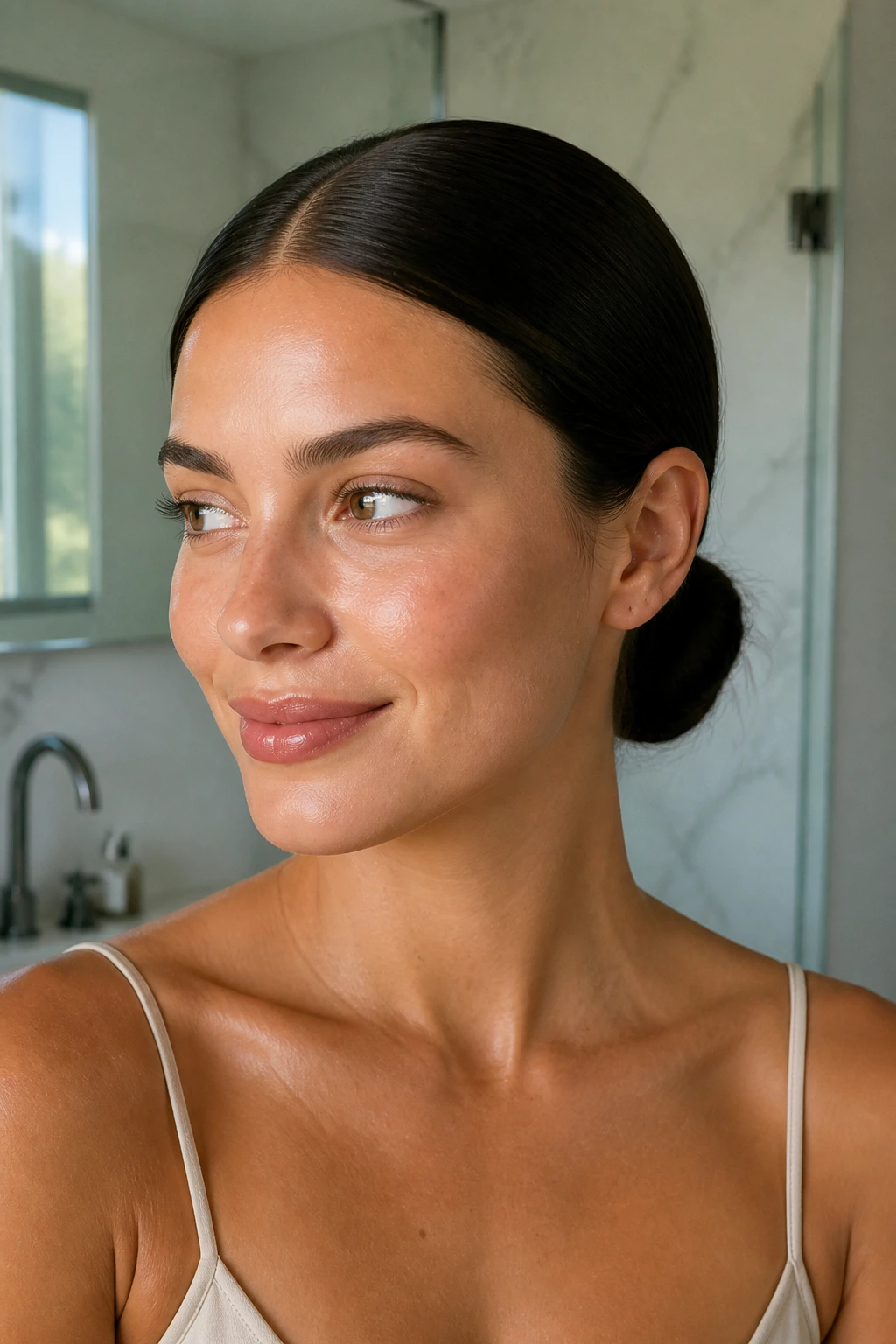
A low bun on straight hair can look almost severe in a good way. Center part the hair, smooth it back to the nape, and twist it into a compact bun that sits close to the head. The part gives the whole style symmetry.
This is one of the cleanest long-hair styles around. It keeps the length tucked away, which is useful when the weather is damp or when your hair is one brush stroke away from tangling in your collar. Use a fine-tooth comb for the top and a few pins in an X pattern under the bun. The base should feel firm, not tight.
20. French Twist With Long Ends Tucked In
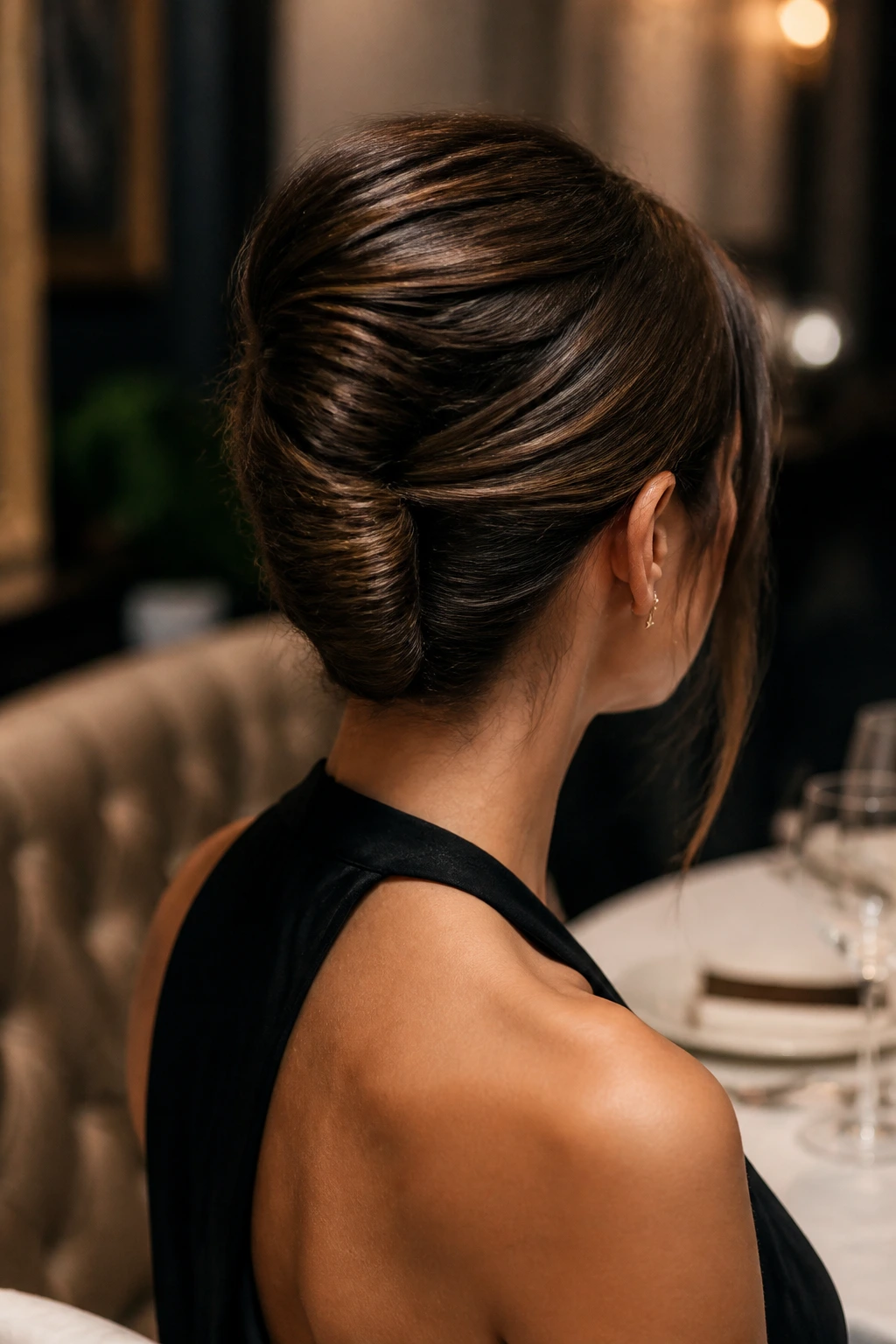
A French twist brings straight hair into formal territory without looking old-fashioned. Twist the hair upward, tuck the ends inside the roll, and pin along the seam so the twist sits snug and vertical.
Long straight hair makes this style easier than people think because the length gives you more material to work with. The trick is keeping the twist smooth before you pin it. Don’t grab huge sections. Small sections lie flatter and give the finished shape a cleaner edge. If a few strands escape at the top, leave them. Too much perfection can make the whole thing look stiff.
21. Claw Clip Twist for Long Hair
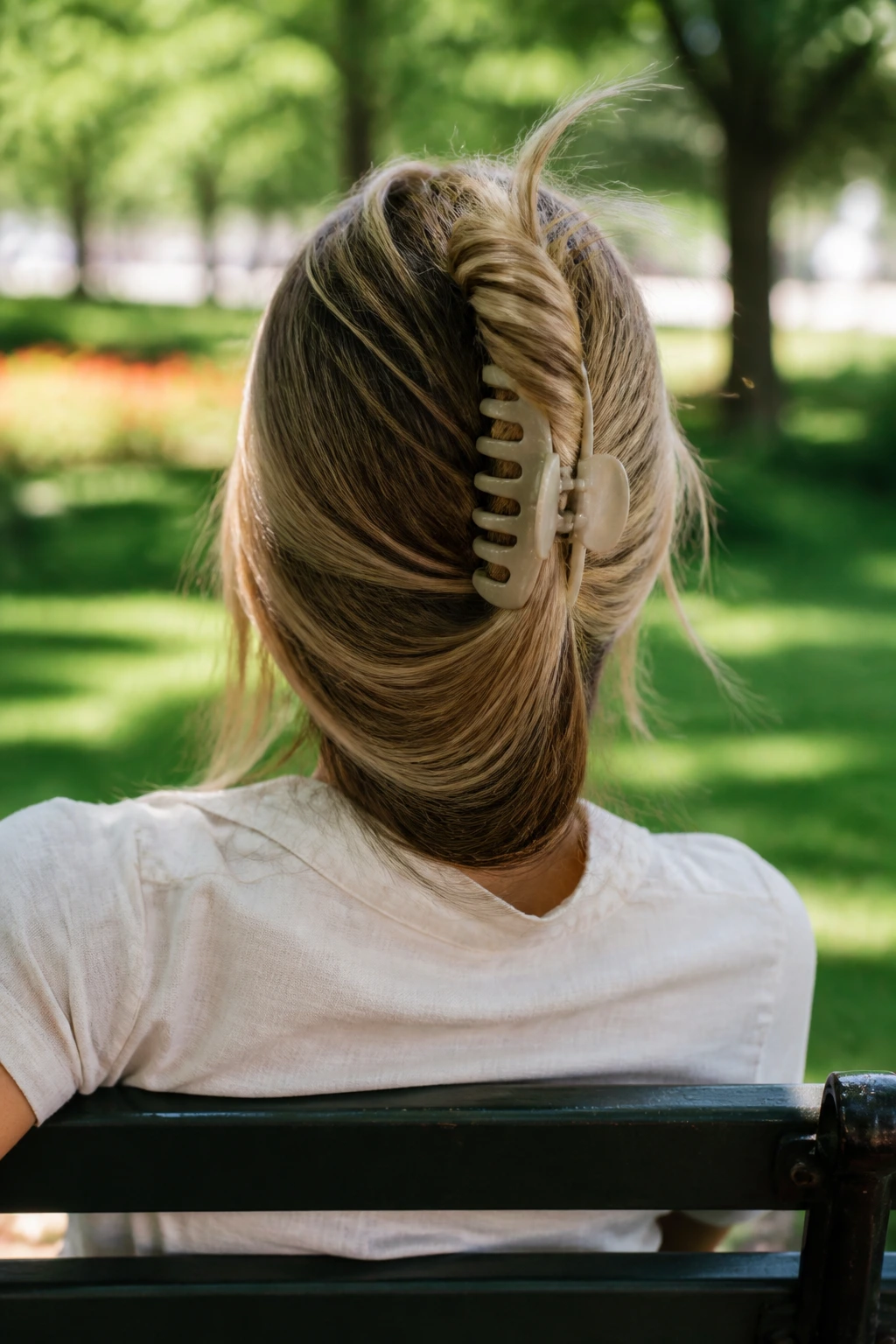
The claw clip is having a very practical moment for a reason: it’s fast, it doesn’t leave a tight crease like a small elastic can, and long straight hair twists into it with almost no drama. Gather the hair low, twist upward, fold the ends over, and clamp the clip vertically.
This style is best when you want the hair up but not packed tightly against the scalp. On very long hair, use a medium-to-large clip with teeth that can actually grab the section. Tiny fashion clips look cute and fail immediately. The clip should catch enough hair to stay put when you turn your head.
22. Half-Up Half-Down With a Twisted Top
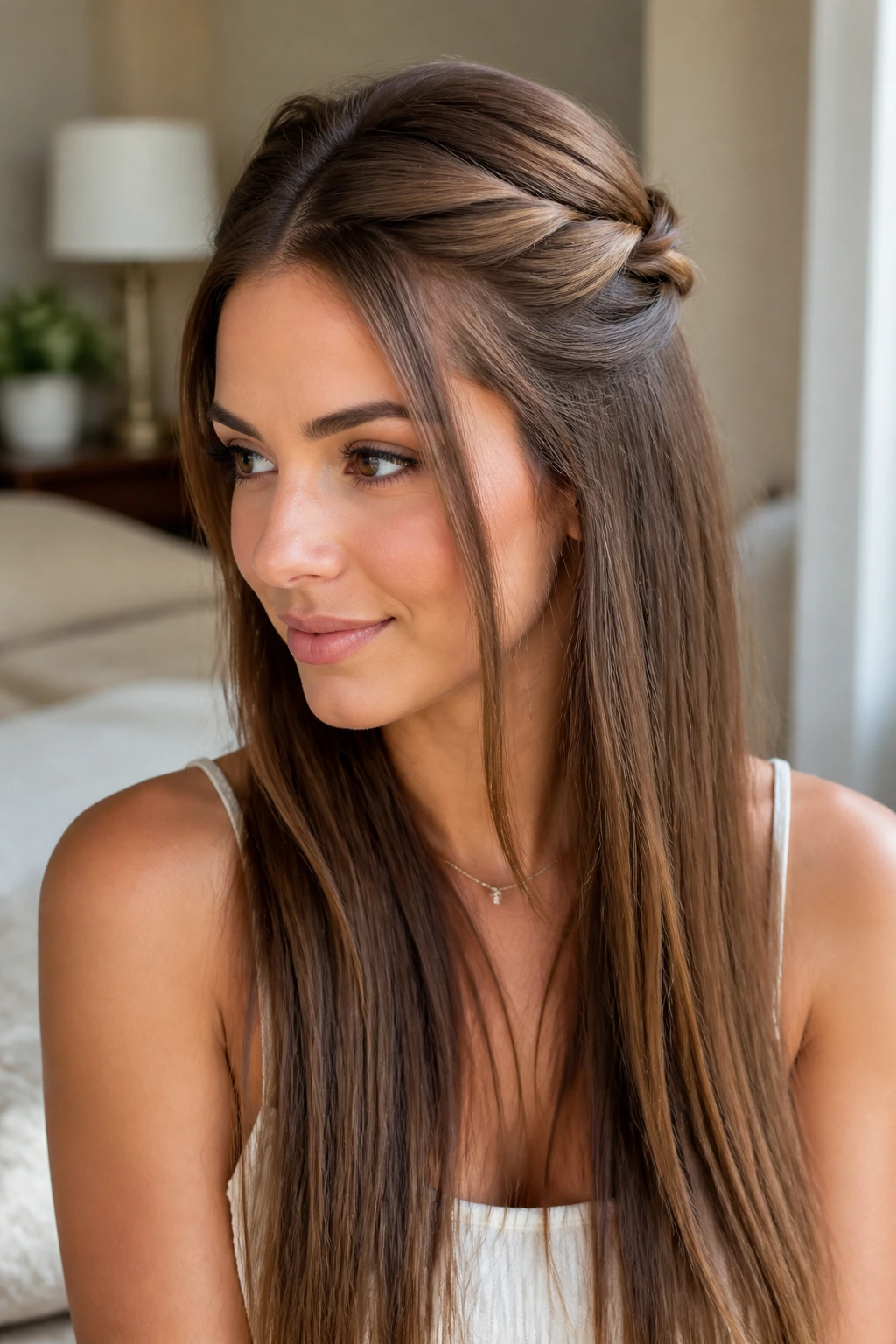
Half-up half-down styles make long straight hair look considered without making you commit to a full updo. Twist each side from the temples, meet them at the back of the head, and pin them together or tie with a small elastic.
It’s a good style when the length is the selling point but the roots need a little order. Straight hair keeps the twist line clean, so you don’t need big curls or teased volume to make it read. If you want more lift, pinch the hair just above the twist before securing it. That little lift keeps the top from flattening by the end of the day.
23. Half-Up Bow Style
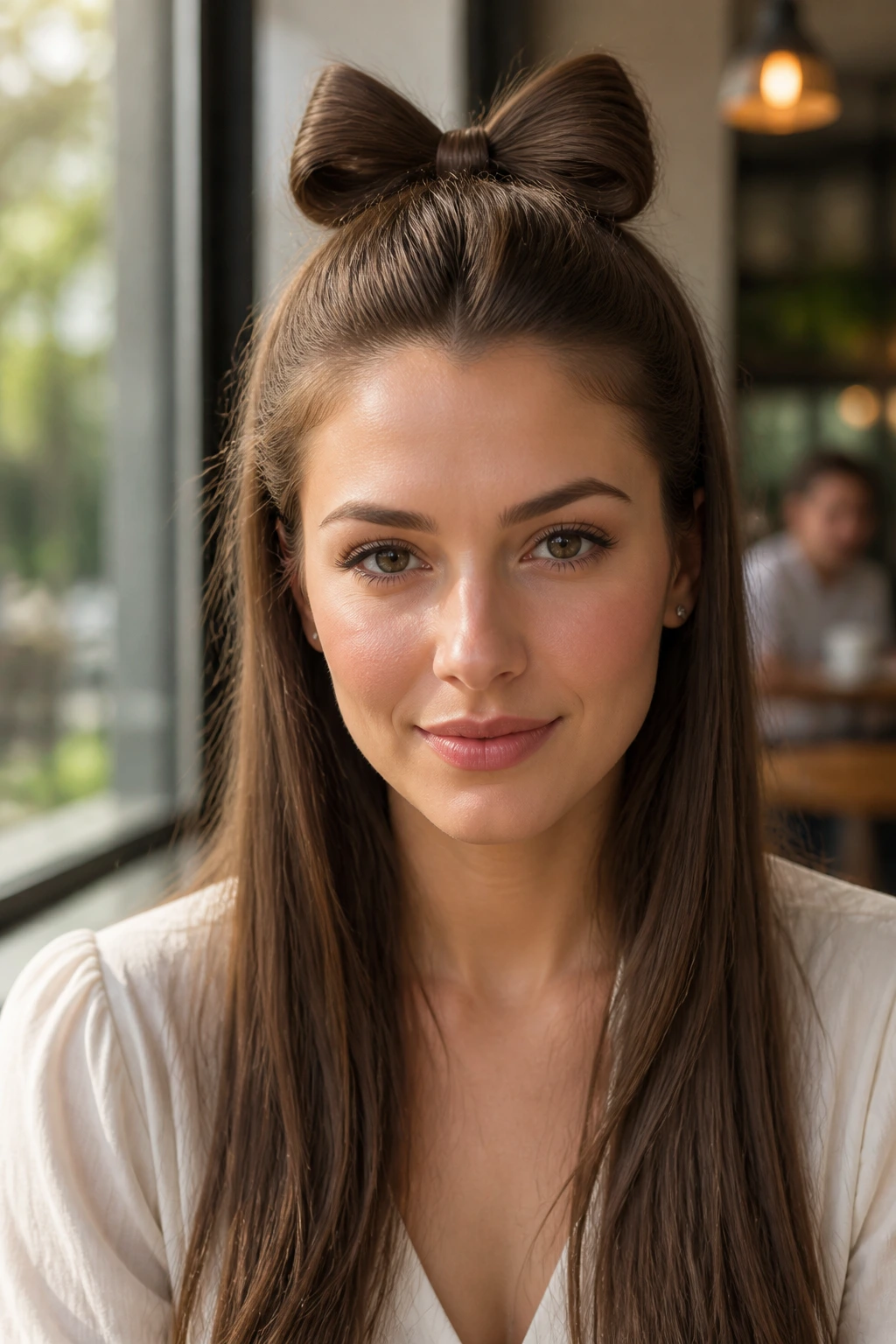
A bow made from hair sounds fussy until you try it on long straight hair and realize the texture helps. The smoothness keeps the loops neat, and the long ends give the bow a nice tail.
This look is sweet without being childish if you keep the bow compact and the rest of the hair sleek. Separate a top section, form two loops, and pin them in place with hidden bobby pins. Leave the tails straight. A ribbon can cover the center if you want to hide the pins, but the bow alone often does enough.
24. Straight Hair With Flipped-Out Ends
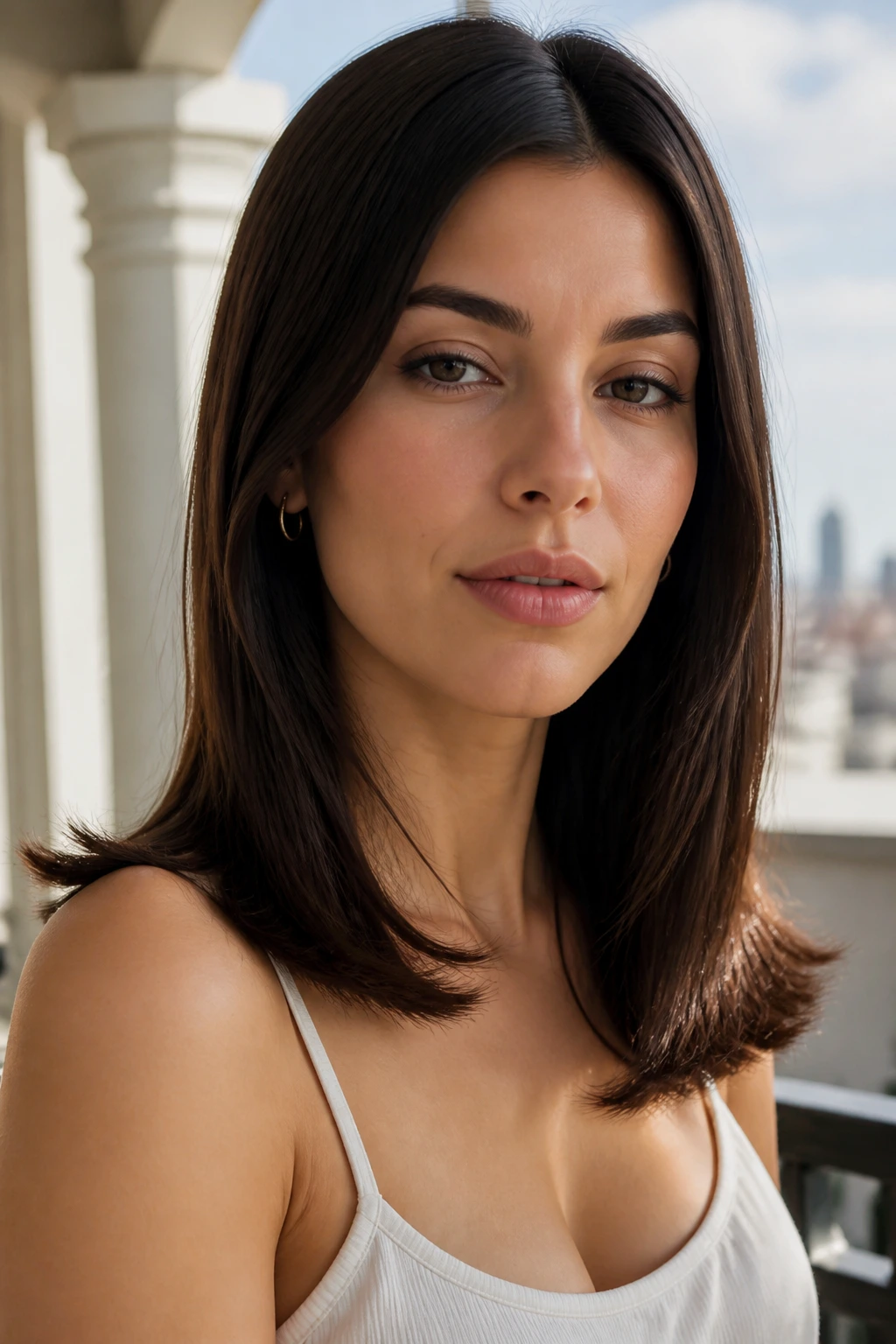
Flipped-out ends are the opposite of boring. They add shape to straight hair without breaking the clean line through the middle lengths. Use a flat iron or round brush to turn the last inch or two outward, and keep the root area sleek.
This style is charming because it gives motion where straight hair usually goes limp. The flip should be subtle, not retro-cartoon big. If the ends are heavy, a slightly smaller iron plate helps you control the bend. Too much heat at the ends will fry them fast, so move through that last bit once and keep going. No lingering.
25. Long Layers With an Invisible Finish
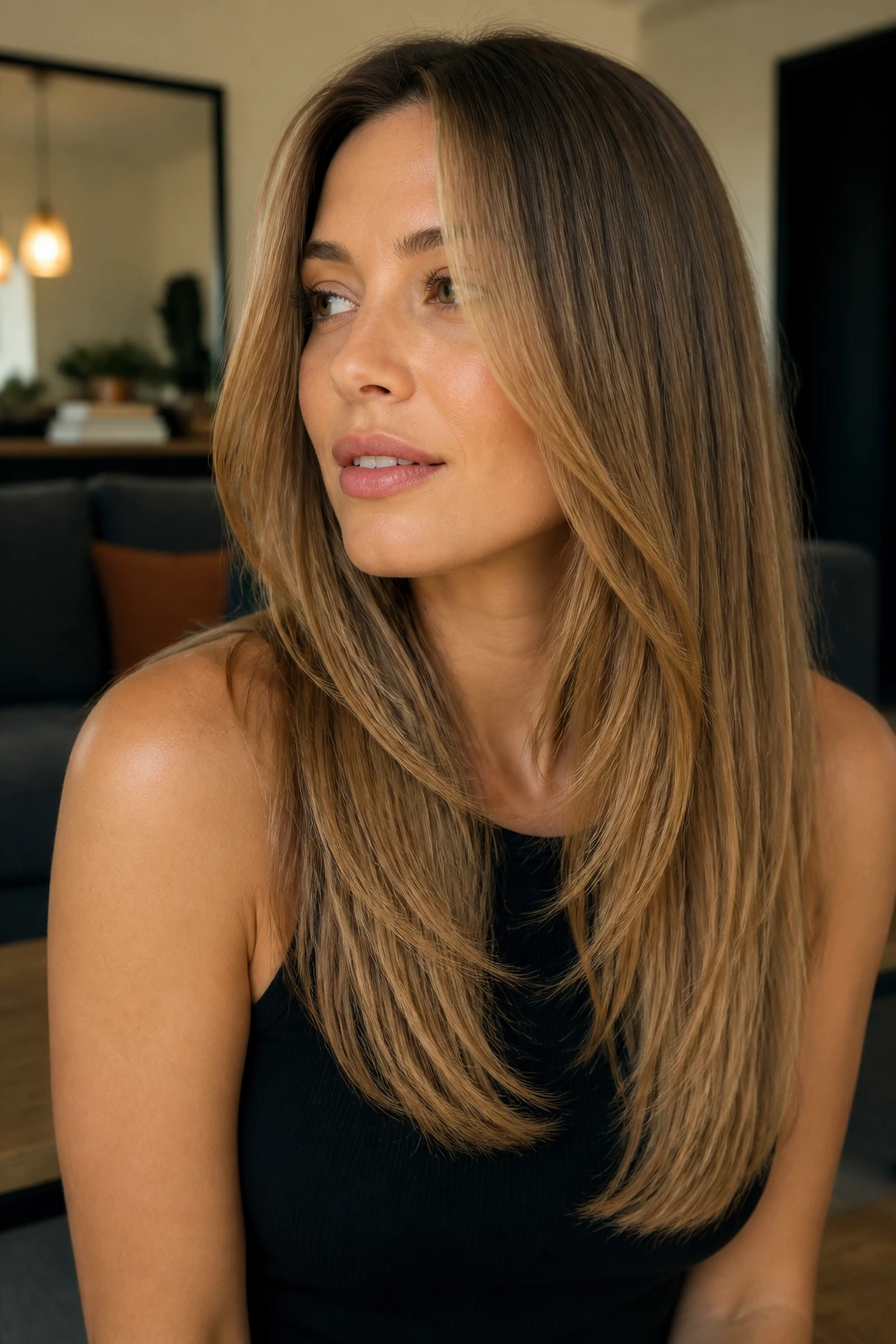
Invisible layers are the haircut version of a good supporting actor. They create movement without making it obvious where the shape begins or ends. On long straight hair, that matters because chunky layers can look disconnected fast.
The finish is usually smooth, lightly bevelled, and low-drama. The best part is how the hair moves when you turn your head — not bouncy, just less heavy. If your hair is thick and one-dimensional, this cut takes away some of the visual weight while keeping the length. It’s a smart ask for anyone who likes straight hair but hates the helmet effect.
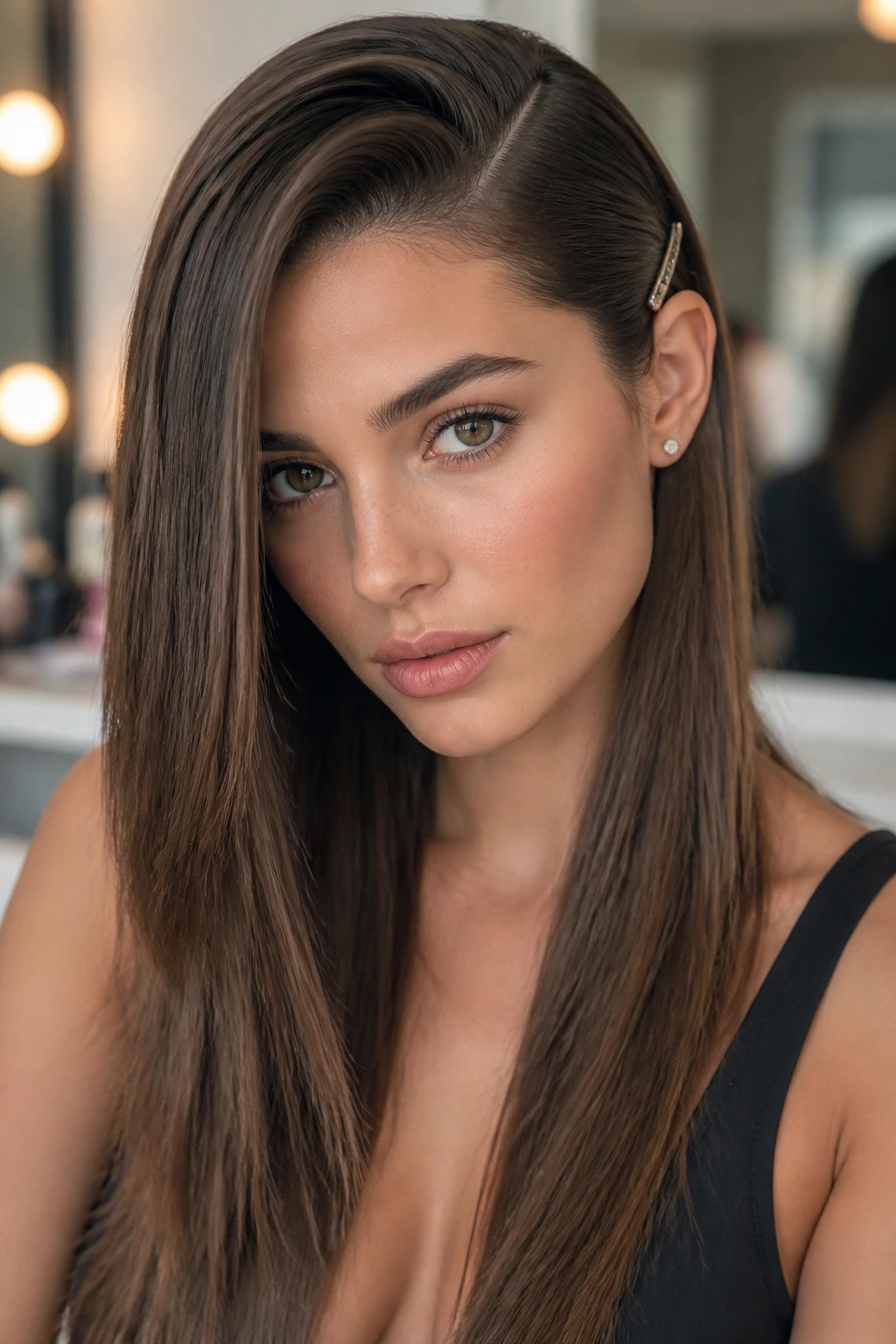
26. Pin-Straight Hair With a Statement Barrette
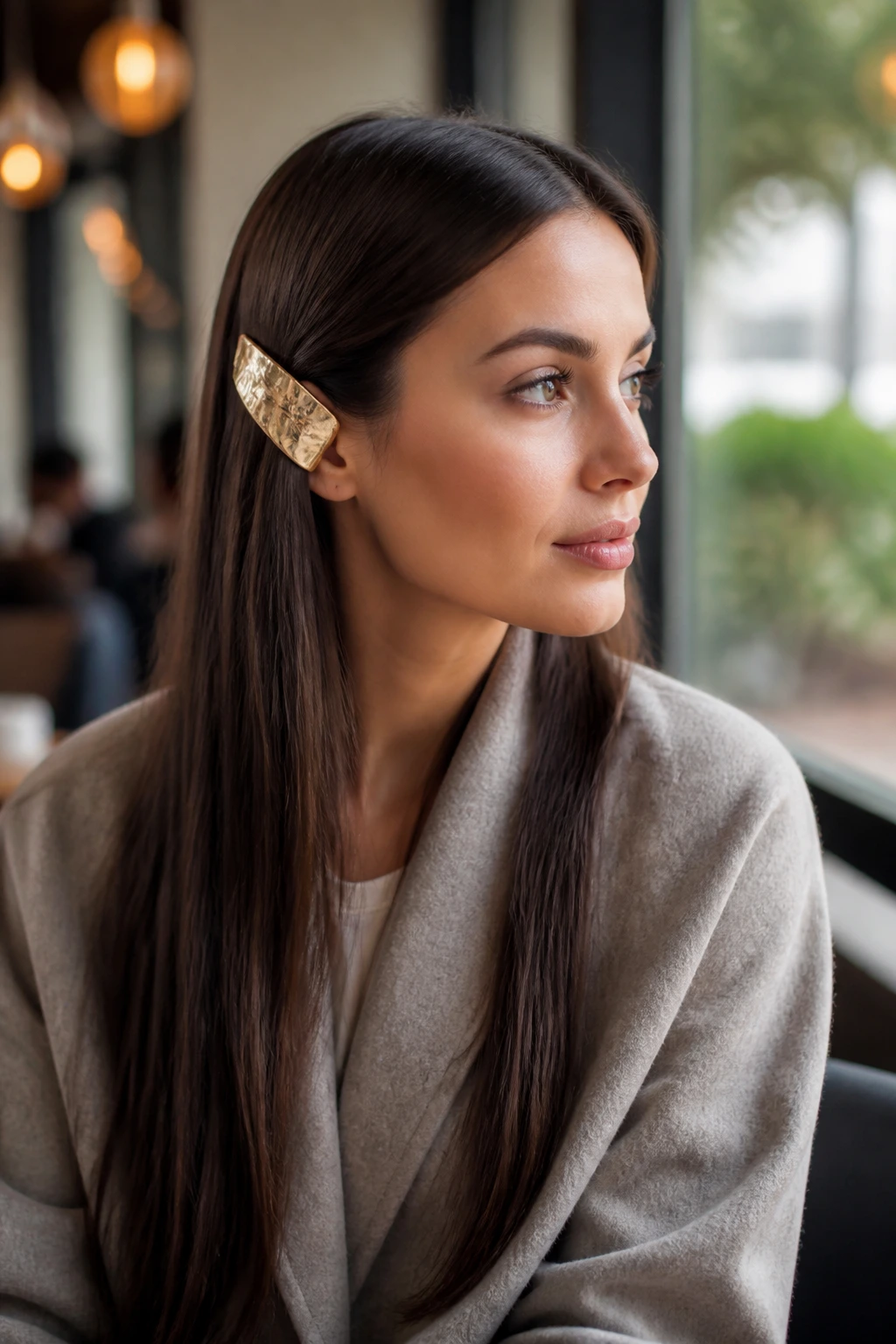
A single barrette can rescue straight hair from looking too plain. Part the hair the way you normally would, tuck one side back, and clip in a barrette with enough size to show up against the length.
This is one of the fastest ways to make long straight hair feel styled instead of merely worn. Keep the rest of the hair smooth and let the accessory carry the mood. I prefer a barrette with a flat back and a secure clasp; decorative clips that slide open with a little pressure are a nuisance after five minutes. You want the clip to hold, not blink at you.
27. S-Wave Ends With a Straight Crown
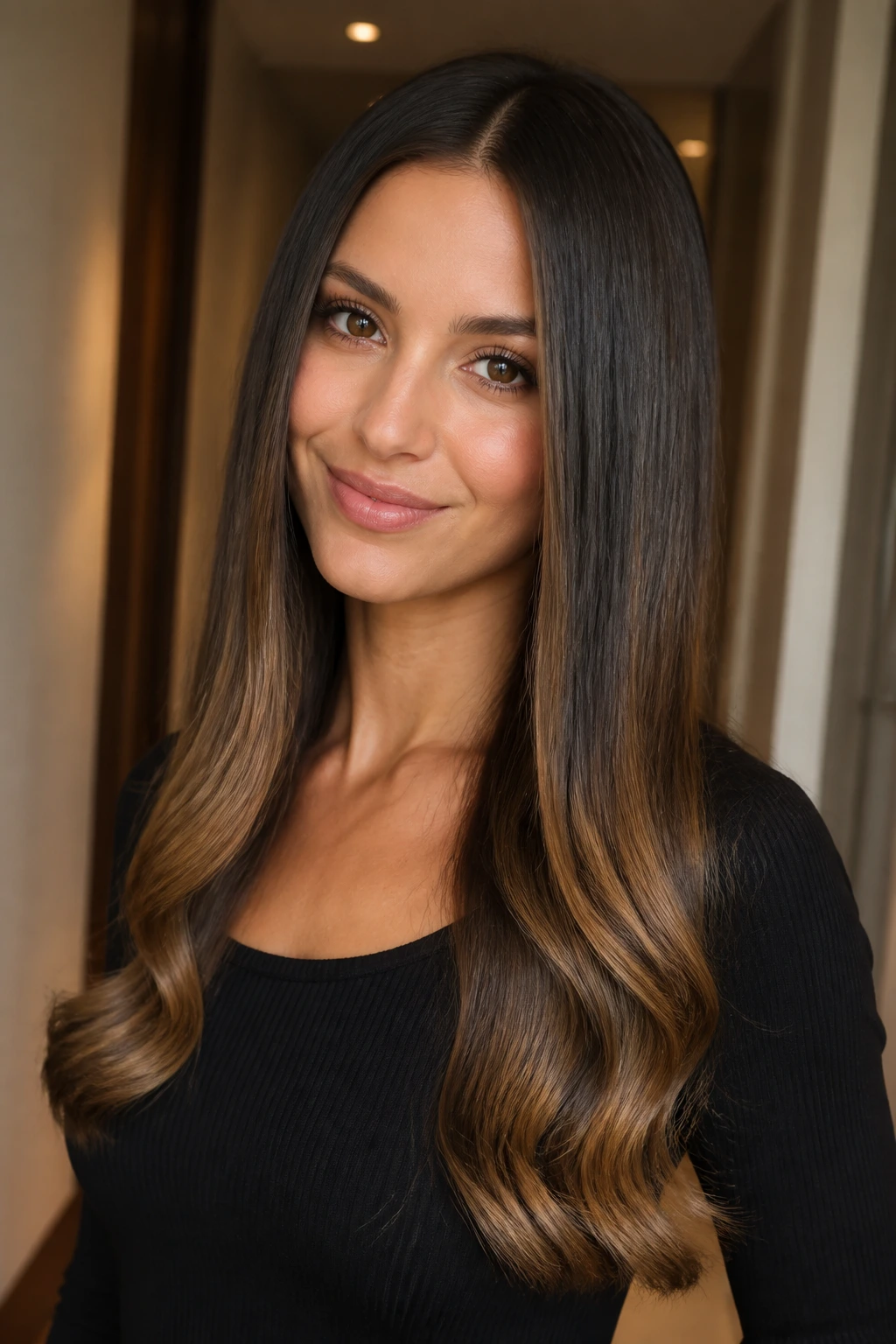
Here’s a nice compromise for people who want a bend without turning straight hair into curls: keep the top sleek and add a soft S-shaped wave only at the bottom third. It creates movement while preserving the long, clean line through the center lengths.
This works well when the ends look too blunt or the hair falls flat against sweaters and coats. Use a flat iron or large barrel iron to create one soft bend, then brush it out lightly so it doesn’t read as a curl. The effect is subtle in a mirror and much more noticeable when you move. That’s the point.
28. Low Knot With Face-Framing Pieces
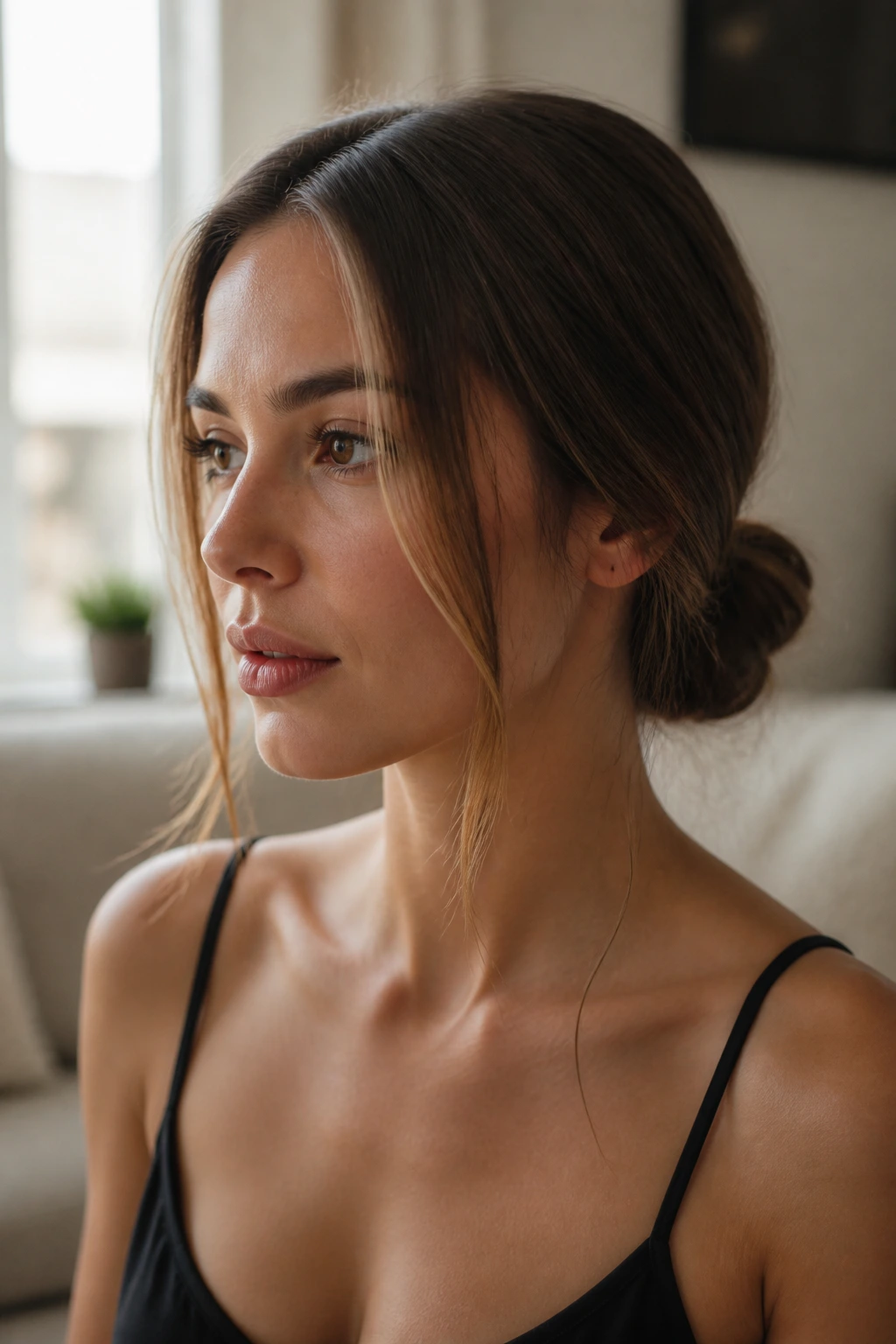
A low knot feels softer than a bun because the knot shape keeps a little irregularity. Pull the hair low, leave out two front pieces, twist the rest into a knot, and secure it close to the nape.
The face-framing pieces matter here. On straight hair, they stop the style from becoming too severe, especially if your hair is very long and heavy. Curl just the front pieces if you want a softer edge, or leave them straight for a cleaner look. Either way, the knot should sit snug and low, like it belongs there.
29. Braided Low Ponytail
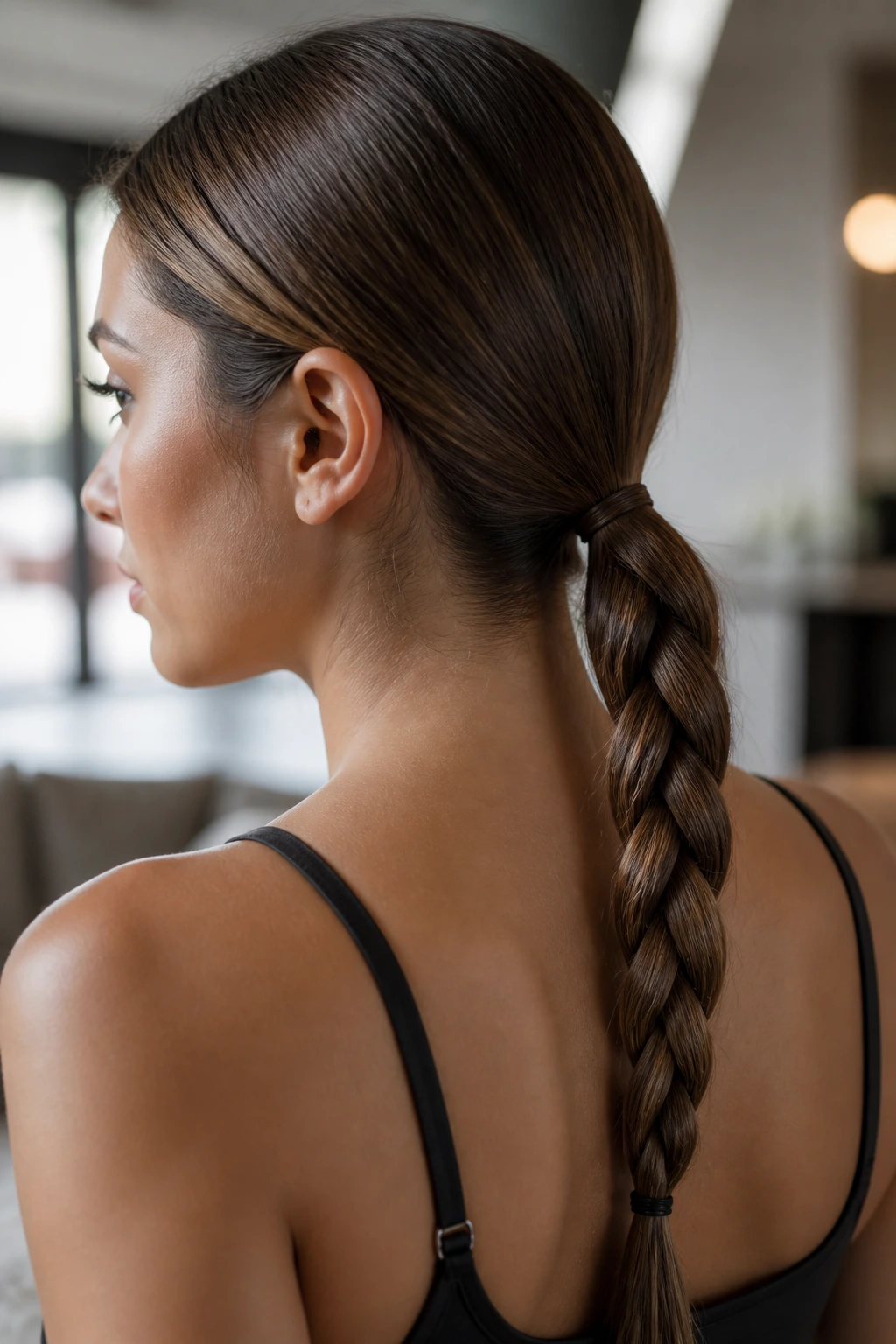
A low ponytail braided through the tail gives straight hair a longer-looking finish. The top stays smooth, the braid adds structure, and the overall shape looks more finished than a simple tie-back.
I like this style when the hair needs to stay contained but still look like you spent some time on it. Secure the ponytail low, braid the tail tightly enough that it doesn’t puff, and finish with a small elastic at the end. If the braid looks too thin, pancake it gently by pulling the outer edges of each braid section. Go slow. Too much tugging and the braid starts looking fuzzy.
30. Scarf-Wrapped Straight Hair
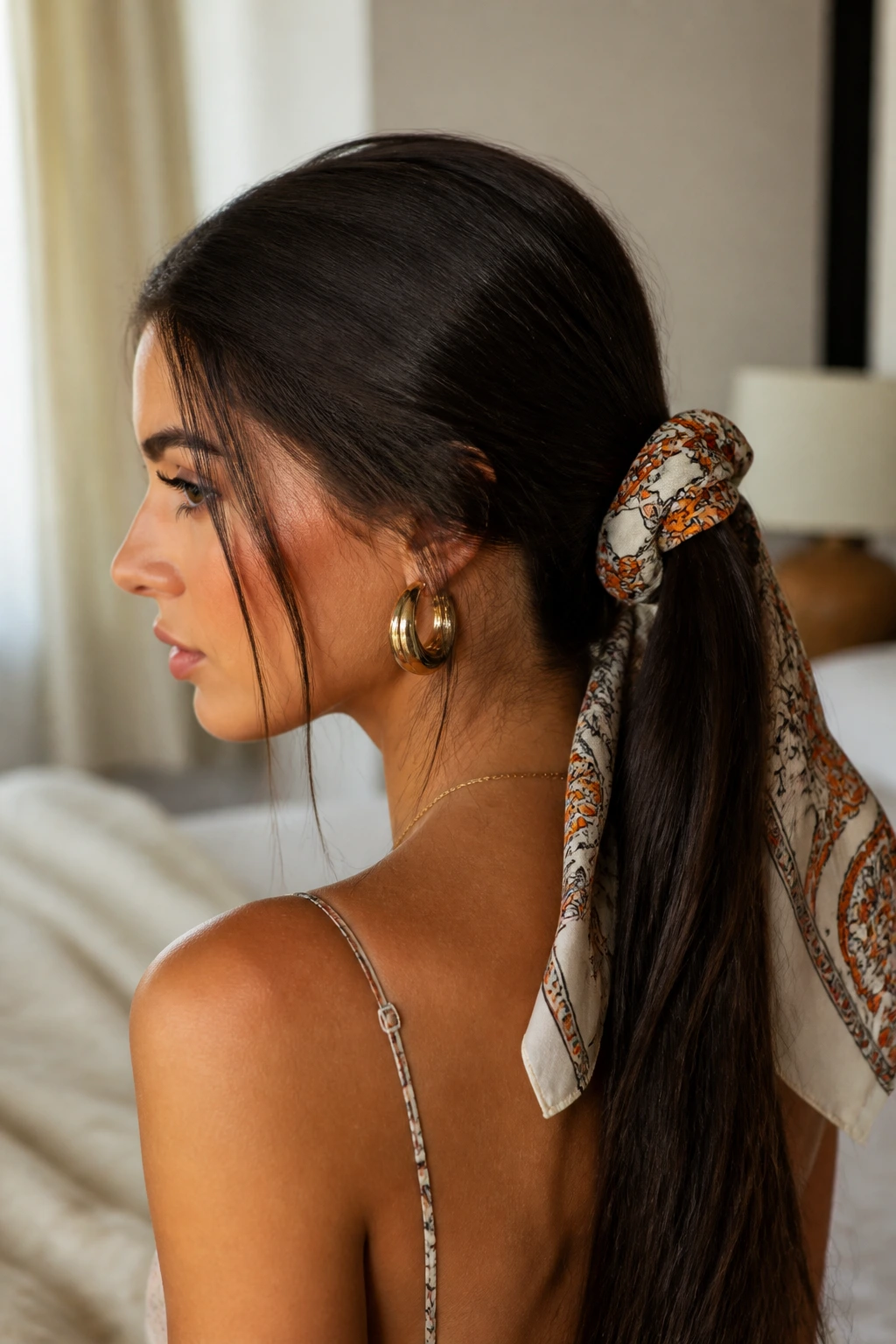
A scarf can do more for long straight hair than a dozen small pins. Wrap it around a ponytail, tie it over a bun, or fold it into a headband at the crown. Straight hair likes the contrast between the smooth length and the soft fabric.
This is a good style when the hair itself is behaving, but the outfit needs a little more intention. Choose a scarf that isn’t so silky it slides all over the place. Cotton or a textured blend stays put better. The best part is how little it takes to change the whole mood of the hair.
31. Tucked-Behind-Ear Lengths With a Side Clip
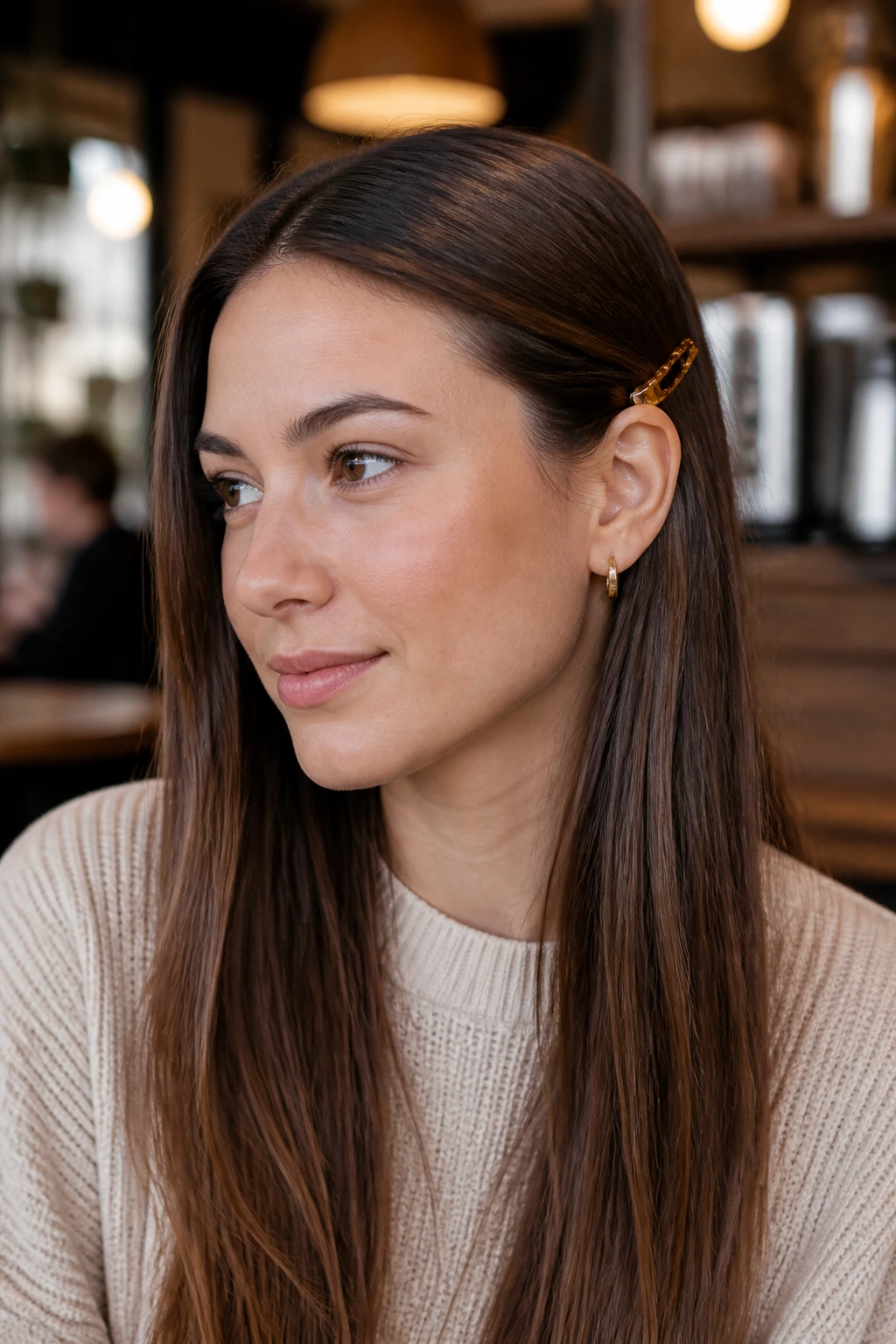
Sometimes the simplest style is the one that gets worn the most. Long straight hair tucked behind one ear, held with a small side clip or barrette, gives you structure without hiding the length.
This works because it breaks the hair’s symmetry in a tiny, useful way. The tucked side opens the face, and the rest of the length still falls cleanly down the back. If your hair is very straight and slippery, spray a little dry texturizer at the tucked section before clipping it. That prevents the clip from skating forward every twenty minutes.
32. Side Sweep With Sleek Root Volume
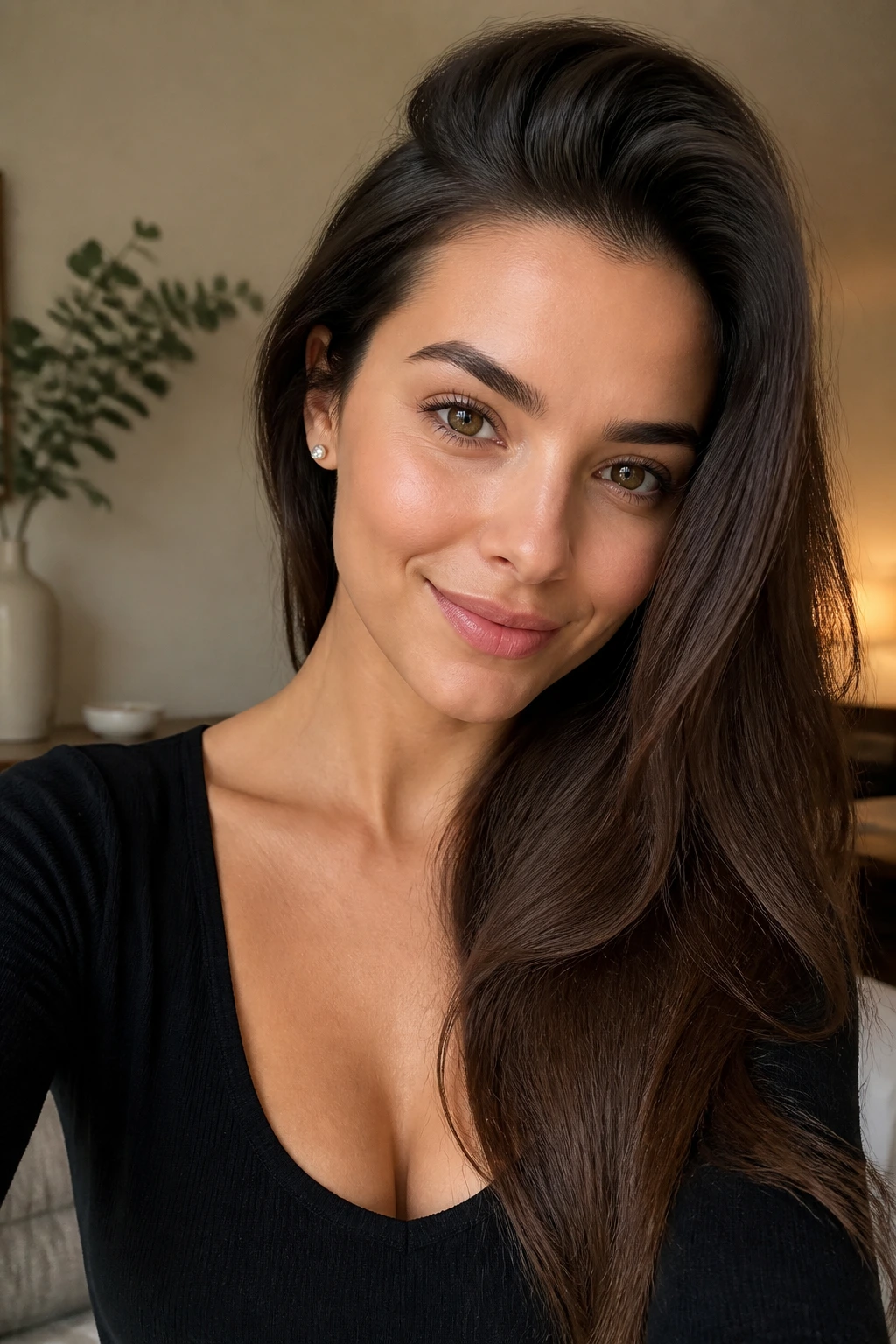
A side sweep is more polished than a dramatic side part, less formal than an updo, and easier than it sounds. Brush the hair over one shoulder, keep the root volume soft at the crown, and let the length fall across the chest or back.
Straight hair shows this style off well because the surface stays smooth and the sweep looks deliberate. It’s a good option when you want your hair to frame jewelry or a neckline instead of disappearing behind your shoulders. A little root lift at the front keeps the style from lying too flat against the scalp. Small lift. Not helmet hair.
33. V-Cut Lengths With a Clean Center Part
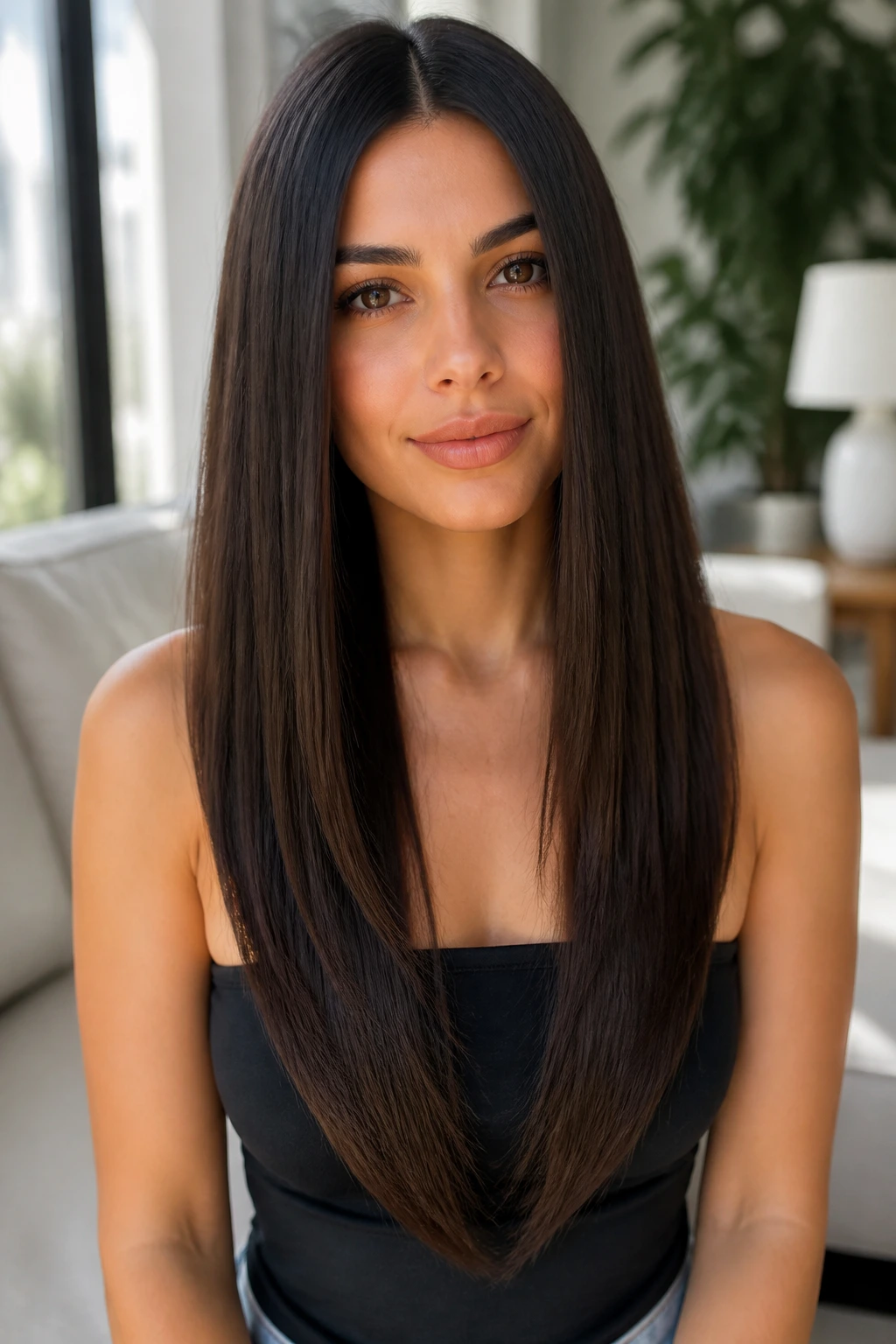
A V-cut isn’t a style you slap on in five minutes, but it changes the way long straight hair hangs every day. The center remains longest, and the sides taper into a pointed shape that adds movement without obvious layers.
This cut is especially useful if your hair is thick and tends to sit like one heavy sheet. The V shape gives the ends some visual motion, which helps long straight hair move when you walk instead of dragging behind you like one solid curtain. Keep the top smooth and the part straight. The cut does the rest.
34. Half-Up Bubble Ponytail
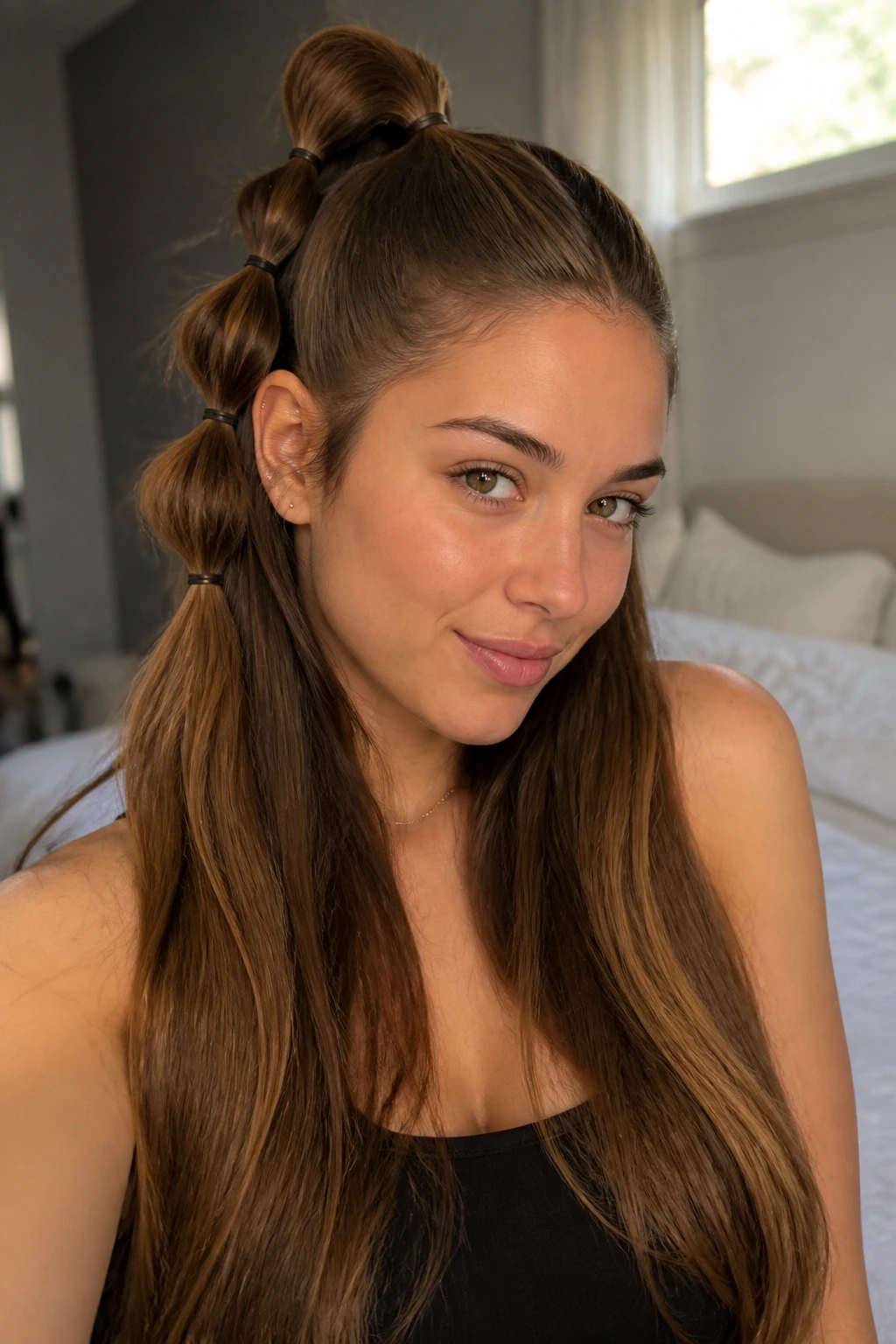
Take the bubble ponytail and shrink it into a half-up shape, and you get something playful that still reads neat. Pull the crown section into a small ponytail, add two or three elastics down the length, then gently puff each bubble.
Long straight hair helps here because the smooth tail keeps the bubbles round and clean. It’s a nice middle ground when a full ponytail feels too pulled back and wearing everything loose feels too plain. If you want more lift, backcomb the crown section lightly before tying it off. Just one pass. You don’t need a nest.
35. Long Straight Hair With a Braided Crown Accent
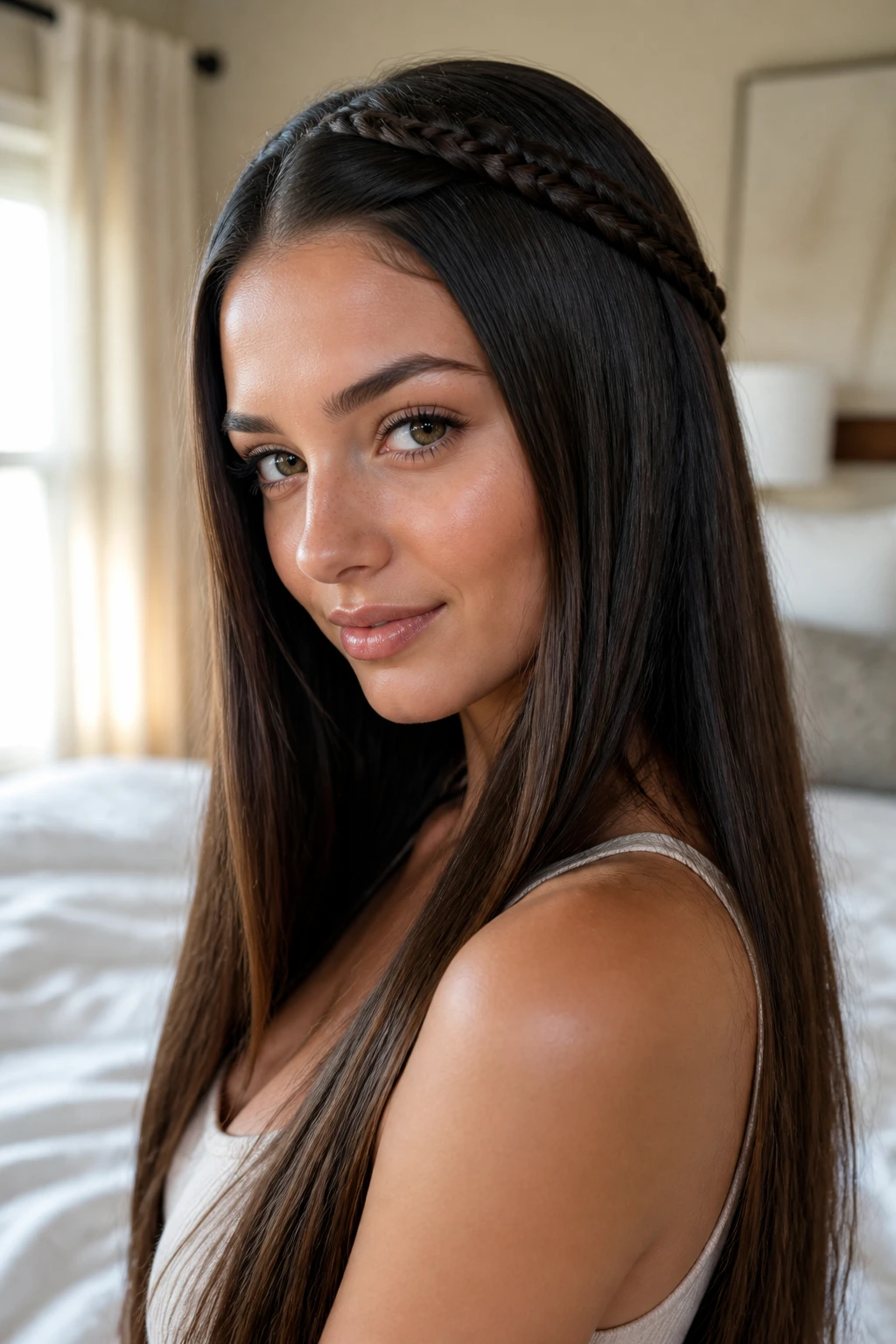
The braided crown accent is the kind of detail that changes the whole style without taking over. Braid a small section along the top or side crown, pin it into the length, and leave the rest of the hair straight and glossy.
It’s a good finish when you want long straight hair to look styled but not overworked. The braid should be narrow enough to feel like a trim line, not a second hairstyle fighting the first one. If you want the braid to stand out more, lightly pull the edges after you pin it. A little widening gives the braid texture while the rest of the hair stays sleek.
Why Straight Hair Needs Shape, Not Just Length
Long straight hair can lean heavy fast. The weight pulls everything downward, which is why styles that create a line, an angle, or a bit of lift tend to look better than styles that simply pile the hair on top of itself. Shape matters more than volume in most cases.
The good news: shape is cheap. A part, a bend in the ends, a wrapped elastic, or a braid anchored at the temple can change how the whole head reads. You do not need five products and a twenty-minute blowout for every day. Sometimes the fix is a different place to pin the hair, not more heat.
Essential Tools for These Styles
-
Tail comb: Best for sharp center parts, side parts, and neat sectioning around the hairline.
-
Paddle brush: Works fast on long straight hair and keeps the top layer smooth without making the ends frizzy.
-
Boar-bristle brush: Helpful for sleek ponytails and polished buns because it lays down flyaways.
-
Small snag-free elastics: Use these for bubble ponytails, low braids, and half-up styles; they hold without tearing the hair.
-
Bobby pins in two lengths: Short pins for detail work, longer pins for buns, twists, and braids that need anchoring.
-
Flat iron with adjustable heat: Keep it on the lower end that still smooths your hair; most straight styles need refinement, not blasting.
-
Heat protectant spray: Use it before any hot-tool pass so the ends do not dry out and snap.
-
Texturizing spray or dry shampoo: Good for slippery roots, especially on second-day hair that needs a little grip.
-
Strong-hold hairspray: A light mist around the front and crown keeps parts and flyaways from wandering.
-
Claw clip and barrette: Handy for quick twists, side clips, and styles that need one focal point.
-
Silk or satin scarf: Useful for wrapping, tie accents, and holding smoother styles in place overnight.
Smart Cut and Product Choices for Long Straight Hair
A style only works as well as the haircut underneath it. That’s the part people skip, then wonder why their ponytail looks flat or their braid turns thin halfway down the back. Long straight hair usually looks best with either a blunt finish, soft invisible layers, or face-framing pieces that give the front some motion. Heavy, chopped-up layers can make the ends look stringy if your hair is fine. On the other hand, thick hair often needs some internal removal so the style doesn’t sit like a block.
Product choice matters just as much. A lightweight heat protectant is non-negotiable if you use a flat iron at all. Serum is useful, but use it sparingly — one pump on the ends is enough for most people. Too much and the hair gets tacky or stringy, which straight hair shows immediately. For grip, reach for dry shampoo at the roots or a texture spray on the section you plan to braid or pin. That keeps the style from slipping out before lunch.
One more thing: if your hair is very fine, overly rich masks can make it collapse. Use them on the lower half only, and rinse well. If your hair is dense, a little leave-in cream helps the surface behave. The difference between “sleek” and “pasted down” is smaller than people think.
How to Wear These Looks With Different Outfits
Presentation: Sleek styles — center parts, wrapped ponytails, low buns — read best with clean collars, sharp necklines, and clothing that doesn’t compete with the hair. Softer styles, like half-up knots and braided crowns, do better with knits, denim, and dresses that have a little movement.
Accompaniments: Small hoops, studs, hair clips, and ribbon details all change how the style lands. A blunt straight style looks stronger with minimal jewelry; a braid or bow can handle a bit more ornament. Keep the accessories to one main note so the hair doesn’t start arguing with your earrings.
Portions: If the hair is very long, keep the style proportionate. Tiny buns on huge length can look underpowered. Likewise, a giant claw clip on fine hair can swallow the whole head. Match the scale of the accessory to the amount of hair you actually have.
Beverage Pairing: Not literal, obviously — but if the outfit is formal, the hair should feel as composed as the rest of the look. A polished ponytail or smooth bun belongs with that kind of visual order. A scarf, braid, or half-up twist gives you a more relaxed line when the clothes are softer and less structured.
Extra Tips for More Grip, Shine, and Movement
Shine Boost: A drop of serum warmed between the palms and skimmed only over the last 2 to 3 inches can make long straight hair look finished without flattening the top. Keep it off the roots unless your hair is very dry.
Grip Fix: If your hair is too slick for braids or clips, mist the mid-lengths with dry shampoo before styling. Let it sit for 30 seconds, then brush through. That powdery grip helps bobby pins stay where you put them.
Customization: Swap the center part for a deep side part, add a ribbon to a braid, or tuck one side behind the ear if the style feels too plain. Straight hair changes mood fast with small adjustments.
Make-It-Yours: Fine hair usually needs crown lift and smaller sections. Thick hair usually needs bigger elastics, stronger pins, and fewer layers around the face so the style doesn’t split apart.
Common Mistakes That Flatten Straight Hair
The first mistake is over-smoothing. If every bit of volume gets brushed out, straight hair can look lifeless even when it’s clean and shiny. Leave a small amount of lift at the crown, especially with ponytails and half-up styles. That small bump keeps the head from looking pressed flat.
Another common problem is too much product. Straight hair shows buildup faster than most textures. A heavy oil near the roots or a thick cream on the surface turns the hair stringy, and then the style loses shape. Use less than you think, and keep richer products on the ends.
People also tie every ponytail in the same spot. That creates stress on the same section of hair and can leave a crease line where you don’t want it. Move the placement slightly — low, mid, or high — and switch elastics between styles so one area isn’t always taking the hit.
Braids fail for a simple reason too: they’re too loose at the start and too tight at the end. Loose at the top, and the style slides out. Too tight, and the braid fights the head shape and looks hard. Keep the first few sections snug, then relax your hands as you move down.
Last one: ignoring hair texture when choosing the style. Fine, slippery hair does better with wrapped bases, pins, and texture spray. Thick hair does better with shapes that remove bulk. Use the hair you have, not the hair in the photo you saved.
Variations and Adaptations to Try
Heat-Free Sleek: Start with damp hair, smooth it into a low bun or wrapped ponytail, and let it air-dry in place for a softer finish. This works best when you want a polished shape without flat ironing the whole head.
Extra-Grip Braids: Add dry shampoo or texturizing spray to second-day hair before braiding. The braid looks fuller and holds better, especially on very straight, very silky strands that usually slip apart.
Soft Accessory Edit: Swap clips and elastics for ribbon, scarf ties, or a single decorative barrette. The shape stays the same, but the feel changes from casual to dressed-up in a small, believable way.
Thick-Hair Control Version: Divide the hair into smaller sections before braiding or twisting, and use two pins where one would normally sit. Straight thick hair has weight, and weight needs anchoring.
Fine-Hair Lift Version: Backcomb a 1-inch strip at the crown before a ponytail or half-up style, then smooth the top layer over it. You get lift without making the outside of the hair look rough.
Humidity-Resistant Finish: Keep serums to the ends, use a firm but flexible hairspray, and avoid over-brushing once the style is set. Straight hair in damp air can swell at the surface fast, so less handling usually wins.
Keeping the Style Fresh Between Washes
Long straight hair often looks better on day two than day one. The roots have a little more grip, the part holds better, and braids or ponytails stop slipping as much. If the scalp feels fine, there’s no reason to panic-wash it just because the length isn’t freshly blown out.
For overnight care, a silk or satin pillowcase helps the surface stay smoother, and a loose braid at bedtime keeps the ends from tangling under the shoulder blades. If you wore a ponytail all day, switch the placement the next day so the same fold line doesn’t keep showing up. Tiny habit. Big payoff.
Dry shampoo works best before the hair looks greasy, not after it has already collapsed. A light mist at the roots, then a few minutes to settle, can stretch a style by a full day. If the ends need help, a pea-sized amount of leave-in cream on the very bottom only will stop them from looking dusty. Trim every 8 to 10 weeks if you want the styles to keep their shape; split ends make long straight hair look tired faster than most people realize.
Questions People Ask Before Styling Long Straight Hair
How do I keep straight hair from falling flat in half-up styles?
Start with a little root grip. Dry shampoo, texture spray, or even one quick pass with a blow-dryer at the crown helps the top section hold instead of sliding down by noon.
What if my hair is too slippery for braids?
Work with second-day hair or add a small amount of texturizing spray before braiding. You can also make the braid tighter at the start and loosen the sections gently at the end if you want it to look fuller.
Can long straight hair look good without layers?
Yes, but the cut has to be deliberate. A blunt hemline, a clean U-shape, or a V-cut gives the length purpose. Without that shape, the hair can read as one heavy block.
Which style lasts longest on a busy day?
Low wrapped ponytails, crown braids, and claw-clip twists usually hold the longest because they use the hair’s own weight to stay put. Loose styles look good, but they need more touch-ups.
How do I stop ponytail creases?
Move the ponytail position between wears, and use a softer elastic or a spiral tie when you can. If the crease is already there, mist the bend lightly with water and smooth it with a brush before restyling.
Are bangs worth it on long straight hair?
If the front of your hair feels too severe, yes. Curtain bangs or a soft face frame break up the length without forcing a full haircut change.
Can these styles work on very thick straight hair?
Absolutely, but you’ll want stronger elastics, bigger pins, and sometimes a little internal layering from the haircut itself. Thick hair makes braids and buns look fuller, which is a nice problem to have.
The Clean Line Wins
Long straight hair doesn’t need constant reinvention to look good. It needs a good shape, a clean part, and a style that respects the way the hair actually falls. That can be as simple as a wrapped low ponytail or as detailed as a braided crown, but the principle stays the same: give the length a job.
And honestly, that’s why these looks keep getting worn. They don’t ask straight hair to be something else. They work with the shine, the weight, the slip, the blunt ends, the soft movement. Pick one that matches your day, pin it where it matters, and let the length do what it already does well.
