



Straight hair is honest. It doesn’t hide a bad perimeter, and it won’t politely forgive a lazy layer. If the cut is off by half an inch, you see it in the mirror the second your hair dries. That’s exactly why medium haircuts for women with straight hair can look so polished when they’re cut with intention—and so flat when they’re not.
Medium length sits in a useful middle zone. It’s long enough to tuck, flip, braid, and throw into a claw clip, but short enough that the shape still matters. On straight hair, that shape is the whole story. A blunt line lands like a clean slash. Soft layers move. An overtexturized mid-length cut can go stringy fast, while a smartly weighted one can make your hair look fuller without begging for a curling iron.
The good news? Straight hair gives you options most people don’t notice until they live with it for a while. Some cuts make fine hair look denser. Others tame thick hair without turning it into a helmet. A few are built for people who want to air-dry and leave the house. And some only look good if you’re willing to spend six minutes with a round brush, which is a fair trade if you like that neat, glossy finish.
Why These Cuts Work So Well on Straight Hair
-
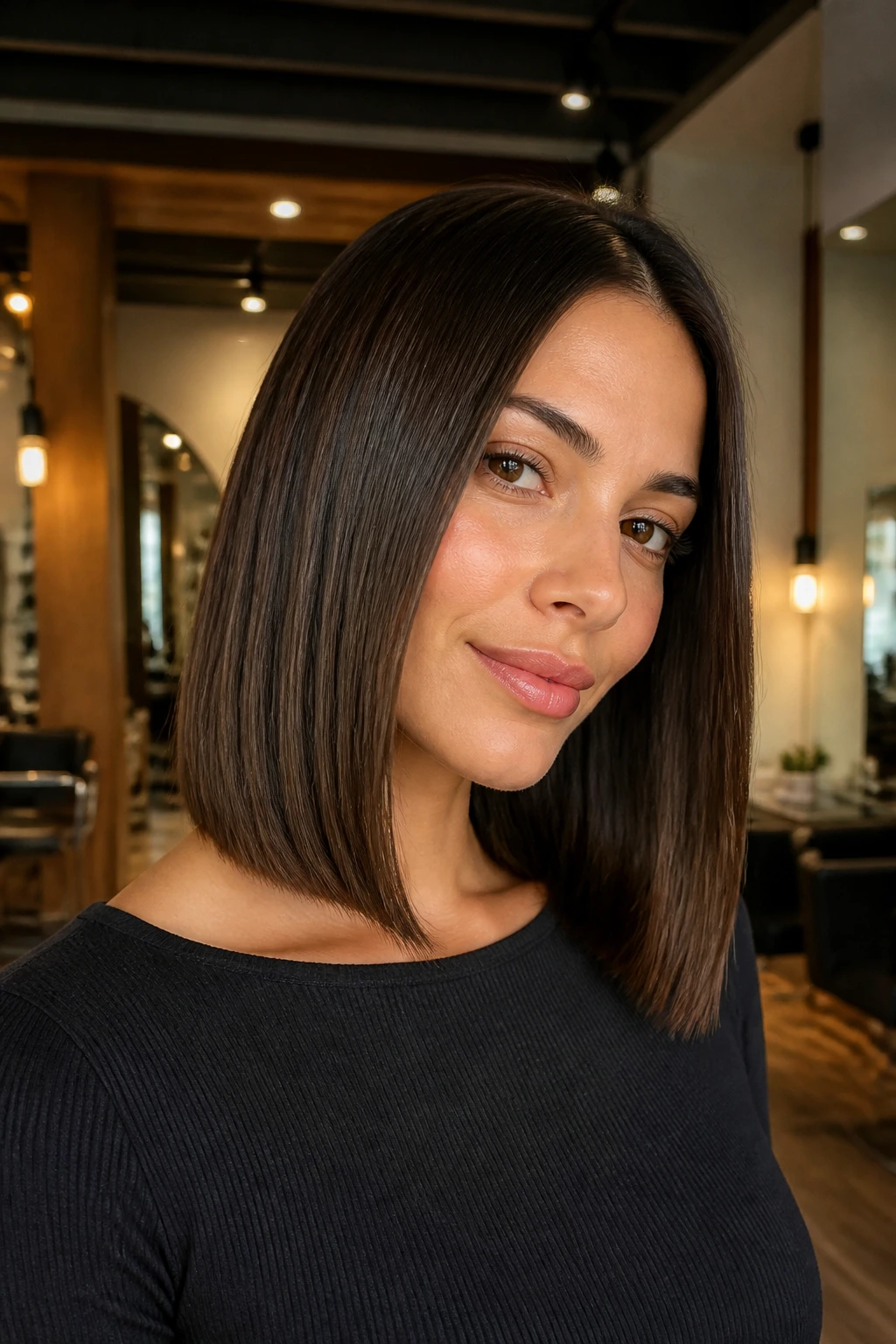
Clean lines show up fast. Straight strands make blunt ends, beveled edges, and center parts look deliberate instead of fuzzy, which is why a collarbone cut can feel sharper on straight hair than on waves.
-
Layers have to earn their place. On straight hair, random layers can drop into sad little stairs. The better versions here place movement where it helps—around the cheekbones, at the collarbone, or just through the ends.
-
The grow-out is easier to read. When the shape is solid, you can tell exactly when it needs a trim. That saves you from the awkward “is it grown out or just badly cut?” phase.
-
Styling takes less force. Straight hair already wants to lie down. These cuts work with that tendency, using small changes in perimeter, parting, and weight to create shape without a long morning routine.
-
They suit different densities. Fine hair gets a fuller outline from bluntness and subtle internal layering. Thick hair gets movement without bulk. That balance is the whole game.
Why Straight Hair Changes the Rules at Medium Length
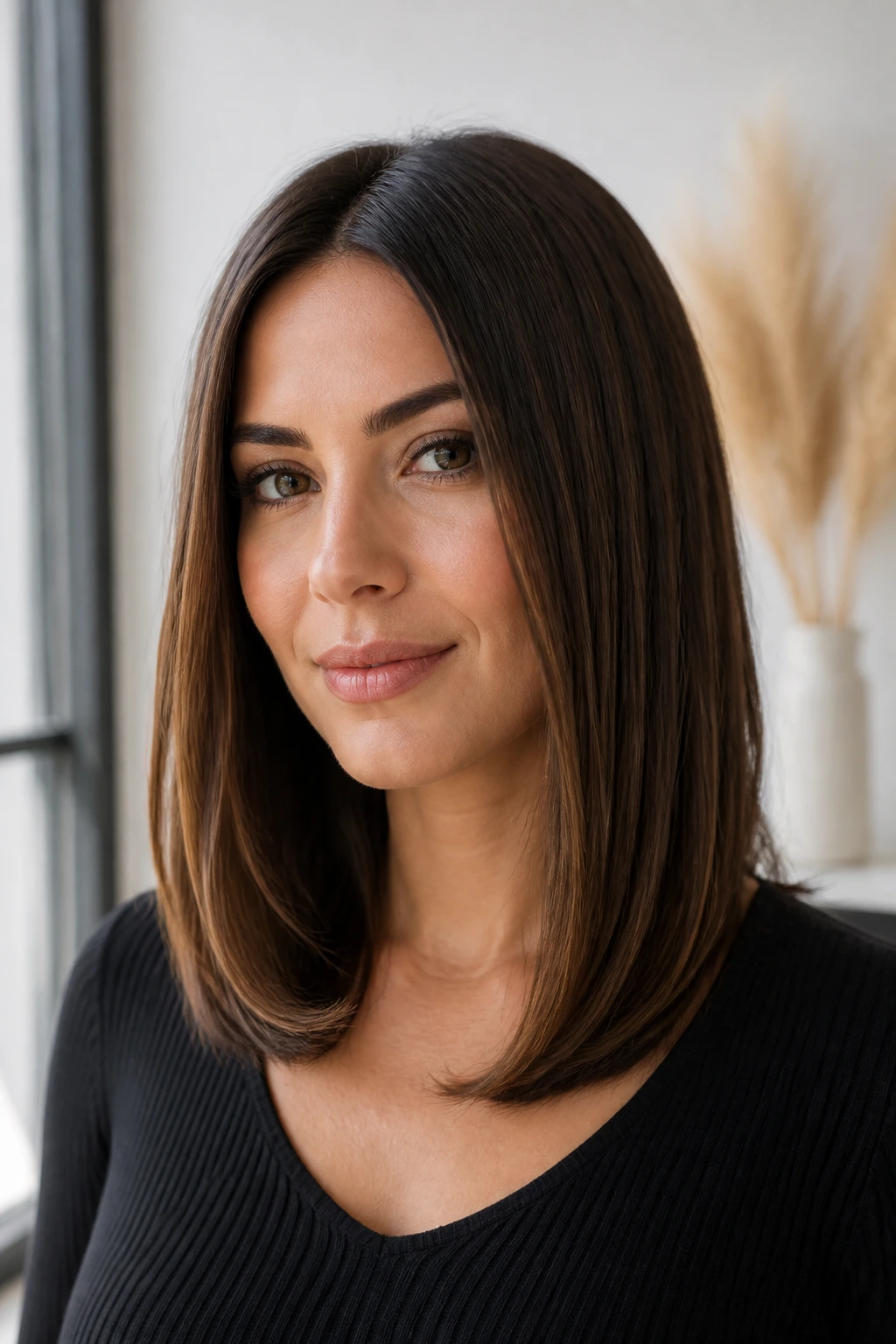
Straight hair doesn’t have the built-in camouflage that waves and curls give you. If a layer is too short, it shows. If the ends are too thin, they look wispy. If the crown is overcut, the whole shape can collapse around the face by lunch. That sounds unforgiving. It is. But it also means a good cut looks especially clean.
Medium length is where that honesty pays off. Around the collarbone, shoulder, and upper chest, the hair has enough weight to fall in a line, but not so much length that it drags the whole silhouette downward. A great medium cut on straight hair usually does one of three things: creates a sharper perimeter, redistributes weight so the ends don’t look stringy, or opens up the face without chopping the hair into pieces.
The other thing people forget is movement. Straight hair doesn’t need fake texture everywhere. It needs a little bend in the right place. A beveled edge at the ends. A face frame that starts at the cheek, not the ear. A subtle A-line that makes the front pieces fall forward instead of out. Small changes. Big difference.
1. The Blunt Collarbone Lob
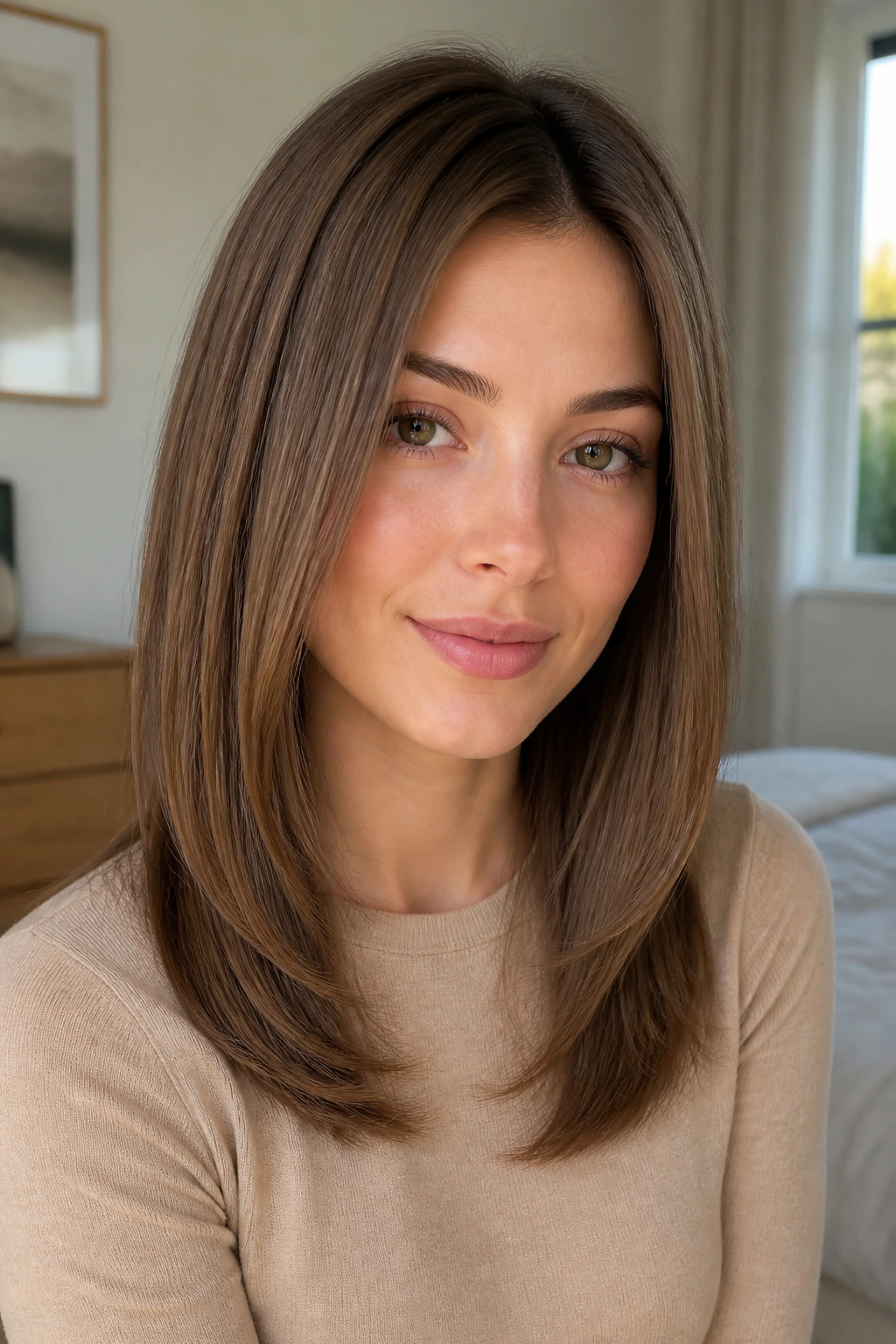
The blunt collarbone lob is the haircut I’d recommend to someone who wants their straight hair to look expensive without doing much to it. The edge sits right around the collarbone, which is the sweet spot where medium hair still has swing but the perimeter feels clean and solid. On straight hair, that blunt line has a crispness you can’t fake with styling products.
Why it lands
A one-length lob makes fine hair look denser because the ends all stop together. It also gives thick hair a strong base, so the shape doesn’t fray at the bottom. Ask for the blunt line to be checked while the hair is dry if your stylist can do that—straight hair can look slightly longer once it dries, and the last thing you want is a cut that lands too low and loses its punch.
A little serum on the mids and ends is enough. Too much product and the line goes greasy; too little and the ends can look chalky under bright light.
- Best for: fine to medium hair that wants more presence
- Maintenance: trim every 8 to 10 weeks
- Styling note: a quick pass with a flat iron on the ends keeps the line sharp
Best if you like: hair that looks put together even when you did almost nothing.
2. Soft Face-Framing Layers
Face-framing layers are the useful kind of layers—the kind that make straight hair look intentional instead of merely long. The trick is to start them high enough to matter, usually around the cheekbone or jaw, and keep the rest of the length heavy enough that the ends don’t look sparse. Too many salons go too timid here. You end up with long hair and a few random shorter bits near the front. That is not the same thing.
These layers work beautifully when you want the front to soften a strong jaw, narrow a wide forehead, or pull attention toward the eyes. On straight hair, they lie close to the face and behave like architecture, not decoration. That’s the appeal.
How to wear them
If you tuck one side behind your ear, the layers fall into view without needing a lot of styling. If you want more shape, blow-dry just the front pieces with a round brush and let the rest air-dry straight. You get the softness without spending twenty minutes on every section.
They’re also a good choice if you’re nervous about a full layered cut. Start here. It’s enough movement to change the mood of the haircut, but not so much that you’ll regret it when the layers grow out.
3. The Center-Part One-Length Midi Cut
Can one length be enough? On straight hair, yes—if the length is chosen well and the ends are kept blunt. A center-part midi cut falls somewhere between the collarbone and the top of the chest, and it works because the simplicity does the heavy lifting. There’s nowhere for the eye to wander, so the cut has to be precise. That precision is exactly what makes it look sharp.
The center part adds symmetry, which suits straight hair better than people expect. It’s especially good if your face already has clean angles or if you want the haircut to look calm and modern rather than fussy. There’s also a nice practical side: one-length midi cuts are easy to brush, easy to trim, and easier to style on days when you do not feel like negotiating with your hair.
Best styling path
Keep the roots flat but not plastered. A little root lift spray at the crown, then a blow-dry with the nozzle pointed downward, is usually enough. If the ends kick out, bend them inward once with a flat iron or a medium brush. Don’t overwork it. The appeal here is that the cut looks like it knows exactly where it’s going.
4. Curtain Bangs with a Shoulder-Length Cut
Curtain bangs on straight hair can be gorgeous, but they are not lazy bangs. They need a real shape around the face and enough length to drape instead of sit stiffly across the forehead. Paired with a shoulder-length cut, they create a soft opening around the eyes and cheekbones while the rest of the hair stays neat and straight.
The best version starts with bangs that are shorter in the center and longer at the sides, then blends into shoulder-length pieces. That longer edge matters. Straight hair shows a hard line instantly, and curtain bangs that are cut too blunt tend to separate in an awkward way. You want them to split naturally and fall like two soft panels.
They work especially well if you like wearing a middle part but want something less severe than a full center cut. Blow-dry the bangs first, not last. They’ll behave better if they’re shaped while damp and set before the rest of the hair dries into its own idea.
5. The Sleek A-Line Lob
The A-line lob is longer in front and a touch shorter in back, which sounds subtle until you see it on straight hair. Then it becomes obvious. The front pieces fall forward and frame the neck, while the slightly shorter back keeps the whole cut from feeling heavy. It’s a smart choice if you want a shape with a little motion but still prefer a polished look.
This cut is especially useful for round or square faces because the forward angle adds length without needing layers everywhere. It also gives straight hair a point of interest. A flat, one-length lob can sometimes feel too literal. The A-line version has a little attitude.
What to ask for:
- a slight graduation from back to front
- a blunt or softly beveled perimeter
- no choppy internal layers unless your hair is very thick
Styling note: keep the front pieces smooth. If they flip too much, the angle gets lost and the haircut starts reading as “grown out” instead of “deliberate.”
6. Invisible Layers for Fine Straight Hair
Invisible layers are the haircut equivalent of a good undershirt. You don’t notice them directly, but you notice the way everything fits. For fine straight hair, this is a gift. Instead of carving obvious steps into the hair, the stylist removes a little weight inside the shape so the top lies smooth and the ends still look full.
That’s the point: movement without a choppy look. Fine hair can go limp if the perimeter is too heavy, but it can also go see-through if the layers are cut too aggressively. Invisible layers sit between those two bad outcomes. They create lift without exposing every scissor mark.
This cut works best when the outer line stays clean. If the ends are left wispy, the whole trick falls apart. Ask for softness inside the haircut, not through the perimeter. That distinction matters more than most people realize.
7. The Rounded Shoulder-Skimming Cut
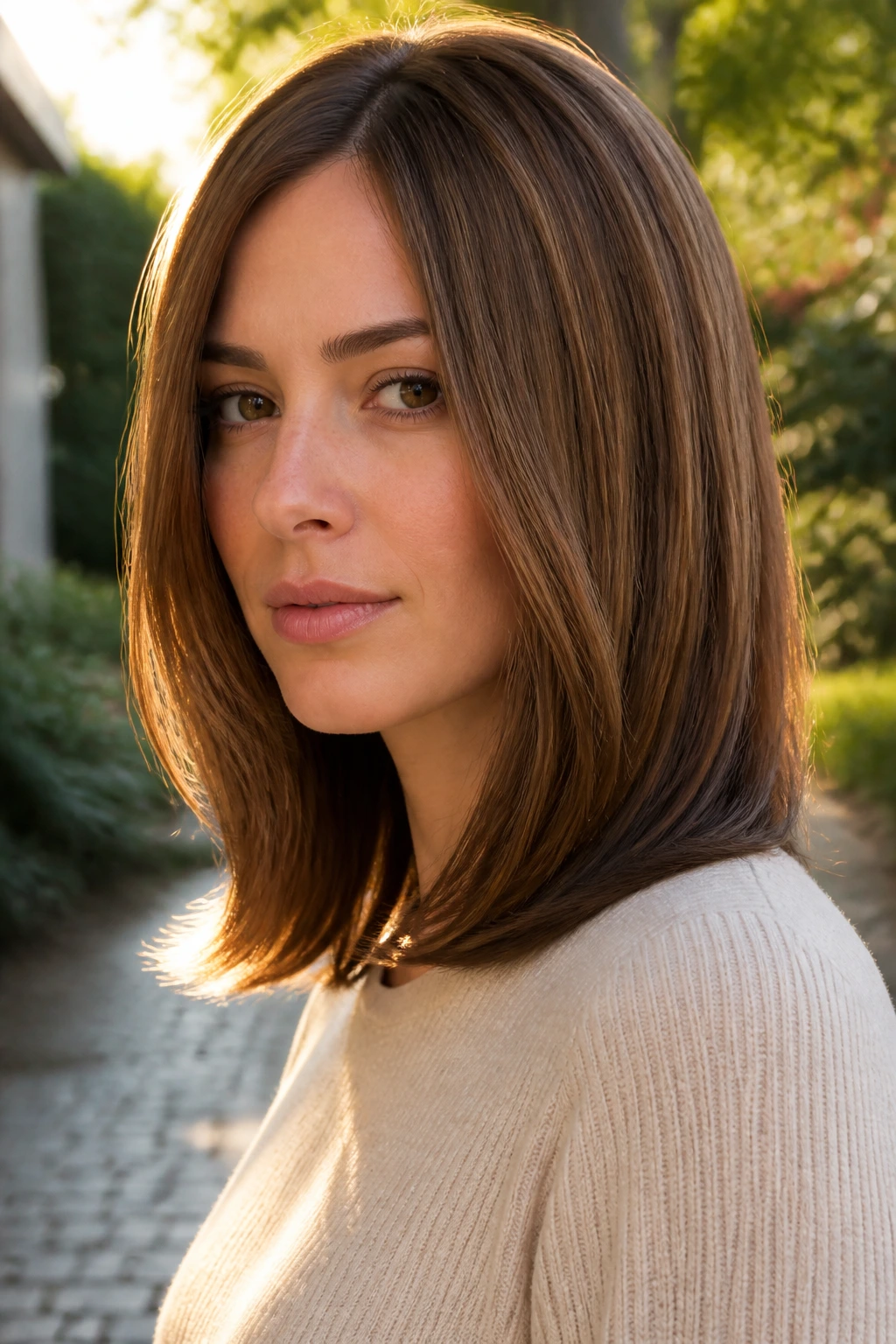
A rounded shoulder-skimming cut is a quiet fix for a common annoyance: straight hair that kicks outward at the ends. Instead of stopping in a hard line, the cut curves gently around the shoulders so the hair follows the body a little more naturally. It’s not dramatic. It’s just sensible.
This shape is great if your hair always hits your shoulders and then starts doing its own thing. That awkward flip point can make even healthy hair look uncooperative. Rounding the perimeter changes how the ends land, which helps the whole cut feel softer and more finished. It also gives thicker straight hair a little release without taking away too much length.
Why it works
The curve removes the visual shelf at the bottom. That’s the shelf that makes some shoulder-length cuts look boxy. A rounded outline says, “this was planned.” It also makes a quick blowout easier because the brush naturally follows the curve instead of fighting against a flat edge.
8. Side-Swept Bangs and Midi Ends
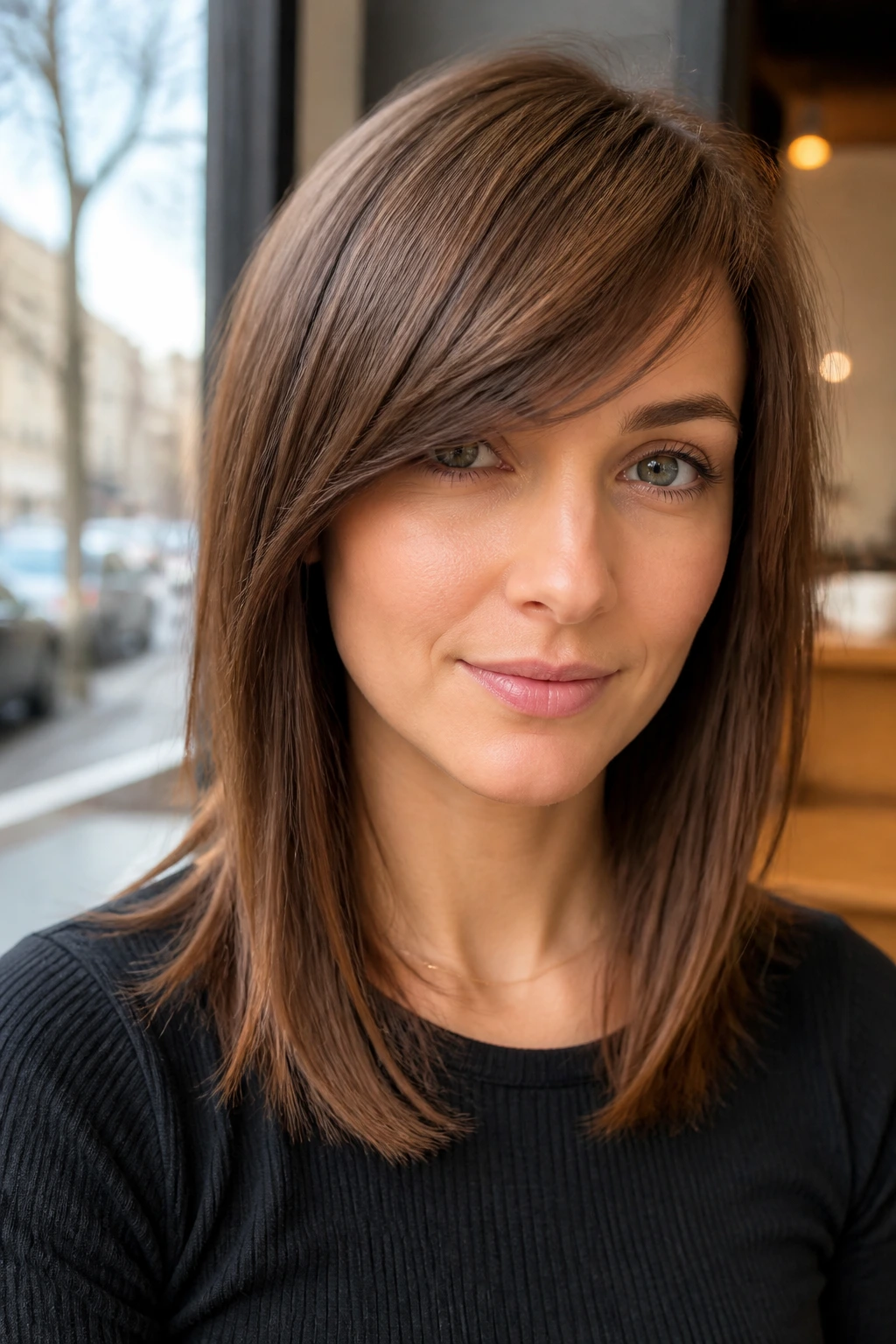
Side-swept bangs are less fussy than curtain bangs and a little easier to grow out. On straight hair, they can soften the front without demanding a center part or a perfect middle split every morning. The key is keeping them long enough to move across the forehead instead of sitting like a shelf.
This combo works well with midi-length ends because it balances the face. The bangs bring softness and direction, while the straight medium-length body keeps the haircut from feeling too delicate. If you’ve got a strong forehead or you wear glasses, side-swept bangs can be a very practical choice. They don’t crowd the lenses. They don’t require constant trimming every other week.
A side part helps, but it doesn’t need to be dramatic. A slight off-center part is often enough to let the bangs fall where they want to. Easy. Calm. No drama.
9. The French-Girl Lob
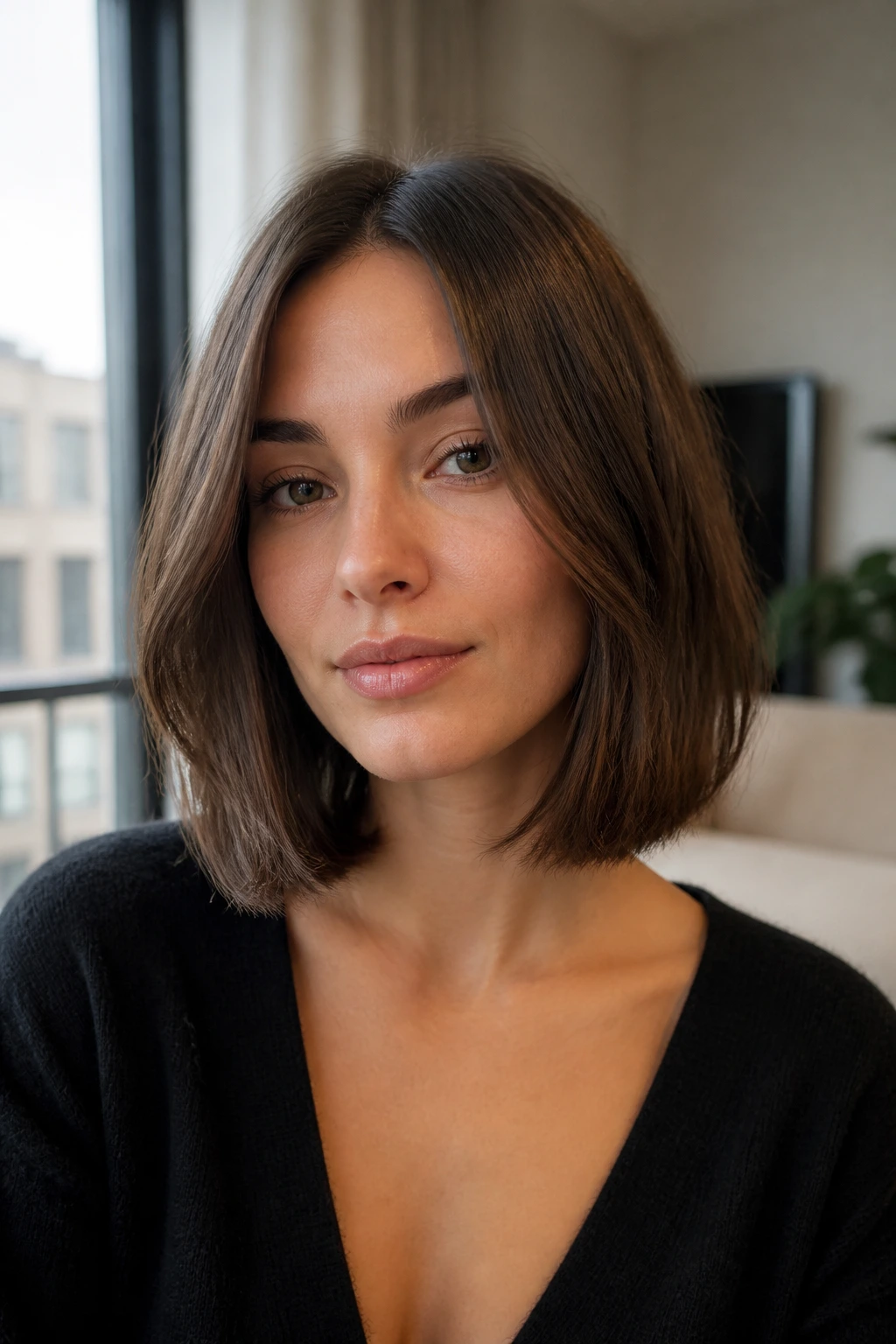
The French-girl lob gets talked about as if it’s effortless, which is a funny thing to say about a haircut that usually depends on very careful shape. On straight hair, the real trick is in the ends. They’re usually blunt enough to hold the outline, but soft enough that the cut doesn’t look helmet-like. A little bend, a little piecey movement, and a lot of clean structure underneath.
This is the cut for someone who likes hair that feels lived-in but not sloppy. It pairs well with a center or near-center part, and it looks best when the finish isn’t over-polished. A tiny amount of texture spray through the mids, then a quick finger comb, is usually enough.
What makes it different
Unlike a rigid blunt lob, this version leaves room for a little natural bend around the face. That keeps it from looking stiff. Unlike a shag, it doesn’t shred the ends. It sits in the middle, which is why it’s such a useful shape for straight hair that needs a touch of personality.
10. Feathered Ends for Movement
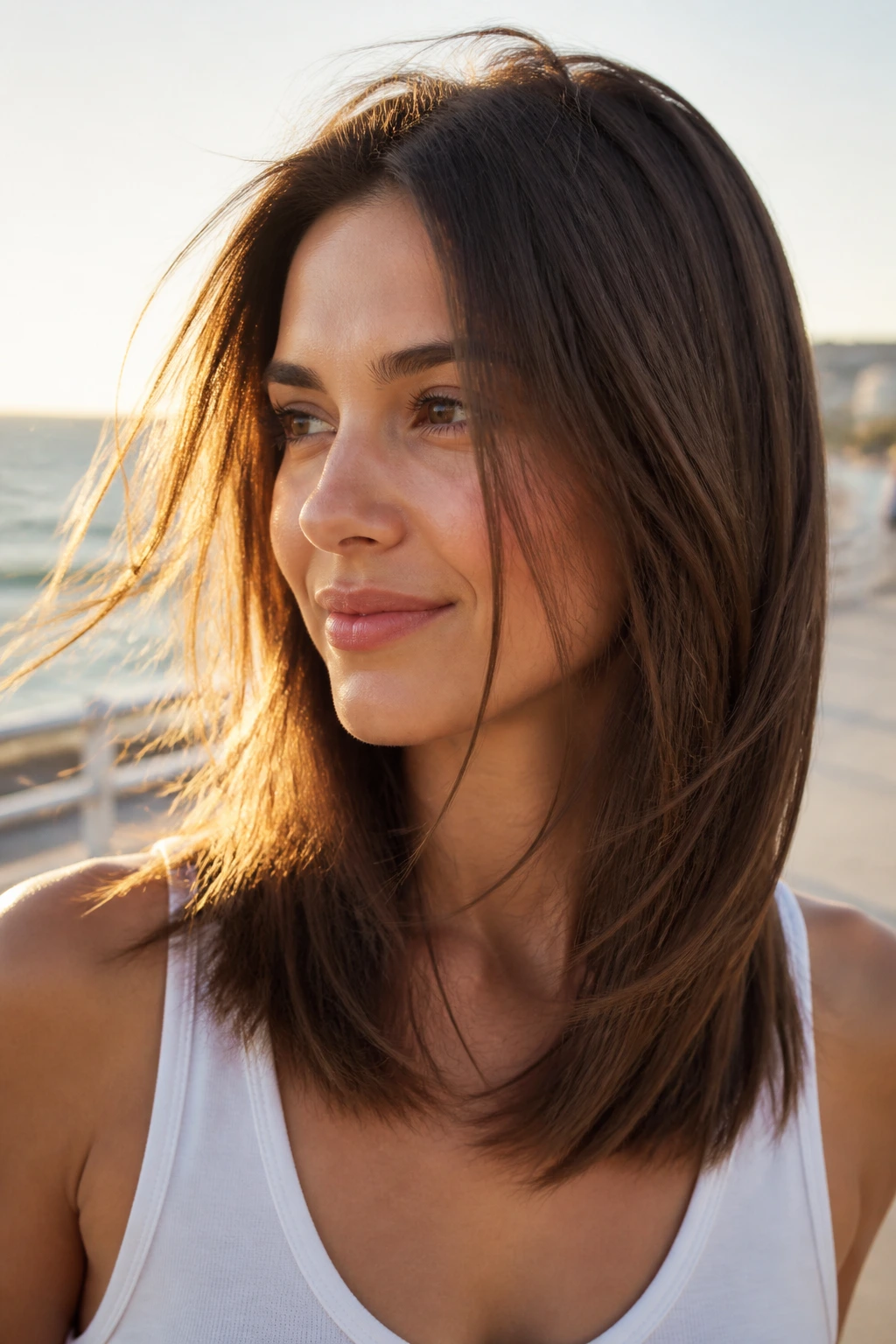
Feathered ends are a good answer when straight hair feels too heavy at the bottom but you do not want obvious layers. The feathering happens only at the ends, so the line stays intact while the tips move a little more freely. On thick straight hair, that’s often the difference between “solid” and “broad.”
This cut is useful if your hair tends to sit like a panel. A little feathering breaks up the visual weight and lets the ends curve instead of clumping. It’s also a friend to people who like low-maintenance styling. The cut already carries some motion, so you’re not starting from zero each morning.
Skip heavy smoothing creams here. They can blunt the feathered effect and make the shape fall flat. A light serum is enough, maybe with a quick bend at the very ends if you want a cleaner finish.
11. The Modern Shag-Lite

A modern shag-lite is for straight-haired women who want edge without the full commitment of a shag. The layers are still there, but they’re longer and cleaner, with more weight left in the bottom half. That keeps the haircut from turning into a frizzy halo or a choppy mess that needs constant heat styling.
This version works best when the layers around the face are softened, not chopped. Think movement at the cheekbone, a little volume at the crown, and length that still feels substantial. It’s a nice compromise if your straight hair falls flat at the top but you hate the look of overly short layers.
Best for: hair that needs lift but not a lot of drama
Not ideal for: anyone who wants a one-pass blow-dry and nothing else
Styling note: a round brush at the crown and a flat iron bend through the front pieces are enough
12. The Boxy Midi Cut

The boxy midi cut is blunt, square, and a little fashion-y. That square edge is the whole point. Instead of rounding the corners or tapering the ends, the haircut keeps a solid, geometric shape that sits between the shoulders and chest. Straight hair makes this cut look especially clean because the line stays visible all day.
It’s not the first choice if you want softness. But if you like strong structure, this is a satisfying haircut. It gives straight hair a kind of graphic clarity that feels modern without trying too hard. On medium-density hair, it can make the whole head look balanced. On very thick hair, it may need some internal weight removal so it doesn’t puff out at the base.
The boxy midi is one of those cuts that rewards good posture, oddly enough. The shape sits best when the hair falls evenly and the part is neat. If you are the type who likes a straight part and a clean tuck behind the ears, this one has your name on it.
13. The Butterfly Cut on Straight Hair
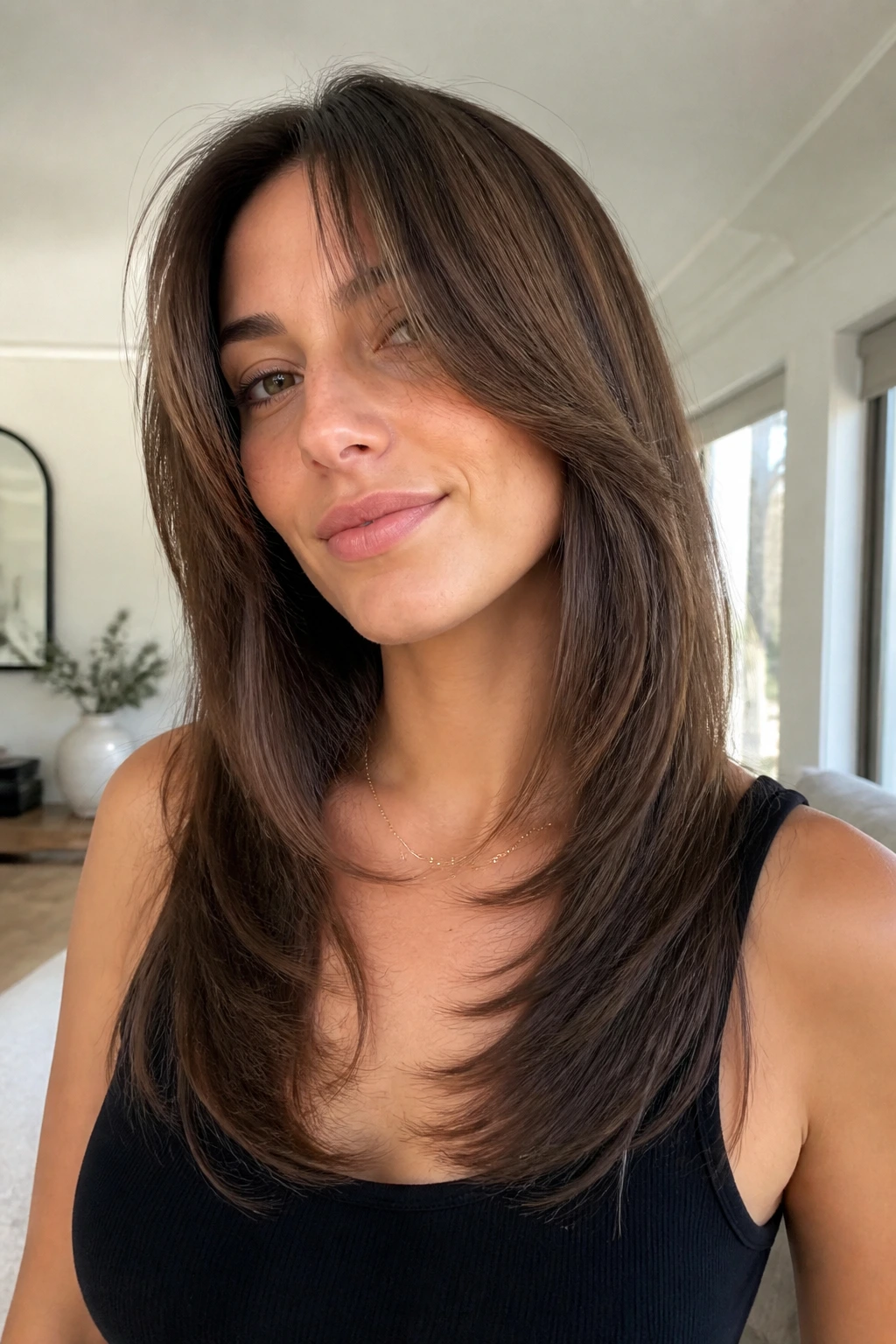
The butterfly cut gets mistaken for a lot of things. On straight hair, it’s not about wild layers or salon theatrics. It’s about giving the front and crown enough lift to separate from the longer bottom section, so the haircut has movement without losing length. The result can look soft and flattering, but only if the layers are kept long enough to blend.
This cut asks for more styling than some of the others here. A blow-dry with a round brush at the top and around the face helps the shorter layers sit properly. If you air-dry it and hope for the best, the shape can fall flat and the contrast between layers starts to look accidental.
How to use it
If you like a full-looking blowout and want your medium straight hair to feel more dimensional, this is a strong pick. If you prefer a wash-and-go life, ask for a softer version with fewer short layers. The butterfly cut is adaptable, but straight hair exposes its weak spots quickly.
14. The Deep Side-Part Lob with Weight at the Ends
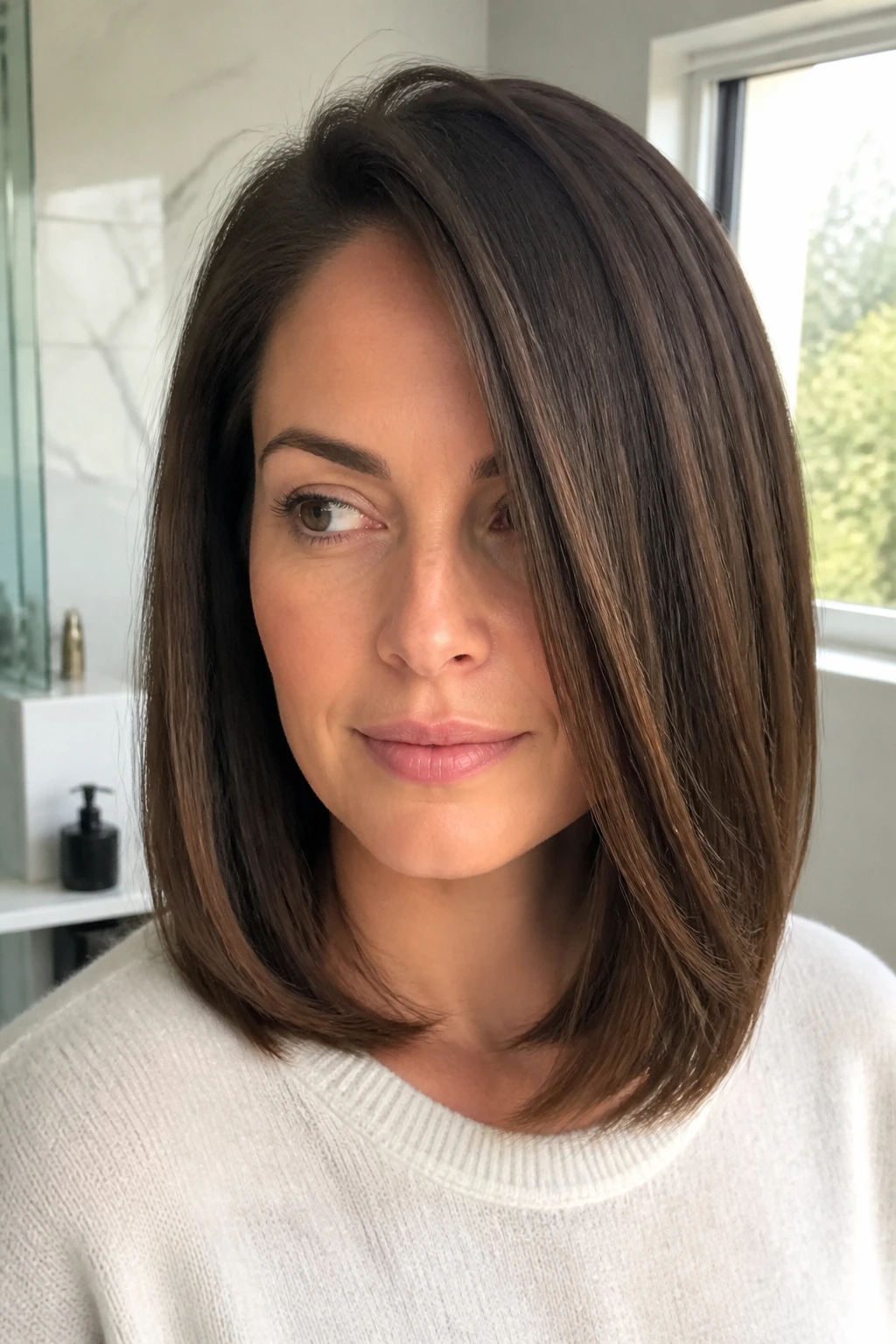
A deep side-part lob changes the mood of straight hair immediately. The cut itself can be simple, even blunt, but the part adds volume at the roots and a little asymmetry around the face. That matters if your crown lies flat or if you want to make a medium cut look less expected without shortening it.
The important thing is to keep weight at the ends. A deep part already brings drama. If you thin the bottom too much, the haircut starts to wobble visually. You want the line to stay strong so the side part can do its work.
This is one of the easiest cuts to restyle on a busy morning. Switch the part, add a quick bend with a flat iron if needed, and tuck the lighter side behind your ear. Done. It’s the kind of haircut that looks different with almost no extra effort.
15. The Chin-Contouring Lob
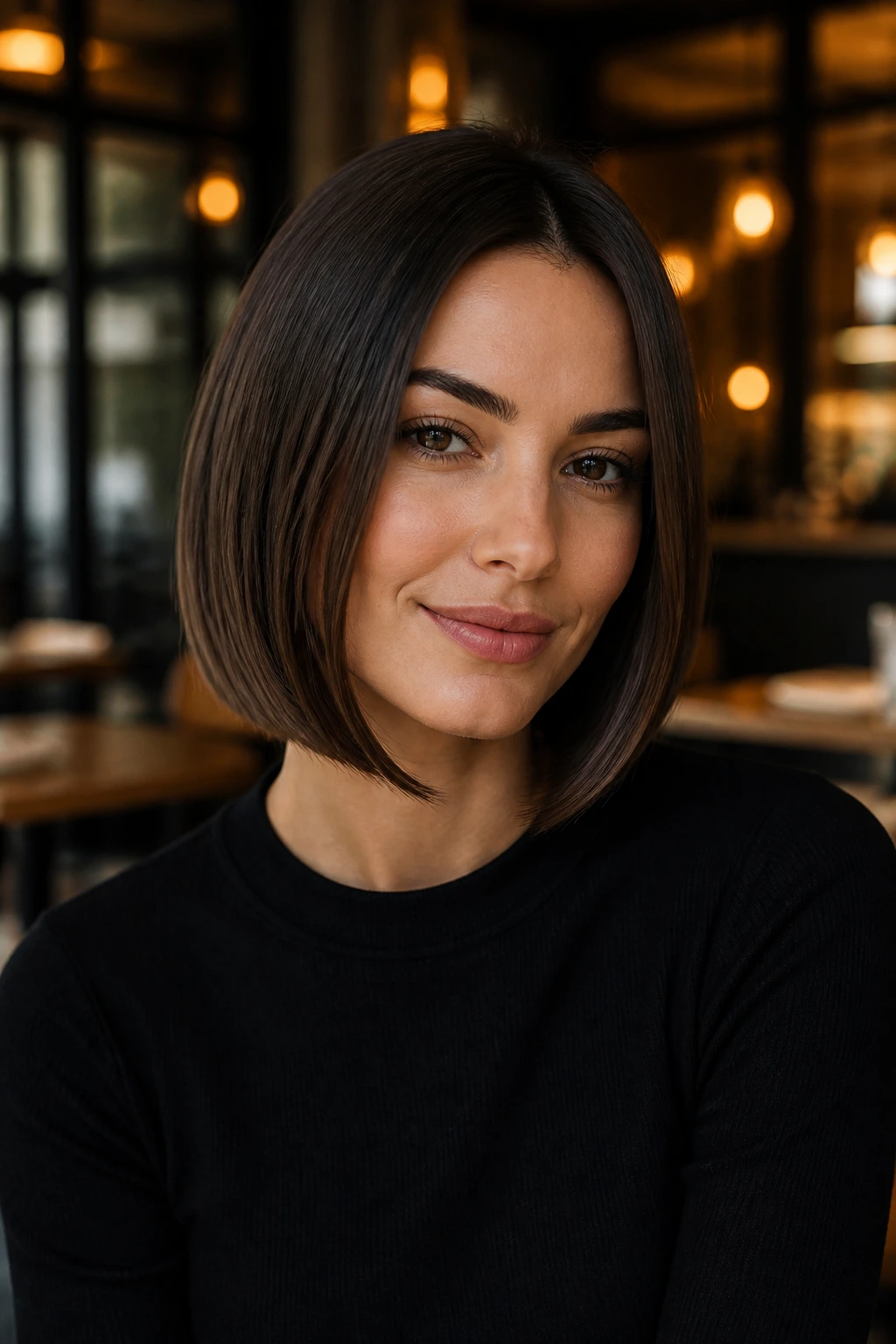
The chin-contouring lob is named for exactly what it does: it draws a line around the jaw and chin without covering the whole face in hair. On straight strands, those front pieces hang in a controlled way, which can make the jawline look cleaner and the neck look longer. It’s especially nice if you want a medium cut that feels a little more sculpted than a plain one-length lob.
What sets it apart is the placement of the front ends. They usually land around the chin or just below it, then blend back into the rest of the length. That gives the haircut a visual hook. It’s subtle, but not boring.
If your hair tends to split around the face and go limp, ask for the front pieces to be checked for balance on both sides. Straight hair has a way of revealing tiny asymmetries, so a small adjustment can make a big difference.
16. The Long Layered Shoulder Cut
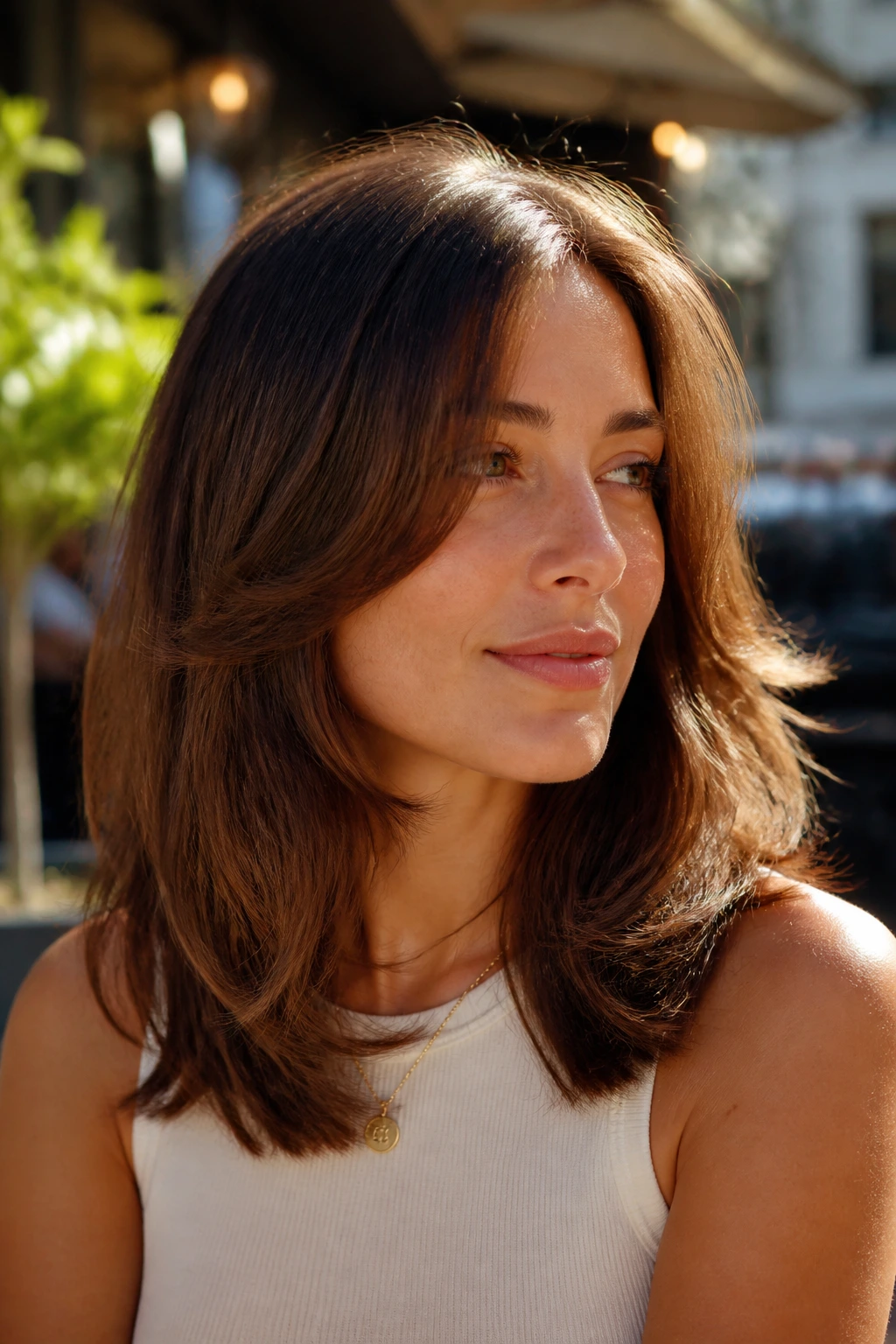
This is the cut people often mean when they say they want “some layers” but not too many. The long layered shoulder cut keeps the shape around shoulder length and uses longer internal layers to take weight out of the mids and ends. Straight hair needs that weight removed carefully. Too much, and the cut looks thin. Too little, and it hangs like a sheet.
The best version gives the hair a gentle swing. It moves when you turn your head, but it still looks like hair, not a cloud of broken pieces. That’s a fine line, and a good stylist knows where it lives. If you have dense straight hair, this shape can be a relief because it removes bulk without sacrificing the clean outline.
It also grows out gracefully. That’s not a small thing. Some layered cuts lose their shape fast. This one usually keeps enough structure that you can stretch the trim schedule a bit without looking unkempt.
17. The Grown-Out Bob with Tucked Ends
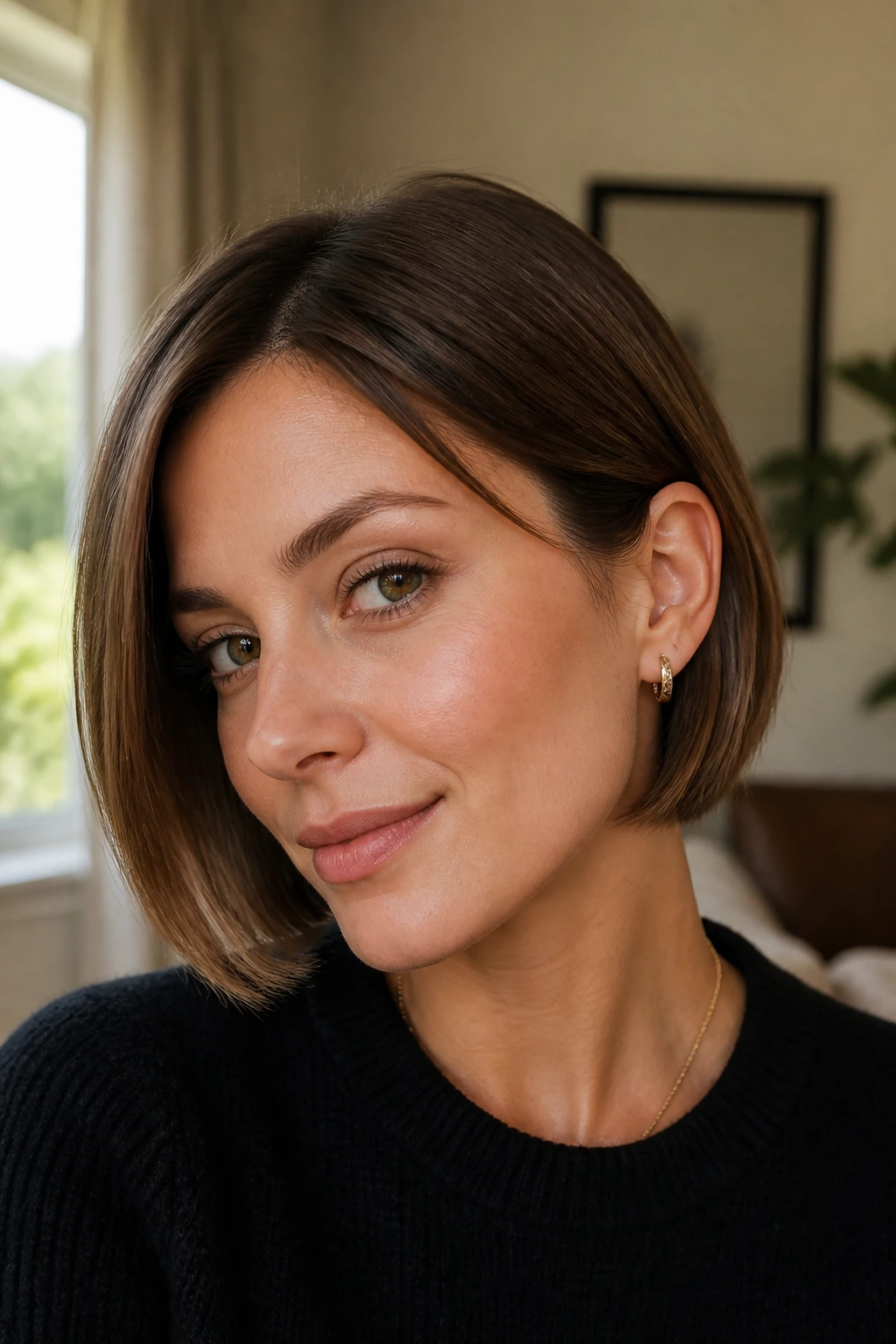
There’s a sweet spot between a bob and a lob, and this is it. The grown-out bob with tucked ends sits around the jawline to upper neck, then softens just enough to be tucked behind the ears or flipped under. It’s neat, not severe. Straight hair likes this shape because the outline stays easy to read even when the hair is moving.
This cut is useful if you want something polished but don’t want to commit to a very short length. It also works when you need your hair to fit under jackets, scarves, or headphones without fighting the shape every time you move. A little tuck behind one ear can make it look intentional rather than plain.
Quick note
If your hair grows fast, this is one of the easier medium cuts to maintain. It will look slightly different as it gets longer, but not wrong. That’s a nice quality to have in a haircut.
18. The Polished Blunt Cut with Micro-Texture
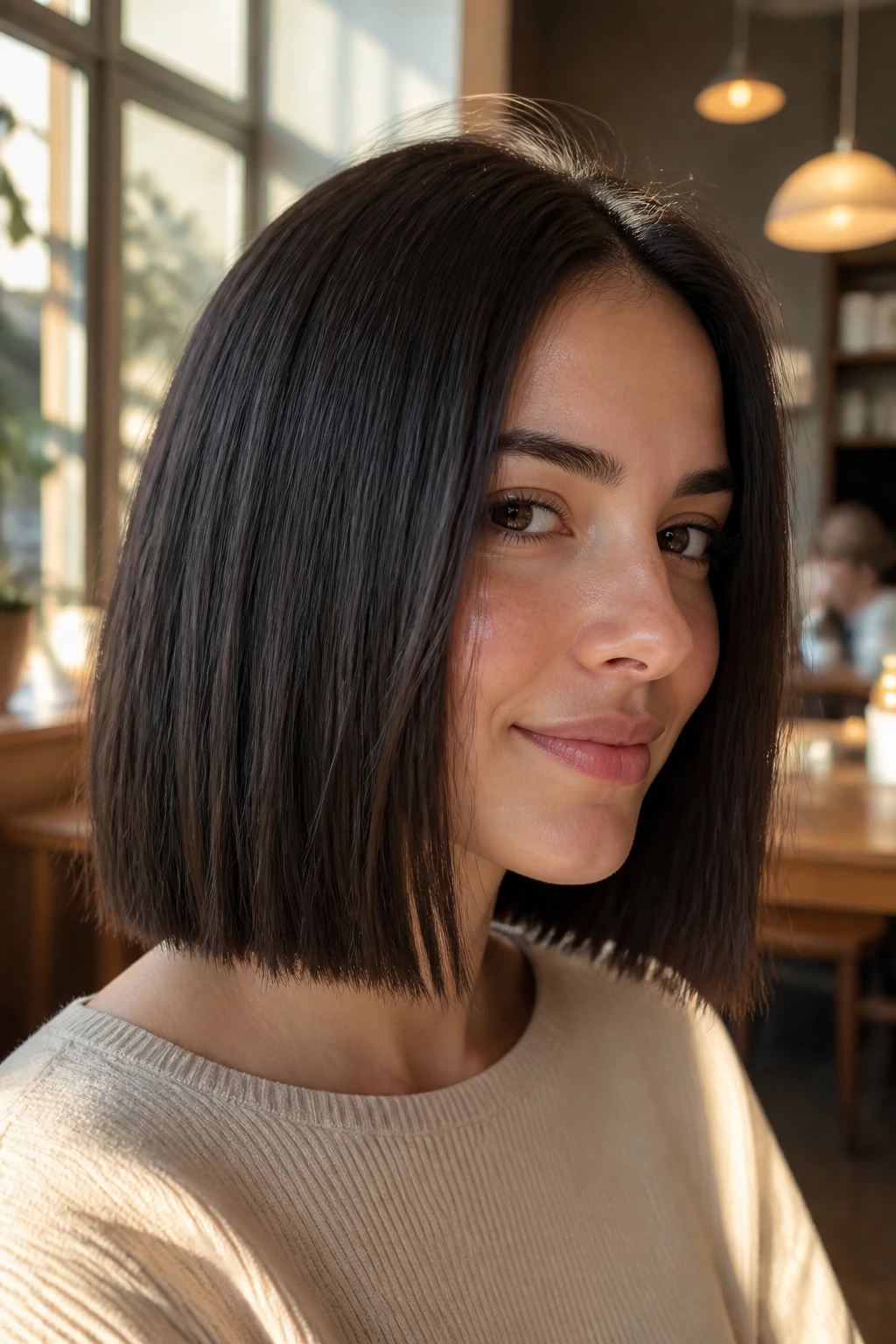
A polished blunt cut with micro-texture sounds contradictory until you see it. The perimeter stays straight and solid, but the stylist softens only the smallest amount at the ends so the line doesn’t feel blocky. On straight hair, that tiny bit of texture can keep a medium cut from feeling too hard around the face.
This is a smart choice for dense hair that wants shape but not weight. It also suits women who like a smooth finish and don’t want obvious layers interrupting the outline. The key is restraint. Micro-texture means micro. If the ends are shredded, the whole clean effect disappears.
A flat iron pass should be light here, not aggressive. You’re refining the shape, not ironing it into submission. That distinction matters more than it sounds.
19. The Collarbone Cut with Long Front Pieces
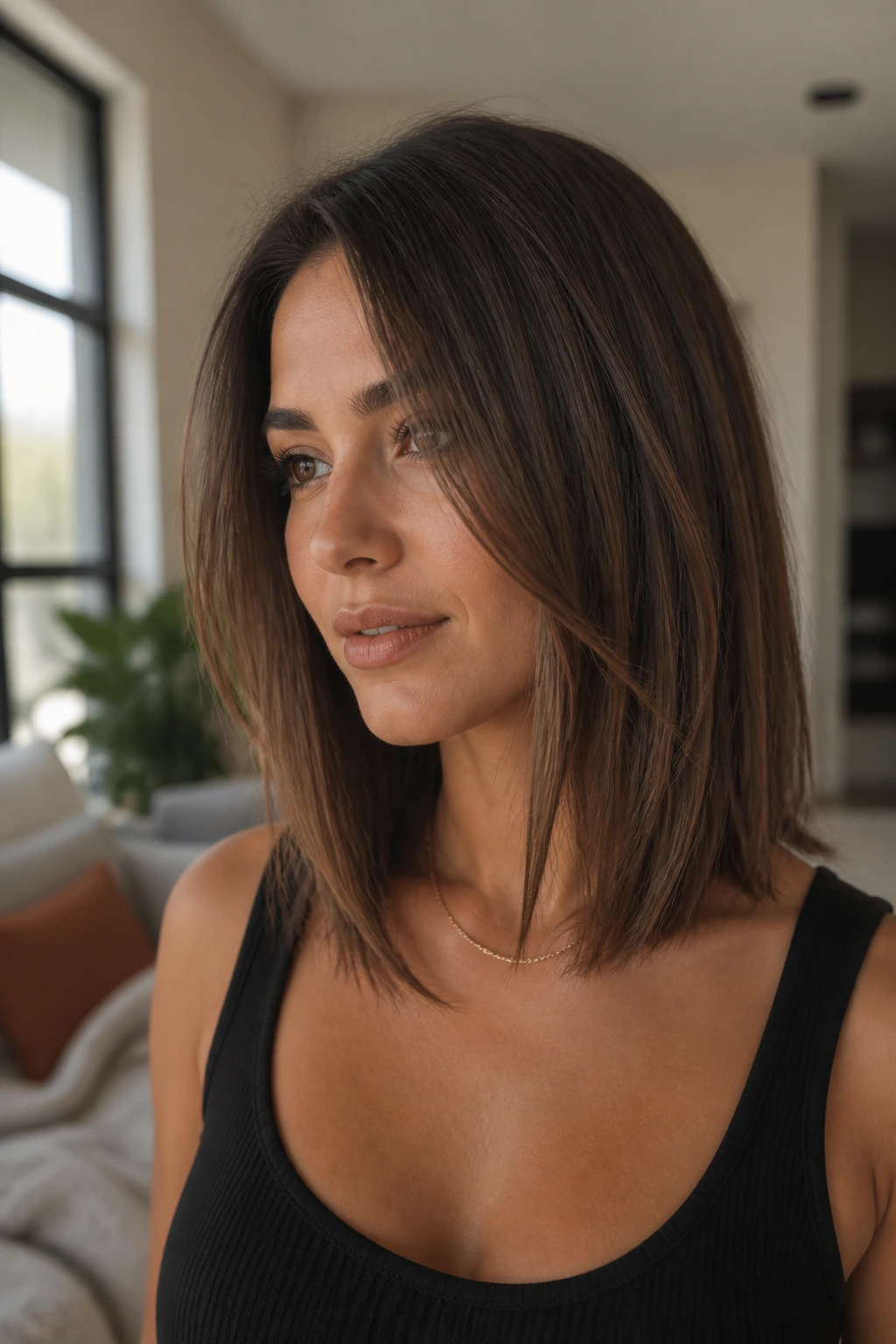
Long front pieces can do a lot of work for straight hair. They frame the face, soften the transition from fringe to length, and give a medium haircut some motion without cluttering the whole head with layers. The collarbone cut keeps the body of the hair in a useful, everyday length while the front pieces create a shape that feels thoughtful.
This is a good choice if you want contour without bangs. It’s also friendly to people who like to tuck one side behind the ear and let the other side fall forward. The front pieces catch the eye, which makes the haircut feel finished even on no-style days.
The best version avoids making the front too thin. Straight hair needs enough weight in those pieces to stay visible. Otherwise they disappear against the rest of the length, and the effect is lost.
20. The Soft U-Cut

The soft U-cut is one of the most flattering shapes for medium straight hair because it keeps the back slightly longer than the sides. That gentle curve creates depth without turning the ends into a blunt wall. It also helps thick straight hair fall in a cleaner line across the back, which can make the whole haircut feel less boxy.
I like this cut for people who want movement but dislike obvious layers. The U-shape gives the eye a curve to follow, and straight hair picks that up beautifully. It’s subtle enough for daily wear, but it still looks like someone designed it on purpose.
If you wear your hair in a low ponytail or clip it up often, the U-shape also plays nicely with that. The front pieces fall out more gracefully, and the back doesn’t feel bulky when you gather it.
21. The Flipped-End Medium Cut
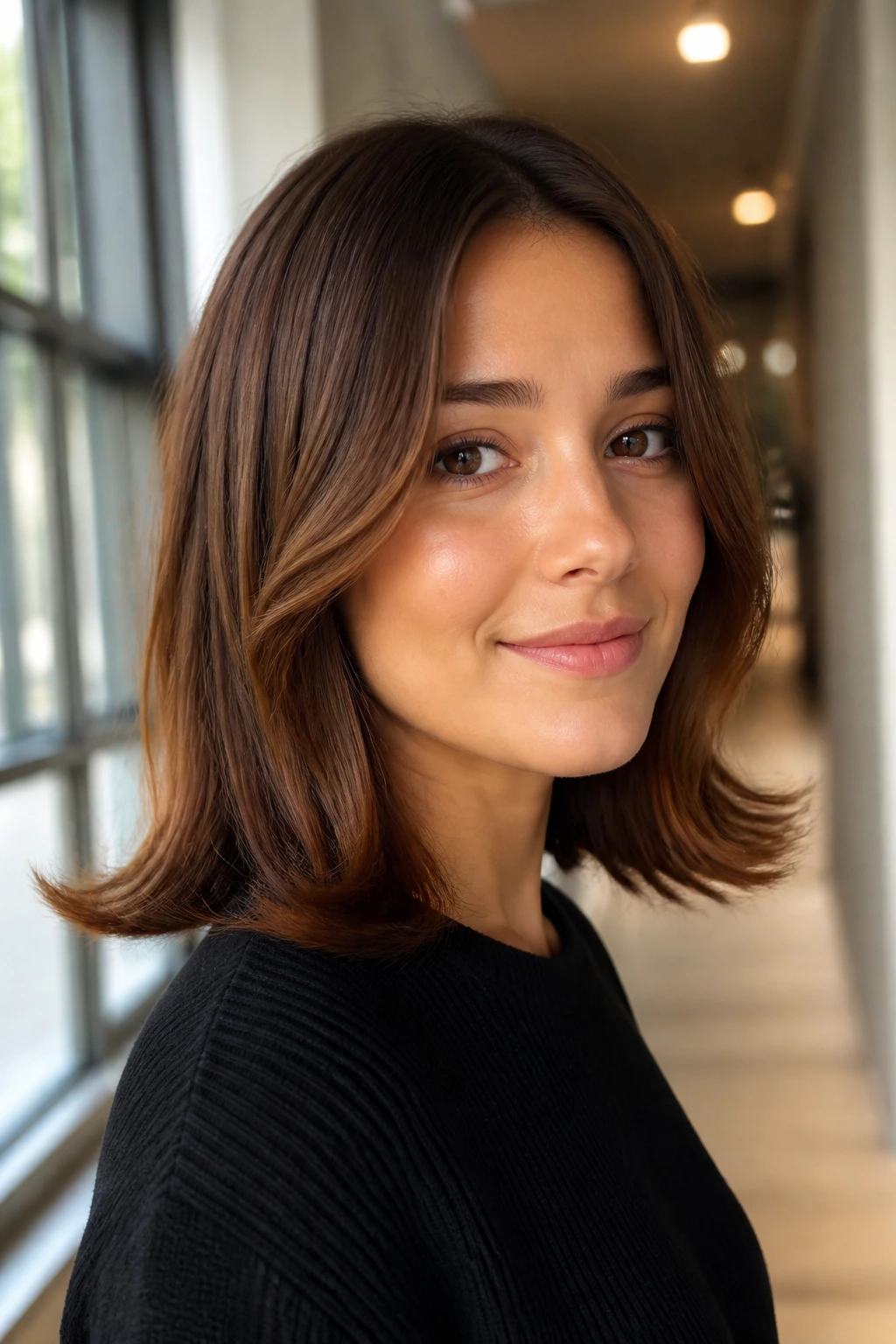
The flipped-end medium cut brings a little retro energy back without turning the whole haircut into a throwback costume. The length usually sits around the collarbone or shoulders, and the ends are styled outward or beveled just enough to show movement. On straight hair, the flip can be chic if it’s controlled. If it’s not, it looks like the cut missed its appointment.
This is a strong choice if you like a blowout finish. The shape comes alive with a round brush or a quick flat-iron turn at the very ends. It also works if your hair naturally bends outward at the shoulders, because the cut can meet the pattern instead of fighting it.
A small warning
The flipped-end look is all about proportion. Keep the flip subtle. A big, exaggerated turn at the ends can make medium straight hair feel dated in a hurry. A modest curve? That has staying power.
What to Tell Your Stylist Before the Cape Goes On
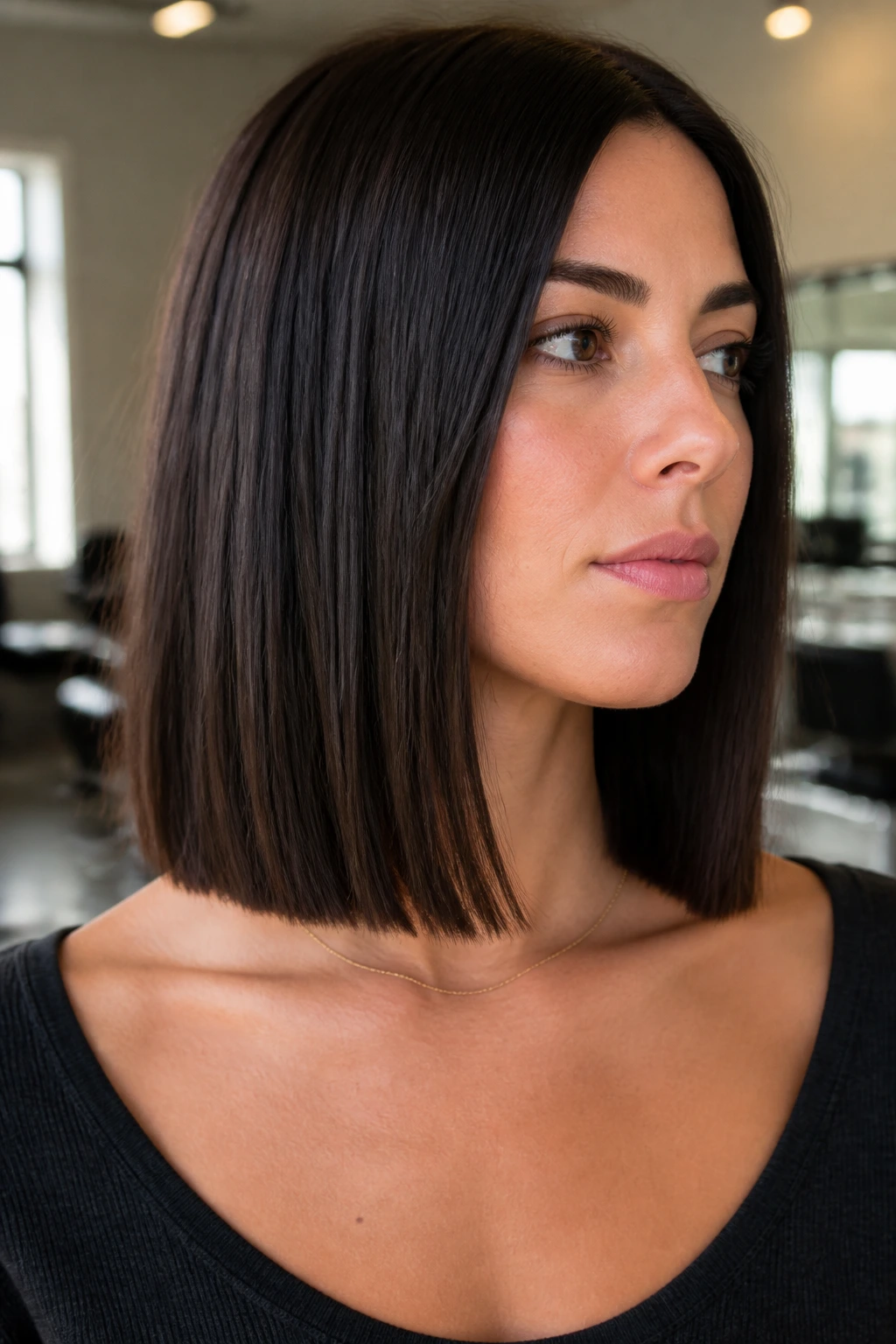
The first thing to say is not “make it medium.” That’s too vague to be useful. Say where you want the length to land—collarbone, shoulder, upper chest—and then explain how you usually wear your hair. Middle part, side part, tucked behind the ears, blow-dried straight, air-dried, curled once in a while. All of that changes the cut.
Bring two or three photos, but not just of the haircut itself. Bring photos of the finish you want. Straight hair can look very different depending on how it’s dried, and a picture of a blunt lob styled with a flat iron says something different from the same cut dried with a round brush. Your stylist needs to know which version you actually want to live with.
If you have a cowlick at the front, say so. If your hair flips out at the shoulders, say that too. If one side grows faster, mention it. These details sound small, but they affect the shape more than people think. Straight hair broadcasts every imbalance, which is rude but useful.
Tools That Make Straight Hair Look Polished
-
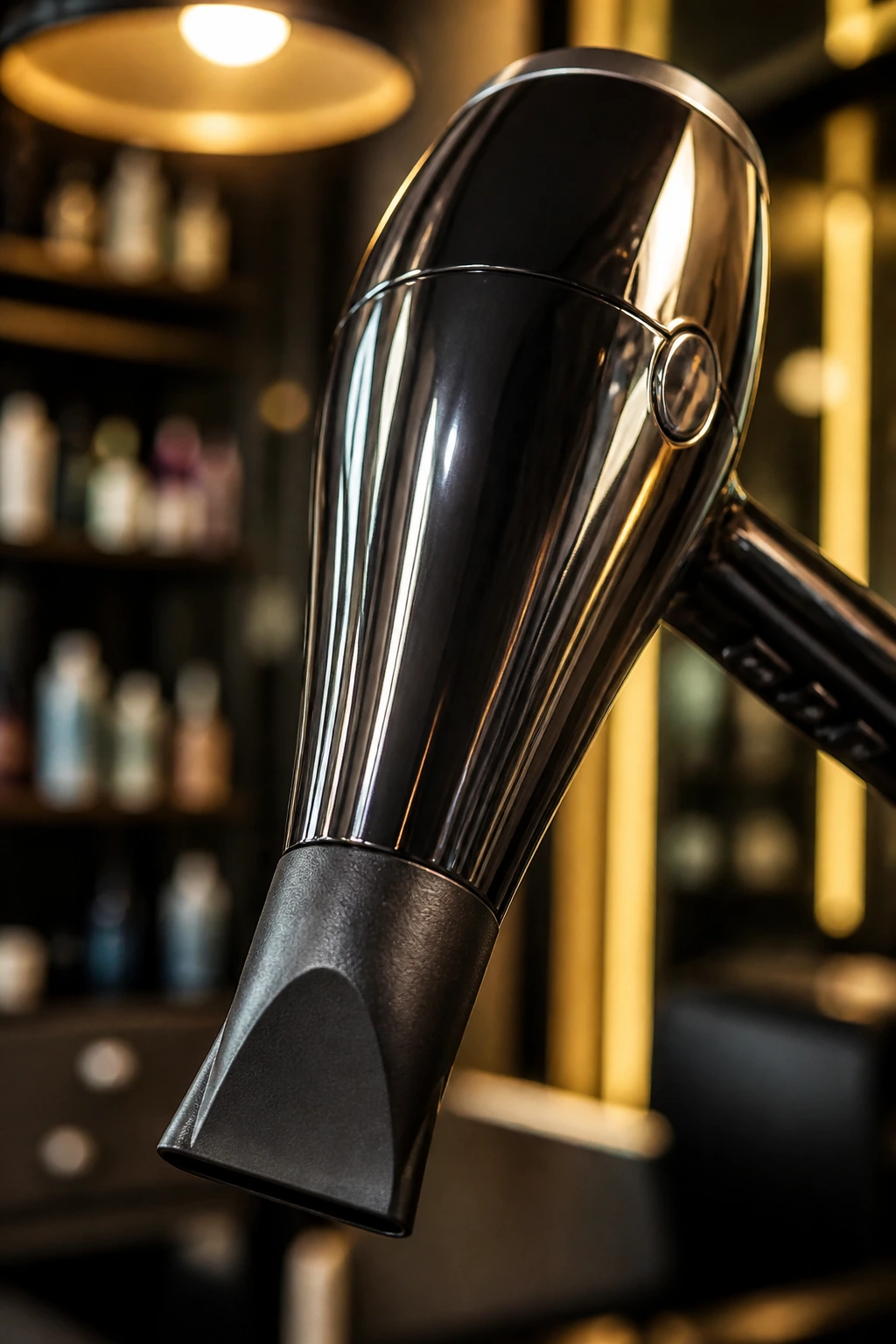
A blow-dryer with a nozzle attachment: The nozzle helps keep the airflow directed downward, which smooths the cuticle and keeps straight hair from puffing out at the ends.
-
A medium round brush: This is the easiest way to add a bend at the ends or lift at the crown without overdoing it. A brush that’s too big won’t grab medium lengths well.
-
A flat iron with smooth plates: Use it for quick refinement, not for flattening every strand into submission. One slow pass is usually enough on straight hair.
-
Heat protectant spray or cream: Straight hair can still get dry and rough at the ends, especially if you heat-style the same sections every day.
-
Sectioning clips: They save time. Really. Straight hair can look simple, but it still styles better in clean sections.
-
A fine-tooth tail comb: Handy for precise parts, neat bangs, and lifting the crown without making the top look messy.
-
Lightweight serum or styling oil: A pea-sized amount on the mids and ends gives shine without making the haircut collapse.
-
Dry shampoo: Better for straight hair than people admit. It buys you another day or two between washes by keeping the root area from looking slick.
How to Wear These Cuts Without Overstyling Them
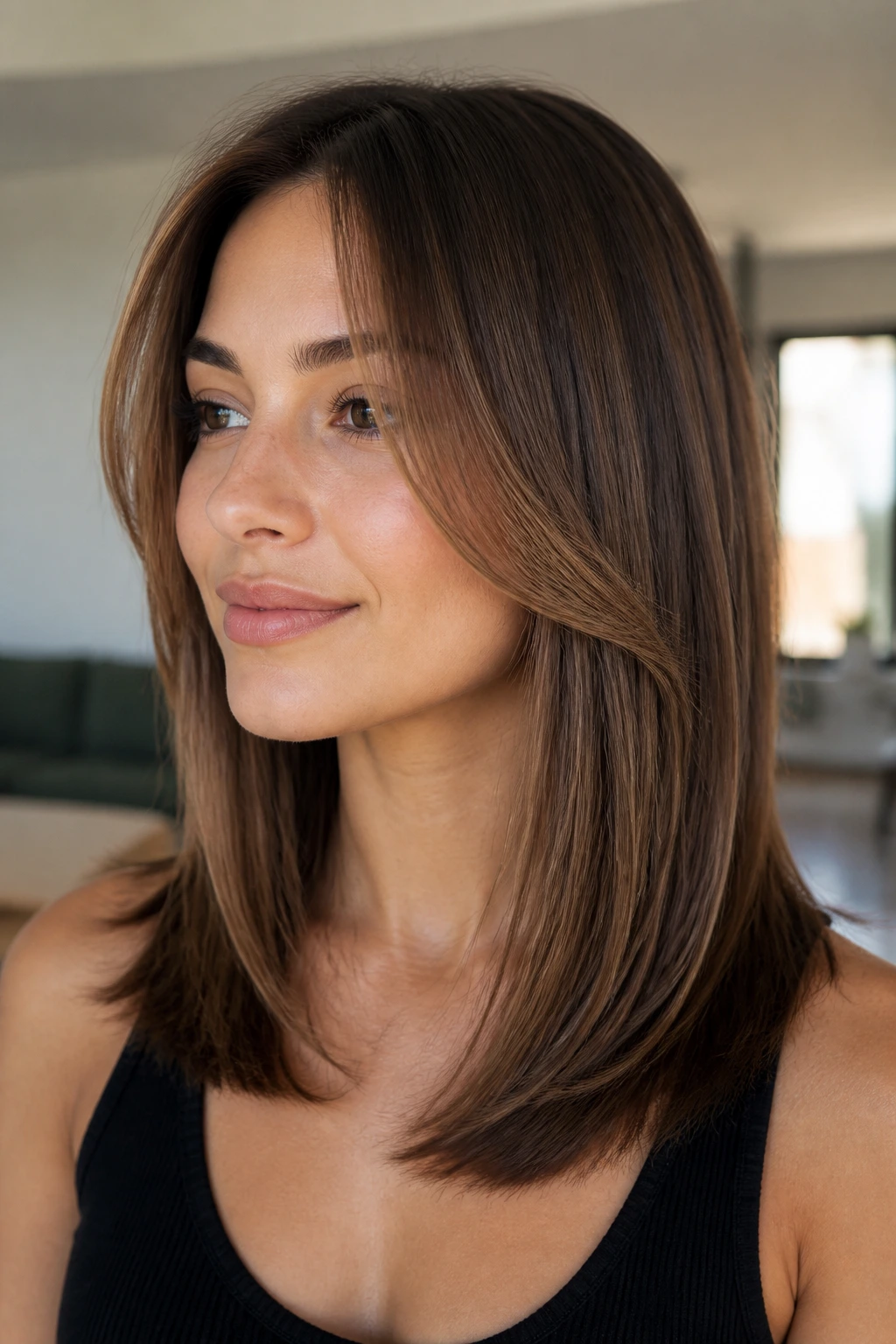
Presentation: Pick the part that supports the cut. A center part makes blunt lines look stronger. A side part lifts the roots. A slight off-center part softens bangs and face-framing layers. Then keep the finish simple—a smooth blow-dry, a light bend at the ends, or a tucked side is usually enough.
Accompaniments: Earrings matter more than people think. Hoops, small drops, and clean studs work well with straight medium cuts because they don’t compete with the line of the hair. High collars, open necklines, and structured jackets also suit these cuts because they frame the length instead of swallowing it.
Everyday finish: If you only have time for one step, concentrate on the front. Smooth the pieces around the face, lift the crown a little, and let the rest fall where it wants to. Straight hair rarely needs a full head of styling to look deliberate.
When to dress it up: A gloss serum at the ends and a slightly deeper side part can make the same haircut look sharper in under two minutes. No need for theatrics.
Small Styling Moves That Change the Finish
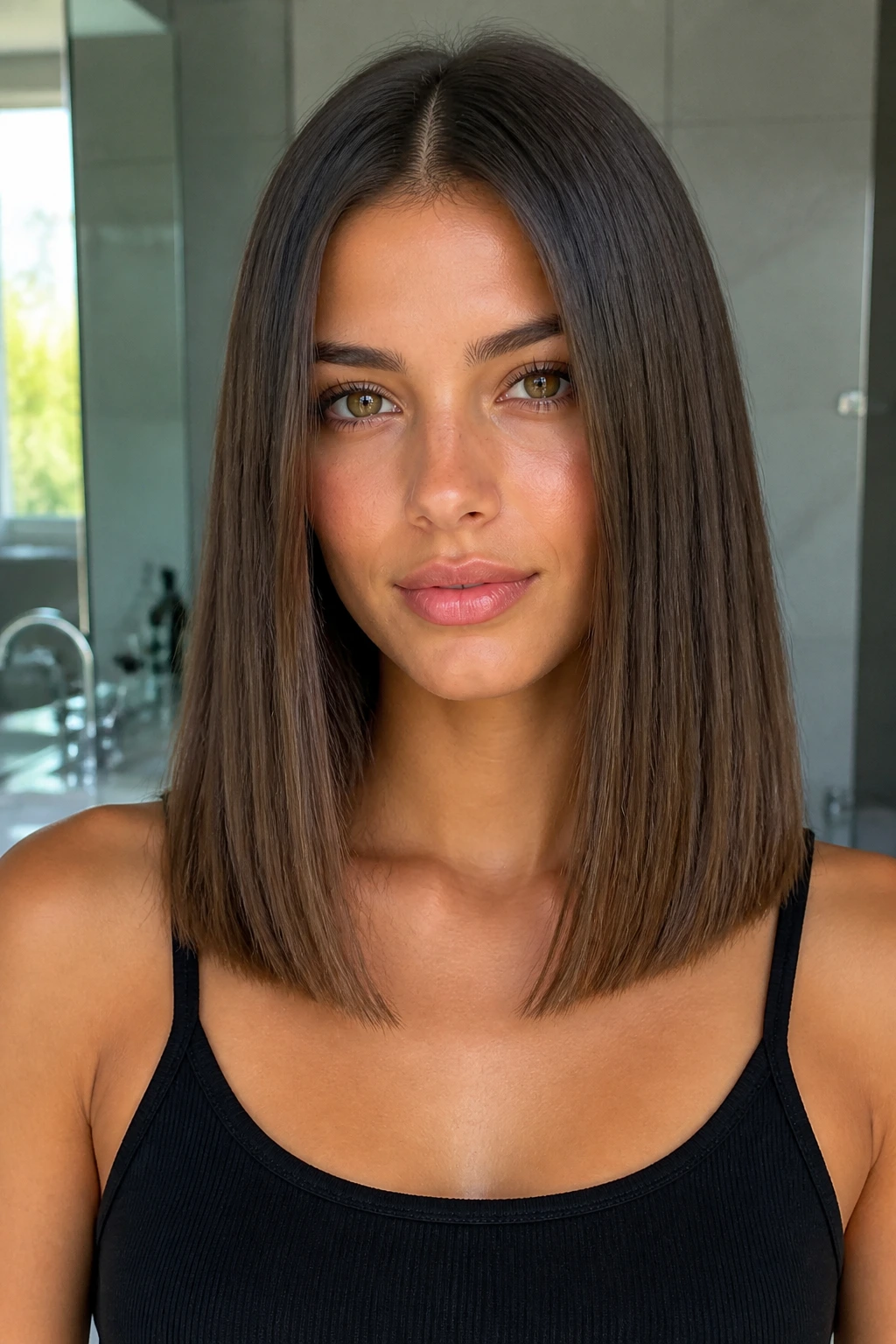
The difference between “haircut” and “good haircut” is often a half-hour of bad styling—or five minutes of good styling. Start with the roots. If the top is flat, the whole shape looks heavier than it really is. A small lift at the crown, even just by flipping the part and blow-drying the first inch away from the scalp, changes the silhouette right away.
For the ends, don’t overload with cream. Straight hair drinks in product faster than you’d expect, and a little too much turns the outline greasy. Use a pea-sized amount, rub it between your palms, then skim only the mids and tips. If you want movement, bend the last inch under or out with a flat iron. That tiny curve gives the cut life.
One more thing: dry the front pieces first. They frame the face, and they’re the first part anyone notices. If you get those right, the rest can be simpler.
Keeping the Shape Sharp Between Trims
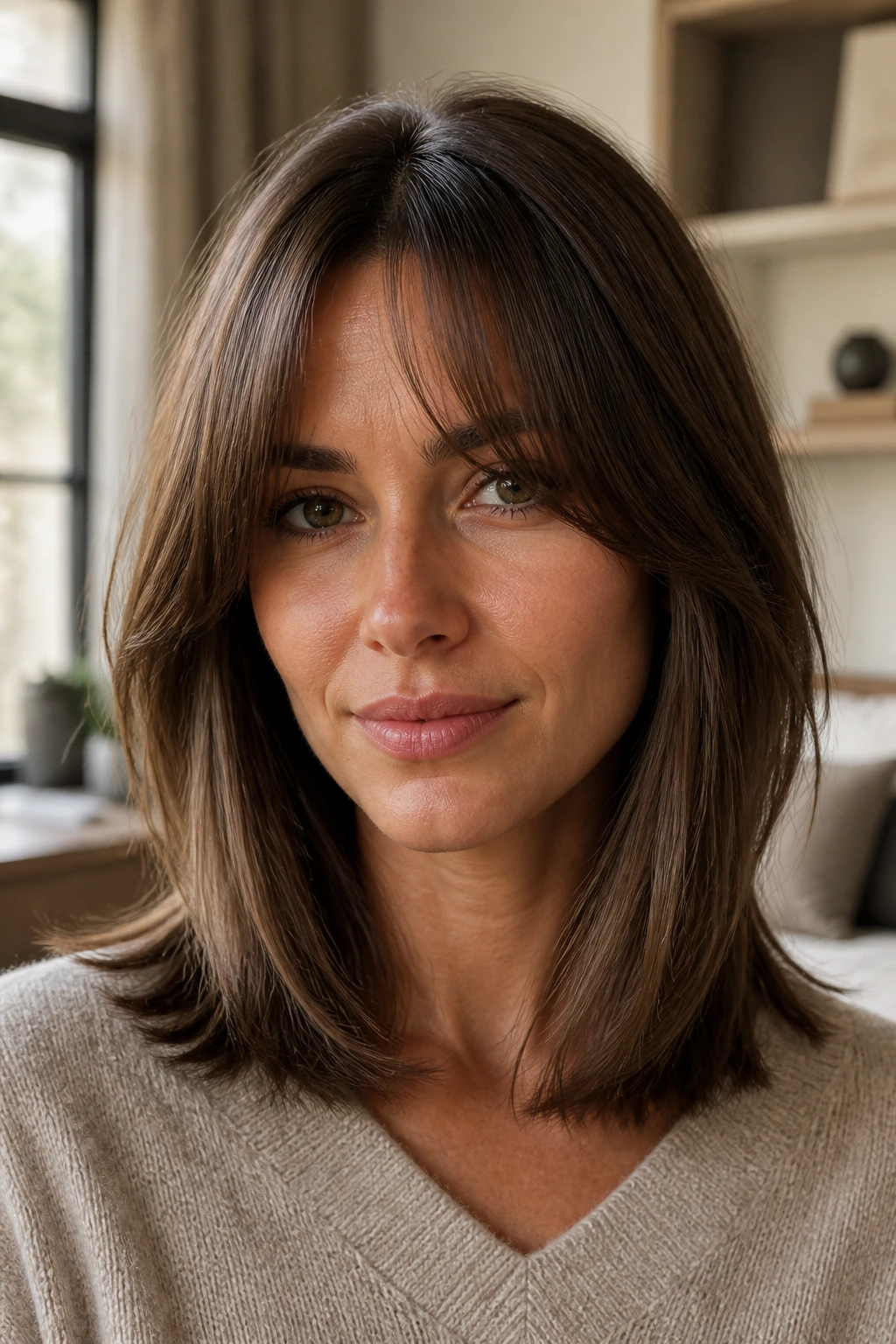
Straight hair tells on grown-out cuts faster than textured hair does, so trims matter. A blunt lob or polished one-length cut usually needs a touch-up every 8 to 10 weeks if you want the edge to stay crisp. Softer layered shapes can stretch to 10 to 12 weeks, but only if the ends still look full and the front pieces aren’t dropping past the face frame you wanted.
Bang sections need their own attention. Curtain bangs and side-swept fringe often benefit from a trim every 3 to 5 weeks, even if the rest of the hair is fine. That keeps them from falling into your eyes or splitting at the wrong point.
At home, keep the mids and ends from drying out. A light conditioner each wash, a weekly mask if your hair feels rough, and a satin or silk pillowcase can make a real difference. Straight hair doesn’t like being crushed flat against cotton all night. It wakes up with that same dull bend, and you have to fight it again in the morning.
Ways to Adapt the Same Cut for Different Hair Goals

The Fine-Hair Version: Keep the perimeter blunt and the layers minimal. Fine straight hair usually looks fuller when the outline is strong and the ends all stop in the same place. Skip heavy thinning shears unless the hair is truly bulky.
The Thick-Hair Version: Ask for internal weight removal, not shredded layers everywhere. Thick straight hair needs space to fall, but it still benefits from a clear line at the bottom so it doesn’t puff into a block.
The Low-Heat Version: Choose a cut that already has a nice shape when air-dried, like a rounded shoulder cut or soft U-cut. Then keep the layers long enough that the hair doesn’t need a round brush every morning.
The Face-Softening Version: Add long front pieces or curtain bangs. This is the easiest way to change the mood of a medium cut without losing length.
The Grow-Out-Friendly Version: Go slightly longer around the collarbone and avoid ultra-short layers. That way the haircut still looks intentional six weeks later instead of abandoning you halfway through its life.
Common Mistakes That Flatten Straight Hair
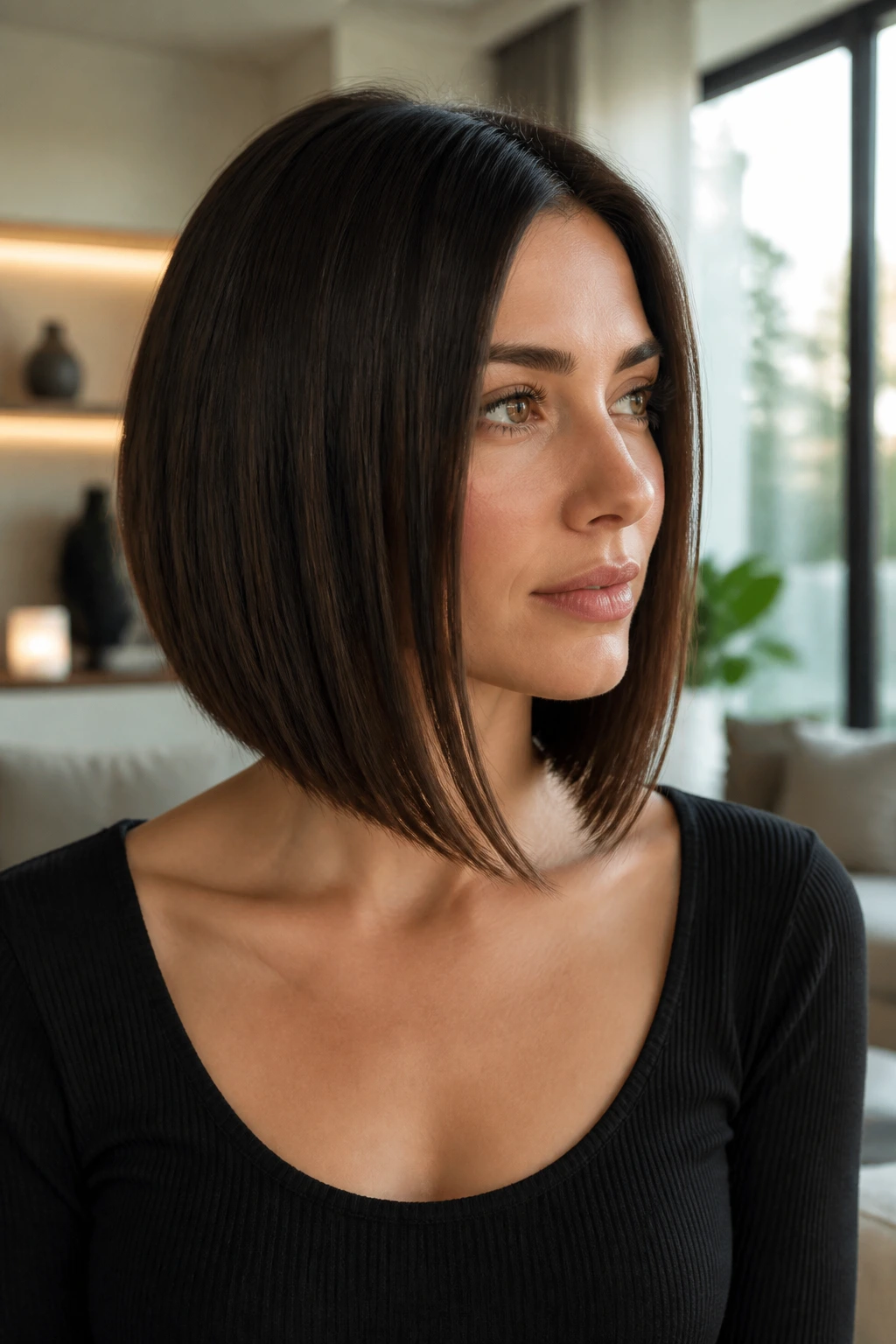
The first mistake is asking for too many short layers. Straight hair does not hide them. It broadcasts them. You get thin ends, awkward steps, and a shape that looks more tired than textured. The fix is to keep layers long and purposeful, especially around the front and crown.
The second mistake is ignoring density. Fine straight hair needs a stronger perimeter and very light layering. Thick straight hair needs the opposite: some weight removed underneath so it doesn’t balloon out. Same hair type, different solution. A one-size-fits-all cut is how people end up disappointed.
Third, people often cut bangs without checking how the front grows. Cowlicks at the hairline can split fringe in half, and straight hair makes that split obvious. If your hair pushes forward on one side, say so before the scissors come out.
Finally, over-styling can ruin a good cut. A medium straight haircut that’s been coated in too much oil or flattened with a hot iron until it squeaks loses the clean line that made it attractive in the first place. Use less product than you think. Then stop.
Frequently Asked Questions
Which medium haircut makes straight hair look thicker?
A blunt collarbone lob or a one-length midi cut usually makes the biggest difference. The straight perimeter creates the illusion of denser ends because all the hair lands in the same place instead of tapering off.
Do layers make straight hair look thinner?
They can, if they’re cut too short or too aggressively. Long, soft layers or invisible layers are a better move for straight hair because they keep movement without exposing the ends.
Can straight hair pull off curtain bangs?
Yes, but they need the right length and a little styling. Curtain bangs look best when they’re longer at the sides and blow-dried into a soft split, not left to dry flat and sticky across the forehead.
How often should a medium straight haircut be trimmed?
Blunt shapes usually need attention every 8 to 10 weeks. Softer layered cuts can sometimes go 10 to 12 weeks, but bangs and face-framing pieces often need earlier touch-ups.
What if my hair flips outward at the shoulders?
Ask for a rounded or beveled edge instead of a hard blunt line. That slight curve helps the ends fall more naturally and reduces the awkward shoulder flip that straight hair loves to create.
Is a center part better than a side part for straight hair?
Neither is always better. A center part makes blunt cuts and symmetrical layers look sharper, while a side part adds lift at the roots and softens the face. The cut should help decide the part, not the other way around.
Should I ask for a dry cut?
If your hair is very straight and your stylist is comfortable with it, a dry check can help. Straight hair shows length and weight changes clearly once it dries, so checking the outline dry can prevent surprise.
Can I air-dry these cuts and still look put together?
Some of them, yes. A blunt lob, a soft U-cut, or a rounded shoulder-length cut can air-dry well if the ends are healthy and the cut is balanced. Curtain bangs, butterfly layers, and flipped ends usually look better with at least a little styling.
The Shape That Does the Heavy Lifting
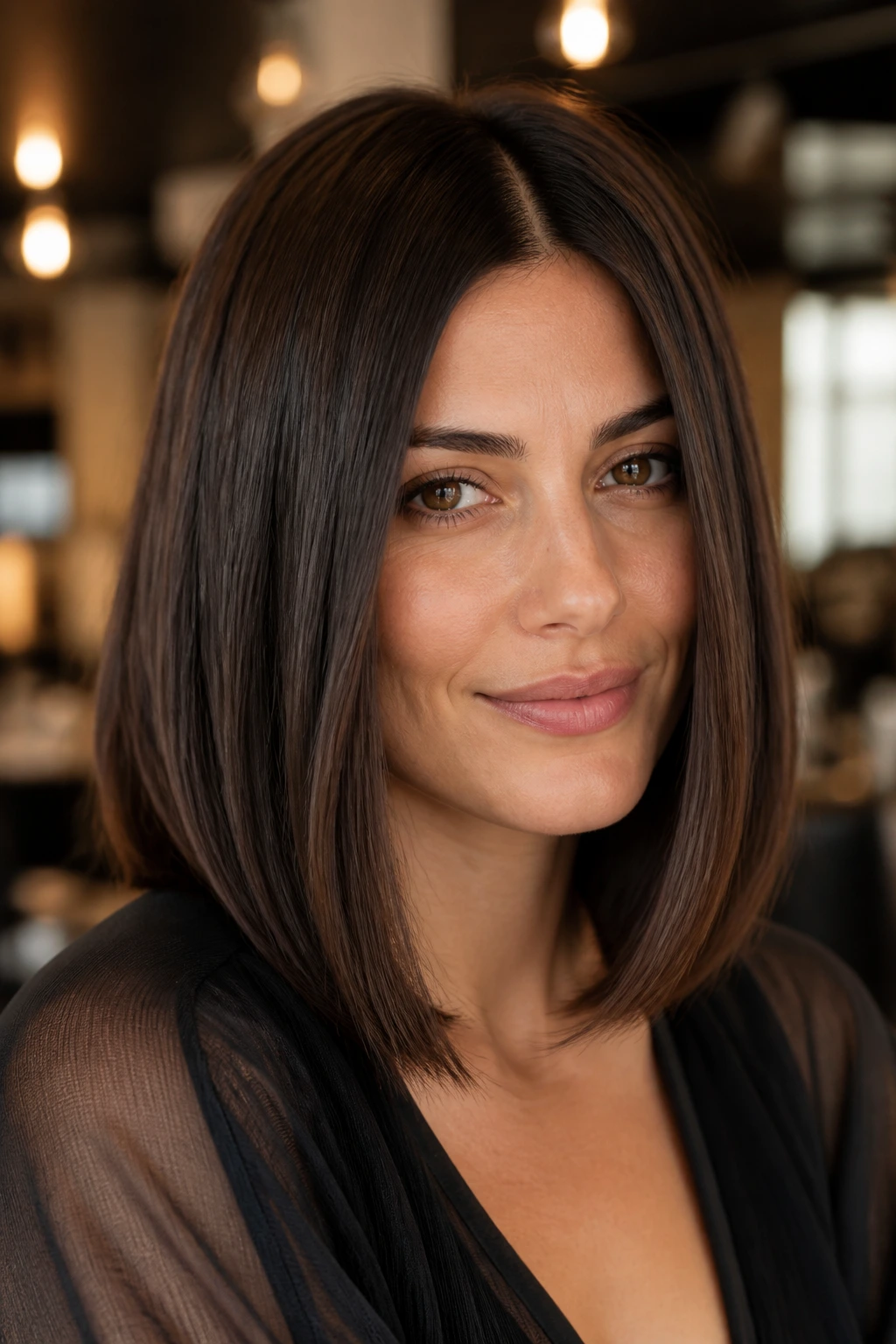
The best medium cuts for straight hair do one thing very well: they give the hair a shape you can trust. No scrambling. No pretending a bad perimeter is “texture.” Just a clean line, a smart layer, or a face frame that falls where it should.
That’s the real advantage of straight hair at medium length. It rewards precision. It also punishes laziness. Pick the cut that matches your density, your styling habits, and the amount of time you actually want to spend in front of the mirror. Then let the shape do its job.
