



A middle part with bangs looks simple until you try to live with it. Then the little things start mattering: whether the fringe splits cleanly at the bridge of the nose, whether the crown has enough lift, whether the ends tuck under or kick out in a way that looks deliberate instead of accidental. Middle part hairstyles with bangs sit in that tricky space where the cut can look polished, sleepy, edgy, or a little off, all depending on the shape and how you dry it.
That’s why I like this category so much. It gives you room. A center part can make hair feel balanced and clean, while the bangs soften the forehead and pull the eyes inward. If the bangs are cut well, they don’t sit there like a helmet. They move. They open. They make the rest of the haircut feel more expensive than it really is.
The catch is that not every fringe belongs in the middle. Heavy blunt bangs can fight the part. Tiny wisps can disappear. A good version knows where the hair wants to fall and works with that, not against it. The styles below cover long hair, short hair, curls, waves, updos, and that awkward grow-out stage everyone tries to survive with dry shampoo and hope.
Why These Middle-Part Bangs Keep Working
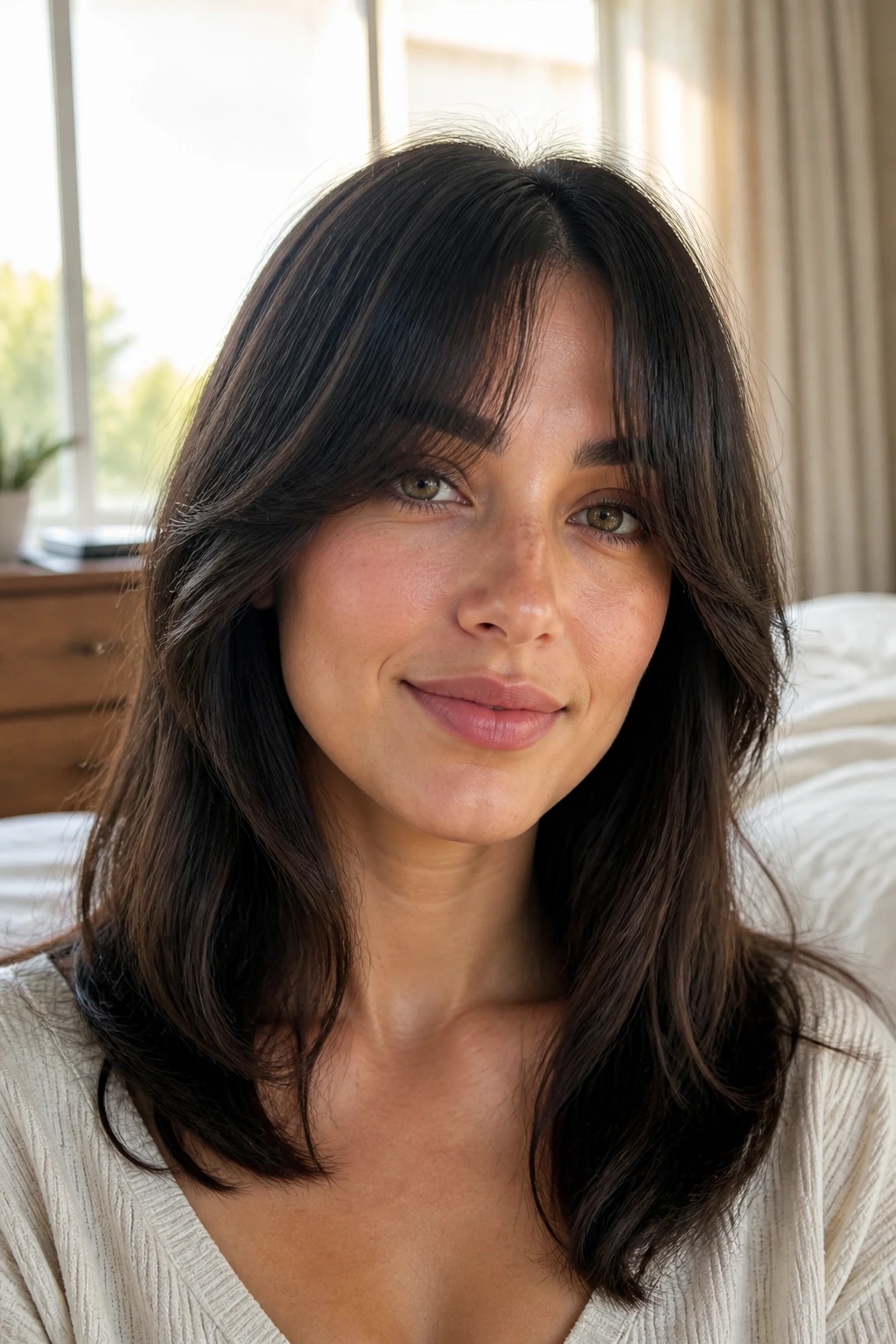
Balance: A center part gives the face a clean line down the middle, and bangs soften that line before it starts to feel severe.
Range: These cuts work on straight, wavy, curly, and coily hair because the bang shape does most of the visual work.
Grow-out friendly: Curtain bangs and split fringe grow out in a way blunt bangs never do. They slide into layers instead of turning into a problem.
Styling flexibility: You can blow them out for a polished finish or let them dry with a bend and still look intentional.
Face-framing power: When the shortest pieces hit around the cheekbone or nose bridge, they pull attention upward fast. That’s the whole trick.
Low drama, high payoff: A middle part with the right bangs changes the whole haircut without forcing a big chop.
1. Long Layers with Curtain Bangs
Long layers with curtain bangs are the classic for a reason. The lengths keep the hair soft and familiar, while the bangs stop the front from falling flat and lifeless. When the shortest point lands around the bridge of the nose and the longer pieces graze the cheekbones, the face gets a gentle frame that feels easy, not precious.
Why It Works
The long length keeps weight in the hair, which matters if your ends get wispy fast. Curtain bangs cut through that weight just enough to give the front some shape, and the center part lets the bangs open naturally instead of sitting in one heavy block.
A round brush and a medium blowout are usually enough here. Pull the fringe forward first, then curve it away from the face at the ends so it splits into that soft, flipped shape. Don’t overthink it. This style looks best when the bangs have a little air.
Quick Details
- Best for hair that’s medium to thick and wants movement.
- Works well when the cheekbones are one of your favorite features.
- Needs a trim every 6 to 8 weeks if you want the curtain shape to stay crisp.
- Looks especially good with a few bendy pieces around the jawline.
Pro tip: If the front keeps collapsing, dry the bangs first. Wet fringe is lazy fringe.
2. Butterfly Cut with Cheekbone Bangs
Why does the butterfly cut keep showing up with a center part? Because it gives the bangs a place to land. The shorter top layers create lift around the crown, and the longer length underneath keeps the haircut from feeling chopped up. It’s one of the easiest ways to get volume without losing the feel of longer hair.
The cheekbone-length fringe is the key. It should skim the upper cheeks and drift into the longest layers, not stop abruptly. That shape makes the front look feathered and light, which is exactly what the butterfly cut needs. If the bangs are cut too blunt, the whole style loses that floating feel.
What Makes It Different
The shortest layers sit high enough to create movement around the face, but they do not need constant styling. A quick blow-dry with a round brush or a hot-air brush is usually enough to get the shape back after a wash.
This cut also does a nice job with hair that gets heavy at the roots. The crown looks lifted, the ends look longer, and the bangs keep the whole thing from reading as one long sheet of hair.
Best for: people who like volume at the front and don’t want to sacrifice length.
3. Soft Shag with Bottleneck Bangs
A soft shag with bottleneck bangs has a little attitude, but not the sharp, punk version people sometimes picture. This one is softer at the edges, with layers that move and a fringe that starts narrow at the center before opening wider near the eyes. It’s one of the better choices if your hair likes texture and hates being overworked.
Why It Lands So Well
The shag already builds texture into the haircut, so the middle part doesn’t need to fight for attention. Bottleneck bangs take that same idea and apply it right at the forehead: narrow at the bridge, wider as they fall outward. The result is a fringe that looks lived-in from day one.
I like this cut best when it’s air-dried to about 80 percent and finished with a little diffuser or a few twists around the front. The bangs should separate into pieces, not form a single curtain. That piecey finish is half the point.
When to Choose It
- If your hair has natural wave.
- If you want a cut that still looks good after sleeping on it.
- If you’re tired of bangs that demand perfect brushwork.
Nope, this is not the polished blowout haircut. It’s the one that gets better once it loosens up.
4. Blunt Lob with Wispy Split Fringe

A blunt lob can look a little too square on some faces, and that’s where a wispy split fringe saves the day. The cut line at the bottom stays clean, almost sharp, while the bang area breaks things up and keeps the style from feeling heavy around the jaw.
That contrast is the whole appeal. The lob brings structure. The fringe brings softness. Together, they keep each other honest.
The trick is to keep the bangs light enough that they part without sticking. If the fringe gets too dense, it starts to sit on the forehead like a sheet. Wispy is better here. Think soft separation, not thin and sad.
Styling Note
A flat iron bend at the front can help, but only use it on the lowest heat that still shapes the hair. The goal is a little curve away from the face, not a hard flip. A drop of light serum on the ends is enough. Too much and the whole thing goes limp by lunch.
This is one of my favorite cuts for people who want bangs but don’t want a lot of bang. There’s a difference.
5. Wavy Collarbone Cut with Piecey Bangs
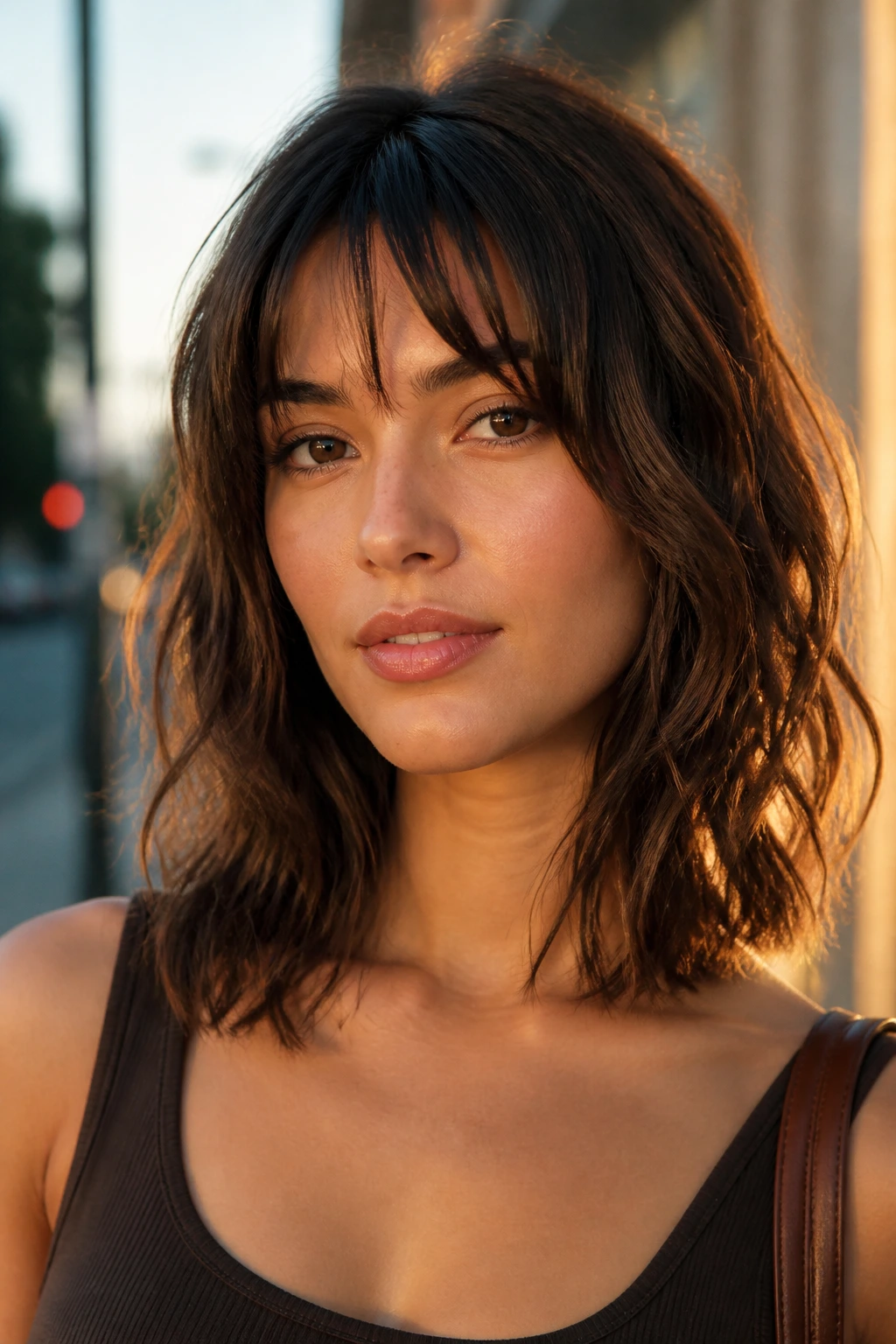
Picture hair that hits right around the collarbone, with bends that look like they happened on the way to the store, not after forty minutes with a curling wand. Add piecey bangs in the middle, and the whole thing suddenly looks deliberate.
This style works because it doesn’t try to be too neat. The waves bring movement at the ends, while the bangs break up the front in narrow sections that catch the eye in little flashes. That piecey look is especially good if your hair is medium density and you hate the feeling of a lot of product near your roots.
How It Feels in Real Life
It wears well with salt spray, mousse, or a light cream scrunched through damp hair. I’d skip heavy oils near the front. They flatten the bangs fast, and piecey bangs that sit on a greasy root line are never a flattering combo.
Small Details That Matter
- Leave the ends slightly undone.
- Keep the shortest bang pieces around nose height.
- Use fingers more than a brush once the hair is dry.
The best version looks like you ran a hand through it, but in a controlled way. Not messy. Just not overplanned.
6. Curly Layers with Curly Curtain Bangs
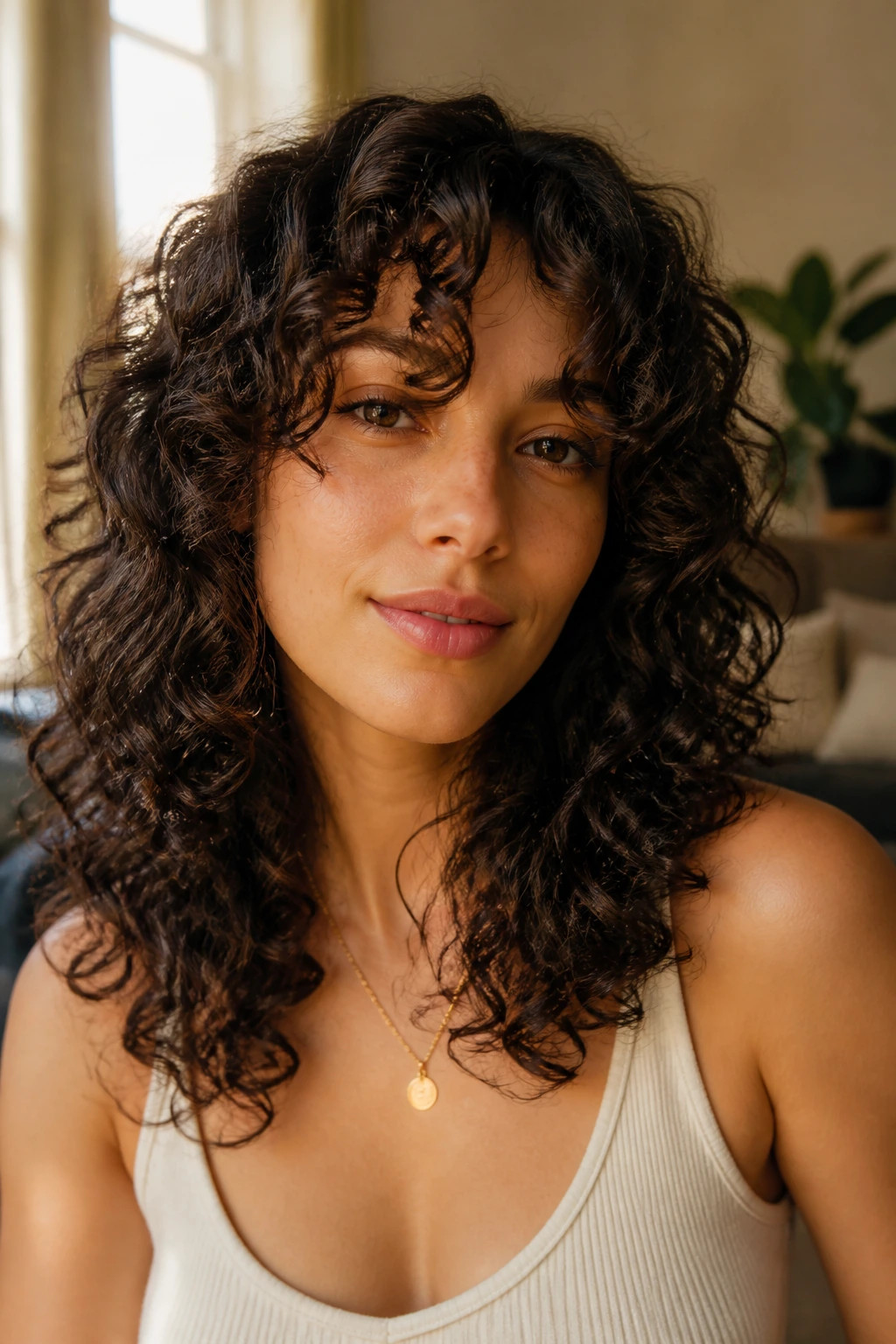
Curly hair and a middle part with bangs can look gorgeous if the cut is done dry and the bang shape follows the curl pattern. The curls need room to spring. If you force them into a straight fringe, they fight back, and not in a cute way.
Curly curtain bangs work because they split naturally and sit beside the face instead of across it. The shortest curls usually land somewhere between the brows and the cheekbones once they dry, so the cut has to allow for shrinkage. That means the starting length should be longer than you think. Usually longer.
How to Wear It
Diffuse on low heat or let the curls air-dry with a little shaping at the roots. A curl cream or light gel can help the bang area clump into defined sections, but too much product will weigh the front down and stretch the curl.
If you want this style to look good for more than one day, pineapple the crown at night and let the bangs fall forward again in the morning. A mist bottle and a quick finger twist can bring them back.
Curly bangs with a center part are not low effort. They are lower drama than people expect, though, and that counts for a lot.
7. Glass-Hair Lengths with Feathered Bangs
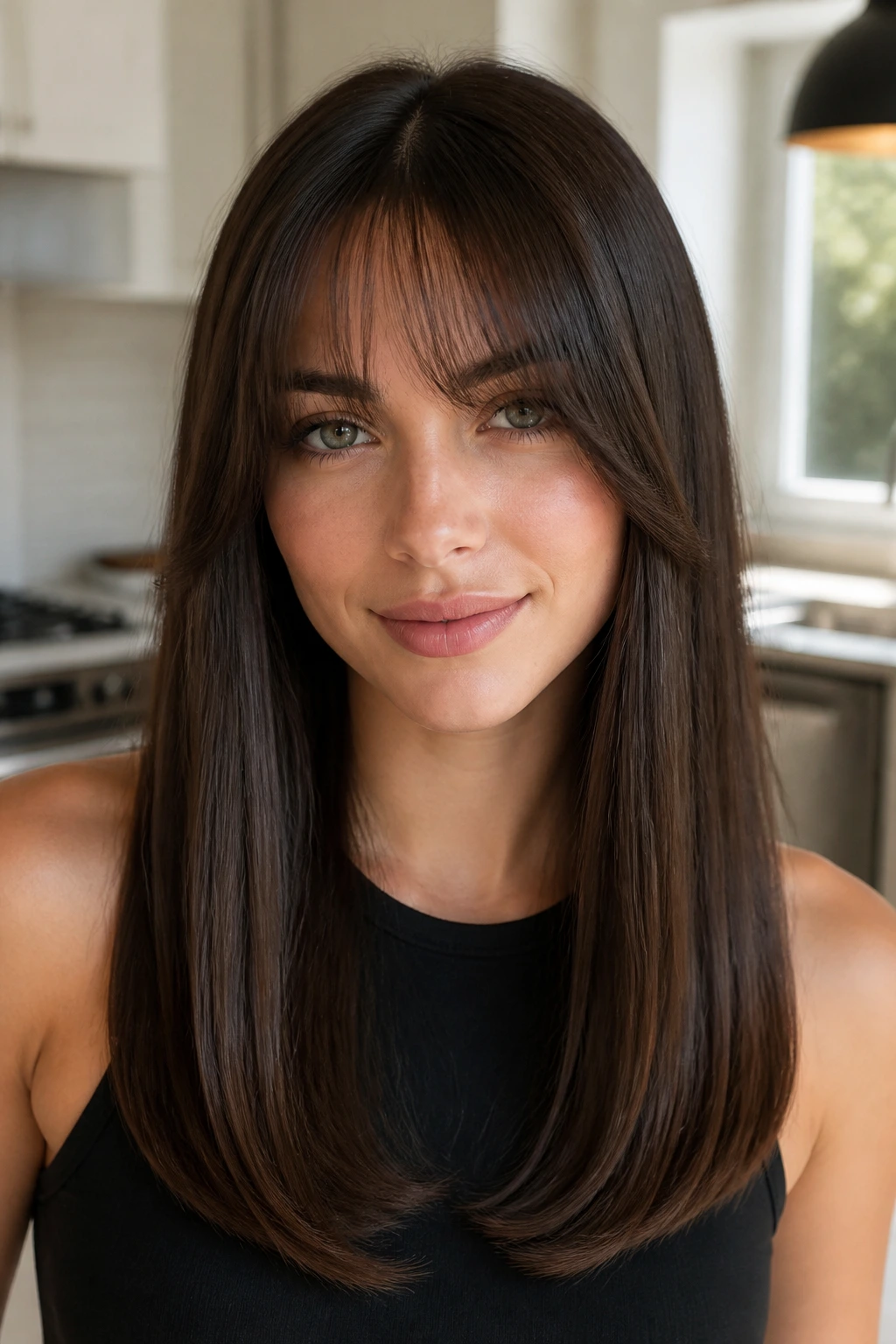
Glass hair and feathered bangs sound like opposites, and that’s exactly why they work. The lengths are sleek, glossy, and straight enough to reflect light in a hard line. The bangs, by contrast, are soft and tapered, so the front doesn’t become one long block of shine with no shape.
This style looks especially clean on thick hair that can hold a smooth finish after a blow-dry. The feathering at the fringe keeps the middle part from looking too severe, and the longer side pieces guide the eye down the cheekbones instead of stopping at the forehead.
A paddle brush, a nozzle attachment, and a flat iron pass on the very ends are usually enough. I’d keep the bang area dry before touching the rest of the hair. If the fringe gets hot and humid while you’re still working on the lengths, it starts to kink.
Best for straight hair: yes.
Best for rainy days: not so much.
The shine looks good. The frizz does not.
8. Wolf Cut with Choppy Center Fringe
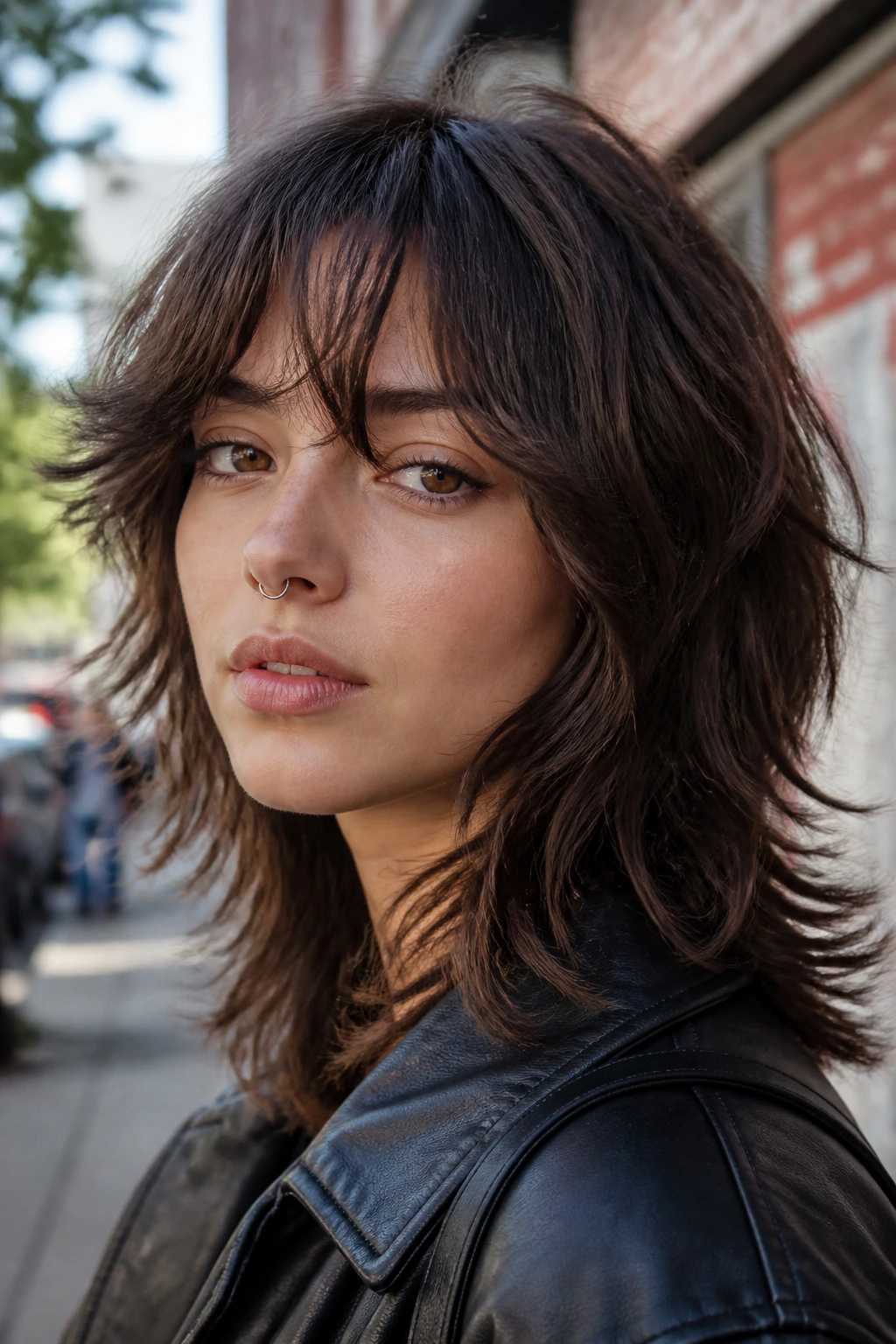
The wolf cut is the unruly cousin in this group, and that’s a compliment. It has a built-in messiness that makes a center part and bangs feel cool instead of overstyled. The layers are shorter on top, longer underneath, and a choppy fringe keeps the front from looking too tidy.
This cut does best when the bangs are cut with some texture into the ends. A blunt line would fight the rest of the haircut. Choppy bangs, though, can split down the center and sit just crooked enough to feel alive. That little bit of unevenness is the charm.
Who Should Try It
If you like air-dried hair, if you already own texture spray, if you don’t want to spend twenty minutes making every strand behave — this is your lane.
The wolf cut can go stale if the layers get too grown out and the bangs lose their shape. But when it’s fresh, it has a nice bite to it. Not polished. Better.
9. Pixie Grow-Out with Mini Curtain Bangs
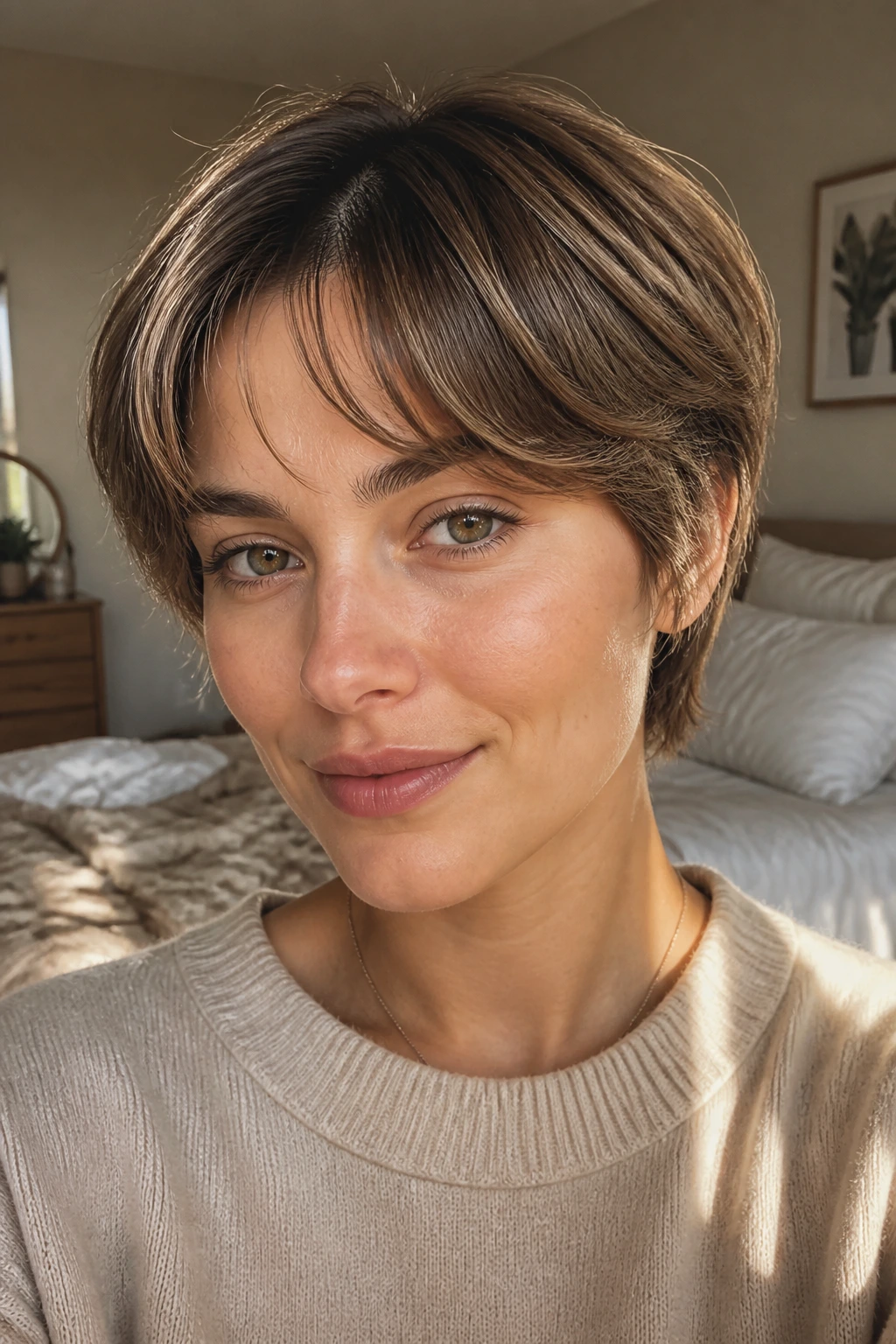
Grow-out hair is where a lot of people get annoyed and chop everything off too early. A pixie that’s moving toward a bob can look awkward around the temples, and mini curtain bangs help bridge the gap. They split in the middle, skim the forehead, and give the shorter cut a bit of softness while the rest of the hair catches up.
This style works because it turns the awkward stage into a shape. The bangs do not need to be long. They just need to be long enough to bend away from the eyes and sit with the part instead of against it.
A tiny round brush or even a finger-blow-dry is enough here. Push the front forward, dry the roots in the opposite direction for a second, then let the part settle back to center. That little trick gives the bang area lift, which is the whole battle with short hair.
It’s a smart cut if you’re between lengths and tired of looking like you lost an argument with scissors.
10. High Ponytail with Face-Framing Bangs
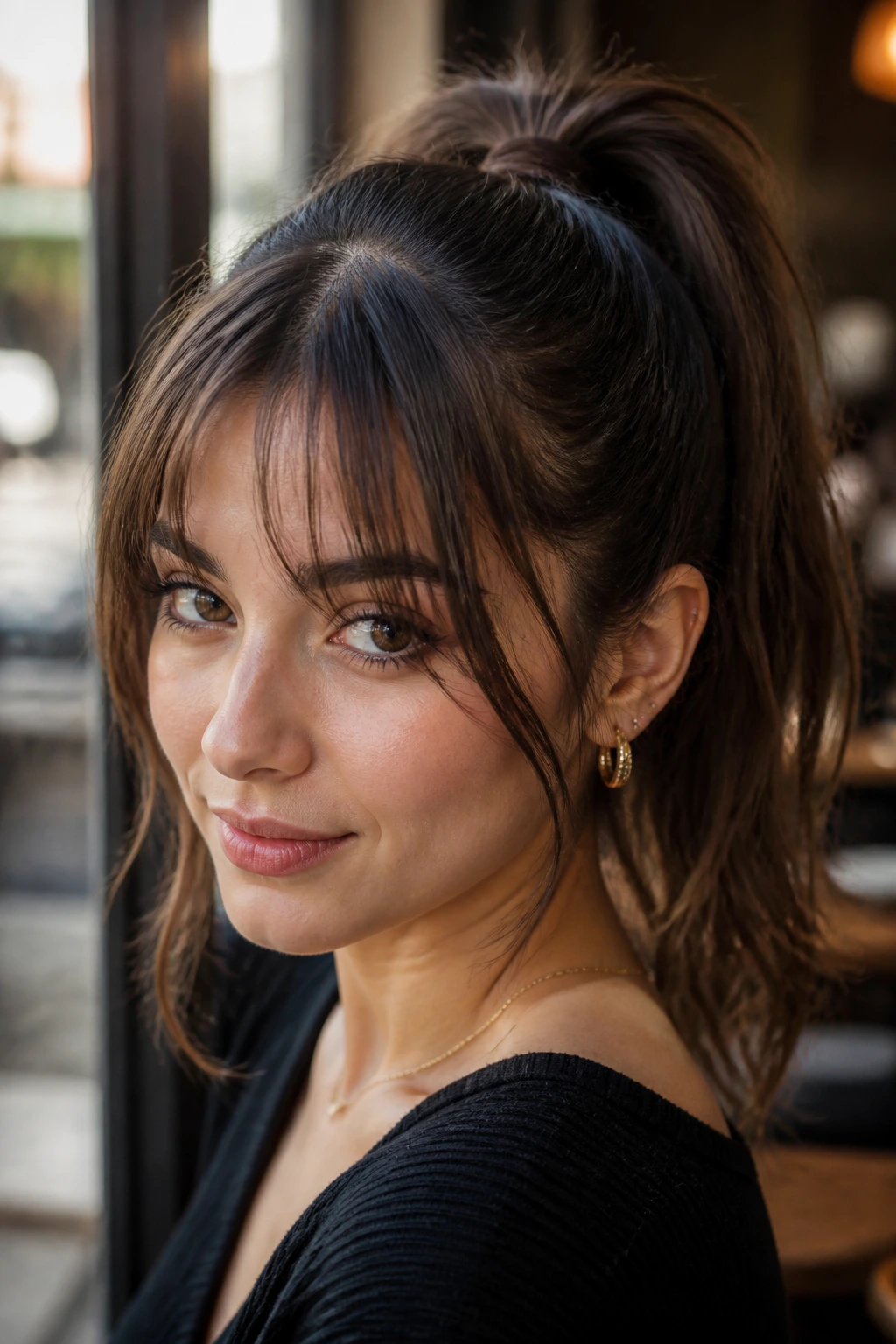
A high ponytail and bangs together can feel surprisingly chic when the front pieces are handled well. The ponytail lifts the face and exposes the jawline, while the middle-part bangs soften the forehead and keep the look from becoming too severe.
I like this style most when the bangs are not over-sculpted. A few face-framing pieces should fall around the cheekbones, and the center part should stay visible. That contrast between pulled-back hair and loose front pieces gives the style its shape.
A Practical Detail
Spray a touch of dry texture at the roots before tying the ponytail. It helps the crown stay lifted instead of collapsing into a slick stripe. Then wrap a small section of hair around the elastic if you want it to look finished.
This is one of the easiest ways to make bangs feel useful on a busy day. They earn their keep here.
11. Low Bun with Soft Tendrils and Center Bangs
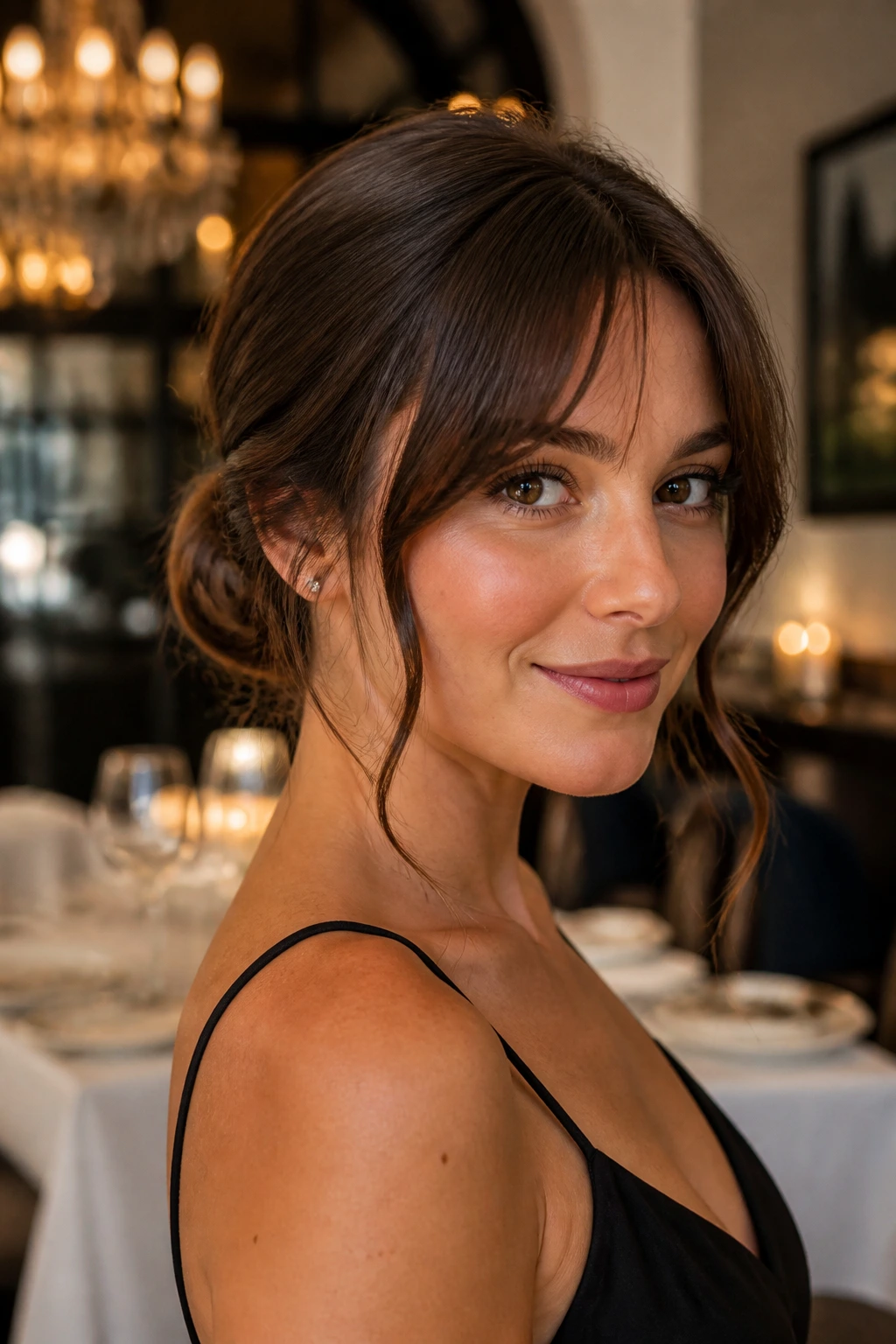
A low bun can look too strict if every strand is pulled back, especially with a middle part. Soft tendrils and center bangs fix that fast. The bun stays neat at the nape, while the loose front pieces soften the temples and the fringe keeps the forehead from looking bare.
The best version isn’t stiff. It has just enough slack that the bun sits a little rounded, and the bangs open around the bridge of the nose instead of lying flat. A clean center part on top matters because it gives the style direction.
This is the haircut’s formal cousin. Same bangs, different mood.
Use it when: you want polish for dinner, work, or an event but don’t want the severe slick-back look.
Skip it when: your fringe is too short to move away from the face. It’ll keep popping out, and not in a flattering way.
12. Half-Up Style with Curtain Bangs
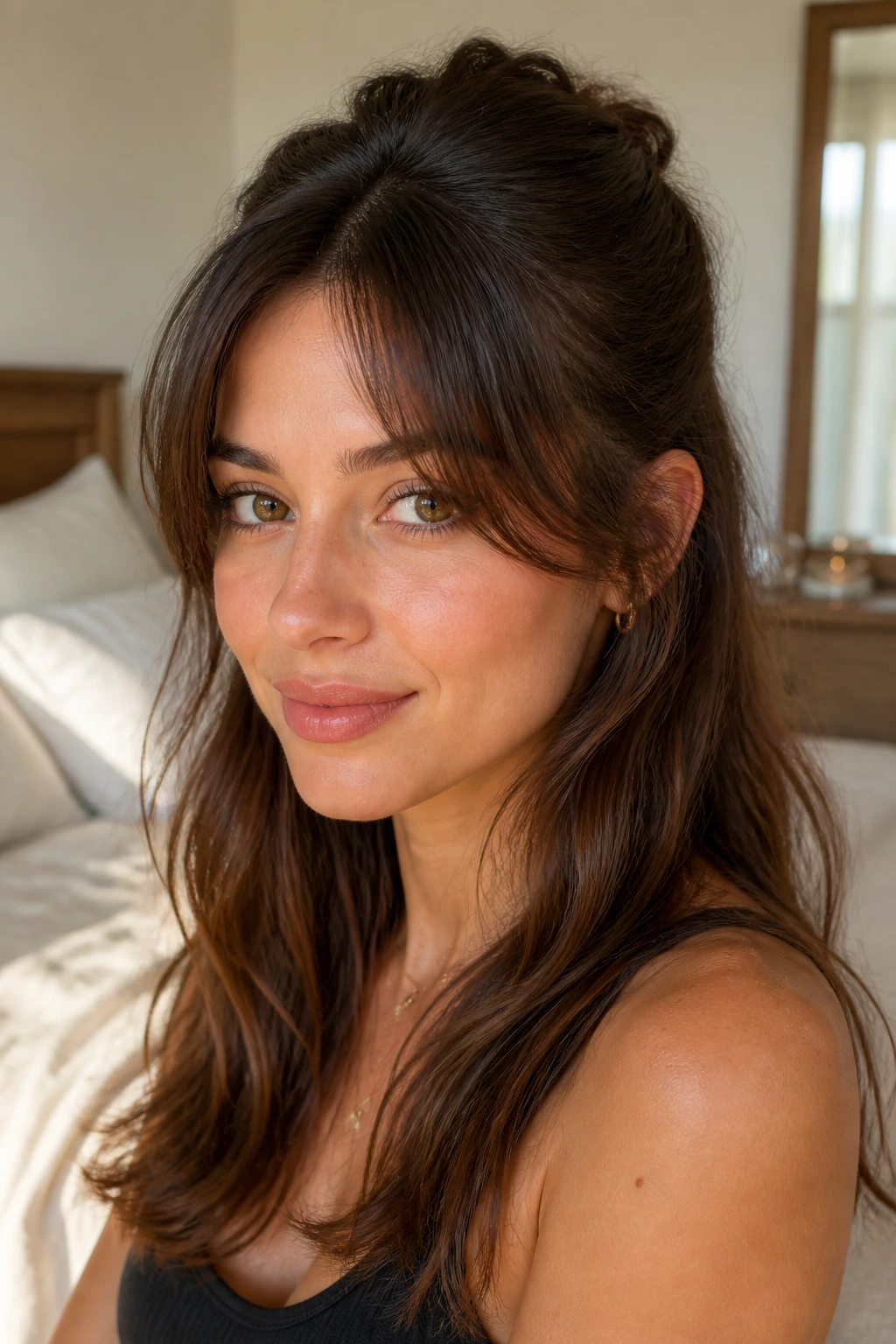
Half-up hair is where curtain bangs show their range. You get the lift from the pulled-back crown, but the bangs stay loose enough to soften the front. The shape is especially nice on medium-length hair that needs a little help looking styled.
The half-up section should start about an inch or two above the ears. Any higher and the style starts to look like it’s trying too hard. Any lower and the bangs and crown pieces blur together. The middle part keeps the front clean, while the curtain fringe makes the whole thing less school-photo and more grown-up.
A small claw clip or a slim elastic both work. I prefer the clip for a messier finish because it lets the top layers keep some movement. If you want the bangs to sit well, give them a quick bend with a blow dryer or a round brush before you pin anything up.
13. Air-Dried Shoulder Cut with See-Through Bangs

See-through bangs can be a lifesaver for fine hair, especially when you want a middle part but don’t want the front to feel heavy. The airy fringe gives just enough coverage to change the look, but it leaves plenty of scalp visible so the hair doesn’t look overcut.
This works best on shoulder-length hair that air-dries with a bend. Think soft, not straight-flat. A little leave-in cream, a little scrunching, and very little handling. The bangs should separate into translucent pieces instead of forming a solid wall.
What to Watch For
If the bangs get too dense, they stop being see-through and start acting like regular fringe. That defeats the point. Keep the section small, and ask for a soft taper at the temples so the fringe melts into the rest of the haircut.
This is a good quiet option. It doesn’t scream for attention, and that’s part of the appeal.
14. Voluminous Blowout with Rounded Curtain Bangs
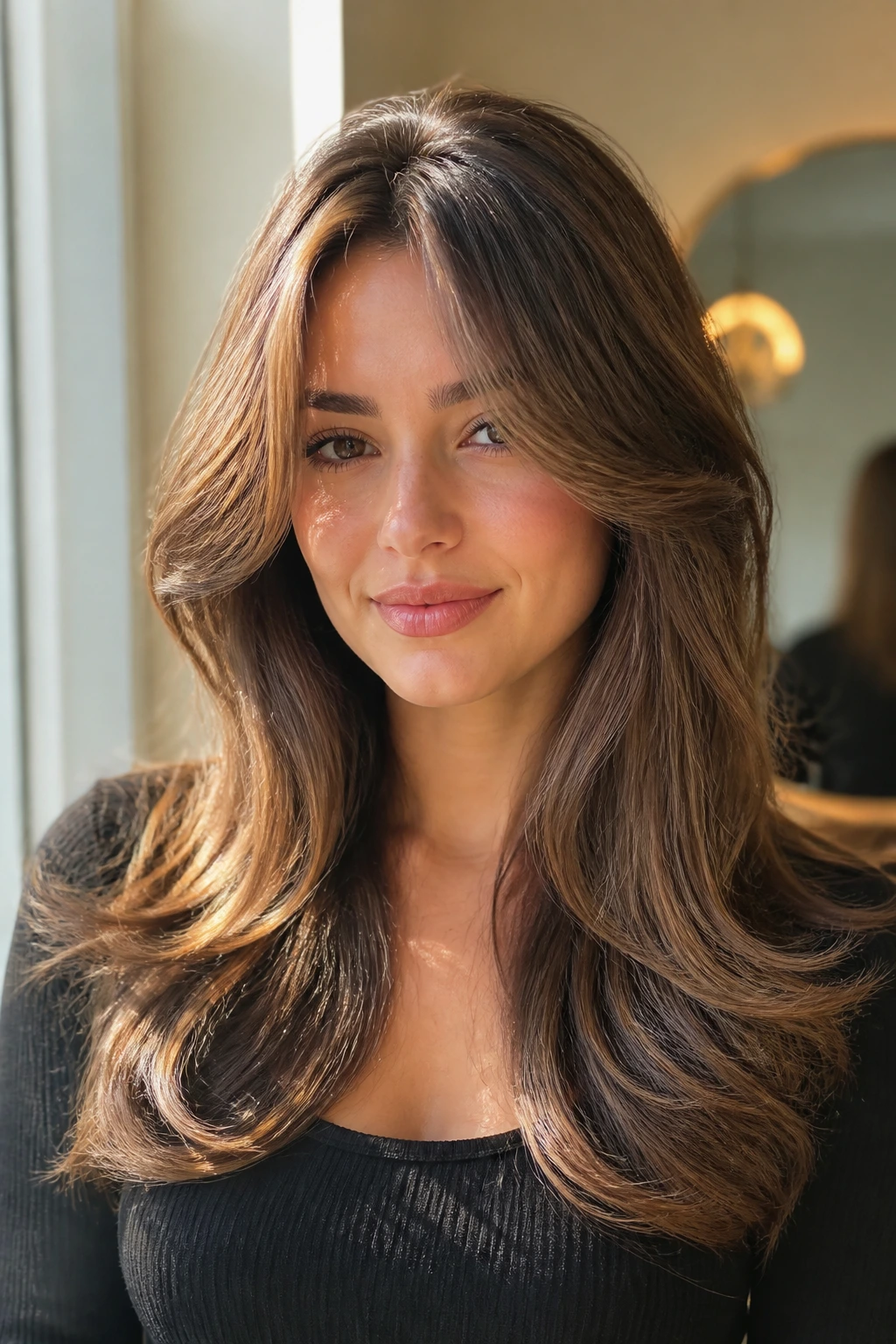
If the soft, blown-out look has ever tempted you, this is the version to try. The roots lift, the lengths curve, and the curtain bangs round outward just enough to frame the eyes without hanging in the way. It’s a salon finish, but not a stiff one.
The roundness at the bang line matters. Straight curtain bangs can fall a little flat after a few hours, but a rounded shape gives them memory. Once the hair cools in that curve, it tends to hold better.
Velcro rollers or a hot brush can help here, though I still like a round brush on medium sections because it gives a more natural bend. Set the front first, clip it while it cools, then finish the rest of the hair. That order makes a difference.
This is the style that looks like you made an effort without tipping into formal.
15. Textured Shoulder-Length Cut with Swoopy Bangs

Shoulder-length hair is the workhorse of this whole group. It’s long enough to pull back, short enough to move, and easy to style when the bang shape does part of the work. Swoopy bangs open in the middle and slide outward with a softer line than curtain bangs, which gives the whole cut a little more motion.
The texture at the ends keeps the haircut from feeling boxy. If the shoulder-length line is too blunt, the bangs have to do all the heavy lifting. A few choppy layers around the lower half fix that fast.
This is a nice choice if you wear your hair both straight and wavy. The shape survives either way. On straight days, the bangs frame the face with a cleaner edge. On wavy days, they loosen into something more relaxed.
It’s not the flashiest style here. It may be the most useful.
16. Long Layers with Brow-Skimming Fringe
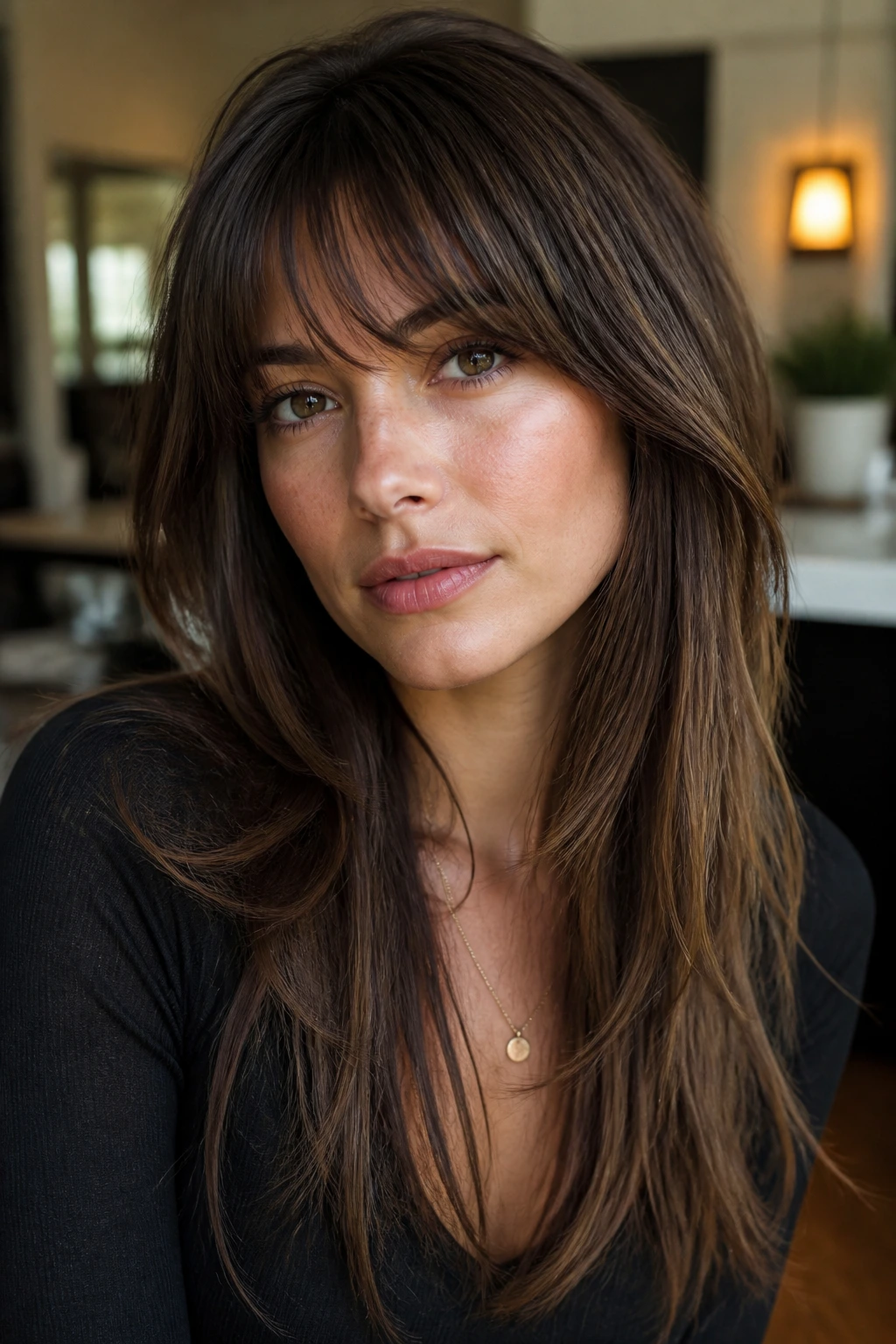
Brow-skimming bangs can be tricky with a center part because they sit closer to the face than curtain bangs do. But when they’re cut with soft edges and parted slightly at the center, they can look rich and intentional, especially on long layered hair.
The biggest mistake with this style is cutting the fringe too blunt. That turns the whole front into a hard line. A better version tapers at the temples and lets the shortest point hover right at the brows, not above them. The layers below that carry the movement.
Why It’s Worth Trying
It gives you more coverage than classic curtain bangs without taking over the forehead. If you wear glasses, this shape can be easier than longer bangs because it stays out of the frames better.
The style does need regular trimming, though. Brow-skimming lengths grow fast, and a tiny bit of extra length can change the whole mood from sharp to sleepy.
17. Tapered Afro with Curly Center Bangs
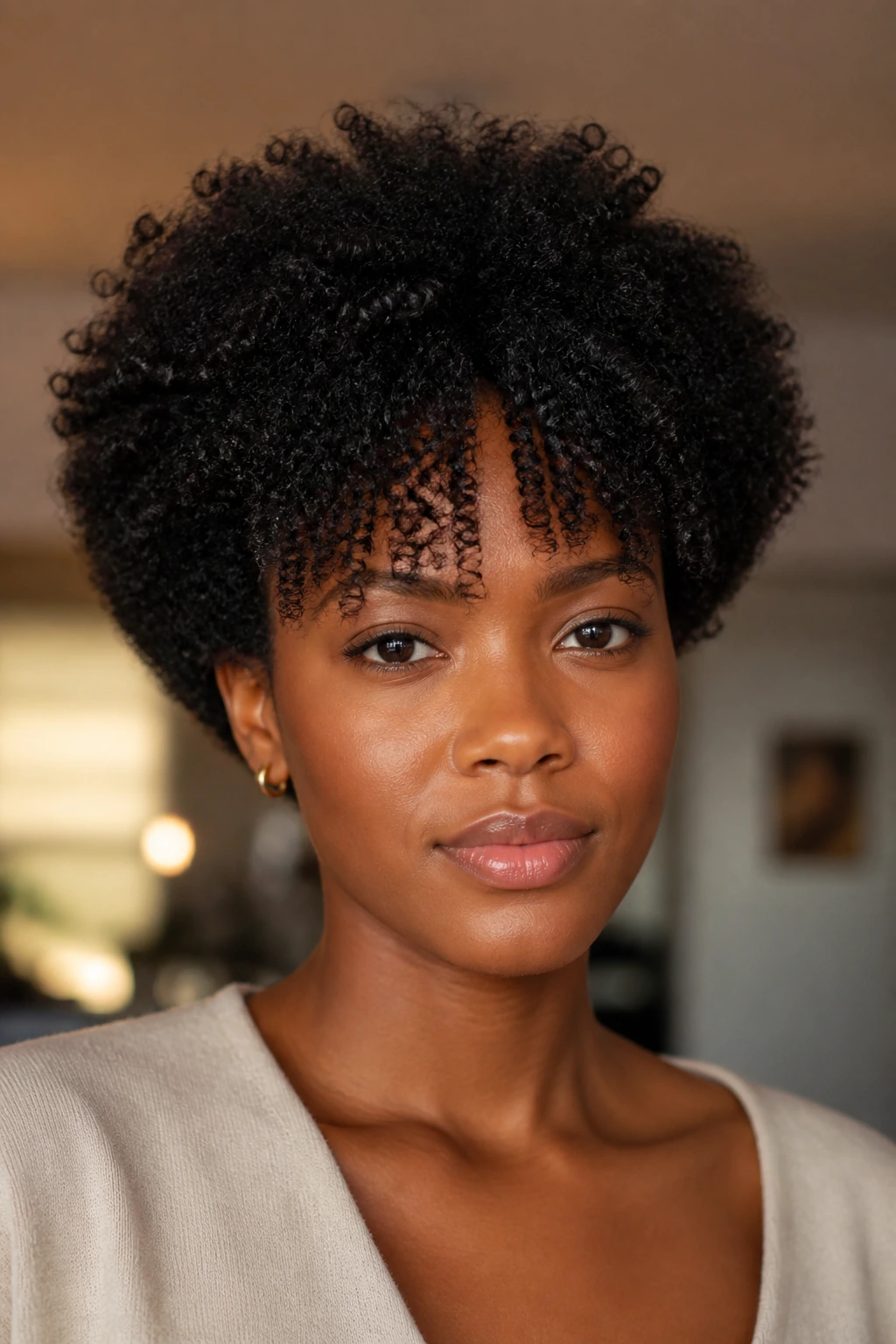
Natural texture and a center part can make a beautiful shape when the cut respects curl pattern and shrinkage. A tapered afro with curly center bangs keeps the sides clean and the top rounded, while the fringe opens gently down the middle and frames the face in a soft arch.
The bang area should be cut with the curl pattern in mind, not straightened out and guessed at. That means shaping dry or mostly dry hair so the front lands where it actually lives. If the curls shrink up more than expected, the bangs can disappear into the crown, and that’s not the look.
A curl cream, a pick at the roots, and a diffuser on low heat are usually enough. I’d avoid heavy butters near the front unless your hair is very dry. The bang area needs movement, not weight.
This style has real presence. It doesn’t ask for permission.
18. Braided Crown with Loose Middle Bangs
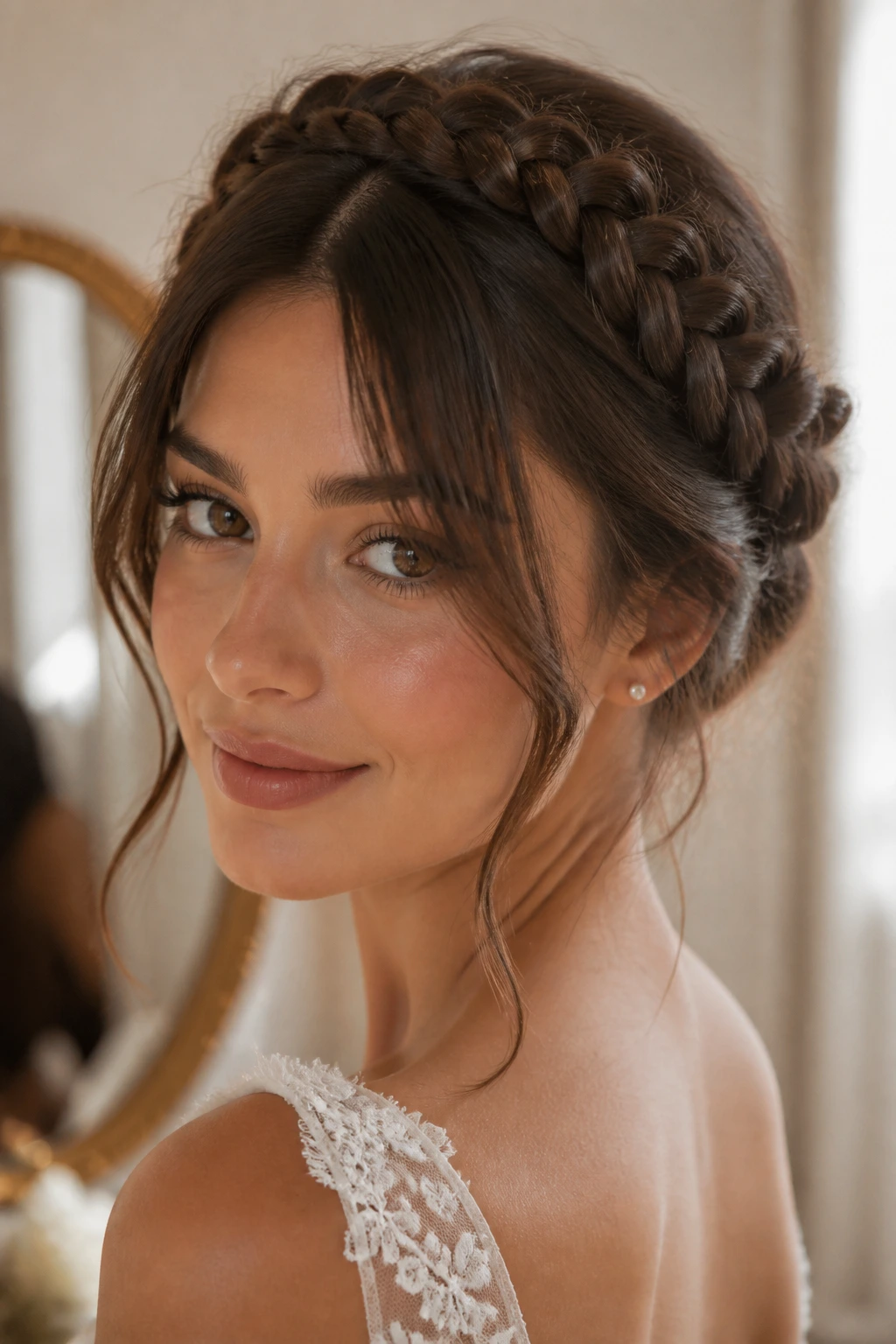
A braided crown with loose middle bangs is the kind of style that makes sense when you want hair off the neck but still need softness around the face. The braid does the structured part. The bangs and a few temple pieces keep the middle part from looking severe.
The braid can be as simple as two side braids pinned across the back or a more formal crown braid wrapping the head. What matters is leaving the fringe loose and shaped. If the bangs are too tucked in, the style turns rigid fast.
This look works well for events, weddings, and days when you want your hair to stay put for hours. A light mist of flexible hold spray helps the loose front pieces stay where you want them without feeling crunchy.
It’s tidy, but it still has some air in it. That matters.
What Makes Middle Part Bangs Work So Well on Different Hair Types
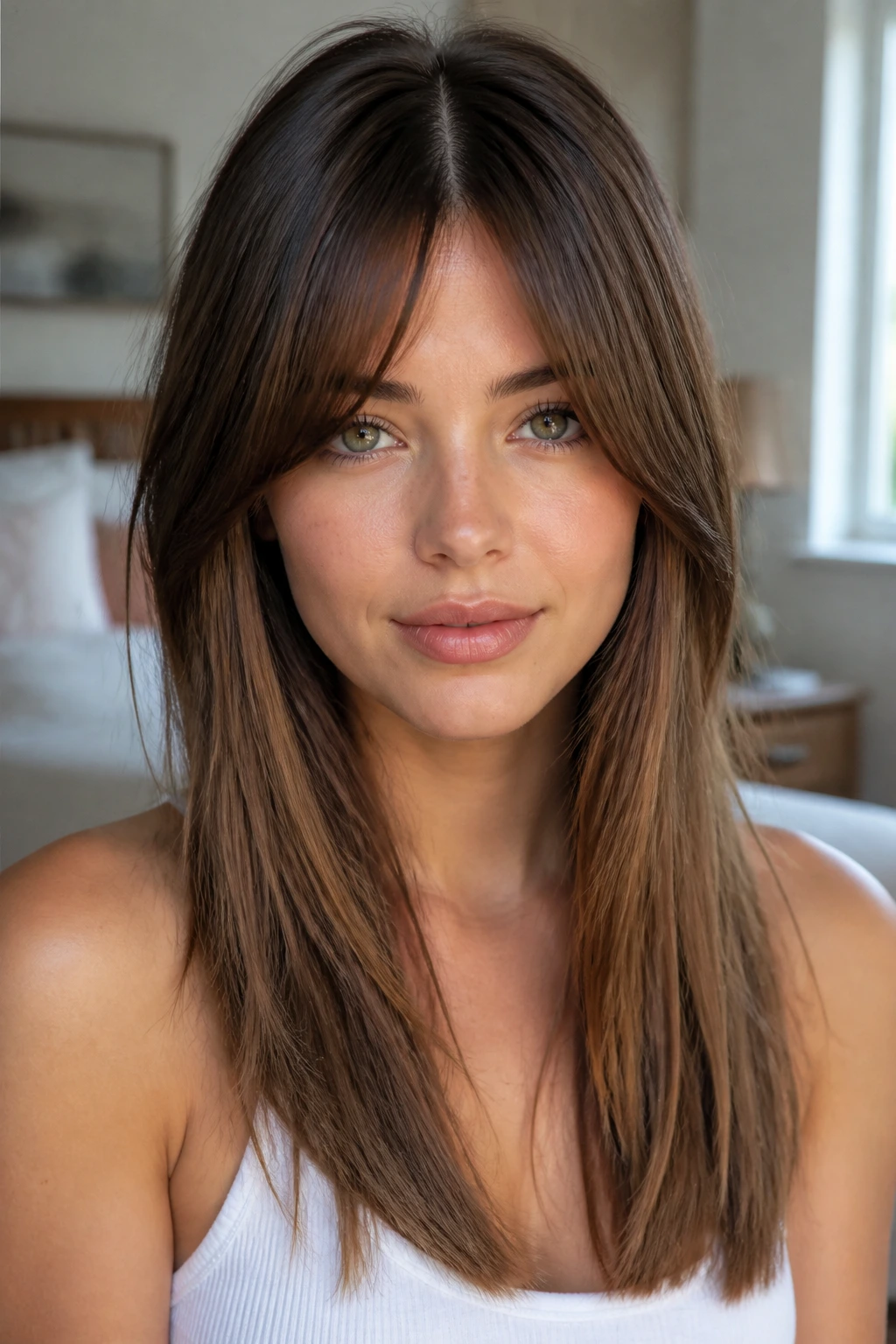
A center part is a strong line. That’s the whole point. It gives the face a kind of symmetry that can feel crisp on straight hair, relaxed on waves, and sculptural on curls. The bangs do the softening. They break the line before it starts to feel too exact.
The best cuts respect texture instead of trying to flatten everything into one look. Fine hair usually does better with lighter fringe and some lift at the roots. Thick hair often needs internal layering so the bang area does not puff out. Curly and coily hair need shrinkage baked into the cut from the start, or the front will land somewhere else entirely.
There’s also the part itself. A middle part that sits against a strong cowlick can look off unless you train it. Sometimes that means blow-drying the front in the opposite direction for 30 seconds, then letting it settle back to center. Small move. Big difference.
Essential Tools for Styling These Looks
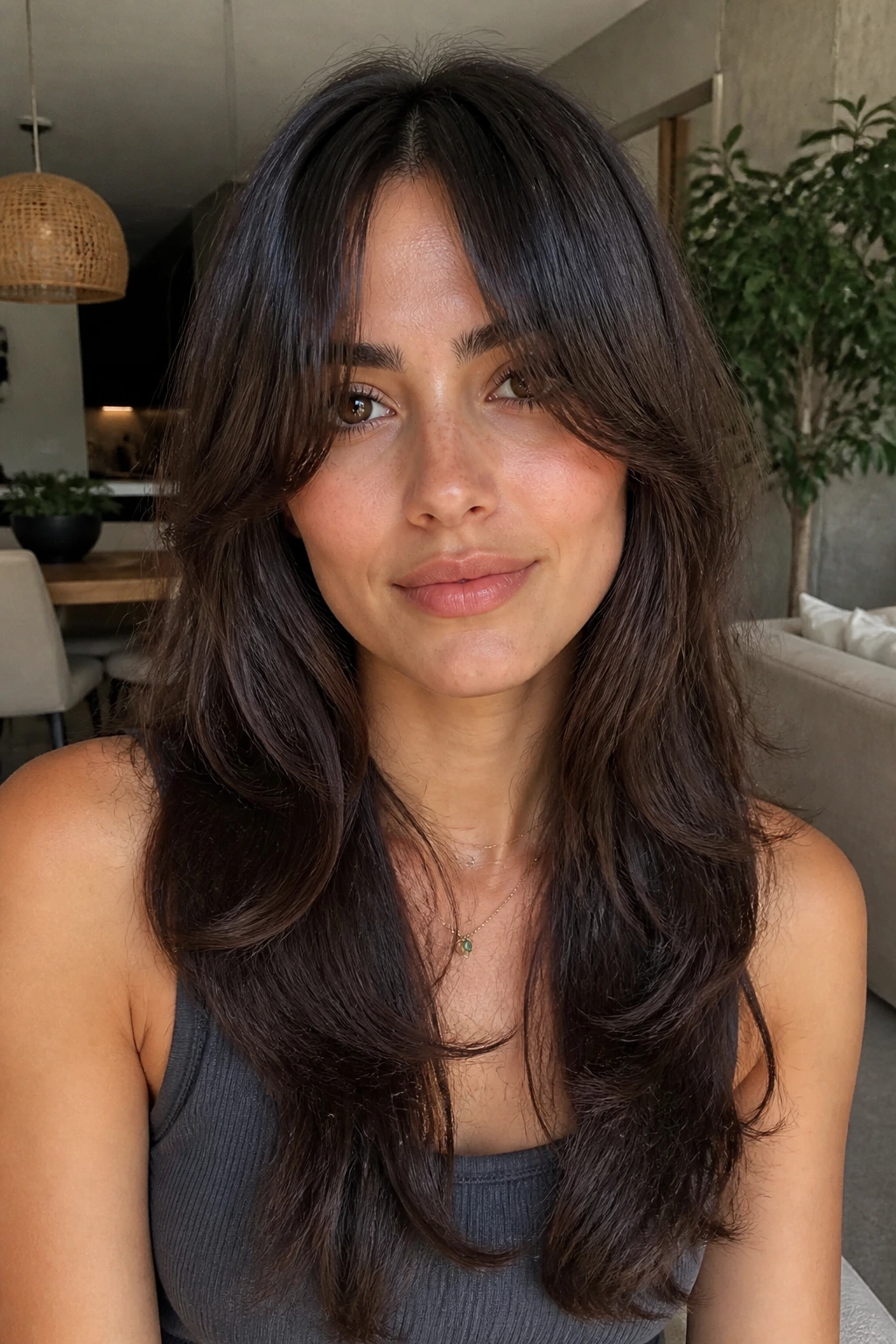
- Blow dryer with a nozzle: Directs airflow at the roots and keeps the bang area from frizzing.
- Round brush, 1 to 1.5 inches: Best for curtain bangs, rounded fringe, and cheekbone bends.
- Wide-tooth comb: Useful for curls and waves when you don’t want to break up the shape too much.
- Tail comb: Helps set a clean center part and section the fringe without guessing.
- Heat protectant spray: Non-negotiable if you use a blow dryer or flat iron near the bangs.
- Light mousse or root lift spray: Good for fine hair that collapses at the crown.
- Texturizing spray: Helps piecey bangs and shag cuts hold their separation.
- Small flat iron: Handy for smoothing the bang ends or giving a tiny bend.
- Diffuser attachment: Essential for curly curtain bangs and textured styles.
- Duckbill clips or sectioning clips: Keep the rest of the hair out of the way while you dry the fringe first.
How to Ask for the Right Bang Shape at the Salon
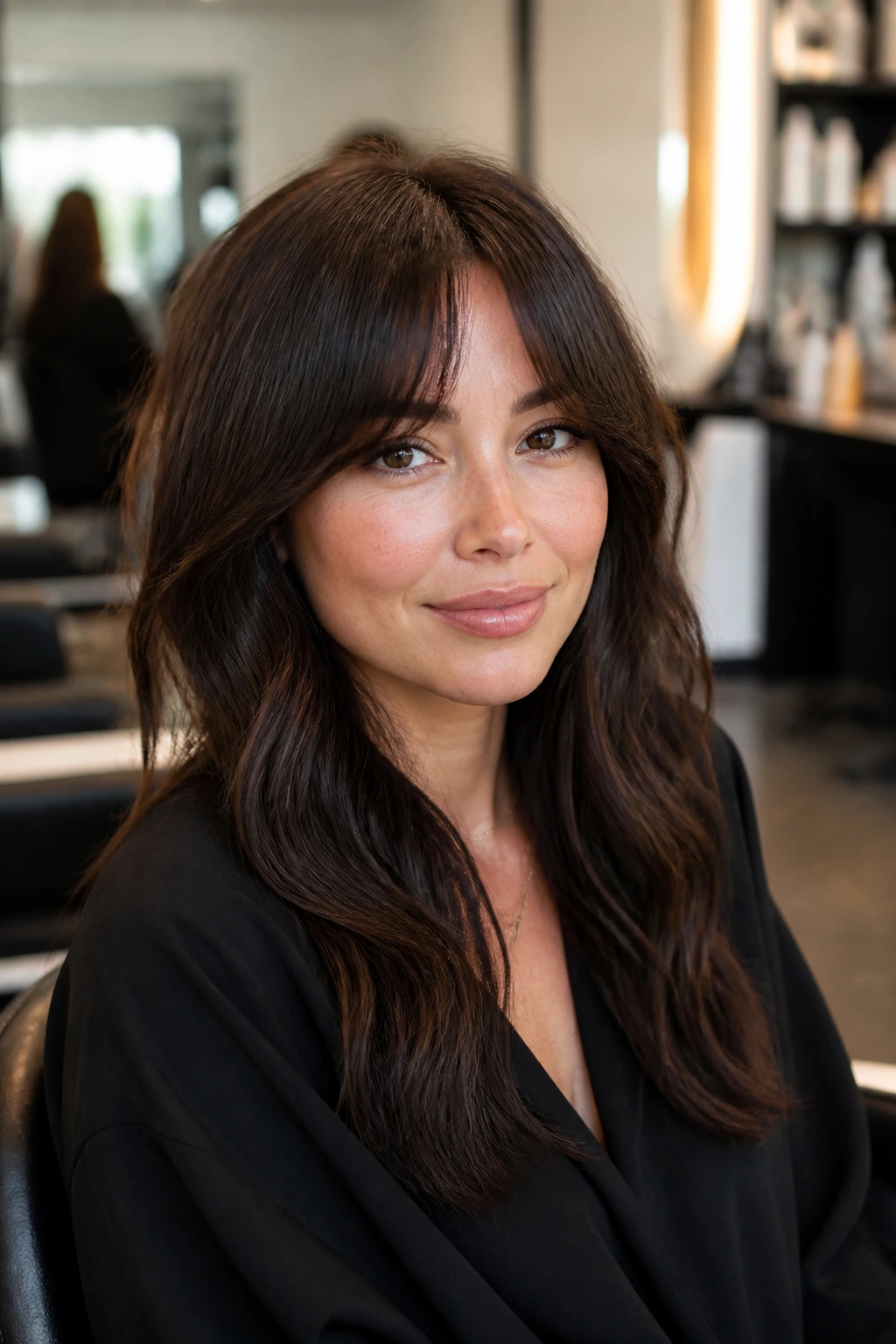
Bring photos, yes, but bring the right photos. A picture of finished hair helps more than a cut that was clearly styled for a camera. Show the length you want the shortest bang pieces to hit on your face, not just the hair color or outfit.
Say where your part lives naturally. If your center part drifts half an inch left because of a cowlick, your stylist needs to know that before the scissors come out. Ask for the bangs to be cut with your texture in mind, whether that means dry cutting, point cutting, or leaving extra length for shrinkage.
A useful phrase: “I want the front to open at the nose bridge and taper into the cheekbones.” That tells the stylist the shape, not just the trend name. Much better.
If you wear glasses, say so. If you tie your hair up most days, say that too. Those details decide whether the fringe should skim the brows, sit at the nose, or grow into a longer curtain shape.
Styling Moves That Make the Shape Look Intentional
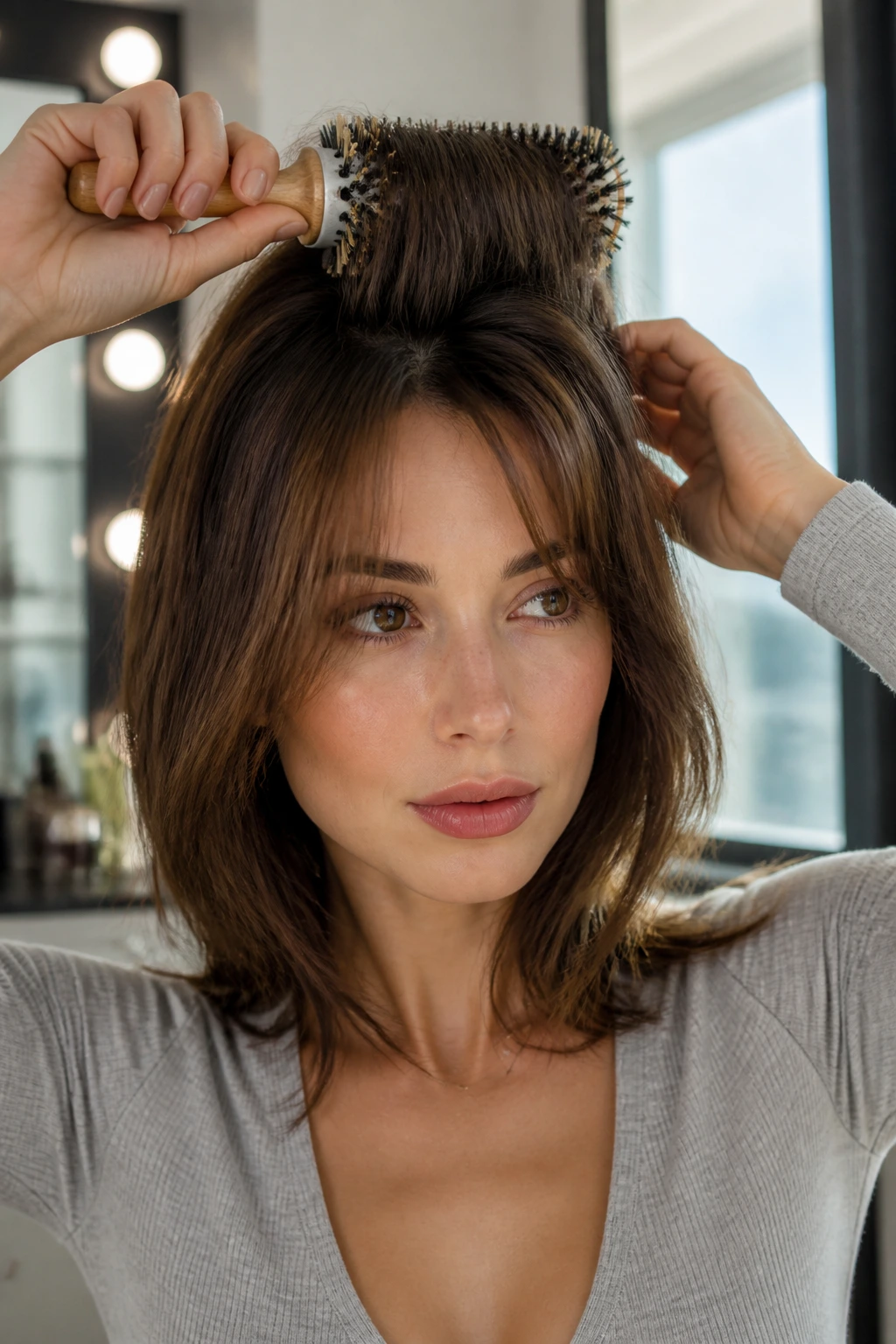
Volume: Blow-dry the bangs first. Lift them at the roots, then bend the ends away from the face with a round brush or your fingers. If they dry flat, the whole style can look tired by noon.
Texture: Use less product than you think. A pea-sized amount of cream or a light mist of spray is enough for most fringe shapes. Heavy oil near the roots makes bangs split and stick in places you do not want.
Parting: Use the tail comb to draw the center line while the hair is damp, then let it set that way for a few minutes. A sloppy part makes a polished cut look accidental.
Finish: A tiny touch of dry shampoo at the front, even on clean hair, can give the bangs grip. That little bit of grit helps the part stay open instead of sliding shut.
Accessories: Small clips, thin headbands, and pins can change the mood fast. Curtain bangs look particularly good with one side tucked back and the other left loose. It’s a small adjustment, but it stops the style from feeling repetitive.
Common Mistakes That Make Bangs Fight the Middle Part
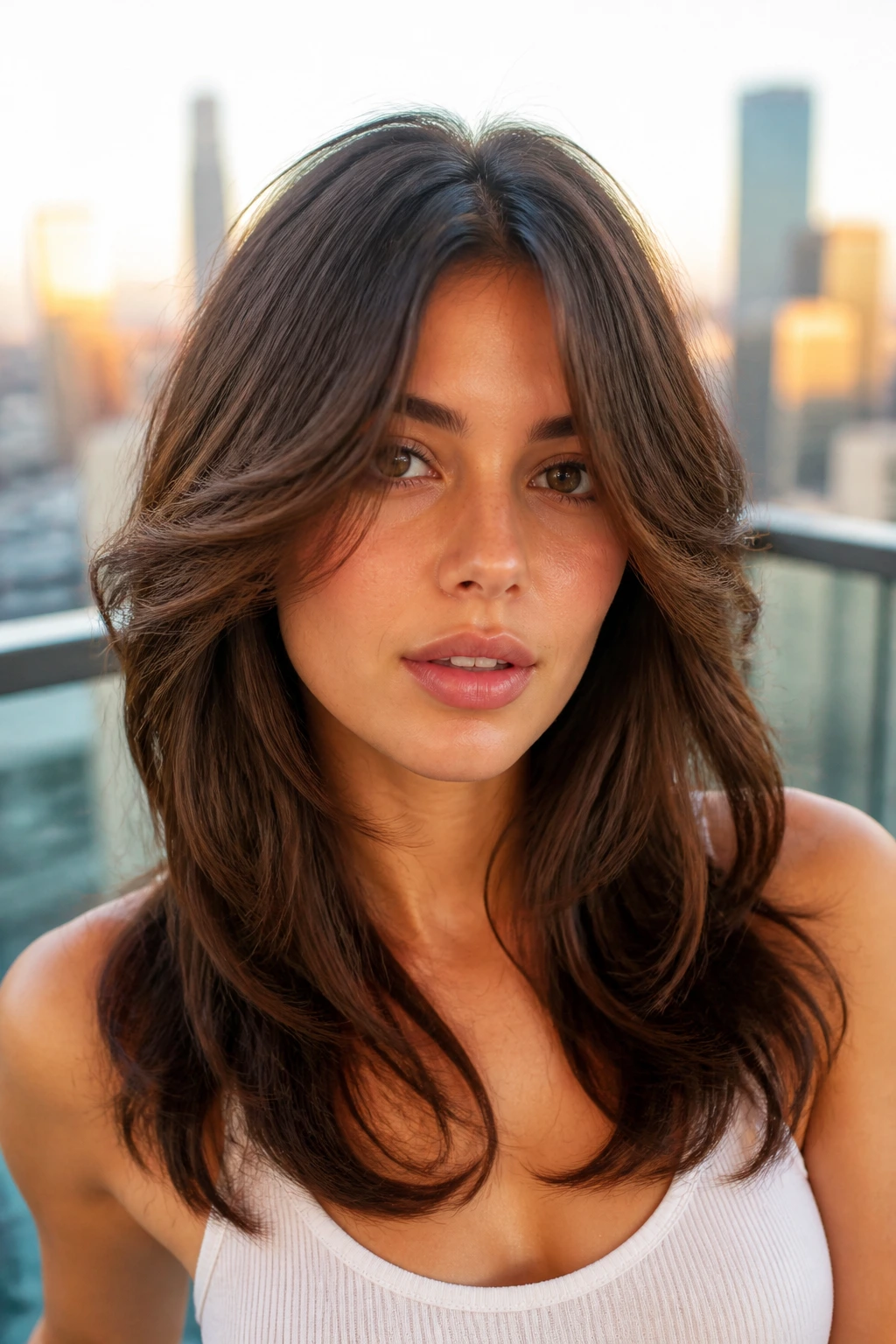
The first mistake is cutting the fringe too short and too heavy. That usually shows up as bangs that sit like a hard line across the forehead, then refuse to split cleanly. The fix is to keep the shortest point longer and taper the sides into the layers.
Another one: ignoring the cowlick. If your front hair wants to push one way, a strict center part will collapse unless you train it with heat and tension. Dry the root in the opposite direction for a few seconds, then reset it to center before the hair cools.
People also pile on too much serum or oil at the front because they want shine. The result is flat roots and separated ends that look greasy by afternoon. Use the lightest touch possible, and keep richer products from the first inch of hair near the scalp.
A fourth mistake is treating every hair type the same. Curly bangs need a different starting length than straight ones. Fine hair needs less density in the fringe. Thick hair needs more internal removal. Same trend, different mechanics.
And then there’s the grow-out trap. If you wait until the bangs are unbearable before trimming, the shape disappears and the center part starts looking sloppy. Trim earlier than feels necessary. That’s the boring answer. It works.
Variations and Alternatives to Try

The Soft Office Version: Keep the bangs longer, around nose to cheekbone length, and blow them into a gentle split. It reads neat enough for work but still soft around the face. This is the one I’d choose if you want the style to tuck behind the ears without fighting the front.
The Weekend Texture Version: Go with choppy fringe, wavy lengths, and a little dry texture spray at the roots. It looks more undone, which is the point. You can rough-dry this one in under ten minutes if the cut is already good.
The Sleek Glass Version: Straighten the lengths, smooth the fringe, and keep the center part crisp. A tiny pass of a flat iron on the bang ends makes the whole cut feel cleaner. Best for thick hair that can hold a smooth finish.
The Curly Halo Version: Let the bangs follow the curl pattern and keep the sides rounded. A diffuser and a light gel are enough. This version gives you shape without forcing curl into a straight mold.
The Event-Ready Version: Add a blowout, tuck one side behind the ear, and pin the bangs with a tiny decorative clip if needed. A center part keeps the style grounded, while the fringe keeps it from feeling too formal.
Maintenance and Grow-Out Without the Awkward Stage
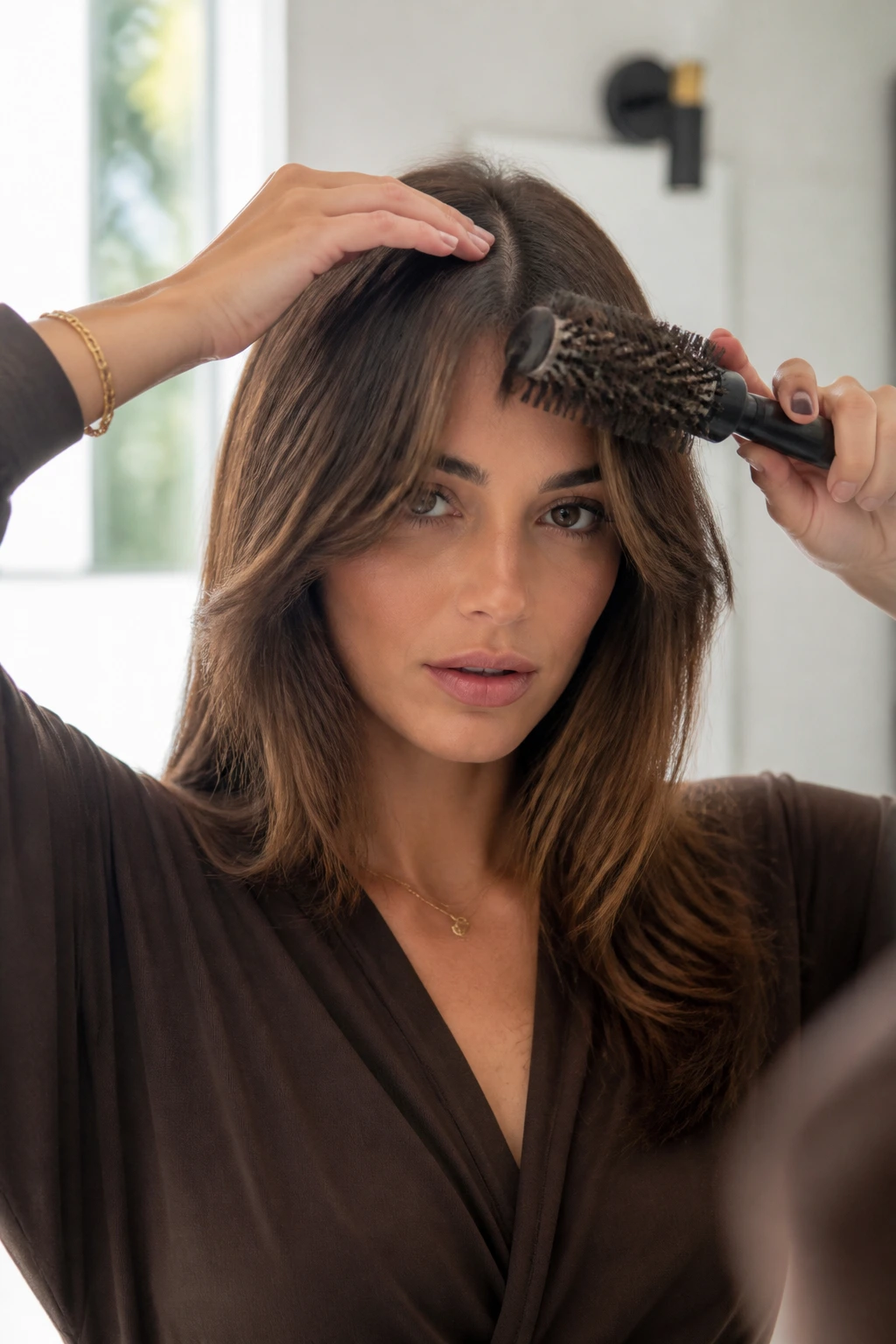
Bangs grow fast enough that waiting too long between trims is a mistake. If the fringe is blunt, plan on touching it up every 4 to 6 weeks. Curtain bangs and softer split fringes can go 6 to 8 weeks, sometimes a bit longer if you’re comfortable with a looser shape.
Wash the bang area more often than the rest of your hair if your roots get oily. Even a quick sink rinse and a blow-dry at the front can reset the look. The forehead area collects oil fast, and bangs show that more than any other part of the haircut.
At night, clip the bangs up loosely or use a satin scarf if your hair flips in bad directions while you sleep. In the morning, a mist bottle and a quick round-brush pass are usually enough to bring them back. If they’re stubborn, train them for 30 seconds with heat and cool air. That helps more than people expect.
When you’re growing the style out, don’t cut the sides too aggressively. Let the fringe blend into face-framing layers. That way, the haircut changes shape instead of turning into a bad in-between stage with no plan.
Frequently Asked Questions
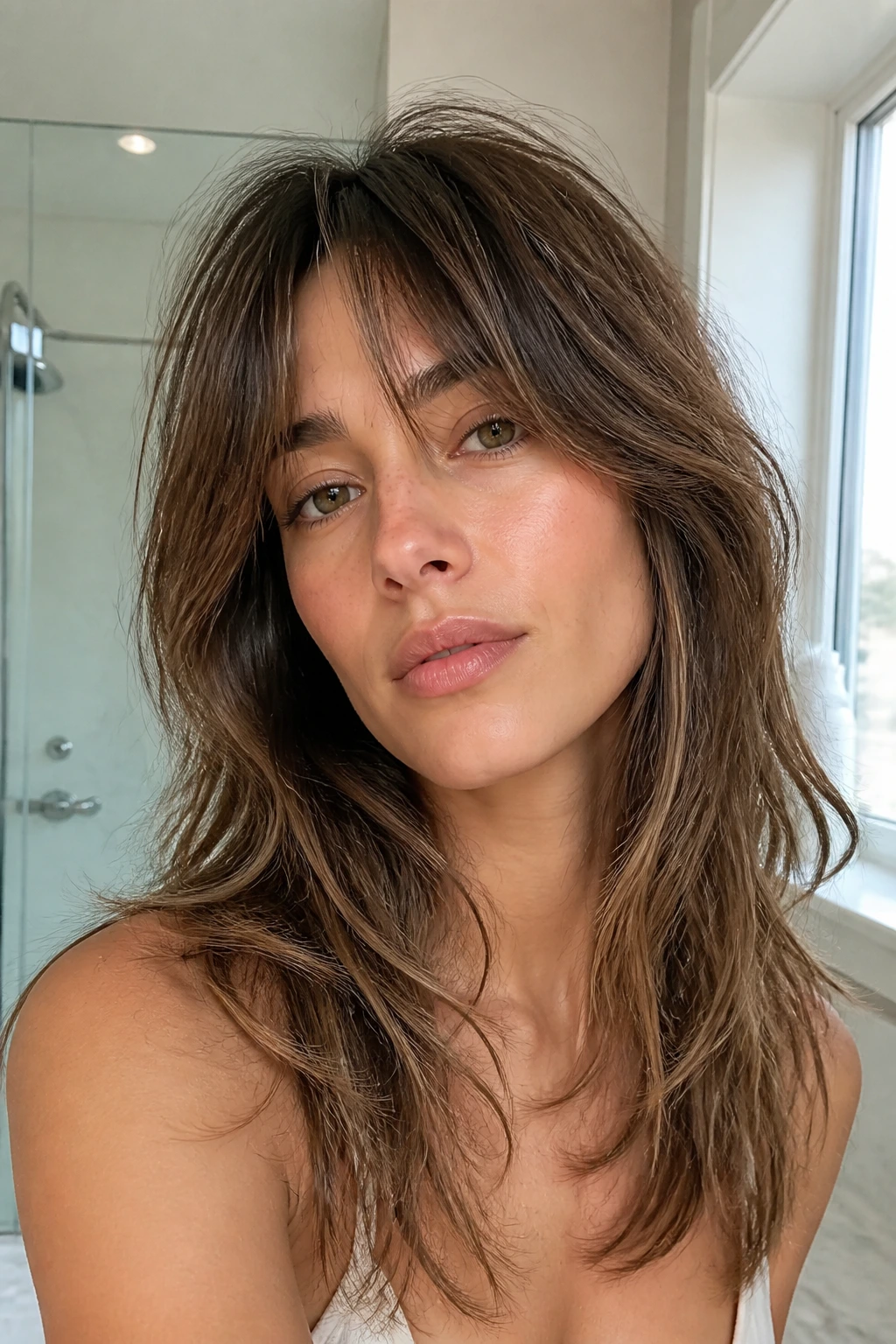
Do middle part hairstyles with bangs work on round faces?
Yes, if the bangs are cut to open around the cheekbones instead of sitting straight across the forehead. That length pulls the eye downward and creates a little more vertical line, which keeps the face from feeling wider.
Are curtain bangs the same as middle-part bangs?
Not exactly. Curtain bangs are a type of bang shape that usually parts in the middle, but middle-part bangs can also include bottleneck bangs, split fringe, and softer face-framing pieces. Curtain bangs are the most common version, not the only one.
Can fine hair pull off this look?
Absolutely, but lighter bang density helps. Fine hair tends to look best with see-through fringe, soft layers, and a little root lift so the front doesn’t collapse. Heavy bangs on fine hair usually end up looking stringy by the end of the day.
What if my center part keeps separating unevenly?
That usually means a cowlick or a natural drift in the hairline. Blow-dry the front in the opposite direction for a few seconds, then reset the part while the hair is still warm. A touch of styling cream at the roots can help, but don’t load the area.
How often should I trim bangs?
Shorter bangs need attention every 4 to 6 weeks. Softer curtain shapes can stretch to 6 to 8 weeks. Once the bangs start hitting the eyes, you’re already in the zone where styling becomes harder, so don’t wait until they’re a nuisance.
Do these styles work on curly hair?
Yes, but the cut has to respect shrinkage and curl pattern. Curly curtain bangs and center-framed curls usually work best when they’re cut dry or almost dry so the final length lands where you expect.
How do I grow bangs out without looking awkward?
Blend them into face-framing layers instead of trying to keep a hard fringe line. As the shortest pieces get longer, teach them to split down the center and tuck with the rest of the haircut. That’s the path with the least frustration.
Can I style these looks without heat?
You can, especially with wavy or textured hair. Use a little leave-in, scrunch the front, and let the bangs set in the middle part while damp. Straight hair usually needs at least a bit of root direction from a blow-dryer if you want the bangs to stay open.
Why This Shape Keeps Coming Back

The reason middle part hairstyles with bangs stay relevant is pretty simple: they solve two problems at once. The center part gives hair structure, and the bangs keep that structure from feeling hard. Put together, the result can be soft, modern, and surprisingly forgiving when the cut is matched to the texture.
That’s the part people miss. The shape does not need to be dramatic to work. A one-inch change in bang length, a little taper at the cheekbone, or a smarter grow-out plan can change the whole haircut. Small adjustments. Real payoff.
If you’ve been stuck between “I want bangs” and “I do not want to regret bangs,” this is the lane worth trying next.
