



Feathered haircuts with bangs have a way of looking soft even when the shape is doing a lot of work. That’s the part people miss when they scroll past a good cut on somebody’s phone screen. The layers are doing quiet engineering: lifting the crown, softening the cheeks, breaking up heavy ends, and keeping bangs from sitting there like a flat strip of felt across the forehead.
I’ve always thought the best feathered cuts do one thing better than blunt, one-length styles: they move when you move. A feathered layer can catch a breeze, bend around a jawline, and make a fringe feel lighter without making it look flimsy. On fine hair, that can mean the difference between “airy” and “collapsed by noon.” On thick hair, it means the cut breathes instead of puffing out like a triangle.
And bangs change everything. A fringe can make a feathered cut feel romantic, sharp, retro, edgy, or low-key depending on where it lands and how it’s thinned. Some versions are salon-polished. Some look better a little rumpled. A few are bold enough to make you rethink your whole wardrobe. The trick is choosing the right balance of length, layering, and fringe shape — and that’s where the good stuff starts.
Why This Collection Is Different
-
It’s shape-first, not trend-first: Every cut here is built around how the layers fall around the face, which matters more than any label on a salon menu.
-
The bangs do real work: These fringes aren’t tossed on as an afterthought; they’re part of the silhouette, which is why the cuts look finished instead of accidental.
-
There’s a match for nearly every texture: Straight, wavy, curly, dense, and fine hair all show up differently once feathering enters the picture.
-
Grow-out matters here: Feathered ends and softer fringe lines tend to look less awkward as they grow, which saves you from that hard, choppy in-between stage.
-
These cuts can be styled three ways: You can blow them sleek, leave them textured, or rough-dry them and still keep the shape readable.
-
The list isn’t one-size-fits-all: Some versions are polished and quiet, others are punchier, and a few lean full drama. That range is the point.
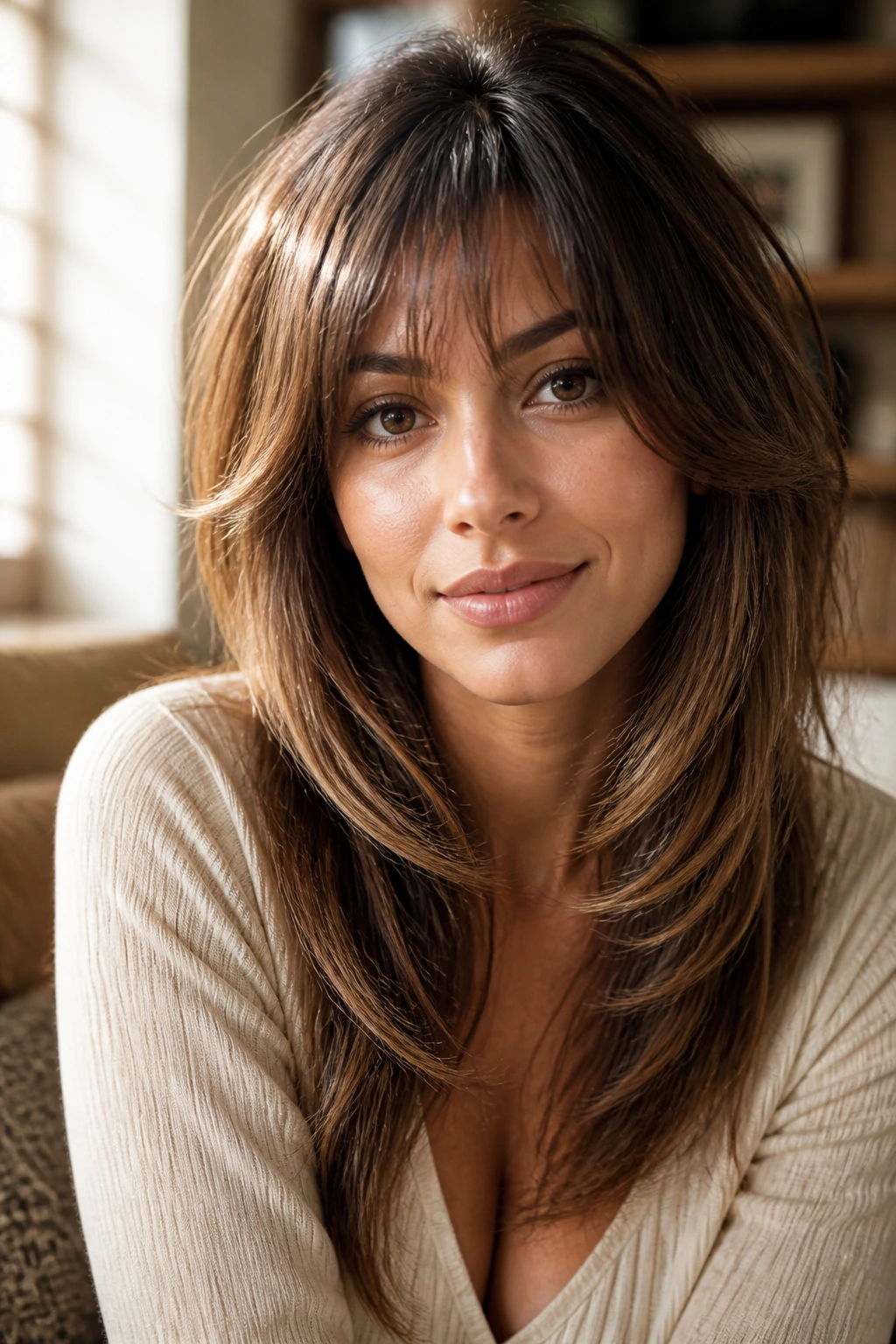
1. Soft Curtain Feathering with Eyebrow-Grazing Bangs
This is the feathered haircut I’d hand to someone who wants softness without losing structure. The layers start around the cheekbones and taper down through the ends, while the bangs split just enough to skim the brows instead of boxing in the forehead. It has that easy “I didn’t fight my hair today” look, even when you absolutely did.
Why It Works
The curtain fringe gives the face a vertical line, which keeps the feathering from feeling too round or too fluffy. That matters more than people think. When the bangs sit a little longer at the center and drift outward, the whole cut looks lighter around the eyes and more deliberate around the jaw.
It’s a smart choice for medium to long hair that needs movement but not a heavy chop. The best version uses soft point-cutting at the ends, not blunt slicing. You want the hair to bend, not stand up in layers like a stack of pages.
Quick styling note
- Blow-dry the bangs left, then right, then straight down for the last few seconds.
- Use a 1.25-inch round brush if you want a gentle bend.
- A pea-sized amount of lightweight cream keeps the ends from fraying.
Best for: oval, heart, and long faces that can handle a little width at the cheeks.
2. Shoulder-Length Feathered Lob with Side-Swept Fringe
A shoulder-length feathered lob is one of those cuts that looks expensive even when the styling is ordinary. The side-swept fringe slides across the forehead and joins the longest face-framing pieces, so the whole shape feels like one clean diagonal. It’s calm. Not boring. Calm.
The beauty of this version is the control. You get movement at the ends, a soft bend around the jaw, and enough length to tuck behind the ear when you’re sick of your own hair. If you wear glasses, this cut is especially kind because the fringe can sit above or beside the frame instead of fighting it.
Ask for the layers to start below the chin if you want the lob to stay full. Too high, and you’ll lose the weight that makes a shoulder-length cut feel lush instead of thin.
3. Long Feathered Layers with Bottleneck Bangs
Bottleneck bangs are one of those fringe shapes that make people look twice. They start narrow between the brows, then open wider as they fall toward the cheekbones, which gives long feathered layers a nice bit of architecture. The result is softer than a blunt bang, but stronger than a curtain that gets lost in the rest of the hair.
What Makes It Different
Long hair can swallow its own shape. You know the look: pretty length, but not much else happening. Feathering fixes that by taking weight out of the interior and letting the ends flick rather than hang. The bottleneck fringe keeps the front from disappearing into all that length.
This cut loves a blowout. A medium round brush and a nozzle on the dryer will pull the bangs into that narrow-to-wide shape without making them stiff. If your hair is heavy, skip thick oils near the front. They make the fringe separate in ugly little strings.
Good match: dense straight hair, loose waves, and anyone who wants a face frame without losing length.
4. Chin-Length Feathered Bob with Wispy Micro-Bangs
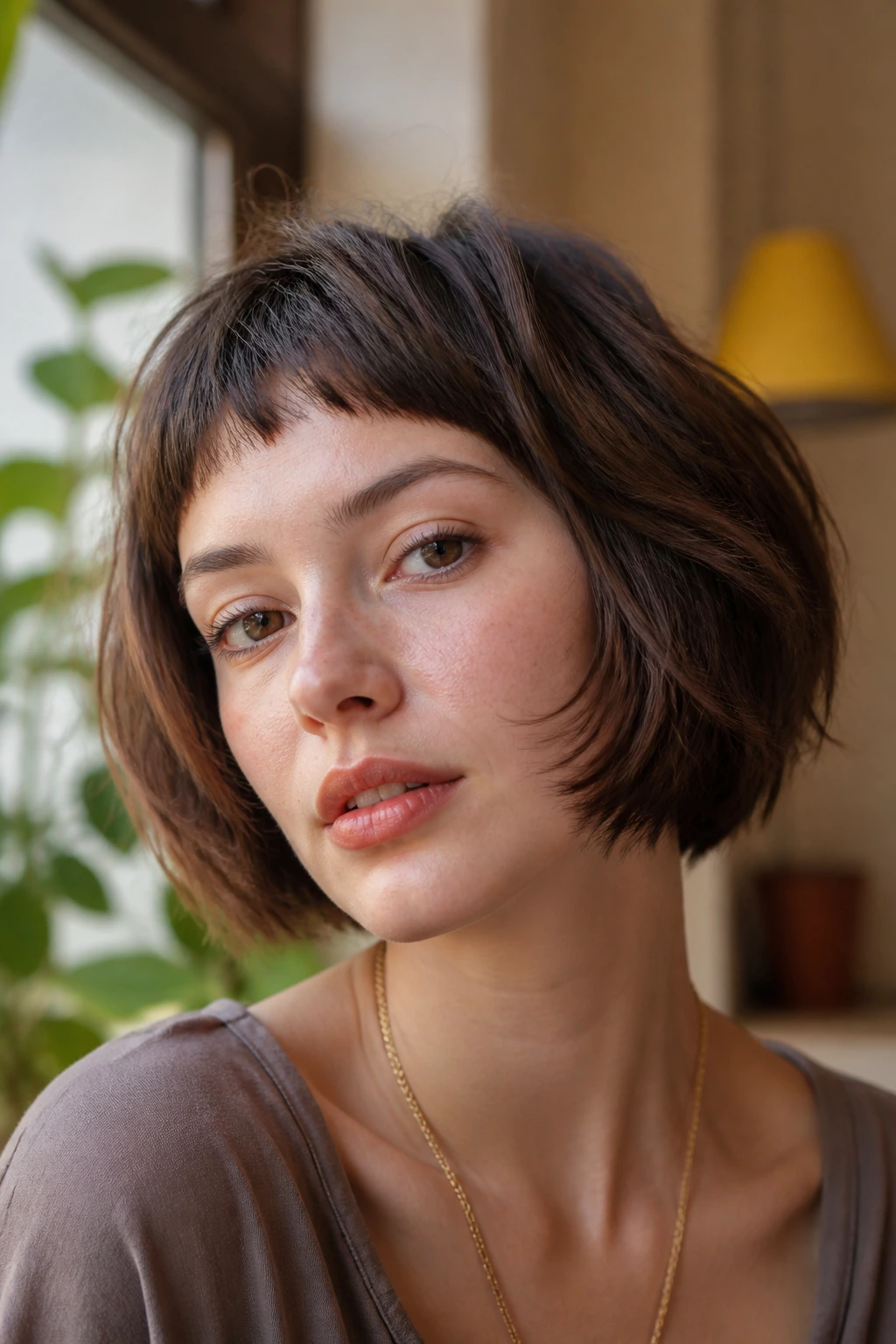
Sharp and soft at the same time. That’s the charm here. The bob lands around the chin, the ends are feathered enough to keep the line from feeling boxy, and the micro-bangs sit high on the forehead with a wispy finish that stops the whole thing from turning severe.
This is not the most forgiving haircut on the list. It’s also one of the most interesting. A chin-length shape with tiny bangs pulls attention straight to the eyes and cheekbones, which can be gorgeous on a strong bone structure and a little unforgiving if you want your hair to do camouflaging work. I’d call it a mood cut.
Keep the bangs soft, not packed. If they get too blunt, the contrast against the feathered bob looks hard. The best versions have a tiny bit of see-through texture at the ends so the fringe can move instead of sitting there like a tiny shelf.
5. Feathered Shag with Full Fringe
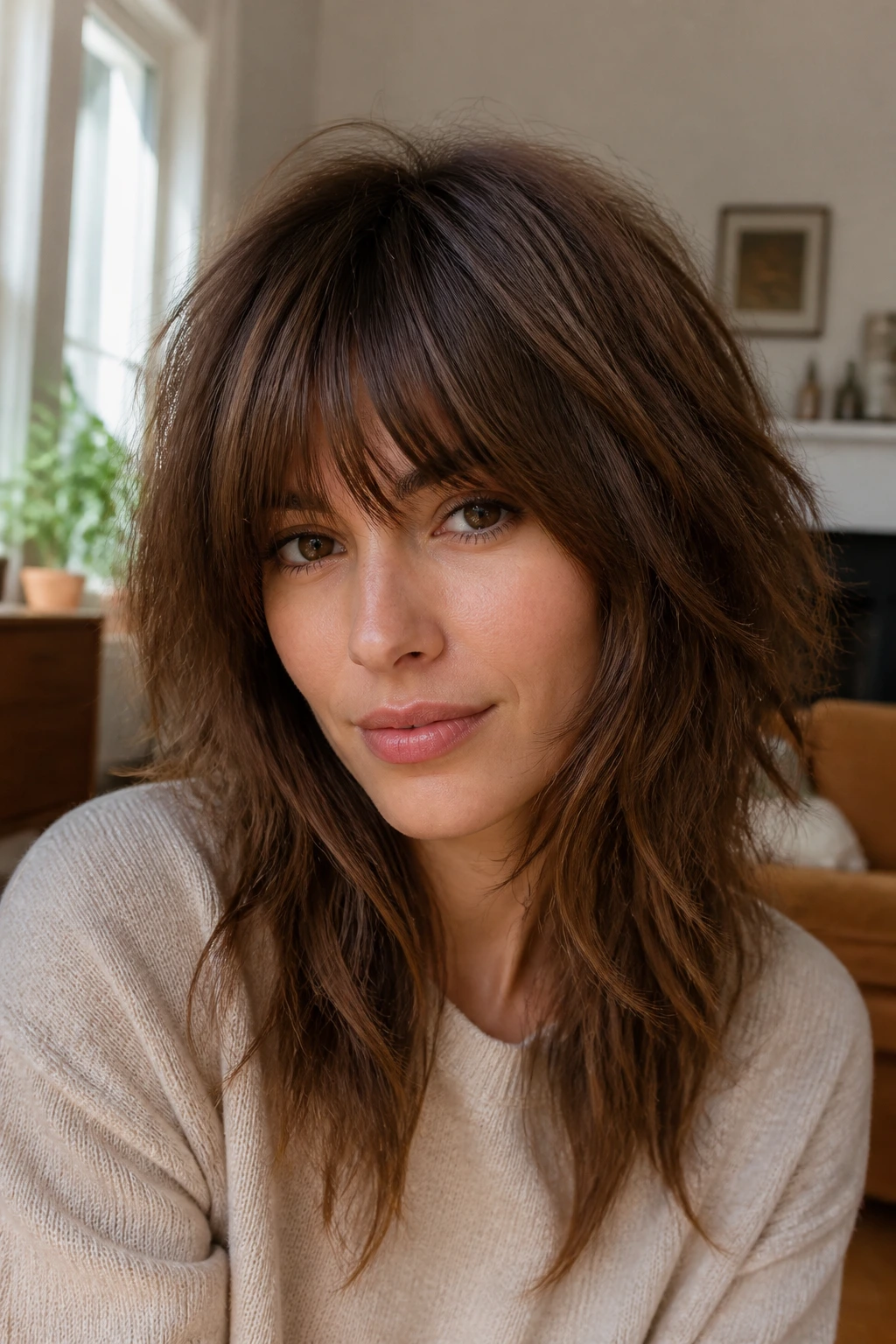
If you like hair that looks better after a little sleep, this is your friend. The feathered shag takes the classic layered shape and lets the fringe land full across the forehead, then breaks up the ends so the whole cut has that lightly tousled, lived-in feel. It’s one of the easiest feathered haircuts with bangs to wear if your hair already has wave.
Why It Works
The full fringe gives the cut a strong top line, which keeps the shag from feeling too disconnected. The feathering underneath handles the volume so the hair doesn’t balloon out at the sides. You get movement without a bunch of puffiness. Which, frankly, is the whole point.
This cut usually looks best with a rough blow-dry or a diffuse-dry finish. Don’t overbrush it. That steals the texture and turns a shag into a limp layer cut. A little mousse at the roots and a dab of cream through the ends is plenty.
- Best on medium to thick hair
- Better on hair with a natural wave
- Needs a trim before the fringe gets into your eyes
6. Soft Wolf Cut with Rounded Bangs
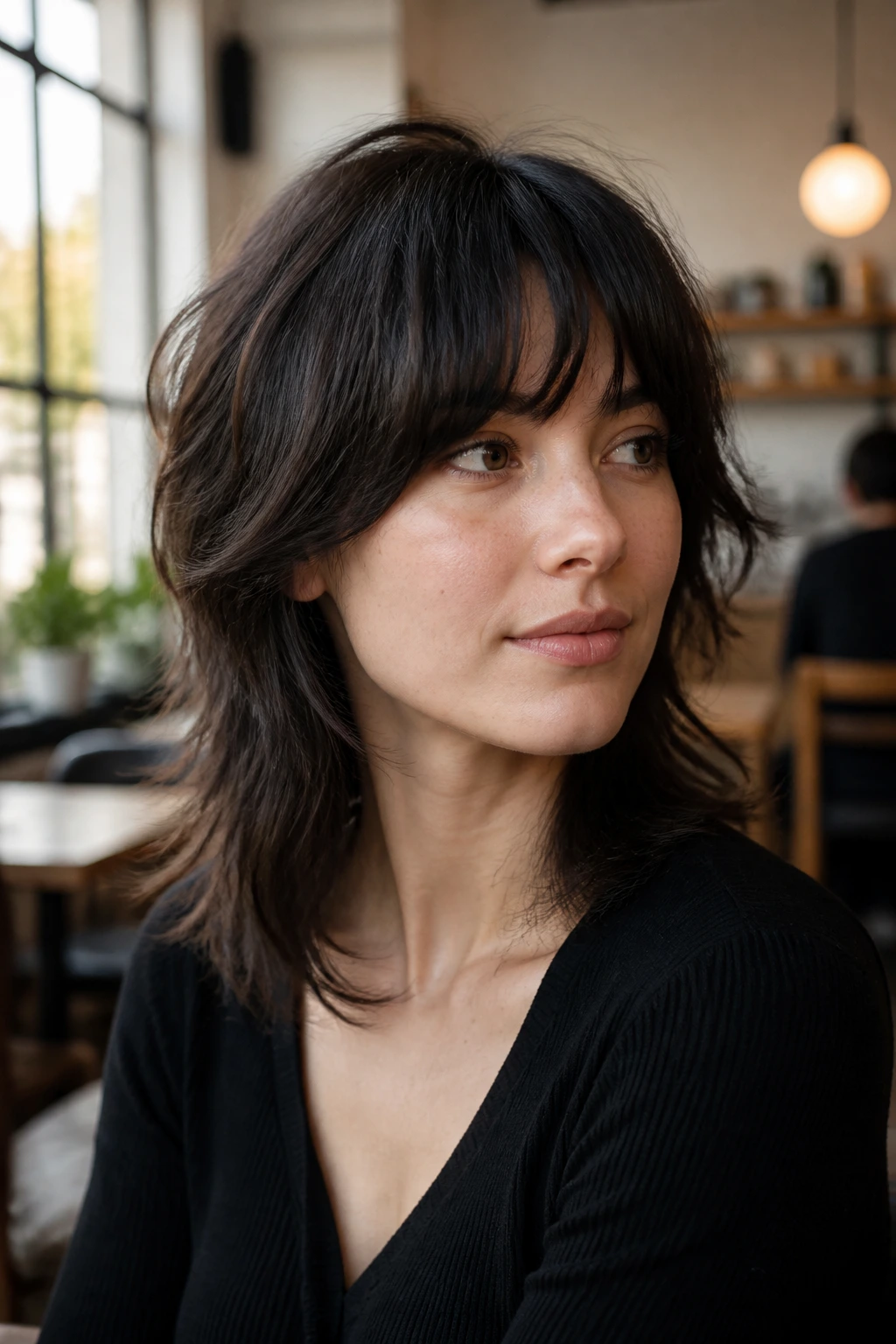
The wolf cut can go hard in the wrong direction fast. Rounded bangs keep it from looking too sharp. They soften the transition from the crown to the front, so the top stays airy while the back keeps that longer, slightly wild shape. I prefer this version when someone wants edge but not a full punk moment.
The feathering here should be irregular on purpose. Shorter layers around the crown create lift, while longer strands at the perimeter keep the shape wearable. The rounded fringe is the part that makes it feel less costume-y. It curves just enough to follow the head shape.
If your hair is thick, this cut can be a relief. If your hair is fine, ask for restraint. Too many short layers and you’ll end up with a mullet that forgot to be clever.
7. Feathered Pixie with Tapered Fringe
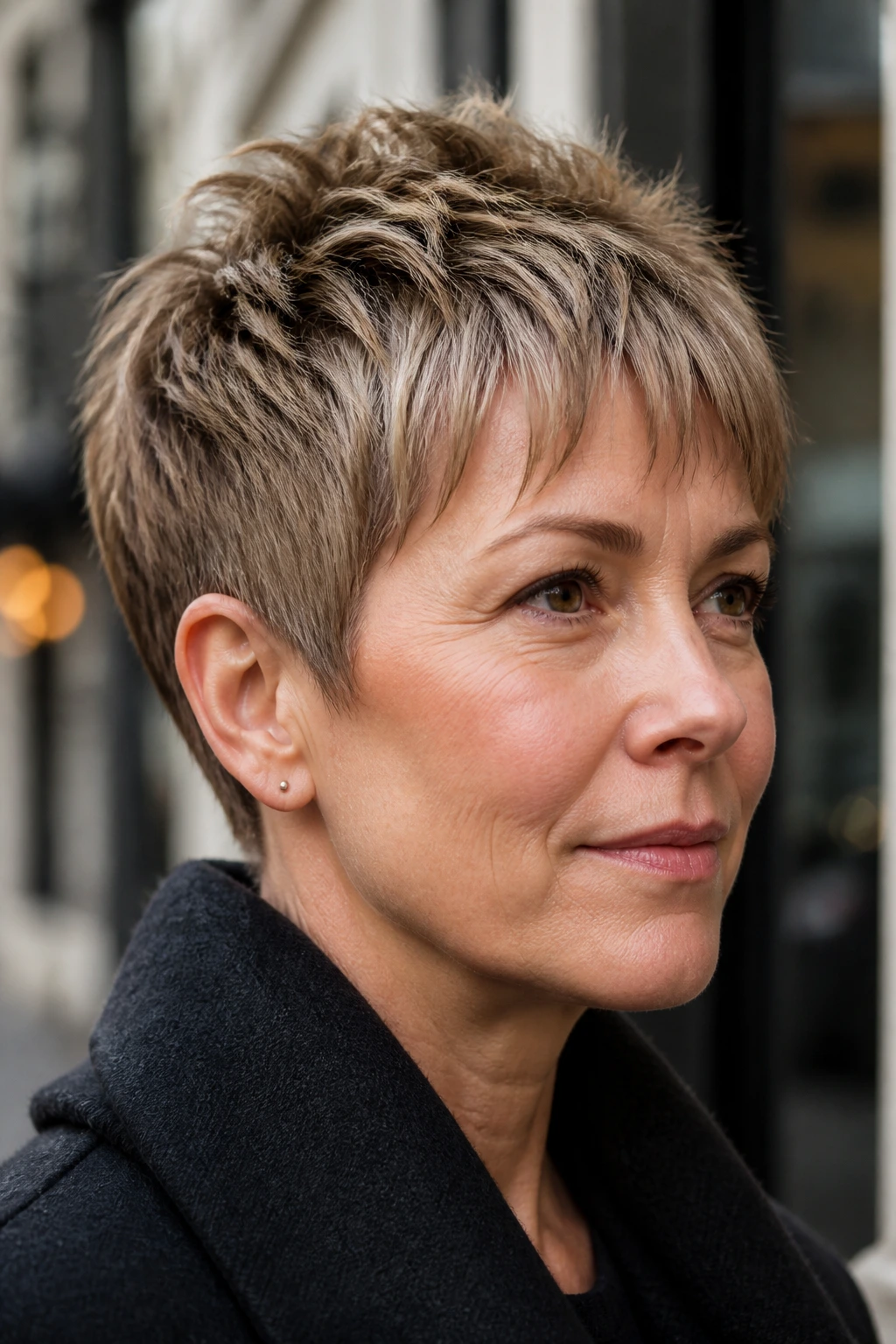
Short hair does not have to be blunt. A feathered pixie with a tapered fringe proves that. The sides are kept close, the crown has some soft lift, and the fringe thins as it moves across the forehead so it can be worn forward, brushed sideways, or pieced out with a fingertip.
This cut is especially good if you wear earrings, glasses, or bold lipstick. It puts the face in charge. And because the fringe is tapered rather than chopped straight across, it grows out more gracefully than a strict micro-bang.
Styling reality
You need less product than you think. A small amount of styling paste on dry hair is usually enough. Too much, and the feathering collapses into a sticky clump. Short hair shows every mistake, so light hands win here.
8. Face-Framing Feathered Layers with Long Curtain Bangs
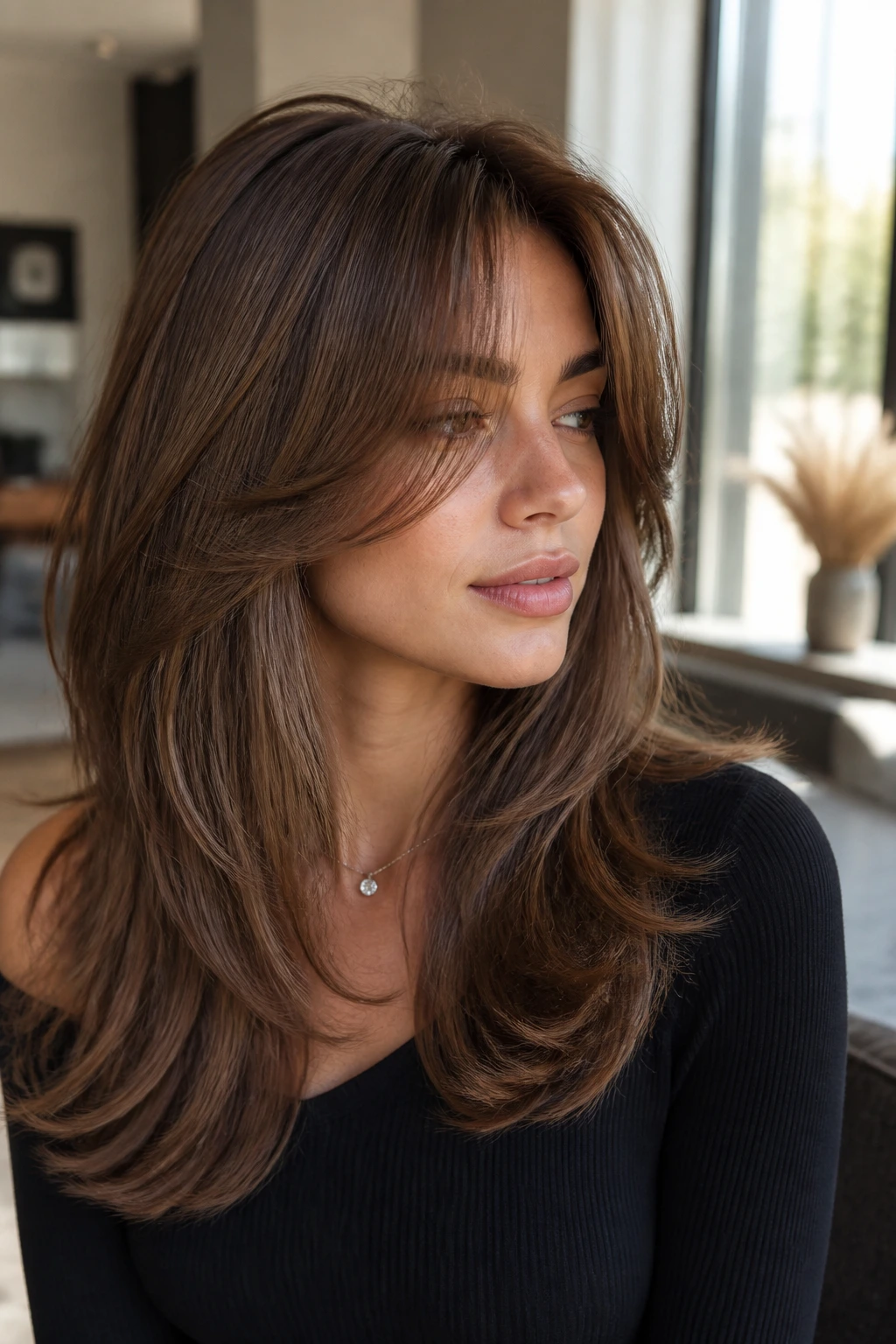
This is the version I recommend to people who say they want a change but aren’t ready for anything dramatic. The layers begin around the cheekbones, and the curtain bangs stretch long enough to blend into the front pieces. Nothing is hard-edged. Everything is softly connected.
The nice thing about this cut is the grow-out. Long curtain bangs can be pushed to the side, split down the middle, or tucked into the rest of the hair once they get past the brow. That flexibility makes the cut feel less fussy than a strict fringe.
If your face tends to read round, ask the stylist to keep the shortest front pieces below the cheekbones. That little detail changes the whole profile. It gives the eye a longer path downward instead of widening the cheeks.
9. Airy Feathered Cut for Fine Hair with See-Through Bangs
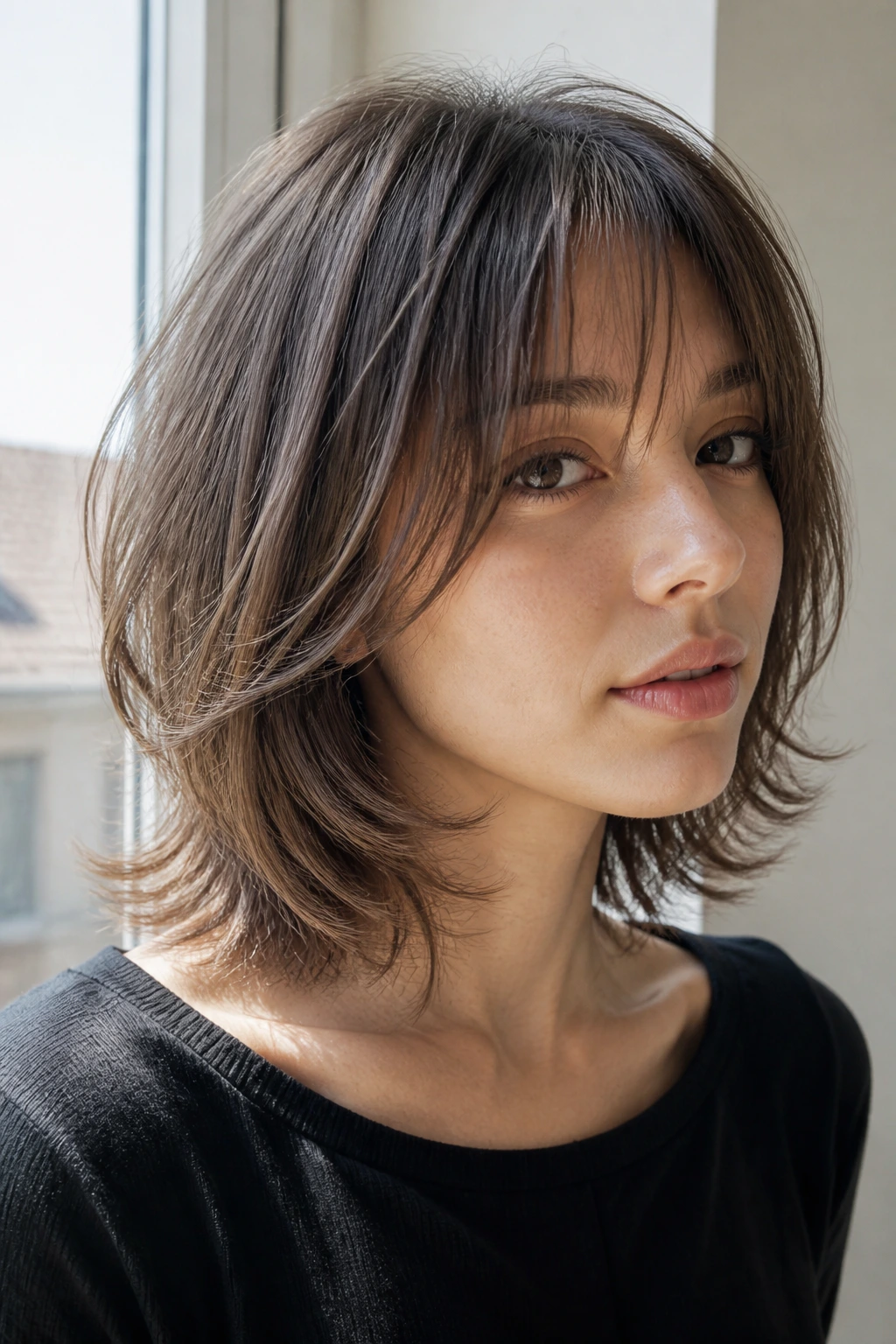
Fine hair needs a light touch, not a heavy layer party. This cut respects that. The see-through bangs are sparse enough to let the forehead peek through, and the feathered layers are cut so they create motion without stripping away the little density fine hair has to spare.
What to Ask For
- Keep the layers long and internal, not choppy through the ends.
- Ask for soft point-cutting around the fringe.
- Leave the bottom line full enough to keep the hair from looking wispy in a sad way.
A volumizing mousse at the roots does more here than a heavy cream ever will. And that fringe? Dry it first. Fine bangs flatten fast, especially if you let the rest of your hair sit wet while you fuss with other things.
10. Thick-Hair Feathered Layers with Heavy Bangs
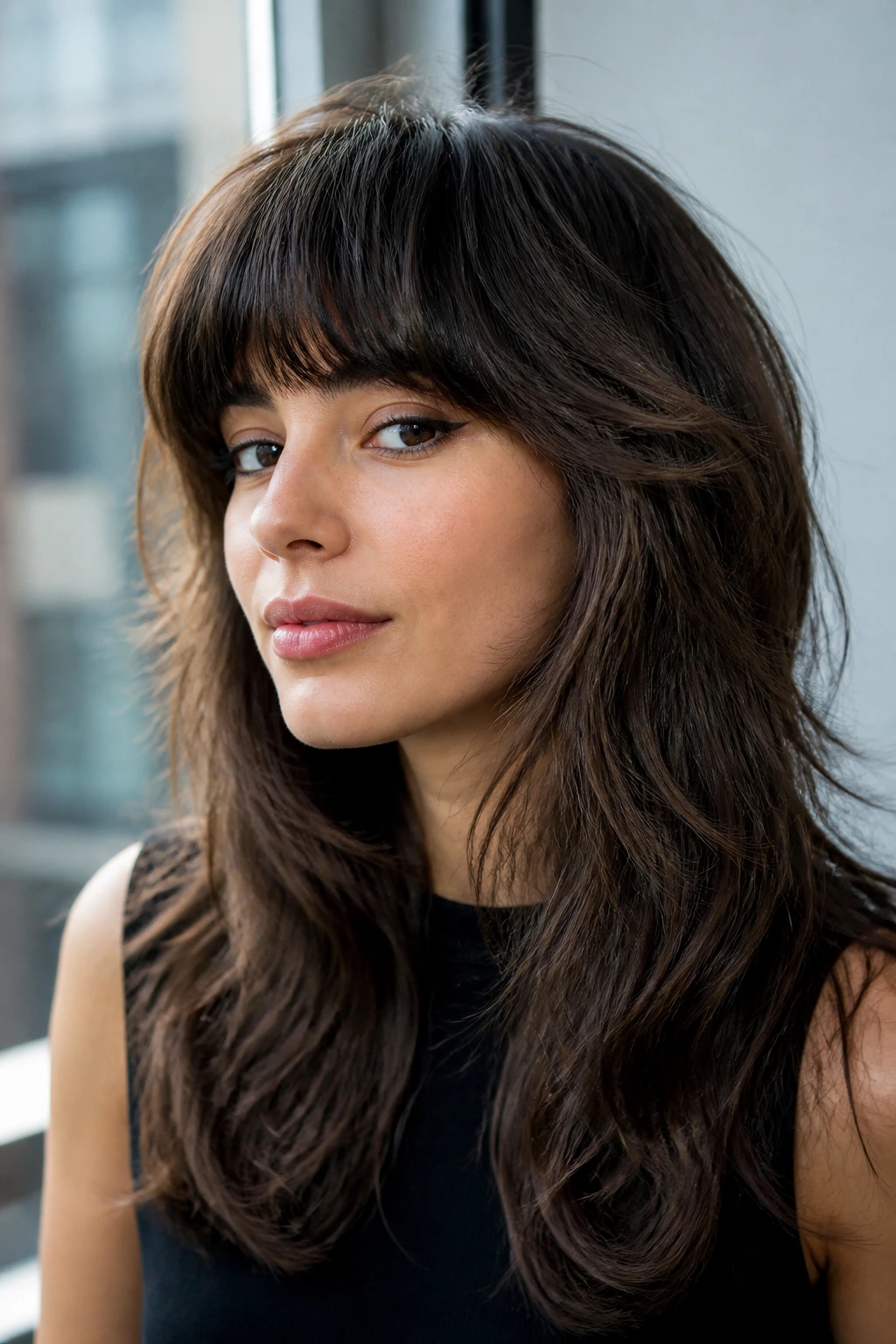
Thick hair gets blamed for being “too much” when the real problem is usually a bad shape. This cut solves that by removing bulk through the interior while keeping a fuller fringe that anchors the front. The bangs are heavier, yes, but they’re still softened at the edges so they don’t turn into a helmet.
The key is balance. If the bangs are too light on thick hair, the front can get lost under the rest of the cut. A denser fringe gives the style a clear line at the top, and the feathering underneath prevents the length from turning square.
Pro move
Ask for point-cutting rather than aggressive thinning shears all over the place. Thinning shears can leave thick hair frizzy at the ends if they’re used badly. A cleaner, more controlled shape wears better and grows out better too.
11. Curly Feathered Cut with Curly Bangs
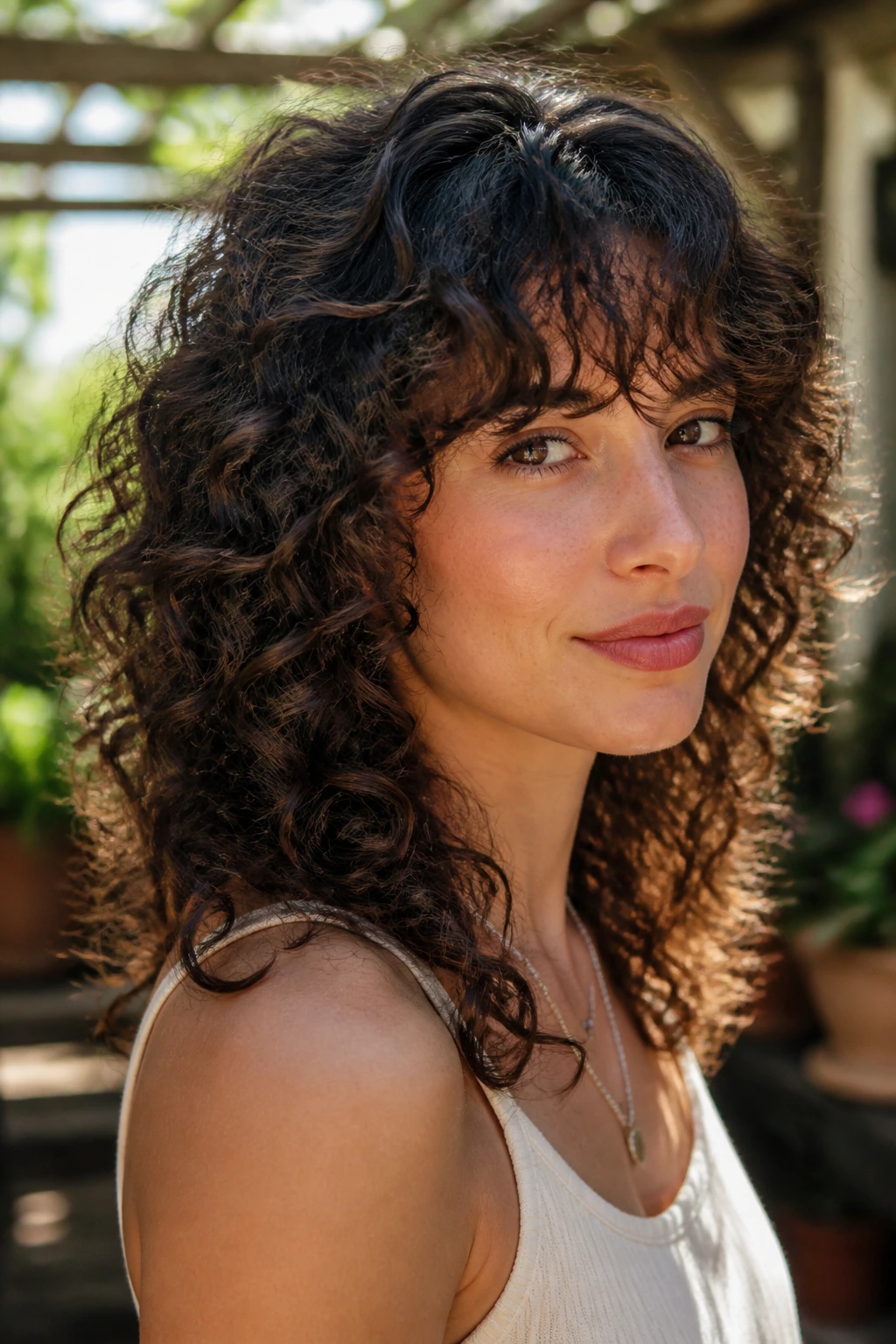
Curly hair and feathering are a better pair than most people assume. The trick is cutting for the curl pattern, not against it. Curly bangs need room to spring, and feathered layers need enough length that they don’t shrink into a pyramid. When both are handled well, the cut has a soft halo effect around the face.
Dry cutting works best here. A curl that looks long when wet can jump several inches once it dries, and bangs are the first place that mistake shows up. Keep the front slightly longer than you think you need. You can always trim more. You can’t glue length back on.
Use a diffuser on low heat and resist the urge to touch the curls until they’re mostly dry. That’s how you keep the fringe from frizzing into a fuzzball.
12. Wavy Collarbone Feathering with Bardot Bangs
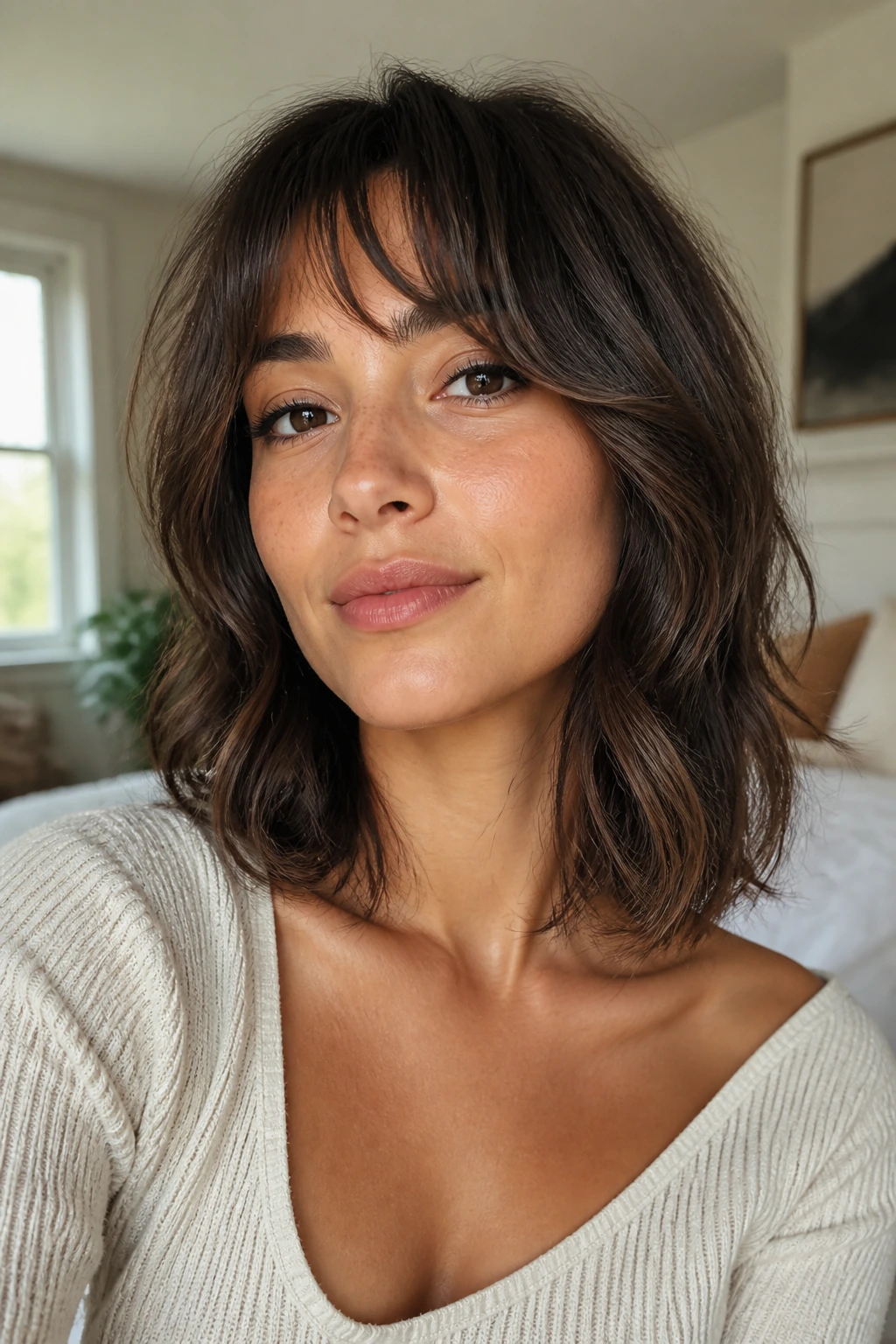
Bardot bangs have that easy split in the middle and a little swoop through the sides, which makes them feel flirtier than a blunt fringe. Pair them with collarbone-length feathering and you get a shape that sits right in the sweet spot between polished and undone.
The collarbone length matters because it gives the waves a place to bend. Too short, and the style starts to flip out at the wrong points. Too long, and the fringe loses contrast. At this length, the hair moves enough to feel soft without losing its outline.
I like this cut with a large-barrel curling iron or even a quick bend from a flat iron, then a finger comb through the ends. Brush it too much and the fringe can go flat. Let it stay a little piecey.
13. Sleek Feathered Cut with Bottleneck Bangs
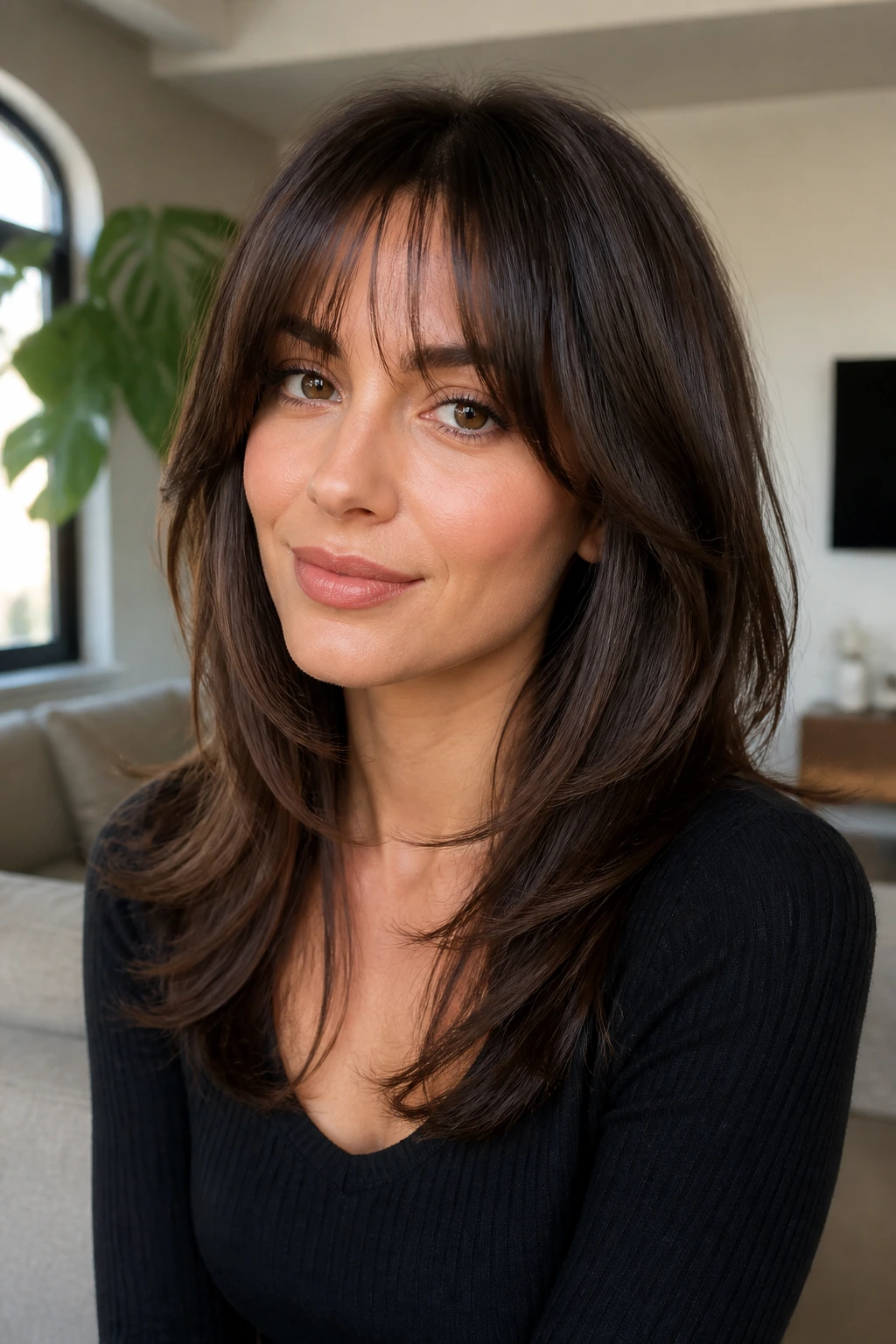
Not every feathered style needs to look shaggy. A sleek version with bottleneck bangs keeps the movement but smooths the surface, which is ideal if you like hair that looks deliberate rather than tousled. The feathers sit inside a clean outline, and the fringe opens from the center in a way that feels controlled.
This is the cut for straight or lightly wavy hair that wants polish. The shape depends on a good blowout and a brush that can pull the layers under just enough. No need to turn the ends into curls. A soft bend is enough.
And yes, this version can look expensive. That’s because the feathering is there to create movement, not chaos. You notice the cut first, then the styling.
14. Razored Feathered Bob with Feathered Fringe
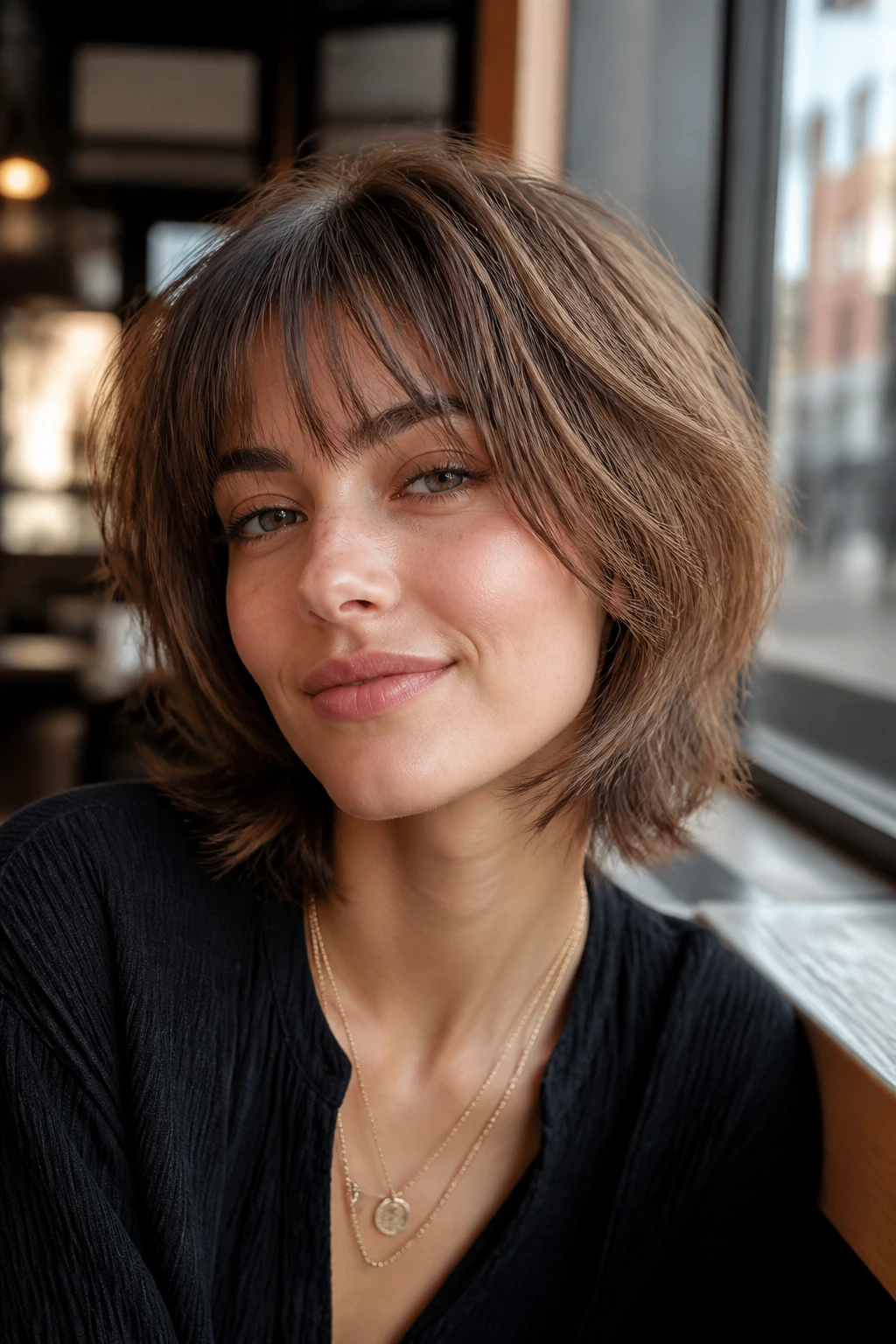
A razored bob can go too wispy if it’s overdone, so I like this one best on medium-density hair. The blade-softened ends give the bob that hollowed-out, lightweight feel, while the feathered fringe ties the front in so the whole cut doesn’t float away from the face.
Why It Feels Different
A classic bob is about line. This one is about air. The fringe is broken up enough to move, and the bob itself has tiny shifts in length that catch the light without turning messy. That makes it a good pick if you want short hair that still has texture and a little attitude.
If your ends are fragile, be cautious with razoring. It can create frayed tips on hair that’s already prone to splitting. In that case, ask for point-cutting instead. Same soft result, less risk.
15. Feathered Mullet with Piecey Bangs
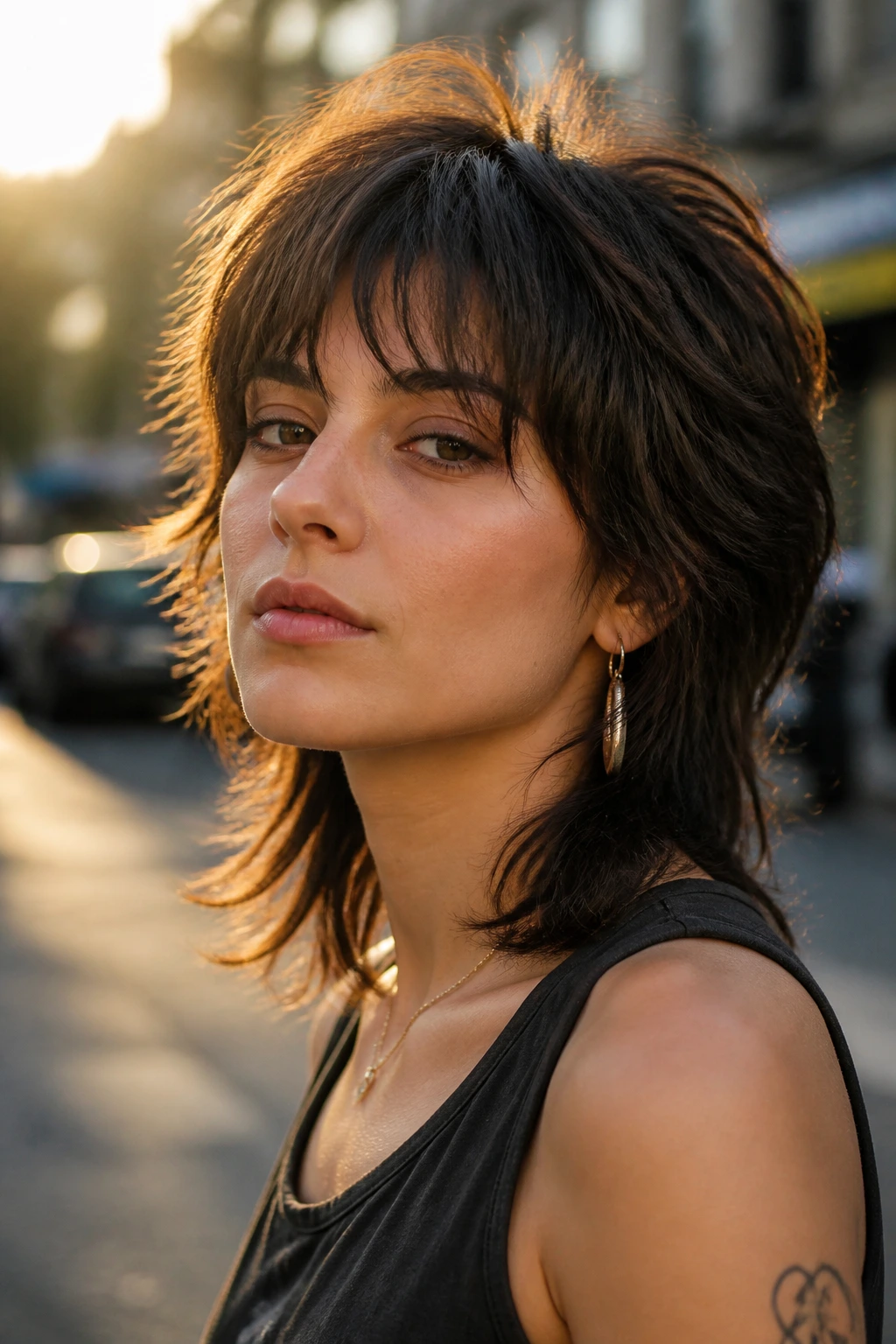
Yes, this one has opinion. That’s part of the appeal. The feathered mullet keeps the front and crown shorter, lets the back hang longer, and adds piecey bangs that stop the look from becoming a cartoon. It’s sharper than a shag and less tidy than a bob.
The piecey fringe helps the cut feel current rather than costume-heavy. It breaks up the top line and gives the face some irregular movement, which matters because the mullet silhouette is already doing a lot. If the bangs are too thick, the whole thing gets heavy fast.
This style grows out in a strangely satisfying way. The shape doesn’t fall apart all at once; it just gets looser. That’s a win if you hate strict maintenance.
16. Retro 1970s Feathered Flip with Long Bangs
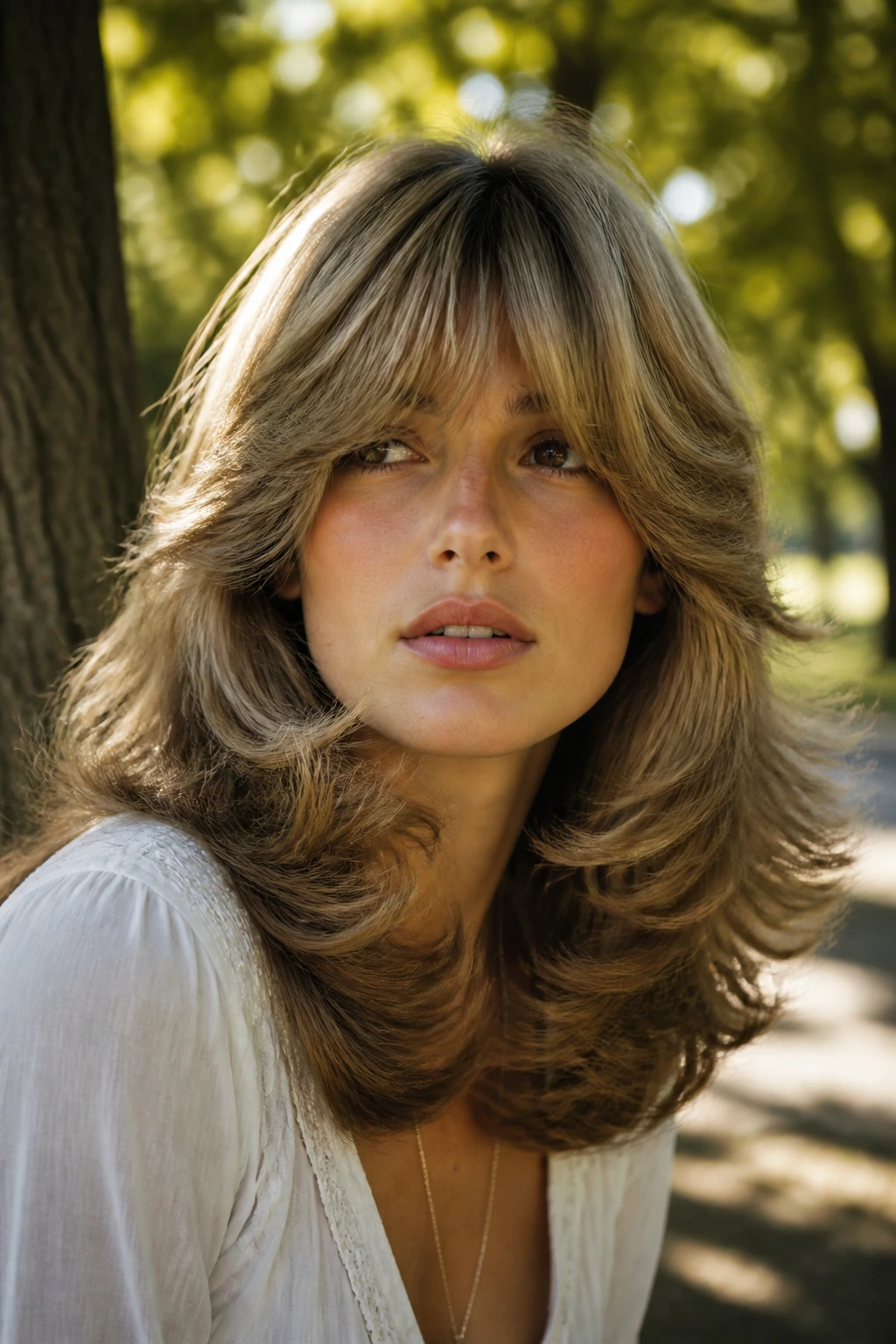
This is the cut that makes a round brush earn its keep. The layers flip away from the face, the ends feather outward, and the long bangs sweep into the side pieces with a real vintage bend. It’s glam in a way that feels intentional, not costume-party loud.
I love this look on medium to thick hair because the flip needs some structure to hold its shape. Fine hair can wear it too, but it usually needs mousse at the roots and a little root lift spray. Otherwise the style starts to wilt before lunch.
The long bangs are the important part. They keep the retro shape from feeling too formal and give the front a soft drape. A short bang would change the whole mood.
17. Layered Midi Cut with Split Fringe
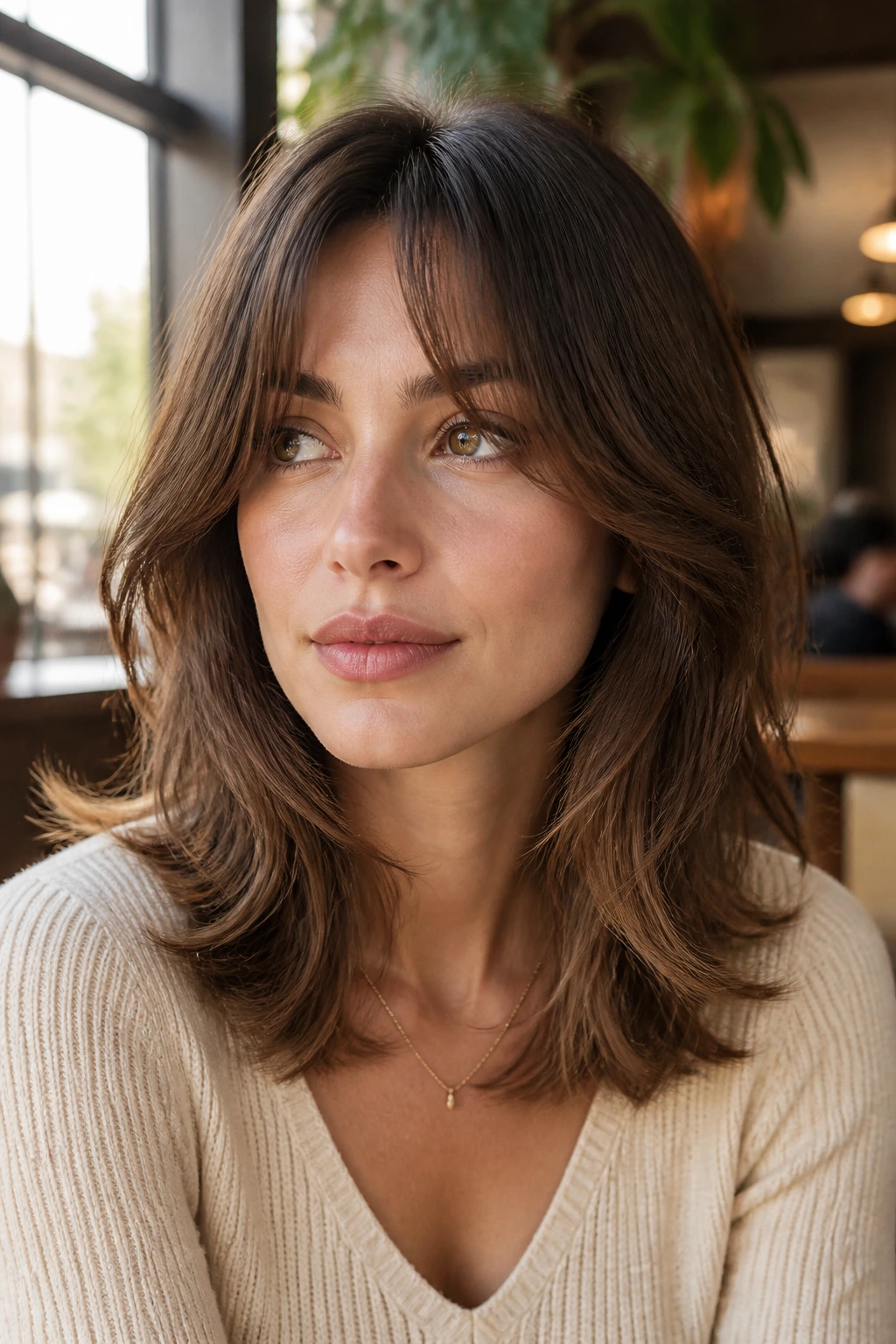
The midi cut sits between shoulder length and collarbone length, which makes it one of the easiest places to land if you want feathering without a big commitment. Add a split fringe and the whole thing opens up around the face instead of sitting on it.
This is a solid choice if you like to wear hair up half the time. The fringe can separate naturally, and the feathered layers keep the lower half from feeling heavy when it’s down. You can still get a flattering shape even on days when the styling is half-done.
A soft off-center split tends to look better than a perfectly symmetrical one. Real hair has a little drift in it. Let it.
18. High-Volume Feathered Cut with Arched Bangs
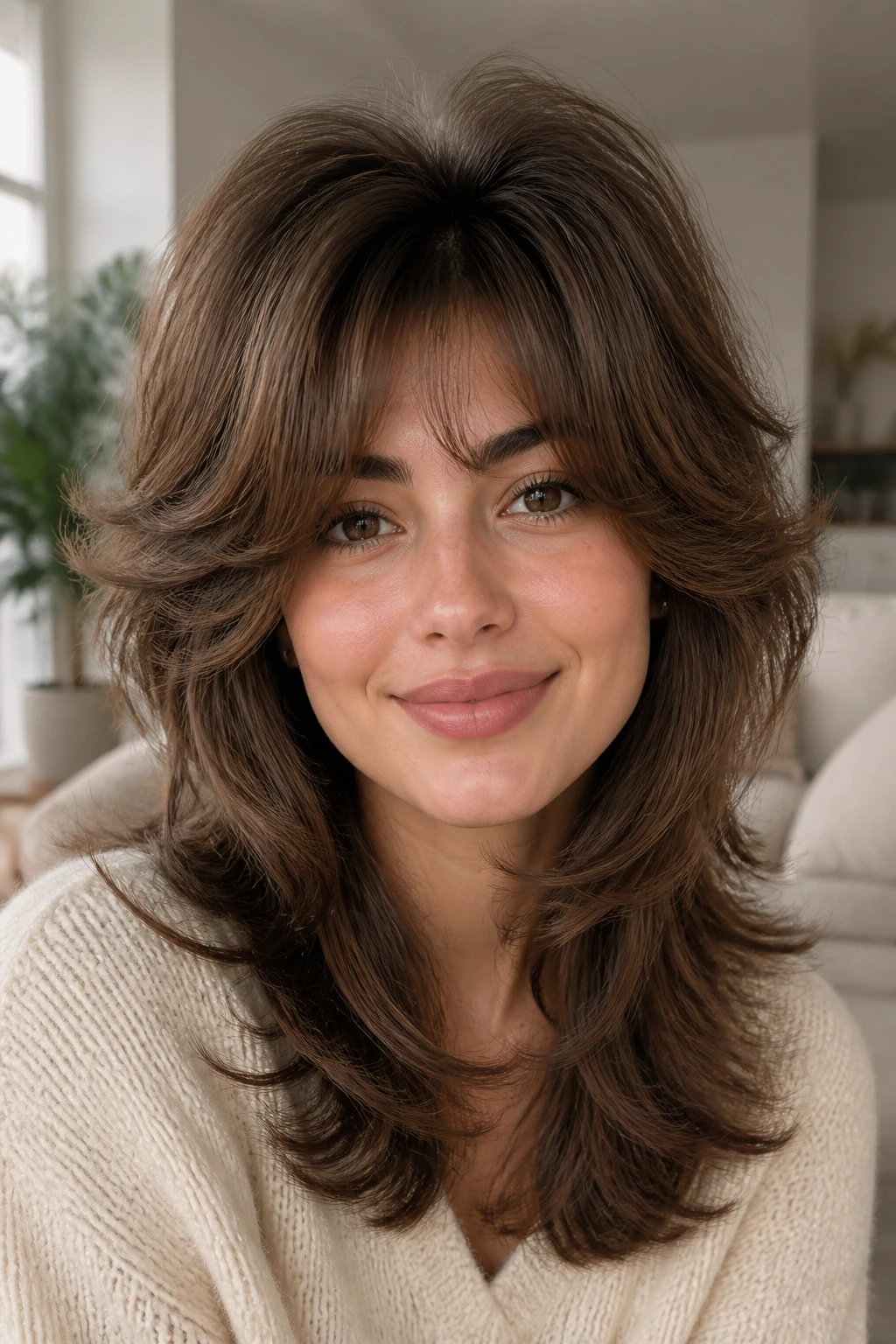
High volume can be chic or chaotic. The difference is the outline. In this cut, the crown gets lift, the layers are feathered outward, and the arched bangs curve gently above the brows instead of chopping straight across. That curve keeps the volume from crowding the face.
This version works best when the roots have a little support. A mousse at the base, a lift at the crown with a round brush, and a cool shot of air at the end will make the shape hold. Backcombing can work in tiny doses, but it’s easy to overdo and make the cut look crunchy.
If you love old-school blowouts, this one’s for you. If you prefer hair that falls flat and quiet, skip it.
19. Air-Dry Feathered Cut with Soft Bangs
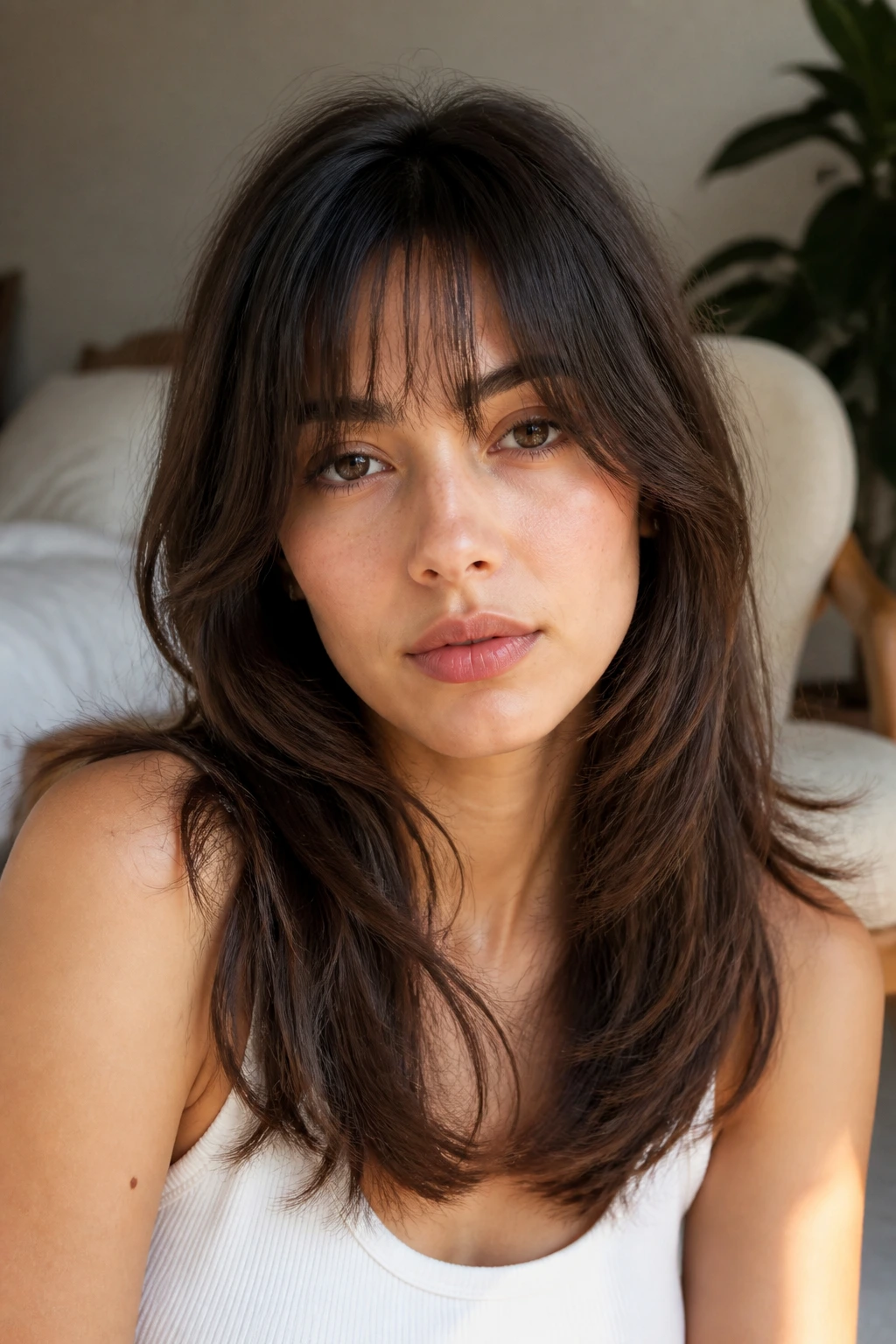
Some feathered haircuts need heat to show off. This one doesn’t. The layers are cut to fall into a soft, natural shape as the hair dries, and the bangs are kept flexible enough to bend without a brush marathon. It’s one of the better options for people who don’t want a styling routine with six moving parts.
The secret is in the cut. The front should be long enough to avoid puffy bang separation, and the layers should be light enough to encourage movement without making the ends sparse. A little curl cream or leave-in conditioner can help, but don’t drown it. Heavy products make air-dried feathering fall flat.
Nope, you do not need a perfect air-dry. A little irregularity makes this shape feel honest.
20. Feathered Crop with Choppy Bangs
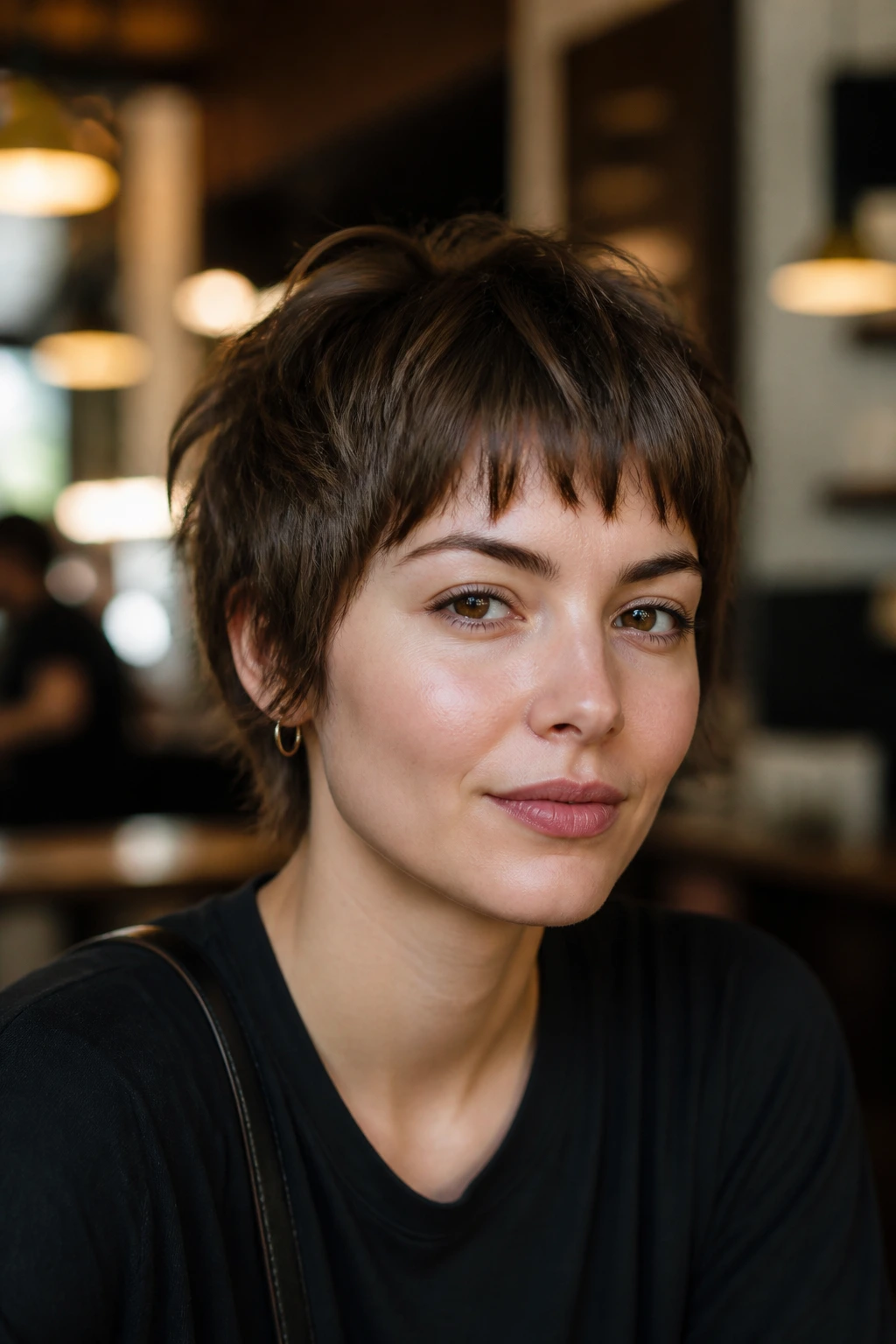
Short, crisp, and a little bit cheeky. The feathered crop keeps the sides and top compact, but the layering inside the shape gives it motion so it doesn’t look helmeted. Choppy bangs finish the look with texture instead of polish, which is exactly why this cut works.
Best For
- Strong cheekbones
- Small foreheads that can handle a shorter fringe
- People who want a short cut that doesn’t feel severe
The choppiness gives the crop a rougher edge, so it suits someone who likes hair that looks touched, not frozen. Use a tiny bit of styling paste and separate a few pieces near the brow. That’s enough. More product and the whole thing turns sticky.
21. Piecey Medium-Length Feathering with Side Bangs
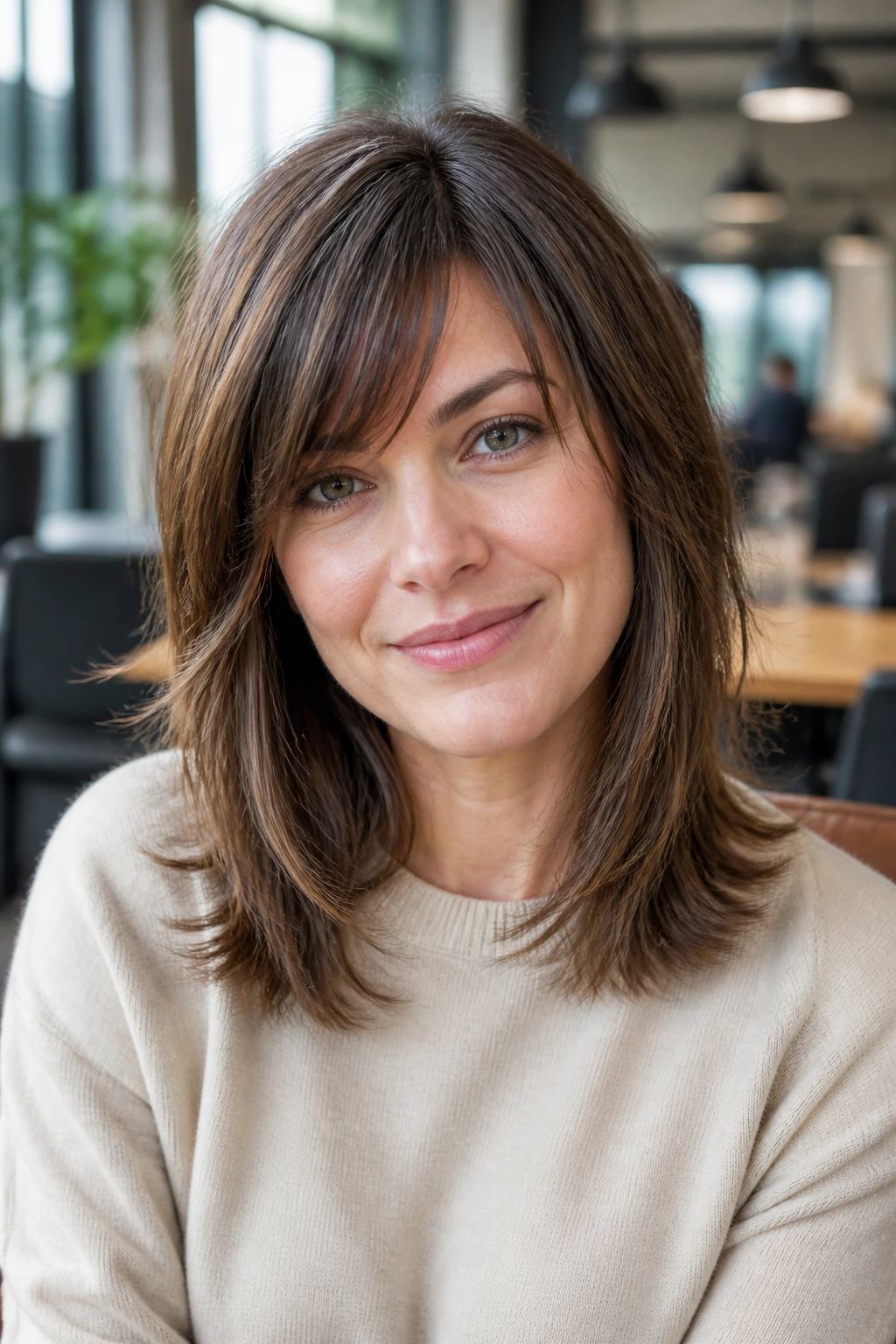
This is one of the most flexible cuts on the list. The medium length lands around the shoulders, the feathering breaks the ends into soft, separated pieces, and the side bangs slide into the shape rather than sitting on top of it. It’s casual, but not sloppy.
I like this haircut for people who want a style that works in office hair, weekend hair, and “I threw it up in a clip” hair. The side bangs give enough front interest that the cut doesn’t disappear when you pull the rest back. That detail matters more than people expect.
A light texturizing spray at the ends can help keep the pieces visible. Too much, though, and the hair starts to feel dusty. There’s always a line.
22. Softened Layered Cut for Round Faces with Vertical Bangs
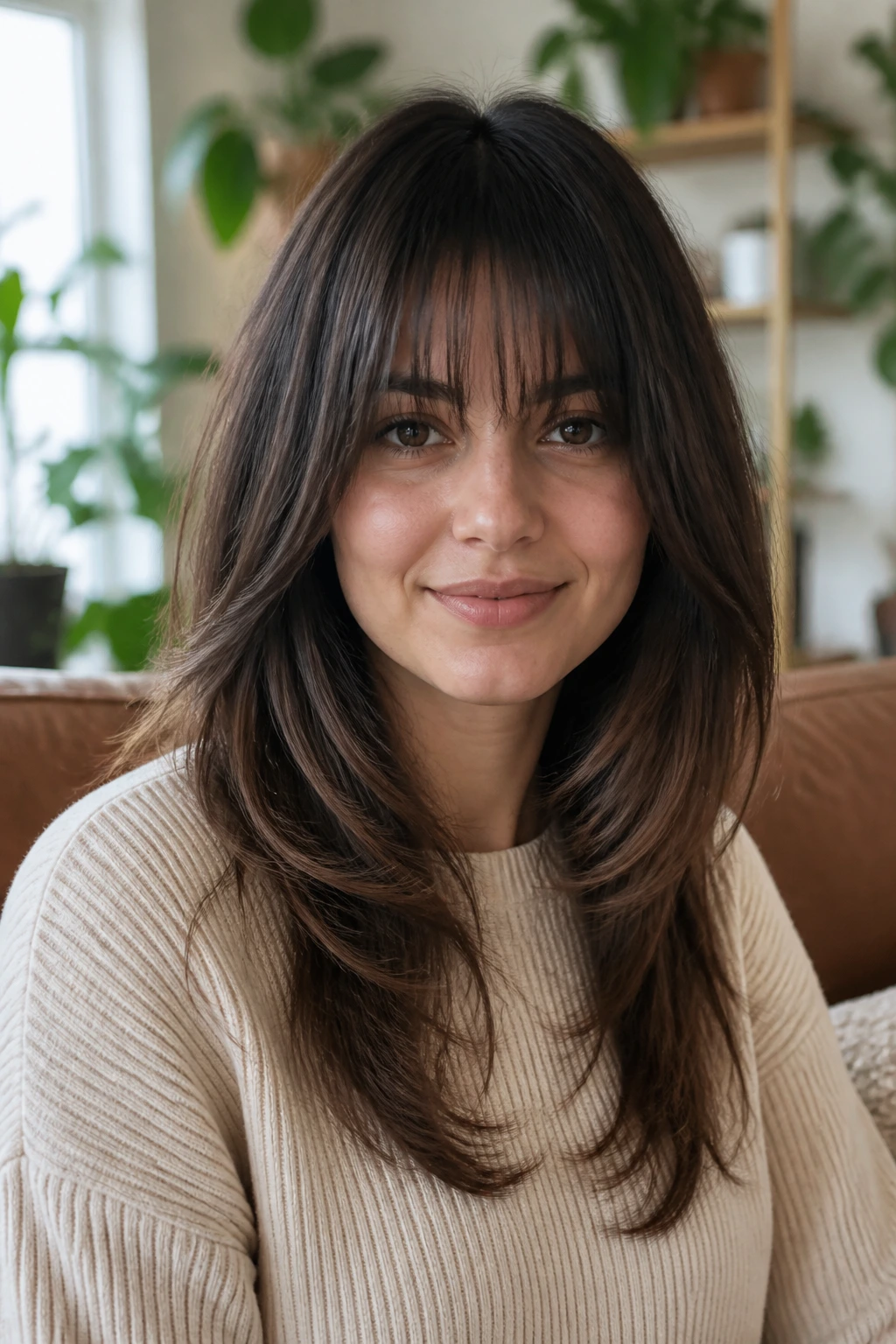
Round faces don’t need hiding; they need length and direction. This cut gives both. The feathered layers fall downward around the cheeks, and the vertical bang pieces create a longer visual line at the front instead of widening the face.
The key is restraint near the widest part of the face. Keep volume from building too much at the sides. Instead, let the feathering happen below the cheekbone and around the neck so the eye moves downward. That changes the silhouette more than a dozen social-media rules ever will.
Vertical bangs can sound stern, but they don’t have to be. Done right, they’re soft little panels that frame the eyes and pull the whole haircut into a taller shape.
23. Angular Feathered Cut for Square Faces with Sweeping Bangs
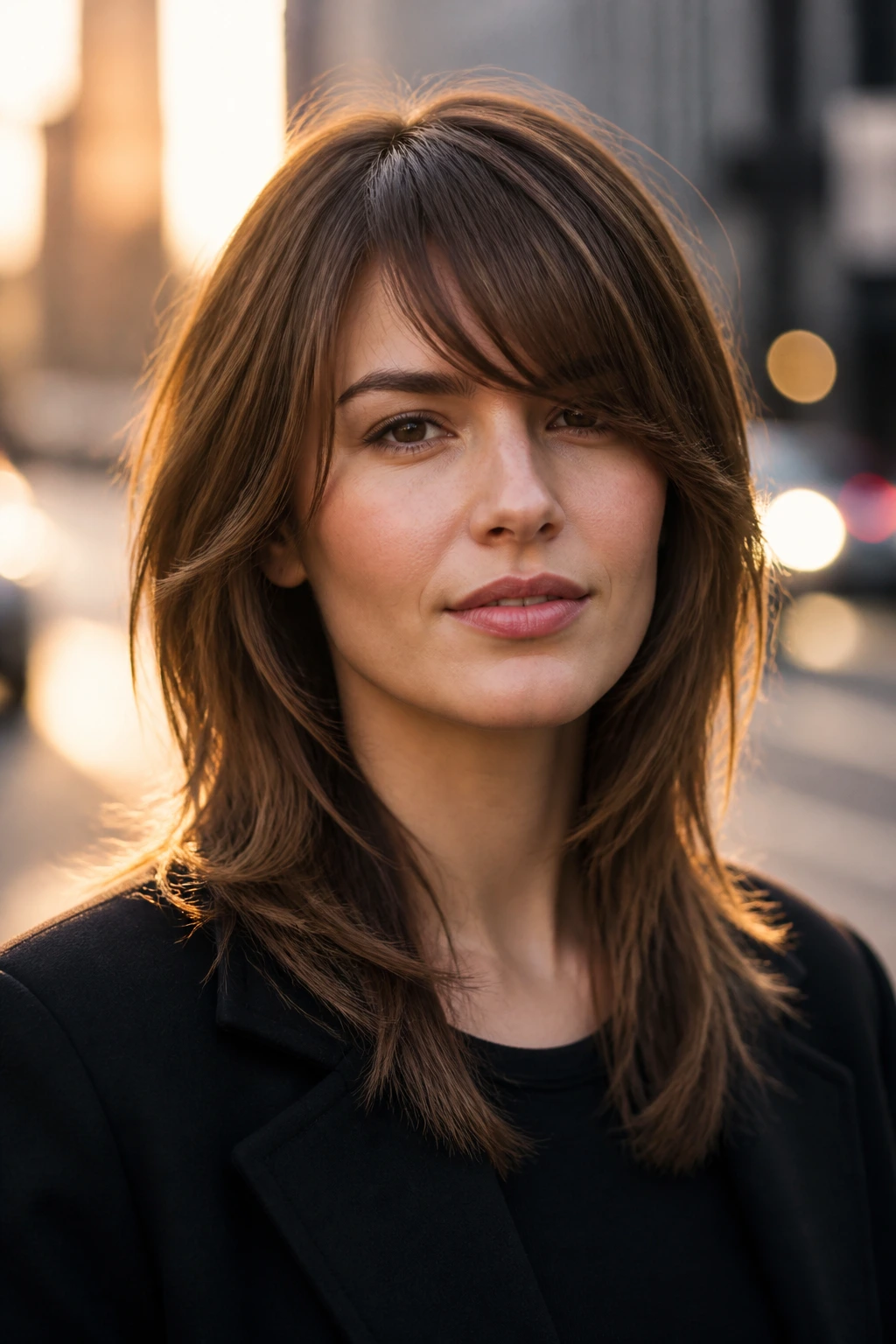
Square faces often look fantastic in feathered shapes because soft movement offsets a strong jawline. Sweeping bangs are the piece that makes the cut feel balanced. They draw the eye diagonally, which keeps the face from feeling boxed in.
The feathering should sit around the jaw and collarbone, not just at the very ends. If the layers only live at the bottom, the strong lines up top remain untouched. A few softer interior layers around the cheek area make a bigger difference than people realize.
This is one of those cuts where the direction of the fringe matters as much as the length. Sweep it too flat, and you lose the angle. Let it bend with a little lift, and the whole cut opens up.
24. Feathered Cut for Straight Hair with Thin Fringe
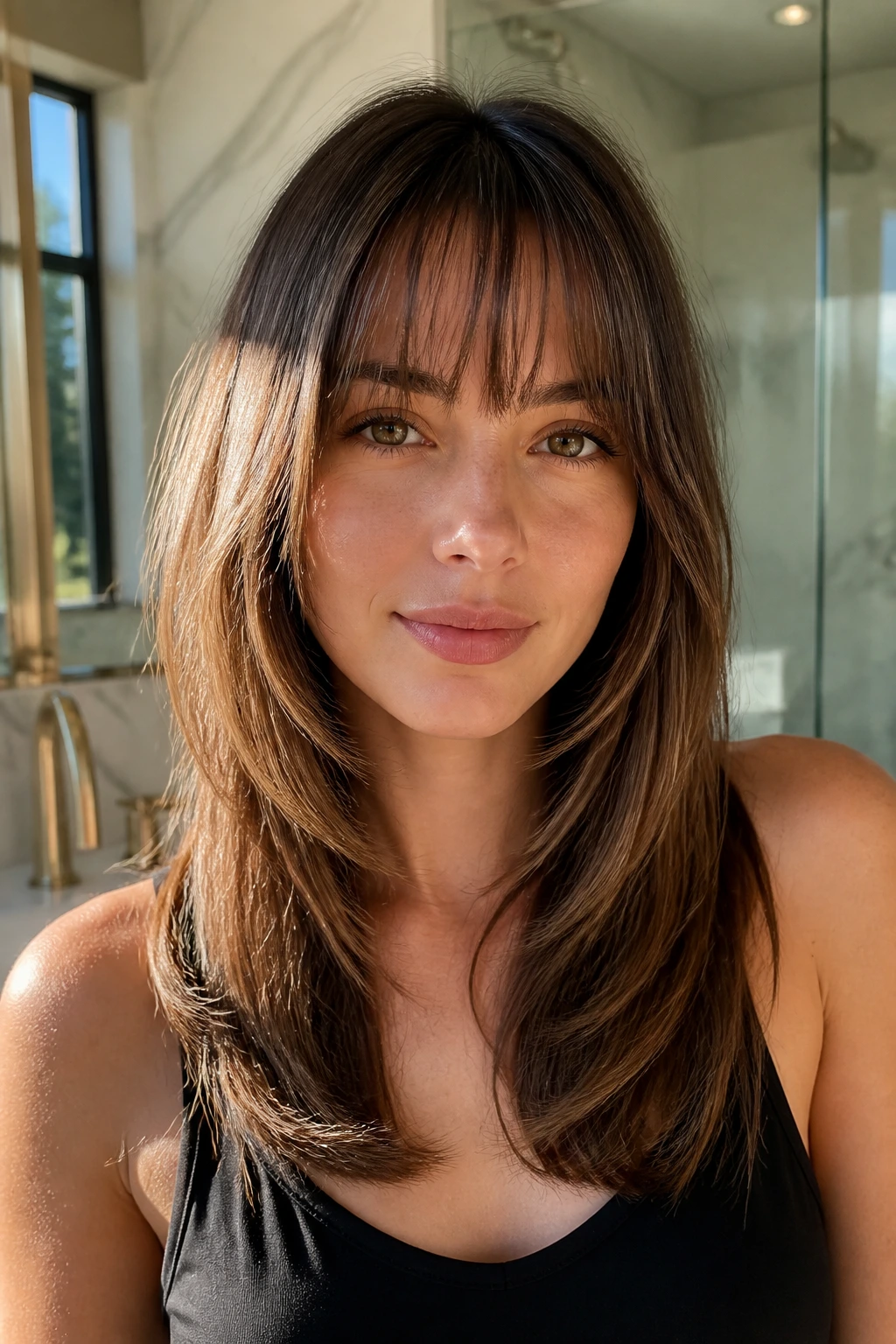
Straight hair can look gorgeous in a feathered cut, but it needs movement worked in deliberately. A thin fringe helps because it avoids that solid, blunt block across the forehead that makes straight hair feel heavy. The rest of the cut can then do the airy work.
The feathering should be subtle and clean, not choppy for the sake of it. Straight hair shows every line, so the layers need to connect well. A flat brush and a quick bend through the ends are usually enough to make the shape show up. You don’t need huge waves. You need a little bend and a little separation.
If your hair is pin-straight and tends to go limp, this cut benefits from dry shampoo at the roots on day two. Day one is nice. Day two usually looks better.
25. Feathered Cut for Natural Texture with Blended Bangs
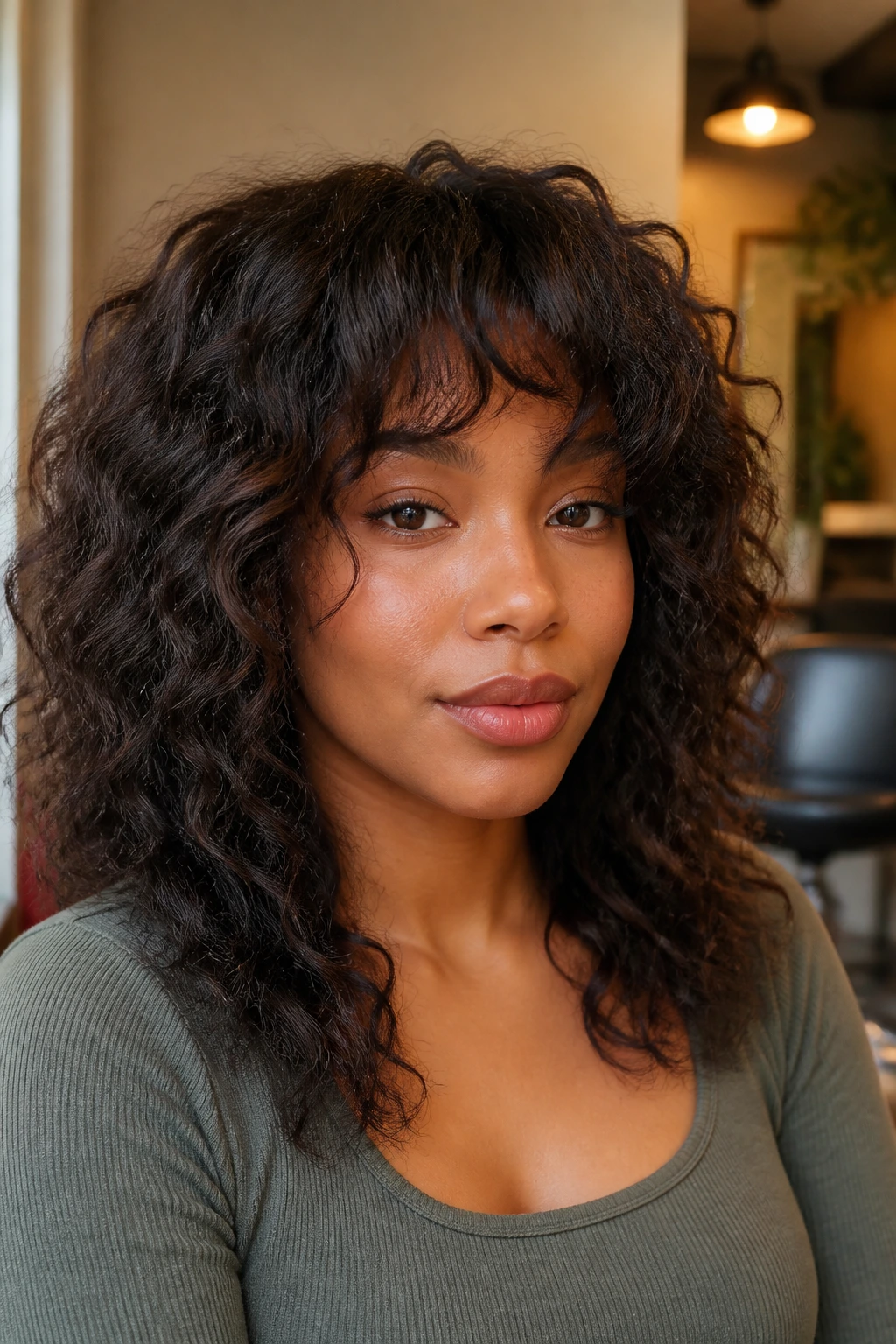
This is the one I’d save for hair that already does its own thing — waves, kinks, coils, all of it. The blended bangs aren’t cut as a separate event. They melt into the front layers so the fringe feels like part of the haircut instead of a tiny add-on.
The best version respects shrinkage and pattern. That means cutting in the hair’s natural state, or at least close to it, so the bangs don’t spring up too short later. It also means keeping the feathering soft enough that the shape moves with the texture instead of fighting it.
A diffuser, a curl cream, or a light leave-in can help, but the real success comes from the cut itself. When it’s done well, the bangs don’t look “styled.” They look like they belong there. That’s the sweet spot.
What Feathering Does Better Than a Blunt Edge
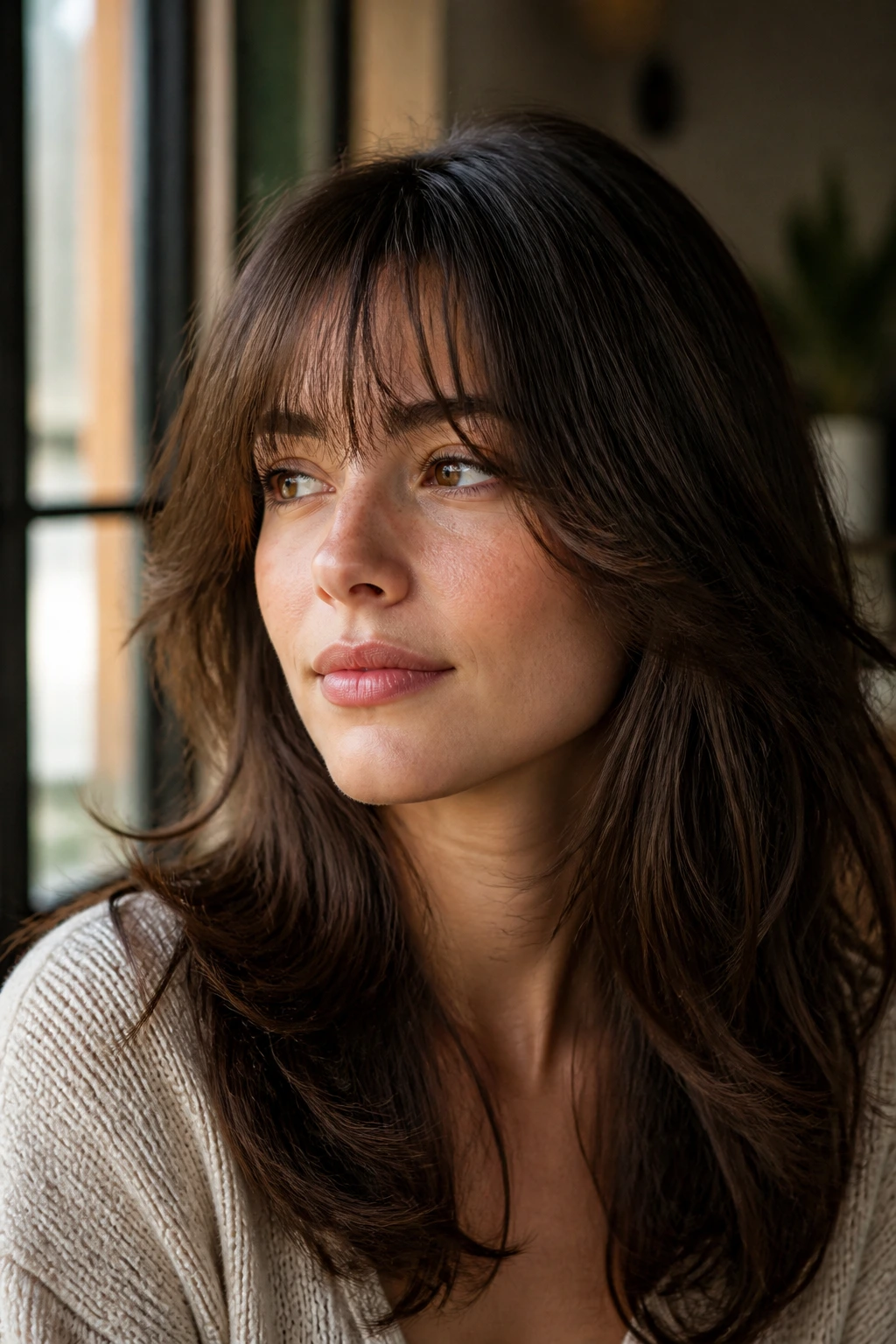
Feathering changes the way a haircut sits on the head. A blunt line can feel firm and tidy, but it also puts all the weight in one place. Feathered ends break that weight up. The hair lifts a little at the edges, bends more easily, and gives the face some breathing room.
That’s why feathered haircuts with bangs tend to be so forgiving as they grow. A blunt fringe grows into a shelf. A feathered fringe grows into a softer, more layered front that’s easier to tuck, split, or sweep aside. The grow-out is still grow-out, but it’s not the same rude little line you get with a cut that was made to be precise above all else.
There’s also a texture trick here. Feathering can make thick hair look less dense without making it look thin. On fine hair, it can create the illusion of lift and movement if the layers are controlled. The line between good and bad feathering is a narrow one. Too much removal, and the ends look ragged. Too little, and the haircut turns into a plain layered cut with a fringe glued on.
The Tools That Make These Cuts Behave
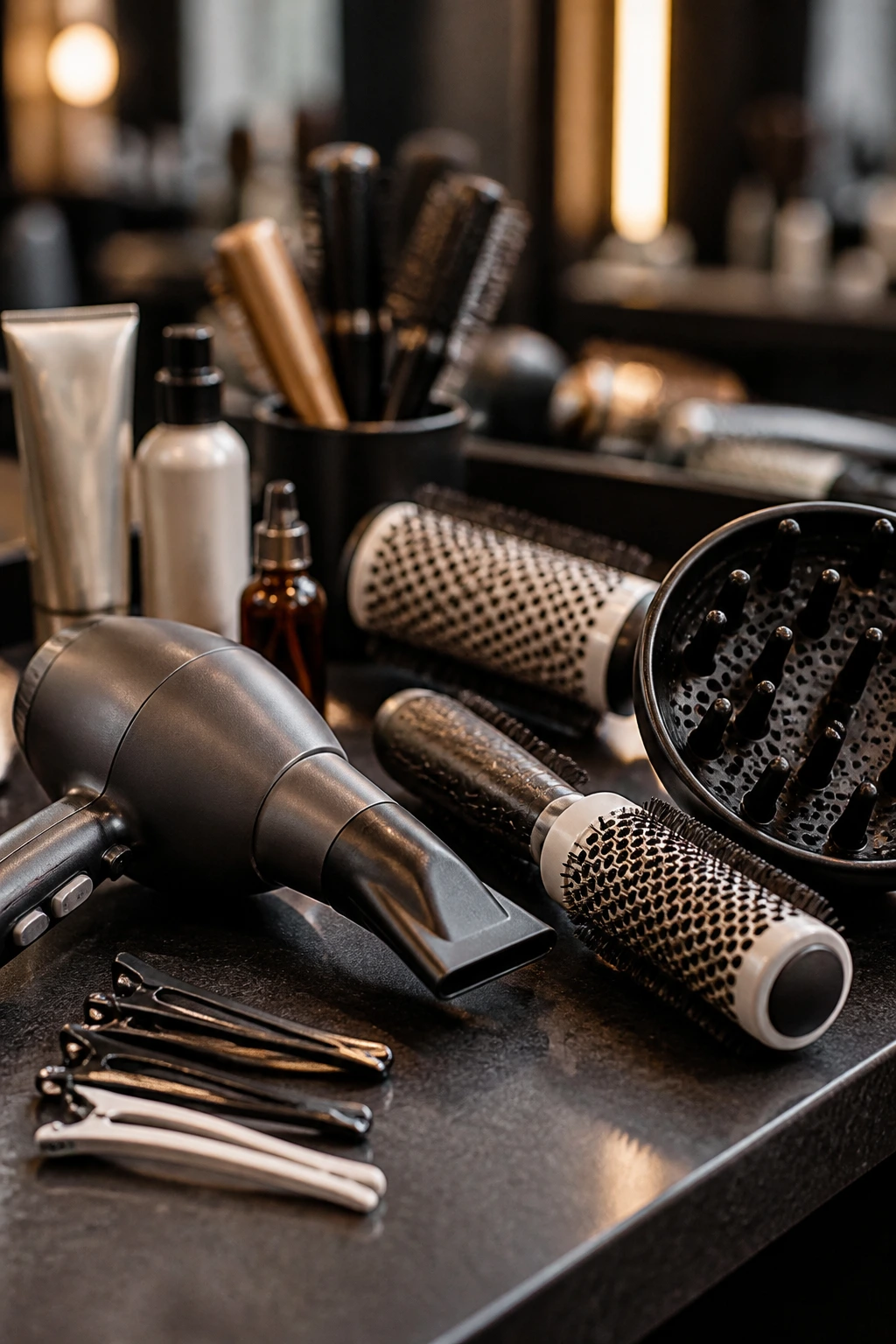
You don’t need a salon drawer at home, but a few right tools make a real difference.
- Blow dryer with a nozzle: The nozzle directs air so the bangs and layers bend instead of blasting around like a flag.
- Round brush, 1 to 1.5 inches: Best for fringe control and curved ends on shorter or medium cuts.
- Large round brush, 2 to 2.5 inches: Better for long layers, curtain bangs, and retro flips.
- Blow-dry brush or paddle brush: Handy for smoother, straighter feathering when you do not want a bouncy finish.
- Sectioning clips: Keep the fringe separate while you work the rest of the hair.
- Light mousse or root spray: Adds lift without making the cut stiff.
- Texturizing spray: Useful for piecey ends, shaggier shapes, and feathered crops.
- Light cream or serum: A tiny amount helps tame fray on the ends, especially on straight or dry hair.
- Diffuser: Worth it if your hair is wavy or curly and you want the fringe to keep its shape.
- Small flat iron: Only if you need a bend through the bangs or a polished edge on the front pieces.
How to Ask for the Right Feathered Shape
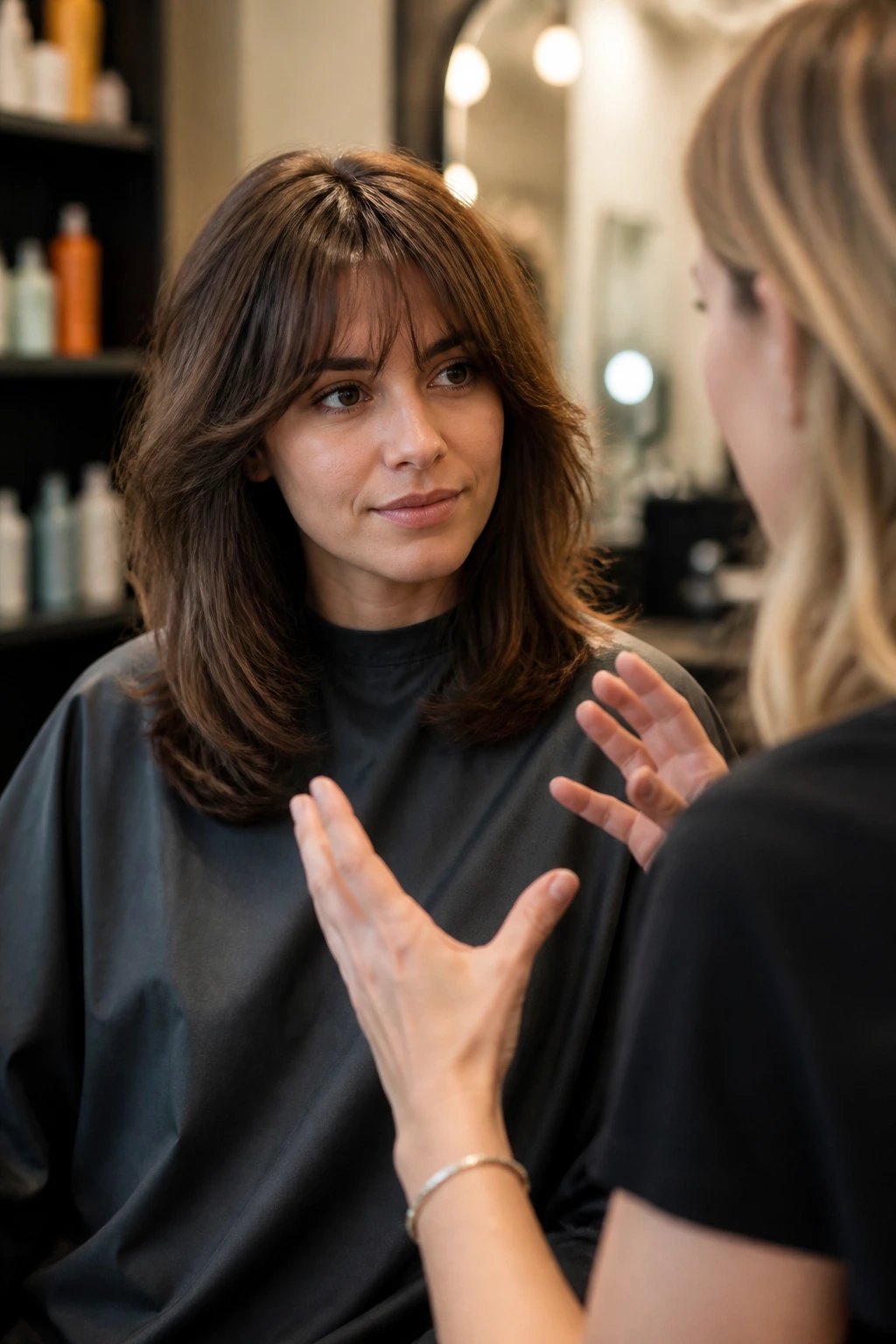
Haircuts go wrong in the consultation chair more often than in the styling mirror. That’s because “feathered” can mean half a dozen things. If you want the version that suits your hair, be annoyingly specific. That’s not rude. It’s useful.
Tell the stylist where you want the shortest front pieces to land: above the brow, at the brow, cheekbone, or lip level. Say whether you want the bangs blended into the sides or kept separate. If your hair is curly, ask for the fringe to be cut with shrinkage in mind. If it’s fine, ask for long internal layers rather than a lot of short ones that steal density.
Bring two photos if you can. One for the silhouette, one for the fringe. People mix those up all the time. The cut can be right, but the bangs can miss the mark by an inch and change everything.
And if you want the hair to move, say so plainly. Some stylists will give you a polished shape when what you actually meant was a softer, airier finish. Those are not the same haircut.
How to Wear Feathered Haircuts With Bangs
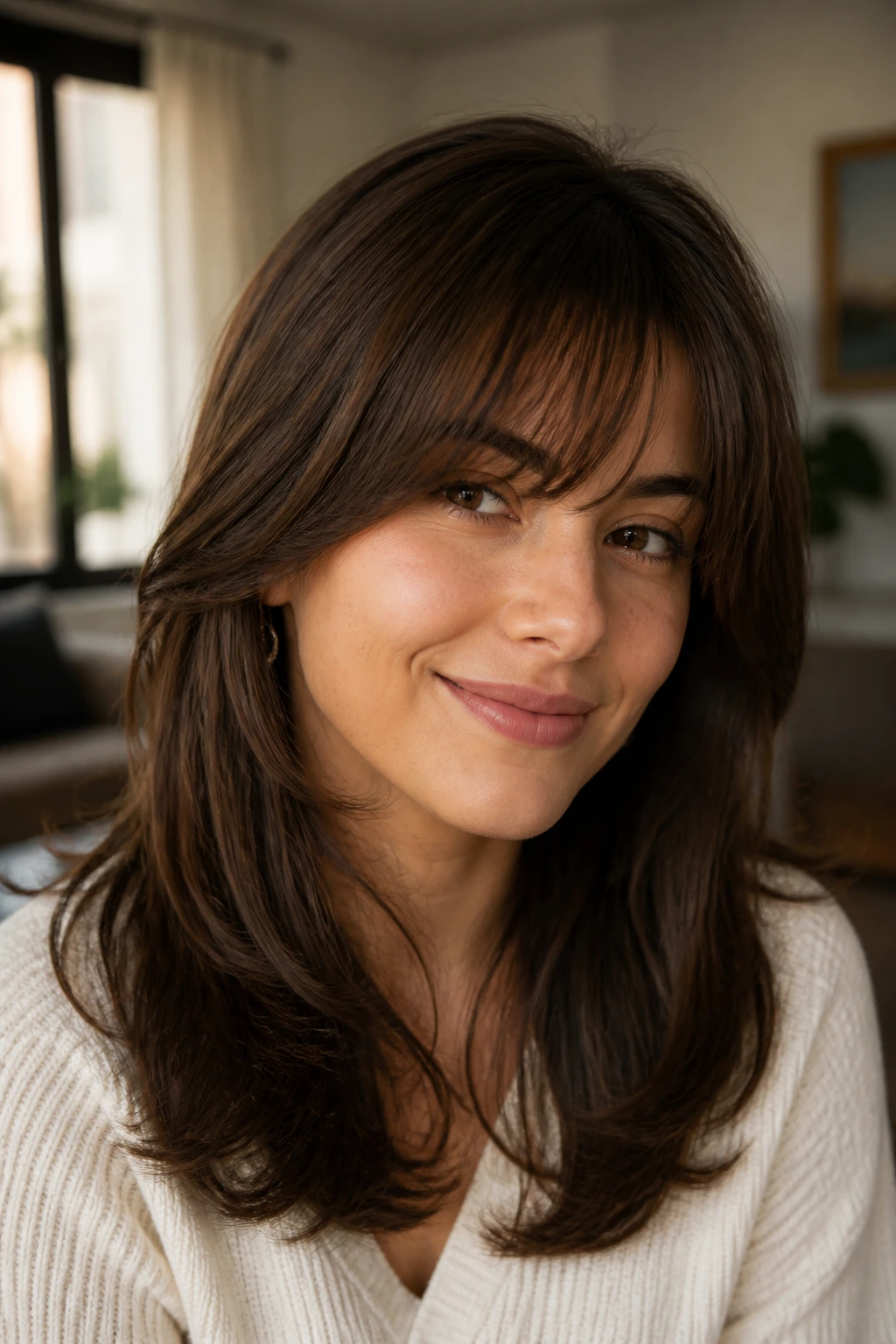
Shape: Keep the front visible. Even when the hair is tucked back, the fringe or face-framing pieces should still show a little movement around the eyes and cheekbones.
Texture: Pick one finish and stick with it on a given day — smooth, airy, or piecey. Feathered cuts look best when the surface doesn’t fight itself.
Accessories: Clips, barrettes, and headbands can work, but choose slimmer pieces. Thick accessories can crush the fringe and flatten the feathering at the temples.
Parting: A middle part suits curtain and bottleneck bangs. A soft side part helps heavier fringes and side-swept shapes feel more natural.
Additional Styling Tricks That Pay Off
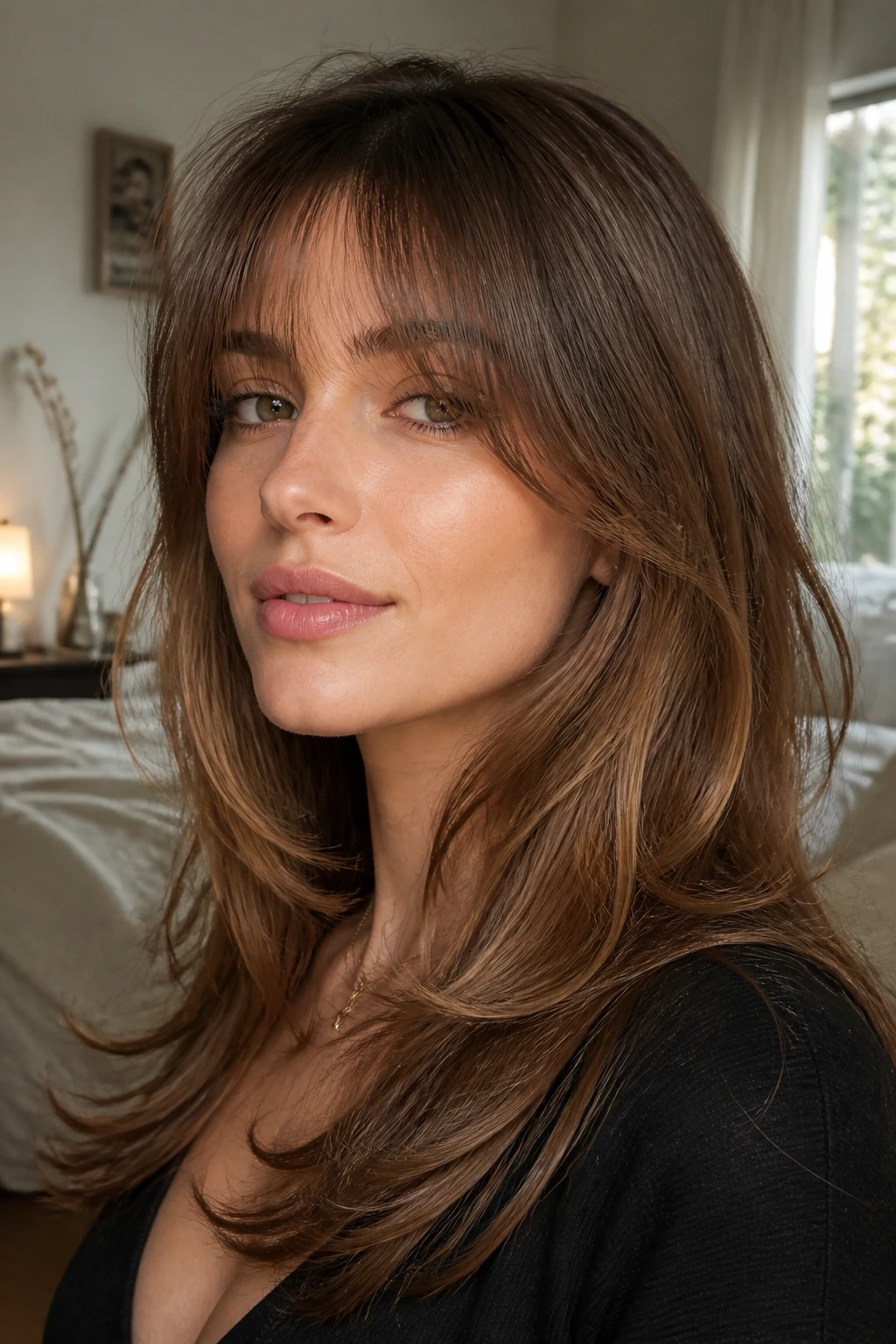
Flavor Enhancement: A tiny mist of flexible-hold spray under the fringe gives it memory without making it crusty. Spray the brush, not the forehead, unless you enjoy accidental sticky skin.
Customization: If the cut feels too round, ask for a little more length at the jaw. If it feels too flat, ask for shorter internal layers at the crown. That one change can shift the whole mood.
Serving Suggestions: A clean ear tuck, a bent end, or a single face-framing wave can make the shape read better than a full head of styling. Sometimes one good bend around the cheek is enough.
Make-It-Yours: Fine hair usually wants lightweight foam. Thick hair often behaves better with a cream and a little tension while blow-drying. Curly hair likes a diffuser and restraint. Straight hair usually needs a bend through the bangs more than anything else.
Common Mistakes People Make With Feathered Bangs
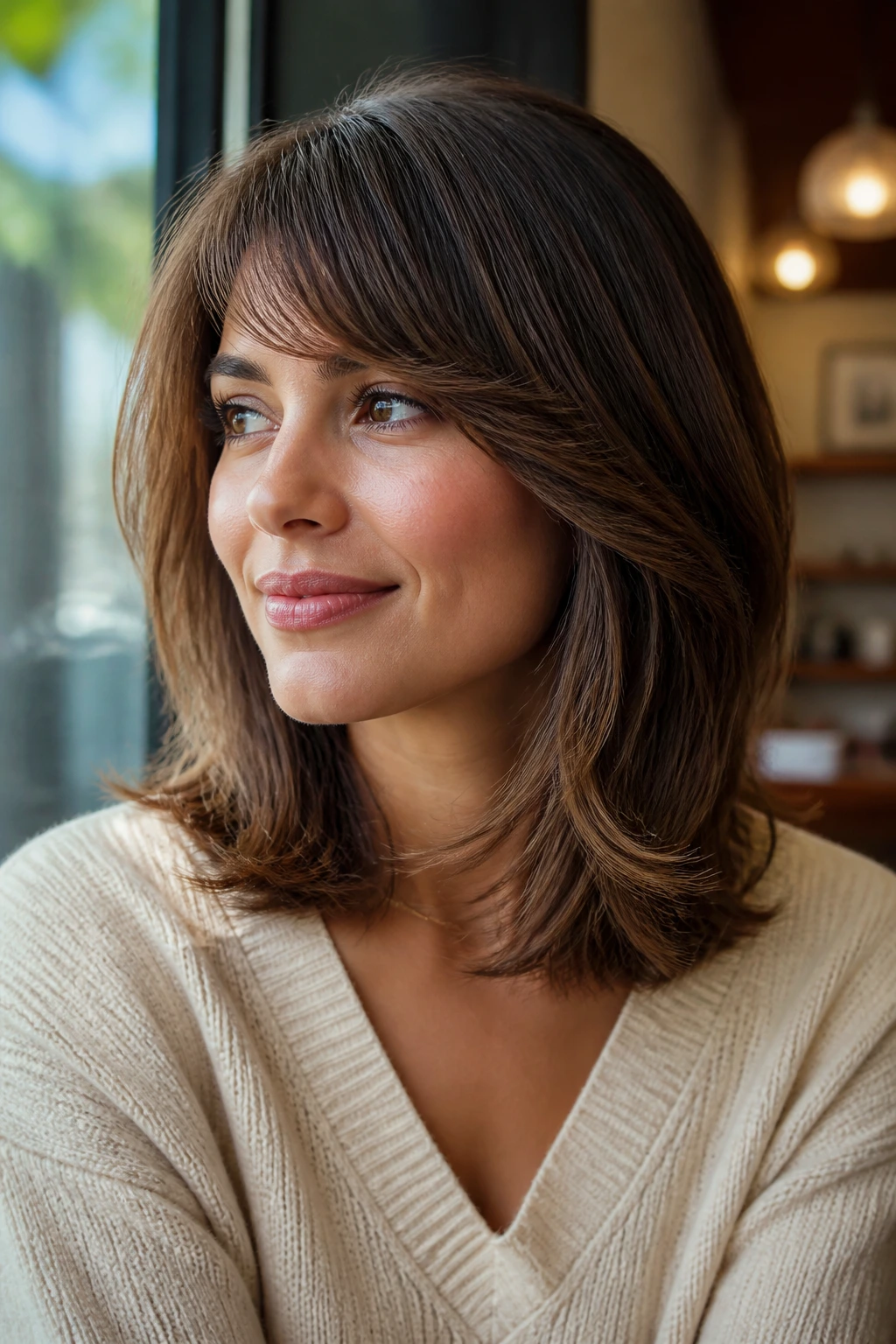
Going too short in the fringe. Feathered bangs look softer when they brush the brows or sit just below them. If they’re cut too short, the whole front can feel abrupt and harder to blend.
Over-layering fine hair. Fine hair needs movement, not a haircut that keeps taking from the same little pile of strands. Too many short layers can leave the ends see-through and the crown flat.
Ignoring the natural part. If your hair always falls left of center, a perfectly centered fringe will spend its days arguing with your scalp. Work with the part, or at least close to it.
Using heavy oil near the front. It sounds harmless. It isn’t. Heavy oil can make feathered bangs split into separate greasy strands and kill the lift that makes the cut work.
Thinning thick hair too aggressively. The symptom is a fuzzy halo at the ends and a shape that puffs up as the day goes on. Point-cutting and controlled debulking do a cleaner job.
Styling the bangs after the rest of the head dries. Bangs set fast. If you leave them for last, they often dry in the wrong direction and stay there like they were stubborn on purpose.
Variations and Alternate Takes on the Feathered Shape
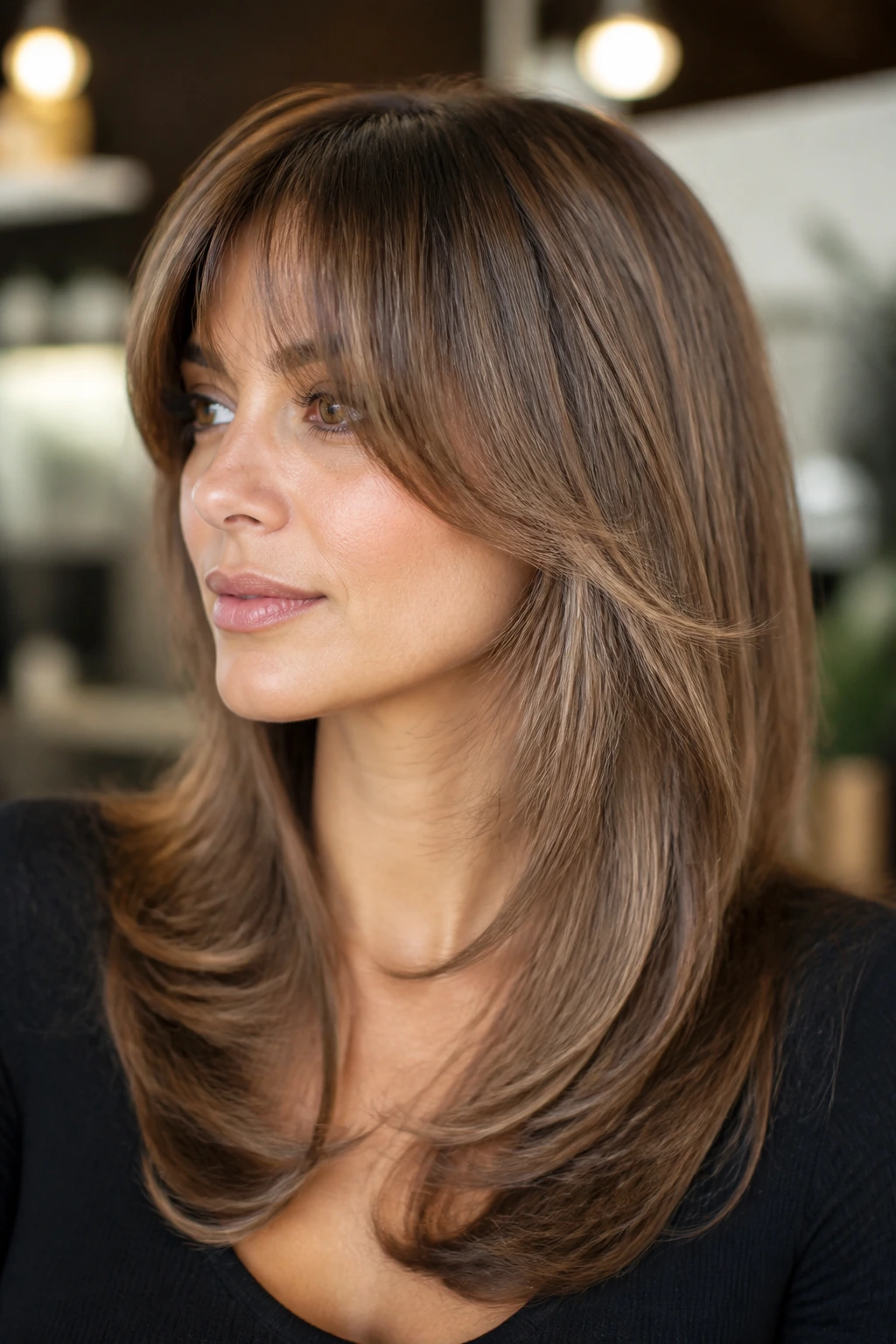
The Polished Feather: This version keeps the layers soft but smooths the surface with a round brush and a little serum. It fits people who want movement without a shaggy finish.
The Textured Feather: More separation, more piecey ends, less concern about perfect symmetry. Good for shag, wolf cut, and crop shapes that can handle a little grit.
The Soft Grow-Out Feather: Bangs stay long enough to split, tuck, or sweep. This is the one I’d choose if you hate being chained to trims every few weeks.
The Curly Feather: Layers follow the curl pattern, and the bangs are cut with a little extra length so shrinkage doesn’t ambush you. It works best with a diffuser and a light cream.
The Bold Fringe Feather: Micro-bangs, heavy bangs, or choppy bangs paired with a softer layered body. The contrast gives the haircut edge while the feathering keeps it from looking stiff.
Keeping the Shape Between Salon Visits
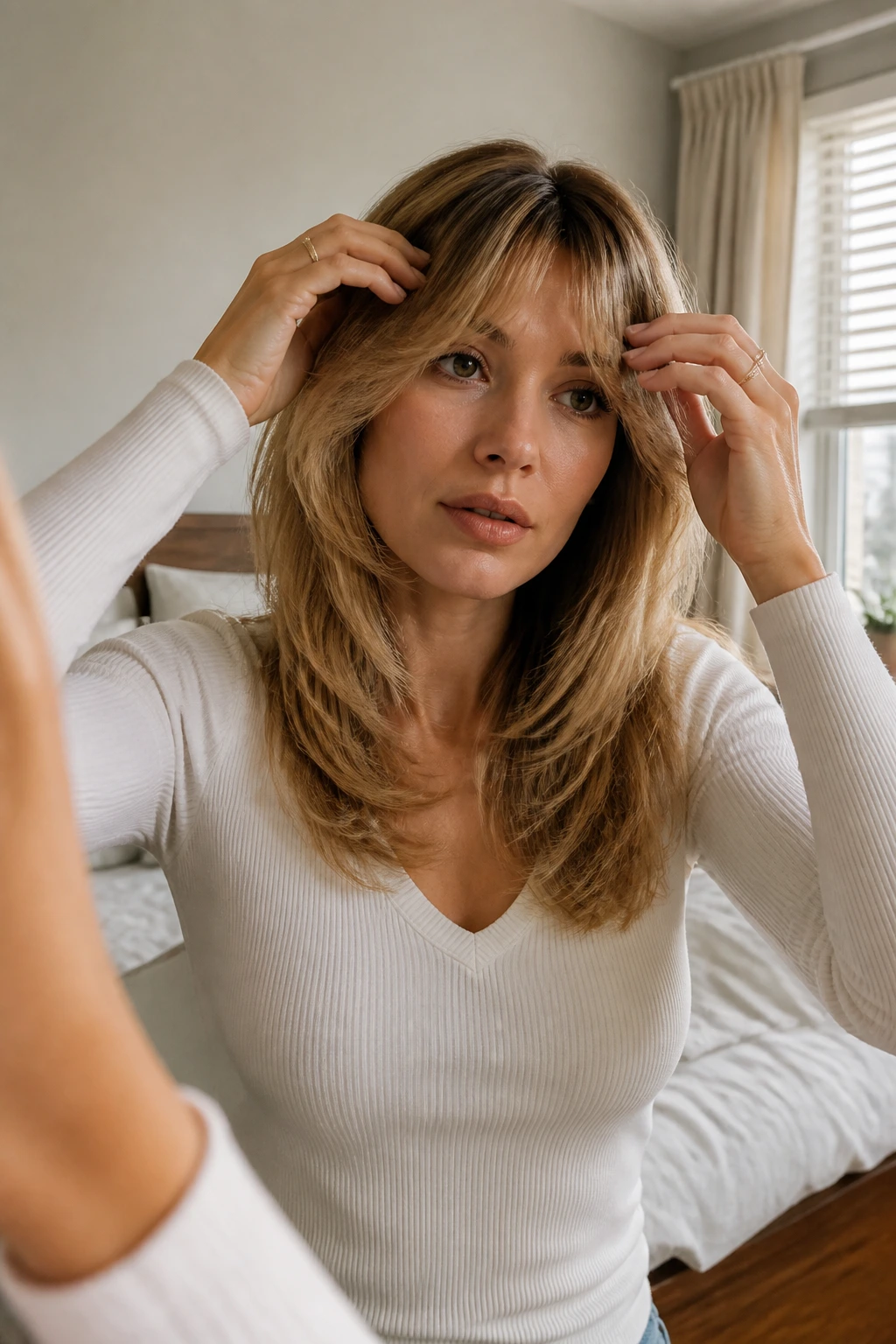
Feathered cuts need maintenance, but not the punishing kind. Bangs usually want a trim every 3 to 5 weeks if you keep them at brow length or shorter. Longer curtain bangs can often stretch to 6 to 8 weeks, especially if you’re fine with tucking them away on lazy days.
The layered body usually holds its shape for 8 to 12 weeks, depending on your texture and how fast your hair grows. Shorter cuts — pixies, crops, bobs — drift out of shape faster and may want a touch-up closer to the 6-week mark. Thick hair can hide growth a little longer; fine hair usually shows it sooner.
At home, a silk pillowcase helps the fringe stay smoother overnight, and a dry shampoo at the roots can buy you an extra day if the crown starts to flatten. If your bangs separate in weird little clumps, mist your fingers with water and re-bend them with a brush for 20 seconds. That tiny reset often beats a full wash.
Frequently Asked Questions
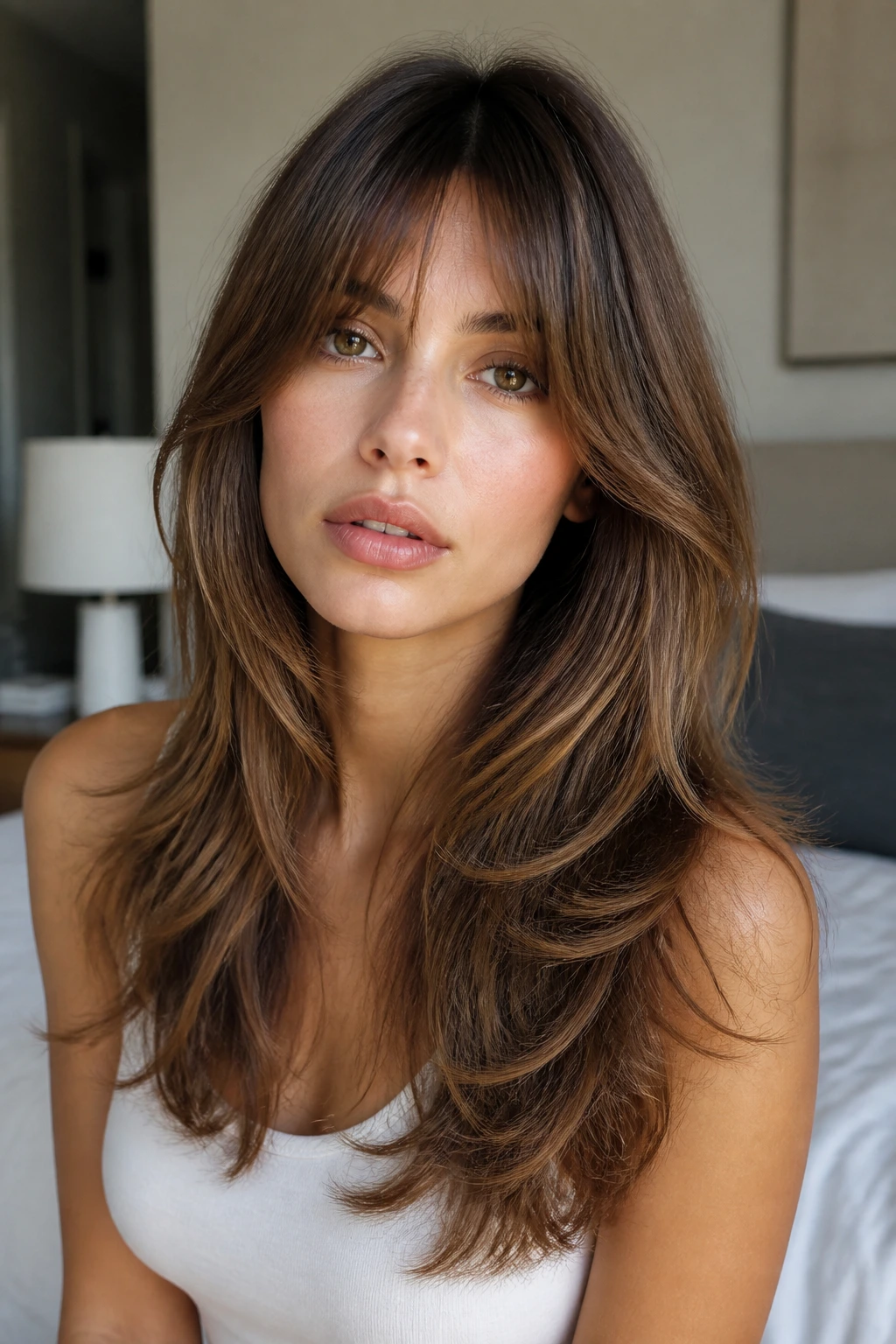
Can feathered haircuts with bangs work on curly hair?
Yes, but the bangs need to be cut with curl shrinkage in mind. Curly fringes usually need extra length and a shape that follows the curl pattern instead of forcing it straight.
Will feathering make fine hair look thinner?
It can, if the layers are taken too high or too aggressively. The safer version keeps the bottom line fuller and uses soft internal movement instead of chopping density away.
How often should bangs be trimmed?
Short bangs usually need attention every 3 to 5 weeks. Longer curtain or side-swept bangs can often last 6 to 8 weeks before they start hanging into your eyes in a way that feels less stylish and more annoying.
What if my bangs split in the middle all day?
That usually means the growth pattern or part wants a center opening. Don’t fight it too hard. A curtain or bottleneck fringe may work better than a blunt straight-across bang.
Are feathered cuts high maintenance?
Some are, some aren’t. A shag or crop needs more styling. A long feathered lob or layered midi cut can be fairly easy if you’re okay with a soft, natural finish.
Can I air-dry a feathered cut?
Yes, if the layers were cut with air-drying in mind. If not, you may need a little hand-shaping through the bangs and front pieces so the cut doesn’t dry in odd angles.
What should I bring to a salon appointment?
Bring photos that show both the layers and the fringe. One picture rarely covers both, and the wrong bang length can change the whole haircut even if the rest is close.
Do feathered bangs suit round faces?
They can, especially when the fringe is split, vertical, or swept diagonally. The goal is to create length and movement rather than a wide horizontal line.
Can I wear feathered bangs with glasses?
Absolutely. Side-swept, curtain, and bottleneck styles usually sit well with frames because they avoid the heavy wall-of-hair look right at the brow line.
Why This Shape Keeps Coming Back
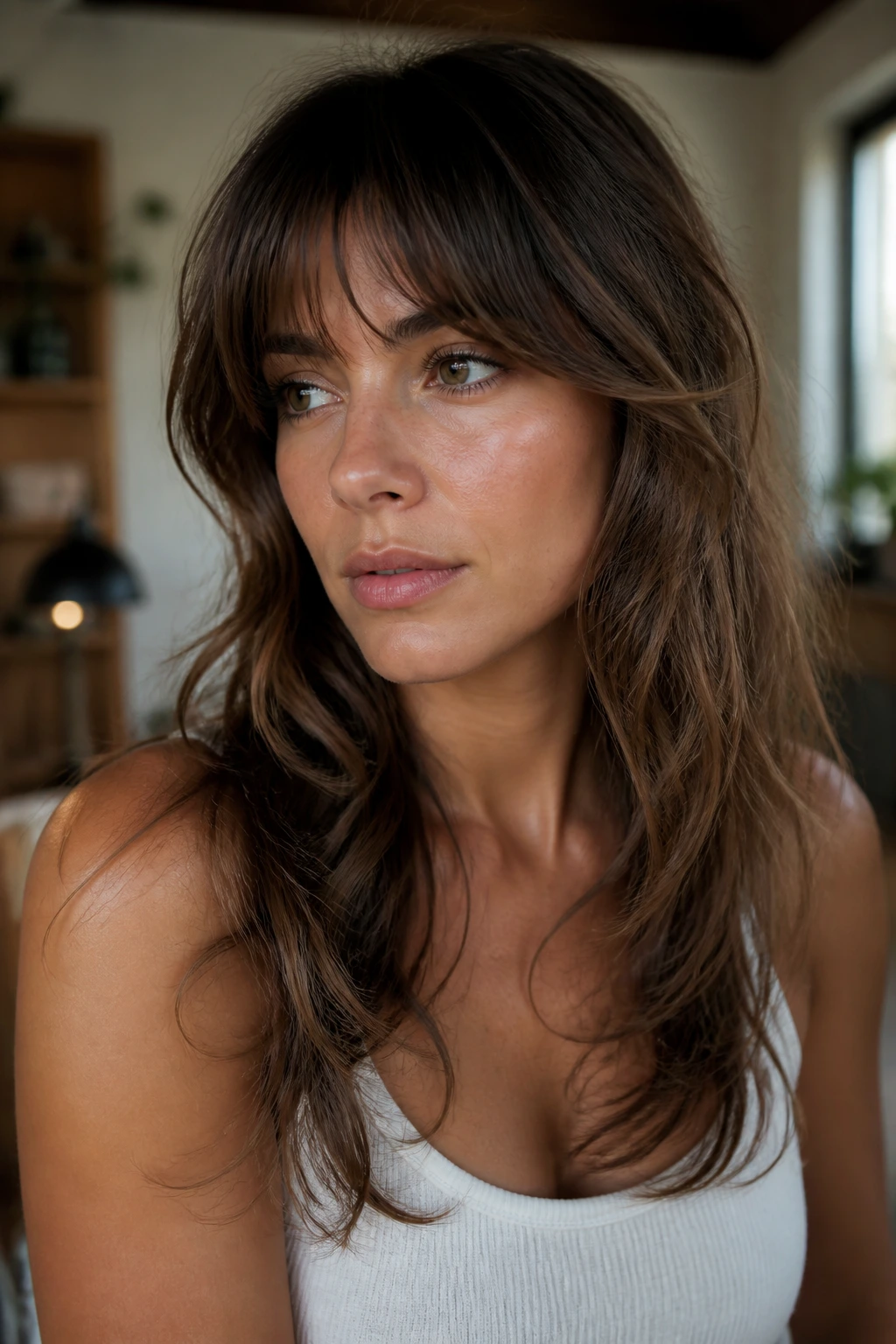
Feathered cuts with bangs stick around because they do something plain layers often fail to do: they make the face look intentionally framed. Not covered. Not hidden. Framed. That difference matters, and you can feel it the second the layers start moving instead of just hanging.
The best part is how many directions the shape can take. Quiet or bold. Short or long. Sleek or rough. A feathered haircut with bangs can soften a strong jaw, wake up fine hair, calm thick hair down, or give curls a front shape that doesn’t fight their pattern. That range is why people keep coming back to it after trying a dozen other things.
If you’re choosing one, start with your texture and your morning routine, not a fantasy version of someone else’s hair. The right feathered cut is the one that still looks like itself after a long day, a humid commute, and one too many times behind your ears.
