



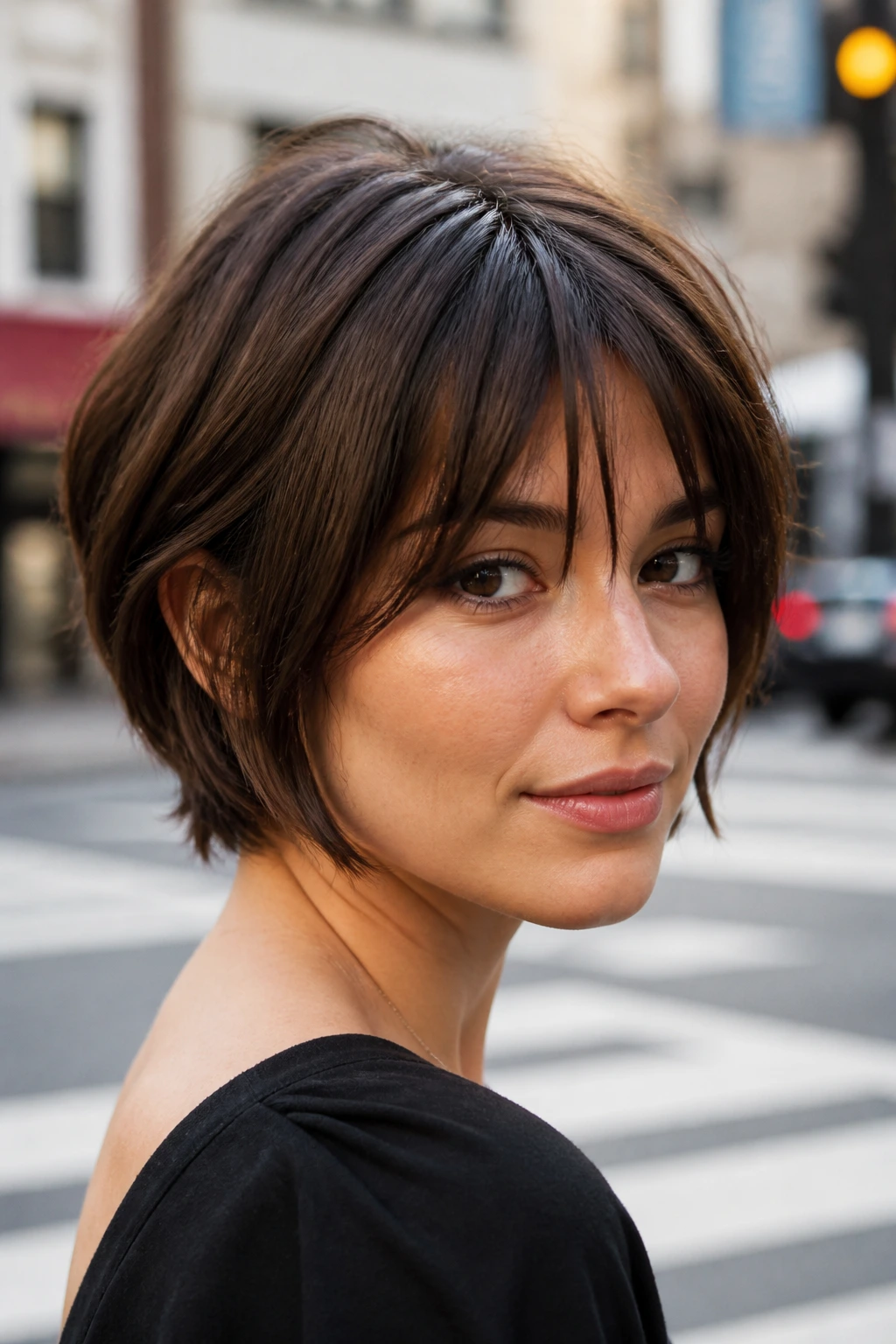
Short hairstyles with face framing bangs do one thing better than almost any other cut: they change the mood of a haircut without asking you to give up length, movement, or sanity. A chin-length bob can look sharp and editorial with the wrong fringe, then suddenly soften into something wearable the moment the front pieces graze the cheekbone. A pixie can go from neat to severe or from neat to alive depending on where those front strands land.
That tiny shift matters more than people think. The difference between bangs that sit flat and bangs that actually shape the face usually comes down to angle, density, and where the shortest piece falls — just above the brow, at the outer corner of the eye, or down near the cheek. Get that wrong and the haircut feels boxed in. Get it right and the whole face opens up.
The cuts below cover the range I’d actually put on a real client’s mood board: soft pixies, blunt bobs, shaggy crops, airy curls, and a few bolder shapes that only work because the fringe earns its keep. Some are low-maintenance. Some need a blow-dryer and five extra minutes. All of them rely on the same idea: the front of the haircut should do something useful, not just sit there.
Why These Cuts Keep Paying Off
-
They soften strong lines: A clean bob or cropped pixie can look boxy fast; face-framing bangs break that edge before it starts to feel harsh.
-
They change the focus point: A fringe that lands at the brow, temple, or cheekbone pulls the eye upward and forward, which is where short hair tends to look best.
-
They play nicer with growth: The best versions leave enough length around the face that six weeks later you still look styled, not overdue for a rescue mission.
-
They work with more than one texture: Straight, wavy, curly, thick, and fine hair each need a different approach, but the face-framing idea survives all of them.
-
They make short hair feel less final: If you’ve ever worried that going short means losing options, a good fringe proves the opposite. You can change the line, the mood, and even the face shape effect with a few inches.
1. Soft Pixie With Wispy Bangs
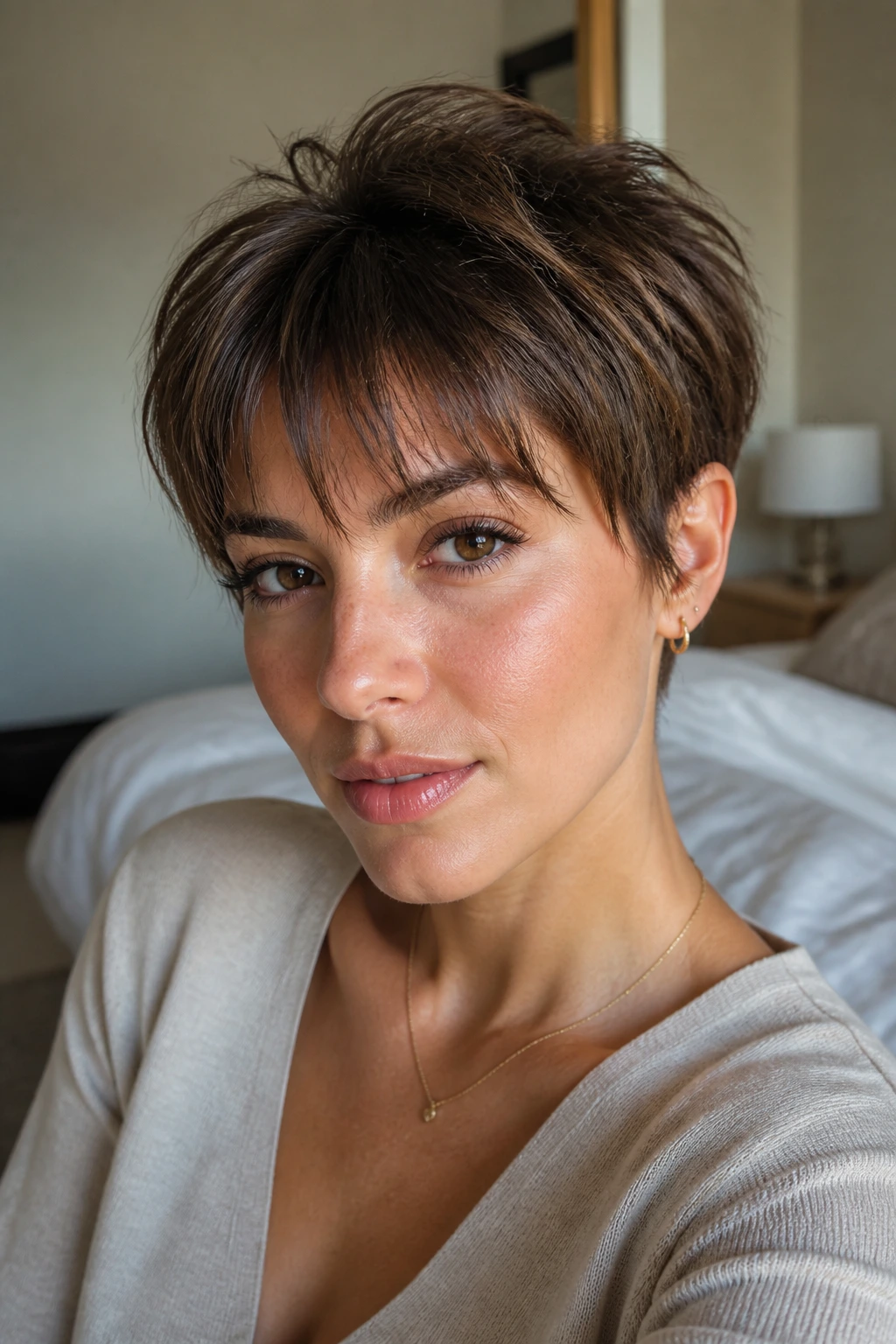
The soft pixie with wispy bangs is the one I recommend to people who want short hair but don’t want it to read stern. The sides stay close to the head, the top keeps enough length to move, and the fringe breaks into fine, feathered pieces that sit around the brows instead of sitting on top of them like a shelf.
Why it works on the face
The magic is in the negotiation between short and soft. A rigid pixie can drag all the attention to the forehead and temples; wispy bangs interrupt that line and let the eye move naturally down toward the cheekbones. Ask for the shortest front pieces to land about 1/4 to 1/2 inch above the brow, then let the longest bits graze the outer eye.
A light pomade or cream is enough. Too much product turns those delicate pieces into one sticky strip, and that defeats the whole point.
- Best for finer hair that needs air and lift.
- Strong on oval, heart, and narrow faces.
- Works well with a side part or a loose center split.
Tiny pro move: Blow-dry the fringe forward first, then angle it slightly left or right with your fingers. That keeps the root from splitting in the middle.
2. French Bob With Cheekbone-Grazing Fringe

A French bob lives or dies on line. Keep it at the jaw or just below, give it a little bend under the chin, and add a fringe that grazes the upper cheekbone. The result feels polished without looking rigid, which is why this cut has such staying power.
What makes the fringe the whole point
The fringe should not be thick. That’s where people go wrong. You want a narrow curtain of hair that opens in the middle or falls softly to one side, with the shortest point sitting around eyebrow level and the outer edges reaching the tops of the cheeks. That shape makes the bob feel deliberate instead of helmet-like.
If your hair is straight, this is easy to style with a small round brush and a nozzle. If it’s wavy, let a little bend live in the ends — a French bob looks better with some movement than with ironed-flat obedience.
Best with glasses: Yes. The cheekbone-framing fringe keeps the frame from fighting the haircut.
3. Blunt Chin Bob With Piecey Bangs

Why does a blunt bob suddenly feel less severe when the bangs are broken up? Because the haircut stops reading as one solid block. That’s the whole trick here. The perimeter stays crisp at the chin, but the fringe is cut into slim pieces that separate instead of fusing together.
This is a strong option for thick straight hair, especially if your hair likes to puff at the ends. A blunt line at the bottom gives weight, while the piecey fringe keeps the front from feeling heavy across the face. Ask for point-cutting through the bangs and a little internal texture near the temples. Not too much. If the stylist goes wild with thinning, the front can look frayed by week two.
How to style it: Dry the bangs first. Always. Use a flat brush or fingers, then pinch a tiny amount of paste through the ends to keep the pieces separated.
The cut looks especially good tucked behind one ear, because the fringe still leaves something moving around the face.
4. Curly Crop With Airy Fringe
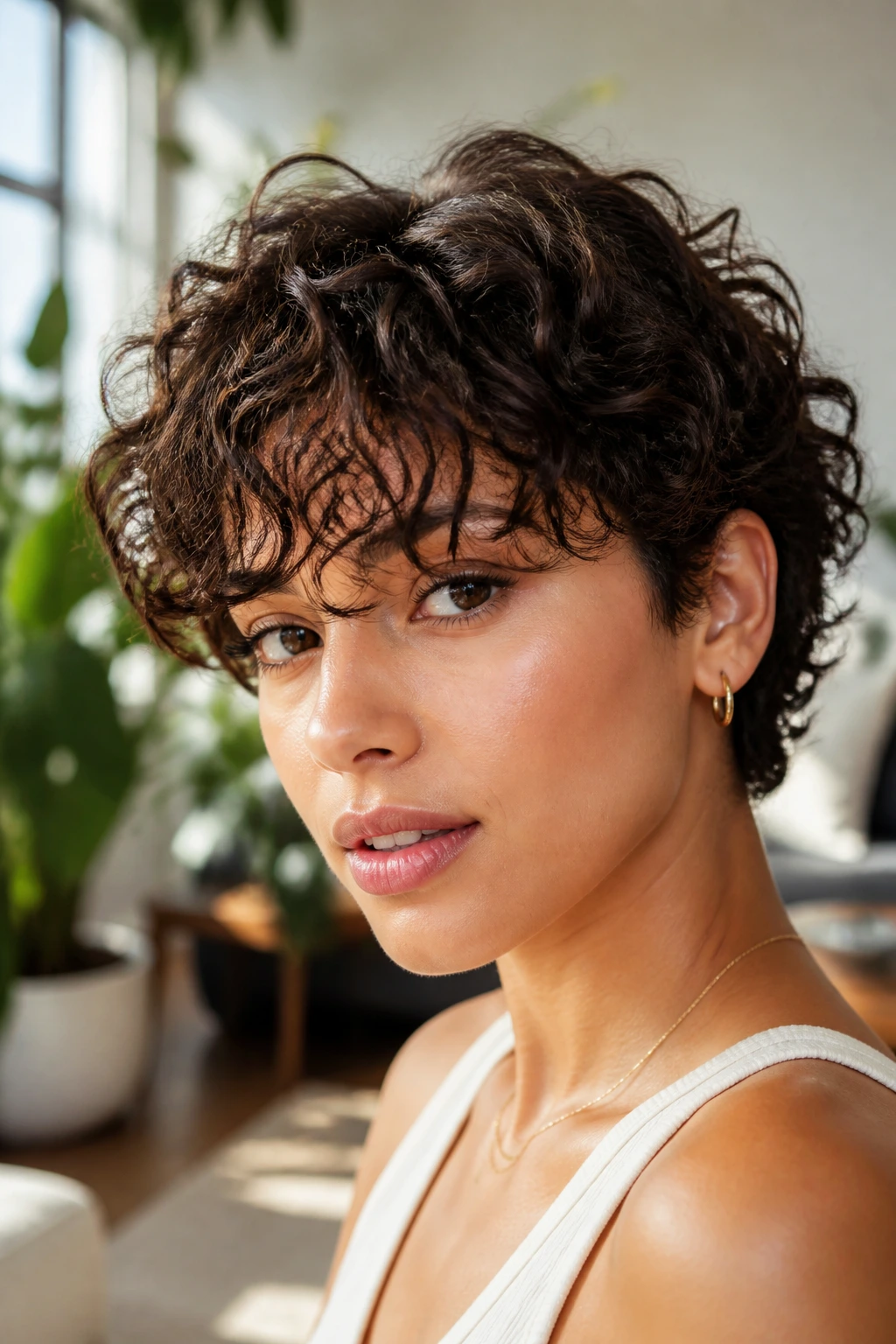
Curly hair and bangs can be a glorious mess in the right hands. The short crop keeps the overall shape light, while the airy fringe allows the curls to spring where they want instead of fighting for a perfectly straight line across the forehead.
This is one of those cuts that has to be cut dry or nearly dry. Wet curls lie. They shrink, shift, and often swell into something completely different after the first wash. Ask for the fringe to land a little longer than you think you need — often at the bridge of the nose or just above the eyebrow — because the curl will bounce up once it dries.
A diffuser helps, but so does restraint. If you touch the fringe while it’s drying, you’ll make it fuzzy.
Good match for: loose curls, corkscrews, or waves that want to cluster at the temples.
Best detail to request: a curved fringe that opens slightly at the center instead of a blunt straight line.
5. Shaggy Bob With Curtain Bangs
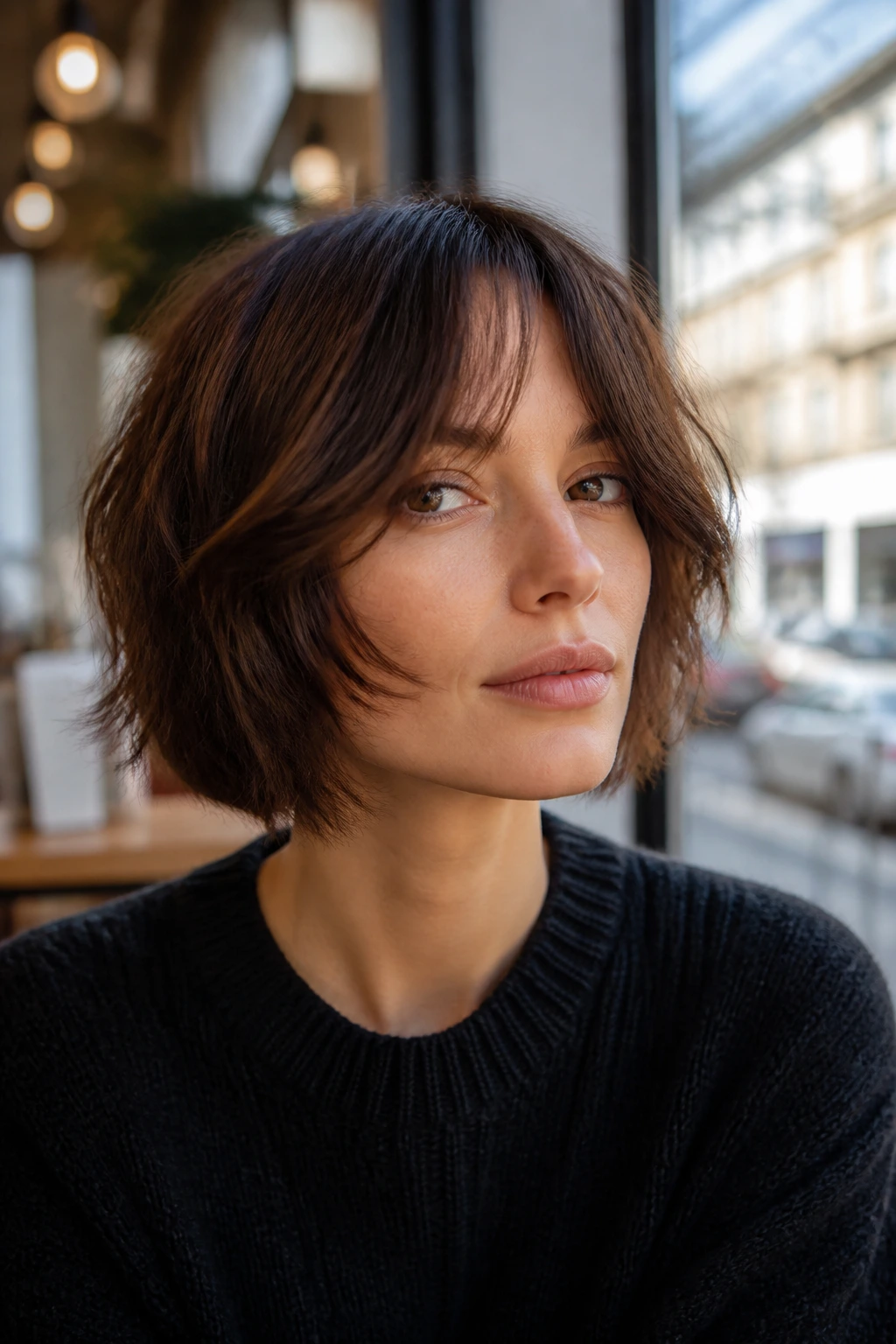
A shaggy bob with curtain bangs is what happens when movement gets a say in the haircut. The layers are choppier, the ends are softer, and the bangs split down the center so they can fall around the eyes and cheekbones instead of cutting straight across the face.
It’s a forgiving shape. A little air-drying doesn’t ruin it. A little bend in the ends makes it better. If your hair has even mild wave, this cut will give you that undone finish people spend way too long trying to fake with products.
The part that matters
Ask for the curtain pieces to start shorter near the nose and sweep to the jaw. That diagonal line is what keeps the face open. If the bangs are cut too short at the center, the whole style gets choppy in the wrong way.
A salt spray or light mousse gives this bob some grip without making it crunchy. Then twist the fringe away from the face with your fingers while it dries. Don’t overthink it. This haircut likes a little mess.
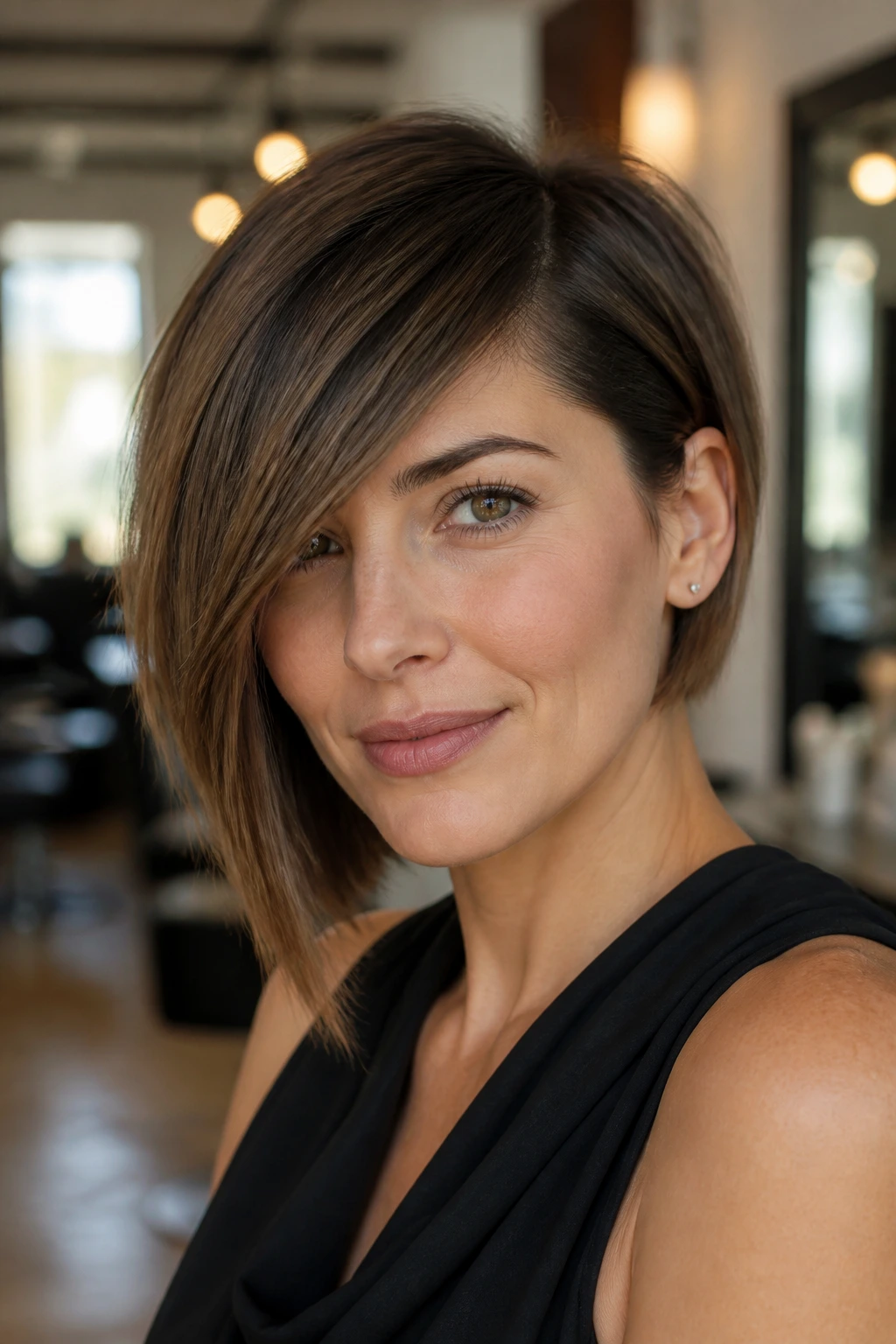
6. Asymmetrical Bob With Swept Fringe
The asymmetrical bob does not whisper. One side sits longer, the other shorter, and the fringe sweeps across the forehead to echo that imbalance. Done well, it feels sharp and confident; done badly, it looks like one side was accidentally left unfinished. So the cut has to be clean.
This version works especially well when the bangs are directed toward the longer side of the bob. That creates a clear line that keeps the asymmetry from looking random. A deep side part adds drama, but the front still needs softness around the temple so the face doesn’t get boxed in.
Best use case
- Round faces that want a bit of length through the front.
- Straight or slightly wavy hair with enough density to hold shape.
- People who like a haircut that looks different from each side.
A flat iron can sharpen the angle, but only at the ends. Keep the roots soft. Too much sleekness at the scalp makes the style look stiff, and this cut depends on motion near the cheek.
7. Bixie With Feathered Bangs
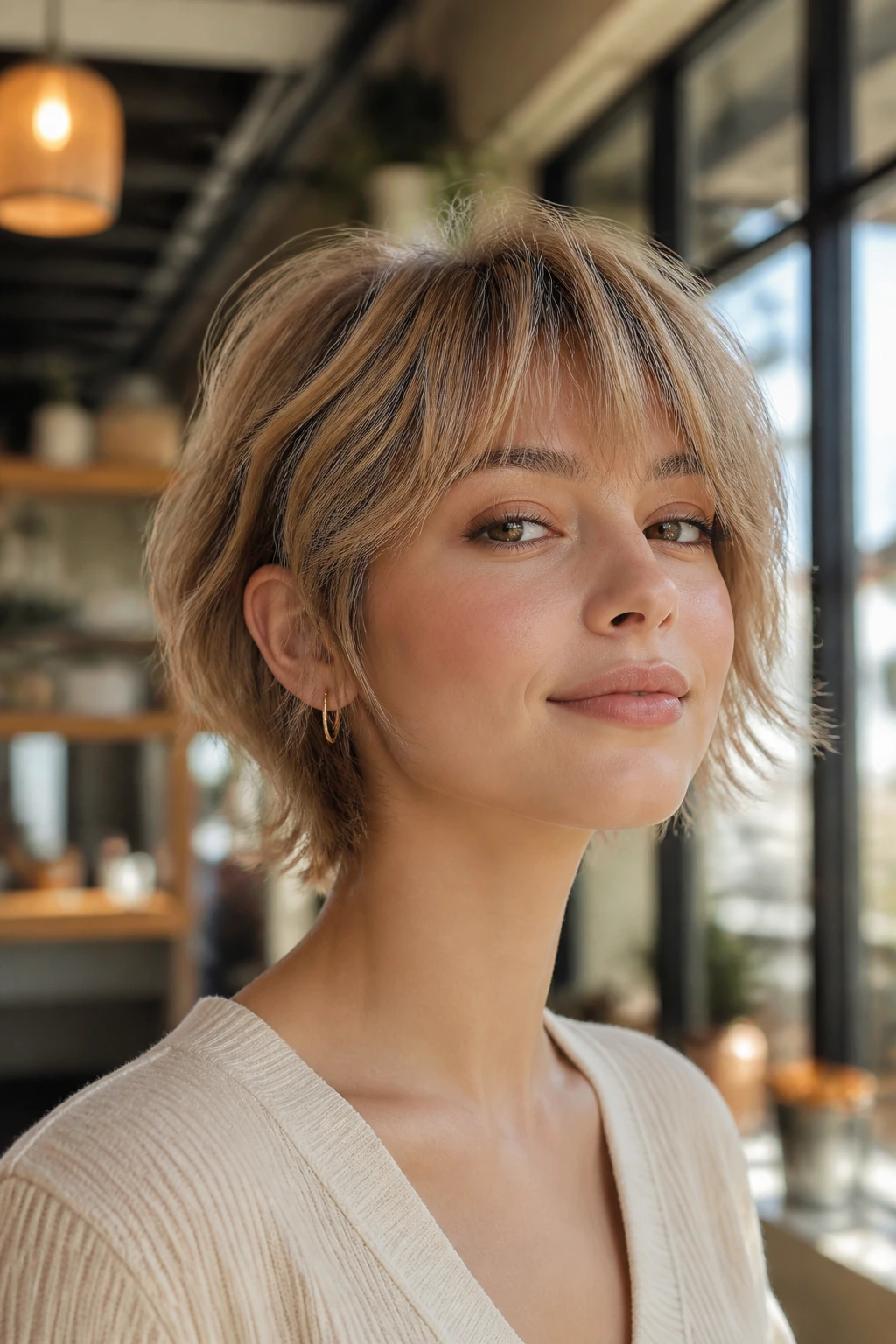
The bixie is the cut for anyone who likes the idea of a pixie but wants more hair around the ears and crown. It sits between a bob and a pixie, which means the face-framing bangs have room to feather into the side layers instead of landing as a blunt block.
Feathered bangs are the right partner here because they blur the seam between the top and the front. You get softness near the eyes, lift at the crown, and enough length to tuck behind the ear when you want a cleaner look.
A little texture paste goes a long way. Work it through the crown, then use the leftover product on your fingertips to pinch the fringe into shape. That keeps the haircut airy, not sticky.
This cut is especially kind to fine hair. The layers create the illusion of fullness without asking for a lot of blow-drying, and the fringe gives the whole thing a face-first finish instead of a chopped-off one.
8. Micro Bob With Side-Slip Bangs
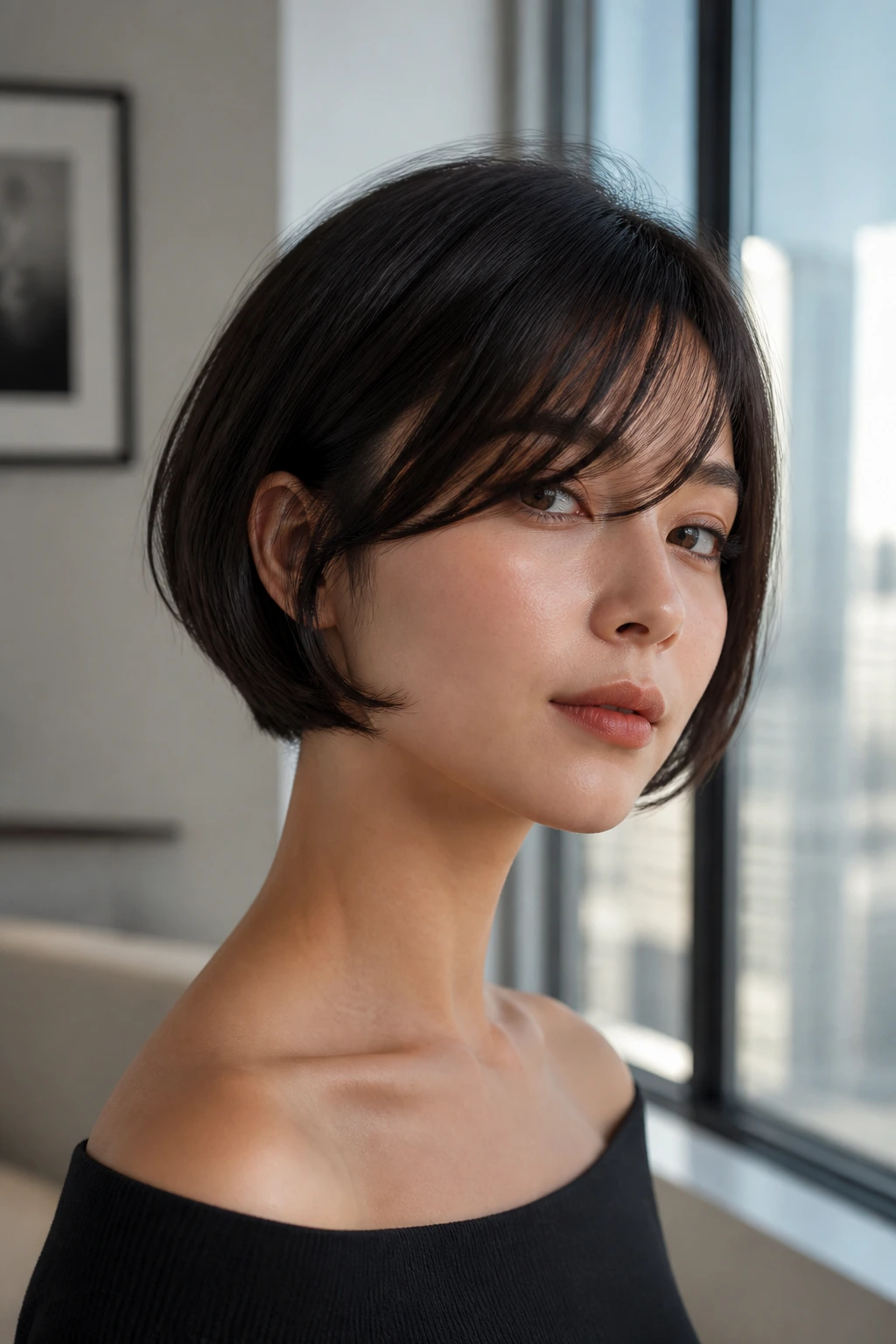
The micro bob sits close to the jaw and often brushes the lower cheek. It’s compact, crisp, and easy to ruin with bangs that are too blunt or too heavy. Side-slip bangs fix that by creating a diagonal that keeps the front lively.
What to ask for
Tell the stylist you want the fringe to start around the arch of one eyebrow and fall toward the cheekbone on the other side. That gives the bob a little flow without turning it into a side-swept curtain. The short length of the bob keeps the shape modern; the slipped fringe keeps it from feeling severe.
This one loves straight hair, but it can also work on soft waves if you don’t mind a bit of bend. Air-drying tends to make the fringe separate in a more casual way, which suits the cut.
Watch for this: if the sides are cropped too high and the bangs are too short, the whole style can look boxy. Leave a little length at the temple.
9. Stacked Bob With Side-Swept Bangs
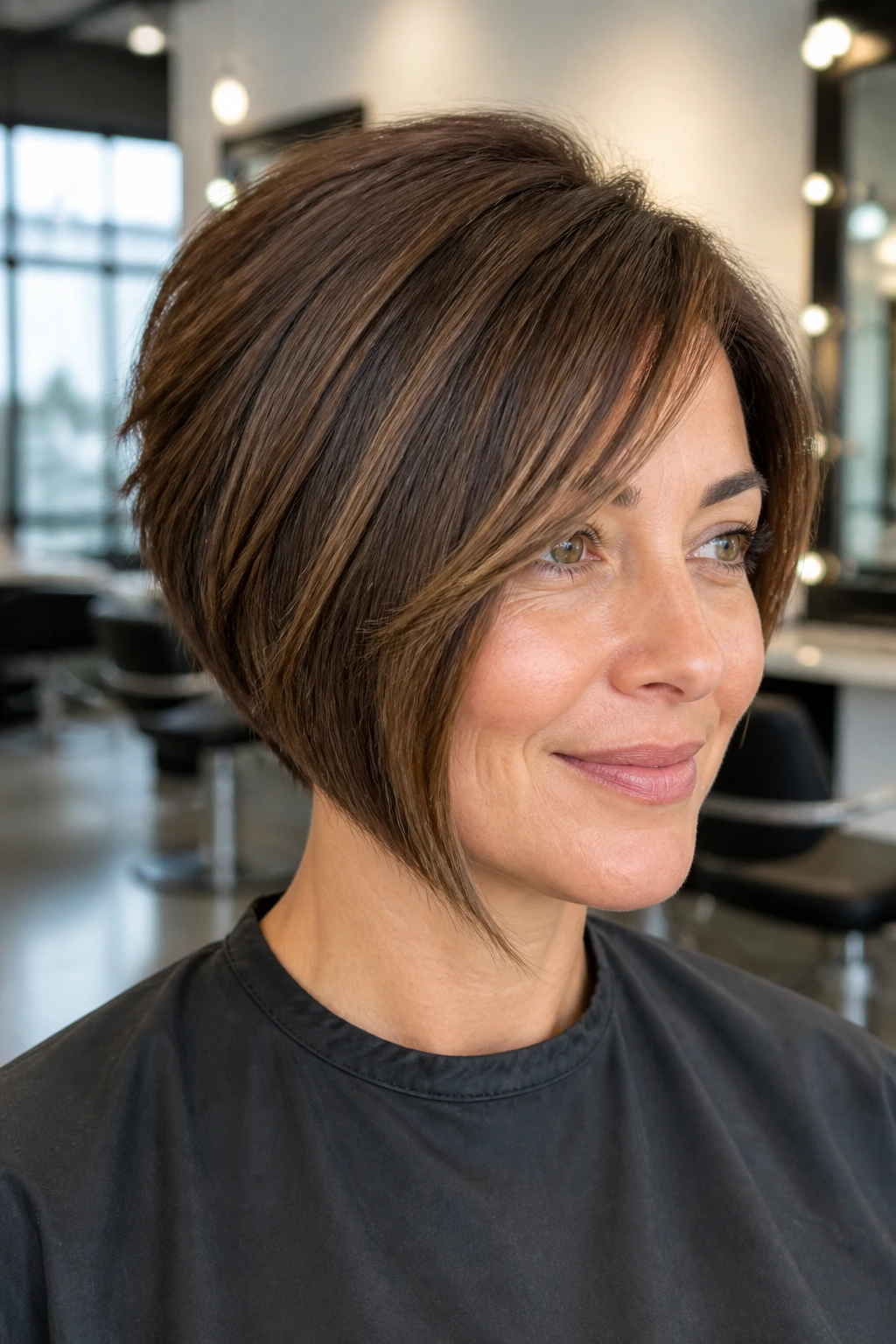
A stacked bob builds fullness at the back and keeps the front a little longer, which means the haircut naturally lifts the head shape. Add side-swept bangs, and the line runs from the crown down toward the cheek rather than cutting across the face. It’s a smart move on fine hair that tends to collapse.
The stacking gives the neck area a neat curve. The bangs soften the front so the style doesn’t turn into a hard wedge. That contrast is exactly why this cut works.
If you have a cowlick at the front hairline, this one needs attention during the blow-dry. Direct the bangs opposite the cowlick for the first minute, then switch them into place. That gives the root enough control to stay where you want it.
A round brush with a small barrel helps the front sweep cleanly. Keep the ends tucked under just slightly. No need for a hard curl.
10. Layered Crop With Face-Framing Bangs
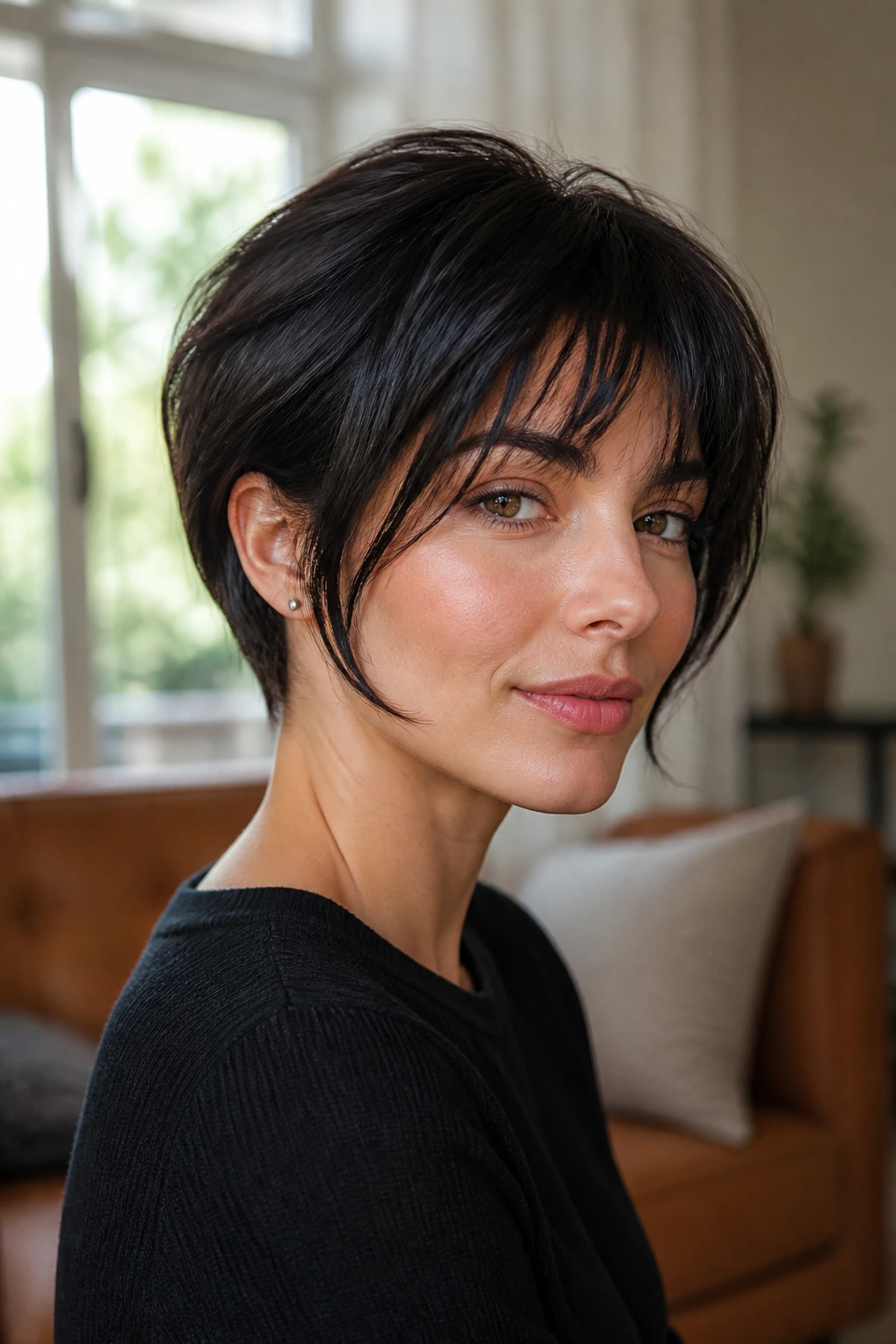
The layered crop is a short cut with enough internal movement to make the face-framing pieces useful, not decorative. The top layers can be choppy or smooth, but the front should taper into longer strands that land around the temple and upper cheek.
This is a strong choice if you want short hair but still like to tuck one side behind the ear or push the fringe off the face. The cut shifts easily between neat and messy, depending on how much product you use. That’s its real advantage.
A matte styling cream works better than a glossy serum here. Gloss can make the layers fall flat, and the whole point is to keep a bit of lift around the eyes. If your hair grows fast, this crop also stays wearable for a while because the front lengths can drift without looking wrong.
Small detail, big difference
Ask for the face-framing pieces to be cut on a slight angle, not straight down. That angle is what keeps the crop from feeling like one block of hair shoved forward.
11. Rounded Bob With Arc Bangs
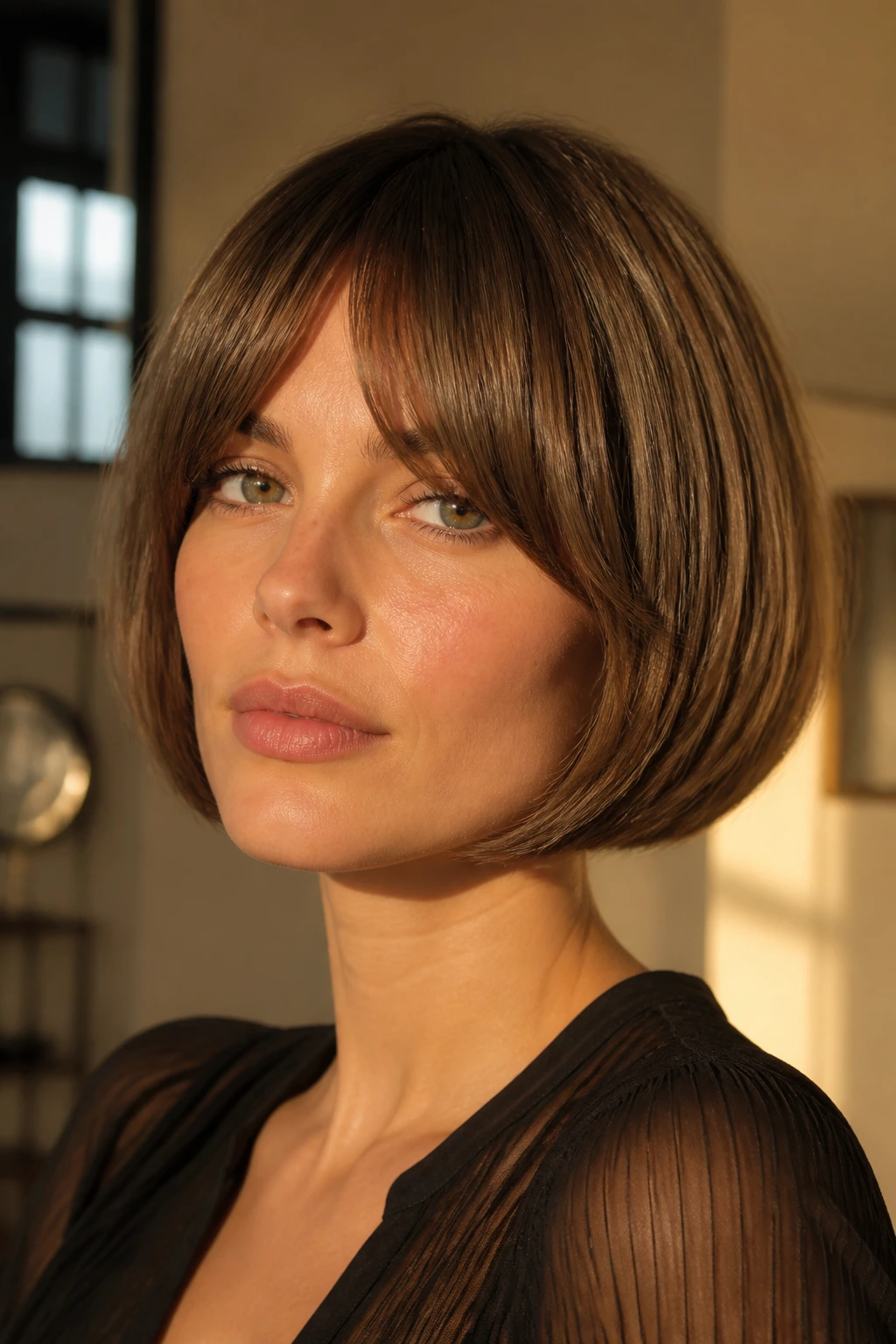
The rounded bob curves gently around the head and echoes the face shape instead of fighting it. Arc bangs — a fringe that rises slightly in the center and dips toward the temples — deepen that soft curve. The result feels polished, but not severe.
This cut is especially useful if your jaw is sharp or your cheekbones are strong and you want the hair to soften those edges a little. The arc through the fringe gives the eye a place to travel, and the rounded sides keep the silhouette tidy.
How to style the arc
Blow-dry the bangs with a medium round brush, rolling only at the roots. Don’t over-curl the ends. You want a gentle bend, not a prom curl from the early 2000s.
- Keeps the forehead open in the center.
- Softens square or angular face shapes.
- Works well with straight or lightly wavy textures.
A tiny mist of flexible hairspray is enough. Anything heavier will flatten the curve and make the fringe sit like a cap.
12. Tapered Pixie With Long Front Bangs
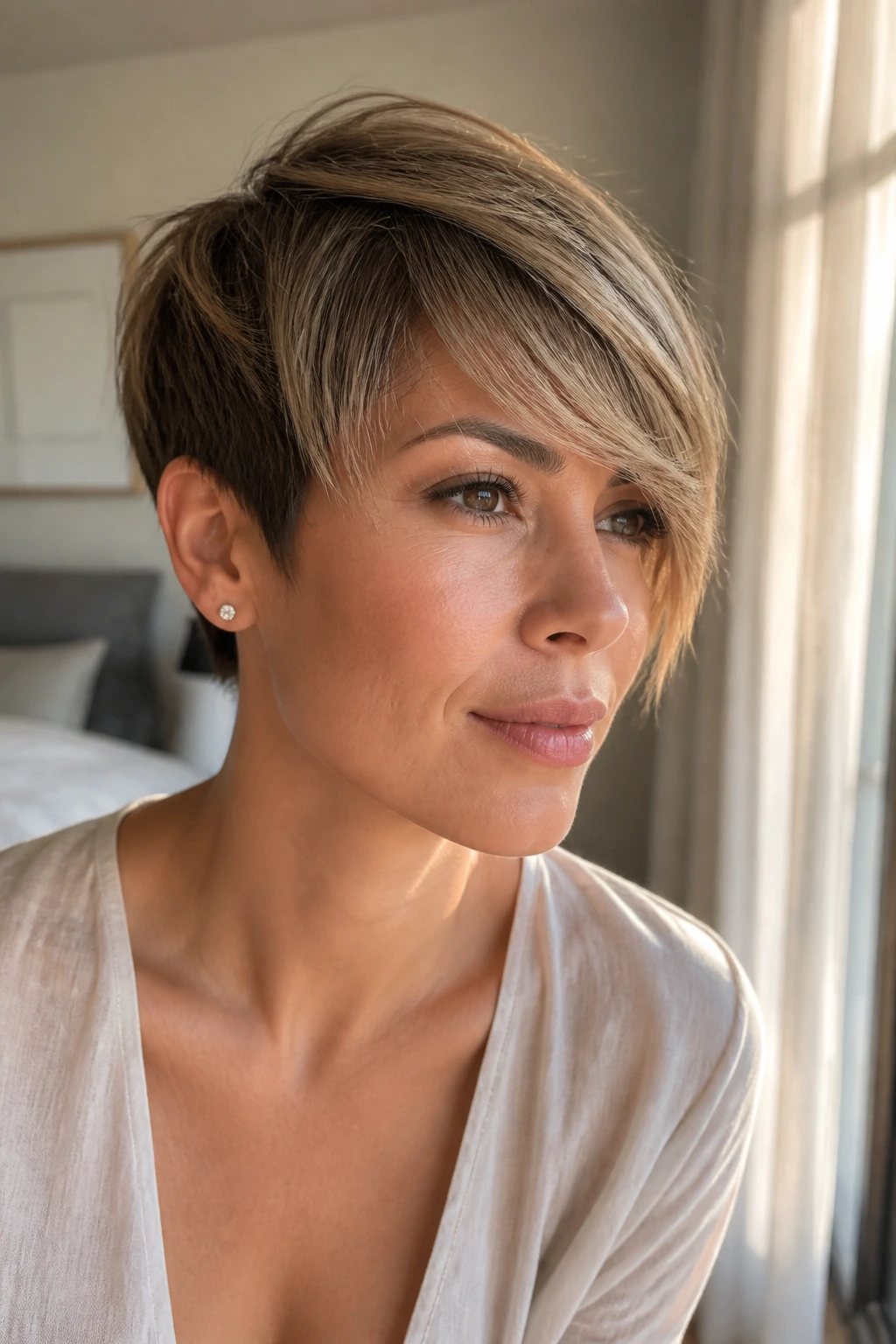
Here’s the thing: not every pixie needs micro bangs. A tapered pixie with longer front bangs keeps the sides clean and tight, but leaves enough length in front to sweep across the forehead and skim the eyebrow line. That one choice changes the whole feel of the haircut.
It’s a good option if you like short hair but still want some movement near the face. The long front section can be pushed over to one side, flipped back, or let fall forward in a loose bend. The tapered back keeps the neckline neat, which means the front can stay soft without making the cut look floppy.
This is one of the easiest cuts to live with when you have thick hair. The taper removes bulk, and the longer bangs stop the front from turning into a fuzzy puff.
A flat iron can shape only the front half-inch if needed. You do not need to straighten the whole head. That would be a waste of time and, frankly, a little joyless.
13. Short Wolf Cut With Bottleneck Bangs
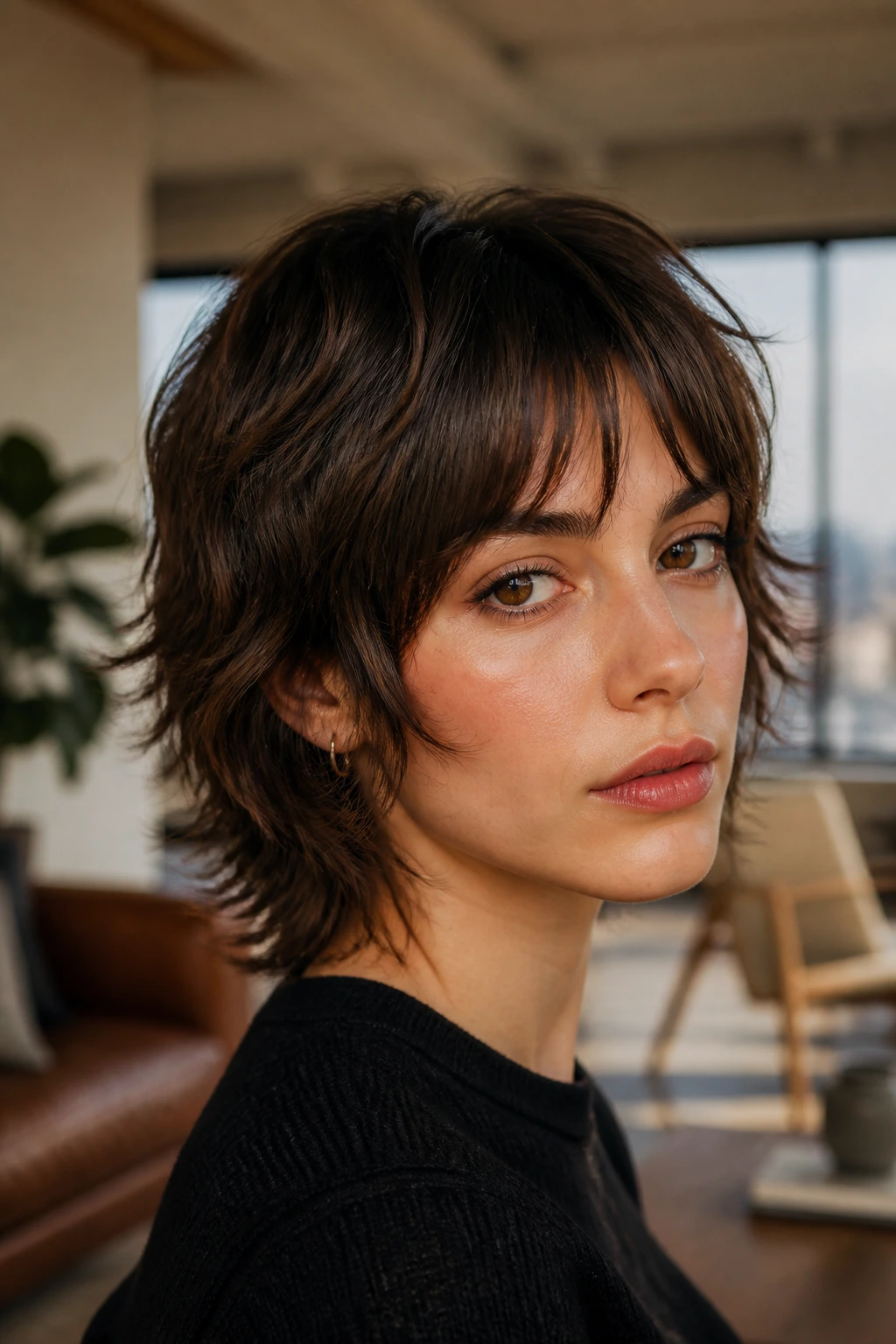
The short wolf cut is the edgier cousin in this group. It keeps a little length through the top and crown, breaks the perimeter with shaggy layers, and finishes with bottleneck bangs that are narrow near the brow and wider as they fall toward the cheekbones.
That bang shape is the whole reason this cut works. It frames the face without sealing it in. The narrow center opens the forehead, while the wider sides soften the jaw and the top of the cheek. On wavy or thick hair, the texture practically does half the work for you.
Best when you want movement
If your hair tends to sit flat at the roots but bulky at the ends, this is a strong answer. The layers lift the crown and the bangs keep the front from looking too heavy.
- Works best with wave, bend, or natural texture.
- Needs a little shag spray or light mousse to keep the layers separate.
- Looks better slightly tousled than over-polished.
The only trap is over-layering the top. Leave enough weight near the fringe so it doesn’t stand up like a bad haircut from a hard 90s music video.
14. Sleek Ear-Length Bob With Floating Fringe
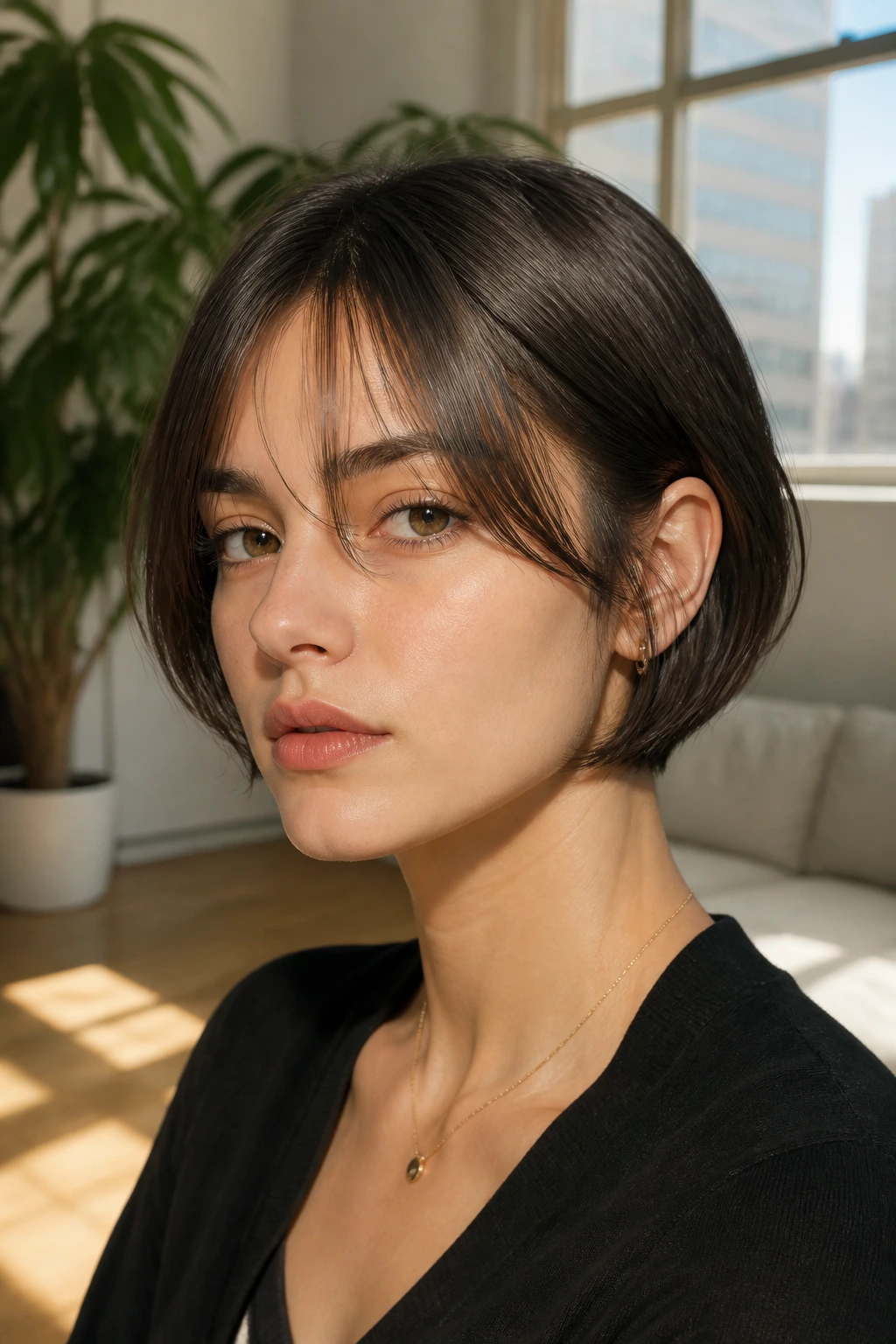
The sleek ear-length bob is for people who like a clean line and a controlled finish. It sits just around the ears, sometimes slightly below, and the fringe falls so lightly over the forehead that it looks almost detached from the rest of the cut. That’s the floating effect.
This haircut depends on precision. The fringe should not be blunt or heavy; it needs space between the strands so the face still feels open. A paddle brush and a blow-dryer with a concentrator nozzle do most of the work. A touch of smoothing cream on damp hair helps the bob lie flat without turning greasy.
It’s a smart cut for straight hair that wants structure. It also plays nicely with strong brows, because the fringe can hover near them without hiding them completely.
And yes, it can look severe if the fringe is too dense. Keep the density light. That’s the part people miss.
15. Choppy Crop With Split Bangs
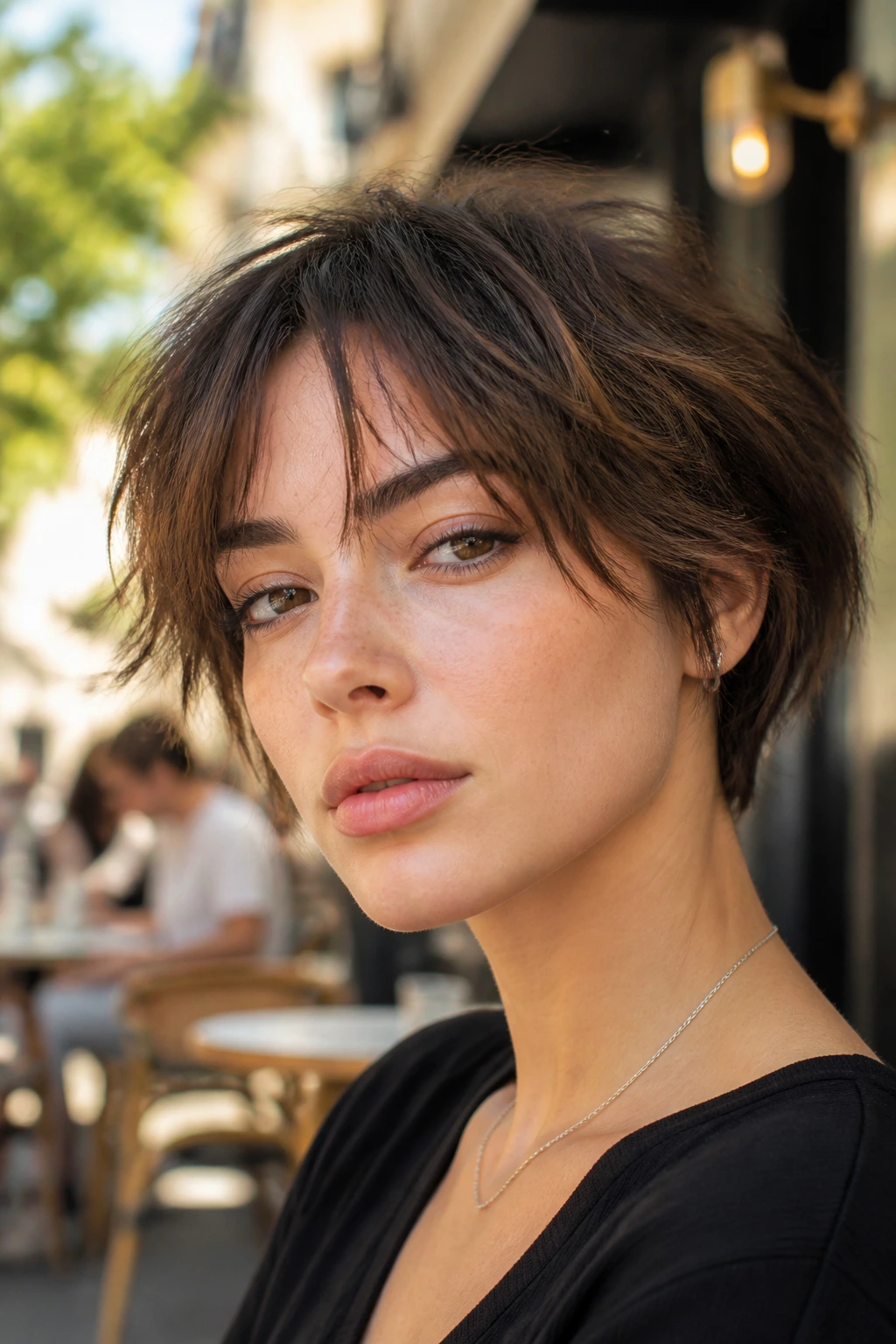
Split bangs change the whole personality of a short crop. Instead of one straight curtain, the fringe breaks in the middle or just off center, creating two piecey sections that fall away from the face. On a choppy crop, that split keeps the cut from feeling too compact.
This style has a slightly rebellious look, but it’s practical. The split gives room for glasses, strong brows, and busy mornings. You can finger-style it in seconds, which is more useful than it sounds when your hair is short enough to show every wrong choice.
What to watch for
If the split is too deep and too severe, the fringe starts looking like a big part instead of a soft frame. Keep the pieces light around the temples and leave some soft overlap in the middle.
A dry texture spray helps here. Not because the cut needs volume for the sake of volume, but because the split bangs need a bit of grip so they don’t slide back together by noon.
16. Tousled Mullet Bob With Soft Fringe
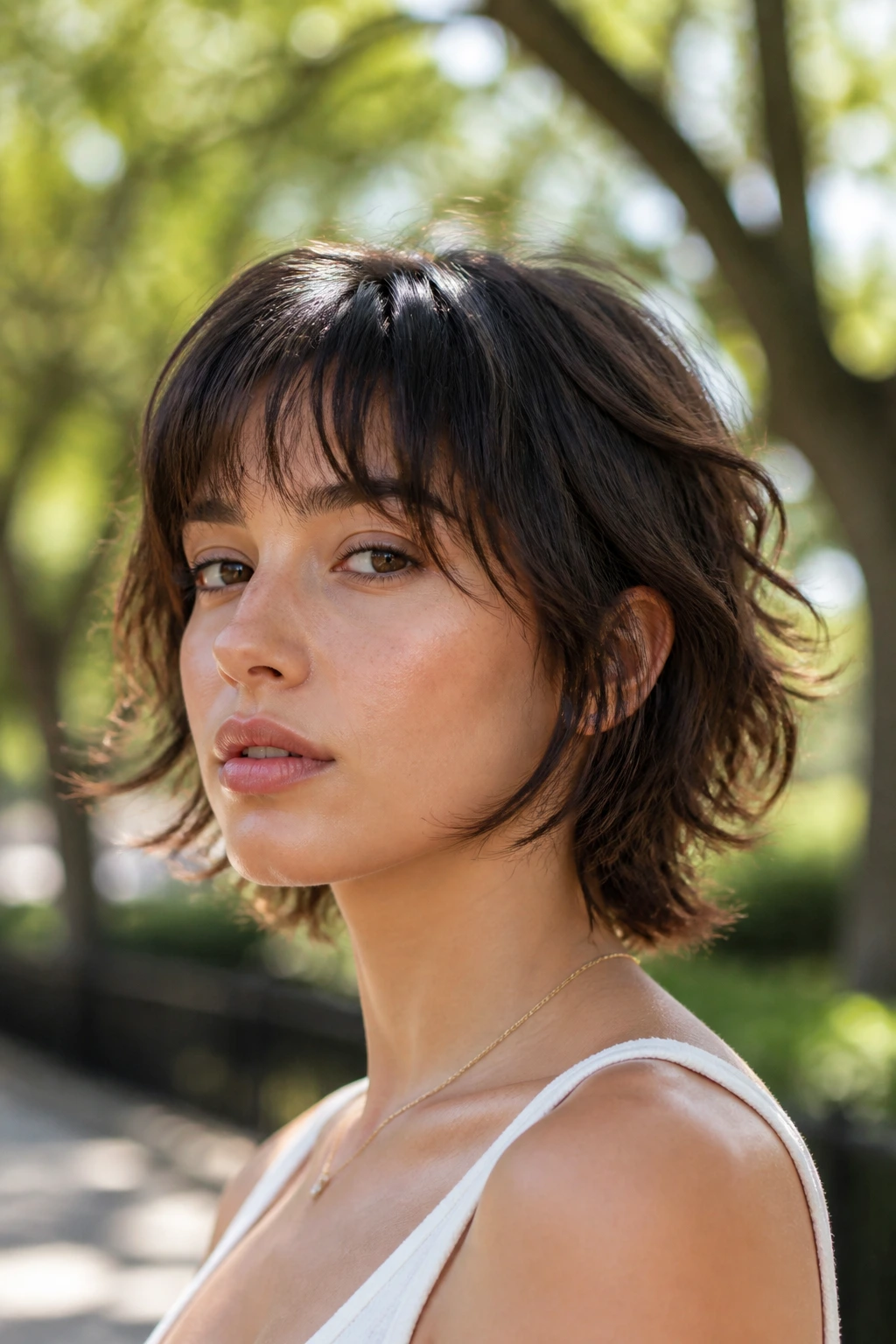
The tousled mullet bob is the one that sounds more extreme than it feels. The front stays softer and more controlled, the sides taper into the cheek, and the back keeps a little extra length and texture. With a soft fringe in front, the whole haircut reads modern instead of chaotic.
This cut loves natural movement. If your hair bends, flips, or curls on its own, that’s an advantage here. The fringe should be soft enough to open across the forehead, but not so long that it disappears into the rest of the layers.
A small amount of curl cream or styling balm at the ends can keep the back from getting poofy. The face-framing section should be left a touch longer than the rest so the front feels intentional and not chopped by accident.
This is not the haircut for someone who wants one static shape every day. It shifts. That’s the point.
17. Mushroom Bob With Wispy Curtain Bangs

A mushroom bob sounds old-fashioned until you see it cut with modern softness. The shape curves around the head, sometimes with a rounded edge at the jaw or a slightly fuller crown, and wispy curtain bangs keep the front from looking too enclosed.
The curtain pieces should fall in two fine arcs, opening at the center and tapering toward the cheekbones. That split is what turns the silhouette from heavy to airy. With straight or dense hair, this can be a very clean look. With a little wave, it gets softer and more relaxed.
The practical part
This cut needs a good trim schedule, because the rounded line loses its shape fast if the bangs grow into the sides. Keep the fringe light and the ends clean. If you want a softer version, ask for internal layering instead of face-framing pieces that are too thick.
A medium-hold cream is enough for daily styling. This is not a heavy-product haircut. Too much product makes the fringe cling and kills the rounded shape.
18. Undercut Pixie With Longer Front Bangs
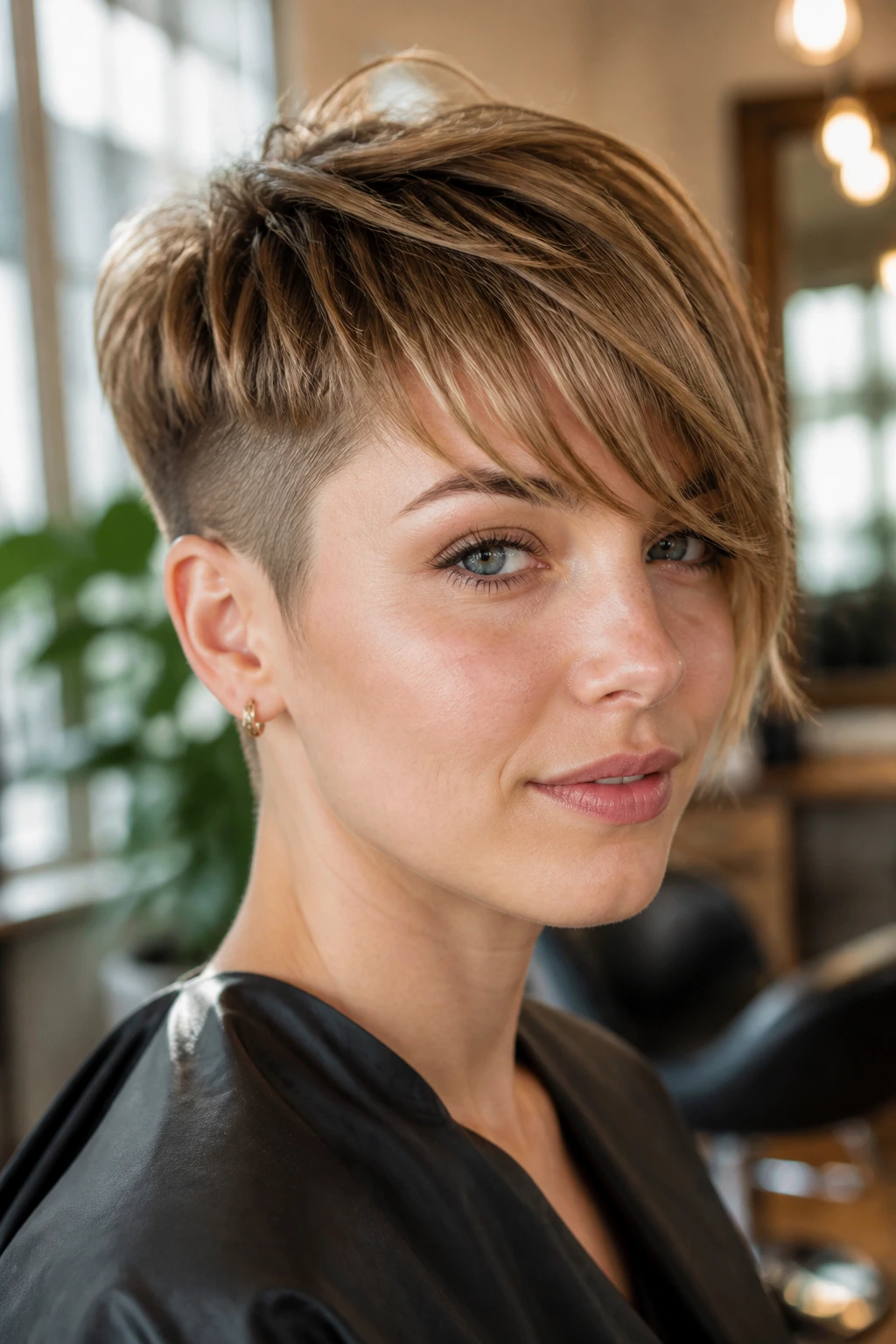
An undercut pixie is a blunt answer to bulk. The sides and back are clipped close, sometimes with an actual undercut, while the front remains longer and falls in a controlled sweep over the forehead. The contrast is the whole story here.
Longer front bangs stop the cut from feeling too exposed. Without them, an undercut pixie can read almost severe on some faces. With them, the haircut gains balance and a little softness near the eyes. That’s especially useful if your hair is very thick or coarse, because the short sides remove weight and the front lets you keep the part of the cut people actually see first.
Best for
- Thick hair that balloons at the sides.
- Strong jawlines that can handle a sharper silhouette.
- People who like a haircut that looks crisp even after a few days.
A little paste through the top is enough. Keep the front separated, not slicked down. The point is contrast, not helmet shine.
19. Rounded French Crop With Airy Bangs
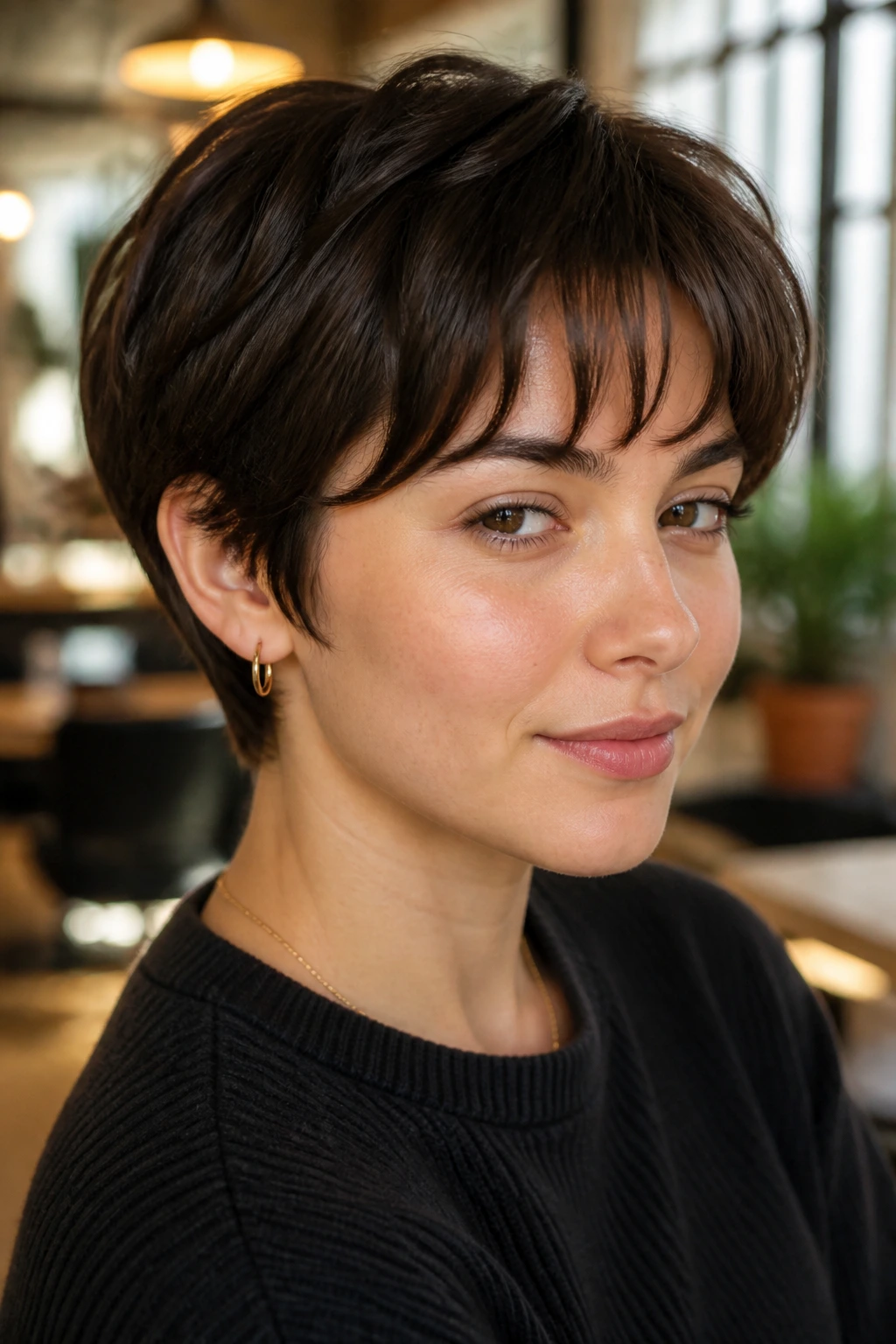
The rounded French crop sits close to the head with a gentle curve, almost like a softer version of a classic crop. Airy bangs make it feel lighter, especially if your hair is dense and tends to sit in one heavy block.
The fringe should look broken, not blunt. Think fine strands that touch the forehead rather than a thick curtain that lands all at once. That keeps the face open and prevents the crop from looking heavy across the brow.
Who it flatters
This shape is useful for people with small features or shorter foreheads, because the airy bangs don’t crowd the center of the face. It also works if you like a clean neckline and don’t want a lot of styling around the ears.
A barber or stylist can keep the sides neat while preserving the texture up top. Ask for softness through the fringe, not thinning for the sake of thinning — those are not the same thing.
20. Mini Shag With Long Face-Framing Bangs
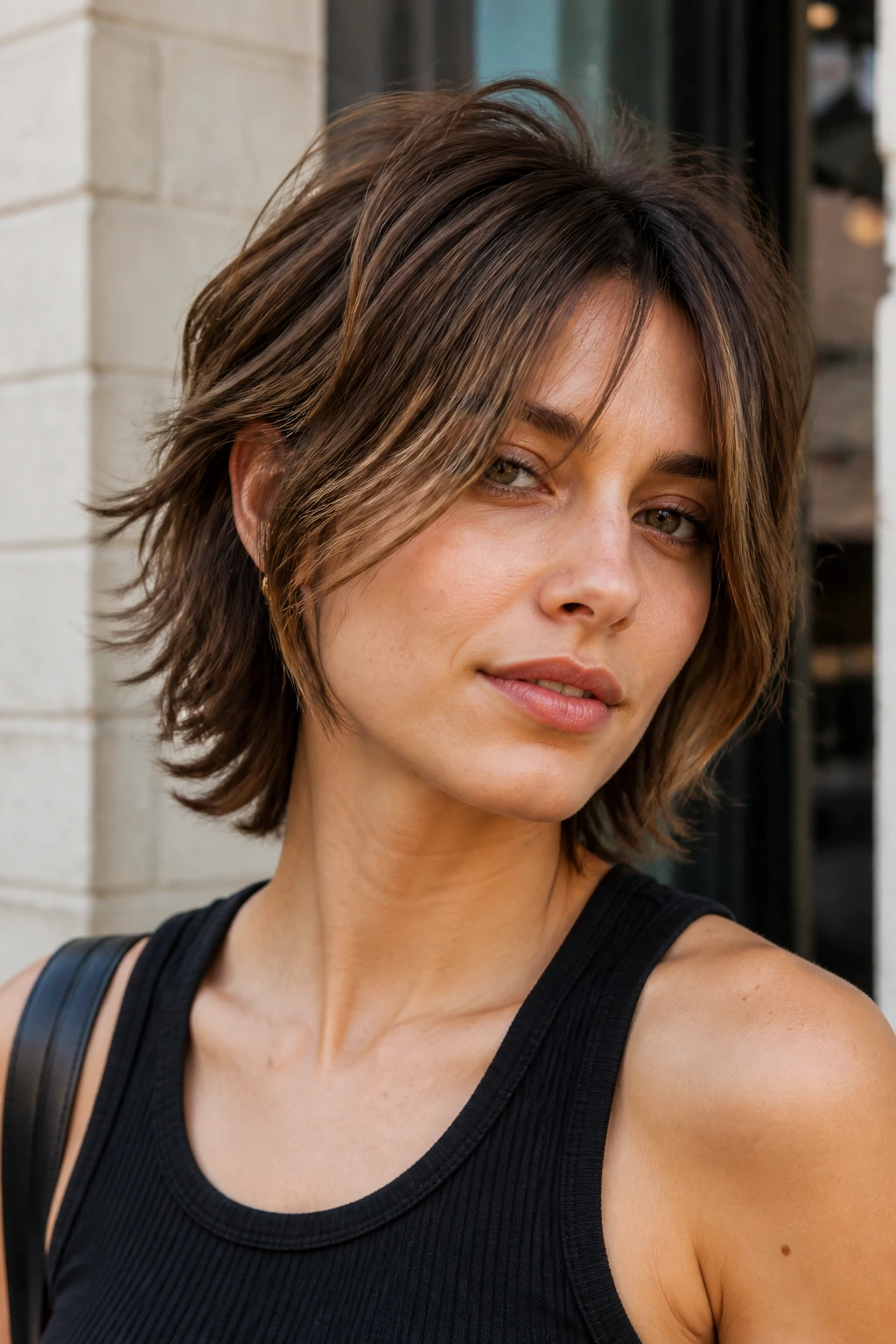
The mini shag is the last stop before the haircut becomes a full shag, and that’s exactly why it’s useful. It keeps the layered movement and the slightly messy energy, but the length stays short enough to feel light. Long face-framing bangs carry the front, usually starting near the brow and dropping toward the cheekbones.
This is one of the easiest styles to wear if you hate hair that sits still. The layers breathe. The bangs move. The whole cut looks better when it isn’t over-managed.
If you want a haircut that can survive air-drying, this is a strong candidate. Scrunch in a little mousse, let the front fall where it wants, and use your fingers to push the longest pieces into a soft frame around the face. That frame is what keeps the shag from turning into a triangle.
A mini shag like this is also one of the best grow-out shapes in the group. When the bangs start to drift, they blend right into the layers.
How Face-Framing Bangs Change the Shape of Short Hair
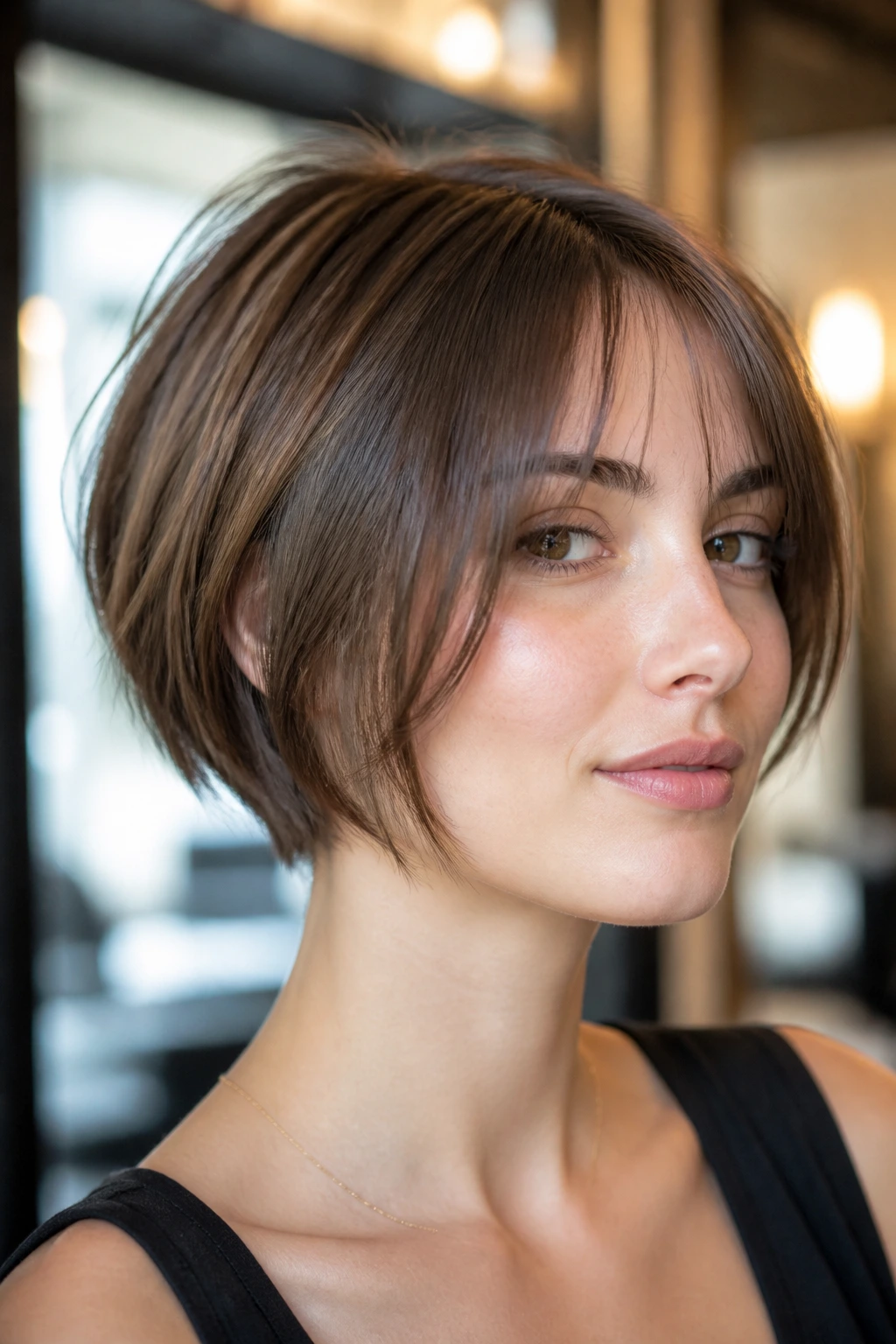
A short haircut without a thoughtful fringe can land like a hard line around the face. Sometimes that’s fine. Most of the time, it’s too blunt for real life. Face-framing bangs change that line by creating a second focus point near the eyes or cheekbones, which keeps the eye moving instead of stopping at the edge of the haircut.
The difference shows up in the mirror fast. A bob with no fringe can pull attention to the jaw. Add bangs that angle toward the temples, and the same cut suddenly highlights the brow, the eyes, or the cheekbones instead. That’s not magic. It’s just geometry.
Short hair also exposes mistakes faster, which is why fringe placement matters so much. If the bangs are too thick, the face gets swallowed. Too sparse, and the front looks unfinished. The sweet spot is usually some combination of movement and restraint — enough hair to shape the front, not enough to smother it.
Choosing the Right Fringe for Your Face Shape and Texture
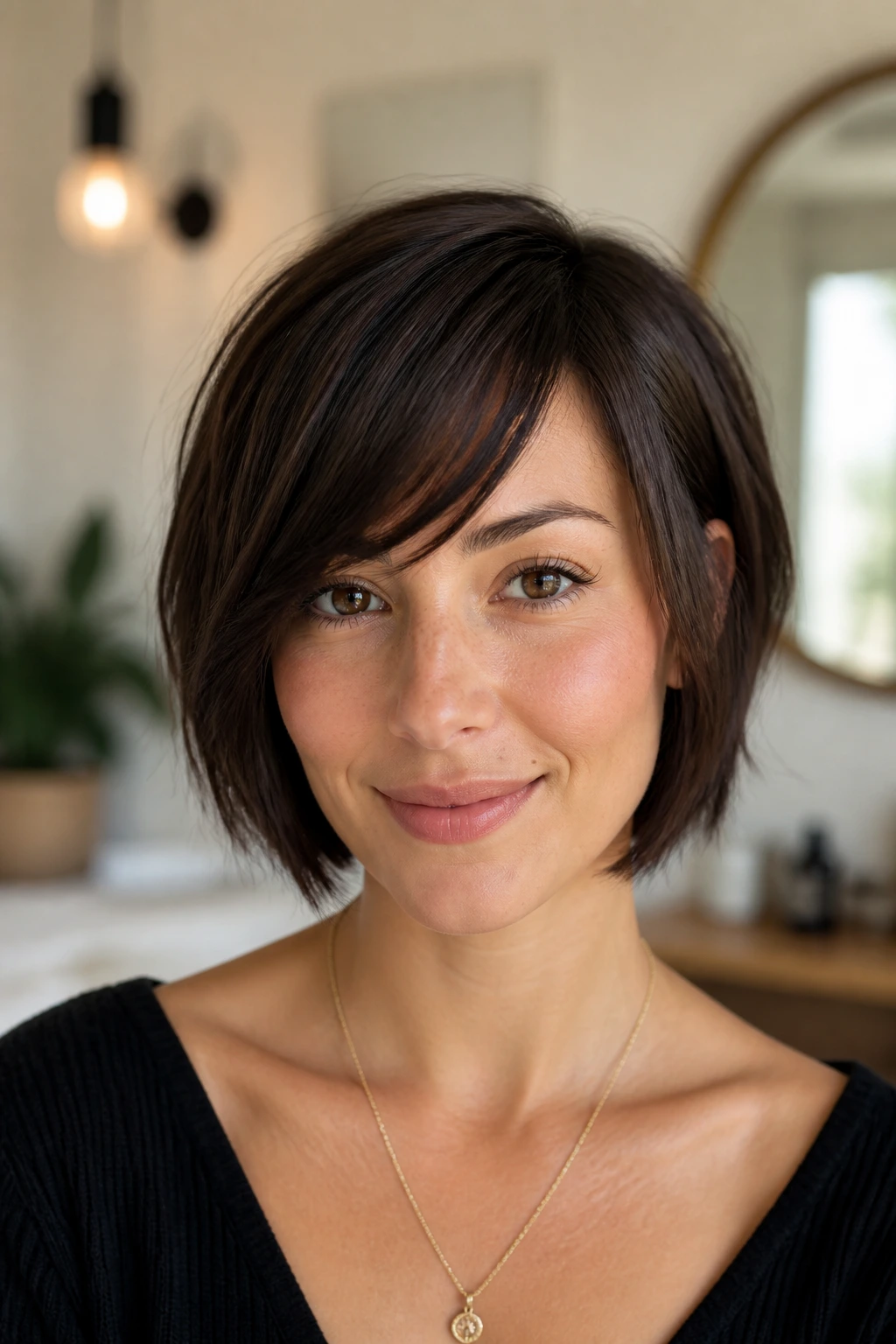
Round faces usually do well with fringe that creates vertical movement or a diagonal line. Side-swept bangs, bottleneck bangs, and longer curtain pieces keep the face from feeling wider across the middle. Avoid a heavy, straight-across fringe unless you have a very specific reason for wanting it.
Square faces tend to look softer with curved bangs, wispy pieces, or anything that bends around the temples. A blunt chin bob can still work here, but the front needs a little break in density so the jaw doesn’t take over the whole picture.
Heart-shaped faces can handle shorter bangs if the sides are soft. A French bob, bixie, or mini shag often looks especially good because the fringe balances a wider forehead without dragging attention down too much.
Fine hair likes movement and restraint. Heavy bangs can collapse fast, so a light curtain fringe, feathered pixie front, or airy crop tends to hold up better.
Thick or coarse hair needs more internal removal, but not too much. You want weight taken out where the fringe meets the temple, not shredded to pieces. That’s how you keep the line from puffing out.
Tools That Make Styling Short Bangs Easier
-
Blow-dryer with concentrator nozzle: Directs airflow so the fringe doesn’t lift in random directions.
-
Small round brush, 1 to 1.5 inches: Useful for shaping bangs on bobs, pixies, and crops without over-curling the ends.
-
Flat brush or paddle brush: Better for sleek bobs and controlled fringe that needs to lie close.
-
Duckbill clips or small sectioning clips: Keep the rest of the hair out of the way while you dry only the front.
-
Heat protectant spray: A light mist prevents frizz and keeps fringe from getting fried by daily styling.
-
Texture spray or dry shampoo: Helps piece out bangs that need separation, especially on second-day hair.
-
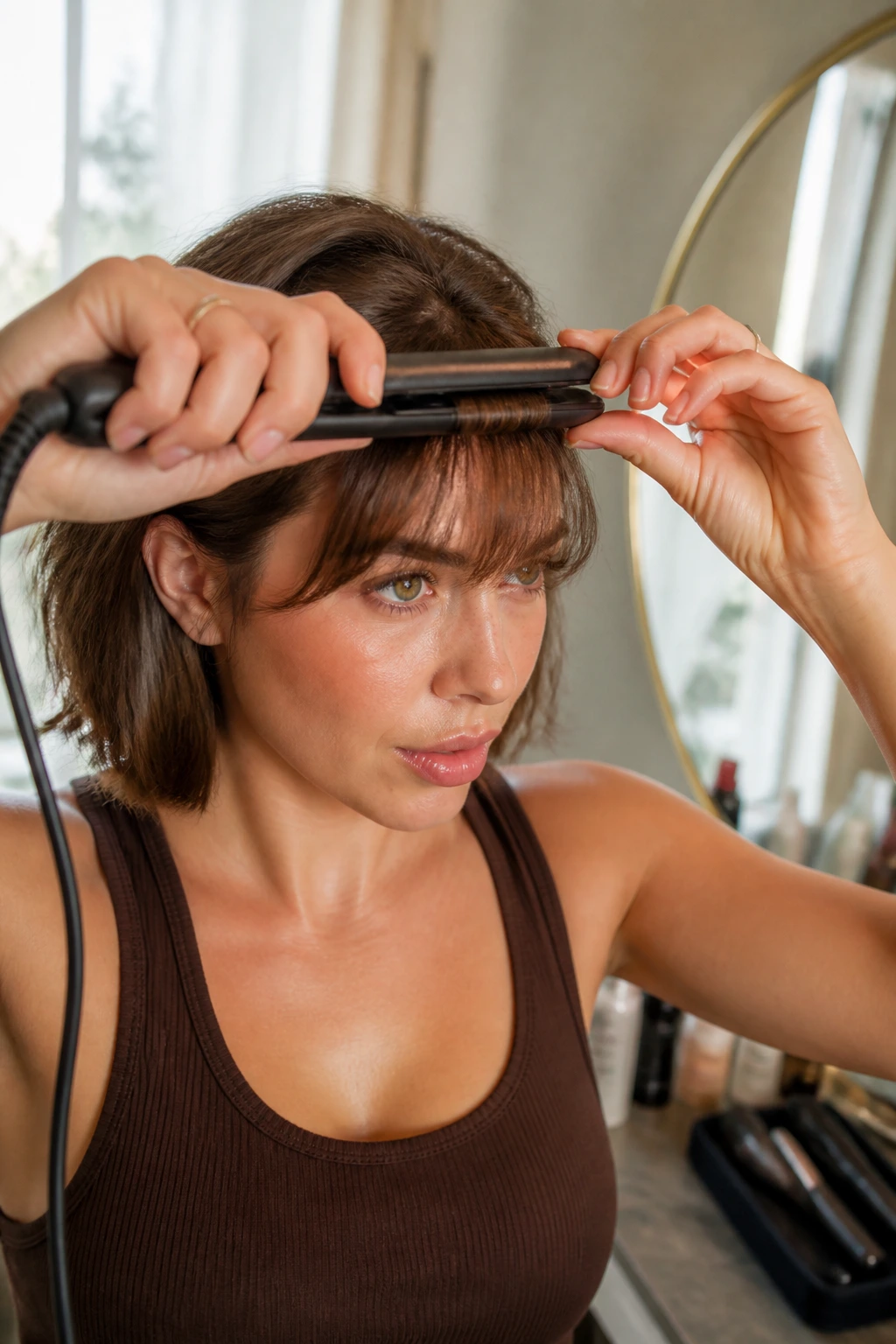
Mini flat iron: Handy for refining the front 2 inches of hair without pressing the whole head flat.
-
Fine-tooth comb: Good for directing a cowlick at the hairline before the bangs dry in the wrong place.
What to Tell Your Stylist Before the Snip
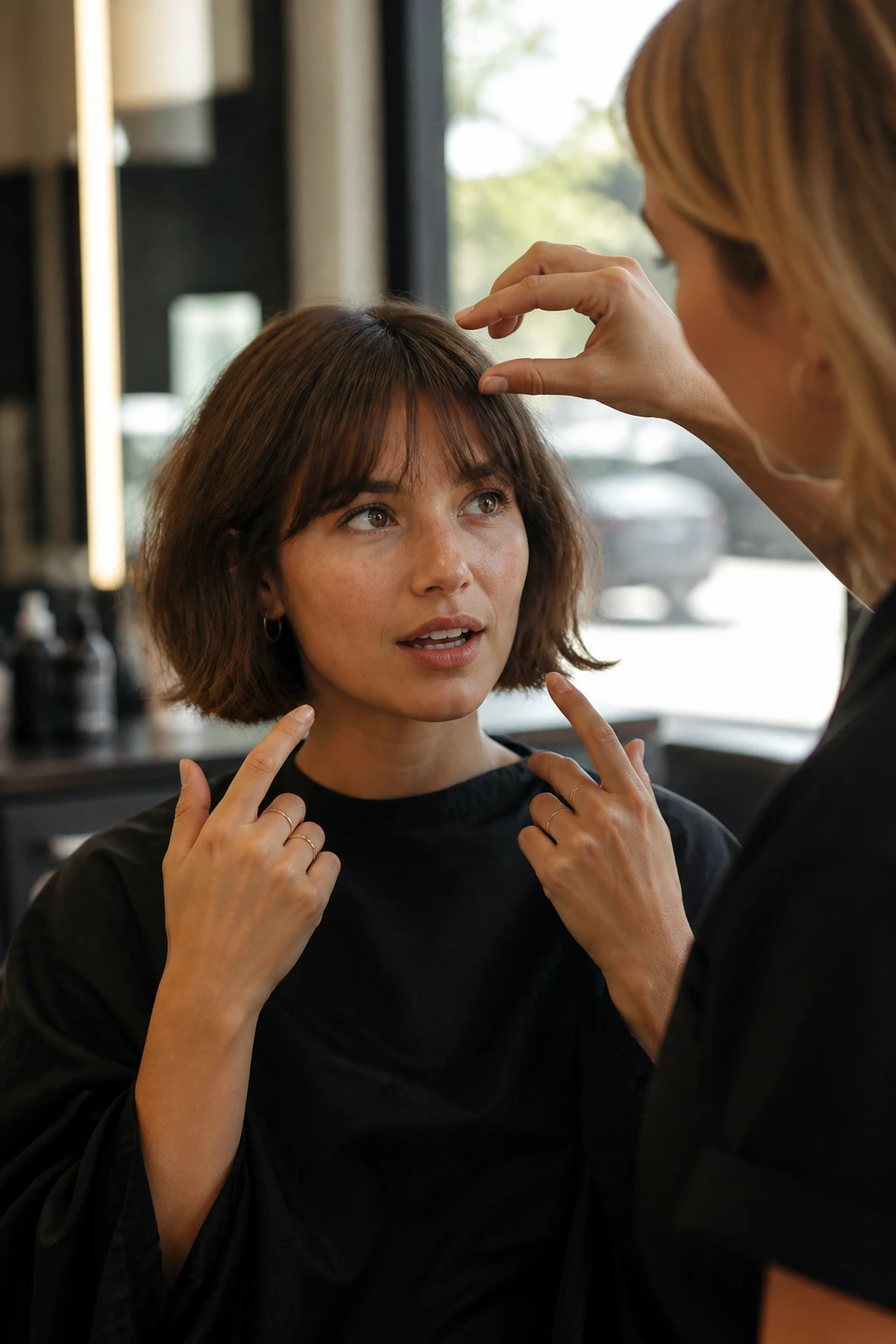
Bring pictures, yes, but don’t stop there. The most useful part of the conversation is describing where you want the shortest piece to land: eyebrow, outer eye corner, cheekbone, or jaw. That one detail tells the stylist more than a dozen vague references ever will.
Say how you wear your part. Say whether your hair swells in humidity, flops flat by lunchtime, or has a stubborn cowlick in the front. If your fringe needs a fight every morning, you want the cut adjusted before the scissors come out, not after.
Also mention how much styling you’ll actually do. A cut that needs a round brush every morning is fine if you’ll do it. If you won’t, say that out loud. A good stylist would rather shorten the front a little and keep the shape forgiving than hand you a haircut that only behaves in a salon chair.
One more thing. Tell them whether you want the bangs to blend into the sides or stand apart from them. That choice changes the whole feel of the haircut.
Practical Tips for Day-to-Day Styling
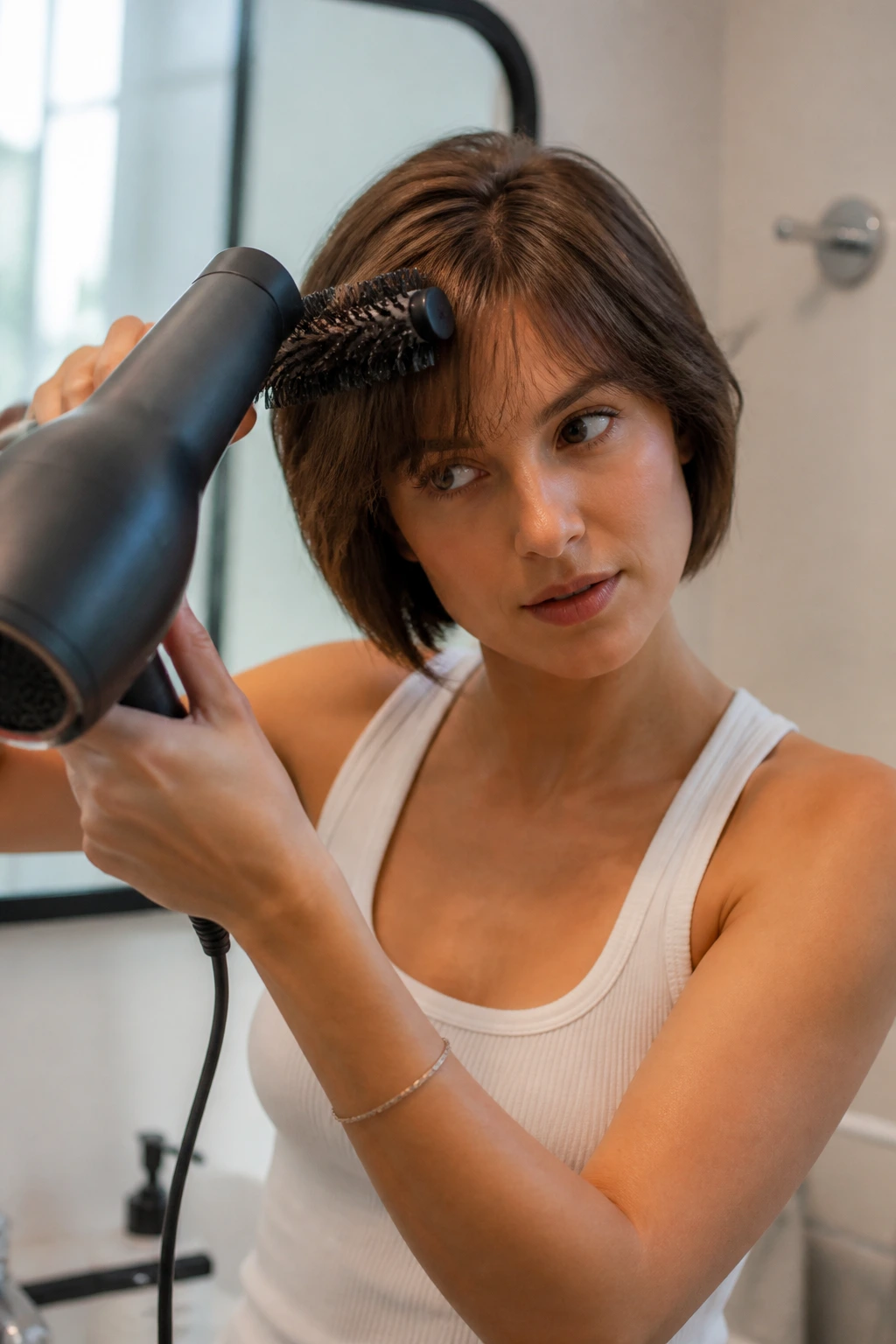
Blow-Dry Direction: Start the fringe in the opposite direction of where it will end up, then sweep it into place. That gives the root a little memory and keeps the bangs from splitting apart by noon.
Product Amount: Use less than you think. With short hair, a pea-size amount can coat the whole front. Too much cream or oil makes the bangs cling together and lose the airy shape you paid for.
Cowlick Control: Press the front hairline flat for the first minute of drying, then lift the dryer away and shape the ends. That first minute matters more than most people realize.
Second-Day Fix: A touch of dry shampoo at the root and a quick blast from a blow-dryer usually beats re-wetting the whole fringe. Rewetting often creates frizz on the shortest pieces.
Heat Habit: If you use a flat iron, keep it to the front two inches and use low to medium heat. The ends of short bangs burn faster than the rest of the haircut because they get handled more.
Pro move: Trim the bangs only when they’re fully dry, or at least have your stylist do it that way. Wet fringe can look longer than it really is, and short bangs are unforgiving.
Common Mistakes That Make Bangs Look Off
Cutting them too dense: Heavy bangs turn short hair into one solid sheet around the face. The fix is lighter internal texture or a longer face-framing edge, especially near the temples.
Ignoring the front hairline: A strong cowlick will push short bangs apart no matter how nice the cut is. Work with the growth pattern, not against it. That usually means a slightly longer fringe and a more directional blow-dry.
Over-styling the front: A lot of people keep adding heat, cream, and spray until the bangs lose any sign of movement. The symptom is a stiff front and fluffy ends. The fix is smaller product amounts and one clean pass with the brush or iron.
Letting the fringe get too short on the first cut: Bangs that sit too high can make the face feel exposed in a bad way. You need room for shrinkage, especially with wave or curl.
Choosing a fringe that fights the haircut: A blunt, thick bang on a delicate pixie can look disconnected. A wispy curtain fringe on a razor-sharp bob can disappear. The front and the body of the cut need to match.
Variations for Curly, Fine, Thick, and Wavy Hair
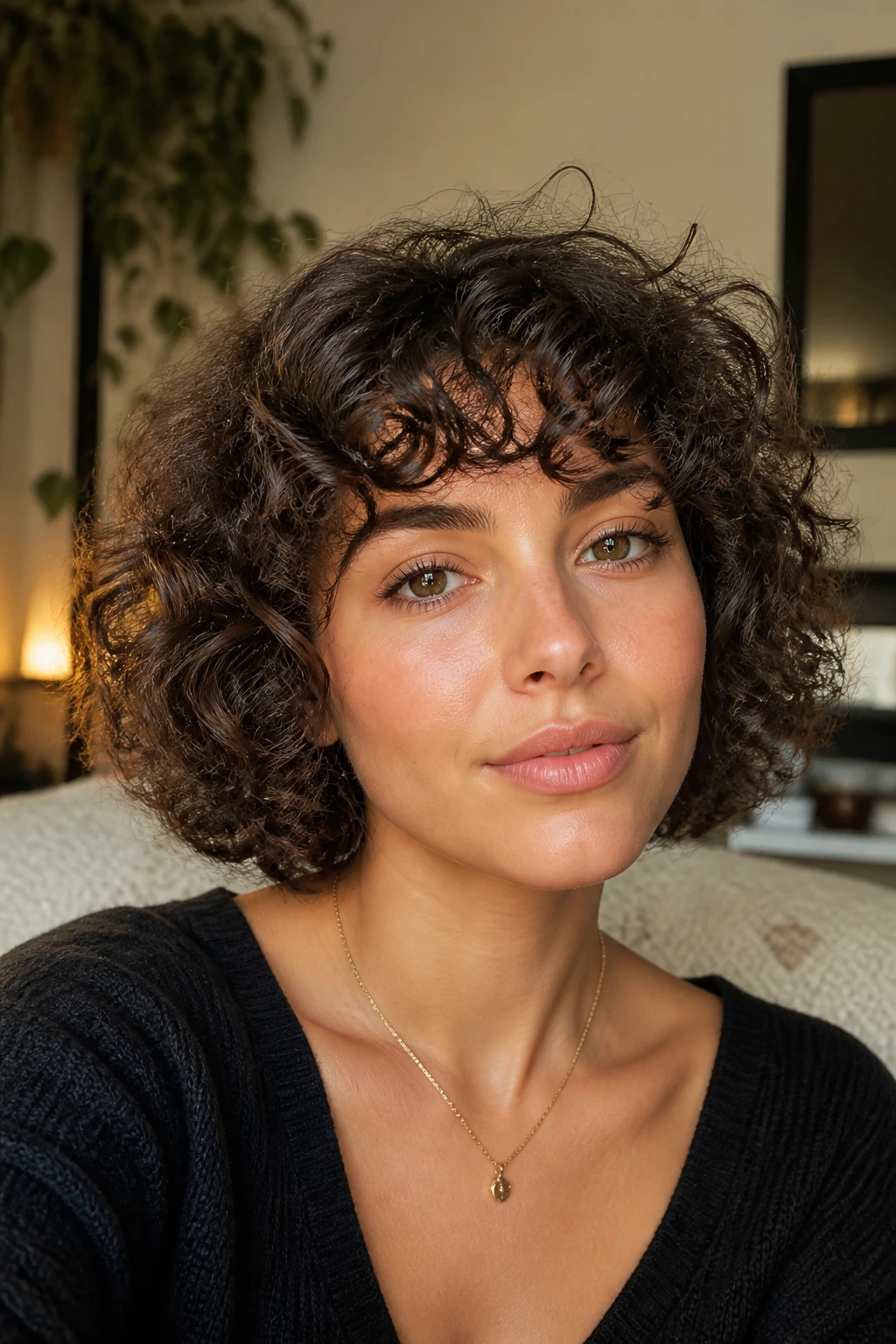
The Curly Halo: Keep the top short and the fringe longer, then cut it dry so the curls can form their own arc around the forehead. This works best when the shortest curls sit above the brow and the longest ones land at the cheekbone.
The Fine-Hair Lift: Use a bixie, stacked bob, or rounded crop with a soft fringe. Fine hair usually looks fuller when the front has a little piece separation and the crown has enough lift to prevent collapse.
The Thick-Hair Slim Line: Choose a blunt bob, undercut pixie, or mini shag with internal removal through the sides. The trick is to take bulk out of the corners so the fringe doesn’t puff outward like a triangle.
The Wavy Air-Dry Version: Keep the bang slightly longer than you think you need, then let it dry with a center split or gentle side sweep. Waves are better when they’re guided, not forced.
The Grow-Out Friendly Edit: Ask for bangs that start around the brow but keep blending into the temples. That way the haircut still looks intentional when the fringe is an inch longer.
Maintenance, Trimming, and Grow-Out
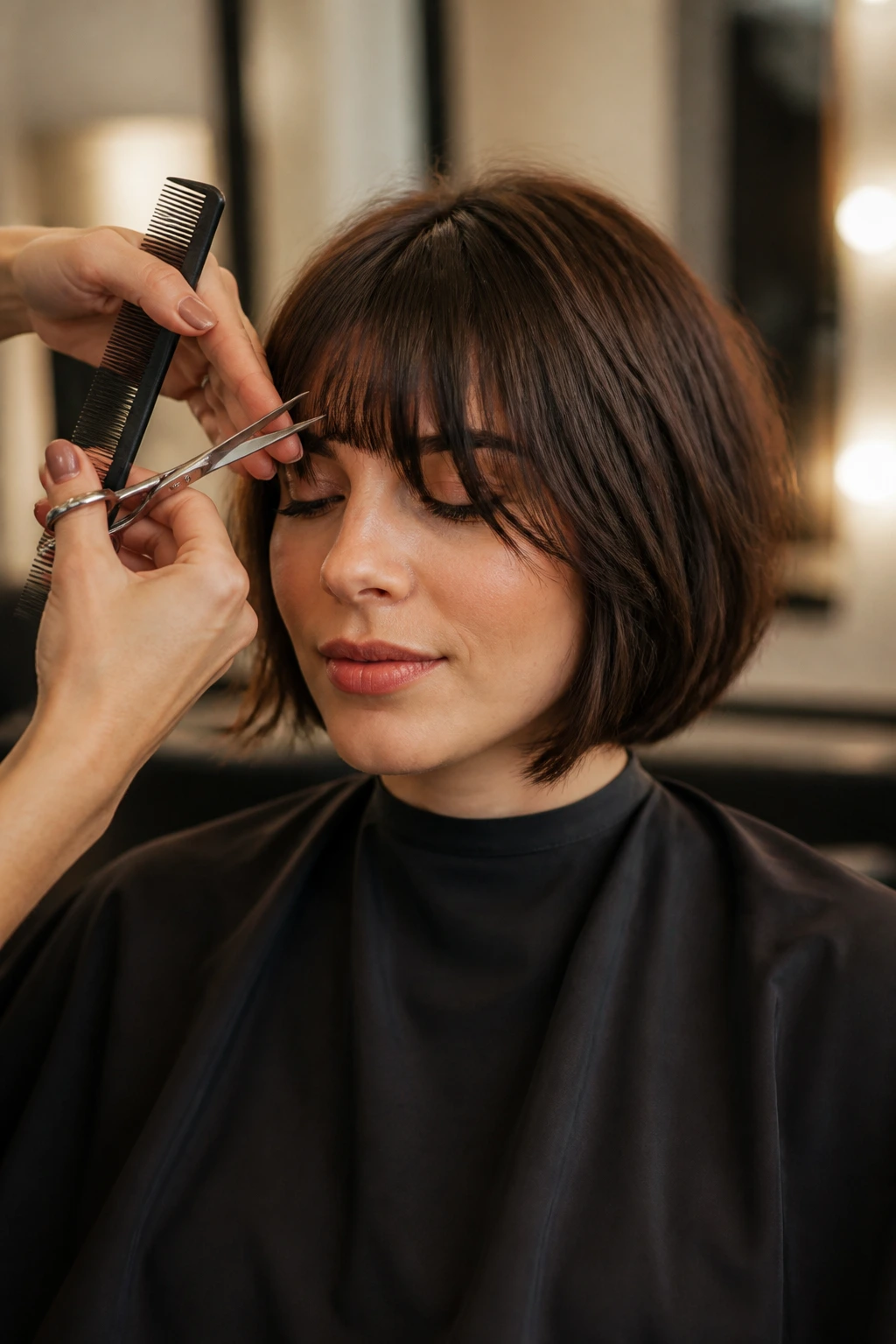
Short bangs need attention more often than the rest of the haircut. A fringe trim every 3 to 5 weeks keeps the line clean, especially if the shortest pieces sit above the brow. Bobs and crops usually hold their shape for 5 to 8 weeks, depending on how fast your hair grows and how crisp you want the outline to stay.
If you want to grow the bangs out, don’t chop the back of the haircut at the same time. Let the fringe drift into side pieces first. That transition is smoother when you start parting the hair a little more off center and pinning one side back for a few days at a time.
A dry shampoo at the roots can buy you an extra day or two between washes, which helps short fringe keep its shape. Wetting bangs every day without drying them properly usually creates bend in the wrong places. And once a fringe starts bending wrong, it can take a full blow-dry cycle to calm it down.
Questions People Ask Before Cutting Bangs

Will face-framing bangs make my face look shorter?
Sometimes, yes — but in a useful way. The trick is placement. Bangs that start too low and sit heavy across the forehead can shorten the face, while lighter pieces that open at the cheekbone usually create balance instead of crowding.
Can curly hair wear short bangs without frizzing out?
Absolutely, but the cut has to respect shrinkage. Curly bangs should usually be cut dry or nearly dry, and they often need to be longer than straight bangs to account for bounce.
How short is too short for face-framing bangs?
If the fringe sits several inches above the brow, it starts reading as micro-bangs rather than face-framing bangs. That can be a cool look, but it’s a different one. For most short styles, landing somewhere between the brow and cheekbone gives you the most control.
Do these cuts work with glasses?
Yes, and some work better than others. French bobs, pixies with wispy bangs, and side-swept fringes usually sit well above or around frames. A heavy blunt bang can fight the top of the glasses if the spacing is off.
What if my bangs split down the middle on their own?
That usually means there’s a cowlick or the fringe is too short to stay together. Either lengthening the front a little or drying the roots in the opposite direction can fix it.
How do I know if I should ask for curtain bangs instead of side-swept bangs?
Curtain bangs split at the center and frame both sides of the face, while side-swept bangs travel mostly in one direction. If you want a softer, more open front, curtain bangs usually win. If you want more movement across one side of the face, side-swept fringe is the better call.
Can I trim these bangs at home?
You can, but short fringe is risky. If you do it, cut dry, use small snips, and remove less than you think. A tiny overcut in the front changes the whole haircut.
Which style grows out the cleanest?
Mini shags, bixies, and layered crops usually age the best between cuts because the fringe blends into the rest of the shape. Blunt bobs with dense bangs need more regular upkeep to stay crisp.
The Shape That Stays With You

The reason short hairstyles with face framing bangs keep coming back isn’t fashion noise. It’s because they solve a practical problem: short hair can feel harsh, and a good fringe gives it somewhere to soften. That one change can make a cut look sharper, lighter, or just more like the person wearing it.
The best version for you is the one that works with your texture, your morning routine, and the shape of your face without turning styling into a daily argument. If you bring that to the salon conversation — the length, the part, the cowlick, the amount of effort you’re willing to spend — the haircut has a much better chance of behaving in real life.
