



Swoopy bangs on short hair have a sneaky effect: they make a blunt cut feel softer, and a soft cut feel deliberate. A good sweep skims the brow, bends at the cheekbone, and keeps moving instead of stopping like a cardboard strip across the forehead.
That matters more on short hair than people think. When the length is cropped, every inch counts; if the front is too short, the fringe sits flat and fussy, and if it’s too heavy, the whole haircut loses lift around the eyes.
I’m fond of swoopy bangs for one simple reason: they add a diagonal line. Diagonals move. They pull the eye upward, make a bob look less boxy, and let a pixie keep some softness without losing edge. And yes, a stubborn cowlick can still be trained — but not bullied.
Why These 22 Cuts Earn Their Keep
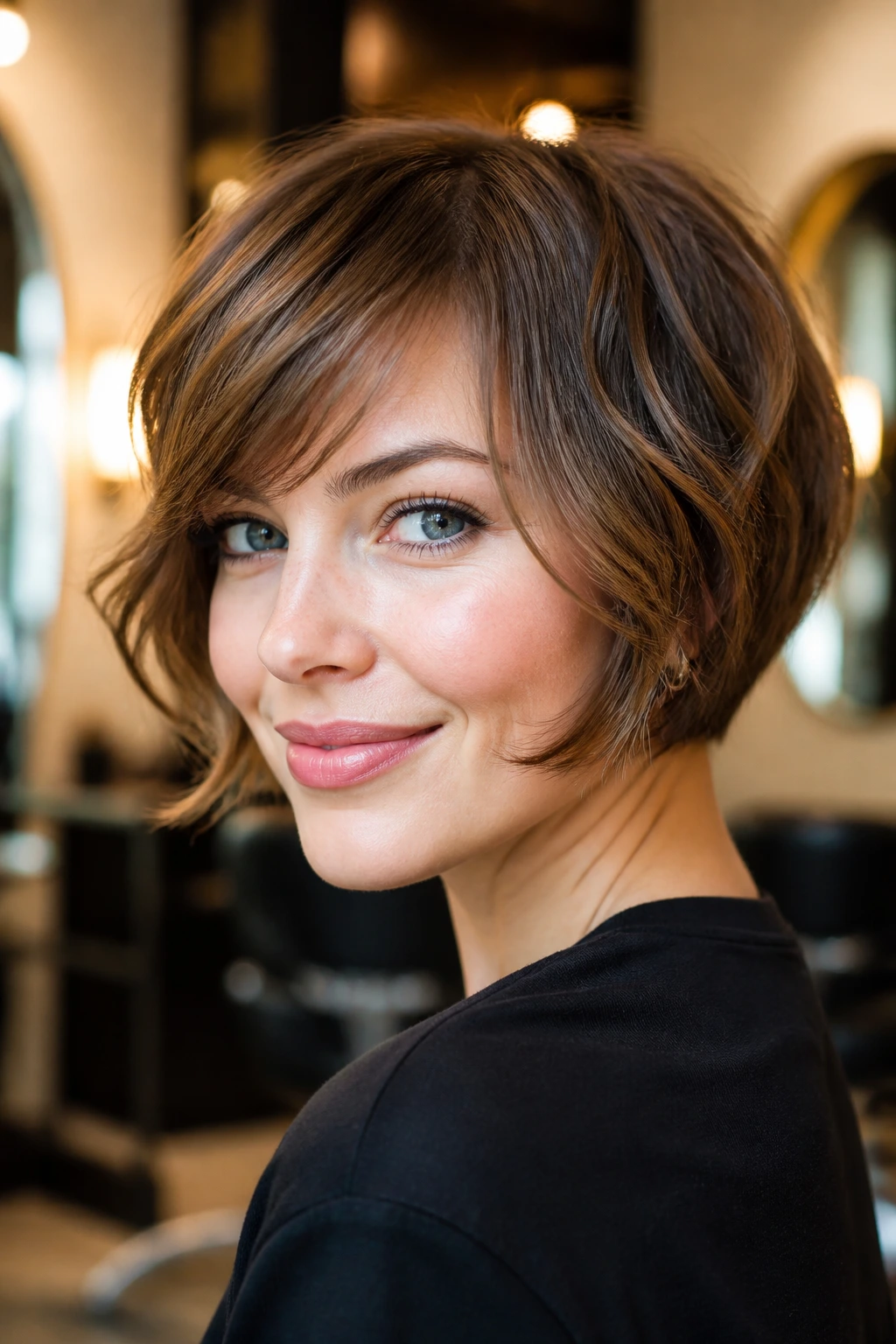
- They soften strong angles without hiding your face: A side sweep can take the edge off a square jaw or a broad forehead while still letting your features show through.
- They make grow-out look intentional: A fringe that starts at the temple or cheekbone can slip into layers instead of turning into an awkward curtain.
- They work with more than one texture: Straight hair, waves, and curls all get a different version of the same idea, which is why this style lasts beyond one salon photo.
- They stop short hair from feeling boxy: A diagonal front line changes the whole outline of a bob or pixie, especially when the back is cropped tight.
- They’re easier to restyle than blunt bangs: If one section goes off-kilter, you can push, clip, or bend it back into place without rewetting the whole head.
- They give you room to be picky: You can go polished, piecey, airy, or dramatic without changing the basic cut.
The Salon Notes That Keep the Bang Sweeping
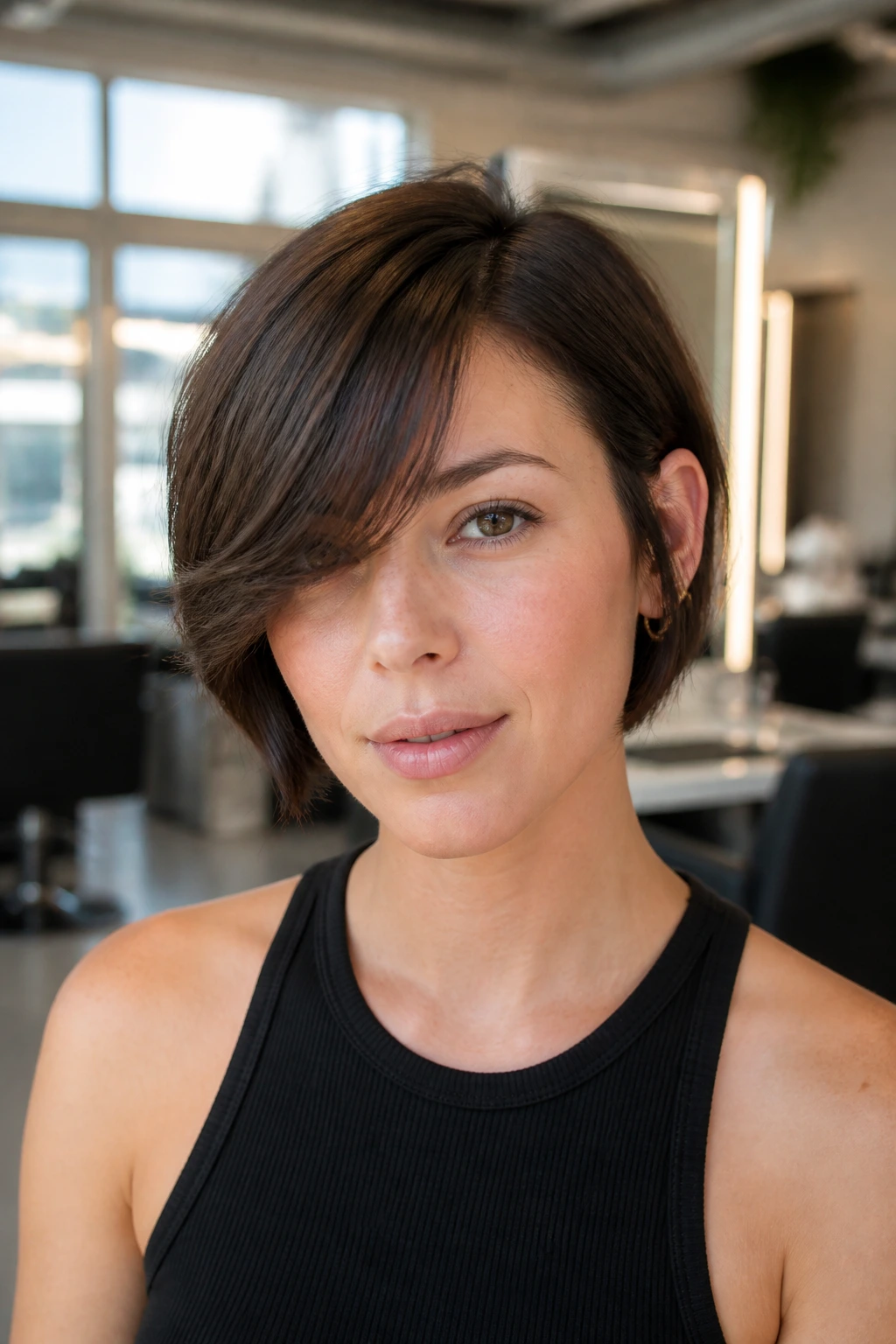
The best swoopy bangs on short hair are decided before the scissors open. If you walk in saying only “side bangs,” you’re handing the stylist a vague idea and hoping for luck. Better to name where you want the longest piece to land, how you wear your part, and whether you dry your hair with a brush or mostly let it fall where it wants.
Tell Them Where the Length Should Land
Ask for the shortest point to start near the brow or just above it, then let the long side travel toward the cheekbone or jaw. That range gives the bang room to move instead of sitting like a shelf across the forehead.
Mention Your Part and Your Cowlick
If your part naturally lives off-center, say so. If there’s a stubborn swirl at the front hairline, say that too. A stylist can cut the curve to work with that bend, and on short hair that tiny detail matters more than a lot of people realize.
Be Honest About Styling Time
If you want a polished swoop every morning, say you’ll spend five minutes with a round brush or a mini flat iron. If you air-dry, say that. The cut should match the routine, not some fantasy version of you standing in perfect salon light.
1. Long-Front Pixie Sweep
A long-front pixie is one of those cuts that looks tiny from the back and surprisingly soft from the front. The nape stays close, the sides stay neat, and the bang is left long enough to slide across the forehead and hit around the cheekbone. That extra length is the whole point.
Why It Works
The cropped back gives the cut shape. The long front gives it motion. Without that front panel, a pixie can get severe fast; with it, the whole thing reads as deliberate instead of just short.
- Shortest point: keep it around brow length so the front can lift instead of sticking straight down.
- Longest point: let it skim the upper cheekbone for that true swoop.
- Best styling move: blow-dry the fringe from the opposite side first, then sweep it back.
- Good product choice: a pea-sized matte paste or light pomade at the ends only.
Best tip: don’t load the bang with oil or cream. Short hair shows residue fast, and a shiny, separated fringe loses the airy bend that makes this cut work.
2. Soft French Bob Swoop
A French bob gets a little more bite when the front is cut into a soft side sweep. The chin line stays compact, the ends tuck in or out depending on your mood, and the fringe breaks the straight line just enough to keep the whole cut from feeling too neat. I like this version when someone wants romance but not sweetness.
The trick is to keep the sweep loose, not dramatic. If the bang is too long, the bob starts hiding behind it. If it’s too short, the face-framing effect disappears and you’re left with a blunt bob wearing a side part like a borrowed jacket.
It suits straight and softly wavy hair especially well. Ask for the front to graze from temple to cheekbone, and if your hair swells a bit when it dries, have the stylist cut it with that in mind. A French bob without room for movement is just a box with a fringe.
3. Chin-Length Curtain Bob
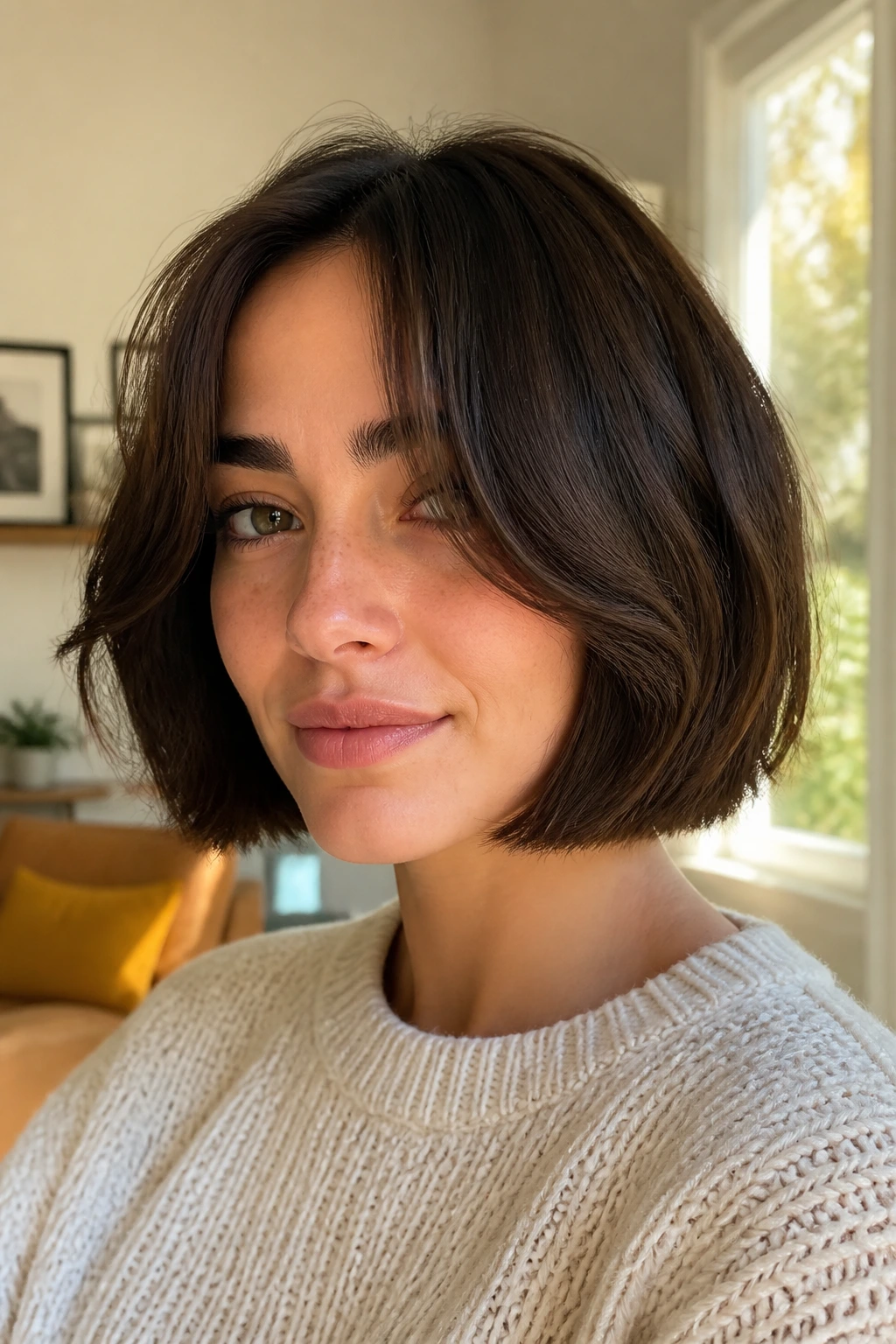
Can curtain bangs work on short hair? They can, and they look cleaner here than they do on some longer cuts because there’s less hair competing for attention. Keep the center part soft, leave the front pieces long enough to split from the nose down, and let them fall toward the jaw instead of hanging dead-center on the forehead.
How to Wear It
This cut likes a little bend. A medium round brush, a quick pass with a blow-dryer, and a light mist of flexible spray are enough to keep the pieces from collapsing. If you air-dry, twist the front section once while it’s damp and clip it for a few minutes; that small bend helps it land in the right place.
It’s a smart choice for round faces and anyone who wants grow-out that doesn’t look like punishment. Curtain bangs on a chin-length bob can slide into face-framing layers with almost no drama. That’s rare. And useful.
4. Feathered Bixie Fringe
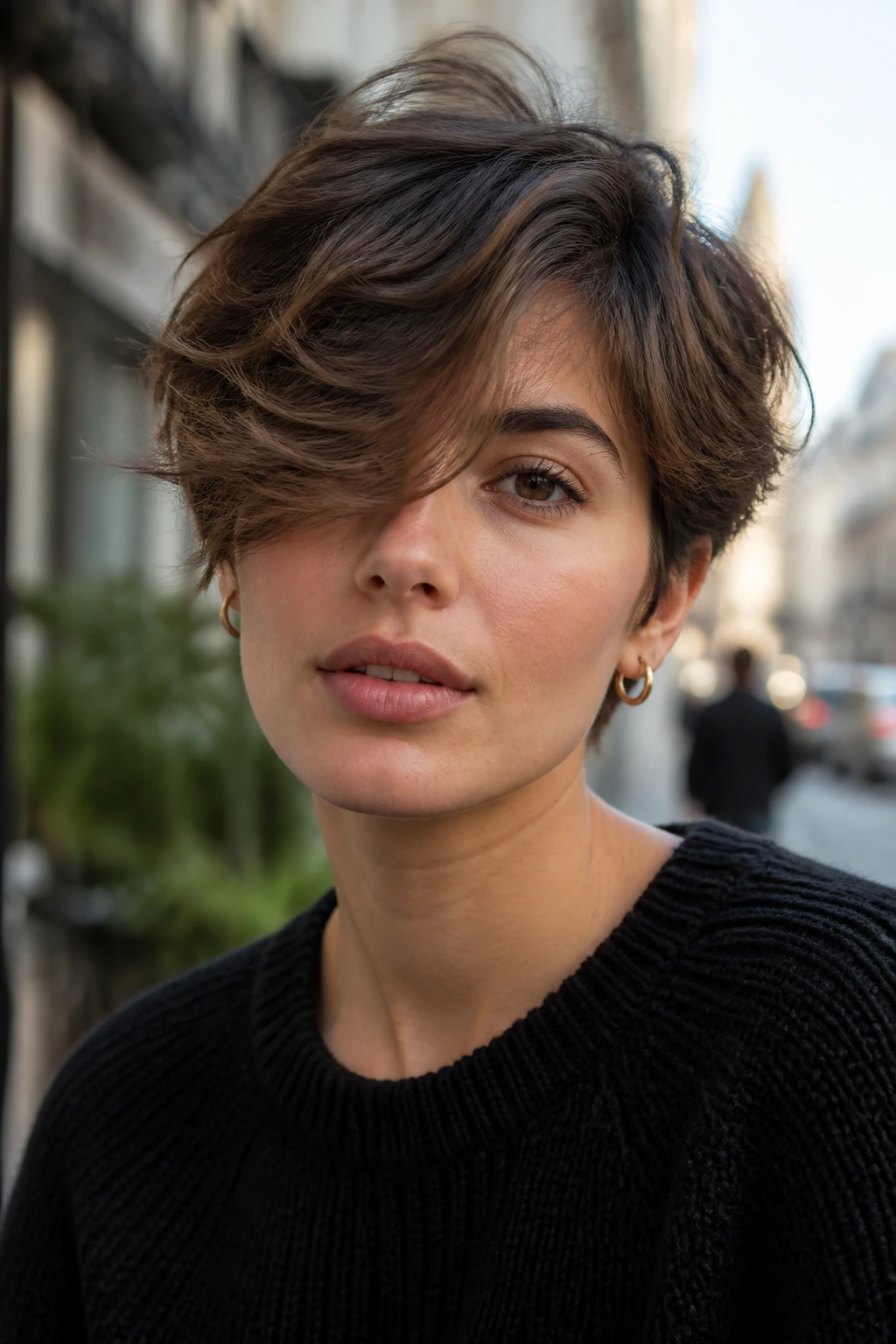
A bixie sits between a bob and a pixie, which is exactly why the fringe needs to be feathered. Too much weight at the front turns it into a helmet. Too little and the haircut loses its shape. The sweet spot is a soft sweep that feels light around the temples and denser through the crown.
This version is especially good for thick hair that tends to puff outward when cut too bluntly. Ask for point cutting through the ends rather than a hard line, and keep the front long enough to flick over one eye if you want more drama. The texture should feel broken up, not shredded.
A bixie fringe also buys you movement on days when the hair is behaving badly. That matters. If the front can fall in pieces instead of one solid block, the whole cut stays wearable even after sleep, humidity, or a rushed morning.
5. Deep-Part Asymmetrical Lob
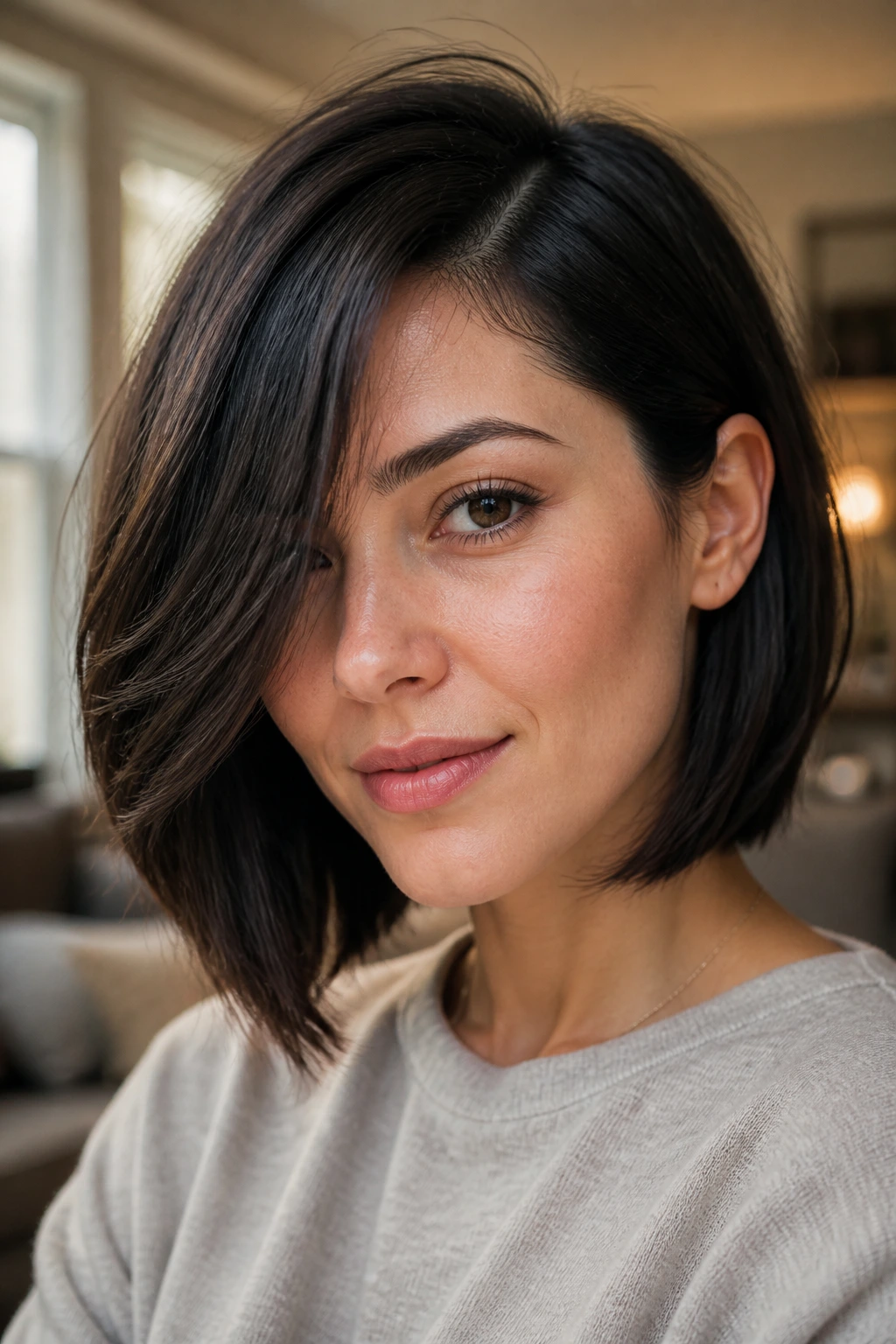
A deep-part lob gets its swoop from the part, not from a heavy fringe. One side falls farther over the forehead, the other side stays cleaner and tighter, and the result is a diagonal that feels polished without trying too hard. It’s one of the easiest ways to soften short hair without committing to a full bang.
This shape works well if you’re growing out an old fringe or if you want your face to look a little longer. The asymmetry gives you control. Move the part an inch and the whole haircut changes mood.
Use a flat brush or a quick pass with a round brush to push the longer side away from the face, then let the ends tuck slightly inward. The best version doesn’t look wound up. It looks like the hair decided to fall that way and you didn’t argue.
6. Diagonal Crop Bangs
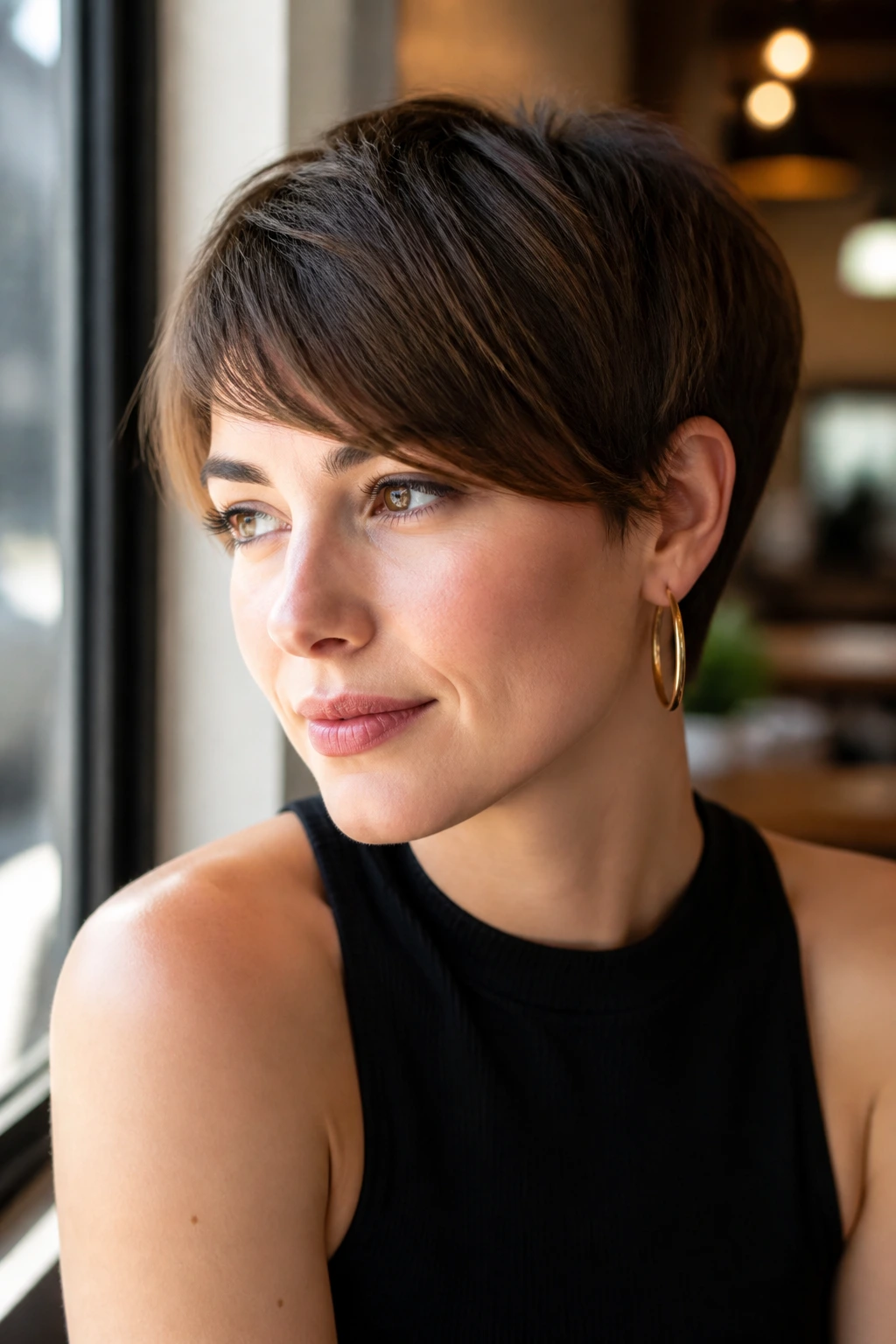
Why do diagonal bangs work so well on a short crop? Because they break the line. A straight fringe across a short cut can feel blunt in a way that’s hard to fix, while a diagonal fringe creates movement right at the forehead and lets the rest of the haircut breathe.
Quick Cut Notes
- Ask for the bang to start shorter near the high point of the part.
- Let the longest edge brush the outer brow or temple.
- Keep the crown lightly layered so the front doesn’t sit heavy.
- Style with a quick side blow-dry and a touch of texture spray.
This is a good pick for straight hair and for anyone with a cowlick that pushes the fringe apart. The diagonal gives that swirl somewhere to go. I’d call it one of the more practical swoopy bang choices, which sounds boring until you’re the person trying to make your fringe behave on a Tuesday.
7. Rounded Crop With Side Sweep
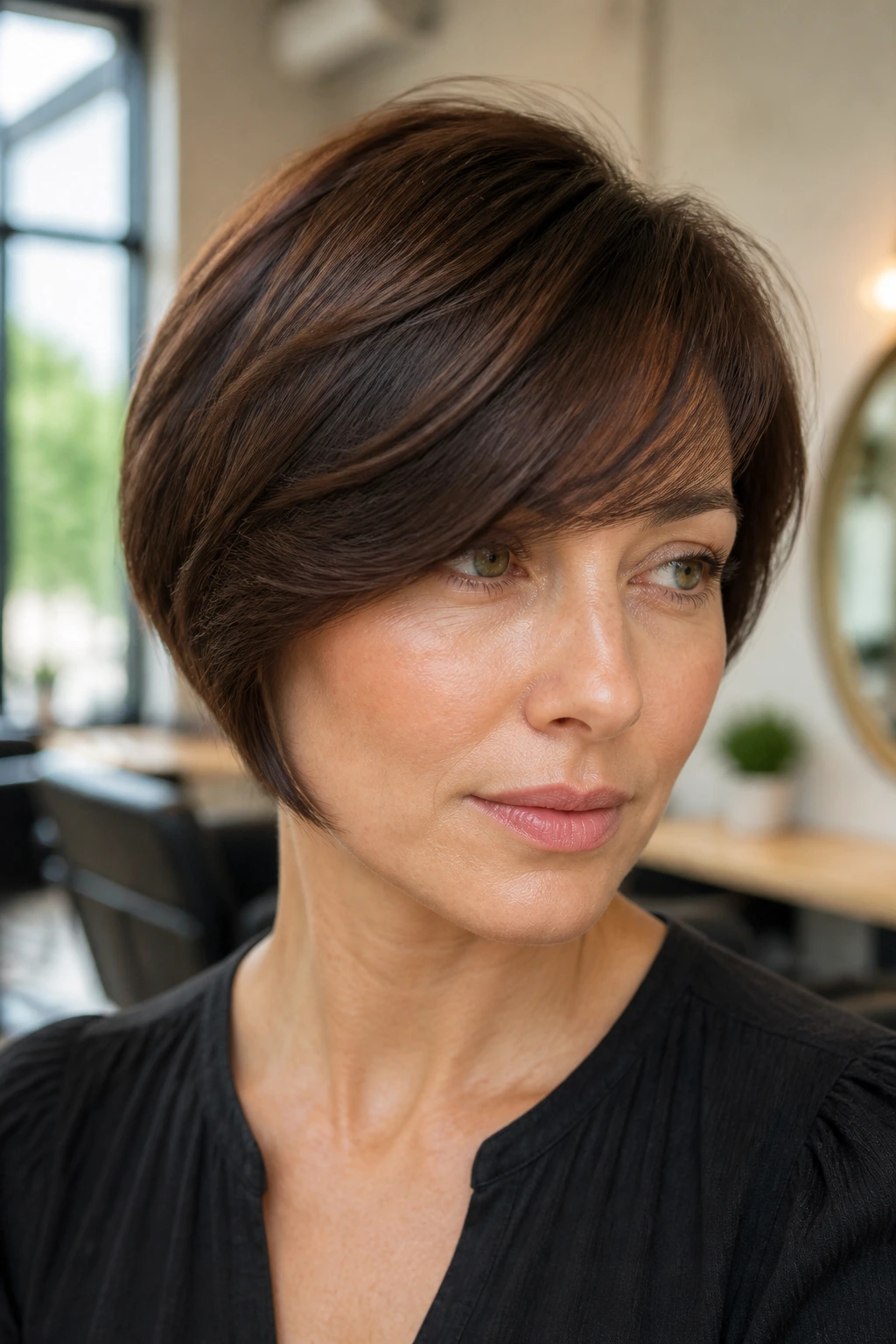
A rounded crop can look sweet or severe depending on what you do up front. Add a side sweep, and the whole thing softens immediately. The curve around the head stays intact, but the fringe now arcs across the face instead of stopping at the forehead like a line drawn too hard.
This cut flatters angular faces especially well. The rounded outline takes the edge off the jaw, while the sweep keeps the style from feeling helmet-like. You want the front to feel curved, almost airy, not locked into one fixed direction.
Ask for the top to be left a little longer than the sides, with enough length to push over and tuck back. Then keep the product light. A touch of mousse at the root is fine. Heavy wax on a rounded crop is not. It kills the curve and turns the fringe into a sticky little plank.
8. Chin-Length Shag Sweep
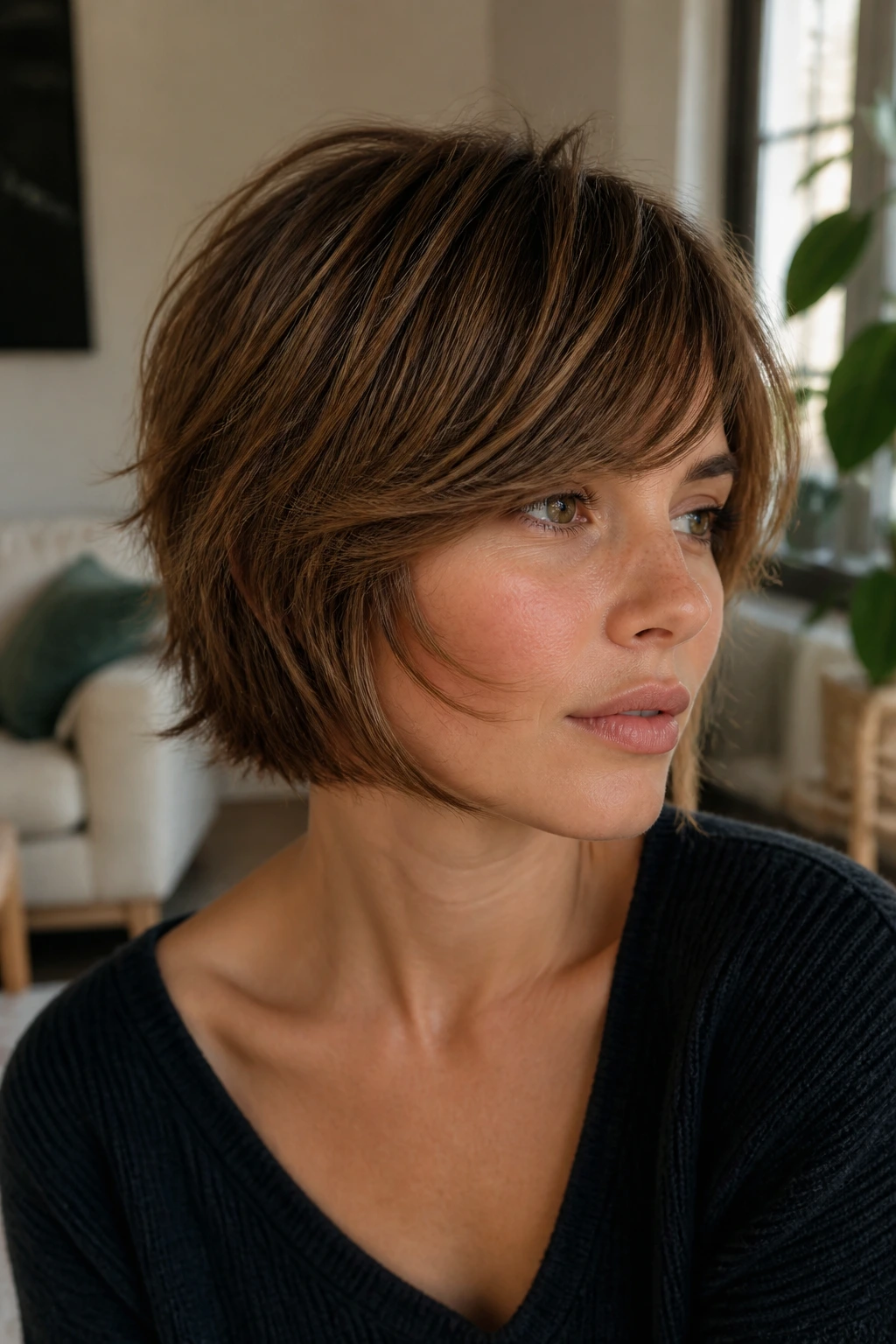
A chin-length shag lives on texture, so the swoop should look like it belongs there. The bang blends into the layers around the cheek and temple, which makes the whole haircut feel easier to wear than a stiff, single-length bob. Wavy hair does especially well here because the curve in the fringe can echo the curve in the rest of the cut.
This is the version I reach for when someone wants movement more than precision. Air-dry it with a little cream, or diffuse it with the head tipped forward if you need more lift. The bang should separate into soft pieces, not all one curtain.
The shag shape also hides a bad hair day better than a blunt fringe ever will. That’s not a small thing. When the front can live in a few different directions and still look good, you stop fussing with it every half hour.
9. Blunt Bob With Long Side Fall
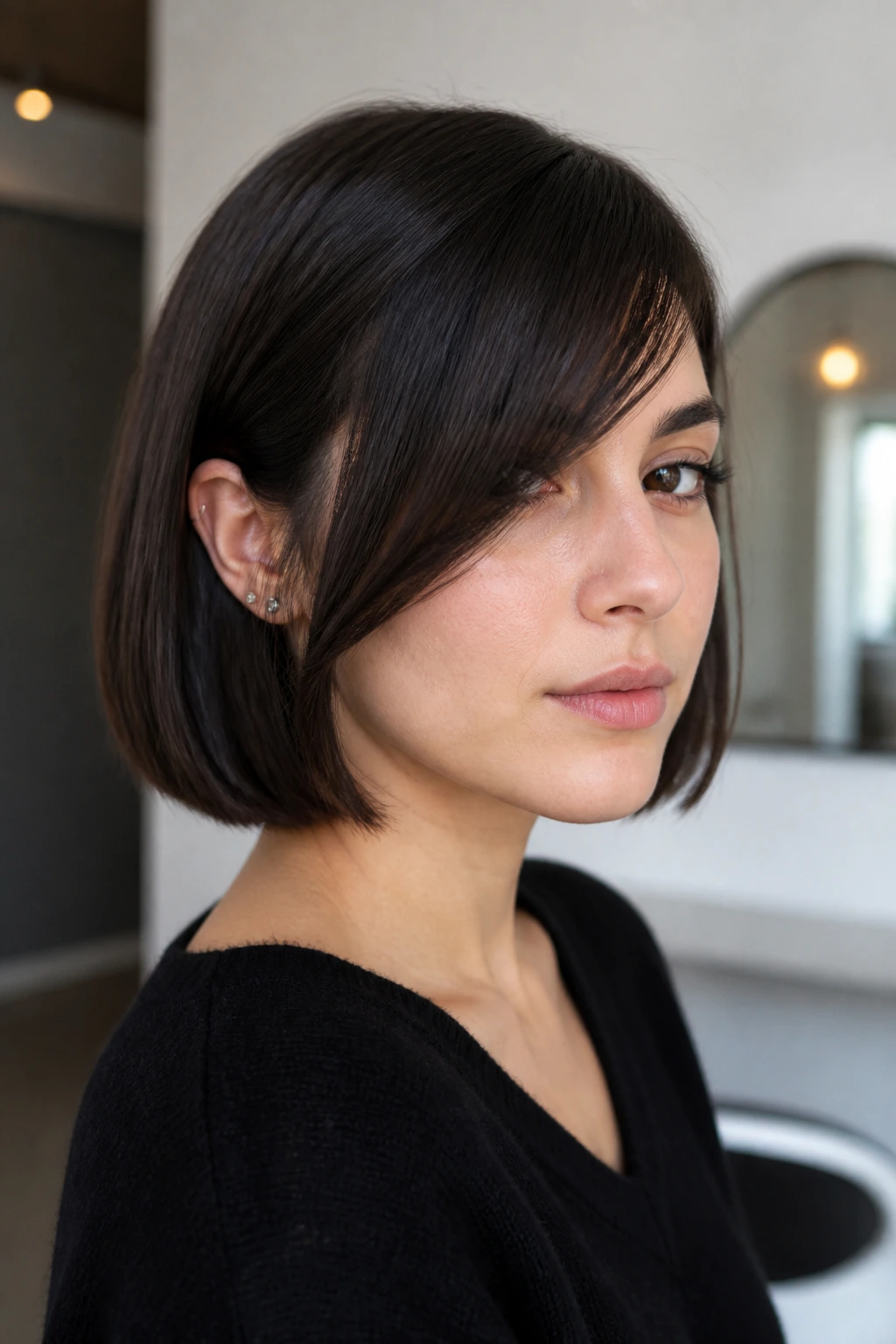
A blunt bob with a long side fall is all about contrast. The outline is sharp. The fringe is not. That push and pull is what makes the style feel expensive rather than stiff. The straight edge gives the haircut backbone, while the swoop keeps it from reading like a school uniform.
This is a good cut for straight hair because the finish shows. If your hair is fine, the blunt perimeter makes it look denser, and the longer front section gives your face a softer frame. If your hair is thick, ask the stylist not to over-thin the front, or the side fall can turn stringy.
I like this version with a clean middle part that shifts slightly off-center. It feels modern without being loud. One polished bend across the forehead is enough. Any more and you lose the clean line that makes the bob work in the first place.
10. Piecey Waves and Swept Bangs
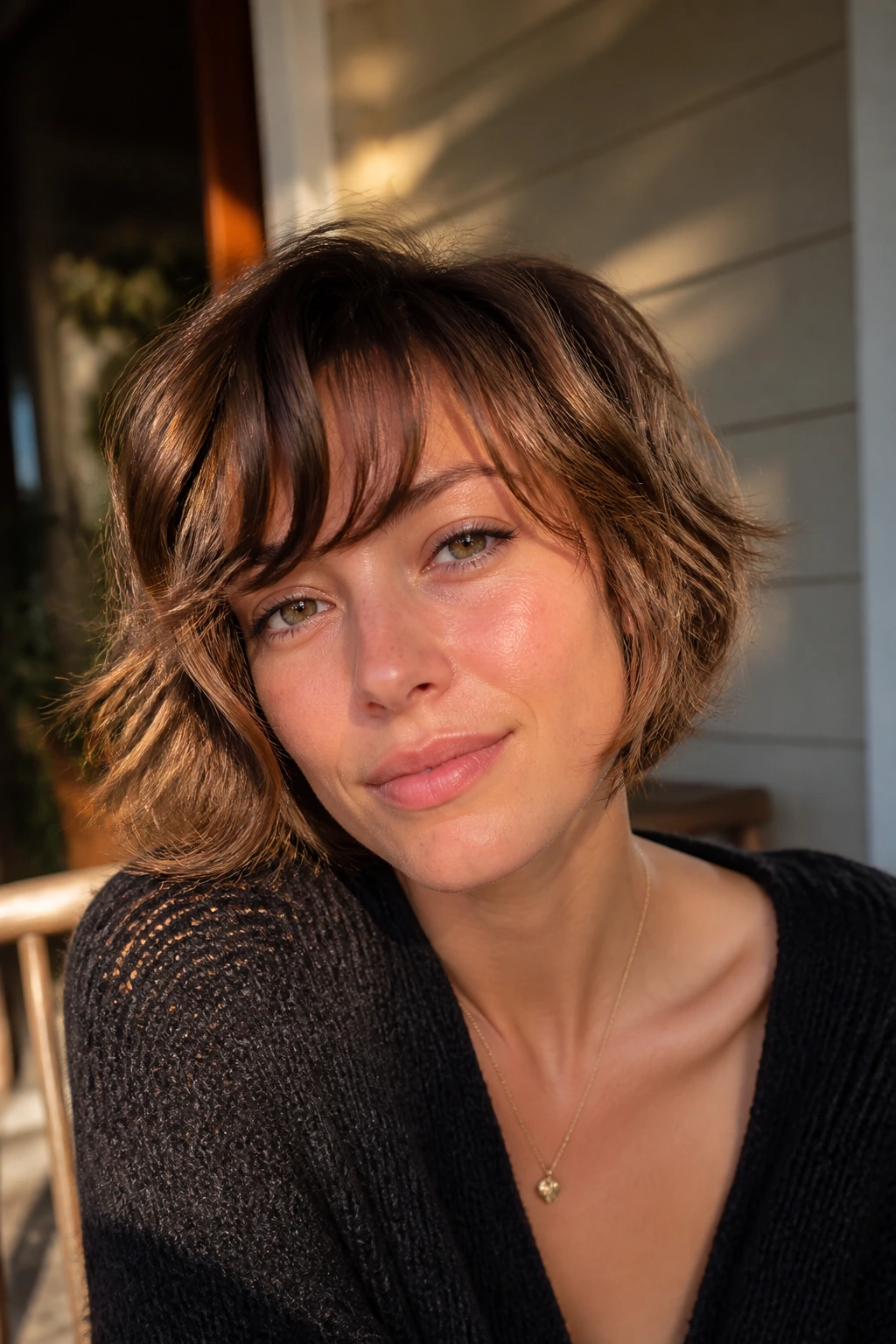
When the hair already bends on its own, a swoopy bang should stay piecey rather than brushed into one smooth shape. That softer separation keeps the cut from getting too polished and lets the wave pattern do some of the work. If you brush this one too much, the charm disappears.
What to Watch For
- Use a light mousse or wave spray, not a heavy cream.
- Scrunch the front while it’s damp, then guide it sideways with your fingers.
- Let the bang air-dry partway before using any heat.
- Avoid brushing it fully dry; that’s how the pieces go puffy and flat at the same time.
This look is for people who like a lived-in finish. The bang can swing across the forehead without pretending to be smooth. And that tiny bit of separation is what makes it feel current without chasing anything trendy.
11. Layered Pixie Flip
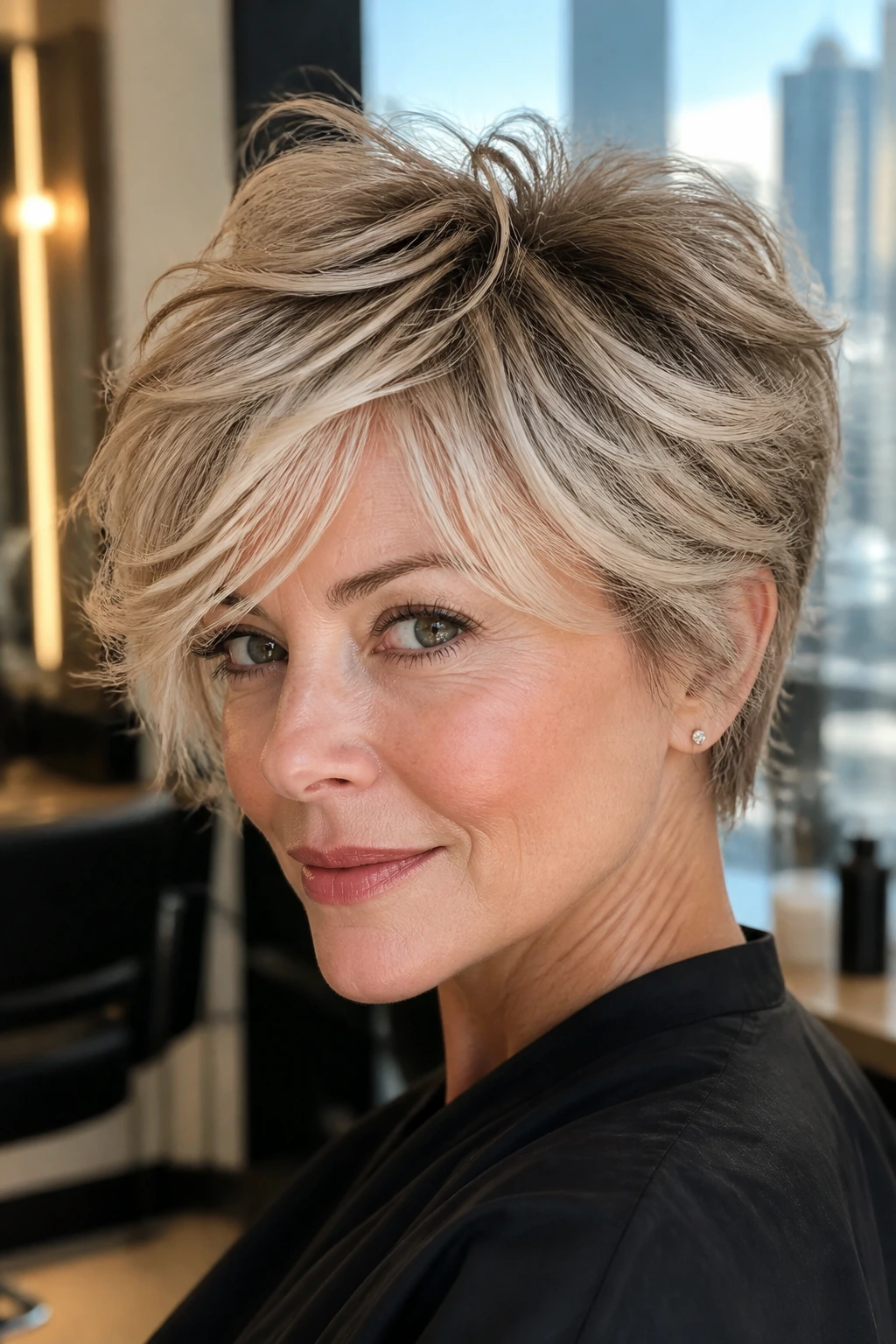
A layered pixie flip is what happens when the top gets enough length to move and the front gets enough freedom to sweep. The layers at the crown create lift, the fringe bends over the forehead, and the whole cut feels lighter than a standard pixie. It’s especially good if fine hair tends to lie flat and cling to the head.
Why the Volume Lives on Top
The lift comes from the layers, not from product. That’s the part a lot of people miss. If the top is cut with internal texture, the front can flip over more naturally, and you don’t have to fight for height every morning.
A round brush helps, but only a little. Blow-dry the roots up and away from the scalp, then let the ends settle on their own. If the front starts getting too stiff, you’ve used too much spray or you’ve rolled it too tightly. Give it room. The shape is better when it looks like it can move again.
12. Inverted Bob With Airy Fringe
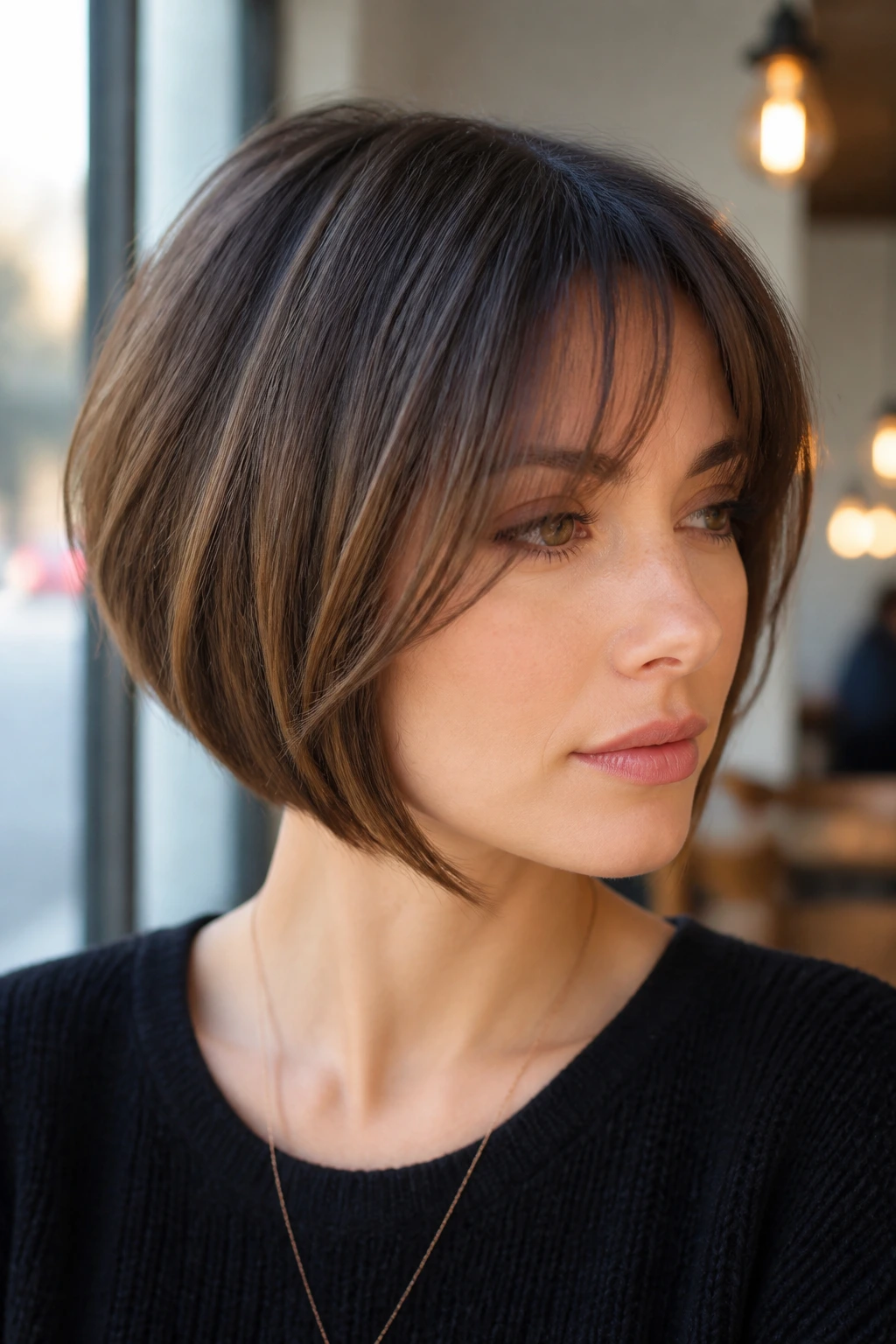
An inverted bob already gives you forward motion because the back is shorter and the front drops longer. Add an airy fringe, and the cut gets a softer front edge without losing the clean, angled silhouette. It’s one of the smartest choices if you want volume at the crown and lightness near the face.
The bang should not feel heavy here. Keep it feathered, almost floating, so the sharp angle of the bob stays visible. If the fringe is thick and blunt, it competes with the line of the haircut and the whole thing starts looking overworked.
This version flatters people who want a little polish but don’t want the front of their hair hanging in their eyes all day. A quick lift at the roots, a bend at the ends, and you’re done. No drama. Which, frankly, is a relief.
13. Ear-Length Crop and Whisper Bang
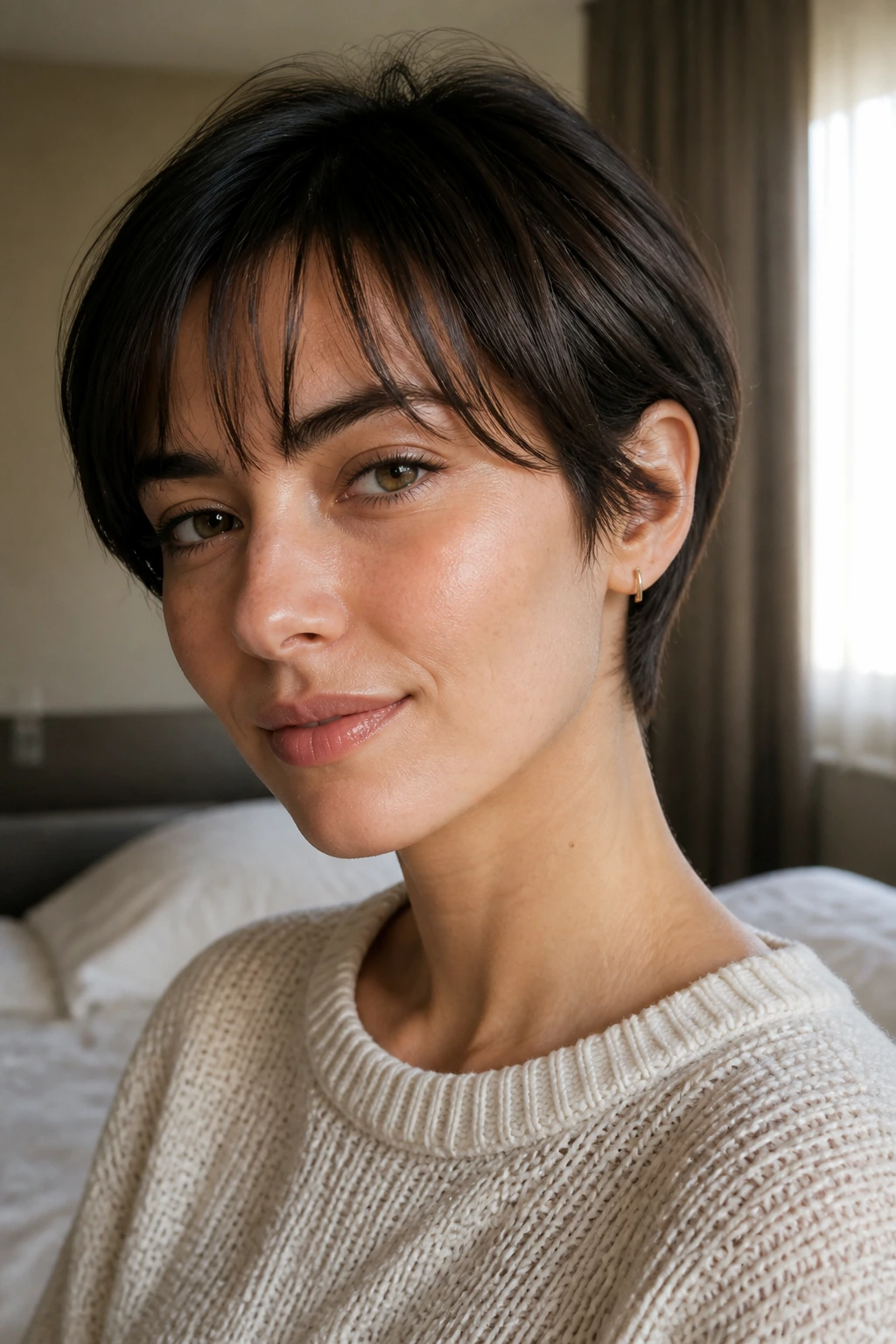
An ear-length crop with a whisper bang is about restraint. The hair stays short enough to show the neck and ears, but the fringe is left soft and thin so it can skim sideways instead of covering the whole forehead. It’s subtle, and that’s the point.
This cut is for someone who likes a quiet look with one smart detail. The bang doesn’t shout. It nudges. That makes it easier to wear with bold earrings, a strong brow, or a lipstick that does the heavy lifting.
Keep the bang longer than you think you need. Short fringe on a crop can get severe fast, especially once the hair dries and springs up. A whisper bang should feel like a brush of shadow across the forehead, not a solid line.
14. Neck-Length Lob With Curtain Bend
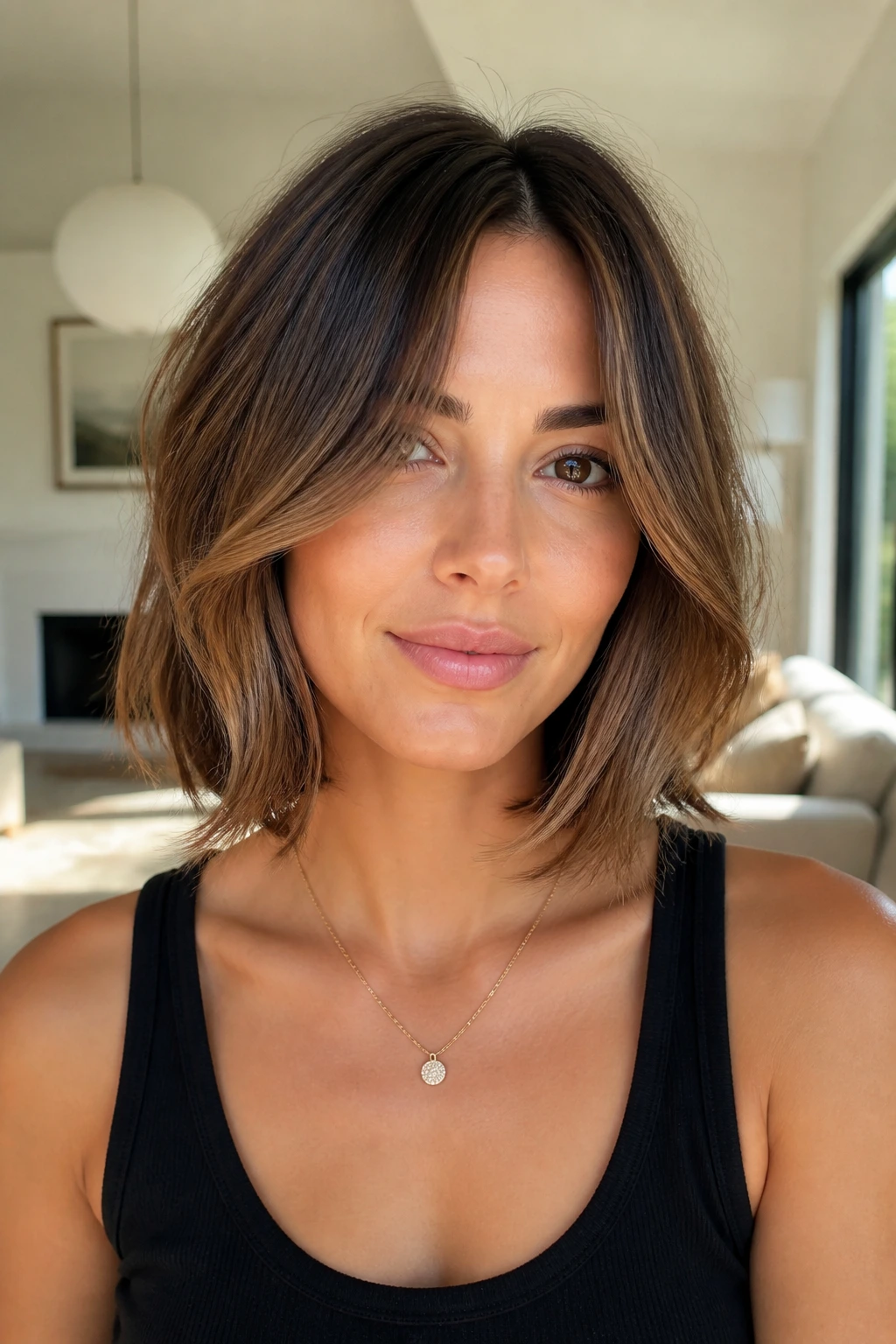
A neck-length lob is the sweet spot for people growing out shorter hair who still want something that feels shaped. The curtain bend in front keeps the transition from looking unfinished. It’s the kind of cut that makes a growing-out phase look like a plan.
The front pieces should start around the nose or cheekbone and taper into the rest of the lob. That length gives them enough room to split and fall away from the center. If they’re too short, the bend turns into an awkward flip. Too long, and they stop reading as bangs at all.
This style likes a quick round-brush pass or a flat-iron bend at the ends. Nothing fussy. The whole point is to keep the face frame soft while the rest of the cut does the work in the background.
15. Curved Bowl With Side Flip
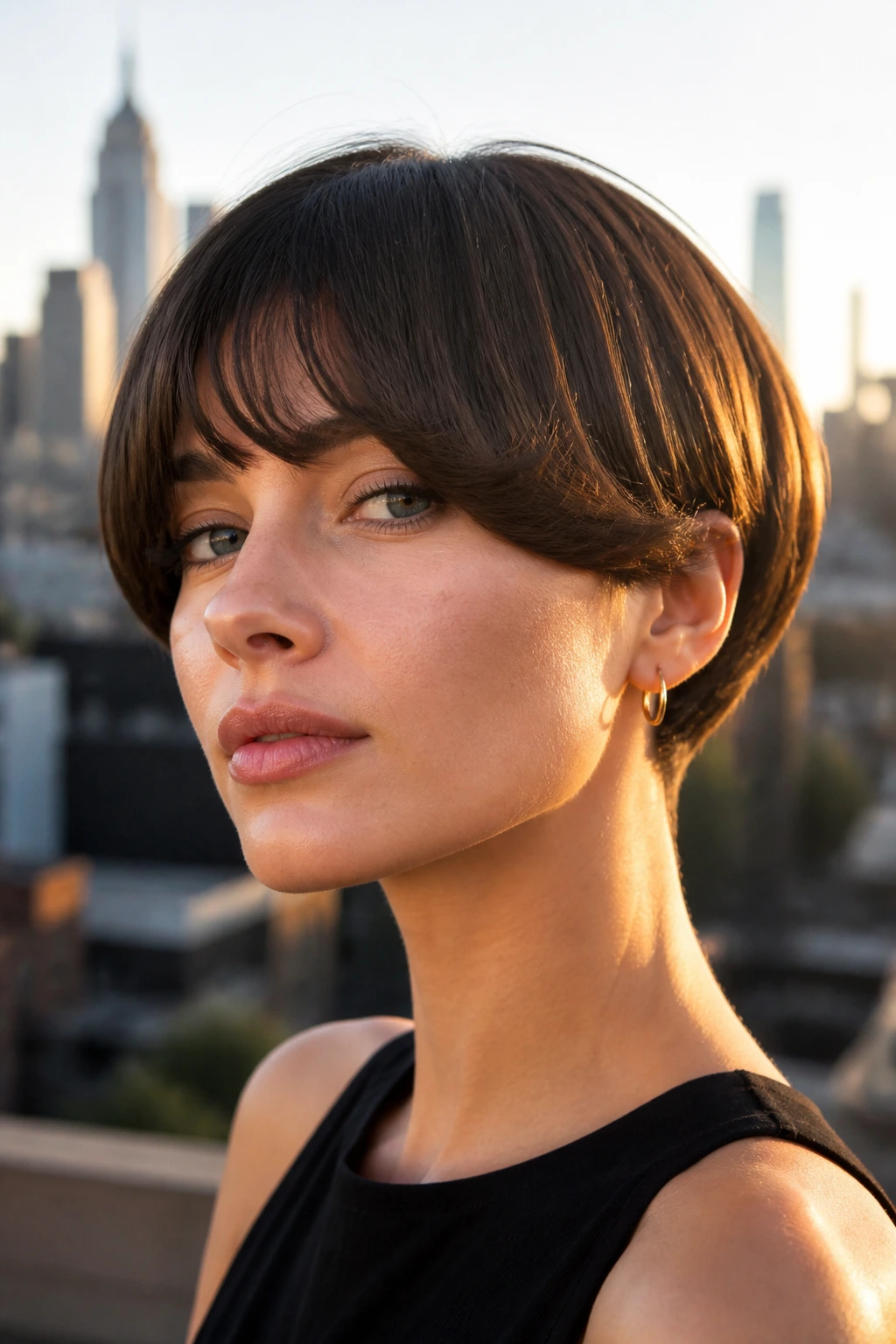
A curved bowl cut sounds severe until you see it with a side flip at the front. Then it becomes much more interesting. The rounded shape keeps the silhouette strong, while the side sweep breaks the symmetry and makes the cut feel less like a throwback and more like a choice.
This one suits thick, straight hair especially well because the curve can hold its shape without fighting the texture. Ask for softened edges around the temple and a front section that can pivot off to one side. If the front is cut too bluntly, the whole look tips into costume territory. A feathered finish fixes that fast.
I’d call this the most editorial option in the list. It wants confidence. It also wants a good comb and a mirror that doesn’t lie.
16. Mullet Crop With Feathered Front
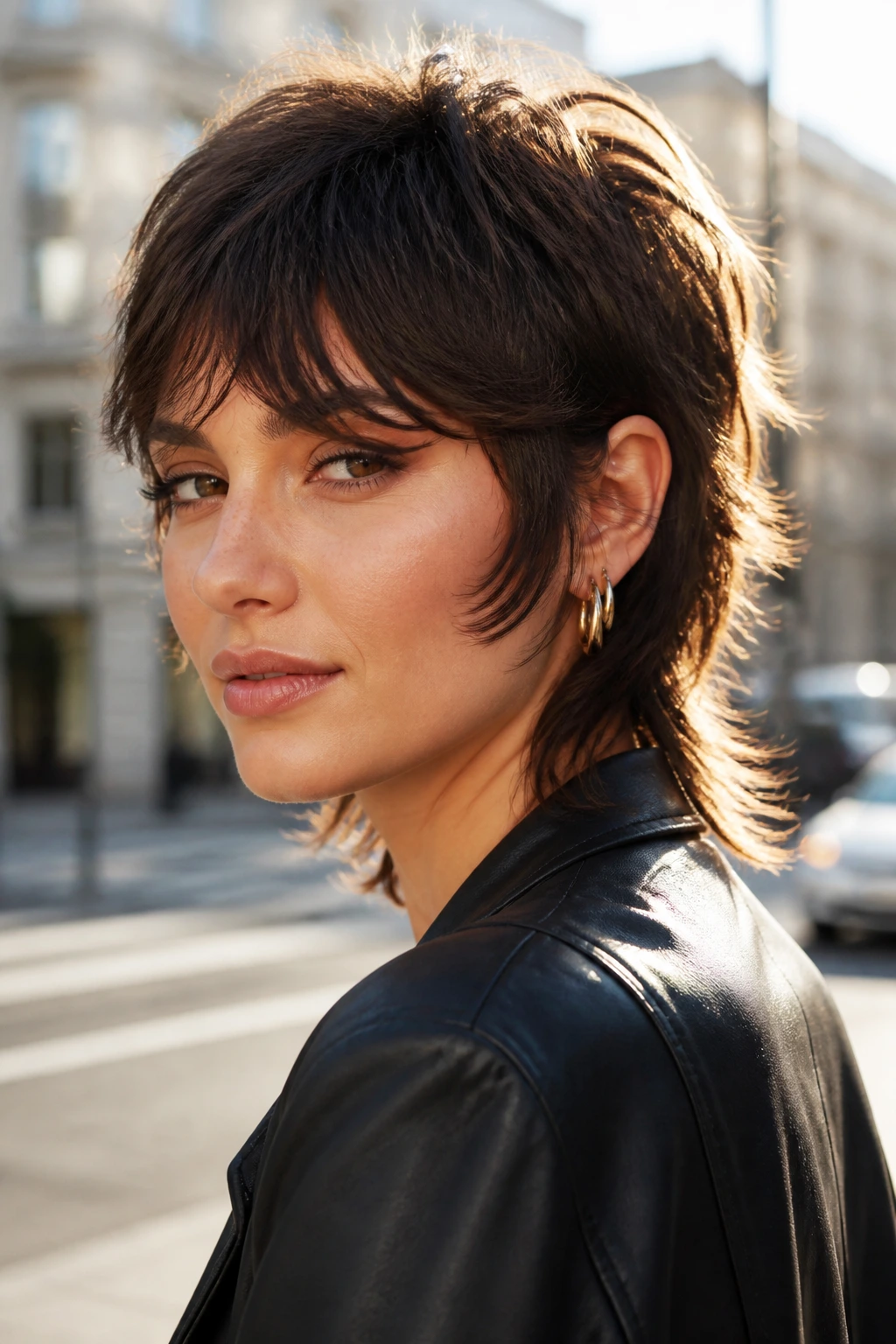
A mullet crop with a feathered front is not for people who want to disappear into the room. The front layers move into the temples, the back keeps a bit of length, and the swoop up front stops the cut from reading too harshly. It’s edgy, yes, but the fringe keeps it wearable.
The feathering matters. Without it, the front can feel choppy in the wrong way. With it, the bangs slide across the forehead and blend into the rest of the crop, which keeps the style from becoming all attitude and no shape.
This cut looks especially good when the ends are given a little bend with a diffuser or a tiny flat iron flick. Don’t over-smooth it. The charm is in the motion.
17. Curly Bob With Side-Stretched Fringe
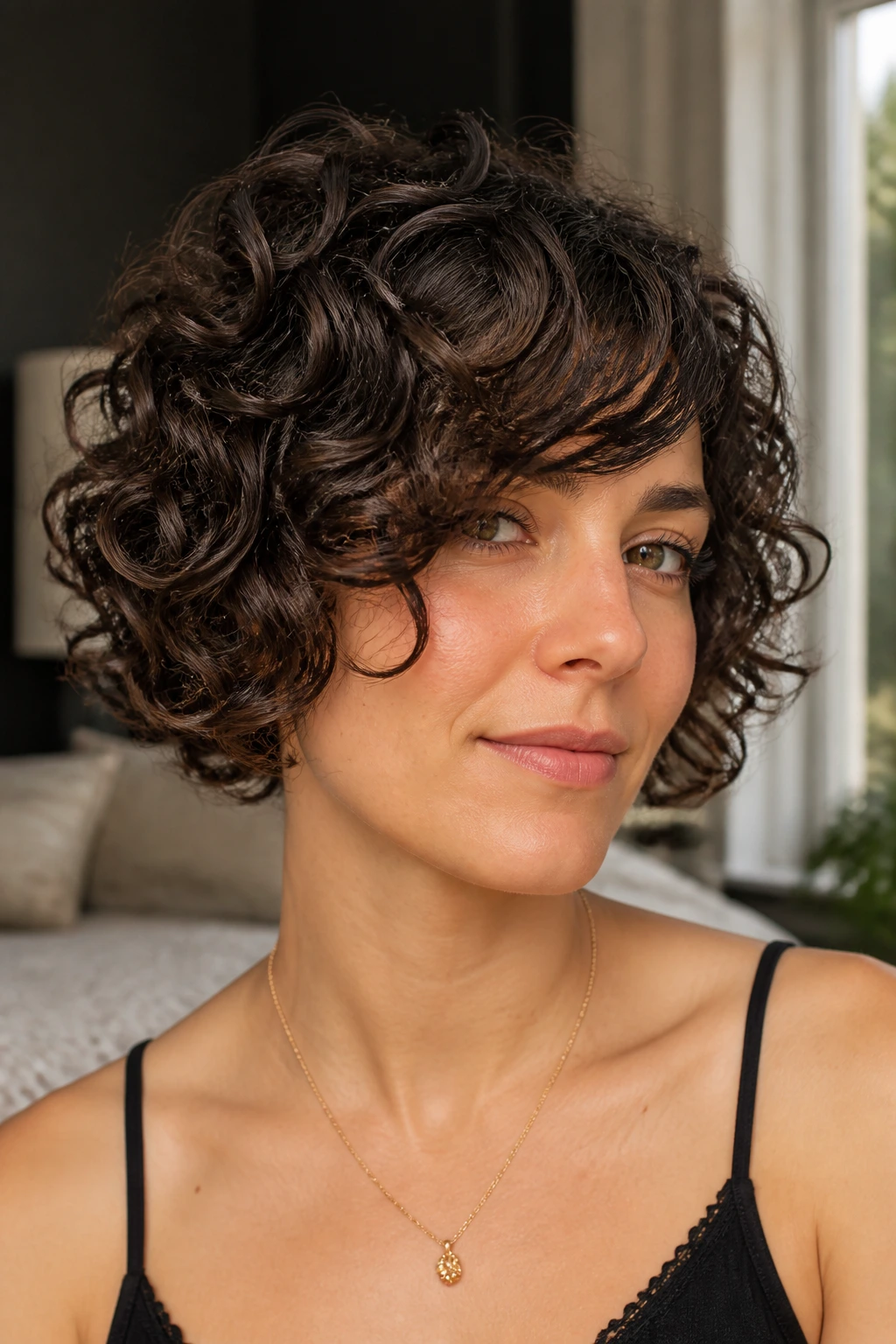
Can curls do swoopy bangs? Absolutely, if you stop trying to force the curl pattern into a straight line. A curly bob with a side-stretched fringe lets the front length move with the curl instead of against it, which is why it tends to look so much better in real life than in a dry salon photo.
The bang should be cut longer when curly, because the coil will shrink. That’s one of those details people ignore and then regret later. Ask for the front to be shaped dry or at least checked dry before the final cut. Curly fringe changes everything once it settles.
This style works best when the hair is stretched gently to the side while damp, then left alone. No brushing it dry. No yanking it straight. The swoop should be a curve, not a command.
18. Sleek Side-Part Crop
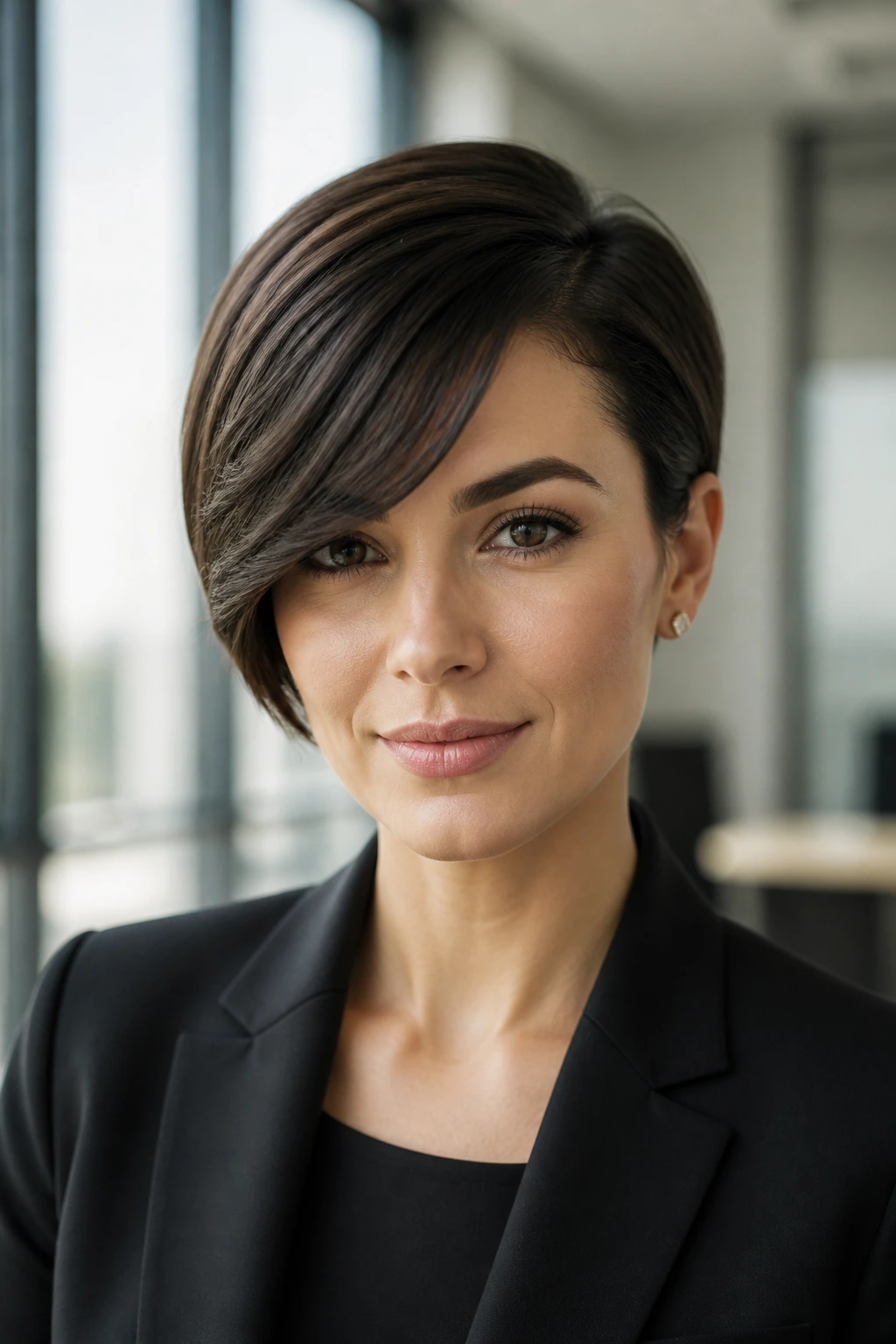
A sleek side-part crop is the polished cousin in the group. The part does most of the work, sending the front section diagonally across the forehead and keeping the short cut from looking too severe. This is a good office-friendly option if you want clean edges and minimal fuss.
The key is shine without stiffness. A smoothing cream at the mid-lengths, a quick blow-dry with a nozzle, and a soft bend at the ends are enough. If the front gets too flat, the style turns lifeless. If it gets too fluffy, you lose the sleek line that makes it feel sharp.
I like this one on straight hair or on hair that naturally dries in a compact shape. It has discipline. But not the boring kind.
19. Choppy Shag Bob Fringe

A choppy shag bob fringe is all about broken-up texture. The layers are cut to move, the fringe lands in pieces, and the whole thing looks better when it’s a little imperfect. If you like hair that can be touched and pushed around during the day, this is your lane.
The bang should connect to the front layers instead of sitting as a separate block. That connection is what keeps the face frame from feeling pasted on. A little sea-salt spray or texture mist helps the pieces separate without going crunchy.
This is one of the easiest looks to live with on second- or third-day hair. The bend is already built in. All you need is a finger comb and maybe a tiny touch of dry shampoo at the roots.
20. Retro Flip Bob Sweep
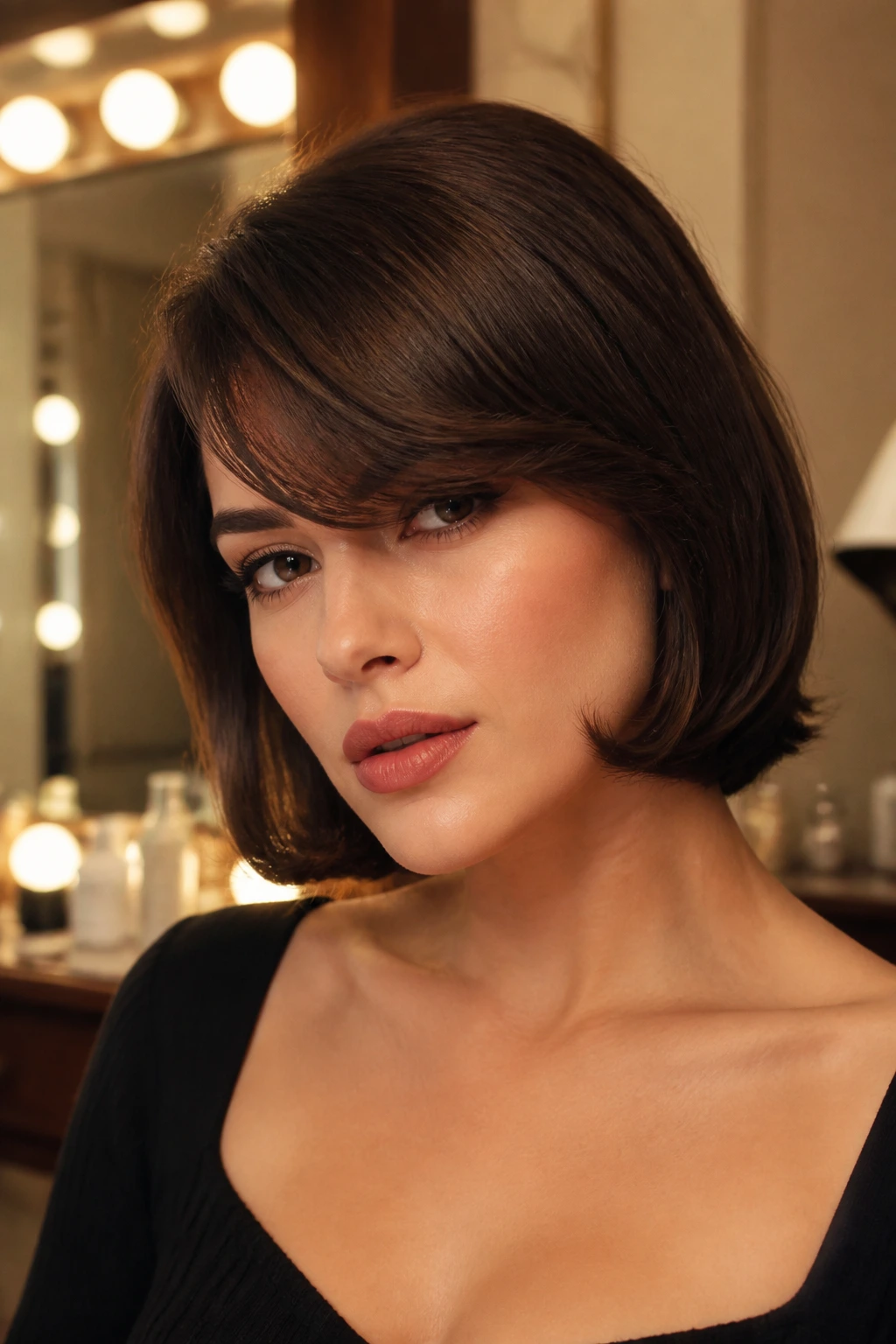
A retro flip bob with a swoopy bang leans into shape on purpose. The ends flip under or out, the fringe arcs over one side, and the whole cut has that clean, styled feeling that says someone actually brushed their hair. In a good way.
This version is especially nice if you like structure. A round brush gives the ends their curve, and the front should be directed away from the face with enough lift at the root to keep it from collapsing. A little shine spray on the long piece can make the sweep read even cleaner.
It pairs well with strong brows and simple makeup because the haircut already carries the look. There’s no need to pile on more. The hair does the talking here.
21. Whisper-Layer Crop
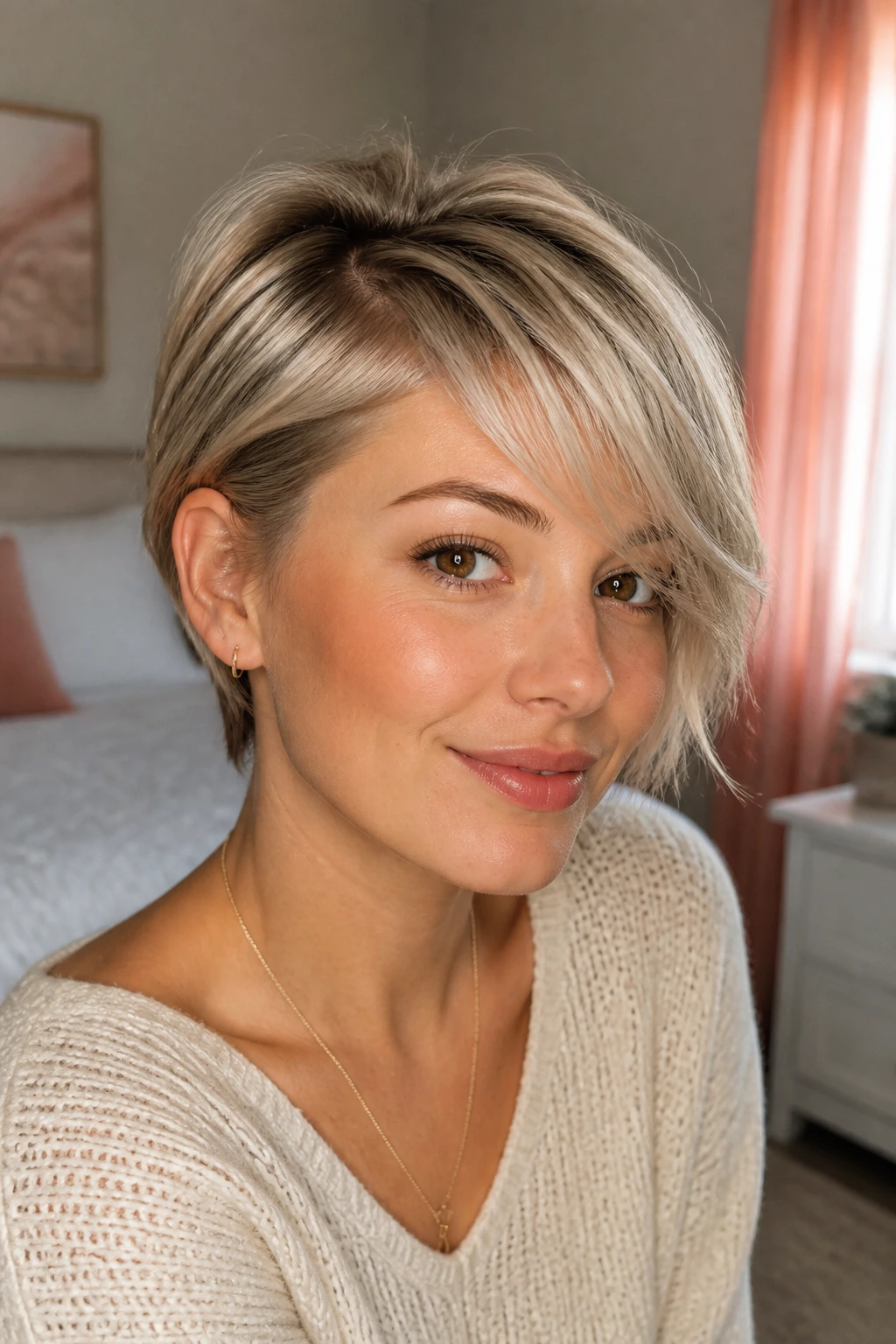
A whisper-layer crop is for people who want the softness of bangs without the full commitment of a fringe. The front is cut just long and light enough to drape to one side, then the rest of the crop is layered so the transition feels smooth. It’s subtle, and that’s why it works.
This is a useful choice if you’ve never worn bangs before or if you’re nervous about upkeep. The grow-out is gentle, the front can be tucked or clipped back, and the sweep stays believable even when it’s not perfectly styled. That kind of flexibility matters more than people admit.
Ask for the layers around the temple to be soft, not razor-thin. Too much texturizing here can make the front fray. A whisper fringe should look airy, not sparse.
22. Jaw-Length Bob With Dramatic Fall
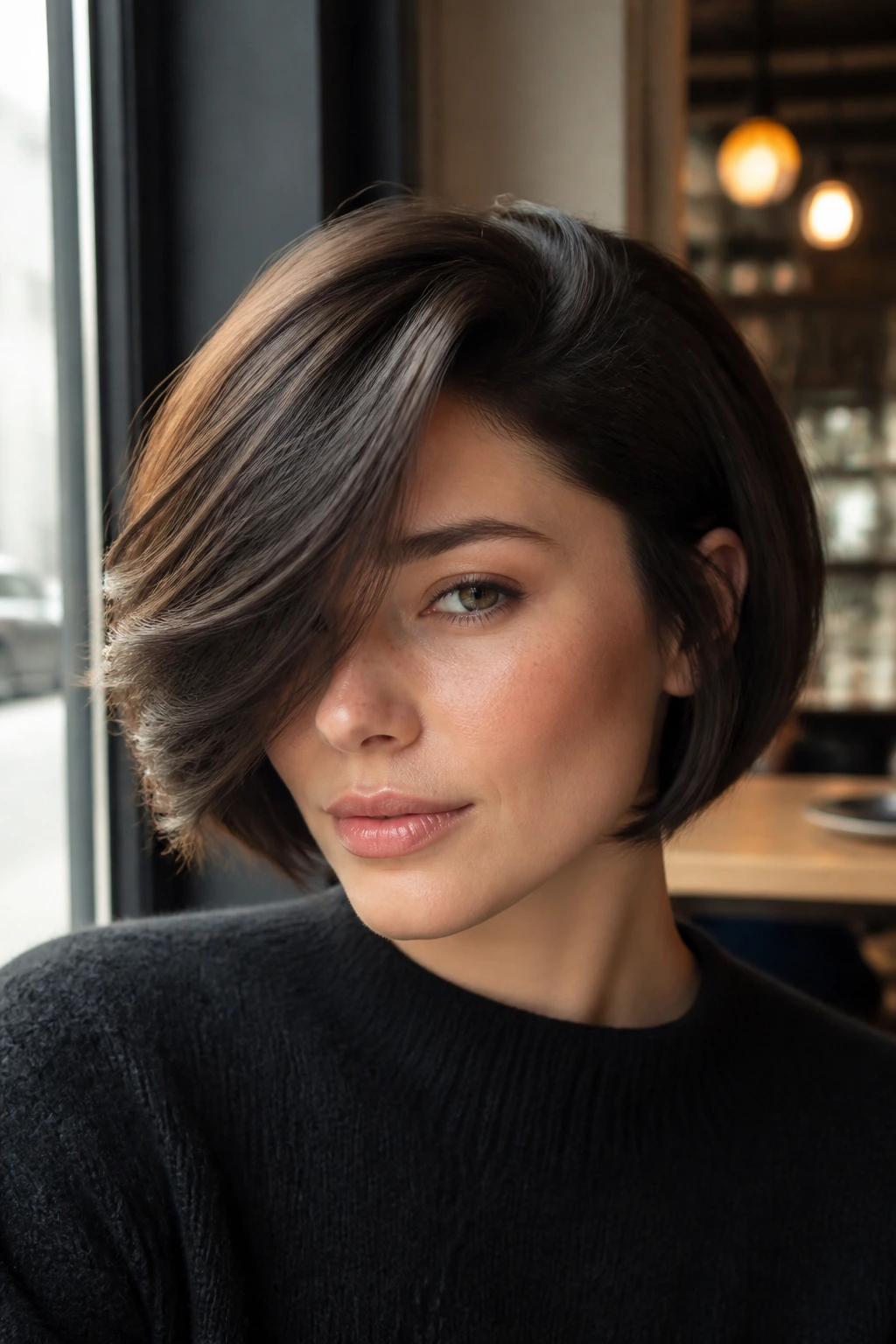
A jaw-length bob with a dramatic fall in front is the bold one. The cut lands right at the jaw, which sharpens the outline, and the swoopy bang drops across one side with enough length to feel almost glamorous. It’s the kind of shape that does not need much else.
The drama comes from contrast. Short, clean sides. Long, sweeping front. If the front is cut too evenly, the whole look loses its punch. If the line is too heavy, it feels dated. The best version is sleek, directional, and a little bit fearless.
This is a strong choice for straight or thick hair because the line stays visible. It also looks good with a clean ear tuck on the open side. That little reveal makes the swoop feel intentional instead of accidental.
What Makes a Swoop Stay Soft Instead of Flat
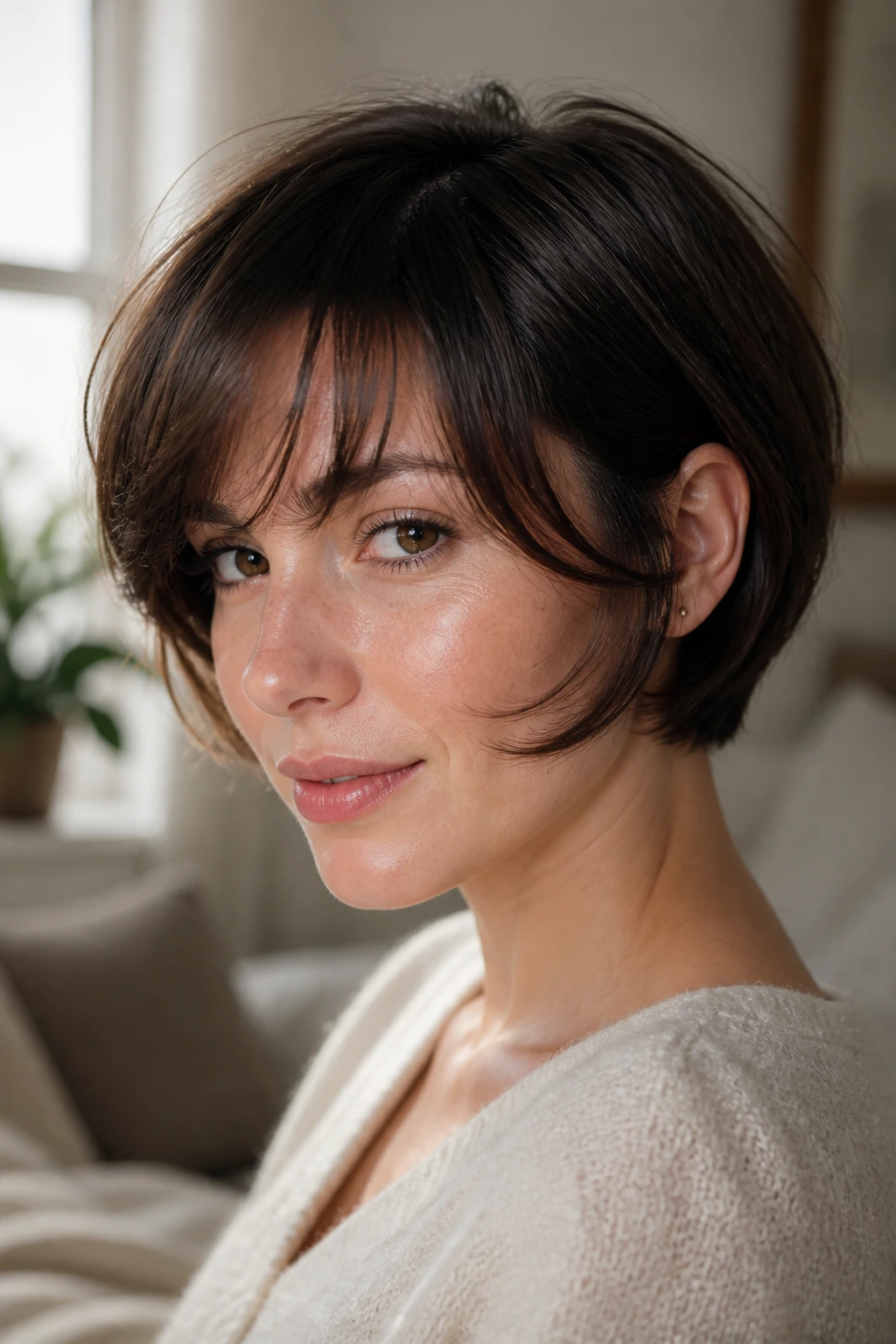
The difference between a good swoopy bang and a fringe that sits there like a tired paper cutout usually comes down to three things: length, parting, and weight. Short hair doesn’t forgive sloppy geometry. If the front is cut too short at the center, it can’t bend; if it’s too dense, it can’t move; if the part fights your growth pattern, the bang spends all day trying to escape.
The Length Window
The sweet spot is usually somewhere between brow length and cheekbone length, depending on texture. Straight hair can handle a shorter front because it doesn’t bounce much. Wavy and curly hair often need more room to shrink and settle, so the bang has to start longer.
The Parting
An off-center part gives the swoop somewhere to go. A strict middle part can work too, but it usually wants curtain energy rather than a single sweeping fringe. If a cowlick pushes the hair one way, don’t fight it with brute force. Let the cut follow that push and it’ll behave better.
The Weight
Short hair needs movement near the front. If the bang is packed with too much bulk, it sits heavily across the forehead and loses the curve. Point cutting, light layering, and a little internal texture help the front glide instead of droop.
Essential Tools for Styling Short Bangs at Home
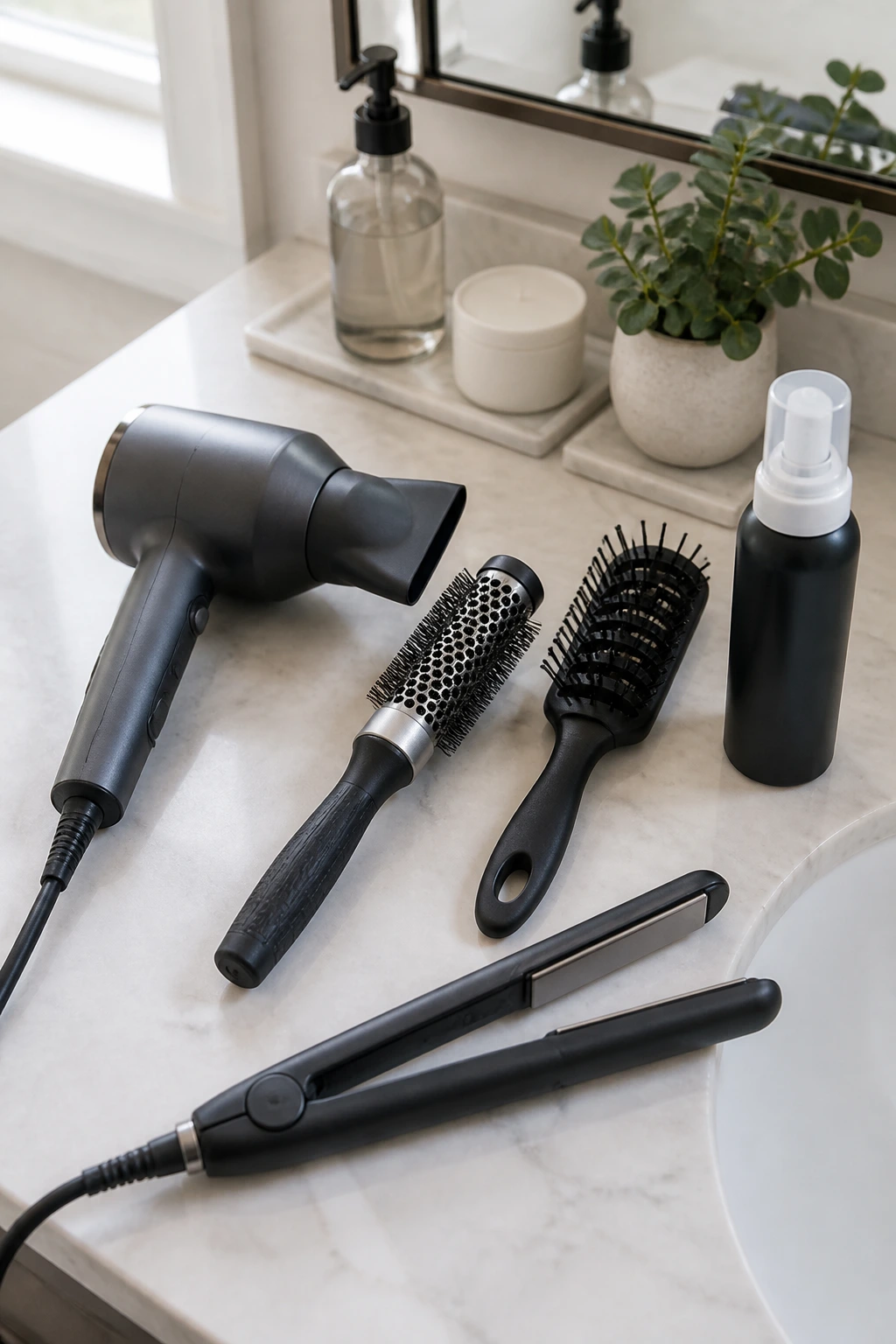
You do not need an entire drawer of gadgets to keep swoopy bangs in shape. You do need the right small tools, because the front section of short hair shows every shortcut.
- Blow dryer with a concentrator nozzle: Directs heat at the roots so the bang bends instead of frizzes.
- 1-inch round brush: Gives a clean curve on pixies, bobs, and shorter fringes.
- Vent brush: A faster option for fine hair that needs less tension.
- Mini flat iron: Useful for redirecting a stubborn bang or making one clean bend.
- Lightweight mousse: Adds lift without making the front stiff or crunchy.
- Flexible-hold hairspray: Keeps the shape movable, not frozen.
- Dry shampoo: Saves the fringe on day two when oil starts creeping down from the scalp.
- Duckbill clips: Great for setting the bang while it cools into the shape you want.
- Fine-mist spray bottle: Handy for re-dampening only the front instead of rewashing the whole head.
Small Styling Tweaks That Change the Finish
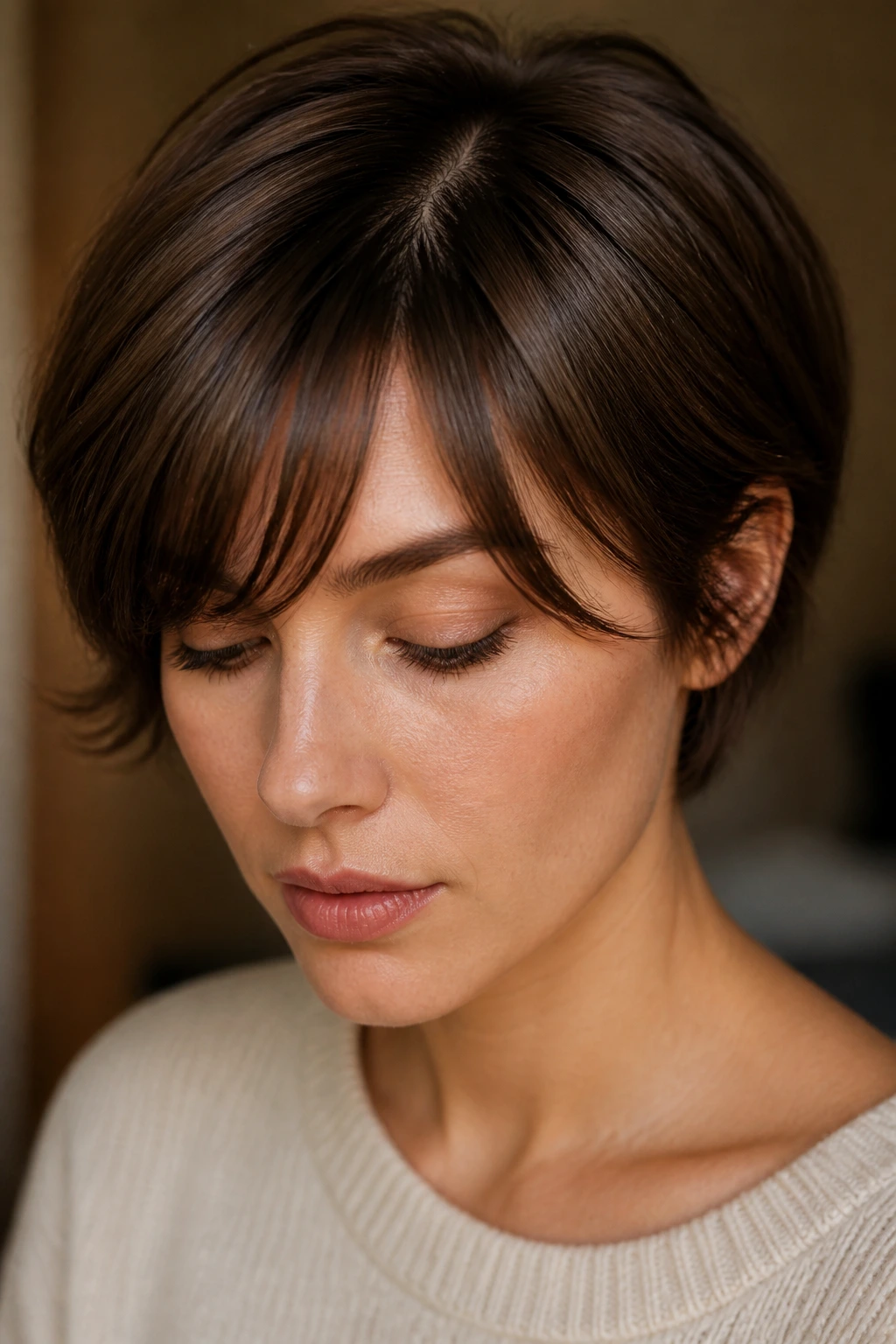
A swoopy bang doesn’t need a huge routine to look right. It needs a few tiny decisions made in the right order.
Root Lift: Dry the roots first, using your fingers or a brush to push the front up and away from the scalp before sweeping it sideways. That little bit of lift keeps the bang from laying flat at the hairline.
Texture Control: Fine hair usually likes mousse at the roots and a whisper of cream on the ends. Thick hair usually wants the opposite: a lighter product at the roots and a touch of smoothing on the outer layer so the sweep doesn’t puff out.
Parting Shift: Move the part half an inch and the whole haircut changes. A deeper part creates drama; a softer off-center part creates a gentler curve. It’s a small trick, but it changes the frame of your face fast.
Day-Two Refresh: Mist the fringe lightly, roll it around your fingers for a few seconds, then clip it in the direction you want while you do the rest of your makeup. That’s often enough. No full wash required.
Make-It-Yours: If you like polish, finish with shine spray only on the long side. If you like edge, rough it up with texture spray at the roots and leave the ends piecey.
Keeping the Shape Between Trims
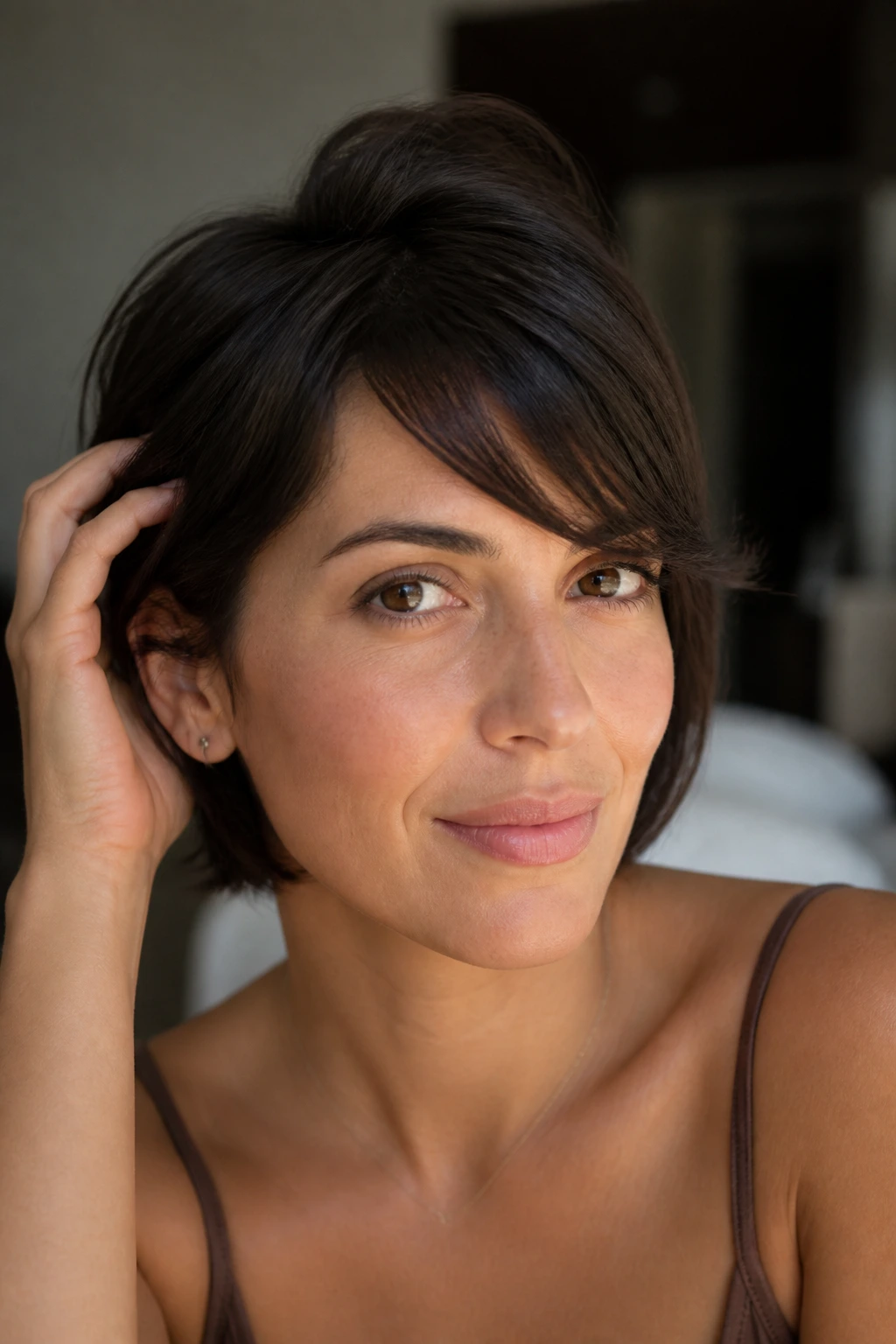
Swoopy bangs grow out faster than the rest of short hair, which is both the charm and the annoyance. The fringe can go from airy to heavy in a couple of weeks if you ignore it. I’d rather trim bangs more often and keep the shape honest than wait until they start poking the eyes and pretending the cut is still the same.
If you like a crisp look, plan on a bang trim every 3 to 4 weeks. If you prefer a softer, grown-out sweep, you can stretch that to 5 or 6 weeks, but the front will need more styling help. Between trims, use dry shampoo at the roots, not on the whole fringe, and keep the product light enough that the hair still separates into pieces.
Sleep matters too. A side-swept fringe can flatten weirdly overnight, so clip it loosely to the side before bed if your hair bends in odd directions. A satin pillowcase helps, but the real trick is not crushing the front under your head for eight hours and hoping for the best.
Common Mistakes That Flatten Short Fringe
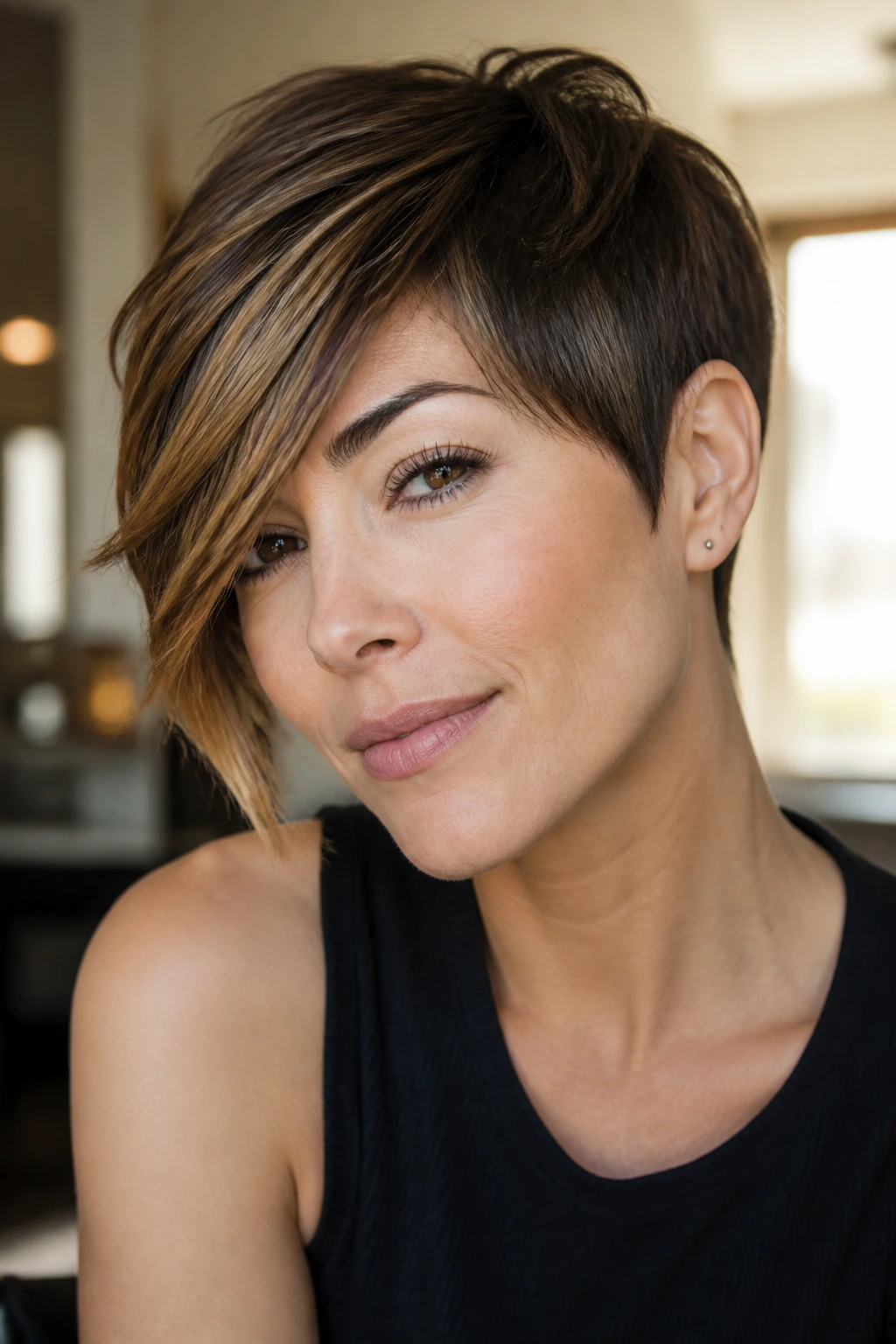
- Cutting the front too short at the center: The bang sits like a shelf and refuses to curve. Ask for a longer center-to-side transition so the line can move.
- Ignoring the natural part: If your hair wants to fall one way and the cut fights it, the bang will split or puff up. Cut and style with the grain, not against it.
- Using heavy cream or oil on the fringe: Short hair picks up product quickly, and the swoop turns stringy by midday. Use less than you think you need, especially at the roots.
- Leaving too much bulk at the temples: The front can’t swing if it’s carrying too much weight. Light layering there makes the bend easier.
- Waiting too long for a trim: Once the longest piece drops into the eyes, the cut starts losing its shape. A small trim keeps the sweep clean.
Variations and Alternatives to Try
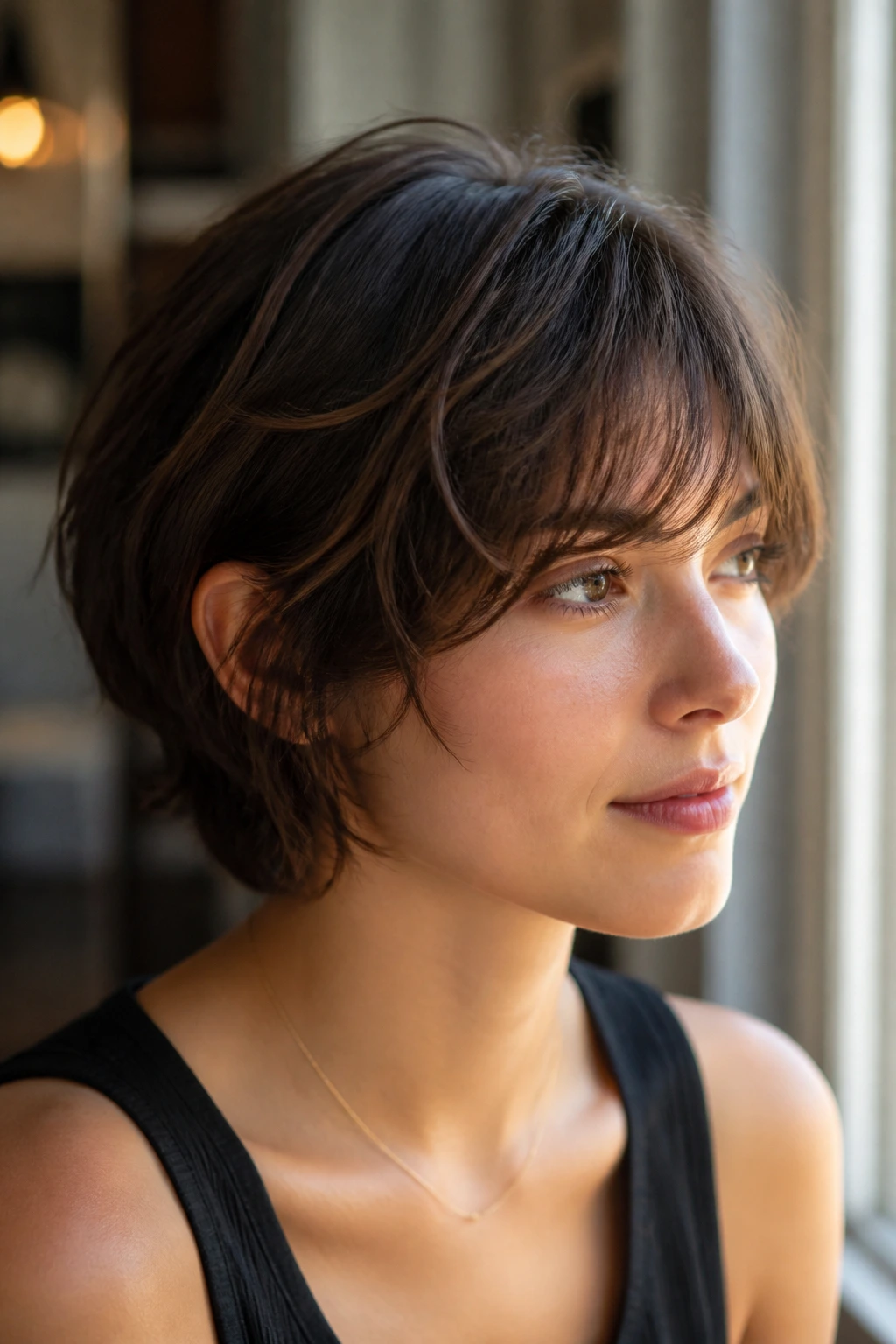
Air-Dry Sweep: Best for wavy hair that already wants to bend. Put a small amount of mousse in the front, twist the bang to the side while it’s damp, and clip it until the roots set.
Round-Brush Bend: This is the polished option. Use a round brush to lift the front up and around, then cool it in place with the brush still under the hair so the curve holds.
Flat-Iron Flip: Good for stubborn pieces that won’t sweep on their own. One gentle pass at a slight angle is enough; do not curl the bang into a loop or it loses the soft diagonal line.
Curly Stretch Fringe: For curls and coils, cut the fringe longer and stretch it lightly to the side while drying. That keeps the finished length from shrinking into the forehead.
Grow-Out Curtain: If you’re moving away from bangs, split the front down the middle and let the shortest pieces merge into face-framing layers. It’s a slow transition, but it avoids the ugly middle stage people dread.
Frequently Asked Questions
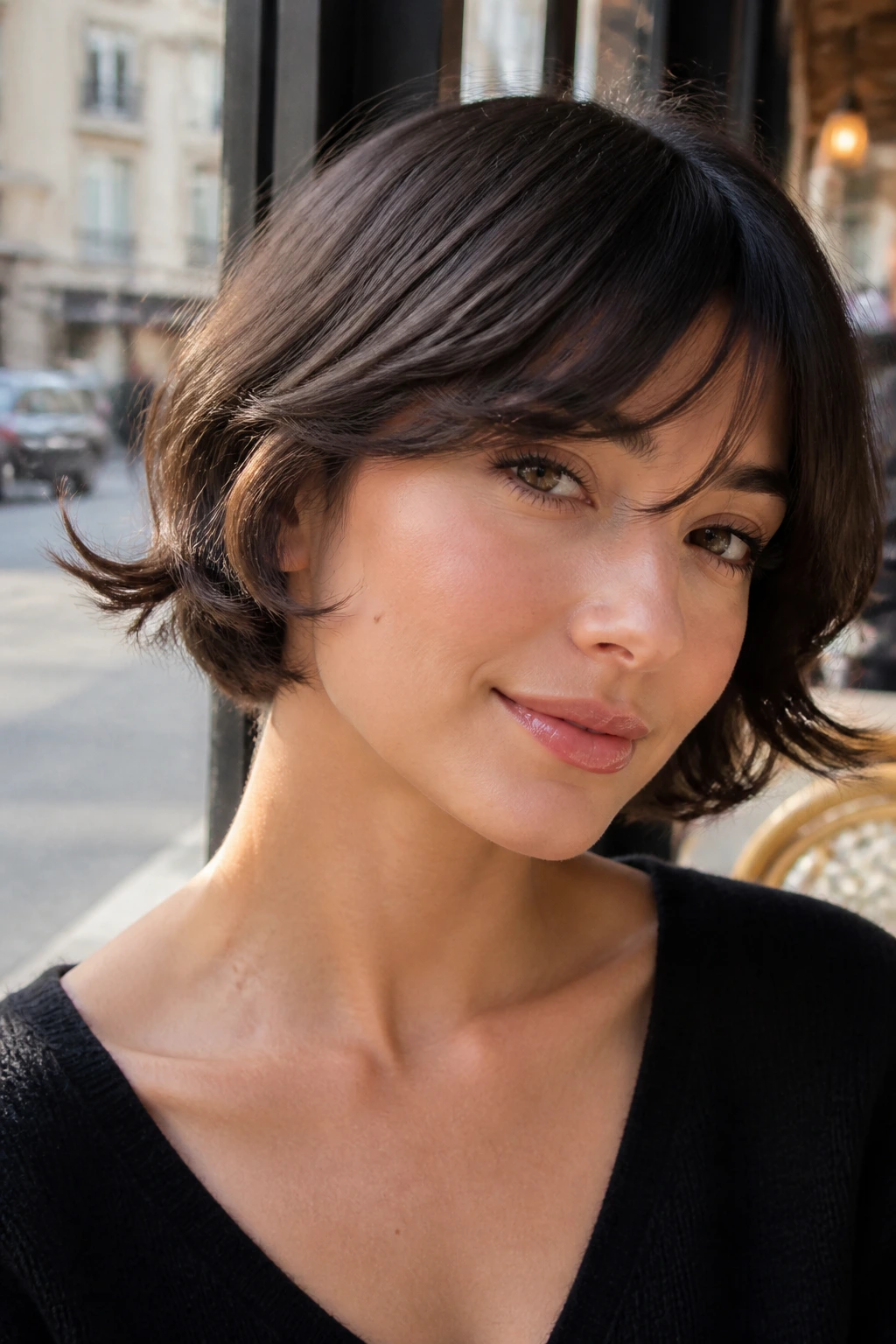
Which face shape works best with swoopy bangs on short hair?
Almost any face shape can wear them if the length is adjusted properly. Round faces often do well with a deeper side sweep, while square faces usually like a softer curve that lands around the cheekbone.
Can swoopy bangs work on curly hair?
Yes, but the cut has to respect shrinkage. Curly fringe should usually be left longer, then shaped when dry or nearly dry so the sweep lands where you expect it to.
How short is too short for a swoop?
If the front is cut so short that it can’t brush the forehead or temple, it loses the ability to move. Very short micro-fringe can look sharp, but it’s not the same thing as a true swoopy bang.
What if my cowlick splits the fringe apart?
Let it help, not fight it. A side part or a slightly deeper diagonal can calm a cowlick, and a small round-brush pass at the roots usually does more than heavy product ever will.
How often should I trim the bangs?
Most short fringes need attention every 3 to 5 weeks, depending on how precise you want the shape. If you like a softer grow-out, you can wait a little longer, but the front will need more restyling.
Do I need a blow-dryer every morning?
Not always. Fine or straight hair may settle with a quick mist and finger twist, while thick or stubborn hair usually needs a short blast of heat to keep the swoop from falling flat.
Are curtain bangs the same thing as swoopy bangs?
Not exactly. Curtain bangs split in the center and frame both sides of the face, while swoopy bangs usually travel in one direction or as a more obvious side sweep. They overlap, but they’re not identical.
Can I grow out short swoopy bangs without an awkward stage?
Mostly, yes. Shift the part gradually, keep the longest front pieces connected to the layers around your face, and trim the shortest pieces so they don’t stick out like they’re mid-argument with the rest of your hair.
The Cut That Makes Short Hair Feel Intentional
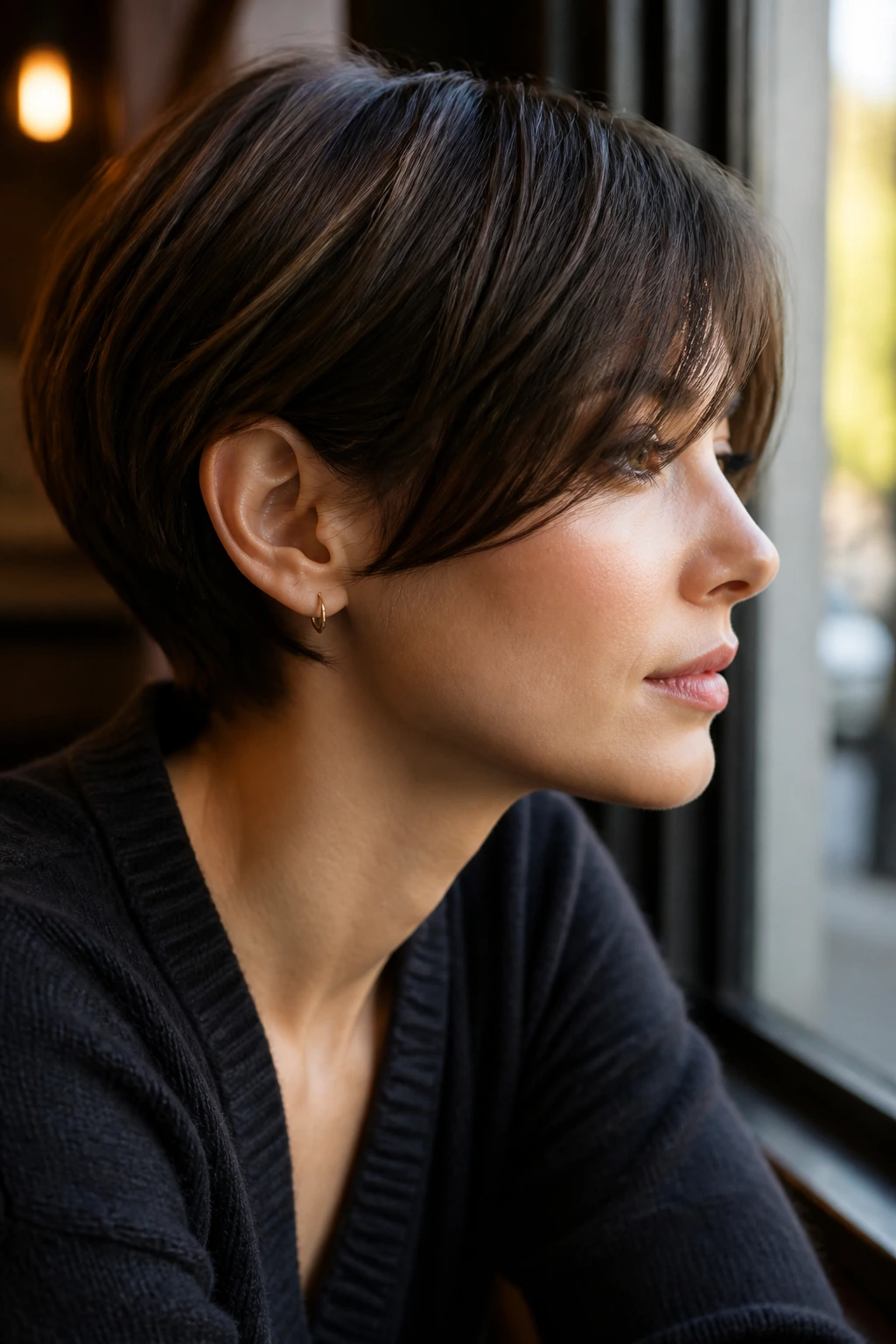
Short hair can go flat fast when the front is wrong. A swoopy bang fixes that by giving the cut a direction to move in, and direction is half the battle with cropped hair. The front doesn’t need to be loud. It just needs to bend in the right place.
The smartest versions in this group all do the same quiet job: they soften the forehead, sharpen the shape, and keep the haircut looking lived-in rather than locked in place. Pick the one that matches your texture and your patience level. The best swoop is the one you can actually wear on an ordinary morning, not just the one that looked brilliant under salon lights.
