



Curly hair and a pixie cut can be a beautiful match, but only when the shape respects what curls actually do. A good vintage-leaning pixie does not flatten the head into a tidy cap or force every coil to obey the same direction. It leaves room for spring, a little lift, and that old-film softness that makes the cut feel deliberate instead of overly polished.
The sweet spot is usually somewhere between structure and looseness. You want enough length at the crown, fringe, and temples to keep the cut from shrinking into a surprise, but not so much hair that the silhouette loses its short, decisive edge. That balance is where a vintage vibe comes alive: a finger-wave front, a pin-curl bend, a side part with a little roll, a nape that’s clean enough to show the neck.
These pixie cuts for curly hair work because they use curl direction as part of the design. A few look like they stepped out of a black-and-white studio portrait. Others borrow the neatness of a pageboy, the lift of a beehive, or the cheekbone focus of a pin-up style. All of them lean on the same idea: curl should look shaped, not wrestled.
Why These Curly Pixies Feel Vintage Without Looking Costume-Y
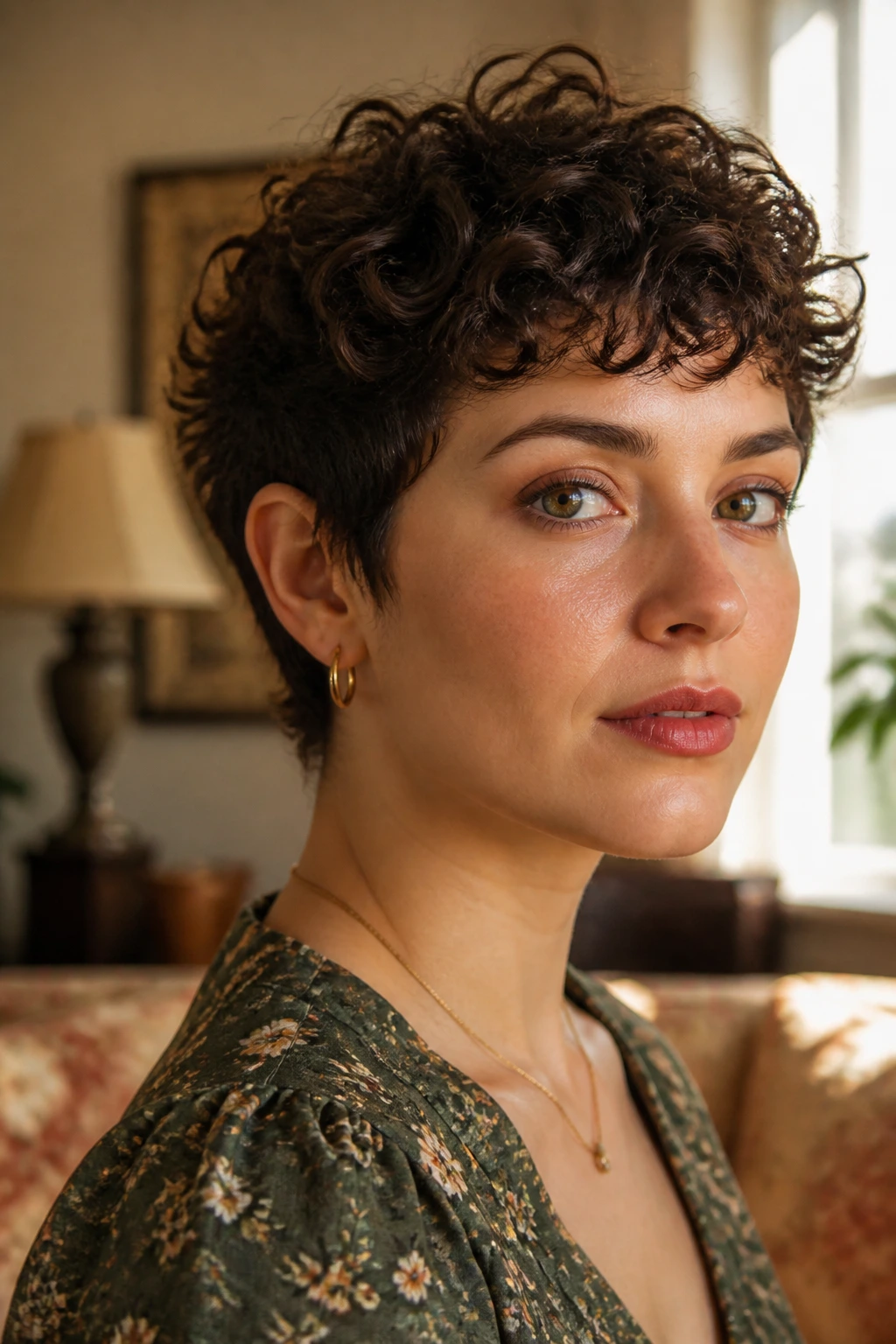
-
Shrinkage is part of the design: Curly hair can lose half an inch to an inch when it dries, so the best versions here leave enough length at the fringe and crown to keep the shape visible after the curl springs up.
-
The outline stays clean: A tapered nape, a carved side part, or a rounded perimeter gives the cut a period feel without turning it stiff or helmet-like.
-
The styling is small but specific: You do not need a full roller set. A diffuser, a few duckbill clips, and a pea-size amount of cream or mousse can create the right set.
-
Accessories do half the work: Barrettes, combs, scarves, and bold earrings sit naturally with short curls because the cut opens up the neck and ears.
-
The look changes with the era: Some of these cuts feel like the 1920s, some like the 1950s, and some lean 1960s or 1970s, so you can choose the mood without losing the pixie shape.
-
Day-two hair usually gets better: A little curl separation and softened root lift often make these cuts feel even more lived-in on the second day, which is one of the reasons I keep coming back to them.
How Vintage Shapes Work With Curl Pattern Instead of Fighting It
Curly hair has an advantage here that straight hair doesn’t. It already carries movement. A vintage pixie just gives that movement a frame.
The key is matching the cut to the curl’s behavior. Loose 2C waves can hold a finger wave or a swept fringe with very little effort. Curlier 3A and 3B textures can build real shape at the crown, but they need a careful perimeter so the sides do not blow out into a triangle. Tight coils can look stunning in a cropped vintage shape, especially when the nape is tapered and the top is left long enough to sit in soft ridges instead of shrinking into a blur.
There’s also the matter of line. Old-Hollywood hair was rarely random. Even when it looked soft, it had a visible part, a bend over one temple, or a tucked nape that told your eye where to look. Curly hair naturally creates fullness, so the haircut needs to decide where that fullness lives. Once that choice is made, the whole style starts to read as intentional.
And yes, a dry cut helps more often than not. You can get a vintage pixie wet, but if the stylist does not check the shape dry, the final result can land much shorter than you wanted in the front and much puffier around the ears. That’s the part people regret later.
1. Finger-Wave Pixie
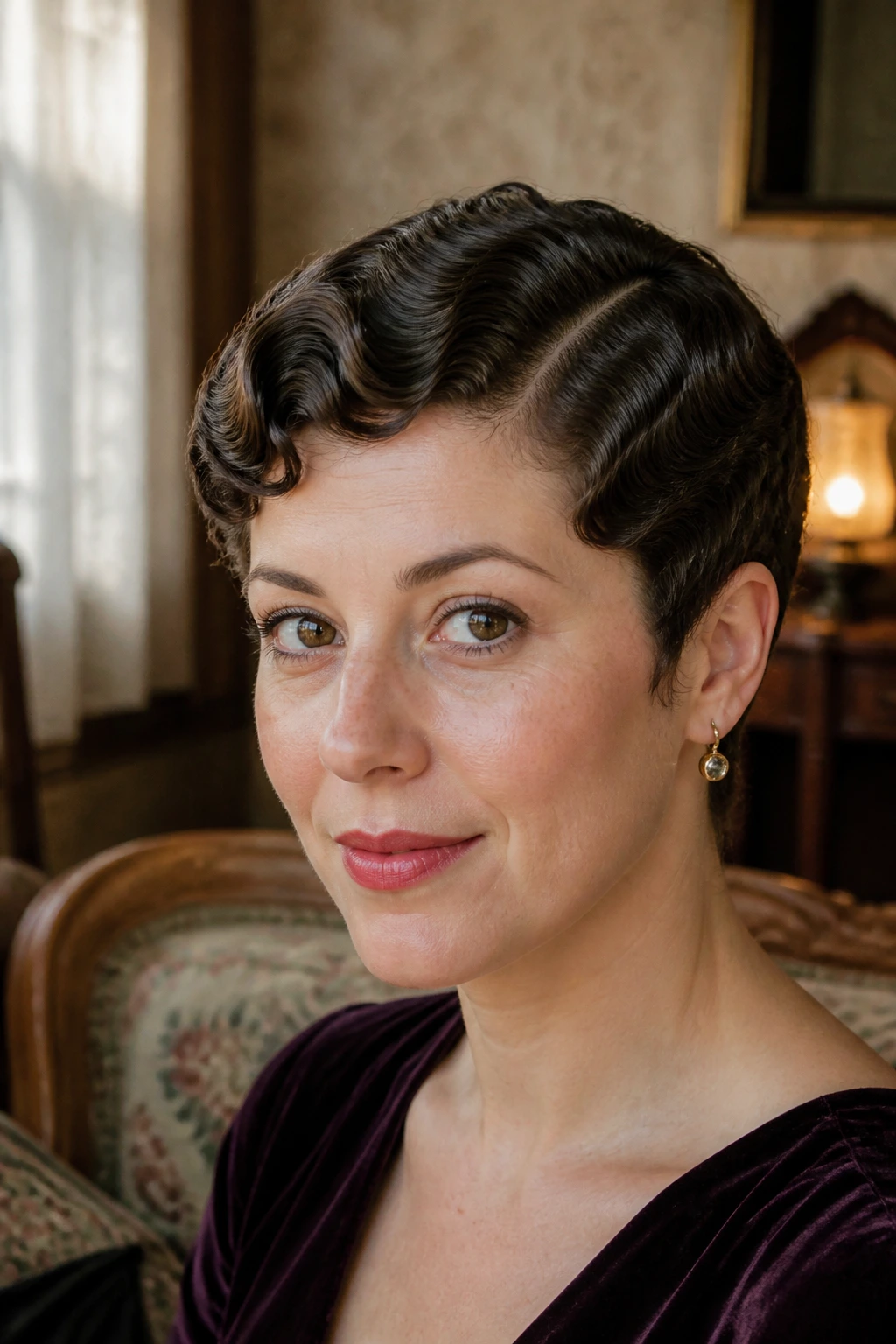
A finger-wave pixie is the cleanest way to nod to the 1930s without making your hair look dressed for a costume party. The front is the star here: a soft S-shaped bend starts near the part and travels across the forehead, while the sides stay close and the nape stays neat.
Why It Works
On loose curls, this cut gives you a sculpted front and a soft, natural body everywhere else. The wave pattern does the heavy lifting, so you do not need a lot of length to get that old-screen feel.
Ask for the fringe to be left a touch long when it’s dry, especially if your curl pattern springs tight at the front. That little bit of extra room keeps the wave visible after it dries. A light mousse and two or three duckbill clips can hold the bend while the hair sets.
2. Marilyn Monroe Soft Curl Crop
This is the cut for people who want volume at the crown and softness at the cheekbones. The shape is shorter than a bob but more lifted than a classic boyish crop, which gives it that easy, camera-ready feel people associate with midcentury glamour.
The trick is the side part. It pushes one side back and lets the other side fall in a gentle curve, so the hair does not sit flat against the head. On medium-density curls, a little root lift with a diffuser makes the top look airy instead of puffy. I like this shape because it never needs to be perfect. If one curl bunches a little higher than the rest, the cut can handle it.
3. Bettie Bangs Pixie
Can curly bangs look sharp? Absolutely, if you leave them long enough to shrink. Bettie bangs on a pixie should not be treated like a blunt micro-fringe from a straight-hair photo. They need room to curl, fold, and land just above or right at the brows.
This cut works best when the bangs are cut dry and checked again after they spring up. The sides stay snug, which keeps the focus on the front. It’s a strong choice if you wear glasses or like a bold brow line, because the fringe frames the face in a very direct way. If your curls are tight, ask for a slightly broken edge rather than a hard line. It reads softer and wears better.
4. Victory Roll Crown Pixie
When the front needs drama and the sides need to stay quiet, the victory roll crown pixie answers fast. The top is left long enough to sweep back into a rolled lift, while the sides are tapered just enough to keep the silhouette compact.
Best details to ask for:
- Keep 2 to 3 inches at the crown if your curls are loose to medium.
- Leave enough length at the front to pin or clip into a soft roll.
- Taper the nape so the lift at the top doesn’t get lost in bulk.
- Use a strong mousse or setting lotion if your hair tends to collapse.
This is one of the more theatrical cuts in the bunch, but that’s the fun of it. Wear it with a little shine at the front and you get instant 1940s energy.
5. Marcel-Style Taper Pixie
The Marcel wave is all about smooth curves and a clean side part, and curly hair can fake that look beautifully when the cut is tapered correctly. Instead of trying to force every curl into the same direction, the shape lets the top move in one soft arc while the sides stay controlled.
I like this cut for finer curls and softer density because it creates the illusion of more structure than it really needs. A light cream on damp hair, then a quick pass with a diffuser and a side-to-side finger set, usually does the trick. It feels dressed up without being stiff. That’s the sweet spot here.
6. Pageboy Pixie
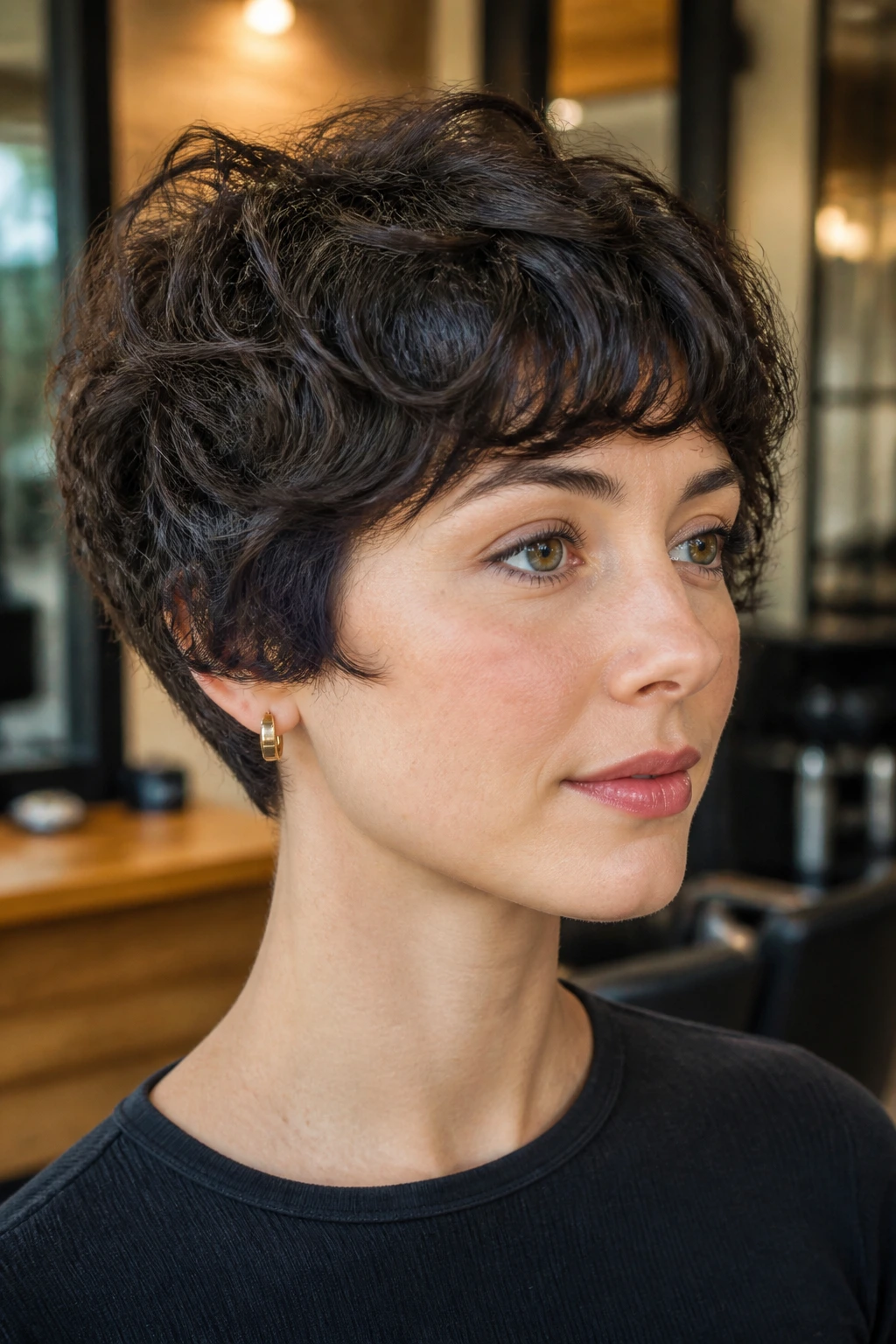
A pageboy pixie gives you rounded edges and a gentle under-turn at the perimeter, which sounds subtle until you see how much shape it adds. The cut borrows from the pageboy bob, but it keeps the length short enough to stay in pixie territory.
Unlike a shaggy crop, this one wants control. The ends should tuck inward around the ears and nape, while the crown keeps a little movement. That balance is useful for dense curls that need direction or for anyone who wants a more polished frame around the jaw. It’s also a good pick if your hair frizzes at the edges, because the rounded line hides a lot of fuss.
7. Curly Shingle Cut
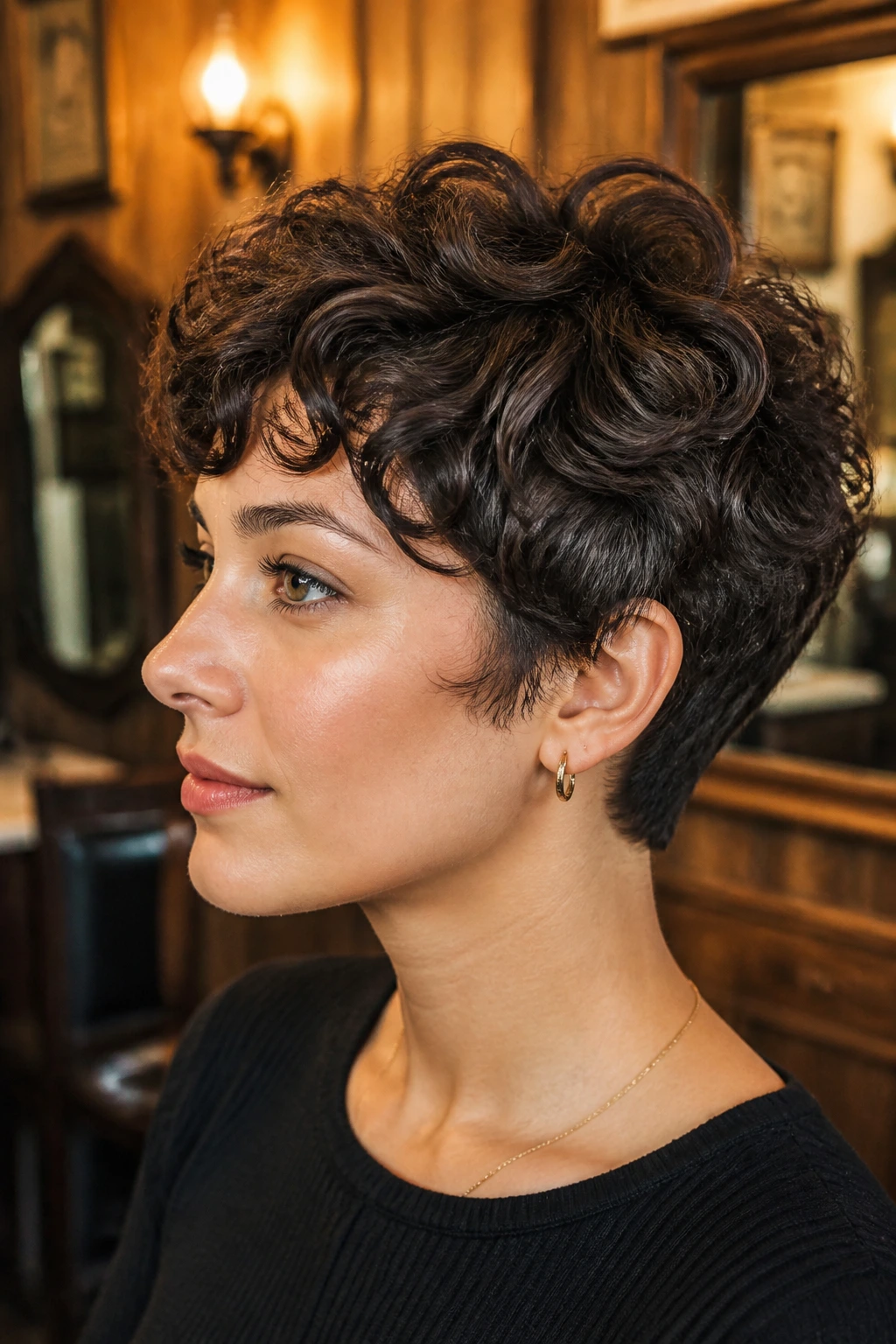
The shingle cut is the sneakiest vintage pixie of the bunch. It stays close at the nape, builds a bit of structure through the crown, and then lets the curls rise just enough to keep the shape from feeling severe.
This cut shines on thick curls that can support a stacked back. You want the stylist to remove weight low in the nape without thinning out the crown too much. That’s the mistake I see most often with this shape: people over-thin it and lose the retro architecture. Keep the silhouette compact. Let the top do the talking.
8. Sculpted Side-Part Pixie
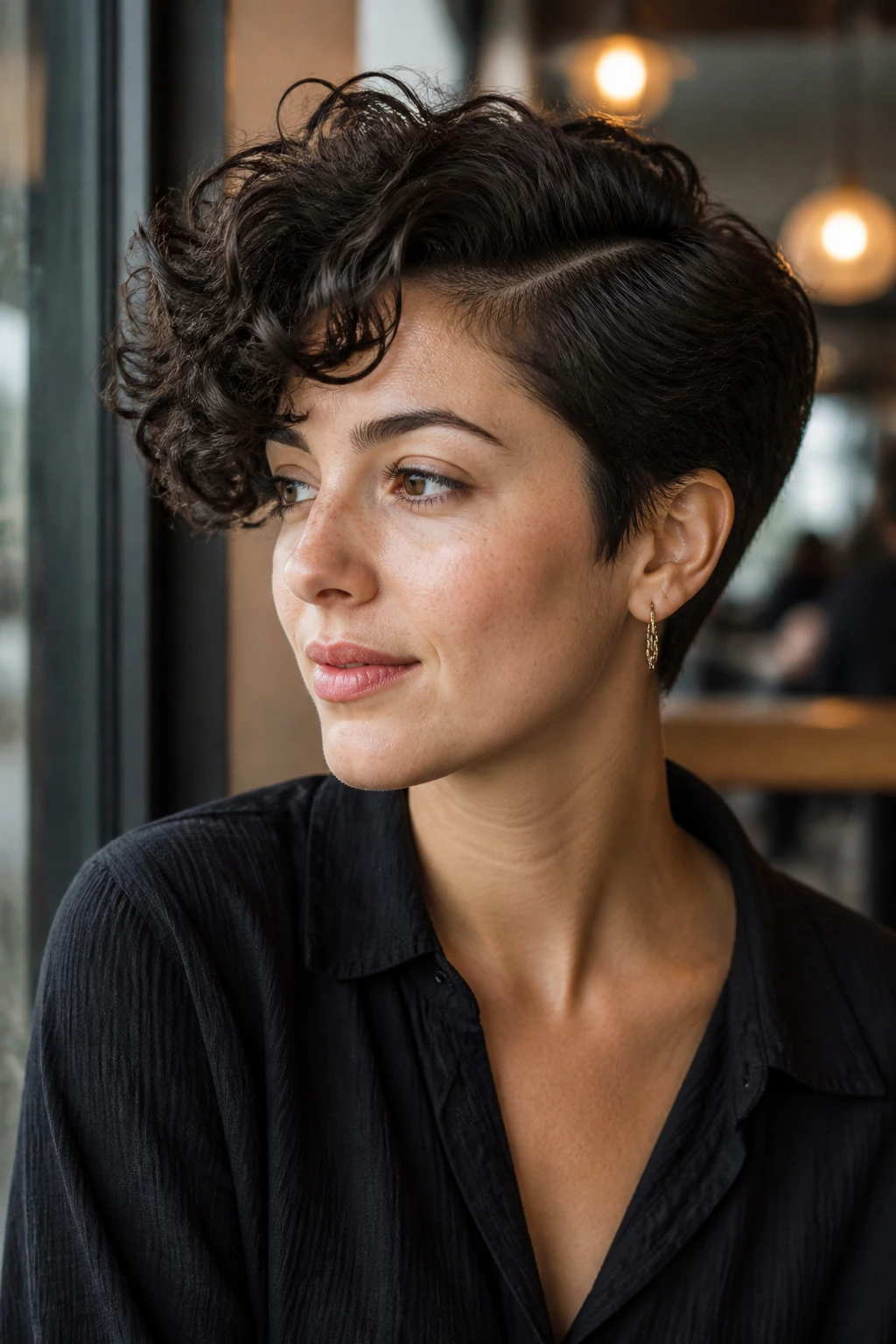
What if your curls are happiest when they fall to one side? Then you want a sculpted side-part pixie, because it uses that natural bias instead of fighting it. The part is deep, the fringe sweeps across the forehead, and one temple usually sits flatter than the other.
This is a strong choice for glasses, oval faces, and anyone who wants a polished line without going too formal. The styling is straightforward: a little gel at the roots, then a diffuser on low heat to lock the side part in place. If the hairline around the temple gets fluffy, smooth just that area with your fingers and leave the rest alone. Overworking it ruins the clean line.
9. Pin-Curl Pixie
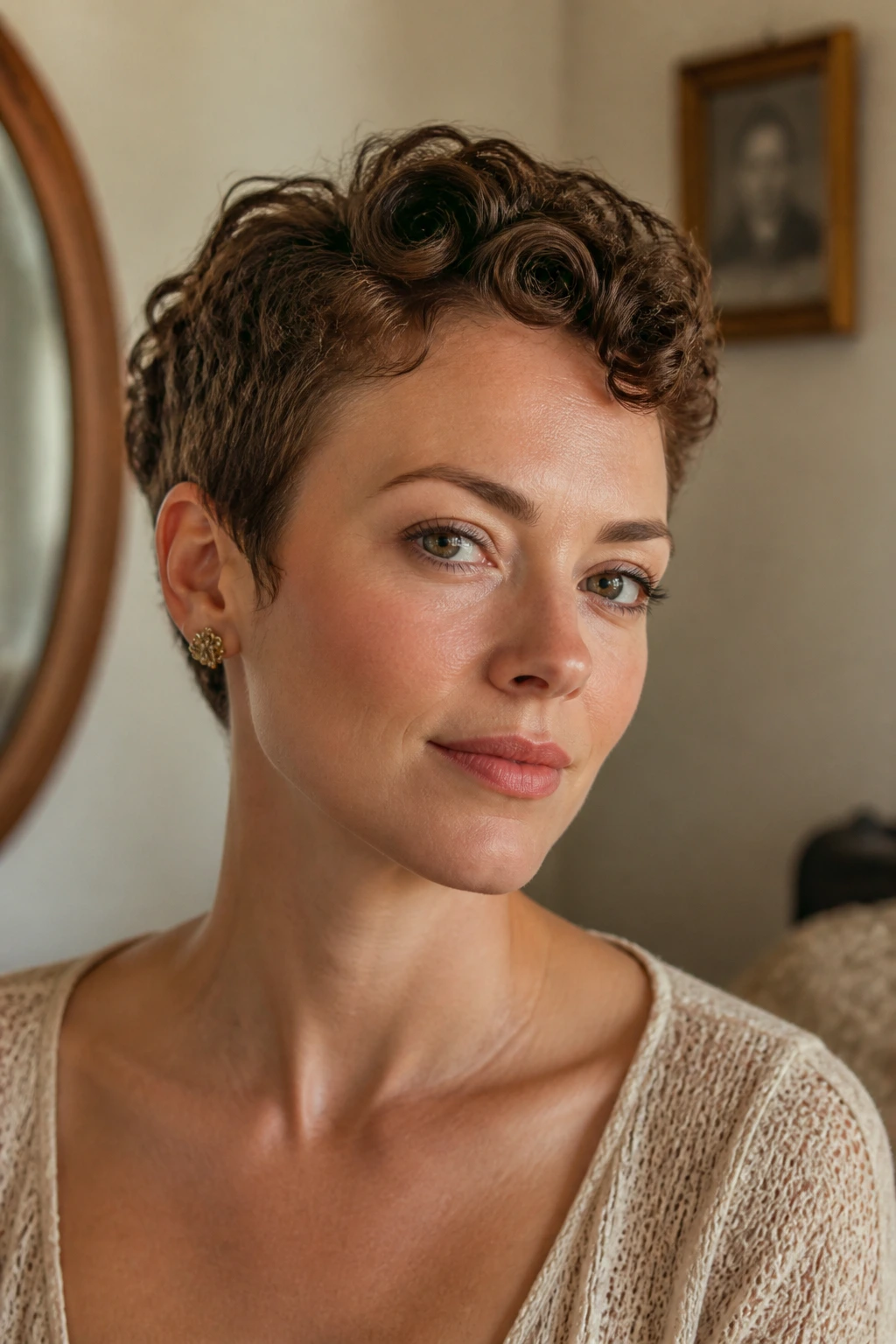
Pin-curl styling and pixie cuts are natural partners. Short hair holds those little rolled sections better than people expect, especially when the cut keeps enough length on top to wrap around a finger or two.
This version works best when the crown is left long enough for two or three tiny pin curls on the front section. The sides can stay close, which gives the whole head a soft, set-from-the-salon feel. Use clips while the hair cools. Don’t rush it. A pin-curl pixie looks best when the curls have had time to settle into a round shape instead of being shaken loose too soon.
10. Pompadour Pixie
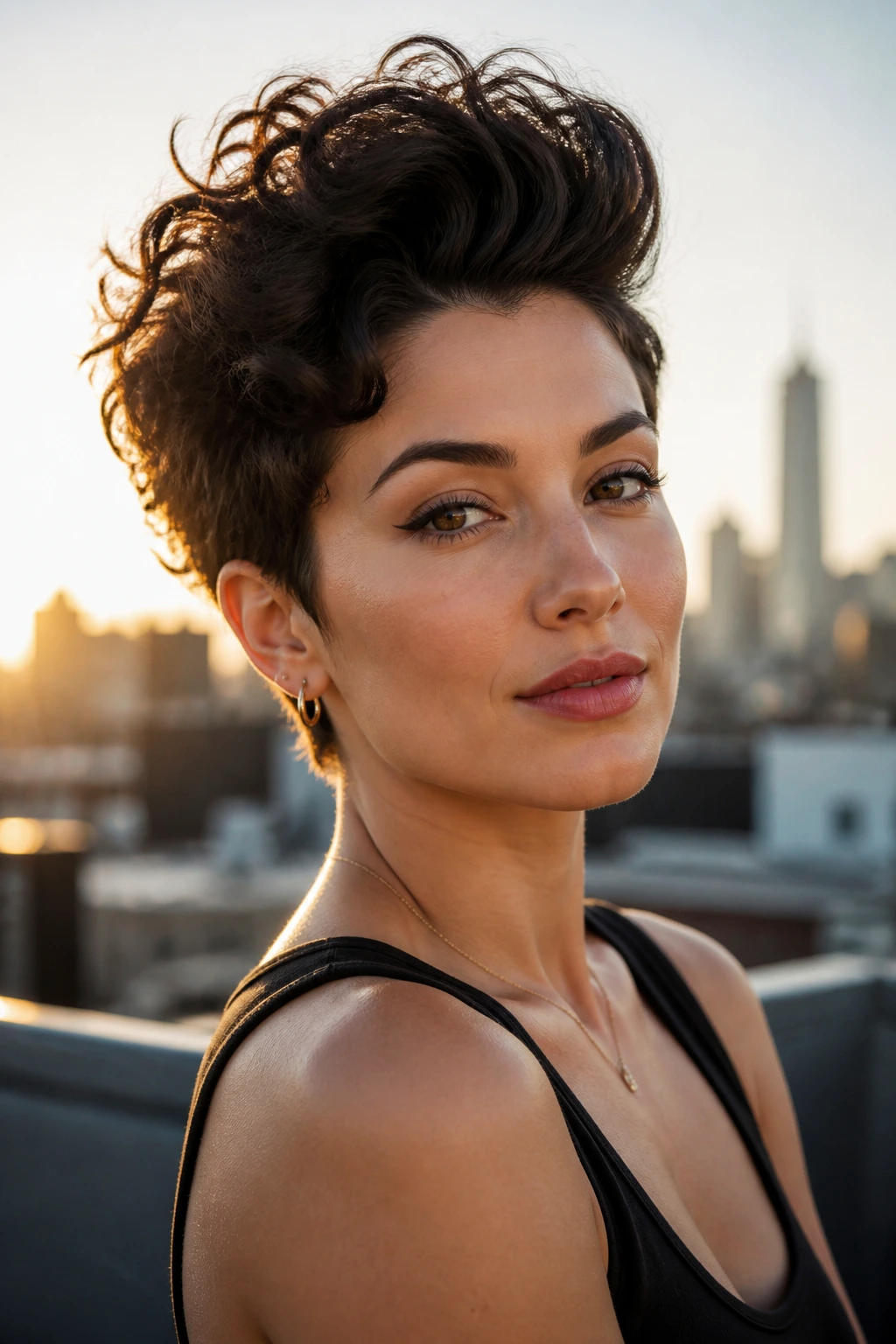
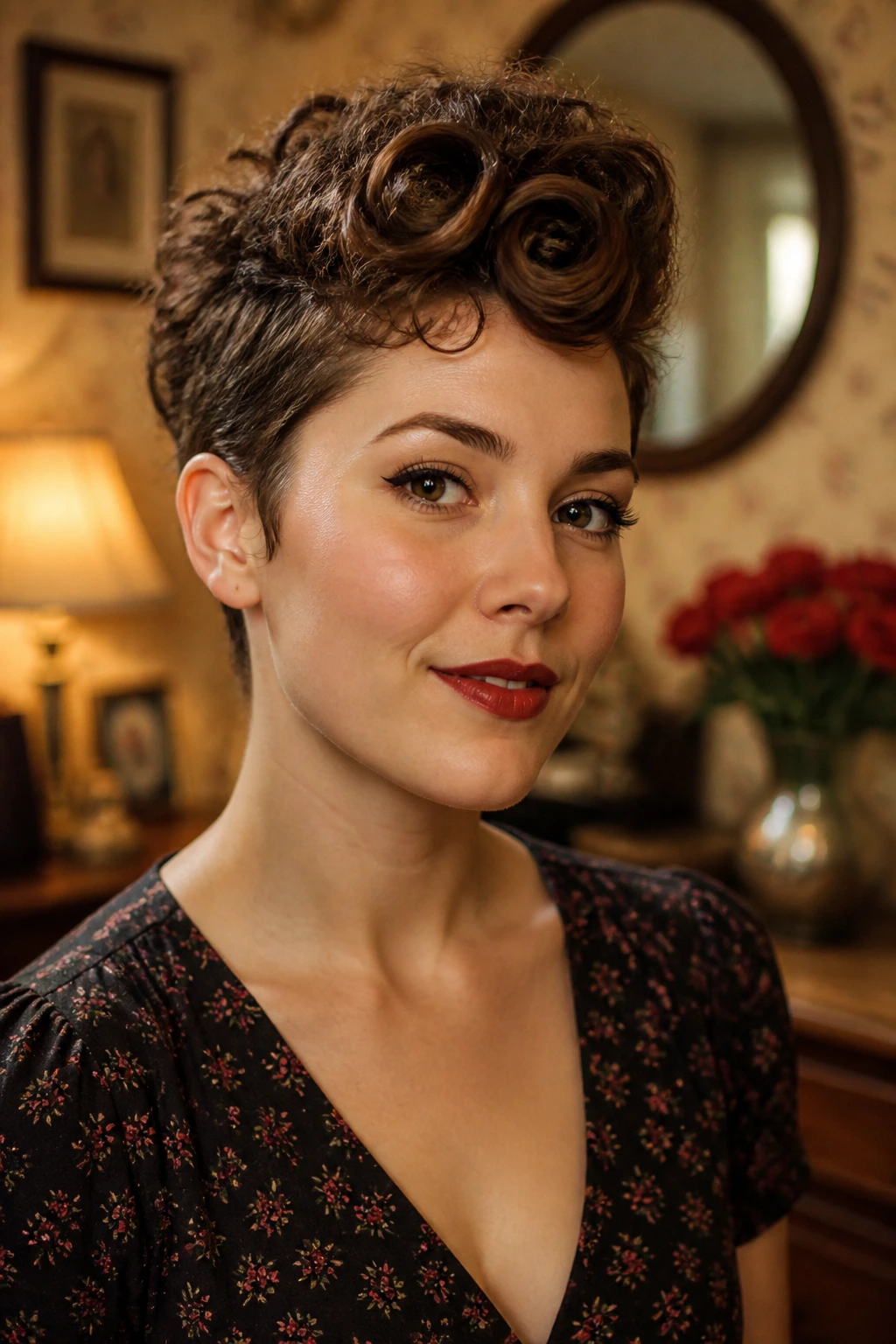
A pompadour pixie is for people who want height, not fluff. The crown lifts up and back, the sides stay compact, and the front has just enough roll to hint at vintage styling without going all the way into rockabilly territory.
This cut suits dense curls and tighter textures because there’s enough body to build height without needing a ton of product. Start with mousse at the roots, then diffuse with your head tipped forward for lift. Once the hair is dry, smooth the front up with your fingers and pinch the ends where you want the shape to hold. Too much cream will drag the top down. I’d keep it light.
11. Hollywood Sweep Pixie
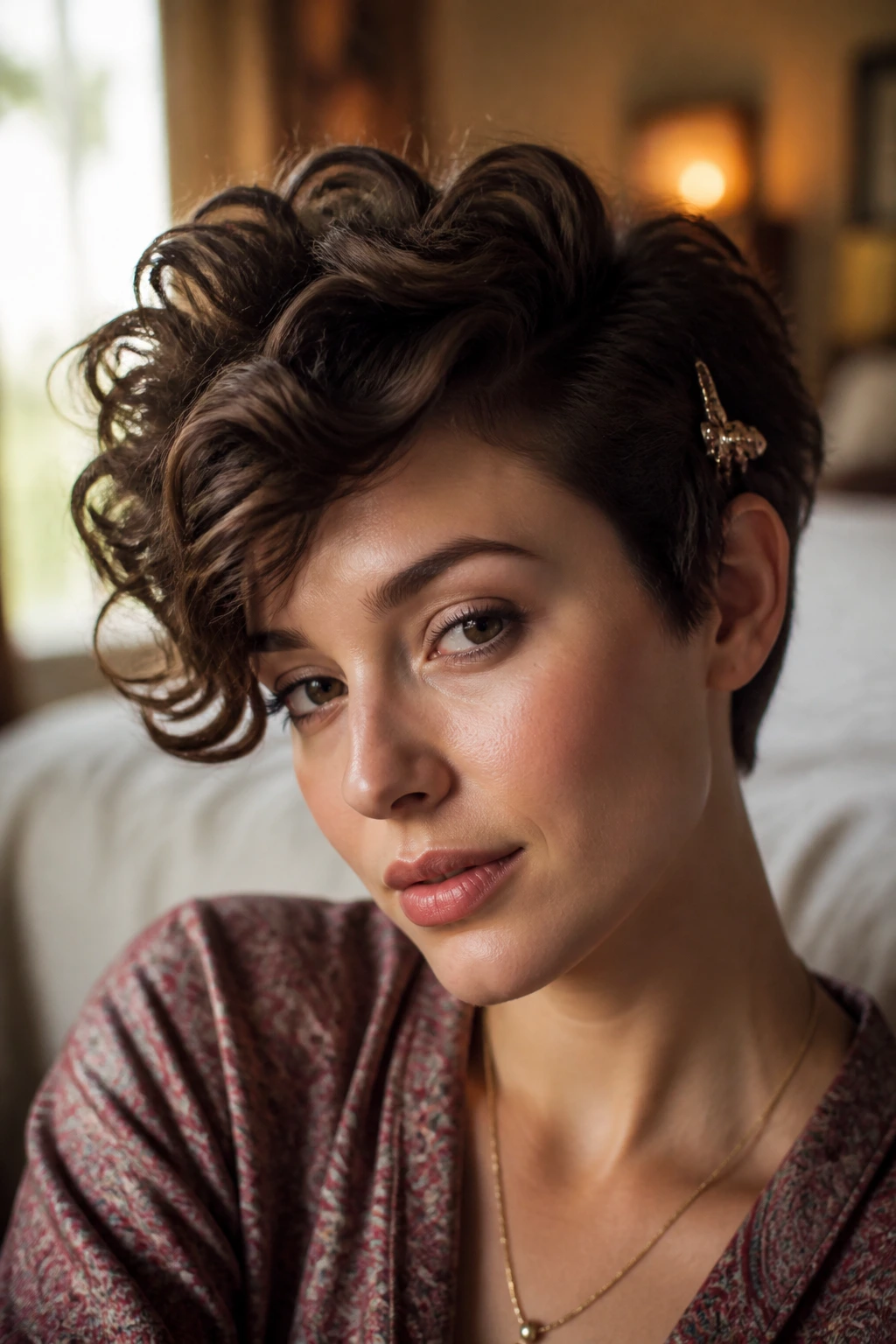
A side sweep can do more for a pixie than a dozen layers. This version keeps almost all the movement flowing in one direction, which creates that soft, screen-siren line across the face.
The shape is especially flattering if you like one side to sit longer than the other. It gives the haircut a little drama and makes curly texture look intentional rather than accidental. A strong side part, a touch of root lift, and a clip behind the ear on the heavier side are often enough. If your curls spring up in the front, leave the sweep a bit longer than you think you need. You’ll thank yourself later.
12. Tapered Nape Pixie With Vintage Curls
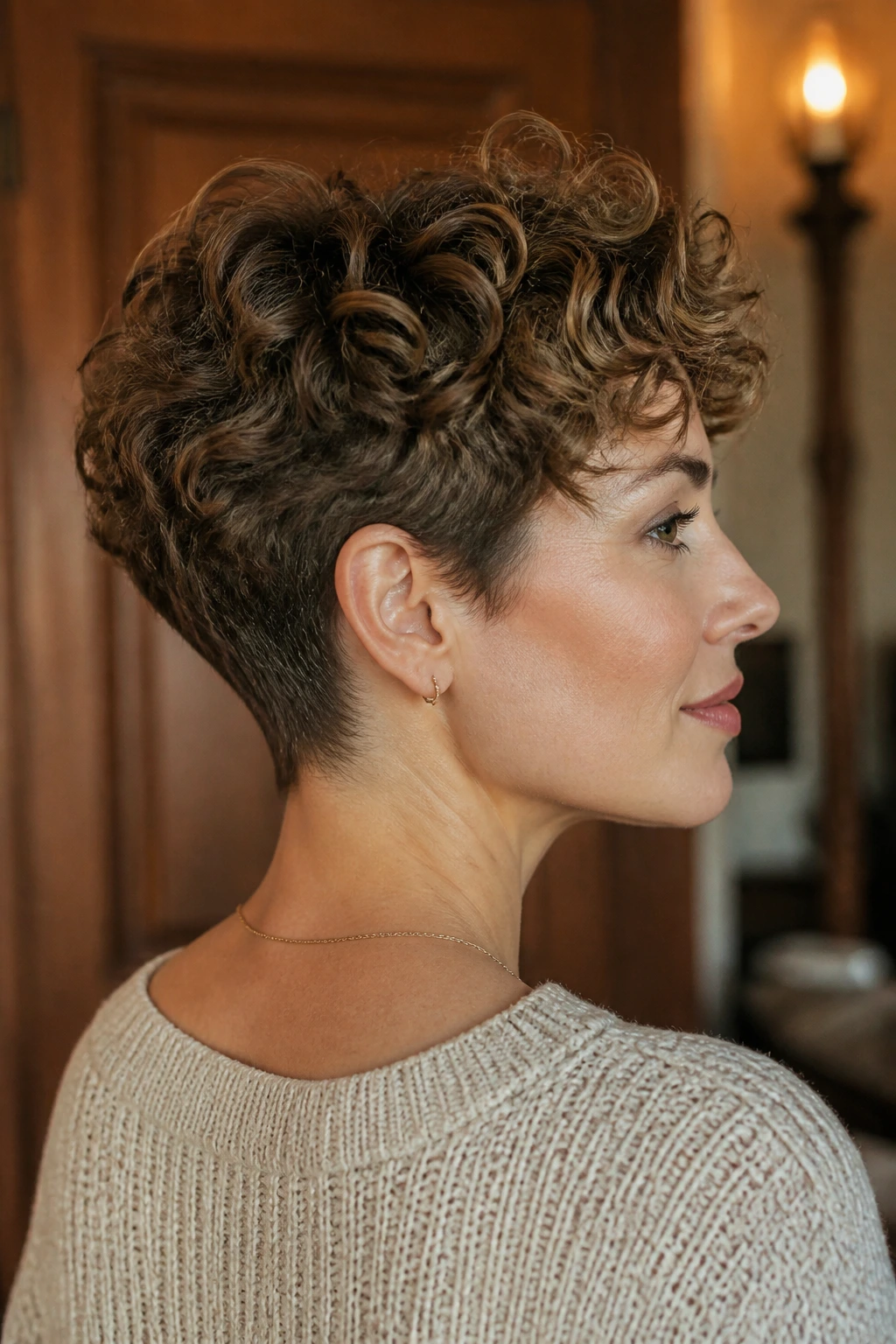
A clean nape changes everything. Seriously. Once the back is tapered close, the curls at the top suddenly look fuller, prettier, and more deliberate, even if you didn’t touch the rest of the shape much.
This is a practical choice if you hate hair brushing your collar. It also keeps the cut feeling neat between appointments. The top can be soft and curly, the sides can stay rounded, but the nape should be clipped short enough to show a crisp line at the neckline. That little contrast gives the vintage vibe its backbone.
13. Rosemary Clooney Side-Swept Pixie
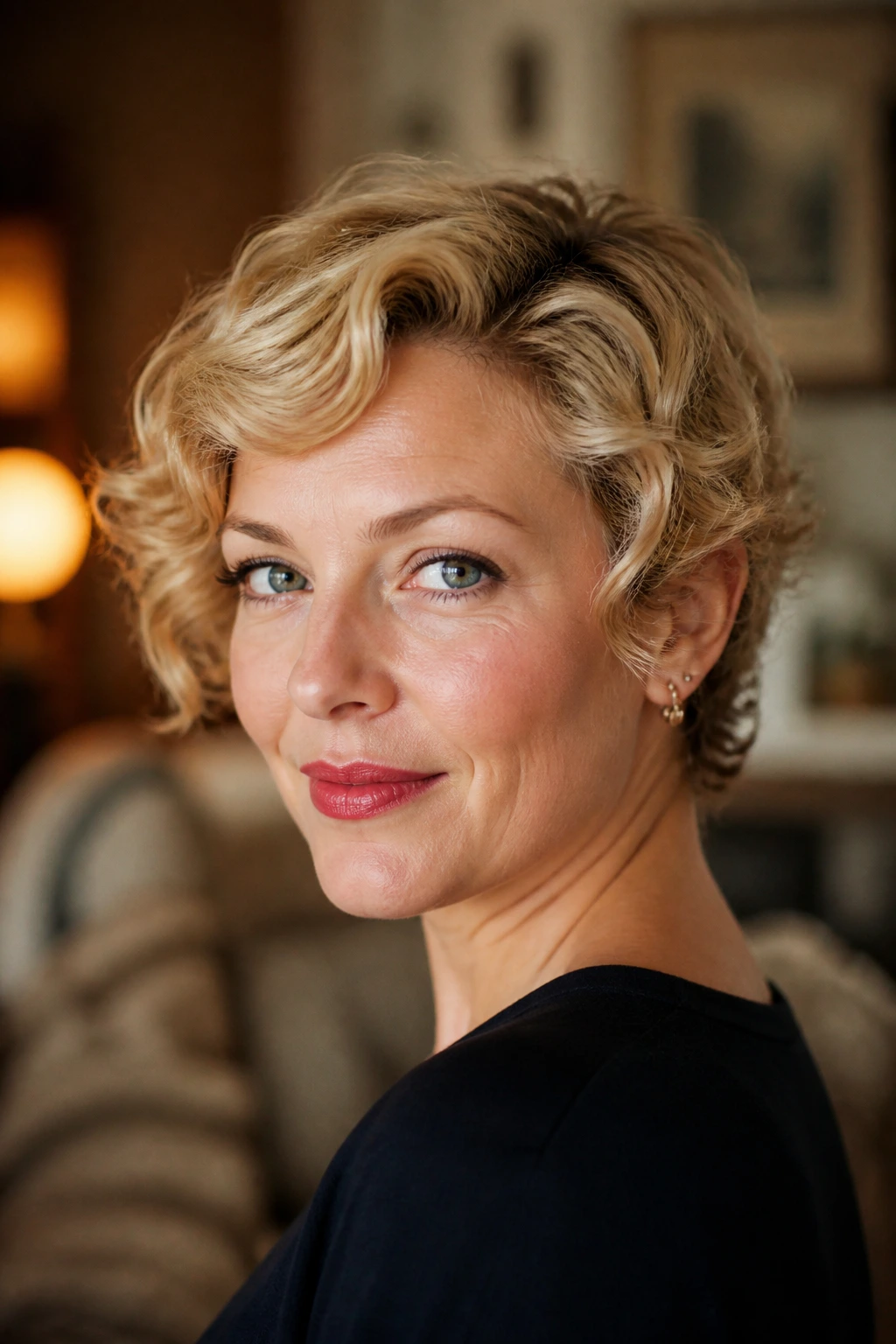
Do you want something softer than a victory roll but more grown-up than a baby bang crop? This is the answer. The Rosemary Clooney side-swept pixie leans on a gentle part, a smooth front section, and enough length around the temples to curve into the cheekbones.
It suits medium-density curls that like to behave once they’re guided. You can set the front with a roller or just coax it with a brush and a touch of cream. The result feels polished, but not frozen. That matters. A vintage cut should move when you turn your head.
14. Mod Curly Pixie
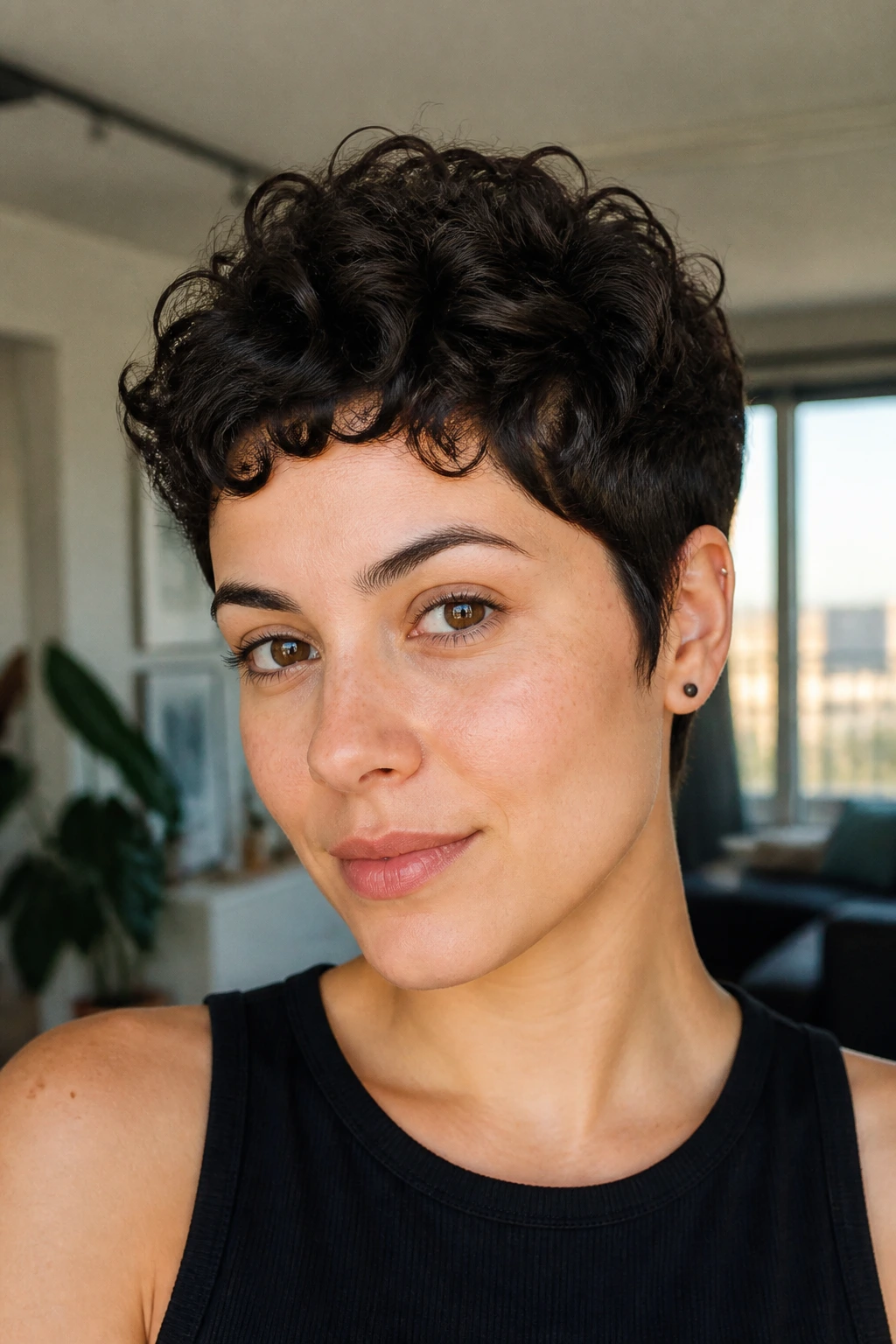
The mod pixie has a sharper edge than the soft old-Hollywood shapes, and that’s exactly why it works. The fringe is shorter, the crown is rounder, and the sides stay tidy enough to make the whole cut read graphic.
This one is best if your curls have some spring but not too much width at the sides. You want a shape that hugs the head a little closer than a fluffy crop would. A diffuser on low heat and a dab of styling wax at the ends can keep the fringe from splitting. It’s a cleaner, cooler look, and it still has that vintage pulse.
15. Layered Crop With Baby Bangs
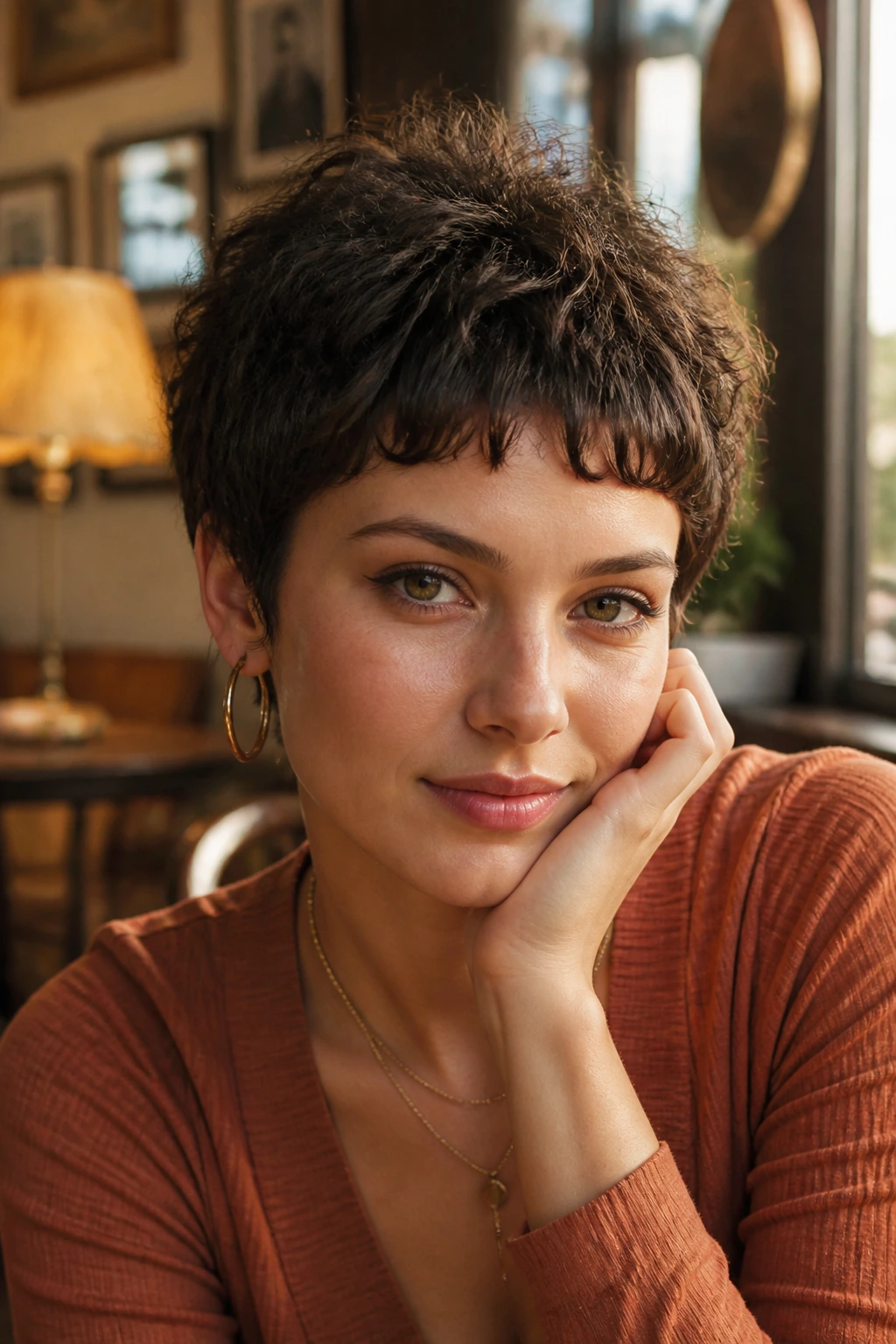
Baby bangs are risky only if you ignore shrinkage. Keep them a touch longer, and they become one of the most charming ways to make a curly pixie feel retro and playful at the same time.
This cut works well when the crown has several short layers that can lift without standing up. The bangs should sit light and separated, not dense and blunt. That gives the forehead a little space and keeps the face from feeling boxed in. If your curls are coarse, ask for soft texturizing rather than razor-heavy thinning. It keeps the fringe from fraying.
16. Retro Mushroom Pixie
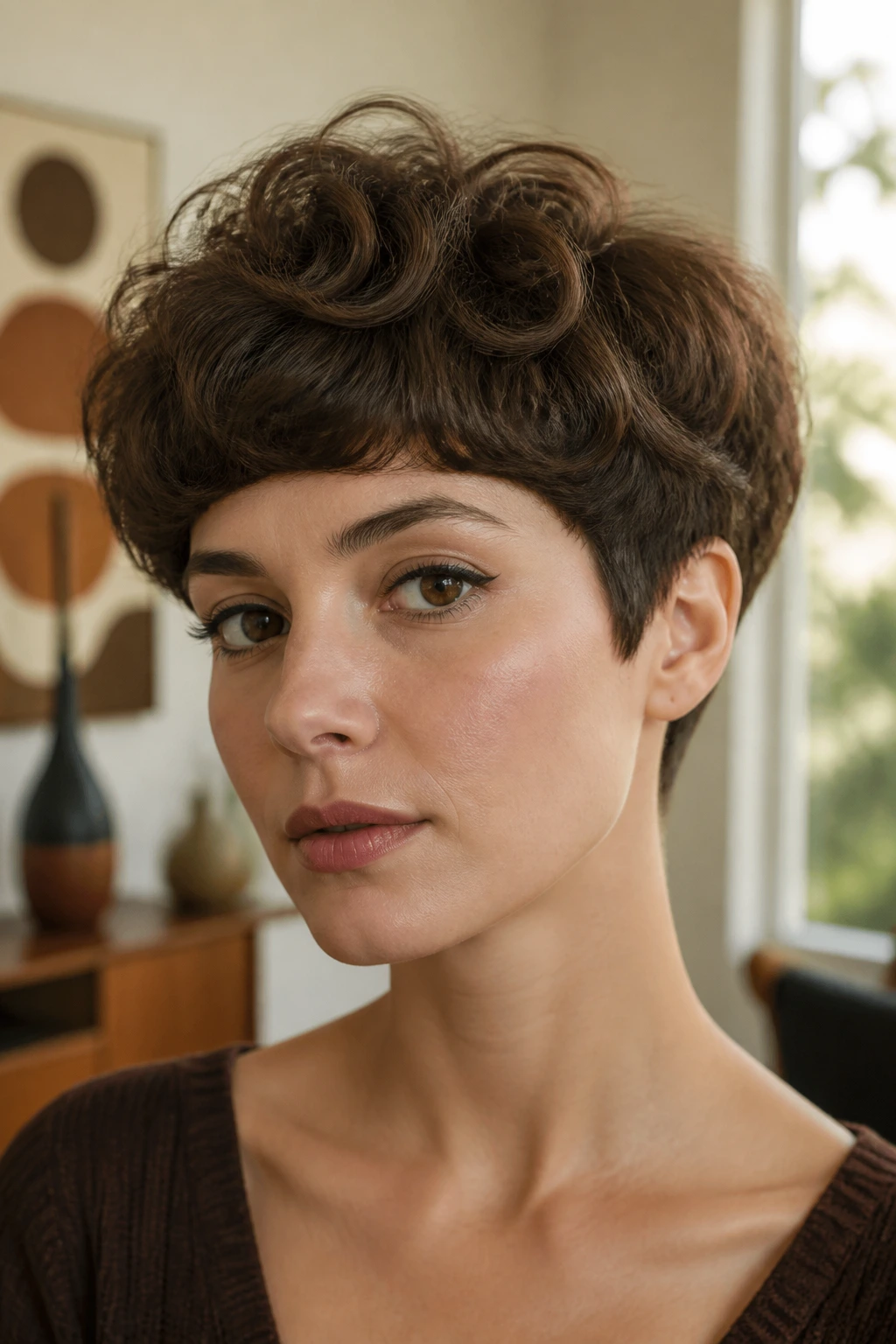
The mushroom pixie borrows the rounded cap shape of a mushroom cut, but keeps the overall length short enough to stay airy. On curly hair, that rounded outline can look very 1960s in the best way, especially if the perimeter is shaped rather than choppy.
This is a strong option for dense curls that need a clear boundary. The top should curve over the head with a little volume, while the sides and back stay tucked in. If the shape gets too wide, the whole look can turn puffy fast, so trimming the sides regularly matters. Done right, though, it has that neat, graphic curve that looks expensive even when the styling is minimal.
17. Flapper-Inspired Short Crop
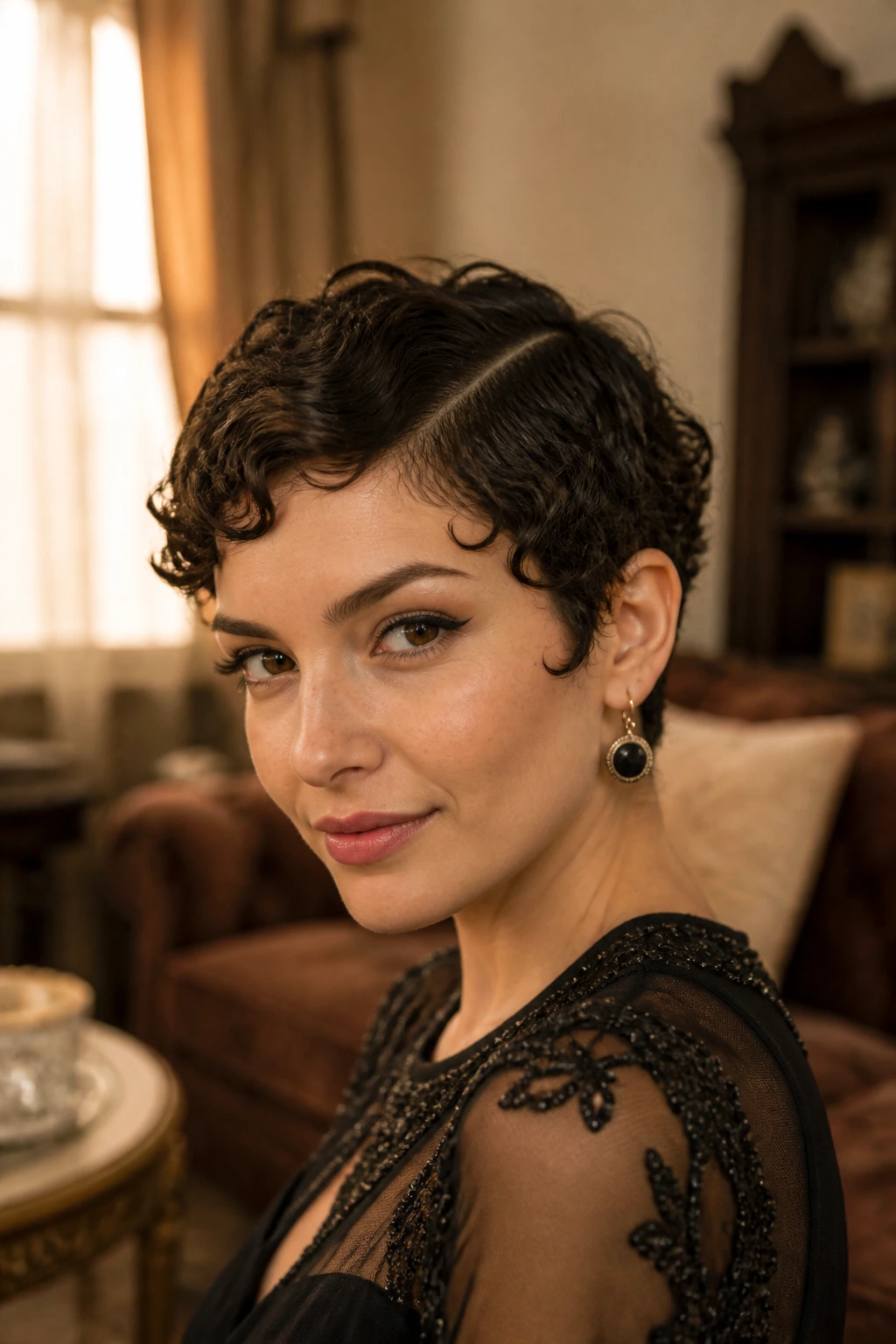
Picture a short crop that sits close to the head, takes a side part well, and doesn’t rely on length to make an impression. That’s this cut. It’s more flapper than feathered, more set-and-composed than loose and fluffy.
This works beautifully on finer curls or wave patterns that want a defined outline. A small amount of setting lotion or mousse helps the hair hold its direction while it dries. If you like earrings, this is one of the best cuts for them. The open neck and clean temples make everything around the face look sharper.
18. Curly Bowl Pixie
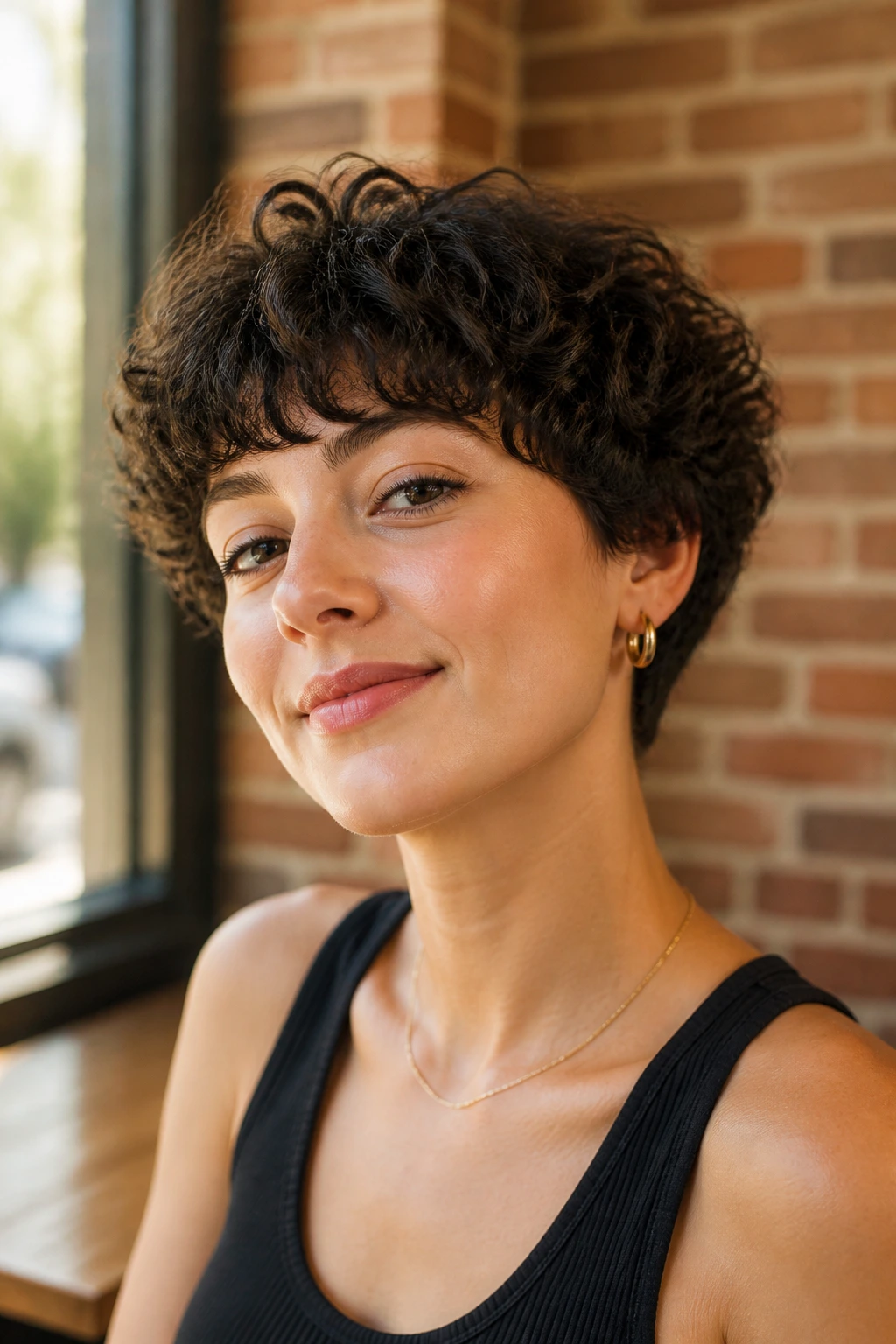
A curly bowl pixie has the roundness of a bowl cut, but it’s softened so it doesn’t read severe. The edges break a little, the curls sit in a curved line around the head, and the bangs or front fringe usually land in a controlled arc.
I prefer this on thick curls or high-density hair because the shape depends on having enough body to stay rounded. The trick is not to over-layer it. Once the perimeter gets too broken up, the whole point of the silhouette disappears. Keep the bowl shape recognizable, then soften the line with curl texture. That’s the move.
19. Sideburn-Framed Pixie
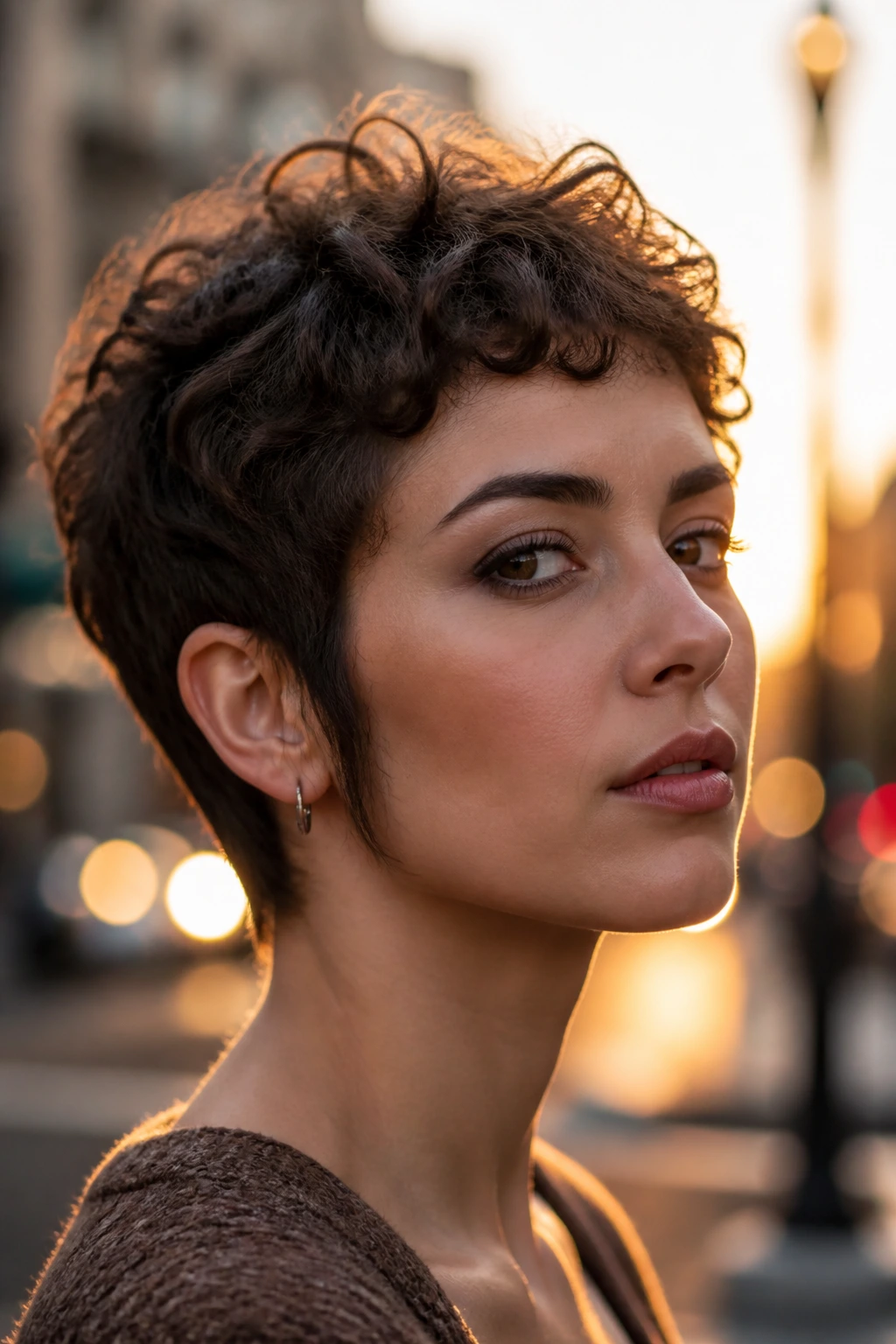
Sideburns don’t get enough credit. Leave them a little longer, and suddenly the cut has a sharper cheekbone frame and a bit of mystery around the temples.
This is a nice choice if you want a vintage pixie that doesn’t look overly sweet. The longer sideburn area can balance a short nape and a soft crown, which gives the whole haircut more contrast. It also plays well with strong lipstick, bold glasses, and tailored collars. You do not need a lot of hair to make this shape feel finished. You just need the right edge in the right place.
20. Swooped Fringe Pixie
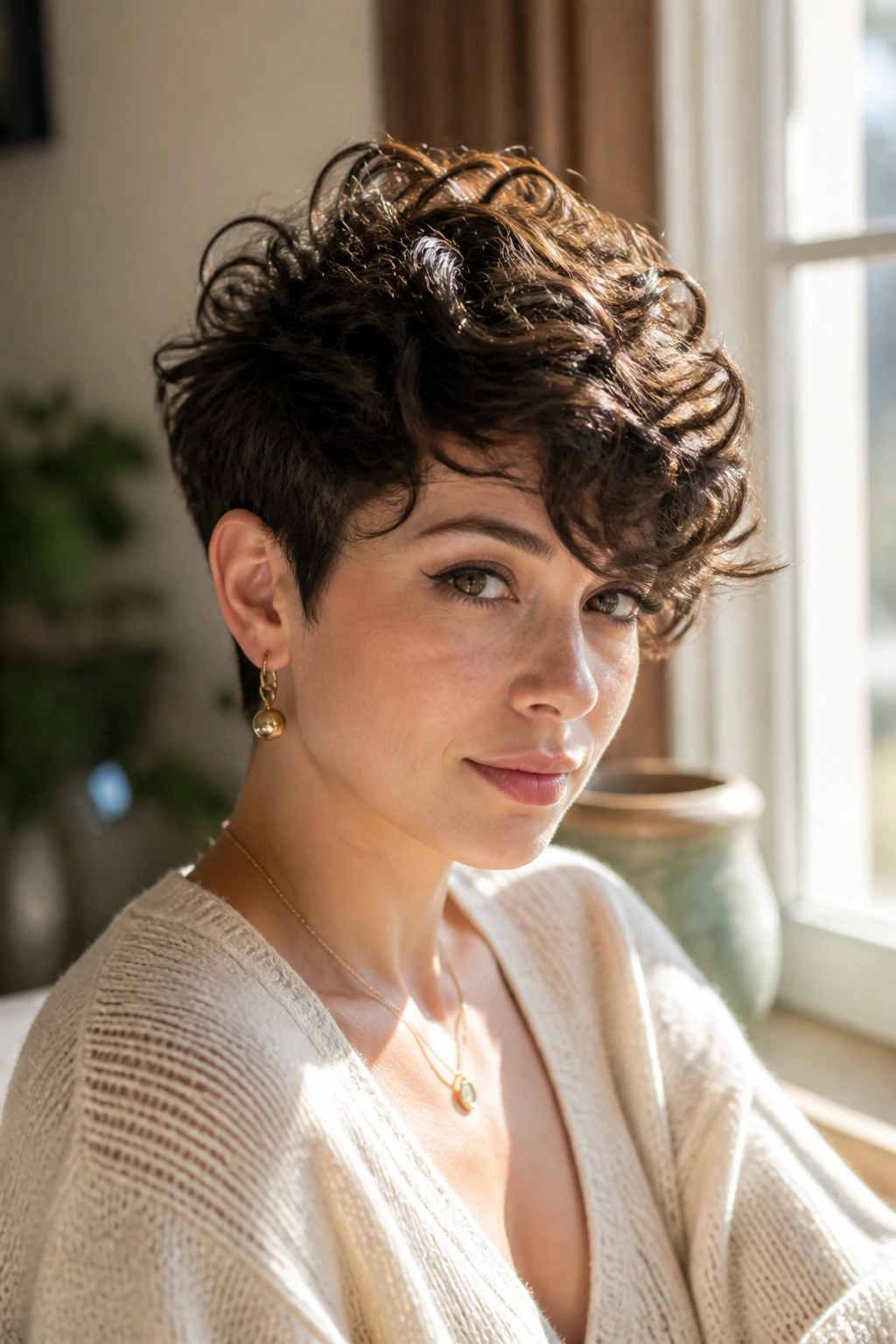
A swooped fringe can soften a pixie faster than almost anything else. The front sweeps across the forehead in one curved motion, while the rest of the cut stays short and controlled.
What makes this version special is the balance between movement and restraint. The fringe gets the drama, but the nape and sides stay neat so the cut still reads as a pixie, not a grown-out bob. If your forehead is on the broader side, this shape gives you an easy frame. If your curls are loose, a round brush or medium roller at the front helps the sweep settle into place.
21. Halo Pixie
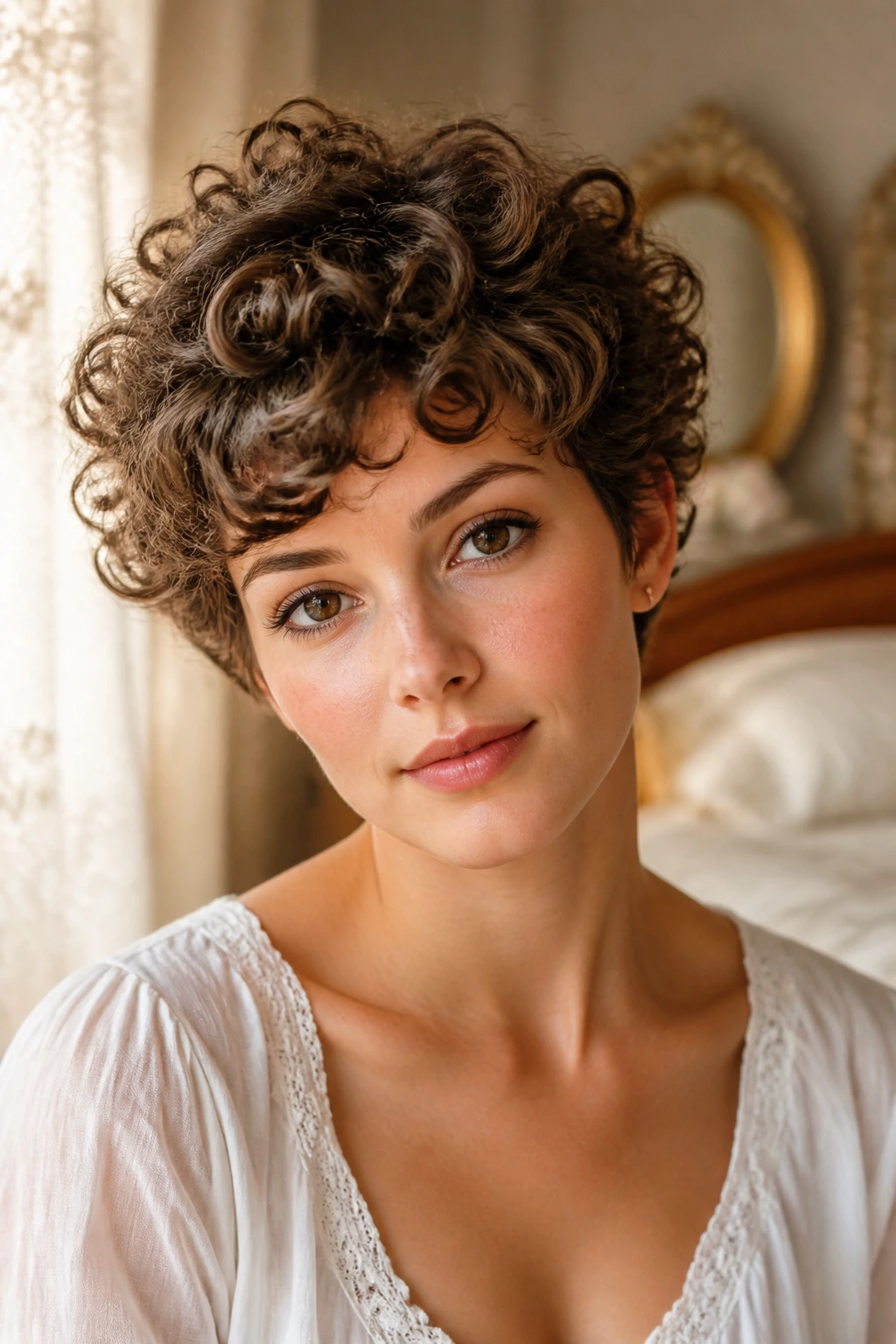
A halo pixie is what happens when the curls are allowed to ring the head in a soft, rounded outline. The shape is gentle, but it isn’t shapeless. The curve around the crown should feel even, with enough taper at the ears and nape to keep the silhouette from ballooning.
This is one of my favorite looks for naturally round curls because it honors the texture instead of flattening it. It also has a very old-screen charm when the front is brushed lightly away from the face. If you want the hair to look romantic rather than severe, this is a strong place to start.
22. Beehive-Lift Pixie
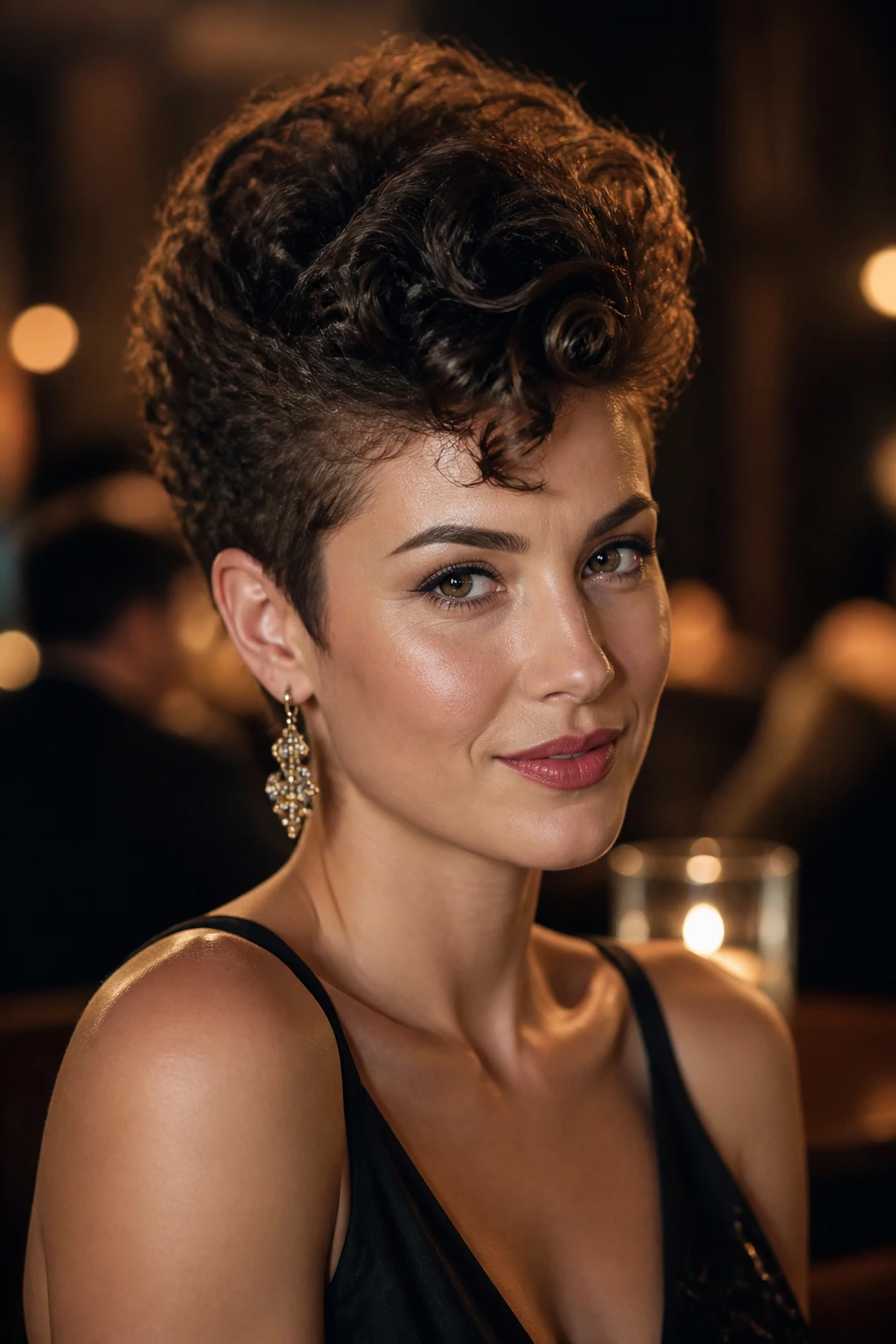
When the crown needs height and the rest of the head needs to stay under control, the beehive-lift pixie earns its keep. The top rises first, then curves back, while the sides and nape stay close enough to keep the outline compact.
A few things matter here:
- Leave extra length at the crown so the lift has somewhere to come from.
- Keep the sides tapered, or the height will look like an accident.
- Use root mousse and clips while the hair cools.
- Finish with a light spray, not a heavy lacquer.
This is a fun cut for evening wear, but it also works on a Tuesday if you like a little drama with your earrings.
23. Feathered 1970s Pixie
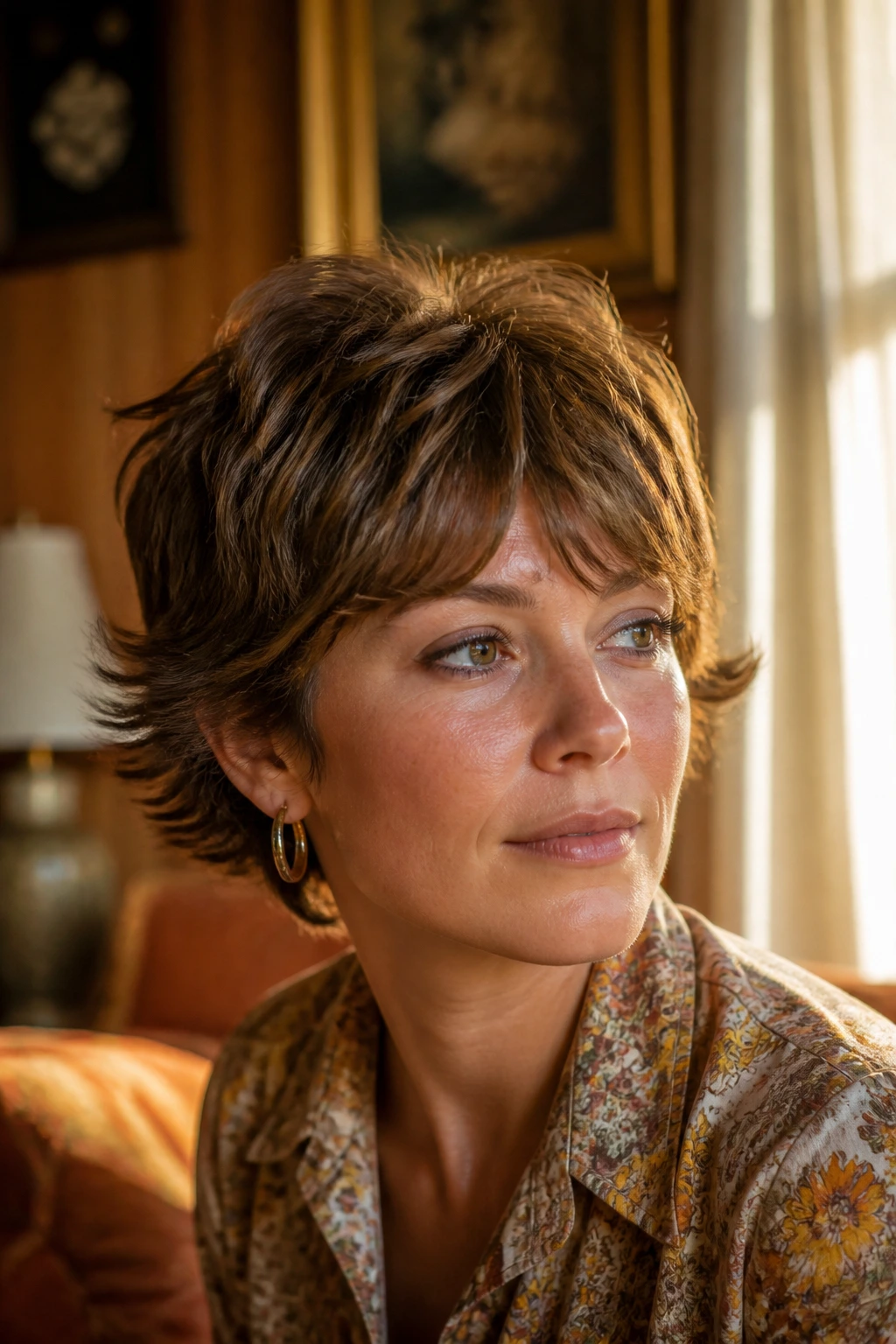
The feathered pixie borrows the soft, flipped-out movement of the 1970s and trims it down into something short and wearable. The layers are light, the edges move away from the face, and the overall shape feels breezier than a classic set.
It’s a smart pick if your curls are loose enough to bend rather than spring hard. You get that soft outward flick around the ears and forehead without needing a long haircut. I like this for people who want a vintage feel but don’t want to look overly structured. It has a little looseness, and that looseness keeps it from feeling precious.
24. Tuxedo Pixie
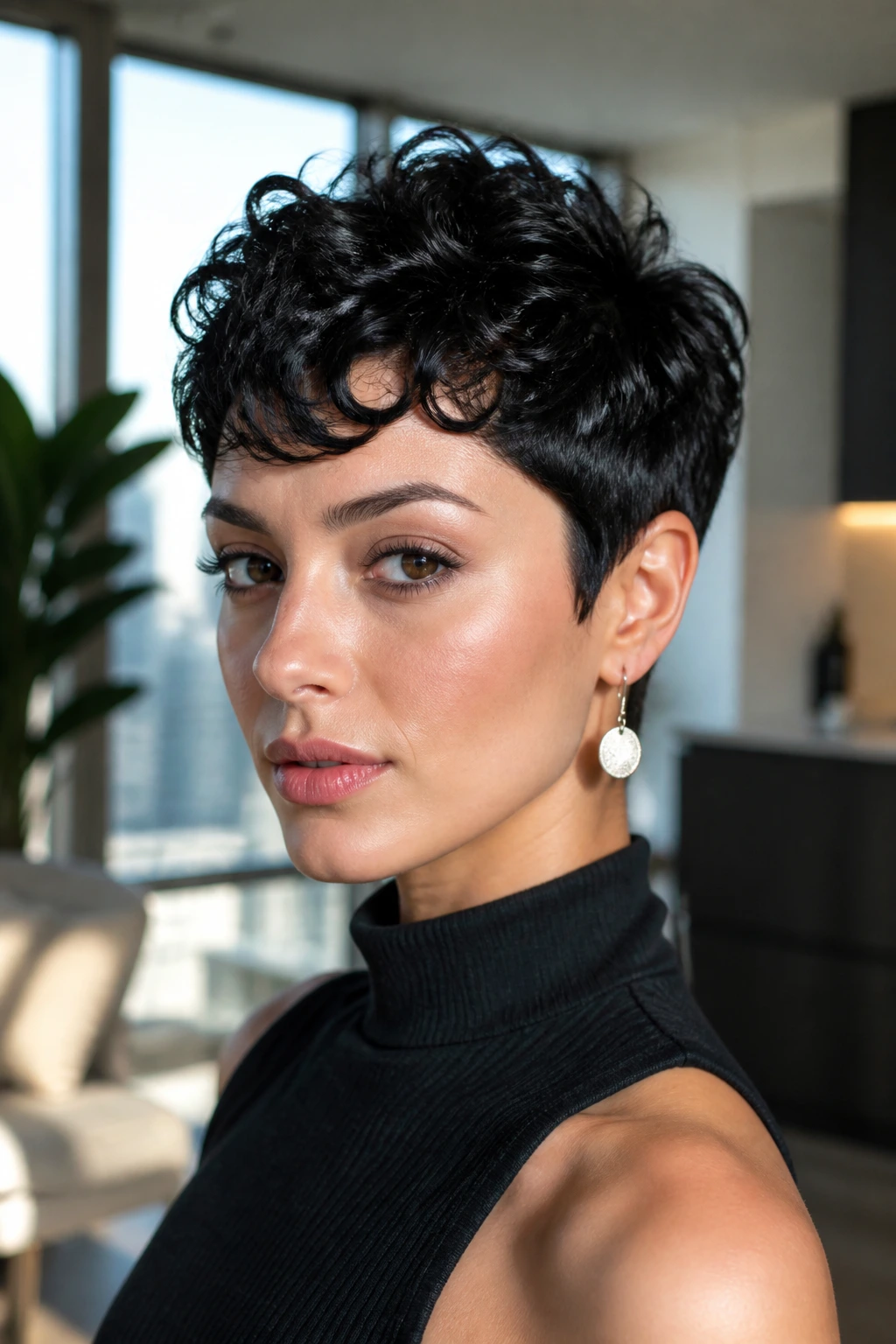
A tuxedo pixie is the polished one. Think sharp nape, defined temples, and a smooth top that looks like it was dressed on purpose before it walked out the door.
This cut is ideal if you want your hair to contrast with soft clothes or a casual wardrobe. The strong shape makes even a plain white shirt look styled. It also suits people who like a low-fuss routine, because once the outline is good, you can wear the top almost flat or sweep it slightly to one side. The haircut does the formal work.
25. Soft Pushed-Back Pixie
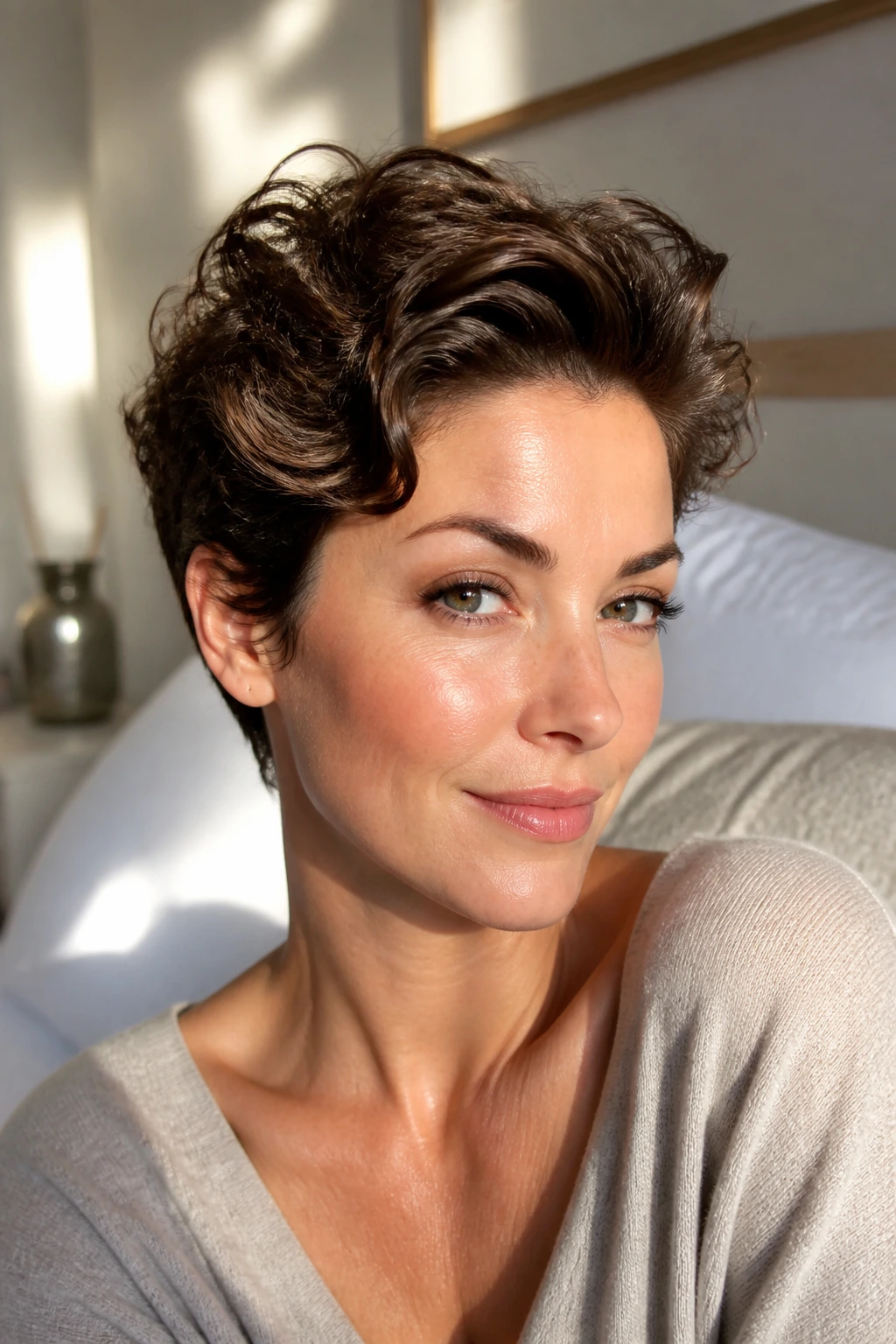
Sometimes the best vintage move is simply taking the hair away from the face and letting the curls settle where they want. A soft pushed-back pixie does exactly that, with a gentle sweep off the forehead and enough lift at the front to keep it from looking flattened.
This is a practical everyday cut. It doesn’t need a lot of product, and it grows out without making a mess of the silhouette too quickly. If your hairline is strong or you like to show off brows and earrings, this shape gives you room. It’s quiet, but not boring.
26. Ear-Tucked Pixie
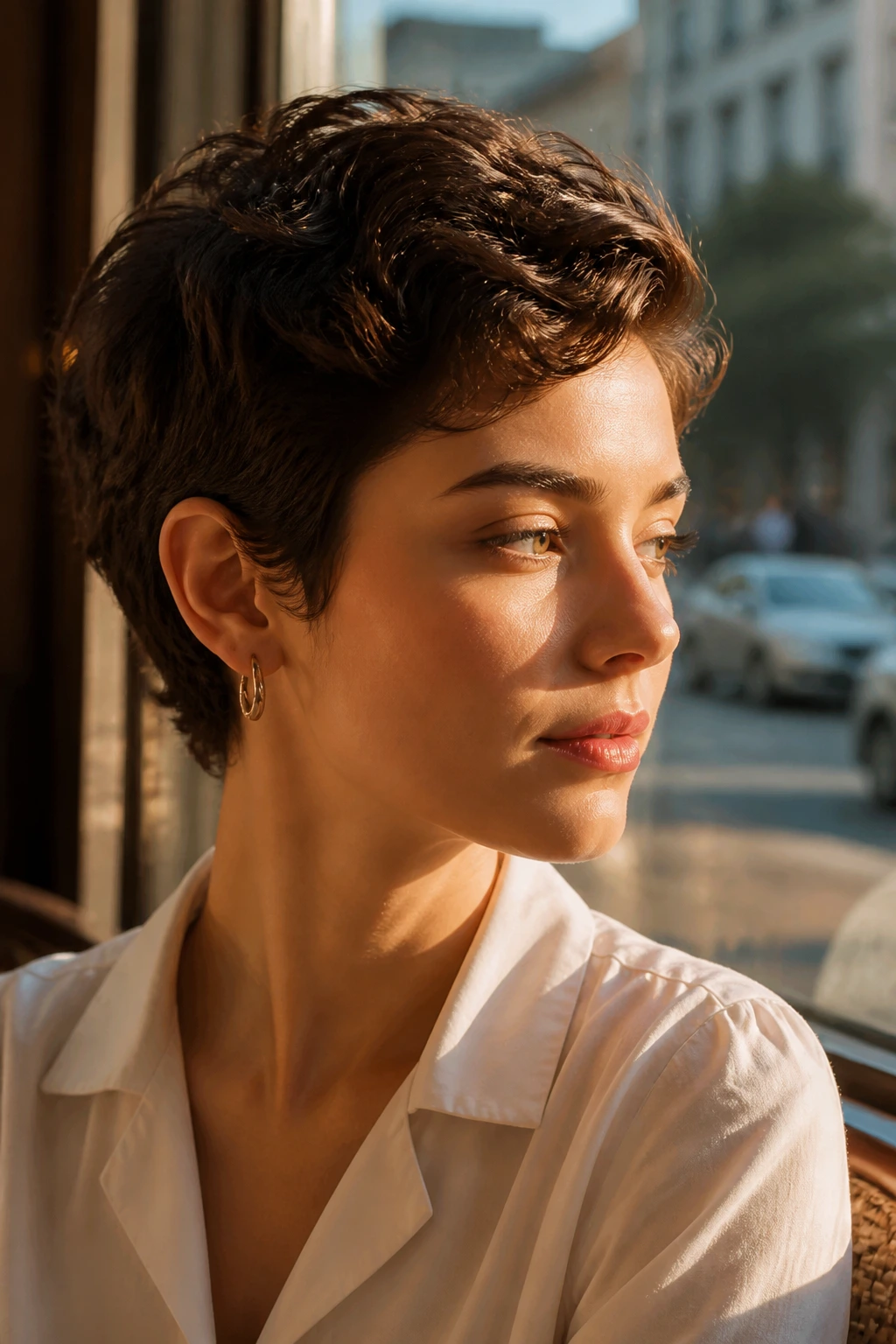
An ear-tucked pixie is all about openness. The sides are short enough to tuck behind the ears cleanly, the nape stays neat, and the front can stay soft or side-swept depending on how much face framing you want.
This is one of the easiest ways to make a curly pixie feel vintage without extra styling. Once the ears are exposed, the cut suddenly works with scarves, clip-on barrettes, and statement earrings in a way longer cuts rarely do. It also gives the face a little lift. If you like clean lines and don’t mind showing your ears, this shape is a winner.
27. Gamine Pixie With Curly Crown
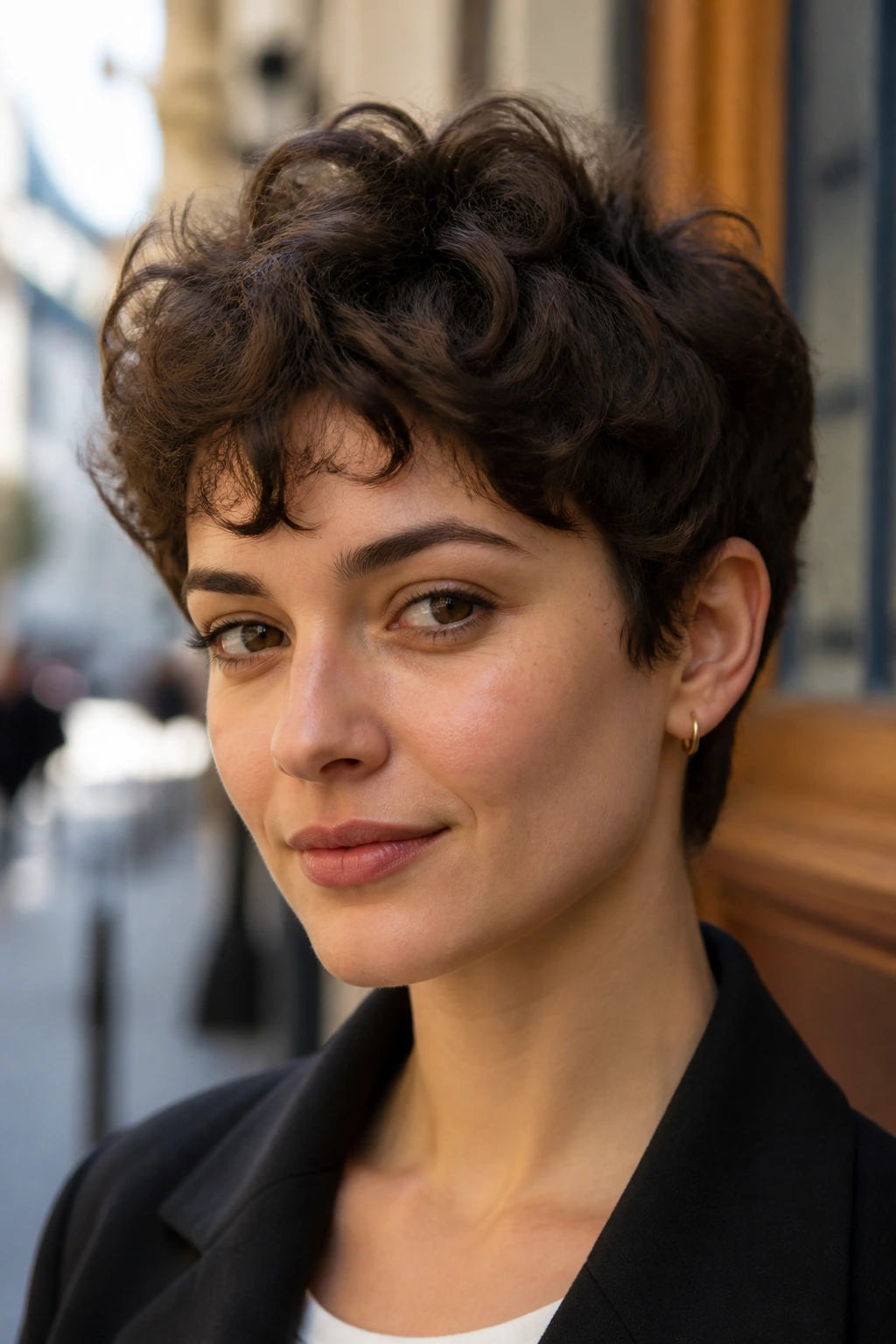
A gamine pixie has a playful, slightly Parisian edge, and curly hair gives it a touch of softness that keeps it from looking too severe. The crown stays lightly rounded, the fringe is short but not blunt, and the sides hug the head enough to keep the shape neat.
This cut works best on fine to medium curls that can build shape without expanding too much. It’s the kind of style that looks especially good when the front is lightly separated with fingers rather than brushed into a uniform sheet. A tiny bit of texture at the crown keeps it lively. That little bit of irregularity is the whole charm.
28. Old-Hollywood Halo Pixie
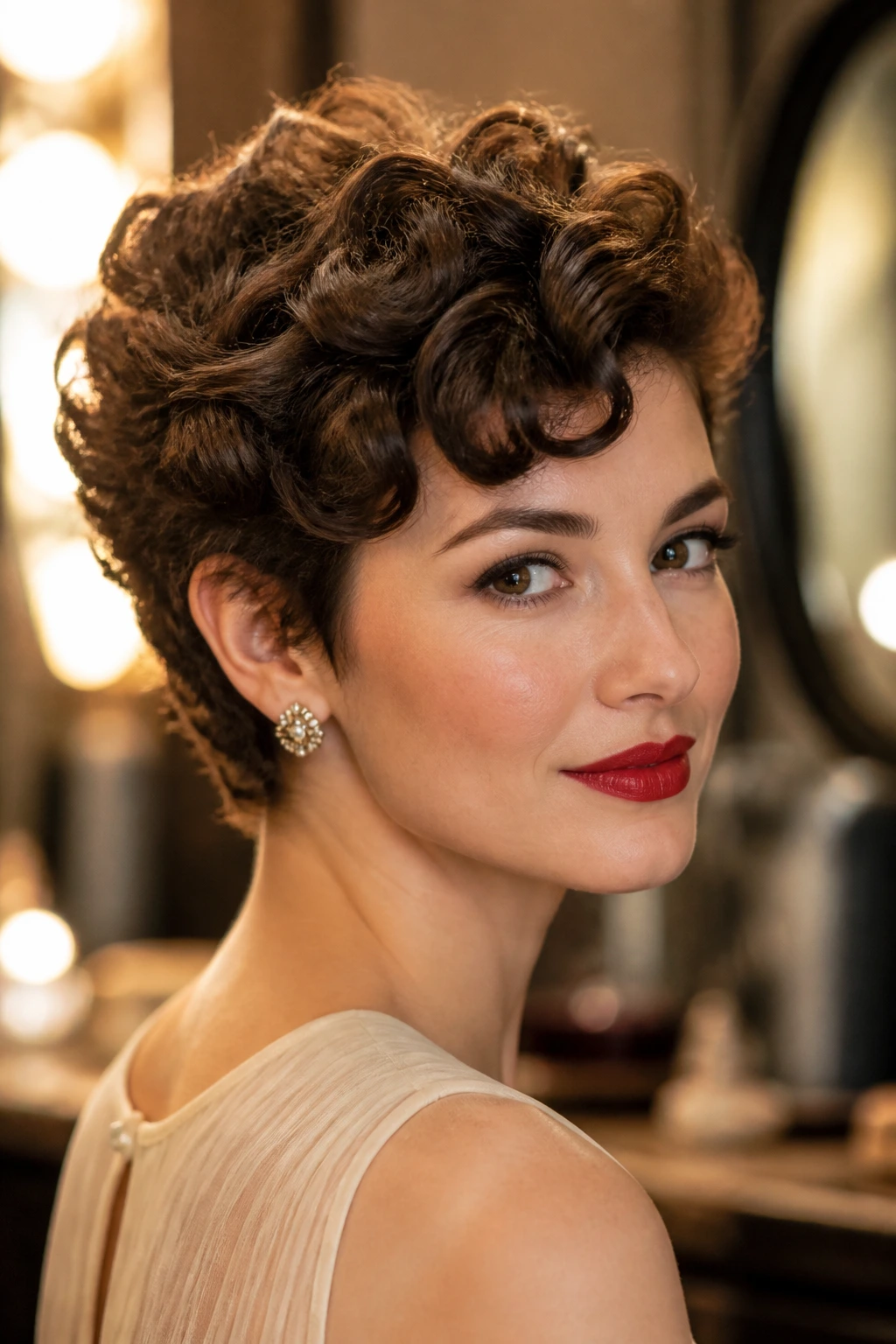
The last cut in the list is the glamour piece: a halo-like ring of curls that sits around the head with a soft part, a smooth front, and a shape that feels polished from every angle. It borrows from old screen hair but keeps the length short enough to stay modern in practice.
This is a strong finish if you want the most dressed-up version of a curly pixie. It likes shine spray on the ends, a careful side part, and a diffuser pass that lifts the crown without exploding it. The result is gentle and luminous without being fussy. If you are going to keep one reference photo handy for a salon visit, this is a smart one.
How To Brief Your Stylist For A Vintage Curly Pixie
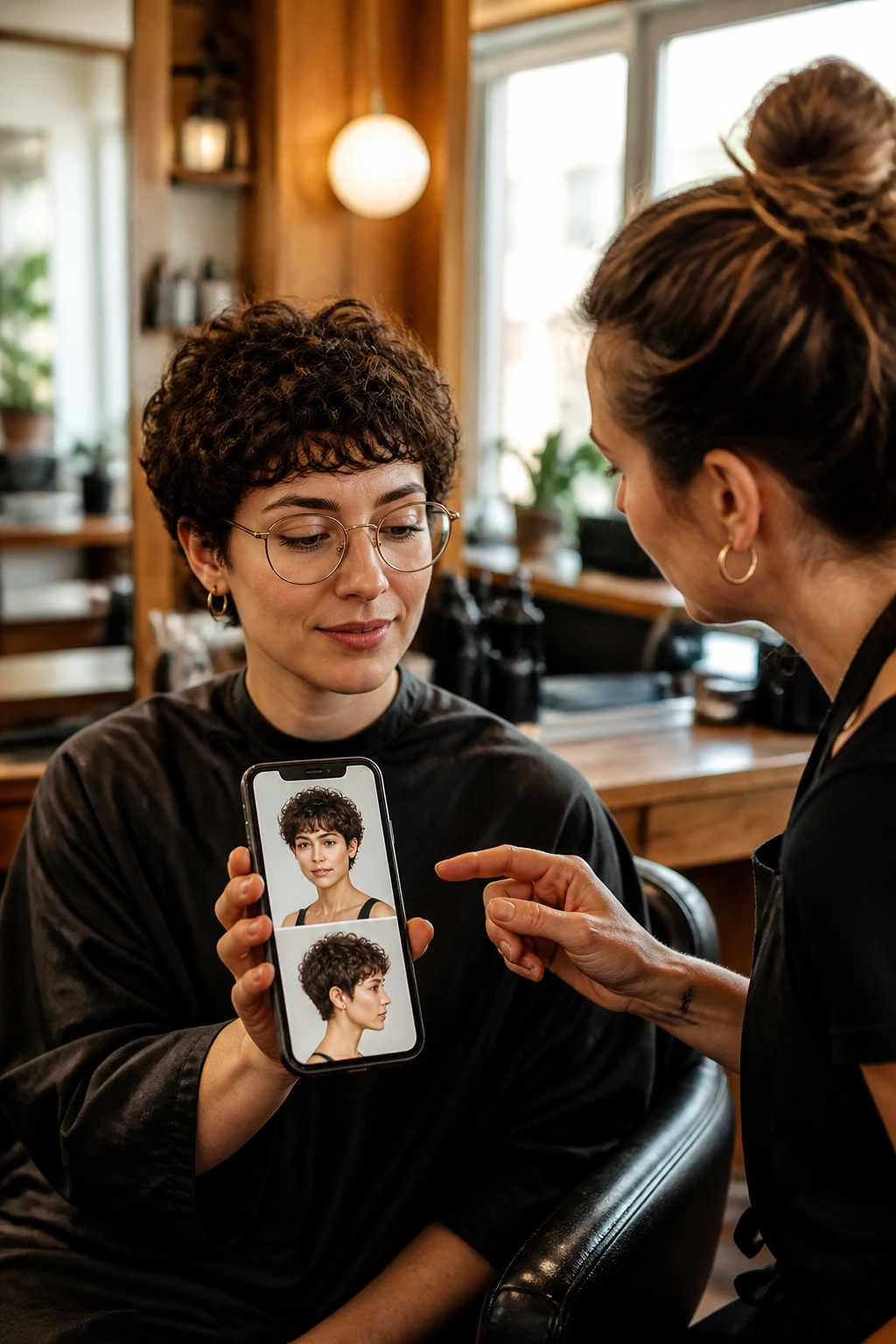
The haircut starts long before the scissors do. Bring at least two photos: one from the front and one from the side. Pixies lie in photos when you only see one angle, and curly hair makes the deception worse because the back can shrink much tighter than the fringe.
Talk in inches, not vibes. If you want the bangs to sit around the brows when dry, say so. If you want the nape cropped close enough to expose the neckline, say that too. Curly hair needs a conversation about shrinkage, especially at the crown and temple areas, where a half-inch can change the whole silhouette.
I’d also ask whether the stylist prefers to cut curly pixies dry or check them dry after shaping. That question tells you a lot. A dry check matters because it reveals how the curl pattern stacks, where the part actually wants to live, and whether the sides are getting bulky. If you wear glasses, mention that before the cut starts. The temples and sideburns need to leave room for frames or the whole shape crowds your face.
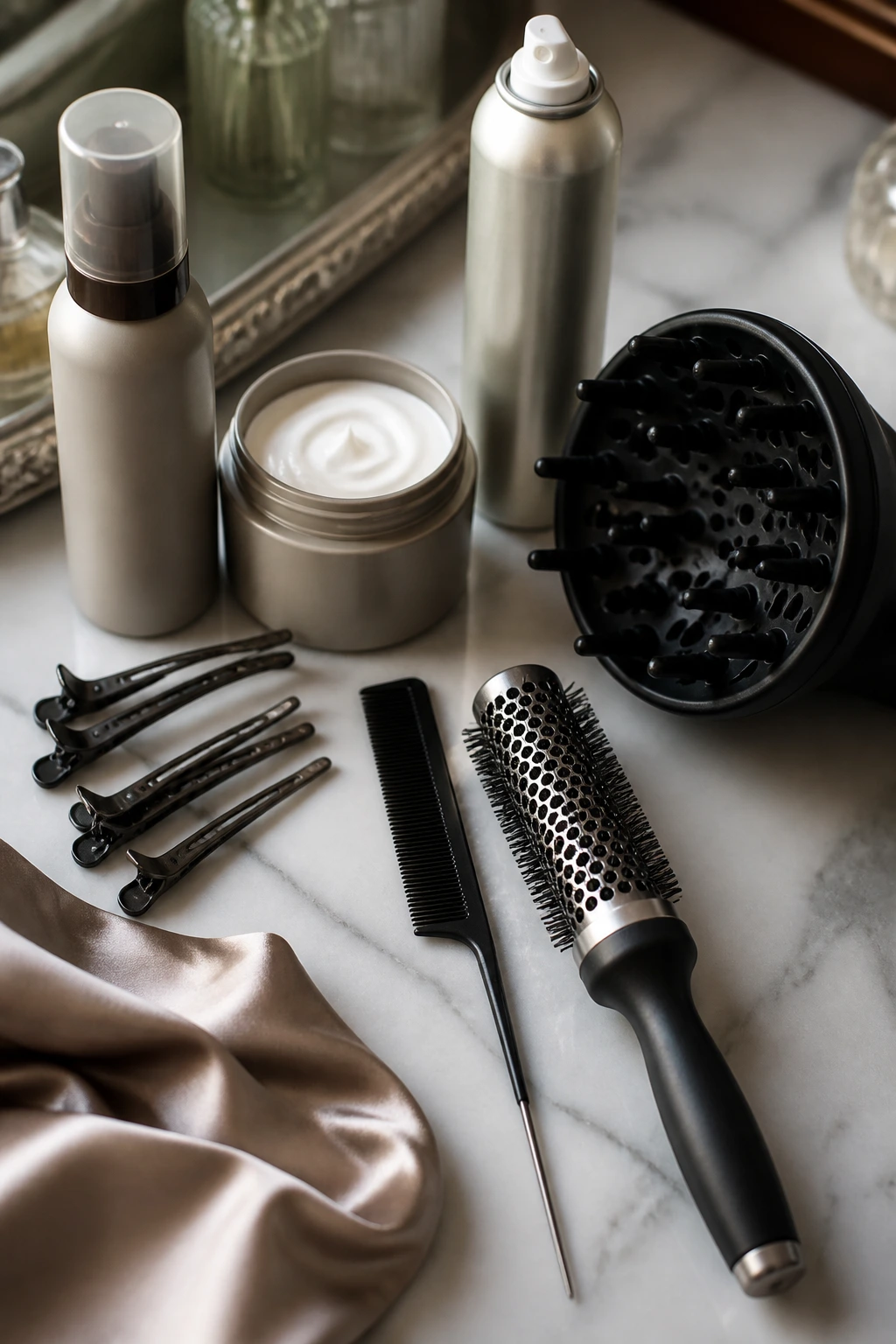
Essential Tools For Styling And Shaping
-
Duckbill clips: These hold a finger wave, root lift, or side sweep while the hair cools.
-
Light mousse: Use this at the roots and crown for lift without the heavy, greasy feel of cream.
-
Curl cream: A small amount on the mid-lengths keeps the curls defined and stops the ends from fraying.
-
Fine-tooth tail comb: Helpful for carving a clean side part and smoothing the front section.
-
Diffuser attachment: This is the safest way to dry the shape without blasting the curl pattern into a frizz cloud.
-
Satin scarf or bonnet: Keeps the crown from getting crushed overnight and helps the fringe stay in the right place.
-
Light-hold hairspray: Good for pin curls, finger waves, and any front section that needs to stay put for a few hours.
-
Small round brush or Denman-style brush: Useful if you need to guide the fringe or shape a smooth sweep at the front.
How To Wear These Cuts With Clothes, Glasses, And Accessories
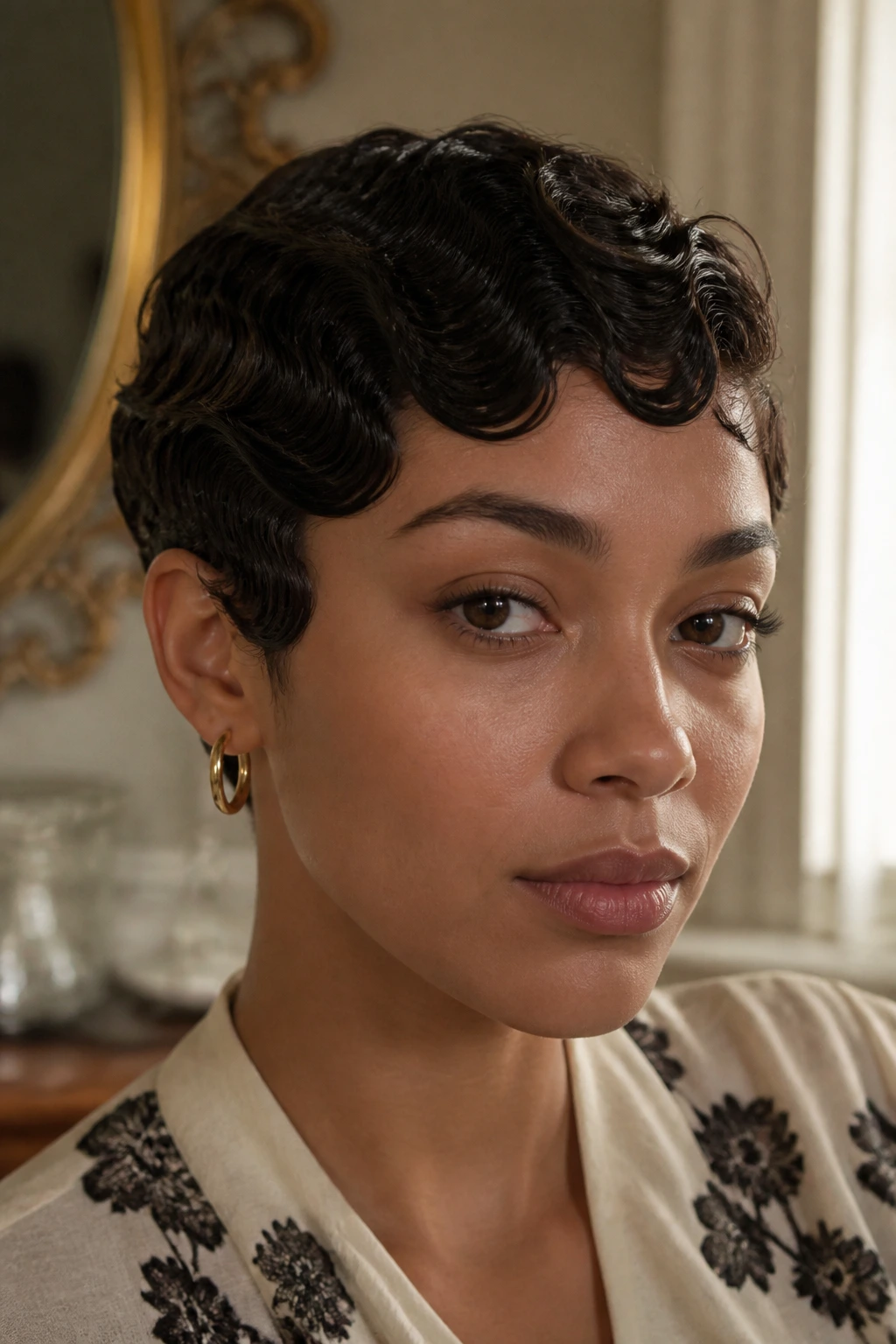
Shape: The haircut looks strongest when the outline matches the clothes. A rounded crop loves soft necklines and curved earrings, while a sharper taper pairs well with collars, jackets, and clean lines at the shoulders.
Accessories: Barrettes, combs, headbands, and scarves all pull their weight here. Use them to emphasize a part, pin one side back, or give the front a little lift. If your hair is very short at the sides, tiny clips work better than oversized pieces that fight the cut.
Outfits: Vintage pixies look especially good with boat necks, ribbed tees, little cardigans, and shirts that leave some room around the neck. Large hoops, pearl studs, and angular frames can all change the mood in a second. This is one of those cuts that looks different with a black turtleneck than with a crisp button-up, and that’s part of the fun.
Finish: A matte cream makes the texture look relaxed. A gloss spray makes the cut feel more screen-siren. Pick one and stay loyal to it on a given day. Mixing five finishes at once usually muddies the silhouette.
Extra Styling Tricks That Keep The Retro Line Intact
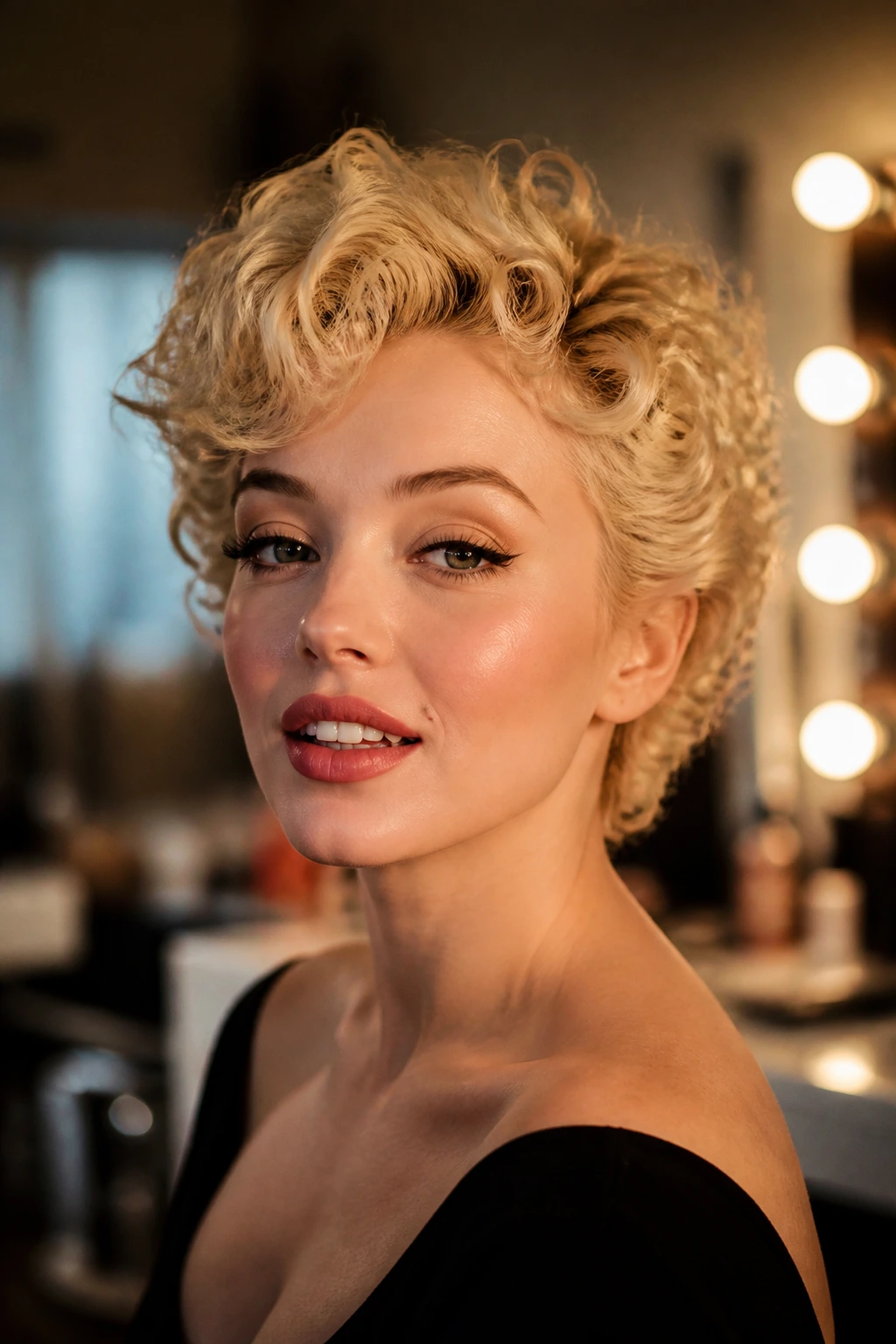
Lift: If the crown collapses, flip your head forward, mist the roots lightly, and diffuse for a minute or two before you smooth the top back into place. That tiny reset adds shape without turning the cut fluffy.
Softness: For a more romantic finish, wrap the front pieces around two fingers while they’re damp, clip them for ten to fifteen minutes, then release. You’ll get a bend instead of a kink, which matters a lot on a pixie.
Definition: A pea-size dab of styling wax at the ends of the fringe or sideburns can make the cut look carved rather than fuzzy. Use it on dry hair only. Too early, and the curls lose bounce.
Make-It-Yours: If you wear your hair one way for a while, it can start to feel too familiar. Change the part an inch or two, tuck one side behind the ear, or let the fringe sit more forward for a week. Small shifts keep the haircut alive.
Night Care, Trim Timing, And Day-Two Refreshes
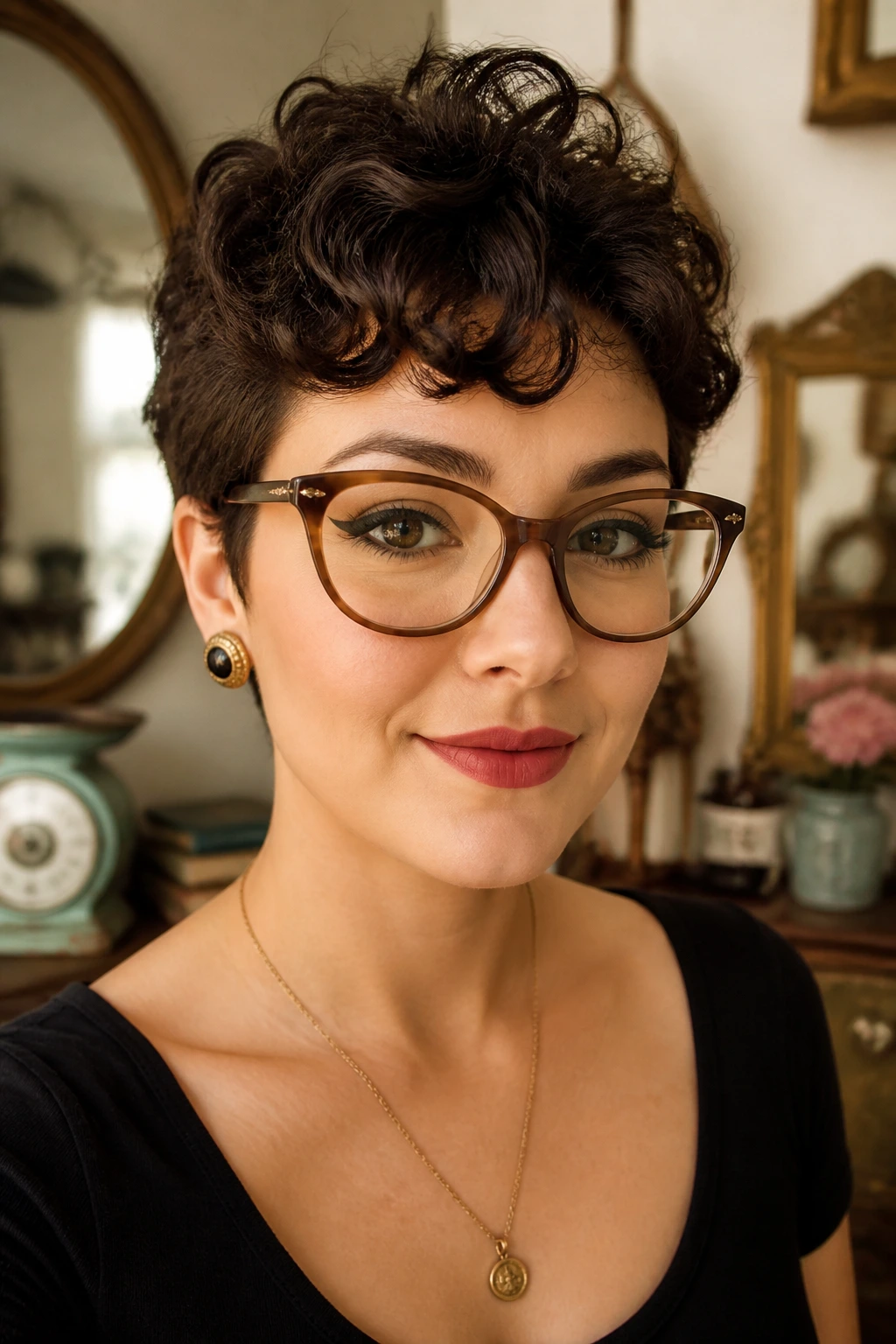
Pixies grow out fast. Curly pixies, even faster in appearance, because the curl shape changes before the actual length does. Plan on a trim every 4 to 6 weeks if you want the outline to stay crisp around the nape and ears.
At night, a satin bonnet or scarf helps more than most people expect. It keeps the crown from flattening and stops the fringe from getting crushed into a funny angle. If you can’t stand bonnets, a satin pillowcase is the next best thing, though it won’t protect the shape as completely.
For day-two refreshes, mist the hair lightly with water, add a fingertip of leave-in or curl cream to the ends, and re-diffuse for a few minutes on low heat. Don’t soak the whole head. A pixie only needs enough moisture to wake the curl back up. If the roots look dull, a little lift with your fingers at the scalp is usually enough.
Common Mistakes That Throw Off The Shape
-
Cutting the fringe too short on the first visit: Curly bangs often spring up more than expected. Fix it by leaving extra length and checking the front dry before you decide.
-
Over-thinning the sides: This makes the cut look wispy in the wrong way and can leave frizzy patches around the temples. Ask for shape removal, not random thinning.
-
Using heavy creams everywhere: Thick product weighs the crown down and erases the vintage line. Keep heavier creams off the roots and use them only where the curls need control.
-
Ignoring the nape: A beautiful top with an unshaped neckline looks half-finished. A clean taper or soft curve at the back keeps the whole style readable.
-
Styling only the front: If the temples and sideburns are left wild, the haircut loses its polish from the side view. Shape the whole perimeter, not just the fringe.
Frequently Asked Questions
Can very tight curls wear a vintage pixie?
Yes, but the cut needs to respect shrinkage and density. Tight curls usually look best with a tapered nape, a little extra length on top, and a stylist who checks the shape dry so the silhouette doesn’t shrink into a dome.
Do curly pixie cuts need bangs?
No, but bangs can change the whole feel of the cut. A side sweep softens the face, a baby fringe adds bite, and a longer curly fringe helps the cut read more vintage, especially if you want a flapper or pin-up angle.
Should the hair be cut wet or dry?
Dry cutting is often safer for curly pixies, or at least a dry check after shaping is. Wet curls hide their true length, and that can lead to bangs or crown layers ending up much shorter than expected.
How often do these cuts need trims?
Most curly pixie cuts need a trim every 4 to 6 weeks to keep the nape, temples, and fringe from losing their shape. If your hair grows fast or your curls expand wide, you may want the shorter end of that range.
What if my curls puff out at the sides?
That usually means the sides need more taper or less weight, not more product. A stylist can clean up the perimeter and leave the top fuller so the cut stays balanced instead of mushrooming out at the ears.
Can I wear a vintage pixie with glasses?
Definitely. In fact, many of these shapes look better with glasses because the frames give the cut a frame to work against. Just make sure the temples and fringe don’t crowd the arms of your glasses.
What products work best for styling?
Light mousse, a small amount of curl cream, and a low-hold spray usually cover most needs. Heavy butters and thick pomades can flatten the crown fast, which is a bad trade when the whole point is shape.
Is this hard to grow out?
Not if the trim line is soft. A tapered nape and longer crown can grow into a rounded crop or short shag without a dramatic awkward stage, while a very tight, blunt pixie may need more frequent shaping.
A Curly Pixie With Old-Soul Charm
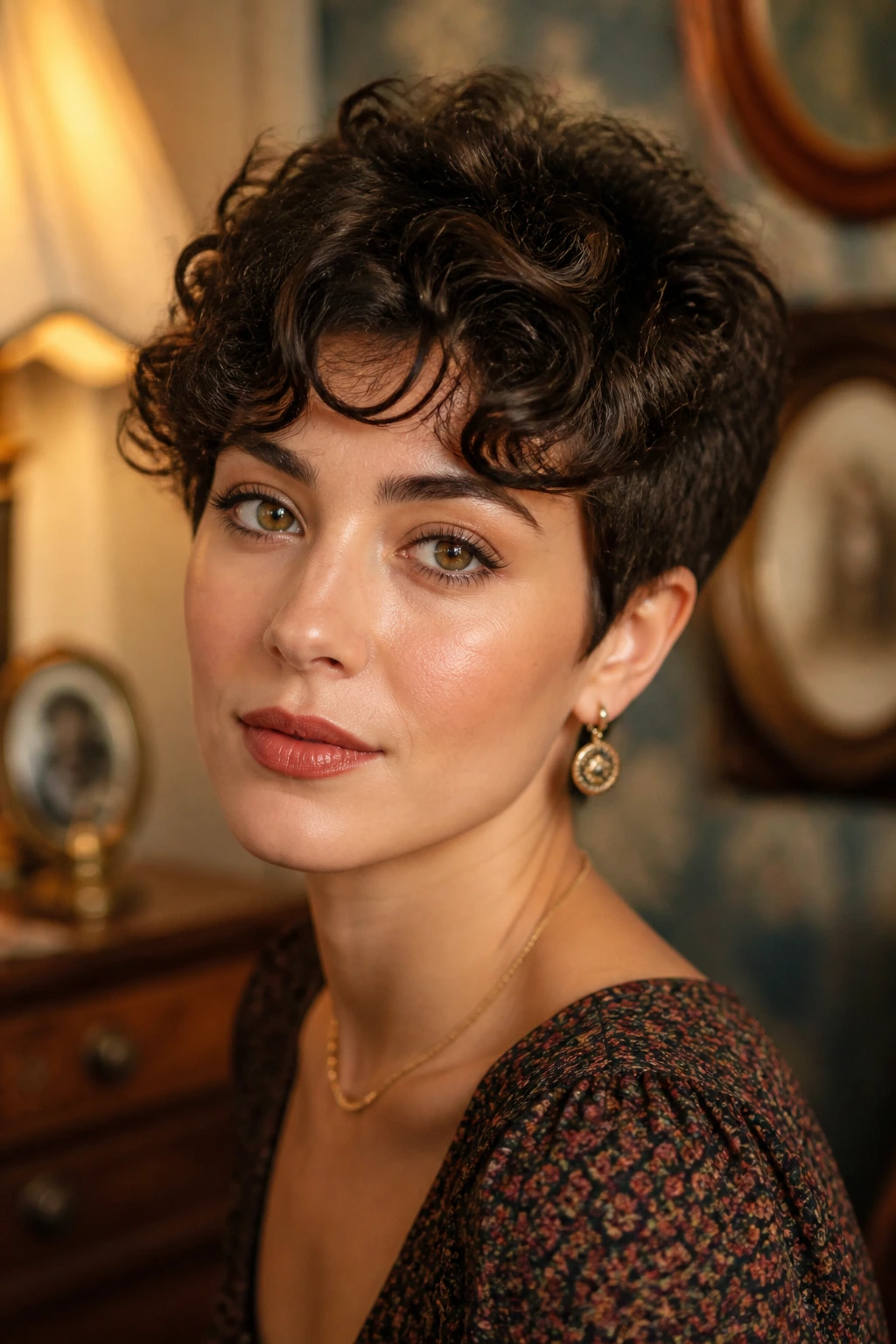
A curly pixie can look sharp, romantic, and a little nostalgic all at once, which is why these vintage versions hold up so well. They don’t try to erase texture. They give it a frame, then let the curl bring the attitude.
The best one for you is the cut that respects your curl pattern, your patience for styling, and how much neck or fringe you want to show. That’s the real trick. Once those three things line up, the haircut stops feeling like a risk and starts looking like a signature.
