



A little-girl hairstyle lives or dies on the second ten minutes, not the first two. The bow may look neat at the mirror and still lose the battle to a backpack strap, a lunchbox lid, and one determined hand reaching back from the car seat. That’s why hairstyle ideas for little girls have to do more than look cute for a photo; they need to stay comfy at the hairline, hold their shape through movement, and survive a day that includes snacks, swings, and a small amount of deliberate chaos.
I’ve always had a soft spot for styles that still look like a child is wearing them. A slightly crooked part. A braid that isn’t pulled so tight it makes the eyebrows lift. A ribbon tied low enough that it doesn’t dig into the back of the head. Those tiny choices matter more than most people think. They’re the difference between a style that gets kept on and one that comes out before lunch.
The 27 looks below are built for real mornings. Some take five minutes once the hair is detangled. Some are a little fancier and worth saving for parties, photos, or days when she wants to feel dressed up. A few work best on curls, a few on straight hair, and a few are the sort of middle-ground styles that behave well on just about anything. Start with her hair texture, then match the style to how much sitting still she can handle. That combination beats fancy every time.
Why These Hairstyle Ideas for Little Girls Work on Real Mornings
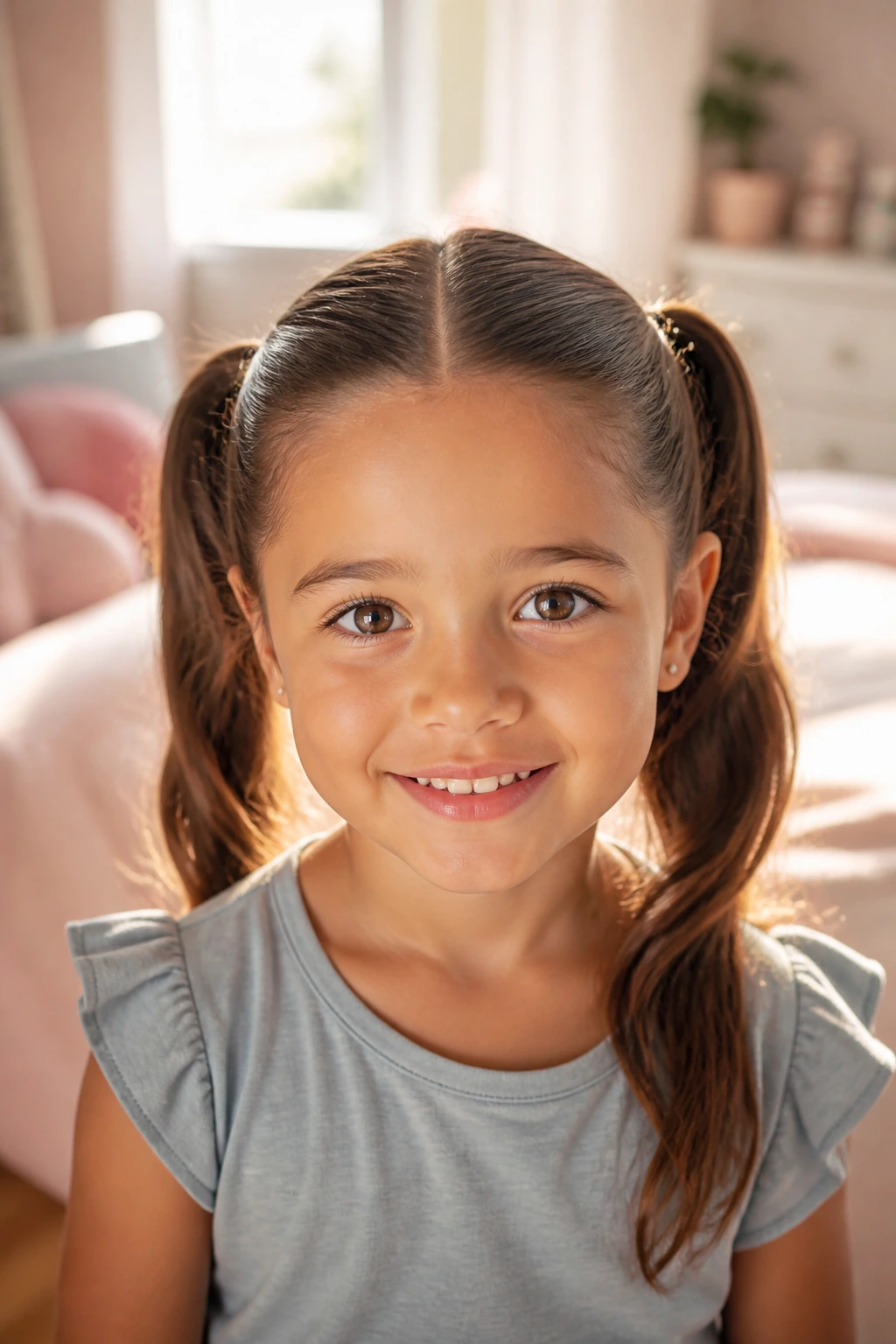
Fast setup: Most of these styles begin with one clean part or one ponytail, which means you spend your time styling instead of wrestling with ten separate sections.
Gentle hold: The better looks here use soft tension, so you get control without the red marks that show up when a style is pulled too tight.
Kid-proof movement: Braids, bubbles, twists, and buns hold up better than loose hair once a child starts climbing, spinning, or putting a hood on and off.
Texture-friendly: Straight, wavy, curly, and coily hair all get a place here, because one style does not suit every head.
Accessory-ready: A simple bow, ribbon, clip, or scrunchie can change the whole feel of a style without making it fussy.
Low-drama redo: If the first attempt comes out a little uneven, most of these styles still look good. That matters more than a lot of people admit.
1. Bubble Ponytail with a Center Part
A bubble ponytail has a cheerful, toy-like feel without looking messy, and the center part gives it enough structure to stay put. It works especially well on medium to long hair, and it’s one of those styles that looks more involved than it actually is. A handful of clear elastics does most of the work.
What I like here is the spacing. You can make the bubbles chunky and playful or keep them smaller and neater. If her hair is fine, a little mist of water and a light brushing at the roots helps the ponytail hold the shape. If it’s thick, use slightly bigger elastic gaps so the bubbles don’t puff out too hard.
Best for: School days, birthdays, and hair that likes to slip out of braids.
Quick tip: Pull each section outward with your fingers, not a comb, so the bubbles keep a softer round shape.
2. Double Dutch Braids into Low Pigtails
This one is neat, sporty, and surprisingly comfortable for long wear. The Dutch braid starts near the hairline and stays visible on top, which gives the style a little more dimension than a standard braid. Ending in low pigtails keeps the look soft instead of severe.
It’s a smart pick when hair needs to stay off the face but you don’t want a high ponytail bouncing around. On curly hair, braid from damp roots and let the ends stay curly. On straight hair, add a tiny bit of leave-in so the sections don’t get staticky and fuzzy before the braid is finished.
Why it stays tidy
The braid itself acts like a built-in anchor. Once the first few crossovers are set, the rest of the hair follows the line, and that makes the style easier to keep even on busy mornings.
Use this when: She has gym, recess, or a long day that starts early and ends late.
3. Crown Braid with Loose Ends
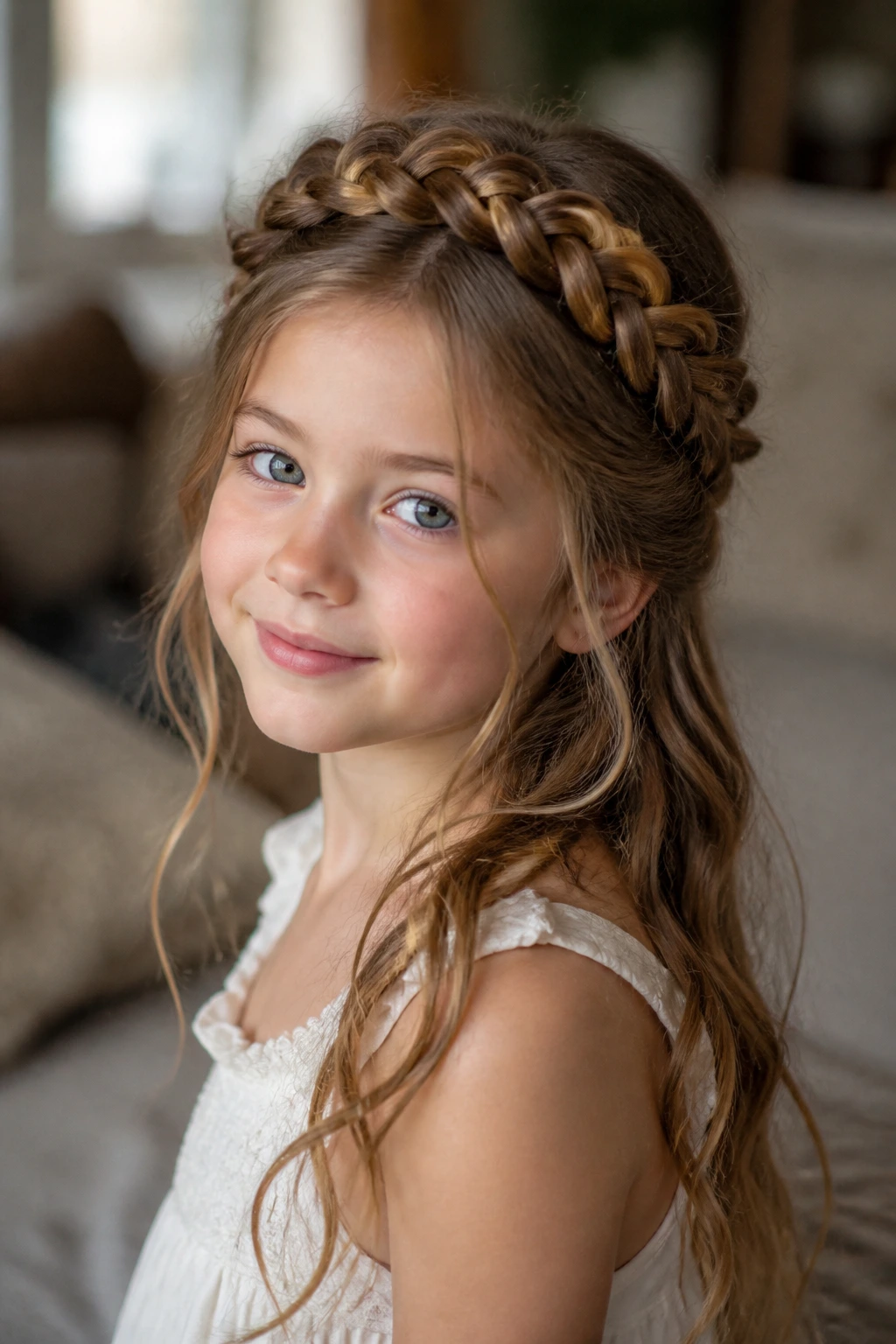
A crown braid wraps the braid around the top of the head like a little halo, then leaves the ends to hang loose or tuck into a low ponytail. It has a polished look, but it doesn’t need to be stiff. In fact, I think it looks better when the braid has a bit of softness to it.
This works well for photo day, family gatherings, or any time you want the hair out of the face without losing length. The trick is not to chase every tiny flyaway. A few soft wisps make the braid look wearable instead of shellacked into place. If her hair is layered, pinch the braid gently after it’s done so the shape looks fuller.
Best on: Medium to long hair with enough length to wrap around the crown.
Small warning: Don’t pull the braid too tight at the temples. That’s where kids start complaining first.
4. Half-Up Top Knot with Soft Waves
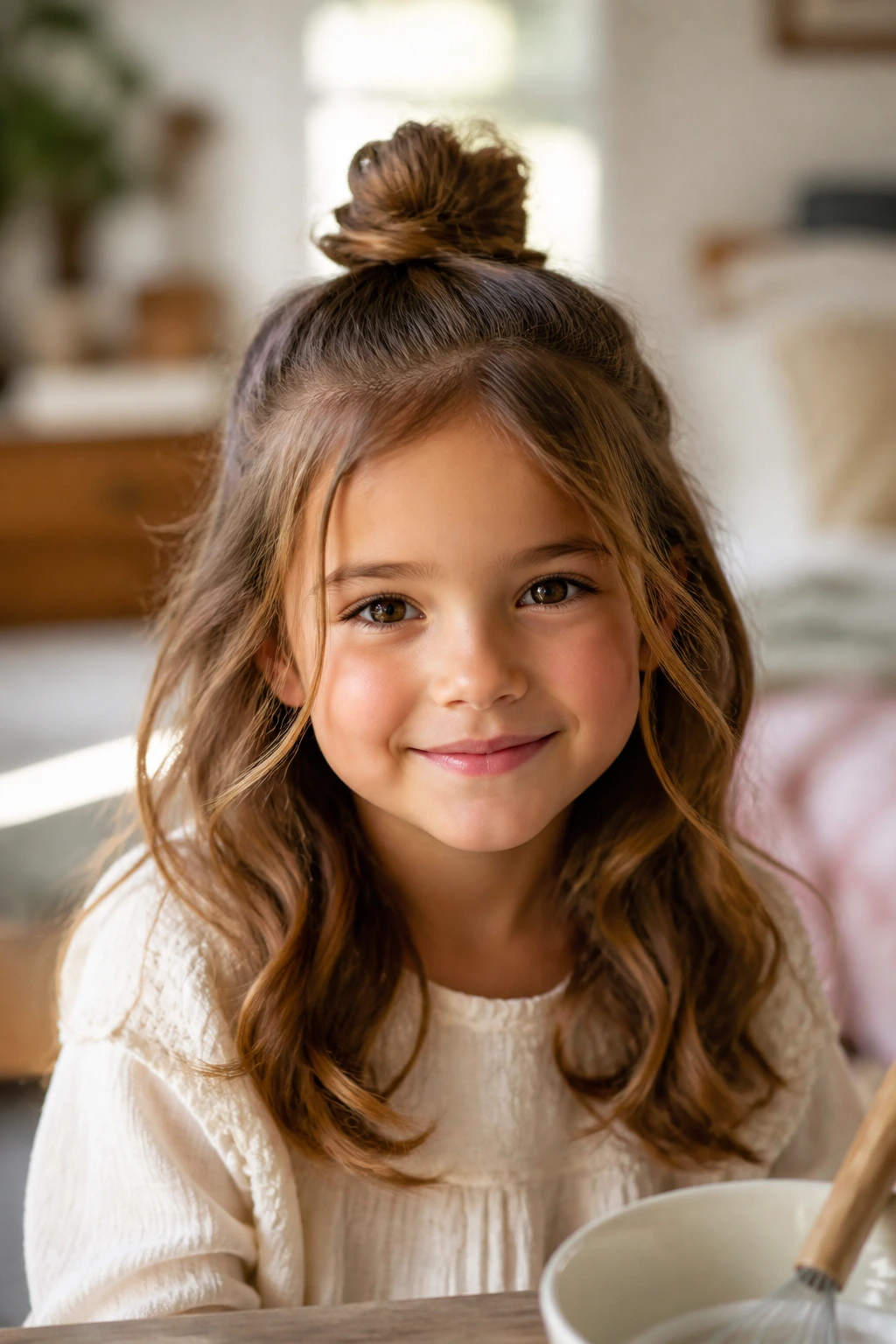
The half-up top knot is one of the easiest ways to keep hair off the face while letting the rest stay loose. It gives you a little lift at the crown and still leaves room for natural waves or curls below. On a child, that balance matters. It feels playful, not overdone.
If her hair is thick, gather just the top section and keep the knot small. If it’s fine, a tiny bit of texturizing from the previous day actually helps. I like this style on second-day hair because the shape holds better than fresh, slippery strands.
Good for: Wavy hair, shoulder-length cuts, and mornings when a full updo is too much.
Accessory move: A soft scrunchie or small bow at the knot keeps the look sweet without adding weight.
5. Slick Low Ponytail with a Ribbon Wrap
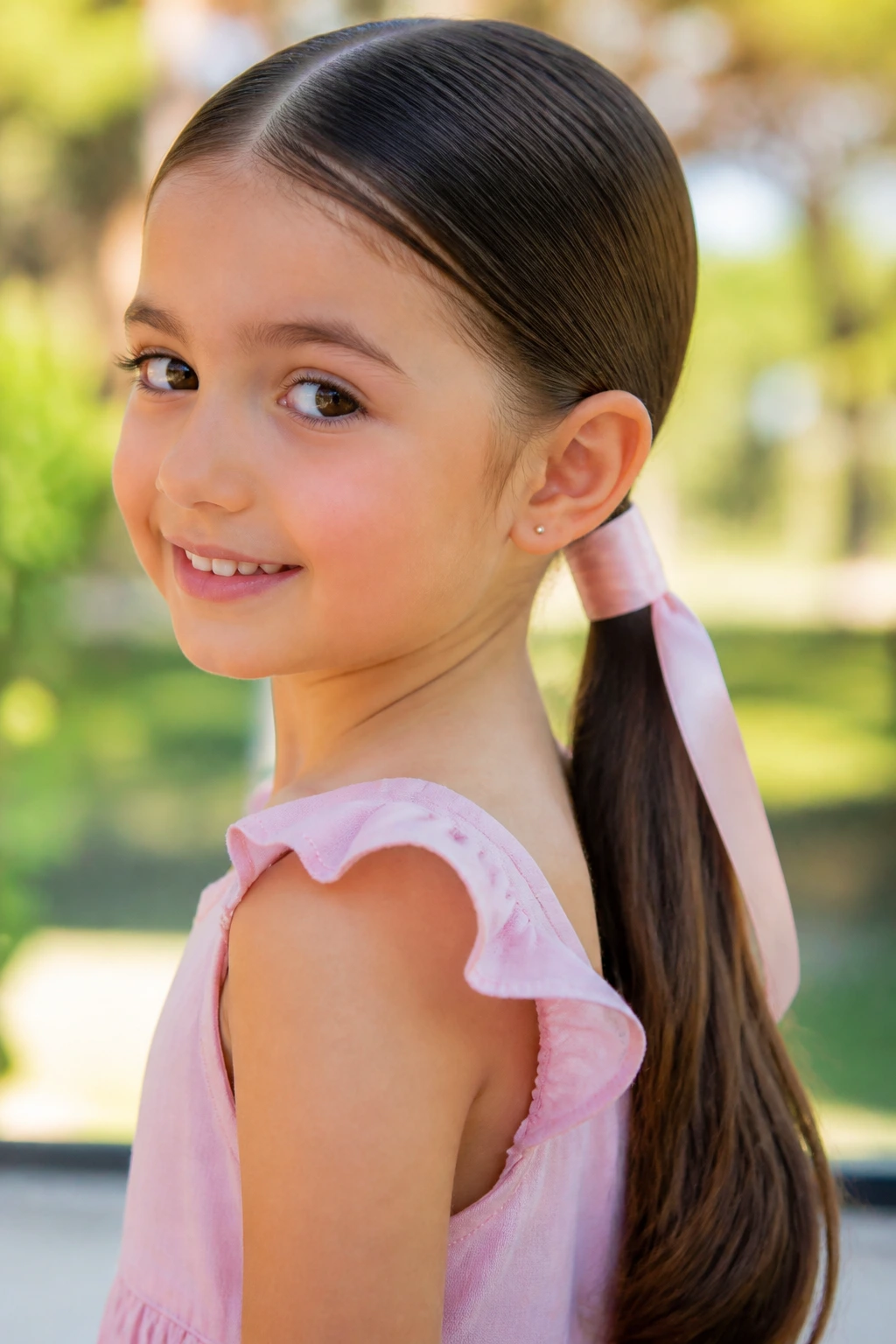
A low ponytail can look plain if you stop too soon, but wrapped with ribbon it turns into something clean and deliberate. The key is the prep: brush the hair smooth, keep the part crisp, and anchor the ponytail low at the nape. Then wrap ribbon around the elastic or tie it over the top.
This style is especially handy for fine hair because it doesn’t need much volume to read as finished. On thick hair, use a strong no-pull elastic and a ribbon that isn’t too slippery. Satin looks pretty, but cotton stays put better if the child moves a lot.
What makes it work
It stays close to the head, which means it won’t bounce around during play. That’s a big deal on active days, and it’s part of why this is one of the easiest little-girl hairstyles to keep tidy all day.
6. Side French Braid
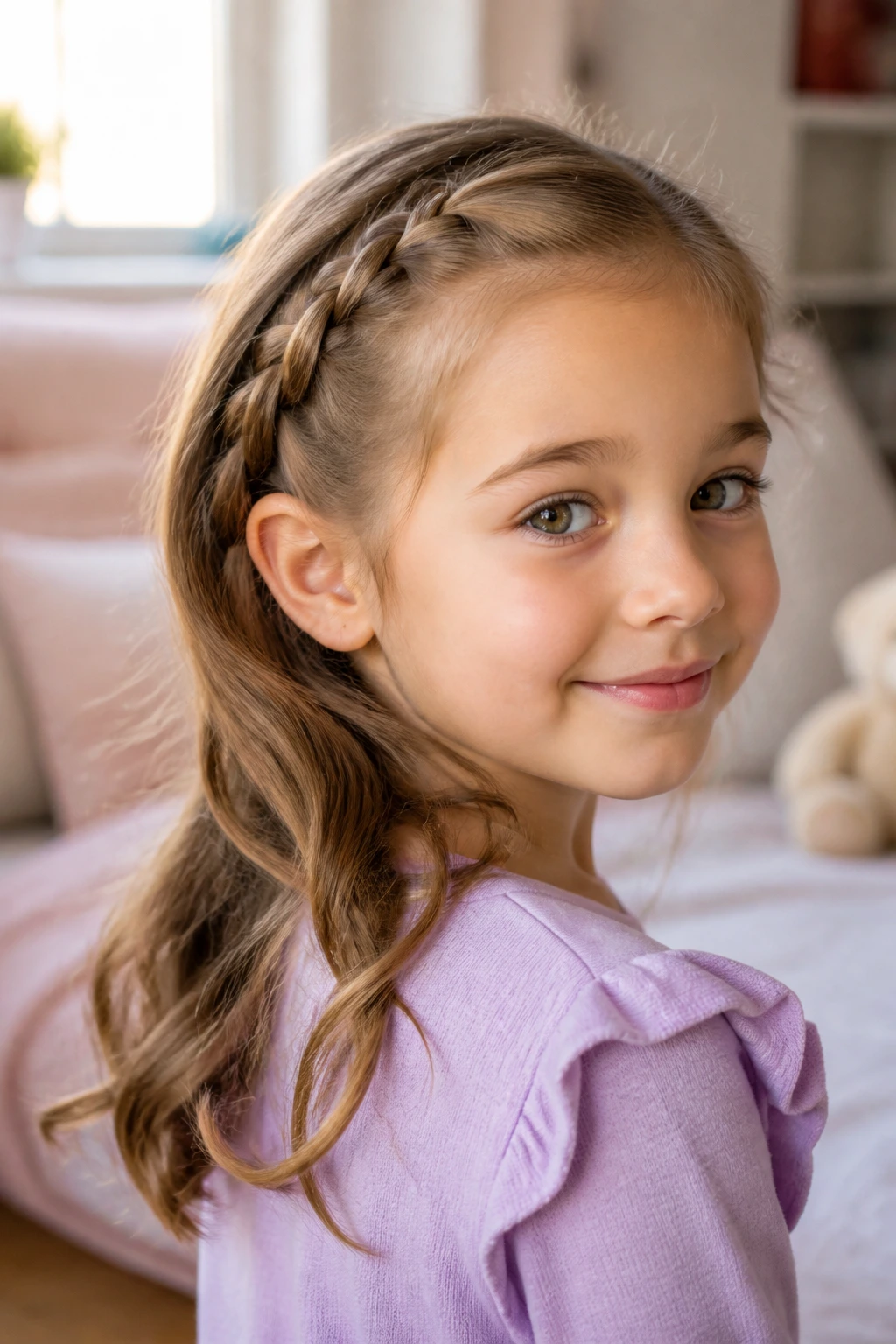
A side French braid has a softer feel than a braid dead center down the back. Starting on one side keeps the face open while still giving the hair a clear path to follow. It’s one of the few styles that can look both casual and dressy depending on how tight you make the sections.
The side placement is useful when a child has a stubborn cowlick or a part that never wants to behave. Lean into that. A side braid often works with the hair’s natural fall instead of fighting it. If the ends are short, secure them with a small elastic and tuck them under a barrette.
Best for: Fine hair, medium hair, and kids who dislike hair on both cheeks.
Pro move: Spray a little water on the braid fingers, not the whole head, if the strands start slipping.
7. Space Buns with Face-Framing Pieces
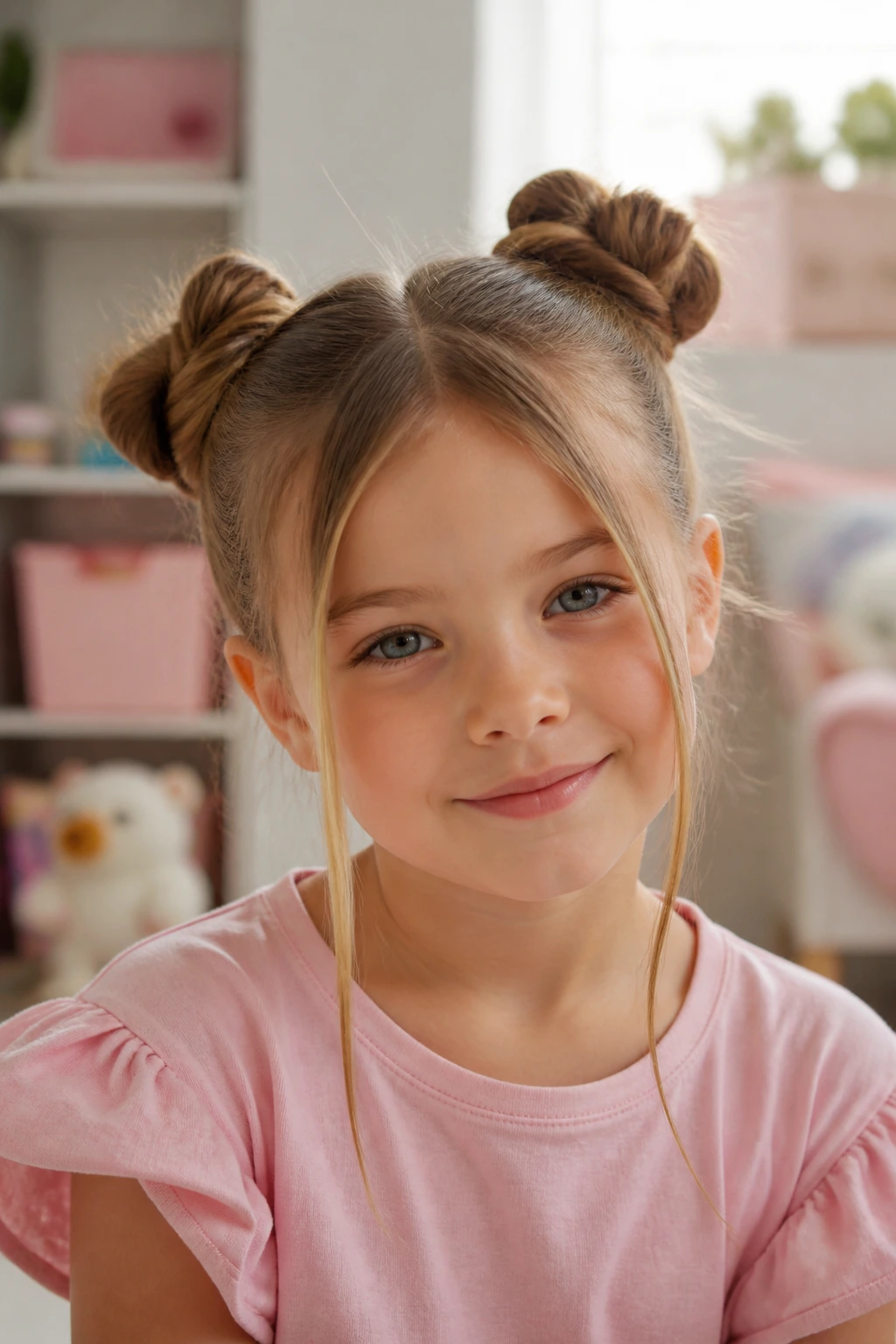
Space buns are playful, but they can go wrong fast if they’re pulled too tightly or made too high. Keep them small and slightly soft. A few face-framing pieces in front make the style feel less rigid and give the child a little movement around the face.
This is a strong choice for birthday parties, dance class, or any afternoon where she wants her hair up and out of the way. It also works well on shorter hair that won’t stay in one big bun. Split the hair cleanly, twist each side, and use covered elastics or pins that won’t snag.
Use this when: You want something fun that still survives actual movement.
Tiny caution: Don’t load the buns with heavy clips. They’ll pull the style down and make it fall apart faster.
8. Twisted Halo with Beaded Ends
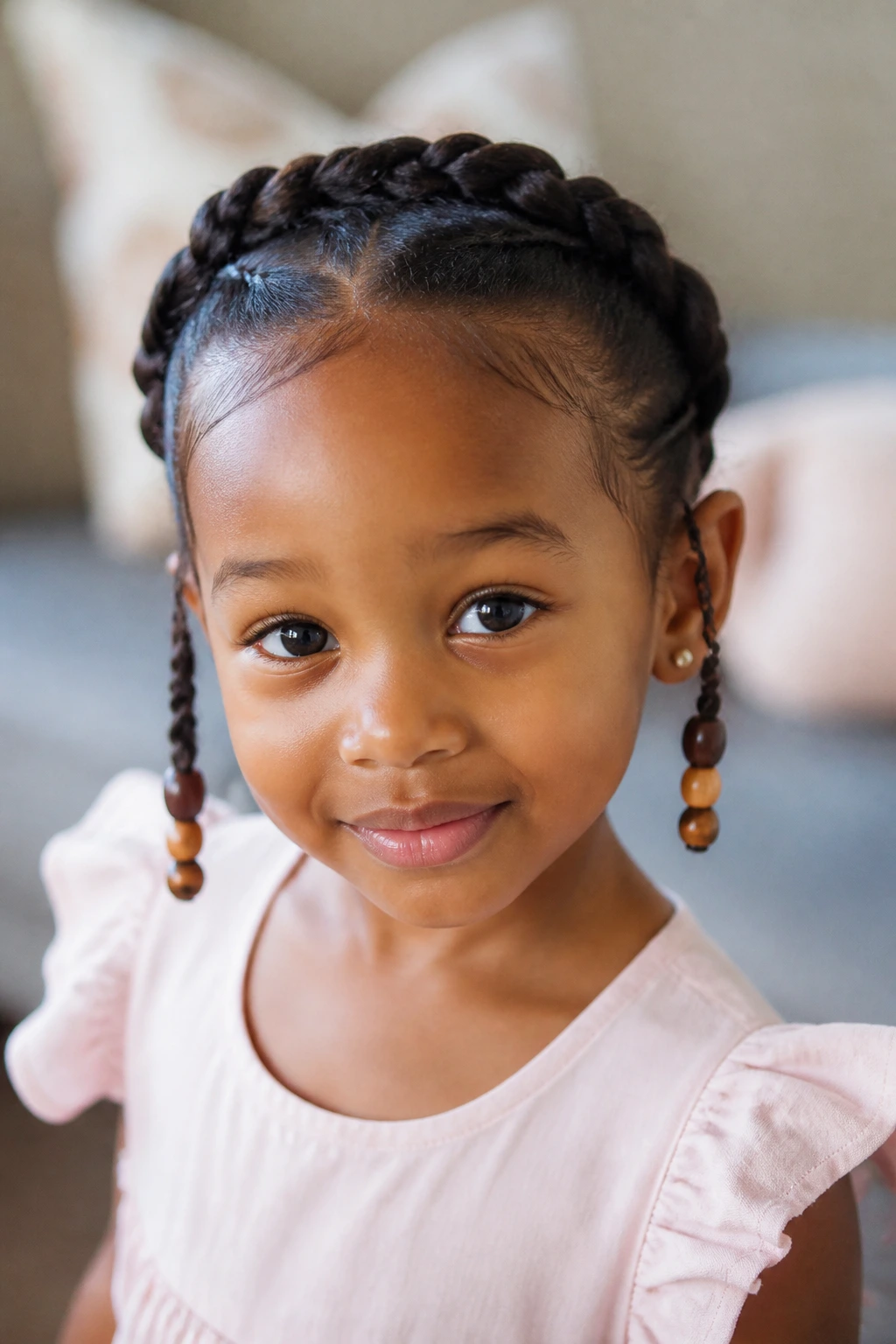
A twisted halo has a gentle, almost storybook shape. Instead of braiding, you twist sections from each side of the head and bring them around toward the back, then finish the ends with beads or a tiny elastic. It’s a lovely option for curls, coils, and textured hair, especially when you want a style that feels special without spending forever on it.
The halo shape keeps hair away from the face and lets the texture show off instead of being flattened. If you do use beads, keep them light and secure them well; a few beads at the ends are enough. Too many and the style starts to feel heavy, especially on fine hair.
Good for: Family photos, dress-up days, or hair that holds twists better than braids.
Quick opinion: A halo looks best when it’s a little soft. Sharp lines make it feel older than it should.
9. Waterfall Braid on Long Hair
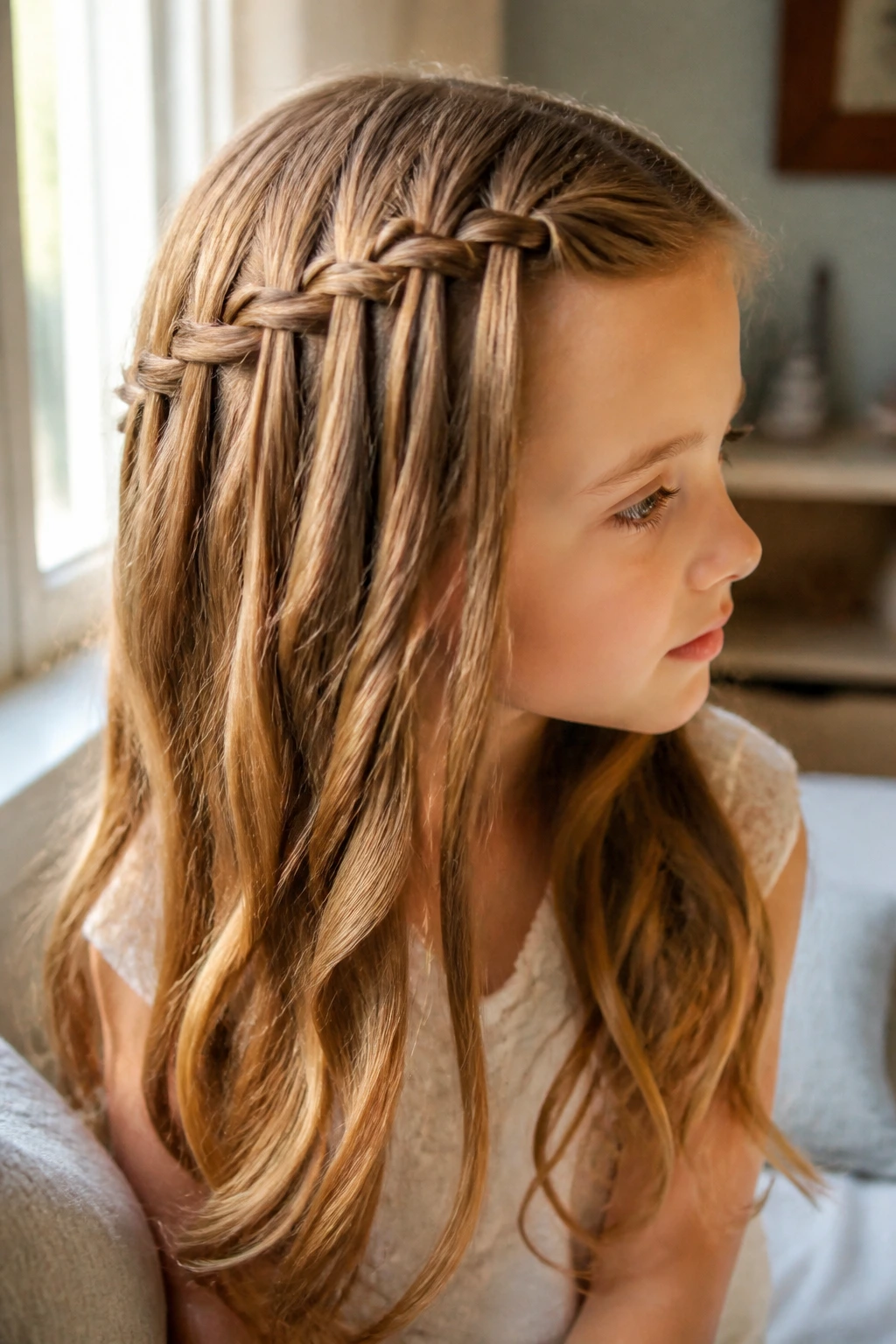
A waterfall braid has that “how did you do that?” look, but the method is simpler than it appears. You braid across the head and drop one piece through each time, which creates the little cascading effect. On long hair, it looks especially pretty because the loose strands have room to fall.
This style is not the fastest one here, so I’d save it for calmer mornings or days when you’ve got a few extra minutes. It’s lovely on straight or wavy hair. On very slippery hair, a tiny touch of styling cream through the mids helps the braid hold its shape without puffing out.
Why it stands out
The braid gives structure, but the dropped pieces keep the hair from looking pinned down. That mix makes it one of the more graceful little-girl hairstyles for special occasions.
10. Heart-Part Pigtails
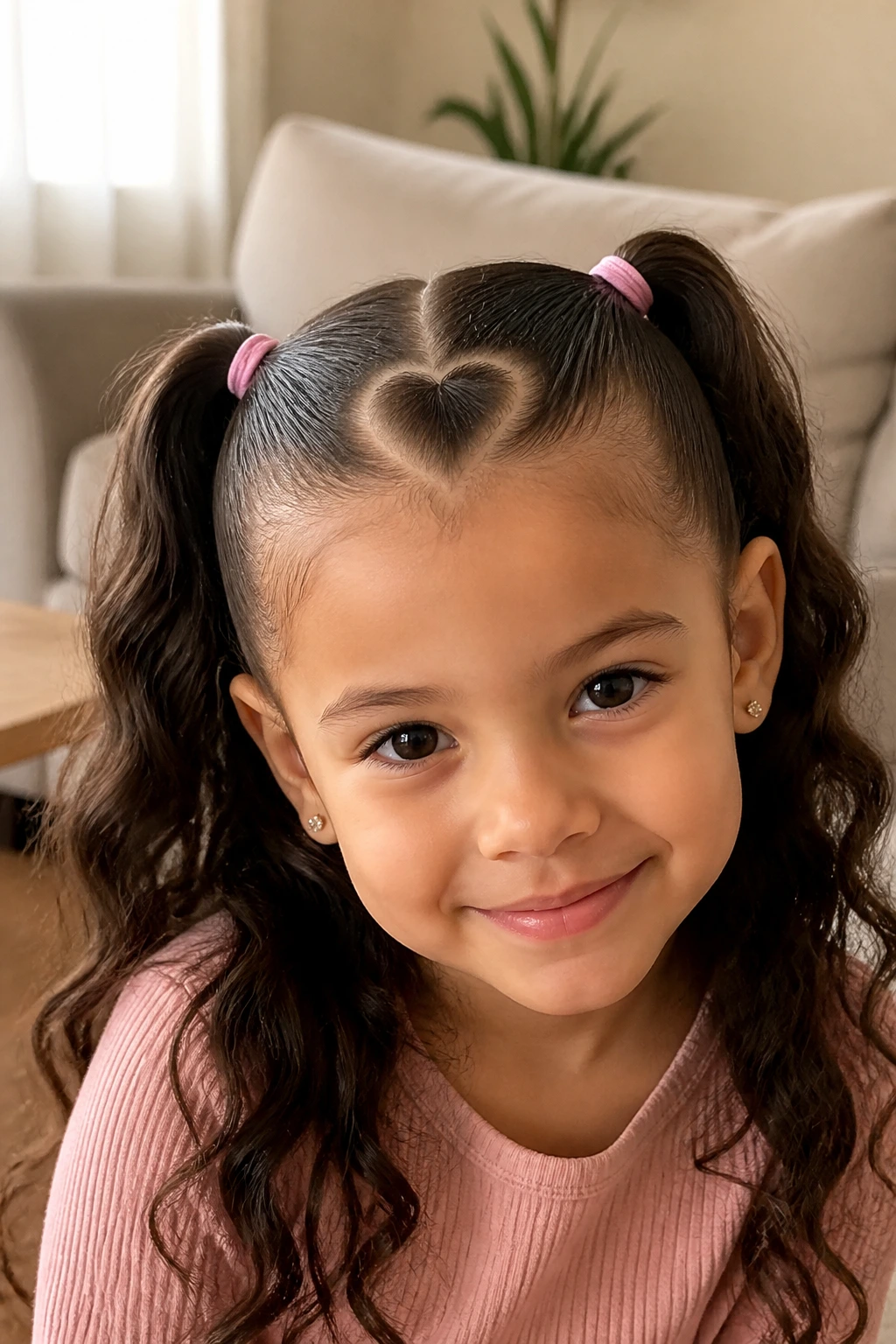
A heart part turns a basic pigtail into something sweet without adding much time. The shape is made with a rat-tail comb, and it does not need to be perfect. Actually, a slightly soft heart often looks better on a child than a rigid one.
Once the part is made, gather each side into pigtails and finish with matching ties or bows. This style works on straight, wavy, and curly hair, though the cleaner the parting, the more visible the shape. If the hair is very fine, keep the heart simple and low so the part lines don’t disappear.
Best for: Birthdays, school celebrations, and photos where you want one small detail to do the talking.
Real-world note: If the heart takes too long, simplify it. The shape still reads even when it’s not drawn with surgical precision.
11. Mini Box Braids with Beads
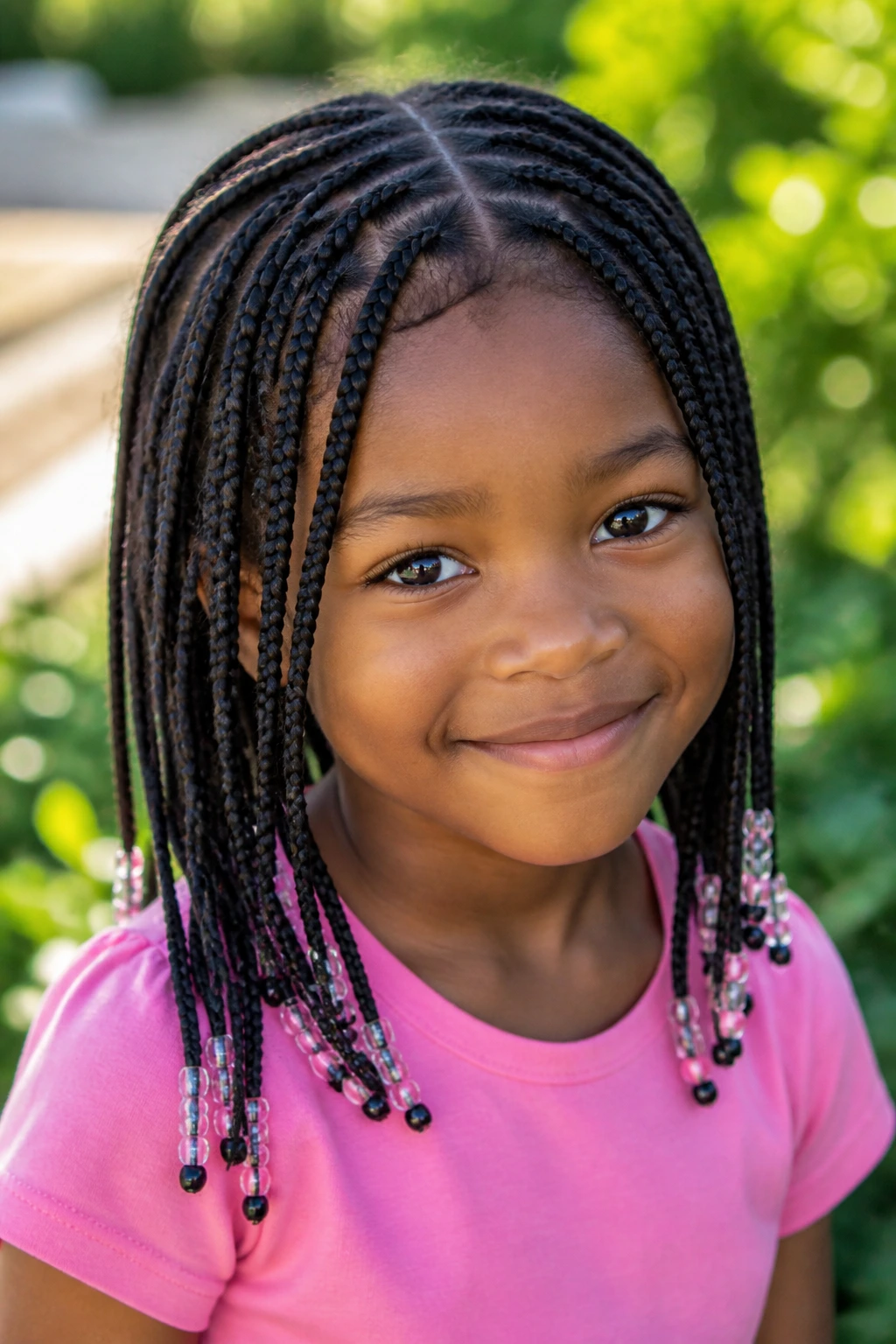
Mini box braids give structure and longevity, which makes them a smart choice when the goal is less daily styling. They can be done on natural hair or with added hair, depending on your preference and the child’s comfort. The neat grid at the scalp is the part that matters most, and that should always feel gentle, not tight.
Beads add sound and movement, which children usually love, but keep the count modest. Too many beads turn every head turn into a clatter. I prefer a few beads at the ends, where they move but don’t weigh down the braids. If her scalp is sensitive, skip the beads and let the braid pattern do the work.
Best for: Protective styling and mornings when you want a longer-lasting option.
Watch for: Any pulling at the edges. If the hairline feels sore, the braids are too tight.
12. Low Side Bun with a Bow
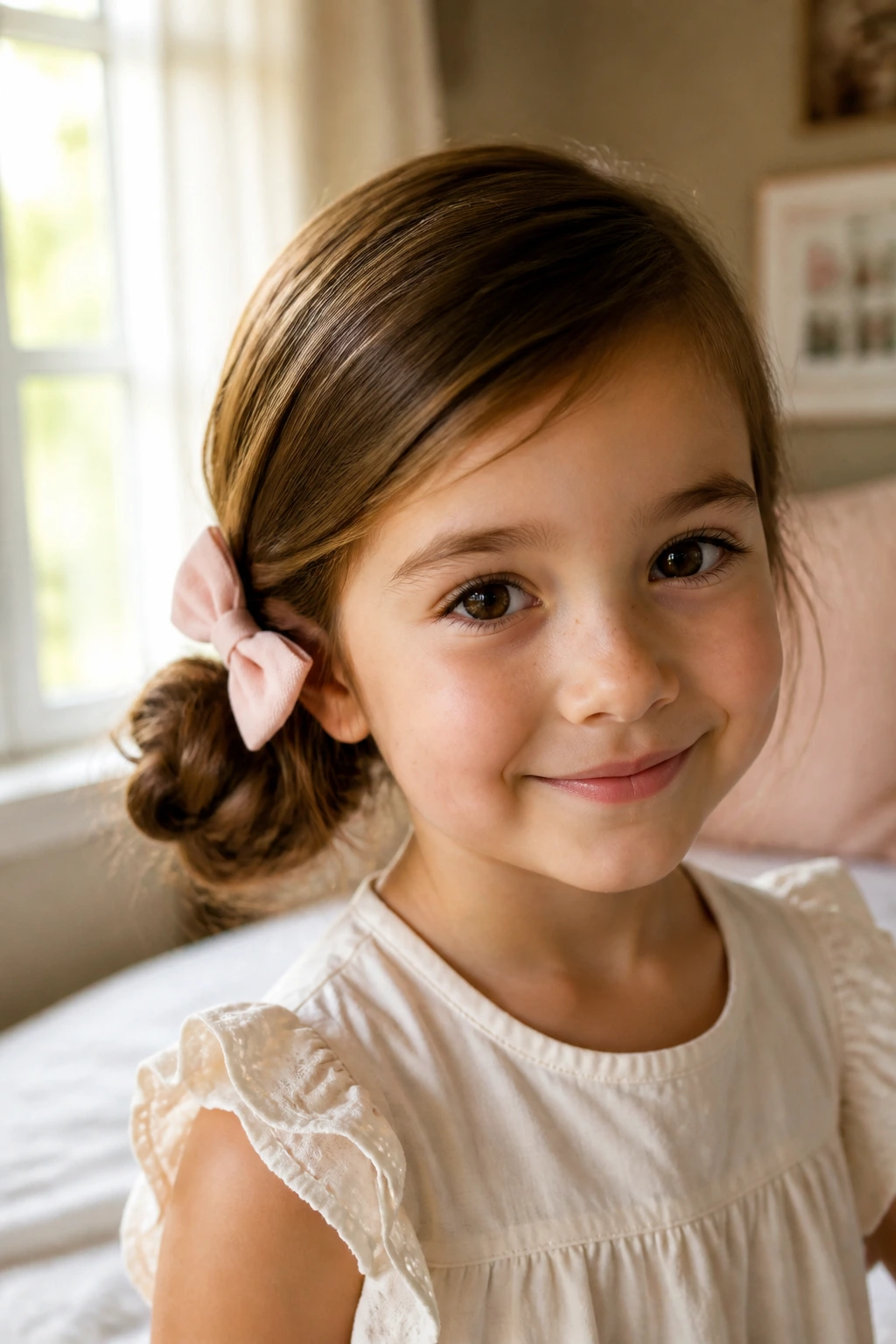
A low side bun gives a softer shape than a bun dead center at the back of the head. It sits near the ear or just below it, which makes the whole style feel sweeter and a little more relaxed. Add a bow, and it moves straight into occasion territory without much extra effort.
The bun itself can be smooth or slightly textured. On curly hair, I’d keep some texture visible so it doesn’t look pasted down. On straighter hair, a few pins and a small elastic are enough to keep it from sagging. This is one of those looks that works for church, family dinners, and any event where she needs to look neatly dressed without looking fussy.
Tip: Place the bow at the side of the bun, not above it. That small shift changes the whole balance.
13. Curly Pineapple Puff
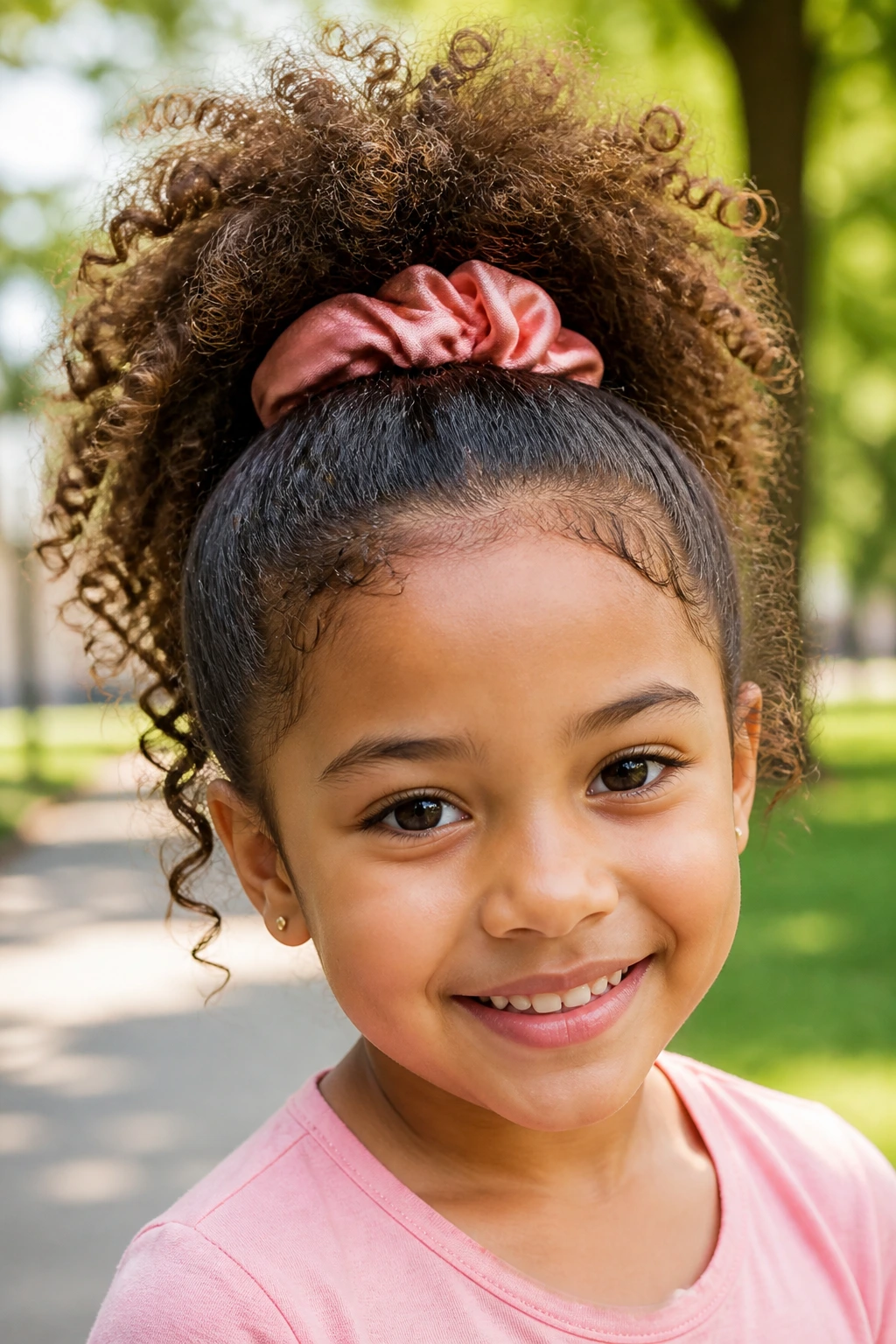
The pineapple puff is a gift for curly and coily hair. It keeps the curls up high and loose, which protects the shape and keeps the hair off the neck. On a child, that means less sweating, less flattening, and fewer mid-day complaints about hair touching the face.
Use a soft scrunchie or silk-covered tie, and don’t yank the curls too tight. The puff should sit high, but it should still feel like hair, not a helmet. If the curls are dry, mist lightly and lift them at the roots with your fingers before tying them off.
How to use it
This style is especially helpful the day after wash day, when the curls still have definition but need a quick shape-up. It’s also a nice one for kids who like wearing their hair “big” and visible.
14. Rope-Twist Pigtails
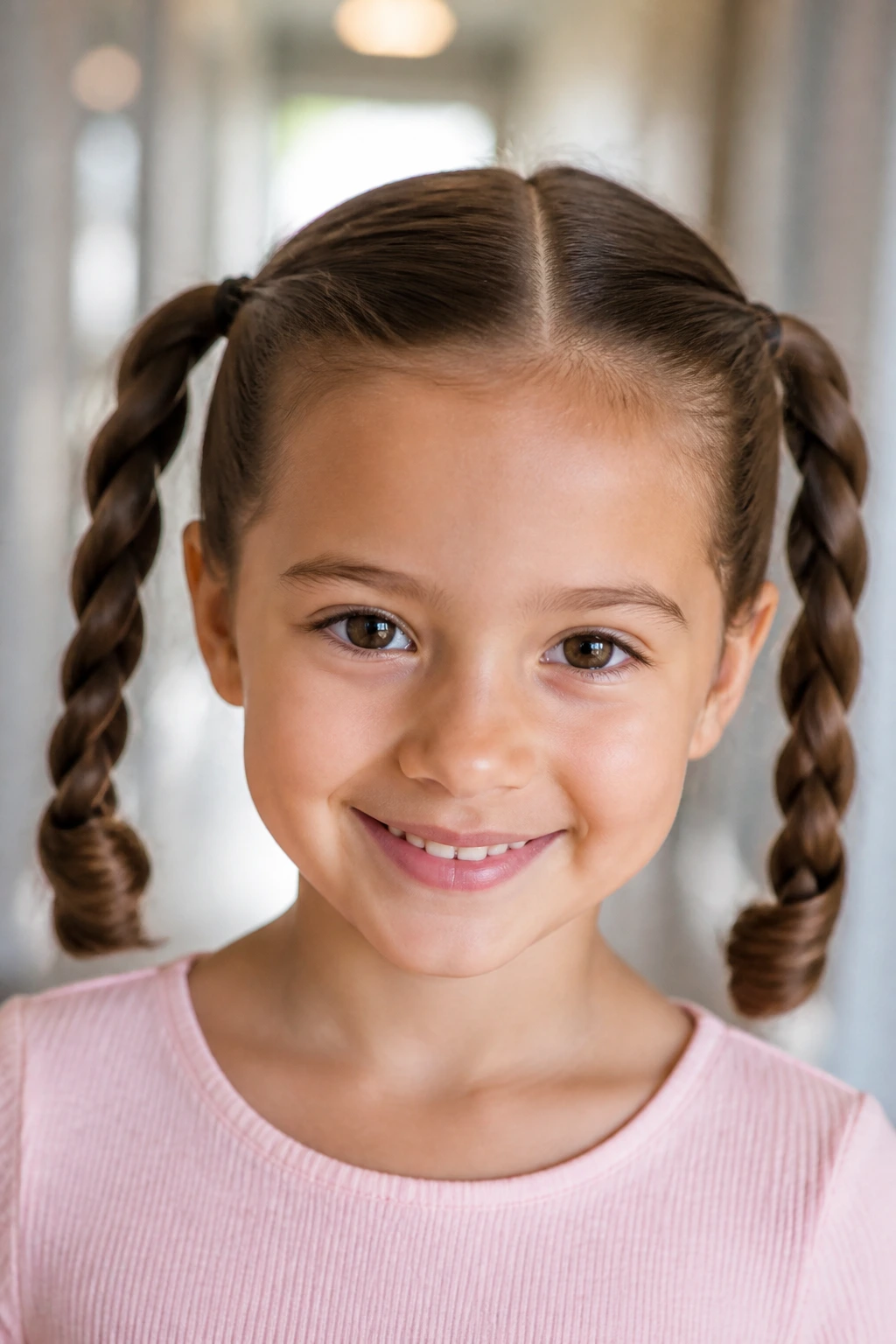
Rope twists are a nice change from braids because they move faster and can be gentler on hair that tangles easily. Split the section into two strands, twist each one, then twist them around each other. That’s the whole idea. Simple, but it looks polished once you finish both sides.
This style is good on damp or slightly moisturized hair, especially if the strands are smooth and slip out of braids. Rope twists also create a neat spiral pattern at the ends, which children notice. If you want a little extra, finish the ends with colorful elastics or a tiny ribbon.
Best on: Medium-length hair and kids who don’t sit still for long braid sessions.
Small advantage: The twist pattern can be undone later for soft waves.
15. Braided Headband
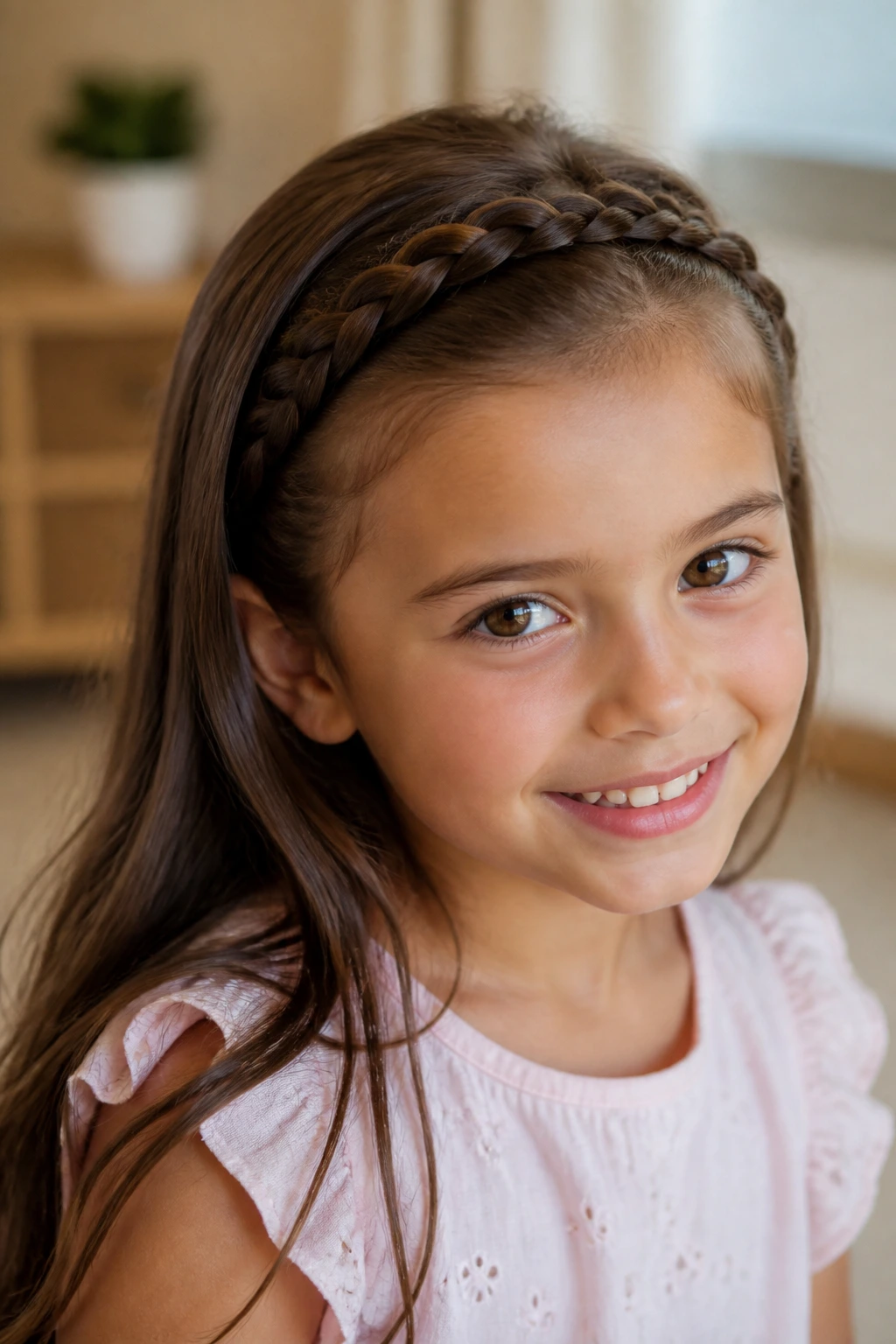
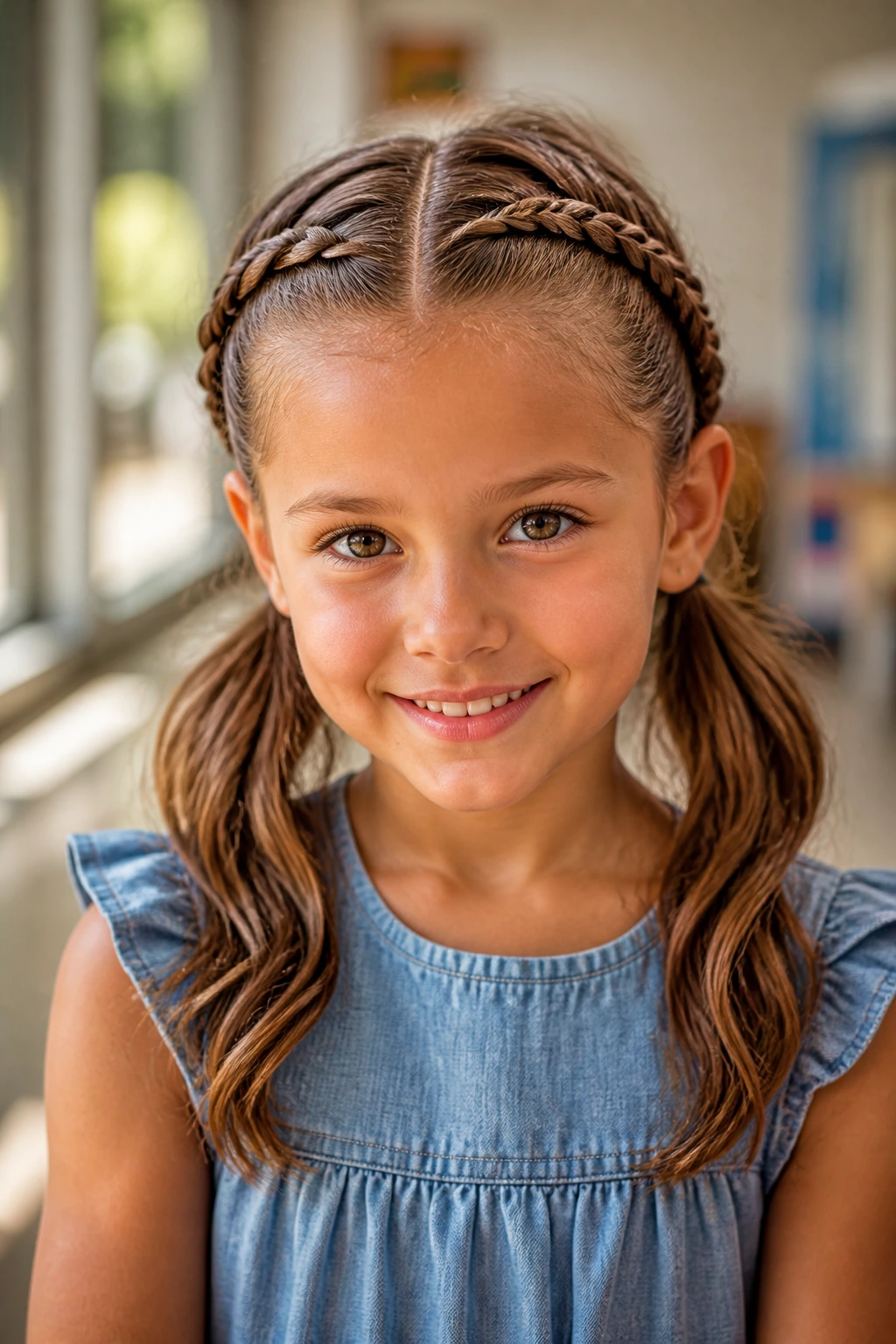
A braided headband uses the hair itself as the accessory, which is one of my favorite tricks for keeping hair off the face without adding weight. A braid runs across the front like a band, while the rest of the hair hangs loose or goes into a ponytail. It’s neat, practical, and easy to match with almost anything.
This one is especially handy when bangs are growing out or the front pieces keep falling into the eyes. On fine hair, keep the braid close to the scalp so it has enough grip. On thick hair, leave it slightly fuller so it doesn’t look pinched.
Best for: School days, picture day, and kids who want to keep some length down.
Quick note: A loose braid here looks better than a tight one. Let it sit soft against the head.
16. Fishtail Braid Ponytail
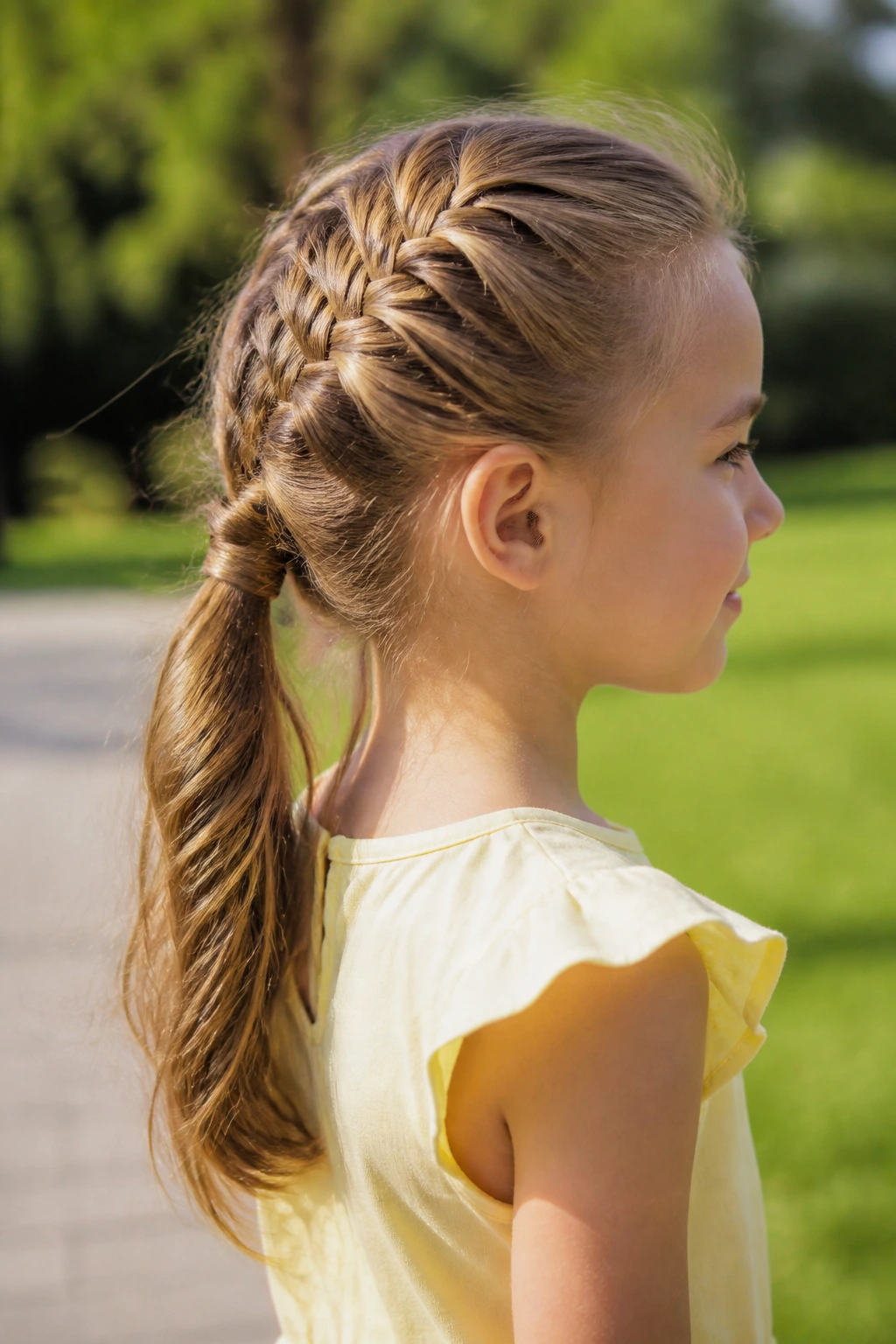
A fishtail braid ponytail gives you the texture of a braid with the clean shape of a ponytail. It’s a nice middle ground when a regular braid feels too plain and a full updo feels like too much. The braid itself can be tight and tidy or pulled apart a little for a fuller look.
It works best when the hair has some grip, so if the strands are slippery, add a touch of leave-in or start from second-day hair. I like this one for older little girls who want something a little more grown-up without looking like they’re borrowing from an adult hairstyle too hard.
Use it when: You want something a touch dressier but still practical.
Pro tip: Pancake the braid lightly at the end. That means tugging the sides outward a bit so the braid looks thicker.
17. Double Buns with Braided Bases
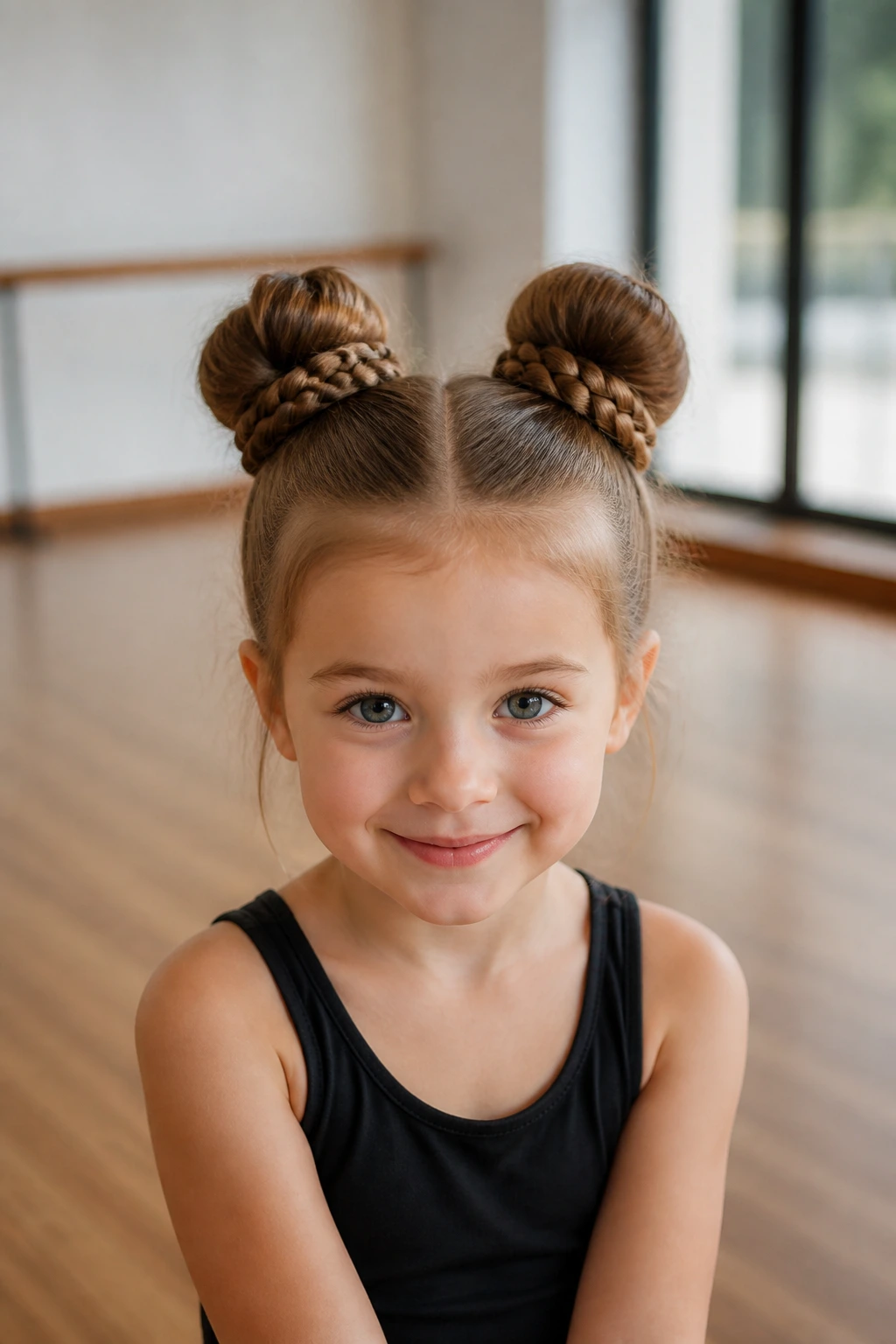
Double buns get steadier when you braid the base first. That small step gives the buns a cleaner anchor and keeps them from sliding around. The result looks playful but not chaotic, which is a useful balance for active kids.
This style is good for dance class, weekend outings, or any day when she wants her hair up and fun. If her hair is thick, keep the buns modest rather than trying to cram everything into giant knots. If it’s fine, the braided base adds enough body that the style doesn’t look sparse.
Good for: Medium to long hair, especially when you want the buns to last past lunch.
Tiny fix: If one bun ends up a little smaller, leave it. Matching them exactly can take twice as long and make the hair more tense.
18. Half-Up Braided Crown
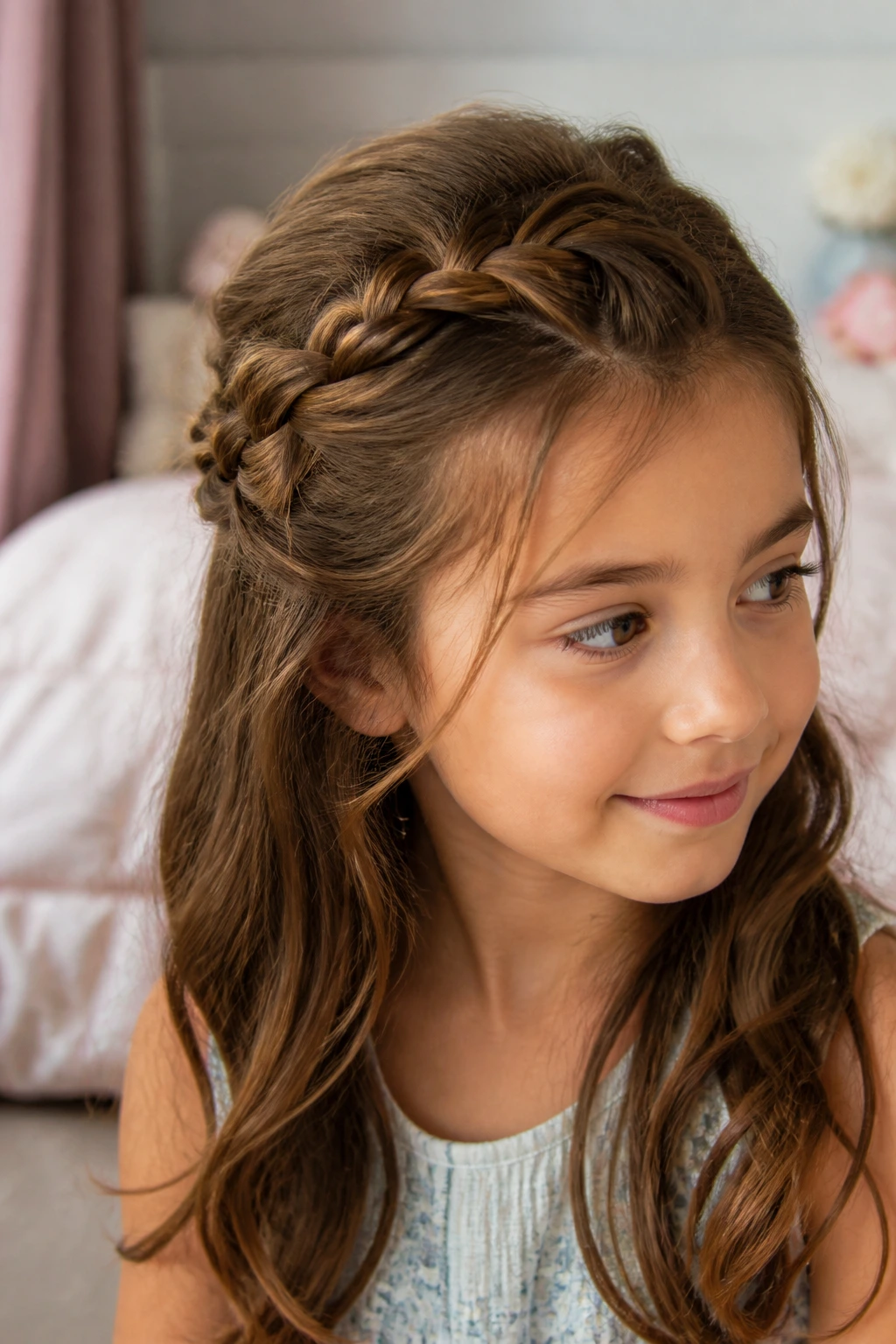
A half-up braided crown gives you the prettiness of a crown braid without asking the whole head to cooperate. You braid a section from one side across the top, then pin it into place and let the rest hang free. It has a soft, frame-the-face effect that works well on straight and wavy hair.
This is a good choice when she wants some hair down but you don’t want it falling into her eyes all day. The braid should sit snugly enough to hold, but not so snug that the scalp feels tugged. A few hidden pins do more than most people expect here.
Why it’s useful
It gives structure at the top, which is where hair tends to collapse first, especially if the child wears a hoodie or takes a nap on the way home.
19. Twist-Back Clips on Short Hair
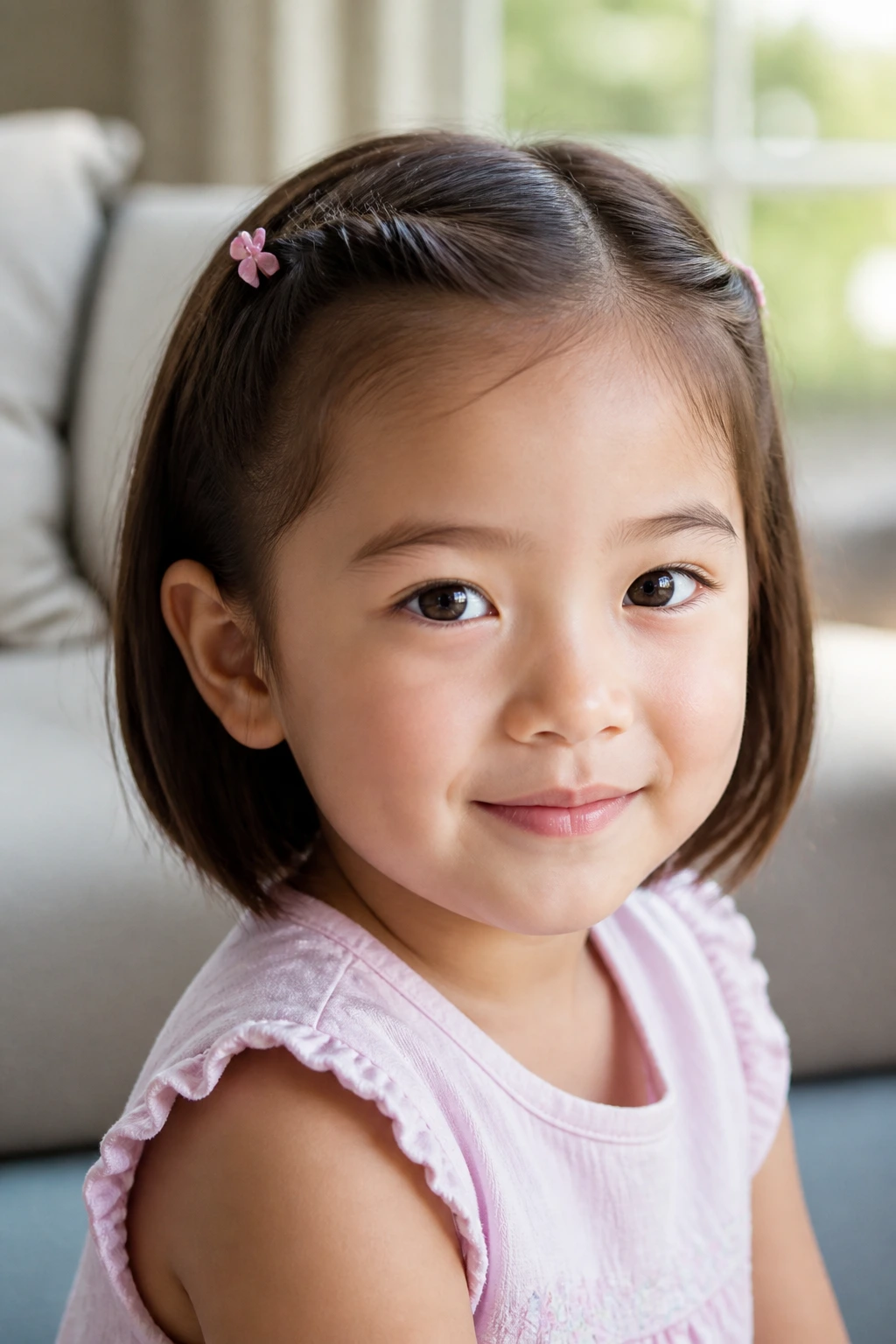
Short hair can be tricky, because a lot of cute styles assume length that just isn’t there. Twist-back clips solve that fast. Take a small front section on each side, twist it back toward the crown, and secure it with a small clip or barrette.
I like this for bob lengths, chin-length cuts, and toddlers who won’t tolerate much fuss. It keeps hair out of the eyes without forcing a ponytail that barely exists. If the hair is slippery, a dab of water at the roots helps the twist hold better than dry brushing alone.
Best for: Short hair, impatient mornings, and days when the goal is simple.
Good rule: Use clips that close smoothly. Anything sharp or bulky gets yanked out by the first sweater change.
20. Side Ponytail with Scrunchies
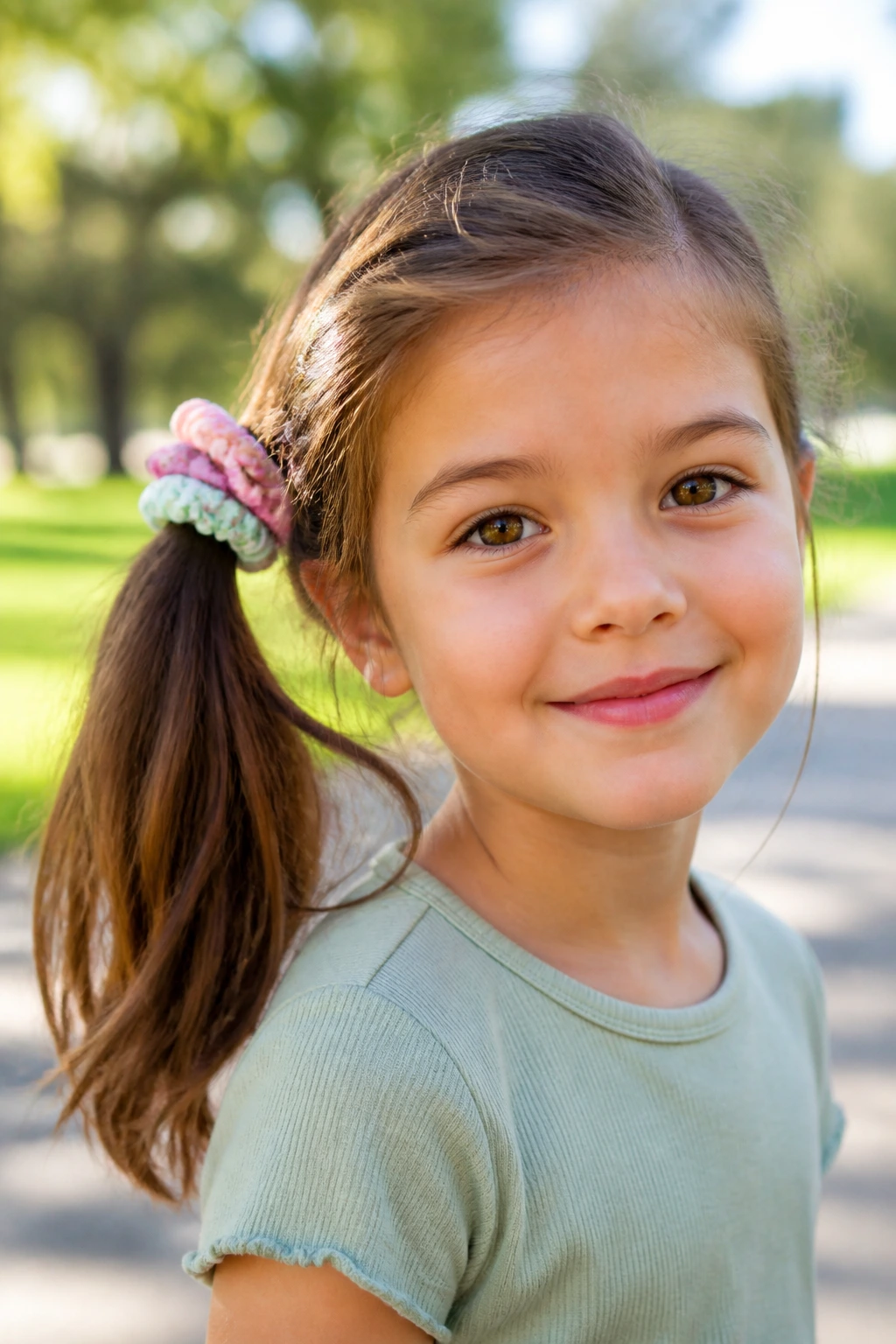
A side ponytail has a little old-fashioned charm, and scrunchies make it feel soft instead of severe. It’s easy to place, easy to redo, and kinder to hair than a tight elastic at the crown. If you want more shape, add two scrunchies down the tail or tuck in a ribbon.
This style works on straight, wavy, and curly hair. On curls, I’d keep the ponytail looser so the curl pattern stays visible. On fine hair, a little root lift at the side helps it sit higher and look fuller without teasing.
Best for: Quick school mornings and hair that doesn’t like staying in one place too long.
Favorite detail: A side ponytail looks best when it sits just behind the cheekbone, not down near the jaw.
21. Pull-Through Braid
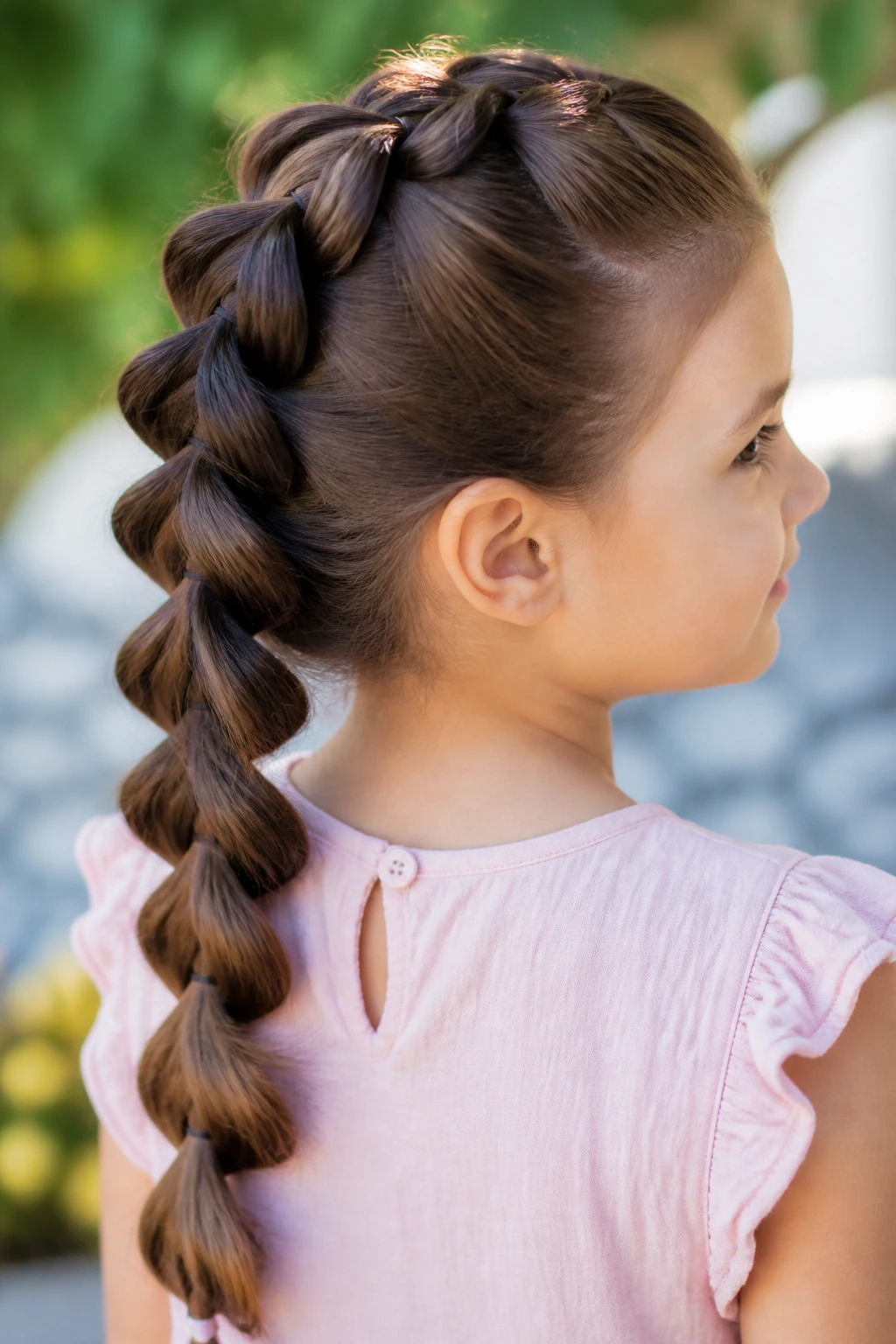
The pull-through braid is one of the easiest fake-braid styles to pull off, and I mean that in the nicest way. You build it from a chain of small ponytails, then split and loop each section so it looks braided. If actual braiding turns into a tangle of fingers and hair spray, this is a much friendlier option.
It’s especially good on thick hair because the braid looks full almost automatically. On thinner hair, use small elastics and keep the sections close so the braid doesn’t look too spaced out. It’s a showier style, but it still behaves well once it’s secured.
Good for: Long hair, busy hands, and anyone who wants a braid look without the usual wrist acrobatics.
Pro move: Gently tug the loops apart after each section is secured. That gives the braid its fuller shape.
22. Four-Section Ponytail Ladder
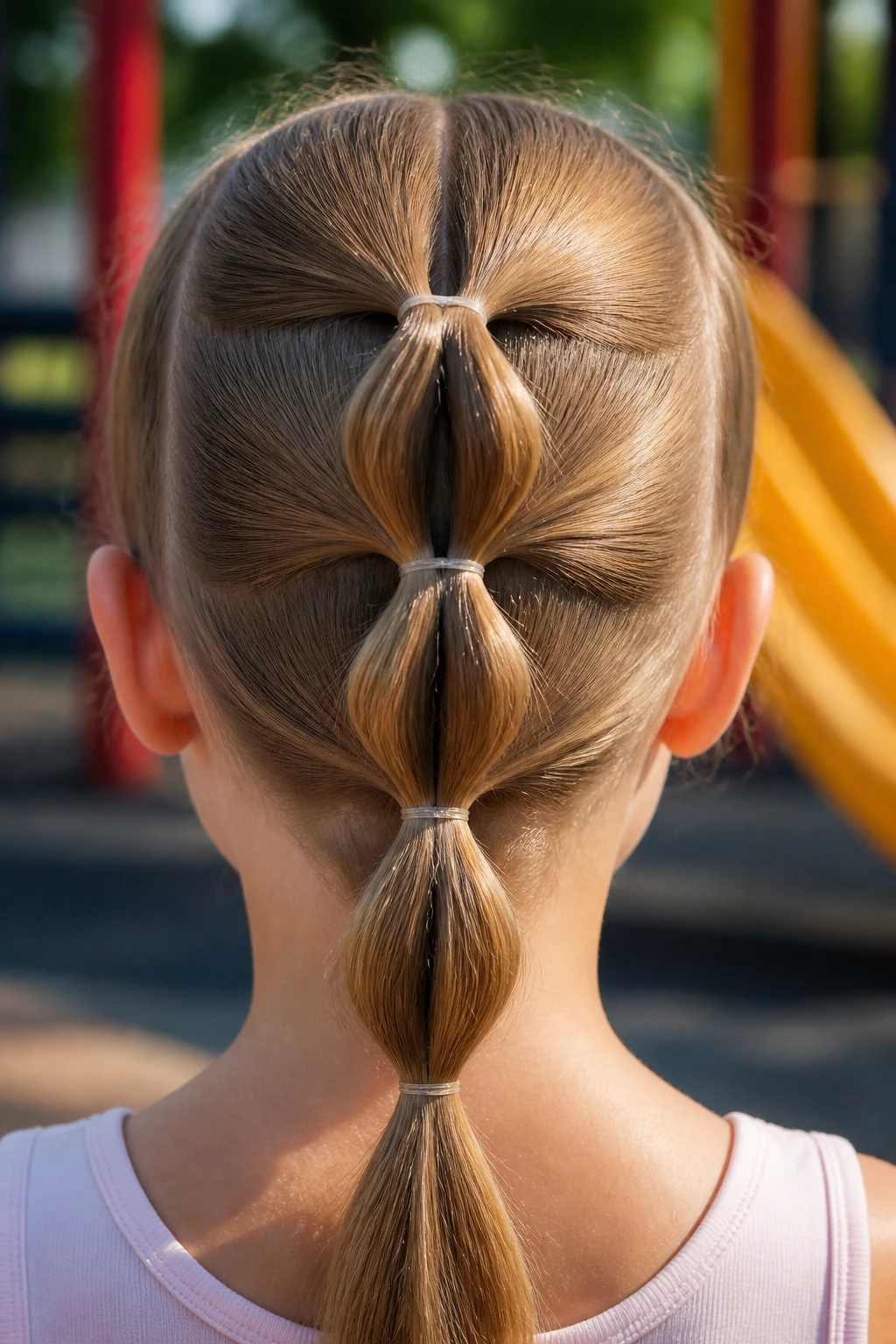
A ponytail ladder has a neat, rhythmic look that kids tend to love because it feels a little magical. Divide the hair into four horizontal sections, tie each one off, then let them connect down the back like a ladder. It’s playful, and it uses the hair’s own length to make the style interesting.
This works best on medium to long hair. Keep the sections even enough to look intentional, but do not obsess over ruler-straight lines; children move, and the hair will shift anyway. If you want extra hold, use small clear elastics for the internal ties and a prettier tie at the bottom.
Best for: School events, birthdays, and days when she wants something different from a standard braid.
Quick thought: A ladder style is one of the few looks that still looks cute even when one section loosens a little.
23. Bubble Braids for Short Hair
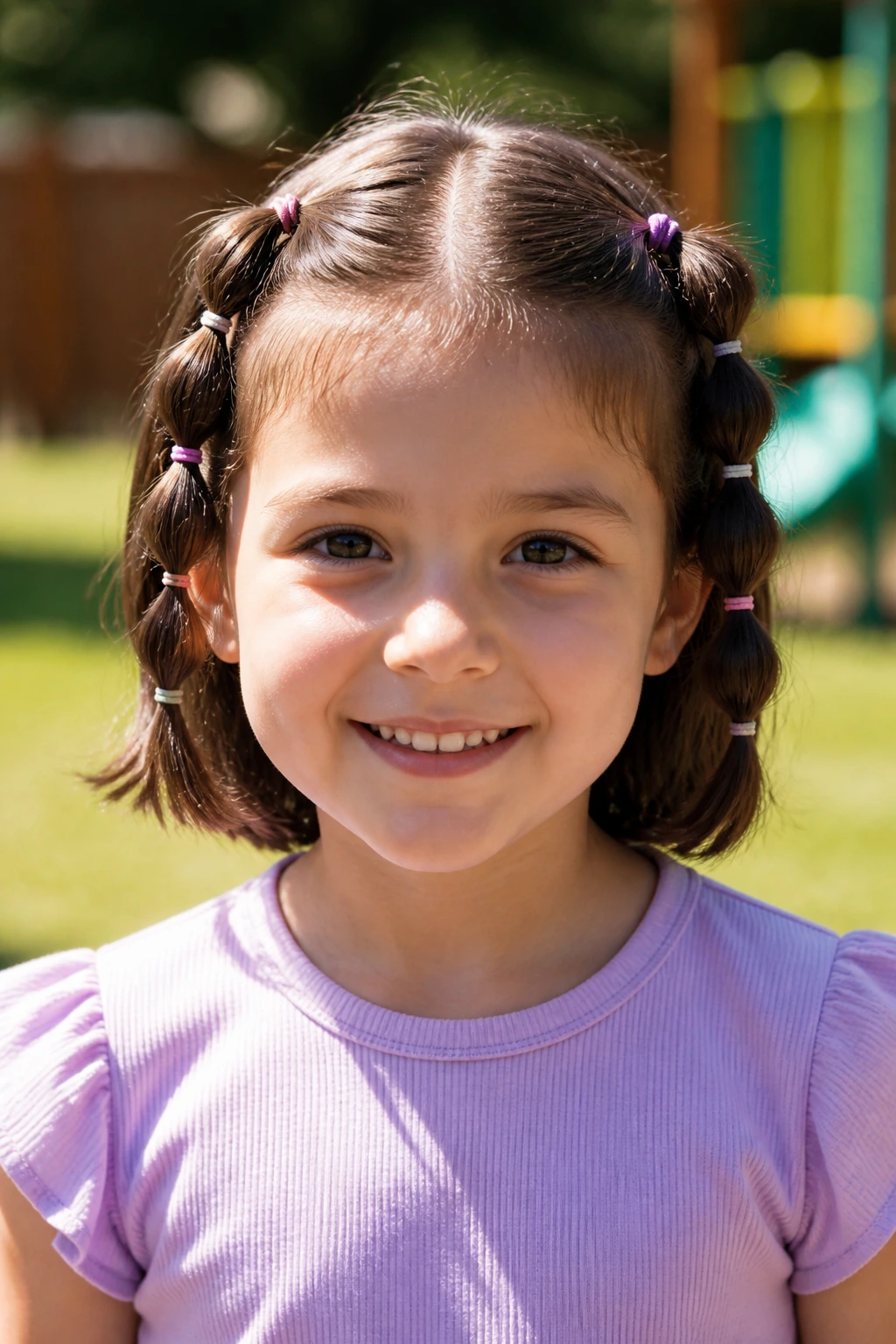
Bubble braids aren’t just for long hair. On shorter cuts, you can create two or three bubbles on each side and still get that playful look. The trick is to keep the sections small and the elastics snug enough to hold, but not so tight that they leave marks.
This is a good pick for shoulder-length hair that always slips out of clips. If the hair is very fine, mist it lightly before you start; if it’s curly, use your fingers to separate the bubbles instead of a brush. The shape should look cheerful, not overbuilt.
How to get the most from it
Match the bubble size to the length. Shorter hair looks better with small, tight bubbles; trying to force oversized ones just makes the style collapse.
24. Cornrow Front Row into Puff
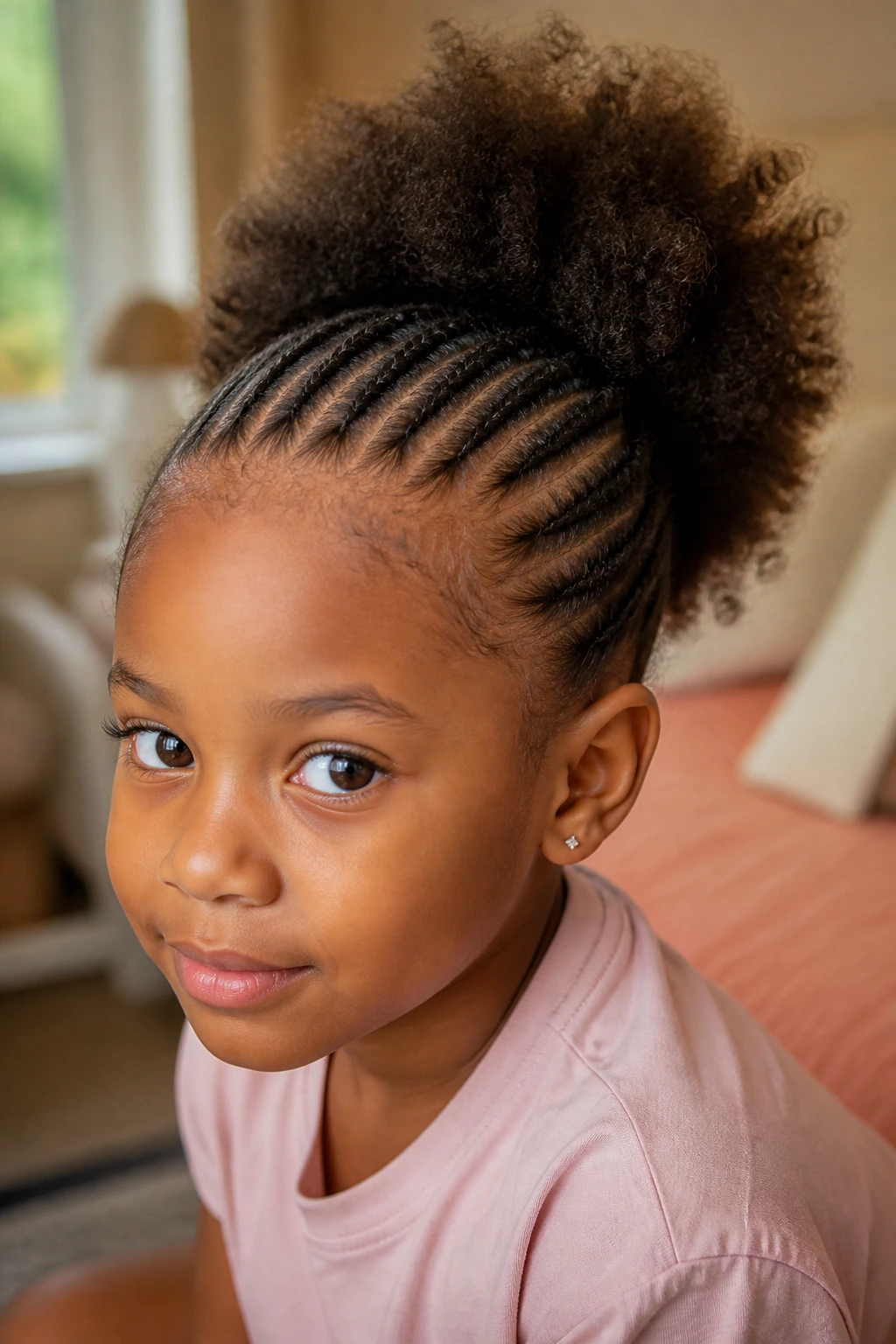
A front row of cornrows or flat braids leading into a puff keeps the hairline neat and the rest of the hair full. It’s a strong style for coily and curly hair because it protects the front while still showing off volume at the back. And yes, it looks like it took real effort, because it did.
Keep the braids low-tension and smooth at the scalp. The puff should feel airy, not squeezed. If her hair is very dense, the puff can sit a little higher and still look balanced. I’d avoid heavy accessories here; the shape itself is enough.
Best for: Natural hair that needs a tidy front and a soft, rounded back.
Practical note: If the front starts to feel tender, redo it looser. The style should help her day, not become the thing she notices all day.
25. Crisscross Ponytails
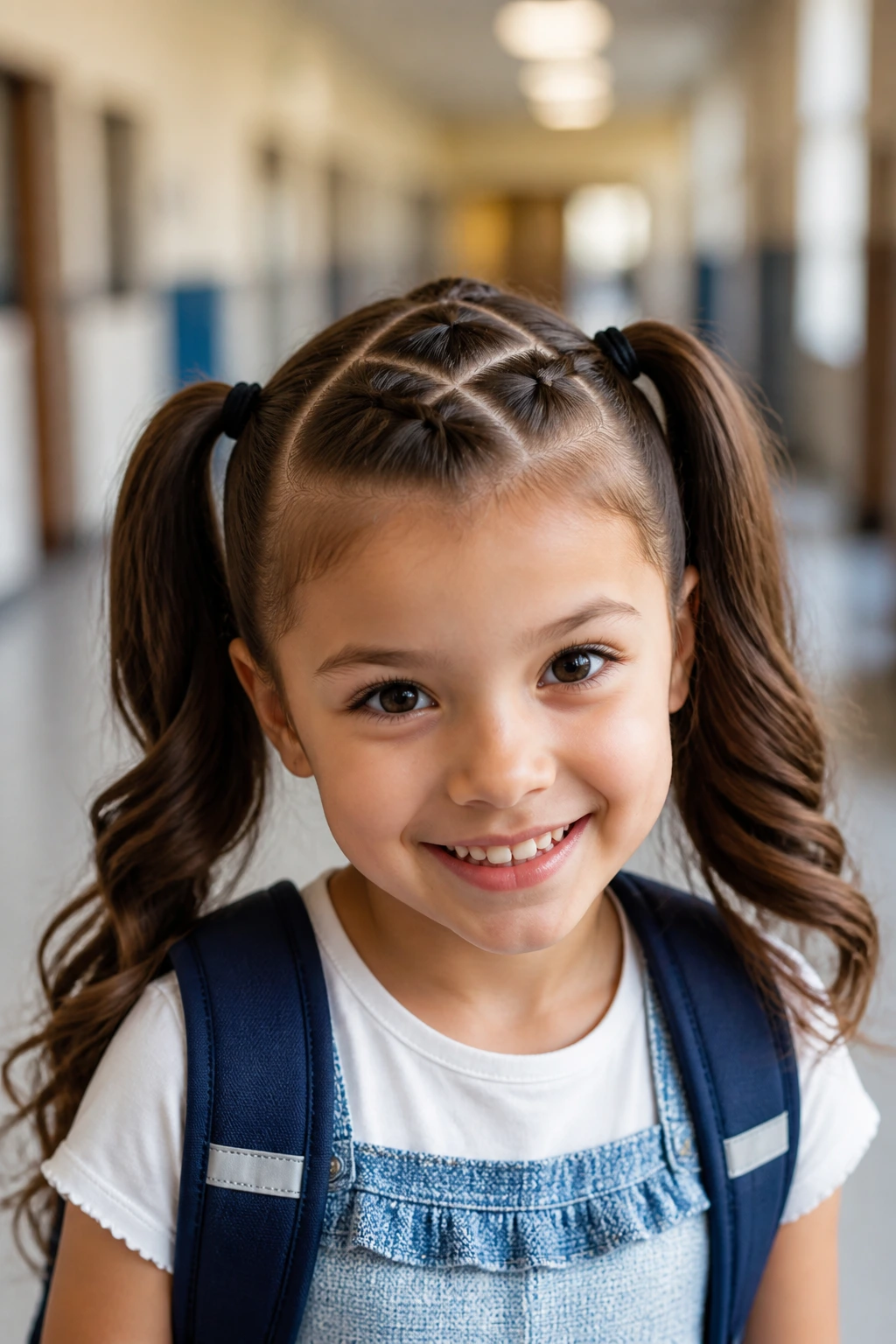
Crisscross ponytails use little sections that cross over each other before joining into ponytails, which creates a tidy, lattice-like effect. They’re one of those styles that look intricate from a distance and are much simpler than they seem up close. That makes them a smart option if you want something cute without a huge time commitment.
Fine hair handles this style well because the crossed sections add visual interest without needing extra bulk. On thick hair, keep the sections smaller so the crossings stay visible. A few matching elastics in a single color make the whole thing read cleaner.
Best for: School photos, playdates, and kids who like a style that feels a little special.
Small detail: Don’t tighten every cross. A touch of softness keeps the hair comfortable and the pattern visible.
26. French Braid into a Bun
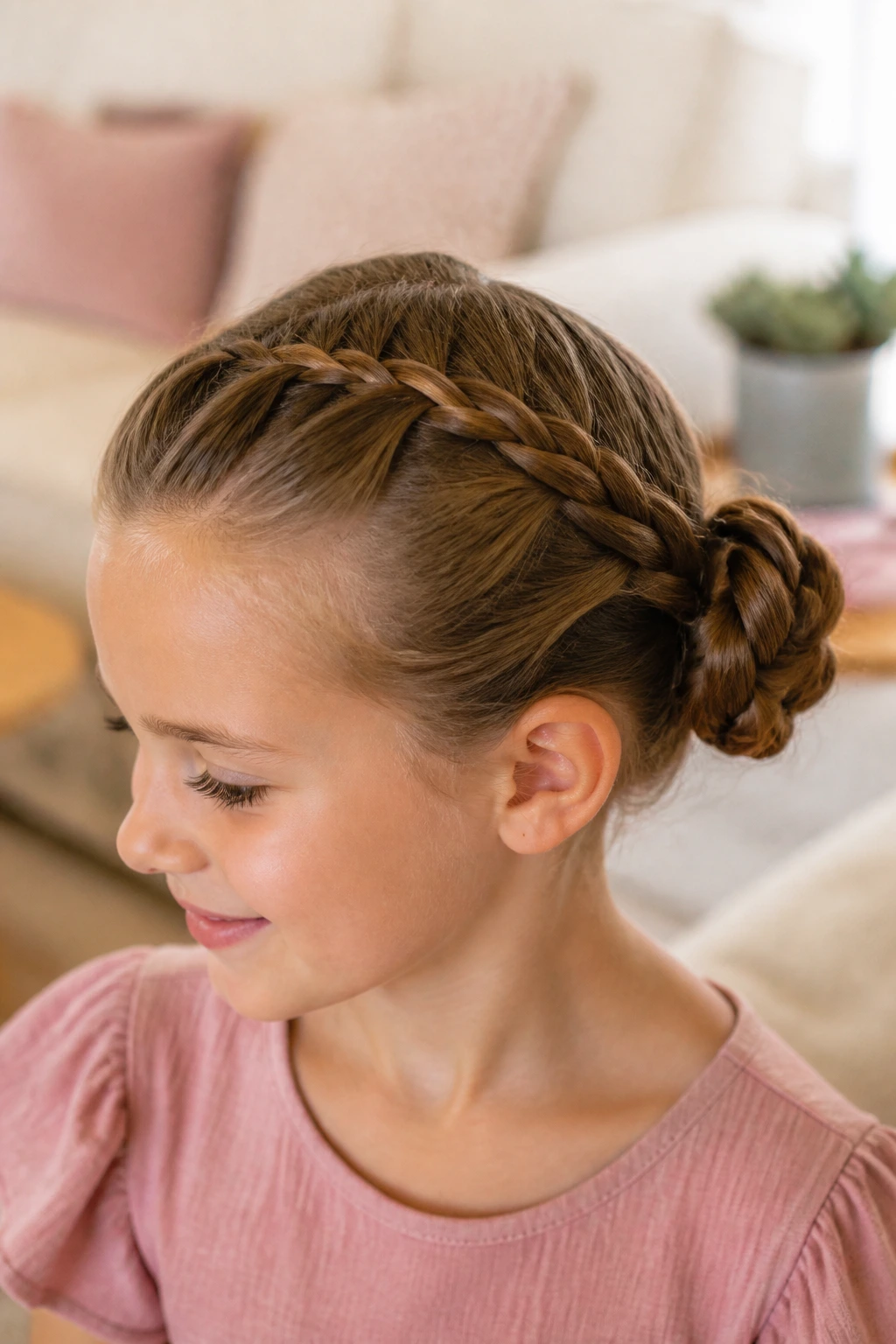
A French braid into a bun has two jobs: keep the hair off the face and keep the back from exploding by noon. The braid gives the bun a secure base, which is why this style lasts so well through busy days. It’s also one of the easier ways to turn a plain bun into something more polished.
This is a good fit for long hair and for days that mix activity with a more dressed-up look. If the hair is layered, use a few pins to catch the shorter pieces before they escape. A smooth top with a slightly textured bun usually looks better on a child than a perfectly slick finish.
Why it holds
The braid locks the top section in place first, so the bun doesn’t have to carry all the weight alone. That matters when a child is moving around every ten minutes.
27. Messy Side Bun with Decorative Clips
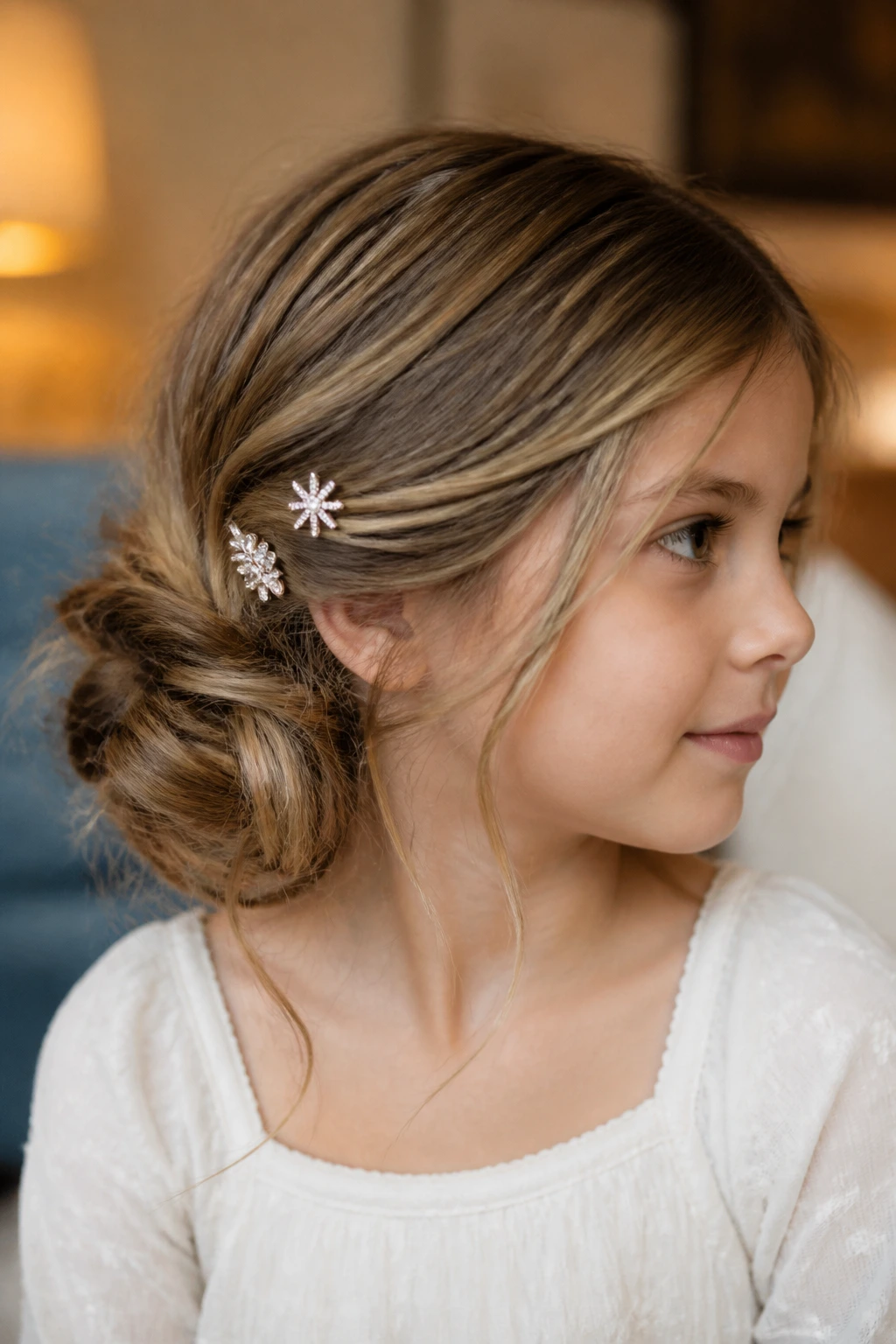
A messy side bun is one of the few styles that actually improves when it doesn’t look too perfect. Place it low and to one side, twist the hair loosely, and let a few ends stick out on purpose. Then add one or two decorative clips, not a whole parade of them. The bun should look light, not crowded.
This is a nice last-minute style for evenings, parties, or mornings when time has already slipped away. It works on a lot of textures because it doesn’t demand a flawless finish. In fact, the slight looseness is the whole point. If the hair is slippery, a few hidden pins under the bun keep it from sliding sideways by lunch.
Best for: All kinds of hair, especially when you need quick elegance without the stiffness.
Personal opinion: If a style needs ten accessories to seem finished, it probably needs a better shape instead.
Why These Styles Hold Up on Busy Mornings
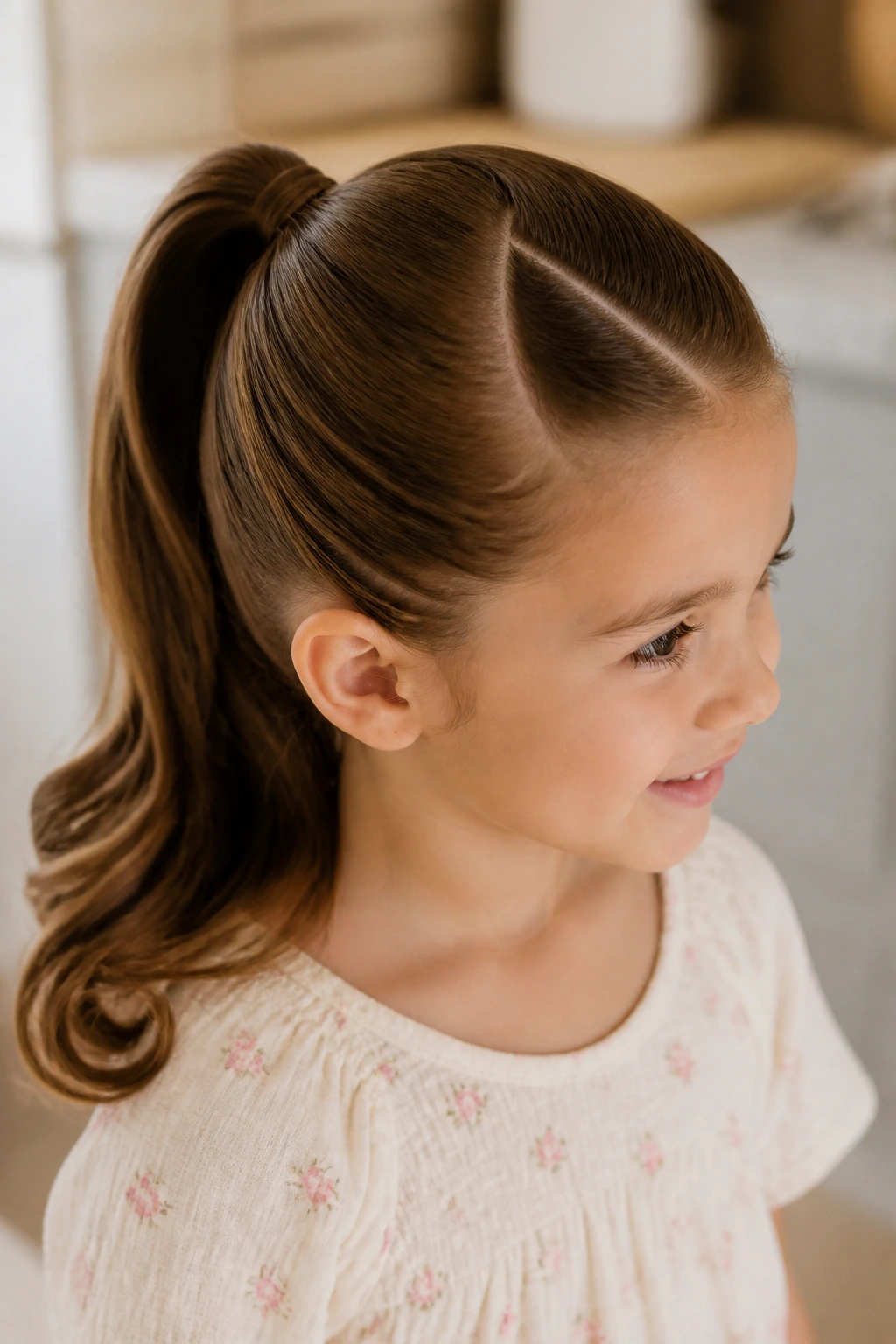
One anchor point matters: Styles that start with a clean part, a ponytail, or a braid base usually take less time to finish and less time to fix later.
Soft tension lasts longer: Hair that feels comfortable at the roots tends to stay on longer because the child won’t keep tugging at it.
Texture helps more than people think: A bit of grip from second-day hair, light leave-in, or natural curl pattern can keep sections from slipping apart.
Small accessories beat heavy ones: Light bows, soft scrunchies, and flexible clips hold better than bulky decorations that pull the shape downward.
A good style forgives real life: It can survive a hood, a swing set, and an afternoon nap without turning into a rescue mission.
The Small Drawer of Tools That Makes Hair Time Easier
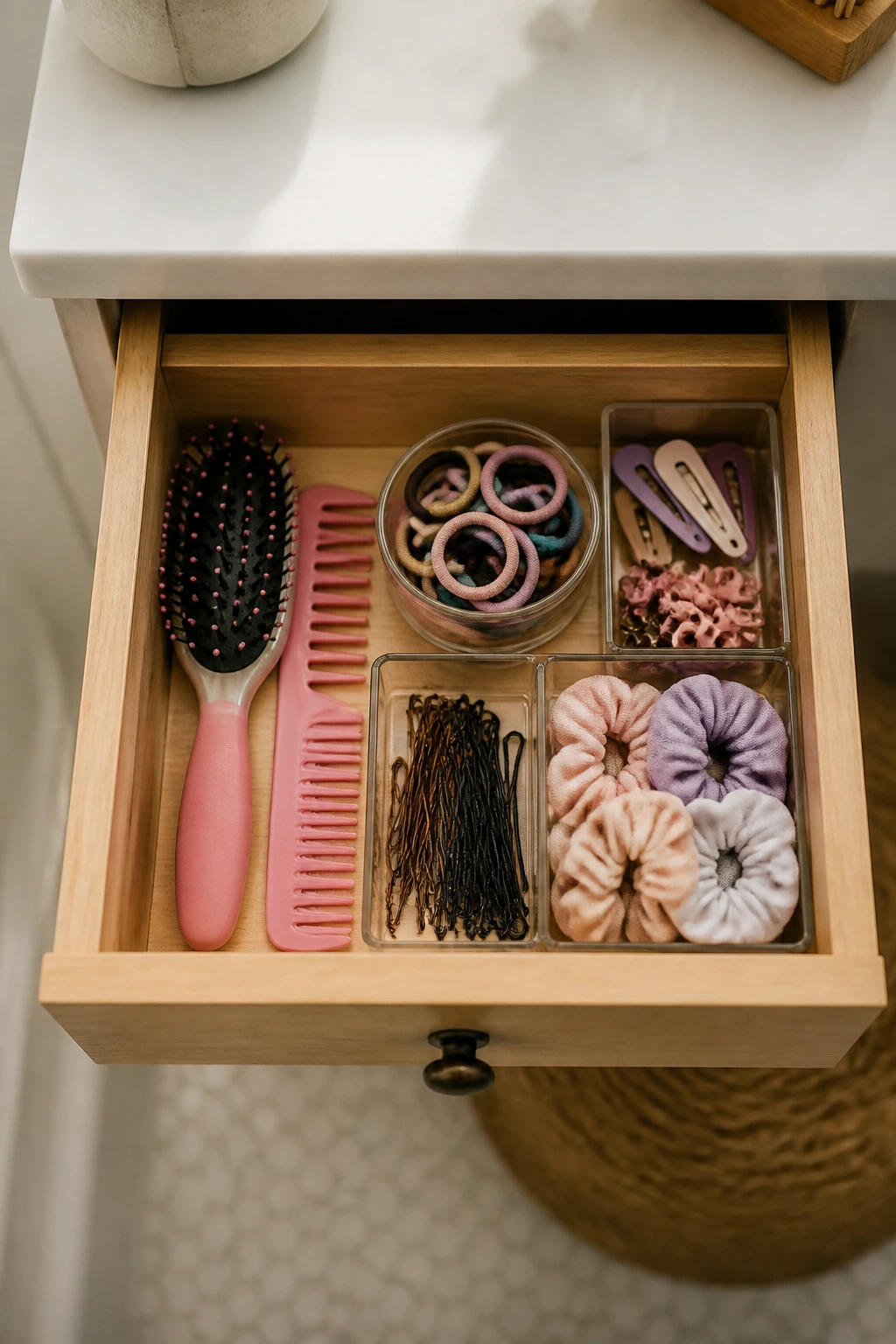
- Rat-tail comb: Best for clean parts, sectioning, and those tiny shapes like hearts or crisscross sections.
- Wide-tooth comb: Helps loosen knots without shredding through curls or causing extra breakage.
- Soft detangling brush: Useful for smoothing the top layer before braids, buns, or ponytails.
- Spray bottle with water: A light mist makes hair easier to section and keeps flyaways from floating everywhere.
- Leave-in conditioner or detangling spray: A little goes a long way on dry ends or knotty areas.
- No-crease elastics: Better than the hard rubber bands that tug and snap.
- Covered hair ties and scrunchies: Softer on the hairline and easier to remove without snagging.
- Sectioning clips: Handy when you need to hold one side out of the way without starting over.
- Small decorative clips and bows: Keep the pretty pieces light so they don’t drag the style down.
Picking Elastics, Brushes, and Accessories That Won’t Fight the Hair
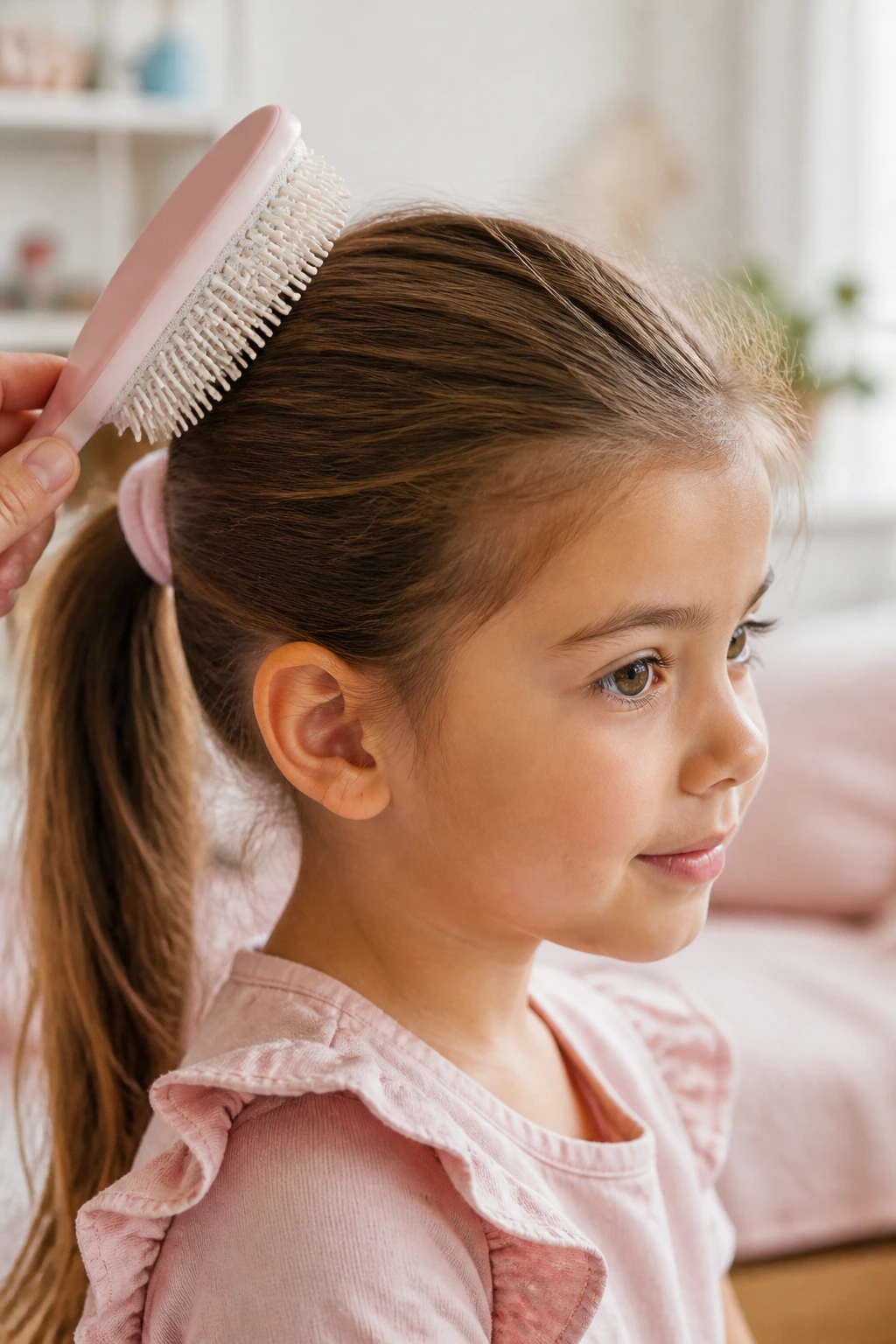
The best styling drawer is boring in the best possible way. It has the pieces that work, not the ones that look cute in a package and then rip through fine hair on contact. I’m partial to soft elastics, a decent rat-tail comb, and a brush with flexible bristles that won’t yank at tangles like it’s angry at them.
Accessory weight matters more than people expect. A chunky bow can look sweet on thick hair, but on fine hair it starts sliding before the day is over. Beads are similar: a few light ones are fun, but a row of heavy beads on a child who runs everywhere is asking for trouble. And if a clip has a sharp edge or a too-stiff clasp, it should stay in the drawer.
Products should help the hair cooperate, not drown it. A light leave-in on the ends, a mist of water on the roots, and a small dab of styling cream on flyaways is usually enough. You do not need to soak the whole head. Wet hair can look tidy for five minutes, then puff and frizz the second it dries. That’s one of those little mistakes that wastes time and patience.
For kids with curly or coily hair, moisture beats brute force every time. For straight or fine hair, grip matters more than product quantity. That’s the real shopping rule: buy for the hair in front of you, not the look you wish it had.
How to Match the Style to Hair Length, Texture, and the Day Ahead
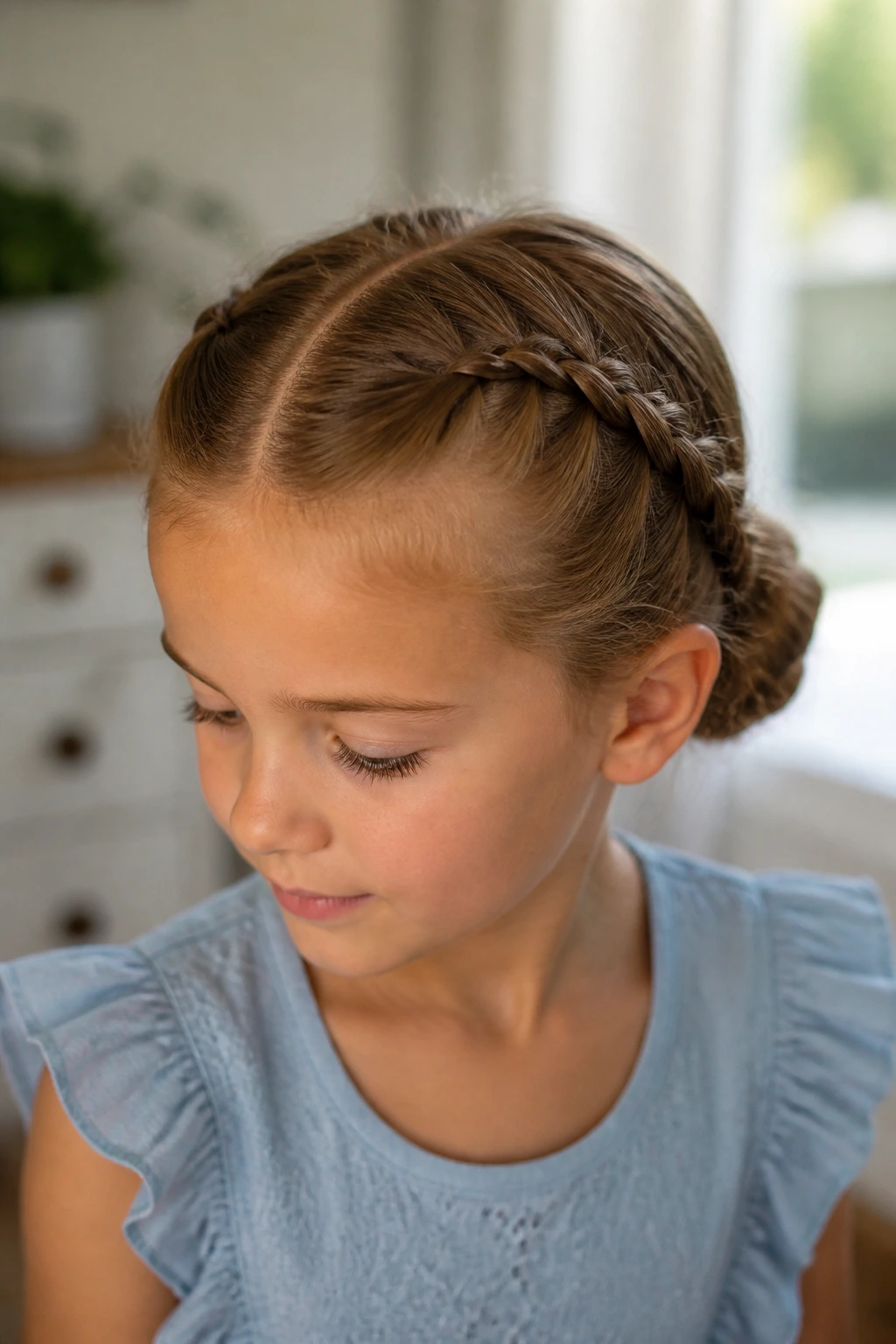
Presentation: Keep the line of the style clean, but not severe. A centered part, a neat braid, or a low bun looks more finished when the accessory is chosen to match the outfit instead of shouting over it.
Accessories: Use one clear focal piece when the style is already detailed. If you’ve done a braid crown, the clip should be small. If the style is plain, like a low ponytail, that’s when a bow or ribbon earns its place.
Hair Length: Short hair does better with twists, clips, and small bubble sections. Medium hair is where half-up looks, side ponytails, and braided headbands shine. Long hair can handle ladders, pull-through braids, and braided buns without losing shape.
Activity Level: If the day includes running, climbing, or a lot of outfit changes, choose styles that sit close to the head and don’t depend on loose pieces. If the day is mostly seated or dressed up, you can let the hair fall softer and use prettier accessories.
Extra Tips for Smoother Parts and Softer Finishes
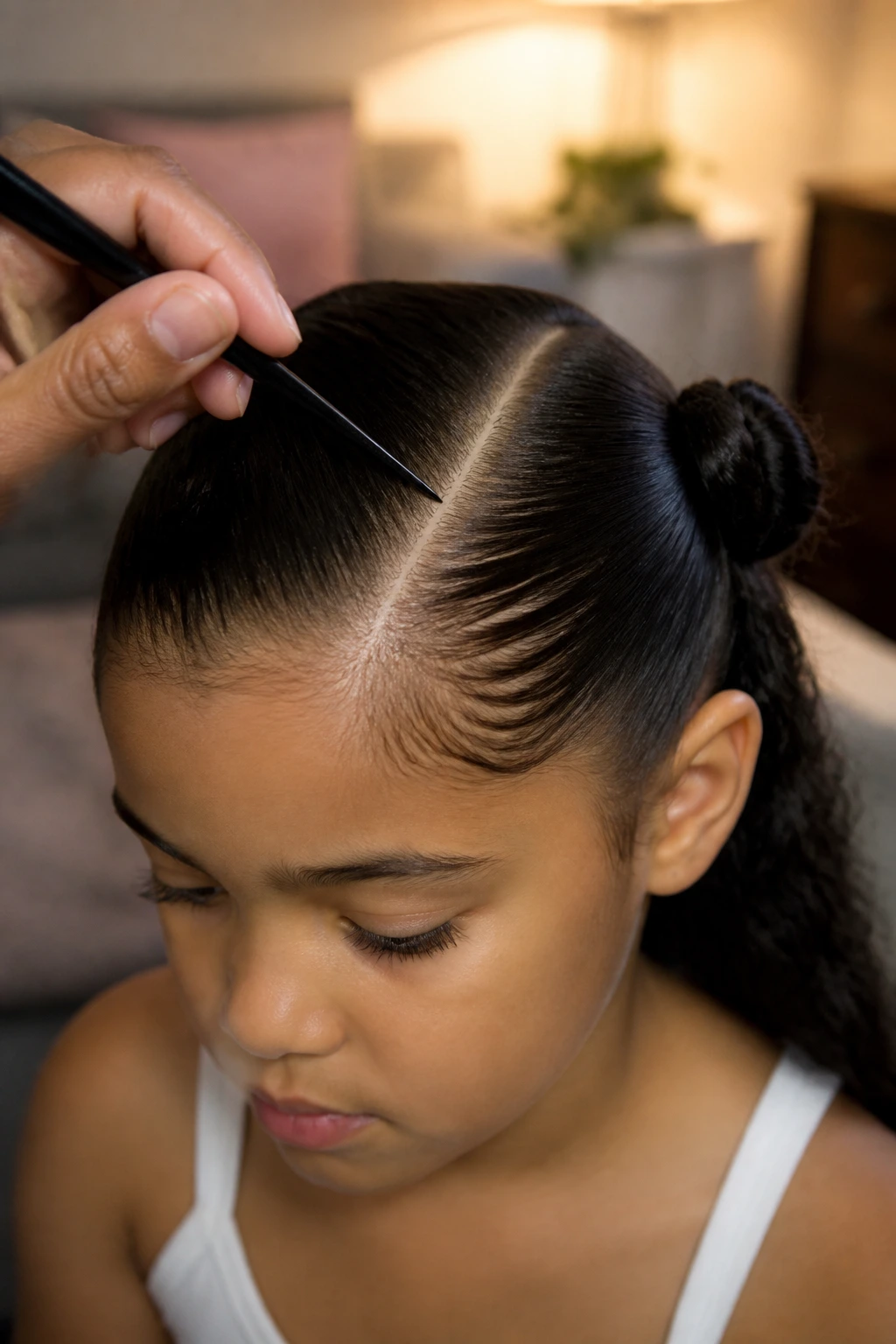
Parting Trick: Make the part while the hair is slightly damp, then press it flat with the tail of the comb. Dry hair fights back more, and you end up chasing the line instead of setting it.
Frizz Control: Smooth just the outer layer with a tiny bit of leave-in or styling cream. Don’t coat everything. Hair gets greasy fast when you use too much, and a greasy root on a child looks flat in a hurry.
Accessory Hack: If a bow or clip keeps slipping, tuck it into the braid or anchor it against an elastic instead of clipping it straight onto loose hair. That tiny change keeps it where you put it.
Morning Rescue: If the style is going sideways, simplify. Take out one section, make the parts bigger, and finish with a cleaner shape. A smaller, finished style is better than a bigger one that never gets done.
Common Mistakes That Make Hair Time Harder
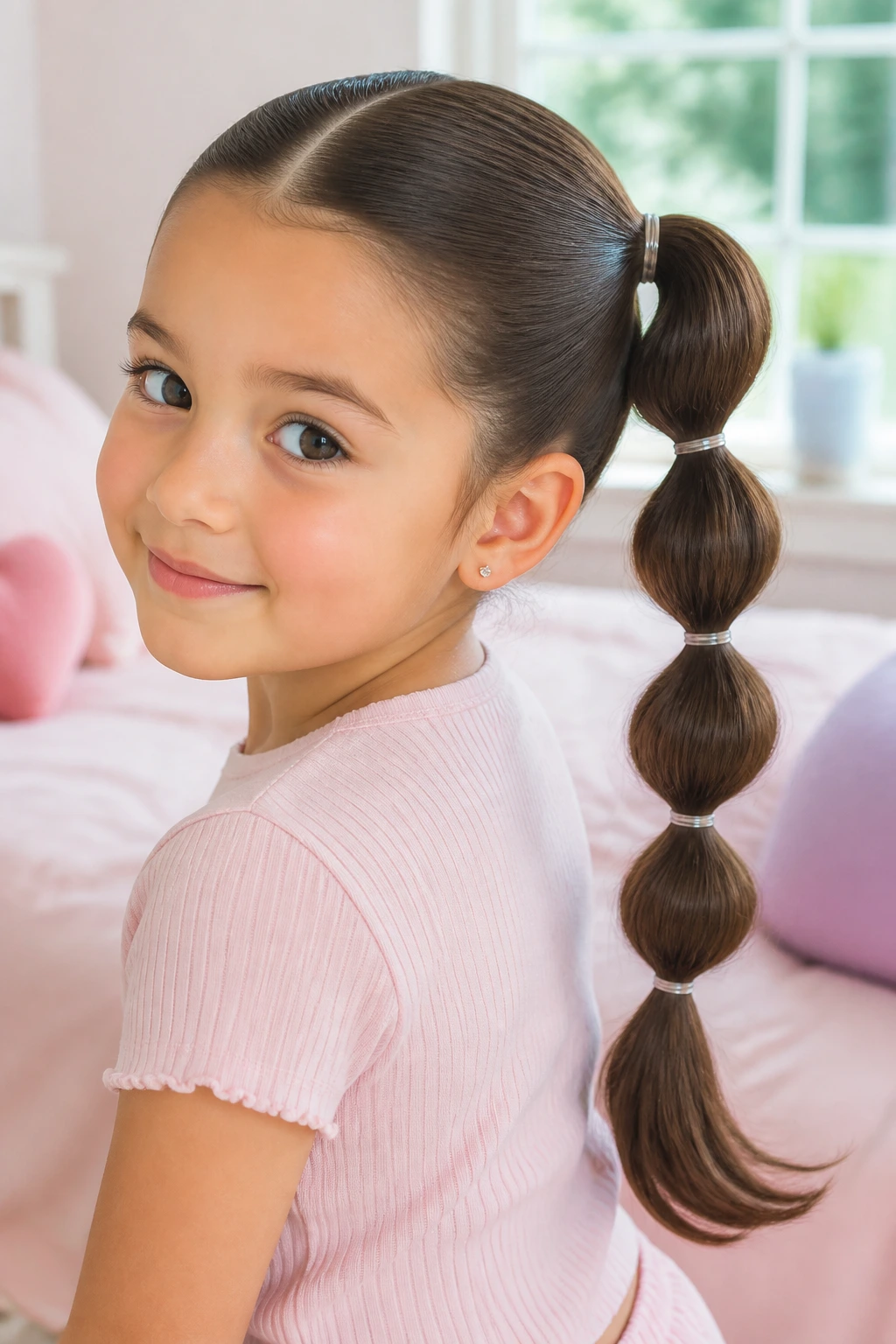
Starting on dry tangles: The hair pulls, the child squirms, and every section gets worse from there. A light mist of water or detangling spray first saves time and reduces breakage.
Pulling the hairline too tight: If the child complains right away, the style is too snug. Loosen the tension, move the anchor point back a little, and stop trying to make every flyaway disappear.
Using the wrong elastic: Hard rubber bands and brittle clear ties snag on the way out. Swap them for soft elastics or covered ties, especially on fine or curly hair that catches easily.
Making every part too perfect: A flawless grid can take ages and still fall apart as soon as the child moves. Clean is enough. Exact is not the goal.
Adding too many accessories: Once the clips start competing with each other, the style gets heavy and awkward. Pick one feature and let it do the job.
Choosing a style that ignores texture: A braid that looks tidy on straight hair may puff out in twenty minutes on curls. Match the style to the hair’s natural behavior, not the photo in your head.
Easy Variations and Mix-and-Match Swaps
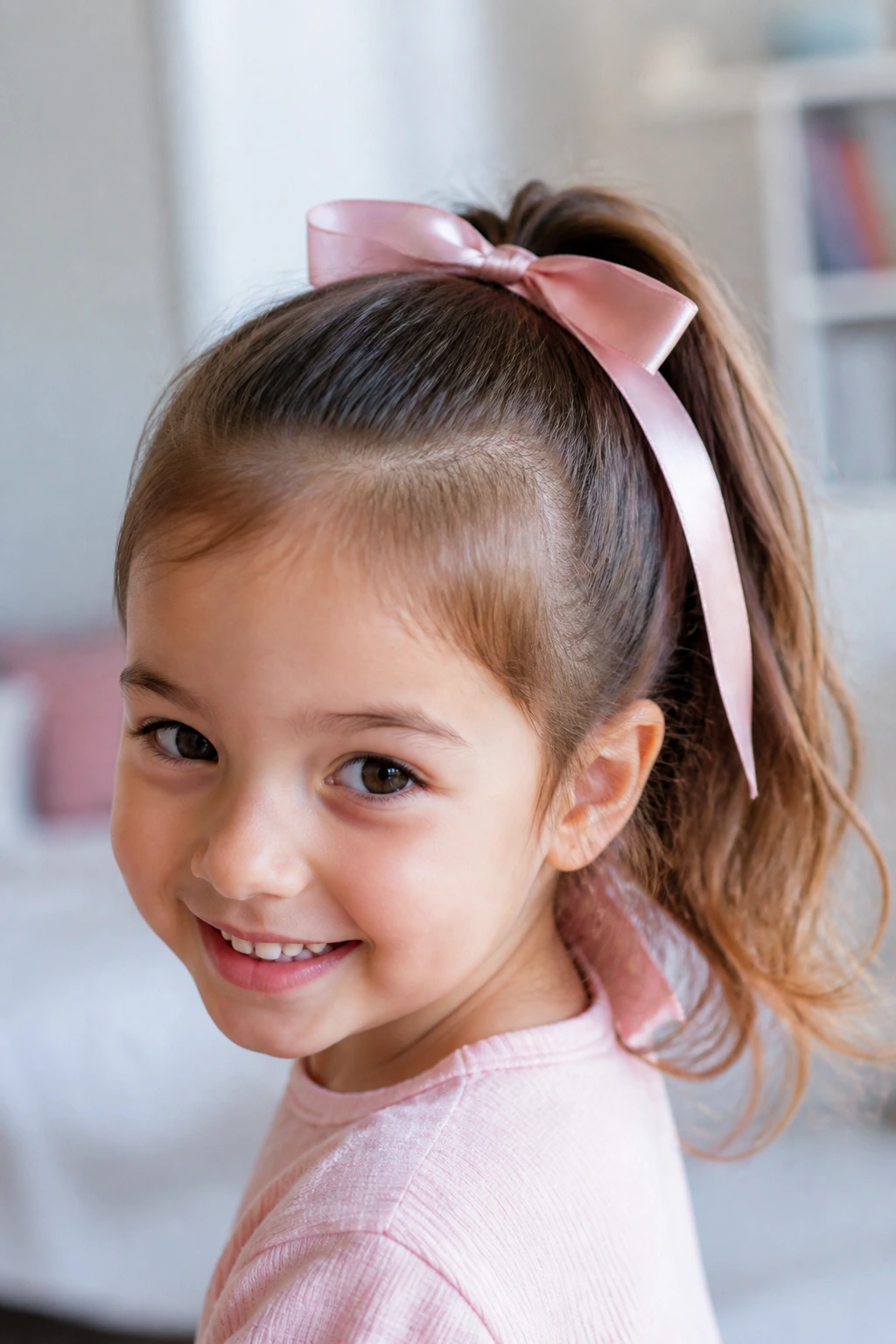
Ribbon-Only Refresh: Take a simple ponytail or braid and swap the elastic cover for a ribbon tied in a bow. It changes the tone of the whole style without adding more time.
Curl-First Version: For curly and coily hair, keep more moisture in the strands and leave the ends fuller instead of smoothing them flat. The shape looks softer and the hair stays happier.
Short-Hair Remix: Replace long braids with twists, side clips, bubble sections, or mini ponytails. You still get variety, and the cut keeps its natural shape.
Party-Day Sparkle: Add one glitter clip, a pearl barrette, or a bright bow to a simple style like a low bun or side ponytail. One piece is enough. More than that starts to look crowded.
No-Tears Version: Use wider sections, looser tension, and soft elastics. If a style usually takes ten minutes, this version aims for comfort first and finish second.
Keeping Styles Fresh Overnight and Into the Next Day
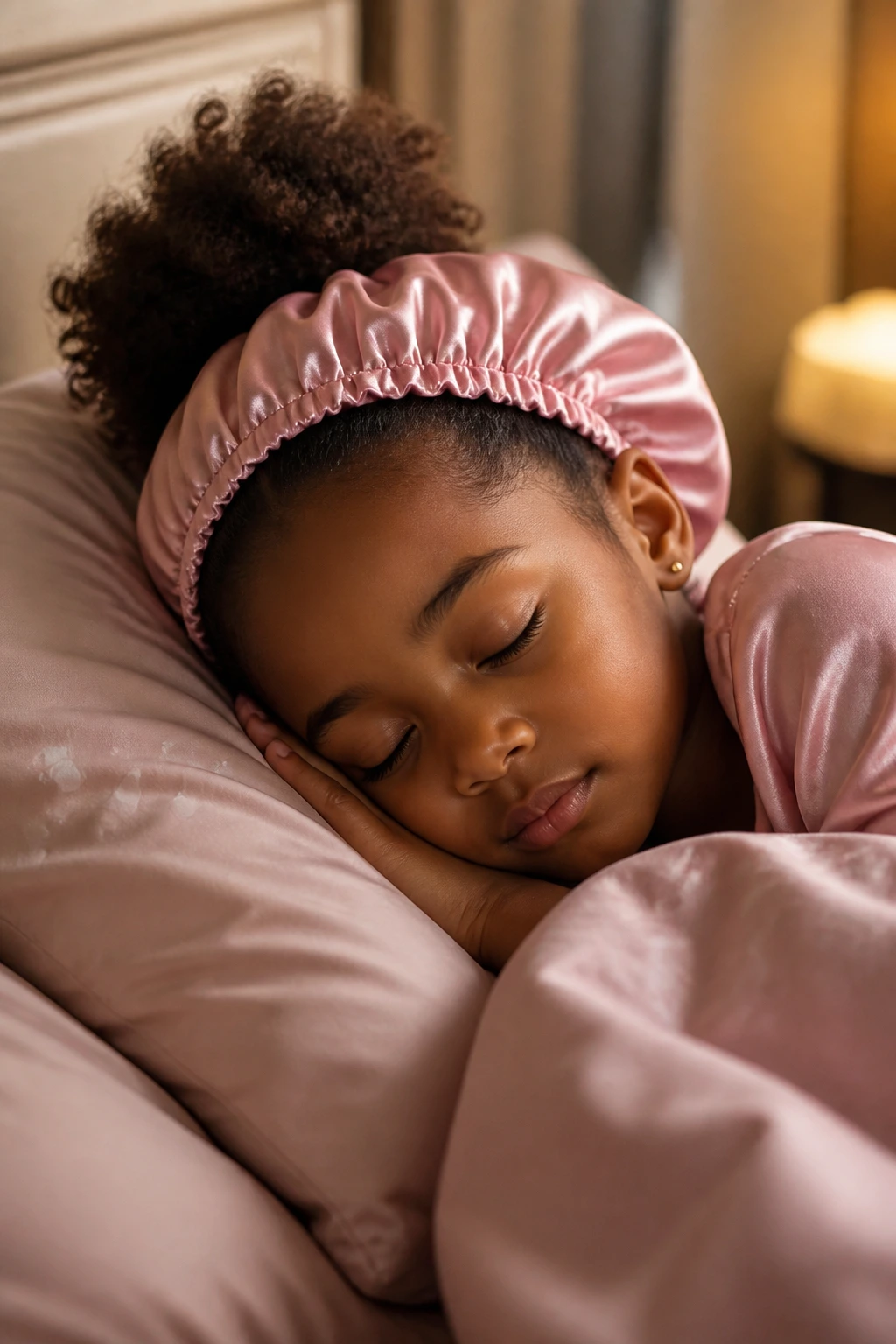
Some little-girl hairstyles are meant to last only until bedtime. Others can stretch into the next morning if they’re handled with a little care. Braids, twists, and puff styles usually hold up better overnight than loose ponytails, but the scalp should always be the judge. If it feels sore, take the style down.
A satin pillowcase or bonnet helps a lot because it reduces friction. If that’s not available, a soft cotton T-shirt tied lightly around the hair can do more than people expect. For curly hair, a loose pineapple or a soft pineapple puff keeps definition better than sleeping flat on it. For braids, re-tie only the loosened sections and leave the rest alone if the scalp still feels fine.
Don’t let tight styles sit for days just because they still look neat. Hairlines get tired. Small children notice the tug before adults do, and a style that was cute on day one can turn irritating fast if it’s left too long. A good rule is to refresh within 24 hours for ponytails and buns, and within 1 to 2 days for braids or twists, depending on texture and comfort.
Frequently Asked Questions
What hairstyles last the longest on little girls?
Braids, twists, and styles with a secure base usually last the longest. A French braid into a bun, a braided crown, or mini box braids will hold up better than a loose ponytail, especially if the child is active.
How do I keep the hair from getting pulled at the hairline?
Use less tension and place the anchor point slightly farther back. If the child winces while you’re styling, that’s the signal to loosen it right away.
Can these styles work on very curly or coily hair?
Yes, and a few of them work better on textured hair than on straight hair. The pineapple puff, twisted halo, cornrow front row, and rope twists are especially friendly to curls and coils.
What if my child cannot sit still?
Pick the simplest styles and work in sections. Bubble ponytails, twist-back clips, side ponytails, and low buns are kinder to a child who wiggles every twenty seconds.
How do I make fine hair look fuller?
Use small sections, gentle tugging on braids or bubbles, and accessories that don’t overwhelm the style. Second-day hair often helps because it has more grip than freshly washed hair.
Are beads safe for kids’ hairstyles?
They can be, as long as they’re lightweight, securely attached, and age-appropriate. Keep them away from babies and very young toddlers, and don’t overload the ends with heavy pieces.
Do I need heat for any of these styles?
No. Every style here works without heat. In fact, avoiding heat is usually the better call for little girls because the styles are designed around movement, comfort, and easy cleanup.
What should I do if a braid keeps slipping apart?
Add a tiny bit of moisture or styling cream before you start, and make the first few sections smaller. If the hair is too clean and slippery, a braid can look tidy for two minutes and then slide loose.
A Soft Ending for Hair That Still Feels Like Childhood
The nicest thing about little-girl hair is that it does not have to look grown-up to look cared for. A crooked part can be sweet. A loose ribbon can be enough. A braid that starts a little uneven and settles beautifully by lunchtime is still doing its job.
What matters is that the style fits the child in front of you: her hair texture, her patience, her day, and her need to move without feeling pinned down. Start with the looks that are gentle on the scalp and easy to redo. The rest gets easier from there, and the styles that stay in rotation are usually the ones she forgets she’s even wearing.
