



Glasses and shag haircuts have a better relationship than most people think. When the cut is shaped well, the frames stop looking like an afterthought and start looking built in. The best shag haircuts for women who wear glasses do one very useful thing: they create movement around the face without piling hair exactly where the frames already live.
Bad versions are easy to spot. Too much bulk at the temples. Bangs that crash into the lenses every time you blink. Layers that stop right on the cheekbones, where the glasses already draw a line across the face. That’s the part people miss. A shag is not about random texture. It’s about placing that texture where it helps the face breathe.
My favorite versions of this cut leave a little negative space around the eyes and let the frame shape do some of the work. Some are soft and airy. Some are choppier and cooler. A few lean a little retro, a little rock-and-roll, which is never a bad thing when you want your haircut to feel deliberate rather than merely messy.
Why This Collection Works for Glasses Wearers

-
Frame clearance: The right shag keeps the busiest layers away from the exact spot where your frames sit, so the haircut doesn’t fight your glasses at the temples or brow line.
-
Bang flexibility: You can choose micro-bangs, curtain bangs, side-swept fringe, or no fringe at all and still keep the same shaggy structure.
-
Texture control: Shag layers can add lift to fine hair or remove bulk from thick hair, which matters when glasses already add visual weight to the center of the face.
-
Face-framing balance: Pieces that start at the cheekbones or jawline can soften strong frames, while shorter, choppier layers keep oversized glasses from overpowering the face.
-
Grow-out grace: A good shag grows into a softer version of itself instead of turning into a flat, awkward helmet. That matters more than people admit.
1. Jaw-Length Shag with Soft Micro-Bangs
This cut hits right around the jaw, which sounds bold until you see how clean it looks with glasses. The hair opens around the face instead of swallowing it, and the micro-bangs stay high enough to avoid that annoying lens collision. If your frames are rectangular, angular, or slightly oversized, this shape gives them room to breathe.
Why It Works
The jaw-length line keeps the lower half of the face sharp, while the shag layers break up any heaviness near the cheeks. Micro-bangs work best here when they’re soft and a little wispy, not blunt like a ruler cut. They should skim above the brows and sit just high enough that your glasses don’t steal the whole show.
Ask for short internal layers and a little texture through the crown. Not too much. You want movement, not a halo of fuzz. If your hair is fine, this version gives it a lift that reads as intentional. If it’s thick, the shorter length prevents the ends from sitting on top of your frames like a shelf.
2. Curtain-Bang Shag That Splits at the Frames
This is the easy answer when you want fringe without fuss. Curtain bangs part right where the glasses sit, so the frames land in the opening instead of fighting the hairline. It’s a simple trick, but it changes everything.
The best curtain-bang shags have longer face-framing pieces that start around the cheekbones and taper toward the collarbone. That keeps the center of the face open and gives the frames a little stage. If your glasses have a strong bridge or a noticeable top rim, this style softens the whole look without hiding the frames.
I like this cut on medium-density hair because it can be blown out in five minutes and still look finished. A round brush, a quick bend away from the face, and you’re done. No elaborate styling ritual required.
3. Collarbone Shag with Feathered Ends
Why does collarbone length work so well with glasses? Because it gives you enough hair to keep the cut interesting, but not so much that it crowds the face. The feathered ends keep the whole thing moving. Nothing sits flat. Nothing hangs heavy.
This is the shag for women who want some softness around the jaw without going short. It works especially well with round or cat-eye frames, which already pull attention upward. The feathering keeps the lower edge from looking blunt, and that matters when your glasses already create a strong horizontal line across the face.
Ask for This
- Long layers that start below the cheekbone
- Light texturing through the ends
- A soft face frame that bends away from the glasses
- Enough weight at the bottom to keep the hair from puffing out
If your hair tends to flip out at the ends, this shape can be a little too lively unless your stylist removes enough bulk. Still, when it’s right, it has that easy, lived-in feel people keep trying to fake.
4. Curly Shag with a Rounded Fringe
Curly hair and glasses can be a beautiful mess if the shape is handled well. A rounded fringe keeps the curl pattern from exploding straight into the lenses, and the shag layers help the curls stack instead of ballooning. The silhouette ends up soft, not bulky.
The key is shrinkage. Curly shags should usually be cut longer than you think, especially at the front. If the fringe is too short, it springs up and leaves the frames sitting in a patch of bare forehead. Too long, and it ends up brushing the lashes and dragging moisture onto the lenses. There’s a narrow sweet spot, and a good stylist will cut for the curl pattern you actually have, not the one you wish you had.
A dry cut is often the right move here. It lets the stylist see how the curls sit with the frames and where the front pieces need room.
5. Pixie Shag for Petite Frames
Short hair plus glasses can look fantastic when the proportions are right. The pixie shag keeps the neckline clean, gives a bit of choppiness through the crown, and leaves the frames with plenty of visual space. It’s especially good for petite faces or smaller frames that can get lost under too much hair.
The trick is not to make it too neat. A polished pixie can feel severe with glasses. A shaggy pixie has more air around the ears and more texture at the top, which stops the haircut from looking helmet-like. Ask for a soft taper around the sides and some broken-up ends above the ears.
It’s one of the least fussy options on this list, but it still needs shape. Short hair shows every bad cut. No hiding.
6. Long Invisible-Layer Shag
This is the version for people who want length but hate flat hair. The layers are tucked into the interior, so the haircut looks almost blunt until it moves. That makes it a strong choice if you wear slim wire frames or minimalist glasses and don’t want your haircut to compete with them.
The invisible layers give you lift without slicing the outline to pieces. Hair falls around the glasses in a softer curtain, which keeps the face from looking over-framed. I like this on straight or slightly wavy hair, especially if the ends tend to drag down everything else.
It’s also one of the easiest shags to grow out. The shape stays calm. That alone is worth something.
7. Choppy Midi Shag with Side-Swept Bangs

A side-swept fringe solves a lot of glasses problems in one move. It clears one eye, softens the frame line, and gives the haircut a little asymmetry, which is exactly what a shag likes. The midi length keeps the cut versatile without making it heavy.
What Makes It Work
The choppiness lives mostly in the mid-lengths and ends, while the bangs stay loose enough to move. That means the hair doesn’t build a hard line right where your glasses sit. If your frames are round, this cut adds a bit of edge. If your frames are square, it softens them without going sugary or overly feminine.
Best of all, it’s easy to style in a hurry. A side part, a quick bend at the front, and a little texturizing spray are usually enough. You do not need a perfect blowout.
8. Bottleneck-Bang Shag for Bold Frames

This cut understands balance. Bottleneck bangs start narrow at the center, then widen as they sweep outward, which means they can sit above or beside chunky frames without crowding them. If you wear thick acetate glasses, this is one of the smartest fringe shapes you can choose.
The shag underneath should stay soft and flexible. Too much width in the layers and the whole thing turns busy. Too little and the frames take over. The bottleneck bang keeps the eye area framed without choking it. That little taper is doing real work.
I’d call this one a good match for people who like a bit of drama but still want the glasses to read clearly. It’s the haircut equivalent of choosing a strong frame and a clean outfit around it.
9. Razor-Cut Shag for Fine Hair

Fine hair needs a careful hand. A razor-cut shag can make the ends look lighter and more mobile, which helps the haircut stay off the glasses instead of collapsing into them. Done well, it creates softness. Done badly, it frays the ends into sadness. So yes, technique matters here.
The razor works best when it’s used to remove just enough density from the interior and the tips. You want movement at the cheeks and around the jaw, not see-through ends that look overprocessed. If your hair is very fragile or already split, a stylist may choose scissors instead. That’s not a downgrade. That’s common sense.
This cut is especially good if your glasses are bold and your hair is naturally limp. The hair gains some personality, the frames stay visible, and the whole face looks less bottom-heavy.
10. Thick-Hair Shag with Airy Interior Layers

Thick hair and glasses can turn into a lot of visual weight in one small area. Interior layers fix that. Instead of carving the outline into choppy pieces, the stylist removes bulk from inside the shape so the hair can move without puffing out at the temples.
The result feels lighter around the face, which is exactly what glasses wearers need. When hair is too dense at the sides, the frames disappear into it. When the interior is opened up properly, the glasses have space and the haircut still looks full.
Ask for weight removal in the right spots, not all over. That distinction matters. If the thinning shears go wild, the ends can go fuzzy and the shape loses control. When the sectioning is thoughtful, the cut looks plush instead of heavy. Very different thing.
11. Tucked-Behind-Ears Shag for Everyday Wear

There’s a reason this version keeps showing up in real life and not just on mood boards. It works with reading glasses, prescription sunglasses, and the habit of shoving hair behind one ear when you’re thinking. The tucked-behind-ears shag leaves enough length to play with, but the layers are light enough that they don’t bulk up under the frame arms.
The best part is the movement at the front. Hair can fall forward in a soft bend, then tuck away cleanly when you want a clearer face. That makes it a good office cut, a good travel cut, and a good “I don’t want to think about my hair” cut.
If your frames have thick temples, keep the layers slightly longer around the ear so they don’t spring out in odd little wings. Annoying problem. Easy fix.
12. Retro Feathered Shag with 70s Lift

This one leans into the drama in a way I respect. Feathered layers and a lifted crown create a shape that feels airy above the frames and soft around the jaw. It’s a particularly strong match for oversized glasses because the haircut and the frames both have presence, but neither one has to compete for the same exact space.
The feathering matters. Without it, the style can go flat or look like a standard layered cut. With it, the ends flick outward just enough to give the haircut some motion. A round brush or large Velcro roller can help, but the silhouette should be doing most of the work on its own.
If you like a little polish with your texture, this is a very good lane to live in.
13. Piecey Short Shag with Crown Texture

Short shags need crown texture or they can sink fast. With glasses, that sink is even more obvious, because the frames create a fixed line across the face and the hair has to live above or around it. Piecey texture at the crown keeps the whole shape buoyant.
This cut works well with angular frames and a bit of a playful wardrobe. It has energy. It does not try to be quiet. The front can stay lighter, while the top gets a little lift and separation through a dab of paste or a dry texturizing spray.
Best For
- Straight or slightly wavy hair that tends to lie flat
- Small to medium frames
- People who want a short cut without the severity of a bob
If your hair is too soft and too fine, don’t overload it with product. You’ll kill the lift and end up with sticky strands instead of pieces.
14. Lob Shag with Soft Face-Framing Slices

A lob shag is the diplomat of this whole group. It’s long enough to feel safe, but the slices around the face keep it from turning blunt and boring. For glasses wearers, that matters. The hair can bend around the frames instead of forming one solid curtain.
This cut is especially useful if you’re nervous about going too short. The collarbone length gives you room to experiment with bangs later, or to wear the hair tucked, waved, or air-dried. It also plays nicely with bigger lenses because the face-framing slices can start lower than the frame top and drift toward the jaw.
If I had to pick one shapely, low-drama shag for a first-timer with glasses, this would be near the top.
15. Heavy Fringe Shag for Statement Glasses
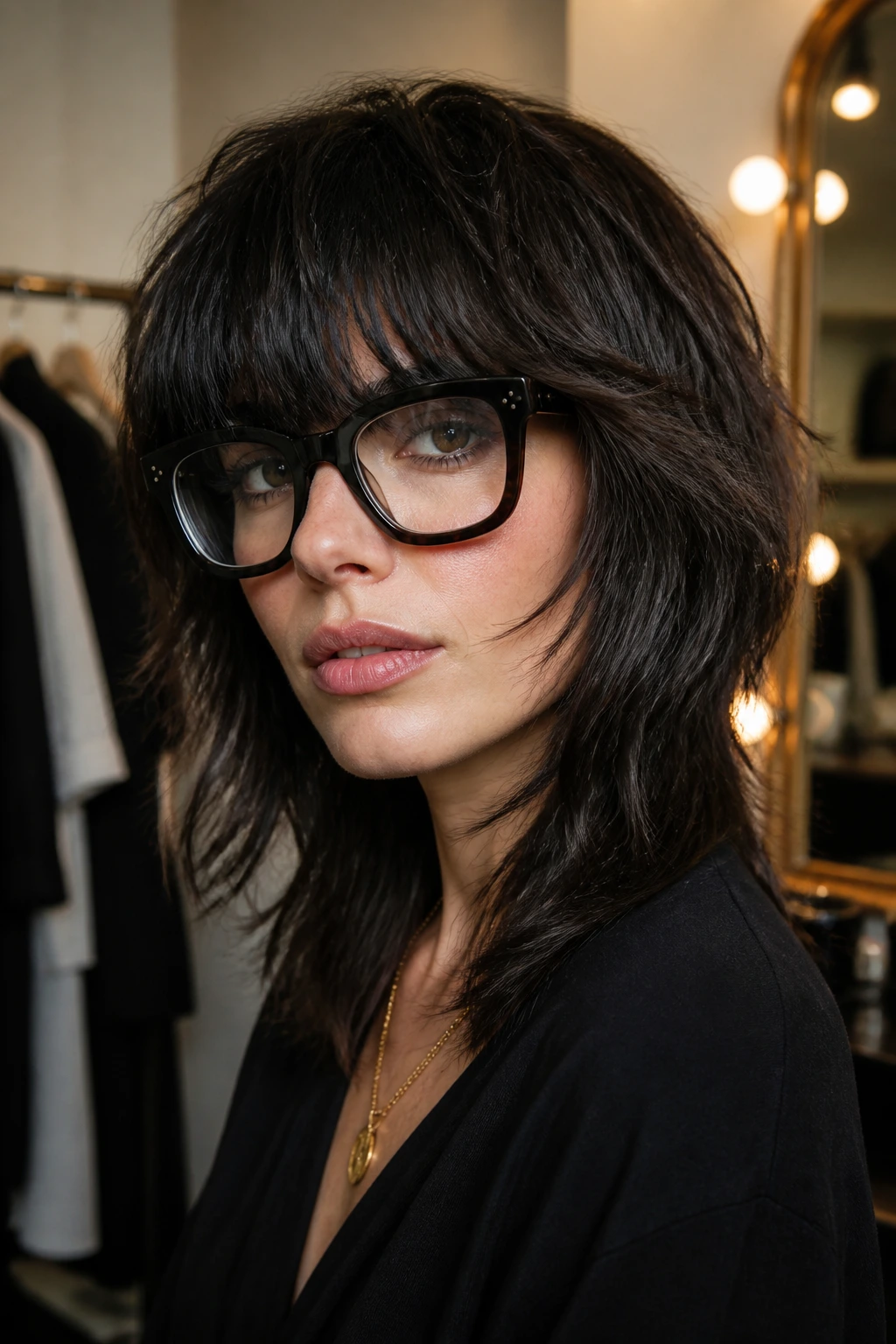
Strong glasses can take a strong fringe. A heavier bang gives the face a deliberate top line, which can look fantastic with thick, graphic frames. The trick is not to let the fringe drop too low. It should graze the brows, not sit in them.
Underneath, the shag layers should stay soft enough that the haircut doesn’t become a block. The fringe is the bold part. The rest is support. That balance keeps the look clean rather than crowded.
This cut is for people who want their hair and glasses to feel like one outfit. It has presence. It also demands a decent trim schedule, because heavy fringe grows out fast and starts stealing your vision before it steals your style.
16. Wavy Shag with Cheekbone-Grazing Pieces

Waves bring their own agenda. They swell, they bend, they refuse to behave on command. A shag works with that, especially when the front pieces are cut to skim the cheekbones and then disappear around the frames instead of sitting on top of them.
The cut looks especially good if your glasses sit slightly higher on the nose bridge. That leaves enough room for the waves to move underneath without collapsing into the lenses. If the frames are low-set, the front layers may need to be a touch shorter or more broken up.
The vibe here is easy, but the shape still matters. Loose waves with no plan can look puffy at the sides. A shag with cheekbone pieces gives those waves a place to go.
17. Low-Maintenance Soft Shag with Blended Layers

Not everyone wants a cut that announces itself in the mirror every morning. A soft, blended shag keeps the texture but tones down the drama. The layers melt into one another, which makes the grow-out kinder and the styling faster.
This is a solid pick if you wear glasses all day and do not want your hair constantly brushing the frames. The blend keeps the silhouette smooth around the temples, while the ends still have enough movement to avoid looking heavy. It’s especially useful for people who air-dry their hair and call it a day.
It won’t give you the most graphic shag on the block. That’s the tradeoff. But if you want a cut that behaves, this one behaves.
18. Soft Mullet Shag with Edgy Frames

A soft mullet shag sounds louder than it is. The front stays light and face-framing, the crown gets texture, and the back keeps a little length so the silhouette feels modern rather than costume-y. With edgy frames, especially angular or oversized ones, this cut can look sharp in the best sense.
The key is softness. If the mullet part gets too severe, the combination with glasses can turn harsh. Keep the transition from crown to nape blended, and let the front pieces soften the frame line around the eyes. That keeps the haircut from becoming all attitude and no shape.
People either love this lane or they don’t. Fair enough. But when it works, it looks intentional in a way few cuts do.
Why Shag Layers and Glasses Work So Well Together

The basic reason is geometry. Glasses create hard edges: the brow line, the bridge, the temples, the arm that sits behind the ear. A shag haircut softens those lines by breaking hair into pieces instead of one solid curtain. That means the face gets shape, but not a wall of hair.
There’s also a practical side that gets ignored. A clean shag keeps volume where it’s useful and removes it where it’s annoying. Around the temples, that usually means a little less bulk. Around the crown, it often means a little more lift. Those two moves make the frames look placed on purpose instead of buried under the cut.
And then there’s the part people notice first, even if they can’t name it. The eyes stay open. When the fringe and layers are cut with your glasses in mind, the haircut doesn’t drag the attention down. It lifts the face. That’s the whole trick.
How to Ask for the Right Shape at the Salon

Bring your glasses. Seriously. A photo is useful, but your actual frames tell the stylist where the temples sit, how wide the lenses are, and how much room the bangs need. If you wear more than one pair, bring the pair you use most often.
Say where the hair usually annoys you. Does it hit the lenses when you bend down? Puff out at the temples? Separate weirdly over the bridge? That detail matters more than vague words like “textured” or “soft.” Tell the stylist whether you air-dry, diffuse, blow out, or let it do its thing with a little cream and hope.
Ask for These Things Specifically
- Bangs that clear the top of the frames
- Face-framing layers that start above or below the cheekbone, not directly on it
- Weight removal at the sides if your hair is thick
- A dry check if your hair is curly or wavy
- Enough length around the ears to tuck the hair without bulk
If your stylist cuts hair without seeing your glasses on, ask them to put the frames back on before the final detail work. That last five minutes can save a month of irritation.
Styling Tools That Actually Matter

-
A round brush, medium size: Best for curtain bangs, feathered ends, and that soft bend away from the frames.
-
A diffuser attachment: The safest way to dry curls or waves without blasting them into the lenses.
-
A small flat iron: Useful for only the front pieces and bangs; don’t run it through the whole head unless you want to flatten the shag.
-
Texturizing spray: Adds separation through the ends so the haircut looks piecey instead of puffy.
-
Dry shampoo: Helps the crown keep lift, especially on day two or three when hair starts pressing into the frames.
-
Heat protectant: Non-negotiable if you use a brush, iron, or hot air brush near the fringe.
-
Duckbill clips: Handy for setting curtain bangs or pinning the front out of the face while you do makeup and put on glasses.
-
Wide-tooth comb: Better than a brush for wavy and curly shags; it keeps the shape from collapsing.
Smart Styling Moves for Bangs, Frames, and Texture

Root lift: Work a little dry shampoo or mousse at the crown before drying, not after. That tiny head start keeps the hair from flattening into the top of the frames by noon.
Temple control: Use your fingers, not a brush, around the sides. Brushes tend to over-direct the front hair into the glasses. Fingers let you place the pieces exactly where they need to fall.
Bang behavior: Dry fringe in the direction you want it to live, then cool it with a blast of air. That helps the shape hold without looking stiff.
Lens safety: Keep hot tools and hairspray away from the face until the glasses are off or cleaned. A mist of product on the lenses is one of those small, irritating problems that can ruin an otherwise good morning.
Less is more at the ends: A shag needs separation, not crunch. If the product makes the layers stick together like wet pasta, use less next time.
Mistakes That Make a Shag Fight Your Glasses

The biggest mistake is cutting bangs too low. If the fringe sits on the lenses, you’ll either spend the day pushing it away or start trimming it yourself in the bathroom, which is how many decent haircuts slowly become strange.
Another common problem is putting too much bulk at the sides. Glasses already occupy space there. If the haircut adds a dense triangle around the temples, the face starts looking crowded and the frames disappear. The fix is usually weight removal in the right internal areas, not shorter hair for the sake of it.
Over-thinning can go wrong too. Some stylists get aggressive with fine hair and end up with wispy, see-through ends that snag around the frame arms. That’s not airy. That’s weak. Ask for controlled texture, not random thinning.
And one more: ignoring your frame shape. A shag that looks fantastic with slim wire glasses may feel loud with thick acetate, and vice versa. The cut should answer the frames, not compete with them.
Variations and Adaptations to Try

The Air-Dry Shag: Keep the layers soft, skip the heavy blowout, and let waves or bends do the styling for you. This one works well if you wear glasses daily and want less time around the front of the face.
The Bold-Frame Balance Cut: Use longer fringe pieces and slightly cleaner layers so thick frames don’t get lost in the hair. It’s a good pick for acetate glasses with a strong top edge.
The Curly Control Version: Ask for a dry cut, longer front pieces, and less bulk at the sides. The goal is to keep curls rounded and lifted, not widened into the temples.
The Fine-Hair Lift Shag: Keep the layers light and the crown textured, but avoid over-thinning the ends. Fine hair needs shape more than it needs slicing.
The Grow-Out Friendly Shag: Favor blended layers and a longer fringe that can shift from bangs to face frame as it grows. This is the one to choose if you don’t want a monthly trim obsession.
Maintenance and Ongoing Care

A shag haircut with glasses usually needs more frequent fringe attention than the rest of the cut. Bangs and face-framing pieces tend to ask for a trim every 4 to 6 weeks, while the main shape can often go 8 to 12 weeks depending on how fast your hair grows. If the front starts brushing the lenses, the whole style can feel sloppy even when the back still looks good.
Day to day, the biggest enemy is flatness at the crown and fuzz at the temples. Dry shampoo at the roots helps the first problem. A tiny bit of lightweight cream or paste through the ends helps the second. Use a small amount. Shags go sideways fast when they get overloaded.
Sleeping matters too. A loose clip at the crown or a silk pillowcase can keep the front from mashing into a weird bend overnight. On curly hair, a pineapple clip or a soft bonnet keeps the curl pattern from smashing against the glasses arms and cheek area the next morning.
And if you wear the same frames every day, watch the spots where hair rubs the temples. They show wear first. That’s usually where the cut needs a tiny adjustment, not a full redo.
Frequently Asked Questions

Do shag haircuts work with thick glasses frames?
Yes, but the cut needs a little breathing room. Thick frames look best with softer fringe shapes, slightly lighter temple area, and layers that don’t sit right on top of the glasses arms.
Are curtain bangs a good choice with glasses?
They’re one of the easiest choices. The part opens around the frames instead of blocking them, and the longer sides can be adjusted to suit almost any brow line.
What if my bangs keep falling into my lenses?
Ask for a shorter center section and longer corners, then style the fringe with a round brush or small flat iron so it bends away from the eyes. If the problem is still there, the bang length is probably wrong, not your styling.
Can women with curly hair wear a shag and glasses together?
Absolutely, but the haircut should be cut for shrinkage and shaped while dry if possible. Curly shags work best when the sides stay controlled and the front pieces leave room for the frames.
Is a shag bad for fine hair?
Not if the layers are handled carefully. Fine hair usually needs lift at the crown and light texture through the ends, not aggressive thinning that leaves the hair wispy and weak.
How do I stop hair from puffing out behind the glasses arms?
Ask for less bulk at the sides and use a little smoothing cream only near the temple area. Too much product there can make the hair stick out or feel greasy where the frames touch.
Can I wear a shag if I only wear reading glasses part of the day?
Yes, and that can make the cut easier to live with. A softer fringe or longer face-framing pieces let you switch between bare face and glasses without the haircut looking like it was designed for only one mode.
How often should I trim a shag with bangs?
The fringe usually needs attention sooner than the rest of the cut. A trim every 4 to 6 weeks keeps it from brushing the lenses and losing its shape.
The Cut That Leaves Room for the Frames

The smartest shag haircuts for women who wear glasses do not treat the frames like a problem to hide. They treat them like part of the design. That’s why the best versions feel balanced: a little lift at the crown, a little softness at the temples, and enough movement around the face to keep everything from going flat.
If you want the look to work in real life, not just in a photo, bring your glasses into the conversation early. The right shag gives your frames space, keeps the eyes open, and still leaves room for personality. That’s a rare combination, and a very useful one.
