



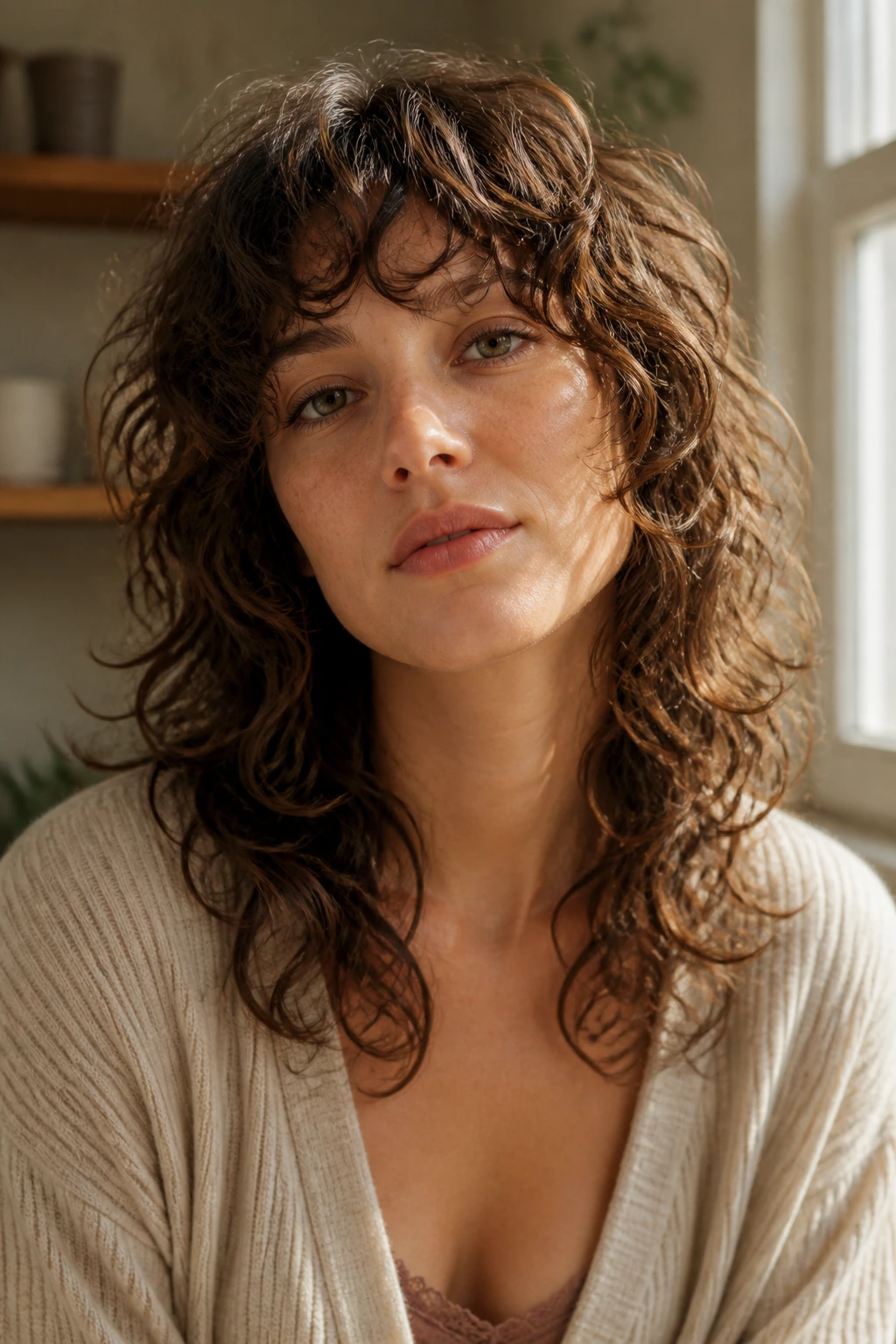
A medium length shag haircut can make hair look like it spent the morning in a warm breeze and the afternoon in a good mood. That’s the whole appeal of medium length shag haircuts: they sit in that useful middle ground where the hair has enough length to swing, enough layering to break up heaviness, and enough softness to avoid the stiff, over-styled look that blunt cuts can slip into.
The best versions do not scream for attention. They move when you turn your head. They fall a little differently after a long day, and that is a feature, not a flaw. A shag that’s cut well should look better once it loses the freshly-blown-out polish. The fringe should skim, not stab. The ends should feel feathered, not chopped into a little shelf at the bottom. And if your hair has any natural wave at all, this cut can make it show up without forcing you into a whole styling ritual.
The twenty cuts below range from curtain-bang classics to softer wolf-cut hybrids, brushed-out glam shapes, and airy layers that almost disappear until you shake your hair loose. Some are friendlier to fine hair. Some are gold for curls. Some lean a little edgy, then soften at the edges so they still feel wearable. The common thread is that soft, lived-in texture—the kind that looks deliberate, but never sprayed into place.
Why These Cuts Keep Showing Up in Real Salons
-
Soft grow-out: The layers are placed so the cut keeps its shape for weeks, not days, which matters when you do not want a trim every time the fringe gets a half-inch longer.
-
Movement without collapse: The right medium shag removes weight where hair feels bulky and keeps enough perimeter to stop the ends from looking thin and wispy.
-
Fringe flexibility: Curtain bangs, bottleneck bangs, side fringe, and full fringe all work here, but the cut changes character fast depending on which one you choose.
-
Air-dry friendly: Many of these shapes look better with a little natural bend and a quick scrunch than with a heavy round-brush finish.
-
Easy to personalize: You can push one version softer, choppier, curlier, or sleeker without changing the basic idea of the cut.
-
Better than a blunt line for texture lovers: If you want hair that looks touched and moved rather than sealed into a single shape, a medium shag gives you room to play.
1. Collarbone Shag With Curtain Bangs
This is the shag most people picture first, and there’s a reason it keeps hanging around. The length hits around the collarbone, which gives the hair enough weight to swing, while the curtain bangs open at the center and blend into cheekbone-framing layers. It looks relaxed on purpose. Not sloppy. Just soft.
Why it works
The collarbone length keeps the ends from looking too thin, which is a real problem with shags that are cut too short. Curtain bangs also do a lot of quiet work here: they soften the forehead, widen the style around the eyes, and make the whole cut feel less aggressive than a heavy fringe.
Ask for the shortest face-framing pieces to hit around the cheekbone and the longest layers to stay below the chin. That gives the haircut a little drape when it’s worn down and a lot of movement when it’s tucked behind one ear.
Quick details to ask for
- Length: Collarbone or just grazing it
- Fringe: Long curtain bangs that split easily
- Layering: Soft, blended layers from the cheekbone down
- Finish: Feathered ends, not blunt ends
Best styling move: Blow-dry the fringe away from the face for 10 to 15 seconds on each side, then pinch the ends with a tiny bit of cream so they separate instead of puffing up.
2. The Wolf-Lite Shag
If you like edge but not the full commitment of a dramatic wolf cut, this is the calmer version worth looking at. The crown gets a bit of lift, the lengths stay medium, and the perimeter still feels wearable. It has attitude. It just does not shout.
The trick is restraint. A wolf-lite shag keeps the choppy energy near the top and around the face, then lets the lower layers relax into a softer line. That means you get the cool, slightly undone silhouette without the harsh tail-end effect that some wolf cuts can have when they’re pushed too far.
This version works especially well if your hair naturally bends at the ends or if you’re willing to rough-dry it with your fingers and a diffuser. On straighter hair, a little texturizing spray gives it enough grit to hold the shape. On wavy hair, it often falls into place on its own after a scrunch and a 20-minute air-dry.
3. The Razor-Soft Shag That Moves, Not Frays
Can a shag look light without looking shredded? Absolutely. The answer is a razor-soft finish, where the ends are broken up just enough to move, but not so much that they start to fray into a fuzzy halo.
What makes it different
A razor cut, used lightly, softens the edge of the hair shaft and gives the haircut a more lived-in feel. The danger is overdoing it. Too much razor work and the ends start to look weak, especially on fine hair. The sweet spot is a clean perimeter with just enough airy texture to keep the line from feeling hard.
This cut is a good choice if you like hair that falls into loose pieces rather than one solid curtain. It’s especially flattering when the layers begin lower, around the mouth or jaw, so the face frame feels intentional and not over-chopped.
How to style it
A pea-sized amount of lightweight cream through the mids and ends is usually enough. Skip heavy oils at the root. They weigh this cut down fast and turn the feathering into limpness by lunch.
4. Shoulder-Skimming Shag With Bottleneck Bangs
Picture a cut that looks polished in the morning, then a little better after a long lunch and a light touch of humidity. That is this one. The shoulder-skimming length gives you movement without losing enough hair to feel sparse, and bottleneck bangs narrow at the top before opening softly toward the cheeks.
The shape flatters because it frames the face without boxing it in. Bottleneck bangs are shorter than curtain bangs in the center, but they do not plunge into a blunt fringe. That little taper matters. It gives the forehead some coverage while still keeping the eyes visible and the overall shape easy to wear.
Key things to notice
- The fringe should soften into the front layers without a hard line.
- The ends should hit just at or slightly below the shoulders.
- The crown should stay controlled, not puffy.
- The best versions look good with a side tuck.
My favorite detail: When the front pieces hit the cheekbone just right, the whole cut gets this quiet lift that makes the jaw look a little cleaner. It’s subtle. That’s why it works.
5. The Air-Dried Wave Shag
This one is for people whose hair already wants to bend and wave. Don’t fight that. Use it. A medium shag with air-dried texture can look rich and soft without any hot tools if the layers are cut to work with the bend instead of against it.
The beauty of this shape is that it never looks overly “done.” The waves fall into loose sections, the ends separate in a natural way, and the fringe or face frame loses that freshly-cut stiffness within a day or two. If your hair tends to frizz a little while drying, a light mousse or wave cream at the roots and mids helps keep the pattern from going fuzzy.
The perimeter should stay slightly stronger than the layers so the haircut doesn’t collapse into a cloud. That keeps the texture airy but not vague. And yes, that difference matters. A lot.
A quick scrunch with a microfiber towel, then hands off for the rest of the drying time, usually gives the cleanest result. Too much touching ruins the bend before it has a chance to set.
6. The Curly Medium Shag With Long Layers
Unlike a blunt curl cut, this shag does not ask your curls to line up into one heavy shape. It lets the spring live where it wants to live, then shapes the silhouette so the sides do not flare out like a triangle.
That is the real job here: balance. Long layers remove bulk without creating holes, and medium length gives curls enough weight to stay together. A good curly shag usually keeps the shortest face-framing pieces around the cheekbone or jaw, while the back hangs long enough to preserve a rounded outline.
Best curl types for this cut
- Loose curls that want softness around the face
- Medium curls that need weight removed from the sides
- Ringlets that lose shape when layers are too short
If your curls are very tight, ask for the cut to be done dry or mostly dry, because curl shrinkage changes everything. Wet curls lie. Dry curls tell the truth.
Styling note
Use a curl cream or light gel, then let the hair set before separating the curls. Pulling them apart too soon creates frizz and steals the shape the layers were meant to show off.
7. The Invisible-Layer Shag for Fine Hair
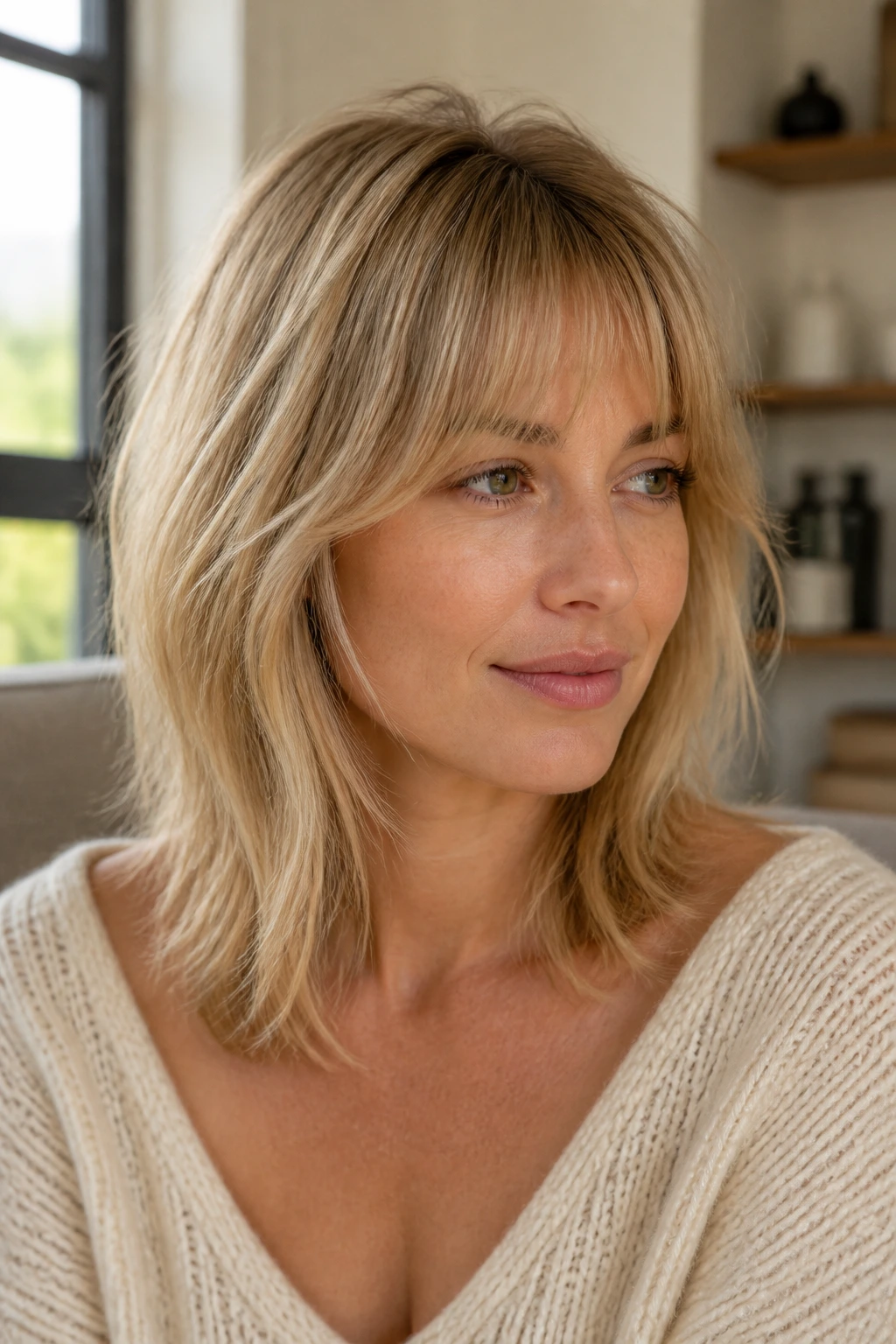
Fine hair can wear a shag, but the layering has to stay quiet. Too much slicing and you end up with ends that look see-through. Too little and the hair falls flat. This version uses invisible layers—layers that build movement without leaving obvious steps in the shape.
The structure that helps
Crown: Keep the crown lightly lifted, not chopped short. A little root movement goes farther than people think.
Mid-lengths: Add the bulk of the layering through the mids so the hair bends instead of hanging in one limp curtain.
Ends: Leave enough weight at the perimeter so the cut still looks full when the hair is dry.
That’s the part people get wrong. Fine hair does not need a lot of removing. It needs smart removal. A few well-placed layers give the illusion of thickness because the hair can separate and lift without falling into one flat sheet.
A root-lift spray and a small round brush at the crown are usually enough for styling. Don’t chase volume everywhere. Concentrate it at the roots and let the lengths stay soft.
8. The 70s Flick-Out Shag
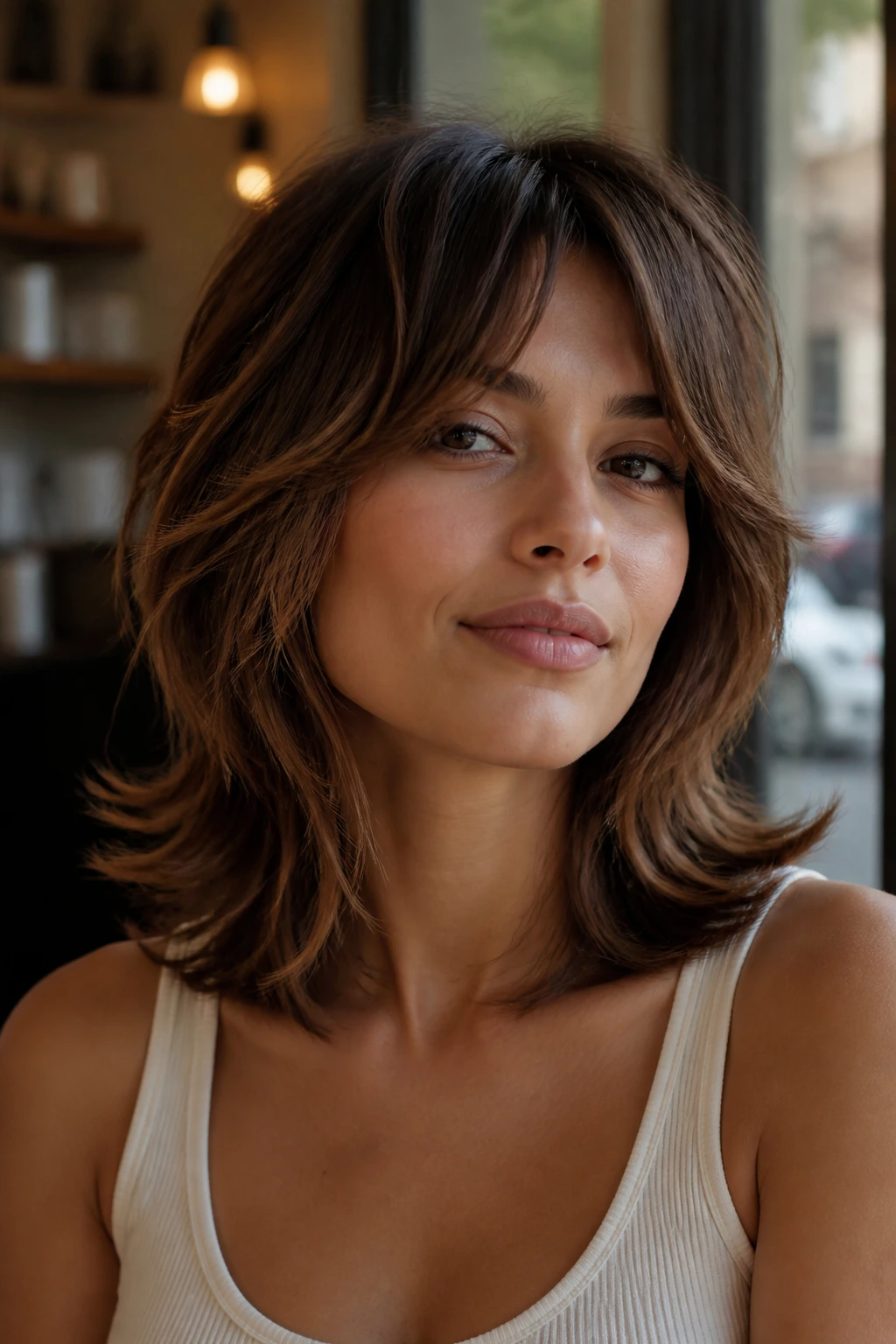
Some haircuts whisper the decade. This one grins at it. The layers are cut to flick outward at the ends, which gives the medium length shag a little retro swing without turning it into costume hair.
The flick happens because the ends are kept light but not wispy, and the brush or blow-dry pushes them away from the neck instead of curling them under. It’s a tiny styling choice with a big effect. Suddenly the whole haircut feels lighter, a little playful, and a lot less serious than a perfectly rounded blowout.
A middle part or slightly off-center part keeps the look current. If you go too far with volume at the crown, the style can tip into full vintage. That may be what you want. If not, keep the root lift controlled and let the movement live at the ends.
This is one of those cuts that looks especially good with a shirt collar, a square neckline, or simple hoops. The flicked shape draws attention to the jaw and neck in a way that flat hair never does.
9. The Side-Fringe Shag
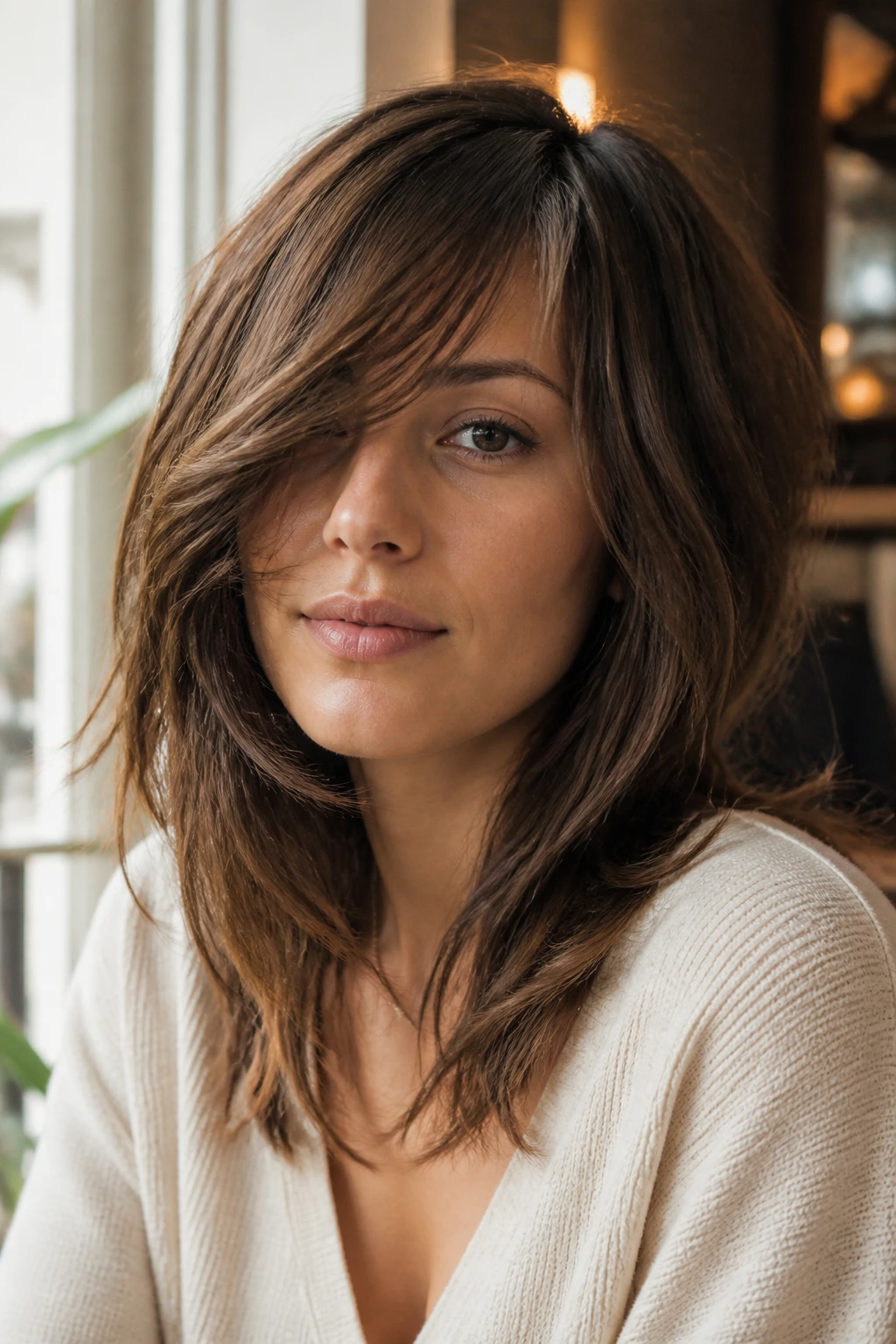
The side fringe version is softer than a center-parted shag, and honestly, I think it deserves more attention than it gets. A deep side fringe gives the haircut a little sweep and a little mystery, but it doesn’t need to be heavy to work.
The hairline gets framed on one side, which helps if one side of your face is more active or if you want to break up a very symmetrical cut. The layers can start around the cheekbone and move diagonally toward the collarbone, creating a shape that feels easy but not empty.
The side fringe also helps when your hair tends to fall flat around the front. It gives the eyes something to read, then it blends into the rest of the cut instead of sitting there like a separate piece.
A soft side part and a round brush through just the fringe area are usually enough. If you like texture, mist the ends with a dry finish spray. The goal is separation, not stiffness.
10. The Shag-Bob Hybrid
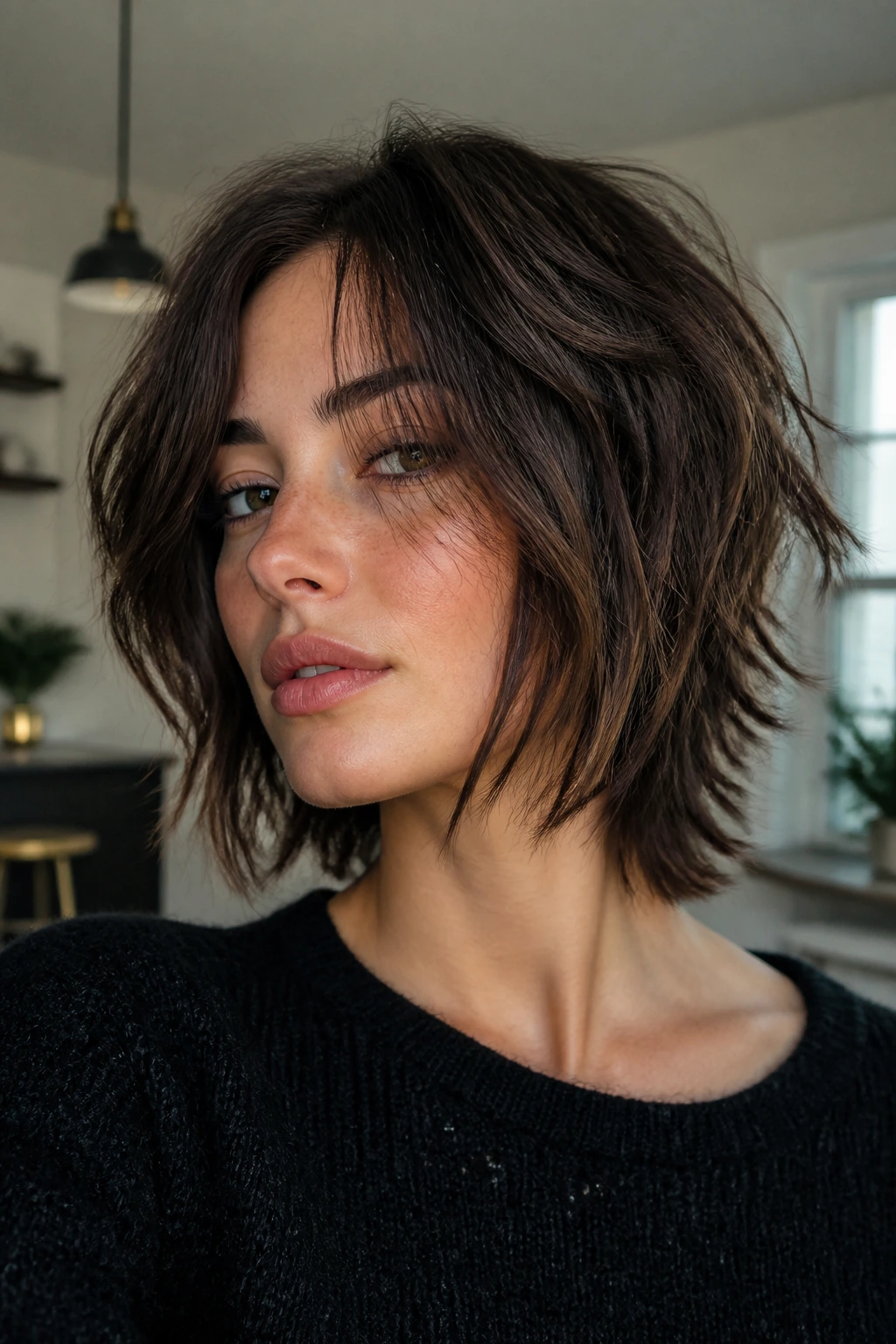
A shag-bob hybrid is not a compromise cut. It’s a very specific mood: shorter than a classic shag, longer and more broken up than a bob. If you’ve been living with a one-length bob that has started to feel too neat, this is where things get interesting.
The front pieces usually stay around the jaw or just below it, while the back can sit a bit longer to keep the shape from puffing out. The layers are visible, but not aggressive. That matters. Too much texturizing and the cut loses the crispness that gives a bob its backbone.
This hybrid works especially well on hair that has some natural body but gets heavy at the ends. The lighter layers stop the shape from hanging like a helmet, while the stronger lower line keeps it from dissolving into fluff.
It’s one of the easiest medium length shag haircuts to dress up. Tuck one side behind the ear, add a touch of shine cream, and it reads polished. Leave it dry and scrunched, and it leans casual. Same haircut. Different attitude.
11. The Face-Frame Heavy Shag
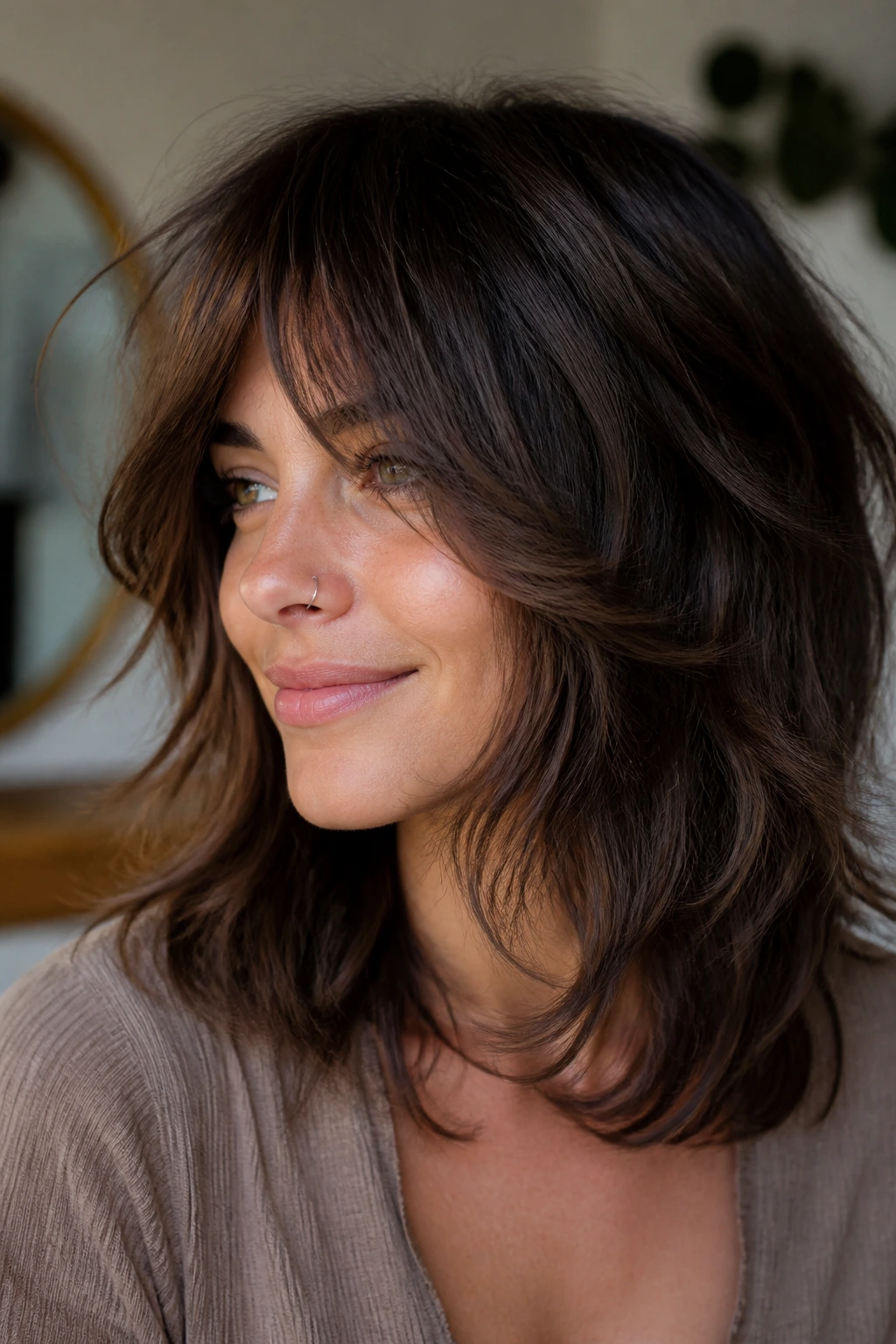
Some shags are about the whole silhouette. This one is about the front. The face-frame heavy shag puts the emphasis on the pieces that land near the cheekbones, jaw, and chin, which is a nice move if you want the haircut to soften your features without losing too much length.
The back stays fairly calm. The drama lives near the face. That keeps the shape flattering when your hair is pulled over one shoulder, tucked into a sweater, or left to swing naturally around the neckline.
A strong face frame can make the rest of the haircut feel lighter, even if the overall length is still substantial. That’s useful for medium hair that needs movement but not a total reinvention. You get shape where it shows most, and less fuss everywhere else.
If your features are angular, keep the front pieces a touch softer and more rounded. If your face is fuller, longer front layers can help stretch the shape vertically. Tiny changes. Big effect.
12. The Layered Shag That Gives Fine Hair Lift
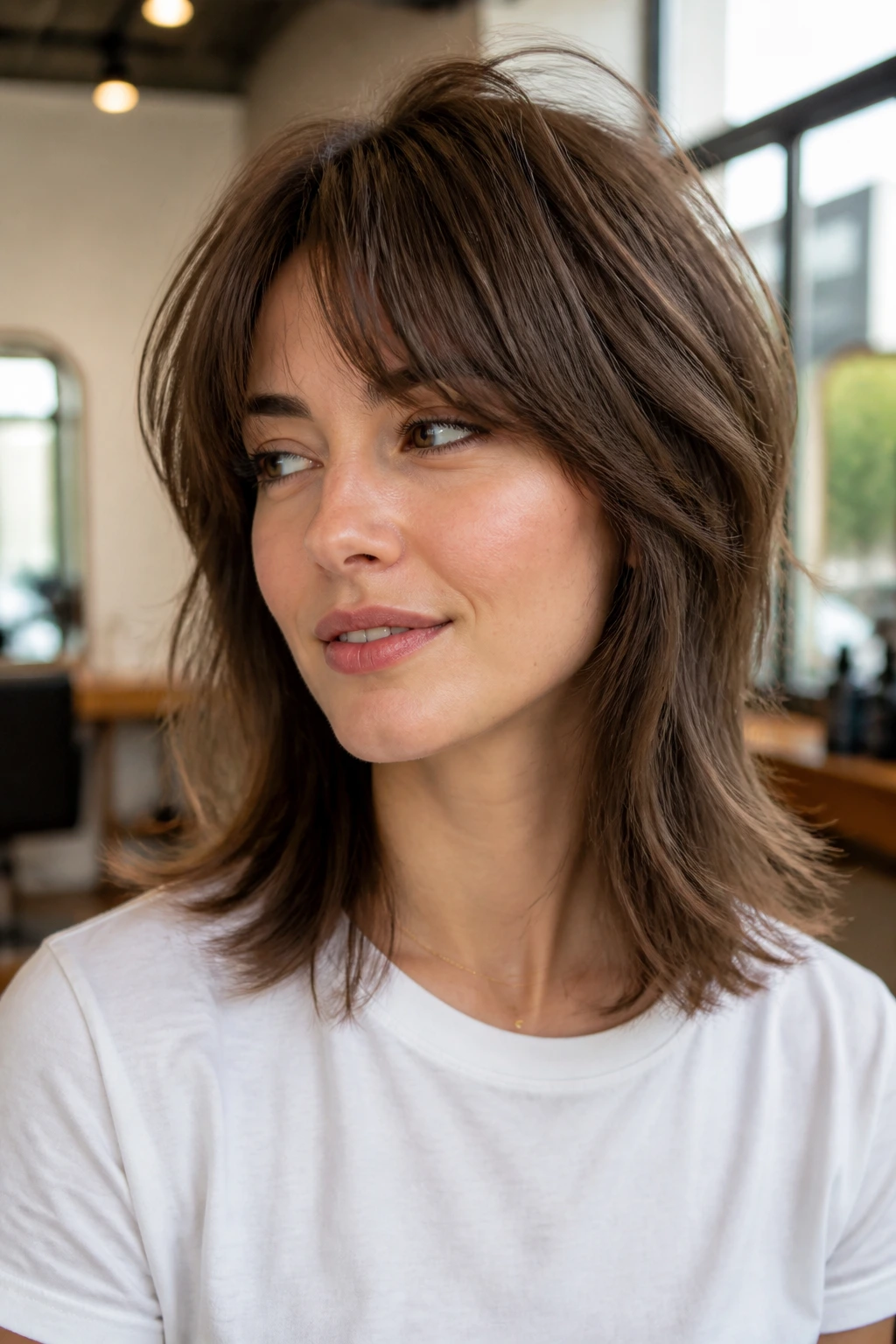
Can fine hair wear a shag without looking thin at the bottom? Yes, if the layers are placed with a little discipline. This version uses layering mostly to lift the hair off the scalp and create movement through the mids, not to strip the ends bare.
The haircut should still have a visible outline. If the perimeter disappears, so does the sense of fullness. That’s why this cut works best when the shortest layers are kept away from the very top of the head and the longest layer still gives you a strong edge.
What to ask for
- Light layers through the crown
- A fuller perimeter
- Soft face-framing pieces, not hard steps
- Minimal thinning at the ends
The styling part is refreshingly simple. A mousse at the root, a quick blow-dry with your head turned to one side, and a little finger-combing through the ends usually does the trick. Skip heavy serums. They flatten the whole thing in a blink.
13. The Heavy Fringe Shag
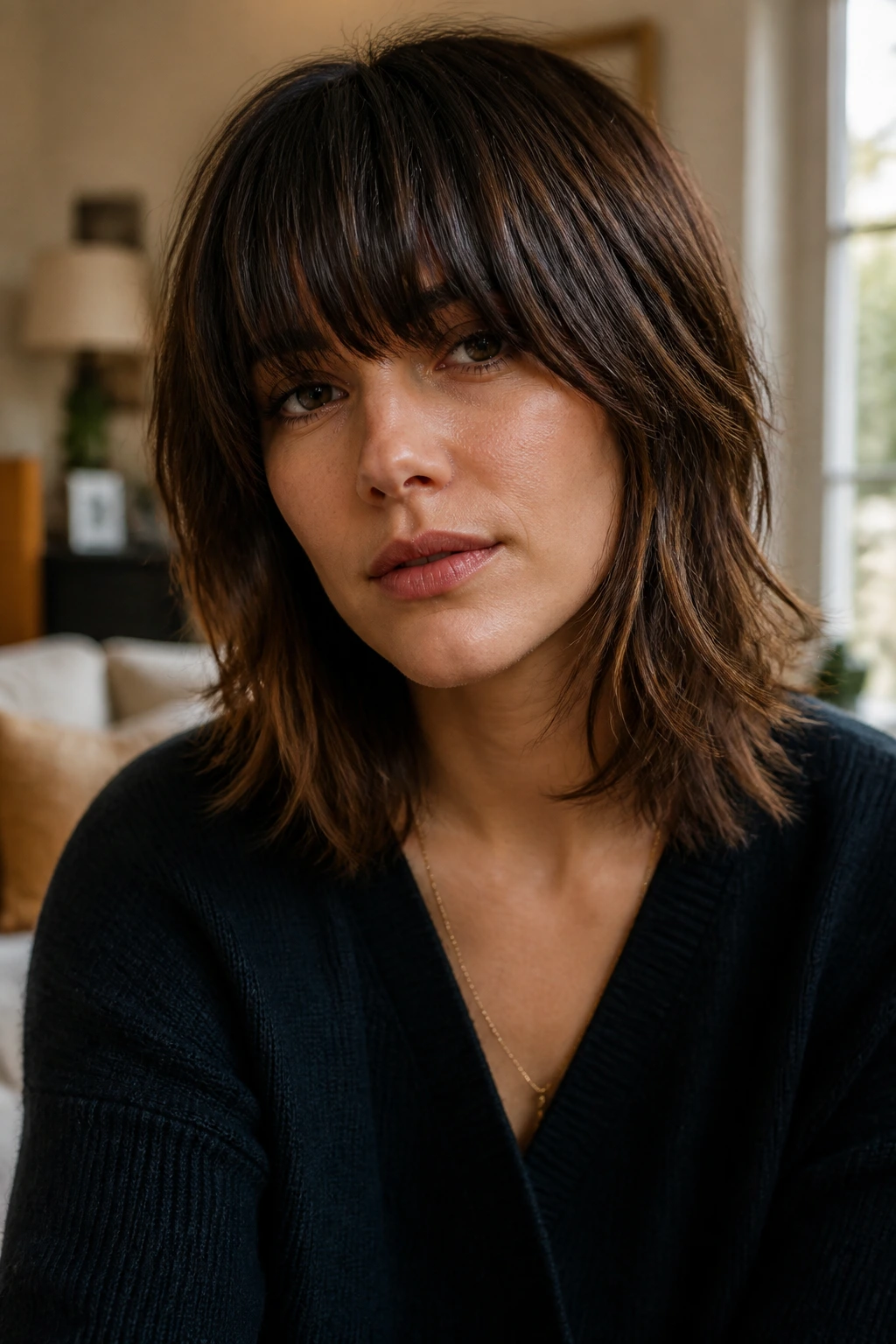
The heavy fringe version has more personality than most people expect from a medium shag. The fringe sits fuller across the forehead, but the rest of the haircut stays broken up and soft so the front does not take over the whole look.
This cut works if you want the eyes framed hard and the jaw softened softly. That contrast is what keeps it from feeling flat. The fringe should not be cut so short that it turns into a helmet. It needs enough length to bend, split, or brush slightly to one side as the hair grows.
It’s a smart pick if your hairline is easy to manage and your forehead is a feature you want to play down. It can also work beautifully with glasses, because the fringe gives the frames something to sit against instead of competing with them.
A little dry shampoo at the roots under the fringe keeps it from sticking too close to the skin. That area gets greasy fast. No point pretending otherwise.
14. The Brushed-Out Glam Shag
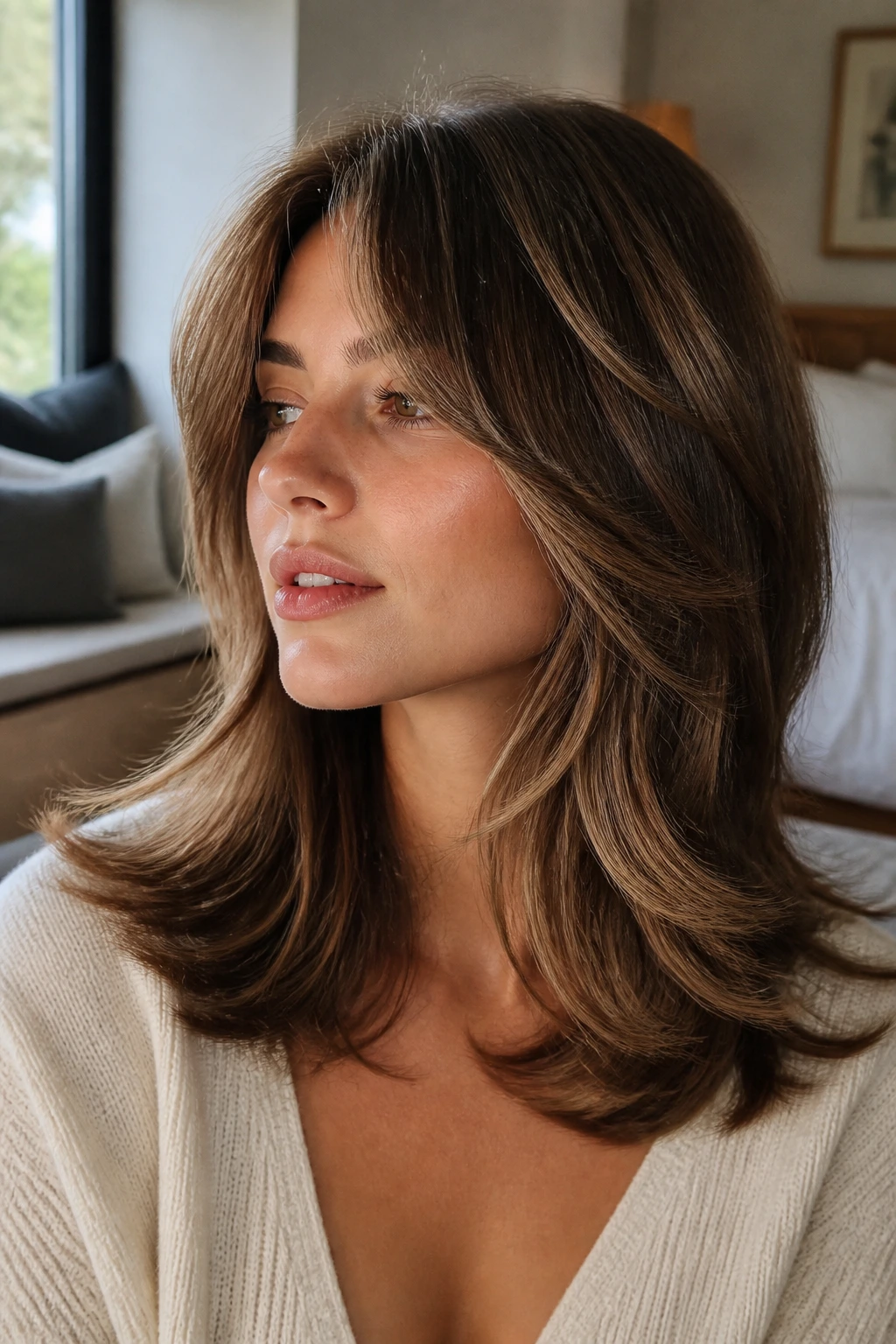
There’s a polished version of the shag that people forget about because they picture only piecey, rough texture. Brushed-out glam keeps the layers, but it softens the separation until the whole style looks smoother, shinier, and a little more evening-ready.
Unlike a heavily scrunched shag, this one depends on a round brush or a large blow-dry brush to bend the ends and polish the face frame. The shape still moves, but the pieces sit closer together. That makes it useful for anyone who wants texture without the slightly wild finish that some shags naturally have.
It’s especially good for medium length hair that sits between wavy and straight. The brush gives those in-between bends some structure. A tiny bit of shine spray at the very end adds a touch of control, but don’t flood it. The whole point is softness, not glossed-over stiffness.
If you wear a lot of clean tailoring or simple knitwear, this is one of the easiest shag versions to pair with that wardrobe. It looks intentional next to a crisp collar.
15. The Mixed-Texture Shag With Hidden Underlayers

This cut plays a nice trick. The top layer looks soft and lightly broken up, while the underlayers carry more movement than you can see at first glance. The result is hair that shifts when you move but does not announce every layer from the room.
That hidden layering approach works well if you want softness and body without a visibly choppy finish. Hair can look fuller because the underlayers are doing the lifting, while the top stays smooth enough to avoid a frayed look. It’s a smart option for medium density hair that sits in the middle of everything—too thick to go blunt, too fine to go wild.
A side note: this is one of those styles that tends to look best after a second-day refresh. The cut settles, the separation gets gentler, and the whole thing feels more expensive in a practical, lived-in way.
A wide-tooth comb through the ends and a spritz of texture spray on day two often beats a full restyle. Less effort. Better result.
16. The Grown-Out Shag That Stays Neat
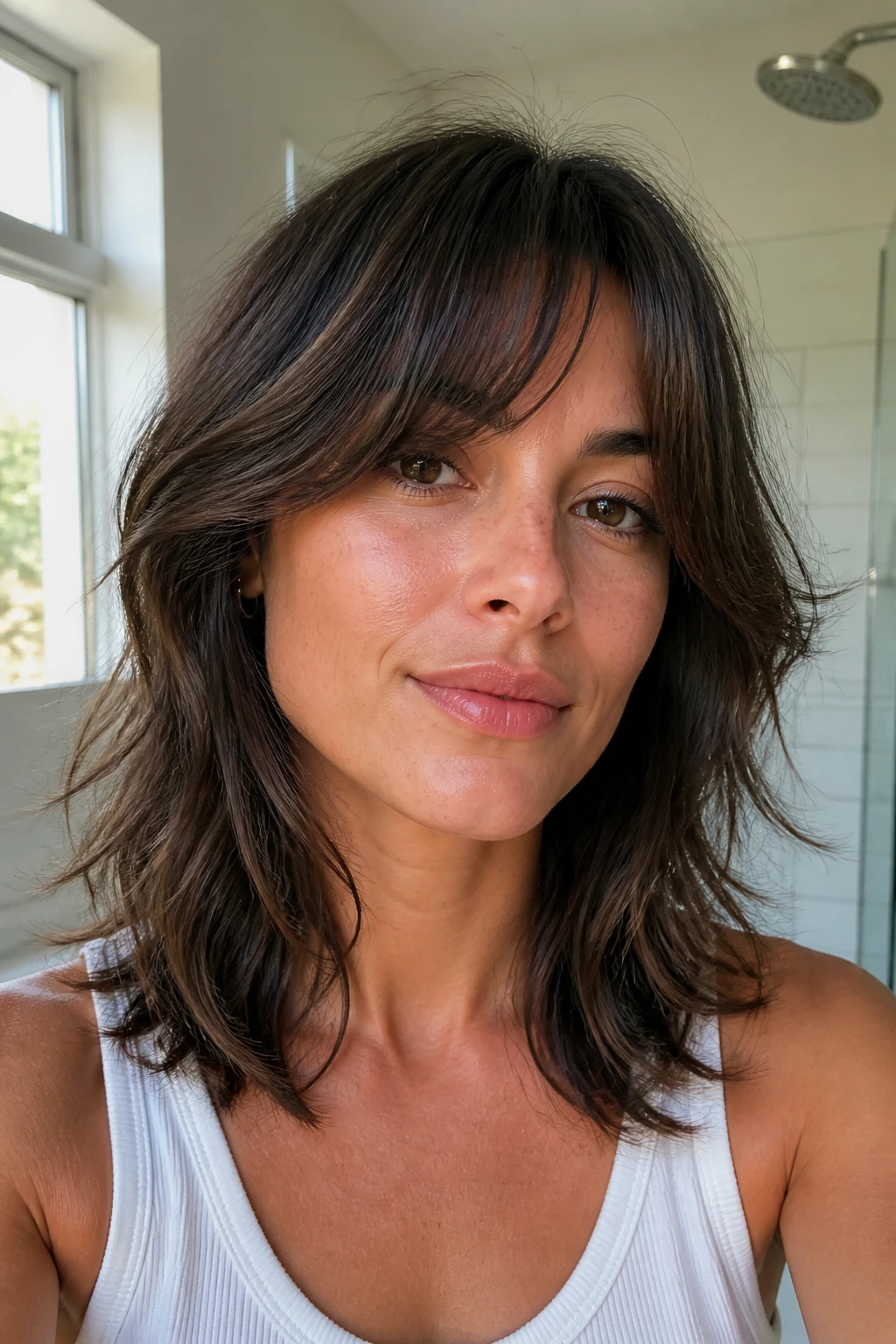
Some haircuts age badly. This one is built to age gracefully. The grown-out shag keeps the perimeter long enough that the shape still makes sense after several weeks, while the interior layers soften the line so the cut doesn’t suddenly feel heavy.
That makes it a good choice if you do not want a haircut that starts looking wrong the minute it loses its fresh edge. The length can sit anywhere from shoulder to collarbone, but the key is that the layers taper rather than stack.
The fringe also matters here. Keep it long enough to split or sweep. A short fringe grows out in a weird way unless you keep trimming it. A longer fringe can be tucked, brushed aside, or parted through the middle when it starts to change shape.
This is the shag for people who want to book trims on a sane schedule. It doesn’t punish you for living your life.
17. The Uneven Midi Shag With a Longer Back

An uneven midi shag gives the back a little extra length, which helps the haircut drape instead of bounce. The front still gets the usual shag movement, but the back carries a quieter line. That asymmetry can look especially good if you like hair that feels a bit artful without getting too editorial.
The longer back also keeps the haircut from flaring at the sides. On thick hair, that’s useful. On fine hair, it keeps the style from looking chopped into pieces. Either way, the silhouette is kinder than a hard, evenly layered cut.
Best when you want:
- A softer outline around the neck
- More weight in the back
- Less bulk at the sides
- A cut that still looks neat in a ponytail or claw clip
A lot of medium length shag haircuts can feel high-maintenance if they’re over-layered. This one avoids that trap. It still has texture, but the shape behaves when you need it to.
18. The Mullet-Inspired Soft Shag
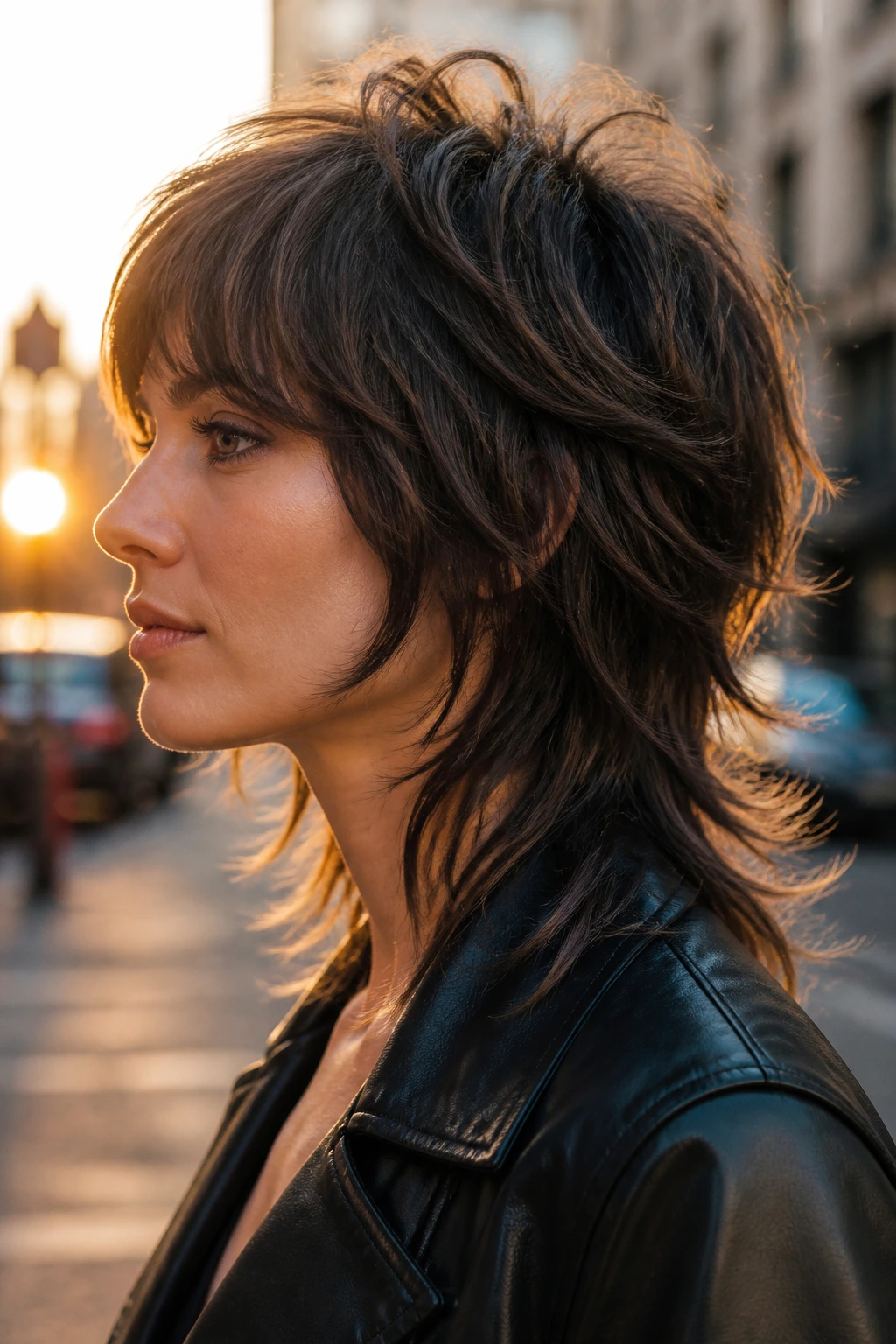
Soft mullet-inspired cuts get a bad reputation because people remember the extremes. This version keeps the spirit and drops the sharp edges. The front opens around the face, the crown has lift, and the back stays a little longer so the shape feels modern instead of costume-like.
The key is blending. If the transitions are too harsh, the haircut turns into a statement that wears you, not the other way around. When it’s softened properly, the result is a shag with personality and a good grow-out.
It’s a nice option if you want something a little cooler than a safe shag but less dramatic than a full mullet. The texture should look touchable, with piecey movement around the cheekbones and a longer tail at the back that you can tuck under a jacket collar or let hang loose.
This is one of the few cuts that can go from soft to sharp with just product. Cream and finger-drying make it gentler. A matte paste and root lift make it bolder.
19. The Feathered Shag With a Rounded Perimeter
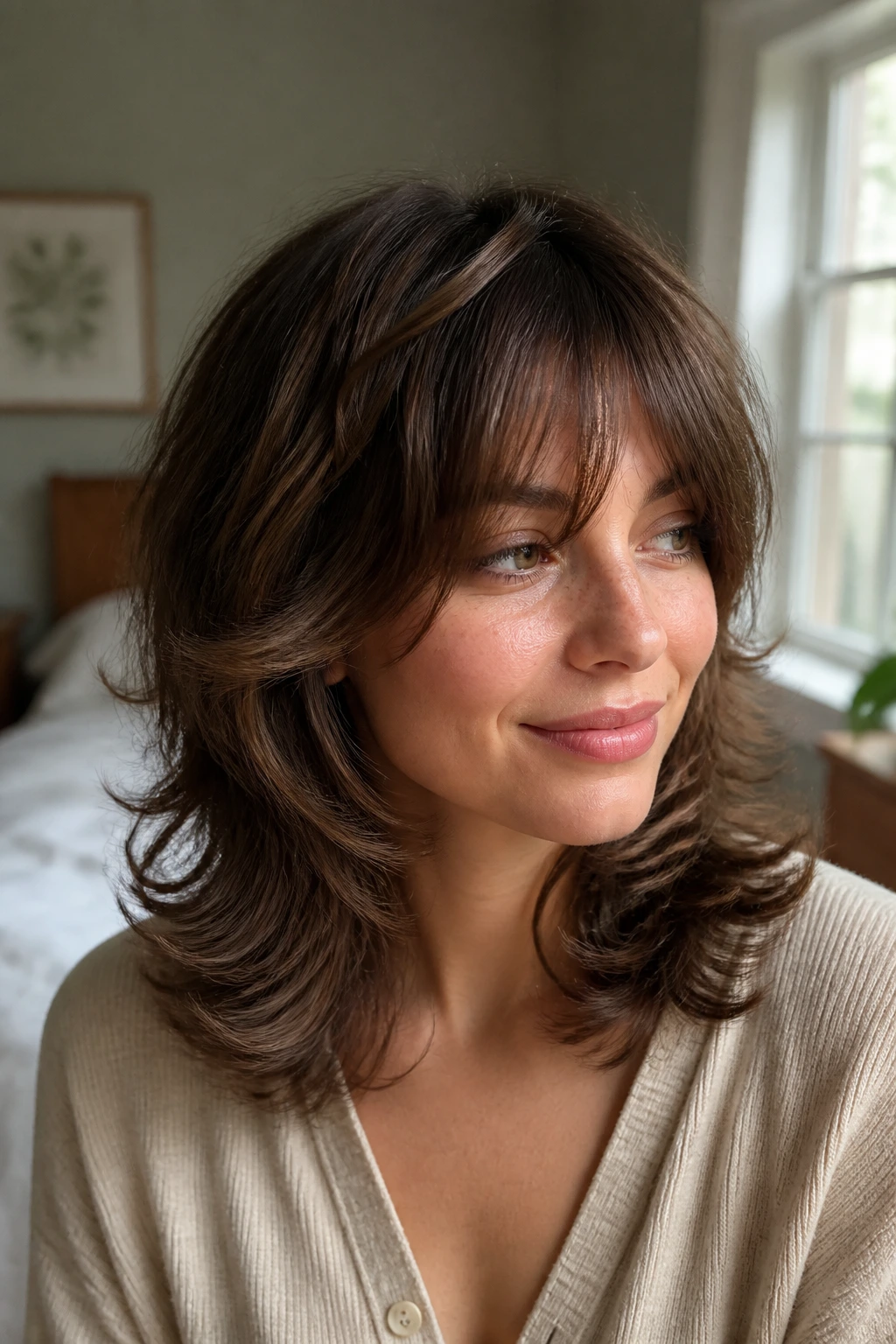
Feathered layers can do what blunt layers never quite manage: make hair feel light without looking broken. In this version, the perimeter stays rounded, so the haircut still has a smooth outer line, while the internal layers float inside it.
That combination is useful if you like softness but hate the ragged look that comes from too much point cutting. The hair lands in a gentle curve around the shoulders and collarbone, and the feathering keeps the pieces from clumping together.
It works especially well when the hair naturally grows out with some wave or bend. The rounded bottom line gives the cut something stable to rest on, and the feathering inside it adds motion where the eye wants it most.
A quick pass with a medium round brush at the very ends is usually enough. You do not need to force every section into a curl. The cut already carries the shape.
20. The Tousled Bottleneck-Fringe Shag

If you want the softest version of the bunch, start here. The bottleneck fringe frames the face in a gentle taper, and the rest of the haircut stays loose enough to look tousled rather than aggressively styled.
The charm of this cut is that it feels casual but not careless. The fringe gives definition at the front, the layers keep the sides from getting bulky, and the ends stay airy so the whole haircut moves when you do. It’s a good final stop for anyone who wants texture without that shredded, ultra-choppy feel.
The best way to wear it is to let the fringe dry with a little natural bend and then separate it with your fingers, not a brush. The rest of the hair can be scrunched with a small amount of cream or left to dry on its own if your texture already does the work. Simple. A little undone. Exactly the point.
Why Medium Length Shags Work So Well for Soft Lived-In Texture
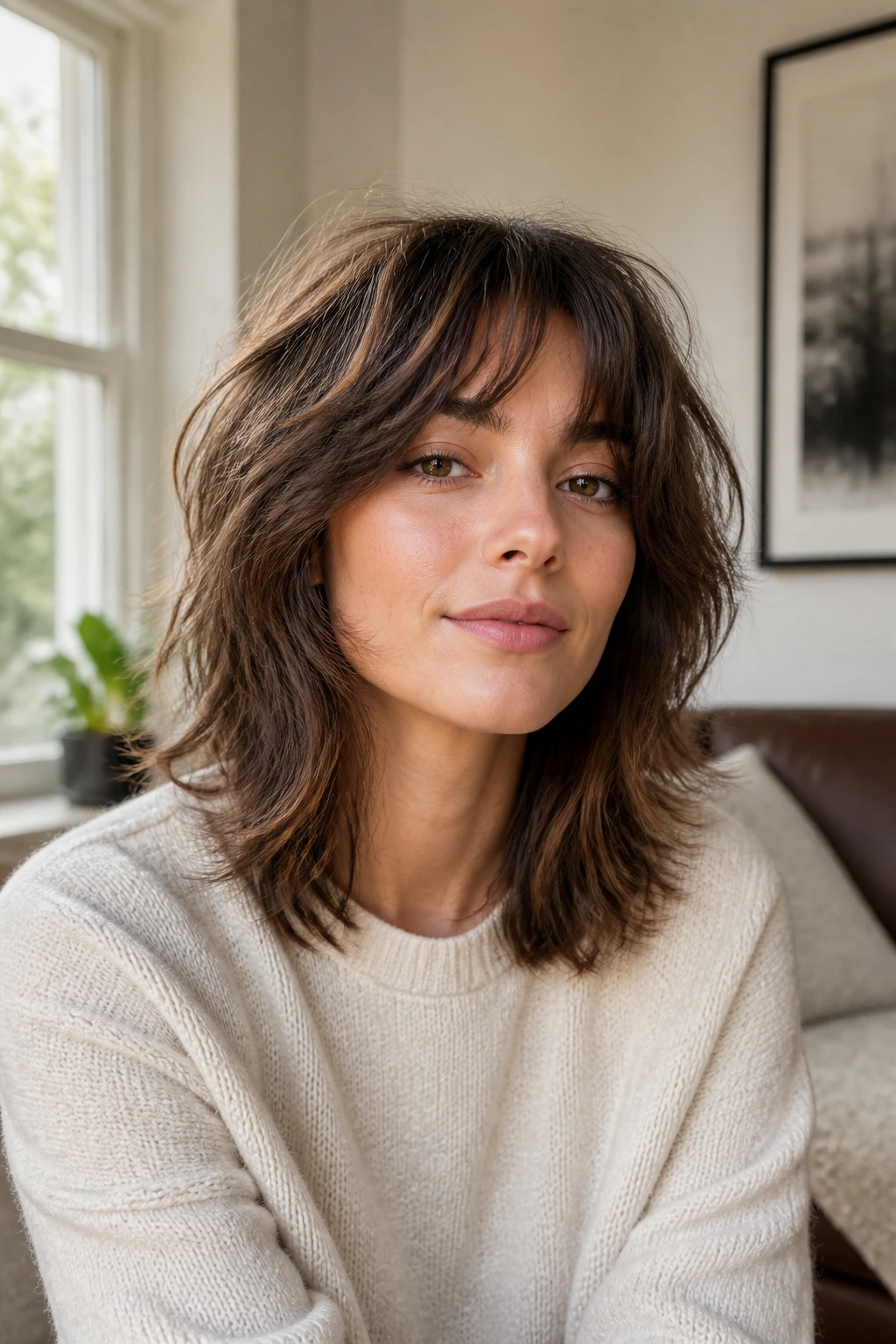
A shag is not one haircut, which is why people get it wrong. The medium length version works because it gives the stylist room to place layers where they matter without forcing the hair into a severe silhouette. Too short, and the cut can turn spiky or overbuilt. Too long, and the layers stop doing anything interesting.
The sweet spot sits around the shoulders, collarbone, or just below. That length lets hair bend, swing, and settle into a softer shape after a day of wear. It also buys you room for different fringe choices. Curtain bangs, bottleneck bangs, side fringe, and even a heavier fringe all behave differently at this length, which is why the haircut can change mood so easily.
The other reason this shape works is mechanical. Hair cut with a little internal layering loses the heavy block at the bottom, so the top can lift without needing a mountain of product. That means less mousse, less teasing, less trying to fake movement that the cut should already give you.
And yes, the grow-out matters. A medium shag often looks better after a few washes because the edges soften and the layers stop separating so sharply. That’s the lived-in part people are chasing. Not mess. Not neglect. Just a cut that settles in instead of sitting there like it’s waiting for a photo shoot.
How to Choose the Right Medium Length Shag for Your Hair Density and Face Shape
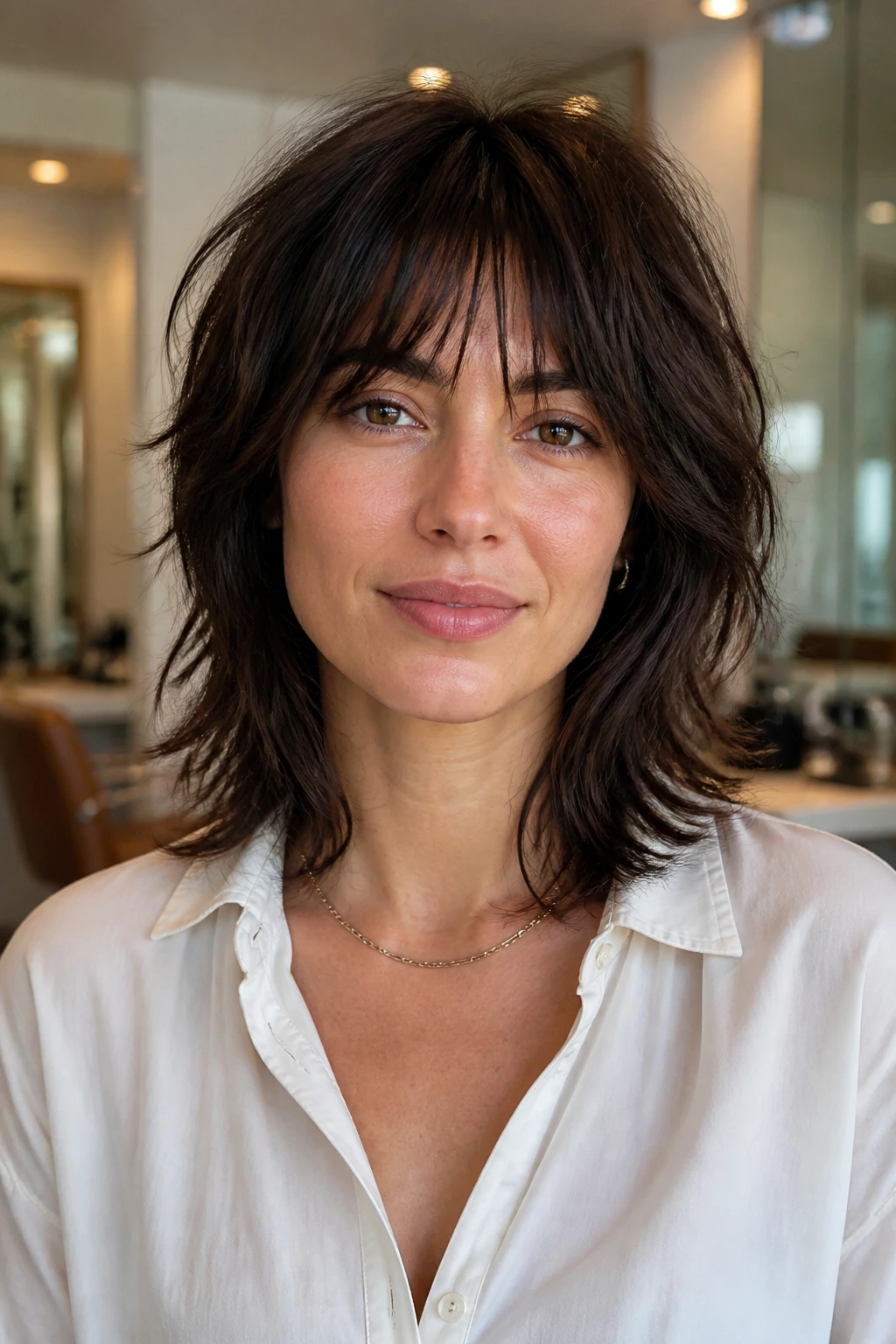
The right shag for you has less to do with a trend name and more to do with density, bend, and how much edge you actually want in daily life. Fine hair usually needs less slicing and more careful structure. Thick hair needs weight removed in the right places or it swells at the sides. Wavy hair can carry more layers than straight hair because the texture already gives the shape some help.
Fine hair
Keep the layers soft and closer to the mids. Heavy fringe can work, but only if the rest of the cut keeps enough weight at the bottom to stop the ends from looking threadbare. A shag with invisible layers or a brushed-out finish usually behaves best.
Thick hair
Go for internal weight removal and a stronger perimeter. That keeps the hair from blowing out at the sides like a triangle. Side fringe and curtain bangs both help because they break up the mass around the face without over-thinning the rest.
Curly or wavy hair
Let the natural bend lead. A dry or mostly dry cut can help the stylist see where the curls sit, which is more useful than cutting everything wet and hoping the shape lands right later. Long layers and a softer fringe usually save the day.
Straight hair
You’ll need more product and a little more styling unless your hair has some hidden bend. Face-framing layers, texture spray, and a light root lift stop the cut from looking too plain. Straight hair can wear a shag well, but it wants help.
Tools and Products That Make the Cut Behave
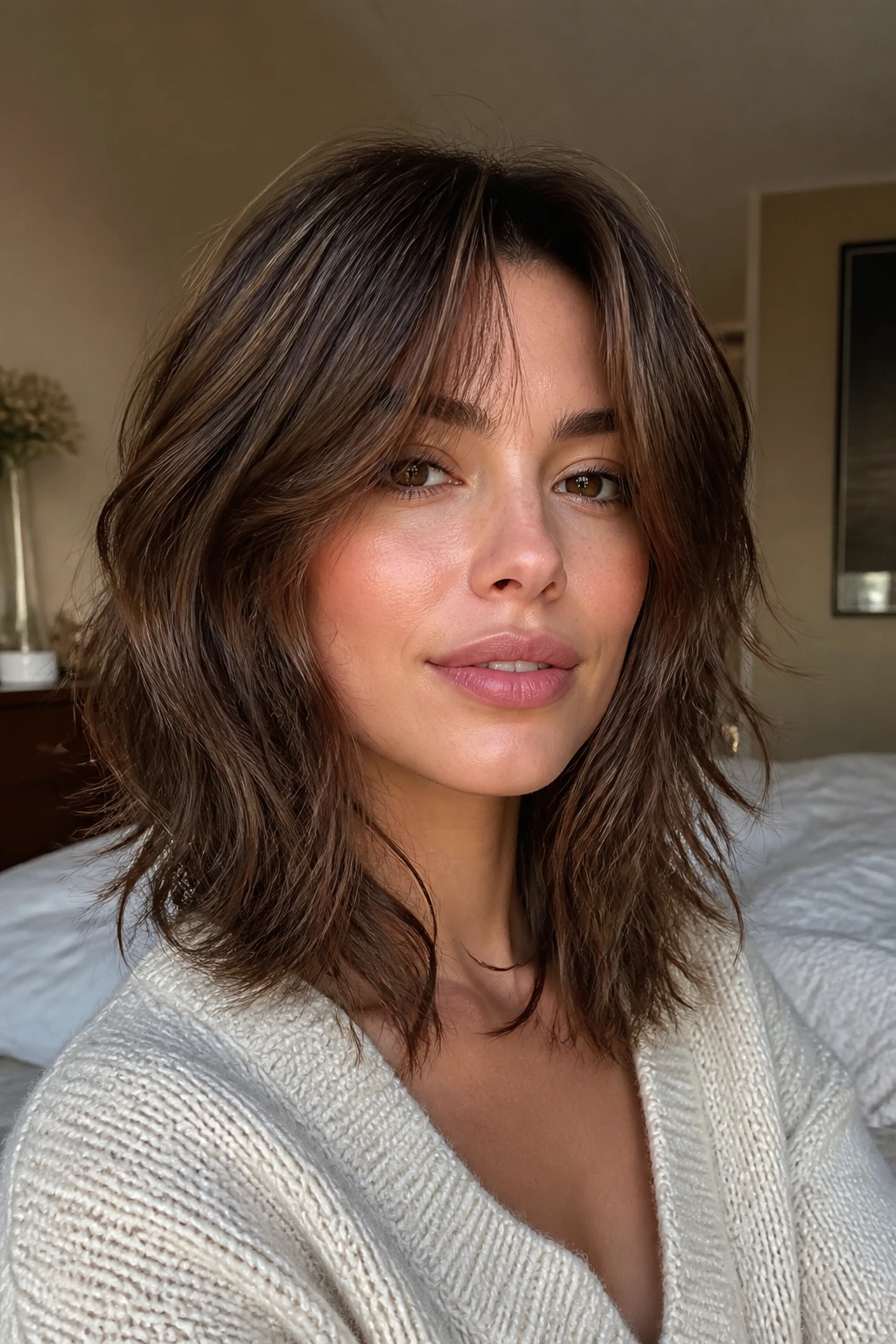
You do not need a giant drawer of styling tools to wear a shag well. You need a few pieces that do their job and don’t fight the haircut.
- Blow dryer with a nozzle: Directs airflow so the fringe and front layers don’t puff in every direction.
- Diffuser: Useful for wavy or curly hair when you want the bend to stay soft and separate.
- Medium round brush: Good for curling the ends under or flicking them out without making the whole cut look set.
- Wide-tooth comb: Safer than a fine comb for breaking up waves without causing frizz.
- Texturizing spray: Adds grit to the mids and ends so the layers show up.
- Light mousse: Helps at the roots if your hair falls flat by lunchtime.
- Heat protectant: Non-negotiable if you use a brush dryer, curling wand, or flat iron.
- Dry shampoo: Keeps the fringe from separating into greasy pieces on day two or three.
- Small clip or duckbill clips: Handy for setting bangs while they cool after styling.
The product world gets messy fast with shag haircuts, because people reach for too much of everything. A little mousse, a little spray, a little cream. That’s usually enough. Heavy products smother the texture and make the cut feel far less alive.
How to Style a Medium Shag for Air-Dried, Diffused, or Blown-Out Finish
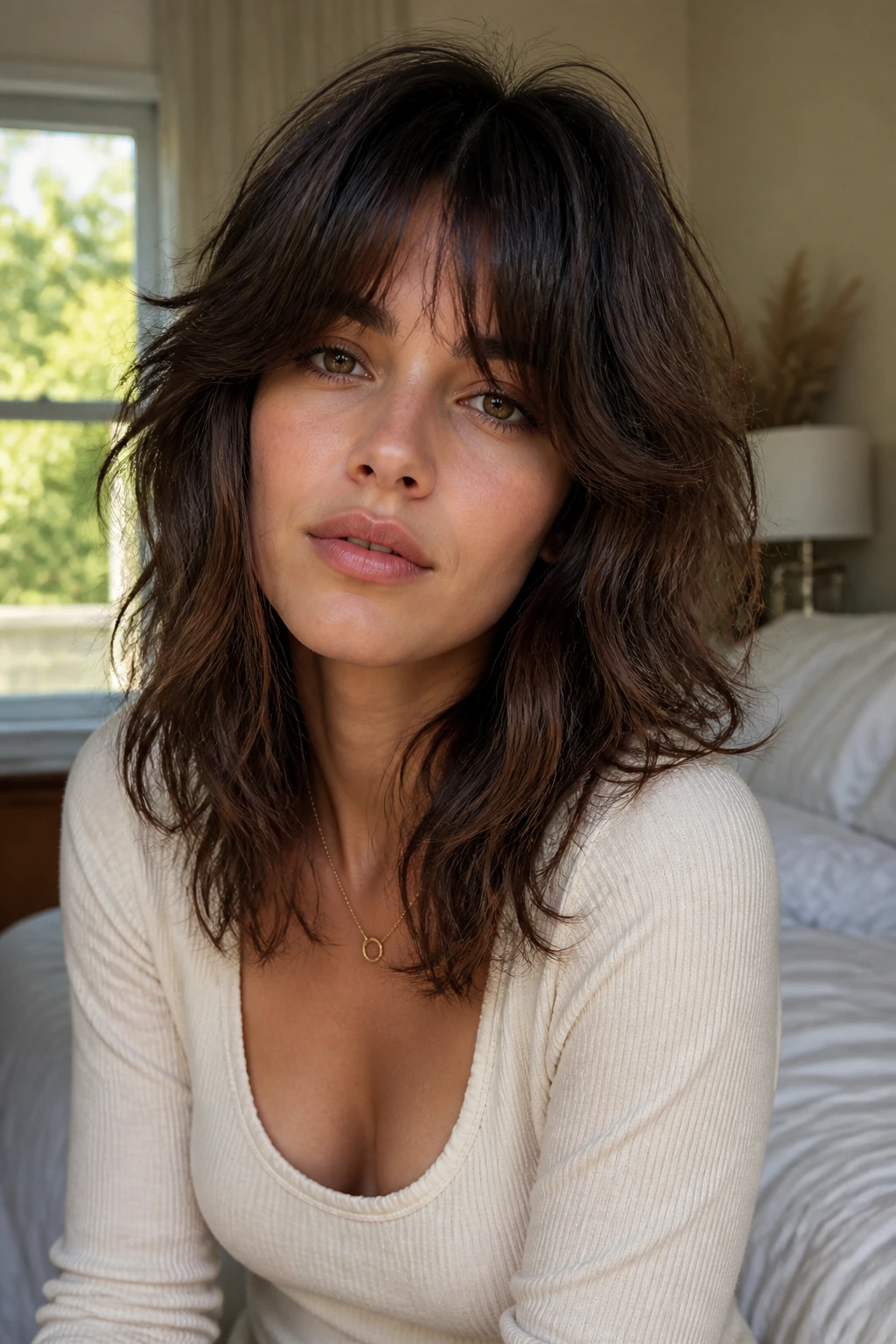
The best thing about these cuts is that they don’t all need the same finish. You can air-dry them, diffuse them, or brush them smoother, and each version says something slightly different.
Air-Dried Finish:
Use a light mousse or wave cream on damp hair, squeeze out excess water with a microfiber towel, and leave the hair alone while it dries. If the front pieces dry in your eyes, clip them back loosely for 10 to 15 minutes so they don’t collapse into the cheeks.
Diffused Finish:
Work in a small amount of curl cream or foam, then cup sections into the diffuser without blasting them apart. Stop when the hair is about 80 percent dry. That keeps the shape soft and stops the ends from going fuzzy.
Blown-Out Finish:
Dry the fringe and front layers with a round brush, then skim the mids and ends just enough to bend them. Don’t over-direct the back. A shag looks odd when every section is forced into the same clean curve.
Day-Two Refresh:
Mist the hair with water or a light leave-in spray, scrunch the mids, and revive the fringe with a quick pass of the dryer. A dab of dry shampoo at the roots keeps the cut from losing its lift.
Small Tweaks That Change the Mood of the Cut

Texture Boost: A dime-size amount of mousse at the roots and a mist of texturizing spray through the mids can turn a quiet shag into a more obvious lived-in style without making it crunchy.
Customization: Move the part one inch to the side if you want more softness around one eye, or keep it centered if you want the curtain or bottleneck fringe to open evenly. Tiny parting changes matter more than people think.
Serving Suggestions: Pull one side behind the ear and leave the opposite side loose. That single move shows off the face frame, the collarbone length, and the movement in the ends all at once.
Make-It-Yours: If your hair is fine, use lighter products and keep the layers gentle. If it is thick, ask for internal debulking rather than a blunt thinning. If it is curly, let the fringe stay longer so shrinkage doesn’t ambush you. If it is straight, plan on a bit more styling on the days you want the texture to show.
Keeping the Shape Between Salon Visits

A medium shag lives or dies by how you treat it after the cut. The good news is that the upkeep is not fussy if the shape was built correctly. Most versions do well with trims every 8 to 10 weeks, while bangs may need a small refresh around every 4 to 6 weeks if you want them to sit at the cheekbone or brow with purpose.
Wash frequency depends on your scalp and product load, but shags usually behave better when they are not stripped and squeaky every day. Two to four washes a week is a common rhythm for many people, with dry shampoo filling the gap on the second or third day. If your hair gets oily fast, focus the dry shampoo at the root and through the fringe, then brush it through well so it doesn’t sit white and chalky.
At home, keep one styling routine for wash day and one for the day after. That’s it. A shag gets confused when you keep rebuilding it from scratch with different products every morning. On humid days, use less cream and more spray. On dry days, reverse that and keep the ends from looking rough.
If the fringe starts to split in a weird way, that’s usually the first sign you need a trim or a better part. Don’t wait until the whole haircut has drifted out of shape. Fix the front early. It changes everything.
Common Mistakes That Make a Shag Look Rough

The biggest mistake is taking too much weight out of the wrong place. If the layers start too high, the crown can puff up while the ends look sparse. The fix is simple: keep the shortest pieces controlled and leave enough length at the bottom for the haircut to anchor itself.
Another common problem is over-thinning the ends. That creates a wispy, broken look instead of soft texture. You want separation, not depletion. Ask for point cutting or light texturizing, not aggressive thinning shears on every section.
Product overload is sneaky. A shag needs movement, and a thick cream or too much oil can pin the layers together in the worst way. If the hair looks greasy by noon, the cut may be fine—the styling load is the problem. Use smaller amounts and build only where needed.
The fringe can also throw the whole thing off. Short bangs with medium shag layers sometimes fight the rest of the shape, especially on hair that shrinks or frizzes. Keeping the front slightly longer gives you more options, which is useful when you do not want to babysit the style.
Finally, don’t ignore your natural pattern. Straight hair with no bend needs more support. Curly hair needs more room. Cutting the same shag shape on every head and hoping it behaves the same is how people end up disappointed.
Variations and Adaptations to Try
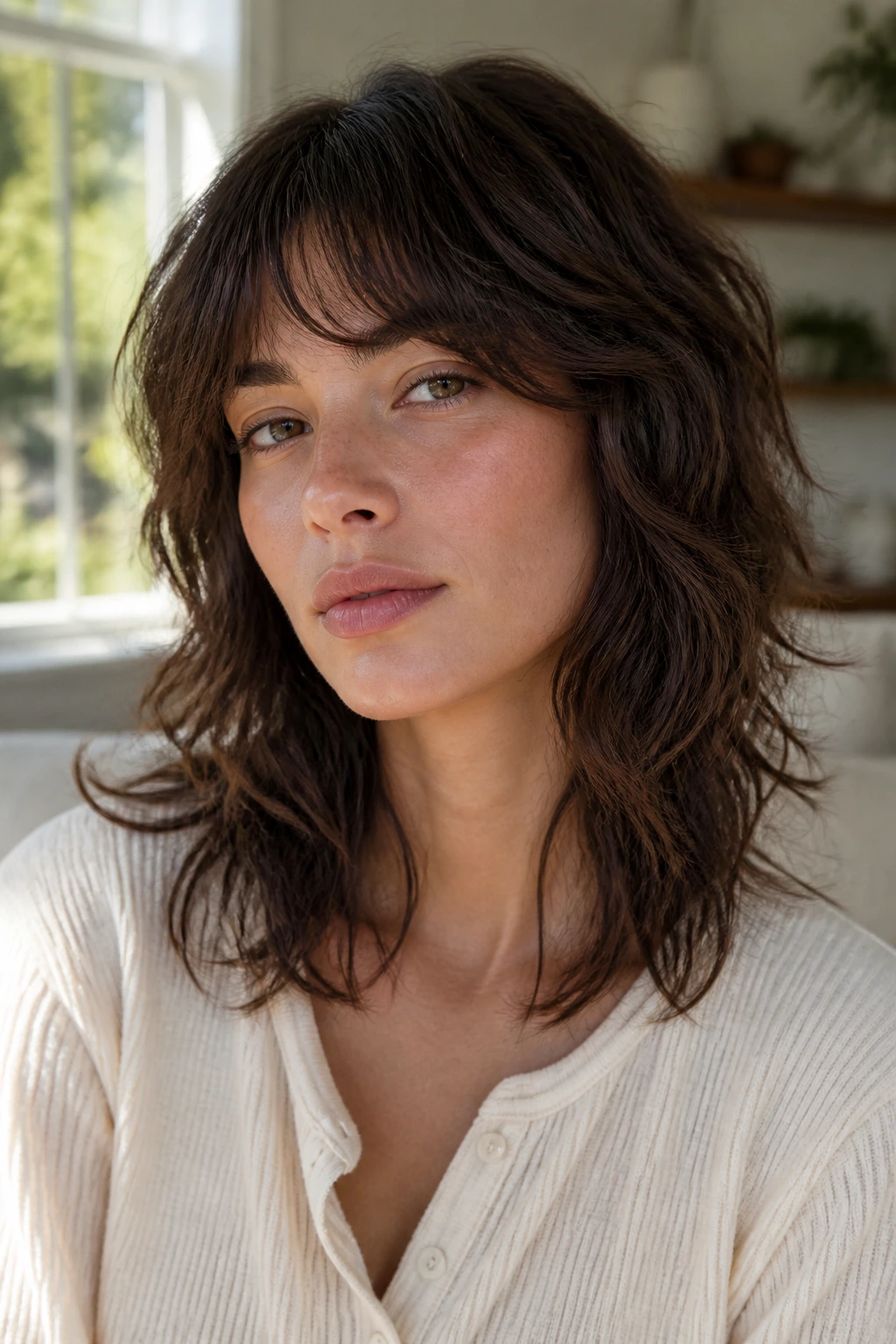
Fine-Hair Lift Edit: This version keeps the layers light and the perimeter fuller, so the hair looks thicker at the ends. It’s the safest route if your hair collapses when too much weight is removed.
Thick-Hair Weight-Release Edit: Here the stylist removes bulk from the interior, not the outer edge. The result is softer movement at the sides and less triangular swelling when the hair dries.
Curly Coil-Friendly Edit: The layers stay longer, the fringe stays cautious, and the haircut is ideally shaped when dry. That keeps curl shrinkage from turning a nice shag into a surprise.
Polished Office Edit: Keep the layers softer, the fringe longer, and the finish brushed out. It reads more composed with a clean shirt, a blazer, or a simple knit top.
Edgier Soft-Wolf Edit: This one leans higher at the crown and a touch more uneven through the back. The texture is still soft, but the attitude is louder. If you want a little bite without a full punk haircut, this is the lane.
Questions People Ask Before Cutting a Medium Shag
How short can a medium shag be and still count as medium length?
Usually the cut sits somewhere between the jawline and the collarbone. Once it moves much above the jaw, it starts acting more like a short shag or shaggy bob, and the styling changes.
Will a medium shag work on straight hair?
Yes, but straight hair needs a little help because it won’t show the layers automatically. A texture spray, light mousse, or soft bend from a brush or wand helps the cut read as shaggy instead of plain.
Is this haircut high maintenance?
Not if the cut matches your hair type. The maintenance is mostly about fringe trims, occasional shaping, and using the right amount of product. The wrong layering pattern creates more work than the shag itself.
What bangs work best with a lived-in shag?
Curtain bangs and bottleneck bangs are the easiest places to start. They split naturally, grow out more gracefully, and keep the haircut from looking too severe.
Can you wear a shag if your hair is curly?
Yes, and curly hair often makes the shape look richer. The important part is letting the stylist account for shrinkage so the layers don’t end up shorter than you wanted.
What if the stylist cuts too much texture into it?
Ask for a cleaner perimeter at the next shaping appointment and keep styling products light in the meantime. Too much texturizing can’t always be hidden, but a stronger lower edge helps the cut recover.
How often should you trim the fringe?
Every 4 to 6 weeks is a solid rhythm if you want the front pieces to stay purposeful. If you’re happy with a softer, grown-out look, you can stretch that longer.
Can a medium shag look polished enough for work?
Absolutely. A brushed-out finish, a controlled fringe, and a little shine cream can make it read neat without killing the movement. The haircut does not have to look messy to have texture.
The Softest Way to Wear a Shag

The nicest thing about medium length shag haircuts is that they give you room to be a little casual without losing shape. That’s a harder balance than it sounds. Plenty of textured cuts look good for ten minutes and then fall apart; a well-cut medium shag should settle in, bend a little, and keep behaving even when you stop fussing with it.
If you want the softest result, keep the layers honest, the fringe slightly longer than you think, and the finish light. That combination makes the haircut feel lived-in from the first wash instead of overworked from the first blow-dry.
And that’s the real reason people keep returning to the shag: it has movement built in. Not noise. Not drama for its own sake. Just hair that falls a little easier, grows out a little kinder, and looks better when it’s allowed to relax.
