



Straight hair can be brutally honest. If the layers are wrong, it shows every blunt line, every uneven corner, every place where the cut was meant to look “piecey” but lands like a bad helmet. A shag haircut on straight hair lives or dies on those details, which is why the difference between chic and chopped-up is often a quarter inch at the cheekbone.
When a shag works on straight strands, it does something better than simply looking edgy. It creates movement where none was given by nature, and it does it with the haircut itself — the kind of movement you can see when you tuck one side behind your ear, shake your head, or let air dry do most of the heavy lifting. The trick is never to overdo the layers. Straight hair needs shape, not shredding.
That’s what makes shag haircuts for straight hair such a useful family of cuts. Some are short and blunt at the bottom, some keep the length and just break up the inside, and some flirt with curtain bangs or micro fringe. The right one depends on how much hair you have, how much you’re willing to style it, and whether you want a polished finish or a little lived-in mess.
Why These 28 Straight-Hair Shags Earn Their Keep
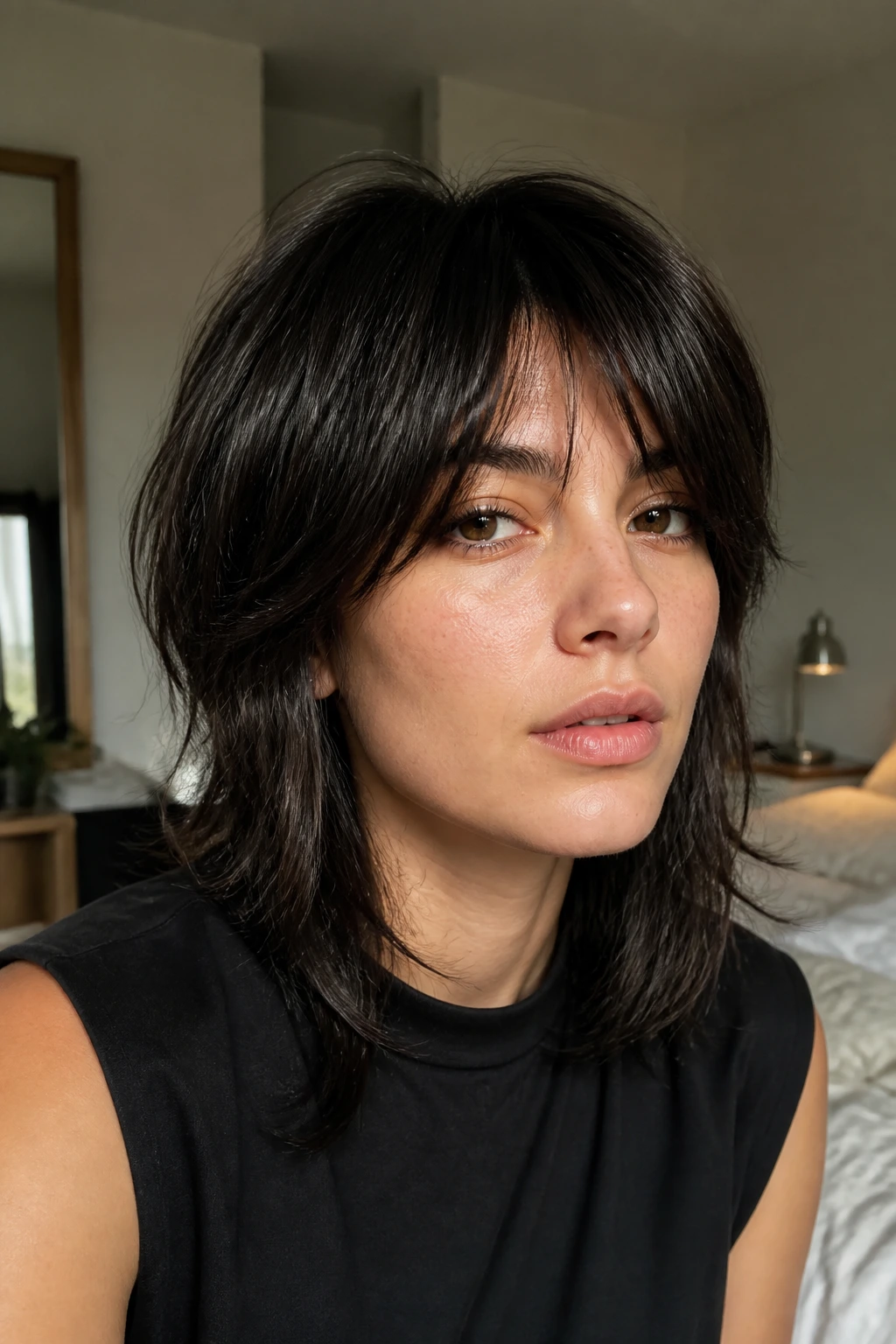
- Built for straight strands: These cuts rely on the haircut itself for movement, so you’re not waiting for a wave pattern that never shows up.
- Easy to fine-tune: You can keep the edge clean, add fringe, or soften the crown without changing the whole vibe of the cut.
- Good grow-out potential: The better versions keep their shape as they lengthen, instead of turning into a flat triangle by week three.
- Works across density: Fine hair gets lift from the right layering, while thick hair gets relief from a little interior weight removal.
- Styleable in real life: You can air-dry some of these, blow-dry others, and still get a readable shape without spending 40 minutes wrestling a brush.
1. Chin-Length French Shag
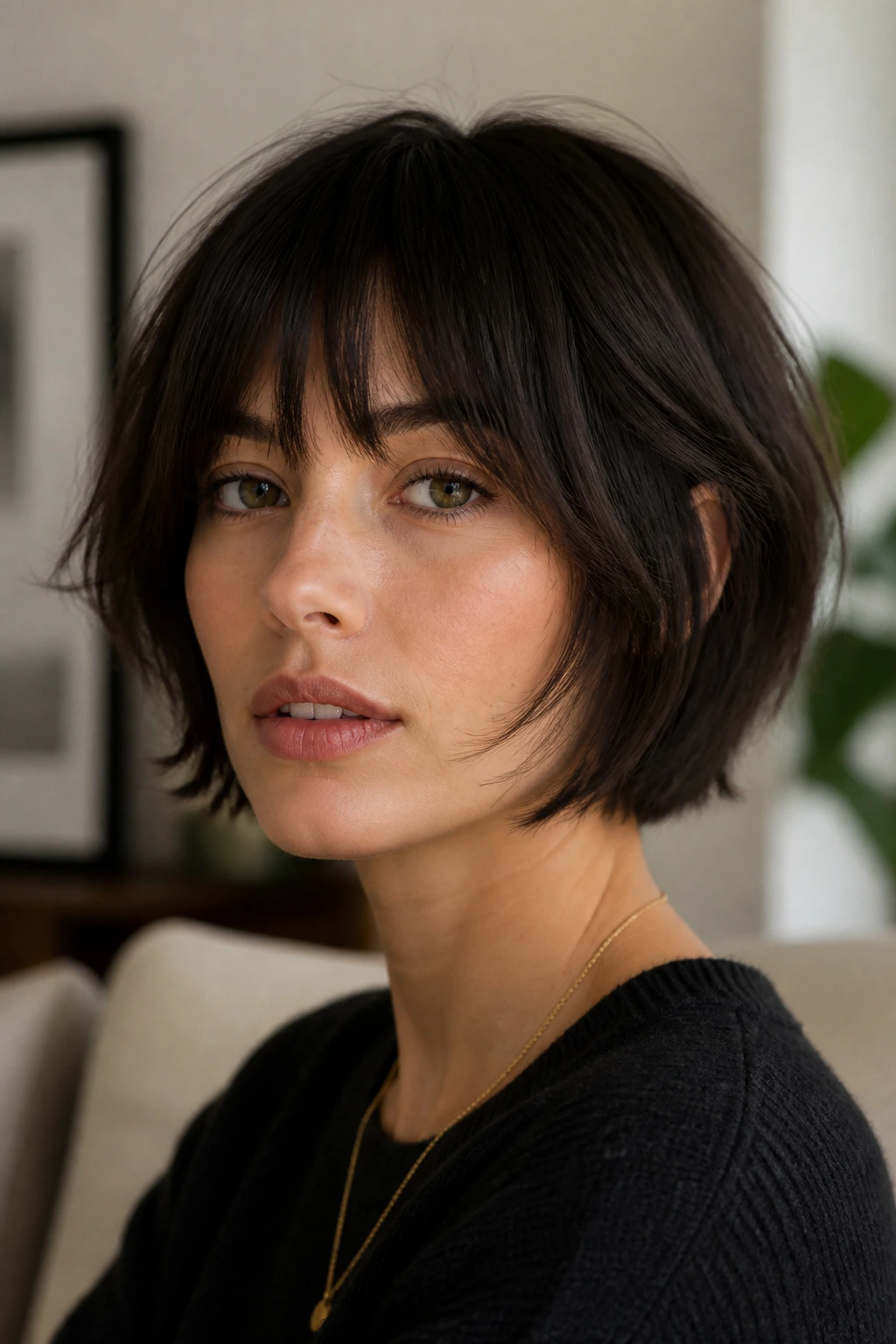
Chin-length straight hair can look severe fast, which is exactly why this cut works. The line stays clean at the jaw, but the inside gets softened with cheekbone layers and a fringe that skims the brows instead of sitting like a heavy curtain. I love this version on fine hair because the shorter length gives the ends enough bounce to move without begging for curl.
Ask for point-cutting at the perimeter, not a brutally thinned-out edge. That tiny difference matters. One gives you a soft, French-girl bend; the other gives you frayed ends that look like a mistake.
2. Collarbone Shag with Curtain Bangs
Want the shag look without losing the hair you can still twist into a clip? This is the sweet spot. The length lands around the collarbone, the curtain bangs split gently at the center, and the layers start low enough that straight hair keeps some weight. That weight is your friend. It keeps the cut from floating away from your head.
What makes it work
The curtain fringe gives you movement around the face, but it’s the collarbone length that makes the whole thing feel easy to wear. Blow-dry the front pieces away from the face with a round brush, then let the rest fall where it wants. The cut reads relaxed, but it still has shape when you wear it sleek.
3. Long Feathered Shag
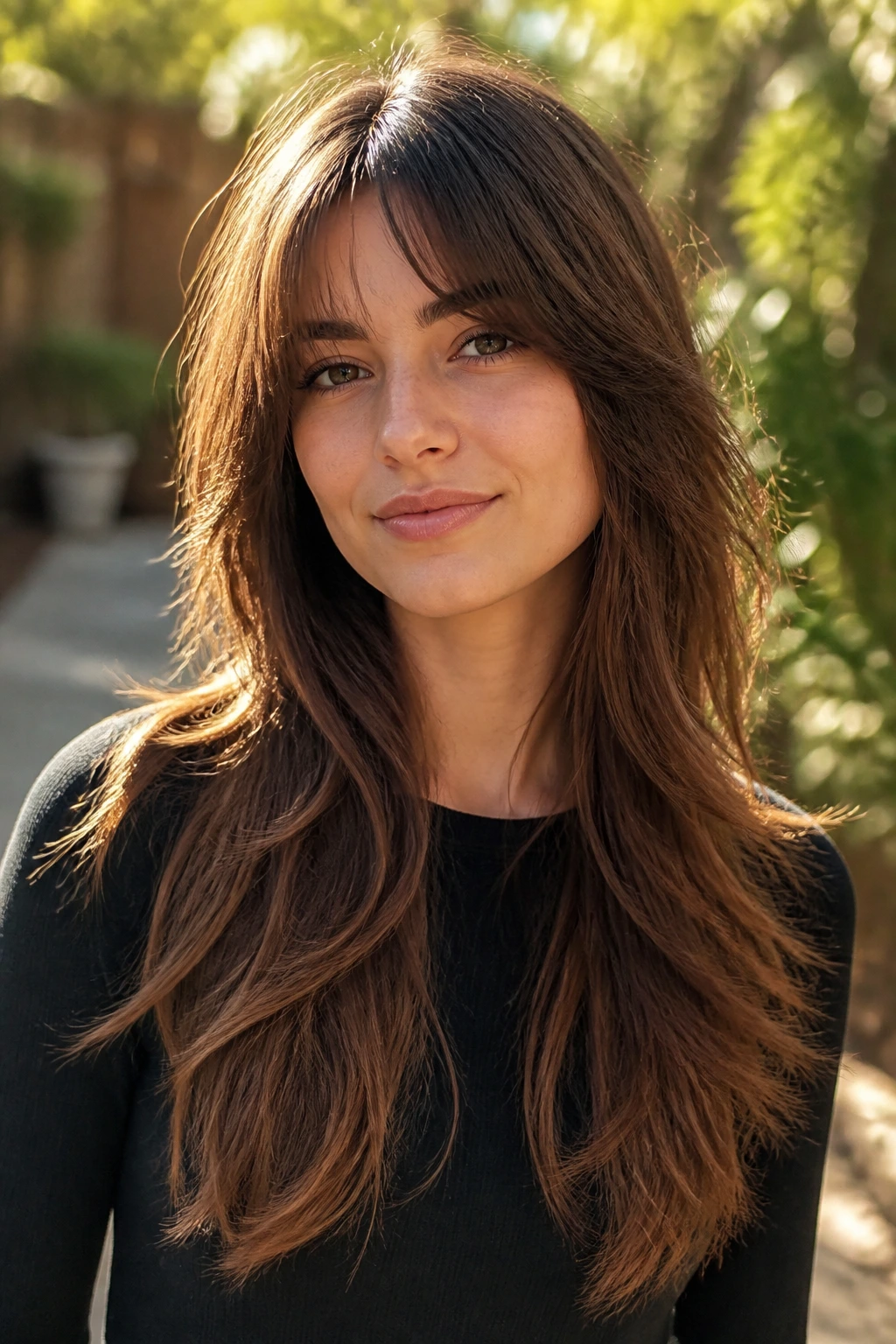
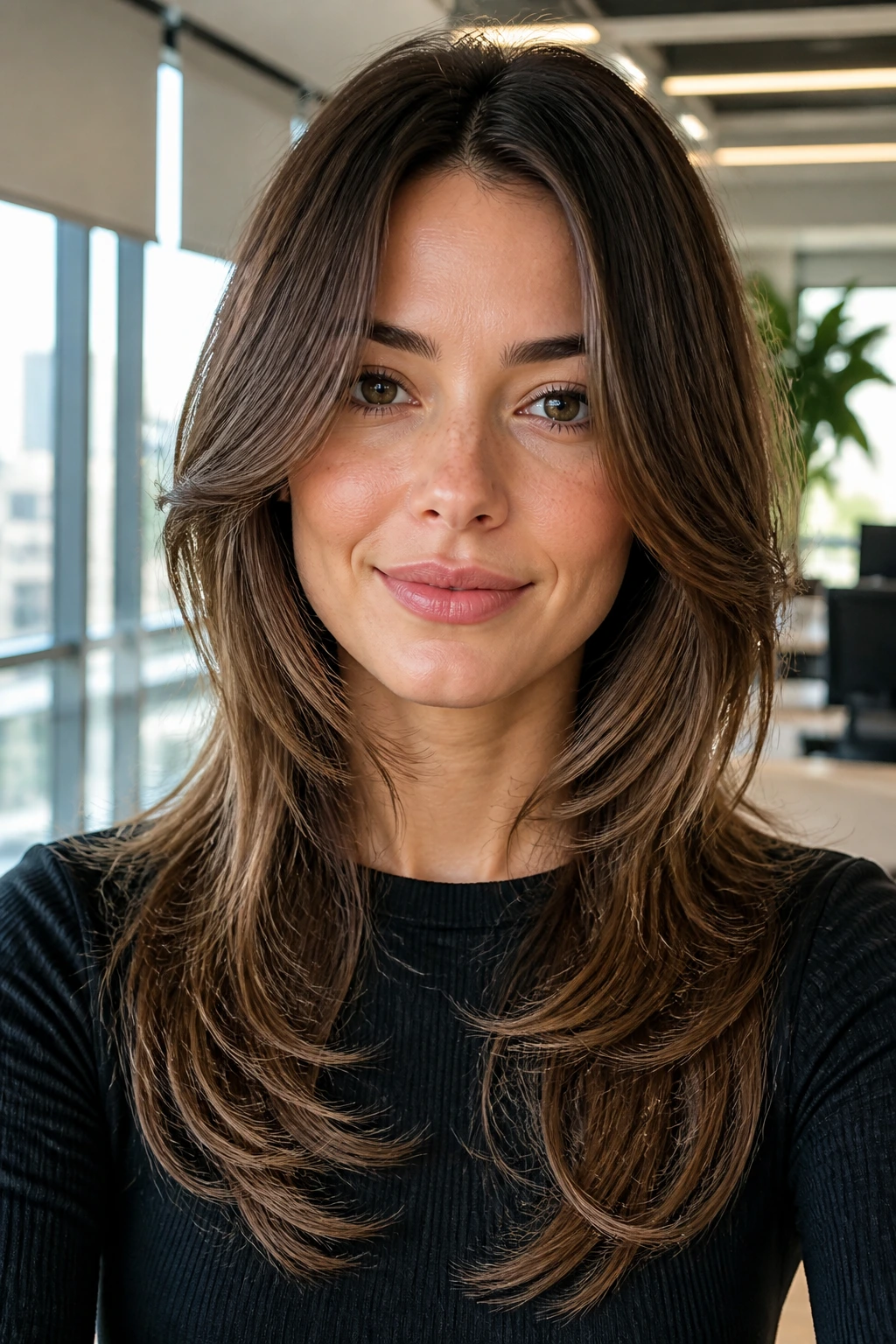
Long straight hair loves feathering when the layers are placed with restraint. This version keeps the length past the shoulders and uses soft, tapered layers to lighten the mid-lengths without turning the bottom into wisps. The result is less “retro costume,” more clean movement that shows up when the hair swings.
Unlike a heavy one-length cut, this shape doesn’t hang like a curtain. It breaks up that flat sheet of straight hair in a way that still feels grown-up. If you keep your hair long because you want options, this is one of the smartest compromises on the list.
4. Soft Wolf-Shag for Straight Hair

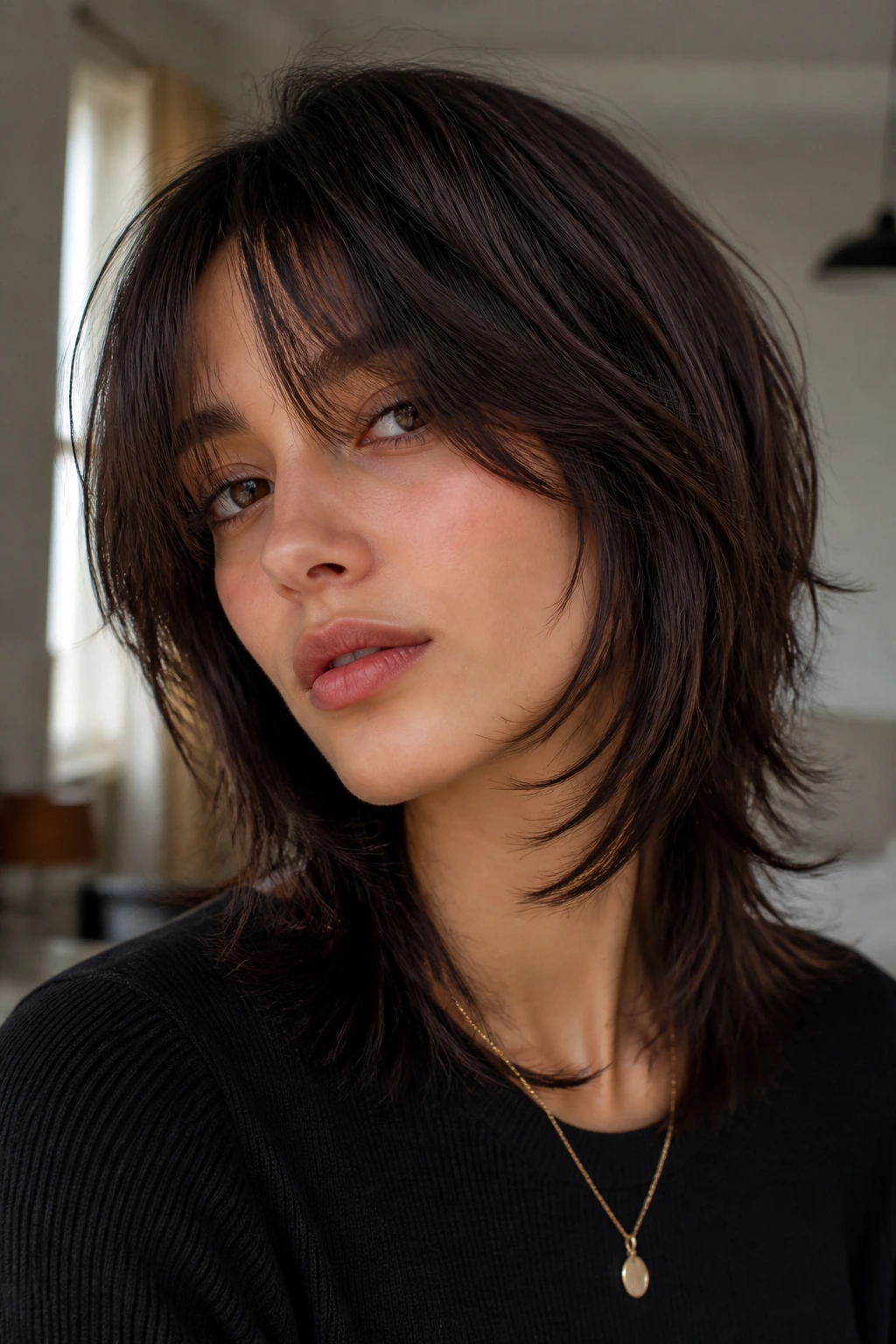
A wolf cut on straight hair does not have to look severe. The softer version keeps the crown a little fuller, trims some length through the interior, and leaves enough weight at the nape so the back doesn’t go thin and ratty. That’s the part most people get wrong. They ask for “more texture,” and the stylist hears “take out half the hair.”
This is the shag for someone who wants edge without the full punk shape. It works best when the fringe is broken up, not sliced blunt across the forehead, and when the layers are visible but not jagged. Think cool, not costume.
5. Micro-Bang Shag
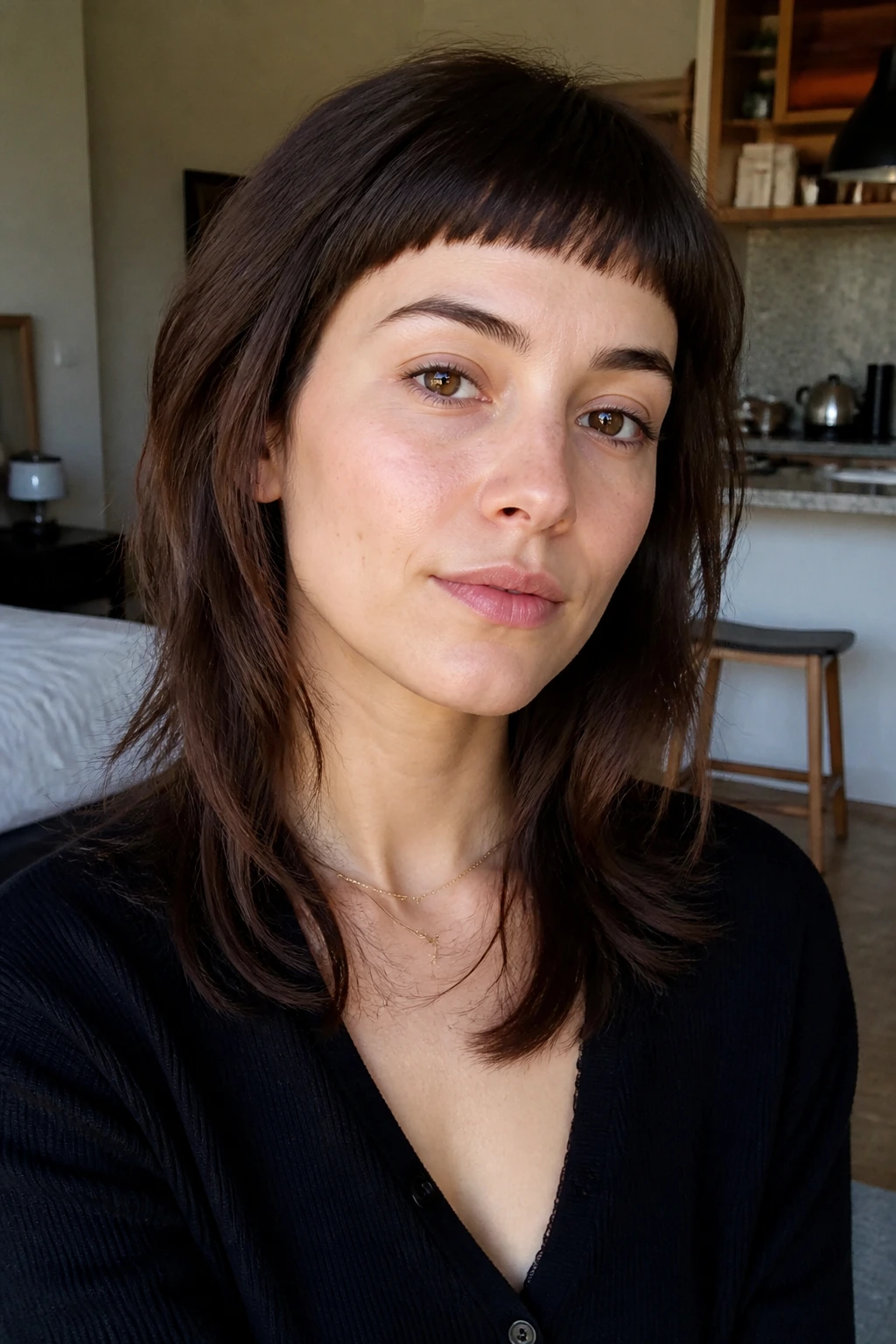
Micro bangs change the whole mood of a straight-hair shag. They expose the forehead, sharpen the brow line, and make the rest of the layers feel a little more deliberate. Because straight hair sits flat, the fringe usually lies neatly instead of puffing or separating in strange ways, which is one reason this combo can look so crisp.
Use this one when you want personality in the cut, not just softness. It’s a better match for someone who likes earrings, strong brows, or a clean neck line. And yes, you’ll need trims. Short bangs grow out in a hurry.
6. Center-Part Razor Shag
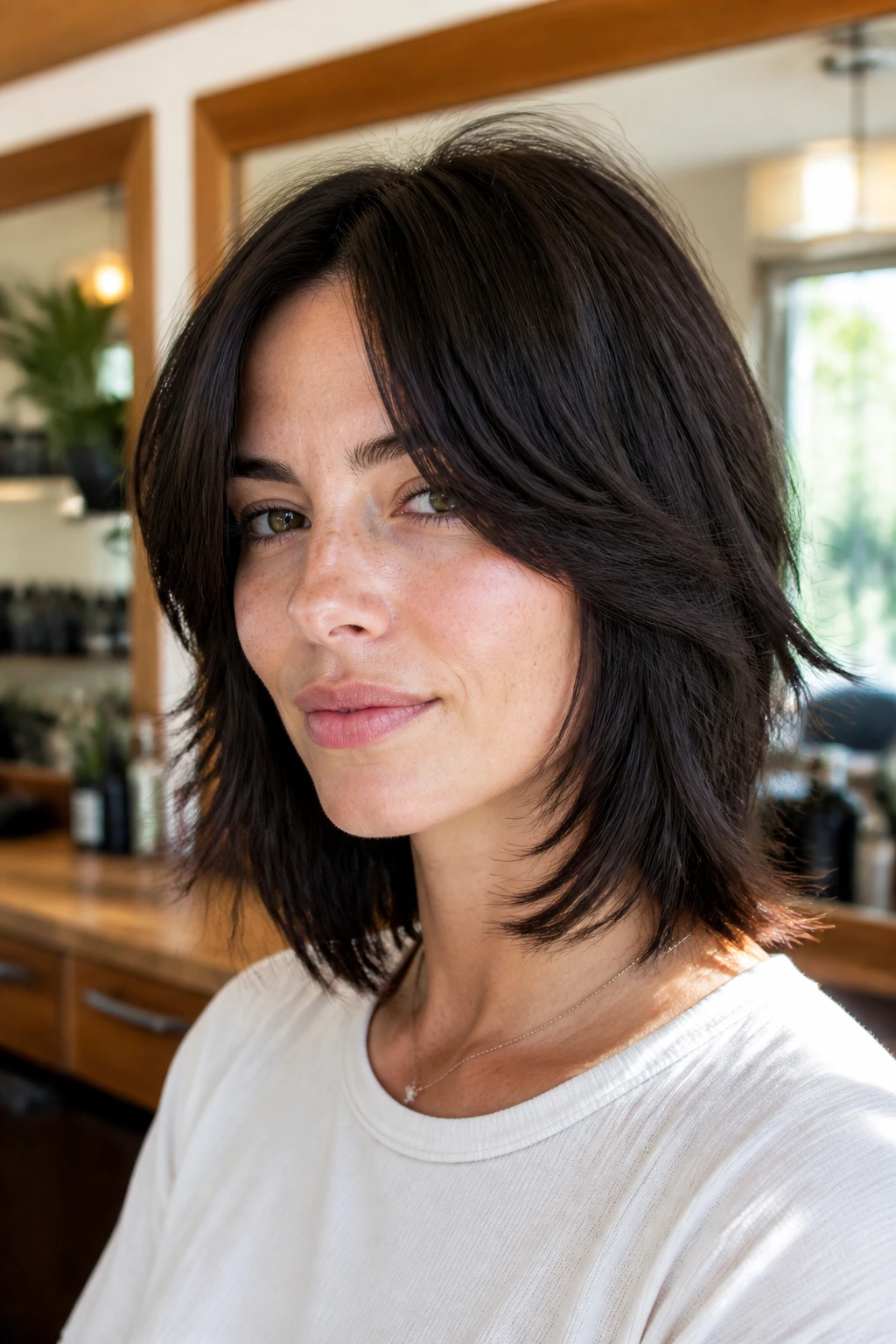
A center part and a razor-cut shag have a very specific chemistry. The middle part creates symmetry; the razor breaks it up. On straight hair, that matters because the line work is visible immediately. A clean razor finish can make the layers look airy instead of chunky, especially when the shortest face-framing pieces hit around the cheekbones.
Why it’s different
This cut is less about volume and more about movement in the ends. It’s one of the few shag styles that still looks elegant when straightened, because the softness lives inside the shape. If your hair tends to fall flat by lunch, this gives it a little built-in motion without needing curl.
7. Shoulder-Length Choppy Shag

If you still need a ponytail, this is the one I’d point to first. Shoulder-length hair gives you enough room to keep the perimeter full while still using choppy layers to stop the ends from looking heavy. Straight hair often forms a triangle at this length; a shag cut breaks that shape up before it gets annoying.
The trick is not to over-layer the very bottom. Keep the ends substantial, then lift the movement higher through the mid-lengths. That way the cut looks relaxed instead of thin.
8. Airy Face-Framing Shag
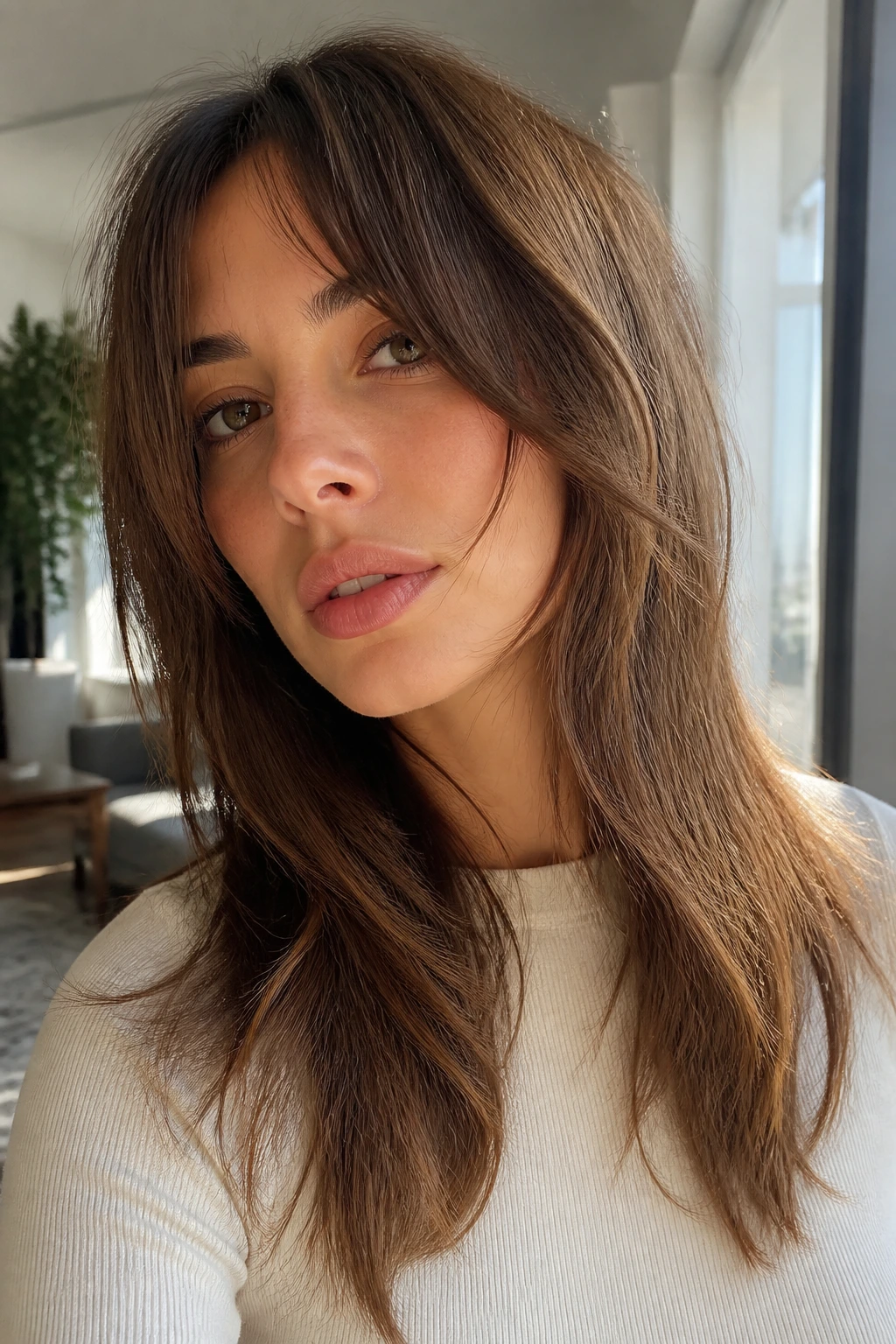
This version puts the spotlight on the front pieces. The shortest layers start around the lip or cheekbone, then melt into longer lengths that stay soft through the back. On straight hair, that forward motion matters. It keeps the haircut from reading as “all one length with bangs added later.”
I like this cut for people who want to see their features more clearly. The hair opens around the face instead of hiding it, which is a nice change if your hair usually falls straight down and disappears into your sweater.
9. Blunt-Base Shag Hybrid
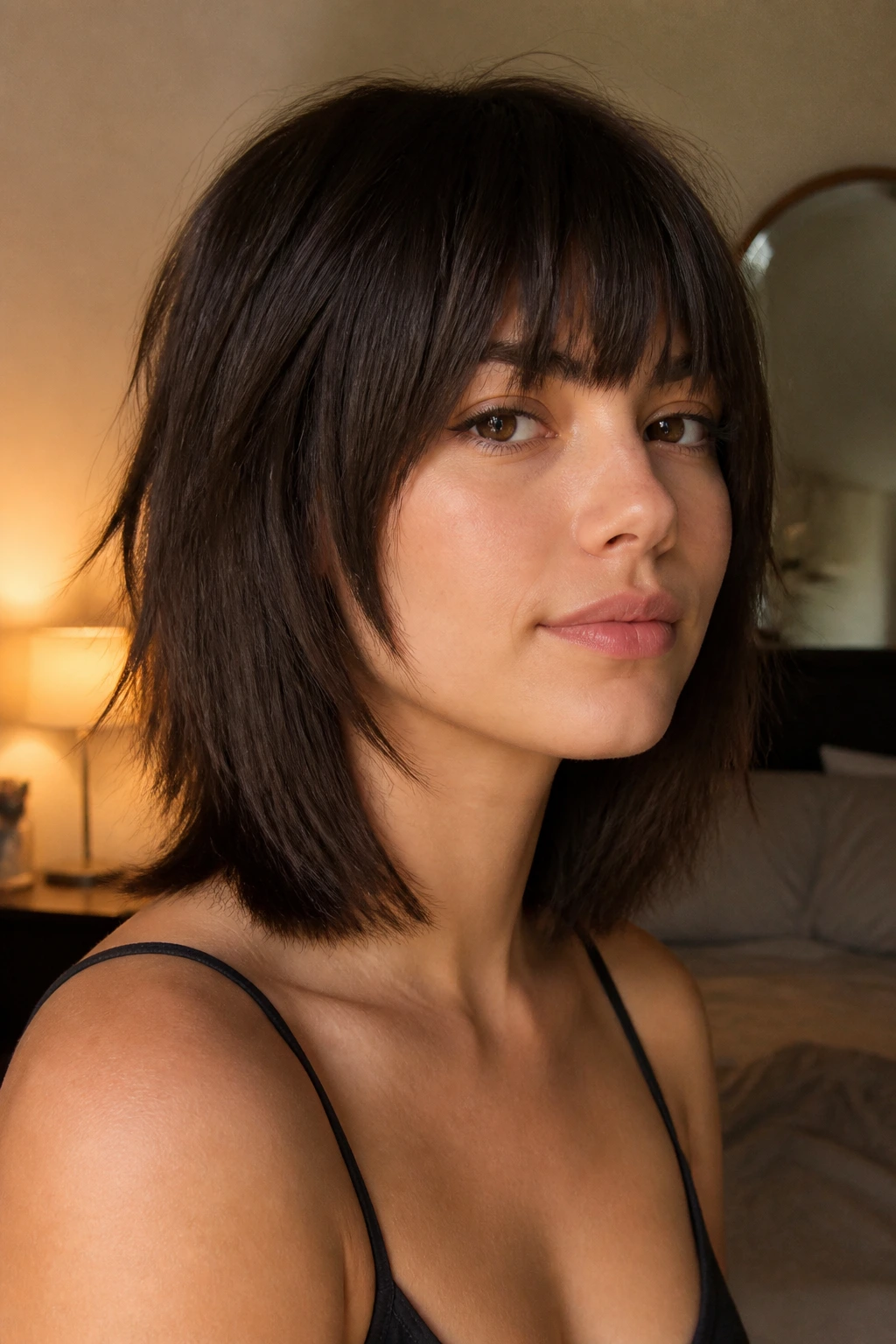
A shag can keep a blunt edge. That’s the whole point of this one. The perimeter stays clean — collarbone, shoulder, or just below — while the inside gets gentle layering and face-framing pieces. Straight hair benefits from that blunt bottom because it keeps the shape dense and deliberate instead of wispy.
This is one of the best choices for thick straight hair. You get the attitude of a shag without giving up the weight that keeps the ends looking healthy. A little irony here: the stronger the base, the easier the texture feels.
10. Layered Lob Shag

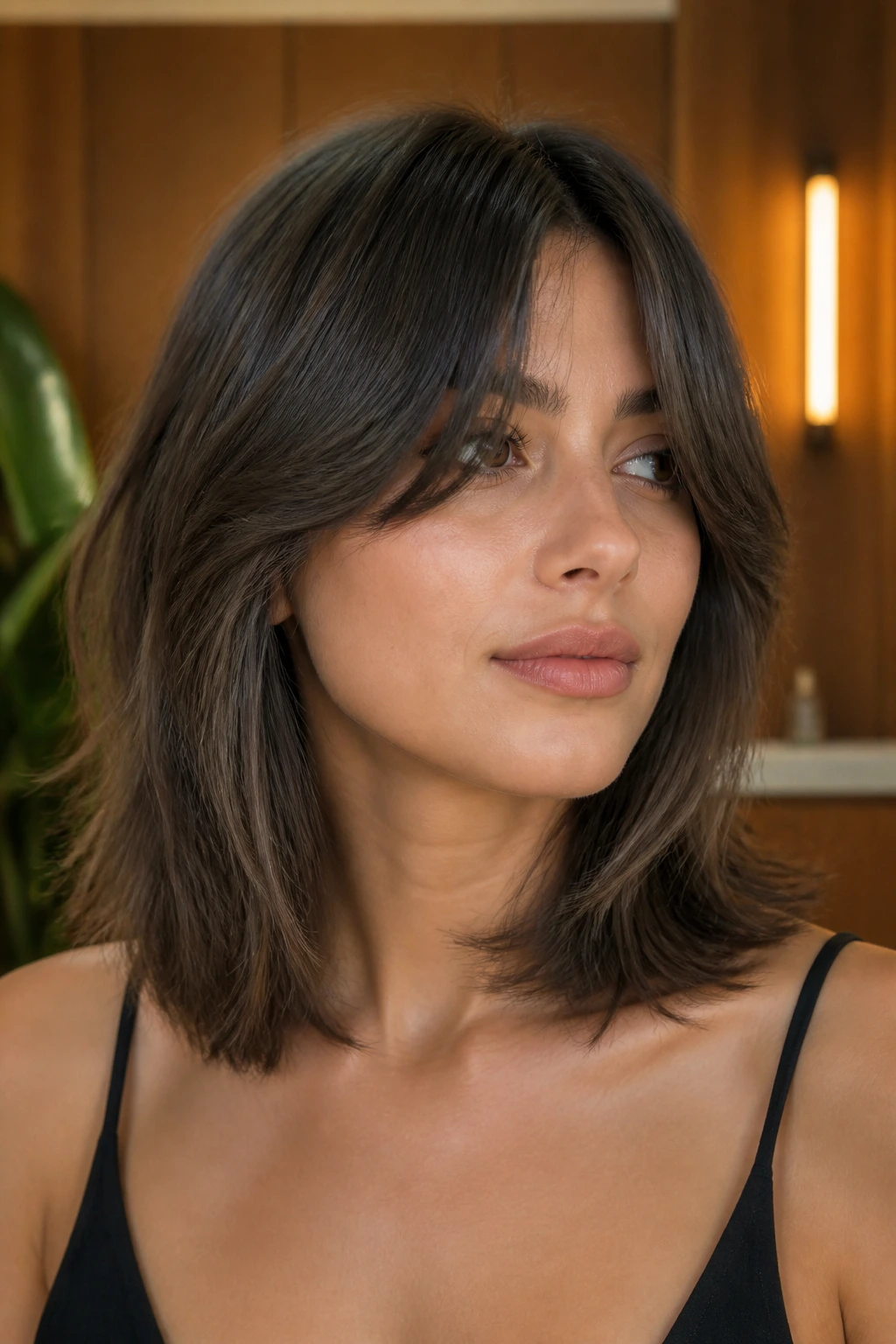
A lob shag sits in the middle of the road in the best possible way. It’s long enough to tuck behind the ears, short enough to feel fresh, and layered enough to stop straight hair from settling into a solid block. If you wear your hair half-up a lot, the cut makes even that look better because the front pieces fall on purpose.
What I like here is the balance. The shape never becomes too shaggy, and it never turns into a blunt corporate bob either. It lives right between the two, which is a useful place to be.
11. Side-Swept Rocker Shag
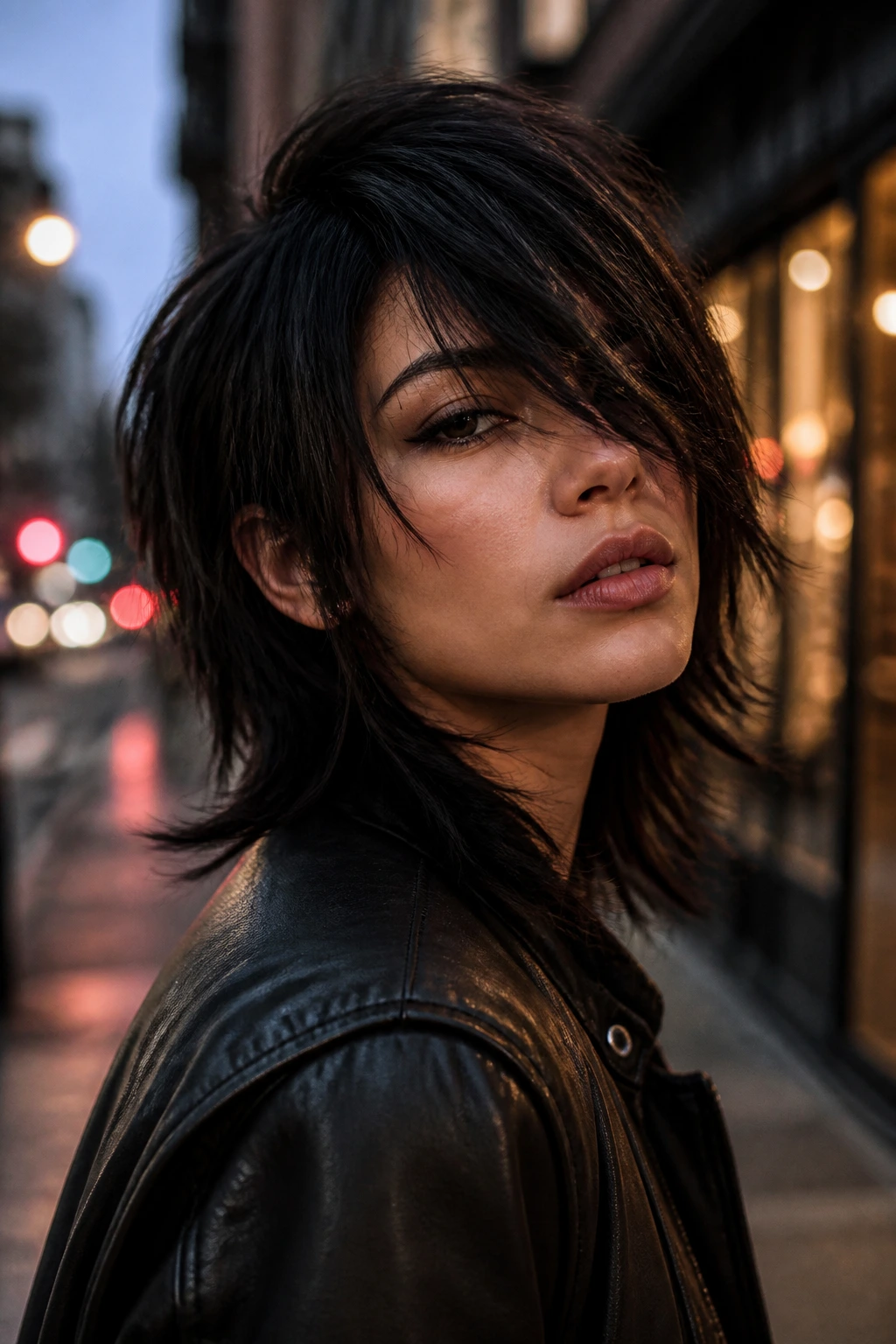
A deep side part changes everything. The fringe sweeps across one eye, the root on one side gets instant lift, and straight hair suddenly has a little attitude it didn’t have before. This is the shag for people who like asymmetry and don’t mind a haircut that feels slightly louder than the rest of the room.
Best if you want
- more height at the crown
- one side that frames the cheekbone
- a softer line than a blunt side bang
- a cut that looks better with a little rough-drying
The side sweep is doing a lot here, and that’s the fun of it.
12. 70s Minimal Shag
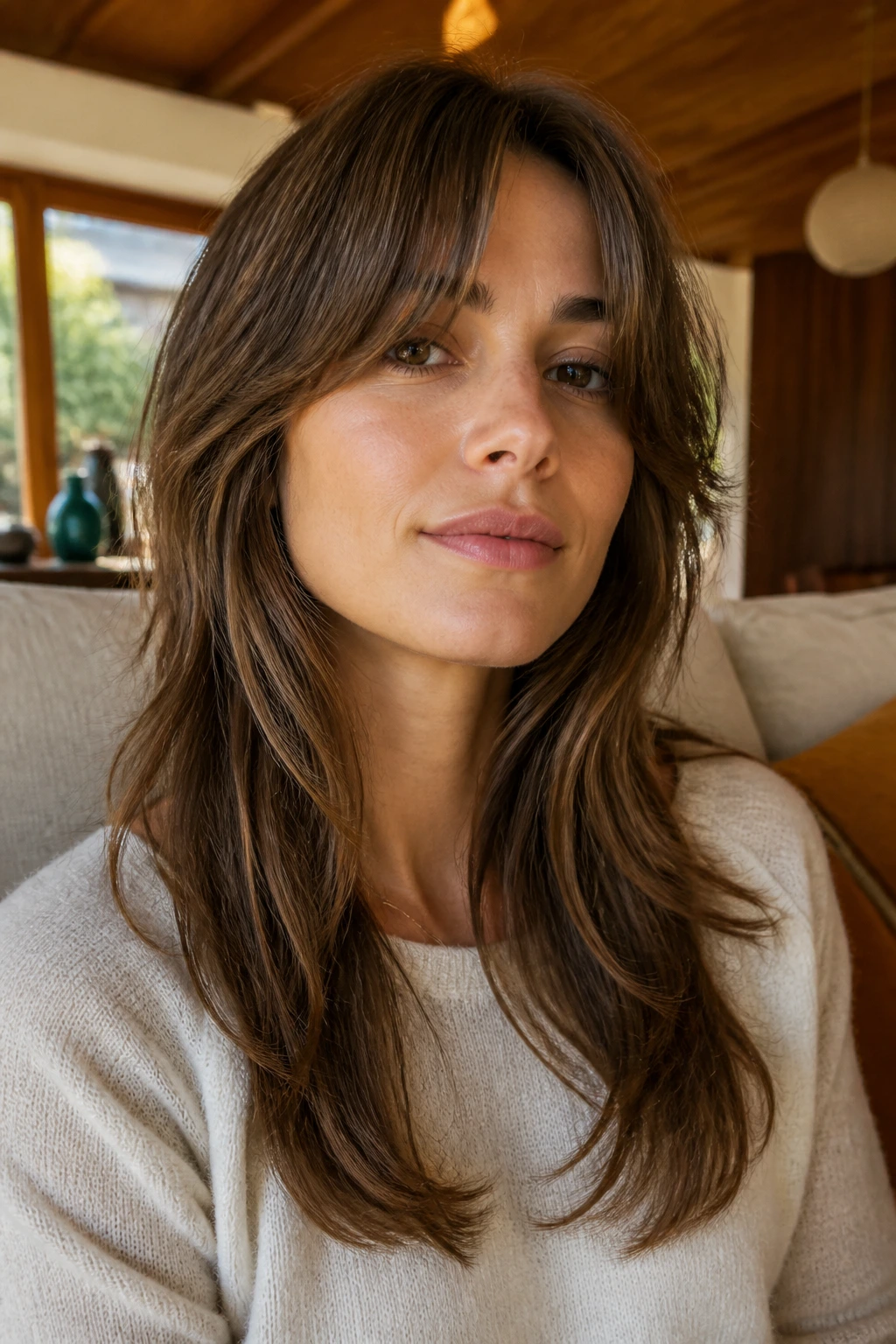
Not every shag needs to look shredded. The minimal version keeps longer layers, a soft curtain fringe, and a gentle taper through the sides so the haircut moves without shouting. On board-straight hair, that restraint is a blessing. Too many short layers and the cut starts to separate in bad places.
This is my favorite starter shag. It gives you the shape and the face frame without asking you to suddenly become a texture person. The grow-out is easy, which matters more than people admit.
13. Piecey Pixie Shag

Short hair can carry shag energy too. This pixie-shag hybrid keeps the nape neat, leaves some length on top, and breaks the front into small, piecey sections instead of a smooth helmet shape. Straight hair shows every line, so the texture has to be intentional. A tiny bit of paste or wax at the ends goes a long way.
It’s best for someone who likes to style hair with fingers instead of a brush. If you want polished and airy, this won’t fight you. If you want to wash and go with zero effort, skip ahead.
14. Butterfly-Shag Hybrid
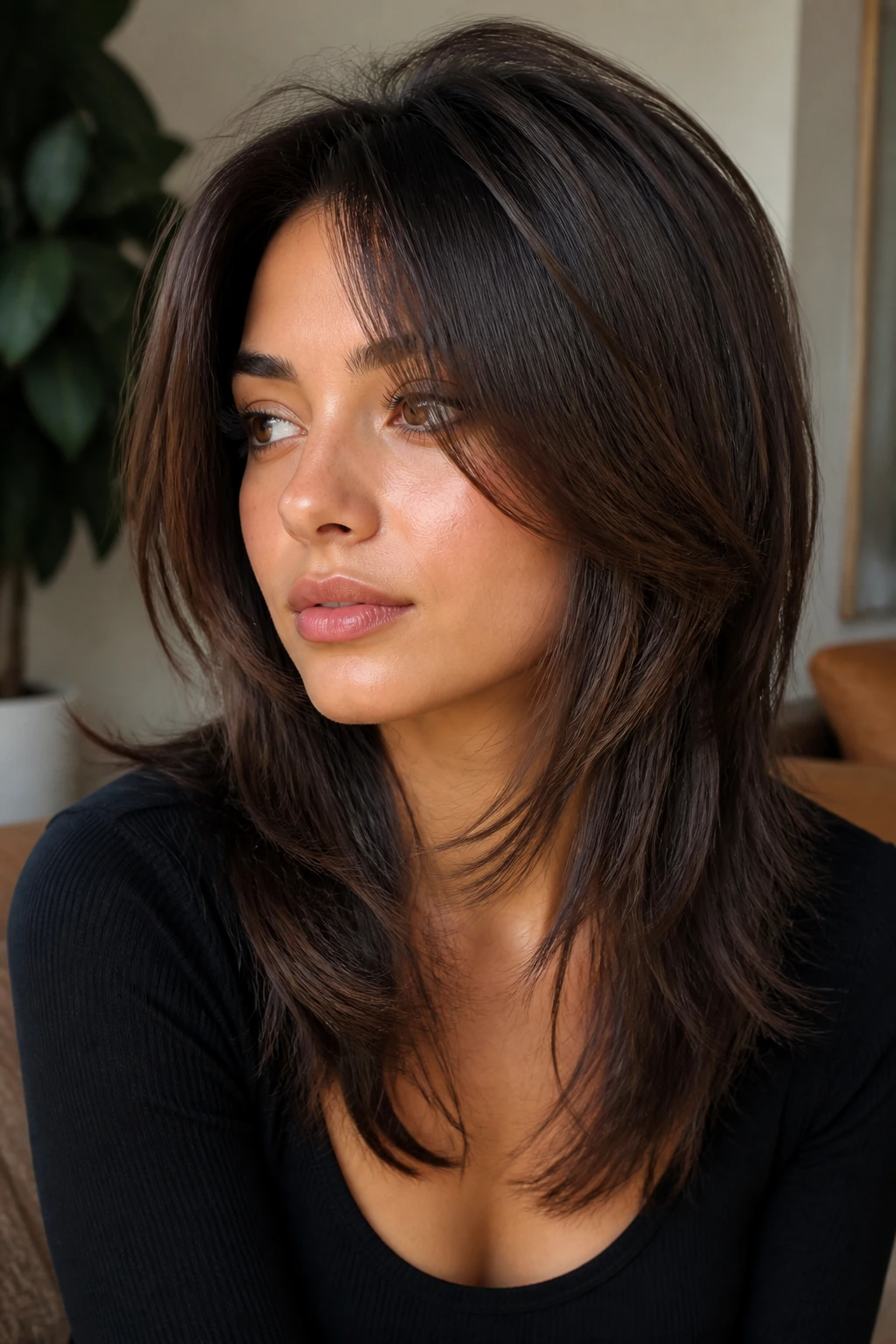
This cut borrows the face-framing swing of a butterfly haircut and the messier inside layers of a shag. The front pieces are longer and lighter, usually hitting around the jaw or below, while the crown keeps enough lift to stop the whole thing from hanging flat. Straight hair gets a lot out of that shape because the movement is visible even without curl.
The effect is softer than a wolf cut and more dramatic than a plain layered long cut. It’s a good pick if you like your hair to look fuller around the face without losing length through the back.
15. Tapered Shag for Fine Straight Hair
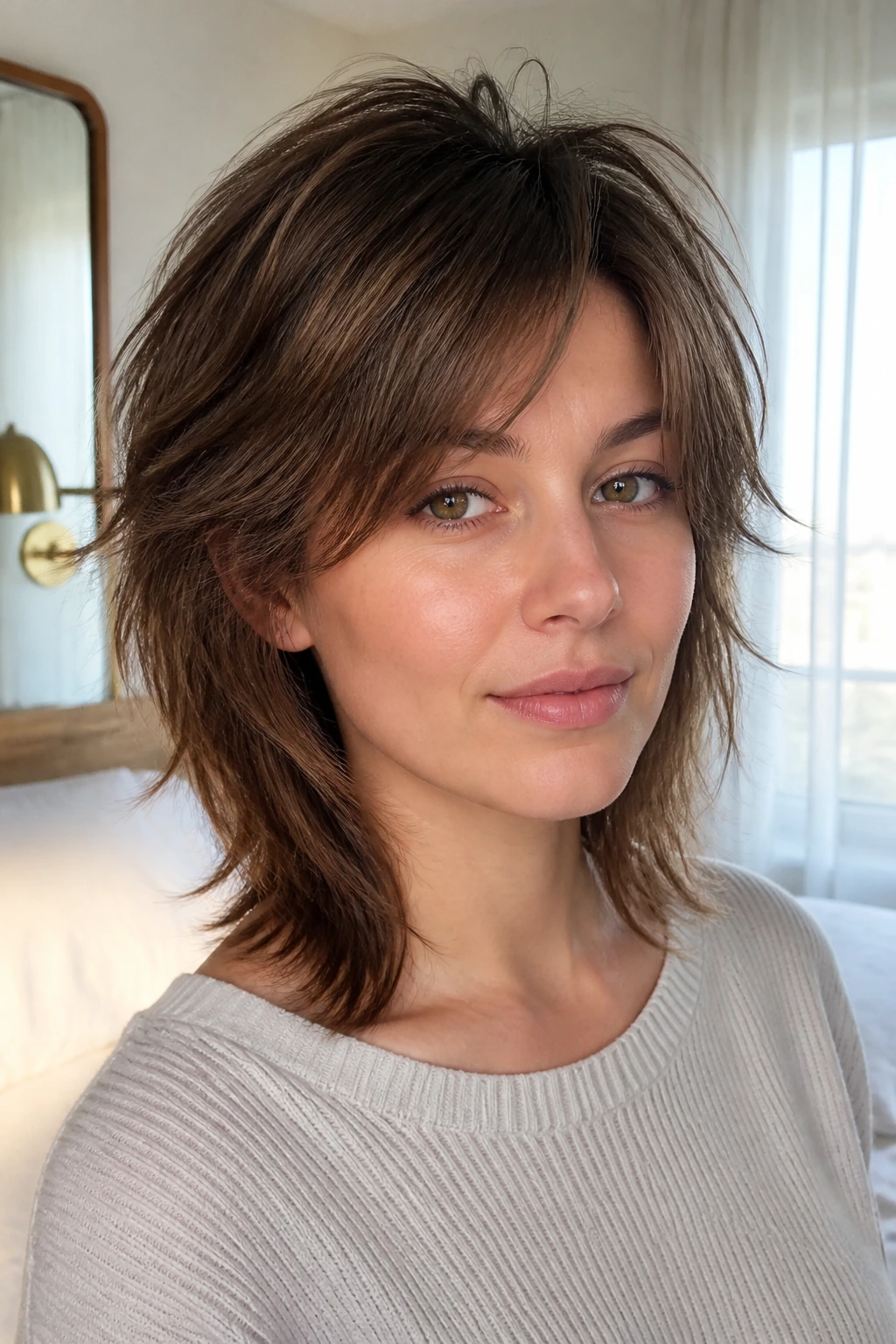
Fine straight hair needs discipline. Too many layers and it disappears. This cut keeps the ends a little stronger, then uses a tapered shape only where the hair needs lift. Think of it as controlled removal, not aggressive thinning. The wrong shag on fine hair looks limp fast; the right one gives the crown a touch of body and leaves the bottom intact.
Mousse helps, but the cut does most of the work. That’s what makes it useful. You’re not relying on product to create a shape that should already be there.
16. Dense-Layer Shag for Thick Straight Hair
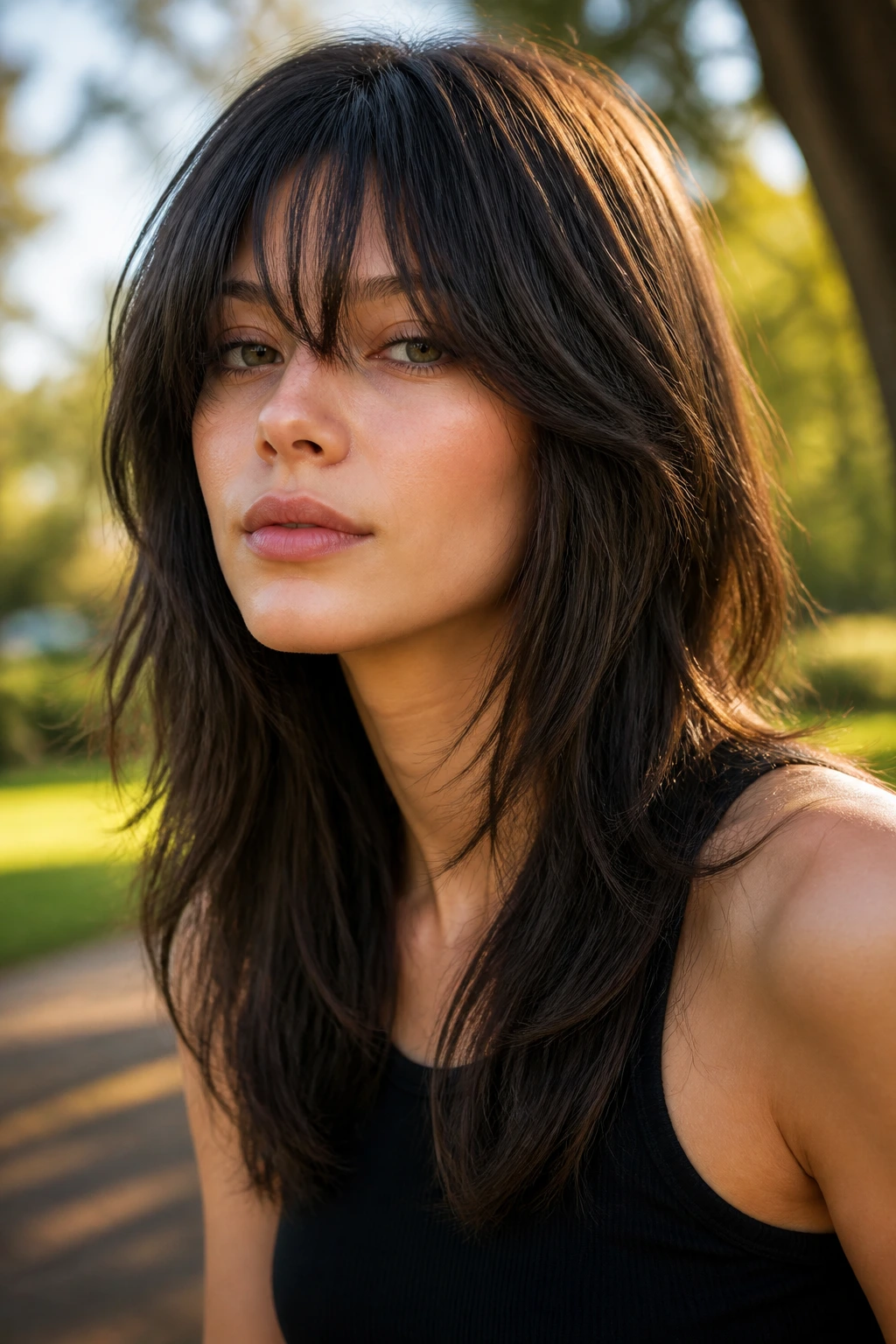
Thick straight hair has the opposite problem: too much bulk in the wrong places. This version uses interior layering to pull weight out of the mid-lengths while keeping the perimeter believable. The goal is movement, not a see-through bottom line. If a stylist shreds the ends too much, the cut can start to fray at the edges. That’s not the mood.
This works especially well if your hair dries into a heavy curtain. The layers stop it from sitting like a block, but there’s still enough hair left to look healthy. That balance is the whole game.
17. Long U-Shaped Shag
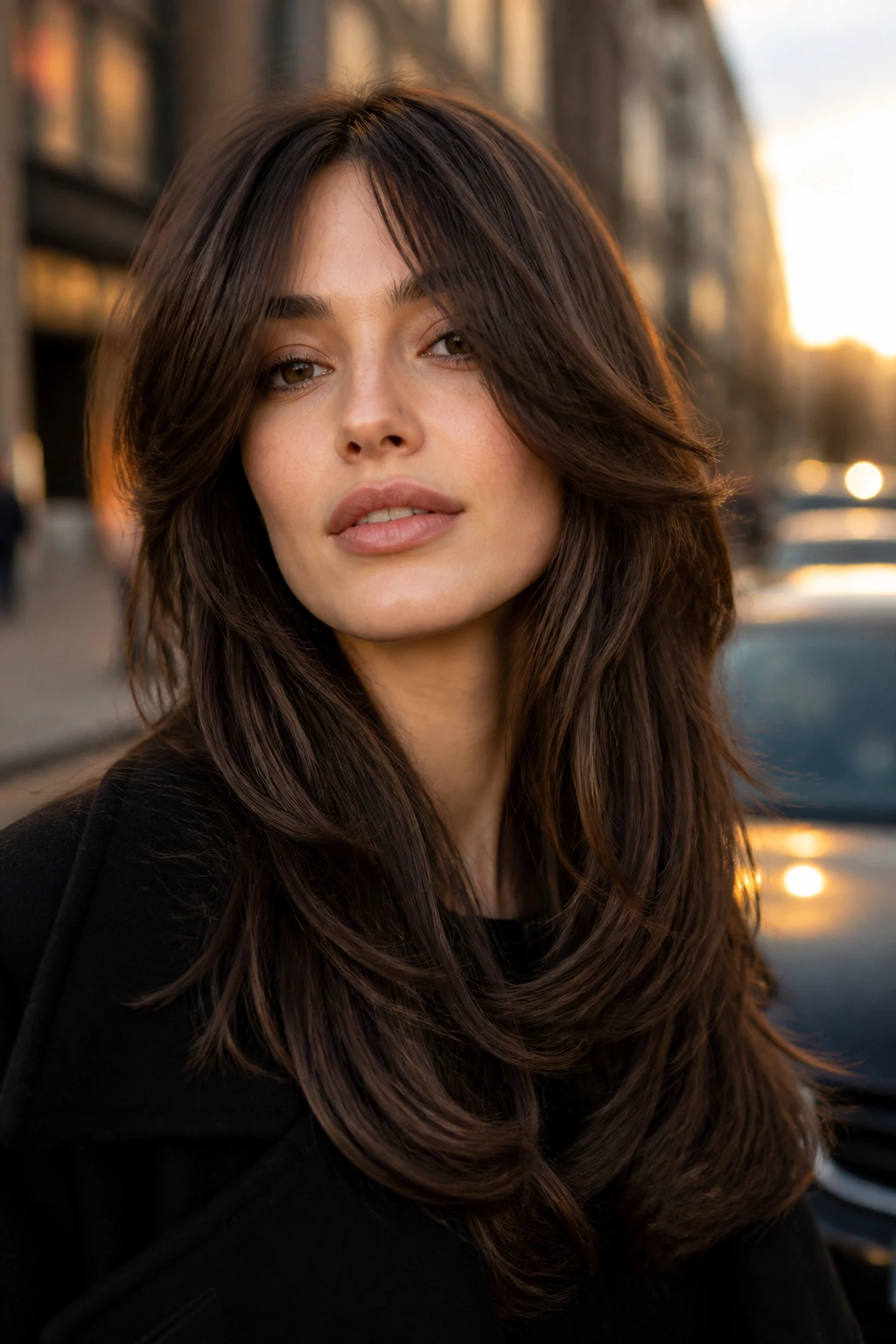
The U shape keeps the long back soft and rounded instead of blunt across the hem. Add shag layers through the front and mid-lengths, and straight hair suddenly has motion without giving up its length. It’s one of the easiest ways to wear a shag if you’re attached to long hair but bored with the dead-straight look.
This cut is good for braids, clips, and loose waves from a flat iron. The shape still reads even when it’s worn down. That’s the part I trust most.
18. Short Mullet-Inspired Shag
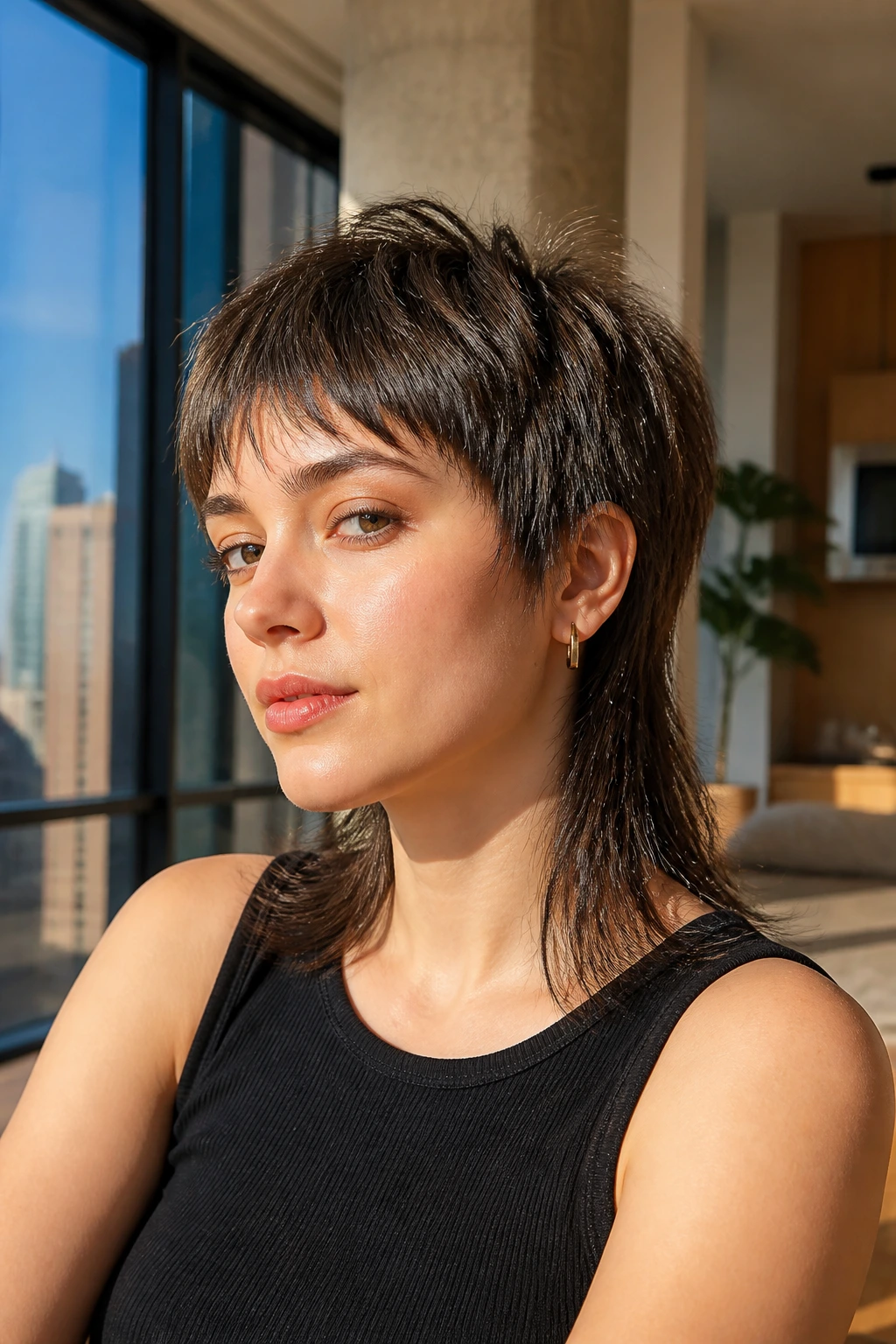
This is the bold one. The front stays short and textured, the back keeps a little extra length, and the transition between the two is softened so it feels modern instead of costume-y. Straight hair makes the shape readable right away, which is both the appeal and the warning label.
How to keep it wearable
- keep the crown layers soft
- don’t overcut the nape
- blend the sides instead of carving them hard
- style with a small amount of cream or paste
The cut has attitude, but it shouldn’t look angry.
19. Baby Bang Shag
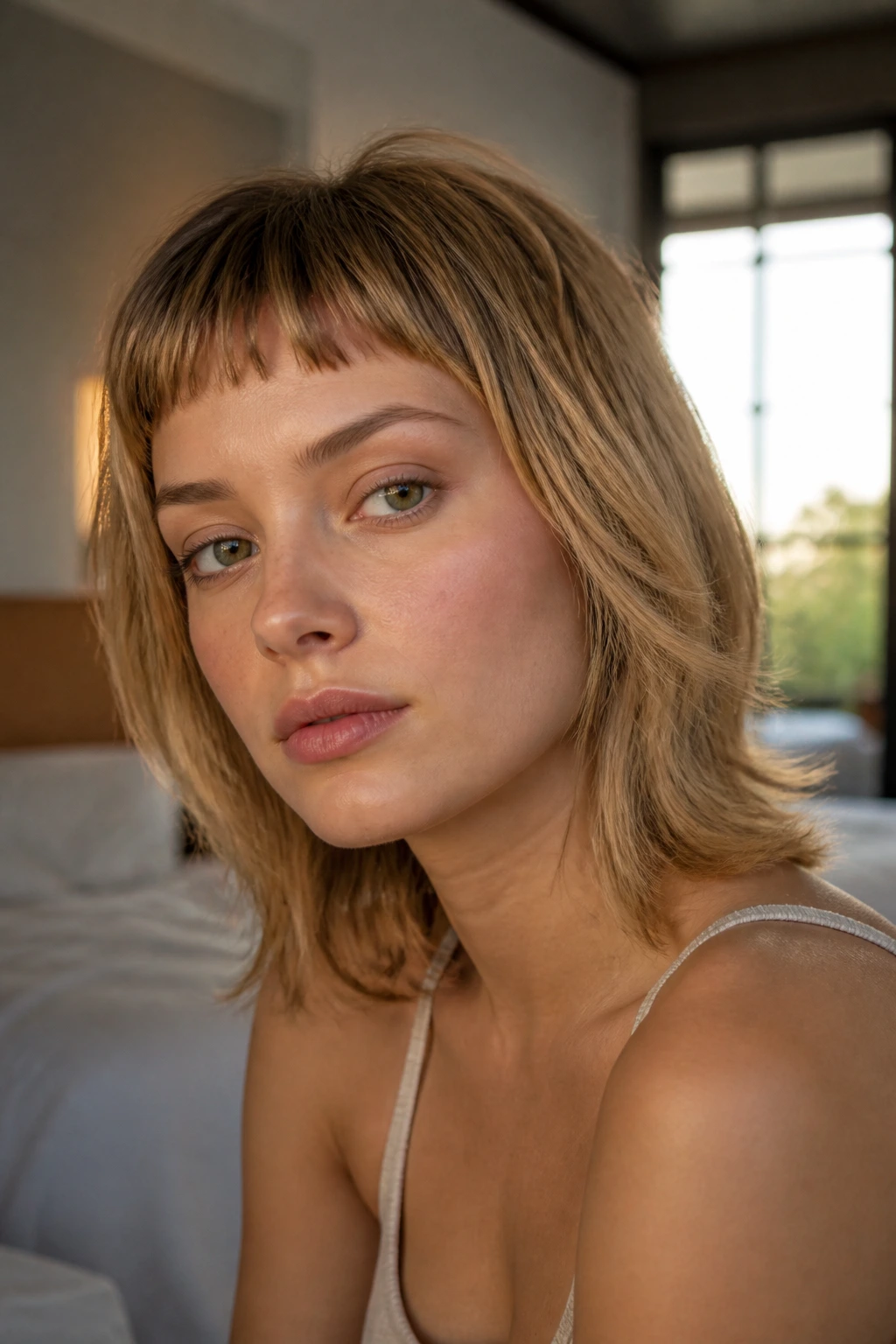
Baby bangs are tiny, direct, and impossible to ignore. Pair them with a shag and the rest of the hair can stay softer, longer, and more forgiving. Straight hair helps because the fringe usually sits neatly across the forehead without needing a lot of coaxing. The rest of the layers should stay broken up and light so the bangs don’t overpower the whole cut.
You do need to like maintenance here. Short bangs grow fast, and they lose their shape faster. If you’re the type who enjoys a crisp fringe line, though, this one has real personality.
20. Sleek Polished Shag
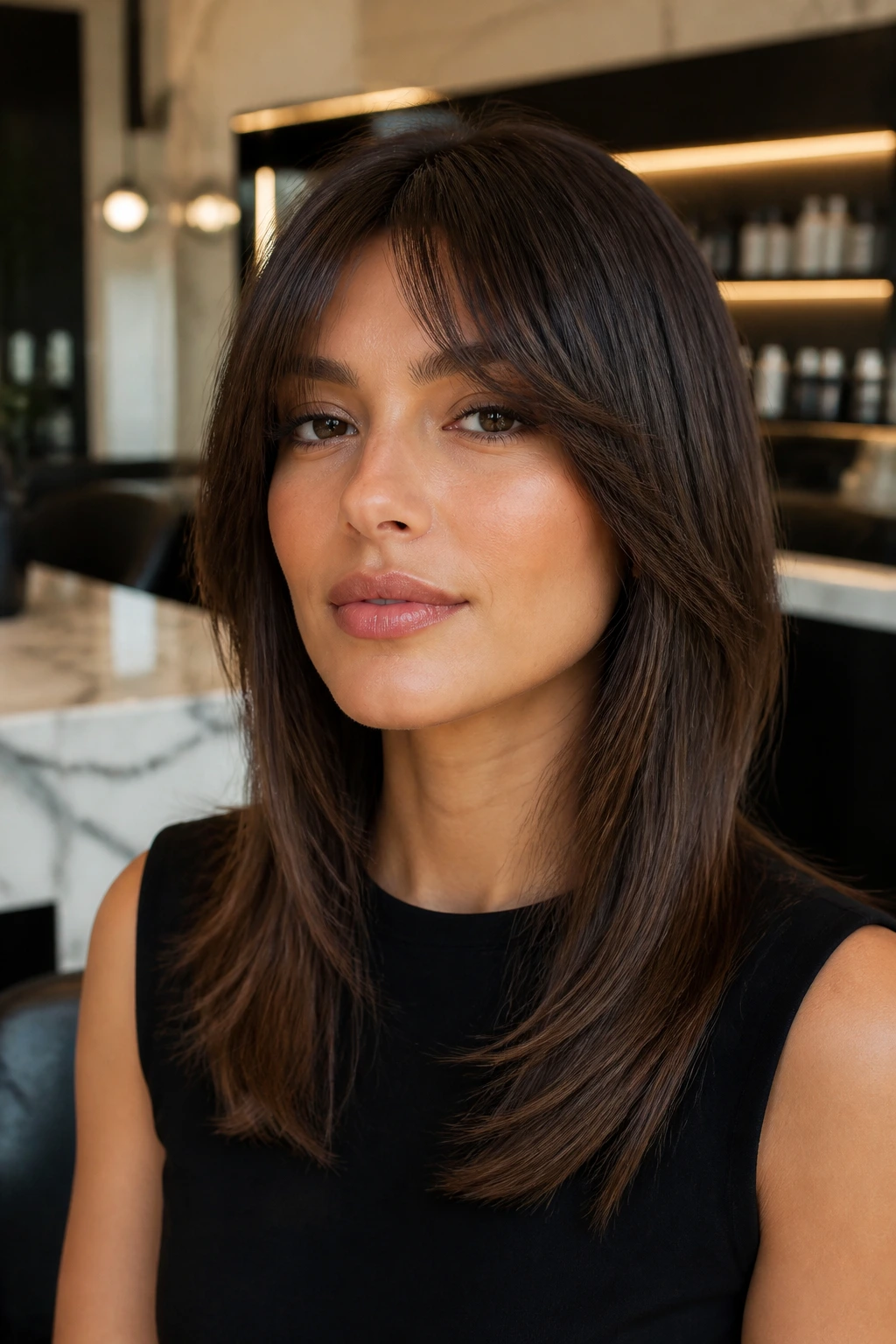
A shag does not have to look messy. In this version, the layers are subtle, the ends are smoothed out, and the finish leans glossy instead of gritty. Straight hair is a good match because the cut can show movement without needing beachy texture or a lot of product. A blow-dry with a paddle brush gives it that clean, expensive-looking finish people sometimes assume a shag can’t have.
I think this is the right choice for anyone who wants the shape of a shag but works in a setting where “undone” feels too casual. The haircut still moves. It just does it with manners.
21. Messy Textured Shag
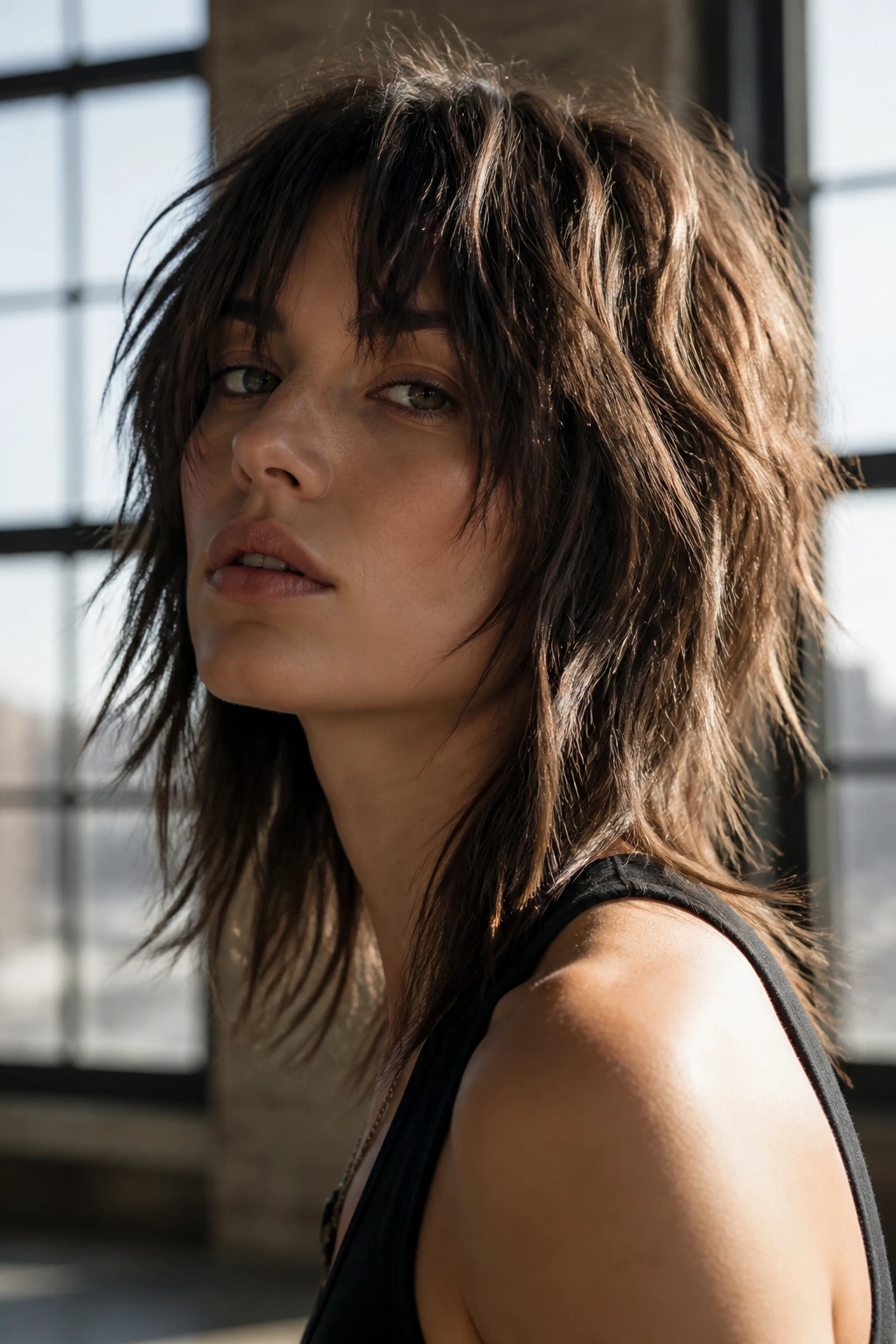
Here’s the loud cousin. The layers are choppier, the finish is rougher, and the texture spray earns its keep. Straight hair often needs a little grit to avoid sliding flat by noon, and this cut is built for that. The point isn’t to look dirty or overstyled — it’s to make the pieces separate enough that the haircut reads from across the room.
This one loves second-day hair. A little dry shampoo at the roots, a quick scrunch at the ends, and you’re back in business. It’s relaxed, but not accidental.
22. Inverted Shag
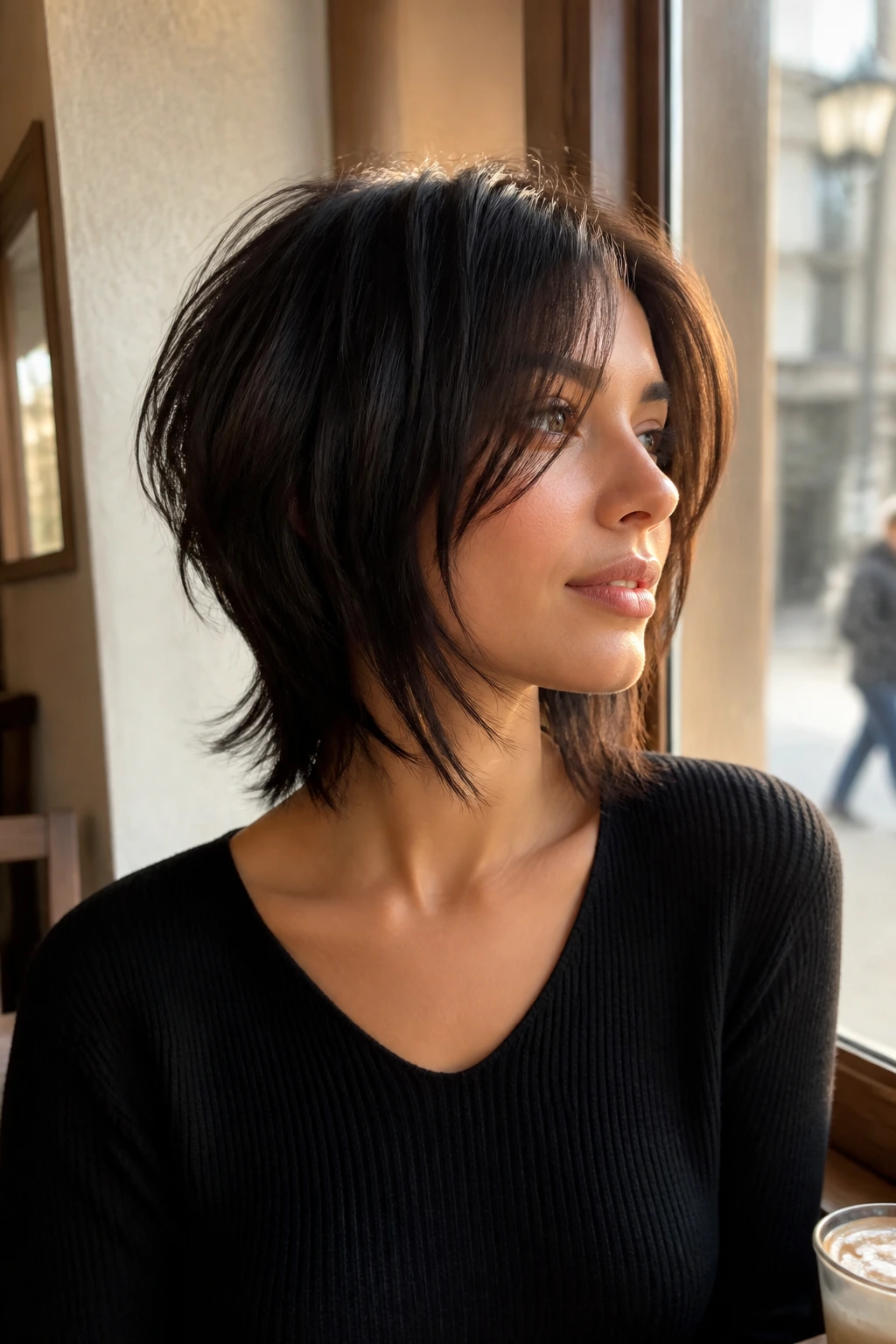
An inverted shag flips the usual balance: shorter and fuller through the back, longer through the front. On straight hair, that creates forward motion and a sharper neck line. It’s a nice option if you want the cut to frame the face more than the shoulders. The front pieces can be cut to the jaw or collarbone, depending on how dramatic you want the slope.
The important part is softness. If the angle is too hard, it starts to feel like a dated stacked bob. Keep the transition fluid and it stays modern.
23. Hidden-Layer Shag
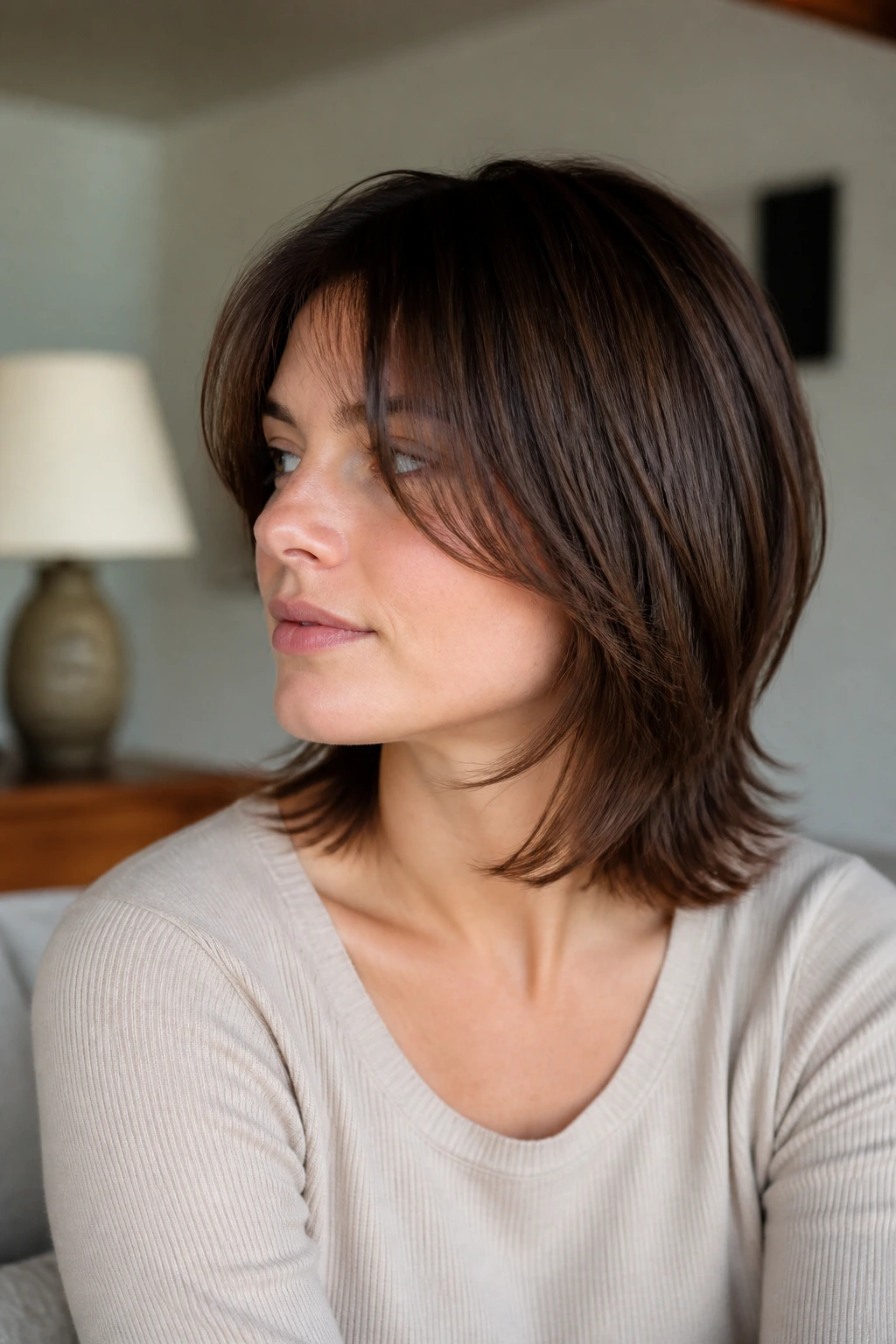
This is the stealth version. The top looks smooth and tidy, while the layers live underneath, doing the work without advertising themselves. Straight hair is perfect for this because the outer surface stays sleek, but the hidden movement pops when you walk, bend, or turn your head. It’s the least intimidating shag on the list.
Who it suits
- first-timers who want shape without obvious choppiness
- people in conservative workplaces
- anyone with hair that tangles easily and hates over-texturizing
- growers who want the cut to hold up for months
The joke is that this one looks simple only until you notice how well it moves.
24. Deep Side-Part Shag
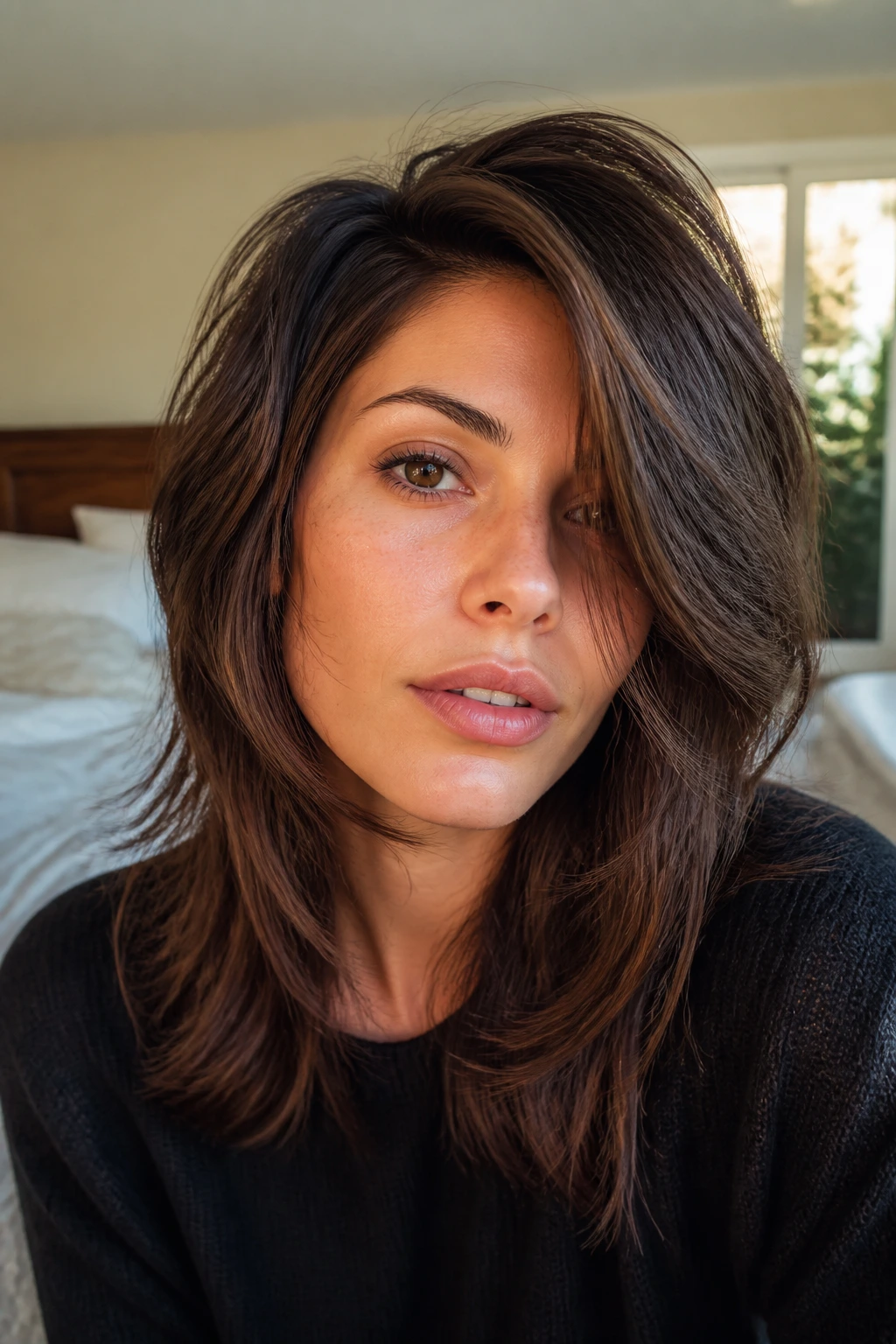
A deep side part gives straight hair instant lift, and this shag uses that lift on purpose. One side gets a fuller sweep, the other falls leaner, and the whole cut feels more sculpted than symmetrical. It’s a smart choice if your hair collapses at the crown or if your face shape benefits from a little diagonal line work.
This version isn’t as rebellious as the rocker shag. It’s cleaner. More tailored. Same basic idea, different attitude.
25. Wispy Fringe Shag
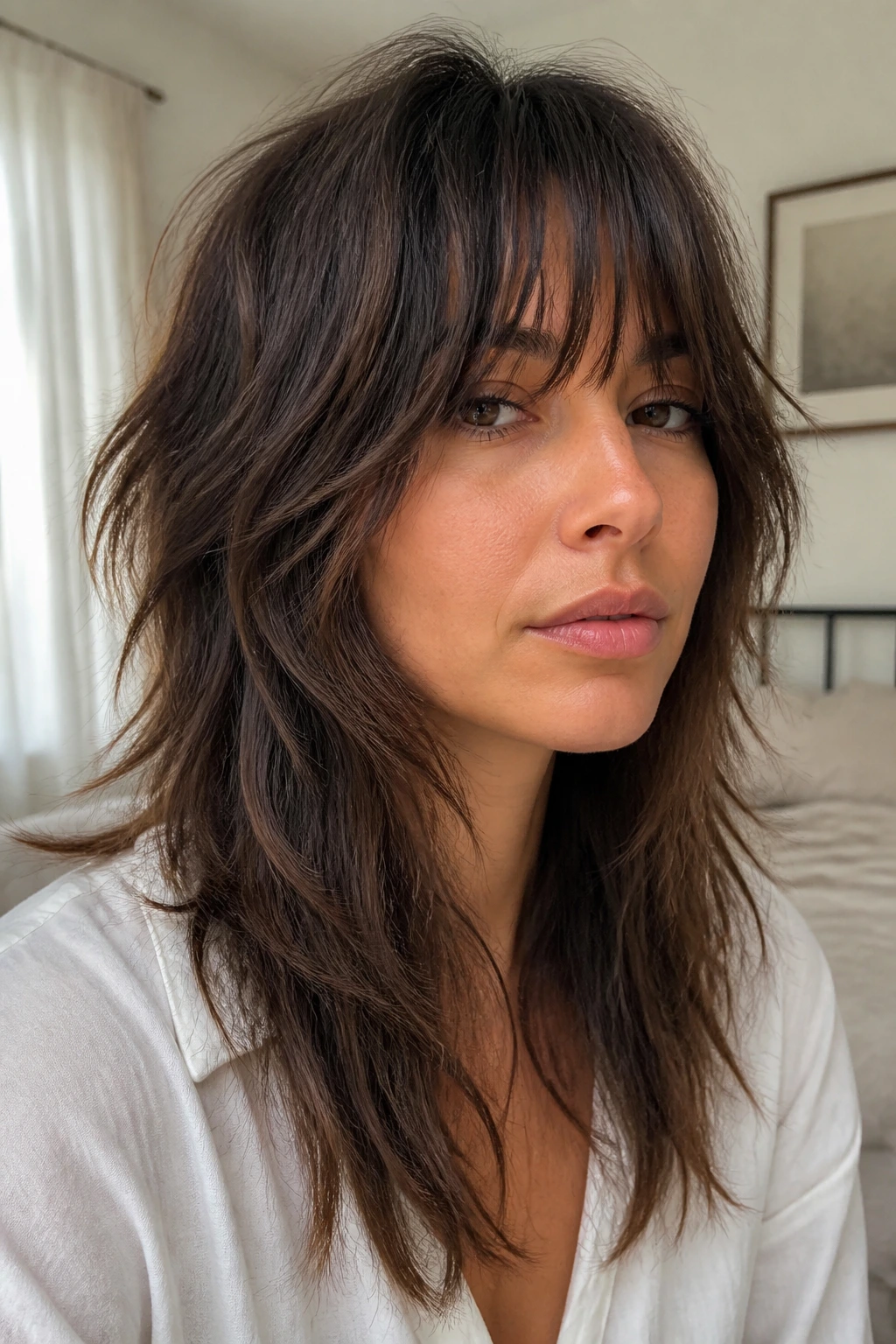
Wispy fringe is the softest way to add bangs to a shag. The front pieces are broken up, airy, and light enough that they don’t create a hard wall across the forehead. Straight hair makes this easy to wear because the fringe usually sits where it’s told. The rest of the layers should echo that softness, not fight it.
It’s a good pick if you want a little face framing but don’t want the commitment of curtain bangs or baby bangs. The whole cut feels breathable. That’s the nicest thing I can say about a fringe, honestly.
26. Razor Bob Shag
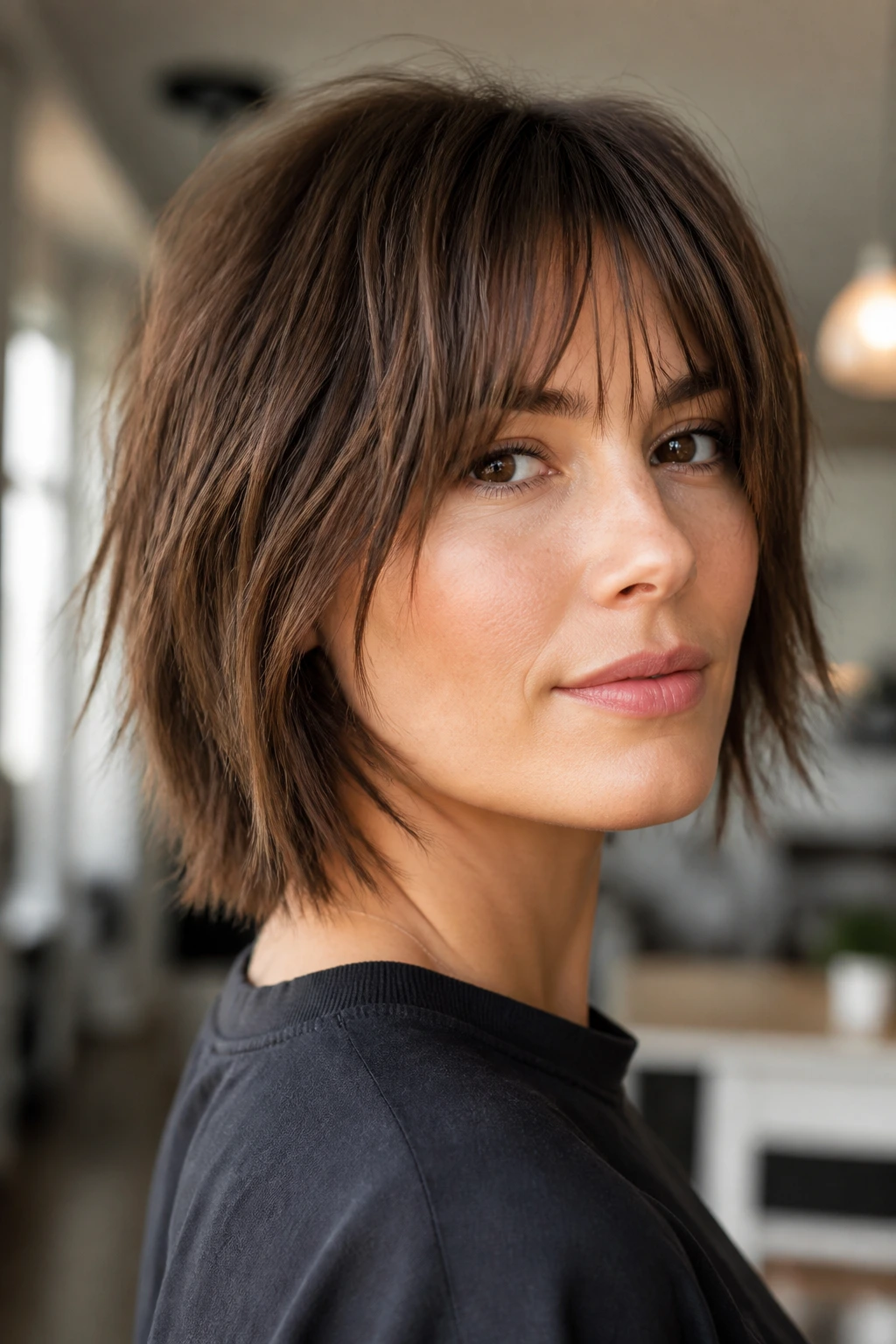
A bob with razor texture sits in a very useful middle zone. It’s shorter and cleaner than a lob shag, but the ends are softened enough to keep it from looking too round or too formal. Straight hair shows the precision here, so the cut has to be deliberate. The face frame can be short, long, or somewhere in between, but the hem should stay tidy.
This is for someone who wants a bob that doesn’t look stiff at 8 a.m. or by 5 p.m. A little bend through the front pieces gives it life without wrecking the shape.
27. Face-Lengthening Shag for Round Faces
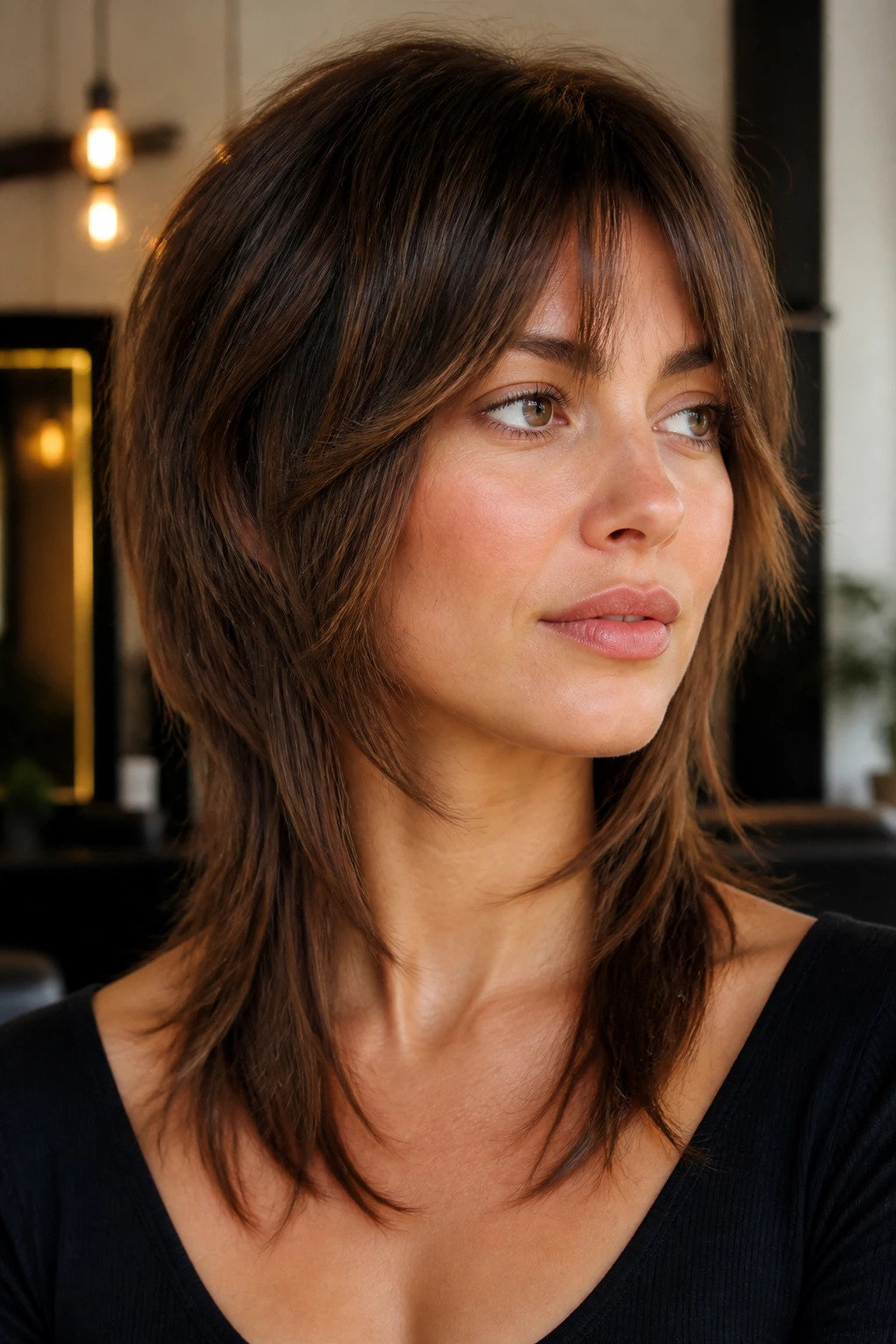
The shortest pieces in this cut sit lower than people expect — usually below the cheekbone — so the eye gets pulled vertically instead of outward. That’s the whole trick. Straight hair makes this very clear, which is why the placement matters more here than in a curlier shag. The part can stay center or drift slightly off-center, but the front lines should fall long enough to slim rather than widen.
This is one of those cuts where restraint looks smarter than drama. Keep the crown balanced, avoid puffing out the sides, and the whole shape works harder for you.
28. Air-Dried Invisible-Layer Shag
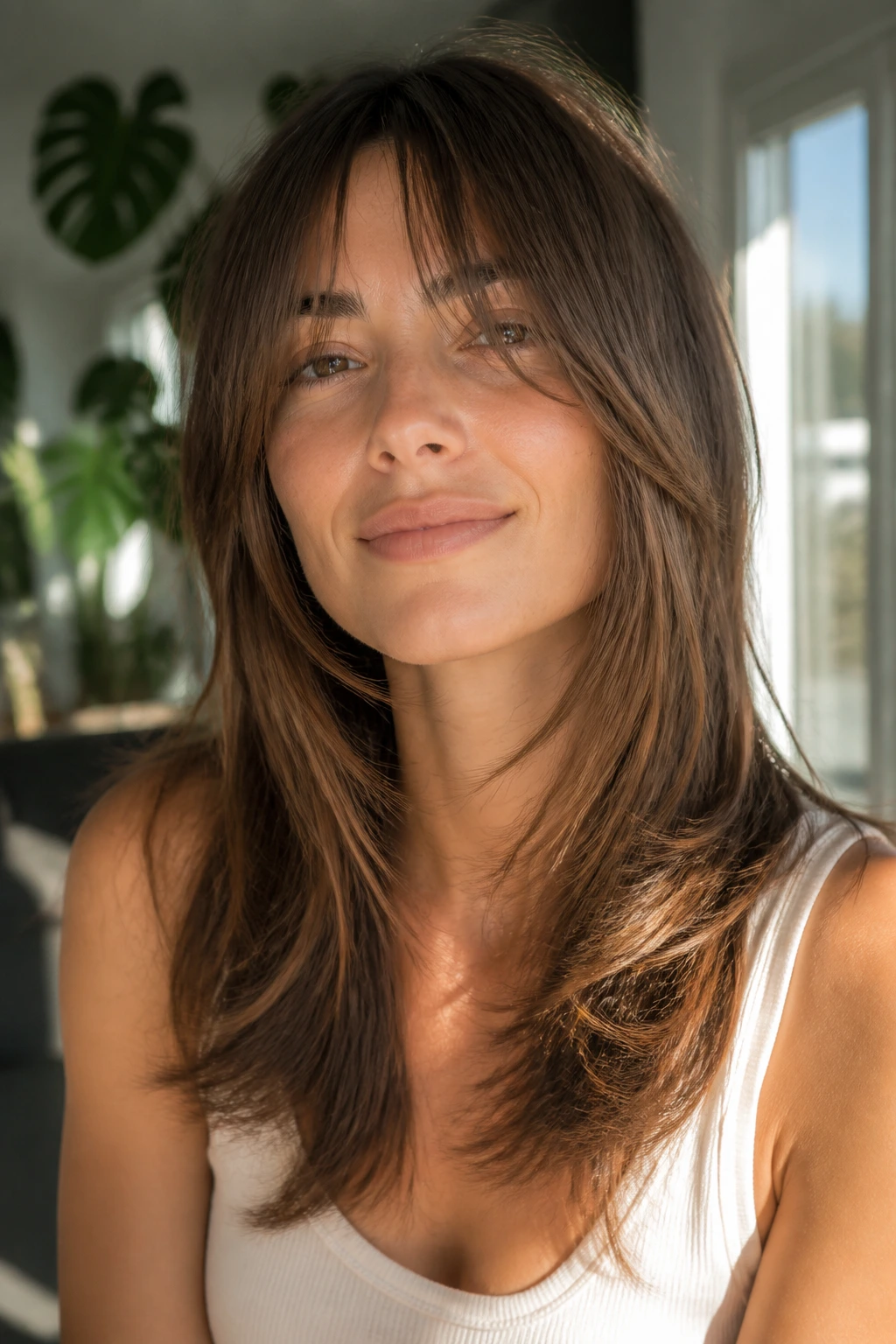
This is the low-effort answer to the shag question. The layers are built into the shape, but they’re soft enough that the hair still looks smooth when it air dries. A little mousse or light cream on damp hair helps the ends separate into gentle bends instead of drying into one flat sheet. Straight hair can be stubborn here, so the layering has to be subtle and well placed.
My favorite part is the grow-out. Because the layers are hidden, the cut keeps looking intentional even when it’s a few weeks past the salon. That’s a rare and useful thing.
Why Shag Haircuts for Straight Hair Need a Different Blueprint
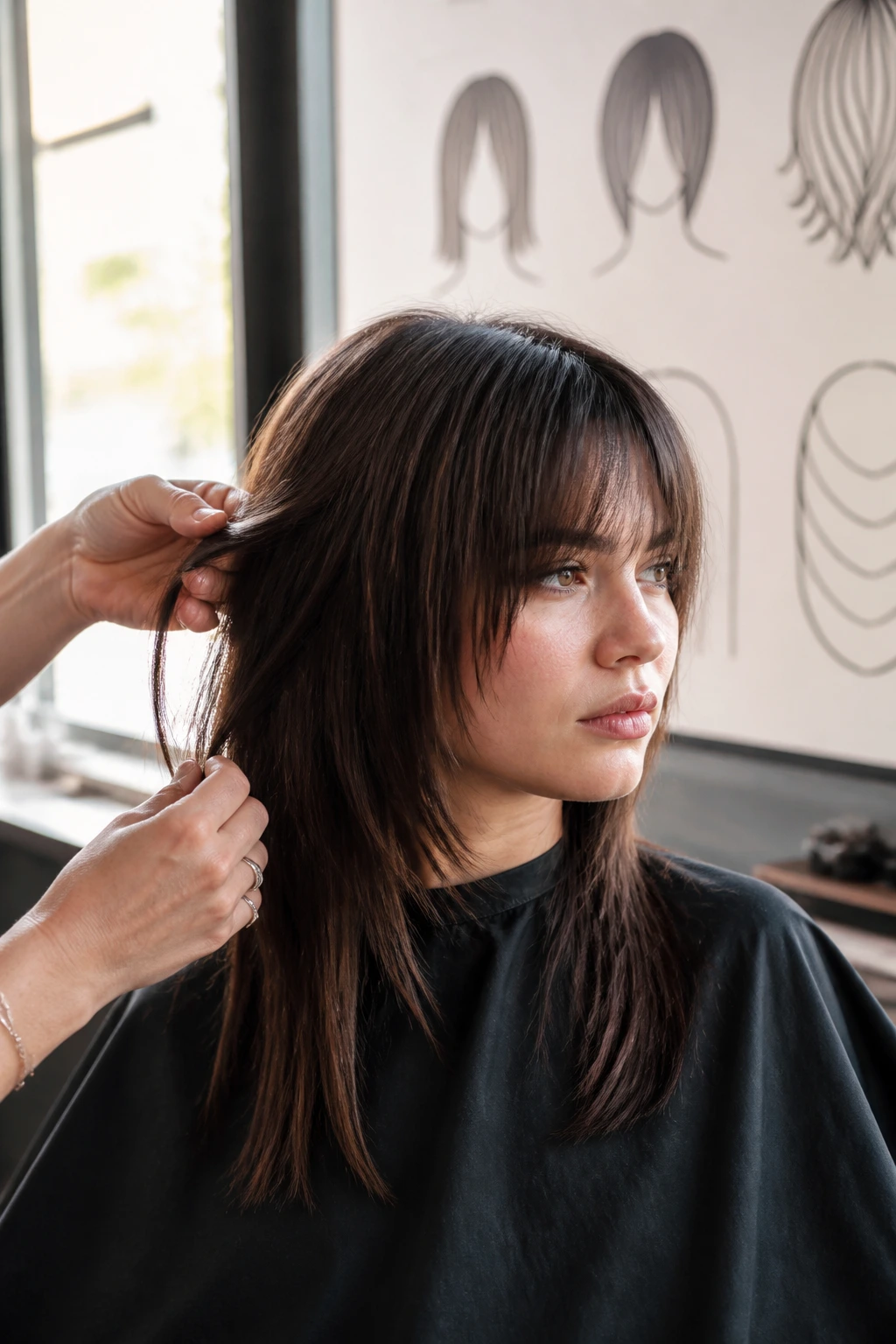
Straight hair does not forgive lazy layering. Curly hair hides a lot of mistakes because the texture blurs the edges; straight hair puts the cutting line on display and asks whether you really meant it. That’s why a shag on straight strands needs a clearer plan than the same cut on waves or curls.
The best straight-hair shags usually rely on three things: a perimeter with enough weight to hold shape, internal layers that move without looking chopped, and a face frame placed with actual intention. If the shortest pieces sit too high, the cut can bubble at the crown. If the ends are over-thinned, the hair starts to look stringy instead of airy. The sweet spot is somewhere in between, and it’s narrower than people think.
Dry cutting can help, by the way. Not always, but often enough that I’m comfortable saying it matters. Straight hair lies about its final shape when it’s wet, especially if it’s long and heavy, so a stylist who checks the cut dry usually catches the exact point where the line needs softening.
How to Ask for the Right Shape in the Salon Chair
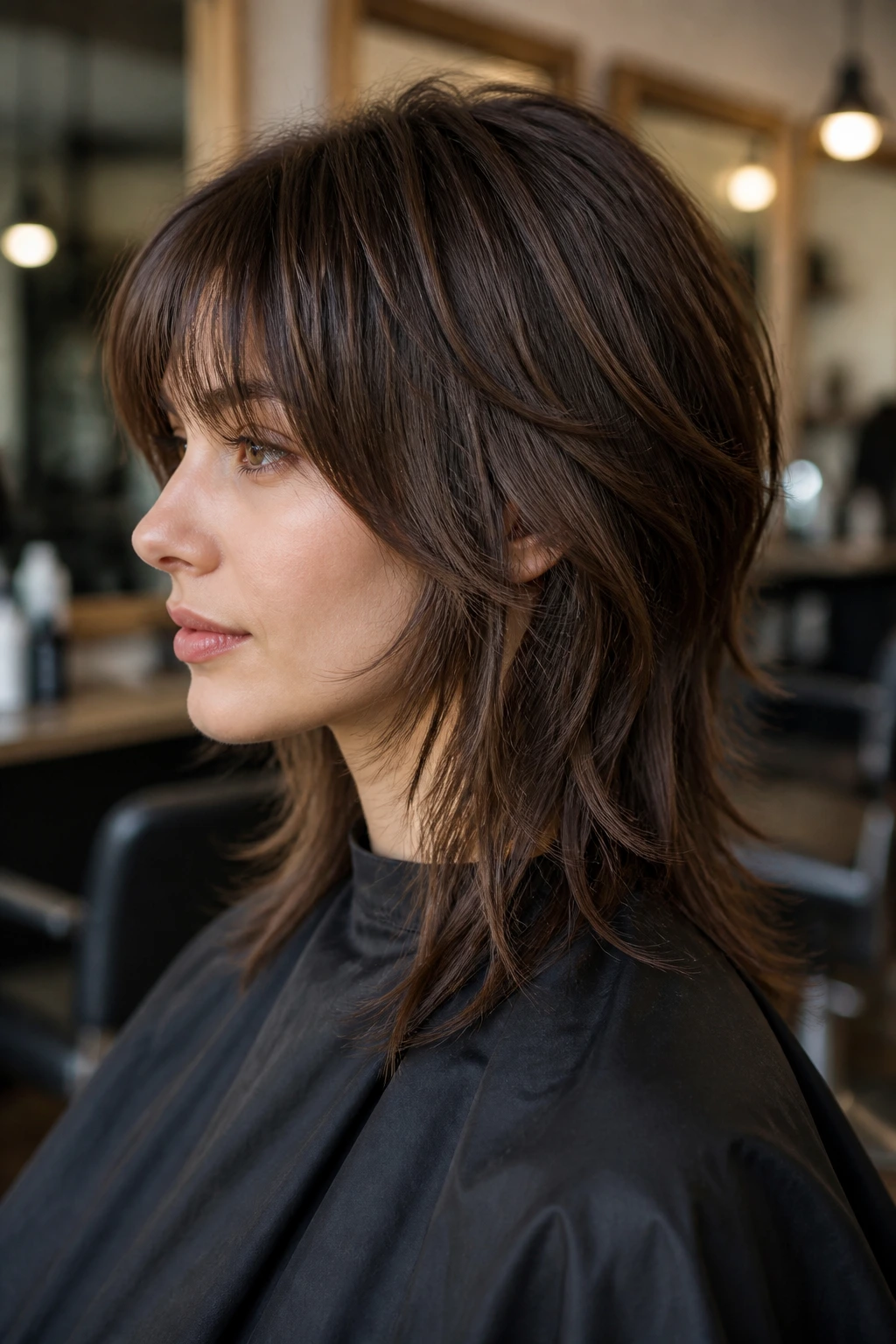
Bring a photo, but bring the right kind of photo. One front view is never enough. You want something that shows the side, the fringe, and the length at the back, because shag haircuts for straight hair are mostly about where the layers land, not just how messy they look.
Be specific about your styling habits. If you air-dry, say so. If you blow-dry only the front, say that too. A cut that looks gorgeous with a round brush can fall dead flat if you never touch a styling tool, and a good stylist will adjust for that. Ask where the shortest face-framing piece will land, whether the interior layers will be point-cut or razored, and how much weight they plan to leave at the bottom.
You do not need salon jargon. You need range, length, and a few blunt sentences about what you hate.
How to Style a Straight-Hair Shag Without Making It Stiff
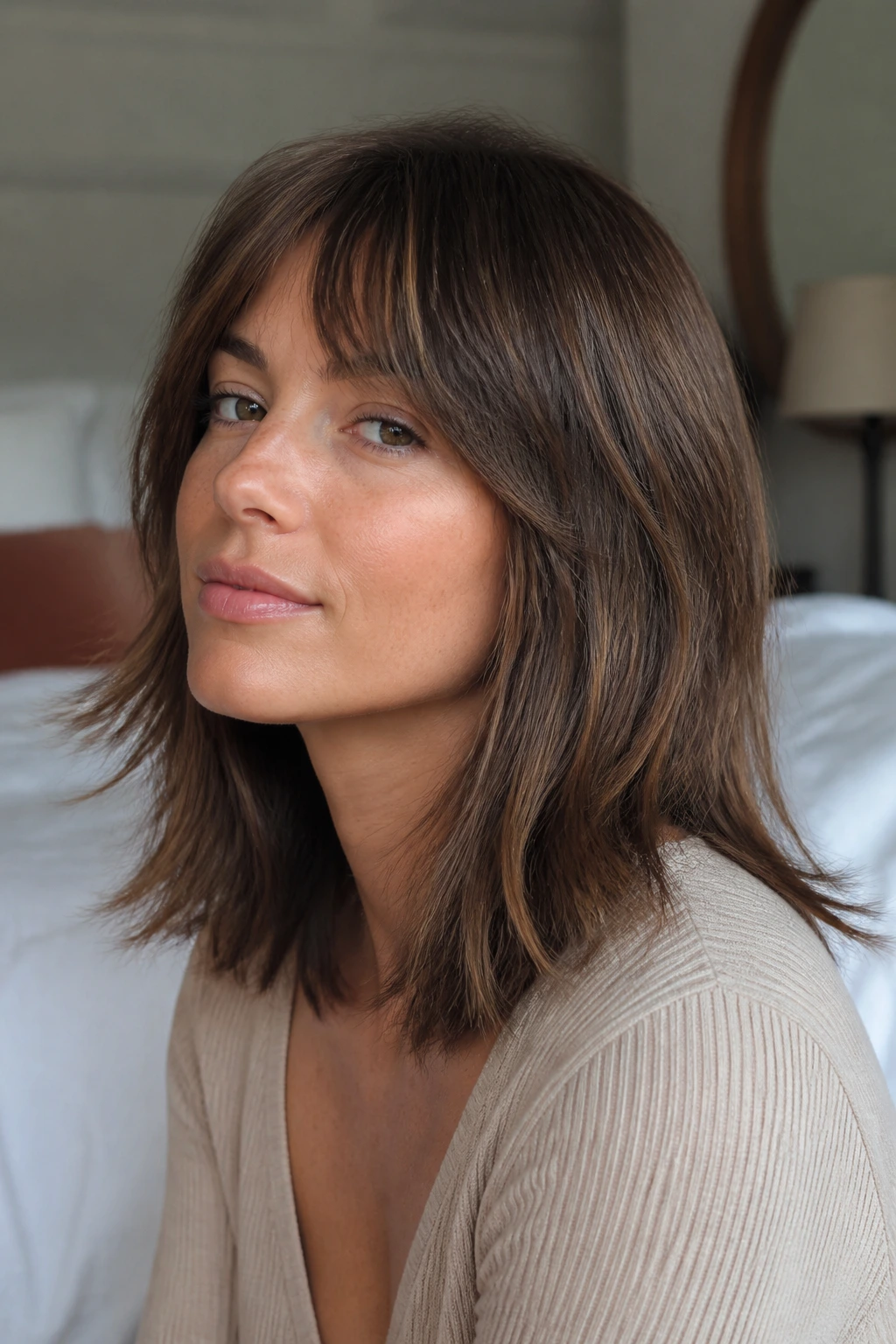
Root Lift: Work a golf-ball-size amount of mousse into damp roots, then rough-dry the crown with your fingers until it’s about 80 percent dry. If you want more lift, clip the top section at the roots for 10 minutes while it cools.
Bend, Not Curl: Use a flat iron or round brush to create a slight turn at the ends, not a full wave. A 1-inch iron on medium heat gives enough bend without making the layers look overdone.
Texture With a Light Hand: A mist of texture spray from mid-length to ends is usually enough. If the hair starts feeling sticky or rough, you’ve crossed the line. Stop there.
Keep the Front Visible: Fringe and face-framing pieces get lost when they’re overloaded with product. Use less there than you think you need, then separate the ends with your fingers.
Second-Day Reset: A tiny bit of water at the front, a quick blast from the dryer, and a pea-sized amount of cream on the ends can bring the shape back without washing the whole head again.
Essential Tools for Straight-Hair Shags
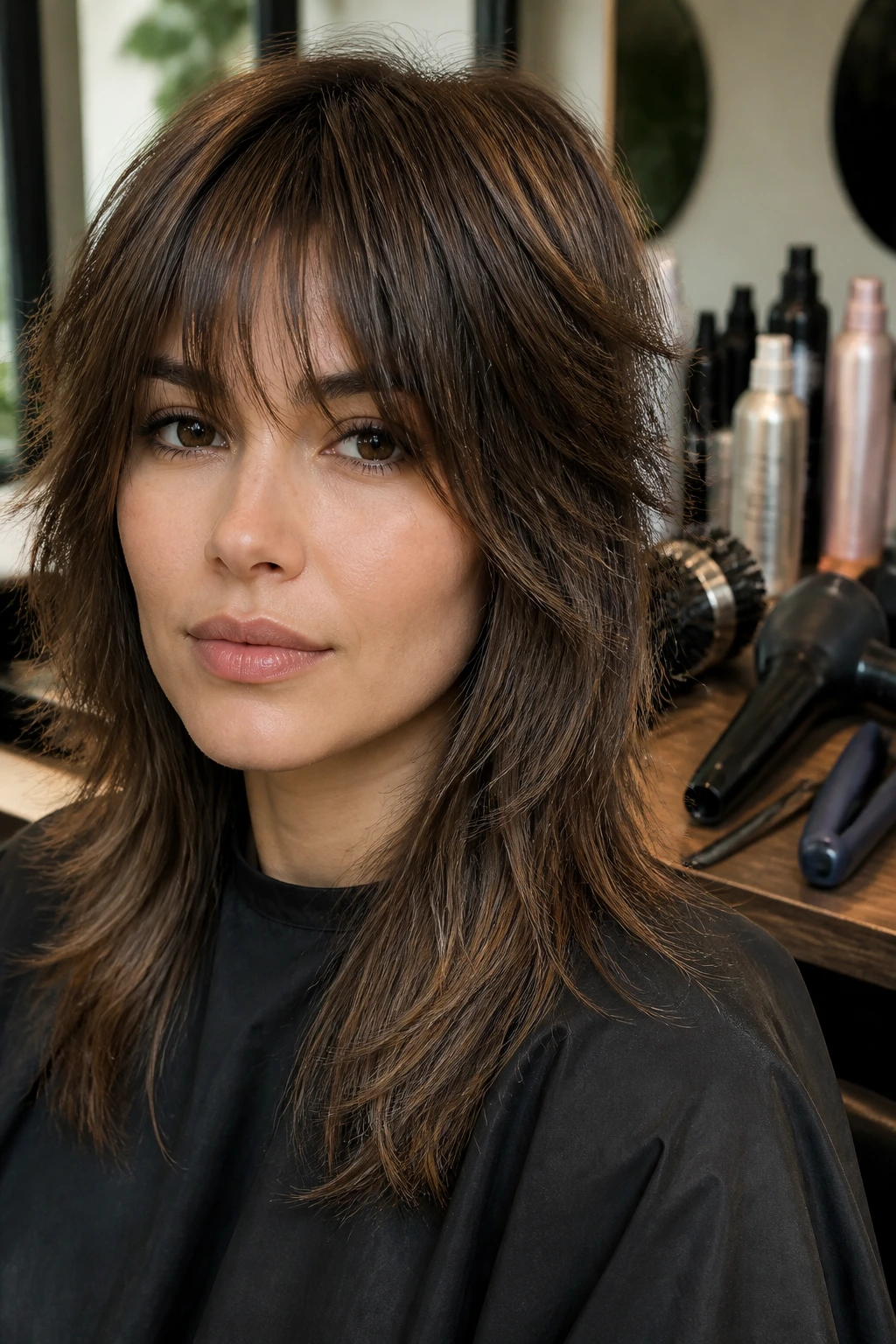
- Blow dryer with a concentrator nozzle: Gives you control at the roots and keeps the layers from flying everywhere.
- Round brush, 1 to 1.5 inches: Best for bending the front pieces and softening the fringe.
- Flat brush or paddle brush: Good for sleek, polished versions of the shag.
- 1-inch flat iron: Handy for a tiny turn at the ends, especially on blunt-base shags.
- Light mousse: Helps straight hair hold root lift without turning crunchy.
- Texturizing spray: Adds separation to the mid-lengths and keeps the haircut from falling flat.
- Dry shampoo: Useful on day two, especially for bangs and crown volume.
- Hair clips: Let you set the top sections while they cool, which matters more than most people realize.
Keeping the Shape Between Trims
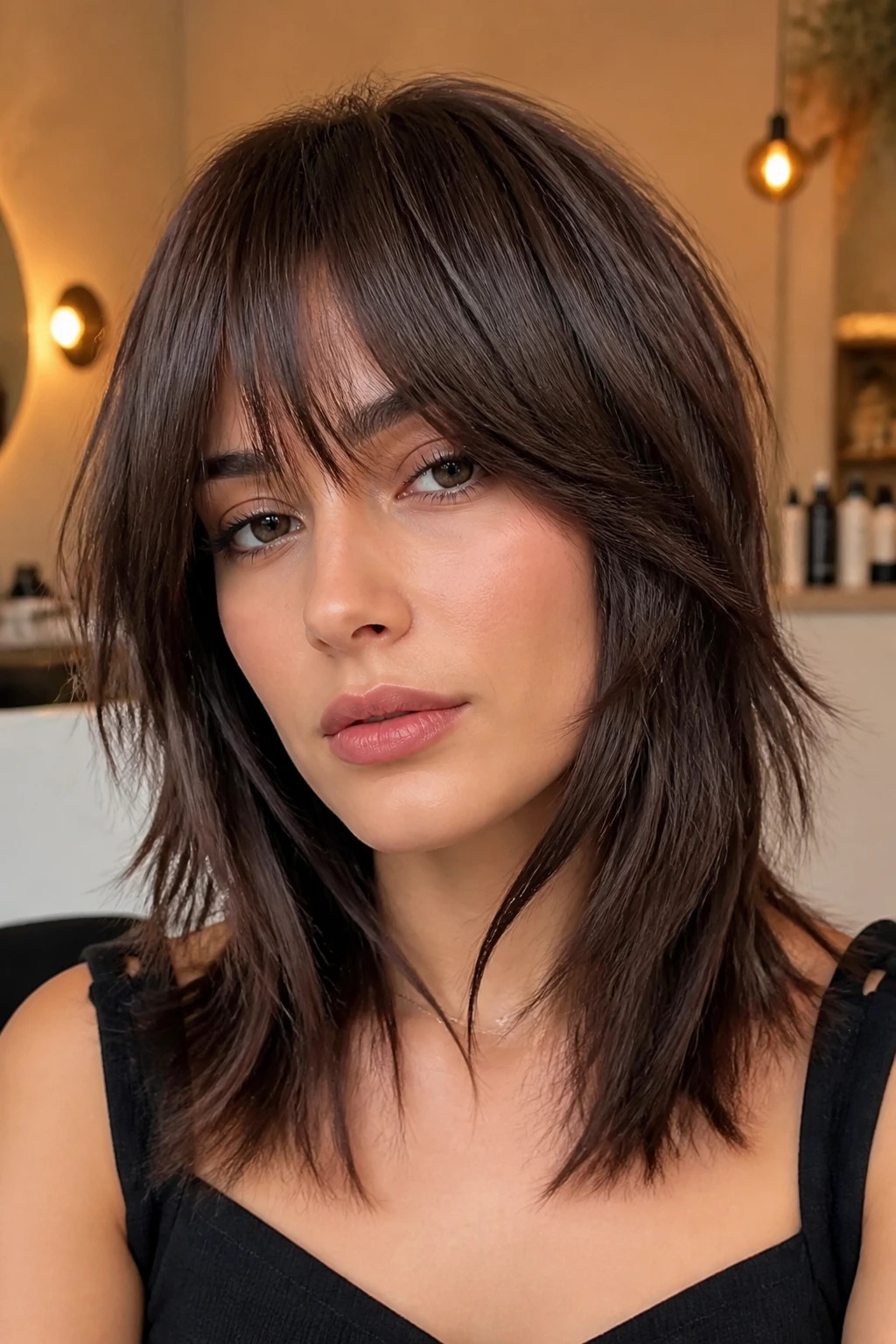
Straight-hair shags usually need fringe maintenance more often than full shape maintenance. Bangs and face-framing pieces can ask for a trim every 3 to 6 weeks, while the overall shape usually does fine with a 8- to 12-week dusting, depending on how fast your hair grows and how clean you like the outline.
If the cut starts to feel heavy at the bottom, it usually means the layers have grown out enough to lose their separation. That doesn’t always mean the shape is bad. Sometimes it just wants a small cleanup around the face and a little off the ends. If your hair is thick, ask for a controlled trim, not a full redo. If it’s fine, keep the interior layers conservative so the cut doesn’t collapse as it grows.
A clarifying shampoo every couple of weeks helps too, especially if you use texture spray or dry shampoo. Product buildup can weigh straight hair down fast, and a shag that was moving beautifully on day one can turn sleepy by day ten if the roots are coated.
Common Mistakes That Flatten the Shape
-
Cutting the crown too short: The symptom is puffiness at the top and flat ends below. The fix is to move the shortest layers lower, usually around the cheekbone or jaw, so the volume spreads out.
-
Over-thinning the ends: If the bottom starts looking see-through, the shag has gone too far. Ask for point-cutting or soft interior layers instead of aggressive razoring.
-
Using heavy smoothing cream everywhere: Straight hair gets greasy-looking fast when every strand is coated. Keep rich creams on the ends only and use lighter mousse or spray at the roots.
-
Ignoring your natural part: A center part on a stubborn cowlick can make the whole cut fall wrong. Work with the part that gives you the best lift, even if it isn’t the one you imagined.
-
Leaving fringe too long: Bangs that hang into the eyes but never quite become bangs can make the front look muddy. Trim them so they either sit deliberately or blend cleanly.
Variations and Adaptations to Try
Fine-Hair Lift: Keep the perimeter blunt and the internal layers minimal. A little root mousse gives the shape enough air without making the ends look sparse.
Thick-Hair Debulk: Ask for controlled interior weight removal and a cleaner bottom line. This keeps the hair from ballooning while still preserving enough density to look healthy.
No-Bang Frame: Skip the fringe and use long face-framing pieces instead. This works well if you want a shag shape but hate anything touching your forehead.
Soft Office Shag: Keep the layers lower, the fringe longer, and the finish polished. You still get movement, but the haircut stays tidy enough for a more conservative setting.
Air-Dry Only Version: Build the shape with hidden layers and gentle face framing, then let a little mousse and scrunching do the rest. It’s the least fussy approach and often the easiest to live with.
Questions People Ask About Shag Haircuts for Straight Hair
Does a shag work on very straight hair?
Yes, but the cut has to do the work that texture usually does. Straight hair needs the layers placed carefully so the shape doesn’t collapse into a flat sheet or a frayed outline.
Can I get a shag without bangs?
Absolutely. Long face-framing pieces can give you the same softness without a full fringe, and they grow out more gracefully if you’re unsure about committing to bangs.
Will a shag make fine hair look thinner?
It can, if the layers are too aggressive. Fine hair usually needs a stronger perimeter and lighter interior layering so it keeps enough density at the ends.
How often should I trim it?
Bang-heavy versions usually need attention every 3 to 6 weeks. The full shape often holds well for 8 to 12 weeks, depending on the length and how precise you want it to stay.
Do I need a razor cut?
No, but some straight hair benefits from it. If your ends tend to look chunky, a razor or point-cut finish can soften the line; if your hair is fine, scissors may be safer.
Is this cut good if I air-dry?
Some versions are, especially the hidden-layer and long feathered styles. Ask for shapes that keep enough weight at the bottom so the hair doesn’t dry into weird puffs.
What if my hair flips out at the ends?
That’s usually a sign the layers were cut too sharply or too high. A cleaner perimeter with softer internal layering usually fixes it, especially if you blow-dry the ends smooth once or twice after washing.
Can a shag still look polished?
Yes. The sleek polished shag is proof. If the layers are subtle and the finish is smooth, the haircut reads refined rather than messy.
The Cut That Stays Interesting
The best straight-hair shag isn’t the one with the most layers. It’s the one that knows where to stop. That’s the whole craft of it: enough movement to keep the hair from lying like a sheet, enough weight to keep the ends from looking thin, and enough shape around the face that the haircut still makes sense three weeks later.
If you’re picking one of these styles, start with the version that matches how you actually wear your hair, not the one that looks wildest in a mirror photo. Straight hair rewards precision. Give it that, and the shag stops being a risky cut and starts being one of the most useful shapes you can wear.
