



Short shag haircuts without bangs for older women work because they keep the movement and lose the fuss. A blunt cut can start to feel heavy the minute hair gets finer at the crown, drier at the ends, or a little stubborn around the temples; a shag breaks that weight into softer pieces, and the whole shape wakes up.
The other gift is practical. No fringe means no one is stuck blow-drying a forehead section every morning or worrying about a bang line separating in humid weather. You can wear glasses without fighting the frame, tuck one side behind the ear, and change the part whenever the cut starts to feel too familiar.
That freedom is why these looks stay useful. The best versions still give lift where hair tends to collapse, keep enough length to look polished, and leave the neckline clean so the haircut reads as intentional, not accidental. Some are airy and feathered. Some are sharper and more sculpted. All of them have that useful little quality I like in a short cut: they look even better after they’ve moved around for a few hours.
Why These Short Shags Keep Working on Mature Hair
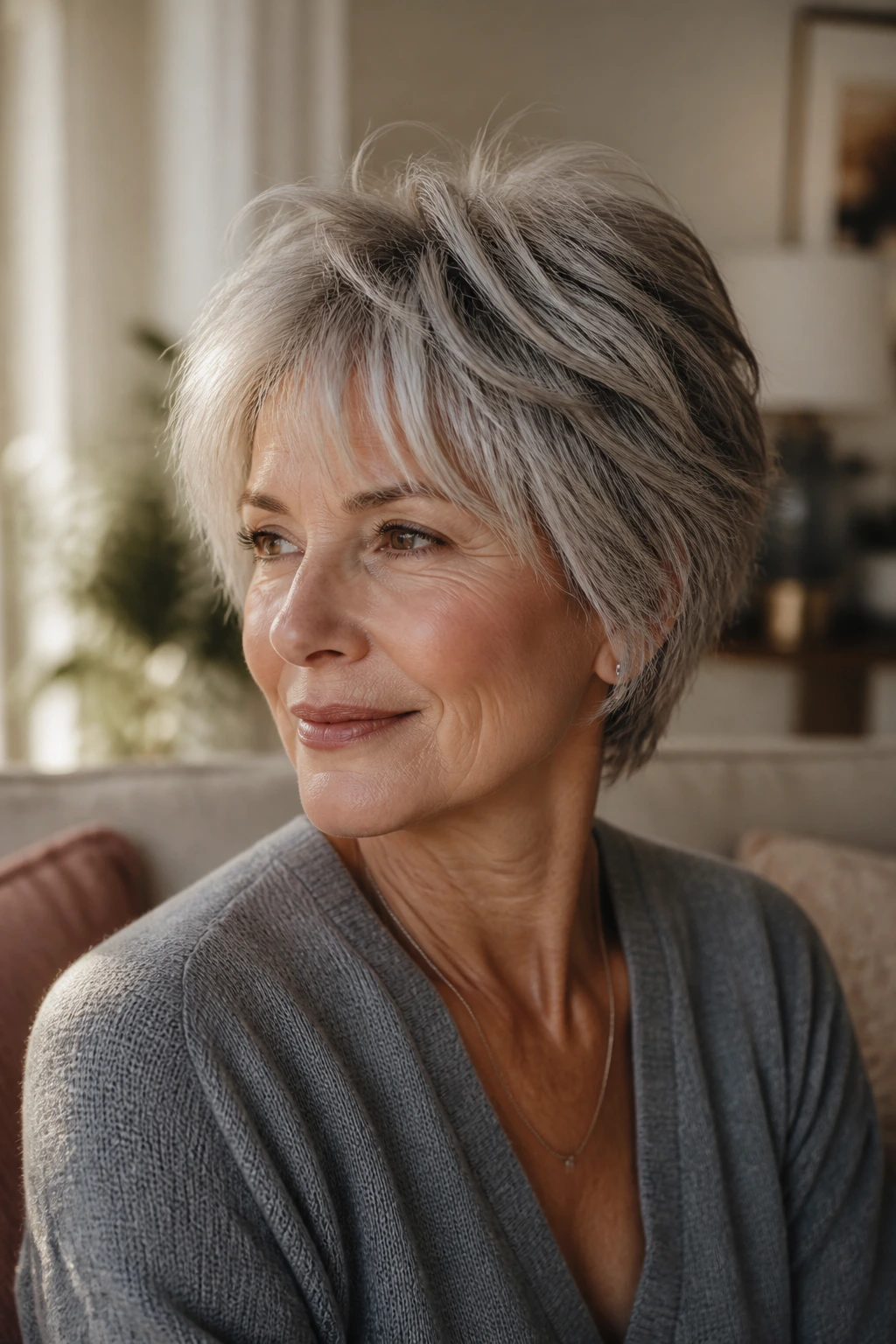
Crown lift without a lot of teasing: Short layers at the top give fine or aging hair a little height before it starts lying flat against the scalp.
No fringe to babysit: Leaving the forehead open saves time, keeps glasses happy, and lets you part the hair wherever the root growth wants to go.
Better grow-out: A shag grows softer than a blunt bob, so the shape can go six or eight weeks without shouting that it needs a trim.
Gray and silver hair show texture fast: Shiny white or silver strands catch the light at the ends, which makes feathered layers look crisp instead of scraggly.
Less heat, less hassle: Many of these cuts look good with a quick mousse-and-rough-dry routine, which matters when the hair is dry or a little fragile.
Room for change: Short shags can lean polished, messy, curved under, flipped out, or piecey with the same basic haircut underneath.
1. Feathered Pixie Shag
A feathered pixie shag sits at the short end of the spectrum, but it does not behave like a stern little crop. The top is soft and light, the sides skim the cheekbones, and the nape stays neat enough to keep the whole cut from looking fuzzy. It has that airy, moving quality that makes gray hair look intentional instead of merely shorter.
What makes it work is the balance. The crown gets enough lift to stop the top from collapsing, but the perimeter still has shape, so the haircut does not puff out like a cotton ball. If hair is fine, this is one of the best ways to create the look of density without dragging everything down with length.
Ask for short, feathered layers on top and a tapered back, with no hard fringe line across the forehead. A pea-sized amount of mousse at the roots and a quick finger-dry are usually enough. If you want more polish, wrap the front pieces around a small round brush for thirty seconds and let them cool before you touch them.
2. Jaw-Skimming Razor Shag
If you want a little more edge, a jaw-skimming razor shag gives you movement without losing the face-framing effect that makes shorter cuts so flattering. The ends are lightly textured, not hacked up, and the bottom line sits right around the jaw, which keeps the shape clean. It’s one of those cuts that looks especially good with earrings. Funny how that works.
The razor texture keeps the hair from feeling too solid. On straight or slightly wavy hair, that matters a lot, because a blunt jawline can turn boxy fast. Here, the layers break the outline just enough to soften the jaw and keep the sides from ballooning.
This one likes a side part, not a severe center split. Spray a little heat protectant, bend the front pieces with a 1-inch brush, and finish with a tiny bit of texture spray at the ends. Too much product will make the razor work look soggy, and that’s the opposite of the point.
3. Soft Tapered Nape Shag
A soft tapered nape shag solves a problem a lot of shorter cuts ignore: the back of the head. When the nape is cleaned up properly, the haircut feels lighter on the neck and looks finished from every angle, not just the front. That small detail matters more than most people think.
This shape is especially good if your hair grows thick at the bottom or kicks out at the collar. The stylist keeps the back snug and layered, then lets the sides stay a touch fuller so the haircut still feels feminine and not too severe. There’s no bang line to worry about, which gives the face room to open up.
I like this cut on women who want short hair but not a pixie-short silhouette. The trick is to keep the crown layers from getting too choppy. Ask for a taper, not an undercut. Those are two different animals, and if you’ve ever had a haircut that felt shaved in the back and fluffy on top, you know why that distinction matters.
4. Curl-Friendly Mini Shag
Curly hair and shag layers have a long, happy history together, but the short version needs a gentler hand. A curl-friendly mini shag keeps the shape compact while giving each curl room to spring up instead of being squashed into a helmet. No bangs means the front stays open, which keeps the curls from crowding the forehead.
The best cut here respects shrinkage. A curl that looks chin length when wet may sit much shorter once it dries, so the stylist has to read the curl pattern and cut with that in mind. If the layers are placed too high, the top can get frizzy fast. If they’re too low, the whole shape collapses into a round mass.
Dry-cutting or cutting in stages usually helps, especially on tighter curls. At home, use leave-in conditioner and a light gel, then diffuse on low heat or air-dry with a clip at the roots if you need a little lift. This is not the cut for heavy oils near the scalp. Curly hair wants slip, not grease.
5. Silver Halo Shag
Silver hair takes a shag in a different direction. Every feathery edge shows more clearly on gray or white strands, so the haircut reads bright and polished when the layers are placed well. A silver halo shag keeps the top soft and the sides sculpted enough to frame the face without a fringe.
What I like here is the way the color and cut help each other. Silver tends to pick up light at the ends, and a short shag gives that movement somewhere to land. The haircut feels more alive than a one-length crop, which can look a little hard around the mouth and jaw as hair ages.
A point-cut finish is usually kinder than aggressive razor work on very delicate strands. Ask for soft pieces around the temples and a clean neckline. A dab of shine cream from mid-lengths to ends brings out the silver without making it greasy. Too much shine product near the root will flatten the whole halo, and the haircut loses its lift.
6. Chin-Length Grown-Out Shag
A chin-length grown-out shag is for the woman who wants the ease of short hair but refuses to go too short. It skims the jaw, sits close enough to tuck behind the ear, and keeps enough body in the sides to look styled even on a no-fuss day. This is the cut that feels easy in real life, not just in a salon mirror.
The charm is in the looseness. Instead of hard layers or a sharp shelf, the interior is softly broken up so the hair bends naturally around the face. That makes it a nice option for women with slightly wavy hair or hair that bends at odd angles after washing. The shape covers those quirks instead of exposing them.
A middle part can work here, but an off-center part often gives better lift around the crown. If you want this cut to stay tidy, ask your stylist to keep the bottom line clean. Once the perimeter starts getting wispy, the whole thing can drift into “I meant to trim this last week” territory.
7. Side-Part Lift Shag
A side-part lift shag does one thing very well: it puts the volume where age-related flatness tends to show up first. That slight shift off center raises the root line, opens the face, and keeps the top from lying like a wet napkin. Small move. Big payoff.
The shape is especially useful for women with fine hair, because a middle part can expose too much scalp at the crown. With a side part, the hair can drape over a wider base, which makes the top look fuller without needing much product. The layers around the cheekbone keep the front from feeling heavy, and the no-bangs rule means the forehead stays open.
This is a good cut if you like a little polish. Blow-dry the part first while the hair is damp, then direct the roots away from the scalp with a vent brush. A light mousse at the root and a small finishing spray at the side part are usually enough. Skip the heavy cream here. It will shut the lift down before lunch.
8. Piecey Crop Shag
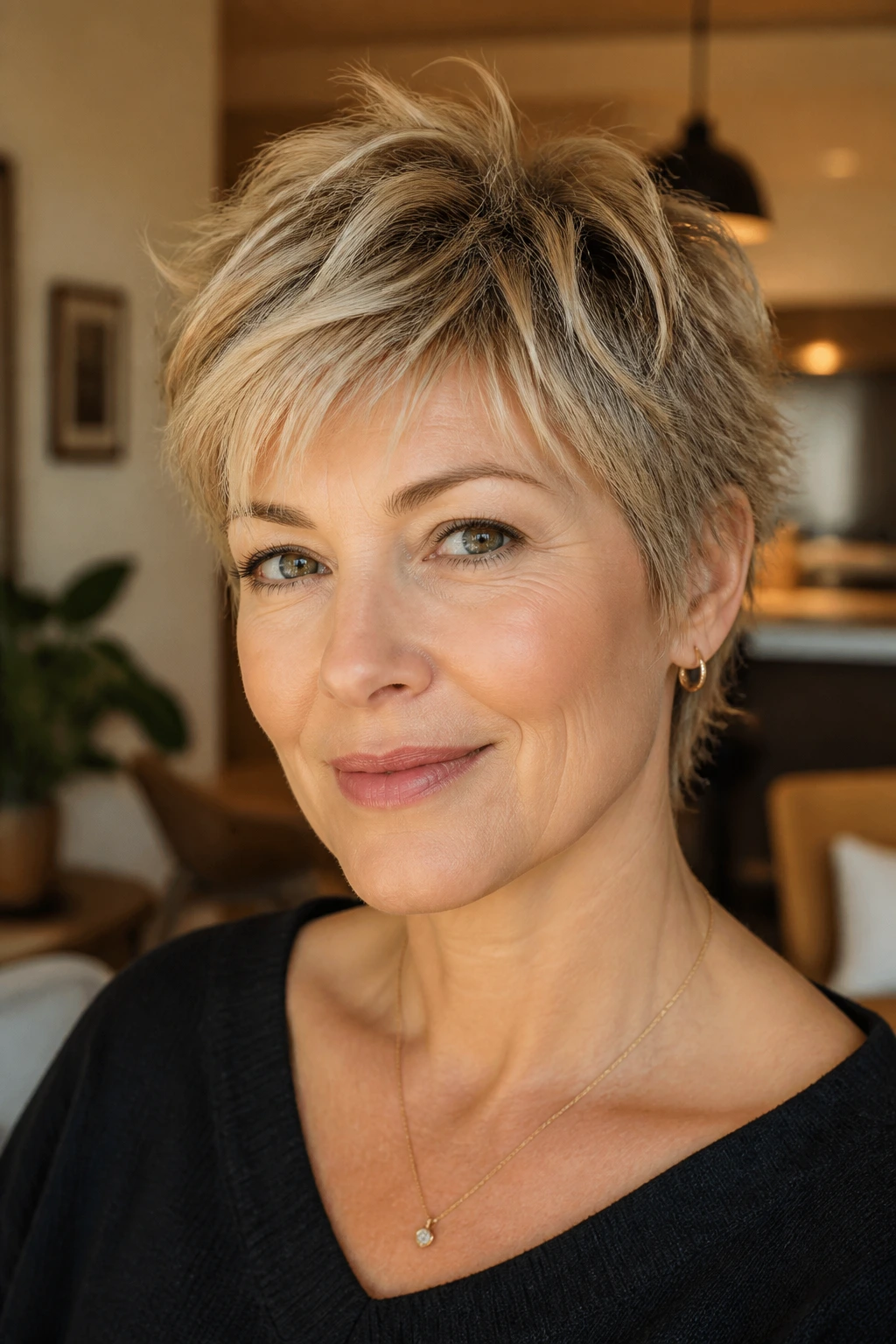
A piecey crop shag is for women who don’t want softness to turn into blandness. The layers are short, broken, and a little choppy, but the overall silhouette stays compact. It has energy. It also has a bit of attitude, which is nice when hair has spent years being told to behave.
This cut works best when the ends are defined, not fluffy. A light wax or matte paste lets the pieces separate, so the hair looks intentional instead of overthinned. It’s a strong look on straight hair and a sharp one on fine wavy hair that needs shape more than length.
One caution: don’t let the barber or stylist overdo the texturizing. If too much weight is removed from already-fine hair, the ends can fray and the crown will show every scalp line. Ask for controlled pieceiness, not random choppiness. Those are not the same thing, even if they sound close when you’re in the chair.
9. Rounded Bob Shag
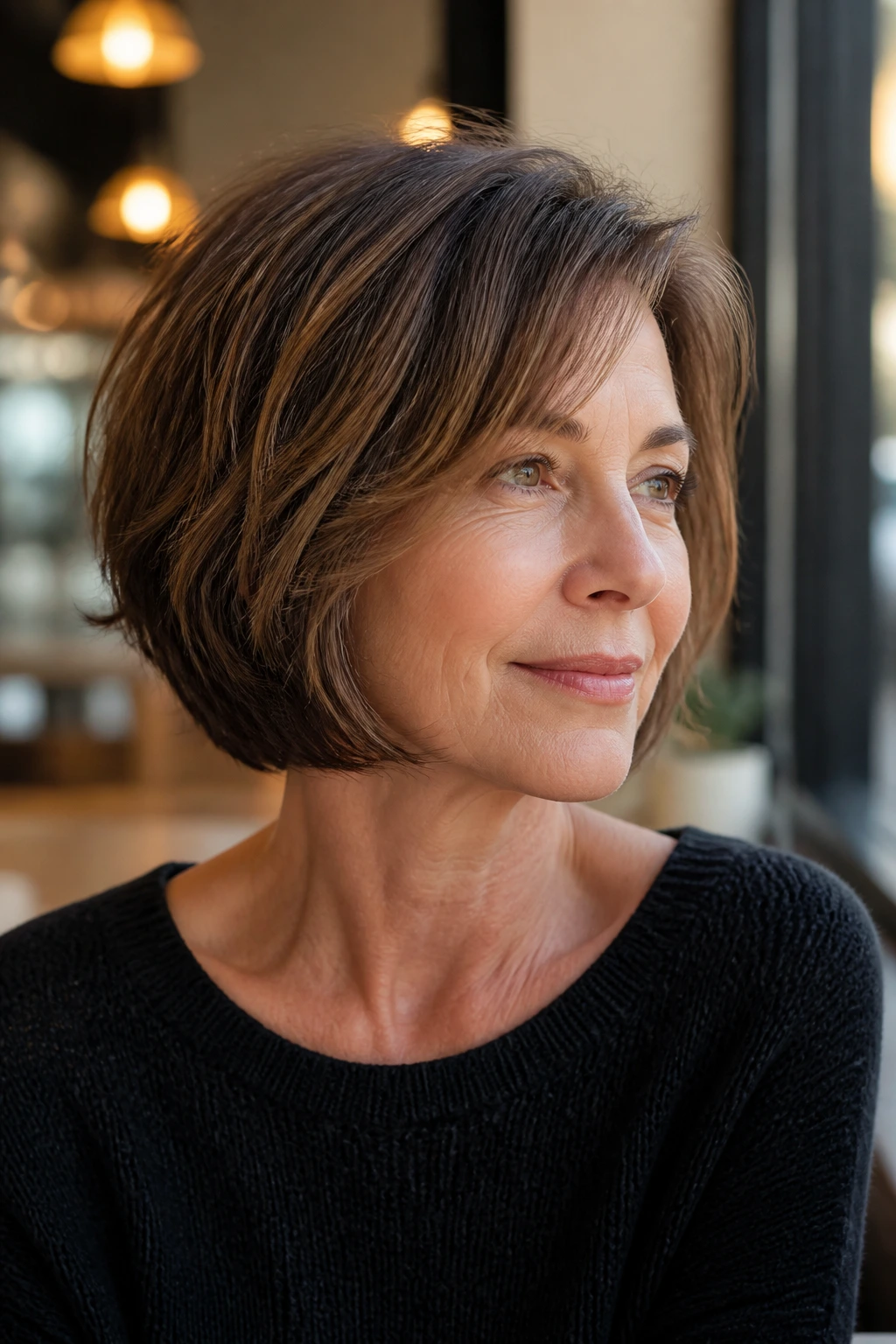
The rounded bob shag is one of my favorite quiet fixes for women who want a short haircut that still feels soft around the face. The bottom line stays curved, almost bob-like, while the inside gets all the movement of a shag. That keeps the cut from turning into a triangle or a mushroom, which is the fear with rounded shapes.
It’s especially useful if your jawline is sharper or your cheeks hollow a bit when you smile. The rounded perimeter brings back a gentle frame without sitting flat. The internal layers stop the whole thing from becoming too dense, so you get shape and lift at the same time.
This is the cut to ask for when you want “easy” but not “messy.” A smooth blow-dry with a round brush will show the rounded outline, and a touch of texture spray at the crown will keep it from looking too formal. The best part is the grow-out. Even when it gets a little longer, it still looks like a haircut, not a mistake.
10. Air-Dried Wave Shag
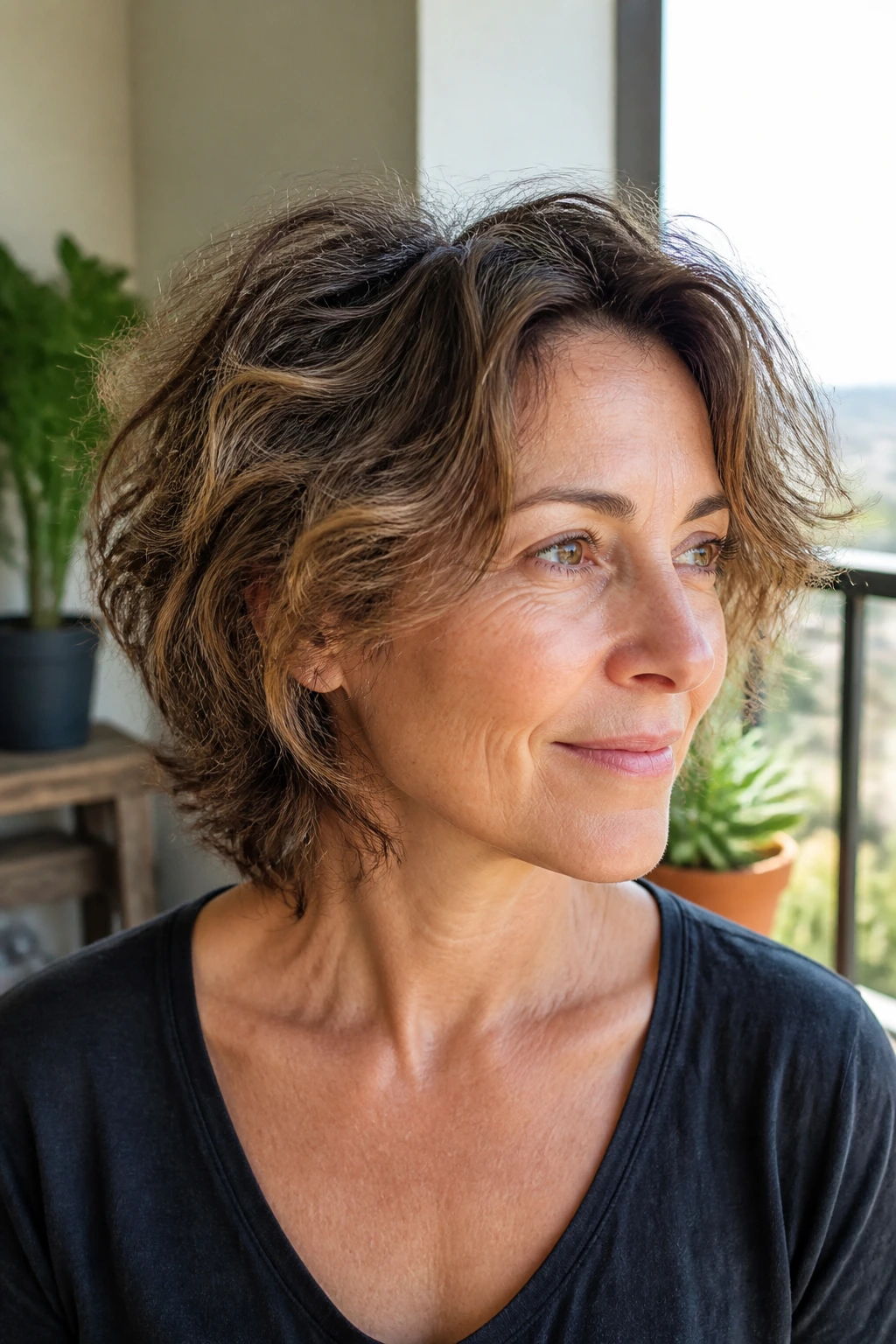
Some haircuts are designed around a blow dryer. This one isn’t. An air-dried wave shag is built for women whose hair already has a bend, a ripple, or a loose wave that shows up the minute it gets damp. No bangs keeps the front free so the wave can travel away from the face naturally.
The layers should follow the wave pattern, not fight it. If the cut is too blunt, the wave puffs at the ends; if it’s too thin, the shape loses body and starts to frizz. The sweet spot is a few well-placed interior layers and a slightly longer front that can tuck or swing depending on the day.
Use a leave-in cream on damp hair, scrunch gently, and then leave it alone for a while. A diffuser on low heat can help if you want more lift, but the whole point here is that the cut should still look decent when you don’t feel like styling. A little less effort. A lot less arguing with your mirror.
11. Thick-Hair Debulking Shag
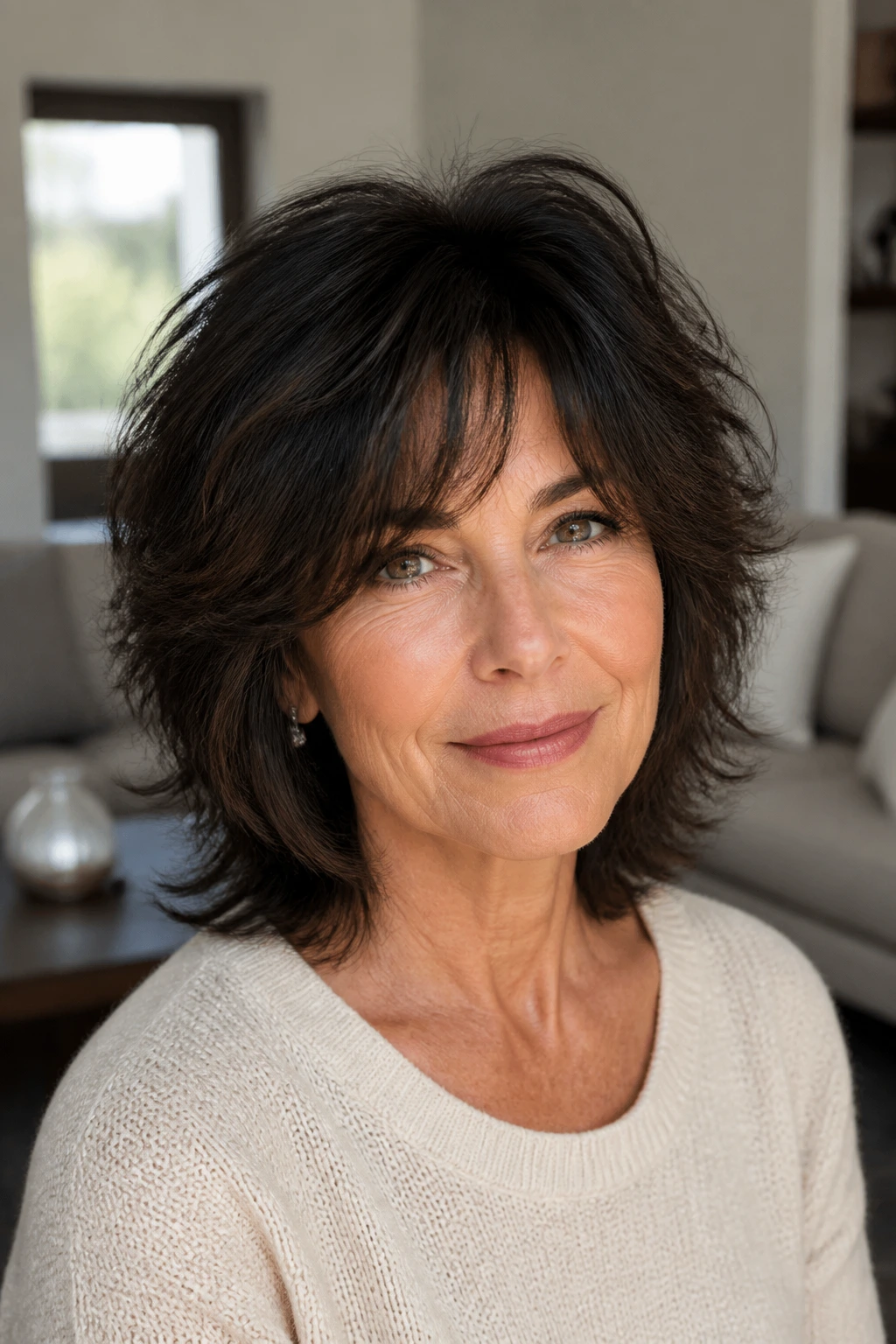
Thick hair can wear a shag beautifully, but only if the bulk is removed in the right places. A thick-hair debulking shag keeps the perimeter controlled while softening the inside, which stops the haircut from sitting like a block around the head. That’s the whole problem with a lot of thick short cuts: they look great for two days, then they spread.
The best version keeps weight at the bottom so the ends don’t fray, but frees enough interior bulk at the crown and sides to let the shape move. If your hair gets warm or heavy around the neck, this cut helps. If your hair grows out wide at the temples, it helps there too.
Tell the stylist you want shape reduction, not a razor massacre. That distinction matters. Too much thinning can leave thick hair looking stringy at the ends while the top still feels dense. A good debulking shag should feel lighter when you run your fingers through it, but still look like it has enough hair to hold a shape.
12. Soft Wolf-Lite Shag
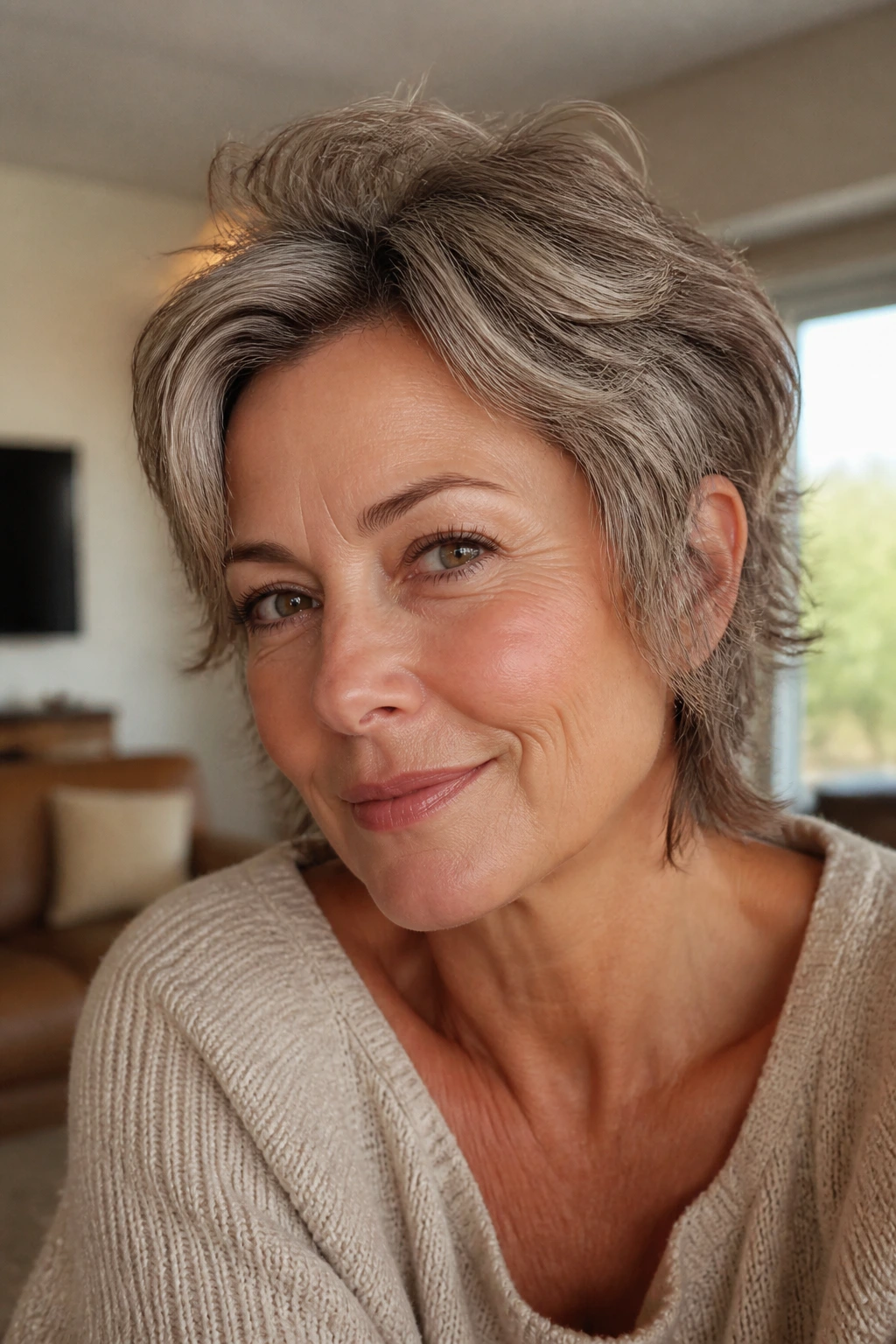
A soft wolf-lite shag gives you the edgy outline people like in wolf cuts without the big commitment to heavy fringe or dramatic disconnection. The top is shorter, the lower layers stay soft and slightly longer, and the whole cut leans forward a bit without crowding the face. No bangs keeps it easier and, frankly, more wearable for everyday life.
This shape works when you want movement around the crown and sides, but not a haircut that announces itself before you enter the room. It sits somewhere between a shag and a mullet, though softer than either one. On mature hair, that softness matters. A harsh wolf cut can look too severe or too trendy in a bad way; this version stays kinder.
If you wear it well, it should look a little undone but still neat at the neckline. That means the stylist should keep the back clean and not overstack the top. A little salt spray and finger-drying are enough. The goal is texture that looks lived in, not texture that looks like it fought a storm and lost.
13. Ear-Tucked French Shag
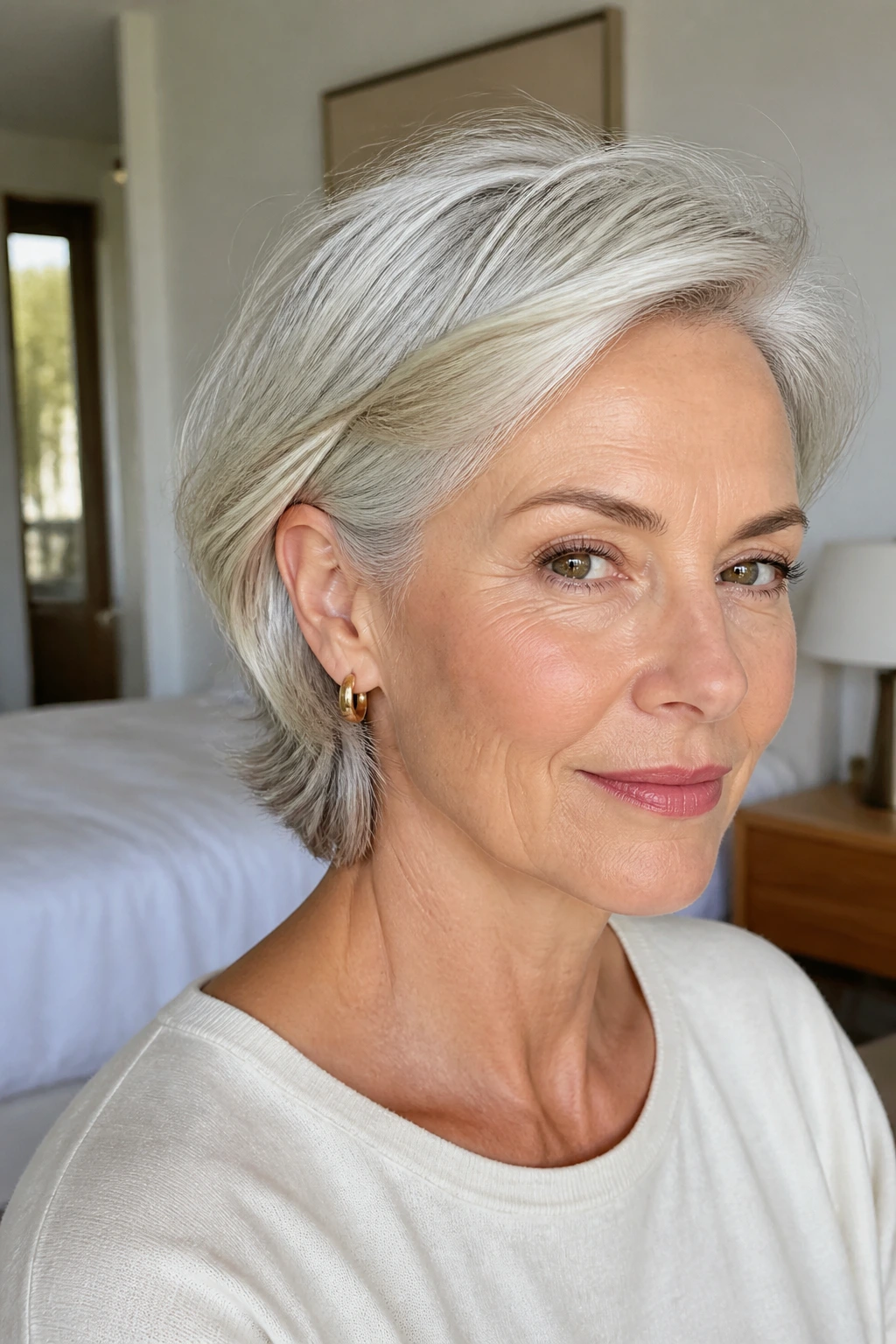
The ear-tucked French shag is understated in the best way. It’s the haircut you choose when you want to look finished in five minutes and still have enough movement to keep it from reading stiff. The sides are long enough to slip behind the ear, which makes glasses, earrings, and collars all play nicely together.
This cut has a neat little charm: the front opens the face, but the shape never disappears. The layers are soft around the temples and cheekbones, then taper into a clean perimeter that tucks easily. No bangs means nothing sits heavy on the forehead, and that often makes the whole face look brighter.
It suits women who like low drama but not no style. Blow-dry the roots with a small round brush, tuck one side behind the ear, and leave the other side loose. That asymmetry is enough. You do not need to over-style it. In fact, the cut gets better when you stop fussing with it halfway through.
14. Neck-Grazing Flip Shag
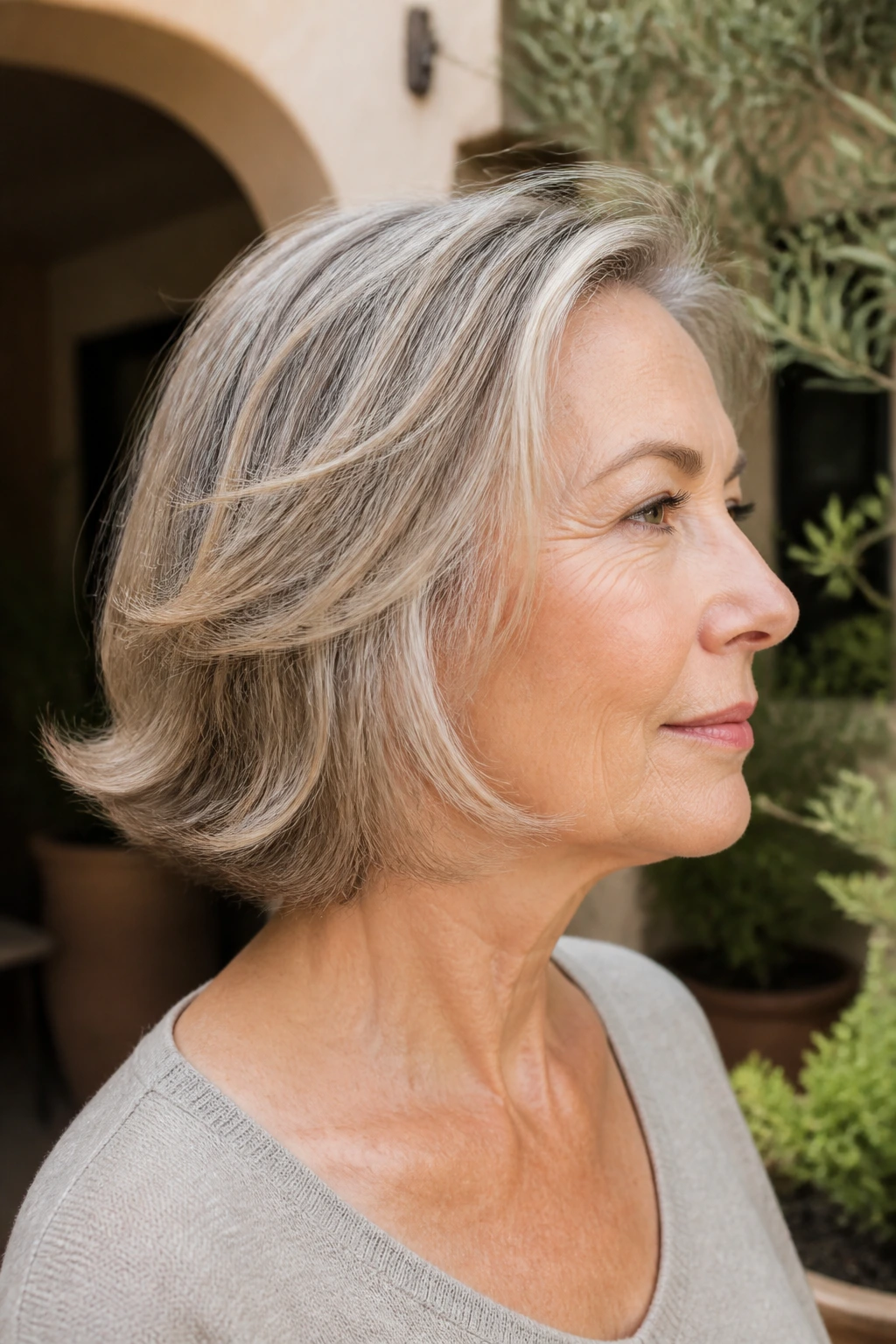
A neck-grazing flip shag has a little swing at the bottom, and that swing can be a lifesaver if your hair wants to curl under too hard or collapse straight down. The ends skim the neckline and naturally flick out when the cut is done well. It looks lively without feeling rebellious.
This shape is especially kind to straight hair that needs some movement. Instead of hanging in a flat curtain, the layers encourage the ends to bend away from the neck. That keeps the profile lighter and prevents the haircut from pressing into the jawline. You can wear it with a middle part or just off center, depending on how much lift you want.
A round brush helps here, but only at the very end. The rest of the cut should do the work. If the flip gets too big, the layers are probably too short or too high. If it barely moves, the perimeter may be too heavy. That little balance is what makes the style feel fresh.
15. Blunt-Base Soft Layer Shag

This one is for women who like a little structure at the bottom. A blunt-base soft layer shag keeps the perimeter solid, which makes fine hair look fuller, then breaks the interior with soft layers so the cut never feels helmet-like. The result is tidy, not puffy.
I like this option for anyone who has tried a heavily layered cut and hated how thin the ends looked by week three. The blunt base gives the eye a line to hold onto. The layers sit above it and move around enough to keep the style from looking stiff. That’s the hidden magic.
Ask for a soft, rounded outline with low internal layering and no fringe. A center part can make it feel sleek; a side part gives it more lift. If you want a cut that behaves well with minimal styling, this is a strong bet. It’s the haircut version of a well-cut jacket. Not flashy. Just right.
16. Razor-Textured Wedge Shag
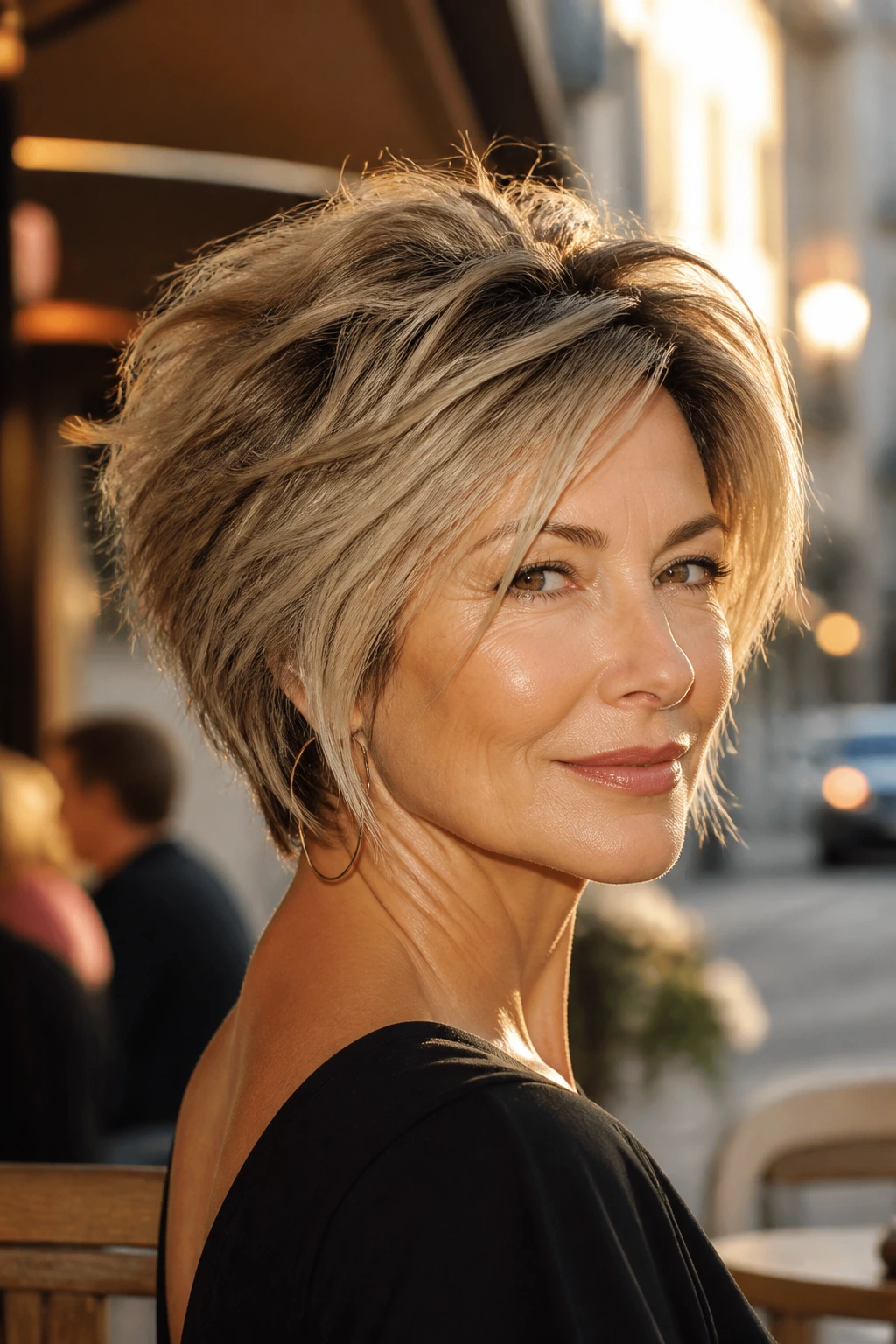
A razor-textured wedge shag has a slightly angled back and more length toward the front, which gives the haircut a sculpted, modern line. It is sharper than some of the softer styles here, but the shag texture keeps it from turning severe. Think shape first, texture second.
It works well on hair that naturally wants to hug the head in the back and fan out at the sides. The wedge structure reins that in. The razor texture softens the surface so the cut still moves when you turn your head. That combination can be especially flattering on women with strong cheekbones or a longer neck.
This is not the place for heavy product. A tiny bit of cream or paste is enough to define the ends. Too much and the angle disappears. When it’s right, you get a shape that feels lifted at the back and easy around the face, which is a rare little luxury in short hair.
17. Feathered Crown Lift Shag
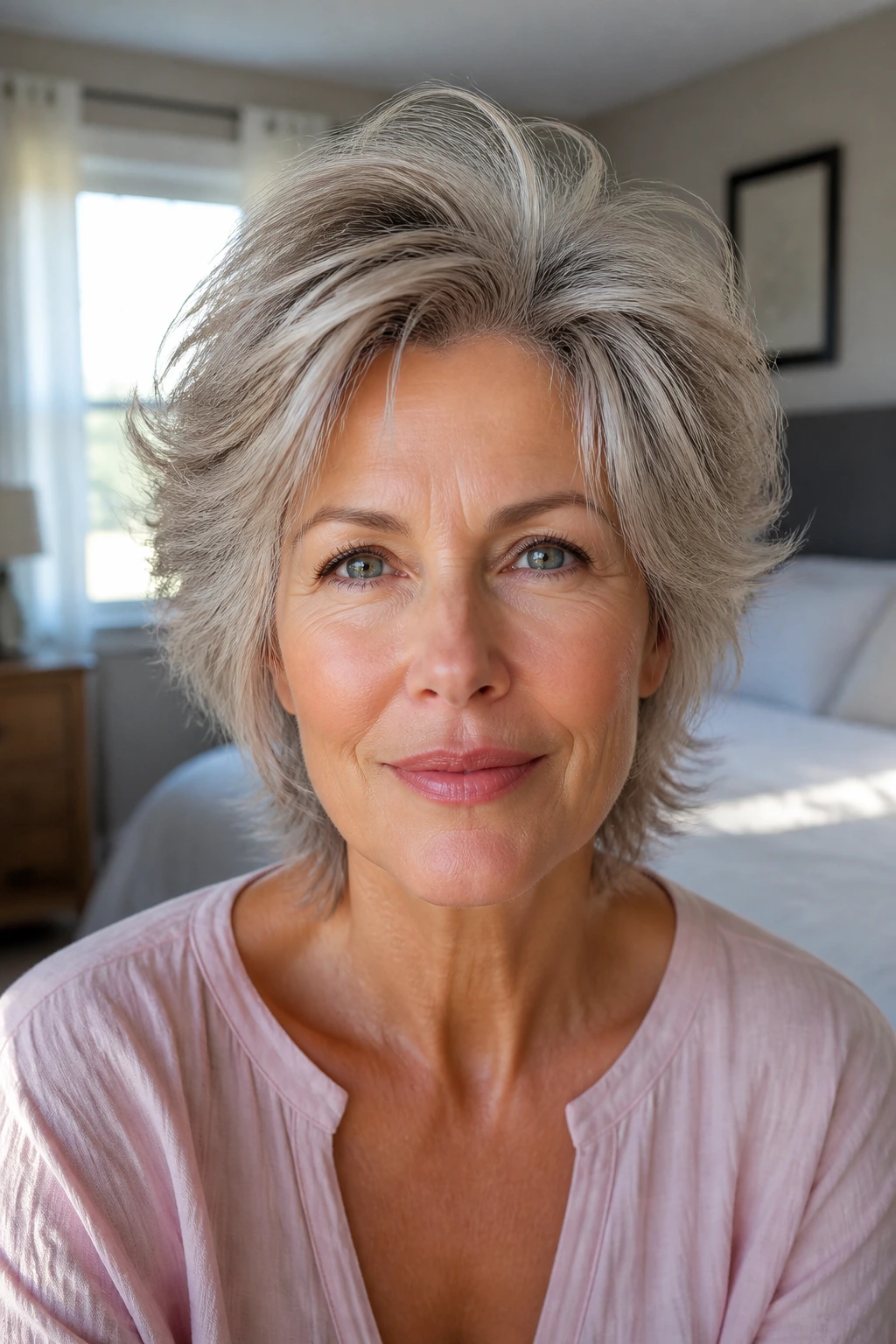
The crown is the whole story here. A feathered crown lift shag puts the shortest, lightest layers on top so the roots stand up instead of drifting flat, while the sides stay soft enough to keep the haircut from looking top-heavy. That is a useful trick when hair starts losing body where you need it most.
This cut is good for women who like short hair but hate the look of a flat top. It gives a subtle boost without asking for backcombing or a can of spray in every morning. The neckline stays tidy, the sides skim rather than bulk out, and the no-bang shape means the face stays open.
Styling it is simple. Blow-dry the crown first, lifting with your fingers or a small vent brush, then let the ends fall where they want. If the crown starts to collapse by midday, a dry texture spray at the roots can help. Use a light hand. The point is lift, not helmet.
18. Easy Grow-Out Shag
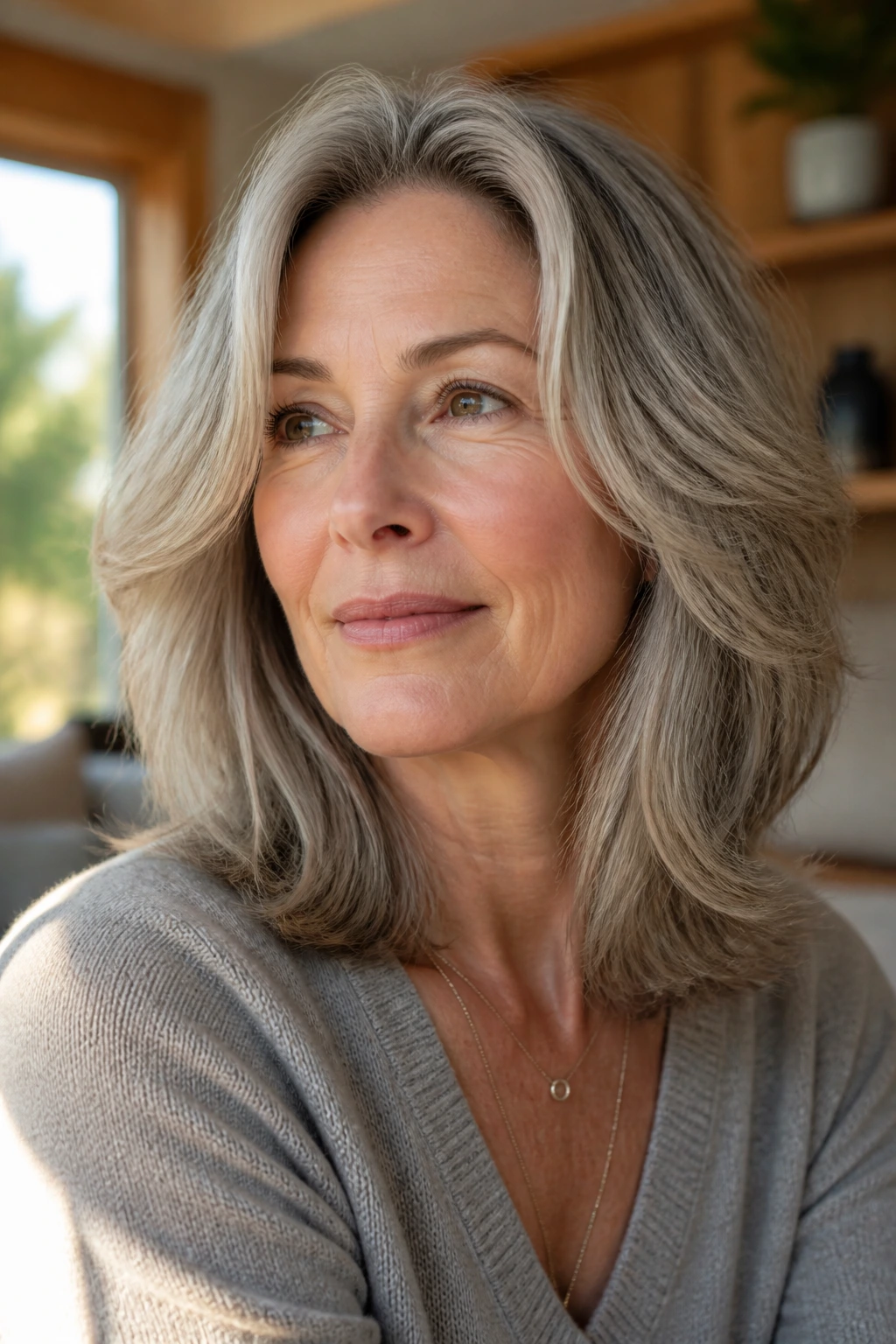
An easy grow-out shag is the one to choose if you know yourself well enough to admit you won’t be back in the salon every four weeks. The layers are blended, the edges are soft, and the shape stays flattering even when the cut starts to relax. It’s a practical haircut, which I say as a compliment.
The magic is in how the layers are connected. Nothing is so short that it suddenly sticks out, and nothing is so blunt that it creates a hard line when the length grows. That makes it a smart bridge from a pixie, a bob, or a previous shag that’s starting to look a little tired.
Ask for a soft perimeter, face-framing pieces that begin around the cheekbone, and a neckline that can grow a bit without turning boxy. If you color your hair, this is one of the kinder shapes for roots and highlights too, because the movement keeps the grow-out from looking obvious. Some cuts need perfect timing. This one forgives a little drift.
How the Layer Pattern Changes the Whole Silhouette
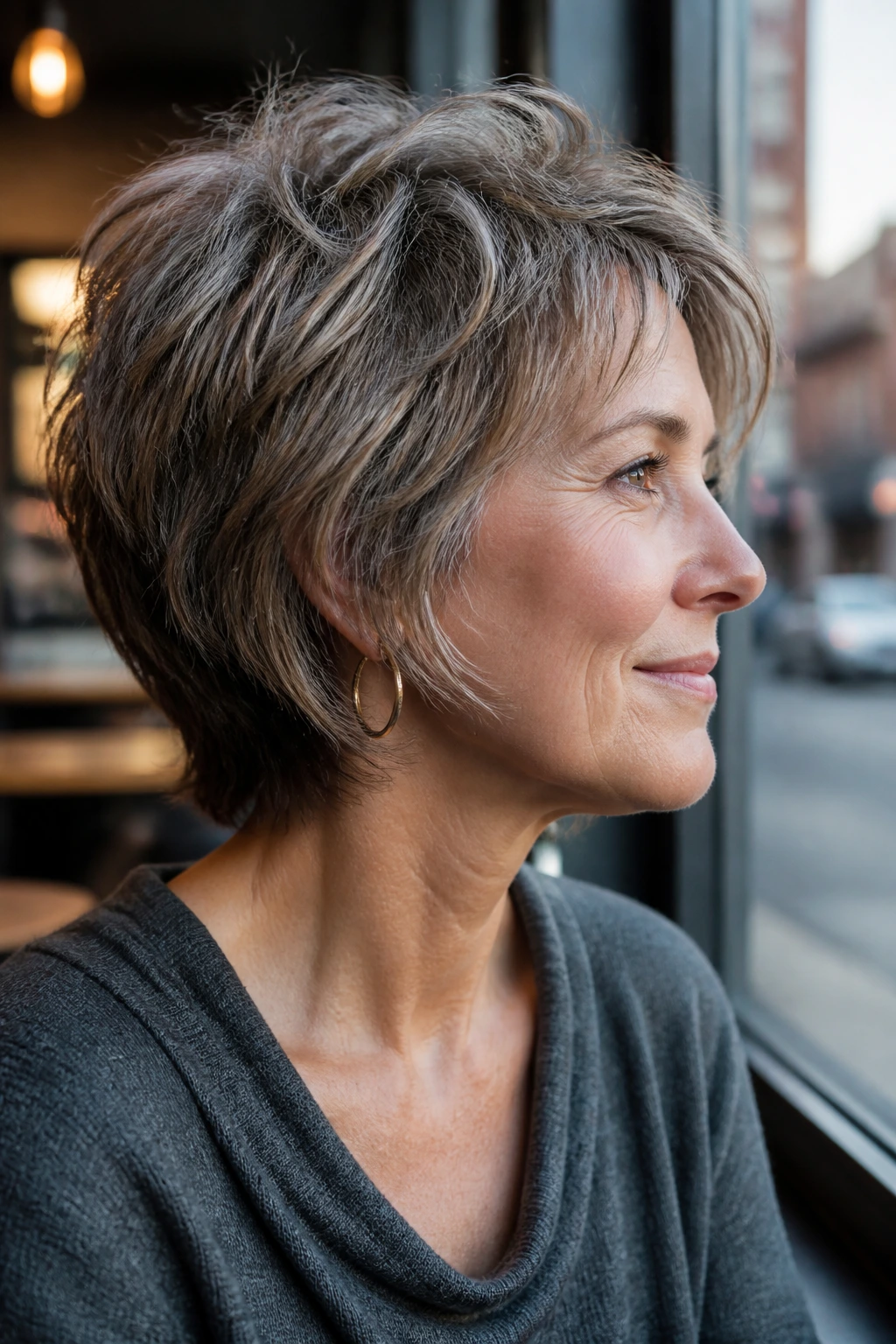
A shag lives or dies by where the layers sit. Too high, and the hair can look thin at the ends. Too low, and the haircut becomes a blunt bob with a few accidental wisps hanging around it. The sweet spot is a layered map: lighter at the crown, softer through the sides, and controlled at the perimeter.
That silhouette matters more as hair changes with age. Finer strands need lift near the scalp, while drier ends need enough weight to stay civilized. A good shag respects both. It gives the top room to breathe without making the bottom look stringy.
I also like how a shorter layered shape changes the profile from the side. A blunt cut can push the head shape outward, especially on dense hair. A shag breaks that outline into smaller moves, which makes the whole haircut feel lighter. It’s not about looking younger. It’s about looking like your hair still has ideas of its own.
Matching the Cut to Your Face Shape and Glasses

Round faces usually do well with a little height at the crown and longer pieces that skim past the cheeks. That extra vertical line keeps the haircut from widening the face. A side part helps too, especially if the glasses have a stronger frame.
Square faces often benefit from soft, broken ends around the jawline. Hard, straight edges can echo the jaw too closely, while feathered sides take the edge off. If your jaw is strong and you like that, fine. Just keep the layers soft enough that the haircut doesn’t turn boxy.
Heart-shaped faces and longer faces get a different kind of help. Heart shapes usually want fullness around the jaw, not all the volume at the temple. Longer faces often look better with side movement and a little width near the middle rather than height on top. Glasses complicate nothing if the cut is trimmed so the side pieces land cleanly above or below the frame, not right in the middle of it.
What to Ask for at the Salon
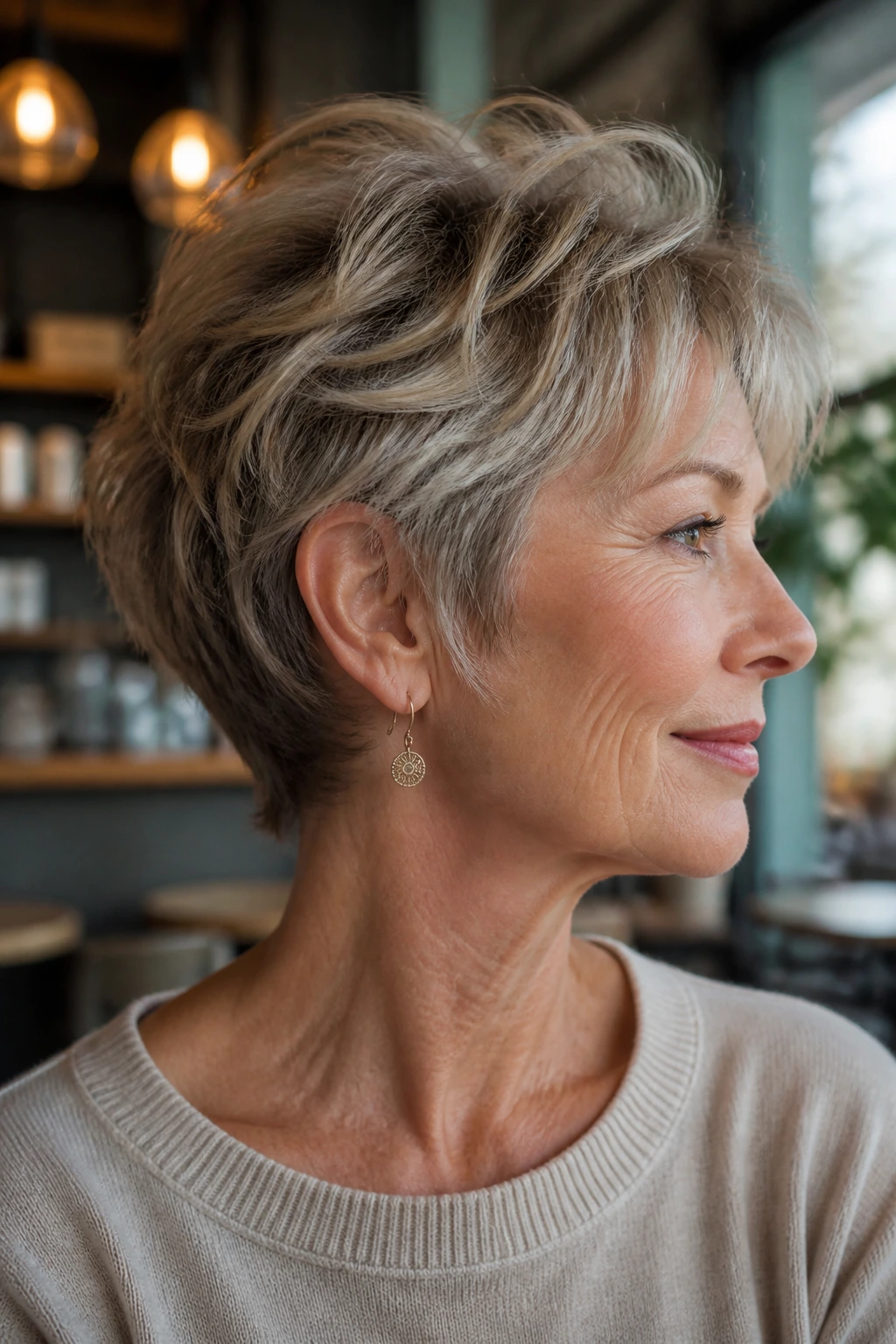
Bring pictures, but bring words too. Photos show the silhouette; words explain the part you do and do not want. That matters more than people think, because one stylist’s shag is another stylist’s “let me thin this until it floats away.”
Say you want short shag haircuts without bangs for older women with no heavy fringe, soft layers around the face, and enough weight at the bottom to keep the shape full. If your hair is fine, ask them not to over-thin the ends. If your hair is thick, ask them to remove bulk from the inside rather than chopping the perimeter to pieces.
A useful line is: “Keep the front open and the crown lifted, but don’t expose the scalp.” That’s plain English, and it tells the stylist exactly what matters. You can also point to where you want the shortest pieces to start—cheekbone, jaw, or nape—so the result fits your face instead of some generic salon chart.
Styling Short Shags Without Bangs at Home
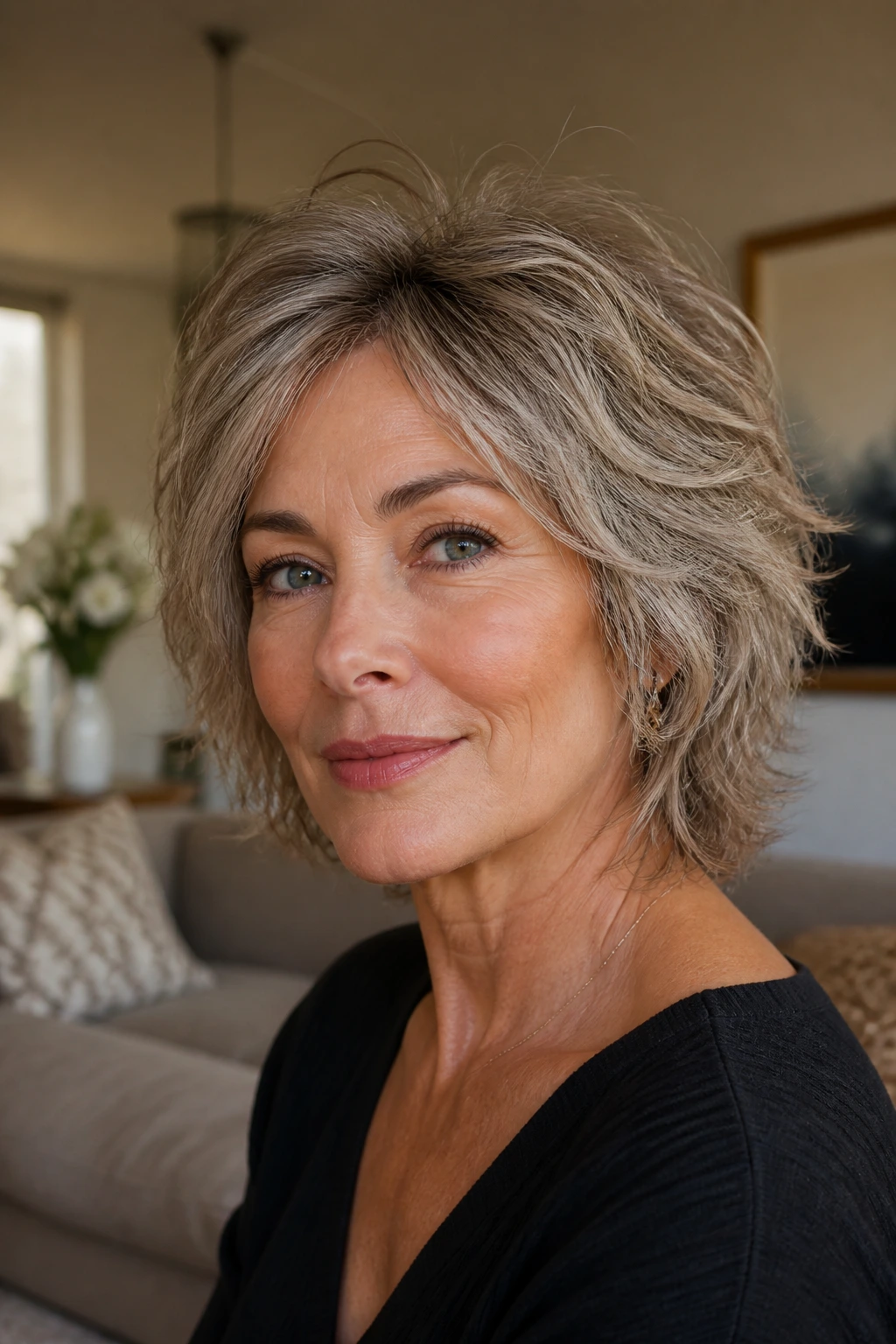
A shag without bangs is forgiving, but it still likes a little direction. Start with damp hair, not soaking wet hair. Work a lightweight mousse through the roots and mid-lengths, then rough-dry until the hair is about 80 percent dry. That part matters. If you start brushing too soon, you flatten the lift before it has a chance.
For straight hair, a vent brush or small round brush gives the ends a gentle bend. For waves, scrunch and diffuse on low heat. For curls, use leave-in conditioner plus a touch of gel, then keep your hands out of it until the hair is dry. The cut should do most of the visual work; your job is just to nudge it in the right direction.
The no-bangs part makes styling easier than people expect. You’re not forcing a front section to sit on command. You’re letting the front pieces sweep away from the face, tuck behind an ear, or fall in a soft diagonal. That openness is part of the charm. Leave it alone a little. These cuts usually look better when they are not overworked.
Tools That Make the Routine Easier
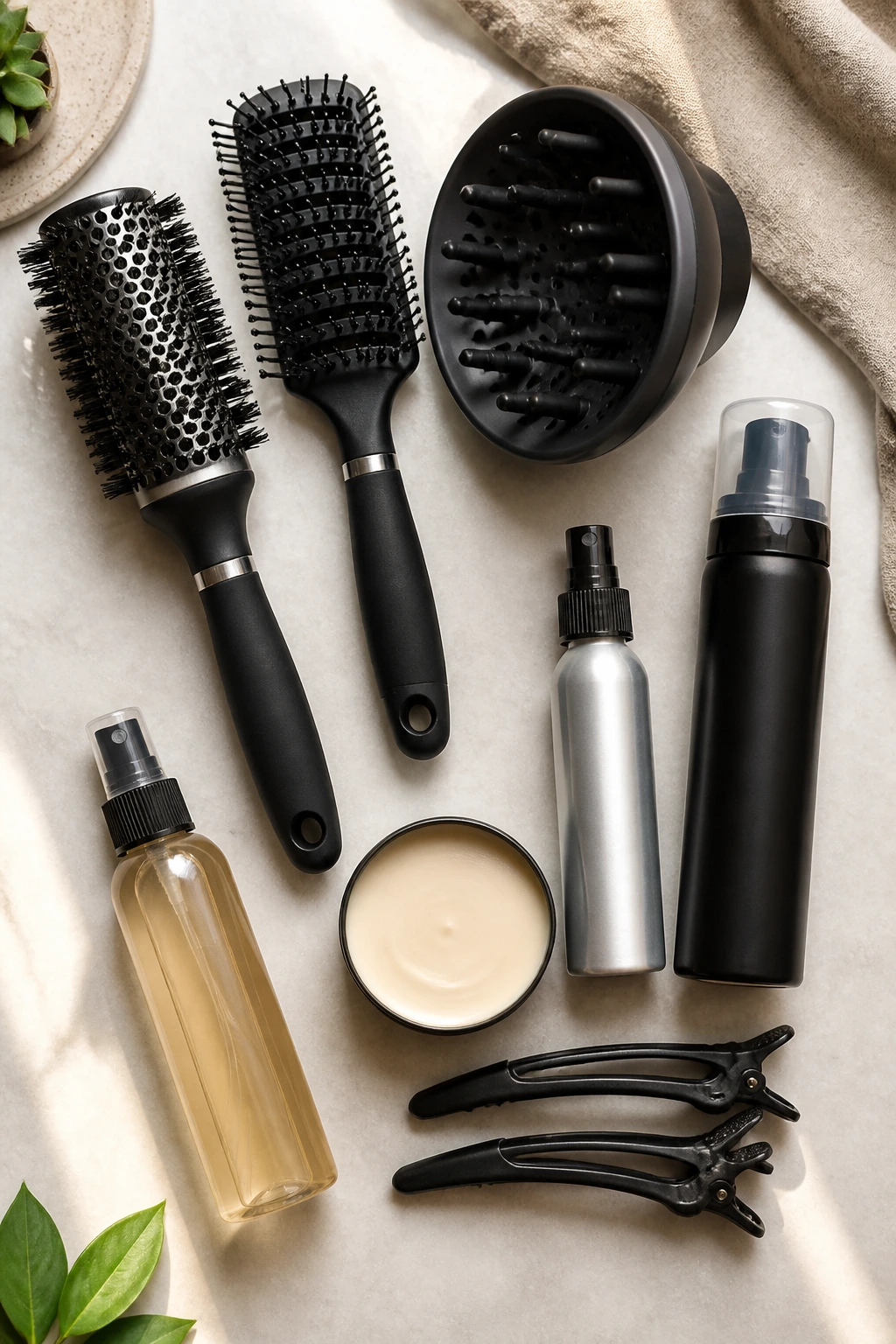
- 1-inch or 1.25-inch round brush: Useful for bending the ends and giving short layers a little shape around the face.
- Vent brush: Good for quick root lift on fine hair and for rough-drying without adding much polish.
- Diffuser attachment: The right tool for waves and curls; it keeps the texture from blasting apart under full heat.
- Light mousse or root lift spray: Helps the crown stay up without making the hair stiff or sticky.
- Texture spray or soft wax: Best for piecey ends and separated layers, especially on straight hair.
- Heat protectant: Worth using even on short hair, because repeated hot styling shows up fast on dry or silver strands.
- Duckbill clips: Handy for setting the crown while it cools if you want more lift without teasing.
Keeping the Shape Between Salon Visits
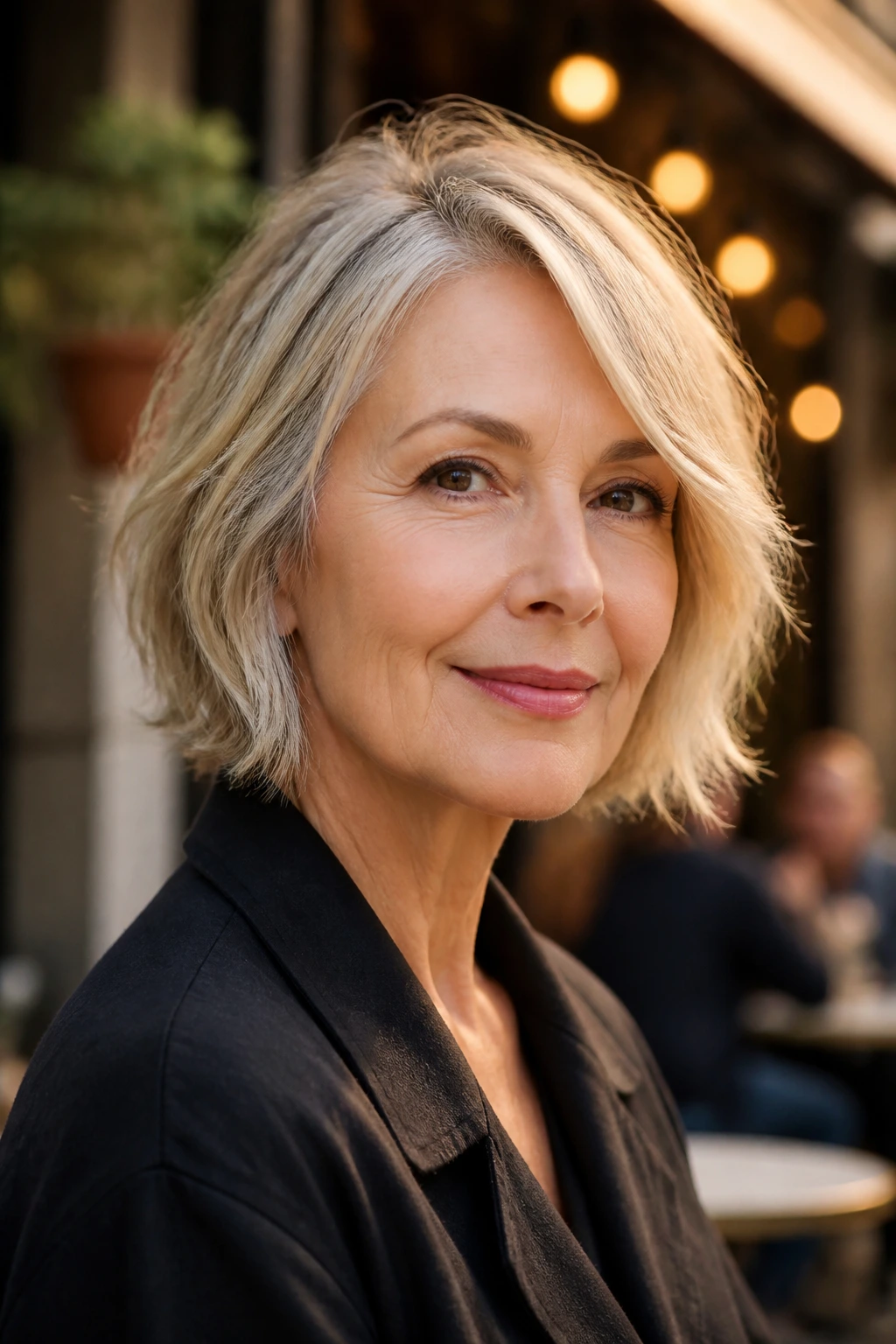
Short shags stay handsome when the neckline and perimeter stay clean. For the shortest versions, plan on trims every 5 to 7 weeks. The longer, softer shapes can stretch to 7 or 8 weeks before they start losing their lines. Once the ends get wispy, the haircut loses the crispness that makes the layers look intentional.
If you’re growing the cut out, ask for soft dusting rather than reshaping everything at once. That preserves the overall silhouette while removing only the strays. It helps to keep a photo of the last good version so the stylist knows whether you want the crown softened, the nape lengthened, or the face frame left alone.
Day to day, the biggest maintenance job is resisting the urge to bury the haircut under heavy product. A shag wants movement. Too much cream, oil, or spray makes it hang. A little lift at the root and a quick finger-shape near the face usually does more than twenty minutes of fussing.
Product Choices for Fine, Thick, Curly, and Gray Hair
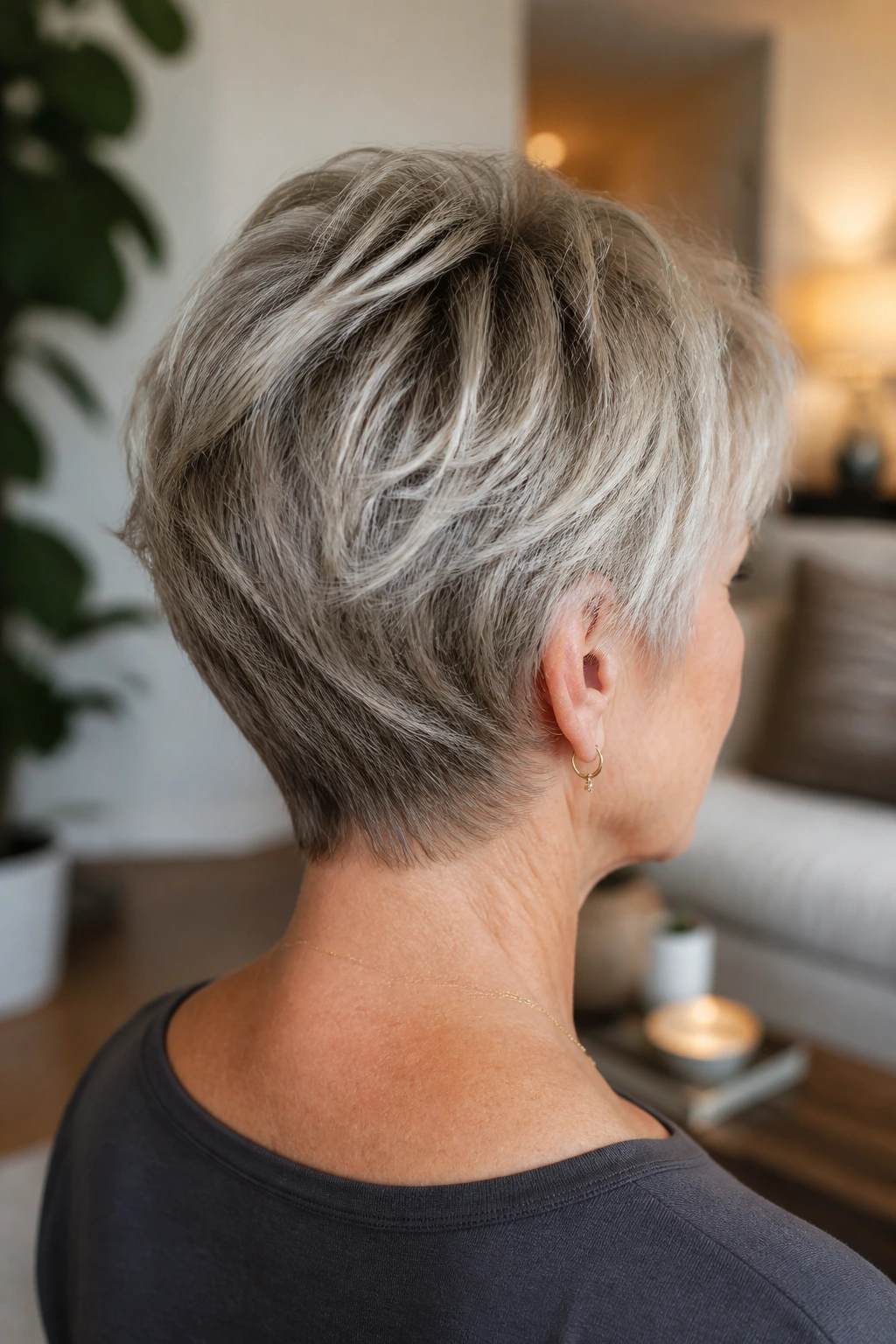
Fine hair likes lightness. Mousse, root spray, and a tiny bit of dry texture spray are usually enough. Heavy creams can make it go limp in a hurry, especially at the crown, so I’d keep those for the ends only.
Thick hair wants control. A smoothing cream before blow-drying can keep the surface calm, and a light wax at the ends helps the layers separate instead of puffing. Curly hair needs slip and definition, so leave-in conditioner plus gel or curl cream tends to work better than a lot of blow-drying.
Gray and silver hair often benefits from moisture, because it can feel coarser or drier. A soft conditioner, a heat protectant, and a touch of shine product on the mid-lengths can make the layers look polished. The trick is not to overdo the shine near the scalp, where it can flatten the very lift you’re trying to keep.
Mistakes That Make a Shag Look Scruffy
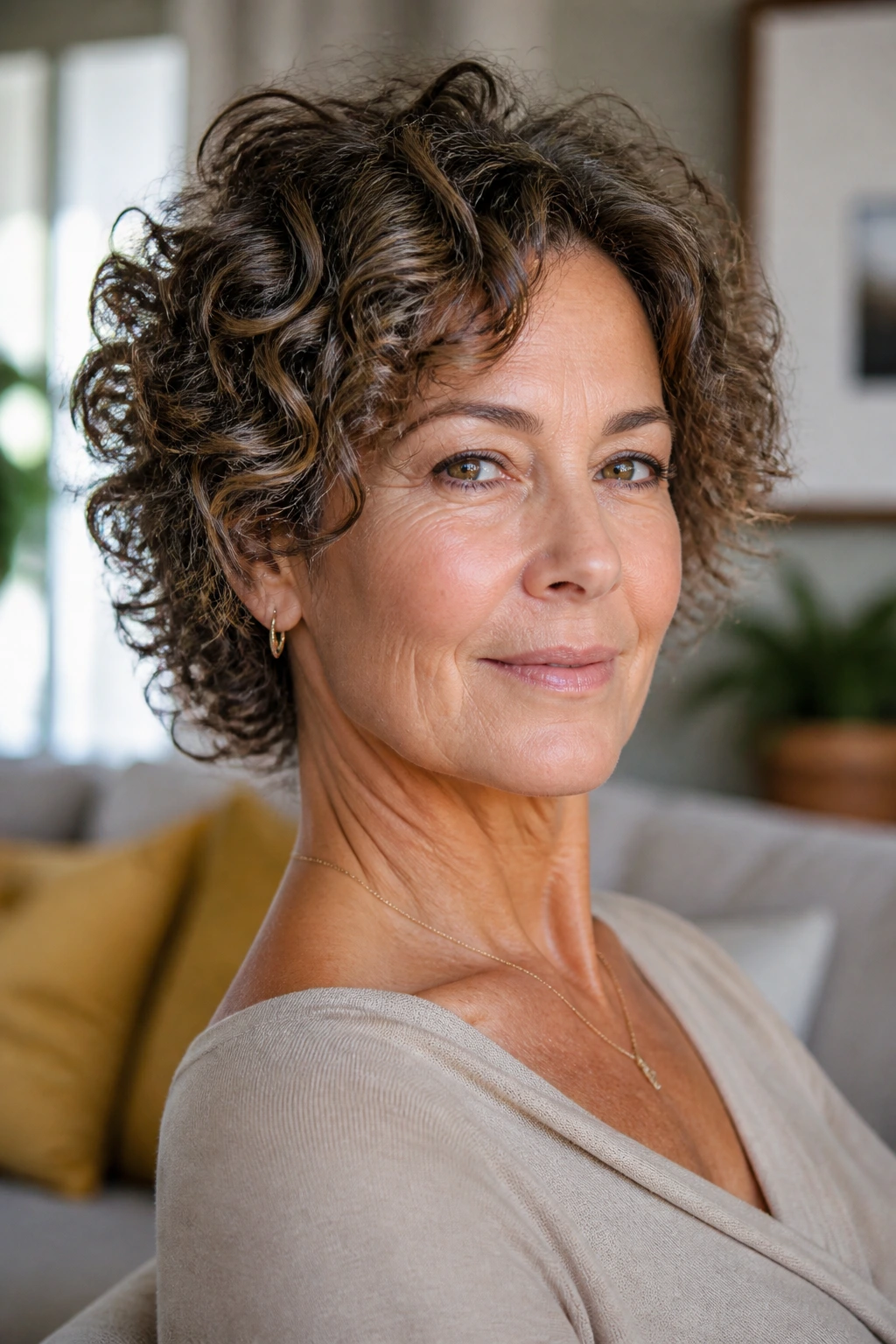
Over-thinning fine hair: If the ends look see-through and the crown is still flat, the haircut has been thinned in the wrong places. The fix is more weight at the perimeter and softer internal layers.
Cutting the crown too short too fast: That can leave a tall top with not enough length to blend into the sides. You end up with a cap instead of a shape. Ask for lift, yes, but not a disconnected helmet.
Ignoring the nape: A fuzzy back can make even a pretty front look unfinished. A clean taper or soft edge at the neckline keeps the whole cut tidy.
Using too much product: Shags need movement, not lacquer. If hair starts looking damp and heavy by noon, you’ve gone too far. Use less, then go lighter.
Letting the cut grow until the layers collapse: Once the perimeter loses structure, the shag turns vague. That’s the point where a trim helps more than another styling trick.
Variations and Tweaks Worth Trying
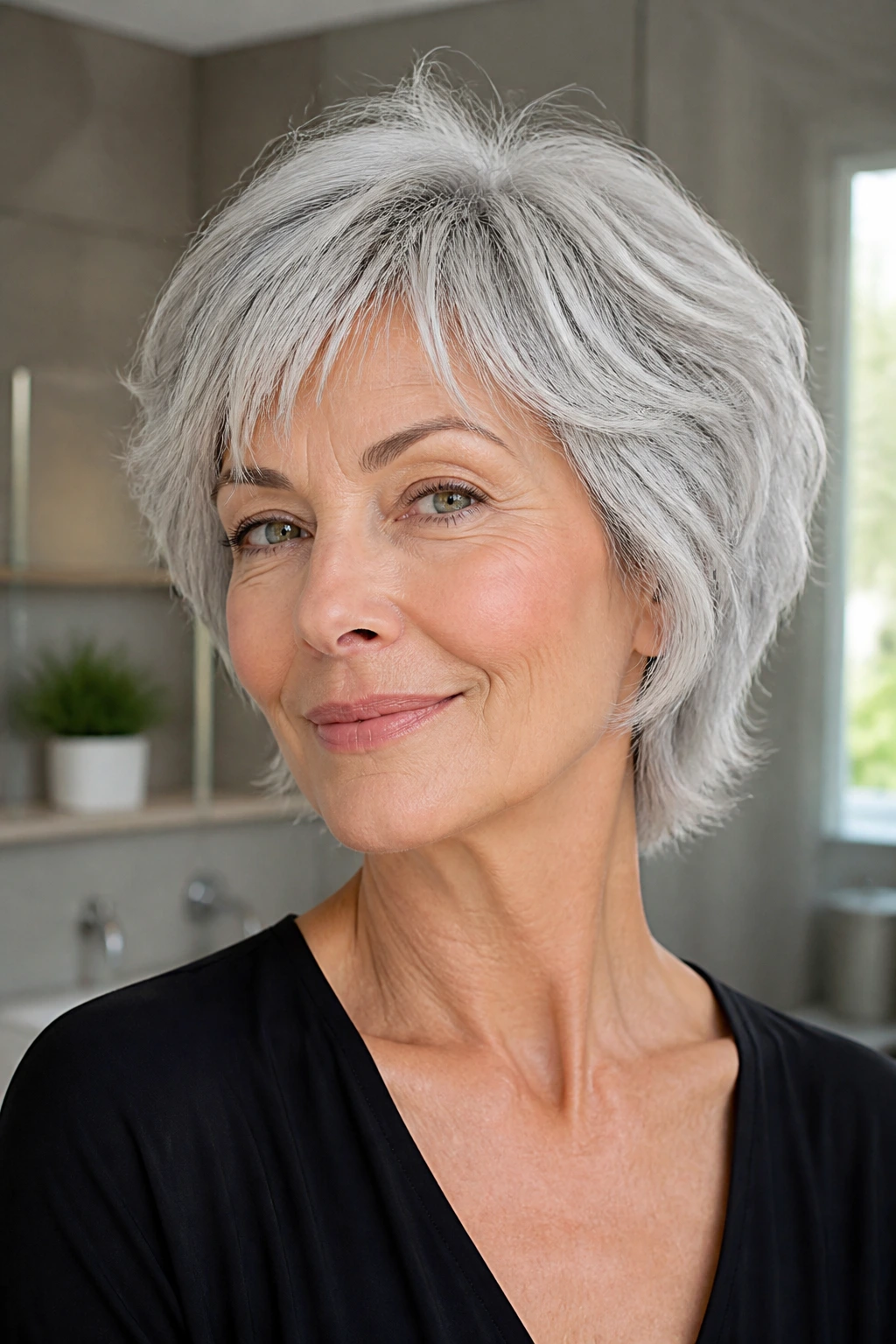
The Softer Sweep: Keep the same short shag shape, but let the front pieces start lower at the cheekbone so the face feels more open and less choppy. This suits women who want movement without a sharp edge.
The Polished Version: Ask for blended layers and a smoother bottom line. It’s a smart choice if you like blow-drying and want the haircut to look neat with a blazer, scarf, or glasses.
The Air-Dry Version: Build the cut around your natural wave or curl pattern and keep the layering lighter. This is the one for women who would rather spend five minutes on hair than twenty.
The Silver-Glow Version: Use a softer point-cut finish and a little extra length around the temples so gray strands can reflect light. On white hair, the texture itself becomes the detail.
The Low-Drama Grow-Out: Keep the crown short enough for lift, but soften the sides and nape so the cut can stretch between appointments without looking awkward.
Frequently Asked Questions

Do short shag haircuts without bangs work on fine hair?
Yes, and they often work better than blunt cuts because the layers create lift at the crown. The key is to keep enough weight at the ends so the hair doesn’t go wispy or transparent.
What if I wear glasses every day?
That’s actually a good reason to skip bangs. Ask for face-framing pieces that sit above or beside the frame, and keep the temples soft so the glasses don’t fight the haircut.
Can curly hair wear a short shag without bangs?
Absolutely. Curly hair usually benefits from a shorter shag because the layers stop the shape from becoming triangular, but the cut needs to respect shrinkage so the top doesn’t end up too short.
How often should I trim a short shag?
Most short versions need a trim every 5 to 7 weeks. If the neckline starts looking fuzzy or the perimeter loses shape before then, that’s your cue.
Will this haircut make my face look wider?
It can if the volume sits too low and the sides flare out. Ask for lift at the crown and softness around the jaw, and the shape usually does the opposite.
Can I air-dry a short shag and still look put together?
Yes, if the cut is built for your natural texture. A little leave-in conditioner and a light scrunch are often enough, especially on wavy or curly hair.
What should I ask for if I do not want any fringe at all?
Say you want the forehead open, the front pieces swept away from the face, and no short section that lands across the brow. That tells the stylist you want movement around the face, not a bang line.
Is a shag harder to grow out than a bob?
Usually no. A shag tends to soften as it grows, which can be kinder than a blunt line that suddenly turns shapeless. The grow-out only gets awkward if the layers were cut too short or too high to begin with.
The Cut That Keeps Its Shape
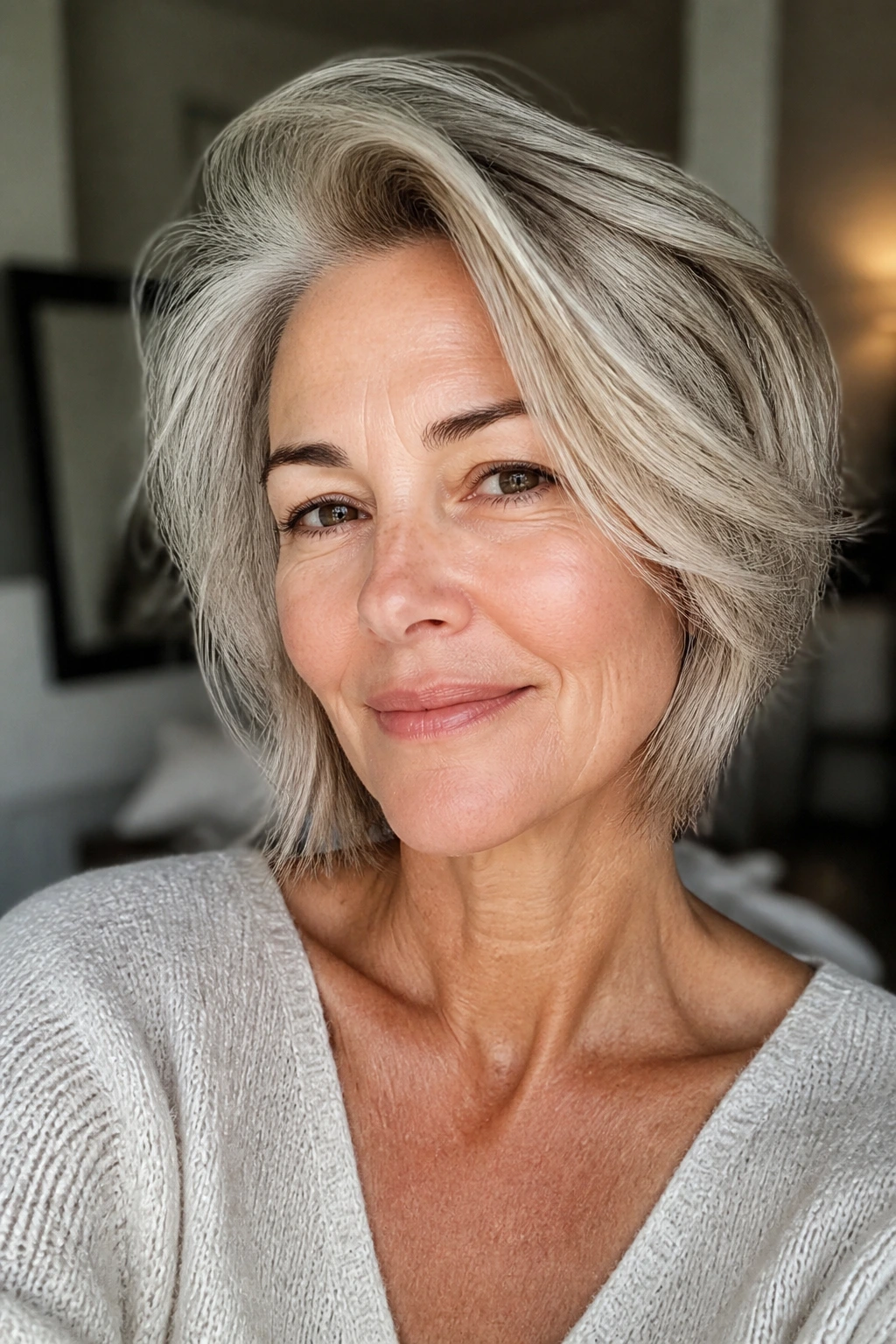
The best short shag haircuts without bangs for older women do something rare: they make hair look lighter without making it look like less. That’s a useful distinction. You still get a shape, a neckline, a bit of lift, and enough movement to keep the cut from feeling staged.
What I keep coming back to is how practical these styles are. They work with glasses, gray hair, waves, cowlicks, and the plain fact that most people do not want to wrestle a brush for half an hour before breakfast. A good shag respects that. It gives you style without demanding a performance.
Pick the version that matches your texture and your tolerance for styling, then ask for the layers to be placed with purpose. That’s where the difference lives.
