



A short shag cut can do something wavy hair over 50 often needs badly: it can make the bend look intentional instead of accidental. When waves start changing texture, the old rules stop working. A blunt bob that used to behave may suddenly puff at the ends. A layered cut that looked airy at the salon can turn fuzzy by lunch if the weight is in the wrong place.
The sweet spot is usually somewhere between chin and collarbone, with layers cut to follow the wave pattern instead of fighting it. Not too neat. Not too choppy. The good versions have enough movement to keep the hair from sitting like a block, but enough structure that the shape still looks planned when the air dries and the front starts doing its own thing.
There’s a reason short shag cuts keep showing up on people whose hair has a little history in it. They work with bends, not against them. They also handle silver hair, denser crowns, and the face-framing needs that come with glasses, soft jawlines, and hair that no longer wants to be bullied into one flat shape. The trick is choosing the right kind of shag, because some are airy and flattering, and some are just a pile of layers with bad manners.
Why These Short Shag Cuts Earn Their Keep

- They move with your wave pattern: A good shag lets the natural S-bend show up instead of forcing every section into the same wave size.
- They keep bulk from ballooning at the ends: Shorter layers remove the heavy triangle shape that wavy hair can grow into fast.
- They make silver strands look deliberate: Texture gives gray and white hair a cleaner read, especially when the cut is crisp around the face.
- They don’t need a full blowout to look finished: Most of these cuts look better with a quick diffuse, a rough-dry, or even a finger twist than they do with a round brush marathon.
- They grow out with manners: When the layering is placed well, the cut still has shape six or eight weeks later instead of dropping into a shapeless box.
- They can be tuned to your face, glasses, and density: The same shag can be softened, tightened, or lifted depending on where the shortest pieces land.
1. Chin-Length Shag With Soft Face Frame
This is the shag I reach for when someone wants movement without a lot of drama. The length lands around the chin, which gives wavy hair enough room to show its bend while keeping the outline neat. That chin hit matters more than people think; it stops the cut from sliding into a triangle and gives the jaw a clean line without feeling severe.
Why It Works
The soft face frame starts around the mouth or cheekbone, not the temples. That keeps the front from looking too busy and lets the shortest pieces tuck into the wave pattern instead of floating away from it. If your hair is medium density, this cut usually dries into a rounded shape with a little flick at the ends.
What to Ask For
- Keep the perimeter at chin length, with a slightly softer edge.
- Start the shortest face-framing layers at the cheekbone or just below.
- Use point cutting on the ends so they don’t sit in a hard line.
Best on: loose to medium waves that puff at the bottom when they get too long. A quick scrunch with foam and a diffuser is enough most days.
2. Bixie Shag With Crown Lift
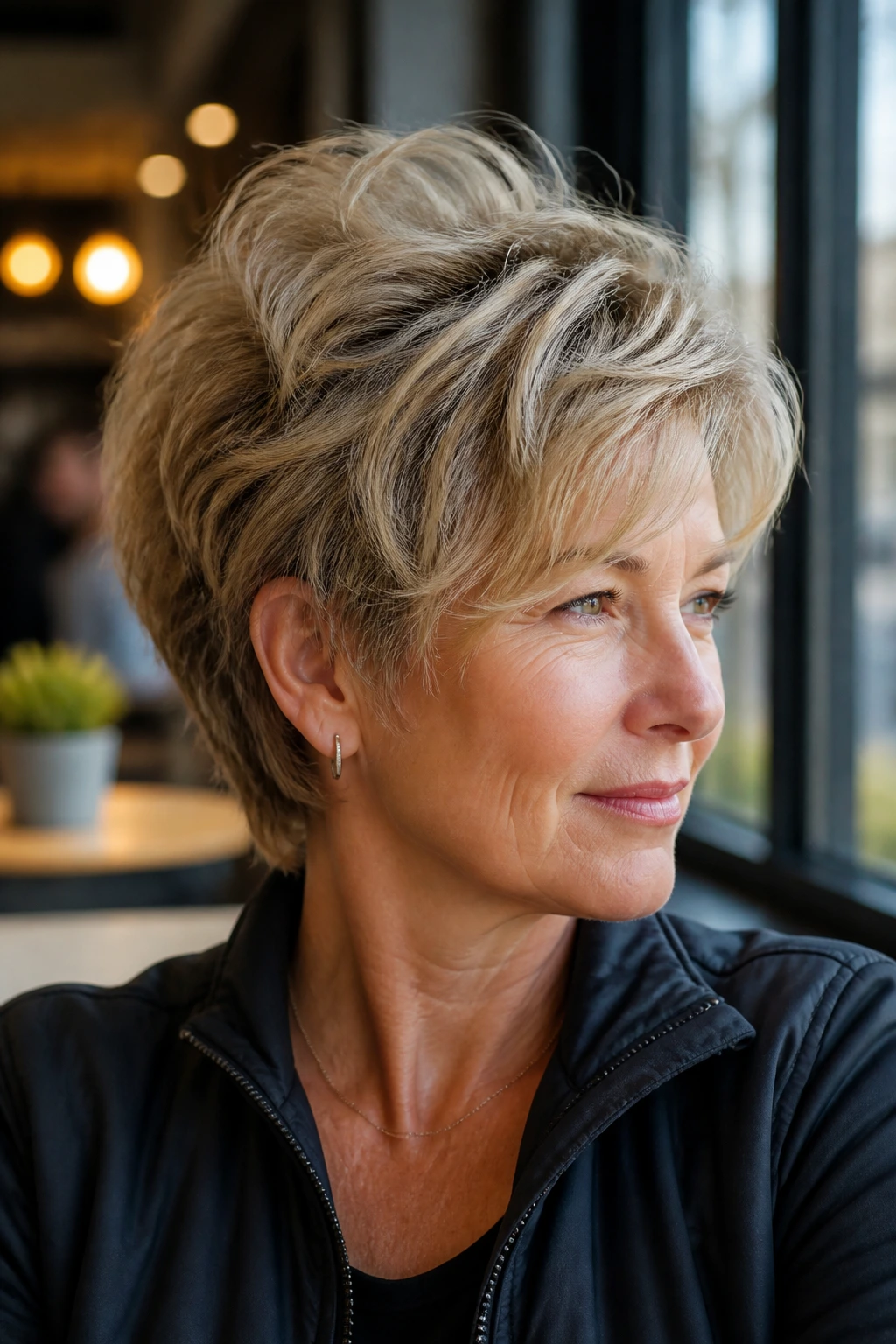
Want something between a pixie and a bob? This is the one. A bixie shag keeps the nape short, lets the top stay a little longer, and builds lift where wavy hair often collapses first: the crown.
The shape opens the neck and makes the whole head read lighter. That can be a relief if thick hair feels like a helmet by the end of the day. The trick is not to overtexturize the top; you want airy, piecey movement, not a fluffy cap.
What Makes It Different
A bixie shag works because the layers are stacked just enough to create height, but the sides still hold some length near the ear. That balance keeps the cut from looking too severe. It also plays nicely with glasses, because the side pieces can skim the frame instead of getting trapped behind it.
Styling Note
Push the crown up with mousse at the roots, then dry from side to side with your fingers. If you use a round brush on everything, you’ll flatten the texture that makes this cut work in the first place.
3. Jaw-Grazing French Shag

If your wave pattern is loose and your hair likes to bend rather than curl, the jaw-grazing French shag has a lot going for it. It sits right at that flattering point where the face frame can soften the jaw without hiding it.
The best versions feel a little undone, but not sloppy. That means the layers are soft and internal, with enough length left at the sides to keep the cut from springing outward. On silver or salt-and-pepper hair, that airy edge can look especially clean.
Why It Flatters Wavy Hair
Waves need room to form, but they also need a perimeter that gives them a boundary. This cut does both. It lets the front pieces swing, while the back stays compact enough that the whole shape doesn’t sprawl.
Ask Your Stylist For
- Jaw-length pieces in front, with gentle graduation through the sides.
- Layering that starts around the cheekbone, not up near the crown.
- A soft, feathered finish rather than heavy razor shredding.
A dab of lightweight cream on the ends is enough. Too much product will darken and clump the front pieces.
4. Curtain-Bang Shag Bob
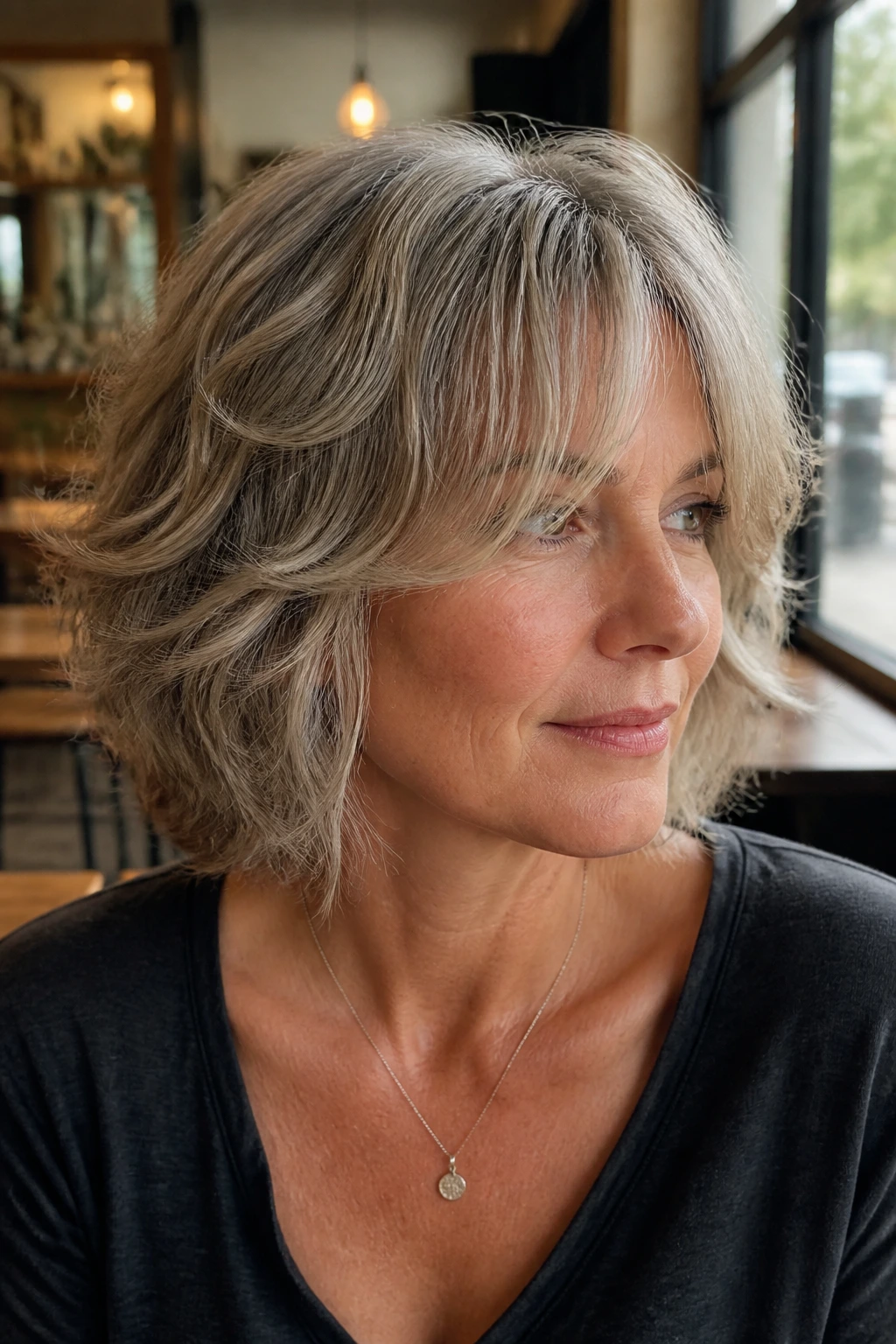
Curtain bangs do not have to look fussy. On wavy hair over 50, they can be one of the smartest ways to break up a strong forehead line and give the whole cut a little lift without chasing a full fringe.
The bob length keeps the outline tidy, while the curtain pieces open in the middle and sweep outward. That shape is forgiving on busy days because it can look polished even when it isn’t perfectly styled. And that is the charm here.
What to Watch For
The bang length matters. Too short, and the wave springs up faster than expected. Too long, and the pieces start hanging like curtains in the wrong room. Ask for the shortest point around eyebrow level when dry, with the longest pieces brushing the cheekbones.
Best For
- People who wear glasses and want the fringe to work around the frames.
- Hair that gets flat at the crown but puffs at the temples.
- Anyone who wants forehead softening without a blunt bang commitment.
Blow-dry the bangs side to side with a small brush, then let them settle. Don’t overwork them. A little bend looks better than a rigid curve.
5. Feathered Pixie Shag
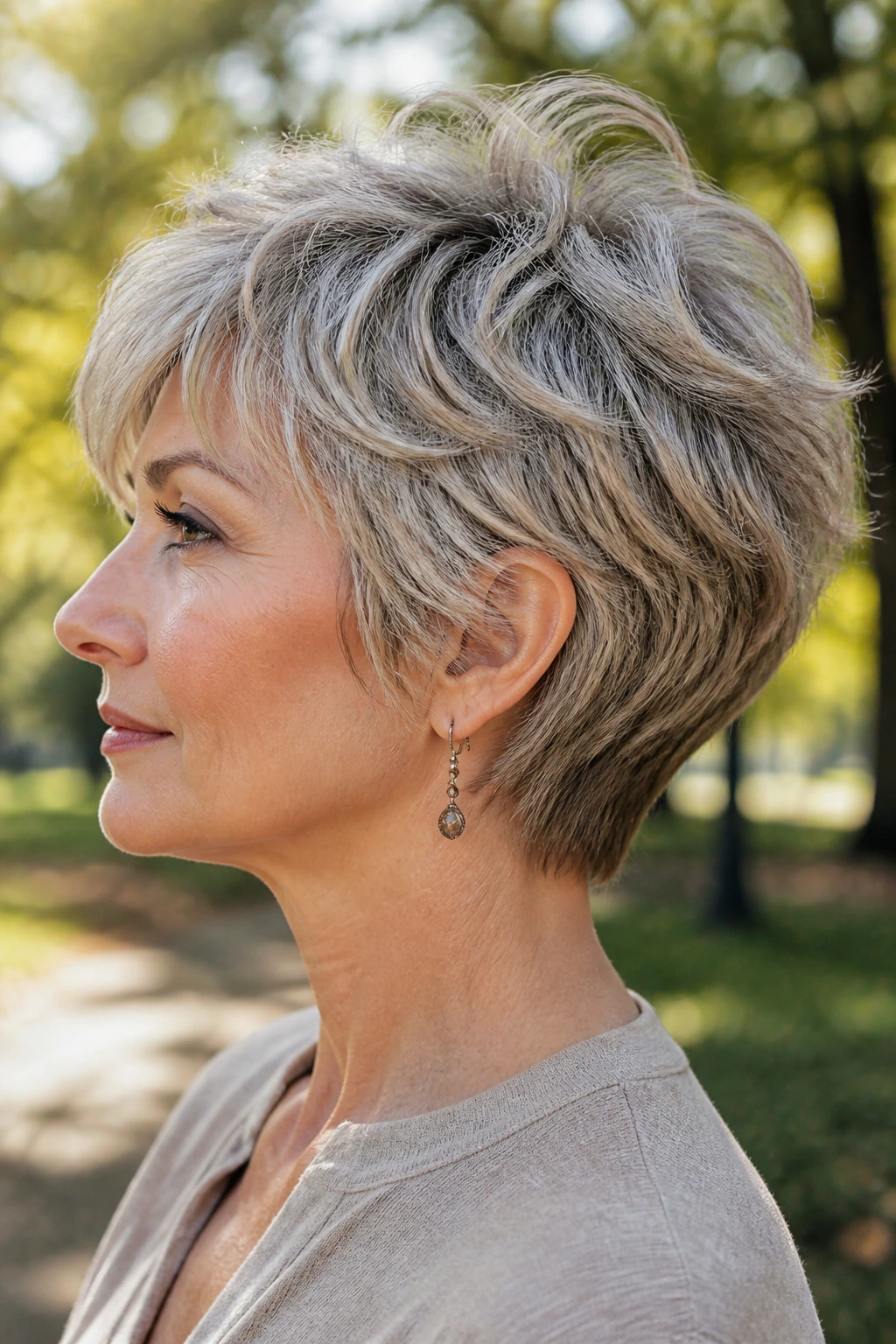
The ends of a feathered pixie shag should feel light between your fingers, almost like they’ve been shaved into air. That’s the point. The cut is short, but it still has movement, which keeps it from reading as a plain pixie.
This is a strong choice for finer waves or hair that has lost a bit of density at the top. The feathering gives the illusion of fullness without making the head look too round. It also dries fast. That part matters more than people admit.
Why It Works
A feathered pixie shag makes use of soft layering around the top and temples, while keeping the nape tapered. That means the silhouette stays neat, even when the pieces start to separate during the day. If your hair turns poofy when it’s cut too bluntly, this version usually behaves better.
Styling Tip
Use mousse at the roots and a pea-size of cream through the mid-lengths. Finger-dry the top upward, then pinch a few ends once the hair is almost dry. That last bit gives the piecey finish without making the whole cut crunchy.
6. Collarbone Shag Lob

A collarbone shag lob is still short enough to feel easy, but long enough to pull back when you want it off your neck. That flexibility is why so many wavy heads keep coming back to it.
The layers should be visible, but not sliced so hard that the bottom starts to fray. A collarbone length gives the wave a longer runway, which can be useful if your hair is looser on the bottom and stronger near the top. It also grows out gracefully, which is no small thing.
How It Sits on Wavy Hair
The shape often looks best when the front pieces are a little shorter than the back, just enough to create a swing. If the cut is too even, it can turn into a bland rectangle. If it’s too short at the crown, it swells. There’s a narrow lane here, and a good stylist will stay inside it.
This is the one I’d choose for someone who wants movement but isn’t ready to go as short as a chin bob. It gives you enough length for a half-up clip, which is handy on the days when the wave pattern wants to do something odd around the face.
7. Razored Bob With Choppy Ends

A razor cut can rescue thick waves, but only when the perimeter stays honest. That’s the rule here. You want the bottom line to be light, not shredded into a wispy mess that frays at the first hint of humidity.
The choppy ends break up the weight that thick hair tends to drag downward. That keeps the bob from puffing out around the jaw. On dense wavy hair, this can be a relief. On fine hair, it can be a mistake, so this one is better for medium to thick strands.
What to Ask For
- A blunt-ish outline with internal texture.
- Choppy, not ragged, ends.
- Razoring only where the hair is dense enough to handle it.
Styling Note
Use a wave foam or lightweight mousse, then scrunch while drying. If you flat iron the ends straight, you’ll erase the reason this cut exists. The whole point is that broken-up edge.
8. Deep Side-Part Shag

Need instant lift on one side? A deep side-part shag does that without asking for much else. The part shifts weight, creates a little drama around the forehead, and gives waves a chance to fall in a more interesting direction.
The cut can be chin length, bob length, or slightly longer. What matters is the parting and the layering around the front. A deep side part is especially useful if one temple is flatter than the other, or if your wave pattern tends to split down the middle and look too symmetrical.
Why It Works
The heavy side gives the eye something to follow. The lighter side keeps the face open. That contrast softens the whole shape and can make the hair look fuller at the crown without adding more product.
Best When
- You want extra height without teasing.
- One side of your hair lies flatter than the other.
- Your fringe refuses to stay centered anyway, so you might as well use that to your advantage.
A root-lifting spray at the part, plus a quick blast of cool air, is enough to keep it from collapsing.
9. Tapered Nape Shag
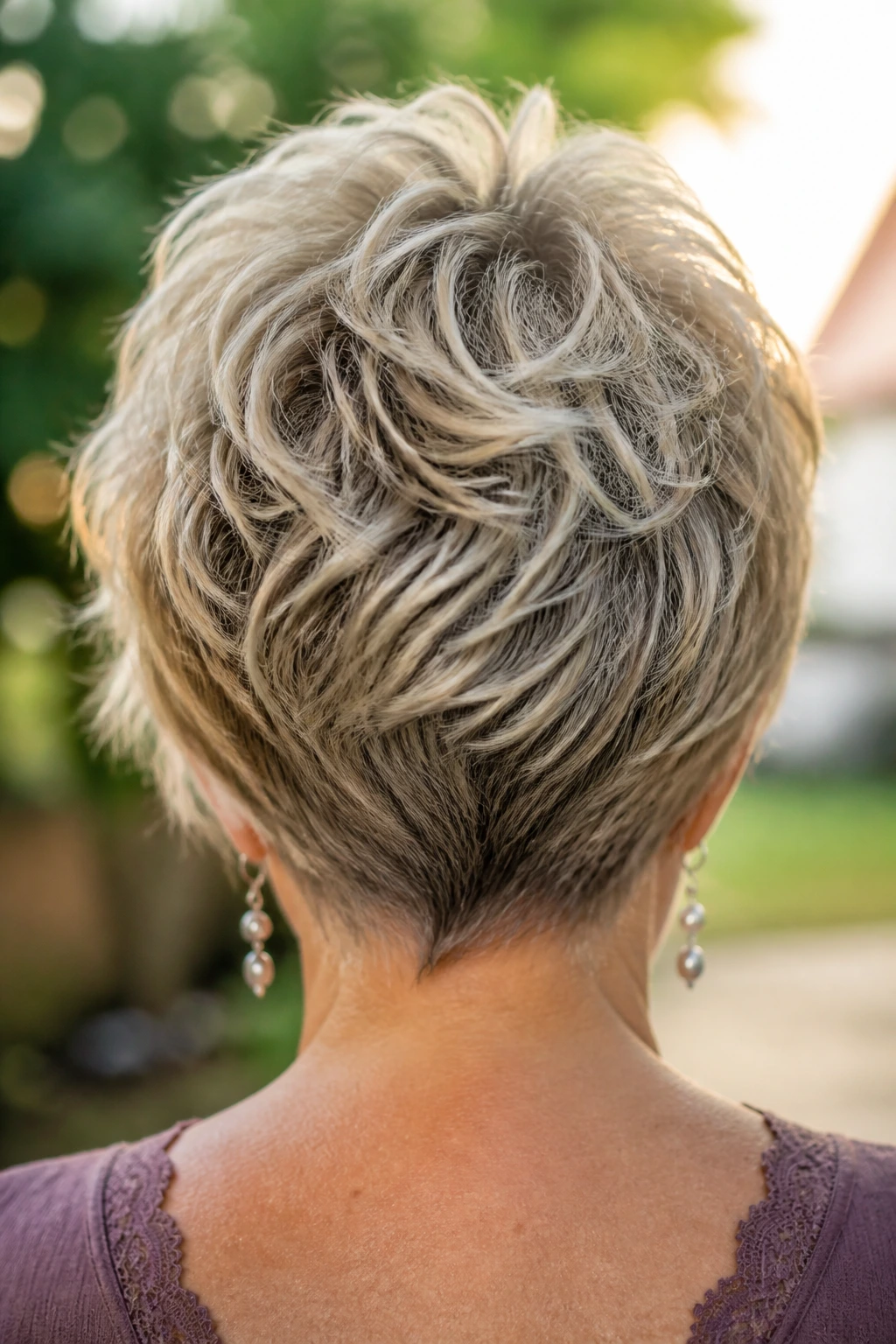
Picture the nape neat and close while the crown keeps the movement. That’s the appeal of a tapered nape shag. It gives the neck a clean line, which can feel cooler, lighter, and less busy than a full bob.
This shape is excellent when the back of the head tends to bulk up. The taper removes that squat look that some short cuts get after a few weeks. It also keeps the overall cut from feeling too boxy, which matters when your waves are already full of their own opinions.
The Shape Detail That Matters
The taper should be soft, not shaved down to the skin unless that’s truly the look you want. A little softness at the nape helps the cut grow out without leaving a strange shelf. The top can stay textured, but the back should stay neat.
This cut looks sharp with silver hair, because the clean nape contrasts with the movement on top. It’s one of those small details that makes the whole style feel more deliberate.
10. Silver-Forward Shag
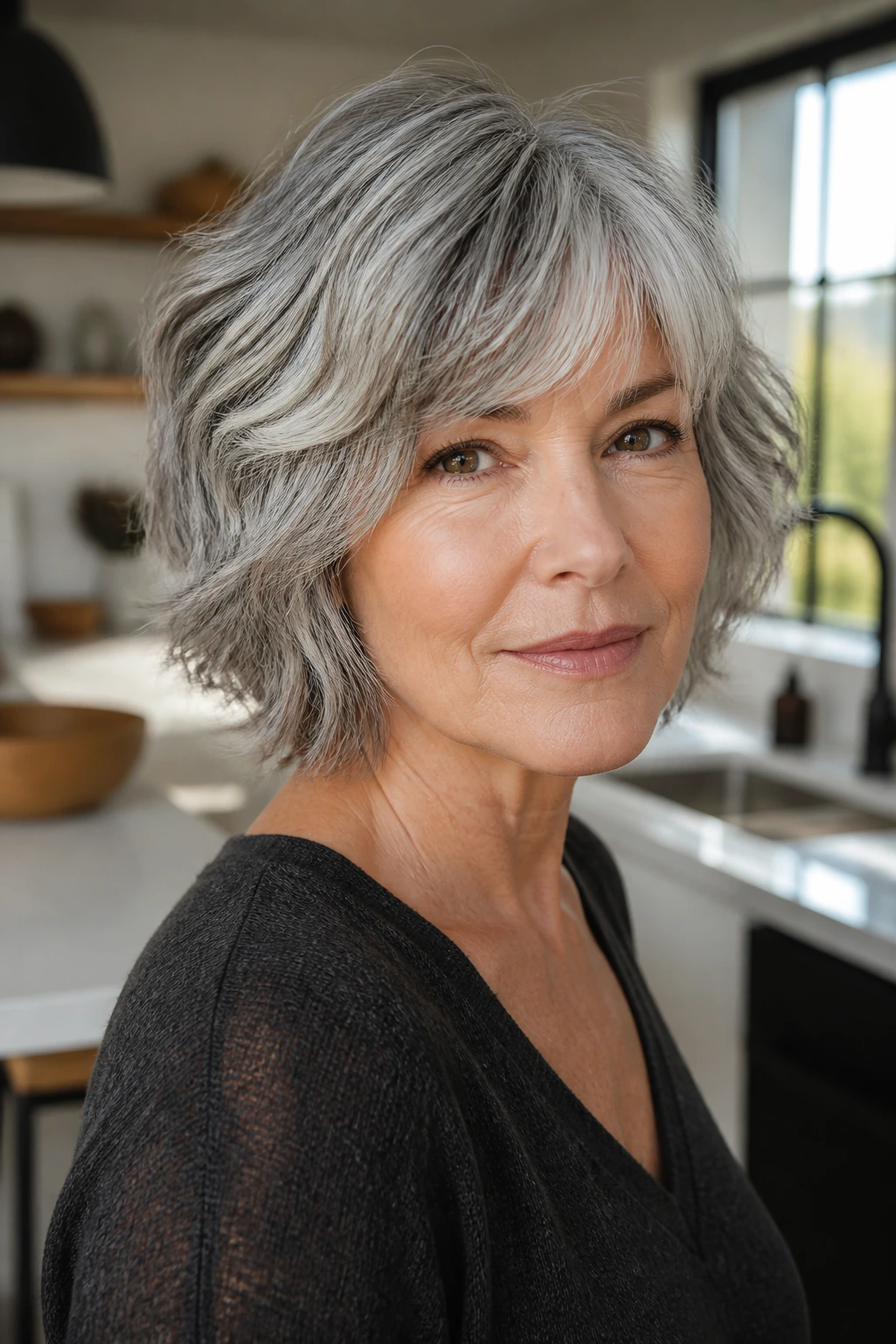
Gray hair does not need to be disguised to look polished. In fact, the texture of silver, white, and charcoal strands can make a short shag look better than dyed hair because the layers catch each other differently.
A silver-forward shag is all about letting the color do some of the work. The cut should be clean enough that the silver reads as shiny, not frizzy. Too much slicing around the crown can make the hair look fuzzy, so the best versions keep the layering controlled.
Why It Stands Out
Silver strands often reflect light differently across the head, which can make soft layering look richer. A short shag plays into that by letting the top move while the ends stay tidy. If your hair has a little wiry texture after graying, this cut can make that texture look intentional instead of stubborn.
A purple shampoo once every few washes can help if brass shows up, but don’t overdo it. Silver hair gets dull fast if you strip it too hard.
11. Rounded Shag for Thick Waves
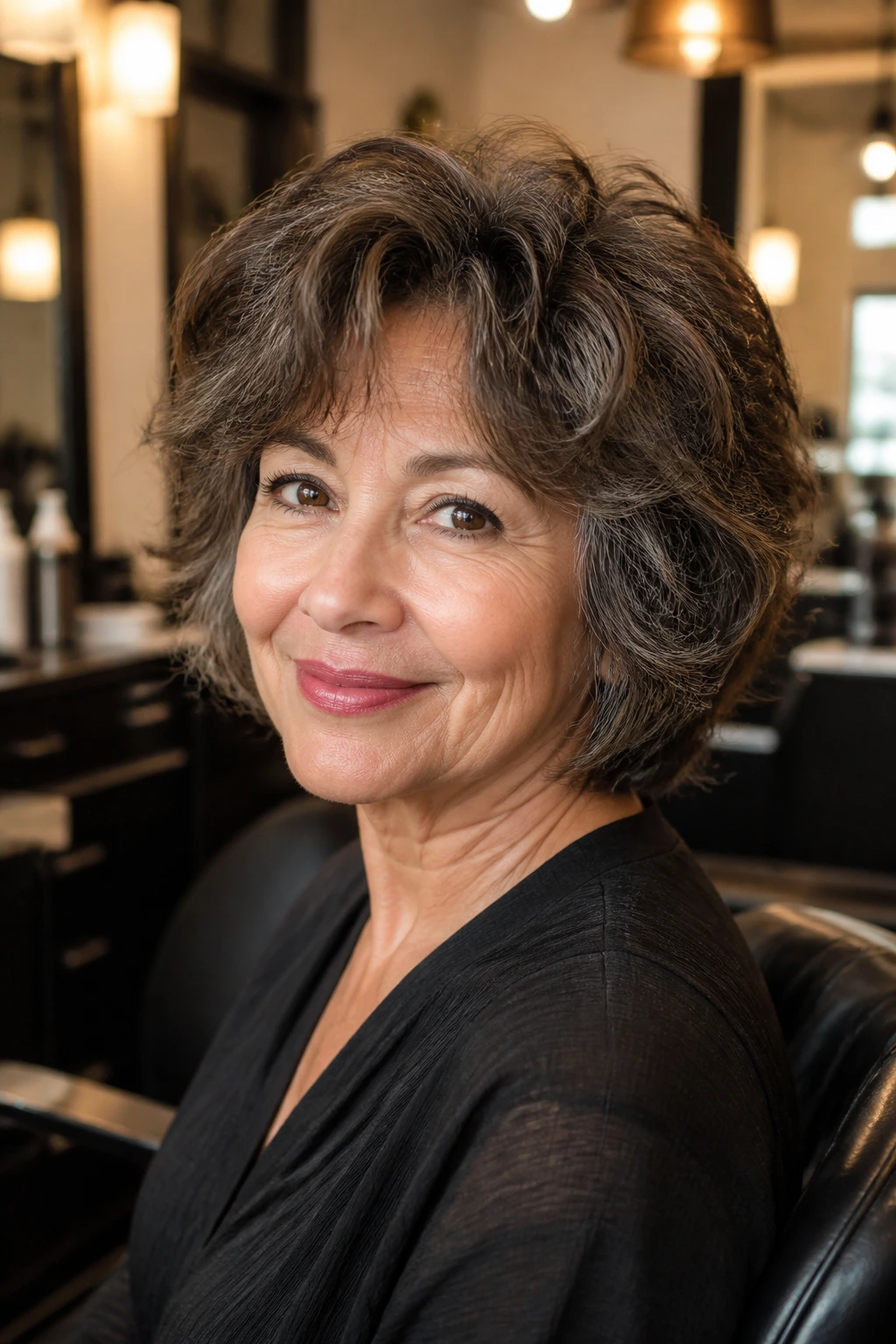
Thick waves can grow a shelf at the bottom. You know the look: broad at the ends, too square at the sides, and somehow heavier after every wash. A rounded shag fixes that by taking away excess width while keeping the head shape soft.
The curve should come from layering, not from overblowing the hair into a ball. That distinction matters. You want the hair to sit close to the head at the sides and keep some fullness at the crown, where thick waves can actually help the shape.
How It Behaves
This cut is best when the stylist removes weight inside the shape rather than hacking at the perimeter. That keeps the bottom from breaking apart while still preventing the triangle effect. It also works well with a diffuser, because thick waves usually need a little encouragement to settle into that rounded outline.
If your hair grows outward before it grows down, this one is worth a look.
12. Asymmetrical Bob Shag
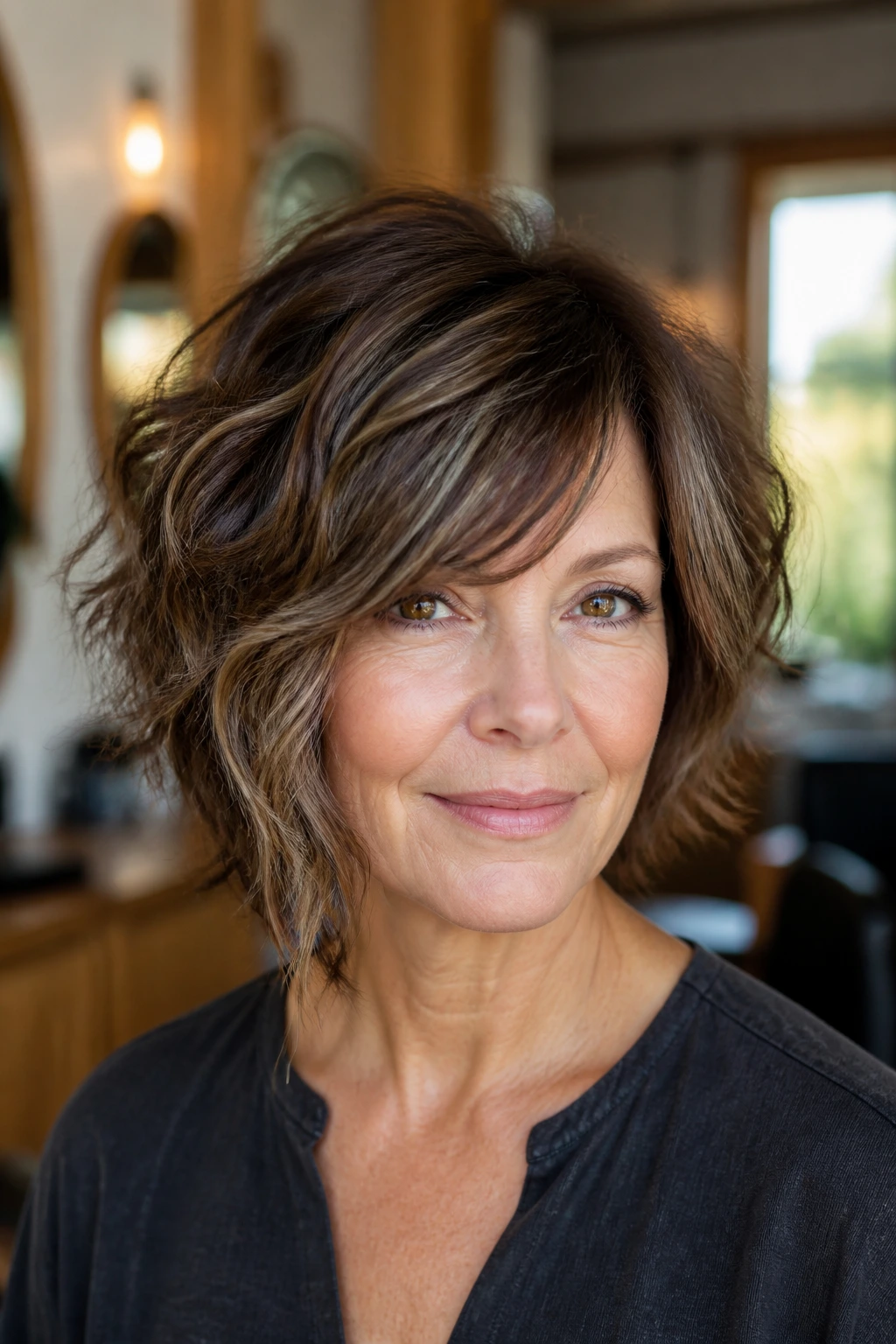
One side sitting a half-inch longer can change the whole read. An asymmetrical bob shag feels modern without turning into a gimmick, which is harder to pull off than it sounds.
The shape works because the uneven length distracts the eye just enough to keep the cut from feeling static. Wavy hair benefits from that movement, especially if one side of your pattern is a little stronger or a little flatter than the other. Instead of fighting the asymmetry, the cut uses it.
Best For
- Faces that look better with a little diagonal line.
- Hair with one side that kicks out more than the other.
- Anyone who wants a short shag but doesn’t want it to look too uniform.
A side part often helps this cut settle properly. If you try to center it too hard, you lose the point.
13. Air-Dry Razor Shag

Some cuts ask to be blown out. This one does not. An air-dry razor shag is built so the hair can dry with its own texture and still land in a decent shape.
The layers need to be cut with the wave pattern in mind, usually with enough lightness around the ends to keep them from drying into a heavy shelf. Razor work can help, but only when the stylist knows where to stop. Too much thinning turns the ends into fray. Too little, and the cut dries too bulky.
Why It Works
Hair that air-dries best usually has some movement in the perimeter and enough internal layering to avoid clumps. This shag uses both. It’s a strong option if your routine is more towel, mousse, and air than blow-dryer gymnastics.
If you have a stubborn front piece, clip it away from the face while it dries. That tiny trick can keep the front from collapsing into your eyes.
14. Pageboy Shag Revival

Remember the pageboy, minus the helmet effect? That’s what makes this version interesting. The modern pageboy shag keeps the smooth curve under the chin or jaw, then breaks it up with waves and layers so it doesn’t feel dated.
This cut suits someone who wants order more than wild texture. The top is soft, the ends are feathered, and the overall read is polished but not stiff. On wavy hair, the curve makes the movement look deliberate instead of random.
What to Ask For
- A rounded outline through the sides.
- Soft layering that keeps the perimeter from looking too solid.
- A little internal texture near the crown to stop flatness.
This is a nice choice if you like structure. Not every shag has to look like it was styled with a wind machine.
15. Soft Wolf Shag

If you like a little edge but not a scene, start here. A soft wolf shag keeps the shorter crown layers and tapered sides of the wolf cut, but tones down the chaos so it works on mature wavy hair without looking too shredded.
The best soft wolf versions keep enough length around the face to soften lines and enough lift at the top to keep the cut from drooping. That balance is what makes it feel current without being loud. It’s a cut with some nerve, but it’s not shouting.
Where It Helps
This shape is especially good if your waves are fuller at the crown and flatter through the bottom. The shorter top layers lift the head shape; the longer lower pieces stop it from turning into a mushroom. The result looks a little messy in the right way.
If you want something that feels fresh but still wearable to lunch, errands, and dinner without a restyle, this is the lane.
16. Brow-Grazing Fringe Shag

A fringe that skims the brows can change the whole face. It softens the forehead, brings attention to the eyes, and makes a short shag feel more finished even when the rest of the hair is doing its own loose thing.
This version is easier than a blunt bang because it can split a little when needed. That matters on wavy hair, which tends to shrink and bend in strange directions if the fringe is cut too short. Brow-grazing length gives you wiggle room.
Why It Works
The fringe creates a clear front focal point. The layers around it can stay softer and more open, which keeps the cut from feeling crowded. If you wear glasses, ask for the fringe to stop just above the frame, not inside it.
A little styling cream on damp bangs helps them settle. Don’t plaster them down. You want movement, not a wet curtain.
17. Stacked Shag Bob
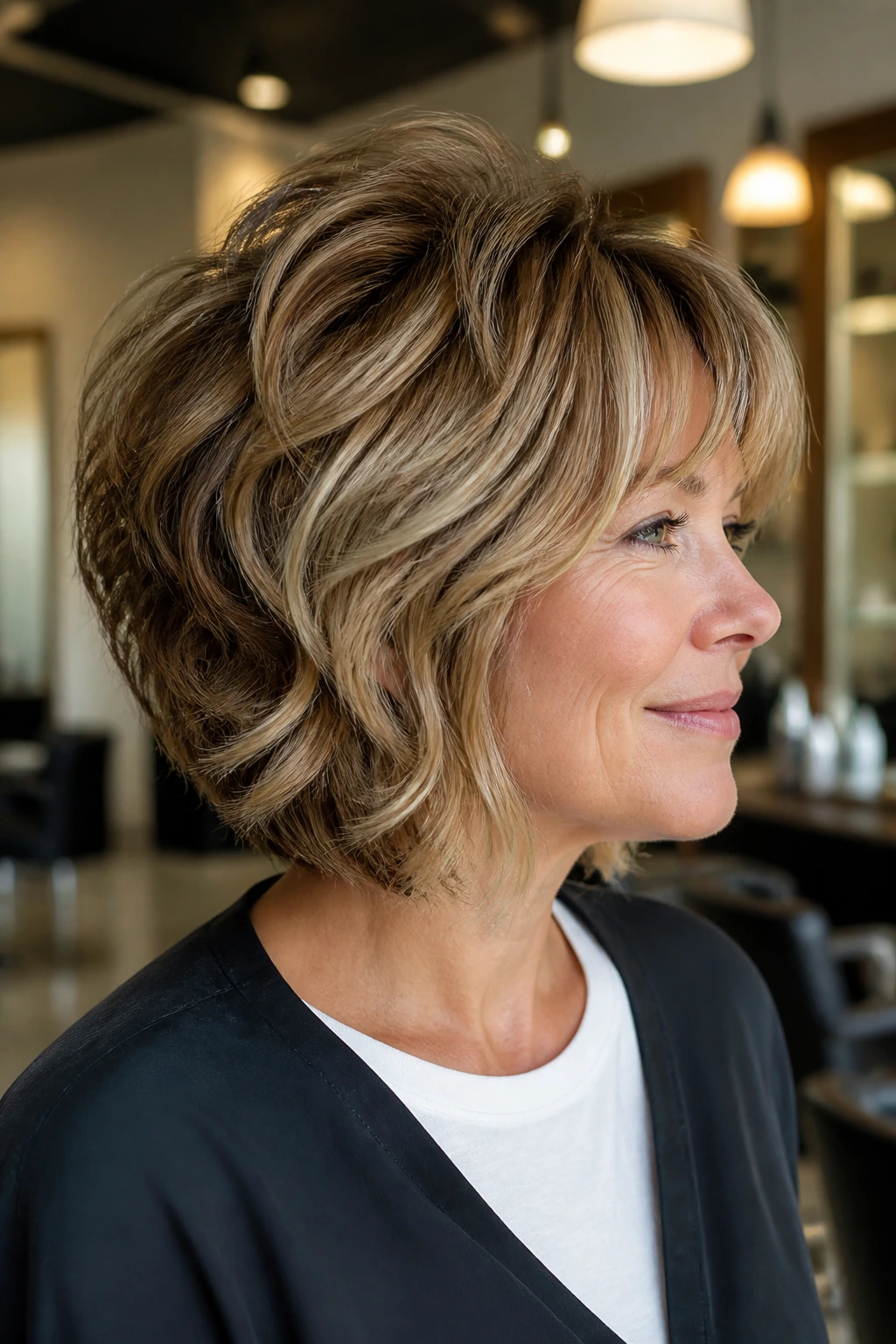
The back should rise just enough to keep the line from drooping. That’s the whole idea behind a stacked shag bob. The stacking in the back gives the silhouette lift, while the shag layers keep the top from going flat.
This cut is a smart answer to bob hair that starts getting heavy around the neck. The stacking builds a cleaner profile and can make dense hair feel a touch lighter. It also gives the crown some structure, which helps if your waves disappear there first.
Best For
A stacked shag bob suits hair that wants to expand outward instead of downward. It also works for anyone who likes the polish of a bob but needs more motion than a plain one-length cut gives.
Keep the stacking subtle. Too much and it turns into a dated wedge. A little, though, can make a huge difference.
18. Tucked-Temple Crop Shag

A crop that leaves the temples a touch longer frames the face without swallowing it. That small detail matters when you want short hair but still need softness around the eyes and cheekbones.
This cut is useful for people who wear earrings, glasses, or both. The temple length lets the face stay open while the nape and crown stay short enough to feel easy. It’s a compact cut, but not a severe one.
What to Look For
- Shorter back and sides.
- Slightly longer temple pieces.
- Internal texture that keeps the top from lying flat.
The best versions look neat from the side and a little piecey from the front. That mismatch is a good thing here. It keeps the cut from reading as too exact.
19. Grown-Out Long-Crown Shag

Not every shag needs a heavy chop. A grown-out long-crown shag keeps a little more length on top and around the crown, which makes it ideal if you don’t want to feel as though your hair had a hard reset.
The benefit is control. You get shape and lift, but you also get a gentler grow-out. For wavy hair that changes with humidity or changes texture from root to end, the longer crown can make the haircut look more forgiving from week to week.
Why It Works
The longer crown gives the wave room to bend instead of springing straight up. The sides and back stay cleaner, so the cut doesn’t collapse. It’s a nice middle ground for someone who likes softness more than sharp edges.
This one usually looks best with a side part or a loose off-center part. A strict middle part can make it look too flat on top.
20. S-Bend Shag

Want the wave pattern to look like it was cut in, not forced? An S-bend shag is built for that. The layers encourage an easy bend through the mid-lengths, so the wave lands in a natural curve instead of a series of random flips.
This cut is especially good if your hair has a loose wave that tends to get lost in heavier styles. The layering opens the middle of the cut, which is where the S-shape usually needs help. You don’t need extra curl. You need the right shape around it.
How It Sits
The front pieces can be a little longer and softer, while the inside layers stay light enough to avoid bulk. That gives the hair a ripple rather than a puff. It’s a nice choice if you prefer a cut that looks better after a little scrunching than after a lot of brushing.
21. Salt-and-Pepper Textured Bob
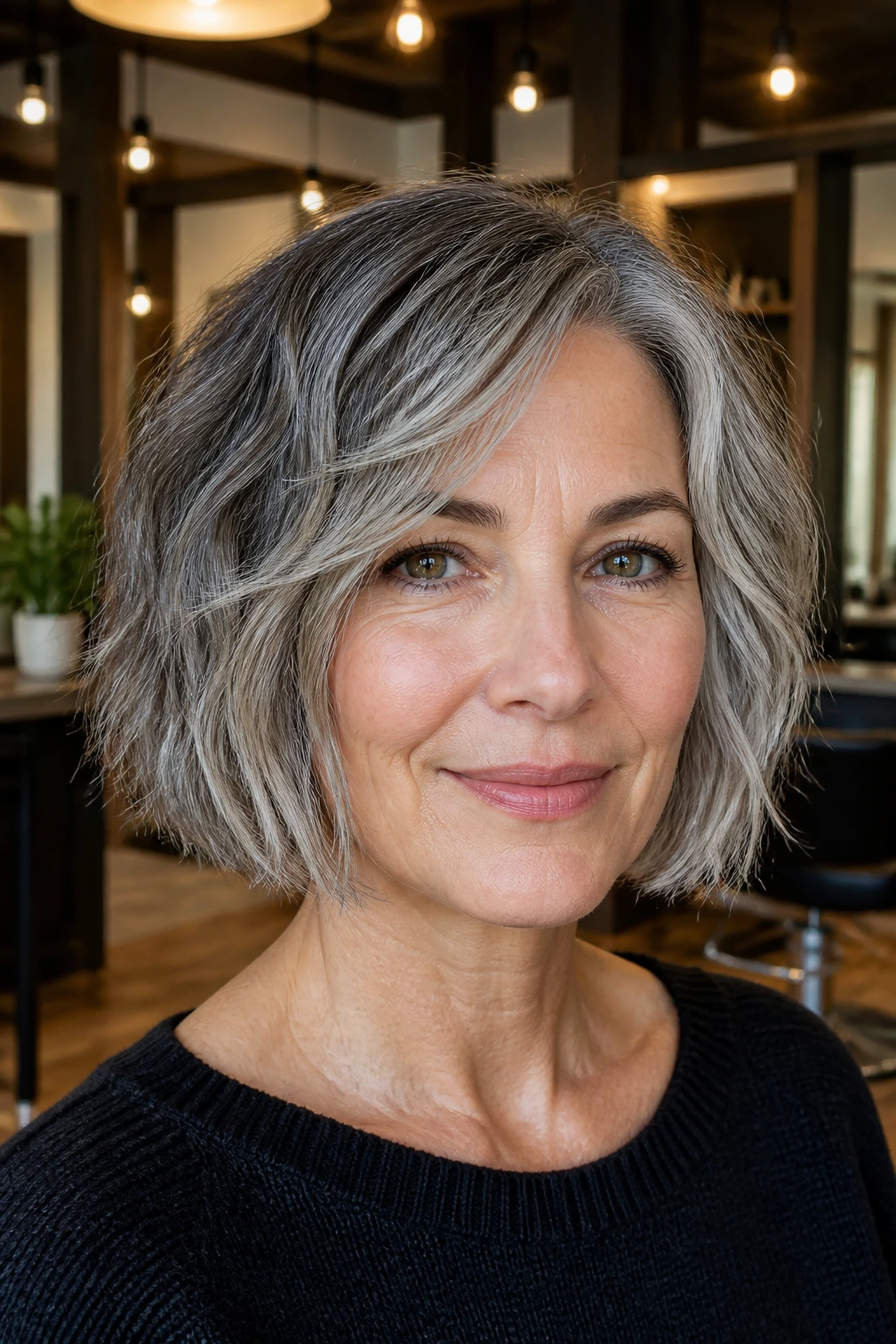
If your color has silver, white, and darker threads mixed together, texture makes those strands read as deliberate. A salt-and-pepper textured bob leans into that mix instead of trying to smooth it away.
The bob keeps the silhouette tidy. The texture keeps it from feeling flat or blocky. On mixed-color hair, the contrast can be surprisingly flattering because the waves create tiny shadows and highlights across the cut.
What Makes It Interesting
The cut doesn’t need a lot of drama. It needs crisp layering at the right level and a clean outline at the bottom. That keeps the color story front and center. If the ends are thinned too hard, the darker strands can disappear into fuzz, so restraint is the better move.
A shine spray on the mid-lengths can help, but use it lightly. You want definition, not grease.
22. Diagonal Fringe Shag

A straight fringe can be a lot of work. A diagonal fringe shag is easier to live with because the bang line moves across the forehead instead of sitting squarely over it.
That diagonal sweep softens the face and gives the cut a little motion even when the rest of the hair is quiet. It’s especially useful for waves that split in odd places or for hair that refuses to lie evenly across both sides of the face.
Why It Works
The angle draws the eye downward and across, which can be helpful if you want to soften the forehead or narrow a broader face shape. It also grows out with less panic than a blunt fringe, because the longer side can fold into the front layers.
This is a nice low-stress bang option. Not zero maintenance. Just less annoying than the sharp versions.
23. Elegant Soft-End Shag

The ends should skim, not spike. That’s the whole feel of an elegant soft-end shag. It keeps the shag structure, but all the roughness is dialed down so the finish looks calm, not shredded.
This is the cut for someone who wants texture without the bite. The layers are there, but they’re blended enough that the outline stays smooth. On wavy hair, that softness can be the difference between polished movement and a cut that feels overworked.
Why It Earns Attention
It works especially well if your hair has some natural bend but also some finer sections that can look wispy when cut too hard. Soft ends keep the shape fuller. They also make styling easier, because you can use a small amount of cream or mousse and still get a finished look.
If you’ve avoided shags because you pictured something wild, this is the one that changes your mind.
Why Short Shag Cuts for Wavy Hair Over 50 Work So Well

A short shag is not just a haircut with layers thrown at it. The good ones solve a shape problem. Wavy hair often wants to spread at the ends, puff at the sides, or collapse at the crown. A short shag redirects that energy by moving weight around on purpose, usually through the cheekbones, nape, and crown.
That matters more as hair changes with age. Some people get finer strands. Some get coarser ones. Some keep the same density but lose volume in very specific places, usually the temples or the top. A short shag can be tuned for all of that, which is why it often feels more flattering than a blunt bob that only looks good on the first day after a cut.
The best part is the grow-out. A good shag does not need to be perfect every morning. If the layering is placed well, it still reads as a style even when the wave pattern has gone a little wild. That kind of forgiveness is worth a lot.
The Comb, Clips, and Product Shelf That Make Styling Easier
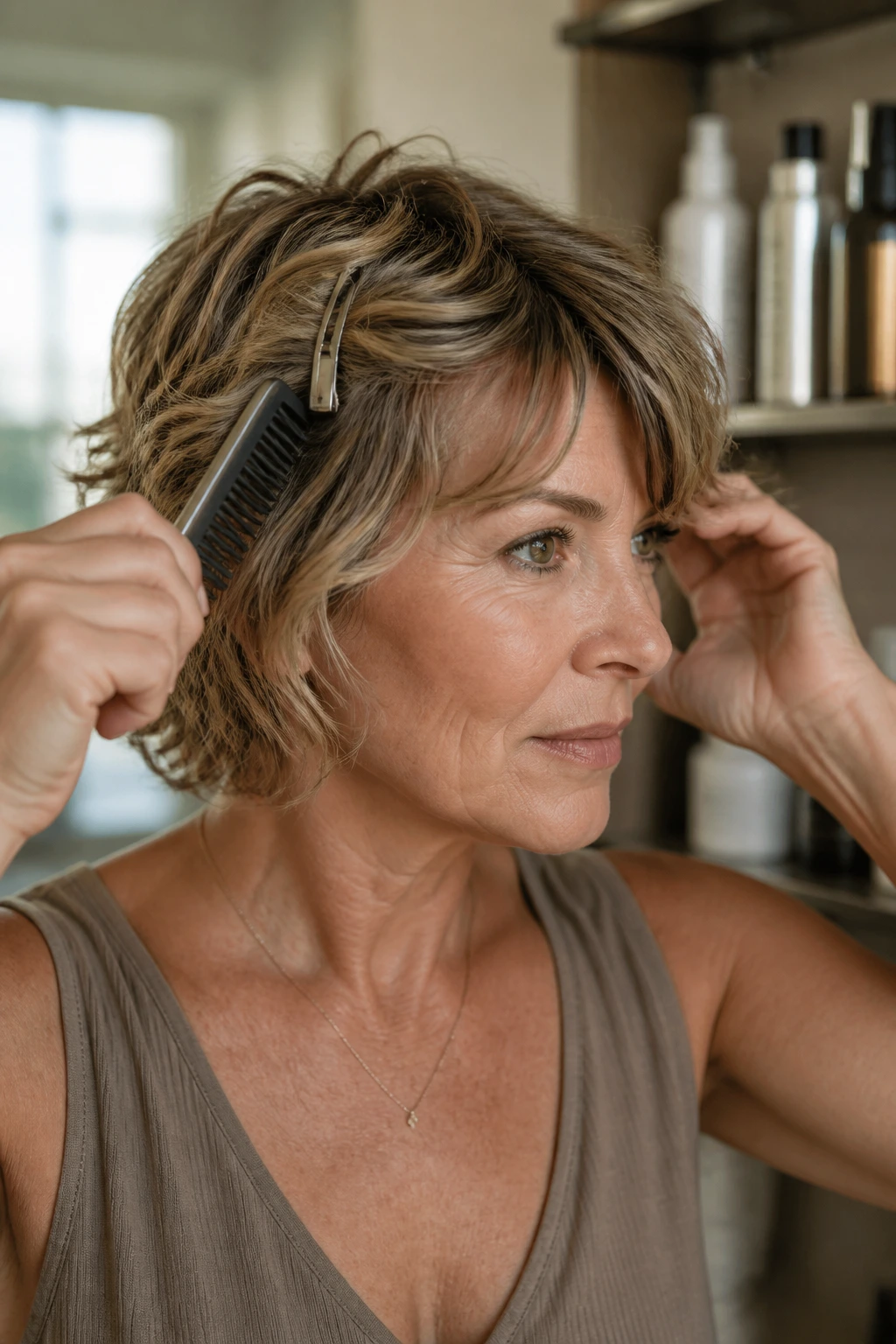
A short shag does not need a drawer full of gadgets, but it does need a few reliable tools. The wrong brush can flatten the texture you paid for. The wrong cream can leave the ends greasy by noon. Small choices matter here.
- Wide-tooth comb: Best for detangling wet waves without ripping apart the pattern.
- Mister spray bottle: A fine mist helps reactivate day-two bends without soaking the hair.
- Duckbill or sectioning clips: Useful for setting the front pieces while they dry or for keeping bangs out of the way.
- Diffuser attachment: Helps preserve wave shape and adds lift at the root without a blast of frizz.
- Vent brush or small round brush: Handy for the fringe or crown, but keep it off the rest of the head unless you want to smooth the texture out.
- Lightweight mousse or foam: Usually better than heavy cream for medium to fine waves because it gives hold without drag.
- Curl cream or leave-in conditioner: Better for thicker, drier waves that need slip more than hold.
- Texturizing spray or dry shampoo: Good on the crown and underlayers, where shag cuts can lose lift first.
- Satin pillowcase or bonnet: Helps keep the front pieces from frizzing into a halo overnight.
How to Ask for the Cut Without Losing the Shape You Wanted
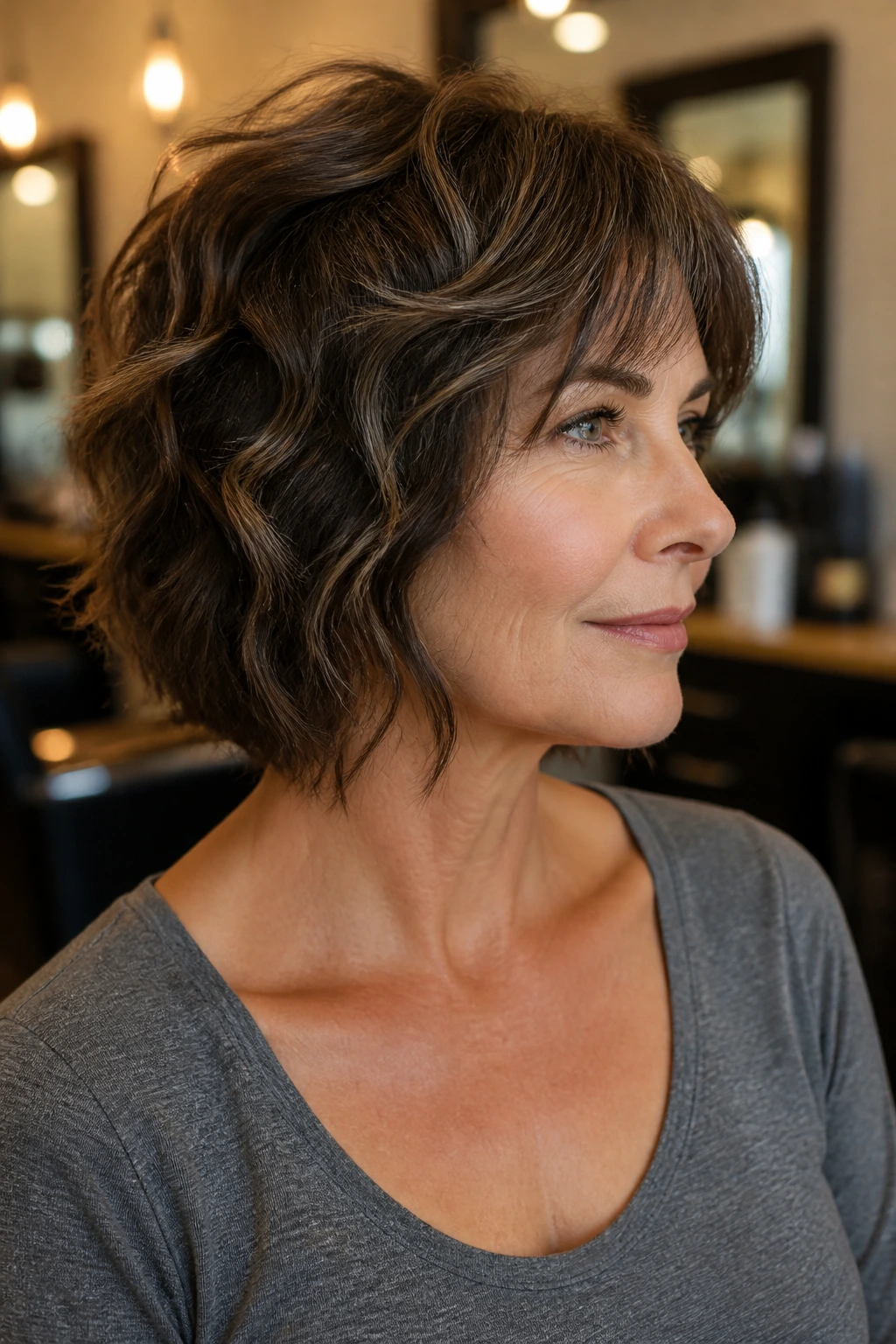
Bring pictures. Three of them, not one. A front view, a side view, and one from the back tell your stylist a lot more than a single glam shot with perfect lighting. Also bring a photo of your own hair on a good wave day. That matters more than the model picture, because your wave pattern, density, and crown shape are the real map.
The phrase to use is simple: ask where the layers start and where the weight stays. That’s the difference between a shag that flatters and a shag that explodes. If your waves are loose, ask for longer internal layers. If your hair is dense, ask for more removal underneath, not just around the edges. If your hair is fine, keep the layering softer and avoid over-thinning the ends.
A dry cut can help if your hair changes shape a lot between wet and dry. Wet cutting has its place, but waves are honest when they’re dry, and that honesty is useful. If you wear glasses, mention the frame width. If your crown lies flat, say so plainly. A good cut starts with specific complaints, not vague wishes.
How to Style a Short Shag Without Chasing Every Bend

Root Lift: Start with a lightweight mousse at the roots, especially on the crown and along the part. A palmful is usually enough for medium hair, and less than that for fine hair. Flip the part from one side to the other while drying to keep the root from settling flat.
Wave Memory: If a few pieces behave oddly, twist them around your finger while damp and clip them for ten minutes. That tiny reset often works better than trying to fix everything with heat. The wave will remember the shape you give it when it’s half-dry.
Frizz Control: Use a leave-in or cream only from mid-length to ends. The scalp area needs lift, not drag. Heavy product near the root is one of the fastest ways to turn a shag into a limp cap.
Second-Day Refresh: Mist the hair lightly, scrunch once or twice, then hit the crown with a bit of dry shampoo. If the fringe looks rough, dampen just the front and bend it side to side with your fingers. That’s usually enough to bring the shape back.
Common Mistakes That Make Shags Look Choppy in the Wrong Way
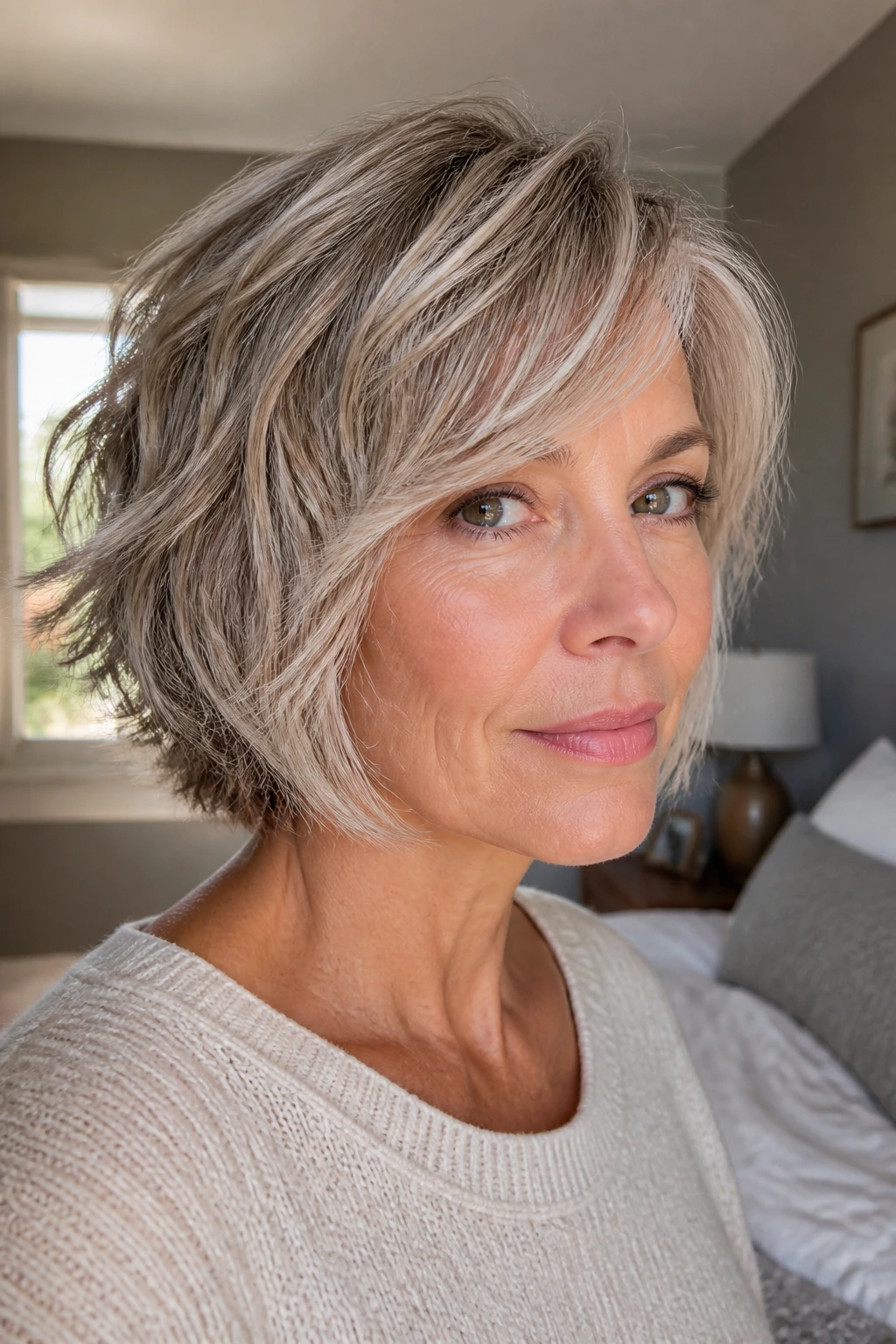
The biggest mistake is too many short layers on top. That can make wavy hair puff out like a mushroom, especially if the crown is already strong. The fix is to keep the crown layers controlled and let the shorter pieces live closer to the face or around the top, not all over the head.
Another problem is cutting the fringe too short while the hair is wet. Wavy hair shrinks as it dries, sometimes by more than you expect, and a bang that looked delicate in the chair can end up stranded halfway up the forehead. Ask for the fringe to be cut with dry shrinkage in mind, especially if your waves are springy.
A third one: using a heavy cream on fine hair. The cut loses lift fast, and the ends go stringy instead of piecey. Switch to mousse or foam, then add a drop of serum only to the last inch or two if needed.
Finally, blasting the whole head with a round brush can erase the texture that makes the shag work. Smooth the fringe if you want. Clean up the crown if it’s wonky. But leave some roughness in the mid-lengths. That movement is the point.
Five Ways to Bend the Look to Your Hair, Face, and Routine

The Soft Silver Sweep: Keep the layers airy and the fringe long enough to sweep aside. This version flatters gray, white, and salt-and-pepper hair because the movement shows off the color mix instead of hiding it.
The Fine-Hair Lift: Use a shorter crown with a slightly fuller perimeter. That gives the impression of thickness without leaving the ends sparse. It’s a smart choice if your hair needs body more than texture.
The Glasses-Friendly Frame: Leave the side pieces a touch longer so they skim the frames rather than tucking awkwardly behind them. This keeps the face open and stops the cut from fighting your glasses all day.
The Low-Commitment Grow-Out: Ask for softer internal layers and a length that lands at the jaw or collarbone. The cut will still move, but it won’t look rough if you miss a trim by a couple of weeks.
The Thicker-Wave Tame-Down: Keep the nape tighter and the interior layers clean so the outline doesn’t spread outward. This one is about removing bulk without stripping away the wave pattern that gives the style life.
Keeping the Shape Between Salon Visits

A short shag usually needs a trim every 6 to 8 weeks if you wear fringe, or every 8 to 10 weeks if the front is longer and softer. If the ends start flipping out in a way that feels sloppy, that is the first sign the shape is going. Don’t wait until the whole cut has gone boxy.
Wash rhythm matters too. Many wavy heads do best with 2 to 4 washes per week, depending on scalp oil and product use. Put conditioner only from the mid-lengths down if your roots get limp easily. If your hair is silver or white, keep heat low and use a violet shampoo only when brass starts showing, not on every wash.
Sleep can wreck a short fringe faster than humidity. A satin pillowcase helps, and so does clipping the front loosely away from the face if it tends to bend in weird directions overnight. In the morning, a light mist of water or curl refresher is usually enough to wake up the wave without starting from scratch.
Questions People Ask Before Getting a Short Shag

Will a short shag make wavy hair frizzier?
It can, if the layers are cut too high or styled too dry. A well-placed shag usually does the opposite: it removes the bulk that turns into puff and leaves the wave pattern cleaner. The cut matters more than the product shelf.
Is a short shag good for thin hair over 50?
Yes, if the layering is kept soft and the ends are not over-thinned. Thin waves usually need lift at the crown and a perimeter that still has enough weight to look full. A bixie shag or a collarbone shag often works better than a heavily razored crop.
Can I wear one with glasses?
Absolutely, but the fringe and side pieces need to be planned around the frames. Ask for lengths that sit just above or just outside the widest part of the glasses. That keeps the hair from snagging and keeps the face from feeling crowded.
How often should I trim it?
Most short shags want a touch-up every 6 to 8 weeks, especially if the fringe is part of the design. If you go for a softer, grown-out version, you can usually stretch that a bit longer. The shape will tell you when it’s time; the back starts to spread first.
What if my waves are uneven?
That’s normal. One side often bends more than the other, especially near the front. Ask for the cut to follow the stronger side without forcing perfect symmetry. The shag shape is forgiving, which is one reason it suits waves so well.
Can this work if I air-dry most of the time?
Yes, and some of these cuts are built for exactly that. The air-dry versions need enough internal layering to keep the ends from hanging heavy, plus a little styling help at the crown. A small amount of mousse or foam makes a big difference.
Will a shag look too young or too edgy?
Not if the layers are softened and the outline stays clean. The vibe comes from how the cut is shaped, not from the word shag itself. A chin-length shag with a soft face frame can look calm, polished, and easy to wear.
What if my hair is thick and triangular?
Ask for weight removal inside the shape, not just at the tips. Thick wavy hair needs the bulk shifted away from the bottom so the silhouette doesn’t flare. A rounded shag or tapered nape version usually handles that better than a blunt bob.
The Cut That Keeps Its Shape and Its Nerve
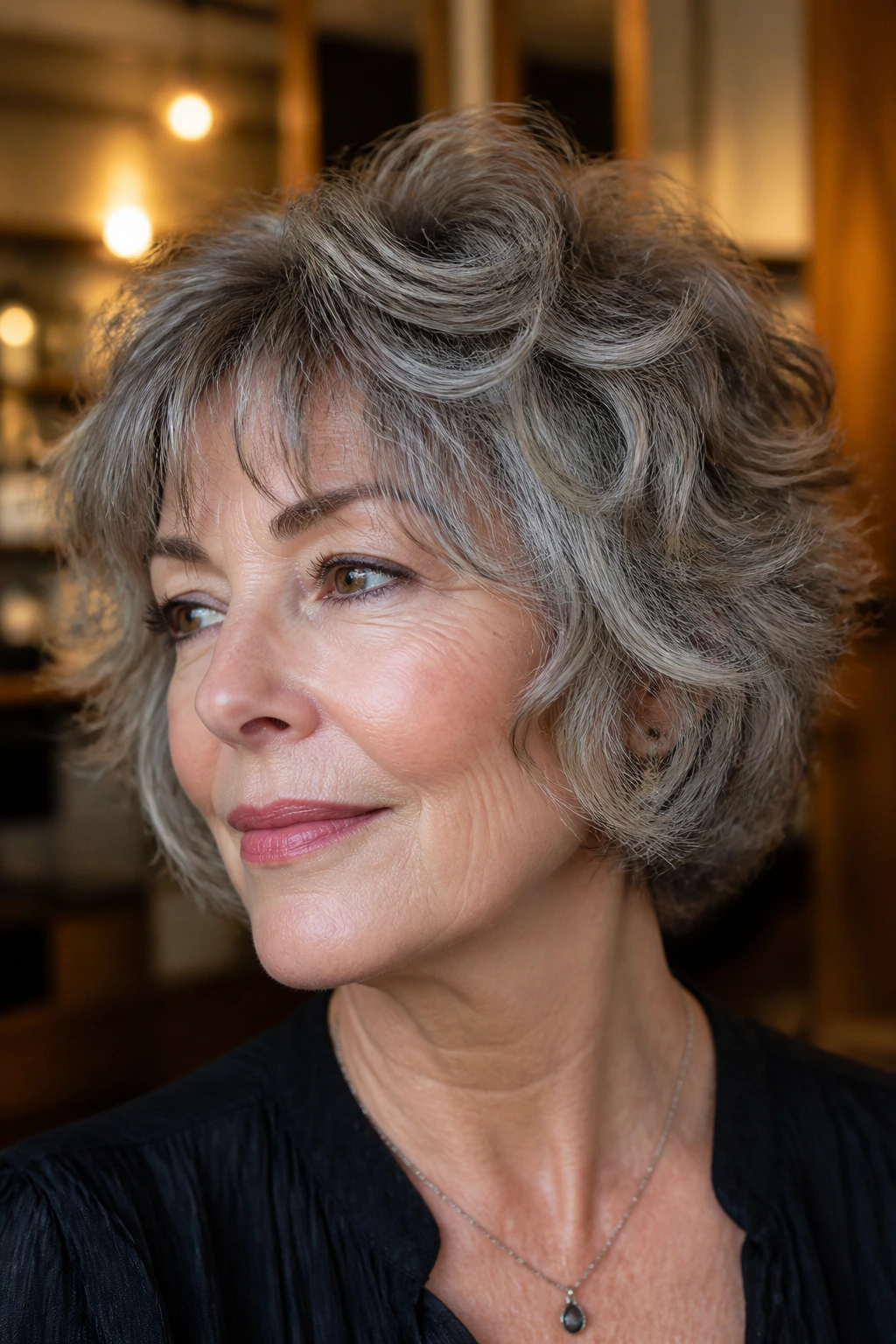
A good short shag does a rare thing. It gives wavy hair structure without flattening the personality out of it. That balance matters even more when hair has changed density, color, or texture over time, because the old tricks often stop paying rent.
The strongest versions here are the ones that respect where your waves naturally bend. They don’t force perfection. They work with the head shape, the part, the glasses, the silver, the cowlicks, all of it. That is why the cut keeps coming back in different forms.
If you bring a clear photo, ask for the weight to stay in the right places, and keep the styling light, a short shag can look fresh long after the salon mirror fade has worn off.
