



Square faces can carry a blunt cut with attitude, but they usually look best when the haircut moves. A clean line at the jaw can be sharp in the wrong way; a short shag breaks that line up with feathered ends, cheekbone-grazing layers, and a little messiness that feels deliberate instead of accidental. That’s why shag haircuts for short hair and square faces keep showing up in good salons — they solve the same geometry problem in a dozen different ways.
The trick isn’t to hide the jaw. That never works for long, and it often makes the haircut look timid. The better move is to interrupt the straight edges at the forehead, temples, and chin so the face reads softer without losing structure. A shag does that with texture, not bulk. When it’s cut well, the hair falls in broken pieces that move when you turn your head, which matters more than people think.
There’s also real variety here. A curly shag, a razored bixie, and a curtain-bang bob all do different jobs, even if they belong to the same family. Some add lift at the crown. Some lean on fringe. Some keep the nape neat and let the front do the talking. The right version depends on how much styling you want to do, how thick your hair is, and where you want the softness to land.
Why These Short Shags Work on a Square Face
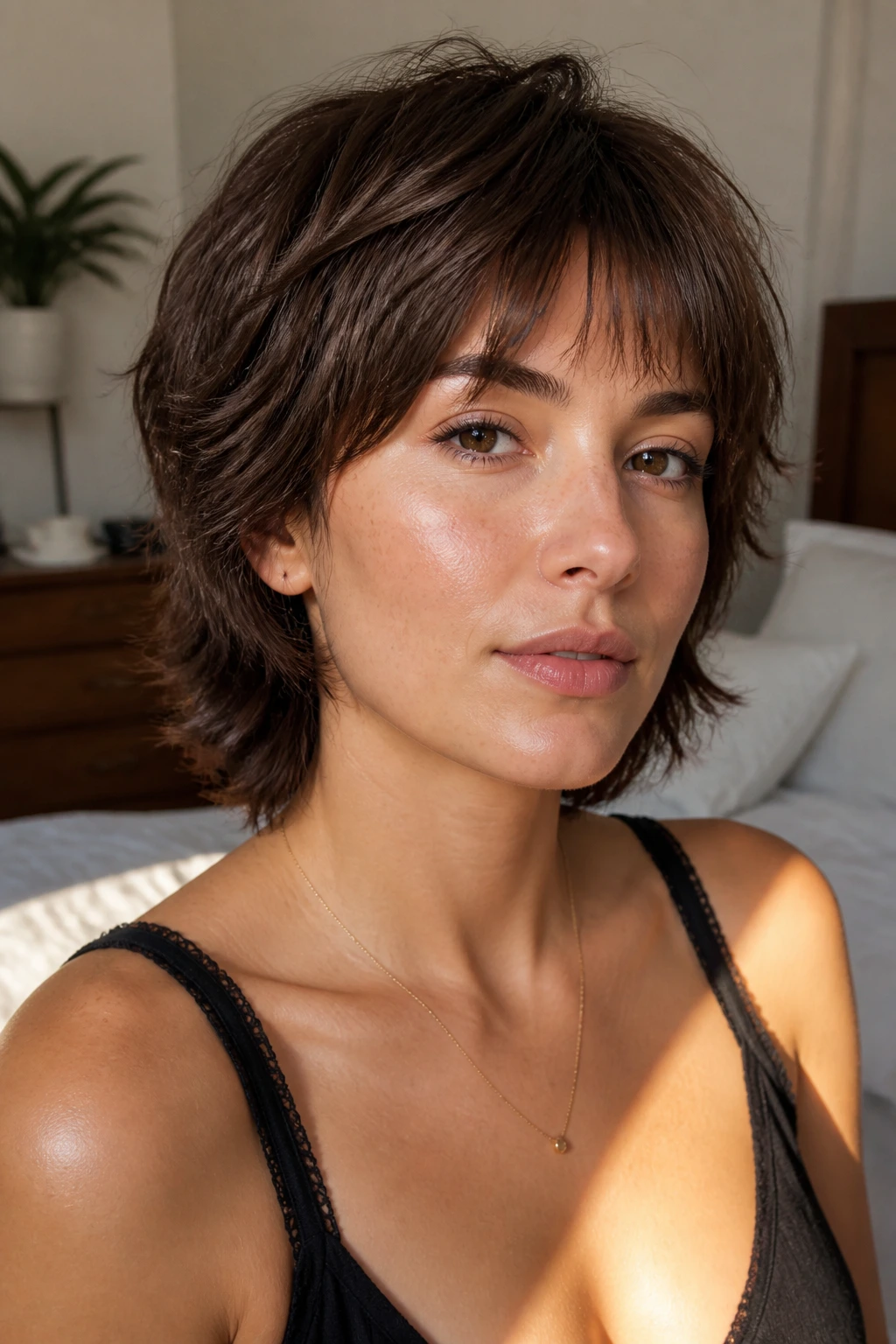
Soft edges beat hard lines. Square faces already have strong geometry, so the haircut works better when the ends are chipped, feathered, or razored instead of cut in one blunt shelf at the jaw.
The eye needs a place to land. Layers that start around the cheekbone pull attention upward and inward, which keeps the jaw from feeling like the widest, heaviest part of the whole look.
Texture does the heavy lifting. A little bend, a little separation, and a little pieceiness go a long way here. Straight, polished hair can make square angles feel more obvious than they need to be.
Bangs can change the whole shape. Curtain bangs, bottleneck bangs, and side-swept fringe all soften the upper half of the face while the rest of the cut keeps the edges loose.
Short shags grow out better than blunt cuts. If the layering is placed well, you can usually stretch the trim to six or seven weeks before the shape starts to collapse.
1. Soft Curtain Shag Bob
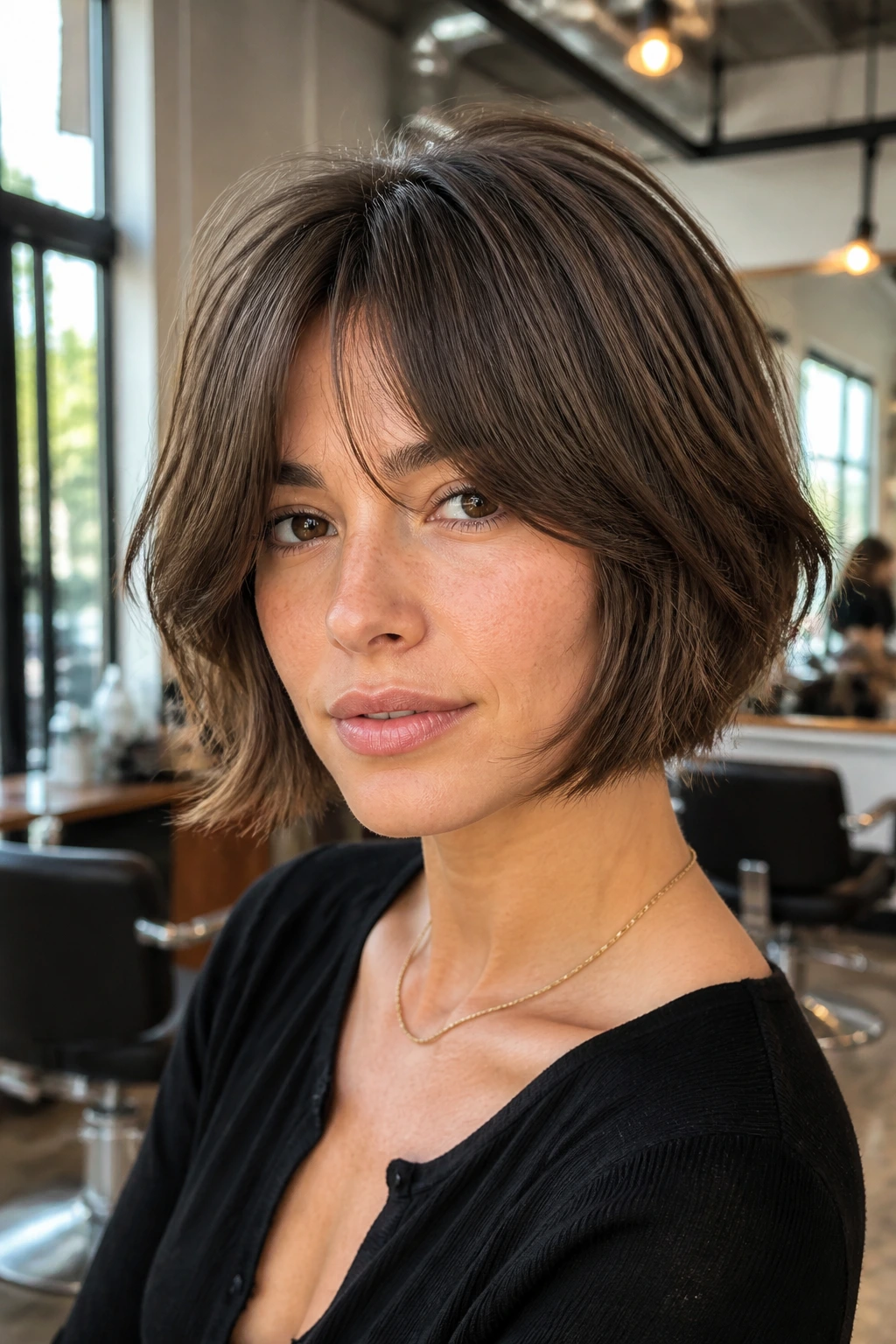
This is the version I’d hand to someone who wants movement but doesn’t want to look like she raided a rock poster from the wrong decade. The length brushes the jaw, the front pieces fall a little longer at the cheekbone, and the ends are broken up enough that the outline never turns boxy.
Why It Works on a Square Jaw
The curtain fringe opens in the center and drifts outward, which pulls attention toward the eyes instead of letting the jaw do all the talking. The layered sides keep the silhouette light, and that matters more than sheer length here.
- Best on straight to wavy hair.
- Ask for layers that start around the cheekbone, not the chin.
- Keep the ends point-cut so they don’t sit like a shelf.
Tip: Skip the under-curl at the jaw. A tiny bend away from the face near the ends is enough.
2. Razored Bixie With Airy Ends
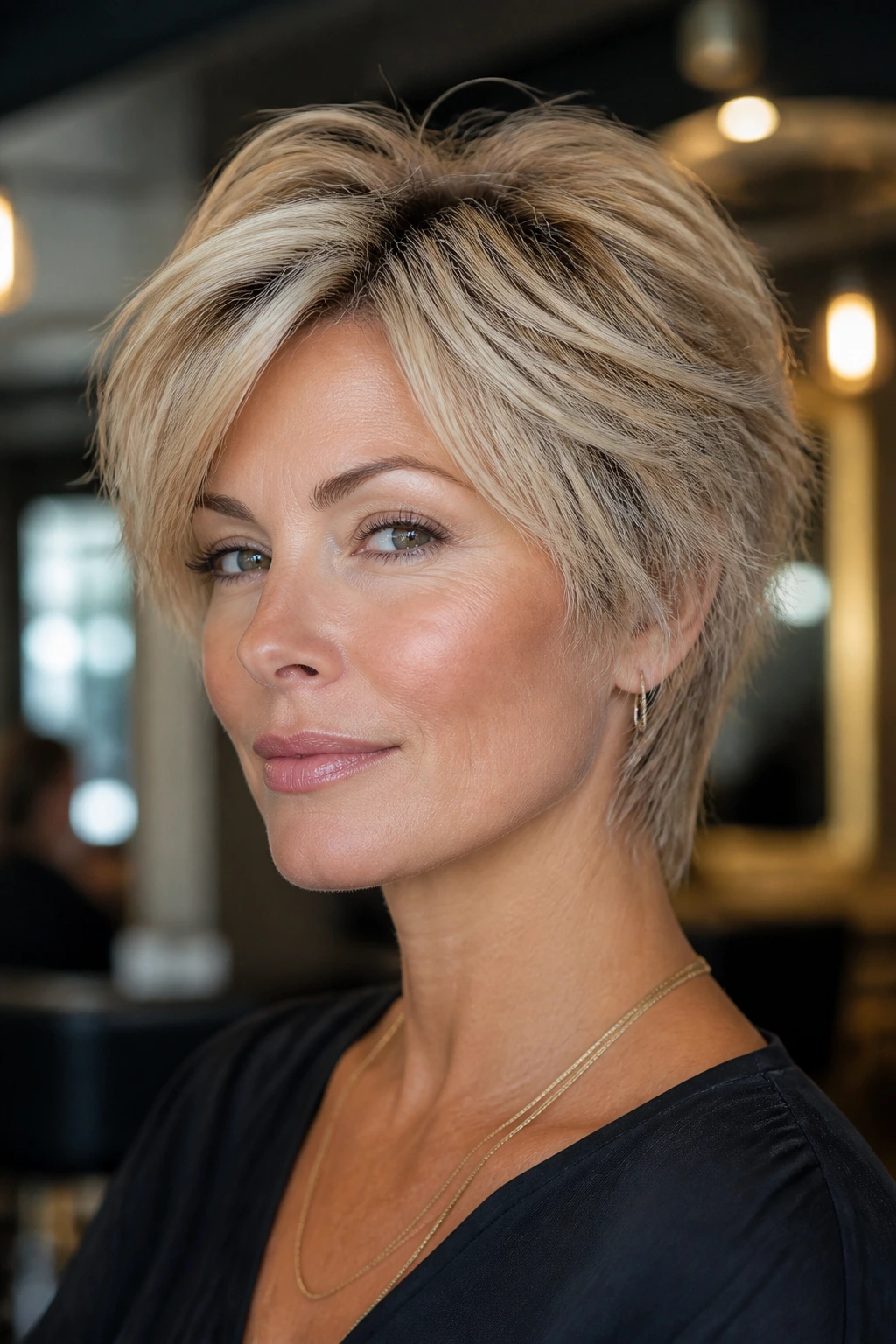
If your hair is fine and your jaw is square, this is one of the smartest short cuts going. A bixie sits between a bob and a pixie, so you get enough length around the face to soften the angles without carrying extra weight at the sides.
The razor work matters. It removes bulk in a way that makes the hair look broken up, not chopped off. Keep the crown short enough to lift, but not so thinned out that it goes see-through in daylight. That’s the line people miss. Too much razor on fine hair leaves wispy ends that collapse by lunch.
Wear it with a slight side part if you want the face to look a little longer. Wear it with your fringe pushed forward if you want more edge. Either way, this cut stays interesting because the shape changes depending on how you dry it. A dab of mousse at the roots and a rough blow-dry are usually enough.
3. Chin-Length Wolf Shag
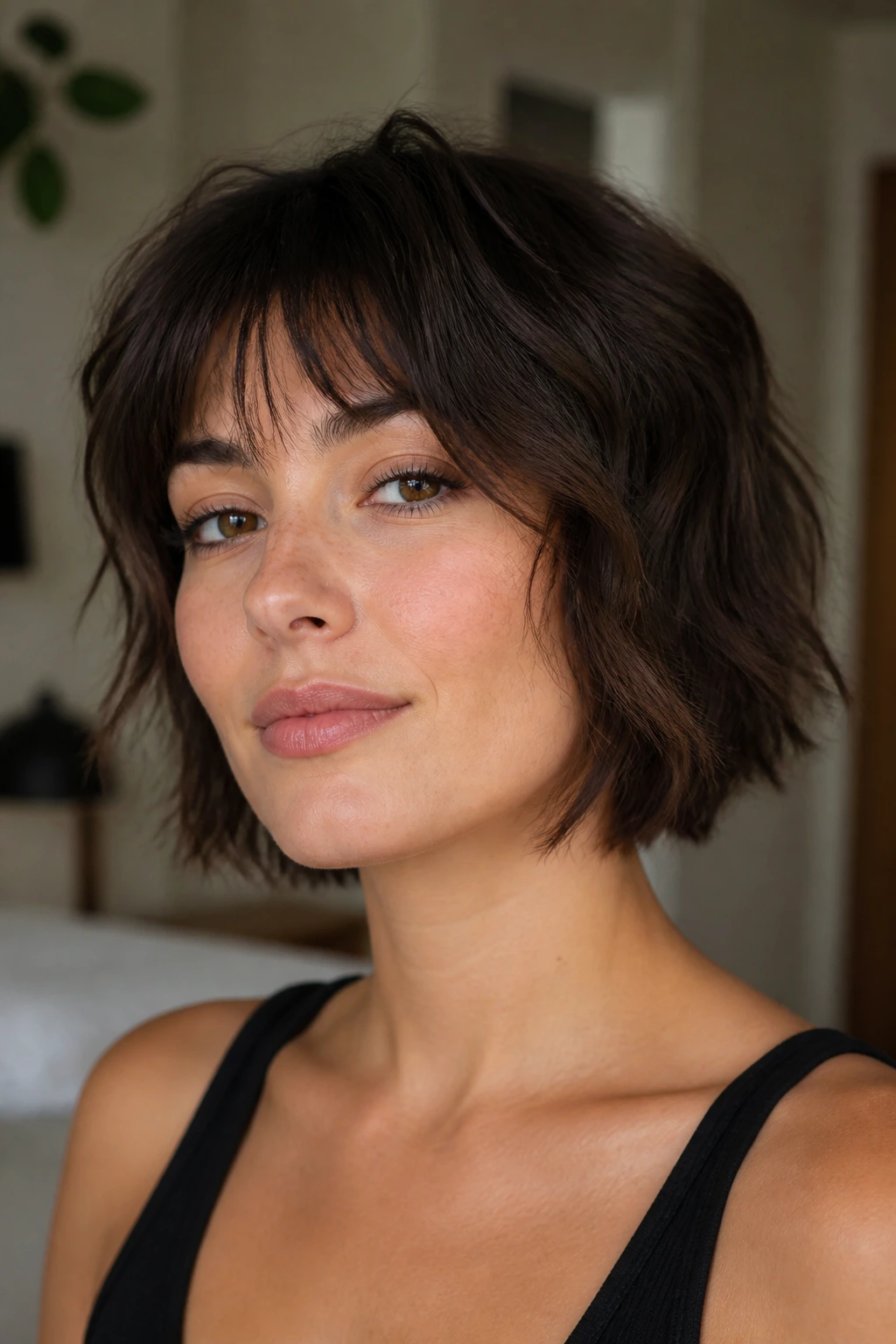
Can a chin-length cut soften a strong jaw? Yes — if the layers are broken up and the fringe doesn’t land in one hard line. A wolf shag at this length keeps the crown a touch fuller and lets the perimeter stay irregular, which is what saves it from looking stiff.
The best version has a little bend through the front and a lighter, choppier feel at the ends. That unevenness is the point. A square face doesn’t need more boxes around it. It needs diagonals, movement, and some softness at the cheek.
How to Wear It
Air-dry it with a small amount of curl cream if your hair bends naturally. Blow it out with a diffuser if you need a little lift near the roots. The goal is not polish. The goal is texture that looks like it happened on purpose.
4. Wavy French Shag Crop

You know the haircut. It has that loose, slightly undone look that makes straight hair seem like it has a secret life after dark. On a square face, the French shag crop works because the fringe stays light and the sides don’t cling too close to the jaw.
It’s a very good cut if your hair already has some wave, even a mild one. The bend gives the layers a place to fall, and the shape never gets too formal. With a square face, formal is usually the enemy. A stiff outline can make the jaw look harsher than it really is.
- Ask for a soft fringe that splits without a fight.
- Keep the layers around the cheekbones and temples.
- Use a salt spray or light texture cream, not a heavy oil.
The best part is how low-effort it can be. Rough-dry it, scrunch the front once or twice, and leave a few pieces imperfect. That imperfection is the point.
5. Curly Halo Shag
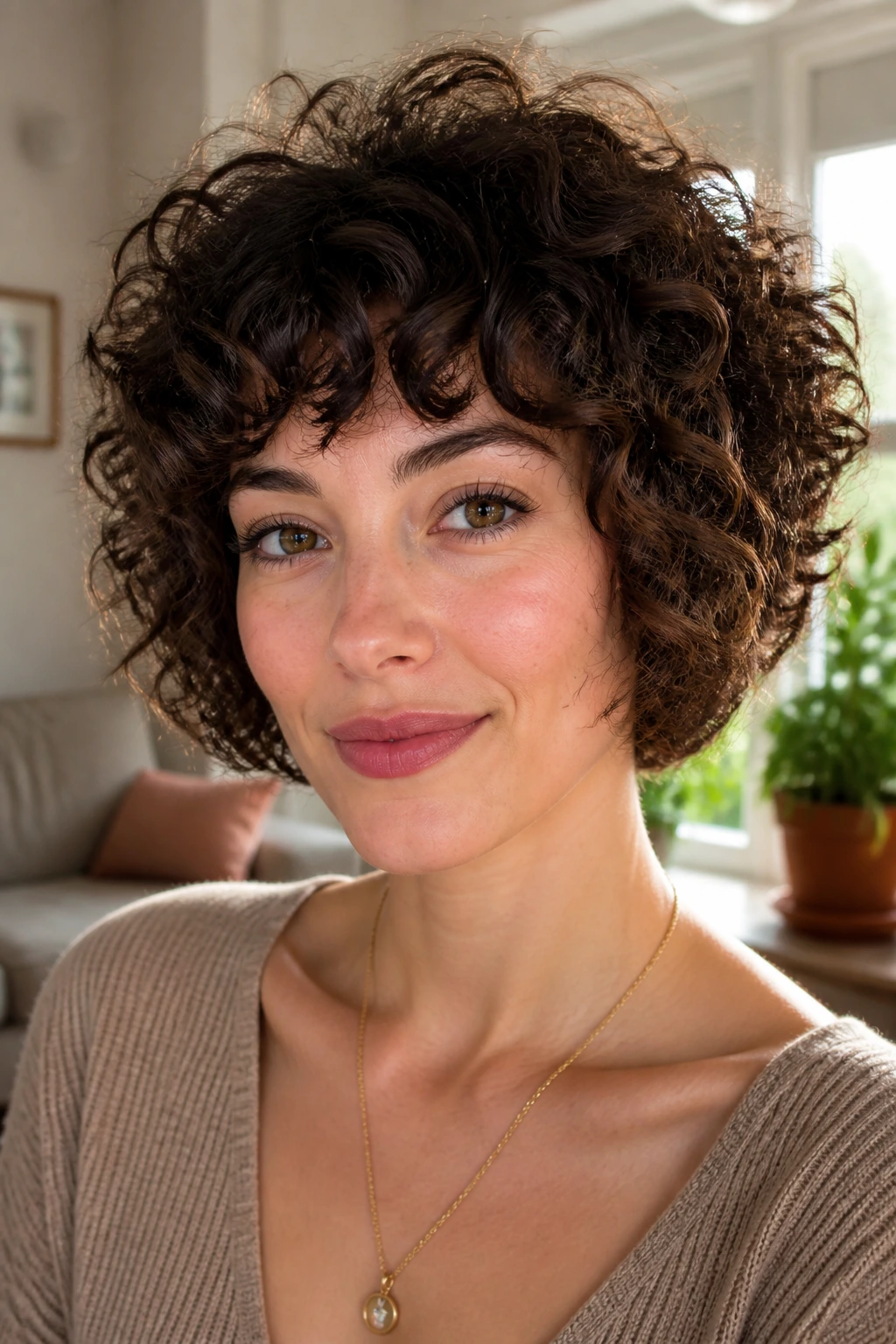
Curly hair and square faces get along when the cut respects the curl pattern instead of fighting it. A halo shag keeps the volume lifted and rounded, which helps the face feel softer without making the hair triangle out at the bottom.
The important detail is layer placement. Curly hair shrinks, sometimes a lot, so the shortest pieces need to be cut with the finished shape in mind. If the face-framing layers are too short, they can bounce up above the cheek and leave the jaw exposed in a way that feels abrupt. A better curl shag lets the shortest front pieces skim the cheekbone when dry.
This cut is also one of the easiest to wear with a square jaw because the curl itself blurs edges. You do not need perfect ringlets. You need enough lift at the crown and enough shape around the temples to keep the silhouette round instead of blocky.
6. Feathered Pixie Shag
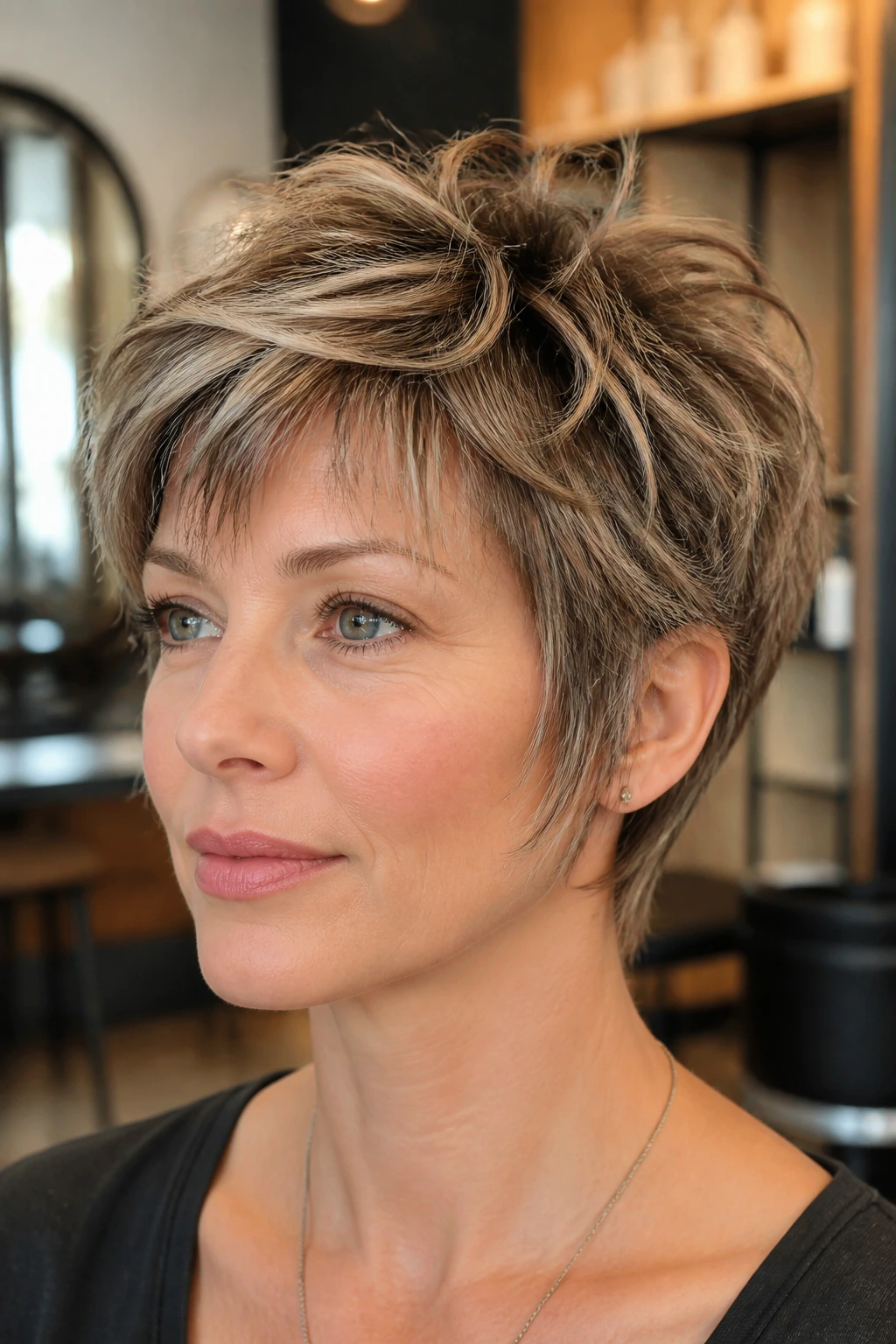
Compared with a standard pixie, this one has more air in it. The feathering softens the crown, and the longer pieces around the temples stop the cut from sitting like a cap on top of a square face.
That extra movement matters. A plain pixie can look too clean and too severe if the jaw is already sharp. The shag version keeps the nape tidy but breaks up the top and sides so the face reads more balanced. It’s especially good if you want short hair that still has some swing when you turn your head.
What Makes It Better Than a Plain Pixie
The ends are narrower and softer, which keeps the cut from looking square at the sides. You can tuck the front behind one ear and let the other side fall forward, and that unevenness does a lot of work for you.
7. Side-Part Textured Crop
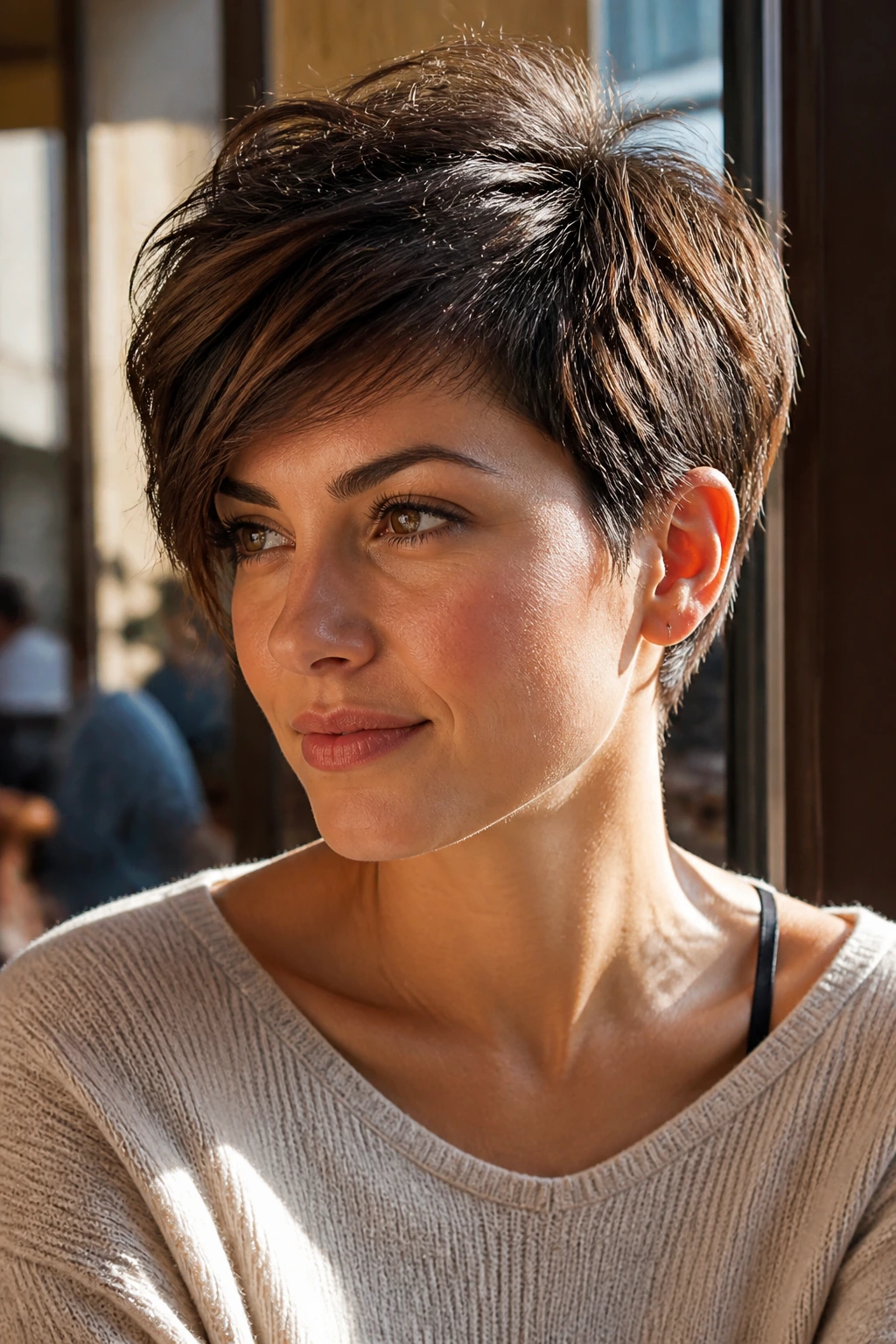
A side part sounds like a small thing. It isn’t. On a square face, shifting the part off-center can change where the eye starts reading the haircut, and that can make the whole thing feel softer before you even add product.
This crop works best when the top has enough length to sweep across the forehead. The side part creates a diagonal line, which is one of the easiest ways to interrupt a square shape. Keep the layers short enough to stay lively, but not so short that the hair stands up in every direction after two hours.
If you wear glasses, this is a strong choice. The side-swept top keeps the frame area open, and the texture keeps the haircut from fighting the glasses arms. It’s a tidy cut with a little edge, which is a nice place to land if you want short hair that still feels polished.
8. Jaw-Skimming Layered Bob
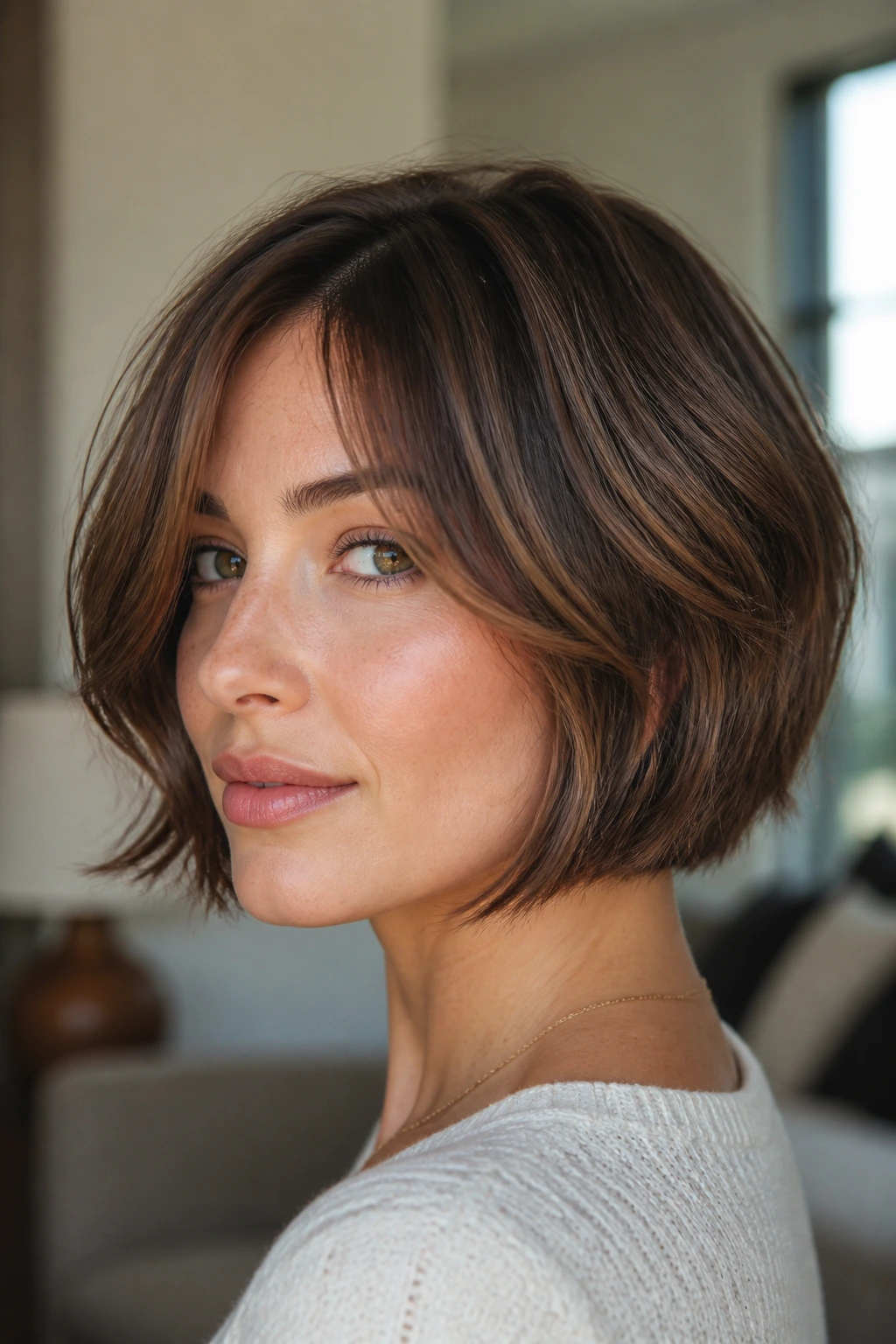
A bob that stops right at the jaw can be a trap on square faces, but not if the edges are cut with enough movement. This version grazes the jaw, then breaks away from it through the ends so the line never looks stiff or heavy.
That grazing length is the whole gamble. If the bob is blunt, it can make the jaw feel wider. If it has shattering at the ends and a soft face frame, it works. The cut looks especially good when the front pieces are a touch longer than the back, because the slight angle helps draw the eye down and forward.
Wear it sleek if you want a sharper feel, or use a round brush just on the ends if you want it airier. Either way, this is one of those cuts that depends on precision. Two extra millimeters at the wrong point can change the whole mood.
9. Piecey Micro Shag
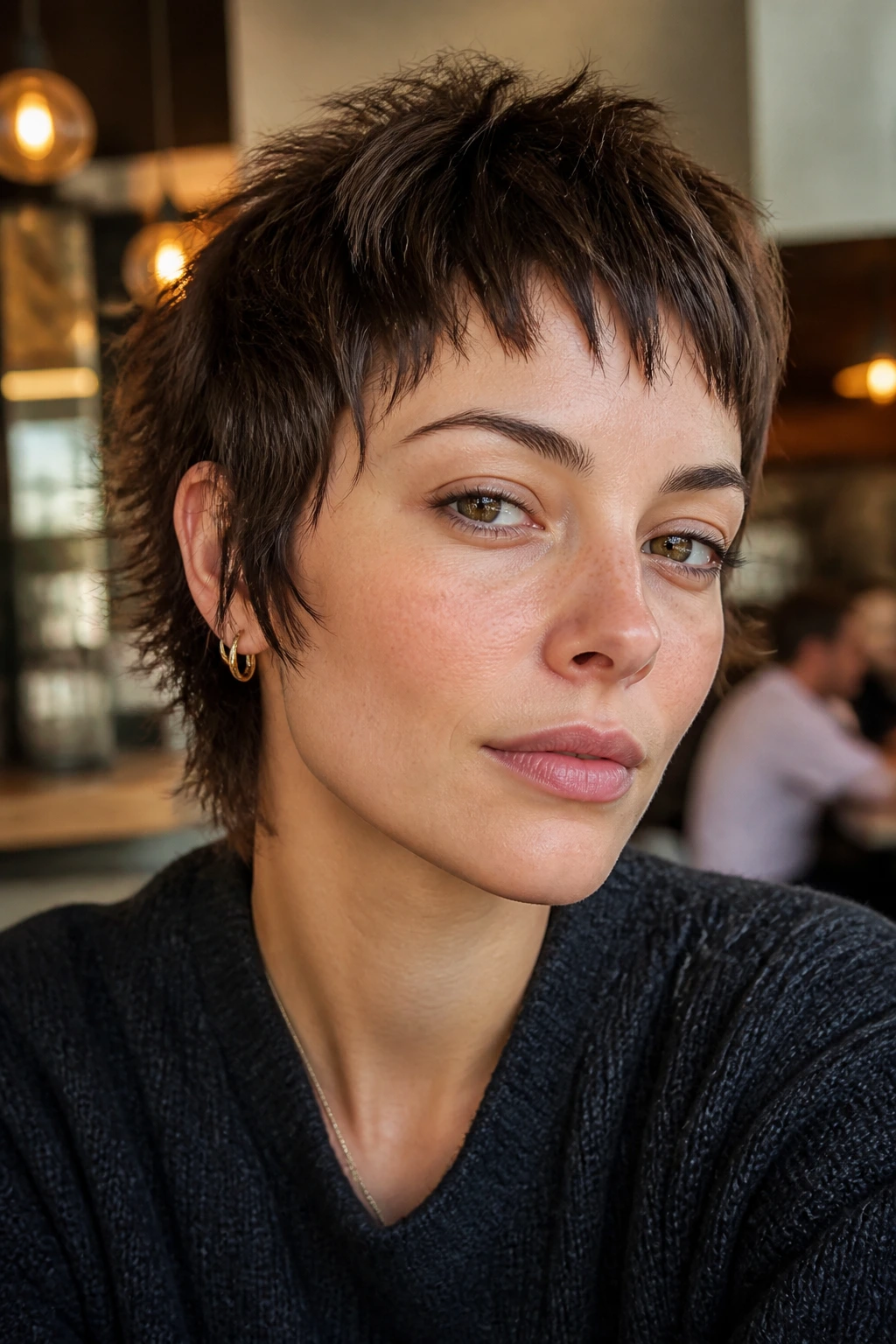
This one is tiny, sharp, and more interesting than people expect. A micro shag keeps the length short, but the choppy layers stop it from reading like a fixed helmet. On a square face, the piecey finish is what keeps the cut alive.
The fringe area matters here. Even a short fringe should have some irregularity so it doesn’t form a hard shelf across the forehead. The sides can be lightly tapered around the temples, which softens the upper corners of the face and keeps the jaw from feeling too square in relation to the rest of the cut.
How to Use It
A pea-sized amount of styling paste is usually enough. Warm it in your fingers, pinch the ends, and leave the crown a little rough. The more polished this cut gets, the less it helps the face shape.
10. Bottleneck Bang Shag

Bottleneck bangs are useful because they do two jobs at once. They narrow toward the middle, then open wider near the cheekbones, which gives a square face a softer frame right where it needs one.
This shag works well when the bangs are light enough to separate, not heavy enough to press flat. The rest of the cut should stay loose and layered, so the bangs don’t look like they belong to a different haircut. That mismatch is what throws everything off.
I like this version for people who want fringe but do not want to commit to full bangs. You get face framing without covering the whole forehead, and the cheekbone width in the bang shape helps balance the jaw below it. It’s a neat little trick, honestly. Not flashy. Just smart.
11. Airy Mushroom Shag

A mushroom cut gets a bad reputation because the old version sat too round and too tidy. The shagged-up version is better. It keeps the rounded outline, but the interior layers and broken ends stop it from looking like a bowl.
On a square face, that rounded silhouette can be very useful. The softness at the sides takes pressure off the jaw, and the lifted crown adds height where the face can use it. The cut works especially well if your hair is dense and you want to lose some weight without losing shape.
You do have to keep the edges airy. If the perimeter is too precise, the cut starts to look like it’s trying too hard. Ask for texture at the ends and a little separation around the temples. That’s the difference between playful and dated.
12. Grown-Out Pixie Shag
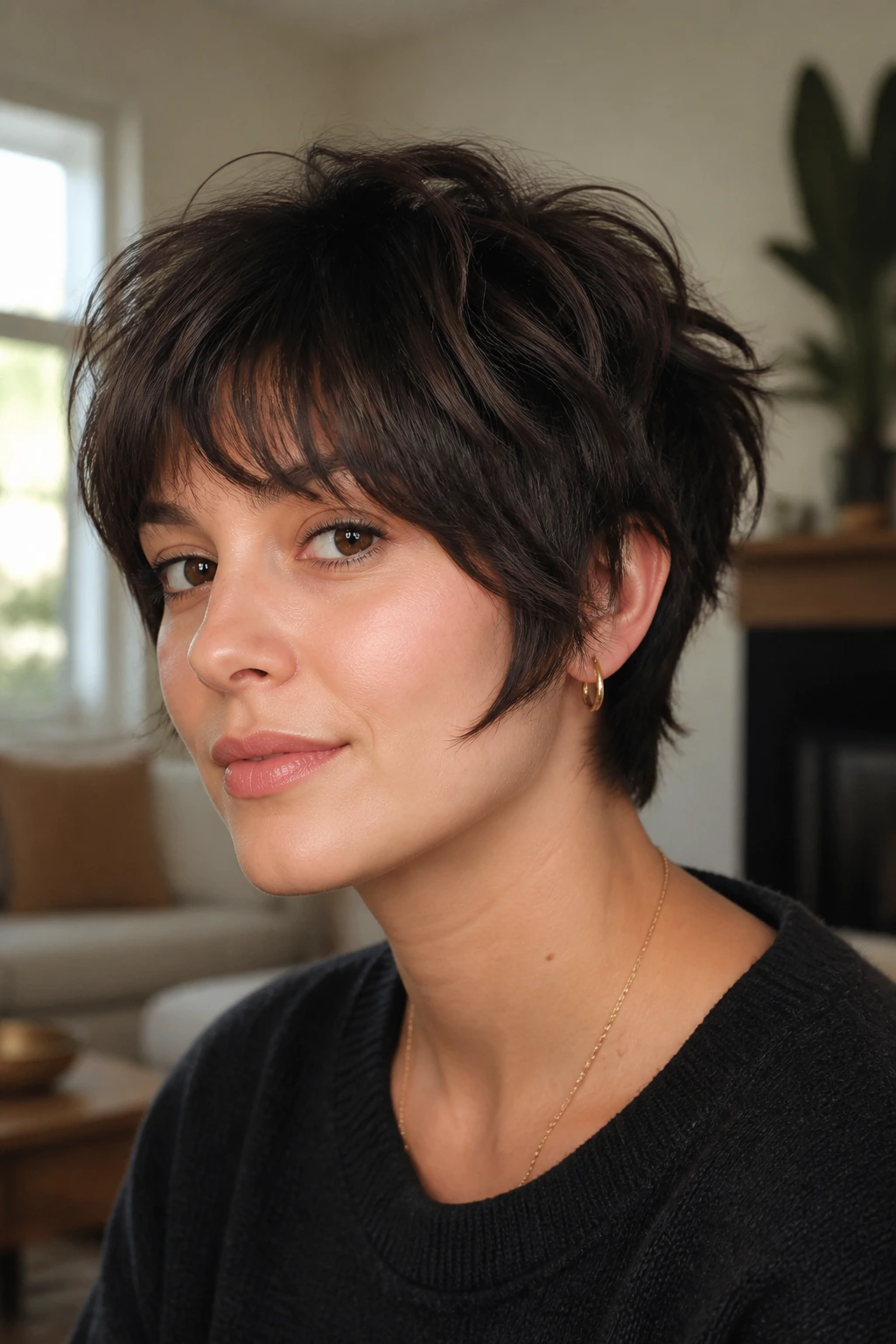
This is the cut for the in-between stage, and I think it deserves more credit than it gets. When a pixie grows out, it can either turn messy in a good way or awkward in a very specific way. The shag version keeps the shape intentional through that awkward middle.
The longer top pieces help the face look less squared off, and the shorter nape keeps the back from ballooning. Around a square face, the key is to let the front hover around the cheek and lip area so the eye has something soft to follow. That little bit of fall matters more than absolute length.
Best Part About It
You can tuck it, flip it, or wear it pushed forward. It changes a lot with almost no effort. That makes it useful if you hate getting trapped by one styling pattern.
13. Broken-Edge Blunt Shag

A blunt edge and a shag sound like opposites, but this cut uses both on purpose. The base line stays fairly clean so the haircut has weight, yet the top and sides are broken up enough that the face doesn’t get boxed in.
That mix is useful on square faces because it gives structure without drawing a hard rectangle around the jaw. Keep the layer work concentrated above the chin, and ask for point-cut ends near the front. The eye gets a line, but not a heavy one.
This is a good option if you like a haircut that still looks put together when you don’t style it much. It dries in a shape. It doesn’t explode into chaos. That’s not nothing.
14. Flip-Out Layered Bob
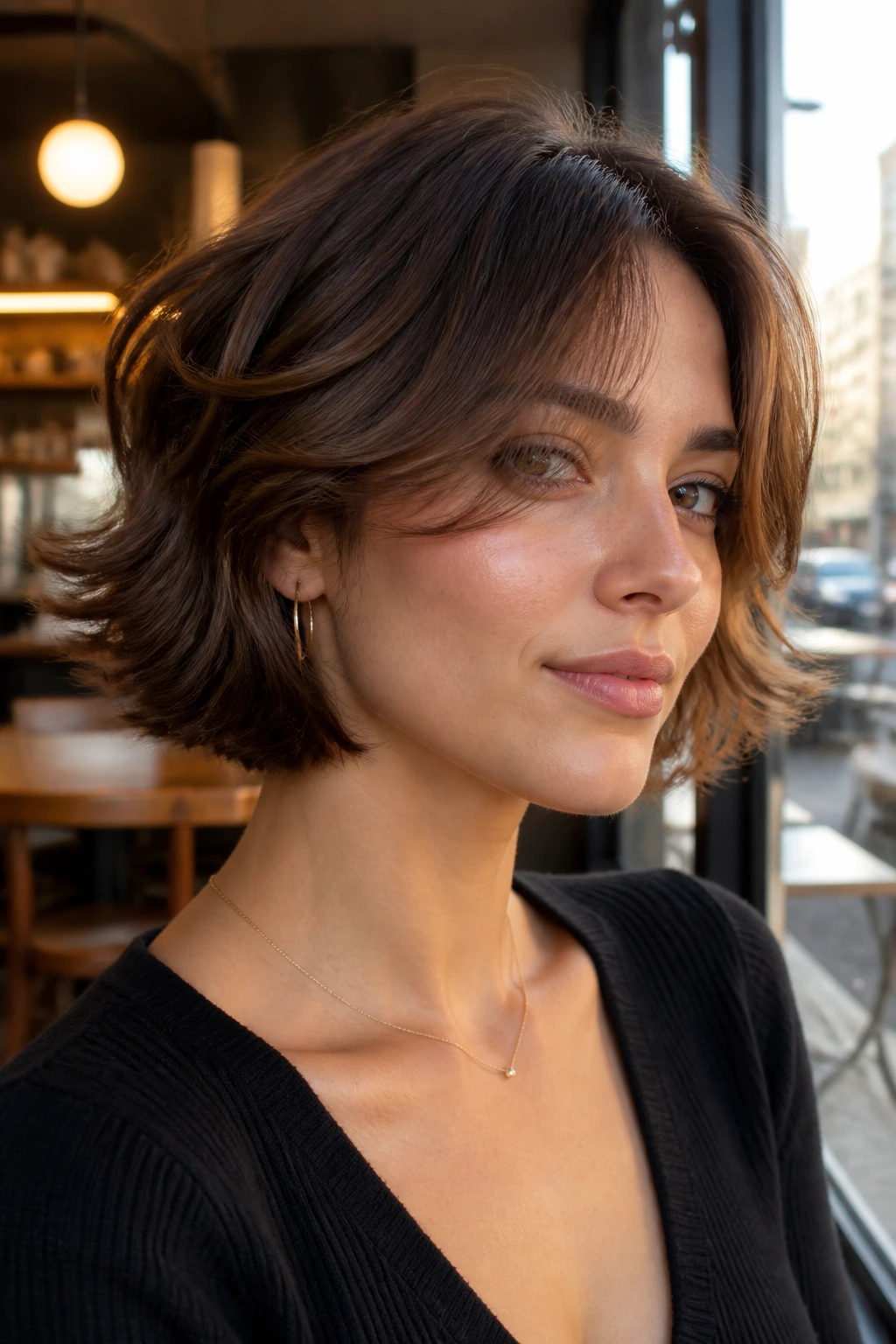
The flip-out bob is a little retro, a little cheeky, and much better than it sounds when it’s cut with shaggy layers. The outward bend at the ends lifts the line away from the jaw, which helps a square face look less grounded and heavy.
The trick is to keep the flip loose. If the ends curl too hard, the shape gets fussy. A soft brush-out or a pass with a round brush at the last inch of hair is enough. Leave the root area relaxed and let the movement happen below the cheekbone.
It’s a good haircut for someone who wants a little personality without giving up a clean outline. There’s a nice tension in it. Controlled, but not stiff.
15. Curved Fringe Crop

A curved fringe is one of the simplest ways to soften a square face because it places the rounded shape right at the forehead. That changes the first impression of the haircut before the jaw even enters the conversation.
The crop underneath should stay loose and layered, not tight and blocky. That contrast matters. The fringe gives shape; the rest of the cut gives motion. If both parts are too exact, the whole thing starts to feel overworked.
How to Style It
Blow-dry the fringe with a small round brush, curving it just enough to follow the brow line. Then rough-dry the rest and stop touching it. The more you fuss with the back, the less the fringe gets to do its job.
16. Chin-Length Razor Shag

If you want a cut with a little bite, this is the one. The razor finish gives the ends a soft, shredded edge, and that stops the chin-length line from sitting like a hard frame around the face.
The square face loves anything that breaks up the perimeter. A razor shag does that well because it keeps the outline loose while still preserving enough body to feel intentional. It’s especially good on straighter hair that tends to lie flat and look heavy when cut bluntly.
A side part usually works better than a dead-center part here, unless your features are very balanced and you want extra symmetry. Most of the time, a small shift to one side lets the front fall in a more flattering diagonal. Small thing. Big effect.
17. Tapered Nape Shag
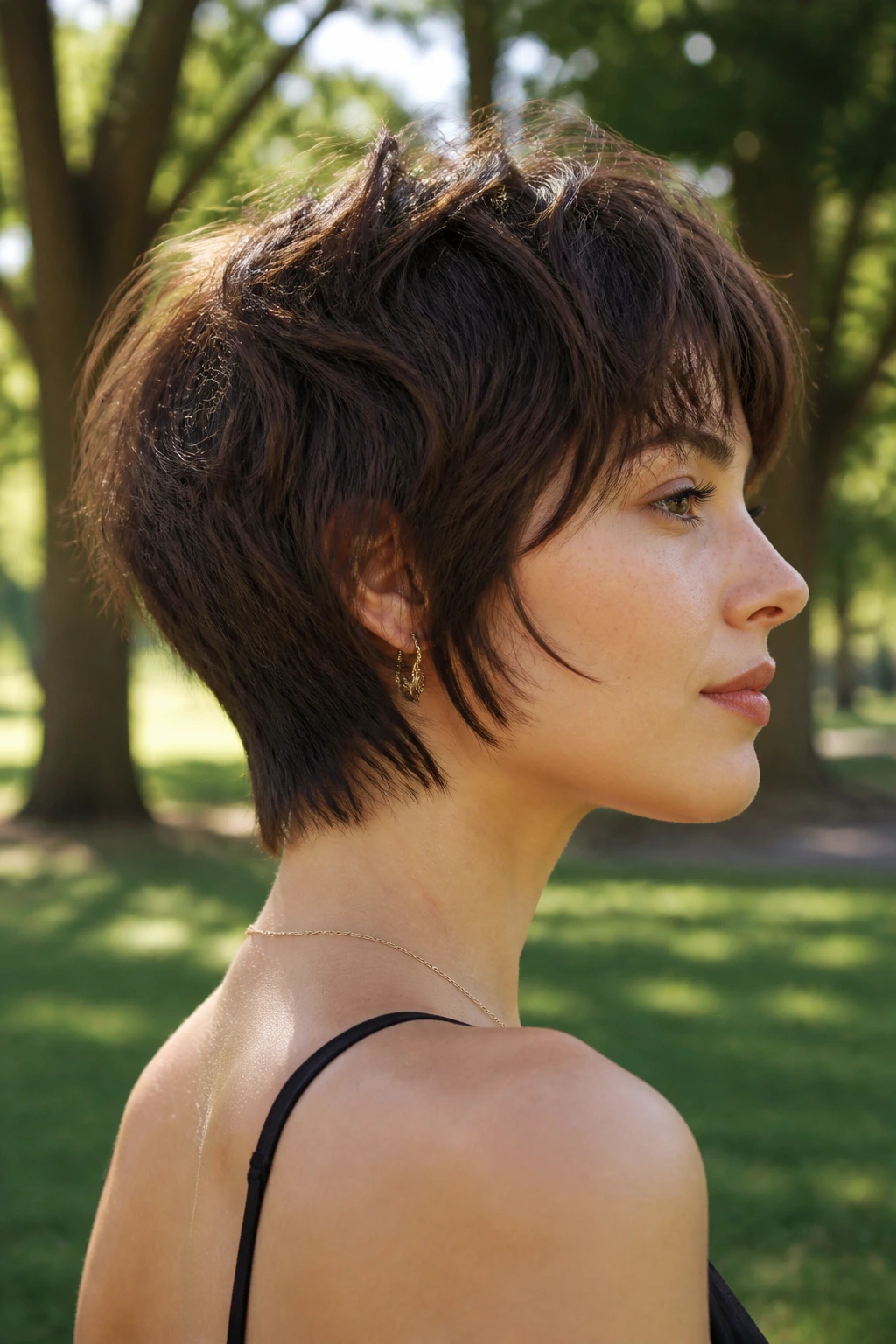
The tapered nape is the quiet hero of this cut. Shorter, neat back layers keep the haircut from puffing out behind the neck, and that allows the front to feel soft without the whole shape turning bulky.
On a square face, this matters because too much width at the bottom can make the jaw feel boxed in. A tapered nape gives the front room to move and keeps the silhouette leaner. It’s a useful choice if you have thick hair and do not want to spend twenty minutes fighting the back with a blow dryer.
You can wear the front pieces toward the cheekbone or tuck them behind the ear for a cleaner line. Either way, the nape keeps the haircut honest. It doesn’t let the back become a mushroom cap, which is where a lot of short cuts go wrong.
18. Wet-Look Crop
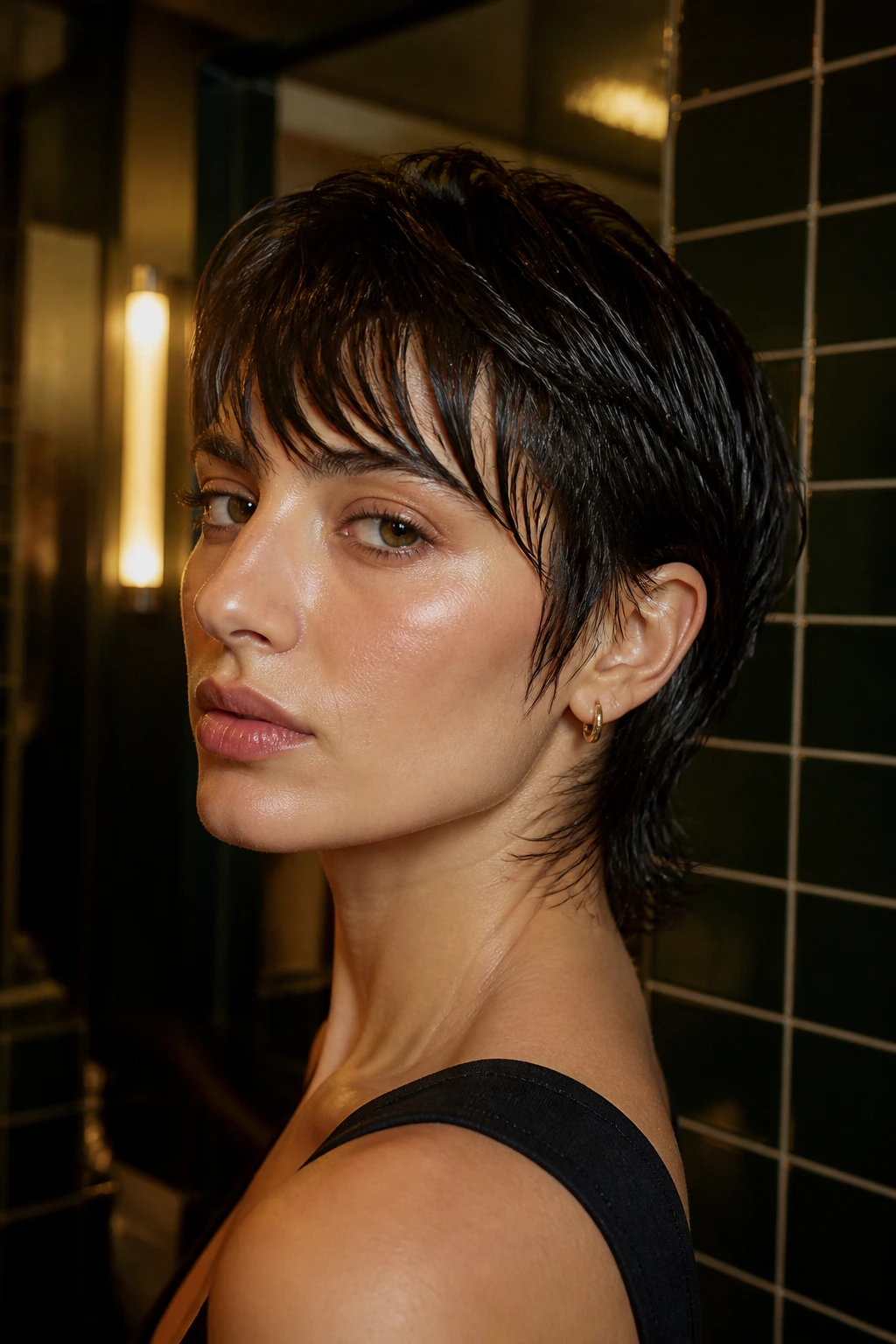
This is the edgy choice, and I mean that in a practical way, not a costume way. A wet-look crop uses product to create separation and sheen, which turns a short shag into a cleaner, more fashion-forward shape.
The reason it works on square faces is the same reason a matte, over-ruffled cut can fail: the finish changes the silhouette. Slick texture opens up the face and shows the angles without making them feel harsh. The shag layers keep the look from turning flat against the head.
When It Makes Sense
If you like short hair that looks deliberate on a night out, this is a strong option. Use a lightweight gel or cream-gel hybrid, comb the hair into place, then pinch a few ends loose. Don’t make it look frozen. That defeats the point.
19. Fine-Hair Lift Shag

Fine hair needs a different kind of shag. Not more hair. Better placement. The goal is to build lift at the crown and keep the ends light enough to move without making the whole cut sparse.
Square faces with fine hair can run into a problem where the hair clings too close to the head and makes the jaw look wider by comparison. A lift shag solves that by adding some height up top and keeping the side pieces a little longer. The shape becomes more oval without looking overdone.
A root mousse and a quick blow-dry with a round brush usually do the job. Don’t overload it with oil or cream. Fine hair remembers every extra drop, and the haircut loses its lift fast.
20. Thick-Hair Debulked Shag

Thick hair can wear a shag beautifully, but only if the bulk is handled with care. Too much layering in the wrong spot can create a triangle. Too little can leave the sides heavy and stubborn. The debulked version finds the middle ground.
The best move is to remove weight inside the shape while keeping enough length at the outer layers to soften the jaw. That way the cut has swing without puffing out at the sides. Square faces benefit from that controlled looseness because the haircut doesn’t add more width where there’s already plenty.
Ask for texture removal in the interior, not just on the ends. That’s the detail that keeps thick hair from sitting like a shelf. A little product goes a long way here. Heavy cream can drag the shape down in minutes.
21. Salt-and-Pepper Textured Shag

Gray mixed with dark hair has a built-in dimension that short shag cuts can use beautifully. The lighter strands catch the layers, and the texture shows up in a way that a blunt cut often hides.
On a square face, the salt-and-pepper version is useful because it makes the hair read as lighter around the edges and stronger at the crown. That contrast softens the jaw visually. It’s not about trying to look younger. It’s about letting the natural color variation do some of the framing work.
A small amount of shine cream on the ends keeps the gray from looking dry, but don’t drown it. The texture should still be visible. Too much gloss flattens the movement, and the movement is half the point.
22. Off-Center Face-Framing Shag

This is the most adaptable cut in the group. The off-center part gives the face a diagonal line, the face-framing pieces soften the jaw, and the shag layers stop the style from looking too set.
It works because it doesn’t force symmetry. Square faces often look better with a little asymmetry around the forehead and temples. A slightly off-center part creates that without needing extreme contrast. The front can skim the cheekbone on one side and tuck back on the other, which keeps the outline from feeling locked in place.
If you want one cut that can swing from polished to messy with just a product change, this is the one I’d pick. It’s flexible in the good sense. A little bend, a little separation, and the haircut starts doing the work for you.
Why Short Shags and Square Faces Click So Well

The short version? They solve the same problem from different angles.
A square face has strong corners at the forehead and jaw, so a haircut that repeats those corners can feel harsh fast. A shag does the opposite. It introduces breaks, bends, and soft edges. The eye stops at the layers instead of marching straight to the jawline, and that changes the whole read of the face.
There’s also a practical reason these cuts work so well. Short hair can look very exposed when it’s blunt. Add layers, and the shape gets movement. Add fringe, and the forehead softens. Add a little height at the crown, and the face looks a touch longer. Those are small moves, but they stack.
The best short shag is never random. The pieces may look undone, but the shape underneath is doing careful work.
What to Tell Your Stylist Before the First Snip
Bring more than one photo if you can. One from the front, one from the side, and one where the hair is tucked or styled messier. The side view matters more than people realize, because that’s where the jawline and nape relationship shows up.
Tell your stylist where you want the softness to sit. Cheekbone? Temple? Chin? Those are not the same thing. On a square face, cheekbone framing is often safer than chin-length pieces that end right at the widest point. You can also ask for point cutting or razor texture if your hair tends to sit too neatly.
Say what you do not want, too. If you hate round brush styling, say so. If your hair is thick and puffs up at the sides, mention that. If your crown lies flat, say that out loud. A good short shag starts with the right weight removal, not with vague words like “soft” or “edgy.” Those mean different things to different people.
Essential Tools for Styling a Short Shag
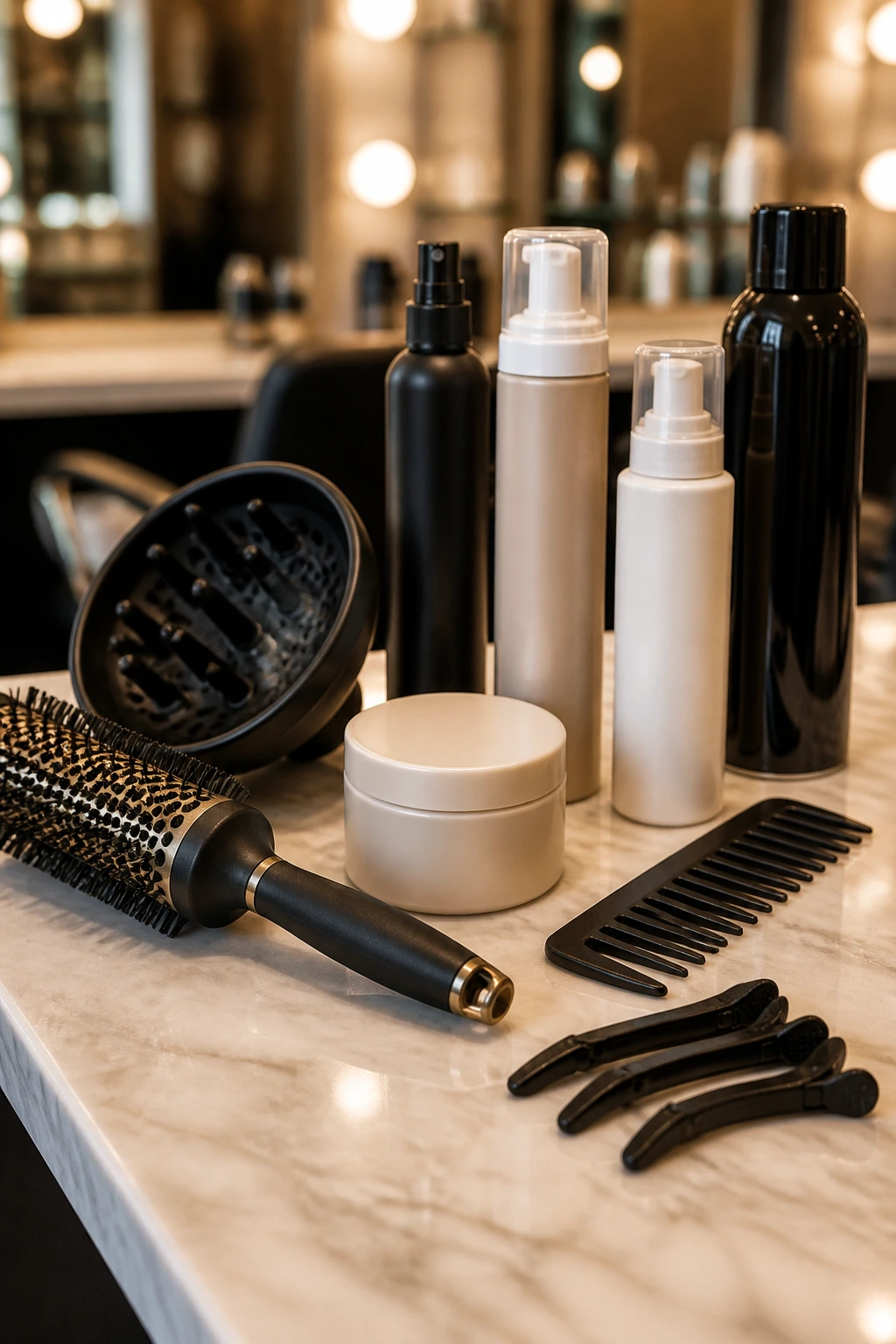
- Blow dryer with a concentrator nozzle — Directs airflow so you can lift the roots without blasting the fringe apart.
- 1-inch or 1.25-inch round brush — Good for bending the front pieces and softening the ends around the cheekbone.
- Diffuser — Useful for wavy and curly shag cuts; it keeps the curl pattern from getting stretched into frizz.
- Texturizing spray — Adds piecey separation at the mid-lengths and ends without making the hair greasy.
- Volumizing mousse — Best at the roots on fine hair, especially if the crown tends to collapse.
- Lightweight styling cream — Good for controlling frizz on curly or thick hair while keeping movement.
- Dry shampoo — Helps day-two hair keep some lift; spray it at the roots, not just the part line.
- Wide-tooth comb — Better than a brush for shaping curls and waves before they dry.
- Hair clips — Useful when you want to set the fringe or clip one side away while drying.
- Light-hold hairspray — Keeps the shape in place without turning the layers stiff and crunchy.
Daily Styling Moves That Keep the Shape Soft
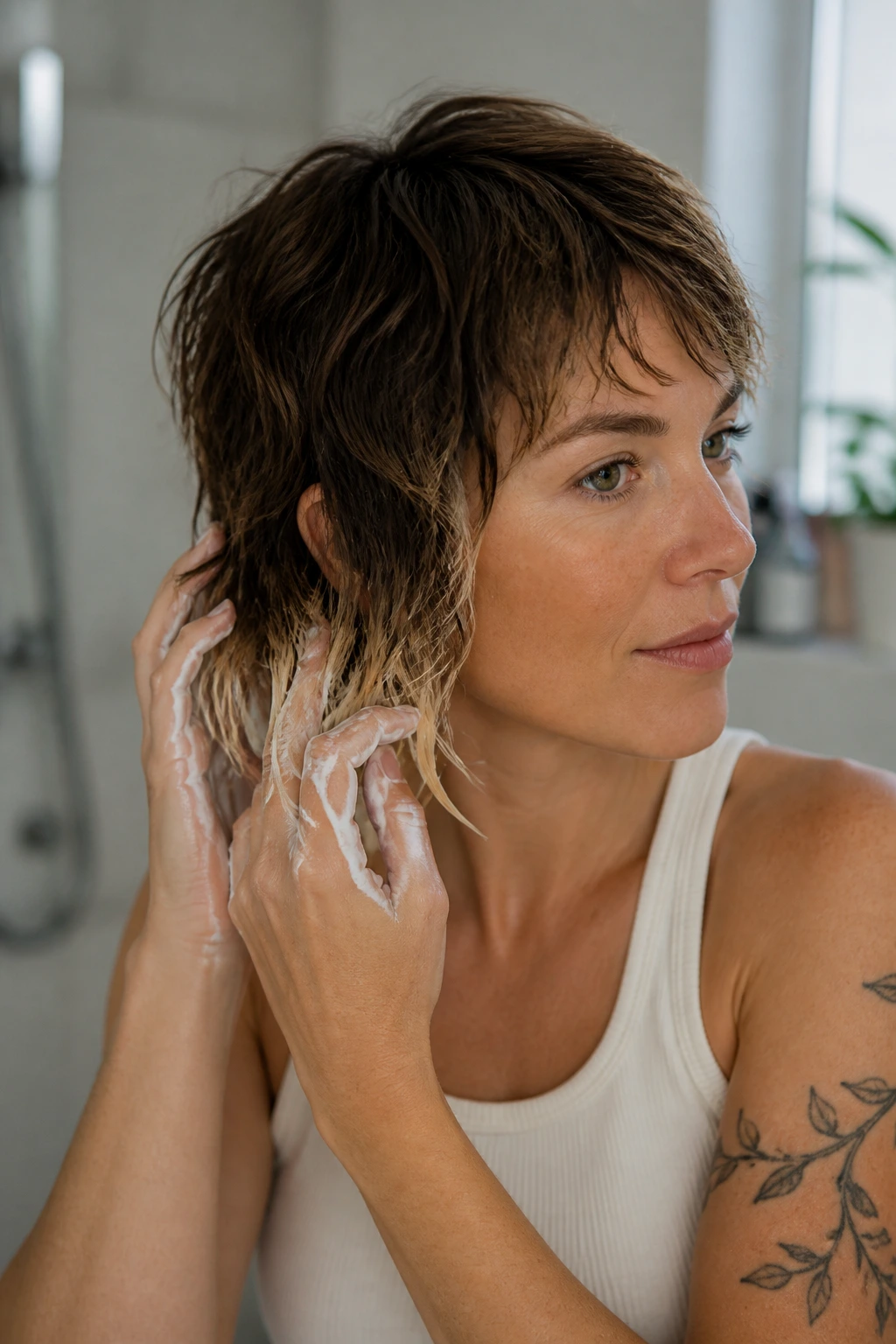
The cut only looks good if the finish stays flexible. Short shags hate overworking. If you brush them into submission, you erase the whole point.
Start with damp hair and a small amount of mousse or cream, depending on texture. Work it from the roots to the mid-lengths, then leave the ends a little lighter. Rough-dry until the hair is mostly set, and only then go in with a round brush or diffuser. If you start shaping while the hair is soaking wet, you end up fighting gravity for no reason.
A side part, even a tiny one, can help a square face more than a perfectly centered part. It changes the weight of the fringe and pulls the eye diagonally. That diagonal line softens the jaw in a way that blunt symmetry rarely does. If you like the center part, keep the front pieces a touch longer so they can fall away from the corners of the face instead of sitting right on top of them.
And please don’t over-spray the final look. Short shag cuts live or die by movement. Heavy hairspray turns them into little sculptures, and that is the opposite of the brief.
Common Mistakes That Make the Cut Feel Too Hard

Cutting the front exactly at the jaw. The symptom is immediate: the line looks square and the face feels wider. The fix is simple. Ask for face-framing pieces that land above or below the jaw, not dead on it.
Removing too much bulk from fine hair. If the cut goes see-through at the crown, it will collapse and expose the jaw. Keep the weight where the shape needs it and ask for softer texture rather than aggressive thinning.
Leaving thick hair one length all the way around. That’s where the triangle appears. You want bulk removed inside the shape, not all at the ends, or the sides balloon outward.
Forcing a curl pattern to stay flat. Wavy and curly short shags look awkward when they’re ironed too smooth. The hair loses the broken line that makes the cut flattering in the first place.
Using heavy oils everywhere. One drop too many, and the haircut goes limp. Put shine products only on the outer ends if you need them.
Variations and Adaptations to Try

The Softer Office Version — Keep the layers longer, the fringe lighter, and the ends more polished. This is the version that still works with a blazer and doesn’t ask for much styling in the morning.
The Edgier Razor Version — Ask for more separation through the ends and a rougher fringe. This one looks best with a bit of product and a slightly messy finish.
The Curl-Respecting Version — Leave extra length for shrinkage and cut the front pieces based on how they dry, not how they look wet. If your curl springs up fast, this avoids the too-short fringe problem.
The Fine-Hair Volume Version — Focus on lift at the crown and keep the perimeter a little fuller. Fine hair needs shape more than it needs severe thinning.
The Grow-Out-Friendly Version — Keep the nape neat and the front pieces longer so the haircut still looks good six weeks later. This is the one to choose if you hate constant trims.
Upkeep Between Salon Visits
Short shags behave best with small, regular touch-ups. Bangs often need a trim every three to five weeks if they hit the eyes. The rest of the shape can usually stretch to six or eight weeks, depending on how fast your hair grows and how sharp you want the layers to stay.
If your hair is straight, refresh the shape with a quick blow-dry and a little root lift every few days. If it’s wavy or curly, you may only need to re-wet the top and scrunch the front pieces back into place. That’s one of the nice things about a shag: it can look better a little imperfect. Sleep on it, shake it out, and move on.
For color-treated hair, keep the ends hydrated without coating the roots. A lightweight conditioner on the lower half of the hair is usually enough. The texture should stay visible, not slicked down. If the cut starts looking heavy, it’s usually a styling issue first and a haircut issue second.
Frequently Asked Questions
Will a shag haircut make my square face look wider?
Not if the layers are placed well. The danger comes from blunt ends at the jaw and too much width at the sides. Keep the softness around the cheekbones and temples, and the cut usually does the opposite of widening.
Should I avoid bangs with a square face?
No, but the bang shape matters. Soft curtain bangs, bottleneck bangs, and side-swept fringe work much better than a hard, straight fringe that stops abruptly across the forehead.
Is a bob or a shag better for a square face?
A shag is usually easier because it breaks up the outline. A blunt bob can work, but it needs careful length and texture so it doesn’t sit too square against the jaw.
What if my hair is very straight and flat?
Choose a cut with crown lift and texture through the ends, then style with mousse and a quick rough blow-dry. Straight hair needs movement built in, or the shape can look stiff by noon.
Can curly hair pull off a short shag on a square face?
Absolutely. Curls soften edges on their own, and a shag helps keep the volume round instead of triangular. Just leave enough length for shrinkage so the front pieces still frame the face.
How often will I need a trim?
Bang-heavy versions may need attention every three to five weeks. The rest of the cut can often go six to eight weeks, especially if it’s meant to grow out a little.
What if my jaw is very strong and I want to soften it more?
Go for cheekbone-length face framing, a side part, and a bit of crown lift. Those three things change the silhouette faster than adding extra length everywhere.
Can I tuck a shag behind my ears without ruining the shape?
Yes, and that can actually help a square face by creating asymmetry. Leave a few loose pieces in front so the tuck looks intentional rather than accidental.
Practical Styling Moves That Make the Cut Work Harder
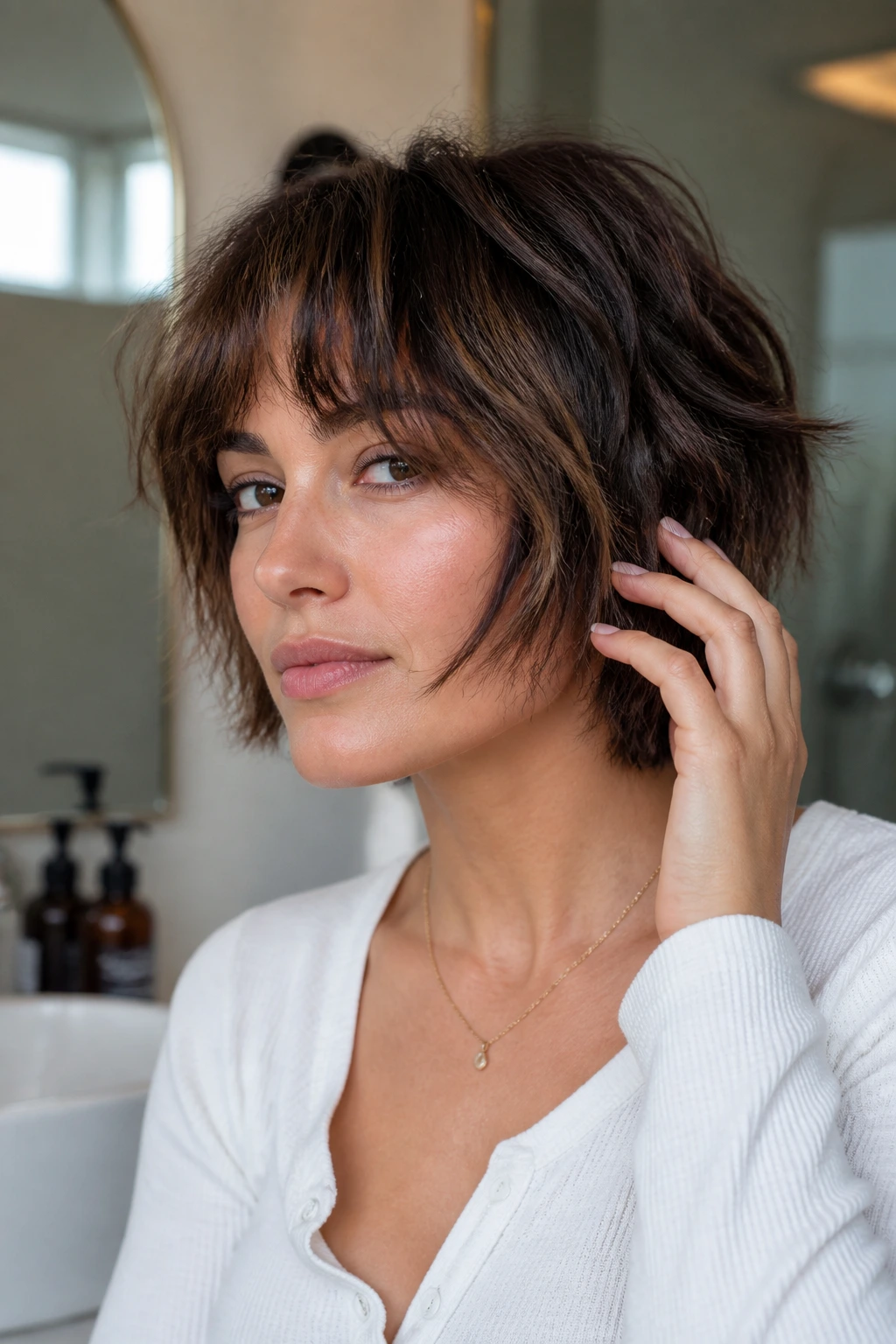
Face-framing placement: Ask for the shortest front pieces to start around the cheekbone if you want the safest softening effect. That’s where the eye naturally goes first, and it keeps the jaw from becoming the visual anchor.
Crown lift: A little height at the top helps a square face look more balanced. You do not need a big bump. A half-inch of root lift can change the whole line.
Parting choice: A slightly off-center part is usually the least fussy option. It creates a diagonal and keeps the haircut from looking too symmetrical.
Finish choice: Airy texture usually works better than glassy polish. If you want sleekness, keep it on the top and let the ends stay broken up.
Glasses and earrings: Short shags and square faces can handle bold frames and earrings, but the haircut should still keep some movement near the temples. Otherwise the whole area gets crowded.
Common Mistakes to Avoid

Too much width at the cheeks — The cut starts to look puffy at the exact point you wanted softness. Ask for more internal layering and less bulk on the sides.
A fringe that stops too short — Baby bangs on a square face can be tough unless the whole look is very deliberate. Longer fringe pieces are easier to wear and easier to grow out.
Over-smoothing the hair — If every strand lies flat, the shag loses its edge and the face shape becomes more obvious. Leave some separation.
Ignoring hair density — Fine hair and thick hair need different layering. One cutting plan will not suit both.
Choosing the wrong finishing product — Heavy cream on fine hair is a fast way to flatten the roots. Use products that match the texture you actually have.
Variations and Adaptations to Try
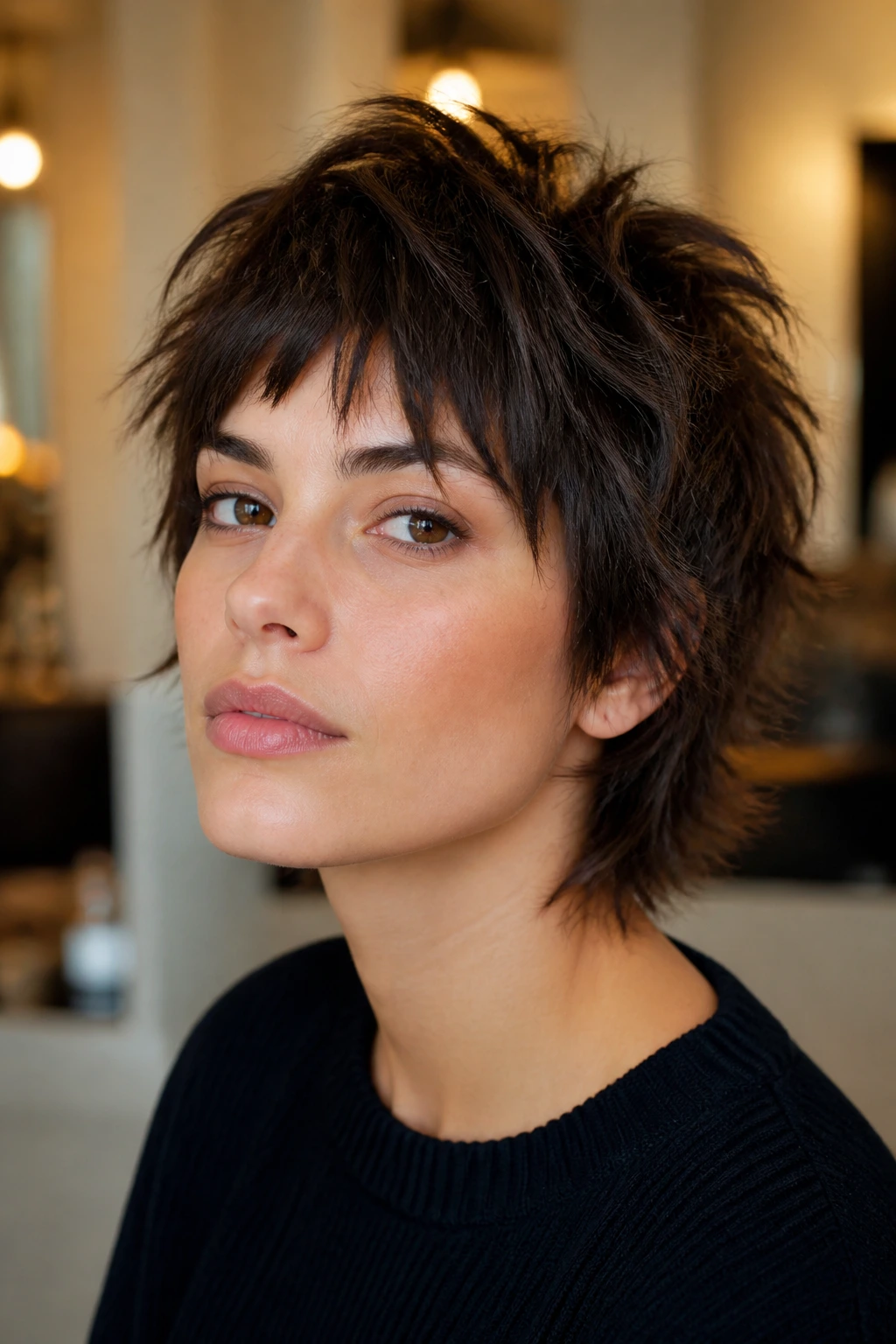
The Minimal-Style Version — Keep the cut soft enough to air-dry with very little effort. This suits people who want a better shape, not a new morning routine.
The High-Texture Version — Use more razor work and a rougher fringe for a visibly piecey finish. Good for hair that already has body and movement.
The Lengthy Grow-Out Version — Leave the front long enough to skim the jaw while the back stays shorter. It gives you more time between salon visits.
The Gray-Friendly Version — Add shine and movement rather than trying to hide the silver. The texture shows off the color variation.
How to Keep the Shape Fresh Between Appointments
A short shag can stay useful longer than people expect, but only if you trim the right parts at the right time. The fringe loses its shape first. Then the crown gets heavy. Then the nape starts to puff. That order matters, because you can often fix the first two with a quick trim or a styling change before the whole cut turns stubborn.
If the ends start flipping the wrong way, use a wet comb and reset just the front section instead of washing the whole head. If the roots go flat, dry shampoo at the crown is usually enough. If the jaw area starts looking too boxy, it’s probably time for a trim rather than another product.
The good news is that short shag haircuts usually grow out in a way that still feels deliberate. The layers blur before they betray you. That’s a nice quality in a cut, and it’s one reason they stay practical for people who don’t want to live on a six-week salon schedule.
The Shape That Does the Work

The best short shag for a square face is the one that breaks the straight lines without making the haircut feel limp. That balance is the whole game. Too blunt, and the jaw looks harder. Too wispy, and the cut loses its shape entirely.
What makes these cuts worth trying is how many different kinds of softness they can create. A curtain fringe softens the forehead. A razored bixie lifts the crown. A curly shag blurs the edges. A jaw-skimming bob works only when the ends are broken up enough to stay honest. Different tools. Same goal.
And that’s the useful part: you don’t need one magic haircut. You need the right version for your hair, your styling habits, and the shape you want to bring forward. Once those three things line up, a short shag can do more for a square face than a cleaner cut ever could.
