



A haircut can make a woman over 40 look sharp, tired, expensive, soft, or dated before anyone notices the shoes. That’s not vanity. It’s shape. A blunt edge at the jaw, a loose bend through the ends, a cleaner part—those tiny things change how light hits the face and how the whole style feels in motion.
Modern hair usually isn’t about being shorter or longer. It’s about being edited. The layers stop where they should. The bangs don’t hang like a curtain over the eyes. The ends look touched, not chewed up. A lob that lands at the collarbone with soft ends can feel fresher than waist-length hair that hangs heavy and flat.
That’s the real trick with hairstyles for women over 40 that look modern: they work with the hair you have, not the hair you wish you had. Fine hair needs lift. Thick hair needs shape. Curly hair needs room. And if you want something that still looks good when you’re running late, that matters more than any glossy salon photo ever will.
Why These Styles Stand Out
-
Shape does the heavy lifting: These cuts rely on clean lines, face-framing, and movement, so the hair looks intentional even when you don’t spend an hour styling it.
-
Texture keeps things current: Soft waves, broken-up ends, and a little bend through the midlengths read fresher than stiff, sprayed-out volume.
-
There’s room for real hair: Fine hair, thick hair, straight hair, curls, gray strands, and growing-out layers all get a place here.
-
Most of these styles are salon-friendly: You can ask for them without waving your hands in the mirror and hoping for the best.
-
They don’t fight your routine: Some need a blow dryer. Some air-dry fine. Some look better a little undone. That mix matters.
1. Collarbone Lob with Soft Ends
Want a length that does a little of everything without looking fussy? The collarbone lob is hard to beat. It lands where hair starts to swing instead of hang, which keeps it from feeling heavy at the ends.
Why it reads modern
The magic is in the finish. Ask for soft, slightly beveled ends rather than a boxy line, and keep the front just a touch longer so it brushes the collarbone. That tiny bit of movement keeps the cut from looking severe.
This length works on straight, wavy, and softly curly hair. It also gives you enough hair to tuck behind the ears, clip back, or bend with a flat iron in five minutes flat.
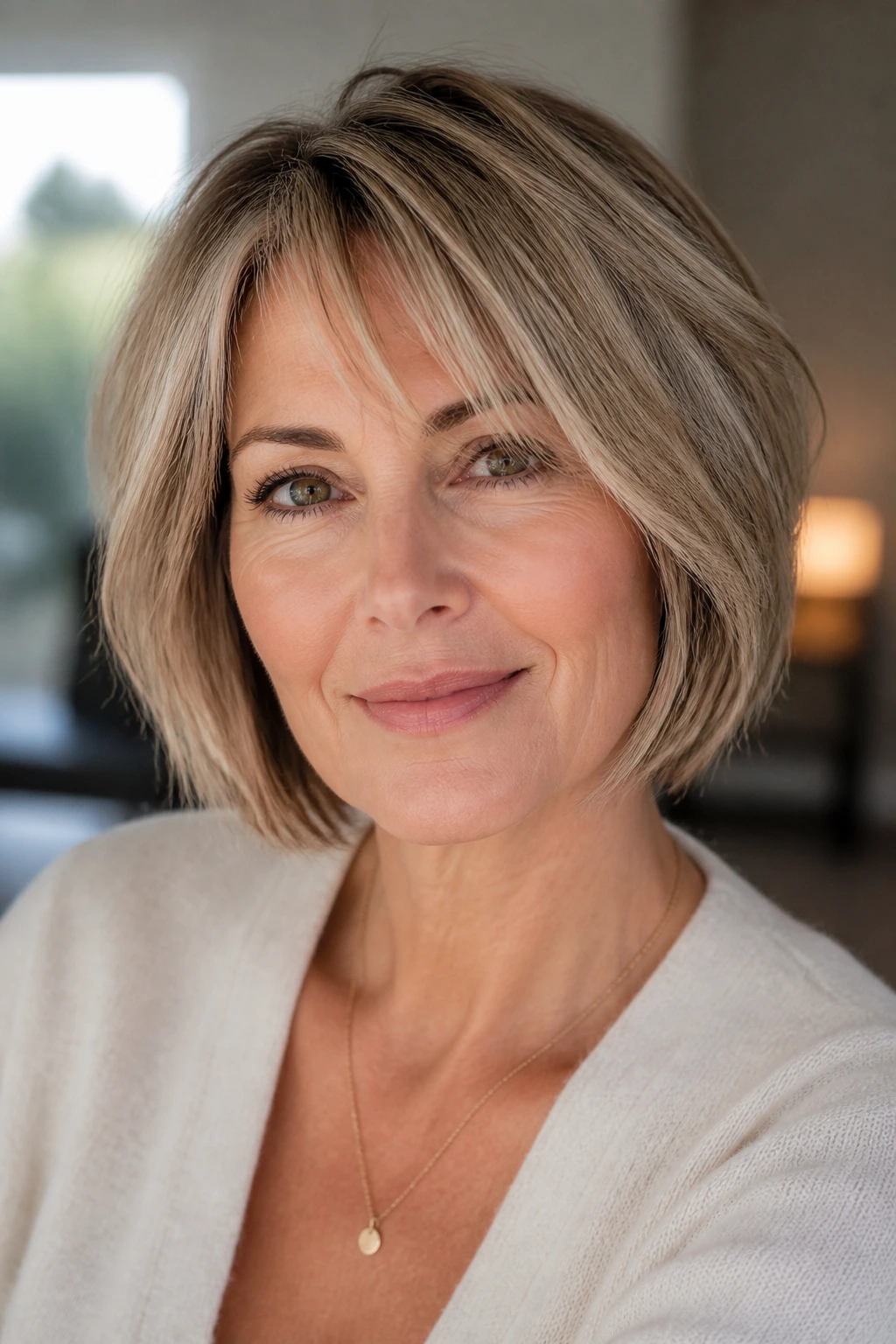
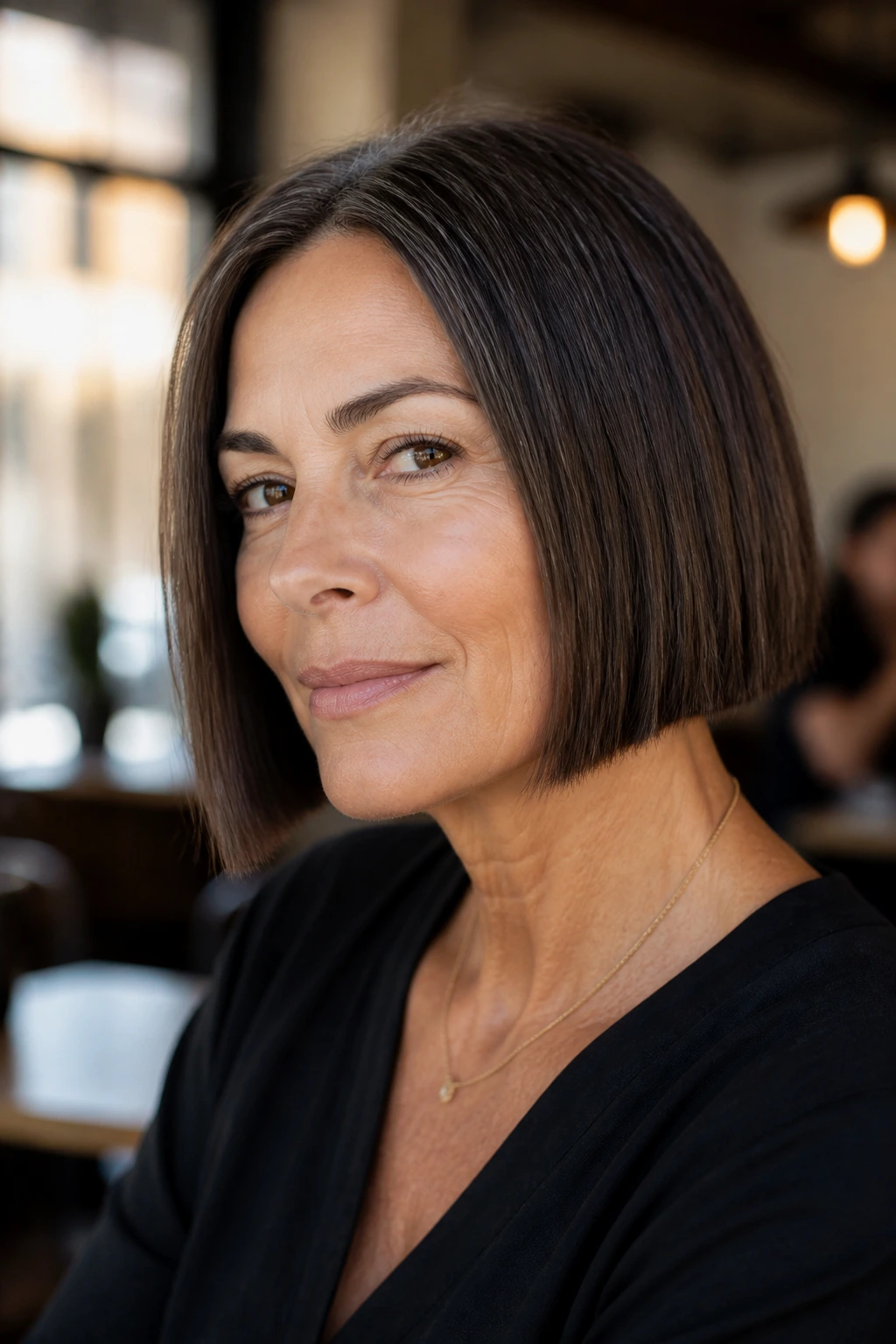
2. Blunt Chin-Length Bob
A chin-length bob is bold in the best way. It puts all the attention near the jaw, which gives the face a crisp frame and makes cheekbones look a little more defined.
Keep the line clean. That’s the whole point. If you pile on too many layers, the shape starts to wobble and loses the sleek edge that makes it feel current. I like this cut best when the ends are glassy, not puffy.
Styling note
A center part gives it a sharper feel. A deep side part softens it. Either way, keep the finish smooth and the volume controlled at the crown. It’s a small haircut with a big opinion.
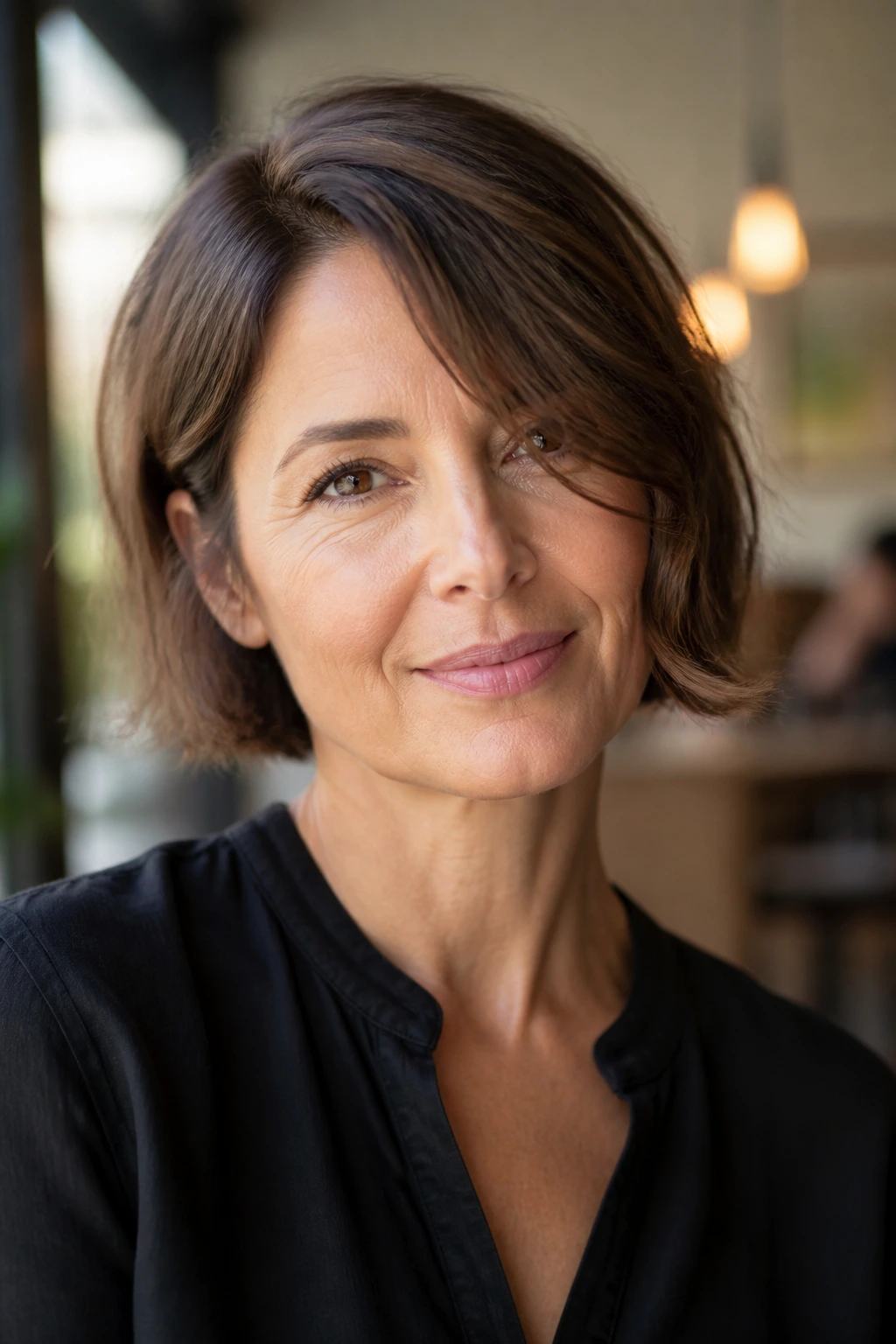
3. French Bob with a Side Bend
The French bob works because it doesn’t try too hard. It sits a little shorter than a lob, usually around the cheekbone or jaw, and it looks especially good when the part is off-center and the front falls with a little bend.
That side bend matters. It keeps the cut from feeling too neat, and neat can age a style fast if the rest of the hair is fluffy or over-processed. A tiny wave at the ends is enough. You do not need a whole curling situation.
If your hair has natural movement, this is one of those cuts that can look better on day two. The shape loosens a bit, the part settles, and the whole thing starts to feel lived-in instead of shellacked.
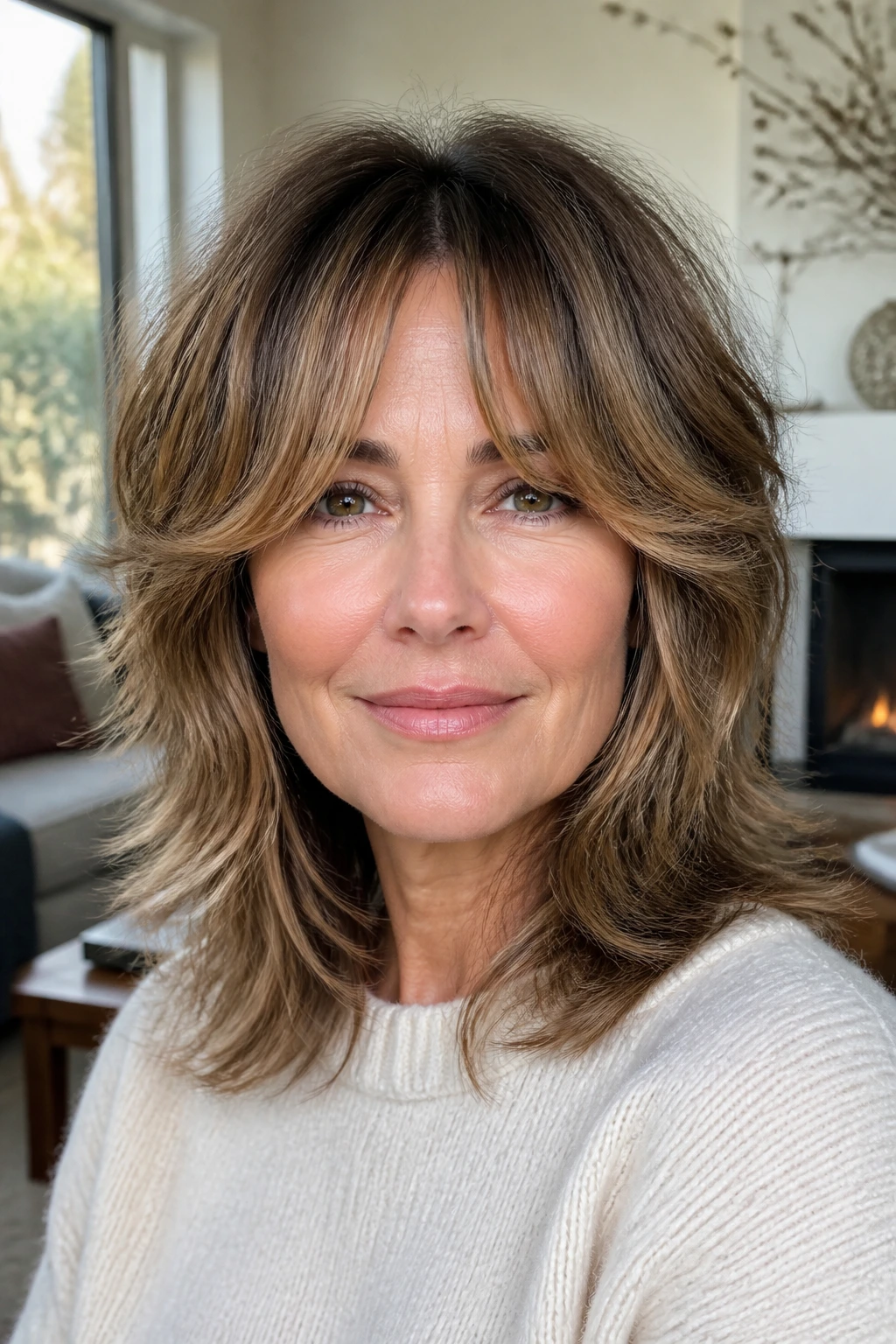
4. Soft Shag with Curtain Bangs
If you want movement without losing length, this is the cut that keeps paying rent. The soft shag gives the midlengths a little lift, and curtain bangs split the front in a way that opens the face instead of closing it off.
The shag is only modern when it’s softened. Heavy, choppy layers can start to look too eager. The better version has light texture through the ends and face-framing pieces that start somewhere around the cheekbone, not halfway up the forehead.
Who it suits
This shape is a gift for thick hair that wants to lose some weight and for fine hair that needs a little lift around the crown. It also works if you wear glasses, because the bangs can land around the frames without swallowing them.
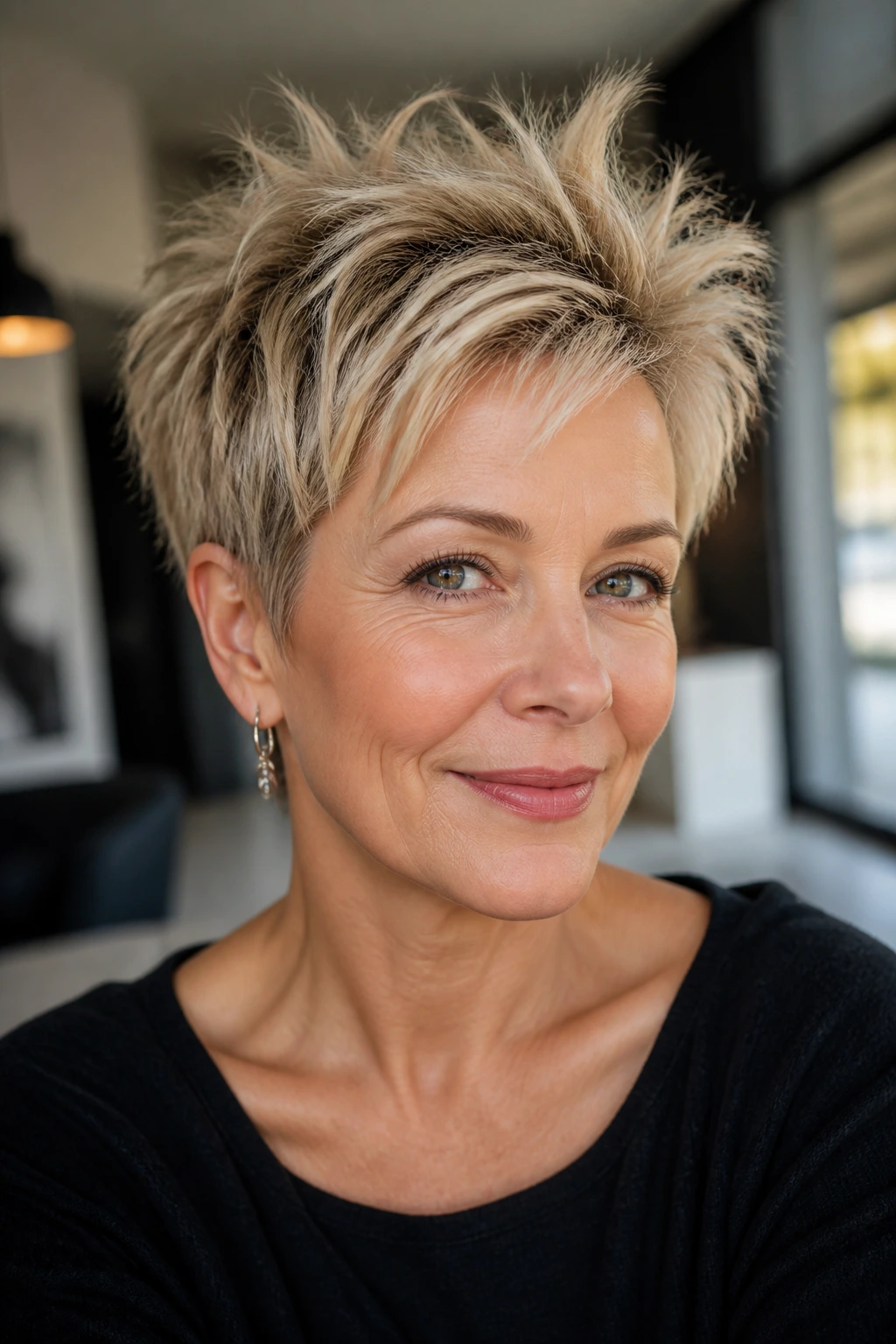
5. Airy Pixie with Piecey Top
Short hair can look incredibly fresh when it isn’t frozen into place. The airy pixie keeps the sides neat, leaves some height at the top, and uses little separated pieces instead of one hard helmet of hair.
That piecey top is what keeps it from feeling dated. A tiny amount of wax or paste rubbed between the fingers is usually enough. You want definition, not spikes. There’s a difference, and the difference matters.
This is one of those styles that makes earrings and collars look better too. The neck shows. The face opens up. And on a busy morning, that can feel like a small miracle.
6. Layered Midi Cut with a Center Part
A midi cut—one that sits between the shoulders and the chest—can look very current when the layers are kept soft and the part is clean. The center part gives the style a straight-down energy that works especially well on hair with a little natural wave.
The danger here is too many layers. If they start too high, the ends get wispy and the whole shape can look tired. Keep most of the lift below the chin, and ask for movement rather than choppiness.
The result is easy to wear and easy to grow out. That’s a rare combination. The cut still looks polished when it’s fresh from the salon, but it doesn’t fall apart after six weeks.
7. Modern Bixie
A bixie is the bridge between a bob and a pixie, and when it’s done right, it has some bite. The shape is short enough to feel light, but it keeps a little length around the ears and nape so it doesn’t go full cropped.
That balance is why it works. Too short and the cut can feel severe. Too long and it loses the sharpness that makes it interesting. The modern version usually has a soft fringe or side sweep, plus a little movement through the top.
What to ask for
Ask for perimeter length that grazes the cheekbone or jaw, with texture through the top and a gentle taper at the neck. If your hair is thick, this shape can take out a lot of bulk without looking ragged.
8. Long Layers with Face-Framing Pieces
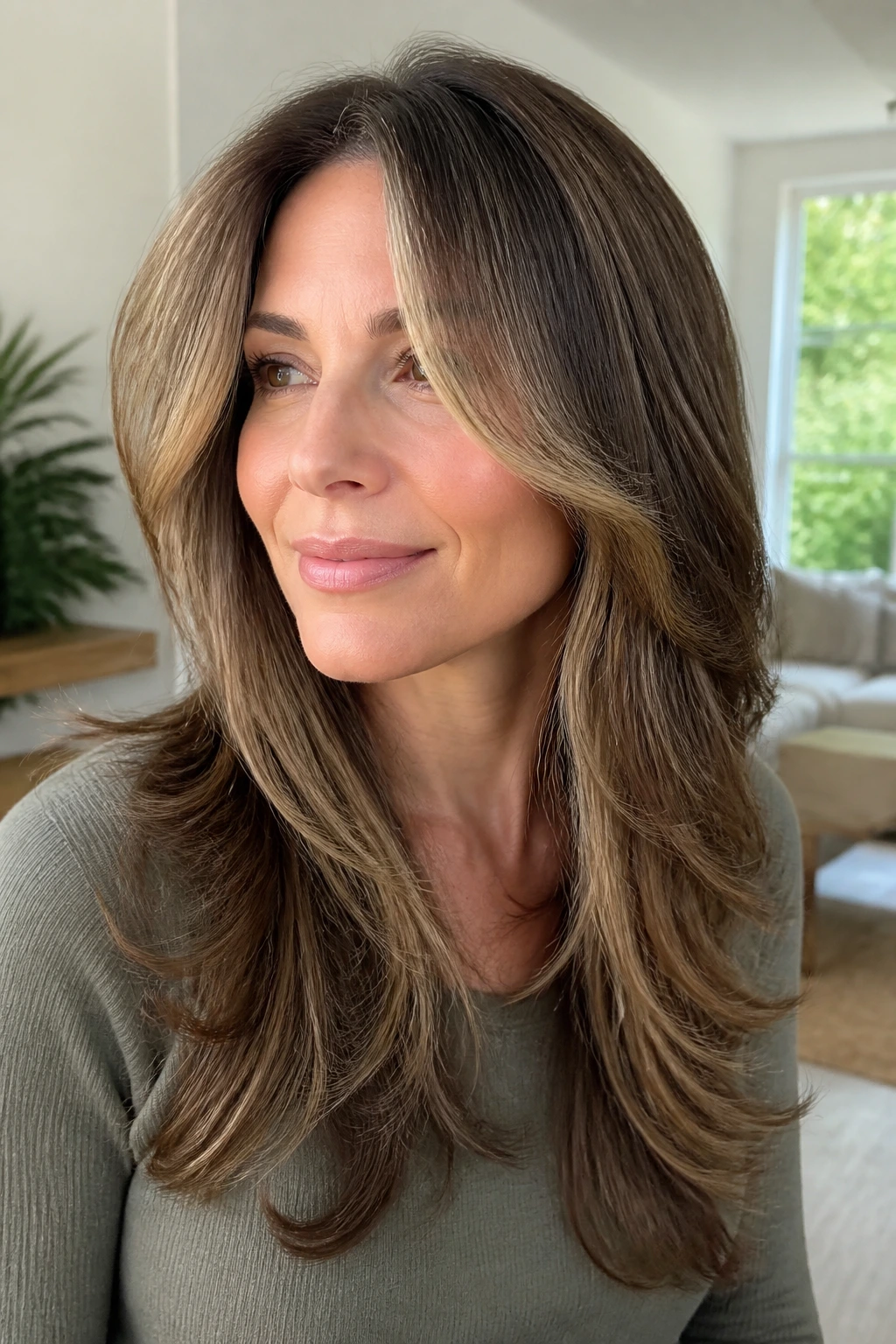
Long hair after 40 is not the problem. Flat, lifeless long hair is the problem. Long layers with face-framing pieces keep the length but add movement where the eye actually lands.
The face frame should start where it flatters your features, not where the last haircut brochure said it should. For some people that means the cheekbone. For others it’s the jawline. A good stylist will adjust it instead of dropping in one standard shape.
I like this cut when the ends are blunt enough to look healthy and the layers are light enough to move. It’s a quiet style. No drama. Just better proportion.
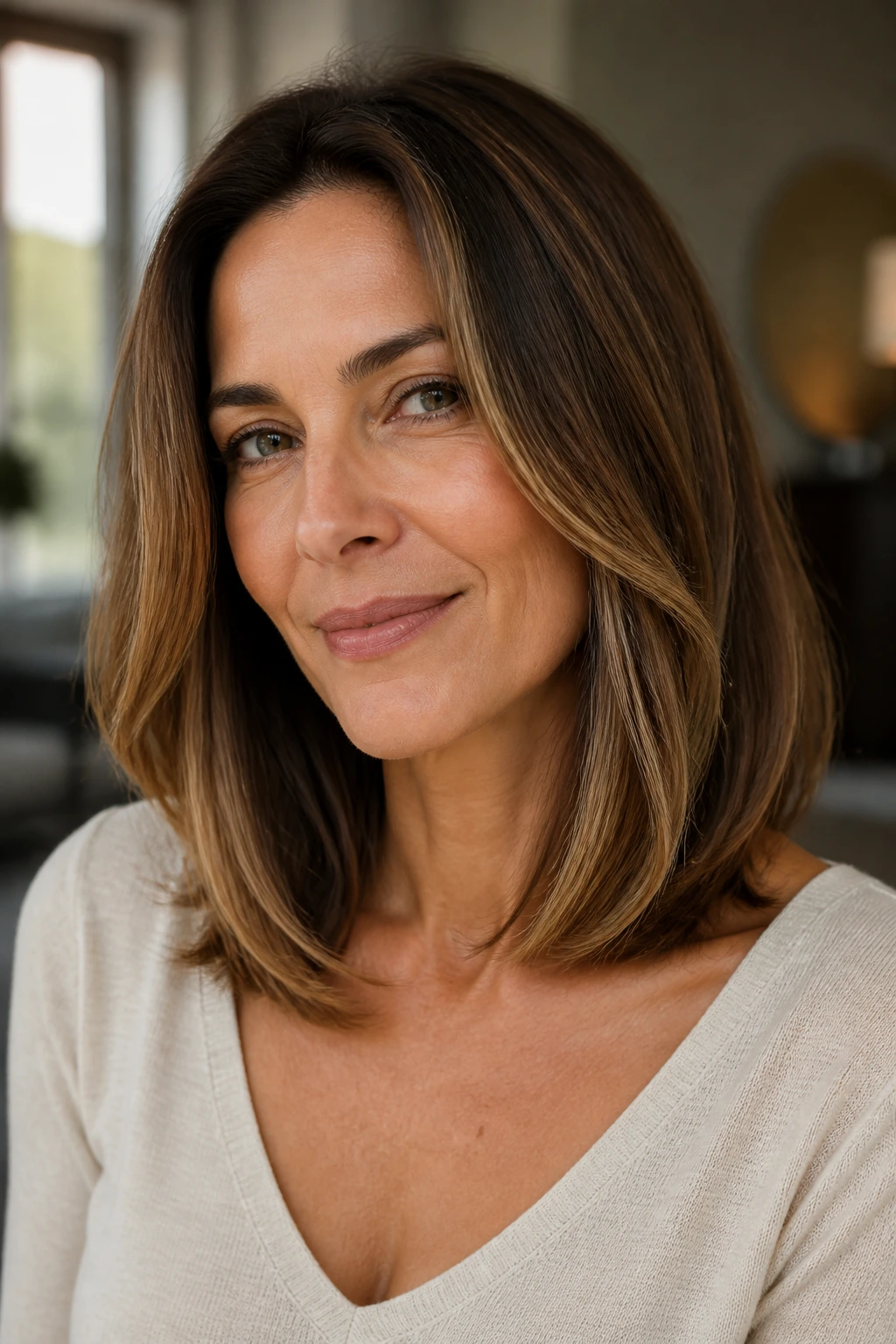
9. Sleek One-Length Lob
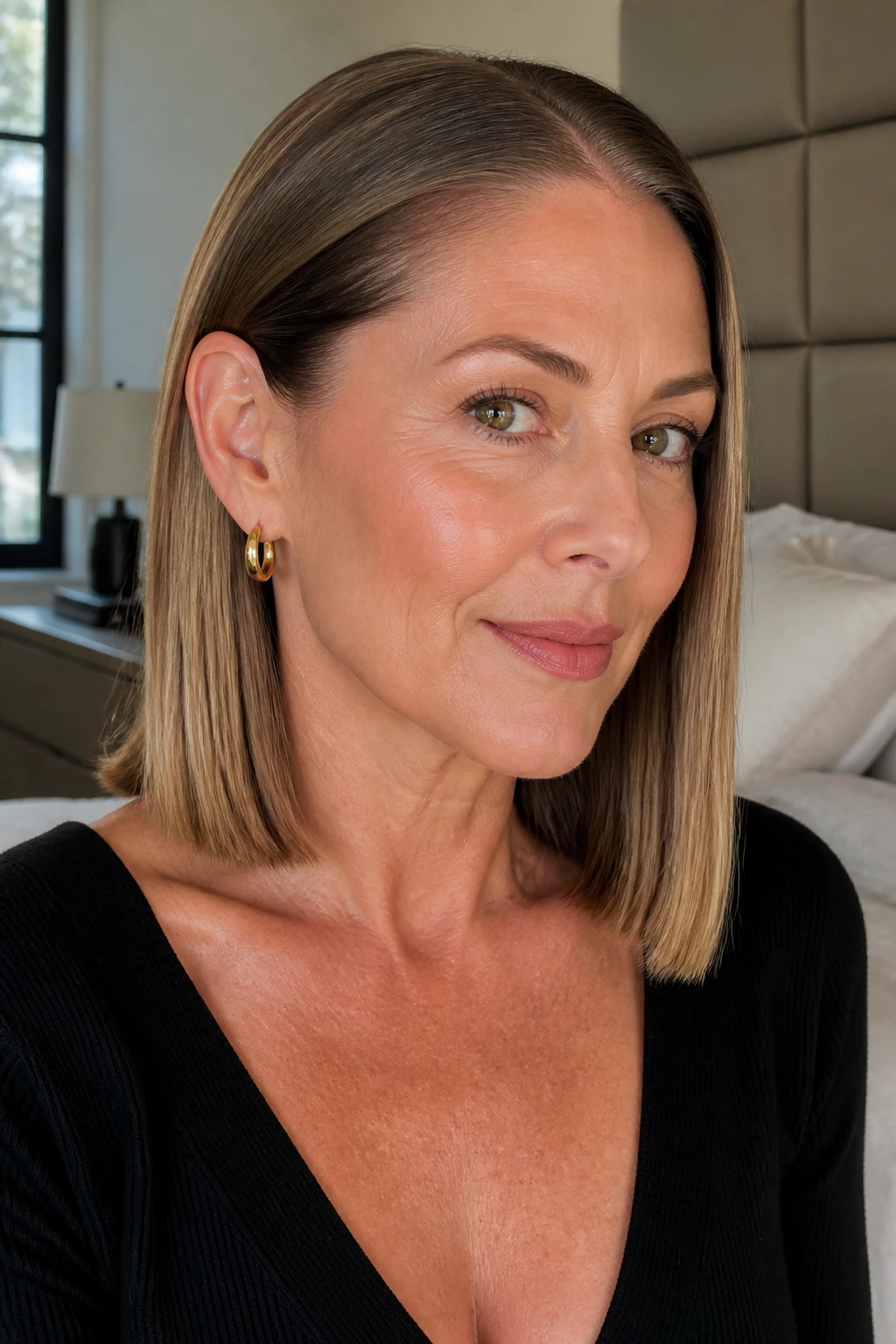
A one-length lob is one of those cuts that looks expensive even when it isn’t. The line is clean, the ends are full, and the shape gives hair a thicker appearance without asking for a lot of teasing or spray.
The trick is restraint. If the cut is too layered, it loses that sleek feel. If it’s too blunt and the hair is fine, it can look limp. The sweet spot is a precise line that sits between the collarbone and the shoulder, with just enough interior support to keep it from collapsing.
Wear it straight for a sharper finish or tuck one side behind the ear for a softer read. Either way, it has that modern, no-fuss polish people notice.
10. Curly Bob with Rounded Shape
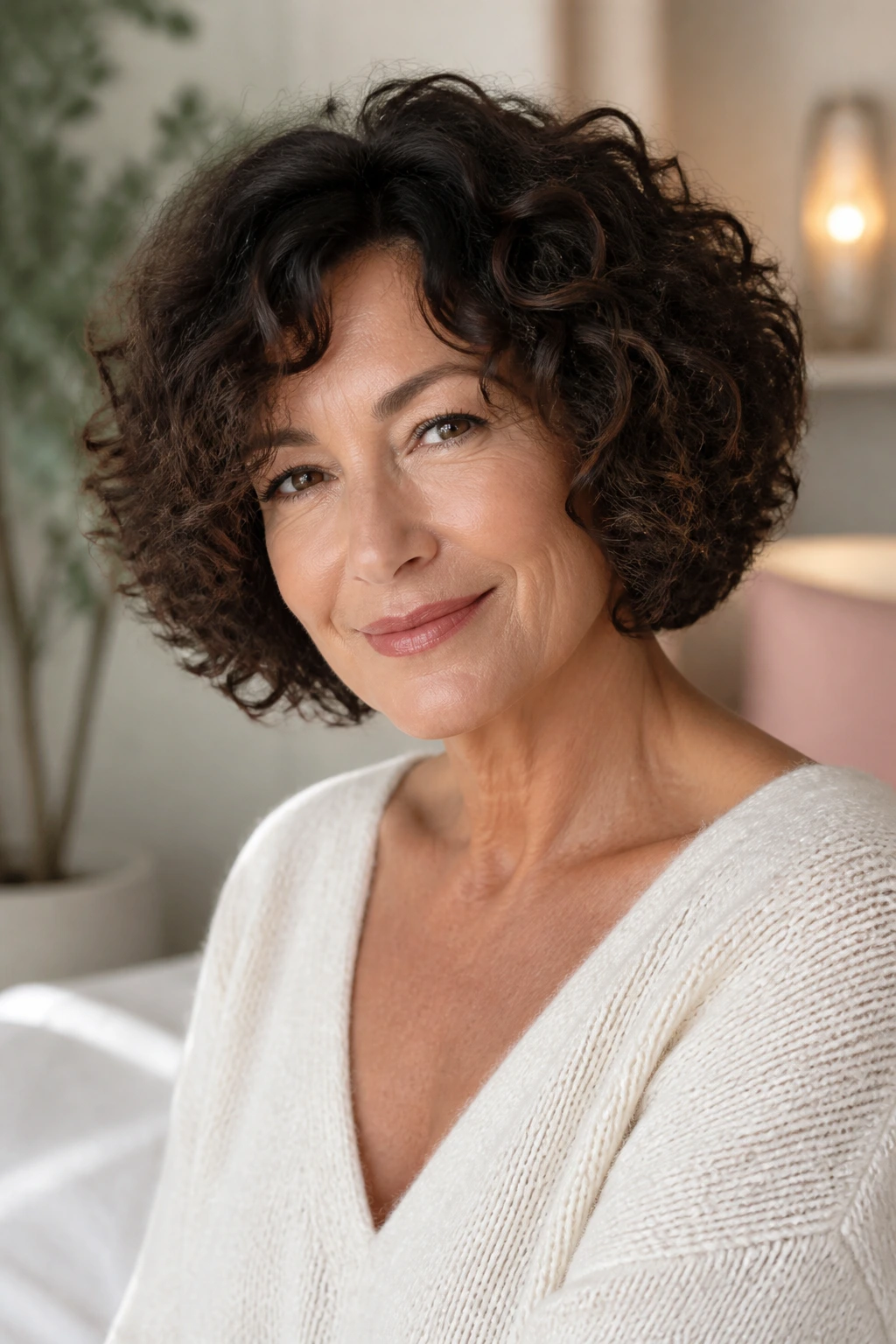
Curly hair looks especially current when the cut follows the curl pattern instead of fighting it. A rounded bob does exactly that. It keeps the silhouette soft and full, with enough room for the curls to spring instead of balloon.
The shape matters more than the length here. If the bob is cut too square, curls can puff at the sides. If it’s too long, the weight drags the curl out. A rounded perimeter keeps the balance right.
Styling note
Cut it dry or at least partially dry if your curl pattern is uneven. That lets the stylist see where each curl actually lives. And yes, this takes a little more time in the chair. It’s worth it.
11. Tapered Crop with Side Sweep
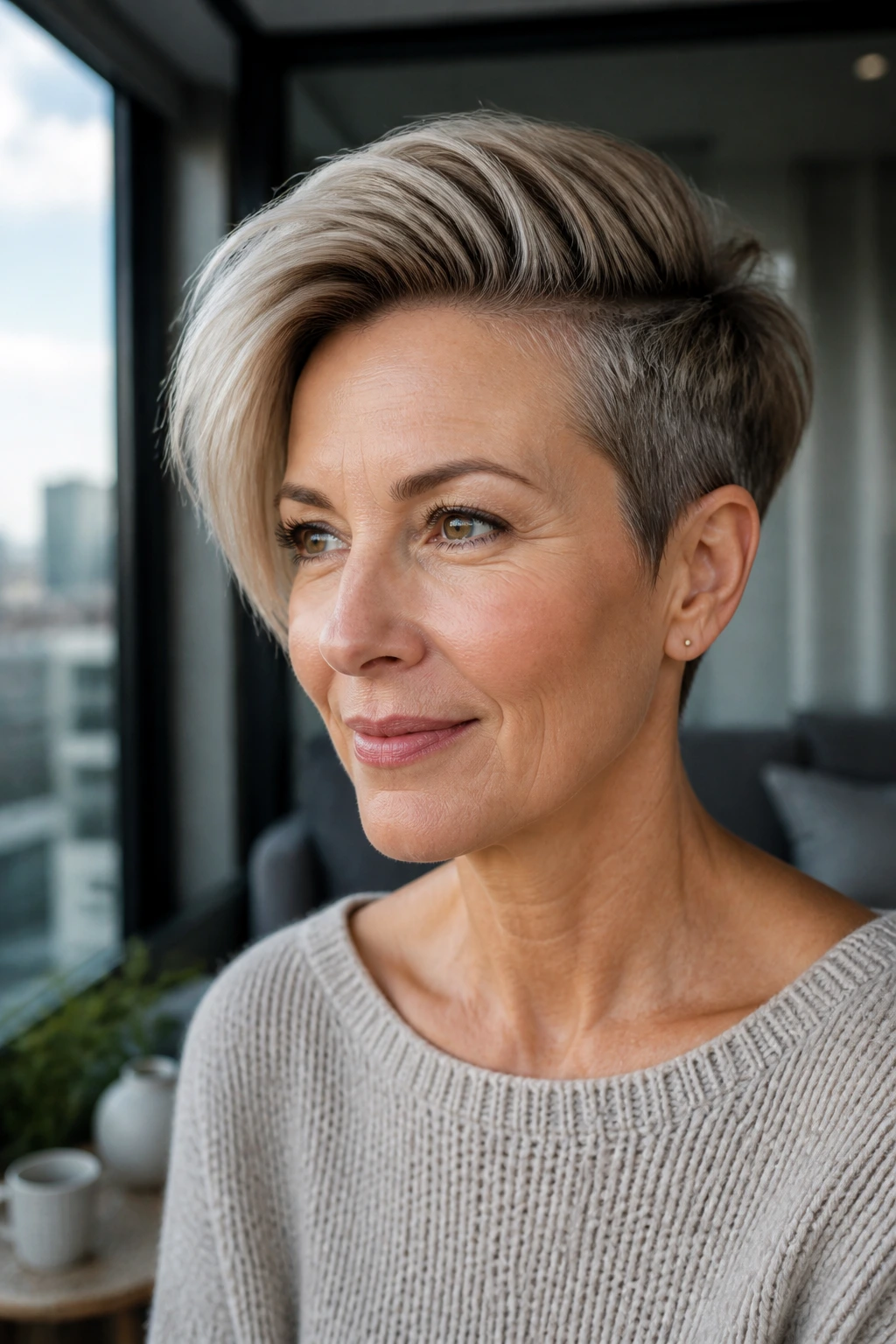
This is the haircut for anyone who likes a neat shape with a little softness at the front. The sides are tapered close to the head, while the top has enough length to sweep across the forehead or over one temple.
It looks modern because it doesn’t rely on volume alone. It uses contrast—tight at the sides, fuller on top, a little movement in front. That contrast gives the cut some edge without turning it into a statement haircut that runs the whole room.
If you want short hair but not a severe short crop, this is a smart middle ground. It feels light around the ears and nape, which can be a relief if your hair gets bulky there.
12. Shoulder-Length Cut with Flipped Ends
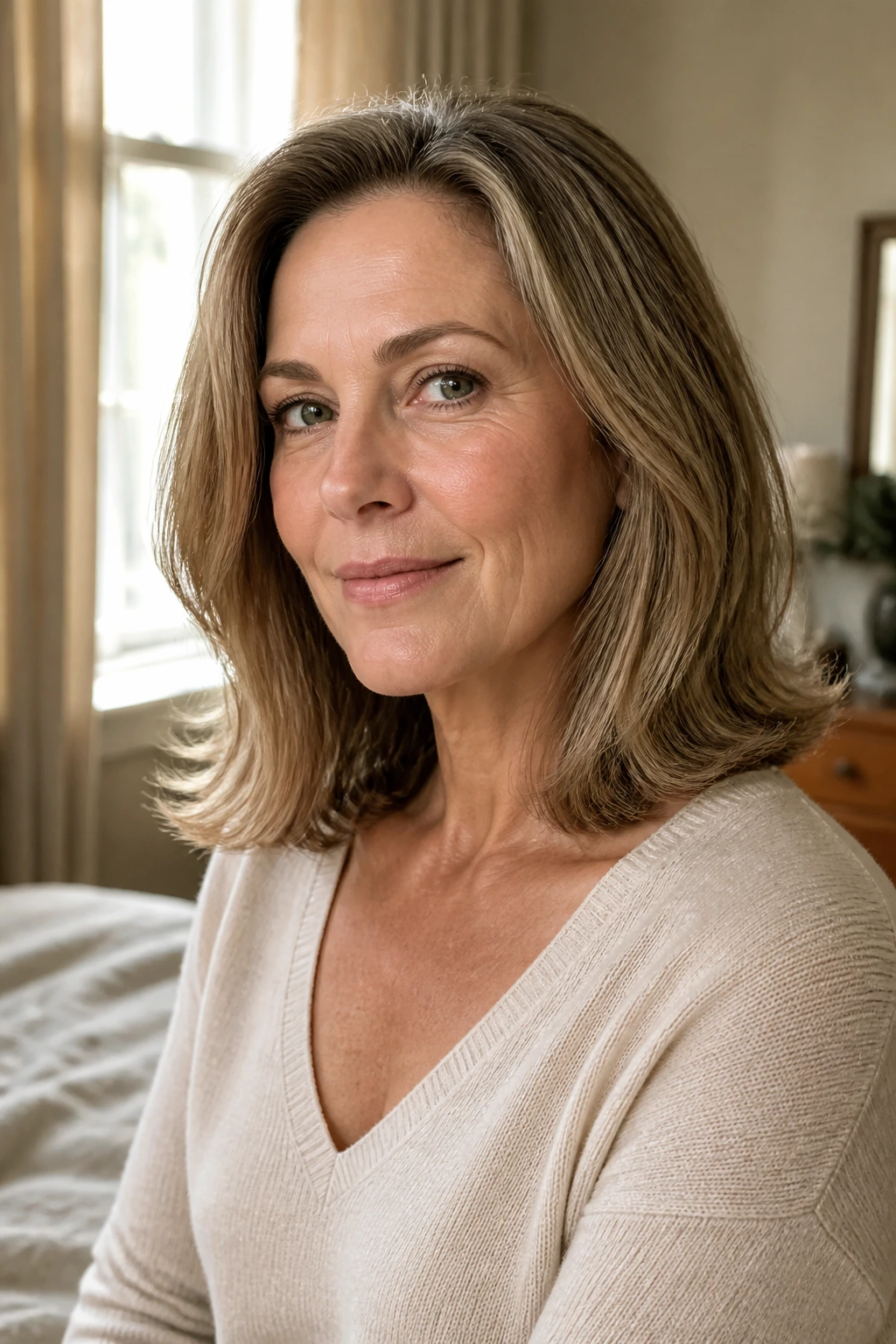
There’s something quietly fresh about ends that flick out just a little. Not beachy. Not curled. Just a soft flip at the shoulder that keeps the cut from looking straight and flat.
This style lands well for women who want length but don’t want the weight that comes with it. The shoulder is a useful stopping point because the hair can graze the collarbone and still hold shape. A round brush or a quick pass with a dryer brush can do most of the work.
The key is not to overdo the flip. One-inch bends at the ends are plenty. Big barrel curls can push it into costume territory fast.
13. Tousled Wavy Lob
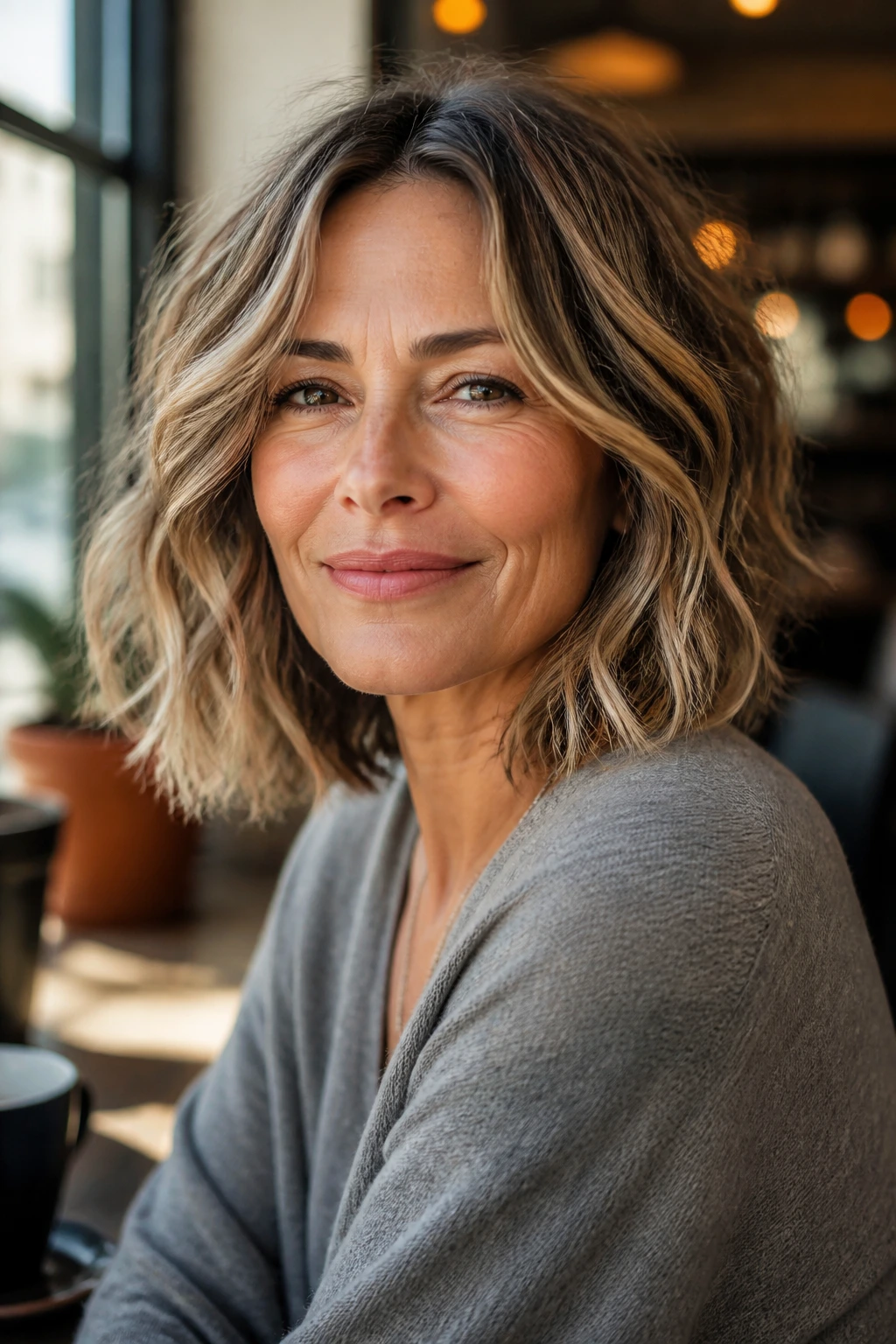
A tousled lob looks modern because it refuses to sit still. The waves break up the line, the ends move, and the whole cut reads relaxed without looking unfinished.
This is one of those styles that’s flattering on a bad-hair day and better on a good one. A small amount of mousse at the roots, a loose wave through the midlengths, and a little separation at the ends are usually enough.
You do not need every wave to match. In fact, if they match too neatly, the style starts to feel overdone. A little irregularity makes it look like hair, not a pattern.
14. Mixie with Soft Nape
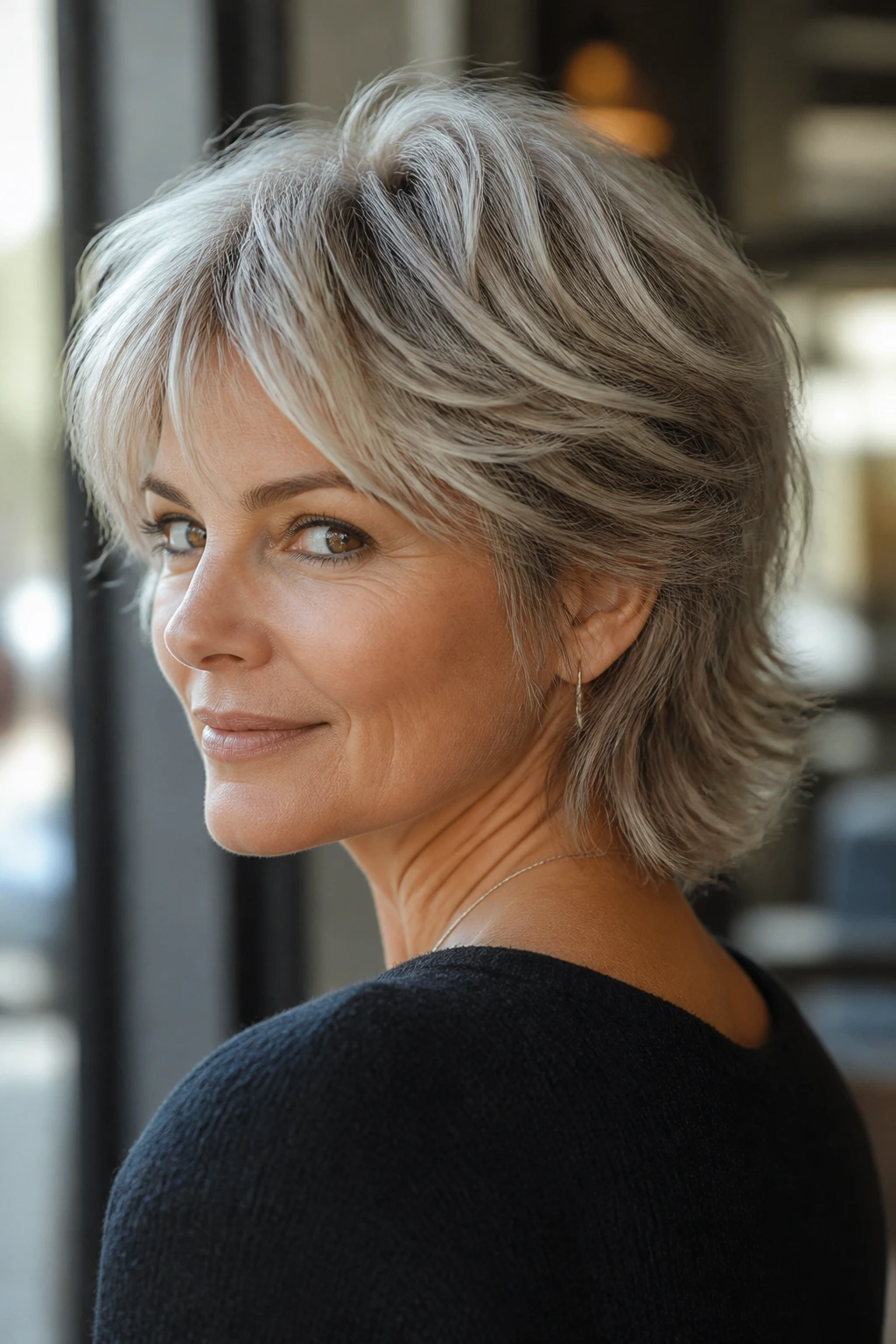
A mixie is a mullet-pixie hybrid, but don’t let the name scare you off. The modern version keeps the nape soft, the crown textured, and the sides feathered instead of harshly chopped.
What makes it work is the shape shift. It’s short and lifted up top, slightly longer through the back, and soft around the face. That gives it energy without leaning into costume or retro revival.
Best for
It’s especially good if you want short hair that still has movement in the back. It also works well for thick hair that needs reduction without losing personality. The cut can be edgy. It can also be gentle. The finish decides.
15. Low Ponytail with Polished Face Frame
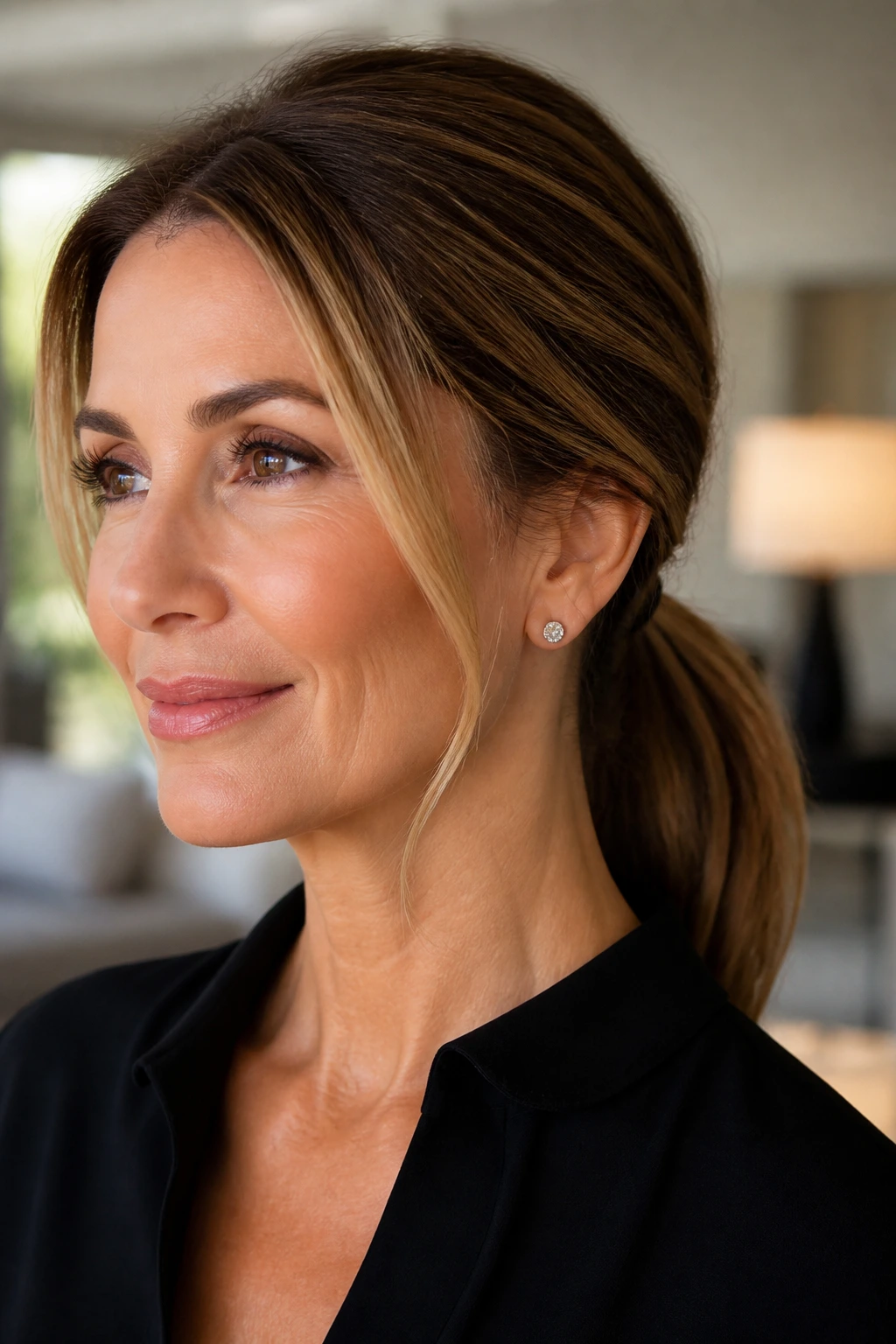
A low ponytail can look modern when it’s treated like a style, not a backup plan. Pull the hair back low at the nape, leave a slim face-framing piece or two, and smooth the crown so it sits clean without being tight.
The face frame matters more than the pony itself. A soft piece near the cheekbone keeps the style from feeling severe. Wrap a small strand around the elastic if you want it to look finished without needing a second thought.
This works especially well with highlights, gray blending, or glossy long hair. It’s quick, but it doesn’t read as careless.
16. Half-Up Twist with Loose Length
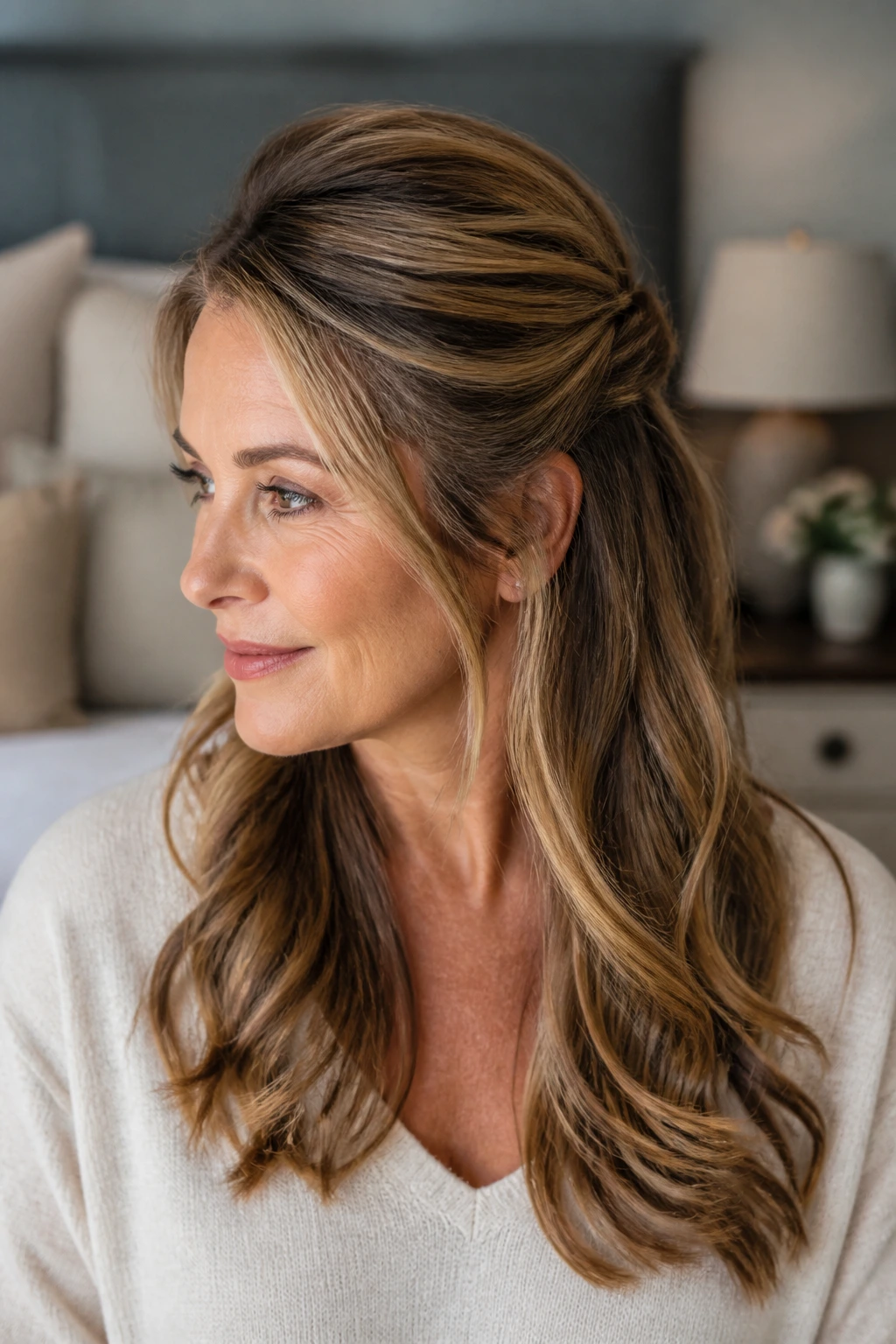
Half-up styles can turn childish fast if the top section is too high or too tight. A low half-up twist avoids that problem. It lifts the crown just enough, keeps the face open, and leaves the rest of the length soft around the shoulders.
This is the kind of style that works on second-day hair. The grip is better. The shape lasts longer. And if the ends have a little wave, even better.
If you want a neater version, twist each side back and pin them low. If you want it softer, leave a little volume at the crown and let the front pieces fall naturally. Both versions feel current because they’re relaxed, not precious.
17. Sleek Low Chignon
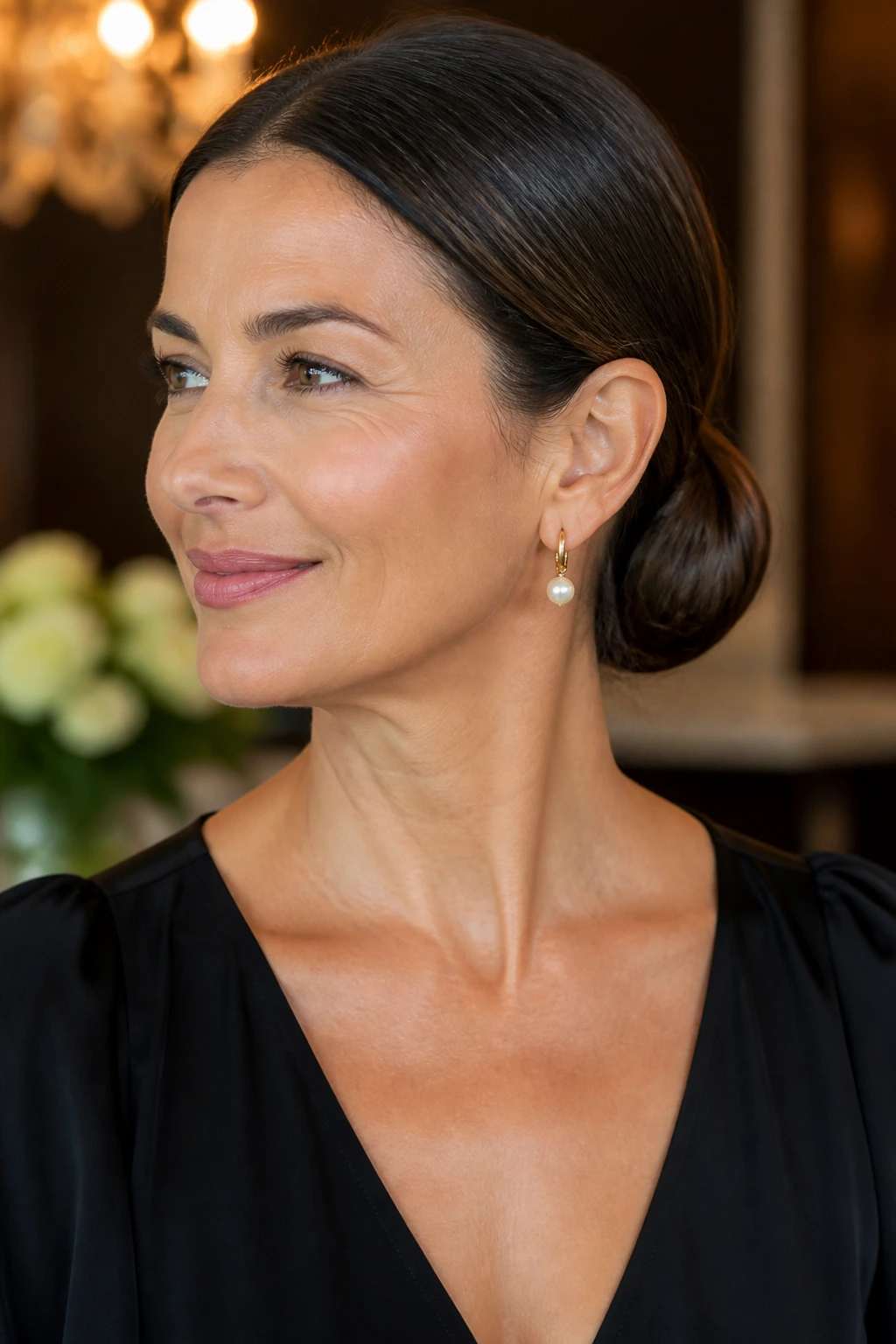
There’s a reason the low chignon never really leaves. When it’s smooth and low at the nape, it can look refined without looking stiff. The modern version keeps a little softness around the hairline so it doesn’t feel pulled into a shell.
A center part makes it sharper. A side part gives it a quieter feel. Either way, the shape should sit close to the head and curve into itself rather than puffing out.
This is one of the best styles for showing off earrings, a collar, or a strong neckline. It also survives humidity better than a lot of more complicated updos, which is never a bad thing.
18. Volumized Blowout Layers
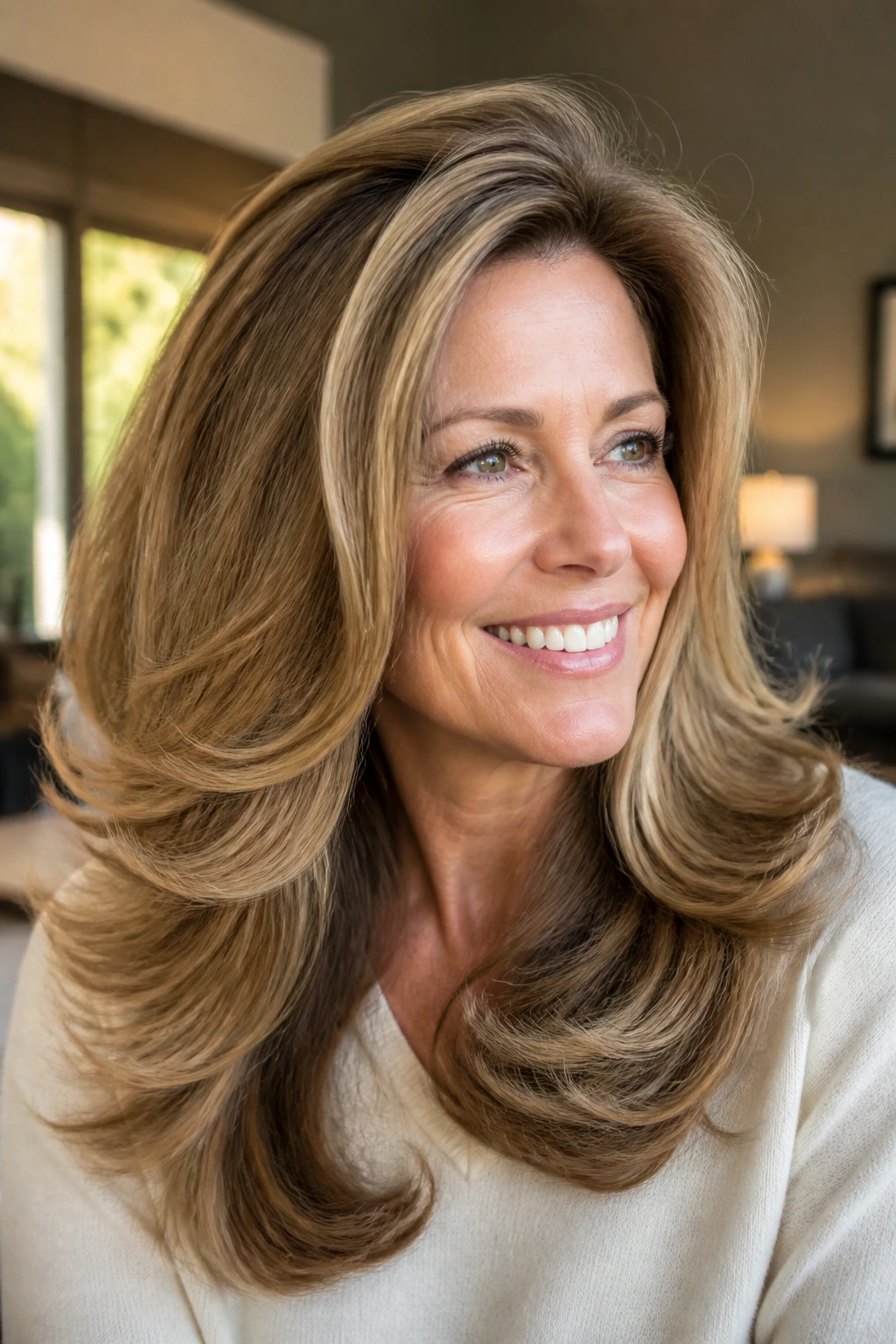
A good blowout still has a place. The trick is to keep it soft and touchable, not round-brushed into a crispy helmet. Layers give the hair lift through the midlengths, while the ends stay smooth and curved.
The modern version feels airy. You should see movement when the hair swings, not just width. If the roots are lifted and the ends are polished, the style looks fuller without looking overworked.
This one is a favorite for medium-density hair that wants body. It also flatters long layers especially well, because the different lengths catch the brush in a way that creates bounce instead of bulk.
19. Rounded Bob with Micro Layers
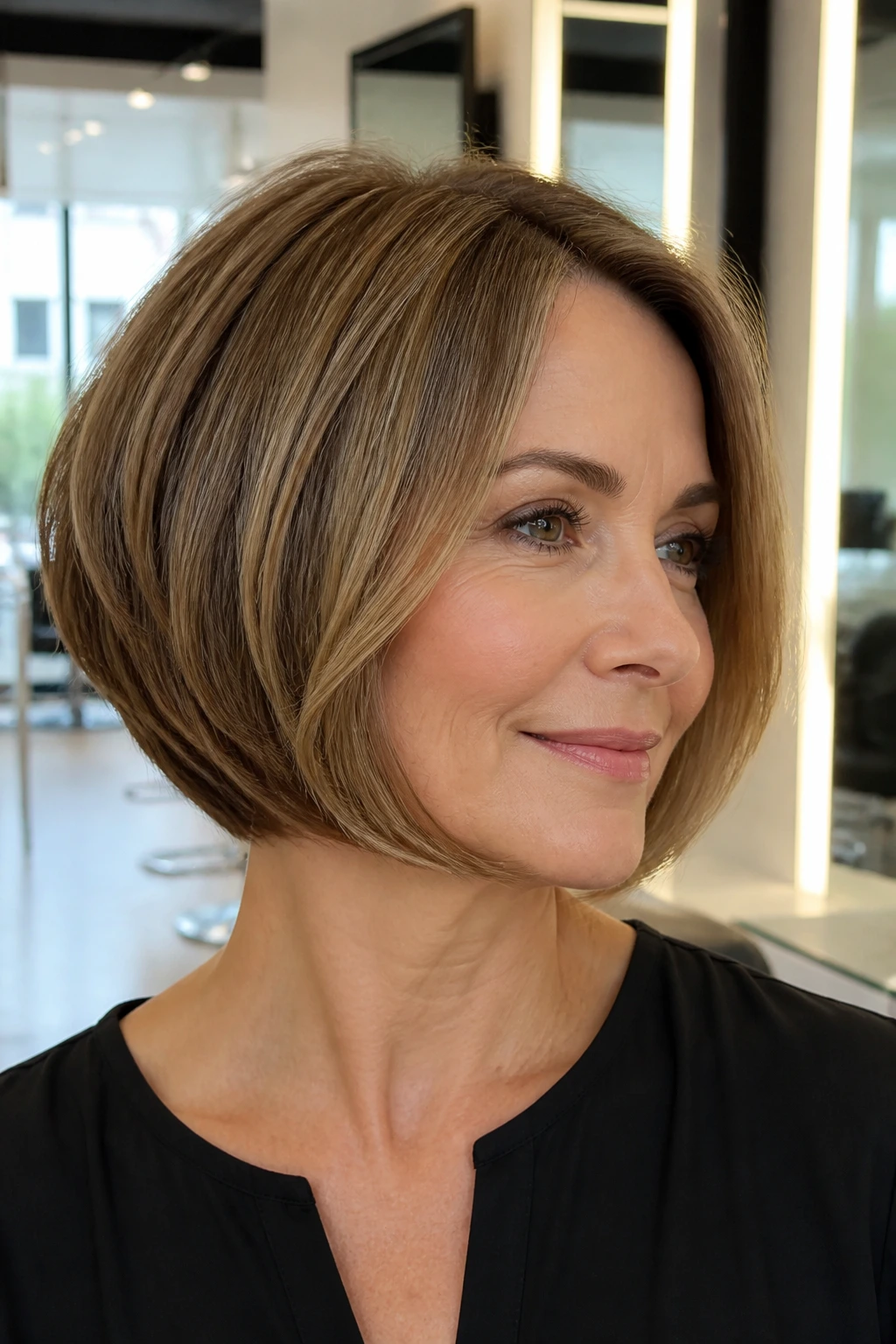
If your bob sometimes looks too blunt or too blocky, micro layers can fix that without stealing the shape. They’re tiny internal cuts that remove a little weight and help the hair bend instead of sticking straight out.
The rounded silhouette gives the style softness around the jaw and neck. It’s especially useful if your hair is thick or has a stubborn puff at the ends. A slight curve under the chin can make the whole haircut feel more balanced.
This is not a wild, messy bob. It’s controlled. The movement lives inside the shape, which is why it still looks clean.
20. Modern Mullet-Lite
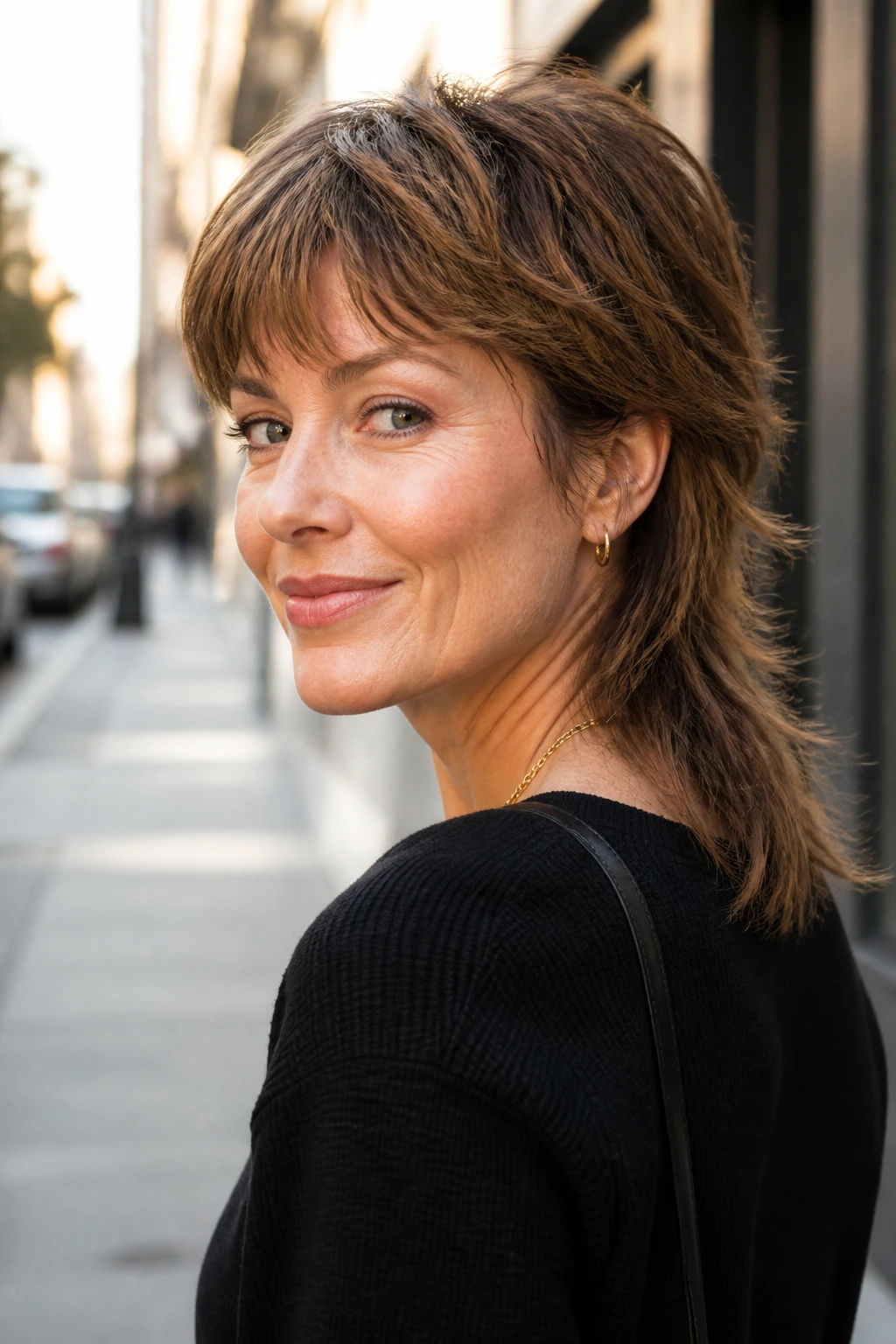
A modern mullet-lite keeps the idea of the mullet—the shorter front and top, the longer back—but tones down the drama. The transition is softer, the layers are less jagged, and the edges around the face are more flattering.
That softer transition is the whole point. The style reads current because it has personality, but it still behaves like a haircut you can wear to lunch without explaining yourself. I like it best on hair with some natural texture.
It’s a good option if you want movement and shape without a standard bob. It also grows out in an interesting way, which is handy if you don’t want to be in the salon every six weeks.
21. Side-Parted Shoulder Cut
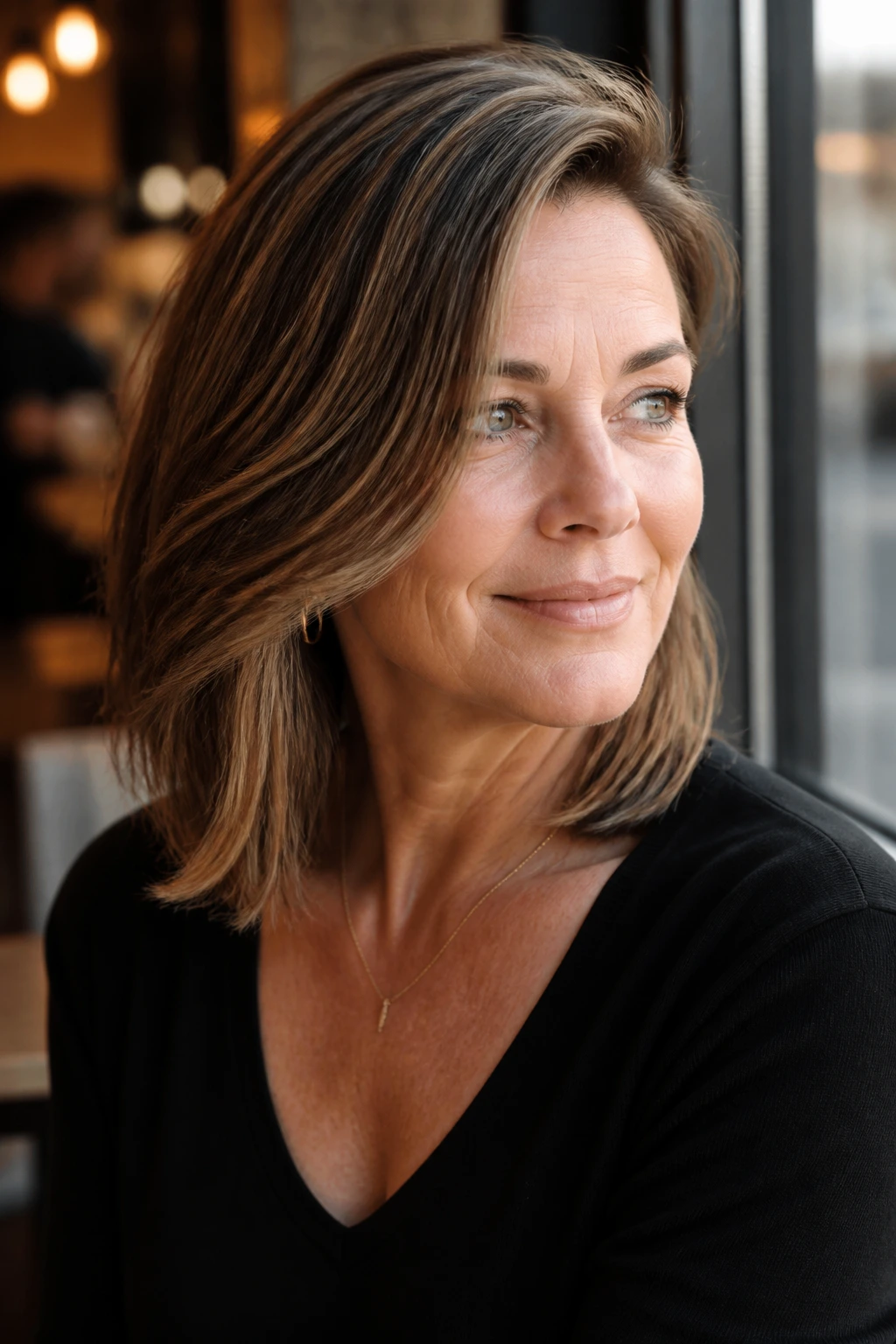
A deep side part can change everything. On a shoulder-length cut, it creates lift at the front, sweeps the hair across the forehead, and gives the whole style a little more polish than a flat center part sometimes can.
This cut works especially well when the hair is straight or slightly wavy and needs a bit of direction. The shoulder length keeps enough movement in the ends, while the part creates instant shape up top. That’s a good trade.
Quick rule
If your hair falls limp at the crown, this is one of the easiest fixes. A little root lift spray and a side part can make the cut look fuller in minutes.
22. Glossy Long Cut with Invisible Layers
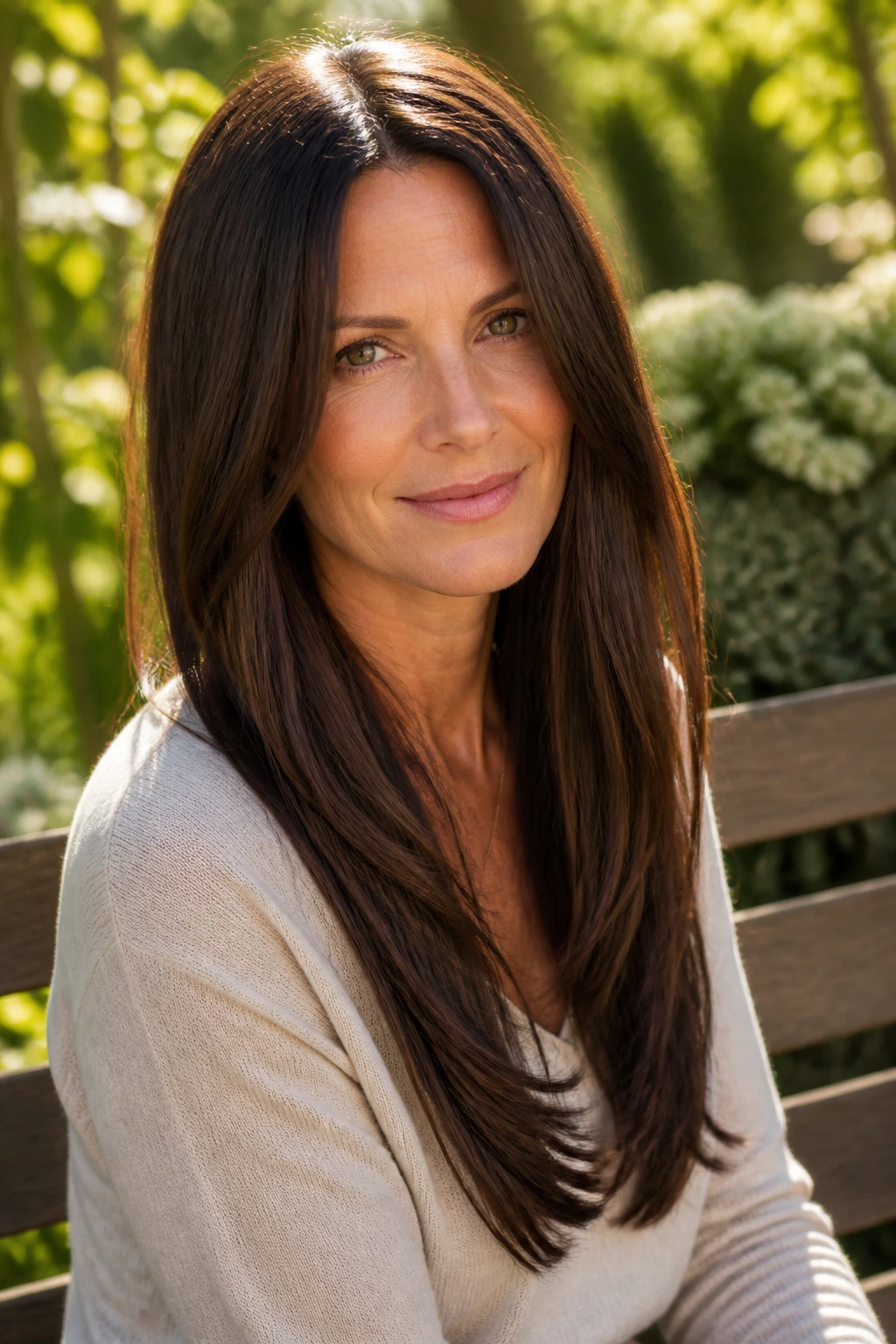
Long hair can absolutely look modern after 40 when the layers are so light you hardly see them. That’s the point. The hair keeps its length and swish, but the inside gets just enough shaping to stop it from feeling heavy.
This style shines when the ends are healthy and the finish is glossy. Not oily. Glossy. There’s a difference. A smoothing cream or a drop of serum on the midlengths can keep the surface calm while still letting the hair move.
It’s not the easiest style to maintain if your ends dry out fast, but when it’s in good shape, it reads clean and current in a way that louder cuts sometimes don’t.
23. Curly Shag with Fringe
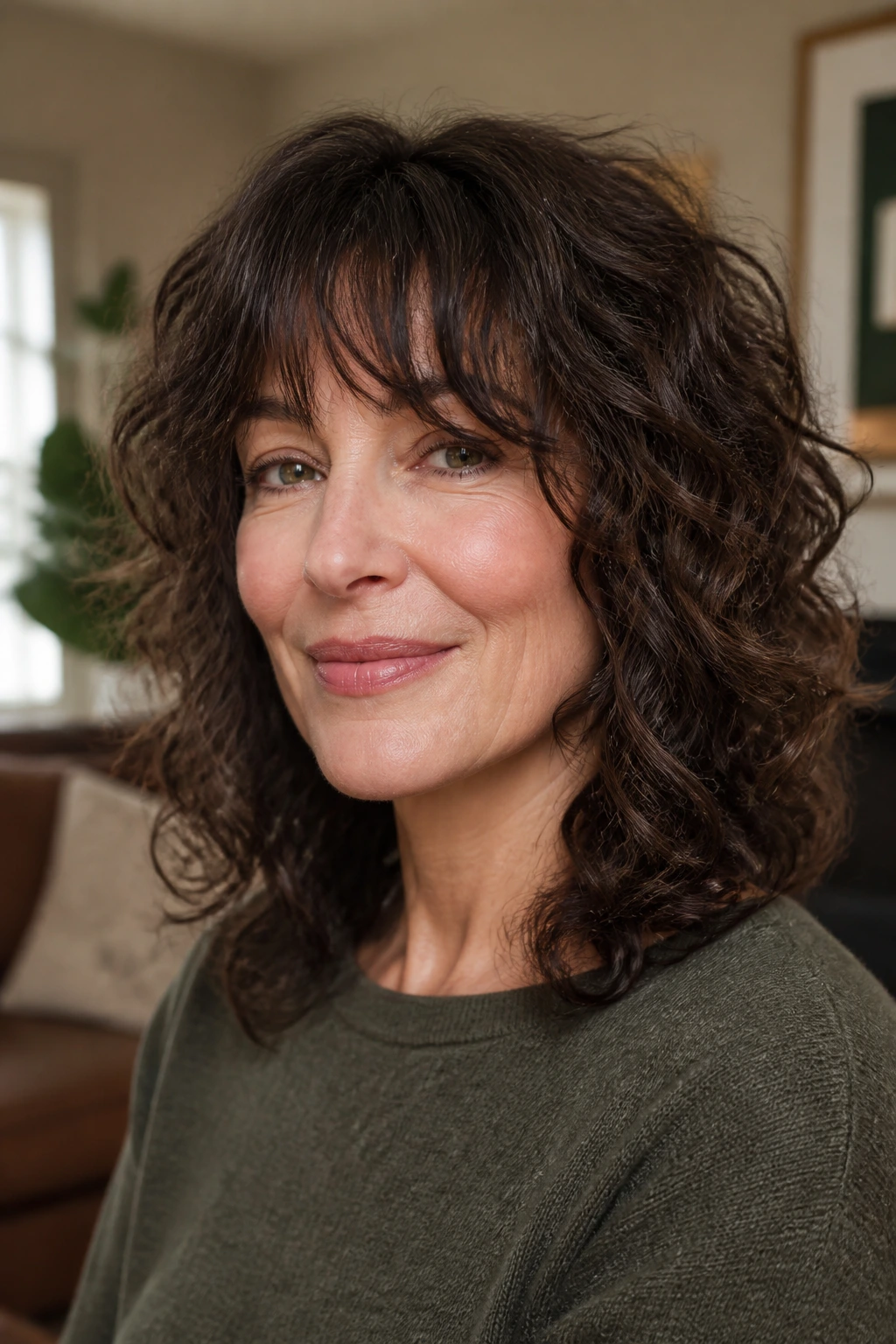
A curly shag with fringe can be one of the most flattering modern looks for women over 40, mostly because it lets the curl pattern take center stage. The layers keep the curls from stacking too hard, and the fringe brings attention up toward the eyes.
The fringe should be soft, not dense like a wall. Curly bangs work best when they’re cut with the shrinkage in mind, which means the curl is handled as a curl, not as a straight strand pretending to be one.
This style loves moisture, definition cream, and a little patience. It rewards all three.
24. Pinned-Back Waves
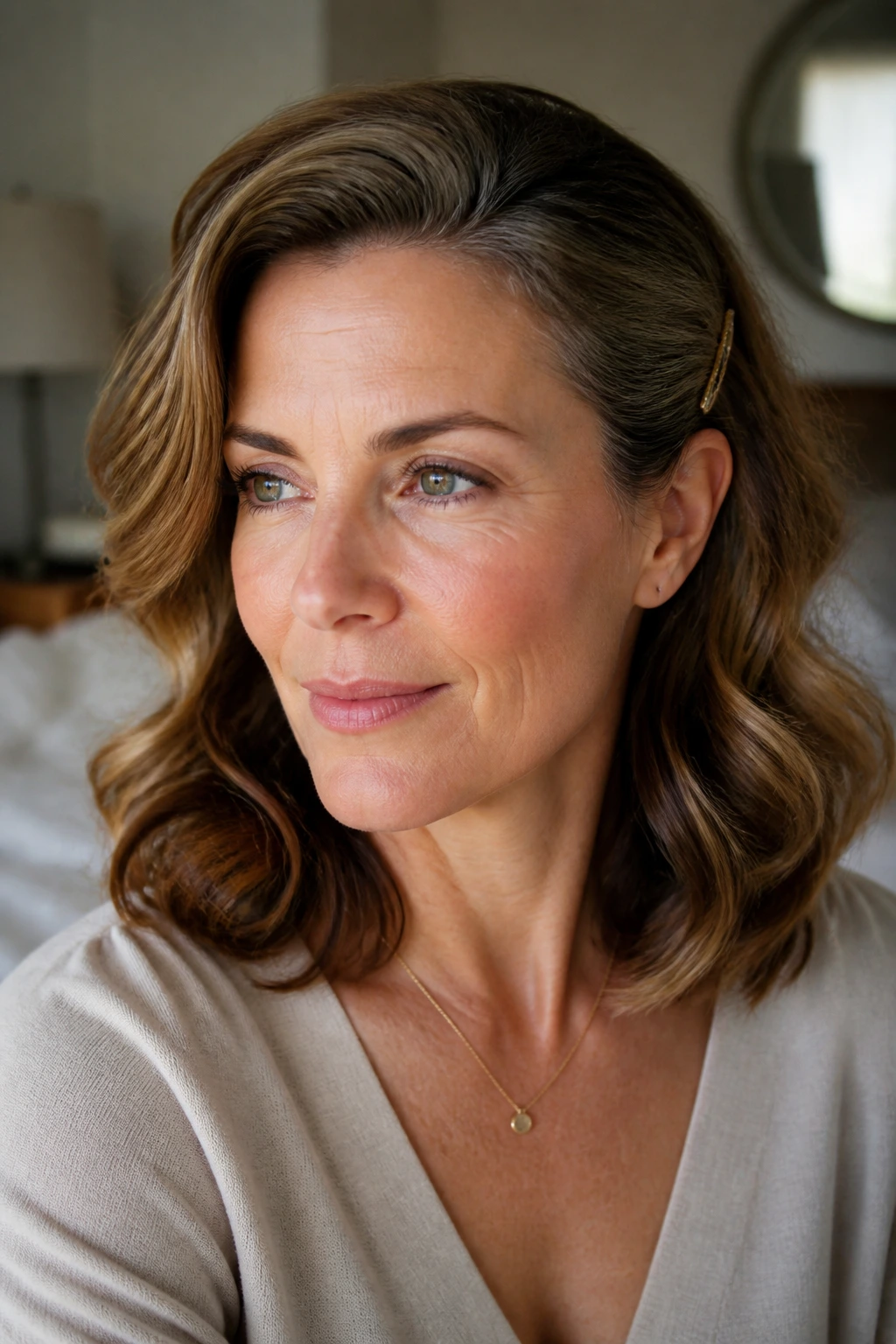
Here’s a small trick that makes hair look deliberate in a hurry: wave the midlengths, then pin one side back low near the temple. The result is relaxed, clean, and a little bit elegant without trying to be formal.
This works best when the wave is loose rather than curled into perfect spirals. The pinned side gives structure, and the loose side keeps the style soft around the face. It’s a smart move for dinners, work events, or any night when you want your hair up but not fully up.
Use a slim clip, not a giant decorative barrette, unless that’s the look you want. The wrong accessory can drag the whole thing backward fast.
25. Textured Asymmetrical Bob
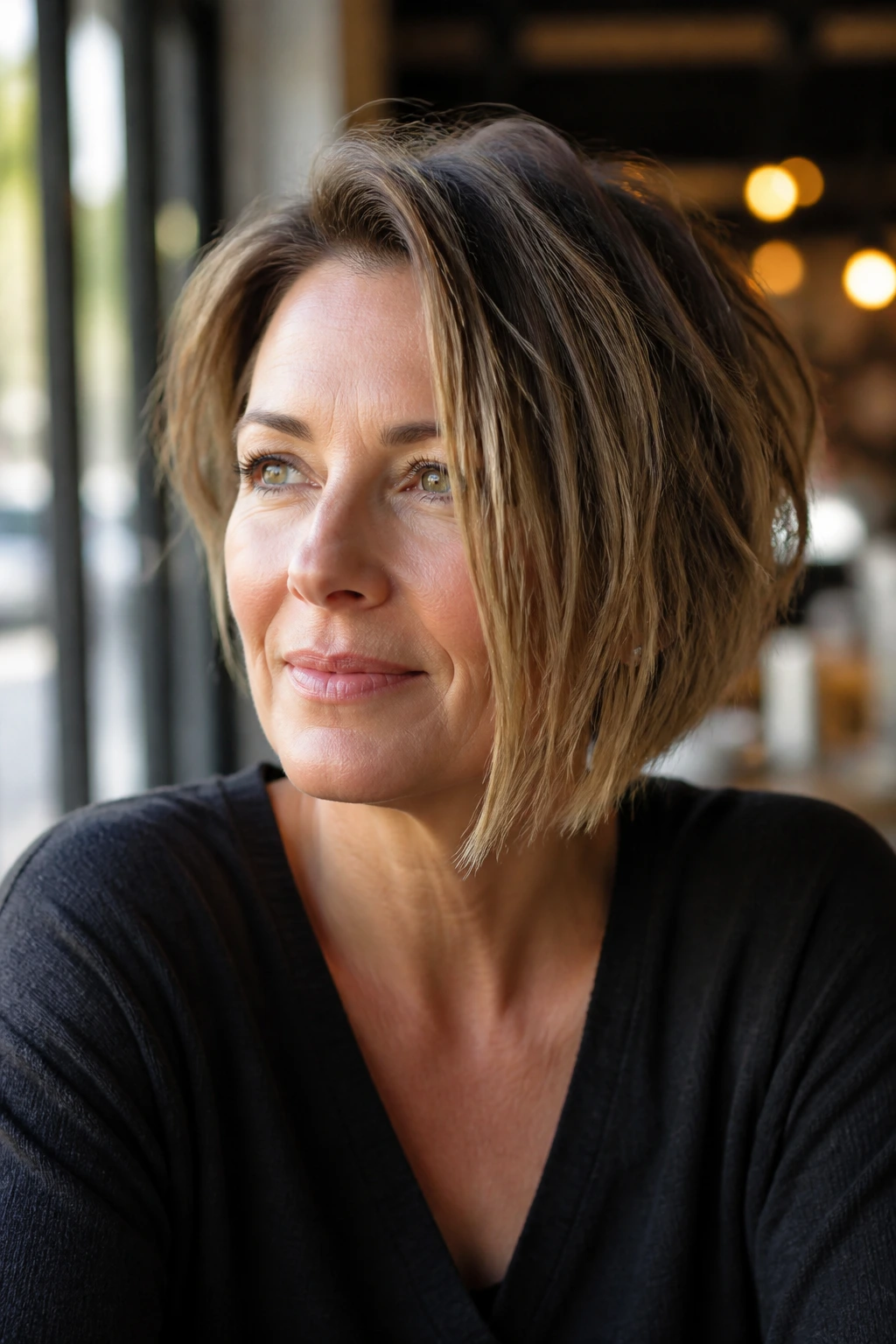
An asymmetrical bob can look incredibly current when the difference between sides is subtle. One side is slightly longer, the texture is broken up, and the overall shape has a little tension to it.
Too much asymmetry and the style starts shouting. A small difference in length, though, gives the cut just enough edge. That’s what keeps it from blending into a standard bob.
This is the kind of haircut that works especially well with side parts and a bit of piecey styling at the ends. It has shape. It has movement. And it doesn’t need a lot of explanation to look intentional.
How to Choose the Right Shape for Your Face and Hair
The best haircut is the one that behaves on your head, not the one that looked good in a photo with perfect lighting. Fine hair usually does better with cleaner edges and a little lift near the crown. Thick hair often needs weight removed from the inside so it can move instead of sitting there in one solid block.
Face shape matters too, though not in a rigid, rulebook sort of way. Round faces usually like some height and a bit of length past the jaw. Square jaws often soften nicely with curved layers or side-swept pieces. Longer faces can handle width around the cheeks, especially with curtain bangs or a softer fringe. And if your face is oval, frankly, you get to steal from nearly every style on this list.
Hair texture is the real filter. Straight hair shows every line. Wavy hair gives you built-in movement. Curly hair needs room, moisture, and a cut that respects shrinkage. Ask for the style that supports your texture on a bad day, because that’s the day that will tell you the truth.
The Tools That Actually Help at Home
-
Blow dryer with a nozzle attachment: Directs airflow so your cuticle lies flatter and the shape stays smoother.
-
Round brush, 1.5 to 2 inches: Best for bending the ends under or out on lobs, bobs, and shoulder-length cuts.
-
1-inch curling iron or curling wand: Handy for loose bends in the lob, shag, and shoulder cut without making the hair look overcurled.
-
Flat iron with rounded edges: Great for subtle flips, smooth lobes, and polishing the top layer without a hard crease.
-
Volumizing mousse or root-lift spray: Useful at the crown on finer hair or any style that needs a little push off the scalp.
-
Heat protectant spray: Non-negotiable if you use hot tools more than once a week. It cuts down on dryness and rough ends.
-
Texturizing spray or lightweight wax: Helps pixies, bixies, and layered cuts keep separation instead of collapsing into one shape.
-
Duckbill clips: Small, boring, and useful. They make blow-drying and pinning half-up styles much easier.
-
Wide-tooth comb: Better than ripping through damp curls or wavy hair with a brush that creates frizz before you even start.
-
Light serum or hair oil: One or two drops tame the fuzz on the ends. Too much, and the whole style goes flat.
How to Ask Your Stylist for the Right Version
Bring photos, yes, but bring the right kind. One photo can show the length you want. Another can show the texture you want. Those are not always the same picture, and that’s fine. A good stylist knows the difference between shape and finish.
Say how you wear your hair most days. Straight? Air-dried? Curled with a wand? Piled into a clip by 3 p.m.? That answer matters more than the celebrity on your phone. A cut that looks amazing only after 40 minutes of blow-drying is a nice cut, not always a practical one.
Be specific about the parts that bug you. Heavy ends? Flat crown? Frizz around the face? Cowlick at the front? Mention them early. Those details change where layers start, how bangs fall, and whether the stylist cuts dry or wet.
Keeping the Shape Fresh Between Washes
Hair gets older-looking when the shape collapses. Not because it’s dirty, exactly, but because the roots go flat and the ends turn fuzzy. A small refresh can fix that without a full wash.
Dry shampoo at the roots is the obvious move, but don’t dump it on. Spray it from about 8 to 10 inches away, let it sit for a minute, then massage it in with your fingertips. That gives the crown back a little lift without leaving a chalky patch.
For bends and waves, mist the midlengths with a little water or leave-in spray and rework just the front pieces. You don’t need to redo the whole head. A flat iron or curling wand on the face frame alone can make a lob or layered cut look freshly styled in under five minutes.
At night, don’t sleep on a pile of loose hair if you’re trying to keep a blowout or smooth lob intact. A loose clip, silk pillowcase, or low, soft tie helps more than people think. And if your hair gets puffy at the ends, a drop of serum rubbed between the palms and smoothed from the midlengths down is enough. Heavy-handed oiling is where good hair goes to sit down.
Mistakes That Make a Style Feel Older Than It Is
The biggest mistake is overdoing the volume at the sides. Big, round hair from ear to ear can make the face look wider and the haircut feel stuck in another decade. If you want lift, keep it near the crown and through the top layers.
Another one: bangs that are too heavy. Dense fringe can drag the face down if it sits straight across the forehead with no softness. Curtain bangs, side-swept fringe, or a wispy bang are usually easier to wear because they leave a little space around the eyes.
Don’t let the ends go crispy. Split, frayed ends make even a good cut look tired. A trim every 6 to 10 weeks for short styles, or every 8 to 12 weeks for longer cuts, keeps the edges clean. That schedule sounds boring. It works.
Too much product is a sneaky problem. If the hair feels sticky, the shape loses swing. If it feels greasy, the roots collapse. Start small and add more only if the hair asks for it.
And please, don’t copy a cut meant for a different texture without adjusting it. A shag that looks easy on straight hair can turn into a puffball on dense curls if the layers are wrong. The photo is the starting point, not the blueprint.
Easy Variations for Different Hair Textures and Routines
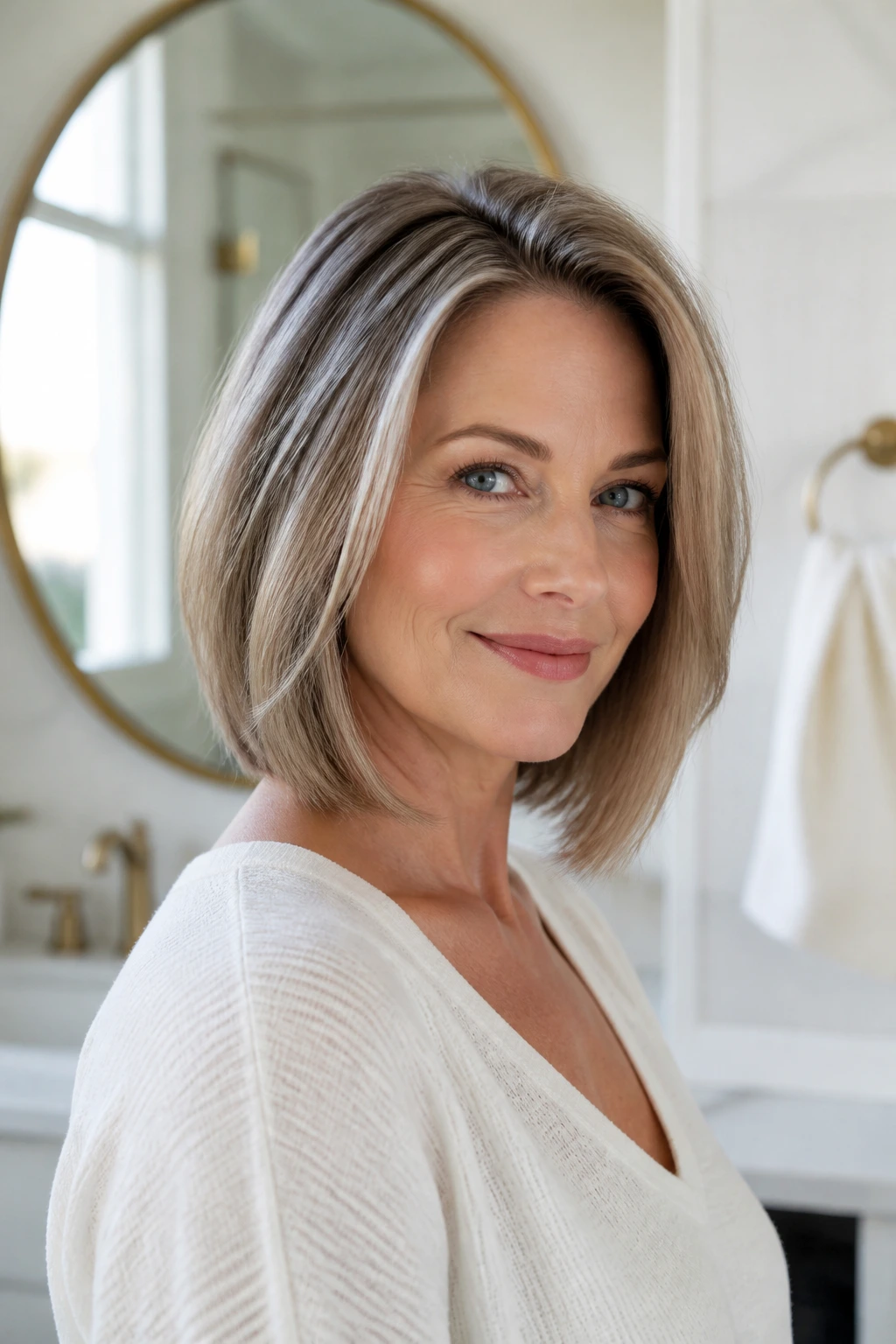
Fine-Hair Lift: Choose the lob, blunt bob, or one-length shoulder cut, then keep the layers minimal and the ends clean. Fine hair usually looks fuller when the perimeter is strong and the top is lifted with mousse, not when it’s chopped to pieces.
Thick-Hair Cool-Down: Go for the shag, bixie, or rounded bob with internal layers. These shapes remove bulk without making the hair frizzy at the ends, which is the mistake a lot of thick-haired people end up paying for.
Curly-First Shape: Pick the curly bob, curly shag, or a rounded midi cut. Ask for curl-by-curl shaping if the curl pattern is uneven, because dry shrinkage changes everything once the hair dries.
Low-Heat Routine: The collarbone lob, side-parted shoulder cut, and long layers are your friends here. They look polished with air-drying, a little leave-in cream, and a soft bend from sleep rather than a hot tool every morning.
Grow-Out Friendly Cut: The long layers, modern bixie, and soft shag all grow out with less drama than a hard-edged bob. If you hate frequent salon visits, that matters.
Gray-Hair Showpiece: Sleek bobs, polished lobs, and glossy long cuts make silver strands look intentional instead of accidental. Gray hair often has a different texture, so a clean shape helps it shine instead of puff.
Questions Women Ask Before Changing Their Hair
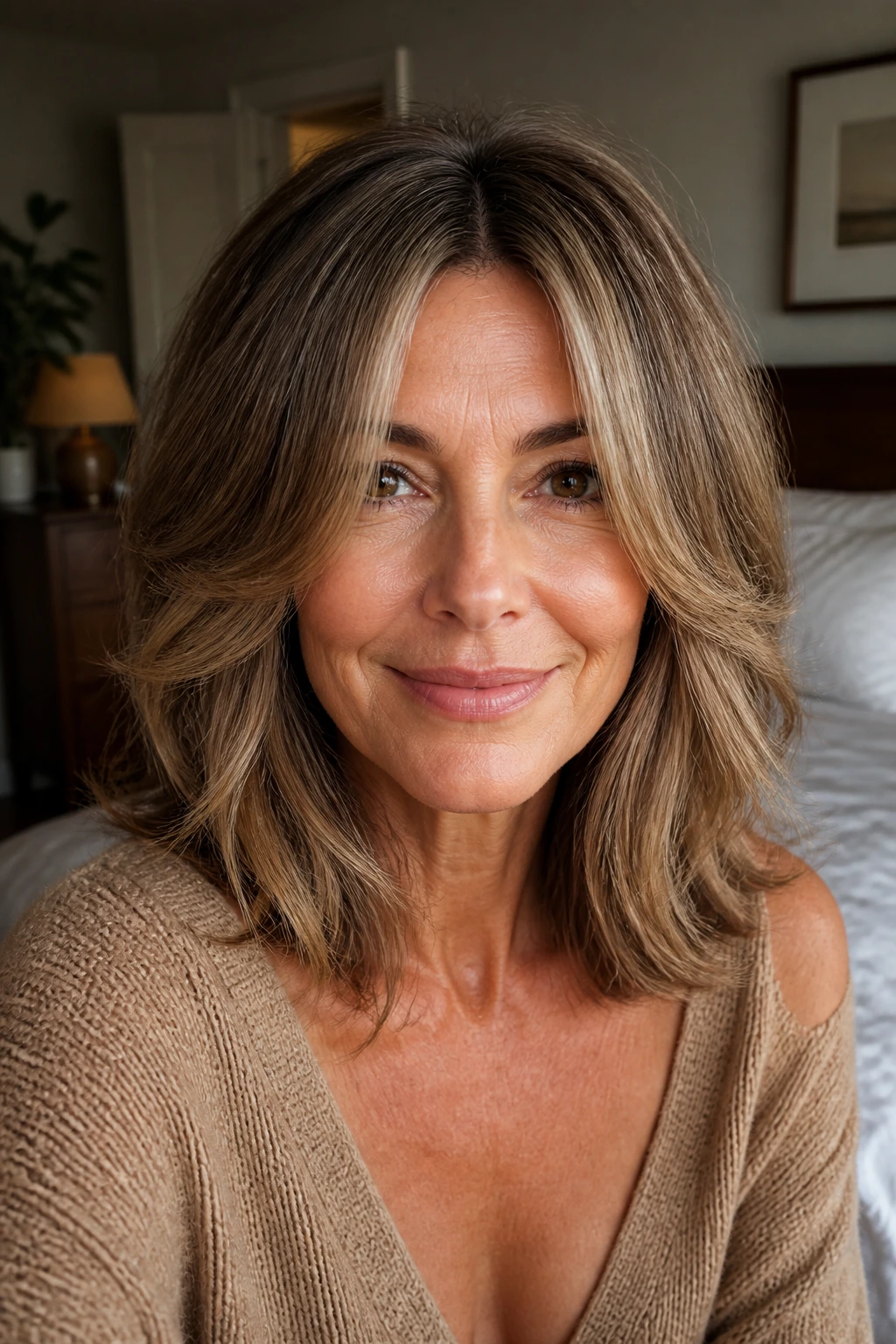
Does long hair still work after 40?
Yes, if the ends are healthy and the shape has some movement. Long, flat, one-length hair can drag the face down, but long layers or a polished glossy cut can look clean and current.
Are bangs a bad idea if I’m over 40?
Not at all. The wrong bangs are a bad idea. Heavy, straight fringe with no softness can feel harsh, while curtain bangs or a light fringe can open the face and soften the forehead.
What haircut makes fine hair look fuller?
A blunt bob, sleek lob, or shoulder-length cut with minimal layers usually works best. Too many short layers create frizz and see-through ends, which is the opposite of what you want.
What if my hair is curly and I want something modern?
Choose a shape that respects the curl pattern, like a curly bob, shag, or rounded cut. A curl-friendly cut usually looks better dry, because that’s when the stylist can see the true length and shape.
How often should I trim a modern haircut?
Shorter cuts usually need attention every 6 to 8 weeks. Shoulder-length and longer styles can go a bit longer, but once the ends start to split or the outline loses shape, the style stops reading as fresh.
Can I still wear a side part?
Absolutely. A side part can add lift, soften the forehead, and make a shoulder cut or bob look less severe. If your crown is flat, a side part can help more than a big can of spray ever will.
What if I air-dry most of the time?
Then look at cuts that already have movement in them: soft shag, lob, layered midi, or curly styles. Air-dried hair tends to show the haircut more clearly, so a strong shape is your friend.
How do I know if a style is too high-maintenance for me?
Ask yourself how long you’re willing to spend on a normal weekday. If a haircut only looks good with a round brush, hot rollers, and three products, it may be lovely—but it isn’t low-friction.
A Style That Still Feels Like You
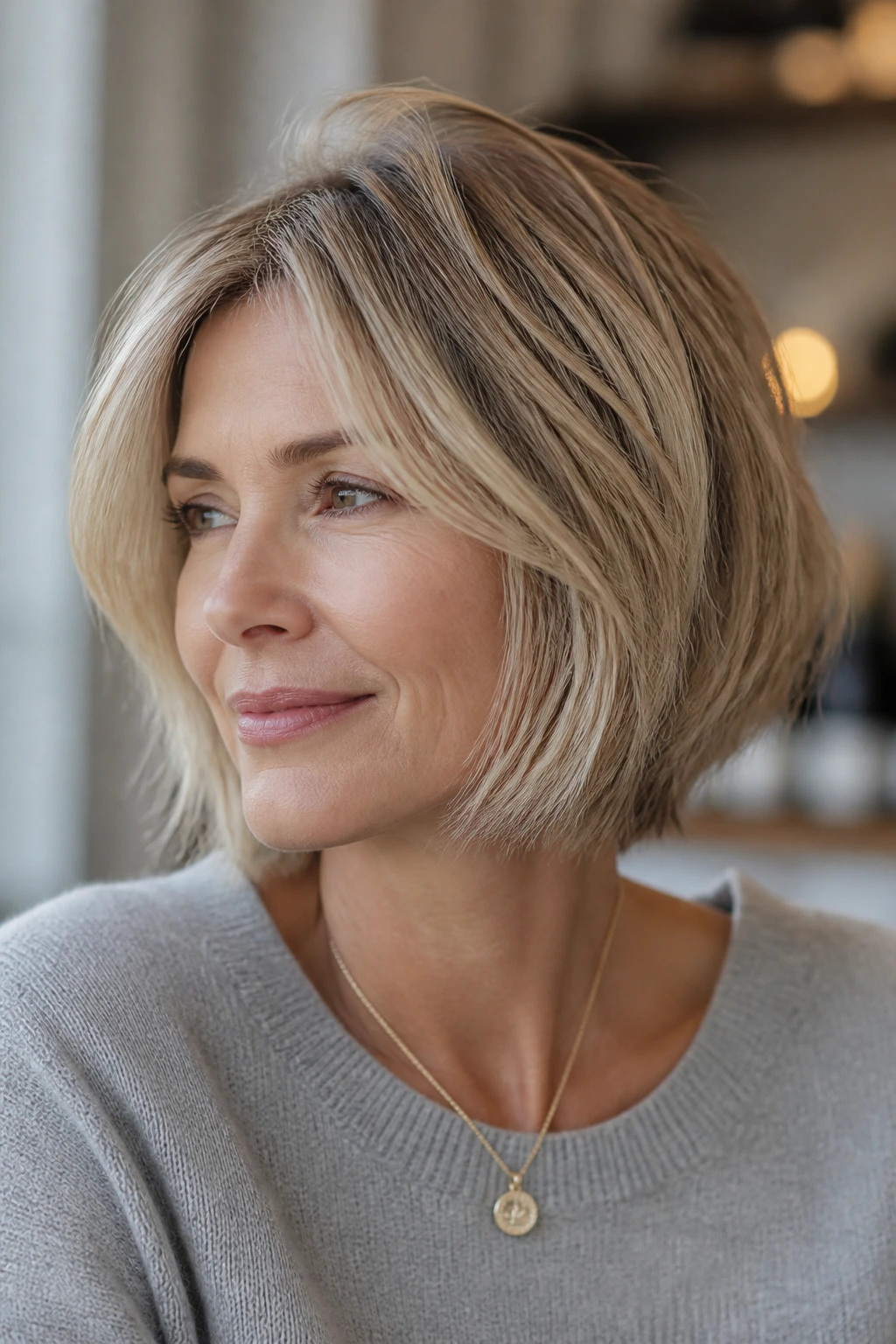
The smartest modern hairstyles for women over 40 don’t chase youth. They sharpen the shape, lighten the ends, and make the hair feel like it belongs to the face you already have. That’s the part people notice. Not age. Balance.
Start with the haircut that matches your texture and your routine, then let the styling stay a little loose. Hair that moves looks alive. Hair that sits there looks managed. There’s a big difference, and it shows.
The Right Kind of Fresh
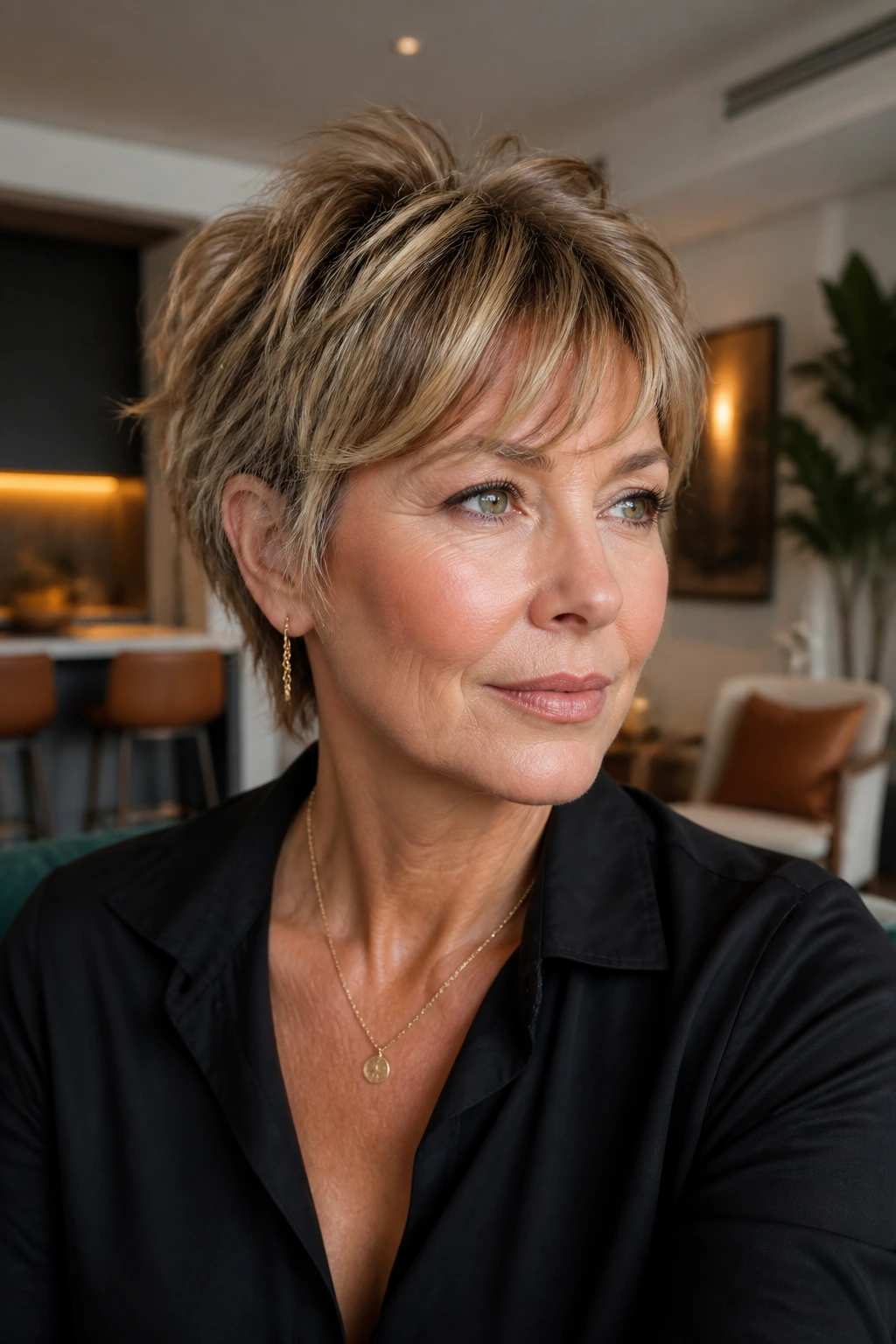
A good haircut should make you feel cleaner in your own mirror. Not younger. Cleaner. That’s a better standard, and it’s much easier to keep.
If one of these looks keeps tugging at you, that’s probably the one to bring to your stylist first. Ask for the version that suits your hair as it grows out, not just the version that looks best on the day it’s cut. That’s where the modern part really lives.
