



Curtain bangs on short hair can look effortless in the best possible way — or they can sit there like a blunt curtain someone forgot to hem. The difference usually comes down to length, density, and where the front pieces actually open. On a bob, a pixie, or a shaggy crop, the right fringe can soften the hairline, make a cut feel less boxy, and give the whole style some movement without stealing too much length from the rest of the head.
Short hair is a little unforgiving with bangs, which is exactly why curtain bangs are such a smart choice. They don’t have to behave like a full fringe, and they don’t need to sit perfectly every minute of the day. A good version bends away from the center, brushes the cheeks, and leaves enough space around the eyes that the shape still feels light. A bad version lands too blunt across the forehead and makes even a clean haircut look heavy.
What makes this topic fun is how many directions it can go. Some versions are soft and airy. Some are choppier and cooler. Some work because they flatter glasses, some because they tame a cowlick, and some because they save a short haircut from looking too severe. The trick is matching the fringe to the base cut and the texture sitting underneath it — and that’s where the interesting stuff starts.
Why These 27 Curtain Bang Styles Work on Short Hair
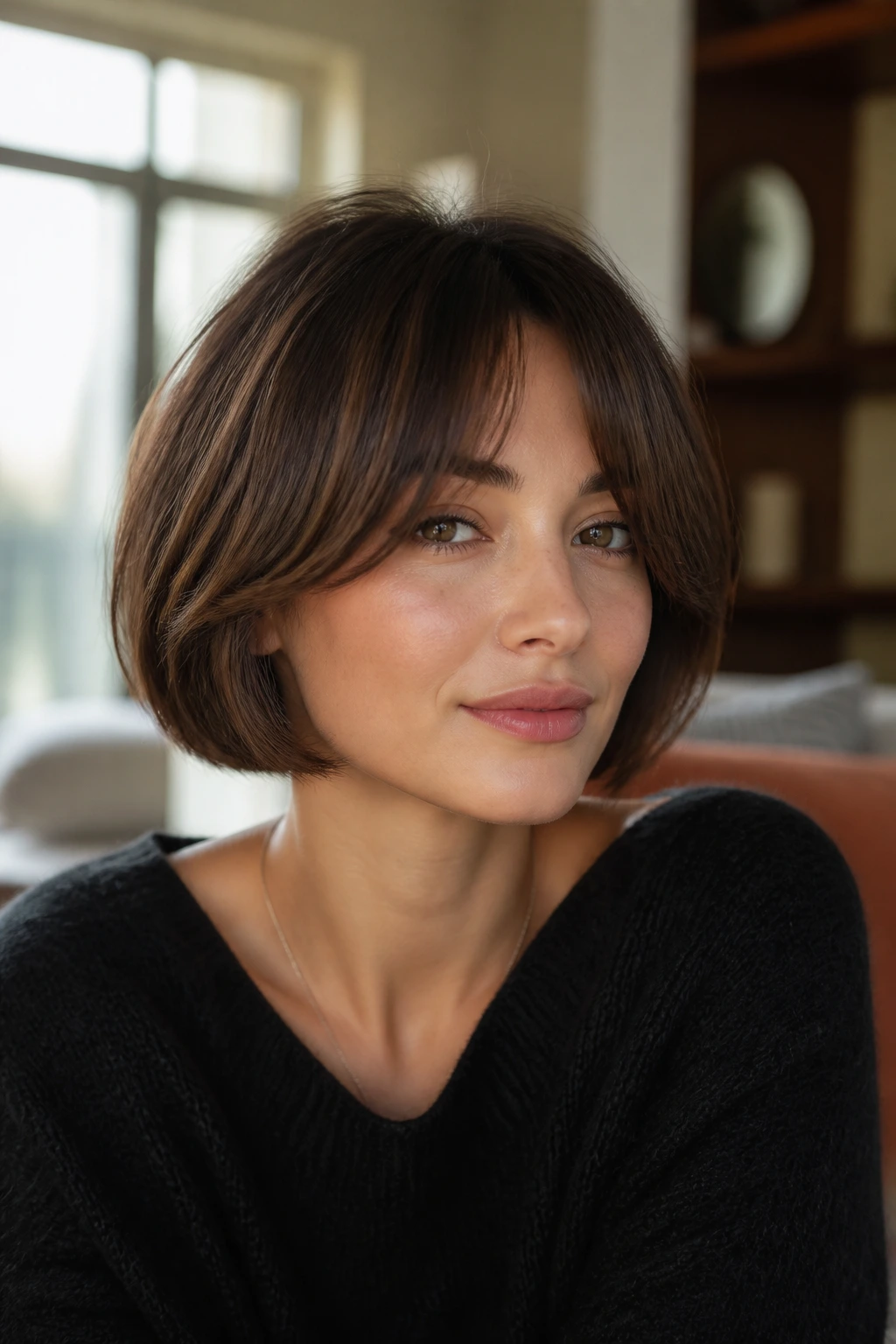
-
They soften the front line: Short cuts can get boxy fast, especially around the temples, and curtain bangs break up that hard edge with a cleaner, face-skimming shape.
-
They grow out with less drama: A fringe that splits in the middle and blends into the sides buys you weeks of decent-looking grow-out before the next trim.
-
They play well with texture: Straight, wavy, and curly hair all handle curtain bangs differently, but the split shape lets the texture show instead of fighting it.
-
They can add width or narrowness where needed: A wider opening can soften a long face, while a tighter center can keep a small forehead from disappearing under too much hair.
-
They work with short-length styling habits: If you already blow-dry a bob or tuck one side behind the ear, curtain bangs slot into that routine without asking for a whole new morning ritual.
-
They keep the cut from feeling static: Even the neatest pixie or bob can look flat if the front is too stiff. A little bend at the brow line changes the whole mood.
1. Soft Cheekbone Sweep
This is the version I’d hand to someone who wants curtain bangs on short hair without looking like they’re trying too hard. The shortest point sits just below the brow, then the sides drift down toward the cheekbones in a clean, soft line. It has that easy swing that makes a bob feel a little less square the second you tuck one side behind your ear.
Why It Works
The cheekbone sweep works because it gives the eye a clear path from the center part outward. That little split keeps the forehead open, while the longer sides stop the front from collapsing into a heavy curtain. On a chin-length bob, that balance matters a lot.
Ask for the center to be cut with a soft point rather than a blunt edge, and keep the longest pieces grazing the upper cheek. That gives you enough length to round-brush them away from the face without turning them into side bangs.
Best For
- Straight or loose-wavy hair
- Round and heart-shaped faces
- Bobs that feel a little boxy at the front
Styling Note
Use a 1-inch round brush and blow the front away from the face while the hair is still damp. A light mist of heat protectant is enough; too much product weighs the bend down before it sets.
2. Bottleneck Pixie Fringe
If a pixie feels too bare in front, this is the shape that gives it some breathing room. The center is shorter and tighter, then the fringe opens wider at the temples, almost like the neck of a bottle flaring out. It keeps a cropped cut from looking severe.
The best version of this on short hair has a tiny bit of separation, not a helmet of hair. You want visible pieces. You want a little skin to show. If the fringe is packed too densely, the whole pixie starts to feel boxy around the eyes.
How to Wear It
This cut is happiest with a small amount of styling cream worked through damp hair, then dried with fingers or a tiny round brush. If you like a cleaner finish, tap a dab of paste into the ends only. Keep it close to the roots? Bad idea. You’ll flatten the front and lose the open shape that makes the bottleneck cut work.
3. Wispy Bob Breakup
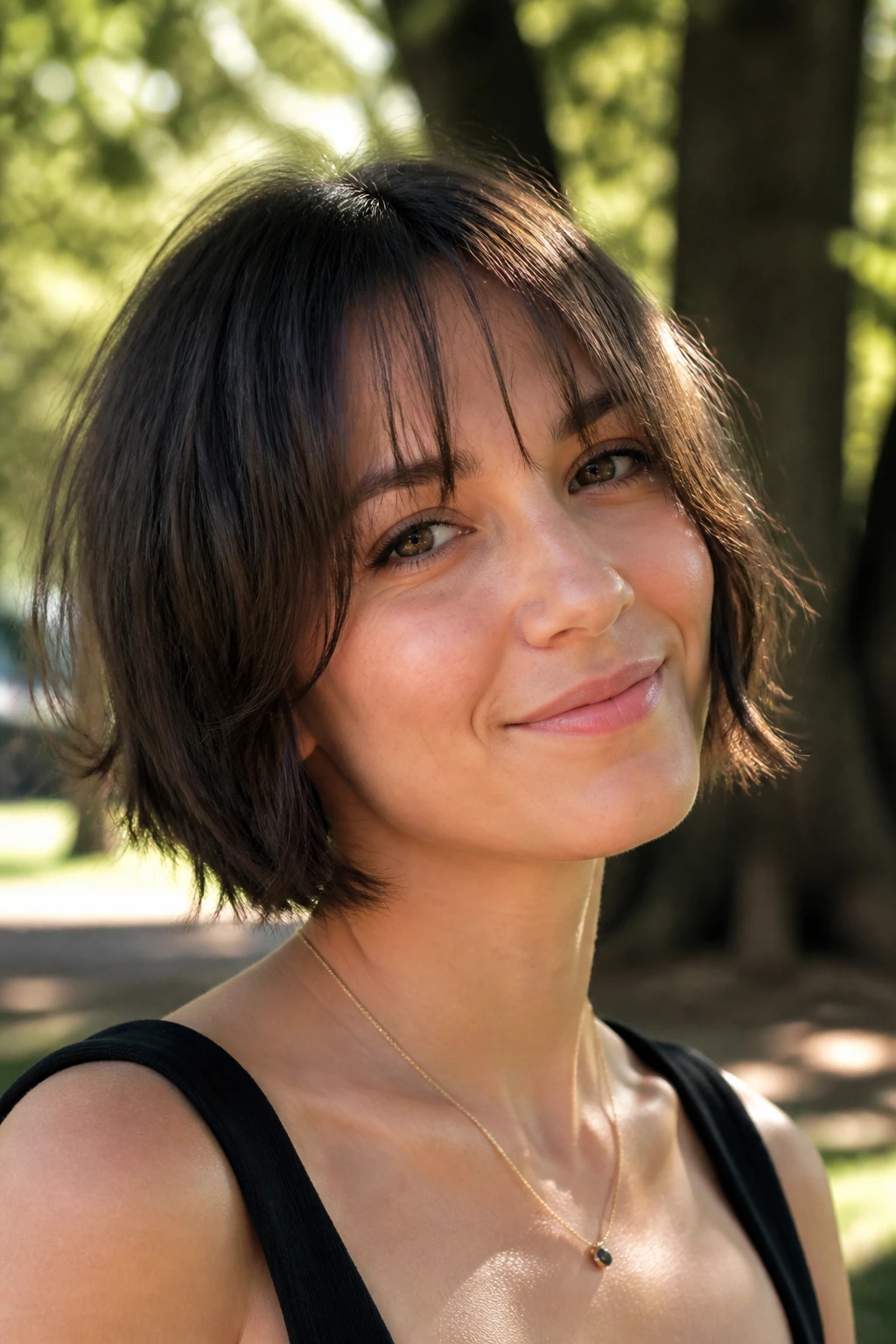
A neat bob can get a touch too polished, which is polite language for stiff. Wispy curtain bangs fix that fast. The front pieces are sliced lighter, with enough air between them that the forehead still shows through. On fine hair, that matters more than most people realize.
What I like here is the way it breaks the bob line without wrecking the shape. The hair still reads as a bob. It just doesn’t sit there like a block. If your hair tends to puff around the temples, ask for the bangs to be textured with a point-cut rather than thinned aggressively with shears.
Quick Styling Clue
Blow-dry with a vent brush and direct the bangs forward first, then out. That one-two motion gives the fringe a small bend without making it stringy.
4. Choppy Razor Curtain
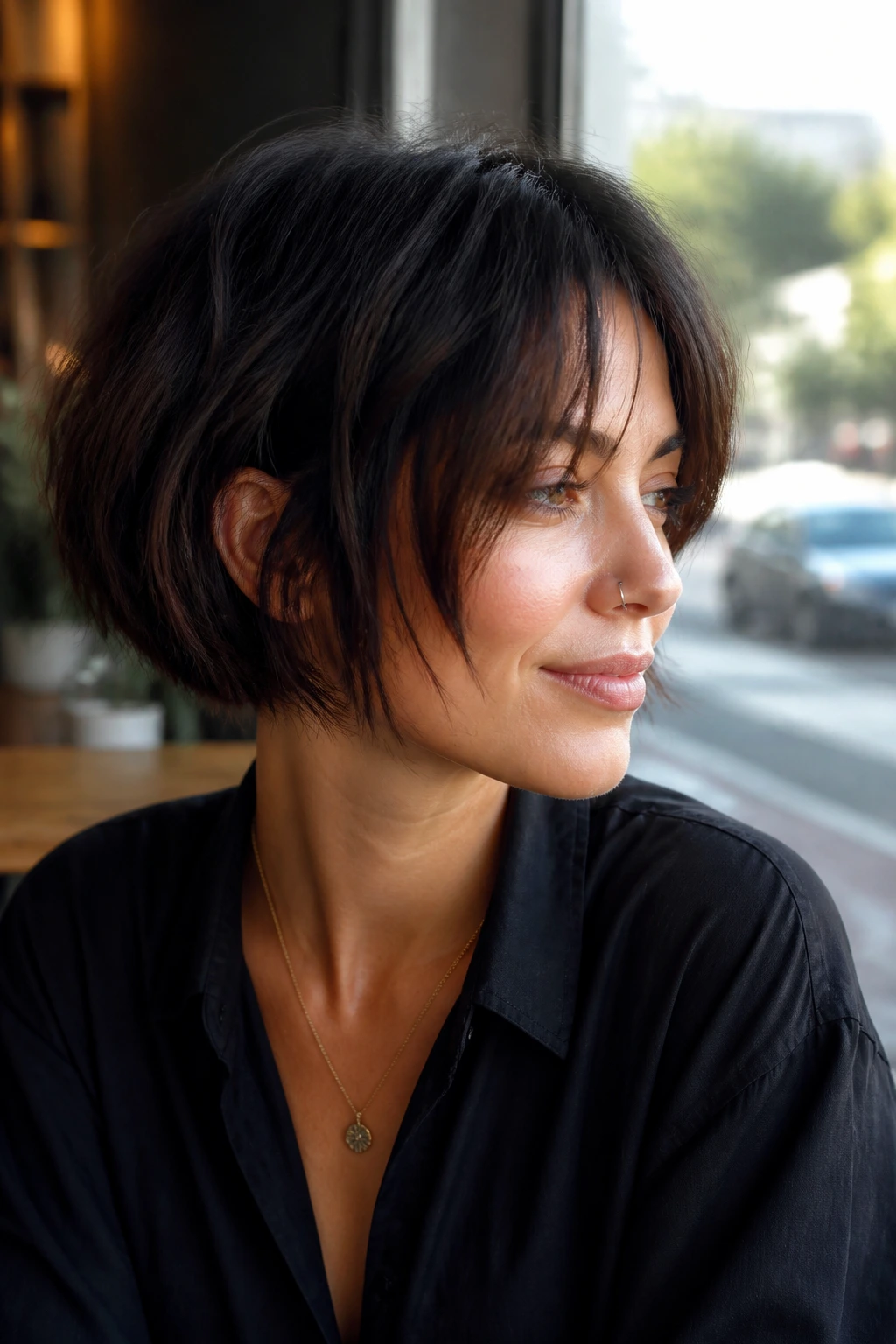
This one has edge. The ends are softer at the center and more broken up at the sides, often with a razor or textured cutting technique that leaves the pieces visibly separated. On a short haircut, that movement matters because it keeps the fringe from sitting like a solid panel.
A choppy razor curtain is not the friendliest option for hair that frizzes in humidity. I’d say that plainly. But on naturally straight or slightly wavy hair, it can look terrific because the irregular ends catch light and move when you turn your head.
Best Pairing
A blunt bob with clean ends can handle this fringe well because the contrast makes both pieces stronger. Keep the rest of the cut controlled, and let the bangs be the messy part. That’s the whole point.
5. Chin-Length Flip-Open

Here the curtain bangs don’t just split; they flip outward with a little lift at the ends. Think of a chin-length bob that wants to turn back from the face instead of laying flat against it. It has a retro feel, but not in a costume way.
This style works because the flipped ends create space around the mouth and jaw. On short hair, that extra space keeps the cut from weighing down the lower half of the face. If your hair naturally curves under, you’ll need a round brush or a flat iron to persuade it outward.
Good for:
- Square or oval faces
- Dense hair that likes to sit heavy
- Anyone who wants a more styled finish without a full blowout
One small warning: don’t overdo the bend. If the flip gets too big, the style starts looking cartoonish. Keep it soft.
6. Curly Curtain Bend

Curly hair and curtain bangs can work together beautifully, but the haircut needs to respect shrinkage. A dry cut is usually the safer route, because curls spring up once they dry and a bang that looks long in the chair can jump to eyebrow level in an hour.
The shape should be split in the middle with room for the curls to coil naturally. I prefer this version when the front pieces are cut to blend into the curl pattern instead of sitting on top of it. That means fewer fight-the-frizz mornings.
Styling Move
Use curl cream on damp bangs, then scrunch lightly and diffuse on low heat. If the front wants to separate into two awkward ropes, shake the roots gently with your fingers while it dries. Don’t brush it once it starts setting.
7. Layered Lob Frame
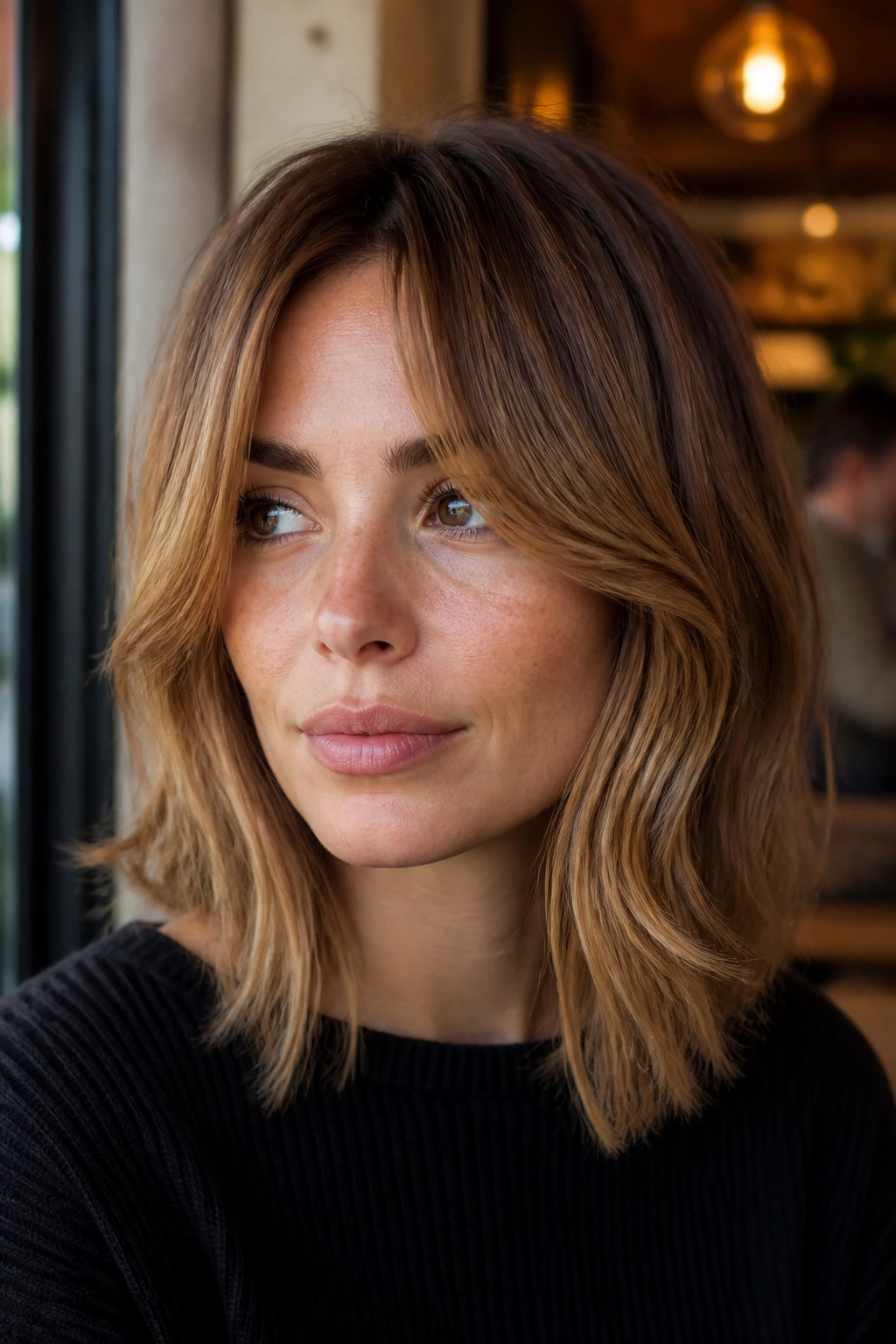
A lob is still short enough to count in this conversation, especially when the front is cut to frame the face instead of hanging dead straight. This version uses curtain bangs that flow into longer layers, so the fringe doesn’t look like a separate piece stuck onto the haircut.
What makes it smart is the blend. A layered lob can lose shape at the face if the front is too blunt, and curtain bangs fix that by turning the eye outward. It’s a good option if you like the feel of short hair but want a bit more swing around the collarbone.
Ask Your Stylist For
Longer front pieces that start around the brow and taper into the cheek. Keep the center open enough that you can part it with fingers, not a comb. That little detail makes the style look lived-in instead of overworked.
8. Side-Opening Curtain
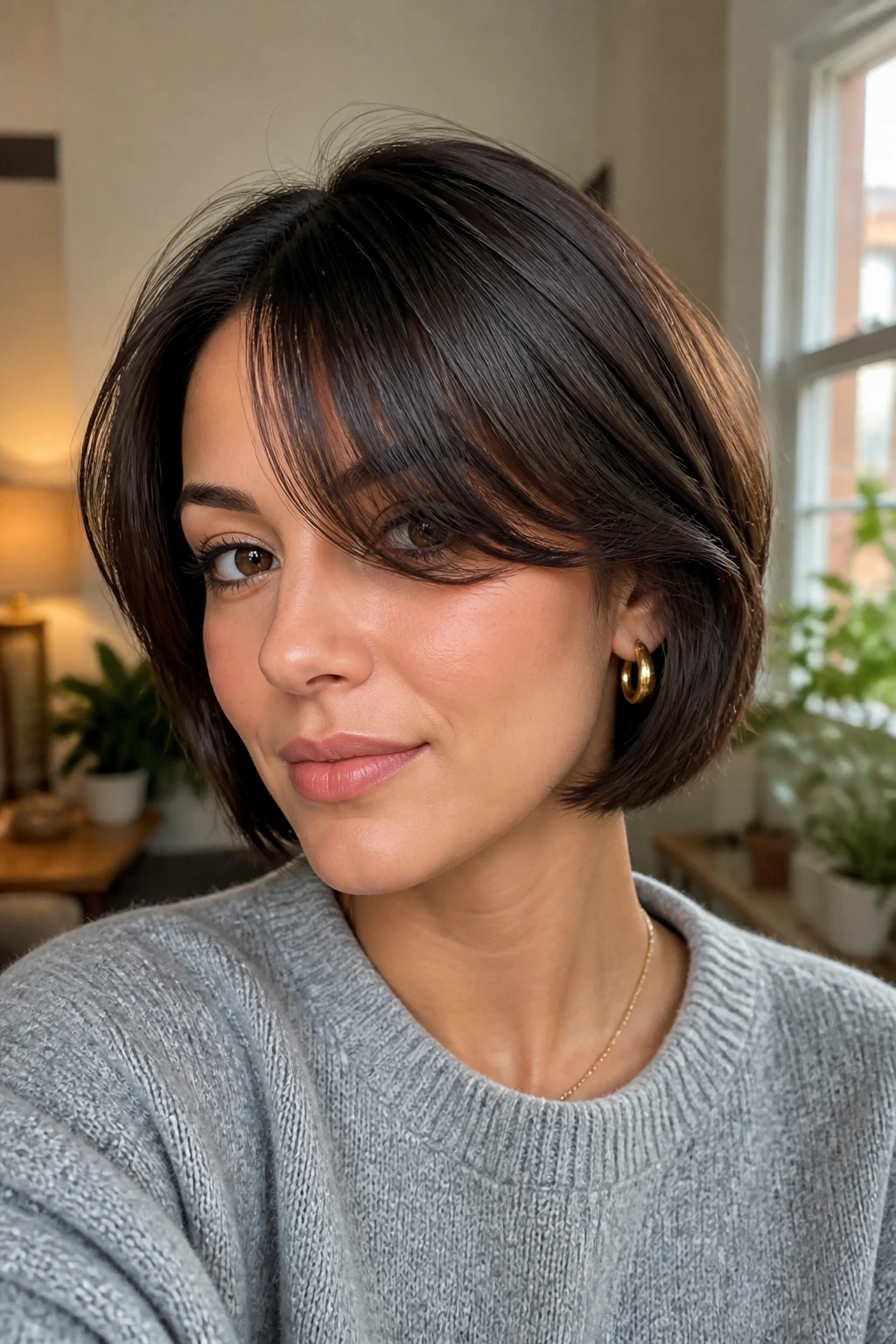
Not every curtain bang has to split dead center. If your hair grows in a stubborn direction or your cowlick keeps pushing one side forward, a slightly off-center opening can look cleaner and behave better. It still reads as curtain bangs. It just follows your head instead of arguing with it.
This is one of my favorite fixes for a difficult part line. The hair settles faster, the fringe doesn’t fight your forehead, and the grow-out tends to be less awkward. Short cuts especially benefit from that, because there’s less length to hide a bad start.
H3: When to Choose It
- Your hairline leans left or right on its own
- You wear glasses and want a little more room near the frames
- Your face shape looks better with a soft diagonal than a hard center split
A slightly off-center curtain often looks more natural than a perfect middle part anyway. Perfect can be a little suspicious.
9. Piecey French Crop
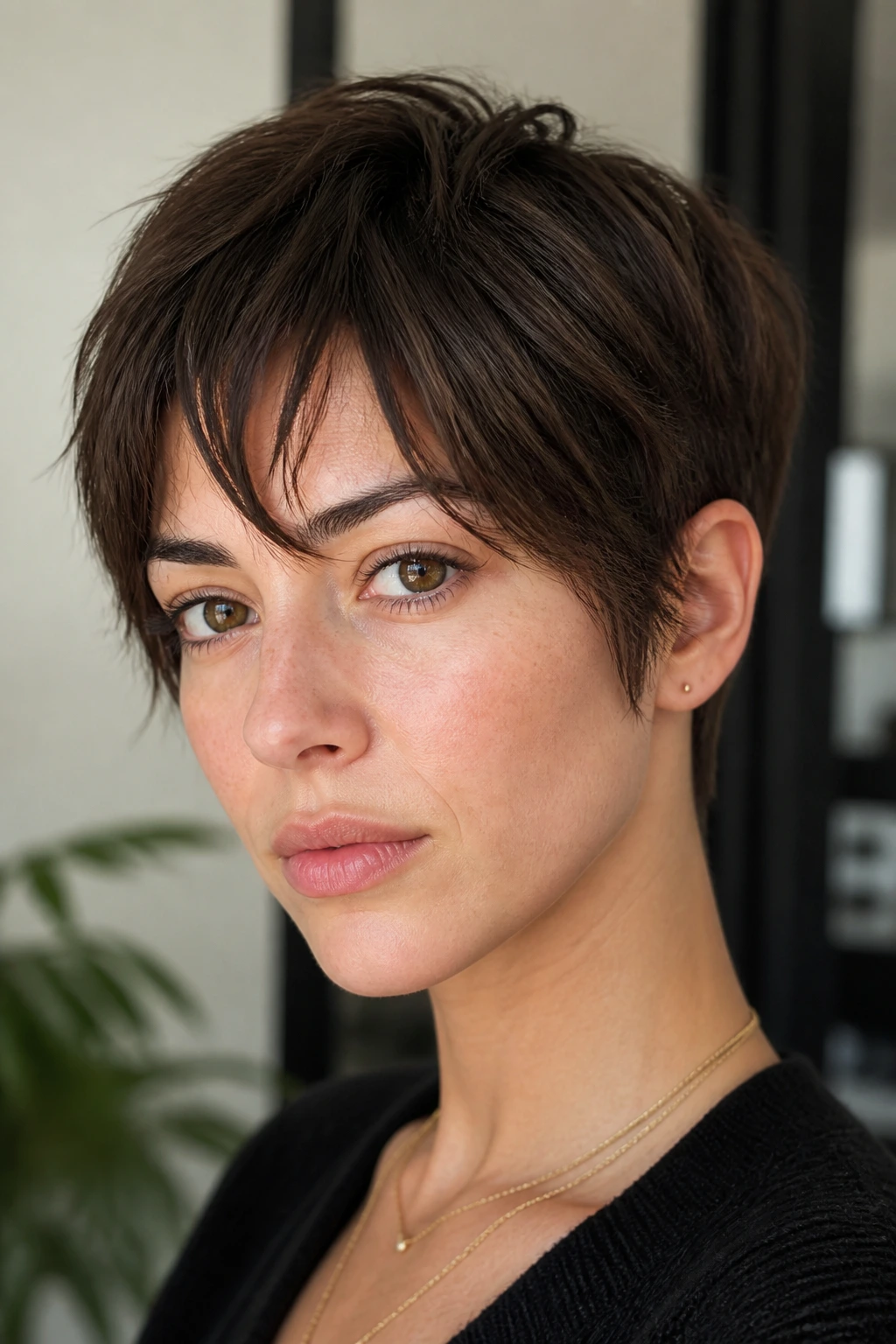
This is the cooler, more cropped sibling in the curtain bang family. The front is short enough to stay light, but the pieces are still separated into little wisps that frame the forehead. It gives a French crop a softer front without turning it into a full fringe.
I like this on dense hair because it stops the front from looking bulky. Ask for internal texture, not aggressive thinning. There’s a difference. You want the hair to break into pieces, not go fuzzy.
The style works best when the edges around the temples are left a little longer than the center. That tiny length change creates the curtain effect without making the crop lose its shape.
10. Rounded Halo Curtain
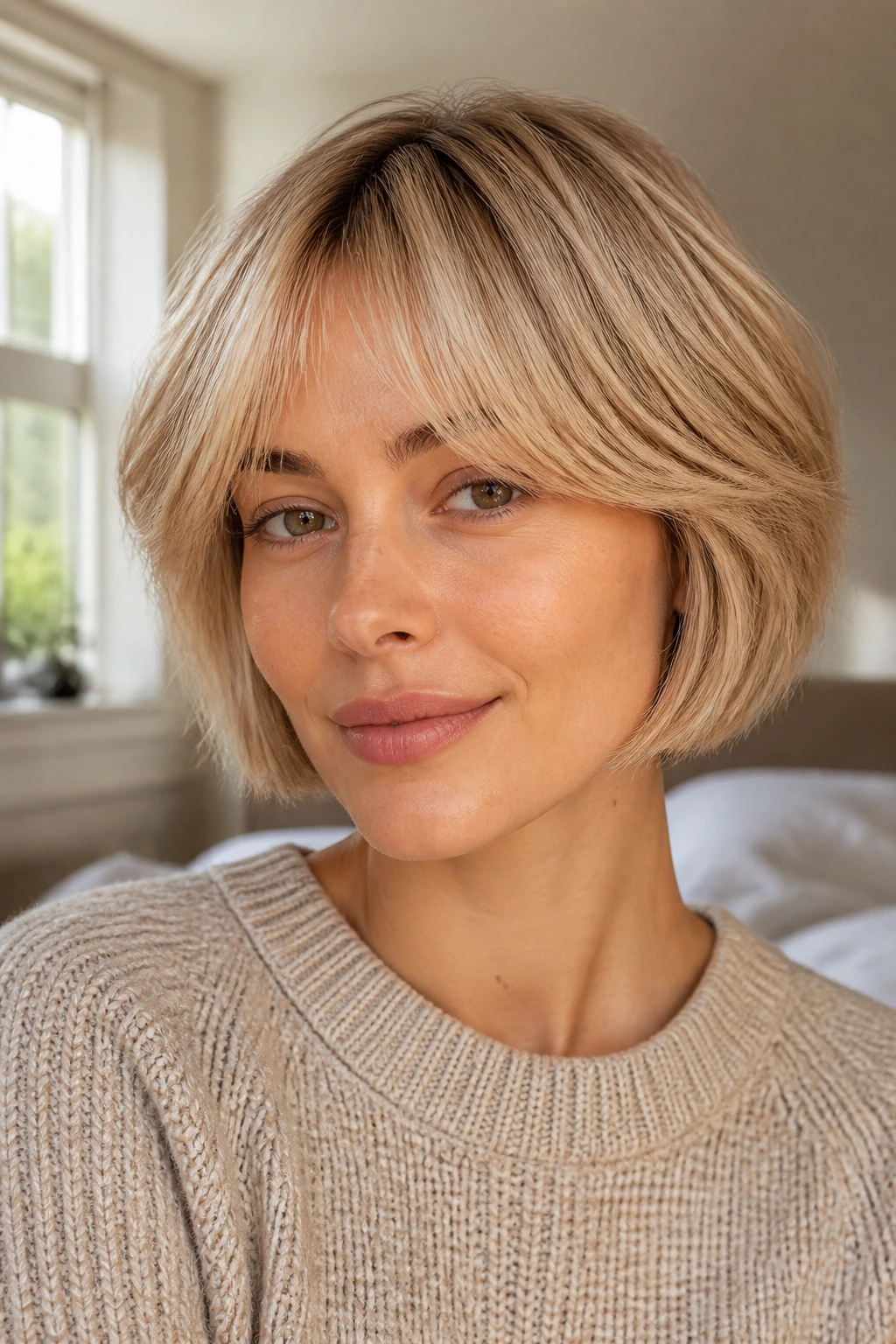
A rounded halo curtain arcs gently across the top of the face instead of falling in a sharp V. It’s elegant in the plainest sense of the word — neat, controlled, and a little softer than a hard center split. On a short bob, that rounded line can make the haircut feel more finished.
This shape flatters people who don’t want a lot of separation in the fringe. It also works if your forehead is on the smaller side, because the curve avoids dumping too much hair into the center. The sides can still sweep away, but the overall impression is smoother.
A Useful Detail
Ask for the shortest point to sit just under the brows and the sides to taper toward the upper cheek, not all the way to the jaw. That keeps the halo shape visible instead of dragging it down.
11. Feathered Jawline Fringe
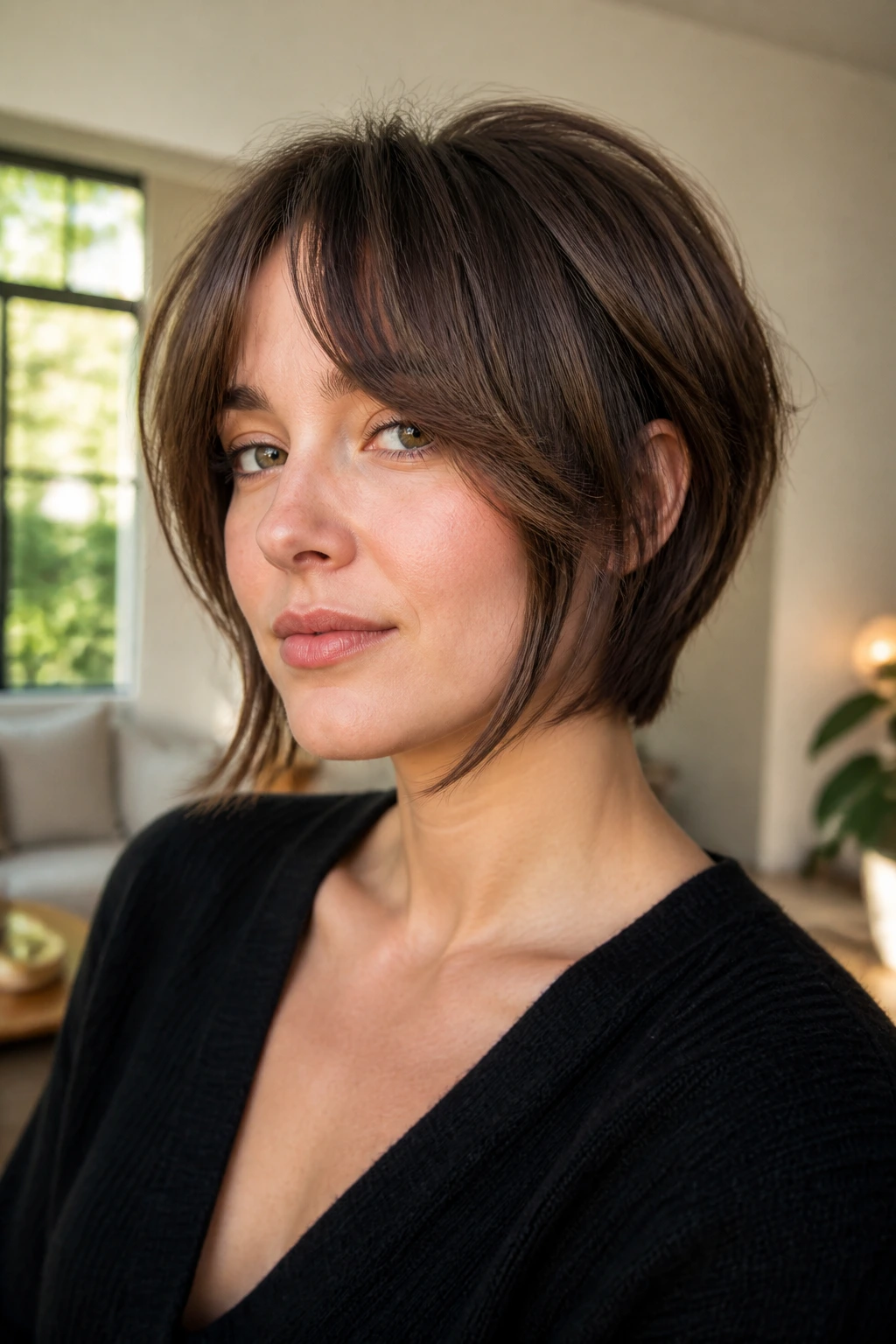
This is a stronger face-framing version. The curtain bangs start around the brow, then the outer pieces graze the jawline and blend into the rest of the cut. It’s a good choice when you want the fringe to pull attention downward in a clean vertical line.
The feathered finish makes a short haircut feel longer, which sounds small until you see it in the mirror. That extra length at the sides can smooth a strong jaw or make a blunt bob feel less rigid.
What to Watch
If your hair is very fine, keep the feathering soft. Too much razoring can leave the pieces thin and see-through in a way that looks accidental. You want feathered, not shredded.
12. Airy See-Through Fringe
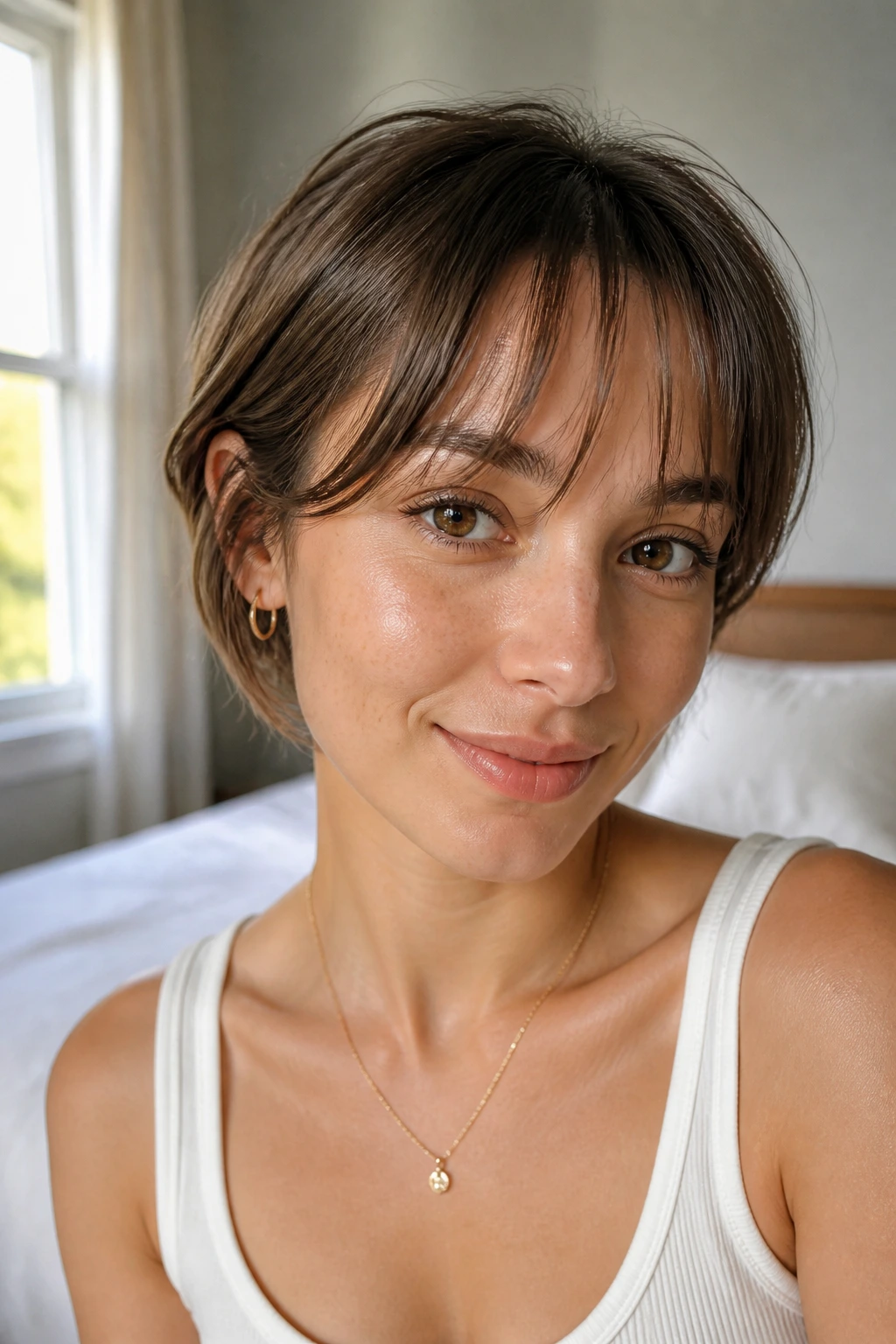
This is the lighter, more transparent version of curtain bangs. There’s less density in the front, which means you can see the forehead through the pieces instead of hiding it completely. On short hair, that lift keeps the whole cut from feeling crowded.
It’s a smart choice for fine hair because the bang doesn’t demand much volume to behave well. You can almost let it dry on its own and then give it a tiny bend with your fingers. No wrestling match needed.
Best For
- Fine or medium hair
- Warm weather styling
- People who hate a heavy fringe sitting on the skin
It’s also forgiving when the hair gets oily. The lighter density means the bangs don’t collapse as dramatically as a thicker curtain would.
13. Textured Shag Curtain
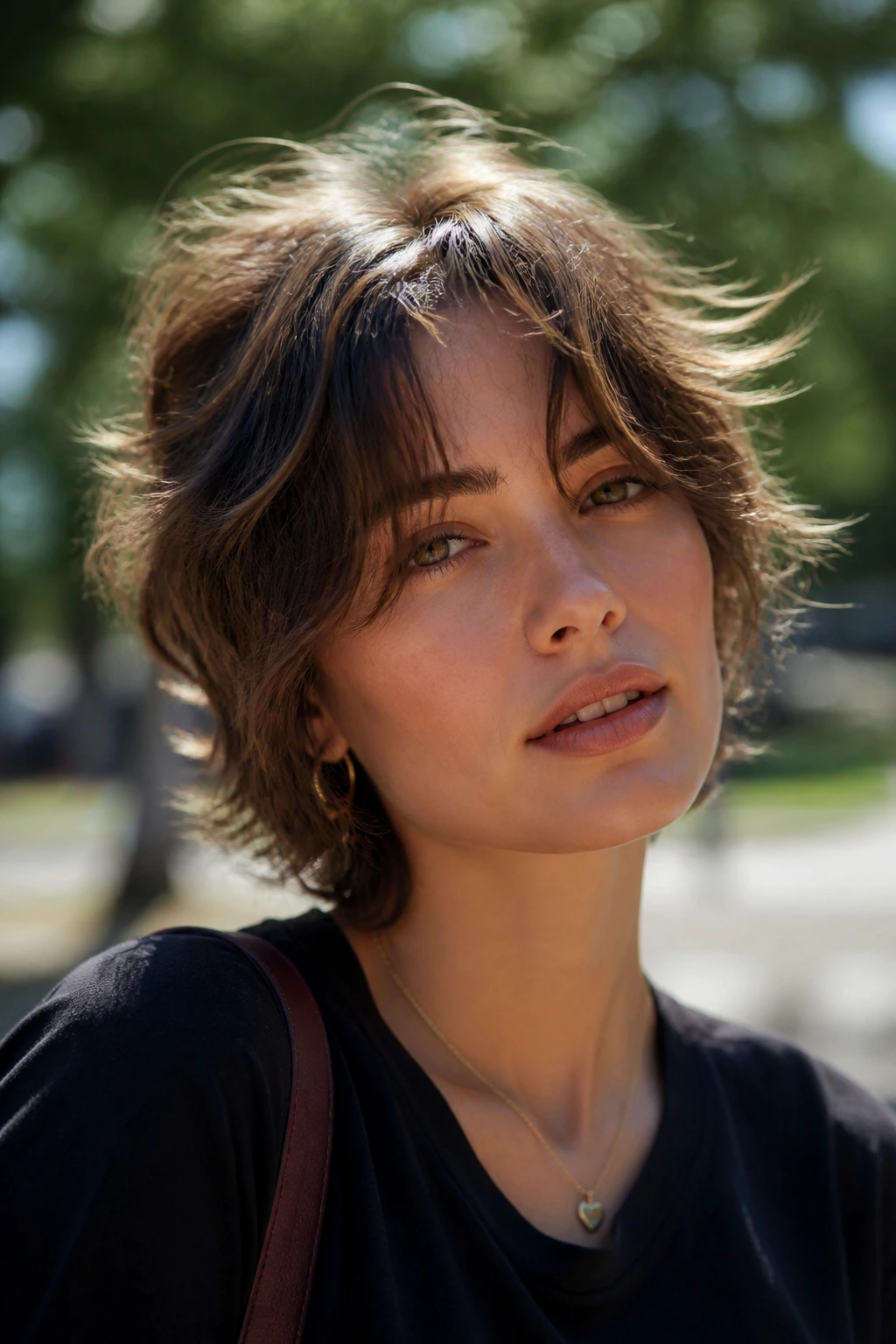
A shag and curtain bangs are natural partners. The front pieces split and the layers around the crown give the whole cut that slightly broken-up, wind-tossed feel. On short hair, it keeps the style from looking tidy in a boring way.
This is one of those cuts that should move when you walk. If it doesn’t, something’s off. The bangs should blend into the side layers so the face frame doesn’t stop abruptly at the temples.
Quick Reality Check
A textured shag curtain is not the style for someone who wants a crisp, polished finish every day. It’s better when the hair has a little natural bend, a little grit, a little mess. That’s the point.
14. Polished Center Part Bob

Some people want curtain bangs, but they still want the rest of the haircut to look sharp and clean. This is that version. The bob is sleek, often jaw-length, and the bangs split neatly down the middle with enough structure to keep the line tidy.
What makes it work is contrast. The bob stays smooth and deliberate, while the front opens just enough to soften the face. If you like clean lines, this is the shape to save.
A flat iron can help, but only if the bangs are dried properly first. Straightening wet bangs into a polished shape is how you get weird kinks by noon.
15. Glam Flip-Out Fringe
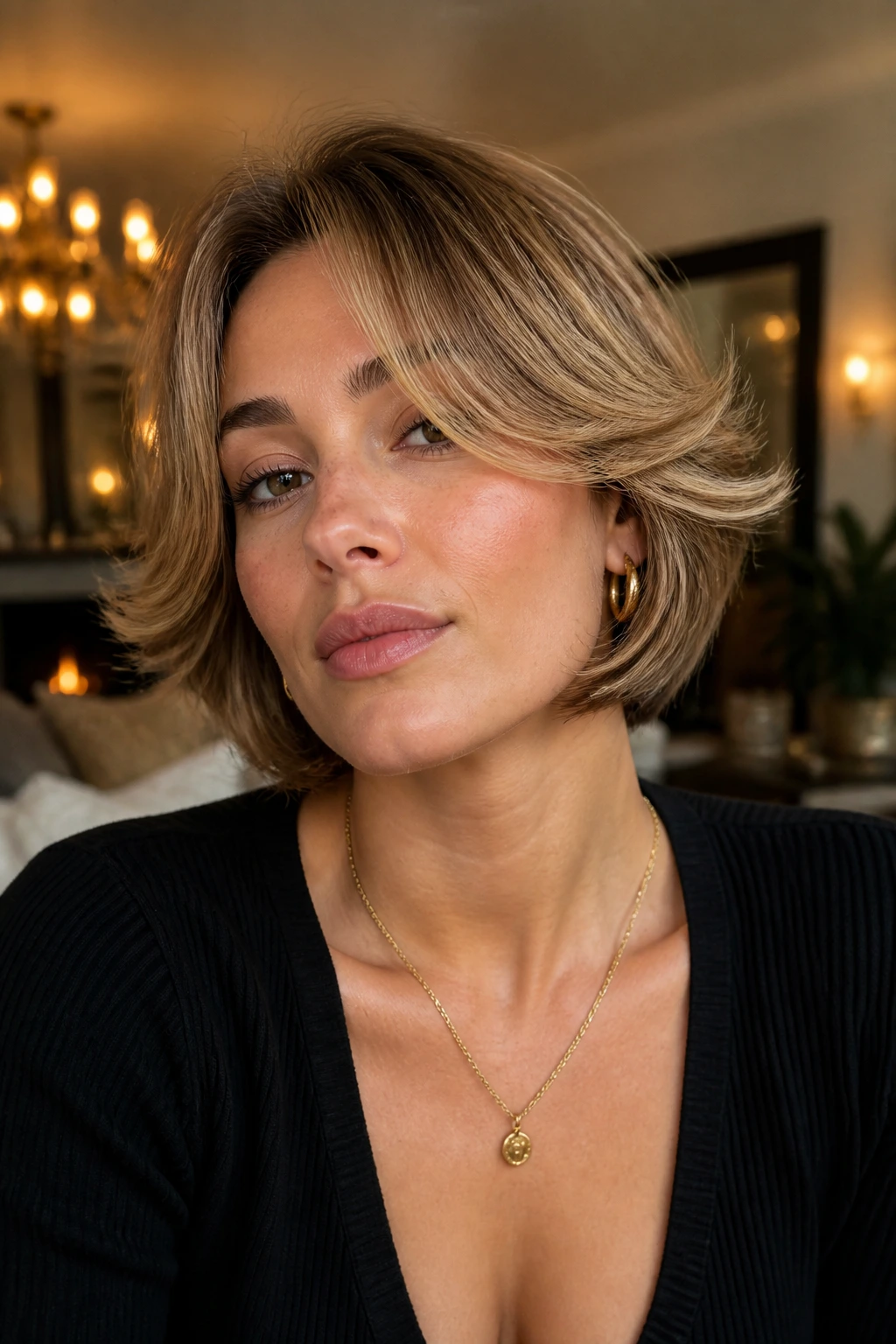
This style has a little old-school swagger. The curtain bangs are longer, then flipped away from the face with a visible outward curve. It feels dressed up, even if the haircut underneath is simple. That’s why it works so well on short hair — the fringe carries the mood.
I’d use this on a bob with a strong outline or a lob that needs more personality. The flip makes the front look intentional. Without it, the cut can lean plain.
How to Style It
Use a round brush or a medium barrel iron, roll the bangs away from the face, and let them cool in place for a minute before touching them. Cooling matters. If you skip it, the bend falls out too fast.
16. Grown-Out Pixie Curtain
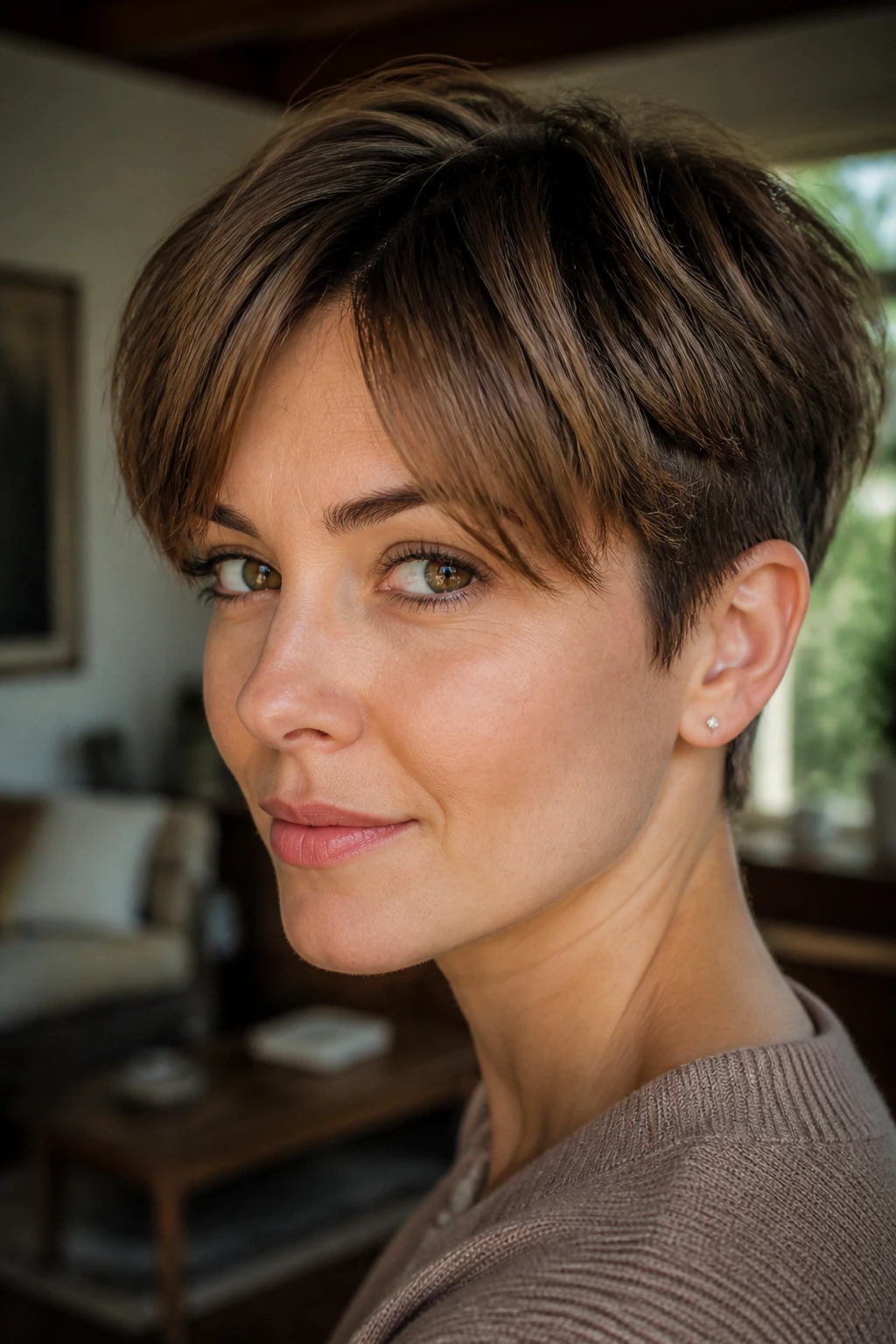
This is the in-between stage that people usually try to hide, which is a shame. A grown-out pixie with curtain bangs can look sharp if the front is shaped on purpose. The bangs soften the transition from the cropped crown to the longer face frame.
The trick is to leave enough length in the front so the pieces can split rather than sit as one chunk. That little split keeps the grow-out from looking accidental. It also buys you time before the next big cut.
This is a good place to be if you’re moving from a pixie toward a bob and don’t want the awkward helmet phase. Been there. Nobody needs that phase.
17. Asymmetrical Curtain Bend
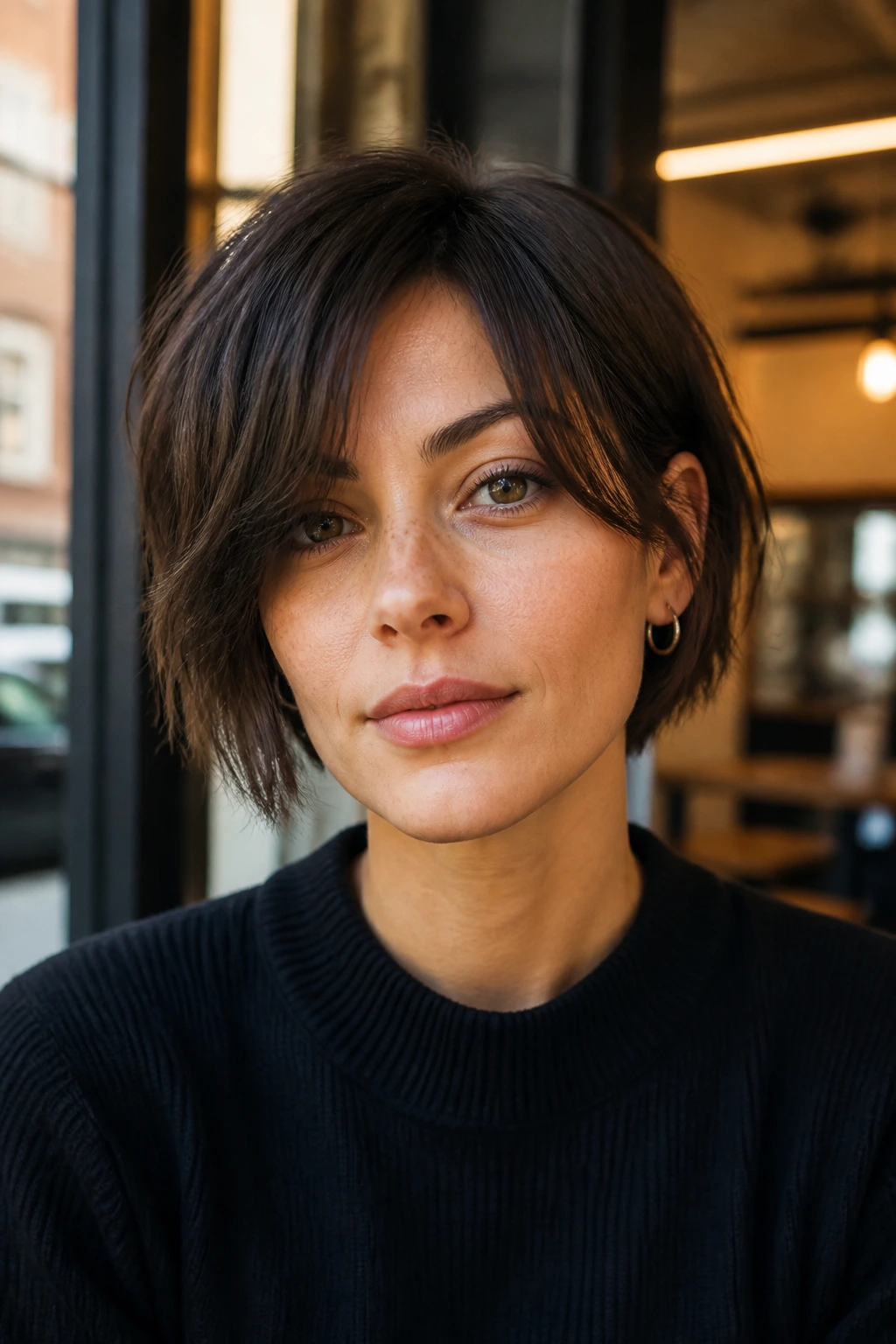
One side is a touch longer than the other here, and the difference is enough to matter. It keeps the curtain shape, but the slightly uneven length can balance a strong part, a wider forehead, or one side of the face that tends to feel visually heavier.
It’s especially useful if your hair naturally falls one way no matter what you do. Instead of fighting the bend, you build it into the cut. That’s usually the better move.
Best Use Case
- You wear glasses and want one side to clear the frame
- You like a little edge in an otherwise simple bob
- Your hair whorls make a perfect middle part impossible
The asymmetry should be subtle. If it’s too obvious, the fringe stops looking like curtain bangs and starts looking like a mistake.
18. Heavy Brow-Brush Curtain
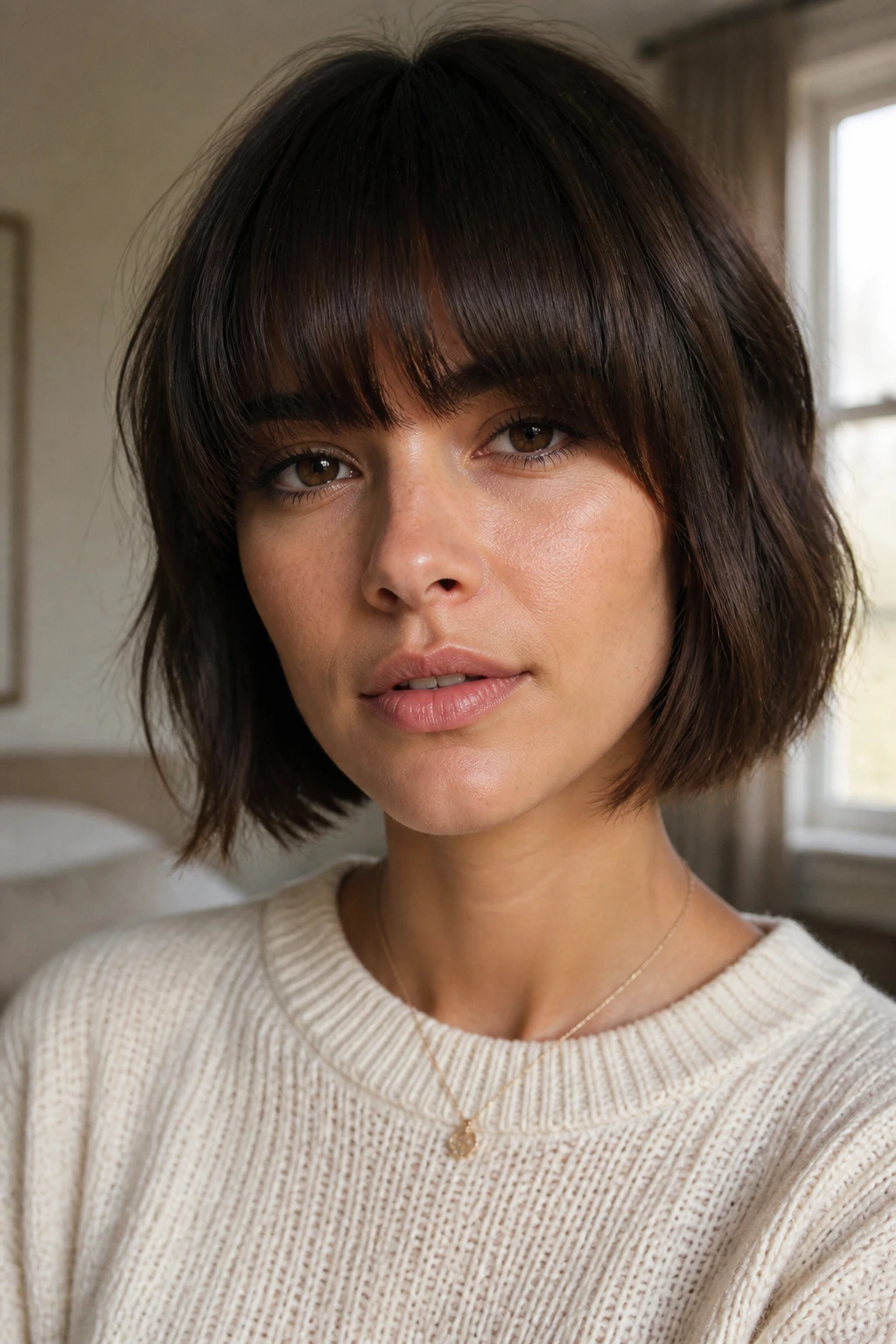
Some curtain bangs need more weight. This version sits closer to the brows and has enough density to show a real parting without disappearing into wisps. It’s a stronger look, and on short hair it gives the front a little authority.
This works best when the cut underneath is simple. A bob or cropped shag can handle the extra weight up front, but too much layering elsewhere can make the whole haircut feel busy. Keep the rest of the shape calmer.
A heavy curtain does need regular drying and a decent brush. Let it air-dry flat, and it’ll probably hang in the eyes by lunchtime.
19. Retro ’70s Short Shag
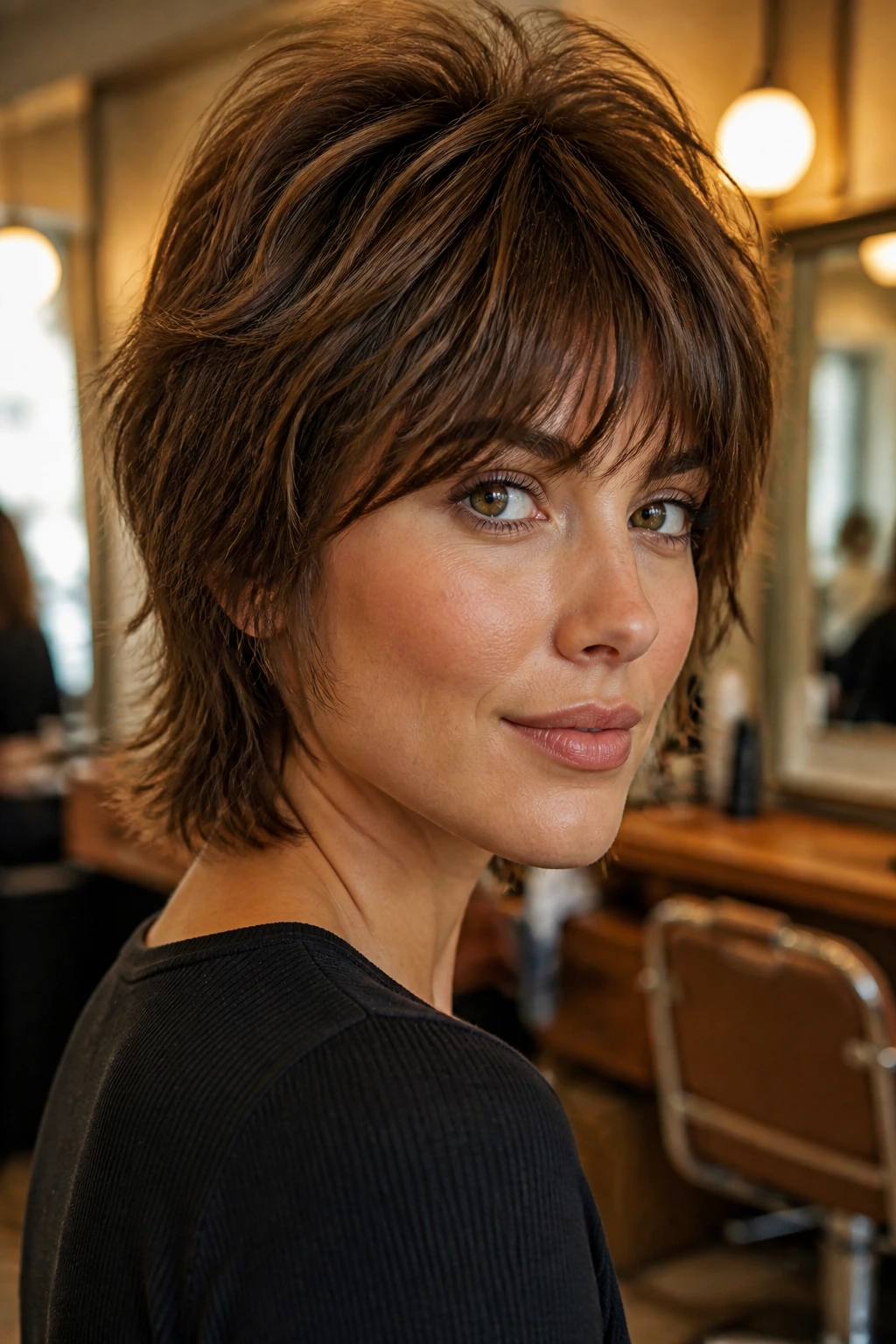
This one has lift at the crown, bend at the sides, and a fringe that opens the face in a very specific, slightly feathered way. It’s not shy. It’s also one of the easiest styles to make look alive on short hair.
The reason it works is the combination of layers. The bangs don’t just sit across the forehead; they connect to the top layers and follow the haircut’s movement. That makes the whole style feel more expensive than a plain one-length cut.
H3: Styling It Without Overdoing It
Use mousse at the roots and a medium round brush only at the front. If you start curling every piece, the shag loses its rough charm. Leave a little imperfection in it.
20. Slick, Sleek Open Fringe
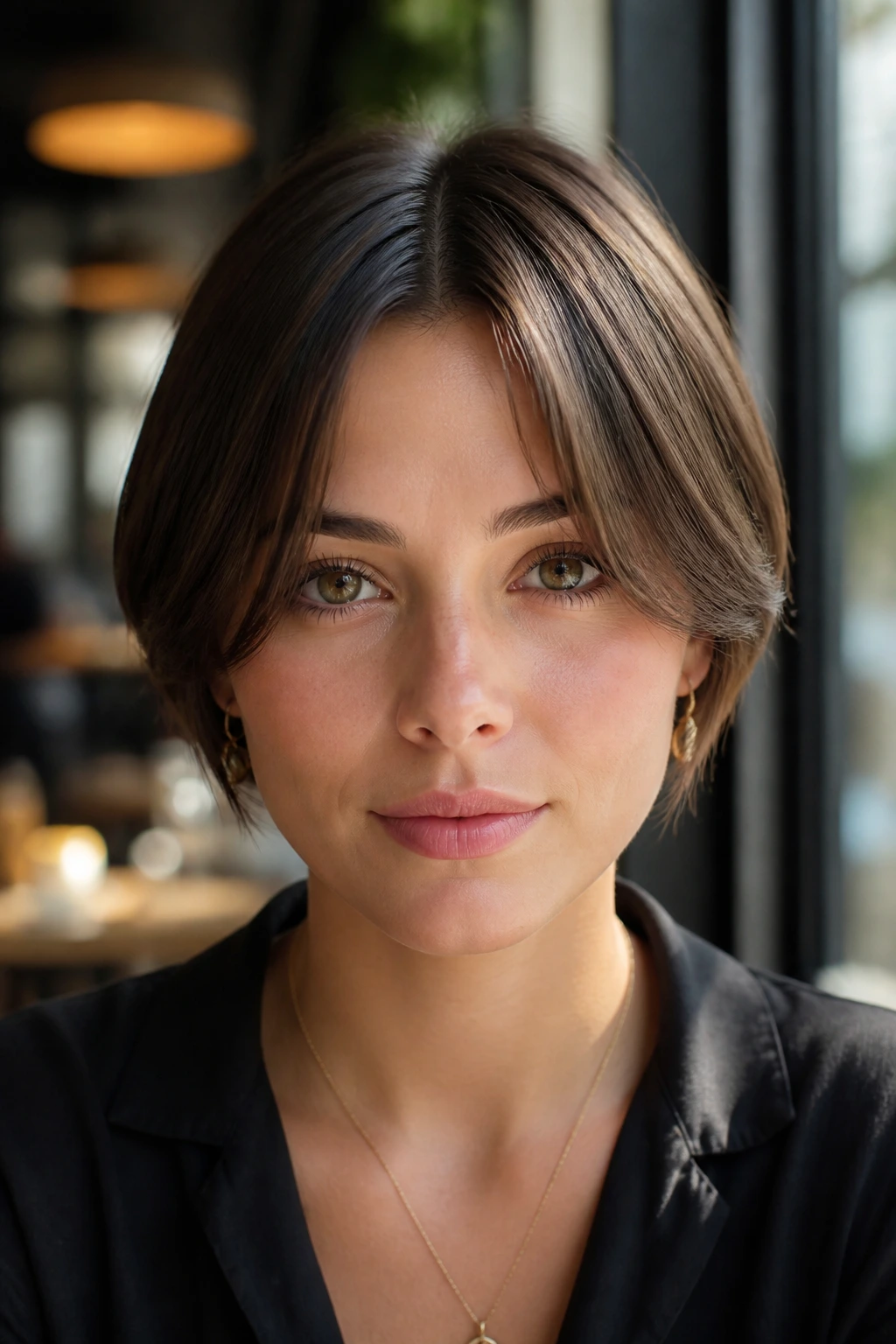
If you like a smoother finish, this version is for you. The curtain bangs split cleanly and lie close to the head, with a glossy surface that makes the parting look sharp. On a short bob, that sleekness can read almost architectural.
The key is control, not stiffness. You want the bangs to open, not stick. That means a small amount of smoothing cream, a proper center part, and careful drying with the nozzle pointed downward.
This is one of the few styles where a tiny bit of weight in the front helps. Too much product, though, and the whole fringe will separate in greasy chunks. That’s a bad trade.
21. Wavy Collarbone Curtain
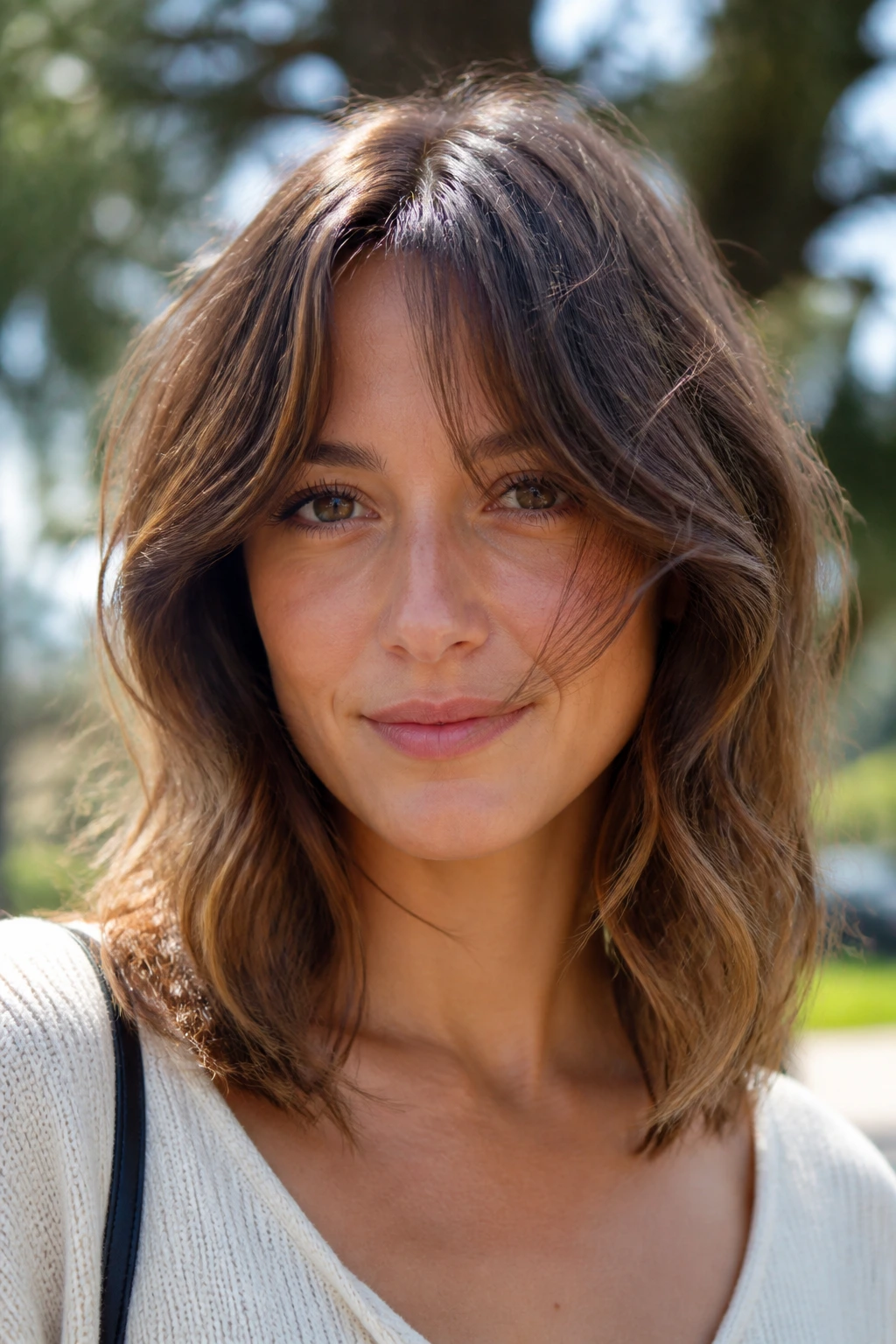
A collarbone cut sits right on the border of short hair and medium length, but it’s a useful option if you want curtain bangs and a little more swing. The front pieces can be long enough to sweep into the waves, which makes the whole haircut feel relaxed instead of shaped to death.
The lovely part here is how the bangs merge into the rest of the wave pattern. You don’t see a hard line. You see movement. If your hair is naturally wavy, this is one of the easiest ways to wear a curtain fringe without constant restyling.
It also gives you room to tuck one side behind the ear and keep the other loose. Small thing. Big payoff.
22. Micro-Curtain for Fine Hair
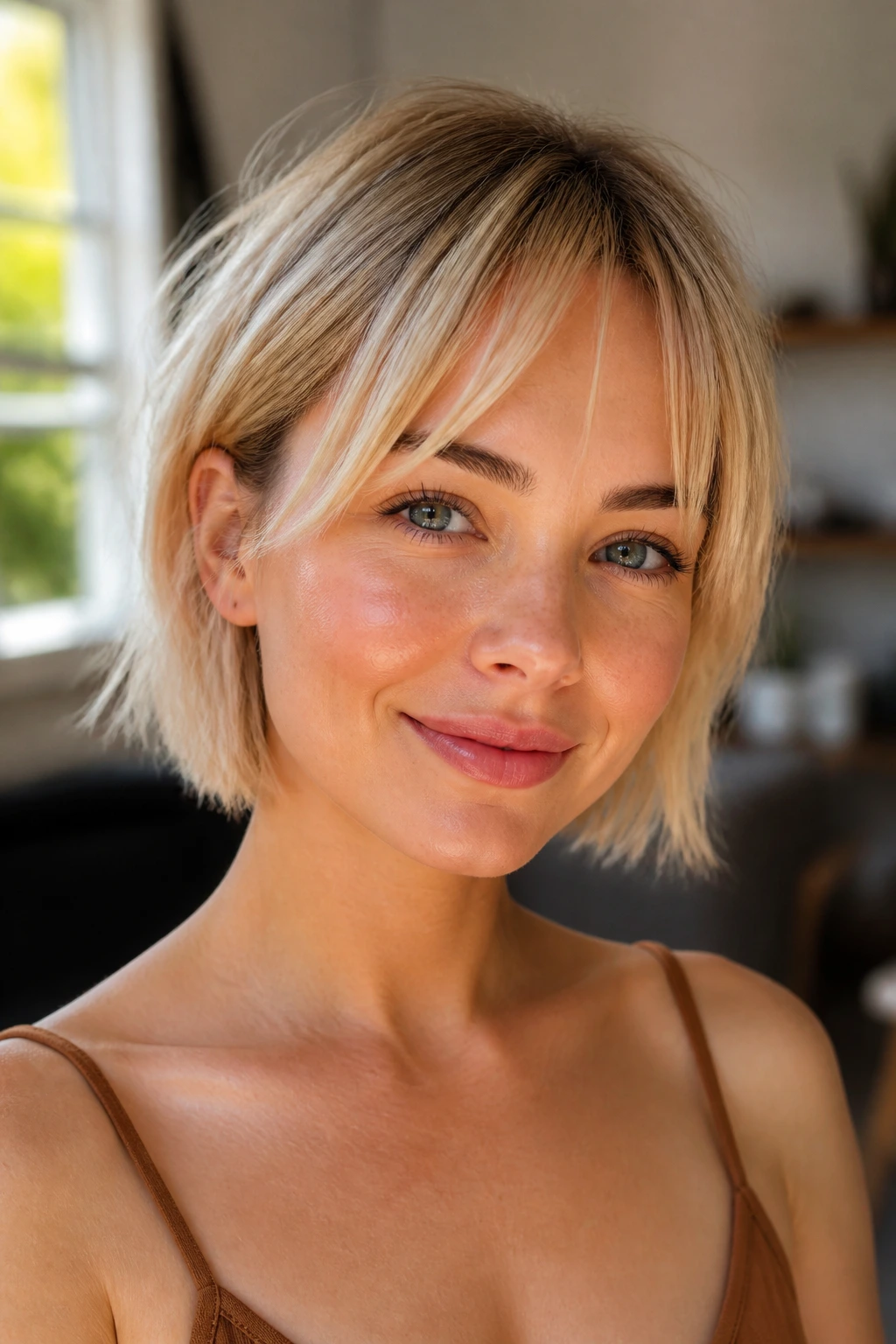
This is the pared-down version for people who want face framing without much bulk. The bangs are short, soft, and slightly split, with just enough length to brush the brow. They don’t need much density to make an impact.
Fine hair often looks best when the front doesn’t try to fake volume it doesn’t have. A micro-curtain respects that. It keeps the shape light and avoids the droopy look that can happen when too much hair is brought forward.
Why It’s Smart
- Less weight means less collapse
- Shorter pieces dry faster
- The front stays cleaner between washes
If your hair gets flat by noon, this version is kinder to it than a thick, heavy curtain.
23. Blunt Bob Soften-Up
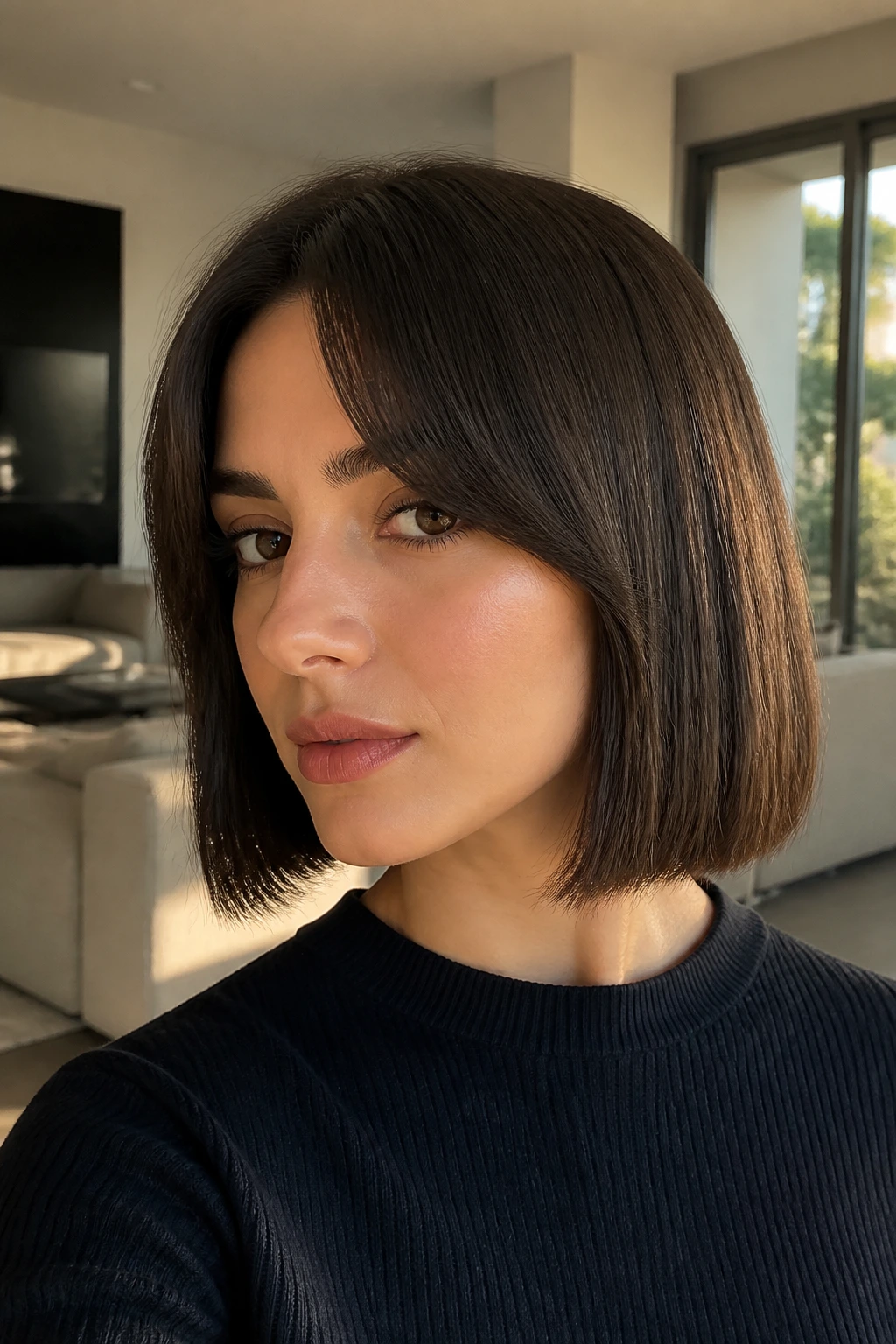
A blunt bob can look incredible, but it can also feel a little hard around the edges. Curtain bangs soften that without wrecking the clean outline. The bob stays blunt; the front gets the movement.
That contrast is the whole appeal. You get the crispness of one shape and the softness of another, which keeps the haircut from reading too severe. On straight hair, this combination is especially strong because the lines stay visible.
A lot of people assume a blunt bob needs another blunt element. I’d argue the opposite. A soft curtain in front keeps it from looking like a helmet.
24. Soft Mullet Fringe

This one is for someone who likes a little edge. The curtain bangs connect to shorter layers up top and longer bits at the nape, so the whole haircut has a bit of forward-and-back tension. It’s still wearable. It just isn’t quiet.
The fringe should stay soft enough to frame the face, not fight with the mullet shape. If the front gets too thick, the whole cut can feel heavy. Keep the center open and let the side pieces trail off gently.
This is not a timid haircut. Good. It shouldn’t be.
25. Glasses-Friendly Curtain

Glasses change everything. The frame takes up visual space, and curtain bangs need room to coexist with it. This version is cut so the center opens above the bridge of the nose and the outer pieces angle away from the lenses rather than landing on them.
A glasses-friendly curtain is often a little shorter in the middle and a little longer at the sides than people expect. That helps prevent the bangs from sitting directly on the frames every time you blink or turn your head.
Small but Useful Detail
Bring your glasses to the haircut, or bring a photo of yourself wearing them. A fringe that looks fine without frames can turn fussy once the lenses are in the picture.
26. Heatless Air-Dry Curtain
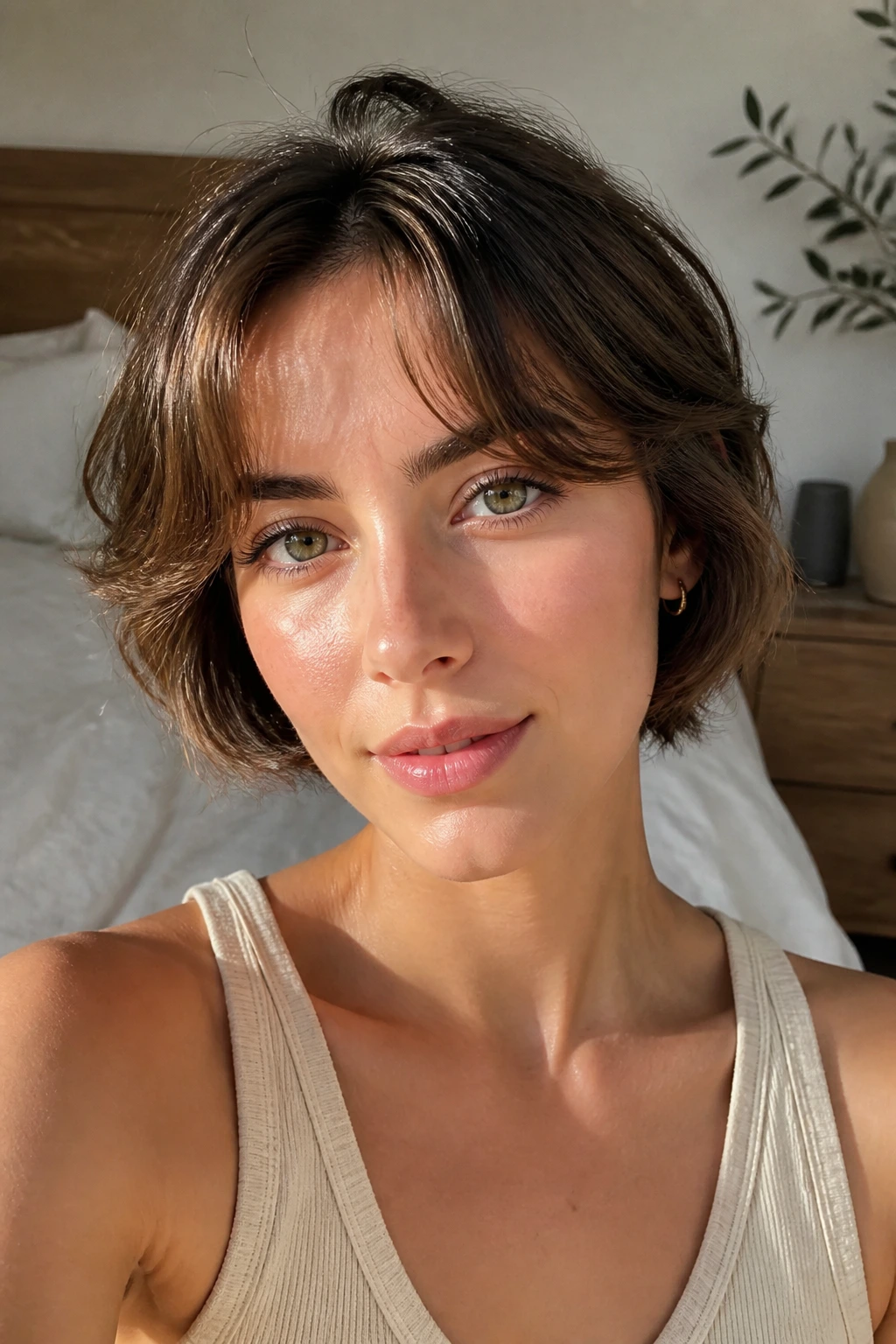
Some bangs need a blowout. These do not. The air-dry version uses natural bend, a little root clip placement, and maybe a tiny bit of cream or mousse to keep the split open. It’s ideal for people who don’t want to spend ten minutes round-brushing the front every morning.
The key is setting the part early. Once the hair dries in the wrong direction, you’ll spend more time fixing it than you saved. Clip the front away from the face while it dries, then shake it loose once it’s about 80 percent dry.
It won’t look as polished as a salon finish. That’s fine. It looks lived-in, which is often better on short hair anyway.
27. Statement Short Crop

This is the bolder end of the spectrum. The crop is short, the fringe is deliberately open, and the front shape is strong enough to read from across the room. It works when you want the haircut to have personality before you even touch it with styling cream.
What makes it different from a standard short cut is the direction. The bangs guide the eye outward, and the crop underneath supports that movement instead of hiding it. On short hair, that can make the whole style feel sharper and more deliberate.
If you like neat little haircuts with no drama, skip this one. If you like a cut that has a bit of bite, it’s worth a close look.
Why Curtain Bangs and Short Hair Keep Working

Curtain bangs do a lot of quiet work on short hair. They soften a blunt edge, give a bob some lift, and stop a cropped cut from feeling one-note. The shape also buys you time, which matters more than people admit. A fringe that splits and blends grows out more gracefully than a hard line across the brow.
The best part is how flexible the idea is. You can go light and wispy, dense and polished, shaggy and rough, or cropped and piecey. Same basic structure. Completely different mood. That range is why the style keeps showing up on bobs, pixies, lobs, and shags instead of staying trapped in one haircut category.
Tools That Make the Shape Easier to Style
-
Blow dryer with a nozzle: The nozzle matters because it lets you direct the fringe away from the face instead of blasting it in every direction.
-
1-inch to 1.25-inch round brush: This is the workhorse for most curtain bangs on short hair. Smaller brushes create a tighter bend; larger ones give a softer sweep.
-
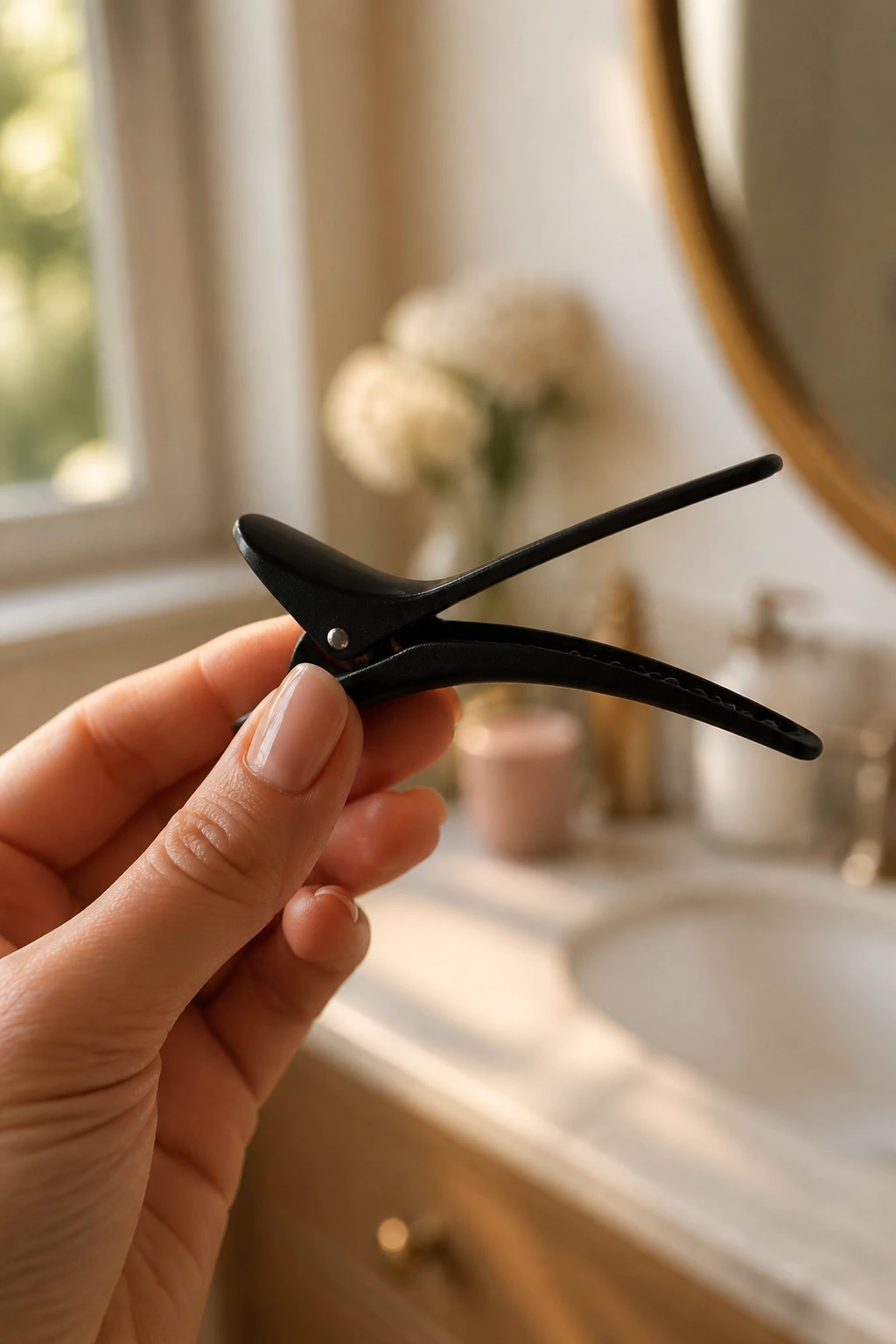
Duckbill clips: Handy for setting the fringe while it cools, especially if your hair wants to collapse flat after drying.
-
Heat protectant spray: Use it before any blow-drying or flat-ironing. Bangs live close to the face and get styled more often than the rest of the cut.
-
Lightweight mousse or styling cream: A small amount adds control without making the front greasy.
-
Dry shampoo: Useful at the root line, especially on fringe-heavy days. Bangs show oil faster than the rest of the hair.
-
Small flat iron: Best for fixing a stubborn cowlick or adding a tiny bend to a polished look.
How to Ask for the Right Curtain Bang Cut
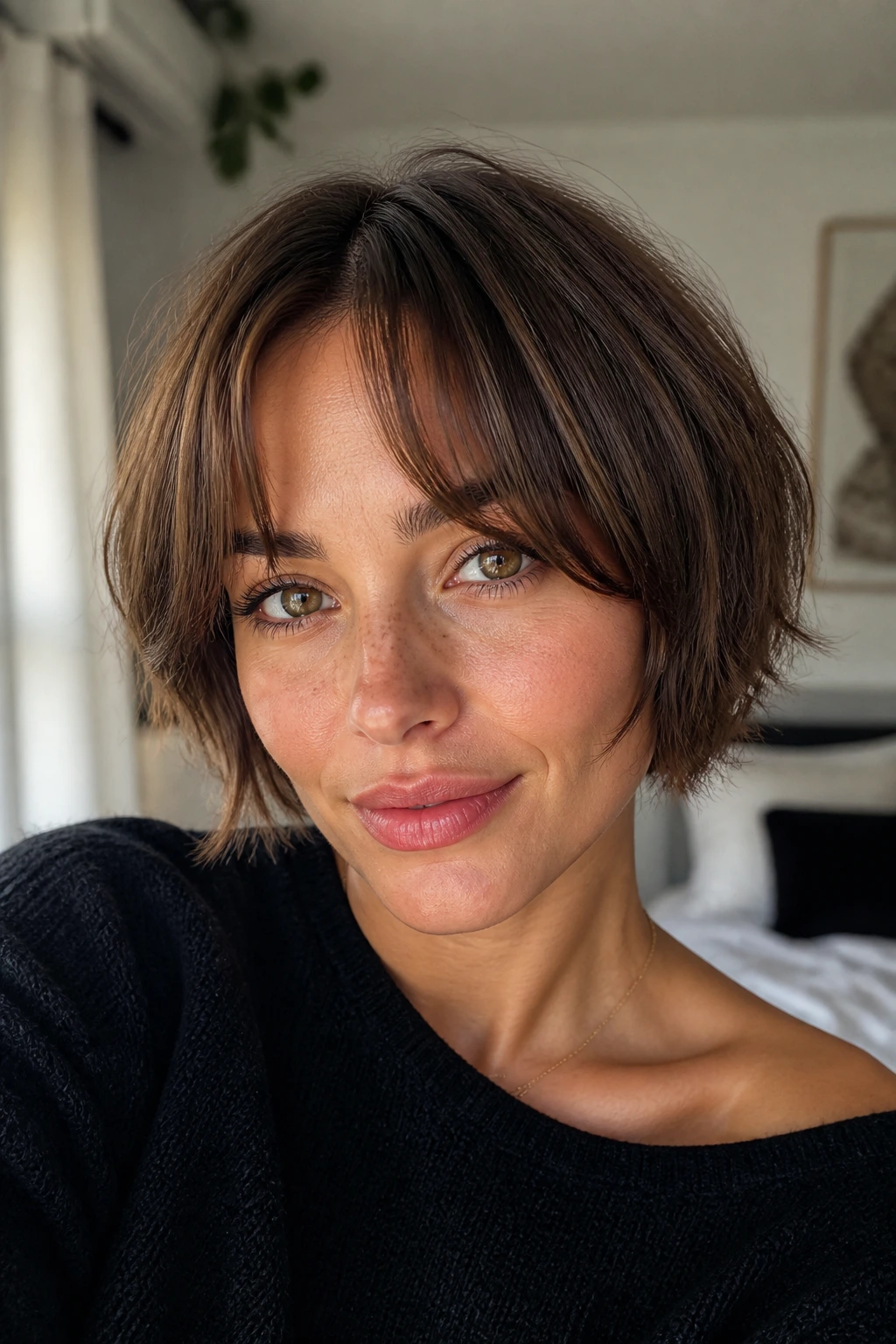
Bring photos, but don’t stop there. Photos alone can be misleading because they hide density, growth pattern, and how much time someone spent styling the fringe. Tell your stylist how you wear your hair on a normal Tuesday, not just on the day you washed it.
Ask for three things in plain language: where the shortest point should sit, how long the side pieces should fall, and how dense the fringe should feel. That’s the real conversation. If you want a softer bob, say the shortest piece should sit around the brow or slightly below, with the longest pieces grazing the cheekbone. If you want a bolder crop, say you’re fine with more separation and a tighter center opening.
Cowlicks matter too. So does your part. If your hair splits naturally off-center, tell them that before they cut. It’s annoying to discover after the fact that the “perfect” middle part only exists in the chair.
Daily Styling Moves That Keep the Fringe Off Your Face
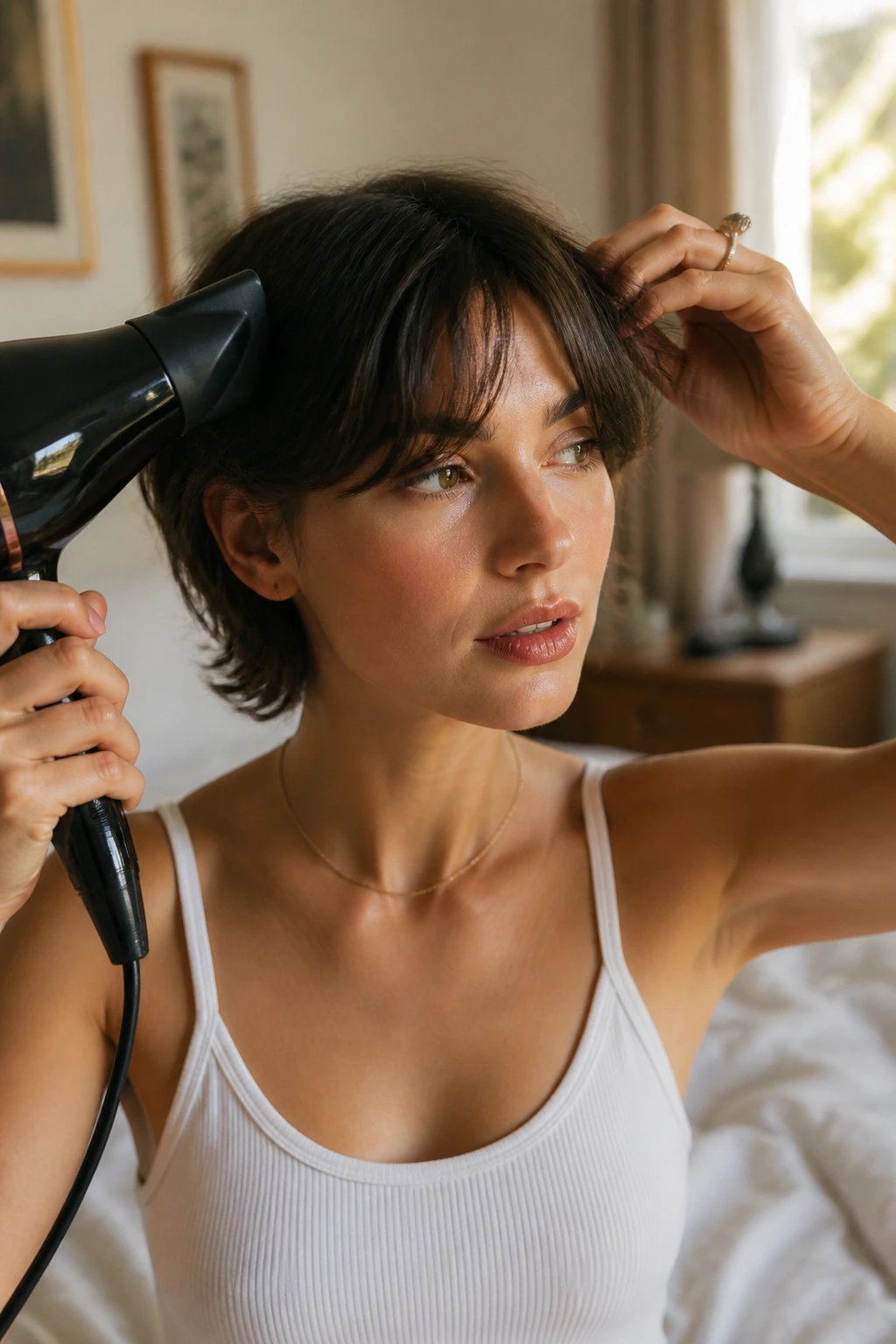
Start with damp hair, not soaking wet hair. Curtain bangs on short hair set best when the fringe is about 70 percent dry and still flexible. If it’s dripping, the brush just fights the water.
Direct the roots first. Lift the bangs at the scalp and blow them forward, then curve them out and away from the face. That root direction is what creates the opening. If the roots go the wrong way, the ends can’t save it.
Cool the shape before touching it. One minute of cool air or a quick clip while the fringe cools makes a bigger difference than people expect. Warm hair keeps moving; cooled hair keeps the bend.
Use less product than you think. A pea-sized amount of cream or paste is often enough. Bangs sit close to the skin, so overdoing product makes them greasy by lunch.
Trim small, not big. If the fringe starts poking into your eyes between salon visits, don’t go hacking across the front. Snip a tiny amount at a time, or let a stylist handle it. Bangs have a habit of looking fine until one impatient cut changes the whole line.
Common Mistakes That Flatten the Shape
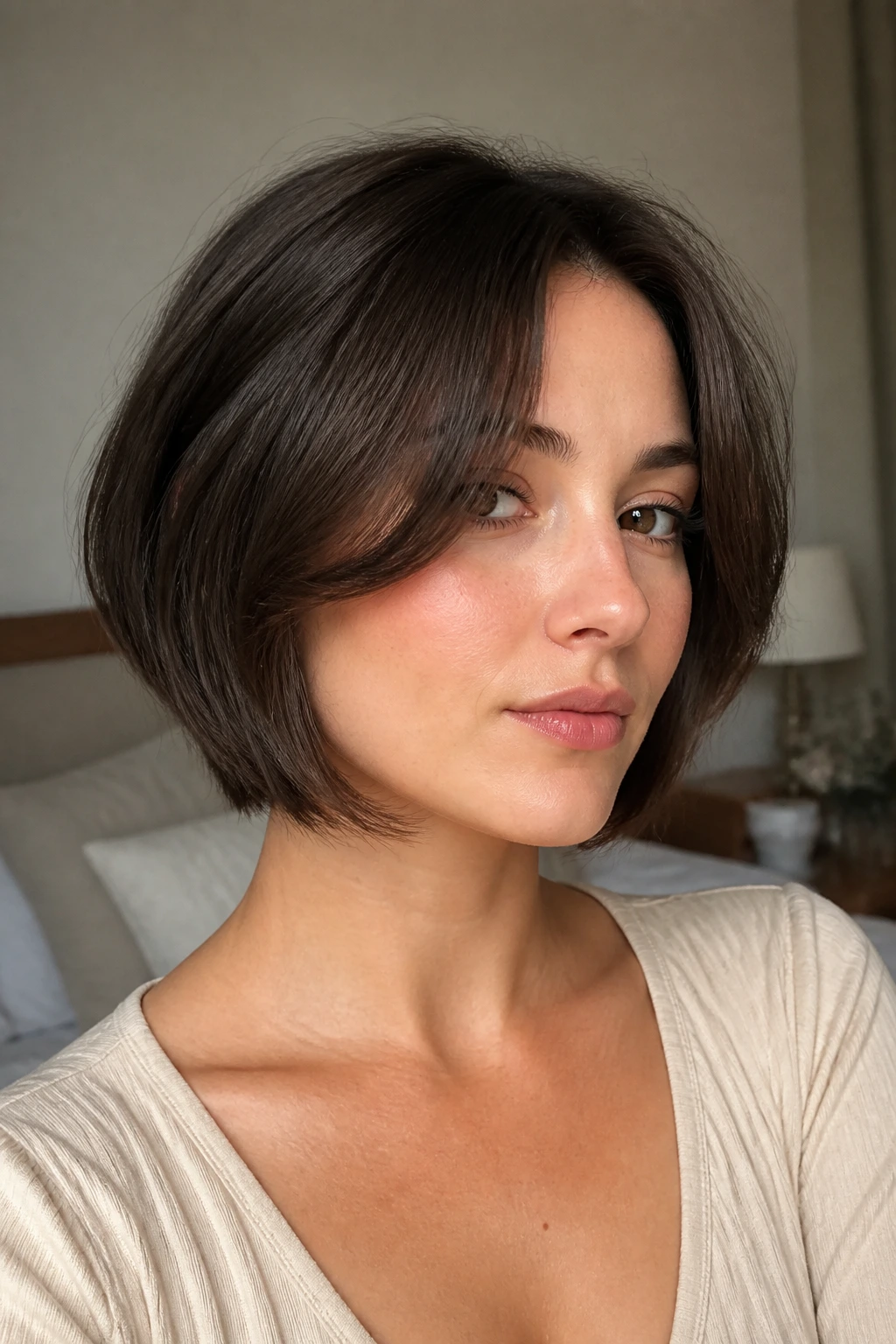
The most common error is making the center too short. It feels safe in the chair because short hair seems easy to manage, but curtain bangs need some length to split and bend. If the shortest point lands too high, the fringe stands up or sticks straight out instead of draping open.
Another problem is cutting the bangs too thick. Heavy density makes the front sit like a shelf, especially on short bobs and pixies. The fix is a lighter interior and a softer connection into the side layers. You want movement through the middle, not a wall of hair.
Skipping your part pattern causes trouble too. If your hair naturally wants to fall left and you force it dead center every day, the bangs will argue with you. They’ll lift, split unevenly, or puff at the roots. Work with the hairline first, then refine the shape from there.
Too much heat finish can also make the front look stiff. Flat-ironed bangs that were over-smoothed usually lose their soft opening and start hanging like two straight panels. If the goal is curtain bangs, the shape should still bend.
Smart Variations for Different Hair Types and Routines
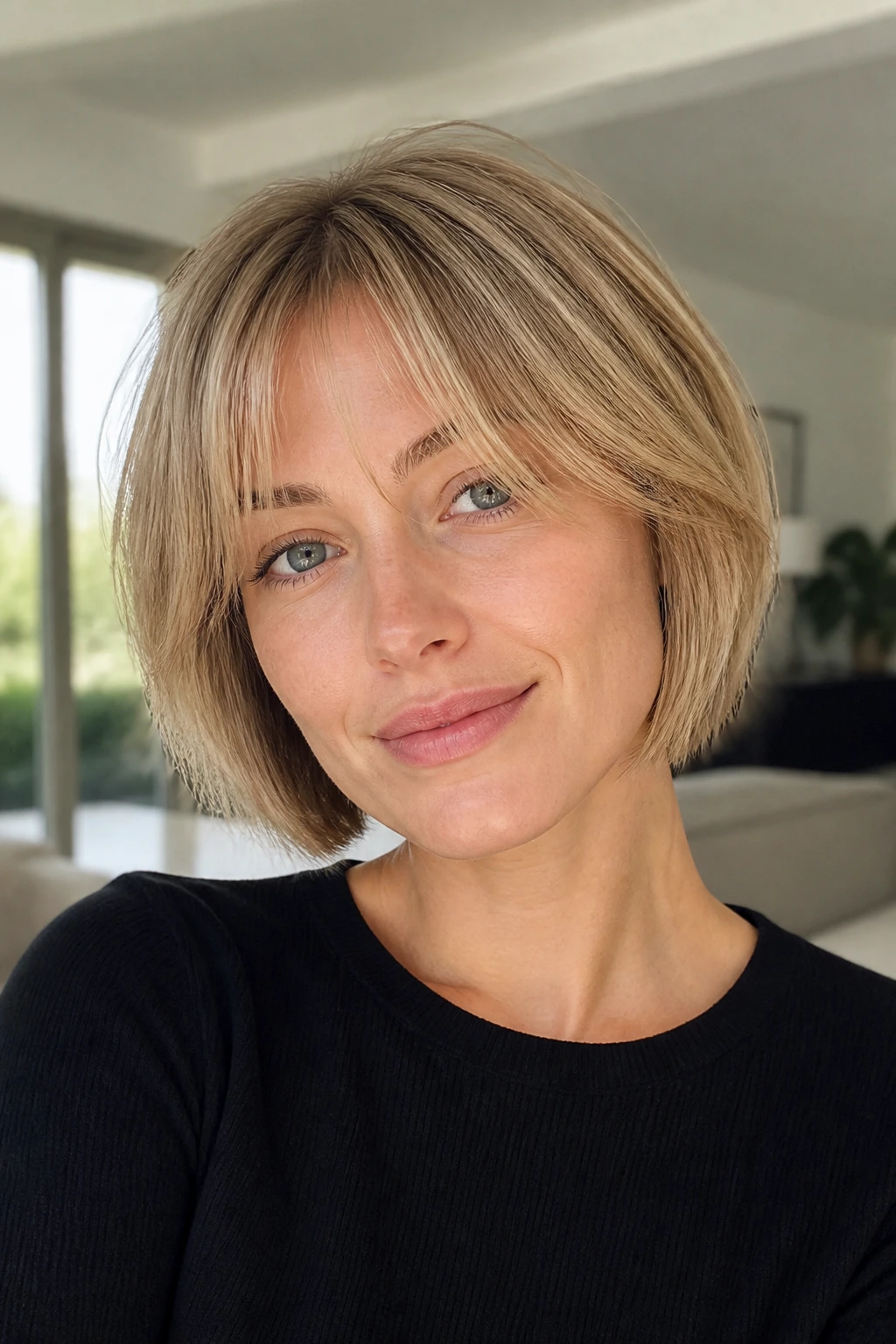
The Fine-Hair Feather: Keep the fringe light, slightly see-through, and short enough to avoid dragging. A little root lift and dry shampoo go a long way here, and you’ll get more movement from a small amount of shape than from piling on density.
The Curl-Friendly Split: For wavy or curly hair, cut the bangs with shrinkage in mind and let the front pieces split where the curl pattern naturally wants to open. A diffuser and a touch of cream are usually better than a brush.
The Glasses Glide: If you wear frames, ask for longer temple pieces and a shorter center. That keeps the fringe from landing on the lenses or crowding the bridge.
The Low-Heat Air-Dry: This version leans on clips, a bit of mousse, and your natural bend. It’s a good choice if you don’t want to round-brush your bangs every day.
The Bold Brow Brush: For thicker hair, let the fringe have more density and more structure. It makes the opening visible while still keeping the front controlled.
Keeping Curtain Bangs Fresh Between Salon Visits
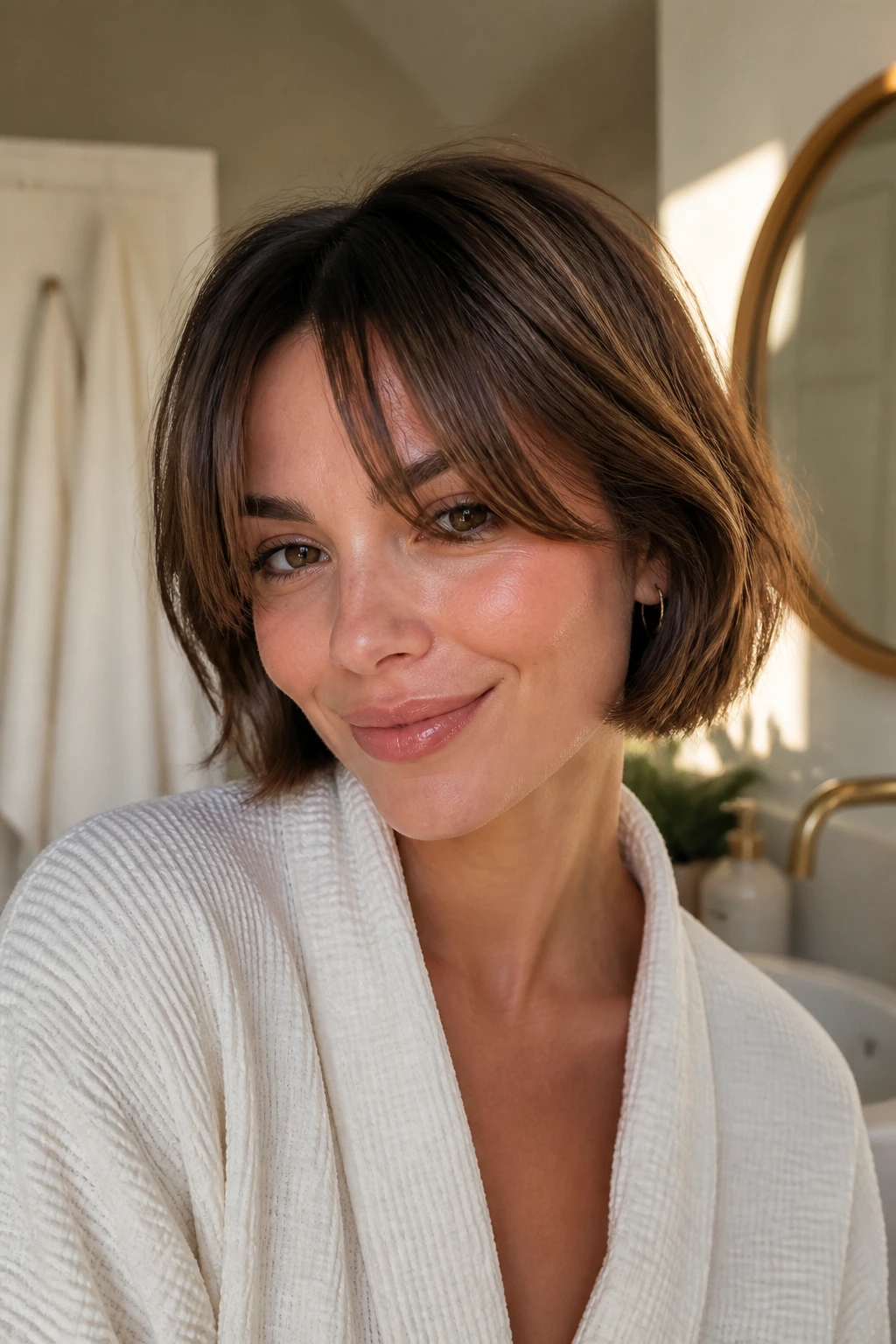
Bangs on short hair usually need attention faster than the rest of the cut. A trim every 4 to 6 weeks keeps the shape honest, especially if the center sits near the brows. If you’re growing them out, you can stretch that a little longer, but the side pieces still need occasional cleanup so they keep blending into the cut instead of hanging off it.
Wash-day habits matter too. The fringe often needs a quick restyle after every wash, even if the rest of the haircut behaves itself. Dry shampoo at the roots can buy you an extra day, but it works best if you apply it before the hair looks greasy, not after. Use a tiny amount, wait a minute, then brush it through.
Night care is simple. Clip the fringe loosely or pin it away from sweat-prone spots if you sleep hot. If the front gets smashed flat overnight, a quick mist of water and a two-minute blow-dry in the morning is usually enough to bring it back. No need to start from scratch.
Frequently Asked Questions
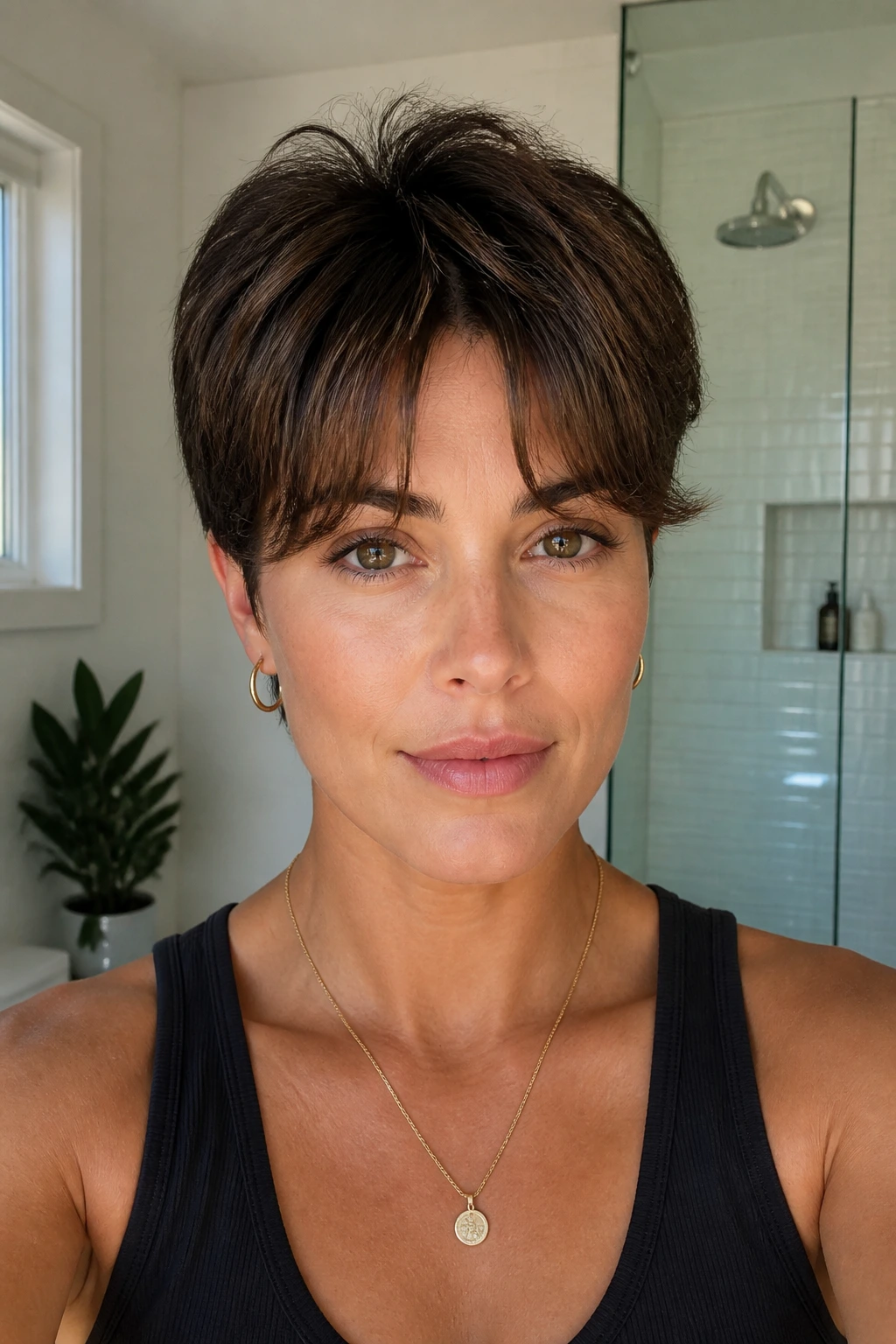
Do curtain bangs work on very short hair, or only bobs?
They work on pixies and crops too, but the shape needs less length and more texture. On very short cuts, the center often sits higher and the side pieces stay lighter so the front doesn’t overpower the rest of the haircut.
Will curtain bangs make my short hair look thinner?
Not if they’re cut with the right density. A wispy or see-through version can make fine hair look fuller because it breaks up the front instead of weighing it down.
How often do curtain bangs need trimming?
Most need a small trim every 4 to 6 weeks. If you like a softer, grown-out look, you can stretch the timing, but the shape usually starts to lose its balance after that.
Can I wear curtain bangs with curly hair?
Yes, and they can look lovely when cut with shrinkage in mind. The key is to keep them long enough to spring up without turning into a short, uneven fringe.
What if I have a cowlick at the front?
Tell your stylist before the cut. A slightly off-center opening or a heavier root direction can tame a cowlick far better than forcing a strict center part.
Are curtain bangs hard to style every day?
They’re not difficult, but they do ask for a small amount of attention. Most versions need either a quick blow-dry with a round brush or a set with clips while they cool.
Can I grow them out without looking awkward?
That’s one of the best things about them. The split shape blends into side layers more easily than a blunt fringe, so the grow-out stage tends to look intentional longer.
Do curtain bangs work with glasses?
Yes, but the length should be chosen around the frames. A little extra space at the temples and a shorter center opening keep the fringe from landing on the lenses.
A Fringe That Grows Out With You

The best curtain bangs on short hair are the ones that match your part, your texture, and the amount of time you’ll actually spend with a brush. That sounds basic, but it’s where most good cuts are made or lost. A fringe that fits the head shape and the morning routine will keep looking intentional long after the salon blowout has disappeared.
If you’re taking this to a stylist, bring one photo of the front view and one of the side view, then talk about the shortest point, the longest point, and how much separation you want. That conversation matters more than chasing a trendy image. Get those details right, and the bangs stop feeling like an add-on. They become part of the haircut — the part that makes the whole thing hold together.
