



Wispy haircuts with curtain bangs have a very specific kind of appeal: they look soft, but not flimsy; styled, but not stiff; grown-in, but not messy. That’s a hard balance to fake. The wrong version of curtain bangs can hang in two sad ropes and make the rest of the haircut feel heavy. The right version opens the face, lifts the eyes a little, and makes even a simple lob or shag look like it was cut with intent.
The real trick is in the weight line. Wispy bangs are not the same thing as over-thinned bangs. They still need enough hair to curve, split, and fall with a little body. On straight hair, that usually means the shortest point sits around the bridge of the nose or just below it. On wavy or curly hair, the starting point usually needs to be longer, because shrinkage will move everything up faster than you expect. That one detail saves a lot of bad bang trims.
There are 18 cuts here, and they’re not all doing the same job. Some are better for fine hair that needs lift without losing density. Some calm thick hair down. Some lean polished, some a little shaggy, some a little rebellious. If you’ve ever liked curtain bangs in theory but weren’t sure which haircut would actually carry them, start here.
Why This Collection Is Worth Bookmarking
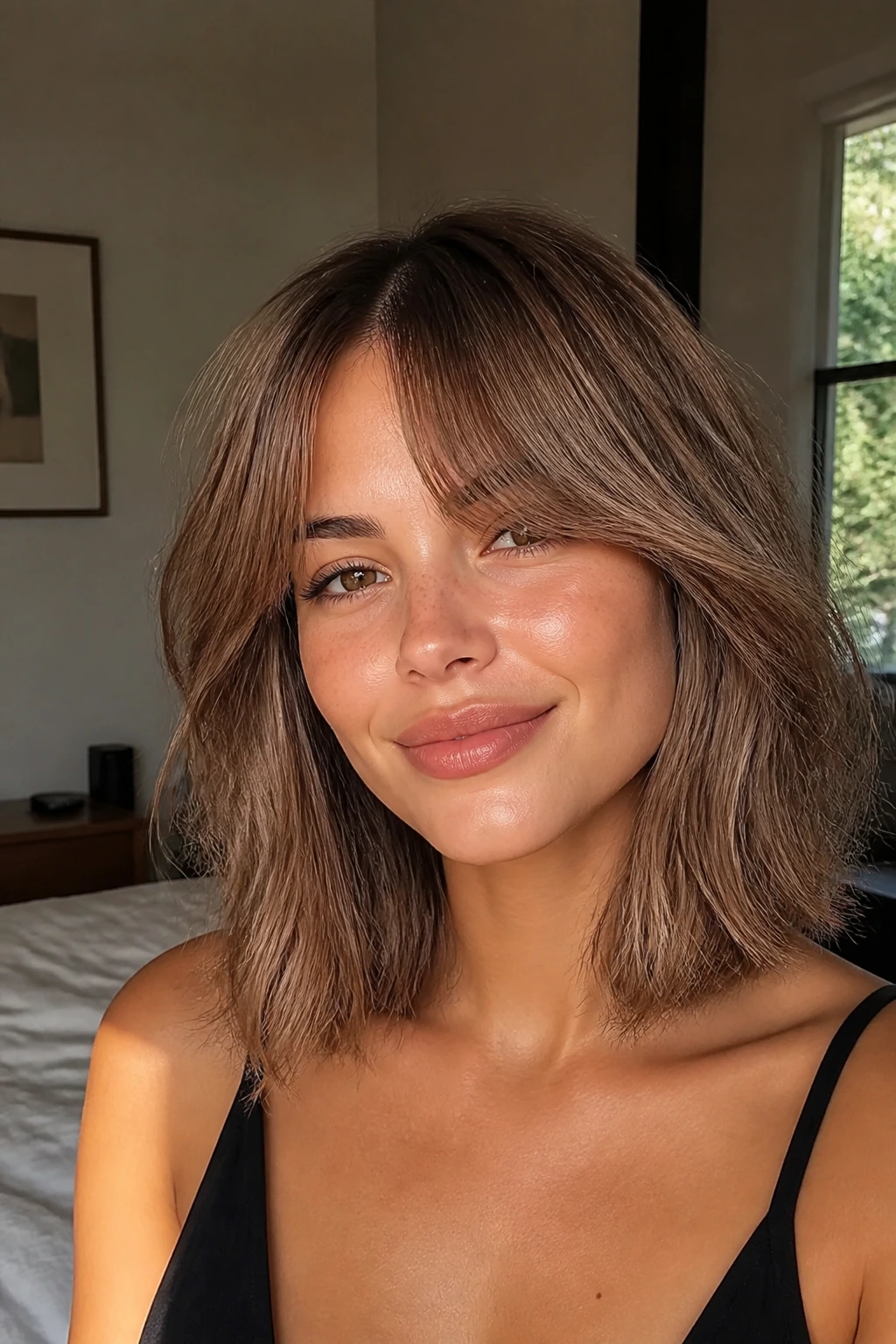
- Grows Out With Less Drama: Curtain bangs blend into the sides, so a six-week grow-out usually looks intentional instead of awkwardly chopped.
- Lifts Fine Hair Without Shredding It: Wispy layers can add movement around the face while leaving enough bulk in the length to keep the cut from going see-through.
- Helps Thick Hair Sit Down: The right internal layers remove puff at the cheeks and jaw, which keeps the shape from ballooning outward.
- Works With More Than One Styling Mood: These cuts can look round-brushed and polished, air-dried and soft, or piecey and undone depending on how you finish them.
- Softens Strong Face Shapes: Curtain bangs break up a blunt forehead line and take a little edge off square jawlines and angular cheekbones.
- Fits Short, Midlength, and Long Hair: You do not need waist-length hair to wear curtain bangs well. A collarbone cut can carry them beautifully.
1. Collarbone Lob with Feather-Light Curtain Bangs
A collarbone lob with feather-light curtain bangs is the easiest place to start if you want movement without committing to a dramatic shape. The length sits right where the shoulder starts to matter, so the ends skim, flip, and tuck instead of hanging dead straight. Add a soft split fringe, and the whole cut stops looking blunt in the front.
Why It Works
The collarbone gives the hair somewhere to bend. That sounds simple, but it matters. Hair that lands exactly at the jaw or just above the shoulders can puff out in the wrong place; hair that brushes the collarbone tends to curve in a more flattering way.
The curtain bangs should be long enough to blend into the front layers, not sit on top of them like a separate piece. I like this version on medium hair that has a little wave, but it also works on fine hair if the stylist keeps the layers light and avoids over-texturizing the ends.
- Best for: medium-density hair, soft waves, and anyone who wants a low-drama grow-out.
- Ask for: a fringe that starts around the bridge of the nose and drops into the cheekbone.
- Watch for: over-thinning at the sides, which can make the lob look stringy.
Strong opinion: keep the front a touch longer than you think. A collarbone lob looks cleaner when the bangs have room to move.
2. Chin-Length French Bob with Loose Split Fringe
This is the shortest cut in the group, and it works because the curtain bangs stop it from feeling severe. A chin-length French bob can look sharp enough to cut glass if the fringe is blunt or too short. Split that front section softly and suddenly the whole thing breathes.
The shape sits near the jaw, so it shows off the neck and cheekbones fast. That means the bang line matters even more than usual. If the split starts too high or too tight, the cut can look overdone in a hurry. Leave the opening soft, keep the front pieces slightly longer at the edges, and the bob gets that easy, slightly undone French mood people chase.
It’s a good match for straight and slightly wavy hair, especially if your hair likes to hold a bend without fighting back. If your hair is very thick, ask for internal removal rather than aggressive thinning on the ends. The bob needs structure. It does not need to be airless.
3. Long Layers with Center-Part Curtain Bangs
How do you keep long hair from hanging like a curtain in the worst sense of the word? You give it real shape around the face. Long layers with center-part curtain bangs do exactly that, and they’re smarter than they sound.
The longest pieces still give you the security of length. The layers around the front pull the eye upward and inward, which keeps the cut from feeling bottom-heavy. I especially like this on hair that reaches past the shoulders but needs a little movement near the face; otherwise the front can look like it belongs to a different head.
How to Wear It
Blow-dry the fringe forward first, then sweep it away from the face with a round brush so the bend lands softly around the cheekbones. If you air-dry, clip the front section up and away while the roots set. That one habit makes a bigger difference than a lot of expensive styling products.
- Use a 1 to 1.25-inch round brush for the front pieces.
- Keep the shortest layer below the eyebrow if your hair is straight.
- Ask for soft point cutting, not choppy slicing, if you want the layers to disappear into the rest of the length.
4. Butterfly Cut with Soft Face-Framing Wings
A butterfly cut is built for people who like the idea of volume but don’t want the whole head to puff out. The top layers are shorter, the lower length stays longer, and curtain bangs slide right into that structure like they were meant to be there. The result looks full around the crown and light around the face.
This cut is one of the best matches for a round brush. The front pieces can be set away from the face and then let cool so they hold a curved shape without turning stiff. When it’s done well, the haircut looks like two stories at once: shorter, airy layers on top and a longer body beneath.
Where it shines:
- Hair with medium to thick density.
- Faces that need lift around the cheekbones.
- Anyone who likes a little salon blowout effect without chopping off length.
What to avoid: if the top layers are cut too short, the shape can flip outward in a way that feels fussy instead of airy. Keep the wings soft, not flared like feathers on a costume jacket.
5. Shaggy Midi with Razored Ends
The shaggy midi is the one I reach for when someone says they want texture, but not a haircut that shouts at them every morning. It lives between shoulder and collarbone, with ends that have been softened enough to move but not so much that the shape collapses. Curtain bangs finish the look by pulling attention to the eyes instead of the blunt perimeter.
This cut has a lived-in feel, and that is the whole point. The razored ends take away the heavy line that can make a midlength cut look boxy. A little texture spray goes a long way here, but you do not need to saturate it. One or two passes through the middle and ends is usually plenty.
It works best on hair that wants to separate a little naturally. If your hair is pin-straight and slippery, the shaggy midi can fall flat unless you build some root lift first. If your hair is coarse or thick, this is one of the few cuts that can make the bulk look like shape instead of volume for volume’s sake.
One-sentence truth: this cut depends on movement, not neatness.
6. Soft Wolf Cut with Wispy Fringe
Compared with a shag, a soft wolf cut keeps more attitude up top and a little more looseness through the back. That’s the version I prefer when someone wants edge but doesn’t want a full punk haircut. Curtain bangs soften the front so the cut doesn’t look severe from the side.
The best wolf cuts have a slightly longer nape and more broken-up layers around the crown. That shape gives hair a kind of airy lift that’s hard to get from a traditional layered cut. The fringe matters because it controls the mood. Leave it blunt, and the whole thing feels aggressive. Feather it out, and the cut reads as cool instead of harsh.
This is a strong choice for thick, wavy, or textured hair that tends to swell at the sides. It is less useful if you want a sleek, polished finish every single day. A wolf cut likes a bit of mess. If you fight that, the haircut wins.
Best Fit
- You want a cut that looks good with rough drying.
- Your hair has enough body to hold layers.
- You like a fringe that can be pushed open with your fingers and still look deliberate.
7. Curly Shoulder-Length Layers with Curtain Bangs
Can curly hair wear curtain bangs without turning into a triangle? Yes, but the cut has to respect curl shrinkage from the start. That usually means leaving the front longer than you would on straight hair and cutting it dry or mostly dry so the shape appears where the curls actually live.
Shoulder-length curls are a sweet spot because the curl pattern has room to spring without piling up too high on the head. Curtain bangs help break up the forehead line and keep the front from looking too round or too uniform. The best version is soft, not sparse. You want enough hair in the fringe that the curls can clump naturally instead of separating into thin little hooks.
Curl-Cut Rules
- Cut longer than you think you need. Curl bounce changes everything once the hair dries.
- Keep the shortest point low. On many curl patterns, that means near the nose, not the brow.
- Ask for shape, not thinning. Too much thinning can leave frizzy gaps in the fringe.
If you air-dry curls, the curtain pieces should sit in the haircut as a frame, not as a separate, over-styled feature. That’s the trick.
8. Fine-Hair Blunt Lob with Airy Bangs
Fine hair likes a blunt edge more than people sometimes give it credit for. A clean lob line can make the ends look fuller, and airy curtain bangs stop that bluntness from feeling boxy. The contrast is what makes the cut work.
The key is restraint. If the stylist removes too much density from the fringe, the bangs start to separate into pale wisps that never quite gather together. Keep them feather-light, not shredded. The length should still skim around the cheekbone so the cut feels open rather than sparse.
This version is especially good if your hair lays flat at the roots and you do not want the extra layer drama of a shag. A light mousse at the crown, a quick blow-dry with a nozzle, and a small bend at the front is enough. You are not building a whole architecture here.
- Better for: straight, fine hair that needs the illusion of thickness.
- Ask for: a blunt perimeter with minimal internal layers.
- Skip: heavy razoring, which can make the ends look dry before they’re even dry.
9. A-Line Bob with Lightweight Curtain Pieces
An A-line bob gets sharper as it angles forward, which is great until the front starts looking too severe. Lightweight curtain pieces soften that edge fast. The longer front section still gives the haircut its strong outline, but the fringe keeps the face from feeling boxed in.
This cut is especially useful when the back needs a little lift and the front needs a little softness. That combination can be tricky. Too much layering in the fringe, and the bob loses its clean line. Too little, and the whole shape looks too precise for daily wear. The curtain pieces act like a release valve.
If your face is round or heart-shaped, this can be a very flattering shape because the front angles pull attention downward along the cheek and jaw. Keep the fringe pieces long enough to tuck behind the ears on days when you want the bob to feel more minimal. That little adaptability is half the appeal.
One good request at the salon: “I want the angle, but I don’t want the front to look hard.”
10. U-Shaped Long Cut with Invisible Layers
Long hair can go heavy fast, especially when every strand hangs at the same length. A U-shaped cut solves that by leaving a gentle curve in the back instead of a straight line across the bottom. Add curtain bangs, and the top of the haircut finally has a reason to exist.
Invisible layers are the secret here. They remove weight without turning the hair into a visible staircase. You should feel movement when you run your hands through it, but not see choppy shelves around the crown. That matters because long hair can get scraggly fast if the layers are too obvious.
I like this version on hair that wants body but doesn’t want to be obviously layered. It suits people who wear their hair down a lot and want the front to do some visual work. The curtain bangs give the face shape, while the U-line keeps the rest of the length feeling soft and continuous.
There’s a nice side effect too. The cut grows out cleanly. That’s not a small thing when you’re dealing with long hair and a busy schedule.
11. Razor-Cut Midlength with Swept Curtain Fringe
A razor-cut midlength lives or dies by the edge work. Done well, it gives the hair a soft, broken finish that moves almost like fabric. Done badly, it can look frayed. That’s why I only like this approach when the stylist knows exactly how much texture your hair can take.
Curtain fringe helps because it keeps the front from looking too sliced up. The sweep around the face smooths the transition between fringe and layers. On wavy hair, this cut has a relaxed, slightly cool look that feels easy without being sloppy. On very fine hair, though, too much razor work can leave the ends feeling thin and transparent.
This is a better fit for medium-density hair that wants a bit of personality. If you style with a flat iron, use it to bend the front pieces away from the face instead of straightening them into a hard line. The shape needs air in it. That’s the whole appeal.
What to Watch For
- Over-razoring at the ends.
- Fringe pieces that start too high and spread too wide.
- Styling cream that’s too heavy for the texture.
12. Bouncy Blowout Layers with Bottleneck Bangs
Bottleneck bangs are the cleaner cousin of curtain bangs. They start a little narrower at the center, then open out around the cheekbones, which gives the front a neat, controlled shape. Pair that with bouncy layers and you get a cut that looks like it was made for a round brush.
This is the most polished-looking haircut in the bunch when it’s styled well. The layers catch a little bend at the ends, the fringe opens around the face, and the whole head gets a lifted shape that looks intentional from every angle. It’s a good choice if you like the feel of a blowout more than the feel of a rough-dried cut.
The catch is maintenance. You need a touch more styling effort than you would with a shag or wolf cut. But the payoff is clean. The bangs sit closer together at the center, which keeps the forehead from feeling too open, and then they fan out in a way that flatters cheekbones.
If your hair is straight and tends to collapse, this shape can be a lifesaver. If your hair is very curly, the bottleneck curve needs a stylist who understands shrinkage and keeps the lengths long enough to open later.
13. Textured Pixie-Bob with Longer Front Pieces

Can a short cut still have curtain bangs? Absolutely. A pixie-bob proves it. The back stays cropped and tidy, while the front pieces stay long enough to brush across the temples and break up the shape. That front length is what keeps the cut from feeling too strict.
This is the most playful option on the list. It has the ease of short hair, but the front drape gives you some softness around the eyes and cheekbones. It works best when the texture is intentionally piecey rather than over-smoothed. A touch of matte cream or texture spray is usually enough.
I like this shape on people who want something modern but not severe. It does ask for more regular trims than a lob, because the front can lose its balance quickly if it grows too much. Still, for the right person, it’s sharp in a good way.
- Best on: straight to slightly wavy hair.
- Face shapes that benefit: oval, heart, and square, especially when the front pieces are left a little longer.
- Styling note: tuck one side behind the ear and let the other side fall forward for a softer line.
14. Wavy Clavicle Cut with Soft Bend
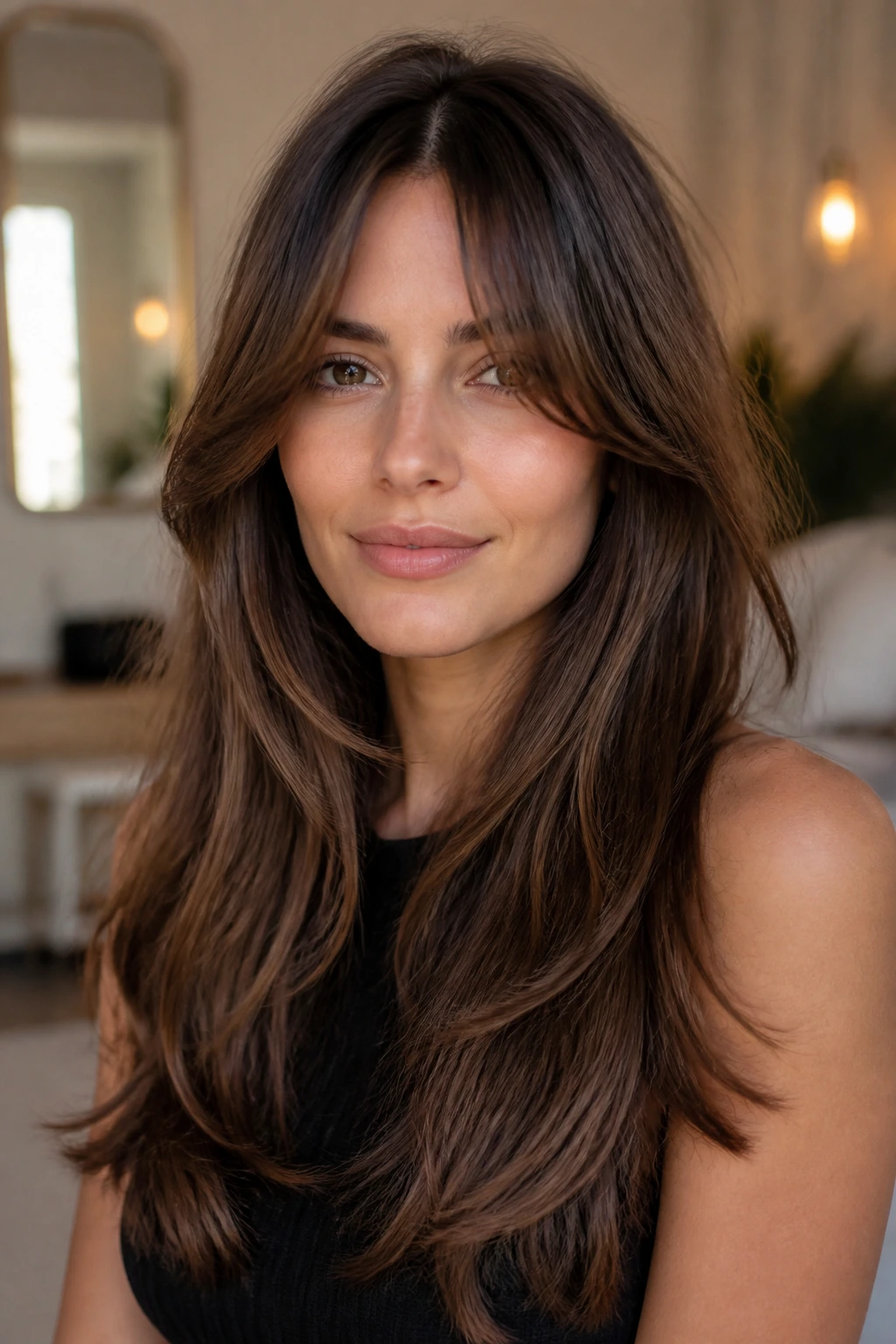
Wavy hair at clavicle length has its own rhythm. It wants to flip at the ends, curve around the neck, and bend whenever the weather feels dramatic. A soft curtain fringe fits that mood instead of fighting it. The result looks easy, which is not the same thing as unplanned.
The biggest advantage of this cut is how naturally it falls into place. You can rough-dry the roots, add a little cream to the mids, and let the rest do what it wants. The bangs should still be encouraged to open away from the face. If they dry straight down, they can disappear into the rest of the haircut.
This shape works well if you want some definition but don’t want your hair to look “done” every minute. The clavicle length keeps the hair from ballooning outward, and the curtain pieces give your face a softer border. It’s one of those cuts that can look better on day two, which is always worth something.
Quick Notes
- Keep the front pieces long enough to bend, not just flop.
- Use a light wave spray, not a heavy cream.
- Ask for texture only through the ends if your hair already has volume.
15. Feathered Long Cut with Soft Cascading Layers
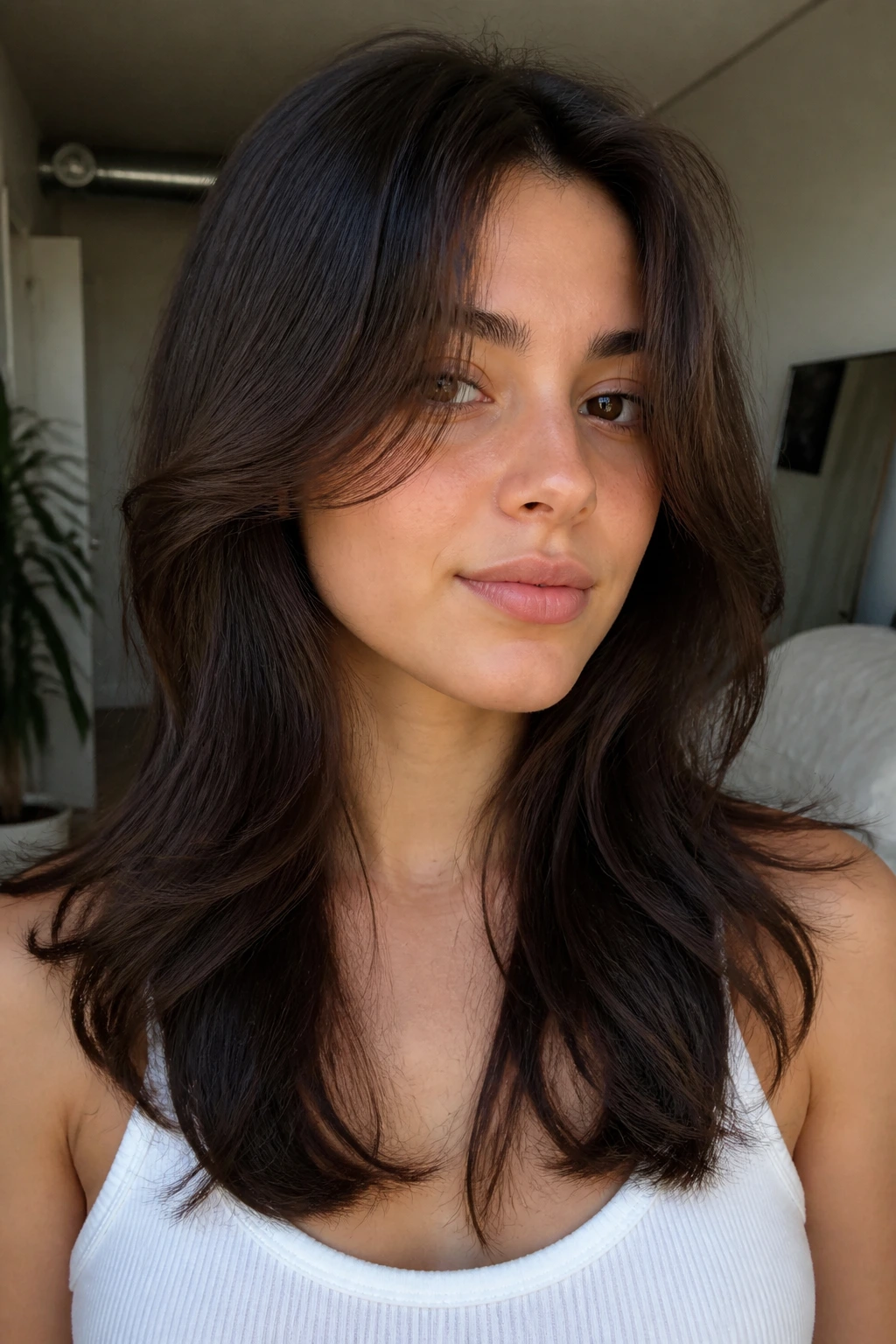
The best long feathered cut is the one that moves when you turn your head. That sounds obvious, but a lot of layered long hair still hangs like a block. Feathering fixes that by tapering the ends and softening the connection between the bangs and the rest of the length.
Curtain bangs matter here because they stop the feathering from feeling dated. You still get the airiness and the motion, but the face frame looks softer and less formal. On thick hair, this can be a real relief. The layers remove some of the weight while preserving the long line that people often want to keep.
I think this cut works best when the layers are more visible through movement than through obvious steps. That keeps the hair from looking chopped up. A little round-brush bend or a loose blowout does the job nicely. If you air-dry, the front pieces need help setting away from the face or they can collapse into the cheek.
Long hair does not need to be flat to feel sleek. This cut proves it.
16. Modern Mullet with Gentle Curtain Bangs
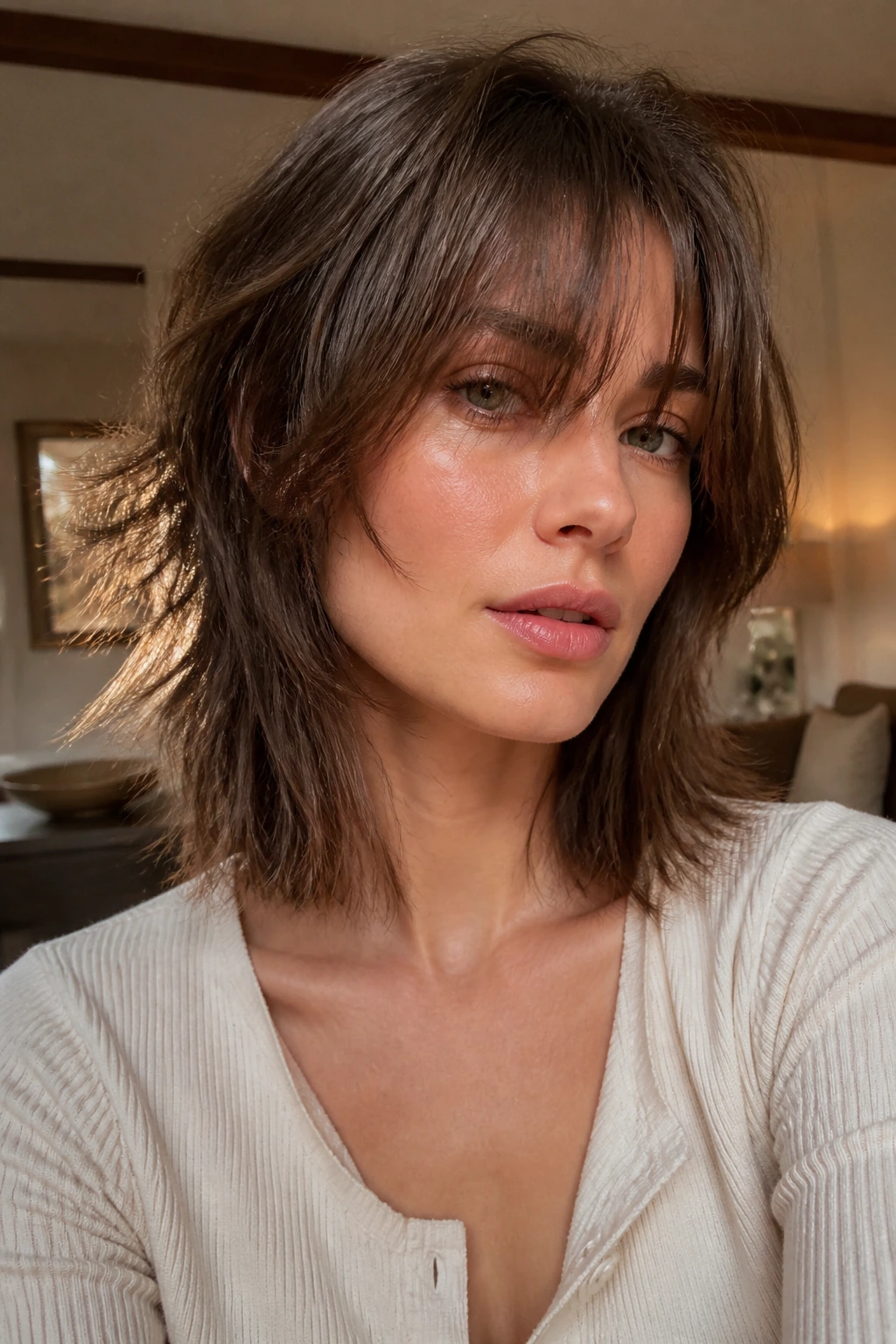
A modern mullet sounds aggressive on paper. In real life, it can be surprisingly soft when the curtain bangs are done right. The front is shorter, the back is longer, and the fringe keeps the whole shape from looking like a costume. That softness is the difference between a wearable version and one that feels too stylized.
This cut is for people who want edge. Not a little edge. Actual edge. But the curtain fringe gives you some control over how far you want to push it. If the top layers are too severe, the fringe can be pushed flatter and softer. If you want more attitude, keep the layers choppier and let the bangs fall with a bit of piecey separation.
It suits thick, textured, or wavy hair especially well because those textures give the layers something to work with. Fine hair can wear it too, but the shape usually needs more careful cutting so the back doesn’t look thin. The haircut should feel intentional from the side profile. If it doesn’t, the mullet reads as accidental, and that’s never the goal.
17. Soft Rounded Bob with Tucked Curtain Fringe

A rounded bob can go helmet-shaped in a hurry. The trick is not to strip it down so much that it loses the curve, but to add enough softness around the face that the shape breathes. Curtain fringe does that job better than almost any other front detail.
This cut sits just below the jaw or a little above it, with a rounded body that curves inward slightly. The fringe opens at the center and tapers toward the temples, which keeps the bob from feeling like one solid helmet shell. That matters on square faces, but it helps almost everyone. You want the line to soften around the cheekbones, not end there.
Tucking the curtain pieces behind the ears on one side is a nice move with this cut. It gives the bob a little asymmetry and keeps the front from sitting too perfectly. If your hair is straight, ask for some internal support so the roundness holds. If it’s wavy, the natural bend will usually do part of the work for you.
This is the bob for people who want polish, not severity.
18. Midlength Crop with Piecey Ends and Airy Bangs
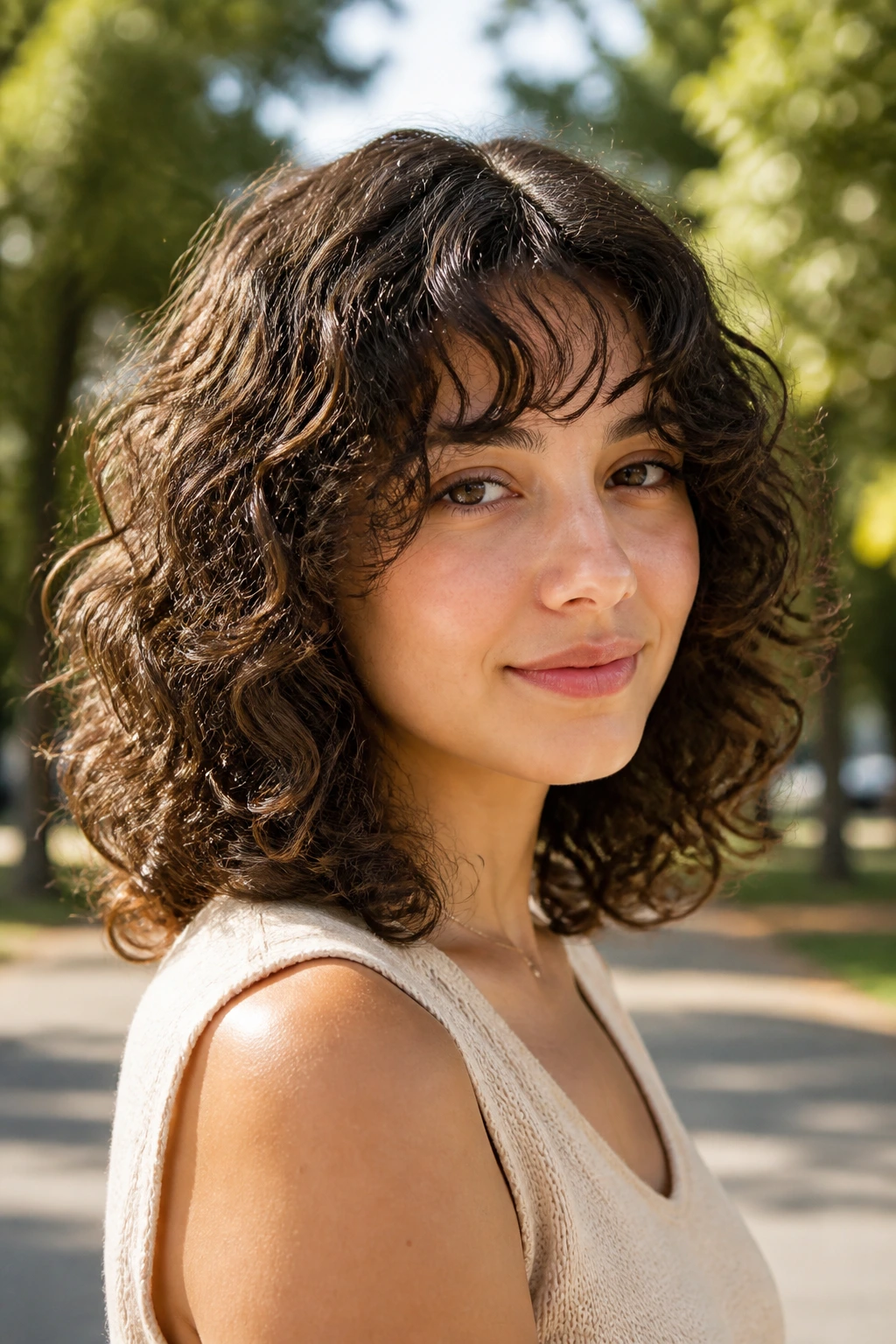
If you want low drama and a fringe that still looks styled, this is the one I’d point to first. A midlength crop lands between a bob and a lob, which gives you enough length to tuck, flip, and pin without the haircut feeling heavy. The piecey ends keep it modern. The airy bangs make the front feel lighter than a full fringe ever could.
This shape is especially useful if you like to wear your hair down most days but don’t want a hard line around the face. The bangs should have enough separation to show movement, not enough to look wispy in the accidental sense. It is a small distinction, but it matters. Intentional pieceiness looks chic. Random see-through sections do not.
If you blow-dry just the front and let the rest air-dry, this cut still looks considered. That’s one reason I keep coming back to it. It doesn’t demand a complicated routine, but it rewards a little effort. And sometimes that is the sweet spot.
Why Wispy Curtain Bangs Work So Well on Real Hair
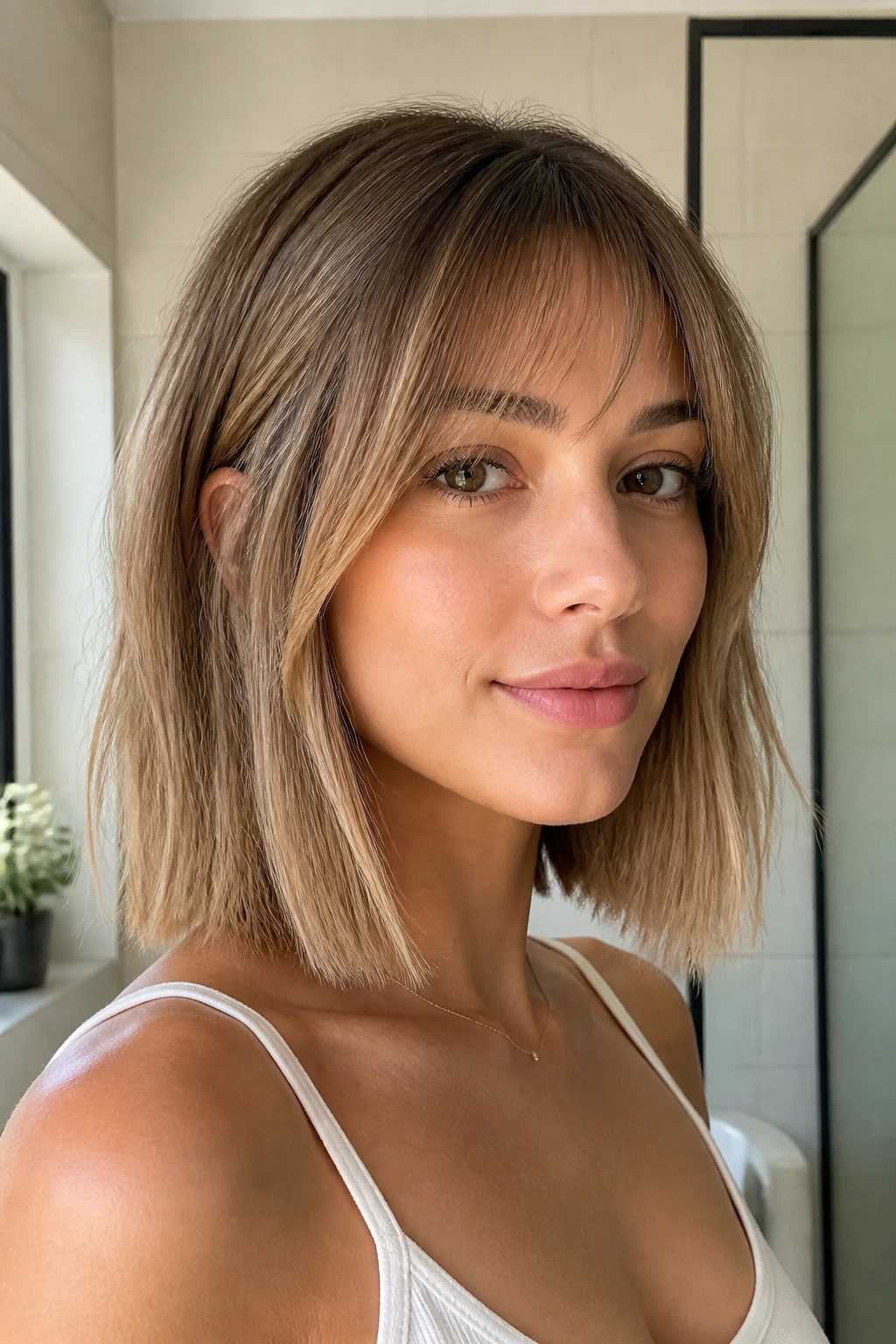
The reason this haircut family keeps showing up in salons is simple: it gives shape without boxing the hair in. A blunt fringe creates a hard line across the forehead. Wispy curtain bangs break that line into two softer panels, which makes the face look more open and the haircut more forgiving as it grows.
Movement Without the Mess
The best wispy bangs still have enough density to curve. That’s what a lot of people miss. If you remove too much hair, the fringe stops bending and starts separating into little stringy pieces that never gather into a proper split. A good curtain bang feels light, but it still has body at the roots and enough ends to frame the cheekbone.
Grow-Out That Does Not Look Accidental
This is the part I like most. A straight bang can look like a mistake the moment it gets past the brow. Curtain bangs grow sideways, into the rest of the haircut. That means the grow-out phase can last weeks without looking sloppy. If you know you’re not the type to book trims constantly, that matters more than Instagram makes it sound.
The Face Frame Does the Work
The front pieces change how the entire cut reads. Long layers look less heavy. Bobs look less severe. Shags look less punk. Even a very simple lob gets a little more life once the front opens around the eyes and cheekbones. That’s why curtain bangs work across so many lengths: they change the framing, not just the fringe.
What to Tell Your Stylist Before the First Snip
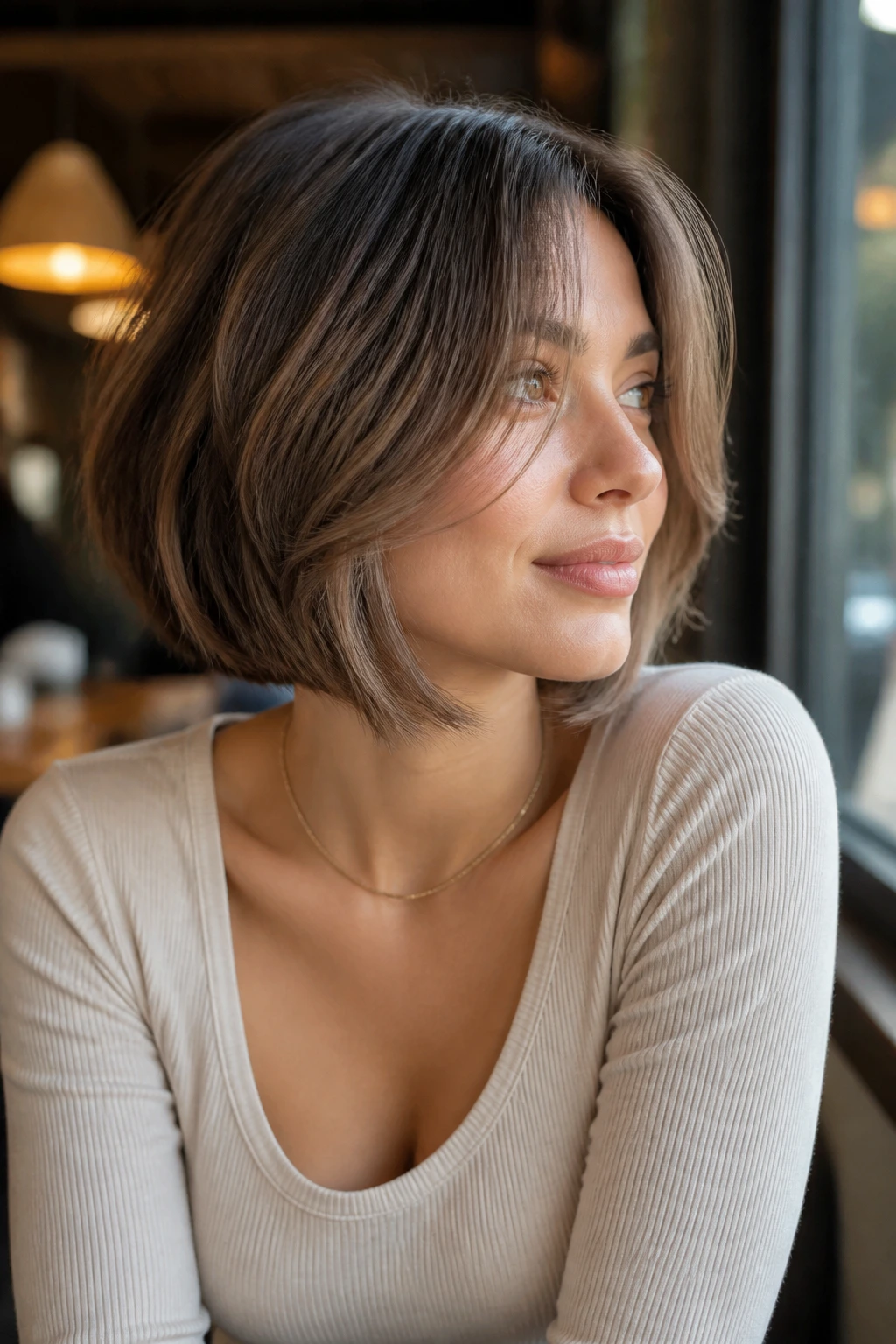
Bring a photo. Then bring another one. Then, if your hair is hard to cut, bring one more. A single inspiration image never tells the full story because hair density, curl pattern, and blow-dry habit all change the outcome. Show the cut from the front and the side if you can. That’s the part people skip, and it’s why the result sometimes looks “close” but not right.
The Words That Help
Say where you want the shortest point to sit. If you like a softer look, ask for curtain bangs that start around the bridge of the nose and open toward the cheekbone. If your face is long, ask for a little more width through the fringe. If your face is round, keep the opening a touch lower so the shape falls downward instead of spreading too wide at the brow.
Mention Your Daily Habit
Tell the stylist how much effort you actually want to spend in the morning. If you air-dry, the cut should be built for that. If you use a round brush, they can leave the front pieces a little shorter so the bend shows up better. If you never style your hair beyond a quick brush, say that out loud. Really. That detail changes the cut.
Don’t Skip Growth Pattern Talk
Cowlicks matter. A side part that splits hard at the front matters. Hair that kicks out at the temples matters. If one side always falls flatter than the other, the stylist can account for it. That’s the kind of thing that keeps curtain bangs from separating in a weird, uneven way every morning.
The Styling Tools That Make the Shape Behave
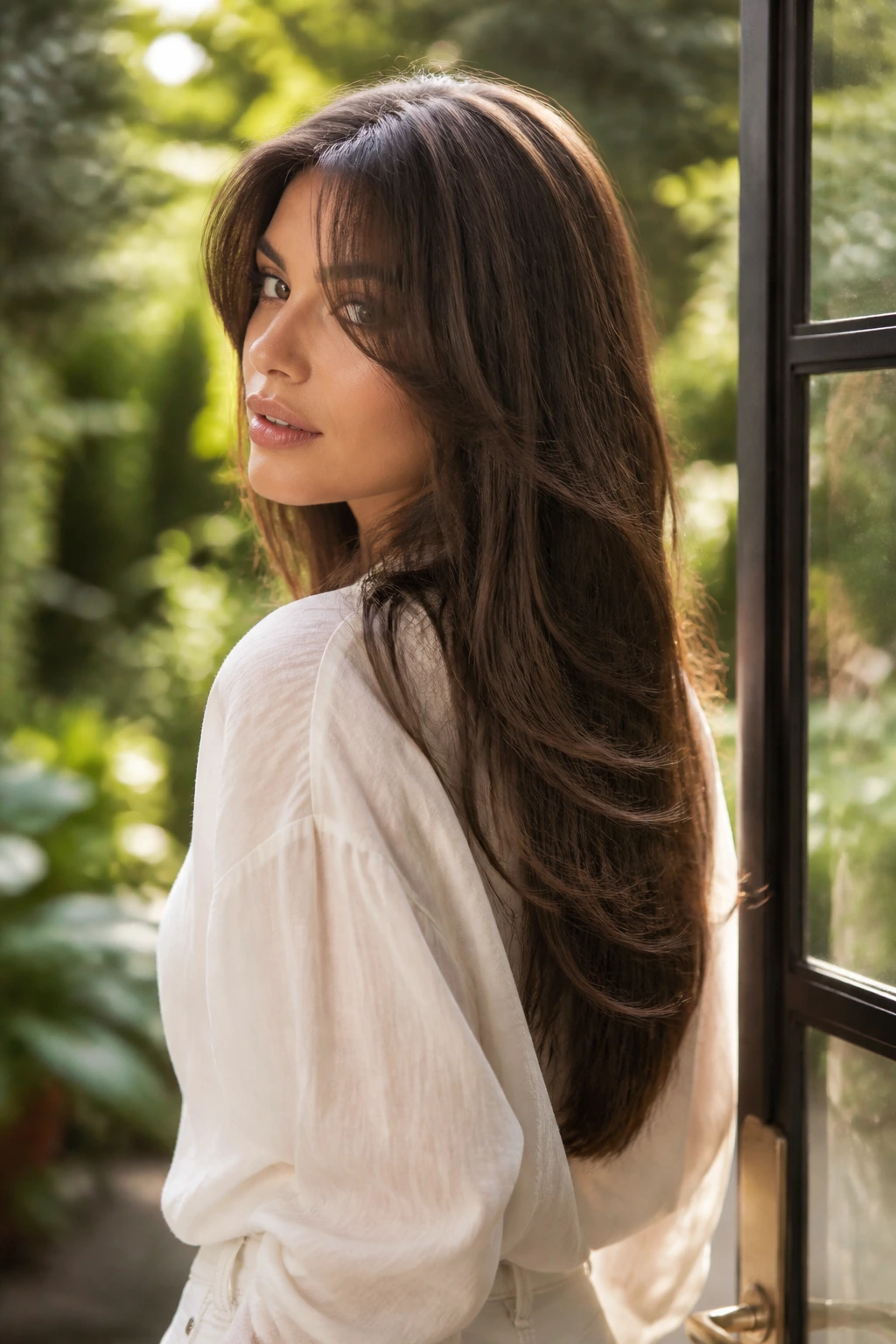
- Blow dryer with a concentrator nozzle: Directs heat where the fringe needs lift instead of blasting it every direction at once.
- 1 to 1.25-inch round brush: The workhorse for building that soft bend away from the face.
- Vent brush or paddle brush: Good for quick rough-drying on days when you want shape, not a full blowout.
- Small flat iron: Handy for a quick flip at the ends or a tiny bend in stubborn fringe.
- Velcro rollers: Great for setting curtain bangs while you do makeup or while the rest of your hair cools.
- Duckbill clips or sectioning clips: Keep the front section separate while the roots dry.
- Heat protectant spray: Necessary if you touch the bangs with heat more than once.
- Lightweight mousse: Helps the roots hold without making the fringe sticky.
- Texture spray or dry shampoo: Useful for day-two lift and separation.
- Diffuser: A must for curls and waves if you want the fringe to keep its shape without frizz.
Styling Moves That Keep Curtain Bangs Soft, Not Puffy
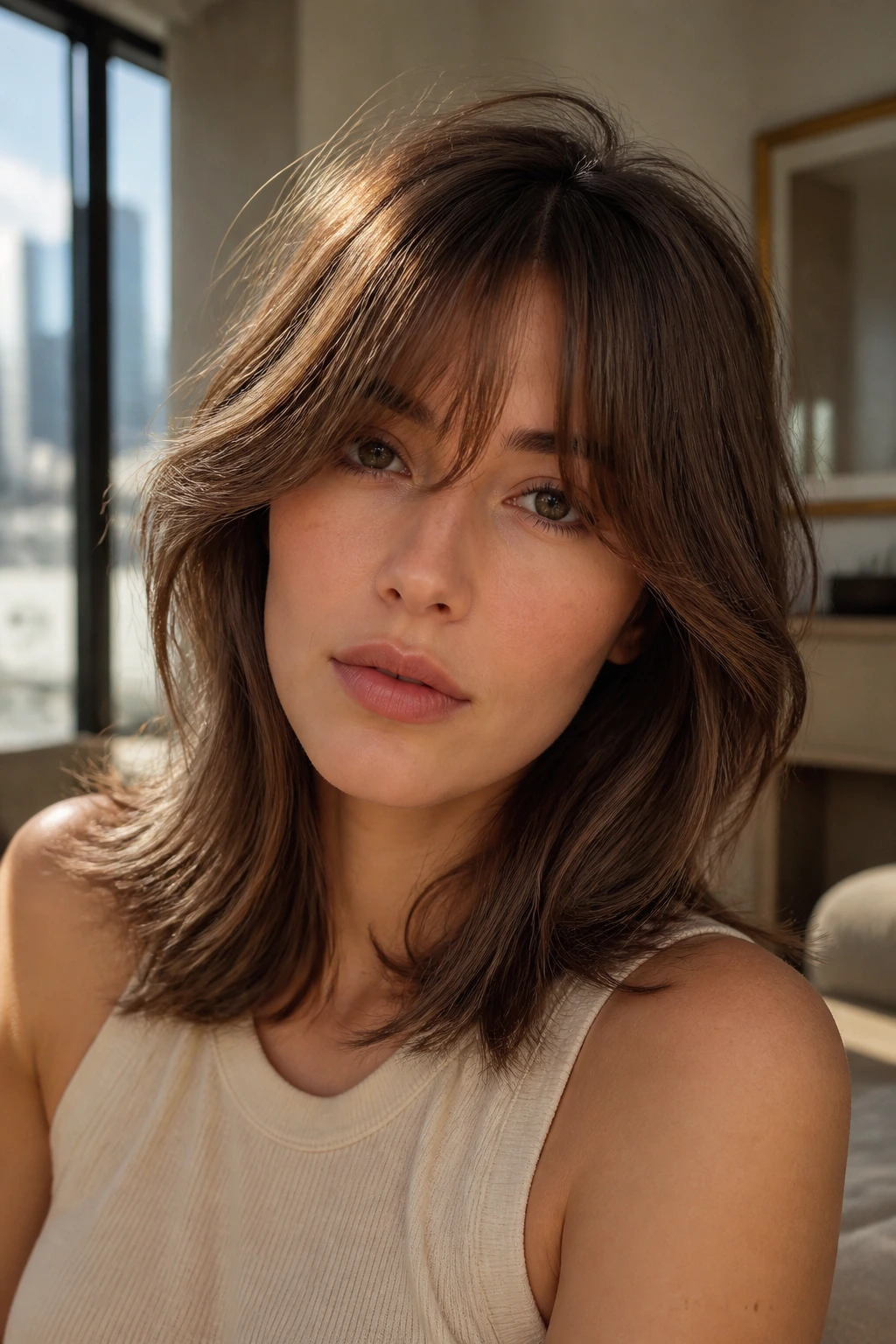
Start at the roots. If the front dries flat, the rest of the bang has to work too hard. Blow-dry the root area forward or slightly side-to-side first so the hair gets some lift before you shape the ends.
Use less product than you think. Heavy cream at the fringe is a fast way to turn “wispy” into limp. Put richer products on the mids and ends, not right at the hairline. The front wants air. It does not want to feel coated.
Let the shape cool. That’s the part people rush. If you round-brush the front and then immediately drop it, the bend can collapse. Clip the pieces for a minute or two or let them rest in a roller while you finish the rest of your hair. Cooling sets the curve.
Refresh instead of rebuilding. On day two, a tiny spritz of water at the roots and a quick pass with the brush usually does more than starting over. If the bang has split too wide, mist the roots, twist the front away from the face, and let it dry for three minutes. Fast. Simple. Enough.
Small Tweaks and Personalization Ideas
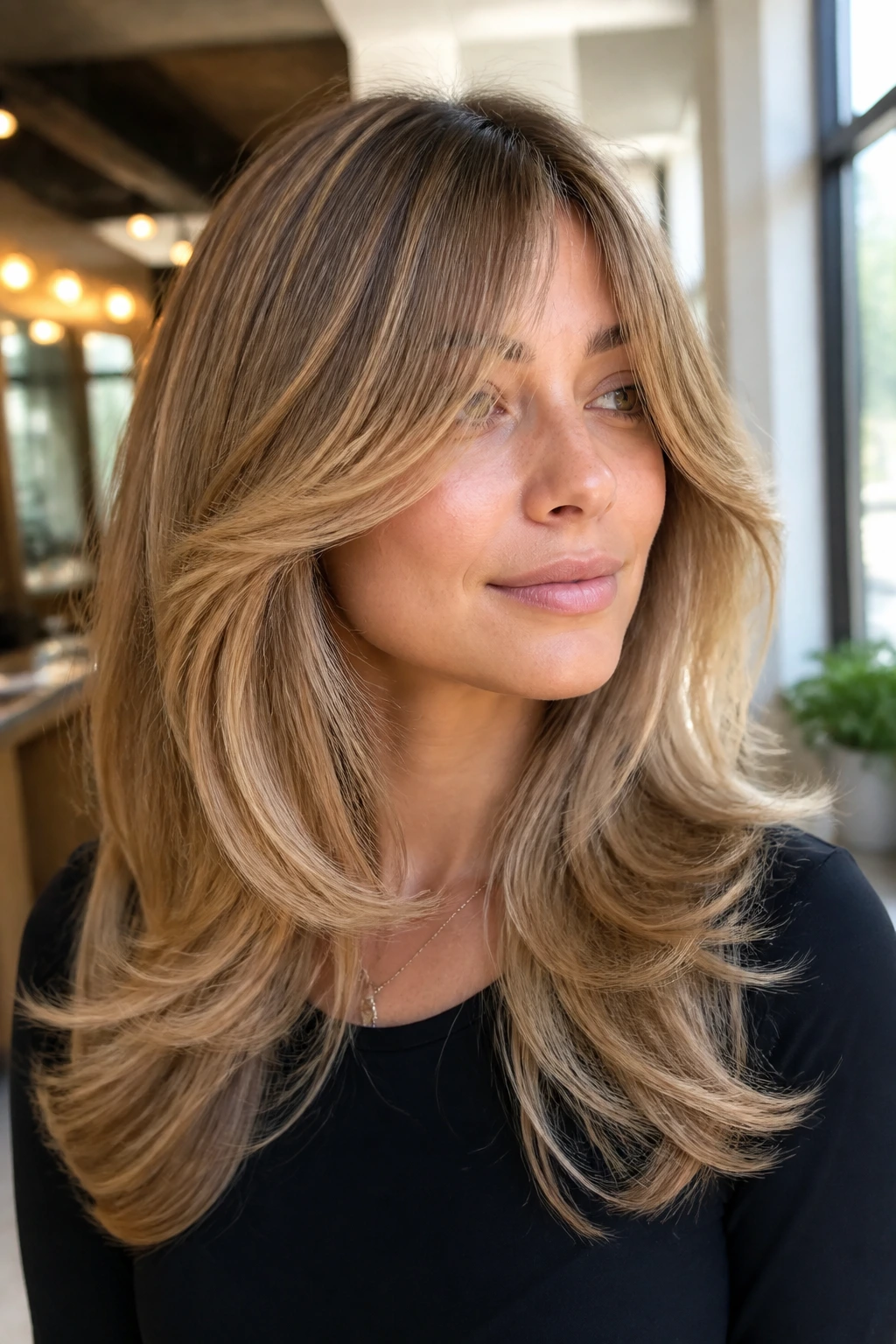
More Lift: Ask for slightly shorter crown layers if your hair falls flat at the part. That gives the curtain bangs a better frame to sit inside, especially on fine hair.
Softer Frame: Leave the shortest point a little longer and let the pieces open lower, around the cheekbones. This is the move I’d choose for square faces or anyone who wants the front to feel gentle.
More Edge: Keep the fringe pieceier and the ends a touch sharper. That works well on wolf cuts, shags, and textured bobs where a little roughness is part of the style.
Less Maintenance: Choose a longer curtain bang that can tuck behind the ears or slide into the side layers on bad styling days. It will not look as dramatic, but it will be easier to live with.
A Touch of Color: Thin face-framing highlights can make the bend in the fringe easier to see on dark hair. You do not need big streaks. A narrow ribbon around the bangs is enough.
Common Mistakes That Flatten the Shape
Cutting the bangs too short. This is the big one. Curtain bangs that stop above the brow tend to puff up and split in odd places. The fix is to keep them longer, then shape the bend with heat or clips.
Over-thinning the fringe. Wispy is not the same as sparse. If the stylist takes out too much weight, the bangs lose their body and fall in limp little pieces. Ask for soft point cutting instead of aggressive texturizing unless your hair is extremely thick.
Ignoring the natural part. If your hair insists on splitting off-center and you force a dead-center part every morning, the bangs will fight you. Work with the part your hair wants, then shape the pieces around it.
Using heavy product on the front. Oils and thick creams can make the fringe clump and sit flat against the forehead. Use them on the lengths if needed, but keep the bang area lighter.
Letting the layers start too high on fine hair. Too many short layers around the crown can remove the little density fine hair has. The haircut starts to look thin from every angle. A blunt perimeter with soft internal movement usually works better.
Skipping trim maintenance forever. Curtain bangs grow out better than blunt bangs, yes. They still need shaping now and then. If the front starts swallowing the eyes, it’s time for a tidy-up.
Variations and Adaptations to Try
The Fine-Hair Feathering: Keep the perimeter blunt or lightly blunt, then add only soft face-framing movement near the front. This gives fine hair the illusion of density while the curtain bangs keep the style from feeling boxy.
The Thick-Hair Debulked Shape: Ask for internal weight removal and point-cut ends, not a bunch of visible short layers. This version lets thick hair sit closer to the head and stops the bangs from getting lost in bulk.
The Curl-Safe Fringe: Leave the curtain pieces longer and let the stylist cut with shrinkage in mind. This works best when the bangs are shaped while dry or nearly dry, because the final length changes a lot once the curls spring up.
The Low-Heat Air-Dry Cut: Build the shape with longer front pieces and soft layers that fall into place on their own. This is the version for people who want to wash, scrunch, and leave the house.
The Grow-Out Friendly Version: Start the bangs lower and keep the front pieces long enough to blend into the cheek layers. It looks less dramatic on day one, but it stays useful much longer.
Maintenance, Trims, and Day-Two Fixes
Curtain bangs are forgiving, but they are not magic. If you want them to sit right, plan on a bang trim every 4 to 6 weeks. Some people stretch that longer, especially if the fringe is already built to blend into the side layers, but once the pieces start crossing the eyes, the shape gets harder to read.
A full haircut usually needs a tidy-up every 8 to 12 weeks, depending on the style. Shorter shapes like bobs and pixie-bobs need more regular upkeep. Long layered cuts can go a little longer if the fringe still falls where it should. If you are growing the bangs out, ask for soft blending rather than a blunt cut. That keeps the transition from looking choppy.
Day two is where these cuts often shine. A little dry shampoo at the roots, a quick re-bend of the front pieces, and a clip while you get dressed can bring the shape back fast. If the front has separated too much, mist the roots lightly and twist the section away from the face for a minute. Do not soak it. You only need enough moisture to reset the bend.
Sleeping on a satin pillowcase helps the fringe stay smoother, but the real habit that matters is how you set it at night. If the front wants to split badly, clip the curtain pieces loosely to the side before bed or tuck them under a soft roller for a few minutes while you get ready in the morning.
Frequently Asked Questions
Do curtain bangs work on fine hair?
Yes, if the haircut keeps enough density at the fringe. Fine hair usually does better with longer curtain pieces and a blunt or lightly blunt perimeter so the ends still look full. If the bangs are thinned too much, they can disappear fast.
Can curly hair wear wispy curtain bangs?
It can, but the cut needs to account for shrinkage. The bangs usually need to be cut longer than straight hair, and often dry or mostly dry, so the curl lands where it should. A curly fringe that starts too short can bounce up far above the cheekbones.
How short should curtain bangs be?
For most straight or wavy hair, the shortest point usually sits around the bridge of the nose or a little lower. That gives room for the bend. If your hair is curly or very springy, the starting length should be longer so the final shape does not jump too high.
Do wispy bangs make hair look thinner?
They can if they’re over-thinned. The trick is keeping enough hair in the fringe to curve and separate in a controlled way. Wispy should mean airy and soft, not sparse enough to show gaps at the hairline.
What if my curtain bangs keep splitting too wide?
That usually means the roots are drying in the wrong direction or the fringe is too short. Try clipping the front forward while it dries, then bend it away from the face with a round brush or a small flat iron. If the split still opens too much, the cut may need a little more length.
How do I grow out curtain bangs without an awkward phase?
Let them blend into the front layers instead of trying to keep them short. Use side-tucks, clips, or a soft center part, and ask for shape through the sides when you get a trim. The grow-out is much smoother than with blunt bangs.
Are curtain bangs high maintenance?
Less than a blunt fringe, but they still need some attention. A quick blow-dry or clip-set at the front usually keeps them in line, and trims matter if you want the shape to stay open rather than fall into your eyes. If you truly want zero styling, choose the longer grow-out-friendly version.
Which face shapes suit wispy haircuts with curtain bangs best?
Almost all of them can work, but the length of the fringe changes the effect. Round faces usually benefit from longer curtain pieces that open below the cheekbone, while square faces often look softer with a little width through the fringe. Long faces can handle a fuller curtain that doesn’t sit too high on the forehead.
The Shape That Keeps Working
The best thing about wispy curtain bangs is not that they look trendy for a minute and then disappear. It’s that they solve a very practical haircut problem. They soften blunt edges, make grow-out less annoying, and give the front of the haircut some movement without forcing you into a rigid style every morning.
That is why these cuts keep showing up in one form or another. A collarbone lob, a French bob, a butterfly cut, a shaggy midi — they all feel a little more lived-in once the fringe opens around the face. If you want the easiest place to start, choose the version that matches your hair’s natural behavior, not the one that looks the boldest in a photo. Hair tells on you fast.
