



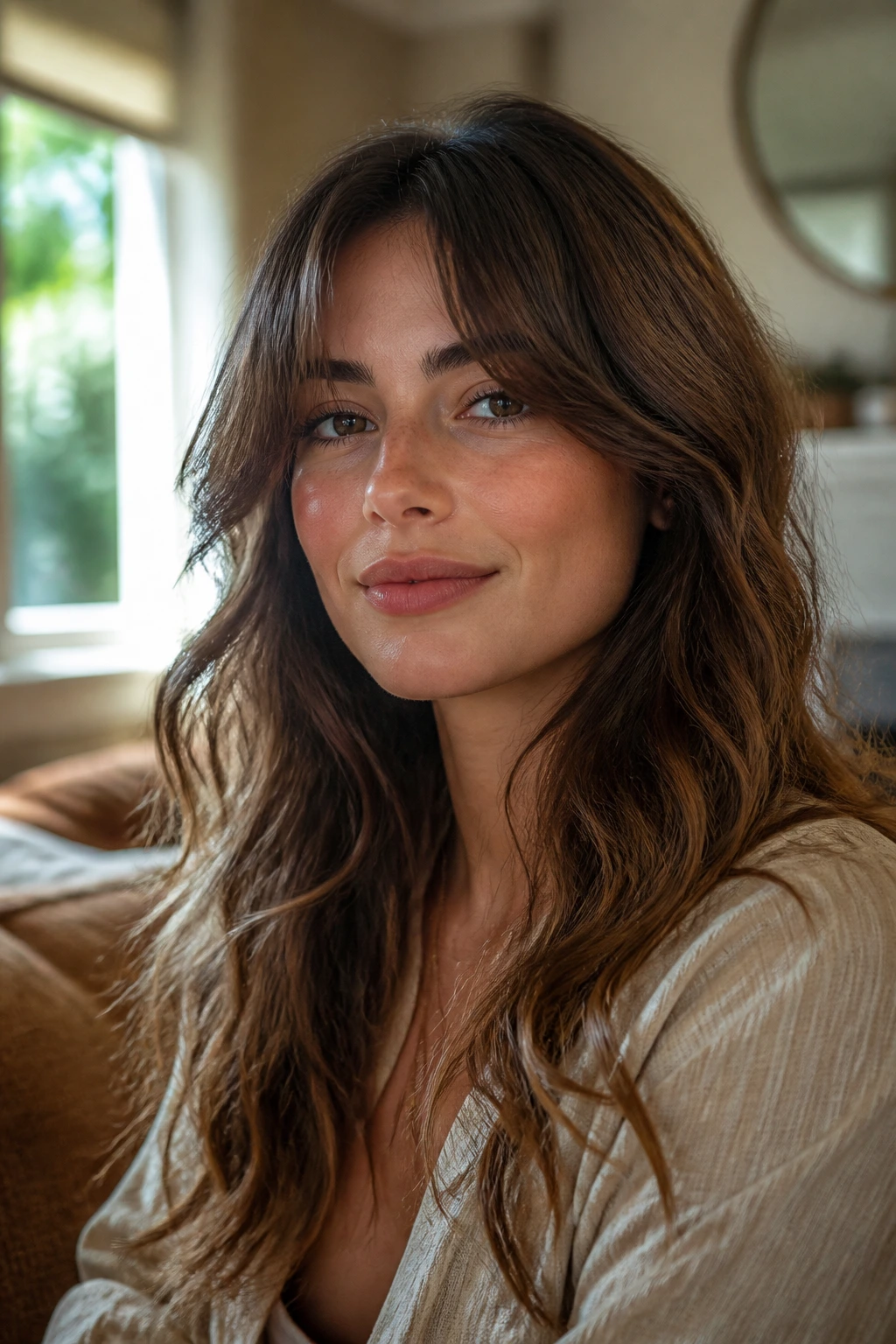
Wavy hairstyles with curtain bangs have a useful trick up their sleeve: they make hair look styled even when the finish is loose, a little messy, and completely human. The fringe opens at the center, skims the cheekbones, and keeps the front of the cut from going flat, which is exactly why so many wavy textures wear it well.
The real win is that curtain bangs do not fight the bend that already lives in the hair. They borrow it. A blunt fringe on a wave wants to kink, separate, and stick to the forehead; a curtain fringe can split, curve, and settle without a fight. That difference sounds small on paper. On your head, it changes everything.
What makes this collection useful is the range. There are soft collarbone cuts, shaggy layers, polished blowouts, low ponytails, braided looks, and a few styles that thrive on day-two hair when the roots have a little grip. The same bang shape can look casual, dressed up, or slightly rebellious depending on how you move the lengths around it. The trick is choosing the version that works with your texture, not against it.
Why These Styles Earn Their Place
-
Face-framing without hard lines: Curtain bangs soften the center part and pull attention toward the eyes and cheekbones, which is handy when waves can make the top half of a hairstyle feel broad or heavy.
-
They work with air-dried texture: A little natural bend in the fringe is a feature here, not a flaw, so the styles don’t fall apart the moment you skip a perfect blowout.
-
The grow-out is kinder: Unlike a blunt fringe, curtain bangs can slide into layers as they lengthen, which buys you time between trims and saves you from that awkward, helmet-like stage.
-
They move across lengths: These looks work on bobs, lobs, collarbone cuts, long waves, and updos, which means the fringe can stay while the rest of your hair changes.
-
There’s room for mood changes: The same cut can read soft and romantic one day, then textured and undone the next with nothing more than a different product or parting.
-
They flatter a lot of face shapes: A longer curtain fringe can narrow a wider forehead, break up a strong jaw, or soften a rounder face without looking chopped up.
1. Soft Shoulder-Length Waves With Airy Curtain Bangs
This is the style I send people toward when they want a safe first step into curtain bangs. Shoulder length gives the wave enough room to bend and swing, while the fringe opens softly around the eyes instead of sitting like a heavy panel across the forehead.
The cut matters more than the styling here. Ask for the shortest point to land around the bridge of the nose or just below the brows, with the longer edges grazing the cheekbone. That keeps the bang from feeling stuck in one place. If your hair has a medium wave, this shape usually settles quickly after a rough dry and a few passes with a 1-inch iron.
A small amount of mousse at the roots helps the crown stay lifted. Without that, shoulder-length waves can collapse at the top and leave the fringe doing too much work.
One-line version: Soft shape, low fuss, easy grow-out. That’s the appeal.
2. Long Mermaid Waves With a Center-Swept Fringe
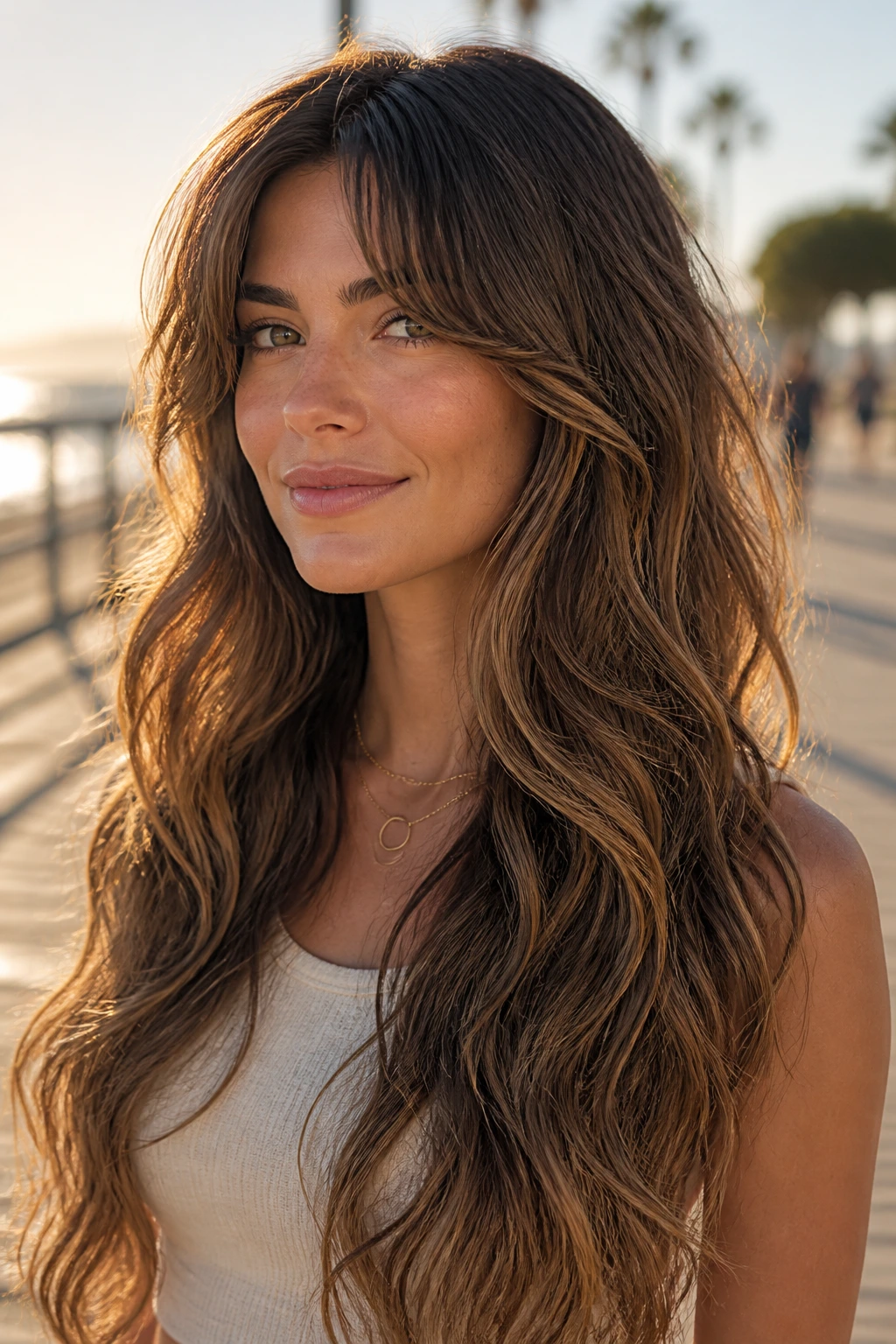
Long waves change the whole conversation because the weight of the hair pulls the front down in a way shorter cuts never do. Curtain bangs help by breaking up all that length near the face, so the style doesn’t look like one long curtain of hair from root to tip.
The best version of this look has movement in the front layers, not just the ends. If the hair is thick, ask for internal layering through the midlengths so the waves can bend instead of sitting in a single block. The bang should start open at the center and slide into the outer layers somewhere between the cheekbone and jawline.
I like this on hair that already holds a wave without much help. A large-barrel iron, brushed out with fingers, keeps it soft; tight curls would fight the mood of the cut. A tiny bit of shine serum on the ends helps, but keep it off the fringe. The bang needs air, not grease.
3. The Wavy Lob With Cheekbone-Framing Curtain Bangs
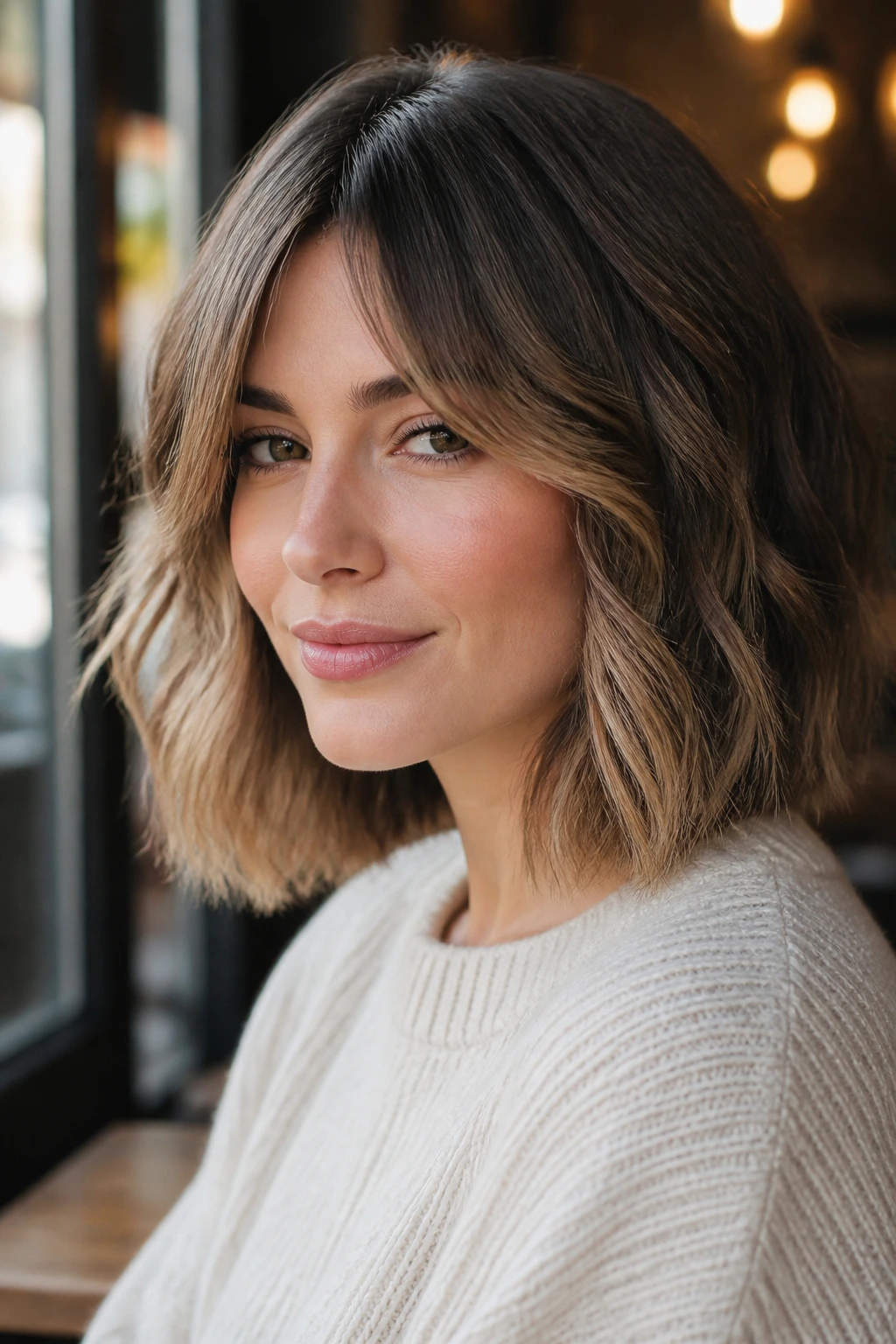
Why does the lob keep showing up in these conversations? Because it gives curtain bangs a clean place to land. The length usually hits somewhere between the chin and collarbone, which means the wave has enough weight to look deliberate but not so much that it drags the front flat.
What to Ask for at the Salon
- A blunt or lightly textured lob that sits at the collarbone.
- Curtain bangs with the shortest center point near the bridge of the nose.
- Longer side pieces that skim the cheekbone instead of stopping at the middle of the face.
- Soft point cutting through the ends so the wave doesn’t look boxed in.
That combination keeps the look crisp without turning it stiff. It’s one of the easiest styles to live with if you want hair that can air-dry on a weekday and still look polished after a quick bend with a curling wand.
The lob is also kind to fine hair. Too many layers can make fine waves look see-through, but this cut keeps enough weight in the bottom while the curtain fringe adds shape at the top.
4. Shaggy Layers With Piecey Curtain Bangs
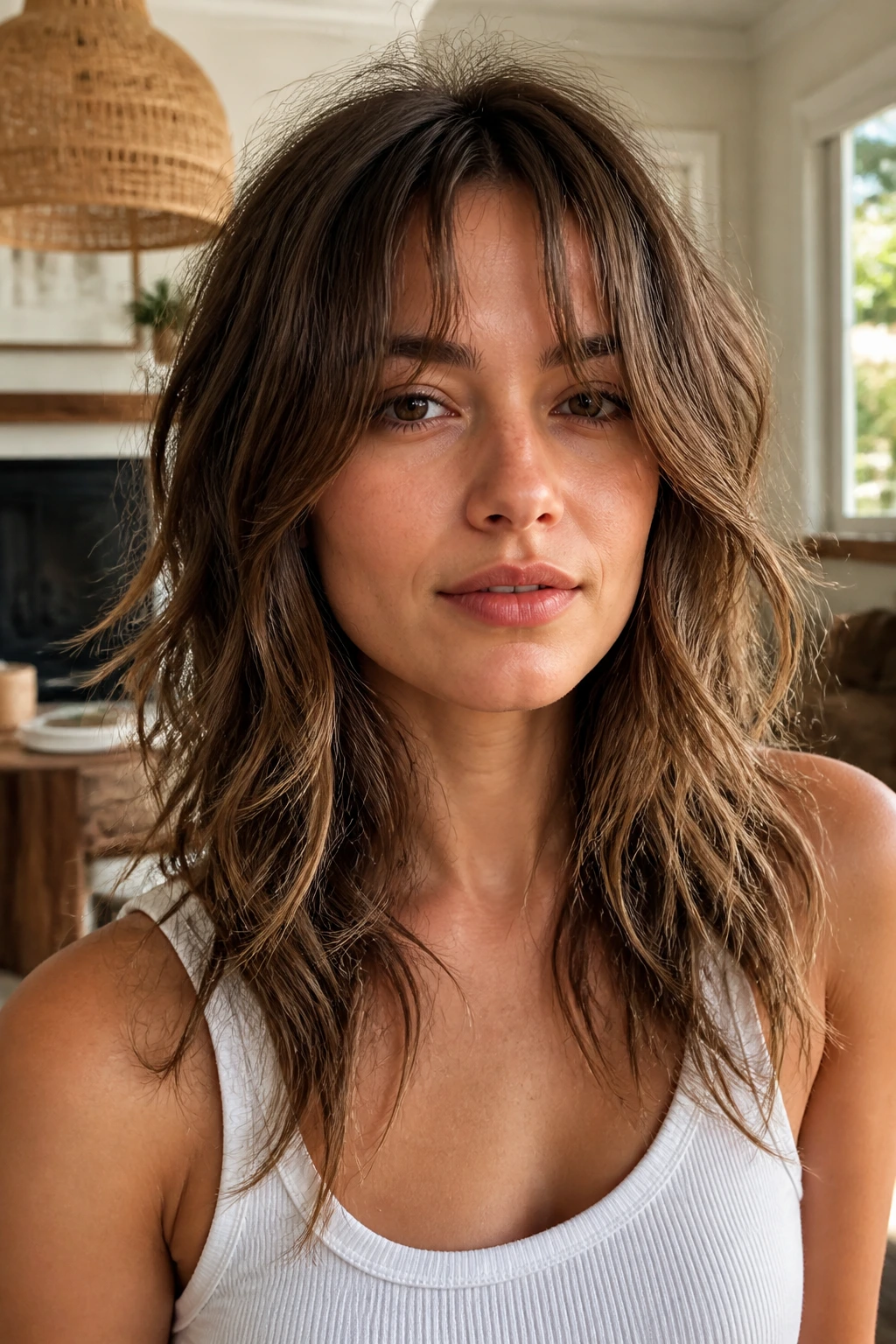
A shag is not messy by accident. It only looks that way when the cut is off.
Good shag layers create movement at the crown, around the temples, and through the ends, which gives curtain bangs a purpose instead of leaving them as a random add-on. The fringe in this look should feel piecey and slightly broken up, not perfectly smooth. That broken texture is part of the charm.
This style really likes hair with natural bend or a little density. If the hair is fine and straight, a shag can go limp fast unless you add root volume and a texture spray. On thicker wavy hair, though, it can be a very forgiving shape. Dry shampoo at the roots, a little wave cream on the mids, and a rough scrunch are often enough.
If you want a low-maintenance haircut with personality, this is one of the stronger options. If you want sleek and tidy every day, move along. Seriously.
5. Beachy Midlength Waves With Grown-Out Fringe

This one has a quiet advantage: it looks good even when it is not freshly styled. The waves are loose and touchable, and the curtain bangs sit in that grown-out stage that so many people panic about, even though it often looks better than a freshly cut fringe.
The trick is to keep the front pieces long enough to move. If the bang is too short, it fights the beachy shape and pops straight up at the center. If it’s cut a little longer, the fringe blends into the side waves and feels part of the whole cut rather than a separate feature.
Salt spray can help here, but don’t drown the hair in it. A light mist through damp mids and ends is enough. Too much salt product leaves the fringe gritty and stiff, which is not the same thing as texture. Those two get confused all the time.
This is the style for people who want their hair to look like it got a good walk outside, not a full salon performance.
6. Polished Blowout Waves With Bouncy Curtain Bangs
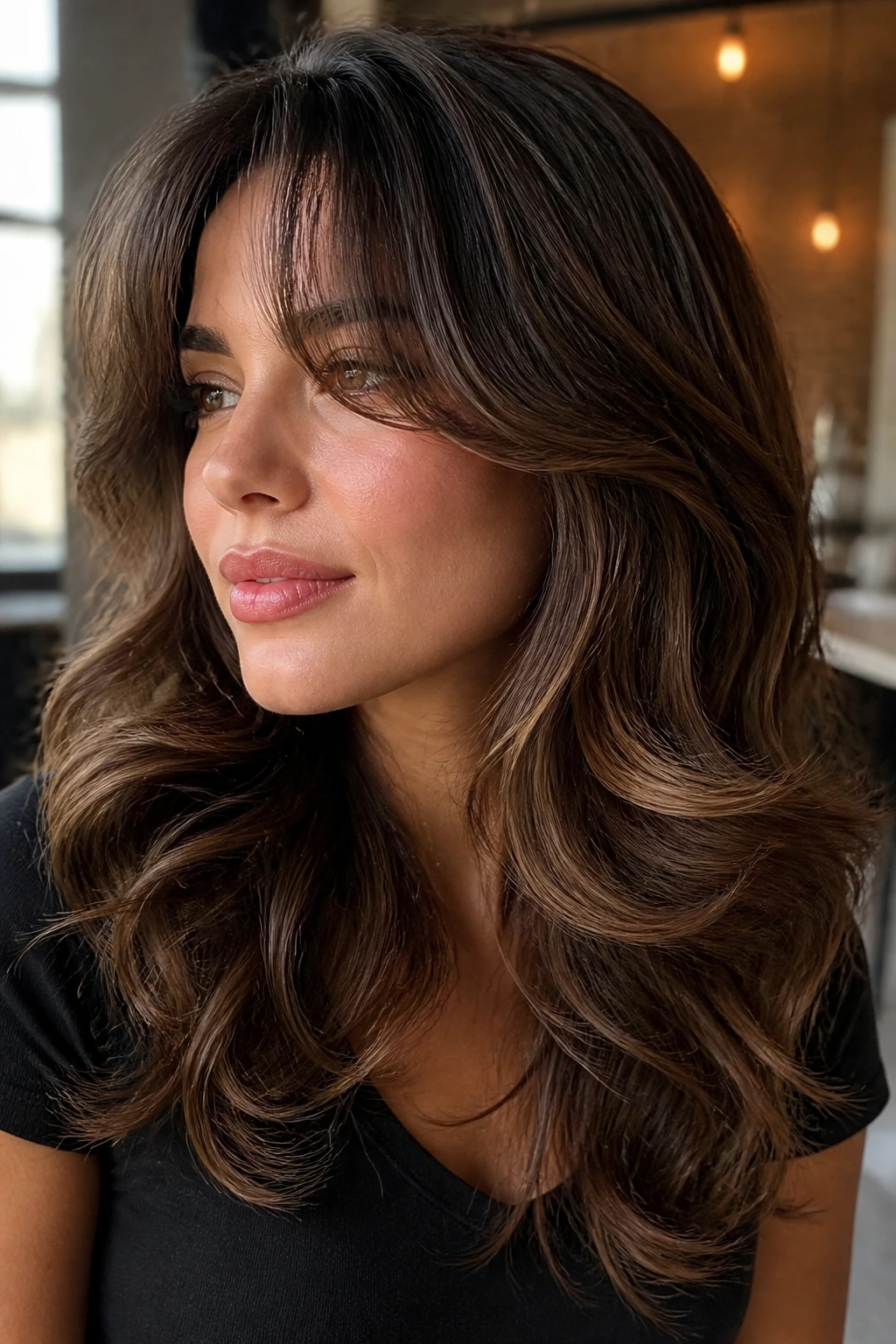
If the beachy look feels too casual, this is the cleaner, more dressed-up cousin. The waves are still soft, but they’re set with a round brush or large barrel so the shape curves instead of fraying at the edges.
The fringe needs a little extra attention. Blow it forward first, then split it at the center and roll the ends away from the face with a round brush or velcro roller. That step gives the bang the lift that makes the whole style feel bouncy instead of flat. If you skip it, the front pieces can droop while the rest of the hair looks full, and the imbalance is obvious.
I like this on medium-density hair and on anyone who wants a hairstyle that still holds up after a long day. A blowout wave has more structure than a scrunched wave, so it reads cleaner under artificial light, at a dinner table, or in photos where you don’t want to keep fixing your hair every five minutes.
One detail matters: let the hair cool before you touch it. Warm waves collapse faster than people expect.
7. Tousled French Bob With Wispy Curtain Bangs
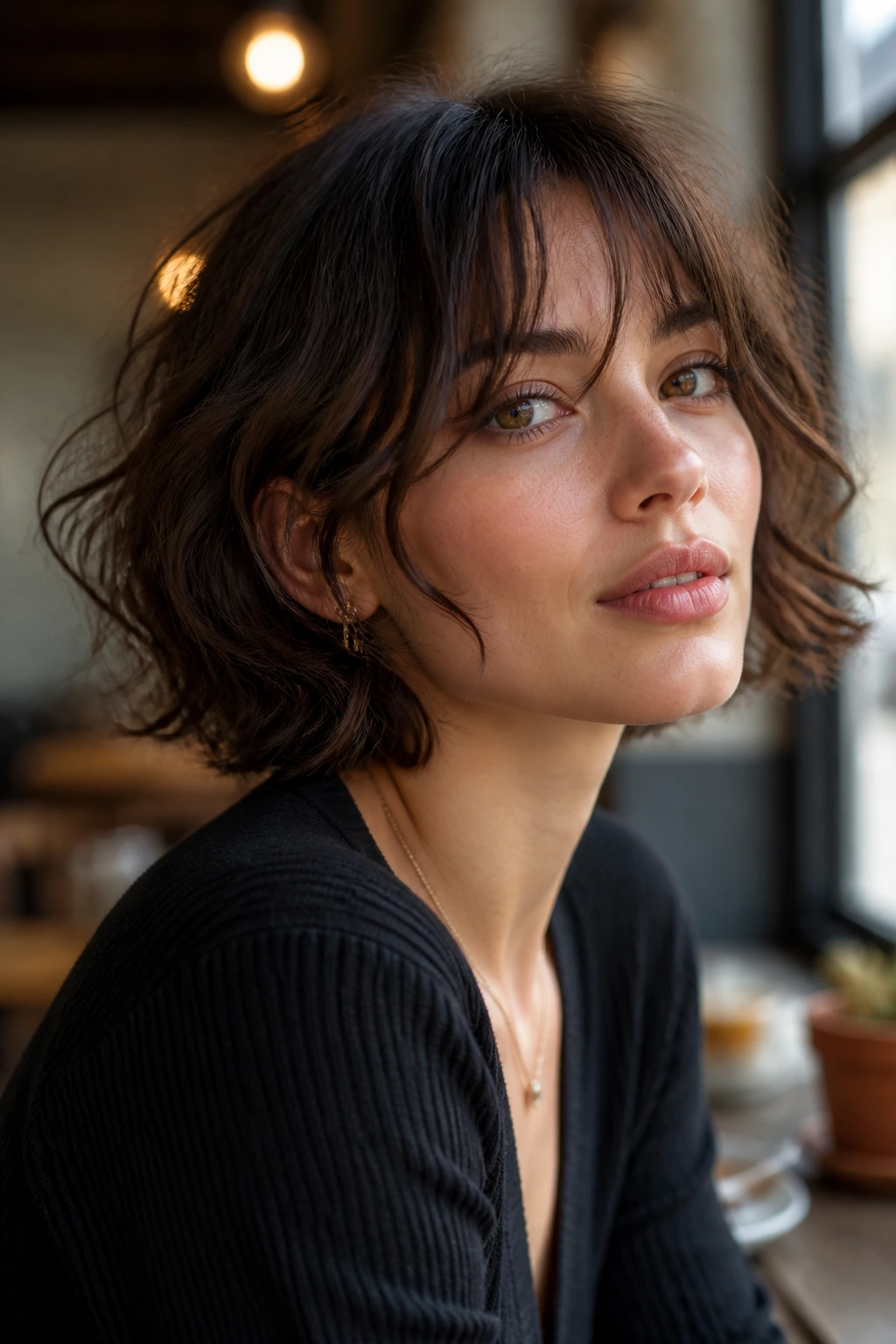
Short hair plus curtain bangs can go two ways. Sharp or soft. This version goes soft, and that’s why it works so well.
A French bob usually sits around the jawline, sometimes a little higher, and the fringe is light enough to break up the front without swallowing the face. The waves should be loose and a bit imperfect, with a bend rather than a full curl. That keeps the cut from getting too round or too puffed out at the sides.
Why It Works on Shorter Hair
The bob gives the fringe a clear frame. There’s no extra length to compete with, so the curtain bangs become the main focal point and the wave just adds movement around them. On finer hair, this is especially useful because the bob can create the illusion of density without a lot of styling time.
A side note: keep the ends soft. A blunt bob with wispy curtain bangs can feel disconnected if the ends are too sharp. Light texturizing through the perimeter fixes that fast.
This is one of the few short cuts that still feels playful when the weather turns humid and the wave stops behaving.
8. Wolf Cut Waves With Heavy Curtain Bangs
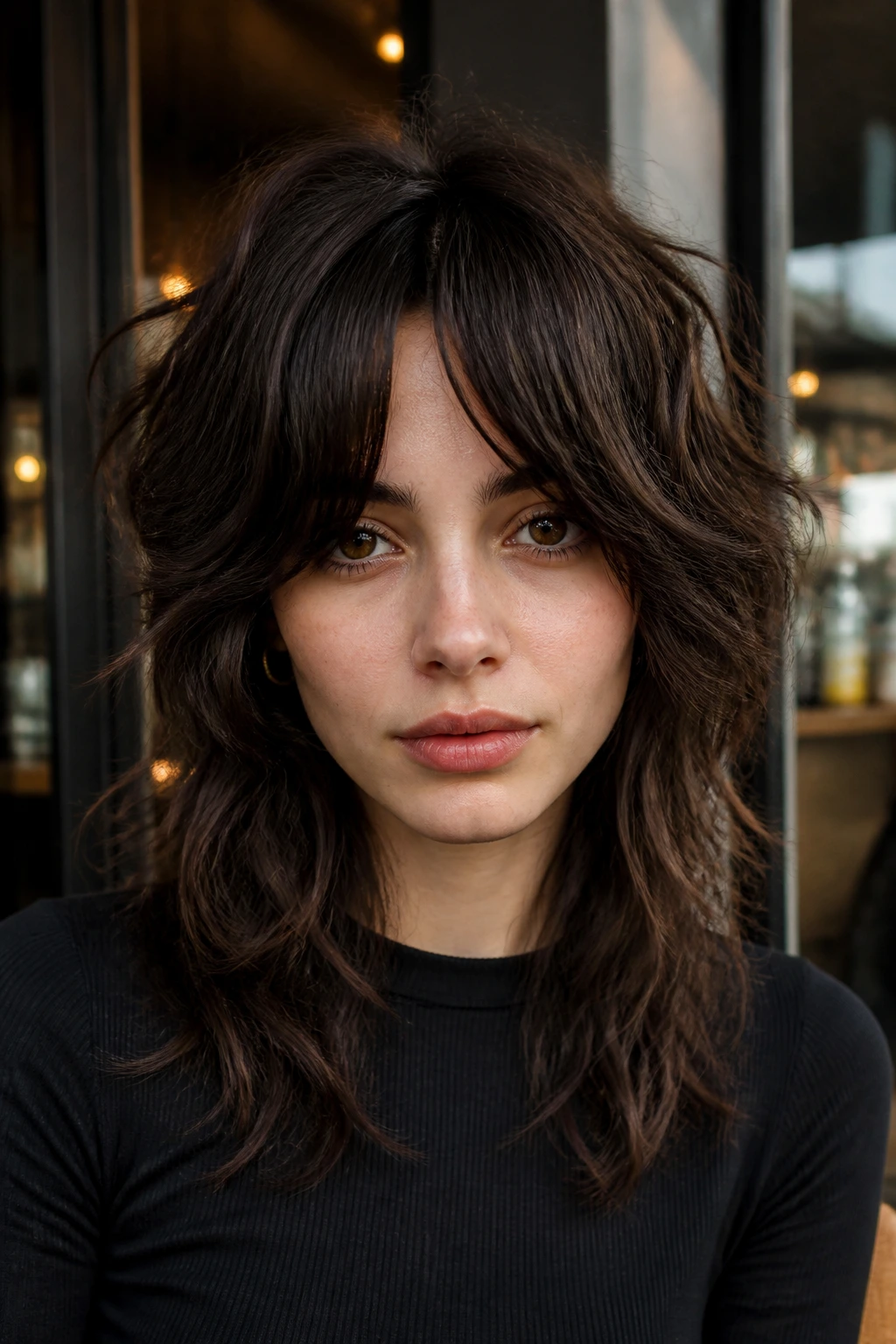
This one has attitude. The wolf cut takes the shag idea and pushes it harder, with more height at the crown, more movement through the lengths, and a fringe that can hold its own.
The bang here is often heavier than the airy versions in softer cuts. That doesn’t mean it should sit thick and square. It means the center has more density, so the split opens slowly and the sides fall with a bit of weight. On dense or naturally wavy hair, that can look excellent. The fringe has enough substance to keep from disappearing into the rest of the cut.
It is not the choice for someone who wants tidy symmetry. The wolf cut wants a little edge. It looks better when the wave is loose, the texture is a bit rough, and the ends aren’t all behaving the same way. That’s the point.
A matte paste or texture spray will do more here than a smoothing cream. Keep the finish lived-in, not slippery. Too much shine flattens the shape and makes the layers look accidental.
9. Half-Up Twist With Loose Curtain Bangs
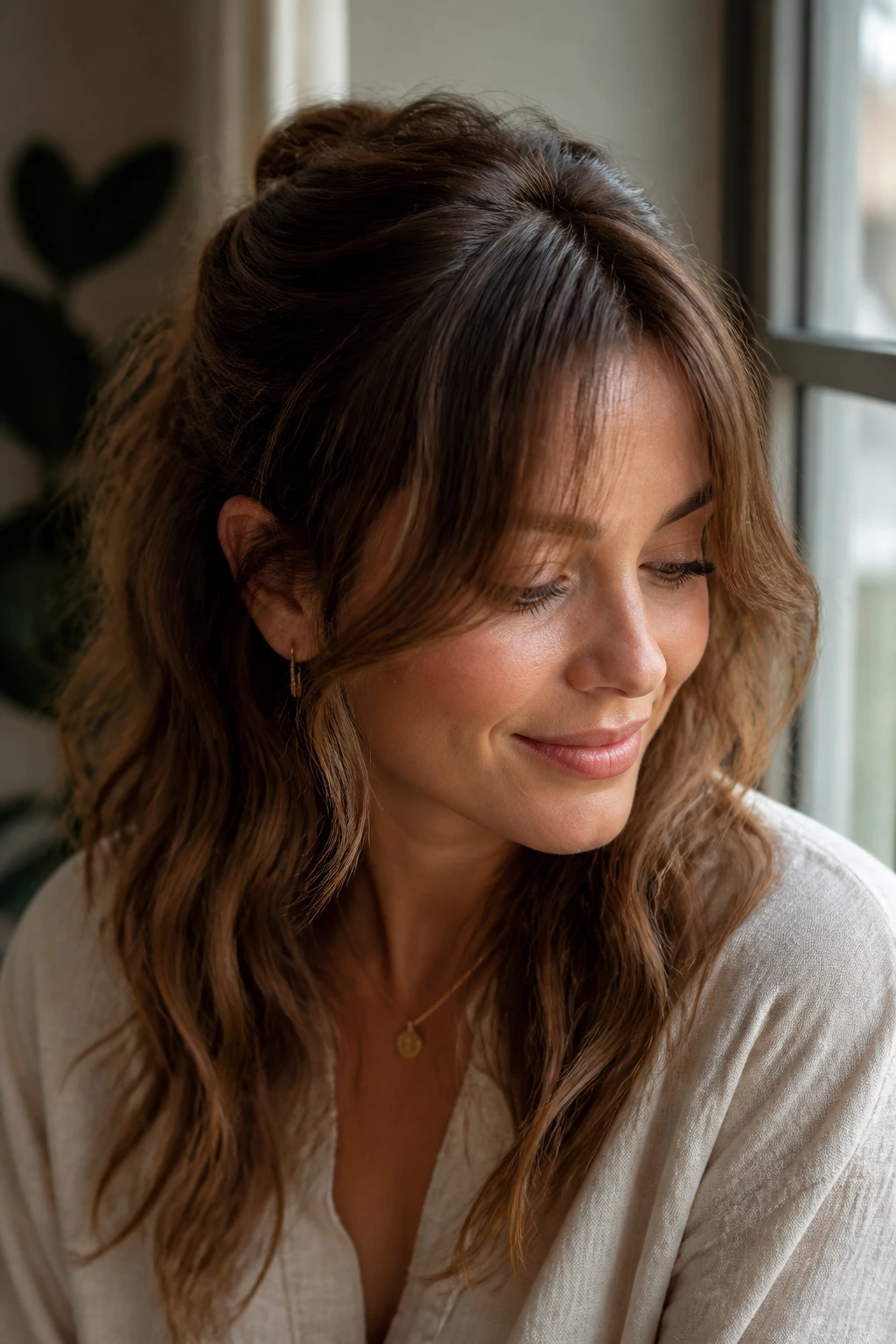
A half-up style is often the fastest way to make waves look deliberate on a day when the ends are doing their own thing. Pulling the top section back gives the curtain bangs room to frame the face, and the wave underneath keeps the whole look from feeling too neat.
The best version of this leaves enough hair around the temples to soften the top section. If you drag everything too tight, the bangs lose their softness and the hairstyle starts to look severe. A small twist, a clip, or a loose half-pony all work. Pick the version that leaves a bit of bend around the front.
This is the style I’d reach for when the hair is day two or day three and the roots have more grip than cleanliness. That little bit of texture makes the half-up shape hold better. A spritz of dry shampoo at the roots before you pin anything up helps the front stay lifted.
Simple. Fast. Reliable.
10. Low Ponytail With Face-Softening Curtain Bangs
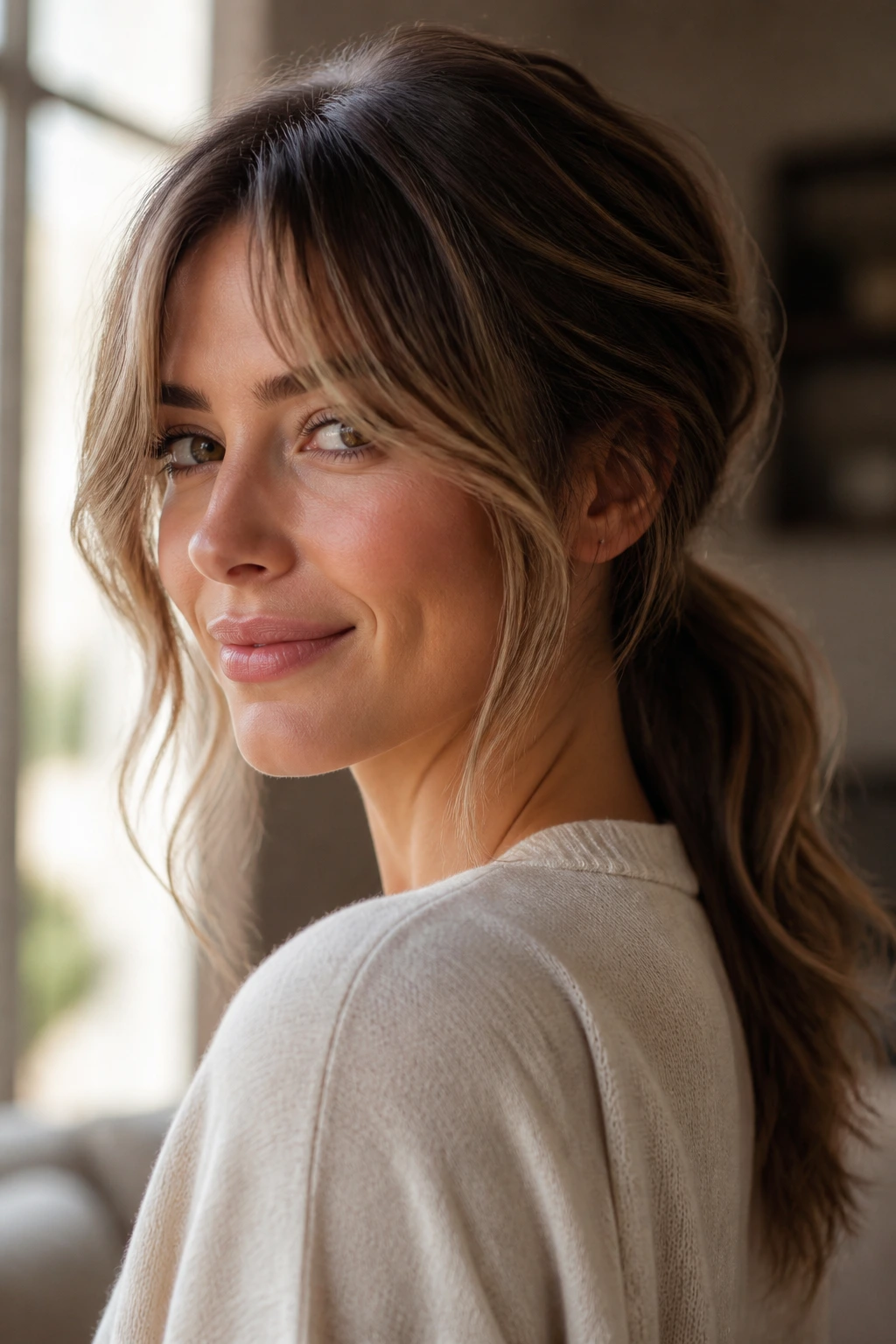
A low ponytail is usually thought of as the easy option, which is a little unfair. Done well, it can look sharper than a full wave style because the fringe does so much of the face-framing work.
The pony itself can stay loose and textured, or it can be brushed smoother if you want a cleaner look. What matters is the front. Curtain bangs should sit open and soft at the cheeks, with a few shorter pieces around the temple if the cut needs it. That shape keeps the ponytail from feeling like a gym backup plan.
If your hair is long enough, wrap a small strand around the elastic. It takes less than a minute and makes the style look finished. I also like to leave the ponytail slightly waved rather than pin straight, because a straight tail beside a wavy fringe can feel disconnected.
This is a good one for workdays, errands, and any moment when you want hair off your neck without losing the frame around your face.
11. Braided Crown With Soft Curtain Fringe
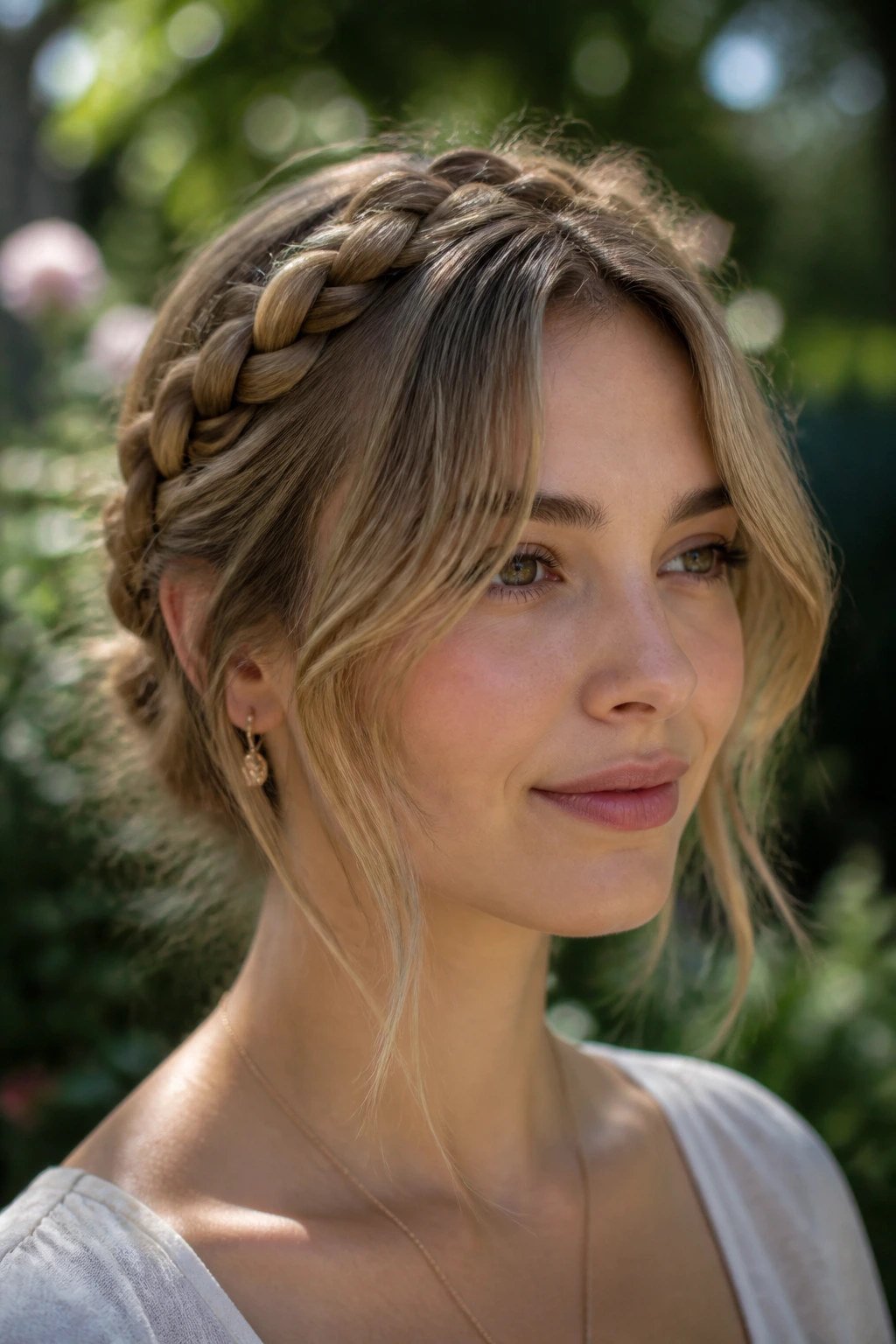
A braided crown can get twee fast if the front is too controlled. Curtain bangs prevent that by leaving movement where the eye naturally wants to land.
The braid should live around the sides or upper hairline, not pressed into the face. Leave the fringe loose and slightly curved away from the center so it softens the braid rather than competing with it. That little gap is what keeps the style from looking costume-y.
This is one of the better event styles if your hair has some wave and a bit of length to work with. The braid gives structure, and the curtain bangs keep the face from disappearing under all that structure. If the hair is very fine, use a bit of light texture spray before braiding so the pieces hold together. If it’s thick, braid with a firmer tension and then tug the edges just enough to widen it.
It does not need to be perfect. In fact, perfect makes it worse.
12. Deep Side-Part Waves With Split Curtain Bangs
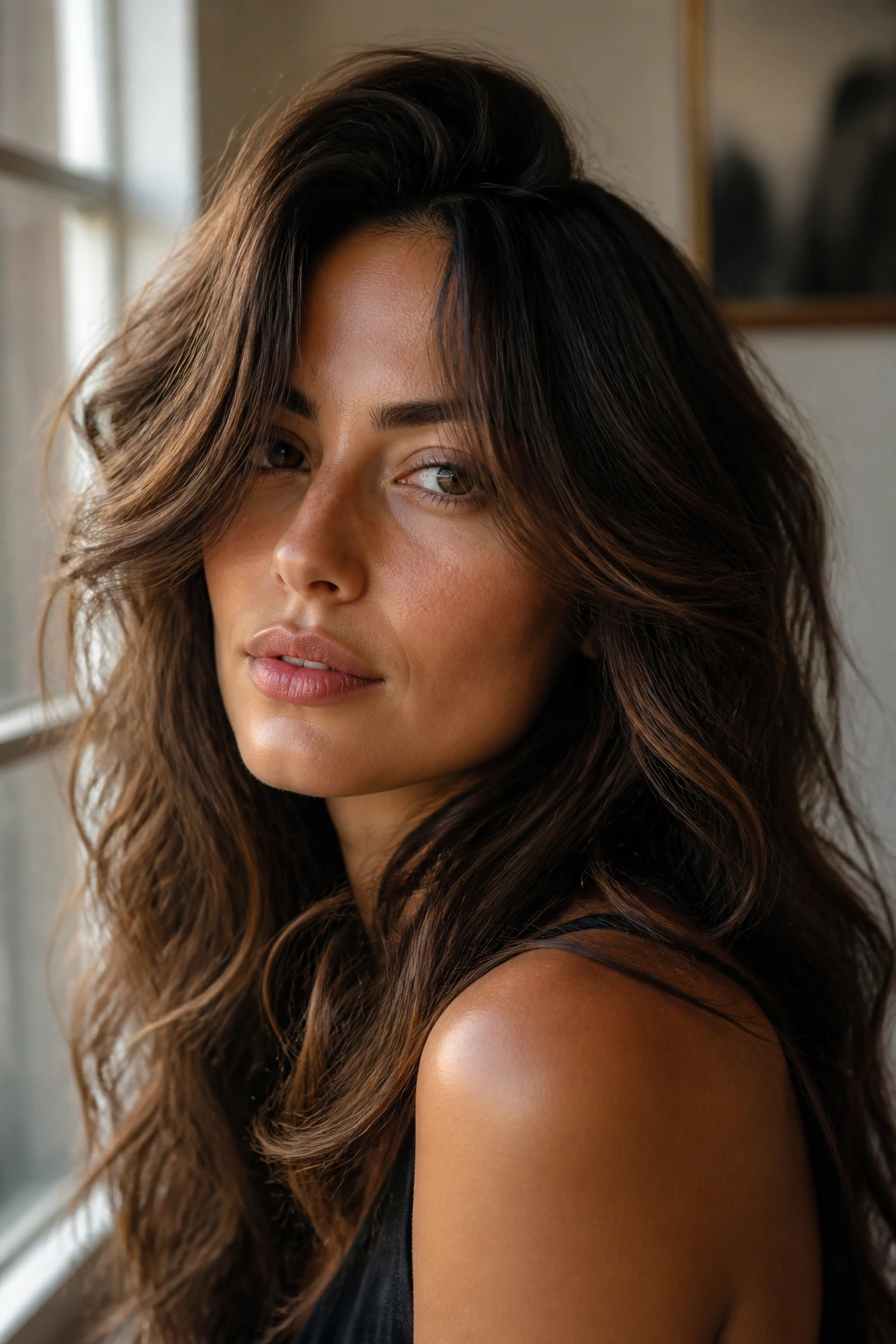
Curtain bangs do not have to sit dead center all the time. A deep side part changes the mood fast, and on some face shapes it’s the smarter move.
With this style, the fringe still opens, but one side gets a little more sweep and the other side drops softly toward the cheek. That asymmetry can flatter a strong jaw, lengthen a round face, or give a little extra height to flatter roots. It also works well if your hair stubbornly refuses to hold a middle part all day.
The waves underneath should follow the same direction as the part. If you curl every piece away from the face but keep the part severe, the front can fight itself. Better to let the larger front section have a smooth bend and keep the rest of the waves loose.
This is one of those looks that feels more thoughtful than it is. Ten minutes of parting and clipping can change the whole silhouette.
13. Collarbone Cut With Blended Curtain Bangs
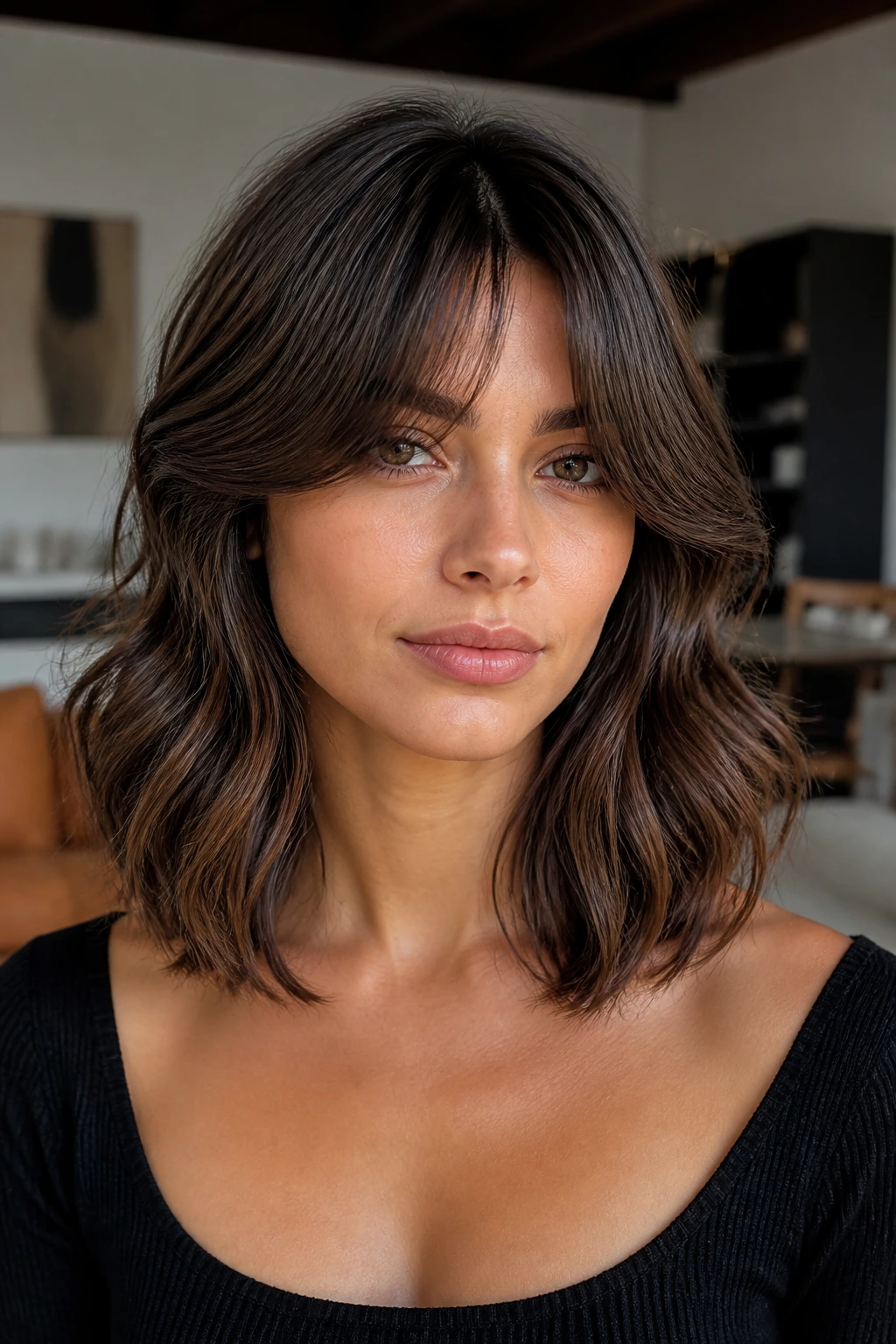
The collarbone cut sits in a sweet spot. Long enough to pull back, short enough to keep movement, and balanced enough that curtain bangs can blend instead of shout.
The most useful thing about this length is how it handles grow-out. The bangs can soften into the front layers, the layers can expand a little, and the cut still looks purposeful even when it’s three weeks past a trim. That makes it a good choice for people who want hair that stays flexible.
Ask your stylist to connect the fringe to the front layers slowly. If the bangs are too separated from the rest of the cut, you end up with a fringe sitting on top of a shape rather than flowing into it. A blended collarbone cut avoids that and gives you easy movement around the face.
I’m a fan of this style for anyone who wants one haircut to do a lot of jobs: air-dry, blowout, half-up, low bun, whatever. It tends to cooperate.
14. Air-Dried Natural Waves With Unstyled Curtain Bangs
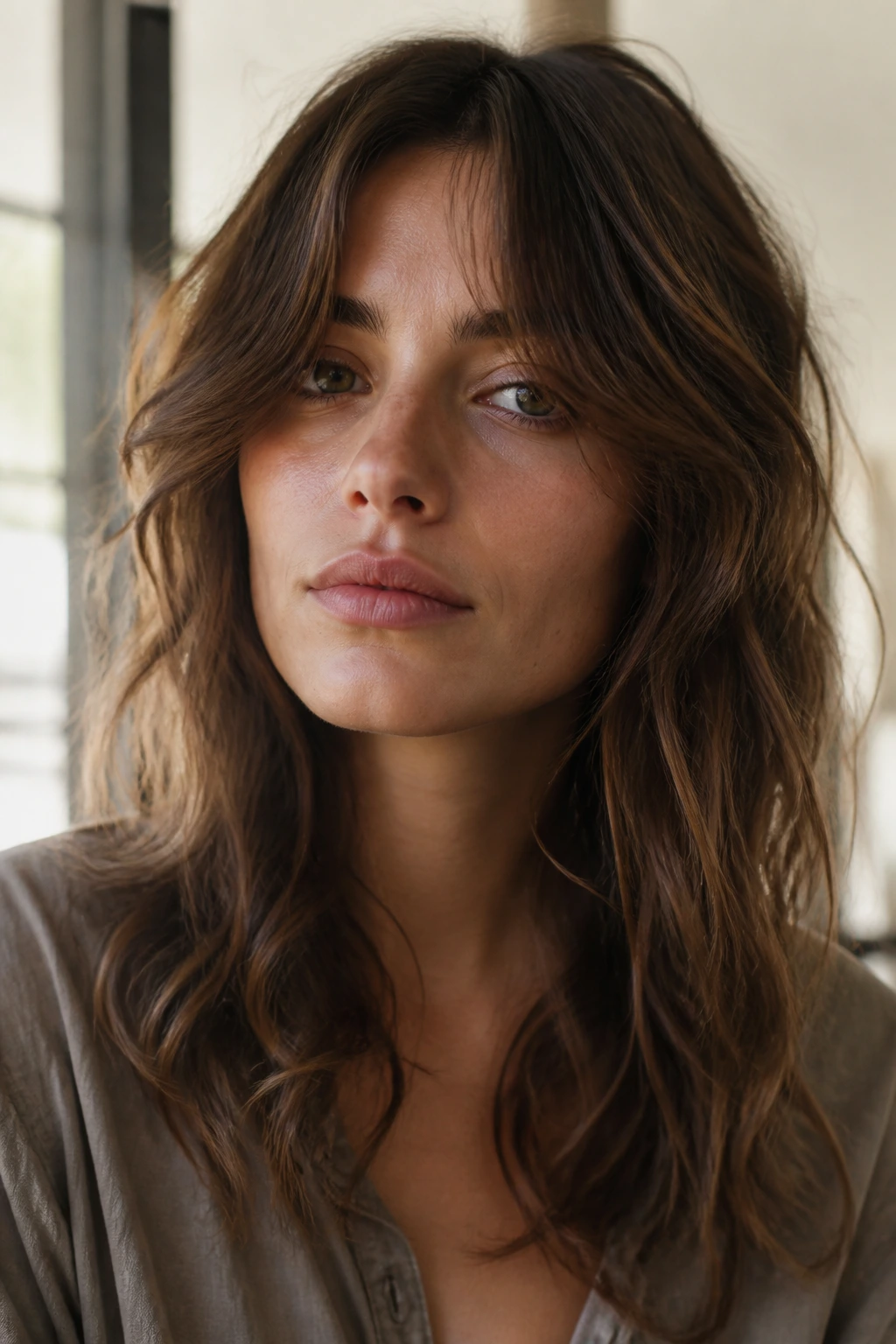
Not every wave needs a hot tool. Some do their best work after a good leave-in, a squeeze of gel or cream, and a patient air-dry.
This style leans into what your texture already wants to do. The curtain bangs may need a little help at the root — a clip or two while they dry can keep them from splitting too early — but the rest is mostly about not interfering. Scrunch the mids, keep the product light, and let the hair dry without being touched every ten minutes. That last part is harder than it sounds.
The strongest version of this look has a slightly imperfect fringe. Not sloppy. Just soft. The center opens naturally, the sides bend around the face, and the overall result looks relaxed in a way that a hot-tool style can’t quite fake.
If your hair is prone to frizz, a tiny amount of cream on damp ends helps. Too much will stretch the wave and flatten the fringe. Little things matter here.
15. Glam Waves With a Glossy Finish and Shorter Curtain Bangs
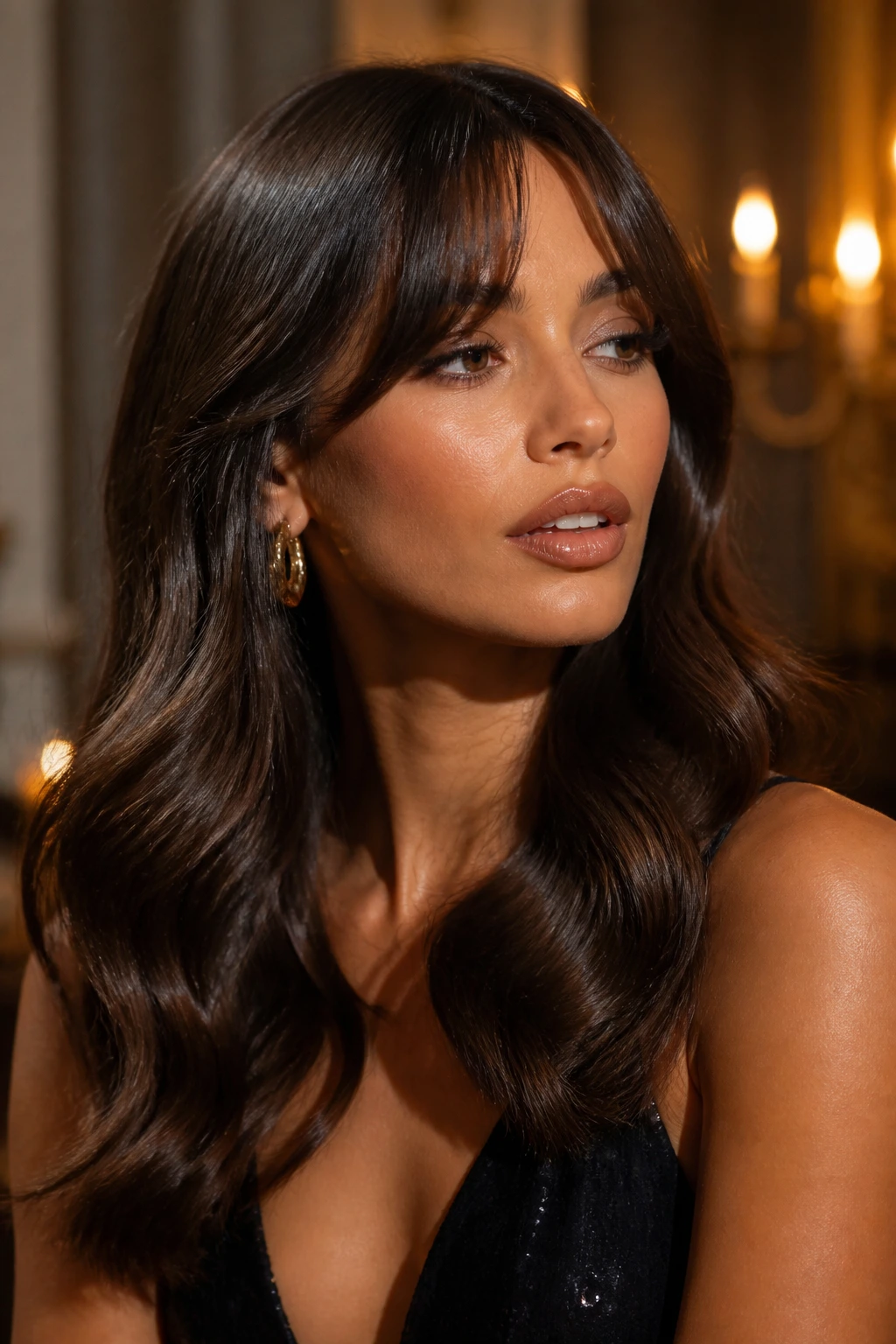
This is the dressed-up version of the whole idea. The waves are smoother, the shine is higher, and the curtain bangs sit a little shorter so the face opens up more.
Shorter curtain bangs can look elegant when they’re cut correctly. The center still needs to split, but the length doesn’t fall as far down the cheek. That gives more visibility around the eyes and brow bone, which can work well for evening styles or for anyone who wants the fringe to feel lighter.
The styling matters more than the cut here. Use a large barrel, set the waves in one direction, then brush them out until they sit in broad, soft bends. Finish with a shine spray or a tiny bit of serum on the ends. Keep the fringe clean and separate from the oils on the mids. A glossy wave looks expensive in the only way that really counts: it reflects light without looking stiff.
This is the version that shows up when the hair needs to look finished, not casual.
16. Textured Wet-Look Waves With Soft Curtain Bangs
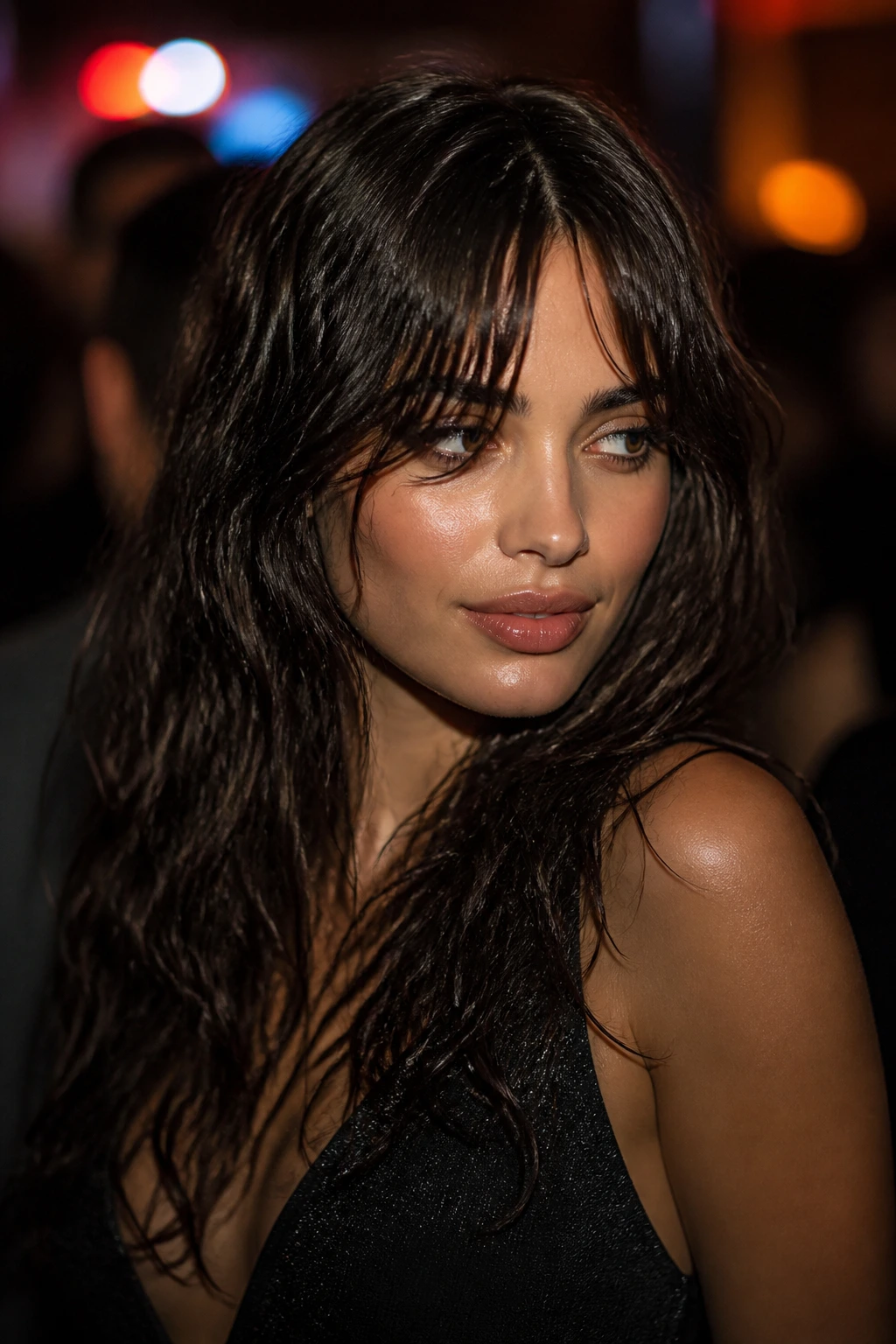
A wet-look wave can sound intimidating, but the soft curtain fringe keeps it wearable. Without that face-framing shape, the style can read hard or too editorial for daily life.
The key is restraint. Use gel or a wet-look styling cream on the midlengths and ends, then leave the fringe softer and less coated so it still moves. If you slick the bangs down too much, the whole haircut loses the very thing that makes curtain bangs useful: the little opening at the center and the gentle bend along the face.
This works especially well for a night out or a fashion-forward event because the contrast is interesting. The rest of the hair is sleek and shiny, while the fringe stays airy enough to keep the face visible. That mix is what gives the style its shape.
If you’re trying it at home, start with less product than you think. You can always add a touch more to the ends. Pulling product back out of the fringe is a nuisance, and it never looks quite the same afterward.
17. Romantic Updo With Floating Curtain Bangs
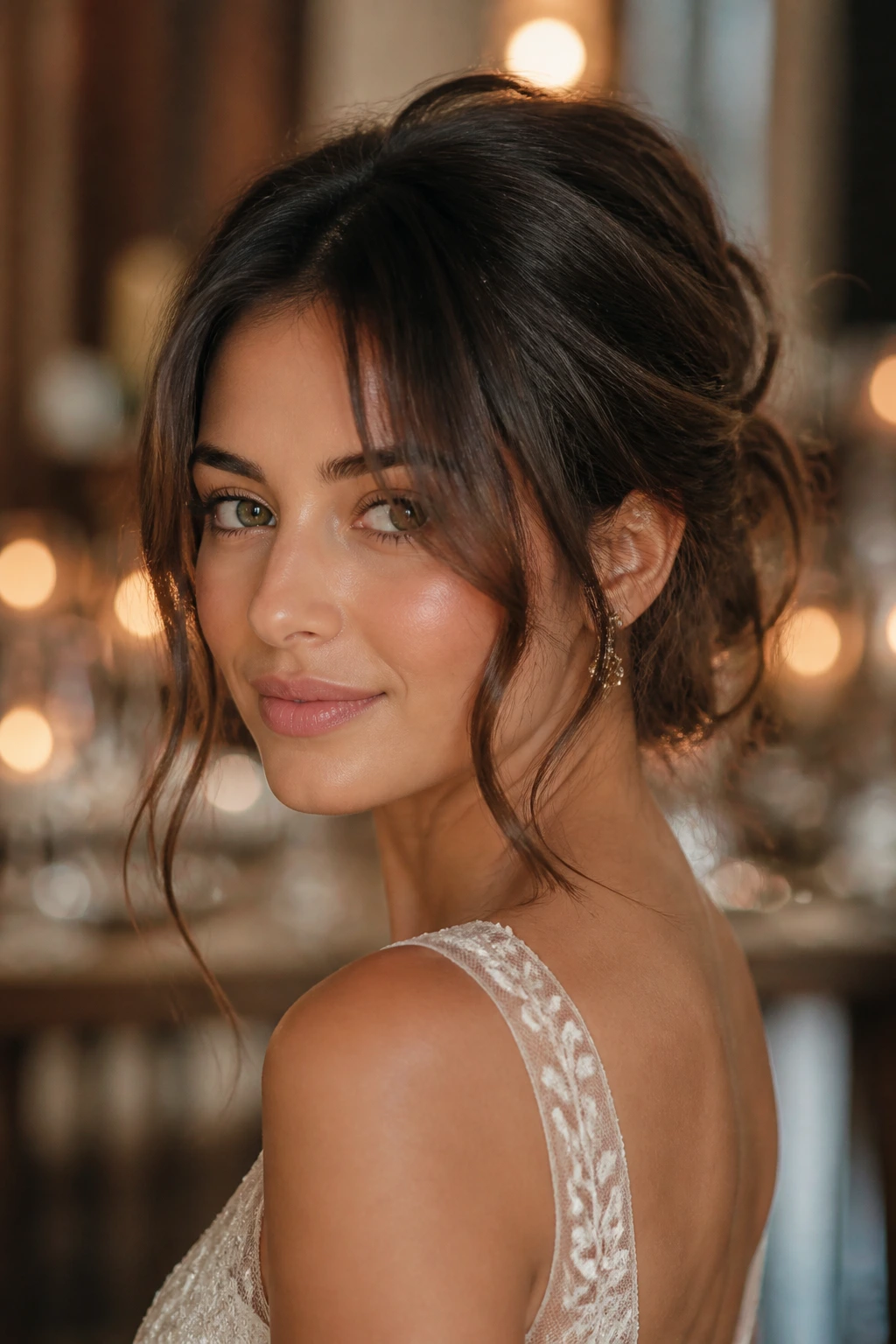
An updo can feel severe fast, especially when the hair is pulled cleanly away from the face. Curtain bangs solve that by leaving movement in front of the ears and around the cheekbones.
The updo itself should stay loose. Think low chignon, messy knot, or softly pinned twist rather than a tight ballerina bun. The fringe and a few face-framing pieces do the softening, so they need a little room. A blunt, pinned-back finish with curtain bangs can work, but it’s the loose version that keeps the style from looking over-structured.
I like this for weddings, dinners, or any occasion where you want the front of the hair to stay in place while the back feels undone. The bang can be heat-styled with a bend away from the face, then left to settle naturally with the rest of the updo.
The one thing to avoid: over-pulling the crown. A little lift is fine. A stretched scalp line is not.
18. Layered Midlength Waves With Curved Curtain Bangs
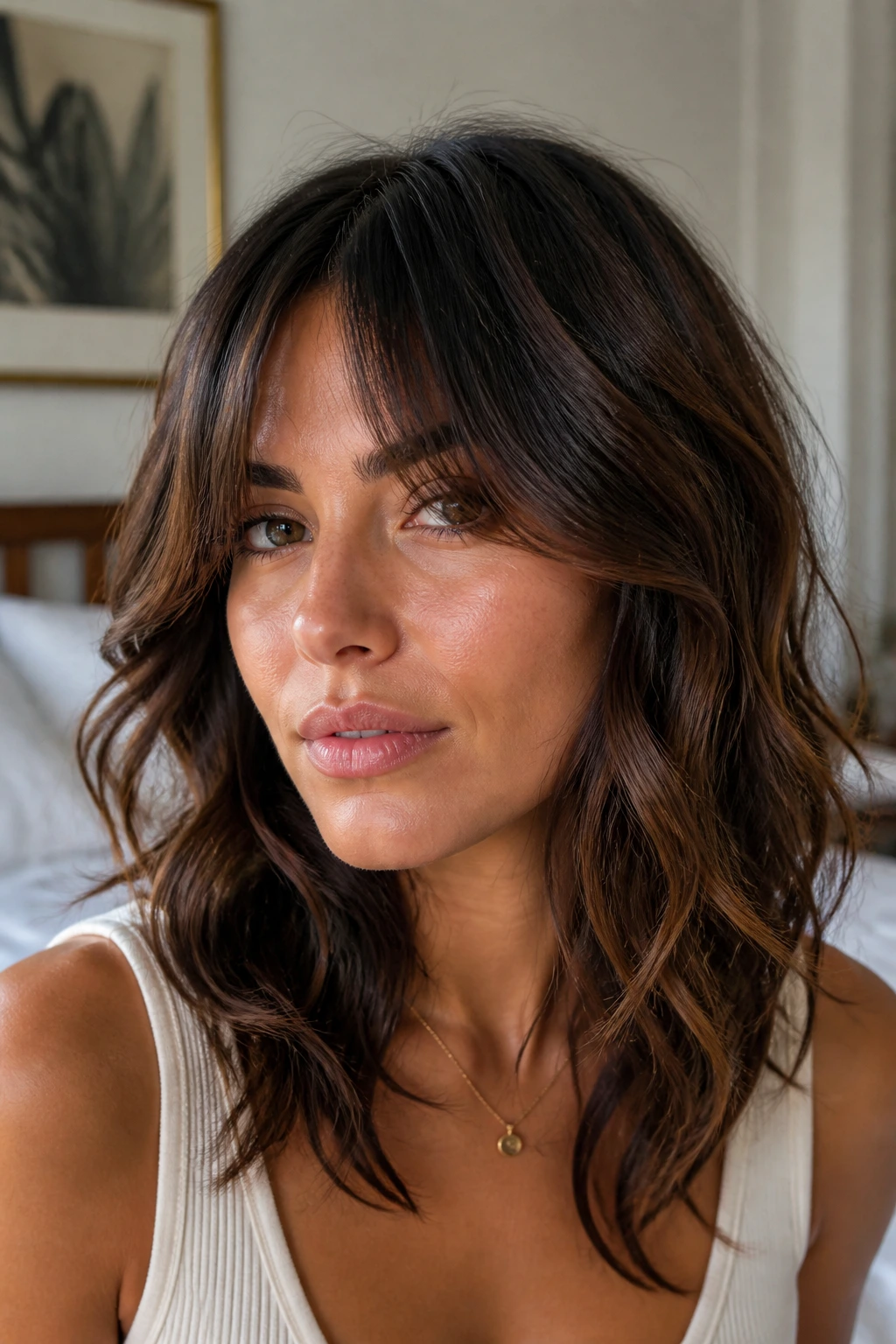
This is probably the most useful everyday version of the whole group. Midlength layers give the wave room to move, and the curved curtain fringe connects everything without trying too hard.
The cut should follow the way your hair naturally falls. The fringe can start a little shorter in the center, then curve into longer side pieces that blend into the layers at the jaw or collarbone. That curve is what gives the style its easy feel. Nothing looks chopped or boxed in.
It works across a broad range of wave patterns. Fine waves get shape without too much bulk. Denser waves get direction without losing body. If you want one cut that can be air-dried, blown out, pinned back, or clipped into a half-up style, this is a smart place to land.
There’s a reason this shape keeps showing up in good salons. It does not ask for much, and it gives back a lot.
Why Curtain Bangs and Waves Work So Well Together
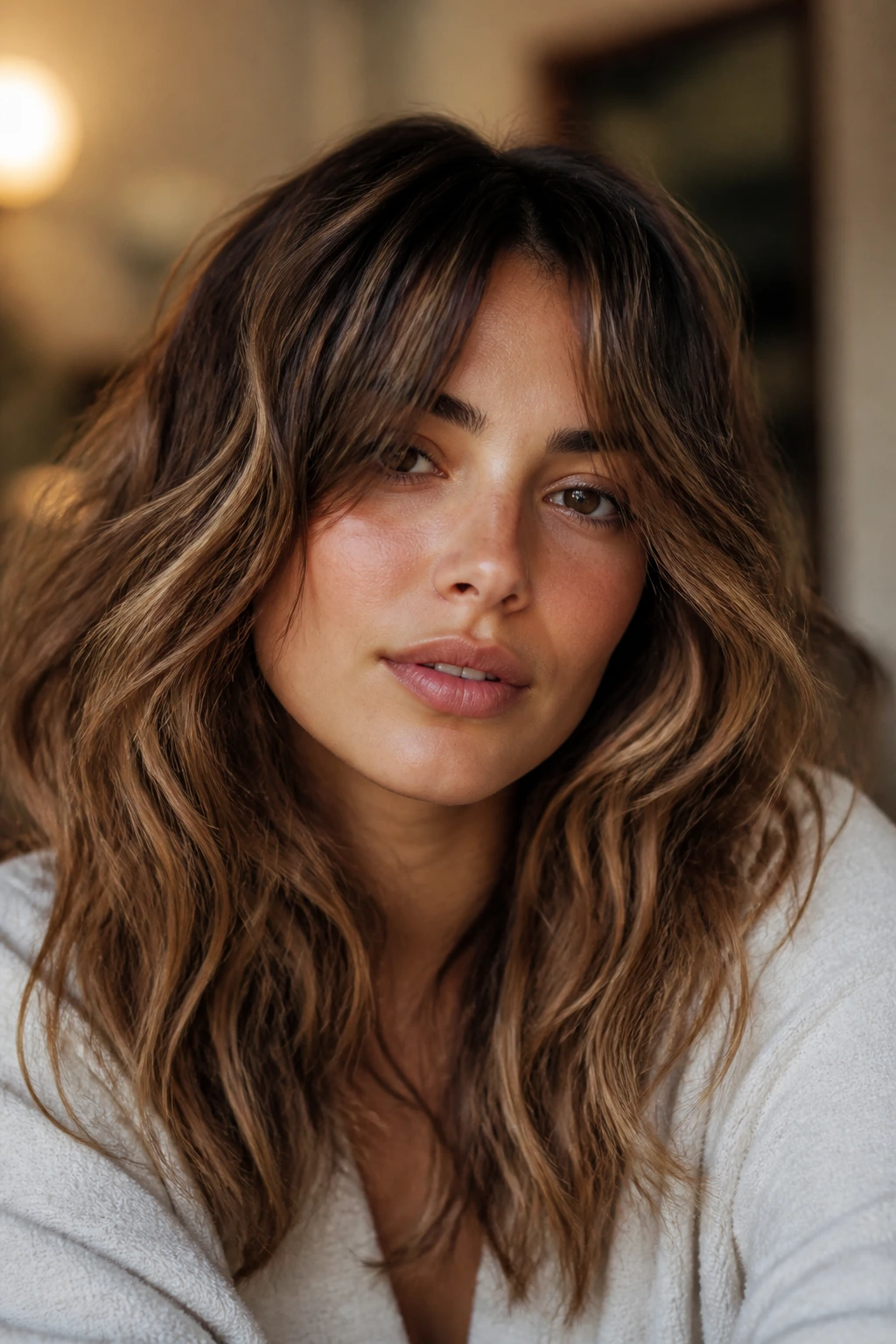
The best curtain bangs on wavy hair do one thing very well: they let the hair bend where it already wants to bend. That sounds obvious, but it’s the reason the style succeeds so often. A wave wants softness and room. A curtain fringe gives both.
The center opening is doing more work than people think. It breaks up the forehead, narrows the front view of the hairstyle, and keeps the eye moving down toward the cheekbones and the ends. That matters most on days when the rest of the hair has a little frizz or the roots are not freshly blown out. The fringe covers the transition, so the style still looks finished.
There’s also the grow-out factor, which is one of the real reasons this combo has lasted. Curtain bangs don’t turn ugly in the same dramatic way a blunt fringe can. They can slide longer, tuck into layers, or move into a side sweep without a hard line showing up across the face. That makes them one of the few fringe styles that can stay in a haircut for a long stretch without becoming annoying.
Choosing the Right Cut for Your Texture and Face Shape
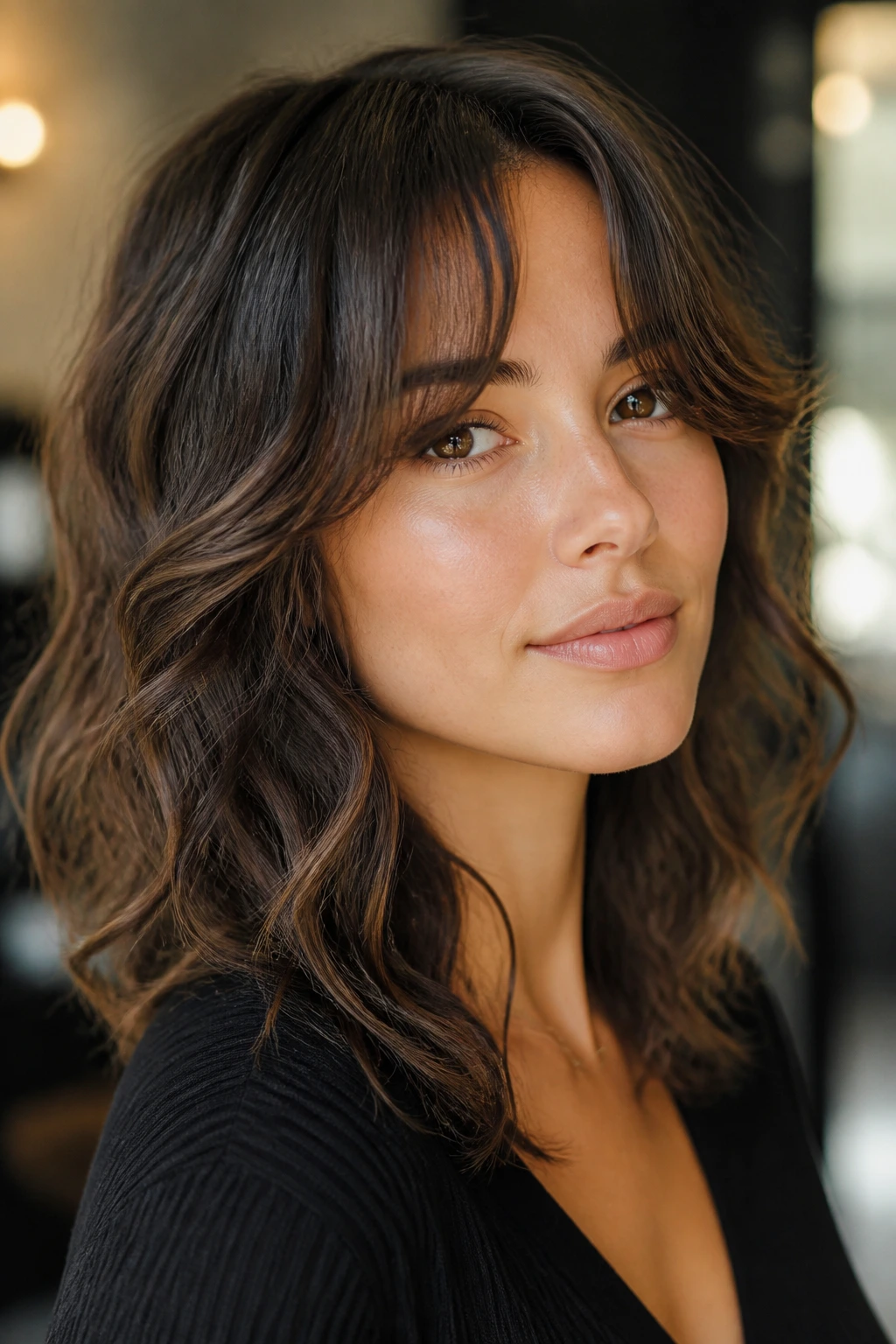
The shape of your wave matters more than a trend photo does. Fine 2A waves usually need a little less layering and a longer curtain fringe so the front doesn’t look stringy. Medium 2B waves can carry most of these styles well, especially the lob, shoulder-length waves, and the polished blowout shapes. Denser 2C waves often look best with more internal layering so the bulk doesn’t collect at the sides.
Face shape plays a role too, but not in some dramatic, rigid way. Rounder faces often benefit from longer front pieces that start near the cheekbone or jaw, because that draws the eye downward. Square jaws usually soften nicely with a fringe that opens early and feathered sides that curve away from the face. Heart-shaped faces tend to like a slightly fuller fringe that balances a narrower chin. Oval faces get away with almost anything, which is rude but true.
The salon conversation matters. Ask where the shortest point of the curtain bang will land, where the longest side pieces will sit, and whether the stylist is point cutting or leaving the ends heavier. Those three details change the whole result. Also, mention how you wear your hair most days. If you air-dry, the cut should be different from a blowout-first cut. Tiny difference. Huge payoff.
The Tools That Make These Styles Behave
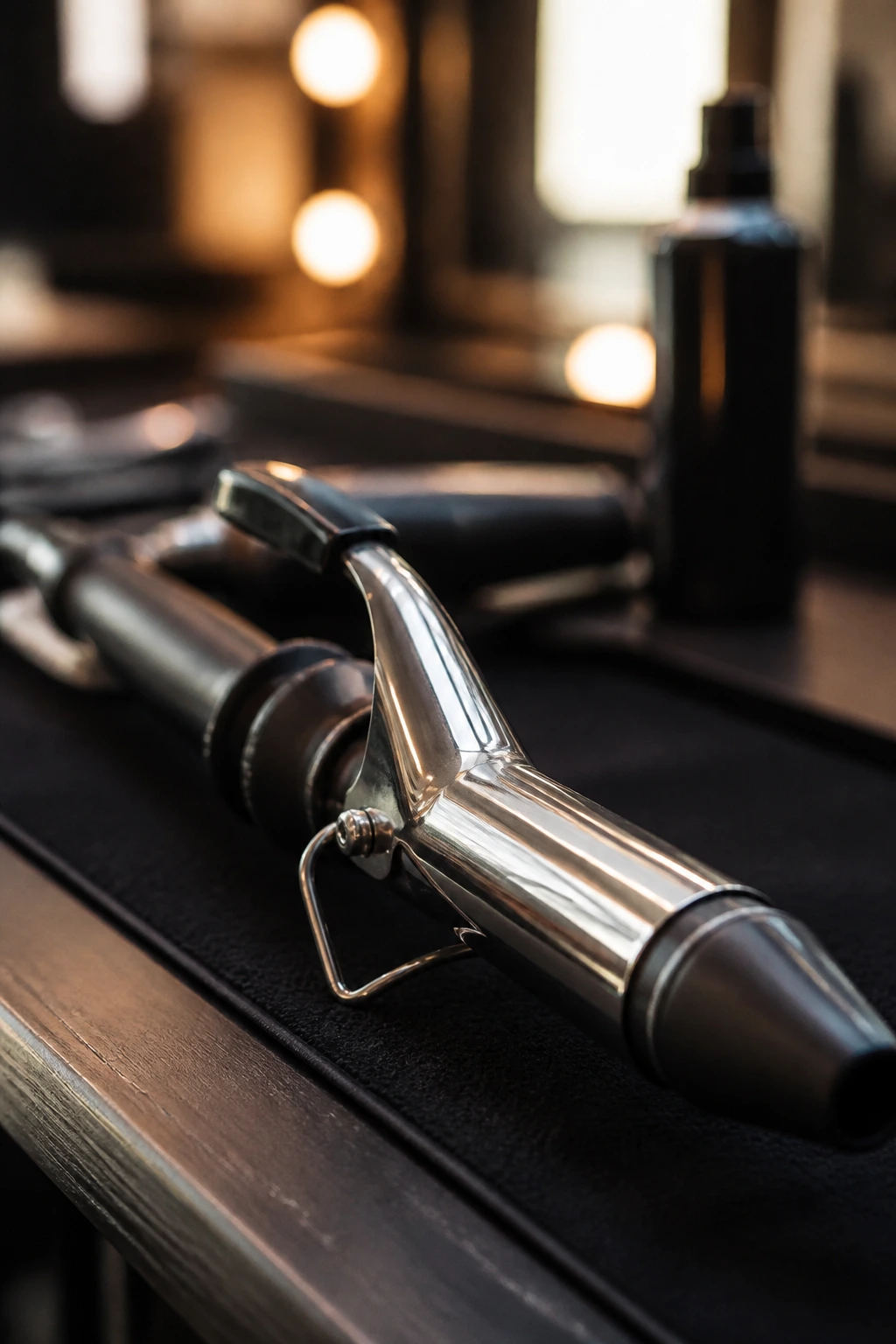
A good hairstyle isn’t only about the cut. It’s also about the handful of tools you reach for when the hair decides to act up.
-
Blow dryer with a concentrator nozzle: The nozzle gives you more control over the fringe and helps keep the wave from puffing out at the root.
-
1-inch curling iron or wand: Best for tighter bend and shorter styles like lobs, bobs, and shag cuts. It gives enough shape without creating giant loops.
-
1.25-inch to 1.5-inch barrel iron: Better for long waves and polished blowouts where you want a softer curve.
-
Round brush, medium size: Useful for curtain bangs and blow-dried bends. A brush that’s too large can flatten short fringe pieces.
-
Duckbill clips or sectioning clips: These are small but useful, especially when you want the fringe to cool in the right direction.
-
Velcro rollers: Great for bouncy curtain bangs and top sections that need lift without too much heat.
-
Wide-tooth comb and tail comb: One for detangling, one for clean parting. Keep both near the mirror.
-
Heat protectant: Non-negotiable if you use a wand or iron. The product matters less than the habit.
-
Light mousse or root lift spray: Helpful for fine or flat hair that needs support at the crown.
-
Texturizing spray or dry shampoo: Good for second-day shape, especially on shaggy, beachy, or half-up styles.
How to Wear These Looks Without Fighting the Fringe
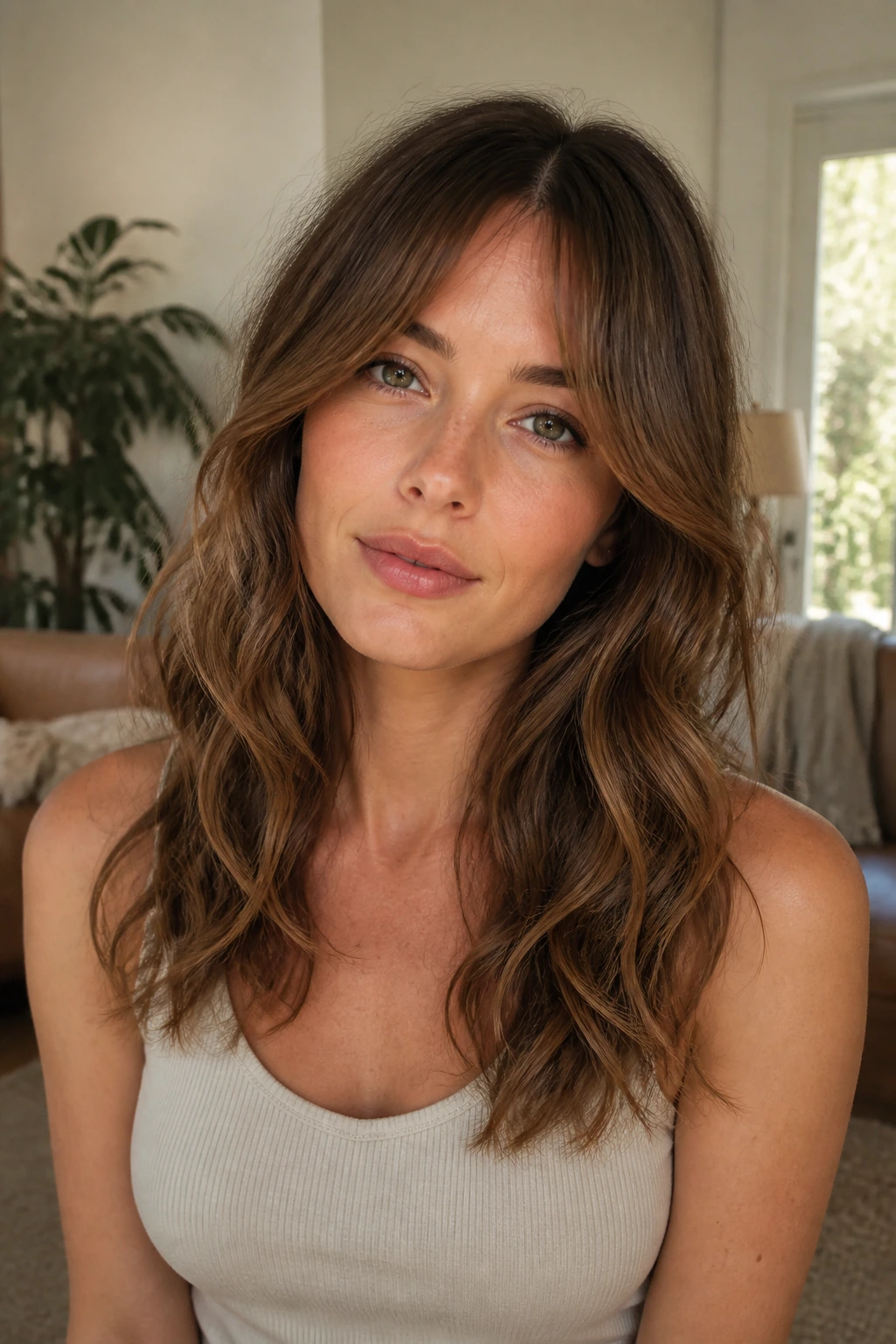
Presentation: Keep the center open and the front pieces soft. If the fringe looks too crisp or too flat, it stops reading as curtain bangs and starts reading as a chopped section of hair.
Accompaniments: Small hoops, clean collars, and simple clips work well because they leave room around the face. If you like accessories, use them to support the shape, not crowd it. A barrette tucked behind one ear can make a wave look cleaner in five seconds.
Scale: For a bigger look, use a round brush at the root and a larger barrel through the mids. For a quieter look, let the wave settle naturally and brush out the ends once. The same cut can handle both moods.
Occasion Pairing: Soft shoulder-length waves and collarbone cuts work for everyday wear. Polished blowout waves, glossy glam waves, and romantic updos fit dressier moments. The shag, wolf cut, and textured wet-look versions carry more edge and look strongest when the rest of the outfit stays simple.
Extra Styling Tweaks That Make the Shape Better
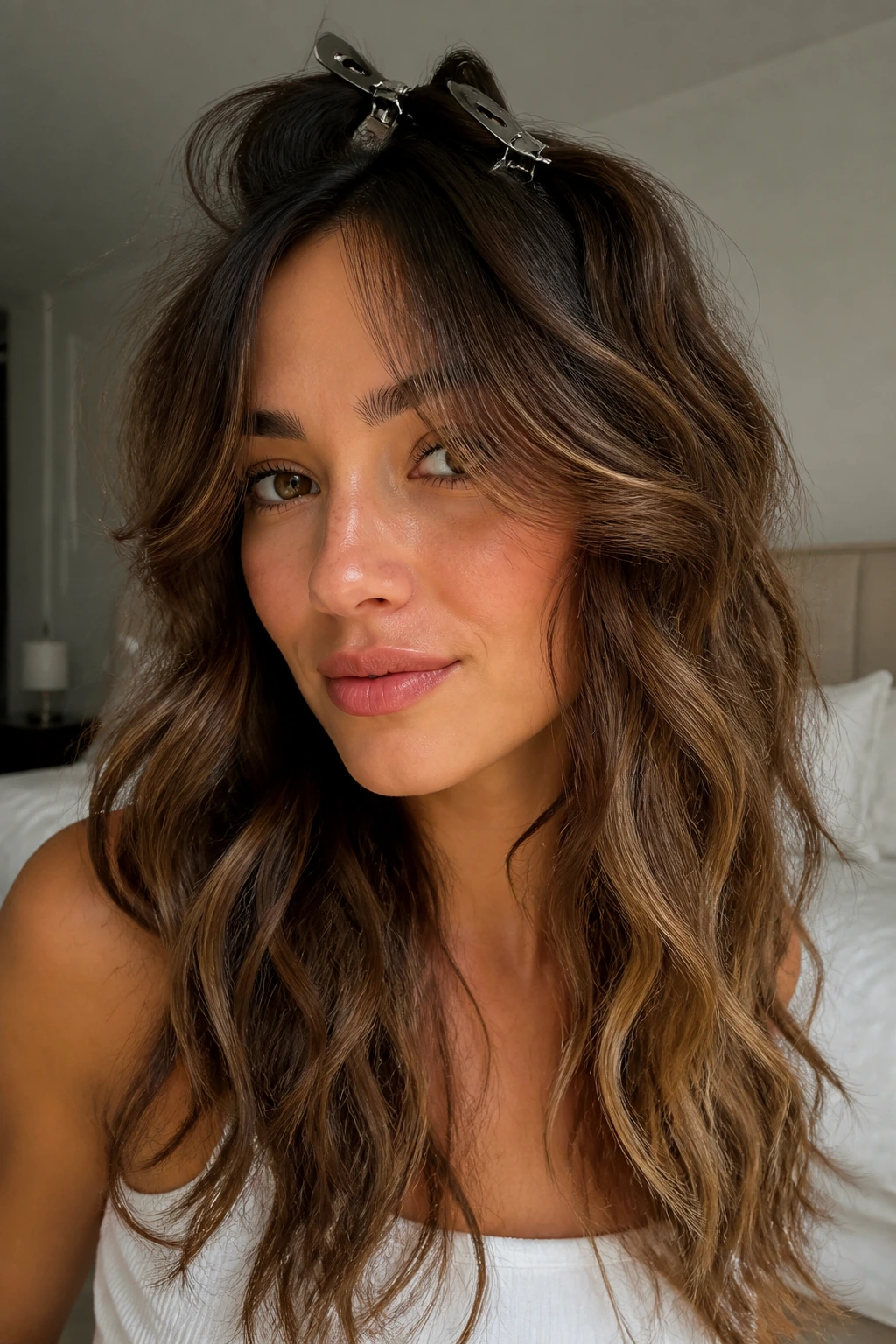
Root Lift: Clip the curtain bangs at the root for five to ten minutes while the rest of the hair cools. That tiny pause keeps the front from sinking into the forehead before you even leave the house.
Wave Direction: Alternate the direction of your waves away from the face and toward the face only where the shape needs it. A little irregularity keeps the style from turning into a row of matching curls.
Texture Control: Use cream or oil on the ends only. If the product creeps into the fringe, the bang separates faster and the face-framing shape loses lift.
Time Saver: On rushed mornings, focus on the fringe and the top two front sections. Those pieces do more visual work than the back half of the head. Mess with the front. Leave the rest a little imperfect.
Common Mistakes That Flatten Waves and Bangs
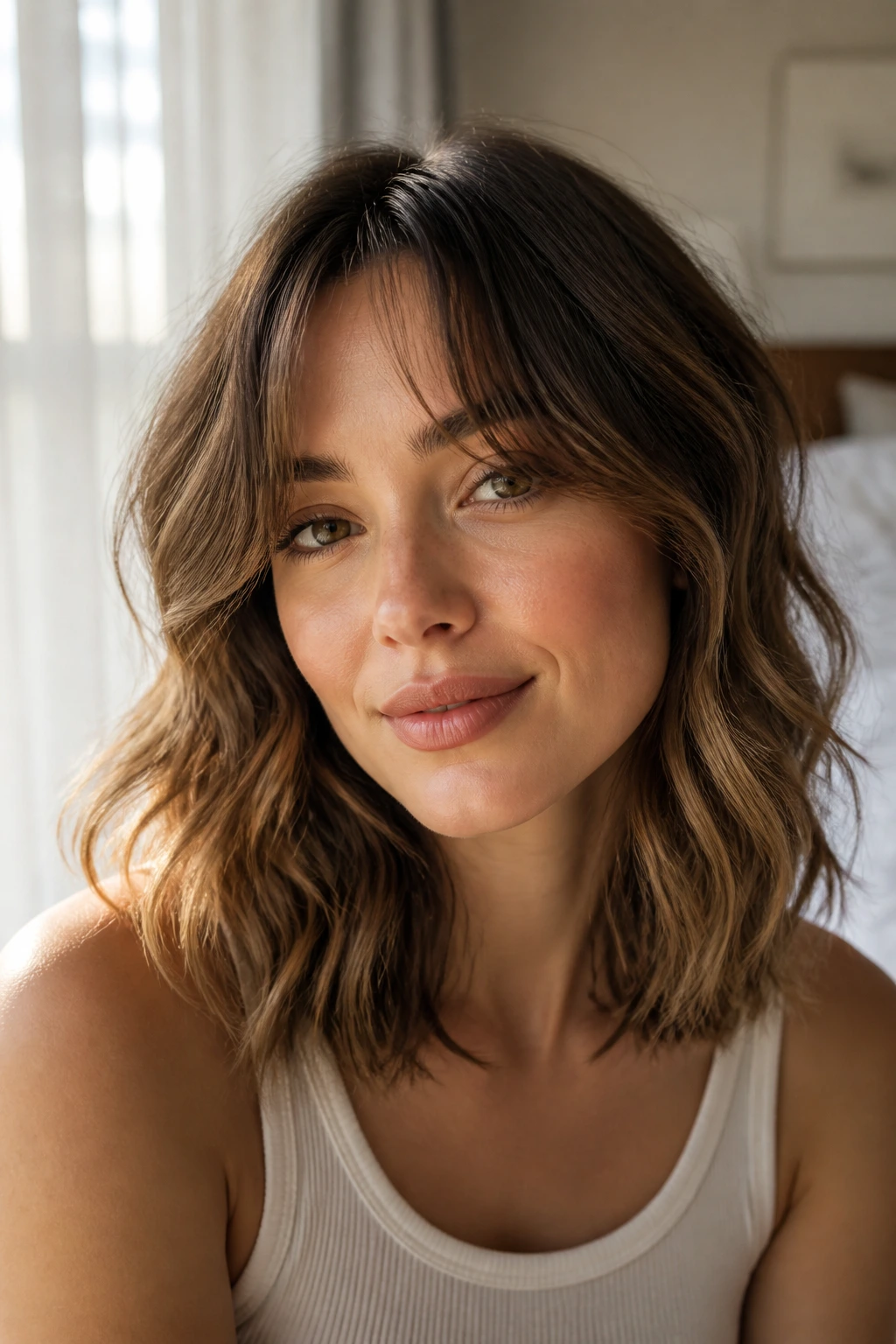
The first mistake is cutting the fringe too short. Curtain bangs need room to split and fall, and a center piece that sits too high on the forehead often springs up and looks awkward. The fix is simple: keep the shortest point longer than you think you need, especially if your hair is wavy or has a strong cowlick.
Another problem is over-layering the crown. When the top gets too thinned out, the wave loses lift and the fringe starts to hang without support. You’ll see it as flat roots and a front section that separates unevenly. Ask for movement, not demolition.
Heavy product is its own trap. A thick cream or a generous swipe of oil can make the front look damp and stringy by midday. Use product with a light hand, and keep it off the roots and fringe unless the style is meant to be glossy.
There’s also the same-curl-every-piece mistake. If every wave bends in the same direction, the hairstyle can look stiff and pageant-like instead of soft. Alternate directions, brush some sections out, and let a few strands misbehave a little.
Finally, people ignore the hairline pattern. Cowlicks near the part or temple can pull the fringe apart in a way no styling iron will fully fix. Dry the bangs first, clip them in the intended direction, and let them cool there. That small ritual saves a lot of frustration.
Variations and Adaptations to Try
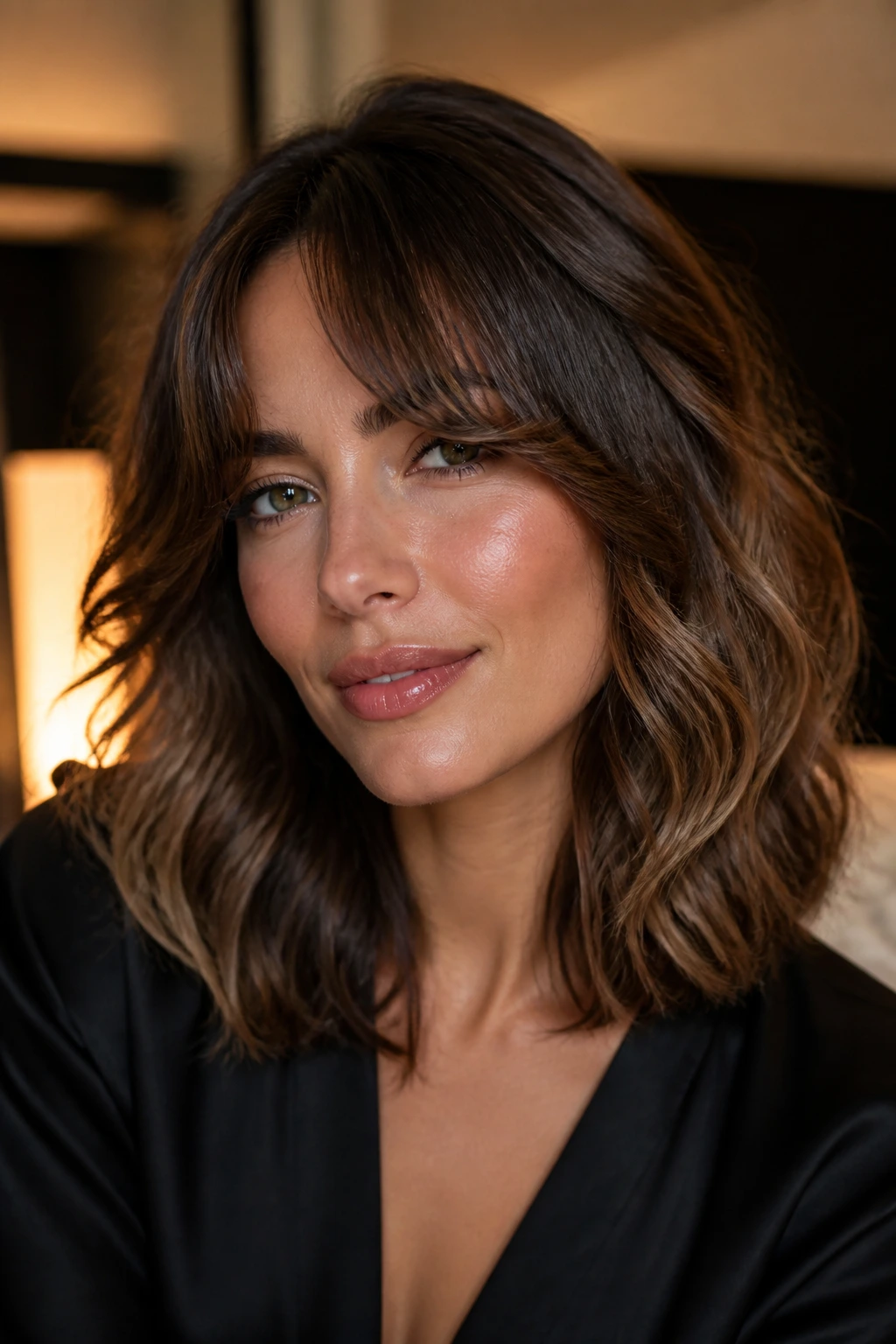
Fine-Hair Lift-Off: Use a mousse at the roots, keep layers light, and choose a lob or shoulder-length cut instead of long heavy waves. The fringe should stay a touch longer so it doesn’t float away from the face.
Thick-Hair Soft Landing: Ask for internal layering and a slightly heavier curtain fringe so the cut can hold shape without puffing out. This works especially well in shag, wolf cut, and long layered styles.
Heat-Free Bend: Set the fringe with clips while the hair air-dries, then scrunch the mids with a light cream. This is a good fit if you want movement without reaching for a wand every morning.
Glossy Evening Finish: Brush the waves into broad bends, smooth the ends with a tiny bit of serum, and keep the fringe cleaner and more defined. This version gives the style a sleeker, dressier mood.
Grow-Out Rescue: If the bangs are in the awkward middle stage, push them into a deeper side sweep or blend them into half-up styles. Curtain bangs are one of the few fringe shapes that can hide a growing-out phase instead of announcing it.
Keeping Curtain Bangs Fresh Between Washes
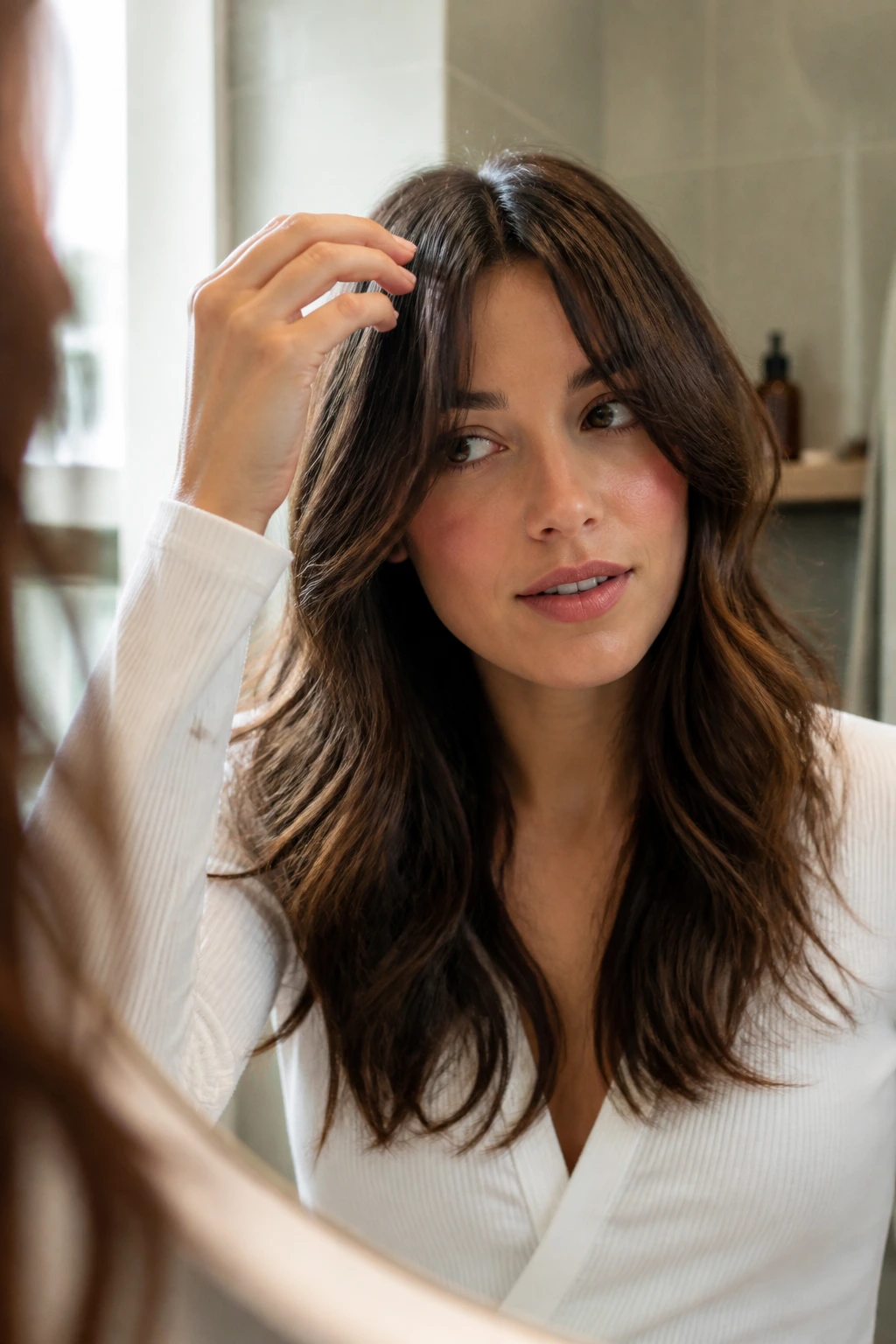
Curtain bangs show oil faster than the rest of the head. That’s normal. The hair sits on the forehead, picks up skin oil, and gets touched all day, so it needs more attention than the mids and ends.
A light dry shampoo at the roots on day two can buy you time, but don’t wait until the fringe looks saturated. A small amount applied early keeps the front from collapsing. If the wave at the ends needs a lift, mist a little water or leave-in spray onto the mids, scrunch once, and let it dry in air.
Trims matter too. For most wavy curtain bangs, every 6 to 8 weeks keeps the shortest pieces in place without letting the whole fringe drift into the eyes. The rest of the haircut can go longer, especially if the shape is layered and forgiving. If you’re between trims, a round brush and a quick bend away from the face can keep the front looking intentional.
At night, clip the fringe loosely or sweep it into a soft bend before bed. A silk pillowcase helps, but the real fix is keeping the front from getting crushed for eight hours straight.
Questions People Ask About Wavy Hairstyles With Curtain Bangs
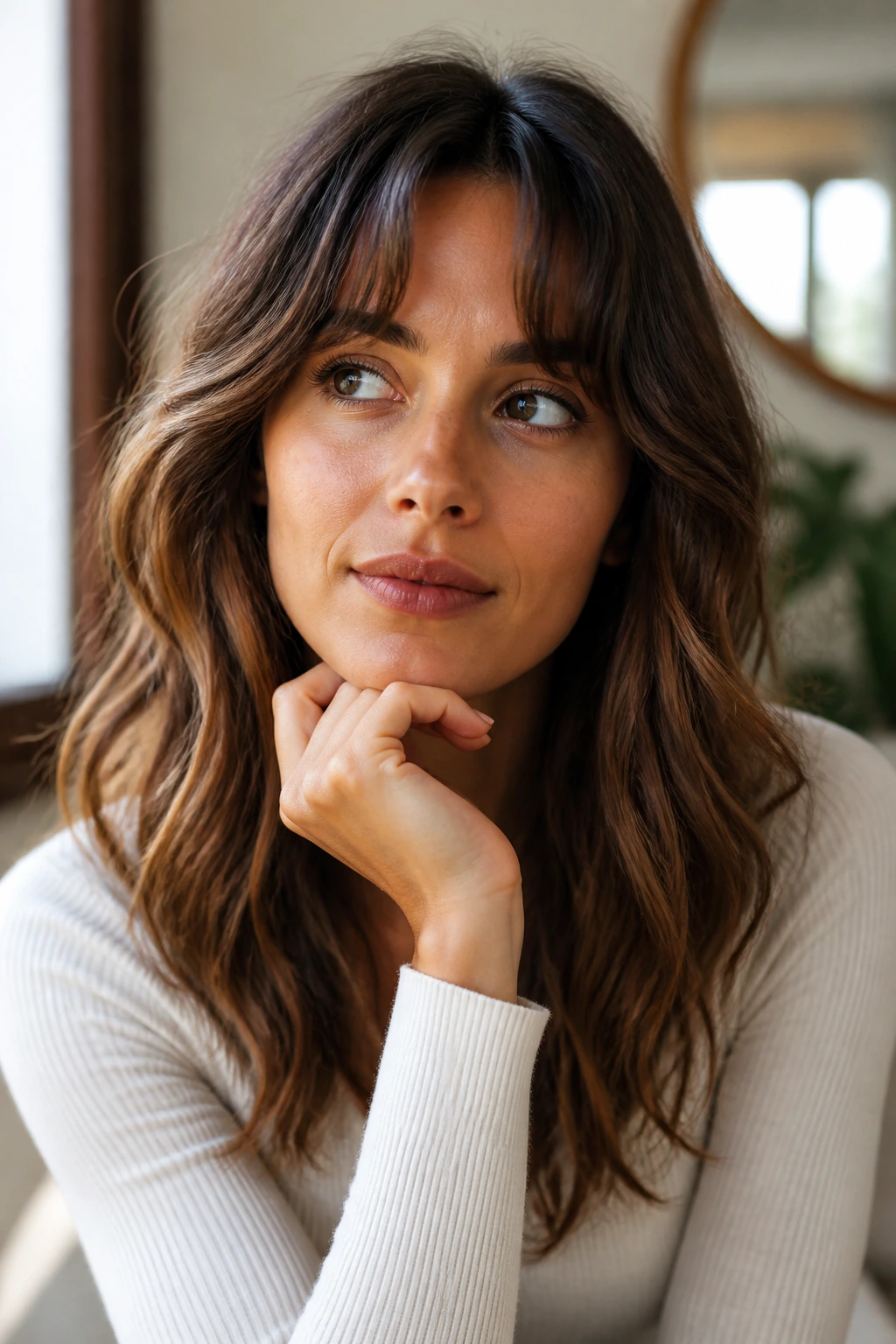
Do curtain bangs work on fine wavy hair?
Yes, but the cut needs restraint. Fine hair does better with longer curtain pieces, softer layering, and a little root lift rather than heavy debulking. Too many short layers can make the hair look sparse around the front.
What if my wave pattern is more curly than wavy?
It can still work, but the fringe usually needs a curl-specific shaping plan. A dry cut or curl-by-curl detailing helps the bang land where it should instead of springing up too high.
How short should curtain bangs be?
Short enough to frame the eyes, not so short that they sit in the middle of the forehead. For many people, that means the shortest center point lives around the bridge of the nose or a touch above the brows, with the sides getting longer toward the cheekbone.
Can I air-dry curtain bangs?
Yes, though the front often needs a clip or two while it dries so it opens in the right direction. If your bangs dry flat or split oddly, a quick touch with a round brush usually fixes the shape.
How do I stop my bangs from separating into weird strings?
Use less product near the fringe, dry the roots first, and let the bangs cool in the direction you want. A little separation is good. Stringy clumps are a sign that the product is too heavy or the hair was touched too early.
Are these styles hard to grow out?
Not really. That’s one of the big selling points. Curtain bangs can blend into face-framing layers or be pushed into side sweeps as they get longer, which makes them far easier to live with than a straight-across fringe.
Can I wear these styles with glasses?
Absolutely. Just keep the shortest fringe point long enough that it doesn’t sit on the frames. The soft opening at the center often works better with glasses than a blunt bang because it leaves room around the brow line.
Which style is easiest for busy mornings?
The shoulder-length waves, the collarbone cut, and the low ponytail are the quickest to live with. They tolerate air-drying, second-day texture, and a fast fringe refresh without needing a full styling session.
The Shape That Keeps Its Manners
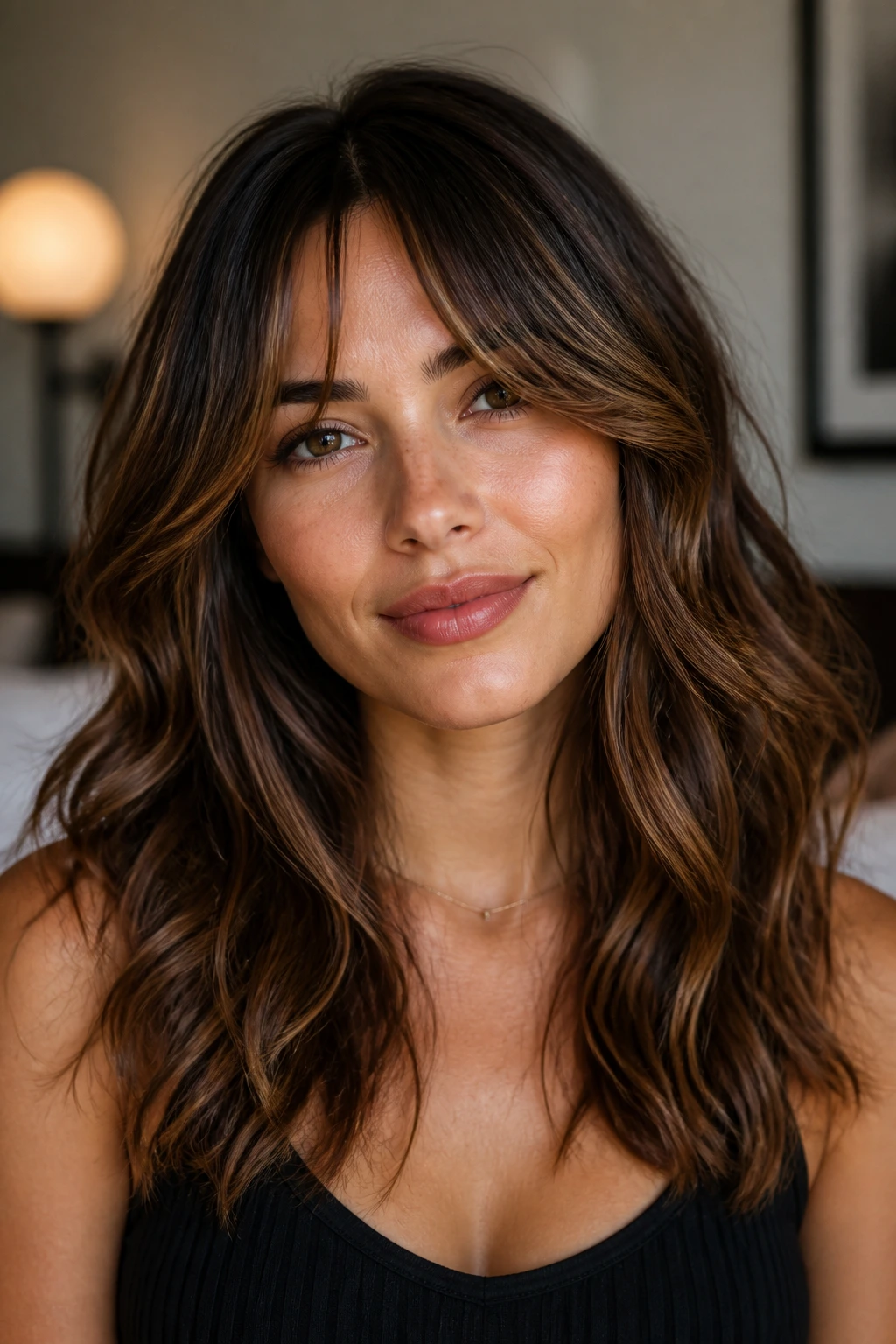
The nice thing about curtain bangs on wavy hair is that they rarely ask for a perfect morning. They can be airy, polished, shaggy, soft, or a little undone, and the front still does the job of framing the face without feeling fussy.
That flexibility is the reason these 18 looks stay useful. A good fringe on wavy hair should work with a blowout, a lazy air-dry, a low ponytail, and the kind of day when the ends are doing their own separate thing. If a style can survive those shifts and still look like it belongs on your head, that’s the one worth keeping around.
If you want a fringe that can live through a ponytail, a wave cream, and an unpredictable afternoon without turning into a problem, curtain bangs are the version I’d pick.
