



Short curls have a way of exposing a bad cut fast. A bob that looked tidy in the chair can spring into a triangle, a shelf, or a puffed-out bell the minute it dries. That’s why bob haircuts for short curly hair live or die on shape, not just length.
The good ones work with shrinkage instead of pretending it doesn’t exist. They leave room for the curl to bounce, but they keep enough perimeter to stop the whole head from turning into a soft cloud with no outline. When that balance is right, the haircut does half the styling for you.
Some of the cuts below are crisp and polished. Some lean shaggy and loose. A few are bold enough to make strangers stare for a second longer than usual. The common thread is simple: each one gives curls a shape they can actually hold when they dry.
Why This Collection Feels Different
-
Shrinkage-aware lengths: Every cut here is chosen with dry curl length in mind, so the bob still lands where you expect after air-drying or diffusing.
-
Texture-specific shapes: Thick curls, loose bends, and tight coils all behave differently, and the silhouette changes with that. A blunt edge on 2C waves reads very differently than the same edge on 3C curls.
-
Salon language you can use: Words like graduation, weight line, internal layers, nape taper, and fringe matter here because they tell your stylist where the shape should sit.
-
Low-maintenance and high-style options: Some of these cuts need little more than mousse and a diffuser. Others ask for regular edge-ups, which is the trade-off for sharper geometry.
-
Face-framing choices: Round faces, long faces, strong jaws, and softer cheekbones all show up differently once the bob hits the chin, jaw, or neck.
1. Chin-Length Ringlet Bob
A chin-length ringlet bob is the cleanest place to start because it gives the curl a clear line to live on. When the ends sit right at the jaw, the haircut feels deliberate instead of accidental, and ringlets get to stack on themselves without dragging the whole shape down.
Why it works on curls
This cut works best on 2C to 3A hair with springy bends that need a little structure. Ask for a blunt perimeter with only a touch of point-cutting at the very ends—too much texturizing at this length can make the line look frayed instead of crisp.
Leave the front a half inch longer if your curls shrink hard. That tiny bit matters. A bob that hits the chin when wet can bounce up toward the cheekbone after drying, and that can change the whole mood of the cut.
- Best for: Oval, heart, and slightly square faces.
- Ask for: A dry check at the end so the stylist can see where the ringlets actually land.
- Avoid if: Your curls are very uneven from side to side and you do not plan to style them regularly.
One good side part keeps it from looking too neat. Too neat is the enemy here. You want order, not stiffness.
2. Rounded Halo Bob
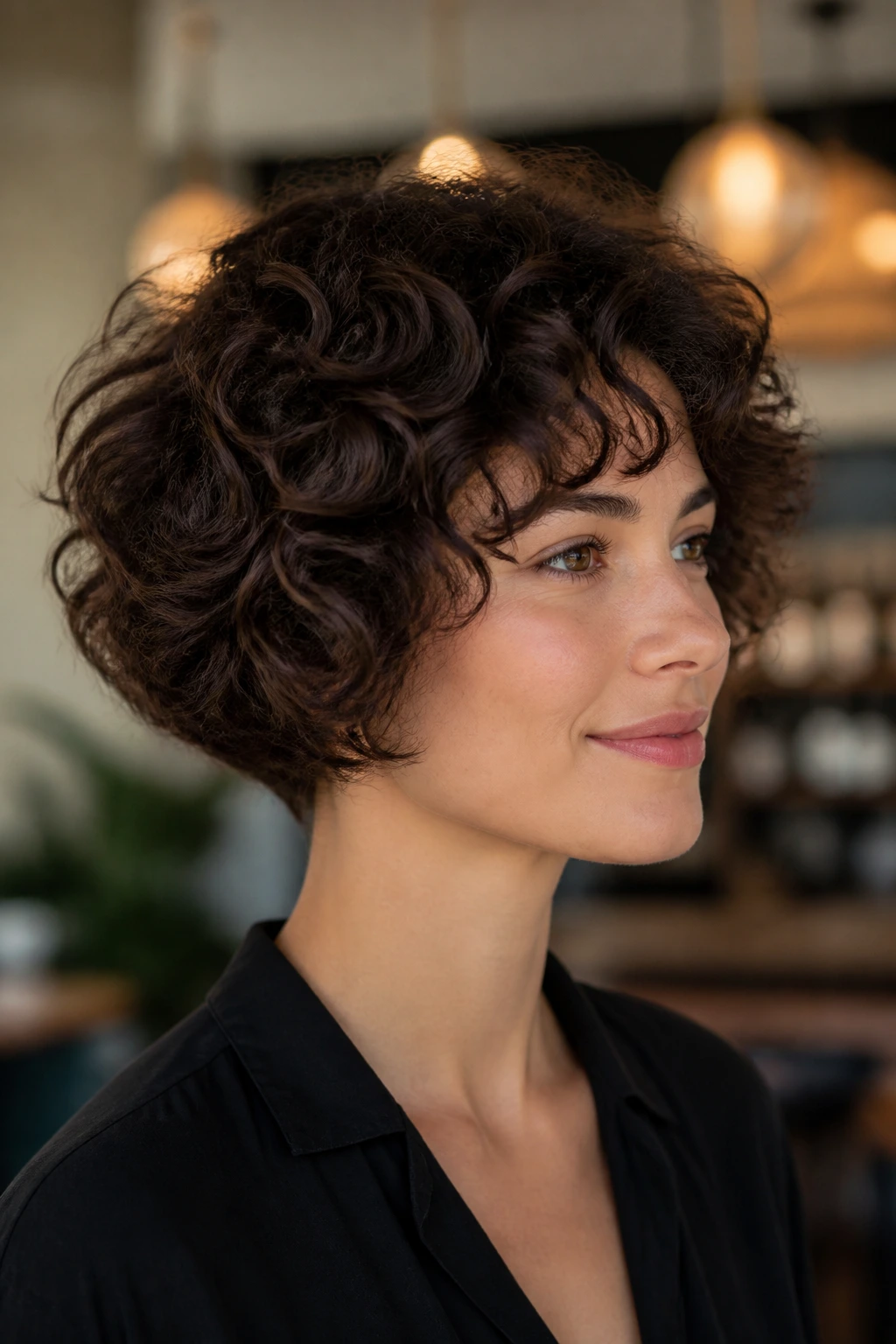
A rounded halo bob is the one I reach for when someone says, “I want volume, but I do not want the triangle.” The shape follows the head instead of fighting it, so the sides puff in a controlled way and the crown keeps a soft dome.
The trick is in the layering. Ask for rounded layers that follow the curve of your head, not short chopped layers that kick out at random. On dense curls, that distinction is huge. The wrong layer placement can make the side profile balloon out faster than you expect.
This cut shines on 3A to 3C curls and on anyone with thick density who needs shape more than length. Diffuse at the roots first, then tip the head side to side only at the end. That keeps the halo from going flat at the crown.
The shape feels a little vintage, a little sculpted, and a lot more intentional than a loose, one-length bob.
3. Layered Bob for Thick Curls
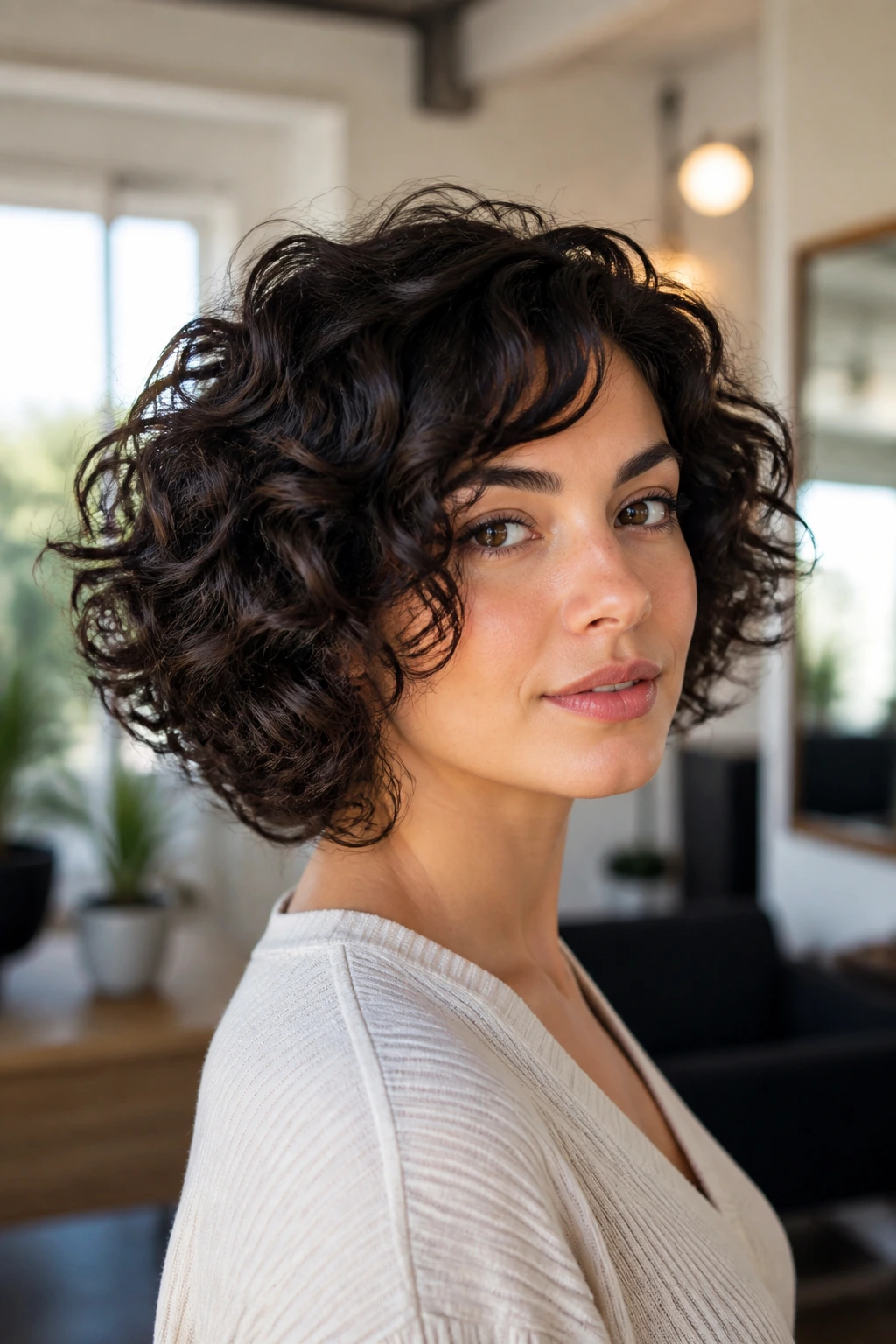
Thick curls need room, but they do not need to be thinned into submission. That is the mistake. A layered bob for thick curls removes bulk where it counts while keeping the perimeter strong enough to hold the outline.
Ask for long internal layers rather than a stack of short ones. Internal layers take weight out from inside the haircut, which helps the curls fall in a cleaner way. Short layers near the top can look fluffy on day one and lopsided by day three.
This version suits people whose hair feels heavy around the nape or sides. It also works well if your curls clump nicely but collapse when the cut gets too heavy. A little air between the curls goes a long way.
The best result feels lighter, not smaller. That difference matters.
4. Blunt Curly Bob
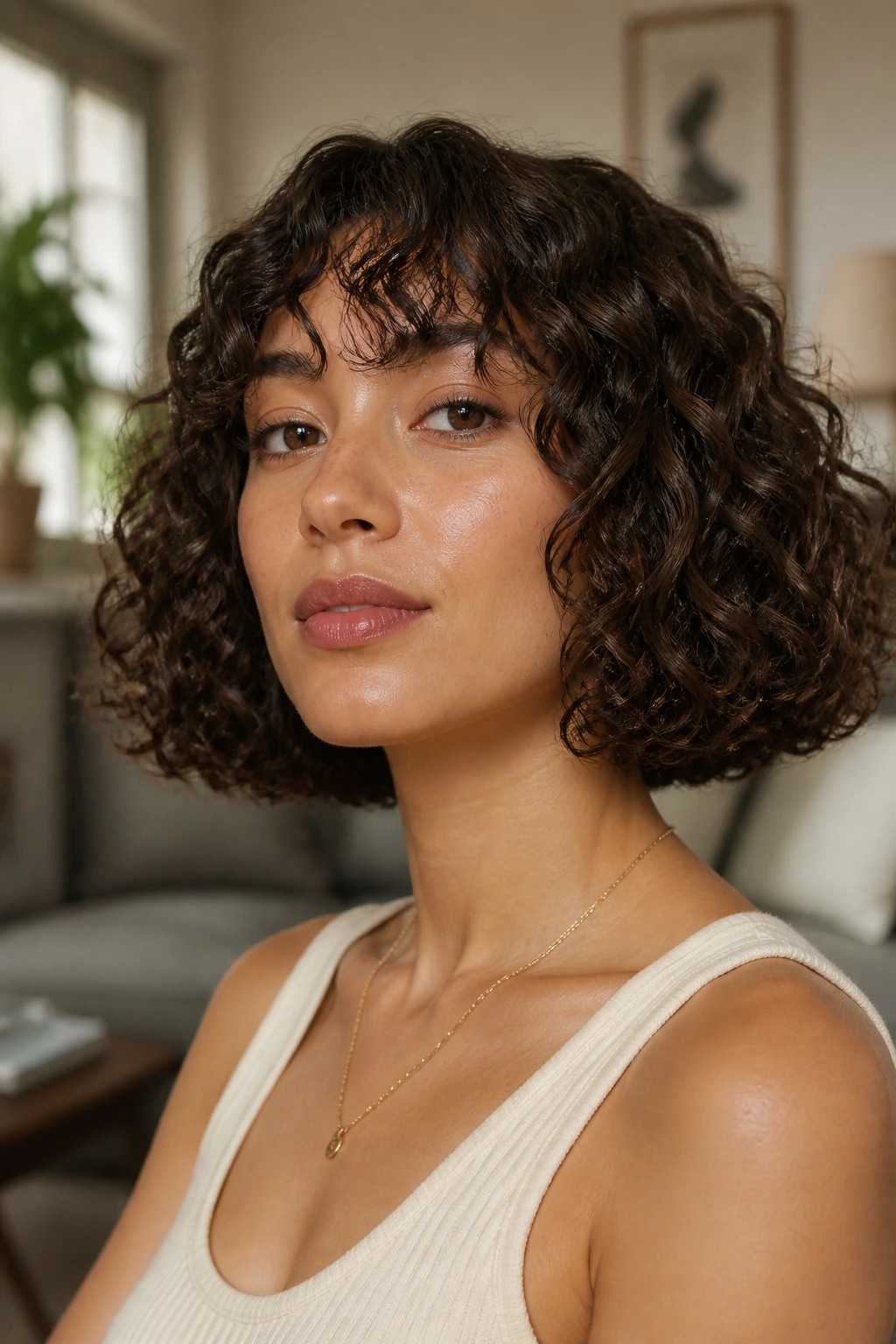
On loose curls and wave-heavy textures, a blunt curly bob can look sharper than almost anything else. The line is the point. The cut lands with a little more attitude because the ends don’t feather away into softness.
This style works best when the hair is cut at the chin or just below it, with minimal layering. Too much internal texture and the blunt effect disappears. You want the eye to read the edge first, then the curl pattern second.
It flatters fine to medium hair because the fuller perimeter makes the ends look denser. If your curls are looser on top and tighter underneath, the blunt line helps unify the difference. That alone can save you from the odd “top is airy, bottom is bulky” problem.
Keep styling simple here. A light cream, a small amount of gel, and a diffuser are enough. Heavy oils can blur the line, and this cut depends on the line.
5. French Bob with Soft Fringe

A French bob with a soft fringe gives short curls that slightly undone, just-left-the-café feel without trying too hard. The length usually skims the cheekbones or lips, and the fringe sits airy rather than heavy across the forehead.
The fringe needs to be cut with shrinkage in mind. Ask for it longer than you think you need, especially if your curls spring up fast. If it lands too high, the whole haircut can start to feel startled. Nobody wants that.
This cut flatters smaller faces and anyone who likes drawing attention upward. It also works well with glasses, because the fringe can break up the forehead without swallowing the frame line. If your hair tends to separate at the front, use a tiny bit of mousse and diffuse the fringe first.
The result is charming without looking precious. That’s the sweet spot.
6. Curtain Bang Bob

Curtain bangs on a curly bob give you softness at the front without closing off the face. The center split lets the curls fall around the cheeks and temples, which is useful if you dislike a heavy fringe sitting straight across the forehead.
This cut works best when the bang pieces are long enough to blend into the front layers. Short curtain bangs on curls can jump up in a way that feels abrupt. Longer ones, usually somewhere between the eyebrow and cheekbone when dry, melt into the rest of the cut more gracefully.
A lot of people choose this shape because it gives them options. Wear the bangs open. Push them wider. Let one side fall forward. That flexibility matters on short curly hair, where a fixed fringe can feel like a commitment on a bad humidity day.
If your curls are medium density and your face is narrow or longer, this is a strong choice. It softens the center without flattening the rest of the bob.
7. Side-Part Bob with Long Front Pieces

A side-part bob changes the whole personality of the haircut. Move the part, and suddenly the curl pattern reads more sculpted, the crown lifts faster, and the front pieces can angle around the cheeks in a much more flattering way.
Best face shapes for this cut
- Round faces: The diagonal part breaks up width without needing a dramatic asymmetrical cut.
- Heart faces: The longer front pieces balance a wider forehead.
- Square faces: The side sweep softens the jaw line a bit without hiding it.
Ask your stylist to keep the longest front pieces around the mouth or chin, depending on how much face-framing you want. If those pieces are too short, the side part loses its job and the haircut starts to feel boxy.
This is a sneaky-good option for anyone whose roots lie flatter on one side. A side part gives the bob a built-in lift, and short curls often need exactly that.
8. Asymmetrical Curly Bob

An asymmetrical curly bob is for people who want the haircut to look intentional from every angle. One side sits a little longer—usually by one to two inches—and the difference becomes part of the design, not a mistake.
The best asymmetrical cuts still keep the balance of the silhouette in mind. If one side is longer and the other is overloaded with volume, the haircut can drift into chaos. Ask for the weight to stay clean through both sides so the length difference reads as shape, not unevenness.
This works well on 3A to 3B curls with a clear spiral pattern. It also suits oval and heart-shaped faces because the diagonal line draws the eye downward in a controlled way. If you wear one ear exposed, this cut looks especially sharp.
It does ask for trims more often than a softer bob. The whole point is the line.
9. Inverted Bob
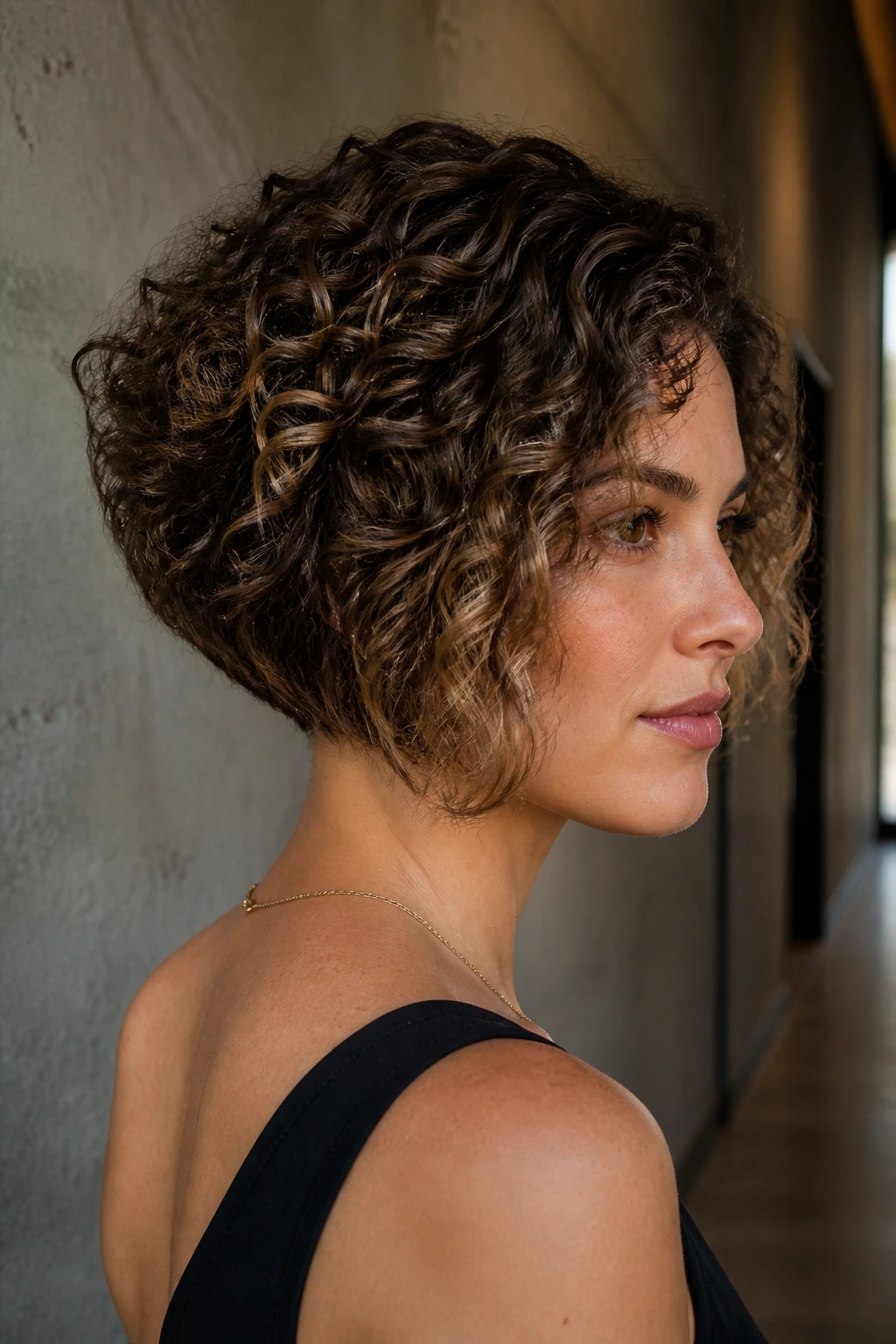
The inverted bob has a shorter back and longer front, which gives short curly hair a little lift without turning the whole cut into a stack. It is one of those shapes that looks polished even when the styling is minimal.
This is a smart pick if your curls get heavy at the nape and flatten there first. The shorter back keeps the neckline neat, while the longer front pieces keep the haircut from feeling too severe. Ask for the angle to be gradual unless you want a bold wedge effect.
I like this cut on medium-density curls because it creates movement when you turn your head. It also makes the side profile more interesting, which matters more than people think. A curly bob lives or dies on side view.
If your stylist calls it “graduated” instead of inverted, that’s fine. The goal is the same: lift in back, length in front, and no awkward shelf.
10. A-Line Bob
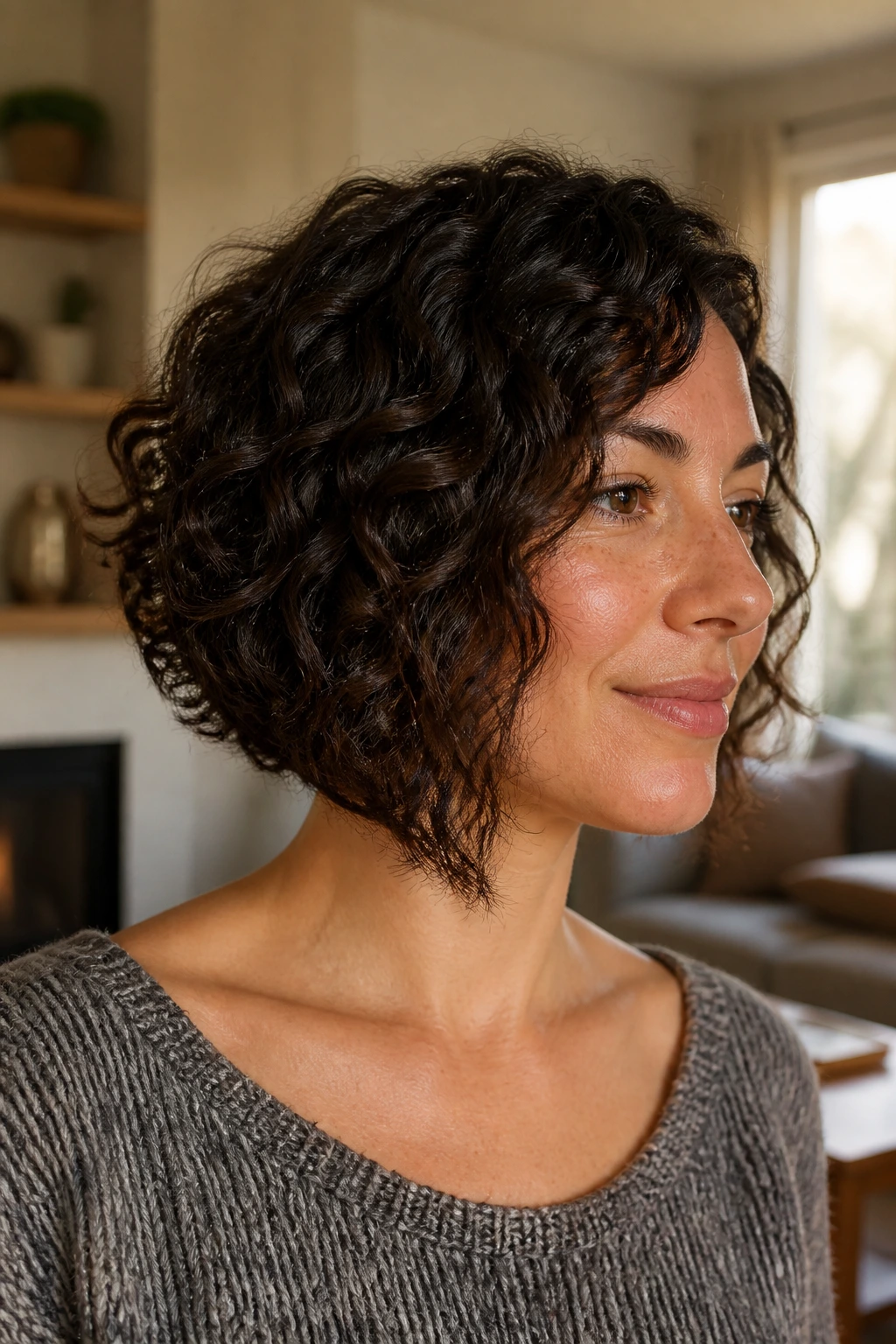
The A-line bob is the quieter cousin of the inverted cut. It still angles from back to front, but the line is smoother and less dramatic, which makes it easier to wear on loose curls and waves.
This shape is useful when you want the haircut to look put-together without shouting for attention. The front can skim the chin while the back sits a little shorter, and that slight tilt gives the curls room to settle. It’s a clean shape, not a fussy one.
Fine to medium curly hair tends to love this cut because the angle creates the illusion of density at the ends. That’s a nice trick when your curls are springy but not especially thick. Keep the layers modest so the outline stays visible.
If your curl pattern is uneven, an A-line bob can hide that better than a blunt cut. The slope distracts the eye in the right way.
11. Stacked Bob
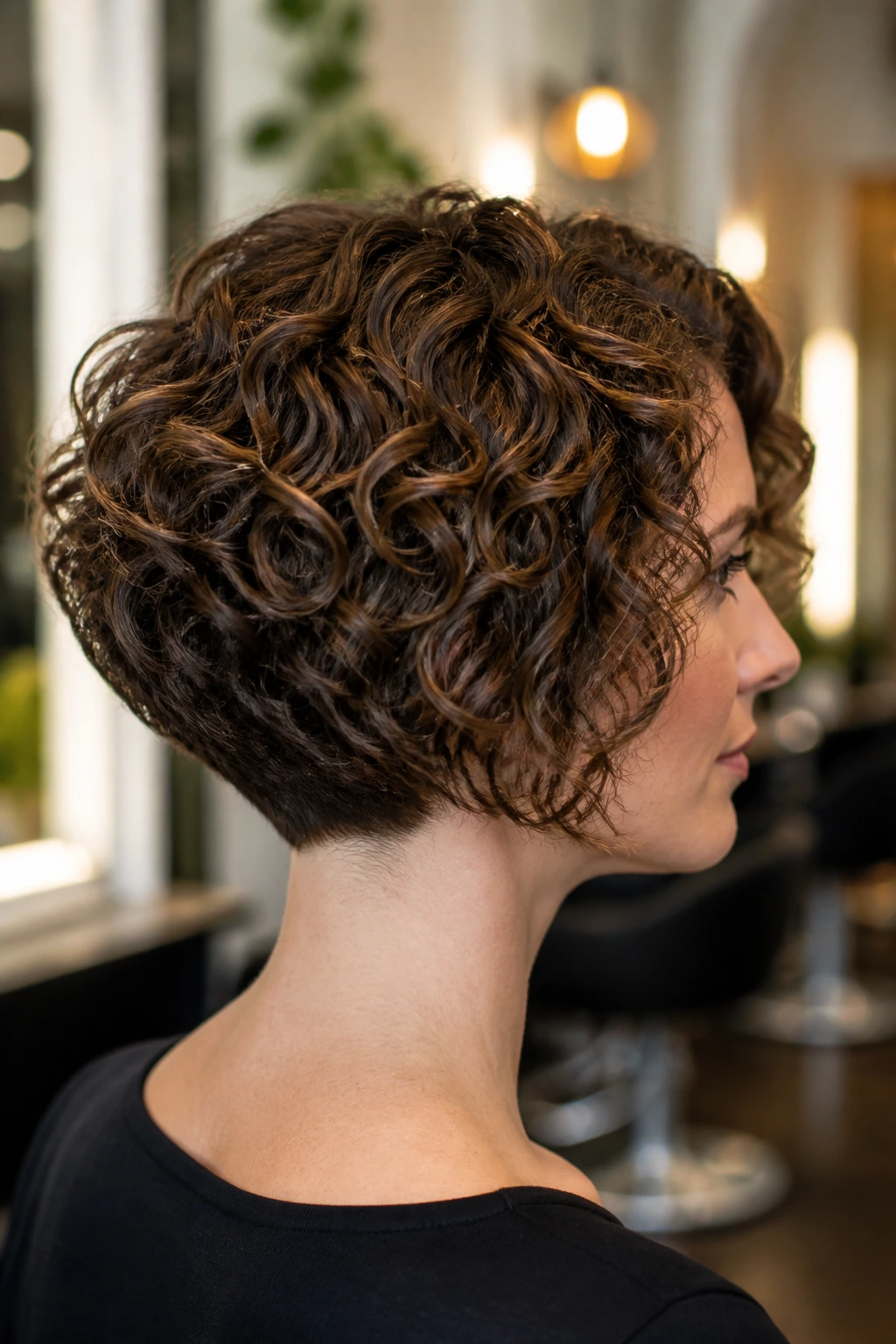
A stacked bob builds volume in the back by layering the nape area more aggressively than the front. On short curly hair, that can look fantastic when the hair is fine or medium and needs a little push up and out.
The key word is stacked, not chopped. You want graduated layers that support the crown and back of the head, not random steps that stick out. Too much stacking on thick curls can give you a puffed mushroom effect, and that is not the goal unless you are committed to it.
This cut suits people who like a more sculpted outline and do not mind regular trims. Once it grows out, the structure softens quickly. That can be lovely, but if you want the strong shape, plan on seeing your stylist every six to eight weeks.
A little root mousse helps the stack keep its shape. Use too much cream and the volume sinks.
12. Shaggy Curly Bob
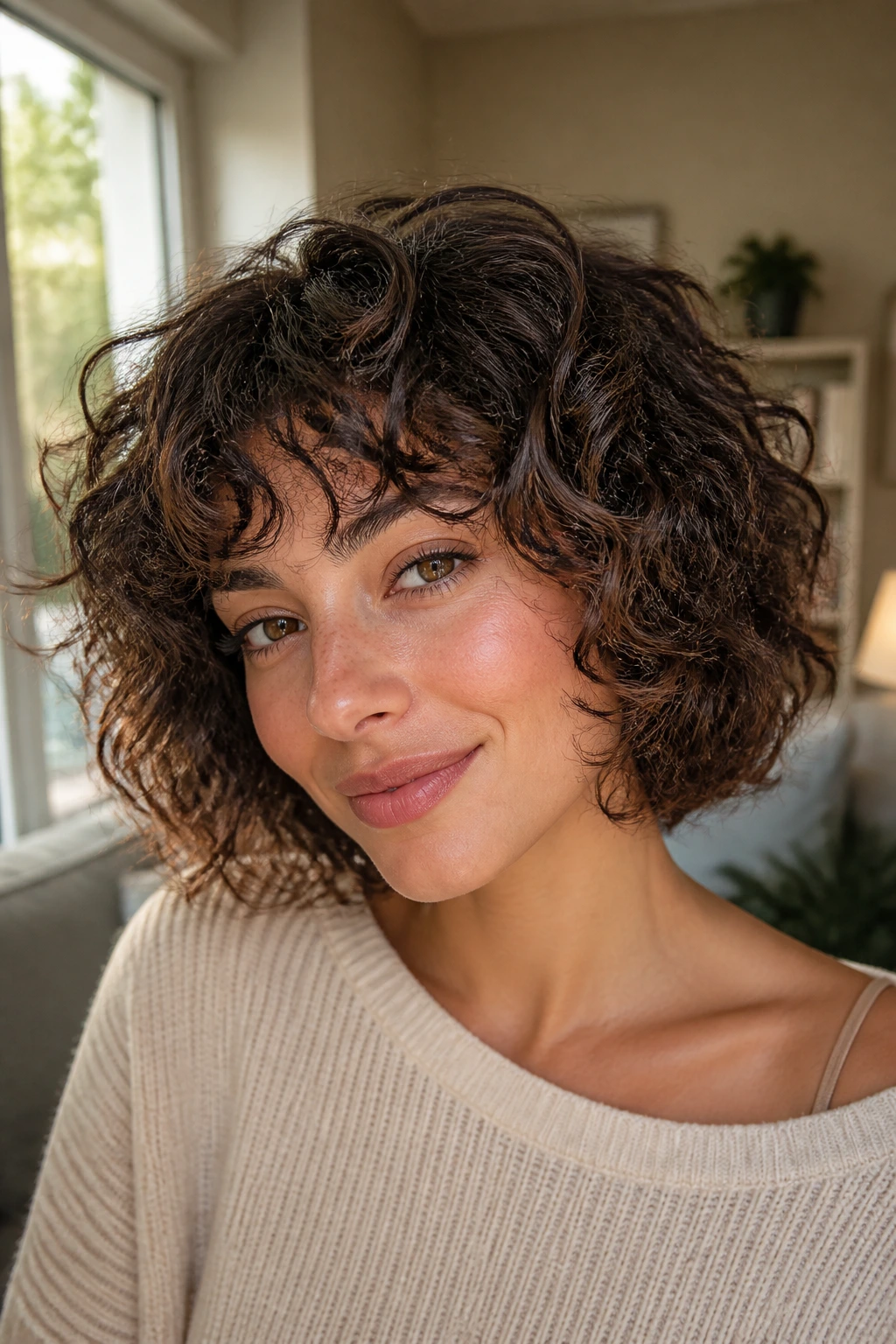
A shaggy curly bob has less polish and more movement. That is the point. The layers break up the perimeter, the ends feel piecey, and the whole haircut looks relaxed rather than carved.
This shape works beautifully on 3A to 3C curls that naturally clump but need help avoiding that one-block shape. It’s also the cut for people who hate spending time making every curl land in the same place. If your styling routine is “scrunch, diffuse, leave,” this bob can support that.
You can keep the fringe or skip it. Either way, the layers should be cut with enough length left in them to avoid a feathered mess. A good shag bob still has a plan. It just doesn’t show every line.
The best shaggy bobs look lived in on purpose. That’s harder to pull off than it sounds.
13. DevaCut Bob
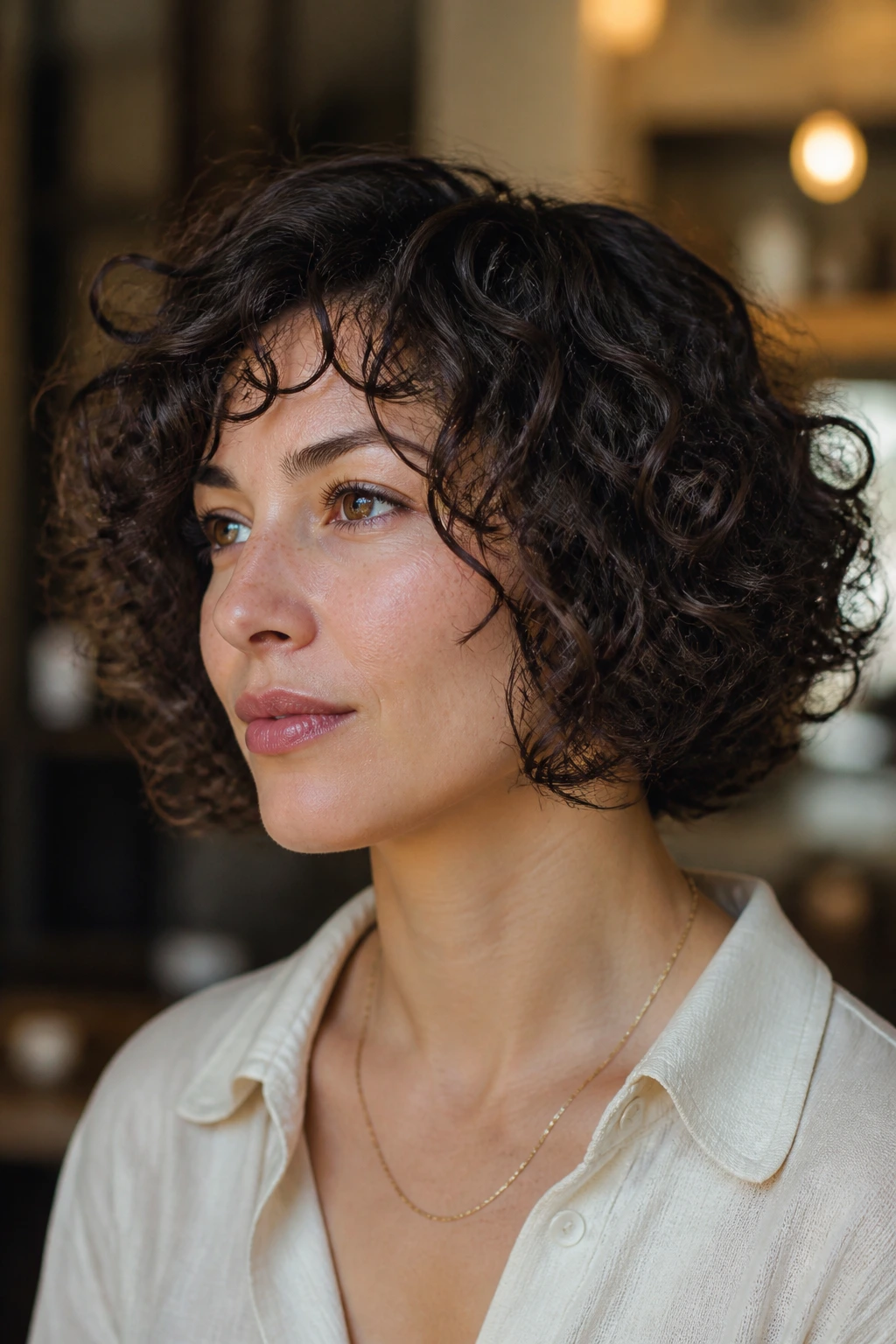
A DevaCut bob is built curl by curl, usually with the hair dry or mostly dry so the stylist can see how each spiral actually behaves. That matters because short curly hair can hide a lot when it’s wet, and a curl-by-curl cut helps avoid surprise shrinkage.
What to ask for at the chair
- Dry shaping: Ask the stylist to check the length after the curls are fully dry.
- Curl-by-curl balance: One side may need more length than the other if your pattern is uneven.
- Weight line control: Make sure the outline stays clean even after internal shaping.
This method is ideal when your curl pattern changes from front to back or side to side. It gives the haircut a custom fit, which is a fancy way of saying it behaves better in real life. If your curls spring differently across the head, this is one of the smarter choices.
It can be expensive in the salon-chair sense, but the payoff is precision. Short curls need that more than people admit.
14. Tapered Nape Bob
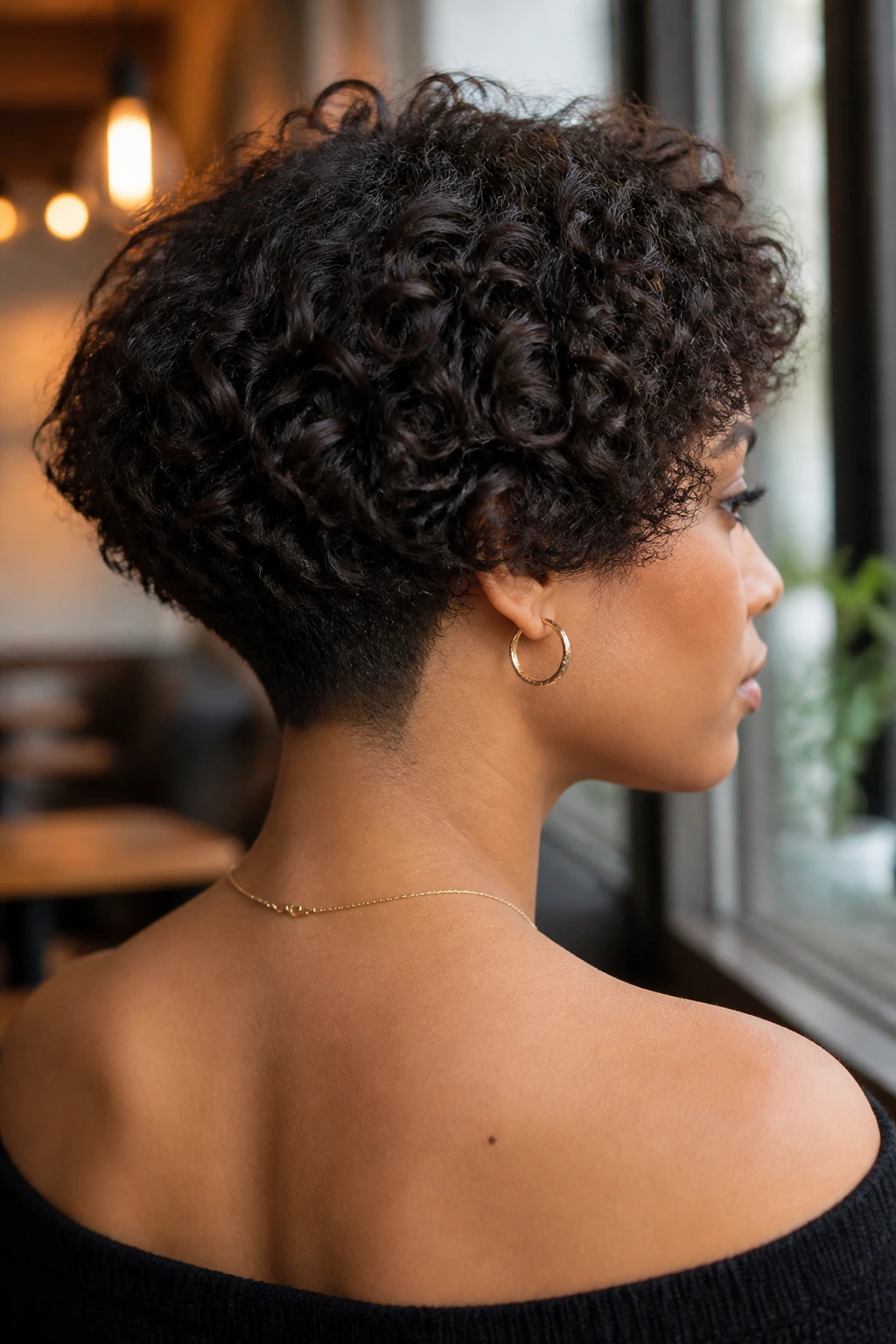
A tapered nape bob keeps the neckline neat and reduces bulk where short curls tend to swell first. If your hair feels warm at the neck or grows fuzzy underneath the back layers, this shape solves a practical problem and still looks polished.
The taper can be subtle. It does not have to mean a visible undercut. Sometimes just cleaning up the nape and leaving the top layers fuller is enough to keep the silhouette from getting bottom-heavy.
This cut is especially nice for thick or coily hair because it removes the annoying bulk that sits under collars and scarves. It also grows out in a controlled way if the taper is soft enough.
If you do not like regular neckline cleanup, skip the sharper version. Otherwise, this is one of the neatest ways to keep a curly bob from feeling bulky in the back.
15. Jaw-Length Bob
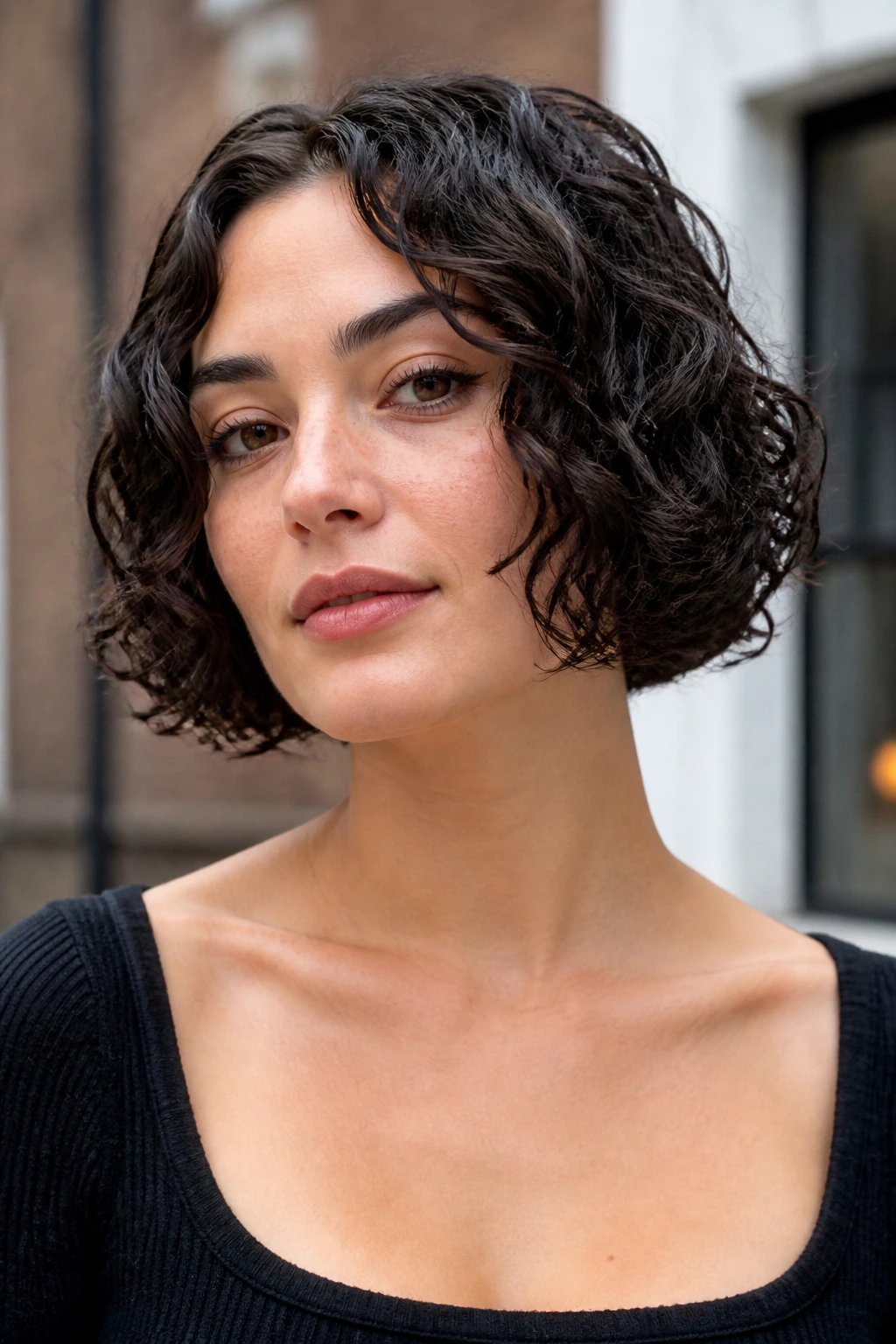
A jaw-length bob is blunt enough to look sharp and short enough to feel decisive. It lands exactly where the face starts to do most of the talking, which is why the shape can be so strong.
The cut works well on oval and long faces because it creates width right where the face needs it. It also flatters strong jaws if you want to show them off instead of softening them away. The line should sit cleanly, and the ends need to stay healthy because any fray shows fast at this length.
This is not a shy haircut. It looks best when the curls are defined and the part is chosen on purpose, not by accident. If your hair expands a lot, leave a little extra length at the front so the jawline remains visible after drying.
Short curls with a jaw-length line can look almost architectural. That’s a good thing here.
16. Neck-Length Bob

A neck-length bob is the forgiving choice when you want short curly hair without the hard edge of a chin or jaw cut. It sits a touch lower, giving the curls room to spring up and move without exposing every little uneven piece.
This length is good for growing out another haircut or for anyone who wants a bob that can survive a skipped styling day. The front can graze the collarbone while the back sits at the base of the neck, depending on curl pattern. That little bit of extra length changes the whole feel of the cut.
It also works well when you’re not sure how much shrinkage your curl pattern gives you. There’s less pressure. Less pressure is underrated.
If you want a bob that can survive air-drying, car windows, and a day with a scarf on, this one earns its keep.
17. Micro Bob
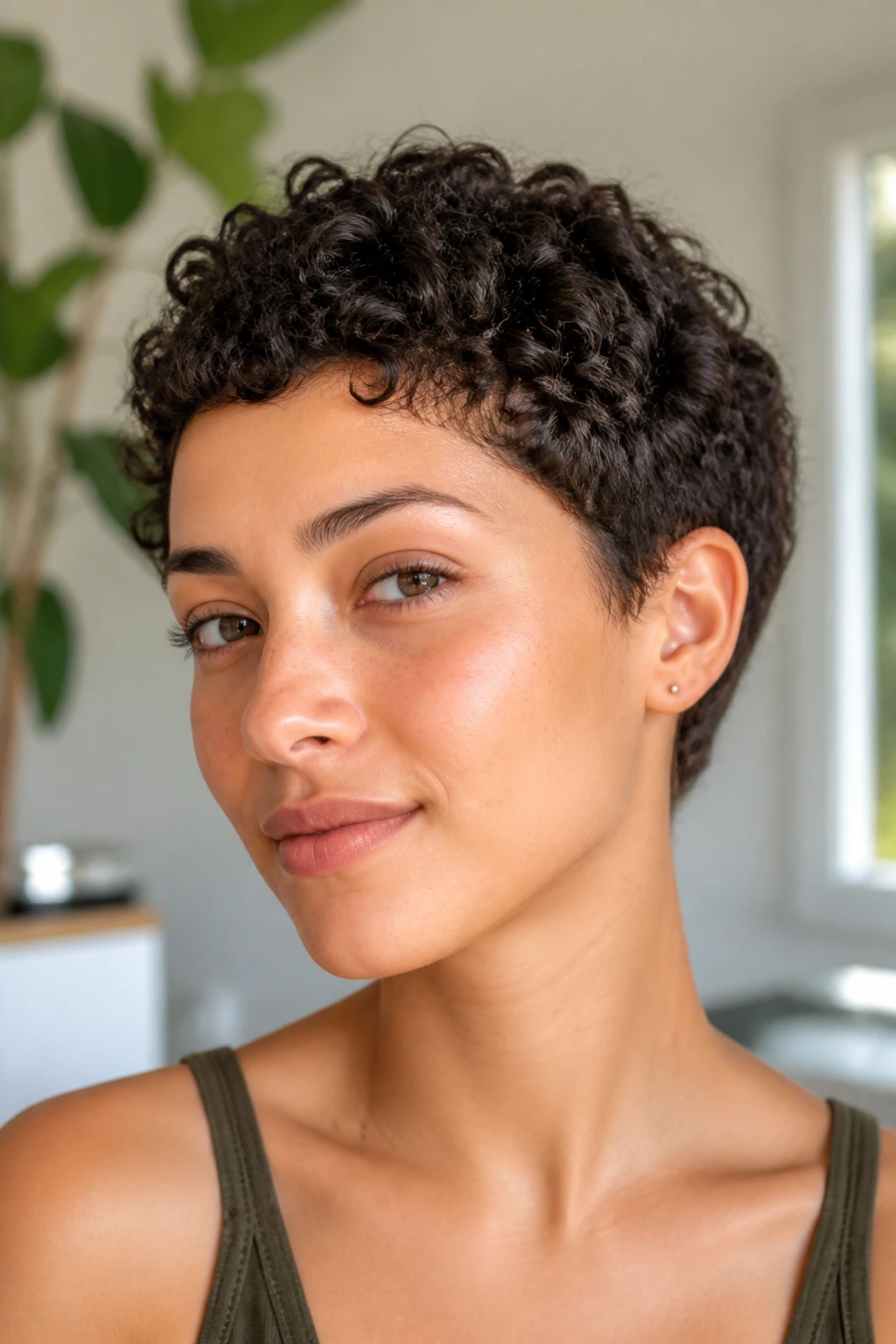
A micro bob sits very short—often around the ear or just below it—and it puts the curl pattern on full display. There is nowhere to hide, which is part of the appeal.
This cut looks especially striking on tight, well-defined curls and coils that hold a strong shape on their own. It is also the sort of bob that makes earrings, glasses, and neckline details suddenly matter a lot more. The face becomes the center of the composition.
The maintenance level is higher than people expect. At this length, half an inch of growth changes the haircut fast, so trims every four to six weeks are common if you want the shape to stay crisp. If you prefer a grown-out look, you can stretch it farther.
A micro bob is not subtle. That’s the point. It looks best when the curls are healthy and the outline is clean.
18. Box Bob
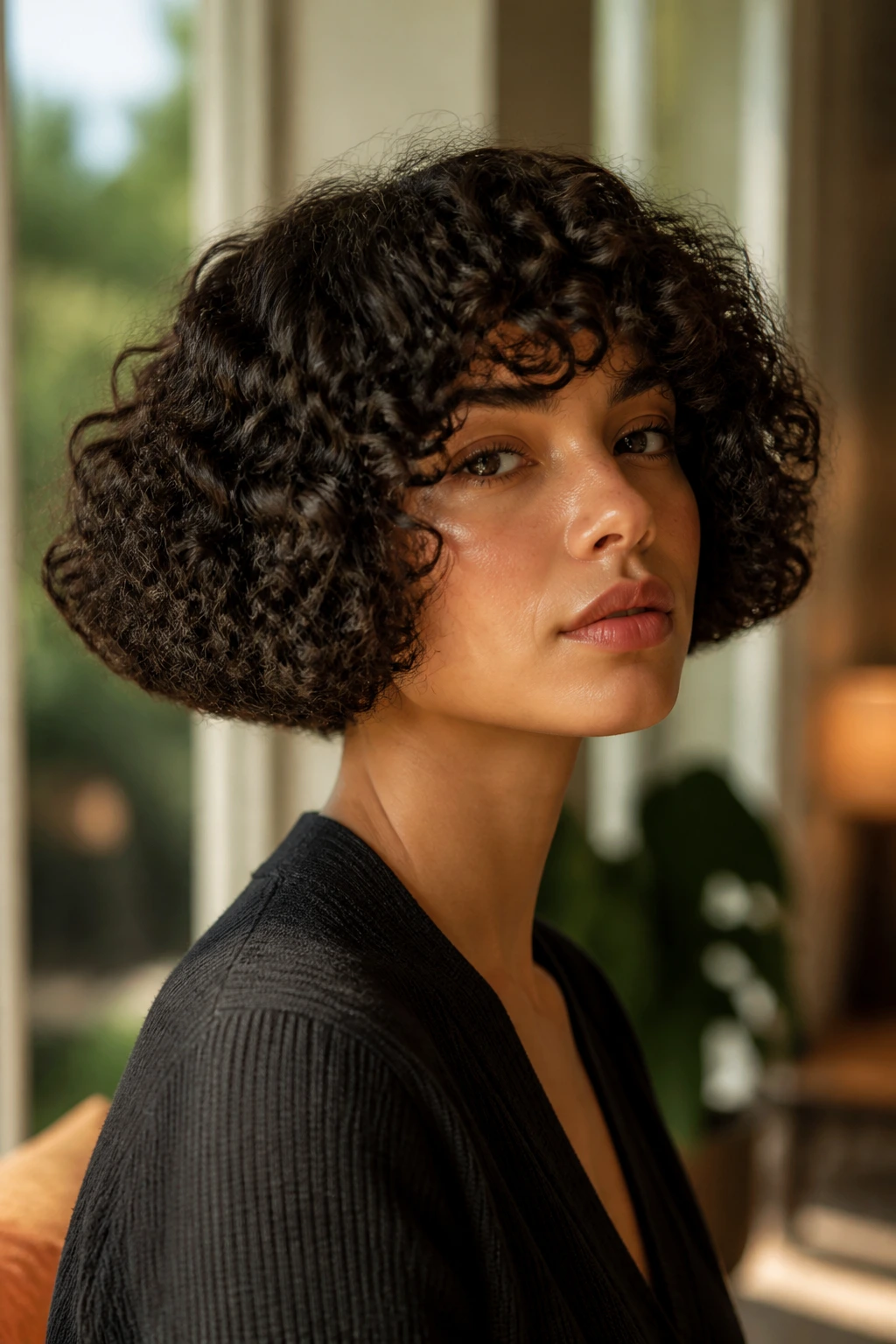
A box bob is square, direct, and a little bit graphic. The outline stays level on the sides and back, which gives the cut a more architectural feel than a rounded bob.
This shape works when you want the curls to read as a strong mass rather than a soft halo. Medium curls and coils can both wear it well, as long as the layers stay controlled. Ask for a strong weight line and avoid too much feathering through the sides.
Styling note
Box bobs look best with a clean side part or center part and a product that holds the silhouette. A light gel layered over a cream can keep the edge intact without making the hair crunchy.
If you like clean lines and you do not mind your hair feeling a little more fashion-forward, this is a good one. If you prefer softness around the face, skip it.
19. Bubble Bob
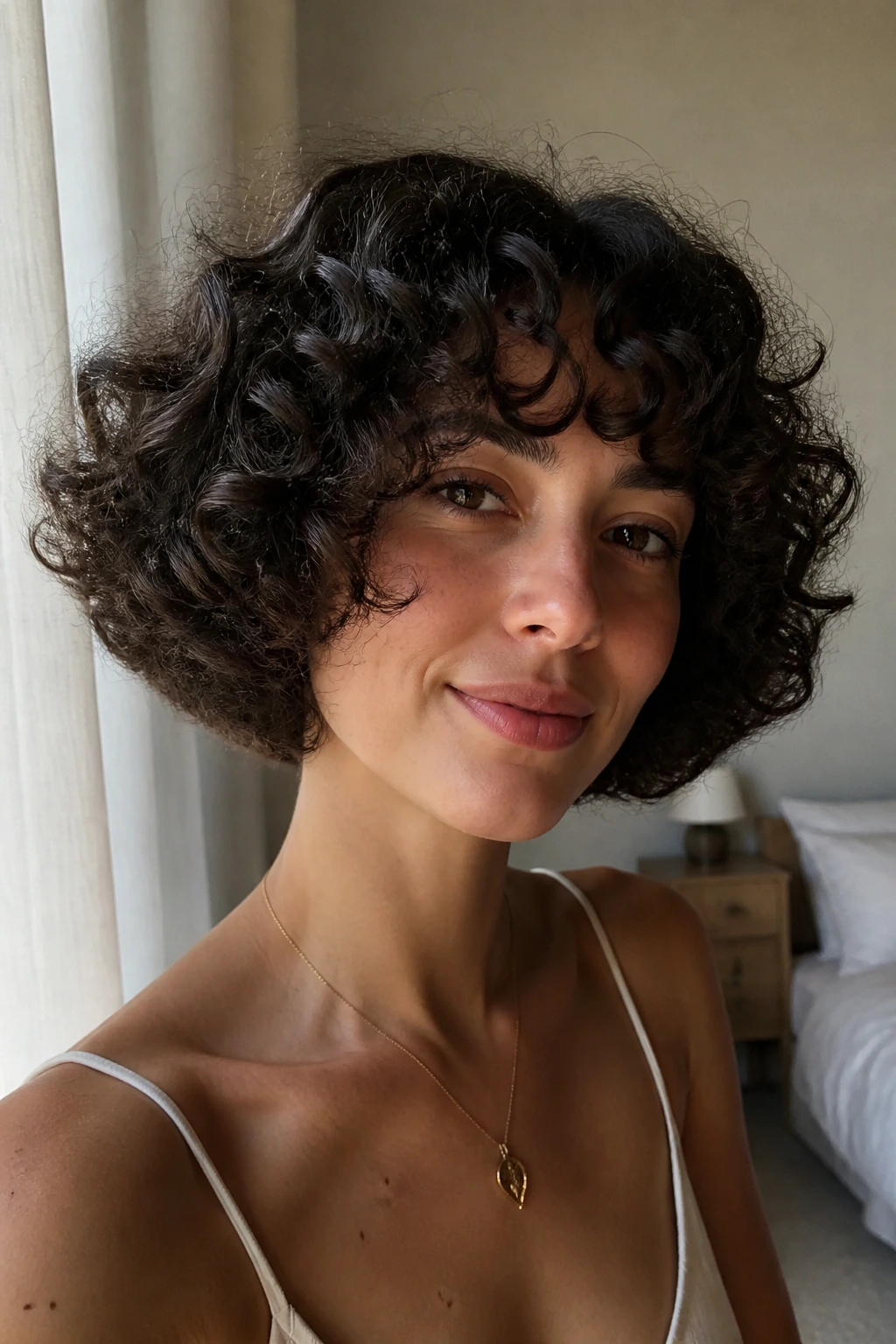
The bubble bob is rounded, plush, and full through the sides and ends. On short curly hair, that creates a soft, rounded silhouette that feels easy to wear but still shaped.
This cut flatters fine curls because the rounded perimeter makes the hair look fuller. It also works on medium curls when you want the outline to feel softer than a blunt bob. The ends should curve in gently rather than flare out. That takes a careful hand with layering.
If your curls are springy, the bubble effect can become too puffy if the layers are too short. Keep the interior controlled and use a diffuser with low airflow. Strong airflow can turn a rounded bob into a fuzzy ball faster than you’d think.
This is one of the more flattering shapes for anyone who likes soft edges and volume that sits close to the head.
20. Undercut Curly Bob
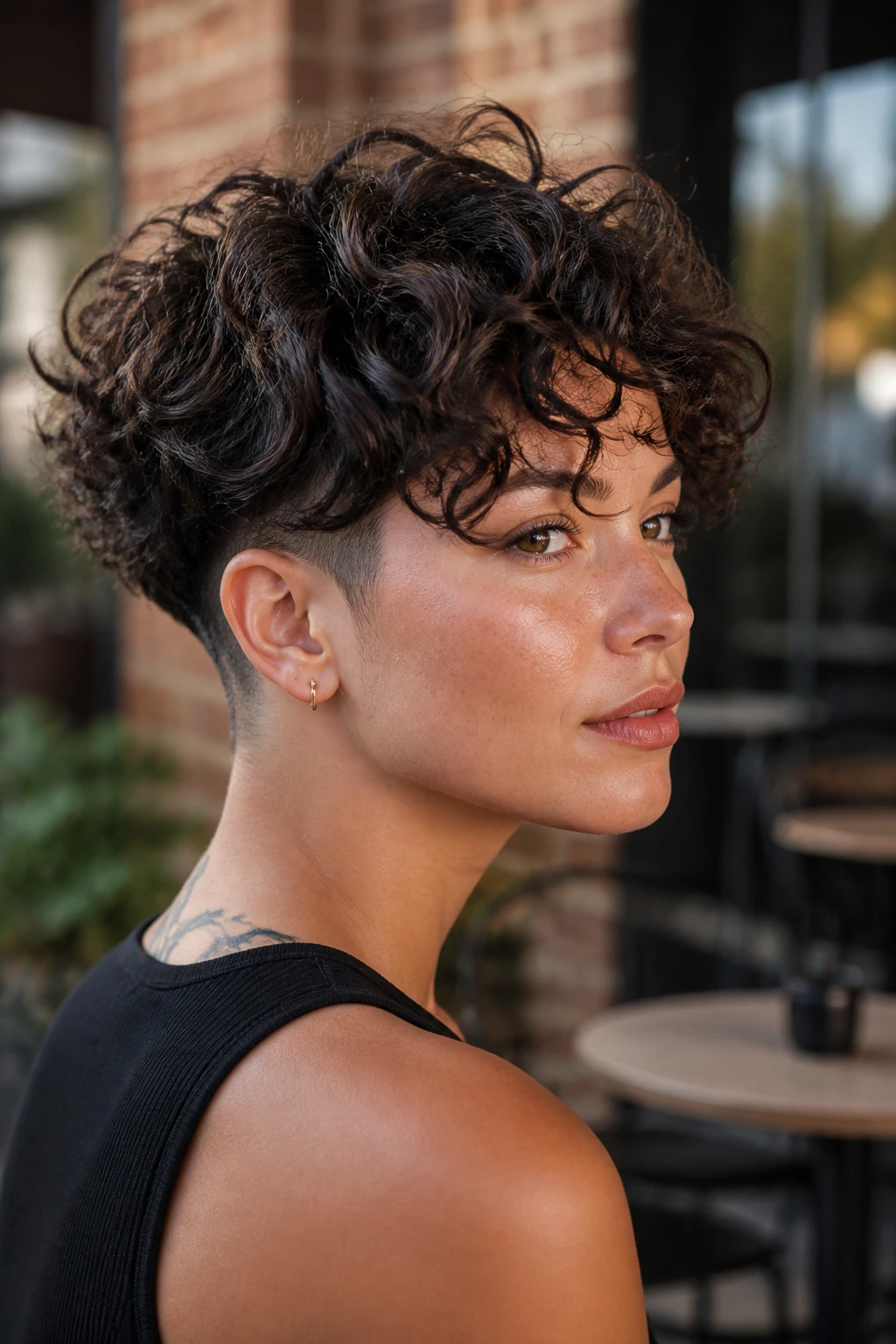
An undercut curly bob takes weight out from underneath, usually at the nape or lower sides, so the top curls can sit more cleanly. It’s one of the best fixes for very thick, heavy texture that refuses to lie where it should.
The undercut can be hidden or visible. Hidden keeps the haircut softer; visible gives it more edge. Either way, the point is the same: reduce the bulk that makes the bob stick out in places you didn’t ask for.
This cut is especially useful on coily hair or dense 3C curls that pile up fast at the back. It can also help in warmer weather, though that’s only one piece of the puzzle. Shape matters more than temperature.
If your hair gets too wide at the bottom, an undercut can bring the whole outline back into balance.
21. Pixie-Bob Hybrid

A pixie-bob hybrid lives between the two cuts, with the back and sides kept short while the top and front hold enough length to still read as a bob. It’s cheeky, practical, and a little bit sharp.
The haircut works best when the curls on top have enough spring to show movement. If the top sits flat, the whole shape can lose energy. Keep the crown slightly longer than the sides so the cut doesn’t flatten into a helmet.
This is a smart move for people who want short hair but don’t want a full pixie. You still get some face-framing length. You still get curl definition. You just get less weight and less hair in your way.
Regular trims matter here. Small changes make a big difference with this shape.
22. Side-Swept Fringe Bob

A side-swept fringe bob softens the forehead and gives the haircut a quiet diagonal line. The fringe doesn’t fall straight across; it sweeps over and blends into the rest of the bob, which keeps the face open.
This is one of the more forgiving fringe choices for curly hair because it can move a bit without looking messy. The fringe should hit around the eyebrow to cheekbone zone when dry, depending on your curl spring. If it’s cut too short, the sweep loses its shape quickly.
It flatters square faces especially well because the diagonal line takes some of the edge off the jaw. It also works for anyone who likes the idea of fringe but not the maintenance of a full curtain bang.
A side-swept fringe can make a short bob look softer without turning it mushy. That balance is the appeal.
23. Face-Framing Bob
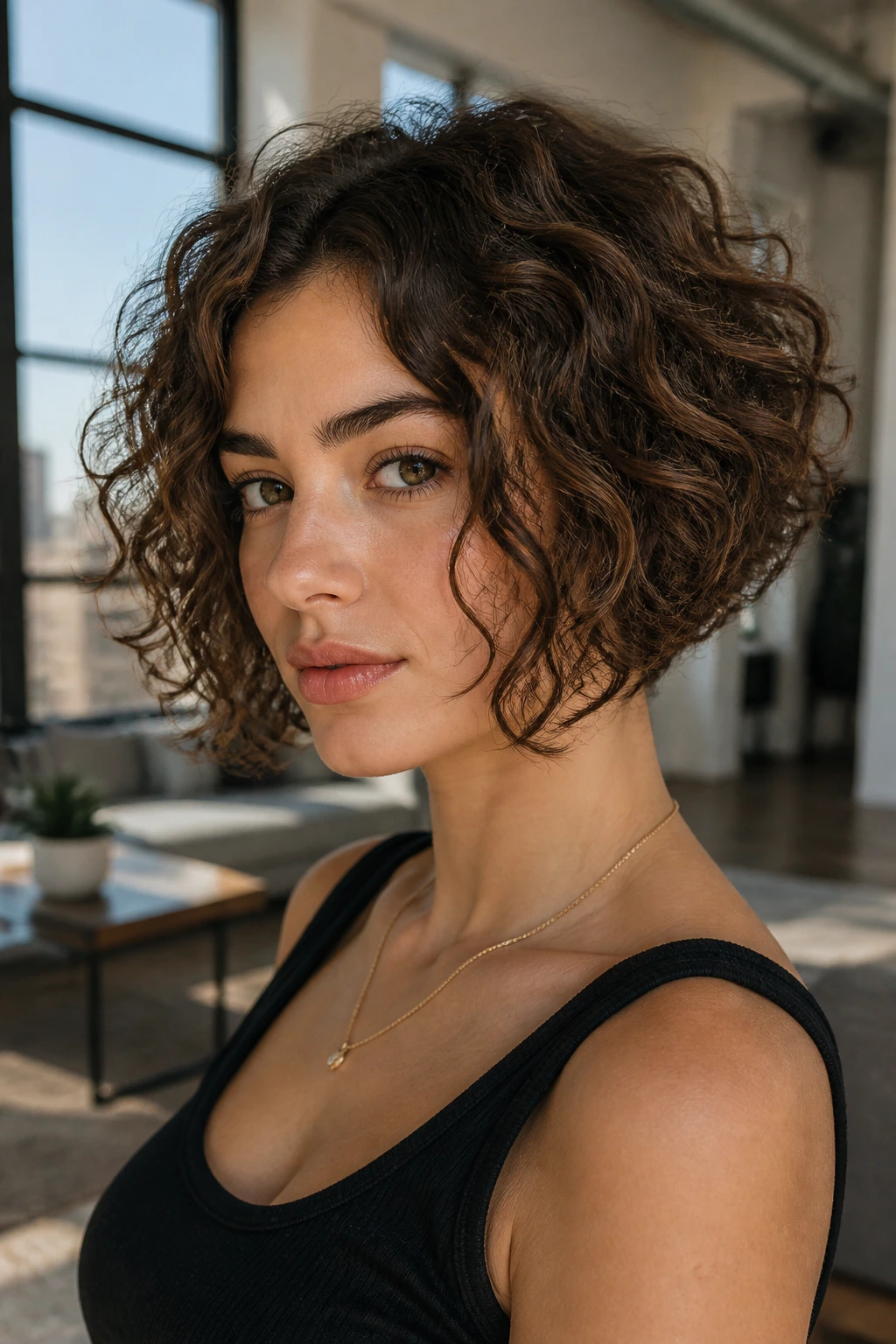
A face-framing bob keeps the front pieces longer so they curve around the cheek and jaw while the back stays shorter and cleaner. The haircut gives movement around the face without stealing all the structure from the rest of the cut.
This is a very good option if you want the bob to soften a strong chin or give a round face a bit more vertical line. The longest pieces should stop where you want the eye to linger—cheekbone, mouth, or jawline. That choice matters more than most people think.
The face-framing pieces can also help when your curls behave differently at the front. A little extra length buys you flexibility. It keeps the cut from springing too high in the center.
If you like your hair to shift and move when you turn your head, this cut gives you that motion without chaos.
24. Fine-Hair Bob with Light Layers

Fine curls need restraint. Too many layers and the haircut can go wispy fast. A fine-hair bob with light layers keeps the perimeter strong and uses just enough layering to stop the ends from looking flat.
The best length is usually around the chin or a touch below it. That gives the curls enough weight to form a visible shape. If the bob gets too short, fine curls often lose density and start to look airy in the wrong places.
Keep the illusion of fullness
- Use a mousse at the roots: It gives lift without heavy residue.
- Keep oils minimal: Fine hair can collapse under rich products.
- Avoid over-thinning: That makes the ends look see-through.
This cut is one of the easiest to wear when the goal is clean shape, not dramatic volume. It looks calm, not sparse.
25. Coily Bob with Sculpted Shape
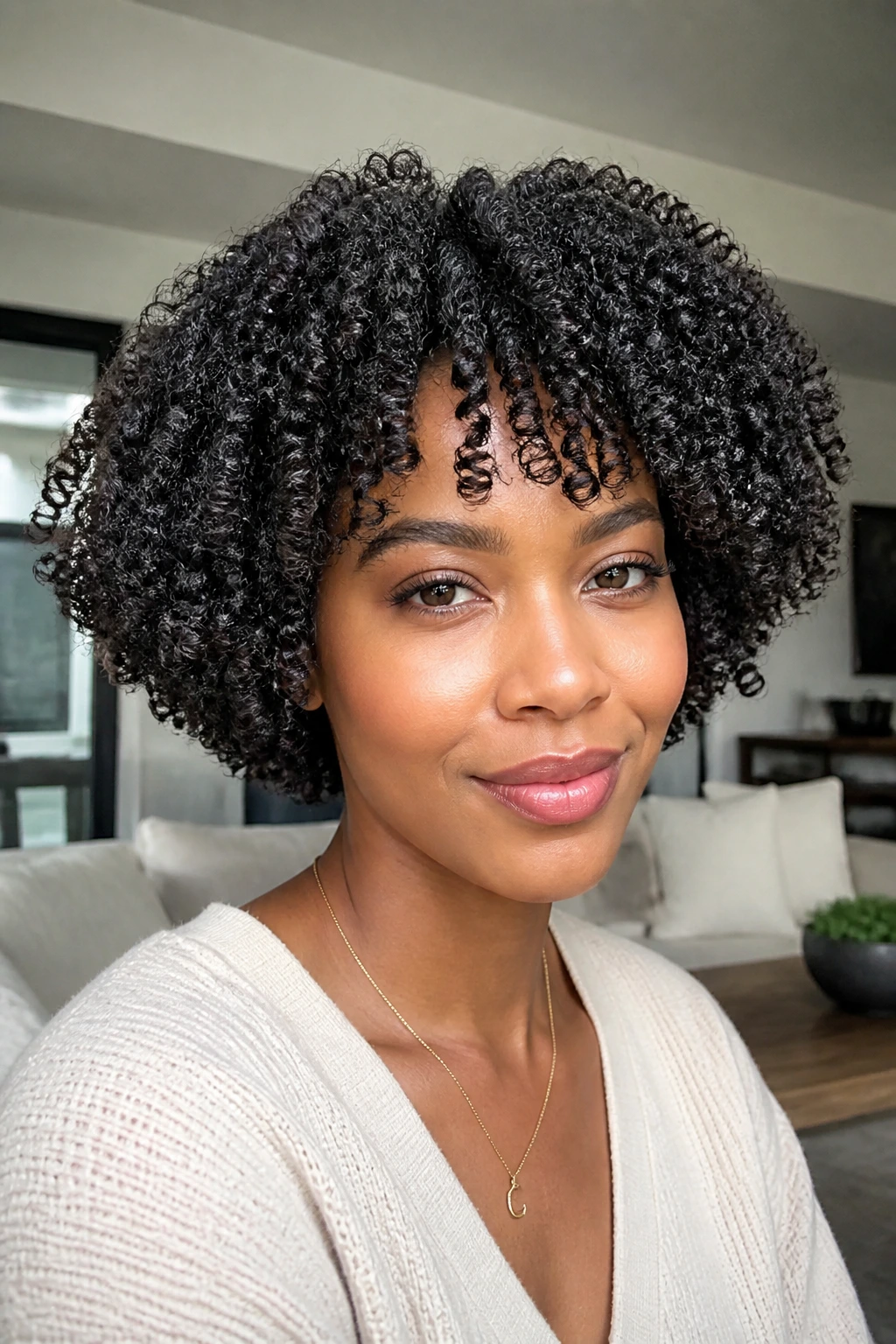
Coily hair does not need to be forced into a straight outline to count as a bob. A coily bob with a sculpted shape lets the coils sit in a rounded or softly tapered silhouette that respects their spring instead of flattening them.
The perimeter can be chin-length or slightly above, depending on how much shrinkage you get. What matters more is balance. You want the outline to feel planned, not puffy. That often means shaping the haircut in a way that accounts for density at the sides and crown.
Moisture matters here, but so does the cut itself. A dry, crunchy coil can make even a good bob look rough. Keep the leave-in light enough to define without weighing down the ends.
If your coils are tight, ask the stylist to shape the haircut with shrinkage in mind and check it from a few angles before finishing. Front, side, back. All three matter.
26. Wash-and-Go Bob

A wash-and-go bob is the cut you choose when you want the haircut to work with the curl pattern instead of asking for a twenty-minute styling ritual every morning. The silhouette should hold even when you air-dry with minimal fuss.
This cut depends on smart layering and a perimeter that falls naturally. If the shape only looks good after six products and a full diffuser session, it’s not really a wash-and-go cut. It’s a project with good marketing.
It works best when the curls are already fairly cooperative and the density is medium to high. You can still use a little gel or foam, but the haircut should carry the outline for you. That’s the whole point.
If you have a routine that needs to stay quick, this is one of the strongest choices in the bunch.
27. Grown-Out Bob

A grown-out bob is the answer for anyone who likes the bob shape but hates that obvious “freshly cut” line. It sits between chin and collarbone, with softened ends and a little more length around the face.
The haircut still reads as a bob, but it has room to breathe. That makes it useful if your curls spring up in hot weather or if you prefer fewer salon visits. It also transitions well from a sharper bob because the shape doesn’t fall apart the moment it gains an inch.
This style is a nice middle ground for people who want movement without committing to a strict outline. It looks lived-in without looking unfinished. There’s a difference.
If your current bob feels too precious to grow out, this is the version that keeps things graceful.
28. High-Volume Rounded Bob
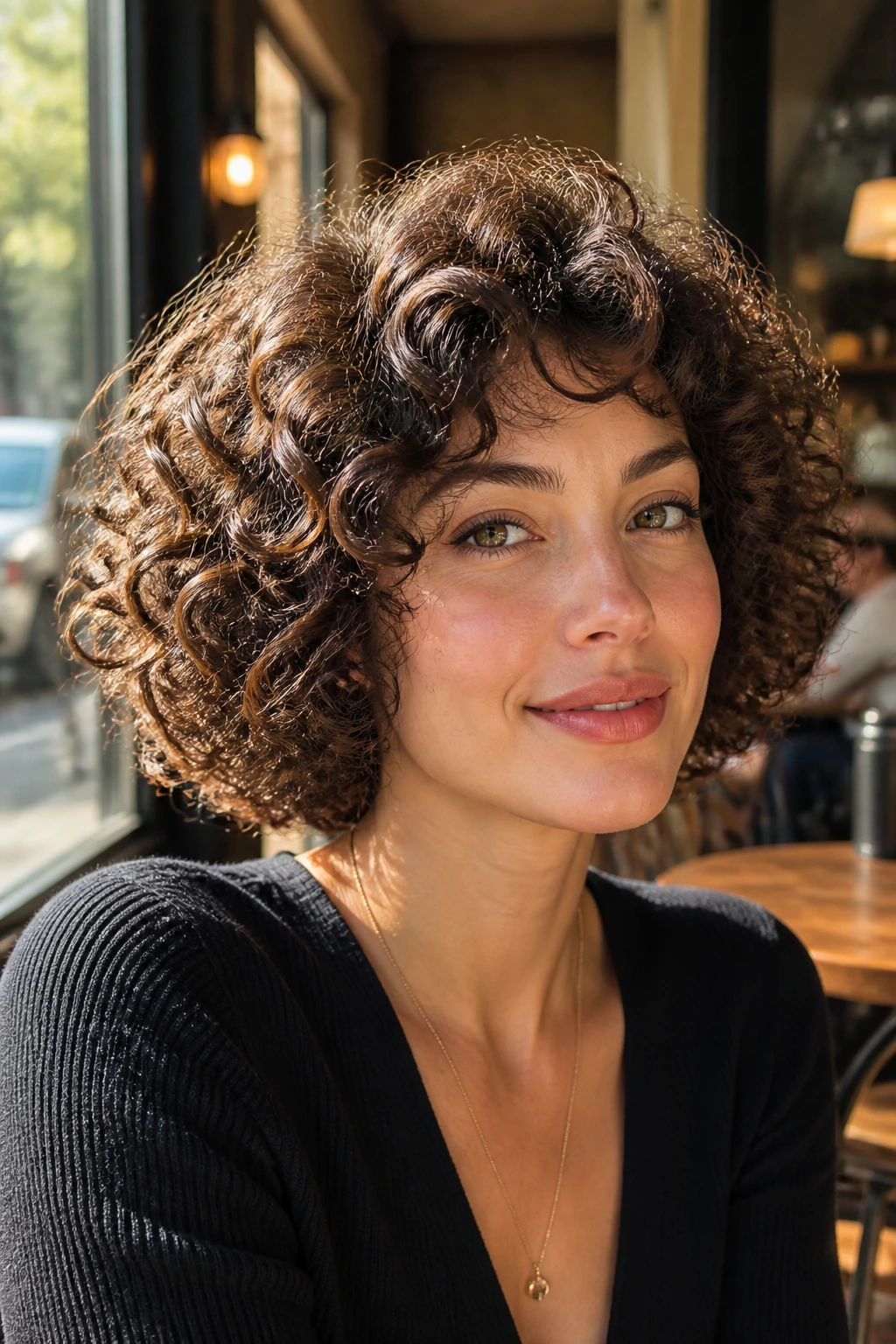
A high-volume rounded bob is the one with presence. The shape is full through the crown and sides, almost like a controlled cloud, and it works beautifully when the curls have strong body and good spring.
The cut needs thoughtful layering so the sides do not flare into a mushroom shape. That is the danger. Ask for rounded structure, not a bunch of short layers that fight each other. The silhouette should feel lifted, not widened for no reason.
This bob loves mousse, root clips, and diffusing at the crown. It is not a “throw some cream on it and go” haircut. It wants a little help. In return, it gives you a shape that looks intentional from across the room.
If you like hair with some drama, this is a strong choice.
29. Razor-Cut Bob

A razor-cut bob uses softer, feathered ends to create movement. On the right curl pattern, it can make the haircut feel airy and modern instead of heavy at the bottom.
Where the razor belongs
- Best for: Loose curls, waves, and medium-density hair.
- Less ideal for: Tight coils or very dry ends, where a razor can make frizz worse.
- What to ask for: A light hand, not a shredded finish.
I like this cut when the curls need a little softness around the edges. It can blur a blunt line just enough to keep the bob from feeling boxy. The catch is that the stylist has to know when to stop. Too much razor work and the ends can fray.
Used carefully, it makes the bob move when you turn your head. That movement is the whole reason to try it.
30. Soft Graduated Bob
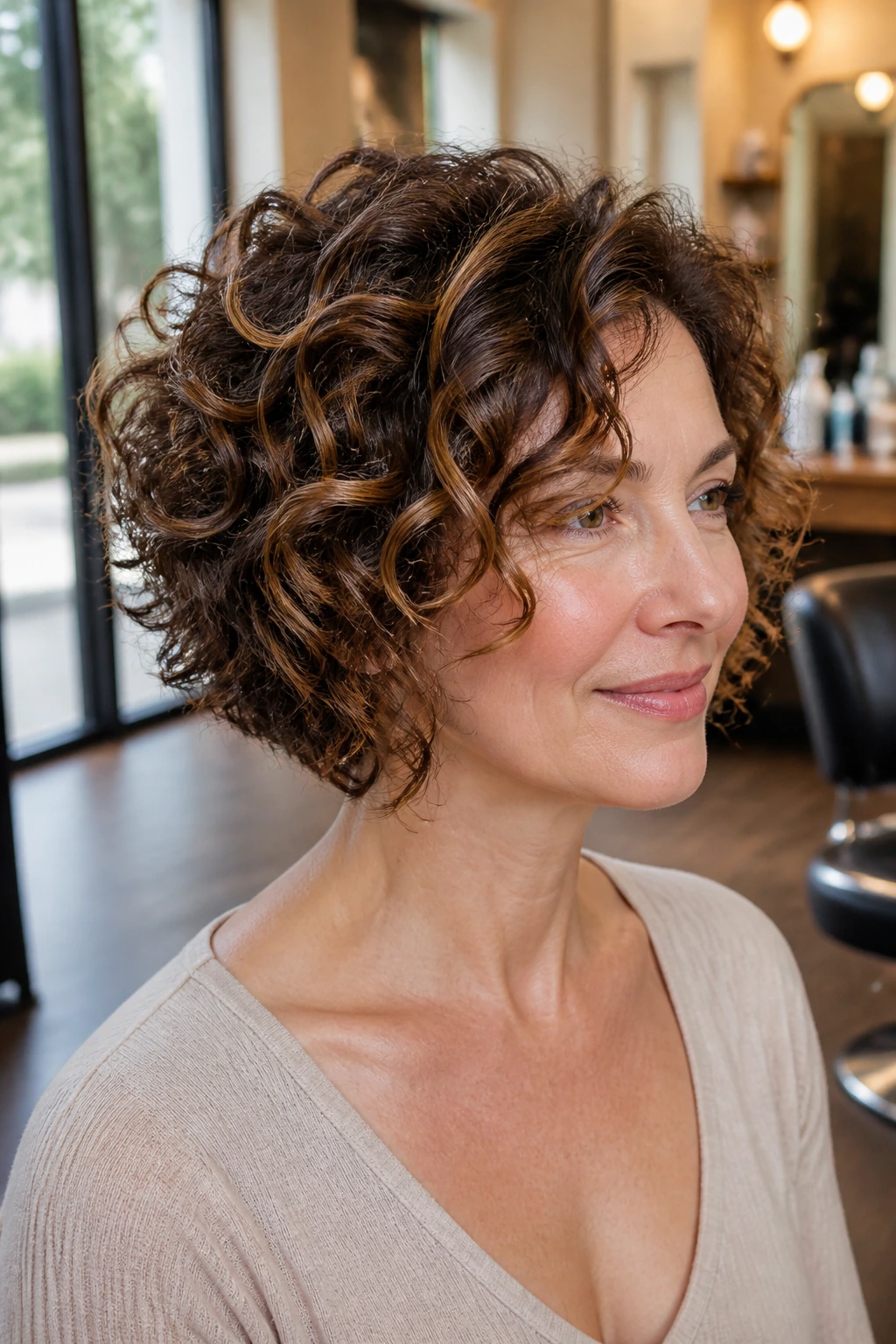
A soft graduated bob gives you the lift of a stacked shape without the sharp wedge. The back rises gently, the front stays longer, and the curl pattern gets room to settle naturally.
This is one of the most wearable curly bob options because it balances structure and softness. If you want shape in the back but do not want the haircut to scream “graduation,” this is the calmer version. It also grows out more gracefully than a hard stack.
It works well on curls that flatten at the nape or on hair that gets bulky in the lower back. The graduation keeps the neck area neat while leaving the top fuller. That small difference can make the whole haircut feel lighter.
If you like a bob that behaves but doesn’t look stiff, this one lands in a good place.
31. Tucked-Behind-the-Ear Bob
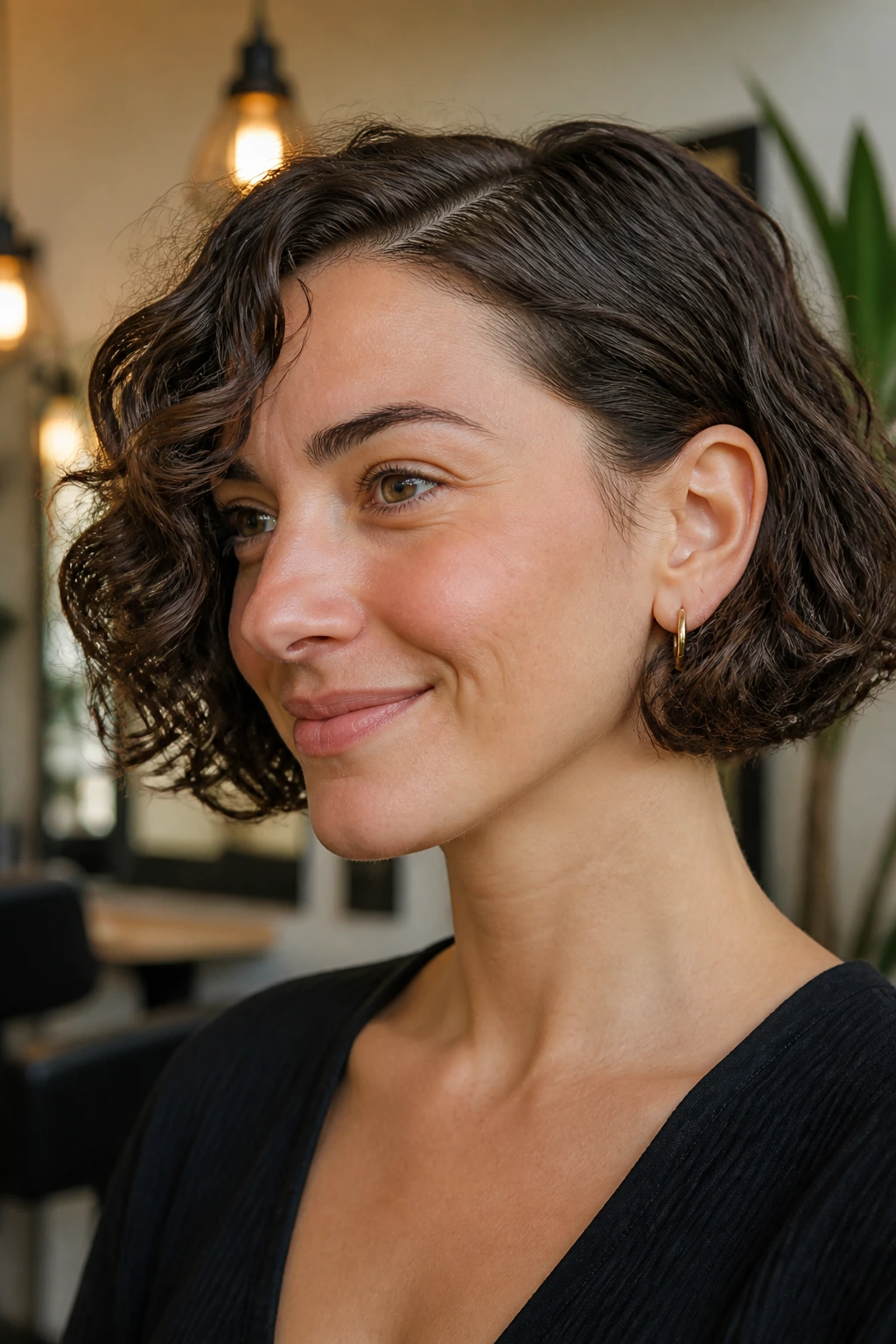
A tucked-behind-the-ear bob is built around a practical detail: you should be able to tuck one side or both sides without losing the shape. That means the front pieces need enough length to tuck, and the temples need a clean line.
This cut is especially useful if you wear glasses or like statement earrings. The tuck opens the face and shows off the jawline, while the back still keeps the bob feeling like a bob. It’s a small move with a big effect.
Ask the stylist not to cut the side pieces too short. If they barely reach the ear, the tuck stops working and the haircut starts fighting your hands every time you try to push it back.
This is one of those styles that looks casual but depends on a good shape underneath. Nothing accidental about it.
32. Curly Bob with Sculpted Crown
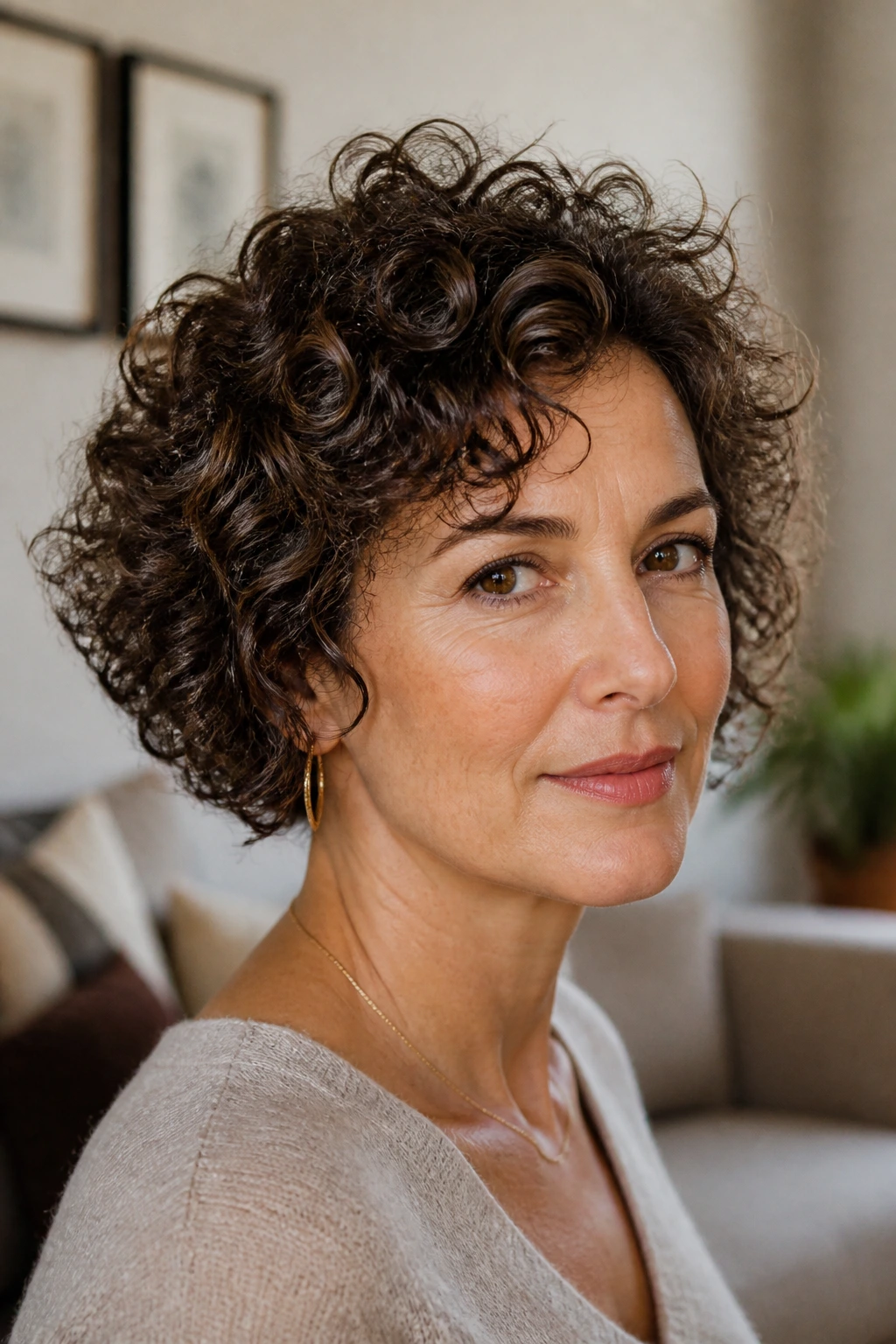
A sculpted-crown bob is made for curls that lie flat at the top and puff at the sides. The cut uses more lift near the crown while keeping the perimeter controlled, which balances the head shape in a clean way.
The goal is not extra height for its own sake. The goal is proportion. If the top is too flat, the haircut can look wide. If the crown is shaped well, the whole bob feels more alive and less heavy.
Use root clips while drying if the crown tends to collapse. A diffuser helps too, but the cut should do most of the work. Ask your stylist to keep the side perimeter steady and to build movement where the top needs it most.
This one is a quiet fix for a problem that drives people nuts.
33. Humidity-Resistant Short Bob

No haircut defeats humidity, but some fight better than others. A humidity-resistant short bob keeps the perimeter a little longer, trims down the excess bulk inside, and avoids over-layering that can explode in damp air.
This cut is useful if your curls puff outward the second the air gets heavy. The shape should sit inward, not flare out from the cheeks and neck. That means careful weight control and enough length to keep the silhouette anchored.
Ask for soft layers and a finish that holds together even when definition loosens. A strong gel can help on humid days, but the haircut should be doing part of the work already. If the style only behaves in dry air, it’s not the right cut for your life.
This is the bob that tries to keep its manners when the weather does not.
Why Short Curly Bobs Hold Their Shape Better Than You’d Expect
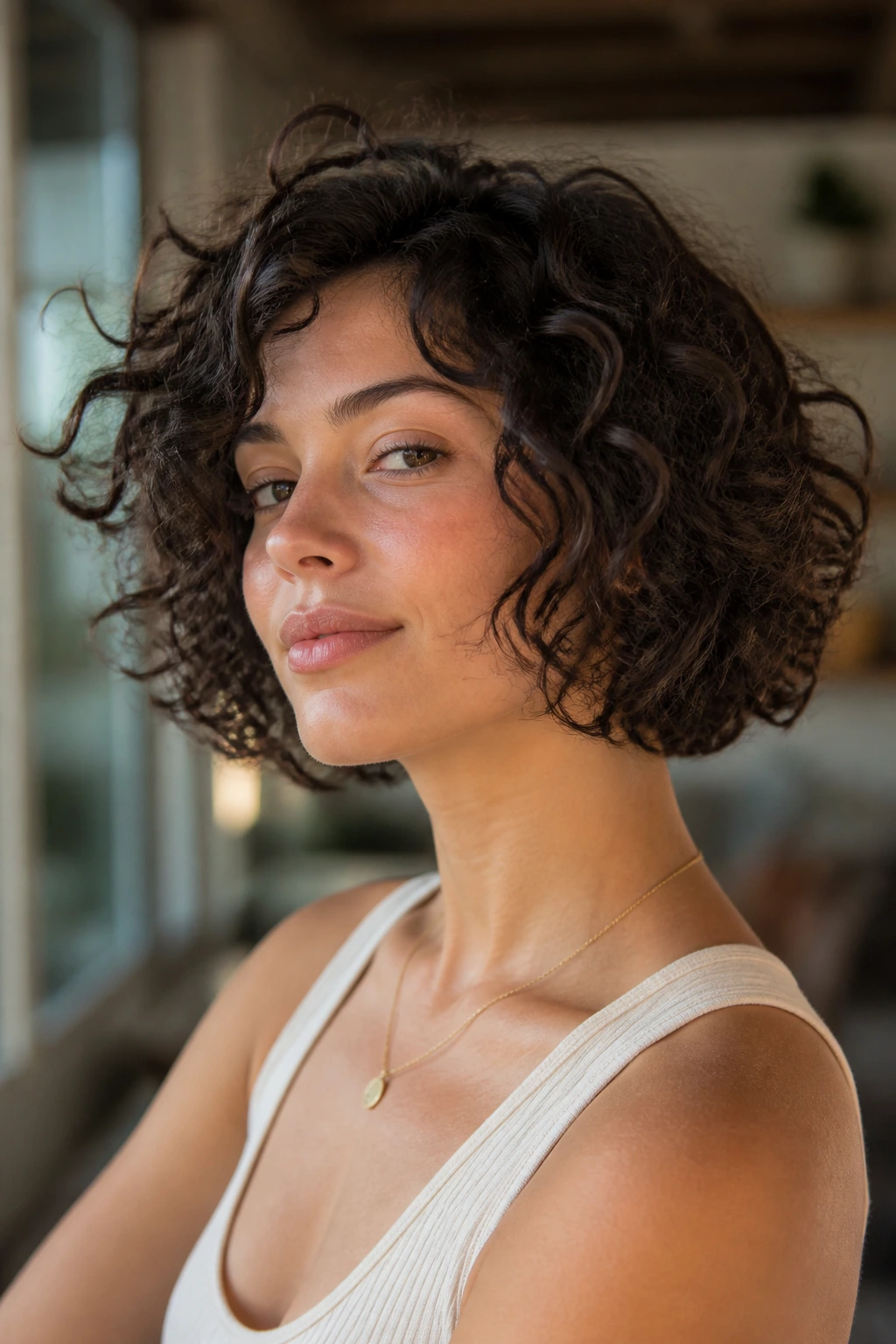
Short curls do not just sit shorter. They sit differently. That’s the part people miss when they compare a curly bob to a straight one. Curly hair rises, bends, and compresses, so the silhouette is built from spring as much as from length.
A good bob uses that spring on purpose. The perimeter gives the eye a clean line to follow, while the layers keep the density from turning into a box. When the balance is right, the haircut looks fuller near the cheek and jaw without swallowing the neck or chest. When it’s off, the bottom widens and the top goes limp. Not subtle.
The best bobs for short curly hair also respect where the part naturally falls. Curls often have a preferred side, and forcing a center part on every head can create a flat crown with a puffed side. That’s why the same cut can look completely different depending on part placement and curl pattern. One inch is not a small thing here. It’s the difference between shape and shrug.
Short curly hair can also dry unevenly from root to end, so the cut has to survive that unevenness. If a stylist only thinks about wet length, the result can be a surprise. If they shape the cut with dry movement in mind, the bob settles into place with much less arguing.
Tools and Products That Make Styling Easier
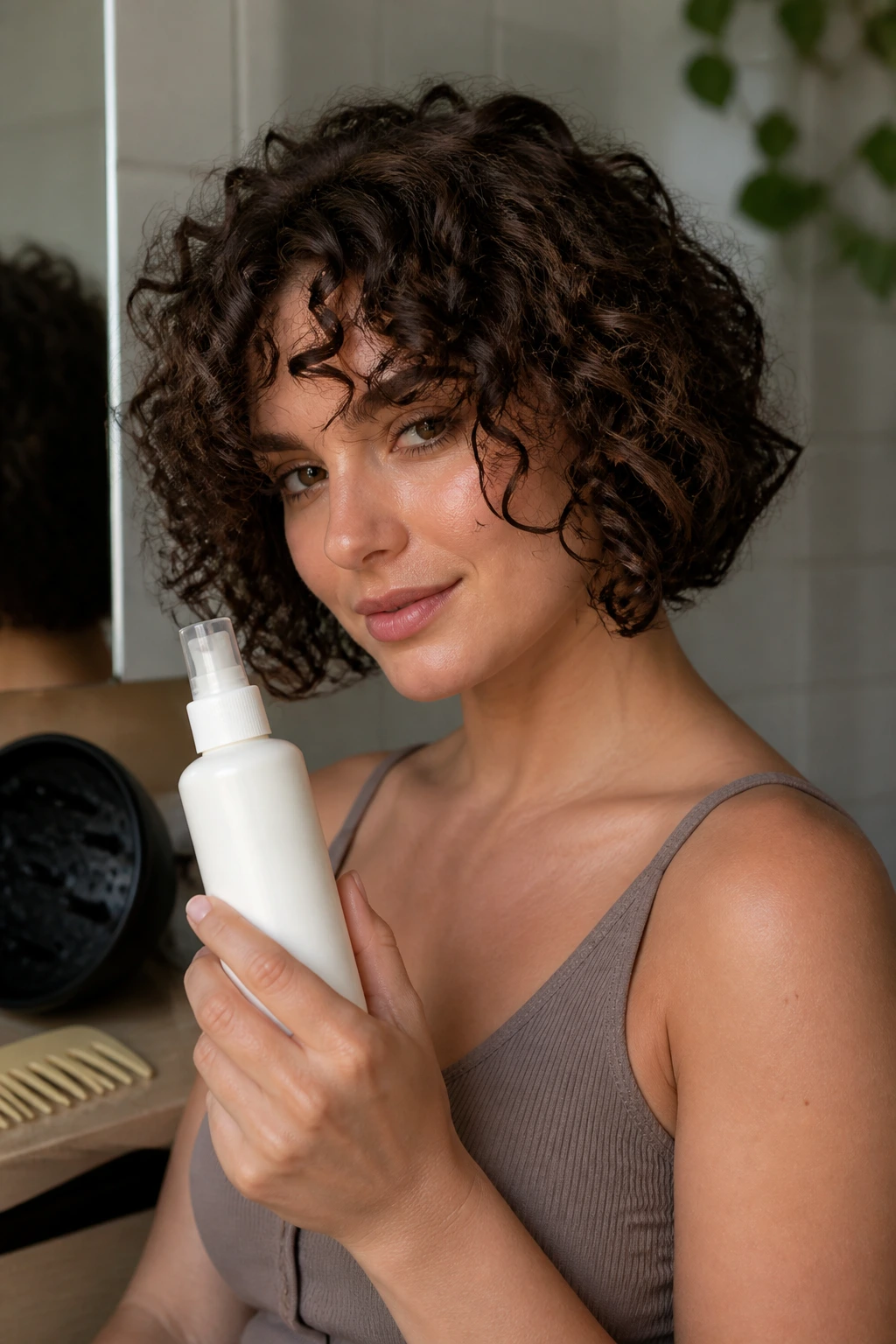
A curly bob does not need a bathroom shelf full of jars, but a few smart tools make the haircut behave much better. The big mistake is using heavy, sticky products to force the shape. That usually buys you three hours of good hair and a flat crown by lunch.
- Wide-tooth comb: Use it in the shower with conditioner so you separate curls without ripping them apart.
- Microfiber towel or cotton T-shirt: Blot the water off instead of roughing up the cuticle with a terry towel.
- Diffuser attachment: Dry the roots without blasting the curl pattern into frizz.
- Duckbill or root clips: Lift the crown while it dries if the top tends to collapse.
- Curl cream: Gives slip and softness, especially on layered or shaggy bobs.
- Mousse: Adds airy support for rounded, stacked, or fine-hair bobs.
- Light gel: Holds the edge on blunt, French, or box bobs.
- Silk pillowcase or bonnet: Keeps the bob from getting mashed flat overnight.
- Spray bottle: Useful for reviving the front pieces on day two without starting from scratch.
A comb and a diffuser will do more for most people than another expensive serum ever will.
What to Tell Your Stylist Before the First Cut

Bring photos, yes, but bring the right kind. A photo of someone with looser curls, more density, or a different face shape can mislead both of you. Better to show three or four examples with similar curl spring and a similar amount of volume, then say which piece you like from each one.
Be direct about shrinkage. Tell the stylist how much your hair lifts when it dries, and point to the exact spot you want the bob to land in the end, not the sink. That one detail saves arguments later. If you want the bob to hit the chin when dry, say so. If you want it to skim the jaw, say that.
The part matters too. If you always wear a side part, say it before the first snip. A center-part bob and a side-part bob can be cousins, but they are not the same haircut. The weight shifts. The front pieces shift. The whole outline changes.
And if you know you won’t maintain bangs every few weeks, say that too. A fringe that looks fine in the chair can become a nuisance fast if your routine is more “air-dry and leave” than “style it every morning.”
How to Style a Curly Bob So It Keeps Its Shape
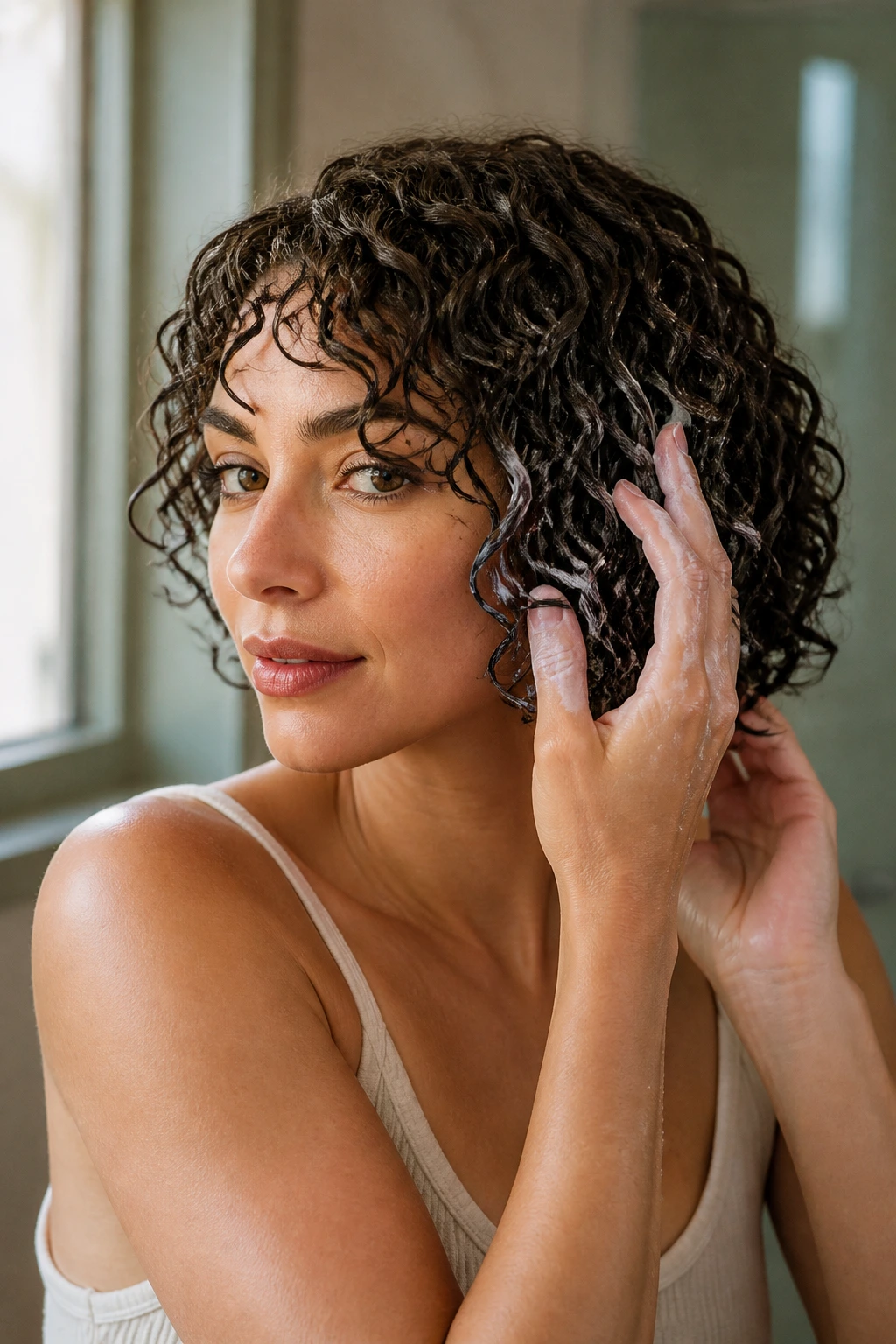
Start with soaking-wet hair and do less than you think you should. A small amount of leave-in, a curl cream or mousse, and a light gel at the outer layer are usually enough. Rake the product through with your fingers, then scrunch so the curls clump instead of separating into thin strands.
Drying matters more than product stacking. Diffuse on low heat and medium airflow until the roots are set and the ends are about 80 percent dry. Touching the curls too much while they’re drying is the fastest way to break the shape. Leave them alone. Seriously.
If you want more lift, clip the crown while it dries. If you want a softer finish, let it air-dry the last stretch and then break the cast with one drop of serum on your palms. Don’t rub. Press and lift.
Day two is where a good bob proves itself. Mist the front and sides lightly, scrunch the curl back into place, and fix only the pieces that matter. You do not need a full reset unless the haircut was cut wrong to begin with.
Additional Tips and Shape Boosters
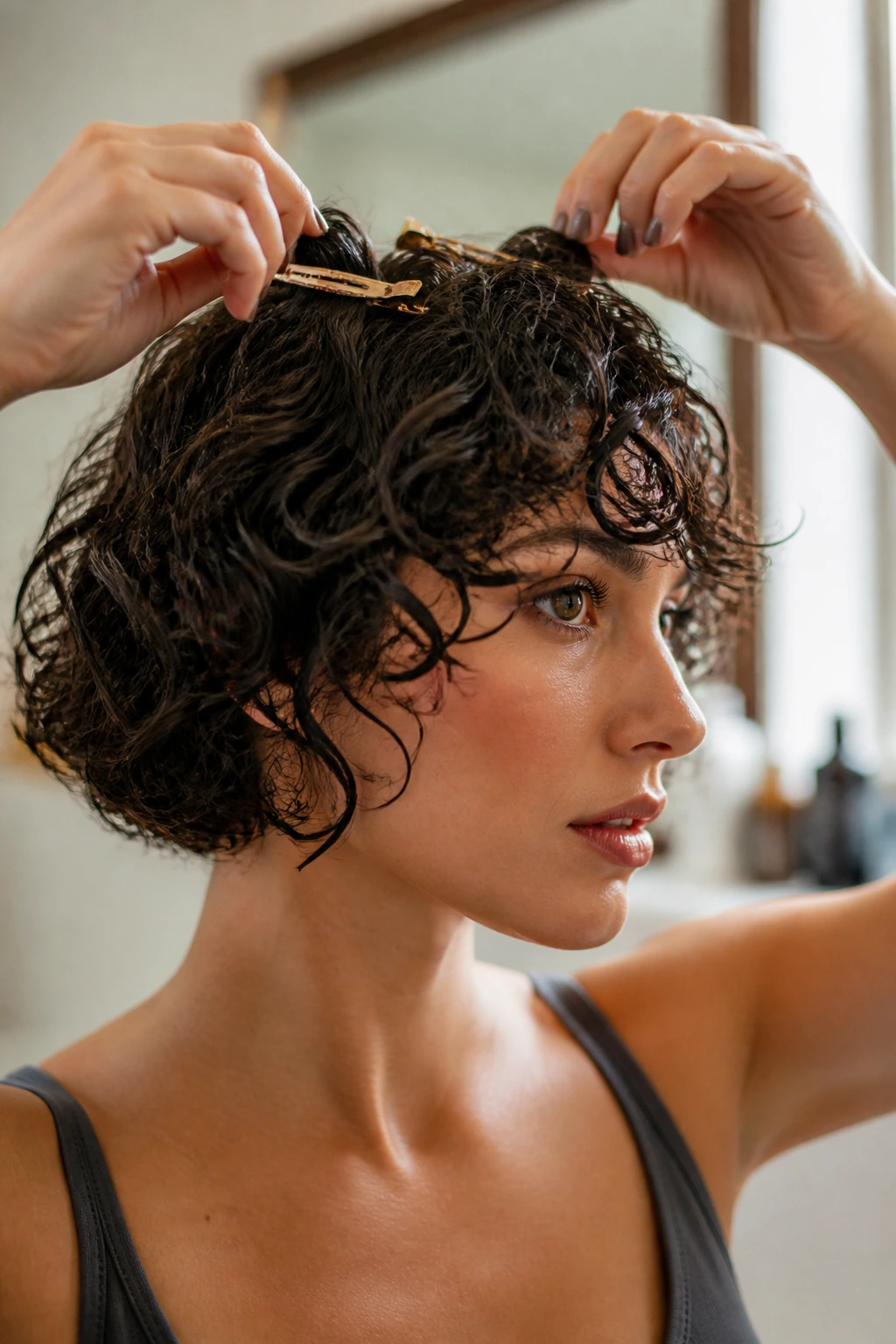
Lift: If the crown lies flat, put two root clips at the top while the hair is still damp and leave them in until the roots are set. That small lift keeps a short bob from looking compressed at the top.
Definition: For ringlets and loose curls, layer a foam or mousse under a light gel. The mousse gives bounce; the gel holds the edge of the shape. That combo works better than a heavy cream that steals spring.
Softness: If the ends feel crisp or dry, smooth a pea-sized amount of serum only on the last inch. Not the roots. Not the mids. The last inch.
Accessory move: A clean tuck behind one ear or a slim clip at the temple can change the whole silhouette without changing the cut. It’s an underrated way to make a bob feel fresh between trims.
Make-it-yours: Add subtle highlights around the face if you want the layers and fringe to stand out more. Curl pattern plus dimension can make the haircut read clearer, even when the shape is simple.
Common Mistakes That Leave a Curly Bob Looking Off

The first mistake is cutting too much length off while the hair is wet and not checking the dry result. Curl shrinkage is not a rumor. It changes everything. Fix it by confirming the dry landing point before the stylist removes the last inch.
The second mistake is over-layering thick curls. It sounds helpful. It usually isn’t. Too many short layers make the sides puff and the crown look empty. The fix is long internal layers and a stronger perimeter.
The third mistake is using heavy cream on fine curls. The hair looks soft for an hour, then the bob slumps and the ends separate. Switch to mousse or a light foam, and keep oils off the roots.
The fourth mistake is ignoring the neckline. A curly bob that is neat everywhere else can still look untidy if the nape grows fuzzy and bulky. A small cleanup every few weeks keeps the whole haircut crisp.
The last one is part placement. If you move the part only after the cut, you may discover the front pieces are too short on one side. Decide where you wear it before the scissors come out.
Variations and Adaptations to Try

The Low-Drama Bob: Keep the length at the neck, add soft layers only at the bottom, and skip bangs. This version is the easiest to grow out and the least likely to fight you on busy mornings.
The Big-Volume Bob: Go for a rounded crown, a little stacking at the back, and a mousse-heavy finish. It suits people who want their curls to look full from every angle and do not mind regular reshaping.
The Coily Sculpt Bob: Shape the outline with coils in mind, not against them, and keep the perimeter strong while the interior stays lighter. This version works best when the hair is moisturized and the trim respects shrinkage.
The Fine-Hair Float Bob: Use a blunt edge, light layers, and a soft side part. The idea is to make fine curls look denser without stripping away the ends that give the hair body.
The Fringe-Forward Bob: Bring the bangs into the foreground with curtain or side-swept fringe, then keep the rest of the bob simple. This works when you want the face framed first and the cut to read softer overall.
The Humidity Shield Bob: Leave a little more length at the perimeter, use less interior layering, and favor strong-hold styling on damp days. It is the version for anyone whose curls expand the second the air gets heavy.
Maintenance, Refreshing, and Trim Rhythm
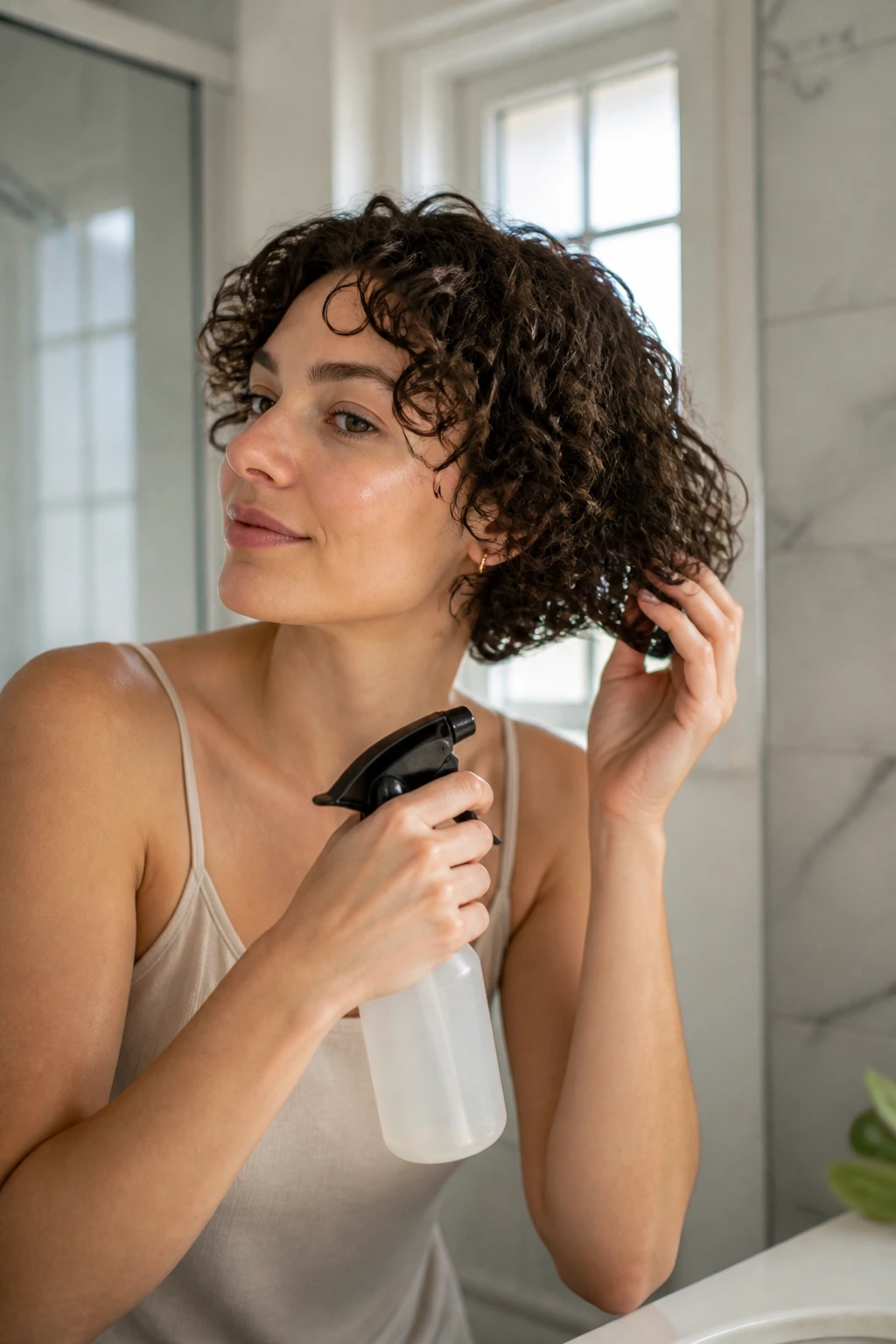
A short curly bob can look fresh for weeks, but only if you keep the ends clean and the shape from drifting. Most people need a trim every six to eight weeks to hold the line, especially with jaw-length, asymmetrical, or stacked versions. Softer grown-out shapes can stretch farther.
Sleep matters more than people admit. A silk bonnet or pillowcase keeps the curl pattern from getting crushed flat at the nape and sides. If the front pieces collapse overnight, clip them loosely at the crown before bed or give them a quick mist and scrunch in the morning.
Day two and day three hair usually needs only a little water and a small dab of leave-in. Don’t rewash every time the bob loses a bit of bounce. That just roughs up the cuticle and makes the ends puff. A short refresh is usually enough.
After a fresh cut, give the bob one full wash-and-style cycle before judging it. Curly hair often behaves differently after the first wash than it did in the salon chair. That first real styling session tells you whether the shape is working.
Questions People Ask Before Getting a Curly Bob
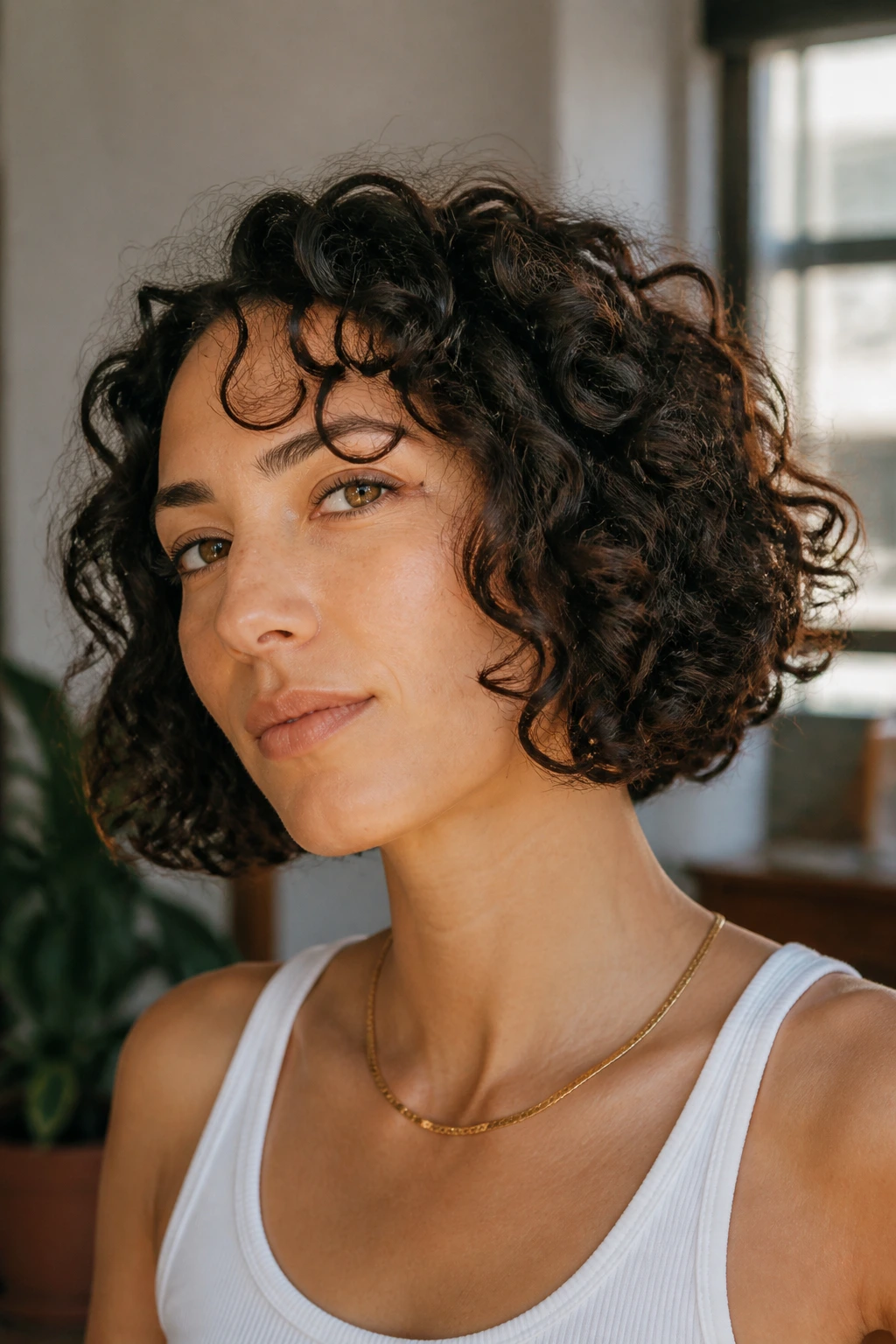
Which bob haircut is best for short curly hair?
The best one is the one that matches your curl density and how much work you want to do. Chin-length ringlet bobs, soft graduated bobs, and rounded halo bobs are safe starting points because they hold shape without demanding perfection.
Should curly bobs be cut wet or dry?
A good cut often uses both. Dry cutting or dry checking helps the stylist see shrinkage, while a wet outline can help establish the basic shape. If your curl pattern is uneven, a dry check is non-negotiable.
Can fine hair wear a curly bob without looking thin?
Yes, if the layers are kept light and the perimeter stays strong. A blunt or soft A-line bob usually works better than a heavily shredded shape because the ends need density to look full.
How often should I trim it?
Most short curly bobs need attention every six to eight weeks. Micro bobs, fringe-heavy cuts, and asymmetrical shapes may need quicker cleanup because a tiny bit of growth changes the silhouette.
What if my curls shrink a lot?
Leave more length than you think you need, and ask for the cut to be checked dry before the last trim. Shrinkage is predictable once you know your hair, but the first few cuts can be a little surprising.
Can I get bangs with a curly bob?
Yes, but keep the fringe longer than a straight-hair bang. Curtain bangs and side-swept fringe are easier to live with than a blunt line across the forehead.
What if the sides puff out too much?
That usually means the cut has too many short layers or not enough weight removed in the right place. A stylist can fix it with longer internal layers, a gentler nape shape, or a little undercut in heavy spots.
Does a bob work on coily hair?
Absolutely. The shape just has to respect coil shrinkage and density. Rounded, tapered, and sculpted bobs tend to work better than flat geometric cuts unless the coils are very defined and tightly maintained.
The Bob That Lets Curl Pattern Do the Work
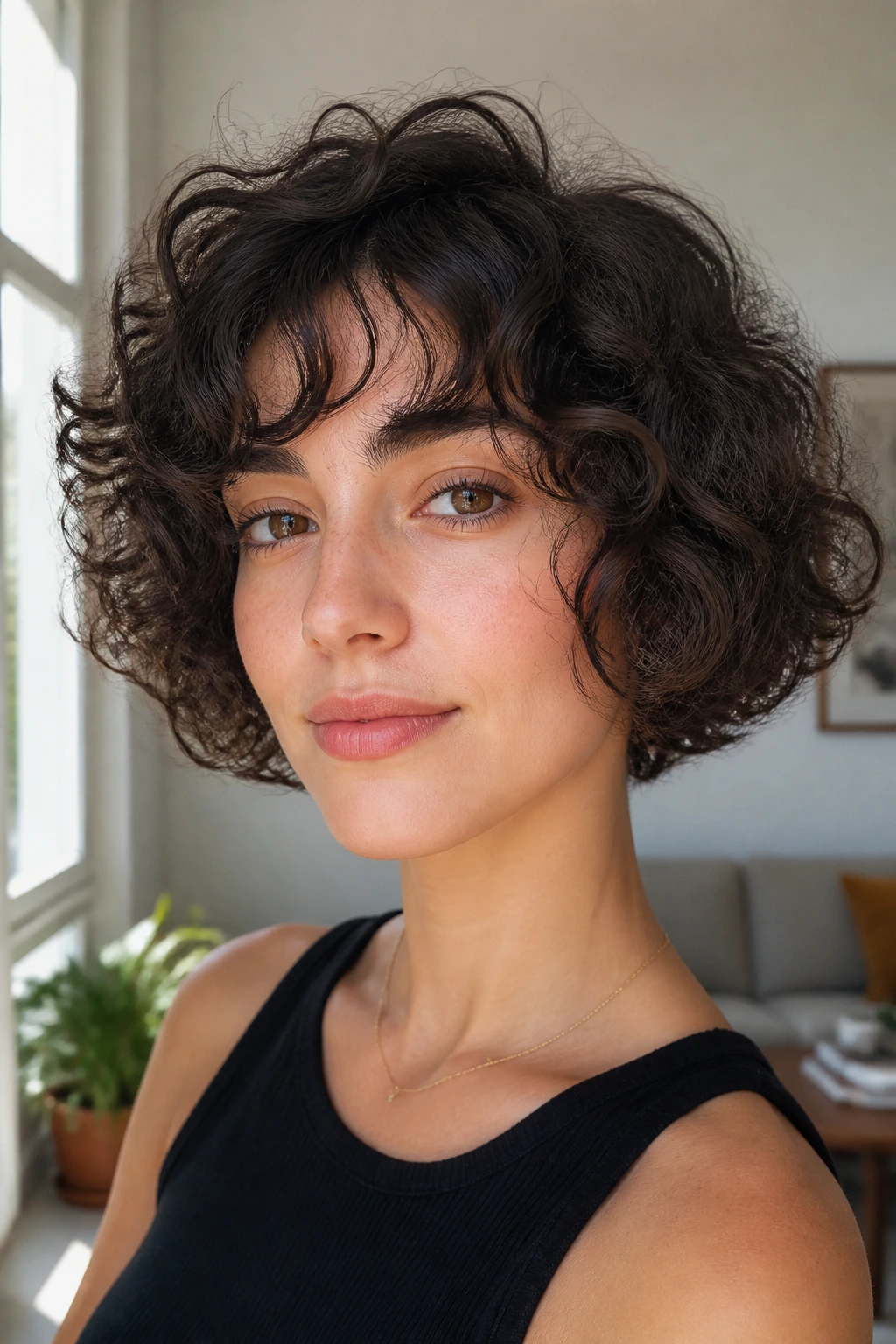
The nicest thing about a short curly bob is that it doesn’t need to pretend to be straight, polished, or effortless in the way people mean that word online. It just needs a shape that understands the curl. Once that part is right, the haircut starts doing some of the work every morning.
A good bob can make the face look cleaner, the neck longer, and the curl pattern sharper. A bad one can make even healthy hair feel bulky and confused. The difference is rarely dramatic in the salon mirror. It shows up later, when the hair dries and the shape either settles or sulks.
Choose the version that matches your curl spring, your density, and your patience. The rest is product, timing, and a little discipline with the diffuser.
