



A wavy bob with fringe only looks effortless when the cut is doing real work. If the fringe is carved too blunt or the bob carries too much weight through the corners, the whole shape turns boxy fast. The good versions of wavy bob hairstyles with fringe have a little lift at the roots, a soft bend through the mids, and a front section that opens the face instead of sitting on top of it.
I keep coming back to this haircut because it can be sharp, soft, messy, polished, or a little French without changing the basic blueprint. A chin-length bob with curtain fringe feels completely different from a collarbone lob with bottleneck bangs, but both depend on the same trick: let the wave move and let the fringe breathe. That combination is why the style keeps showing up on people who want shape without spending twenty minutes fighting the front section every morning.
The catch is that the haircut has opinions. Wavy hair shrinks as it dries, fringe changes shape depending on the cowlick, and a one-length bob can puff out where you wanted swing. Get the balance right, though, and you end up with one of those cuts that looks better on day two than it does right after a fresh wash. The best versions feel alive.
Why These 42 Wavy Bob Hairstyles With Fringe Keep Showing Up
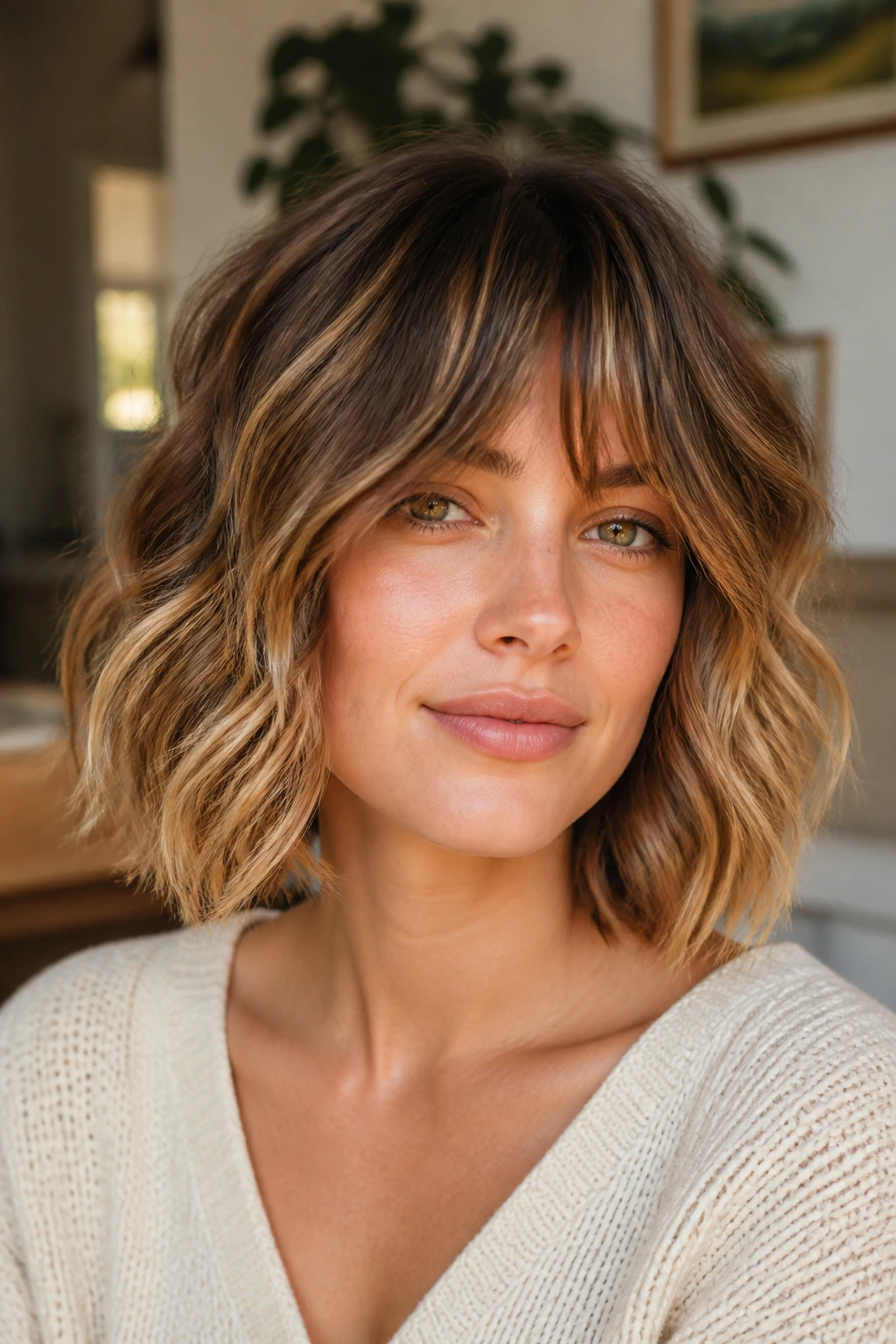
- They use the wave instead of fighting it: The bend in the hair keeps the bob from looking stiff, and the fringe gives the front a point of focus so the shape doesn’t drift.
- They make short hair read softer: A fringe breaks up the hard line of a bob, which matters when the length hits the jaw or chin.
- They grow out with less drama: Curtain, split, and side-swept fringes can slide into the sides as they lengthen, so the cut stays wearable longer.
- They work with rough-dry styling: A quick scrunch, a small round-brush bend, or a few turns with a curling iron is enough for most of these shapes.
- They can change mood without a full haircut: Shift the part, add more root lift, or tuck one side behind the ear, and the whole thing reads differently.
1. Chin-Length Wavy Bob With Curtain Fringe
This one sits right on the jaw, which gives the wave room to bounce instead of drooping. The curtain fringe splits at the center and skims the cheekbones, so the face gets shape without feeling boxed in.
Why It Works at the Jaw
The short length keeps the ends lively, and the open fringe makes the cut feel lighter than a straight-across bang. I like it on hair that already has a bend, because it only needs a little mousse and a side-to-side dry with a round brush at the front.
- Best for medium-density hair that needs shape, not bulk.
- Keep the fringe a touch longer than eyebrow level.
- A pea-sized amount of mousse at the roots is enough.
Quick tip: leave the front pieces slightly longer than you think. Wavy hair shrinks.
2. Soft French Bob With Brow-Skimming Fringe
A French bob gets sharper when the fringe stops right at the brows and the wave is left loose. The line reads neat, but not stiff.
The trick is to leave a little space at the outer corners of the eyes so the fringe doesn’t sit like a hard bar. On wavy hair, that tiny gap keeps the cut from feeling heavy when it air-dries.
Wear it with a bend, not a curl. The shape wants swing.
3. Collarbone Wavy Bob With Bottleneck Bangs
Why does this one feel so wearable? Because the length gives you room, and the bottleneck fringe makes the front move instead of collapsing.
The longer sides of the fringe blend into the bob, while the shorter center opens the eyes. It’s a smart choice if you want fringe without giving up the feeling of a lob, especially when you wear your hair off-center.
How to Wear It
Rough-dry the roots, then wrap only the face-framing sections around a 1-inch iron for 8 to 10 seconds each. Keep the ends soft. If they get too polished, the whole cut loses its easy shape.
4. Textured Jaw-Length Bob With Wispy Fringe
Picture a bob that looks a little broken up in the best way. The jaw-length edge keeps the cut clean, while the wispy fringe stops it from looking blunt.
That lighter front works well on finer hair because it doesn’t steal density from the crown. If your hair tends to go flat near the temples, this shape gives the front a lift without piling on layers.
- Good for fine to medium hair.
- Ask for point-cut ends, not a hard line.
- Dry the fringe forward, then split it with your fingers.
Closing note: if the fringe looks too neat, mist it with water and push it side to side.
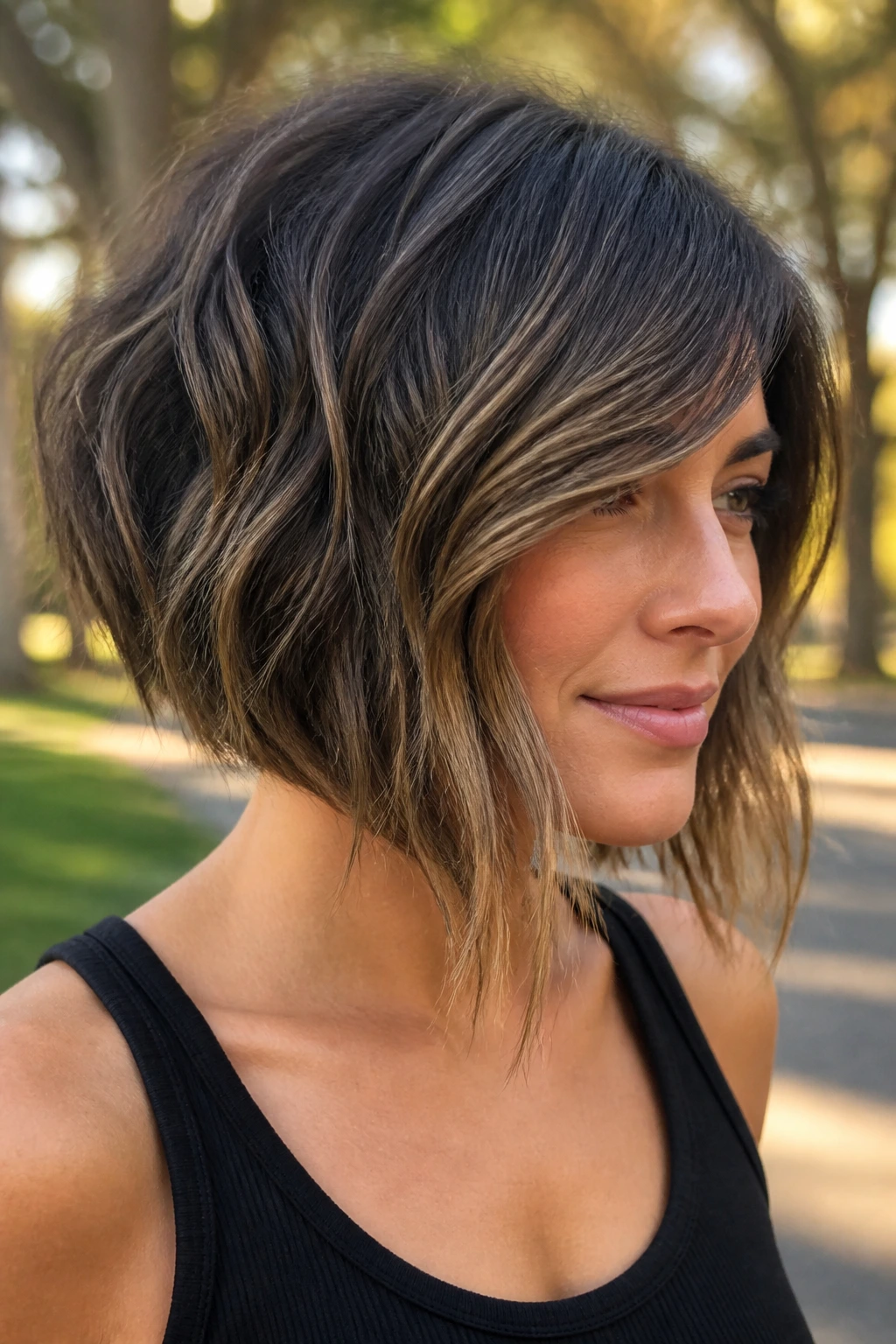
5. Inverted Wavy Bob With Side-Swept Fringe
This cut has a little attitude. The back sits shorter, the front swings longer, and the side-swept fringe softens the angle so it doesn’t feel severe.
The inversion gives the nape a tidy lift, which matters if your hair is thick and tends to hang. The side fringe breaks the line before the eye gets stuck on the angle.
It’s a good pick when you want a bob that still feels fast and modern. Not fussy. Just shaped.
6. Shaggy Wavy Bob With Feathered Fringe
A shaggy bob loves a feathered fringe because both parts want movement. The layers let the wave split naturally, which is handy if your hair dries with its own agenda.
This version works best when the fringe is cut with a little graduation through the sides. Otherwise it can puff out and sit on top of the bob instead of melting into it.
If you like texture spray, this is your lane. One mist, one scrunch, done.
7. Blunt Wavy Bob With Eyebrow Fringe
A blunt edge sounds strict, but the wave keeps it from looking rigid. The eyebrow fringe anchors the front and gives the cut a strong frame.
That said, the fringe needs to stay soft at the ends. A tiny bit of texture through the last half-inch keeps it from looking like a ruler laid across the forehead.
What to Watch For
- Too much heat can flatten the wave into a puffed-out shelf.
- Heavy fringe needs a dry cut or it can land too low.
- The blunt line works best on hair with some density.
8. Asymmetrical Bob With Diagonal Fringe
This cut makes a clear statement without shouting. One side falls longer, and the diagonal fringe points the eye toward the cheekbone instead of straight down.
The angle helps if your hair grows in different directions or if one side flips out more than the other. A diagonal fringe can cover that difference instead of exposing it.
Wear it with a side part and a small bend through the longer side. The shape likes motion.
9. Tousled Lob With Long Curtain Fringe

If you want fringe but not a lot of maintenance, this is the safer bet. The lob length leaves enough hair to tuck, braid, or twist, while the long curtain fringe can drift into the sides on lazy mornings.
The key is keeping the wave soft from mid-length to ends. Too much curl and the front pieces pull short; too little and the cut loses its easy shape.
How to Use It
A flat iron bend on the front pieces, then a rough-dry on the rest, is enough. The long fringe should skim the lips when wet and land near the cheekbones when dry.
10. Airy Bob With Micro Fringe

Micro fringe and a wavy bob make a sharp contrast. The little bang line is short and clean, while the rest of the hair stays loose and movable.
This one works because the wave keeps the overall look from going severe. If the bob were pin-straight, the micro fringe could feel cold. With texture, it reads playful and deliberate.
It’s a bold cut. Fine. If you want quiet hair, skip it.
11. Rounded Bob With Split Fringe

A rounded bob curves in toward the jaw and neck, which makes the fringe choice matter a lot. A split fringe softens that curve and keeps the front from feeling closed in.
The shape is especially nice if you like a neat silhouette without the hard edge of a classic pageboy. It gives you polish, but there’s still a little air around the face.
The best styling move is to bend the top layer away from the cheeks. That stops the roundness from looking helmet-like.
12. Choppy Bob With Bottleneck Fringe

Here, the point is texture. Choppy ends, a broken-up fringe, and a bit of separation through the wave keep the cut feeling sharp instead of fluffy.
The bottleneck fringe adds structure at the center and eases outward at the sides, which makes it more forgiving than a blunt bang. On thick hair, that matters.
Use a light paste or texture cream on the ends. A heavy oil will collapse the piecey look fast.
13. Beachy Bob With Face-Framing Fringe
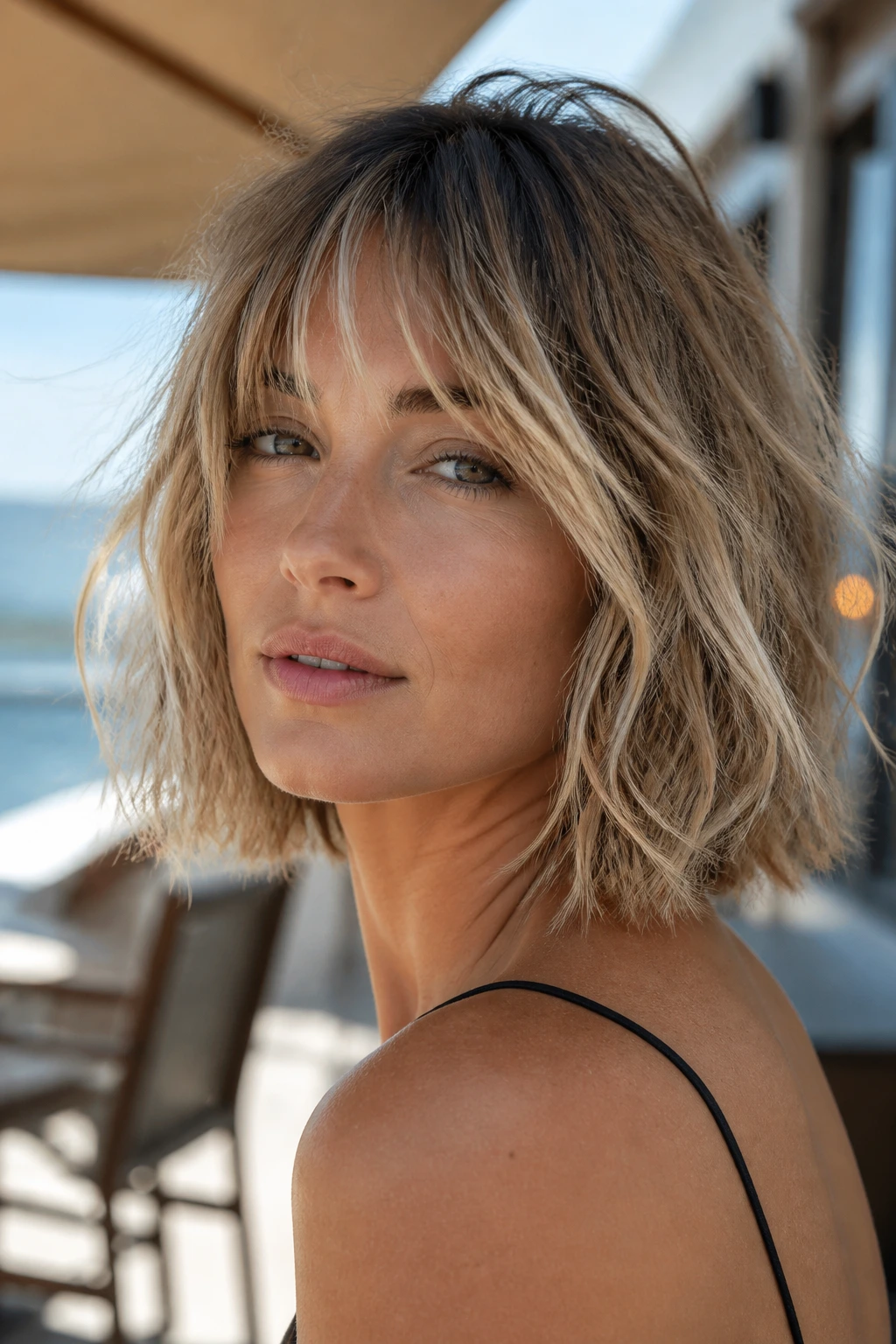
This is the easygoing version, the one that looks best when it isn’t overworked. The fringe opens around the temples, and the rest of the bob keeps that salt-spray kind of movement.
It’s good for hair that already leans wavy because the style doesn’t ask for perfect symmetry. The face-framing pieces do the heavy lifting, and the ends stay loose.
A side part makes the whole thing feel a touch more relaxed. Middle part if you want it softer.
14. Sleek Wavy Bob With Grown-Out Fringe
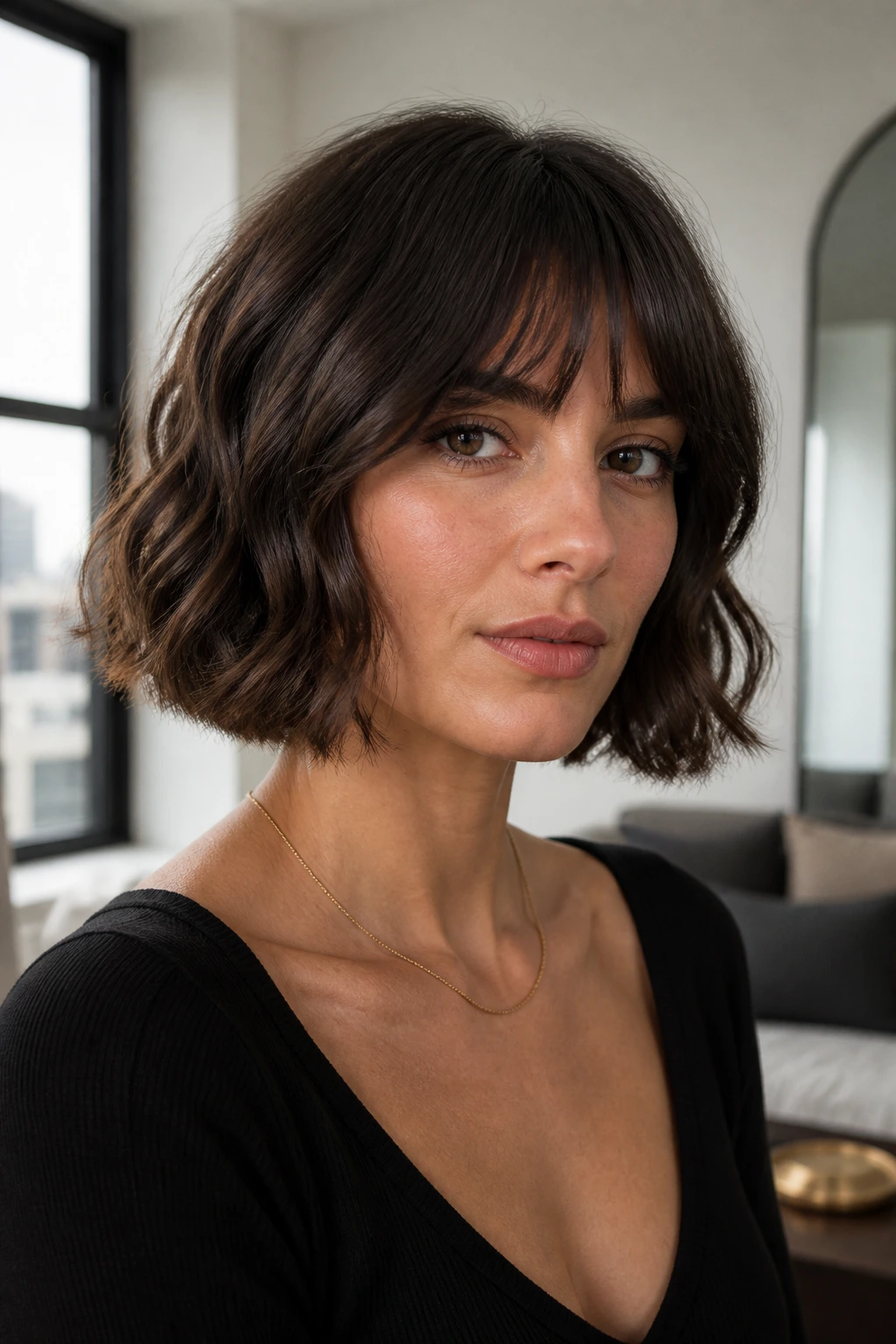
A little polish changes the mood completely. The waves stay soft, the fringe sits a bit longer, and the whole cut feels refined instead of undone.
This version is smart if you’re growing out older bangs. The fringe can blend into the sides while still looking intentional, which saves you from that awkward in-between stage.
Keep the wave polished, not tight. One smooth bend is enough.
15. Layered Bob With Brushed-Down Fringe
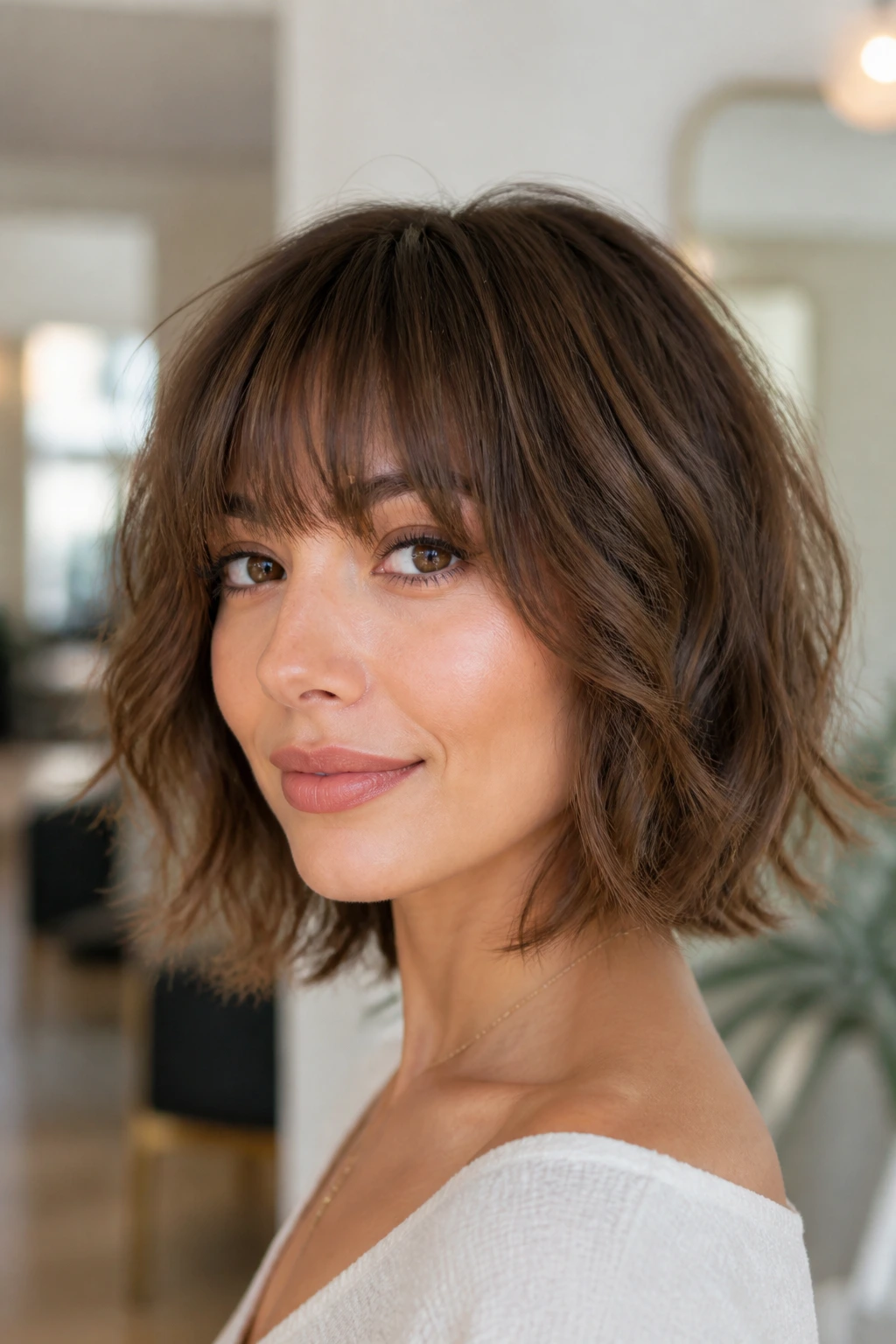
A brushed-down fringe can look heavy if the bob underneath is too blunt. Layers fix that by taking weight out of the mids and letting the front settle more naturally.
This cut works well on dense hair that needs movement near the cheekbones. The fringe doesn’t have to be airy to feel soft; it just needs somewhere to sit.
The Best Part
The layers make the bob move when you turn your head. Small thing. Big difference.
16. Retro Wavy Bob With Thick Fringe
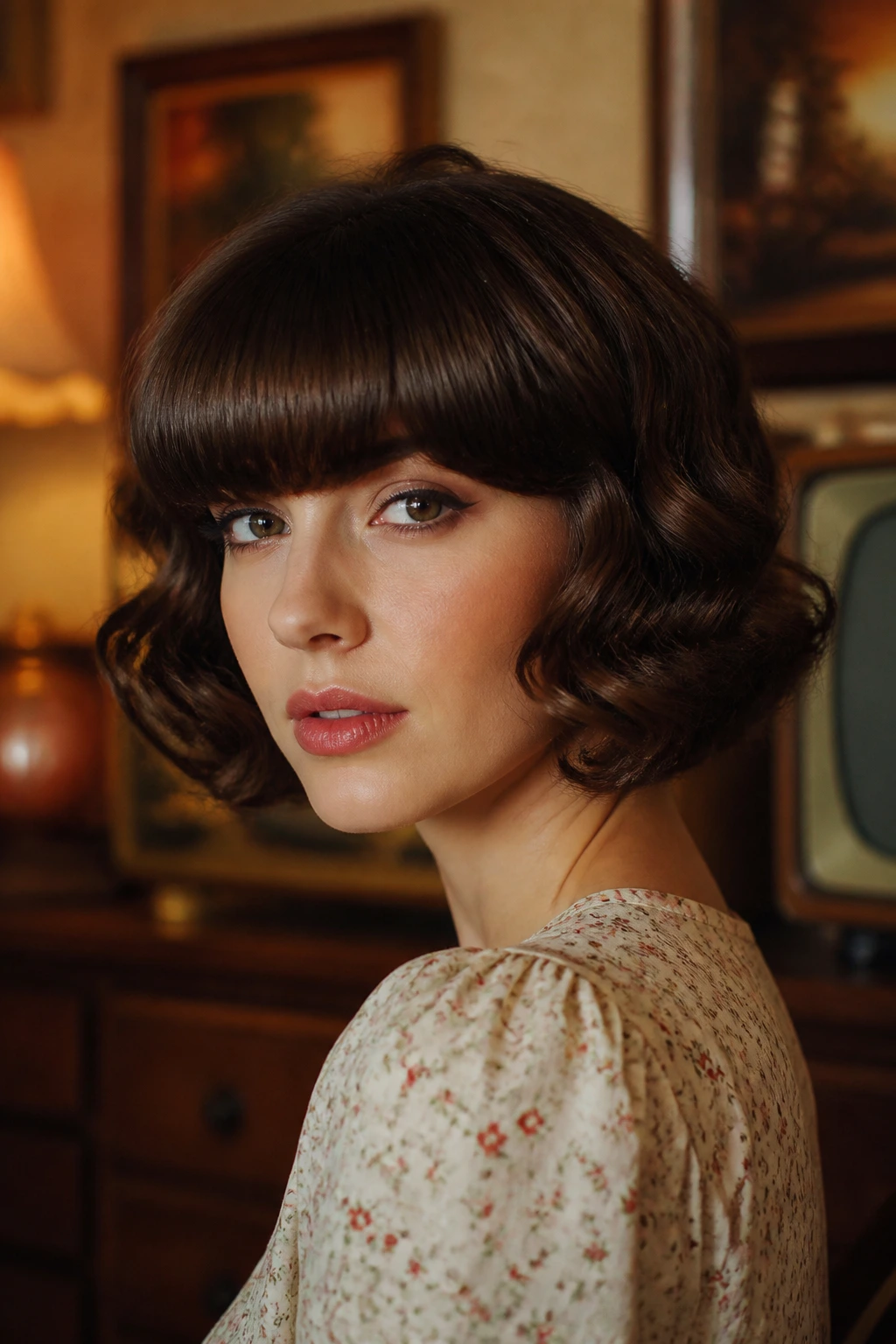
A thick fringe brings back a little vintage drama, especially when the bob has a soft wave through the ends. The look lands somewhere between polished and playful.
The fringe should be cut with enough density to hold its shape, but not so much that it blocks the eyes. On wavy hair, a thick bang needs room to break up as it dries.
I’d wear this with a round-brush bend and a bit of shine spray. It likes a neat finish.
17. Messy Bob With Curved Curtain Fringe

This one feels like hair that’s been lived in for an hour and then fixed in the mirror. The curved fringe follows the brow line, then opens out toward the cheekbones.
It’s a strong pick if your hair naturally bends at different angles. Instead of fighting that, the cut lets the front curve and the ends flick.
No need for perfection here. A little mismatch is the point.
18. Boxy Bob With Barely-There Fringe

A boxy bob sounds blunt, but the barely-there fringe keeps it from turning hard. The fringe is so light it almost acts like a soft veil.
That works nicely on finer hair, where heavy bangs can crush the front. The boxy outline gives structure, while the sheer fringe stops the shape from feeling too severe.
Who It Suits
People who like crisp lines, but not heavy hair around the forehead. If that sounds like you, this cut lands in the right place.
19. Soft Undercut Bob With Long Fringe
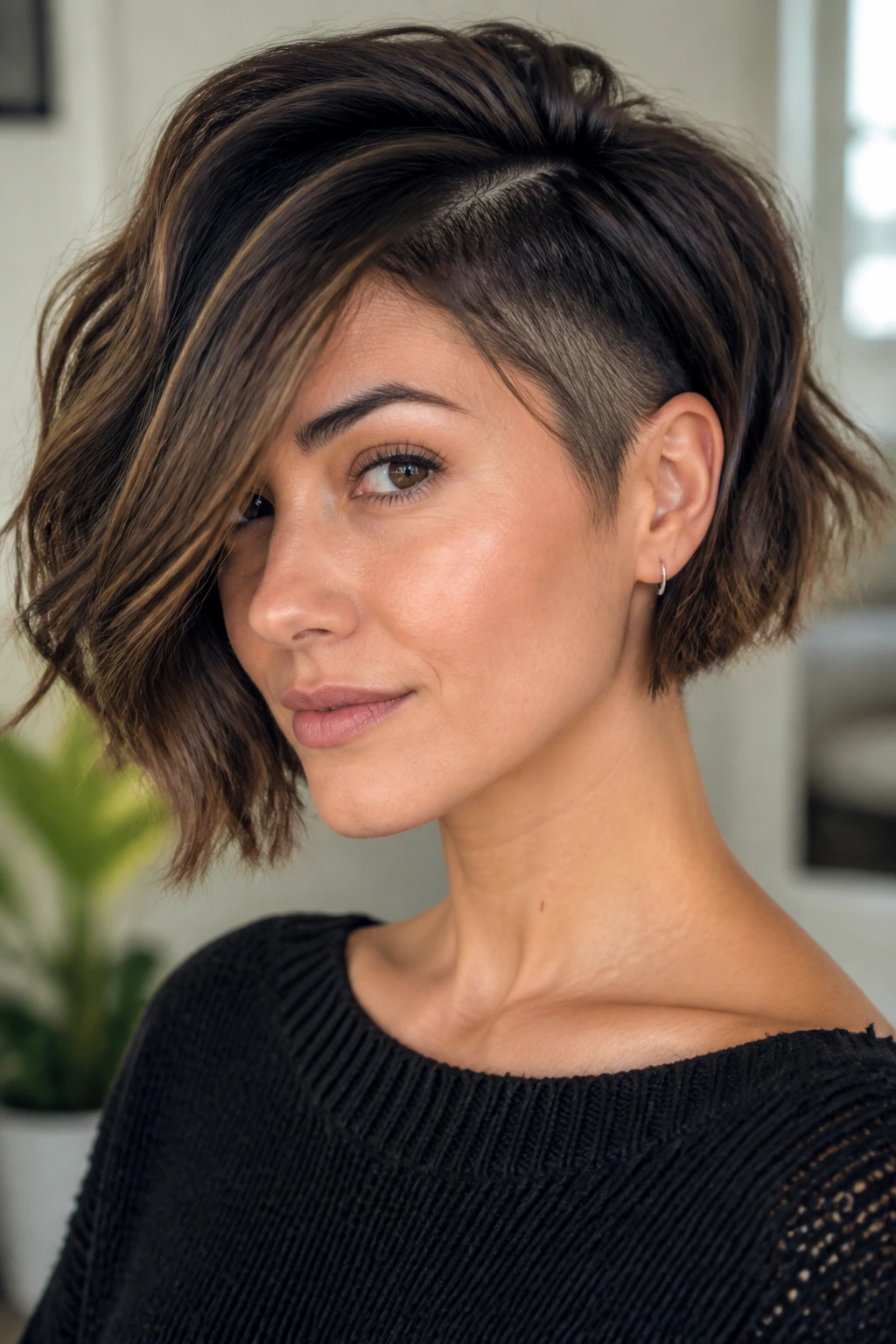
An undercut sounds edgy, and it is, but the long fringe keeps the whole cut approachable. Removing bulk underneath lets the top wave sit with more lift.
This is a smart move for thick or coarse hair that puffs at the sides. The fringe can be tucked, split, or worn forward depending on the day.
Keep the top layers long enough to show the texture. If the bob gets too short on top, the undercut does all the talking.
20. Tucked Bob With Short Wispy Fringe

This is the kind of bob that looks good behind the ears. The short wispy fringe creates a delicate front line, and the tucked sides keep the neck exposed.
It’s a nice option if you wear glasses or earrings a lot. The fringe doesn’t fight your frames, and the bob stays light around the face.
Use a tiny round brush at the fringe only. The rest can air-dry.
21. Deep Side-Part Bob With Diagonal Fringe
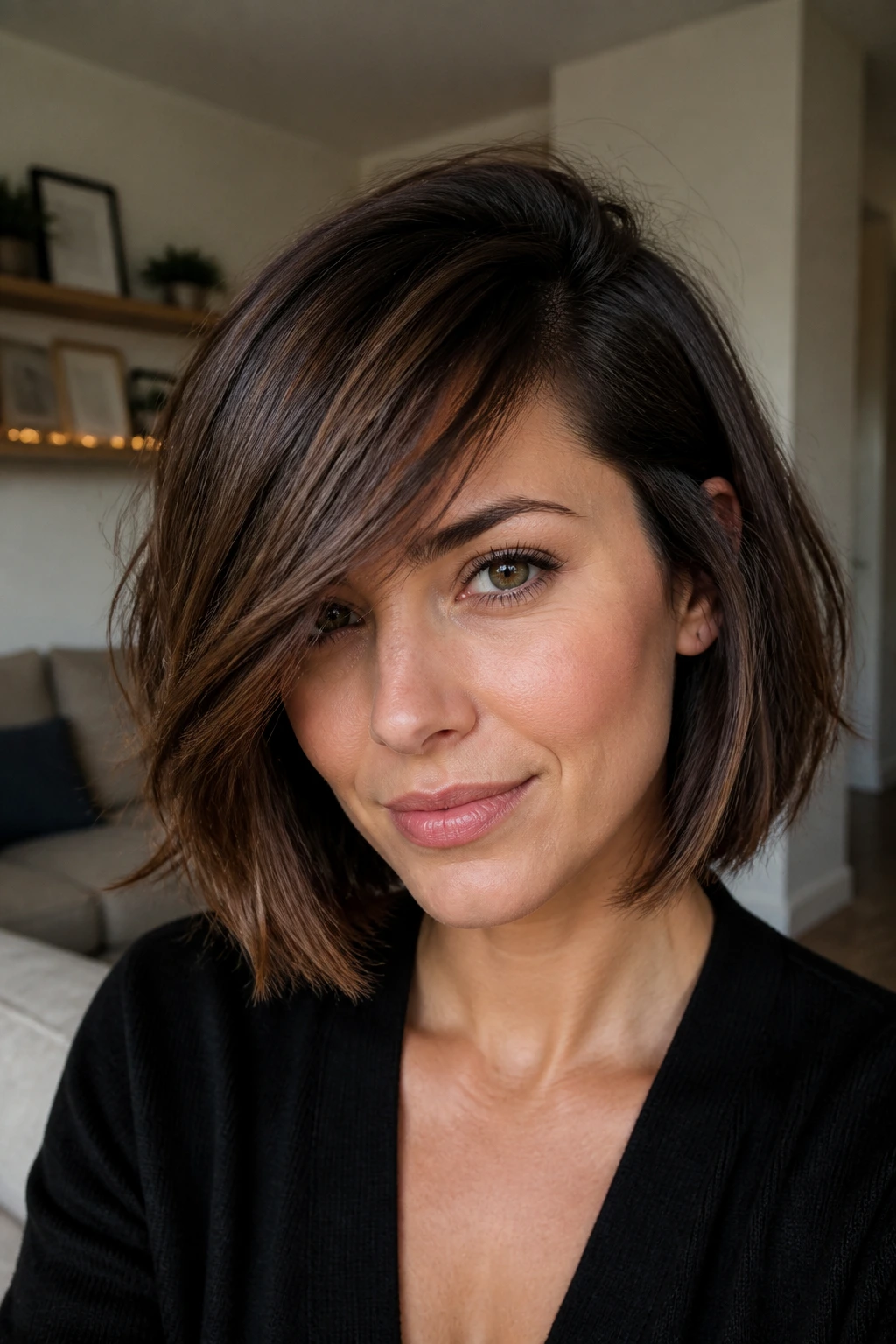
A deep side part changes the whole attitude of a bob. Add a diagonal fringe, and the front gets lifted in a way that feels flattering without being overdone.
The diagonal line helps the hair fall across the forehead with a little movement. It’s a good answer for anyone whose fringe wants to split or move off-center anyway.
How to Wear It
Push the heavier side back with a clip or tuck it behind one ear. The asymmetry makes the bob look intentional, not accidental.
22. Blended Bob With Layered Fringe
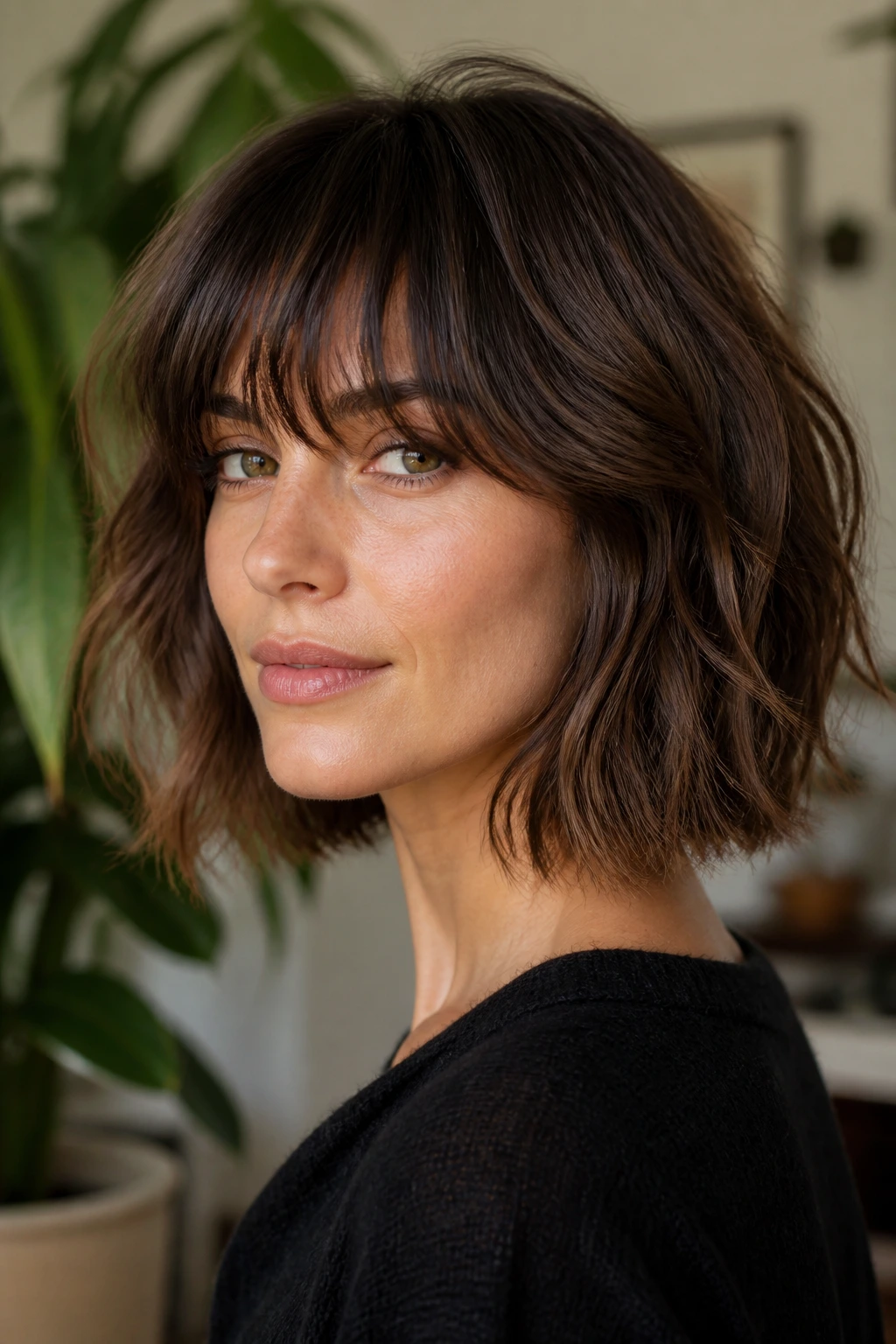
This is one of the easiest shapes to wear because the fringe and the bob share the same language. Both are layered, both have movement, and neither one makes a hard statement.
That blending helps if you don’t want a strong contrast between the front and the sides. The result is softer and more forgiving at the grow-out stage.
I’d call this a safe cut, but that undersells it. It’s also a pretty useful one.
23. Flippy Bob With Rounded Fringe

A flippy bob wants the ends to kick out a little, which keeps the shape fun instead of neat. Pair that with a rounded fringe, and the whole haircut feels lifted.
The fringe should curve gently, not arc too high. Too much roundness at the front and the cut starts looking like it’s trying too hard.
Keep the ends light with a blow-dryer brush or a quick pass of the iron. The movement matters more than the polish.
24. Collarbone Shag Bob With Curtain Bangs

If you want fringe and texture without giving up length, this is the sweet spot. The collarbone cut gives you movement, the shag layers add roughness, and the curtain bangs soften the front.
It’s especially nice on hair that waves unevenly from root to end. The shaggy layering hides the fact that the pattern isn’t perfect.
Wear it messy. Over-styling this one kills the charm.
25. Chin-Grazing Bob With Airy Micro Fringe

This is a sharper, more fashion-forward version of a wavy bob. The fringe is short and delicate, while the bob sits close enough to the chin to keep the face open.
The airy fringe matters because micro bangs can get heavy fast. If they’re too dense, they overpower the whole cut.
Quick Reality Check
This cut looks best when the wave stays loose and a little irregular. Tight curls or overdone bends will fight the micro fringe.
26. Textured French Bob With Gappy Fringe

The gaps are part of the appeal here. A French bob with a bit of space in the fringe feels less precious and more wearable, especially on wavy hair.
The broken fringe lets your brows peek through, which keeps the face from feeling covered. It’s a good compromise if you want bangs but don’t want a heavy curtain of hair.
A dab of dry texture spray gives the ends the right kind of separation. Nothing too sticky.
27. Wavy Bob With Arched Fringe
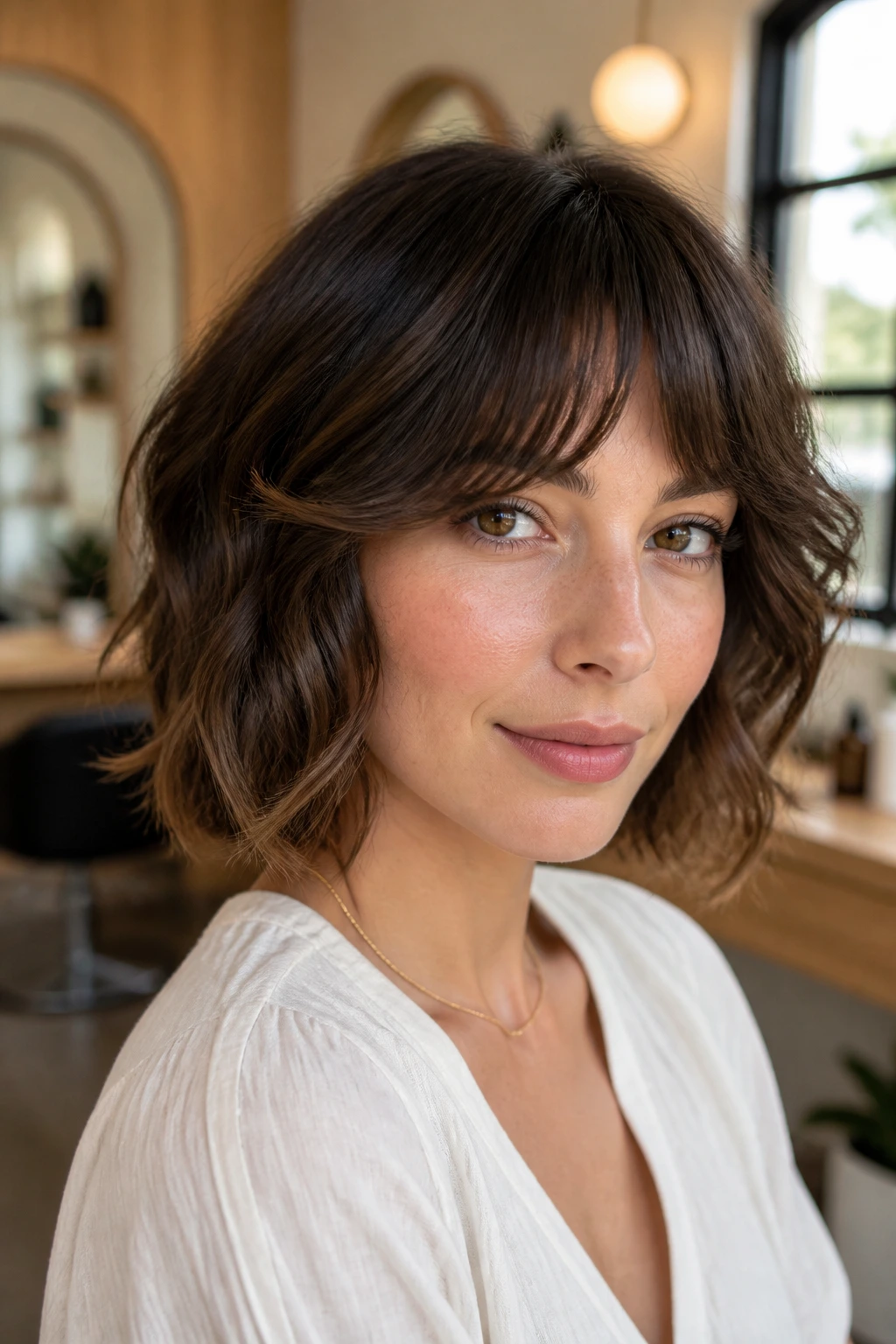
An arched fringe lifts in the center and eases down at the sides, which gives the face a gentle frame. It’s a nice way to make a bob feel a little more tailored.
The arch works best when the wave underneath is soft, not too springy. If the hair is very bendy, the fringe can start to look too round.
A small round brush and a quick cool shot will keep the arch in place longer. Worth the extra minute.
28. Graduated Bob With Soft Side Fringe
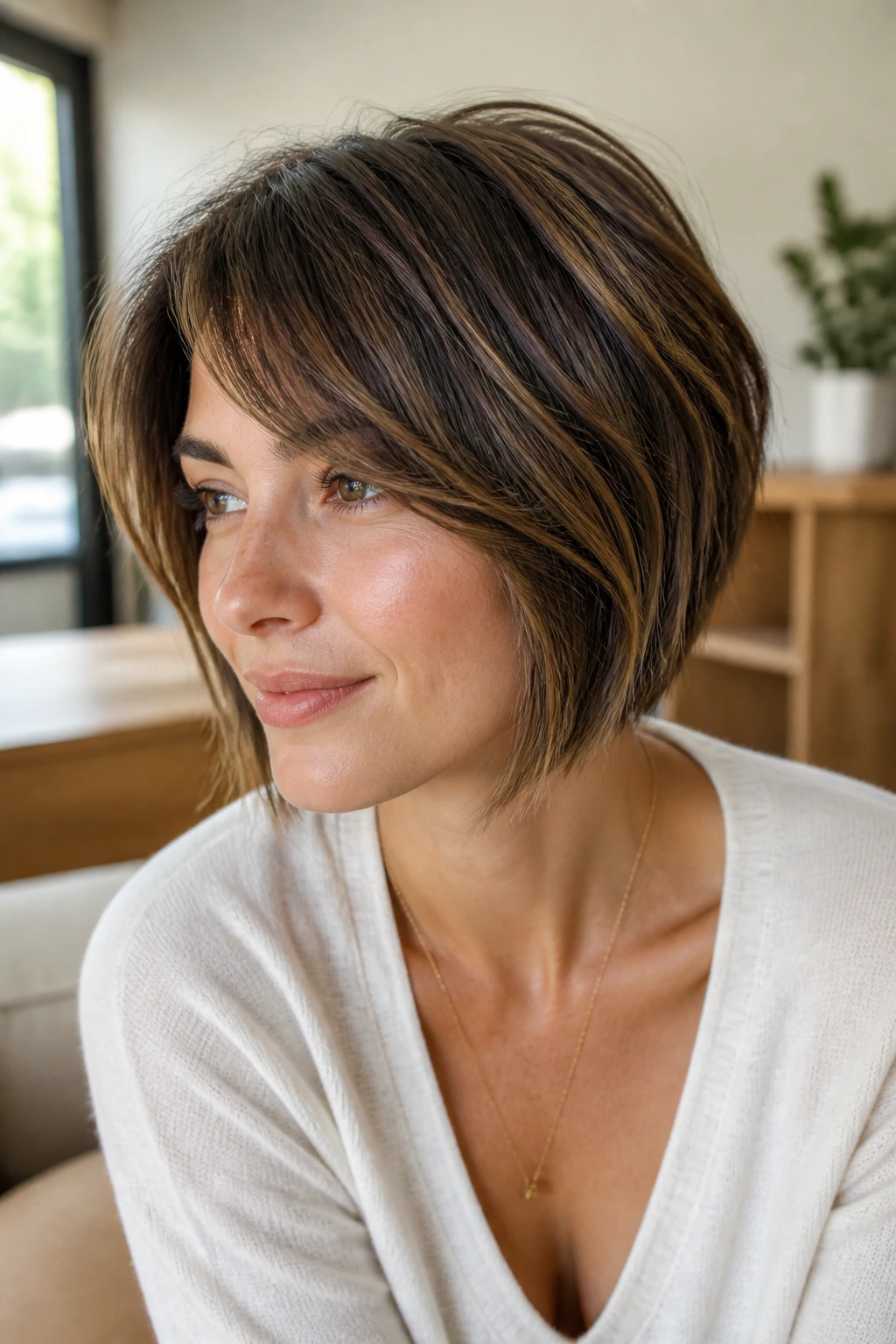
A graduated bob builds weight at the back and narrows toward the neck, so a soft side fringe helps balance the shape. The fringe keeps the front from feeling too strict.
This one suits hair that needs a little structure through the crown. The back can hold the line, while the front stays loose enough to move.
It’s a tidy cut, but not stiff. That matters more than people think.
29. Mid-Length Bob With Invisible Layers and Fringe

Invisible layers are the quiet trick here. They take weight out without broadcasting it, so the wave can fall naturally while the fringe does its job.
The mid-length keeps the cut flexible. You can wear it tucked, bent, or air-dried, and the fringe still has room to sit softly across the forehead.
Best for
People who want movement without obvious shag layers. If you like subtle shape, this is the one.
30. Tousled Angled Bob With Piecey Fringe

An angled bob needs the front to feel lighter than the back, and piecey fringe helps with that. The broken-up texture keeps the cut from turning too directional.
This style looks especially good when the wave bends away from the face. That creates a little forward motion without making the length drag.
Use a pinch of texture paste on the fringe ends. A lot. No. Just a pinch.
31. Rumpled Bob With Curtain Fringe and Bend

This is the cut for hair that likes to misbehave a little. The rumpled texture keeps it honest, and the curtain fringe gives the face a soft opening.
The bend through the mids matters more than the ends. If the middle section has shape, the whole haircut feels deliberate even when it’s not perfectly smooth.
I’d leave this one a little undone. The mess is doing work.
32. Grown-In Bob With Brow-Length Fringe

A grown-in fringe can look better than a freshly cut one. It softens the face and blends into the bob without making a hard line at the brows.
This style is handy if you’re between trims or if your fringe grows fast. The bob becomes the anchor, and the fringe quietly follows along.
It’s a good example of a haircut that forgives time. Rare thing.
33. Sculpted Bob With Combed-Through Fringe

This version leans polished. The wave is still there, but it’s controlled, and the fringe is combed through enough to show the line cleanly.
The cut suits people who want a neat shape without pin-straight hair. It’s a bob that can show up in a work setting and still look like it has a little movement.
A light serum on the ends helps, but keep it off the fringe roots. That’s where things get limp fast.
34. Relaxed Bob With Long Side Fringe

A long side fringe is one of the easiest ways to soften a bob. It sweeps across the forehead, narrows the face line, and gives the wave a place to land.
This shape is easy to grow out because the fringe can live in the side layers as it gets longer. You’re not stuck with a strict front line.
If you hate touch-ups, start here.
35. Dimensional Bob With Choppy Fringe
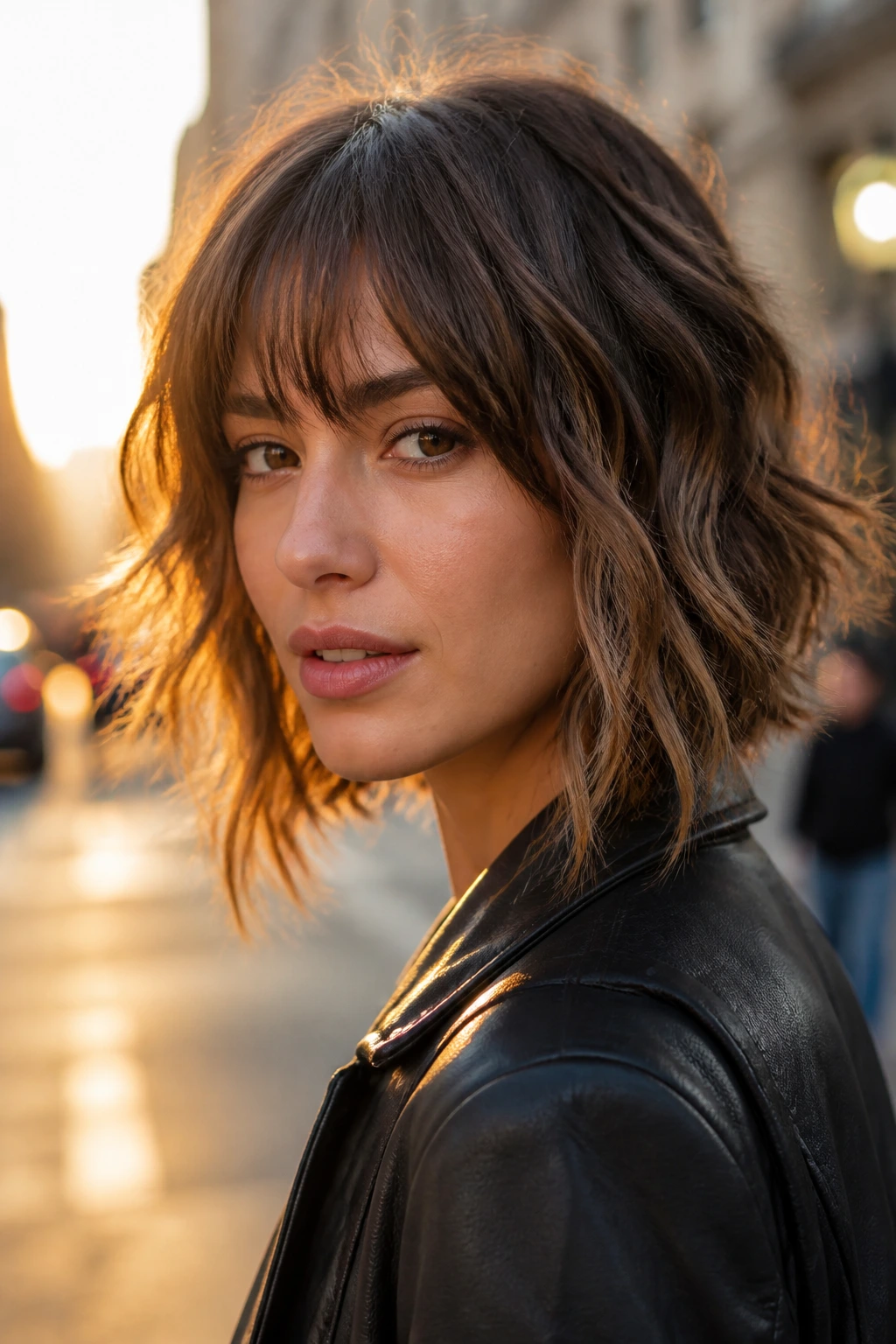
Dimension matters when the bob has different lengths working together. A choppy fringe adds another layer of movement, so the whole cut feels more textured and less flat.
It’s especially nice on hair with natural highlights or color variation, because the broken fringe shows off the movement. But the haircut itself does enough.
Keep the ends separated. If the fringe clumps, the dimension disappears.
36. Blowout Bob With Feathered Fringe

This is the salon-style version of the group. The wave is smoother, the fringe is feathered, and the whole shape feels a little more dressed up.
It works best if you’re willing to use a brush and a dryer, because the feathered fringe depends on lift at the root. Once that’s in place, the rest falls neatly around it.
A cool shot at the end helps the fringe keep its sweep. Small detail. Big payoff.
37. Scrunched Wavy Bob With Short Fringe

This one is built for texture products. The hair gets scrunched, the fringe stays short, and the result looks casual in a way that still reads as styled.
Short fringe on wavy hair can be tricky, though. It needs enough softness at the ends to avoid that hard chopped look.
A diffuser helps if your wave pattern is loose but wants definition. If not, hands are enough.
38. Sliced Bob With Thin Fringe
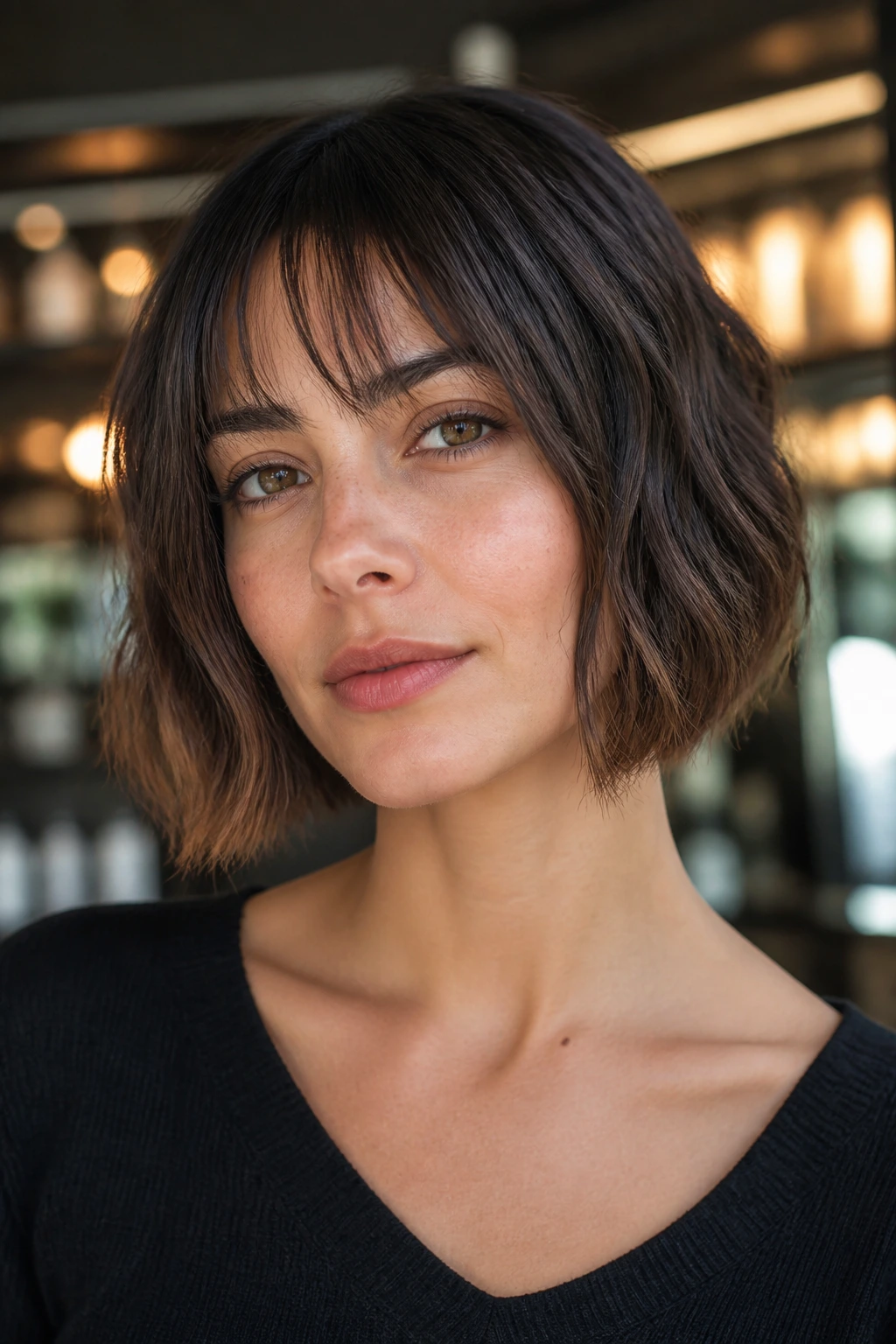
A sliced bob has a sharper edge than a shag, but the thin fringe keeps it light. The front line feels airy, which stops the haircut from getting too severe.
This is a smart answer for finer hair that needs shape without weight. The slices through the bob create movement, and the fringe doesn’t compete with them.
What Makes It Different
The thin fringe gives you face-framing without density. That’s the whole point.
39. Vintage Bob With Full Fringe
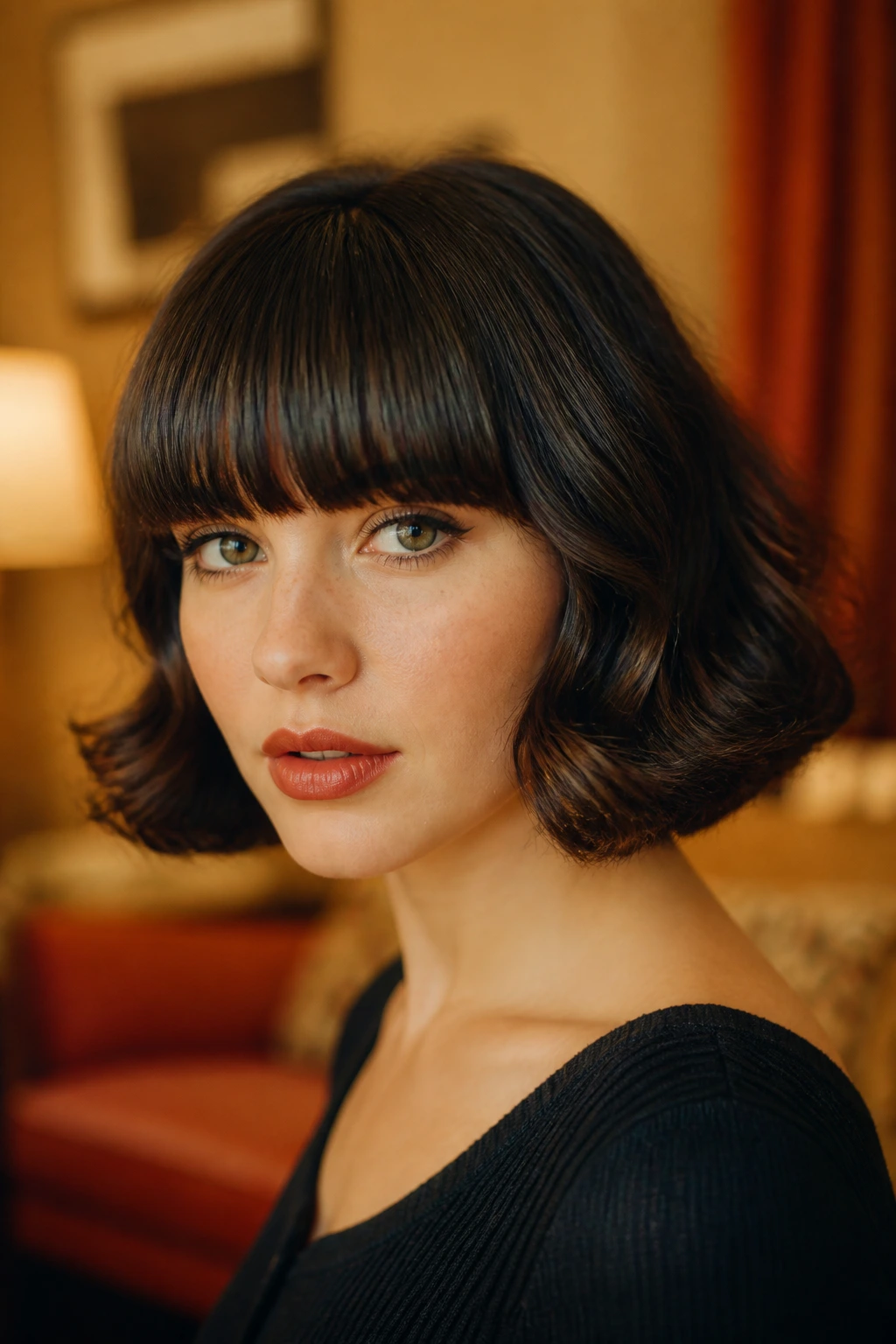
A full fringe gives the bob a little old-school drama. Pair it with soft waves, and the haircut lands somewhere between classic and playful.
The fringe should have enough density to feel deliberate, but not so much that it blocks the brow line. On wavy hair, a full fringe needs some weight removed underneath.
Wear it with a side tuck if you want the shape to feel less formal. Easy fix.
40. Air-Dried Bob With Split Fringe

This is the lazy-day winner. The split fringe opens naturally, the bob dries into soft bends, and the whole thing looks better for having some irregularity.
It works because the split front lets the hair find its own place. No hard bang line means less fighting the shape as it dries.
A leave-in cream through the ends and a little finger-twisting at the front are enough. Then stop touching it.
41. Polished Bob With Soft Bend and Fringe

The polished version keeps the wave under control without flattening it. The soft bend through the ends gives the bob movement, and the fringe stays smooth enough to frame the eyes cleanly.
This is the cut I’d wear if I wanted the style to feel tidy but not severe. It looks intentional from across the room and softer up close.
Use a medium round brush, not a tiny one. Tiny brush, tiny hair. That’s the risk.
42. Low-Maintenance Wavy Bob With Soft Fringe

The front is soft, the wave is loose, and the cut does not ask for much. That’s the appeal.
A soft fringe can grow a little, split a little, and still look fine. The bob length keeps the movement visible, so even a rough dry can still read as styled.
If you want one of these looks that survives a busy week without constant correction, this is the one I’d point you toward.
Why Wavy Bob Hairstyles With Fringe Work on So Many Hair Types

A good wavy bob works because it gives the hair a clear outline without taking away the movement that makes wave texture interesting. Shorter lengths let the wave bounce; the fringe keeps the front from going too plain. That combo matters on fine hair, thick hair, loose waves, and even on hair that flips a little differently from side to side.
The fringe is doing more than decoration. It changes where the eye lands first, which is handy when the bob ends near the jaw or chin and needs help from the front. Curtain pieces, side fringes, and bottleneck bangs can soften a strong line, while blunt or micro fringe can sharpen it when that’s the goal.
A lot of people think texture and fringe pull in opposite directions. They don’t. The wave brings movement, and the fringe gives the movement a starting point. That’s why the best versions look like the hair found its shape on purpose.
Styling Tools That Make These Cuts Behave
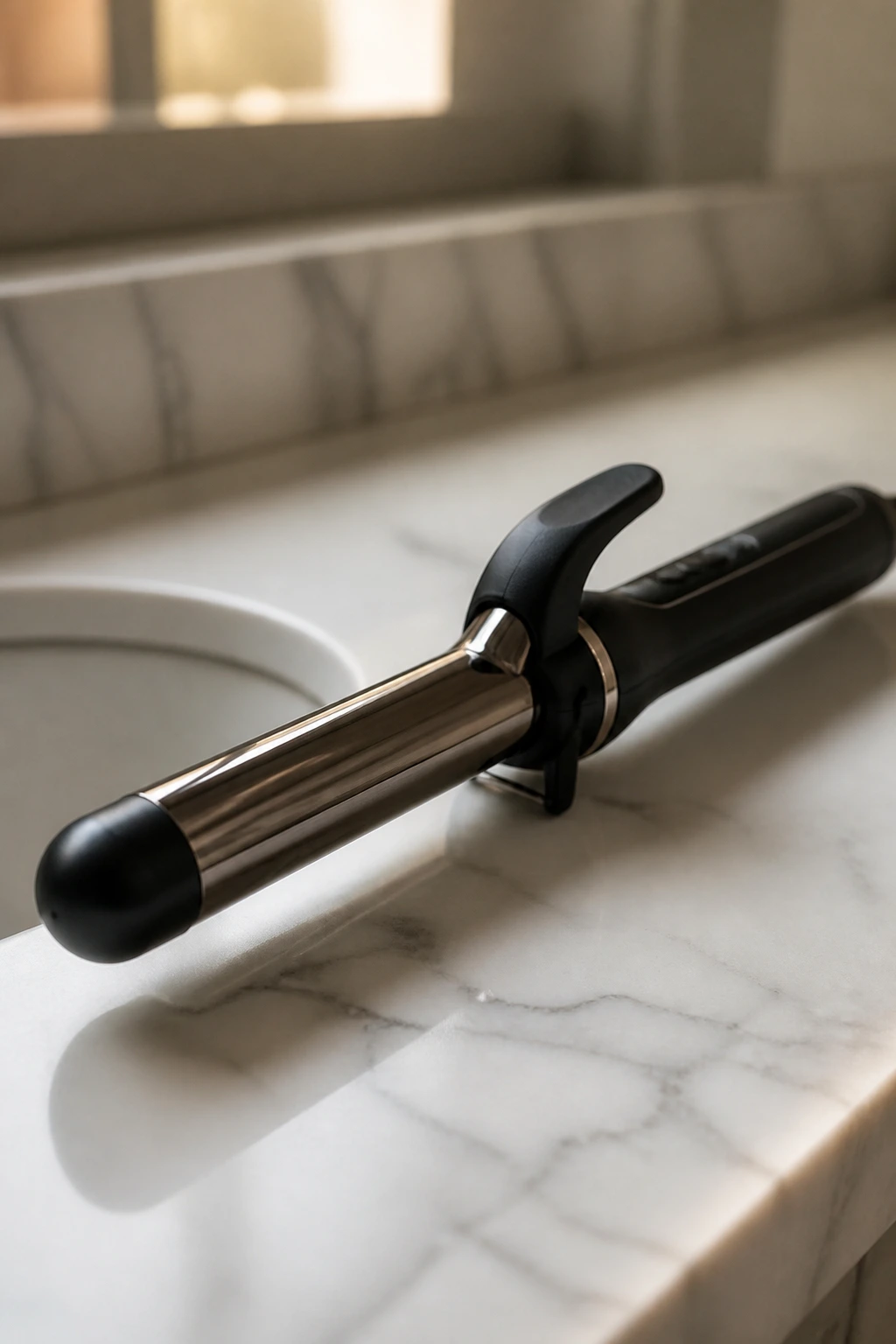
- 1-inch curling wand: Best for soft bends and loose S-waves around the bob.
- Flat iron with rounded edges: Useful for turning the fringe and front pieces without making them pin-straight.
- Heat protectant spray: Keeps the ends from drying out, especially if you restyle the fringe often.
- Lightweight mousse: Adds root lift and keeps wavy hair from collapsing into the crown.
- Texturizing spray: Good for piecey ends and a little separation through the mid-lengths.
- Blow dryer with concentrator nozzle: Helps control the fringe and smooth the top layer.
- Small round brush: Useful for curtain fringe, arched fringe, and polished bends.
- Duckbill clips: Handy when you want the fringe to cool in place after a bend.
- Dry shampoo: Saves day-two hair and stops the fringe from getting oily first.
- Microfiber towel or cotton T-shirt: Cuts down on frizz while the hair is still wet.
How to Choose the Right Fringe and Length
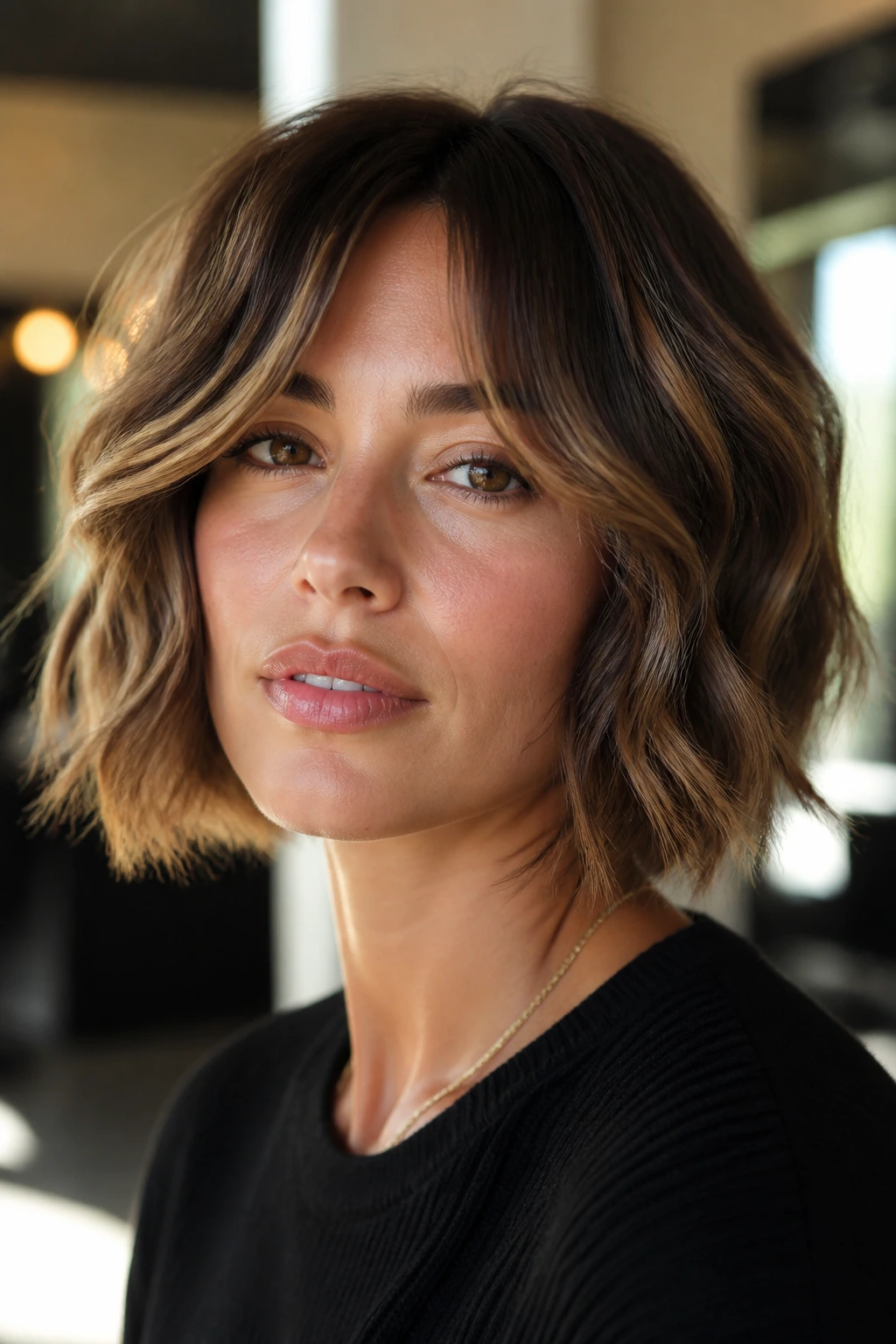
Fine or Straight Hair
If your hair is fine, a wavy bob with fringe works best when the fringe is light and the perimeter stays clean. Too many layers will steal density from the ends and make the haircut look see-through.
Curtain fringe, wispy fringe, and side fringe tend to behave better than a very full bang. They let the front move without crushing the shape.
Thick or Coarse Hair
Thicker hair needs internal weight removal, not a bunch of short layers stacked everywhere. A bob that’s too heavy near the corners will puff out, especially once it dries.
Bottleneck bangs, feathered fringe, and a longer curtain fringe usually sit better here. They let the front breathe and keep the cut from feeling top-heavy.
Cowlicks and Growth Patterns
Cowlicks are the reason fringe choices matter so much. If your front hair splits hard in the middle, a curtain or split fringe usually behaves more honestly than a blunt bang.
Dry the fringe where it naturally wants to fall, then adjust with a brush, not the other way around. That small shift saves a lot of frustration.
Glasses, Brows, and Face Shape
If you wear glasses, leave enough space so the fringe doesn’t sit right on the frames. Brow-length or slightly shorter fringe usually works better than one that keeps brushing the lenses.
For longer faces, a fuller fringe can shorten the look a bit. For round faces, longer side pieces or a center split keep the cut from feeling too compact.
How to Wear These Styles Day to Day

Everyday wear: Keep the wave loose and the fringe touchable. A little separation is enough; no need to make the hair look freshly curled every morning.
Best pairings: These cuts sit well with hoops, glasses, turtlenecks, crewneck tees, and anything with a clean neckline. A bob with fringe draws attention up, so simple clothes often look better than busy ones.
Dressier finish: Brush the fringe smoother, tuck one side behind the ear, and add a drop of serum to the ends. That gives the style more polish without erasing the texture.
When to choose a softer version: If you want low drama, curtain fringe or side fringe will grow out gracefully. If you want sharper contrast, micro fringe or blunt fringe gives the bob more edge.
Additional Styling Tips and Finishers
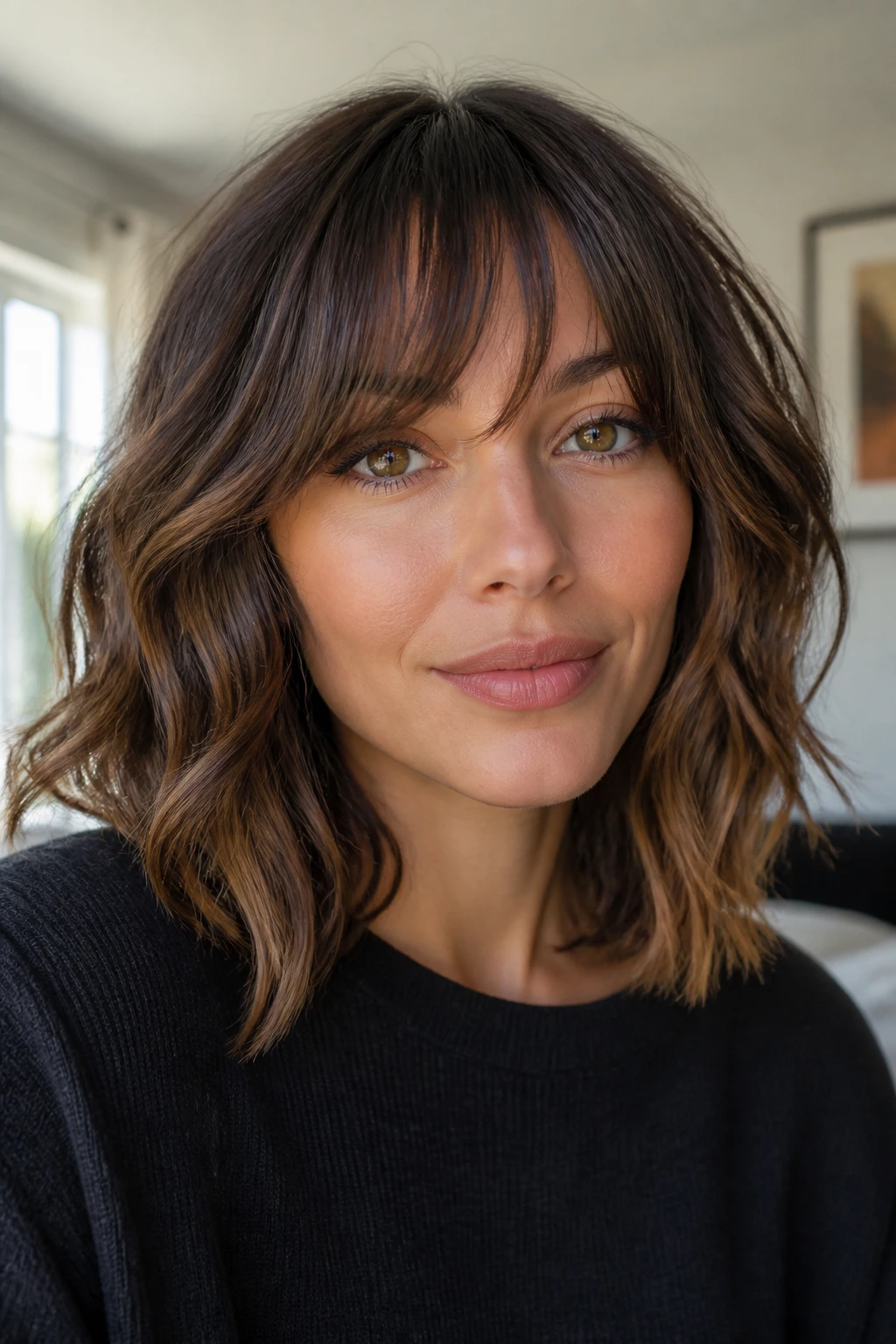
Texture boost: Work mousse through damp roots, then scrunch the mids with your hands. That gives the wave a base before the hair dries.
Smoother finish: If the front pieces puff up, wrap them around a brush and cool them for 10 to 15 seconds before letting go. That small reset tames the fringe without flattening the bob.
Fringe control: Use the lightest amount of dry shampoo at the roots of the fringe, not the lengths. Too much powder leaves the bang chalky and stiff.
Make-it-yours: Add a deep side part for a more dramatic line, or center part the fringe if you want softness around the eyes. Same haircut. Different mood.
Common Mistakes That Flatten the Shape

- Cutting the fringe too short on wavy hair: The bang can spring up an extra half-inch or more once it dries. Keep the first cut conservative, then adjust after the hair has dried.
- Loading the fringe with heavy oil: The front turns stringy, and the roots fall flat. Put oils on the ends, not on the roots or the bang line.
- Making every wave go the same direction: The bob starts to look helmet-like. Alternate the bend on purpose so the texture feels loose.
- Over-layering fine hair: The ends get wispy in a bad way. Keep the layers subtle and let the fringe do the softening.
- Ignoring the cowlick: The fringe splits or flips in the morning, then the whole front feels off. Cut with the growth pattern in mind instead of trying to force it flat.
- Using too much heat every day: The wave loses body and the fringe gets dry at the edges. Give the hair a break between hot-tool passes.
Variations and Adaptations to Try
Fine-Hair Lift: Keep the bob blunt at the edge and choose a light curtain or wispy fringe. The cleaner perimeter gives the illusion of fuller ends, while the fringe stays soft enough to move.
Thick-Hair Taming: Ask for internal debulking under the crown and along the sides, then pair it with a longer fringe. That removes bulk where it matters and stops the cut from puffing out at ear level.
Curly-Texture Version: Leave the fringe longer and cut it dry, curl pattern intact. A curly bob with fringe needs room to spring, or the front will shrink too much and sit above the brow in a way that feels accidental.
Glasses-Friendly Shape: Choose a side fringe or a long split fringe that clears the frames. Keep the side pieces tucked just behind the temples so the cut doesn’t crowd your face.
Low-Heat Air-Dry Look: Twist the fringe into two loose sections while damp, then scrunch the bob with a bit of mousse and let it dry. The result is relaxed, and it saves the front from daily heat.
Grow-Out Grace: If you’re in between lengths, ask for a fringe that blends into the cheekbone area. It softens the line as it grows and keeps the cut from hitting that awkward, stuck-in-the-middle stage.
Keeping a Wavy Bob With Fringe Fresh Between Trims

A fringe needs more maintenance than the bob itself, and that’s the deal. Most people can stretch a bob trim to six to eight weeks if the shape is soft, but fringe usually wants a cleanup every three to five weeks if you like the front to sit cleanly.
Night care matters more than people admit. A satin pillowcase helps, and so does pinning the fringe back loosely if it tends to get bent while you sleep. If the front bends weirdly, mist it lightly in the morning instead of soaking it. Too much water at the fringe will flatten the root, and then you’re stuck waiting for it to dry.
Wash day is where the shape gets reset. Keep shampoo mostly on the scalp, use conditioner from the ears down, and don’t pile conditioner into the fringe. That front section gets oily first, so it needs the lightest treatment in the room. If your wave starts to fall apart between washes, dry shampoo at the roots and a quick wave refresh with a mist bottle will do more than a full restyle.
When the haircut starts growing out, don’t panic and cut everything shorter at once. Ask for the fringe to be rebalanced first. Often that’s enough to keep the whole bob looking intentional for another few weeks.
Frequently Asked Questions

Can a wavy bob with fringe work on fine hair?
Yes, if the fringe stays light and the ends aren’t thinned to death. Fine hair usually does better with curtain fringe, side fringe, or a soft split front because those shapes keep movement without stealing density.
What fringe type is easiest to grow out?
Curtain fringe and bottleneck bangs are the easiest to live with while they grow. They blend into the sides instead of sitting as a hard line, so the haircut keeps working even when the trim is overdue.
Do I need hot tools every day?
No. A rough dry, a little mousse, and finger-twisting the front is enough for many of these cuts. If you want more polish, touch only the fringe and the face-framing pieces; the rest can stay soft.
What if my fringe keeps separating in the middle?
That usually means the growth pattern wants a split front, not a blunt one. Let it separate into a curtain fringe or move it to a side part, because fighting the split usually makes it worse.
Is this haircut good for thick hair?
Yes, but the cut needs weight removal in the right places. Thick hair benefits from internal layering, longer fringe, and a perimeter that is not cut too wide at the corners.
How often should the fringe be trimmed?
Every three to five weeks is a practical range if you want the front to stay neat. If you’re fine with a grown-out look, you can stretch that longer and let the fringe blend into the sides.
Can I wear it curly instead of wavy?
You can, but the fringe needs more length at the start. Curly hair shrinks more than most people expect, so the bang should be cut with extra room and shaped dry if possible.
What should I tell my stylist before the cut?
Bring a front photo and a side photo, and mention how your hair dries at the temples. That helps the stylist see whether your fringe should be split, side-swept, or kept lighter through the center.
A Cut That Still Has Room to Move

The reason these styles keep working is simple: they let the hair behave like hair. A wavy bob with fringe does not need to be perfect to look good. It needs balance, a clean line somewhere in the shape, and enough softness around the face that the fringe doesn’t take over.
That’s the part I like most. You can go sharper or softer, shorter or longer, polished or rumpled, and the haircut still holds together if the proportions are right. Bring two photos to the salon — one of the silhouette, one of the fringe — and ask for the movement to stay intact. That small bit of clarity usually gets you a much better bob.
