



Wavy hair and balayage are made for each other. When a bend catches the light, even a tiny ribbon of color can look deeper, softer, and more expensive than a bigger, brighter highlight on straight hair. These balayage ideas for wavy hair lean into that movement instead of fighting it, which is why the right placement can make a shoulder-length cut look fuller without loading it up with extra styling.
The catch is placement. Put the light pieces too high and the waves can turn stripey. Keep them too low and the whole head can lose shape, especially when the hair dries with a little frizz or a little puff at the crown. Good colorists read the base level, the wave pattern, the porosity at the ends, and the amount of warmth already living in the hair before they pick up a brush.
So the real job here is not “Will balayage work on wavy hair?” It does. The better question is which tone family, how much contrast, and where the brightest pieces should sit so the color still looks good on day one, day five, and after a quick scrunch with leave-in cream.
Why These Balayage Ideas Hit So Well on Wavy Hair
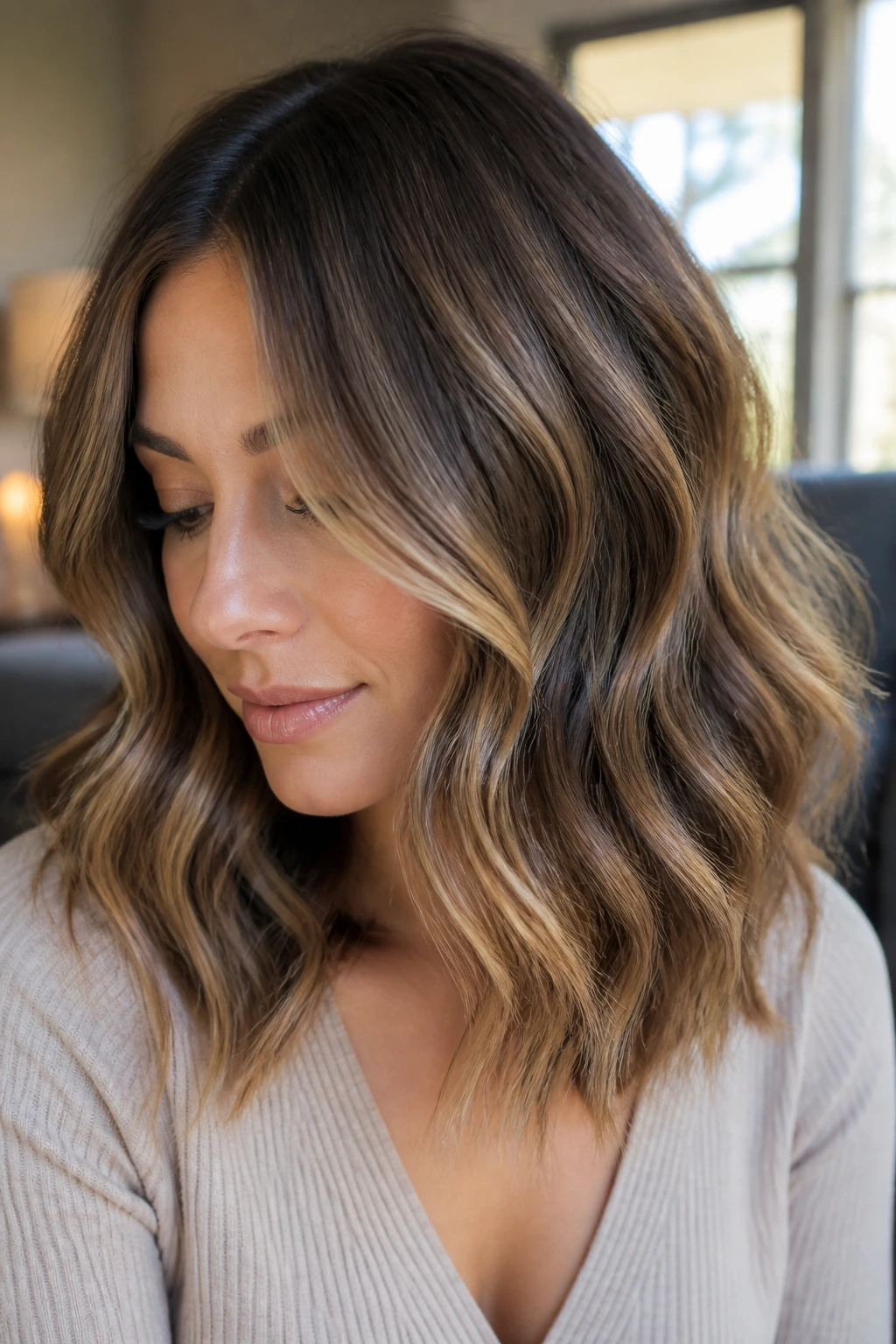
-
Movement does the heavy lifting: Wavy hair creates peaks and troughs, which means a hand-painted ribbon can flash bright on one bend and disappear into shadow on the next. That’s the whole magic trick.
-
Root shadow buys you time: A soft root melt keeps regrowth from looking blunt, and that matters even more when waves separate and show the scalp line in little pockets.
-
The texture makes warm and cool tones read cleaner: Caramel, mushroom brown, beige, copper, and champagne all look more dimensional when the wave pattern breaks them up across the head.
-
Fine waves get more shape from contrast: A few well-placed brighter pieces near the face and through the mid-lengths can make thinner hair look less flat without turning the whole head blond.
-
Thick waves need internal depth: Darker lowlights or a deeper base stop the color from turning into one giant bright sheet, which is the fastest way to make wavy hair look puffy.
-
Soft grow-out is part of the appeal: The best balayage on waves usually looks better two to six weeks later, once the root has softened and the ribbons sit inside the movement instead of on top of it.
1. Caramel Ribbon Balayage on Dark Brown Waves
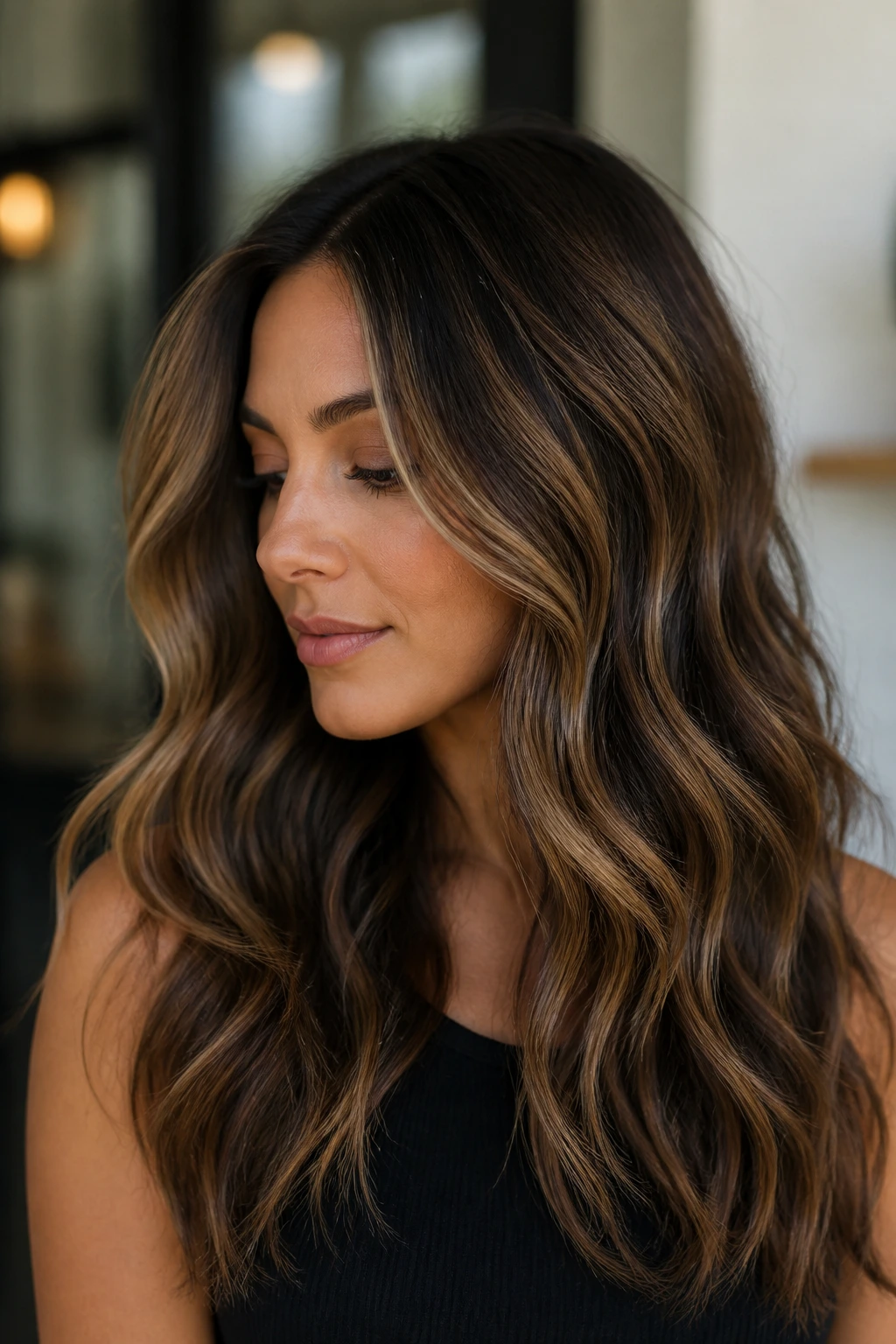
Caramel on dark brown waves is the classic for a reason. The color sits in that sweet spot between toffee and warm amber, so the contrast is obvious enough to read in motion but not so pale that it fights the base. When the waves separate, the ribbons catch light in little flashes. When the hair falls together, the whole thing still looks rich.
Why It Works on Waves
Caramel is one of the few tones that can sit inside a dark brunette base without looking harsh. Ask for ribbons that lift only about 1 to 2 levels lighter than your natural color if you want softness, or 2 to 3 levels if you want more obvious streaks. On wavy hair, those lighter strands pop on the ridges of the wave and dip back into shadow at the troughs.
Quick Details Worth Asking For
- Base level: Best on level 3 to 5 brunettes.
- Placement: Keep the brightest pieces around the face and through the top layers.
- Tone: Ask for caramel, toffee, or warm beige — not orange.
- Finish: A soft root shadow keeps regrowth from looking abrupt.
Pro tip: If your waves are loose and fluffy, ask for slightly thinner ribbons than you think you need. They blur better once the hair is dry.
2. Mushroom Brown Balayage for Cool Brunettes
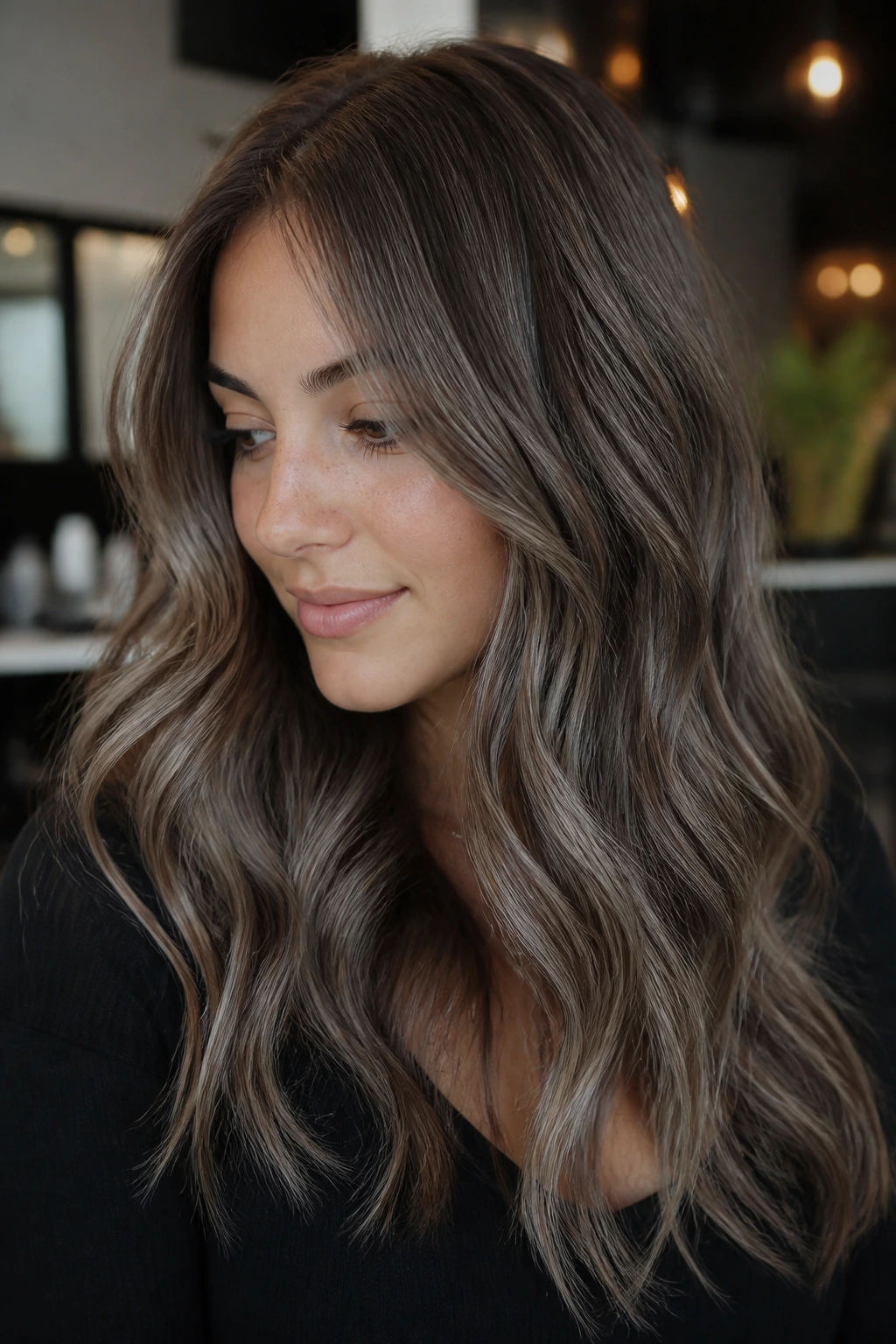
This is the shade for anyone who hates brass and can spot an orange undertone from across the room. Mushroom brown lives in that cool taupe-brown zone that feels calm, smoky, and expensive-looking without getting icy. On wavy hair, the color reads like layers of ash, beige, and soft brown stacked on top of one another.
The trick is restraint. Mushroom brown looks best when the lift is subtle — usually just one shade lighter than the base, then toned with a cool-beige gloss. Push it too pale and it loses the whole point. On waves, that muted color makes every bend look deeper because the eye follows the light-and-dark shift instead of the pigment alone.
I like this on medium brunettes who want dimension but do not want the warmth that comes with caramel or honey. It also behaves well on hair that already leans cool or neutral. If your ends are porous, ask for a gloss instead of a bigger lift; porous ends grab ash fast, and that can turn the whole look flat.
3. Honey Blonde Face-Framing Balayage
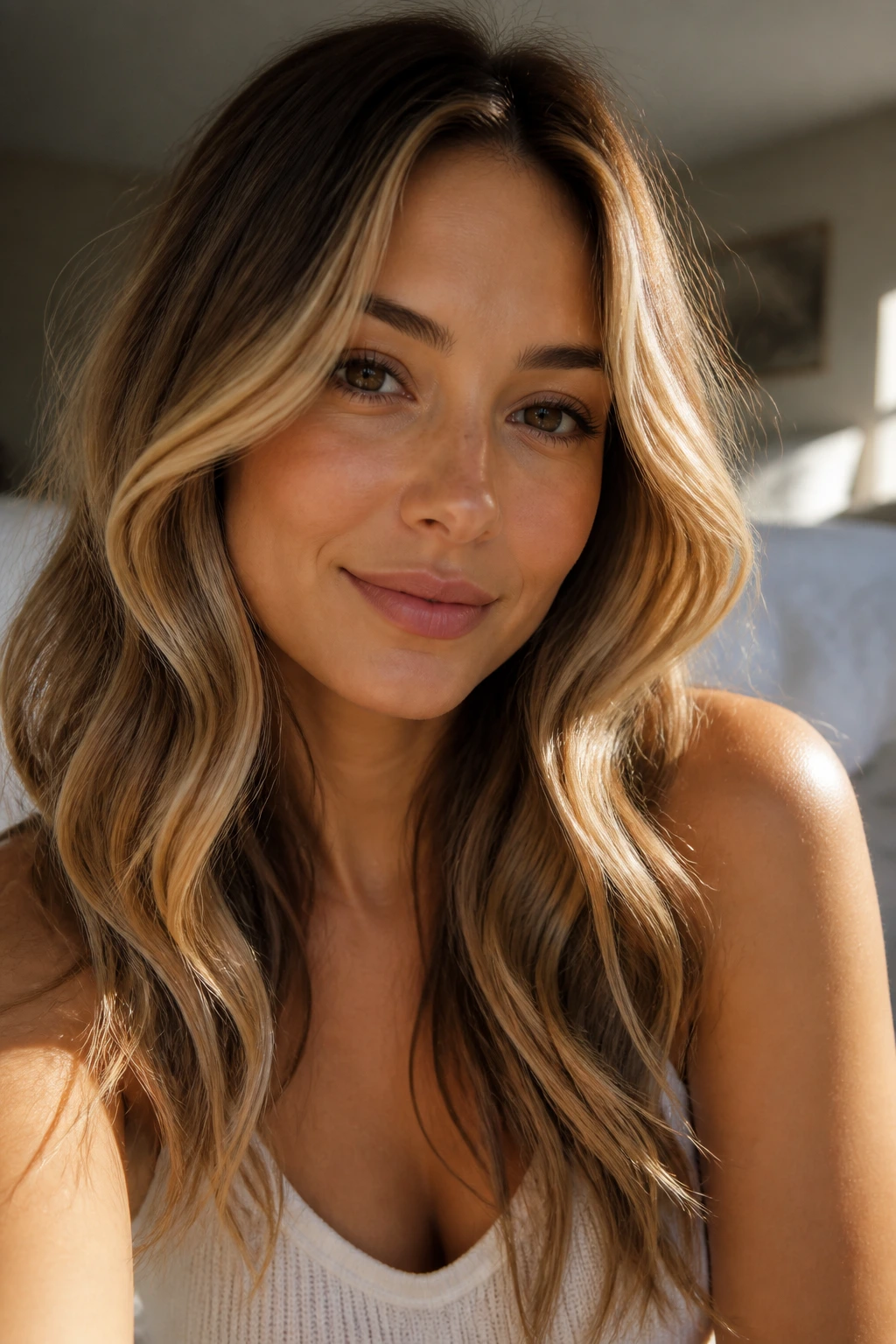
Want the lightest pieces without bleaching the whole head? This is the move. Honey blonde face-framing balayage puts the brightness where it matters most: around the cheekbones, the temples, and the first two front layers. On wavy hair, those pieces catch light every time the hair swings forward.
Where the Brightest Pieces Should Sit
Ask for the front money pieces to start a little below the root — about one finger-width off the hairline — so they don’t look like chunky stripes when the hair parts. The rest of the blonde can live softly through the top layers, with the ends left a touch deeper for balance.
A honey tone works especially well on loose 2A and 2B waves because the bend keeps the color from looking flat. It gives the hair that bright, sun-kissed edge without turning the whole head into one bright block.
If your haircut has long face-framing layers, this one is a gift. If your layers are blunt and heavy, the same placement can look too stark, so ask for finer painting near the part and a softer fade through the crown.
4. Copper Cinnamon Balayage for Warm Undertones
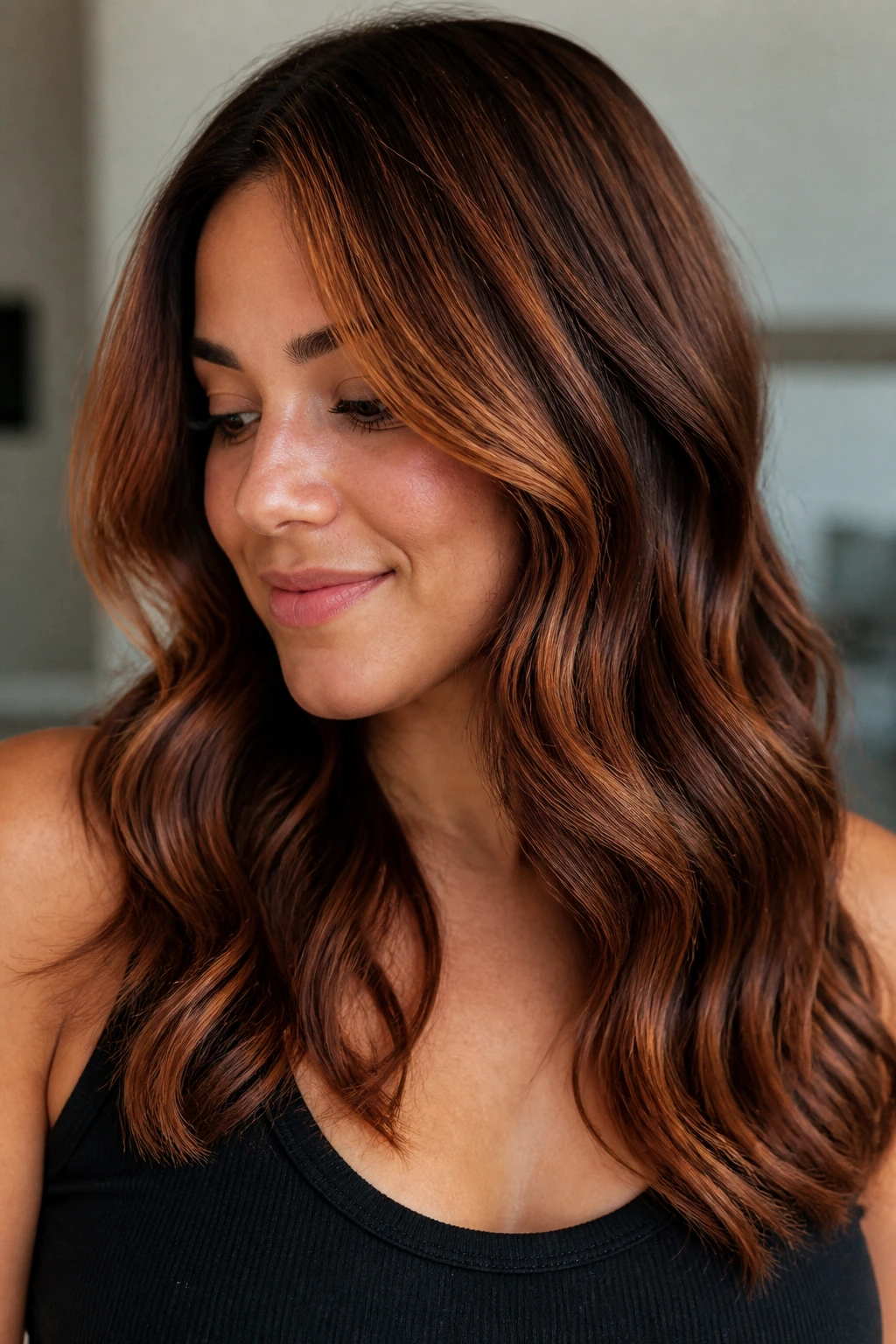
A brunette who wants warmth but not full red often lands here. Copper cinnamon has more spice than honey and more depth than auburn, which is why it looks so good when waves move. The color flashes copper at the crown, cinnamon in the mid-lengths, and a deeper brunette at the bottom.
The best version is not bright orange. It’s a cooked-sugar copper with a little brown underneath. That keeps it wearable and stops it from looking like one-note red. On wavy hair, the warmth catches the raised parts of the wave and leaves just enough shadow in the low spots to keep it from going loud.
This shade is especially friendly to peach, golden, and olive undertones. It can also soften a very hard dark base if you want something warmer without jumping to blonde. A colorist can keep the lift modest and lean on glossing to build the copper tone after lightening. That usually looks smoother than trying to force a dramatic lift in one appointment.
5. Espresso Shadow Melt Balayage
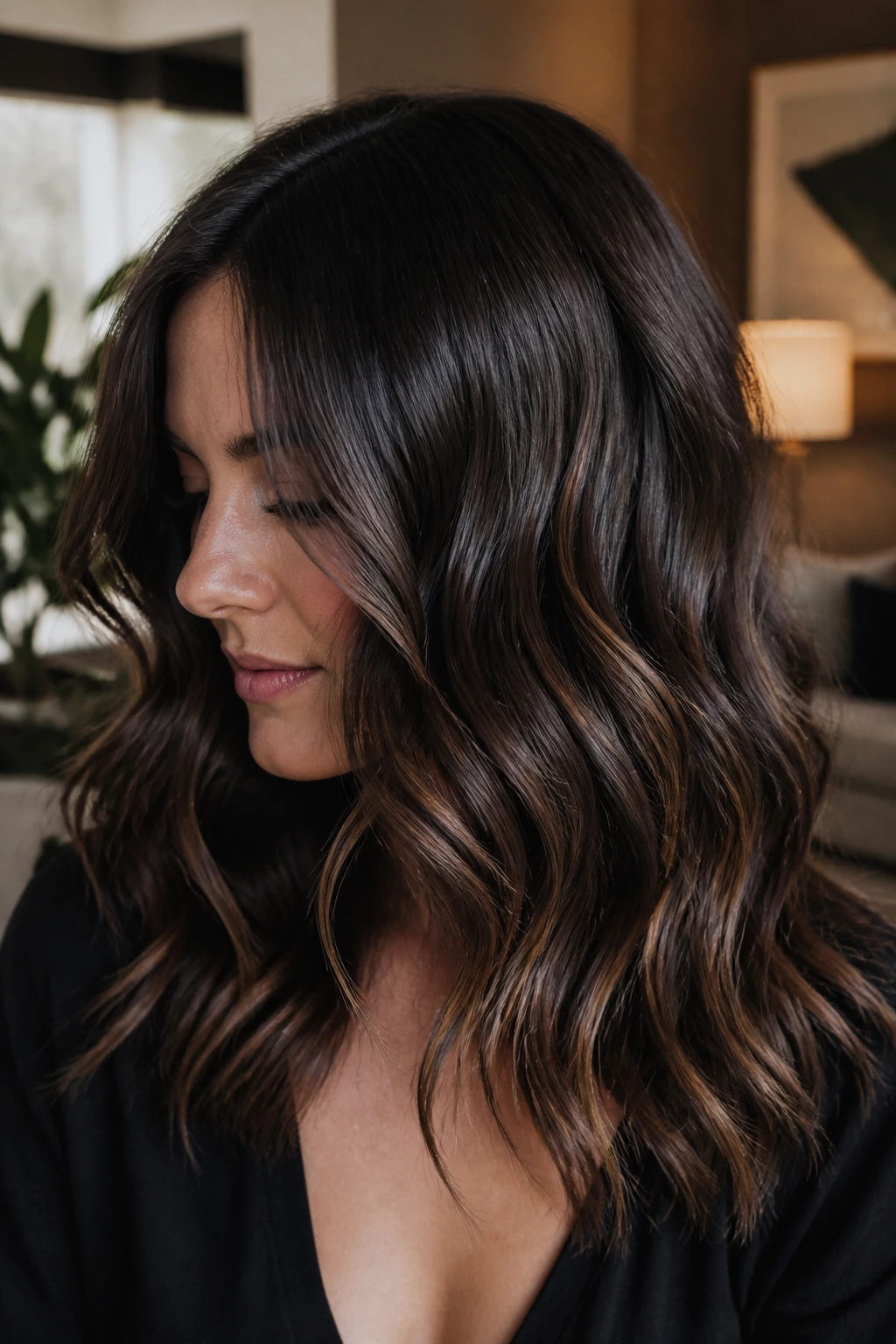
Espresso shadow melt is for the person who likes dimension but doesn’t want obvious blonde. The base stays deep, almost inky at first glance, and the lighter pieces appear as soft mocha threads through the mid-lengths and ends. On waves, that kind of low-contrast color looks plush.
This is the shade that saves frizzy or dense hair from looking like one giant dark cloud. The darker base gives the hair weight, and the mocha ribbons break it up just enough that the wave pattern becomes visible. You get movement without the bright-pop effect.
It’s also a smart choice if your ends are already a little fragile. Because the lift stays moderate, the hair can often handle this better than a pale blonde balayage. Ask for a shadow root and keep the ribbons concentrated below the ear if you want the grow-out to stay soft. The whole thing should look like the sun moved through the hair, not like foils were stamped on top.
6. Ash Beige Balayage for Soft Neutral Contrast
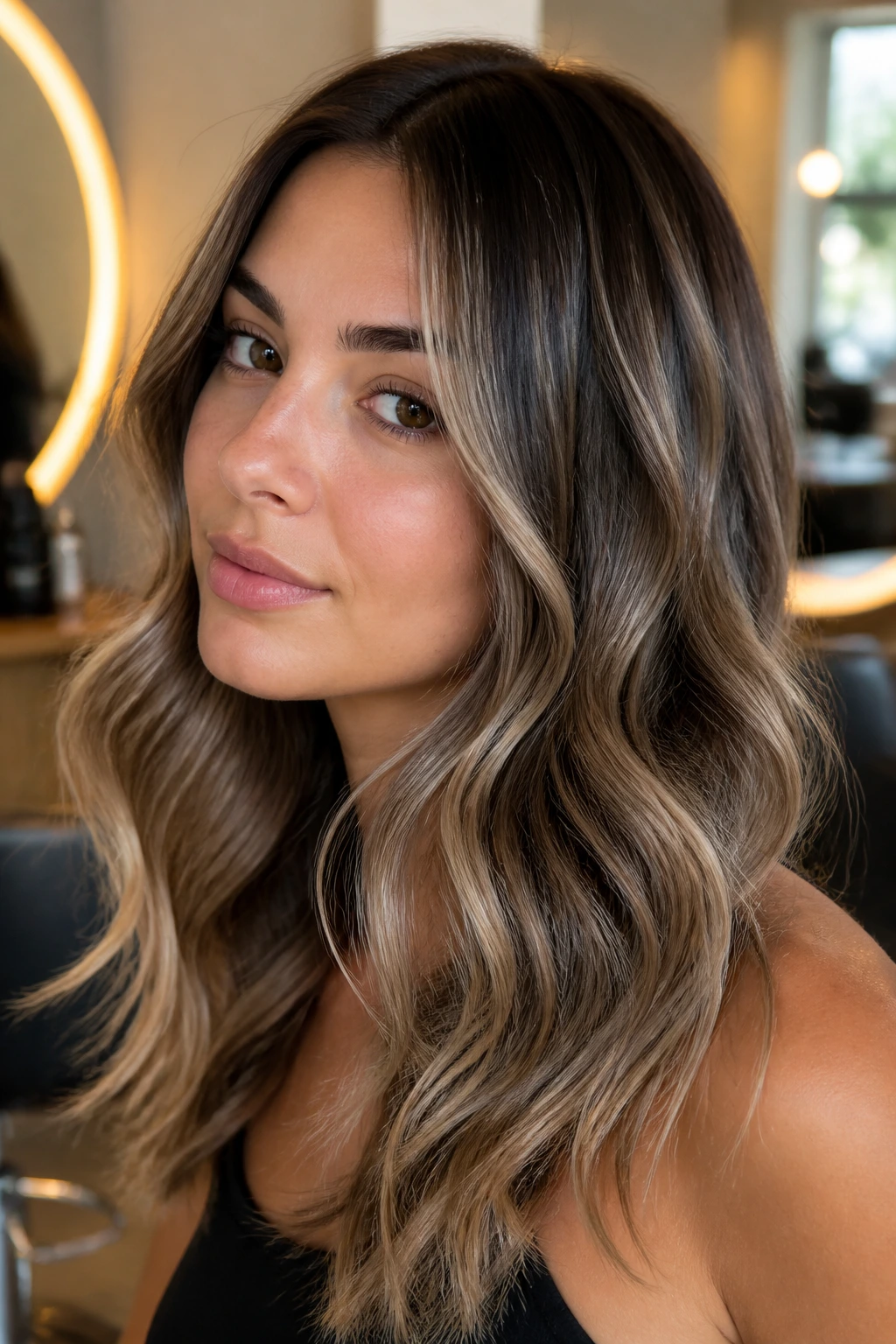
Not every brunette wants warmth, and not every cool tone needs to go full silver. Ash beige sits right between the two. It has enough coolness to mute brass, but the beige keeps it from looking gray or dusty.
On wavy hair, this tone works because the ash notes show up on the flat surfaces of the wave while the beige warms the turns just enough to keep the hair from looking dull. That little tug-of-war is what gives the color depth. If the hair is too porous, though, ash can get muddy fast, so a gloss matters here more than on warmer shades.
This is one of my favorite options for someone with neutral skin and a medium brunette base who wants something polished but not flashy. It works well when the haircut has movement through the ends, because the color needs some shape to bounce off. Ask for thin, painted pieces rather than chunky strips; ash tones get heavy fast when they’re overdone.
7. Bronde Balayage with Root Shadow
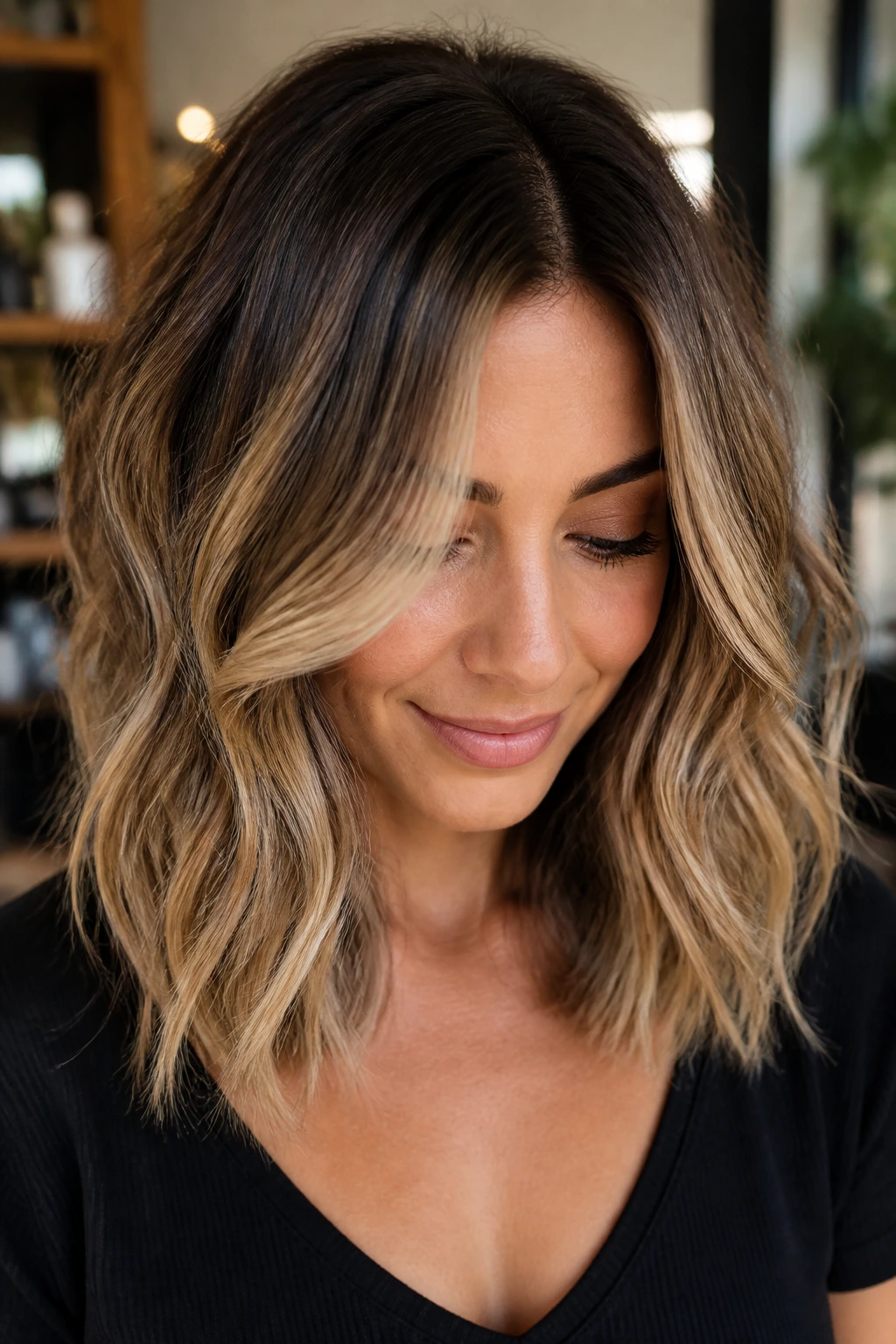
Bronde is the middle lane, and on wavy hair that middle lane is usually the smartest one. It gives you enough blonde to brighten the face, enough brown to keep depth at the root, and enough dimension to make the whole head look thicker than it is.
What to Ask Your Colorist For
- Root shadow: Keep the root one to two levels deeper than the lightest pieces.
- Face frame: Brighten the front just enough to show when the hair moves back.
- Mid-length ribbons: Ask for wider ribbons than you would with a subtle brunette look.
- Toner: Keep it beige, not icy, unless your skin and wardrobe lean cool.
Bronde is especially good on shoulder-length waves and long layers because the contrast has room to move. On short waves, the same look can get busy if the pieces are too wide, so the colorist needs a lighter hand. The result should feel airy, not striped.
If you like a color that reads different in every light — brown indoors, blondish near a window — this is the lane to live in.
8. Champagne Blonde Balayage on Medium Waves
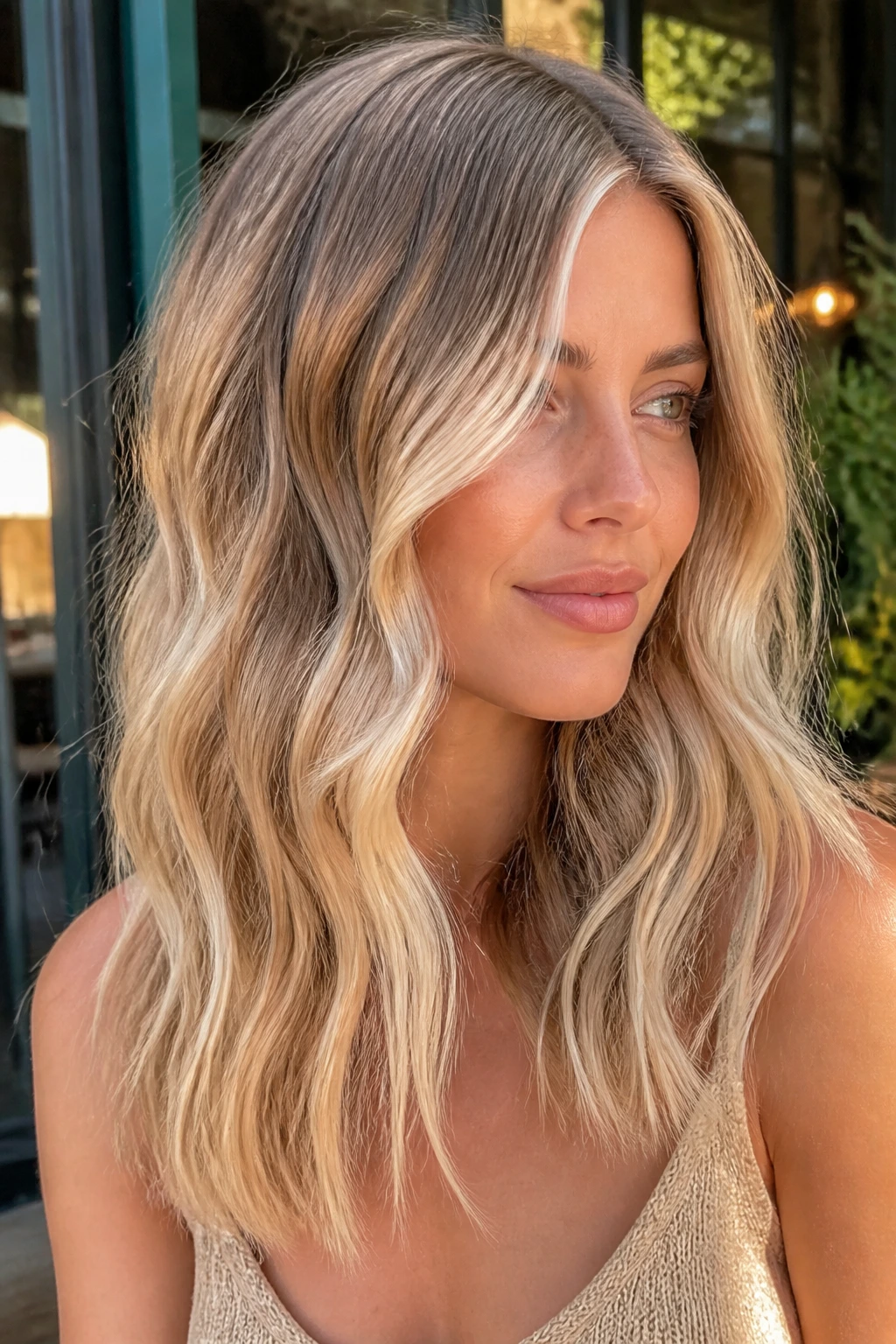
Champagne blonde is the friendliest pale blonde for people who want brightness without that harsh, chalky finish some blondes get. It has a soft neutral-gold quality, like pale silk with a tiny bit of warmth. On medium waves, it gives movement a bright edge.
The biggest mistake with champagne is going too cool. Too much ash and the tone starts looking flat; too much yellow and it starts reading brassy. The sweet spot sits in the middle, usually after a lift to about level 8 or 9 with a clean, balanced toner. On waves, that color lands differently on every bend, which is why it looks more expensive than a solid blonded block.
This shade is especially nice on lobs and collarbone cuts. There’s enough hair length for the color to travel, but not so much that the pale pieces sink under all the weight. If your hair is fine, keep the ribbons thin. If it’s dense, let the colorist add a few broader strokes underneath so the blonde doesn’t just sit on top like frosting.
9. Rose Gold Balayage for Soft Copper Bases
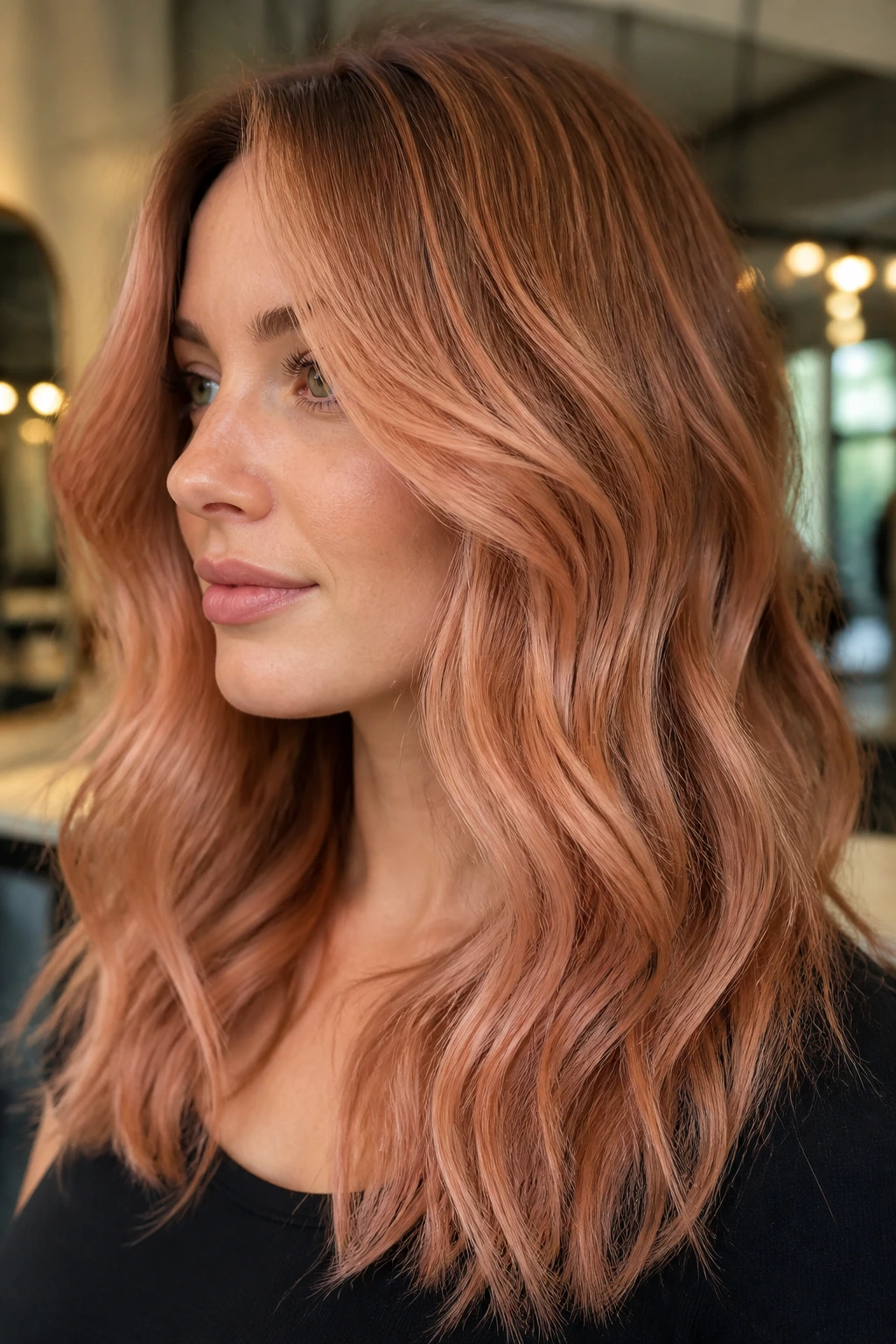
Rose gold can look syrupy or dusty, and the wave pattern decides which one wins. On wavy hair, the pink-beige copper blend keeps shifting as the light moves, which is exactly why it looks better with texture than without it.
This is not a loud pink. It’s gentler than that, more like warm blush wrapped around a brunette or dark blonde base. The right version starts with a light copper or strawberry tone and gets softened with beige and gold so the finish stays wearable. If the hair is too dark, the rose notes disappear. Too light, and the whole thing can turn cotton-candy fast.
I like this most on people who already wear warm makeup or soft rust-colored clothes. It can make waves look plush and a little glossy, especially when the front pieces are feathered near the cheekbones. If you want the shade to last, ask for a gloss-only refresh every few weeks instead of pushing the lift higher and higher. The color should fade softly, not vanish in a week.
10. Smoky Mocha Balayage with Hidden Lowlights
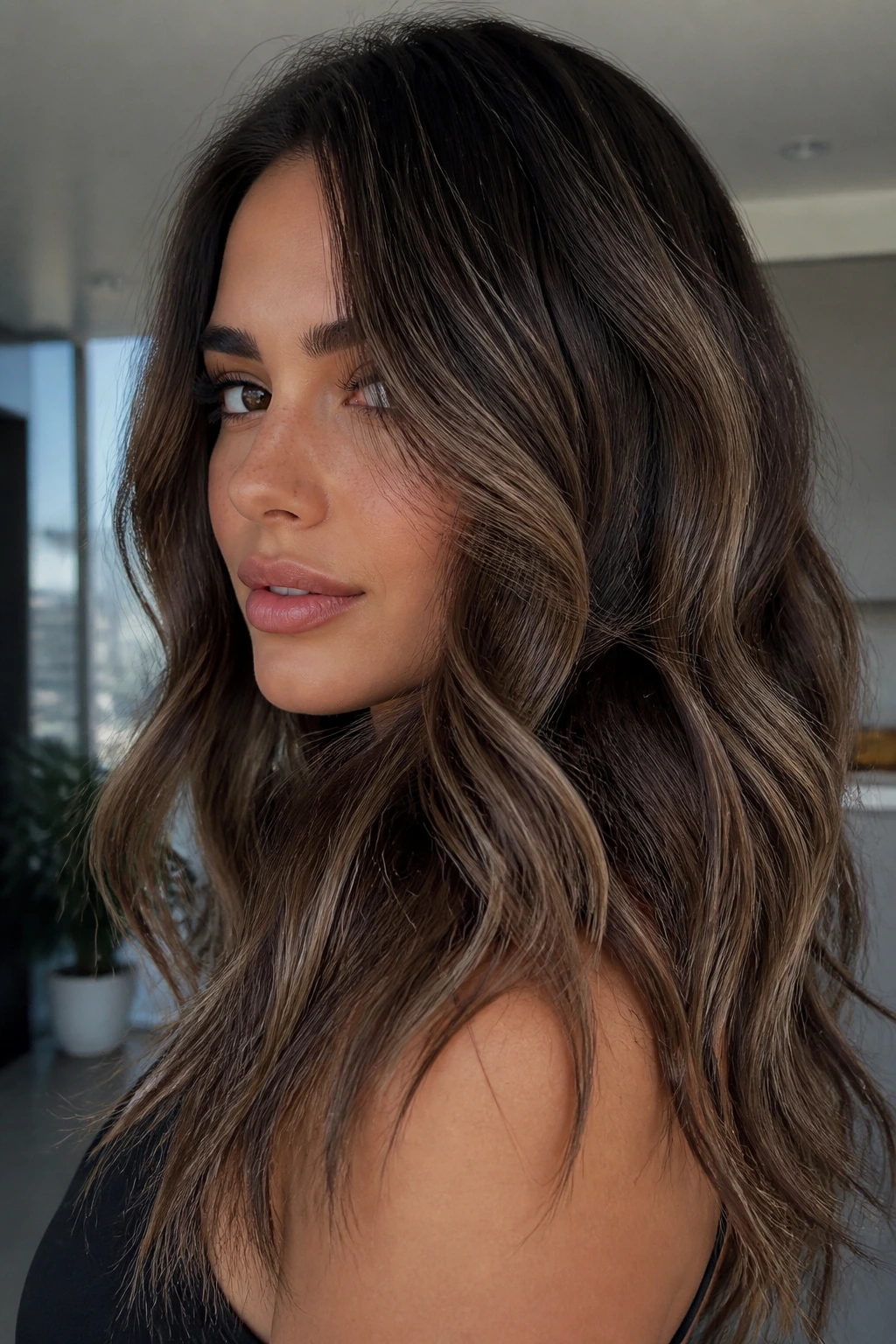
This one is all about depth. Smoky mocha isn’t trying to be bright; it’s trying to make the wave pattern look fuller by folding dark and slightly lighter brown together. Hidden lowlights live underneath, so when the hair swings or gets tucked behind the ear, the dimension suddenly shows.
That layering matters on wavy hair. Without it, dense brown waves can turn into one solid shape, especially when the weather makes the hair puff up. Smoky mocha fixes that by keeping the lightness subtle and the internal shadow strong. The result is a color that looks like it has volume even before you touch a styling cream.
If your hair is damaged or has been lightened before, this is a very sane choice. It adds movement with less strain than a pale balayage, and the grow-out is calm. Ask your colorist to place lowlights in the underlayers and keep the brightest pieces around the top crown and the front curve of the face. That little bit of contrast does more than an all-over lightening job ever could.
11. Sandy Beige Balayage
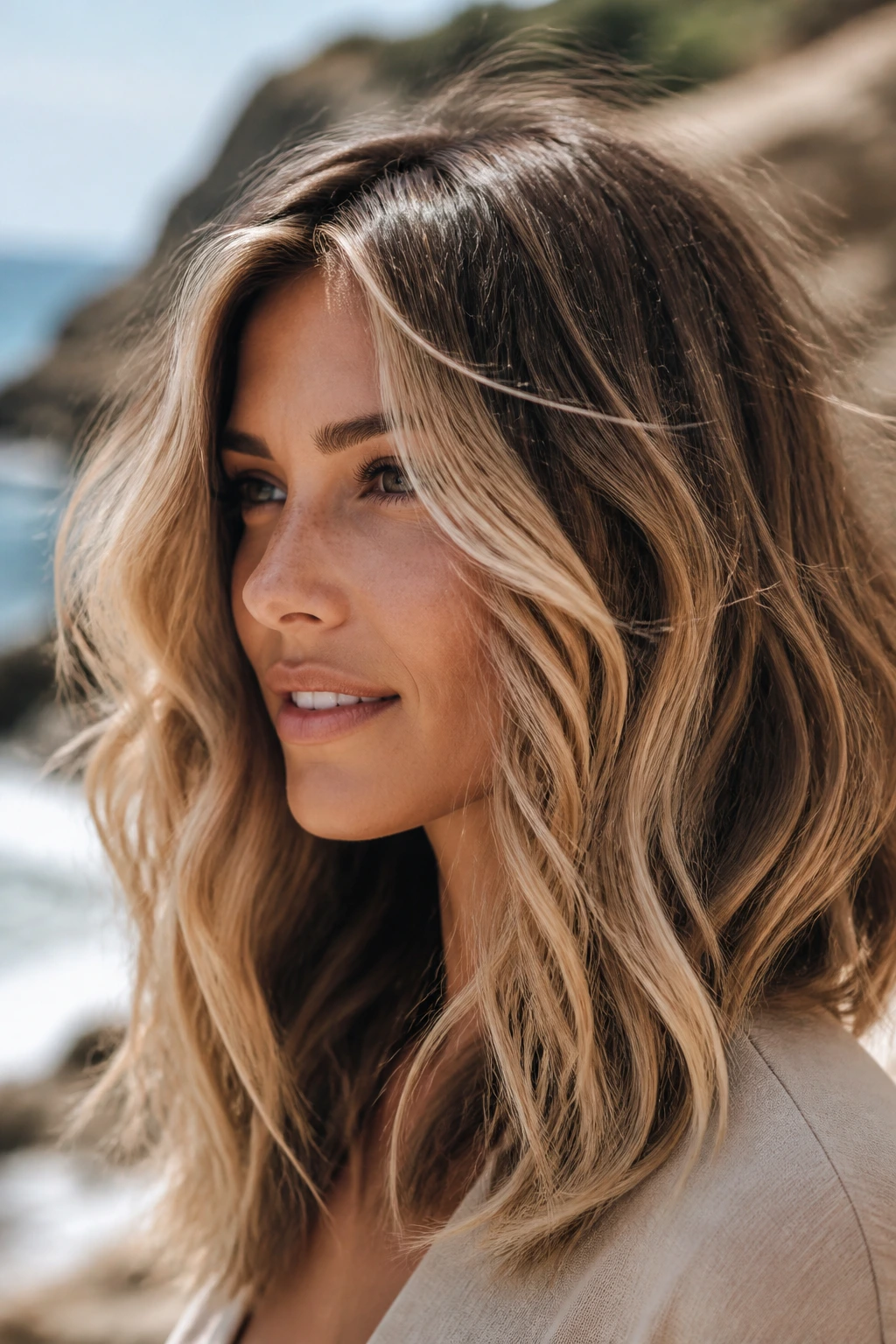
Sandy beige is the color people mean when they say they want “sun-kissed” but don’t want the result to look sugary. It has a soft, beach-worn feel — warm enough to stay alive, neutral enough to avoid brass. On wavy hair, it gives the impression that the sun has been working on the ends for months.
This shade shines on hair that already has movement through the ends. The beige sits inside the wave instead of on top of it, so the hair looks softer every time it bends. If your base is medium brown, the lift only needs to be moderate. Go too pale and you lose the sandy feel; too warm and it drifts into honey territory.
It’s also one of the easiest shades to wear if you like low-maintenance color. A root shadow blends naturally, and a beige gloss can keep it from pulling yellow. If your hair tends to go dry, this is a forgiving choice because it doesn’t need a dramatic level lift to look dimensional.
12. Bronze Balayage for Thick Waves
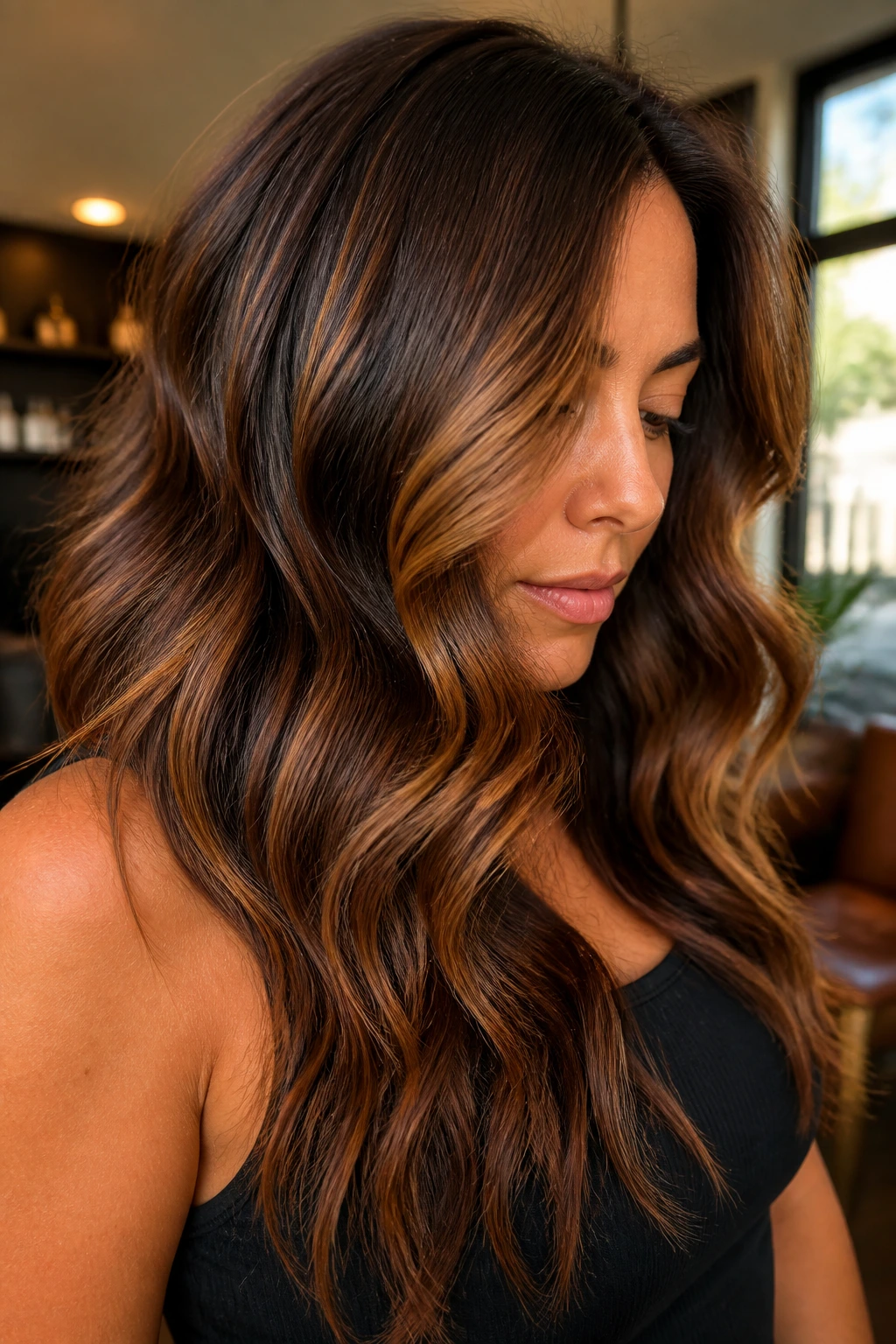
Bronze is one of the most underrated tones for thick wavy hair. It has warmth, but it isn’t syrupy. It has shine, but it isn’t pale. That makes it perfect when you want the hair to look rich and full rather than bright and airy.
Thick waves can eat color if the ribbons are too thin. Bronze solves that by using larger, warmer strokes that stay visible even when the hair swells or frizzes a little. The color usually works best on darker brunettes who want enough contrast to show from across the room. Ask for bronze-gold rather than orange-red, and keep some deeper pieces under the surface so the color doesn’t flatten.
This shade also plays well with layered cuts because the movement helps the bronze show up in sections instead of all at once. If the hair is shoulder-length or longer, the lowlight-to-highlight mix can make the whole shape look more expensive. And yes, bronze can look soft, not just rich. The trick is leaving enough brunette at the root.
13. Chestnut-to-Auburn Balayage
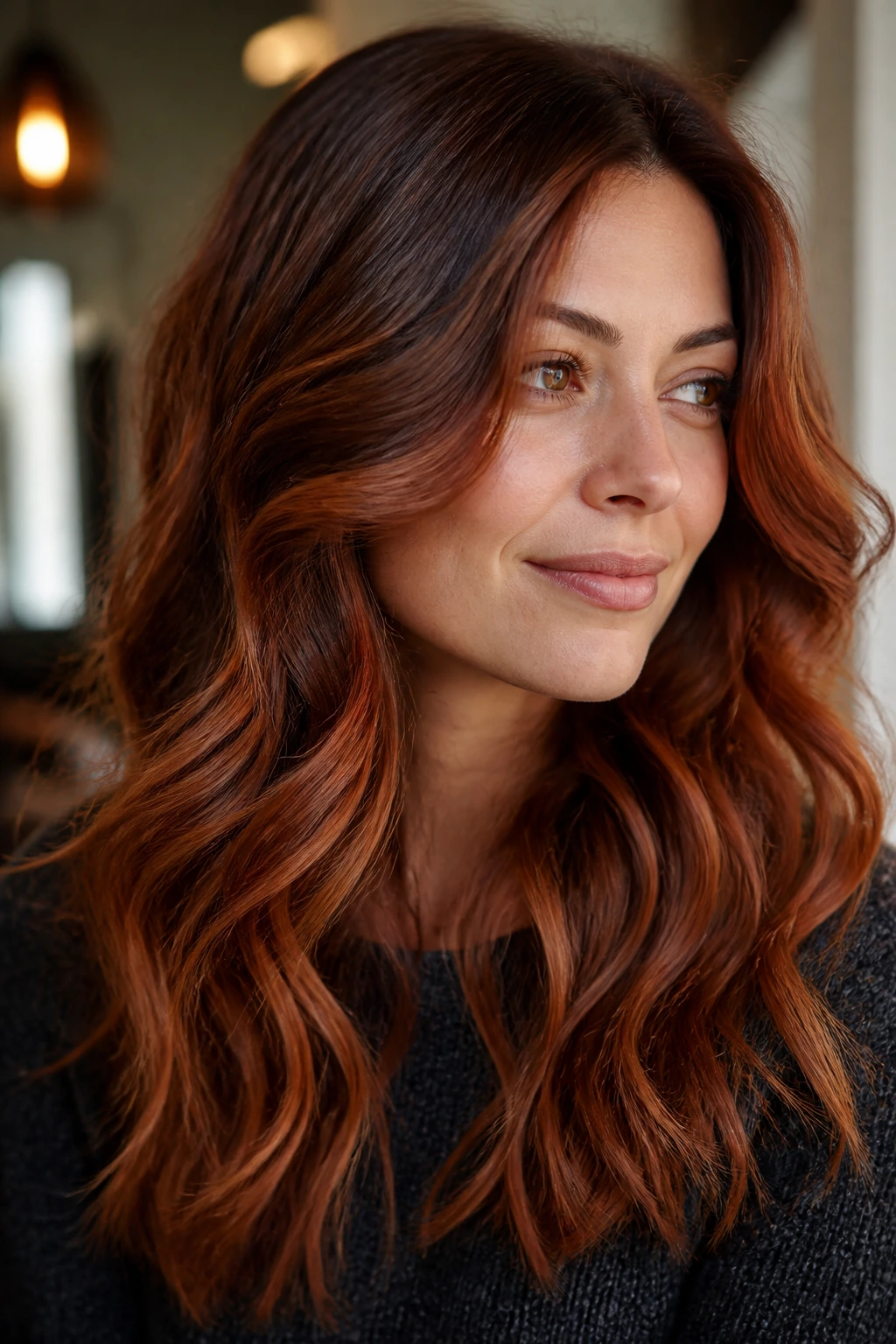
Chestnut to auburn is the warm brunette answer to people who want visible color but don’t want to leave the red family entirely. Chestnut keeps the base grounded; auburn comes through in the painted pieces and around the ends. On wavy hair, the red-brown shift shows up beautifully because the bend of the wave keeps catching the warmer notes.
This is one of those shades that looks especially good when the weather is dim or the light is soft. The coppery edge doesn’t disappear, but it also doesn’t scream. If your natural base is a medium brunette, the color can stay believable and still feel alive.
Ask for the auburn to stay concentrated around the outer layers and the face frame. That way the brighter pieces are where the eye lands first, and the inner chestnut can keep the overall effect grounded. If your hair is fine, avoid too much red at the ends; red pigment can make fine ends look thinner if the contrast is too sharp.
14. Platinum Ribbon Balayage on Dark Hair
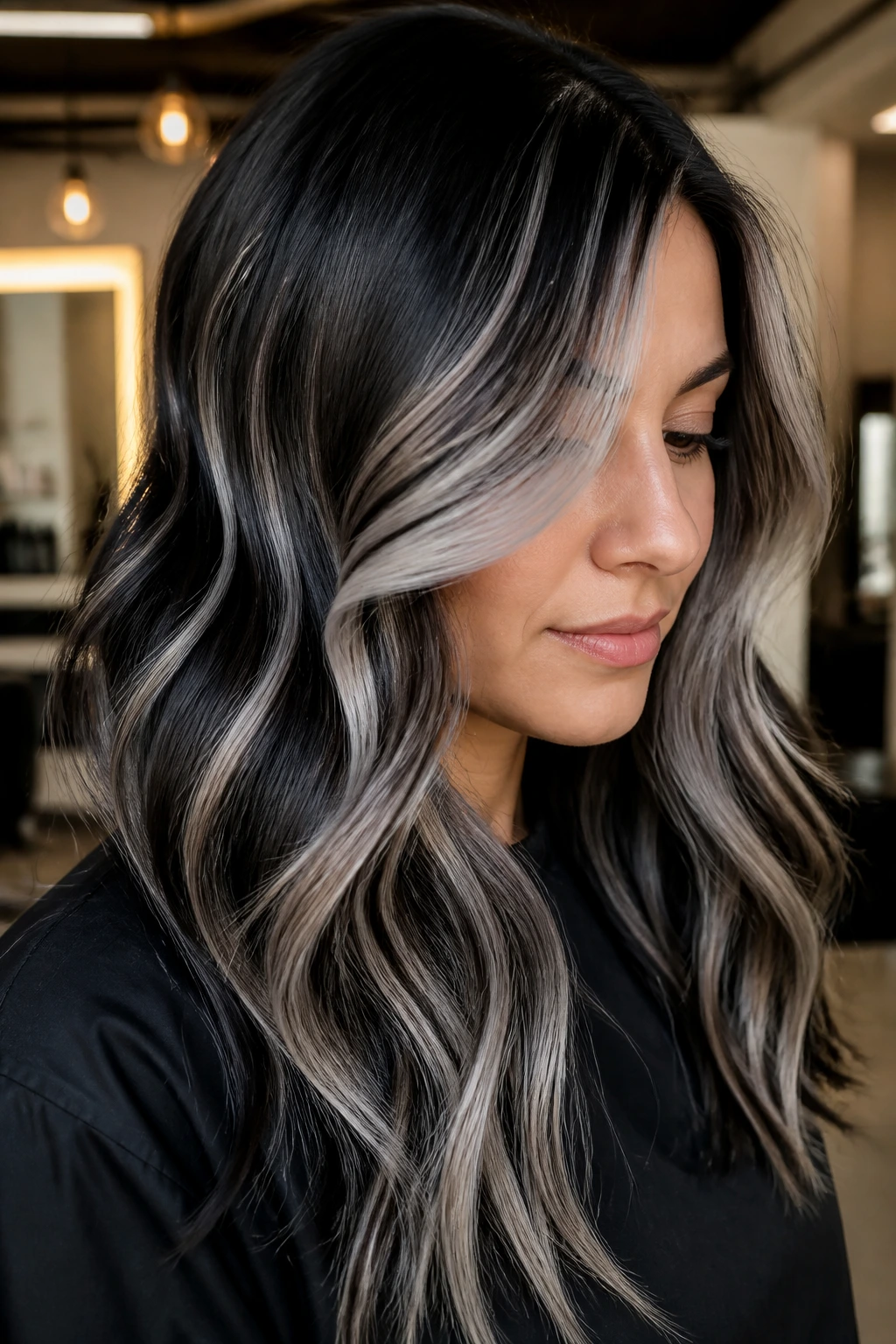
This is the bold one. Platinum ribbons on dark hair can be gorgeous on waves, but only when the placement is careful and the hair can take the lift. Done badly, it looks striped and expensive in the wrong way. Done well, the contrast turns every wave into a moving line of light.
The best version uses thin, controlled ribbons rather than wide blocks. That keeps the color from overwhelming the base and lets the dark sections work like contour. On wavy hair, the platinum catches the high points of the bend, which is why a little can go a long way. You do not need a full blonding job to get the drama.
This is also the least forgiving of the 20 ideas, so I’d only push it if your hair is healthy enough for strong lifting and you’re ready for the upkeep. Expect toner, bond care, and frequent refreshes. If your base is very dark, ask whether you should do this in stages. Sometimes the hair says no to a single big leap, and the smart move is to listen.
15. Toasted Almond Balayage
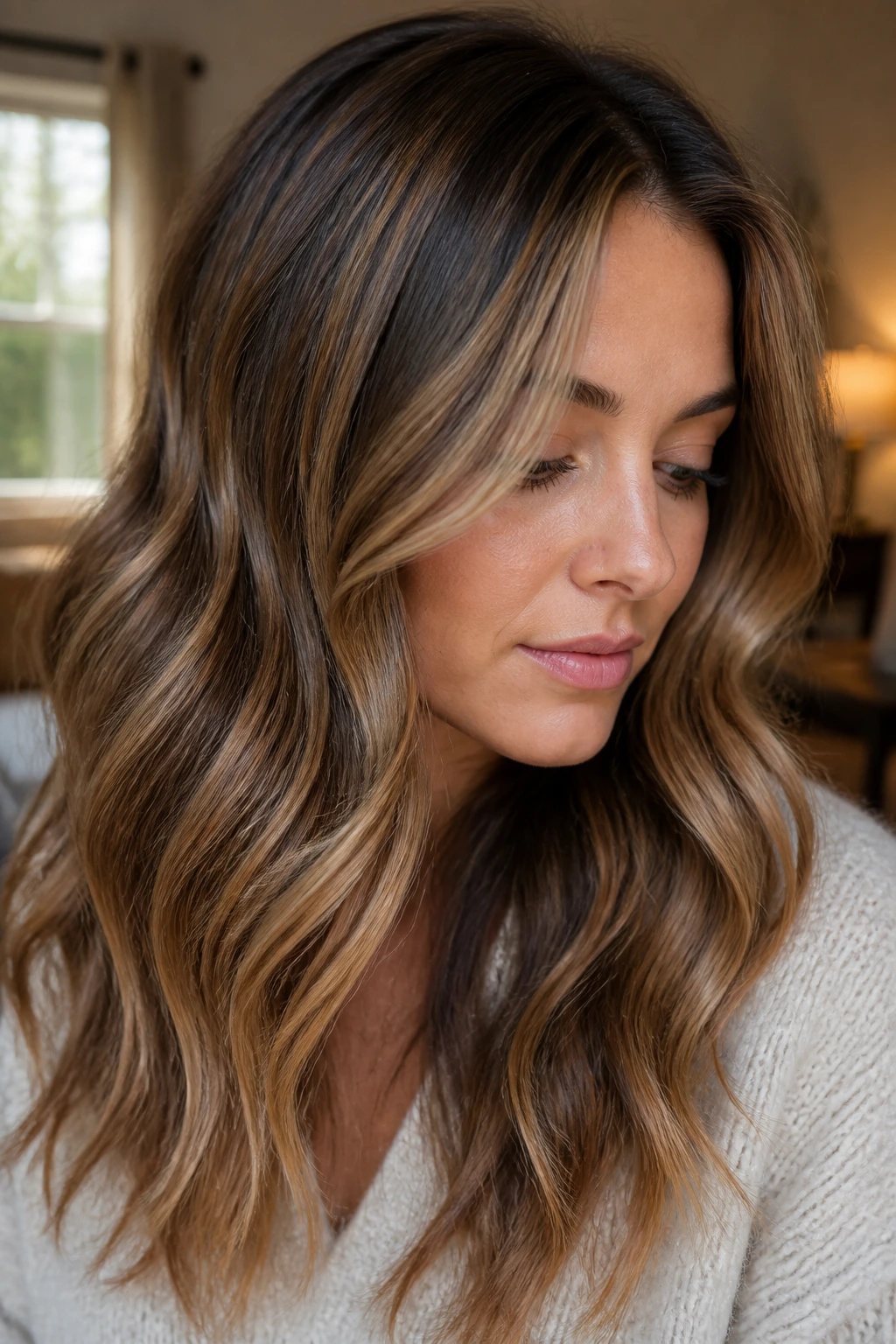
Toasted almond is the quiet cousin of caramel. It’s softer, a little dustier, and more neutral, which makes it excellent for people who want warmth without a sweet finish. On wavy hair, the almond tones sink in and out of the movement in a way that feels natural rather than painted on.
This works especially well on medium brunettes and dark blondes who want dimension that doesn’t shout. The color usually sits just a shade or two lighter than the base, with a beige-brown gloss to soften the edge. If you ask for the highlights too high, the almond turns blondish and loses the toasted effect, so keep the lift modest.
The shape of the haircut matters here. Long layers and soft shag shapes make toasted almond read as movement; one-length cuts can hide it a little too much. If your waves have a loose S shape, this shade tends to look even better because the color changes with every bend.
16. Smoky Taupe Balayage
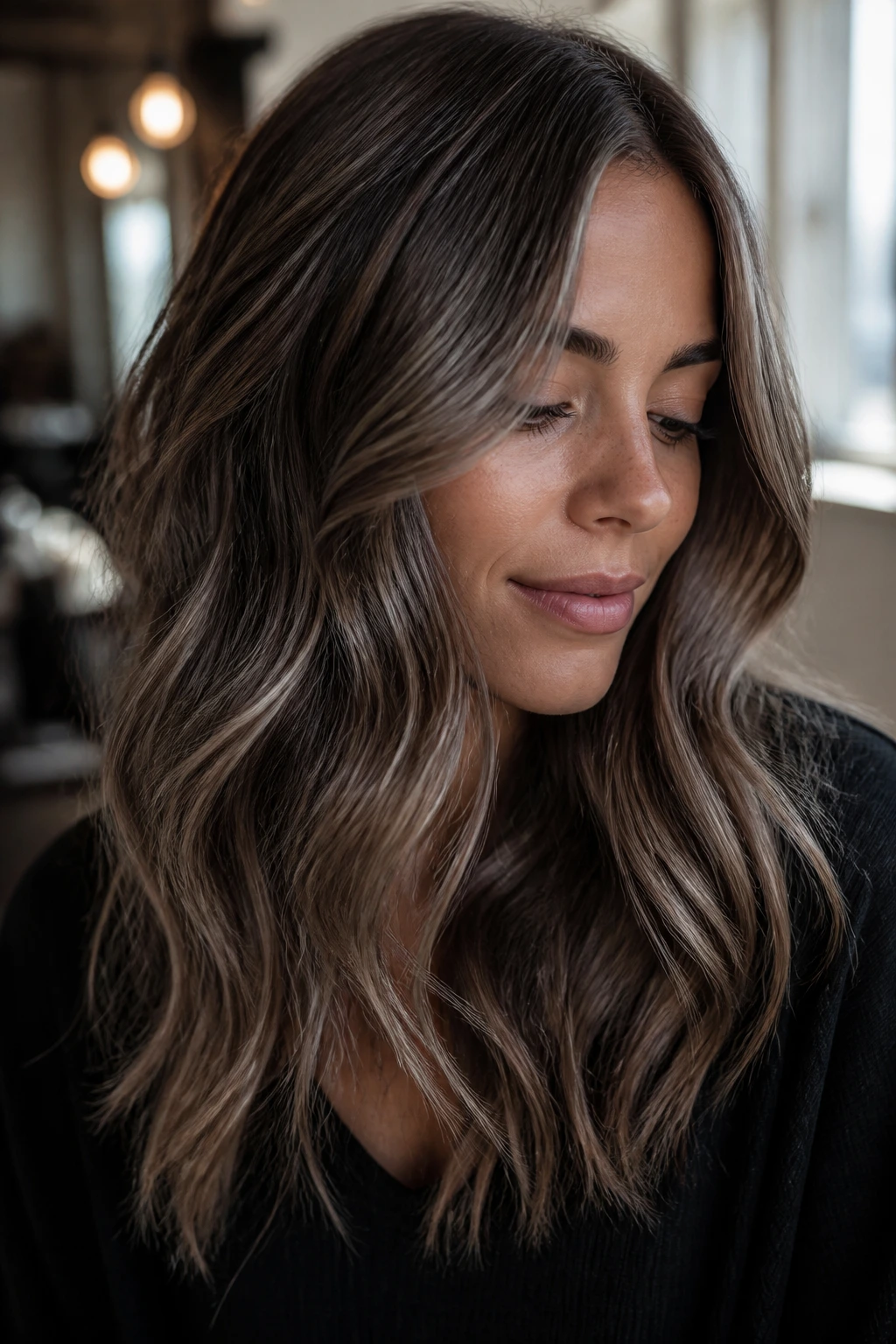
Smoky taupe is for the person who wants their color to look a little moody, a little polished, and not the least bit yellow. It sits between brown and gray with a soft beige backbeat, which gives it a muted finish that still has life. On wavy hair, that muted tone can look almost velvety.
This shade is useful when the hair is already carrying some cooler pigment or when you want to tone down leftover brass from older highlights. The payoff is subtle but real. Waves show the shift from smoky brown to taupe better than straight hair does, because the light has somewhere to land and somewhere to disappear.
I’d pair this with a root shadow and thin painting through the mid-lengths. If the color is too evenly spread, taupe can blur into one flat sheet. If you want dimension, not one-color coolness, keep some depth underneath and allow the lighter strands to live on the outer curve of the wave.
17. Golden Apricot Balayage
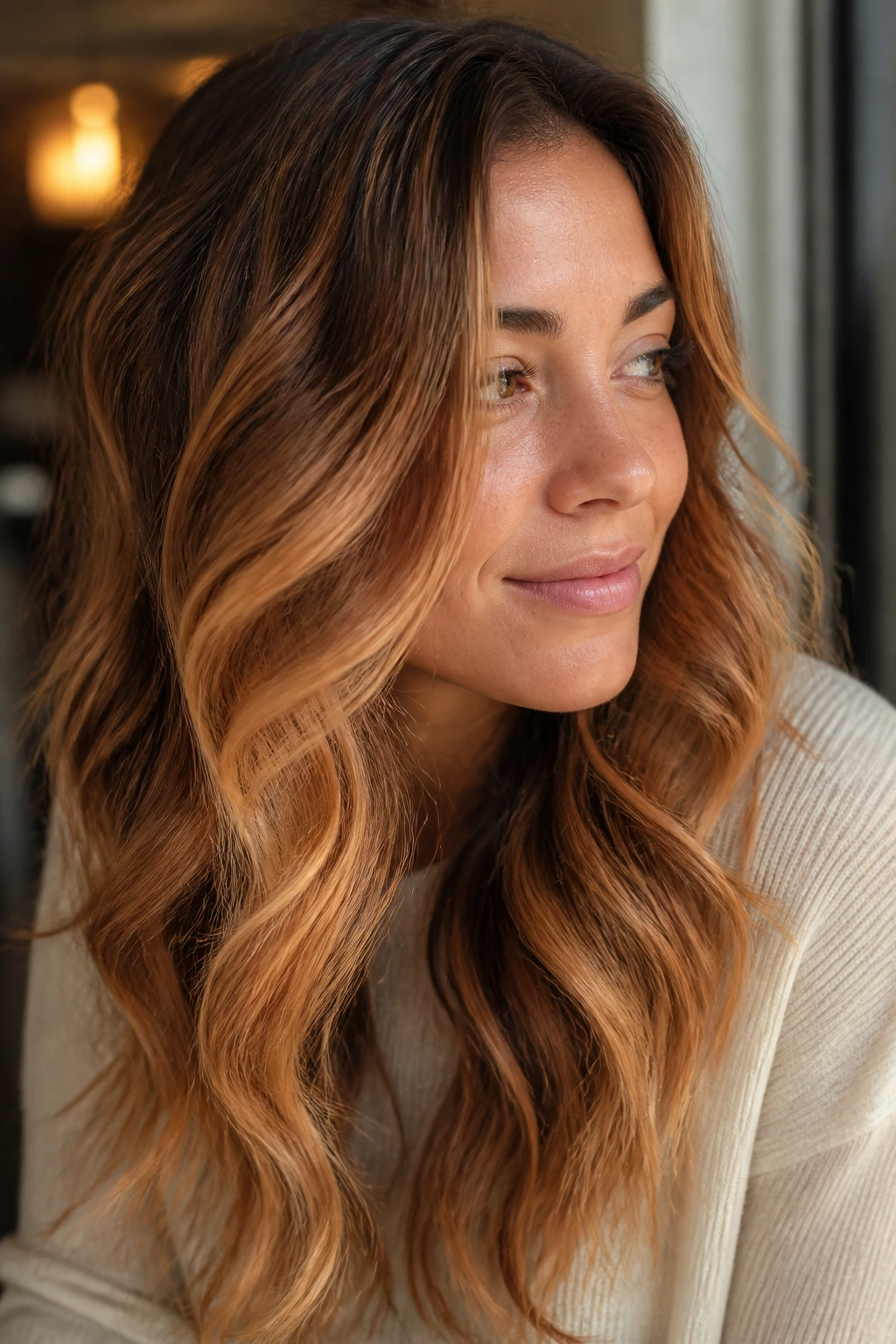
Golden apricot brings warmth with a little peach in it. It’s softer than copper, brighter than honey, and less brown than bronze. On wavy hair, it reads like warm light moving through the ends.
This is a good choice if pure red feels too strong and pure blonde feels too pale. Apricot can brighten a brunette base without turning it into a full ginger look. The color also works nicely when the hair has a bit of natural texture, because the peachy-gold notes show up differently on each bend.
The key is balance. Keep the root deeper, let the apricot live mostly in the surface layers, and use a gloss to keep the warmth from turning orange. If your skin tone is peachy or golden, this shade can feel especially easy to wear. If your undertones lean cool, ask for the apricot to stay soft and diluted rather than bright.
18. Strawberry Bronde Balayage
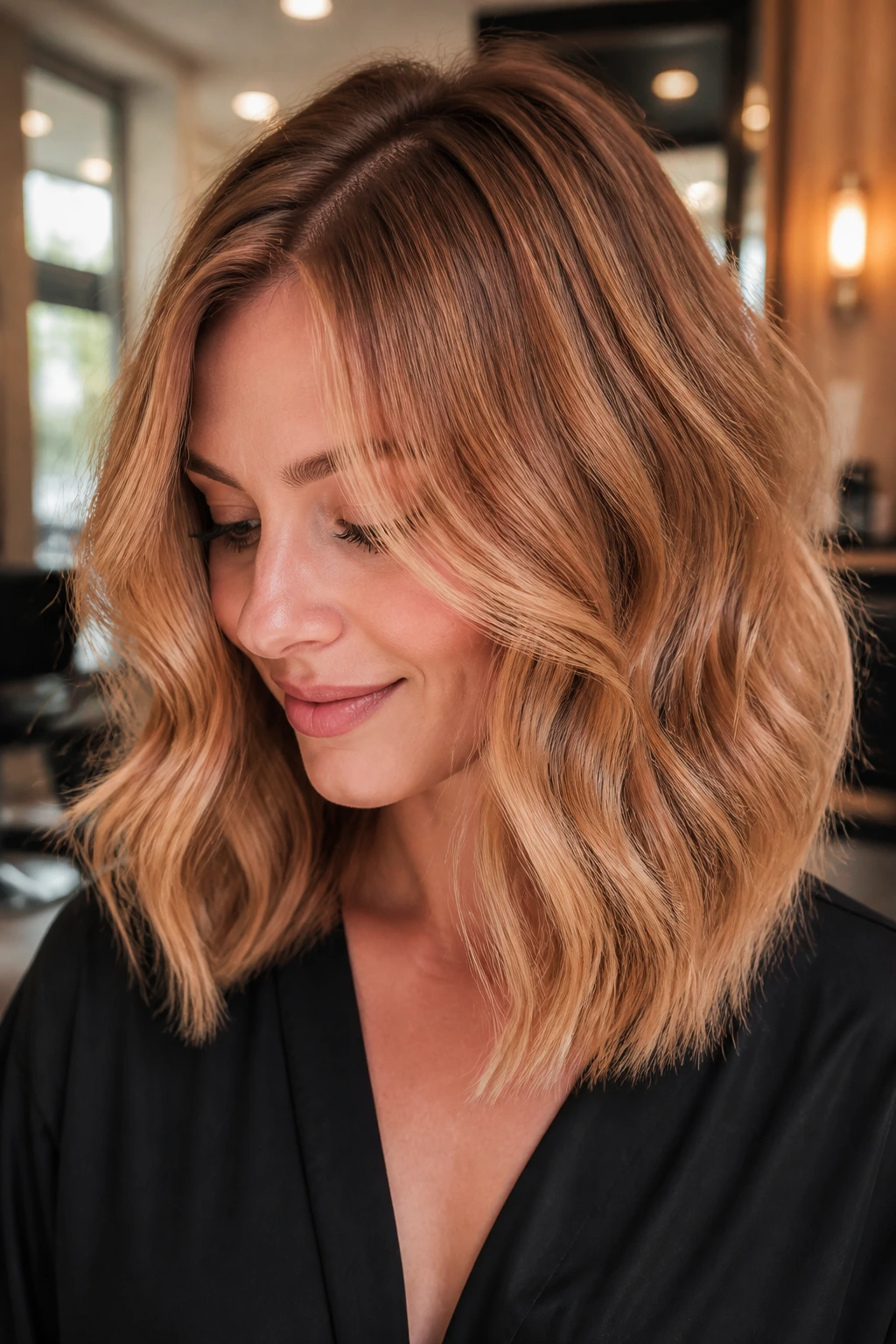
Strawberry bronde sits in the middle of brown, blonde, and a gentle red tint. It’s less copper than auburn and less blonde than champagne, which makes it a good compromise for someone who wants warmth with softness. On wavy hair, the strawberry notes flash in motion and then settle back into the brown base.
This is a smart option if you like color that doesn’t look exactly the same from every angle. One minute it reads warm brunette, the next it leans blush-gold. That shifting quality is the whole point. Ask for the red note to be subtle; if it gets too saturated, the hair can look like one color instead of a balayaged blend.
It’s also a useful way to warm up a darker blonde or lighter brunette without going full copper. A soft root shadow will keep the grow-out manageable, and a beige gloss can keep the strawberry note from turning too vivid. If your wardrobe already lives in rust, tan, cream, or olive, this shade slides in easily.
19. Subtle Babylight Balayage Mix
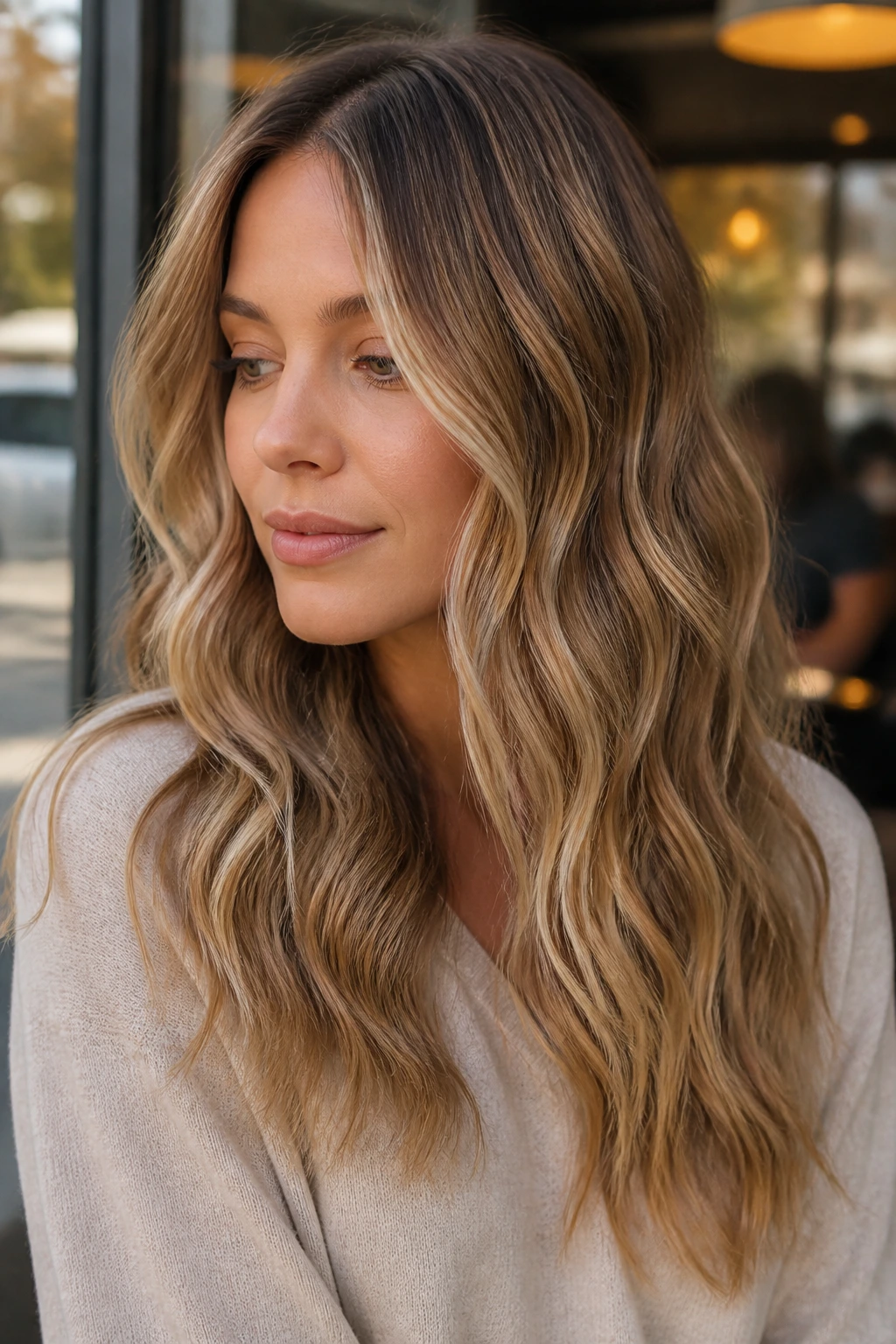
This one is for people who hate obvious highlight lines. Babylight balayage uses very fine, delicate pieces mixed with hand-painted sections, so the color looks like it belongs to the hair rather than sitting on top of it. On wavy hair, that fine detail disappears and reappears as the hair shifts.
The result is especially good if your waves are soft, your hair is fine, or you just want the illusion of natural sun lightening. Because the strands are so thin, the color can look expensive without drawing attention to itself. It’s also easier to grow out than a chunky highlight job because the regrowth line stays blurred.
This approach does need precision. If the pieces are too thick, you lose the effect. If they’re too sparse, the hair can look flat. The sweet spot is a mix of baby-fine brightness at the part and face frame, with a few slightly wider pieces through the top layers so the movement reads from every angle.
20. High-Contrast Ribbon Balayage
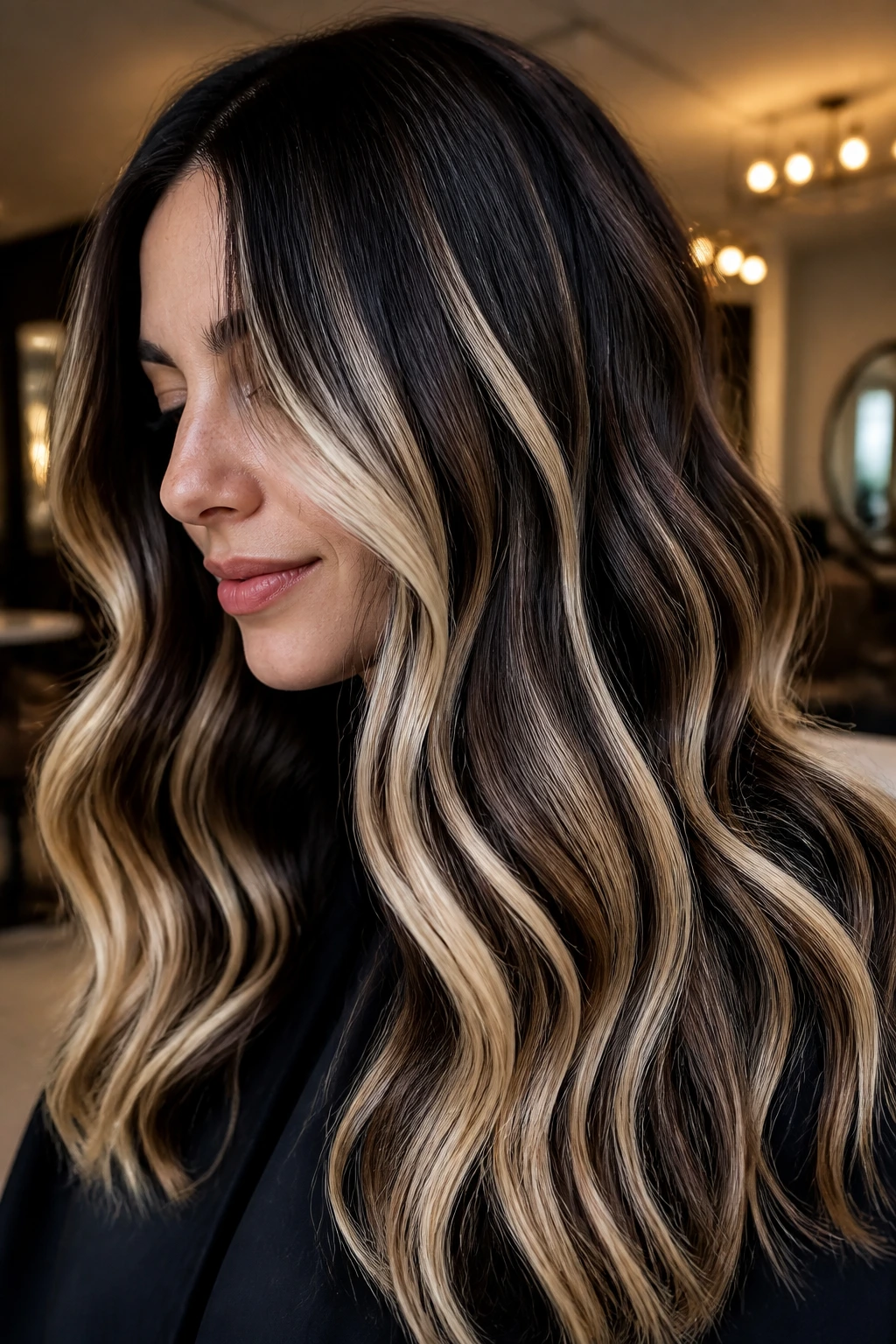
High-contrast ribbons are the boldest version in the set. The idea is simple: keep a deep base, then paint thicker, brighter ribbons that sit several levels lighter. On wavy hair, those ribbons become the light source every time the hair bends.
This is the look for someone who wants the color to be noticed, not whispered about. It suits thick, healthy waves especially well because the hair has enough body to support the contrast. With a more delicate texture, the same placement can look heavy, so the size of the ribbon matters more than the shade family here.
Ask for a soft root shadow so the contrast doesn’t start at the scalp. That keeps the color readable and stops the grow-out from looking harsh. If the hair is long, the ribbons can start slightly below the crown and get brighter toward the mid-lengths and ends. That way the wave pattern gets all the drama without the top looking overworked.
Why Wavy Hair Makes Balayage Read So Softly
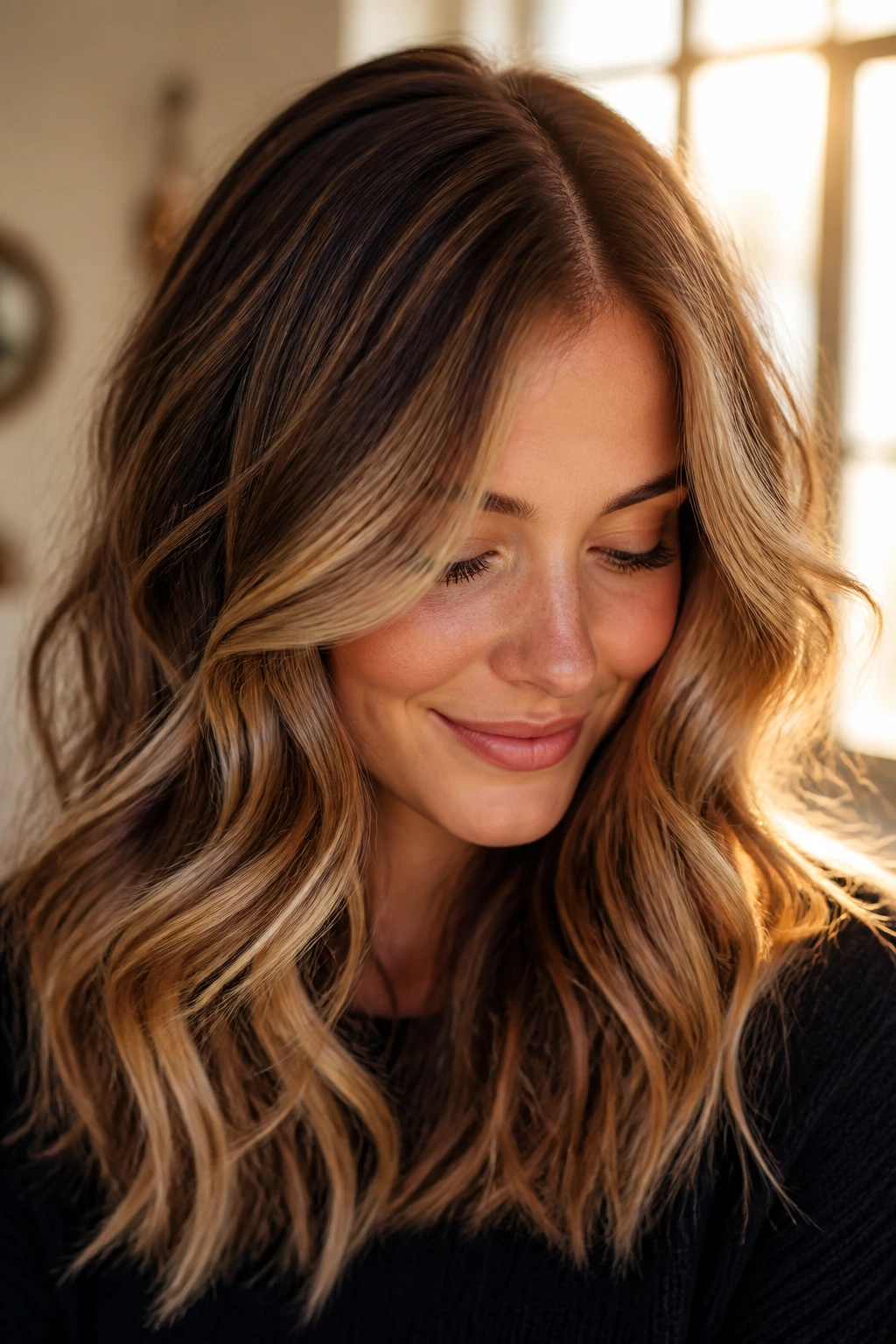
Waves are doing half the work before you even pick a toner. The bends create built-in shadow, and that shadow makes painted color look softer than the same formula would on straight hair. One strand catches light, the next falls back, and the whole head ends up with a kind of moving depth that straight hair has to fake with heavier highlighting.
That’s also why placement matters so much. The best balayage on waves usually follows the curve of the hair rather than fighting it. A bright ribbon sitting on a ridge reads much cleaner than a ribbon dropped into a flat panel, where the color can look blotchy or too obvious.
If you’ve ever seen wavy hair that looks dull even though the color is expensive, the issue is usually one of two things: too little contrast or too much of it. Too little, and the hair turns muddy. Too much, and the hair starts looking stripey. The sweet spot lives in the middle, where the light pieces bend in and out of the darker ones instead of sitting in a neat row.
Essential Tools for Talking to Your Colorist
-
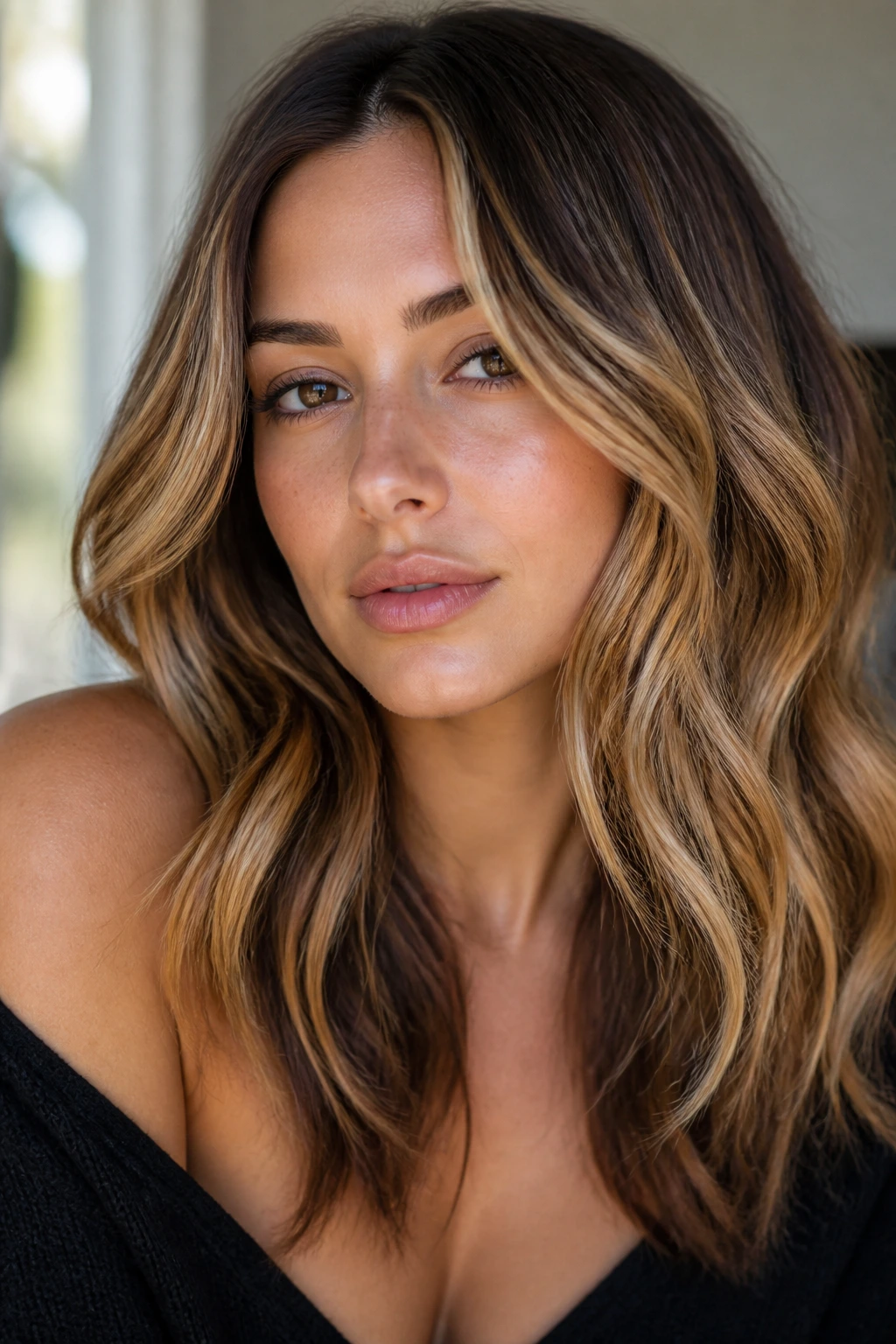
A few reference photos: Bring 2 or 3 pictures with the same base level and wave pattern as your own hair. A photo on pin-straight hair can send the whole consultation off the rails.
-
A level chart: Hair color levels run from 1 to 10, with 1 being black and 10 being pale blonde. Knowing your natural level and your current color makes the conversation much sharper.
-
Sectioning clips: These help the stylist separate wave patterns and paint clean ribbons. They matter more when the hair is thick or layered.
-
Tint brush and balayage board or foil paper: The board gives hand-painted pieces more control; foil or paper keeps brighter sections lifted when needed.
-
Color-safe shampoo and conditioner: Sulfate-heavy formulas can strip toner fast, especially from blonde and copper shades.
-
Leave-in heat protectant: Wavy hair tends to get diffused, scrunched, or curled, which means heat protection should live near the sink, not buried in a drawer.
-
Purple or blue shampoo: Useful for blondes and brunettes with unwanted brass, but it should be used sparingly.
-
Deep mask or bond-building treatment: If the hair is lightened, this is non-negotiable. It helps keep the wave pattern from feeling rough.
Smart Shade-Picking and Placement Rules
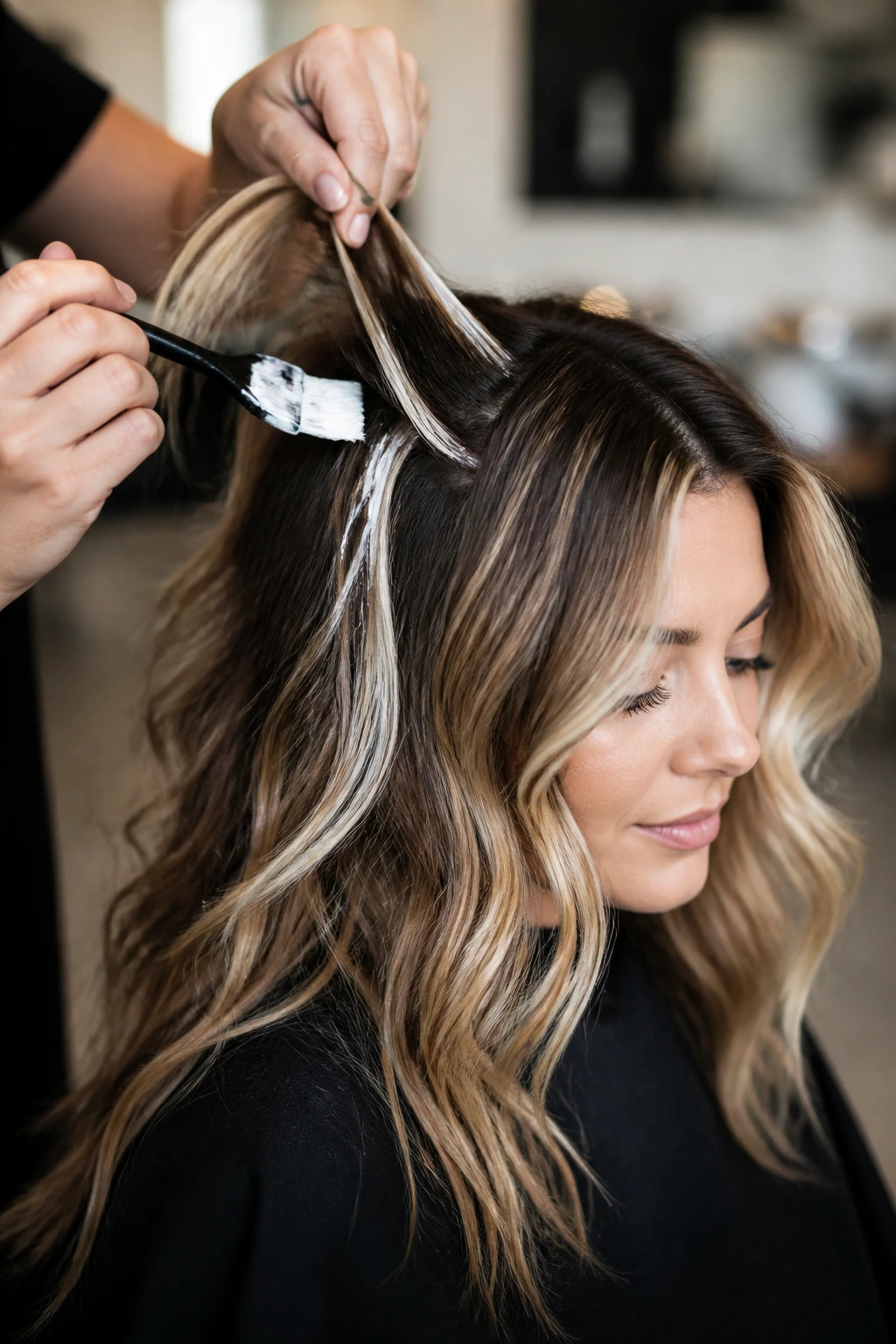
Here’s the part people skip, and it shows. Balayage is not only about picking a pretty tone; it’s about matching the lift to the base, the wave size, and the amount of upkeep you can live with. A level 4 brunette who asks for level 9 blonde ribbons on day one is usually asking for dryness and a lot of toning. A softer level 6 to 7 caramel or bronde result often looks richer and lasts better.
Wave pattern changes placement too. Loose 2A and 2B waves can handle broader ribbons because the bend is gentle and the color has room to stretch. Tighter 2C waves usually look better with thinner, more staggered pieces, since the curl pattern already creates strong contrast. If the highlights are too wide on tighter waves, the color can sit in little blocks instead of moving with the hair.
Porosity matters just as much. Ends that have been lightened before grab toner fast and can go muddy or gray if the formula is too ash-heavy. In that case, leave the ends slightly deeper and keep the brighter work higher on the head. Fresh, healthy virgin hair can usually take more lift, but even then I’d still avoid painting everything evenly. Waves need breathing room.
How to Wear These Balayage Looks So the Color Shows Up
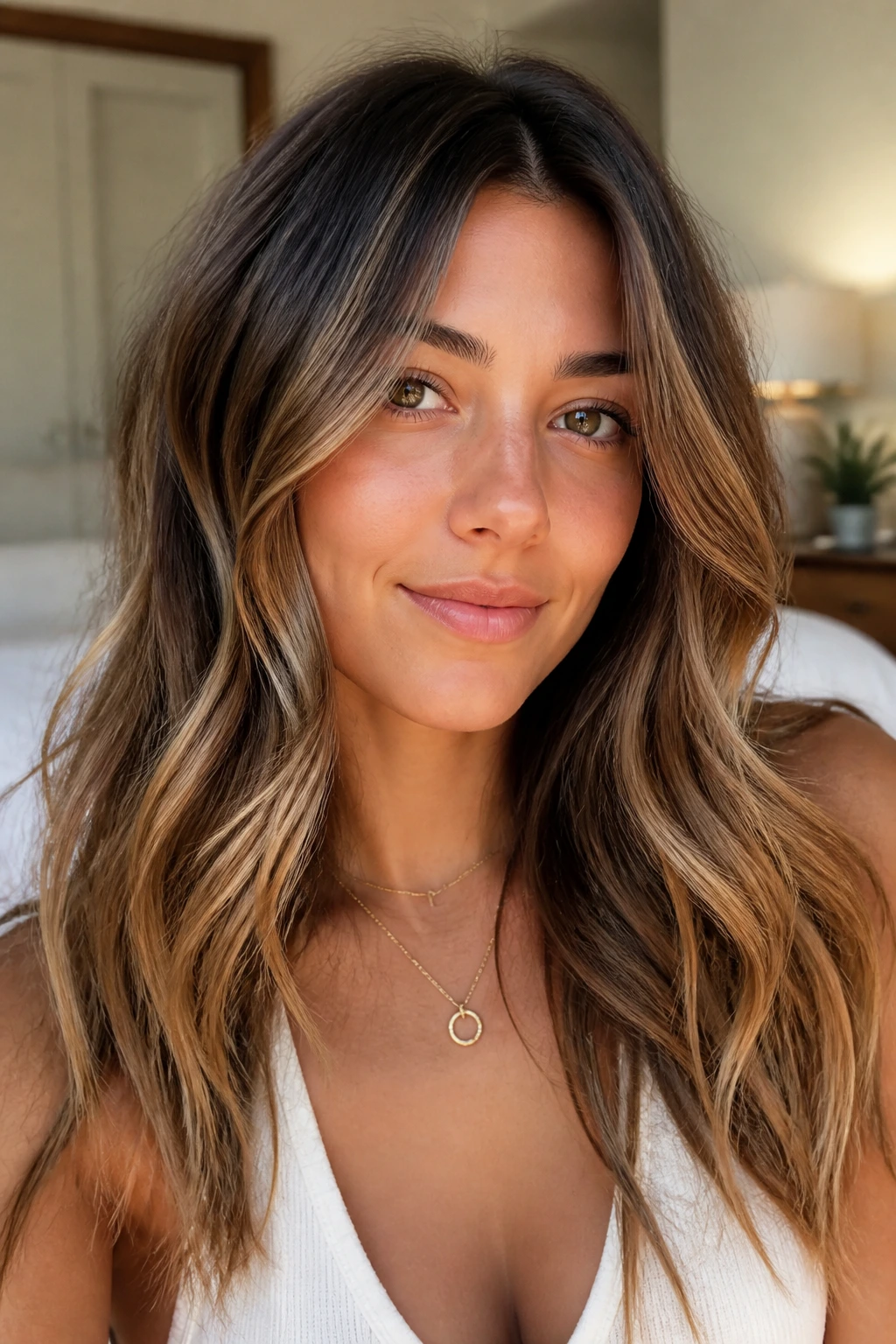
Parting: A middle part makes face-framing brightness read more evenly, while a soft off-center part can show off a stronger money piece. If the front looks too bold, switch the part and the whole balance changes in ten seconds.
Haircut match: Long layers, curtain bangs, and soft shags show balayage better than one-length cuts because the color can live in different zones. Thick waves can take chunkier ribbons; fine waves usually need thinner ones to avoid looking busy.
Styling finish: Air-drying with curl cream gives the most casual version of these colors, while a diffuser adds lift and makes the ribbons more visible. If you smooth the hair with a round brush, the color looks sleeker and more reflective, which is useful for champagne, honey, or mocha tones.
Brightness level: If you want subtlety, keep the lightest pieces about 1 to 2 levels above your base. If you want stronger contrast, ask for 3 levels or more and make sure the root stays deeper so the grow-out doesn’t turn blunt.
Additional Tips and Tone Boosters
Gloss Trick: A clear, beige, or neutral gloss every 4 to 8 weeks keeps the color from turning dull or brassy. On blondes, that gloss does a lot of the heavy lifting. On brunettes, it keeps the shine from going flat.
Placement Trick: Ask for the brightest pieces around the face, the crown, and the outer wave surface. Those are the spots that show movement first, and they keep the color from disappearing when the hair settles.
Texture Trick: Waves show dimension better when they have a little separation. A small amount of mousse at the roots or a light curl cream through the ends can make the color read more clearly than a heavy serum would.
Tone Control: If your hair leans warm and you want to keep it that way, skip the ash-heavy toner. If you hate brass, ask for beige or cool-beige rather than pure ash; it softens warmth without making the hair look dusty.
Make-It-Yours: Fine hair benefits from fine ribbons and brighter face framing. Thick hair usually needs some deeper lowlights underneath so the whole head doesn’t turn into one flat light sheet.
Common Mistakes That Make Wavy Balayage Look Off
-
Painting too high at the root: The result looks like a stripe every time the part shifts. Ask for a soft root shadow, especially if your waves separate a lot.
-
Choosing the wrong toner family: Too much ash on a warm base can make the hair look gray-green or muddy. Too much gold on a cool brunette can turn brassy fast. The fix is matching the toner to the underlying pigment, not the picture on your phone.
-
Ignoring porosity at the ends: Porous ends drink up pigment and can turn dark, flat, or patchy. A colorist should keep the lightest work off the most fragile ends and balance it with lower contrast elsewhere.
-
Using chunky ribbons on fine waves: The color starts looking blocky instead of blended. Thinner painting and more staggered placement usually work better.
-
Skipping maintenance after a light lift: Blonde, champagne, and platinum pieces lose tone fast without a purple or beige-friendly routine. A weekly color-safe mask and the right shampoo matter more than people want to admit.
Variations and Adaptations to Try
Low-Maintenance Root Melt: Keep the root one or two levels deeper than the rest of the color and let the lighter pieces start below the crown. This is the version to choose if you want to stretch salon visits and avoid obvious regrowth.
Bright Face-Frame Focus: Put most of the lightness around the temples, cheekbones, and front layers, then keep the interior softer. It gives the face more lift without flooding the entire head with brightness.
Warm Glow Edition: Swap ash and beige tones for honey, caramel, bronze, or apricot. This works well if your skin has golden or peach undertones and you want the hair to feel softer than a cool blonde.
Cool Smoke Version: Use mushroom, taupe, ash beige, or smoky mocha. This is the lane for anyone who likes a muted finish and wants to reduce warmth without going icy.
High-Contrast Drama: Choose thicker ribbons and a deeper base gap between them. It suits thick, healthy waves and layered cuts, but it needs more upkeep because the contrast stays visible as the hair grows.
Questions People Ask Before Booking Balayage
How do I know which balayage shade fits my base color?
Start with your natural level, not the inspiration photo. Dark brunettes usually look best with caramel, mocha, bronze, or copper; medium brunettes can handle bronde, honey, champagne, or sandy beige; lighter bases can move into platinum, rose gold, or ash beige without fighting the starting color.
Is balayage better than traditional highlights for wavy hair?
Usually, yes, if you want soft grow-out and less obvious striping. Balayage lets the colorist follow the bend of the wave, which makes the light pieces look more blended. Foils still have their place when you want a stronger lift or more control, but the hand-painted finish often suits waves better.
Will balayage damage my waves?
Any lightening can rough up the cuticle, especially if the hair has been colored before. The safest route is modest lift, bond care, and a trim before or after the appointment if the ends are already dry. If your hair feels stretchy when wet, it needs repair before a big color change.
How often should I tone balayage on wavy hair?
Most people need a gloss or toner refresh every 4 to 8 weeks, depending on how fast brass shows up and how pale the color is. Blondes usually need more frequent touch-ups than brunettes, and hard water can shorten toner life fast.
Can I ask for balayage if my waves are fine?
Yes, but keep the ribbons thin and the contrast modest. Fine waves can look flat if the pieces are too wide, so a lighter face frame with soft interior dimension usually beats a heavy blonding job.
What if my balayage looks stripey when my hair dries?
That usually means the pieces were placed too evenly or too close to the root. A good fix is to soften the root area with a shadow melt and add a few blended lowlights so the color stops looking stamped on.
Can darker hair pull off blonde balayage without looking harsh?
It can, but it usually takes more than one session and a thoughtful root shadow. On very dark bases, caramel, bronze, or bronde is often a better first step than jumping straight to platinum.
How do I keep the color from turning brassy?
Use color-safe shampoo, cut back on hot water, and bring in a purple or blue shampoo only when the tone starts drifting. Too much purple shampoo can leave blondes looking dusty, so once a week is usually enough unless your water is especially harsh.
A Color That Moves With You
The best balayage on wavy hair doesn’t sit there and pose. It moves. It flashes, hides, softens, and comes back around the bend, which is why the right tone family can make the same haircut feel fuller, lighter, or more polished without changing the cut at all.
If you’re heading to a salon, the smartest move is to speak in levels, tone families, and placement zones rather than vague words like “natural” or “bright.” Bring photos, yes, but bring a plan too. Waves give you a lot to work with, and when the color is mapped to the hair instead of pasted onto it, the result tends to look like it belongs there.
