



A blonde layered bob haircut has a very specific kind of swagger. It doesn’t sit there like a flat helmet, and it doesn’t swallow the face the way a too-heavy cut can. The layers catch light at different points, the blonde tone breaks up the shape, and suddenly the whole style looks brighter, airier, and a little more expensive than it probably was.
That’s why this cut keeps coming back in different forms. Sometimes it’s chin-grazing and feathered. Sometimes it’s a little longer, with a deep side part and a rooted balayage that makes the grow-out behave. Sometimes it’s icy and sharp, sometimes buttery and soft, sometimes shaggy enough to look like you slept on a beach chair with perfect timing. The common thread is movement. That’s the part people often miss. It isn’t just about “a bob.” It’s about how the layers sit, where the blonde lands, and how much contrast the cut carries from root to ends.
A good layered bob in blonde does one thing better than almost any other short haircut: it looks alive even when you’ve done very little to it. A rough blow-dry, a bend from a flat iron, a bit of mousse at the roots, and the shape starts doing the work for you. The wrong version can go puffy or brassy in a hurry, though, so the details matter. The exact tone of blonde. The placement of the layers. The way the perimeter is cut. All of it.
Why These Blonde Layered Bob Haircuts Keep Working
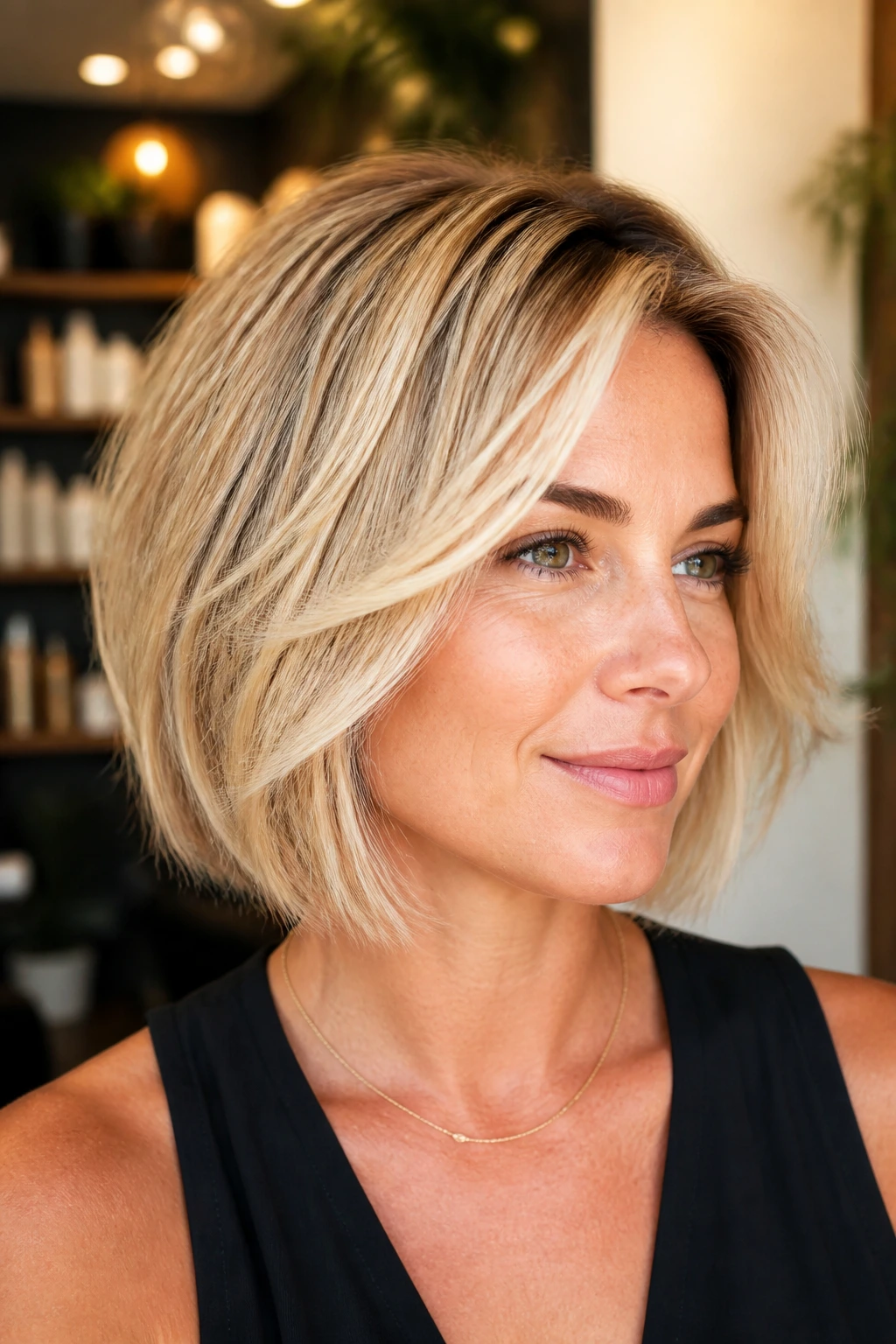
-
The layers do the lifting: Short layers around the crown and cheekbones stop a bob from sitting like one heavy block, which is the fastest way to make blonde hair look dull and dense.
-
The color makes the cut read lighter: Honey, beige, champagne, and soft platinum each reflect light differently, so the same haircut can look airy, sharp, or plush depending on the tone.
-
Grow-out is easier than it looks: A root shadow or balayage keeps the bob from screaming “salon appointment overdue” after six weeks, which matters if you do not want high-maintenance color.
-
Styling takes less time than longer cuts: A layered bob usually needs 10 to 15 minutes of real effort, not a full blowout ritual. That’s the sweet spot.
-
The shape works on straight, wavy, and slightly curly hair: The cut can be tailored to keep wave, reduce bulk, or add lift where the head shape needs it most.
-
It shows off face shape instead of hiding it: Good bob layers open up the jaw, the cheekbones, and the neck. That’s a small thing until you see the wrong blunt version and notice how different the whole face reads.
1. Honey Blonde Feathered Bob
This is the version I reach for when someone wants brightness without the sting of icy upkeep. The honey blonde layered bob feels soft at the ends, with feathering that keeps the perimeter from looking boxy. It has enough warmth to flatter most skin tones, and enough movement to keep it from settling into that helmet shape shorter blondes can get when the layers are too timid.
The cut works best when the shortest layers sit just under the cheekbone and the bottom line hits somewhere between the chin and the top of the neck. That gives the style a little swing. Ask for light point cutting through the ends so the finish doesn’t look sliced or blunt. Honey blonde also hides small color changes better than cooler blondes, which makes this a sane choice if your base grows in darker.
A soft bend with a 1-inch curling iron is enough. You do not need perfect curls. In fact, the slightly imperfect wave is what keeps the honey tones from looking flat.
What to ask for
- A chin-length bob with feathered internal layers
- Honey or golden blonde ribbons through the top and sides
- A soft root shadow for easier grow-out
- Light face-framing pieces that land around the jaw
2. Platinum Textured Bob
Platinum can look harsh when it’s cut into a blunt, one-length shape. Put it on a textured bob, though, and the whole thing changes. The platinum blonde layered bob haircut gets its edge from contrast: crisp color, loose movement, and a cut that lifts the crown just enough to keep the shape from collapsing.
This one is for people who want their blonde to read bright from across the room. The layers should be piecey, not choppy in a messy way. Think clean separation, especially through the top and around the ears. A stylist will often use a razor or careful slide cutting to remove bulk without shredding the line. That matters. Platinum shows every bad haircut habit.
Best styling move? A heat protectant, a quick blow-dry with a round brush, then a pinch of texturizing paste on the ends. Too much shine serum kills the whole point. Platinum needs a little grit to look deliberate rather than stiff.
Good fit if you want
- A sharper, more fashion-forward bob
- A cooler blonde tone with strong reflection
- A style that looks good tucked behind one ear
- A cut that gains shape from texture, not curls
3. Champagne Angled Bob
If you like a little polish in your blonde, the angled bob is the one that behaves like it has somewhere to be. The back stays slightly shorter, the front skims forward toward the chin, and the result is a clean line that still moves. Champagne blonde softens the geometry so the cut doesn’t look severe.
What makes this version stand out is the balance between structure and lightness. The layers are subtle, but they matter. Without them, the angled shape can feel stiff; with them, the bob bends around the face instead of hanging there. A side part gives this cut a little drama, and it’s one of the easiest ways to make thin hair look fuller at the front.
This is a good bob if you want something that looks intentional even on second-day hair. A quick smoothing cream at the ends and a blow-dry with a paddle brush usually do the job. Straight hair wears this well. Wavy hair can too, though you may need a flat iron touch-up at the front.
4. Buttery Bob with Curtain Bangs
A buttery blonde bob with curtain bangs is one of those cuts that does a lot without looking loud. The bangs split softly at the center, brush the cheekbones, and blend into layered sides that keep the whole cut from feeling choppy. The blonde tone matters here. Butter and pale gold keep the face warm and open.
The trick is keeping the layers long enough that the bangs don’t look disconnected. You want a little movement around the eyes, not a hard curtain cut from 2019 that sits there like a prop. The bob itself can land at the jaw or just below it. If your hair is thick, internal layering removes weight through the middle so the bangs don’t end up competing with the rest of the cut.
This style loves a round brush and a tiny bit of root-lifting mousse. The bangs should fall with a bend, not a curl. If they curl too hard, they start looking dated fast. Softness is the point.
5. Ash Blonde Choppy Bob
Ash blonde on a choppy bob is not for anyone who wants syrupy warmth. This cut leans cool, dry, and slightly undone in the best way. The layers are more visible here, cut with enough separation that the ends look broken up rather than blunt. It’s a clean choice if your hair tends to puff out when it gets too much weight.
A lot of people ask for “choppy” and end up with a triangle. That’s the wrong move. The secret is keeping the crown light and the perimeter narrow enough that the head shape still looks neat. Ash blonde helps because it doesn’t compete with the cut. It lets the texture show.
I like this version with a middle part and a loose wave, but it also works straight if you tuck one side behind the ear. That small shift makes the layers visible without making the whole cut feel styled within an inch of its life.
Ask your stylist for
- Softly shattered ends, not aggressive razoring
- Ash blonde with a slightly darker root for depth
- A narrow silhouette through the jawline
- Movement around the crown, especially if hair is dense
6. Beige Blonde French Bob
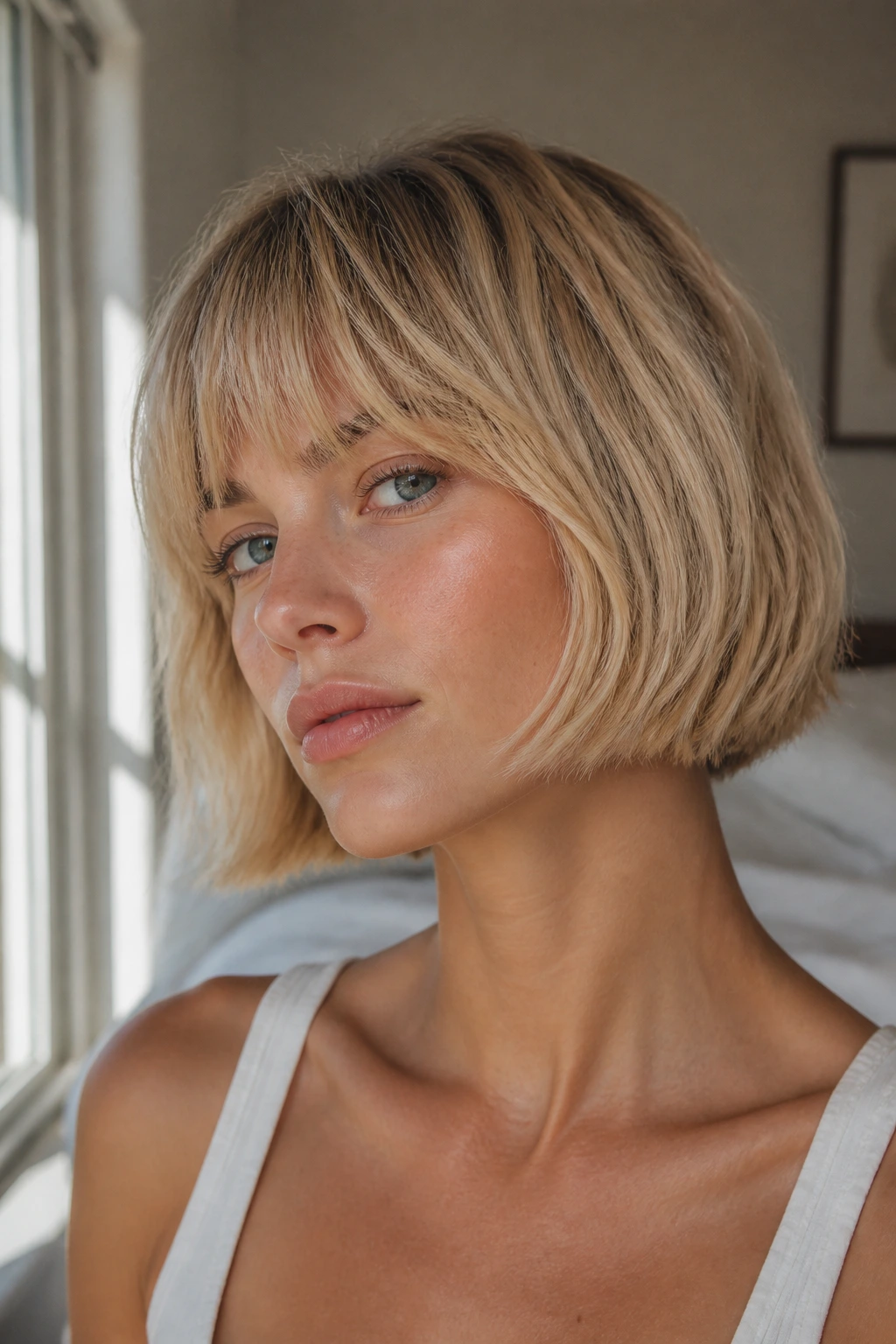
The French bob gets more interesting when the blonde tone is beige instead of bright yellow or super icy. Beige blonde sits in that middle space that reads expensive without being fussy. Add soft layers, and the cut stops feeling severe. It starts to look like you let it air-dry after a good salon blowout, which is a much better place to be.
This version usually sits around the cheekbone or just below the jaw. The fringe, if you wear one, should feel light and not too heavy. I’m not a fan of overbuilt bangs with this cut. They overpower the line. Keep the layers subtle, keep the shape compact, and let the blonde carry some of the visual interest.
The French bob is especially good for straight to slightly wavy hair because the shape stays crisp. If your hair is very thick, ask for internal removal of weight so the sides don’t balloon. That one adjustment saves you from the mushroom effect. It’s worth the extra minute in the chair.
7. Rooted Balayage Lob
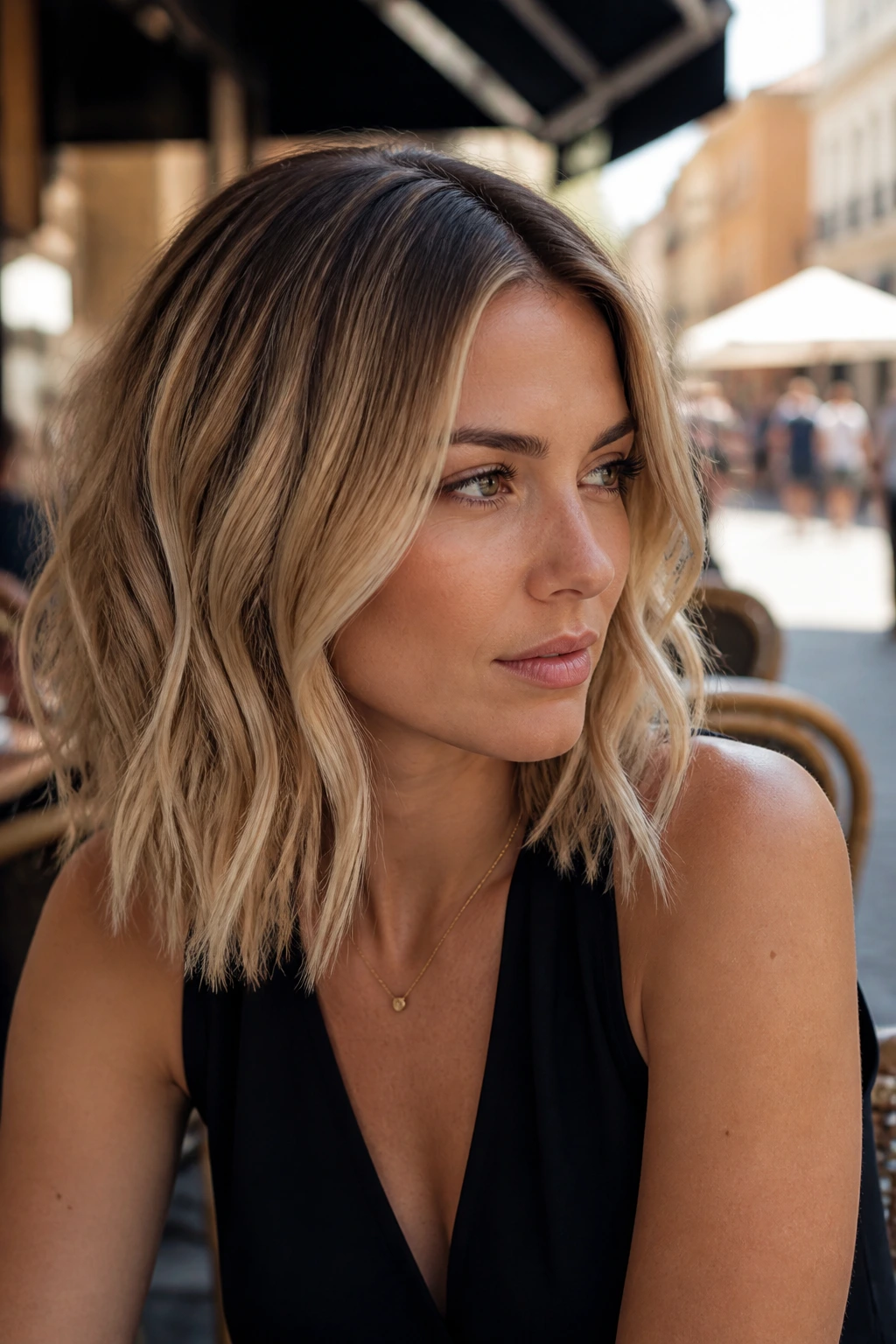
A rooted balayage lob is the practical person’s bright blonde. The length buys you a little more styling range, but the layered cut still keeps it from hanging flat. The rooted color means you can stretch time between touch-ups without feeling like your hairline has started shouting at you.
This is one of the best styles if you want sun-kissed blonde with a quieter grow-out. The darker root gives depth near the scalp, then the lighter pieces build toward the ends. That gradient makes the layers show up without needing chunky highlight lines. It also softens the face, which is helpful if you don’t want the brightness concentrated only around the top.
Waves are the easy route here. A 1.25-inch curling wand, alternating directions, creates that loose, lived-in bend people keep trying to fake with too much product. A dab of light oil on the ends is enough. More than that and the lob starts losing swing.
8. Sunlit Feathered Bob
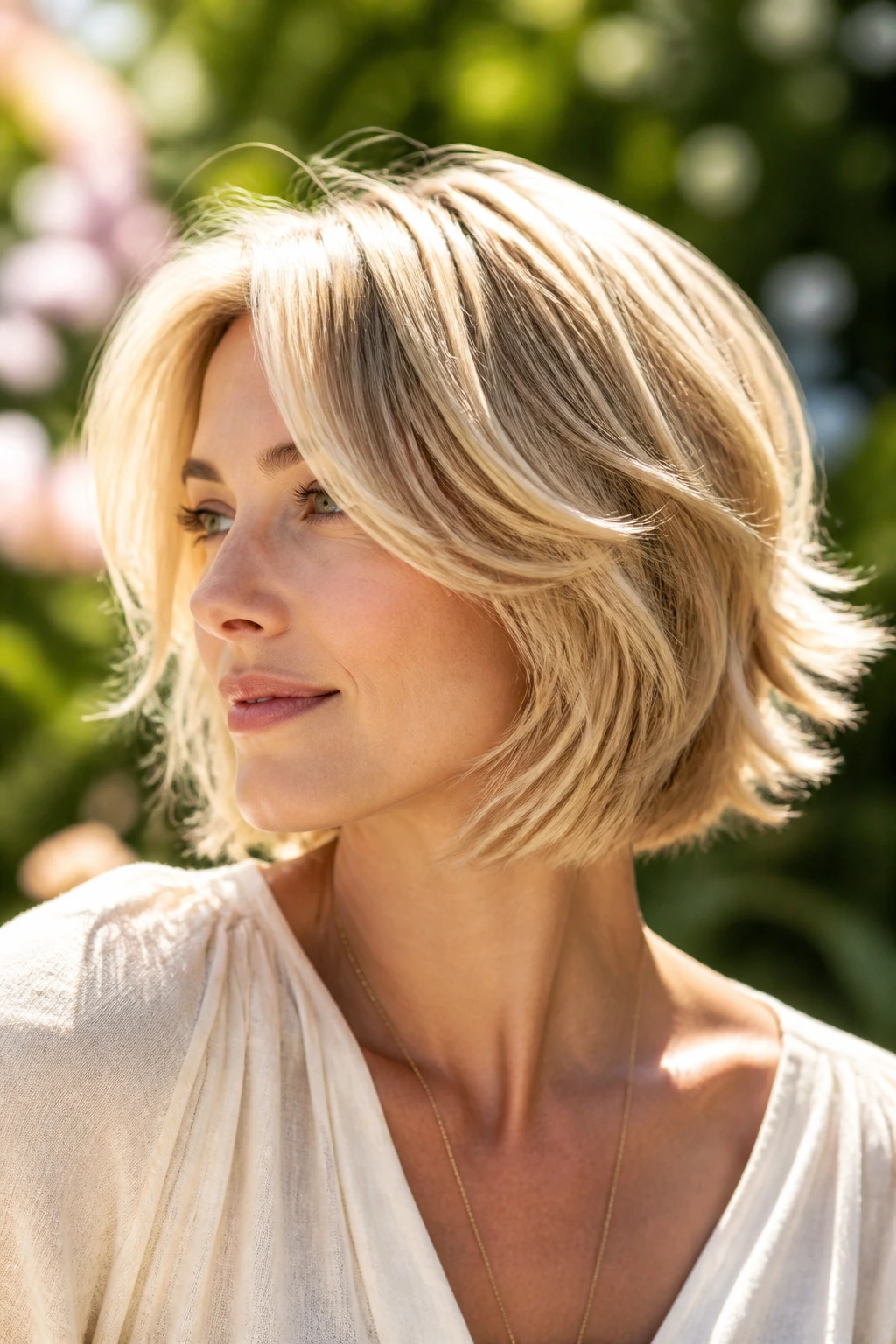
This is the cut that looks like it spent a week in actual sunlight, even if it didn’t. The sunlit feathered bob relies on delicate, airy layers that turn the ends outward just slightly, the way old-school blowouts did before everyone got obsessed with flattening everything. I like it because it has motion without looking messy.
The blonde color should not be one solid tone. Ask for soft ribbons of pale gold, beige, and light caramel through a brighter base. That gives the feathering something to catch. If every strand is the same shade, the cut loses half its appeal. Dimension is the whole point.
This one is especially flattering on medium-density hair. Fine hair can wear it too, but the layers need to be controlled so the ends don’t look wispy. Thick hair benefits from the feathering because it removes some of that heavy, stuck-to-the-head feeling.
Best styling note
A medium round brush, a blow-dryer with a concentrator nozzle, and a light mist of flexible-hold spray are enough. Skip crunchy finishers. They fight the softness.
9. Ice Blonde Stacked Bob
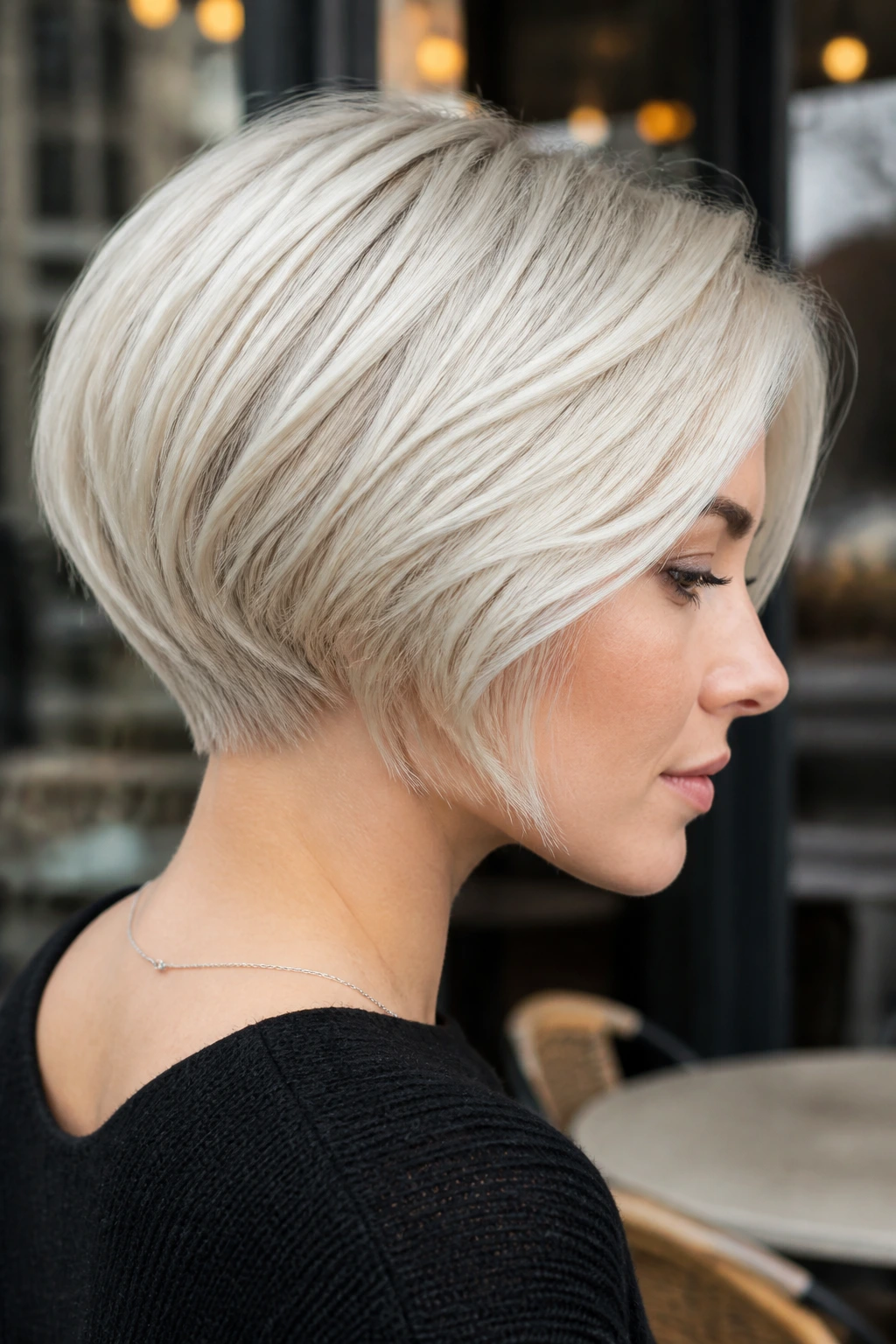
A stacked bob gives you built-in lift at the back, which is exactly what some blonde cuts need. When you combine that with an ice blonde tone, the result is sharp, tidy, and very aware of its own outline. This is not a sleepy haircut. It has angles.
The stacked shape works because the nape is shorter and the layers rise gradually, creating a subtle curve that hugs the head. Ice blonde can make that shape look almost sculpted. The risk, of course, is overdoing it and ending up with a stiff dome. The fix is to keep the transition from back to sides soft, not dramatic.
This look suits people who like a polished finish and do not mind regular trims. The line needs maintenance. If it grows out too far, the stacked back loses its architecture first. That’s not a flaw; it’s just part of the deal. Use a smoothing balm, not heavy cream, and keep the shine controlled so the cut stays crisp.
10. Golden Bob with Face-Framing Ribbons
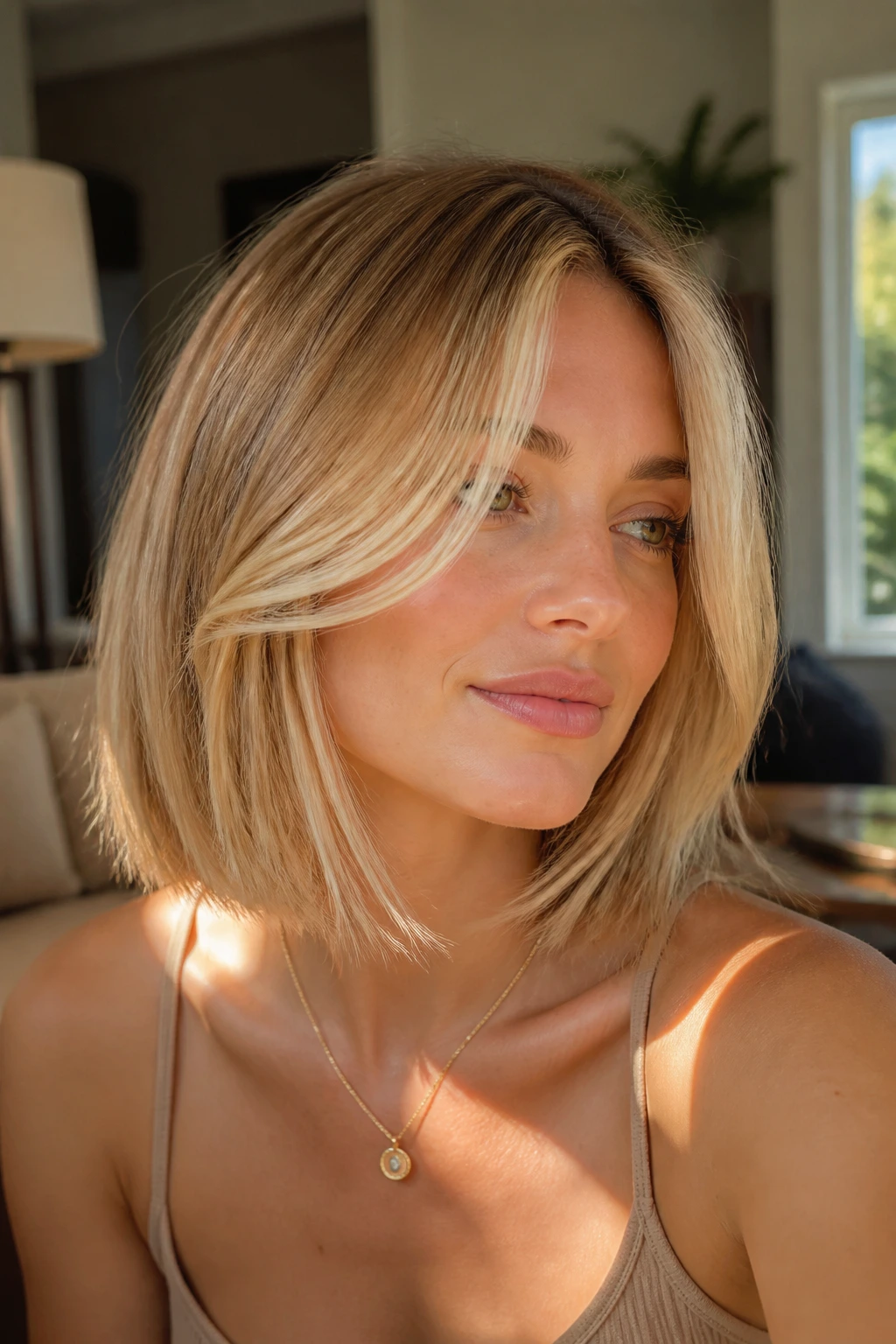
A bright golden bob with face-framing ribbons is one of the easiest ways to make a layered cut look expensive without going too light. The ribbons should sit around the temples, cheekbones, and front sections, where they catch the most light when you move. That detail matters more than a full-head blonde in many cases.
The base can stay a touch deeper, which keeps the shape grounded. Then the lighter face-framing pieces do the work of brightening the skin and opening the cut. If you’ve ever noticed how some blondes make the face look washed out while others seem to wake it up, this is the difference. Placement.
Keep the layers soft and long enough to swing. The cut should not look striped. It should look like the light naturally lives there. That’s the appeal. A middle part can make this read modern, while a soft side part gives it a little more lift at the crown.
11. Mushroom Blonde Layered Bob
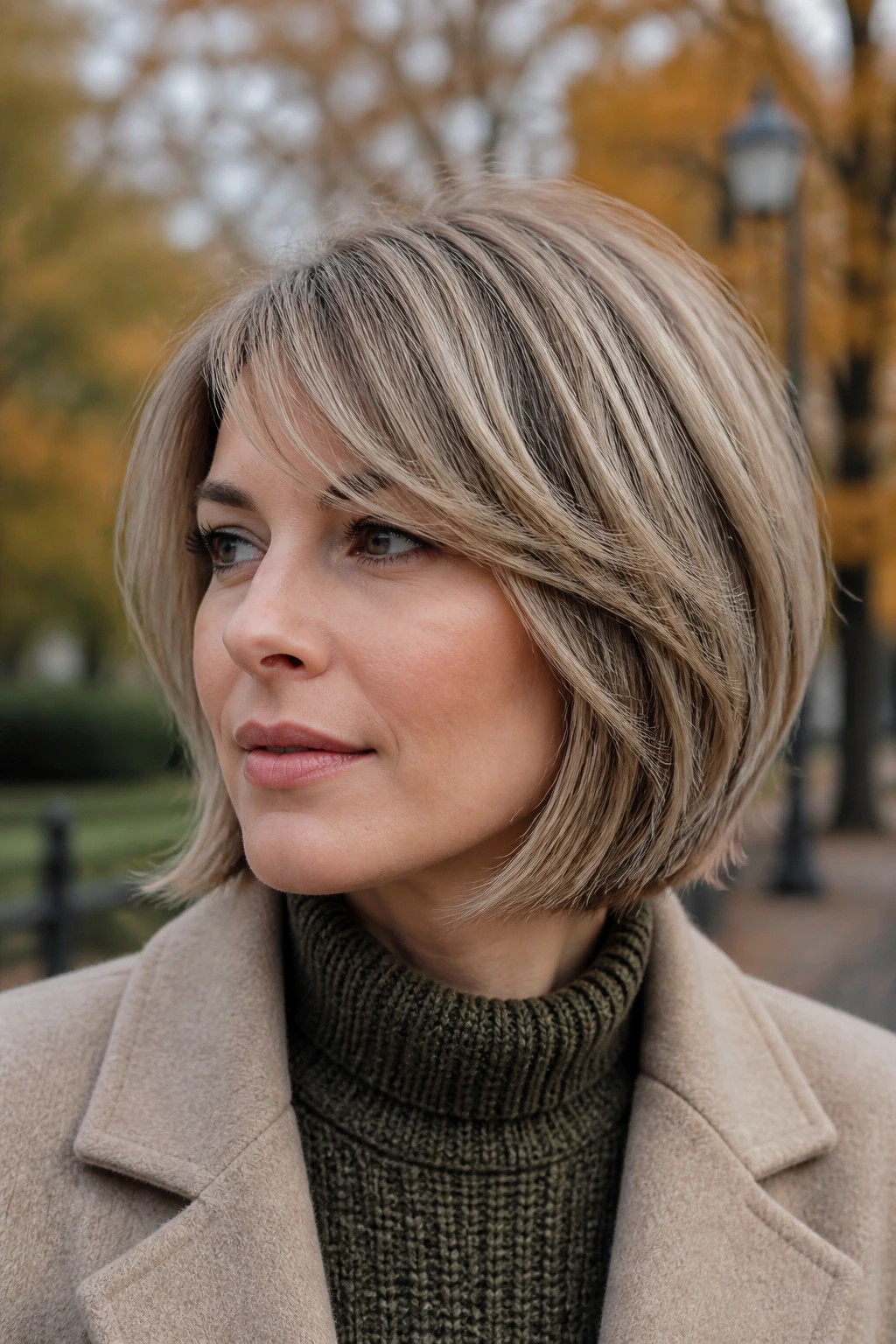
Mushroom blonde gets misunderstood because people hear “mushroom” and think drab. It isn’t drab when the cut has layers. In fact, that cooler taupe-beige blonde can look richer than very bright tones because it has shadow built in. On a layered bob, it reads chic and grounded instead of washed out.
This is the one I’d suggest to anyone who wants a blonde bob that doesn’t fight their natural root color. It blends. The layers should be tucked in enough to keep the outline neat, with a few shorter pieces around the crown to stop the head from looking flat. If your hair has some natural wave, even better. Mushroom tones love movement.
Use a soft matte paste or a light cream. Don’t drown it in shine. That can make the color look muddy. The appeal here is restrained dimension, not sparkle.
Why it works
- Cooler beige tones blend with natural roots
- Layering keeps the shape from getting heavy
- The cut looks good with minimal styling
- It grows out in a calm, low-contrast way
12. Bronde Wavy Bob
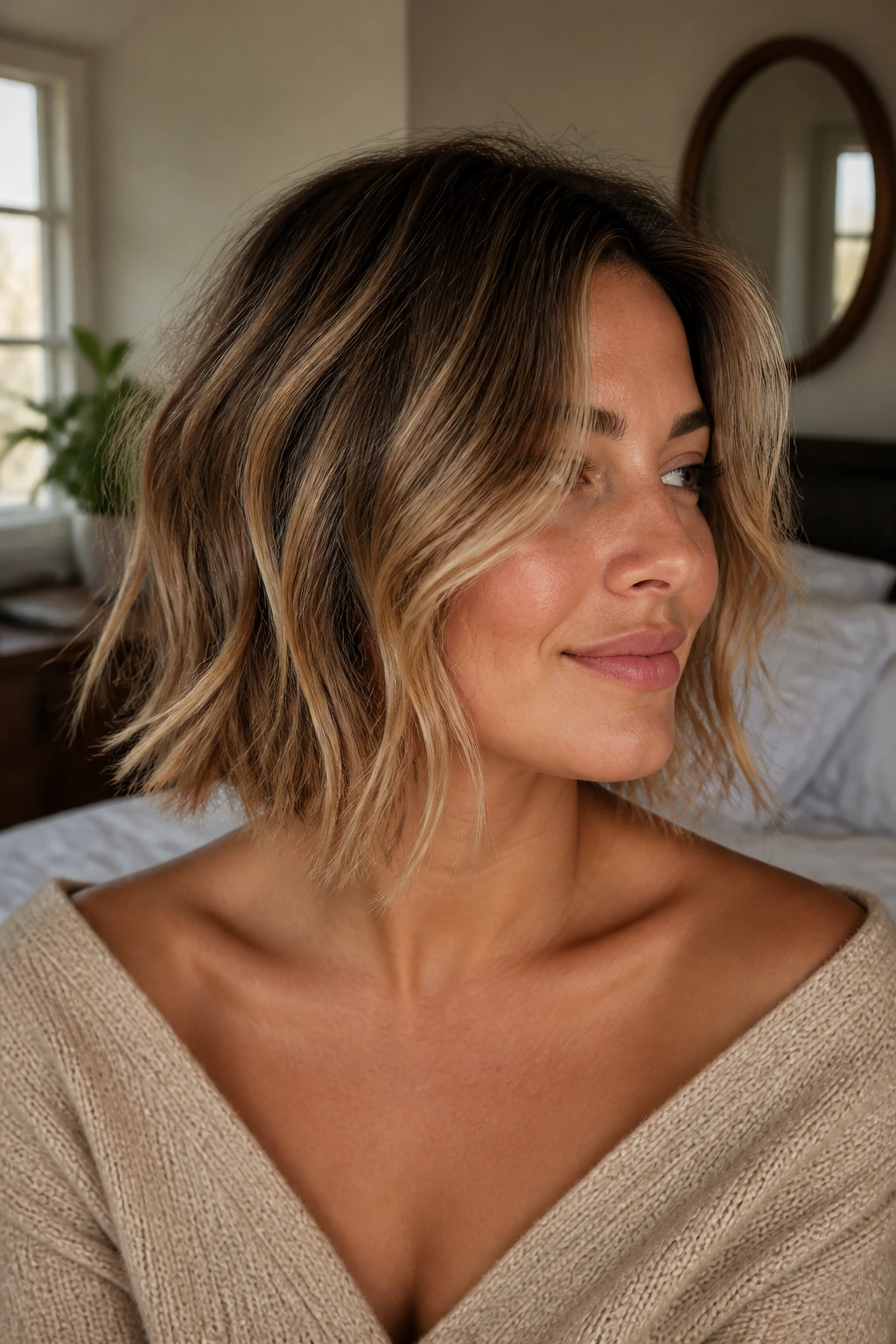
Bronde is the safe word for people who want blonde energy without committing to full lightness everywhere. On a wavy bob, it looks natural in the best sense: darker at the root, brighter through the mid-lengths, and soft at the ends. The layered cut keeps the wave pattern from turning into a triangle.
This style is especially flattering if your natural hair leans light brown or dark blonde. The color sits close to your base, which means fewer hard lines as it grows out. The layers should be visible but not choppy. Too much chopping ruins the movement. A little interior debulking and some gentle face-framing pieces are usually enough.
Bronde also gives you more flexibility with makeup and wardrobe because it doesn’t have the high-contrast edge of platinum. It’s easier to wear with cooler clothing, warmer clothing, and everything in between. That’s practical, and I appreciate practical hair.
13. Sandy Blonde Collarbone Bob
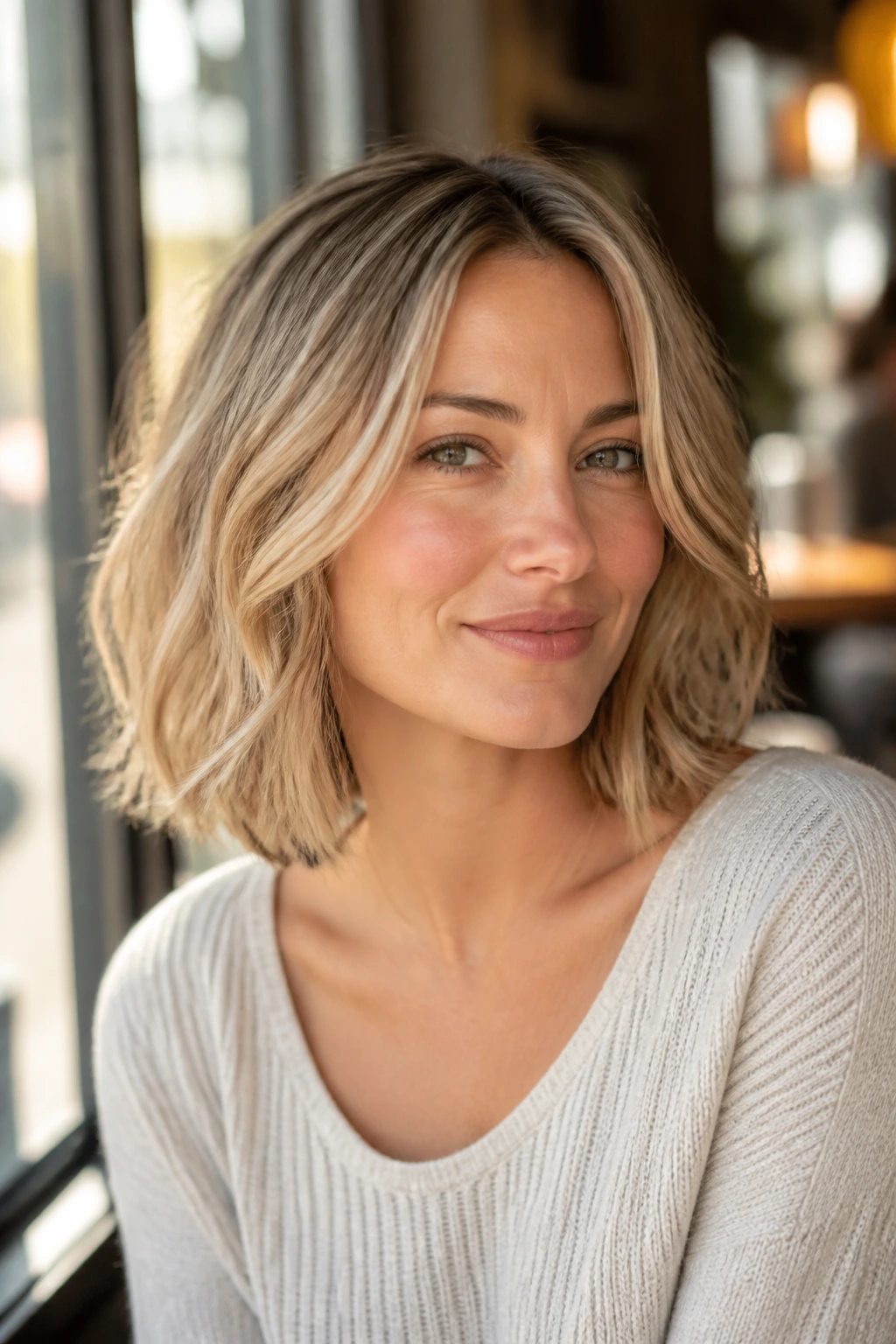
The collarbone bob lives in a useful middle zone. It’s short enough to feel like a bob, long enough to tuck behind the ears, and forgiving enough for people who don’t want to visit the salon every six weeks. Sandy blonde gives it that beach-light look without pushing into yellow or silver territory.
Layers here should be long and flowing. You want movement through the mid-lengths, not chopped-up ends that break the line. A collarbone cut can look flat if the layers are too timid, especially on straight hair. A few soft bends at the ends and some volume through the crown fix that fast.
This is one of the best choices for growing out a shorter bob. It doesn’t lose shape as easily as chin-length cuts, and you can still wear it sleek, waved, or tucked. That versatility makes it useful, not just pretty in a mirror.
14. Pearl Blonde Razor-Cut Bob
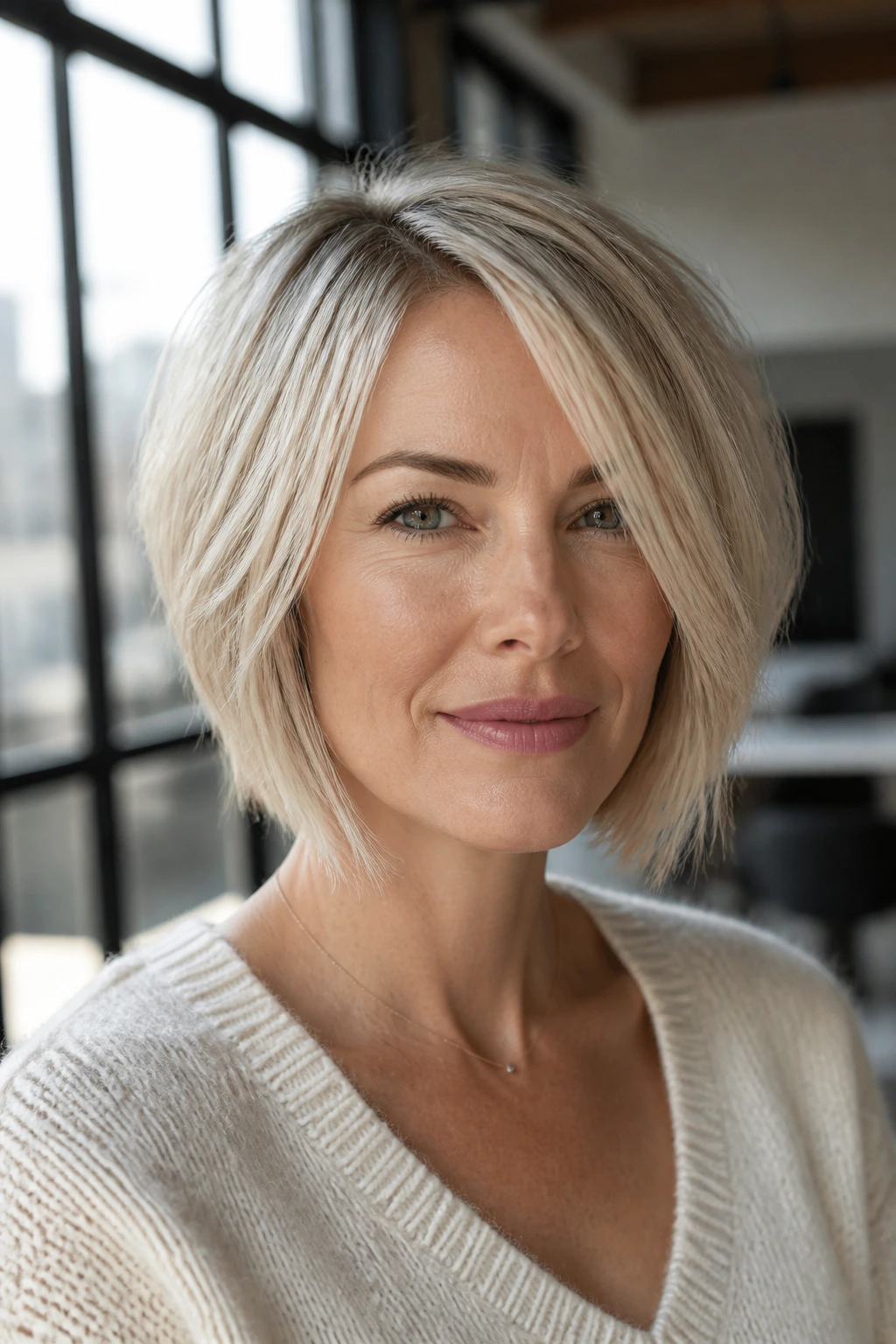
Pearl blonde has a pale, reflective quality that looks especially good when the cut itself has some edge. A razor-cut bob gives the ends a soft taper, which stops the style from feeling too clean or too stiff. The two together create a finish that feels light and slightly airy.
Use this one if your hair is fine to medium and you want movement without a lot of styling time. The razor work removes weight delicately, though it should be done by someone who knows how to keep the line intact. Bad razor cutting can make the ends fray. Good razor cutting makes the bob swing.
I’d pair this with a subtle off-center part and a light styling cream. The pearl blonde tone already does a lot of the visual work, so the styling should stay quiet. Let the cut breathe.
15. Butter Blonde Side-Part Bob
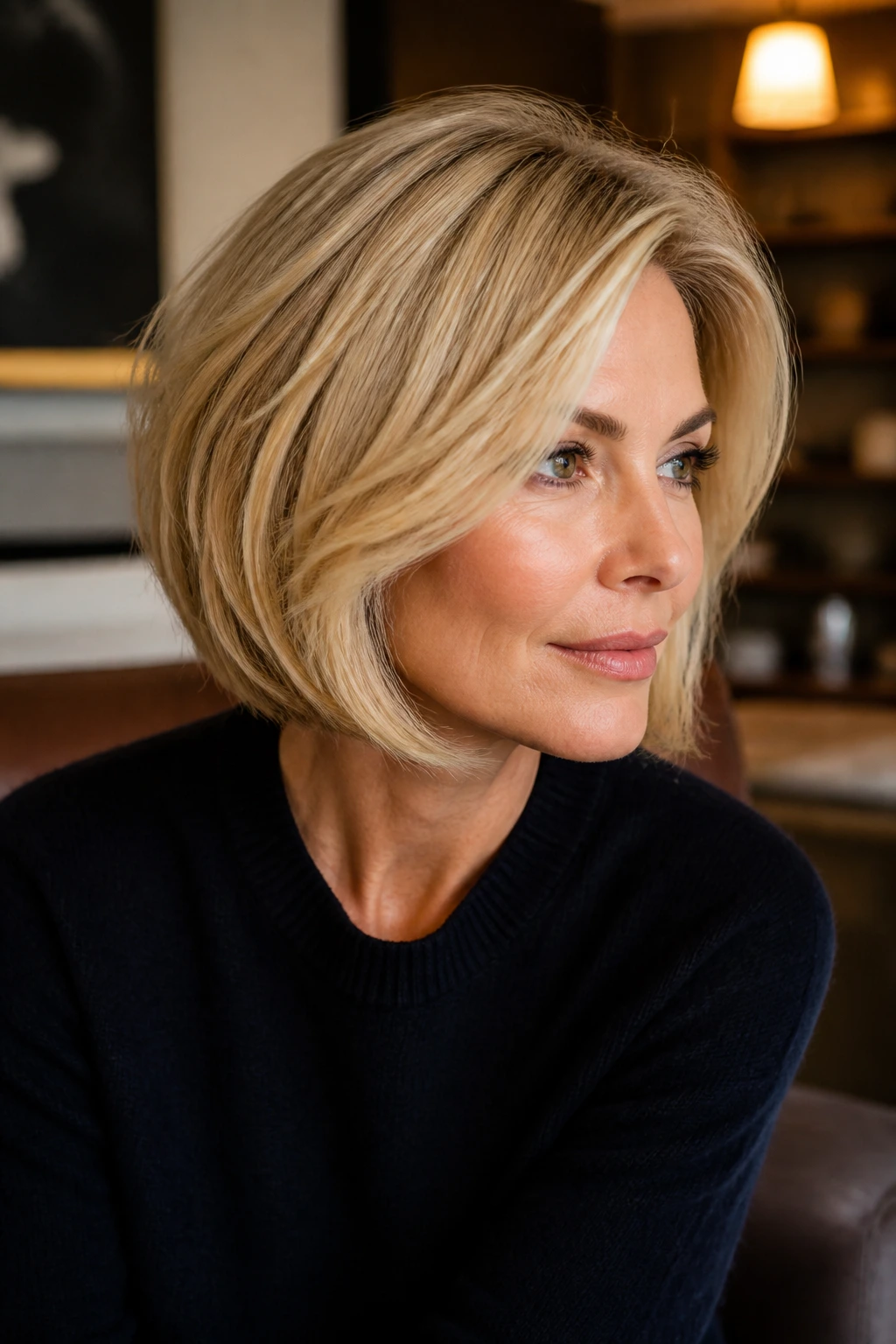
A side part changes everything. Seriously. On a butter blonde layered bob, the side part gives the style lift, a little asymmetry, and a more grown-up feel than a center-part version. Butter blonde keeps the whole thing warm and soft, which matters if you want brightness without icy edges.
The layers should be concentrated around the front and crown. That’s where the side part gets its shape. If the layers are too low, the lift disappears. If they’re too high, the cut can kick out at the sides and look overdone. The middle ground is best: enough interior shape to support the part, but not so much that the bob turns fluffy.
This cut works well for people with fine hair that needs a little volume at the root. A bit of root spray before blow-drying gives the side part some staying power. Pin the part while the hair cools if you want extra hold. Old trick. Still works.
16. Beachy Babylight Lob
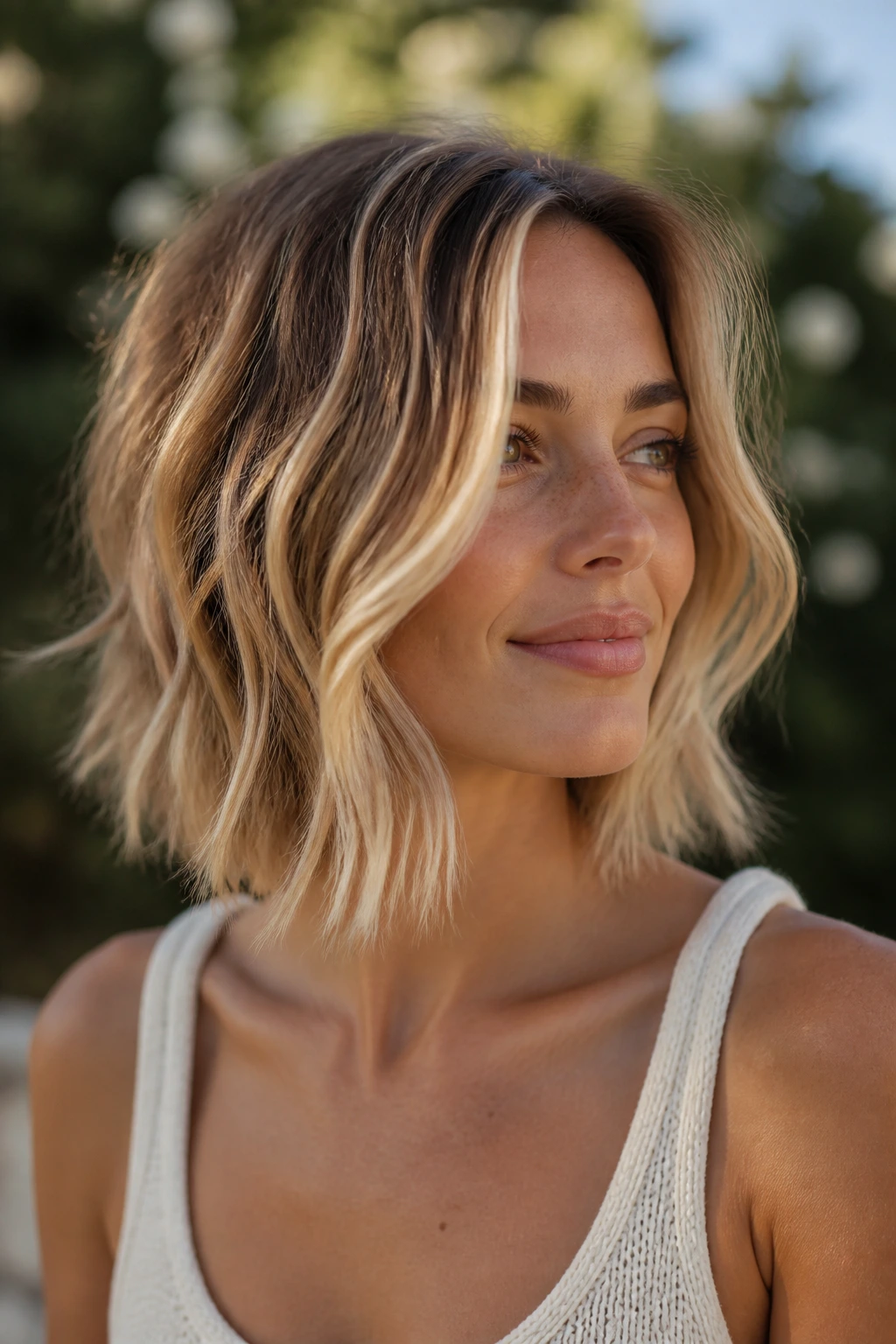
Babylights are tiny, and that’s the point. A beachy lob with babylights looks expensive because the color doesn’t shout. It whispers. The layered length keeps the wave pattern loose, while the micro-fine highlights spread brightness in a way that mimics natural lightening.
This is a smart choice if you want a sun-kissed look that won’t look striped or salon-heavy. The highlight placement should be concentrated around the surface and front. Underlayers can stay a little deeper, which gives the whole style some shadow. That contrast helps the waves look fuller.
The lob length also means you can pull it back when needed. Half-up styles, low clips, and tucked sides all work. That makes this one less precious than a shorter blonde bob, and I think that’s a good thing.
17. Vanilla Blonde Sleek Bob
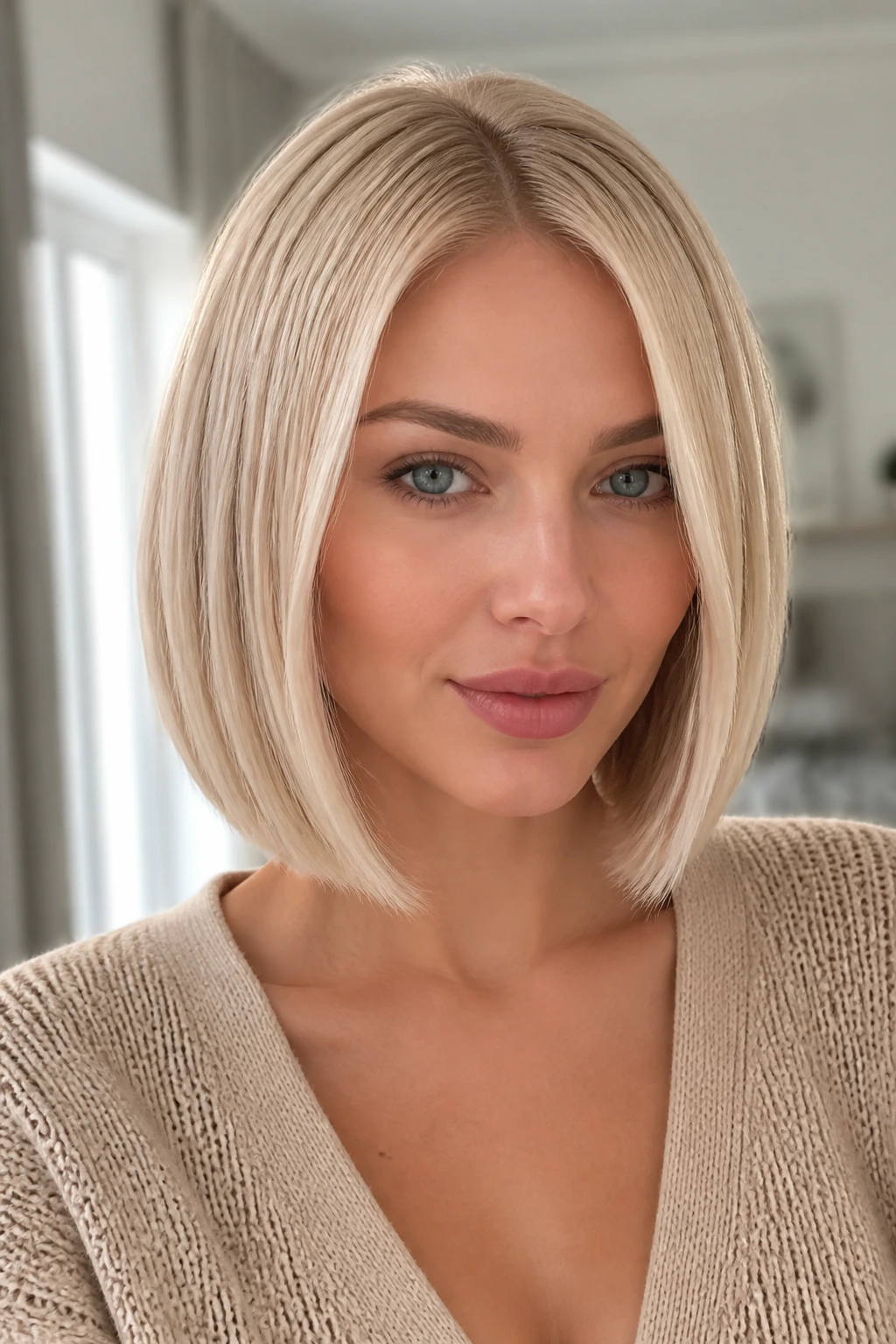
A sleek bob doesn’t have to be boring, and vanilla blonde proves it. The tone is creamy and bright, but not so icy that it looks hard. When the cut is layered just enough to keep the line from collapsing, the result is smooth, glossy, and very controlled.
This is the bob for people who like a polished finish and are willing to run a flat iron through the last inch or two. The layers should be subtle and internal. You want the surface to lie cleanly, while the inside has enough movement to keep the shape from feeling heavy. It’s a sneaky kind of layering. You see the effect, not the chop.
A center part sharpens the look. A side part softens it. Either one works, though I like the side part more when the hair is very straight because it stops the style from feeling too rigid. Finish with a pea-sized amount of gloss serum on the ends only.
18. Caramel Dimension Bob
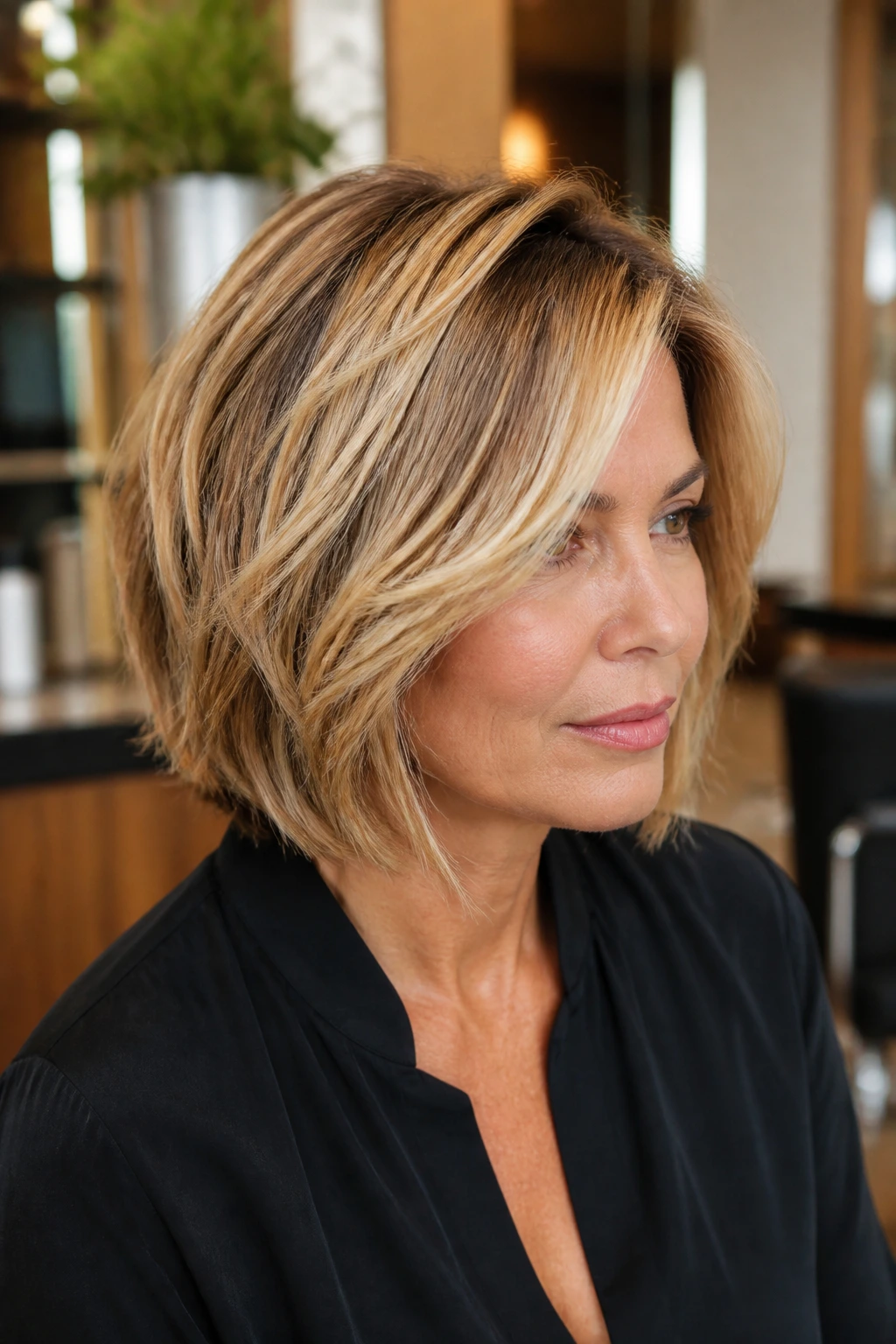
Caramel dimension on a blonde layered bob gives you warmth, depth, and a lot of visual interest without needing a huge color commitment. The darker caramel pieces sit under brighter blonde layers, which means the cut shows movement even when the hair is still. That’s what makes dimension useful instead of just decorative.
The best version has layers that separate enough to show the tones but not so much that the cut gets flimsy. If your hair is thick, this is a useful way to reduce bulk without going too short. If your hair is fine, keep the layers longer and the color placement lighter around the top so the hair doesn’t look overprocessed.
This bob reads especially well in soft waves. The caramel and blonde pieces turn into little ribbons as the hair moves. Straight, it still works, but the contrast is more obvious when there’s a bend.
19. Grown-Out Chin-Length Bob
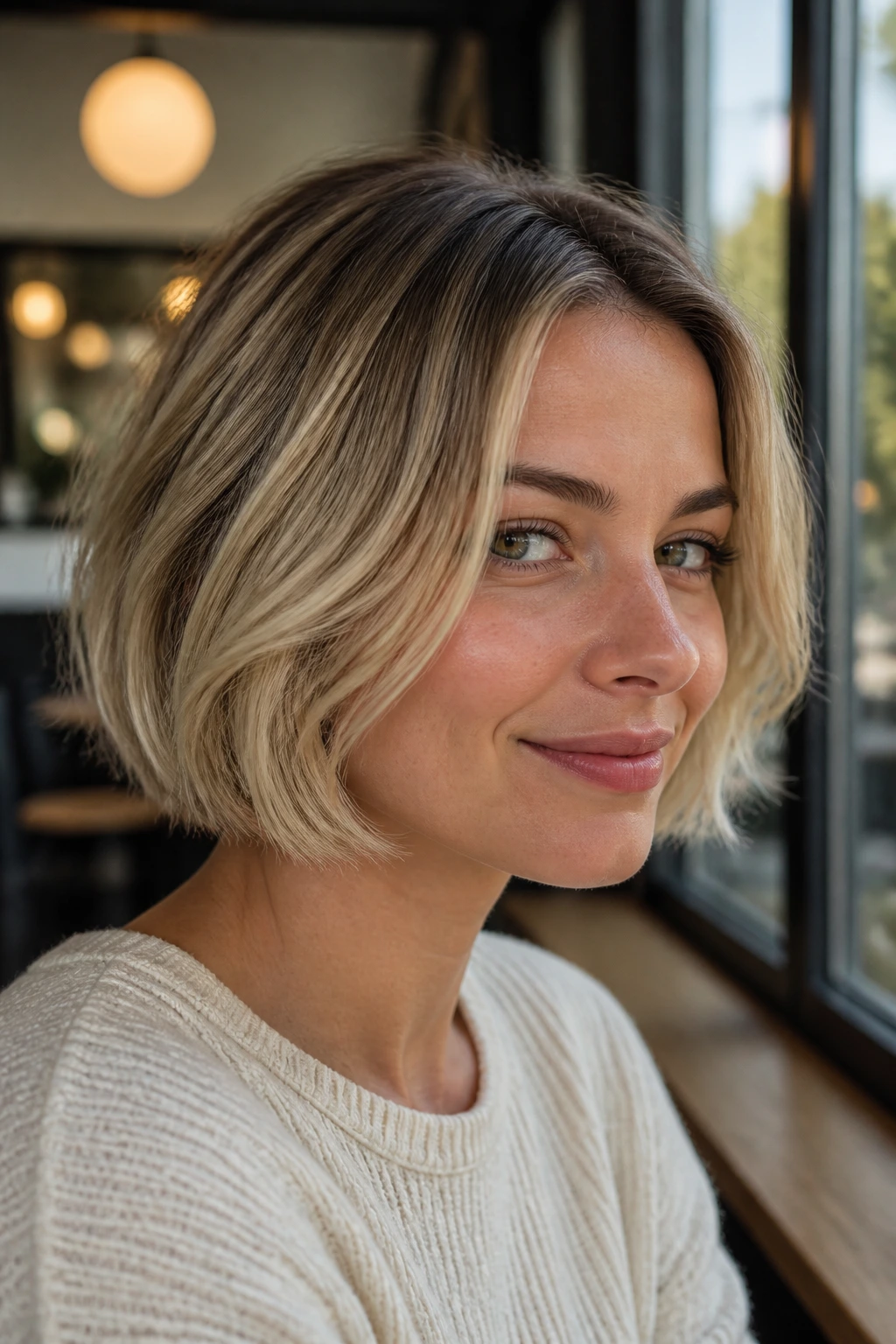
A chin-length bob with layered ends is the cut I suggest to people who want a neat shape but hate feeling trapped by it. The grown-out version has a little extra softness around the neck and jaw, which makes it easier to live with between trims. The blonde should be rooted or softly highlighted so the regrowth doesn’t ruin the shape.
This cut is a good bridge between a short bob and a lob. It gives you the neatness of a short line without the maintenance of a super-crisp perimeter. The layers should be minimal but not absent. Too few, and the bob sits hard. Too many, and you lose the clean chin-length effect entirely.
What I like about this one is how forgiving it is on different hair textures. Straight hair keeps the line. Wavy hair gets a little body. Fine hair gets the illusion of fullness without bulk. That’s a useful haircut, which is more than can be said for a lot of heavily styled blondes.
20. Cream Blonde Micro-Layer Bob
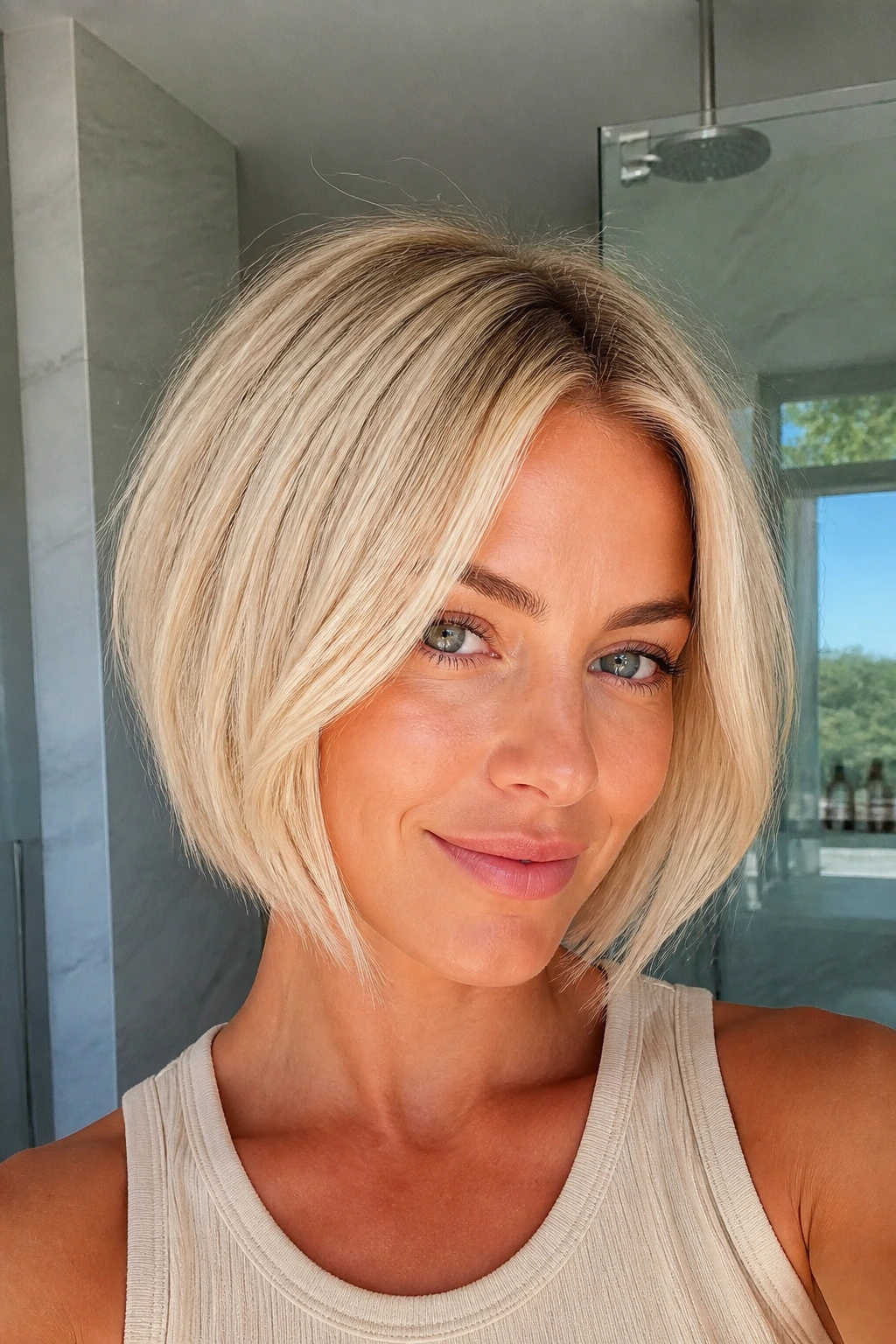
The cream blonde micro-layer bob is for people who want brightness first and drama second. The layers are tiny, almost hidden, but they stop the cut from settling into a flat shelf. Cream blonde keeps the tone soft and luminous, especially around the face and ends.
This is not the haircut to ask for if you want obvious choppiness. It’s for subtle movement. The best versions have a clean perimeter with micro layers concentrated through the upper sections and gentle face-framing around the cheekbones. That keeps the silhouette neat while giving the hair enough internal lift to move.
I’d pair this one with a round brush blow-dry or a large velcro roller set at the crown. If you like smooth, glossy hair that still has some body, this shape delivers that better than a one-length bob ever will. Quiet. Bright. Very easy to wear.
Why Blonde Layers Work So Well on Bob Shapes
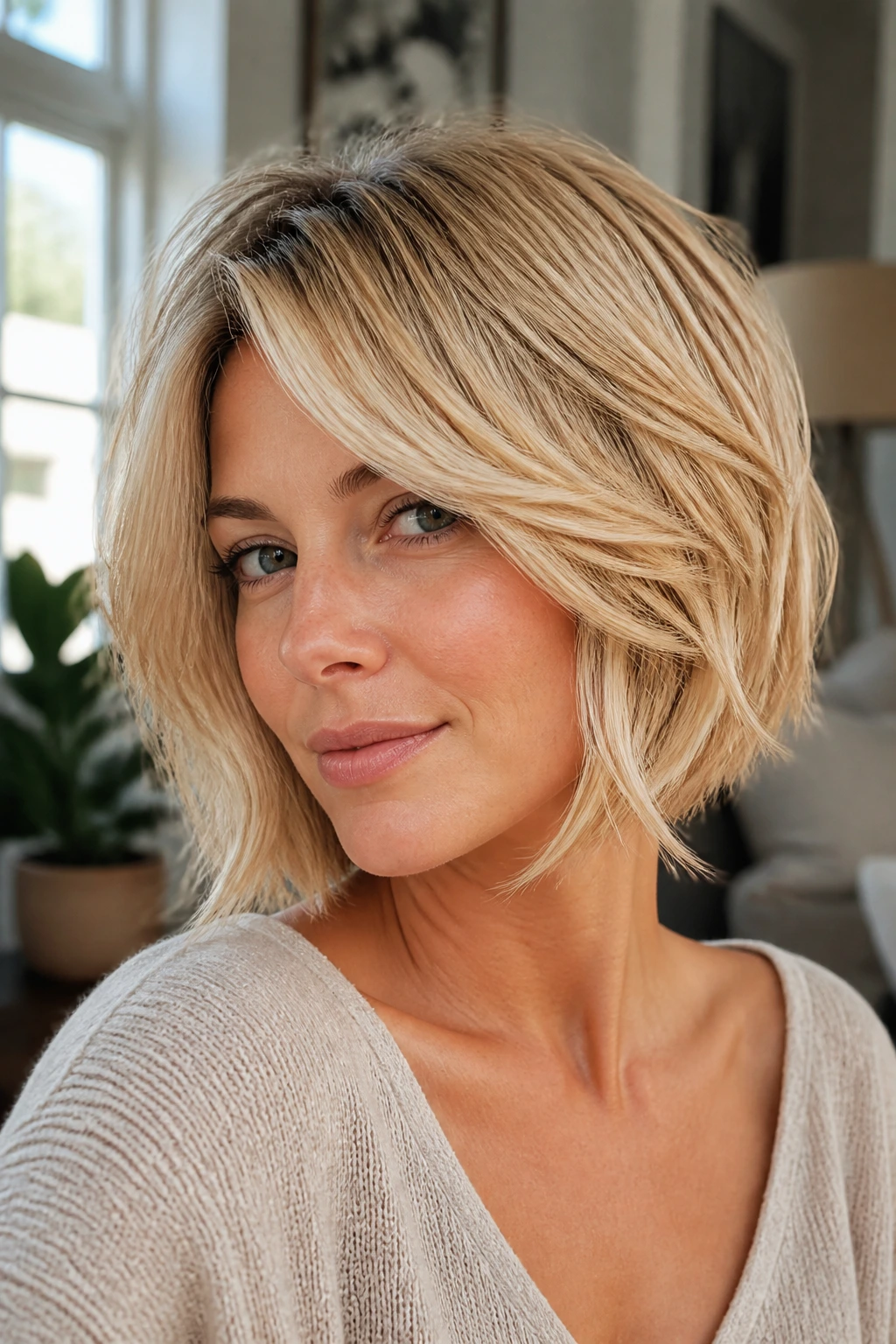
A bob is a shape haircut. That sounds obvious, but it matters more than people think. Without layers, the line can go heavy fast, especially once blonde color lightens the hair shaft and makes it feel a little finer. Add layers, and the cut gets air between the sections. The silhouette stops looking like one solid block and starts looking lived in.
Blonde color helps because it reflects light differently from root to ends. A honey ribbon catches one way, a beige middle tone catches another, and a pale blonde piece near the front can wake up the whole face. That’s why a layered bob often looks more expensive than a longer cut with the same color. The shape and the tone are working together, not competing.
The best layered bob haircuts also make room for movement. That can mean feathering, internal layers, point cutting, or a stacked back, depending on the look. The point isn’t to add layers just because layers sound good on paper. The point is to keep the bob from going square. Square hair is the enemy here. Harsh, blunt, lifeless square hair.
Essential Tools for These Looks
-
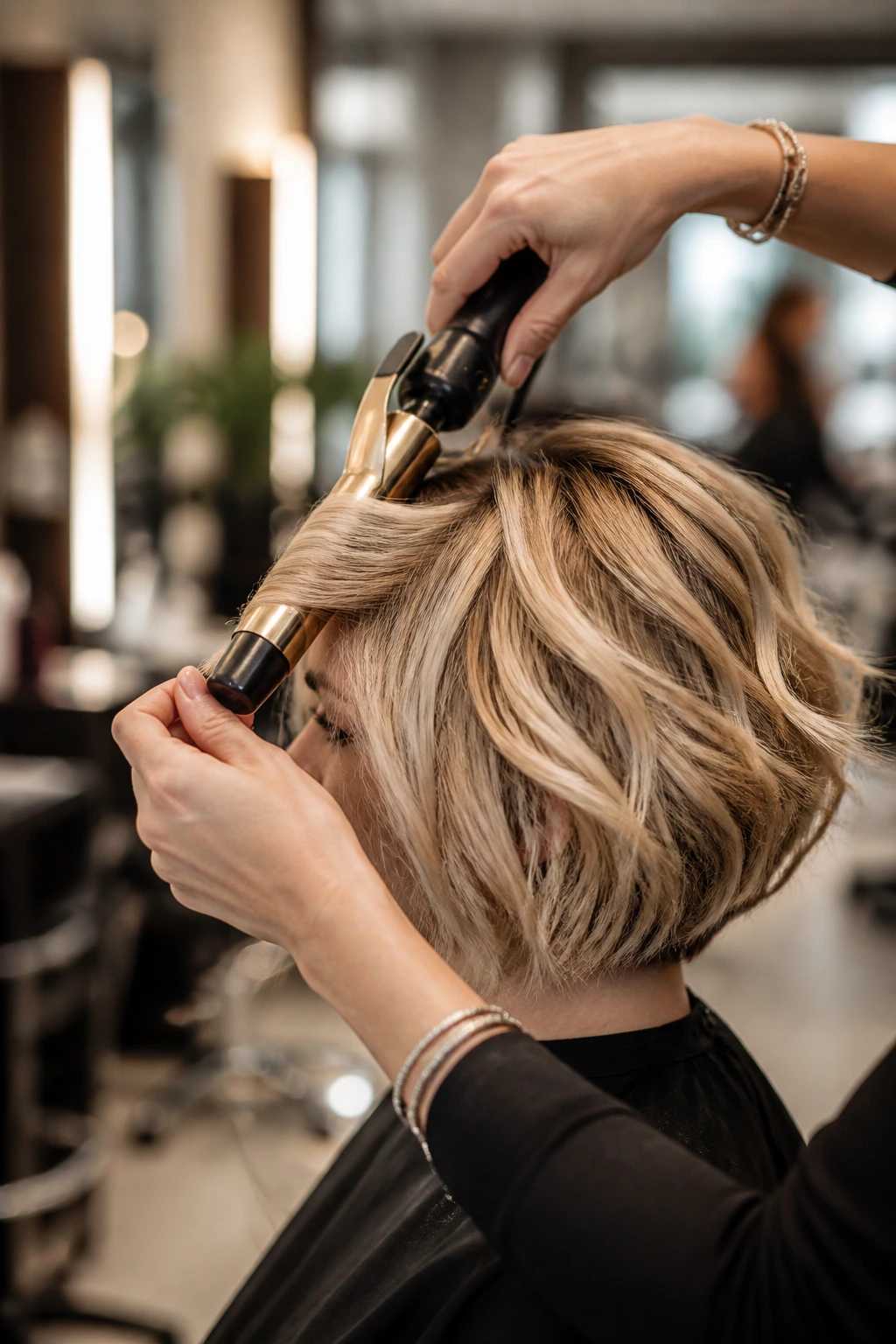
A quality blow-dryer with a concentrator nozzle — Keeps the airflow controlled so layers don’t frizz out in different directions.
-
A 1-inch or 1.25-inch curling wand — Useful for loose bends and soft waves that show off the blonde dimension.
-
A round brush, medium size — Best for lifting the crown and turning the ends under or away from the face.
-
Heat protectant spray — Non-negotiable if you use hot tools, especially on lightened hair that dries out faster.
-
Purple shampoo — Helpful for blonde tones that drift yellow, but don’t overuse it unless you like a dry, matte finish.
-
Color-safe conditioner or mask — Keeps the blonde soft enough that the layers still move instead of snapping into place.
-
Root-lift mousse or spray — Gives bobs a little height at the crown, which matters more than people expect.
-
Texturizing spray — Useful for the piecey, lived-in looks; go light or the bob will feel gritty.
-
A fine-tooth comb and sectioning clips — They make parting, blow-drying, and styling the front pieces far easier.
-
A tail comb — Handy for clean parts and for lifting sections when you want a more polished finish.
How to Choose the Right Blonde Tone and Layer Pattern
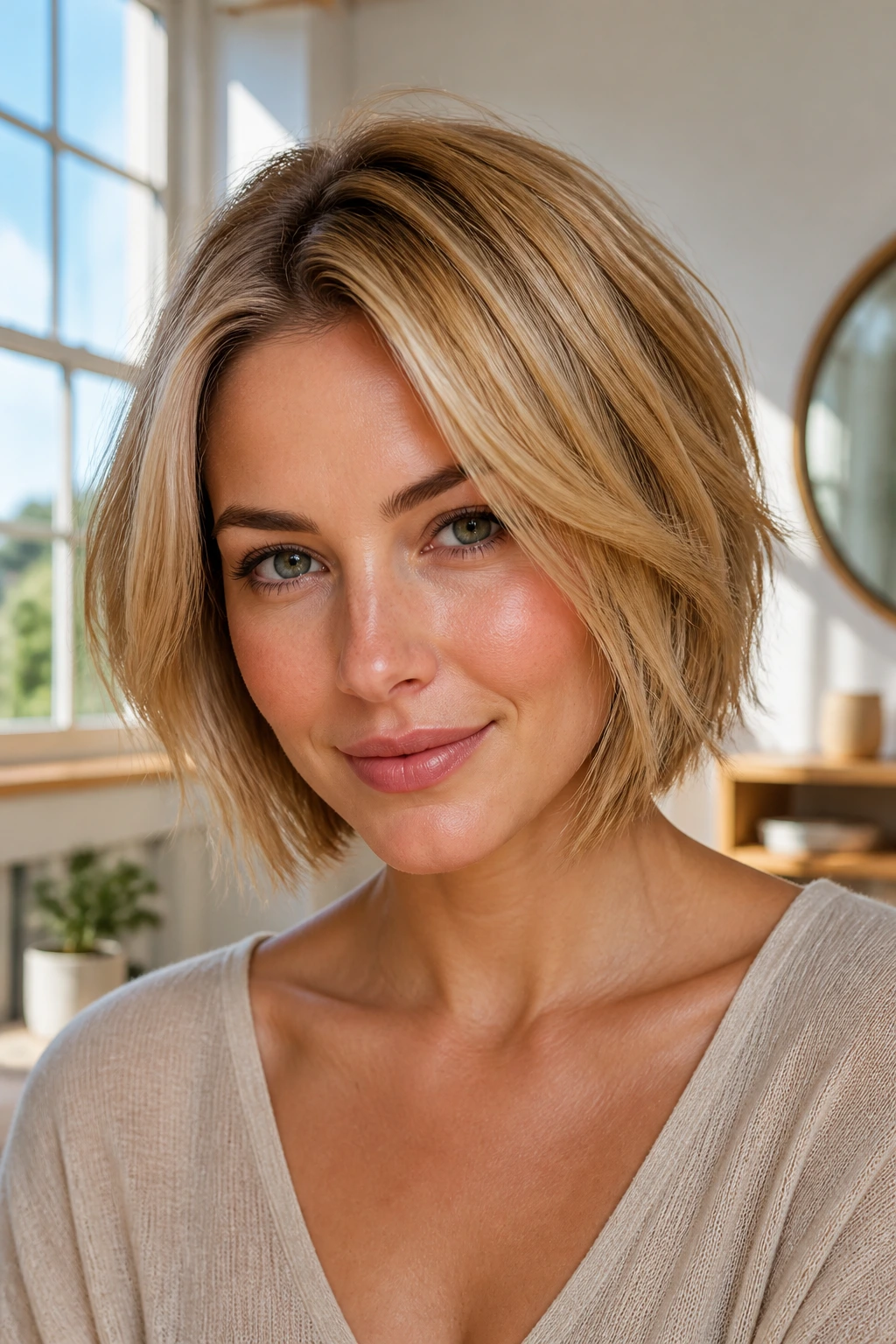
A blonde layered bob haircut lives or dies by the match between tone and cut. Warm blondes — honey, butter, caramel, golden — soften movement and make feathered layers feel easy. Cooler blondes — ash, pearl, platinum, mushroom — sharpen the outline and make the texture read more deliberate. Beige and champagne sit in the middle, which is why stylists reach for them so often. They don’t fight the skin or the haircut.
The layer pattern matters just as much. Fine hair usually looks better with longer layers and a lighter perimeter, because too much internal chopping takes away what little density the bob has to begin with. Thick hair often needs more structure inside the cut so the ends don’t puff outward and take over the face. Wavy hair likes layers that support the wave pattern without breaking it into random kicks. Curly hair needs shape, not thinning for the sake of thinning.
If your natural color is darker, a soft root shadow or balayage will make your blonde easier to live with. If your natural color is already light, babylights and beige tones can keep the result believable instead of overprocessed. The smartest blonde layered bobs usually look like they belong to the hair, not pasted onto it.
How to Wear These Cuts Without Overstyling Them
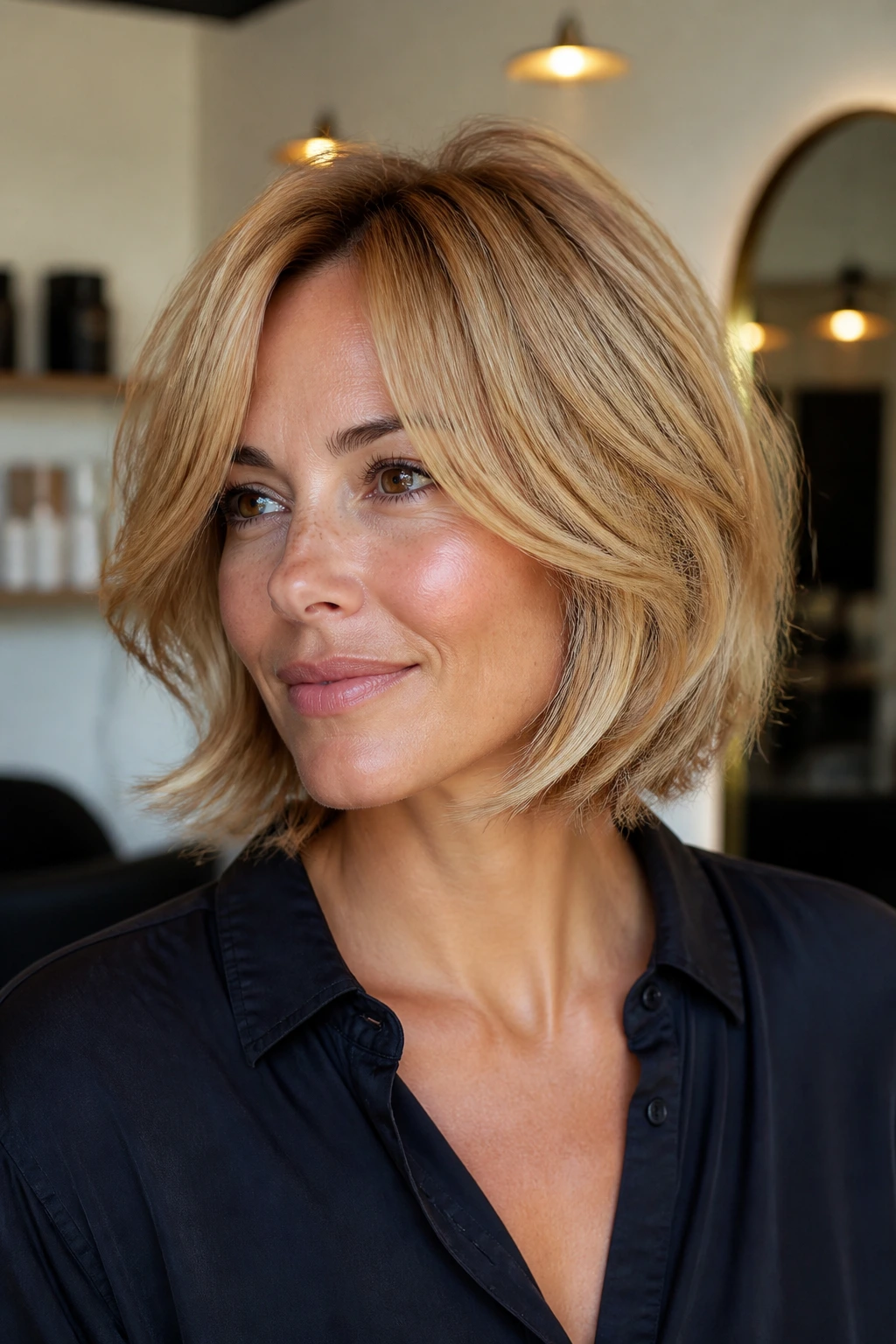
A layered bob can look fussy if every strand gets ironed into place. Don’t do that unless the style specifically asks for it. For most of these cuts, the better look is a controlled bend, not a pin-straight finish that flattens the movement you paid for.
Office polish: Smooth the top with a round brush, tuck one side behind the ear, and leave the ends softly turned under. That gives the bob a neat outline without killing the layers.
Weekend texture: Rough-dry to about 80 percent, add a little mousse at the roots, then bend random sections with a wand. The goal is separation, not uniform waves.
Dressier finish: Go sleeker at the crown and keep the ends glossy. A side part and a touch of shine serum on the outer layers give the blonde a cleaner reflection.
Accessories: Small clips, narrow headbands, and simple pins work better than oversized pieces that crush the crown. A bob needs room at the top to breathe.
Additional Tips and Finishers
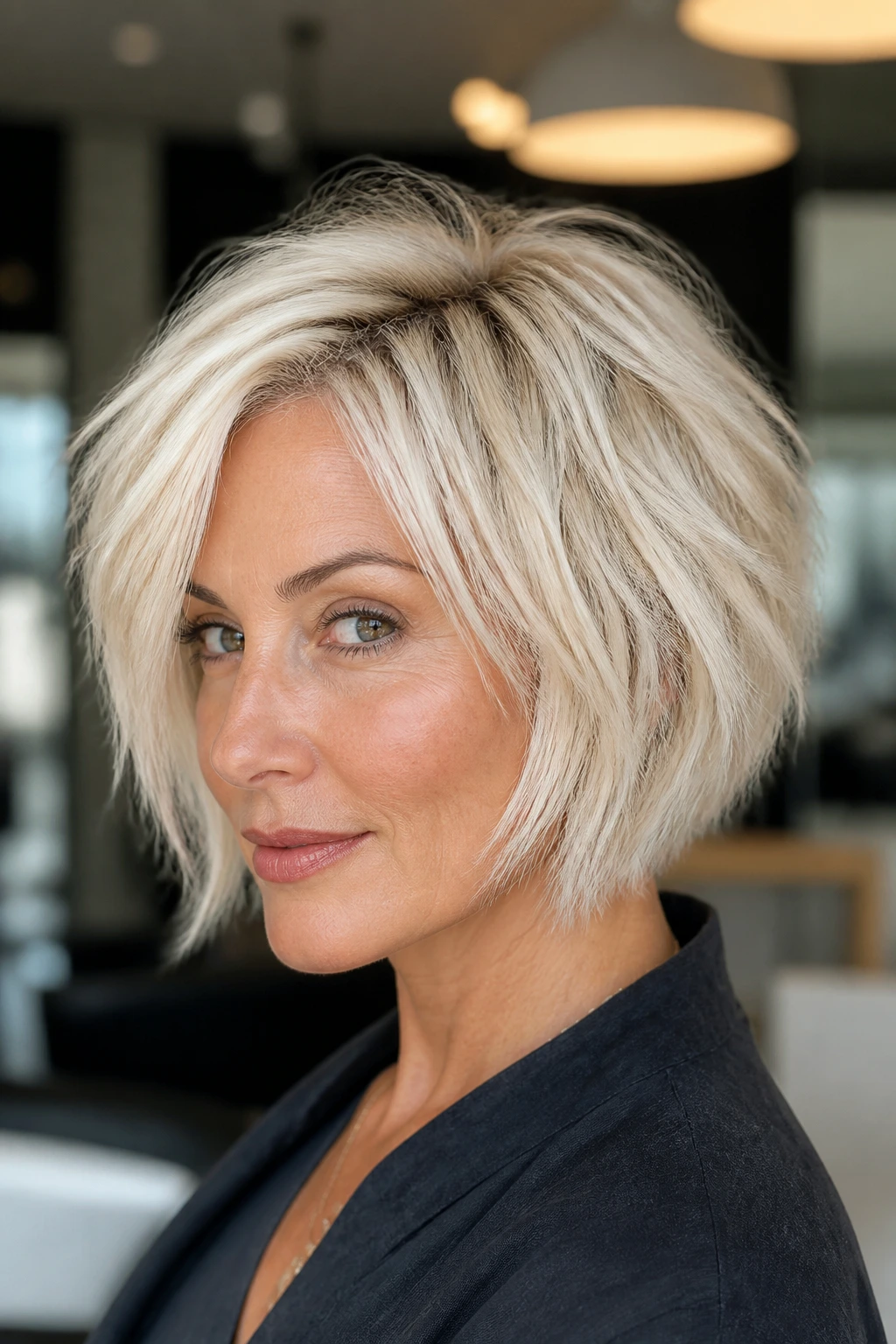
Color Boost: Ask for a gloss or toner between full color appointments if your blonde starts turning dull or warm in the wrong way. A quick glaze can reset the tone without touching the cut.
Customization: If your face is fuller around the cheeks, keep the shortest layers below the cheekbone. If you want more lift, push the shortest pieces higher at the crown and around the temples. That small shift changes the whole read.
Styling Shortcut: Blow-dry the roots first, not the ends. Bobs lose shape when the root area collapses, and once that happens, you end up trying to rescue the style with too much product.
Make-It-Yours: Fine hair benefits from a side part and tighter face-framing pieces. Thick hair usually needs internal layers and a softer perimeter. Curly or wavy hair can keep more length through the top to protect the pattern. Straight hair can handle sharper angles and more visible separation.
Common Mistakes That Make a Blonde Bob Look Heavy
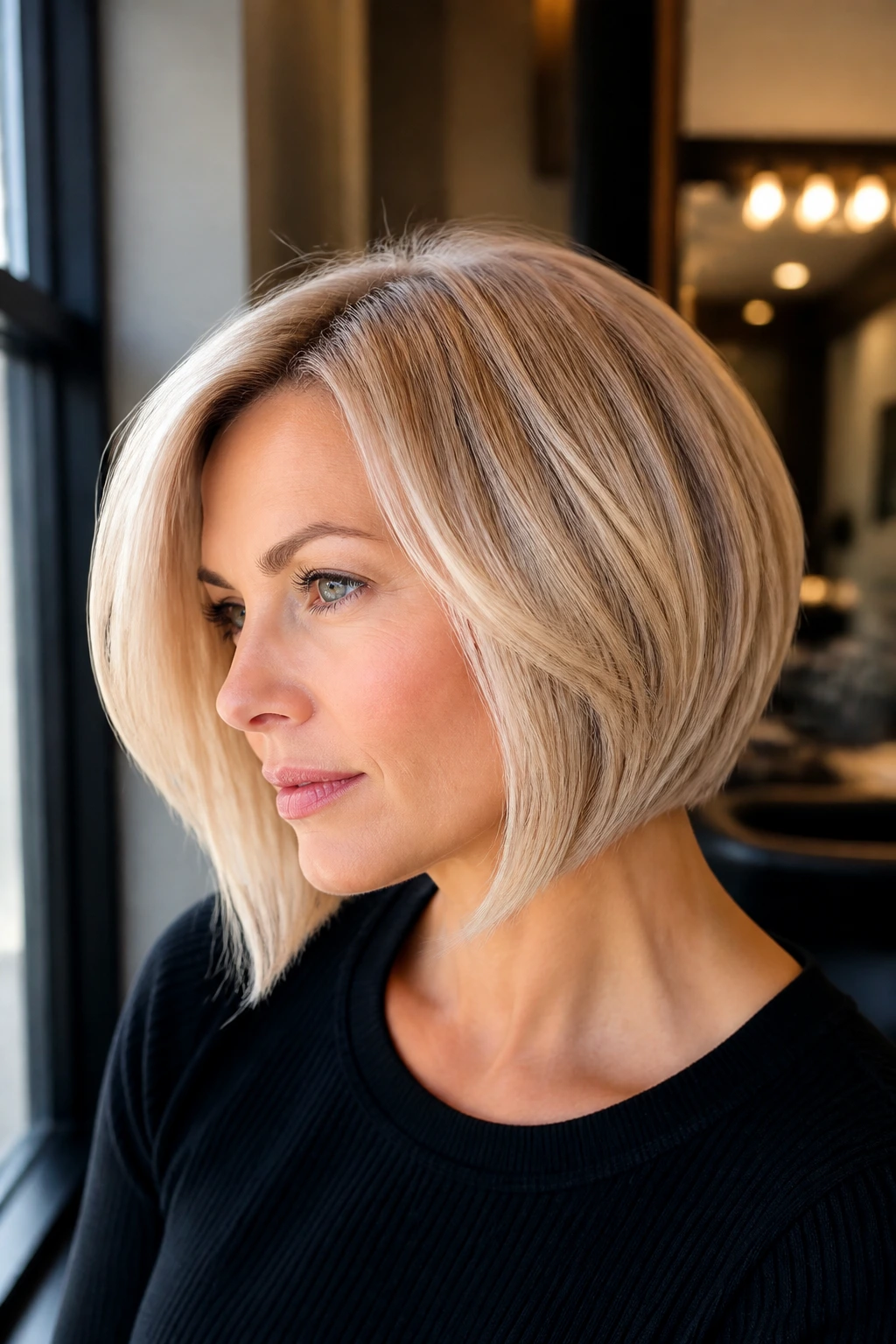
The first mistake is asking for layers that are too short through the crown. The bob gets puffy, the ends kick out, and the whole thing starts looking like a triangle from the side. The fix is boring but effective: keep the shortest layers controlled and let the interior shape do the work.
The second mistake is choosing a blonde tone that fights the haircut. A muddy ash blonde on a soft feathered bob can look dull. A hard platinum on a rounded bob can look severe. Match the tone to the shape. Warm layers need warmth. Sharp lines can handle cooler blondes.
Overtoning is another one. If the hair gets stripped too pale and then coated with too much violet or silver toner, the blonde can go flat and chalky. That’s especially rough on layered cuts because the texture disappears. Use toner to control brass, not to erase all warmth.
Heavy oil at the roots is a sneaky problem. It weighs the crown down, which is exactly where a layered bob needs lift. Put the oil or serum on the mid-lengths and ends only. The top should stay light.
And then there’s the trim issue. A bob that goes too long between cuts loses its line first, then its movement, then its personality. By the time the split ends show, the shape has already gone soft.
Maintenance, Toning, and Trim Timing
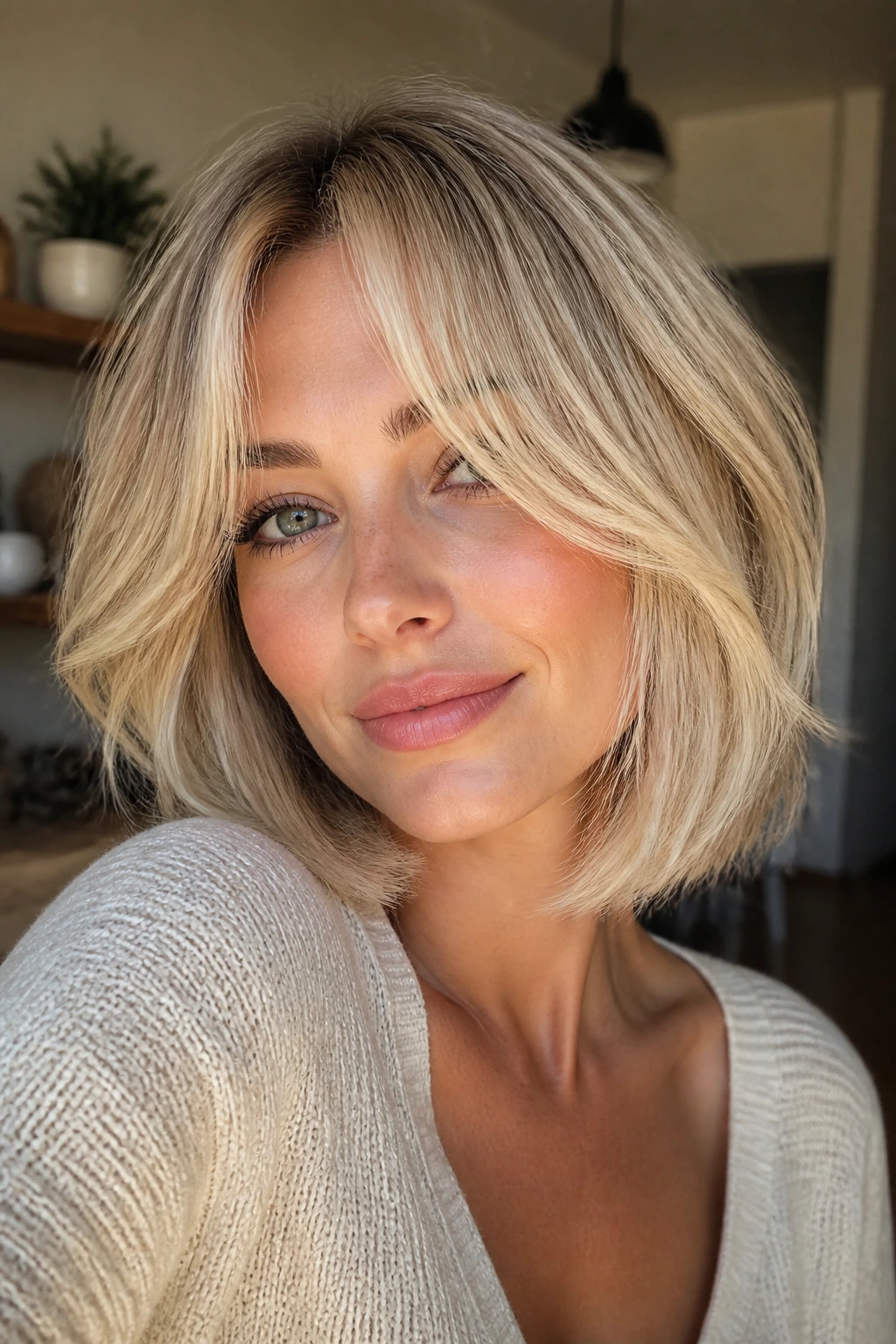
Most blonde layered bob haircuts need trimming every 6 to 8 weeks if you want the outline to stay clean. A lob can stretch a little longer, maybe 8 to 10 weeks, but the shorter the cut, the faster the shape shows wear. If the nape starts flipping or the front stops sitting where it should, that’s your sign. Don’t wait for the split ends to become a project.
Blonde color usually needs a toner or gloss every 4 to 8 weeks, depending on how light it is and how fast it warms up. Platinum and ice blonde sit on the tighter end of that range. Honey, beige, and rooted balayage can usually go longer. Purple shampoo can help between appointments, but once a week is usually enough. More than that, and the hair starts feeling dry and a little squeaky.
Heat styling should stay sensible. Around 300°F to 350°F is enough for most bobs, especially if the hair is already lightened. Higher temperatures are often overkill. Use a heat protectant every time. No exceptions there. If you air-dry, scrunch in a small amount of lightweight cream and leave the roots alone so they can dry with some lift.
Overnight care matters too. A silk pillowcase or loose clip at the crown keeps the layers from getting smashed flat. It sounds fussy until you wake up with a bob that no longer remembers its shape.
Frequently Asked Questions
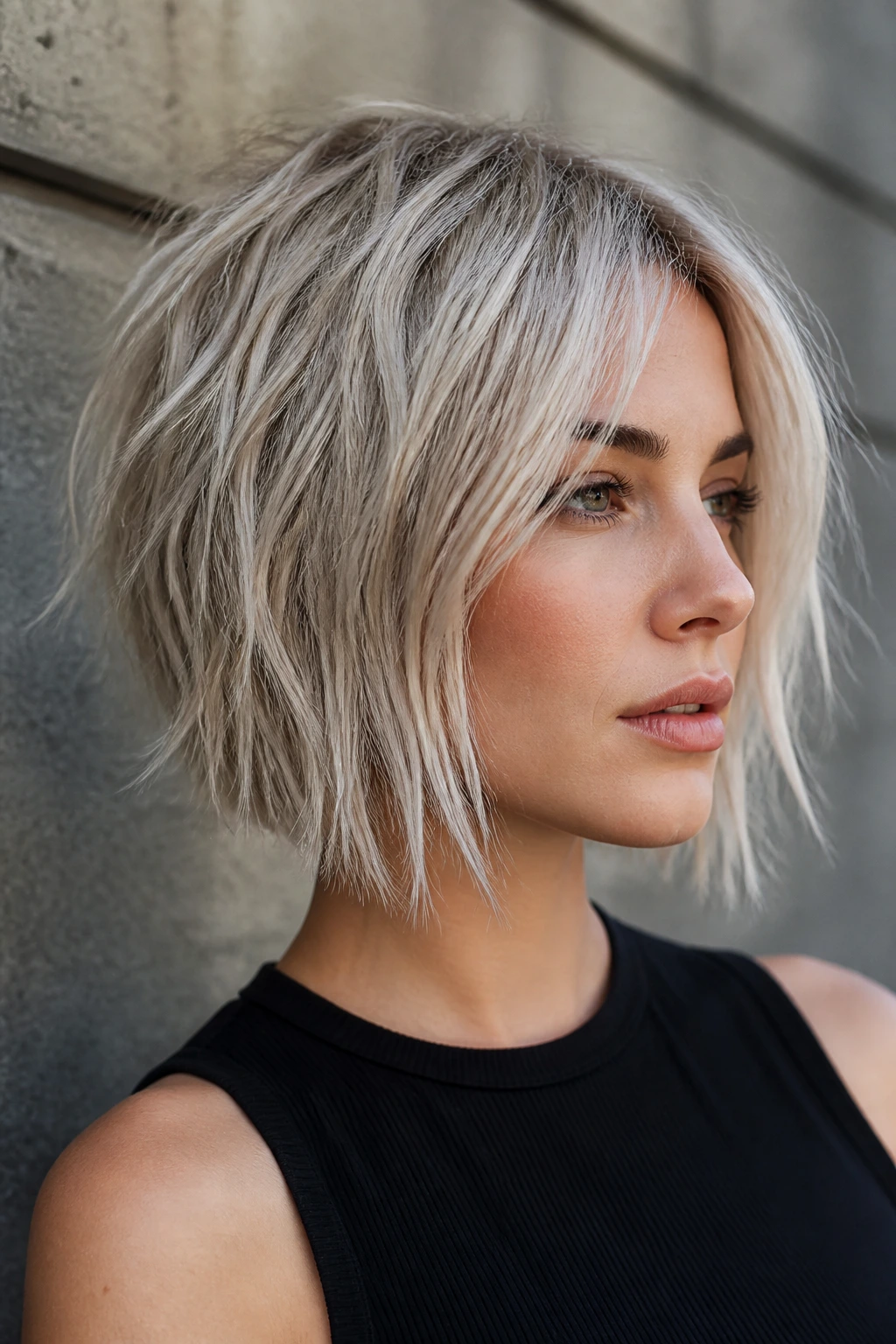
Which blonde layered bob works best for fine hair?
A honey, beige, or champagne layered bob usually works best because those tones add softness without making the hair look stripped thin. Keep the layers longer and ask for crown lift rather than heavy razoring.
Will layers make thick hair look poofy?
They can if the cut is too short or too aggressive. Thick hair usually needs internal weight removal and a cleaner perimeter so the ends don’t flare out. A skilled cut should reduce bulk, not explode it.
Is a layered bob harder to maintain than a blunt bob?
Not necessarily. A blunt bob needs precision, and when it grows out, the shape can look heavy fast. A layered bob often gives you more movement between salon visits, especially if the color has a root shadow or balayage.
What if my blonde turns brassy after a few weeks?
Use a purple shampoo once a week and space out hot-tool use if possible, since heat can speed up warmth. If the brass is strong, a gloss at the salon will usually fix it faster and with less dryness than layering on more pigment at home.
Can I air-dry a layered bob?
Yes, and some versions look better that way. Wavy and beachy bobs usually air-dry well with a touch of cream or mousse. Just keep your hands off it while it dries, or the layers can separate in odd directions.
How do I ask for a layered bob at the salon?
Bring a few photos and describe the length first, then the layer pattern, then the blonde tone. Saying “chin length with soft internal layers and beige blonde dimension” is far more useful than saying “make it layered and blonde.” Stylists work faster when the shape is clear.
Can a bob still work if my face is round?
Absolutely. A slightly longer front, side part, and layers that start below the cheekbone can narrow the face visually. Avoid the widest part of the cheek if you don’t want the cut to sit there and stay there.
What if I want to grow this cut out later?
A rooted balayage lob is the easiest grow-out path. Keep the front a touch longer than the back and avoid overtexturizing the ends, which can make the in-between stage look ragged.
The Bright Side of a Good Bob
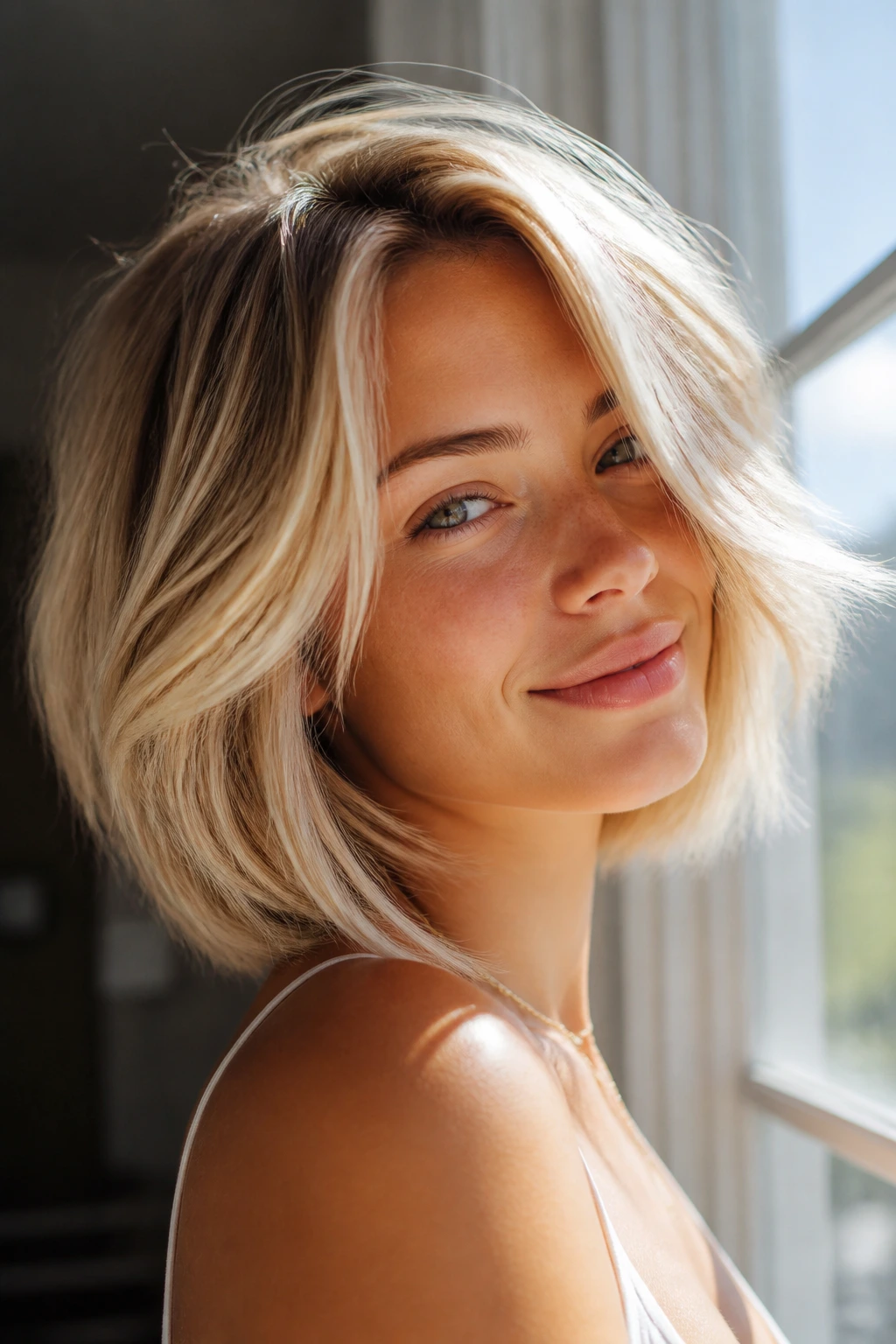
A layered blonde bob works because it gives you shape, brightness, and movement without making you fight your own hair every morning. That combination is rare. Most cuts give you one thing and ask you to tolerate the rest. This one can be tuned to stay soft, sharp, airy, or polished, depending on how you wear it.
The better versions have one thing in common: they look considered, not overworked. The blonde tone supports the cut. The layers support the blonde. And the whole thing ends up looking lighter than it has any right to. That’s the appeal, honestly. Not just the color, not just the shape, but the way the two keep each other from going stale.
If you’re taking this idea to a stylist, bring a photo, mention how much styling you actually want to do, and be honest about maintenance. That saves everybody time. And it’s the difference between a bob that looks bright for three days and a bob that keeps its edge for weeks.
