



A short bob on thick hair can look like tailored clothing—or like your head got wrapped in too much fabric. The difference is the cut. On dense hair, every half-inch changes how the silhouette sits around the jaw, the ears, and the nape, and the wrong choice makes the sides swell out before you even leave the salon chair.
That’s why bob haircuts for short thick hair need a different kind of thinking. Not more cutting. Better cutting. A blunt edge can be gorgeous on thick hair, but only if the weight sits where you want it. A stacked back can make the neckline look neat, but too much graduation at the wrong angle turns the crown into a shelf. And layers? Useful, yes. Random layers? A mess.
The best bobs for thick hair don’t fight the density. They steer it. Some use a hard, clean perimeter. Some hide bulk inside the shape. Some lean on fringe, parting, or length changes to keep the outline from getting wide. A few want a round brush and patience. Others look better after a rough dry and a quick bend at the ends. Keep that in mind, and these cuts start making a lot more sense.
Why These 38 Bobs Work So Well on Thick Hair
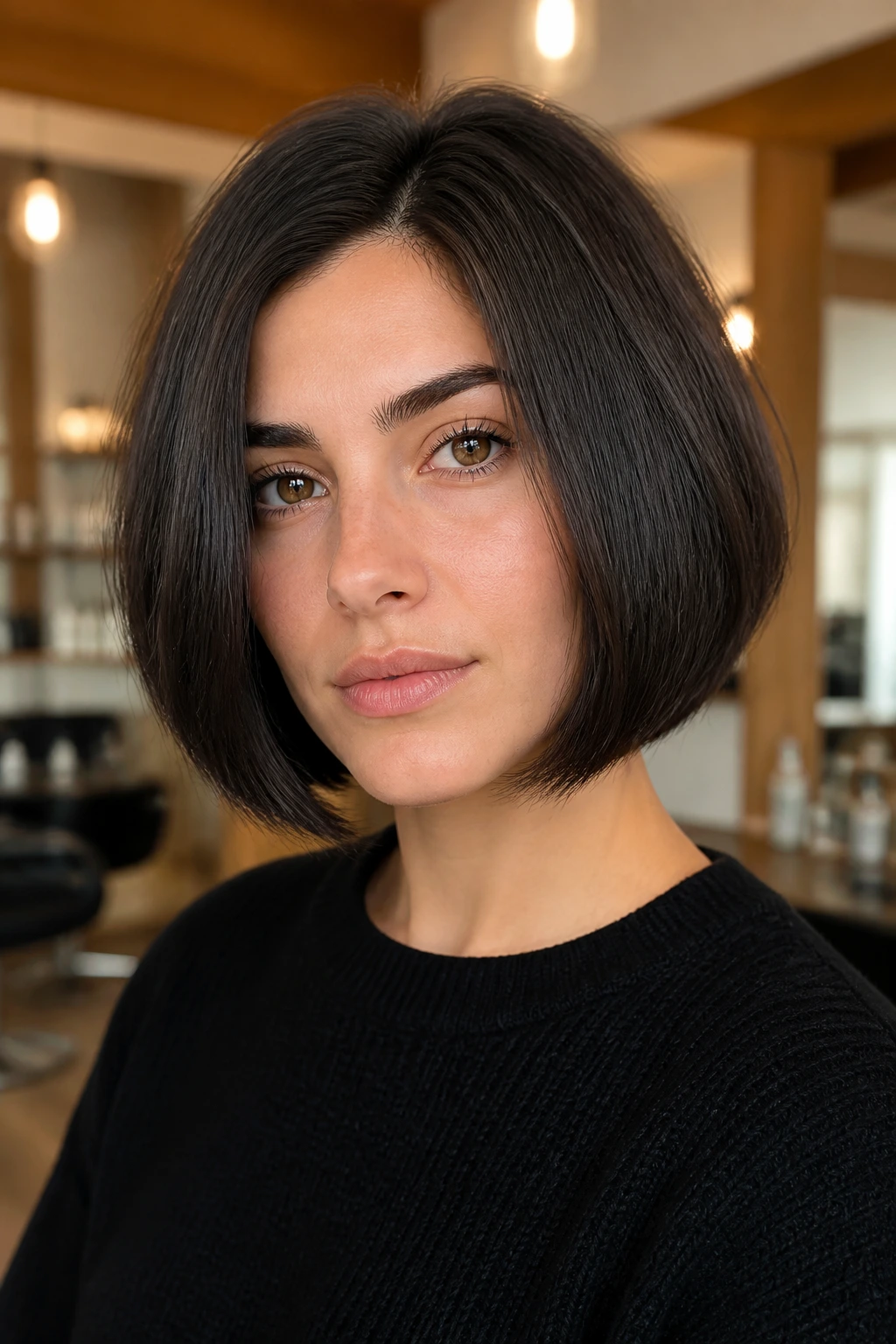
-
Bulk Control: The strongest cuts here remove weight where thick hair swells most—through the lower sides, the nape, and the back of the crown—so the shape sits close to the head instead of spreading out.
-
Clean Lines: Thick hair can hold a blunt edge better than fine hair, which means a sharp bob can look crisp for weeks if the line is cut with discipline.
-
Less Styling Drama: Several of these styles lean into the hair’s natural body, so you’re not fighting for volume at the roots while also trying to tame the ends.
-
Face Balance: Short thick hair changes how fringe, side parts, and front pieces frame the face, and the right bob can soften a wide jaw or add structure to a softer face.
-
Longer Wear Between Trims: Some of these cuts grow out cleanly because the shape is built on weight placement, not on fragile layers that fall apart after two washes.
1. Chin-Length Blunt Bob
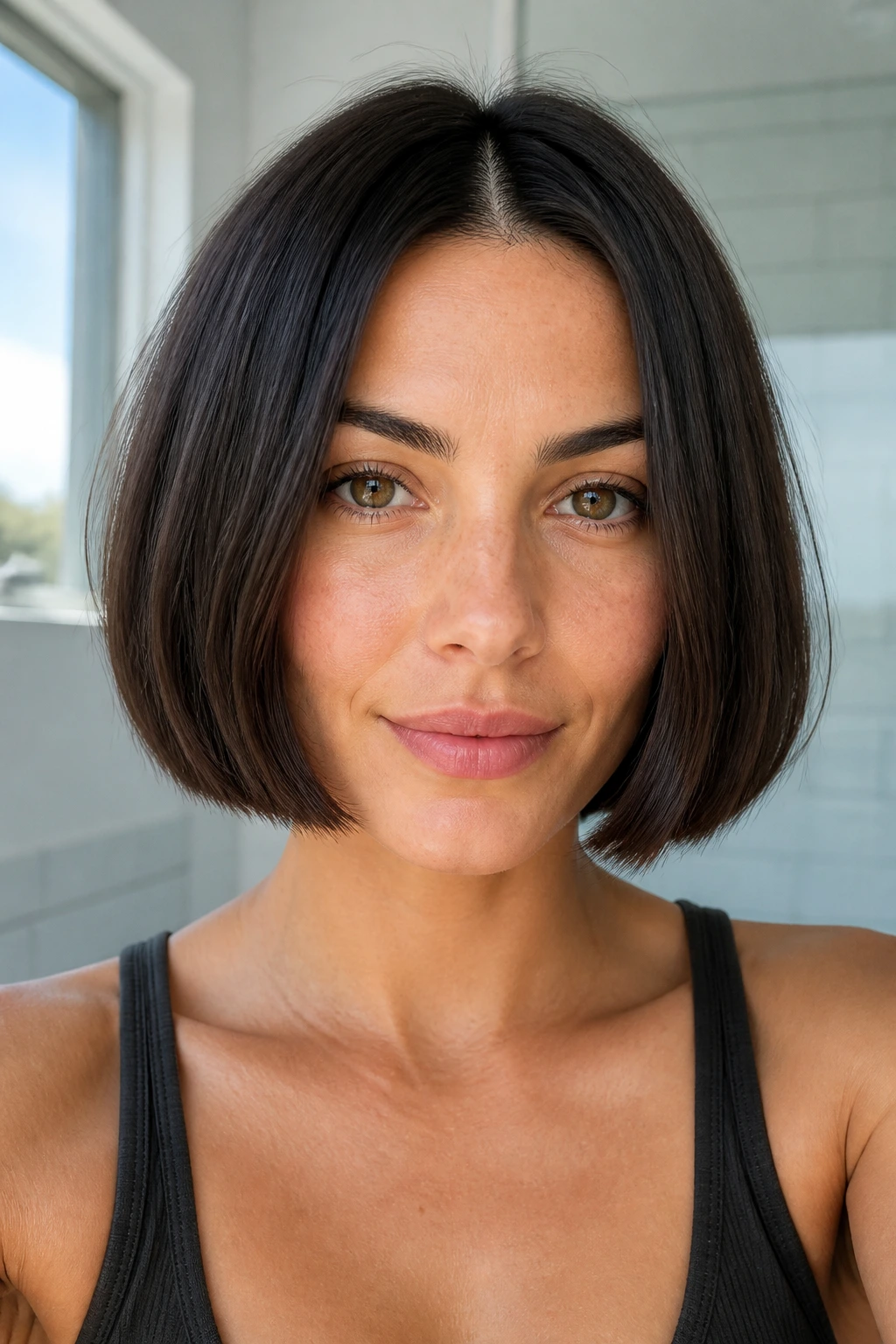
A chin-length blunt bob is the haircut that makes thick hair look disciplined. The perimeter lands right at the jaw, where the weight can do its job without ballooning out at the cheekbones.
Why It Holds Its Shape
- A single, clean line keeps the ends from fraying into fluff.
- The chin length gives enough room for thick hair to settle, but not enough to drag the shape down.
Best move: Ask for the ends to be cut with very light point cutting only if your hair kicks outward at the bottom.
2. French Bob with Micro Bangs

A French bob with micro bangs has a little attitude built in. The short fringe breaks up the heaviness at the front, while the bob itself stays compact and close to the head.
Thick hair gives this style a nice body, but the bangs need careful handling. Keep them soft at the temple and a touch longer at the sides if your hairline is low or your forehead is short. A small round brush or a quick flat-iron bend keeps the fringe from sitting like a helmet.
3. Layered Bob with Invisible Interior Layers
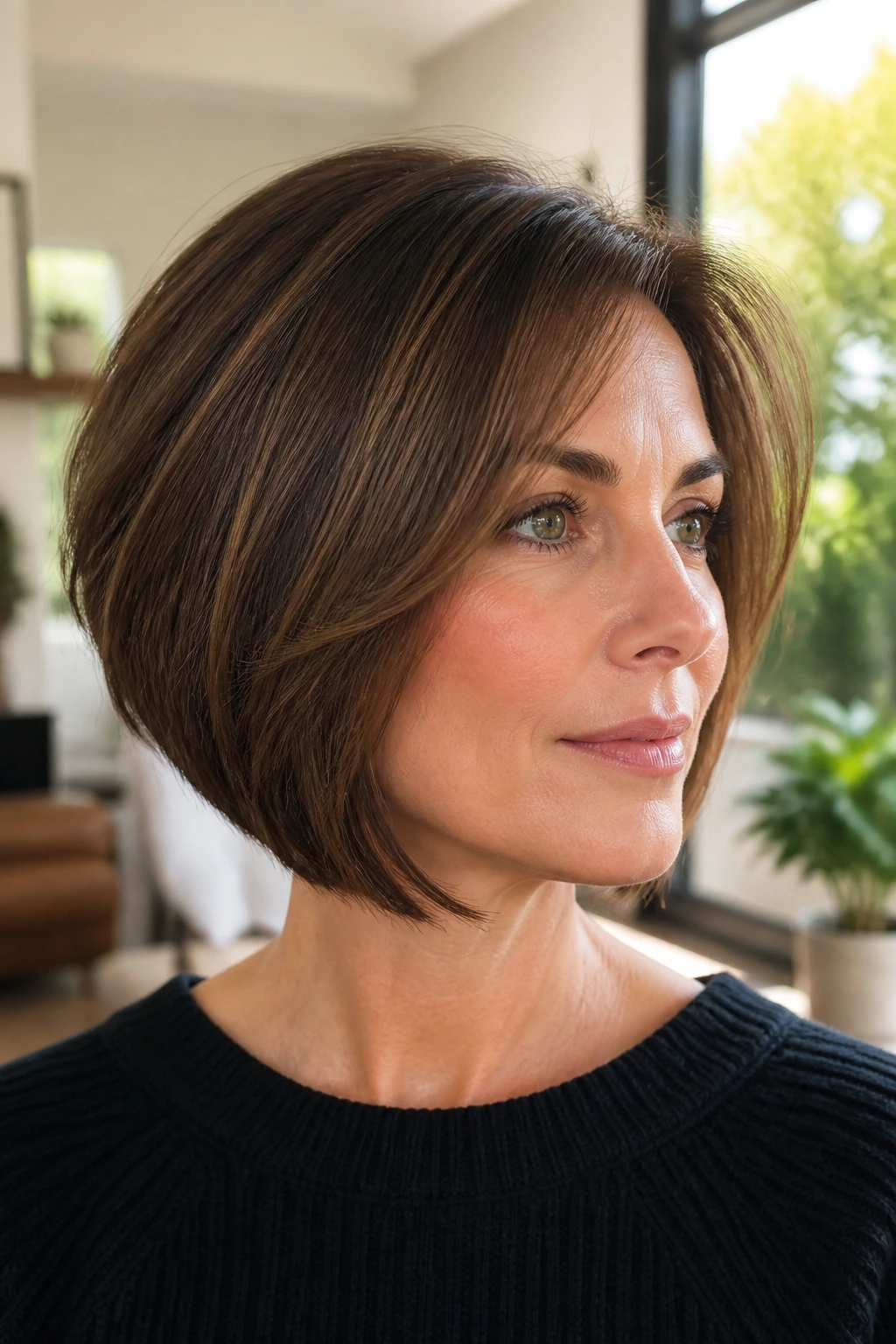
Can layers work on thick short hair without looking choppy? Yes—if they stay hidden inside the shape. Invisible interior layers remove bulk from the middle of the haircut while leaving the outer line clean.
That’s the trick. The bob still reads as one strong shape from the outside, but it moves better when you turn your head. This is a smart choice if your hair feels heavy at the back yet you don’t want the ends to look wispy.
How to wear it
Keep the finish smooth near the perimeter and let the interior movement show only when the hair shifts. It’s a cut that looks better when it isn’t over-styled.
4. Stacked Bob with a Close Nape
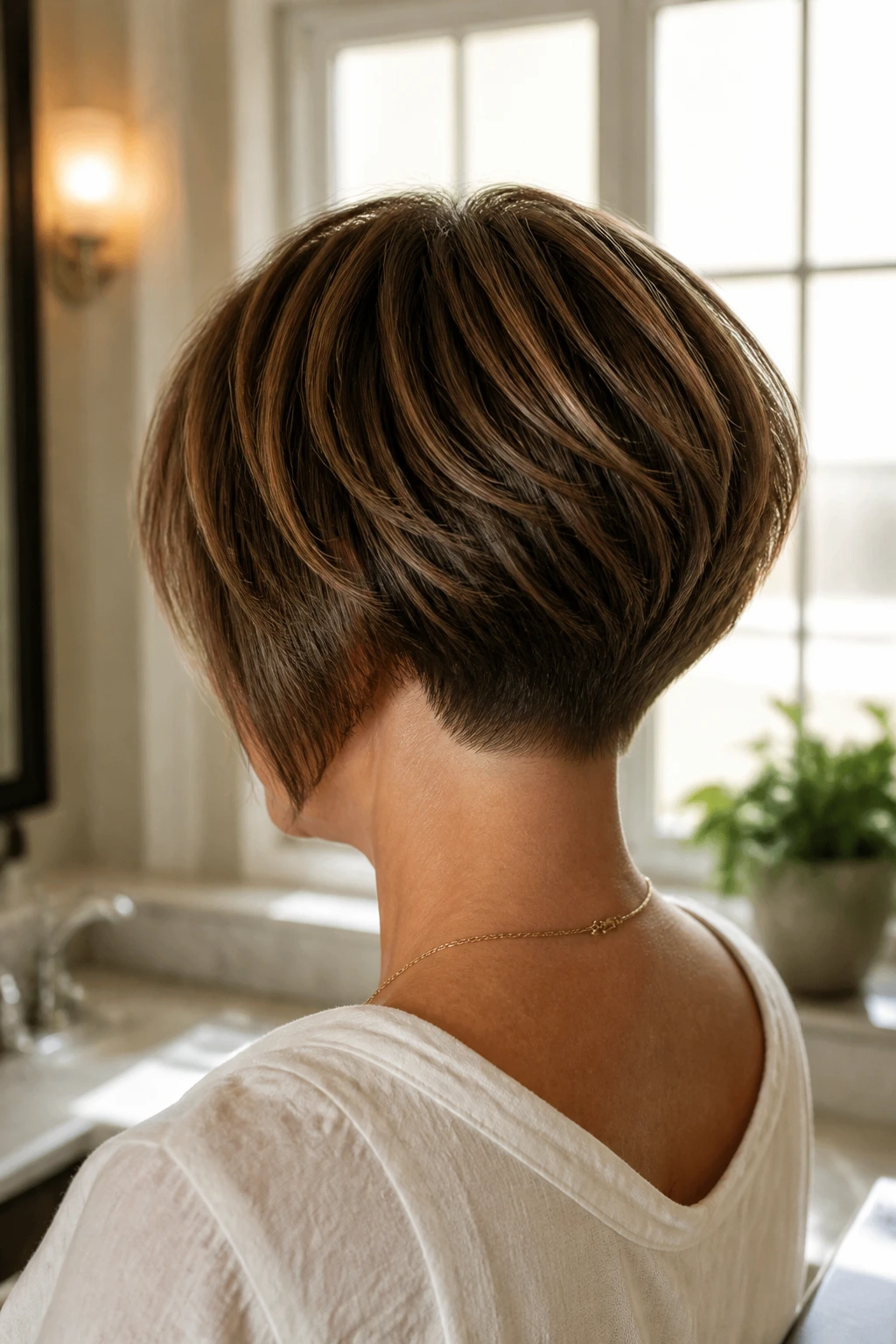
A stacked bob is built for thick hair that needs a clean neckline. The back is cut shorter and graduated upward, so the hair lifts off the nape instead of sitting in one thick slab.
This shape is neat from behind, which matters more than people admit. If your hair grows fast or your neck gets warm, a close nape can feel like a relief. Just don’t let the stack climb too high unless you want the crown to take over the whole silhouette.
5. A-Line Bob with Longer Front Pieces
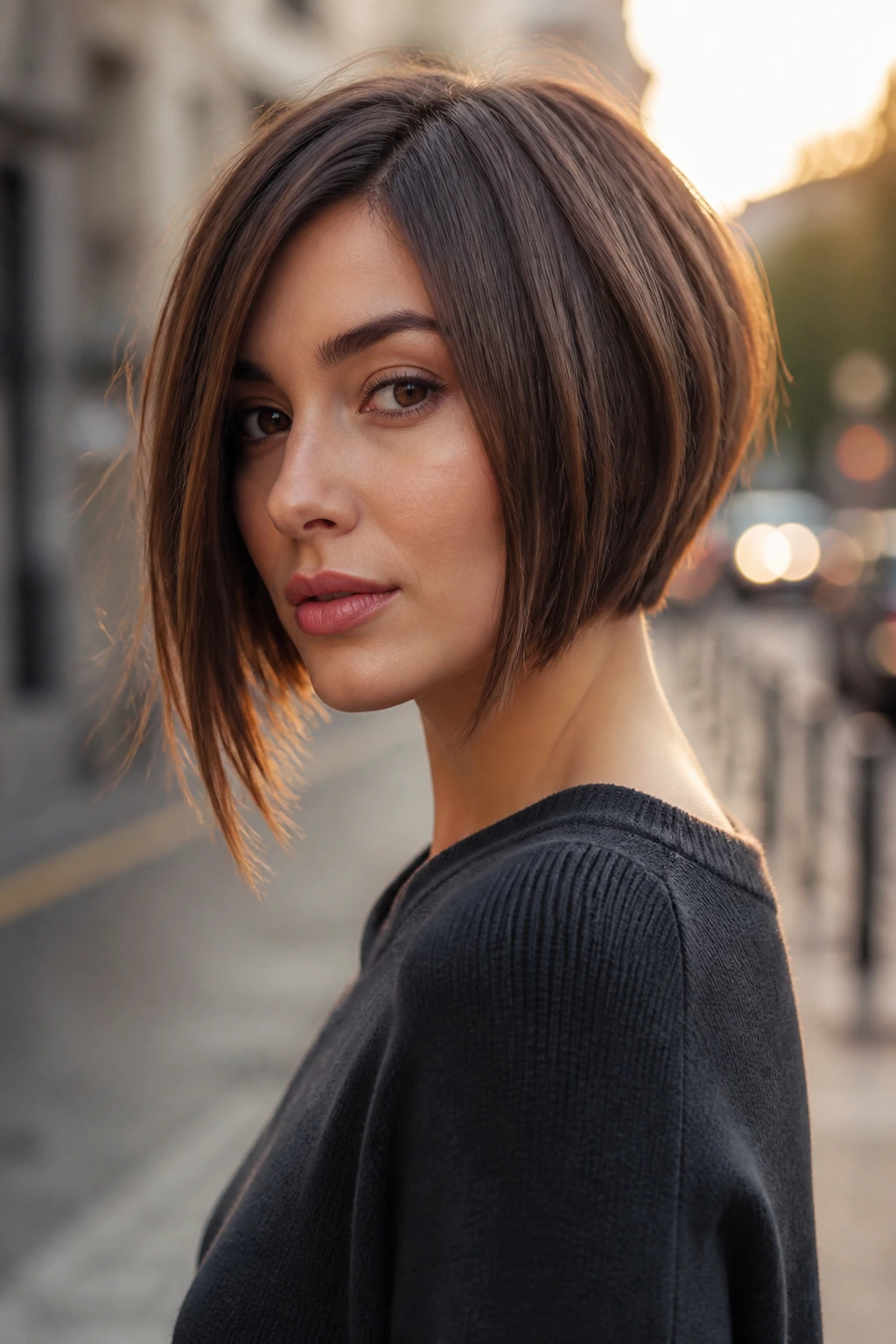
An A-line bob keeps the front longer than the back, and thick hair usually likes that extra room. The front pieces graze the jaw while the back stays snug, which helps the haircut look sleek rather than boxy.
It also gives you a little styling flexibility. Tuck one side behind the ear and the angle shows up immediately. Wear it straight and the shape feels controlled. This is one of the better choices if your hair tends to puff widest at the sides.
6. Asymmetrical Bob with a Sharp Side Drop
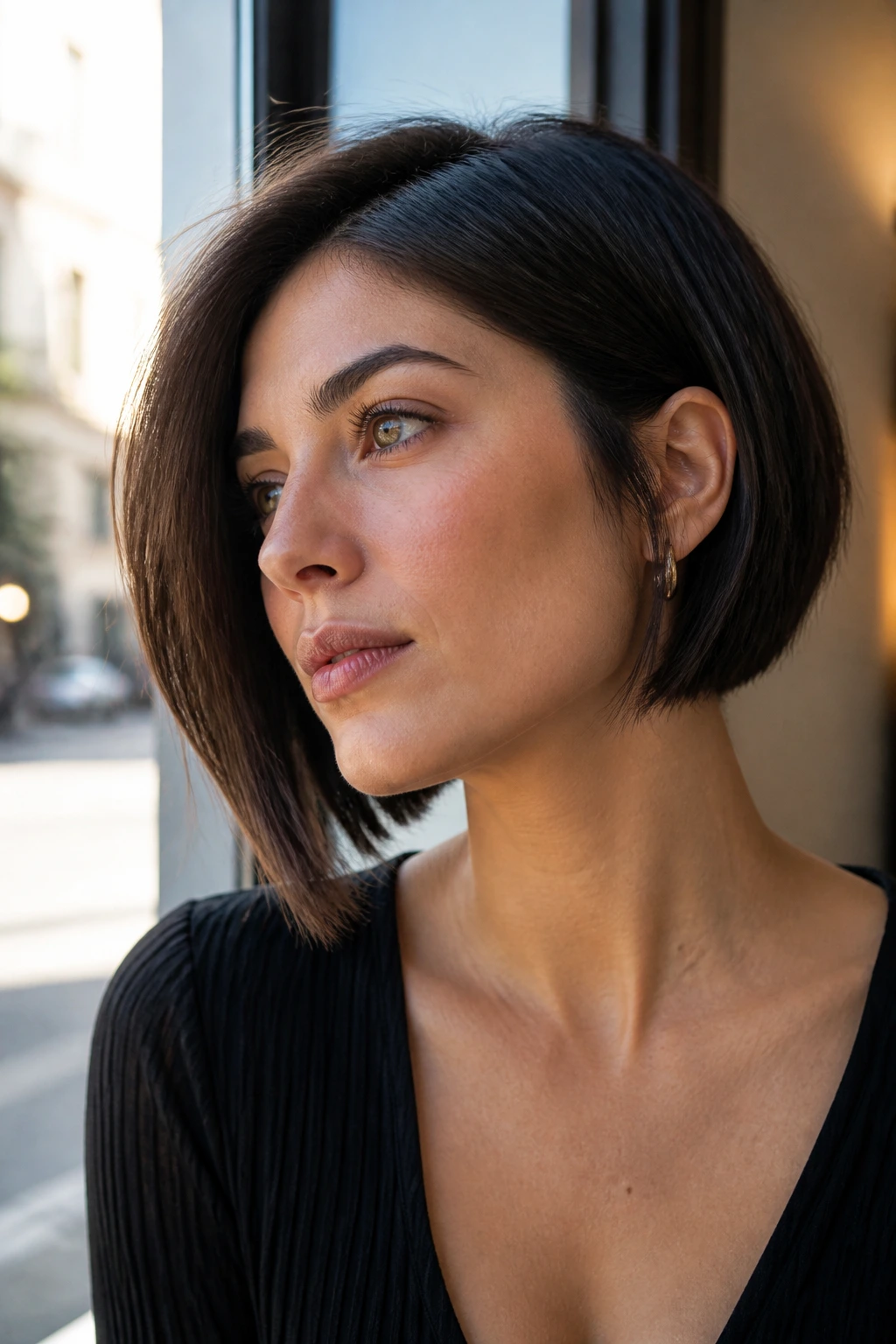
One side a little longer, one side a little shorter. That single shift changes the whole mood. On short thick hair, the asymmetry interrupts the bulk so the cut feels sharper and less heavy.
The best version is not extreme. A dramatic uneven line can look stiff on dense hair. Keep the difference subtle enough that the eye notices the shape, not the trick.
7. Rounded Bob with Soft Ends

A rounded bob wraps around the head instead of pushing straight out from it. Thick hair helps this shape because the density fills the curve without leaving gaps.
Why It Works on Thick Hair
- The curved line reduces the blunt width at the sides.
- Softer ends keep the haircut from feeling like a block.
For styling, a round brush and a little bend under the ends are enough. Don’t flatten it into submission. The roundness is the point.
8. Shaggy Textured Bob

A shaggy bob is the cut for thick hair that refuses to sit still. The ends are broken up, the perimeter is less strict, and the whole thing has a lived-in feel that can save you from the dreaded triangle.
It works best when the texture is cut with purpose, not shredded to bits. If the stylist overdoes it, the bob starts to fray and lose weight at the wrong places. Keep the top layers long enough to hold the shape.
9. Box Bob with a Square Perimeter
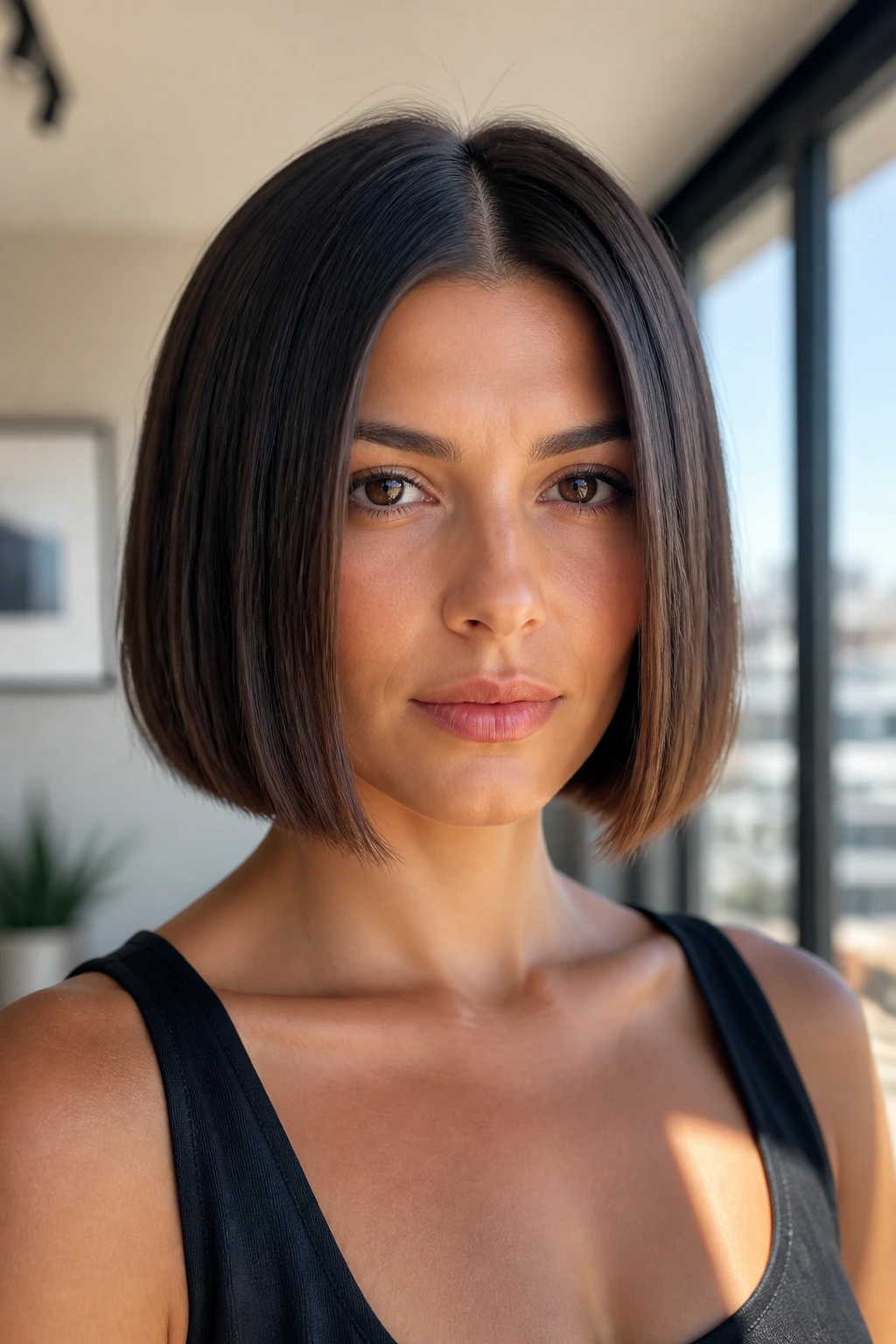
A box bob sounds severe, but on thick hair it can be a smart, clean option. The cut keeps a square outline, so the density becomes part of the design instead of a problem to hide.
This style suits someone who likes strong lines and low-drama styling. Air-dried hair can work here if it dries smoothly, though a quick blow-dry usually makes the geometric edge look better.
10. Inverted Bob with Lifted Back
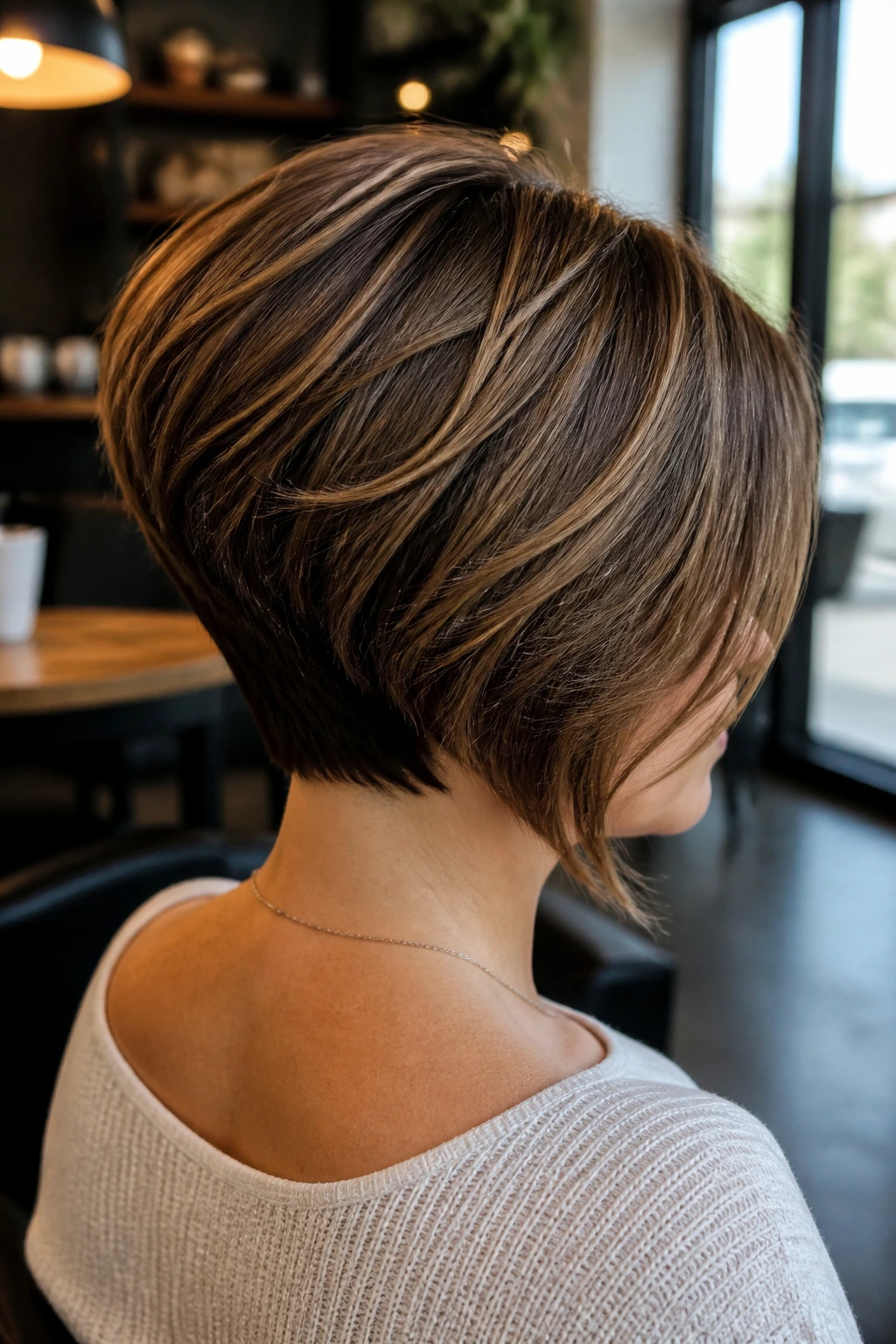
The inverted bob builds lift through the back and a longer line in the front. Thick hair fills the graduation nicely, which means the cut has shape even when it’s not freshly blown out.
It’s especially useful if your hair tends to collapse at the crown but feel bulky at the neck. The shorter back creates lift, while the longer front keeps the haircut from looking too stacked or old-fashioned.
11. Bob with Curtain Bangs
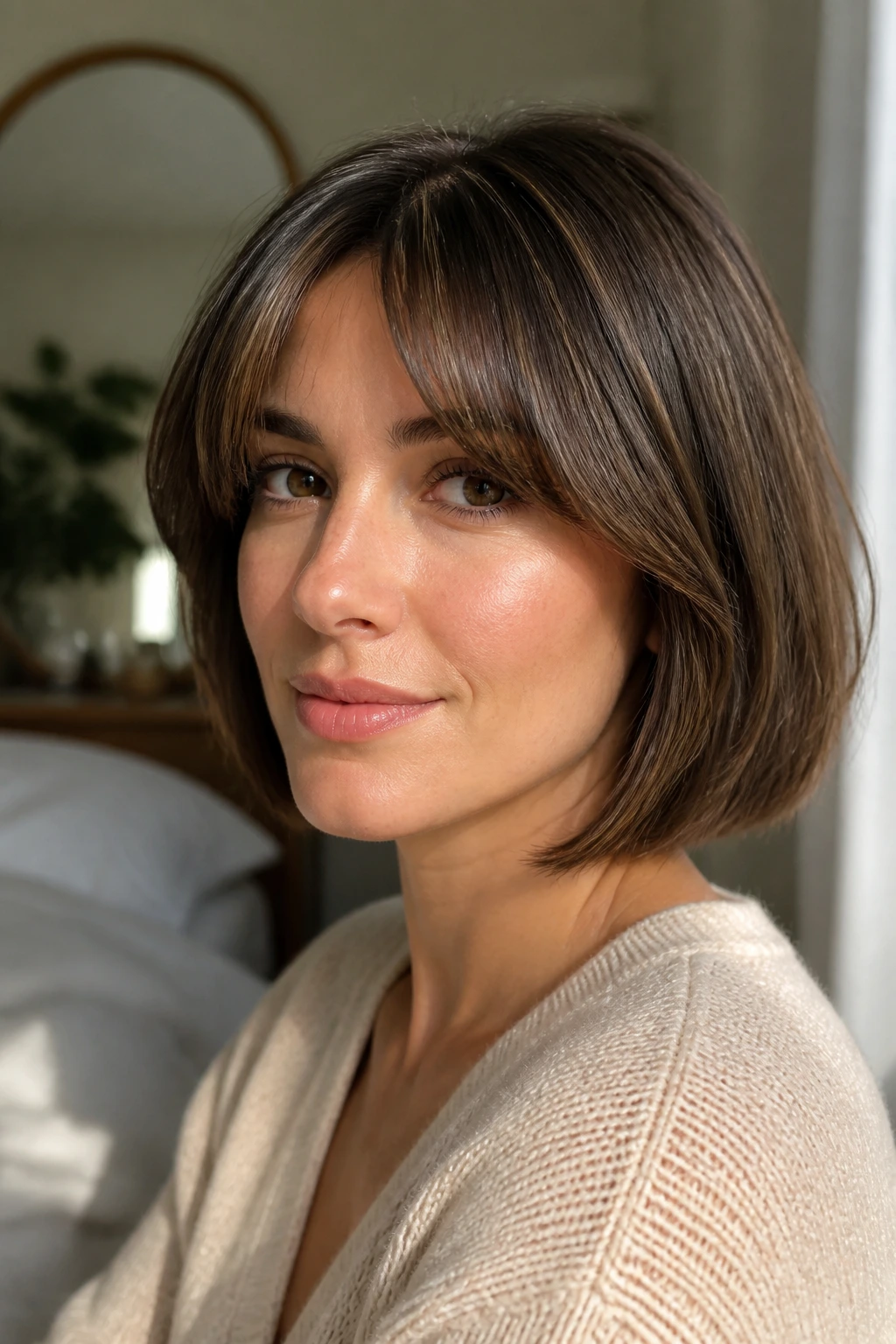
Curtain bangs make short thick hair feel softer right away. They split at the center, skim the brow, and move into the sides instead of cutting across the face in one hard block.
That matters because thick fringe can overwhelm a short bob if it’s too blunt. Curtain bangs lighten the front without making the cut airy. They also grow out better than micro bangs, which is worth thinking about if you hate frequent trims.
12. Bob with Side-Swept Fringe

A side-swept fringe is a nice fix when thick hair has a strong cowlick or refuses to lie flat at the front. The diagonal line pulls attention across the face and gives the bob a little lift where it counts.
Keep the fringe long enough to tuck back or pin. Too short, and it springs up. Too heavy, and it turns into a curtain you didn’t ask for.
13. Jaw-Length Bob with Tucked Ends

A jaw-length bob with tucked ends is cleaner than it sounds. The hair bends inward or is tucked under just enough to hug the jawline, which trims down the visual width of thick hair.
Key Detail
- The cut should be precise around the corners so the ends don’t kick out like little wings.
This style is a good match for someone who wears earrings, frames, or a strong collar. The bob gives those details space instead of fighting them.
14. Wedge Bob
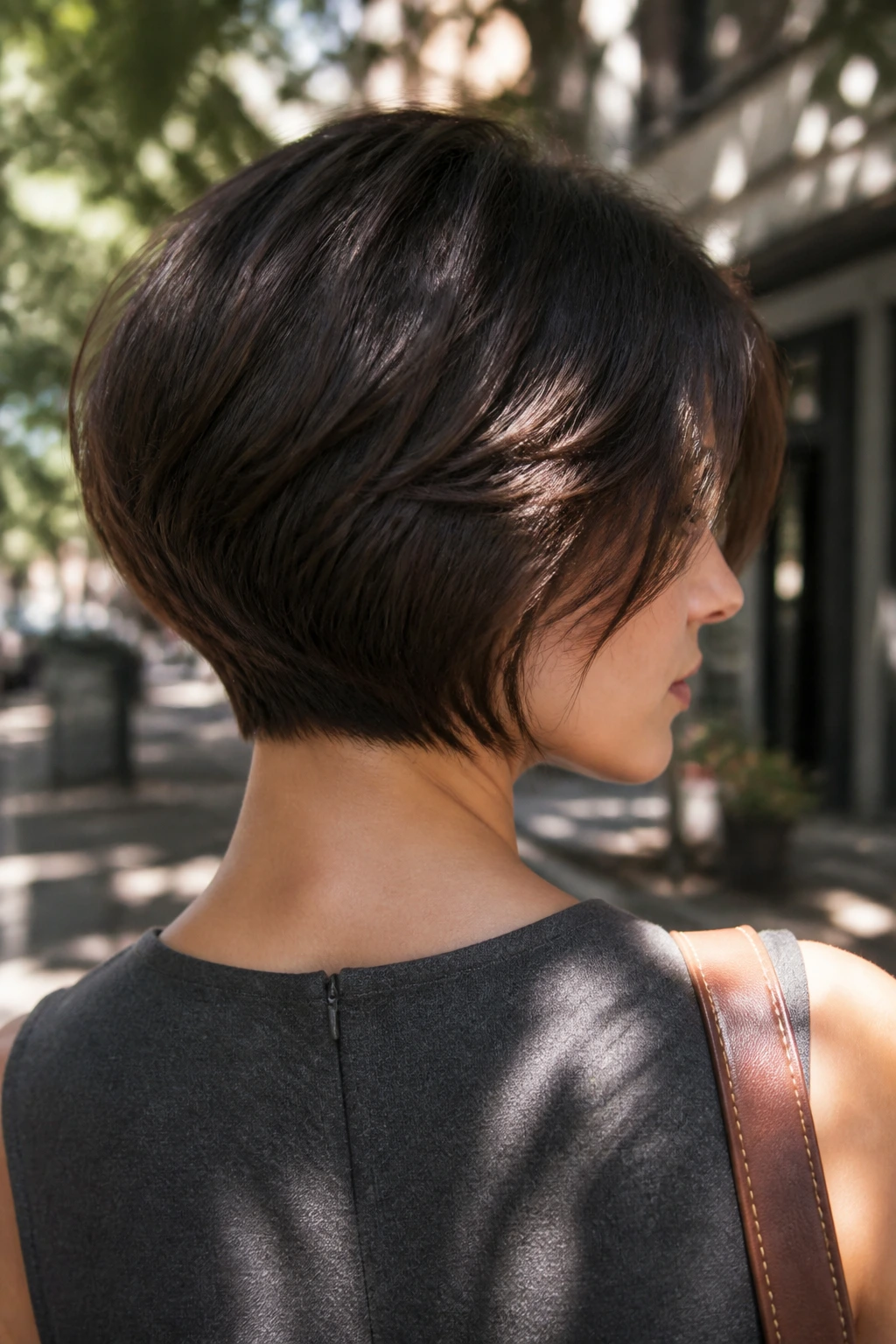
The wedge bob has a strong, sloped back that stacks into the nape. On thick hair, that steep angle can look sharp and tidy, especially if you want the cut to show from every side.
It does need discipline. A wedge cut that’s too blunt through the crown can swell up. A good one removes enough bulk to keep the profile tight while still preserving a full, rounded back.
15. Undercut Bob
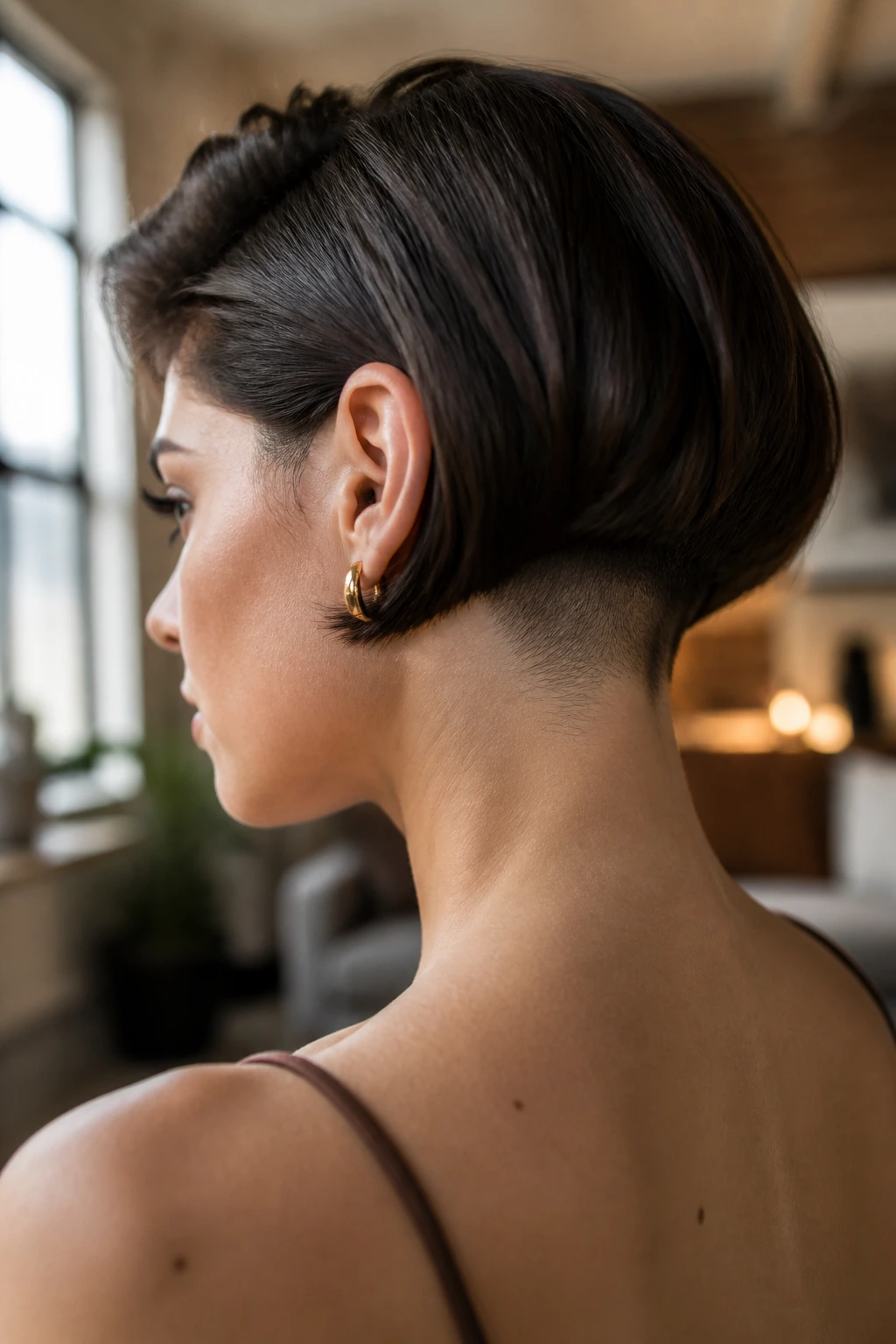
An undercut bob takes weight out from underneath, usually at the nape or lower back sections. Thick hair can handle this beautifully because the top layers still keep their body while the hidden bulk disappears.
You need to like maintenance, though. The undercut grows out faster than the surface shape, and the line can start to feel fuzzy after a few weeks. If you want the cool part without the upkeep, ask for a very small hidden undercut instead.
16. Curly Bob
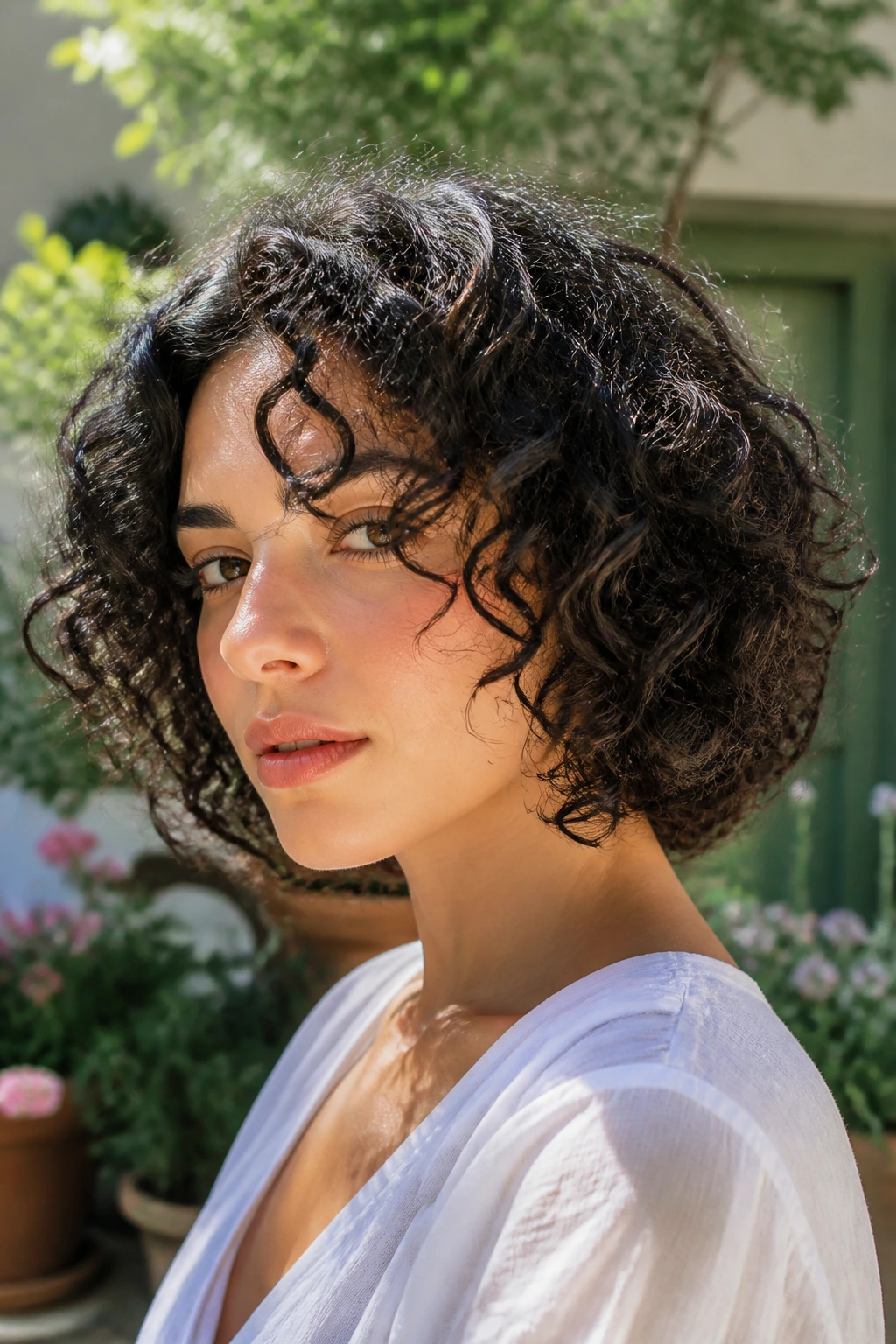
A curly bob on thick hair is all about shape control, not shrinkage panic. The cut needs enough length to let the curls stack without exploding upward, and enough layering to stop the bottom from ballooning.
Dry cutting is often the smarter move here because curl pattern changes everything once the hair dries. A bob that looks too long when wet can spring up a full inch or more, so never let someone cut it blind.
17. Wavy Air-Dry Bob

If your thick hair has a natural wave, an air-dry bob can save a lot of time. The cut should encourage the wave pattern without over-layering the ends, which is where the puff usually starts.
Use a light cream, not a heavy butter or oil that makes the hair sit flat and greasy. The best version looks a little undone, but not frizzy. That’s a narrow line, and it matters.
18. Glass-Sleek Bob
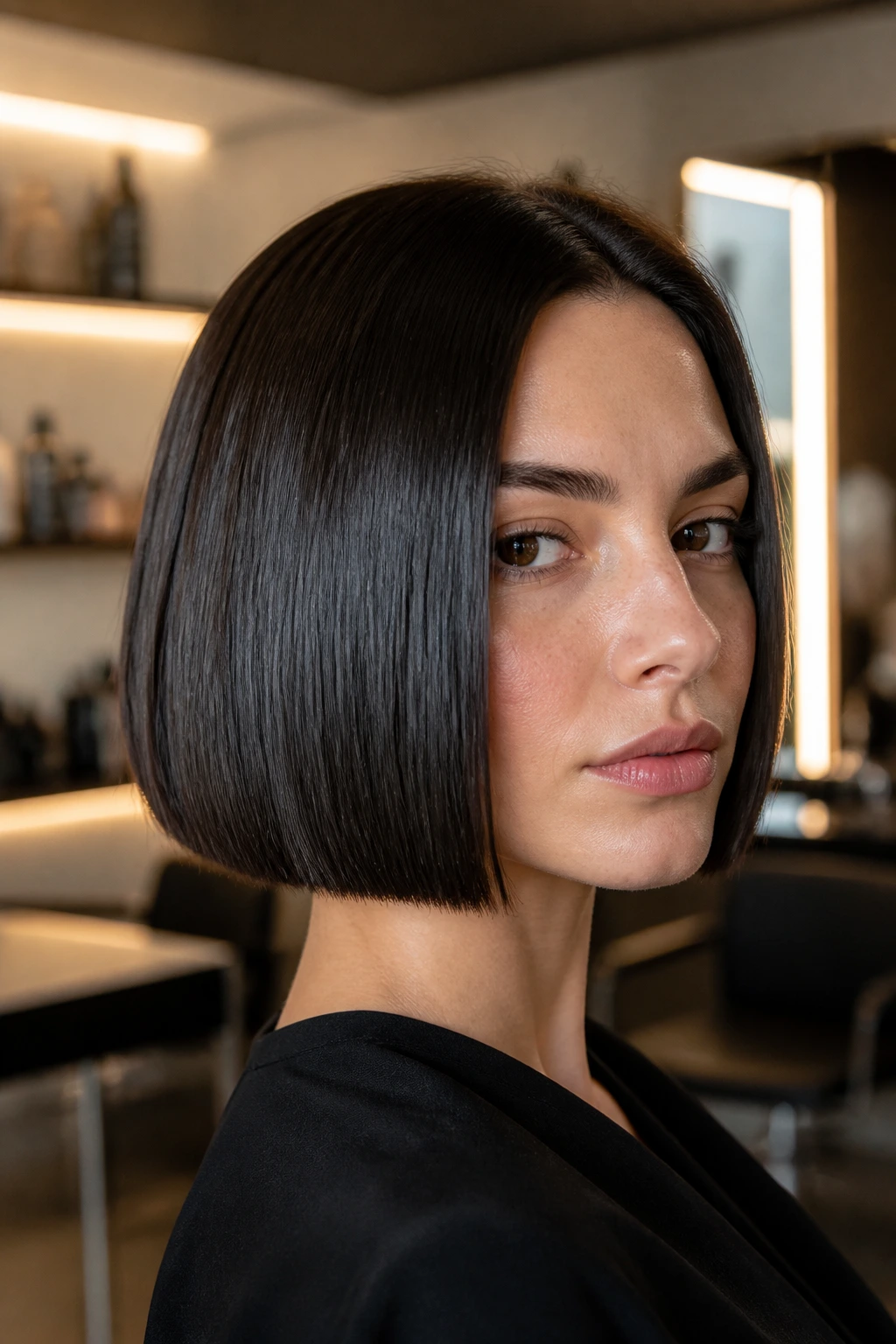
A glass-sleek bob is for thick hair that can hold a smooth finish. The line is crisp, the surface looks polished, and the weight of the hair becomes part of the shine.
It usually needs a blow-dryer nozzle, a flat brush, and a heat protectant that can stand up to tension styling. If your hair has a coarse bend, this cut still works, but you’ll want a little more length so the ends can sit flat.
19. Choppy Bob

A choppy bob gives thick hair a bit of edge without asking for perfect symmetry. The ends are lightly broken up, so the silhouette feels looser and less dense at the bottom.
What Makes It Different
- The texture is visible, but the haircut should still keep enough weight to avoid a frayed look.
- Short pieces around the face can make the whole style read lighter.
Best for: Anyone who wants movement but does not want the whole bob thinned into scraps.
20. Ear-Length Bob
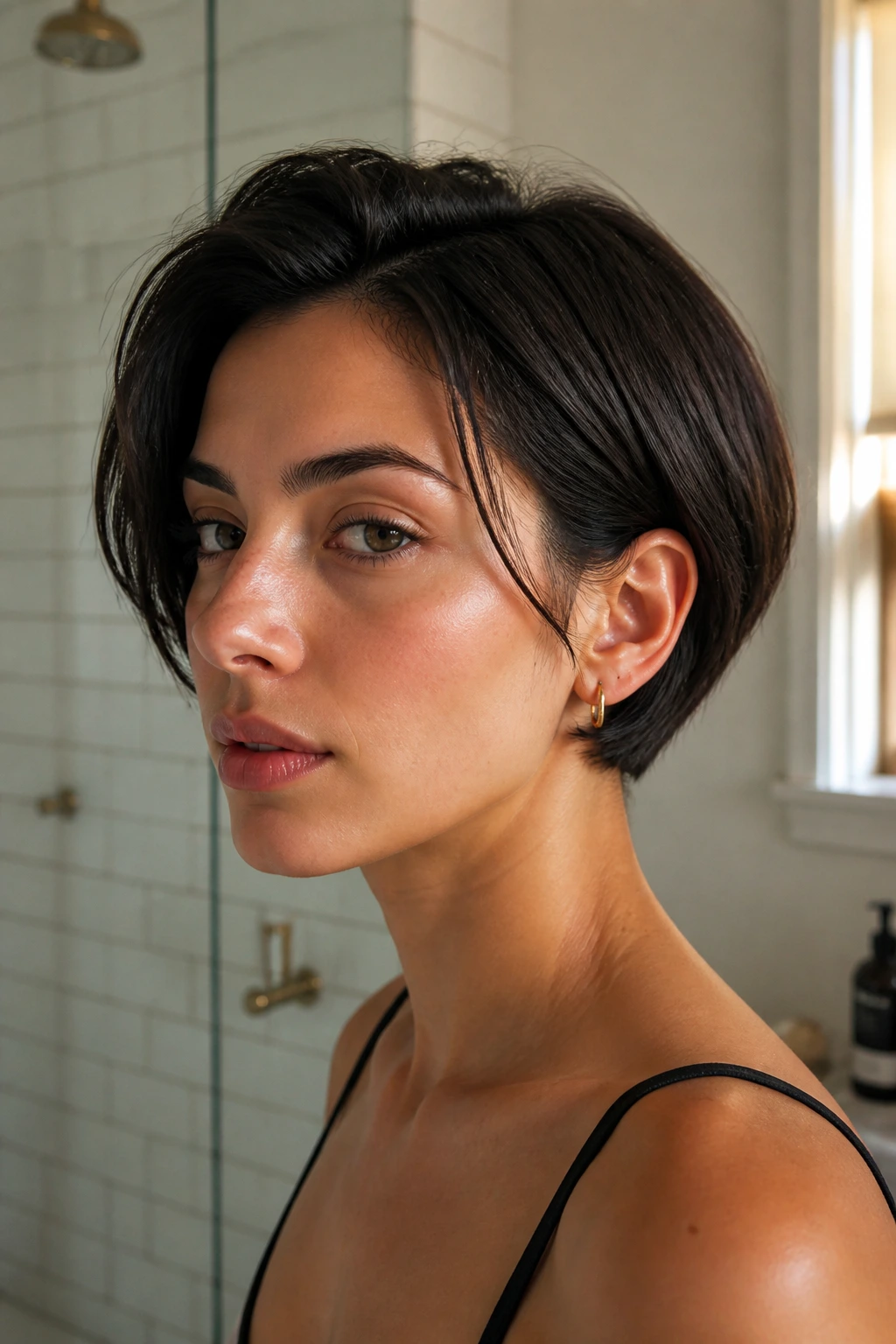
Ear-length is very short, and thick hair gives it enough substance to stay interesting. The cut sits high enough to expose the neck and ears, which makes the whole shape feel bolder.
This is not a low-maintenance option if your hair grows fast or flips outward. But when it’s done well, the density creates a plush, compact effect that fine hair can’t mimic.
21. Sliced Bob
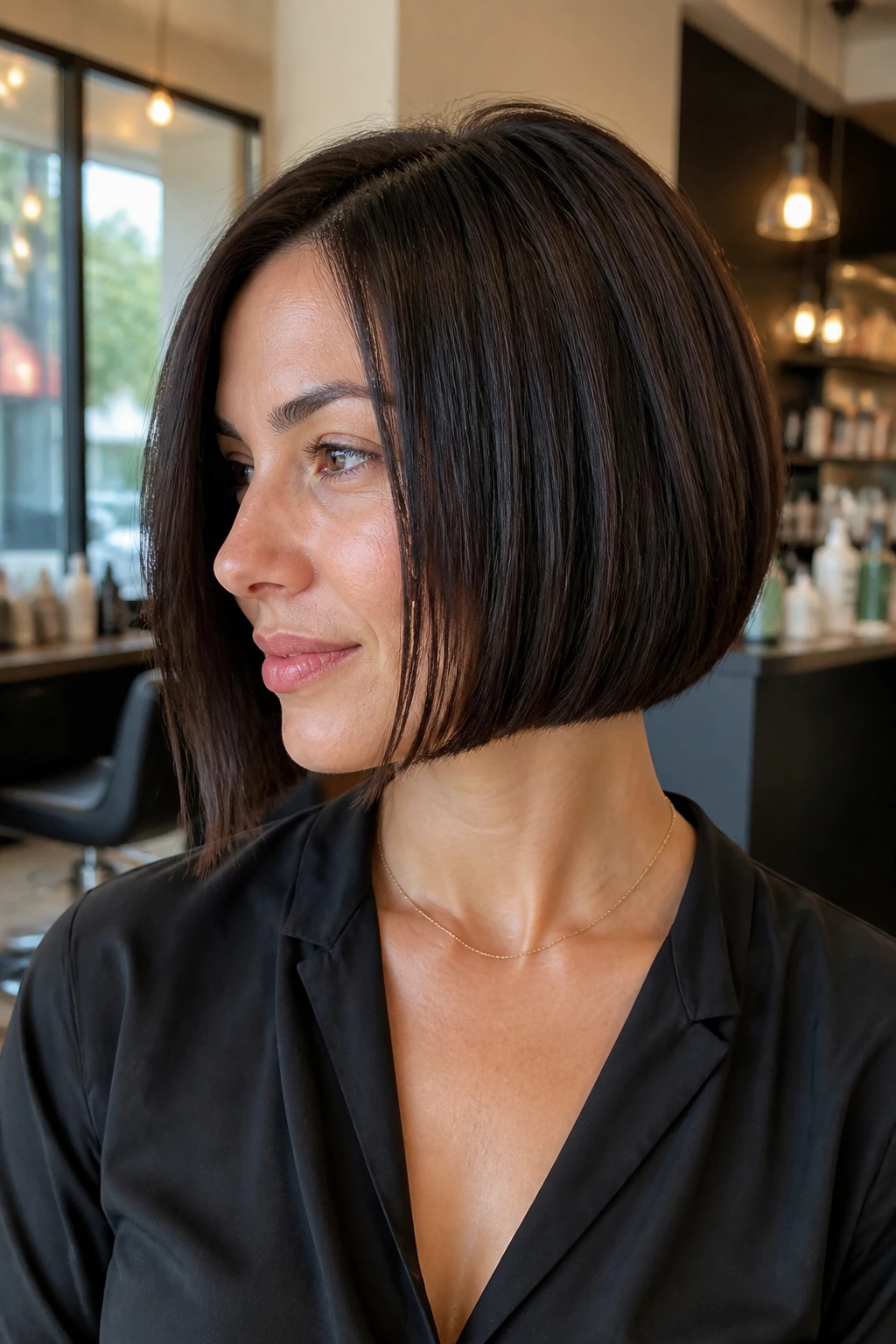
A sliced bob uses a cutting technique that glides through the hair to remove bulk without slicing the shape apart. On thick hair, that matters because heavy ends often need release, not aggressive thinning.
The result feels sleeker than a choppy cut and softer than a blunt bob. It’s a good middle road if you want movement but still care about a clean edge.
22. Bubble Bob
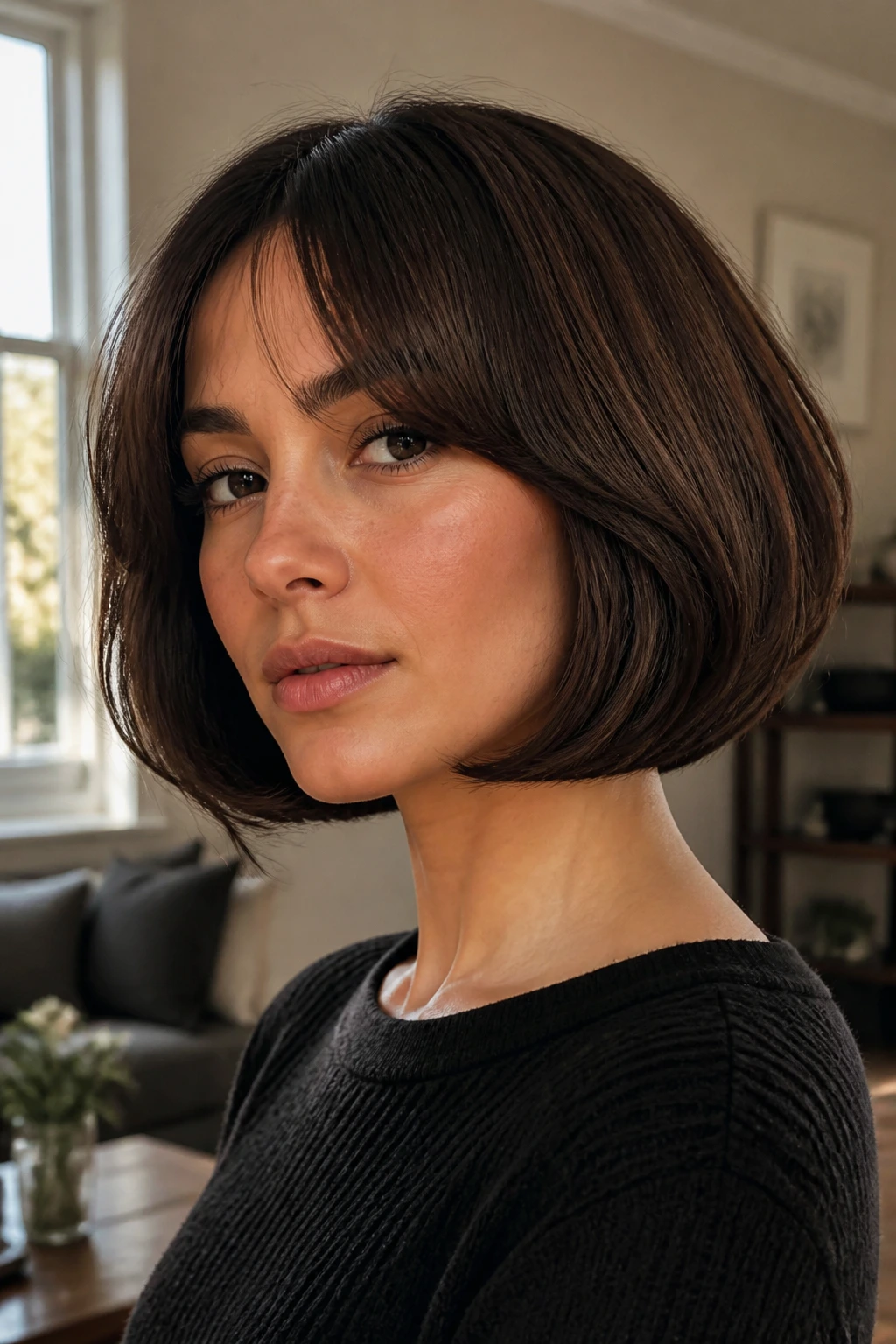
The bubble bob curves inward near the hem, like the haircut is holding its own shape in a little balloon. Thick hair helps this cut because the ends stay full enough to support the rounded outline.
It’s a little retro, and that’s part of the charm. If the ends are cut too light, the shape collapses. Keep the bottom line full and the curve will read properly.
23. Italian Bob

The Italian bob leans lush. It’s usually chin-grazing, full, and a touch glamorous without being overstyled, which makes it a natural fit for thick hair.
This one likes volume at the body of the cut but not at the ends. If your hair is heavy, that fullness reads rich rather than bulky. A soft bend at the front and a smooth crown keep it from getting too round.
24. Tapered Bob
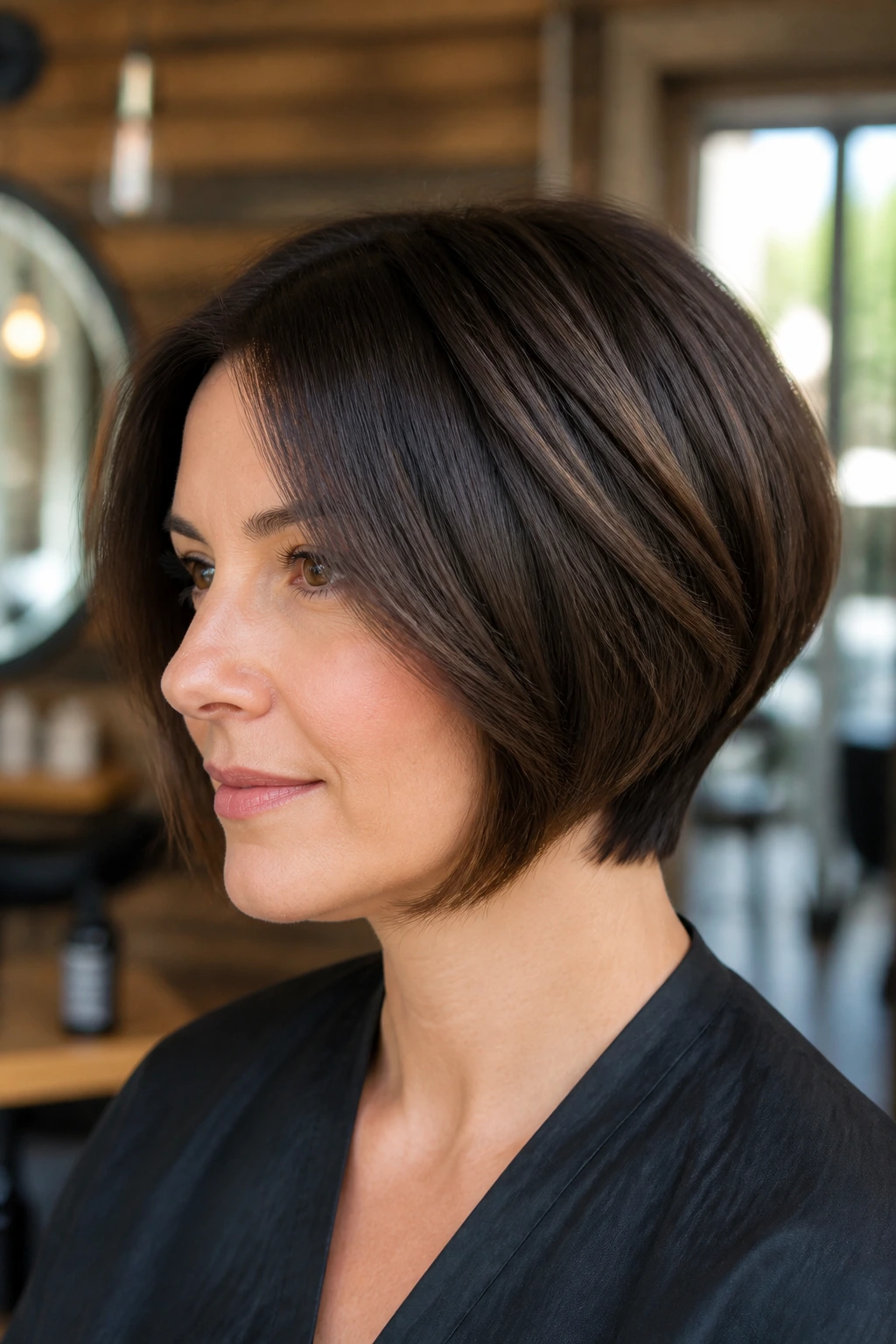
A tapered bob narrows as it approaches the nape and sides, which is exactly why thick hair wears it so well. The outline feels streamlined, and the bulk gets redistributed instead of sitting all in one place.
It’s a strong choice if your hair is wide at the cheeks or if you wear coats, scarves, or high collars often. The taper keeps the whole thing from fighting your clothes.
25. Razor-Textured Bob
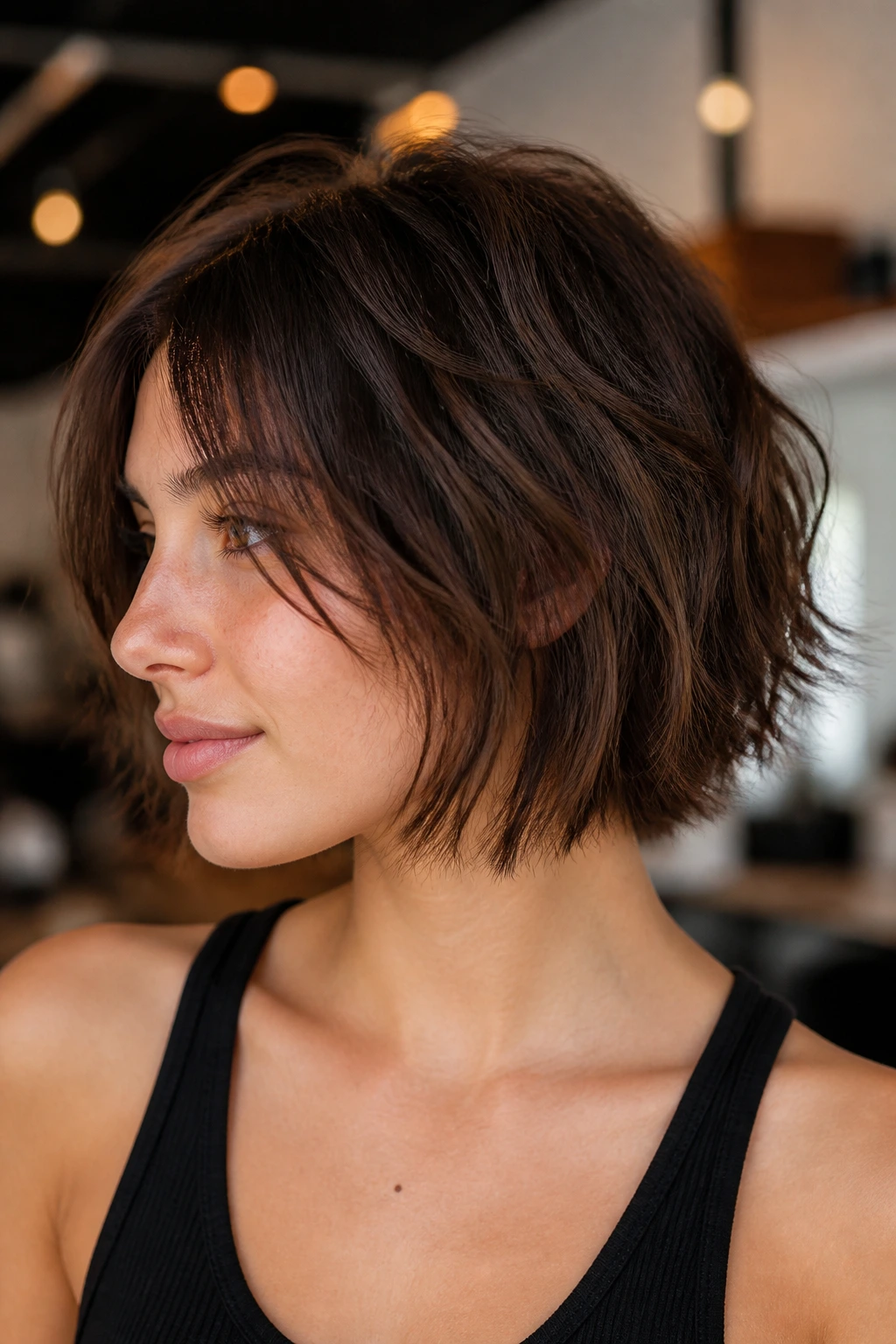
A razor-textured bob can look airy and cool, but thick hair needs a careful hand here. The razor softens the line and removes weight fast, which is useful if the ends feel heavy and stiff.
Best Use
- Works best on straight to slightly wavy hair.
- Needs restraint near the perimeter so the shape doesn’t go fuzzy.
If your hair frizzes easily, ask for selective razor work instead of an all-over pass. That’s the difference between movement and chaos.
26. Face-Framing Bob
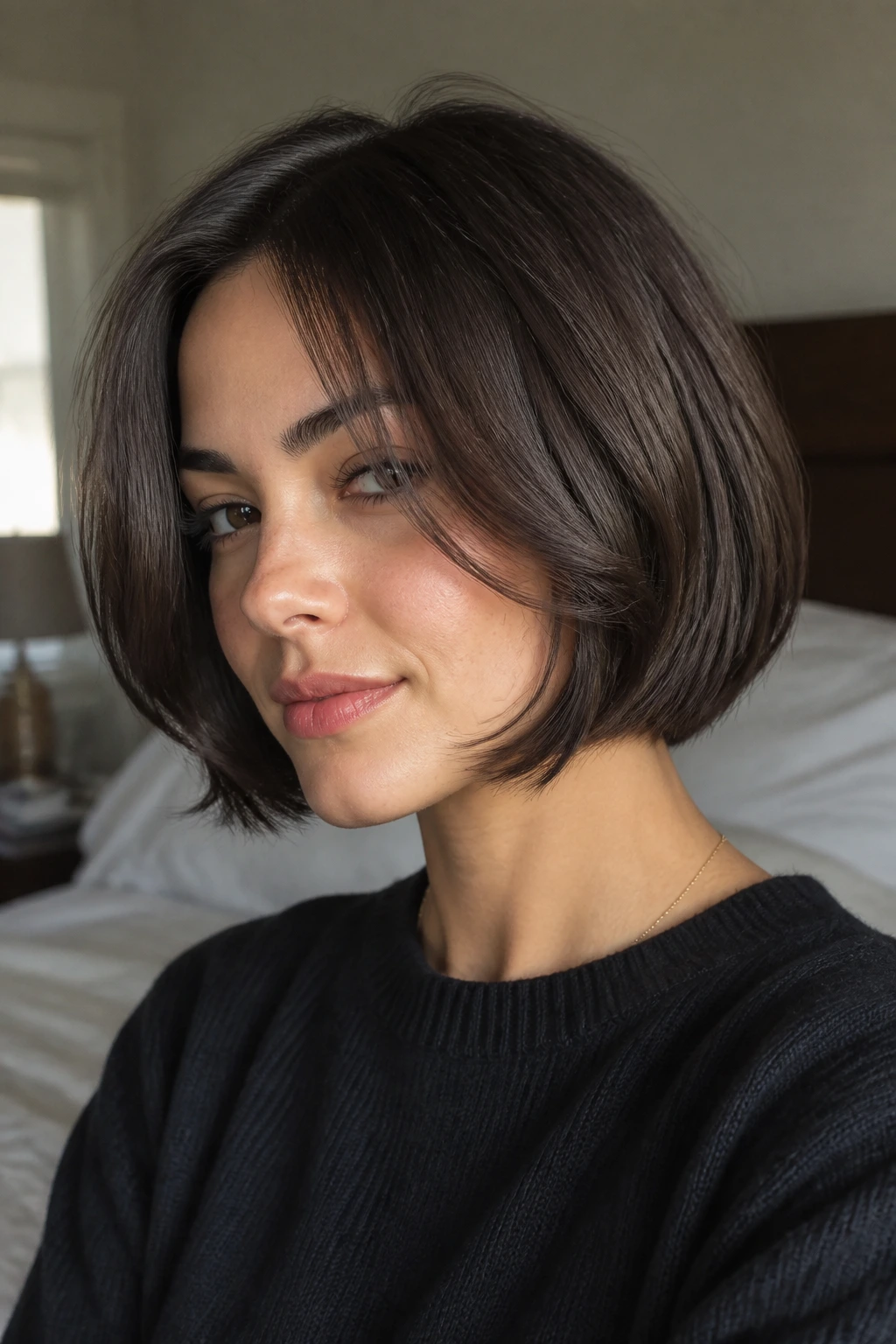
A face-framing bob keeps the perimeter fairly simple while soft pieces bend around the cheekbones and jaw. Thick hair is useful here because the frame can hold its shape without disappearing.
This is one of the easier bobs to wear if you like a little softness around the face but do not want a fully layered haircut. It also grows out in a forgiving way, which saves you from salon panic.
27. One-Length Center-Part Bob
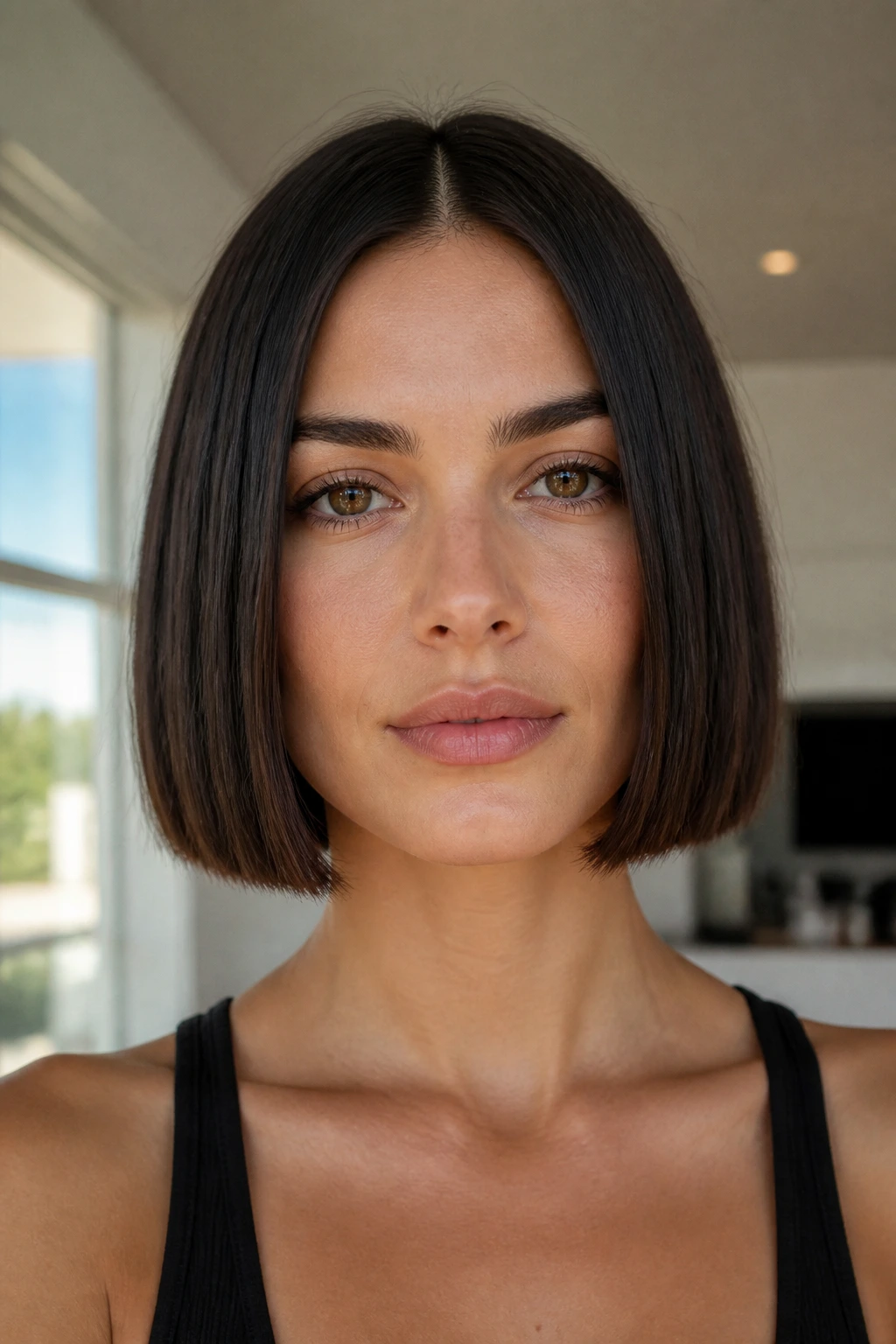
A one-length center-part bob is pure structure. The middle part makes the shape feel balanced, and the blunt ends stop thick hair from spreading too far at the sides.
It’s a sharp look, but it asks for accuracy. The part has to be clean, the ends have to be even, and the length needs to sit in the right place or the whole thing tips into helmet territory.
28. Deep Side-Part Bob

A deep side part changes the weight distribution instantly. Thick hair often benefits from that because the part lifts one side and lowers the other, which breaks up the width of the shape.
If your crown is flat, this cut gives you a little natural drama without extra layering. A small root lift spray at the part can make the shape pop without making the ends puff.
29. Graduated Bob
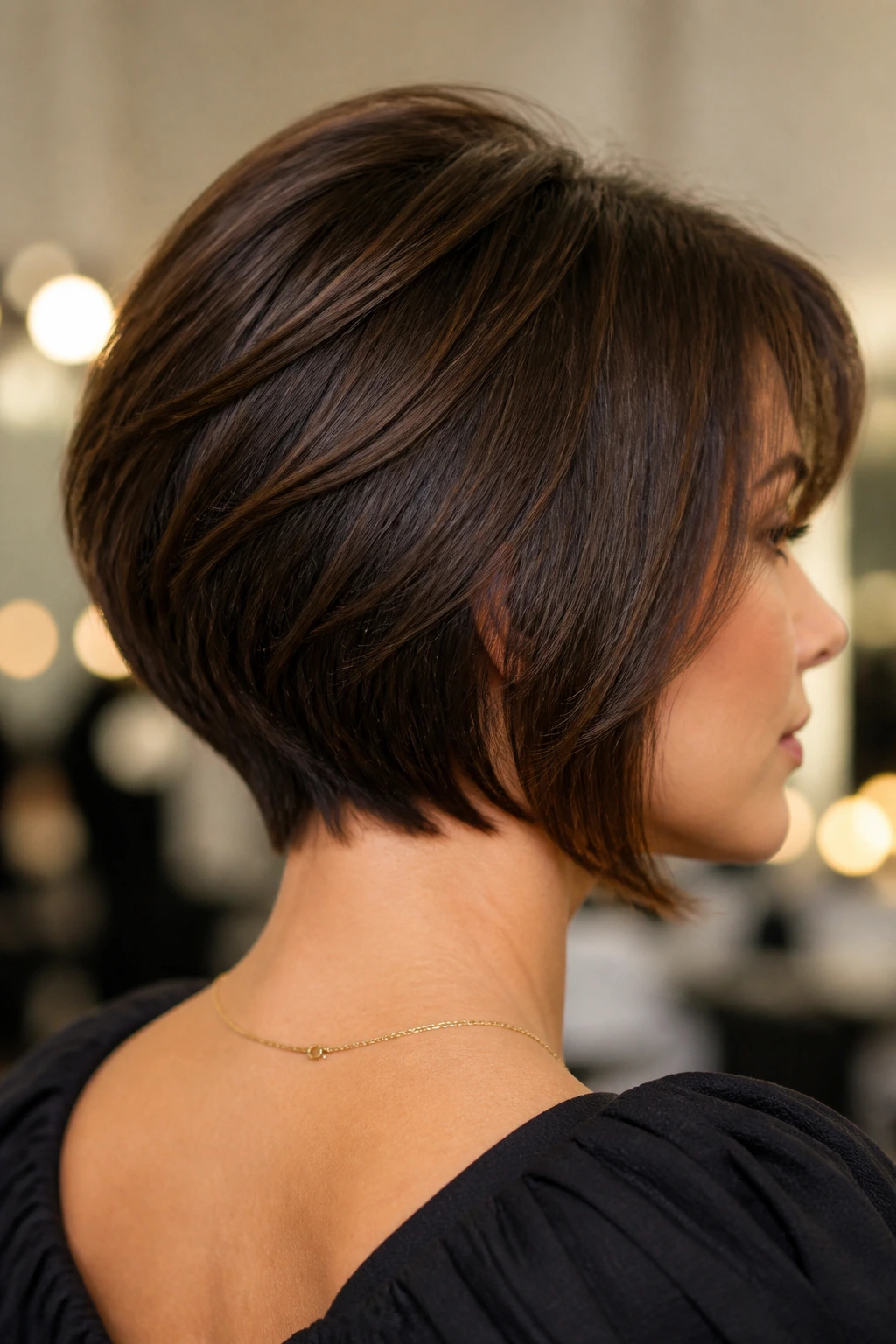
A graduated bob is slightly softer than a stacked cut, with the back built in careful steps. Thick hair carries graduation well because it keeps the structure visible.
This is a good option if you want polish and don’t mind a more sculpted finish. The key is to avoid over-graduating the crown. Too much and the top gets tall while the rest feels compressed.
30. Flipped-End Bob
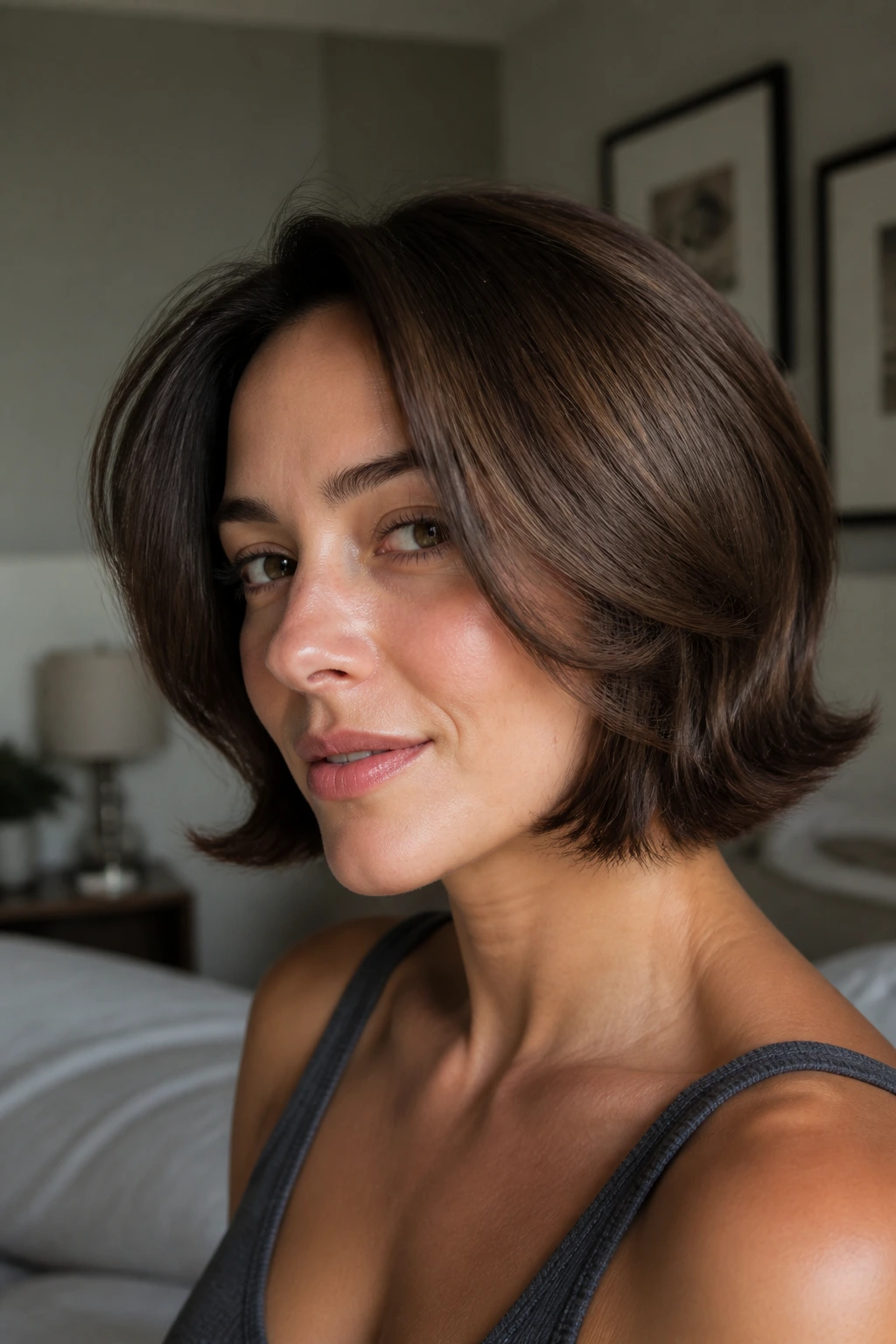
A flipped-end bob has a little outward flick at the tips, which can look playful on thick hair if the flip is controlled. The hair should bend out just enough to show shape, not so much that it fans wide.
A round brush or a quick pass with a flat iron at the ends usually handles it. Keep the volume higher at the crown and lighter through the bottom, or the flip starts looking accidental.
31. Full Fringe Bob

A full fringe bob can be gorgeous on thick hair because the bangs carry the same density as the rest of the cut. The result is bold and compact, almost like the haircut has one strong frame around the face.
Why It Works
- The bangs balance the weight of the bob instead of leaving the front too open.
- The cut feels intentional when the fringe density matches the rest of the hair.
If your bangs are too thick, though, they can swallow your features. Ask for a fringe that can be worn straight or softly separated.
32. Peekaboo Undercut Bob
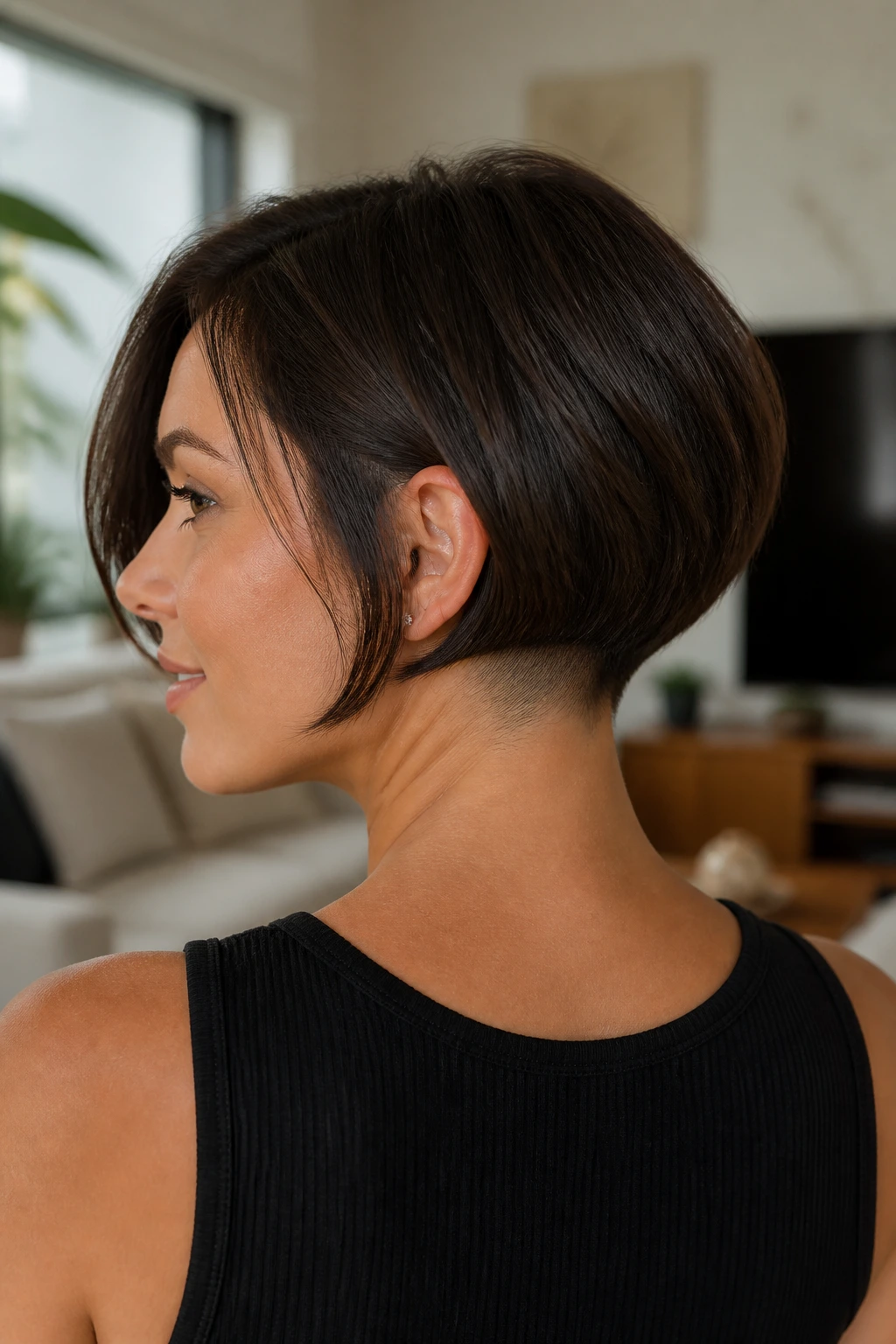
A peekaboo undercut hides its secret under the top layers, so you get bulk removal without losing the shape on the surface. Thick hair often benefits from this because the outside still looks full while the inside feels lighter.
It’s a smarter version of a bold undercut if you want less visible contrast. The grow-out is still a thing, so plan on trims before the hidden area gets puffy or uneven.
33. Airy Layered Bob

An airy layered bob keeps the layers long enough to move but not so short that the haircut shatters. Thick hair needs that restraint. Too many short layers at the top, and the cut starts to float away from the head.
This one works well if you want a lighter feel without giving up body. It’s the sort of bob that looks easy, though it only looks easy because the layering was handled with care.
34. Sculpted Tucked-Nape Bob
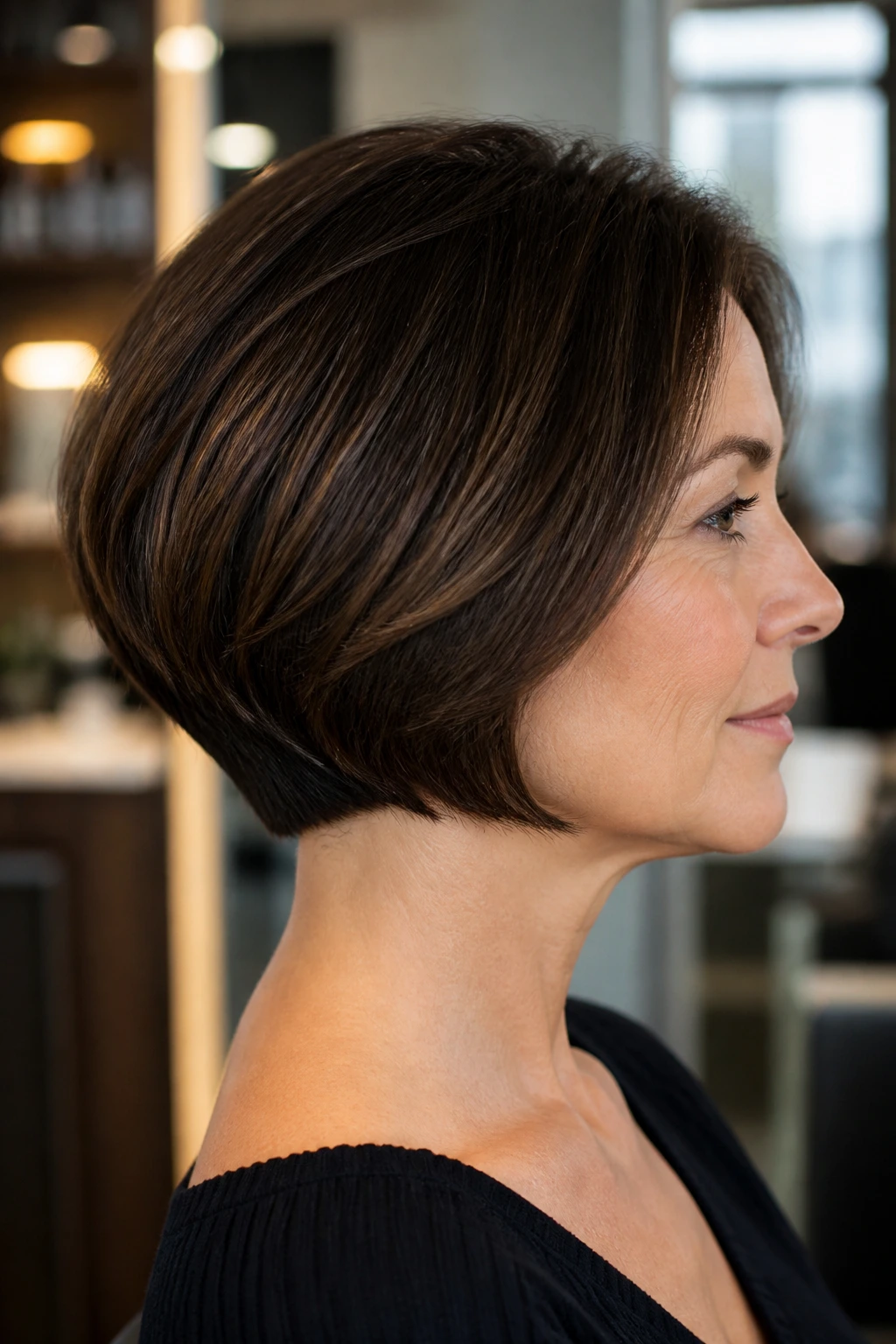
A sculpted tucked-nape bob focuses on the neck and the back curve. The nape is clean, the lower line hugs in, and thick hair behaves because the cut gives it a place to sit.
That tucked finish can make the neck look longer and the whole profile cleaner. It’s a quiet haircut, but not a boring one.
35. Pageboy Bob

The pageboy bob has a rounded, old-school shape with ends that curl under neatly. Thick hair suits it because the volume gives the curve real substance.
This cut feels especially good if you like a smooth fringe or a rounded edge around the cheek and jaw. It can look a little retro, which is either the point or the reason you’ll love it.
36. Soft Curved Bob

A soft curved bob is the less strict cousin of the pageboy. The line bends inward lightly, but not so much that the haircut looks stiff.
It works when you want the bob to feel polished and wearable. Thick hair helps the curve hold, but the ends should stay soft enough to avoid a blocky finish.
37. Tousled Beach Bob

A tousled beach bob can be brilliant on thick hair if you keep the texture controlled. The movement should look broken-in, not sprayed into a crunchy shell.
What to Watch For
- Use a light wave spray or a small amount of mousse.
- Keep the ends loose so the bob doesn’t spread out too far.
This is one of those cuts that looks better the second day, once the product has settled and the wave pattern has relaxed a bit.
38. Temple-Layer Bob
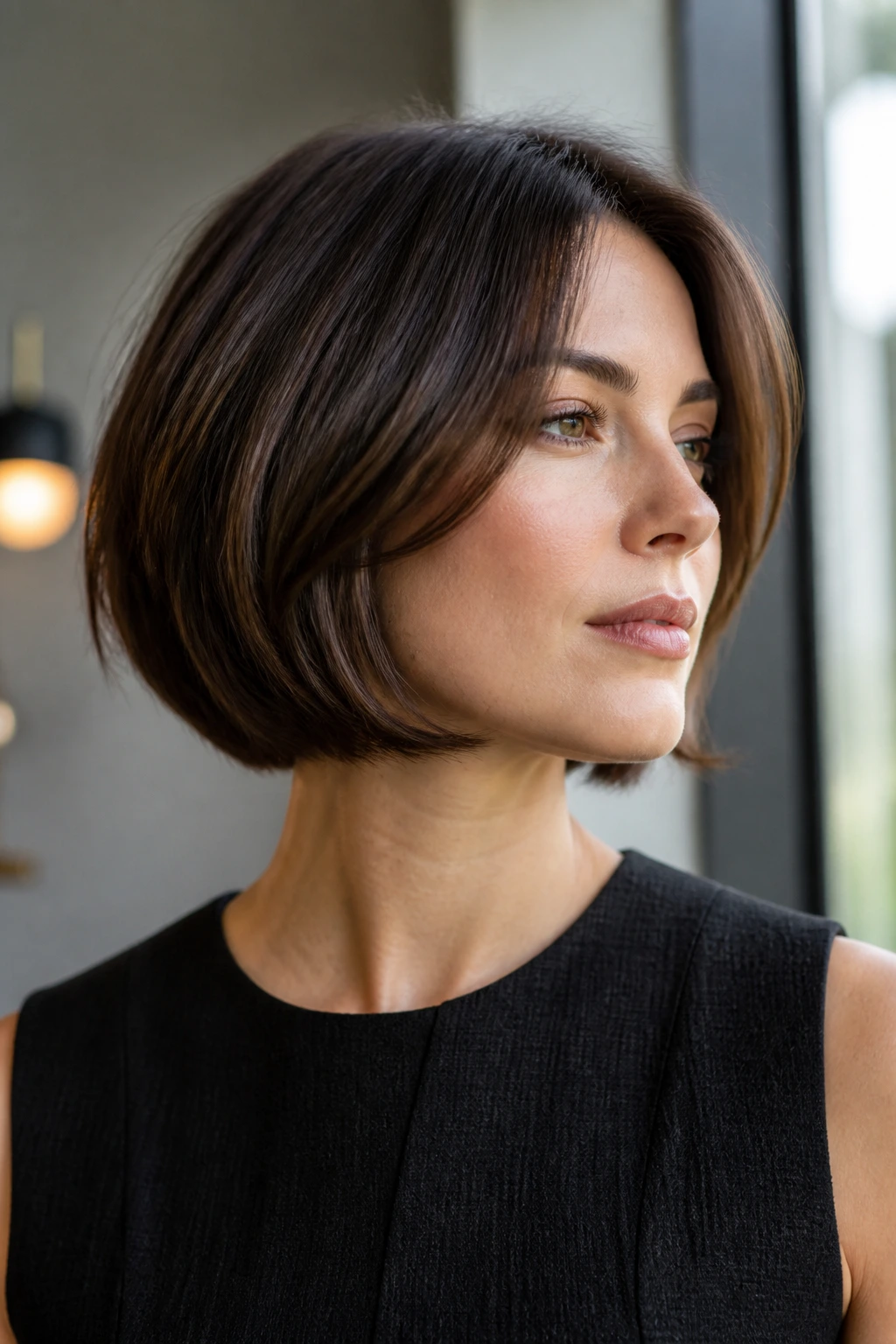
Temple layers are a subtle fix for thick hair that fans wide near the sides. By softening the area around the temples and above the ears, the bob feels narrower without losing its body.
It’s a useful detail if you like a fairly blunt perimeter but need just a bit of relief around the face. Small change. Big difference.
Why Thick Hair Changes the Bob Game
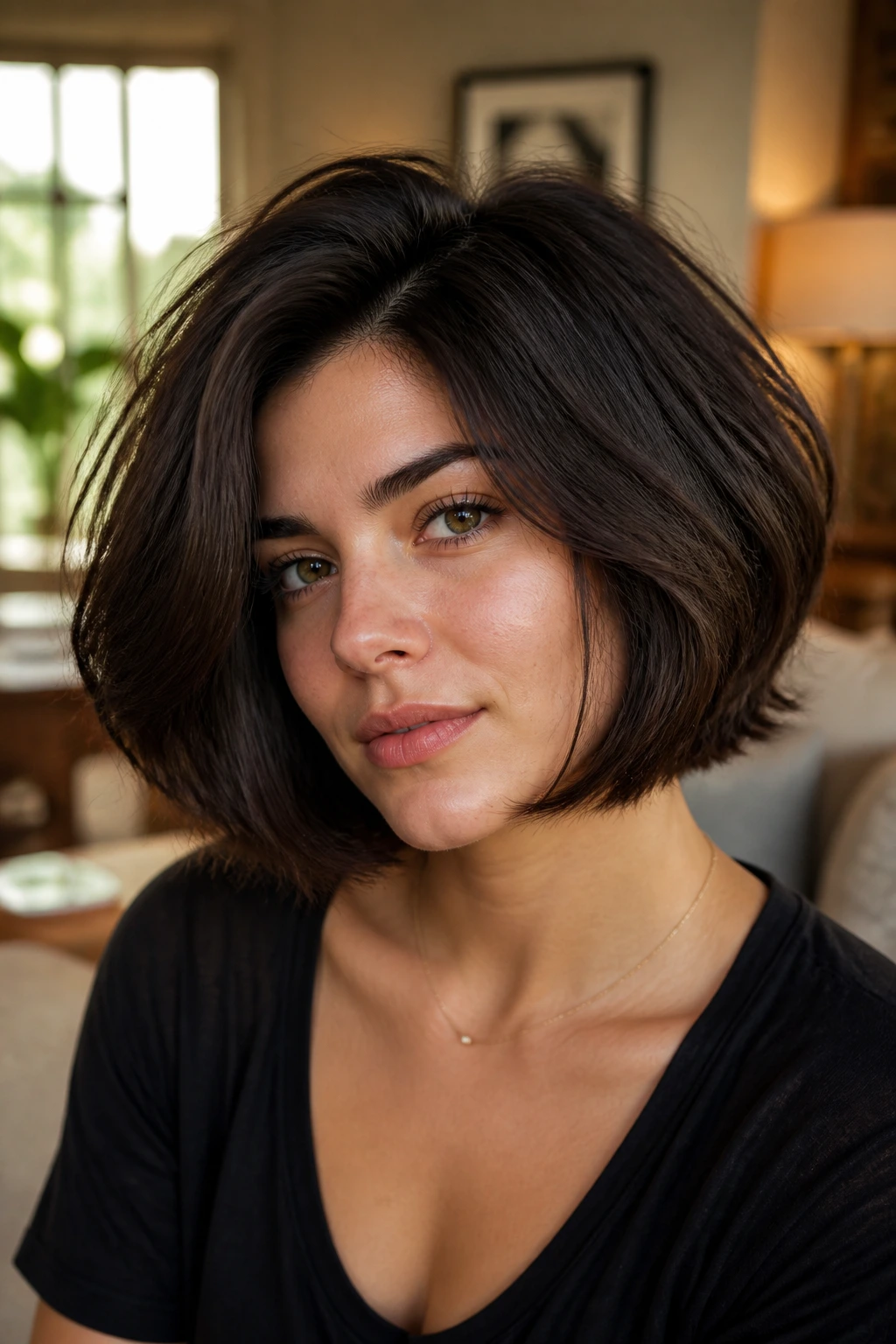
Thick hair is not one problem. It’s a set of them. You can have thick straight hair that puffs at the bottom, thick wavy hair that widens at the sides, or thick coarse hair that feels stiff no matter what cream you put on it. The bob has to answer all of that, and it has to do it in a few inches of length.
That is why the best bobs for short thick hair tend to respect weight. A perimeter that’s too thin loses its shape by noon. A perimeter that’s too heavy turns into a shelf. The sweet spot is usually somewhere in the middle: enough structure to hold the line, enough internal release to keep the bulk from sitting on the outside.
Short length makes this even more obvious. Hair that hits the chin or jaw is sitting right in the visual center of the face. Every bend matters. Every cowlick matters. Even the way the nape grows can change how polished the haircut looks from behind.
There’s a reason stylists talk so much about weight distribution with thick hair. It’s not jargon for the sake of jargon. It’s the difference between a bob that hugs the head and one that hovers around it.
How to Pick the Right Length, Fringe, and Shape

A chin-length bob is not the same as a jaw-length bob, and on thick hair that gap matters more than people expect. Chin length can soften a broader jaw, while jaw length can sharpen the lower face and make thick hair feel a little more compact. Ear-length cuts look edgy, but they expose every bit of density.
Fringe changes the game too. Micro bangs bring attention upward and can lighten a heavy forehead area, but they need regular trims. Curtain bangs are easier to live with and better if your hair grows fast. Side-swept fringe helps if your hairline has a stubborn bend or a cowlick that refuses to cooperate.
If you tuck your hair behind your ears a lot, think twice before going too wide at the sides. If you wear glasses, avoid a front line that sits exactly at the frame arm; it can feel cramped. And if your neck is short, a slightly longer front can keep the bob from feeling boxed in.
How to Ask for the Cut You Actually Want
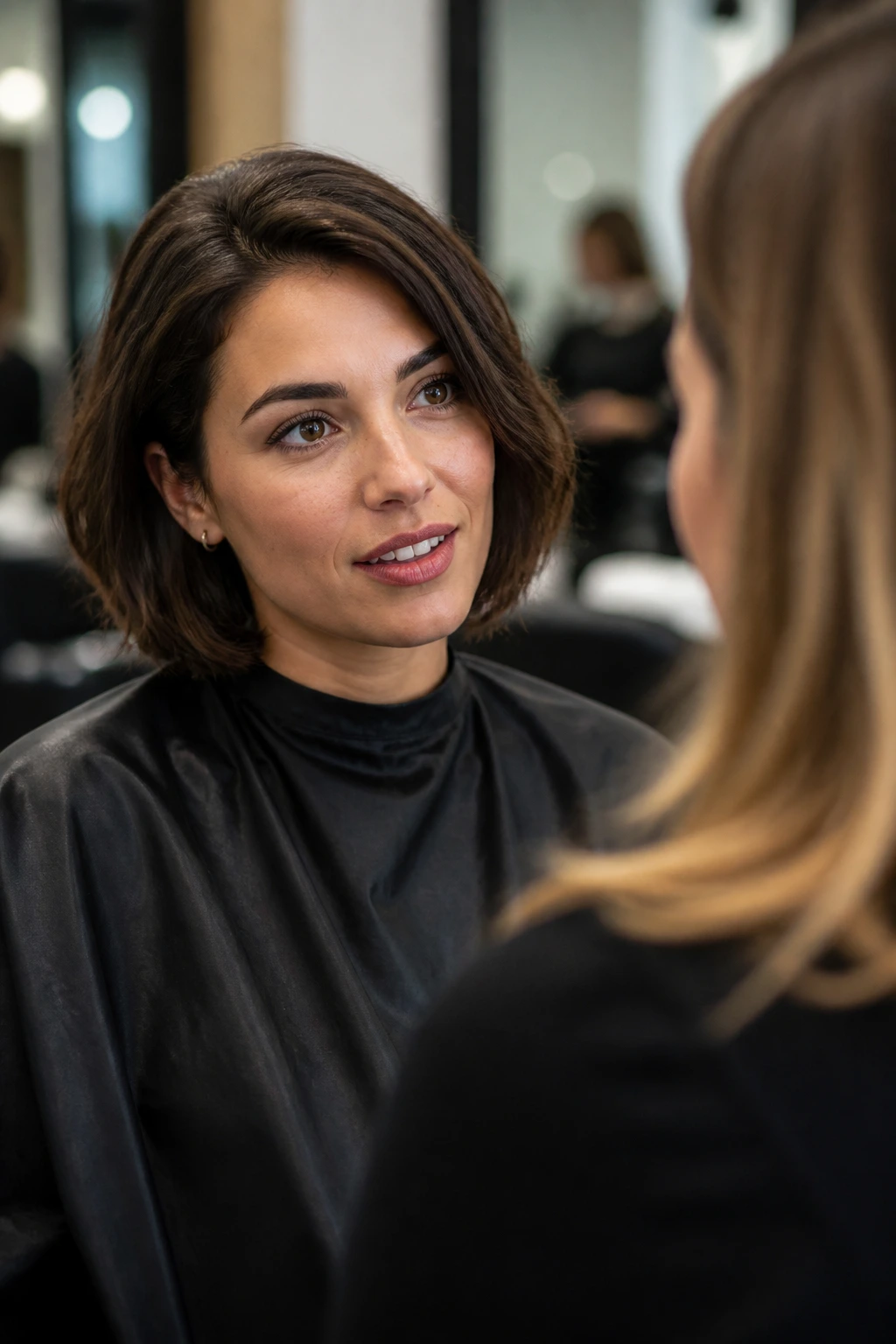
Bring photos. Not one. Two or three, and make sure they show the side and back, not just the front. Thick hair behaves differently from a photo if the cut was done on softer hair, so the angle matters more than the filter.
Then say what you do not want. Tell the stylist if you hate the triangle shape, if you don’t want the nape shaved too high, or if you need room to tuck your hair behind your ears. That single conversation saves a lot of regret.
A useful script sounds like this: “Keep the perimeter strong, remove bulk inside, and do not thin the ends into pieces.” That one sentence does more than a ten-minute vague chat. If you want the bob to air-dry well, say that up front too, because a salon blowout can hide a haircut that behaves badly at home.
Styling Short Thick Bob Hair Without the Triangle
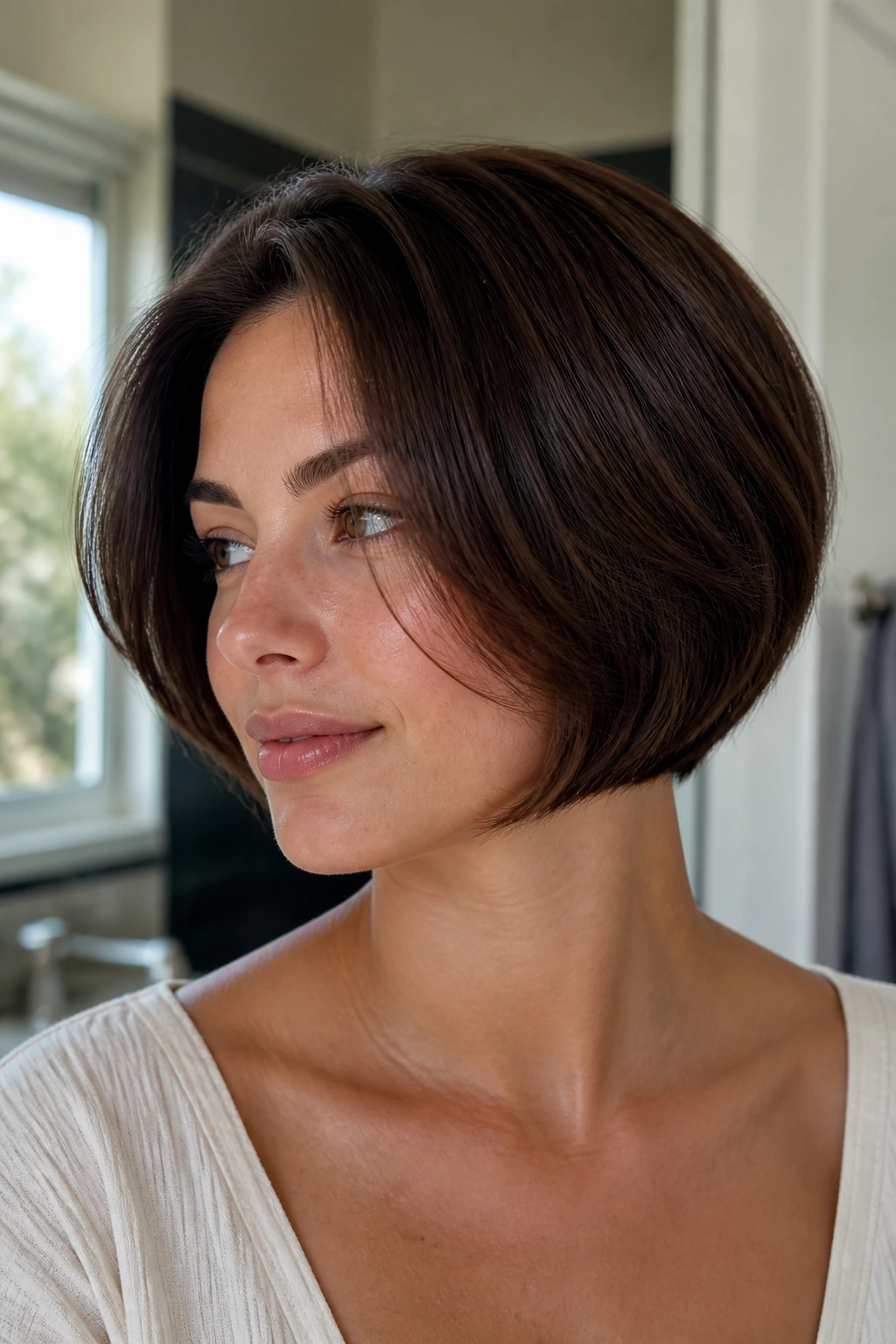
The triangle effect usually comes from the same place: too much weight sitting at the bottom and not enough shape through the middle. The fix is not drowning the hair in product. It’s a smarter dry-down.
Start with a towel squeeze, not a rough rub. Apply a light mousse or cream through the mid-lengths, then rough dry until the hair is about 80 percent dry. Use a flat brush near the roots if you want smoothness, or a round brush at the ends if you want a soft bend. The point is to keep the sides from widening as they dry.
A nozzle on the dryer helps more than most people realize. So does sectioning. Thick hair behaves better in small pieces, even if that feels fussy. It is fussy. Hair sometimes is.
Small Styling Moves That Change the Whole Finish
Root Lift: A little root spray at the crown can stop a short thick bob from collapsing flat on top while the sides spread out. Spray at the roots only, then lift with your fingers or a vent brush.
Smoothness: If the ends kick out, chase them with a flat iron set to a moderate heat rather than cranking the temperature sky-high. One slow pass usually beats three fast ones.
Softness: A pea-sized amount of cream on the outer layer calms frizz without stealing the bob’s body. Work it through the palms first. Cold fingers, warm cream. Better spread.
Shortcut: If you’re running late, tuck one side behind the ear and leave the other loose. That small asymmetry makes thick hair look intentional even when the rest of the styling is barely done.
The Mistakes That Make Thick Hair Puff Out

The biggest mistake is over-thinning. Thin the wrong parts, and thick hair can frizz at the ends while still staying bulky through the middle. The haircut loses control fast.
Another common error is cutting the bob too short at the widest part of the cheeks. That’s where a lot of thick hair pushes outward, so if the length lands there without enough internal shaping, the haircut gets wider instead of cleaner. Move the line a little higher or lower and the whole shape changes.
Skipping the blow-dry matters too. Short thick hair often dries in a weird direction if you leave it alone right out of the shower. Even a quick, rough dry with the nozzle aimed down the shaft can save the finish.
And please, do not drown a bob in heavy oil. Thick hair needs control, not grease. A drop too much, and the ends collapse while the body still feels big.
Variations and Alternatives for Different Routines

The Wash-and-Go Bob: Keep the layers long and the perimeter soft, then use a light mousse and a diffuser or air-dry cream. This is the version for people who will not spend 20 minutes with a brush.
The Polished Bob: Choose a blunt or slightly A-line shape and style it smooth with a round brush. This one suits workdays, sharper clothes, and hair that behaves when heat is involved.
The Curly-First Bob: Cut the bob with the curl pattern in mind and keep the length a touch longer than you think. Shrinkage is real, and thick curls can jump a lot once they dry.
The Grow-Out Bob: Ask for hidden internal layers instead of heavy fringe or extreme undercutting. The cut stays readable longer, which means fewer awkward weeks between trims.
The Low-Maintenance Undercut: If the nape gets hot or bulky, a small undercut under the top layers takes care of the bulk without changing the top line too much. It is a clean fix for thick hair that feels heavy in collars.
Essential Equipment for Styling These Cuts
-
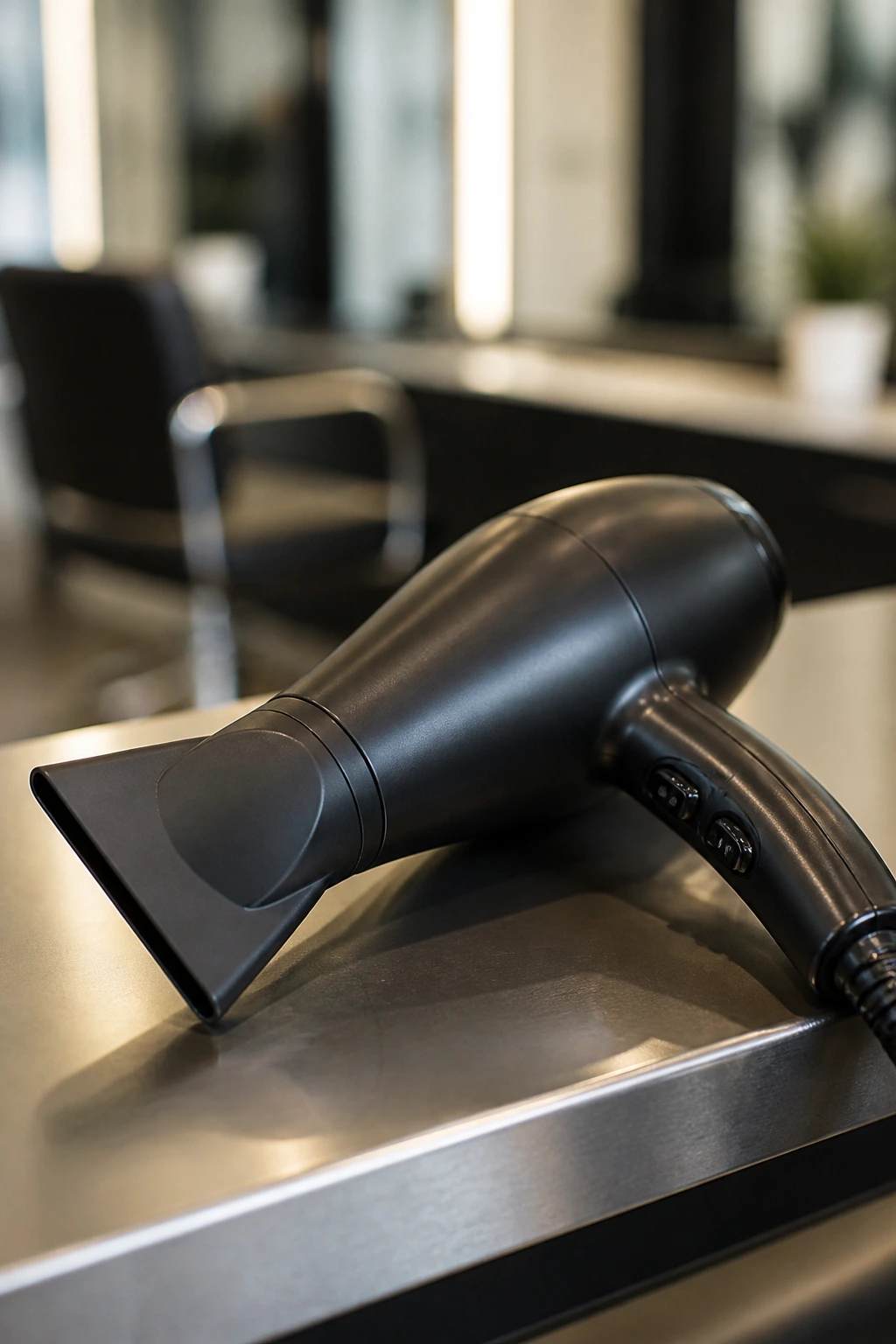
Blow-dryer with nozzle attachment — The nozzle pushes air down the hair shaft and keeps thick bob hair from exploding outward.
-
Round brush, medium barrel — Good for bending the ends under or creating a soft flip without huge volume.
-
Flat brush or paddle brush — Best for smoothing the crown and sides when you want a sleeker finish.
-
Heat protectant spray — Thick hair can hide heat damage for a while, then suddenly look dry at the ends. This helps.
-
Light mousse or root-lift spray — Useful when the top needs lift but the bottom already has enough body.
-
Smoothing cream — A small amount controls frizz and makes the perimeter sit cleaner.
-
Dry shampoo — Handy for short thick bobs because oil at the roots can flatten the top while the sides stay bulky.
-
Sectioning clips — Thick hair behaves better in parts, even for a quick blow-dry.
-
Flat iron — Optional, but useful for sharpening the ends or calming a stubborn bend.
Keeping the Shape Between Salon Visits
Short thick bobs do not stay crisp forever. Hair grows. That sounds obvious, but on this kind of cut the grow-out shows fast at the nape and around the ears. A blunt or boxy bob usually needs a trim every 6 to 8 weeks if you want the line to stay exact. Layered, shaggy, or air-dry versions can go a little longer, often 8 to 10 weeks, before the shape starts looking sleepy.
The night routine matters too. If your bob gets crushed under a pillow, the nape flips weirdly and the sides puff the next morning. A silk or satin pillowcase helps. So does pinning the front pieces back loosely if they keep falling in your face.
If the ends start to kick out, that’s the haircut asking for maintenance, not your failure. Sometimes a quick blow-dry with a round brush at the bottom solves the problem. Sometimes the shape has simply grown past its useful life. That happens.
Frequently Asked Questions
Will a bob make thick hair look bigger?
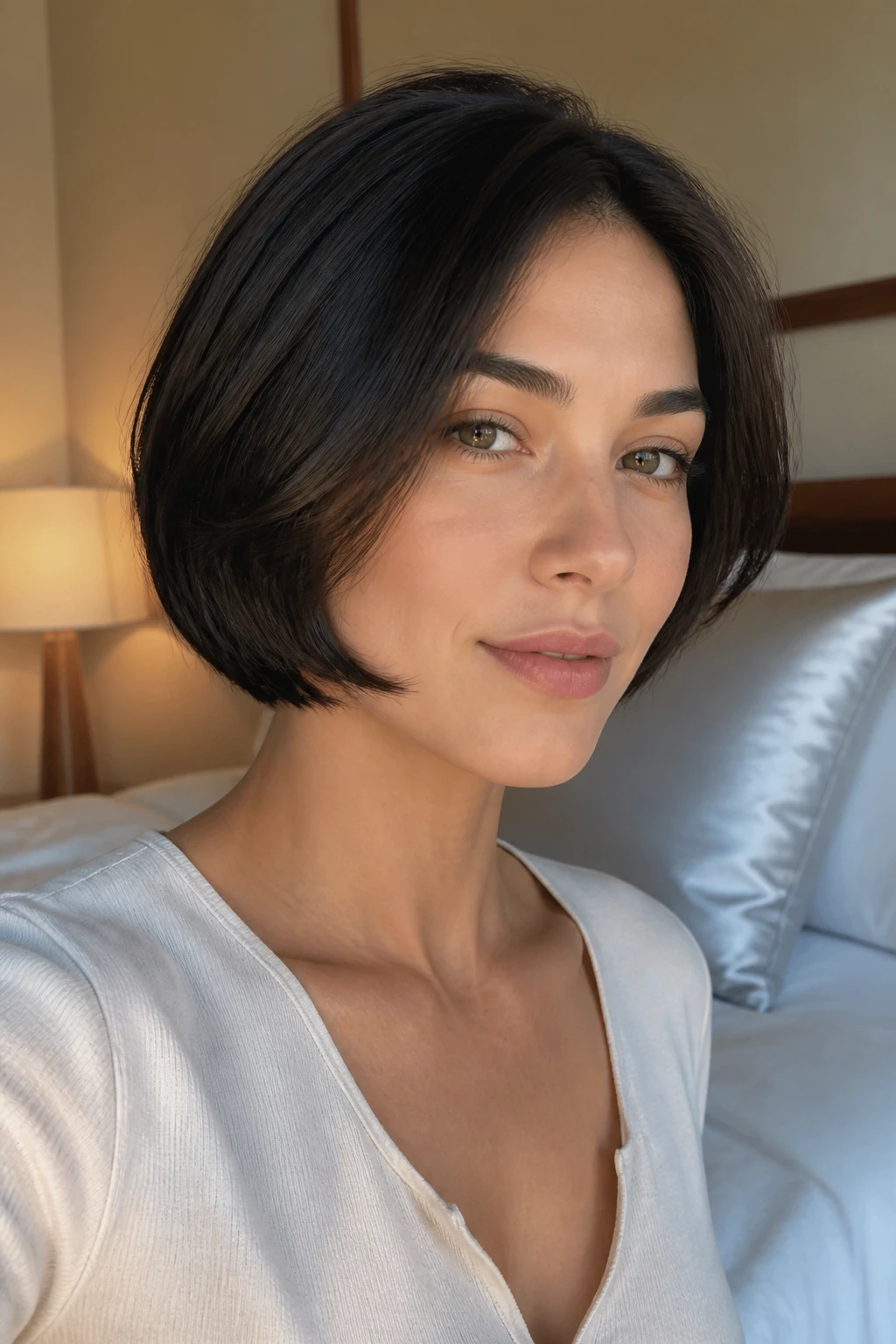
It can, if the cut is too short at the widest part of the face or too heavy at the bottom. A well-cut bob does the opposite: it controls width by taking out bulk inside the shape and keeping the perimeter clean.
Is a blunt bob better than layers for thick hair?
Neither wins every time. A blunt bob is stronger when you want a crisp line, while internal layers help if your hair feels heavy or puffs at the sides. The best answer depends on whether your problem is too much width, too much weight, or both.
Can I have bangs with thick hair?
Yes, and thick hair can carry bangs better than fine hair because the fringe has enough density to look full. Just decide whether you want micro bangs, curtain bangs, or a side-swept fringe, because each one changes the shape around the face in a different way.
How often should I trim a short thick bob?
Most of these cuts need attention every 6 to 8 weeks if you want the outline to stay sharp. If the bob is softer, layered, or curly, you can sometimes stretch that a little longer.
Should I ask for thinning shears?
Only if the stylist knows exactly where to use them. Overusing thinning shears on thick hair can leave the ends fuzzy and uneven. Interior weight removal, point cutting, or careful slicing often gives a cleaner result.
What if my thick hair flips out at the ends?
That usually means the line is sitting at a spot your hair wants to push away from the head. A slightly longer perimeter, a bit more weight at the bottom, or a quick round-brush bend can calm it down.
Can I air-dry a short thick bob?
Yes, especially if your hair has a wave or curl pattern. The cut needs to be shaped for air-drying, though, because a blunt line that only works with a blowout can puff or bend oddly once left alone.
What bob works best if I wear glasses?
A chin-length or jaw-grazing bob with soft side pieces usually plays nicest with frames. Too much width at the temples can crowd the glasses arms, while a cleaner line keeps everything from feeling busy.
The Shape That Holds
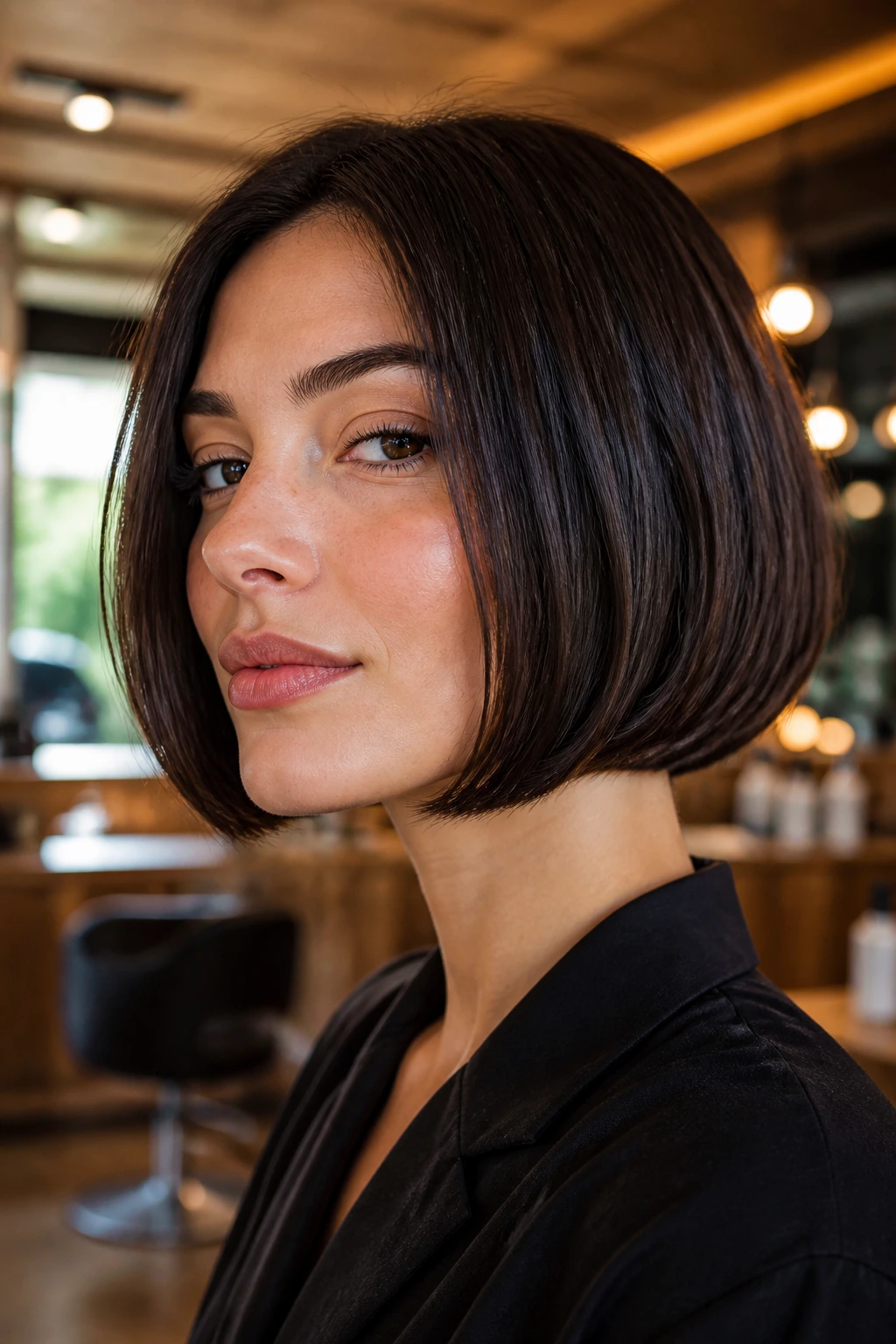
A good bob on thick hair does one thing better than any other haircut: it makes the density look chosen. Not managed. Chosen. That shift matters, because the second a thick bob feels accidental, the whole face gets swallowed by width and fluff.
The cuts that work best here do not chase every trend at once. They make a decision about where the weight should live, and then they stick to it. That is the real game. Get the line, the length, and the bulk removal right, and short thick hair stops being a problem to control. It becomes the thing people notice first.
