



Bangs can rescue a haircut that has started to feel too long around the face, but they can also make a clean cut look sharper in a way no inch of length ever quite manages. The best bang styles for women do one of two things: they sharpen the eyes and cheekbones, or they soften a strong jaw and a heavy forehead. The wrong ones just sit there, asking for a round brush and more patience than your morning gives you.
The trick is not choosing the prettiest photo on a mood board. It’s matching fringe shape to hair texture, forehead height, cowlick placement, and the amount of time you want to spend in front of the mirror. A blunt line on dense hair has a different job than a wispy curtain that parts at the center and falls into the cheeks. Same category. Different result.
Some styles need a trim every three weeks. Others grow out gracefully enough that you can ignore them for a month and still look deliberate. That range is exactly why bangs are worth the trouble when they’re chosen well. A fringe can change the whole mood of a cut without touching the length at all, and the styles below cover the full spread—from soft and easy to sharp enough to feel like a decision.
Why These Bang Styles Earn Their Keep
-
Face-Shape Range: There’s a fringe here for round faces, long faces, square jaws, and every forehead height in between, which means you’re not forcing one cut to do every job.
-
Texture-Smart Choices: Some bangs want straight hair, some love a wave, and a few get better when the curl pattern is left alone instead of ironed flat.
-
Growth-Out Grace: The styles that turn awkward fast are easy to spot; the better ones still look intentional when they’re grown an inch too far.
-
Maintenance Spectrum: You’ll find both high-drama fringe and low-fuss options, so the list works whether you book trims often or prefer to stretch them.
-
Salon-Friendly Translation: Each style can be described in plain words to a stylist, which matters more than the name on the photo.
-
Personal Style Payoff: Bangs change attitude fast. A soft fringe reads relaxed; a blunt line feels crisp; a choppy edge brings motion even when the rest of the hair stays still.
1. Curtain Bangs That Open at the Center
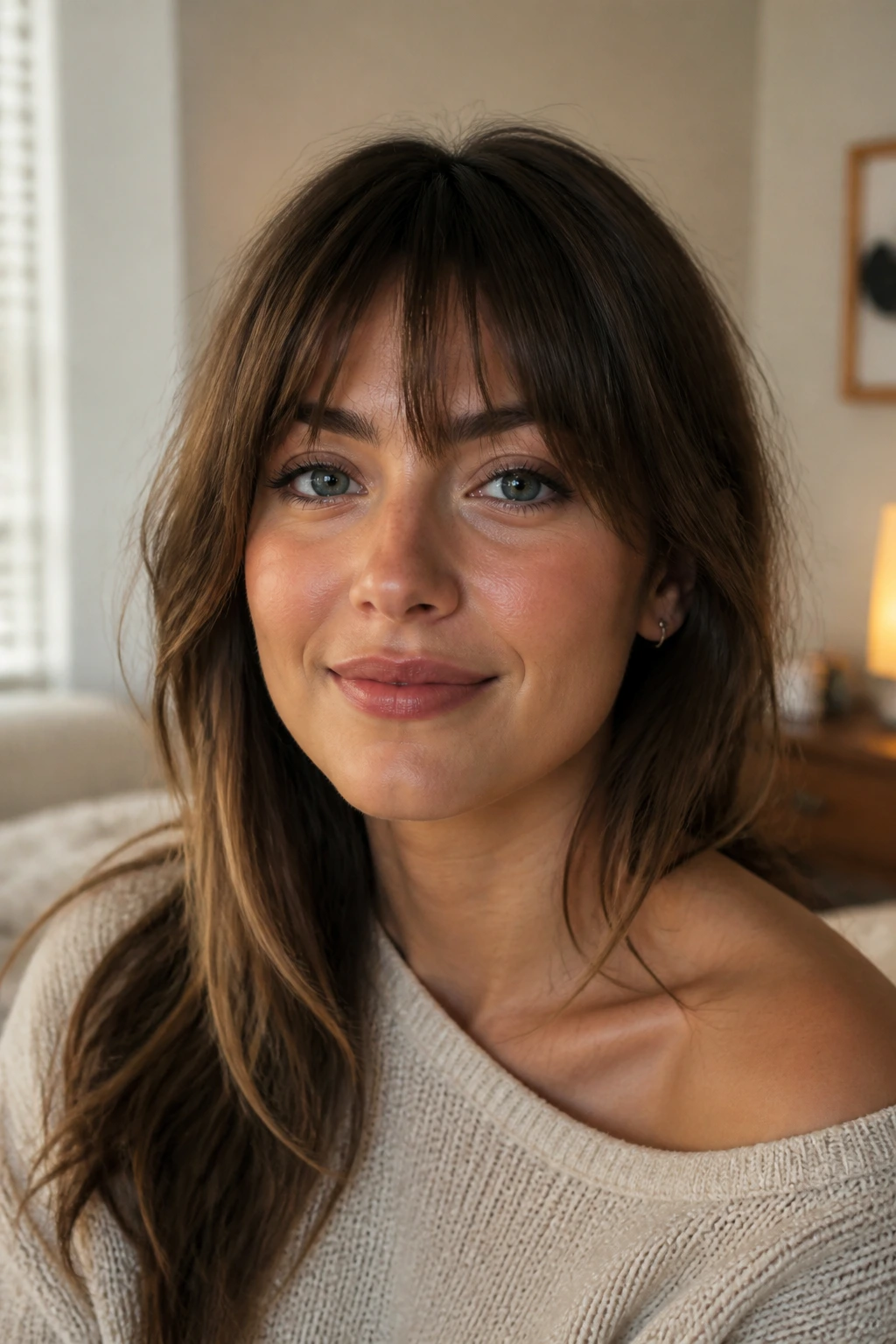
Curtain bangs are the safest place to start if you want fringe without the shock of a hard edge. The center sits shorter, usually around the bridge of the nose or just below, and the sides taper toward the cheekbones. That shape gives the face a soft frame and leaves room for a middle part, a side part, or a lazy tuck-behind-the-ear day.
Best for: round faces, long foreheads, and anyone who wants bangs that grow out without looking sloppy.
Style note: blow them forward first, then split them with a round brush so the bend sets away from the face.
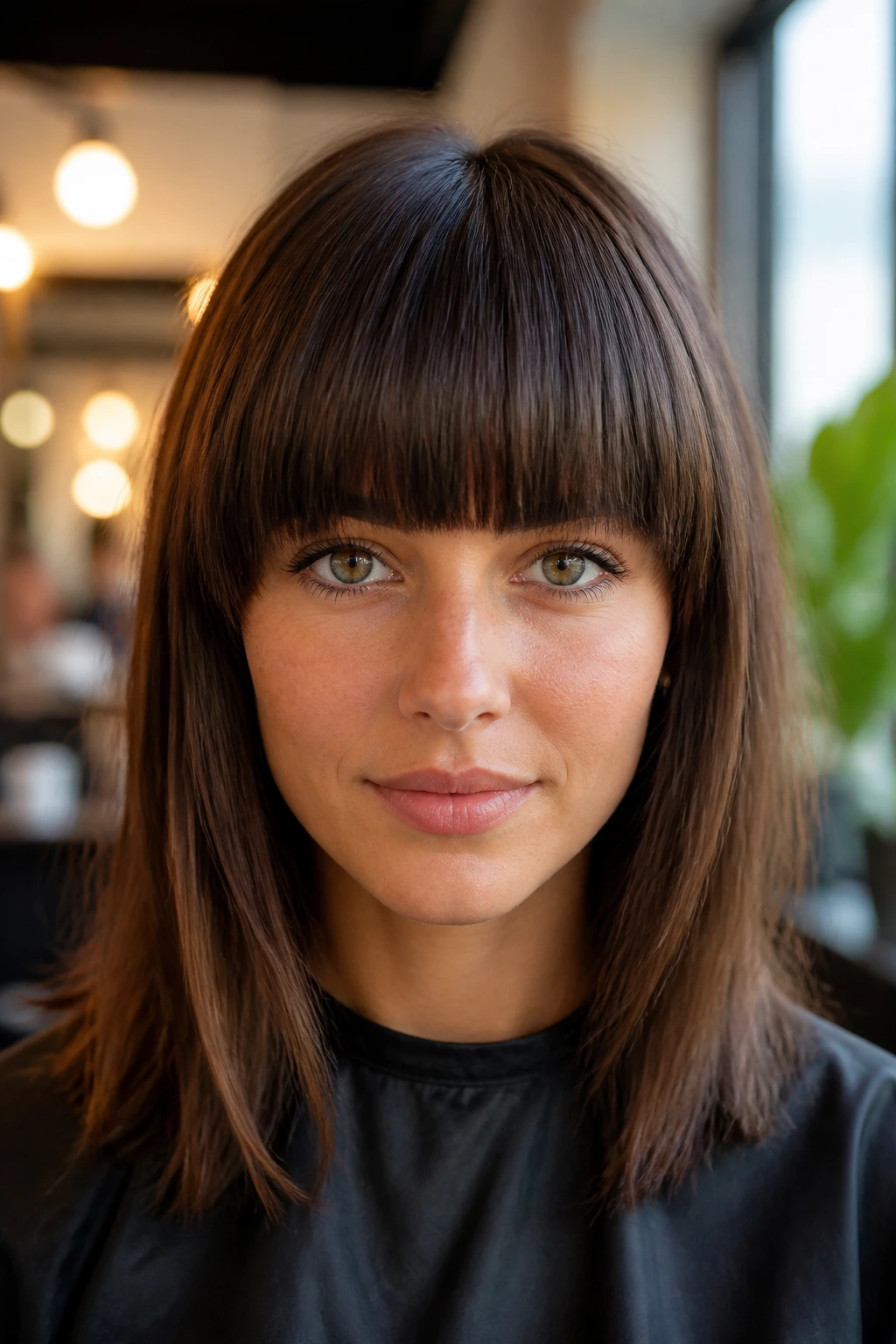
2. Blunt Bangs That Draw a Clean Line
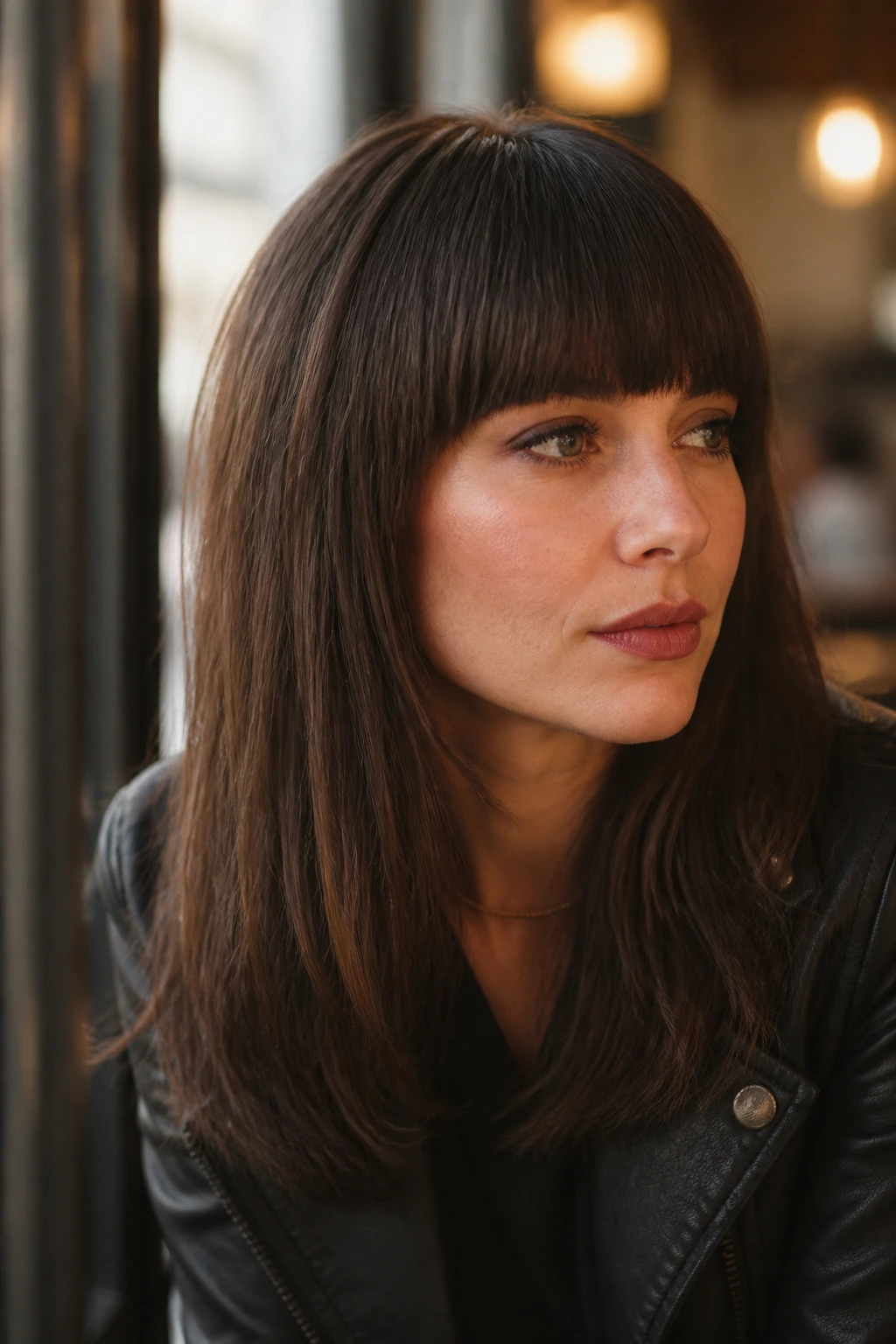
Blunt bangs are not shy. A straight line across the brow makes the forehead look shorter and the haircut look more structured, which is why they work best when the hair is thick enough to hold a real edge. If your strands are fine, ask for a slightly soft point-cut finish at the ends; pure hard bluntness can go see-through fast.
The real appeal is the contrast. Long lengths with blunt bangs feel polished in a way that needs very little else. Keep a small round brush handy and dry them first. If the rest of the hair is flat, the bangs will carry the whole cut.
3. Wispy Bangs That Barely Cover the Forehead
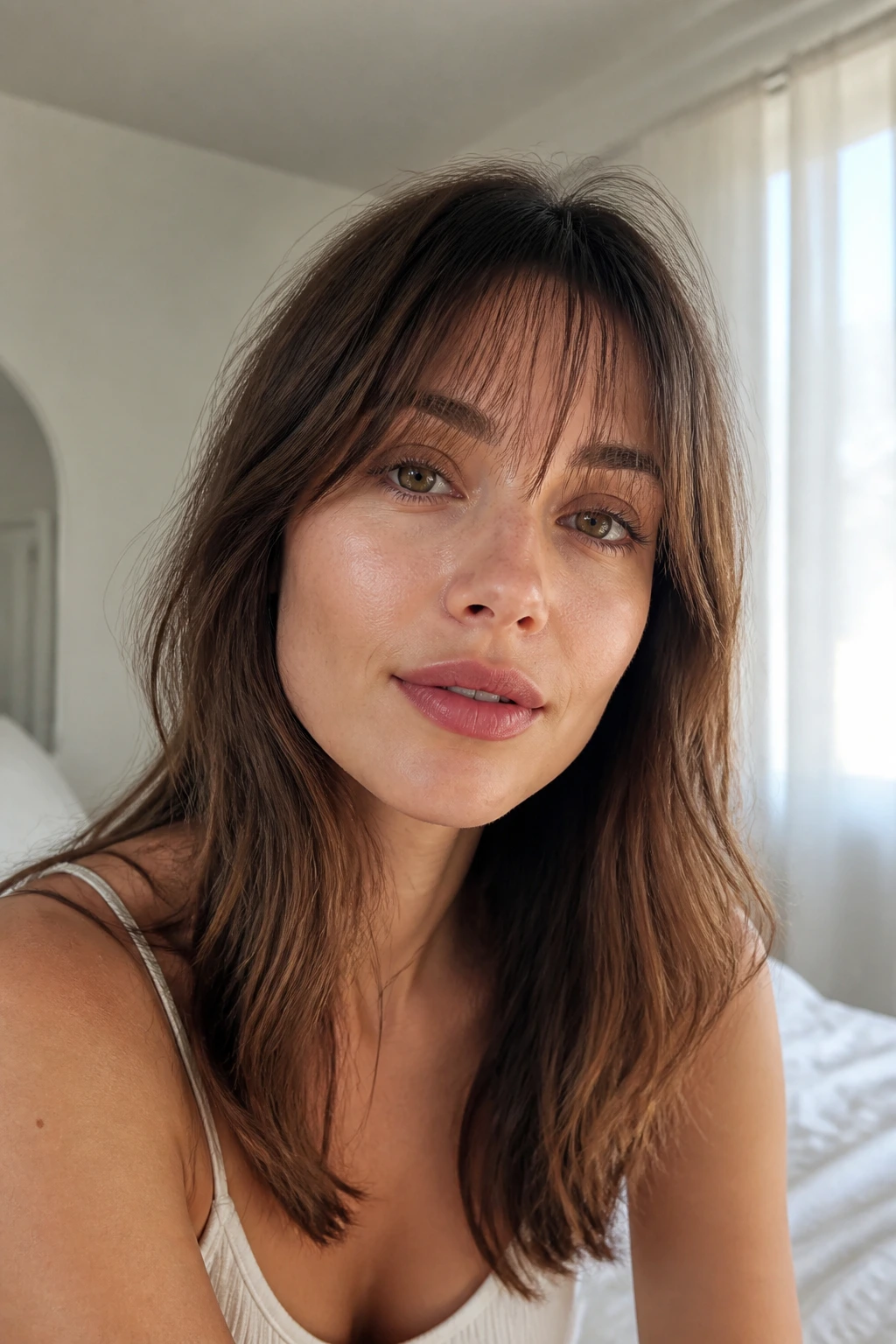
Wispy bangs are the opposite of a heavy curtain. They sit light across the forehead, with enough separation that skin still shows through. That makes them useful when you want fringe but not a full wall of hair.
They’re especially forgiving on finer textures, because they don’t ask the hair to behave like it has more density than it does. The catch is product control. Too much serum or oil and the wispy pieces clump together, which turns airy into stringy in about ten minutes.
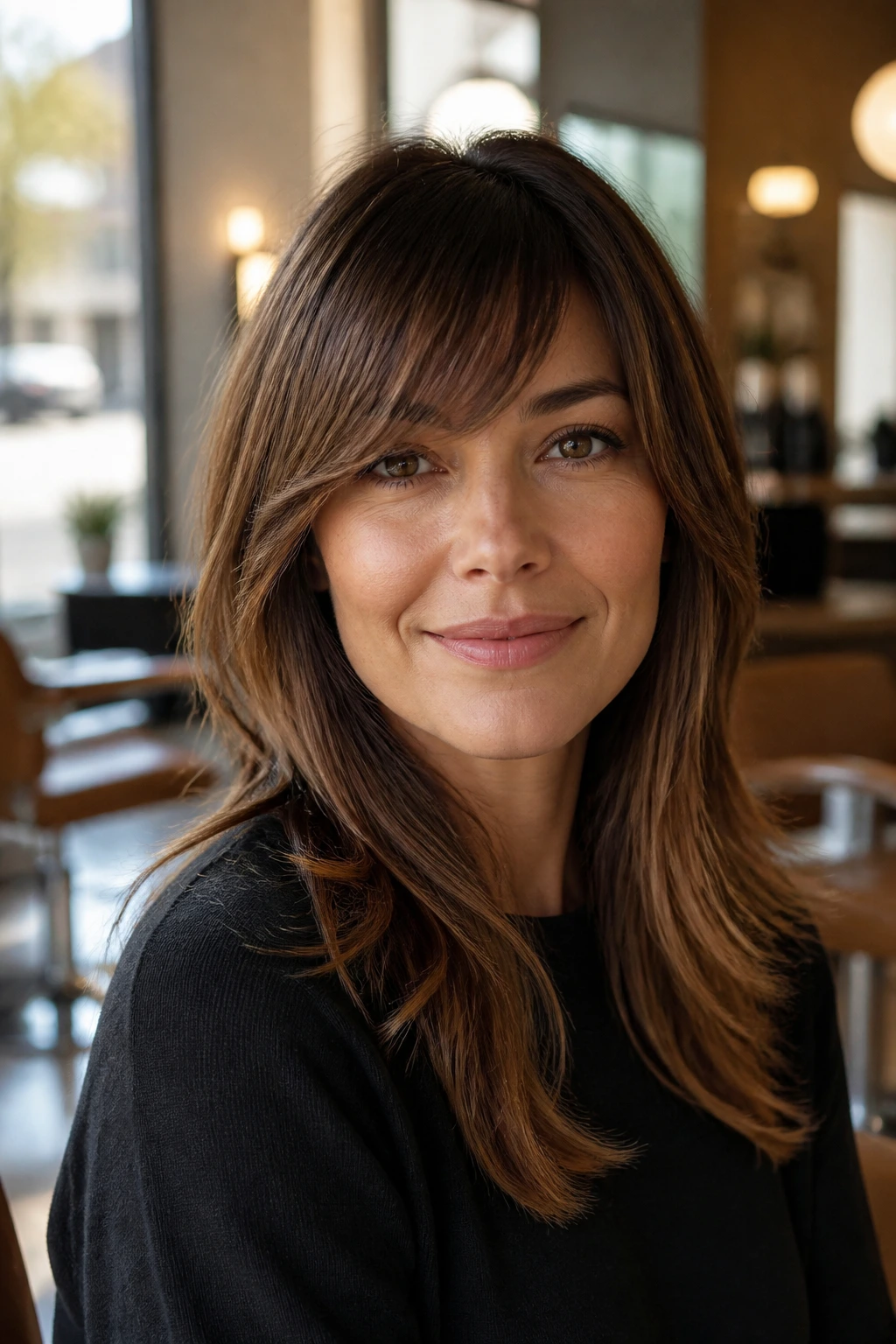
4. Side-Swept Bangs That Move With the Head
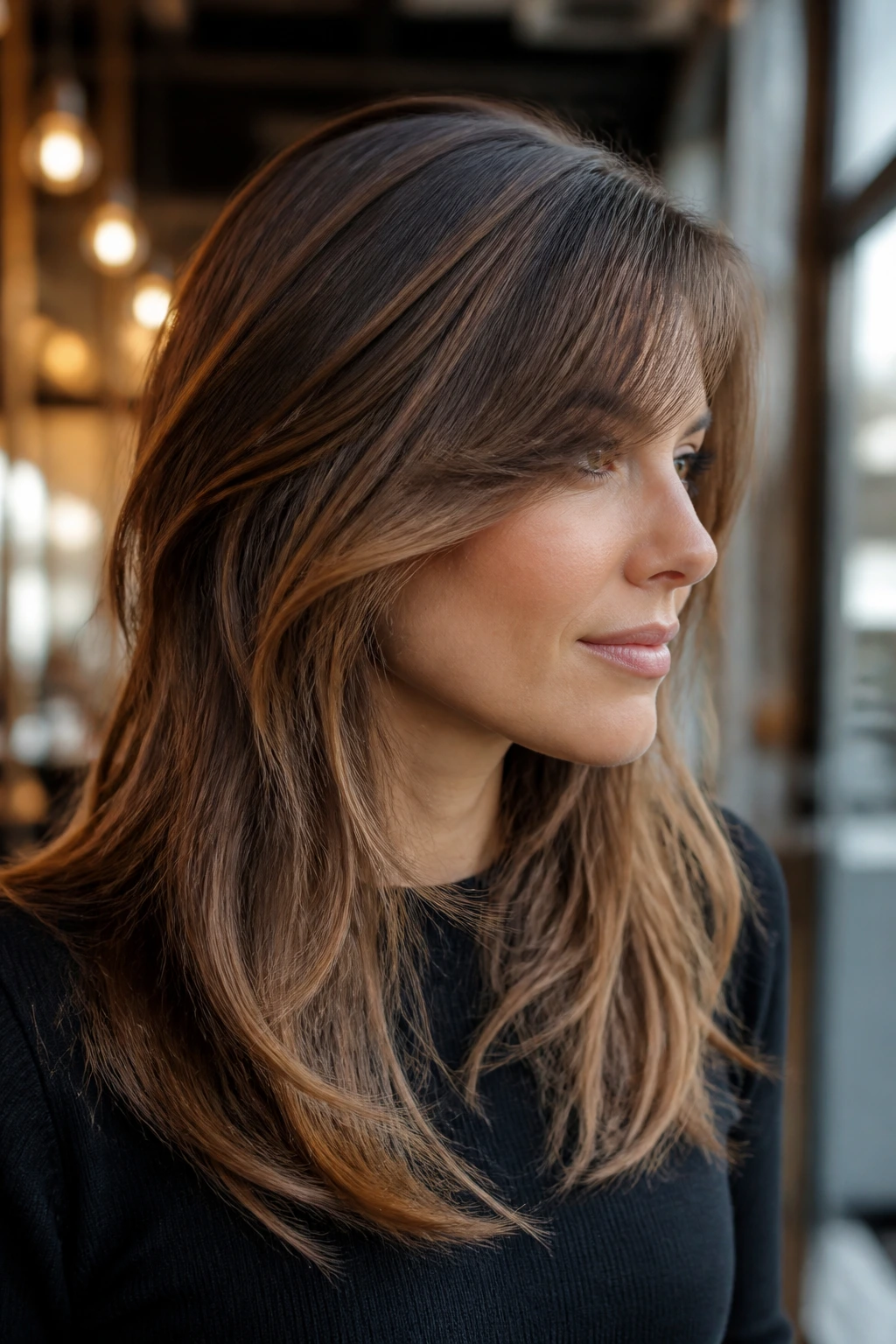
Can a bang style hide a cowlick and still look polished? Yes, and side-swept bangs are one of the easiest ways to do it. The diagonal line starts near one temple and crosses softly toward the other side, which gives the forehead shape without locking you into a center split.
They’re good for women who like a softer edge around the eyes and don’t want to trim every few weeks. Ask for length that lands around the cheekbone or just under it; too short and the sweep loses its point. Keep the root lifted with a quick blow-dry in the direction you want it to fall.
5. Bottleneck Bangs With a Narrow Center
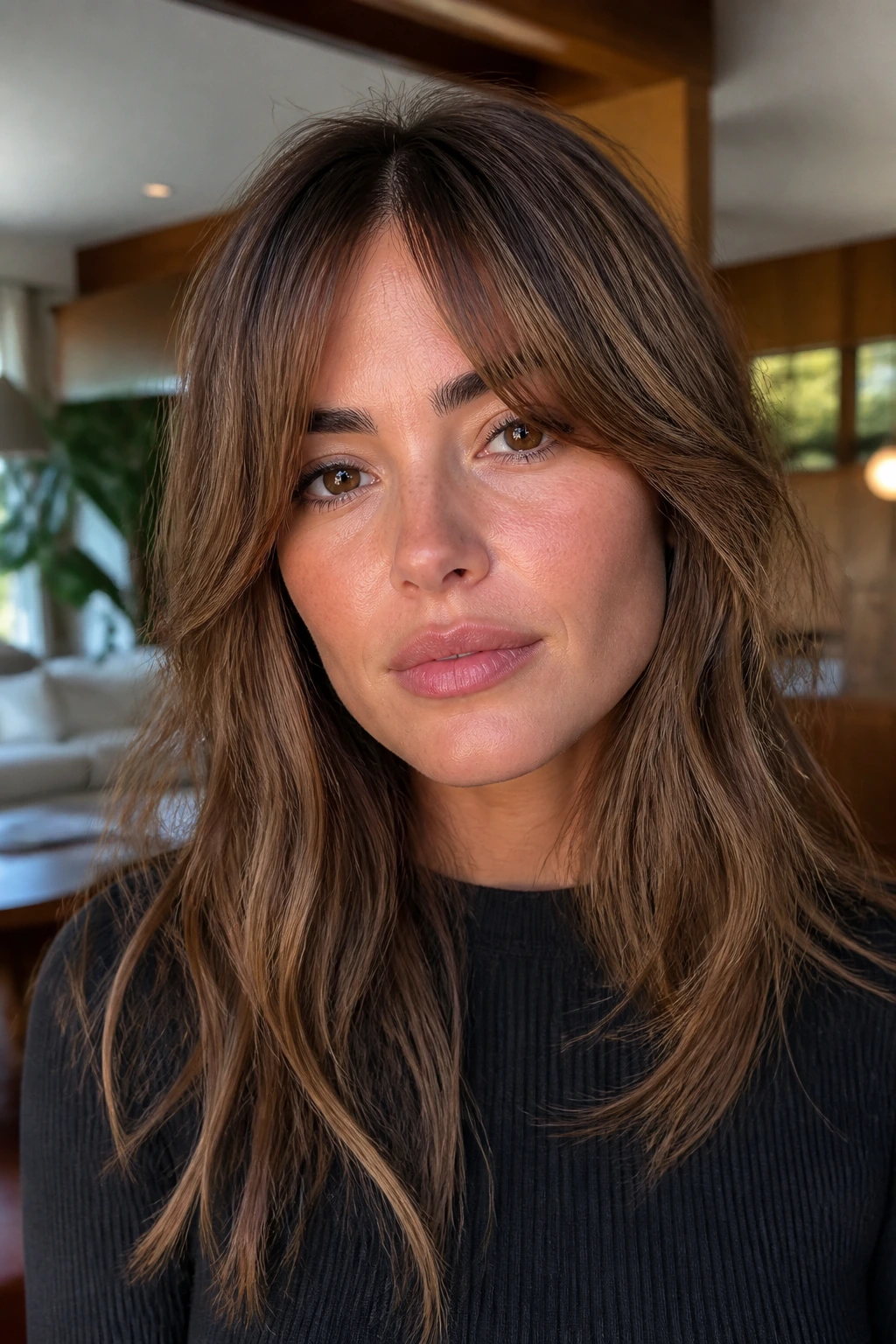
Bottleneck bangs start tight in the middle and open as they move outward, almost like the neck of a bottle widening into shoulders. The center is shorter, the sides are longer, and the whole effect lands somewhere between curtain bangs and a soft fringe.
That shape does a nice job of framing the eyes without swallowing the forehead. It works especially well on hair that has a little bend or body, because the sides can curve instead of hanging dead straight. If you like bangs that look lived-in rather than formal, this is one of the best places to land.
6. Birkin Bangs That Stay a Little Undone
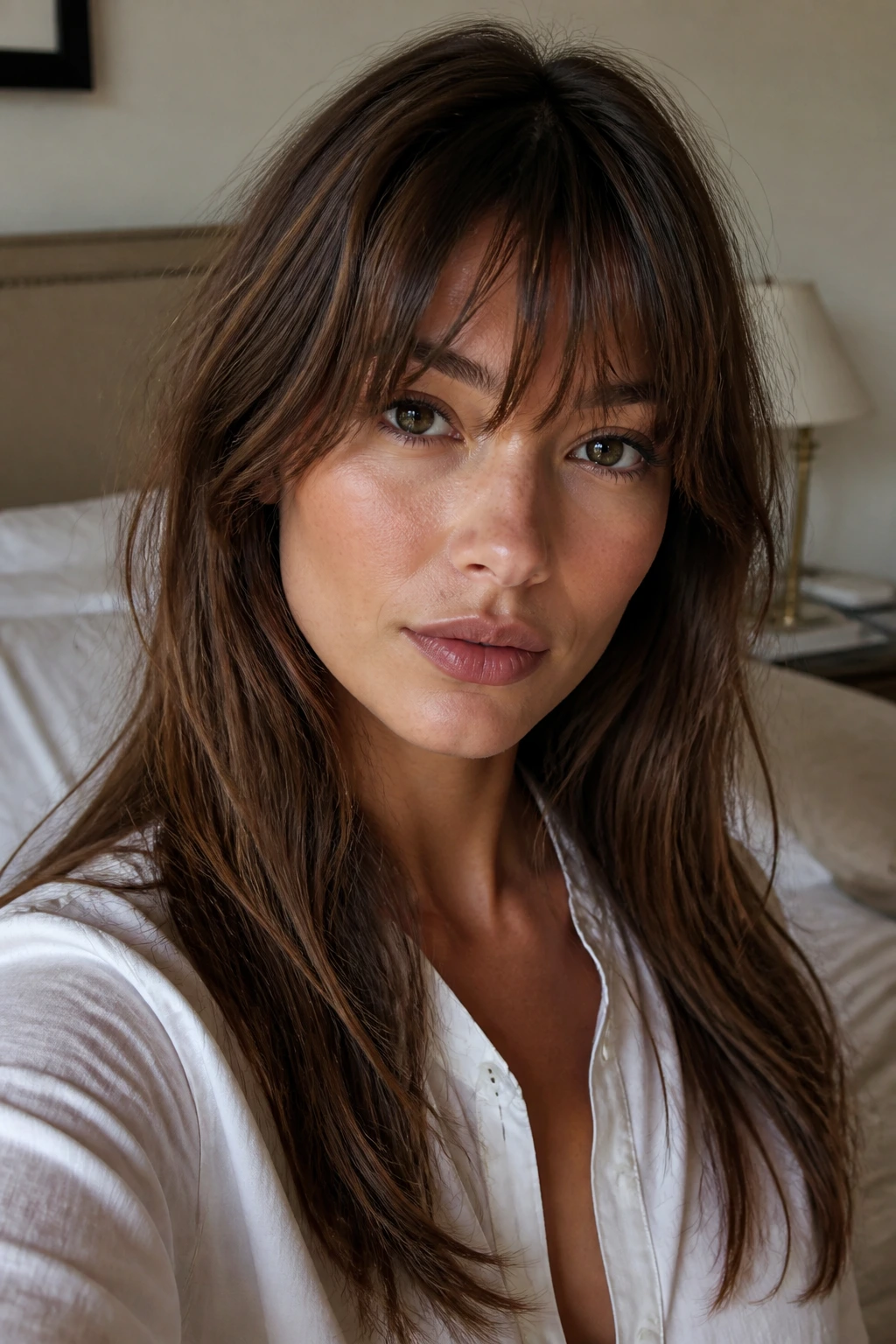
Birkin bangs sit in that sweet spot between polished and slightly messy. They’re usually eyebrow-grazing, a touch piecey, and loose enough to look like you did not spend twenty minutes arguing with a blow dryer. That is the point.
They work best when the ends are softened, not cut into a hard shelf. A stylist who knows how to point-cut can keep them from feeling heavy. I like this fringe on hair that already has some movement, because the shape looks better when it bends a bit instead of lying flat like paper.
7. Baby Bangs That Sit Above the Brows
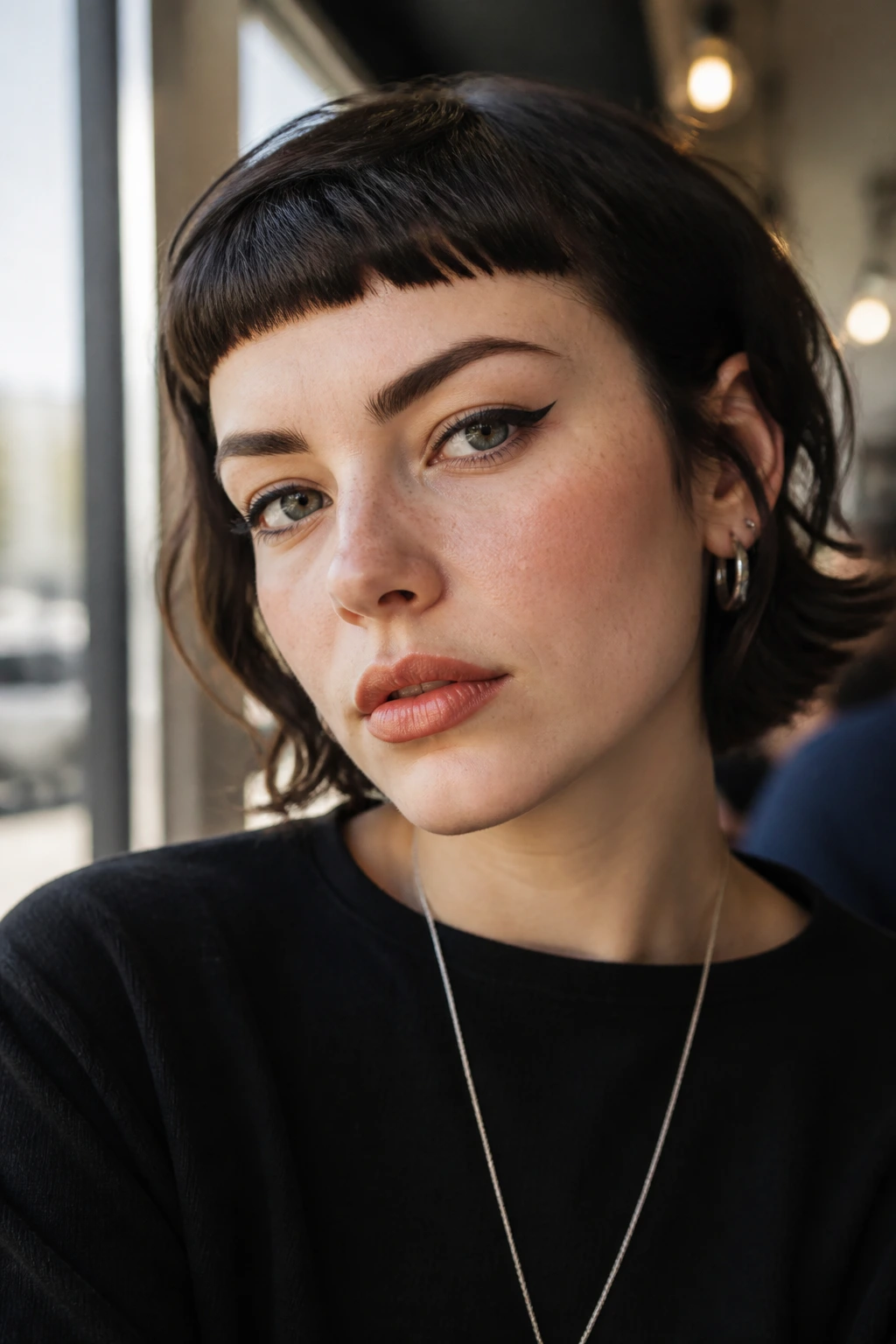
Baby bangs are the shortest fringe in the room, and they make a decision fast. They sit well above the eyebrows, often in the middle of the forehead or just slightly lower, which puts all the attention on the eyes and the line of the brow.
They’re not for blending in. Fine. That’s the whole charm. If your hairline has a cowlick or your texture springs up when it dries, tell the stylist before the scissors come out. Baby bangs look cool when they’re precise, but too-short baby bangs with a bend in the wrong place can turn stubborn in one wash.
8. Arched Bangs That Follow the Brow Shape

Arched bangs curve gently across the forehead, with the center a touch shorter and the sides gradually longer. The line mirrors the brow instead of fighting it, which keeps the style soft even when the cut is fairly full.
They suit women who want the face framed without the hard stop of a blunt fringe. The arch also helps if your forehead is longer and you want the top half of the face to feel more balanced. Dry them with a round brush that lifts slightly at the center, then let the sides fall on their own.
9. Choppy Bangs That Break the Line Up

Choppy bangs are built for motion. The ends are uneven on purpose, and that rough edge gives the fringe a piecey, textured look that doesn’t read as too neat. Thick hair benefits from this because the bulk gets broken up instead of sitting in one solid block.
The style is especially useful if you wear the rest of your hair wavy or layered. A choppy fringe keeps the front from feeling heavier than the lengths. If you ask for this cut, ask for point-cutting or texturizing at the ends, not a blunt slice.
10. Long Face-Framing Bangs That Blend Into Layers
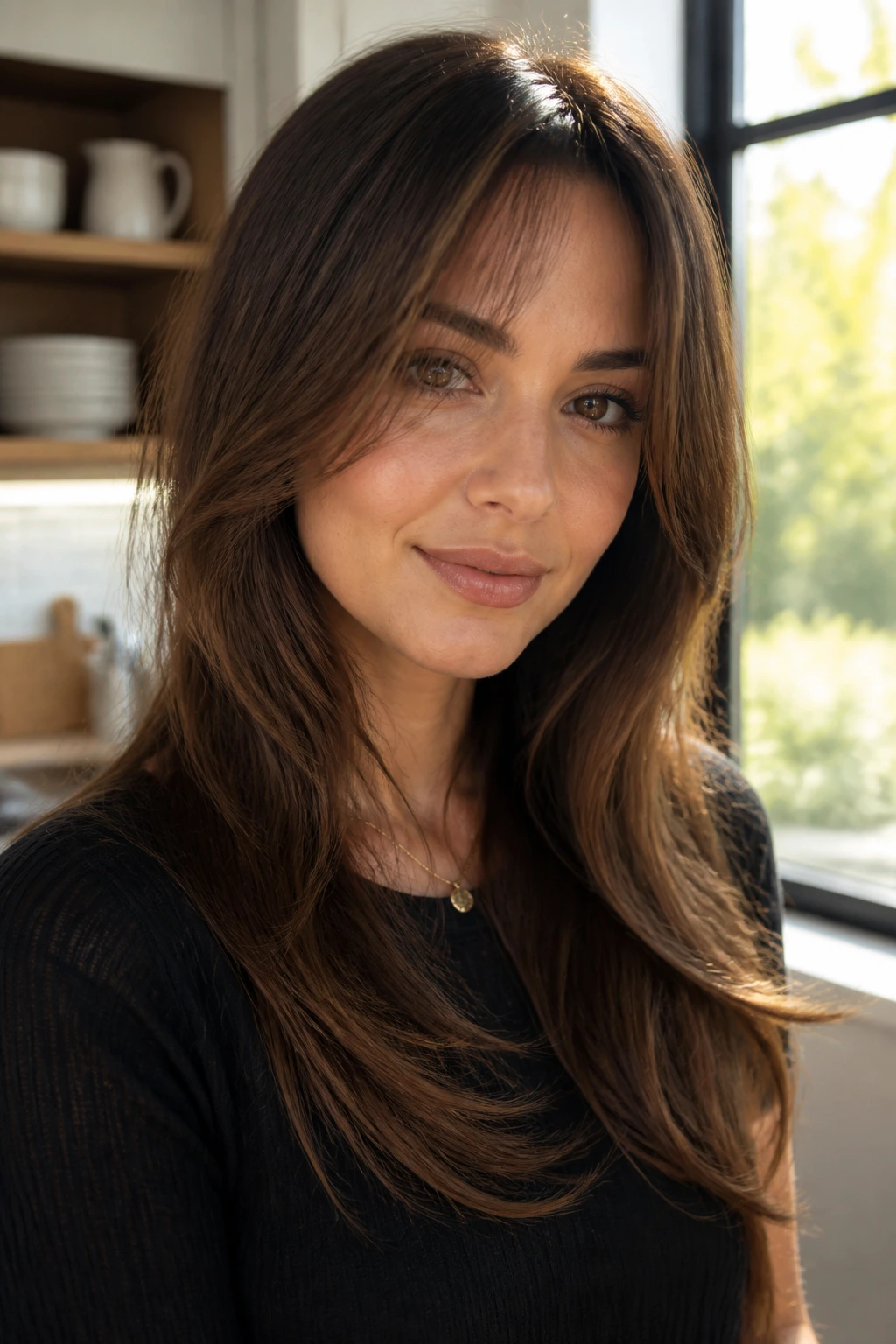
Long face-framing bangs are basically bangs that are in no rush. They start near the cheekbones or jaw and melt into the front layers, which means you get the shape of fringe without losing much styling freedom.
These are excellent for women who want the face to feel softer but don’t want to commit to a short front section. They tuck into ponytails well, work with waves, and grow out into regular layers without much drama. If you hate the feeling of hair sitting on your forehead, this is an easy compromise.
11. Feathered Bangs With a Soft Edge
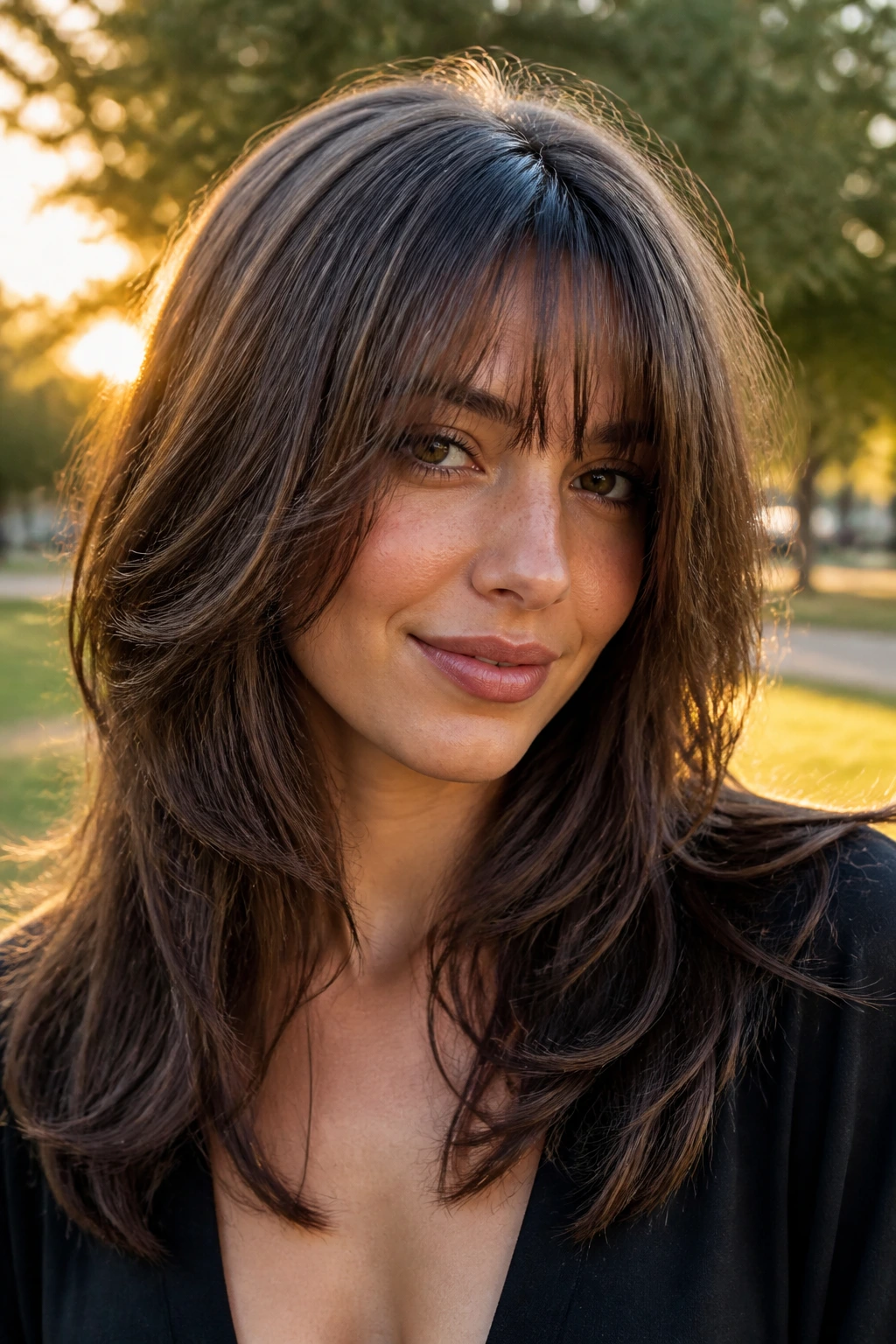
Feathered bangs have one job: keep the front from feeling heavy. The ends are brushed and softened so the fringe looks light, almost airy, with a little motion at the cheekbones. A round brush and a quick pass of the dryer do most of the work.
This style sits nicely with layered cuts and blowouts because it doesn’t make the front of the haircut feel boxed in. If your hair is thick, feathering removes the blunt weight without turning the fringe into frizz. That balance is hard to beat.
12. Curly Bangs That Respect the Curl Pattern
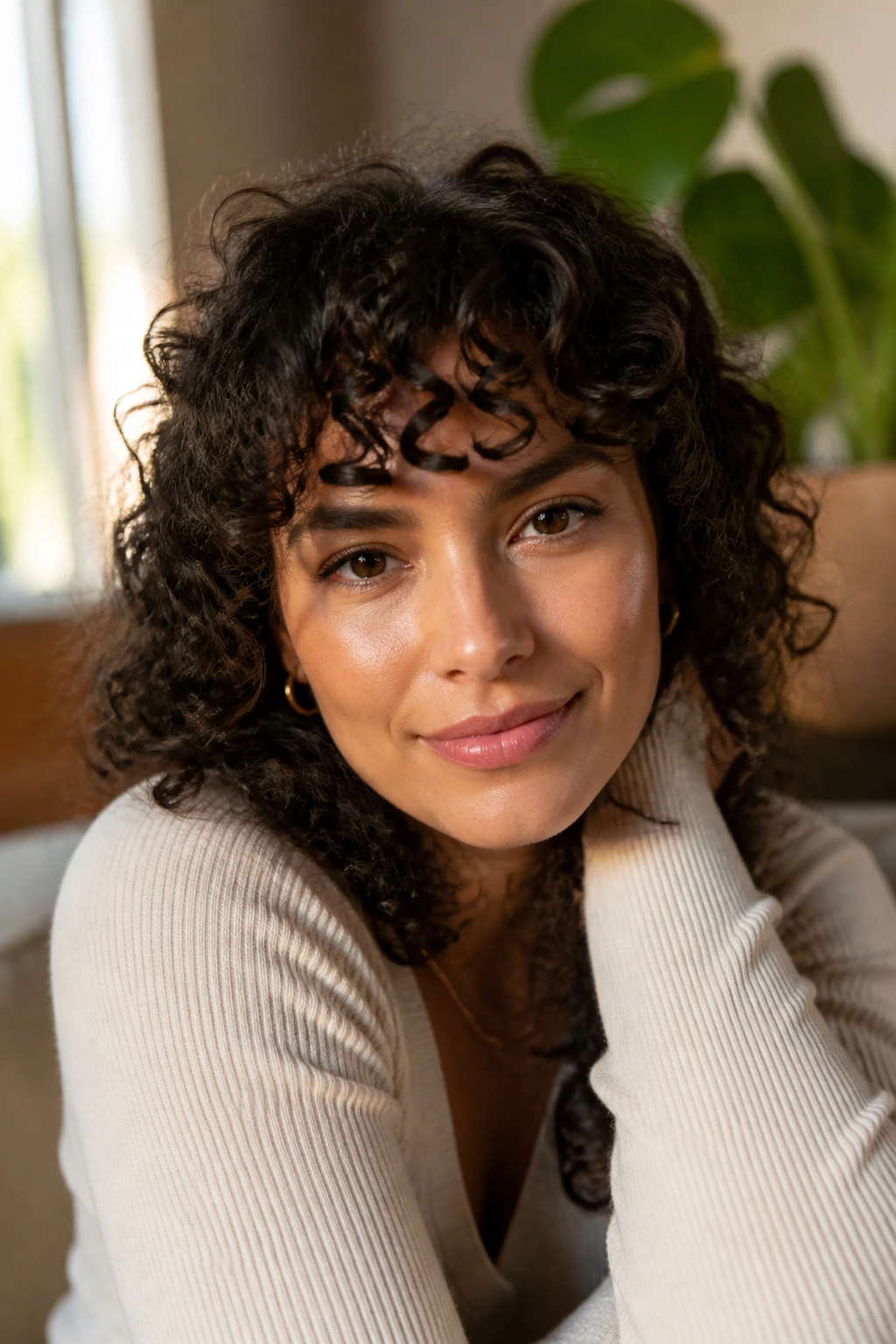
Can curly bangs work without turning into a triangle? Absolutely, if they’re cut the right way. Curly fringe should usually be shaped dry, or at least nearly dry, because a curl will shrink and lift in a way straight hair never does.
The best curly bangs sit a little longer than you think you need. That extra length keeps them from springing above the brow the moment humidity shows up. A tiny bit of curl cream is enough; too much product makes the front look wet instead of defined.
13. Shag Bangs That Blend Into Layers
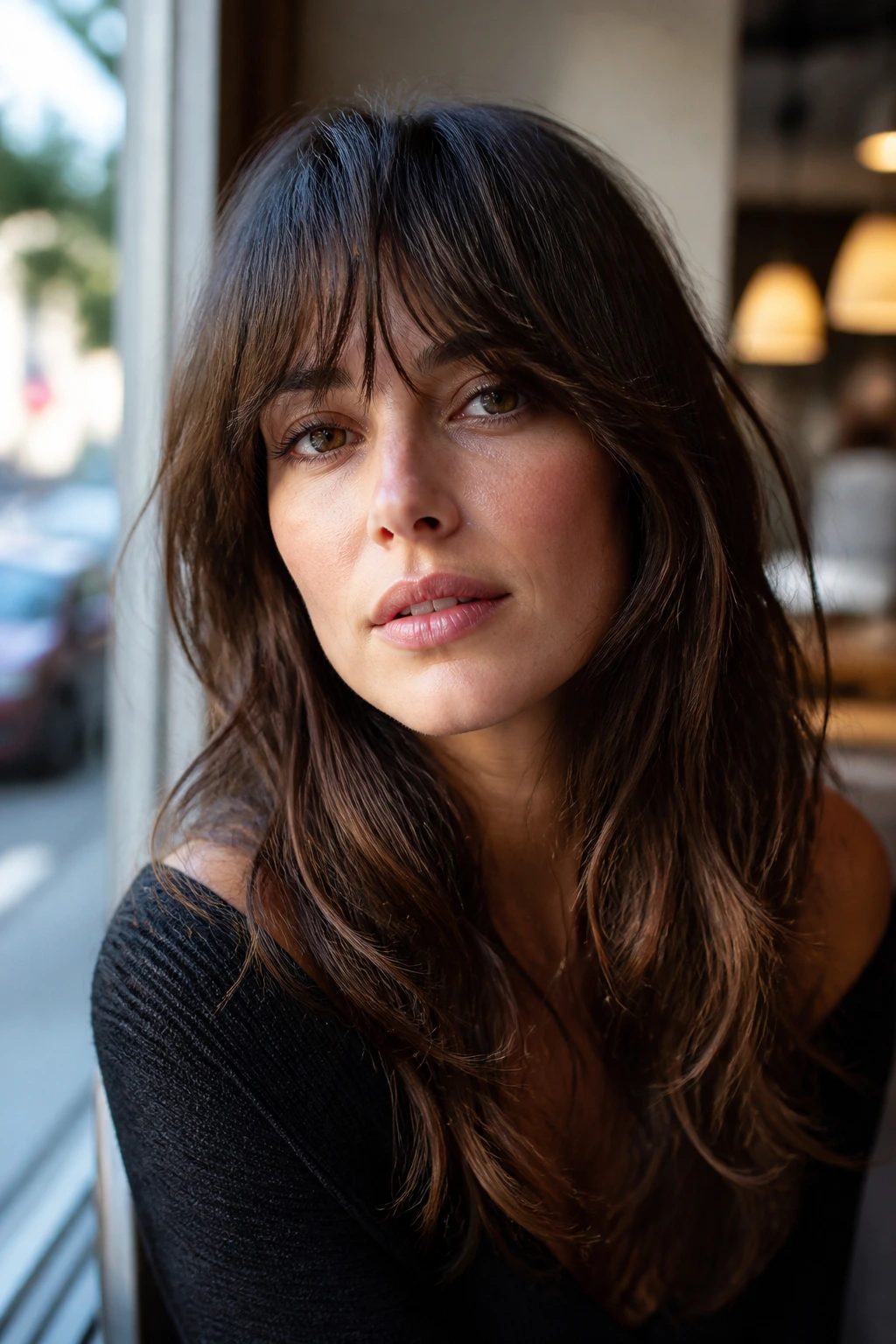
Shag bangs are messy in the useful way. They don’t sit apart from the rest of the haircut; they melt into the top layers and front pieces so the whole shape feels loose and a little undone. That’s why they work so well with shags and wolf cuts.
Good to know: these bangs usually look better when they’re not over-styled.
Who likes them most: anyone with waves, texture, or a haircut that already has movement around the crown.
Best styling move: a quick scrunch with mousse and a rough dry keeps them from going flat.
14. Micro Fringe That Barely Covers the Forehead
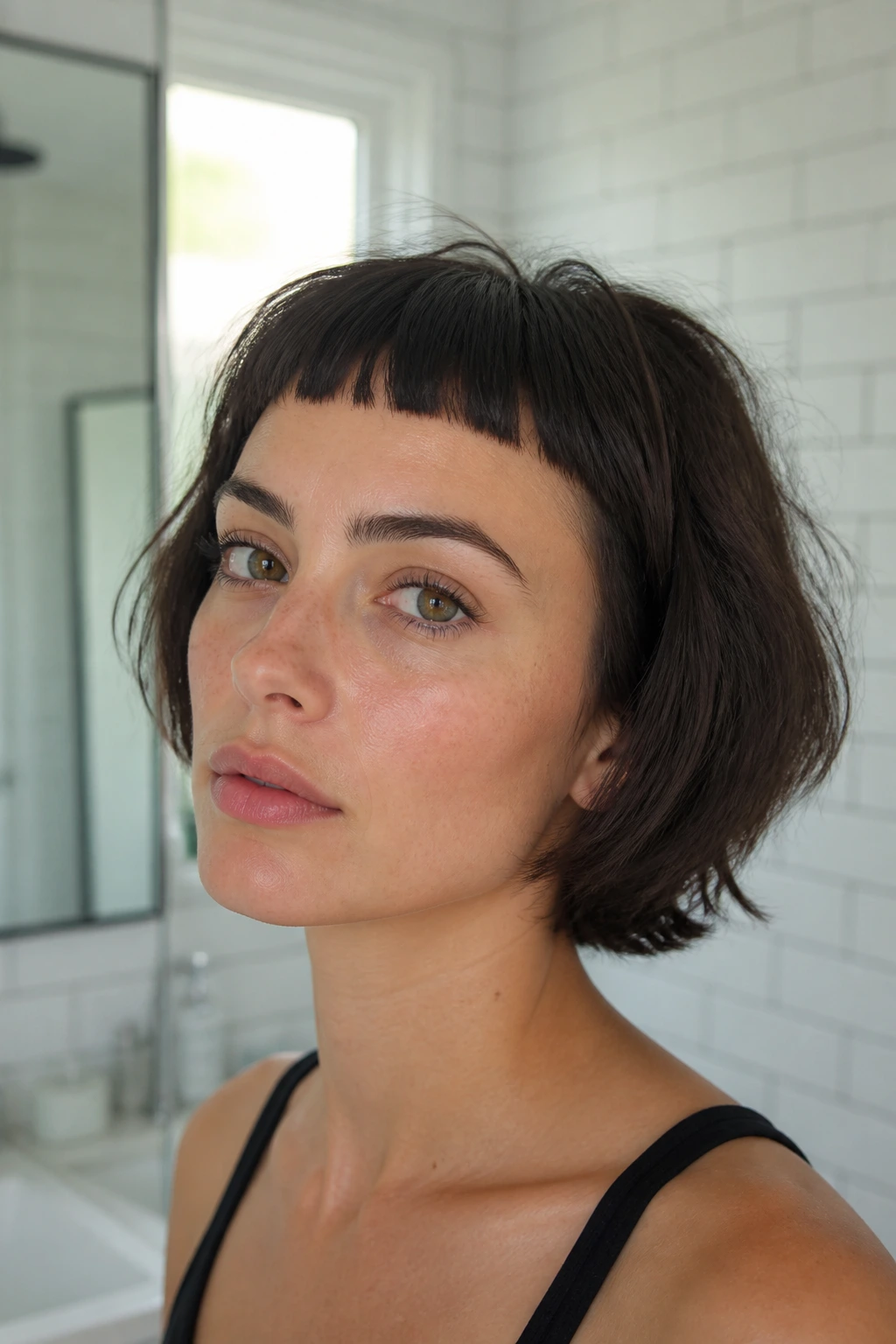
Micro fringe is shorter and more stripped down than baby bangs. It sits high on the forehead and creates a sharp, graphic line that feels intentional in a very specific way. If you like strong shape and do not mind a fringe that announces itself from across the room, this is it.
It works best when the cut is precise and the maintenance schedule is real. There’s no hiding a micro fringe under a hat without changing the whole mood of the style. Keep it clean, crisp, and trimmed before it starts brushing the brows.
15. Split Fringe That Falls Into Two Pieces
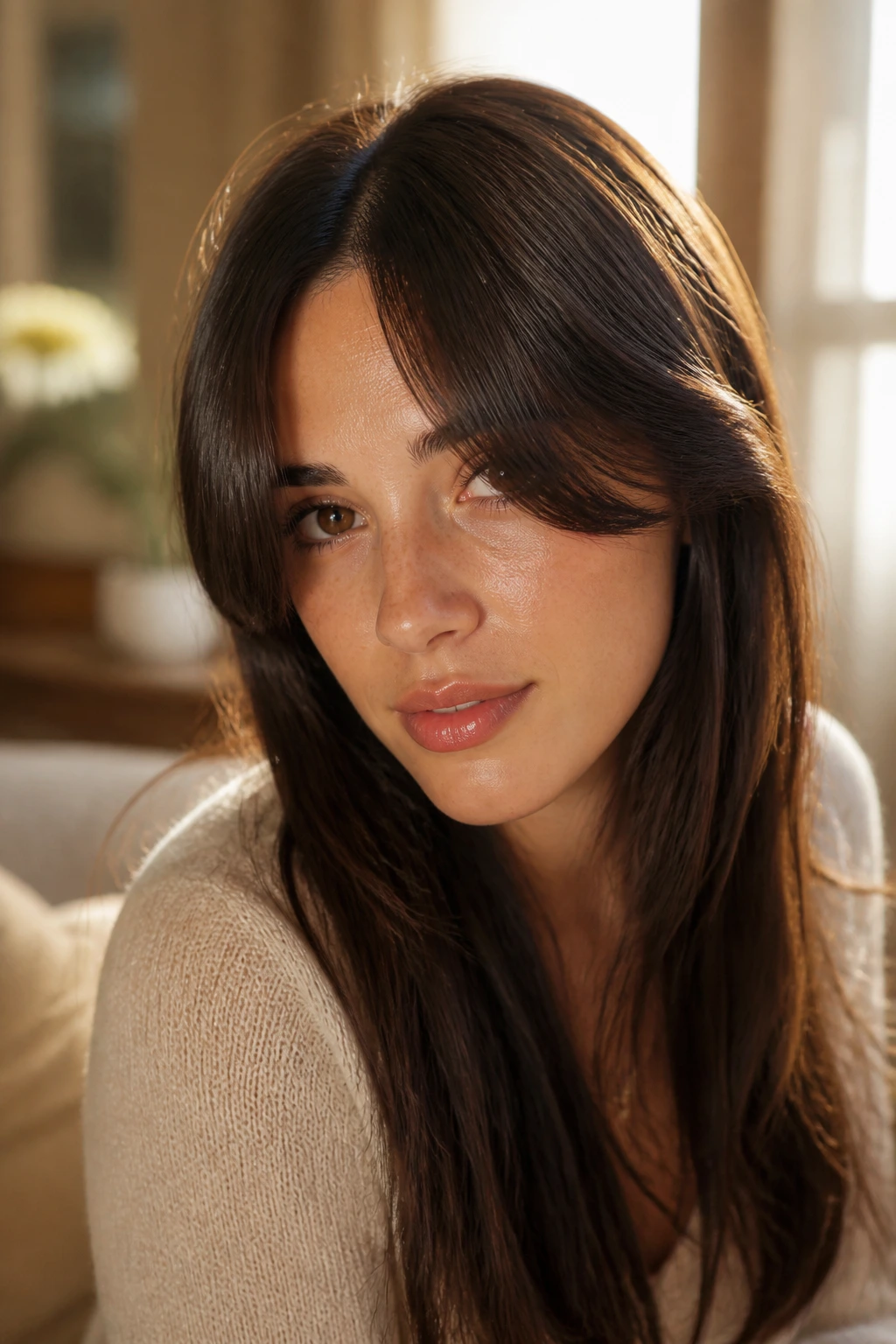
Split fringe leaves a gap in the middle or just off-center, so the hair drops into two sections instead of one solid curtain. The look is softer than a blunt line and more open than full curtain bangs.
It’s a good choice if your hair naturally wants to part in the middle but you still want fringe up front. The style also handles growth well, because the split makes a little extra length look like a choice. If your front pieces are stubborn, a quick mist of water and a blow-dry in opposite directions usually fixes the shape.
16. Piecey Bangs That Separate Into Strands
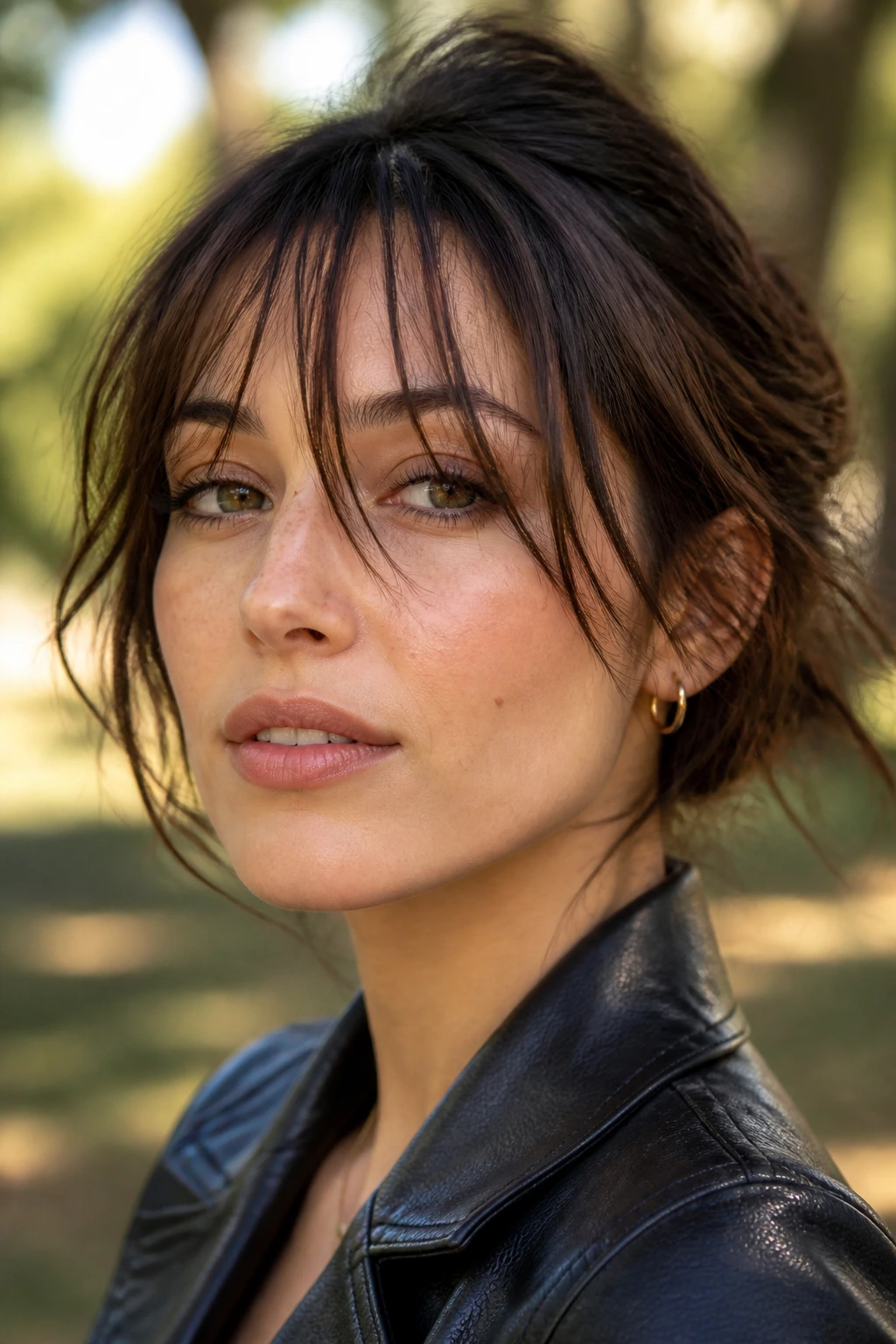
Piecey bangs are all about division. Instead of one dense front section, the hair breaks into visible strands, which creates texture and keeps the fringe from feeling heavy. They’re especially nice on medium-to-thick hair, where a solid mass across the forehead can feel too boxed in.
A little styling paste or light wax goes a long way here. Too much and the pieces start to look wet. The best version still shows movement, with a few strands catching more light than the rest.
17. Brow-Grazing Bangs That Sit Right on the Edge

Brow-grazing bangs land exactly where the name says: at the brows, not in the eyes, not floating too high above them. That length is flattering because it gives structure without making the forehead disappear.
They’re a strong middle ground for women who want visible fringe but don’t want to babysit a short cut. The key is precision. If they’re cut unevenly, they start to poke into the lashes or separate in odd places. If they’re clean, they look quietly sharp.
18. French-Girl Fringe With an Easy Bend
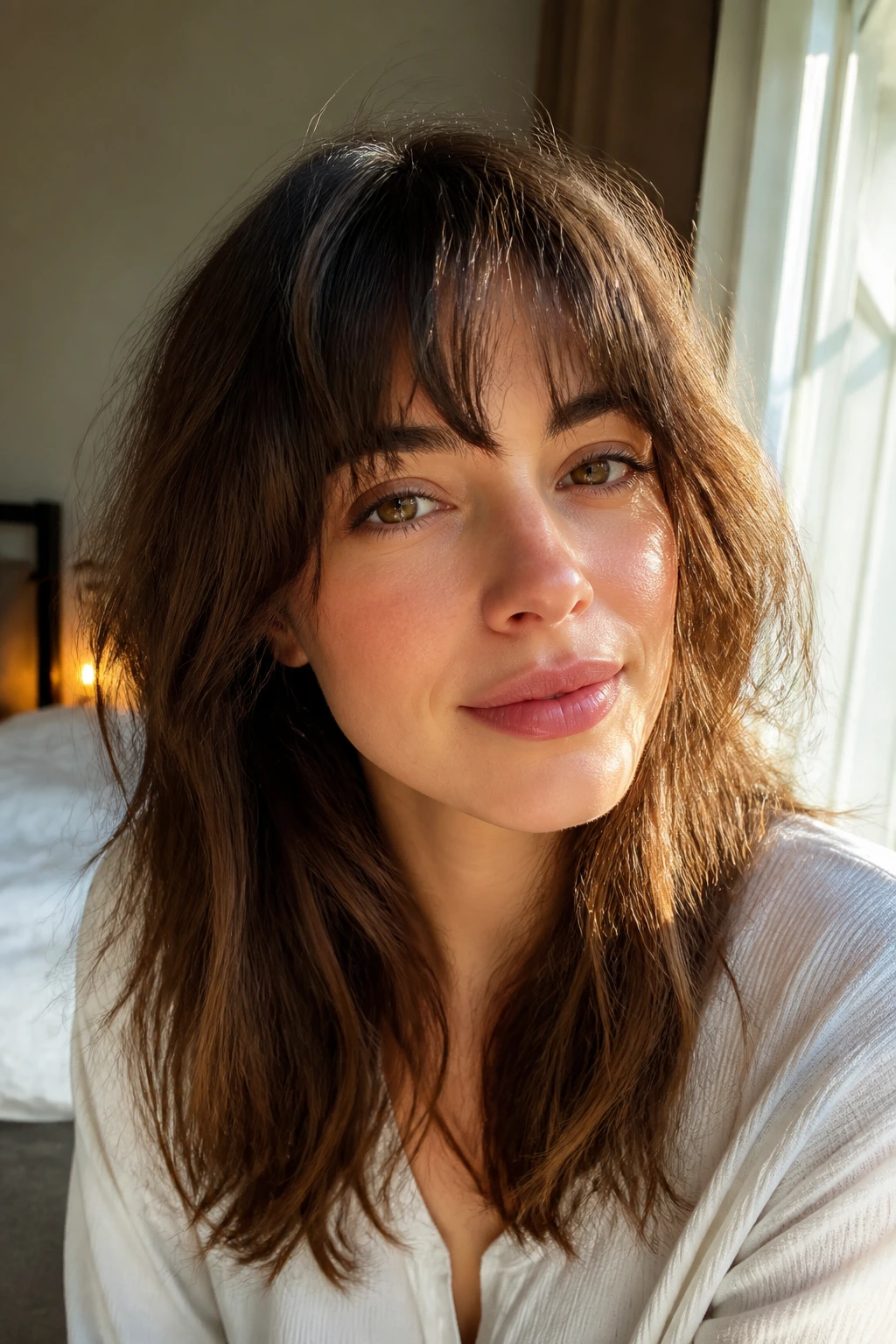
French-girl fringe is more about attitude than a strict shape. It’s usually soft, a little lived-in, and cut so it falls naturally instead of sitting like a shellacked strip across the forehead. There’s often a slight bend, a bit of irregularity, and just enough length to look casual.
This is a good pick if you hate overworked hair. A rough dry and a quick finger-comb often beat a careful blowout. It suits people who want bangs with personality but not a lot of maintenance debt.
19. Textured Blunt Bangs With Soft Ends
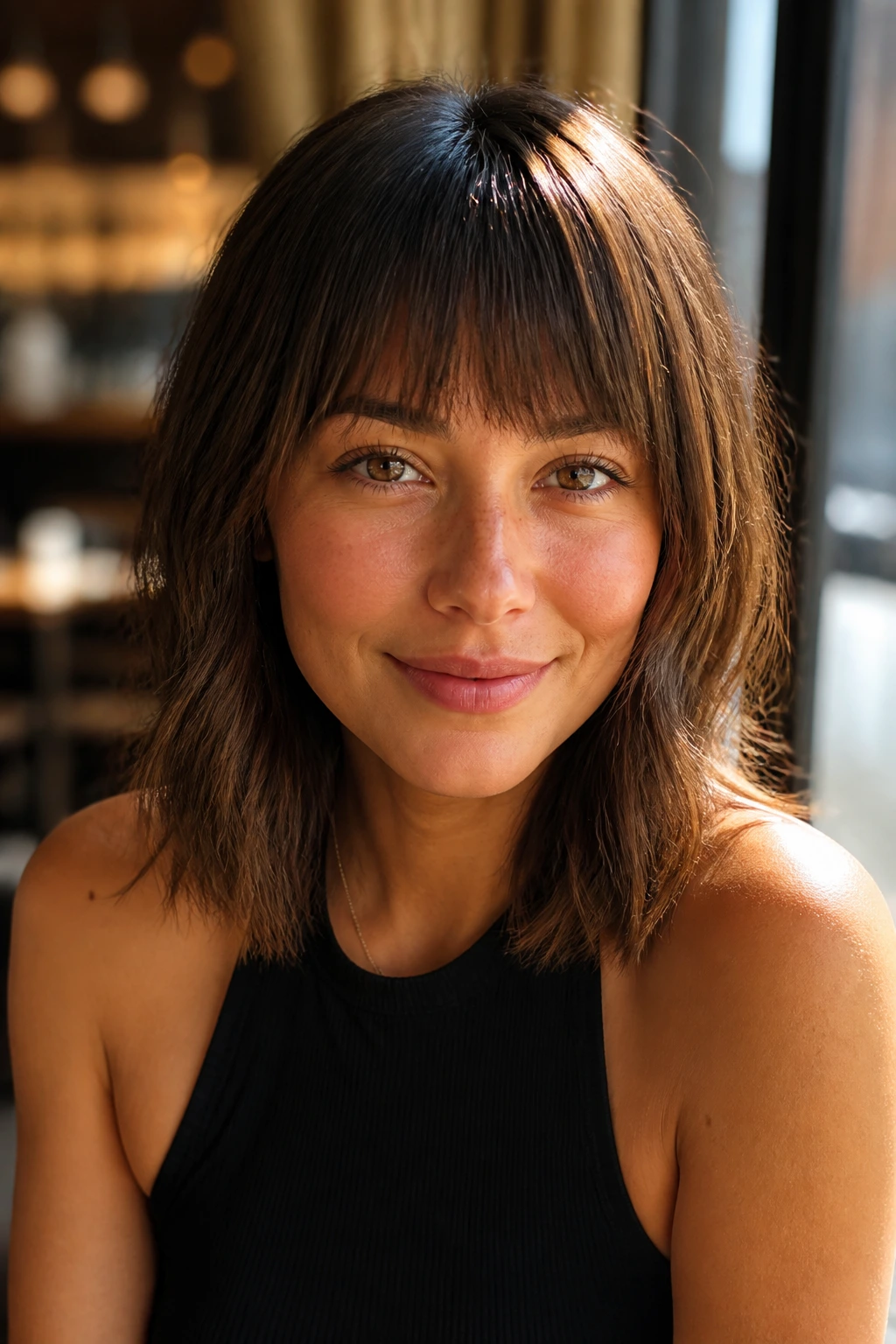
Textured blunt bangs give you the presence of a straight fringe without the hard, glassy edge. The line is still full, but the ends are broken up just enough to keep the front from feeling too rigid. That makes them easier to wear on thicker hair.
A stylist usually point-cuts into the edge so the fringe sits with a little movement. This matters more than people think. Pure blunt bangs can be gorgeous, but once the front starts to separate, the textured version often holds up better in real life.
20. Soft Crescent Bangs That Curve Around the Eyes
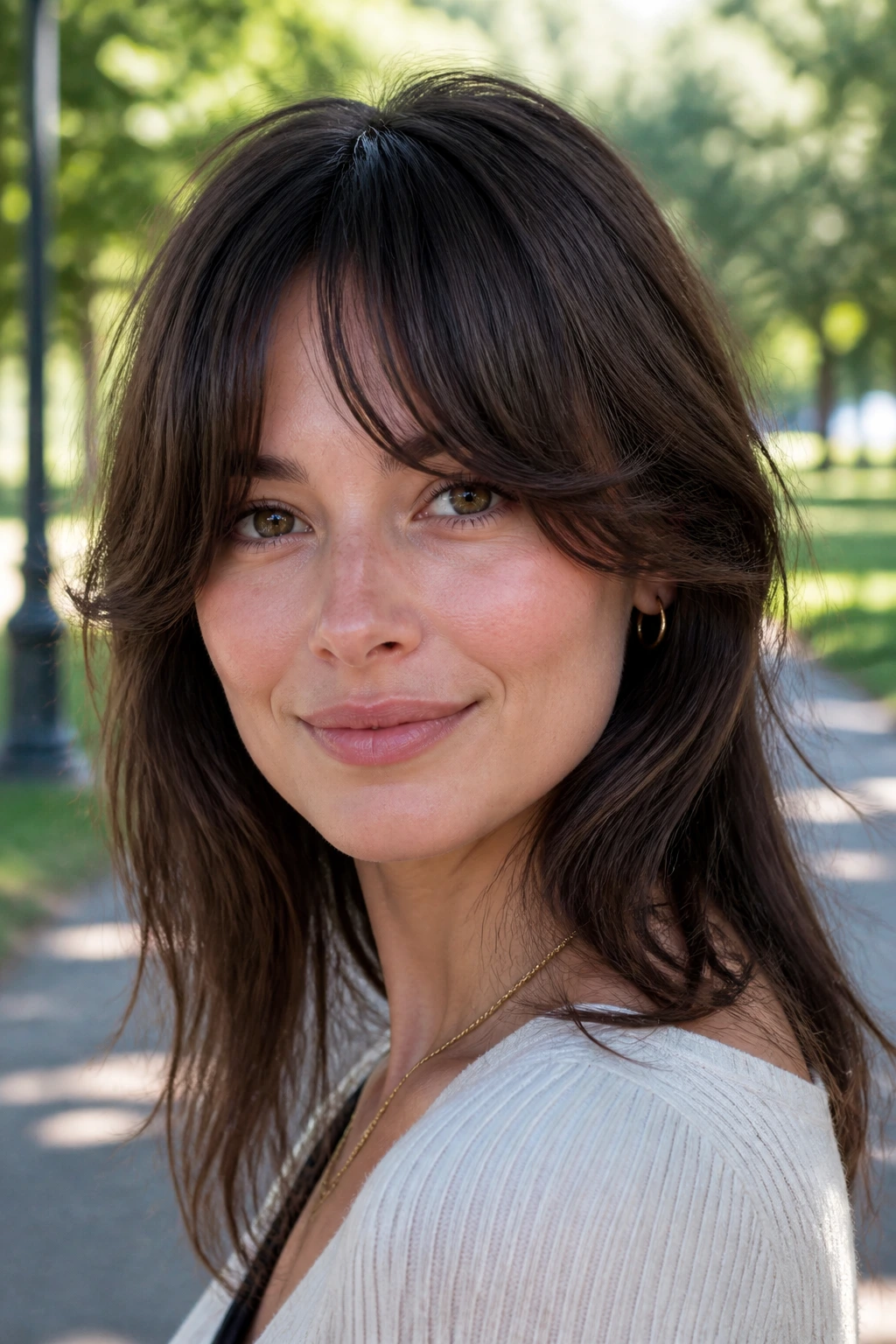
Soft crescent bangs curve gently across the forehead, with the center sitting shorter and the sides sliding down toward the temples. The shape feels friendlier than a strict straight line and more polished than a shaggy piecey fringe.
They suit women who want the face framed without a lot of visual weight at the center. The curve works especially well if your eyes are one of the main features you want to emphasize. Dry them with a brush that follows the arc, then let them cool before you touch them again.
21. Layered Curtain Fringe With Extra Movement
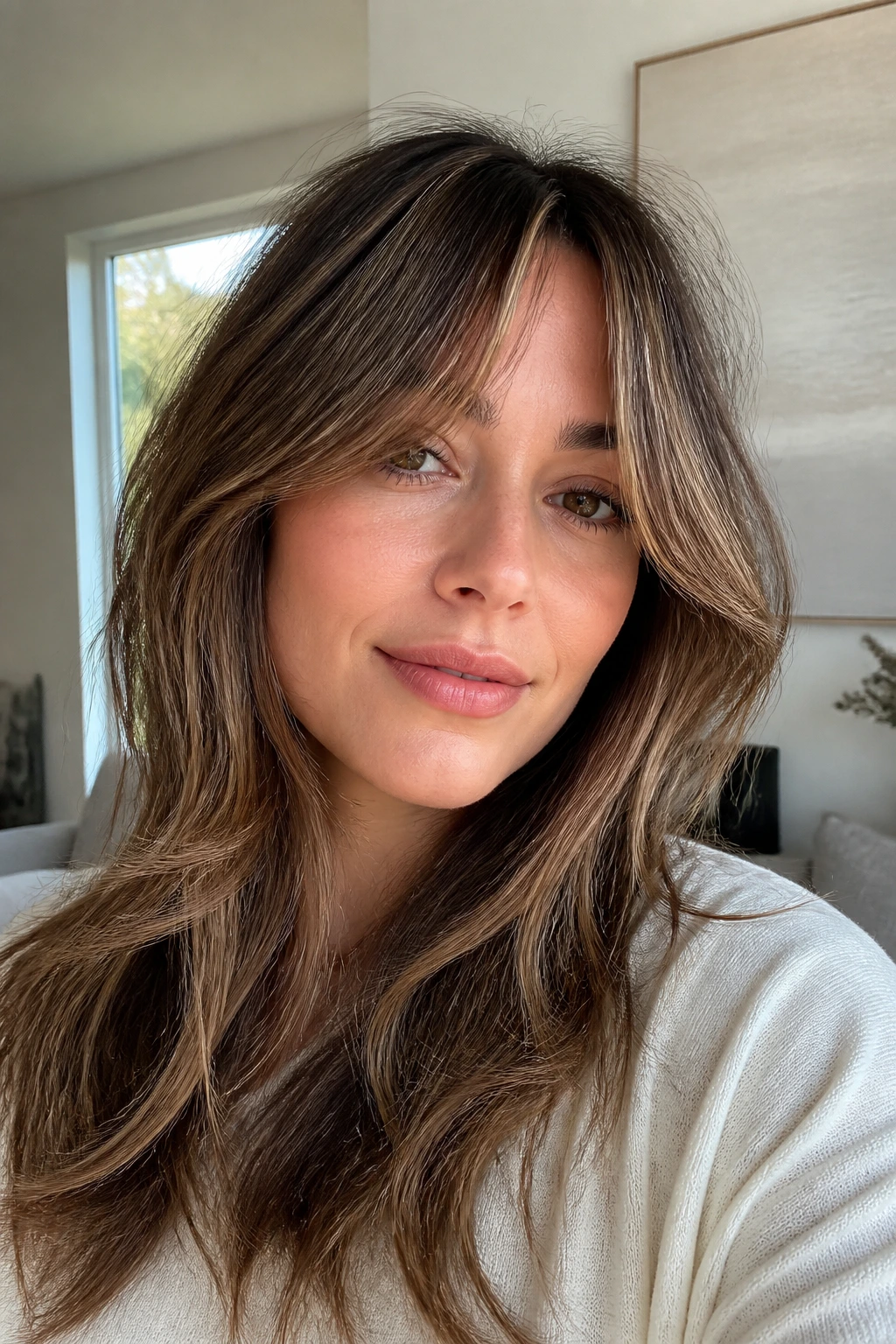
Layered curtain fringe takes the usual center split and adds more internal layering, so the pieces do more than just fall open. They move, bend, and shift around the face instead of sitting in one flat sheet.
That extra layering is useful on thicker hair or on cuts with a lot of body through the ends. It keeps the fringe from becoming too heavy at the cheekbones. If your curtain bangs have started to feel sleepy, this is the version that wakes them up.
22. Tapered Bangs That Thin Toward the Sides
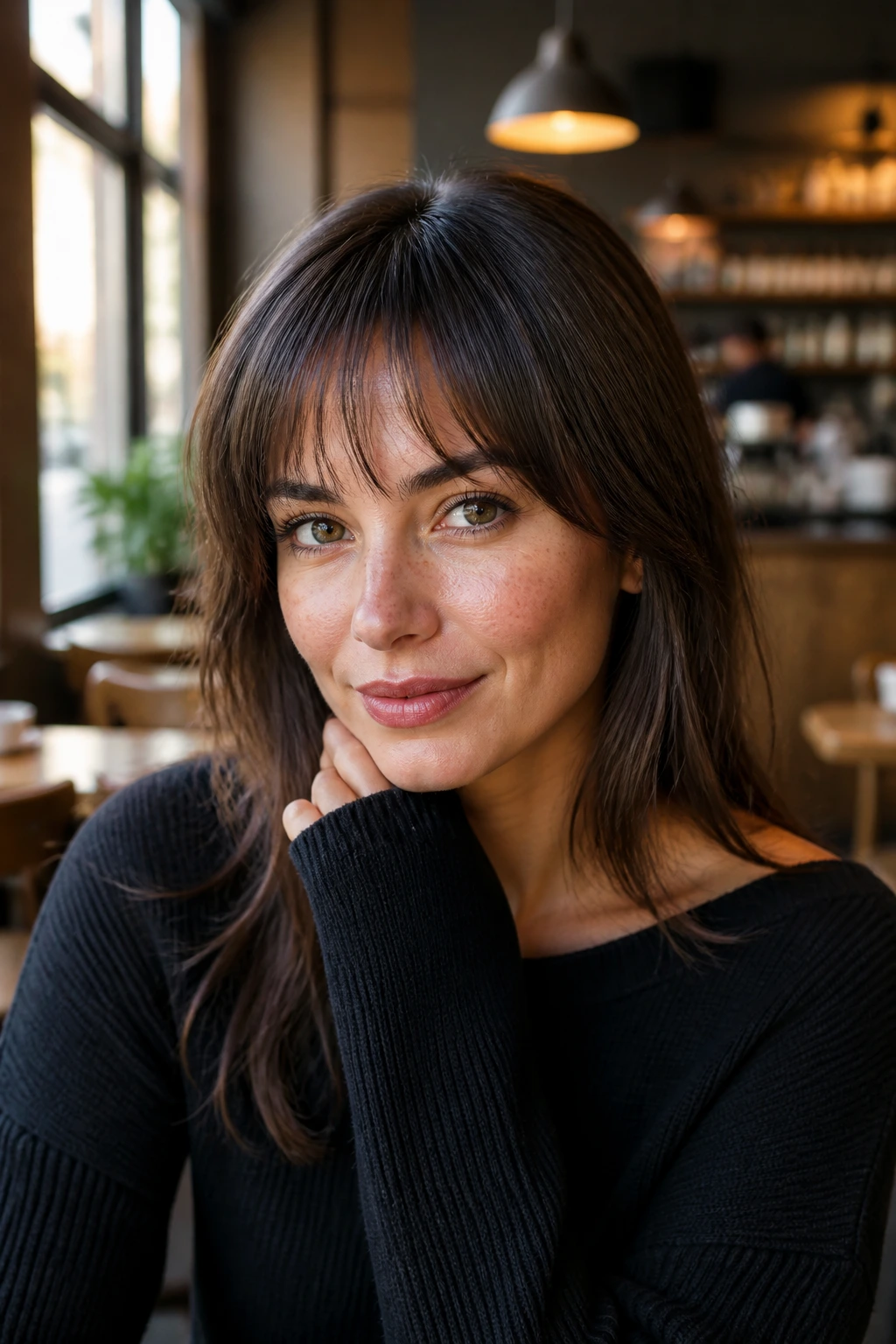
Tapered bangs narrow as they move outward, which lets the front stay full enough to frame the face without turning the temples into one bulky shelf. The effect is subtle, and that’s why it works.
This style flatters hair that wants to look neat but not stiff. It’s also a smart choice if your forehead is wider and you want the sides to ease into the rest of the haircut instead of stopping hard. The taper gives the eye a clean path down the face.
23. Rounded Bangs That Form a Gentle Arc
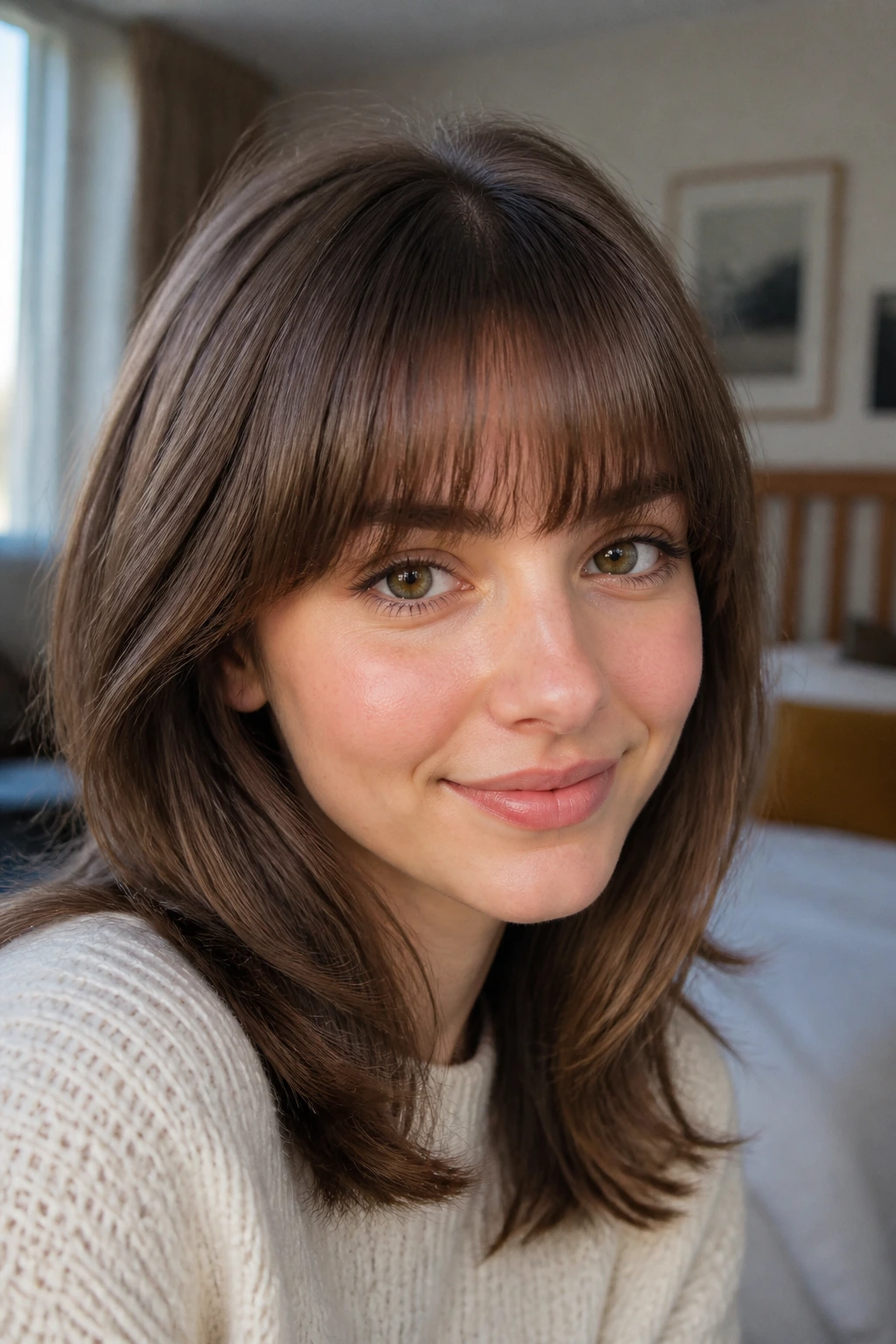
Rounded bangs follow the curve of the forehead instead of cutting straight across it. The line is soft, almost like a shallow arch, which makes the whole cut feel warmer and less severe.
They’re especially good on longer faces, because the rounded shape shortens the visual space in the middle without making the fringe heavy. A lot depends on the blow-dry here. If the ends are pushed under just a bit, the arc stays clear; if they dry flat, the shape can disappear.
24. Sleek Straight-Across Bangs That Sit Flat and Smooth
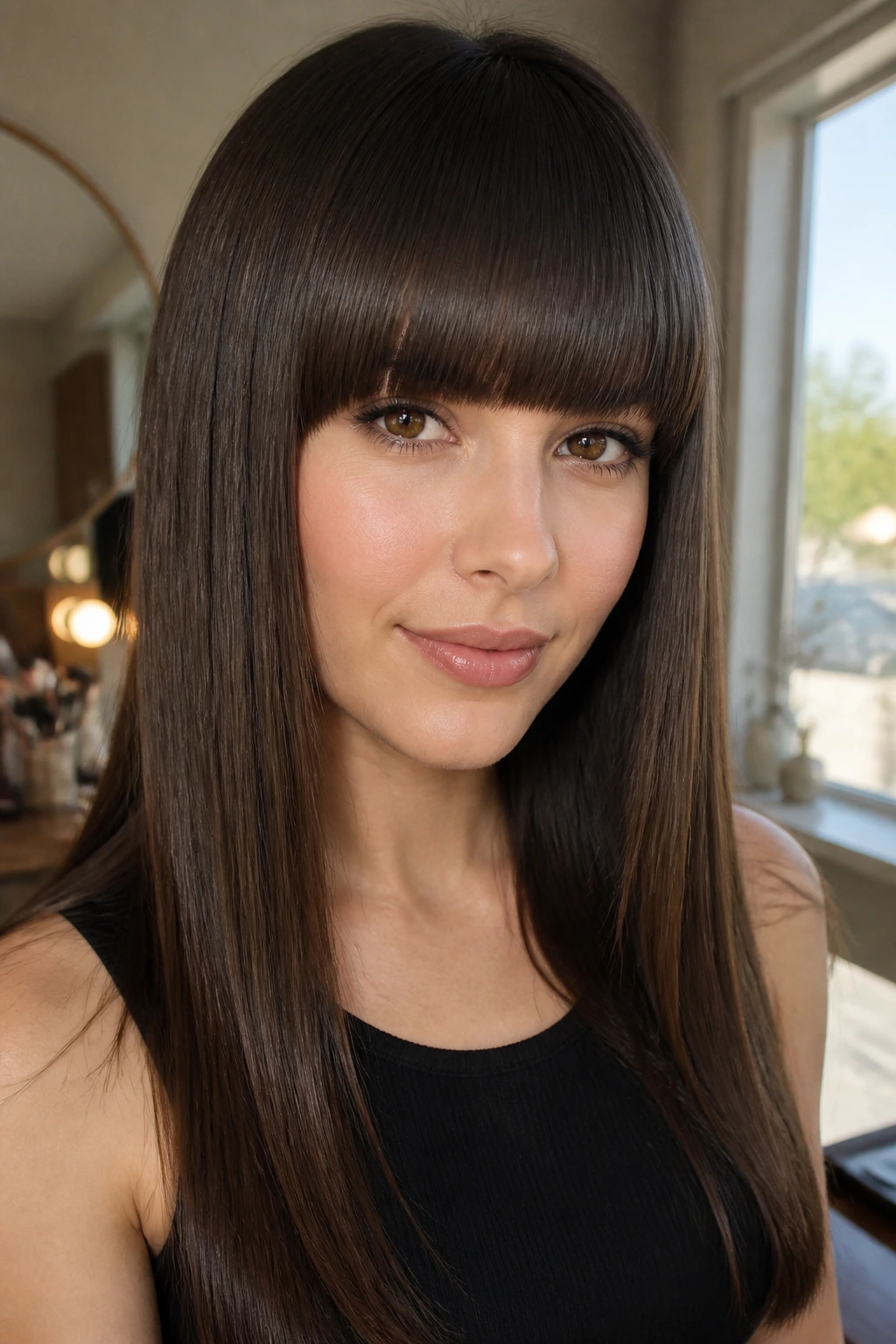
Sleek straight-across bangs are the sharpest version of a classic fringe. The line is clean, the surface is smooth, and the finish usually needs a blow-dryer, a small brush, or a flat iron to stay in place.
These bangs look best when the haircut around them has enough structure to match. If the rest of the hair is wild and the bangs are pin-straight, the contrast can feel accidental instead of chic. Keep heat protectant in the routine, because this style shows every rough edge.
25. Grown-Out Bangs That Still Look Intentional
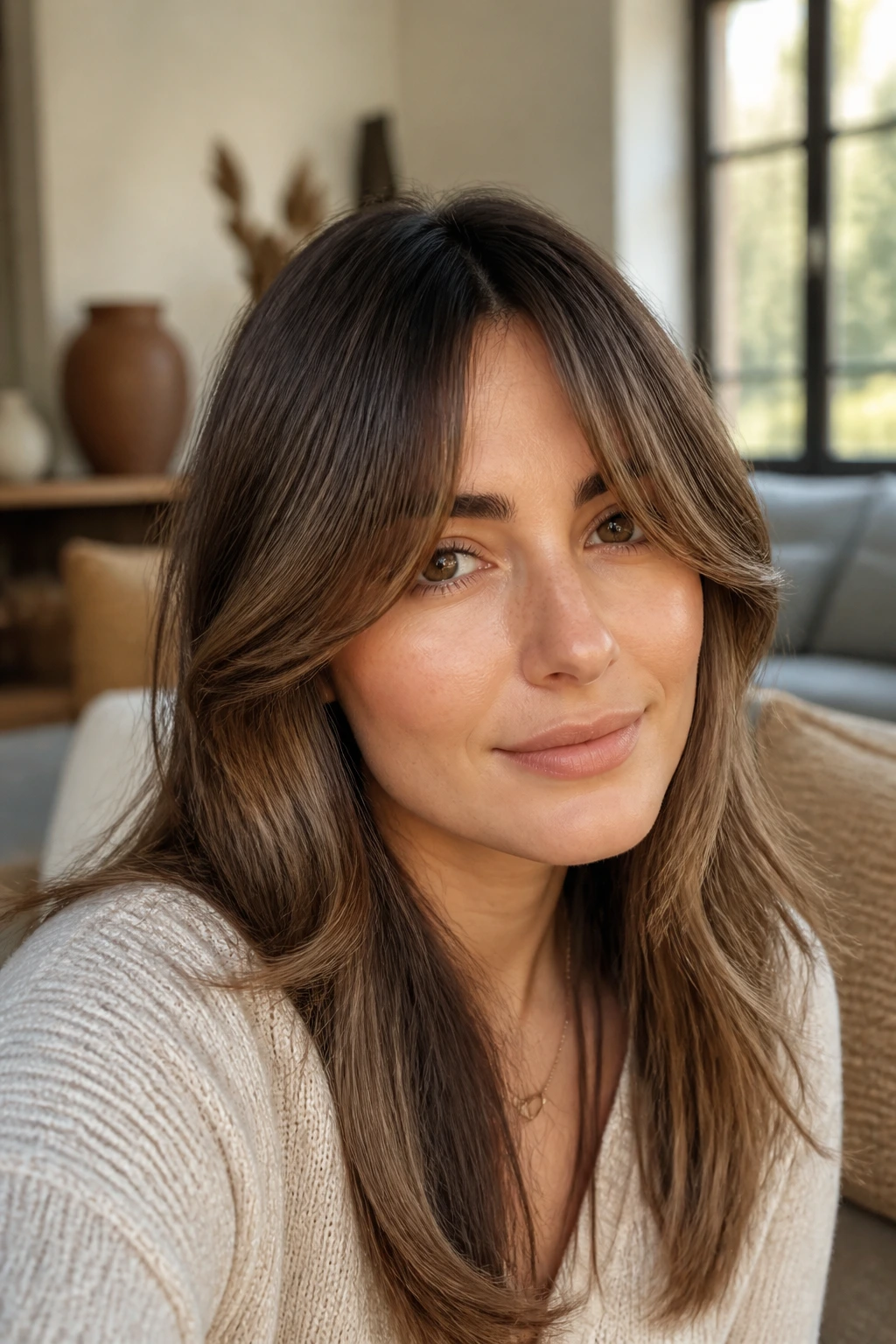
Grown-out bangs are what happens when a fringe gets a little longer and starts to blend into the sides instead of sitting as a separate section. The best versions keep a soft opening near the center or a sweep to one side so they do not turn into awkward in-between hair.
This is one of the easiest bang styles for women who want a pause between trims. It gives you movement around the face without daily pressure to keep the cut exact. If you’re growing out a shorter fringe, ask your stylist to shape the front into a plan instead of just letting it escape.
26. Flipped-Out Fringe With a Retro Bend

Flipped-out fringe sends the ends away from the face instead of under it, and that little turn changes the whole attitude of the cut. It feels light, slightly retro, and a little playful without getting cartoonish.
The style works especially well when the bangs aren’t too dense. If they’re too heavy, the flip gets lost. A round brush or flat brush with a quick outward flick at the ends usually does the job, and a cool-shot blast helps lock the bend before the hair falls flat again.
27. Wolf-Cut Fringe With a Jagged Edge
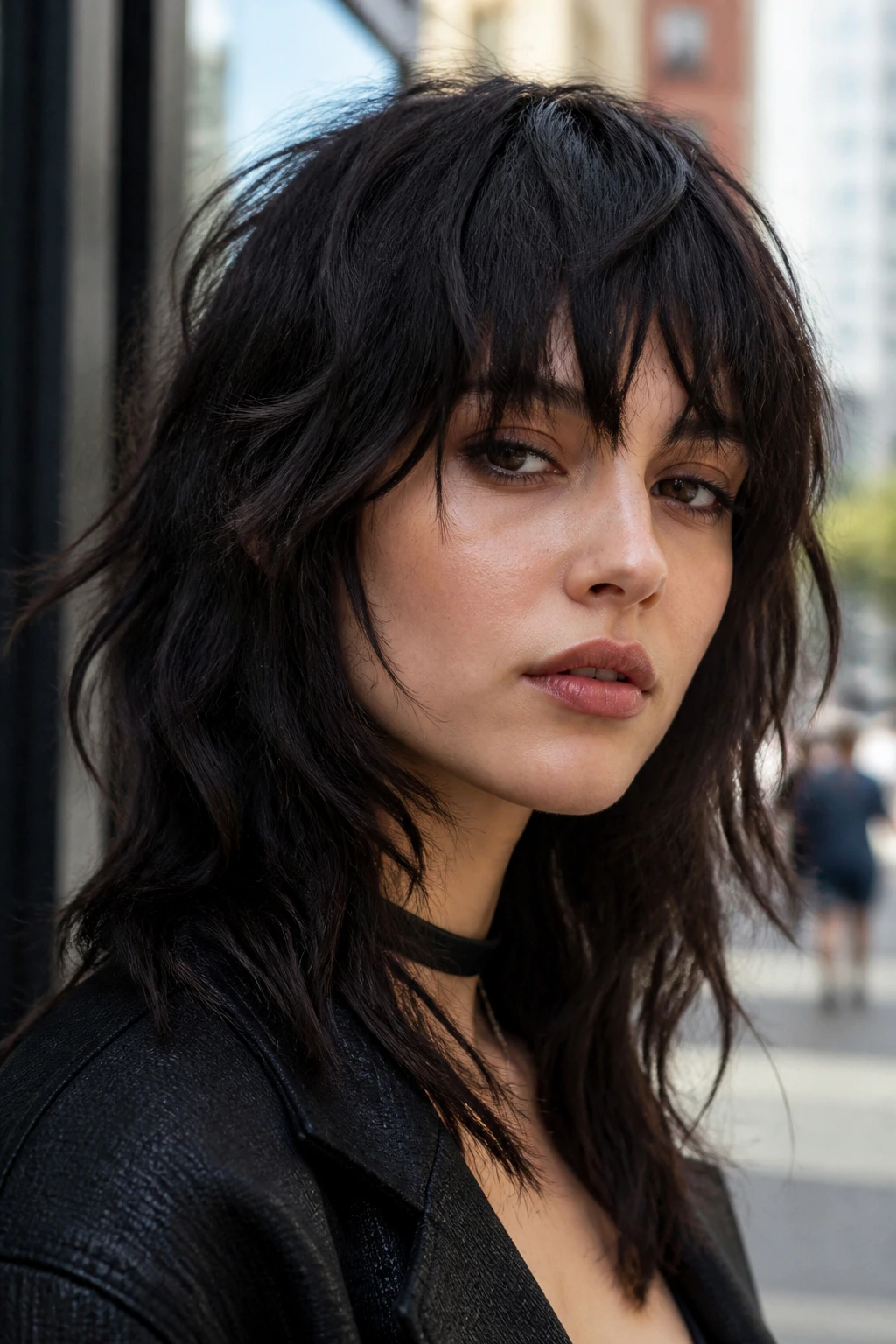
Wolf-cut fringe belongs with shaggy, layered hair. It’s irregular, a little wild, and often shorter in the middle with longer sides that mingle into the rest of the cut. The shape feels casual, but there’s a lot of intention underneath that mess.
This is not the fringe for someone who wants neatness. It looks best when the hair has texture and a bit of natural lift at the crown. If your hair is flat, the fringe can still work, but the rest of the cut needs movement or it will read as one lonely choppy section.
28. U-Shaped Bangs That Dip in the Center
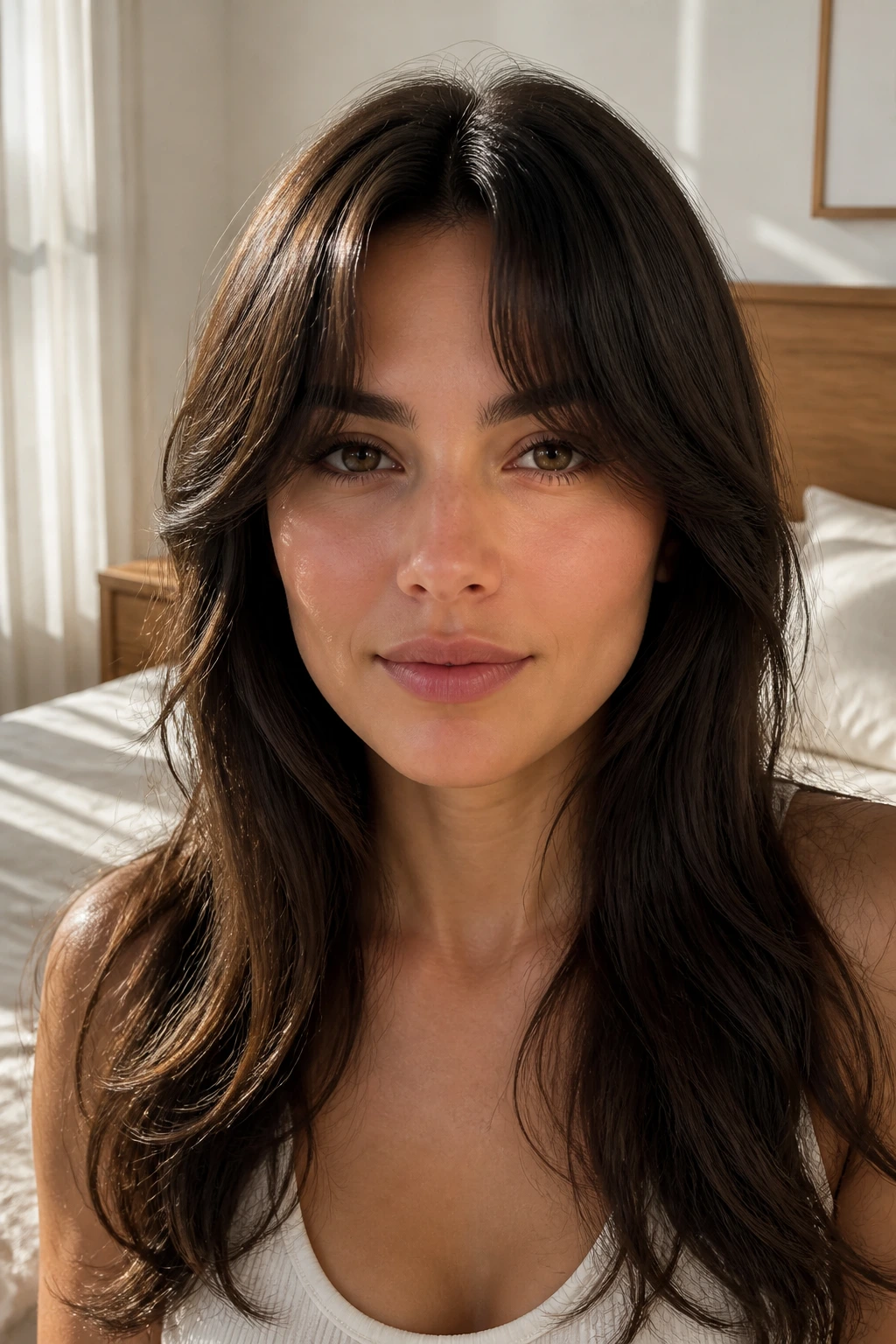
U-shaped bangs create a gentle dip in the center, with the sides sitting a little higher and longer, so the front curves around the face in a soft cradle. They’re less common than curtain bangs, which is part of why they feel fresh when they’re done well.
The shape works nicely when you want the forehead framed but not closed off. It can also help balance strong cheekbones because the curve guides the eye downward in a smooth way. Ask for the shape on dry hair if your texture has any bend at all; wet cutting can hide the real fall.
29. Angled Fringe That Runs Diagonal Across the Face
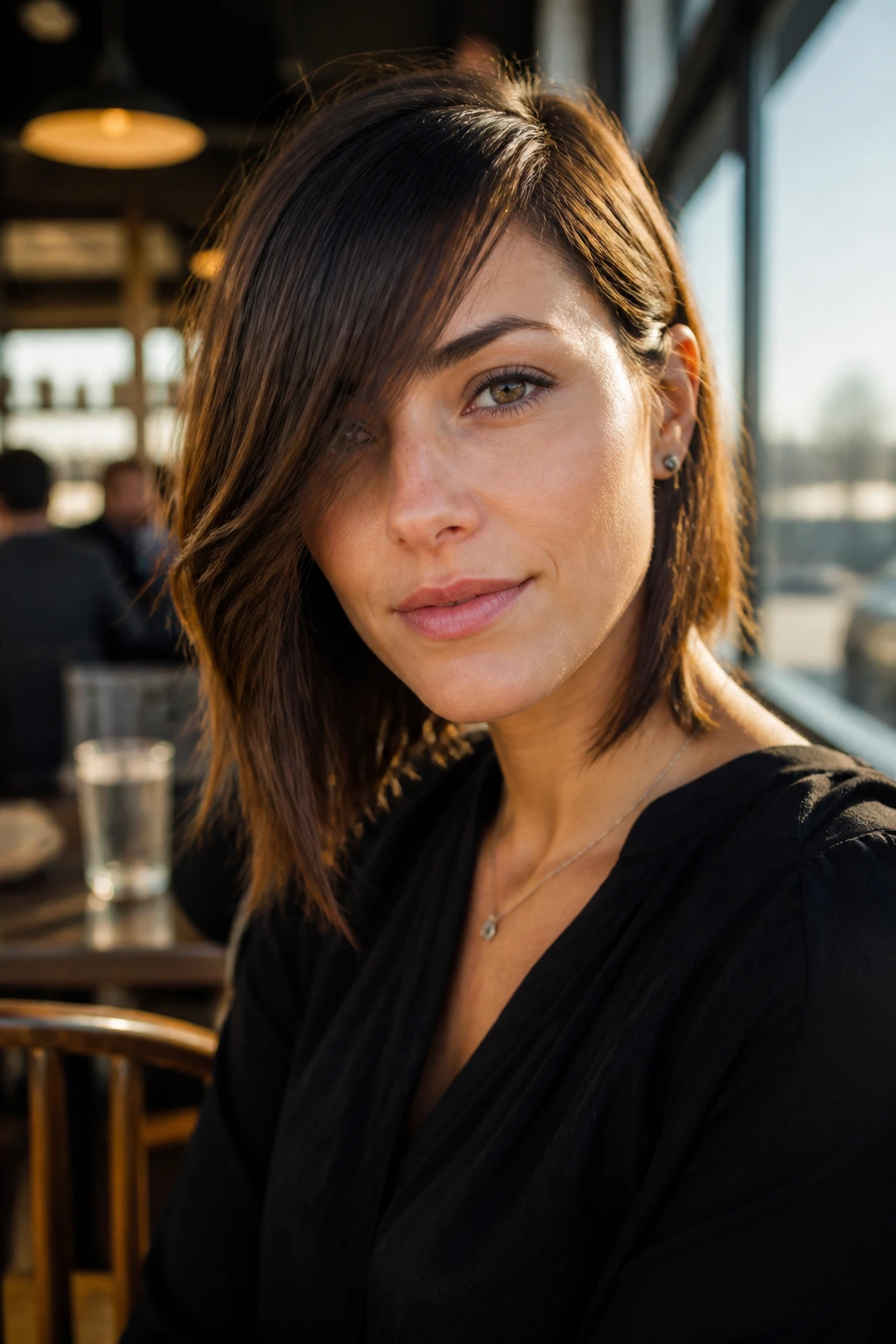
Angled fringe starts shorter on one side and gradually stretches longer toward the other, creating a diagonal line across the forehead. That slant can make the face look longer, leaner, or simply more styled, depending on how sharp the angle is.
It suits women who like a little drama without committing to a full blunt wall. The trick is not making the angle so steep that it feels like a mistake. A soft diagonal is easier to wear, especially if you tuck the longer side behind one ear or let it blend into face-framing pieces.
30. See-Through Bangs That Leave a Little Space
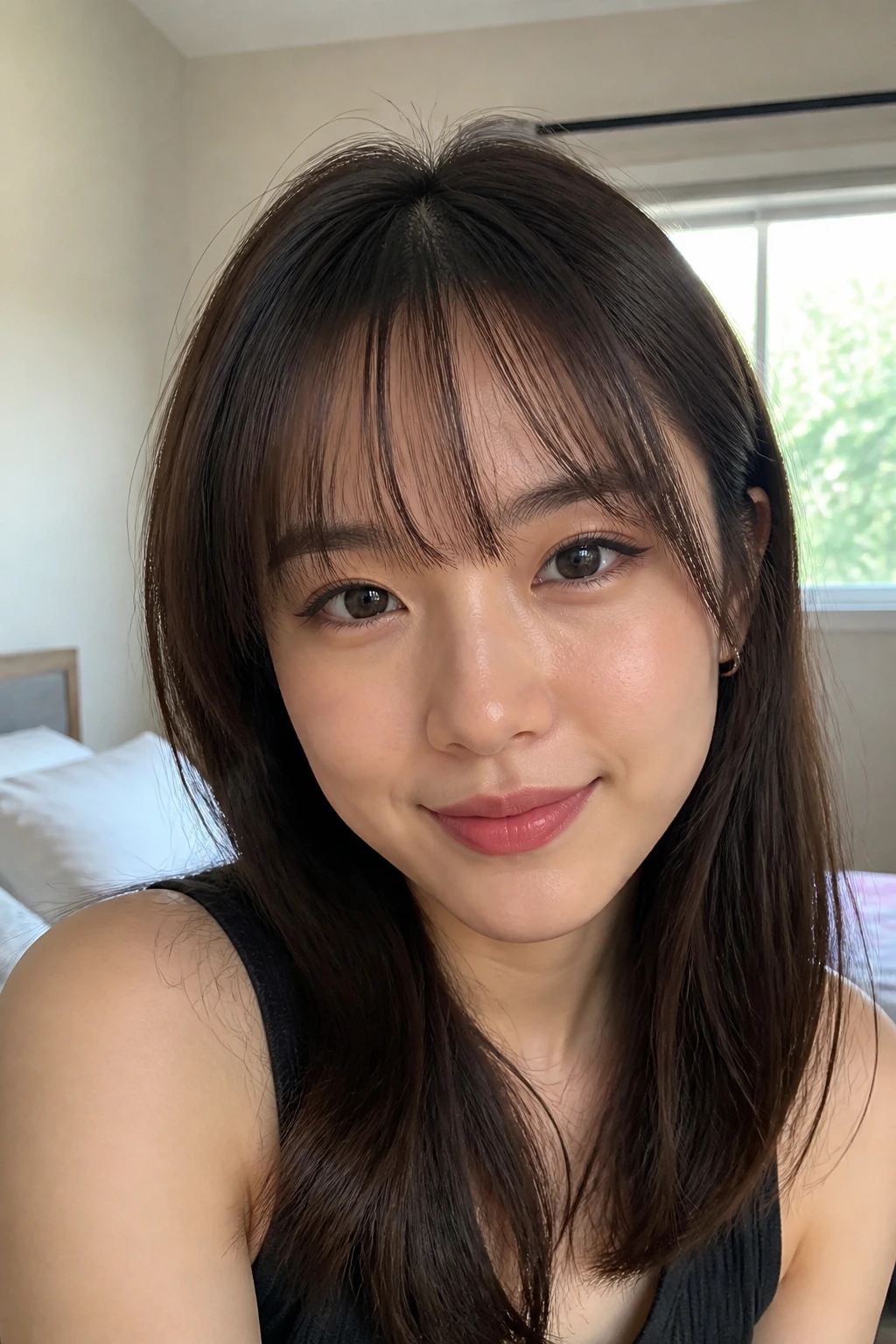
See-through bangs are airy on purpose. They use less density, so the forehead still shows through the hair instead of disappearing under it. That makes them a good match for fine hair or for anyone who wants fringe without the weight.
They’re usually easy to style because there’s less hair to force into place. The downside is that oily roots show faster, so dry shampoo can become part of the routine. Keep the layer light and resist the urge to pile on product. This style falls apart fast when overloaded.
31. Face-Framing Fringe That Blends Into the Sides
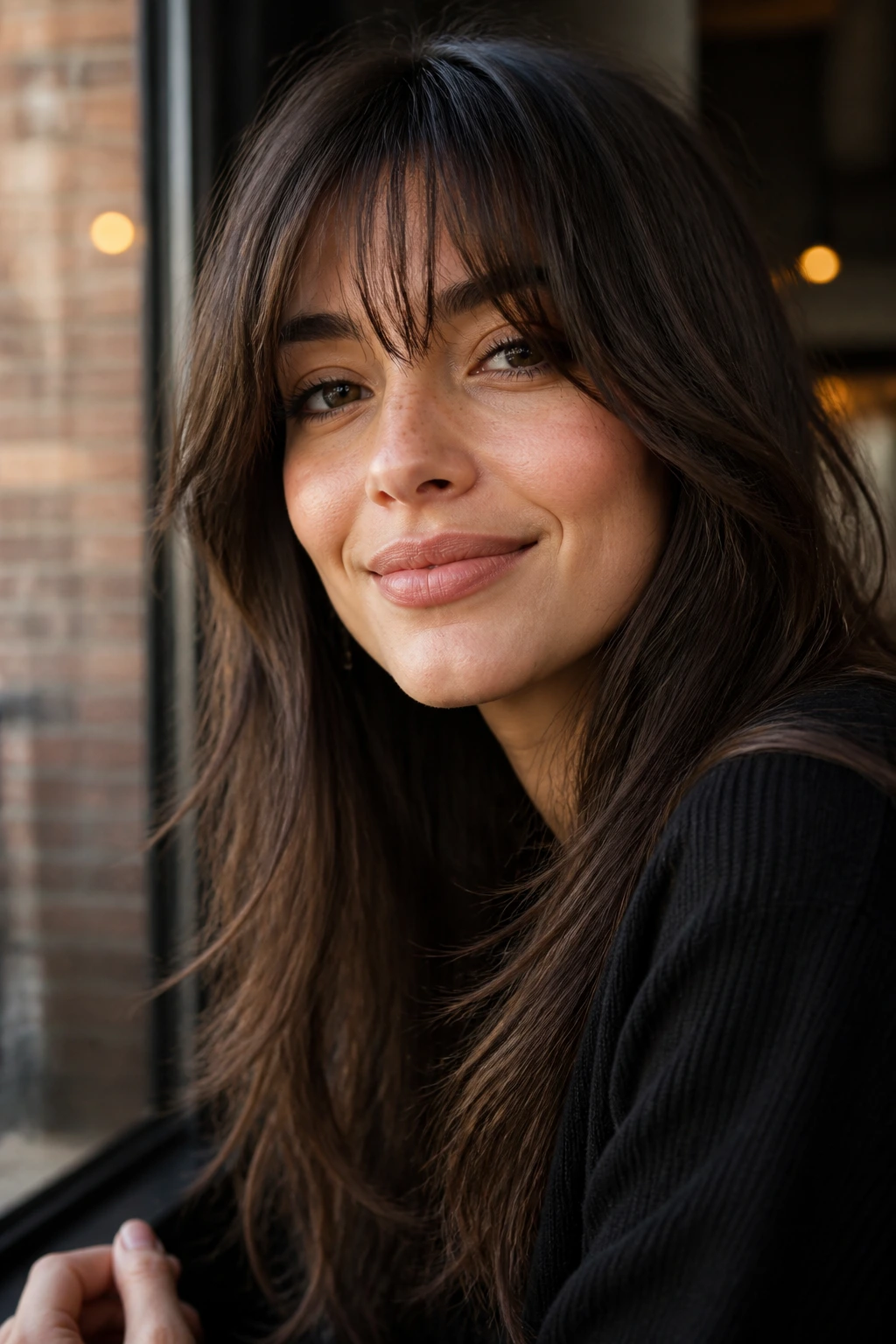
Face-framing fringe is less about the forehead and more about the whole front shape. The pieces start near the brows or cheekbones and melt into the longer front layers, which means the style behaves almost like a built-in contour for the haircut.
It’s a smart option if you like bangs but want the cut to stay flexible. You can wear the pieces centered, swept aside, or tucked back, and the shape still reads correctly. This is one of the easiest ways to soften a strong jaw without locking into a short front section.
32. Dense Heavy Bangs That Make a Strong Statement
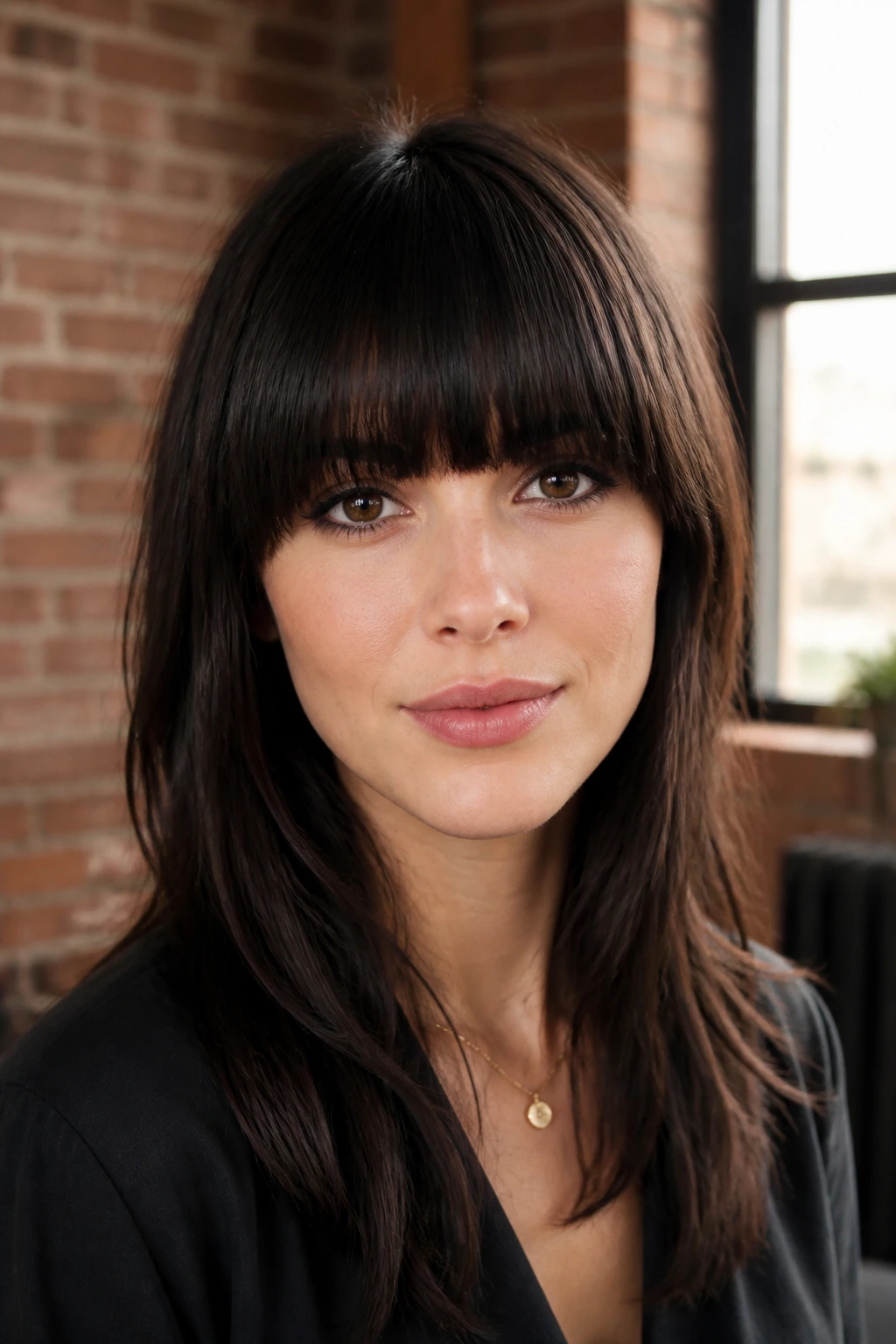
Dense heavy bangs bring a lot of presence. They sit thick across the forehead, which can make the eyes look sharper and the haircut feel more grounded. If you have fine hair, this style can be a stretch; if you have thick hair, it can be exactly the right amount of weight.
Because there’s so much hair up front, the trim matters. If the line grows unevenly, the whole shape starts to feel off. Keep the styling simple and clean. This is not the fringe for half-dried bends and random product experiments.
33. Asymmetrical Fringe That Refuses to Match Side to Side
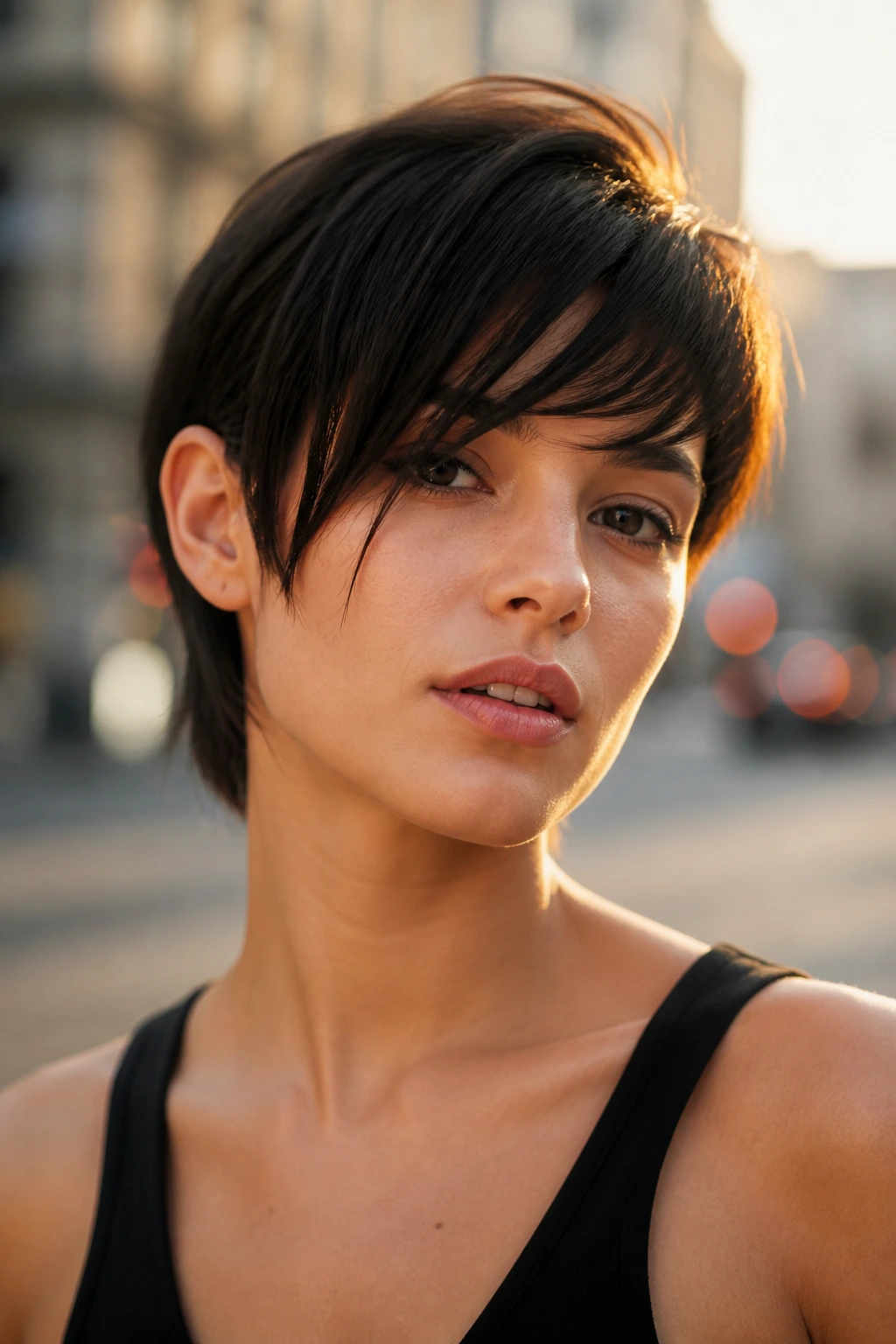
Asymmetrical fringe is deliberately uneven, with one side shorter, longer, or more open than the other. The imbalance gives the haircut tension, which sounds dramatic because it is. That’s the charm.
It works best when the rest of the cut is simple enough to let the front do the talking. If the hair is already heavily layered, the asymmetry can start to feel busy. Ask for the longest side to connect cleanly to a face-framing piece so it doesn’t look like the scissors slipped.
34. S-Curve Bangs With a Soft Wave Through the Front
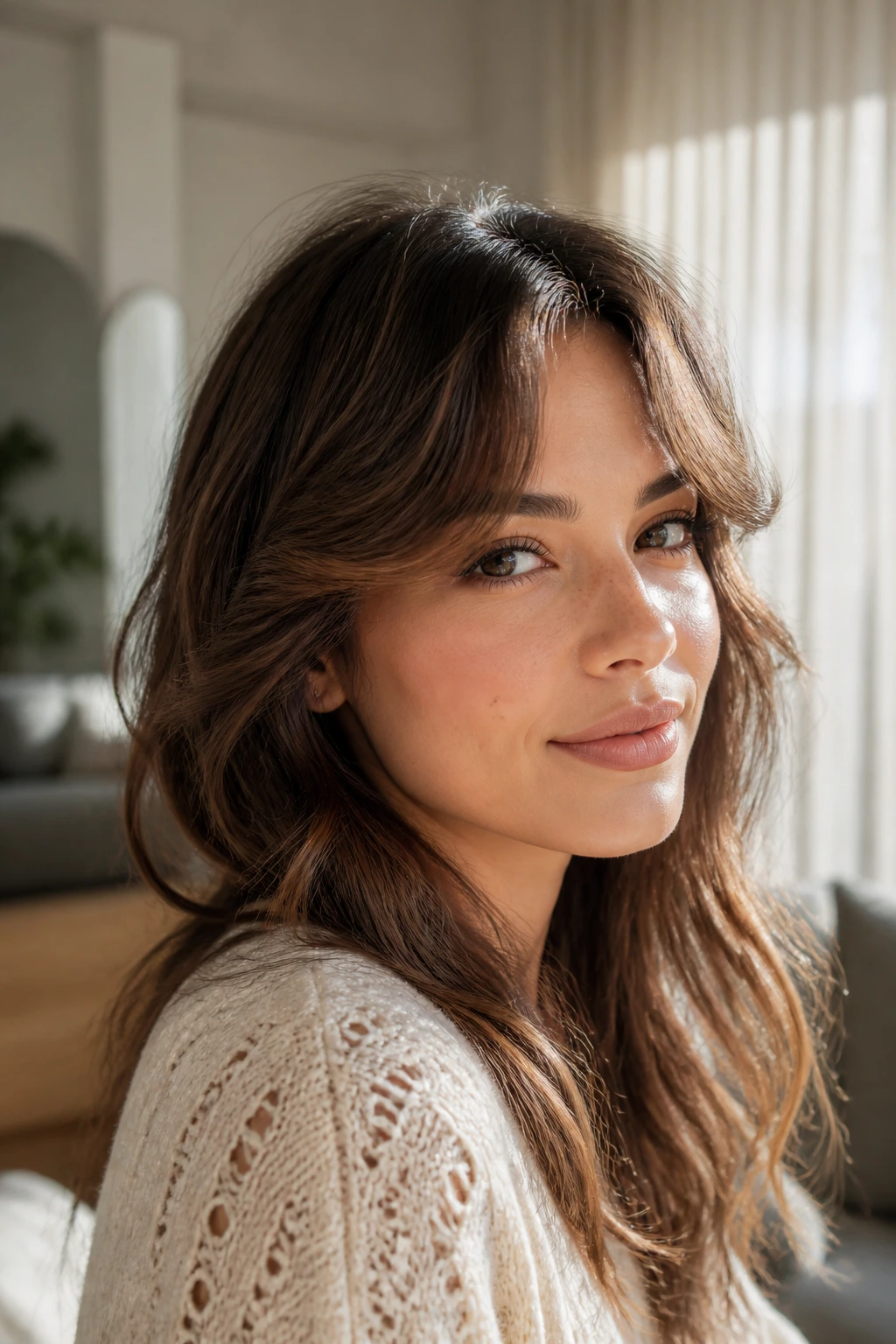
S-curve bangs bend in more than one direction, creating a soft wave across the forehead instead of one fixed line. The effect is gentle, almost sculptural, and it suits hair that already has a natural bend or a loose wave.
The shape can be very pretty on longer faces or softer features because it keeps the forehead covered without making the front feel blunt. It does ask for a little styling. If you leave them to dry completely on their own, the curve can collapse into a strange kink. A brush and a short cool shot solve most of that.
35. Temple Bangs That Frame the Sides Only
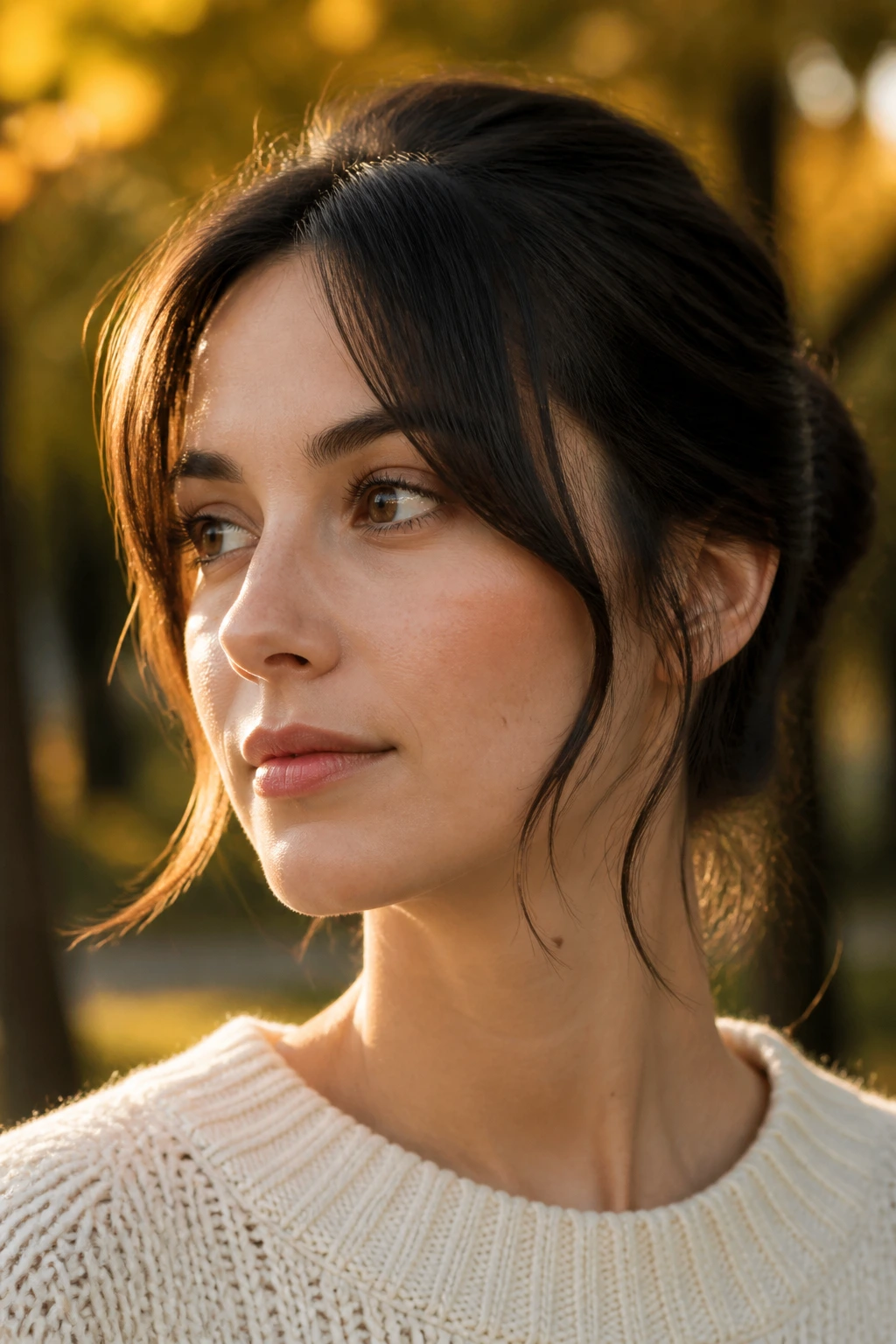
Temple bangs keep the center of the forehead more open and concentrate the fringe near the temples, where the hair can fall into the cheekbone area and soften the outer face. It’s a subtle style, but it does a lot of visual work.
This is a strong choice if you want the effect of bangs without the feeling of hair sitting directly on your brows. It also pairs well with ponytails, buns, and half-up styles because the front still looks finished when the rest of the hair is pulled back. Quiet. Clean. Easy to live with.
Why Fringe Changes the Shape of the Whole Cut
Bangs are not decoration. They change geometry.
A fringe shifts where the eye lands first, and that matters more than people usually admit. A blunt line shortens the visible forehead, a side sweep pulls attention across the face, and a curtain split opens a lane down the center that can make a cut feel lighter even when the length stays the same. That’s why a haircut can look almost ordinary one day and suddenly feel sharper after a fringe goes in.
The other thing bangs do is change weight. Hair that hangs around the face in one solid curtain can feel heavy, especially if the rest of the cut already has length and volume. A well-shaped fringe takes some of that weight off the sides, or sometimes adds it back in on purpose. Both are valid. A good stylist reads the face and the texture at the same time, because the shape on paper is never the whole story.
I also think bangs are underrated for people who want a fresh look without giving up length. That’s the quiet power move here. You can keep the same shoulders, the same collarbone line, the same ponytail length, and still make the haircut look new.
Choosing Bang Styles by Face Shape and Hair Texture
Round faces usually do best with fringe that adds length or angle: curtain bangs, side-swept bangs, angled fringe, and longer face-framing pieces. The reason is simple. Those shapes create vertical or diagonal movement, which keeps the face from looking wider than it is. A hard, short blunt fringe can work, but it needs the rest of the haircut to carry some structure or the proportions can feel chopped.
Longer faces tend to like bangs that add width across the forehead. Rounded bangs, brow-grazing bangs, dense heavy bangs, and soft crescent shapes can shorten the visible length in a useful way. If the forehead is tall, the right fringe can make the entire haircut feel more balanced without touching the length at all.
Texture is where things get interesting in the practical sense. Fine hair usually behaves better with wispy bangs, see-through bangs, or feathered fringe, because those styles don’t ask for more density than the hair actually has. Thick hair can handle blunt bangs, choppy bangs, or heavy fringes because there’s enough substance to hold a line. Curly hair wants more length and less control. If you cut curly bangs too short, the spring will do the rest of the work for you, and that is usually not the result anyone wanted.
Cowlicks and hairlines
A strong cowlick at the front changes everything. Side-swept bangs, curtain bangs, split fringe, and temple bangs often cooperate better because they work with the natural direction instead of fighting it. If your hair wants to split on its own, there’s no prize for forcing a straight-down fringe into submission.
Density and movement
Dense hair can carry more bluntness. Fine hair often looks better with softness and spacing. Wavy hair likes a little room to bend. Straight hair can wear almost any of these styles, but it reveals uneven cutting fast, so the shape has to be clean.
The Tools That Keep Bangs from Looking Choppy
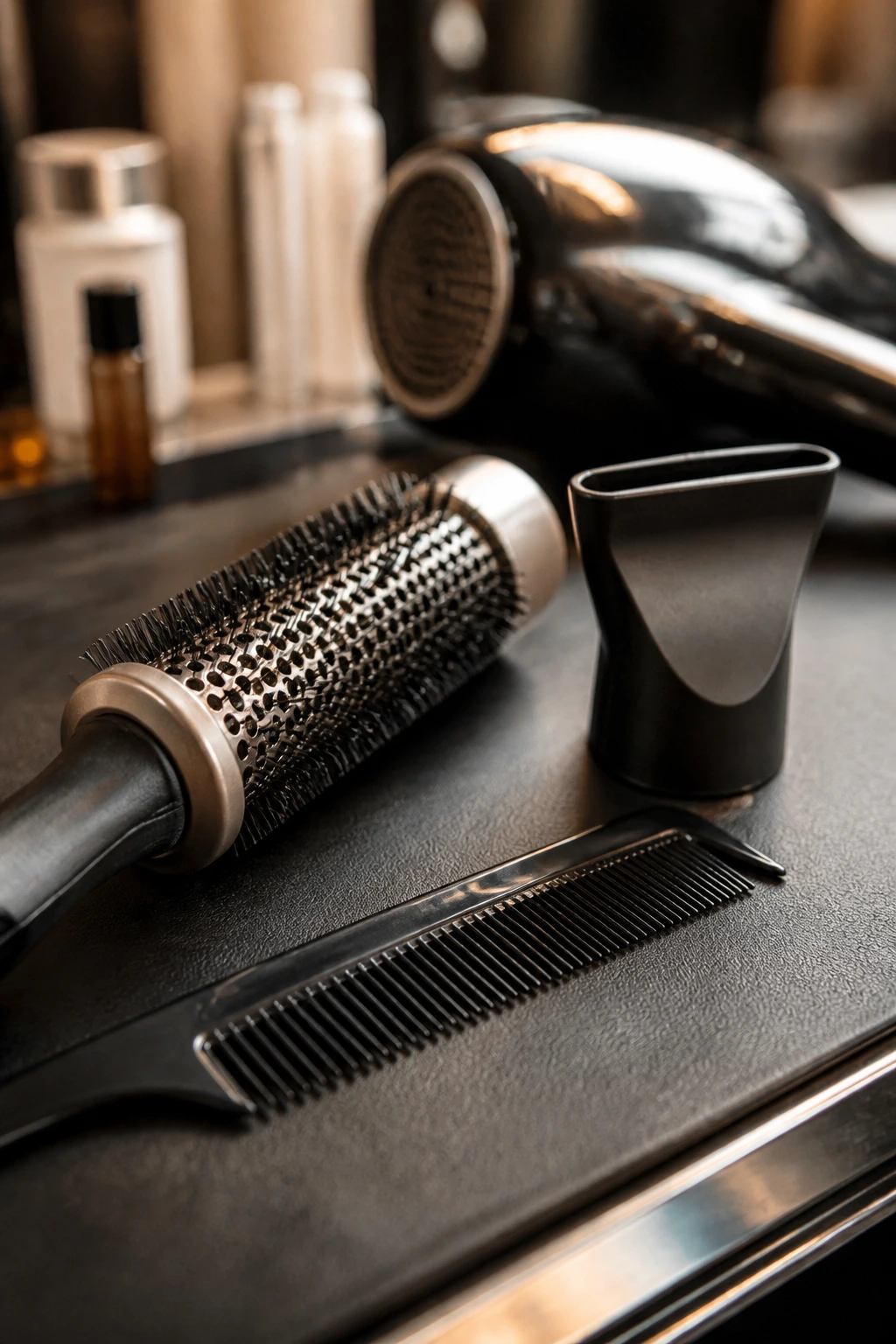
- Small round brush: This gives the front enough bend to sit away from the forehead instead of sticking to it.
- Blow dryer with a nozzle: The narrow airflow matters. Wide, unfocused air makes bangs puff in the wrong direction.
- Mini flat iron: Useful for smoothing a stubborn corner or flipping a side fringe under just a bit.
- Fine-tooth comb: Good for sectioning and for checking whether a trim is even before you leave the mirror.
- Hair clips: Keep the rest of the hair out of the way while you dry the front first.
- Heat protectant spray: Bangs get styled more often than the rest of the hair, so they need protection more often.
- Dry shampoo: A little at the roots keeps oil from making fringe separate and collapse by midday.
- Hair-cutting shears: If you trim at home, use real shears. Kitchen scissors chew the ends.
How to Ask for Bangs at the Salon Without Guesswork
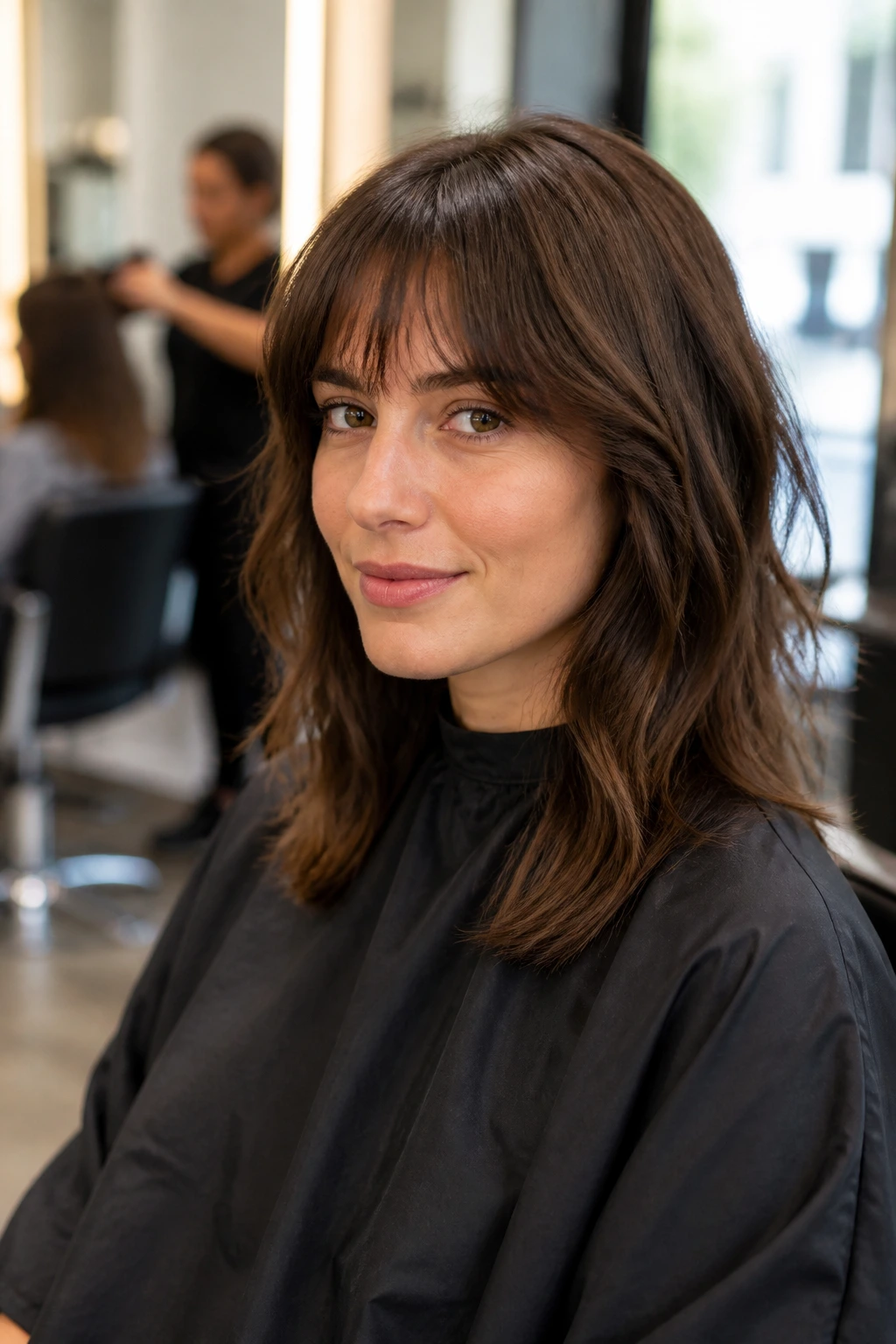
Bring photos, but bring the right kind. A single front-facing picture is not enough. Show the stylist a shot from the side, one in motion, and one on hair that looks close to your texture. A curtain fringe on pin-straight hair can behave very differently from the same shape on a wave, and a photo that hides that difference helps nobody.
Say how much time you want to spend styling. That sentence matters more than people think. If you air-dry and leave the house fast, a blunt eyebrow-grazing fringe may be a poor fit unless your hair naturally falls into place. If you’re fine with a quick round-brush session, the range opens up a lot.
Be honest about your cowlicks, your growth pattern, and whether you usually part your hair in the middle, on the side, or wherever it lands. A stylist can cut around those facts. They cannot pretend they do not exist. Also ask where the fringe will sit when dry, not just when wet, because wet hair is a liar.
How to Style Bangs So They Behave
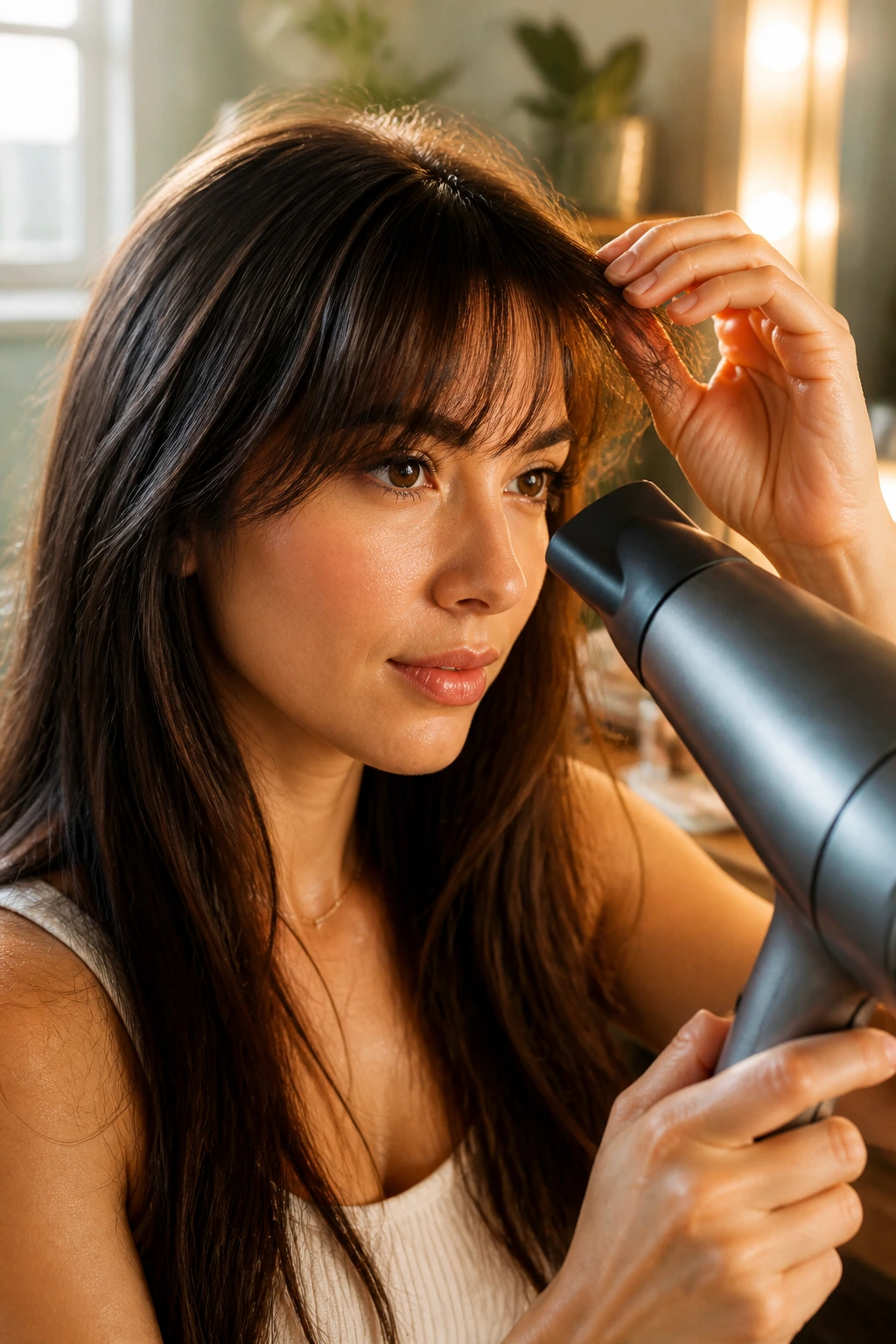
The fastest fix is boring, and it works: dry the bangs first. Fringe sets faster than the rest of the hair, so if you leave it until the end, the roots often dry in a weird bend while you’re still dealing with the lengths. Clip the rest back, hit the front with the dryer, and shape it while the hair is still warm.
Use less product than you think. Bangs sit on the forehead, which means they pick up oil, makeup, and heat quickly. A heavy cream or oil near the roots will flatten the front before lunch. A light mist of heat protectant, a touch of mousse for texture if needed, and a little dry shampoo at the root is usually enough.
Let the shape cool in place. That pause matters. If you brush bangs down and walk away while they’re still warm, they often fall flat or split in the wrong place. Hold the bend you want for a few seconds, then leave them alone.
Keeping Fringe Fresh Between Trims
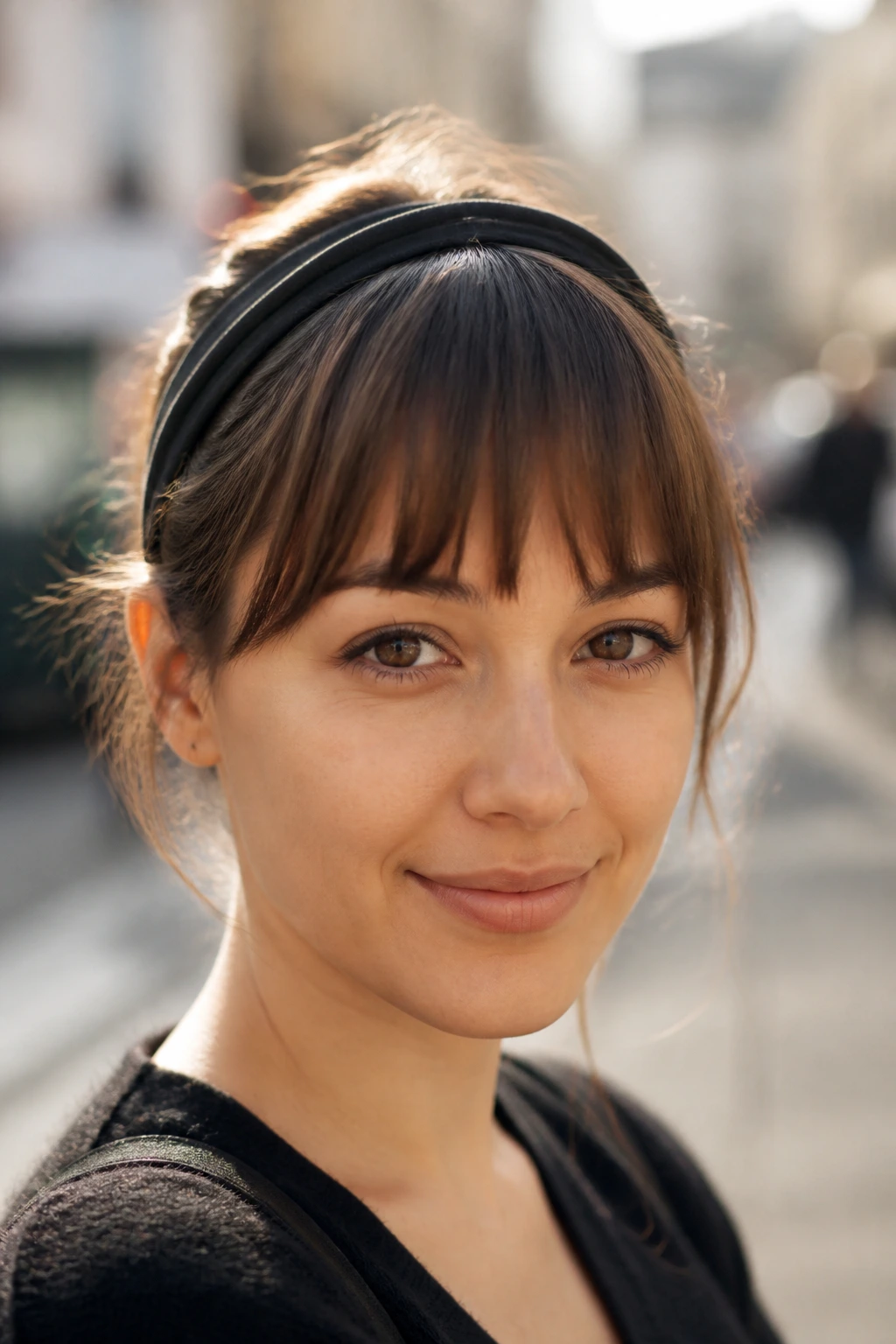
Bangs tell on you faster than the rest of the haircut. A half-inch of growth on a fringe can change the whole line, while the same growth in the lengths barely registers. That is why maintenance feels more important here than elsewhere.
For blunt bangs and micro fringe, a trim every 3 to 4 weeks usually keeps the line where it belongs. Curtain bangs, face-framing fringe, and grown-out bangs can stretch farther, often 6 to 10 weeks, because they’re designed to blend instead of sit in one fixed shape. Curly bangs are trickier; they need shaping more than rigid trimming, and the schedule depends on how much the curl shrinks.
Between trims, use a dry shampoo at the roots and a quick mist of water if the front starts to split oddly. Re-dry the fringe in the direction you want it to sit. Don’t soak it. A light reset is enough. If you exercise, wear a headband or pin the fringe back during the sweaty part and re-shape it later rather than pretending it won’t need help.
The Mistakes That Turn a Good Fringe Into a Fight
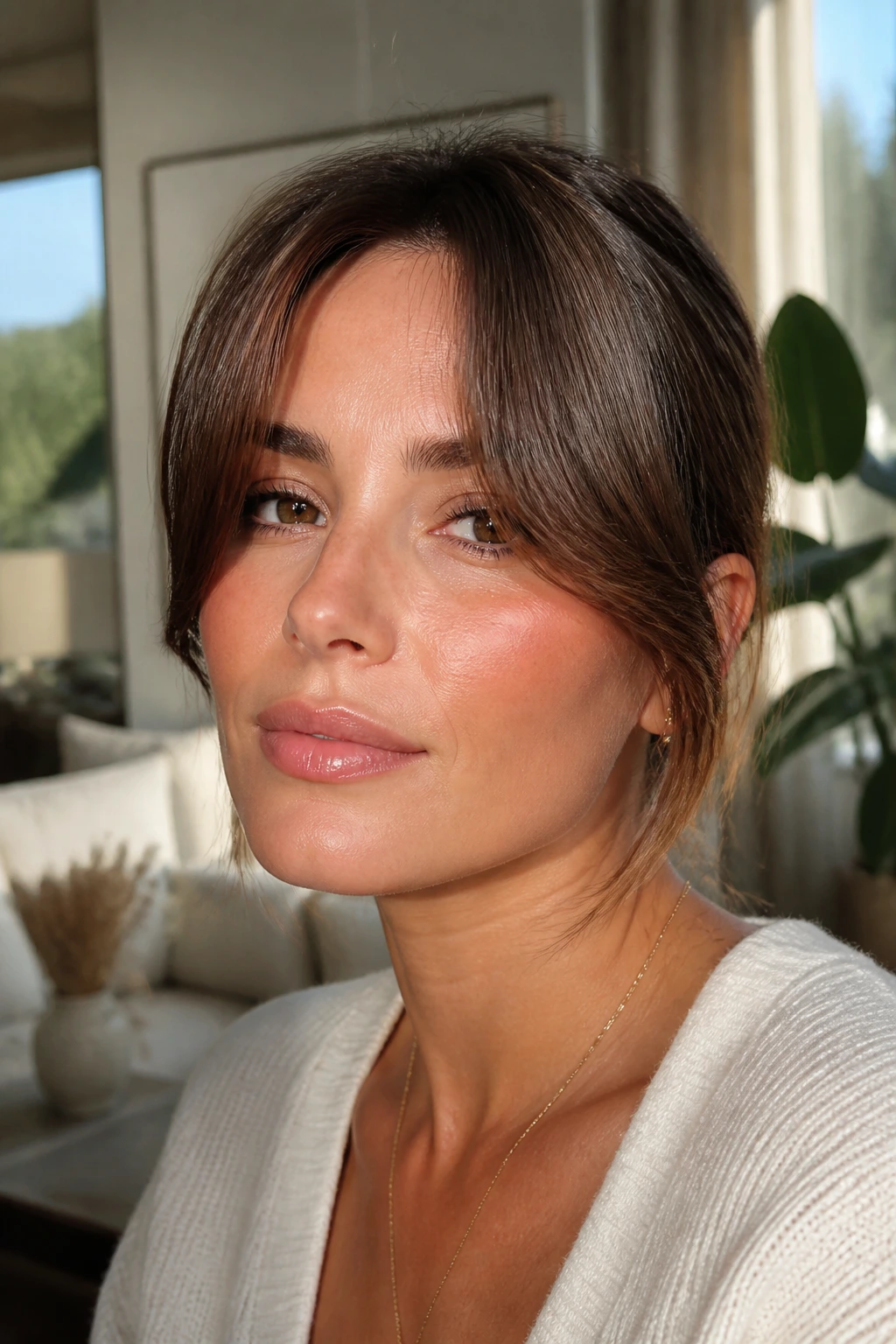
- Cutting for wet hair when your texture shrinks: Curly and wavy hair can jump up after drying, which means bangs that looked fine in the chair turn too short at home. Ask for extra length and dry shaping.
- Ignoring the cowlick at the front: A strong growth pattern will split or kick up if it’s cut against its grain. Side-swept, curtain, or split styles usually behave better.
- Using too much product near the root: Oils, serums, and heavy creams flatten bangs fast. Keep those off the scalp and work with lighter texture products instead.
- Choosing a dense fringe on very fine hair: If there isn’t enough hair to hold a line, the bangs go see-through in odd spots. A lighter, wispy shape usually wears better.
- Skipping trims for too long: Long fringe can be charming. Uneven fringe is not the same thing. Once the line stops serving the cut, it starts looking accidental.
Variations and Adaptations to Try
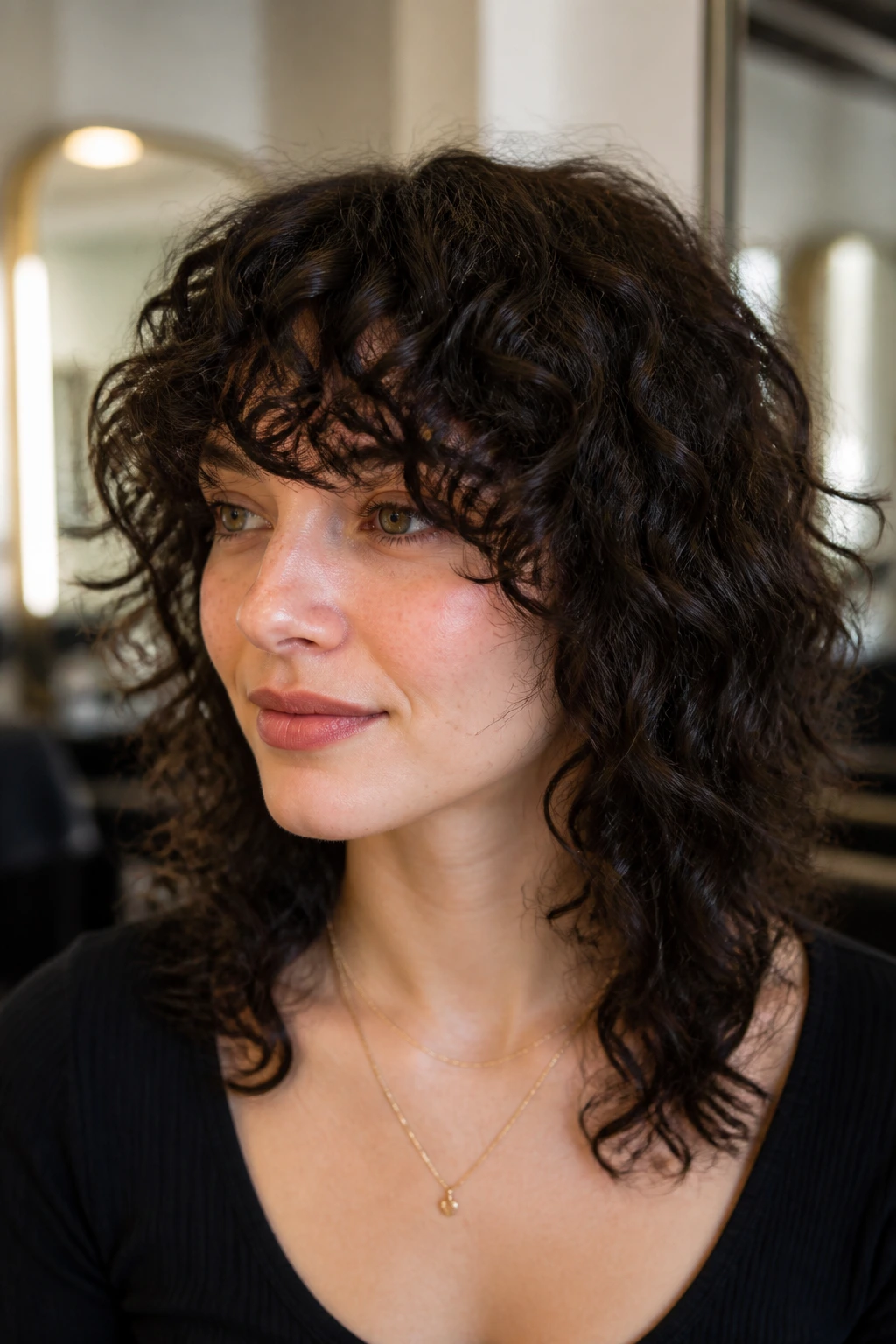
Curly-First Fringe: Cut the bangs with the curl pattern in mind, not against it. Keep the length longer than a straight-hair fringe and let the shape shrink where it wants to.
Fine-Hair Lift Bangs: Ask for wispy, see-through pieces with a soft point-cut finish. This keeps the front light and avoids the heavy shelf effect that fine hair usually cannot support.
Thick-Hair Weightless Fringe: Use internal texturizing or feathering to remove bulk without leaving gaps. This version is cleaner than choppy bangs when you want softness, not edge.
Low-Maintenance Grow-Out Plan: Start with curtain bangs, side-swept bangs, or a face-framing fringe. These grow into layers instead of turning into a blunt, awkward middle stage.
Humidity-Proof Fringe: Choose a slightly longer, more flexible style like bottleneck bangs or layered curtain fringe. Short, rigid lines tend to frizz and separate faster when the air is heavy.
Frequently Asked Questions About Bang Styles for Women
Which bang style is easiest to grow out?
Curtain bangs, grown-out bangs, and face-framing fringe usually grow out with the least fuss. They blend into the sides instead of sitting as a hard line, so the in-between stage looks intentional for longer.
Do bangs work with curly hair?
Yes, but they need a different cut. Curly bangs should be shaped dry or nearly dry, with extra length left in place so the curl can spring without jumping above the brow.
How often should bangs be trimmed?
Blunt fringe and micro fringe often need a touch-up every 3 to 4 weeks. Softer styles like curtain bangs or side-swept bangs can usually go longer, especially if they’re designed to blend into layers.
Can I cut my own bangs at home?
You can, but the risk is higher than most people expect. A tiny unevenness in the front is visible fast, so if you trim at home, use hair-cutting shears, cut less than you think, and work in small sections.
What if my bangs keep splitting in the middle?
That’s often a cowlick or a root direction issue. A center split, curtain bang, or side-swept shape usually works better than forcing a straight-down fringe.
Will bangs make my face look shorter?
A blunt or dense fringe often does, in a good way, if you want to reduce the feeling of forehead length. Softer styles like curtain bangs or brow-grazing fringe shorten the face less dramatically.
What bang style works best with fine hair?
Wispy bangs, see-through bangs, feathered fringe, and soft curtain shapes tend to suit fine hair better because they don’t demand a lot of density. Heavy blunt bangs can look sparse unless the hair is unusually full at the front.
How do I stop bangs from getting oily so fast?
Keep conditioner, oils, and heavy creams away from the roots. A small amount of dry shampoo at the hairline, plus drying the fringe first in the morning, usually keeps the front cleaner for longer.
The Fringe That Fits
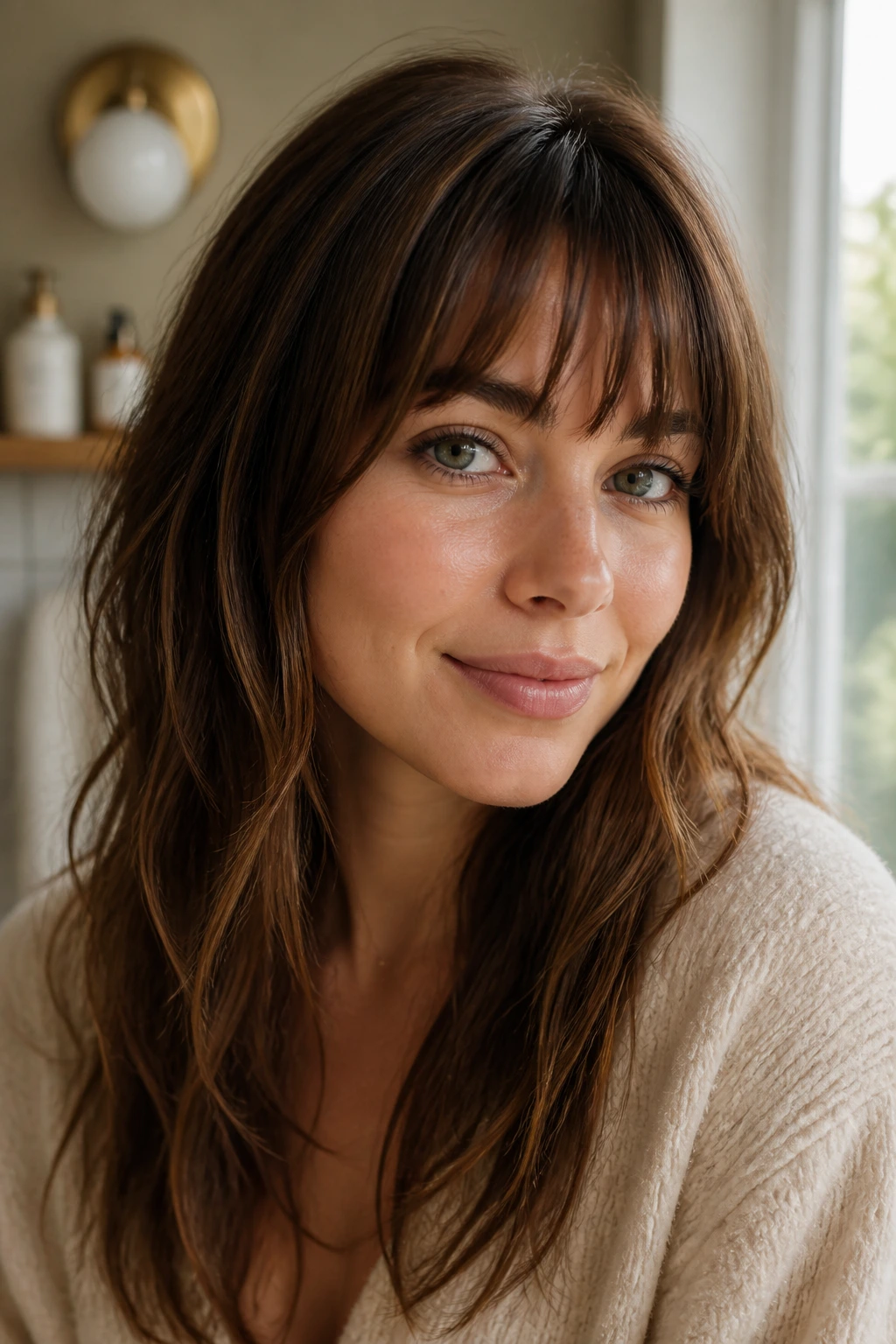
The best bangs are not the ones that look dramatic in a still photo. They’re the ones that make sense when you’re tired, running late, or standing under a bathroom light with a comb in one hand. That’s the real test. If a fringe still works when it’s slightly off, it’s doing its job.
A good cut should match your hair’s habits, not punish them. Curl, cowlick, density, and growth speed all matter more than a trend name on a mood board. Pick the shape that lets your hair fall into place with the least argument, and the whole haircut feels easier to wear.
That’s the part people miss when they treat bangs like a gamble. They’re not a gamble. They’re a frame. Choose one that fits your face, your texture, and your mornings, and the rest of the cut tends to fall into line.
