



Fine hair can look tired fast when a cut takes away the wrong kind of weight. That’s why a wolf cut, on the right head of hair, can be so useful after 40: it builds movement where the eye wants lift, while leaving enough line at the bottom so the ends don’t disappear into wisps.
The mistake most people make is asking for the trendy version they saw on a thick-haired model and assuming it’ll translate. It usually doesn’t. Fine strands need a softer hand, a stronger perimeter, and layers that start in smarter places — around the cheekbones, the crown, and sometimes just below the jaw — instead of getting sliced to pieces from top to bottom.
And yes, there are 21 versions that actually make sense. Some are polished. Some are shaggy. Some look barely layered at all until the light hits them and the shape wakes up.
Why These Wolf Cuts Earn Their Keep

-
The perimeter stays honest: A cleaner bottom line keeps fine hair from looking see-through, which matters more than piling on texture everywhere.
-
Lift moves to the right place: The best layers on slim strands happen higher up, where they can raise the crown without stealing density from the ends.
-
Fringe can do useful work: Curtain bangs, bottleneck bangs, and side-swept pieces soften the forehead and disguise a flat root line without swallowing the face.
-
They grow out without falling apart: Softer wolf cuts keep their shape for weeks, so you don’t end up with a weird half-cut halfway through the grow-out.
-
They can look soft or sharp: A round brush gives you a neat finish. A little texture spray gives you a rougher edge. Same cut, different mood.
What Makes a Wolf Cut Work on Fine Hair After 40
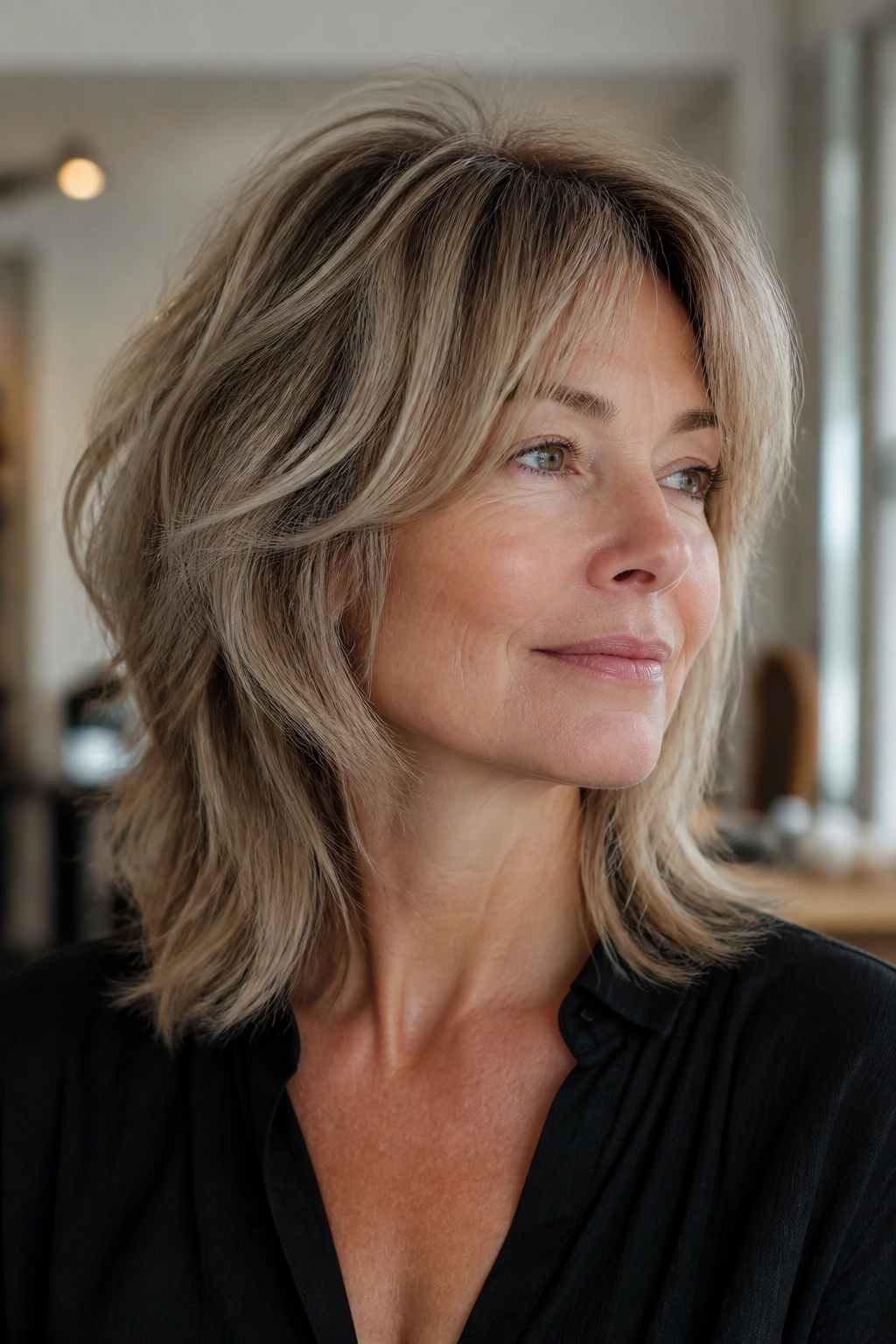
A wolf cut is not one single haircut. It’s a family of cuts, and the difference between a flattering one and a messy one is usually about where the weight lives. Fine hair after 40 often needs more structure at the bottom and more lift near the crown, not a total strip-down of the ends.
Keep the Bottom Line Strong
The perimeter matters. A blunt-ish edge at the collarbone, jaw, or shoulder gives the eye something solid to read, which makes the hair look fuller than it is. If the ends are cut into soft fluff all the way around, the whole shape can go stringy in daylight.
Lift the Top, Not Every Strand
The best versions use internal layering and face-framing pieces to create movement without exposing the scalp. Short crown layers can help, but if they’re too short, the top puffs up while the lengths go thin. That’s not volume. That’s a lopsided shape.
Let Texture Work With You
Straight fine hair, soft waves, silver strands, and hair that’s lost a bit of density at the temples all behave differently. A good wolf cut respects that. It doesn’t fight the way your hair falls; it gives it a cleaner route to fall in.
1. The Soft Shoulder-Length Wolf Cut with Curtain Bangs
This is the version I keep coming back to when someone wants movement without a lot of drama. The length lands around the shoulders, the curtain bangs part softly at the center, and the layers stay relaxed enough that the ends still look like they belong to the same head of hair.
Why It Flatters Fine Hair
- The shoulder-length perimeter gives the cut a fuller outline than a longer, heavily layered shape.
- Curtain bangs break up a flat hairline and put attention on the eyes and cheekbones.
- The crown gets lift, but the bottom still has enough weight to swing instead of fray.
A soft shoulder-length wolf cut also grows out better than the choppier versions. The fringe gets a little longer, the top loses some lift, and the whole thing slides toward a shaggy lob instead of turning into a bad haircut on week six. That matters if you do not want to live in the salon chair.
Pro tip: Ask for the shortest crown layer to stay softly movable, not jagged. If the stylist cuts it too short, the top starts to stand away from the head while the ends go sparse.
2. The Collarbone Wolf Lob with Blunt Ends
Blunt ends keep the eye from counting strands. That’s the whole trick here. The cut still has wolf-cut energy through the crown and the face frame, but the perimeter lands clean at the collarbone, which gives fine hair a denser-looking bottom line.
This version is the one I’d hand to someone who likes polished clothes, soft makeup, and hair that can go from blowout to air-dry without a full identity crisis. It reads a little more mature, a little less undone, and that’s often exactly what works after 40. The layers are there, but they don’t scream for attention.
On straight hair, the collarbone wolf lob looks best with a slight bend at the ends and a bit of crown lift. On wavy hair, it can be almost effortless. The key is resisting the urge to over-texturize the bottom inch, because that’s where the density needs to stay.
A good stylist will keep the interior light but leave the edge clean. That balance is the difference between “fuller” and “fried.”
3. The Chin-Length Wolf Bob with Airy Layers
Can a wolf cut work when you don’t want length at all? Absolutely, if the bob stays compact and the layers are cut with restraint. A chin-length wolf bob is one of the smartest choices for fine hair that’s started to look limp at the jawline.
How to Wear It
- Blow-dry the crown first so the hair doesn’t collapse under its own weight.
- Use a 1-inch brush or curling wand just on the front pieces.
- Keep the fringe light, not dense, so it doesn’t crush the face.
What makes this cut work is the contrast between the neat outline and the slight messiness inside it. You get movement without the dead, stringy feel that short, over-thinned hair can pick up. And because the length stops at the chin, the eye doesn’t travel far before it hits a shape.
It’s a little sharper than the shoulder-length versions, which is useful if you want your haircut to look intentional with very little styling. If you like a tucked-behind-the-ear moment, this one behaves beautifully.
4. The Midlength Wolf Cut with Cheekbone Layers
If your hair sits flat at the top and only starts to bend below the jaw, this is the repair job. Cheekbone layers pull the eye upward, and the length past the shoulders keeps the cut from looking overworked.
The detail most people miss is that the movement should start high, but the ends should still have enough weight to swing. A lot of bad wolf cuts put the action too low, which leaves the crown flat and the lower half ragged. This version fixes that by making the cheekbones the first point of interest.
It works especially well if you wear glasses or want a little face framing without bangs. The front pieces can skim the cheek, then taper into the length instead of stopping in an awkward chunk. That makes the whole cut feel smoother when you tuck one side back.
A midlength wolf cut like this can be styled with a quick rough-dry and a round brush at the front. Nothing fussy. Just enough bend to show that the layers were placed on purpose.
5. The Long Wolf Cut with Invisible Layers
Long fine hair can get sad fast. The ends go soft, the weight pulls downward, and all the layering in the world won’t save it if the cut is too aggressive. That’s why the long wolf cut has to be handled with a lighter touch.
Here, the layers are almost hidden until the hair moves. They sit inside the shape rather than cutting the whole outline apart. That gives you motion at the crown and around the face while keeping the length looking deliberate, not stringy.
This version is good if you refuse to give up length but still want something less severe than a one-length cut. It also works well with soft waves, because the wave pattern helps reveal the layers without needing heavy styling. Straight hair can wear it too, but it usually needs a little more bend from a brush or iron.
The mistake to avoid is asking for “lots of texture” and thinking that will solve a lack of fullness. On long fine hair, texture is a seasoning, not the main ingredient.
6. The Feathered Wolf Cut with a Side-Swept Fringe
Unlike curtain bangs, a side-swept fringe gives you one clean sweep across the forehead instead of a center opening. That’s useful if your hairline is a little sparse at the temples or if you hate middle parts on your face.
The feathering in this cut should stay soft around the cheek and temple area, then drift into the rest of the layers. The effect is lighter than a classic shag, but it still has enough movement to keep the shape from falling flat. It’s a good choice if you want the wolf cut idea without the obvious “I got a trendy haircut” look.
Best For
- Hair that parts more easily on one side than in the middle
- Fine strands that need front softness more than crown drama
- People who wear glasses, because the fringe can sit around the frames instead of fighting them
A side-swept fringe can be easier to live with than curtain bangs if your hair dries with a natural bend to one side. It looks intentional with very little effort. And when it grows out, it just slides into the layers.
7. The Shaggy Lob with a Soft Crown

This one sits in the middle between a shag and a wolf cut, and that middle ground is exactly why it works for fine hair. The crown gets some lift, the lob length keeps enough weight at the bottom, and the whole shape has a bit of lived-in movement without getting too pieced out.
Why It Works for Fine Hair
A softer crown keeps volume up top without forcing the hair to stand away from the scalp in odd places. The layers are noticeable, but they don’t hollow out the perimeter. That’s the part that saves the style.
A shaggy lob is a good answer if you’ve tried a fully layered cut and felt like your ends vanished after the first wash. The lob length gives you room to keep density, and the shaggy interior keeps the style from looking like a helmet. There’s a difference, and you can feel it when you run your fingers through it.
If you wear your hair with a side part, this cut tends to settle nicely. If you like a center part, ask for the front pieces to be long enough to fall naturally instead of flipping out like little hooks.
8. The Rounded Wolf Cut for Oval and Longer Faces

A rounded outline can make fine hair look thicker than sharp angles do. That’s why this version works so well on longer faces. The width it adds through the sides stops the cut from hanging like straight curtains.
The rounded wolf cut keeps the corners soft. The front layers curve around the cheeks, the crown has light lift, and the perimeter does not taper too hard toward the neck. It’s a quiet shape, which is nice if you want texture without the choppy edge that some wolf cuts lean into.
This is one of the better options if your face feels elongated when hair is pulled down and straight. The shape gives back a little width. Not a lot. Just enough. And on fine hair, that little bit changes the whole read.
You’ll probably like this cut if you favor soft knits, clean collars, or earrings that need a little framing. The haircut doesn’t compete with your features. It supports them.
9. The Jaw-Length Wolf Cut with Micro Texture
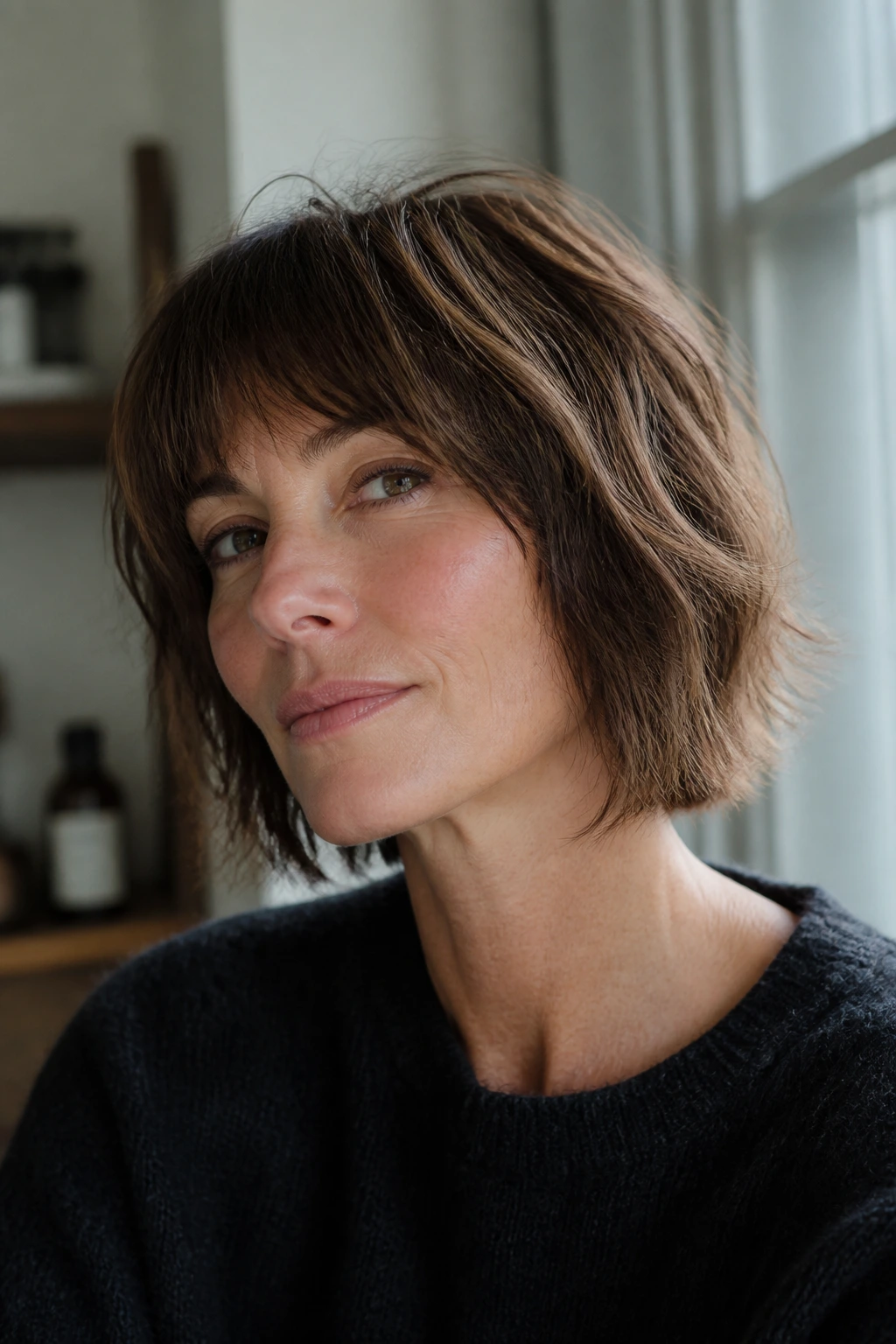
What if your hair is so fine that any long layer disappears? Go shorter. A jaw-length wolf cut can look sharper and denser than a longer version that’s been over-thinned.
How to Use It
- Keep the perimeter close to the jawline so the outline stays visible.
- Ask for micro texture, not heavy shredding.
- Use a small round brush or your fingers to create bend around the face.
The point of this cut is compactness. The hair doesn’t have to travel far before it hits the shape, so even a small amount of lift reads clearly. That’s useful if you want a haircut that wakes up fast in the morning.
It also works well for people whose ends get dry or brittle. There’s less length to fray, which means the cut tends to look healthier between trims. Just don’t let the crown get too short. You want lift, not a puffball.
10. The Bottleneck Bangs Wolf Cut

Bottleneck bangs do a neat little job on fine hair: they create softness at the forehead without stealing too much density from the sides. The center stays shorter, the pieces around the temples taper longer, and the whole fringe opens up the face in a controlled way.
This wolf cut version works because the bangs become part of the architecture instead of a separate chunk sitting on top of the haircut. They connect to the layers, which helps the whole style feel balanced. On thin-looking hairlines, that connection matters more than a dramatic fringe ever could.
A bottleneck bang is also easier to grow out than a blunt, thick bang. It can slide into curtain pieces, or it can be pinned back without looking like you’re waiting for a haircut to recover.
If your forehead lines or temple thinning bother you, this is one of the better answers. It gives cover without creating a heavy wall across the face.
11. The Wavy Wolf Cut for Natural Bend
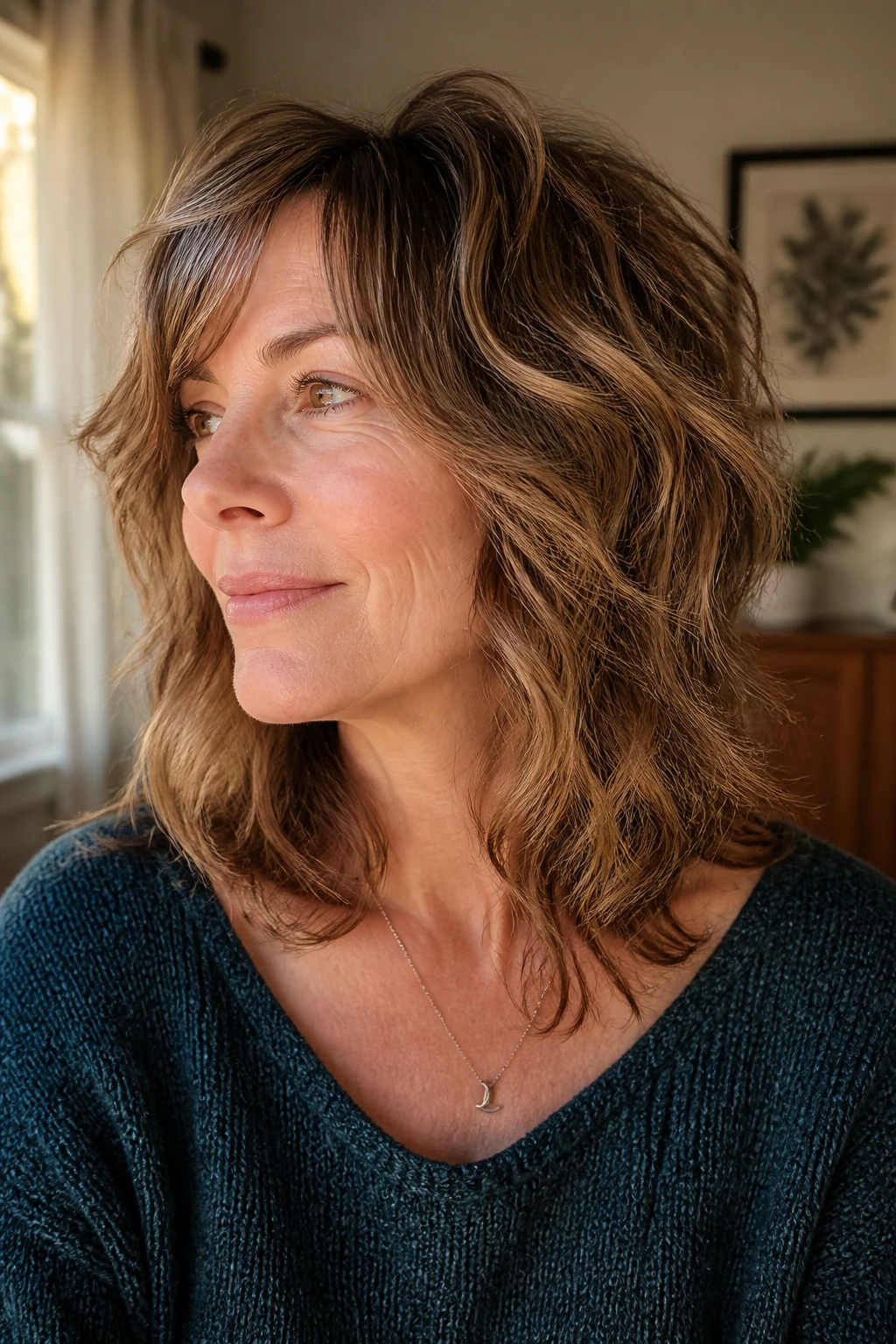
This is the cut for hair that already has a little bend but refuses to hold a polished curl. Fine wavy hair usually does best when the layers follow the wave pattern instead of trying to fight it into straight lines.
The wolf cut shape works here because the texture does half the styling work. A bit of mousse, a scrunch, and a diffuse-dry can make the layers read without you building a full blowout. The crown stays light, the mid-lengths move, and the ends don’t need to be perfect.
A wavy wolf cut is especially good if your hair expands a little on humid days. The texture makes the style feel deliberate instead of fuzzy. That’s a very useful distinction. One looks like styling. The other looks like weather.
If your wave is loose, ask for longer layers so the bend doesn’t break apart. If the wave is stronger, the layers can be a touch shorter. The hair will tell you what it wants. Usually, it’s not subtle about it.
12. The Sleek Wolf Cut for Straight Fine Hair

Unlike the wavier versions, this one depends on clean lines and restrained texture. Straight fine hair can look chic in a wolf cut, but only if the haircut respects its natural flatness instead of trying to fake volume everywhere.
The layers should be soft and visible mostly when the hair moves. A little bend at the front and a slight lift at the crown are enough. If the stylist gets too enthusiastic with razoring, the hair will split into thin, separate pieces and that is not the same thing as movement.
This version is best for someone who likes a neat finish and doesn’t want piecey ends waving around all day. It can look very modern with a side part or a clean center part. The key is keeping the silhouette controlled.
A straight-haired wolf cut usually needs less product than people think. Too much cream turns it limp. A light mousse at the root and a small amount of texture spray on the ends is usually enough.
13. The Pixie-Wolf Hybrid
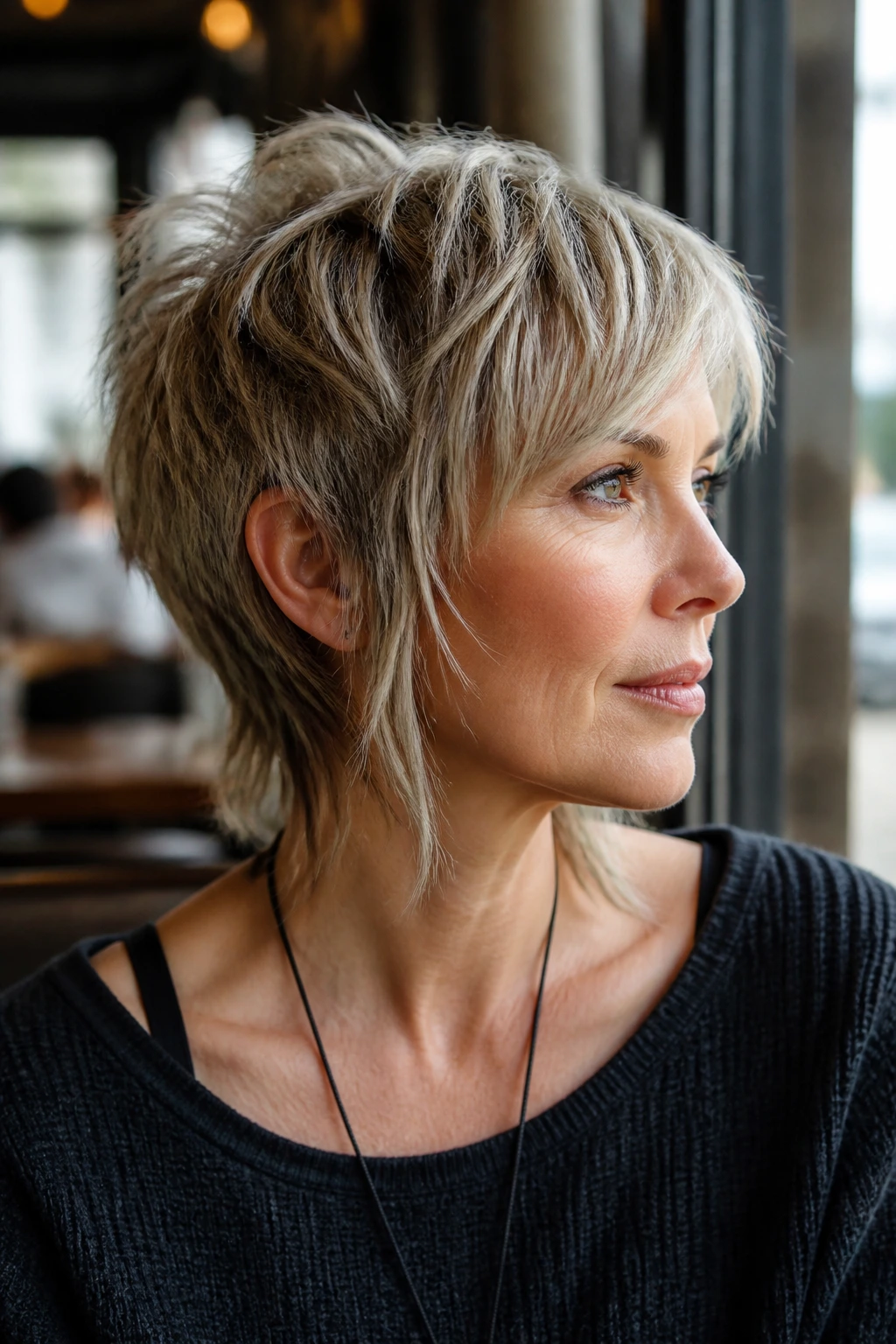
This is the bold one. Short crown, longer front pieces, tapered nape, and enough texture on top to keep the cut from reading as a plain pixie. It’s a good fit when fine hair has enough density to support short length, but not enough length to pretend it’s thick.
The Detail That Matters
The top has to stay soft. If the crown is clipped too tight, the hair can expose the scalp in a way that feels harsh under bright indoor light. Keep some feathering near the part and temple area so the shape breathes.
This cut works best on people who like to style with fingers instead of brushes. A little paste, a little scrunch, and done. It’s low on fuss, high on attitude, and easier to wear than it looks in a salon mirror.
If your hairline is strong and your face likes shorter lines, this can be one of the sharpest wolf-cut-adjacent options. If you want softness around the jaw, leave the front longer than you think you need.
14. The Silver-Friendly Wolf Cut

Gray and silver hair often has more grip than dyed fine hair, which helps the shape hold. That’s why a wolf cut can be especially good on salt-and-pepper textures. The cut gives movement, and the hair gives the cut a little natural body.
Silver-friendly versions should keep softness around the face and avoid over-thinning the ends. Coarser silver strands can turn poofy if they’re cut too aggressively. A little restraint goes a long way here. The shape should breathe, not frizz outward.
This is also a good time to think about fringe placement. Silver hair near the hairline can look striking when the front pieces are long enough to feather rather than sit in a hard line. Curtain bangs or a soft side fringe often do the job better than blunt pieces.
If you wear glasses or bright lipstick, a silver wolf cut can frame the whole face in a clean way. The haircut does not need to shout. The color already has enough presence.
15. The Air-Dry Wolf Cut

Can a wolf cut survive without heat? Yes, if the shape is built for it. Air-dry versions are best when the stylist leaves enough movement through the mid-lengths and doesn’t carve the ends into wisps that only work with a brush.
The whole point is to let the hair land with a little bend on its own. A lightweight mousse or cream goes in on damp hair, then the crown is lifted with fingers so it doesn’t dry flat against the scalp. If the hair has a natural wave, this cut can look better on day two than day one.
How to Style It
- Squeeze water out with a T-shirt or microfiber towel.
- Work mousse into the roots and mid-lengths.
- Twist the front pieces away from the face while they dry.
This version is honest. It doesn’t pretend every head of fine hair wants a big blowout. Some just want a shape that respects how they dry.
16. The Polished Office Wolf Cut

If you like structure, this is your version. The layers are there, but they’re smoothed down into a clean outline so the cut reads professional instead of scrappy. It’s a wolf cut that can sit under a blazer without looking like it escaped a concert.
The trick is keeping the front pieces long enough to brush back, and the top layers soft enough to lift without sticking out. A round brush, a light heat protectant, and a bit of spray at the root can make this style look deliberate in about ten minutes.
This cut is useful if you want to keep the visual interest of a layered style but need something that behaves in meetings, on camera, or under indoor lighting that shows every flaw. The polish is doing a lot of the work here.
It’s also one of the easier versions to grow out. As the layers lengthen, it turns into a softer shaggy lob rather than losing the whole point.
17. The Tousled Wolf Cut with Longer Front Pieces

The longer front pieces are the whole story here. They soften the jaw, give the face a frame, and stop the cut from feeling too abrupt. Fine hair often benefits from that extra length in front because it keeps the shape from reading thin at the edges.
The rest of the cut can stay fairly airy, but the face frame should be long enough to tuck behind the ear or sweep forward without breaking apart. That gives you options on days when you want to wear the cut a little neater.
This version looks especially good when there’s a slight bend at the front and a looser texture in the back. It’s casual without being sloppy. That distinction matters. Casual is a choice. Sloppy is a styling failure.
A touch of texturizing spray at the ends is usually enough. More than that, and the front pieces can start to separate in a way that makes the hair look thinner than it is.
18. The Deep Side-Part Wolf Cut

A side part can create instant fullness where fine hair tends to fall flat. That makes this wolf cut a smart fix for a crown that won’t cooperate. The part shifts the weight, the layers fall differently, and the whole shape gets a little lift before you even touch a brush.
This is also a good choice if your face looks better with asymmetry. One side can sit a little fuller around the cheekbone while the other side tucks back. The cut stays interesting because the part does part of the work. That’s the beauty of it.
Unlike a centered wolf cut, the deep side-part version can hide sparse areas at the temple or near the part line. It also gives you a way to wear the haircut on days when your roots need a reset but you don’t have time for a full styling session.
If your hair has a stubborn bend, follow the part your roots already want. Fighting the natural line just makes the top go limp.
19. The Soft Mullet Wolf Cut with a Tapered Nape
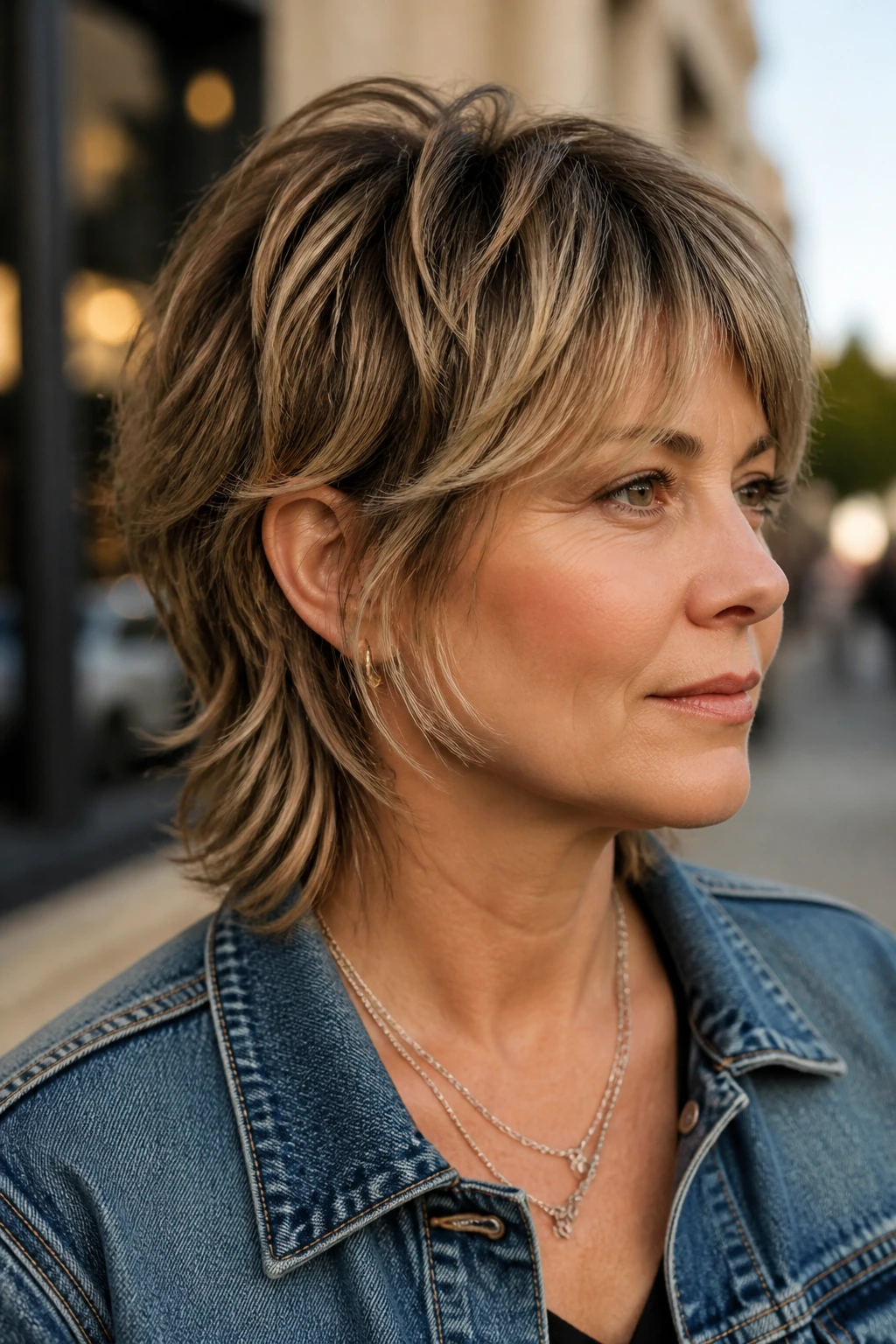
This is the edgier sibling, but it does not have to look harsh. A soft mullet wolf cut keeps the nape tapered and the top lively, while leaving enough front length to keep the style wearable. On fine hair, the softness is what saves it.
Why It Works
The taper in the back removes bulk where fine hair often lies too flat, while the longer front pieces keep the face framed. That balance gives the haircut a bit of attitude without pushing it into costume territory.
It’s a good fit if you like denim jackets, boots, and hair that looks a little undone on purpose. But the cut needs control. If the nape is taken too short or the top is shredded too much, the whole thing loses shape fast.
Keep the fringe light, the crown soft, and the ends around the front long enough to move. That’s the version that looks modern instead of abrupt.
20. The Wolf Cut for a Flat Crown

If the top of your hair lies close to the scalp no matter what you do, this cut is built for that problem. The crown needs lift, yes, but not so much that it turns into a little helmet. That’s where careful layering and good styling matter.
The shortest layers should help the top rise, not stand out. Ask for a shape that leaves enough length around the crown to bend when blow-dried, then uses the face frame to draw the eye forward. That way the style looks fuller without making the top look separated from the rest of the hair.
This version often benefits from a root-lifting mousse, a round brush, and a few clips while the crown cools in place. Cooling is underrated. Hair sets as it cools, and skipping that step is one reason the style collapses by noon.
If you have a flat crown, this cut can make a bigger difference than a dramatic fringe ever will. It’s a practical fix, not a decorative one.
21. The Asymmetrical Wolf Cut with One Longer Side

Can unevenness help fine hair? Sometimes, yes. A slightly asymmetrical wolf cut gives the eye something to follow, which can make the hair feel fuller and more intentional. One side hangs a little longer, the other side opens the face, and the whole shape feels modern without needing a lot of length.
This version is especially good if one side of your hair parts better than the other or if you have a cowlick that keeps pushing one section forward. Instead of fighting that, the cut works with it. That tends to look more natural than forcing both sides into the same line.
The asymmetry should be subtle. A dramatic mismatch can look sharp on thick hair, but on fine strands it can feel too exposed. Keep the difference soft enough that the hair still reads as one shape.
It’s a good final option if you want a little edge but still need the haircut to behave in daylight, office light, and bathroom-mirror light. Those are not the same thing.
How to Ask for the Right Wolf Cut in the Salon Chair
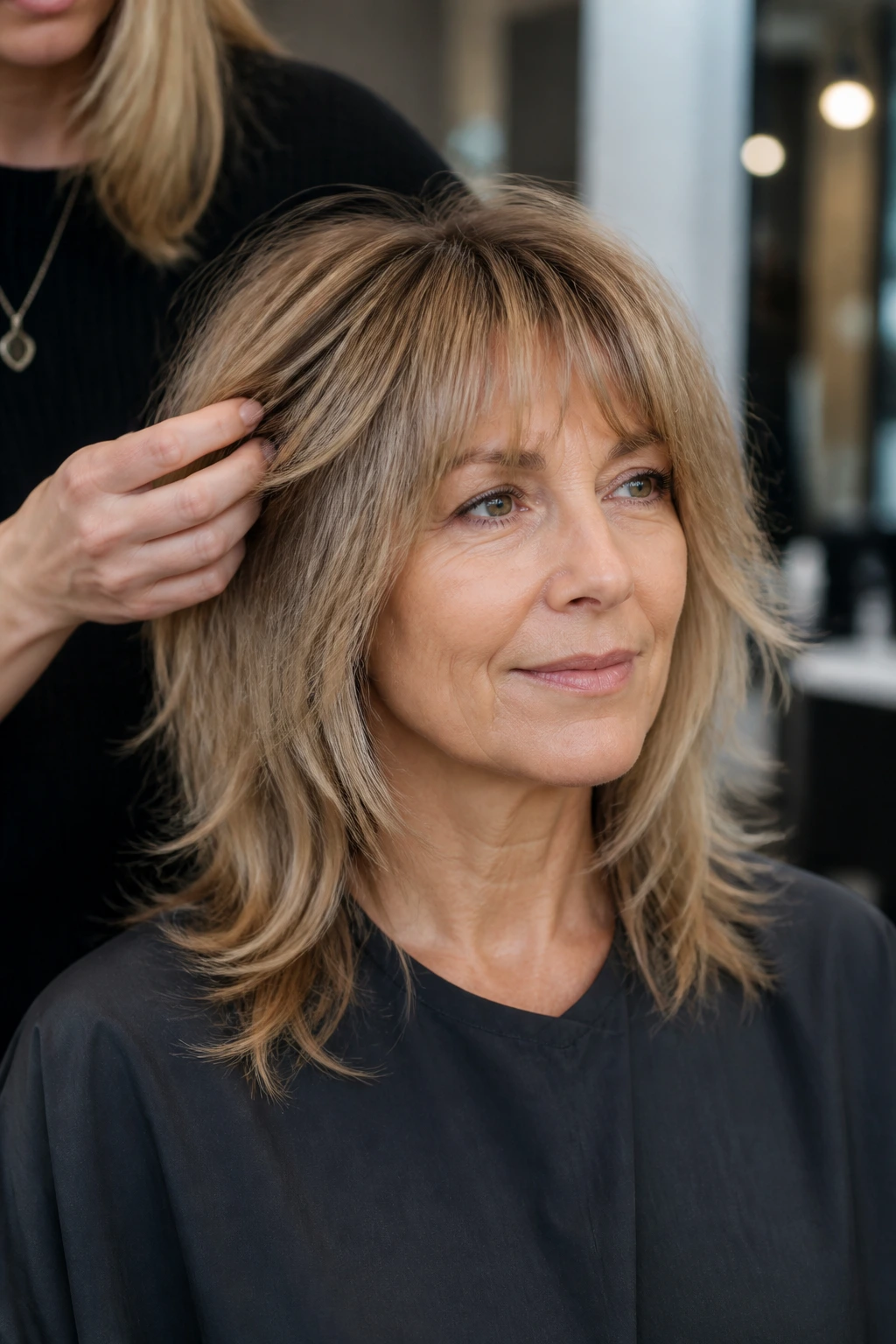
The best salon conversations about fine hair are unromantic and very specific. Skip vague words like “shaggy” or “lots of layers” unless you enjoy rolling the dice. Say where you want the weight to stay, where you want movement, and how much styling you’re willing to do.
Be Clear About the Perimeter
Tell the stylist you want the bottom line to stay strong. On fine hair, that usually means a cleaner edge at the collarbone, jaw, or shoulder rather than a heavily razored finish. If the perimeter gets too soft, the haircut starts losing visual density as soon as it dries.
Name Your Styling Habit
Air-dry only? Say that. Round brush most days? Say that too. A wolf cut can be built for either, but not both in the same way. Hair that will be heat-styled can handle lighter ends and more movement. Hair that has to dry on its own needs a more forgiving outline.
Bring One Good Photo and One Bad Photo
A picture of what you want is useful. A picture of what you do not want is even better. The second one saves time because it tells the stylist where your limits are — too short at the crown, too piecey at the ends, too much bang, too much gap near the part.
And one more thing: if your hair is fine but dense, say so. Those two things are not the same, and the cut should change depending on which one you mean.
Tools That Make Styling Easier

-
Blow dryer with a concentrator nozzle — This directs air to the roots instead of blowing every strand around, which matters when you want lift without frizz.
-
1- to 1.25-inch round brush — A small-to-medium brush gives enough bend at the face frame and ends without making fine hair look over-curled.
-
Lightweight mousse — The right mousse gives support at the root and a little grit through the lengths, but it should not leave the hair sticky or stiff.
-
Texturizing spray — Use this on dry hair, especially on second-day styles, to separate the ends and wake up the layers.
-
Dry shampoo — Best used before the roots get oily. It helps keep the crown from collapsing and adds a bit of texture.
-
Heat protectant mist — Non-negotiable if you use a blow dryer, brush, flat iron, or curling wand.
-
Duckbill clips — Useful for setting the crown while it cools, which helps the bend hold longer.
-
Fine-tooth comb and wide-tooth comb — The fine-tooth comb helps you part the hair cleanly; the wide-tooth comb keeps wet hair from snapping.
Styling Moves That Add Lift Without Crunch

Root Lift: Put mousse on damp roots, then blow-dry in sections, pulling the hair up and away from the scalp with your fingers or a brush. Stop the heat before the hair is bone dry, then let it cool for a minute in the lifted position. That little pause helps the shape hold.
Texture: Use only a small amount of styling cream or paste on the ends. Fine hair can go from airy to stringy in one sloppy squeeze, so start with a pea-sized amount and add more only if the ends need definition.
Shape Memory: Wrap the face-framing pieces around a round brush or curling iron away from the face, then let them cool before touching them. If you brush them out too soon, the bend falls flat.
Second-Day Reset: Mist the roots lightly with water, hit them with a blow dryer for a minute or two, and then add dry shampoo only where the scalp starts to show. Don’t load the lengths with product unless they’ve gone limp.
Mistakes That Make Fine Hair Look Thinner

The most common mistake is over-layering the ends. When the bottom gets too thin, the haircut starts showing gaps in bright light, especially around the shoulders and back. The fix is simple: keep the perimeter stronger and put the movement higher up.
Another trap is cutting the crown too short. Short top layers can look cute in the chair, then puff up awkwardly once the hair dries. Ask for a softer crown that still bends down toward the head instead of standing out like it’s trying to leave.
Heavy products cause trouble too. Thick creams, oils, and waxy serums can make fine hair sink at the root and separate at the ends. That’s a bad combo. Start light. Add only what the hair actually needs.
Dense bangs can swallow the face and eat the front density you were trying to preserve. If you want fringe, go for curtain bangs, bottleneck bangs, or a soft side sweep that lets some forehead show through.
Skipping trims is the slow-burn mistake. The cut doesn’t fall apart overnight, but once the layers start growing into the perimeter, the shape gets mushy. A trim every 6 to 8 weeks usually keeps it tidy.
Wolf Cut Variations That Feel Softer or Sharper
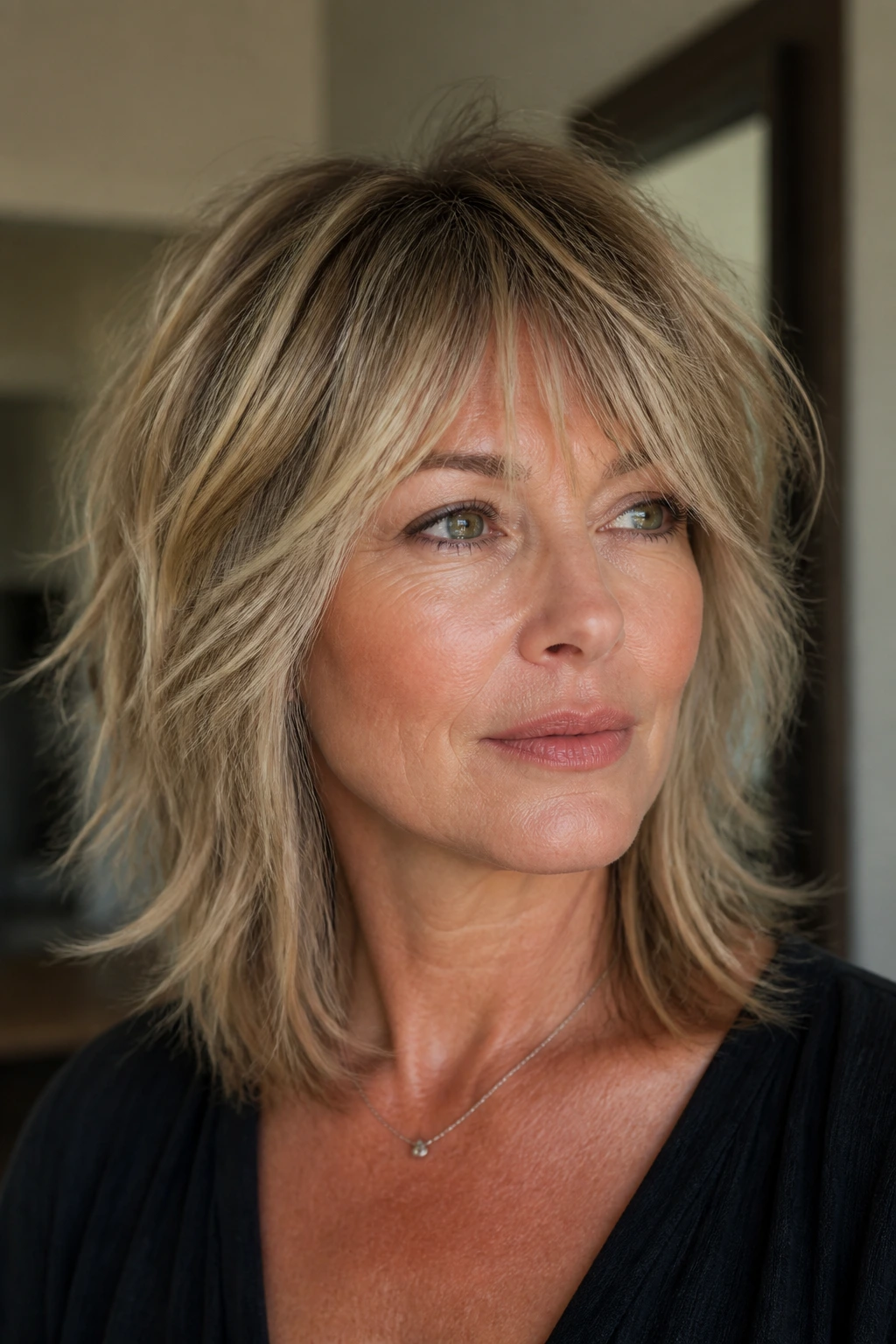
The Soft Shag: Less edge, more movement. This version keeps the wolf-cut spirit but softens the nape and face frame, which is a good fit if you want texture without a strong mullet line.
The Wolf Lob: Collarbone length, cleaner ends, and just enough layering to create lift. It’s the safest choice if you want fullness first and attitude second.
The Polished Wolf: Round-brushed, smoother, and less piecey. This one works well for office settings or anyone who prefers hair that looks finished rather than tousled.
The Air-Dry Wolf: Built around natural bend, mousse, and a little scrunching. Good for wavy fine hair, especially if you don’t want to use heat every day.
The Pixie-Wolf Mix: Shorter, lighter, and more directional. It gives a sharper outline and works best when the crown still has enough density to support short layers.
Keeping the Shape Between Appointments

Fine hair usually tells you when it needs a trim. The ends start feeling soft in a not-good way, the crown loses its lift, and the layers stop connecting to each other. For most wolf-cut versions on fine hair, a trim every 6 to 8 weeks keeps the silhouette readable.
Wash frequency matters too. If your scalp gets oily fast, the roots can go flat by day two and make the whole cut look thinner. A small amount of dry shampoo on clean, fully dry hair can buy you another day or two without needing a full wash. If the lengths feel coated, use a clarifying shampoo every couple of weeks to clear product buildup.
Night care is underrated. A loose clip at the crown, a silk pillowcase, or even just pinning the front pieces away from pressure can keep the bend from getting crushed while you sleep. If you wake up with the top flattened, don’t panic. A quick root mist and two minutes of blow-drying usually brings the shape back.
For longer versions, the haircut often looks better after a few weeks than it does on day one. That’s normal. The layers settle. The fringe softens. The whole thing starts to behave like hair instead of a fresh salon diagram.
Frequently Asked Questions About Wolf Cuts for Fine Hair
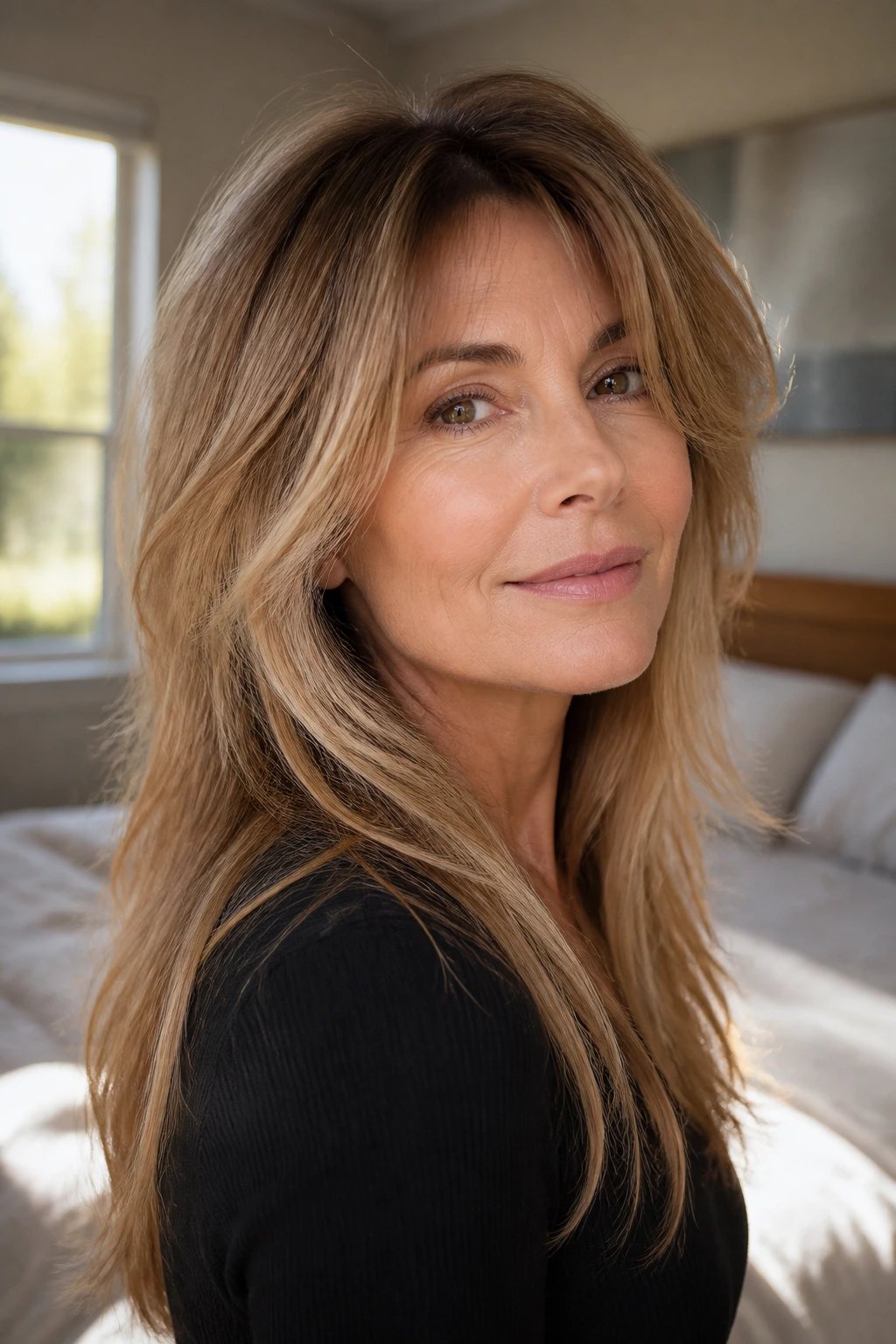
Will a wolf cut make fine hair look thinner?
It can, if the cut is too aggressive at the ends. The right version keeps a stronger perimeter and places the movement higher up, which makes the hair look fuller rather than stripped down.
Is a wolf cut good for straight fine hair?
Yes, but the cut has to be restrained. Straight hair usually does best with softer layers, a clean bottom line, and a little lift at the crown instead of heavy shredding.
Do I need bangs with a wolf cut?
No, but some kind of front softness helps. Curtain bangs, bottleneck bangs, or a long side fringe can disguise a flat root line and keep the haircut from feeling plain.
How often should I trim it?
Most fine-hair wolf cuts need a refresh every 6 to 8 weeks. Shorter versions may need it a touch sooner if the crown starts to lose shape.
Can I air-dry a wolf cut and still look put together?
You can, if the cut is built for it. Keep the layers soft, use a light mousse, and twist the face-framing pieces while they dry so they don’t collapse into odd bends.
What if my crown is flat or thinning?
Keep the crown layers long enough to bend, not so short that they stick up. Root-lifting mousse, a round brush, and cooling the hair in place help a lot here.
Can I wear this haircut polished instead of messy?
Absolutely. A wolf cut does not have to look wild. Round-brush the crown, smooth the front pieces, and leave only a small amount of texture at the ends.
Does silver or gray hair change the shape?
It can. Silver strands often have more grip and a little more stiffness, which means the cut may hold its movement better. The flip side is that overly thin layers can puff out, so a softer hand is smarter.
The Shape That Stays Light

The best wolf cuts for fine hair over 40 do not try to fake thickness. They work with what the hair already does, then give it a cleaner outline and better lift. That’s why some versions feel flattering the second you see them in the mirror: the ends still look present, the crown lifts without effort, and the face gets a frame that doesn’t swallow it.
If you’re sitting between “too plain” and “too choppy,” start with the softer shapes first — the lob, the curtain bang version, the shoulder-length cut with a strong edge. Those are the safest bets. Once you know how your hair responds, you can move a little edgier if you want to.
Hair like this behaves best when the cut and the styling agree with each other. When they do, the whole thing feels easy. And easy is the point.
