



Straight hair is brutally honest. It shows every line, every bend, every awkward shelf where a cut was taken too high or too blunt. That is exactly why short wolf cuts with bangs for straight hair can look so sharp when they’re done right — and so flat when they’re not.
The trick is not “more texture” in the vague, salon-brochure sense. On straight hair, the wolf cut has to earn its movement through layer placement, fringe length, and how the perimeter is left to fall. A good version gives you lift at the crown, swing around the cheeks, and a fringe that looks like it belongs there instead of sitting on the forehead like an afterthought.
Bang choice changes everything. Curtain bangs soften a strong jaw. A blunt fringe gives the cut attitude. A wispy brow-grazer makes fine straight hair look airy instead of sparse. And if the layers are too short or too aggressively thinned, straight hair will announce that mistake to the whole room. Loudly.
Why These Cuts Earn Their Keep on Straight Hair
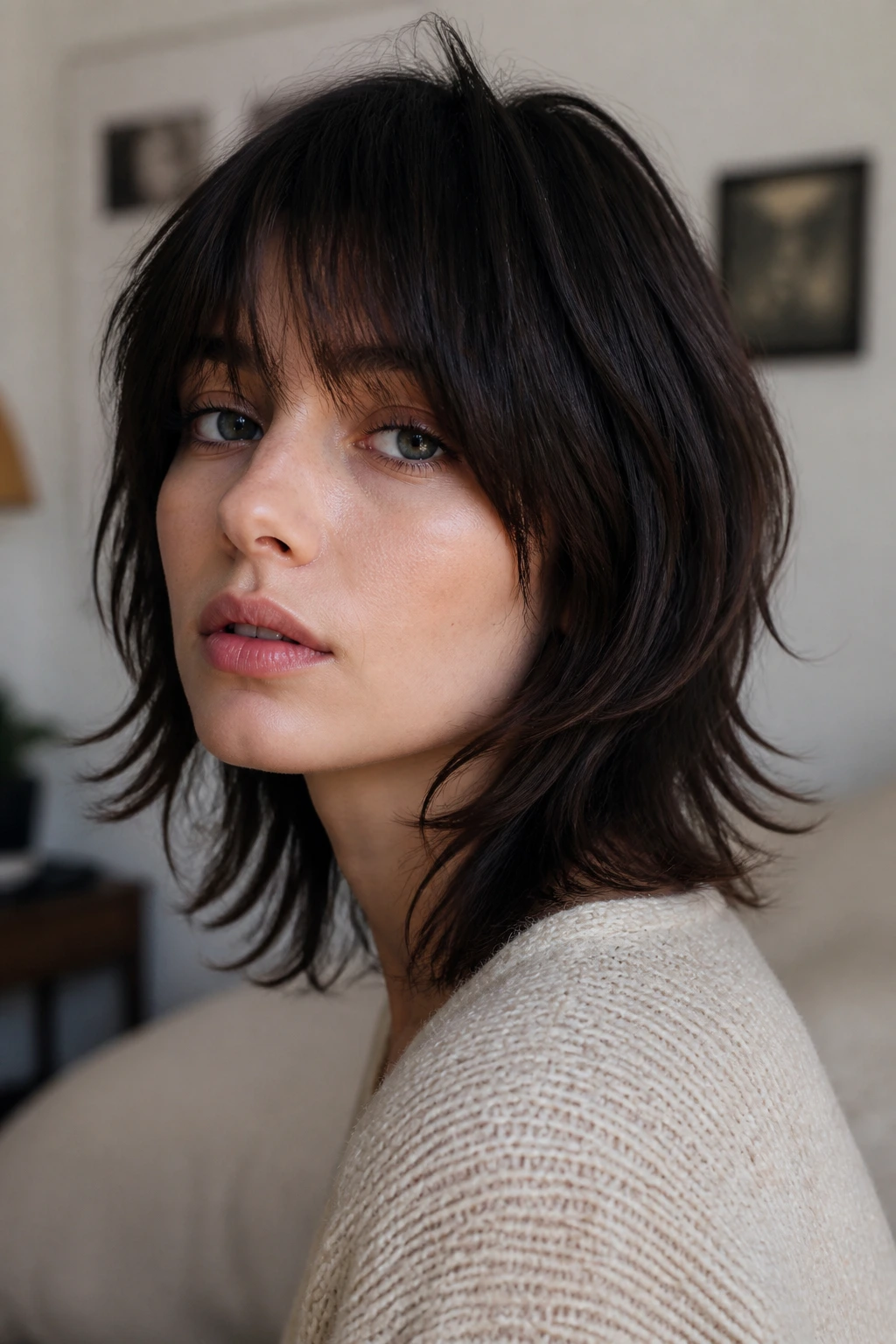
- The layers do the heavy lifting: Straight hair won’t hide bad layering, so these cuts are designed around shape, not just texture spray.
- The bangs change the whole mood: A fringe can make the same cut read polished, edgy, soft, or a little rebellious without changing the length.
- The grow-out is forgiving: A short wolf cut usually softens into a shaggy bob instead of turning into a weird triangle, which matters when you’re not in the salon every few weeks.
- It can add movement without curl: You do not need waves to get motion. The right internal layers and blow-dry direction create bend where hair would normally hang dead straight.
- It works at different maintenance levels: Some versions need a trim every 3 to 4 weeks around the bangs; others can coast for 8 weeks with a little dry shampoo and a round brush.
- It gives straight hair a little attitude: Not a costume. Not a full retro shag. Just enough bite that a plain blowout stops looking sleepy.
1. Chin-Grazing Curtain Wolf
This is the easiest wolf-cut doorway for straight hair. The length sits around the chin, the curtain bangs split softly at the center, and the side pieces fall into the cheekbones instead of hanging like separate curtains.
What makes it work is restraint. If the layers are too chopped up, straight hair starts looking stringy. Keep the top soft and the ends slightly feathered, and the cut gets movement without losing shape. It’s one of those styles that looks best after a quick blow-dry with a round brush, not after an hour of fussing.
Styling note
A small amount of root-lift mousse at the crown gives the fringe somewhere to sit. Then bend the ends inward just enough to show the layer line. Too much curl ruins the point.
2. Micro Fringe Wolf
Can straight hair pull off a micro fringe without looking severe? Yes — if the rest of the cut stays airy and the fringe is softened at the corners. A short, tiny bang on straight hair creates a sharp line that feels intentional, not accidental.
I like this version on people who wear clean collars, simple tees, and minimal makeup. It has a graphic edge. The danger is going too blunt through the whole head, which turns the style into a helmet with attitude.
Best for
- Smaller foreheads
- Fine to medium straight hair
- Anyone who wants the bangs to do the talking
3. Blunt-Edge Wolf Bob
If you like the polish of a bob but want something with more life in the crown, this is the one. The perimeter stays blunt around the jaw or just below it, while the internal layers and face framing bring in that wolf-cut shape.
Straight hair makes the blunt edge look crisp, which is the point here. The wolf part should happen inside the shape, not all over the surface. Ask for soft, hidden graduation so the line doesn’t puff out at the sides.
A little bending iron on the front pieces is enough. Don’t turn it into a pageant curl situation. It doesn’t need that.
4. Feathered Brow-Fringe Wolf
This is the calmest version in the bunch. The fringe lands right around the brows, the sides are feathered rather than chopped, and the whole cut reads soft even on hair that normally falls flat.
Straight hair likes this because the shape stays legible. You can see the layers. You can see the movement. And because the fringe isn’t too short, you’re not wrestling with it every morning.
Keep the bangs light at the temple points. That tiny detail makes the difference between “soft frame” and “heavy shelf.”
5. Tucked Ear-Length Wolf
This one has a neat little trick up its sleeve: it looks controlled when worn down, then a single tuck behind the ear changes the whole vibe. The cut sits around the ears and jaw, with short, broken layers that move when you shift your head.
On straight hair, that tucked shape matters because the hair itself won’t supply texture. You need the cut to create the interest. A few shorter pieces around the cheekbone and a soft fringe are enough.
Use this if you want short hair without a harsh bob line. It feels modern and low-key. Also, it grows out nicely, which is not a small thing.
6. Bottleneck Fringe Wolf
The bottleneck fringe is one of the smartest bangs for straight hair because it starts narrow near the center and opens out around the eyes and cheekbones. That shape gives the face room and stops the fringe from looking like one solid block.
Paired with a short wolf cut, it adds shape without too much weight. The top can stay fairly smooth, while the fringe carries the style. That’s useful if your hair is fine and tends to collapse when layers get too short.
What to ask for
Ask for a fringe that is shorter in the middle and longer at the sides, with soft edges and no chunky center shelf. Straight hair punishes shelves.
7. Razor-Cut Heavy Bang Wolf

This is the moody one. Heavy bangs plus a short wolf cut can look fantastic on straight hair, but only when the ends around the face are broken up enough to keep the whole thing from looking boxy.
A razor or point-cut fringe works here because straight hair shows the difference between a clean edge and a dead-straight wall of hair. The better version has movement in the bang line and a bit of roughness through the sides. The result is edgy without looking stale.
Styling note
Blow the fringe forward first, then push it slightly apart with your fingers once it cools. That tiny break keeps it from sitting like one solid curtain.
8. Mini Mullet Wolf
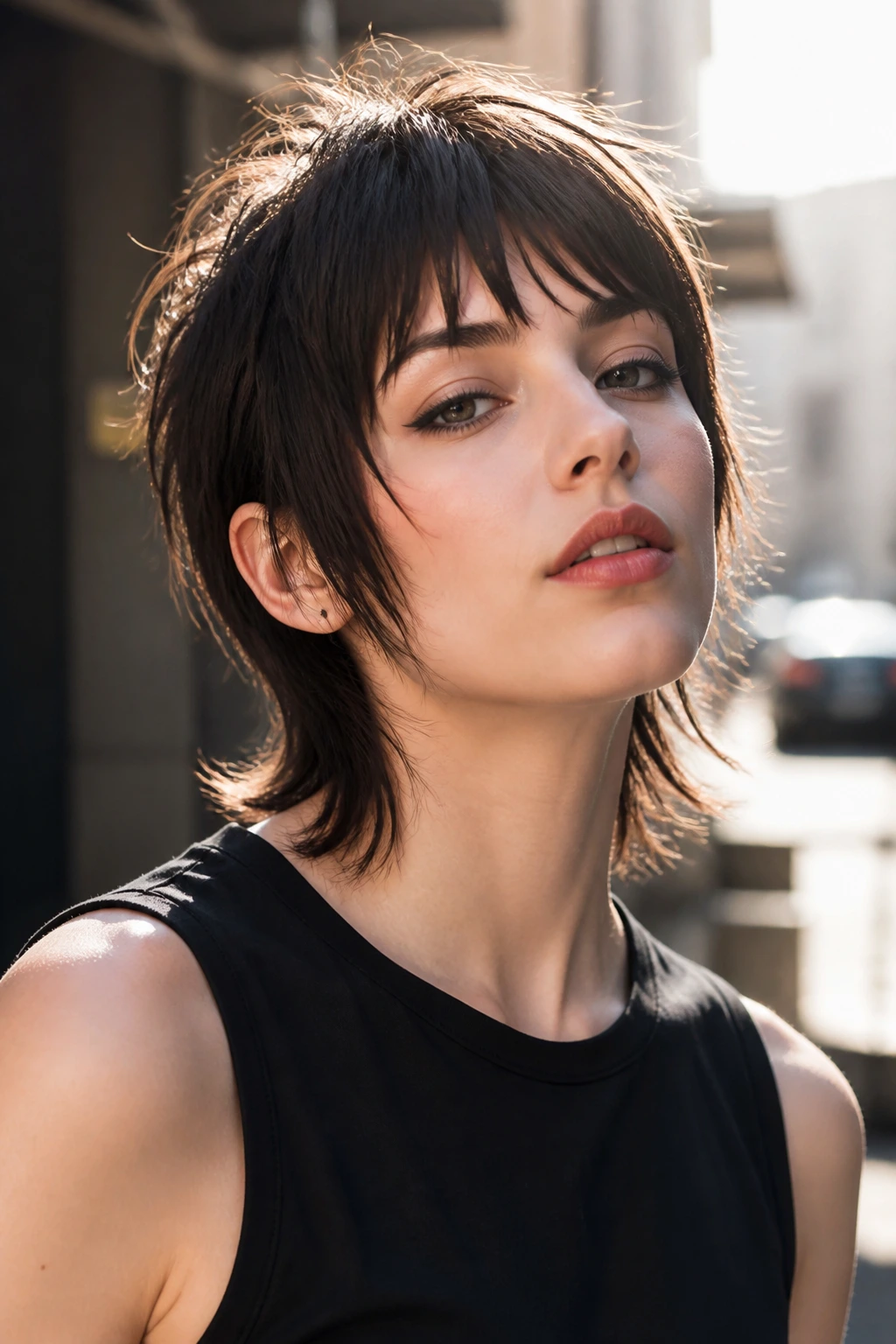
A mini mullet wolf cut has more contrast than most people expect. The front stays short and face-framing, the crown has some lift, and the back keeps a little extra length so the silhouette doesn’t go boxy.
On straight hair, that contrast is the point. You can actually see the shape shift from front to back, which is why this version has more personality than a standard bob. It does ask for confidence, though. This is not the shy option.
A short fringe or narrow curtain bang suits it well. Keep the back soft, not spiky, and the whole cut feels deliberate instead of costume-y.
9. Side-Swept Wolf
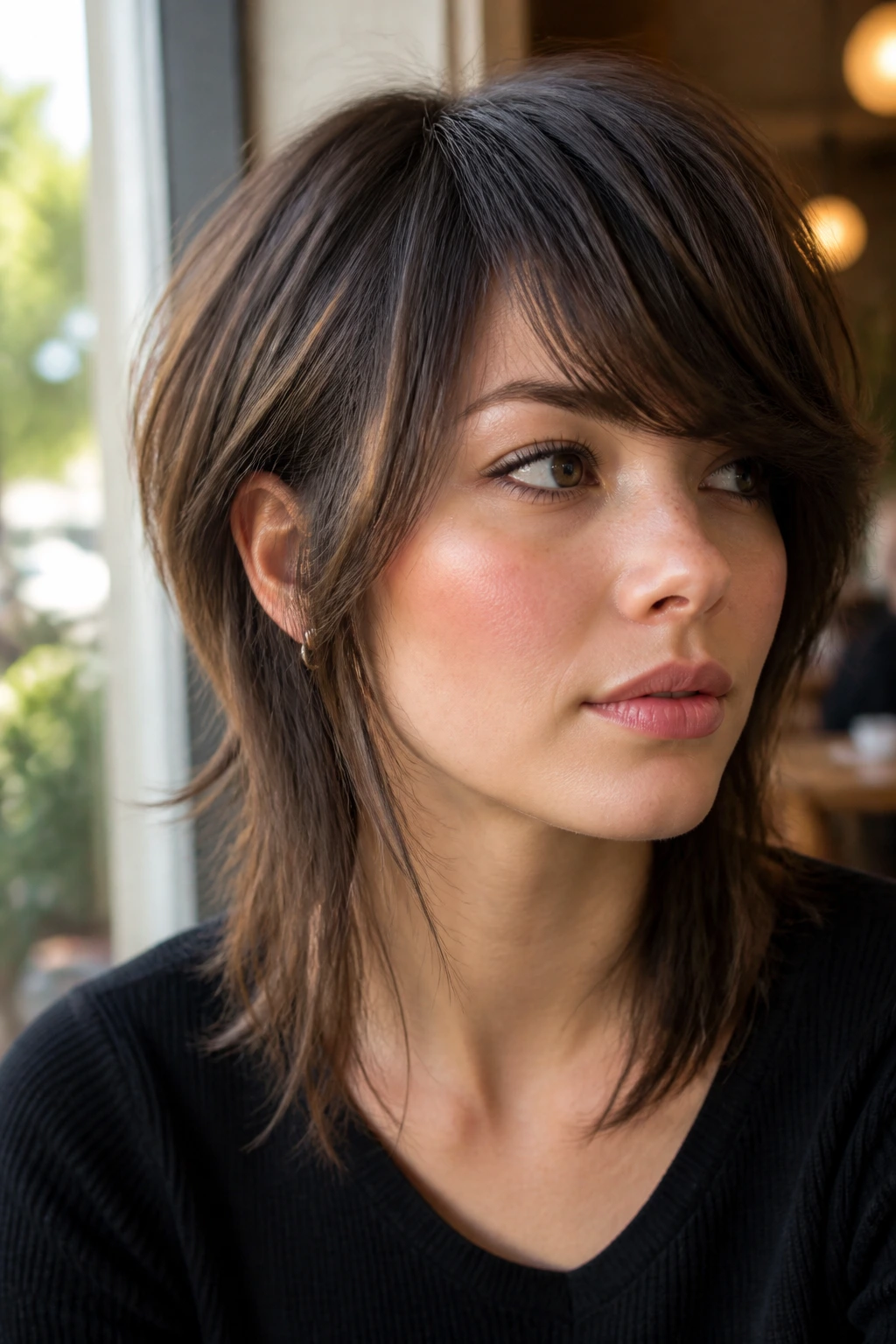
If you know you want the wolf-cut shape but you hate a centered fringe, this is your lane. The side-swept bang takes the sharpness down a notch and gives straight hair a softer fall across the forehead.
It works especially well when the layers start around the cheekbone and jaw instead of up near the eyes. That keeps the face open. Straight hair will show the sweep cleanly, which makes this one easier to style on rushed mornings than a more intricate fringe.
A small round brush and a quick side direction while blow-drying are enough. No overthinking. No fiddling with six clips.
10. Collarbone Wolf
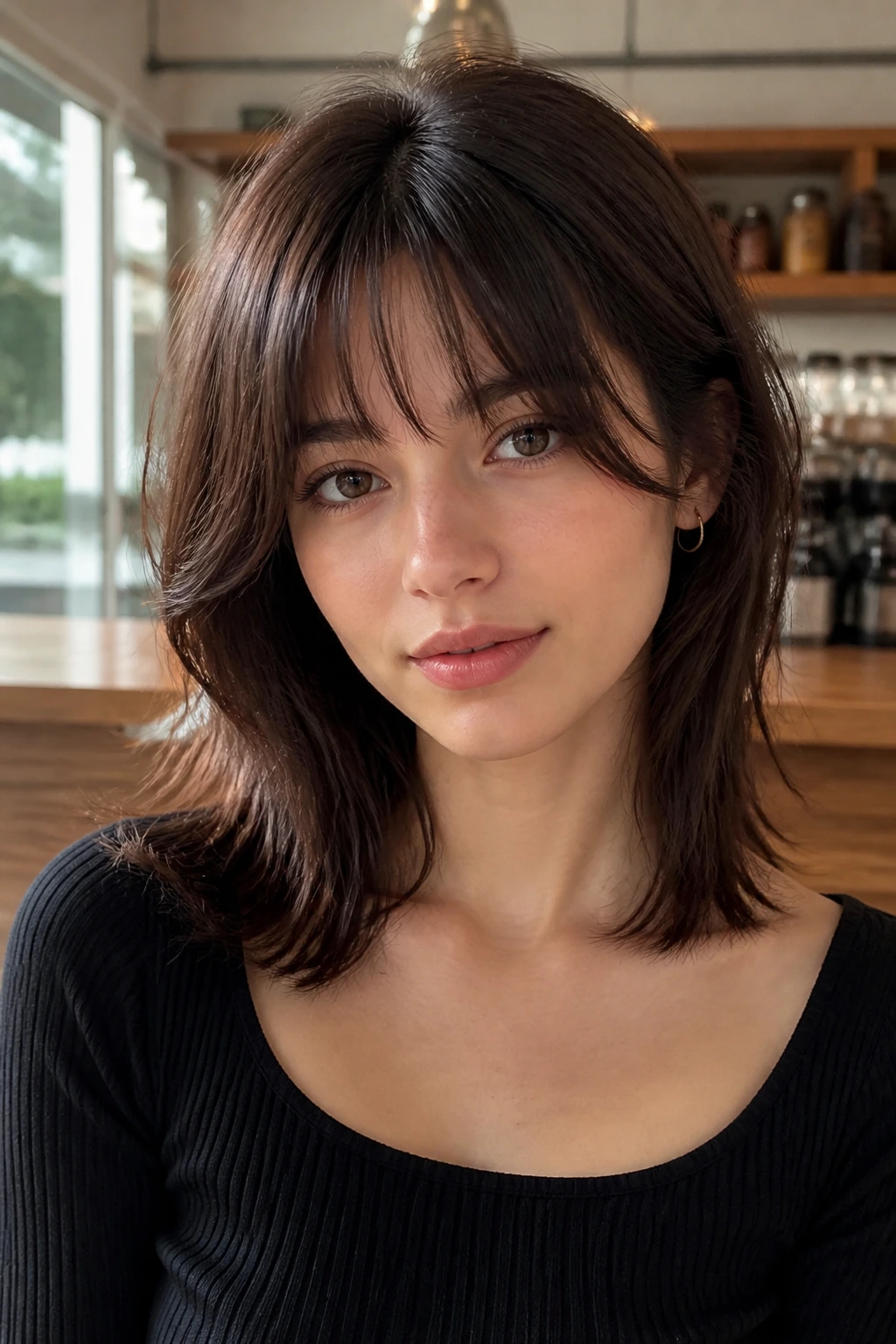
This version lives in that useful middle ground: not long, not super short, and not so layered that you have to style every inch of it. The collarbone length gives straight hair a little swing, while bangs — curtain or brow-skimming — keep it from reading plain.
It’s a good choice if you want movement but don’t want to sacrifice the feeling of having hair you can still pin up. The wolf-cut layers should stay internal and soft, with the most visible texture near the front.
H3: The shape to request
Tell the stylist you want the perimeter to graze the collarbone, the front to open around the face, and the crown to stay lifted without obvious steps. That wording helps more than saying “make it shaggy.”
11. Disconnected Crown Wolf
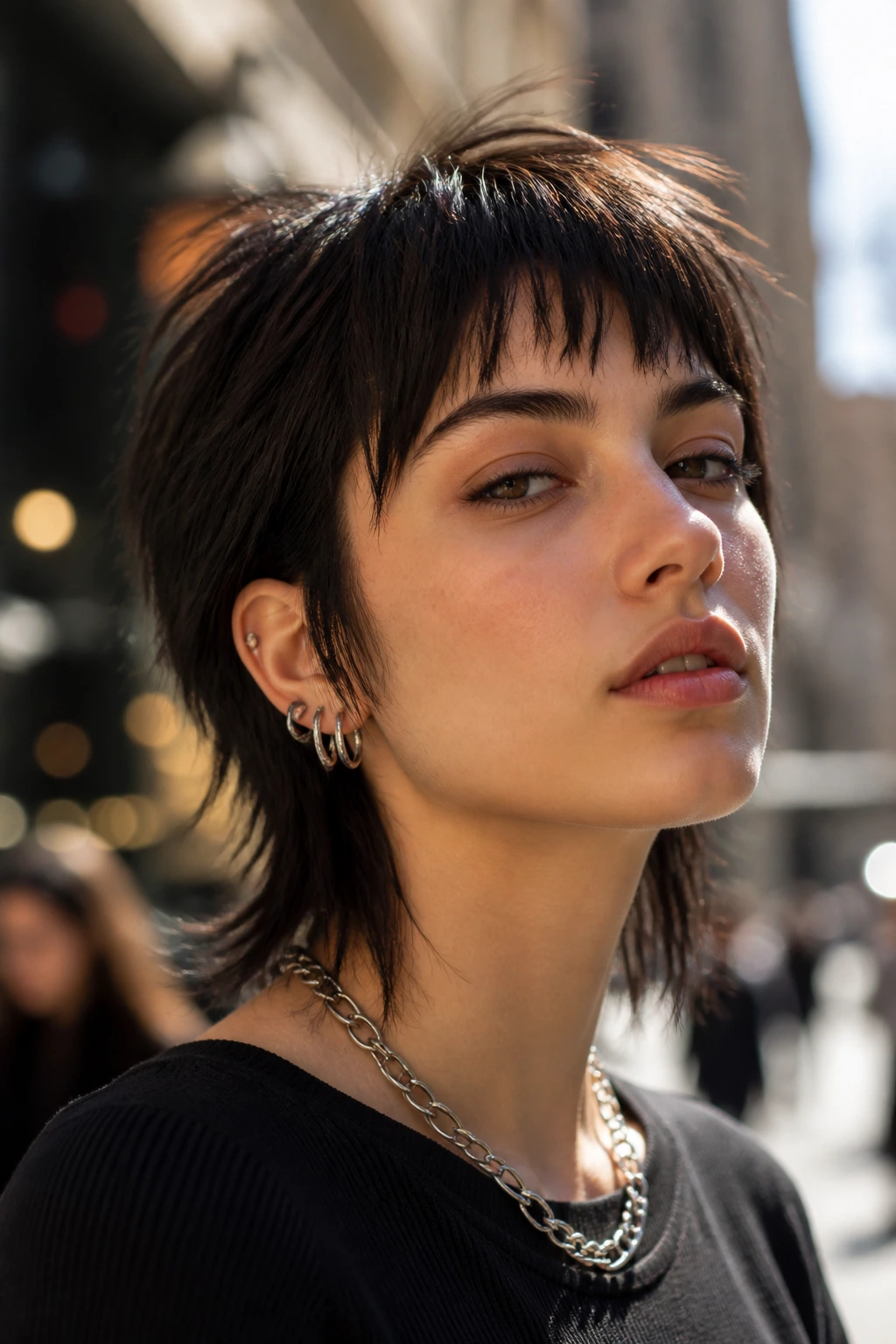
This one gives straight hair a little height where it usually lies flat. The crown is kept slightly more layered and buoyant than the rest, which creates lift without turning the cut into a puffball.
The danger with straight hair is over-thinning. If the top is stripped too hard, the head shape can start looking narrow and thin. Keep the disconnection subtle. You want shape, not holes.
A short fringe or curtain bang balances the crown nicely. The whole effect is strongest when the top moves and the sides stay a touch sleeker.
12. Straight-Across Bang Wolf

A straight-across fringe gives the wolf cut a graphic edge that straight hair can support beautifully. There’s no confusion about where the line is. That can look clean and strong, especially if the rest of the cut stays slightly rougher.
The key is softening the ends underneath so the fringe does not compete with a heavy perimeter. Straight hair can make the whole thing feel too solid if everything is equally blunt. Let the bangs be the statement, then let the layers around the jaw do the breaking up.
This version looks especially good with a middle-of-the-road blow-dry — smooth, not glassy. Glassy can get too severe here.
13. Pixie-Wolf Hybrid
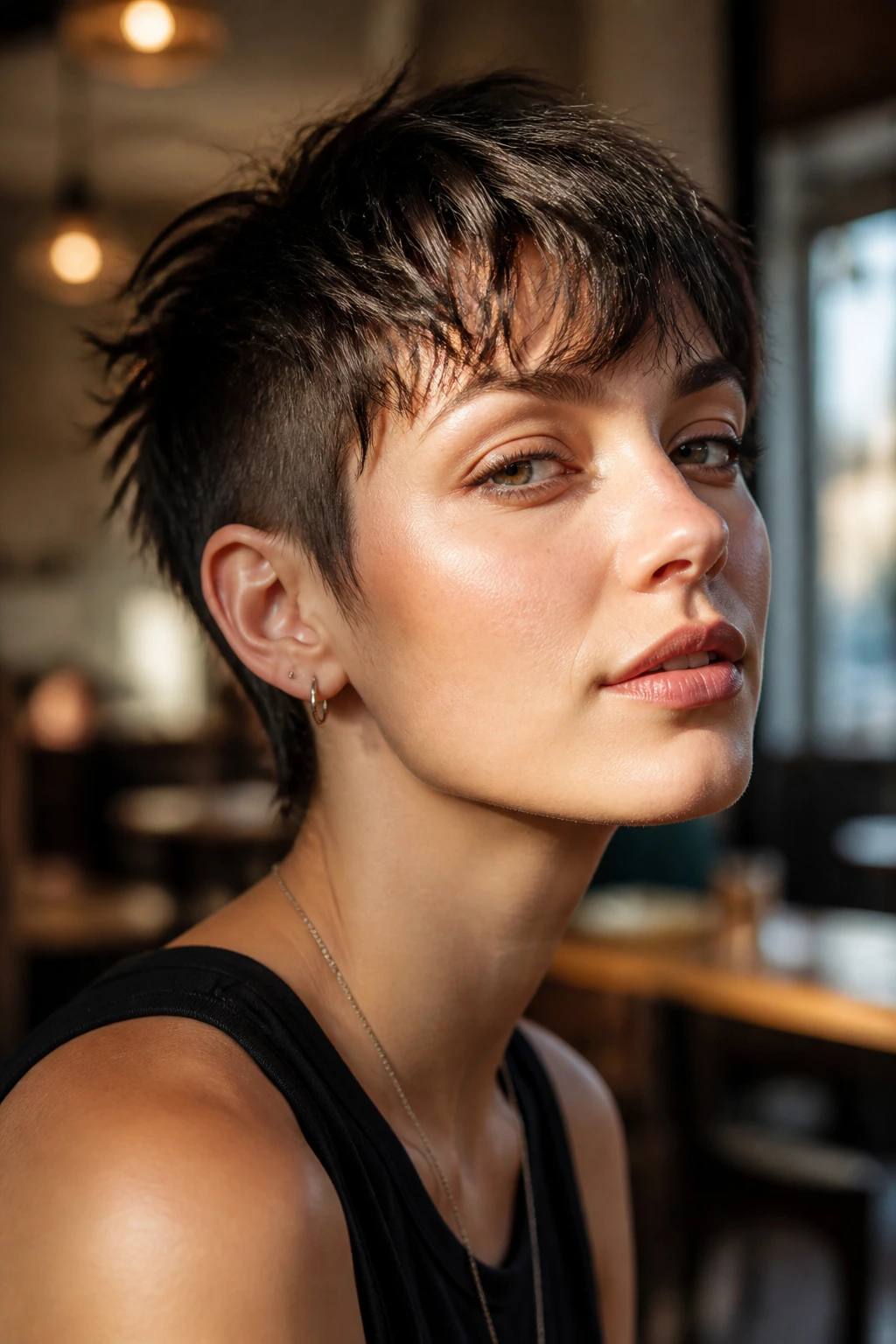
This is the shortest version that still keeps the wolf-cut attitude. The sides and back sit close, but the top and fringe stay longer so you get that slightly messy, layered feel instead of a plain pixie.
Straight hair benefits from this shape because the lines stay clean. The style looks intentional rather than fuzzy. If your hair is fine, keep the top long enough to avoid a see-through crown. If it’s thick, ask for internal debulking so it doesn’t stick out like a cap.
H3: Who it suits
People who want short hair but not a severe crop. It’s also a good choice if you like styling bangs more than the rest of your hair.
14. Rounded Jaw-Length Wolf

This cut is all about the curve. The hair sits around the jaw, but the edges are rounded and slightly feathered so the finish feels softer than a standard bob.
Straight hair needs that curve because it won’t collapse into shape by itself. The wolf elements come through in the layers around the face and crown, not in a lot of choppy texture all over the head. It’s subtle. In a good way.
If your face is square or angular, this version can take the edge off without hiding your bone structure. A brow-grazing fringe works well, though a light curtain fringe is even easier to live with.
15. Air-Dry Wolf

Some cuts look better after styling. This one is built to survive a lazy morning and still look like a haircut rather than a compromise. The layers are placed so they bend a little as they dry, and the bangs are long enough to move without needing constant brush work.
Straight hair won’t create texture on its own, so the cut has to do the job. That means keeping the top light, the sides controlled, and the fringe soft enough to fall into place. A little leave-in spray on damp hair helps, but heavy creams usually flatten the whole thing.
H3: Best approach
Scrunching is not the point here. Instead, twist the front sections once or twice with your fingers and let them dry that way. It gives a cleaner bend.
16. Center-Part Curtain Wolf
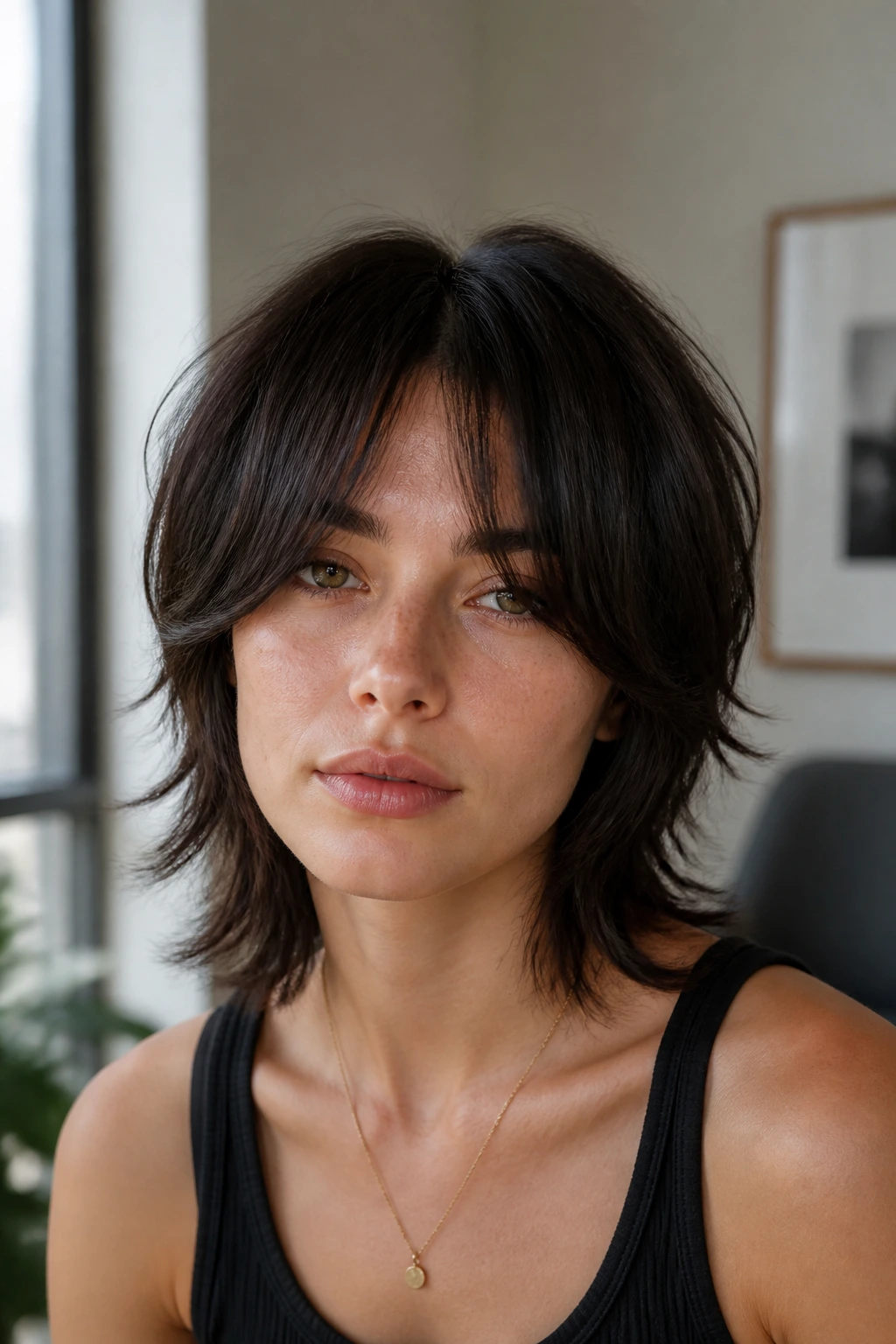
A center part on straight hair can go either sleek or flat. With the right wolf cut, it reads sleek. The curtain bangs split neatly, the front pieces taper into the cheekbones, and the layers give the middle part a reason to exist.
This version is one of my favorites for people who wear straight hair tucked behind the ears a lot. The face framing stays visible even when the rest of the cut is smooth. It feels tidy, but not boring.
Use a bit of heat to coax the front pieces inward at the ends. You do not want a hard curl. Just enough bend to keep the part from looking pasted on.
17. Jawline Flip Wolf

The flip at the ends is the whole point here. The hair sits around the jaw, then turns outward just a little at the bottom, which gives straight hair a clean bit of movement without needing waves.
It’s a nice version if you like vintage references but don’t want the full retro look. The bangs should stay light — curtain or brow-skimming — because a heavy fringe plus a flipped jawline can get busy fast.
The flip also makes the cut look more deliberate on second- or third-day hair. That’s useful. A wolf cut that only looks good for one hour is not a very useful haircut.
18. Boxy Wolf
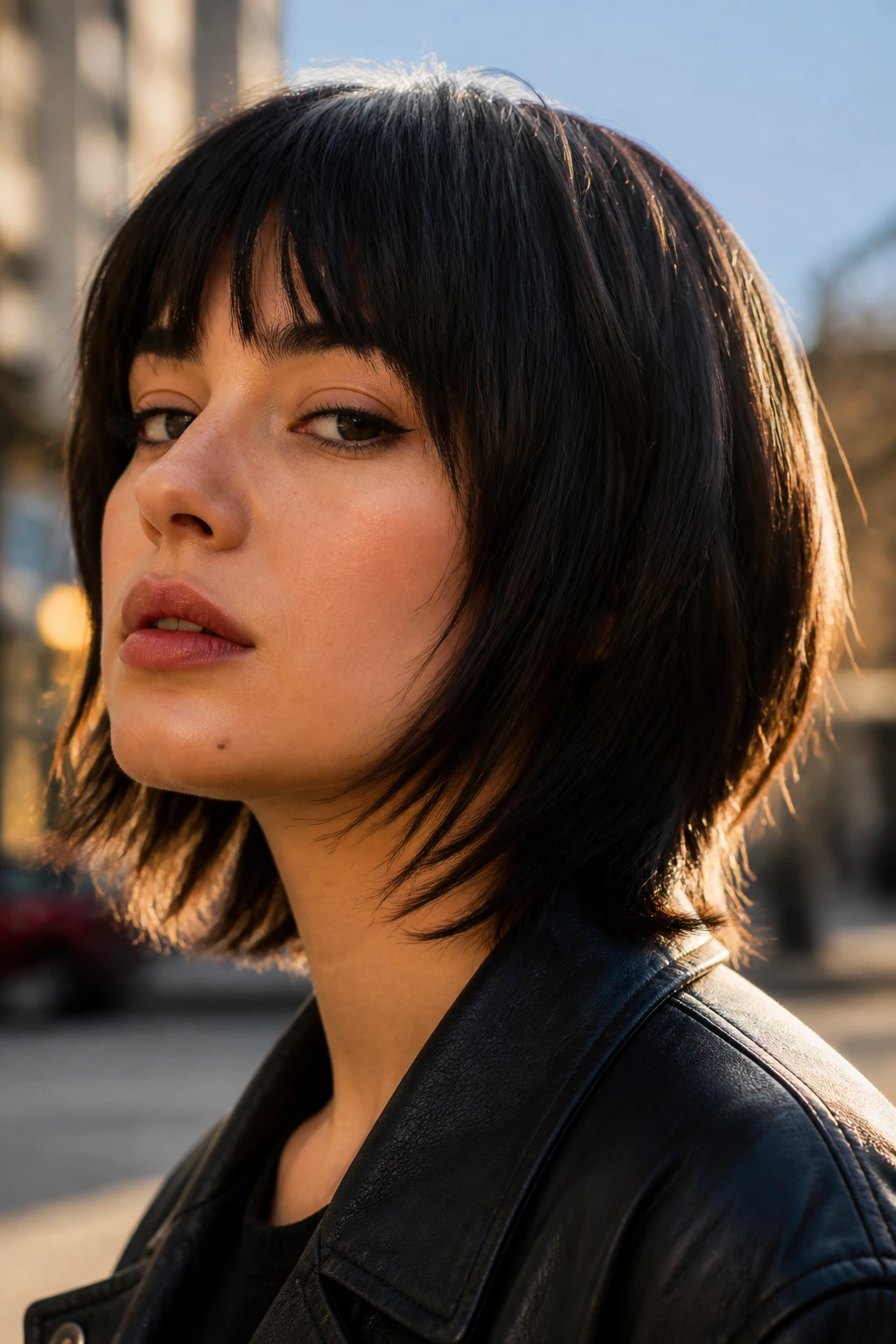
Boxy sounds harsh, but in the right hands it’s a strong silhouette. The perimeter stays slightly square, the layers are internal, and the fringe gives the shape some attitude without softening it too much.
Straight hair can make boxy cuts look stiff, so the trick is keeping the ends broken enough to move. Think sharp outline, soft guts. That contrast is what makes it work.
This version suits someone who likes structure more than fluff. It is a little more fashion-y, a little less sweet.
19. Soft Asymmetry Wolf
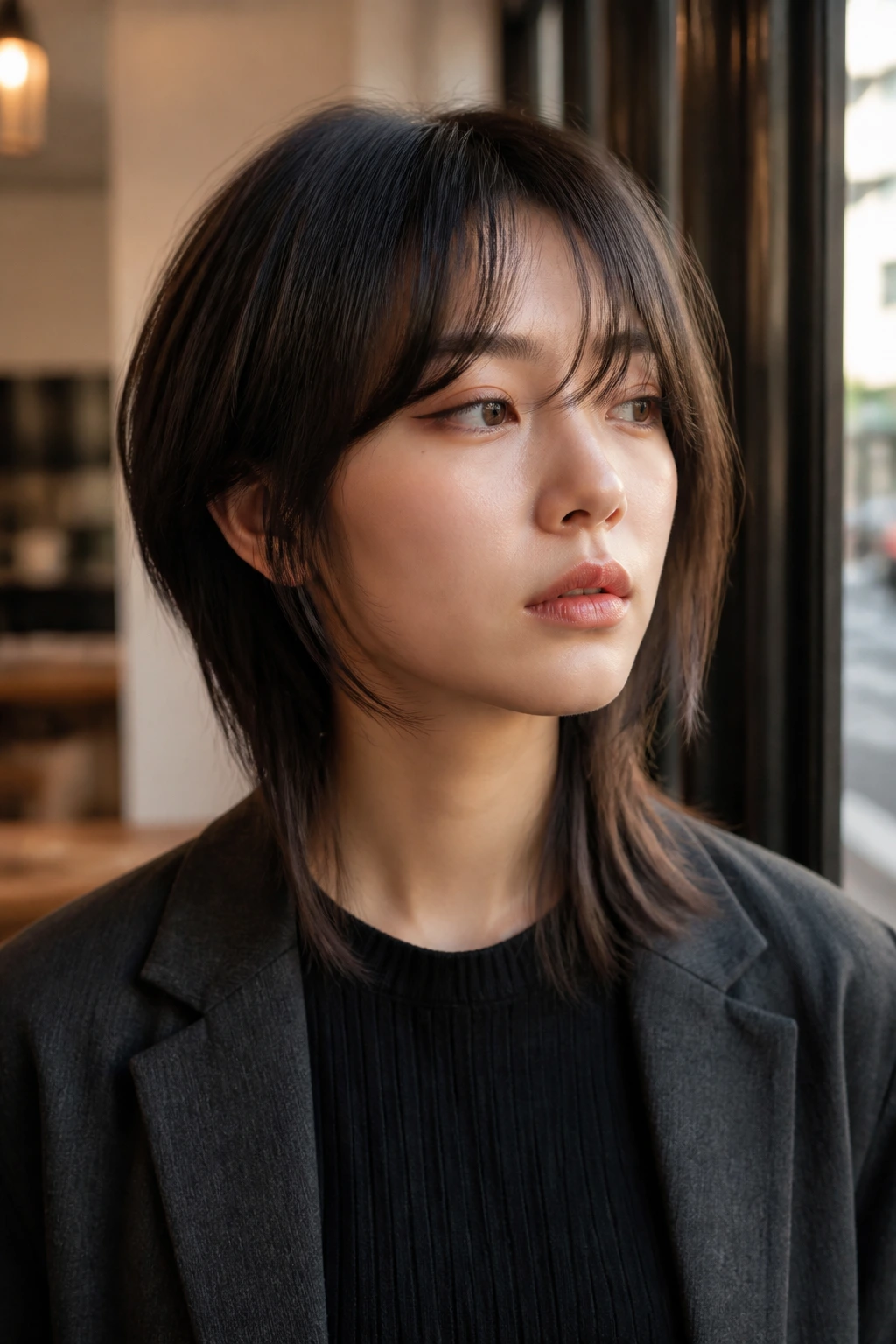
One side sits slightly longer than the other. That’s the whole idea, and on straight hair the asymmetry is clear without looking dramatic. The fringe can still be curtain-like, or it can sweep in the same direction as the longer side.
I like this one when a standard centered wolf cut feels too predictable. The asymmetry gives the cut motion even when the hair is freshly brushed. It also helps if one side of your face feels stronger and you want the fringe to balance it.
Quick note
Keep the difference subtle — maybe half an inch to an inch at the front. Too much and the cut starts feeling like it was interrupted.
20. Long-Top Short-Back Wolf
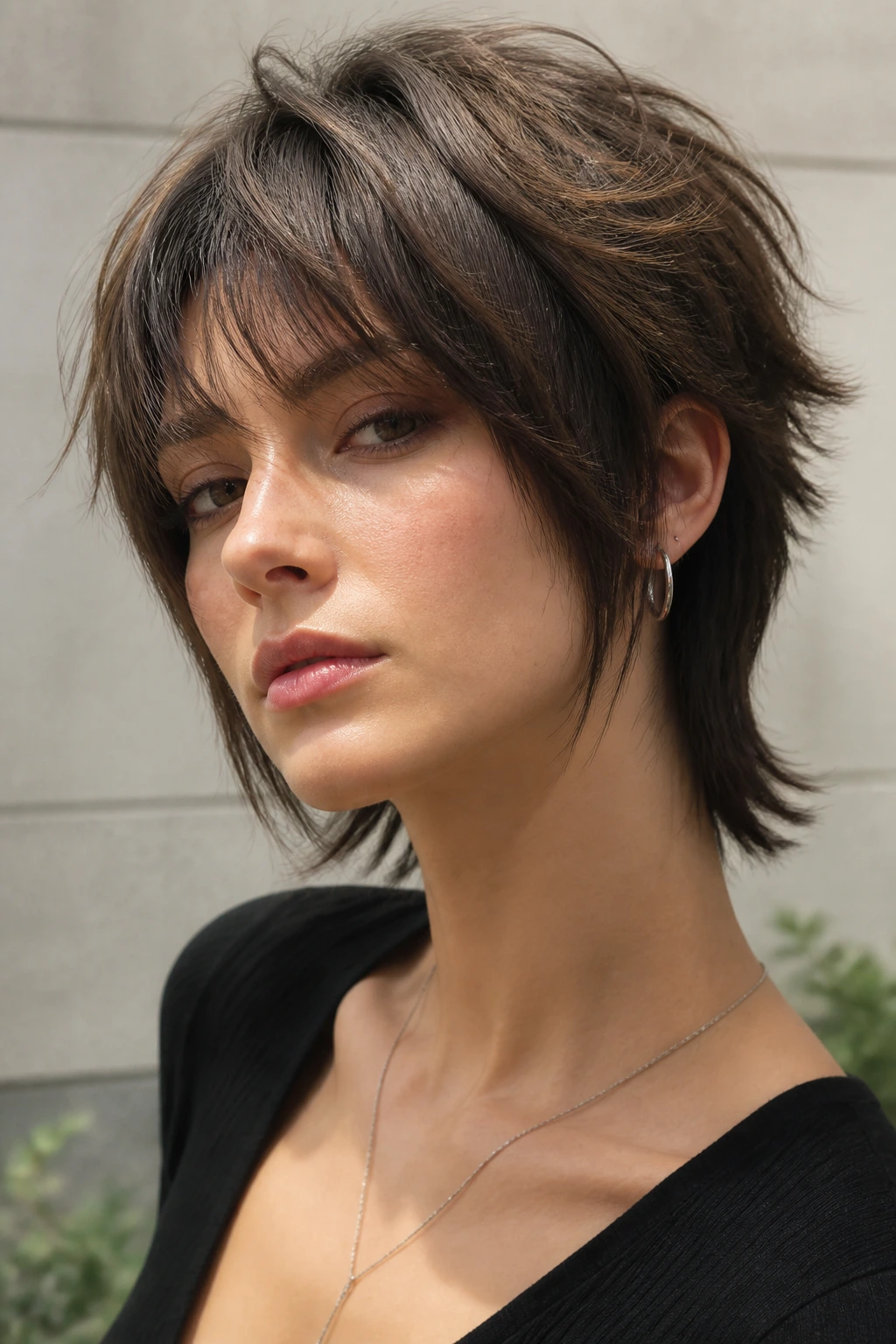
This is the classic wolf shape turned up a notch. The top stays longer and fuller, the back sits shorter, and the contrast between the two gives the style its bite.
On straight hair, the back section can flatten if it’s cut too cleanly. Ask for some internal removal of bulk so the nape doesn’t balloon. The fringe should be part of the overall shape, not something pasted on top.
This version is better if you like your hair to look intentionally layered from every angle. It doesn’t disappear into the background. That’s the charm.
21. Grown-Out Fringe Wolf

This is the easy-going version for people who want bangs but do not want to babysit them. The fringe lands somewhere between a curtain bang and a grown-out brow skimmer, which gives straight hair a relaxed frame.
It looks especially good when the rest of the cut is short and slightly chipped at the ends. That contrast keeps the fringe from feeling too neat. I’d use this on anyone who likes a haircut that can survive a missed trim or two.
H3: Why it helps
Grown-out fringe buys you time. When the bangs drift a little longer, the whole cut still reads as current instead of obviously overgrown.
22. Minimal Layer Wolf

Not everyone wants a shag with a ton of slicing. This one keeps the layers minimal and lets the shape do the work. The result is cleaner, calmer, and easier to brush.
Straight hair often likes this approach because too much layering can turn the ends wispy before the top has enough movement to balance it. Minimal layering keeps the outline strong, while a soft fringe gives just enough of that wolf-cut feel.
It’s a smart choice for fine hair, especially if you want the style to look polished on day one and only slightly relaxed by day three.
23. Retro Brows-Skimming Wolf
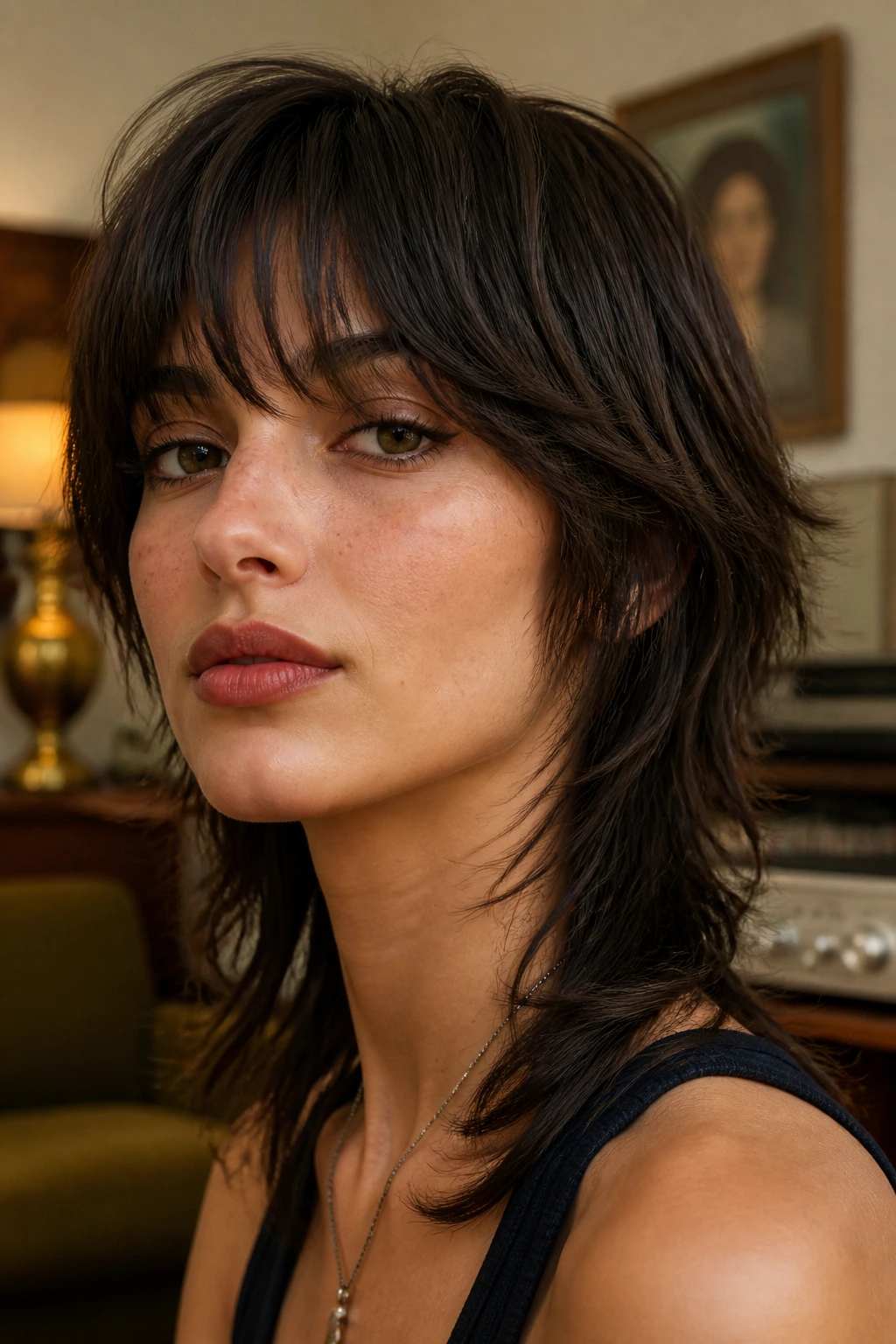
This version has a feathered, 70s feel, but it doesn’t need to look costume-y. The bangs graze the brows, the face framing opens out gently, and straight hair gives the whole thing a clean line that a wavier texture would blur.
I like this cut when someone wants softness without losing edge. The hair around the cheekbones should be longer than the fringe and lightly textured, so the front falls in a pretty arc instead of hanging in separate pieces.
Style note
A round brush and a cool shot at the end help the fringe sit with a bit of air under it. That lift matters. Flat bangs make this cut collapse.
24. Jagged Micro Layer Wolf

Think of this as the more fragmented cousin of the minimal layer wolf. The layers are tiny, irregular, and broken up just enough to create separation without making the whole cut fluffy.
Straight hair needs restraint here. If the notches are too aggressive, the ends look thin. But with the right hand, the micro layers give the haircut that little bit of broken texture people keep trying to fake with styling products.
It works well on dense straight hair that tends to sit like one thick sheet. The micro layers interrupt the sheetiness without taking away too much weight.
25. Polished Curtain Bang Wolf

This is the version for someone who likes their wolf cut neat, not wild. The curtain bangs are polished and controlled, the ends are softly beveled, and the whole haircut keeps its shape even when the rest of your day gets messy.
Straight hair is the right canvas for this because the lines show cleanly. You can wear it tucked, parted, or brushed out, and it still looks like a deliberate style rather than a grown-out experiment.
It also photographs well under normal light because the fringe frames the face instead of hiding it. That sounds like a small thing. It isn’t.
26. Face-Framing Halo Wolf
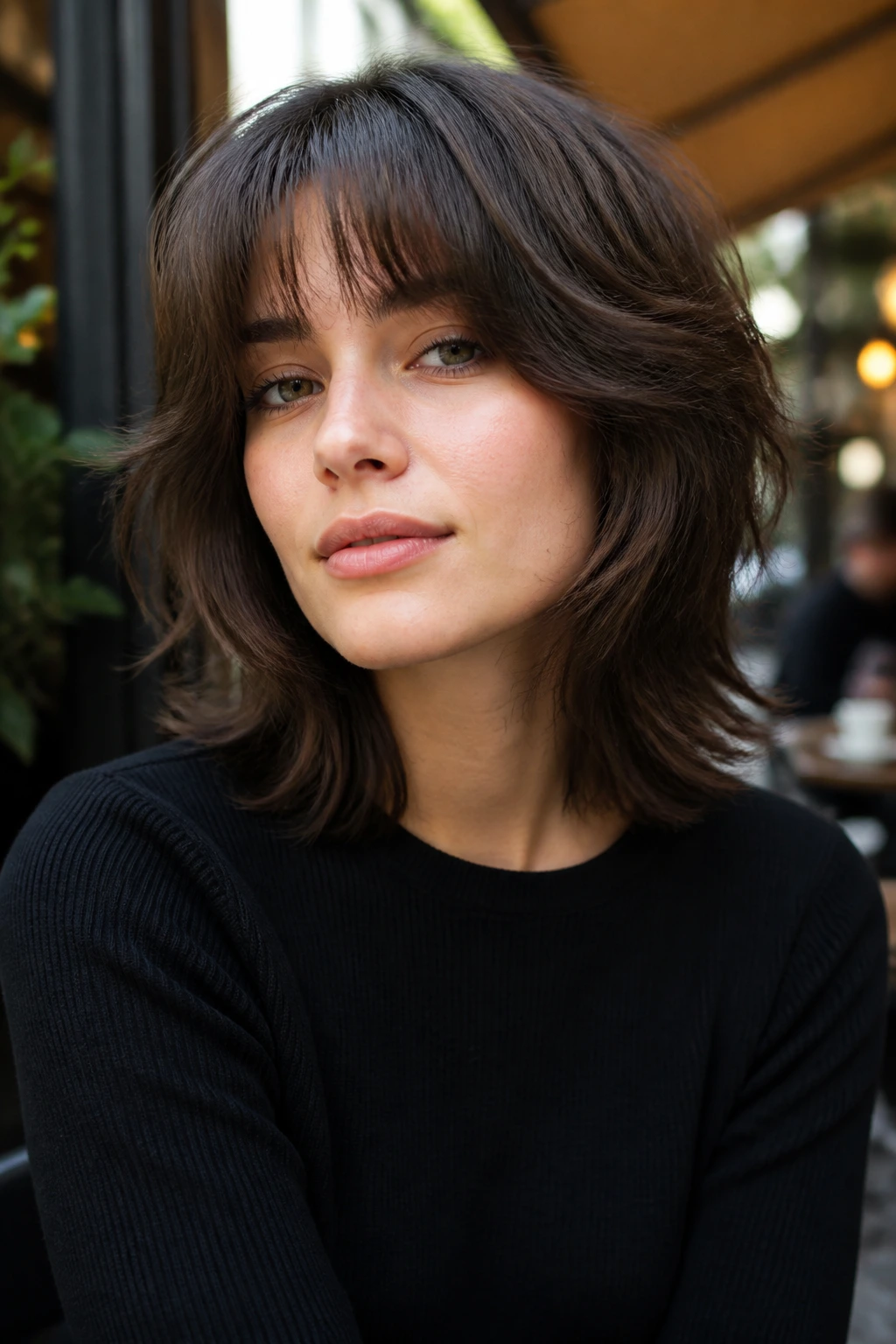
The front pieces bend around the face in a soft halo shape, while the back stays leaner and shorter. That gives straight hair an easy way to look fuller near the cheeks without piling volume at the sides.
This is one of the nicest options for longer faces. The halo effect shortens the visual length a touch, and the bangs can be kept light enough to avoid heaviness across the forehead.
Ask for the front pieces to sit at the cheekbone and jaw, not all at one level. That staggered length keeps the shape from turning into a bowl.
27. Sliced Ends Wolf
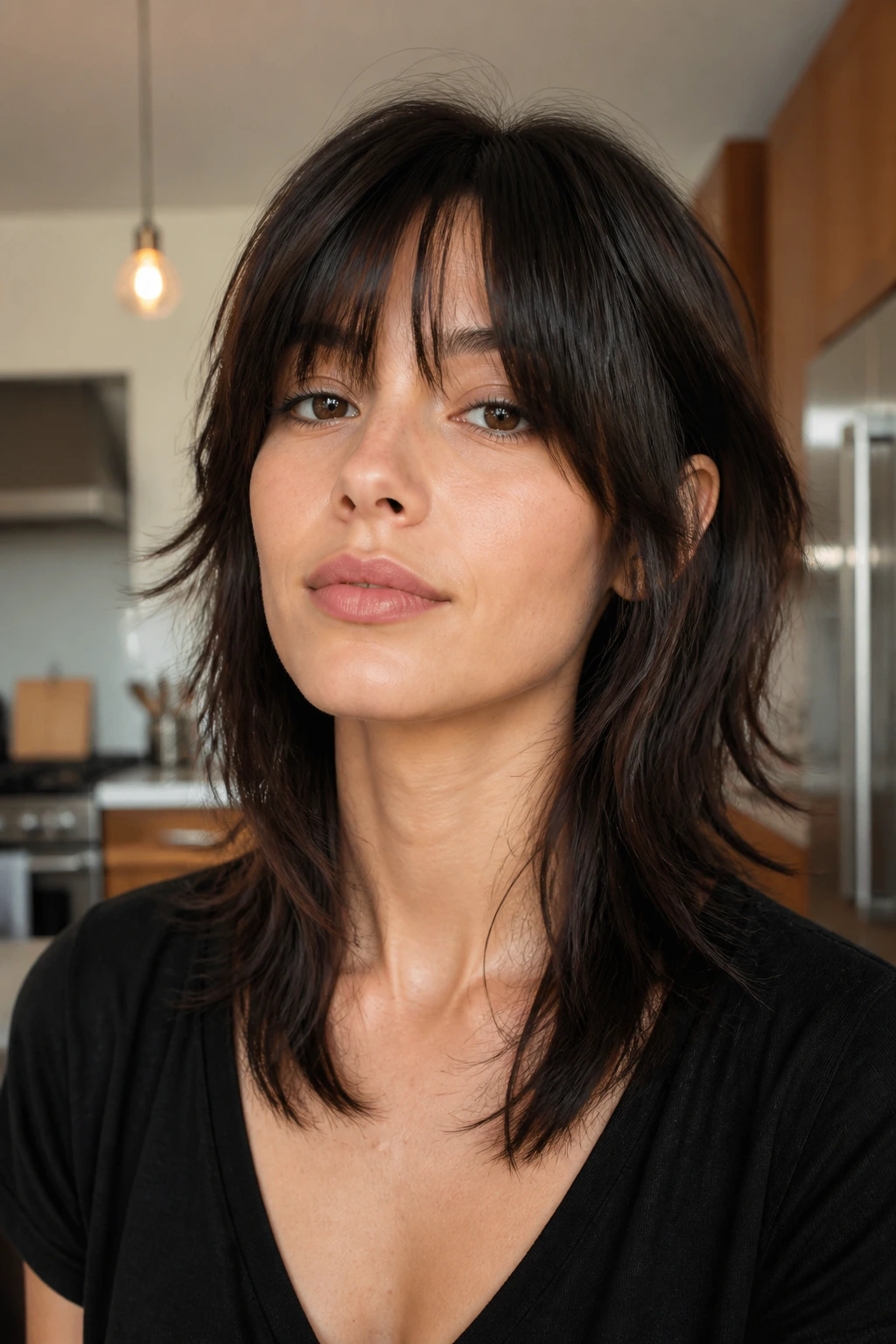
Sliced ends change the feel of the cut more than people expect. Instead of a blunt bottom line, the ends are subtly cut away so they move in little pieces. On straight hair, that keeps the finish from looking heavy.
This version is especially good for thick straight hair, which can get bulky around the chin and neck if the perimeter is left too solid. The bangs should stay light and connected to the front layers so the whole style feels linked together.
What to watch
Too much slicing near the fringe can make the front look ragged. Keep the slice work low and controlled, and let the bangs stay a little fuller.
28. Salon-Ready Soft Wolf
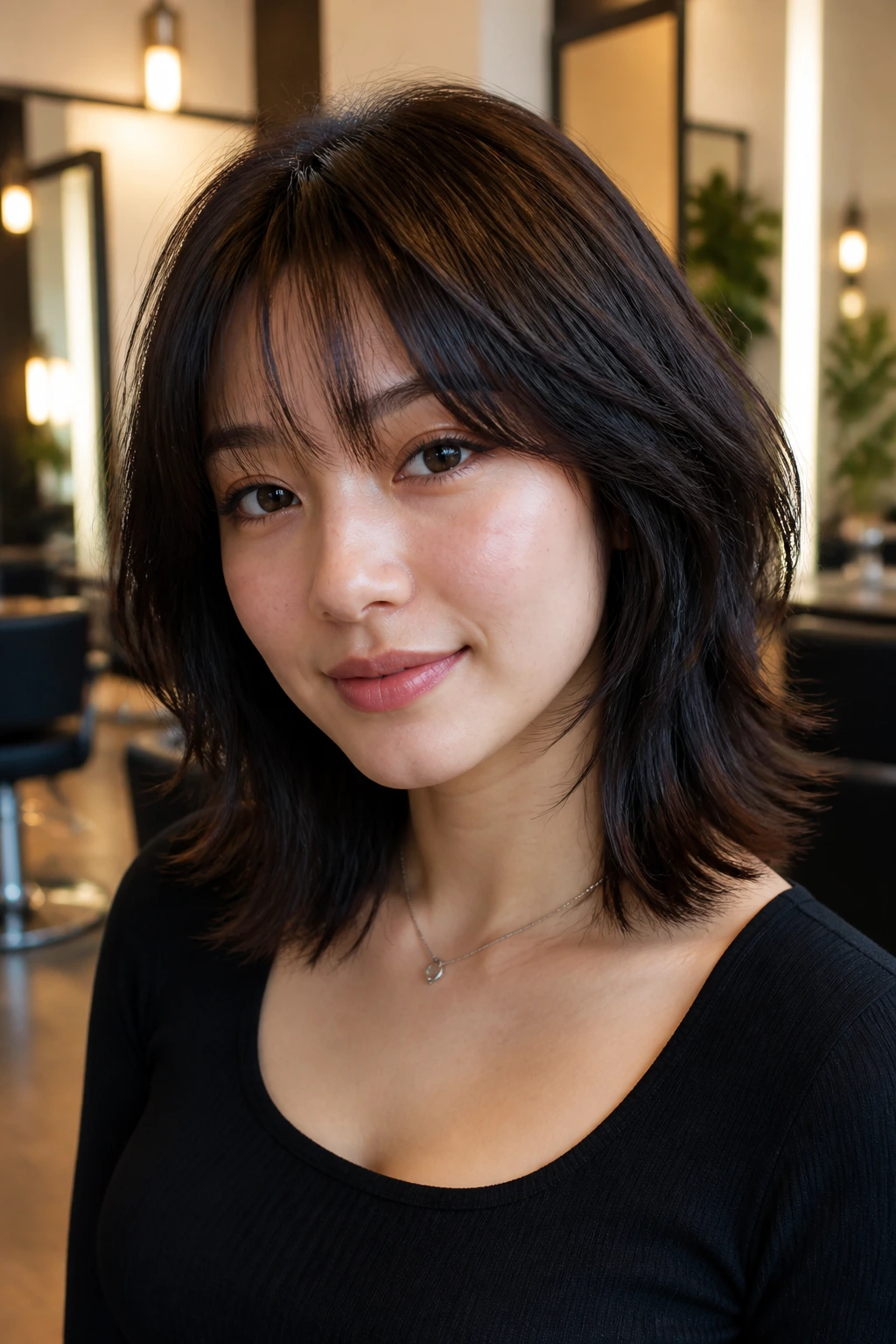
If you want one version to show your stylist as a starting point, make it this one. The shape is balanced, the bangs are soft, the layers are visible without being choppy, and straight hair gets room to move without losing the clean outline that makes it look expensive.
This is the wolf cut for people who want texture but not drama. It grows out nicely, takes a quick blow-dry well, and won’t turn into a strange shelf if you skip a styling day. The trick is keeping the fringe light and the crown lifted just enough.
It’s also the version I’d choose for a first-time wolf cut on straight hair. Safe does not mean boring here. It means the haircut can actually live on your head instead of only in the salon mirror.
Why Short Wolf Cuts Behave Differently on Straight Hair
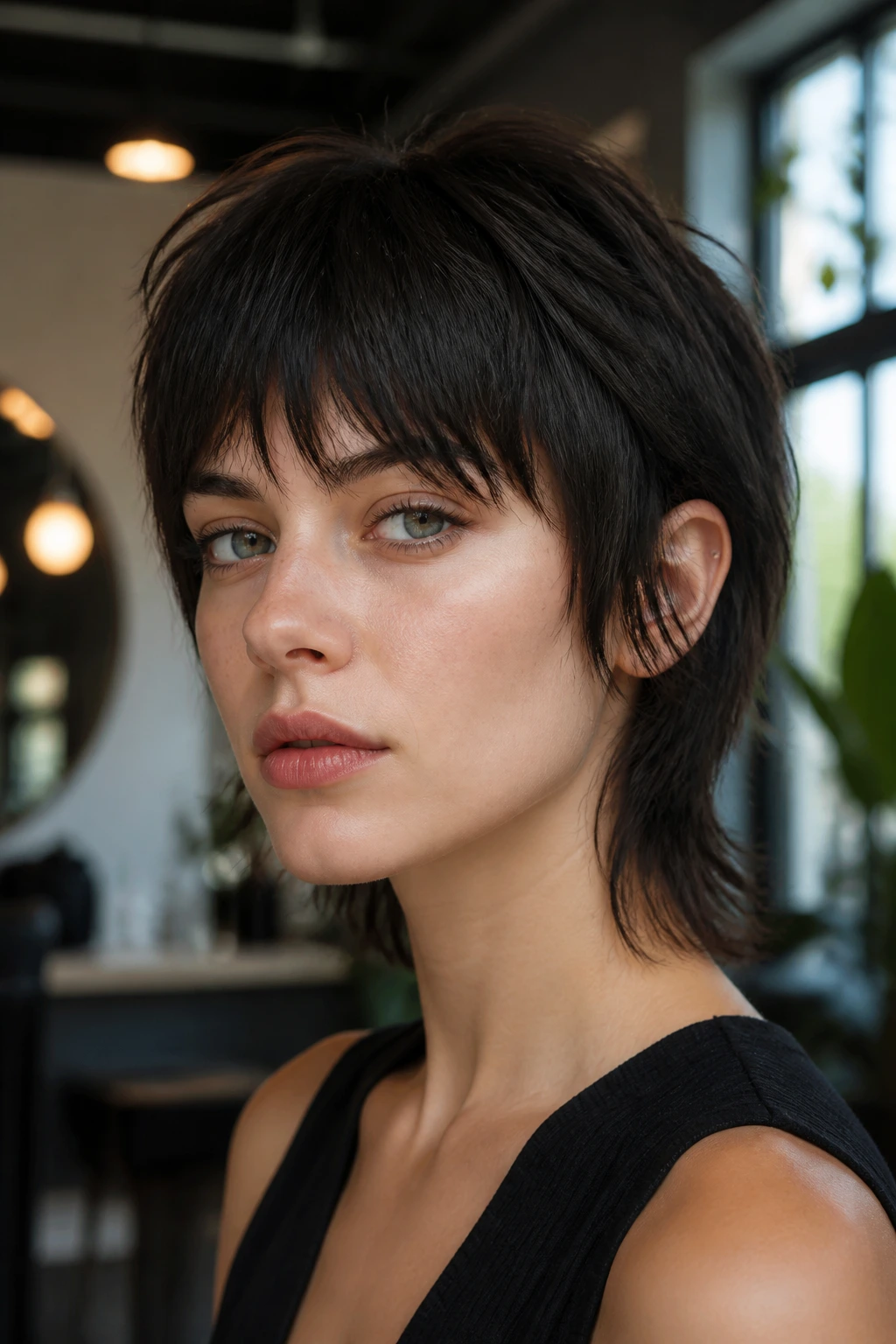
Straight hair doesn’t forgive vague layering. If the interior shape is weak, the haircut falls flat the second it dries. That’s why short wolf cuts with bangs for straight hair need a more careful hand than the same cut on wavy hair.
The main goal is movement without chaos. A stylist usually needs to place weight removal in the crown and mid-lengths, then keep the fringe soft enough to bend with a brush or a quick flat-iron flick. Dry cutting helps because you can see the actual fall line instead of guessing at how the hair will behave once it’s dry.
The other thing straight hair needs is a plan for the perimeter. Too blunt, and the cut turns boxy. Too shredded, and it starts looking thin at the ends. The good versions keep enough outline to feel intentional while leaving enough internal space for the hair to move when you turn your head. That’s the whole game.
What to Ask Your Stylist Before the First Snip

Say the words out loud. A good cut gets better when the brief is clear.
Length: Tell your stylist where you want the shortest point to live — chin, jaw, or collarbone. Straight hair reacts hard to length changes, so one inch can shift the whole mood.
Fringe: Bring a reference for the bangs you actually want, because “bangs” covers a lot of ground. Curtain, brow-skimming, micro, blunt, side-swept — each one changes how the cut sits on your face.
Texture control: If your hair is fine, ask for soft internal layering, not heavy thinning. If it’s dense, ask for bulk removal under the surface so the cut doesn’t puff out at the sides.
Styling reality: Be honest about whether you blow-dry, air-dry, or spend ten minutes max with a brush. A wolf cut can be tailored to that, and if your morning routine is a two-minute scramble, the stylist needs to know that before the scissors come out.
Essential Tools for These Cuts
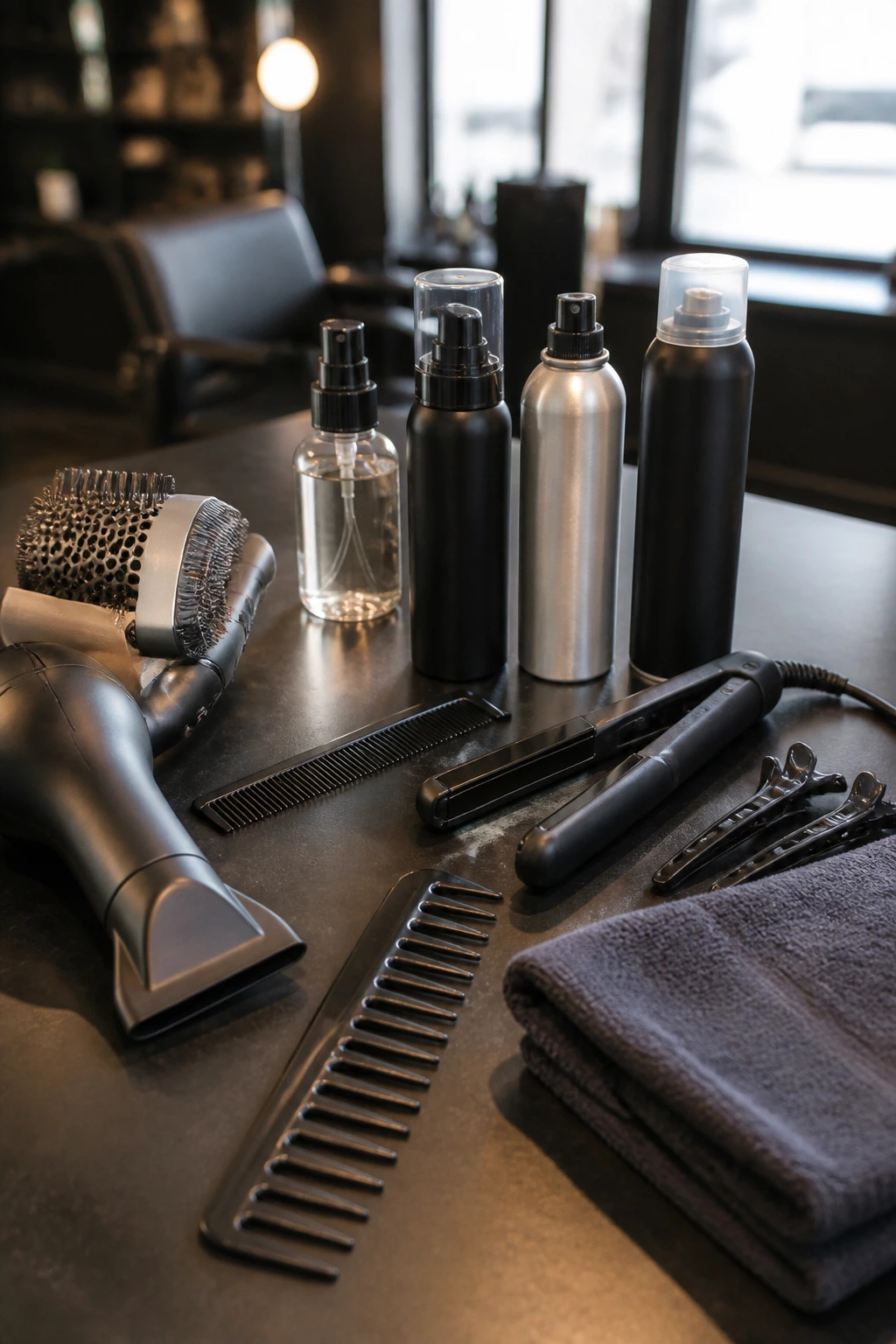
- A blow dryer with a concentrator nozzle: This gives you control around the bangs and crown, which matters more on straight hair than people think.
- A 1- to 1.5-inch round brush: Small enough to bend fringe and face-framing layers without overcurling the whole head.
- Heat protectant spray: Straight hair shows heat damage fast, especially around the front pieces and bang line.
- Root-lift mousse or spray: Use a small amount at the crown so the top doesn’t collapse by lunchtime.
- Light texture spray: Good for separating layers on day two without making the ends sticky.
- Dry shampoo: A few sprays at the roots can buy you a cleaner silhouette when the fringe starts to clump.
- Flat iron with rounded edges: Useful for adding a soft bend to the front pieces, not for making them poker-straight.
- Wide-tooth comb or detangling brush: Keeps the layer pattern from getting pulled apart when hair is damp.
- Hair clips: Handy for sectioning the fringe and top layers during blow-drying.
- Microfiber towel or T-shirt: Cuts down on frizz around the bangs and keeps straight hair from getting puffy before styling even starts.
Smart Styling Moves That Keep the Shape Alive

Root Lift: Put product where the haircut needs support — the crown, not the ends. Straight hair tends to lose height at the top first, so a little mousse at the roots before blow-drying matters more than a heavy cream through the length.
Bang Control: Dry the fringe first. If bangs are left to air-dry in whatever shape they want, you spend the whole day fighting them. Blow them in the direction you want them to land, then let them cool there for a minute before touching them again.
Piecey Texture: Use less product than you think. A wolf cut on straight hair needs separation, not weight. One mist of texture spray through the mids is usually enough; too much and the layers stick together.
Low-Effort Finish: If you only have five minutes, bend the front pieces and ignore the rest. That alone gives the haircut shape. People get stuck trying to style the whole head, and that’s often overkill.
Cost-Saver: Keep a small round brush and a travel-size dry shampoo at home. That combo stretches a blowout longer than another round of heavy styling products ever will.
Common Mistakes That Flatten the Cut Fast

The first mistake is cutting the bangs too short on the first visit. Straight hair doesn’t shrink the way curly hair does, but it does sit flat against the forehead, which makes a too-short fringe feel much shorter in real life. The fix is simple: start a little longer and adjust after you see how it falls.
Another one is over-thinning the ends. On straight hair, too much texturizing can leave the perimeter looking see-through instead of airy. You want broken movement, not weak strands that taper into nothing by the second wash.
People also ask for “lots of layers” when what they really want is lift. Those are not the same thing. If every layer is too short, the haircut becomes fuzzy at the surface and heavy underneath. A better brief is: keep the top workable, keep the edges soft, and remove bulk only where the hair actually sits too full.
And then there’s neglecting the crown. Flat roots make even the prettiest fringe look tired. If the top is limp, the whole cut loses its point. A little volume at the root changes the silhouette more than another half-inch off the ends.
Ways to Make the Shape Feel More Like You
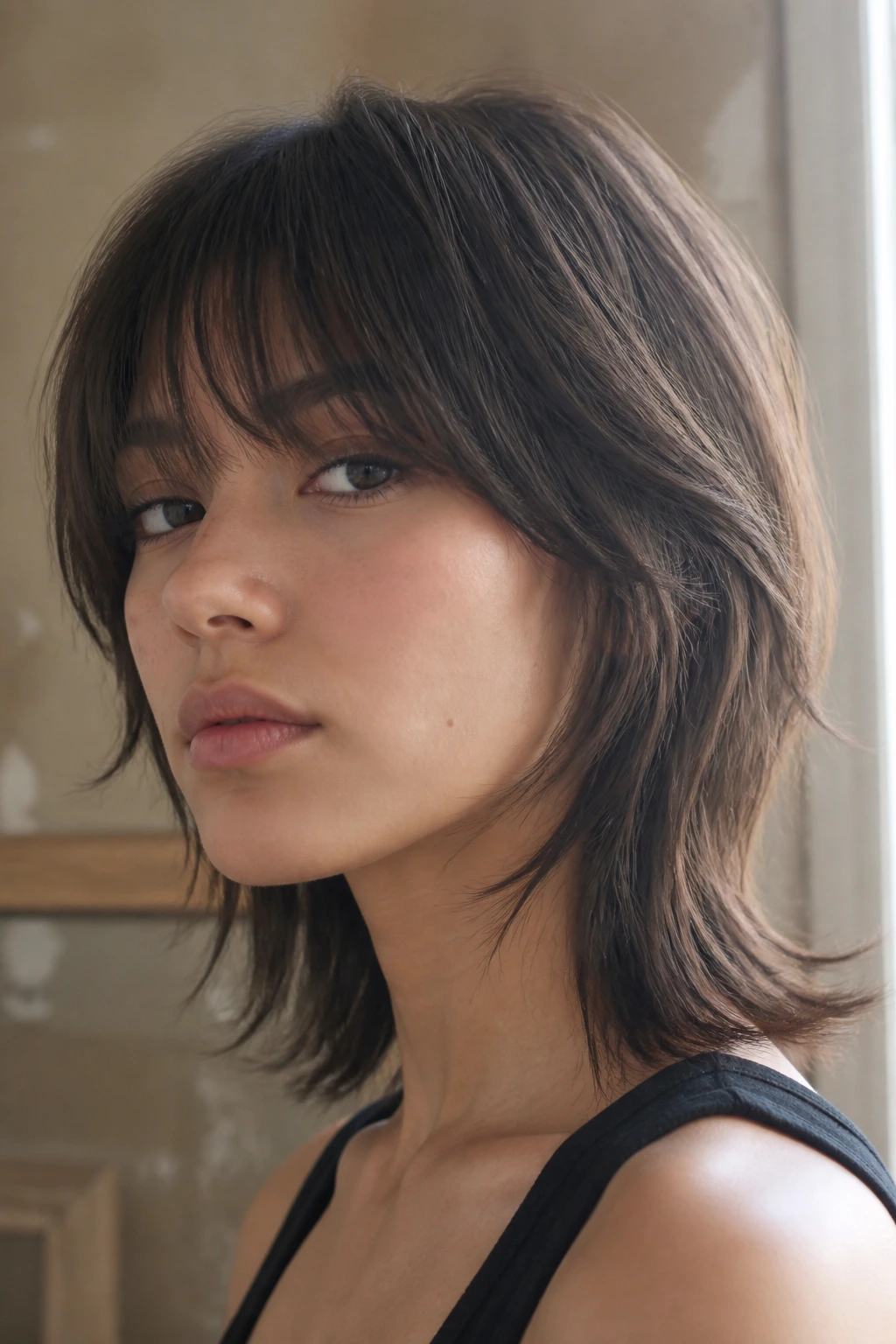
Soft Edge: Ask for point-cut ends instead of a blunt finish if you want the cut to feel lighter around the jaw. It stops the perimeter from looking too hard.
Sharper Mood: Keep the fringe more graphic — blunt or micro — and pair it with slightly rougher layers. This gives the haircut more contrast without turning it into a costume.
Low-Maintenance Version: Choose longer bangs and fewer short layers. That buys you more grow-out time and less daily fiddling.
Face-Opening Version: Push the shortest face-framing pieces to the cheekbone instead of the mouth. That makes the cut open the face sooner and stops it from sinking into the jawline.
Thick-Hair Version: Ask for internal debulking under the surface so the sides don’t balloon. Thick straight hair needs weight removed where it hides, not just on top where everyone can see the scissors.
Fine-Hair Version: Keep the layers longer and the bangs lighter. Fine straight hair loses body fast, so the cut should create movement without taking away too much mass.
How to Keep the Shape Between Trims
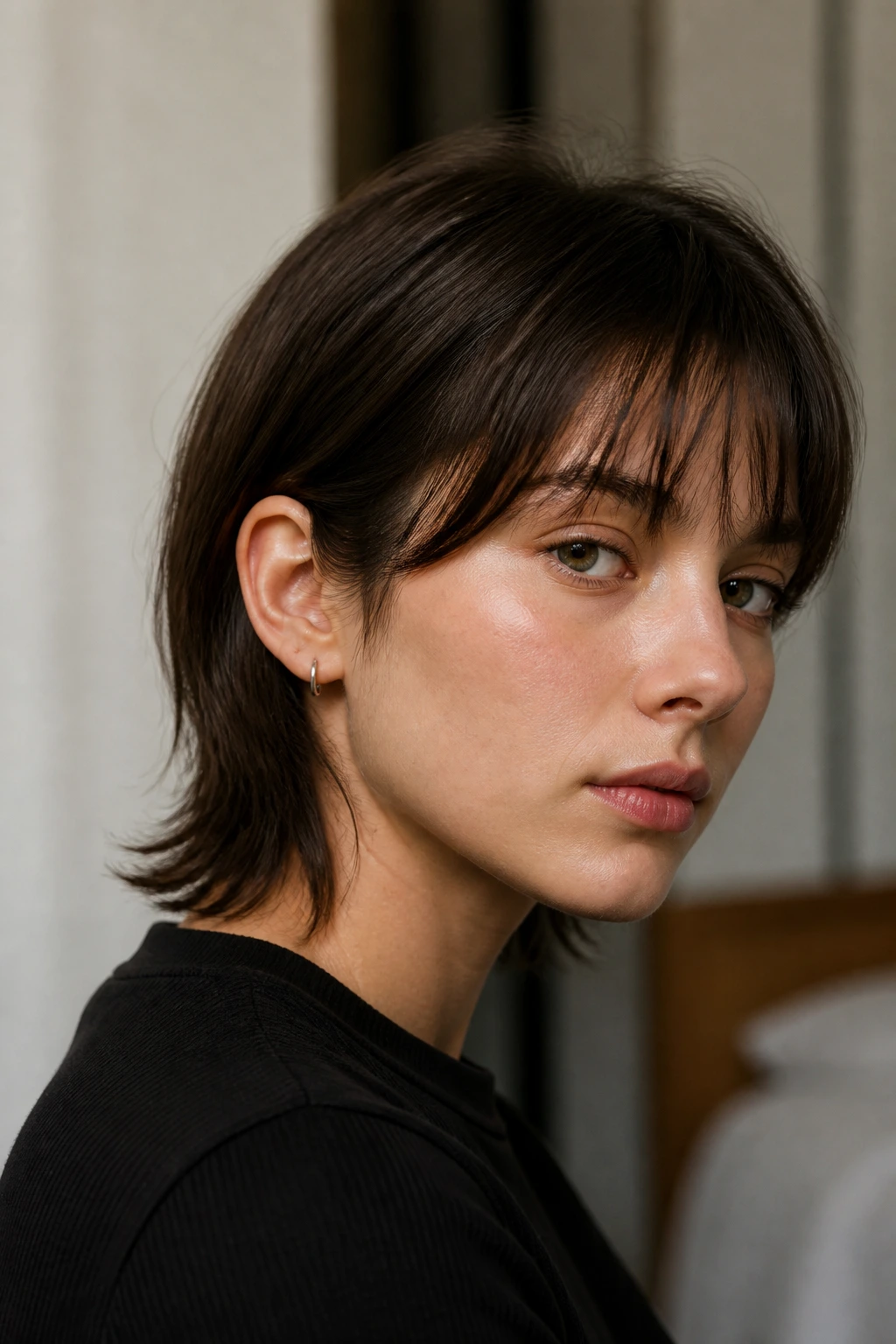
Bangs usually need the most attention. Expect to trim or reshape them every 3 to 5 weeks if you like a precise fringe, and every 6 to 8 weeks if you’re happy with a softer, grown-out look. The rest of the cut can usually go 8 to 12 weeks before it starts losing its structure.
Wash schedule matters too. Straight hair often shows oil at the roots faster than textured hair, so many people end up washing every 2 to 4 days. If your hair gets limp by day two, use dry shampoo at the roots before things look greasy, not after.
At night, a loose clip or silk scrunchie can help keep the fringe from kinking. Morning re-style is usually fast: mist the front lightly, blow-dry the bang area first, bend the face-framing pieces, and leave the rest alone unless the crown is completely collapsed.
Frequently Asked Questions

Will a wolf cut work if my hair is pin-straight?
Yes, but the cut has to create the movement for you. Ask for internal layers, not aggressive thinning, and choose bangs that can be styled with a small brush or a quick bend.
Do I need bangs for a wolf cut on straight hair?
No, but the cut usually looks stronger with some kind of fringe or face framing. Without bangs, straight hair can lose a little of the wolf-cut edge and start reading like a layered bob.
What bangs are easiest to live with?
Curtain bangs and grown-out fringe are the easiest to manage. They allow for a little change in parting and don’t need perfect placement every morning.
Will this cut make fine straight hair look thinner?
It can if the layers are too short or the ends are over-thinned. The safer move is longer internal layering with a soft perimeter and light bangs.
How often should I trim it?
Bangs often need attention every 3 to 5 weeks. The overall shape usually holds for 8 to 12 weeks, depending on how fast your hair grows and how crisp you want the silhouette.
Can I air-dry it?
You can, but the result depends on the cut. A well-built air-dry version should still have bend in the front and a bit of lift at the crown. If not, you’ll need a quick blow-dry for shape.
What if my bangs split down the middle all day?
That usually means they’re cut too heavy in the center or dried in the wrong direction. Blow them forward while damp, then direct them slightly where you want them to sit and let them cool before touching them.
Is this haircut hard to grow out?
Not if the layers are blended well. The better versions drift into a shaggy bob or soft layered crop instead of turning into a choppy mess.
Why This Cut Keeps Working After the Salon
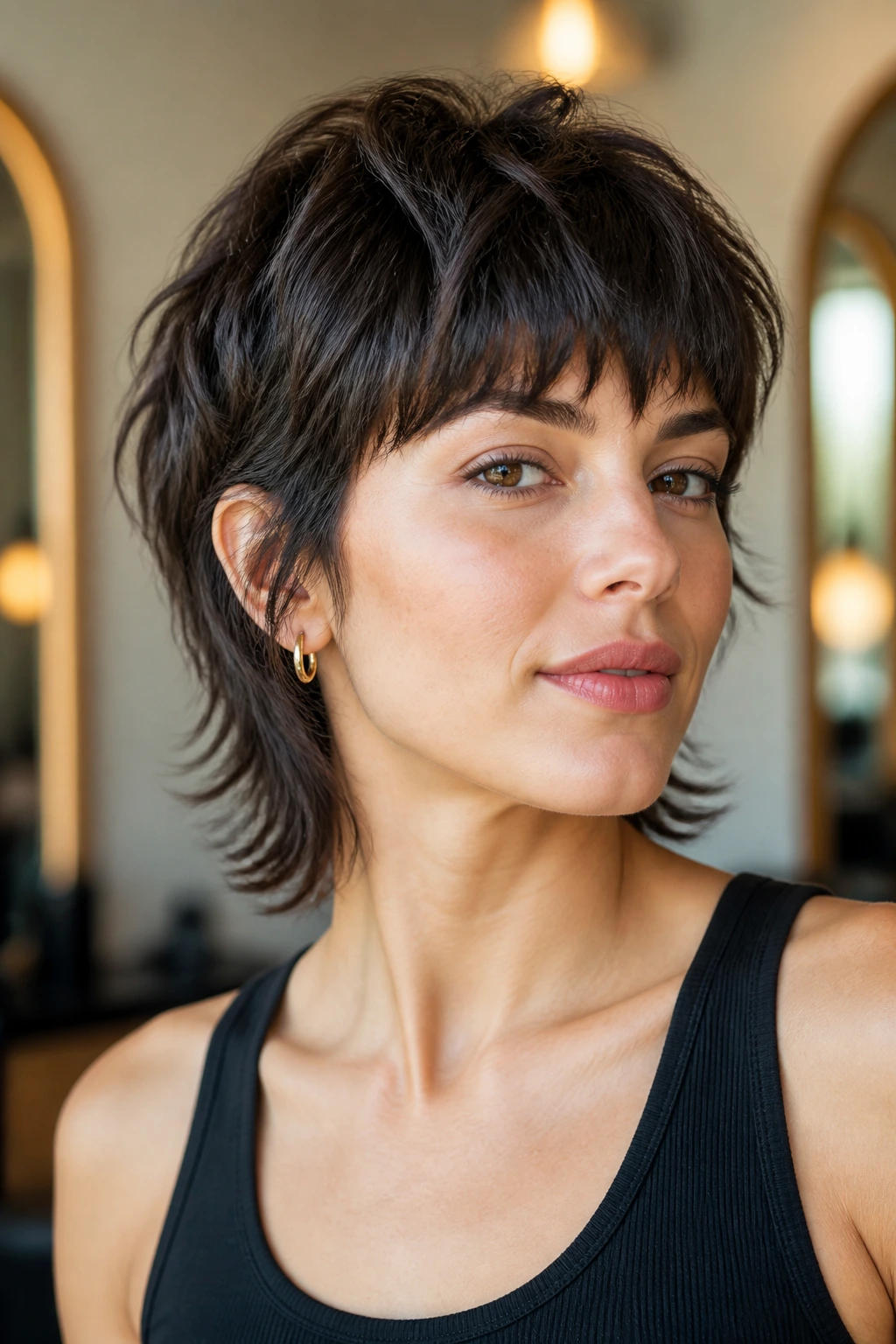
A good short wolf cut on straight hair does not depend on perfect styling. That’s the real test. If the fringe still falls in a useful way on day three and the layers still give the crown a little life on day five, the haircut is doing its job.
That’s why the best versions in this group are the ones that respect the hair you actually have. Not the hair you wish you had. Straight hair can carry sharp bangs, soft curtain pieces, a choppy crown, or a neat bob-wolf hybrid, but the shape has to be built with intention. Once that part is right, the rest gets easier fast.
