



Long hair can make a fringe look either expensive or accidental, and the difference is usually one clean decision: where the shortest piece falls when the hair is dry. That’s the part people underestimate. A bang that sits pretty in the salon mirror can collapse into a flat, half-formed strip by lunchtime if the cut doesn’t suit your hairline, density, or the way your hair naturally bends.
Vintage fringe has a better track record than most modern hair trends because it isn’t trying to do one thing. It can be soft and French, brushed-out and bombshell, blunt and mod, or piecey and a little smoky around the eyes. On long hair, that front section does a useful job: it pulls attention upward, keeps the length from feeling heavy, and gives the whole cut a point of view. Without that front shape, waist-length hair can start to look like a curtain. With it, the whole thing feels deliberate.
These 19 bang styles for long hair with a vintage vibe cover the full spectrum, from barely-there wisps to bold little statement crops. Some need a round brush and five careful minutes. Some want a dry cut, a roller set, or a little attitude. The right one isn’t the trendiest one. It’s the one that fits your forehead, your texture, and how much effort you’ll actually give it before coffee.
Why These 19 Bang Styles Earn Their Keep
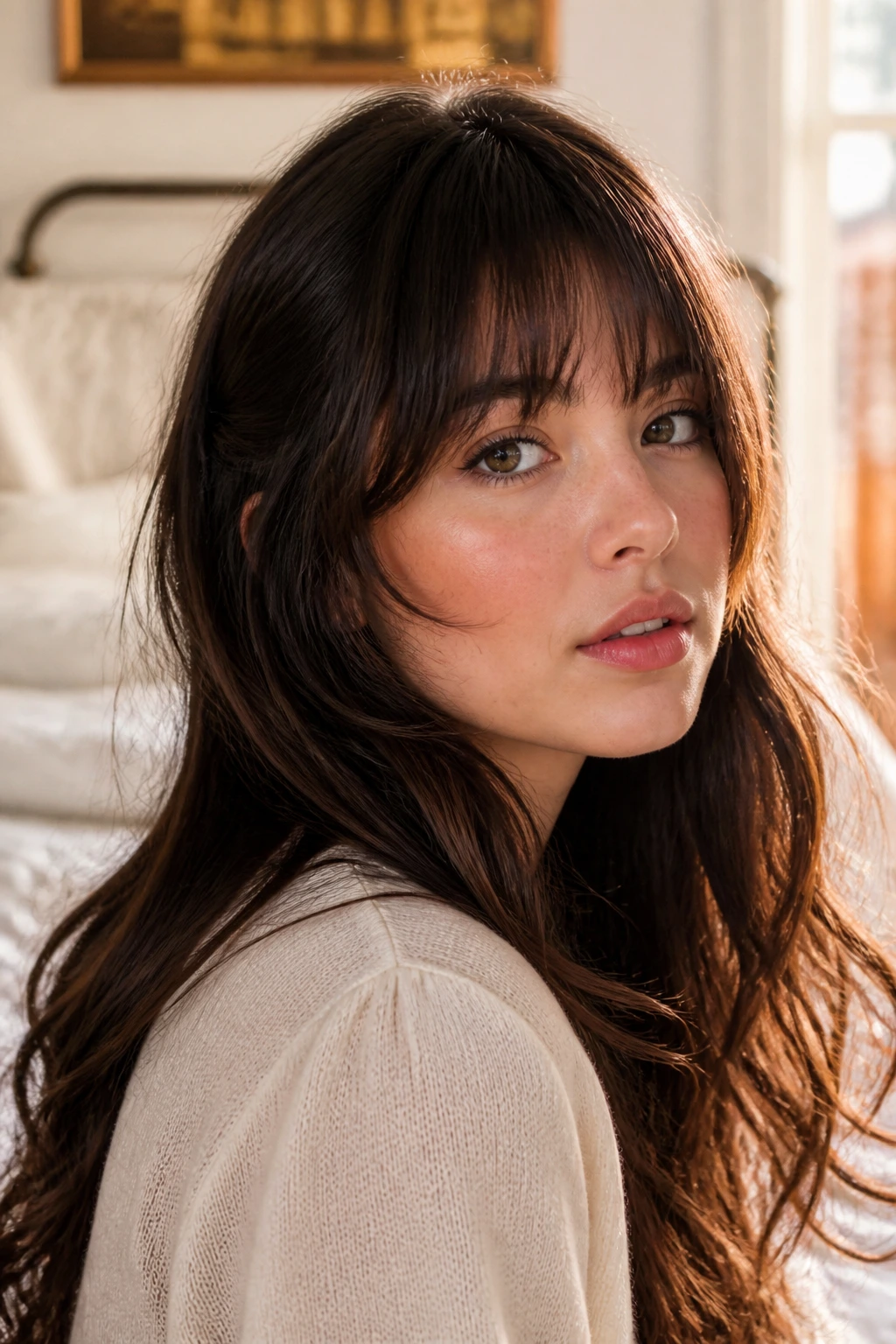
- Shape matters more than length: A vintage fringe works because it gives long hair a front edge, whether that edge is a soft curve, a blunt line, or a side sweep that lands at the cheekbone.
- Most of these styles grow out gracefully: You can let curtain, Birkin, bottleneck, and feathered bangs drift for weeks without the cut looking abandoned.
- The finish changes the decade: The same fringe can read as Bardot, Birkin, or pin-up depending on how much volume, bend, and separation you put into it.
- They play well with long layers: Long hair needs a front piece that doesn’t fight the rest of the cut. These styles all leave room for movement behind the fringe.
- They can flatter different textures: Straight, wavy, thick, and fine hair each have at least one style here that won’t feel like a wrestling match every morning.
- The vintage vibe comes from restraint: A lot of these bangs look best when they are not over-sculpted. A little bend, a little softness, and a little imperfection usually help.
1. Curtain Bangs With Brushed-Out ’60s Volume
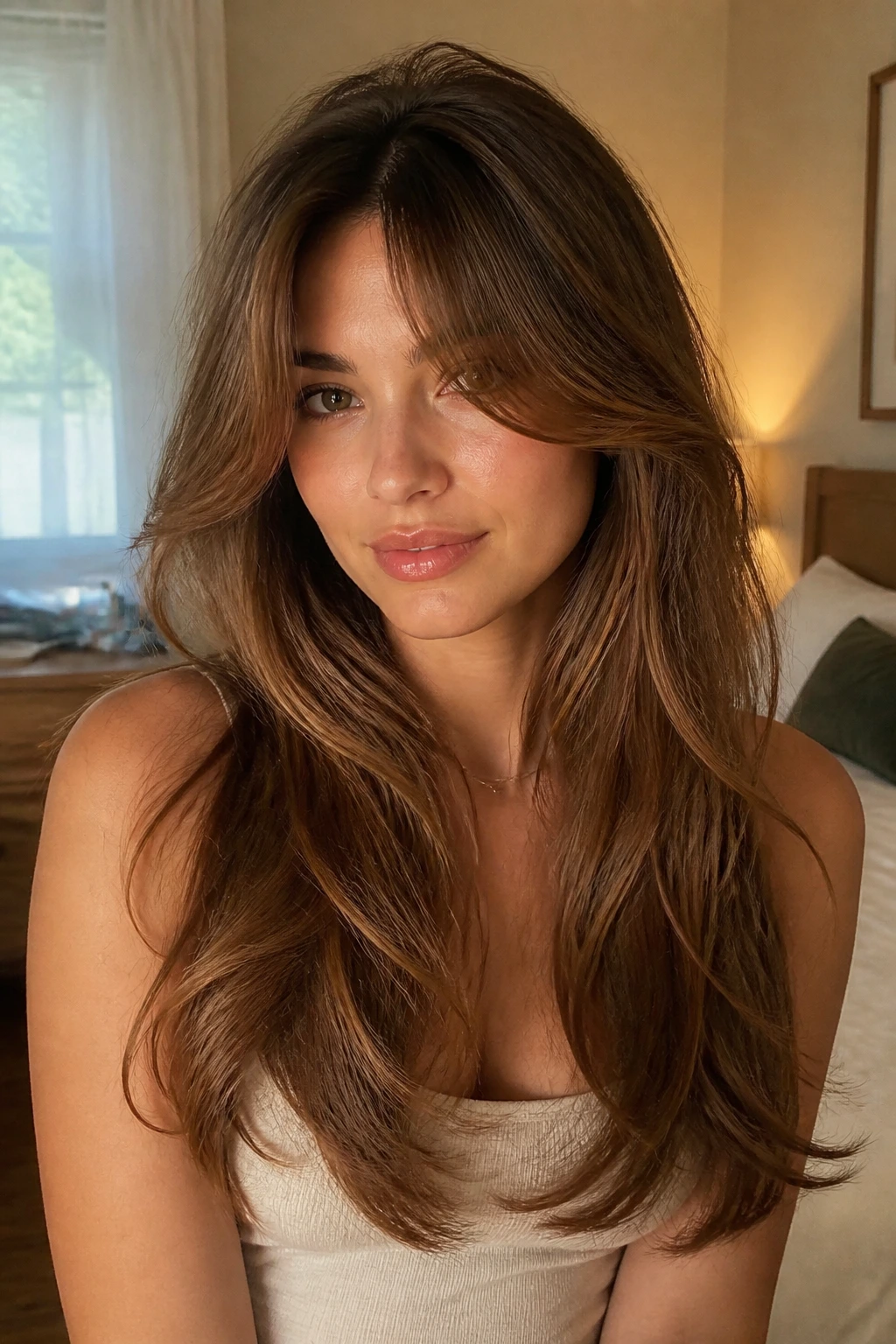
Curtain bangs are the easy entry point, but the vintage version needs lift at the root and a soft bend away from the face. Think cheekbone skimming, not heavy drapes. On long hair, that center split keeps the length from disappearing behind one thick wall of fringe.
Why It Works
The best part is the way it opens and closes at once. The center falls forward, then the sides sweep out like they’ve had a proper blowout, which keeps the front from looking blocky. If your hair is straight or slightly wavy, this style gives you movement without forcing a hard line across the forehead.
Ask for the shortest point to sit around the bridge of the nose or just below it when dry. That gives the style room to settle. A 1.25- to 1.5-inch round brush and a quick cool-down with clips make a bigger difference than extra product ever will.
- Good for: round, oval, and heart-shaped faces.
- Best finish: soft volume, brushed-out ends, a slightly airy center part.
- Watch for: a cowlick that pushes one side open faster than the other.
Small tip: dry each side away from the face first, then roll it back for a second pass. That little zigzag in the direction of heat gives the bangs the kind of bend that lasts past breakfast.
2. Birkin Bangs That Skim the Brows
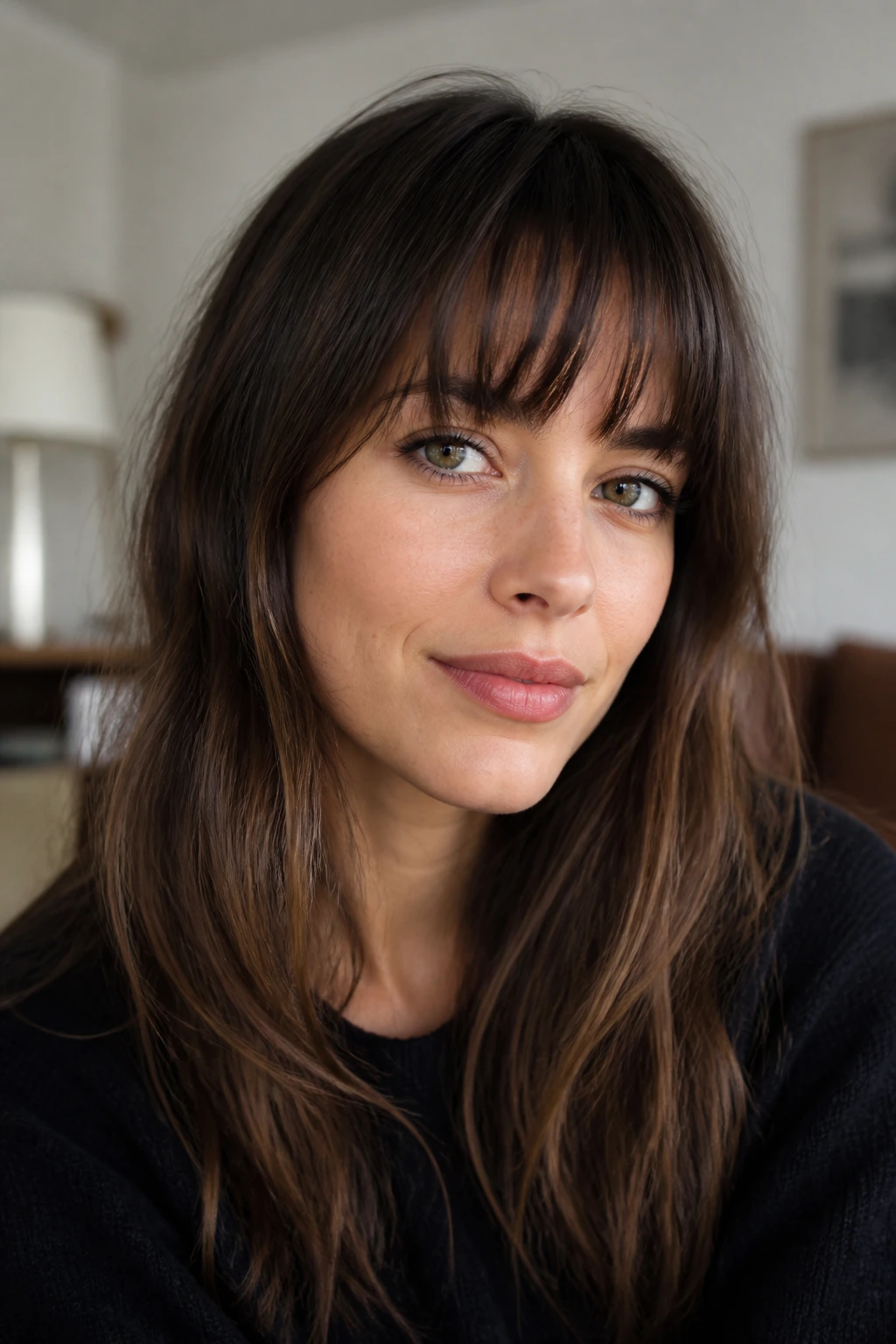
Birkin bangs have a loose, lived-in charm that keeps long hair from feeling too polished. The line sits near the eyebrows, but not in a hard way. It should look like the fringe was cut with enough care to be flattering and enough softness to move when you walk.
The appeal is in the slight unevenness. Not choppy. Not sloppy. Just a little air between the strands so the forehead peeks through. On long hair, that lightness stops the front from stealing all the attention.
This is a good fit if you want fringe without the “I must style this every minute” problem. A little mist of water, a quick round-brush bend, and a touch of dry texture at the ends usually do it. Straight hair likes this one. So do loose waves.
How to wear it
Keep the rest of the hair soft and low-drama—center part, loose bend, or a low pony with face-framing pieces. If the ends of the bangs are too neat, the style loses its charm. A point-cut edge or razor-soft finish helps.
3. Bardot Fringe With Long Sides
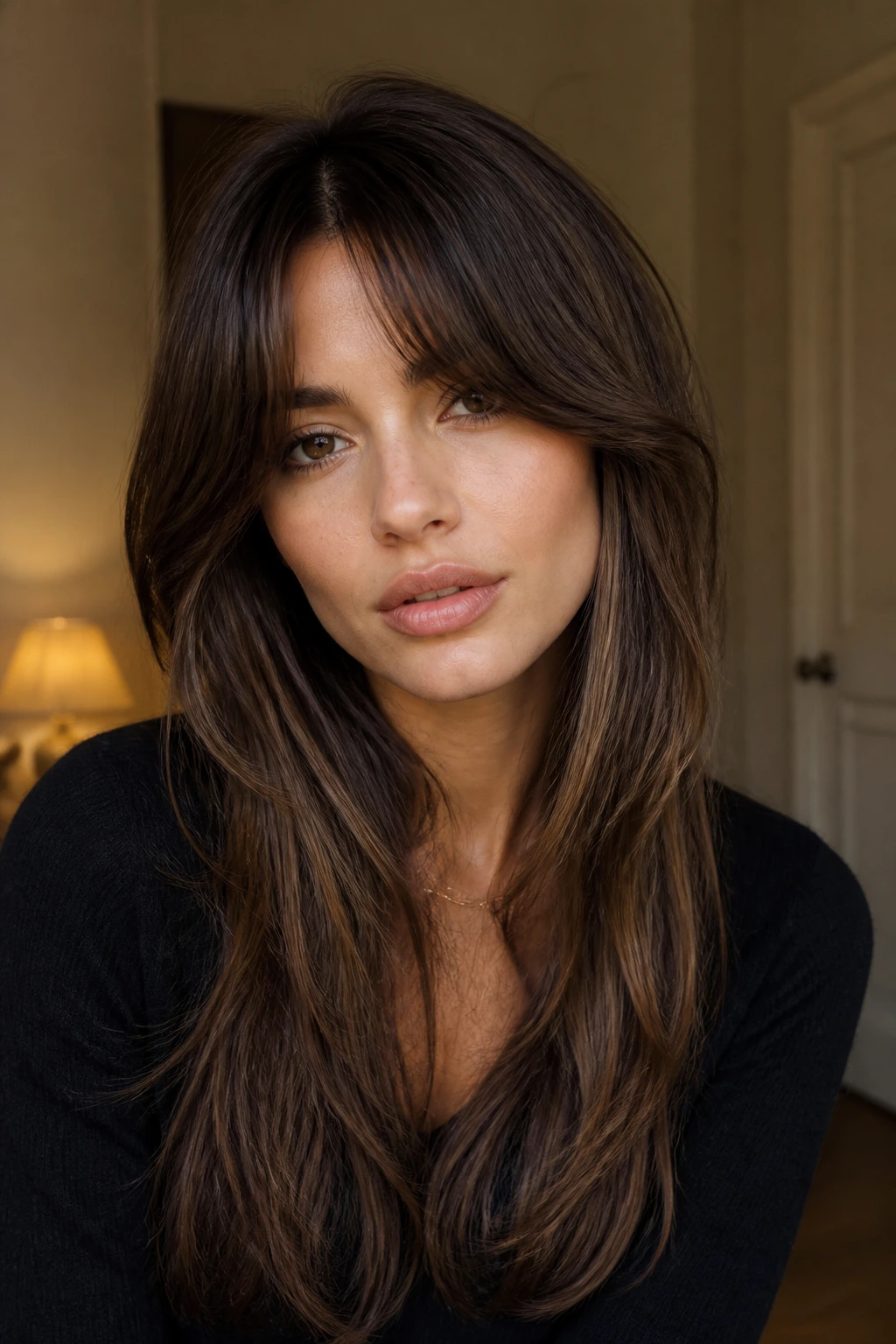
If curtain bangs are understated, Bardot fringe is the one that walks in with sunglasses on. The center part is deeper, the sides are longer, and the whole shape wants width at the temples. On long hair, it has that bombshell effect without cutting the length off at the shoulders.
The difference is in the lift
This fringe lives or dies by root volume. Flat Bardot bangs just look heavy. Give them a round brush, a little mousse at the roots, and a cool-down clip while you do the rest of your makeup, and the shape wakes up fast. The long side pieces are the point; they should blend into the front layers instead of stopping dead.
Best for medium to thick hair, especially if you like a big blowout. It also handles an oval face nicely because the long wings soften the front and keep the eye moving downward instead of stopping at the brow line. This one has more drama than Birkin bangs. Less whisper, more wink.
4. Bottleneck Bangs for Soft Face Framing
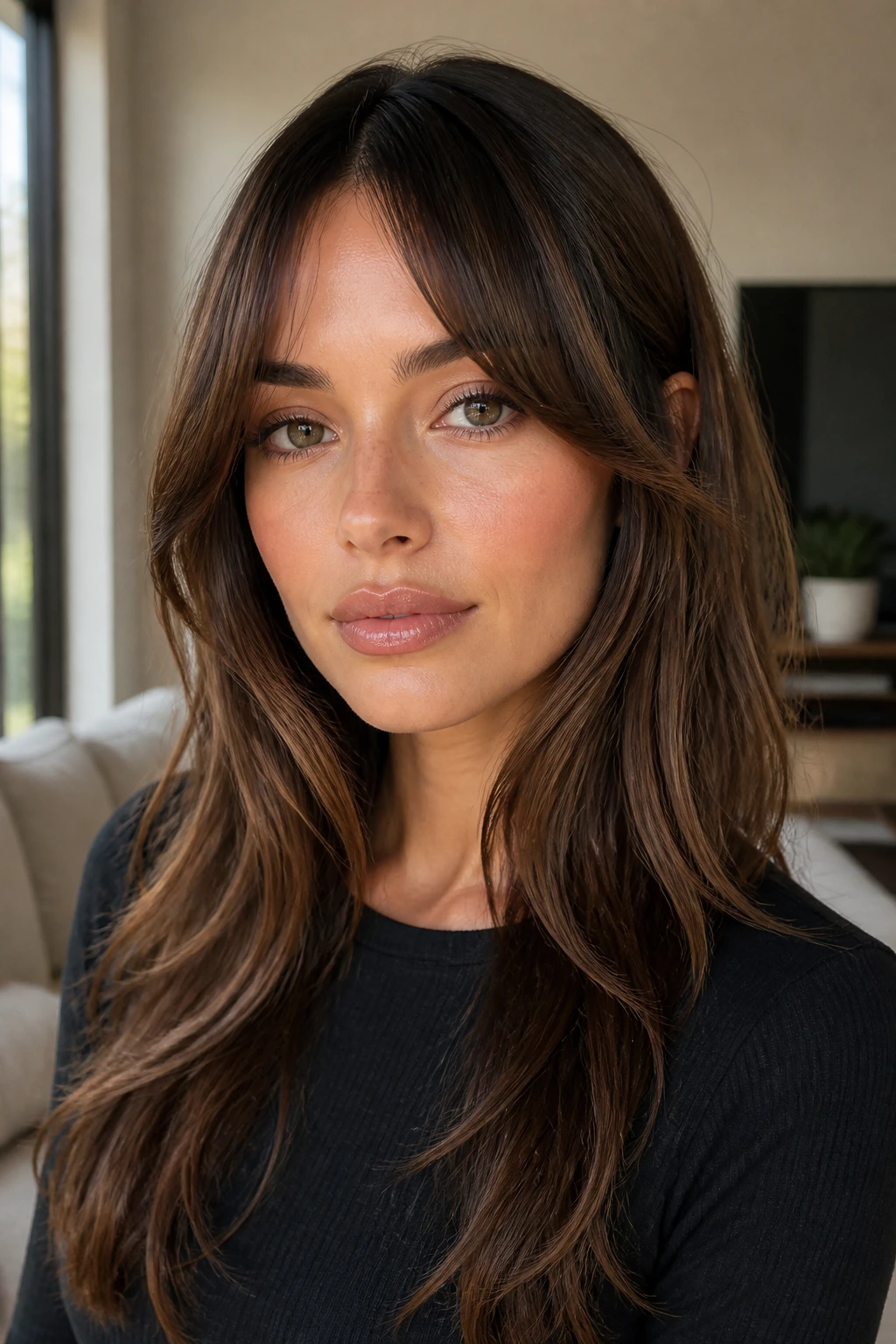
Bottleneck bangs start narrower in the middle and open wider toward the temples, which makes them one of the smartest vintage-inspired choices for long hair. They sit between curtain bangs and a more classic fringe, and that middle-to-side transition gives the face a softer frame.
The shape is practical, too. You get some forehead coverage without swallowing the whole front of your hair. If your hair tends to separate at the center anyway, this style can look more natural than a blunt line that keeps fighting back.
What to ask for
Tell your stylist you want the center shorter, then longer pieces that open around the cheekbones. That opening matters. If the sides are too short, the cut loses the bottle-neck shape and turns into a generic fringe. If they’re too long, the front just falls flat.
This style is especially kind to square and heart-shaped faces because it eases the angles without hiding them. A round brush or flat brush plus a quick bend with a straightener is enough. Don’t overbuild it. The softness is the point.
5. Feathered ’70s Fringe That Moves
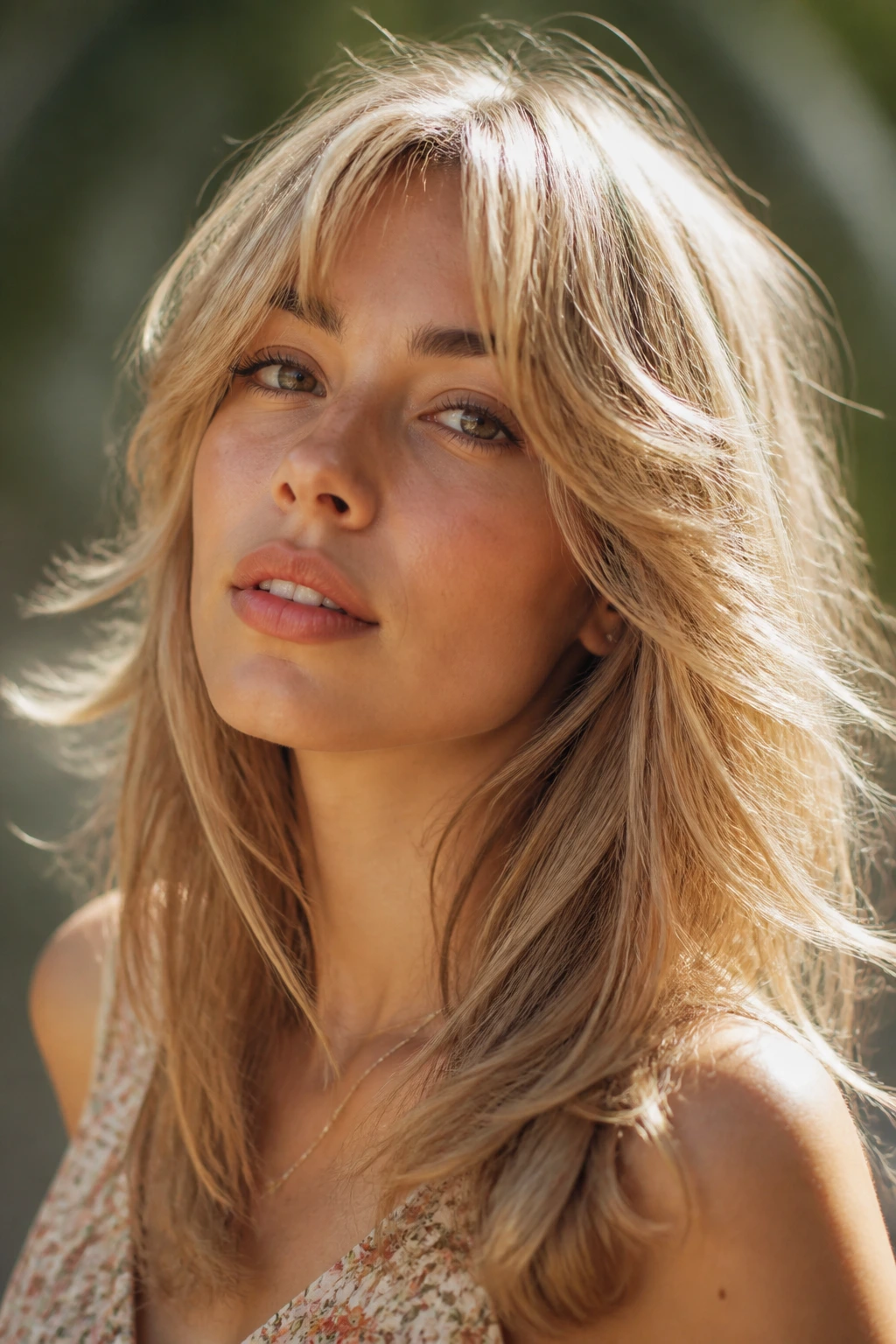
Feathered fringe is the one that looks like it has already been brushed through six times and still behaves. It works because the ends are light, not blunt, and the whole front section has enough layers to move when the rest of your hair moves. On long hair, that movement keeps the cut from feeling static.
This is one of my favorites for wavy hair. The fringe doesn’t need perfect symmetry; it needs bend. A little mousse, a diffuser, or a round brush on the front only is usually enough. The rest of the hair can stay loose and layered, which is part of the appeal.
Why it still feels vintage
The feathered finish brings back that soft, screen-star texture from the ’70s without copying it too hard. You get softness at the eyes and a little swing at the temples. Ask for point-cut ends or subtle slicing so the fringe doesn’t sit like a shelf.
If your hair is thick, this style can remove some of that front heaviness without making the bangs disappear. That’s the sweet spot.
6. Side-Swept Hollywood Bangs
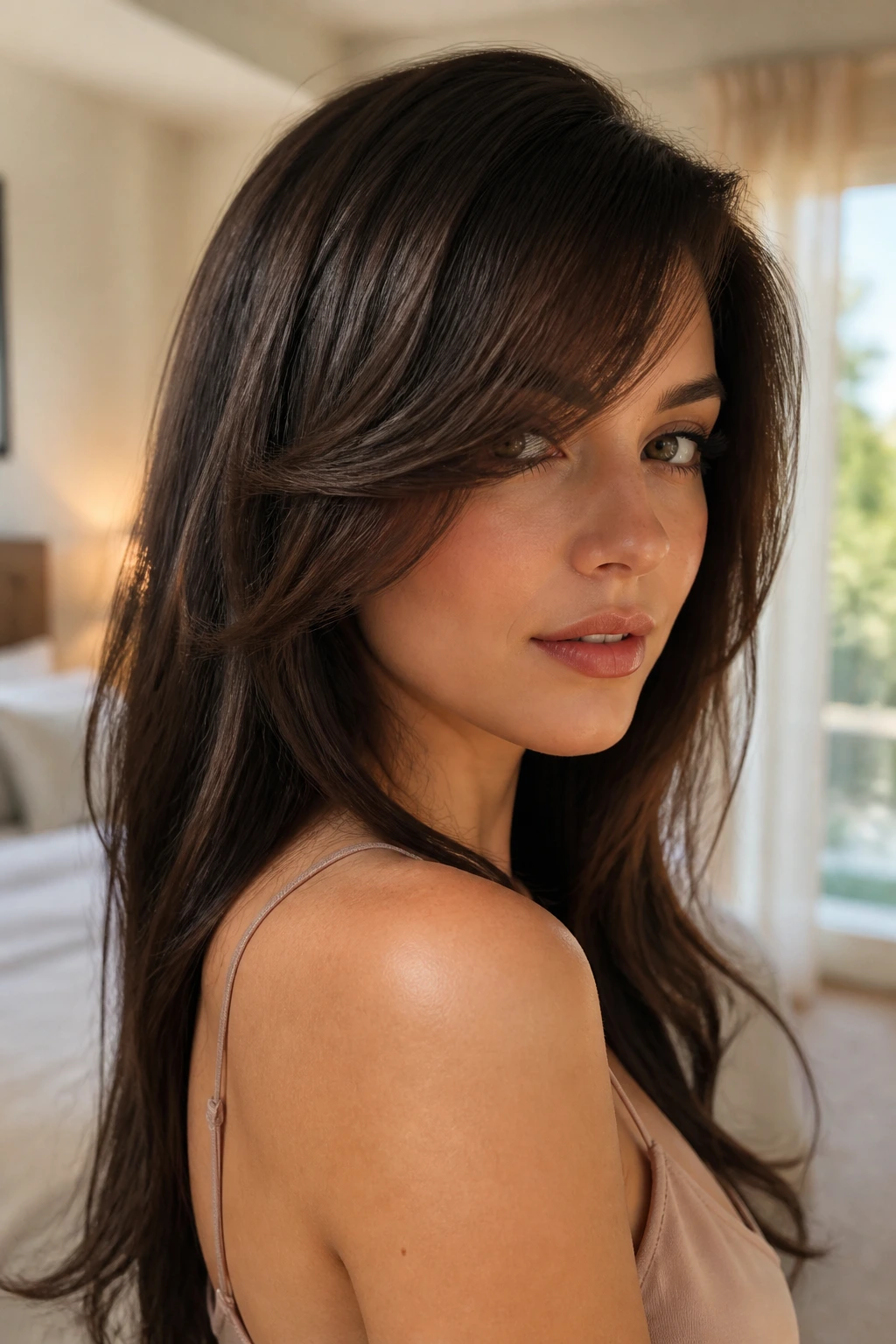
A side-swept fringe is the oldest glamour trick in the book, and it still works because it knows how to frame the face without fighting it. The front section starts with a side part, then sweeps across the forehead in one polished arc. With long hair, the effect is soft, slanted, and a little bit starlet.
What makes it feel old-school
The shape should be smooth at the root and lightly curved at the ends. If you brush it flat, you lose the drama. If you over-curl it, it starts to look too formal. A large round brush, a Velcro roller, or a heated roller for the front section gives you that glossy bend without a hard kink.
This is especially useful if you wear updos. A side-swept fringe can soften a bun, a chignon, or a half-up twist without making the style feel fussy. It also buys you time if you’re growing out a shorter fringe. You can sweep a lot of things under this umbrella.
Best for: long faces, deep side parts, and anyone who likes hair that looks a little dressed up even when the outfit is simple.
7. Rounded Full Bangs With a Retro Blowout
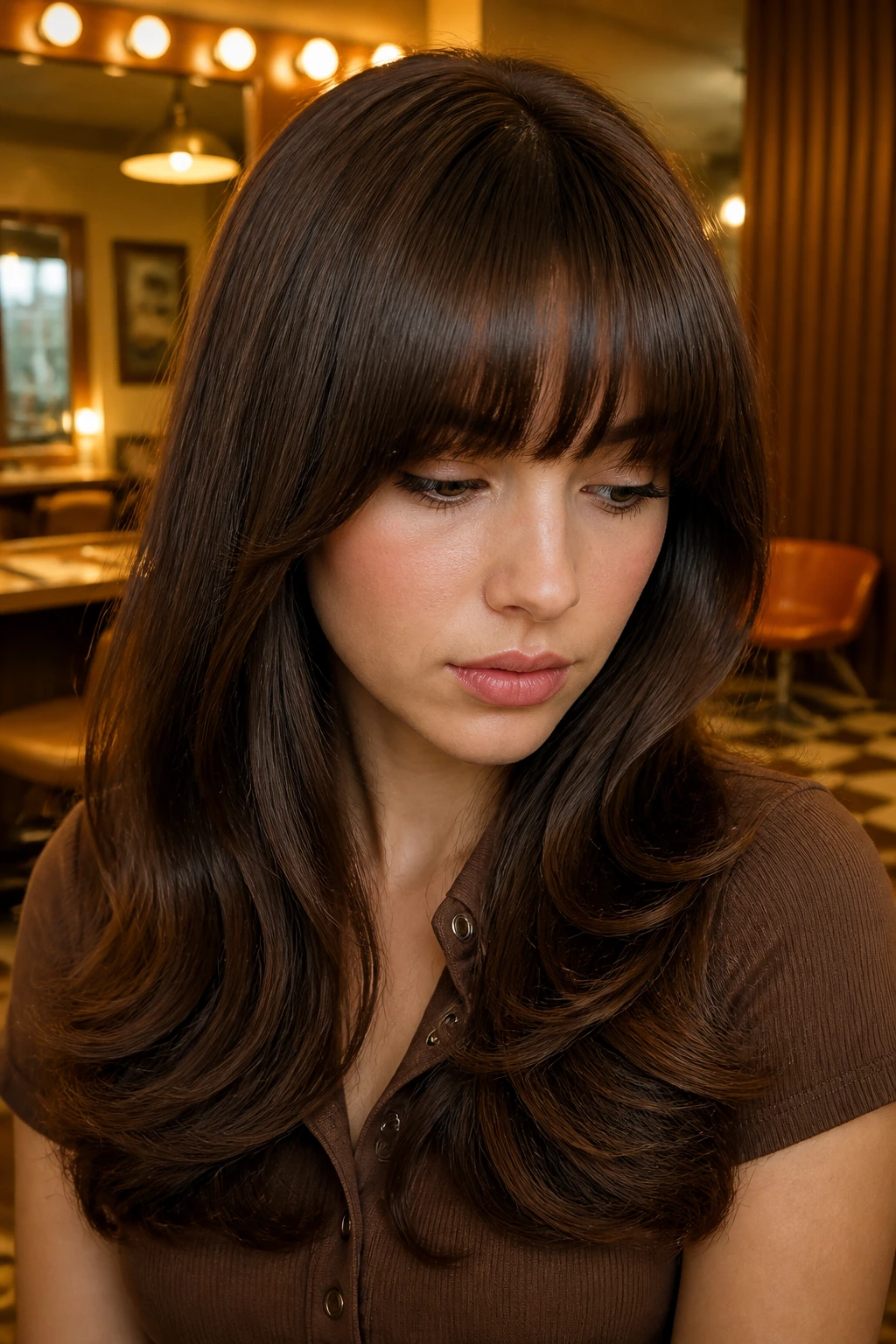
Rounded full bangs give long hair a stronger front line. Instead of splitting or opening at the center, they curve gently across the forehead with the edges slightly longer than the middle. That curve is what keeps them from looking severe.
This style suits denser hair because the fringe needs enough weight to hold the shape. Too little density and the line breaks apart. Too much and it turns into a helmet, which is not what we want here. The right cut should skim the brows and still move when you blink.
The styling trick
Blow-dry the bangs straight down first, then bend the brush just enough to soften the corners. That little arc is doing a lot of work. It makes the bangs feel vintage without making them look chopped or too trendy.
This fringe likes a smooth finish and a fuller crown. If the rest of your hair is long and glossy, the contrast can be beautiful. Sharp front, soft length. Clean, not cold.
8. Wispy See-Through Bangs for Airy Length
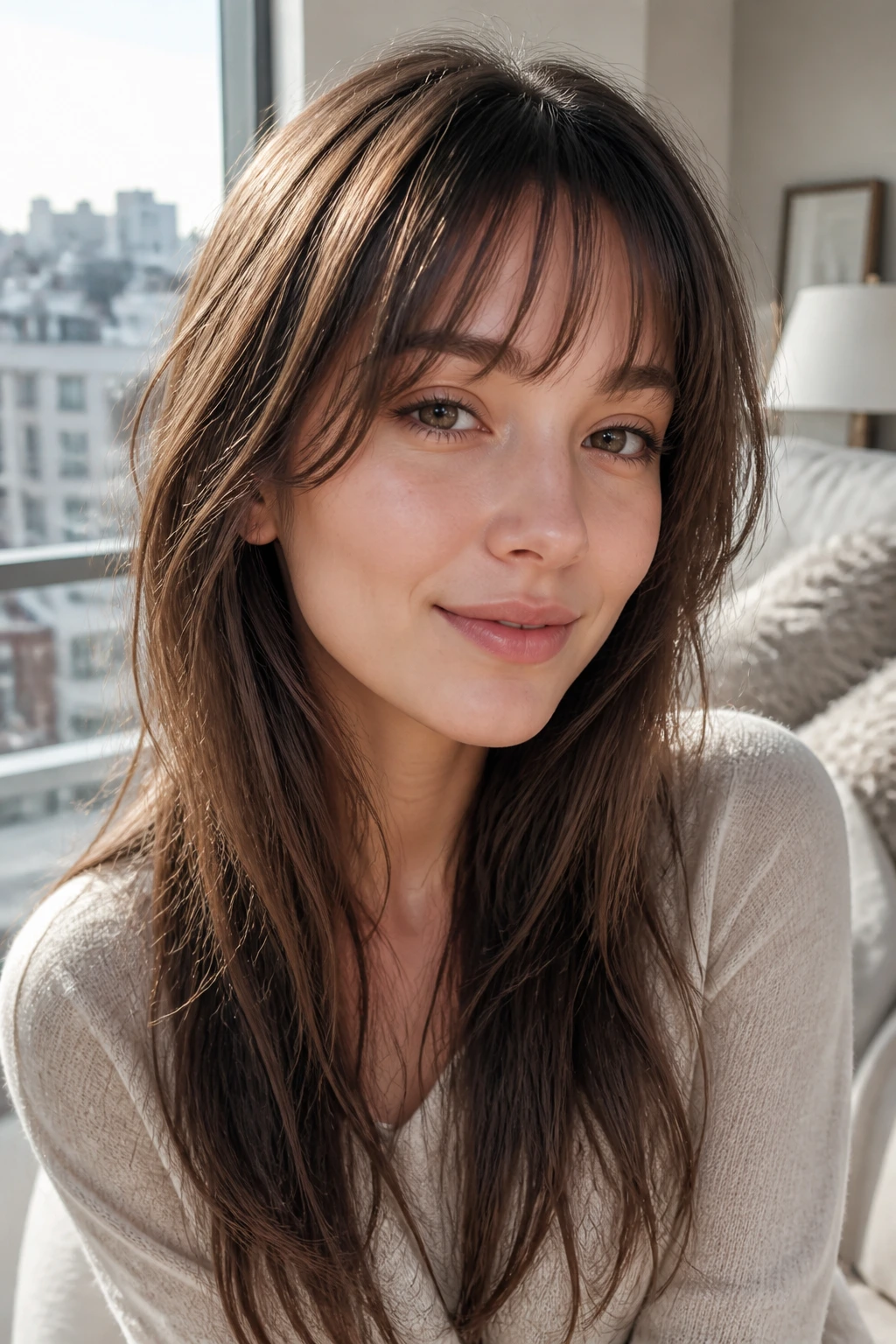
Wispy bangs are for anyone who wants the vintage mood without the weight. The forehead still shows through, the strands are fine, and the fringe sits lightly enough that it doesn’t visually shorten a long face or crowd a small forehead.
They’re also easier to live with than a dense fringe. A little root lift, a quick pass with a small round brush, and you’re done. If your hair is fine, this can be a better choice than a blunt bang because it avoids the see-saw between too much hair and too little.
The vintage vibe here is soft and almost fragile. Think French-girl softness, not crisp mod geometry. Ask for soft point cutting so the ends don’t look too tidy. Little irregularities help.
If you wear glasses, this is one of the gentlest options. The fringe frames the frames instead of competing with them.
9. Piecey Fringe With Long Layers
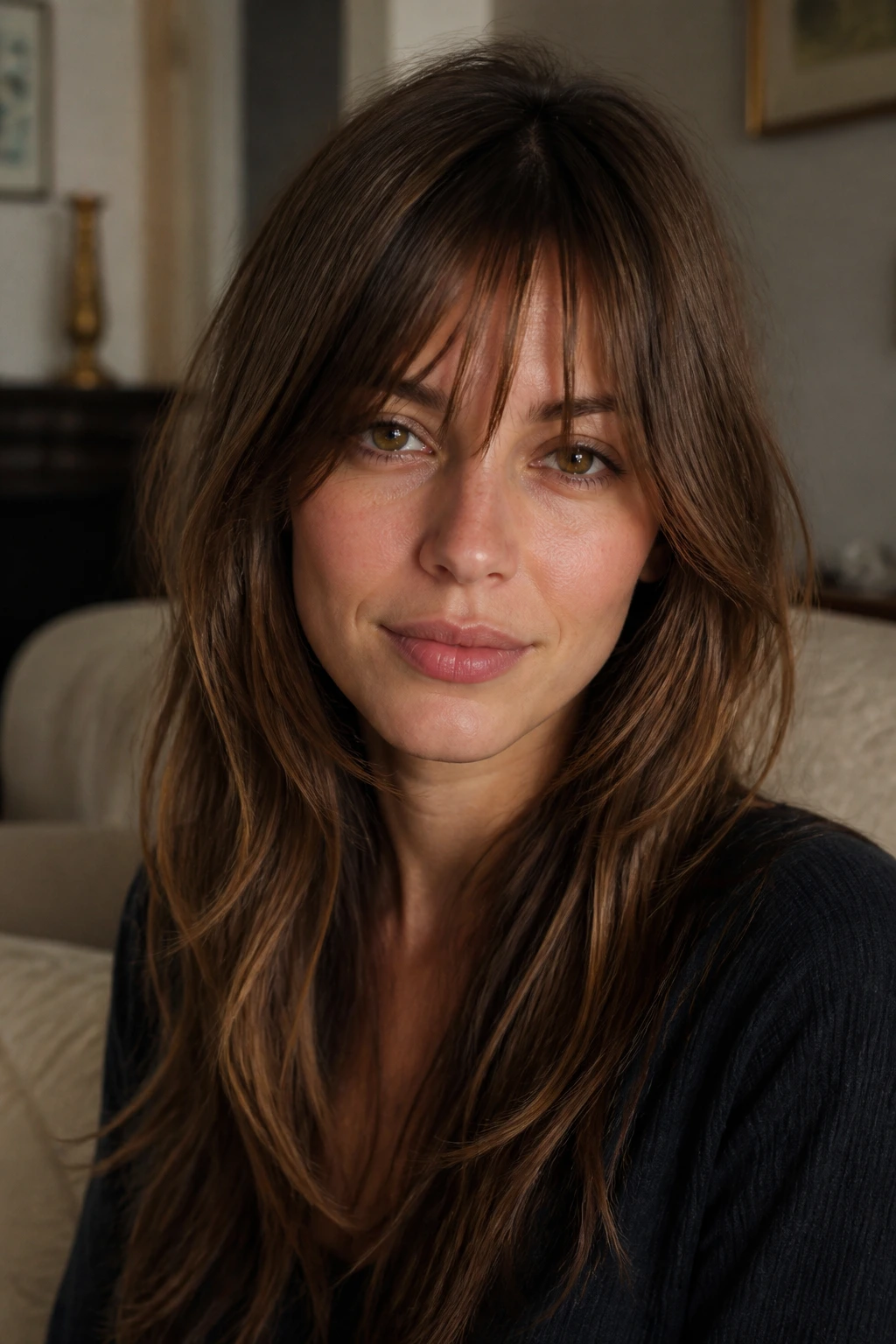
Piecey fringe looks like it has been separated by hand, which gives it a relaxed, slightly late-’70s feel. The strands don’t sit together as one block. They fall in soft ribbons, and that separation makes long hair feel lighter around the face.
This one is especially nice if you already have layers through the length. The front can echo the movement of the rest of the haircut instead of fighting it. A touch of styling cream or a lightweight wax on the very ends can help define those pieces, but don’t load it on. Too much product and the fringe goes stringy fast.
Best use case
If your mornings are messy but you still want your hair to look intentional, this is a good place to land. The cut forgives a little roughness. It also grows out in a friendly way, because the pieces can start blending into face-framing layers without looking ragged.
Ask for texture, not thinning. There’s a difference. Thinning shears can make the ends wispy in the wrong way; point cutting gives you better control.
10. Micro Bangs Against Waist-Length Hair
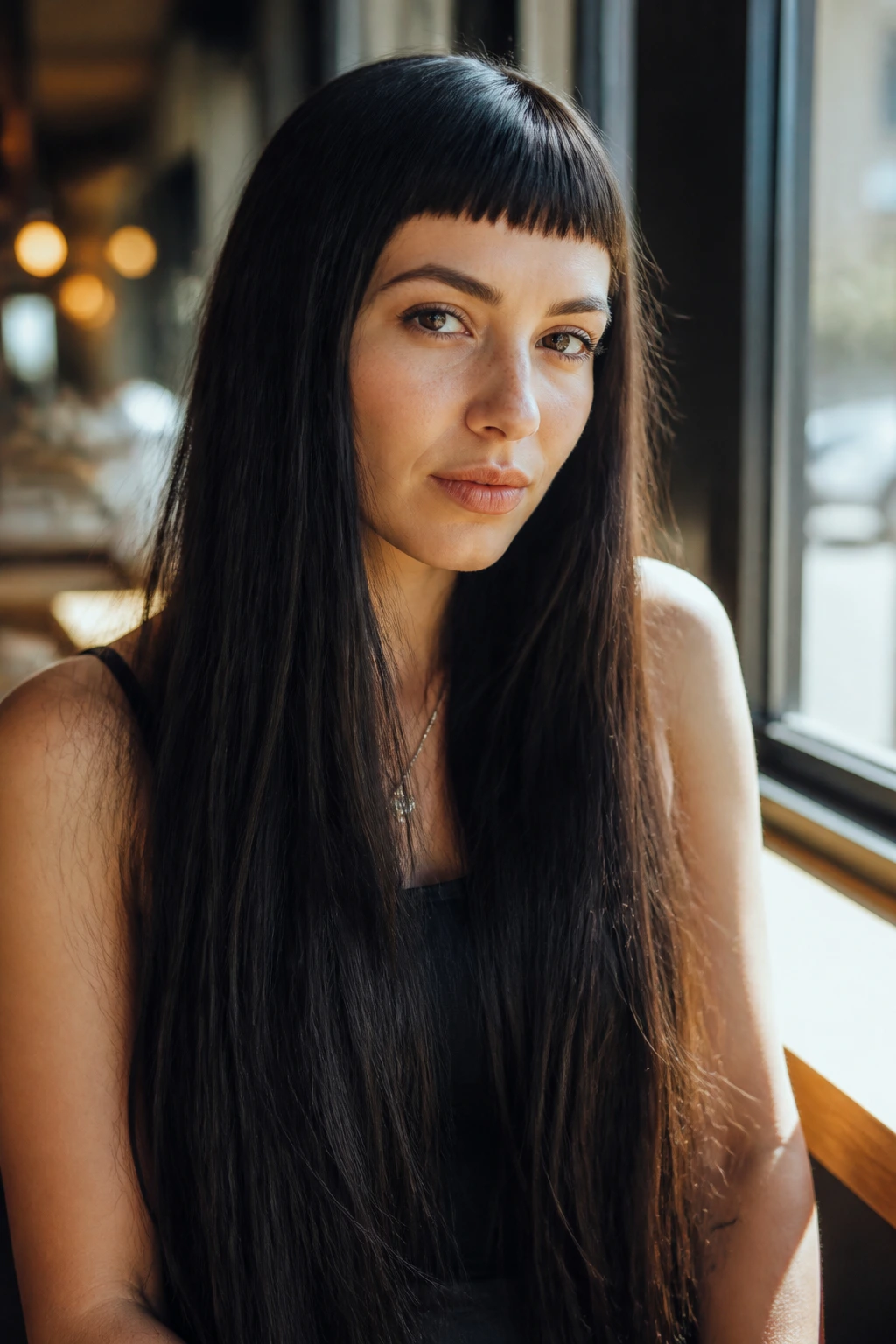
Tiny bangs with very long hair have a sharp, mod energy that can look fantastic when the contrast is deliberate. The fringe sits high above the brows, often with a straight or softly rounded line, and the lengths behind it stay long and sleek. That contrast is the whole point.
Why this one is not shy
Micro bangs need confidence and maintenance. There’s no dressing them up as low effort. They grow out visibly, they need regular touch-ups, and they look best when the rest of the hair is clean and smooth enough to support the shape. If the lengths are frizzy and the fringe is sharp, the whole look feels mismatched.
Still, when they’re right, they’re memorable. Long hair keeps the style from feeling too severe, while the short fringe gives the face a graphic edge. They work well with strong brows, a neat center part, or a blunt hemline through the ends.
Styling note: use a flat brush or a tiny round brush, then set the fringe with a cool shot. Don’t over-texturize it. Micro bangs are more striking when the line stays clear.
11. Pageboy-Inspired Curved Bangs
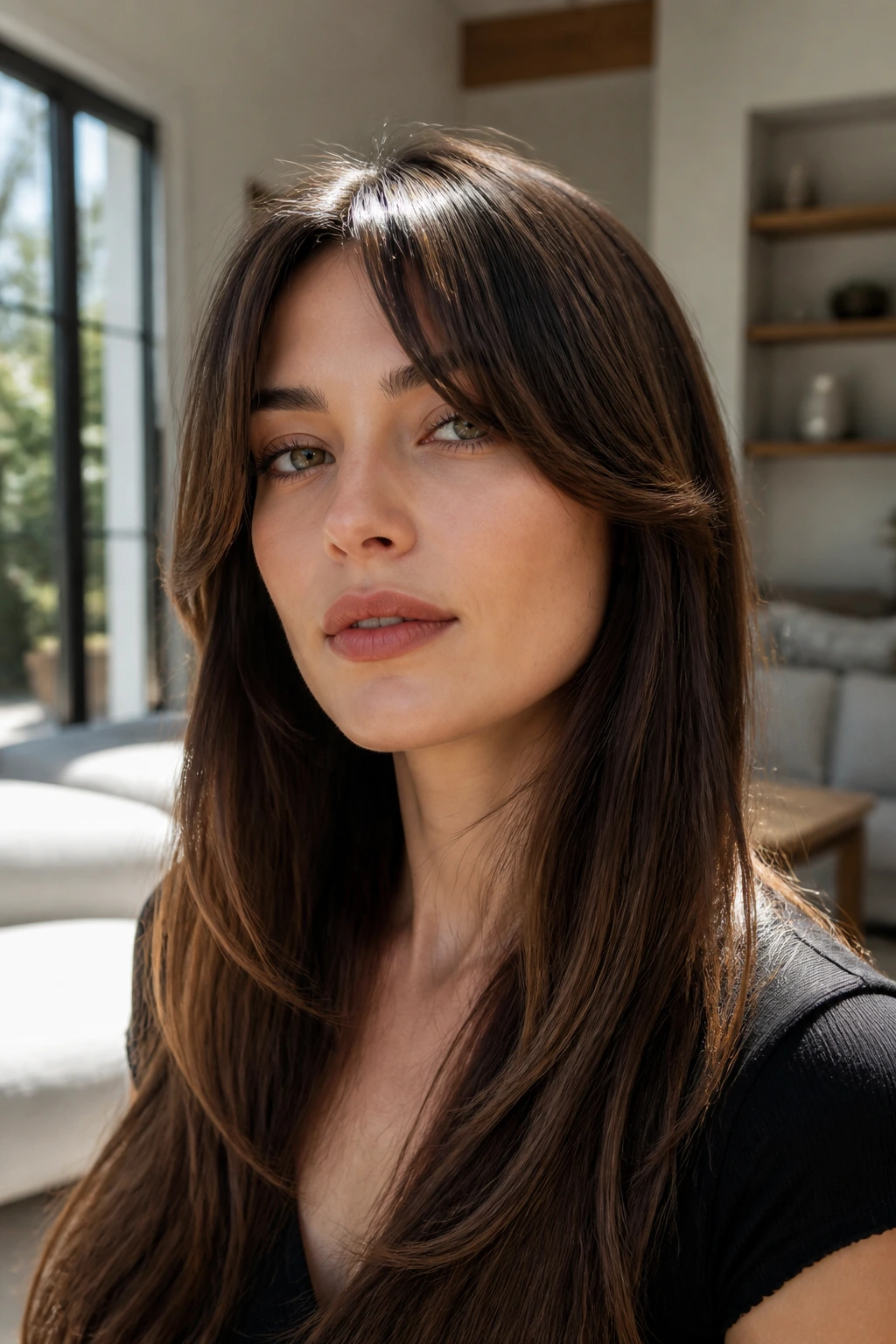
Pageboy fringe has a neat, rounded energy that feels straight out of a glossy old photograph. The front curves under slightly and blends into the sides in one continuous line. On long hair, that gives you a polished front without the heaviness of a blunt full bang.
This style is happiest on straight or softly bent hair. If your texture is wavy, you can still wear it, but you’ll need to work a little harder to keep the curve smooth. A medium round brush and a quick pass under the ends usually does the trick.
The nice thing about pageboy-inspired bangs is that they create a tidy frame without stealing the show. They make the eyes look more open, and they pair well with long lengths that are either very smooth or softly flipped at the ends.
Best for: anyone who likes a structured front but doesn’t want the whole haircut to look stiff.
12. Shaggy Fringe With Flipped Ends
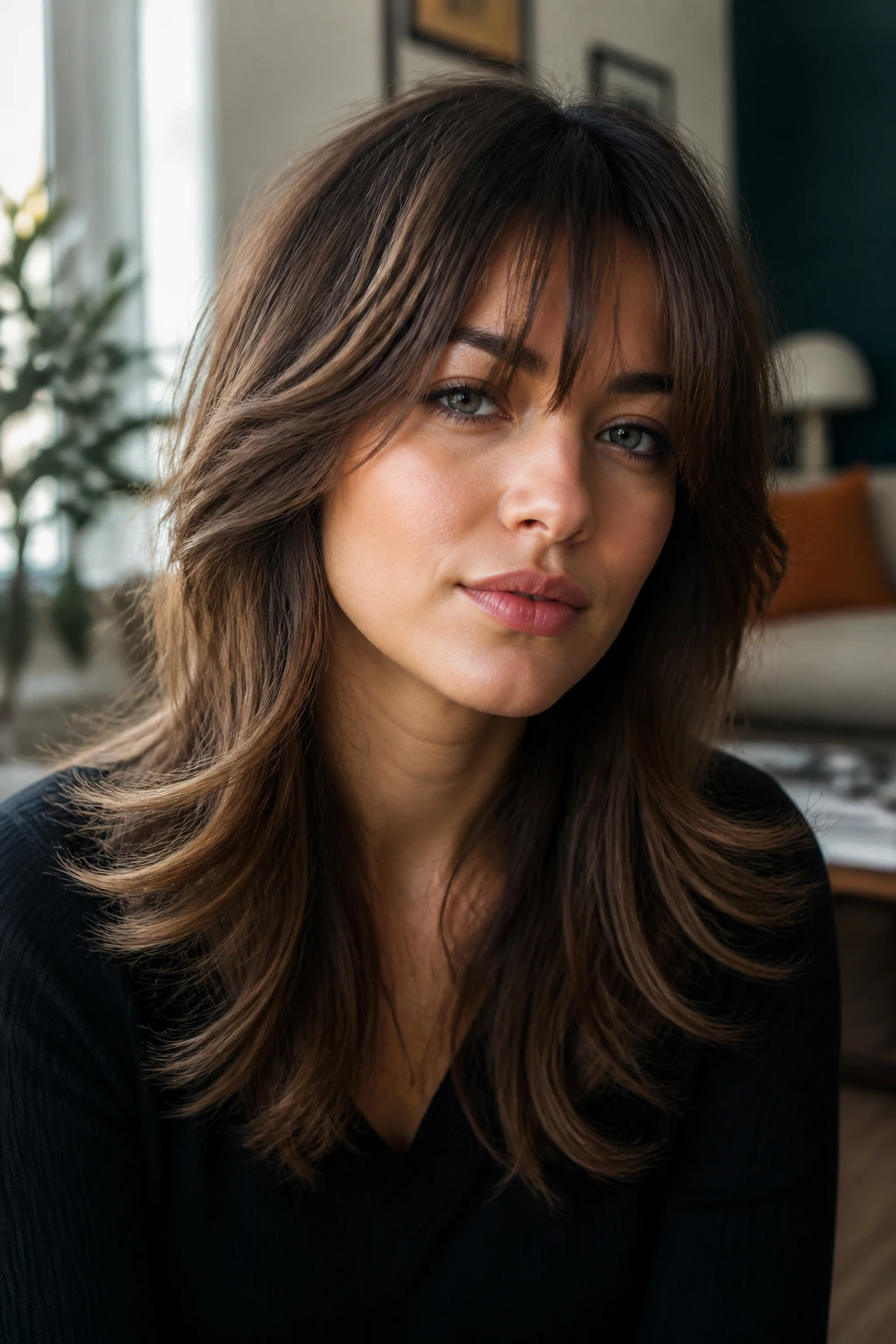
Shaggy fringe brings a rocker note to long hair, but the vintage thread is still there in the movement. The front has layers, separation, and ends that kick out just a little instead of sitting flat against the forehead. It’s casual, but not careless.
This is one of the better choices for thick or textured hair because the cut can remove bulk without turning the bangs into a thin scrap. Let the hair air dry if it wants to, then help the front a bit with a diffuser or a few passes of a dryer. The point is to keep the fringe from looking overdone.
What makes it work
The flipped ends give the style a little attitude. Not a lot. Just enough to keep it from sliding into generic curtain-bang territory. If you already wear long layers with movement, this fringe will feel like a natural extension of the rest of the cut.
If your hair sits flat around the crown, a little root spray makes a visible difference. The front needs lift so the layers don’t collapse together.
13. Crescent Bangs That Open at the Cheekbones
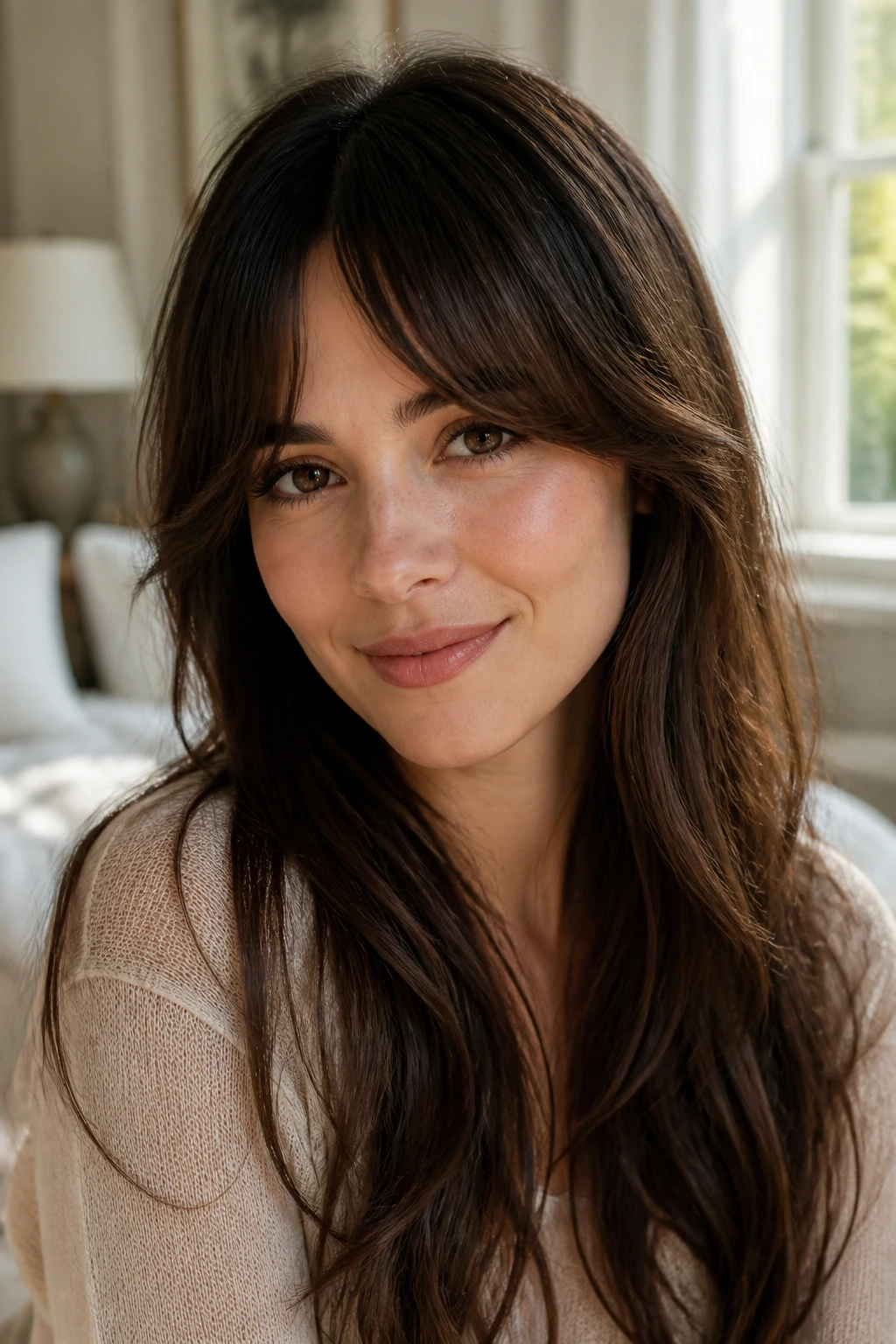
Crescent bangs have a gentle arch that opens toward the cheekbones, which gives long hair a soft frame with a distinctly retro shape. They’re fuller in the middle, lighter on the sides, and more curved than a straight curtain fringe.
This style is one of the sneaky good ones. It looks polished without looking rigid, and the curve helps guide the eye down the face instead of stopping it across the forehead. If you want something softer than a blunt bang but more intentional than grown-out pieces, this is a smart middle ground.
A round brush is your friend here, but don’t force a giant blowout. The curve should be subtle, almost like the front was shaped by a good haircut rather than six different styling tools.
Who it flatters
Oval faces get the easiest win, though square faces often look great too because the arch softens the jawline. The style also works well with long, layered hair that already has some bend through the mid-lengths.
14. Old-Hollywood Swoop Bangs
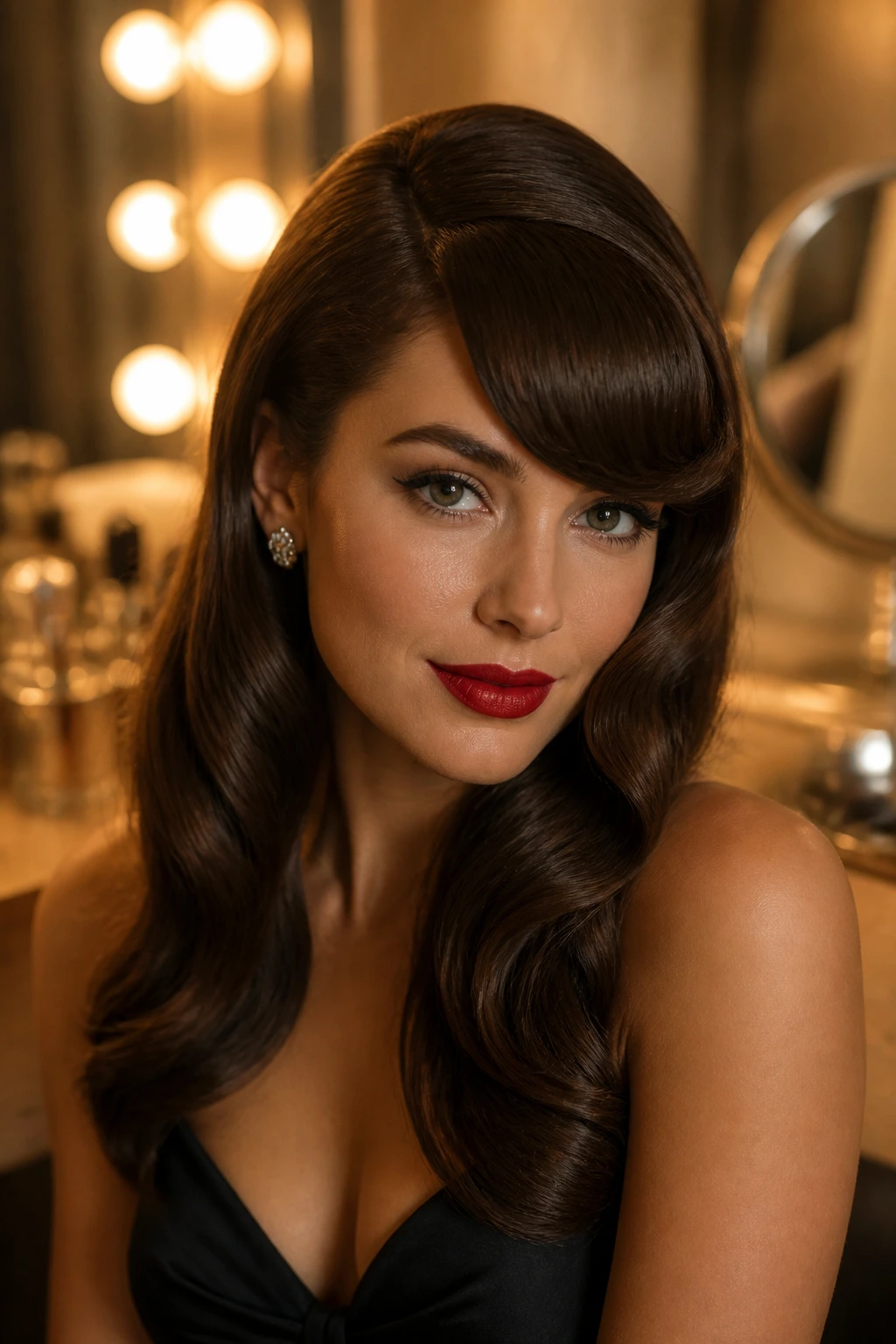
Old-Hollywood swoop bangs are all about one directional curve and a glossy finish. The front starts with a side part, then swings across the forehead like it knows exactly where it’s going. This style loves volume at the root and a little polish on the ends.
You can get a lot of mileage out of rollers here. Set the front section while you do makeup or get dressed, let it cool completely, then brush it into shape with a boar-bristle brush or a soft paddle brush. The result should feel smooth, not glued down.
This is a strong choice if you wear long waves, because the bangs can echo the curve of the rest of the hair. It also looks good with one-ear-tucked styling, which gives the swoop a chance to show off. If you want movie-star hair without a strict center part, this is a nice lane.
15. Side-Part Fringe With Victory-Roll Energy
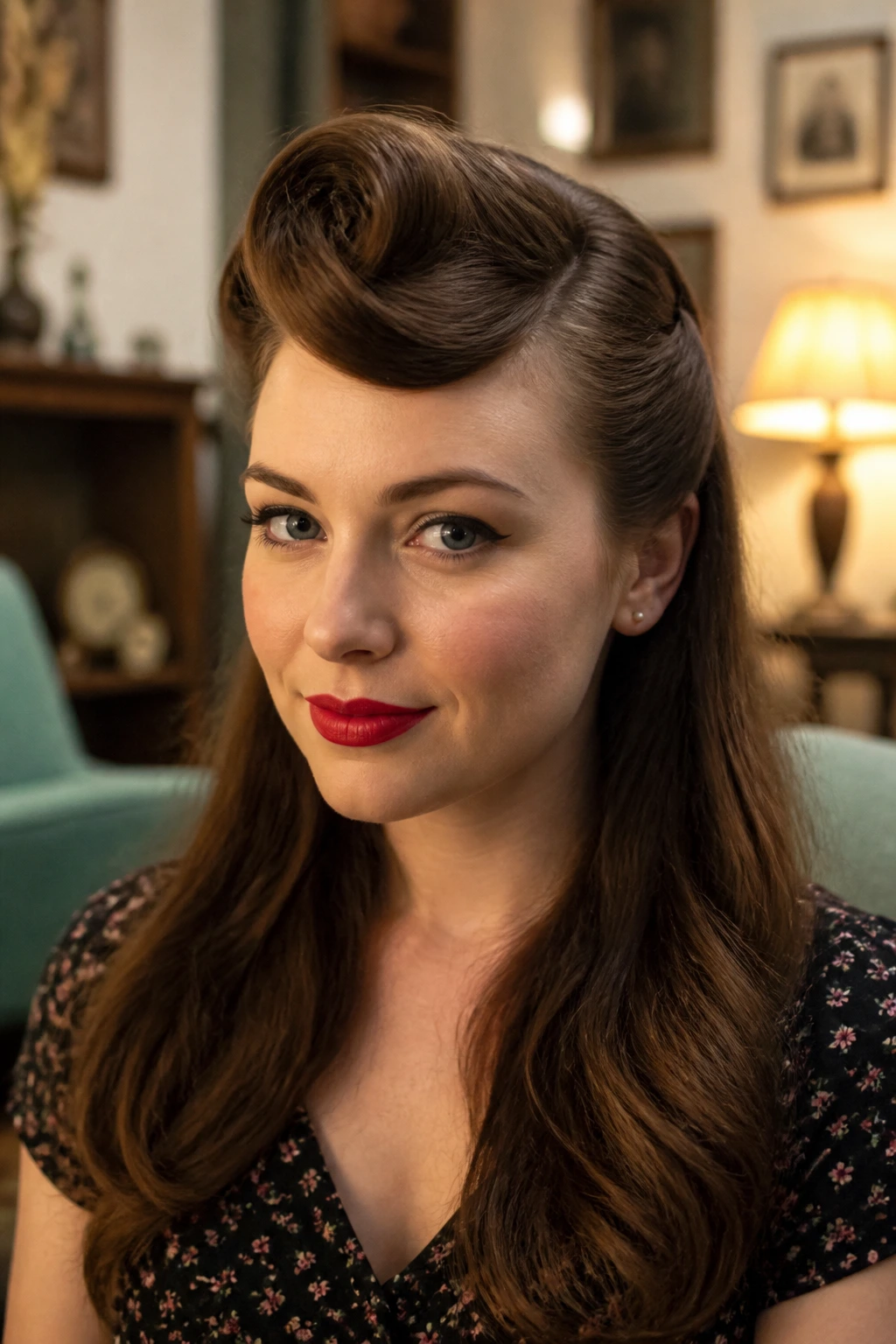
This one is for the people who like a little pin-up energy in the front. The fringe starts with a side part, then takes on a lifted, rolled shape near the roots before it softens into a sweep. It isn’t a full victory roll, but it borrows that sculpted feeling.
The key is control. The front section needs to be neat enough to hold the shape, but not so sprayed that it turns crunchy. A little setting lotion, a round brush, and pin clips while the hair cools can do more than a heavy blast of hairspray ever will.
How to style it
- Keep the part deep and clean.
- Roll the front away from the face, then brush it into a soft arc.
- Use pins only while it cools, then remove them gently.
- Pair it with long lengths that are smooth or lightly waved.
This style is especially good if you like your hair looking dressed up without being formal. It has a little theater in it. That’s the point.
16. Soft Arched Bangs With a Glossy Finish
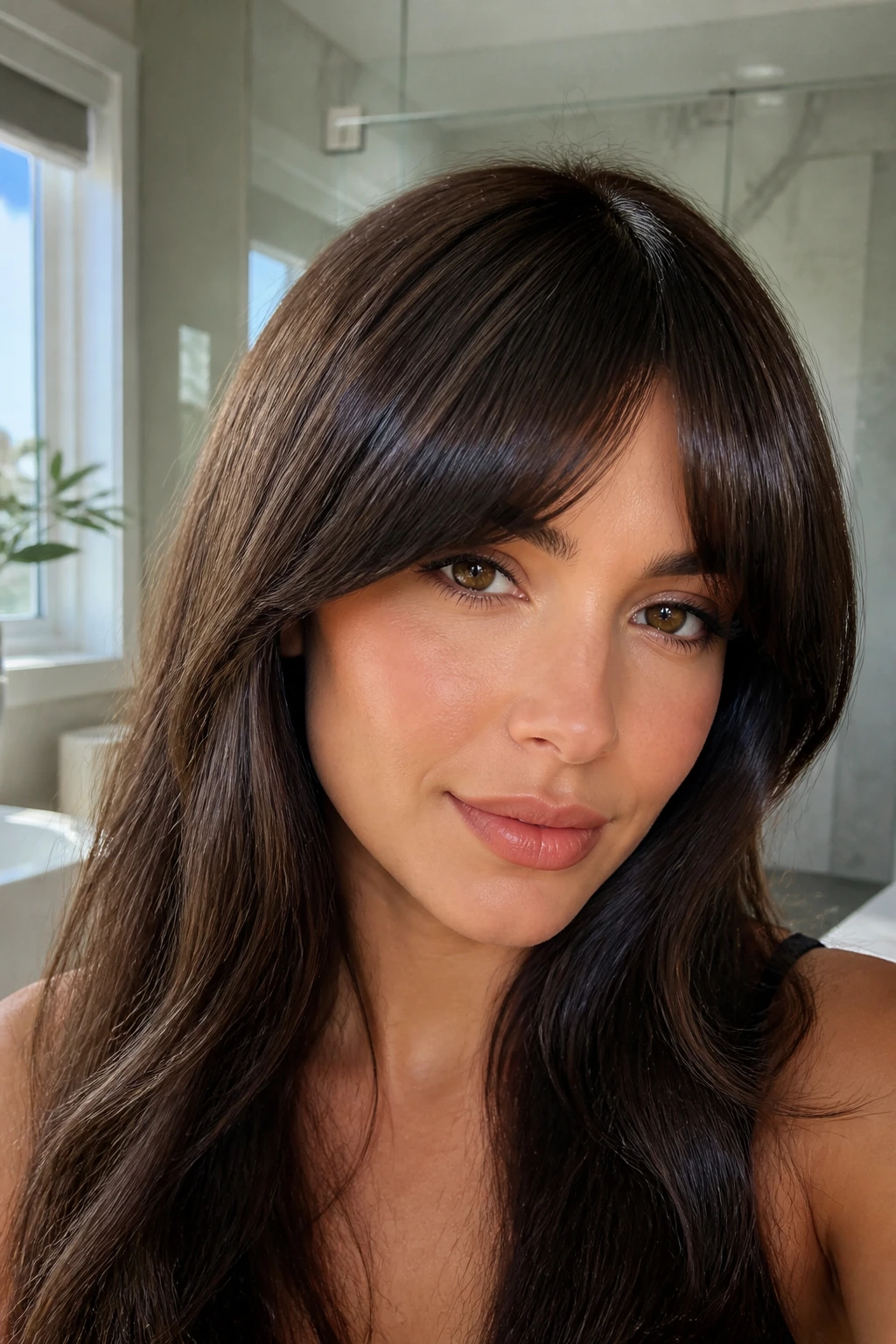
Soft arched bangs are what I reach for when someone wants a vintage look but does not want a hard edge at the brows. The shape is gently curved, the ends taper softly, and the finish stays shiny and controlled.
The arch matters because it keeps the fringe from feeling boxy. On long hair, that shape creates a neat front frame while leaving the lengths free to move. It works particularly well if your hair is naturally smooth and you like a polished blow-dry.
You can style this with a medium brush and a touch of serum on the very ends after the hair has cooled. Skip heavy oils near the roots. They flatten the lift and make the fringe separate in a greasy way.
This one reads as tidy, but not severe. Quietly neat. That’s enough.
17. Long Grown-Out Bangs That Blend Into Layers
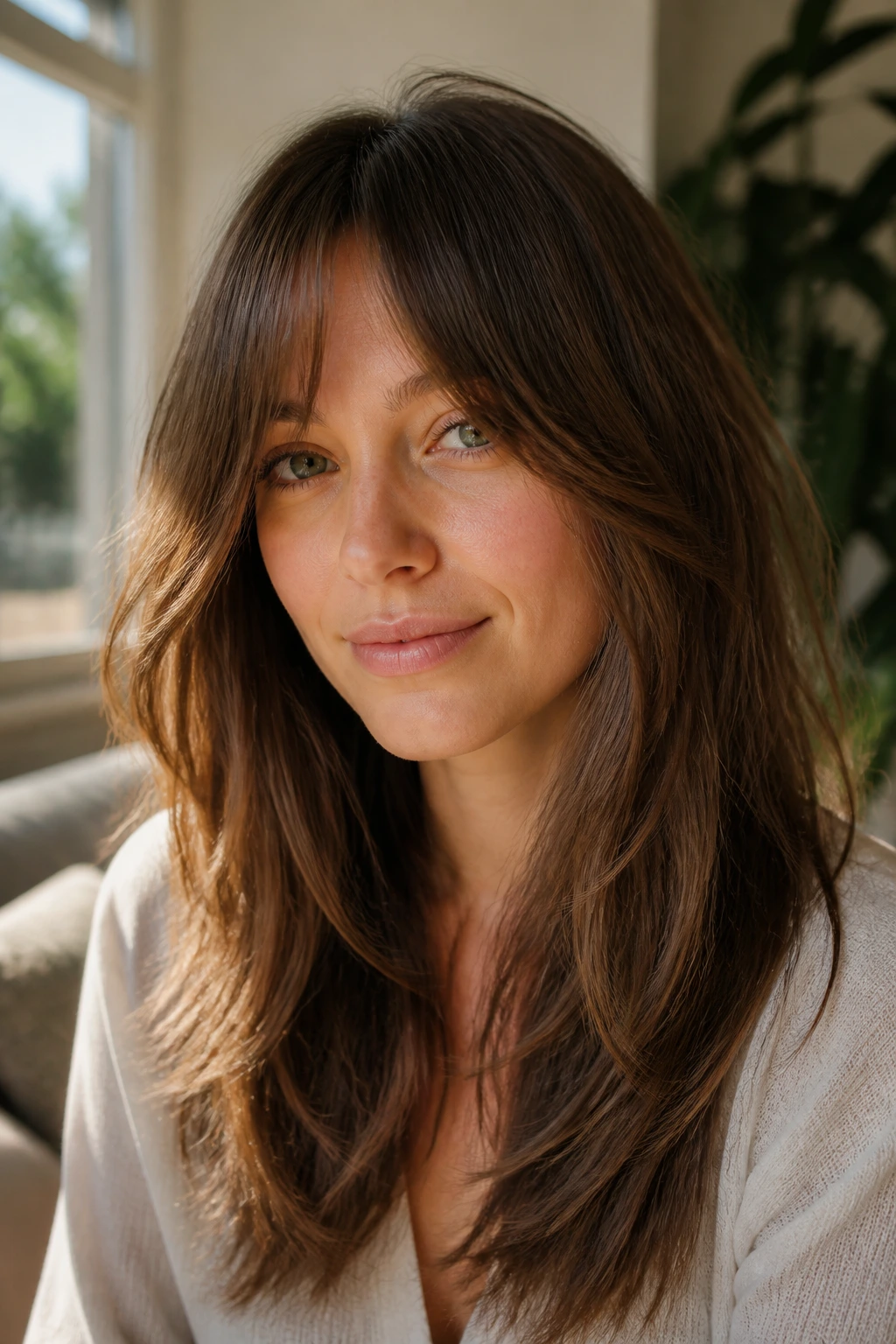
Sometimes the vintage vibe comes from not cutting the front too short at all. Long grown-out bangs blend into face-framing layers and give the haircut that soft, floating shape you see in a lot of ’70s photos. It’s a useful look if you want fringe without a hard commitment.
The trick is keeping the shortest pieces long enough to tuck, twist, or sweep. That makes the grow-out stage look intentional instead of awkward. If you’re between styles, this is the one that keeps you out of the clip-and-pin emergency zone.
It also works when you want volume around the cheekbones without changing your whole haircut. A round brush at the front and a loose bend through the lengths can make the layers feel connected.
Best part
You can part these bangs in the middle, off-center, or swept to one side. That flexibility is gold when you’re trying to grow something out without looking like you gave up halfway.
18. Retro Baby Fringe With Full-Length Hair
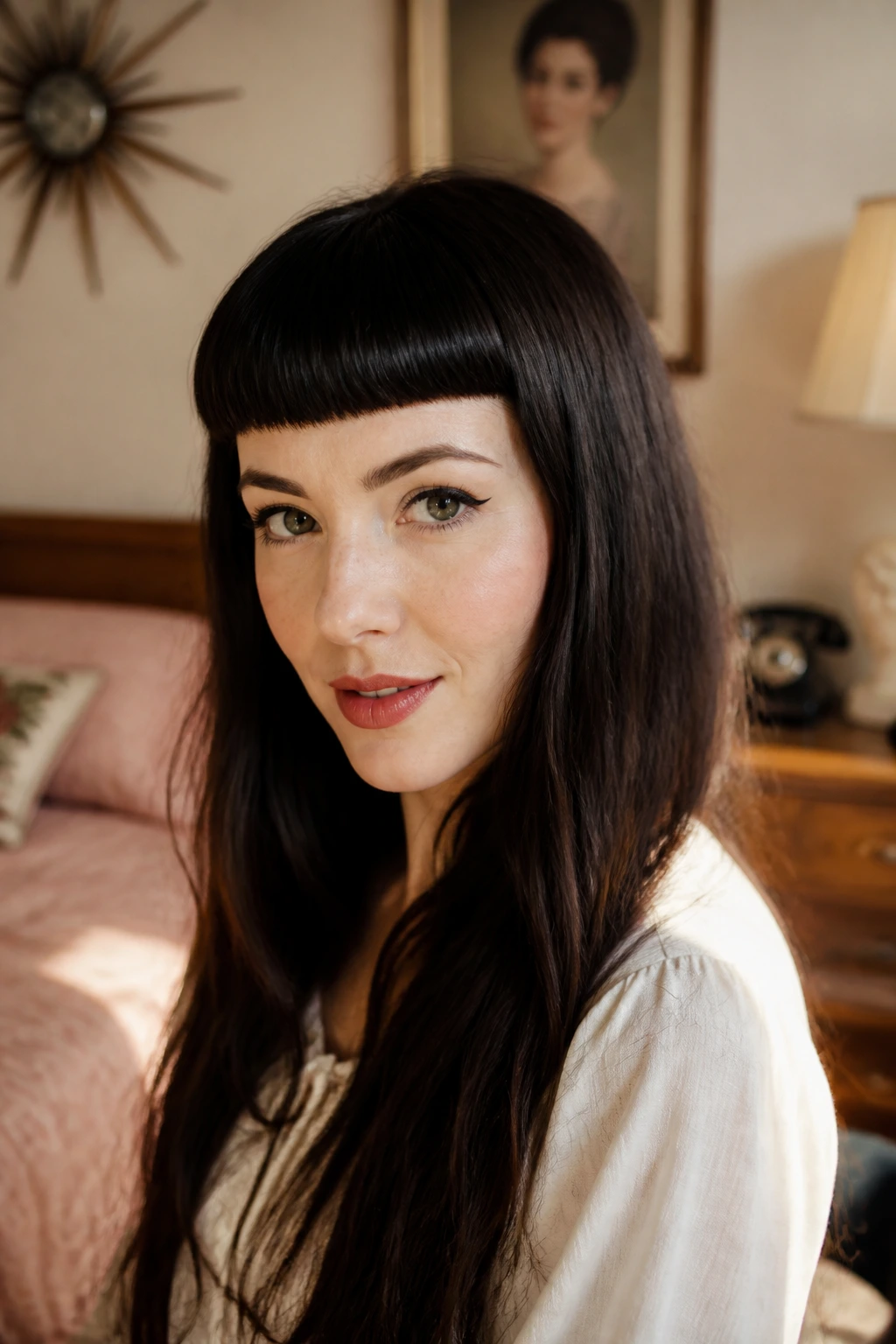
Baby bangs with long hair are a strong, slightly mischievous choice. The front sits well above the brows, sometimes almost at the top of the forehead, while the rest of the hair stays long and full. The contrast gives the whole look a mod or pin-up edge.
This one is not subtle, and that’s why it works. The short fringe keeps the face open, while the long lengths keep the style from feeling too severe. If you have dense, straight hair and a steady hand in the salon chair, the result can be sharp in a good way.
What to know before you cut
Maintenance is part of the deal. Baby bangs show every millimeter of growth. They also show every uneven snip, so this is not the style for a rushed at-home trim unless you already know your way around a comb and scissors.
Pair them with glossy lengths, a clean center part, or a tucked-behind-the-ear style. The contrast does the work. You do not need much else.
19. Face-Framing Bangs With ’90s Blowout Ends
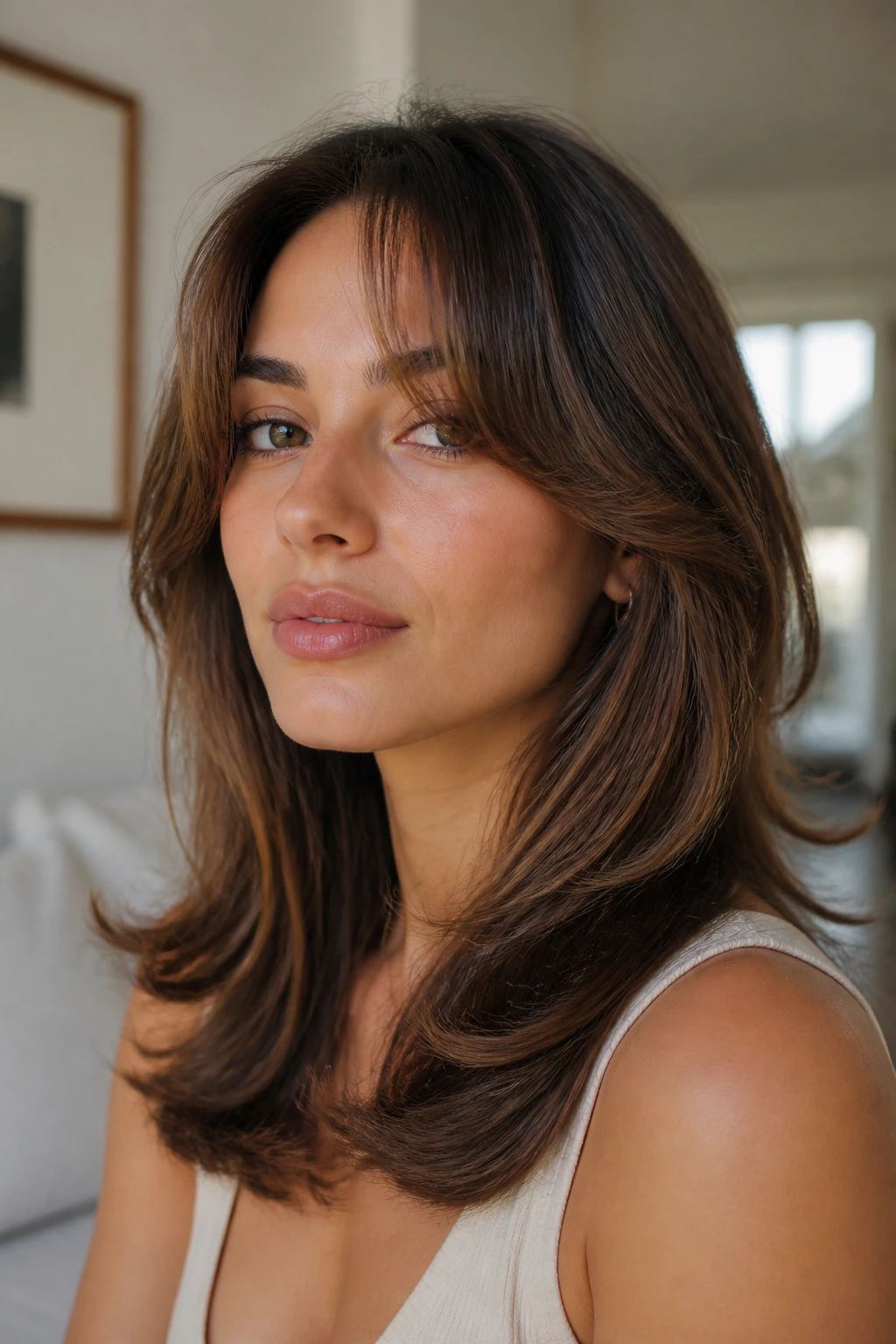
This is the soft landing zone for anyone who likes the look of bangs but wants the length and movement of face-framing layers. The front pieces start around the brow or cheekbone, then flip out or under at the ends in that loose ’90s blowout way. It feels retro without being strict.
The style is flexible. You can part it down the middle, sweep it wide, or pin one side back. On long hair, those front pieces keep the cut from going flat around the face, and the flipped ends add a little motion near the jaw.
If your hair is medium to thick, this is an easy one to live with. If your hair is fine, keep the layers light so the front doesn’t disappear. A round brush, a quick bend, and a touch of spray at the ends are enough. The rest of the hair can stay soft and loose.
Why Vintage Fringe Feels So Right on Long Hair
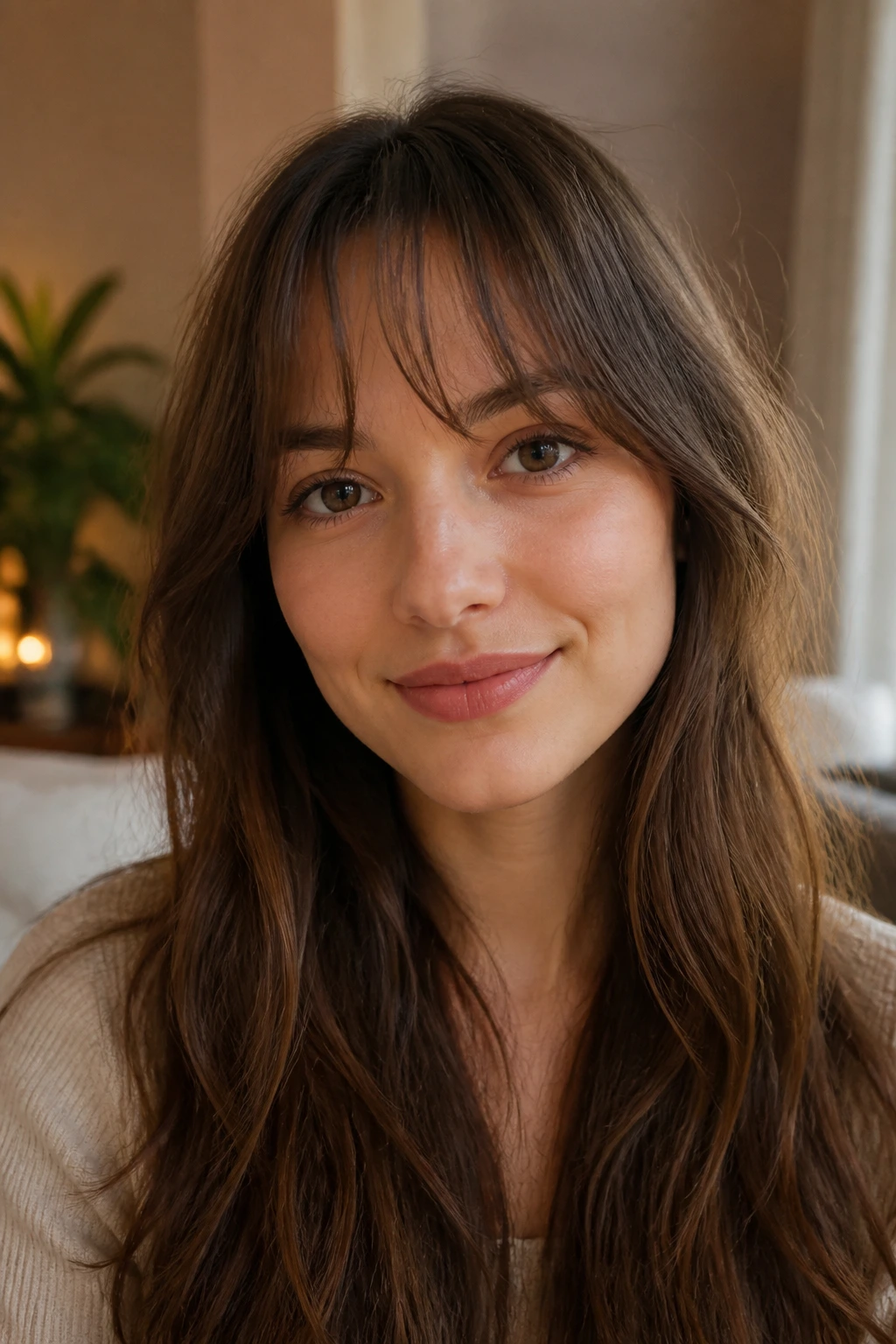
Long hair gives a vintage fringe room to breathe. That’s the real difference. A short cut has to carry the whole style at once, but long lengths can absorb a front piece that is blunt, wispy, side-swept, or curved without making the haircut feel crowded. The fringe becomes the punctuation mark, and the length carries the sentence.
There’s also a useful bit of visual balance at work. A strong front line keeps long hair from reading as one uninterrupted sheet, which is why even the softest Birkin or curtain bang can make a big difference. The eye lands at the face first, then moves down the length. That’s a cleaner read than letting all the weight sit at the bottom.
Vintage fringe also survives grow-out better than a lot of trend cuts. The front can shift into layers, side pieces, or a center split without looking like a mistake. That matters more than people admit. Hair has to live between salon visits, not just on the day of the cut.
How to Ask for the Right Fringe at the Salon
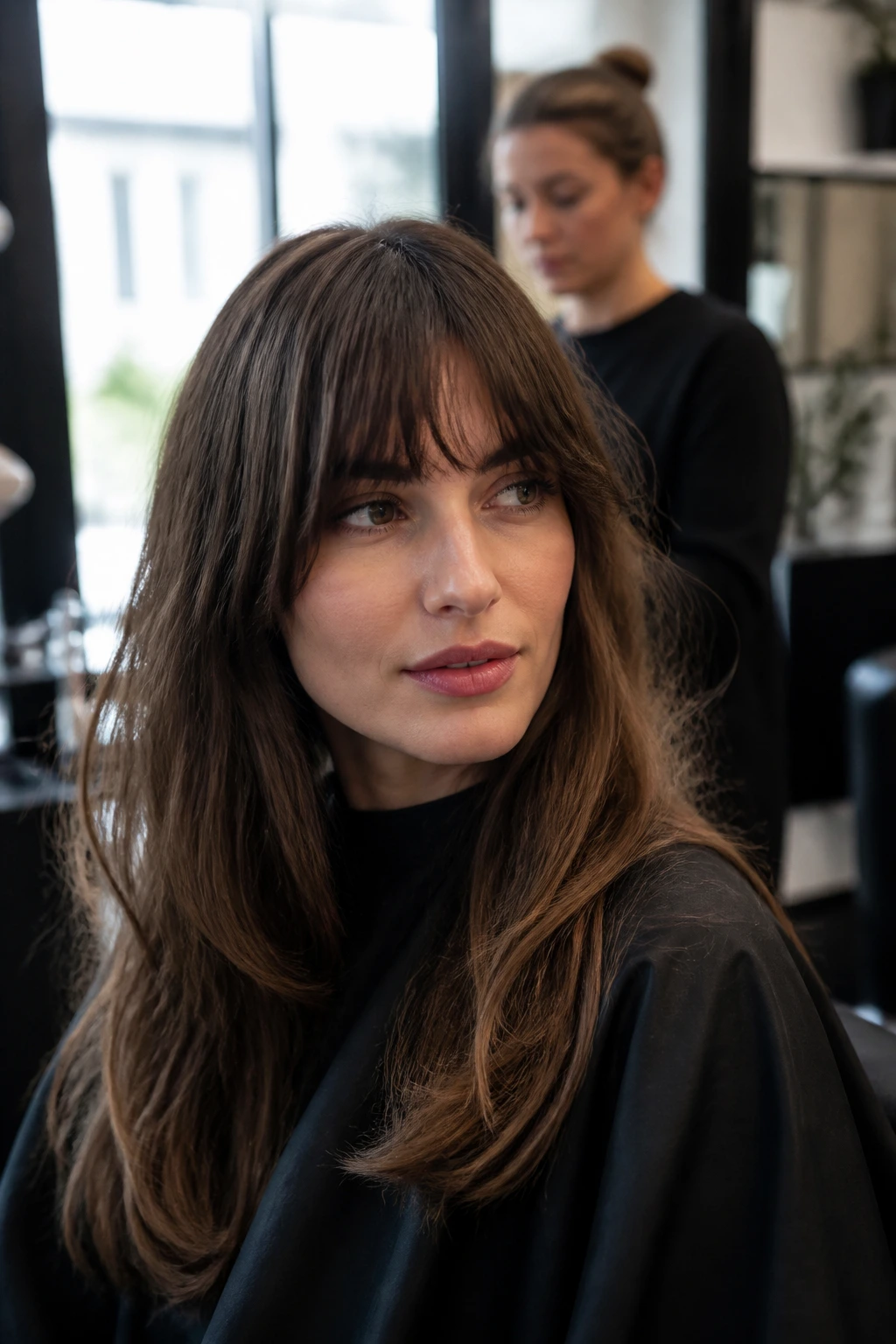
Bring photos, yes, but bring the right photos. One front view is not enough. A side view matters because the side pieces tell you whether the fringe opens at the cheekbone, hugs the jaw, or hangs like a heavy shelf. Ask for styles on hair that matches your density and texture as closely as possible.
Say where you want the shortest point when the hair is dry. That sentence saves a lot of regret. If you want a Birkin or curtain shape, say so directly and mention whether you want the center to hit the brow, bridge of the nose, or upper eyelid. If you’re asking for micro bangs or a blunt rounded fringe, be blunt about maintenance too.
What to mention before the scissors come out
- Your cowlicks, especially at the forehead.
- Whether you heat-style daily or maybe twice a week.
- How often you’re willing to trim.
- If you wear glasses.
- Whether you want the fringe to blend into layers or stand apart.
Stylists can work with almost any of that. They just need the truth first.
Practical Styling Moves That Keep the Shape Sharp
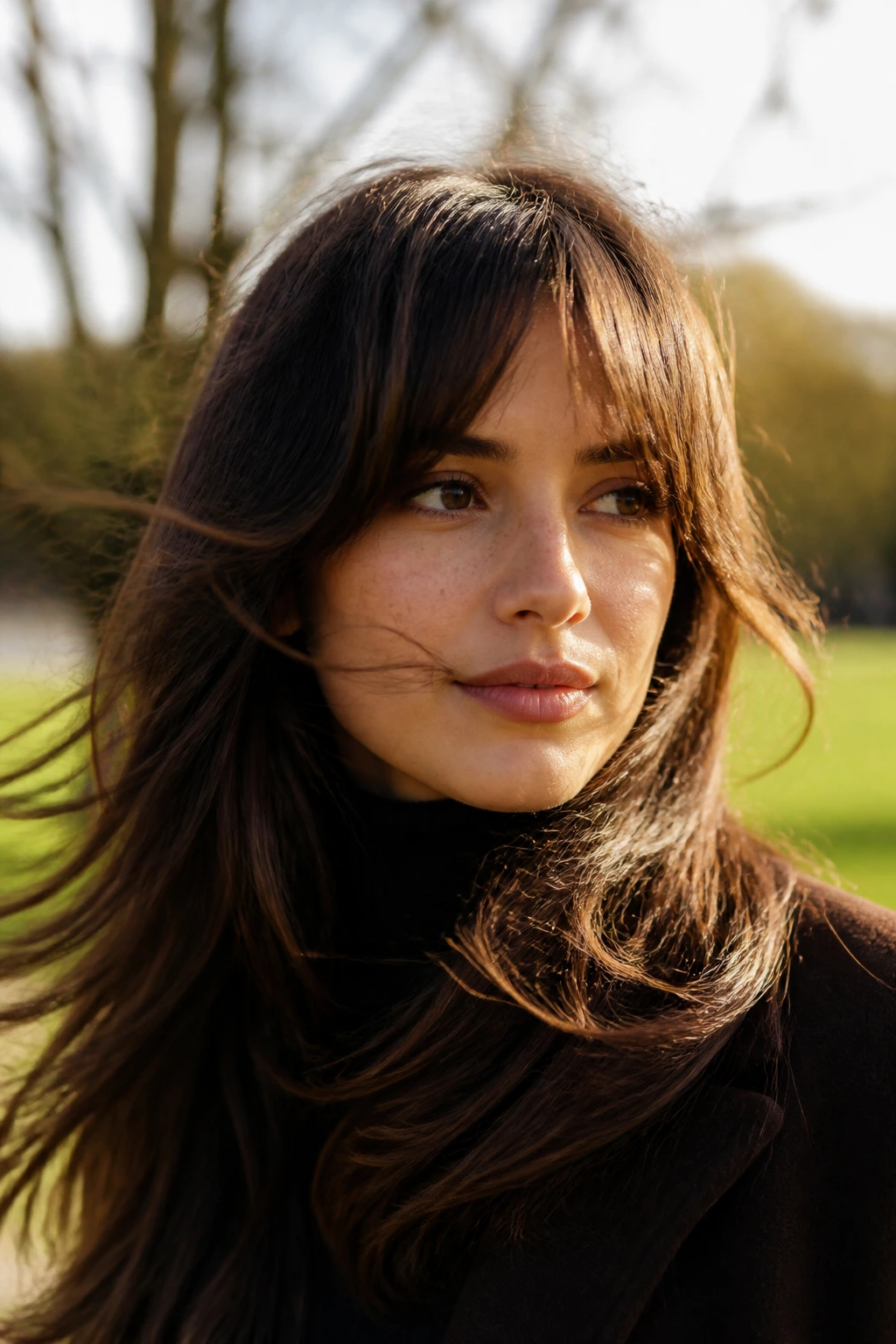
A good vintage bang style usually comes down to one thing: the front has to dry in the direction you want it to live. Letting the bangs air-dry in random directions and hoping for the best is a bad bargain. The roots remember everything.
Root direction: Blow the fringe in one direction, then the other, then finish where you want it to sit. That small back-and-forth gives the front a bend instead of a limp fold.
Cooling time: Clip the bangs in shape for a few minutes while they cool. Hair sets as it cools, and this is where a lot of the shape locks in. If you skip the cool-down, the fringe falls faster.
Product restraint: Use mousse or root spray near the base, not oils. Oils belong on the ends, and even then, barely. Too much product turns the fringe into separate little strips by noon.
Brush choice: A medium round brush gives you curve. A flat brush gives you control. A small brush gives you a tighter bend, which is useful for baby bangs and rounded cuts.
Essential Tools for Styling These Bangs
- Blow dryer with a concentrator nozzle: Keeps the air focused so you can direct the fringe instead of blasting it around.
- 1-inch to 1.5-inch round brush: The workhorse for curtain, Bardot, and swoop styles.
- Flat brush or paddle brush: Good for smoothing rounded bangs and keeping the line neat.
- Duckbill clips or small section clips: These hold the fringe while it cools into shape.
- Velcro rollers: Useful for old-Hollywood volume and a soft root bend.
- Tail comb: Helps section the fringe cleanly and nudge the part where you want it.
- Heat protectant spray: Non-negotiable if you’re using a dryer, brush, or flat iron on the front.
- Lightweight mousse or root lift spray: Gives vintage styles hold without making the bangs crunchy.
- Flexible hairspray: Enough grip to keep the shape, not so much that the front feels frozen.
Common Mistakes That Flatten a Vintage Fringe
The biggest mistake is cutting the bangs too short while they’re wet. Hair shrinks as it dries, and a fringe that looked brow-skimming in the chair can end up several millimeters higher. The fix is simple: cut longer, dry, reassess, then trim again if needed.
Another problem is making the fringe too dense for the rest of the haircut. Long hair looks lopsided when the front is a thick sheet and the lengths are soft. If the bangs feel heavy, ask for more internal softness or a lighter side opening.
Too much oil is another easy way to ruin the line. The hair starts separating into sticky ribbons, and the front loses lift. Use oil on the ends only, and use less than you think you need. Half a pea-size amount is usually enough for the fringe.
Cowlicks matter more than most people want to admit. If the hairline pushes one side up, cutting the fringe shorter will not fix it. You need to work with the growth pattern, not against it.
Variations and Adaptations to Try
The Fine-Hair Whisper: Keep the fringe sparse and airy, with soft point-cut ends and a light center opening. This works when you want the vintage idea without weighing down delicate hair.
The Curly French Sweep: Let the bangs sit longer, then shape them while curly or wavy so the front falls in a soft arc. Dry cutting helps here, because a wet curl can jump in ways that surprise people.
The Pin-Up Roll: Set the front on rollers, then brush the fringe into a little roll or wave at the root. This is a stronger look, but it has real vintage charm for evenings or photos.
The Grow-Out Sweep: Start with a cheekbone-length fringe and let the center drift into layers. That gives you a long runway if you hate frequent trims.
The Glasses-Friendly Arc: Keep the fringe slightly shorter in the middle and lighter at the sides so it doesn’t compete with frames. A soft opening near the bridge of the nose helps.
Keeping the Fringe in Shape Between Cuts
Bangs are the highest-maintenance part of long hair, and pretending otherwise is a waste of time. Most fringe styles need a trim every 3 to 8 weeks, depending on how blunt they are. Micro bangs need attention fastest. Curtain, Birkin, and grown-out styles can last longer.
Wash the front more often than the rest if your hairline gets oily. That may mean a quick sink wash or a tiny round of dry shampoo on the roots between full washes. The front usually gets greasy faster because it touches skin, makeup, and hands all day. Annoying, yes. True, also yes.
At night, pin the bangs up loosely or wrap them with a silk scarf if you want the shape to survive until morning. For round-brush styles, a large roller at the front can keep the bend from collapsing while you sleep. If the fringe flattens overnight, mist it lightly with water, re-dry for a minute or two, and let the brush do the rest.
During grow-out, don’t fight the awkward phase alone. Split a curtain fringe wider, sweep a Birkin fringe to the side, or tuck longer pieces into the front layers. That buys time without making you look as if you’re hiding from the scissors.
Vintage Bangs FAQ
Which bang style is easiest if I’m nervous about cutting my hair?
Curtain bangs or a soft bottleneck fringe are the least aggressive starting points. They leave room for grow-out and can be swept wider if you change your mind. A blunt micro fringe is the opposite of that, so save it for when you’re certain.
Can curly or wavy hair pull off vintage bangs?
Yes, but the cut has to respect the curl pattern. Ask for length a little longer than you think you need, and let the hair dry before finalizing the shape if your curl pattern is strong. A dry cut or curl-by-curl shaping helps a lot.
How often do bangs need trimming?
Most styles need a cleanup every 4 to 6 weeks. Blunt full bangs and baby bangs need it sooner; soft curtain or grown-out styles can wait longer. If the fringe starts touching your eyes when it didn’t before, it’s trim time.
What if my cowlick splits the fringe?
Do not force a blunt line right over it and hope for obedience. Work with a side opening, a bottleneck shape, or a soft center split, then style the roots while they’re damp so the bend sets in the direction you want.
Will bangs make long hair look shorter?
Visually, yes, but usually in a good way. A fringe pulls the focus upward and can make the length feel richer because the front has a clear shape. If you want to keep the overall silhouette long, choose a style that opens at the sides instead of closing across the forehead.
Can I style these without a lot of heat?
Some of them, yes. Birkin, wispy, and grown-out styles can dry with a little hand shaping and minimal heat. Rounded full bangs, Bardot volume, and Hollywood swoops usually need at least a bit of directional drying or a roller set.
What should I ask for if I don’t know the name of the style?
Describe the shape instead of chasing the label. Say how long you want the shortest point, whether you want the fringe to open at the center, and whether you want it to blend into side layers. That gets you farther than hoping your stylist shares the exact same reference image vocabulary.
Which style looks best with glasses?
Soft curtain bangs, wispy fringe, and bottle-neck shapes usually sit nicely with frames because they leave room around the brow line. Very dense bangs can crowd the glasses if the upper edge of the frame sits too high. A little openness at the center helps a lot.
The Fringe That Holds Its Shape
The smartest vintage bang styles are the ones that work with long hair instead of trying to dominate it. That’s why curtain, Birkin, Bardot, bottleneck, and their more dramatic cousins keep hanging around in salons and bathroom mirrors. They give the face shape. They let the length stay luxurious. They don’t ask the rest of the haircut to do something awkward just to keep up.
If you want the safest first step, start with a soft curtain or bottleneck fringe. If you want more edge, move toward micro bangs, a rounded full fringe, or the old-Hollywood swoop. And if you want the least maintenance, let the front grow out a touch and lean into the layered, face-framing versions.
The best version is the one that still looks good after a windy walk, a long meeting, or a bad night’s sleep. That’s where the real charm lives.
